Tag: austerity

Psychologists Against Austerity campaign – call for evidence

 1450041_569755536427312_1698223275_n

I was delighted to be invited recently to join and contribute to several ongoing projects with Psychologists against austerity.

Psychologists Against Austerity is a national campaign that highlights the psychological costs of austerity policies. We take the position that the austerity policies are an ideological choice by the Government and not necessary or inevitable economic measures. Psychologists are often in a position to see the effects that social and economic changes have on people and communities.  We draw attention to these human costs, which in the long-term will have additional social and economic repercussions.

It is our public and professional duty to speak out against the further implementation of austerity policies, as these have direct psychological impacts. We draw on academic research as well as our professional and personal experience to identify the damaging psychological costs of austerity measures, and we have produced a briefing paper detailing this research evidence base. We also outline an alternative vision for a society that creates the conditions for people to have ‘freedom to live a valued life’.

We call for social policy that works towards a more equitable and participatory society. We argue for a community-led approach to mental and emotional wellbeing that develops collective responses to individual needs and strengthens communities; one that supports and liberates, rather than punishing people in times of need.

We have identified five key ‘Austerity Ailments’ based on robust and long standing psychological evidence. They are: 

Humiliation and Shame

Fear and Mistrust

Instability and Insecurity

Isolation and Loneliness

Being Trapped and Powerless

You can read the evidence in full in our briefing paper.

Everyday Austerity

We would like to hear your stories about how the cuts have affected you and your service. We want the wider public and politicians to understand the real life costs of public sector cuts. It can be hard to speak up alone, so we are collating everyone’s stories – together we have more power and a louder voice. We all have stories of frustration, fear and anger, so please use this as a way to tell the world about how the cuts have impacted on you and/or the people you work with. We are interested in stories from everyone who works in, uses, or needs Psychology services.

We may use these stories in other contexts, such as publication and media.

Please visit our page to tell us about your experiences here

PAA-550x369

Research finds strong correlation between Work Capability Assessment and suicide

IDS_n

In England between 2010 and 2013, just over one million recipients of the main out-of-work disability benefit, Employment Support Allowance (ESA) had their eligibility reassessed using a new stringent functional (as opposed to medical) checklist – the Work Capability Assessment.

Doctors, disability rights organisations, mental health chaities and individual campaigners, such as myself, have raised concerns that this has had an adverse effect on the mental health of claimants, but there have been no population level studies exploring the health effects of this or similar policies, until now.

Research, conducted by B Barr, D Taylor-Robinson, D Stuckler, R Loopstra, A Reeves, and M Whitehead, has established a link between the Work Capability Assessment (WCA) and suicide. The research, published in the Journal of Epidemiology and Community Health (which is peer-reviewed,) and carried out by social scientists from a variety of backgrounds, from the universities of Oxford and Liverpool, scrutinised the rates of mental health issues and suicide in different local authorities in England.

The study found that the authorities with a greater number of people undergoing WCAs also have more people reporting mental health problems, more people being prescribed antidepressants, and more people taking their own lives. The research found that every 10,000 assessments led to around six suicides.

For comparison in terms of statistical significance, isotretinoin, an acne medication which was notoriously linked to suicides, is associated with around four extra deaths per 10,000 treatments.

The researchers estimate that for every 10,000 people reassessed, you would expect to see an additional six suicides (95% confidence interval (CI) 2 to 9), an extra 2,700 reports of mental health problems (95% CI 548 to 4,840) and 7,020 extra antidepressants prescriptions (95% CI 3,930 to 10,100). By convention, 95% certainty is considered high enough for researchers to draw conclusions that can be generalised from samples to populations.

There have been more than 1 million assessments since the WCA was introduced, which suggests that there may be more than 600 people who have taken their own lives who would otherwise have not. The researchers say: “Our study provides evidence that the policy in England of reassessing the eligibility of benefit recipients using the WCA may have unintended but serious consequences for population mental health.”

There have been earlier claims and evidence that the Department for Work and Pension’s (DWP) reforms have led to deaths. However, the DWP has persistently refused to release data which would make it possible to assess whether the death rate for people found fit for work is higher than would be expected.

Both the assessment and appeals process itself, which is widely reported to be stressful, and the financial hardship that occurs when people are denied disability benefits, could result in negative health effects. There is good evidence that loss of income, particularly for people already on low incomes, increases the risk of common mental health problems.

People undergoing a WCA are likely to be particularly vulnerable to the adverse mental health consequences of this policy because a very high proportion have a pre-existing mental health problem. Furthermore, those with physical chronic illness are more prone to mental health problems such as reactive depression, and sometimes, forms of depression that are associated with the illness itself.

The research included efforts to rule out other possible causes of suicide – to eliminate potential confounding variables and bias – for example, there is no similar effect found in people over 65, who are not subject to the WCA – and so the results suggest that the link between the WCA and suicide is not due to “confounding” factors, but is most likely causal.

The Department for Work and Pensions has rejected the study’s findings. A spokesperson said in a statement: “This report is wholly misleading, and the authors themselves caution that no conclusions can be drawn about cause and effect.” 

However, the DWP have no grounds for their own claim whatsoever. Whilst correlation isn’t quite the same thing as cause and effect, it often strongly hints at a causal link, and as such, warrants further investigation. It certainly ought to raise concern from the DWP and ministers, regarding the negative impact of policy on many of the UK’s most vulnerable citizens.

The association with the WCA and its adverse effects is, after all, more clearly defined than the one between the drug isotretinoin and suicide, and the drug was withdrawn in the US and some European Member States.

In the UK, it is now (as of November last year) prescribed only under strict monitoring conditions, and patients are provided with warnings about the possibility of adverse psychiatric effects. No such warning and monitoring exists regarding the possible adverse psychiatric effects of the WCA. In fact the government have stifled both enquiry into a causal link and discussion of even the possibility there may be such a causal link, despite being presented with much evidence of a strongly indicated correlative association.

Dr Benjamin Barr, one of the researchers from Liverpool University, said that a causal link was likely: “Whilst we cannot prove from our analysis that this is causal, there are various reasons why this is a likely explanation,” he said.

He agreed that a study looking specifically at people who had undergone a WCA would be more precise, but added that the DWP has not released that information.

Dr Barr said: “If the DWP has data on this they should make it openly available to independent analysis.” He added that the DWP has so far chosen not to run a trial of its own into a link between WCAs and suicides.

The researchers found that those local areas where a greater proportion of the population were exposed to the reassessment process experienced a greater increase in three adverse mental health outcomes – suicides, self-reported mental health problems and antidepressant prescribing.

These associations were independent of baseline conditions in the areas, including baseline prevalence of benefit receipt, long-term time trends in these outcomes, economic trends and other characteristics associated with risk of mental ill-health. These increases followed – rather than preceded – the reassessment process.

The report concluded that the study results have important implications for policy. The WCA and reassessment policy was introduced without prior evidence of its potential impact or any plans to evaluate its effects. Given that doctors and other health professional have professional and statutory duties to protect and promote the health of patients and the public, this evidence that the process is potentially harming the recipients of these assessments raises serious ethical issues for those involved.

The Royal College of Psychiatrists has also said the research was of “high quality”, adding that it called into question the wisdom of the Government’s reforms.

Last year, coroner Mary Hassell told the DWP she had concluded that the “trigger” for Michael O’Sullivan’s suicide was his fit for work assessment.

“During the course of the inquest, the evidence revealed matters giving rise to concerns. In my opinion, there is a risk that future deaths will occur unless action is taken,” she wrote in the document, known as a Prevention of Future Deaths or regulation 28 report.

At the inquest, Hassell said O’Sullivan had been suffering from long-term anxiety and depression, “but the intense anxiety which triggered his suicide was caused by his recent assessment by the Department for Work and Pensions [benefits agency] as being fit for work and his view of the likely consequences of that”.

The inquest heard that the DWP assessing doctor, a former orthopaedic surgeon, did not factor in the views of any of the three doctors treating O’Sullivan. The coroner said O’Sullivan was never asked about suicidal thoughts, despite writing them down in a DWP questionnaire.

Previously, the loss or reduction of benefits has been cited by coroners as a factor in deaths and suicides of claimants.

The DWP have so far failed to respond coherently, other than with a denial of a “causal” link.

You can read the full research report here.

It’s not the only time that Conservative austerity policies have been implicated in causing harm to citizens. Nor is it the only time that Conservatives have responded with utter indifference to the disproportionately negative impact of their policies on the poorest people. 

A study from Durham University, which looked at over 70 existing research papers, concluded that as a result of unnecessary recession, unemployment, welfare cuts and damaging housing policies, Margaret Thatcher’s legacy includes the unnecessary and unjust premature death of many British citizens, together with a substantial and continuing burden of suffering and loss of wellbeing.

The research shows that there was a massive increase in income inequality under Baroness Thatcher – the richest 0.01 per cent of society had 28 times the mean national average income in 1978 but 70 times the average in 1990, and UK poverty rates went up from 6.7 per cent in 1975 to 12 per cent in 1985. Suicides increased.

Co-author Professor Clare Bambra from the Wolfson Research Institute for Health and Wellbeing at Durham University, commented: “Our paper shows the importance of politics and of the decisions of governments and politicians in driving health inequalities and population health. Advancements in public health will be limited if governments continue to pursue neoliberal economic policies – such as the current welfare state cuts being carried out under the guise of austerity.”

David Cameron’s government has gone much further than Thatcher ever did in cutting essential support and services for protected social groups, such as sick and disabled people, and poorer citizens.

 486294_4737578711832_1816039541_n

Pictures courtesy of Robert Livingstone

DWP Staff Gifted £42 Million in ‘Bonus Bonanza’.

IDS_n

At a time when the Conservatives have inflicted draconian cuts on those needing financial support because of illness, disability or losing their job, justifying this by their claim of “economic necessity” and the need to “live within our means” to “pay down the debt”, which is increasing rather than decreasing, the “responsibilities” imposed by the Tory austerity measures apply only to those with the very least.

Meanwhile, Whitehall bureaucrats, many involved in the implementation of the punitive welfare cuts, pocketed more than £90million in hand-outs last year.

Figures obtained by The Huffington Post UK show that in the year to April, 12 Government departments forked out £89.4million in bonuses to staff.

The most rewarding was Department for Work and Pensions, overseen by Iain Duncan Smith, which handed out £42.1million in bonuses to its staff – £38.1million of which went to Senior Civil Servants. And these figures only relate to 12 out of the 20 Government departments, meaning the total bonus figure could soar to almost £140million if the average pay out of almost £7million per department continues.

Labour MP Andrew Gwynne, who uncovered the figures, said: “For all his talk of belt-tightening, these figures show that David Cameron is happy to splash the cash on bonuses.

“Whilst the NHS is in crisis, this bonus bonanza would pay for thousands of new nurses.”

In 2012, the then Treasury minister Danny Alexander vowed to end bonuses for “run of the mill performance” as the coalition Government slashed departmental budgets.

Since 2010-11 the Government says it has restricted awards for senior civil servants to the “top 25 per cent of performers.”

Mark Serwotka, general secretary of the Public and Commercial Services Union called for the bonus system to be scrapped.

He said: “It is unfair and favours the already well paid. The money should be put towards decent pay rises, especially considering that since 2010 rank and file civil servants have seen their real incomes fall by 20 per cent.”

Prospect, a union for professionals, defended the civil service workers and he claimed the focus on bonuses is a “distraction” from the drop in take home pay of many civil servants.

Deputy general secretary Garry Graham said: “Pay in the private sector is increasingly buoyant with average increases running at more than 3.5 per cent. Civil servants have been told that average increases will be capped at 1 per cent until 2020.

“Pay rates in the private sector outstrip those of the public sector – and that gap is only forecast to increase, creating real problems in recruiting and retaining staff, particularly the professional specialists and managers Prospect represents.

“Many, if not all of our members would happily forgo the opportunity to earn a bonus in return for a decent and fair increase to their base pay.

“Government has created the bonus culture in the civil service, not the staff. And only 1 per cent of the civil service paybill is spent on bonuses.”

In a statement alongside his department’s figures, Work and Pensions Minister Justin Tomlinson said: “In line with Civil Service pay guidance, DWP rewards employees for their performance through either end of year non-consolidated payments and/or in-year payments. In year payments are limited to 0.23 per cent of the total DWP paybill.

I can’t help wondering what indicators are used to measure “performance,” and what actually constitutes “good performance.”

This post was written for Welfare Weekly, which is a socially responsible and ethical news provider, specialising in social welfare related news and opinion.

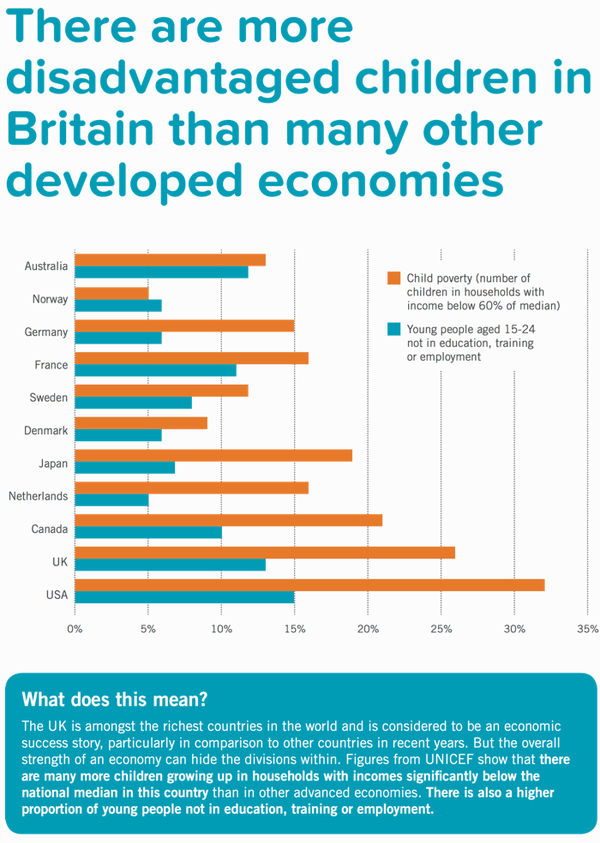
The impact of a Conservative government on Child Poverty – analysis of report by UNICEF

crdb2_0xiaacsaz
Graphic from Inequality Briefing

If ever you needed convincing evidence that austerity – which is central to neoliberalism and social conservatism – doesn’t benefit the majority, and that the UK has a system that extends inequality and increases poverty, this is it.

Furthermore, austerity was not imposed as an economic necessary, and there were other choices available to the UK government that were less damaging to the poorest citizens and to the economy.

UNICEF have published a report about the impact of the global economic crisis and its aftermath on children. It runs fron 2007 to 2013, so worryingly, the more recent UK government welfare cuts and the consequences are not yet included in this international analysis.

In the executive summary, the report says:

“For each country, the extent and character of the crisis’s impact on children has been shaped by the depth of the recession, pre-existing economic conditions, the strength of the social safety net and, most importantly, policy responses

Remarkably, amid this unprecedented social crisis, many countries have managed to limit – or even reduce – child poverty. It was by no means inevitable, then, that children would be the most enduring victims of the recession.”

The report goes on to say that those Governments that supported existing public institutions and programmes helped to buffer countless children from the crisis – a strategy that others may consider adopting.

The UK was quite clearly not one such country, and more recently, Iain Duncan Smith has conveniently announced changes to how we measure child poverty, shifting the economic responsibility and moral focus by blaming individuals for circumstances created by socioeconomic constraints and political decisions.

The report says:

“Many countries with higher levels of child vulnerability would have been wise to strengthen their safety nets during the pre-recession period of dynamic economic growth, which was marked by rising disparity and a growing concentration of  wealth.”

In the UK, inequality has grown since the recession because of austerity measures that have been targeted at the poorest households. In fact, the UK is now the most unequal country in the EU, and has even higher levels of inequality than the US.

“The magnitude of change since the recession is worth noting. The absolute number of children living in severe material deprivation in the 30 European countries analysed was 11.1 million in 2012 – 1.6 million more than in 2008

This trend is the result of a net effect that includes substantial decreases (more than 300,000 fewer deprived children in Germany and Poland) and unprecedented increases in four countries (Greece, Italy, Spain and the United Kingdom).”

Almost half of the severely materially deprived children (44 percent) in 2012 lived in three countries: Italy (16 percent), Romania (14 per cent) and the United Kingdom (14 per cent).

The report goes on to say:

“At the start of the recession, not surprisingly, child poverty was lower where public spending on families and children was higher. During the recession, welfare states were expected to increase their public protection spending, and many did. 

In such countries, the health and well-being of citizens, especially those in financial or social need, are safeguarded by grants, unemployment assistance programmes, pensions and other benefits. 

In a recession, these benefits act as counter-cyclical economic stabilizers.”

One of the most striking contrasts in the report was that whilst many other countries increased spending on welfare and essential public services to shelter the most vulnerable citizens from the impact of the global recession, in the UK, the government chose to target those social provisions for all of the austerity cuts.

The report says:

“Since 2010, the United Kingdom has implemented a series of cuts that have reduced the real value and coverage of child benefits and tax credits for families withchildren. In 2013, a cap was imposed on the total benefits a household can receive, mainly affecting a small number of large families with high housing costs, while housing benefits were cut (the so-called ‘bedroom tax’), affecting large numbers of social tenants.”

It’s clear that the impacts and aftershocks of the global recession were not shared equally in our society, and the austerity measures have only made things worse for those most affected – the poorest. One emerging certainty from this report is that economic indicators alone do not reveal the complexity of social reality.

The report recommends that governments increase investment in social protection policies and programmes that can reduce poverty, enhance social resilience in children and support economic development in an efficient, costeffective way.

Such measures include guaranteeing basic incomes for families, and a child rights impact assessment as strategy for political decision-making in the best interests of children.

Last year, I wrote that the government’s Children’s Commissioner for England published a report criticising the Coalition’s austerity policies, which have reduced the incomes of the poorest families by up to 10 percent since 2010.

The Children’s Commissioner said that the increasing inequality which has resulted from the cuts, and in particular, the welfare reforms, means that Britain is now in breach of the United Nations Convention on the Rights of the Child, which protects children from the adverse effects of government economic measures.

It therefore comes as no surprise that the current government is planning to repeal our Human Rights Act and replace it with an alternative Bill of Rights. That will mean that  human rights will no longer be absolute – they will be subject to stipulations and caveats. The government will establish a threshold below which Convention rights will not be engaged, allowing UK courts to strike out what are deemed “trivial cases”.

During their last term, the Conservatives contravened the Human Rights of disabled people, women and children. It’s clear that we have a government that regards the rights and wellbeing of most of the population as an inconvenience to be brushed aside.

You can read the UNICEF report in full here.

(Non -discrimination): The Convention applies to all children, whatever their race, religion or abilities; whatever they think or say, whatever type of family they come from. It doesn’t matter where children live, what language they speak, what their parents do, whether they are boys or girls, what their culture is, whether they have a disability or whether they are rich or poor. No child should be treated unfairly on any basis.

Article 3

(Best interests of the child): The best interests of children must be the primary concern in making decisions that may affect them. All adults should do what is best for children. When adults make decisions, they should think about how their decisions will affect children. This particularly applies to budget, policy and law makers.

Article 26

(Social security): Children – either through their guardians or directly – have the right to help from the government if they are poor or in need.

Article 27

(Adequate standard of living): Children have the right to a standard of living that is good enough to meet their physical and mental needs. Governments should help families and guardians who can not afford to provide this, particularly with regard to food, clothing and housing.

1957929_293215800829475_303676825_o

Techniques of neutralisation: David Cameron’s excuses for Iain Duncan Smith

430835_148211001996623_1337599952_n (1)

I wrote earlier about the way the Department of Work and Pensions (DWP) heavily micro-managed the recent Mortality Statistics release, and how the Government are using an excessively bureaucratic approach to ensure that no inferences are drawn from the data published, insisting that it’s “wrong” to link the mortality rates of sick and disabled people with punitive, Conservative austerity policies.

However, the accounts and experiences of sick and disabled people and their families (recorded in the media, in parliamentary inquiries, Commons debates – all preserved on the Hansard record) inform us that there is a clear correlation between the Tory “reforms” and increased distress, a loss of dignity and autonomy, financial insecurity and insolvency, increasing ill health, and sometimes, the death, of disabled people.

When confronted in the Commons, Iain Duncan Smith and other ministers dispensed with civilised debate, and simply blocked any discussion regarding concerns raised by the opposition about the negative impact of the Tory welfare cuts on sick and disabled people.  Values of decency and legitimate concerns about the welfare of sick and disabled citizens were depreciated as mere matters of “subjective interpretation” and not as worthy subjects of political, rational or objective discussion.

The Mortality Statistics release from Department of Work and Pension “provides further commentary on the appropriate use of this information” – in other words, it informs us what we may and may not do with the “data”, and carries this pre-emptive caution:

“Any causal effect between benefits and mortality cannot be assumed from these statistics. Additionally, these isolated figures provide limited scope for analysis and nothing can be gained from this publication that would allow the reader to form any judgement as to the effects or impacts of the Work Capability Assessment.”

Bearing in mind that the information in the release came about because of many Freedom of Information (FOI) requests from many of us, and the rulings of the Information Commissioner and a tribunal (Mike Sivier from Vox Political appealed against the original decision by the Information Commissioner and the DWP to refuse the Freedom of Information requests), it’s difficult to see why the Government have been so determined, firstly, to withhold the information requested, secondly, when forced to make the release, to present the information in a decontextualized way that renders it virtually meaningless, thirdly, to go to such extraordinary lengths to instruct us how we may and may not analyse the data and fourthly, to respond to any interpretive reference to the data as “wrong”, refusing to engage in any further discussion.

Unless of course it’s a Government that doesn’t want open and democratic accountability and public scrutiny of the often devastating impact of its policies.

Debbie Abrahams, the new shadow minister for disabled people, has long been an outstanding campaigner and spokesperson for disabled people. Earlier this month, she asked David Cameron:

“Two weeks ago, the Work and Pensions Secretary’s Department not only admitted to falsifying testimonies in leaflets, but published data on the deaths of people on sickness benefit, which showed that they are four times more likely to die than the general population. That was after the Secretary of State told the House that these data did not exist. Given that, and his offensive remarks earlier this week—referring to people without disabilities as “normal”—when will the Prime Minister take control and respond to my call for the Work and Pensions Secretary to be investigated for breaching the ministerial code?”

Here is the Ministerial code. Ministers are also expected to observe the seven Nolan Principles, which are the basis of the ethical standards of conduct that is expected of all holders of public office. 

Last year, I sent David Cameron a reminder of the established standards and ethics of Public Office, as the Coalition had exempted themselves, but he didn’t respond and it didn’t make any difference.

It’s true that the Department of Work Pensions (DWP) has admitted falsifying testimonies in leaflets. The DWP’s own data does indicate that people on incapacity benefits are four times more likely to die than other people in the general population. Iain Duncan Smith did tell MPs that this data did not even exist. Then he told them it did.

Let’s be frank here, Iain Duncan Smith has established a culture where it’s acceptable to lie, even his Curriculum Vitae is comprised of  Machiavellian, narcissistic-inspired confabulations – he’s qualified only in absolute and utter tosh, he graduated without Honour. Or a degree.

And it’s truly priceless that Iain Duncan Smith or David Cameron can accuse anyone of misrepresenting statistics with a straight face, given the large number of official rebukes the Tories have had from the Office for National Statistics (ONS) for manipulating or  misrepresenting statistics and telling lies.

Today, Debbie received the following written response to her question from the Prime sinister Minister:

Cameron letter on claimant deaths

Cameron letter on claimant deaths

I’ve already addressed a lot of the content above, however I couldn’t help but note the apparent “policing” of Debbie’s tweets. The response isn’t a rational or reasonable one, and certainly not of a standard that is expected of a prime minister.

How can the use of fake statements from fake characters about fictitious “benefits” of harsh sanctions – the arbitrary and punitive removal of lifeline income to support people in meeting basic survival needs – ever “help claimants and advisers to understand the benefit system”?

How is telling lies about the impact of policy and constructing fake positive testimonies ever “illustrative”? That was no “error”: it was an intentional, deceitful act designed solely to mislead the public and to justify the Conservative’s crass and primitive behaviourist approach to what was once our social security.

As is the insistence that “the statistics showed it is quite wrong to suggest any causal link between the death of an individual and their benefit claim.” Tosh. The statistics showed no such thing,  they did not demonstrate that there is no existing causal link – but the data was presented in a way that intentionally obscures such a link. That does not mean we can conclude there’s no connection between increased mortality and the Conservative “reforms” at all.

Whilst we are warned not to draw inferences of causal links from the statistics, the prime minister thinks that it’s perfectly appropriate to do just that himself. Yet there is no empirical evidence whatsoever to support his denial of a causal link.  The statistical data does not falsify or refute the proposition that such a link exists. We have plenty of recorded evidence, however, to support our proposition that Tory policies are actually harming people.

Tory policies do. Margaret Thatcher’s policies caused premature deaths, too, and her Cabinet were far less harsh towards sick and disabled people than Cameron’s government. A research report which looked at over 70 existing research papers, concludes that as a result of unnecessary unemployment, welfare cuts and damaging housing policies, the former prime minister’s legacy includes the unnecessary and unjust premature death of many British citizens, together with a substantial and continuing burden of suffering and loss of well-being.

It doesn’t take a genius to work out that if you inflict stress and harm on people who are already ill, by withholding their lifeline support, by constantly reassessing them and telling them they are fit for work when they clearly are not, by invalidating their experiences, by forcing them to fight for the means of survival – without the means of survival, it will probably exacerbate any illness and quite possibly this will kill them.

As I discussed earlier today, Cameron and his government have consistently displayed an absolute lack of concern for sick and disabled people, who have borne the brunt of Tory austerity cuts. Yet it’s inconceivable that Conservatives don’t grasp the fact that their policies are at least potentially very harmful, and certainly very punitive in nature.

I’ve discussed many times before that Tory ideology is founded on toxic subterranean values and principles, which are anachronistic and incompatible with a society that has evolved to value democracy, human rights and the socio-economic gains from our post-war settlement.

Conservatives have always seen inequality as a necessary and beneficial element to a market driven economy, for example, and their policies tend to assemble a steeply hierarchical society, especially given their small state fetishism, which involves removing socio-economic support services and civilising mechanisms such as welfare, free healthcare and access to legal aid.

Beneath the familiar minarchist, class contingent Conservative policies and neoliberal schema is a tacit acceptance of socioeconomic Darwinism, and a leaning towards eugenicist principles, expressed most clearly recently in the withdrawal of tax credit support for low paid families with more than two children, in order to “change behaviours” as Iain Duncan Smith put it. The reasoning behind this is the government believe they can “nudge” poor people into “breeding” less. Such a class contingent policy reflects a deep prejudice and also demonstrates an authoritarianism that is certainly incompatible with democracy and human rights.

(See also David Freud was made to apologise for being a true Tory in public, Paternalistic Libertarianism and Freud’s comments in context and What will the Tories suggest next. “Compassionate” eugenics?)

The Tories employ techniques of neutralization which are used to rationalise or justify acts that contravene social norms or that are illegal.  There are five basic techniques of neutralization; denial of responsibility, denial of injury, denial of victims, condemnation of the condemners, and an appeal to higher loyalties.

The recognition of techniques of neutralisation by David Matza and Gresham Sykes happened during their work on Edwin Sutherland’s Differential Association in the 1950s. Matza and Sykes were working on juvenile delinquency at the time, and they theorised that the same techniques could be found throughout society and published their ideas in Delinquency and Drift, 1964.

It was Alexander Alverez who identified that these techniques were used more broadly at a socio-political level in Nazi Germany to “justify” the Holocaust. He added a sixth technique – Disengagement and Dehumanisation.

Such techniques allow people to neutralise and temporarily suspend their commitment to societal and moral values, and to switch off their own “inner protests”, providing them with the freedom to commit deviant acts. Some people don’t have such inner protests – psychopaths, for example – but they may employ techniques of neutralization to manipulate, and switch off the conscience protests of others.

It’s clear that this is a method frequently employed by the government. The Tories systematically attempt to to distort meanings, to withhold,  or deny any evidence that may expose the impact of their draconian policies on targeted social groups.

For example, when they habitually use the word “reform”, when   referring to is cutting funding or support. and “help” and “support” is Tory-speak that means to coerce and punish. The claim that the bedroom tax ishelping” people into workorhelping child poverty– when empirical research shows that 96% of those affected by the bedroom tax can NOT downsize due to a lack of available homes in their area – is a completely outrageous lie. People can’t move as there is a housing crisis, which is due to a lack of affordable homes and appropriately sized accommodation.

How can policies that further impoverish the poorest ever “help them to into work” or alleviate poverty? It’s glib, irrational tosh from a Government that can’t do coherent, joined up thinking, and even worse, thinks that we can’t either.

Forms of social prejudice are normalised gradually, almost inscrutably and incrementally – in stages. Allport describes the political, social and psychological processes, and how techniques of persuasion – propaganda – are used to facilitate stigmatising and dehumanisation of targeted groups to justify discrimination, until the unthinkable becomes acceptable, because of a steady erosion of our moral and rational boundaries.

The prejudice happens on a symbolic level first – via language – and it starts with subtlety, such as the use of divisive and stigmatising phrases like “scroungers and strivers” in the media and political rhetoric, referring to people who need support and social security as “stock”, suggesting that disabled people are not worth a minimum wage and so on.

These comments and strategies are not “mistakes”, this is how Conservatives really think. People who are prejudiced very seldom own up, and nor do bullies. They employ linguistic strategies, deceitful, diversionary and irrational responses that makes challenging them very difficult.

But as history has taught us, we really must challenge them.

36626_217452248405831_532419169_nPictures courtesy of Robert Livingstone

Related reading:

This is an excellent, substantial collection of evidenced lies, deceits and more lies from Ian Duncan Smith, collated by Bob Ellard, researcher for DPAC The IDS Files: the truth is out there 

The DWP mortality statistics: facts, values and Conservative concept control

rich keep millons


I wrote
last week about the exchange in the Commons between Debbie Abrahams and Iain Duncan Smith regarding the Mortality Statistics Report released by Department of Work and Pensions. Debbie Abrahams asked a very reasonable question:

“The Government’s own data show that people in the work-related activity group are twice as likely to die than the general population. How can the Secretary of State justify £30-a-week cuts for people in that category?”

Duncan Smith gave a petty, vindictive and unqualified retort to avoid answering the question:

“The hon. Lady put out a series of blogs on the mortality stats last week that were fundamentally wrong. Her use of figures is therefore quite often incorrect. I simply say to her—[Interruption.] She has had an offer to meet the Under-Secretary of State for Work and Pensions, my hon. Friend the Member for North Swindon (Justin Tomlinson), time and again, but she just wants to sit in the bitter corner screaming abuse.”

Adversarial style over meaningful content every time.

It’s certainly true that Conservatives advocate a limited ambition in politics, especially when it comes to maintaining the state support of even basic levels of human welfare. Small state fetishist Duncan Smith failed to provide a rational and evidenced response to a very reasonable question. He didn’t qualify why he thought that the blogs on the mortality statistics release last week were “fundamentally wrong,” either.

It has to be said that in light of the many official public rebukes that the Tories have faced for telling lies and using misrepresentations of statistics to justify their own value-laden, ideologically driven policies, and given the fact that the Government face a United Nations inquiry regarding the fact that their welfare “reforms” are incompatible with the Convention on the Rights of Persons with Disabilities, it’s truly remarkable that Priti Patel and Iain Duncan Smith have the cheek to call disability campaigners “thugs” and state that all other accounts of the mortality statistics are “wrong”, or to imply that opposition MPs are “liars”, when they are faced with valid concerns and founded criticisms regarding the consequences of their draconian policies.

Moreover, being civilised, values of decency and legitimate concerns about the welfare of sick and disabled citizens were depreciated as mere matters of “subjective interpretation” and not as worthy subjects of political, rational or objective discussion.

The Mortality Statistics release from Department of Work and Pension “provides further commentary on the appropriate use of this information” – in other words, it informs us what we may and may not do with the “data”, and carries this pre-emptive caution:

“Any causal effect between benefits and mortality cannot be assumed from these statistics.

Additionally, these isolated figures provide limited scope for analysis and nothing can be gained from this publication that would allow the reader to form any judgement as to the effects or impacts of the Work Capability Assessment.”

The way that the statistical data was intentionally presented without context, clarification or meaning, but with a warning that we may not draw any inferences from it lends a whole new layer of meaning to the phrase “the disappeared”.

The question we ought to ask is why? Firstly, why is it the case that we are being told that there is no reliable data regarding the impact of the Government’s policies, including their reformed Work Capability Assessment?

And of course, what is being hidden beneath the excessively  bureacratic management of information?

What kind of Government doesn’t concern itself with the well-being of citizens that it is meant to represent? A basic expectation surely ought to be that Governments monitor the effects of policy, especially the sort of policies that are, by their very design, likely to have a negative impact on sick and disabled people.

Cutting lifeline benefits, and using punishment in the form of sanctions to leave people without money to meet basic survival needs is never going to have a positive, or, to use a toryism, “incentivising” impact on people who are deemed medically unfit for work. The Government know this. And everyone who claims Employment Support Allowance may only do so because a qualified doctor has provided an evidenced statement that those people are unfit for work.

And what justification can there possibly be for a Government that is persistently refusing to carry out a cumulative impact assessment on such extensive, far-reaching welfare “reforms”?

When it comes to “knowledge” and “evidence,” the most significant struggle in what passes for Conservative epistemology is simply nothing more than wrestling with a grasping and malicious stranglehold over control of the terms of discourse. Those who can frame a controversial issue or concept in terms they prefer have the advantage in shaping and controlling public opinion.

There is existing empirical evidence (“data” if you prefer) of the correlation between the Government’s punitive policy regime and its negative effects, including increased mortality. As I argued with the Telegraph journalist Tom Chivers last year, the media have presented a record of evidence of tragic, individual cases where Government policy has clearly been correlated with deaths.

Though Chivers questioned the inferences and experiences of disabled people and disability campaigners back then, and though he stated how abysmally “unclear” the previous mortality statistics release was, remarkably, he didn’t once question that or investigate why.

Many studies have also clearly linked Tory policies with evidence of extremely adverse consequences of Tory policies. But Conservatives don’t take kindly to challenge, preferring to discredit those who criticise policy, and threaten them rather than stepping up to adopt a dialogic, democratic, transparent and accountable approach to Government.

Additionally, MPs, including Dennis Skinner, John McDonnell, Michael Meacher, Debbie Abrahams, Sheila Gilmore, Anne Begg, and Glenda Jackson, amongst many others, have raised concerns regarding people’s awful experiences of the negative impact of the Tory “reforms” as well as the mortality statistics, meticulously citing the evidence of case studies, often from their own constituencies. Those cited cases are recorded on the parliamentary Hansard site.

As well as via the use of early day motions (EDM) and adjournment debate, the many problems concerning the consequences of the welfare “reforms” are also addressed rigorously by the Work and Pensions Committee, through formal inquiries, (again, see Hansard record,) which are also informed by witnesses and empirical evidence.

I’ve also gathered some evidence here: Suicides reach a ten-year high and are linked with welfare “reforms” and here: Remembering the Victims of the Government’s Welfare “Reforms”

The Tories have dismissed such collective accounts of individual cases as “anecdotal evidence,” whilst also dismissing any attempt to cite quantitative data – statistics – as “wrong” simply to divert criticism of their policies and diminish public sympathy and concern.

I’m wondering where the empirical evidence is for Tory notions, such as a “culture of worklessness” or the “something for nothing culture”. Or for “making work pay”. The Tories tend to adopt a pseudo-positivist stance, claiming credibility via their ideological assumptions and by making invalid inferences from statistics when it suits them, and dismissing other accounts as merely “subjective”, yet no-one conflates the fact-value distinction more than the rigidly ideologically bound, staunchly neoliberal Conservatives, who produce every discussion as if there are no alternatives to Conservatism at all.

Statistics tend to dehumanise, and exclude people’s own validating  accounts of experiences of the social phenomena they measure. In a democratic society, qualitative accounts – “the people’s voice” – ought to matter to the Government. The impact of such draconian, punitive policies cannot be reduced to abstract speculation regarding what inferences may and may not be drawn from statistics: this is about very real experiences, real lives and real people being damaged and some, destroyed, in a real world of real and brutal Tory policies.

I’ve argued elsewhere that the point-blank refusal to enter into open debate and to allow an independent inquiry into the deaths that are most likely correlated with Tory policy reflects a callous, irrational and undemocratic government that draws on an underpinning toxic social Darwinist ideology and presents a distinctly anti-enlightenment, impervious epistemological fascism from which to formulate justification narratives for their draconian policies, in order to avoid democratic accountability and to deflect well-reasoned and justified criticism.

The lack of rational responses from Iain Duncan Smith, or concern about the welfare of the sick and disabled people that he tellingly differentiates from “normal” people, and the message from his Department, urging us not to make inferences about the deaths of sick and disabled people is an oblique reference to the fact/value distinction. It’s a method called “framing”. Such concept control is a way of rigging the debate: You must talk about this controversial issue using our categories, terms, and definitions only.

Or a way of avoiding debate altogether.

 The fact/value distinction is the alleged difference between descriptive statements (about what is) and prescriptive or normative statements (about what ought to be). Facts are one sort of thing, values another sort of thing, and the former never determine the latter. That’s the idea, anyway. But it isn’t considered to be very clear-cut when it comes to the “social sciences” such as politics and economics. I go further than the critics of logical positivism, and propose that it’s a false dichotomy anyway, especially where politics and policy-making are concerned, as these are invariably value-laden activities.

Whenever the Conservatives talk about “difficult decisions” or “tough choices”, they are in fact reflecting their own subjectivity and indulging Tory values, demonstrating their intentionality – and the capacity for a degree of free-will. Those “difficult decisions” have included the wilful handing out of £107,000 each per year to millionaires, in the form of a tax-break, and the intentional cutting of our social security down to the bone, the purposeful cutting of crucial public support services.

Sick and disabled people in this country have borne the brunt of the Tory directed austerity cuts. These cuts were the “tough choice” that the Tories freely made, ignoring less cruel and harmful alternative choices that could have been made. The Tories are masters at foreclosing possibilities.

Would you like to see some empirical data about Tory decision-making? Statistics? Facts and figures?  Here they are: Briefing on How Cuts Are Targeted – Dr Simon Duffy and here: Follow the Money: Tory Ideology is all about handouts to the wealthy that are funded by the poor.

tough choices

Government policies are expressed political intentions, regarding how our society is organised and governed. They have calculated social and economic aims and consequences.

How policies are justified is increasingly being detached from their aims and consequences, partly because democratic processes and basic human rights are being disassembled or side-stepped, and partly because the government employs the widespread use of propaganda to intentionally divert us from their aims and the consequences of their ideologically (rather than rationally) driven policies. Furthermore, policies have become increasingly detached from public interests and needs.

Regardless of what kind of epistemology you may subscribe to, there are no “facts” that can ever justify the targeted political persecution of social groups in democratic societies. And the Tories know exactly what the impacts of their policies are likely to be. The level and extent of the stigmatisation and scapegoating of sick and disabled people in the media, coming from the Conservative camp to justify punitive cuts informs us of that.

Politics is invariably about values. That’s not a bad thing in itself. However, being open and honest about those values is crucial, and expected behaviour from a democratically elected government.

Human societies are not shaped by unchanging natural laws, despite what the Tories try and tell you. They are shaped by ideas of what ought to be. We make moral judgements about how to live and be. We have potential, intention and we make collective, cooperative decisions about how best to organise society. We progress, we change and evolve. 

Well, except during those times that we have regressive, authoritarian Right-wing Governments. 

Governments ought to face their moral obligations towards the well-being and interests of all citizens, to take responsibility for their ethical decisions and own their value-judgements. Rather than disguise them as shallow and meaningless “facts” to hide behind, as the pseudo-positivist Tories frequently do.

It’s truly remarkable that Tories loudly attribute the capacity for moral agency to people claiming benefits, for example, formulating punitive sanctions and “assessments” to both shape and question the morality of the poor constantly, yet stand outside of any obligation to morality and ethical behaviour themselves. It’s always someone else’s responsibility, never theirs.

Any claim to “value-freedom” in political decision-making does not and cannot exempt ministers from moral responsibility, or justify moral indifference.

A genuinely rational and morally responsible Government would hold an independent investigation into the reasons why people have died after being told they are “fit for work” when they clearly were not, and  commit to keeping data that effectively monitors and accurately reflects the impact of policy changes on citizens. A genuinely rational and morally responsible Government would be concerned about the possibility that their policies are harming people and causing deaths.

After all, this is a first-world liberal democracy, isn’t it?

430847_149933881824335_1645102229_n (1)Pictures courtesy of Robert Livingstone


I don’t make any money from my work. I am disabled because of illness and have a very limited income. But you can help by making a donation to help me continue to research and write informative, insightful and independent articles, and to provide support to others. The smallest amount is much appreciated – thank you. 

DonatenowButton cards

Child protection must not be used for dealing with the symptoms of increased poverty

imagesSocial work academics discuss why we must pause to evaluate the growing need for child protection services amidst austerity.

Authors: Brigid Featherstone (The Open University), Anna Gupta (Royal Hollway, University of London), Kate Morris (The University of Nottingham), Jo Warner (University of Kent), Sue White (University of Birmingham).

According to a recent report by the Joseph Rowntree Foundation, 39% of people in households with children now live below the Minimum Income Standard. The figure has risen by over a third since 2008/09.

Families with children are now at greater risk than any other group of having an inadequate income and the number of homeless families living in bed and breakfast accommodation has risen by 300% over the last five years as a direct result of austerity.

Humiliation, shame, fear, distrust, instability, insecurity, isolation,  loneliness and feelings of being trapped and powerless are widespread features of the social and emotional landscapes of individuals and their families in a world of benefit sanctions, zero hours contracts and precarious housing.

Small wonder that relations between family members, including those between parents and their children, can become increasingly fraught in such circumstances.

Child protection need rising

Meanwhile, figures published last week in CYP Now, using official statistics and new figures obtained under an FOI, show the number of children being looked after by the state rose by 8% under the coalition government. The number of children placed on child protection plans rose by 33% while the number of Section 47 inquiries rose by a staggering 42%.

The links between poverty and a child’s chances of becoming subject to child protection processes or being looked after are undeniable according to the international and national research.

A child in the most deprived decile of neighbourhoods nationally has an 11 times greater chance of being on a child protection plan and 12 times greater chance of being a looked after child than a child living in the most affluent decile.

‘Wholly inappropriate’ use of child protection

We hear regularly about the impact of reduced services and benefit cuts on the capacity of families to cope and to care.

We hear of cash strapped local authorities who do not have the services to support families within communities.

We are, therefore, increasingly concerned that the child protection system is being used in a wholly inappropriate way to deal with the consequences of austerity and of policies that are depriving children and their families of food, housing and basic support services.

The effects of austerity are exacerbated by the continued existence of a risk-averse climate despite increasingly heroic efforts by local authorities to develop more strengths based approaches.

‘Long on blame, short on help’

Thus, families are experiencing practices that are long on blame and short on help in too many instances as a recent conference organised by the Transparency Project, involving lawyers, other professionals and family members, discussed.

The policy commitment to adoption, reaffirmed in recent days, is extremely worrying in a context where many birth families are unable to access what is needed in terms of material, emotional and social supports to care safely.

This is leading to increased concern across the sector and, indeed, more widely.

Pause for thought

Individual court rulings have drawn attention to judicial comments where social workers have been asked to think again about the importance of relational bonds and children’s identities and to desist from social engineering, and the UK has been specifically criticized this year by the Council of Europe for its removal of children from women who have been subject to domestic abuse, or who are suffering from depression (Report 1 Committee on Social Affairs, Health and Sustainable Development, 2015).

Such women are particularly vulnerable in the current climate where services for domestic abuse are very stretched.

The evidence is mounting that we need to pause and make vital links between wider economic and social policies and the harms that children and their families experience. The child protection system must not be a system for dealing with the symptoms of increased impoverishment.

Article first published on Community Care.

BBC reports unsurprisingly that Newcastle City Council has been ‘forced’ to plunder welfare funds

Newcastle Civic CentreNewcastle City Council said it would have to stop providing crisis loans to vulnerable residents

The BBC reports that a north-east council says government budget cuts are forcing it to use funding earmarked for vulnerable residents.

Newcastle City Council is using money previously ring-fenced for welfare and crisis loans on other frontline services.

Labour council deputy leader Joyce McCarty said it was facing “really tough choices”.

The government said local councils were best placed to decide priorities.

However, the government is proposing to cut a further £12bn from its annual welfare budget.

Funding for welfare grants and crisis loans was devolved to local control in 2013/14.

Ring-fencing was removed from 2015/16 and the cash now goes into the council’s central budget.

The authority said it could not prioritise discretionary loans over its statutory obligations and would only be able to allocate £120,000, compared with last year’s £229,000, for emergency welfare payments.

The Council had been forced to “make some really, really tough choices between providing frontline services and offering this level of support” to poorer residents, Ms McCarty said.

The Tees Valley Community Foundation, a private charity which helps to support those in need, said they expected more requests for help as a result.

Chief executive Hugh McGouran said he expected to see “a rapid increase” in demand.

“Twelve billion is such an eye watering figure,” he said.

“There’s going to be some significant cuts and I think people will start to turn more and more to charities to try and plug that gap.”

The government claim that nationally-run community care grants and crisis loans had been “poorly targeted and failed to help those most in need”.

“Local authorities now choose how best to support local welfare needs,” a Department for Communities and Local Government spokesman said.

“Additional money had been provided to assist authorities dealing with pressures on local welfare and health and social care,” he said.

However, I believe that this comment is little more than a platitude, intended to blur central government accountabilty. The government know precisely how much money is available to each council. How is it conceivable that local authorities have been provided with additional funding when this is offset with overall steep local authority budget cuts by the same government?

Moreover, the largest cuts have been made in the poorest areas, as the Institute for Fiscal Study (IFS) point out, with the same areas set to lose the most again over the next few years.

During the last term, local authorities in England with communities ranked in the top 20 per cent for health deprivation and disability have faced an average reduction in spending power of £205 per head – 12 times the average for places in the bottom 20 per cent.

Communities ranked in the top fifth for income deprivation affecting older people saw an average reduction in spending power of £229 per head while the average reduction for places in the bottom fifth was just £39.

Perhaps it’s worth noting that those authorities in the most deprived areas tend to be those that are predominantly Labour. This clearly indicates that the government is purposefully targeting Labour councils for dispropotionately higher cuts than Conservative ones.

The Joseph Rowntree Foundation (JRF) also point out that severe cuts to local authority budgets are having a profound effect on the services people receive. The poorest communities and residents are being hardest hit and those least able to cope with service withdrawal are bearing the brunt of the Conservative austerity drive.

It’s inconceivable that this isn’t intentional, targeted austerity on the part of the government.

The shadow Secretary of State for Communities and Local Government, Hilary Benn, said earlier this year that it was “irresponsible and unfair” for the Conservatives to have imposed the biggest reductions in local authority budgets on those communities with the highest numbers of older people living in deprived households.

“The A&E crisis in our NHS, driven in part by insufficient social care provision where it is needed, shows that the Tories can’t be trusted with vitally important health and social care services,” he said.

UN report: Britains ‘boy’s club culture’ – women in the UK are left vulnerable to violence, poverty & hardship


I wrote last year that Conservative small-state ideology has led to “depopulated” social policies, resuting in the dehumanisation of people in some social groups, and it indicates that Tory policy-makers see the public as objects of their policies, and not as human subjects. Policies are inceasingly being detached from public needs. We therefore need to ask whose needs Conservative policies are fulfilling.

In 2010 the Equality and Human Rights Commission warned the government about its potential failure to meet its legal duties. This followed concerns raised by the Fawcett Society amongst others, regarding the estimated grossly disproportionate impact of the austerity cuts on women.

The Commission recognised the serious concerns about the impact of the deficit reduction measures on vulnerable groups and, in particular, following the House of Commons library report, the impact of the budget on women. The Commission stated:

We have written to the Treasury to ask for reassurance that they will comply with their equality duties when making decisions about the overall deficit reduction, and in particular in relation to any changes to tax and benefits for which they are directly responsible.”

A more inclusive understanding of the range of impacts on both men and women is essential in the formulation of gender-aware, as opposed to gender-blind, policy responses to recession and recovery. It’s clear that the UK government is not interested in collating information regarding impacts and subsequent implications regarding inequality, yet they do have a legal duty to do so.

A previous United Nations Committee report on the Elimination of Discrimination against Women highlights areas where women’s rights in the UK had come to a standstill and appallingly, shamefully, some rights have been reversed.

On August 13, 2013, the Committee on the Elimination of Discrimination against Women released its concluding observations on the UK’s seventh periodic report on 26 July 2013.

Concerns raised by the Committee include protection from discrimination under the Public Sector Equality Duty, the impact of austerity measures on women and women’s services, and restrictions on women’s access to legal aid.

The Equality and Human Rights Commission (EHRC) published its submission to the United Nations Committee on the Elimination of All Forms of Discrimination Against Women on 1 July 2013. In its submission the Commission, as a national human rights institution, identifies key issues it believes should be highlighted as actions following the examination and sets out a number of questions the Committee may wish to put to the Government. You can see a full list here – UK Government still in breach of the human rights convention on gender discrimination.

Despite Labour’s protective Human Rights Act and Equality Act, Britain has become increasingly sexist, has an all-pervasive, patriarchal “boy’s club culture” and Conservative austerity measures are leaving women increasingly vulnerable to violence, poverty and hardship, the UN special rapporteur for women, Rashida Manjoo, has recently said.

The special rapporteur said there was “a more visible presence of sexist portrayals of women and girls” and a “marketisation of women’s and girls’ bodies” in the UK, which was “more pervasive than elsewhere.”

She warned that sexual bullying and harassment were now “routine” in UK schools, according to NGOs she had interviewed, and recommended that schools have mandatory education modules on sexism. “The state has a responsibility to protect, to prevent, to punish, to provide effective remedies,” she said. “These are part of the state’s responsibility.”

Rashida added: “Have I seen this level of sexist cultures in other countries? It hasn’t been so in-your-face.”

Amongst the figures quoted in her report are: 30% of women in England and Wales have reported experience of domestic abuse since the age of 16; 77 women were killed by partners or former partners in 2012-13; 18,915 sexual crimes against children were recorded in England and Wales in 2012-13; and almost one in three 16- to 18-year-old girls have experienced “groping” or other unwanted sexual touching at school.

The special rapporteur also drew attention to the disproportionate impact of funding cuts on the provision of services to women and girls at risk of violence, and the adverse consequenes of the Tory welfare “reforms.”

Access to trauma services, financial support and housing are crucial, yet current reforms to the funding and benefits system continue to adversely impact women’s ability to address safety and other relevant issues,” Rashida said.

She added that the austerity cuts “not only [affected] the specific provision of ‘violence against women’ services’, but also had a more general impact as poverty and unemployment were known contributory factors.”

“Service providers argue that they are being forced to make cuts to their frontline services as a result of reduced funding, whether by closing refuges, reducing support hours, or increasing waiting lists … current reforms to the funding and benefits system continue to adversely impact women’s ability to address safety and other relevant issues.”

Manjoo also heavily criticised the bedroom tax, she recognised that it makes it very difficult for women to escape domestic violence. She also attacked the Conservative government’s austerity programme.

She said: “Austerity measures are having an effect on the provision of services to address violence against women, as well as other cross-cutting issues affecting women such as poverty and unemployment.” 

Rashida Manjoo quite properly condemned the lack of human rights-driven government measures to combat violence against women and girls.

The special rapporteur, who travelled across the UK during a 16-day fact-finding mission into violence against women, said she was barred at the gates of Yarl’s Wood immigration detention centre on Monday, on instructions “from the highest levels of the Home Office”.

Manjoo received reports of violations at the privately run Yarl’s Wood centre, near Bedford, before her visit to the UK, and said she wanted to verify the allegations of abuse. Last month a Jamaican woman, Christine Case, 40, died at the centre, which holds about 400 women.

After repeated unsuccessful requests to the Home Office, the investigator attempted an independent visit to Yarl’s Wood. Under the terms of her mandate, Manjoo should have been offered unrestricted access.  A Home Office spokesperson said a tour of Yarl’s Wood “was never agreed as part of this fact-finding mission.” 

So much for democratic, open, transparent and accountable government.

In her preliminary report, (and unsurprisingly,) Manjoo said the number of women detained in prisons and immigration centres in the UK was rising, with a significant over-representation of black and minority ethnic women.

“A large number of women in detention have a history of being subjected to violence prior to being imprisoned … the strong link between violence against women and women’s incarceration, whether prior to, during or after incarceration, needs to be fully acknowledged,” she said.

Manjoo also said the UK court system is “widely perceived to be biased in favor of men.

Rashida Manjoo’s full 24 page report is expected to be published later this year and will be presented at a meeting of the UN Human Rights Council in Geneva on Tuesday.

The report’s findings echo the views of  many campaigners, including hundreds of psychotherapists, counsellors and mental health practitioners, who in April used a rallying, open letter to the Guardian to warn against “malign” welfare reforms and severe austerity measures.

The group of signatories, made up of therapists, psychotherapists and mental health experts, said Britain has seen a “radical shift” in the mental state of ordinary people since the coalition came to power.

British society has been “thrown completely off balance by the emotional toxicity of neoliberal thinking” and the distress this is causing and the wide adverse effects of this ideology are particularly visible in therapists’ consulting rooms.

This letter sounds the starting-bell for a broadly based campaign of organisations and professionals against the damage that neoliberalism is doing to the nation’s mental health,” they added.

A democratic government, especially in a very wealthy, so-called liberal first-world country, is expected to reflect and accommodate the needs of a population in its policy-making, and to formulate policies within a human rights framework.

That clearly is not happening in the UK.


Related

Welfare reforms and the language of flowers: the Tory gender agenda

994596_517805604955639_608589568_n
Pictures courtesy of Robert Livingstone


I don’t make any money from my work. But you can support Politics and Insights and contribute by making a donation which will help me continue to research and write informative, insightful and independent articles, and to provide support to others. The smallest amount is much appreciated, and helps to keep my articles free and accessible to all – thank you. 

DonatenowButton

Stigmatising unemployment: the government has redefined it as a psychological disorder

proper Blond

The current government has made the welfare system increasingly conditional on the grounds that “permissive” welfare policies have led to welfare “dependency.” Strict behavioural requirements and punishments in the form of sanctions are an integral part of the Conservative ideological pseudo-moralisation of welfare, and their  “reforms” aimed at making claiming benefits much less attractive than taking a low paid, insecure, exploitative job.

Welfare has been redefined: it is preoccupied with assumptions about and modification of the behaviour and character of recipients rather than with the alleviation of poverty and ensuring economic and social wellbeing.

The stigmatisation of people needing benefits is designed purposefully to displace public sympathy for the poor, and to generate moral outrage, which is then used to further justify the steady dismantling of the welfare state.

But the problems of austerity and the economy were not caused by people claiming welfare, or by any other powerless, scapegoated, marginalised group for that matter, such as migrants. The problems have arisen because of social conservatism and neoliberalism. The victims of this government’s policies and decision-making are being portrayed as miscreants – as perpetrators of the social problems caused by the government’s decisions, rather than as the casualities.

And actually, that a recognisable bullying tactic known as projection, (the vehicle for projection is blame, criticism and allegation), as is scapegoating.

The 2015 budget included plans to provide online Cognitive Behaviour Therapy to 40,000 claimants and people on the Fit for Work programme, as well as putting therapists in more than 350 job centres.

I wrote an article in March about the government plans to make the receipt of social security benefits conditional on undergoing “state therapy.” I raised concern about ethical issues – such as consent, the inappropriateness of using behaviour modification as a form of “therapy,” and I criticised the proposed Cognitive Behaviour Therapy (CBT) programme on methodological and theoretical grounds, as well as considering wider implications.

I’ve written at length about the coercive and punitive nature of the conservative psychopolicy interventions, underpinning the welfare “reforms,” and giving rise to increased welfare “conditionality” and negative sanctions.

In particular, I’ve focussed on the influence of the Cabinet’s Behavioural Insights Team or “nudge unit” and “the application of behavioural science and psychology to public policy. (See: The nudge that knocked down democracy, The power of positive thinking is really political gaslighting, and Despotic paternalism and punishing the poor. Can this really be England? )

I was pleased to see that the BBC reported a summary of the research findings of Lynne Friedli and Robert Stearn, which was supported by the Wellcome Trust. The report – Positive affect as coercive strategy: conditionality, activation and the role of psychology in UK government workfare programmes reflects many of the concerns raised by other professionals. I strongly recommend you read it. (See: Psychologists Against Austerity: mental health experts issue a rallying call against coalition policies.)

The BBC summarised from the report that benefit claimants are being forced to take part in “positive thinking” courses in an effort to “change their personalities.” Those people claiming benefits that do not exhibit a “positive” outlook must undergo “reprogramming” or face having their benefits cut. This is humiliating for job seekers and does not help them find suitable work.

New benefit claimants are interviewed to find out whether they have a “psychological resistance” to work, with those deemed “less mentally fit” given more “intensive coaching.”

And unpaid work placements are increasingly judged on psychological results, such as improved motivation and confidence, rather than whether they have led to a job.

The co-author of the report, Lynne Friedli, describes such programmes, very aptly, as “Orwellian.” She says:

“Claimants’ ‘attitude to work’ is becoming a basis for deciding who is entitled to social security – it is no longer what you must do to get a job, but how you have to think and feel.

“This makes the government’s proposal to locate psychologists in job centres particularly worrying.

“By repackaging unemployment as a psychological problem, attention is diverted from the realities of the UK job market and any subsequent insecurities and inequalities it produces.”

Friedli also criticised the way psychologists were being co-opted as “government enforcers” and called on professional bodies to denounce the practice.

Quite rightly so. It’s our socio-economic system, and the ideologues who shape it that present the problems, not the groups of people forced to live in it as its casualities – the “collateral damage” of neoliberalism and social conservatism.

“I don’t think anything can justify forced psychological coercion. If people want to go on training courses that should be entirely voluntary,” Lynne told BBC News.

She also questioned the aim of the motivational courses and welfare-to-work placements, which felt like “evangelical” self-help seminars.

“Do we really want a world where the only kind of person considered employable is a ‘happy clappy’, hyper-confident person with high self-esteem?

“That is a very a narrow set of characteristics. There is also a role in the workplace for the ‘eeyore’ type.”

Absolutely. Frankly, I would rather have health and safety programmes that are designed by a pessimist, capable of thinking of the worst case scenario, for example, than by a jolly, positively biased, state-coerced optimist.

I would also prefer pessimistic appraisal of social policies. That way, we may actually have impact assessments carried out regarding the consequences of Conservative policies, instead of glib, increasingly Orwellian political assurances that are on the other, more scenic, illusory side across the chasm from social realities.

Although pessimism and depression are considered to be affective disorders, in a functional magnetic resonance imaging study of the brain, depressed patients were shown to be more accurate in their causal attributions of positive and negative social events, and in self assessments, and assessment of their own performance of tasks, than non-depressed participants, who demonstrated a positive bias.

As a former community-based psychosocial practitioner who saw the merits and value of a liberationist model, the question that needs to be asked is: for whose benefit is CBT being used, and for what purpose? Seems to me that this is about helping those people on the wrong side of punitive government policy to accommodate that, and to mute negative responses to negative situations.

The socially dispossessed are being coerced by the state, part of that process is the internalisation of the negative images of themselves created and propagated by their oppressors.

CBT is not based on a genuinely liberational approach, nor is it based on any sort of democratic dialogue. It’s all about modifying and controlling behaviour, particularly when it’s aimed at such a narrow, politically defined and specific outcome.

The problem that we need to confront is politically designed and perpertuated social injustice, rather than the responses and behaviour of excluded, stigmatised individuals in politically oppressed, marginalised social groups.

CBT is founded on blunt oversimplifications of what causes human distress – for example, in this case it is assumed that the causes of unemployment are psychological rather than socio-political, and that assumption authorises intrusive state interventions that encode a Conservative moral framework which places responsibility on the individual, who is characterised as “faulty.”

However, democracy is based on a process of dialogue between the public and government, ensuring that the public are represented: that governments are responsive, shaping policies that address identified social needs. Conservative policies are quite clearly no longer about reflecting citizen’s needs: they are increasingly about telling us how to be.

As I have said elsewhere, as well as aiming at shaping behaviour, the psycho-political messages being disseminated are all-pervasive, entirely ideological and not remotely rational: they reflect and are shaping an anti-welfarism that sits with Conservative agendas for neoliberal welfare “reform”, austerity policies, the small State (minarchism) and also legitimises them. (I’ve written at length elsewhere about the fact that austerity isn’t an economic necessity, but rather, it’s a Tory ideological preference.) The Conservatives are traditional, they are creatures of habit, rather than being responsive and rational.

Conservative narratives, amplified via the media, have framed our reality, stifled alternatives, and justified Tory policies that extend psychological coercion including through workfare; benefit sanctions; in stigmatising the behaviour and experiences of poor citizens and they endorse the loss of autonomy for citizens who were disempowered to begin with.

Many of the current ideas behind “reforming” welfare come from the Behavioural Insights  Team – the Nudge Unit at the heart of the Cabinet. Nudge theory has made Tory ideology, with its totalitarian tendencies, seem credible, and the Behavioural Insights Team have condoned, justified and supported punitive, authoritarian policies, with bogus claims about “objectivity” and by using discredited pseudoscience. Those policies have contravened the human rights of women, children and disabled people, to date.

Nudge-based policy is hardly in our “best interests,” then.
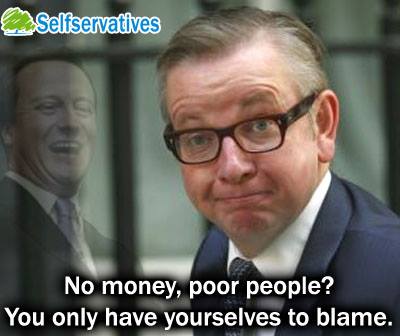
526544_532055030197363_2137237288_n
Pictures courtesy of Robert Livingstone


I don’t make any money from my work. I am disabled because of illness. But you can contribute by making a donation and help me continue to research and write informative, insightful and independent articles, and to provide support to others.

The smallest amount is much appreciated – thank you.

DonatenowButton