Tag: David Cameron

Prime minister dismisses UN inquiry into government’s discriminatory treatment of disabled people

disability_2218977b

Labour leader Jeremy Corbyn has asked David Cameron at Prime Minister’s Questions today to publish the details of the Government’s response to the United Nations inquiry into the allegations that Conservative policies are breaching the rights of disabled people in the UK. He also asked if the government intended to co-operate with the inquiry.

Such UN investigations are conducted confidentially by the UN and officials will not confirm or deny whether the UK is currently being put under scrutiny.

However, the ongoing inquiry been widely reported by disability rights groups and campaigners. The Department for Work and Pensions has previously declined to comment on the possibility of an investigation.

Mr Corbyn used his final question to ask about the United Nations inquiry into alleged “grave or systemic violations” of the rights of disabled people in the UK. The PM gave a dismissive response, saying the inquiry may not be “all it’s cracked up to be” and said that disabled people in other countries do not have the rights and support that “they” [disabled people] in the UK are offered. Cameron also implied that Labour’s “strong” equality legislation was a Conservative policy. However, the Equality Act was drafted under the guidance of Harriet Harman.

Jeremy Corbyn asks about David Cameron about his response to the UN inquiry at Prime Minister’s Questions

The United Nations team of investigators are expecting to meet with the Equality and Human Rights Commission, members of parliament, individual campaigners and disabled people’s organisations, representatives from local authorities and academics.

The team will be gathering direct evidence from individuals about the impact of government austerity measures, with a focus on benefit cuts and sanctions; cuts to social care; cuts to legal aid; the closure of the Independent Living Fund (ILF); the adverse impact of the Work Capability Assessment (WCA); the shortage of accessible and affordable housing; the impact of the bedroom tax on disabled people, and also the rise in disability hate crime.

Mr Corbyn said:

“This is deeply embarrassing to all of us in this house and indeed to the country as a whole. It’s very sad news.”

The Government’s approach to people with disabilities had been extremely controversial and been met with criticism from campaign groups. Disabled people have borne the brunt of austerity cuts, losing more income and support than any other social group, and this is despite the fact that Cameron promised in 2010 to protect the poorest, sick and disabled people and the most vulnerable.

In 2013, Dr Simon Duffy at the Centre for Welfare Reform published a briefing outlining how the austerity cuts are targeted. The report says:

The cuts are not fair.

They target the very groups that a decent society would protect:

  • People in poverty (1 in 5 of us) bear 39% of all the cuts
  • Disabled people (1 in 13 of us) bear 29% of all the cuts
  • People with severe disabilities (1 in 50 of us) bear 15% of all the cuts

The report outlines further discrimination in how the austerity cuts have been targeted. The report says:

The unfairness of this policy is seen even more clearly when we look at the difference between the burden of cuts that falls on most citizens and the burdens that fall on minority groups. By 2015 the annual average loss in income or services will be:

  • People who are not in poverty or have no disability will lose £467 per year
  • People who are in poverty will lose £2,195 per year
  • Disabled people will lose £4,410 per year
  • Disabled people needing social care will lose £8,832 per year

Work and Pensions Secretary Iain Duncan Smith said at the  Conservative party conference speech in Manchester that disabled people “should work their way out of poverty.”

The Work and Pensions Secretary has been widely criticised for removing support for disabled people who want to work: by closing Remploy factories, scrapping the Independent Living Fund, cuts to payments for a disability Access To Work scheme and cuts to Employment and Support Allowance.

The reformed Work Capability Assessment has been very controversial, with critics labeling them unfair, arbitrary, and heavily bureaucratic, weighted towards unfairly removing people’s sickness and disability benefit and forcing them to look for work.

The bedroom tax also hits disabled people disproportionately, with around two thirds of those affected by the under-occupancy penalty being disabled.

The United Nations have already deemed that the bedroom tax constitutes a violation of the human right to adequate housing in several ways. If, for example, the extra payments force tenants to cut down on their spending on food or heating their home. There are already a number of legal challenges to the bedroom tax under way in British courts. In principle the judiciary here takes into account the international human rights legislation because the UK has signed and ratified the International Covenant on Economic, Social and Cultural Rights.

The right to adequate housing is recognised in a number of international human rights instruments that the UK has signed up to.

UN rapporteur Raquel Rolnik called for the UK government last year to scrap its controversial bedroom tax policy. Rolnik’s report was dismissed as a “misleading Marxist diatribe” by Tory ministers, and she had been subject to a “blizzard of misinformation” and xenophobic tabloid reports.

The DWP’s sanctions regime has also been widely discredited, and there has been controvery over death statistics, eventually released by the Department after a long-running refusal to release the information under freedom of information law.

The Daily Mail has already preempted the visit from the special rapporteur, Catalina Devandas Aguilar, who is spearheading the ongoing inquiry into many claims that Britain is guilty of grave or systematic violations of the rights of sick and disabled people, by using racist stereotypes, and claiming that the UN are “meddling”. The Mail blatantly attempted to discredit this important UN intervention and the UN rapporteur before the visit.

Meanwhile, Cameron seems very keen to play the investigation down, and dismiss the impact of his government’s “reforms” on the lives of sick and disabled people.

We are a very wealthy, so-called first-world liberal democracy, the fact that such an inquiry has been deemed necessary at all ought to be a source of great shame for this government.


A tale of two suicides and a very undemocratic, inconsistent government

385294_195107567306966_1850351962_n

“No, we have not carried out a review […] you cannot make allegations about individual cases, in tragic cases where obviously things go badly wrong, you can’t suddenly say this is directly as a result of government policy”– Iain Duncan Smith, Secretary of State for Work and Pensions, 5 May 2015.

Back in July, the Information Commissioner’s Office opened an investigation into four of the UK’s largest charities, following allegations that their fundraisers contacted people registered with the government’s opt-out nuisance call database.

David Cameron led the calls for fundraising regulators to investigate whether a 92-year-old poppy-seller, found dead in Avon Gorge after committing suicide, had been under pressure from charities asking for donations.

A spokesperson for the Information Commissioner’s Office, the watchdog responsible for enforcing data protection laws, said: “We’re aware of allegations raised against several charities, and will be investigating whether there have been any breaches of the Data Protection Act or privacy and electronic communication regulations.” 

It was the workers at a London call centre, fundraising on behalf of the charities, who were accused of calling, and being prepared to take money from, vulnerable people, including the elderly and those living with dementia, the Daily Mail reported.

Those with dementia and Alzheimer’s were allegedly being treated as legitimate targets – as long as they agree to the call and are able to answer a few basic questions over the phone.

Cameron said: “I know there is a code that is meant to protect people from feeling pressured by charities and I hope the Fundraising Standards Board will look at whether any more could have been done to prevent this.” 

However, although Olive Cooke did tragically kill herself, it has since been established by her family and at an inquest that her suicide wasn’t related to charity fundraising requests at all.

So, Mr Cameron didn’t hesitate to make a connection between a tragic suicide and the policy of “charities, who were accused of calling, and being prepared to take money from, vulnerable people.” As it happens, he drew the wrong inference from remarkably little empirical evidence. I say remarkably little, because in similar circumstances involving suicides and deaths in other social groups, David Cameron demands that people don’t make any inferences at all and from much more reliable evidence than he had to draw on in order to conclude that an investigation was warranted into the impact of charities’ fundraising requests.

This said, one tragic death really ought to trigger an inquiry into policy. That is the right thing to do.

The Stark Contrast.

In 2013, a disabled man committed suicide as a direct result of being found “fit to work” by the government’s work capability assessment. In a report to the Department of Work and Pensions, the coroner for Inner North London demanded that the Government department take action to prevent further deaths.

The coroner’s report on the death of Michael O’Sullivan warns of the risk of more such deaths. Michael, a 60-year-old father of two from north London, killed himself at his home after being moved from employment support onto jobseekers allowance, despite providing reports from three doctors, including his GP, that he was suffering from serious long-term depression and agoraphobia and had been certified as unable to work.

The coroner said that Michael’s anxiety and depression were long-term problems, but the intense anxiety that triggered his suicide was caused by his (then) recent assessment by the DWP as being fit for work.

Surprisingly, David Cameron did not lead any calls for an investigation into the policies that caused this tragic suicide, despite the coroner’s report and widely shared, well-documented, (and evidenced) concerns that the Department of Work and Pensions is placing sick and disabled people under enormous strain which is unacceptably harmful and distressing. The Conservative welfare reforms included an increase in benefit “conditionality” which involves punitive sanctions and rigid assessments that are not designed to provide support, but rather, to save money and remove people’s eligibility for lifeline social security benefit, causing them severe hardship, harm, and sometimes, causing their death.

In other words, the Department of Work and Pensions “are prepared to take money from vulnerable people.”  This is the only income that people claiming benefits have to meet their basic survival needs.

Furthermore, Mr Cameron has persistently refused to carry out even basic monitoring of the impact of his government’s policies despite longstanding public concerns about the fact that they are causing sick and disabled people harm. This government have doggedly refused to release information regarding the mortality rates of people who face the negative impact of Conservative policies every day.

David Clapson, 59, was a former soldier and had type-one diabetes, he died in last year after he was sanctioned – his benefit was stopped as a punishment – because he missed an appointment at the jobcentre. The coroner reported that Mr Clapson had no food in his stomach, £3.44 in the bank and no money on his electricity meter card, leaving him unable to operate his fridge where he kept insulin, which has to be kept refrigerated. He died of diabetic ketoacidosis because he couldn’t take his insulin.

In addition to tragic cases like those of Michael and David that are reported in the media, there are many others raised in parliament by MPs and through the work of select committees, which are evidenced on the parliamentary Hansard record of course. Additionally, some of us also keep a record of the growing number of people who have died prematurely because of the welfare “reforms”. 

Furthermore, the United Nations believe there is sufficient evidence to warrant an investigation into the impact of Tory policies, the UK has  become the first developed country to be the subject of an inquiry into “grave and systematic” violations of the rights of disabled people. Wouldn’t you think that this would prompt some concern and scrutiny of policies and impacts from the Government? But it hasn’t.

The government persistently deny there is any correlation between suffering, hardship, an increase in suicide and deaths amongst disabled people and their punitive policies. Yet there is substantial evidence to demonstrate a very clear correlation, and certainly more than enough to warrant an inquiry into the harmful impact of the policies on sick and disabled people. After all, one unrelated death was sufficient to warrant an inquiry into the fundraising policy of charities.

Yet we are told by David Cameron that “it is quite wrong to suggest any causal link between the death of an individual and their benefit claim” when evidence strongly suggests such a link. An inquiry is the only way that the correlation could possibly be refuted, but the Government realise that a refutation is an unlikely outcome, hence their refusal to allow an inquiry in the first place.

Campaigners have fought to ensure that information about the harmful impact of government reforms was open to public scrutiny. The truth, however, still remains hidden beneath the excessively and purposeful bureaucratic management of this information and political denials of culpability. Mike Sivier, a fellow campaigner and writer at Vox Political, requested a tribunal after he made a Freedom of Information request for access to the information – and it was refused. Over the last three years, many of us submitted FOI requests for the same information and all were refused.

This is not an accountable, transparent or democratic Government. Let’s not forget the political fabrication of case studies of people “helped” by having their lifeline benefits stopped, presumably because they couldn’t find any real people who would attest to such absurd, ideologically driven, class contingent political acts of targeted cruelty. What real person would ever claim that starvation, being cold and facing destitution “helped” them in any way?

After suppressing information for years, the Department of Work and Pensions finally released data about the deaths of sick and disabled people, but the release was partial, and was not responsive to the detailed request made for detailed and specific information. In fact the data was presented in such an intentionally contextless and incomplete way that there wasn’t even scope for analytical cross comparisons to be made. The release was deliberately limited and impenetrable, as the department of Work and Pensions acknowledged when the report was published with this proviso:

“Any causal effect between benefits and mortality cannot be assumed from these statistics. Additionally, these isolated figures provide limited scope for analysis and nothing can be gained from this publication that would allow the reader to form any judgement as to the effects or impacts of the Work Capability Assessment.”

(From the Department of Work and Pensions report Mortality Statistics, 2015.)

I will leave you to draw your own inferences regarding the startling disparity and incoherence apparent in the two distinct government  responses to suicides and deaths in two separate and differentially valued social groups – one that is politically marginalised, one that is not – and the government suppression of information regarding the impact of their targeted, draconian austerity policies.

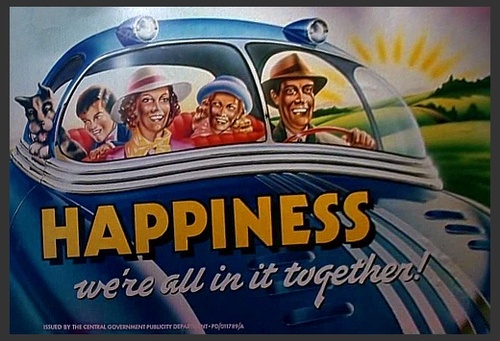
All lives have equal worth. But I think it’s safe to say that we’re not “all in it together” as Cameron claimed. He believes that some lives are more important and some suicides are more worthy of investigation than others. It is very clear that this government does not care about the lives and welfare of sick and disabled people.

Call me cynical but I wonder which social group are more likely to vote Conservative?

Related

Suicides reach a ten year high and are linked with welfare “reforms”

292533_330073053728896_1536469241_nPictures courtesy of Robert Livingstone

Techniques of neutralisation: David Cameron’s excuses for Iain Duncan Smith

430835_148211001996623_1337599952_n (1)

I wrote earlier about the way the Department of Work and Pensions (DWP) heavily micro-managed the recent Mortality Statistics release, and how the Government are using an excessively bureaucratic approach to ensure that no inferences are drawn from the data published, insisting that it’s “wrong” to link the mortality rates of sick and disabled people with punitive, Conservative austerity policies.

However, the accounts and experiences of sick and disabled people and their families (recorded in the media, in parliamentary inquiries, Commons debates – all preserved on the Hansard record) inform us that there is a clear correlation between the Tory “reforms” and increased distress, a loss of dignity and autonomy, financial insecurity and insolvency, increasing ill health, and sometimes, the death, of disabled people.

When confronted in the Commons, Iain Duncan Smith and other ministers dispensed with civilised debate, and simply blocked any discussion regarding concerns raised by the opposition about the negative impact of the Tory welfare cuts on sick and disabled people.  Values of decency and legitimate concerns about the welfare of sick and disabled citizens were depreciated as mere matters of “subjective interpretation” and not as worthy subjects of political, rational or objective discussion.

The Mortality Statistics release from Department of Work and Pension “provides further commentary on the appropriate use of this information” – in other words, it informs us what we may and may not do with the “data”, and carries this pre-emptive caution:

“Any causal effect between benefits and mortality cannot be assumed from these statistics. Additionally, these isolated figures provide limited scope for analysis and nothing can be gained from this publication that would allow the reader to form any judgement as to the effects or impacts of the Work Capability Assessment.”

Bearing in mind that the information in the release came about because of many Freedom of Information (FOI) requests from many of us, and the rulings of the Information Commissioner and a tribunal (Mike Sivier from Vox Political appealed against the original decision by the Information Commissioner and the DWP to refuse the Freedom of Information requests), it’s difficult to see why the Government have been so determined, firstly, to withhold the information requested, secondly, when forced to make the release, to present the information in a decontextualized way that renders it virtually meaningless, thirdly, to go to such extraordinary lengths to instruct us how we may and may not analyse the data and fourthly, to respond to any interpretive reference to the data as “wrong”, refusing to engage in any further discussion.

Unless of course it’s a Government that doesn’t want open and democratic accountability and public scrutiny of the often devastating impact of its policies.

Debbie Abrahams, the new shadow minister for disabled people, has long been an outstanding campaigner and spokesperson for disabled people. Earlier this month, she asked David Cameron:

“Two weeks ago, the Work and Pensions Secretary’s Department not only admitted to falsifying testimonies in leaflets, but published data on the deaths of people on sickness benefit, which showed that they are four times more likely to die than the general population. That was after the Secretary of State told the House that these data did not exist. Given that, and his offensive remarks earlier this week—referring to people without disabilities as “normal”—when will the Prime Minister take control and respond to my call for the Work and Pensions Secretary to be investigated for breaching the ministerial code?”

Here is the Ministerial code. Ministers are also expected to observe the seven Nolan Principles, which are the basis of the ethical standards of conduct that is expected of all holders of public office. 

Last year, I sent David Cameron a reminder of the established standards and ethics of Public Office, as the Coalition had exempted themselves, but he didn’t respond and it didn’t make any difference.

It’s true that the Department of Work Pensions (DWP) has admitted falsifying testimonies in leaflets. The DWP’s own data does indicate that people on incapacity benefits are four times more likely to die than other people in the general population. Iain Duncan Smith did tell MPs that this data did not even exist. Then he told them it did.

Let’s be frank here, Iain Duncan Smith has established a culture where it’s acceptable to lie, even his Curriculum Vitae is comprised of  Machiavellian, narcissistic-inspired confabulations – he’s qualified only in absolute and utter tosh, he graduated without Honour. Or a degree.

And it’s truly priceless that Iain Duncan Smith or David Cameron can accuse anyone of misrepresenting statistics with a straight face, given the large number of official rebukes the Tories have had from the Office for National Statistics (ONS) for manipulating or  misrepresenting statistics and telling lies.

Today, Debbie received the following written response to her question from the Prime sinister Minister:

Cameron letter on claimant deaths

Cameron letter on claimant deaths

I’ve already addressed a lot of the content above, however I couldn’t help but note the apparent “policing” of Debbie’s tweets. The response isn’t a rational or reasonable one, and certainly not of a standard that is expected of a prime minister.

How can the use of fake statements from fake characters about fictitious “benefits” of harsh sanctions – the arbitrary and punitive removal of lifeline income to support people in meeting basic survival needs – ever “help claimants and advisers to understand the benefit system”?

How is telling lies about the impact of policy and constructing fake positive testimonies ever “illustrative”? That was no “error”: it was an intentional, deceitful act designed solely to mislead the public and to justify the Conservative’s crass and primitive behaviourist approach to what was once our social security.

As is the insistence that “the statistics showed it is quite wrong to suggest any causal link between the death of an individual and their benefit claim.” Tosh. The statistics showed no such thing,  they did not demonstrate that there is no existing causal link – but the data was presented in a way that intentionally obscures such a link. That does not mean we can conclude there’s no connection between increased mortality and the Conservative “reforms” at all.

Whilst we are warned not to draw inferences of causal links from the statistics, the prime minister thinks that it’s perfectly appropriate to do just that himself. Yet there is no empirical evidence whatsoever to support his denial of a causal link.  The statistical data does not falsify or refute the proposition that such a link exists. We have plenty of recorded evidence, however, to support our proposition that Tory policies are actually harming people.

Tory policies do. Margaret Thatcher’s policies caused premature deaths, too, and her Cabinet were far less harsh towards sick and disabled people than Cameron’s government. A research report which looked at over 70 existing research papers, concludes that as a result of unnecessary unemployment, welfare cuts and damaging housing policies, the former prime minister’s legacy includes the unnecessary and unjust premature death of many British citizens, together with a substantial and continuing burden of suffering and loss of well-being.

It doesn’t take a genius to work out that if you inflict stress and harm on people who are already ill, by withholding their lifeline support, by constantly reassessing them and telling them they are fit for work when they clearly are not, by invalidating their experiences, by forcing them to fight for the means of survival – without the means of survival, it will probably exacerbate any illness and quite possibly this will kill them.

As I discussed earlier today, Cameron and his government have consistently displayed an absolute lack of concern for sick and disabled people, who have borne the brunt of Tory austerity cuts. Yet it’s inconceivable that Conservatives don’t grasp the fact that their policies are at least potentially very harmful, and certainly very punitive in nature.

I’ve discussed many times before that Tory ideology is founded on toxic subterranean values and principles, which are anachronistic and incompatible with a society that has evolved to value democracy, human rights and the socio-economic gains from our post-war settlement.

Conservatives have always seen inequality as a necessary and beneficial element to a market driven economy, for example, and their policies tend to assemble a steeply hierarchical society, especially given their small state fetishism, which involves removing socio-economic support services and civilising mechanisms such as welfare, free healthcare and access to legal aid.

Beneath the familiar minarchist, class contingent Conservative policies and neoliberal schema is a tacit acceptance of socioeconomic Darwinism, and a leaning towards eugenicist principles, expressed most clearly recently in the withdrawal of tax credit support for low paid families with more than two children, in order to “change behaviours” as Iain Duncan Smith put it. The reasoning behind this is the government believe they can “nudge” poor people into “breeding” less. Such a class contingent policy reflects a deep prejudice and also demonstrates an authoritarianism that is certainly incompatible with democracy and human rights.

(See also David Freud was made to apologise for being a true Tory in public, Paternalistic Libertarianism and Freud’s comments in context and What will the Tories suggest next. “Compassionate” eugenics?)

The Tories employ techniques of neutralization which are used to rationalise or justify acts that contravene social norms or that are illegal.  There are five basic techniques of neutralization; denial of responsibility, denial of injury, denial of victims, condemnation of the condemners, and an appeal to higher loyalties.

The recognition of techniques of neutralisation by David Matza and Gresham Sykes happened during their work on Edwin Sutherland’s Differential Association in the 1950s. Matza and Sykes were working on juvenile delinquency at the time, and they theorised that the same techniques could be found throughout society and published their ideas in Delinquency and Drift, 1964.

It was Alexander Alverez who identified that these techniques were used more broadly at a socio-political level in Nazi Germany to “justify” the Holocaust. He added a sixth technique – Disengagement and Dehumanisation.

Such techniques allow people to neutralise and temporarily suspend their commitment to societal and moral values, and to switch off their own “inner protests”, providing them with the freedom to commit deviant acts. Some people don’t have such inner protests – psychopaths, for example – but they may employ techniques of neutralization to manipulate, and switch off the conscience protests of others.

It’s clear that this is a method frequently employed by the government. The Tories systematically attempt to to distort meanings, to withhold,  or deny any evidence that may expose the impact of their draconian policies on targeted social groups.

For example, when they habitually use the word “reform”, when   referring to is cutting funding or support. and “help” and “support” is Tory-speak that means to coerce and punish. The claim that the bedroom tax ishelping” people into workorhelping child poverty– when empirical research shows that 96% of those affected by the bedroom tax can NOT downsize due to a lack of available homes in their area – is a completely outrageous lie. People can’t move as there is a housing crisis, which is due to a lack of affordable homes and appropriately sized accommodation.

How can policies that further impoverish the poorest ever “help them to into work” or alleviate poverty? It’s glib, irrational tosh from a Government that can’t do coherent, joined up thinking, and even worse, thinks that we can’t either.

Forms of social prejudice are normalised gradually, almost inscrutably and incrementally – in stages. Allport describes the political, social and psychological processes, and how techniques of persuasion – propaganda – are used to facilitate stigmatising and dehumanisation of targeted groups to justify discrimination, until the unthinkable becomes acceptable, because of a steady erosion of our moral and rational boundaries.

The prejudice happens on a symbolic level first – via language – and it starts with subtlety, such as the use of divisive and stigmatising phrases like “scroungers and strivers” in the media and political rhetoric, referring to people who need support and social security as “stock”, suggesting that disabled people are not worth a minimum wage and so on.

These comments and strategies are not “mistakes”, this is how Conservatives really think. People who are prejudiced very seldom own up, and nor do bullies. They employ linguistic strategies, deceitful, diversionary and irrational responses that makes challenging them very difficult.

But as history has taught us, we really must challenge them.

36626_217452248405831_532419169_nPictures courtesy of Robert Livingstone

Related reading:

This is an excellent, substantial collection of evidenced lies, deceits and more lies from Ian Duncan Smith, collated by Bob Ellard, researcher for DPAC The IDS Files: the truth is out there 

Despotic paternalism and punishing the poor. Can this really be England?

382035_141704259313964_676863845_n
Framing the game

Earlier this year, David Cameron defended his welfare “reforms”, claiming that: “Labour has infantilised benefit claimants”, and he argued it was “not big-hearted” to leave people claiming sickness allowances when “they could be incentivised to get treatment for alcohol dependence or obesity.”

I should not need to point out that despite the bizarre attempt at stigmatising sick and disabled people with such a loaded, moralising and media agenda-setting comment from our PM, the majority of people claiming sickness benefits are neither dependent on alcohol nor are they claiming because they are obese. This said, I think that alcohol dependence and obesity are illnesses that ought to be treated with compassion instead of moralising. But the general public on the whole do not hold this view. Cameron knows that. In fact Cameron has contributed to the scapegoating of social groups, outgrouping and public division significantly over the past five years

I claim sickness benefit simply because I have a life-threatening illness called lupus. There is no cure, and no-one may imply I am ill because of “life-style choices”. However, people using alcohol often have underlying mental distress, and drinking alcohol is pretty much a social norm. Poverty often means that people are forced to buy the cheapest food, which is the least healthy option. Some illnesses and disabilities cause mobility problems, and some treatments cause weight gain. So it cannot be assumed that alcohol dependence and obesity are simply about “making wrong choices” after all. 

I have to say that it IS “big-hearted” to leave me claiming benefits, Mr Cameron, because I am no longer fit for work. Indeed I was forced to take my case to tribunal after your government tried to “kindly” incentivise me to abandon my legitimate claim for sickness benefit, and the tribunal panel decided that if I were return to my profession(s) (social work and previously, youth and community work – with young people at risk of offending,) that would, though no fault of my own, place me in situations that are an unacceptable risk to my health and safety, and of course would also place others – vulnerable young people – at risk. Which is why I claimed sickness benefit in the first place – because I am too ill to work.

Libertarian paternalism isn’t “fatherly”

Mr Cameron, however, thinks he knows better and continues to insist that it is is everyone’s best interests to work. I can assure him that isn’t the case. So can many others with chronic illnesses and disabilities.

Back in 2013, Esther McVey defended the increased use of welfare conditionality and benefit sanctions in front of the work and pensions committee by infantilising claimants and playing the behaviourist paternalistic libertarian nudge card. She said: “What does a teacher do in a school? A teacher would tell you off or give you lines or whatever it is, detentions, but at the same time they are wanting your best interests at heart.”

“They are teaching you, they are educating you but at the same time they will also have the ability to sanction you.”

Since when did the state become comparable with a strict, punitive, authoritarian headmaster at a remedial school called “we know what’s best for you” in this so-called first-world liberal democracy?  That is not democracy at all: it’s despotic paternalism.

One of the cruellest myths of inequality is that some people are poor because they lack the capability to be anything else. Meritocracy is a lie. It is used to justify the obscene privileges and power at the top of our steep social hierarchy and the cruel exclusion and crushing, humiliating deprivation at the bottom. No-one seems to want to contemplate that people are poor because some people are very very rich, and if the very rich have a little less, the poor could have a little more.

Neoliberalism is a socioeconomic system founded entirely on competition. This means that people have to compete for resources and opportunities, including jobs. Inevitably such as system generates “winners” and “losers”. Poverty has got nothing to do with personal “choices”; the system itself creates inequalities.

Deserving and undeserving: the rich deserve more money, the poor deserve punishment

At least one third of those people with the most wealth have inherited it. It’s a manifestation of prejudice that poor people are seen as “less deserving”, based on “ability” and on vulgar assumptions regarding people’s personal qualities and character. In fact the media, mostly talking to itself,  in judging “the undeserving”  has given a veneer of moral authority to an ancient Conservative prejudice. It’s very evident in policies. The austerity cuts don’t apply to the fabulously lucky wealthy. Whilst the poorest citizens have seen their welfare cut and wages decrease, as the cost of living spirals upwards, millionaires were handed a tax break of £107, 000 each per year.

Surely our stratified social system of starkly divided wealth, resources, power, privilege and access is punishment enough for poor people.

As Ed Miliband pointed out: “David Cameron and George Osborne believe the only way to persuade millionaires to work harder is to give them more money.

But they also seem to believe that the only way to make you (ordinary people) work harder is to take money away.”  So Tory “incentives” are punitive, but only if you are poor. Wealth, apparently, is the gift that just keeps on giving.

Tories create “scroungers” and “skivers”

As I’ve commented elsewhere, it’s truly remarkable that whenever we have a Conservative government, we suddenly witness media coverage of an unprecedented rise in the numbers of poor people who suddenly seem to develop a considerable range of baffling personal ineptitudes and immediately dysfunctional lives.

We see a proliferation of  “skivers” and “scroungers”, an uprising of “fecklessness”, a whole sneaky “culture of entitlement”, “drug addicts”, a riot of general all-round bad sorts, and apparently, the numbers of poor people who suddenly can’t cook a nutritious meal has climbed dramatically, too. We are told that starvation is not because of a lack of money and access to food, but rather, it’s because people don’t know how to budget and cook.

That’s odd, because I always thought that poverty is a consequence of the way society is organised and how resources are allocated through government policies.

That’s a fundamental truth that we seem to be losing sight of, because of the current poverty of state responsibility and the politics of blame.

However, the current government has made the welfare system increasingly conditional on the grounds that “permissive” welfare policies have led to welfare “dependency”.  Strict behavioural requirements and punishments in the form of sanctions were an integral part of the conservative moralisation of welfare, and their  “reforms” aimed to make claiming benefits less attractive than taking a low paid, insecure job.

Sanctions simply worsen the position of the most vulnerable and disadvantaged citizens. Creating desperation by removing people’s means of basic survival forces them into low paid, insecure work and exerts a further downward pressure on conditions of employement and wages. It commodifies the reserve army of labor, which is strictly in the interests of exploitative, profit-driven plutocrats.

Can this really be England? 

Cruel Brittania. A man with heart problems was sanctioned because he had a heart attack during a disability benefits assessment and so failed to complete the assessment. A lone mother was sanctioned because she was a little late for a jobcentre  interview, as her four year old daughter needed the toilet.

A man with diabetes was sanctioned because he missed an appointment due to illness, he died penniless, starving, without electricity and alone as a consequence. His electricity card was out of credit, which meant that the fridge where he should have kept his insulin chilled was not working. Three weeks after his benefits were stopped he died from diabetic ketoacidosis – because he could not take his insulin. Here are 11 more irrational, unfair, purely punitive applications of sanctions.

How can removing the basic means of survival for the poorest people in our society possibly incentivise them, “help them into work” or be considered to be remotely “fair”?

There are targets set for imposing benefit sanctions. Jobcentre managers routinely put pressure on staff to sanction people’s benefits, according to their union. Failure to impose “enough” sanctions is said to result in staff being “subject to performance reviews” or losing pay.  “Success” as an employee at the jobcentre is certainly not about helping people to get a job but rather, it’s about tricking them out of the money they need to meet their basic needs. Such as food, fuel and shelter. Welfare is no longer a safety net: it is an institutionalisation of systematic state punishment of our poorest citizens.

Angela Neville worked as an adviser in Braintree jobcentre, Essex, for four years and she has written a play with two collaborators, her friends Angela Howard and Jackie Howard, both of whom have helped advocate for unemployed people who were threatened with benefit sanctions by jobcentre staff.

One central motivation behind the play was how “morally compromising” the job had become. In one scene an adviser tells her mother that it’s like “getting brownie points” for cruelty. When Neville herself became redundant in 2013, she was warned about being sanctioned for supposedly being five minutes late to a jobcentre interview.

There was a strong feeling among the playwrights that the tendencies in wider society and the media to stigmatise and vilify benefits claimants needed to be challenged and refuted. The play opens with a scene where “nosey neighbours” spot someone on sickness benefit in the street and assume they must be skiving instead of working.

This perspective is one shared widely amongst disabled people, groups, organisations and charities that advocate for and support disabled people, and is evidenced by the rapid rise of disability-related hate crime since 2010, reaching the highest level since records began by 2012. The UK government is currently the first to face a high-level international inquiry, initiated by the United Nations Committee because of “grave or systemic violations” of the rights of disabled people.

That ought to be a source of shame for the both the government and the public, especially considering that this country was once considered a beacon of human rights, we are (supposedly) a first-world liberal democracy, and a very wealthy nation, yet our government behave like tyrants towards the most vulnerable citizens of the UK. And the public have endorsed this.

“This play is about getting people to bloody think about stuff. Use their brains. Sometimes I think, crikey, we are turning into a really mean, spying on our neighbour, type of society,” Angela said.

The title of the play, Can This be England? is an allusion to the disbelief that Angela Neville and many of us feel at how people on benefits are being treated. And she describes the play, in which she also acts, as a “dramatic consciousness-raising exercise”. The idea behind this production is that the play may be performed very simply, with minimum rehearsal. Scripts are carried throughout and few props are used.

It can take place in any room of a suitable size, and there is no need for stage lighting. The script is freely available to all who wish to use it for performances to raise awareness (non-commercial purposes). Click HERE to download a PDF file. If you find it useful please e-mail any feedback to Angela Neville at the Show and Tell Theatre Company.

Psychopolitics

Welfare has become increasingly redefined: it is now pre-occupied with assumptions about and modification of the behaviour and character of recipients rather than with the alleviation of poverty and ensuring economic and social well-being. The stigmatisation of people needing benefits is designed purposefully to displace public sympathy for the poor, and to generate moral outrage, which is then used to further justify the steady dismantling of the welfare state.

Framed by ideological concerns, the welfare “reforms” reflect an abandonment of concern for disadvantage and the meeting of human needs as ends in themselves. We have witnessed an extremely punitive system emerge, under the Tories, at a time when jobs are becoming increasingly characterised by insecurity and poor pay. Last year, two-thirds of people who found work took jobs for less than the living wage (£7.85 an hour nationally, £9.15 in London), according to the annual report from the Joseph Rowntree Foundation.

There are as many people in work that are now in poverty as there are out of work, partly due to a vast increase in insecure work on zero-hours contracts, or in part-time or low-paid self-employment. Poverty-level wages have been exacerbated by the number of people reliant on privately rented accommodation and unable to get social housing, the report said. Evictions of tenants by private landlords outnumber mortgage repossessions and are the most common cause of homelessness. The rapidly rising cost of living – price rises for food, energy and transport – have so many people on low pay struggling to make ends meet.

But pay for people on what were comfortable incomes previously is now outstripped by inflation, leaving many more struggling with rising prices. Public spending has decreased, having a knock-on effect on the economy.

Economic Darwinism doesn’t promote growth

Last year, I wrote about the study from the Organisation for Economic Co-operation and Development (OECD), who found what most of us already knew: that income inequality actually stifles economic growth in some of the world’s wealthiest countries, whilst the redistribution of wealth via taxes and benefits encourages growth.

The report from the OECD, a leading global think tank, shows basically that what creates and reverses growth is the exact opposite of what the current right-wing government are telling us, highlighting the rational basis and fundamental truth of Ed Miliband’s comments in his speech – that the Tory austerity cuts are purely ideologically driven, and not about managing the economy at all.

There is a dimension of vindictiveness in the Tory claim that cutting people’s lifeline benefits will somehow “make work pay”, once you see past the Orwellian unlogic of the statement, and recognise the extent of waged poverty in the UK. Making work pay would rationally need to involve a rise in wages, surely, but that has not happened.

To understand this, it is important to grasp the elitist socio-economic priorities that are embedded in Conservative ideology, which I’ve outlined previously in Conservatism in a nutshell. The whole idea beneath the Orwellian doublespeak is comparable with the punitive Poor Law Amendment Act of 1834 – in particular, we can see a clear parallel with the 1834 “less eligibility principle” and the Tory notion of “making work pay” which I’ve previously discussed in The New New Poor Law.

The parallels are underpinned by a shift from macro-level socio-economic explanations of poverty and state responsibility to micro-level punitive, moral psychologising, scapegoating, and the abdication of state (and public) responsibility.

Policies provide a conceptual frame of reference, which tend to shape public attitudes, they are also deeply symbolic gestures that convey subliminal messages. The Conservative war on welfare and the NHS further devalues the worth of human life, turning the needy into a disposable state commodity, a coerced, desperate reserve army of cheap labour.

It also conveys the message that to care about the survival and well-being of others is futile; it pathologises collectivism, cooperation and altruism. This is a government that operates entirely by generating fear and division, on a social, economic and cultural level, but also, increasingly intrusively, within phenomenological, psychological and psychic dimensions too.

How did the poor become such an easy enemy of the state, and how can the public believe the dominant narrative that pathologises the victim, and fail to recognise the irrational, circular argument of benefit sanctions, when the conservatives’ reasoning is that the application of sanctions demonstrates the moral ineptitude of the individual – but it merely acts to justify poverty and inequality.

The perverse logic runs as follows: welfare for the poorest citizens – those who require collective responses to poverty – can only retain public support by threatening to, and by actually making the poorest even poorer. Is this really welfare?

No, not any more.

How can welfare ever be about some politically manufactured, apocryphal and malevolent desire for retribution, based on pseudo-moralising about the poor and demoralised, and a concern for the spiteful, perverted, mean-spirited sense of satisfaction for the better off, at the expense of the material and biological well-being of those in need: the poorest and most vulnerable citizens?

Conservative rhetoric is designed to have us believe there would be no poor if the welfare state didn’t “create” them. If the Conservatives must insist on peddling the myth of meritocracy, then surely they must also concede that whilst such a system has some beneficiaries, it also creates situations of insolvency and poverty for many others.

Democracy exists partly to ensure that the powerful are accountable to the vulnerable. The Conservatives have blocked that crucial exchange, they despise the welfare state, which provides the vulnerable with protection from  exploitation by the powerful.

As I’ve argued elsewhere, the wide recognition that unbridled capitalism causes casualties is why the welfare state came into being, after all – because when we allow such competitive economic dogmas to manifest, there is inevitably going to be winners and losers. That is the nature of competitive individualism, and along with crass inequality, it’s an implicit, undeniable and fundamental part of the meritocracy script.

Poverty is created by government policies that reflect a pursuit of free market ideals;  by the imposition of neoliberal economic policies – the sort of policies that ensure taxes cuts for the wealthy, banish fiscal and other business regulations, shred the social safety net, and erode social cohesion and stability, whilst directing the media and population to chant the diversionary mantra of self-reliance and individual responsibility.

Poverty intrudes on people’s lives, it dominates attention and constantly commands that our biologically-driven priorities are met, it reduces cognitive resources, it demotivates, it overwhelms, it reduces experience of the world to one of material paramountcy which cannot be transcended, it stifles human potential.

Need is NOT greed, regardless of the malicious justification narratives in the media and spiteful political rhetoric from the champions of social Darwinism and the Randian self-serving free market. Meeting basic survival imperatives – food, warmth and shelter – is a fundamental prerequisite for life. If the means for meeting these basic survival needs is taken away, then people will die. Surely even the most cold, callous, psychopathic and dogmatic defenders of the status quo can manage to work that one out.

Punishing poor people with more poverty is savage, obscene, barbaric, brutal, and can NEVER work to “incentivise” people to not be poor, nor can it change the pathological idiom that shapes and imposes such unfortunate, unforgiving and unforgivable circumstances on those with the least in the first place.

430835_148211001996623_1337599952_n (1)With thanks to Robert Livingstone for his excellent memes

Cameron believes that saving ‘the tax payer’ money is more important than saving lives.

rich keep millons

The following is from a very revealing transcript of David Cameron’s interview with Andrew Marr earlier today.

Cameron implied that dying is somehow an appropriate punishment for failing to attend an interview at the Jobcentre, in order to save “the tax payer” money. Cameron thinks that taxing the wealthy is “immoral,”  but evidently, formulating policies that cause the death of vulnerable citizens is acceptable. Cameron made it plain that he has no intention of carrying out a policy review, or of investigating the growing number of deaths correlated with the conservative party’s welfare cuts.

He showed a complete lack of remorse and basic compassion for David Clapson (and his family,) who died as a direct consequence of the cruel sanction regime that Cameron introduced as part of benefit conditionality,  which is now an integral part of the wider welfare “reforms.”

 THE ANDREW MARR SHOW, BBC 19.4.15 (Full transcript here.)
David Cameron before the news:

AM: Well you also talked to Evan Davis about the twenty two billion pounds of welfare cuts you’ve made so far as if that was easy. Do you accept that has hurt a lot of poor and vulnerable people?

DC: Well it has involved difficult decisions. But of course as we’ve done that we’ve been getting two million people into work, nine hundred thousand people…

AM: Difficult decisions for you; a lot of real pain and suffering for people out there.

DC: Well, we have protected for instance the pension, we’ve protected benefits for the lowest paid, we’ve always made sure that we’ve increased spending on disability benefits rather than reduced it. But crucially the nine hundred thousand people we’ve got off welfare and into work that has actually saved money but it’s also been good for ourcountry and crucially good for them:a job is the best route out of poverty that there is.

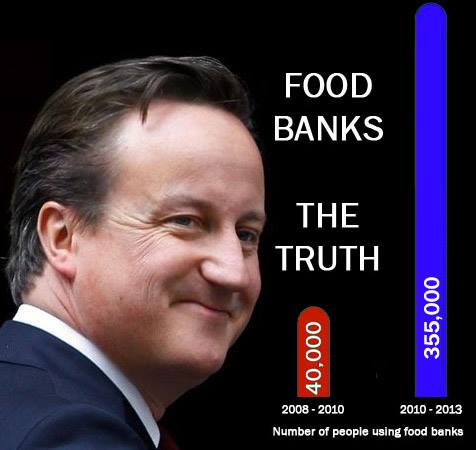
AM: What about the million people depending on food banks?

DC: Well obviously I want a country where people don’t depend on food banks, we did something.

AM: But why are more people depending on food banks?

DC: One of the things we did was that Labour, because they didn’t like the PR of this, they didn’t advertise or promote the existence of food banks through job centres. We changed that because we thought that was, that was basically sort of selfish and shortminded…

1390648_548165358586330_1740107407_nAM: And according to the Trussell Trust who run these banks that accounts for just three percent of people using food banks at the moment so it’s not a significant thing. But can I take you to an individual case, James [he meant David] Clapson. Clapson who was a former soldier worked very hard for a long time then was on benefits, failed to turn up to two job centre interviews, [it was just one interview that David missed,] had his benefits removed for a month, he was diabetic, his insulin couldn’t be refrigerated and he died two weeks later.

Now that is the kind of case that is coming up again and again and again and shows that the welfare cuts have been agonisingly painful for real people out there.

DM: Well we have hardship funds and councils have hardship funds for exactly those sorts of tragic cases but if you’re asking me…

AM: It didn’t work.

DC: If you are asking me is it right that people who are asked to turn up for interviews or asked to fill in a CV or asked to apply for a job should have to do those things before getting benefits then yes it’s right that we do have that system in place but we always, as I put it on the steps of…

AM: But the system has been very very aggressive, another case of a man who had learning difficulties and filled in his form by hand rather than by computer and was refused benefits, there is lots of these cases as you won’t have a review, you should have a review of the system surely?

DC: I look at all of those individual cases and all of those cases can be addressed by the hardship funds and by the flexibilities that are there in the system but we have sanctions for a reason, people watching this programme…

AM: You don’t get the hardship fund for two weeks.

DC: Hold on a second

AM: Alright.

DC: People watching this programme who pay their taxes, who work very hard, they don’t pay their taxes so people can sign on and show no effort at getting a job, as I put it on the steps of Downing Street those who can should; those who can’t we always help – that is the principle that should always underline a compassionate benefits system.

scroll2
We do not have a compassionate welfare system: we have a re-designed system that is draconian because of the “reforms” – it’s more about taking money from people than supporting them. It’s about punishing people into work. That is precisely why people like David Clapson are dying. No support was given to David, and many others like him.

Cameron’s rhetoric isn’t remotely coherent or compassionate, let alone honest.

Let’s not forget that it was Cameron’s government that has ruthlessly stigmatised, dehumanised and scapegoated unemployed and disabled people, in order to justify punishing them by removing their support and handing out the subsequent “savings” to millionaires, who gained £107,000 each per year, whilst those who paid for it – and we are also tax payers, Mr Cameron – are suffering and dying, and the establishment look on with contemptible, pathological, greedy, grasping, self-serving indifference.

Related

11046274_80388630968089cam cThanks to Robert Livingstone for the excellent memes.

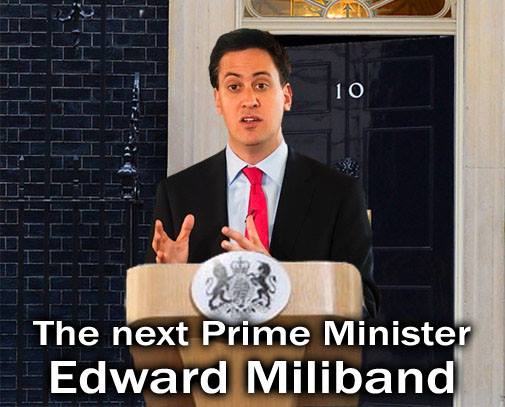
Not “weird” but wonderful: Miliband will win the battle for number 10.

I’ve often heard people remark how surprised they are at just how handsome, sincere and at ease Ed Miliband is when they meet him in person. That’s because the controlled and  biased media have worked hard to purposefully present a purely fictional image of an opposition leader that is weird, arkward, geeky, weak, unattractive and unelectable. But nothing could be further from the truth.

The large discrepancy between Tory media portrayals and reality are a key reason why Cameron didn’t want the televised head-to-head debates with Miliband to go ahead. During his interview with the self-declared “one nation”conservative Jeremy Paxman, Miliband very cleverly highlighted the disparity in fictional creations of the media by his casual dismissal of them, stating that he didn’t care what the media says about him: he cares what the public think.

This not only demonstrates that Miliband values sincerity and solid, needs-led public policy content over superficial image management as a leader, (Cameron by contrast certainly favours PR style-management over content,) it draws a clear dividing line between what is real and what is not, what really matters and what does not, for the public to plainly see.

The public finally got to see the real Ed Miliband – confident, strong, keen to listen rather than just keen to answer, eloquent, sincere, spontaneous (indicating his fundamental honesty) and remarkably, he remembered people’s names.

Even dealing with the deeply personal and undoubtedly difficult questions about his relationship with his brother from the audience, Miliband was positive, smiling – his honesty, warmth and being at ease with his own emotions shone through.

He said: “I thought someone needed to lead the Labour Party who would move us on from New Labour.”

Many people will agree with that. David Miliband is a Blairite, had he been elected party leader, the Labour Party would have stood still, rather than progressing as it has with Ed Miliband at the helm.

Paxman’s attempts at making Miliband look weak failed spectacularly.  Miliband gave some excellent responses regarding questions about Labour’s borrowing record during the global banking crisis, (I particularly like his reference to the fact that it was a global recession, and that he said there is need for reform of the banking and finance sector,) and he disclosed Labour’s intention of redistribution policies with reference to the question about Labour’s mansion tax proposal.

Paxman then attempted to intimidate and bruise, using very personal questions to try and undermine Miliband and make him appear “weak”, inadvertantly allowing him to show his genuine strength instead. I was delighted to hear Miliband point out that he had refused to back proposed bombing raids on Syria despite immense pressure from Barack Obama – the “leader of the free world” – and Cameron. Miliband led the revolt against attacking Syria, which included a handful of Tories, much to Cameron’s fury at the time. (See: David Cameron accused Ed Miliband of ‘siding with Russia’ over Syria).

Miliband confirmed his potential to be a strong PM with a definitive, slightly corny but nonetheless pleasing, applause-inducing best line of the night: “Am I tough enough? Hell yes, I’m tough enough”. 

Five years of Tory media reverse psychology on the public have been reversed masterfully by Ed Miliband in just a few minutes.

Miliband was very assertive and responsive, allowing nothing to faze him when Paxman turned the heat up:“You don’t get to decide the outcome of the general election: the public do. You’re important, Jeremy, but you’re not that important,” he retorted when Paxman suggested that a hung parliament was pre-destined.

Miliband intelligently turned what others would see as daunting media portrayals of his “weakness” into an opportunity to his advantage, re-framing himself as a strong leader who had been continually underestimated – someone whose warmth, decency and calm, rational responsiveness is mistaken for weakness. This is a man who was told he couldn’t beat his brother during the leadership vote (he did) and who was told he couldn’t become prime minister (he can and will).

Miliband presented himself as the decent conviction politician that he is, as someone who has clearly defined principles and integrity. He was passionate, warm, sincere, assertive, positive and at times, very witty and good humoured.

David Cameron, who had an easier ride from Paxman, emerged rattled, red-faced and bruised by Mr Paxman’s questions – particularly on the rise of food banks and zero-hour contracts. He displayed a fundamental hypocrisy when, after dismissing criticism of the impact of zero-hour contracts on others, he was forced to admit that he couldn’t survive on them himself. Cameron evaded answering  and floundered when he was pressed. Miliband did not, providing clear, incisive answers throughout.

Miliband came across an honest, contained, very human, responsive, fluent, warm and inspiring leader, who refused, largely, to be placed on the defensive. He conveyed the key values behind his politics very well: a passionate desire to reduce inequality, which resonates with many voters and it sincerely reflects Miliband’s personal principles, as well as the rationale for his distinctive brand of democratic socialism.

Cameron, in contrast, came across as out of control, disingenuous, incoherent, lacking in principles and sound judgement, as well as integrity, especially when Paxman said that many voters found it “problematic” that Cameron had chosen to surround himself with people like Clarkson, ex-HSBC boss Lord Green and former News of the World editor Andy Coulson. Paxman asked: “What do you have in common with all these rich people?”

But although Cameron was quick on the uptake, he couldn’t bluster a defence, replying with: “The aspersion you are trying to cast is completely ridiculous.”

I think not. A corrupt scoundrel that has surrounded himself with other corrupt scoundrels is an accurate measure of it. The elitist “old boy network” world of Cameron, here, contrasts starkly with Miliband’s world-view, with strong emphasis on the core principle of equality.

Cameron’s sense of class-based entitlement has always been weakness which he has tried and failed to parade as a strength.

Mr Cameron was forced to confess that he had not asked Lord Green about tax avoidance in HSBC’s Swiss branch at the time of his appointment as a trade minister but said that: “all the normal processes and procedures were followed” and said that allegations the bank helped clients dodge tax had emerged only “subsequently.”

A good exposure there from Paxman. And in fairness, he did grill Cameron on broken promises concerning the NHS, VAT, debt, food banks, zero-hour contracts and immigration, which tore open the coalition’s presented record showing them as being somewhat conservative with the truth.

Paxman claimed that Miliband had made erroneous estimates of unemployment and the level of wages, and I was satisfied when Miliband corrected him, stating what most of us know is true: wage levels have dropped since 2010. There was little opportunity for Miliband to discuss unemployment, however, once again, most of us know that insecure types of self-employment, benefit sanctions and workfare, amongst other things, have been used to massage the coalition’s employment figures. This was the recent finding of the cross-party Work and Pensions Committee inquiry into benefit sanctions, recently.

I think Paxman knew he had been out-manoeuvred by the end of the session. Not by cunning and strategy, but by fundamental honesty and unflinching courage: Miliband didn’t flounder or falter once. It’s revealing that the session closed with Paxman asking Miliband: “Are you okay?” 

This was probably a face-saving tactic on Paxman’s part, as Miliband had trounced his attempts at showing him as “weak”, but it was also a revealing, apologetic attempt at compensation for the fact that he went too far with the personal elements in his questions in a deliberate attempt to undermine him. Miliband was quick to retort, perceptively: “I’m fine thanks, are you?”

Miliband’s pronounced strategy for overcoming a poor, most evilly contrived media-invented image is “be yourself.” It works very well, as everyone else is taken …

And Cameron, being a PR man, can only offer us superficial soundbites that don’t connect up, he has no real self to fall back on: he’s all ego and no soul.

Regardless of polls, I have faith that the British public will recognise a winning, decent, sincere Prime Minister with depth and principles that will serve in the best interests of the country rather than the best interests of his privileged peer group, like the ever-corruptible Cameron has.

Miliband has promised to fight a campaign founded on hope and optimism: he is determined to show that Britain can do better. He is so right.

Well done Ed Miliband!

10424302_677497562319775_766713150422913861_n
 Many thanks to Robert Livingstone for his excellent memes.

Update: It’s been reported that Ed Miliband was punched and pushed by protesters wearing Alex Salmond masks, prior to the televised debate, by the Telegraph, Mirror and Express. The earlier incident, described as extremely aggressive and intimidating, did not hamper Mr Miliband’s performance in the first TV set piece of the election campaign. There is some speculation that the masked men that carried out the attack were Tory supporters, rather than Scottish Nationalists.

It does, however, possibly change the context in which Jeremy Paxman asked Ed Milband if was okay at the close of the session, as he may have known about the undoubtedly harrowing experience that Mr Milband had encountered just hours before. That would of course change Mr Paxman’s motive entirely.

Either way, the opposition leader turned up for the debates, apparently undaunted, and his performance was excellent. This is further indication of what an admirable, strong and courageous man of character Ed Milband is.

Ed Miliband announces that Labour will put democratic leaders’ debates on a statutory footing. And Cameron is a coward.

chickenEd Miliband is quite right to call Cameron a chicken. Tory MP Rees-Mogg appeared on Channel 4 News and laid bare the reason for Cameron’s “predicament” regarding the pre-election debates – it’s all because of a “left-wing conspiracy.” Really.

Gosh, does that mean the BBC’s political editor, Nick Robinson, once chairman of the Young Conservatives, has undergone a radical Trotskyist transformation whilst we slept?

Since when was debate, open discussion of pressing issues that affect the electorate, democratic discussion of policies, political transparency and  accountability deemed a “left-wing conspiracy”? Given the priceless claim of “BBC bias”, despite Iain Duncan Smith’s ongoing intensive monitoring campaign to keep the beeb “right”, I had to chuckle very heartily at that. It gave me quite a sarcastic turn.

I’m sure that emminent communist Lord Patten of Barnes must be delighted that standards haven’t slipped since he resigned last May as the Chairman of the BBC Trust, which is the appointed governing body.

Mind you, the government appointment of Pattern’s successor, following backroom negotiations, certainly raised a few eyebrows. Renowned socialist, Rona Fairhead (appointed a Commander of the Order of the British Empire in 2012) is one of the government’s business ambassadors and a director at the Cabinet Office, advising Francis Maude. There may be a glimpse of a political hinterland, however, from the fact that her husband, Tom, a director of the private equity firm Campbell Lutyens, was a Tory councillor.

Andrew Neil, the presenter of the BBC’s flagship political programmes Daily Politics and This Week, is chairman of the Spectator magazine. His editor is Robbie Gibb, former chief of staff to Francis Maude. And after the BBC’s economics editor Stephanie Flanders left for a £400,000-a-year job at that communist hotbed, JP Morgan, she was replaced by its business editor Robert Peston.

Peston himself has said: “Any suggestion the BBC has a left-wing bias is bollocks and the broadcaster actually veers towards a right-wing, pro-establishment view for fear of criticism.”

Research does indeed indicate that the BBC’s output is heavily biased towards the establishment and right-wing sources. Cardiff University undertook an extensive study, revealing that whilst there is always a slight bias towards political incumbents, the ratio in favour of Conservative politicians appearing on BBC news is significantly far greater than it was in favour of Labour figures when Gordon Brown was prime minister. Business representatives appear much more than they do on commercial news, and appear 19 times more frequently than trade union spokespersons on the BBC Six O’Clock News.

The evidence from the research is very clear. The BBC tends to reproduce a pro-Establishment, Conservative, Eurosceptic, pro-business version of the world. Furthermore, the Queen appoints the regulatory body – the BBC trust –  advised by government ministers, and the BBC trust then appoints the Director General. This has led to a public service run by people with strongly right-wing political and business affiliation.

Tory insiders say that Cameron is “determined” to avoid participating in the televised debates on equal terms with Miliband before the election, as he believes the Labour leader is the only one who would benefit. Chief election strategist Lynton Crosby and the former party deputy chairman Lord Ashcroft both insist Cameron should not risk taking part in a head to head, even if he endures “short-term criticism” for not doing so.

Ed Milband has announced that a Labour government would take legal steps to make sure leaders’ debates become a permanent feature in general election campaigns following David Cameron’s flat, arrogant refusal to take part in the three showdowns proposed by broadcasters.

A Labour government will move to put “fair and impartial leaders’ debates” on a statutory footing in an effort to avoid them becoming subject to the kind of “political wrangling” that has characterised the programmes scheduled for next month in the run-up to polling day.

The new system would work on similar lines to the current rules for planning the number, length and timing of party political broadcasts, under which parties are consulted but not given the power to veto them.

This may be done by establishing the body which negotiates the terms of debates as a trust in statute with responsibility for determining the dates, format, volume and attendees.

A Labour government would set a deadline of 2017 for changes to be put in place, giving more than enough time to plan the debates for a 2020 election.

Meanwhile, the four broadcasters – the BBC, ITV, Sky and Channel 4 – have said they will stick to their previously-announced plans for three debates during the election campaign, and urged the Prime Minister to “reconsider” his refusal to take part in these shows, including a head-to-head showdown with Mr Miliband.

Miliband told the Observer: “In recent days the British public has been treated to the unedifying and tawdry spectacle of a prime minister seeking to duck out of the TV debates he once claimed to support with great enthusiasm. Yesterday the broadcasters made it clear they would not be cowed by his tactics but it is wrong for them and the British public to have governing parties use this kind of pressure in campaign periods. It is time to ensure, once and for all, that these debates belong to the people not the prime minister of the day.”

But Cameron hasn’t exactly led a democratically inclined, transparent and accountable government for the past five years. He knows that in agreeing to just one debate with seven parties, questions will get such a short time for responses that he can evade any meaningful, in-depth scrutiny regarding his appalling policy record, entailing the myriad U-turns, inflicted cruelties and crass, prolific dishonesties of his leadership. And the one debate that Cameron has agreed will take place before his party manifesto is published, which again dodges accountability to the electorate: a profoundly (and consistently) undemocratic approach.

As Vernon Bogdanor, professor of government at King’s College, London says: “Debates should not be subject to the tactical calculations of party leaders. There is certainly the case for a statute requiring debates between leaders of all parties with over 5% of the vote; and a separate debate between the PM and leader of the opposition. That statute is best administered by the Electoral Commission rather than the broadcasters who can too easily be accused of bias.”

Cameron clearly dare not debate head-to-head with Ed Miliband – which is remarkable, given that the Tories’ entire campaign is predicated on portraying the Labour leader as “weak and incompetent.” So why is Cameron too afraid to confront him in public?

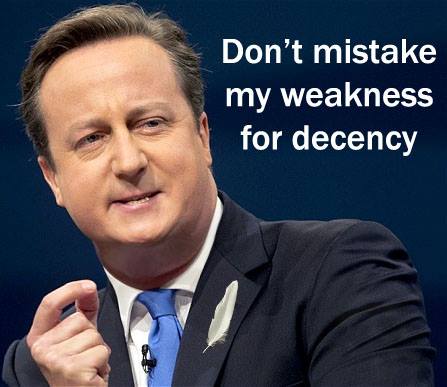
Last year I wrote that people often mistake Miliband’s decency and refusal to engage in negative smear campaigning as “weak”: it isn’t. This year, Ed Miliband has acknowledged that perception – fueled by a desperate Tory party and right-wing media barons that have endeavoured to portray Miliband as “unelectable” – asked us not to make that mistake, in an interview with Simon Hattenstone  – Ed Miliband: don’t mistake my decency for weaknessIt’s worth reading the entire interview, what shines through is Miliband’s genuine warmth, honesty, decency, strength and conviction in his principles.

Miliband is no “career politician” and Cameron knows that formal debate with him would serve to juxtapose unfavourably – exposing the vast differences between his own unprincipled archetypal anti-heroic Flashman character – a manipulative scoundrel and liar, a cunning cheat, a corrupt and coarse coward  – and a steadfast, decent, true partisan, conviction politician with principles and integrity. Miliband is precisely the prime minister that this country so desperately needs. Cameron knows it. He doesn’t want the public to know it.

Cam weaknessThe right-wing media campaign, aimed at attempting to undermine Miliband’s credibility as a leader, arose precisely because Miliband is the biggest threat to the UK power base and status quo that we’ve seen for many decades. He’s challenging the neo-liberal consensus of the past 30 years – now that is a plain indication of strong leader, and someone with personal strength and courage. Qualities that Cameron so conspicuously lacks.

I wonder if the Tories consider their imminent loss on 7 May due to their own callous policies, prolific lying and unmitigated economic disaster these past five years a left-wing conspiracy, too?

Laugh out loud.


Further reading:

Cameron’s chief spinner on leaders’ debates: No no no! The PM should hide and throw things at Miliband

The establishment are ‘frit’ because Ed Miliband is the biggest threat to the status quo we’ve seen for decades

The moment Ed Miliband said he’ll bring socialism back to Downing Street

Miliband is an excellent leader, and here’s why

The Tories attack Miliband because they’ve got no decent policies

The BBC expose a chasm between what the Coalition plan to do and what they want to disclose

Once you hear the jackboots, it’s too late

tory liesThanks to Robert Livingstone for the excellent memes.

The Tory election strategy is more of the same: Tories being conservative with the truth

1235473_537097386359794_65317730_n (1)

The following email is fromBack to messagesthe Conservative Campaign HQ, it’s packed with the most jaw-droppingly blatant lies and it marks the launch of their election campaign:

Your friends need to see this:

Conservative Campaign HQ (bulletin@mail.conservatives.com)
02/01/2015

Newsletters

To: Susan Jones

Our plan is working – and we need to stay on the road to a stronger economy. Please share our poster today and let everyone know:

 Let’s stay on the road to a stronger economy

When the Conservatives came into office in 2010, Britain was on the brink of bankruptcy. People were losing their jobs and families were worried about the future.

So we took difficult decisions to get our economy back on track.

Five years later, thanks to the measures we’ve taken and the hard work of the British people, the deficit has been halved, new businesses are opening up across the country, and there are a record number of people in work, with the security of a pay packet.

We need to stay on the road to a stronger economy – and your friends need to know about the important choice facing Britain in this election year.

Britain has come a long way in five years. We can’t go back to Labour’s way of more borrowing, more debt and higher taxes. Instead, let’s stay on the road that has brought us this far – the road that is securing a better future for everyone in our country.

Please share our poster today and let your friends know the important choice facing Britain this year.

Thank you,

Conservative Campaign HQ

Promoted by Alan Mabbutt on behalf of the Conservative Party, both at 4 Matthew Parker Street, London, SW1H 9HQ

Here is my response

Lie number 1. “When we came into office in 2010, Britain was on the brink of bankruptcy.”

The Office for Budget Responsibility (OBR) head rebuked Osborne for lying: Robert Chote said that the UK was never at risk of bankruptcy. Yet despite this public rebuke for lying, the Tories continue to peddle the same lie. Having established the OBR to act as a check on the government, the Chancellor and the Conservative Party might want to listen to its head and finally concede that there was no basis for his claim in 2010.

For the full list of official rebukes for Tory lies, please see here

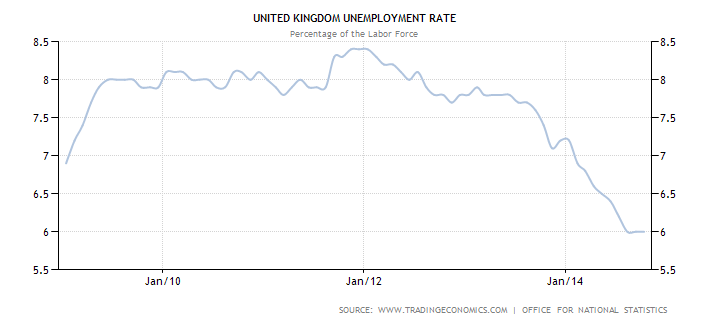
Lie number 2. “People were losing their jobs and families were worried about the future.”

united-kingdom-unemployment

1381256_10151703147396305_1638953570_n (1)Note that after an increase in people losing their jobs under the Tory-led Coalition since 2010, the apparent decrease in job losses in the first graph coincides with the introduction of the new benefit sanction regime in 2012.

We know that the Conservatives measure unemployment by using a conveniently heavily biased system called “off-flow” that includes all of the numbers of people thrown off Jobseekers’ Allowance through sanctions. Indeed, it emerged during an ongoing inquiry instigated by the parliamentary Work and Pensions Select Committee, through research conducted by Professor David Stuckler, that more than 500,000 Job Seekers Allowance (JSA) claimants have disappeared from unemployment statistics, without finding work, since the sanctions regime was substantially extended in October, 2012.

And let’s not forget that sanctions are a draconian and target-driven removal of lifeline benefits – the amount of money that the state previously deemed necessary for meeting basic needs, and as such, cannot possibly be justified when all they may ever achieve is forcing people to focus on basic survival rather than on gaining employment. The Work and Pensions Select Committee have accused the Conservatives of using benefit sanctions to massage unemployment figures.

Other problems with off-flow and the far-fetched claims of the Conservative Party are highlighted in: A letter of complaint to Andrew Dilnot regarding Coalition lies about employment statistics.

The Treasury saw a drop in revenue of 25 billion pounds from income tax, which doesn’t tally with the account of rising employment and this certainly refutes the claim that was made about wages rising last year by this Government, too.

As for “families were worried for the future”, the impact of this government’s austerity measures has had a significantly negative impact on women and children, and particularly lone parents. The setting up of the Welfare State enshrined a commitment to state support for those unable to support themselves.

This government is dismantling that commitment. In the process they are destroying many of our basic rights: to universal free healthcare; protection from domestic violence and abuse; decent, affordable housing; pension and employment rights; education and training; and access to the legal system. Some facts:

  •  More than 70% of the revenue raised from direct tax and benefit
    changes will come from female taxpayers. (Parliamentary research 2011).
  •  92% of single parents are women. Although they are amongst
    the poorest in our society, they face not only the brunt of the cuts
    with the slashing of their benefits, but government and media
    demonisation as “benefit scroungers”.
  •  Women’s unemployment is rising sharply, largely owing to
    public sector cutbacks. Black and minority ethnic women are
    particularly hard hit.
  •  Poverty levels not seen since the 1930’s Depression, are
    returning, as is childhood malnutrition.
  • 1 out of 6 charities fear they will have to close in 2013 due to lack of funds.(From the Charities Aid Foundation report 2012).See also: Austerity measures disproportionately affecting women should be consigned to the bonfires of history from November 2014

Lie number 3. “So we took difficult decisions to get our economy back on track.”

Thanks to the Labour government’s excellent management of the consequences of the global crash caused by the banks and financial insitutions,  we were out of recession by 2010. So the Tory austerity measures, which targeted the poorest people, were completely unjustifiable. Osborne used the “bankrupcy lie” to legitimise an entirely ideological Tory-led programme of “shrinking the state“, cutting social support for those who need it and slashing public services. However, whilst the poorest paid dearly, this government handed out £107, 000 each per year to millionaires in the form of a “tax break”.

“This government will not cut [the] deficit in a way that hurts those we most need to help, that divides the country, or that undermines the spirit and ethos of our public services.”  Keynote speech by David Cameron, at the launch of The Conservative party’s manifesto in Milton Keynes, June 7th 2010.

That was another lie.

The economy is NOT “back on track” at all, despite the savage and punitive cuts imposed on the most vulnerable citizens.

 Lie number 4. “The deficit has been halved.”

Cameron has been rebuked twice for lying about “paying down the debt” already. The national debt is still rising. It currently stands at more than twice its level than when the Coalition took office.  Osborne is responsible for more debt than every Labour chancellor in history combined. Even the staunchly Tory Spectator commented that it’s: “… a depressing point: the Tory leadership is prepared to use dishonesty as a weapon in this election campaign.”

Fraser Nelson also refutes that the deficit has been halved – see: Which Tory MPs will repeat the porkie about ‘halving’ the deficit?

For a government whose raison d’etre is deficit reduction, the Coalition really isn’t very good at all.

Lie number 5. “New businesses are opening up across the country.”

150102businesses

 Thanks to Mike Sivier for the infographic

Lie number 6. “Our plan is working” / “..the road that is securing a better future for everyone in our country.”

Current human rights abuses of women, children and disabled people cannot possibly be regarded as “securing a better future for everyone.” The Tories have also pledged to repeal our human rights act and to withdraw from the European Commission on Human Rights. A government that cannot respect human rights and recognise the equal worth of citizens is certainly not interested in securing a better future for everyone at all. Nor can the slashing of public services, the National Health Service, welfare and other social protections be in anyway about securing a better future for all of us, or even “most” of us.

How is increasing hunger and malnutrition in our “best interests” as a so-called civilised society. This is the 5th wealthiest nation in the world. Shame on this government.

Lie number 7. The first Tory election campaign picture is not a photograph of a British road, as Osborne claimed:  The Road to Weimar image shows Tories can’t be trusted to tell the truth. – Mike Sivier.

Let’s not forget the Tory  2010 pre-election promises, broken and deleted from record on the internet. And valid criticism of their spinner of Tory yarns and opposition smears, also deleted. This is not a democratic government that values political accountability, nor is it one that is prepared to bear any scrutiny at all.

And the word “Tories” is clearly an abbreviation of “tall stories”

(more…)

Cameron’s Nudge that knocked democracy down: mind the Mindspace.

tumblr_m81dzafFA21qcekj1o1_500
There is an extremely anti-democratic design becoming increasingly evident in policies being formulated by the Coalition, which is aimed at protecting the interests of the very wealthy; at stifling debate, challenges and opposition; permitting political and corporate corruption whilst obscuring it; restricting access to justice for victims of government and corporate corruption and oppression; removing accountability and transparency. There is a detachment of policies from wider public needs and interests. Instead, policies are all about instructing us how to behave.

It’s only a matter of time before the new behavioural economics and so-called science of nudging decision-making is applied to influencing the population’s voting behaviour as well.

Free-will, determinism and bounded rationality in decision-making: implications for democracy

One of our fundamental freedoms, as human beings, is that of decision-making regarding our own lives and experiences. To be responsible for our own thoughts, reflections, intentions and actions is generally felt to be an essential part of what it means to be human.

Of course there are social and legal constraints on some intentions and actions, especially those that may result in harming others, and quite rightly so.

There are other constraints which limit choices, too, insofar that choices are context-bound. We don’t act in an infinite space of opportunities, alternatives, time, information, nor do we have limitless cognitive abilities, for example.

In other words, there are always some limitations on what we can choose to do, and we are further limited because our rationality is bounded. Most people accept this with few problems, because we are still left ultimately with the liberty to operate within those outlined parameters, some of which may be extended to a degree – rationality, for example. But our thoughts, reflections, decisions and actions are our own, held within the realm of our own individual, unique experiences.

However, the government have employed a group of behavioural economists and “decision-making psychologists” who claim to have found a “practical” and (somehow) “objective way” from the (impossible) perspective of an “outside observer” – in this case, the government – to define our best interests and to prompt us to act in ways that conform to their views. Without our consent.

But democracy is based on a process of dialogue between the public and government, ensuring that the public are represented: that governments are responsive, shaping policies that address identified social needs. However, Coalition policies are no longer about reflecting citizen’s needs: they are all about telling us how to be.

The ideas of libertarian paternalism were popularised around five years ago by the legal theorist Cass Sunstein and the behavioral economist Richard Thaler, in their bestselling book Nudge. Sunstein and Thaler argue that policymakers can preserve an individual’s liberty whilst still nudging a person towards choices that are supposedly in their best interests.

But who nudges the nudgers? Who decides what is in our “best interests”?

That would be the government, of course. Thaler, who studied the psychology of decision-making, drawing on the exploitation of “cognitive bias” and techniques of persuasion that have until now been used only by the advertising industry, claims that we are fundamentally irrational. But according to Professor Thaler, we would “all invest in the stock market if we were rational.”  That’s a rather unique and remarkably narrow definition.

I wonder if he bothered asking everyone about that. I imagine that if he gets his way, university entrance criteria will change forever. Mind you, so will ideas about human diversity. There seems to be a lot of emphasis on social conformity, directed from the Conservative Cabinet office.

Nudge has become a prop for neoliberal hegemony and New Right Conservative ideology. It’s become a technocratic fix – pseudo-psychology that doubles up as “common sense”, aimed at maintaining the socioeconomic order.

Another phrase the authors introduced was “choice architecture”, a concept implying that the State can be the architect that arranges personal choice in way that nudges consumers in the right direction. It seems that even policies have been commodified. Poor people get bargain basement “incentives” to work harder by having their income reduced, while millionaires get the deluxe model incentives, entailing massive tax cuts and exemptions, all handed out from public funds. 

The “right” direction is towards a small State, with nothing but behavioural “incentives” to justify forcing citizens who have needs to be “responsible” and “self-sufficient,” achieving this presumably by paying taxes and then pulling themselves up strictly by their own invisible bootstraps. It’s the government’s new nothing for something culture, specifically for those who fall on hard times.

The pseudo-psychological framework

Behavioural Economics is actually founded in part on crude operant conditioning: it marks the return of a psychopolitical theory that arose in the mid-20th century, which was linked to behaviourism Advocates of this perspective generalised that all human behaviour may be explained and described by a very simple reductive process: that of Stimulus–Response. There is no need, according to behaviourists, to inquire into human thoughts, feelings, beliefs or values, because we simply respond to external stimuli, and change our automatic responses accordingly, like automatons or rats in a laboratory.

In the Coalition agreement, there is mention of “finding intelligent ways to encourage people to make better choices for themselves. David Halpern, an apparently adaptable, very pro-business behavioural economist, also plays a role in David Cameron’s Big Society project. In 2010, the entire Cabinet were impressed with Nudge, and it quickly became required reading for ministers and civil servants. 

The Guardian casually reported that Nick Clegg said he believed the new Behavioural Insights Team could “change the way citizens think.” What is particularly shocking is that the comment elicited no shock whatsoever. (The very idea of a group of right-wing authoritarians that recognise human worth only in terms of money, covertly influencing my behaviour, and that of everyone else, quite frankly appalls me.)

Formally instituted by Cameron in September 2010, the Behavioural Insights Team, which is a part of the Cabinet Office, is made up of people such as David Halpern, who co-authored the Cabinet Office report: Mindspace: Influencing Behaviour Through Public Policy, which comes complete with a cover illustration of the human brain, with an accompanying psychobabble of decontextualised words such as “incentives”, “habit’, “priming” and “ego.” It’s a lot of inane managementspeak. However, the ideas behind the corporate jargon are providing a framework of experimental and often controversial policy-making on an unsuspecting public.

The report addresses the needs of policy-makers. Not the public. The behaviourist educational function made patronisingly explicit through the Nudge Unit is now operating on many levels, including through policy programmes, forms of “expertise”, and through the State’s influence on the mass media, other cultural systems and at a subliminal level: it’s embedded in the very language that is being used in political narratives.

Tory ideology is extended under the misleading  label of libertarian paternalism, which is all about shaping our behaviour, by offering “choice architecture”, that reduces public choices to “Choice.” At the heart of every Coalition welfare policy is a behaviour modification attempt, promoted by the influential Nudge Unit and founded on the discredited, pseudoscientific behaviourism, which is basically just about making people do what you want them to do, using a system of punishments and reinforcements. Once you see it, you can’t unsee it.

At the same time, as well as shaping behaviour, the psychopolitical messages being disseminated are all-pervasive, entirely ideological and not remotely rational: they reflect and are shaping an anti-welfarism that sits with Conservative agendas for welfare “reform”, austerity, the “efficient”small State (minarchism) and also legitimizes them. (I’ve written at length elsewhere about the fact that austerity isn’t an economic necessity, but rather, it’s a Tory ideological preference.)

The Conservatives are traditional, they are creatures of habit, rather than being responsive and rational. Coalition narratives, amplified via the media, have framed our reality, stifled alternatives, and justified Tory policies that extend psychological coercion, including through workfare; benefit sanctions; in stigmatizing the behaviour and experiences of poor citizens, and they endorse the loss of autonomy for citizens who were disempowered to begin with.

Nudge theory has made Tory ideology seem credible, and the Behavioural Insights Team have condoned, justified and supported punitive, authoritarian policies, with bogus claims about “objectivity” and by using inane, meaningless acronyms to spell out a pseudoscientific neuroliberalism and to peddle made-up nonsense founded on the whopping, extensive cognitive biases of paternalist libertarians. Most of the nudge unit is comprised of behavioural economists, who are basically peddling the kind of techniques of persuasion that were usually reserved for the dubious end of the advertising industry. This is not “social psychology”, nor is it in any way related to any legitimate social science discipline. However, the creep of behaviourism into nudge based “interventions” is cause for considerable concern.

This government’s policies have contravened the human rights of women, children and disabled people, to date. Nudge is hardly in our “best interests,” then. 

The Coalition aren’t engaging with us democratically, they are simply nudging us into compliance with how they think the UK ought to be. We need to ask, in a democracy, where do behavioural economists, policymakers and Tories gain the moral authority to manipulate people’s behaviour? Governments ought to be about supporting people in realising their aspirations, not about changing those aspirations so that they correspond to the worldview of the “choice architects.”

Nudge application: irrationality and ideological justification

Here’s a recent example of choice architecture being “rearranged.” Iain Duncan Smith said recently that limiting child benefit to the first two children in a family is well worth considering and could save a significant amount of money. The idea is being examined by the Conservatives, despite previously being vetoed by Downing Street because of fears that it could alienate parents. Asked about the idea on the BBC’s Sunday Politics programme, Duncan Smith said:

“I think it’s well worth looking at,” he said. “It’s something if we decide to do it we’ll announce out. But it does save significant money and also it helps behavioural change.”

Firstly, this is a clear indication of the Tories’ underpinning eugenicist designs – exercising control over the reproduction of the poor, albeit by stealth. It also reflects the underpinning belief that poverty somehow arises because of faulty individual choices, (as opposed to faulty political decision-making and ideologically driven socioeconomic policies), that those choices are non-rational, stereotypical, and that reducing cost to the State involves making people change their faulty, stereotypical behaviours.

Secondly, the very casual use of the phrase behavioural change is an indication of just how influential  the Behavioural Insights Team (Cameron’s pet project, the Nudge Unit) has become in Tory policy-making and justification narratives. The new “behavioural theories” are all-pervasive.

On the Institute for Government website, the section called MINDSPACE Behavioural Economics  mentions “behaviour change theory” and “influencing behaviour through public policy.” A lot. But surely, in democracies, public policies are supposed to reflect and serve identified public needs, rather than being about the public meeting specific policy outcomes and government needs.

And how many of us have consented to allow this government to experiment on us via policy with what is, after all, simply a set of pet theories? And that’s what nudge theory applications via policy amounts to.

Again, the Nudge Unit simply reflects a pseudoscientific platform for extension of the government’s ideological reach, reflecting and legitimizing Tory dogmas, such as minarchism (small state, reduced or no public services and support). It’s aim is to persuade the public, using an old and discredited theory – behaviourism – that austerity, cuts to welfare and a massive reduction and mass privatisation of our remaining public services are the only option we have.

From the Mindspace site: “New insights from science and behaviour change could lead to significantly improved outcomes, and at a lower cost, than the way many conventional policy tools are used.”

The welfare “reforms” were hailed by the Conservatives as a system of help and incentives – to “nudge” people into changing their behaviour so that they try harder to find work – but they are in fact eroding people’s motivation. In other words, the reforms have deincentivised and hindered people looking for employment, achieving the very opposite to the intent claimed by the  Conservative-led Coalition. 

But given that the “reforms” are extremely punitive – cutting people’s lifeline benefits at a time when the cost of living is rocketing, unemployment and underemployment is high, jobs are insecure, wages are at an all time low, and at the time of the reforms bill being drafted and passed through parliament (it was very opposed by many, including the House of Lords – but it was forced through into law only because Cameron invoked “financial privilege”), we were in a deep recession – it’s inconceivable that the Coalition didn’t realise that the “reforms” would push people into utter desperation.

How can anyone claim that forcing people to struggle to meet basic survival needs “incentivises” or helps people into finding almost non-existent work that actually pays sufficiently to meet the cost of living? It’s impossible for people to be motivated to do anything but survive when they can’t meet their most fundamental needs. (See Maslow’s Hierarchy of Needs.

Sanctions are used – involving the complete removal of lifeline benefits for periods of up to 3 years – when jobseekers “don’t try hard enough” to find work. However, the existence of sanction targets in job centres  indicates clearly that sanctions are being used by the government simply to remove people’s benefits and reduce the numbers of people registered as unemployed. 

Gathered evidence shows that the sanctions are rarely connected to the actual behaviours of people who are looking for work. People are being punished for simply being poor, vulnerable and claiming benefits. The recent Just about Surviving report, for example, describes a culture of fear, especially among those with serious disability or illness, who were unable to work and so felt powerless to escape or offset the financial losses causes by welfare cuts. 

Disabled people are also sanctioned, despite being deemed unfit for work by Doctors and by Atos. The report says: The sheer scale and speed of the cuts to State support left interviewees with “almost no flexibility to live with any comfort”. It meant some of those interviewed were: “Barely surviving.”

Most people who were interviewed told researchers they both wanted to work and saw benefit in working. The report calls on ministers to provide more help in getting people into work, and criticises the “lack of compassion” in the implementation of the reforms.

It is probable that the Department for Work and Pensions will dismiss the findings of the report as “anecdotal,” drawing attention to the small size and geographical reach of the research and suggest that it is not a representative analysis. But the researchers quite rightly point out: “In the absence of an official cumulative impact assessment, this report makes a crucial contribution to our understanding of the impacts of the Coalition’s welfare reforms”.


I believe there are very good reasons to employ qualitative methodology, not least, to counter the Tory preference for the quantitative, where human experience is excluded, lives are reduced in worth by referring to accounts of them as merely “anecdotal”, social groups are marginalised, dehumanised and re-defined as Others,  and the Tory statistical justificationisms – a dressed-up, dogmatic pseudopositivismend up earning them yet another toothless rebuke from Andrew Dilnot.

I’ve said elsewhere that the Tories certainly have a problem confronting human needs as well as observing and upholding concomitant human rights. It’s almost as if they assume there is an ideal, unidimensional, default-type citizen that has no needs at all. Conservatives seem to think that a person who is responsible is part of an ideally invisible, non-demanding, compliant public, who simply get on quietly with working hard for Tory corporate sponsors to make rich people profits, whilst accepting insultingly low pay and poor working conditions. If you can’t or won’t do that, then you will be nudged into compliance.

And back into the 19th century. This is not only oppression at a political level – for example, material inequality has grown because of Conservative-led policies that punish the poor and reward the wealthy – people are also being repressed existentially: emotionally, psychologically and cognitively, to ensure conformity to the prevailing elite’s idea of (Social Darwinist) norms and values.

That’s why the bankers and financial institutions that caused the global recession through behaving “irrationally” aren’t included in Cameron’s nudge social conditioning experiment. It’s largely aimed at the poor, curiously enough. Though apparently, the Conservatives believe that the wealthy are incentivised differently from the rest of us: they need rewards of even more money, tax breaks and large bonuses, rather than financial punishments to ensure they are “responsible citizens.”

The Conservatives and a largely complicit media, convey the message that poor people suffer from some sort of character flaw – a poverty of aspiration, a deviance from the decenthard-working norm. That’s untrue, of course: poor people simply suffer from material poverty which steals motivation and aspiration from any and every person that is reduced to struggling for basic survival.

However, the Conservatives have decided that in addition to bearing the burden of your poverty, you now have to work at improving your behaviour.

Mind the Mindspace:

A summary of the main influences outlined in the MINDSPACE acronym framework

MINDSPACE.jpg

All of these basic ideas are being utilised to prop up Conservative ideology, to shape Conservative policies and to justify them; to deploy justification narratives through the mass media, in schools and throughout all of our social institutions.

For example, incentives being linked to the mental “shortcut” of strongly avoiding losses (a “cognitive bias” called loss aversion) shows us precisely where the Tories imported their justification narrative for the welfare cuts and benefit sanctions from. What the government calls incentivising people, by using systematic punishments, translates from Orwellian Doublespeak to “state coercion” in plain language.

“We act in ways that make us feel better about ourselves” – norms, committments, affect, ego“behavioural insights”  are manipulations of a neoliberal, paternalist ideological grammar, contributing to Tory rhetoric, lexical semantics and media justification narratives that send both subliminal and less subtle, overt messages about how poor and disabled people ought to behave. And it establishs a “default setting” regarding how the public ought to behave towards poor and disabled people.

The night-watchman who looks the other way from those who need looking out for

This is political micro-management and control, and has nothing to do with alleviating poverty. Nor can this ever be defined as being our “best interests.” There’s an identifiable psychocratic approach embedded in Conservative policies aimed at the poorest. Whilst on the one hand, the Tories ascribe deleterious intrinsic motives to rational behaviours that simply express unmet needs, such as claiming benefit when out of work, and pathologise these by deploying a narrative with subtextual personality disorder labels, such as scrounger, skiver and the resurrected Nazi catch-all category for deemed miscreants: workshy,”  the Tories are not at all interested in your motivations, attitudes, thoughts, hopes and dreams. They are interested only in how your expectations and behaviour fits in with their intent to reduce the State to that of  night-watchman  proportions – one that is only watching out for the privileged and propertied class.

Poor people are not culpable, regarding their predicament. No-one would choose to be poor. They don’t formulate the policies that create rising inequality and poverty: the Tories do. Conservatives are very good at laying out the price of everything, they even go to the trouble of sending out a grossly inaccurate statement to try to persuade the public that their taxes are paying for a projected, shameful, disproportionately costly and wasteful welfare system supporting free riders – a “bad investment” for a mythological, discrete class of taxpayers that needs to be dismantled by a thousand more Tory cuts, but they never once reflect the value and worth of anyone who has been or is going to be destroyed in the wake of their dystopic, Social Darwinist, ideologically driven meddling and propaganda peddling.

And they also fail to mention that although Conservatives are claiming they don’t agree with state interventions, they do an awful lot of those anyway, just to ensure that virtually all of our public wealth is privatised, whilst the debt, risks and pain of this is carried by those people who are the very least able to bear the burden, and actually, the least expensive to society.

The Tory market place harbours no democracy, or sentiment for rights to temper our responsibilities, unless you are rich: everyone else has to content themselves with only responsibilities, the weight of which are inversely proportional to your wealth, of course.

The link between nudge and totalitarianism

As a psychology student, I remember wondering why few psychologists had commented on the political ramifications of B.F. Skinner and behaviourism. After all, he was clearly a totalitarian thinker, and behaviour modification techniques are the delight of authoritarians.

To recap, behaviourism is basically the theory that human and animal behaviour can be explained in terms of conditioning, without appeal to consciousness, character, traits, personality, internal states, intentions, purpose, thoughts or feelings, and that psychological disorders and “undesirable” behaviours are best treated by using a system of reinforcement and punishment to alter behaviour “patterns.”

Skinner and the behaviourists casually removed the person from people. There’s no-one in the “driving seat.” We are being remotely controlled.

Behaviourism was discredited and labelled “pseudoscience” many decades ago, (very memorably by Noam Chomsky, amongst others). Most psychologists and cognitive scientists don’t accept that myriad, complex human behaviours are determined by and reducible to nothing more than an empty stimulus/response relationship; our deeds and words merely a soulless, heartless and mindless cause and effect circuit.

How can behaviourists claim objectivity when they are active participants within the (intersubjective) social environment, sharing the same context that allegedly shapes everyone else’s behaviour? And how does behaviourism itself miraculously transcend the deterministic confines of stimulus-response? If all behaviours are determined, then so are psychological theories.

The Behavioural Insights Team are charlatans that are propping up the policies of an authoritarian government. Hannah Arendt wrote extensively about totalitarian regimes, in particular Nazism and Stalinism. She says that Hitler and Stalin sought to eliminate all restraints upon the power of the State and furthermore, they sought to dominate every aspect of everyone’s life. This domination tends to happen in stages – incrementally.

In Skinner’s best-selling book Beyond Freedom and Dignity1971, he argued that freedom and dignity are illusions that hinder the science of behaviour modification, which he claimed could create a better-organised and happier society, where no-one is autonomous, because we have no autonomy. (See also Walden Two1948: Skinner’s “Utopian” antidemocratic novel).

There is, of course, no doubt that behaviour can be controlled, for example, by threat of violence, actual violence or a pattern of deprivation and reward. Freedom and dignity are values that are intrinsic to human rights. And all tyrants and bullies are behaviourists.

The insidiousness of “libertarian paternalism” is not only due to a slippery slope from the implicit “non-coercive nudge” to explicitly coercive limits on individual autonomy and liberty.

There is also a problem with the very term, as an example of Orwellian language-use, “libertarian paternalism” renders difficult the ability to conceive of a principled distinction between policy that respects individual autonomy and policy that violates it. But there is a distinction, and the ability to defend our liberty depends on ensuring it is maintained.

Democracy involves governments that shape themselves in response to what people need and want, it’s not about people who reshape their lifestyles in response to what the government wants. Democracy is meant to involve the formulation of a government that reflects and meets public needs.

Under the nudge tyranny, that is turned totally on its head: instead the government is devising more and more ways to put pressure on us to change. We elect governments to represent us, not to manipulate us covertly.

Nudge is actually about bypassing rationality, reason, political accountability and transparency – democratic process, critical debate. The government is substituting those with manipulation, coercion, and an all-pervasive social operant conditioning experiment. The irony is that there is no scope offered with nudging for engaging with rational processes and stimulating critical thinking, in fact nudge bypasses rational and deliberative processes and therefore presents no opportunities whatsoever for people to learn and develop new cognitive skills.


The Nudge Unit has been part-privatised, protected from public scrutiny. It is no longer subject to the Freedom of Information Act. It can sue for libel.

Another application of “behavioural insights”: How to demonise and demoralise jobseekers in one meaningless test. Psychometric tests always tell us more about the designers than about the people who fill them in. And at best, they can only ever indicate that a person is capable of completing a psychometric test. The whole approach of “working” on jobseekers’ “self-esteem” is complete nonsense. It assumes that unemployment is an individual failing that may be fixed at a personal level, rather than a problem of arithmetic where there are fewer jobs than the number of people who want them.

Related

The just world fallacy 

DEFINING FEATURES OF FASCISM AND AUTHORITARIANISM

David Cameron promised a further £7.2 BILLION tax cuts to the rich at the expense of the poor

1450041_569755536427312_1698223275_n

I wrote an article last year – Follow the Money: Tory Ideology is all about handouts to the wealthy that are funded by the poor – which outlines Coalition policies that have widened inequalities and increased poverty by handing out public money to the wealthy that has been taken from the poorest. I pointed out that this Government have raided our tax-funded welfare provision and used it to provide handouts to the very wealthy – £107,000 EACH PER YEAR in the form of a tax break for millionaires, amongst other things.

And what does our imperturbable chancellor promise if this disgrace of a government is re-elected? True to Tory form, more of the same: austerity for the poor and public services cuts, and tax breaks for the wealthiest.

But further cuts to lifeline benefits and public services is surely untenable. Absolute poverty has risen dramatically, this past four years, heralding the return of Victorian illnesses that are associated with malnutrition. People have died as a consequence of the welfare “reforms”. Supporting the wealthy has already cost the poorest so very much, yet this callous, indifferent, morally nihilistic  government are casually discussing taking even more from those with the very least.

This isn’t anything to do with economic necessity: it’s all about Tory ideology. Under the guise of austerity, the Tory-led Coalition have stripped our welfare and public services down to the bare bones. Any further cuts will destroy what remains of our post-war settlement.

Despite facing a global recession, the Labour Government invested in our public services, and borrowed substantially less in thirteen years than the Coalition have in just three years. UK citizens were sheltered very well from the worst of the global bank-induced crash.

Gordon Brown got it right in his championing of the G20 fiscal stimulus, agreed at the London summit of early April 2010, which was a continuation of his policies that had served to steer the UK economy out of the consequences of a global recession, and to protect citizens from the consequences of cuts to services and welfare.

Osborne’s policy of imposing austerity and budget cuts on an economy that was actually recovering was a catastrophic error. The austerity propelled the economy backwards and into depression; and, far from using public spending as a countervailing force against the cutbacks in private sector investment, the Coalition’s budget cuts served to aggravate the crisis. Many people are suffering terribly as a consequence, reduced to a struggle for survival.

And in these socio-economic circumstances, the Tories have pledged a further £7.2 BILLION tax cuts to the rich. The funding for the tax cuts will come from further catastrophic “savings” made at the expense of the poorest yet again – £25 billion more to be sliced from welfare, Local Authorities,  education, police and other vital services.

Three things are immediately clear. Firstly, without the ramping up of VAT in 2010, to 20%, Osborne would be in even more dire financial straits than he is.

Secondly, income tax has, despite allegedly rising employment, failed to increase.

Thirdly, corporation tax, targeted for cuts, year after year, has slumped. The tax system is increasingly veering toward very regressive – biased in favour of the wealthy – consumption taxes, which affects the poorest, most, and failing to deliver fairer taxes on income.

This is the result of government policy: increasing VAT but cutting corporation tax, and the engineered kind of “recovery” we have ended up with. The Office for Budgetary Responsibility (OBR) reminded us in October of the extent of the Coalition’s failure to reduce the deficit.

Public sector net borrowing in 2013-14 was originally expected to be £60 billion; the out-turn for borrowing was £108 billion (on a comparable basis). This amounts to a shortfall of nearly £50 billion, with borrowing approaching double the original predictions made when the government’s austerity policies were announced in 2010.

Much of this shortfall is accounted for by the current earnings crisis. UK workers are suffering the longest and most severe decline in real earnings since records began in Victorian times, according to an analysis published by the TUC. But Tories always lower wages, and hike up the cost of living. And whilst workers are struggling to make ends meet, private business owners/Tory donors are raking in millions of pounds. But this is exactly how Tories like to run society in a nutshell.

It’s their imposition of a feudalist schemata for social relationships. Cognitively, Tories are the equivalent of historical egocentric toddlers: they are stuck at this painful stage of arrested development.

“The deficit reduction programme takes precedence over any of the other measures in this agreement” – stated in the Coalition Agreement.

For a government whose raison d’etre is deficit reduction, the Coalition really isn’t very good at all. But austerity reflects the triumph of discriminatory Tory ideology over needs-led, evidenced-based policy making.

The OBR said the forecast from 2010 was over-optimistic because it did not take into consideration the effect of lower wages as well as a higher levels of tax-free personal allowance on the upper brackets of income tax. National Insurance contributions were also £7.4 billion below forecast.

Which brings us back to the issue of further tax cuts for the wealthy, with no mention of raising wages for the poorer work-force, and of course there is the promise of more cuts to come for those relying on lifeline benefits. I don’t think that the Coalition cares that their policies don’t balance the books, as it were, or mend the economy. Nor do they care what the consequences are for the wider public.

TUC General Secretary Frances O’Grady said:

The government’s failure to get wages growing again has not only left families far worse off than in 2010, it’s put the public finances in a mess too. The economy has become very good at creating low-paid jobs, but not the better paid work that brings in income tax. The Chancellor’s sums just don’t add up – he can’t make the tax cuts for the better off that he is promising and meet his deficit reduction target without making cuts to public services.

His cuts would be so deep that no government could deliver them without doing damage to both the economy and the fabric of our society. We can’t cut our way out of this problem any more than we can dig ourselves out of a hole. More austerity would only keep us stuck in a downward spiral. The Chancellor should use next week’s Autumn Statement to invest in growth and to put a wages recovery at the top of the agenda.

Shadow Chancellor Ed Balls said:

Nobody will be fooled by pie in the sky promises of tax cuts when David Cameron cannot tell us where the money is coming from. Even the Tories admit this is an unfunded commitment of over £7 billion, so how will they pay for it? Will they raise VAT on families and pensioners again?

Cameron has also announced the basic rate before we start paying tax would rise from £10,500 to £12,500. While a worker on £12,500 would save £500 a year, someone earning £50,000 would keep £1,900 extra.

Those earning up to £123,000 would be £484 richer. Someone on £12,500 would save £500 a year, while someone on up to £50,000 would keep £1,900 extra. And the £500 tax cut for basic rate earners will be almost wiped out by George Osborne’s raid on in-work benefits.

Paul Johnson of the Institute for Fiscal Studies think tank says it was:

very difficult to see how the £7billion tax giveaway could be paid for.

We’re looking at promises of £7billion of tax giveaways in the context of an overall plan to get the deficit down but even without tax giveaways that requires pretty extraordinary levels of spending cuts such that most government departments will see their spending cut by a third by 2020.

How are you going to afford this? Even more dramatic spending cuts?

At the Tory Conference, Cameron promised to expand the National Citizen Service youth project for every teenager in the country, have the lowest rate of corporation tax of any major economy.

There was also a pledge to abolish youth unemployment by the end of the decade. But the Tory faithful gave the loudest applause for his pledge to scrap the Human Rights Act.

This is a truly terrifying pledge, because human rights were originally formulated as an international response to the atrocities of the 2nd World war, and to ensure that citizens are protected from abuses of their government.

A Labour Party analysis found the proposed tax break would hand David Cameron and other Cabinet ministers an extra £132 a year. But a family with two children with one earner on £25,000 a year would lose £495 by 2017-17 due to the benefits freeze announced by Mr Osborne.

The Tory plan is based solely on spending cuts, mainly directed at the working age poor. And the Conservative plan to raise the higher rate threshold to £50,000 means that  working-age poor people are to fund a tax cut that is four times greater for higher rate tax payers than for basic rate taxpayers.

Ed Balls said in response:

David Cameron’s speech showed no recognition that working people are £1,600 a year worse off under the Tories nor that the NHS is going backwards on their watch. The only concrete pledge we’ve had from the Tories this week is a promise to cut tax credits by hundreds of pounds for millions of hard working people while keeping a £3 billion tax cut for the richest one per cent.

TUC general Secretary Frances O’Grady added:

No amount of dressing up can hide the fact that the policies in this speech pass by those who need the most help to reward richer voters.

Alison Garnham, Chief Executive of Child Poverty Action Group, said:

What was missing in the PM’s speech was any recognition that independent projections show that child poverty rates are set to soar. We know that raising the personal tax allowance is an ineffective way of supporting low paid families.Independent analysis shows that just 15% of the £12 billion required to raise the PTA to £12,500 would go to working families in the lowest-income half of the population.

Many simply don’t earn enough to benefit from this policy, and those that do just see their benefits and tax credits withdrawn as their incomes rise.

The Institute for Fiscal Studies showed in their Green Budget publication this year that just 15% of the gains from increasing the personal allowance would benefit the poorest half of Britons, concluding:

There are better ways to help the low paid via the tax and benefit system.

Ex-Treasury official James Meadway,  now a senior economist at the New Economics Foundation, said Cameron’s changes were:

irresponsible, expensive gimmicks that scarcely affect the poorest workers.

They imply swingeing public sector cuts and mean handing over more cash to the already rich.

Ed Miliband will respond tomorrow (Monday), declaring that the Tories’ failure to tackle the cost-of-living crisis has helped cost the Exchequer £116.5 billion – leading to higher borrowing and broken promises on the deficit. The price tag, equivalent to almost £4,000 for every taxpayer, is based on new research from the House of Commons Library being published by the Labour Party.

This shows that low pay and stagnant salaries, combined with soaring housing costs and the failure to tackle root causes of increased welfare bills, means that over the course of this Parliament:

  • Income tax receipts have fallen short of forecasts by more than £66 billion.
  • National Insurance Contributions are £25.5 billion lower than expected.
  • Spending on social security is £25 billion higher than planned [despite brutal cuts to lifeline benefits]

Mr Miliband is expected to say the test for George Osborne in this week’s Autumn Statement will be to set out a plan to build a recovery for working people – one which recognises the link between the living standards and Britain’s ability get the deficit down.

He is expected to say:

For a very long time, our country has worked well for a few people, but not for everyday people. “We live in a country where opportunities are too skewed to those at the top, where too many people work hard for little reward, where too many young people can’t find a job or apprenticeship worthy of their talents, and where families can’t afford to buy a home of their own.

For all the Government’s boasts about a belated economic recovery, there are millions of families still caught in the most prolonged cost-of-living crisis for a century.  For them this is a joy-less and pay-less recovery.

My priority as Prime Minister will be tackling that cost-of-living crisis so that hard work is properly rewarded again, so that our children can dream of a better future, so that our public services including the NHS are safe.

Building a recovery that works for everyday people is the real test of the Autumn Statement.

But that isn’t a different priority to tackling the deficit. Building a recovery that works for most people is an essential part of balancing the books.

The Government’s failure to build a recovery that works for every-day people and tackle the cost-of-living crisis isn’t just bad for every person affected, it also hampers our ability to pay down the deficit.

Britain’s public finances have been weakened by a Tory-led Government overseeing stagnant wages which keep tax revenues low.

Britain’s public finances have been weakened by Tory policies which focus on low paid, low skilled, insecure jobs – often part-time or temporary – because they do not raise as much revenue as the high skill, high wage opportunities we need to be creating.

And our public finances have been weakened by higher social security bills to subsidise low paid jobs and the chronic shortage of homes.   

The result has been David Cameron and George Osborne missing every single target they set themselves on clearing the deficit and balancing the books by the end of this parliament.

Their broken promises, their abject failure, are not an accident. They are the direct result of an outdated ideology which says all a Government has to do is look after a privileged few at the top and everyone else will follow.

That is why this Government has done a great job of squeezing the middle, but a bad job of squeezing the deficit.

The test this week for David Cameron and George Osborne is whether they recognise that Britain will only succeed and prosper for the long term by tackling the cost-of-living crisis and building a recovery which works for the many, not just for a few.

Or whether they will just offer more of the same old ideas that have failed them, failed everyday working people, and failed Britain over the past four years.

10001887913_f8b7888cbe_o

Thanks to Robert Livingstone for the brilliant memes