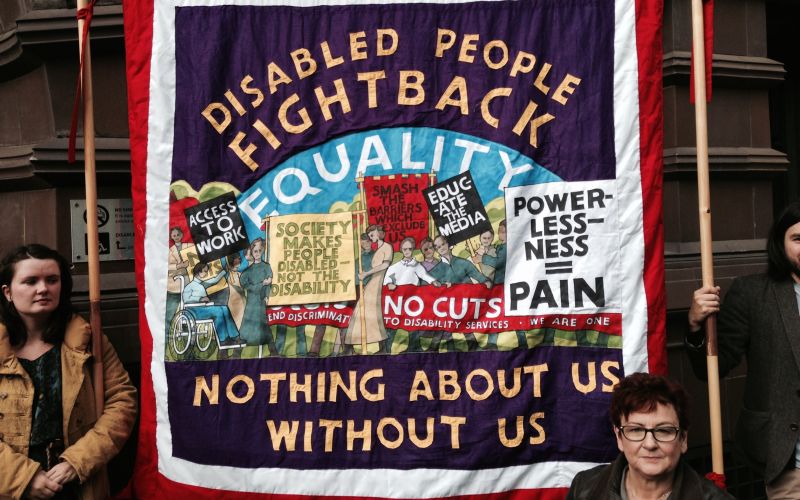
Tag: Democracy

Words and discrimination: ‘parked’ and ‘vulnerability’

tories-19

You can often tell such a lot about people’s views and sometimes, their intentions, by the words and phrases they use. The description of disabled people as being “parked” on benefits (and told/under the impression they will never work again”) is a turn of phrase I loathe. It’s a mantra that’s gained a PR crib sheet resonance from George Osborne and Iain Duncan Smith to Stephen Crabb and Damian Green. To extend the metaphor, parking is subject to the availability of a parking space; permission; to regulations and laws; parking tickets and fines; parking attendants and traffic wardens to police and ensure compliance.

Disability and sickness are compared with the inconvenient abandonment of a vehicle in the middle of a very busy market place. Or the informal blatant plonking and installing of oneself on a sofa or bed, behind outrageously closed curtains in the middle of a busy viral epidemic of the protestant work ethic, prompting further symptoms of oppressive impacted resentments and frank, febrile tutting.

13913

Yet the Employment and Support Allowance (ESA) Support Group is made up of those individuals who “have a severe limitation which creates a significant disability in relation to the labour market, regardless of any adaptation they may make or support with which they may be provided” (Department for Work and Pensions, 2009: 8).

Disabled people are being excluded, and at the same time, represented in political and mainstream discourse in ways to evoke moral judgments and public emotions such as distrust, disgust and anger. Evidence of state culpability lies in the relationships between political rhetoric, media narrative and punitive, populist social policy.  

However, in official policy documents, welfare cuts have been dressed up as a discourse related to “support” , “social inclusion” and even “fairness” and “equal opportunity”. Though this is only narrowly discussed in terms of employment outcomes. “Inclusion” has been conflated with being economically productive. In contrast, the media rhetoric, and importantly, the consequences of Conservative policies aimed at disabled people, are increasingly isolating and exclusionary, as a result of intentional political outgrouping.

Yet such rhetoric is surely also counter‐productive to even such a limited view of inclusion, inevitably distorting employer responses to ill and disabled people as potential employees. However, Conservative neoliberal policies reflect a consideration of the supply rather than the demand side of the labour market.

“[…] rather than being concerned with the economic position of disabled people in Britain, the development of the Employment and Support Allowance and the Work Programme was concerned with relationships between the supply of labour and wage inflation, and with developing new welfare (quasi) markets in employment services. Attempting to address the economic disadvantages disabled people face through what are essentially market mechanisms will entrench, rather than address, those disadvantages.”  From: Commodification, disabled people, and wage work in Britain – Chris Grover.

Glib, deceptive and diversionary language use and ideological referencing does nothing to address the social exclusion of disabled people, who are already pushed to the fringes of society. Disabled people have become easy political scapegoats in the age of austerity. Scapegoating and outgrouping have become common political and cultural practices. Stigma is being used to justify the most regressive social policies since before the foundation of the welfare state in the 1940s.  

Patronising and authoritarian Conservatives like to speak very loudly over disabled people, and tell us about our own experiences because they really believe we can’t speak for ourselves. They simply refuse to listen to people who may criticise their policies, raising the often dire consequences being imposed on us because of the “reforms”  CUTS. I also think that we are witnessing the most powerful anti-intellectual and anti-rational ethos in government in living memory.

Whilst Conservative rhetoric lacks coherence, rationality, integrity and verisimilitude, it has an abundance of glittering generalities and crib sheet repetition designed from supremacist decisions made around elitist tables behind closed and heavy doors. The Conservatives seem to believe that disabled people aren’t like other citizens and that we don’t need a democratic voice of our own. Policies are designed to act upon us, to “change” our behaviours through the use of “incentives”, whilst we are completely excluded from their design and aims. Our behaviours are being aligned with neoliberal outcomes, conflating our needs and interests with the private financial profit of others. 

As one of the instigators and a witness for the United Nations investigation into the government’s systematic violations of the human rights of disabled people, as a person with disability, I don’t care for being described by a blatantly oppressive Damian Green as “patronising” or being told that disabled people – witnesses – presented an “outdated view” of disability in the UK. The only opportunity disabled people have been presented with to effectively express our fears, experiences, concerns about increasingly punitive and discriminatory policies and have our democratic opinion heard more generally has been through dialogue with an international human rights organisation, and still this government refuse to hear what we have to say.

Oppression always involves the objectification of those being dominated; all forms of oppression imply the devaluation of the subjectivity and experiences of the oppressed. 

Just as Herbert Spencer supported laissez-faire capitalism and social Darwinism (on the basis of his Lamarckian beliefs) – and claimed that struggle for survival spurred self-improvement which could be inherited – the Conservatives apply the same tired and misguided, private boarding school myths and disciplinarian moral principles in their endorsement of a totalising neoliberalism: the bizarre belief that competition, struggle and strife is “good” for character and even better for the market economy.

Under the Equality Act 2010 there are several types of discrimination that are prohibited. These are direct discrimination (s.13(1) Equality Act 2010), indirect discrimination (s.6 and s.19 Equality Act 2010, harassment (s.26 Equality Act 2010), victimisation (s.27(2) Equality Act 2010), discrimination arising from disability (s.15(1) Equality Act 2010) and failure to make reasonable adjustments (s.20 Equality Act 2010). 

Disabled people are being conveniently reclassified to fit Treasury cost-cutting imperatives. However, the government prefer to say that we are claiming lifeline support because we are “disincentivised” to find a job because we are claiming lifeline support… there’s a whole ludicrous circular government monologue going on there that we are being quite intentionally excluded from.

This is one common type of ableist behaviour: it is a form of discrimination which denies others’ autonomy by speaking for or about them rather than allowing them to speak for themselves. Ableism characterizes persons as defined by their disabilities and as inferior to non-disabled persons On this basis, people are assigned or denied certain perceived abilities, skills, and/or character traits. And often, denied rights and a democratic voice.

If you ask disabled people about work, most of us will say we would like to – after all, who of us would actually choose to be ill and disabled – but there are social, political, cultural and economic barriers to our doing so. None of us will tell you we don’t work because we feel secure and comfortably off on an ever-dwindling and paltry amount of ESA, which has been subjected to cuts, further threats of cuts from prominent think tanks, increased conditionality, the threat of sanctions, and constant, distressing assessments and reassessments which were designed to find ways of stopping your lifeline support.

Disabled people became amongst the first citizens of a new class: the precariat. In sociology and economics, the precariat is a social class formed by people suffering from precarity, which is a condition of existence without predictability or security, affecting material and psychological welfare. The emergence of this class has been ascribed to the entrenchment of neoliberalism.

Many disabled people, however, will tell you that they are simply too ill to work. It’s a ludicrous and frankly terrifying state of affairs that the administrating despots in office don’t accept that some people simply cannot work, and persist in hounding them, claiming that cutting social security, originally calculated to meet only basic needs and now reduced to the point where that is no longer possible, is somehow an “incentive” for very sick people to find work. It’s incredible that the government are telling us with a straight face that a poor person’s “incentive” is punishment and financial loss, whilst millionaires are “incentivised” by reward and financial gifts, such as “tax breaks”.

The same approach is apparent in the recent green paper on work, health and disability, where the government casually discusses subjecting disabled people in the ESA support group to compulsory work related activity and “behavioural conditionality” (sanctions are suggested), though the support group were previously exempt from the punitive welfare conditionality regime, since their doctors and the state accepted that this group of people are simply too ill to work. Employers, it is suggested, are to be “incentivised” by financial rewards – tax cuts. When this government discuss “being fair” to the “tax payer”, they are referring to wealthy and privileged people, not the majority of ordinary citizens such as you and I.

Discrimination is defined as “treating a person or particular group of people differently, especially in a worse way from the way in which you treat other people”, based on characteristics or perceived characteristics. Under Labour’s 2010 Equality Act, direct disability discrimination occurs when a disabled person is treated less favourably than a non-disabled person, and they are treated this way for a reason arising from their disability. Indirect discrimination happens when an organisation or government has a particular policy or way of working that has a worse impact on people who share your disability compared to people who don’t. Harassment is defined as someone treating you in a way that makes you feel humiliated, offended or degraded.

The government even have the cheek to call their discrimination “supporting” and “helping” us. I’ve never heard of such immorality, bullying, indecency, prejudice and punishment being called “help” and “support” before. Millionaires are helped; they get financial handouts in the form of tax cuts that they don’t need. Meanwhile we have lifeline income taken away to fund, leaving us without food, fuel and shelter increasingly often. Such mundane language use is an attempt to mask the intentions and consequences of draconian policies. It utterly nasty, manipulative, callous, calculated cold-blooded gaslighting.

Milton Friedman, in Capitalism and Freedom (1962) felt that “competitive capitalism” is especially important to minority groups, since “impersonal market forces”, he claimed, protect people from discrimination in their economic activities for reasons unrelated to their productivity. Through elimination of centralized control of economic activities, economic power is separated from political power, and the one can serve as counterbalance to the other. However, he couldn’t have been more wrong. What we have seen instead is an authoritarian turn. The UN conclusions to their recent inquiry into the government’s systematic and grave violations of the rights of disabled people verify his lack of foresight and his conflation of public needs and interests with supply-side economic outcomes.

A word about the use of the term “vulnerability”

The reason that some groups are socially and legally protected – and the reason why we have universal human rights – is because some groups of citizens have historically been vulnerable to political abuse and are structurally discriminated against. The aim of human rights instruments is the protection of those vulnerable to violations of their fundamental human rights. The recent United Nations inquiry into the UK government’s systematic violations of the convention on the rights of persons with disabilities concludes that disabled people in the UK are facing systematic political discrimination, social exclusion and oppression.

The Yogyakarta Principles, one of the international human rights instruments use the term “vulnerability” as such potential to abuse and/or social exclusion. Social vulnerability is created through the interaction of social forces and multiple “stressors”, and resolved through social (as opposed to individual) means. Social vulnerability is the product of social inequalities. It arises through social, political and economical processes.

Whilst some individuals within a socially vulnerable context may break free from the hierarchical order, social vulnerability itself persists because of structural – social, economical and political – influences that continue to reinforce vulnerability. 

The medical model is a perspective of disability as a problem of the person, directly caused by disease, trauma, or other health conditions which therefore requires sustained medical care in the form of individual treatment by professionals. The medical model sees management of the disability  as central and ideally, it is aimed at a “cure,” or the individual’s adjustment and behavioural change that would lead to better “management” of symptoms.

The social model of disability outlines “disability” as a socially created problem and a matter of the full inclusion and integration of individuals into society. In this model, disability is not an attribute of an individual, but rather a complex collection of conditions, created by the social environment. The management of the problem requires social  and political action and it is the collective responsibility of society to create an environment and context in which limitations for people with disabilities are minimal. Equal access and inclusion for someone with an impairment/disability is a human rights concern.

From the 70s, sociologists such Eliot Friedson observed that labeling theory and a social deviance perspective could be applied to disability studies. Social constructivist theorists discussed a non-essentialist perspective: the social construction of disability is the idea that disability is constructed as the social response to a deviance from the norm. “Disability” is constructed by social expectations and institutions rather than biological differences.

I think there is something positive to learn from the variety of models of disability, and should like to point out that despite the potential merits of any one in particular, each have also been heavily criticised, and most importantly, there is nothing to stop an unscrupulous government from intentionally exploiting a theoretical paradigm to suit an ideological design. 
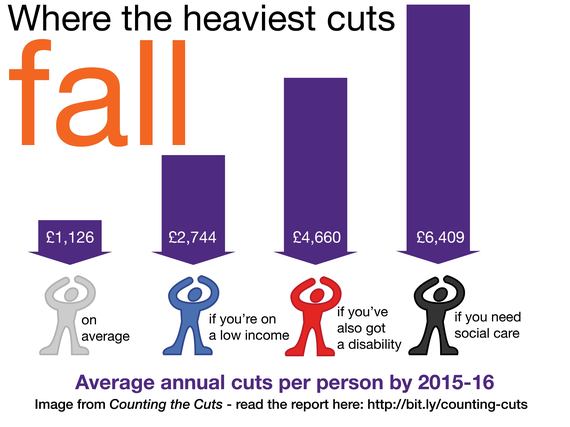
2014-02-17-BurdenoftheCuts-thumb

Eugenics

The French statistician, Alphonse Quetelet wrote in the 1830s of l’homme moyen – the “average man”. Quetelet proposed that one could take the sum of all people’s attributes in a given population (such as their height or weight) and find their average, and that this figure should serve as a norm toward which all should aspire. This idea of a statistical norm threads through the rapid growth in the popularity of gathering statistics in Britain, United States, and the Western European states during this period, and it is linked to the rise of eugenics. Disability, as well as other concepts including: “abnormal”, “non-normal”, and “normal” arose from this mindset.

With the rise of eugenics in the latter part of the nineteenth century, such deviations from the norm were viewed as somehow dangerous to the health of entire populations.

As a social and political movement, eugenics reached its greatest popularity in the early decades of the 20th century, when it was practiced around the world and promoted by governments, institutions, and influential individuals. Many countries enacted various eugenic policies, including: genetic screening, birth control, promoting differential birth rates, marriage restrictions, segregation (both racial segregation and sequestering the mentally ill), compulsory sterilization, forced abortions or forced pregnancies, culminating in genocide

The moral dimensions of the eugenics in the 19th and 20th centuries rejected the doctrine that all human beings are born equal, and redefined human worth purely in terms of genetic “fitness”. More recently in the UK we have seen a moral shift entailing human worth being politically redefined in terms of economic productivity. 

Common early 20th century eugenics methods involved identifying and classifying individuals and their families, including the poor, mentally ill, blind, deaf, developmentally disabled, promiscuous women, homosexuals, and racial groups (such as the Roma and Jews in Nazi Germany) as “degenerate” or “unfit”, leading to their segregation or institutionalization, sterilization, euthanasia, and ultimately, their mass murder. The Nazi practice of euthanasia was carried out on hospital patients in the Aktion T4 centres such as Hartheim Castle.

The “scientific” reputation of eugenics declined in the 1930s, a time when Ernst Rüdin used eugenics as a justification for the racial policies of Nazi Germany. Adolf Hitler had praised and incorporated eugenic ideas in Mein Kampf in 1925 and emulated eugenic legislation for the sterilization of “defectives” that had been pioneered in the United States once he took power

After World War II, the practice of “imposing measures intended to prevent births within [a population] group” fell within the definition of the new international crime of genocide, set out in the Convention on the Prevention and Punishment of the Crime of GenocideThe Charter of Fundamental Rights of the European Union also proclaims “the prohibition of eugenic practices, in particular those aiming at selection of persons.”

Recently the government in the UK introduced policies that curtail tax credits to the children of mothers claiming financial support for more than two children. Iain Duncan Smith announced that the policy was introduced to “change the behaviours” of people claiming welfare. Of course this assumes that people don’t plan and have their children in more prosperous periods of their lives, and then experience financial hardship for reasons that have nothing to do with their behaviours, such as recession and job losses, or being in low paid work and so on.This has some profound implications for notions of equality and the idea that each human life has equal worth. Such a policy discriminates against children because of when they are born, as well as being discriminating against poor families. Such a policy is an example of negative eugenics by “incentives”

Some campaigners are very critical of the use of the word “vulnerability”, because they feel it leads to attitudes and perceptions of disabled people as passive victims.

Yet I am vulnerable, despite the fact that I am far from passive. Since 2010, no social group has organised, campaigned and protested more than disabled people. Many of us have lived through harrowing times under this government and the last, when our very existence has become so precarious because of targeted and cruel Conservative policies. Yet we have remained strong in our resolve. Despite this, some dear friends and comrades among us have been tragically lost – they have not survived.

In one of the wealthiest democratic nations on earth, no group of people should have to fight for their survival.

I see vulnerability as being rather more about the potential for some social groups being subjected to political abuse. 

We are and have been. This is empirically verified by the report and conclusions drawn from the United Nations inquiry into the grave and systematic violations of disabled people’s human rights here in the UK, by a so-called democratic government.
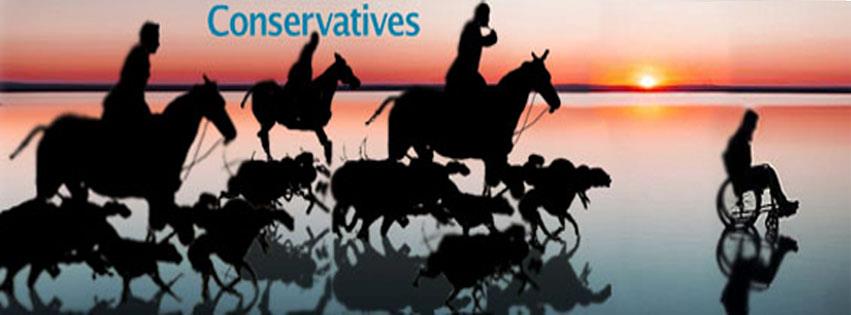
37079_433060243430176_1848475368_n


I don’t make any money from my work. But you can contribute by making a donation and help me continue to research and write informative, insightful and independent articles, and to provide support to others. The smallest amount is much appreciated – thank you.

DonatenowButton cards

Reframing frames – ideology, George Lakoff and a call for your views

Wall Street Protestors Rally Against Police Brutality

An excellent example of using a slogan to reframe debate about neoliberalism and inequality from the Occupy movement


Left wing progressives hope that we can win elections by citing facts, rational debate and by offering policy programmes that serve the majority of voters’ interests. When we lose, we either conclude that we need to move farther to the right, where the voters are; where the Overton window opens, or that we need to move further to the left, to present a genuine alternative to the status quo. That dilemma has rigidly polarised the Labour party, undermining our unity and turning what was once a “broad church” appeal into an either/or basic dichotomy of alliances and reflected interests. The problem is how do we know which of these responses to the dilemmas of being a party in opposition will engage the public? And what if it is neither?

Yet, how can the left possibly lose a debate about the economy and social policy, when our current steeply hierarchical socioeconomic organisation serves the interests of so very few citizens? In fact those policies are seriously harming some social groups, especially those traditionally afforded social protections by previous Labour policies. 

Margaret Thatcher once made the absurd claim that the “problem” with socialism is that it “runs out of other people’s money to spend.” However, the New Right became experts on spending our public funds on extending the wealth of a few privileged millionaires, taking money from those who have the very least and handing it out to those who have the very most.

That really is “spending other peoples’ money.” As a consequence, the UK is now the most unequal country in the world, and that includes the US, where the Chicago boys – the founding fathers of neoliberalism – operationalised their experiment in hierarchical and authoritarian modes of neoliberal socioeconomic organisation.

Things ain’t what they ought to be

I’ve pointed out before that it’s easy to mistake the patterns and social circumstances of our era for “natural laws”. We really do need to revisit the is/ought distinction  (the naturalistic fallacy: we cannot use descriptive statements – what “is” – to make or justify prescriptive ones – what “ought” to be). So many people assume the Conservative world view of competition, mysterious “market forces” and the “invisible hand”, survival of the wealthiest, and Randian self interest is simply how things are: that these qualities are all fundamental to our “human nature”. They are not.

They are the qualities required of us – what “ought” to be the case – in order to prop up a hierarchical society, preserving a privileged elite and the material inequality and power relations of neoliberalism. Social Darwinism, which is like a comic strip version of Darwinism, was debunked last century, but here we are with policies that are directed by an ideology founded on social Darwinist principles once again. It’s become  a “common sense” assumption that we are naturally inclined to be competitive, and as a society, hierarchically ranked, on the basis of power and worth. Yet the matter of what “human nature” actually is has never been resolved over the centuries, let alone accounts of how that “nature” translates into the kind of society we have. Or ought to have, for that matter.

How can the Tories be right in their cynical miserablism, regarding our competitive social Darwinist tendencies?  If we are so fundamentally selfish and self-interested, with a generally Hobbesian temperament, moulded a little more by Burke’s profound anti-intellectualism, how, then, did we end up with a trade union and labour movement, working class enfranchisement, the welfare state, the NHS, legal aid, social housing, human rights and to generally progress to develop an altruistic, collectivist, cooperative approach for our post war settlement?  

“Human nature” is far more complex and much less static and defined than the Conservatives would have us believe. The kind of society that we live in, with its prevailing beliefs, attitudes and organisation, also contributes significantly to the kind of people we are, and importantly, to how we see ourselves and others.

Façade democracy

George Lakoff, a linguist and cognitive scientist, says that Conservatives exalt “obedience to authority,” insulate leaders from accountability, oppose checks and balances against leaders and rely on fear. All of this is true.

Lakoff says the right wins and keeps power by framing issues and “controlling minds”. This explains why Conservatives win elections. They manipulate us more effectively than the Progressives. They’ve been “preparing the seedbed of our brains with their high-level general principles” so that when the “low tax/low welfare society” idea, for example,  was planted in its various guises, repeatedly, “their framing could take root and sprout.” And “as a result, progressive messages don’t take root.”

Tories successfully reframe social issues, re-set defaults and normalise their prejudices and values. They become “common sense.” As dominant narratives do. In doing so, the Conservatives shape how the public see themselves and others.

Lakoff proposes that the left present frames instead of raw facts, in order to “train” the public to think less about neoliberal competition and self-interest and more about serving others. It’s not the platform that needs to be changed. It’s the voters. 

Lakoff says that we need to beat Conservatives at their own game. “Democracy is too important to leave the shaping of the brains of the public to authoritarians.” 

I like a lot of Lakoff’s work, but cannot get behind the idea of using techniques of persuasion to win support and (re)grow a movement. But then, the use of such techniques has been effective for the Conservatives, and that level of manipulation creates a problem for democracy. Lakoff is proposing we address the problem of a managed democracy by attempting to manage it too.

Is it possible to propose we manipulate voters and then still claim to be a democrat? 

He is right in that the rational approach doesn’t always work, but perhaps it’s more a question of how we present our alternative. I can get behind a shorthand and punchier general messages, just as long as it isn’t a strung together lexicon of glittering generalities with nothing meaningful referenced below the surface level. Integrity matters. The new world order is maintained partly by a precarious new word order. But it rests only on the very surface of our mind. It exists, not because it is rational or serves our best interests, but because it appears to be “normal.”

It’s probably true that many voters don’t pay much attention to the details and implications of policies. We have a tendency towards cognitive miserliness – the Principle of Least Effort; we frequently rely on simple and time efficient strategies when evaluating information and making decisions. But this can lead to prejudices. We formulate stereotypes, for example, which are simplistic ways of categorising others. Heuristics are mental shortcuts we often use in order to lessen the cognitive load that decision making requires. We often rely on habitual, superficial explorations and generalisations because we are caught up in our lives, and so to some degree, its a strategy of necessity and efficiency. 

However, this tendency towards cognitive miserliness is also manipulated. We often assign new information to categories that are easy to process mentally. These categories arise from prior information, including schemas, scripts and other knowledge structures, that has been stored in memory and so storage of new information does not require much cognitive energy. Cognitive miserliness means we tend not to stray far from our established beliefs when considering new information. That’s partly why repetition and slogans work so well as propaganda techniques. 

My own view is that we should try multiple approaches to messaging the public, but none of it should be simply about changing a vote for the sake of it. We also need to engage citizens in active participation in democracy. That is something the authoritarian Conservatives will never do: they have a policy agenda informed by private companies and millionaires, not ordinary citizens, and that won’t change.

Public needs have been privatised and pushed into the “market place” of competition and invisible capitalist hands. Increasingly, private companies are operating our essential public services, as the Conservatives claim that this is “efficient.” It isn’t, because it’s costing us billions to support unaccountable private businesses whose only motivation is to make profit.(See for example: Doctors bribed with 70-90k salaries to join Maximus and “endorse a political agenda regardless of how it affects patients.” )

Meanwhile, the privatisation of public need means that individuals shoulder the responsibility for them, rather than the state, who are still taking money from the public to fund those public “services.” Making individuals responsible for the consequences of political decision-making and arising socioeconomic problems like unemployment and poverty then justifies an authoritarian state intrusion in the form of “therapy.” For example, the rise of nudging, which is about the political directives to “change behaviours” because people make “the wrong choices” and so it turns democracy on its head.

This is because nudge is used without public consent, and it is solely aimed at “changing behaviours” of citizens to meet the states’ idealised and narrow neoliberal outcomes, rather than it being about actually recognising and meeting social needs and democratic inclusion.

The left tend to have a rather more optimistic, expansive and generous view of human nature. We believe in the human potential for learning, development and progress. However, that optimism is also tempered with an acknowledgement of our darker side, too. Policies which protect social groups that are prone to being exploited, scapegoated and other socially constructed vulnerabilities have largely been Labour party ones.

However, the problem is that the Conservatives hold up a darkly distorting looking-glass to the public, showing only what they want people to see of themselves. In that mirror, we are rendered ugly – always prone to being stupid, selfish, greedy, impulsive savages that need to to be ruled and controlled. Our self perceptions are shaped by significant others. There arises a subsequent social self-fulfilling prophecy. We project and scapegoat: it is always others that are savage and selfish, not us. This is facilitated by the Conservative tendency to marginalise poor people, creating folk devil stereotypes and social outgroups. 

We’re capable of changing minds. But we have good SOCIAL reasons to do so. That, for me is the key – there’s a difference between propaganda and reasoning; public interest and simply maintaining the public’s interest. The answer probably lies somewhere in a compromise – using both a rational and evidenced approach and the reductive pop politics soundbites to capture public interests AND public interest.

Tory cuts cost lives was a soundbite of mine from 2015. I wanted to reference war, and highlight the enemy in a longstanding and ongoing class conflict. It’s got integrity as a slogan because I’ve spent a few years writing about and presenting evidence of how  Conservative austerity is harming and sometimes killing people. 

But I don’t have all the answers. To come up with effective solutions requires our willingness for collaboration and cooperation.   

I’m particularly interested in what others think about this issue. If you have any thoughts on this, please leave me a comment, and I will revisit them in due course. We can do what the left always do very well: hold a democratic discussion and problem-solve collectively.


th


I don’t make any money from my work. At this moment in time, I am struggling to live. But you can help by making a donation so I can continue to research and write free, informative, insightful and independent articles, and to provide support to others. The smallest amount is much appreciated – thank you.

DonatenowButton cards

The Tory British Bill of Rights: ‘be the short change you want to see’

Cngs9EjXEAAmYy7

The politics of regression

The UK has passed a lot of posts over the last five years. We are now a post-European, post-welfare, post-consensus, post-progressive, post-rational, post-democratic, post-first world, post-liberal, post-inclusive, post-diverse, post-equality, post-freedom, post-rights, post-protest, post-truth society. We managed all of this by travelling backwards as a society, not forwards.

The clocks stopped when the Conservatives took office in 2010. Now we are losing a decade a day.

This week, the government have confirmed they still plan to repeal the Human Rights Act and replace it with a so-called British Bill of Rights. This will break the formal link between the European Court of Human Rights and British law. Any judgement from Europe would be treated as “advisory” only, rather than legally binding, and would need to be “approved” by parliament. Such a Bill would definitely short change UK citizens in terms of balancing responsibilities, obligations and rights. It would profoundly disempower citizens because it will shift the balance of democracy, placing power almost entirely in the hands of the state.

The citizen rights protected by Labour’s flagship Human Rights Act are quite basic. They include the right to life, liberty and the right to a fair trial; protection from torture and ill-treatment; freedom of speech, thought, religion, conscience and assembly; the right to free elections; the right to fair access to the country’s education system; the right NOT to be given the death penalty; the right to marry and an overarching right not to be discriminated against.

Over their time in office, the Tories have systematically contravened the Human Rights of disabled people, women and children. It’s clear that we have a government that regards the rights of most of the population as a mere bureaucratic inconvenience, to be simply brushed aside. In October 2014, I was one of the very first independent writers to report the United Nations’ inquiry into the government’s gross breaches of the rights of disabled people. Writers and researchers like me and organised groups such as Disabled People Against the Cuts (DPAC) have been submitting evidence regarding the dehumanising impacts of the Conservative welfare “reforms” to the UN since 2012.

Theresa May has previously expressed strong support for controversial constitutional change. She stated in 2014, that she would like to see the UK withdraw from the European Convention on Human Rights, echoing David Cameron.

In a speech earlier this year, she said: “This is Great Britain, the country of Magna Carta, parliamentary democracy and the fairest courts in the world.

And we can protect human rights ourselves in a way that doesn’t jeopardise national security or bind the hands of parliament.

A true British bill of rights, decided by parliament and amended by parliament, would protect not only the rights set out in the convention, but could include traditional British rights not protected by the European Convention on Human Rights (ECHR) such as the right to trial by jury.”

However, May’s comment about the need for a Bill of rights that doesn’t “bind the hands of parliament” is worrying, since human rights were designed originally to protect citizens from despotic states and authoritarian governments like this one.

Her comment that the ECHR does not provide for the right to trial by jury is also misleading. Article 6 of the European Convention on Human Rights is a provision  which protects the right to a fair trial and access to justice. In criminal law cases and cases to determine civil rights, it protects the right to a public hearing before an independent and impartial tribunal within reasonable time, the presumption of innocence, and other basic rights for those charged in a criminal case (such as adequate time and facilities to prepare their defence, access to legal representation, the right to examine witnesses against them or have them examined, the right to the free assistance of an interpreter).

The Effective Criminal Defence in Europe report identified that the UK already needs to address issues regarding inadequate disclosure to suspects during investigation stage and that a more effective judicial oversight of bail and arrest are needed. Cuts to legal aid are also problematic in terms of ensuring the right of equal access to justice. Chris Grayling has already tried to take legal aid from the poorest citizens, in a move that is so clearly contrary to the very principle of equality under the law. He turned legal aid into an instrument of discrimination. He has also tried to dismantle another vital legal protection  – judicial review – which has been used to stop him abusing political power on several occasions. I don’t think this is a government that has indicated so far that it has the needs and wellbeing of citizens as a main priority.

Liz Truss, the justice secretary, dismissed reports that that the Government was abandoning the policy, which was included in the Conservative manifesto in 2015, to avoid a conflict with the Scottish Government 

She told BBC Radio 4’s Today programme on Monday morning: “We are committed to that. That is a manifesto commitment. 

I’m looking very closely at the details but we have a manifesto commitment to deliver that.”

However, last year, Amnesty UK commissioned a poll that indicated the British public are not particularly willing to see any change to existing Human Rights legislation, with only one in 10 people in the UK (11%) believing that scrapping the Human Rights Act should be a government priority.

Kate Allen, Amnesty International (UK) director, said:

“The British people clearly want the Government to get on with their proper business of the day-to-day running of the country, and abandon these destructive plans.

“It’s quite right that it shouldn’t be up to governments to pick and choose which rights we are entitled to and select who they deem worthy of them. It took ordinary people a very long time to claim these rights and we mustn’t let politicians take them away with the stroke of a pen.

“It’s great to have it confirmed that British people think that rights and protections must apply to everyone equally in order to work at all.”

David Cameron pledged to explore ways to leave the ECHR in the wake of the departure of his most senior legal advisor, Dominic Grieve. 

Ken Clarke said: “It is unthinkable for Britain to leave the European Convention on Human Rights,” he was also a departing cabinet minister. Cameron is believed to have wanted rid of the Attorney General Grieve because he was supportive of Britain’s continued ECHR membership.

Labour dubbed the cabinet reshuffle “the massacre of the moderates”, pointing to the departure of pro-Europe and “one nation” Tories such as David Willetts, Nick Hurd and Oliver Heald.

It’s long been the case that the Tories and the right wing press have deliberately blurred the boundaries between the European Union and the European Council of Human Rights, which are of course completely different organisations. This was a misdirection ploy.

However it is the case that the member states of the EU agreed that no state would be admitted to membership of the EU unless it accepted the fundamental principles of the European Convention on Human Rights and agreed to declare itself bound by it. I also think that conservatives, who regard both institutions as “interfering”, do see the Union and the Council as the same in terms of both being international frameworks requiring the British government to have a degree of democratic accountability at an international level.

In his parting interview, Clarke, who has held office in every Conservative government since 1972 and is also the party’s most prominent Europhile, said the debate was “absurd”.

“I personally think it’s unthinkable we should leave the European Convention on Human Rights; it was drafted by British lawyers after the Second World War in order to protect the values for which we fought the War for.” He’s right, of course.

The years immediately after the second world war marked a turning point in the history of human rights, as the world reeled in horror at the rise of fascism and the Nazi concentration camps, there came an important realisation that although fundamental rights should be respected as a matter of course, without formal protection, human rights concepts are of little use and consolation to those facing persecution.

So in response to the atrocities committed during the war, the international community sought to define the rights and freedoms necessary to secure the dignity and worth of each individual. In 1948 the newly formed United Nations adopted the Universal Declaration of Human Rights (UDHR), one of the most important agreements in world history.

Shortly afterwards another newly formed international body, the Council of Europe, set about giving effect to the UDHR in a European context. The resulting European Convention on Human Rights was signed in 1950 and ratified by the United Kingdom, one of the first countries to do so, in 1951. At the time there were only ten members of the Council of Europe. Now 47 member countries subscribe to the European Convention, and in 1998 the Human Rights Act was passed by the Labour Party in order to “give further effect” to the European Convention in British law.

Previously, along with the Liberal Democrats, Grieve was able to thwart attempts to reform the ECHR, and opposed pulling out altogether. The plan to reform it is being led by the Justice Secretary Chris Grayling but Grieve has pledged to continue to fight for Britain’s membership from the backbenchers. Though Clegg had agreed to a British Bill of Rights, he was strongly opposed to withdrawing from the ECHR.

Grieve understood that ECHR is about the fundamental rights of the citizen and ought to be cherished in the same way as the Magna Carta and Habeas Corpus are. But as we know, this is not a typical view amongst Conservatives, who frequently cite the same examples of “foreign criminals” being allowed to stay in the country as evidence it is “not working”.

The prime minister’s spokesman said that the sacking of Grieve had not led to a change in government’s policy. However he pledged action if the Conservatives are elected next year without the Liberal Democrats: “If you are asking me about party manifestos, the prime minister has previously said that he wants to look at all the ways that we can ensure we are able to deport those who have committed criminal offences.”

Grieve said he would defend human rights legislation from the back benches to “contribute to rationality and discourse”.

“If we send out a sign that human rights don’t matter, that is likely to be picked up in other countries which are also signatory states such as Russia.”

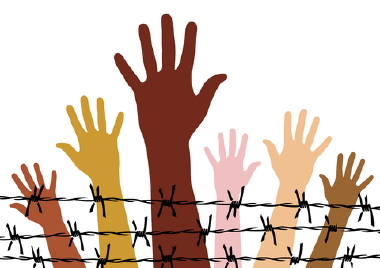
humanrights

The marked loss of transparency and democratic accountability

In the original Conservative proposals to scrap our existing human rights framework, and replace it with their own, one sentence from the misleadingly titled document  –Protecting Human Rights in the UK, (found on page 6 ) – is particularly chilling: “There will be a threshold below which Convention rights will not be engaged.”

Basically this means that human rights will no longer be absolute or universally applied – they will be subject to stipulations and caveats. And discrimination. The government will establish a threshold below which Convention rights will not be engaged, allowing UK courts to strike out what are deemed trivial cases.

The Tories’ motivation for changing our human rights is to allow reinterpretations to work around the new legislation when they deem it necessary. The internationally agreed rights that the Tories have always seen as being open to interpretation will become much more parochial and open to subjective challenge.

Many people have said that the Conservatives won’t escape accountability if they repeal the Human Rights Act and replace it with something less comprehensive, because we are still signatories to a number of broader international treaties on human rights. 

However, last year I wrote about how the government has quietly edited the ministerial code, which was updated on October 15  without any announcement at all. The code sets out the standard of conduct expected of ministers. The latest version of the code is missing a key element regarding complicity with international law. 

The previous code, issued in 2010, said there was an “overarching duty on ministers to comply with the law including international law and treaty obligations and to uphold the administration of justice and to protect the integrity of public life”.

The new version of the code has been edited to say only that there is an“overarching duty on ministers to comply with the law and to protect the integrity of public life”.

Conservative party policy document had revealed that the ministerial code will be rewritten in the context of the UK withdrawing from the European convention on human rights. In order to help achieve these aims the document says:

“We will amend the ministerial code to remove any ambiguity in the current rules about the duty of ministers to follow the will of Parliament in the UK.”

Yasmine Ahmed, director of Rights Watch, an organisation which works to hold the government to account, said:

“This amendment to the ministerial code is deeply concerning. It shows a marked shift in the attitude and commitment of the UK government towards its international legal obligations.”

Any precedent that allows a government room for manoeuvre around basic and fundamental human rights is incredibly dangerous. Especially such an authoritarian government.

Implications for democracy

Democracy is one of the universal core values and principles of the United Nations. Respect for human rights and fundamental freedoms and the principle of holding periodic and genuine elections by universal suffrage are essential elements of democracy. These values are embodied in the Universal Declaration of Human Rights and further developed in the International Covenant on Civil and Political Rights which enshrines a host of political rights and civil liberties underpinning meaningful democracies.

The Rule of Law and Democracy Unit stands as the Office of the High Commissioner for Human Rights (OHCHR) focal point for democracy activities. The Unit works to develop concepts and operational strategies to enhance democracy and provide guidance and support to democratic institutions through technical cooperation activities and partnership with the relevant parts of the UN, notably the UN Democracy Fund, the Department of Political Affairs and the newly established UN Working Group on Democracy. Legal and expert advice are provided as required to OHCHR field operations on relevant issues such as respect for participatory rights in the context of free and fair elections, draft legislation on national referenda and training activities.

The strong link between democracy and human rights is captured in article 21(3) of the Universal Declaration of Human Rights, which states:

“The will of the people shall be the basis of the authority of government; this will shall be expressed in periodic and genuine elections which shall be by universal and equal suffrage and shall be held by secret vote or by equivalent free voting procedures.” 

The link is further developed in the Covenant on Civil and Political Rights which enshrines a host of political rights and civil liberties underpinning meaningful democracies. The rights enshrined in the International Covenant on Economic, Social and Cultural Rights and subsequent human rights instruments covering group rights (e.g. indigenous peoples, minorities, people with disabilities) are equally essential for democracy as they ensure inclusivity for all groups, including equality and equity in respect of access to civil and political rights.

More recently, in March 2012, the Human Rights Council adopted a resolution titled “Human rights, democracy and the rule of law,” which reaffirmed that democracy, development and respect for all human rights and fundamental freedoms were interdependent and mutually reinforcing.

The Council called upon States to make continuous efforts to strengthen the rule of law and promote democracy through a wide range of measures. It also requested the OHCHR, in consultation with states, national human rights institutions, civil society, relevant inter-governmental bodies and international organizations, to draft a study on challenges, lessons learned and best practices in securing democracy and the rule of law from a human rights perspective.

Human rights, democracy and the rule of law are core values of the European Union, too. Embedded in its founding treaty, they were reinforced when the EU adopted the Charter of Fundamental Rights in 2000, and strengthened still further when the Charter became legally binding with the entry into force of the Lisbon Treaty in 2009.

A legally binding human rights framework must be applied universally, and implemented without the “interpretation” and interference from individual governments. Furthermore, the State must fund the means of contract enforcement and free and fair trial legal costs, for those who cannot afford it. If the State fails to fulfil this contingent function, then citizens simply cease to be free.

936319_485819054820961_1954794757_n


I wrote another in-depth analysis of the implications of a British Bill of Rights earlier this year, which includes some of the constitutional implications – The British Bill Of Frights: We Need To Ask What Could Possibly Go Right?


I don’t make any money from my work. But you can contribute by making a donation and help me continue to research and write informative, insightful and independent articles, and to provide support to others. The smallest amount is much appreciated – thank you.

DonatenowButton cards


A view from the Overton window: through the looking glass darkly


CCHU9011


“The UK is a divided country” is a phrase being bandied around a lot, especially in the aftermath of the referendum, and it is of course true. We are divided. We have politically constructed categories of scapegoats, outgroups, uncertainty, disempowerment, low wages, our public services are being dismantled, and we are witnessing massive inequality and growing poverty. The recipe for anomie. Many people feel despair and are fearful of the future.

We have a nation of oppressed people wanting to see others oppressed. The real oppressors, however, are getting a free ride on the back of their own purposefully divisive and diversionary tactics. Dominant narratives and neoliberal ideology – smoke and mirrors; reductive soundbites, dodgy statistics and carefully constructed, cunning fact-proof screens. And yes, the media, directed by the government, have played a significant part in trying to shape what we see and think about, manipulating public opinion. Most of the Tories wanted to leave the EU, Cameron wasn’t typical of his party.

I don’t blame the Scottish people for wanting their independence one bit, particularly from this side of the EU referendum. But that means we will shrivel a little more. England, the husk.

But a divided country hasn’t happened just because of these things. Some of the irrational statements I have heard over the last few years include commentary about how some traditional Labour voters feel the party “let them down” and no longer reflect their interests. Well, I do hope the Tories do better for you, then. Because they’re clearly SO much better at reflecting working-class interests – the new “party of the workers” they mocked. Yet Conservatism in a nutshell is all about reducing worker’s rights and reducing pay so that private companies can make big profits from a cheap and desperate reserve army of labor. And if you reduce welfare provision and make receipt of benefits highly conditional – provision that’s already paid for by working people –  the subsequent rising level of desperation drives many to increasingly insecure jobs for much less pay in order to simply survive.

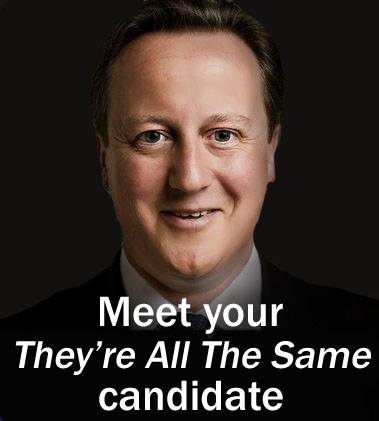
The “all the same” lie was always a Right-wing expediency, it’s about disempowering and fragmenting the Left. It worked. The Narxists got very narked, with their sense of alienation, and their peculiar brand of exclusive socialism (they are “real” socialists apparently). Yet Miliband had denounced Blairism, and would have given us a fair and progressive tax system. Not good enough, some of you said, but then some people are never happy, so with impeccable knee-jerked fallibility, you helped the Tories back in Office. Again.

Chomsky once said that sometimes, the best we can do is vote for the least damaging option. That at least would have marked the beginning, not the end, of campaigning for social justice and pushing for a socialist agenda.

Meanwhile, all of those genuine traditional socialist values of solidarity and cooperation, community and mutual aid, internationalism, equality and diversity, social justice, worker’s rights, trade unionism, well the Right-wing in Office are smashing those from our common vocabulary. And deporting them. The Tories in power, not the Labour party in opposition. But the government can only do that with OUR consent. So we must take some responsibility for that.

Now we had a further Left Labour leader, but of course for some, he ain’t good enough. The media push an elite agenda, and divert attention from the real problems that are being created by a Conservative government’s policies, and irrationally, the opposition party is hated whilst the Government get on with fucking over ordinary people, the economy and the country. Democracy is steadily being dismantled. Public funds are being stolen and redistributed to the very wealthy and powerful. Public services are being destroyed. Some people are dying because of Tory policies. Meanwhile people bicker amongst themselves and irrationally blame each other, the opposition party and vulnerable social groups. Prejudice grows. People are being permitted to hate. Their prejudice is fed and endorsed by the Establishment. Discrimination happens. Violence begins. People get killed. More people will get killed. Many remain indifferent. But sooner or later, they must take responsibility for that.

If you have ever wondered how fascist or totalitarian regimes manage to gain power, and to commit atrocities, apparently with public consent, well take a close look at the psychosocial processes involved, read Gordon Allport’s work on the growth of prejudice, where that can lead, then look more closely at what is unfolding here in the UK, stage by stage. It’s hidden in plain view, advancing by almost inscrutable degrees. But once you see it, you can’t unsee it.

Most Right-wing political systems, from Conservatism to Fascism, succeed to some extent by fostering a strong anti-intellectual prejudice amongst populations. It serves two key purposes. It discourages people from thinking critically and expressing themselves independently, and it discredits those who do (even before they do) by establishing a cultural normative default that serves to alienate people who challenge established narratives, and invites derision and accusations of being “out of touch with real lives and everyday experiences.”  But those “telling it like it is” often aren’t, quite. Seems to me that people’s hearts and minds are becoming directed, focused increasingly by an external, political and economic, narrow and rigid agenda. 

Why are we divided? Some people blame the government and media for their corrosive rhetoric, some say Tory social Darwinist, supremicist ideology and policies that have influenced the nation and pushed people further to the Right are to blame. Some people blame the general public’s stupidity and gullibility. Some people blame “patronising” and “arrogant” academics and all things intellectual. Some people blame the EU. Some people blame the Labour party. A few people have even blamed me. Some people blame the wealthy. Some people blame our faulty decision-making through rubbish cognitive processes that apparently need “nudging.” Some people blame the poor, or single parents, unemployed people, immigrants, sick and disabled people.

“I take full responsibility for this” said hardly anyone, ever.

I blame those people who choose to opt out of collective responsibility-taking and participatory democracy. Oh yes, democracy is not something you HAVE, it’s something you DO. To be divided as a nation requires social groups to want to oppress other groups, and for bystanders to permit that to happen – you have to participate in the process, even if that participation is just as a bystander who says and does nothing or as a person who is prejudiced at a gut and knee-jerk level. 

We really do have to take some responsibility for that.

13508843_1457642880928107_5042276407041750262_n
Picture courtesy of Dave Sid Poole


Some poignant reflection on what it is to be a socialist

Socialists have always tended to be internationalists. Whereas nationalists believe that the world is divided primarily into different nationalities, geopolitical zones, socialists consider social class to be the primary divide. For socialists, class struggle, not national identity, is the driving force of history. And capitalism creates an international working class that must fight back, united and cooperatively against an international capitalist class.

People who have a nationalist inclination, who view the social world parochially and hierarchically, are more likely than others to hold prejudices toward low-status groups. This is especially true of people who want their own group to dominate and be superior to other groups – a characteristic known in social psychology as “social dominance orientation.” It isn’t only the elite that hold this perspective, either.

But economic and social challenges such as inequality and social injustice will never be addressed by simply drawing a new set of geographical borders.

Any group claiming dominance over another – including the “working class” – is displaying social dominance orientation. The oppressed can be oppressive, too.

It is time to recognise those artificially constructed divisions and unite, for we have nothing left to lose but our chains.

“So comrades come rally
And the last fight let us face”.

The verses of the Internationale were written on 30 June, 1871, in the immediate aftermath of the brutal crushing of the Paris Commune during La Semaine sanglante (“The Bloody Week”). The policies and outcome of the Commune had a significant influence on the ideas of Karl Marx, of course.

The author, Eugène Pottier, was hiding in fear of his life. The lyrics were intended to convey the historical experience of an important workers’ struggle to a worldwide audience. For Pottier, liberty, equality and fraternity meant the promise of a society in which poor people, like himself, had justice.

The Internationale has long been the anthem of the labor’ movement throughout the world. Its power to move people has survived the repression of fascism, the cruel parody that was Stalinism and free market capitalism. Those who sing it need know nothing about it’s history to feel a strong sense of international unity. The Internationale is simultaneously about history, political argument and is a powerful rallying statement. Pottier established a reputation as the workers’ poet. It earned him a seat on the Communal Council representing the 2nd arrondissement.

The sheer power of Pottier’s Internationale lies in the fact that he was able to encapsulate his personal experience of specific events and express them in universal terms. And that identification and recognition is socialism in action.

The Second International (now known as the “Socialist International”) adopted it as its official anthem. The title arises from the First International, which was an alliance of socialist parties formed by Marx and Engels that held a congress in 1864. The author of the anthem’s lyrics, Pottier, attended this congress.

 The Internationale has been translated into many languages, it is a left-wing anthem, and is celebrated by socialists, communists, anarchists, democratic socialists, and some social democrats.

The original French refrain of the song is C’est la lutte finale / Groupons-nous et demain / L’Internationale / Sera le genre humain.

That translates as:

This is the final struggle

 Let us group together and tomorrow

 The Internationale

 Will be the human race.

Right now, that makes me feel like weeping in sorrow.

Related

UKIP: Parochialism, Prejudice and Patriotic Ultranationalism.

Don’t believe everything you think: cognitive dissonance

Inverted totalitarianism. Oh dear

The ultimate aim of the “allthesame” lie is division and disempowerment of the Left

Once you hear the jackboots, it’s too late


I don’t make any money from my work. But you can support Politics and Insights and contribute by making a donation which will help me continue to research and write informative, insightful and independent articles, and to provide support to others. The smallest amount is much appreciated, and helps to keep my articles free and accessible to all – thank you.

DonatenowButton
cards

The importance of citizens’ qualitative accounts in democratic inclusion and political participation

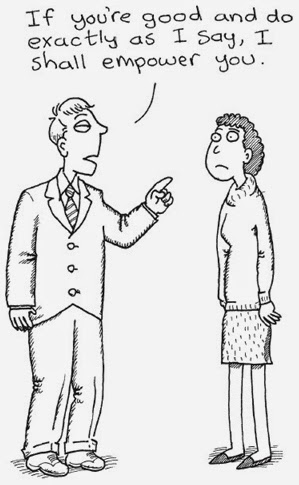
disempowerment
Government policies are expressed political intentions regarding how our society is organised and governed. They have calculated social and economic aims and consequences. In democratic societies, citizens’ accounts of the impacts of policies ought to matter.

However, in the UK, the way that policies are justified is being increasingly detached from their aims and consequences, partly because democratic processes and basic human rights are being disassembled or side-stepped, and partly because the government employs the widespread use of linguistic strategies and techniques of persuasion to intentionally divert us from their aims and the consequences of their ideologically (rather than rationally) driven policies. Furthermore, policies have become increasingly detached from public interests and needs.

The merits of quantitative analysis

The government have denied there is a causal link between their welfare policies, austerity measures and an increase in mental distress, premature death and suicide. However, ministers cannot deny there is a clear and well-established correlation, which warrants further research. But the government are hiding behind a distinction often made by researchers, to avoid accountability and to deny any association at all between policy and policy impacts. That’s just plain wrong.

Correlation isn’t quite the same as causality. When researchers talk about correlation, what they are saying is that they have found a relationship between two (or more) variables. “Correlation does not mean causation” is a quip that researchers and quite often, the government, chucks at us to explain that events or statistics that happen to coincide with each other are not necessarily causally related.

However, the possibility of causation isn’t refuted by political denial or somehow invalidated by the establishment of a correlation. Quite the contrary. Indeed an established association implies there may also be a causal link. To prove causation, further research into the association between variables must be pursued. So, care should be taken not to make an assumption that correlation never implies causation, because it quite often does indicate a causal link.

Correlations between two things may be caused by a third factor that affects both of them. This sneaky, hidden third factor is called a confounding variable, or sometimes, simply a confounder.

However, a lot of social research tends to indicate and discuss a correlation between variables, not a direct cause and effect relationship. Researchers are inclined to talk cautiously about associations.

It’s worth bearing in mind that establishing correlation is crucial for research and shows that something needs to be examined and investigated further. That’s precisely how we found out that smoking causes cancer, for example – through repeated findings showing an association (those good solid, old fashioned science standards of replicability and verification). It is only by systematically eliminating other potential associations – variables – that we can establish causalities.

The objective of most research or scientific analysis is to identify the extent to which one variable relates to another variable and the direction of the association. If there is a correlation then this guides further research into investigating whether one action causes the other. Statistics measure occurrences in time and can be used to calculate probabilities. Probability is important in research because measurements, observations and findings are often influenced by variation. In addition, probability theory provides the theoretical groundwork for statistical inference.

Statistics are fundamental to good government; to the delivery of public services and to decision-making at all levels of society. Statistics provide parliament and the public with a window on the work, performance and intentions of a government. Such data allows for the design of policies and programmes that aim to bring about a desired and stated outcome, and permits better targeting of resources.

Once a policy has been implemented it is necessary to monitor and evaluate the effectiveness of the policy to determine whether it has been successful in achieving the intended outcomes. It is also important to evaluate whether services (outputs) are effectively reaching those people for whom they are intended. Statistics play a crucial role in this process. So statistics, therefore, represent a significant role in good policy-making, monitoring and political accountability. The impact of policy can be measured with statistics.

So firstly, we need to ask why the government are not doing this.

If policy impacts cannot be measured then it is not good policy.

Ensuring accuracy and integrity in the reporting of statistics is a serious responsibility. In cases where there may not be an in-depth understanding of statistics in general, or of a particular topic, the use of glossaries, explanatory notes and classifications ought to be used to assist in their interpretation.

Statistics can be presented and used in ways that may lead readers and politicians to draw misleading conclusions. It is possible to take numbers out of context, as Iain Duncan Smith, amongst others, is prone to do. However, official statistics are supposed to be produced impartially and free from political influence, according to a strict code of practice. This is a government that systematically breaches the code of conduct. See: List of official rebukes for Tory lies and statistical misrepresentations, for example.

We need to ask why the government refuses to conduct any research into their austerity policies, the impacts they are having and the associated mental distress, physical harm, deaths and suicides.

Without such research, it isn’t appropriate or legitimate to deny a causal link between what are, after all, extremely punitive, targeted, class-contingent policies and an increase in adverse consequences, such as premature mortality rates.

It isn’t unreasonable to be concerned about policies that are targeted to reduce the income of those social groups already struggling because of limited resources, nor is it much of an inferential leap to recognise that such policies will have some adverse consequences.

In social research, traditionally, quantitative methods emphasise maintaining objectivity, and aim to keep social inquiries “value-free.” However, the area of study is intentionally selected by researchers, funded by interested parties and there are problems related to the connection between observation and interpretation. Perhaps every observation is an interpretation, since “facts” are seen through a lens of perceptions, pre-conceptions and ideology.

The Joseph Rowntree Foundation choose to study poverty. Cynical Iain Duncan Smith simply changes the definition of it to reduce its visibility.

The importance of qualitative research: who are the witnesses?

Social phenomena cannot always be studied in the same way as natural phenomena, because human beings are subjective, intentional and have a degree of free will. One problem with quantitative research is that it tends to impose theoretical frameworks on those being studied, and it limits responses from those participating in the study.

Social reality is not “out there” waiting to be discovered: we are constructing and reconstructing it meaningfully. However, politically, there’s been a marked shift away from understanding the lived experiences of real people in context.

There are also distinctions to be made between facts, values and meanings. Qualitative researchers are concerned with generating explanations and extending understanding rather than simply describing and measuring social phenomena and establishing basic cause and effect relationships. Qualitative research tends to be exploratory, potentially illuminating underlying intentions, responses, beliefs, reasons, opinions, and motivations to human behaviours.

This type of analysis often provides insights into social problems, helps to develop ideas and establish explanations, and may also be used to formulate hypotheses for further quantitative research.

The dichotomy between quantitative and qualitative methodological approaches, theoretical structuralism (macro-level perspectives) and interpretivism (micro-level perspectives) in sociology, for example, is not nearly so clear as it once was, however, with many social researchers recognising the value of both means of data and evidence collection and employing methodological triangulation, reflecting a commitment to methodological and epistemological pluralism.

Qualitative methods tend to be much more inclusive than quantitative analysis, lending participants a dialogic, democratic and first hand voice regarding their own experiences.

The current government have tended to dismiss qualitative evidence from first hand witnesses of the negative impacts of their policies – presented cases studies, individual accounts and ethnographies – as “anecdotal.” However, that is a very authoritarian approach to social administration and it needs to be challenged. 

The most rigid form of quantitative research, associated with positivism, is a traditionally Conservative way of rigidly demarcating the world, imposing hierarchies of priority, worth and order, to assure ontological security and maintain the status quo, regardless of how absurd this shrinking island of certainty appears to the many of us that are being systematically exiled from it.

Neither positivism nor Conservatism extend an acknowledgement, recognition or account of human diversity – which is among our greatest assets, after all. It’s a curious ideological tension for neoliberal Conservatives: they value competitive individualism on the one hand, but have such rigid ideas about pluralism and social group deviations from imposed, value-laden norms, on the other. 

Competitive individualism arises from competitive systems, rather than co-operative, collective ones. The function of the system is to maintain inequality in the society and fields of human engagement, based on the largely unchallenged notions of ‘deserving’ and ‘undeserving’. These are tacit notions at the heart of meritocracy. Neoliberals believe that competition acts as an incentive to people’s behaviours, encouraging a “race to the top”. Those at the top then ‘trickle down’ wealth to benefit the poorest citizens, according to this behaviourist theory. But of course that hasn’t happened.

In any system of competition, there are inevitably relatively few ‘winners’ and rather more ‘losers’. Such is the logic of competition. And most people don’t share their trophies with others.

The competition is rigged in any case, since the Conservatives are not too keen on widening access to equality of opportunity. Such is the acrobatic, logic of elitism. 

The Conservatives don’t like social individualism, difference or diversity within society.  For them, the only individualism worth anything is that defined and categorised by how much money you have.  A ‘good citizen’ is wealthy. The logic follows that they must be ‘good’ to be so wealthy, after all.  Such is the politically convenient circular argument of meritocracy. 

In the current context, the Conservatives’ approach to ‘research’ is tantamount to a politically extended epistemological totalitarianism. (Epistemology is an important and underpinning branch of philosophy that extends various theories of the nature and grounds of knowledge in the social sciences, particularly with reference to its limits, reliability and validity.)

It’s merely politically convenient to use a discredited positivist approach to policy-making, because such pseudoscientific narratives can be used to legitimise and impose virtually any policy.  Pseudoscience was once used to justify eugenic policies, after all. This is an approach that purposefully excludes citizens’ accounts. It’s authoritarian.

However, a qualitative approach to research potentially provides insight, depth and richly detailed accounts. The evidence collected is much more coherent and comprehensive, because it explores beneath surface appearances, and reaches above causal relationships, delving much deeper than the simplistic analysis of ranks, categories and counts.

It provides a reliable and rather more authentic record of experiences, attitudes, feelings and behaviours, it prompts an openness and is expansive, whereas quantitative methods tend to limit and are somewhat reductive. Qualitative research methods encourage people to expand on their responses and may then open up new issues and topic areas not initially considered by researchers. 

As such, qualitative methods are prefigurative and bypass problems regarding potential power imbalances between the researcher and the subjects of research, by permitting participation and creating space for genuine dialogue and reasoned discussions to take place. Research regarding political issues and policy impacts must surely engage citizens on a democratic, equal basis and permit participation in decision-making, to ensure an appropriate balance of power between citizens and the state.

That assumes, of course, that governments want citizens to engage and participate. There is nothing to prevent a government deliberately exploiting a research framework as a way to test out highly unethical and ideologically-driven policies, and to avoid democratic accountability, transparency and public safeguards. How appropriate is it to apply a biomedical model of prescribed policy “treatments” to people experiencing politically and structurally generated social problems, such as unemployment, inequality and poverty, for example? This is happening and needs to be challenged.

Iain Duncan Smith and Priti Patel, amongst other ministers, claim that we cannot make a link between government policies and the increasing number of deaths of sick and disabled people. There are no grounds whatsoever for their claim. There has been no cumulative impact assessment or monitoring of welfare policies, no inquiry, no further research regarding an established correlation and a longstanding refusal from the Tories to undertake any of these. There is therefore no evidence for their claim.

Such political denial is oppressive – it serves to sustain and amplify a narrow, hegemonic political narrative, stifling pluralism and excluding marginalised social groups, excluding alternative accounts of citizen’s experiences, negating counternarratives; it sidesteps democratic accountability, stultifies essential public debate, obscures evidence and hides politically inconvenient, exigent truths. Denial of causality does not reduce the probability of it, especially in cases where a correlation has been well-established and evidenced.

So, how do we address these issues?

Democracy is not something we have: it’s something we have to DO 

Government ministers like to hear facts, figures and statistics all the time. What we need to bring to the equation is a real, live human perspective. We need to let ministers know how the policies they are implementing and considering directly impact ourselves, their constituents and social groups more widely. One of the most powerful things we can do to make sure the government listens to our concerns is to engage and support the organisation of family, friends, neighbours and wider communities. While many people regard state or national-level politics as an intractable mess that’s impossible to influence, collective voices really do make a difference. The best weapon of influence we have is meticulous documentation of our experiences.

Once upon a time, policy was a response from government aimed at meeting public needs. It was part of an intimate democratic dialogue between the state and citizens. Traditional methods of participating in government decision-making include:

  • political parties or individual politicians
  • lobbying decision-makers in government
  • community groups
  • voluntary organisations
  • public opinion
  • public consultations
  • the media
  • prefigurative politics

Nowadays, policies have been unanchored from any democratic dialogue regarding public needs and are more about monologues aimed at shaping those needs to suit the government and rigid policy outcomes. For many of us, policies are being formulated to act upon us as if we are objects, rather than autonomous human subjects. This political dehumanisation has contributed significantly to a wider process of social outgrouping and increasing stigmatisation.

But in democracies, Governments are elected to represent and serve the needs of the population. Democracy is not only about elections. It is also about distributive and social justice. The quality of the democratic process, including transparent and accountable Government and equality before the law, is crucial to social organisation, yet it seems the moment we become distracted, less attentive and permit inequality to fundamentally divide our society, the essential details and defining features of democracy seem to melt into air.

arnstein-ladder-citizenship-participation

 Sherry Arnstein’s Ladder of Citizen Participation and Power.

Whereabouts are you on the ladder? I think socioeconomic status has some bearing on how far up people place themselves and how much power they feel they have to influence decision-making. 

For Arnstein, participation reflects “the redistribution of power that enables the have-not citizens, presently excluded from the political and economic processes, to be deliberately included in the future. It is the strategy by which the excluded join in determining how information is shared, goals and policies are set, tax resources are allocated, programmess are operated, and benefits like contracts and patronage are parceled out. In short, it is the means by which they can induce significant social reform which enables them to share in the benefits of the affluent society.”

A starting point may be the collective gathering of evidence and continual documentation of our individual narratives concerning experiences of austerity and the welfare “reforms”, which we must continue to present to relevant ministers, parliament, government departments, the mainstream media and any organisations that may be interested in promoting citizen inclusion, empowerment and democratic participation.

We can give our own meaningful account of our own experiences and include our own voice, reflecting our own first hand witnessing, experiencing and knowledge of policy impacts, describing how we make sense of and understand our situations, including the causal links between our own circumstances, hardships, sense of isolation and distress, and Conservative policies and subsequent socioeconomic frameworks, as active, intentional, conscientious citizens. Furthermore, we can collectively demand a democratic account and response (rather than accepting denial and a refusal to engage) from the government.

ImageVaultHandler.aspx

Related

How can we find out whether people are really turning against democracy? – Democratic Audit UK

Psychologists Against Austerity campaign – call for evidence

The Psychological Impact of Austerity – Psychologists Against Austerity

A critique of Conservative notions of social research

The Conservative approach to social research – that way madness lies

Research finds strong correlation between Work Capability Assessment and suicide

Suicides reach a ten year high and are linked with welfare “reforms”

I don’t make any money from my work, and I’m not funded. You can help to support Politics and Insights by making a donation to help me continue to research and write independently and continue to support other people

DonatenowButton
cards

The Strathclyde Review clarifies the Conservatives’ authoritarianism


“The Government appear to consider that any defeat of an Statutory Instrument by the Lords is a breach of convention. We disagree.” Lord Norton of Louth (Conservative)

“The conduct of Parliament is a matter for Parliament, not the Executive. The Executive is accountable to Parliament, not the other way round.” Lord Forsyth of Drumlean (Conservative)

“The assertion is that this House had acted in defiance of the Government’s “electoral mandate”. But the Conservative Party never told voters that it intended to make massive cuts to in-work benefits, and it won a House of Commons majority of only 12 seats on the votes of just 24% of the total electorate, so the claim that the Lords defied an electoral mandate is tosh.” Lord Howarth of Newport (Labour). Source: Hansard.

A Bicameral Parliament is one in which two assemblies share legislative power. The main purpose of the House of Lords is to act as a deliberative assembly, providing expert scrutiny to ensure democratic checks on the power of the Lower House, and where necessary, to provide a counterbalance for excessively partisan legislation that makes no concession to the accommodation and representation of minority views. The House of Lords provides an essential additional layer of democratic process which helps to prevent the so-called “tyranny of the majority” and divisive, potentially damaging partisan changes to public life.

There is always a need to ensure additional checks and balances against incumbent governments and for extending opportunities to review and improve the quality of legislation. There is always a need to broaden the political participation of particular groups in society and to explore ways by which under-represented groups may be identified and included in political processes.

A review by Lord Strathclyde, commissioned by a rancorous and retaliatory David Cameron following the delay and subsequently effective defeat of government tax credit legislation in the House of Lords, recommends curtailing the powers of Upper House. 

Strathclyde proposes that the House of Commons is given the final say over secondary legislation (in particular, Statutory Instruments), which is frequently being used for political manoeuvring to edit the details of Acts, and ensure rules, regulations and even changes to legal definitions are made by ministerial order, rather than by the rather more open and democratic process of primary legislation: it’s being used as a way of bypassing Parliamentary scrutiny. 

In fairness, on page 6 of the report, Lord Strathclyde says:

“I believe it would be appropriate for the Government to take steps to ensure that Bills contain an appropriate level of detail and that too much is not left for implementation by statutory instrument.”

The problem is that Statutory Instruments (SI) are being over-used and are under-scrutinised in the Commons. SIs have become a major form of law-making activity in the UK. In 2015, the UK Parliament passed 34 Acts, whilst 1,999 Statutory Instruments were made. (In fact, 2015 has been a relatively light year for SIs: in 2013 and 2014, 3,292 and 3,486 SIs were made.)

The Government ensure they have a majority on any SI committee and MPs are chosen by Whips. The Hansard Society estimate that SIs currently account for as much as 80 per cent of the Government legislation that impacts citizens. However, they are given substantially less Parliamentary time than Bills, enabling Government to push through their legislative programme with very little scrutiny, exacerbating a lack of democratic transparency and accountability of the Executive (the Government).

The report details 3 possible options:

  • option 1 would remove the House of Lords from the Statutory Instrument procedure altogether – to take Statutory Instruments through the House of Commons only
  • option 2 would seek to retain the present role of the House of Lords but clarify the restrictions on how its powers should be exercised, by codifying them passing a resolution
  • option 3 is a compromise option would create a new procedure in primary legislation. The new procedure would allow the House of Lords to ask the House of Commons to think again when a disagreement exists but gives the final say to the elected House of Commons

Strathclyde has recommended option 3. However that would have a profound impact on our constitutional democracy.

The Hansard Society said that:

“Most criticism of the system is concerned with the negative resolution procedure where the initiative lies with the Opposition to table appropriate annulment motions in the form of Early Day Motions (known as “prayers”). Given that the Government controls almost all the available parliamentary time in the Commons, unless the Opposition can persuade the Government to provide time, either on the floor of the House or in Standing Committee, the SI will not be debated.

The time limit (of an hour and an half) imposed on debates should be removed.”

The Society also recommend far more robust pre-legislative scrutiny mechanisms.

Lord Craig of Radley (Cross-Bencher) points out that:

“Since 2010, 34 Acts have been passed by Parliament with Henry VIII powers. Before us at present there are five Bills with Henry VIII powers. In case your Lordships are not familiar with Henry VIII powers, I should like to read from Clause 68 of the Scotland Bill, which states: “The Secretary of State may by regulations make … such consequential provision in connection with any provision of Part 1, 3, 4, 5 or 6, or … such transitional or saving provision in connection with the coming into force of any provision of Part 1, 3, 4, 5 or 6 … Regulations under this section may amend, repeal, revoke or otherwise modify any of the following (whenever passed or made)” — and so it goes on. In other words, if your Lordships think that you have passed a Bill, you have not — because the Secretary of State can amend it by statutory instrument.”

Baroness Smith of Basildon (Labour) said she would like to thank Lord Strathclyde for his report, and:

“For the extraordinary speed with which it has been produced and the vigour with which he has sought to defend the Government’s exceptionally weak rationale for undertaking it.”

She also said:

“Lord Strathclyde asks for responsible Opposition. We provide that but seek responsible Government.”

Baroness Andrews (Labour) said:

“We have had to refer back to this House secondary legislation which contains substantial policy changes with substantial impacts — for example, the draft hunting regulations, immigration changes, and universal credit. In this Session alone, 32 SIs have had to be corrected by government after serious flaws were identified and 16 have had to be withdrawn completely.

If we add to that ministerial failure to provide impact statements, or Explanatory Memoranda which do the opposite of what they are supposed to do, a picture emerges of a Government who not only deliberately exploit secondary legislation and reduce parliamentary scrutiny in the process but are resentful of proper scrutiny. If we were to lose our exceptional power to reject SIs, Parliament would lose a legitimate brake on government excess. However, it would also reduce the credibility of the scrutiny process as a whole and open the gate to greater abuse. What is needed, which the noble Baroness, Lady Hayman, anticipated, is a wholesale review of secondary legislation to remind Ministers of their public duty to be open and transparent about policy and legislation, to be accountable, and to respect—in fact, invite—the role of scrutiny.

We should not see this as a stand-alone report; rather, it should be seen alongside other legislation and proposals—for example, the lobbying Bill in the previous Parliament that restricted the ability of charities and other groups to campaign for their causes; new limits on freedom of information; and the Trade Union Bill, debated this week, which will strip the Labour Party of its funding, quite contrary to the balanced proposals from the Committee on Standards in Public Life. We have seen reports of Ministers being told to make increased use of statutory instruments to drive through legislation without proper scrutiny; and now we have the proposal to remove this House’s power to veto the same secondary legislation that the Government favour. It is hard not to see this as an authoritarian Executive waging war on the institutions that hold them to account. The Government are seeking to stifle debate, shut down opposition and block proper scrutiny. They are a Government who fear opposition and loathe challenge.”

Lord McNally (Liberal Democrat) said:

“I may want to see this House reformed, but I have no wish to see it become Mr Cameron’s poodle, and a neutered poodle at that.”

I suspect this is a Government that would prefer a world of neutered poodles.

disempowerment
Conservative Paternalism


A full transcript of this important debate can be found here

You can also watch the excellent contributions here.

The Labour Party tells David Cameron to abandon plans to dismantle the Human Rights Act

936319_485819054820961_1954794757_nA group of senior Labour Party figures have said that David Cameron should drop his plans to dismantle the Human Rights Act.

In a joint letter, headed by acting leader Harriet Harman and Lord Falconer, the Shadow Secretary of State for Justice, the Prime Minister is asked to abandon his plans to scrap the Act entirely.

Harriet Harman said: “What an irony that yesterday the Prime Minister was presiding over the celebration of Magna Carta at the same time he’s planning to undermine the Human Rights Act.

“No wonder that though he mentioned human rights in South Africa – and preyed in aid Nelson Mandela – and mentioned human rights in India – and preyed in aid Ghandi – he could not bring himself to mention Europe and our Convention.”

The Human Rights Act is a UK law passed by the Labour government in 1998. It means that you can defend your rights in the UK courts, instead of having to travel to Strasbourg – and that public organisations, including the Government, the Police and local councils, must treat everyone equally, with fairness, dignity and respect.

The Human Rights Act protects all of us – young, old, rich and poor. It originates from an international response to the atrocities of World War Two, including the Holocaust and fascist regimes. The Human Rights Act consolidates much of the United Nations Declaration of Human Rights, 1948.

The whole point of Human Rights is that they are universal. Yet despite this, the Government wants to replace our Human Rights Act with their “British Bill of Rights and Responsibilities”. This would weaken everyone’s rights, they would become open to subjective interpretation – leaving politicians to decide when our fundamental freedoms should and should not apply.

This is the same Conservative Party who despise open justice, who have destroyed legal aid and tried to destroy Judicial Review. This is the same Party that thinks they are above the Rule of Law. It is the same Party that has systematically dismissed the Human Rights of disabled people, women and children.

The letter to David Cameron says:

Dear Prime Minister

As you are aware, this year is the 800th anniversary of the signing of Magna Carta, a year to celebrate Britain’s role as a guarantor of individual rights. Yet, as we celebrate this great landmark, the commitment to individual human rights now appears to be under threat.

The Universal Declaration of Human Rights – adopted in 1948 – which Conservative politicians contributed to – enshrines:

  • The right to life, liberty and security
  • The right to a fair trial
  • Protection from torture
  • Freedom of thought, conscience, religion, speech and assembly
  • The right to free elections
  • The right not to be discriminated against

Which of these rights do you not agree with?

Defending the Human Rights Act and our membership of the European Convention on Human Rights is not straightforward because it often involves defending the rights of an unworthy individual from a legitimate authority, or the rights of an unpopular minority from a popular majority.

The Human Rights Act is always going to be a nuisance to those in power because it stops them getting on and doing things unconstrained. But there is an inherent susceptibility for those who have power to extend it, to over-reach and ultimately abuse it. And that is irrespective of how legitimate that power is, how they acquired that power and whether or not they think they are doing the right thing.

So it is right that government ministers should have to look over their shoulder and that their power is tempered by other people’s rights. And we do need to have our executive and our legislature set within a framework of human rights.

This is important to people’s human rights here in Britain and for the human rights of those in other countries. If we were to walk away from our international human rights treaty obligations, we would not be able to press other countries to respect human rights. We cannot say to others in Europe – particularly Eastern Europe – that they should stay within a European framework but that we have somehow outgrown it, or don’t need it anymore.

Human rights are part of, not at variance with, our British values and they matter for our place in the world.

We understand you have put your plans on hold for a year, while you work out exactly how you will go about the dismantling of our human rights laws.

We ask you today to abandon your plans entirely, and as a result of the public interest in this issue, will be releasing this letter to the media.”

It is signed by the Rt Hon Harriet Harman MP, Interim Leader of the Labour Party, and the Rt Hon Lord Charles Falconer QC, Shadow Lord Chancellor and Shadow Secretary of State for Justice.

The letter is also signed by Andy Slaughter, shadow minister for justice, Lord Bach, shadow attorney general, Karl Turner, shadow solicitor general, Keir Starmer MP, Baroness Corston, former chair of the Joint Committee on Human Rights, Baroness Kennedy QC and Kate O’Rourke, chairman of the Society of Labour Lawyers.

Related:

A strong case for the Human Rights Act

Human rights are the bedrock of democracy, which the Tories have imperiled.

15553155399_94869b2dcd_oMany thanks to Rob Livingstone for his excellent memes


Watchdog that scrutinises constitutional reform is quietly abolished and Tory proposals are likely to lead to constitutional crisis.

 936319_485819054820961_1954794757_n

The Political and Constitutional Reform Committee, which was originally established for the duration of the 2010 parliament, has been very quietly scrapped following a meeting of party whips.

Originally, the cross-party committee was established to scrutinise the plans of the Coalition government, such as the House of Lords Reform and the Alternative Vote – many of which never made it onto the statute books.

The parliamentary committee’s main role was to scrutinise proposed major constitutional changes. This undemocratic development is especially worrying given the likelihood of significant constitutional changes in the forthcoming parliament, with the referendum on  membership of the European Union set to be held within the next two years.

There are further plans for devolution of powers to Scotland and Wales, as well as to cities, and it is expected that these will be delivered at the same time as the government repeals the Human  Rights Act, and draws up a bill of rights to replace it.

Considerable doubt exists among experts that the Council of Europe, a human rights watchdog responsible for ensuring the Convention is upheld, will accept the Tories’ proposals. In fact the plans are highly unlikely to be accepted. As a result, it is quite widely believed Britain will disengage from the European Convention on Human Rights (ECHR) and undermine Europe’s’ civil liberties framework in the process.

Cameron has previously pledged to withdraw from the ECHR, indicating plainly that he is indifferent to the fact that such a withdrawal would very likely spark a complex constitutional crisis in the UK.

If the Human Rights Act is repealed in its entirety, the repeal will apply to the whole of the UK. The Scotland Act gives powers to the Scottish Parliament, provided that they comply with the ECHR (among other things). This would not change with repeal of the Human Rights Act alone.

However, human rights are also partially devolved (the Scottish Parliament, for example, has set up a Scottish Human Rights Commission), and so any unilateral repeal of the Human Rights Act by Westminster would violate the Sewell Convention, which outlines that the Westminster government will: “not normally legislate with regard to devolved matters in Scotland without the consent of the Scottish Parliament.” Nicola Sturgeon has stated clearly that the Scottish National Party oppose the repeal of the Human Rights Act.

And similar principles apply through the memoranda of understandings with each of the devolved legislatures in the UK.

In Northern Ireland, human rights are even further devolved than in Scotland, and the Human Rights Act (HRA) is explicitly mentioned in the Good Friday Act in 1998. To repeal the HRA would violate an international treaty as the Agreement was also an accord between two sovereign states – the UK and the Irish Republic.

Repealing the HRA unilaterally would put the UK in violation of the Good Friday Agreement, and its international treaty obligations to Ireland.  This would certainly damage our international reputation, as well as having consequences for the reciprocity on which the Treaty depends.

It’s quite possible that it would also be understood within Northern Ireland as a violation of both letter and the spirit of the Good Friday Agreement,  signalling that the UK government were no longer committed to the Agreement.

The Good Friday Agreement was also subject to a referendum in both Northern Ireland and the Republic of Ireland, both having to consent for the Agreement to be implemented.  The referendum enabled the Agreement to have widespread legitimacy, but importantly, because it took place in both parts of Ireland, it answered historic Republican claims to be using violence to secure the “right to self-determination” of the Irish people.

It was also necessary to changing the Irish Constitution. So a unilateral move away from UK commitments carries serious bad faith and democratic legitimacy implications, potentially with deeply problematic historical consequences.

The Conservatives also have plans to reintroduce the redefining of parliamentary constituency boundaries in a way that will be advantageous to the Conservative party. It is estimated that the planned changes will help the Tories to win up to 20 extra seats at a future election.

It was during the last term that the proposals were originally put forward. Labour and Liberal Democrat MPs were joined by those of smaller parties – including the SNP, Plaid Cymru, the DUP,  the Greens and Respect – to defeat the proposals, giving them majority in voting down the Tory plans for boundary changes.

The Tories are also committed to implementing a form of “English vote for English” laws – a move which will further undermine ties within the UK. But this pre-election pledge placed an emphasis upon English voting rights to undermine the nationalist appeal of UKIP south of the Border, whilst spotlighting the constitution to bolster the Scottish National Party in Scotland, again using nationalism tactically  to disadvantage the Labour Party.

At a time when the government is planning potentially turbulent constitutional changes in the forthcoming parliament, the move to abolish the watchdog – The Political and Constitutional Reform Committee – will serve to insulate the Tories from democratic accountability and scrutiny.

The Political and Constitutional Reform Committee had instigated an inquiry in 2013 regarding increasingly inconsistent standards in the quality of legislation, which resulted in several key recommedations, one of which was the development of a Code of Legislative Standards, and another was the creation of a Legislative Standards Committee.

The government response was little more than an extravagant linguistic exercise in avoiding accountability, transparency and scrutiny. Having waded through the wordy Etonian etiquette of paragraph after paragraph in the formal responses to each recommendation, the meaning of each may be translated easily enough into just one word: no.

For example: “A bill when it is published is the collectively agreed view of the whole Government on how it wishes to proceed. The process by which it has arrived at that view is a matter for the Government, not for Parliament.”

“The Government does not believe that a Code of Legislative Standards is necessary or would be effective in ensuring quality legislation. It is the responsibility of government to bring forward legislation of a high standard and it has comprehensive and regularly updated guidance to meet this objective. … Ultimately, it is for Ministers to defend both the quality of the legislation they introduce and the supporting material provided to Parliament to aid scrutiny.”

It’s troubling that the House of Lords Constitution Committee raised concerns during the inquiry that there is currently no acceptable watertight definition of what constitutional legislation actually is. The current ad hoc process of identifying which bills to take on the Floor of the House of Commons in a Committee of the whole House lacks transparency: it is clear that differentiation is taking place in order to decide which bills are to be considered by a Committee of the whole House, but the decision-making process is “unclear.” The very worrying response:

“The Government does not accept that it would be helpful to seek to define “constitutional” legislation, nor that it should automatically be subject to a different standard of scrutiny. The tests suggested by Lord Norton and the list of characteristics suggested by Professor Sir John Baker are themselves subjective: whether something raises an important issue of principle, or represents a “substantial” alteration to the liberties of the subject [citizen], for example, are matters more for political rather than technical judgement.

Well no, such matters may be more for legal judgement, given the current framework of Human Rights and Equality legislation. The idea that the law is superior to the megrims of rulers is the cornerstone of English constitutional thought as it developed over the centuries. The Universal Declaration of Human Rights and the European Convention on Human Rights both refer to the Rule of Law.

The Universal Declaration of Human Rights of 1948, is the historic international recognition that all human beings have fundamental rights and freedoms, and it recognises that “… it is essential, if man is not to be compelled to have recourse, as a last resort, to rebellion against tyranny and oppression, that human rights should be protected by the rule of law…”

And of course there are implications for our current understanding of the word “democracy.”

Oh. There you have it: the government does seem to regard the liberty of citizens to be enclosed within their own doctrinal boundaries. Those Tory boundaries are entirely defined by partisan dogma and value-judgements, ad hoc justifications, all of which distinctly lack any coherence and rational expertise. Or independence and protection from state intrusion and abuse.

This is a government that has taken legal aid from the poorest and most vulnerable, in a move that is contrary to the very principle of equality under the law.

The Tories have turned legal aid into an instrument of discrimination. They have tried to dismantle a vital legal protection available to the citizen – judicial review – which has been used to stop the Conservatives abusing their powers again more than once. The Tories have restricted legal aid for domestic abuse victims, welfare claimants seeking redress for wrongful state decisions, victims of medical negligence, for example.

Reflected in many Conservative proposals and actions is the clear intent on continuing to tear up British legal protections for citizens and massively bolstering the powers of the state.

The hypocrisy is evident in that this is a government which claims to pride itself on its dislike for the state. But in every meaningful way, the Tories are vastly increasing state powers and intrusive authoritarian reach.

564882_438358886199493_1982719183_n

Narxism


10534673_673759979360200_9173930462113592426_n

Socialism is not just about what you believe or what you say, it’s about how you see, treat and relate to OTHERS.

Socialism has never been about division and exclusion, yet there are some that have rigid ideas about who and what can properly be labelled “socialist.”

I call this elitist perspective “narxism,” as protagonists, drawn from several scattered, disparate camps, tend to be perpetually disgruntled, often aggressive and they don’t half nark a lot. Narxists tend to have a highly selective, limited and unsophisticated grasp of what Marxism entails. They tend to use nasty personal insults and call you a “class traitor” in discussions, which is a tactic aimed at closing down debate.

Included under this rubric are some of the neomilitants, Trotskyists, nationalists, some of the more nihilistic anarchist revolutionaries, some of the Greens and the “none of the above” group. (NOTA, who advocate voting for no-one in order to register “protest” but end up helping the Tories back into office.)

vote
Robert Livingstone compiled a list of some of the various fringe parties, each claiming left-wing status: Behold, the united Left.

Oh, and there’s The People’s Front of Judea.  Image result for small wink emoticon copy and paste

We certainly don’t need any more new parties of the Left: what we do need is people that are willing to get behind Labour, to contribute and to take some responsibility by having a positive input – to engage in democratic dialogue with the Party – rather than expecting some silent and spontaneous process of political osmosis to happen.

A Labour government would be only a starting point for us to build a strong movement, not an end to our effort. They are certainly not the best we can do, but they are currently the most viable challenge to the Conservatives that we have, and their policies would make things easier for many people currently struggling under the authoritarians. Not ideal, but an improvement on what we have now. For the moment, we only have an available route comprised of small steps.

Meanwhile, we can contribute to setting a policy agenda and shaping priorities. Democracy doesn’t just happen to us: it is an ongoing process that requires our responsibility-taking and active participation.

There are some people amongst the various fragmentary fringe groups that state plainly they would rather see another Tory government than see the Labour Party in Office, some believe that this will “speed up the revolution”, others think that another Tory term will push Labour far left, sufficiently enough to fulfil their own personal wish list of limited, undemocratic, identity politics; reflecting undemocratic, cherry-picked ideals and an aggressive, highly circumscribed kind of socialist perfection.

Over the last five years, we’ve seen the public view shift rightwards though the Overton window. Many welcomed the welfare “reforms”, for example. If the Tories get back in office again this year, it will be almost impossible to get them out by 2020. There’s already a big gap opened up between electoralism and ideological integrity. Meanwhile, the Right only push further rightwards. That process will continue to factionalise the Left. It will continue to polarise the moderates and the socialists. It will ultimately fragment the Labour movement.

Narxists don’t like to be inclusive, they tend to see socialism as some kind of exclusive, highly idealised, olden-days “working class” club with a membership of people that use a distinctive and adapted language, incorporating heavily utilised and negative terms such “blue labour,” “red tories,” “new labour,” “tory lites,” and they also have a penchant for endless unforgiving discussion of both Clause 4 and “Tony Blair” (Blair blah blah…). Sure some things should change, but we need to take responsibility for making that change, instead of simply bleating about all that’s wrong.

Narxists tend to spread a lot of propaganda and outright lies, which they often parade as “criticism.” Narxists can become very aggressive and personal when their continually repeated soundbites are effectively challenged with solid evidence. That gets us nowhere fast. And it’s not very genuinely socialist either.

There is an identifiable strand of classist anti-intellectualism amongst the narxists, too: an inverted elitism. It’s something of an irony to hear that Labour are “no longer the party of the working class”, when you consider that Marx, who is quoted quite often by such ideological purists, wasn’t remotely “working class”, nor was Engels, for that matter. Or Kropotkin and Bakunin, whose family owned 500 serfs. Most academic neo-marxist theorists were terribly middle-class, too, you know.

1796655_294409220710133_3373329_n
Narxists claim to be “real socialists.” Yet in their insistence on orthodoxy and their quest for a kind of socialist supremacy, the claim to being “principled” does not generally extend to those foundational socialist values of collectivism, cooperation, organisation and unity. Instead we see a mandatory ideological purism, monocratic perfectionism and bellicose individualism rather than collectivism, that simply divides the Left into competitive factions, which serve only to dilute and disempower us, ultimately.

Narxists seem to have no awareness that the world is populated by others, and it really has moved on. Nor do they seem to pay heed to the more pressing circumstances we currently face. Sick and disabled people are being persecuted by our current Tory-led Government, and many have died as a consequence of this Government’s welfare “reforms.” Many are suffering distress and hardship, and that must stop.

For the record, I hate party politics. My own political inclinations lie somewhere along an anarcho-socialist axis. However, I’m a realist, for the moment the only viable means we have of improving social conditions is to vote, whilst organising, awareness-raising, agitating and promoting progressive ideas for positive change.

Who we choose to vote for has profound implications for everyone else, too. This is the most important general election of our lifetime: the outcome will have historic ramfications. It will affect generations to come. If we allow the Tories another unforgiving (and unforgivable) five years, our once progressive and civilised society will be reduced to a neo-feudalist hinterland, where market forces maintain serfdom and increase pauperisation for the majority and the government of aristocrats select who lives and dies.

Remarkably, narxists prefer to endlessly criticise Tony Blair, who left the building some years back, rather than address and oppose the atrocities of the current government. We have an authoritarian government that are unravelling the very fabric of our once civilised society, dismantling democratic process, abusing human rights and destroying lives. People really are suffering and dying because of Tory policies. The typified, dogmatic response from Narxists everywhere? “Yeah, yeah, but I won’t vote for Labour, because that Tony Blair was a tory lite….” or “Yeah, but they’re all the same…” Ad nauseam.

Oh but they are not the same at all.

And the Labour Party has moved on since Blair.

The only viable means currently available to us of preventing another five years of Tory dystopic vision being realised and the destruction of all that reflects the very best of our society – the blueprint of which is our post-war settlement – is a collective act: a Labour vote. The electoral system is the way that it is – we don’t have proportional representation – nonetheless, we have to use what we have intelligently , strategically and conscientiously. For now. Small steps.

I didn’t like Tony Blair either. I am strongly opposed to neoliberalism more generally, and felt he betrayed the working-class by advocating an economic system that invariably creates social hierarchies of wealth. Some of his social policies were okay. But this isn’t about dogma: it’s about doing the very best we can, acknowledging our circumstances. There is so very much at stake. The Tories want to completely destroy our NHS, public services and support provisions. They want to repeal our Human Rights Act and withdraw from the European Convention. Many of us won’t survive another Tory term. Unfortunately, I don’t see a revolution on the horizon. I do see a very fragmented, disillusioned, apathetic, disengaged and indifferent population.

We need to be responsive to our current situation – in the here and now, and clinging to tired and past-their-usefulness doctrines isn’t going to achieve that. The world has moved on, we have to adapt, respond and move with it.

Let’s try for some genuine solidarity, let’s unite in our common aims, let’s recognise our basic similarities as fellow humans with the same fundamental basic needs, and fight the real enemy, instead of bickering about what socialism is or ought to be about, and what our only current hope – the Labour party – ought to adopt as its brand and mantle. We don’t have a choice, we have to be strategic and tactical at the present. It sucks, but that’s how it is.

Socialism isn’t about what we think and say: it’s about what we DO. Collectively, and for each other.

I’m not a Blairite, but I’m no “Narxist” either. Socialism isn’t about ideological purity, it isn’t about what you think or say, or even what you want: it’s what you DO. It’s about how you relate to others and how you view community and society. It’s about solidarity, cooperation, mutual aid and all of those other values that we should practice instead of just preaching. It’s not ever about competitiveness and exclusivity.

The hardline “real socialists” have damaged our movement every bit as much as “blue labour” have, in their advocacy of factionism.

Without cooperation, solidarity and unity, the Labour movement will die. That must not happen.

In solidarity.

Upwards and onwards.

Related

Osborne’s Autumn statement reflects the Tory ambition to reduce State provision to rubble

Human rights are the bedrock of democracy, which the Tories have imperiled.

47 more good reasons to vote Labour

The moment Ed Miliband said he’ll bring socialism back to Downing Street

Ed Miliband’s policy pledges at a glance

Electioneering and grandstanding: how to tell the difference between a moral political party and a moralistic one.

You’d have to be Green to believe the Green Party: two more lies exposed.

 10635953_696483917087806_7307164383030383606_nMany thanks to Robert Livingstone for his brilliant memes