

Very few people, when put to the test, have the integrity and moral courage to stand up against bullying, harassment, abuse, threats and corruption. The targets of adult bullying are selected often because they DO have the moral courage to challenge; many people will pass by on the other side.
A target of adult bullying is most often chosen because of their strength, not their weakness. Research shows that targets of bullying tend to have highly developed empathy, and sensitivity for others, a high degree of perceptiveness, high moral values, a well-developed integrity, a strong sense of fair play and reasonableness, a low propensity to violence, a reluctance to pursue grievance, disciplinary or legal action, a strong forgiving streak and a mature understanding of the need to resolve conflict with dialogue. Often, targets of bullying are independent, self-reliant and “different” in some way. Weak people often disingenuously confuse these hallmarks of character with weakness.
Bullies aim to inflict psychological injury more often than physical injury. Their main aim is to control, discredit, isolate and eliminate their target.
The word “victim” also allows disingenuous people to tap into and stimulate other people’s misconceptions and prejudices of victimhood which include the inference that the person was somehow complicit in the abuse. (See just-world fallacy and victim-blame narrative). So I use the word “target”, which is also accurate because bullying involves the intentional singling out of a person for abuse.
Bullies, who have no integrity, are vindictive, aggressive, demanding, and regularly violate others’ boundaries; displaying aggression does not respect peoples’ rights, and a bully’s “requests” come with a negative consequence if the course of action demanded by the bully is declined. A bully’s bad behaviour is entirely his or her responsibility, they intend to cause their targets harm, to undermine them and damage them socially, emotionally, psychologically and sometimes, physically. And they often do.
Bullies typically isolate and dehumanise their targets in order to disempower them. It’s a key tactic of control used by all abusers, it can be particularly injuring, emotionally.
The major triggers for bullying come from the bully’s own sense of inadequacy, according to research. Feeling envious and threatened by others with competence, integrity and popularity, the bully will project onto them their own inadequacy and incompetence, and often the bully will use their own behaviours and thoughts, attributing them to their target, to rally support for their “cause”. The inadequacy or envy of a bully is often translated into negative language used intentionally to completely diminish the target’s positive qualities, socially.
Using unwarranted criticism and threats, the bully tries to control their target and subjugate them, without a thought for that persons’ contributions, reputation, well-being, health or self confidence. Sooner or later this person – the bully’s target – realises that they are not only being “managed” but bullied, and they will start to show signs of resistance to that. Often, anything said in the target’s self-defence will be distorted and used by the bully, too. Gaslighting involves attempts to either negate or redefine a target’s experiences, and abusers often use this method.
The bully often fears exposure of his/her own incompetence and inadequacy, and takes steps to disable the the target, typically by isolating them and/or destroying their credibility and reputation among peers and decision-makers, putting them out of the picture in the workplace through dismissal, forced resignation or even early retirement. Once the target has gone, within about two weeks, the bully’s focus turns to someone else and the cycle starts again.
Some people enjoy the sense of power and control that bullying others gives them.
Online bullies aim to isolate the target, destroy their credibility and force them out of established communities and groups.
When faced with a bully, your only responsibility is to protect yourself from the emotional, social and/or physical harm that the bully intends to cause you.
I’ve noticed an increase in online bullying, which some of my friends are experiencing, too. That is what prompted this article. It’s a myth that only vulnerable and weak people are targeted by bullies. Most often it is strong people – articulate and decent people who think independently, who have conviction in their beliefs, who are intelligent, cogent and coherent and strong-minded – that are targeted, as they are most often perceived as a threat because their qualities tend to inadvertently highlight the inadequacies of bullies.
Vulnerable people and bystanders are, however, often manipulated and sucked into the bullies’ strategies. Bullies are more likely to stop if their audience shows disapproval, but most bystanders are reluctant to do so, studies show, for a variety of reasons. Bullies rely on bystander apathy and this often leads to the target feeling a further sense of isolation.
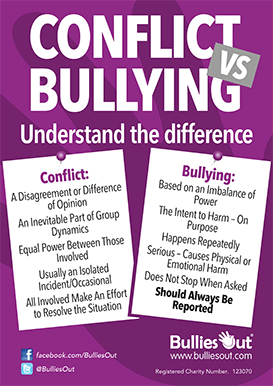
Much of the bullying I have witnessed recently has been entirely political, with articulate and conscientious activists being targeted for very personal attacks, discrediting, smear campaigns and trolling. I see that those who are particularly adept at debate and providing well-evidenced, well-reasoned responses, posts and comments tend to get the attention of bullies and trolls, who are most often supporters of either right-wing or occasionally, minor and “alternative” left wing political parties that frequently employ negative campaigning and lies to try to gain credibility.

Bullying is a form of scapegoating and projection. We know that scapegoating is a hostile socio-psychological discrediting operation in which people move blame and responsibility away from themselves and towards a target person or group. It is also a practice were angry feelings and inappropriate accusation are placed on others. Quite understandably, the target feels persecuted and receives misplaced vilification, blame and criticism; and the victim is likely to suffer rejection from those who the perpetrator seeks to influence and again, an increasing feeling of isolation. We live in a society where bullying has become increasingly acceptable, and certainly, as form of doing politics.
A major contributing factor to this increase in bullying is the collective behaviours of the current government, which has perpetuated, permitted and endorsed prejudices against marginalised social groups, such as disabled and unemployed people, with a complicit media amplifying these prejudices. Their policies embed a punitive approach towards the poorest social groups. This in turn means that those adminstering the policies, such as staff at the Department for work and pensions and job centres, for example, are also bound by punitive, authoritarian behaviours directed at a targeted group.
As authority figures and role models, their behaviour establishes a framework of acceptability. Parliamentary debates are conducted with a clear basis of one-upmanship and aggression rather than being founded on rational exchange. Indeed, the prime minister sneers at rationality and does not engage in a democratic dialogue, instead he employs the tactics of a bully: denial, scapegoating, vilification, attempts at discrediting, smearing and character assassinations. This in turn gives wider society permission and approval to do the same.
Scapegoating has a wide range of focus: from “approved” enemies of very large groups of people down to the scapegoating of individuals by other individuals. The scapegoater’s target always experiences a terrible sense of being personally edited and re-written, with the inadequacies of the bully inserted into public accounts of their character, isolation, ostracism, exclusion and sometimes, expulsion and elimination. The sense of isolation is often heightened by other people’s reluctance to become involved in challenging bullies, usually because of a bystander’s own discomfort and fear of reprisal.
Bullies don’t like to have their lies exposed. That’s not to say that all supporters of those minority parties are bullies: they’re not. On a personal level, despite the fact that most of my political criticism in debate and on my site has been directed at the Conservatives (evident on this site, for example, which is actually identified as a Human Rights site) most of the bullying I have personally encountered this past twelve months has been from a small group of Green Party members, curiously.
This is possibly because the Green Party regard the Labour Party as their “enemy” in elections – in that they compete for supporters with similar values – rather than the Conservatives, and therefore spend a lot of time vilifying Labour. This has fuelled some grassroot Green supporters in attacks on key Labour supporters, particularly the ones who are adept at challenging lies and point out the Green Party’s negative campaigning and electioneering strategies.
I’m an anarchist, but have decided to vote Labour, because the alternative – 5 more years of such a destructive and authoritarian Conservative government – is untenable. People are dying because of Tory policies. I can’t in good conscience turn away from that and pretend it isn’t happening. I’ve been quite vocal about this on social media and on this site.
I was also targeted by “Tommy Robinson” (real name is Stephen Christopher Yaxley-Lennon), the ex-leader of far-right English Defence League (EDL). He used my account details on Twitter and Facebook, designed and shared a malicious meme, claiming I had made comments that I hadn’t, and invited people to “let her know what you think of her”. I had hundreds of messages that included death and rape threats from the far-right, and one threat from Combat 18. I involved the police, but Robinson claimed several people had access to his account, and denied any knowledge of the meme. It was shared in and among groups like the National Front, Britain First, some UKIP groups, and even a couple of Tory councillors reposted it.
My sin? He was harassing me on Twitter, wouldn’t engage in reasonable debate, he was quite abusive and I told him to do one and leave me be. He didn’t like that.
Bullying becomes obvious when you scrutinise who is actually doing the attacking on a personal level. Debate and political criticism are one thing: personal commentaries, character assassinations, attacks, threats, abuse and harassment are bullying. I have seen that quite often, bullying tactics include manipulating people’s perceptions to portray themselves as the injured party, with their target being the villain. However, again, scrutiny of who is actually instigating and doing the personal attacking will reveal the real bully or bullies.
Bullies show a complete lack of remorse for the damage they are intending to inflict on their target.Victim-blame narratives aside, it’s never wise to ignore bullying; bullies use provocation to elicit a response from their target and if you ignore it the provocation will simply get worse. That is the nature of bullying. Ignoring a bully actually gives him/her permission to continue bullying. Ignoring a bully sends the signal that it is acceptable to bully that person.
Furthermore, ignoring a bully tells bystanders that is acceptable to bully that person and inevitably, this becomes embedded in our culture. It’s worth looking at Gordon Allport’s Ladder of Prejudice to see exactly how that process works. If a bully’s audience or peers show disapproval and don’t become complicit, the bully will be discouraged from continuing their abuse. The biggest fear a bully has is that of being exposed for what they really are.
Bullies project their inadequacies, shortcomings, behaviours, anger and spite on to other people to distract and divert attention away from themselves and their own inadequacies and to avoid facing up to the same scrutiny. The vehicle for projection is blame, criticism and allegation. Once a target realises this, they can take comfort from the fact that every time they are blamed, criticised or subjected to another specious allegation by the bully, the bully is implicitly admitting or revealing something about themselves. Not that it is much of a comfort.
A target’s awareness of projection can help them translate whatever they are being accused of into an awareness of the bully’s own misdemeanours. Again, the bully may be identified by the fact that they are the ones loudly criticising and attempting to discredit the target, rather than there being any evidence of the converse.
Vilifying the target is the most frequently used as a gaslighting tactic in bullying. This is a powerful means of putting the victim on the defensive while simultaneously masking the aggressive intent of the manipulator, the bully then falsely accuses the victim of being an abuser in response when the victim stands up for or defends themselves or their position.
Nobody’s behaviour is perfect, and many balanced, well-intentioned people will at some time unjustifiably or inadvertently upset others. When this is drawn to their attention, they are usually horrified and will do what they can to make amends and ensure it isn’t repeated. That’s what reasonable and mature people do.
Serial bullies, on the other hand, do not want to know about the negative effects of their behaviour. Denial, retaliation and feigning victimhood are some of the ways that bullies express their antipathy for anyone who is able to describe their behaviour, see through their mask of normality or help others to do the same.
Here are some recognisable bullying traits and tactics, designed to damage, isolate, discredit and eliminate the target:
- bullies are adept at exploiting the trust and needs of individuals, organisations and groups, for personal gain.
- bullies react to criticism with denial, retaliation, feigned victimhood.
- the bully grooms bystanders, and the target, to believe the target deserves the treatment they are receiving and attempts to limit contact between others and their target. Often the bully will use communications that exclude the target so that there is no opportunity for them to defend themselves and present their truth.
- the bystanders see only the Dr Jekyll side of the bully, but only the target sees the Mr/Ms Hyde side; Dr Jekyll is sweet, manipulative and charming, Mr/Ms Hyde is evil; Mr/Ms Hyde is the real person, Dr Jekyll is an act.
- bullies exert power and control by a combination of selectively withholding information and spreading lies and disinformation, therefore everyone has a distorted picture – of only what the bully wants them to see.
- the target finds that in any response, everything they say and do is twisted, distorted and misrepresented.
- bullies are adept at manipulating people’s perceptions with intent to engender a negative view of the target in the minds of others – this is achieved through undermining and discrediting, including the creation of doubts and suspicions and the sharing of lies.
- bullies use other people to further the aim of discrediting their target, creating a false impression of consensus.
- bullies poison the atmosphere and actively poison people’s minds against the target when close to being outwitted and exposed, the bully feigns victimhood and turns the focus on themselves as previously stated – another example of manipulating people through their emotions such as guilt, sympathy, feeling sorry for the bully. Many bystanders are hoodwinked by the bully’s ruses for abdicating responsibility and evading accountability, they may say, for example: “that’s all in the past”, “let’s focus on the future” , “you need to make a fresh start”, and “forgive and forget”, “you’ve got to move on”, “sticks and stones” and so on.
- bystanders often feel cognitive dissonance and usually minimise their discomfort by reasoning to avoid any responsibility, it usually goes this way because they themselves don’t want to become targets. They may say things like: “just ignore them”, “stand up to them” , “I’ve personally never had any problems with him/her”, “Oh I never get involved in personal differences” and so on. Even worse, they may imply that you did something wrong to “attract” the bullying.
- the bully encourages and manipulates as many bystanders as possible to lie, act dishonorably and dishonestly, withhold information and spread lies and misinformation, the bully manipulates bystanders to punish the target for alleged infractions, so the bystanders also become instruments of harassment.
- some people gain gratification (a perverse feeling of satisfaction) from seeing others in distress and thus become complicit in the bullying and a few people think that bullying is funny.
- some observers regard behavioural responses that are reasonable and civilised as a sign of weakness rather than maturity. Many seem to lack critical thinking skills and analytical abilities and so cannot see through the facade or the bully’s mask of deceit. Even when it is obvious, sometimes. There’s very often an element of not wanting to see, too. Other people fear becoming targets themselves, and so “go along to get along.” Complicity because of fear of reprisals.
- bullies are extremely vindictive and will do everything in their power to damage and destroy anyone who can see through their mask of deceit. In very rare cases you may receive information from a bystander who wants to help but is afraid to do so publicly for fear of retribution – and fear of becoming the next target.
- apathy and indifference to the distress of others are widespread. The bully relies on this.
“Bullying is a compulsive need to displace aggression and is achieved by the expression of inadequacy (social, personal, interpersonal, behavioural, professional) by projection of that inadequacy onto others through control and subjugation (criticism, exclusion, isolation etc). Bullying is sustained by abdication of responsibility (denial, counter-accusation, pretence of victimhood) and perpetuated by a climate of fear, ignorance, indifference, silence, denial, disbelief, deception, evasion of accountability, tolerance and reward (eg promotion) for the bully.”
Tim Field, 1999
The Law and Cyber-bullying:
As cyber-bullying is a relatively new phenomenon, the UK courts are still trying to catch up with it and sentence offenders effectively. Though no laws specifically apply to cyber-bullying alone, there are several laws which can be applied in cyber-bullying cases:
- Protection from Harassment Act 1997
- Criminal Justice and Public Order Act 1994
- Malicious Communications Act 1988
- Communications Act 2003
- Breach of the Peace (Scotland)
- Defamation Act 2013
In 2012 The Crown Prosecution Service published guidelines on how cyber-bullying cases would be assessed against current laws, which you can find here.
On January 1st 2014 the Defamation Act 2013 came into order, and can be read here.
Examples of bullying:
What a bully might say when held to account
One day in the life of a blogger.
Someone elses’ perspective: A few words about respect and: One day in the life of a blogger – kittysjones. It’s worth reading the comments thread on these articles by Mike Sivier, too.
Related
Interesting article on the empath, apath (bystander) and sociopath triangle: it’s a useful model of analysis for those who have experienced abuse and wondered: why me? –EMPATHIC PEOPLE ARE NATURAL TARGETS FOR SOCIOPATHS – PROTECT YOURSELF
psychopathy101: Projection –“Beware of individuals spreading rumors about others behind their back, psychopaths are cowards, know that they are telling lies, enjoy hurting others and very afraid of being found out of who they really are, thus everything takes place in the “shadows”/behind the “targets” back. To remember; the “bully” is telling everyone about him/herself (thoughts and actions) what he/she has done, is doing or is about to do.”
Introduction to the Serial Bully – “Perhaps the most easily recognisable Serial Bully traits are:
- Jekyll and Hyde nature – Dr Jekyll is “charming” and “charismatic”; “Hyde” is “evil”;
- Exploits the trust and needs of organisations and individuals, for personal gain;
- Convincing liar – Makes up anything to fit their needs at that moment;
- Damages the health and reputations of organisations and individuals;
- Reacts to criticism with Denial, Retaliation, Feigned Victimhood;
- Blames victims/targets;
- Moves to a new target when the present one burns out.“
What is a Bully – “Projection behaviour and denial are hallmarks of the serial bully. It is believed by some that bullying is present behind all forms of harassment, discrimination, prejudice, abuse, persecution, conflict and violence.
What bullies fear most is exposure and being called publicly to account for their behaviour so they can go to great lengths to keep their target (victim) quiet from misdirection when it is reported to using threats of disciplinary action, dismissal, gagging clauses and fear.
Despite the façade that such people put up, bullies have another side to them. What complicates matters is that the bully may not be aware or acknowledge to themselves they very often suffer from one or more of the following:
# Envy# Jealousy# Low self-confidence# Low self-esteem# Feel insecure# Seething with resentment# Bitterness# Hatred# Anger# Inadequacy# And may have a wide range of prejudices as a vehicle for dumping anger onto others.”
About the impact of abusive language: Sticks and stones: abusive labels, self concept – when words become weapons
Further information:
Bullying can cause injury to health and make people ill, with some or all of the symptoms below. Many, if not all of these symptoms are consequences of the high levels of stress and anxiety that bullying creates:
- shattered self-confidence, low self-worth, low self-esteem
- reactive depression, lethargy, hopelessness, anger, futility and more
- hypersensitivity, fragility, isolation, withdrawal
- obsession, not being able to stop thinking about the experience in all its detail
- hypervigilance (feels like but is not paranoia), being constantly on edge
- uncharacteristic irritability and angry outbursts
- tearfulness, bursting into tears regularly and over trivial things
- sweating, trembling, shaking, palpitations, panic attacks
- bad or intermittently-functioning memory, forgetfulness, especially with trivial day-to-day things
- poor concentration, can’t focus on anything for long
- skin problems such as eczema, psoriasis, athlete’s foot, ulcers, shingles, urticaria if prone to them
- irritable bowel syndrome
- flashbacks and replays, obsessiveness, can’t get the bullying out of your mind
- tiredness, exhaustion, constant fatigue sleeplessness, nightmares, waking early, waking up more tired than when you went to bed
- headaches and migraines
- frequent illness such as viral infections especially flu and glandular fever, colds, coughs, chest, ear, nose and throat infections (stress may play havoc with the immune system.)
- suicidal thoughts, self-harm.
For the symptoms of injury to health caused by prolonged stress (such as that caused by bullying, harassment, abuse etc) click here. For details of the trauma that can result, click here.

Related
Conservatives, cruelty and the collective unconscious
I don’t make any money from my work. But you can help by making a donation and help me continue to research and write informative, insightful and independent articles, and to provide support to others. The smallest amount is much appreciated – thank you.




 Politics and Insights