Tag: poverty

Court maintains benefit sanctions are unlawful

0_0_0_0_370_308_csupload_52703375

Maslow’s hierarchy of human needs. If people cannot fulfil their basic physiological needs, such as for food, fuel and shelter, they cannot move on to meet higher level psychosocial needs, such as looking for work.

The Court of Appeal have dismissed a legal challenge by the Government, the Independent reports.  Sanctions imposed on thousands of benefit claimants for not taking part in the DWP’s so-called “back-to-work” schemes are unlawful, a court has ruled. 

Three Court of Appeal judges upheld an earlier decision by the High Court, potentially paving the way for millions in refunds to people who had their incomes cut while they were unemployed.

But ministers argued that the new law also retroactively applied to people whose sanctions had been imposed before the law was passed.

The High Court and Appeal Court have now both ruled that the retroactive legislation is not lawful, however.  

“We have … held – upholding the decision of the High Court – that in the cases of those claimants who had already appealed against their sanctions the Act was incompatible with their rights under the European Convention on Human Rights,” Lord Justice Underhill said.

“Under the Human Rights Act that ‘declaration of incompatibility’ does not mean that the 2013 Act ceases to be effective as regards those claimants; it is up to the Government, subject to any further appeal, to decide what action to take in response.”

After a previous Supreme Court judgment ruled some sanctions unlawful the Government passed a new law to make them legal. 

The sanctions had originally been ruled unlawful because a court said the Government had not provided sufficient information to claimants on how to make representations before benefits were stopped.

That ruling was won by university graduate Cait Reilly, from Birmingham, who challenged having to work without wages at a local Poundland outlet.

The sanctions system has been widely criticised, including by academics, policy analysists, campaigners, charities and MPs on the Work and Pensions Select Committee. A report by the committee suggested the system might be ‘purely punitive’ and not aimed at helping people find work.

The Government had originally feared that up to £130 million could be paid back in refunds, but the DWP now believes it will only have to pay back under £2 million because of the limited scope of the judgement.

The latest court judgement is the latest in a string of legal setbacks for the Government’s benefit reforms.

The controversial “bedroom tax” was branded “discriminatory” and “unlawful” by a court in January of this year.

Last month the Department also lost a legal challenge to keep problems with Universal Credit under wraps after a freedom of information request from campaigners. 

A spokesperson for the DWP said: “It’s only right that jobseekers do all they can to find work while claiming benefits. We are considering the judgment.”

It’s only right that in a very wealthy first-world liberal democracy we can expect a government to meet their human rights obligations and uphold the law.

Sanctions and welfare cuts can’t possibly “incentivise” people to work as claimed by the Conservatives, a wealth of historical empirical evidence has established that financial insecurity and poverty demotivates people, changes cognitive priority and reduces them to simply struggling to survive.

Universal Credit cuts will leave some people in work worse off

66864_464287263640807_1896397853_n

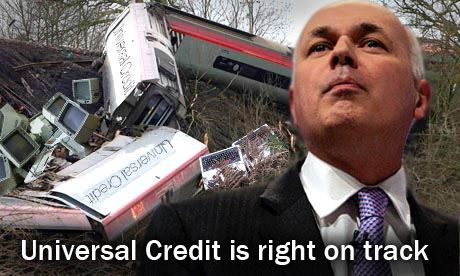
Despite Ian Duncan Smith’s persistent claims that “nobody loses a penny” under his flagship Universal Credit reform, the Department for Work and Pensions (DWP) has contradicted him and admitted that some claimants will be worse off. There seems to be a pattern emerging. Whenever the word “reform” is used by the Conservative government, it is always as a euphemism for “cuts to lifeline support.”

Guidance released this week by the DWP outlines how some working people will lose almost £900 a year. The memo supplies guidance on legislative amendments made in 2015 to the regulations which provide for the amount of earned income that is deducted from the Universal Credit maximum amount.

From 11.4.16 the range of work allowances available to Universal Credit claimants is reduced from seven to two (some rates are also reduced and some are removed completely). Consequently a work allowance will only be available where the claimant or either joint claimant is responsible for a child or qualifying young person and/or has limited capability to work (LCW).

On page three, the memo uses a case study – “Bella” – a 26-year-old shop worker who is single and lives with her parents. She works eight hours a week and earns £50, according to the DWP example. But at an hourly rate of £6.25, Bella apparently earns less than the legal minimum wage, which is £6.70 an hour for workers aged 21 and over. From April 1, the minimum wage is rising to £7.20 for employees aged over 25. The DWP guidance admits Bella, who is fictional, will see her monthly UC award plunge from £253.70 to £181.55 – a loss of £72.15 adding up to £865.80 a year.

There is no transitional protection for Universal Credit claimants whose work allowance is reduced or removed by this change.

The Shadow Work and Pensions Secretary Owen Smith said: “Iain Duncan Smith has spent months trying to pretend that ‘no one is going to lose a penny’ as a result of his Universal Credit cuts.”

“That’s now been blown out of the water by his own officials, who’ve produced a guidance note for DWP staff on how to implement the cut.

“Duncan Smith should read his own department’s guidance and call on the Chancellor to drop the Universal Credit cuts in the Budget.”

A DWP spokesman said: “Universal Credit (UC) is revolutionising welfare, with claimants moving into work faster and earning more than under the previous system.”

“As part of moving to a high-wage, low-tax society we are simplifying the work allowances under UC and giving those affected extra help to progress in work and earn more.”

“Even after the changes, UC claimants will know they are better off in work.”

The Poor Law Amendment Act of 1834 was based on the “principle of less eligibility,” which stipulated that the condition of the “able-bodied pauper” on relief be less “eligible” – that is, less desirable, less favourable – than the condition of the very poorest independent labourer. “Less-eligibility” meant not only that the pauper receive less by way of support than the labourer did from his wages but also that he receive it in such a way (in the workhouse, for example) that made pauperism less respectable than work – to stigmatise it. Thus the labourer would be discouraged from lapsing into a state of “dependency” and the pauper would be encouraged to work.

The less eligibility principle “made work pay”, in other words.

The current government is going even further, and applying the same punitive approach to people in low-paid employment, presumably to serve as a deterrent to poor wages. Personally, I think unions do that much better through collective bargaining, by addressing those actually at fault – exploitative employers, rather than poor, exploited employees.

This post was written for Welfare Weekly, which is a socially responsible and ethical news provider, specialising in social welfare related news and opinion.

Adam Perkins, Conservative narratives and neuroliberalism

164204381.png

Eugenics in a ball gown

I had a little discussion with Richard Murphy yesterday, and I mentioned that the right-wing libertarian think tank, the Adam Smith Institute, (ASI) has endorsed* the controversial work of Adam Perkins – The Welfare Trait.” The ASI has been the impetus behind Conservative policy agendas and was the primary intellectual drive behind the privatisation of state-owned industries during the premiership of Margaret Thatcher, and alongside the Centre for Policy Studies and Institute of Economic Affairs, advanced a neoliberal approach towards public policy on privatisation, taxation, education, and healthcare, and have advocated the replacement of much of the welfare state by private insurance schemes.

(*The ASI review, written by Andrew Sabisky, was removed following wide criticism of Perkins’ methodology and other major flaws in his work. Consequently, the original hyperlink leads nowhere, so I’ve added an archived capture, to update.) 

Professor Richard Murphy, a widely respected political economist and commentator, has written an excellent article: The Adam Smith Institute is now willing to argue that those on benefits are genetically different to the rest of us on the Tax Research UK site, which I urge you to read. 

He says “What you see in this is the deliberate construction of an argument that those on benefits are genetically different from other people. The consequences that follow are inevitable and were all too apparent in the 1930s. And this comes from a UK think tank much beloved for Tory politicians.”

The Adam Smith Institute say this in their review of Adam Perkins’s book:

“With praiseworthy boldness, Perkins gets off the fence and recommends concrete policy solutions for the problems that he identifies, arguing that governments should try to adjust the generosity of welfare payments to the point where habitual claimants do not have greater fertility than those customarily employed. The book no doubt went to press before the Chancellor announced plans to limit child tax credits to a household’s first two children, but such a measure is very much in the spirit of this bullet-biting book. The explicit targeting of fertility as a goal of welfare policy, however, goes beyond current government policy. Perkins perhaps should also have argued for measures to boost the fertility of those with pro-social personalities, such as deregulation of the childcare and housing markets to cut the costs of sustainable family formation.”

And: “Over time, therefore, the work motivation of the general population is lowered. This occurs through both genetic and environmental channels. Personality traits are substantially heritable (meaning that a decent percentage of the variation in these traits is due to naturally occurring genetic variation). Given this fact, habitual welfare claimants with employment-resistant personalities are likely to have offspring with similar personalities.”

Personality disorder or simply maintaining the social order?

Two things concern me immediately. Firstly, there is no causal link established between welfare provision and “personality disorder” or “traits”, bearing in mind that the “employment-resistant personality” is an entirely made-up category and does not feature as a clinical classification in either the ICD-10 section on mental and behavioural disorders, or in the DSM-5. Nor is employment status currently part of any clinical diagnostic criteria. Personality disorders are defined by experiences and behaviours that differ from societal norms and expectations.

Personality disorder (and mental illness) categories are therefore culturally and historically relative. Diagnostic criteria and categories are always open to sociopolitical and economic definition, highly subjective judgments, and are particularly prone to political abuse.

Drapetomania” for example, was a pseudoscientific definition of a mental illness that labelled slaves who fled captivity in the 1800s. Samuel A. Cartwright, who invented the category, also prescribed a remedy. He said: “with proper medical advice, strictly followed, this troublesome practice that many Negroes have of running away can be almost entirely prevented. In the case of slaves “sulky and dissatisfied without cause” – apparently a warning sign of their imminent flight – Cartwright prescribed “whipping the devil out of them” as a “preventative measure.” As a further “remedy” for this “disease”, doctors also made running a physical impossibility by prescribing the removal of both big toes. Such abusive application of psychiatry and the medicalisation of distress and rational responses to ethnic degradation and dehumanisation is part of the edifice of scientific racism.

The classification of homosexuality as a mental illness was removed from the Diagnostic and Statistical Manual of Mental Disorders (DSM) in 1974, and was replaced by the subsequent categories of “sexual orientation disturbance” and then “ego-dystonic homosexuality,” the latter was not deleted from the manual until 1987. Medicalising and stigmatising the experiences, behaviours and beliefs of marginalised social groups, and attempting to discredit and invalidate those group’s collective experiences is a key feature of political and cultural oppression.

Personality traits are notoriously difficult to measure reliably, and it is often far easier to agree on the behaviours that typify a disorder than on the reasons why they occur. As it is, there is debate as to whether or not personality disorders are an objective disorder, a clinical disease, or simply expressions of human distress and ways of coping. At the very least, there are implications regarding diagnoses that raise important questions about context, which include political and social issues such as inequality, poverty, class struggle, oppression, abuse, stigma, scapegoating and other structural impositions.

An over-reliance on a fixed set of behavioural indicators, some have argued, undermines validity, leaving personality disorder categories prone to “construct drift,” as the diagnostic criteria simply don’t provide adequate coverage of the construct they were designed to measure. There are no physical tests that can be carried out to diagnose someone with a personality disorder – there is no single, reliable diagnostic tool such as a blood test, brain scan or genetic test. Diagnosis depends on subjective judgment rather than objective measurement.

A diagnosis of personality disorder is potentially very damaging and creates further problems for individuals by undermining their sense of self, denying their identity, experience and locating the problems, regardless of their origin and who is responsible for them, in themselves. This is in addition to exposing people to stigma and discrimination, both within the mental health system, quite often, and more broadly within our society. Medicalising and stigmatising human distress permits society to look the other way, losing sight of an individual’s social needs, experiences and context. It also alienates the stigmatised individual, and enforces social conformity, compliance and cultural homogeneity.

It may be argued that the concept of personality disorder obscures wider social issues of neglect, poverty, inequality, power relationships, oppression and abuse by focusing on the labelling of the individual. Rather than being concerned with the impact and prevalence of these issues, public outrage is focussed on containing and controlling people who challenge normative consensus and who are perceived to be dangerous. Because there is no objective test to make a diagnosis, this makes the basis of such diagnosis very questionable and highlights the propensity for its political and punitive usage. The “diagnosis” of many political dissidents in the Soviet Union with “sluggish schizophrenia” who were subsequently subjected to inhumane “treatments” led to questions about such diagnoses and punitive regimes through stigma, labeling, dehumanisation, coercion and oppression, for example.

Secondly, to recommend such specific policies on the basis of this essentially eugenic argument betrays Perkins’s intention to provide a pseudoscientific prop for the libertarian paternalist (with the emphasis being on behaviourism) brand of neoliberalism and New Right antiwelfarism.

The taken-for-granted assumption that the work ethic and paid labor (regardless of its quality) may define a person’s worth is also very problematic, as it objectifies human subjects, reducing people to being little more than neoliberal commodities. Or a disposable reserve army of labor, at the mercy of “free market” requirements, if you prefer.

The government is currently at the centre of a United Nations inquiry into abuses of the human rights of ill and disabled people, and is also in breach of the rights of women and children, because of their anti-humanist, draconian welfare “reforms”. Human rights are the bedrock of democracy. The fact that some social groups are experiencing political discrimination and the failure of a government in a wealthy first-world liberal democracy to observe what are meant to be universal human rights ought to be cause for concern.

The rise of neoeugenics

Holocaust documentation has highlighted that the medicalisation of social problems and systematic euthanasia of people in German mental institutions in the 1930s provided the institutional, procedural, and doctrinal origins of the genocide of the 1940s. Eugenics in Germany was founded on notions of “scientific progress,” and was about ensuring mental, racial and genetic “hygiene” and “improving” the German race, which ultimately led to eliminativist attitudes towards politically defined “impure” others.

Eugenics is a theory of the possibility of improving the qualities of the human species or a particular population. It encourages the reproduction of persons with socially defined “desirable genetic qualities” and discourages the reproduction of persons with socially defined “undesirable genetic qualities.” Taken to its most extreme form, eugenics supports the extermination of some groups who some others consider to be “undesirable” population.

One example of eugenic policy is the recent limiting of tax credit support for children in poorer families to two children only. Iain Duncan Smith said that this is to encourage “behavioural change” to prevent poorer families having “too many” children.

Eugenics is widely considered as a movement that endorses human rights violations of some social groups. At the very least, eugenic policy entails violations of privacy, the right to found a family, the right to freedom from discrimination, the right to socioeconomic security and social protection, and at worst, violations of the right to life.

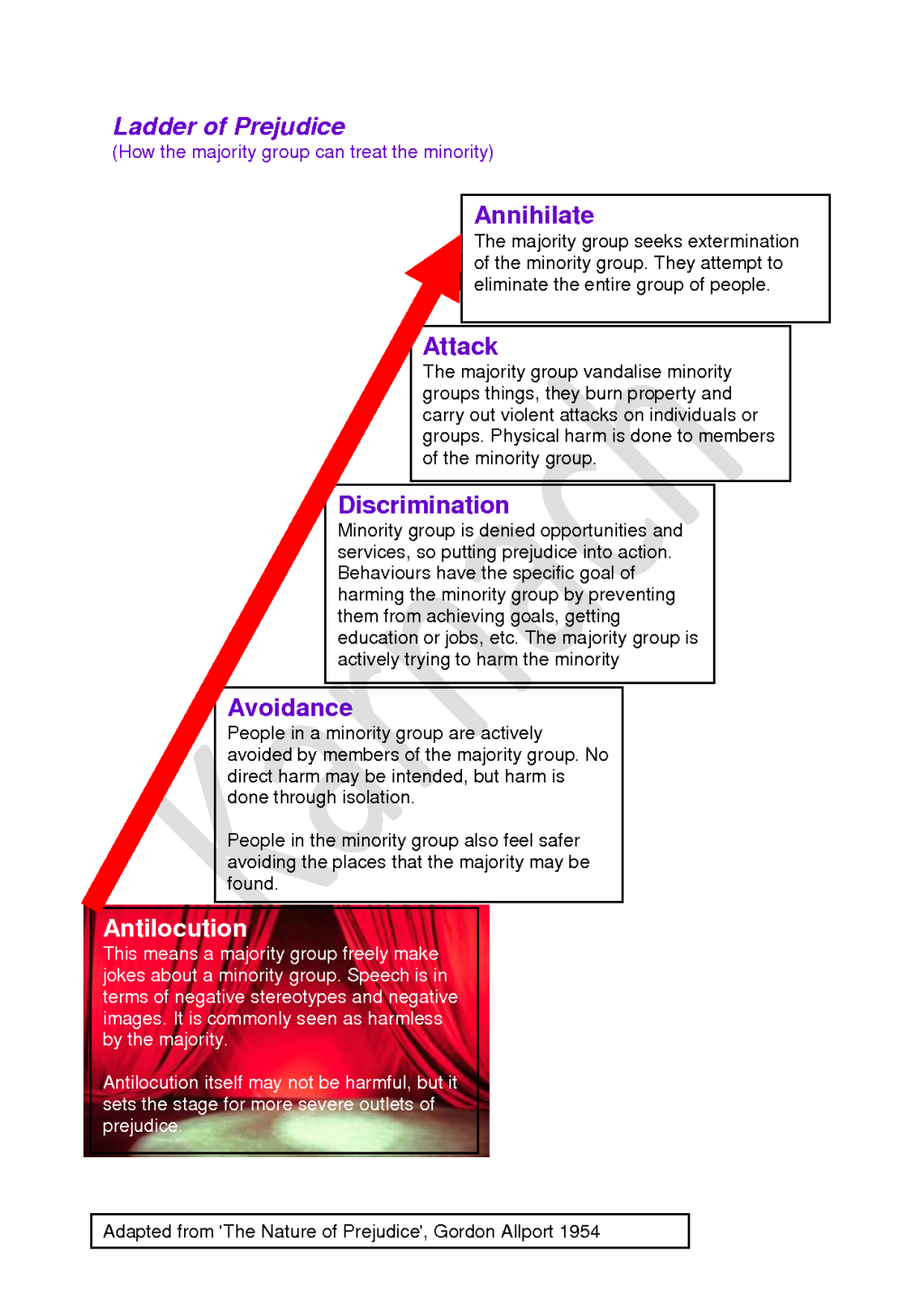
I have frequently referred to Gordon Allport in my writing. He was a social psychologist who studied the psychological and social processes that create a society’s progression from prejudice and discrimination to genocide. Allport’s important work reminds us of the lessons learned from politically-directed human atrocities and the parts of our collective history it seems we would prefer to forget.

In his research of how the Holocaust happened, Allport describes sociopolitical processes that foster increasing social prejudice and discrimination and he demonstrates how the unthinkable becomes tenable: it happens incrementally, because of a steady erosion of our moral and rational boundaries, and propaganda-driven changes in our attitudes towards politically defined others, all of which advances culturally, by almost inscrutable degrees.

The process always begins with political scapegoating of a social group and with ideologies that identify that group as “undesirable” and as the Other: an “enemy” or a social “burden” in some way. A history of devaluation of the group that becomes the target, authoritarian culture, and the passivity of internal and external witnesses (bystanders) all contribute to the probability that violence against that group will develop, and ultimately, if the process is allowed to continue evolving, extermination of the group being targeted.

Othering is recognised in social psychology as part of an outgrouping process that demarcates those that are thought to be different from oneself or the mainstream, most often using stigmatising to generate public moral outrage. It tends to reinforce and reproduce positions of domination and subordination. Othering historically draws on essentialising explanations, culturalist explanations, behavioural explanations, genetic explanations and racialising explanations.

Hate crime, eugenics and Allport’s ladder

In the UK, much of the media is certainly being used by the right-wing as an outlet for blatant political propaganda, and much of it is manifested as a pathological persuasion to hate others. We are bombarded with anti-muslim rhetoric, “poverty porn”, headlines that condemn people needing social security as “workshy” and “scroungers.” The political scapegoating narrative directed at ill and disabled people has resulted in a steep rise in hate crimes directed at that group. By 2012, hate crime incidents against disabled people had risen to record levels, and has continued to climb ever since, rising by a further 41% last year alone. We are certainly climbing Allport’s ladder of prejudice.

A freedom of information request to the Department for Work and Pensions (DWP) discloses that between 2010 and 2015 the government closed 1,041,219 alleged cases of benefit fraud put forward by the public. Insufficient or no evidence of fraud was discovered in 887,468 of these. In 2015 alone, of the 153,038 cases closed by the DWP’s Fraud and Error Service, 132,772 led to no action. People can use an online form on the DWP website to anonymously report “suspects,” listing their eye colour, piercings, scars, tattoos and other details they deem relevant. Suspicions can also be logged through the DWP benefit fraud hotline.

The inaccurate reports throws into question multiple government advertising campaigns, claiming that the public has a “role” in identifying “benefit cheats”. Television adverts, social media posts, letters and radio campaigns have been used to warn claimants about fraudulently claiming benefits. Government statistics show fraudulent claims accounted for 0.7% – or £1.2bn – of total benefit expenditure in the financial year 2012-2013. Some of that figure may also contain a proportion of DWP errors. An estimated £1.6bn was underpaid to claimants by the DWP. Yet people’s neighbours are being encouraged to engage in a McCarthy-style reporting of suspected benefit fraud. And a significant proportion of the public are reporting innocent citizens.

There is considerable incongruence between cases of genuine fraud and public perception: an Ipsos Mori survey in 2013 found the public believed 24% of benefits were fraudulently claimed – 34 times greater than the level seen in official statistics.

The political construction of social problems also marks an era of increasing state control of citizens with behaviour modification techniques, (under the guise of paternalistic libertarianism) all of which are a part of the process of restricting access rights to welfare provision.

The mainstream media has been complicit in the process of constructing folk devils: establishing stigmatised, deviant welfare stereotypes and in engaging prejudice and generating moral outrage from the public:

“If working people ever get to discover where their tax money really ends up, at a time when they find it tough enough to feed their own families, let alone those of workshy scroungers, then that’ll be the end of the line for our welfare state gravy train.” James Delingpole 2014

Poverty cannot be explained away by reference to simple narratives of the workshy scrounger as Delingpole claims, no matter how much he would like to apply such simplistic, blunt, stigmatising, dehumanising labels that originated from the Nazis (see arbeitssheu.)

The Conservatives have strongly authoritarian tendencies, and that is most evident in their anti-democratic approach to policy, human rights, equality, social inclusion and processes of government accountability.

Conservative policies are entirely ideologically driven. It is a government that is manipulating public prejudice to justify massive socioeconomic inequalities and their own policies which are creating a steeply hierarchical society based on social Darwinist survival of the wealthiest “libertarian” principles. We have a government that frequently uses words like workshy to describe vulnerable social groups.

Conservative narrative and eugenics

This is a government intentionally scapegoating poor, unemployed, disabled people and migrants. A few years ago, a Tory councillor said that “the best thing for disabled children is the guillotine.” More recently, another Tory councillor called for the extermination of gypsies, more than one Tory (for example, Lord Freud, Philip Davies) have called for illegal and discriminatory levels of pay for disabled people, claiming that we are not worth a minimum wage to employers.

These weren’t “slips”, it’s patently clear that the Tories believe these comments are acceptable, and we need only look at the discriminatory nature of policies such as the legal aid bill, the wider welfare “reforms” and research the consequences of austerity for the poorest and the vulnerable – those with the “least broad shoulders” – to understand that these comments reflect how many Conservatives think.

Occasionally such narrative is misjudged, pushing a little too far against the boundaries of an established idiom of moral outrage, and so meets with public resistance. When this happens, it tends to expose the fault lines of political ideology and psychosocial manipulation, revealing the intentional political creation of folk devils and an extending climate of prejudice.

In EdgbastonKeith Joseph, (1974) announced to the world that:

“The balance of our population, our human stock is threatened … a high and rising proportion of children are being born to mothers least fitted to bring children into the world and bring them up. They are born to mothers who were first pregnant in adolescence in social classes 4 and 5. Many of these girls are unmarried, many are deserted or divorced or soon will be. Some are of low intelligence, most of low educational attainment.”

And in 2010, the former deputy chairman of Conservative Party, Lord Howard Flight, told the London Evening Standard:

“We’re going to have a system where the middle classes are discouraged from breeding because it’s jolly expensive. But for those on benefits, there is every incentive. Well, that’s not very sensible.”

In 2013, Dominic Cummings, a senior adviser to the UK Secretary of State for Education, provoked a flurry of complaints about his eugenicist approach, claiming that “a child’s performance has more to do with genetic makeup than the standard of his or her education.”

Steven Rose, Emeritus Professor of Biology, offered a more detailed analysis in New Scientist, concluding:

“Whatever intelligence is, these failures show that to hunt for it in the genes is an endeavour driven more by ideological commitment than either biological or social scientific judgement. To suggest that identifying such genes will enable schools to develop personalised educational programmes to match them, as Cummings does, is sheer fantasy, perhaps masking a desire to return to the old days of the 11 plus. Heritability neither defines nor limits educability.”

Pseudoscience has long been used to attempt to define and explain social problems. Lysenkoism is an excellent example. (The term Lysenkoism is used metaphorically to describe the manipulation or distortion of the scientific process as a way to reach a predetermined conclusion as dictated by an ideological bias, most often related to political objectives. This criticism may apply equally to either ideologically-driven “nature” and “nurture” arguments.)

Eugenics uses the cover and credibility of science to blame the casualities of socioeconomic systems for their own problems and justify an existing social power and wealth hierarchy. It’s no coincidence that eugenicists and their wealthy supporters also share a mutual antipathy for political progressivism, trade unionism, collectivism, notions of altruism and of co-operation and class struggle.

It isn’t what it ought to be

Adam Perkins wrote a book that attempts to link neurobiology with psychiatry, personality and behavioural epigenetics, Lamarkian evolution, economics, politics and social policy. Having made an impulsive inferential leap across a number of chasmic logical gaps from neurobiology and evolution into the realms of social policy and political science, seemingly unfazed by disciplinary tensions between the natural and social sciences, particularly the considerable scope for paradigmatic incommensurability, he then made a highly politicised complaint that people are criticising his work on the grounds of his highly biased libertarian paternalist framework, highly partisan New Right social Conservatism and neoliberal antiwelfarist discourse. 

The problem of discrete disciplinary discursive practices and idiomatic language habits, each presenting the problem of complex internal rules of interpretation, was seemingly sidestepped by Perkins, who transported himself across distinct spheres of meaning simply on leaps of semantic faith to doggedly pursue and reach his neuroliberal antiwelfarist destination. He seems to have missed the critical domain and central controversies of each discipline throughout his journey.

Perhaps he had a theory-laden spirit guide.

Einstein once famously said: “The theory tells you what you may observe.”

On reading Perkins’s central thesis, the is/ought distinction immediately came to mind: moral conclusions – statements of what “ought” to be – cannot be deduced from non-moral premises. In other words, just because someone claims to have knowledge of how the world is or how groups of people are – and how mice are, for that matter, since Perkins shows a tendency to conflate mice behaviour with human behaviour – (descriptive statements), this doesn’t automatically prove or demonstrate that he or she knows how the world ought to be (prescriptive statements).

There is a considerable logical gap between the unsupported claim that welfare is somehow “creating” some new kind of personality disorder, called “the employment-resistant personality”, and advocating the withdrawal of support calculated to meet only the basic physiological needs of individuals – social security benefits only cover the costs of food, fuel and shelter.

While Perkins’s book conveniently fits with Conservative small state ideology, behaviourist narratives, and “culture of dependency” rhetoric, there has never been evidence to support any of the claims that the welfare state creates social problems or psychological pathologies. Historically, such claims tend to reflect partisan interests and establish dominant moral agendas aimed at culturally isolating social groups, discrediting and spoiling their identities, micromanaging dissent, and then such discourses are used in simply justifying crass inequalities and hierarchies of human worth that have been politically defined and established.

It’s truly remarkable that whenever we have a Conservative government, we suddenly witness media coverage of an unprecedented rise in the numbers of poor people who have suddenly seemingly developed a considerable range of personal “ineptitudes” and character “flaws.” Under the Thatcher administration, we witnessed Charles Murray’s discredited pseudoscientific account of “bad” and “good” folk-types taking shape in discriminatory policy and prejudiced political rhetoric.

Social Darwinism has always placed different classes and races in hierarchies and arrayed them in terms of socially constructed notions of “inferiority” and “superiority.” Charles Murray’s controversial work The Bell Curve: Intelligence and Class Structure in American Life presents another example of a discredited right-wing ideological architect, funded by the right-wing, who was then used to prop up an authoritarian Conservative antiwelfarist dogma that was also paraded as “science.” Murray had considerable influence on the New Right Thatcher and Reagan governments. Critics were often dismissed, on the basis that they were identified with “censorious political correctness,” which of course was simply a right-wing attempt to close down genuine debate and stifle criticism. The Bell Curve was part of a wider campaign to justify inequality, racism, sexism, and provided a key theme in Conservative arguments for antiwelfarism and anti-immigration policies.

A recent comprehensive international study of social safety nets from the Massachusetts Institute of Technology (MIT) and Harvard economists refutes the Conservative “scrounger” stereotype and dependency rhetoric. Abhijit Banerjee, Rema Hanna, Gabriel Kreindler, and Benjamin Olken re-analyzed data from seven randomized experiments evaluating cash programs in poor countries and found “no systematic evidence that cash transfer programs discourage work.”

The phrase “welfare dependency” was designed to intentionally divert attention from political prejudice, discrimation via policies and to disperse public sympathies towards the poorest citizens. It is used to justify inequality.

Adam Perkins does nothing to consider, isolate and explore confounding variables regarding the behaviours and responses of people needing social security support. He claims our current level of support is too high. I beg to differ. Empirical evidence clearly indicates it is set much too low to meet people’s physiological needs fully. Poverty affects people’s mental health as well as their physical health. There is a weight of empirical evidence confirming that food deprivation and income insecurity is profoundly psychologically harmful as much as it is physiologically damaging. (See the Minnesota semistarvation experiment, for example.) Describing people’s anger, despondency and distress at their circumstances as “antisocial” is profoundly oppressive. The draconian policies that contribute to creating those circumstances are antisocial, not the people impacted by those policies.

If people can’t meet their basic survival needs, it is extremely unlikely that they will either have the capability or motivation to meet higher level psychosocial needs, including social obligations and responsibilities to find work and meet increasingly Kafkaesque welfare conditionality requirements.

However, people claiming social security support have worked and contributed to society. Most, according to research, are desperate to find work. Most do. It is not the same people year in year out that claim support. There is no discrete class of economic freeriders and “tax payers.” The new and harsh welfare conditionality regime tends to push people into insecure, low paid employment, which establishes a revolving door of work and welfare through no fault of those caught up in it.

There is a clear relationship between human needs, human rights, and social justice. Needs are an important concept that guide empowerment based practices and the concept is intrinsic to social justice. Furthermore, the meeting of physiological and safety needs of citizens ought to be the very foundation of economic justice as well as the development of a democratic society.

The Conservatives (and Perkins) claim that the social security system, which supports the casualties of neoliberal free markets, have somehow created those casualties. But we know that the competitive, market choice-driven Tory policies create a few haves and many have-nots.

As I’ve pointed out many times before, such political rhetoric is designed to have us believe there would be no poor if the welfare state didn’t “create” them. But if Conservatives must insist on peddling the myth of meritocracy, then surely they must also concede that whilst such a system has some beneficiaries, it also creates situations of insolvency and poverty for others.

Inequality is a fundamental element of the same meritocracy script that neoliberals so often pull from the top pockets of their bespoke suits. It’s the big contradiction in the smug meritocrat’s competitive individualism narrative. This is why the welfare state came into being, after all – because when we allow such competitive economic dogmas to manifest without restraint, there are always winners and losers. Inequality is a central feature of neoliberalism and social Conservatism, and its cause therefore cannot be located within individuals.

It’s hardly “fair”, therefore, to leave the casualties of competition facing destitution and starvation, with a hefty, cruel and patronising barrage of calculated psychopolicical scapegoating, politically-directed cultural blamestorming, and a coercive, punitive behaviourist approach to the casualities of inbuilt, systemic, inevitable and pre-designated sentences of economic exclusion and poverty.

That would be regressive, uncivilised, profoundly antidemocratic and tyrannical.

PAA-550x369


This work was cited and referenced in Challenging the politics of early intervention: Who’s ‘saving’ children and why, by Val Gillies and Rosalind Edwards, here.

My work is unfunded and I don’t make any money from it. But you can support Politics and Insights and contribute by making a donation which will help me continue to research and write informative, insightful and independent articles, and to provide support to others.

Infantilizing the nation – an insight into Conservative ‘paternalism’

                                               hqdefault                                                 Young Bullers


Paternalist parenting classes? Heaven forbid

The Prime Minister claims that every family needs help in improving behaviour and discipline. Ironically, this is from a politician who claims to despise the “nanny state”. He much prefers the Bullingdon brand of paternalist interference in people’s everyday lives. Cameron is also recommending “parenting classes” for all, which is understandable given his own strong instincts as a parent. He left his own child in a pub, after all.

Of course Cameron feels that it’s other people that need parenting and discipline. After all, this is a man who spent his early adulthood involved in bizarre initiation rituals, patriarchal debauchery, recklessly banqueting, getting drunk, trashing college rooms and pubs, listening to Supertramp and smoking pot with James Delingpole and vandalising restaurants. In 2013, it was reported that members of the Bullingdon Club were required to burn a £50 note in front of a beggar as part of an “initiation ceremony”. How encouraging to see the elite showing responsibility, compassion, a concern for social justice and cohesion, equality and alleviating poverty, at an early age.

Now that’s a real deviant subculture.

The draconian sentences handed down to the rioters in 2011, advocated by Cameron –  like the 23-year-old student with no previous convictions who was jailed for the maximum permitted six months after pleading guilty to stealing bottles of water worth £3.50 from Lidl in Brixton, for example –  shows only too well that he believes there is one rule for the Oxford elite and another for the rest of the society. Punishment is a central component of the social order and a means by which social order is produced and maintained.

Actually, defining others as deviant is, too. It’s a Conservative means of enhancing social power and status differentials by degrading the rule-breaker’s status and power.

Cameron’s response to the riots reflects a characteristically Bullingdon conservative disdain: an authoritarian, strict and oppressive approach towards perceived, labelled and stigmatised subordinates. Conservatives have always seen the social world as being organised in terms of hierarchies of worth. Smashing up a pub or restaurant and causing 10k worth of damage is no problem if you can cough up the costs on the spot to keep your thuggish behaviour private, hidden away from the scrutiny of the legal system and the public. Money talks and bullshit struts.

The Conservatives inform us that it is bad parents that cause poverty, opting for a rhetoric of authoritarian populism, creating cardboard monsters, manufacturing folk devils and moral outrage for the tabloids, making excuses for the consequences of their own prejudiced and damaging policy-making.

The establishment is a kind of Moebius strip of finger-pointing, arrogant, moralising privileged and feckless bullies passing the buck. And importantly, these wayward boys and girls always get their own way. They can’t democratically govern the country; they lack the social skills, motivation, developmental and emotional capacity to actually engage in any genuine and democratic dialogue with ordinary people, so they rule. Conservatives have always prefered the simplicity of a socio-economic system defined by inherited social ranks.

Cameron says that the government’s Life Chances Strategy – an “initiative to target tackle child poverty” – will include a plan for “significantly expanding parenting provision”. It will also recommend ways to “incentivise” all parents to take up the offer of classes. The hope is, presumably, that if the middle class take Cameron up on his offer of state parenting instructions, the process of social norming will provide the foundation of state-defined “correct behaviours” for the insubordinate working classes, who are perpetually caught up, according to the Tories, in a pathological cycle of something or other, and therefore need state therapy from elitist antipodean role models to set them straight and put them in their place. It’s the new behaviourism: do as we say, but not what we do.

It seems that poverty is to be addressed with nothing more than a paternalist brand of cheap psychopolitics. The government won’t be dipping their hands into the treasury, which is what’s needed. Instead they prefer to employ shabby techniques of persuasion aimed at indoctrinating a Conservative world-view and enforcing conformity as a replacement for genuinely needs-led and evidence-based policies.

At no point does Cameron mention any commitment to improving people’s standard of living, or ensuring that families have a basic level of income in order to meet their fundamental needs, such as food, fuel and shelter – because struggling to meet basic material needs are the main barriers for people experiencing poverty. It’s sobering to consider that the Tory obsession with the work ethic, embodied in their mantra “making work pay”, is nothing more than a meaningless glittering generality, that purposefully diverts attention from elitist policy-making, and subsequent growing poverty and inequality.

Around half of those who are in poverty and of working age live in a household where at least one person works. The steady drop in real wages since 2010, according to the Office for National Statistics, is the longest for 50 years.

Furthermore, since 2010, the decline in UK wage levels has been amongst the very worst in Europe. The fall in earnings under the Coalition is the biggest in any parliament since 1880, according to analysis by the House of Commons Library, and at a time when the cost of living has spiralled upwards.

Ah, and Cameron uttered that inane managementspeak word again – “incentivise”. It never bodes well when Conservatives use that word. It means he has been listening to the psychobabbling of the Nudge Unit, again. Welfare sanctions, which are the punitive withdrawal of lifeline benefits from people who need to claim welfare support to meet their basic needs are claimed to “incentivise” people to find a job, despite empirical evidence to the contrary, and the cuts to child tax credit, limiting support to just two children, are based on the charming and archaic eugenicist idea that poor people ought to be “incentivised” to have fewer children.

Rich people are apparently “incentivised” by large cash carrots, but poor people just get the brutal, merciless stick. What a classic example of flagrant Conservative ideological incoherence.

Psychopolitical paternalism doesn’t address poverty, it is simply a way of apportioning blame, of abdicating political responsibility and ensuring that poor people accept the Conservative and neoliberal decree that they somehow deserve to be poor.

Cameron claims that:

“Families are the best anti-poverty measure ever invented. They are a welfare, education and counselling system all wrapped up into one. Children in families that break apart are more than twice as likely to experience poverty as those whose families stay together. That’s why strengthening families is at the heart of our agenda.”

The announcement from Cameron was welcomed by Relate, whose chief executive, Chris Sherwood, said:

“Relationship support can help to reduce family breakdown, which is a key driver of poverty and can result in poor outcomes for children.”

Actually, family breakdown is quite often a consequence of poverty, not a cause of it. Back in 2010, Fergus Drake, director of UK programmes with Save the Children expressed an unease that many of us felt, regarding the Conservative’s feckless drive to offload the responsibility for poverty onto poor people, who are casualities of the consequences of neoliberalism, which extends discriminatory economic policies. He said:

“We would say poverty causes family breakdown rather than vice versa. If you are worried about putting food on the table, or being able to turn on the heater so you can have a hot bath, the stress that causes to a relationship can make things really difficult.”

Poverty isn’t caused by family breakdown, it’s caused by discriminatory policies and social insititutions that extend and perpetuate inequality. We are now the most unequal country in the European Union, and even more unequal than the US. If Cameron really wanted to address childhood poverty, he would ensure that people have enough to meet their basic needs, instead of steadily withdrawing welfare support and cutting public services. He should end the class-contingent austerity that his government have imposed on only the poorest people.

Tim Nichols, of the Child Poverty Action Group, agrees that the Conservatives should be careful not to confuse causes and consequences. He says:

“We don’t think that this is robust strategy. Tackling child poverty can’t be done without more redistribution.”

Cameron is talking ideologically-driven nonsense, reflecting traditional Tory prejudices. This government has become obsessed with moralising about and manipulating individual agency, which is increasingly seen as being to blame for high levels of poverty and social exclusion in the UK, which are created entirely by callous, discriminatory political policies. Political gaslighting does not help people out of poverty.

People are poor because they don’t have enough money to meet their needs. That is what Cameron needs to acknowledge and address.

Parenting and elitist-authoritarian ideology

Cameron’s paternalist-authoritarian turn was evident back in 2010, when he said that:

“Discipline is the foundation of a good education. Headteachers need to decide on exclusions.”

Most people that have worked in either formal or informal education settings are very aware that using punishment and threats is very counterproductive. Making young people suffer in order to change their future behaviour can often elicit temporary compliance, but this strategy is highly unlikely to lead to conversion or to help children become ethical, responsible decision makers in the long term. Punishments don’t involve any engagement of deliberative processes.

Punishment, even if referred to euphemistically as “consequences,” tends to generate oppositional behaviours, anger and defiance.  Furthermore, it models the use of power rather than reason and damages the important trust-based relationship between adult and child.

Authoritarian models of parenting are emotionally and physically traumatising. There’s an Old Testament brand of harshness in conservative authoritarian approaches to human behaviours.

Authoritarian parents often have prejudices based on wealth and what may be defined as “achievement”, gender, class and race. They tend to be highly competitive, lacking warmth and empathy. They teach their children to compete at all costs, and to win by whatever means. Most authoritarians are behaviourists, with a preference for punishments rather than rewards to control others.

Authoritarians tend to advocate corporal punishment, they see freedom as chaotic, they can’t tolerate ambiguity or recognise the complexities and subtleties of human conduct, and they tend to advocate capital punishment.

Because authoritarian parents expect absolute obedience, children raised in such settings are typically very good at following rules.

However, they often lack self-discipline. Children raised by authoritarian parents are not encouraged to explore and act independently, so they never really learn how to set their own limits and personal standards.

Whilst developmental experts agree that rules, boundaries and consistency are important for children to have, most believe that authoritarian parenting is too punitive and lacks the warmth, unconditional love, safety, trust and nurturing that children need.

Of course public schools also foster authoritarianism and elitism. Boarding school: the trauma of the ‘privileged’ child by Joy Schaverien explores the emotional deprivation and abuse that many experience as a result of public school culture. Psychotherapist Nick Duffell (2000) wrote a book based on workshops he has conducted over ten years with adults who attended boarding schools as children. He has identified many lasting pathological psychological patterns common in those he calls Boarding school survivors.

In his recent work: Wounded Leaders: the Psychohistory of British Elitism and the Entitlement Illusion, Nick says:

“A cherished national character ideal, eschewing vulnerability and practising a normalised covert hostility based on bullying in the dorm adversely affects even those who did not have the privilege of such an education. It leaves Britain in the social and emotional dark ages, led by “the boys in the men that run things.

This specific culture of elitism, protected by financial interests and the “It never did me any harm” syndrome, means that Britain is unlikely to foster the kind of leadership necessary in our world of increasing complexity, which needs a communal mindset and cooperative global solutions. But worse, new scientific evidence shows that this hyper-rational training leaves its devotees trapped within the confines of an inflexible mind, beset with functional defects, presented here as the Entitled Brain.”

It’s a sobering thought that so many boarding school survivors – psychologically and emotionally damaged individuals – are involved in running the country and determining the terms and conditions of our lives.

002fc17b9115fe26a6ed5d9d58b1ece1.603x472x1


I don’t make any money from my work. My articles are free. If you like, you can make a donation to help me continue to research and write free, informative, insightful and independent articles, and to provide support to others. The smallest amount is much appreciated – thank you.

DonatenowButton

Conservative governments are bad for your health

proper Blond 

Context: the politics of blame

Increasing employment and pushing ill and disabled people into work are key elements of the UK Government’s public health and welfare “reform” agendas. The arguments presented for this approach are primarily economic and particularly, moralistic. The reasoning presented is not founded on biological, psychological or sociological evidence. The government maintains that work is the most effective way to improve the wellbeing of individuals, their families and their communities. There is a perception that unemployment is harmful to physical and mental health, so the corollary has been assumed – that work is beneficial for health. 

However, that does not necessarily follow, and to claim that it does is distinctly unscientific and irrational. As the Conservatives themselves have often pointed out in less appropriate circumstances in order to avoid democratic accountability and responsibility, there is a difference between an association and a causal relationship.

There is a clear ideological context from which the welfare “reforms” proceeded, and the politically-directed media campaigns that have purposefully stigmatised and outgrouped unemployed people demonstrates quite clearly that reducing welfare support is not about a politically calculated extension of social inclusion and social justice policies, Conservative bonhomie, or overall concern for the wellbeing of welfare recipients and people who are disabled.

The government are attempting to entrench neoliberal ideology in our culture by co opting GPs, social workers and other professionals as agents of the state. The idea that “work is a health outcome” has been embedded in policies such as the Orwellian renaming of sick notes (now “fit notes”), which are designed to explore what work a person who is absent from work because of illness may undertake.  However, the government intend a much more far-reaching outcome than simply attempting to reduce the sick “role” and recovery time. The government’s “behavioural change” agenda has become a centrally-orchestrated programme for governance. The provision of public goods and crucial support, from housing and discretionary housing payments to employment benefits and disability support is becoming increasingly conditional. 

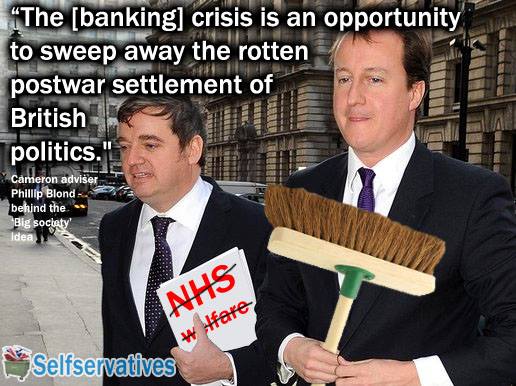
Political rhetoric, aimed at perpetuating an extremely divisive and intentionally misleading “strivers and skivers” dichotomy is designed to undermine public support for the welfare state and the other gains of our post-war settlement – the NHS, legal aid and social housing for example – also betrays the lack of coherence, rationality and empirical support for the Conservative’s “reforms.” Furthermore, the extremely targeted, class-contingent and punitive nature of the Conservative austerity programme indicates that the welfare “reforms” were founded on traditional Tory prejudices, rather than on any genuine causal relationship based on empirical evidence and social or economic necessity.

This explains why the government have persistently ignored the many evidence-based concerns raised by academic researchers, campaigners and opposition MPs that their austerity policies are having an extremely harmful effect, most often on our poorest and most vulnerable citizens.

The Conservatives are ideologically bound to notions of a small state, minimal levels of political responsibility and intervention, minimal levels of government spending, the heavy promotion and administration of privatisation, competition, fiscal austerity, deregulation and free trade in order to enhance the role of the private sector in the economy, all of which are the central strands of the neoliberal hegemony. Conservative ideology runs counter to any notion that all citizens must be treated fairly, which also means that they must be given equal economic opportunities and provided with a adequate minimum standard of living. Neoliberal ideology is incompatible with a human rights-based society.

Democracy exists partly to ensure that the powerful are accountable to the public, and particularly to our most vulnerable citizens. This government have blocked that crucial exchange, and show disdain for human rights, the welfare state and the NHS, all of which provides ordinary people and the most vulnerable citizens basic protection from those in power.

Conservatives despise human rights and rights-based social provision. They absurdly claim that welfare provision causes vulnerability, and a “culture of dependency,” despite the fact that there is absolutely no empirical evidence to support this view. History has consistently taught us otherwise. The Conservative’s policies are expressions of contempt for the lessons and empirical evidence from over a century of social history and administration.

Tory rhetoric is designed to have us believe there would be no poor people if the welfare state didn’t somehow “create” them. If the Conservatives must insist on peddling the myth of meritocracy, then surely they must also concede that whilst a neoliberal system has a few beneficiaries, it also creates situations of insolvency and poverty for many others. That is what a system based on competitive individualism is about: it creates a few “winners” and a lot of others lose.

Conservative cuts are based on nothing more than the ridiculous myth that poverty is somehow a lifestyle choice or a moral failing which people can be punished or starved out of. The new Tory neoliberal “paternalists” really seem to believe that if they make life for poor people insufferable, they will simply be “incentivised” to choose to be wealthier. It’s a thinly disguised revamp of the ill-conceived 1834 Poor Law deterrence principle of “less eligibility” – that was supposedly aimed at “making work pay” too. But it didn’t. It’s not possible to frighten and punish people out of poverty. Only a Conservative government would claim to be making work pay by cutting welfare down to the bare bones, rather than increasing wages. The welfare cuts have actually had the effect of driving down wages too.

Of course, by framing the issue of poverty in terms of personal responsibility and morality, the Conservatives have stifled debate and restricted public discussion in the hope that people won’t recognise the wider structural inequalities and economic failings, for which this government are solely responsible.

Debbie Abrahams said: “The Conservatives point the finger at sick and disabled people for the rise in spending. They are still shamelessly spinning their tired “shirkers” and “strivers” narrative, designed to whip up public support for cuts to the most vulnerable. But this divisive rhetoric can no longer conceal the fact their economic strategy has failed. It is the government’s failure that has led to rising social security costs. 

As we saw at the Autumn Statement (2016), borrowing is up, growth is down, deficit targets have been hopelessly missed and wages have flat-lined. At the same time, the government has refused to tackle the driving forces behind increased social security spending, from low pay to high housing costs. Instead, the government is slashing support to those who need it most, exacerbating the financial strain so many are facing this Christmas, and failing its own targets in the process.   

[…] Research by the Joseph Rowntree Foundation suggested that we need to be building 80,000 affordable homes a year to meet demand and keep the current spend on housing benefit stable. This government managed a pathetic 30,000 homes last year. It is this refusal to build enough homes that keeps the housing benefit bill growing. People are left struggling to find somewhere affordable to live, and the state is forced to subsidise the sky-high rents charged by private landlords 

We could also look at tax credits, which currently make up more than £20bn a year in the spending under the cap. Tax credits top up working people’s pay where it is insufficient. Wages today are lower than they were in 2008, and won’t even return to the levels of 2008 until 2021. A record six million workers are paid less than the living wage. This is why tax credit costs have risen – because the government has had to increase the amount spent on topping wages up. 

Labour founded the welfare state to give pensioners and disabled people dignity, to prevent homelessness, children going hungry, and to cover for periods of unemployment or ill-health. It was never designed to be spending tens of billions substituting for low-wage employers or subsidising rip-off landlords.”

Economic productivity is the new health outcome

The claim that “work is good for you” is allegedly based on “scientific evidence” that people in work tend to be healthier than those claiming unemployment and sickness benefits. However, to draw the conclusion that “employment is good for you” from the data is an example of inferring causality inappropriately, from what is only an association. Yet it is being used to prop up Conservative justifications for dismantling the welfare state.

Unemployment has been linked to increased rates of sickness, disability and mental health problems, and to decreased life expectancy. The claim has also been made that it results in an increased use of medication, medical services, and higher hospital admission rates. However, surely it makes much more sense to say that sickness, disability and mental health problems, the use of medication, medical services, and higher hospital admission rates all cause unemployment, rather than the converse. This government seem to have a major problem accepting the fact that sometimes, people really are simply too ill to work.

Most people who are too ill to work are obviously not as healthy as those who can work. That is hardly controversial. However, that doesn’t mean that work itself is good for your health, it just means those who don’t work tend to have worse health than those who do. People don’t work because they have poor health.

Linking ill health with “worklessness” is an ideological preference which ignores other variables. It is much more likely that the “reforms”, which have reduced welfare provision to inadequate levels – leaving people all too often unable to meet their basic needs – is bad for health, rather than being out of work. 

But the Conservatives have used this “evidence” of an association between poor health and unemployment to make an inference based on a “causal link” that hasn’t actually been empirically verified. Iain Duncan Smith has made the claim, for example, that “work is good for you.” He has even claimed that work can make people’s health problems “better.” But that isn’t very likely to be true. It’s akin to claiming that chatting and exercise is a cure for multiple sclerosis, lupus, blindness or cancer. Or that a work coach on prescription will cure rheumatoid arthritis, a disc prolapse or schizophrenia.

This is why I visit my doctor when I am ill, and not Iain Duncan Smith or the government.

The claim that work is good for your health is simply a part of Tory justification narratives for cutting support for sick and disabled people, and hounding people who need to claim benefits. Yet this axiom informs current UK policy towards increased benefit conditionality, harsh sanctions, compulsory work experience and the “workfare” or “work-for-benefits” thinking which the Conservatives favour. However, this is an approach that can never work, unless, of course, the aim is to completely dismantle the welfare state. Oh, hang on…

The biopsychosocial model

The biopsychosocial model (BPS) of ill health is not without controversy, although many see it as more pragmatic or humanistic than the medical model of illness, which came to be regarded as reductionist and deterministic. The biopsychosocial model is the conceptual status quo of contemporary psychiatry, and many believe that it has played an important role in combatting psychiatric dogmatism.

The biological component of the model is based on a traditional allopathic (bio-medical) approach to health. The social part of the model investigates how different social factors such as socioeconomic status, culture and poverty impact on health. The psychological component of the biopsychosocial model looks for potential psychological causes for a health problem such as lack of self-control, emotional turmoil, and negative thinking.

Of course a major criticism is that the BPS model has been used to disingenuously trivialise and euphemise serious physical illnesses, implying either a psychosomatic basis or reducing symptoms to nothing more than a presentation of malingering tactics. This ploy has been exploited by medical insurance companies (infamously by Unum Provident in the USA) and government welfare departments keen to limit or deny access to medical, social care and social security payments, and to manufacture ideologically determined outcomes that are not at all in the best interests of patients, invalidating diagnoses, people’s experience and accounts, and the existence of serious medical conditions. (See also: Getting rich on disability denial, and  A Tale of two Models by Debbie Jolly.)

Unum was involved in advising the government on making the devastating cuts to disabled people’s support in the UK’s controversial Welfare Reform Bill. (See also: The influence of the private insurance industry on the UK welfare reforms.)

This is a government that tends to emphasise citizen responsibilities over rights, moralising and psychologizing social problems, whilst quietly editing out government responsibilities and democratic obligations towards citizens.

For example, poverty, which is caused by political decisions affecting socioeconomic outcomes, is described by the Conservatives, using elaborate victim-blame narratives, and this is particularly objectionable at a time when inequality has never been greater in the UK.

Poverty may only be properly seen in a structural context, including account of the exclusion and oppression experienced by those living in poverty, the global neoliberal order, the gender order, the disability, racial, sexual and other orders which frame social life and precipitate poverty in complex and diverse ways. It’s down to policy-makers to address the structural origins of poverty, not the poor, who are currently regarded as the “collateral damage” – casualities – of politically imposed structural constraints.

Conservative governments are unhealthy

The effects of loss of income on people who can’t work because of illness is a confounding factor, too. How is it possible to isolate the devastating impacts of the Conservative “reforms” and the steady dismantling of the welfare state on unemployed people from the misleading generalisation that unemployment is bad for health? Surely if the Conservatives genuinely believed their own claims, they would be more inclined to increase rather than radically decrease provision and support for unemployed people.

Of course, not all work is beneficial. The review that led to the widespread folk tale that work is good for you is based on research involving people who had common and minor illnesses, and fulfilling, secure jobs. That doesn’t reflect the experiences of many people.

Not all jobs are rewarding and positive experiences, and some work can cause serious risks to health.

Doctor Frank Scheer, a neuroscientist at Harvard Medical School and Brigham and Women’s Hospital in Boston, says:

“There is strong evidence that shift work is related to a number of serious health conditions, like cardiovascular disease, diabetes, and obesity.

These differences we’re seeing can’t just be explained by lifestyle or socioeconomic status.”

Shift work and poor quality working environments and employment conditions are also linked to stomach problems and ulcers, hypertension, depression, musculoskeletal disorders, chronic infections, diabetes, general health complaints, all-cause mortality and an increased risk of accidents or injury. Long working hours are equally linked with a detrimental impact on health, according to medical research – see: The impact of overtime and long work hours on occupational injuries and illnesses: new evidence from the United States.

There is a growing and potentially corrosive problem of low paid, poor quality, precarious and temporary work which threatens levels of social inclusion and, ultimately, the health of the workforce.

Research shows unambiguously that the psychosocial quality of bad jobs is worse than unemployment. Peter Butterworth examined the mental health implications of those moving from unemployment into employment and found that:

“Those who moved into optimal jobs showed significant improvement in mental health compared to those who remained unemployed. Those respondents who moved into poor-quality jobs showed a significant worsening in their mental health compared to those who remained unemployed.”

Overall, unemployed respondents had poorer mental health than those who were employed. However the mental health of those who were unemployed was comparable or superior to those in jobs of the poorest psychosocial quality. (See: The psychosocial quality of work determines whether employment has benefits for mental health: results from a longitudinal national household panel survey.)

More recently, in a letter to the Guardian, the UK’s leading bodies representing psychologists, psychotherapists, psychoanalysts, and counsellors called on the Government “to immediately suspend the benefits sanctions system. It fails to get people back to work and damages their mental health.

Findings from the National Audit Office (NAO) show limited evidence that the sanctions system actually works, or is cost effective.

But, even more worrying, we see evidence from NHS Health Scotland, the Centre for Welfare Conditionality hosted by the University of York, and others, which links sanctions to destitution, disempowerment, and increased rates of mental health problems. This is also emphasised in the recent Public Accounts Committee report, which states that the unexplained variations in the use of benefits sanctions are unacceptable and must be addressed.”

The impact of poverty on health

The largest study of poverty conducted in the UK has laid out the dire extent of British material deprivation – and seriously undercut the government’s claim to be lifting people out of poverty through work.

The Poverty and Social Exclusion in the UK (PSE) project details how, over recent years, the percentage of households living below society’s minimum standard of living has increased from 14% to 33% – despite the fact that the economy has increased in size over the same period. The study found that low wages are a central cause of widespread deprivation. For many people, full-time work is not enough to lift them out of poverty; almost half of the working poor work 40 hours a week or more. And one in six adults in paid work (17%) is poor, suffering low income and unable to afford basic necessities.

Commenting on the study’s findings, Professor Jonathan Bradshaw of the University of York said they showed many parents who work full time still have to make huge sacrifices to try and protect their children from deprivation.

“We already know from DWP data that the majority of children with incomes below the the relative income poverty threshold have a working parent. The PSE survey shows that the majority of deprived children, those lacking two or more socially perceived necessities, and very deprived children (lacking five or more socially perceived necessities) have a working parent.

We found that 65% of the deprived and 58% of the very deprived children had a working parent, and 50% of the deprived and 35% of the very deprived had at least one parent working full-time. Child poverty is not being driven by skivers, but is the consequence of strivers working for low earnings while in-work benefits are being dissipated by government austerity measures.”

Responding to the findings, Clare Bambra, a professor at Durham University, said that the research was a shameful picture of “the devastating and far-reaching human costs of inequality and poverty in the UK today.”

She said:

“It’s shameful for a rich country like ours to be tolerating such levels of poverty especially amongst our children and young people. The mantra that work sets people free from poverty has been shown to be a grand old lie.

We will be living with the long term consequences of this social neglect for decades to come – there are clear links between poverty and reduced life expectancy and higher rates of ill health, especially concentrated in deprived areas and the north.

These findings show us the true cost of austerity.”

Public health experts from Durham University have denounced the impact of Margaret Thatcher’s policies on the wellbeing of the British public in a comprehensive study which examines social inequality in the 1980s.

The study, which looked at over 70 existing research papers, concludes that as a result of unnecessary unemployment, welfare cuts and damaging housing policies, the former prime minister’s legacy includes the unnecessary and unjust premature death of many British citizens, together with a substantial and continuing burden of suffering and loss of wellbeing.

The research shows that there was a massive increase in income inequality under Baroness Thatcher – the richest 0.01 per cent of society had 28 times the mean national average income in 1978 but 70 times the average in 1990, and UK poverty rates went up from 6.7 per cent in 1975 to 12 per cent in 1985.

Baroness Thatcher’s governments wilfully engineered an economic catastrophe across large parts of Britain by dismantling traditional industries such as coal and steel in order to undermine the power of working class organisations, say the researchers. They suggest this ultimately fed through into growing regional disparities in health standards and life expectancy, as well as greatly increased inequalities between the richest and poorest in society.

Professor Clare Bambra from the Wolfson Research Institute for Health and Wellbeing at Durham University, co-author of the research report, commented:

“Our paper shows the importance of politics and of the decisions of governments and politicians in driving health inequalities and population health. Advancements in public health will be limited if governments continue to pursue neoliberal economic policies – such as the current welfare state cuts being carried out under the guise of austerity.”

Thatcher’s policies  have been condemned for causing “unjust premature deaths.” Cameron’s policies are even more class-contingent and cruel.

I think there is a growing body of empirical evidence which indicates clearly that Conservative governments are much worse for public health, prosperity and wellbeing than unemployment.

10407927_677369232332608_5384979058089243718_n

Pictures courtesy of Robert Livingstone


I don’t make any money from my work. I am disabled because of illness and have a very limited income. The budget didn’t do me any favours at all.

But you can help by making a donation to help me continue to research and write informative, insightful and independent articles, and to provide support to others. The smallest amount is much appreciated – thank you.
DonatenowButton cards

UK has shameful but unsurprising levels of inequality


1459720_569627496440116_902730897_n

Austerity was never about what works or what is needed. It’s about traditional Tory class-based prejudices. Austerity is simply a front for policies that are entirely founded on Tory ideology, which is  all about handouts to the wealthy that are funded by the poor.

David Cameron has often denied claims that his party has overseen a rapid rise in inequality. In fact last year, Cameron said that inequality is at its lowest level since 1986. I really thought I’d misheard him. 

This wasn’t the first time Cameron has used this lie. We have a government that provides disproportionate and growing returns to the already wealthy, whilst imposing austerity cuts on the very poorest. How can such a government possibly claim that inequality is falling, when inequality is so fundamental to their ideology and when social inequalities are extended and perpetuated by all of their policies? It seems that the standard measure of inequality has been used to mislead us into thinking that the economy is far more “inclusive’ than it is. Yet the UK is one of the wealthiest nations in the world.

Earlier this year a published report by the Dublin-based Foundation for the Improvement of Living and Working Conditions (Eurofound) stated that the UK has become the most unequal country in Europe, on the basis of income distribution and wages.

The report also says that the UK has the highest Gini coefficient of all European Union (EU) member states – and higher than that of the US. The coefficient is a widely used measure of the distribution of income within a nation, and is commonly used to calculate inequality.

A year ago, the Organisation for Economic Cooperation and Development (OECD) published research that confirmed what most of us already knew: that income inequality actually stifles economic growth in some of the world’s wealthiest countries, whilst the redistribution of wealth via taxes and benefits encourages growth. That debunks one of the nastiest Tory myths. Having long been advocates and engineers of social inequality, implying a mythological  “trickle down” as a justification, and hankering after a savage, axe-wielding minarchism, chopping away at our civilising public services and institutions, they are now officially a cult of vicious cranks. The problem is that the general public don’t pay much attention to research like this. They really ought to.

Conservatism is centred around the preservation of traditional social hierarchy and inequality. Tories see this, erroneously, as an essential element for expanding national economic opportunity. But never equal opportunity.

Conservatives think that civilised society requires imposed order, control and clearly defined classes, with each person aware of their rigidly defined “place” in the social order. Conservatism is a gate-keeping exercise geared towards economic discrimination and preventing social mobility for the vast majority. Inequality is so clearly embedded in policies – which are written statements of political intent.

According to the annual Family Spending Review for 2014, published by  the Office for National Statistics (ONS), the richest 1 per cent of the population have as much wealth as the poorest 57 per cent combined.  Wealth inequality has increased since 2012. The richest 10 per cent own half the country’s wealth.

Charities have urged the government to address Britain’s shameful and growing inequality after the figures published this week show that the country’s richest 10 per cent spend as much on alcohol and cigarettes in a week as the poorest spend on gas and electricity. That turns the dominant “feckless” poor narrative in the media on its head. Poverty doesn’t happen because people have poor budgeting skills. Poverty happens because people don’t have enough money to meet their basic needs.

The richest 10 per cent of households spent more per week on furniture – an average of £43.40 – than the poorest spent on food – £30.40.

The average weekly household spend was found to be £531.30, but there was great variation of this amount between the highest and lowest earning 10 per cent – £1,143.40 and £188.50 per week respectively.

By 2011/12, the poorest fifth of households spent 29 per cent of their disposable income on indirect taxes, compared with 14 per cent paid by the richest fifth. All told, the poorest households pay 37 per cent of their gross income in direct and indirect taxes. In other words, the single biggest expenditure for people in poverty is tax. It is, at the very least, morally unjustifiable to be taxing the poor at such a rate. The most important thing the government can do to help the poor is to stop taking their money.

David Cameron did once tell a truth, though it was an inadvertent Freudian-styled slip. He said: We are raising more money for the rich. Yes. From where, I wonder?

Oh yes. The poor.

 382035_141704259313964_676863845_n


 Pictures courtesy of Robert Livingstone


Fabian Commission condemns Cameron’s indifference to growing food poverty

poverty+kid

Poverty, and particularly child poverty, is increasing. Welfare cuts, austerity measures and low wages have pushed hundreds of thousands, including more than 300,000 children, below the poverty line since 2012, despite Tory claims to the contrary, according to the New Policy Institute (NPI) thinktank, who undertook a study after the government refused to bring forward the publication of official data which would have shown the impact on poverty figures of the major welfare reforms introduced in 2013, and enabled the coalition’s record to be properly scrutinised before the election.

The Fabian Society has accused the Government of lacking a strategy to combat food poverty and said proposed tax-credit cuts could become an even bigger driver of poverty and food insecurity than low wages. A year-long independent food and poverty commission by the Fabian Society found the Government lacks any strategy for addressing hunger in the UK, making a mockery of the prime minster’s party conference pledge to lead “an all-out assault on poverty” earlier this month.

The Fabian Commission on Food and Poverty has brought together experts, as well as those experiencing poverty, to look at the roles of government, civil society and the food industry in increasing the availability and accessibility of sustainable, nutritious food.

The final report of the Fabian Commmission on Food and Poverty is due to be launched later today.

The Commission is chaired by Geoff Tansey, a renowned writer, consultant and Trustee of the Food Ethics Council. The Commission also includes leading representatives from across civil society, trade unions, academia and the food industry.

Food is becoming more and more expensive, and falling real incomes make healthy, nutritious diets less affordable. Yet food plays a wider role in society than nutrition. We use it to celebrate family events, milestones, rites of passage, festivals, to socialise with, and to express ourselves. Food poverty also means that people often experience social exclusion as well as hunger.

Yet only last week, David Cameron insisted at Prime Minister’s Questions: “I do not want anyone in our country to have to rely on food banks.”

Whilst the chair of the commission, Geoff Tansey, acknowledged Cameron’s comments, he said: “But for food – people’s most basic need – he currently has no means of achieving this aim and no plan to deliver a reduction in food banks, let alone tackle the other links between food and poverty.

“The commission has even found that the Government has no count of the number of people who currently lack secure access to nutritious, affordable food.”

A recent NHS statistics release show that 7,366 people were admitted to hospital with a primary or secondary diagnosis of malnutrition between August 2014 and July this year, compared with 4,883 cases in the same period from 2010 to 2011 – a rise of more than 50 per cent in just four years. Cases of other diseases rife in the Victorian era including scurvy (an illness arising through a lack of vitamin C), scarlet fever, cholera and whooping cough have also increased since 2010.

Chris Mould, chairman of the Trussell Trust, which runs a nationwide network of foodbanks, said they saw “tens of thousands of people who have been going hungry, missing meals and cutting back on the quality of the food they buy”. 

“We meet families from across the UK struggling to put enough food on the table and, at the extreme end, you get people who are malnourished,” he said. “We often see parents who are going without food so that they can feed their children, and these parents often struggle to afford enough nutritious food for their children, too. We don’t think anyone should have to go hungry in the UK, which is why we’re working to engage the public, other charities and politicians across parties to find solutions to the underlying causes of food poverty.”

The Mirror revealed on Monday how food bank volunteers will feed hundreds more hungry children this week:  Children from deprived families will go without free school meals during half term, leaving their hard-up parents unable to afford an additional meal every day.

The desperate reliance on food banks was one of the problems investigated by the panel, during its fact-finding tour interviewing food producers, charities and those living on the breadline.

Mr Tansey has warned it was “not enough to ensure people don’t go hungry. Food banks are just the tip of the iceberg of a much bigger problem.

“We need to make sure no-one lives in fear of not being able to feed themselves or their family, and to break the bigger links between food and poverty and their effect on people’s health, the environment and working conditions.”

The Fabian Society wants an end to food banks by 2020. Its report also calls for a tax on sugary drinks to see if the higher price cuts demand for unhealthy food, appointing a minister charged with eliminating household food insecurity and launching “food access plans” so people find it easier to buy “affordable, nutritious food”.

The commission’s report says: “We need to recognise that food banks and charitable food providers are not solutions to household food insecurity, they are symptoms of society’s failure to ensure everybody is sustainably well-fed.”

The report also notes that many people who are too poor to afford food do not use food banks for fear of the stigma of being labelled.

The report comes just two months after the children’s commissioner issued a report warning that the government’s continued austerity programme, especially the welfare reforms, does not conform to the standards of the United Nations Convention on the Rights of the Child, which protects children from the adverse effects of government economic measures.

Jeremy Corbyn confronted the Tories with the poverty they’re creating at PMQs – and all they could do was laugh – Liam Young

Originally published in the Independent by Liam Young.

jeremy-corbyn-1
The Tories seem to forget that they were the last government – at some point they will have to take responsibility for their handling of the nation.

As Jeremy Corbyn stood for his second PMQs today, the mocking Tory laughs told us everything we need to know about their enduring Bullingdon Club-style politics. Old habits die hard, it seems. But Corbyn opened strongly, with an issue that unites the Labour party: the cuts to working tax credits which penalise the lowest earners, known colloquially as the Tory work penalty.

Again, the Tories laughed at the name ‘Kelly’, so apparently unbelievable do they find the first names of Corbyn’s constituents; they soon fell silent, however, as they heard of her struggle as the mother of a disabled child earning minimum wage in a 40.5-hour-per-week job. Corbyn tackled the bullyboys by pausing at their laughter this time. ‘Some may find this funny,’ he said, as he continued to talk about mass inequality and the housing problem in London. It was a subtle highlight of something glaringly obvious: for millionaires protected by Tory policies, inequality bolstered by unfair taxes and buy-to-let properties really is hilarious.

Cameron’s reply to the work penalty issue was the same old line: apparently a £20-a-week increase in wages will magically solve the problem. This is not true, of course, as Corbyn promptly replied: working families are set to be £1,300 a year worse off as the Conservative government hammers the working and middle classes so as to give to the super rich.

Cameron claimed that Corbyn’s figures on poverty were wrong, but perhaps that is something to do with the fact that the Work and Pensions Secretary fixed the definition of ‘poverty’ recently. You don’t feed and clothe homeless children by changing a definition, and the government should be ashamed. The fact that 50 per cent of wealth is in 1 per cent of hands globally is shambolic, and reports today that inequality is growing in the UK even as our country now has the third most ‘ultra-high net worth individuals’ in the world put paid to Cameron’s claims to have driven opportunity. There could be no bigger proof that his policies continue to squeeze the middle and punish the poor.

Jeremy Corbyn probably had a headache even before PMQs started. George Osborne’s proposal of a ‘fiscal charter’ has been causing problems for Labour over the last few days, not least because it was once a Labour policy rubbished by Cameron himself. It seems strange, then, that Tories are so desperate to implement it now, considering that the Governor of the Bank of England has not endorsed its proposal and no economist has come out in support of it. Most commentary has focused on how it is unrealistic to try and tie the hands of future governments – almost as though Osborne is trying to make an ideological (and erroneous) point about how Labour ‘caused the recession by their overspending’, rather than the truth about rich bankers running wild without regulation. Of course, it also gave Osborne an excellent opportunity to personally ask Labour MPs to rebel – little more than a cynical attempt to ruffle some feathers.

In June, over 70 economists published a letter that clearly noted that the charter has ‘no basis in economics’ and that permanent surplus would increase the debt of households and businesses. The policy is not about protecting the British economy; it is an attempt to bury the Labour party under the same message of the last government. The Tories seem to forget that they were the last government – they have been in power now for almost six years, and at some point they will have to take responsibility for their handling of the nation.

Despite all this, PMQs today were the best moment of Corbyn’s leadership of the Labour party so far. Osborne’s attempt to destabilise the Labour party and force Labour MPs to rebel spectacularly failed, while Corbyn asked if he could bring the Prime Minister back to reality as Tory rhetoric failed against his grassroots facts.

Cameron wants to get Britain building houses, he wants to alleviate poverty, and he wants to rebuild the economy – or so he’d have you believe. In the last five years, house-building has stalled, poverty has increased, inequality appears to be rising and the national debt has doubled. At some point, the Tories have to stop blaming Labour for their own disastrous record. Corbyn is now attacking their mythology head-on – and he might just be getting somewhere. 

Liam Young is a freelance political journalist studying international relations at the LSE

The new social prescribing: ask not what your government can do for you

socialprescribing


I have a background in community work and have always seen it as a progressive mechanism for social transformation; challenging oppression; extending inclusion and democracy; offering learning and personal growth opportunities; empowerment, social justice, equity, fairness, participation, self-determination, amongst many other things. Communities potentially provide essential support for individuals, groups and organisations, and opportunities for reciprocity. Good community work promotes human development, and fosters civic responsibility through solidarity, cooperation and mutual aid.

Social prescribing is basically a community-based referral: it’s a means of enabling primary care services to refer patients with psycho-social, emotional or practical needs to a range of local, non-clinical services, often provided by the voluntary and community sector, and it’s aim is to improve people’s mental health, physical health and wellbeing, using community interventions.

In practice this means that GPs, nurses and other healthcare practitioners work with patients to identify non-medical opportunities or interventions that will help, improving support and the wider social aspects of their lives. The services that patients can choose from include everything from debt counselling, support groups, allotments and walking clubs, to community cooking classes and one-to-one coaching. Both evidence and commons sense suggests that social prescribing may be particularly appropriate and beneficial for isolated, marginalised groups. And needs-led community provision that supports and enhances psychosocial health and wellbeing is an excellent idea.

Poor mental health is often correlated with poverty, (Melzer et al. 2004) poor community integration, and competitiveness amongst social groups (Arrindell et al., 2003). Key questions arise as to the efficacy, therefore, of working with individuals, when much research suggests community work would be more effective (Orford, 2008).

So far so good.

I had the following message yesterday from friend and fellow writer, Linda:

“I have received an email from my local Tory MP letting me (and other constituents) know that he is going to be setting up a ‘Mental Health Surgery’ Hub with a ‘Mental Health Expert’ who will be handing out ‘social Prescriptions’ as he says he is aware that many mental health problems are caused by ‘Social Problems’. Im wondering if there is perhaps a wider agenda from the Conservatives.”

This is the relevant paragraph taken from his email:

“Since my election in May I have been surprised at the number of my constituents with different mental health issues, so much so I am looking to run a surgery ‘hub’ with a mental health specialist so people can drop in and have their needs assessed and be issued with a form of ‘social prescription’. I recognise many mental health issues are caused or exacerbated by social factors so sometimes a social solution can be more effective than a medical one.

I did a little research.

The 2010 Marmot Review (Fair Society, Healthy Lives) of health inequalities identified social prescribing as an, “approach [that] facilitates greater participation of patients and citizens and support in developing health literacy and improving health and wellbeing”.

It identified additional NHS healthcare costs linked to inequality as being well in excess of £5.5 billion per year. It is claimed that social prescriptions can cut the NHS bill.

However, despite the growing popularity of social prescriptions amongst cash and resource-strapped professionals, the University of York has surprisingly produced research to show that there is little good quality evidence that social prescribing is cost-effective.

But the thing that bothers me the most is the link that the Conservative government have made between social prescriptions, cost-cutting and (as I deeply suspected) as a mechanism of extending behavioural modification (euphemistically called “nudging” by the government’s team of behavioural economists and decision-making “experts”).

I read several current reviews of social precribing, each mentioning both criteria in recommendations for “success.”:

“The work of social prescribing health trainers fits with the approach of the Coalition Government as described in its White Paper on Public Health which emphasises the need to ‘build people’s self esteem and confidence’ in order to bring about changes in behaviour.”

It also fits with the Marmot Review’s recommendation on tackling the social problems that undermine health and with the Coalition Government’s approach to behaviour change as outlined in recent publications such as MINDSPACE.” (Link added by me.)

and:

“In times when finances are under pressure and the NHS is charged with achieving ‘better for less’, primary care needs to be looking at how to do things differently.”

Nesta, who now partly own the Government’s Behavioural Insights Team (the Nudge Unit) are of course at the forefront of promoting social prescriptions amongst medical professionals, firmly linking what is very good idea with very anti-democratic Conservative notions of behaviour change, citizen responsibility and small-state ideology. So, it’s no longer just about helping people to access a wider range of community-based services and support, social prescribing has also places strong emphasis on “encouraging patients to think about how they can take better care of themselves.”

Of course, there is what may easily be construed as a whopping self-serving process of linking behavioural change with social prescribing, opening some potentially very lucrative opportunities for Nesta.  

However, taken at face value, the idea of promoting patient participation in their own care sounds very democratic and reasonable. Common sense, in fact.

In this context, social prescribing can be seen as a logical extention of the Biopsychosocial model (BPS) of ill health. The biological component of the model is based on a traditional allopathic (bio-medical) approach to health. The social part of the model investigates how different social factors such as socioeconomic status, culture and poverty impact on health. The psychological component of the biopsychosocial model looks for potential psychological causes for a health problem such as lack of self-control, difficulties with coping, emotional turmoil, and negative thinking.

Of course a major criticism is that the BPS model has been used to disingenuously trivialise and euphemise serious physical illnesses, implying either a psychosomatic basis or reducing symptoms to nothing more than a presentation of malingering tactics. This ploy has been exploited by medical insurance companies (infamously by Unum Provident in the USA) and government welfare departments keen to limit or deny access to medical, social care and social security payments, and to manufacture ideologically determined outcomes that are not at all in the best interests of patients, invalidating diagnoses, people’s experience and accounts, and the existence of serious medical conditions.

Unum was involved in advising the government on making the devastating cuts to disabled people’s support in the UK’s controversial Welfare Reform Bill. (See also: The influence of the private insurance industry on the UK welfare reforms.)

Secondly, this is a government that tends to emphasise citizen responsibilities over rights, moralising and psychologizing social problems, whilst quietly editing out government responsibilities and democratic obligations towards citizens.

For example, poverty, which is caused by political decisions affecting socioeconomic outcomes, is described by the Conservatives, using elaborate victim-blame narratives, and this is particularly objectionable at a time when inequality has never been greater in the UK. Poverty may only be properly seen in a structural context, including account of the exclusion and oppression experienced by those living in poverty, the global neoliberal order, the gender order, the disability, racial, sexual and other orders which frame social life and precipitate poverty in complex and diverse ways. It’s down to policy-makers to address the structural origins of poverty, not the poor, who are the casualities of politically imposed structural constraints.

In this context, social prescriptions are used to maintain the status quo, and are likely to be part of a broader process of responsibility ascription – based on the traditional Conservative maxim of self-help, which is used to prop up fiscal discipline and public funding cuts, the extensive privatisation of public services, defense of private property and privilege, and of course, the free market. The irony of the New Right, neoliberal, paternalistic libertarianism is that the associated policies are not remotely libertarian. They are strongly authoritarian. It’s a government that doesn’t respond to public needs, but rather, it’s one that pre-determines public interests to fit within an ideological framework

A government that regards individuals as the architects of their own misfortune tends to formulate policies that act upon individuals to change their behaviour, rather than to address the structural constraints (and meet public needs,) such as social injustice and unequal access to resources. This isn’t a government prepared to meet public needs at all. Instead it’s a government that expects citizens to change their behaviour to accommodate the government’s ideologically directed needs.

That approach flies in the face of established professional community work values and principles.

Poor people suffering mental ill health because we live in a society that is extremely unequal, are blamed by the government for the “symptoms” of their poverty – poor eating habits and “lifestyle choices”. But poverty is all about limited choices, which is itself not a “lifestyle choice.” No-one actually chooses to be poor. Government policies, social structures and systemic failures create poverty.

The Conservatives extend an economic Darwinism, coupled with an extremely intrusive disciplinary approach, mass surveillance and a stigmatising rhetoric, whilst moralising a free-market framework that constrains many and preserves the privilege of a few. The absurdity is this: if an economic framework isn’t meeting the needs of a population, it isn’t an adequate response for the government to act upon citizens who have become casualities of that framework, to persuade or coerce people into fitting within an increasingly harmful and useless socioecomomic ideology.

There is a clear correlation with low socioeconomic status and poor mental health. Poverty is a complex, multidimensional phenomenon, encompassing the lack of means to satisfy basic needs, lack of control over resources, often, a lack of access to education, exclusion from opportunities, and poor health. Poverty is intrinsically alienating and distressing, and of particular concern are the direct and indirect effects of poverty on the development of psychosocial stress. (See also: The Psychological Impact of Austerity – Psychologists Against Austerity.)

State “therapy” aimed at changing the behaviour of individuals diverts attention from growing inequality, and from policies that are creating circumstances of absolute poverty. It also diverts attention from the fact that if people cannot meet their basic physiological needs, they cannot possibly be “incentivised” to meet higher level psychosocial ones. 

I wrote a critical analysis of the government proposal to introduce Cognitive Behaviour Therapists to deliver state “therapy” in job centres earlier this year, with the sole aim of improving “employment outcomes.” There is also an extensive critique of Cognitive Behaviour Therapy (CBT) included in the article, along with some discussion about the merits of community work, which is very relevant to this discussion. (See: The power of positive thinking is really political gaslighting.)

I also wrote earlier this year about how the government has stigmatised and redefined unemployment, problematizing and re-categorising it as an individual psychological disorder. Both articles are very pertinent to this discusion. (See: Stigmatising unemployment: the government has redefined it as a psychological disorders.)

Welfare has been redefined: it is a now a reflecton of a government pre-occupied with assumptions about and modification of the behaviour and character of recipients rather than with the alleviation of poverty and ensuring economic and social wellbeing.

The stigmatisation of people needing benefits is designed purposefully to displace public sympathy for the poor, and to generate moral outrage, which is then used to further justify the steady dismantling of the welfare state.

Many psychosocial problems have arisen because of social conservatism and neoliberalism. The victims of this government’s policies and decision-making are being portrayed as miscreants – as perpetrators of the social problems caused by the government’s decisions.

It’s all too often the case that good ideas are placed in political ideological frameworks, distorted, and are then applied to simply justify and prop up dogma.

Meanwhile, mental health services are facing crisis because of budget cuts by this government, Local Authorities and community services have also been cut to the bone. (See: The cost of the cuts: the impact on local government and poorer communities.) Those with mental health problems are stranded on an ever-shrinking island.

Policy initiatives such as social prescriptions, which focus on how to remediate problems at an individual level, seeing both poverty and mental illness, for example, as simply states of being – rather than dealing with the generative political and economic practices and social relations framework which precipitated that state in the first place, effectively depoliticises political problems leaving people with an internalised state of oppression, disabling them from taking effective action.

The political refusal to permit people to voice their concerns and anxieties in political rather than personal terms further exacerbates sociopolitical marginalisation, low status, it breaks a sense of connectedness with others and wider communities, it reinforces a sense isolation and of personal responsibility for circumstances that are politically constructed and disowned.


Child protection must not be used for dealing with the symptoms of increased poverty

imagesSocial work academics discuss why we must pause to evaluate the growing need for child protection services amidst austerity.

Authors: Brigid Featherstone (The Open University), Anna Gupta (Royal Hollway, University of London), Kate Morris (The University of Nottingham), Jo Warner (University of Kent), Sue White (University of Birmingham).

According to a recent report by the Joseph Rowntree Foundation, 39% of people in households with children now live below the Minimum Income Standard. The figure has risen by over a third since 2008/09.

Families with children are now at greater risk than any other group of having an inadequate income and the number of homeless families living in bed and breakfast accommodation has risen by 300% over the last five years as a direct result of austerity.

Humiliation, shame, fear, distrust, instability, insecurity, isolation,  loneliness and feelings of being trapped and powerless are widespread features of the social and emotional landscapes of individuals and their families in a world of benefit sanctions, zero hours contracts and precarious housing.

Small wonder that relations between family members, including those between parents and their children, can become increasingly fraught in such circumstances.

Child protection need rising

Meanwhile, figures published last week in CYP Now, using official statistics and new figures obtained under an FOI, show the number of children being looked after by the state rose by 8% under the coalition government. The number of children placed on child protection plans rose by 33% while the number of Section 47 inquiries rose by a staggering 42%.

The links between poverty and a child’s chances of becoming subject to child protection processes or being looked after are undeniable according to the international and national research.

A child in the most deprived decile of neighbourhoods nationally has an 11 times greater chance of being on a child protection plan and 12 times greater chance of being a looked after child than a child living in the most affluent decile.

‘Wholly inappropriate’ use of child protection

We hear regularly about the impact of reduced services and benefit cuts on the capacity of families to cope and to care.

We hear of cash strapped local authorities who do not have the services to support families within communities.

We are, therefore, increasingly concerned that the child protection system is being used in a wholly inappropriate way to deal with the consequences of austerity and of policies that are depriving children and their families of food, housing and basic support services.

The effects of austerity are exacerbated by the continued existence of a risk-averse climate despite increasingly heroic efforts by local authorities to develop more strengths based approaches.

‘Long on blame, short on help’

Thus, families are experiencing practices that are long on blame and short on help in too many instances as a recent conference organised by the Transparency Project, involving lawyers, other professionals and family members, discussed.

The policy commitment to adoption, reaffirmed in recent days, is extremely worrying in a context where many birth families are unable to access what is needed in terms of material, emotional and social supports to care safely.

This is leading to increased concern across the sector and, indeed, more widely.

Pause for thought

Individual court rulings have drawn attention to judicial comments where social workers have been asked to think again about the importance of relational bonds and children’s identities and to desist from social engineering, and the UK has been specifically criticized this year by the Council of Europe for its removal of children from women who have been subject to domestic abuse, or who are suffering from depression (Report 1 Committee on Social Affairs, Health and Sustainable Development, 2015).

Such women are particularly vulnerable in the current climate where services for domestic abuse are very stretched.

The evidence is mounting that we need to pause and make vital links between wider economic and social policies and the harms that children and their families experience. The child protection system must not be a system for dealing with the symptoms of increased impoverishment.

Article first published on Community Care.