Tag: Shelter

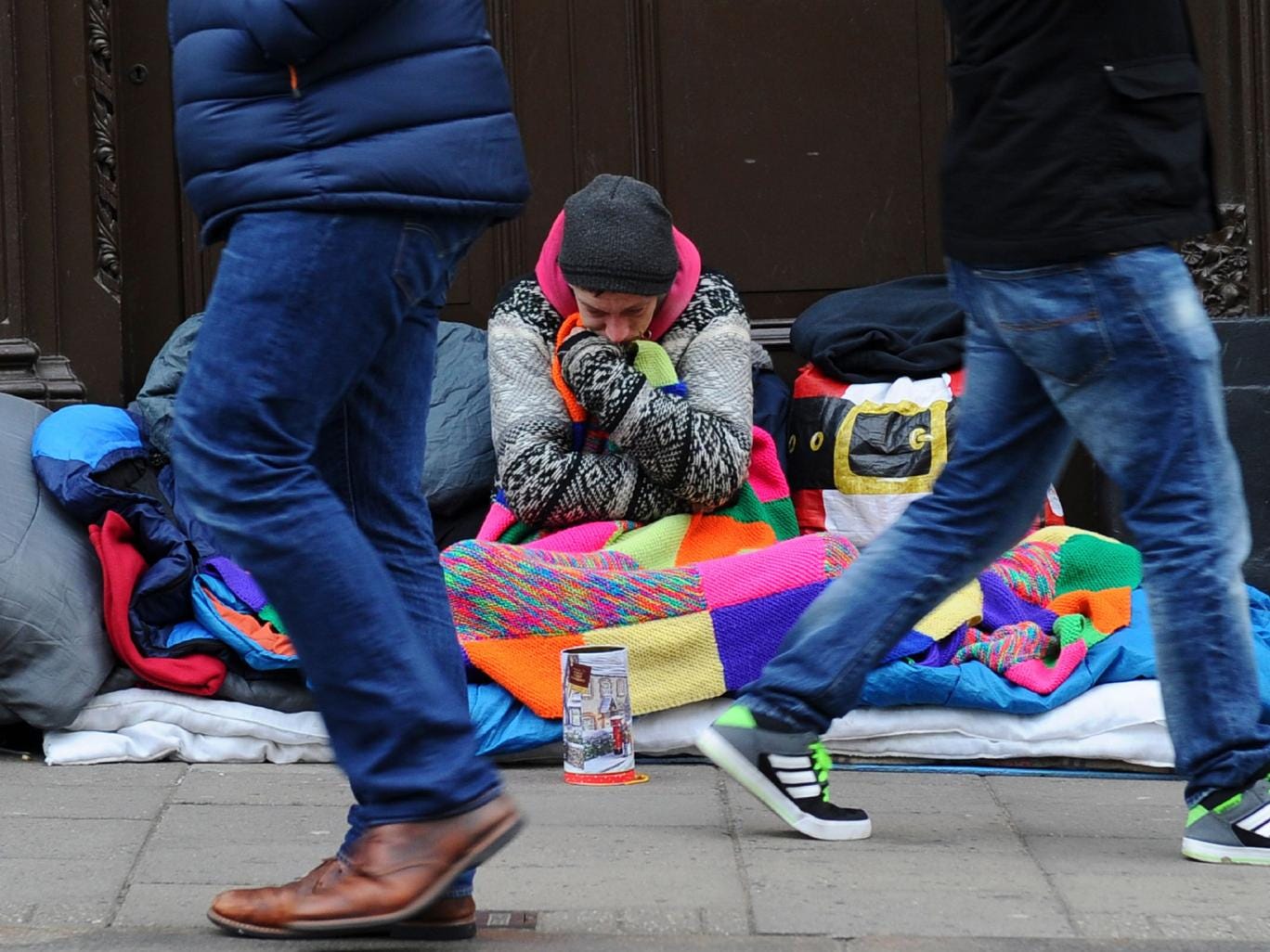
More than 500 homeless people have died in the last 12 months in the UK

Related image


A landmark, year-long independent investigation by The Bureau of Investigative Journalism found that 544 homeless peolple have died on Britain’s streets since last winter, although they say the true number is likely to be much higher.

The Bureau’s count of people who have died homeless in the UK since last winter was published just days before the Office for National Statistics (ONS) is due to produce its own first ever count of deaths.

Those that died include an 81 year-old man who was sleeping on the streets, a mother of two that died in a night shelter and a 47 year-old man who died after being tipped into a bin lorry.

The project prompted the Office for National Statistics (ONS) to start compiling its own figures on homeless deaths in England and Wales, which it will release on December 20. Scotland and Northern Ireland’s national records offices are now also considering similar counts.

In October the government pledged to make sure deaths were investigated by local authorities so that lessons could be learned. The Bureau’s figures are “utterly shocking,” said Housing Secretary James Brokenshire, and “it is so important that we understand what has caused those deaths, [by] actually having serious case reviews.”

However, while Brokenshire admitted the figures were “utterly shocking”, he rejected allegations that government policies are behind the growing housing and homelessness crisis. He insisted instead that the “causes of homelessness and rough sleeping are multi-layered and complex”.

“I don’t see it in those terms,” he said – referring to the alleged impact of government policies on low-income and vulnerable people.

“I see it as a combination of concerning elements in terms of addiction, family breakdown issues.”

Brokenshire said he believes that homelessness is driven by factors including the spread of psychoactive drugs such as spice, the growth in non-UK nationals on the streets and family breakdown. These are, however, traditional Conservative stereotypes that are used to explain every social problem and instance of poverty that is linked with the government’s punitive welfare policy and wider austerity programme.  

He continued: “The thing that struck me over recent months in speaking to some of the LGBT charities in terms of young people, because of their sexuality, being thrown out of home.”

He continued waffling: “The causes of homelessness and rough sleeping are multi-layered and complex and therefore we do need to look at this in that way and ensure that councils and other agencies are getting ahead of this and preventing people becoming homeless in the first place.

That is the agenda I want to move to in the new year.”

However the government has admitted that it has not offered any extra funding or support to councils to help them do this. 

The Bureau has found many local authorities are still failing to carry out such reviews, citing lack of resources or saying they do not believe the cases meet the relevant statutory requirements. 

“In one of the world’s richest nations, people with nowhere to turn are dying.” 

In Norfolk, where at least 10 people have died homeless in the last year, the director of Public Health, Dr Louise Smith, said there would be no case reviews because of the review’s “significant cost and our limited resources”. 

Despite the fact that five people died in the same homeless hostel in one year, Brighton and Hove council said that no Safeguarding Adult Reviews would be undertaken, because the deaths had not met the “statutory criteria”. Redbridge council also echoed this reasoning. 

It is crucial that all homeless deaths are investigated so that lessons can be learned, said Matt Downie, director of policy and external affairs at Crisis. “It is disappointing that no progress has been made to support local authorities to implement this.” 

He added: “These statistics are a harrowing reminder of how deadly life on the streets can be.

“As we get closer to Christmas and temperatures are dropping, rough sleepers are facing exposure to dangerous conditions, above and beyond the violence and abuse often experienced when living on the streets.

“It’s a failure of the largest magnitude that in one of the world’s richest nations, people with nowhere to turn are dying.

“This has to stop and the government must put in place a full-scale plan to end homelessness once and for all.

“We also need to see the review system used to investigate the deaths of vulnerable adults expanded to include all cases of people who have died whilst street homeless.

“With this in place, crucial lessons can be learned that help prevent further deaths.

“The government recently pledged to make this happen, but it is disappointing that no progress has been made to support local authorities to implement this.

“We cannot wait any longer, we need to see action now.”

“It’s a failure of the largest magnitude that in one of the world’s richest nations, people with nowhere to turn are dying. This has to stop and the government must put in place a full-scale plan to end homelessness once and for all.”

Howard Sinclair, Chief Executive of St Mungo’s, went even further and called for specific funding for reviews: “We think there is a strong case for Government to fund a separate programme outside of the Safeguarding Adult Review process to ensure every death of someone sleeping rough is reviewed. This way we can identify the changes needed, at the local and national level, to stop these tragedies,” he said.

A recent report from the housing charity Shelter warned that rising homelessness is due to a ‘combination of unaffordable rents, frozen housing benefits and a severe shortage of social housing’.

Polly Neate, CEO of Shelter, blamed “the perfect storm of spiralling rents, welfare cuts and a total lack of social housing” for causing the increasing numbers of homeless people in the UK.

Other research has found that more than 24,000 homeless people will spend this festive season sleeping rough, exposed not only to the harmful elements but also at risk of verbal and physical abuse – and far too often – death.


Related

Meet Liam and Michelle. It’s time to listen to the voices of homeless people about the fatal flaws of Universal Credit

Two very vulnerable homeless men left to die in sub-zero temperatures

Please don’t just walk on by, we are better than this

Government backs new law to prevent people made homeless through government laws from becoming homeless

From the abstract to the concrete: urban design as a mechanism of behaviour change and social exclusion

Conservative MPs accuse citizens of ‘scaremongering stories’ about experiences of Universal Credit.


I don’t make any money from my work. I am disabled because of illness and often struggle to get by. If you want to, you can help by making a donation to help me continue to research and write informative, insightful and independent articles, and to provide support to others.

DonatenowButton

Meet Helena McAleer: a humane, thoroughly decent private landord who cares about her tenants

Image result for private rental sector

Five days ago, I wrote an article about why private landlords are calling for a ‘major overhaul’ of universal credit. I discussed why some are refusing to let properties to ‘high risk’ universal credit claimants. Mortgage lenders often refuse to give mortgages to buy-to-let landlords with tenants who claim welfare support. Universal credit has created further concern because of the larger shortfall in rent allowance and rent price, and the new policy is leaving large numbers of tenants struggling with hefty arrears in part because of the long wait for the claims to be processed, too. 

I also talked about Helena McAleer, a private landlord who was reduced to tears after NatWest said she had breached her mortgage terms by letting her two-bedroom property in Belfast to a tenant in receipt of support from the state. The tenant is an older woman, who suffers from mental health problems and would struggle with the moving process, Helena explained.

She was given the cruel ultimatum of making her tenant homeless or footing a £2,500 bill to leave the NatWest deal, after asking for a further advance from the lender. 

She told Mortgage Solutions: “I was angry at the fact that another human being could ask me to kick out another human being.

“It was very black and white…  they don’t think about that person, you’re just an anonymised piece of data… that’s what hurt me, that’s not fair.”

She added: “[The tenant] is a vulnerable older lady, she has mental health issues; I’m not putting her out on the street.”

The marketing innovation manager remortgaged to NatWest in January through broker Habito, providing information about her tenant’s situation to the digital adviser.

But when Helena approached NatWest about taking money out of the property to buy in London in September, the lender said it had not been disclosed that the tenant was in receipt of government support.

She refused to remove the tenant and asked NatWest to reconsider.

The tenant has been in place since 2016 and is set to stay for the foreseeable future.

Helena has been in touch to tell me about her petition, which calls on the government to stop banks discriminating against welfare recipients.

She says “Some banks refuse mortgages to buy to let landlords who let to welfare recipients. My bank instructed me to “seek an alternative tenant” if I wished to keep my mortgage because my tenant was a welfare recipient.

“The government must close these loopholes, as they are a breach of basic human rights.

“A survey of 1,137 private landlords for housing charity Shelter in 2017 found that 43% had an outright ban on letting to such claimants (welfare recipients).”

This isn’t only because landlords are discriminatory, many banks prohibit landlords from renting to reliable tenants just because of their circumstances. Welfare recipients are not 2nd class citizens they deserve access to safe, secure, habitable, and affordable homes as is their Human Right.

Helena goes on to say in her Facebook post: “You may not know this but I have a buy-to-let mortgage with NatWest and on the 27th September they asked me to “seek an alternative tenant” simply because my tenant is in recipient of “Social Security/Government benefits” or my other option is to find a new mortgage elsewhere and pay a £2500 penalty for moving.

“I was beyond disgusted by the statement. Actually more than that I cried my eyes out for hours, how could a bank, a person at a bank make the decision that I had to kick someone out of their home simply because of their circumstances, because fundamentally that’s what they are asking me to do.

“She has been an extremely reliable tenant for over 2.5 years and I have only had the NatWest mortgage for 6 months. They initially didn’t question the fact that the rent money was coming into my account from the NIHE (Northern Ireland Housing Executive), when questioned on this they said it wasn’t their job to check where the money was coming from only that i was receiving it. So as far as I am concerned they failed to do their due diligence and neither I nor my tenant should suffer because of this. They stated “the mortgage should not have been agreed by our underwriters if NatWest were aware the payments were coming from DSS.”

“Everyone here knows me, you know there’s no way I’d ever ever make someone homeless, so I am currently in the process of moving my mortgage to a more ethical provider and leaving Natwest, I mean moving my current account savings accounts the whole shebang. And knowing me, you’ll know that I won’t stop there, I will always fight to the end for something I believe to be right.

“However, what I have since discovered since this began, is that this policy is symptomatic of discrimination across the entire buy-to-let banking system. “A survey of 1,137 private landlords for housing charity Shelter in 2017 found that 43% had an outright ban on letting to such claimants (benefit recipients). A further 18% preferred not to let to them.” But this isn’t because landlords are necessarily discriminatory, that’s not the real story, this is because banks prohibit many landlords like myself from renting to reliable tenants just because of their circumstances. These people are not second class citizens they deserve the opportunity to live to the same standards as the rest of society.

“The facts are, that there are more than one million families in the UK waiting on the government to provide social housing. This could be alleviated by landlords being allowed to let to these families. According to Shelter, eight million people are only one paycheck away from being unable to pay for their home. This issue could affect us all, not just those currently receiving social benefits.

“In the last few weeks, I have spoken with several charities who have pledged their support, including Shelter who are supporting from a legal perspective, the battle isn’t over yet, so watch this space. I have spoken with the Labour Minister for housings’ office who is speaking directly with Natwest. The story has been published in the press and i’ve started this petition. I’ve been busy .

“So this is why I now need your help, I created this petition to get the government to put legislation in place that would prevent banks, even banks owned by the state, that’s you and me, from discriminating against people on benefits fundamentally denying them their basic human right to safe, secure, habitable, and affordable homes.

“To make this a success I need the support of as many people as possible, I need you to sign and share this petition as far and wide as possible to get the government to take action We need 100,000 signatures (that’s doable) to have this debated in parliament.

“Please sign the petition and share on Facebook, twitter and any other social platforms you happen to be on.

“We have a real opportunity to make a difference to so many people’s lives. We are lucky to live in a world where determined individuals can make an impact on the world in ways that might not have been possible before.

“If anyone has any contacts who would like to know more information to help me spread this story further, please get in touch.”

Please sign the petition and share this widely. 

Thanks.

Thank you Helena for your hard work. And for caring.

Some further information

Shelter has a guide on ‘convincing’ a landlord to rent to you. It says local councils may keep lists of private landlords who accept tenants on housing benefit, and that some websites such as SpareRoom allow you to select a “DSS OK” filter. There is also a website called Dssmove that connects tenants with agents and landlords “that say yes to DSS”.

Smartmove can also help tenants make a claim for housing benefit and Discretionary Housing Payments.

The House of Commons Library has produced a briefing on this issue. 


Image result for private rental sector DSS welcome

Related

Why private landlords are calling for ‘major overhaul’ of Universal Credit, many refuse to let properties to ‘high risk’ universal credit claimants


My work is unfunded and I don’t make any money from it. But you can support Politics and Insights if you like by making a donation which will help me continue to research and write informative, insightful and independent articles and to provide support to others.

DonatenowButton