Tag: Theresa May

Political polls, think tanks and propaganda: the antidemocratic writing on the wall

Image result for propaganda UK Tories bitter future

The Mail on Sunday columnist, christian and Burkean Conservative, Peter Hitchens, has said:

“Opinion polls are a device for influencing public opinion, not a device for measuring it. Crack that, and it all makes sense.”

I don’t agree with Hitchens on very much, but he is right about this.

In his book The Broken Compass, Hitchens informs us that opinion polls are actually a device for influencing public opinion. He says that the establishment and the media are responsible for this manipulation, based on the misuse of statistics. The overall purpose is to “bring about the thing it claims is already happening”. 

The author cites contemporary examples of the media attacking Gordon Brown and the “predicted” win of the Conservative Party at the 2010 general election, although Hitchens also described Brown, as a “dismal Marxoid.”  Hitchens’ comments are based on his time as a reporter at Westminster. He says that political journalists are uninterested in serious political debate, and describes how a media reporting bias is attempting to facilitate a Tory general election win.

Remarkably, as a social Conservative, Hitchens states one of his motivations for writing the book was to frustrate this exercise.

Of course government influence isn’t the only problem. Neoliberal bias and “market forces” that result in a biased presentation include the ownership of the news source, concentration of media ownership, the selection of staff, the preferences of an intended audience, and pressure from advertisers. In short, we cannot escape the cultural saturation of pro-establishment views, and the establishment is of course both neoliberal and Conservative. 

Predicting elections may seem interesting, fun, and perhaps even educational from an academic perspective, but it doesn’t add much to our democratic practices. Polls give an apparency of “data-driven journalism” but it produces a reductive “horse-race” narrative, in which political and policy context is mostly ignored with the numbers, accurate or not, pretty much being framed as all that matters. This trivialises our democracy and obscures the importance of critical thinking and informed choices regarding policies in influencing the public’s voting decisions. 

Priming and framing

Priming is a subconscious form of memory, based on identification of related ideas and objects. This effect happens when external stimuli “manipulate” internal thoughts, feelings or behaviours. After becoming activated by stimuli, priming triggers these associations in our memory. For example, one study showed that a store playing traditional French or German music can prime shoppers to buy French or German products. Political slogans are also frequently used as a priming tool. They provide reference points – they are gateways to underlying ideological narratives.

So, priming may be used as a strategy that entails the intentional use of certain words, phrases or images that can subtly influence our thinking – via an interpretive frame – at least to an extent. Some psychologists have argued that priming can have effects on changing our decision-making and behaviour, that seeing an image of money can affect our political views, for instance, or that reminding individuals of stereotypes applied to their social group can harm their performance in a test and in other ways. Stigma is a political tool, usually reserved for despotic regimes, but in Western democracies, othering traditionally marginalised groups has become such common practice that it’s almost hidden in plain view.

Attempts to test such effects suggest that at least some of them are not reliable. But priming, in a more general sense, still matters, such as when people use contextual cues during a conversation to interpret the meaning of ambiguous language.

Political media priming is “the process in which the media attend to some issues and not others and thereby alter the standards by which people evaluate election candidates”. A number of studies have demonstrated that there is a dimension of powerful media effects that goes beyond basic agenda setting.

In 1982, Iyengar, Peters, and Kinder first identified this added dimension as the “priming effect.” The theory is founded on the basic assumption that people do not have elaborate knowledge about political matters and do not take into account all of what they do know when making political decisions — they must consider what more readily comes to mind. Through drawing attention to some aspects of politics at the expense of others, the media might help to set the terms by which political judgements are reached, including evaluations of political figures. A process of carefully calculated uses of public opinion on policy issues may (and are) very easily  used as strategies to intentionally influence voters’ standards for assessing political candidates’ attributes. 

In sociology, framing is a schema of interpretation: a sort of shorthand collection of anecdotes and stereotypes that individuals depend on to understand and respond to and navigate events. In other words, people build a series of mental “filters” through biological, social, political and cultural influences. Citizens then use these filters or signposts to make sense of the world. The choices they then make are influenced by the  creation of a frames. The effects of framing can be seen in the media.

With the same information being used as a base, the “frame” surrounding the issue can change the reader’s perceptions without having to alter the underlying facts. In the context of politics or mass-media communication, a frame defines the packaging of an element of rhetoric in such a way as to encourage certain interpretations and to discourage others. 

For political purposes, framing often presents facts in such a way that implicates a social problem that is in need of a certain solution. Members of political parties attempt to frame issues in a way that makes a solution favouring their own political leaning appear as the most appropriate course of action for the situation at hand.

Research on frames in sociologically driven media research generally examines the influence of “social norms and values, organisational pressures and constraints, pressures of interest groups, journalistic routines, and ideological or political orientations and bias of journalists” on the existence of frames in media content

Roger Pielke Jr, professor of Technology Policy Research at the University of Colorado, says: Rather than trying to see the future, political science might serve us better by helping citizens to create that future by clarifying the choices we face and their possible consequences for policy.”

“In treating politics like a sporting event, we diminish the partisanship, the choices, and the fundamental values that lie at the core of politics. I fear that data journalists have diminished our politics.” 

When political opinion polls and the media appear to support one political party over another, there can be little doubt that this will have an influence on the psychology of voters, because it’s akin to declaring election winners before the election is actually held. It works rather like a self-fulfilling prophecy.

In the UK, the media is biased and leans heavily towards the right. Despite the fact that the Labour party currently has the highest party membership in Western Europe, yet the party leader is viciously attacked, and very often in a particularly nasty, personal and highly misleading way. The systematic way in which the media are actively attempting to delegitimise Corbyn is unworthy of a so-called democracy.

party membership

Some countries, such as France, Brazil and South Korea, impose a halt on election polling because of the bandwagon effect, which may skew the democratic process. The bandwagon effect describes a process of voters favouring a party that is doing well in the polls, while the underdog effect predicts that support will go to a party trailing in the polls.

There is also the possibility of a projection effect, with voters’ expectations conforming to their partisanship. There is rather less empirical evidence for the existence of underdog effect than there is for the existence of the bandwagon effect, which is based on individuals rallying to the perceived majority opinion, because of a fairly widespread psychological need for feeling we are part of a social ingroup, and a general tendency towards normative compliance and social conformity. And at a time when the strategically engineered and toxic social divisions of political outgrouping is widespread and affecting citizens’ fundamental sense of identity and self worth, this type of insidious call for a normative compliance and artificial consensus creates a false sense of security for some.

We know that political opinion polls are certainly not always an accurate reflection of public opinion. Samples of the population selected to participate may be biased. For example, asking Daily Mail readers who they will vote for will almost certainly produce a majority right wing set of responses. However, if you ask the same question on Twitter, you are much more likely to get a Labour majority.  

The polls do have an effect on voter intentions and on those trying to influence the outcome of elections.

poll correct

itv tm

Poll by ITV’s This Morning asked viewers which party leader they would prefer to see as Prime Minister.

More generally, in sociology and other social sciences, bias is defined as any tendency which prevents unprejudiced consideration of a research question. Bias can occur at any phase of research, including study design, or sampling and data collection, as well as in the process of data analysis and publication.  

It is widely recognised that quantitative social research methods, such as surveys, may be susceptible to reduced reliability and research bias, sometimes entailing a process where the researchers performing the survey influence the results by selecting a specific kind of sample of the population, for example.

Human nature is complex and can not be reduced easily to just a simple either/or response. Bias may arise when researchers inadvertently or deliberately select subjects that are more likely to generate the desired results. Either way, this is a reversal of the normal processes governing science.

Additionally, there is also a risk of response bias – a general term for a wide range of cognitive biases that influence the responses of participants away from accuracy or truthfulness. These biases are most prevalent in the types of studies and research that involve participant self-report, in quantitative research such as surveys. Response biases can have a large impact on the validity of questionnaires, surveys and polls.

With all of this in mind, we need to think about how the conventional political polls are run, who runs them, who funds them and for what and whose purpose.

In the UK, some of the major polls are run by:

  • Survation, pollster to The Mail on Sunday, Daily Mirror, Daily Record and Sky News. They say: “Survation also have an active strategy and campaign advisory business helping clients better understand customers & members, appreciate & help shape public opinion. We help our clients improve customer engagement and effectiveness of campaigns – be they charitable, political or commercial.” 
  • ComRes, retained pollster for the BBC and The Independent. It says on their site: ComRes provides specialist research and insight to support reputation management, public policy and communications. For more than a decade we have used the latest developments in market and opinion research to inform strategies, change behaviours and define debates.”
  • Ipsos MORI (formerly MORI). Ipsos MORI’s Social Research Institute works extensively for the Government of the United Kingdom, looking at public attitudes to key public services, and so informing social policy. Issues such as identity, social cohesion, loyalty, physical capital and the impact of place on attitudes are all key themes of the Institute’s work. The company also specialises in mass media, brand loyalty, marketing and advertising research.
  • YouGov. – Stephan Shakespeare, the firm’s founder and CEO from 2010, once stood as a Conservative candidate for Colchester; he was also a Conservative Party pollster. The other founder, and CEO until 2010, is Nadhim Zahawi a British Conservative Party politician who has been the Member of Parliament (MP) for Stratford-on-Avon since 2010.
  • ICM. They say Understanding choice means you know how your audience feels, thinks and behaves. And how you can change that. We help influence choice in three areas. How do you energise your brand and communications? How do you improve your customers’ experience of you? How do you understand and influence citizens?  
  • Populus, official The Times pollster. They say: “Our Reputation & Strategy team works with the boards of global companies and public institutions to help them understand, influence, and improve their reputations. We are specialists in reputation. We understand why it matters, how to measure it, what drives it, who influences it, how to align it with existing activity, and what you should do to improve it.”
  • TNS-BMRBTNS changed their name to Kantar Public UK: a leading agency providing research and consultancy to UK policymakers. The company is structured around specific areas of marketing expertise: Brand & Communication; Innovation & Product Development; Retail & Shopper; Customer Experience; Employee Engagement; Qualitative; Automotive; and Political & Social.

All of these companies operate within a taken-for-granted neoliberal context, supporting various actors within the “global market place” paradigm, including governments, and therefore have a distinct ideological leaning and very clearly defined economic interests in maintaining the status quo. 

Nudging voting decisions

It’s likely that Lynton Crosby’s international notoriety made him the subject of considerable press attention during the Conservative’s election campaign. However, there was another man also behind the Conservative campaign who was probably even more cunning. American strategist Jim Messina was hired as a strategy adviser in August 2013. Senior Conservative staff had been impressed by Barack Obama’s easy victories in the 2008 and 2012 presidential elections, crediting a relentless focus on data collection to Messina.

Access to this level of personal data was crucial to the success of the Conservative campaign: it determined which voters the party needed to target, contact and which type of message they would present. This process began with direct mail – personally addressed to voters in each target seat, who were divided into 40 different categories, with a slightly different tailored message for each one.

A telephone research company called Return Marketing (now known as Return Research) canvassed thousands of voters in the run-up to the 2015 general election. The calls they made rather tellingly targeted voters in specific, marginal constituencies.

Last year, the The Canary found evidence that the Conservatives may have broken a law that prohibits paying canvassers to support a specific candidate’s election. Whistleblowers speaking to an independent journalist have alleged that they were told to push poll voters (sway voters towards voting for the Conservatives by using loaded questions.)

Channel Four’s secret filming of the company Return Market’s “push polling”- polling designed to influence voters while masquerading as political research – during the EU referendum.

Pollsters, by and large, reject the charge that they herd public opinion, but social psychologists and behavioural economists inform us that there is more than a little truth in the bandwaggon effect theory.

Pollsters say they are careful to avoid influencing the outcome of a poll through priming and order effects in the survey design, but there are many other stumbling blocks to bear in mind. Social psychologists and the new behavioural economists say that in general people want to follow the crowd and do not like to challenge the normative order (which as a concept is in itself a very functionalist and conservative framing of society).

This is reflected in the nudge theorists’ use of social norming strategies, currently being adopted in public policies, which politically target some social groups to change their perceptions and behaviours. Social norming is based on an assumption of pluralistic ignorance bychoice architects. Ultimately, the “choice architects” are the government, who, after all, are responsible for public policies which utilise experimental behavioural theory.

It’s of major concern that attempts by a government to surreptitiously change the perceptions, behaviours, emotions and decision-making of a population using experimental behavioural economic theory and discriminatory policies is not currently subject to public scrutiny and ethical standards. There is nothing standing in the way of “choice architects” using social norming to generate, manipulate or exploit pluralistic ignorance in order to simply maintain and justify the status quo. In fact they DO.

So if we see an opinion poll telling us what the majority thinks, believe or is doing, because many have an inbuilt psychological bias towards following the crowd, we need to question potential motives underpinning that “information”.

The government know about the bandwaggon bias and are designing communications strategies and policies which play to this heuristic. Buying Facebook ‘likes’ is one example of this attempt to create a false impression of  public consensus and political popularity.

Think tanks, the media and the Conservative influence on public thinking

In the late 1960s and 1970s, movement Conservatives persuaded wealthy individuals and businesses to establish a conservative intellectual and political infrastructure. This includes think tanks that resemble academic institutions but publish studies supporting Conservative and libertarian arguments. The American Enterprise Institute was founded in 1943, but was expanded dramatically with new funding in 1971. The Heritage Foundation was created in 1973 and the Cato Institute was founded in 1974.

In Britain, Tim Montgomerie, has described the Conservative movement as “the infrastructure outside of the party that supports small ‘c’ conservative values.”

A March 2009 presentation by Montgomerie and Matthew Elliott listed a number of organisations as part of the British Conservative movement: 

Institute of Economic Affairs | Centre for Policy Studies | Reform | Adam Smith Institute | Policy Exchange | Centre for Social Justice | Civitas | International Policy Network | Taxpayers’ Alliance | ConservativeHome | New Culture Forum | Standpoint | Migration Watch UK | Countryside Alliance | Centre for Social Cohesion

Elliott compared this with the smaller size of the movement in 1997. According to Montgomerie, the comparison was intended to be indicative rather than comprehensive. An up to date, comprehensive powerbase list might include: 

2020 Health | Atlantic Bridge | Adam Smith Institute | Better Off Out | Big Brother Watch | Bow Group | Bruges Group | Campaign for an English Parliament | Campaign for the Protection for Rural England | Centre for Policy Studies | Centre for Social Cohesion | Centre for Social Justice | Christian Conservative Fellowship | Civitas | Conservative Education Society | ConservativeHome | Conservative Intelligence | Conservative Party | Conservative Philosophy Group | Countryside Alliance | Democracy Institute | Direct Democracy | Drivers Alliance | Doctors for Reform | Economic Policy Centre | Enterprise Forum | European Foundation | European Policy Forum | Family Education Trust | First Defence | Forest | Freedom Alliance | Freedom Association | Freedom Zone | The Free Society | Global Vision | Global Warming Policy Foundation | Henry Jackson Society | Institute of Ideas | Institute of Directors | Institute of Economic Affairs | International Policy Network | Legatum Institute | Liberty League | Localis | Message Space | Migration Watch | New Culture Forum | Nothing British about the BNP | Nurses for Reform | Open Europe | Policy Exchange | Politeia | Progressive Vision | Reform | Reform Scotland | ResPublica | Safe Speed | Save Our Pubs and Clubs | Selsdon Group | Social Affairs Unit | Social Market Foundation | Spiked | Standpoint | Student Rights | Sunlight COPS | Taxpayers Alliance | TEA Party UK | UK National Defence AssociationYoung Britons Foundationamong others. 

The problem is that think tanks synthesise, create and communicate “information” and give “advice” to the public and policy-makers, very often through the media. Think tanks tend to be far more media savvy than academics, often with staff who have backgrounds in the communication industry – media, PR or lobbying organisations.

This means that policy proposals, media narratives and public debate are much more likely to reflect Conservative ideology and favour pro-establishment outcomes, rather than being non-partisan, evidence-based and crucially, a representation of public needs. This of course turns democracy completely on its head. 

As Professor Judy Sebba points out in Getting research into policy: the role of think tanks and other mediators: “Far from educating the public about evidence, think tanks are characterised by closedness and exclusivity. They do not subject their work to review by others and so the quality of their outputs are not assessed. Most worryingly, the media present the work of think tanks as credible sources of research and facts without any checks being in place.”  

As key players in “democratic” politics and in shaping public opinion, think tanks have a responsibility to be transparent about their operations, but seldom are. A good question to ask is who funds them and what is their agenda?

The bandwaggon propaganda technique is also used as a key campaign strategy

More recently, I explored the role of intentionally deceitful political language and rhetoric in another article  which highlights the role that the media play in shaping our public life. Media manipulation involves a series of related techniques in which partisans create images or arguments that favour their own particular interests. Such tactics may include the use of logical fallacies, psychological manipulations, deception, linguistic, rhetorical and propaganda techniques, and often involve the suppression of information or alternative perspectives by simply crowding them out. 

Discrediting and minimisation are often used in persuading other people or social groups to stop listening to certain perspectives and arguments, or by simply diverting public attention elsewhere. An example of diversion is the recent widespread scapegoating of refugees and people who need social security, such as disabled people or those who have lost their jobs, in a bid to maintain the hegemony of neoliberalism and its values at a time when its failings were brought into sharp focus during and following the global crisis – also exposing failings in the behaviours and practices of the government and the vulture capitalist financier class.

Neoliberalism always gravitates towards increasing inequality, extending and deepening poverty. Fear mongering is sometimes used with a diversion or misdirection propaganda technique to mask this, and may be pervasive. Sometimes politicians and media commentators suddenly take a debate in a weird and irrational but predictable direction to avoid democratic accountability.

During the coalition and Conservative governments, the tabloids have chosen and framed most of the debates that have dominated domestic politics in the UK, ensuring that immigration, welfare, law and order, the role of the state, and Britain’s relationship with Europe have all been discussed in increasingly right wing terms, while almost ironically, the government have colonised progressive rhetoric to cover their intentions. It also serves to further discredit the narrative of the left.

The reason in part for this rhetoric, importing words such as “fair”, “social justice” and “equal opportunity” and repeating them ad nauseam is that the Conservatives know that such ideas build the trust of ordinary citizens. 

However, there is therefore a growing chasm between Conservative discourse, and policy intentions and outcomes. There isn’t a bridge between rhetoric and reality. 

The Conservatives commonly use a nudge technique called “social norming” – a Behavioural Insights Team variant of the bandwaggon propaganda technique – particularly for General Election campaigning. It’s about manipulating a false sense of consensus, and normalising Conservative ideology. It’s also about prompting behavioural change, and as such, this method is a blatant attempt to influence the voting behaviours of the public, by suggesting that many others have already “joined” the Conservative “cause” and are happier or better off for doing so. The technique uses societal pressures to play on several basic emotional elements of human nature.

Oh, and then there is the basic technique of telling lies, of course.
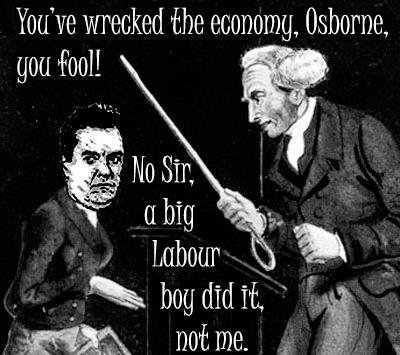
Image result for george osborne big labour boy did it kittysjones

And using euphemism:


Image result for Tory lies

Social norming is an appeal to emotional needs to fit in and belong, and also, to be on the side that wins. As stated earlier, it has a kind of self fulfilling prophecy element to it, too. It’s used in advertising – words like “everyone”, “we”, “our” and “most people” or “many” are used a lot to sell brands and imply a popularity of certain products that usually isn’t real.

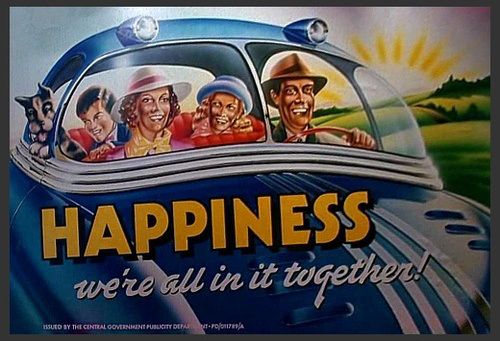
Political slogans like the almost farcical “country that works for everyone” and the previous “all in it together” are examples of poor attempts at social norming. It’s aimed at shifting our normative framework to accommodate the status quo, too, regardless of how the accounts don’t tally with reality. Once you see it, you can’t unsee it.

Image result for we are all in this together Tory slogan

It’s worth noting that “We are all in it together” was a slogan made famous in Terry Guiliams’s dystopic black comedy Brazil. Cameron certainly had a moment of recycling propaganda with grim irony there.
00122e59eb74fe0acab5f6838951c280

Propaganda techniques commonly used by the Conservatives

As mentioned previously, bandwagon and “inevitable-victory” appeals attempt to persuade the target audience to join in and take the course of action that “everyone else is taking.” Inevitable victory invites those not already on the bandwagon to join those already convinced they are on the road to certain victory. Those already or at least partially on the bandwagon are reassured that staying aboard is their best course of action.  

Join the crowd is a technique that reinforces people’s natural desire to be on the winning side. This technique is used to convince the audience that a programme is an expression of an irresistible mass movement and that it is in their best interest to join. As an example, see Grant Shapps under fire over website ‘sham’ which used models featured on Australian university site to make Tory activists look ‘youthful and in touch’ with Britain. Also see Behaviourism.

Common man – The ordinary folks or Common Man technique is an attempt to convince the audience that the propagandist’s positions reflect the common sense of the people. It is designed to win the confidence of the audience by communicating in the common manner and style of the target audience. Propagandists use ordinary language and mannerisms (and clothe their message in face-to-face and audiovisual communications) in attempting to identify their point of view with that of the average person, and to naturalise it.

Image result for Pictures of MPs pretending being ordinary

hqdefault

Ad hominem is a Latin phrase which has come to mean personally attacking your opponent, as opposed to challenging their propositions and arguments. A recent example is Boris Johnson’s strange attack on Jeremy Corbyn, calling him a “benign herbivore” but at the same time, also a “mutton-headed old mugwump.

The word comes from Massachusett, an Algonquian language spoken by the Massachusett people, from whom the US state takes its name. The word mugquomp, meaning “war leader” or “great chief”, appeared frequently in John Eliot’s 1663 translation of the Bible into the Massachusett language, where it was used as a gloss for an officer, captain, and duke.

Sadly, Johnson, languishing in his own in solipsism, has clearly invented his own personal meaning, though he really should pay heed to Wittgenstein, who warned of the dangers of private language (the idea of a language understandable by only a single individual is incoherent.) Then he wouldn’t sound like such a mutton-headed numpty. Johnson, like many Conservatives, has problems reconciling his “inner” (subjective) experience with the “outside” (objective) world.

By the early 1800s the form “mugwump” had been adopted into English as a humorous term for an important person, leader, or boss. J K Rowling was probably thinking of the earlier meaning when she used the word for the head of the International Confederation of Wizards in Harry Potter, the Supreme Mugwump.

Ad nauseam – This approach uses tireless repetition of an idea. An idea, especially a simple slogan, that is repeated enough times, may begin to be taken as the truth. This approach works best when media sources are limited and controlled by the propagator. Joseph Goebbels, not known to be driven by the passionate inspiration of the moment, but by the result of sober psychological calculation, was particularly talented in utilising this approach. Iain Duncan Smith has previously shown a similar penchant for repeated mendacity. Then there is Theresa May’s ad nauseum slogans: ” A strong and stable leadership in the national interest,” and “A country that works for everyone.”

Image result for Theresa May's slogan United
   Image courtesy of News Thump

Which brings us to the Glittering Generalities technique. This another category of the seven main propaganda techniques identified by the Institute for Propaganda Analysis in 1938. It’s a device often used by the media and in political rhetoric to persuade us to approve and accept something without examining any evidence.

This is a propaganda technique purposefully designed to divert and distract, so that people are less likely to develop their own critical thoughts. This said, the purpose of all forms of propaganda is to tell you what to think, and not how to think.

Glittering Generalities capitalise on increasingly sloganised political discourses, leading to a loss of conceptual clarity, over-idealisation and they also reflect conceptual miserliness – a tendency for some people to prefer simple, superficial and easy answers, rather than having to expend time and effort to grapple with complexity, critical analysis and the need to weigh up evidence. They also succeed in conveying codified messages that reference underpinning discourses which are often prejudiced and controversial, but presented in a way that bypasses any detailed scrutiny, as a consensus view and “common sense.”  An example is the slogan “Taking our country back” as it references an underpinning racist, supremicist discourse, whilst sounding vaguely rightous, because someone nicked England, or hid it on another planet.

Glittering Generalities imply – or signpost us – via common stock phrases to our own tacit knowledge, which often lies below our current focal awareness – prior information, beliefs, ideals, values, schemata and mental models, stereotypes and so on, creating the impression that the person using the terms and phrases understands and sees the world as you do, creating a false sense of rapport by doing so. Or the feeling that some very important recognition has been made.

Glittering Generalities propaganda is sometimes based on a kind of logical fallacy known as Equivocation – it is the misleading use of a term with more than one meaning (usually by glossing over which meaning is intended at a particular time)

Glittering Generalities is a technique very often used by people who seek to stifle debate, sidestep accountability and suppress democratic processes. Because Glittering Generalities tend to obscure or gloss over serious areas of disagreement, they hide controversy and submerge alternative propositions.

As such, Glittering Generalities may often be used to neutralise opposition to dominant ideas. It’s a way of disguising partisanship and of manipulating and reducing democratic choices. It’s part of a process of the political micro-management of your beliefs and decision-making.

Here is a bit of refreshing straight talk for a change:

Related image

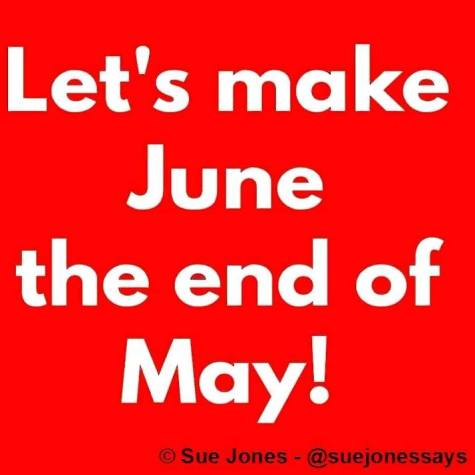
I’m not above a bit of sloganeering myself. In 2015, I came up with “Tory cuts cost lives”, which my friend, Robert Livingstone, turned into a couple of memes.

Image result for Tory cuts cost lives

This one recent one went very viral very quickly, glad to see it so widely used:
17992309_1302068139828559_7295604745407481410_n

Finally, I thought I would share that the widely used word “selfservative” came from a disillusioned Tory I knew called Derek. I used it a lot on social media, and my friend, Robert Livingstone, popularised it in his memes. Derek defected to Labour and vanished from the Conservative Facebook groups where Robert and I used to have surprisingly civilised debate with him. 

I will be writing more about electioneering, exposing propaganda and other techniques of persuasion, over the next couple of weeks.

Related

Propaganda Techniques (Summary)

The Conservative’s negative campaign strategy: “share the lies and win a prize”

Dishonest ways of being dishonest: an exploration of Conservative euphemisms

The erosion of democracy and the repression of mainstream media in the UK

Department for Work and Pensions officials admit to using fake claimant’s comments to justify benefit sanctions – a very basic propaganda technique called “telling lies”

Our attitudes and beliefs are being manipulated, our decision-making is being “nudged,” citizens are being micro-managed and policed by the state:

“In a white paper authored by Facebook’s security team and published on Thursday, the company detailed well-funded and subtle techniques used by nations and other organizations to spread misleading information and falsehoods for geopolitical goals. These efforts go well beyond “fake news”, the company said, and include content seeding, targeted data collection and fake accounts that are used to amplify one particular view, sow distrust in political institutions and spread confusion.

“We have had to expand our security focus from traditional abusive behavior, such as account hacking, malware, spam and financial scams, to include more subtle and insidious forms of misuse, including attempts to manipulate civic discourse and deceive people,” said the company.

“In general, Facebook said it faced a new challenge in tackling “subtle and insidious forms of misuse, including attempts to manipulate civic discourse and deceive people.

“Facebook described much of the activity as “false amplification” – which included the mass creation of fake accounts; the coordinated sharing of content and engagement with that content (such as likes); and the distribution of “inflammatory and sometimes racist memes”.  – BBC

In its effort to clamp down on information operations, Facebook suspended 30,000 accounts in France before the presidential election. The company said it was a priority to remove suspect accounts with high volumes of posting activity and the biggest audiences.

The company also explained how it monitored “several situations” that fit the pattern of information operations during the US presidential election. The company detected “malicious actors” using social media to share information stolen from other sources such as email accounts “with the intent of harming the reputation of specific political targets”. This technique involved creating dedicated websites to host the stolen data and then creating social media accounts and pages to direct people to it.

At the same time, a separate set of malicious actors created fake Facebook accounts to falsely amplify narratives and themes related to topics exposed in the stolen data.

Facebook did not specify which stolen data it was referring to, but we know that tens of thousands of emails were hacked from Clinton campaign chairman John Podesta’s Gmail account and released by Wikileaks.

Nor did Facebook attribute the manipulation to any nation state, although it said that the company’s investigation “does not contradict” the findings of a January report by the US Director of National Intelligence that outlined Russian involvement in the election.

Russia has also been implicated in the hacking of French presidential frontrunner, Emmanuel Macron, according to a report by researchers with Japanese anti-virus firm Trend Micro, published this week.

Facebook pledged to monitor attempts to manipulate the platform, to develop new ways of identifying fake accounts, educate at-risk people about how to keep their information safe, and support civil society programs around media literacy.

“We recognize that, in today’s information environment, social media plays a sizable role in facilitating communications – not only in times of civic events, such as elections, but in everyday expression,” said the report. “In some circumstances, however, we recognize that the risk of malicious actors seeking to use Facebook to mislead people or otherwise promote inauthentic communications can be higher.” – The Guardian

“The JTRIG unit of GCHQ is so notable because of its extensive use of propaganda methods and other online tactics of deceit and manipulation. The 2011 report on the organization’s operations, published today, summarizes just some of those tactics:

Throughout this report, JTRIG’s heavy reliance on its use of behavioral science research (such as psychology) is emphasized as critical to its operations. That includes detailed discussions of how to foster “obedience” and “conformity”:


An “I told you so” moment from Glenn Greewald


My work is unfunded and I don’t make any money from it. I am disabled because of illness and struggle to get by. But you can support Politics and Insights and contribute by making a donation which will help me continue to research and write informative, insightful and independent articles, and to provide support to others.  DonatenowButton

Successful Appeals Against Disability Assessments – It’s As If There’s Something Wrong With The System

PAY-Protesters-with-posters-outside-the-Dept-of-Work-Pensions

Source: the Independent, written by James Moor.

It’s rapidly becoming clear that Prime Minister Theresa May’s bold pledge to create a Britain that works for everyone should have an asterisk attached to facilitate the addition of “except for those pesky people with disabilities, can’t we pack them off somewhere else?”

In recent days the Government’s plan to cut people with serious mental health conditions out of eligibility for personal independent payments has justifiably come under sustained fire. 

However, the attitude problem displayed by both May’s administration, and that of her predecessor David Cameron, goes beyond that, as a delve into the latest statistics demonstrates.

What they show is that the number of appeals against decisions made by the DWP on the basis of assessments made by the private, profit driven contractors working on its behalf is increasing at a similar speed to that at which Lewis Hamilton exits Silverstone corners. 

They show that there were 60,600 Social Security & Child Support appeals between October and December 2016, an increase of 47 per cent. Even Lewis might think twice about acceleration like that. 

Some 85 per cent of those appeals were accounted for by the Personal Independence Payment (PIP) and the Employment & Support Allowance (ESA).

The rate at which the decisions made by the DWP on the basis of information supplied by the Government’s contractors – Capita and Atos – are overturned is also increasing. 

People started taking notice when it was running at 50 per cent. Now close to two thirds of appeals in the case of the PIP (65 per cent) are successful. The figure is higher still when it comes to ESA (68 per cent). 

I’m given to understand that the people who sit on tribunals have been asked to keep June clear, in an attempt to reduce a growing backlog. So forget about an early summer holiday. 

Needless to say, these people have to be paid, which puts extra cost into the system at a time when the Government says it’s trying to save money. 

Simply applying for either benefit causes a great deal of stress to people with disabilities. Having to go to appeal only exacerbates that. Applicants find themselves in the middle of a process that is humiliating and dehumanising.

That process also seems to throw up scandals with alarming regularity. Channel Four, for example, infamously filmed a Capita assessor saying a claimant had a “disability known as being fat”. Another claimed to have filled out forms before even seeing clients amid pressure to get as many done as quickly as possible. 

Other scandals have involved people with weeks or months to live being told they’re fit for work in the case of ESA, which is paid to people whose fitness to do so is impacted by medical conditions and disabilities. 

Set against that backdrop, is it any wonder that there has been so much criticism of the process, and so many successful appeals? 

If the assessment process worked effectively, and as it should, the number should be limited, and you wouldn’t expect such a large majority to be successful.

Ken Butler, welfare rights advisor at Disability Rights UK, says he is “very worried for all those disabled people who get turned down for benefits and don’t have the time or energy to challenge poor decisions made by the Department for Work and Pensions (DWP)”. 

He adds: “We’d advise all claimants to get benefits advice and, if they are turned down, to use the independent appeals process.”

Butler says that the high success rate of appeals clearly demonstrates that there is something wrong with the system. 

Unless, of course, the system, also savagely criticised by the United Nations, was deliberately set up to be this way. 

Before you suggest that is me indulging in a conspiracy theory, take a moment to think about this. If you make something difficult, stressful and painful, if you litter it with traps, and take the view that everyone getting involved in it is a dirty scrounger until proven otherwise, a lot of people will get put off and won’t apply. Still more won’t appeal when turned down, saving the Government money it can use for things like millionaires tax cuts. 

Dealing with a disability presents enough of a challenge as it is, without having to get to grips with a state that operates in a manner that would have impressed some of George Orwell’s darker characters. Would anyone be terribly surprised to find O’Brien working as a civil servant in the DWP?

The cynicism on display is breathtaking, if my assessment is correct. Alternatively, the situation I’ve discussed could simply have been created by a toxic mix of bureaucratic callousness and incompetence. 

The net effect is the same regardless, which is why there will be peals of bitter laughter emanating from Britain’s disabled community every time those words of Theresa May’s are trotted out. 

You’d be able to hear them if it weren’t for the fact that so many people with disabilities are now trapped in their own homes.  

Government welfare policies are ‘historically obsolete’ say researchers

images

Historical research shows that the National Health Service (NHS) and welfare state are fundamental to a healthy, productive economy.

The government has been accused of following a “historically obsolete” welfare strategy by a team of Cambridge University researchers.  

Research by Simon Szreter, Ann Louise Kinmonth, Natasha M Kriznik, and Michael P Kelly also supports the work of campaigners, charities and other academics raising their concerns about the harmful social and economic impacts of the Conservatives’ austerity measures. These include the draconian welfare “reforms” and the consequences of the increasing privatisation of and political under-investment in the NHS from 2012 onwards. 

In an article published on Friday in The Lancet, titled  Health and welfare as a burden on the state? The dangers of forgetting history, the group of academics criticised Conservative austerity policies, which were instituted by David Cameron and George Osborne’s and continued by Theresa May and her chancellor Philip Hammond. The researchers point out that investment in welfare has always been crucial for Britain’s economic success.

The Conservatives have frequently claimed that welfare provision isn’t “sustainable”. Welfare support has been reduced so much that many people have been unable to meet even their most basic needs. Food and fuel poverty have significantly increased over the past four years, for example. We have witnessed the return of absolute poverty in the UK, something we haven’t seen since before the inception of the welfare state, until now. Social security is also harshly conditional, with punishment regimes and psycho-compulsion embedded in the diminishing “support” being offered. The emphasis has shifted from “support” to managing and enforcing poor citizens’ compliance and conformity.

Crucially, the researchers, who are based at St John’s College are opposing the idea that welfare and health spending is a “burden” on the country’s economy, arguing instead that economic prosperity is intrinsically tied to an adequate level of welfare provision.

Simon Szreter is a Professor of History and Public Policy at Cambridge’s Faculty of History. He writes: “The interests of the poor and the wealthy are not mutually opposed in a zero-sum game. Investment in policies that develop human and social capital will underpin economic opportunities and security for the whole population.”

The report also states: “The narrow view that spending on the National Health Service and social care is largely a burden on the economy is blind to the large national return to prosperity that comes from all citizens benefiting from a true sense of social security.”

The authors continue: “There are signs that Theresa May subscribes to the same historically obsolete view.

Despite her inaugural statement as Prime Minister, her Chancellor’s autumn statement signals continuing austerity with further cuts inflicted on the poor and their children, the vulnerable, and infirm older people.””

To support their position, the researchers point to the period of economic growth the UK experienced following the post-war settlement – including the development of the welfare state and the NHS, something which they argue also brought about greater equality, with the rich-poor divide falling to an all-time low during the 1970s.

Drawing on recent historical research, they also trace the origins of the British welfare state to reforms to the Poor Laws introduced under Elizabeth I in 1598 and 1601, and claim that investment in supporting the poorest citizens has always gone hand in hand with economic growth.

The report establishes an interesting and useful historical context, following the effect of welfare provision on the nation’s economic prosperity prior to the creation of the modern health and welfare apparatus and institutions that we are familiar with today, arguing that the concept of a British welfare state can be traced back to the reign of Elizabeth I. There are also parallels drawn in the report between the perceived problem of the “idle poor” during the Victorian era and the contemporary political narratives that intentionally label benefit claimants as “scroungers” who allegedly benefit unduly at the expense of “hard-working families”.

Many of us have drawn the same parallels over the past four years. In my  some of my own work, three years ago, I also compared the 1834 Poor Law Amendment Act – particularly the principle of less eligibility with the Conservative’s recent punitive and regressive approach to “making work pay”, which is about reducing social security provision, rather than raising national wages. Basically the ideology behind both political practices is that any support given to people out of work needs to be punitive, and much less than the poorest wages of those in the lowest paid employment. That tends to drive wages down, as people who are desperate to survive have little bargaining power, and are more likely to be forced to work for much less, because employers can exploit a desperate reserve army of labour.

The Poor Law Amendment Act of 1834 is largely remembered through its connection to the punitive workhouses that were infamously instituted across Victorian Britain.

The researchers argue that, though the 1834 Act was passed out of “concerns” that the welfare system was being abused and was an unduly heavy burden on taxpayers, there isn’t any evidence that it had much an economic benefit. They also point out that Britain’s growth actually fell behind that of rival nations after 1870, only recovering in the 1950s, following the post-war settlement

Simon Szreter said: “We are arguing from history that there needs to be an end to this idea of setting economic growth in opposition to the goal of welfare provision. A healthy society needs both, and the suggestion of history is that they seem to feed each other.”

proper Blond


I don’t make any money from my work. But you can help by making a donation to help me continue to research and write informative, insightful and independent articles, and to provide support to others. The smallest amount is much appreciated – thank you.

DonatenowButton cards

Malnutrition, austerity and eugenics.

Minnes

Earlier this year, I reported that figures released by The Office of National Statistics (ONS) showed 391 people died from malnutrition in 2015. There were 746 hospital admissions for malnutrition in just 12 months. The statistics also showed two people in the UK are admitted to hospital with the condition every day in what campaigners have called a “national scandal.” 

Official figures more recently from the Department of Health reveal that people with malnutrition accounted for 184,528 of days in hospital beds taken up in England taken up last year, a huge rise on 65,048 in 2006-07. The sharp increase is adding to the pressures on hospitals, which are already struggling with record levels of overcrowding and limited resources because of underfunding.

161127-malnutrition-stats

Critics and campaigners have said the upward trend is a result of austerity and rising absolute poverty, deep cutbacks in recent years to meals on wheels services for the elderly and inadequate social care support, especially for older people. 

Theresa May has made it clear there will be no end to Tory austerity, she said:“What I’m clear about is we’re going to continue as we have done in Government over the last six years – ensuring that we’re a country that can live within our means.” 

The figures once again directly contradict the glib claim from government ministers that the rise in the use of food banks is linked to the fact that there are now more of them. Ludicrously, millionaire David Freud has claimed that people use food banks just because they provide a  “free good”.  However, research shows that people turn to charity food as a last resort following a crisis such as the loss of a job, the delays and problems accessing social security benefits, and through benefit sanctions. 

People may only be referred to a food bank by a professional such as a social worker or GP. If someone turns up without a voucher, food bank staff put them in touch with relevant local agencies who can assess whether they need a voucher and signpost them to the right services. The number of people receiving emergency food is disproportionate to the number of new food banks opening: following the welfare “reforms”, by 2013, numbers helped by food banks increased by 170% whilst there was only a 76% increase in new food banks opening. 

Over 50% of children living in poverty in the UK are from working households and many of the people helped by food banks are in work, with the rising cost of living combined with no rise in low wages causing many to hit a crisis where they can’t afford to met basic needs such as eating.

Jonathan Ashworth, the shadow health secretary, unearthed the latest figures in a response to a recent parliamentary question submitted to the health minister Nicola Blackwood. He said: 

“These figures paint a grim picture of Britain under the Conservatives. Real poverty is causing vulnerable people, particularly the elderly, to go hungry and undernourished so much so that they end up in hospitalOur research reveals a shocking picture of levels of malnutrition in 21st-century England and the impact it has on our NHS. This is unacceptable in modern Britain.”

In a very wealthy first-world  democracy, it is completely unacceptable that anyone is left hungry, malnourished and in absolute poverty.

The Department of Health figures showed that the number of “bed days” accounted for by someone with a primary or secondary diagnosis of malnutrition rose from 128,361 in 2010-11, the year the coalition came to power, to 184,528 last year – a 61% rise over five years.

The National Institute for Health and Care Excellence classes someone as malnourished if they have a body mass index of less than 18.5, have suffered the unintentional loss of more than 10% of their weight over the last three to six months, or if they have a BMI under 20 and have unintentionally seen their weight drop by more than 5% over the previous three to six months.

The worrying decision by the chancellor, Philip Hammond, not to fund the NHS or social care with any more money in his autumn statement last week will only worsen this already unacceptable situation.

Ashworth said: “The reality is the government have failed this week to both give the NHS and social care the extra investment it needs while also failing to invest in prevention initiatives to foster healthier lifestyles. The cuts to public health budgets along with an emaciated obesity strategy are both utterly misguided.” 

Figures are not available for exactly how many patients accounted for the 184,528 bed days last year, but information supplied to Ashworth by the House of Commons library shows that 57% of the patients were women and that 42% were over-65s.

Worryingly, four out of five people who needed inpatient hospital care because of malnutrition were admitted as an emergency, which suggests their health had deteriorated significantly in the days before they were taken in.

Not enough health and social care professionals have the time or knowledge to correctly identify malnutrition.

Stephen Dalton, the chief executive of the NHS Confederation, which represents hospitals, said: “Our members take malnutrition seriously. Good nutrition is a fundamental human right our citizens can expect, and vulnerable, particularly older, people are most at risk of serious consequences if denied basic compassionate care. At a time of unprecedented demand on health and social care we need to be alert and will take seriously any reliable evidence of basic care not being delivered.”

Time and time again, when challenged and confronted with overwhelming empirical evidence of the harm that their class-contingent austerity policies and welfare “reforms” are inflicting on citizens, the government simply deny any “causal link”. They say that the increase in absolute poverty, malnutrition and hunger, deaths and distress are unrelated to their policies, which they claim to be “working”.

With no sign that the government are going to emerge from behind their basic defence mechanism of collective denial – nor are the Conservatives remotely interested in investigating a clear correlation between their blatant attacks on the poorest citizens via their draconian policies and the terrible hardships people are suffering –  we do have to wonder what the real intention is underpinning such clearly targeted austerity.

Conservative ideology seems to be founded on the hypothesis of an inborn and “natural order” – a society that is based on a human hierarchy of worth. The Conservatives feel justified that they are part of a superior class in society and therefore they have an entitlement to hold power. Their policies don’t include the majority of us in their design or aims. The government are not democratic, they are authoritarians. Conservative policies act upon ordinary citizens and have become increasingly detached from citizen needs.

I was accused of the terrible crime of being an “interfering do-gooder” recently by someone with social Darwinist ideals. I couldn’t understand his ferocity. Then I made a connection, the proverbial penny dropped. Again. I suddenly felt very weary, disgusted and shocked – the recognition froze me. Again

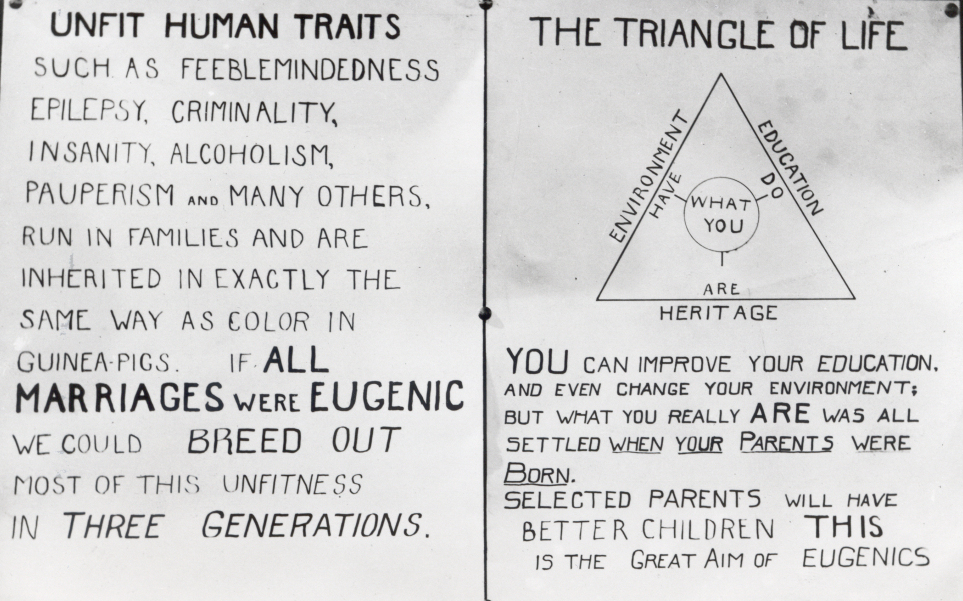
Historically, eugenicists thought that misguided “do-gooders”, by giving poor people help and support, were allowing them to survive “unnaturally”, and were consequently interfering in human “natural selection”, a benign force which they thought was “deselecting” the people with the “weakest” genes and the “moral defectives”.  The Conservatives moralise about people who are poor and their punitive anti-welfare policies indicate plainly that they think that poor people have moral deficits.

The Conservative message that poverty is caused by character or behavioural “defects” and not socioeconomic and political circumstances should have been ringing alarm bells very loudly everywhere. The problem with authoritarian governments is they usually have sufficient power, one way or another, to mute the alarm. The first base of power over public perceptions that all authoritarians build is invariably facilitated by the corporate mass media. 

Austerity, “the national debt”, “a country living within its means”, “hardworking families”, the scrounger/striver rhetoric, “hard choices” and the “culture of entitlement” has all been a smokescreen for eugenic policies.

We cannot find any comfort in the belief that the government are simply neglectful policy makers. The persistent and loud denial regarding the increasingly precarious existence of the poorest citizens – especially disabled people – and the loud refusal to investigate the correlation between austerity policies and social outcomes that are damaging and harmful, and to consider the empirical evidence of humanitarian harm presented by citizens, academics, charities and campaigners, indicates a government that is not ignorant of the consequences, yet has no intention of changing their policies. The Conservatives are appallingly unconcerned about the terrible harm they are inflicting on invididuals and on our society.

 “Eugenic goals are most likely to be attained under another name than eugenics.” – Frederick Osborn

00632639d492f019c3b926c95ecf003f

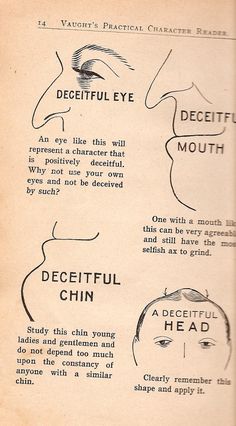
The art of character divination: this type of historical human stereotyping still exists. It is evident in Conservative narratives and their calculated justification rhetoric of draconian welfare policies:

apsimg1481

I don’t make any money from my work. But you can help by making a donation and help me continue to research and write informative, insightful and independent articles, and to provide support to others. The smallest amount is much appreciated – thank you.

DonatenowButton cards

Government backs new law to prevent people made homeless through government laws from becoming homeless

cn_fairchange_comp1.jpg

Theresa May’s ritualistic Tory chanting: “getting people’s lives back on track”

Earlier this month, Theresa May surprisingly unveiled a £40 million package designed to prevent homelessness by intervening to help individuals and families before they end up on the streets. It was claimed that the “shift” in government policy will move the focus away from dealing with the consequences of homelessness and place prevention “at the heart” of the Prime Minister’s approach. 

Writing in the Big Issue magazine – sold by homeless people – May said: “We know there is no single cause of homelessness and those at risk can often suffer from complex issues such as domestic abuse, addiction, mental health issues or redundancy.”

“So I believe it’s time we changed our approach. We can no longer focus on tackling the symptoms and immediate consequences of homelessness. We need to put prevention at the heart of a new approach.

“As a first step towards this change, I’m announcing a new £40 million package to both prevent and tackle the causes of homelessness. This will include £20 million for local authorities to pilot innovative initiatives to tackle the causes of homelessness – helping to find solutions for families and individuals before they reach crisis point.”

Earlier this year it was revealed that under David Cameron’s administration homelessness in England had risen by 54 per cent since 2010

This reflected the sixth consecutive annual rise, with households becoming homeless in London increasing to 17,530 (9 per cent) in the last year alone and 58,000 households across the whole of England.

That’s during six consecutive years of the Conservatives in Office, and six years of savage austerity measures that target the poorest citizens disproportionately, by coincidence.

Or by correlation.

There are a few causes that the prime minister seems to have overlooked, amidst the Conservative ritualistic chanting which reflects assumptions and prejudices about the “causal” factors of social problems and a narrative of individualism. It’s a curious fact that wealthy people also experience “complex issues” such as addiction, mental health problems and domestic abuse, but they don’t tend to experience homelessness and poverty as a result. 

The deregulated private sector and increasingly precarious tenancies

“This Government is therefore, very pleased to support Bob Blackman MP’s Private Members Bill, with its ambitious measures to help reduce homelessness.”

Blackman, the Conservative MP for Harrow East, said he welcomed the Government’s decision. He added: “Throughout my 24 years in local government prior to becoming an MP, I saw the devastation that can be caused by homelessness first hand, with too many people simply slipping through the net under the current arrangements.

“By backing this bill, the Government is demonstrating its commitment to an agenda of social justice and also shows that it is willing to listen. I look forward to working with Ministers going forward in order to bring about this important change in legislation.”

Crisis, the national charity for homeless people, welcomed the Government’s commitment but warned that unless “MPs [need to] offer their support at the bill’s second reading on Friday, this historic opportunity could easily be lost”.

Jon Sparkes, the charity’s chief executive, added: “This is a credible and much-needed piece of legislation which now has the backing of the Government, the opposition and the Communities and Local Government Select Committee. The cross-party consensus is there, and we hope that MPs from across the political spectrum will come together on October 28 to vote on the bill.

“Helping people to stay off the streets and rebuild their lives is about basic social justice – it’s the right thing to do – but it also makes good economic sense. New research from Crisis has revealed how preventing 40,000 people from becoming homelessness could save the public purse up to £370m a year, or just over £9,000 per year for every person helped. The logic is clear: preventing homelessness saves lives, but also reduces public costs.

“For 40 years we’ve had a system that fails too many homeless people and turns them away at their time of need. The Homelessness Reduction Bill could help put an end to that injustice once and for all. It is a major opportunity to improve the rights of people currently shut out of the system, whist continuing to protect families with children.”

Lord Porter, the chairman of the Local Government Association, which represents councils and had opposed an earlier draft of the Bill, said granting councils the ability to build homes would be a more effective step towards ending homelessness and the housing crisis in general.

“Councils want to end homelessness and are already doing everything they can within existing resources to prevent and tackle it. However, there is no silver bullet, and councils alone cannot tackle rising homelessness. The causes of homelessness are many and varied and range from financial to social,” he said.

“After having worked closely with Bob Blackman, we are confident that the new Bill, if it does go through Parliament, will be in a better place.

“However, it is clear that legislative change alone will not resolve homelessness. If we are all to succeed, then all new duties proposed in the Bill will need to be fully funded. Councils need powers to resume our role as a major builder of affordable homes.”

The shortage of housing and the impact of the Government’s welfare “reforms”

The 2013 annual State of the Nation report by the charities Crisis and Joseph Rowntree Foundation (JRF) revealed that the number sleeping rough had risen by six per cent in England this year, and by 13 per cent in London. There has been a 10 per cent increase in those housed temporarily, including a 14 per cent rise in the use of bed and breakfast accommodation.

Writing just a year after the highly controversial Welfare Reform Act was ushered through the legislative process on the back of Cameron’s claim to the “financial privilege” of the Commons , the report authors explicitly blamed the Government’s welfare cuts for compounding the problems caused by the high cost and shortage of housing as demand outstripped supply. The researchers found found that the cap on housing benefit made it more difficult to rent from a private landlord, especially in London, and claimed the controversial “bedroom tax” has caused a sharp rise in arrears for people in public housing, particularly in the Midlands and North.

A separate survey by Inside Housing magazine showed that councils and housing associations are increasingly resorting to the threat of eviction, as the loss of an adequate social security safety net is causing increasing hardship for social housing tenants. The reduction of council tax benefit for people who were previously exempt from paying council tax has also contributed significantly to experiences of material hardship, too. 

Ministers have emphatically denied that their reforms have contributed to the return of homelessness. However, homelessness has now risen in each of the five years since the Coalition was formed – after falling sharply in the previous six years, and has continued to rise throughout 2016.

The government’s welfare policies have emerged as the biggest single trigger for homelessness now the economy has allegedly recovered, and are likely to increase pressure on households for the next few years, with the new benefit cap increasing the strain, according to the independent research findings in the Homelessness Monitor 2015, the annual independent audit, published by Crisis and the Joseph Rowntree Foundation.

The housing minister, Kris Hopkins, said the study’s claims were “misleading”. Local authorities had “a wide range of government-backed options available to help prevent homelessness and keep people off the streets,” he said.

“This government has increased spending to prevent homelessness and rough sleeping, making over £500m available to local authorities and the voluntary sector,” he added.

It hasn’t worked. This is because, despite Theresa May’s claims, the government tends to simply address the effects and not the real causes of homelessness. Unless the government actually address the growing inequality, poverty and profound insecurity that their own policies have created, then homelessness and absolute poverty will continue to increase.

Hopkins added that the government had provided Crisis with nearly £14m in funding to help about 10,000 single homeless people find and sustain a home in the private rented sector.

Julia Unwin, chief executive of the Joseph Rowntree Foundation, said: “Homelessness can be catastrophic for those of us who experience it. If we are to prevent a deepening crisis, we must look to secure alternatives to home ownership for those who cannot afford to buy: longer-term, secure accommodation at prices that those on the lowest incomes can afford.”

The Homelessness Monitor study 2015 found:

  • Housing benefit caps and shortages of social housing has led to homeless families increasingly being placed in accommodation outside their local area, particularly in London. Out-of-area placements rose by 26% in 2013-14, and account for one in five of all placements.
  • Welfare reforms such as the bedroom tax contributed to an 18% rise in repossession actions by social landlords in 2013-14, a trend expected to rise as arrears increase and temporary financial support shrink
  • Housing benefit cuts played a large part in the third of all cases of homelessness last year caused by landlords ending a private rental tenancy, and made it harder for those who lost their home to be rehoused.

The study says millions of people are experiencing “hidden homelessness”, including families forced by financial circumstances to live with other families in the same house, and people categorised as “sofa surfers” who sleep on friends’ floors or sofas because they have nowhere to live.

Official estimates of  the numbers of people sleeping rough in England in 2013 were 2,414 – up 37% since 2010. But the study’s estimates based on local data suggest that the true figure could be at least four times that.

The Department for Work and Pensions also announced last month that it was cutting funding for homeless hostels and supported housing for disabled people by reducing supported housing benefit rent payments for three years. The homelessness reduction bill in the current policy context is yet another example of how Conservatives don’t seem to manage coherent, joined up thinking. 

“The Government’s proposals will compromise the right for people with a learning disability to live independently, and must be reconsidered urgently,” Dan Scorer, head of policy at the learning disabilities charity Mencap, warned after the announcement.

Meanwhile Howard Sinclair, the chief executive of the homelessness charity St Mungo’s, said the cut would leave the homeless charity with £3 million a year less to spend on services. 

“The rent reduction will threaten the financial viability of some of our hostels and other supported housing schemes and offers no direct benefit to vulnerable tenants who mostly rely on housing benefit to cover their housing costs,” he said.

It’s just not good enough that the Government simply attempts to colonise progressive rhetoric, claiming they stand for social justice, when they very clearly don’t walk the talk.

Conservative neoliberal “small state” anti-welfare policies are increasing homelessness. The bedroom tax, council tax benefit reductions, housing benefit reductions, welfare caps, sanctions, the deregulation of private sector, the selling off and privatising of social housing stock have all contributed to the current crisis of homelessness.

It was particularly remarkable that May claimed the government are “doing the right thing for social justice” yet the Conservative policy framework is, by its very design, inevitably adding to the precariousness of the situations those people with the least financial security are in.

Someone should explain to the prime minister that “social justice” doesn’t generally entail formulating predatory policies that ensure the wealthy accumulate more wealth by dispossessing the poorest citizens of their public assets, civilised institutions and civilising practices gained through the post-war settlement.

Devolving responsibility for the housing crisis and lack of adequate social security provision to local authorities that are already strapped for cash because of government cuts, and with an ever-dwindling housing stock, won’t help to address growing inequality, or alleviate poverty and destitution.

letter-to-a-homeless-person

Related

From homes fit for heroes to the end of secure, lifelong social housing tenancies

Update

Let’s Pressurise MP’s To Attend the Vote On the ‘Once In a Lifetime Homelessness Bill’ – template letter to MPs, courtesy of the Dorset Eye


I don’t make any money from my work. But you can help by making a donation to help me continue to research and write informative, insightful and independent articles, and to provide support to others. The smallest amount is much appreciated – thank you.

DonatenowButton cards


The Resolution Foundation’s review of the Conservative’s “Living Wage”

longer_term_living_wage


The Conservatives’ summer budget saw a new national minimum wage set. However, it has been  re-branded as a “national living wage” as the Conservatives claim that it should be what people need to live on. Employers will no longer be allowed to pay the £6.70-an-hour rate, but will have to pay the new “national living wage” of £7.20 an hour to people over the age of 25. Call me a cynic, but the psychosemantic re-branding of a minimum wage increase of less than a pound an hour is a diversion because the government intend to stop subsidising low wages through tax credits. 

Increasing the minimum wage is simply not adequate to reduce poverty. Forty per cent of individuals earning between the minimum wage and the actual amount that would be the Living Wage campaigners want, are in households in the top half of the income distribution. They aren’t poor. Tax credits on the other hand are much more highly targeted at those in need of support. Whilst the public understand what the minimum wage was about, renaming this new policy the “National Living Wage” will inevitably create confusion, as many will incorrectly assume that the government are targeting the same rate as that advocated by the Living Wage campaign – a figure based on estimates in line with the cost of living. They aren’t.

The Living Wage Foundation say:

  • The current UK Living Wage ought to be £8.25 an hour
  • The current London Living Wage ought to be £9.40 an hour

However, the Resolution Foundation have issued a press release that says the Prime Minister should allow the in-built flexibility of the “national living wage” to “take its course.”

Conor D’Arcy, Policy Analyst at the Resolution Foundation, said: “Some businesses are unhappy about a higher minimum wage, particularly amid the post-referendum uncertainty. But backsliding on the government commitment is unnecessary given the in-built flexibility of the policy to adjust to changing economic circumstances. It would also be costly for millions of low paid workers, so the Prime Minister should stick to her guns.”

Backsliding on the so-called “National Living Wage” (NLW) could leave some full-time workers up to £1,000 a year worse off by 2020 – with women, the young and older workers most likely to lose out – according to the new analysis published yesterday (Wednesday) by the Resolution Foundation.

Earlier this year, the introduction of the NLW delivered an average 7.5 per cent pay rise to around 4.5 million workers aged 25 and over. Low-paid workers are set for another four years of above average pay rises as it approaches its target ‘bite’ of being worth 60 per cent of typical hourly pay by 2020.

More recently, May has put tackling squeezed living standards at the centre of her new government. However, some business organisations have called on the government to water down its plans following the EU referendum. In a letter to the Business Secretary Greg Clark, 16 trade associations called on government to “exercise caution” in light of “the economic uncertainties the country faces”.

Such calls are understandable given the challenge of a higher wage floor for some businesses. However the Foundation says that the in-built flexibility of the NLW – which automatically adjusts to economic shifts by being pegged to typical hourly pay, rather than the £9 cash figure that many people associate the policy with – means that there is no need to water down the policy.

The Foundation’s analysis, based on the latest summary of independent economic forecasts published by the Treasury, shows that the NLW is currently on track to rise to around £8.70 in 2020. That’s lower than the £9 forecast in the March 2016 Budget, due to expectations of weaker wage growth. The Foundation notes that the projected figure for 2020 is likely to rise and fall in coming years as wage forecasts are updated and the actual impact of implementing Brexit becomes clear.

The Foundation says the Prime Minister should therefore stick to her guns and press on with implementing a policy that will deliver a pay rise for six million workers – and support her vision for an economy that works for everyone, not just the privileged few.‎

Torsten Bell, Director of the Resolution Foundation, said:

“Theresa May is right to stick to her guns on the National Living Wage. Britain has a serious low pay problem and now of all times is not the moment to put off dealing with it.”

The Foundation adds that sticking to the current policy is very different to pursuing a cash target of £9 or higher in the face of weaker overall wage growth. That approach, which some advocate‎, could jeopardise the success of the NLW.

Ahead of a crucial meeting of the Low Pay Commission in October to decide their recommendation for next April’s NLW rate, the analysis shows that should the government scale back its ambition over the next four years – for example by raising the NLW at a similar pace to the recent minimum wage increases applied after the 2008 financial crisis – its value would fall by around 55p per hour in 2020. This would lower the annual pay of a full-time worker on the NLW by around £1,000, relative to current plans. Should the current ‘bite’ of the NLW be maintained, rather than increased to 60 per cent by 2020, the annual pay would be reduced by £1,500.

Around one in five women and one in five workers aged 26-30 would lose out from any backsliding on the National Living Wage, as would over a quarter of workers aged 66 and over.

The Foundation says that the main focus for the government should now be on implementation. To do this, it is calling for the government’s upcoming industrial strategy and productivity plan to include a focus on the often unheralded low-paying sectors of the economy, and not just on areas like digital and high-value manufacturing. This will help employers handle the higher labour costs brought about by the NLW.

The analysis is part of the Foundation’s upcoming report Low Pay Britain 2016, which will be published later this month.

Conor D’Arcy, Policy Analyst at the Resolution Foundation, said:

“The National Living Wage is a hugely popular policy that is set to deliver a pay rise to six million of Britain’s lowest paid workers and play a pivotal role in the Prime Minister’s vision for an economy that works for everyone, not just the privileged few.

“Understandably some businesses are unhappy about a higher minimum wage, particularly amid the post-referendum uncertainty. But backsliding on the government commitment is unnecessary given the in-built flexibility of the policy to adjust to changing economic circumstances. It would also be costly for millions of low paid workers, so the Prime Minister should stick to her guns.

“The government’s attention should instead turn to the huge task of implementation. This should ensuring that its upcoming industrial strategy includes the less glamorous but hugely important sectors like retail and hospitality, which are at the coalface of Britain’s huge low pay challenge.”

Review recommendations

  • While the National Living Wage is a welcome boost to low earners, the Living Wage with its genuine link to an acceptable cost of living, remains as vital as ever.
  • But as we have made clear, improvements are possible in both methods and seeking alignment will inevitably lead to change. We believe the recommendations we have outlined in this review represent a genuine improvement over the current methods. The aligned method should be more representative, more robust and, most importantly, driven to a greater extent by changes in the cost of living.
  • Inevitably, calculating a Living Wage requires judgement calls. Policy changes like the introduction of Universal Credit would always have required judgements on how the new system is phased into the rate. Having a body like the Living Wage Commission to make such decisions when required in future can only be an asset to the Living Wage campaign as it moves forward.
  • The natural question which follows these recommendations is what impact is likely on the rates themselves. However, the next steps are for the Living Wage Commission to consider our recommendations. The options they choose will determine the extent to which the rates vary from their current levels.
  • Broadly speaking however, the aligned method we have recommended is likely to have an upward effect on the London Living Wage. We consider this to be an unavoidable consequence of a Living Wage rooted in an up-to-date basket of goods with a more diverse mix of family types. There is a clear discrepancy in the target income between London and the rest of the UK, and as highlighted by recent analysis on the size of London salary weightings[1] the differential between rates should be larger than at present. The exact size of the increase will depend on the Living Wage Commission and Mayor’s response to our review. They also have a role in setting out a how to implement and transition to the new rates in London and the rest of the UK.
  • The Living Wage Commission is expected to respond to our review in September 2016. With a strong, aligned methodology and an enhanced governance structure, we see no reason why the Living Wage cannot continue to raise the wages of workers across the UK, delivering more families an acceptable standard of living.

Notes 

  • The ‘bite’ of the National Living Wage – its value relative to typical hourly pay – is set to increase by 4.3 percentage points over the next four years. The ‘bite’ of the National Minimum Wage (NMW) increased 1.7 percentage points in the four years following the financial crisis. Should the NLW instead follow this path, rather than the one currently set out, its value in 2020 would fall to £8.17 an hour. That’s 55p an hour less than the latest economic forecasts imply, equivalent to £1,075 to a full-time worker on the NLW.
  • The Resolution Foundation forecasts that by 2020 around 12 per cent of workers will be earning the National Living Wage, including 19 per cent of women, 19 per cent of 26-30 year olds and 26 per cent of workers aged 66+. 

I don’t make any money from my work. But you can help me keep going by making a donation so I can continue to research, to write free, informative, insightful and independent articles, and to provide support to others. The smallest amount is much appreciated – thank you.

DonatenowButton cards

Conservative social security policy is not founded on rational analysis and evidence

650
Recently I wrote an article about the new benefit cap which parodied Conservative ideology, traditional class prejudices and subsequent justification narratives for their welfare “reforms”, likening the latter to nineteenth century character divination – phrenology in particular. Sometimes, it’s easier to highlight the ridiculous by simply ridiculing it.

A lot of my work is themed around serious and rational critique of Conservative shortcomings when it comes to the whole process of policy-making and research, from the theories” that inform the process, to the ideologically-driven impacts and narrow neoliberal aims and outcomes, which have led to some catastrophic social consequences. This is because austerity has been aimed exclusively at those citizens who had the very least to start off with. Sick and disabled people have been systematically and disproportionately targeted for cuts to their support.

2014-02-17-BurdenoftheCuts-thumb

I’ve written previously about the government’s increasing use of secondary legislation to push through controversial and highly partisan policies without an adequate degree of parliamentary scrutiny and debate. The public are entirely excluded from this process. This is one way that the Conservatives have been getting away with highly prejudiced, ideologically-driven policies that have not been analysed in terms of safeguarding citizens, impact, compatibility with our international human rights obligations and are neither adequately justified nor evidenced. 

The Strathclyde review and Conservative authoritarianism

Secondary legislation is unamendable and is allocated 90 minutes debate in the Commons at best, by the Conservatives. Secondary legislation in the form of Statutory Instruments was only ever intended for non-controversial and small tidying up legislative measures. A Tory aide admitted that the government are trying to get as much unpopular legislation in through the secondary route as possible. But this has been very evident anyway. The government is intent on dismantling any inconvenient piece of the constitution.

In a democracy there is always a responsibility and need to ensure additional checks and balances against incumbent governments and for extending opportunities to review and improve the quality of legislation. There is always a need to broaden the political participation and democratic inclusion of particular groups in society; to explore ways by which under-represented groups may be identified and included in political decision-making processes.

Statutory Instruments are the principal form in which delegated legislation is made, and are intended to be used for simple, non-controversial measures, in contrast to more complex items of primary legislation (known as Bills.) The opposition has frequently complained that the government uses Statutory Instruments to pass complex and controversial legislation which should have been subject to full Parliamentary scrutiny. Universal credit, the legal aid and tax credit cuts are clear examples of the misuse of secondary legislation, each with far-reaching and detrimental socioeconomic consequences for many people.

The steep rise in the use of Statutory Instruments since 2010 is an indication of how the Conservatives are politically managing pre-legislative scrutiny, stifling healthy debate, curtailing opposition, and side-stepping essential democratic transparency and accountability. It’s also an indication that much Conservative legislation is ideologically-driven rather than needs-driven: the use of secondary legislation as a means of avoiding scrutiny demonstrates that the government are aware that much of their planned programme won’t stand up to close Parliamentary examination and rational debate.

Lord Strathclyde was asked in October last year by David Cameron to undertake a “rapid review” that considered how to secure the decisive role of the House of Commons in relation to its primacy on financial matters and secondary legislation. Of course, Strathclyde’s report was published by the Government on the 17 December, 2015, which marked the final sitting of Parliament before Christmas. Nonetheless the media did actually cover the contents of the report and some of the implications of the recommendations made.

Strathclyde concluded in his report that the House of Lords should be permitted to ask the Commons to “think again” when a disagreement on proposed legislation exists, but should not be allowed to veto. MPs would ultimately make a decision on whether a measure is passed into law. The review focuses in particular on the relationship between the Commons and the Lords, in relation to the former’s primacy on financial matters and secondary legislation.

The key problem is that Statutory Instruments (SI) are being over-used and are under-scrutinised in the Commons. SIs have become a major form of law-making activity in the UK. In 2015, the UK Parliament passed 34 Acts, whilst 1,999 Statutory Instruments were made. (In fact, 2015 has been a relatively light year for SIs: in 2013 and 2014, 3,292 and 3,486 SIs were made.)

The government ensure they have a majority on any SI committee and MPs are chosen by Whips. The Hansard Society estimate that SIs currently account for as much as 80 per cent of the Government legislation that impacts citizens. However, they are given substantially less Parliamentary time than Bills, enabling government to push through their ideologically designed legislative programme with very little scrutiny, exacerbating a lack of democratic transparency and accountability of the Executive (the government). 

Further presented justification for grotesquely unfair policies from the Conservatives is based on a claim that “we have a clear mandate to do this.” The concept of a government having a legitimate mandate to govern via the fair winning of a democratic election is a central component of representative democracy. However, new governments who attempt to introduce policies that they did not make explicit and public during an election campaign are said to not have a legitimate mandate to implement such policies. 

In order to keep his promises on further future tax cuts for higher earners, George Osborne made even more cuts to public services, public sector pay and the social security safety net that are so deep they will severely damage both the economy and potentially, the fabric of our society. The Institute for Fiscal Studies (IFS) have criticised Osborne’s proposed tax credit cuts, because it is “at odds” with wider Conservative stated aims to “support hardworking families”.

Research conducted by the IFS calculated that only around quarter of money take from families through tax credit cuts would be returned by the new National “Living Wage”.Tax credits are payments made by the government to people on lower incomes, most of whom are in work. 

Cameron effectively ruled out cutting the benefit before the election, telling a voter’s Question Time that he “rejected” proposals to cut tax credits and did not want to do so. The cuts are part of £12bn cuts to the social security budget that the government is to make – the details of which the Conservatives refused to announce before the election.

However, in an unprecedented move, the Conservatives have threatened a constitutional “showdown”, and have refused to engage in dialogue with peers that want kill off the proposed Tory cuts. The government warned the House of Lords it would trigger a full-scale constitutional crisis by pressing ahead with their plans. 

The review by Lord Strathclyde, commissioned by a rancorous and retaliatory Cameron followed the delay and subsequently effective defeat of government tax credit legislation in the House of Lords, and it has, of course, recommended curtailing the powers of Upper House. 

Strathclyde proposed that the House of Commons is given the final say over secondary legislation (in particular, Statutory Instruments), which are, as previously stated, frequently being used for political manoeuvring to edit the details of Acts, and ensure rules, regulations and even changes to legal definitions are made by ministerial order, rather than by the rather more open and democratic process of primary legislation: it’s being used as a way of bypassing Parliamentary scrutiny. 

sis

The view from the Social Security Advisory Committee

More recently, the Chair of the Social Security Advisory Committee (SSAC) has also concluded that “pressure from the Treasury” resulted in welfare changes being pushed through parliament “without meaningful analysis of impact or interactions with other parts of the benefit system.” He also raises the same issues that I previously have regarding the government’s increased use of secondary legislation.

In a very damning report on how the government develops welfare policies, SSAC Chair Paul Gray says top-down pressure from the former chancellor, Osborne, to meet Budget deadlines meant legislation was being rushed without proper analysis or scrutiny.

In a foreword to the report, Gray writes: “On the basis that primary legislation was to be debated in some detail in Parliament, the Government was not required to bring the majority of these provisions to SSAC.

Consequently, the amount of secondary legislation presented to us in the first few months of the reporting year was lighter than usual.

By contrast from September onwards a number of sets of regulations were presented to us for scrutiny – most with their origins in the Chancellor of the Exchequer’s Budget proposals for reducing benefit expenditure.”

He goes on to say: “The Committee has observed that legislation required to deliver policies announced by the Chancellor during his Budget or autumn statements is often developed at pace to meet challenging deadlines set by HM Treasury.

This has regularly resulted in secondary legislation being presented to us without meaningful analysis of impact or interactions with other parts of the benefit system.

The absence of evidence underpinning some of the Government’s policy choices has been a significant concern to us over the past year, and we hope that the Government will adjust this aspect of its approach to policy-making in the coming year.”

He added: “The committee has noted in the past the absence of analytical material on the cumulative impact of welfare reforms.”

Gray also draws attention in particular to tax credit changes proposed in the summer budget highlighting “the lack of available evidence to support the policy changes being presented to us”.

Gray concludes: “There can be no question that this committee is hampered in its role of scrutinising proposed changes in cases where the supporting explanatory material and evidence is scant.”

It’s a point I have made myself many many times. However, unlike the government, I do tend to include evidence and analysis in my ongoing critique of Conservative policies.

The ideological drive to dismantle the welfare state

Despite the relentless Conservative attacks on social security since 2010, (which is funded by the citizens that it supports when they experience hardships), Theresa May will not rule out delivering yet more brutal welfare cuts if the economy suffers a downturn because of Britain exiting the EU. The prime minister refused to offer any guarantees that she will spare struggling families if Whitehall savings are needed in the coming months. 

May has made it clear there will be no end to Tory austerity, she said: “What I’m clear about is we’re going to continue as we have done in Government over the last six years – ensuring that we’re a country that can live within our means.”

I’m just wondering how awarding millionaires £107,000 each per year in the form of a “tax break” in 2012 at the same time as introducing the radical cuts to social security can possibly be construed as an act that ensures “a country that can live within our means.” It seems to me that the Conservatives want to completely dismantle our welfare state, along with all the other gains of our social settlement (social housing, the NHS, legal aid and public services) but fear public opposition.

So rather than be honest about their intention, the Conservatives have chosen to stigmatise people needing welfare support to disperse public sympathy, to create scapegoats and generate moral panic. The public gradually come to accept the anti-welfare narrative as “fact”, despite the lack of evidence and analysis. Moral and rational boundaries will be pushed, prejudice will advance stage by stage. The incremental cuts will continue until there is nothing left to cut.

Earlier this year, the chancellor was forced to try and defend his decision to use the cuts in disability benefits to fund tax breaks for the wealthy. Controversially, the cuts benefitted the top 7% of earners. The Chancellor raised the threshold at which people start paying 40p tax, in a move that saw many wealthier people pulled out of the higher rate of income tax. 

Osborne callously claimed that the Conservative government was “increasing spending on disabled people”, he said: “Controlling welfare bills is part of what you need to do if you’re a secure country confronting the problems in the world.” It was an utterly ludicrous comment.

The cuts to ESA and PIP show an intended substantial reduction on government spending to essential support for disabled people.

In a wealth transfer from the poorest to the very rich, we have witnessed the profits of public services being privatised, but the losses have been socialised – entailing a process of economic enclosure for the wealthiest. The burden of losses have been placed on the poorest social groups and some of our most vulnerable citizens – largely those people who are ill, disabled and elderly. The Conservative’s justification narratives regarding their draconian policies, targeting the poorest social groups, have led to media scapegoating, social outgrouping, persistent political denial of the aims and consequences of policies and reflect a wider process of political disenfranchisement of the poorest citizens, especially sick and disabled people.

That the cuts are ideologically driven, and have nothing whatsoever to do with economic necessity, was demonstrated only too well by the National Audit Office (NAO) report earlier this year. The NAO scrutinises public spending for Parliament and is independent of government. The report indicates how public services are being appropriated for purely private benefit.

The audit report in January concluded that the Department for Work and Pension’s spending on contracts for disability benefit assessments is expected to double in 2016/17 compared with 2014/15. The government’s flagship welfare-cut scheme will be actually spending more money on the assessments conducted by private companies than it is saving in reductions to the benefits bill.

From the report:

£1.6 billion
Estimated cost of contracted-out health and disability assessments over three years, 2015 to 2018

£0.4 billion
Latest expected reduction in annual disability benefit spending.

This summary reflects staggering economic incompetence, a flagrant, politically motivated waste of tax payer’s money and even worse, the higher spending has not created a competent or ethical assessment framework, nor is it improving the lives of sick and disabled people. Some people are dying after being wrongly assessed as “fit for work”and having their lifeline benefits brutally withdrawn. Private companies like Maximus are paid millions from our welfare budget, yet they are certainly not “helping the government” to serve even the most basic needs of sick and disabled people.

However, private companies serve the private needs of a “small state” doctrinaire neoliberal government, and making lots of private profit whilst it does so. The Conservatives are systematically dismantling the UK’s social security system, not because there is an empirically justifiable reason or economic need to do so, but because the government has purely ideological, anticollectivist, antidemocratic, profoundly uncivilising prescriptions and longstanding class-based prejudices.

When the Conservatives say they are going to “tackle poverty”, what they mean is that they intend to rigidly police the poor, rather than alleviate poverty. Meanwhile, the new right’s economic enclosure act – austerity – will continue to impoverish many more. The state will respond to each crisis with more authoritarianism and psychopolitical techniques of persuasion, amplified via the media. And the wealthy and powerful will become wealthier and more powerful.

Unless we collectively fight back.

— 

Related

The Conservative approach to social research – that way madness lies

Cases of malnutrition continue to soar in the UK

Two key studies show that punitive benefit sanctions don’t ‘incentivise’ people to work, as claimed by the government

Benefit Sanctions Can’t Possibly ‘Incentivise’ People To Work – And Here’s Why


I don’t make any money from my work. But you can contribute by making a donation and help me continue to research and write informative, insightful and independent articles, and to provide support to others. The smallest amount is much appreciated – thank you.

DonatenowButton


The Tory British Bill of Rights: ‘be the short change you want to see’

Cngs9EjXEAAmYy7

The politics of regression

The UK has passed a lot of posts over the last five years. We are now a post-European, post-welfare, post-consensus, post-progressive, post-rational, post-democratic, post-first world, post-liberal, post-inclusive, post-diverse, post-equality, post-freedom, post-rights, post-protest, post-truth society. We managed all of this by travelling backwards as a society, not forwards.

The clocks stopped when the Conservatives took office in 2010. Now we are losing a decade a day.

This week, the government have confirmed they still plan to repeal the Human Rights Act and replace it with a so-called British Bill of Rights. This will break the formal link between the European Court of Human Rights and British law. Any judgement from Europe would be treated as “advisory” only, rather than legally binding, and would need to be “approved” by parliament. Such a Bill would definitely short change UK citizens in terms of balancing responsibilities, obligations and rights. It would profoundly disempower citizens because it will shift the balance of democracy, placing power almost entirely in the hands of the state.

The citizen rights protected by Labour’s flagship Human Rights Act are quite basic. They include the right to life, liberty and the right to a fair trial; protection from torture and ill-treatment; freedom of speech, thought, religion, conscience and assembly; the right to free elections; the right to fair access to the country’s education system; the right NOT to be given the death penalty; the right to marry and an overarching right not to be discriminated against.

Over their time in office, the Tories have systematically contravened the Human Rights of disabled people, women and children. It’s clear that we have a government that regards the rights of most of the population as a mere bureaucratic inconvenience, to be simply brushed aside. In October 2014, I was one of the very first independent writers to report the United Nations’ inquiry into the government’s gross breaches of the rights of disabled people. Writers and researchers like me and organised groups such as Disabled People Against the Cuts (DPAC) have been submitting evidence regarding the dehumanising impacts of the Conservative welfare “reforms” to the UN since 2012.

Theresa May has previously expressed strong support for controversial constitutional change. She stated in 2014, that she would like to see the UK withdraw from the European Convention on Human Rights, echoing David Cameron.

In a speech earlier this year, she said: “This is Great Britain, the country of Magna Carta, parliamentary democracy and the fairest courts in the world.

And we can protect human rights ourselves in a way that doesn’t jeopardise national security or bind the hands of parliament.

A true British bill of rights, decided by parliament and amended by parliament, would protect not only the rights set out in the convention, but could include traditional British rights not protected by the European Convention on Human Rights (ECHR) such as the right to trial by jury.”

However, May’s comment about the need for a Bill of rights that doesn’t “bind the hands of parliament” is worrying, since human rights were designed originally to protect citizens from despotic states and authoritarian governments like this one.

Her comment that the ECHR does not provide for the right to trial by jury is also misleading. Article 6 of the European Convention on Human Rights is a provision  which protects the right to a fair trial and access to justice. In criminal law cases and cases to determine civil rights, it protects the right to a public hearing before an independent and impartial tribunal within reasonable time, the presumption of innocence, and other basic rights for those charged in a criminal case (such as adequate time and facilities to prepare their defence, access to legal representation, the right to examine witnesses against them or have them examined, the right to the free assistance of an interpreter).

The Effective Criminal Defence in Europe report identified that the UK already needs to address issues regarding inadequate disclosure to suspects during investigation stage and that a more effective judicial oversight of bail and arrest are needed. Cuts to legal aid are also problematic in terms of ensuring the right of equal access to justice. Chris Grayling has already tried to take legal aid from the poorest citizens, in a move that is so clearly contrary to the very principle of equality under the law. He turned legal aid into an instrument of discrimination. He has also tried to dismantle another vital legal protection  – judicial review – which has been used to stop him abusing political power on several occasions. I don’t think this is a government that has indicated so far that it has the needs and wellbeing of citizens as a main priority.

Liz Truss, the justice secretary, dismissed reports that that the Government was abandoning the policy, which was included in the Conservative manifesto in 2015, to avoid a conflict with the Scottish Government 

She told BBC Radio 4’s Today programme on Monday morning: “We are committed to that. That is a manifesto commitment. 

I’m looking very closely at the details but we have a manifesto commitment to deliver that.”

However, last year, Amnesty UK commissioned a poll that indicated the British public are not particularly willing to see any change to existing Human Rights legislation, with only one in 10 people in the UK (11%) believing that scrapping the Human Rights Act should be a government priority.

Kate Allen, Amnesty International (UK) director, said:

“The British people clearly want the Government to get on with their proper business of the day-to-day running of the country, and abandon these destructive plans.

“It’s quite right that it shouldn’t be up to governments to pick and choose which rights we are entitled to and select who they deem worthy of them. It took ordinary people a very long time to claim these rights and we mustn’t let politicians take them away with the stroke of a pen.

“It’s great to have it confirmed that British people think that rights and protections must apply to everyone equally in order to work at all.”

David Cameron pledged to explore ways to leave the ECHR in the wake of the departure of his most senior legal advisor, Dominic Grieve. 

Ken Clarke said: “It is unthinkable for Britain to leave the European Convention on Human Rights,” he was also a departing cabinet minister. Cameron is believed to have wanted rid of the Attorney General Grieve because he was supportive of Britain’s continued ECHR membership.

Labour dubbed the cabinet reshuffle “the massacre of the moderates”, pointing to the departure of pro-Europe and “one nation” Tories such as David Willetts, Nick Hurd and Oliver Heald.

It’s long been the case that the Tories and the right wing press have deliberately blurred the boundaries between the European Union and the European Council of Human Rights, which are of course completely different organisations. This was a misdirection ploy.

However it is the case that the member states of the EU agreed that no state would be admitted to membership of the EU unless it accepted the fundamental principles of the European Convention on Human Rights and agreed to declare itself bound by it. I also think that conservatives, who regard both institutions as “interfering”, do see the Union and the Council as the same in terms of both being international frameworks requiring the British government to have a degree of democratic accountability at an international level.

In his parting interview, Clarke, who has held office in every Conservative government since 1972 and is also the party’s most prominent Europhile, said the debate was “absurd”.

“I personally think it’s unthinkable we should leave the European Convention on Human Rights; it was drafted by British lawyers after the Second World War in order to protect the values for which we fought the War for.” He’s right, of course.

The years immediately after the second world war marked a turning point in the history of human rights, as the world reeled in horror at the rise of fascism and the Nazi concentration camps, there came an important realisation that although fundamental rights should be respected as a matter of course, without formal protection, human rights concepts are of little use and consolation to those facing persecution.

So in response to the atrocities committed during the war, the international community sought to define the rights and freedoms necessary to secure the dignity and worth of each individual. In 1948 the newly formed United Nations adopted the Universal Declaration of Human Rights (UDHR), one of the most important agreements in world history.

Shortly afterwards another newly formed international body, the Council of Europe, set about giving effect to the UDHR in a European context. The resulting European Convention on Human Rights was signed in 1950 and ratified by the United Kingdom, one of the first countries to do so, in 1951. At the time there were only ten members of the Council of Europe. Now 47 member countries subscribe to the European Convention, and in 1998 the Human Rights Act was passed by the Labour Party in order to “give further effect” to the European Convention in British law.

Previously, along with the Liberal Democrats, Grieve was able to thwart attempts to reform the ECHR, and opposed pulling out altogether. The plan to reform it is being led by the Justice Secretary Chris Grayling but Grieve has pledged to continue to fight for Britain’s membership from the backbenchers. Though Clegg had agreed to a British Bill of Rights, he was strongly opposed to withdrawing from the ECHR.

Grieve understood that ECHR is about the fundamental rights of the citizen and ought to be cherished in the same way as the Magna Carta and Habeas Corpus are. But as we know, this is not a typical view amongst Conservatives, who frequently cite the same examples of “foreign criminals” being allowed to stay in the country as evidence it is “not working”.

The prime minister’s spokesman said that the sacking of Grieve had not led to a change in government’s policy. However he pledged action if the Conservatives are elected next year without the Liberal Democrats: “If you are asking me about party manifestos, the prime minister has previously said that he wants to look at all the ways that we can ensure we are able to deport those who have committed criminal offences.”

Grieve said he would defend human rights legislation from the back benches to “contribute to rationality and discourse”.

“If we send out a sign that human rights don’t matter, that is likely to be picked up in other countries which are also signatory states such as Russia.”

humanrights

The marked loss of transparency and democratic accountability

In the original Conservative proposals to scrap our existing human rights framework, and replace it with their own, one sentence from the misleadingly titled document  –Protecting Human Rights in the UK, (found on page 6 ) – is particularly chilling: “There will be a threshold below which Convention rights will not be engaged.”

Basically this means that human rights will no longer be absolute or universally applied – they will be subject to stipulations and caveats. And discrimination. The government will establish a threshold below which Convention rights will not be engaged, allowing UK courts to strike out what are deemed trivial cases.

The Tories’ motivation for changing our human rights is to allow reinterpretations to work around the new legislation when they deem it necessary. The internationally agreed rights that the Tories have always seen as being open to interpretation will become much more parochial and open to subjective challenge.

Many people have said that the Conservatives won’t escape accountability if they repeal the Human Rights Act and replace it with something less comprehensive, because we are still signatories to a number of broader international treaties on human rights. 

However, last year I wrote about how the government has quietly edited the ministerial code, which was updated on October 15  without any announcement at all. The code sets out the standard of conduct expected of ministers. The latest version of the code is missing a key element regarding complicity with international law. 

The previous code, issued in 2010, said there was an “overarching duty on ministers to comply with the law including international law and treaty obligations and to uphold the administration of justice and to protect the integrity of public life”.

The new version of the code has been edited to say only that there is an“overarching duty on ministers to comply with the law and to protect the integrity of public life”.

Conservative party policy document had revealed that the ministerial code will be rewritten in the context of the UK withdrawing from the European convention on human rights. In order to help achieve these aims the document says:

“We will amend the ministerial code to remove any ambiguity in the current rules about the duty of ministers to follow the will of Parliament in the UK.”

Yasmine Ahmed, director of Rights Watch, an organisation which works to hold the government to account, said:

“This amendment to the ministerial code is deeply concerning. It shows a marked shift in the attitude and commitment of the UK government towards its international legal obligations.”

Any precedent that allows a government room for manoeuvre around basic and fundamental human rights is incredibly dangerous. Especially such an authoritarian government.

Implications for democracy

Democracy is one of the universal core values and principles of the United Nations. Respect for human rights and fundamental freedoms and the principle of holding periodic and genuine elections by universal suffrage are essential elements of democracy. These values are embodied in the Universal Declaration of Human Rights and further developed in the International Covenant on Civil and Political Rights which enshrines a host of political rights and civil liberties underpinning meaningful democracies.

The Rule of Law and Democracy Unit stands as the Office of the High Commissioner for Human Rights (OHCHR) focal point for democracy activities. The Unit works to develop concepts and operational strategies to enhance democracy and provide guidance and support to democratic institutions through technical cooperation activities and partnership with the relevant parts of the UN, notably the UN Democracy Fund, the Department of Political Affairs and the newly established UN Working Group on Democracy. Legal and expert advice are provided as required to OHCHR field operations on relevant issues such as respect for participatory rights in the context of free and fair elections, draft legislation on national referenda and training activities.

The strong link between democracy and human rights is captured in article 21(3) of the Universal Declaration of Human Rights, which states:

“The will of the people shall be the basis of the authority of government; this will shall be expressed in periodic and genuine elections which shall be by universal and equal suffrage and shall be held by secret vote or by equivalent free voting procedures.” 

The link is further developed in the Covenant on Civil and Political Rights which enshrines a host of political rights and civil liberties underpinning meaningful democracies. The rights enshrined in the International Covenant on Economic, Social and Cultural Rights and subsequent human rights instruments covering group rights (e.g. indigenous peoples, minorities, people with disabilities) are equally essential for democracy as they ensure inclusivity for all groups, including equality and equity in respect of access to civil and political rights.

More recently, in March 2012, the Human Rights Council adopted a resolution titled “Human rights, democracy and the rule of law,” which reaffirmed that democracy, development and respect for all human rights and fundamental freedoms were interdependent and mutually reinforcing.

The Council called upon States to make continuous efforts to strengthen the rule of law and promote democracy through a wide range of measures. It also requested the OHCHR, in consultation with states, national human rights institutions, civil society, relevant inter-governmental bodies and international organizations, to draft a study on challenges, lessons learned and best practices in securing democracy and the rule of law from a human rights perspective.

Human rights, democracy and the rule of law are core values of the European Union, too. Embedded in its founding treaty, they were reinforced when the EU adopted the Charter of Fundamental Rights in 2000, and strengthened still further when the Charter became legally binding with the entry into force of the Lisbon Treaty in 2009.

A legally binding human rights framework must be applied universally, and implemented without the “interpretation” and interference from individual governments. Furthermore, the State must fund the means of contract enforcement and free and fair trial legal costs, for those who cannot afford it. If the State fails to fulfil this contingent function, then citizens simply cease to be free.

936319_485819054820961_1954794757_n


I wrote another in-depth analysis of the implications of a British Bill of Rights earlier this year, which includes some of the constitutional implications – The British Bill Of Frights: We Need To Ask What Could Possibly Go Right?


I don’t make any money from my work. But you can contribute by making a donation and help me continue to research and write informative, insightful and independent articles, and to provide support to others. The smallest amount is much appreciated – thank you.
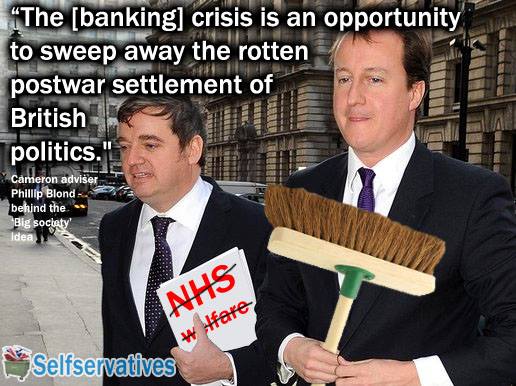
DonatenowButton cards


Through the looking glass darkly: the Conservatives are colonising progressive rhetoric

Vocabulary+word+cloud.jpg

“When I use a word,” Humpty Dumpty said in rather a scornful tone, “it means just what I choose it to mean — neither more nor less.”

“The question is,” said Alice, “whether you can make words mean so many different things.”

“The question is,” said Humpty Dumpty, “which is to be master — that’s all.”
Lewis Carroll, Through the Looking Glass

Semantic thrifts: being Conservative with the truth

Much communication in the media is geared towards establishing a dominant paradigm and maintaining an illusion of a consensus. This excludes pluralism and ultimately serves to reduce democratic choices. Such an approach is ultimately aimed at nudging your voting decisions and maintaining a profoundly unbalanced, pathological status quo.

Presenting an alternative narrative is difficult because the Conservatives have not only framed all of the issues to be given public priority – they set and stage-manage the media agenda – they have also dominated the narrative; they constructed and manage the political lexicon and now treat words associated with the Left, such as welfare, like semantic landmines, generating explosions of right-wing scorn, derision and ridicule – words like cooperation, inclusion, mutual aid, reciprocity, equality, nationalisation, redistribution and the like are simply dismissed as mere anachronisms that need to be stricken from public conversation and exiled from our collective consciousness, whilst all the time enforcing a bland language of an anti-democratic political doxa.

However, the Conservatives have also raided from the progressive lexicon, and I’m far from alone in noticing the Conservative colonisation of traditionally progressive rhetoric in recent years, using in abundance terms such as “fair”, “support”, “protection”, “freedom” , “opportunity”, “reform” and even “social justice” to pepper their speeches.

Last October, even Dan Hodges noticed the linguistic imports. He said: “Prison reform. Ethnic minority rights. Gay rights. A national housing “crusade”. An “all out assault on poverty”. An attack on “the lowest social mobility in the developed world”. These were the main themes of the Conservative Party leader’s – I’ll repeat that, the Conservative Party leader’s – address to his annual conference. I expected David Cameron to attempt to park his tank on Labour’s lawn.

… It wasn’t just what David Cameron said, but how his party reacted to it. The section of his speech where he said “I want us, the Conservatives, to end discrimination and finish the fight for real equality in Britain today,” was met with a standing ovation.”

The Conservatives have plundered from left wing discourse purely to broaden their superficial appeal and to neutralise opposition to controversial and contentious policy. The legislative context in which such language is being used is completely at odds with how it is being described by purposefully stolen terms and phrases. It’s disorientating and cognitive dissonance inducing to see the language of social justice, democracy, inclusion and equality being used to justify and describe policies which extend social injustice, authoritarianism, exclusion and inequality.

There is a growing chasm between Conservative discourse, and policy intents and outcomes. There isn’t a bridge between rhetoric and reality. Last week I wrote about the chancellor’s budget, and said:

Only a Conservative minister would claim that taking money from sick and disabled people is somehow “fair,” or about “helping”, “supporting” or insultingly, “incentivising” sick and disabled people who have already been deemed unfit for work by their doctors and the state via the work capability assessment to work.

The Tories all too frequently employ such semantic shifts and euphemism – linguistic strategies – as an integral part of a wider range of techniques of neutralisation that are used, for example, to provide linguistic relief from conscience and to suspend moral constraint – to silence both “inner protest” and public objections – to the political violation of social and moral norms; to justify acts that cause harm to others whilst also denying there is any subsequent harm being inflicted; to deny the target’s and casualties’ accounts and experiences of political acts of harm, and to neutralise remorse felt by themselves or other witnesses.

Media discourse has often preempted the Conservative austerity cuts, resulting in the identification, stereotyping and scapegoating of the groups in advance of the targeted, discriminatory policies. Media discourse is being used as a vehicle for the government to push their ideological agenda forward without meeting legitimate criticism, public scrutiny and without due regard for essential democratic processes and safeguards.

The five neutralisation techniques identified by Gresham Sykes and David Matza are: denial of responsibility, denial of injury, denial of victims, appeal to higher loyalties, and condemnation of condemners.

The really critical part of Sykes and Matza’s argument is that rationalisations precede immoral, cruel or controversial acts and are a key factor in making deviant behaviour possible (amongst delinquents, the mafia or Conservative ministers). As such, the rationalisations betray intent.

The cuts of £120 a month to the disability benefit Employment Support Allowance  are also claimed to be “fair.” and “supportive.” Though I have yet to hear a coherent and rational  explanation of how this can possibly be the case. Ministers claimed that people subjected to the ESA Work Related Activity Group cuts could claim PIP if they required support with extra living costs, but now we are told that PIP is to be cut, too.

Osborne ludicrously claimed that the Conservative government was “increasing spending on disabled people”, he said: “Controlling welfare bills is part of what you need to do if you’re a secure country confronting the problems in the world.”

But as Andrew Marr amongst others pointed out, the cuts to ESA and PIP show an intended substantial reduction on government spending to essential support for disabled people.

PIP was introduced by the Conservatives to “target those most in need” and to save money. Despite David Cameron promising before the general election that there would be no further cuts to disability support, ministers nonetheless have claimed that the proposed cuts to PIP are once again to “target those most in need”, which would leave many of those disabled people originally defined as being most in need on an ever-shrinking island.

Linguistic stealth and slick trickery

The Conservatives have co-opted a progressive language to disguise extremely regressive policies, and to blur and manipulate traditional ideological boundaries. It’s purely strategy rather than ideological direction. They have quite cunningly [re-]framed a partisan narrative, dressing it up as common sense. For example, policies are framed using the phrases like “social justice”, “fighting poverty”, Conservatives present themselves as the “party for working people” and claim concern for ensuring people “fulfil their potential”. These are phrases ordinarily associated with discourses of the Left.

This framing makes it much more difficult for the Left to focus public debate on the issues central to social democracy. Equality of opportunity, linked with open social mobility, merit and freedom, is another central value and objective for progressives. However, equality appears to be increasingly couched in negative terms, as opposed to merit, and often associated with social injustice, inefficiency and unfairness by the Conservatives.

Under the Equality Act, provision was made by the Labour government to ensure that legislations didn’t discriminate against protected social groups, which included disabled people. However, the need for public bodies in England to undertake or publish an equality impact assessment of government policies, practices and decisions was quietly removed by David Cameron in April 2011. The legal requirement in the Equality Act that ensured public bodies attempt to reduce inequalities caused by socio-economic factors was also scrapped by Theresa May in November 2010, who said that she favoured a greater focus on “fairness” rather than “equality”, claiming that many people felt “alienated” by the equality agenda.

The Conservatives have paid a lot of money to advisors to develop ways of expressing their world-view and the use of misleading discourse, almost invariably contradicted by policy, practice and outcomes, is intentional.

The Tories use euphemism a lot to neutralise criticism and to present a facade of judicious, equitable rationale for draconian policies founded on ideology and traditional Tory prejudices. The redefinition of the financial crisis as a state – specifically, “irresponsible government” – rather than a market failure, and a narrative of “enhanced efficiency and responsibility in public administration” translates into policy practice as cuts to the public sector, drastic cuts to the post-war settlement social safety net budgets and a steady erosion of workers´ rights, “excellence and free choice in education or health service provision” means widespread privatisation – and a deterioration of public services, leaving  citizen’s with considerably less choice and increasingly unmet needs.

The Conservative’s progressive rhetoric conceals a partisan determination to impose neoliberal policies that shrink the size of the state, while defending traditional Conservative vested interests among the financial sector and the wealthy.

Yet Cameron and his chancellor have successfully placed the blame for the deficit on Labour’s trumped up charge of “profligacy” in government, despite the fact that we were out of recession caused by the global financial crisis, by the last quarter of 2009. Despite the fact that the Conservatives created a recession in 2011, and we lost our Fitch and Moody triple A credit ratings, despite Osborne’s promises and assurances that we wouldn’t. The Conservatives have a historically verified tendency to create recessions, too. The Thatcher administration did, and so did John Major’s. How did the public forget these events? Black Wednesday is estimated to have cost us £3.4 billion. The constant repetition of the profligacy lie, ad nauseam, supplanted the public’s accurate perception of the underlying events.

Tory ideology is about handouts to the wealthy funded by the poor

“David Cameron and George Osborne believe the only way to persuade millionaires to work harder is to give them more money.’

‘But they also seem to believe that the only way to make you (ordinary people) work harder is to take money away.” Ed Miliband, 2012.

Taxation of the wealthy is framed as an unfair burden – an affliction or punishment, propped up by constant implicit references to debunked notions such as trickle-down wealth and job creation. Policies extending social injustice are being reframed as social justice.

Framing takes a long time to develop, and this particular frame was developed by the New Right on both sides of the Atlantic. It does leave progressives with a fight to articulate the moral basis for progressive taxation, obstructed by the outrageous Conservative myth that wealthy people have somehow amassed their wealth all by themselves and therefore deserve it and more. The truth is that it is ordinary UK taxpayers who support the infrastructure of wealth accumulation. It is only fair that those who benefit most from this should also pay their equal share.

Without the veneer of democratic engagement and respectability that the Conservatives raided from discourses of the Left, Conservative policies would appear as they really are: driven by a narrow ideology, based on traditional Tory prejudices and completely indefensible.


wc30allbrightedit1.jpg
This image contains 24 word clouds, representing the 24 categories into which a sample of roughly 130,000 statements from UK House of Commons parliamentarians, all made between 2006 and the present day, were partitioned by the clustering algorithm. Each cloud contains ten words; the larger the word, the more representative it is of the cluster. The colouring is also meaningful: red words have meanings more closely aligned with remarks by Labour politicians; blue words, with those of Conservatives; and yellow words, with the sentiments of Liberal Democrats.See source: Clustering debates from UK politicians.


Recommended

How the Tories Use the Language of Social Justice to Sell Us Social Injustice

How to Respond to Conservatives –  George Lakoff


I don’t make any money from my work and I’m not funded. You can support Politics and Insights by making a donation to help me continue researching and writing independently, and to continue to help others.

DonatenowButton
cards

Cameron pledges to leave the European Convention on Human Rights.

994442_352804464870608_5110112617916821526_n
BBC (Conservative) political editor Nick Robinson said a report written by a working group of Conservative lawyers has predicted that the so-called British Bill of Rights would force changes in the way the Strasbourg court operates. Robinson unbelievably quoted Theresa May on the radio earlier today, from this:

“We all know the stories about the Human Rights Act. The violent drug dealer who cannot be sent home because his daughter – for whom he pays no maintenance – lives here. The robber who cannot be removed because he has a girlfriend. The illegal immigrant who cannot be deported because – and I am not making this up – he had pet a cat.”

Of course this was a lie. At the time May made the bizarre claim, the Judicial Office intervened and stated “This was a case in which the Home Office conceded that they had mistakenly failed to apply their own policy – applying at that time to that appellant – for dealing with unmarried partners of people settled in the UK. That was the basis for the decision to uphold the original tribunal decision – the cat had nothing to do with the decision.” The recently “retired” Ken Clarke also clarified at a Telegraph fringe event that no-one had ever avoided being deported for owning a cat.

482882_456712161064984_1212213617_n

Theresa May is far from alone amongst the Conservatives with a deep disdain for our obligations to uphold international human rights laws. It’s no surprise that David Cameron has also pledged to explore ways to leave the European Convention on Human Rights (ECHR) again, in the wake of the departure of his most senior legal advisor, according to the Daily Telegraph.

Ken Clarke said: “It is unthinkable for Britain to leave the European Convention on Human Rights,” as he also became a departing Cabinet minister. The Prime Minister is believed to have wanted rid of the Attorney General Dominic Grieve because he was supportive of Britain’s continued ECHR membership.

Labour has dubbed the Cabinet reshuffle “the massacre of the moderates”, pointing to the departure of pro-Europe and “One Nation” Tories such as David Willetts, Nick Hurd and Oliver Heald.

It’s long been the case that the Tories and the right-wing press have deliberately blurred the boundaries between the European Union and the European Council of Human Rights, which are of course completely different organisations. I assumed that this was a misdirection ploy.

However it is the case that the member states of the EU agreed that no state would be admitted to membership of the EU unless it accepted the fundamental principles of the European Convention on Human Rights and agreed to declare itself bound by it. I also think that Conservatives, who regard both institutions as “interfering”, do see the Union and the Council as the same in terms of both being international frameworks requiring the British government to have a degree of democratic accountability at an international level.

In his parting interview, Mr Clarke, who has held office in every Conservative government since 1972 and is also the party’s most prominent Europhile, said the debate was “absurd”.

“I personally think it’s unthinkable we should leave the European Convention on Human Rights; it was drafted by British lawyers after the Second World War in order to protect the values for which we fought the War for.” He’s right, of course.

The years immediately after the Second World War marked a turning point in the history of human rights, as the world reeled in horror of the Nazi concentration camps, there came an important realisation that although fundamental rights should be respected as a matter of course, without formal protection, human rights concepts are of little use to those facing persecution.

So in response to the atrocities committed during the War, the International Community sought to define the rights and freedoms necessary to secure the dignity and worth of each individual. In 1948 the newly formed United Nations adopted the Universal Declaration of Human Rights (UDHR), one of the most important agreements in world history.

Shortly afterwards another newly formed international body, the Council of Europe, set about giving effect to the UDHR in a European context. The resulting European Convention on Human Rights was signed in 1950 and ratified by the United Kingdom, one of the first countries to do so, in 1951. At the time there were only ten members of the Council of Europe. Now 47 member countries subscribe to the European Convention, and in 1998 the Human Rights Act was passed by the Labour Party in order to “give further effect” to the European Convention in British law.

Previously, along with the Liberal Democrats, Grieve was able to thwart attempts to reform the ECHR, and opposed pulling out altogether. The plan to reform it is being led by the Justice Secretary Chris Grayling but Grieve has pledged to continue to fight for Britain’s membership from the backbenchers. Though Clegg had agreed to a British Bill of Rights, he was strongly opposed to withdrawing from the ECHR.

Grieve understood that ECHR is about the fundamental rights of the citizen and ought to be cherished in the same way as the Magna Carta and Habeas Corpus are. But as we know, this is not a typical view amongst Conservatives, who frequently cite the same examples of “foreign criminals” being allowed to stay in the country as evidence it is “not working”.

The Prime Minister’s spokesman said that the sacking of Grieve had not led to a change in Government’s policy. However he pledged action if the Conservatives are elected next year without the Liberal Democrats: “If you are asking me about party manifestos, the Prime Minister has previously said that he wants to look at all the ways that we can ensure we are able to deport those who have committed criminal offences.”

Mr Grieve said he would defend human rights legislation from the back benches to “contribute to rationality and discourse”.

“If we send out a sign that human rights don’t matter, that is likely to be picked up in other countries which are also signatory states such as Russia.”

The Conservatives are very likely to go into the next election with a proposal to repeal Labour’s Human Rights Act, which enshrines the European Convention in British law, and replace it a British Bill of Rights. We have witnessed this Conservative-led government blatantly contravene human rights with policies such as the Bedroom Tax, the Legal Aid Bill, and there is a backlog of cases awaiting Hearing.

The Equality and Human Rights Commission (established under Labour’s Human Rights  Act) have suffered significant cuts to funding, from 70 million when Labour were in Government to just 25 million since the Coalition took Office, up until 2012, with fears that this will be further reduced to just 18 million. This has meant severe staffing reductions, and a massive backlog of work, and at a time when many are seeking to bring forward cases regarding the impact of Government legislation.

Human rights were formulated to protect us from governments such as this one. This is a government that chooses to treat our most vulnerable citizens despicably brutally, with absolutely no regard for their legal and moral obligation to meet our most basic needs.

Such a disregard of fundamental rights is historically associated with despots and tyrants

It’s clear that this government see human rights as an inconvenience and an obstacle to their future policy plans.

A central tenet of human rights law is that all humans have equal worth. We know that Conservatives such as Cameron don’t hold that view, there is an inherent, persistent strand of Social Darwinism that is clearly evident in Tory ideology, manifested in their policies, and they prefer and shape a hierarchical society founded on inequalities.

Disregard and contempt for human rights has led to atrocities. Human rights are safeguards, they establish moral principles that set out certain standards of human behaviour, and they are universal, providing in principle social and legal protections for all.

We need to ask why would any government want to opt out of such protections for its citizens?

We know from history that a society which isn’t founded on the basic principles of equality, decency, dignity and mutual respect is untenable and unthinkable.

7005_494073677328832_658777491_n
Pictures courtesy of Robert Livingstone