Tag: WCA

Employment and Support Allowance – Another Mean Cut From IDS – Sheila Gilmore

Originally posted in the Huff Post, by Sheila Gilmore.

544840_330826693653532_892366209_nCruel cuts.

Policies developed on a false premise will inevitably run into problems. When these policies apply to people this can also cause great harm.

The Government’s policy on ‘sickness benefits’ is framed on the assertion that previous governments ‘dumped’ people on these benefits who never worked again. For their own good they needed to be re-tested on a new basis. Many people would then be returned to the labour market and spending on the benefit would be cut. The trouble is that numbers haven’t reduced much, and projected savings haven’t been made. But rather than review the basis on which their policy was built, it appears that the Government is simply going to cut by £30 per week the benefits of many of those its own test has found unfit for work for the time being. 

Like all good myths this has some elements of truth. Incapacity Benefit was used to deal with the problem of those displaced from industries like coal, textiles and steel during the 1980s. Job opportunities where they lived were limited, and many genuinely suffered from work related poor health . This was particularly true of older workers whose chances of a new job were always the slimmest. Under the Conservatives between 1978/79 and 1996/97, the total number of claimants more than doubled from 1.204 million to 2.569 million. This rate of increase slowed under Labour, with total numbers eventually peaking at 2.678 million in 2008/09 when ESA was introduced.

As this Budget rolls out I suspect we are going to hear a vigorous refreshing of the ‘people being callously dumped’ argument from Tory Ministers and backbenchers. However the truth is more complex. Even where total numbers have remained similar over a fairly long period, these are not by any means the same people. There is substantial flow both on and off benefit. Of those who are long term claimants , many have long term conditions making employment difficult, sometimes impossible.

 The Government insisted on rolling out the transfer of all existing Incapacity Benefit claimants to Employment & Support Allowance from 2011 , believing that the more stringent test applied for ESA would result in many existing claimants being found fit for work. In its first three years ESA was for new claimants only, with around 35% being found fit for work. The correctness of the testing process has rightly been the subject of much controversy , but applying the same test to those moving from IB produced a different result with only 23% being found fit for work initially.
One conclusion which may be reached is that in fact many people in receipt of IB actually were more unwell or disabled than the Government’s propaganda keeps suggesting . Not a conclusion it appears the Government wants to accept.

Even more crucially despite all the numbers being found ‘fit for work’, trumpeted by the Government as proof of their assertions, when you look at the total numbers in receipt of ESA, together those still on the older benefits, this number remains very high. The total number in receipt of ESA and IB is only 100,000 lower than in 2008/9.

Yet taking just the period between April 2011 and March 2013 some 234,600 former IB claimants had been found fit for work. With the toughness of the test also applying to new claimants, and the time-limiting of contributory ESA to a year for many , one would expect the total number of claimants to drop by more than the number of Incapacity Benefit claimants declared Fit for Work – but bizarrely it has dropped by considerably less.

With unemployment falling since 2008/9, one might hope that more people with health issues would have been able to find work.

Something unexplained is going on. Despite all the stress to individuals, the increasing cost and difficulty of administering the system (the migration process created a huge backlog in the assessment process), nothing much seems to have changed and savings not achieved. Are more people are becoming ill or disabled? This seems unlikely.

But what if the initial assumptions were wrong, and that there are not lots of ‘fit’ people sidelined onto incapacity benefits. Three quarters of those being ‘migrated ‘ from IB are not fit for work. The proportion of new claimants being found fit for work has fallen to 23%, and has been steadily falling . In addition I suspect that a good number of those declared Fit for Work, are simply not getting better, not getting jobs, getting less well and end up reapplying for ESA and being awarded benefit the second time round.

If we accept that most claimants actually face significant barriers to returning to work, we need to be putting more effort into both giving them the help they need, and encouraging employers to take people on. This was what the Work Related Activity Group was intended to do, but for many the support offered is minimal . People are invited to ‘work focused interviews (in letters that contain severe warnings about the consequences of not attending) and are then sent away for a year in some cases. Box ticked but no help given. Some are referred to the Work Programme which has very poor outcomes for this group, not surprising given that those attending say that all the emphasis was on the mechanics of job search with little reference to their heath.

Taking away £30 pw of income won’t tackle these weaknesses of the system. Will there still be a Work Related Activity Group at all? The only difference from being on JSA will be less conditionality (although there is still some and examples of ESA-WRAG claimants being sanctioned).

Nor are we dealing here with people with minor illness. Charities report that 45% of people who put in a claim for ESA, and had Parkinson’s, Cystic Fibrosis, multiple sclerosis, or Rheumatoid Arthritis, were placed in the Work Related Activity Group (WRAG).

While this change isn’t due to start until 2017 it won’t take long for it to apply to a substantial number of people . Around 700,000 apply each year for ESA, of which number around 60% proceed to full assessment (the others generally return to work before the process is complete). Currently around 14% of these go into the WRAG. That’s around 60,000 people affected every year.

37079_433060243430176_1848475368_nPictures courtesy of Robert Livingstone

It’s truly priceless that Iain Duncan Smith can accuse anyone of misrepresenting statistics with a straight face.

430847_149933881824335_1645102229_n (1)

I’m not well at the moment and supposed to be resting, but I must make some comment on record regarding the disgraceful behaviour yesterday in parliament of Priti Patel and Iain Duncan Smith, such is my utter disbelief, disgust and outrage.

For example, Debbie Abrahams (Oldham East and Saddleworth) (Labour) asked the very reasonable question:

“The Government’s own data show that people in the work-related activity group are twice as likely to die than the general population. How can the Secretary of State justify £30-a-week cuts for people in that category?”

Duncan Smith made a petty and vindictive retort to avoid answering the question:

“The hon. Lady put out a series of blogs on the mortality stats last week that were fundamentally wrong. Her use of figures is therefore quite often incorrect. I simply say to her—[Interruption.] She has had an offer to meet the Under-Secretary of State for Work and Pensions, my hon. Friend the Member for North Swindon (Justin Tomlinson), time and again, but she just wants to sit in the bitter corner screaming abuse.”

Hardly a reasonable and adult response to a very reasonable question, which wasn’t anything remotely like “screaming abuse” as claimed. In light of the many official public rebukes that the Tories have faced for telling lies and using fake statistics, and given the fact that the Government face a United Nations inquiry regarding the fact that their welfare “reforms” are incompatible with the Convention on the Rights of Persons with Disabilities, it’s truly remarkable that Priti Patel and Iain Duncan Smith have the cheek to call disability campaigners “thugs” and imply the opposition MPs are “liars”, when they are faced with valid concerns and founded criticisms regarding the consequences of their draconian policies.

This said, a well-known bullying tactic is projection of the bully’s own inadequacies and nasty traits onto their victims to cover their tracks. Scapegoating is used to divert public attention, to discredit the victims and invalidate their experience of bullying and to justify the bully’s own vicious actions towards their targets. It’s so telling that bullies always accuse others of the very things that they themselves are guilty of.

Rather than do the decent, democratic thing and organise an independent inquiry into the Work Capability Assessment related deaths of sick and disabled people, and carry out a legally required cumulative impact assessment of their nasty, punitive and cruel welfare “reforms”, the Tories prefer to simply loudly and repeatedly deny that there is any correlation between their policies and the increased mortality statistics, released recently by the Department of Work and Pensions, following the order of the Information commissioner and a tribunal ruling.

Debbie Abrahams, amongst others, had raised concerns regarding the  recent mortality statistics release, as well as calling for an inquiry into the cruel sanctions regime that is leaving people without their lifeline benefits, and too often, without the means of meeting basic survival needs. The aggression, malice, defensive diversionary tactics and lack of capacity for rational response that Patel and Duncan Smith demonstrated was frankly far beyond disgusting: it was frightening.

These ministers are sneering, dishonourable, dishonest and callous Social Darwinist stains in British political history and they need removing from the position of power that they occupy, simply on the grounds that they are formulating and continually justifying policies that cause harm, distress, and sometimes, terrible and tragic consequences for sick and disabled people. That they demonstrate such a fundamental lack of concern for the welfare of UK citizens and persist in their refusal to accept that there is even a possibility that Tory policies may be causing harm to ill and disabled people is a very damning indictment.

Yet these ministers have no grounds whatsoever for their claims that there is no provable causal link between their policies and the increase in mortality, because the correlation is shown by their own record of statistics. The same statistics that they fought very hard to withhold.

Denial, sneering and directing malice at anyone who raises concerns and by accusing everyone else of being liars does not constitute a reasoned debate, as is expected of a government, nor does it count as empirical evidence of the claims being made by Tory ministers.

So it’s absolutely priceless comment from Patel and Duncan Smith that opposition ministers, who have raised concerns and cited cases of extreme hardship and tragic deaths many times – all recorded on the Hansard record, as well as in the media – that are clearly correlated with the welfare “reforms,” are “liars” and are “misrepresenting statistics” by the despicable liar Iain Duncan Smith.

It’s very reasonable to raise concerns about policies that are damaging people. It’s unreasonable of the government to deny those concerns have any legitimacy, despite evidence to the contrary. Many of us have gone through the Tory-reformed Work Capability Assessment more than once and know only too well what a dreadfully stressful experience it is, and how the strain tends to exacerbate illness, only to be dismissed by the Tories and told that the accounts we have provided and the cases we present as evidence of the urgent need for investigation are merely “anecdotal”.

Yet when the government talk of “scroungers”, the “workshy”, “generations of ‘worklessness’”, a “culture of entitlement”, a “something for nothing culture”, we are expected to accept that at face value as “empirical evidence”. With no offer of reasoned discussion.

The Tories are masters at closing down crucial open and democratic debate, which worries me greatly. This is not a government that models responsible and accountable behaviours towards UK citizens, or the opposition parties, for that matter.

With further debate about the assisted dying Bill due in parliament, one Tory minister said: “ We have to legislate on behalf of the weak and vulnerable”. However, the Tories’ track record on policies aimed at the weak and vulnerable is hardly shining with compassion and good intention.

This is a government that doesn’t provide adequate support for many sick and disabled people to live, so I doubt it has the capacity for the compassionate administration of assisted dying. It’s a government that prefers to simply scapegoat rather than support social groups and dismiss them as some kind of “burden on the state”. How could we be sure that “euthanasia” won’t simply become another Tory method of reducing welfare and healthcare costs?

Yet most sick and disabled people have worked and paid for their own support provision. And for those that have been unable to work, any civilised country would choose to support them, rather than direct malice at them. I don’t think this is a good context to debate euthanasia – with such an untrustworthy and unreasonable government in power and with their history of draconian policies, and rationing of health care and welfare for those most in need of support. Such class-directed rationing of services and the systematic closing down of access to support is very clearly underpinned by Social Darwinist ideology.

In fact I am very worried because history has taught us that there’s a very steep, slippery slope from euthanasia to eugenics.

As I have discussed elsewhere, the point-blank refusal to enter into an open debate and allow an open, independent inquiry into the deaths that are correlated with Tory policy is extremely worrying and reflects a callous, irrational and undemocratic government that draws on a toxic and implicit eugenicist ideology and presents a distinctly anti-enlightenment, impervious epistemological fascism from which to formulate justification narratives for their draconian policies, in order to avoid democratic accountability and to deflect well-reasoned and justified criticism.

This is not the conduct expected of a government of a very wealthy, so-called first-world liberal democracy. It’s not the behaviour of accountable, responsible, decent, moral, rational and reasonable people, either.

See also:

Black Propaganda

Iain Duncan Smith used false statistics again to justify disability benefit cuts again

A list of official rebukes for Tory lies

Department of Department of Work and Pensions officials admit to using fake claimant’s comments to justify benefit sanctions

The Department of Whopping Porkies is rebuked as claimants suddenly develop mysterious superpowers after being sanctioned

A distillation of thoughts on Tory policies aimed at the vulnerable

We can reduce the Welfare Budget by billions: simply get rid of Iain Duncan Smith

UN officials to visit UK over coming months to investigate whether Iain Duncan Smith’s “reforms” to disability benefits are compatible with Human Rights

The Daily Mail is a far-right rag and an utter disgrace for meddling in the Human Rights of sick and disabled people

Techniques of neutralisation – a framework of prejudice

UK becomes the first country to face a UN inquiry into disability rights violations

385294_195107567306966_1850351962_nPictures courtesy of Robert Livingstone


I don’t make any money from my work. I am disabled because of illness and have a very limited income. But you can help by making a donation to help me continue to research and write informative, insightful and independent articles, and to provide support to others. The smallest amount is much appreciated – thank you.

DonatenowButton cards

A critical analysis of the DWP’s Mortality Statistics release


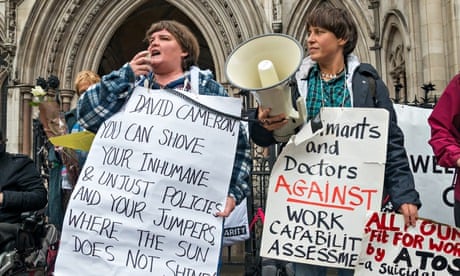
Disability rights activists protest in London, November 2016

The government’s release of mortality statistics related to sickness and disability benefits has caused fierce debate about what the figures actually mean. It has to be said that the way the figures were presented – in a flat descriptive way – makes drawing causal links and inferences very difficult and making useful comparisons impossible. This of course was intentional.

There’s a simple difference between descriptive and inferential statistics – descriptive statistics simply summarise a current dataset, it’s just raw data. Subsequently, analysis is limited to the data and does not provide a scope that permits the extrapolation of any conclusions about a group or population. Inferential statistics are usually used to test an hypothesis, and aim to draw conclusions about an additional population outside of the dataset. Inferential statistics allow researchers to make well-reasoned inferences about the populations in question, and may be tested for validity and reliability, using various appropriate formulae.

To complicate matters further, the Department for Work and Pensions (DWP) claim that they don’t keep detailed information regarding whether a person died before or after their benefit claim was ended. So when the data is about people who died within six weeks of their claim ending, it could mean that the claim ended before they died, or after, because the person had died.

Of course the question we need to ask is why the DWP don’t keep a more accurate record of that data. And furthermore, why are the government so supremely unconcerned about even basic monitoring of the consequences of their welfare “reforms” on sick and disabled people?

I had a lengthy debate with Tom Chivers from the Telegraph last year about this very issue. He said that it was most reasonable to assume that the overwhelming majority of deaths happened before the claim ended, rather than the converse being true. He criticised campaigners for claiming that people were dying as a consequence of the “reforms”.

However, we know from media coverage of some of those tragic deaths that people have died as a consequence of having their employment and support allowance (ESA) benefit claim ended. We also know from the debates in parliament that have been tabled by the opposition on this topic, and the inquiries instigated by the work and pensions committee, that many people have been adversely affected by having their claims ended because they were assessed as “fit for work”, some of the cases presented had also died – details of which can be found on the Hansard record.

So it isn’t a reasonable assumption that most people died and then had their claim closed, on the part of Tom Chivers (and others) at all. But there’s more.

I made a statistical cross comparison of deaths, using the same Department for Work and Pensions statistics as Tom Chivers, though my analysis was undertaken the year before his. I found that the data showed people having their claim for Employment Support Allowance (ESA) stopped, between October 2010 and November 2011, with a recorded date of death within six weeks of that claim ceasing, who were until recently claiming Incapacity Benefit (IB) – and who were migrated onto ESA – totalled 310.

Between January and November 2011, those having their ESA claim ended, with a recorded date of death within six weeks of that claim ending totalled 10,600.

This is a very substantial, significant statistical variation over a comparatively similar time scale (although the 10,600 deaths actually happened over a shorter time scale – by 3 months) that appears to be correlated with the type of benefit and, therefore, the differing eligibility criteria – the assessment process – as both population samples of claimants on ESA and IB contain little variation regarding the distribution in the cohorts in terms of severity of illness or disability. Bearing in mind that those who were successfully migrated to ESA from IB were assessed and deemed unfit for work, (under a different assessment process, originally) one would expect that the death rates would be similar to those who have only ever claimed ESA.

This is very clearly not the case.

Further evidence that very ill and disabled people have been excluded from an award of ESA may be found in the statistical outcomes of tribunals – there is a consistently very high success rate amongst those who have appealed Atos/DWP decisions, over that time period. Those on IB were not required to have continuous assessments, whereas those on ESA are constantly required to undergo the Work Capability Assessment.

Dr Steven Bick indicated that there are targets to reduce the number of people who “qualify” for ESA payments, the WCA is unfairly and irrationally weighted towards finding people fit for work, often when it’s clearly not the case, so each assessment is simply an opportunity for the DWP to end claims. Many claimants have described a “revolving door” process of endless assessment, ceased ESA claim, (based on an outcome of almost invariably being wrongly “assessed” as fit for work), appeal, successful appeal outcome, benefit reinstated, only to find just three months later that another assessment is required.

The uncertainty and loss of even basic security that this process creates, leading to constant fear and anxiety, is having a damaging, negative impact on the health and well-being of so many. A significant proportion of those required to have endless assessments have very obviously serious illnesses such as cancer, kidney failure, lung disease, heart disease, severe and life-threatening chronic conditions such as multiple sclerosis, lupus, myalgic encephalomyelitis, rheumatoid arthritis, brain tumours, severe heart conditions, and severe mental health illness, for example. To qualify for ESA, the claimant must provide a note from a doctor stating that the person is unfit for work.

There can be no justification for subjecting people who are so ill to further endless assessments, and to treating us as if we have done something wrong. Negative labelling, marginalising and stigmatising sick and disabled people via propaganda in the media, using despiteful and malicious terms such as “fraudster”, “workshy” and “feckless” is a major part of the government’s malevolent attempt at justification for removing the lifeline of support from sick and disabled citizens.

In addition to very justified anxieties regarding the marked increase in disability hate crime that the Tory-led propaganda campaign has resulted in, many sick and disabled people have also stated that they feel harassed and bullied by the Department for Work and Pensions and Atos. All of this is taking place in a setting of government generosity to very wealthy people, with Osborne implementing austerity cuts, which disproportionately target the poorest citizens, at the same time as he awarded millionaires £107, 000 each per year in the form of a tax cut.

Many sick and disabled people talk of the dread they feel when they see the brown Atos envelope containing the ESA50 form arrive through the letter box. The strain of constantly fighting for ESA entitlement – a lifeline support calculated to meet basic needs –  and perpetually having to prove that we are a ‘deserving’ and ‘genuine’ sick and disabled person is clearly taking a toll on so many people’s health and well being. I know from personal experience that this level of stress and anxiety exacerbates chronic illness. 

Many families of those who have died have said that the constant strain, anxiety and stress of this revolving door process has contributed significantly to their loved ones’ decline in health and subsequent death. The figures from the DWP, and the marked contrast between the ESA and IB death statistics certainly substantiate these claims. At a meeting in June 2012, British Medical Association doctors voted that the Work Capability Assessment (WCA) should be ended “with immediate effect and be replaced with a rigorous and safe system that does not cause unavoidable harm to some of the weakest and vulnerable in society”.

On 22 May 2013, a landmark decision by the courts in a judicial review brought by two individuals with mental health problems ruled that the WCA is not fit for purpose, and that Atos assessments substantially disadvantage people with mental health conditions. Despite the ruling’s authoritative importance, the decision had a similar lack of real-world effect as it did not halt or slow down the WCA process: Atos and the DWP have ignored the judgement and its implications.

Many of us have reasonably demanded a cumulative impact assessment of government welfare policies, AND an inquiry into the statistically significant increase in mortality rates correlated with the government’s welfare “reforms” aimed at sick and disabled people, only to be told that the cases we present as evidence of the need for investigation are merely “anecdotal”.

Yet when the government talk of “scroungers”, the “workshy”, “generations of ‘worklessness'”, a “culture of entitlement”, a “something for nothing culture”, we are expected to accept that at face value as ’empirical evidence”. With no offer of evidence or reasoned discussion to support these ideological claims.

There is an argument to be had (which I’ve presented previously) about the need for more methodological pluralism in social and political research, with a leaning towards qualitative data. The government should not be attempting to invalidate people’s accounts of their own everyday experiences and attempting to re-write them to suit themselves. I’ve a strongly qualitative preference when it comes to methodology, because of issues relating to validity, reliability and because of the meaningful, authentic, rich details that can be gathered this way. Using quantitative methods only tends to exclude the voices of those groups that are being studied. Qualitative methodologies also tend to be more conducive to understanding issues being researched, rather than simply describing them numerically. Statistics tend to dehumanise because they exclude the narratives of citizens’ lived experiences, and of how they make sense of their circumstances.

As it is, we have ministers shamefully rebuked by the Office for National Statistics (ONS) for lying to justify extremely punitive welfare cuts, more than once, yet with even more cuts to come, and an ongoing United Nations’ inquiry into this government’s human rights abuses, it’s very worrying that there is a silence and lack of concern from the wider public about any of these issues.

The point blank refusal to enter into an open debate and open an inquiry into the deaths that are correlated with Tory policy reflects a callous, irrational and undemocratic government that draws on an underpinning toxic social Darwinist ideology and presents a distinctly anti-enlightenment, impervious epistemological fascism from which to formulate justification narratives for their draconian policies, in order to avoid democratic accountability and to deflect well-reasoned and justified criticism.

That ought to be a cause for considerable concern for the wider public of the UK – a very wealthy, former first-world liberal democracy.


Campaigners from Disabled People against Cuts (DPAC) protest in central London against welfare reform


Endnote

A few people have asked me what epistemology means. It’s a branch of philosophy, very relevant to science and the social sciences, that is the study and investigation of the origin, nature, methods, and limits of human knowledge. It’s about what and how we understand. It’s related to ontology, which is the study of the nature of reality and existence, and both branches of philosophy are important to social sciences such as politics, sociology and psychology, influencing methodology – informing how we conduct research.

I’m always happy to explain any terms or phrases I use. I sometimes use sociology or psychology terminology and conceptual frameworks, because these are often very useful for presenting clearly defined and very specific meanings, and for framing debates meaningfully to raise our understanding of social issues. But I don’t assume everyone has done a degree in the social sciences, so please don’t hesitate to ask for meanings.

I always do when I don’t understand something.


I don’t make any money from my work. But you can help by making a donation to help me continue to research and write informative, insightful and independent articles, and to provide support to others. The smallest amount is much appreciated – thank you.

DonatenowButton

Government turns a blind eye to work capability assessment related deaths and expect the public to do the same

11046274_80388630968089cam c

Tory ministers are facing further pressure to reveal information about how many people have died after being assessed as “fit for work.” Labour MP for central Newcastle-upon-Tyne, Chi Onwurah, has joined over 120,000 people that have signed a petition to demand that the Government release the figures.

Many campaigners have been calling on the Department for Work and Pensions (DWP) to publish the figures since November 2012.

Mrs Onwurah, who led a Commons debate on welfare earlier this year, said: “One of the most powerful and distressing examples in my debate was of a man who had committed suicide.

“If someone dies after being found fit to work it doesn’t necessarily mean that being found fit to work had an impact in their death, so I can understand that the Government might fear the figures would be misinterpreted.

“But if the Government has figures then they should share those, and allow people to interpret them fairly.

“This isn’t just a matter of dry statistics. It is about about the health-affecting impact that having been found fit to work can have on claimants.

“And I know that because I see them in my surgery on a regular basis.

“When bad decisions are made I know they can have a life-destroying impact on vulnerable people. So it makes sense for the Government to share that data.”

It was in January of this year that Mrs Onwurah told MPs about a vulnerable constituent who had tragically committed suicide after being found fit for work. He was claiming Employment Support Allowance and incapacity allowance. He was being supported by Newcastle Welfare Rights, who told the DWP that after suddenly being found fit to work:

“.. he was acutely distressed; he struggled to talk, he was having thoughts of suicide, he had also started drinking alcohol to cope and had struggled to leave the house”

Despite supporting psychological assessments, other evidence, and an attempted suicide, the decision was not reversed and in January 2014 he was found hanged by his neighbour.

Mrs Onwurah said: “My constituent was found hanged in his home by a neighbour. He was well known to Newcastle Welfare Rights, from which he had received considerable support in his dealings with the Department for Work and Pensions.

“He had been in receipt of employment and support allowance, and previously incapacity benefit, and he was engaging well with Newcastle Welfare Rights until November 2013, when he underwent a work capability assessment.”

The Department for Work and Pensions (DWP) insists it is irresponsible to suggest deaths which follow an assessment that claimants are fit to work were caused by the assessment.

The DWP originally published statistics in July 2012  after several of us submitted Freedom of Information requests (FOIs). The released statistics indicated that 10,600 people had died between January and November 2011 who had been claiming Employment Support Allowance (ESA), and where the date of death was within six weeks of the claim ending.

The DWP publication caused huge controversy, although many people disagreed over what the figures actually showed. Ministers subsequently blocked publication of any updated figures.

At the time, I made a statistical cross comparison of deaths, and the information released showed that people having their claim for Employment Support Allowance (ESA) stopped, between October 2010 and November 2011, with a recorded date of death within six weeks of that claim ceasing, who were until recently claiming Incapacity Benefit (IB) – and who were migrated onto ESA – totalled 310. Between January and November 2011, those having their ESA claim ended, with a recorded date of death within six weeks of that claim ending totalled 10,600. The DWP did not provide information regarding whether or not people had died before or after their benefit claim was ended, which complicated matters.

However, there is a very substantial and significant statistical variation over a comparatively similar time scale (although the 10,600 deaths actually happened over a shorter time scale – by 3 months) that appears to be correlated with the type of benefit and, therefore, the differing eligibility criteria – the assessment process – as both population samples of claimants on ESA and IB contain little variation regarding the distribution in the cohorts in terms of severity of illness or disability. 

Bearing in mind that those who were successfully migrated to ESA from IB were assessed and deemed unfit for work, (under a different assessment process, originally) one would expect that the death rates would be similar to those who have only ever claimed ESA.

This is very clearly not the case. And we know that the ESA assessment process has actually excluded many seriously ill people from entitlement because of the media coverage of individual tragic cases, when a person deemed fit for work by Atos has died soon after the withdrawal of their lifeline benefit, and of course, such accounts of constituents’ experiences and case studies, as evidence, informs Parliamentary debate, as well as the ongoing Work and Pension Committee inquiry into ESA, details of which may be found on the Hansard parliamentary record.

An official watchdog has also ordered the Government to release further information about how many people have died after going through the work capability assessment (WCA) which had resulted in a decision that they were fit for work, since the last publication in 2012.

The ruling was made after an appeal by Mike Sivier, a fellow campaigner, freelance journalist and a carer that runs the Vox Political blog who has himself been pushing for the figures to be published since the summer of 2013.

Being assessed as fit for work would mean that someone is expected to start looking for a job, take part in training designed to “prepare them for employment”, including workfare programmes – and would face the prospect of sanctions as part of the strict welfare conditionality regime – losing their lifeline benefits – unless they comply.

Mike also used the Freedom of Information Act to ask how many people who died between November 2011 and May 2014 had been found “fit for work”, or told they should move towards finding work.

But the Department for Work and Pensions refused his request, saying it was already preparing to publish the information.

Mr Sivier appealed to Information Commissioner, Christopher Graham, who ordered the DWP to publish the data within 35 days of his ruling on April 30, 2015.

But the Department of Work and Pensions has instead decided to appeal this ruling.

Campaigners now want to know what the government is trying to hide and the online petition demanding that Work and Pensions Secretary Iain Duncan Smith stop attempting to block publication of the statistics has been signed by more than 120,000 people on the website: www.change.org.

A spokeswoman for the DWP said: “We have been clear that we intended to publish these statistics – but we need to make sure they meet the high standards expected by the UK Statistics Authority before we do so.”

Many sick and disabled people have said that the constant strain, anxiety and stress of what they have described as a “revolving door process” of assessment, review, appeal and re-assessment, has contributed significantly to a decline in their health.

The previous figures from the DWP, and the marked contrast between the ESA and IB death statistics certainly substantiate these claims that the assessment process places a great deal of stress on people who are often seriously ill. Anyone with a chronic illness will tell you that stress invariably exacerbates their condition.

At a meeting in June 2012, British Medical Association doctors voted that the Work Capability Assessment (WCA) should be ended “with immediate effect and be replaced with a rigorous and safe system that does not cause unavoidable harm to some of the weakest and vulnerable in society”.

The vote has not been acknowledged by Atos or by the Government, although it was reported widely in the media at the time. On 22 May 2013, a landmark decision by the courts in a judicial review brought by two individuals with mental health problems ruled that the WCA is not fit for purpose, and that Atos assessments substantially disadvantage people with mental health conditions. Despite the ruling’s authoritative importance, the decision had a similar lack of real-world effect as it did not halt or slow down the WCA process: Atos and the DWP have ignored the judgement and its implications.

In mid-January 2012, there was a significant scandal as media were alerted to the fact that the WCA had found a man in a coma to be “fit for work”. Work Capability Assessments have found patients with brain damage, terminal cancer, severe multiple sclerosis, and Parkinson’s Disease to be fit for work. On 24 April 2013, a woman who was a double heart and lung transplant patient died in her hospital bed only days after she was told after a WCA that her allowance was being stopped and that she was fit for work.

In August 2011, twelve doctors working for Atos as disability assessors were placed under investigation by the General Medical Council because of allegations of misconduct in relation to their duty of care to patients. One doctor was forced to resign from Atos after being told to change a report about an individual, pointing out “the General Medical Council makes it clear that doctors must not change a report and risk being disciplined for unprofessional conduct if they do”.

There are many more well-documented problems with the Work Capability Assessment. It’s mired in controversy. Yet since 2010 the current government has continued to expand its role to reassess millions of  people that the DWP had already judged to be entitled to Incapacity Benefit. The government also made changes to the framework of the test to make ESA more difficult to claim.

Despite the controversy, the government continues to show a somewhat baffling and extremely troubling disinterest in the serious problems related to the increased means-testing and conditionality of sickness and disability benefits that they have introduced.

Another major area of concern is that there is a clear absence of impact monitoring, regarding the changes they have made to policy. I find it curious that whilst the DWP couldn’t state either way which side of a claim ending that the deaths happened, journalists and the government shrug the figures off, rather than actually INVESTIGATING the matter.

I have lost 3 friends during the past three years, who each died tragically just after being told they were fit for work, their lifeline benefit support was ended. Families who have suffered bereavement related to ESA claims consistently report that it is the stress of the assessment, the strain of being told they are fit to work when they are not, and the fact that chronically sick people then have to fight for their lifeline benefits that causes a further decline in their health, and the exceptional stress, caused by government welfare policy that is very punitive in nature, that is leading to some people dying.

It’s inconceivable that the government have failed to understand that placing very ill people in a position where their lifeline benefit is stopped so they have to fight for the means to meet their most basic needs – those of food, fuel and shelter – will potentially be very harmful, having a detrimental impact on their health, which may be fatal.

Further related reading:  Cross-party concerns raised in Parliament about Atos assessments, with evidence – presented cases studies of people who died AFTER their lifeline benefit was withdrawn – Atos comes under attack in emotional Commons debate

How many persons has Atos killed today? – Michael Meacher MP

Black Propaganda

What you need to know about Atos assessments

Clause 99, Catch 22 – State sadism and silencing the vulnerable

Labour would end this Government’s demonisation of benefits claimants – Chi Onwurah MP

Essential information for ESA claims, assessments and appeals

Remembering the victims of the Government’s welfare “reforms”

385294_195107567306966_1850351962_n

Thanks to Robert Livingstone for his excellent pictures.

Government fitness for work test is making disabled people more sick

IDS_n

In January, 2012, I wrote an article: The ESA ‘Revolving Door’ Process, and its Correlation with a Significant Increase in Deaths amongst the Disabled and I discussed the distress and harm that the current government work capability assessment is causing disabled people. I said:

Many claimants have described a “revolving door” process of endless assessment, ceased Employment Support Allowance (ESA) claim, (based on an outcome of almost invariably being wrongly “assessed” as fit for work), appeal, successful appeal outcome, benefit reinstated, only to find just 3 months later another assessment is required. The uncertainty and loss of even basic security that this process creates, leading to constant fear and anxiety, is having a damaging, negative impact on the health and well-being of so many.

A significant proportion of those required to have endless assessments have very obviously serious illnesses such as cancer, kidney failure, lung disease, heart disease, severe and life threatening chronic conditions such as multiple sclerosis, lupus, myalgic encephalomyelitis, rheumatoid arthritis, brain tumours, severe heart conditions, and severe mental health illness, for example. To qualify for ESA, the claimant must provide a note from a doctor stating that the person is unfit for work. There can be no justification for subjecting people who are so ill to further endless assessments, and to treating us as if we have done something wrong.

Marginalising and stigmatising sick and disabled people, amongst whom are some of our most vulnerable citizens, via propaganda in the media, using despiteful and malicious terms such as “workshy” and “feckless” is a major part of the Government’s malevolent “justification” to the public for removing the lifeline of support from the sick and disabled. We are climbing Allport’s Ladder

In addition to very justified anxieties regarding the marked increase in disability hate crime that the Tory-led propaganda campaign has resulted in, many sick and disabled people have also stated that they feel harassed and bullied by the Department of Work and Pensions and Atos. Many talk of the dread they feel when they see the brown Atos envelope containing the ESA50 form arrive through the letter box.

The strain of constantly fighting for ESA entitlement and perpetually having to prove that we are a “deserving” and “genuine” sick and disabled person is clearly taking a toll on so many people’s health and well being. Many families of those who have died have said that the constant strain, anxiety and stress of this revolving door process has contributed significantly to their loved ones’ decline in health and subsequent death. The figures from the DWP, and the marked contrast between the ESA and IB death statistics certainly substantiate these claims.

Leonard Cheshire, a charity that works with disabled people, surveyed 350 people who had been through the workplace capability assessment, which is used to establish whether benefit claimants are well enough to return to work.

More than six in 10 (65 per cent) of those who had gone through the process said they had ended up with more pain afterwards. Almost three quarters (72 per cent) said they found the assessment had a negative impact on their mental or physical health, or both. The same number described the face to face appointment as very stressful.

A teacher who was medically retired in 2011 due to progressive rheumatoid arthritis, said she left her appointment “feeling absolutely awful and suffered a lot of pain in the following days”. She went on to suffer a stroke a few weeks later, and believes the experience of undertaking a work fitness assessment was a contributing factor.

Andy Cole, campaigns director for Leonard Cheshire, said:

“This isn’t acceptable and no test should put someone through something that makes their condition worse.

We have known for a long time that this is an important issue. We had anecdotally hear this information but, [getting] it quantified in this way in quite such significant numbers, we were really surprised to see that it was this sort of figures.”

Harm may be caused by assessors because they did not have sufficient information about patients’ conditions. Less than half (42 per cent) said their assessor had evidence of their condition prior to the meeting. Only 21 per cent agreed with the statement:

“The assessor let me explain how my condition [or] disability affects me differently on different days or at different points during the day.”

Two thirds disagreed with the outcome of their assessment.

Mr Cole added:

“Some of the conditions are well documented through medical data going back decades. If that was used better there wouldn’t be a need for a test in the first place. It’s worth remembering that the test was fundamentally supposed to be about a benefit that helped people back into work. There are lots of issues around the test about whether it’s been able to achieve that.”

The research relates to the period during which the private company Atos was responsible for carrying out the assessments. Its work has ended after it pulled out of a government contract to manage disability claims early, and the American company Maximus has taken over delivery of the assessments from 1 March 2015.

The charity is calling on Maximus to take the findings of its survey into account when redesigning the fitness for work assessment process. It wants to see staff trained in specific medical conditions, (as most Atos assessors are non-specialised nurses or occupational therapists,) physical examinations restricted to cases of absolute necessity and for claimants to be aware they can say no to an examination if it will cause them pain.

However, a spokesman for the Department of Work and Pensions said:

“Healthcare professionals always take consent for any physical examination and ask claimants to tell them if any movement is uncomfortable. Examinations are not completed if they cause pain. Sufficient information is usually obtained through discussion, observation and a limited physical examination to assess the effects of disability.”

We know this to be untrue because of the high numbers of people needing to challenge wrong decisions.

One such person is Sharon Majek, 57, from Rugby, who has been unable to work since her mid-thirties after suffering a serious injury at work. She stopped an elderly patient from falling out of bed badly hurting her back. She was diagnosed with osteoarthritis, degenerative disk disease and fibromyalgia, leaving her in constant joint pain and with limited sensation in her hands.

She described her assessment as “traumatic”. She said:

“The doctor never made eye contact with me once, and that made me feel very uncomfortable. I was awaiting a knee replacement. He asked me to bend my knees. When I said I couldn’t he pushed it back. I was sweating with the pain. It swelled up later that day.”

Ms Majek was found fit for work so she asked to see a copy of her report, which she and her husband described as unrecognisable from the meeting they had attended. The decision was overturned at appeal. This is a very common and unacceptable experience amongst people claiming ESA.


Further reading:

What you need to know about Atos assessments.

Black Propaganda

Essential information for ESA claims, assessments and appeals

Clause 99, Catch 22 – State sadism and silencing the vulnerable


9686779559_e017dcf088_z
Thanks to Robert Livingstone for the memes

Cameron’s ‘divine inspiration’ came from Max Weber, not God

10257904_309423985875323_7153330499946730765_n
The Department of Work and Pensions announce that they are to be re-named the
“Congregation for the Doctrine of the Faith”. The government have released a statement that although they favoured the strappado, a variety of other methods of trial by ordeal will be used in addition to replace the Work Capability Assessment. Iain Duncan Smith has called for the introduction of dunking – a form of water ordeal and divination – to determine who is disabled enough to build the HS2.

Conservatives have reassured the appalled public by explaining that really, the old English word ordǣl,”  simply means a “judgement or verdict”, so not to worry, as pretending that a word means something else is a magick formula used for ensuring public compliance and conformity. Lynton Crosby has been announced as the new Pontifex Maximus of such formulae. Previous successes include the words “fair”, “reform” and the phrase “making work pay” in the context of the Tory’s neoliberal cunning stunts known collectively as the misnamed “welfare reforms.”

I can see where Cameron thinks he’s coming from with his recent claims of “divine inspiration”. Cameron’s social policies may certainly be regarded as a codified version of the Malleus Malificarum (The Hammer of the Witches).

His ideology is founded on principles similar to those found in Commentarius de Maleficius. There are some uncanny similarities between such legal treatises on witchcraft and the Tory Welfare “Reform” Act, especially regarding the establishing of entitlement to benefits.

“Christians are now the most persecuted religion around the world. We should stand up against persecution of Christians and other faith groups wherever and whenever we can,” says the Prime Minister.

Contrary to what you said, Christians have often been the persecutors, rather than the persecuted, Mr Cameron.

witch-hunt is a search for witches or evidence of witchcraft, often involving carefully manufactured public moral panics. This is a manipulated intense feeling expressed in a population about an issue that appears to threaten the social order. Or in this case, that mythical beast of burden – the right-wing tax payer. Tories are moral entrepreneurs, who have despicably used the media to transform the poorest and most vulnerable social groups into folk devils. Conservatives have always created social tension and ensured that criticism and disagreement are difficult because the matter at the centre of such controversies are taboo.

The right-wing media have aided and abetted the Tories, who have long operated as agents of moral indignation. I can see a very clear, common framework of reference for prejudice and persecution here, Mr Cameron.

Proofs of practising witchcraft in Commentarius de Maleficius read a lot like Techniques of Neutralisation, (Sykes and Matza). The first “proof” is the identification of the “diabolical mark”. Usually, this was a mole or a birthmark. If no such mark was visible, the examiner would claim to have found an invisible mark. Or invent statistics. It seems using physical characteristics as an opportunity and excuse to persecute a social group is no new thing then, in the name of “God”, Mr Cameron. As you know.

The “diabolical pact” was an alleged pact with Satan to perform evil acts in return for rewards. Benefit “Fraud” is the new diabolical pact. Thus spake the grand inquisitor Iain “de Torquemáda”  Duncan Smith.

Mr Duncan Smith claims to know of many invisible families with generations of witches, and feels the need produce imaginary statistics and to take measures to “prevent” this invisible culture of entitlement. To be afraid during the interrogatories is a sure sign of guilt.

This is called being Condemned by the condemners – it’s a formula ensuring an abdication of all responsibility for behaviour, and instead the condemned point to the people condemning them: they  are the problem, not us. What they have done “wrong” excuses persecution, appalling and unforgivable political behaviour and policies.

Denying harm is another technique of neutralisation, which is evident in words like ‘support’, help’, which the Tories use to mask the fact that their blatantly punitive welfare policies are absolutely draconian, with sanctions, for example, involving the withdrawal of the means for citizens to meet their basic survival needs.

Mr Cameron, in 1540: Antonio Venegas de Figueroa, Bishop of Pamplona, sent a circular to the priests in his diocese, explaining that witchcraft was a false belief. He recommended medical treatment for those accused of witchcraft, and blamed the ignorance of the people for their confusion of witchcraft with medical conditions. Didn’t you get the memo?

…..For the extraordinarily evil and cruel are always with us.

Manly P Hall

Satirical swipes aside, Cameron’s deluded and quite alarming declaration that “divine inspiration was at work when it came to drafting a key concept for Conservative Party policy” is founded on the Tory affinity with hierarchies and social stratification – and this is reflected in the appeal to “higher authority”. Of course, much of our religious organisation is extremely hierarchical too. This is Cameron’s version of psychobabble, a warped and inverted idea of noblesse oblige, he’s clearly close to meltdown.

And what utter moral cowardice, Cameron’s claim is an attempt to endorse Tory policy by partially disowning responsibility for it himself. It’s obvious that Tory policies have not arisen from anything remotely resembling an “intelligent design”, from a Christian deity or otherwise.

Marx said that: “Religion is the sigh of the oppressed creature, the heart of a heartless world, and the soul of soulless conditions. It is the opiate of the people”.  Yes, and for Cameron and his ilk, social control and moral codification is an attractive feature of religion. And aligning with a doctrine that makes a virtue of virtue, Cameron is attempting to add legitimacy to his unchristian and uncharitable “reforms”.

The Puritan work ethic has long considered indispensable for right wing political ideologues. Protestantism offers a concept of the worldly “calling,” and gives worldly activity and ruthless profiteering a religious character. 

Max Weber’s The Protestant Ethic and the Spirit of Capitalism is a study of the relationship between the ethics of ascetic Protestantism, (which embodies values such as thrift, self help, and hard work) and the emergence of the spirit of modern capitalism.

Weber observed a correlation between being Protestant and being involved in business, and went on to explore religion as a potential cause of modern economic conditions. He concluded that the modern spirit of capitalism sees profit as an end in itself, and pursuing profit as virtuous.

Calvinism promoted the idea that profit and material success as signs and cues of God’s favour. Other religious groups, such as the Pietists, Methodists, and the Baptist sects had similar attitudes, but to a lesser degree. Weber proposed that that this new attitude broke down the traditional economic system, paving the way for modern capitalism, and once capitalism emerged, the ethic took on a life of its own. We are now locked into the spirit of capitalism.

Weber doesn’t exactly argue that Protestantism caused the capitalist spirit, but rather, that they are correlated. He also acknowledges the converse: that capitalism itself had an impact on the development of the religious ideas. It’s a teleology (a doctrine explaining phenomena by final causes) that would appeal to Cameron for obvious reasons.

Cameron clearly hasn’t spotted the gaping contradictions in what he claims. His cognitive dissonance arises from the fact that while he claims to hold true a predestination doctrine – that God has ordained all that will happen, especially with regard to the salvation of some and not others, (particularly associated with the teachings of St Augustine of Hippo and of Calvin), this contradicts Cameron’s beliefs that are evident in his “reforms” for the poor – which are based on the premise that the poor are responsible for their own circumstances, and may be “helped”, coerced, sanctioned and legislated into somehow different “choices” and circumstances.

Cameron fails to reconcile his apparent belief in predestiny with his punitive, welfare “reforms” apparently designed to coerce socially “responsible” citizens into work. 

You can’t argue from a perspective of predetermination that only poor people are responsible for their actions and situations of poverty – that only poor people have a degree of free will – and then go on to formulate punitive policies based on notions of “deserving” and “undeserving” poor people, and a redistribution of wealth from the poorest to the wealthiest. AND claim you believe in God. With a straight face.  

The stunning hypocrisy and incoherence of Cameron’s claim to “divine inspiration” for such uncharitable, unkind, inhumane, persecutory and malevolent deeds as the welfare “reforms”, when empathy and compassion are so widely regarded to be central to Christianity, amongst a diverse range of religions and world-views, demonstrates only too well that Cameron lacks the integrity, depth, basic empathy and regard for others that is crucially required of a leader. He has absolutely no conscience, compassion, remorse or shame.

12787_401370889932445_1764534847_n
  Pictures courtesy of Robert Livingstone

Essential information for ESA claims, assessments and appeals

37079_433060243430176_1848475368_n

Essential Information for claims, assessments and appeals. 

There are three essential ideas to keep in mind when claiming Employment Support Allowance (ESA) because of the nature of the ESA50 form, and the fact that Atos are seeking to deny benefits, and NOT assess disability: this will not be a fair investigation of your health issues.

This information needs to be shared widely so people are made aware of them, and can use them when claiming ESA or appealing.

These very helpful ideas are:

  •  Reliably, repeatedly and safely
  •  Exceptional circumstances – Regulations 25 and 31, 29 and 35
  •  Atos assessments and pitfalls – how they try to deceive you

1. Reliably, repeatedly and safely. 

‘Lord’ Fraud made this statement in the House of Lords:

“It must be possible for all the descriptors to be completed reliably, repeatedly and safely, otherwise the individual is considered unable to complete the activity.”

You might be able to go up three steps once – but if cannot do it “reliably, repeatedly and safely”, in Freud’s own words you CAN NOT do it at all.

Apply the phrase “reliably, repeatedly and safely” all through your ESA50 or appeal form, use it on each of the descriptors. Make sure you state clearly which activities you can not do reliably, repeatedly, safely and in a timely manner, because Atos will otherwise assume you are consistently capable of them all.

2. Exceptional Circumstances – Regulations 25 and 31 for Universal Credit and Regulations 29 and 35 for current and ongoing ESA claims and Contribution-based ESA.

Regulations 25 and 31 will replace the old Special Regulations 29 and 35 from April 2013 for Universal Credit. This is in preparation for the abolishment of income-related ESA only, and not contribution-based ESA.

However, the old Regulations 29 and 35 still apply to ongoing cases that are not yet affected by Universal Credit, and will remain in place indefinitely for all Contribution-based ESA. So there are two sets of Regulations in place for Exceptional Circumstances.

Income-based ESA will be replaced by Universal Credit, as (or if) it is rolled out, but there will be the same additional financial components added as we currently have for ESA – you will be able to claim either the work-related activity or the support component.

The contents of both sets of Regulations are essentially the same. They are applied in the same way. 25 and 29 are for those who are not capable of work, and would usually be placed in the Work-Related Activity Group, and 31 and 35 apply to those not capable of work-related activity, and would normally be placed in the Support Group.

Because of the tick-box nature of the ESA50 form, it is likely that people will fall below the number of points required to be declared incapable of work – it doesn’t take into account variable illnesses, mental illness, or the effects of having more than one illness.

However, the Exceptional Circumstances Regulations may cover us – they both state that the claimant should be found incapable of work (Regulation 29 for ongoing ESA claims, 29 for Universal Credit) or work-related activity (Regulation 35 for ongoing ESA claims, 31 for Universal Credit) if:

  • they have an uncontrolled or uncontrollable illness, or “the claimant suffers from some specific disease or bodily or mental disablement and
  • by reason of such disease or disablement, there would be a substantial risk to the mental or physical health of any person if the claimant were found not to have limited capability for work/work-related activity”.

If you feel this reflects your circumstances, then we suggest adding something like this, where you put “other information” on the ESA50:

“If the scoring from my answers above is insufficient, then I believe applying the Exceptional Circumstances Regulations would be appropriate due to the severity and interaction of my conditions, and my inability to reliably, repeatedly and safely encounter work-related situations and/or safely perform work-related tasks.

I am taking all available and appropriate medication as prescribed by my doctor(s), and there are no reasonable adjustments to a workplace which would mitigate my medical condition(s).

Therefore I believe being placed in the Support Group would be appropriate, because there would be a serious substantial risk to mental and/or physical health if I were placed into a workplace environment or in the work-related activity group.”

You can word it yourself, of course. Please change the wording to fit your situation, delete “mental” or “physical” if appropriate, leave both in if necessary. If your illness cannot be controlled at all, or medication can’t be used to control it, add that instead.

Regulations 29 (for ESA) and 25 (for Universal Credit) cover people who might be put in the Work-Related Activity Group (WRAG), which has work-focused activities, sometimes it has workfare placements, and sanctions may apply, while Regulations 35 (for ESA) and 31 (for Universal Credit) cover people who are not well enough for any kind of work activity. This is for people who might be placed in the Support Group. There are no conditions placed on you for getting your ESA, such as workfare, if you have limited capability for work-related activity.

You can ask your doctor to support you with this claim, as it is stated in the regulations:

“(b) evidence (if any) from any health care professional or a hospital or similar institution, or such part of such evidence as constitutes the most reliable evidence available in the circumstances” may be presented to support your case. 

You can ask for copies of any communication from your consultant to your GP. You can also ask to be copied into any further correspondence between your doctors. 

Here are some links so you can download and print off documents to give to your GP to support your claim or appeal. You ought to submit copies of these to the DWP as soon as you can. (Make sure that you keep a copy).

In some cases, this may mean that your case will be reconsidered in your favour without having to wait for a tribunal hearing.

These templates are for ongoing ESA claims and Contribution-based ESA:

(CLICK)   Cover letter for your GP

(CLICK)   ESA Appeals Letter for your GP

(CLICK)   Legal Advice of Counsel for GPs: Prevention of Avoidable Harm Interpretation and Application of ‘Substantial Risk’ ESA Regulations 29 & 35

With many thanks to the Black Triangle Campaign for these extremely helpful links and templates.

Please remember: Regulations 29 and 35 still apply to all ongoing ESA claims, and will remain in use for contribution-based ESA claims.

Regulations 25 and 31 apply to Universal credit when that is rolled out. If you are one of the few currently claiming Universal Credit in one of the pilot areas, and if you are not eligible for contribution-based ESA, Regulations 25 and 31 apply now. You may amend the print off documents for your GP, as they cite the Regulations most likely to be applicable at the moment.

The full text of the legislation appears at the end of this article (Appendix A).

3. The Atos assessment and what you need to know.

You have a right to ask for your assessment to be recorded. You will need to request this in advance, but it’s worth making sure you use this opportunity to gather evidence on record because in doing so, you make it much more difficult for the Health Care Professional (HCP) to disregard what you tell them and write “inaccuracies” in their assessment report. We would strongly recommend you exercise this right.

It’s also worth knowing that Atos don’t conduct “medical” assessments,  they conduct “disability analysis“. You are not a patient to Atos, you are a “claimant”.

Bear in mind throughout the assessment that your answers to any apparently innocent questions, such as:

  • Do you watch television
  • Do you read
  • Do you use the internet 

These may be translated into phrases for the assessment report such as:

  • Can sit unaided and unsupported for at least half an hour. 
  • Has no problems with concentration and focus
  • Has no visual problems

Assessment starts on the day of your appointment with the HCP reading the form you completed when you applied for benefit. Remember that every single question you are asked is designed to justify ending your claim for ESA and passing you as “fit for work.” That is what Atos are contracted to do by the Government. This is not a genuine medical assessment, but rather, an opportunity for the DWP to take away the financial support that you are entitled to.

Things that are noted from your form:

  • Did you complete the form yourself
  • Is the handwriting legible
  • Are the contents coherent

These observations are already used in assessing your hand function, your cognitive state and concentration.

Further observations made:

  • Do the things you have written add up, is there consistency
  • Does your medication support your diagnosis
  • What tests have you had to confirm diagnosis. For example a diagnosis of sciatica is not accepted unless diagnosed by MRI scan
  • Do you have supporting medical evidence from your GP or consultants. If you do, it shows that you are able to organise getting this information

When the HCP has read your form they input some data into the computer system. The assessment properly begins when they call your name in the waiting room.

At this point the HCP assesses:

  • Did you hear your name being called
  • Did you rise from your chair unaided, did the chair have support arms or not
  • Were you accompanied – assessing your ability to go out alone
  • Were you reading a paper while waiting – assessing your concentration
  • Did you walk to the assessment room unaided, did you use aids correctly. Did you navigate any obstacles safely – assessing sight

The HCP will shake your hand on introduction – assessing your handshake, noting if are you trembling, sweating – signs of anxiety. Note that you are under constant scrutiny. The HCP will often ask on the way to the assessment room:

  • How long you’ve been waiting – assessing your ability to physically sit, and appraising your mental state
  • How did you get here today – assessing your ability to drive or use public transport

Formal assessment begins by listing medical conditions/complaints. For each complaint you will be asked:

  • How long have you had it, have you seen a specialist
  • Have you had any tests, what treatments have you had
  • What’s your current treatment. Have you had any other specialist input e.g. physiotherapy, CPN

The HCP will use a lack of specialist input/ hospital admissions to justify assessing your condition as less severe. Medications will be listed and it will be noted if they are prescribed or bought. Dates will be checked on boxes to assess compliance with dosage and treatment regime. Any allergies or side-effects should be noted.

  • A brief note is made of how you feel each condition affects your life
  • A brief social history will be taken – who you live with, if have you stairs in your house or steps outside your house
  • An employment history taken – when you last worked, what you work entailed, reason for leaving employment

Your typical day – this is the part of the assessment where how you function on a day to day basis is used to justify the HCP decisions. Anything you say here is most often used to justify the HCP “failing” you and assessing you as “fit for work”. The HCP records their observations.

Starting with your sleep pattern, questions are asked about your ability to function. This will include:

  • Lower limb problems – ability to mobilise to shop, around the house, drive, use public transport, dress, shower
  • Upper limb – ability to wash, dress, cook, shop, complete the ESA form
  • Vision – did you manage to navigate safely to the assessment room
  • Hearing – did you hear your name being called in the waiting room
  • Speech – could the HCP understand you at assessment
  • Continence – do you describe incontinence NOT CONTROLLED by pads, medication. Do you mention its effects on your life when describing your typical day
  • Consciousness – do you suffer seizures – with loss of continence, possible injury, witnessed, or uncontrolled diabetes
  • The HCP observations include noting how far you walked to the examination room, watching to see if you removed your coat independently, did you handle medications without difficulty, did you bend to pick up your handbag

Formal examination consists of simple movements to assess limited function. Things the HCP also looks at:

  • Are you well-presented, hair done, wearing make-up, eyebrows waxed
  • Do you have any pets – this can be linked with ability to bend to feed and walk
  • Do you look after someone else – as a parent or carer – if you do, this will be taken as evidence of functioning
  • Are you doing any training, voluntary work, do you socialise – this will be used as evidence of functioning

This is not a comprehensive list, but it gives you an idea of how seemingly innocent questions are used to justify HCP decisions to pass you as “fit for work.”

Mental Health:

  • Learning tasks – can you use a phone, computer, washing machine
  • Hazards – can you safely make tea, if you claim you have accidents, there must be emergency services involvement, e.g. fire service. Near miss accidents do not count

Personal Actions:

  • Can you wash, dress, gather evidence for assessment
  • Do you manage bills

Other observations made by the HCP – appearance and presentation:

  • Coping with assessment interview – any abnormal thoughts, hallucinations, confusion, suicidal thoughts
  • Coping with change – ability to attend assessment, attend GP or hospital appointments, shopping and socialising

More HCP observations include:

  • Appearance, eye contact, rapport, any signs/symptoms that are abnormal mood/thoughts/perceptions. Any suicidal thoughts
  • How you cope with social engagement- appropriateness of behaviour – any inappropriate behaviour must have involved police to be considered significant
  • Your capacity to cope with the assessment, overall responses and level of engagement with the assessor

Again, this is not an exhaustive list, merely some examples.

Additional information:

Special cases: exemptions from assessment include – terminal illness, intravenous chemotherapy treatment and regular weekly treatment of haemodialysis for chronic renal failure; treatment by way of plasmapheresis; regular weekly treatment by way of total parenteral nutrition for gross impairment of enteric function.

At present to qualify for ESA you need to score 15 points. This can be a combination of scores from physical and mental health descriptors.To qualify for the support group you must score 15 points in one section. As long as you are claiming income-based ESA then your award can be renewed at each assessment, if you gain 15 points.

Remember that you may also qualify without meeting the 15 points criterion, even if you don’t score any points, because of Exceptional Circumstances (Regulations 25, 29 and 31, 35) if there would be a substantial risk to your mental or physical health if you were found not to have limited capability for work and/or work-related activity respectively.

Contribution-based ESA lasts for 1 year only, unless you are in the Support Group. After 1 year, in the Work-Related Activity Group (WRAG), you may only get income-based ESA if your household income is below a certain threshold. It makes no difference how long you have previously paid National Insurance. 

Further information:

Lord Freud – “Reliably, repeatedly and safely”  – Source: Hansard, column 326, paragraph 4.

*There are Judges who interpret the law and where applicable, set precedent. There are Ministers who set policy. With specific reference to the use of repeatedly, reliably, safely, and in a timely manner, this is the result of Upper Tribunal judges interpreting the law and setting precedent through case law.*

Exceptional Circumstances: Employment and Support Allowance Regulation 25
Exceptional Circumstances: Employment and Support Regulation 31
Employment and Support Allowance: 2013 Regulations in full
Explanatory memorandum to all benefits 2013: Full legislation document
Recommended – Implications of the changes and advice: Employment Support Allowance claim update: Exceptional Circumstances – Regulations 25 and 31 and Universal Credit
Recommended – The Black Triangle Campaign: How to Gain Exemption from DWP/Atos ‘Fit for Work’ & WRAG decisions by Applying ESA Regulations 29 and 35 (see note for 25 and 31)
The new Work Capability Assessment 2013: DWP Guide
The Employment and  Support Allowance Regulations 2008 (as amended) – judiciary.gov.uk

Appendix A: 

Regulation 25

25.—(1) A claimant who does not have limited capability for work as determined in accordance with the limited capability for work assessment is to be treated as having limited capability for work if paragraph (2) applies to the claimant.

(2) Subject to paragraph (3), this paragraph applies if—

(a) the claimant is suffering from a life-threatening disease in relation to which—

(i) there is medical evidence that the disease is uncontrollable, or uncontrolled, by a recognised therapeutic procedure; and

(ii) in the case of a disease that is uncontrolled, there is a reasonable cause for it not to be controlled by a recognised therapeutic procedure; or

(b) the claimant suffers from some specific disease or bodily or mental disablement and, by reason of such disease or disablement, there would be a substantial risk to the mental or physical health of any person if the claimant were found not to have limited capability for work.

(3) Paragraph (2)(b) does not apply where the risk could be reduced by a significant amount by—

(a) reasonable adjustments being made in the claimant’s workplace; or

(b) the claimant taking medication to manage the claimant’s condition where such medication has been prescribed for the claimant by a registered medical practitioner treating the claimant.

(4) In this regulation “medical evidence” means—

(a) evidence from a health care professional approved by the Secretary of State; and

(b) evidence (if any) from any health care professional or a hospital or similar institution,

or such part of such evidence as constitutes the most reliable evidence available in the circumstances.

*Regulation 25 outlines exceptional circumstances in which a person will be treated as having limited capability for work, but may be capable of work-related activities. People in these circumstances are placed in the ESA work-related activity group (WRAG)

However, there are further exceptional circumstances in which a person  will be treated as having limited capability for work-related activity in addition, and will therefore be placed in the ESA support group. These are outlined by Regulation 31.

Regulation 31 

31.—(1) A claimant is to be treated as having limited capability for work-related activity if—

(a) the claimant is terminally ill;

(b) the claimant is—

(i) receiving treatment for cancer by way of chemotherapy or radiotherapy;

(ii) likely to receive such treatment within six months after the date of the determination of capability for work-related activity; or

(iii) recovering from such treatment,

and the Secretary of State is satisfied that the claimant should be treated as having limited capability for work-related activity;

(c) in the case of a woman, she is pregnant and there is a serious risk of damage to her health or to the health of her unborn child if she does not refrain from work-related activity; or

(d) the claimant is entitled to universal credit and it has previously been determined that the claimant has limited capability for work and work-related activity on the basis of an assessment under Part 5 of the Universal Credit Regulations 2013.

(2) A claimant who does not have limited capability for work-related activity as determined in accordance with regulation 30(1) is to be treated as having limited capability for work-related activity if—

(a) the claimant suffers from some specific disease or bodily or mental disablement; and

(b) by reason of such disease or disablement, there would be a substantial risk to the mental or physical health of any person if the claimant were found not to have limited capability for work-related activity.

For all ongoing cases where Universal Credit does NOT apply, and for ALL Contributions-based ESA claims:

Regulation 29

29.—(1) A claimant who does not have limited capability for work as determined in accordance with

the limited capability for work assessment is to be treated as having limited capability for work if:

paragraph (2) applies to the claimant.

(2) This paragraph applies if—

(a) the claimant is suffering from a life threatening disease in relation to which—

(i) there is medical evidence that the disease is uncontrollable, or uncontrolled, by a recognised therapeutic procedure; and

15(ii) in the case of a disease that is uncontrolled, there is a reasonable cause for it not to be controlled by

a recognised therapeutic procedure; or

(b) the claimant suffers from some specific disease or bodily or mental disablement and, by reasons of

such disease or disablement, there would be a substantial risk to the mental or physical health of any person if the claimant were found not to have limited capability for work.

Regulation 35

35.—(1) A claimant is to be treated as having limited capability for work-related activity if—

(a) the claimant is terminally ill;(b) the claimant is—

21(i) receiving treatment by way of intravenous, intraperitoneal or intrathecal chemotherapy; or

(ii) recovering from that treatment and the Secretary of State is satisfied that the claimant should be treated as having limited capability for work-related activity; or

(c) in the case of a woman, she is pregnant and there is a serious risk of damage to her health or to the health of her unborn child if she does not refrain from work-related activity.

(2) A claimant who does not have limited capability for work-related activity as determined in accordance with regulation 34(1) is to be treated as having limited capability for work-related activity if—

(a) the claimant suffers from some specific disease or bodily or mental disablement; and

(b) by reasons of such disease or disablement, there would be a substantial risk to the mental or physical health of any person if the claimant were found not to have limited capability for work-related activity.

Appendix B

Most Atos HCPs are not doctors, they are usually nurses or occupational therapists. You can demand that a qualified doctor or specialist conducts your assessment under some circumstances. I’ve gathered the following list from various Freedom of Information responses from the Department for Work and Pensions.

List of conditions judged suitable for assessment by neuro – trained nurses/any health care profession, so make sure that you are seen by a qualified HCP: 

Prolapsed intervertebral disc
Lumbar nerve root compression
Sciatica
Slipped disc
Lumbar spondylosis
Lumbar spondylolisthesis
Lumbar spondylolysis
Cauda equina syndrome
Spinal stenosis
Peripheral neuropathy
Neuropathy
Drop foot
Meralgia paraesthetica
Cervical spondylosis
Cervical nerve root compression
Cervicalgia
Nerve entrapment syndrome
Carpal tunnel syndrome
Trapped nerve
Paraesthesia
Tingling
Numbness
Brachial plexus injury
Polyneuropathy
Dizziness
Vertigo
Essential Tremor
VWF
Alzheimer’s

List of conditions judged by the DWP and Atos Healthcare as suitable only for assessment by doctors:

Stroke
Head injury with neuro sequelae
Brain haemorrhage
Sub Arachnoid Haemorrhage
Brain tumour
Acoustic Neuroma
Multiple Sclerosis
Motor Neurone Disease
Parkinson’s disease
TIAs
Bulbar Palsy
Myasthenia Gravis
Muscular Dystrophy
Guillain-Barre Syndrome
Amyotrophic lateral sclerosis
Syringomyelia
Neurofibromatosis
Spina bifida
Polio
Fits (secondary to brain tumour)
Learning difficulties (with physical problems)
Nystagmus
Myelitis
Bells Palsy
Trigeminal Neuralgia
Paraplegia
Quadriplegia
Huntington’s Chorea
Huntington’s Disease

Further reading:

More on questions you may be asked at assessment: dwpexamination forum 
How to deal with Benefits medical examinations: A Useful Guide to Benefit Claimants when up against ATOS Doctors
More support and advice here: How to deal with Benefits medical examinations
Step by step guide to appealing a ESA decision: Good Advice Matters

Important update

Clause 99, Catch 22 – The ESA Mandatory Second Revision and Appeals

Additional support:

The LawWorks Clinics Network is a nationwide network of free legal advice sessions which LawWorks supports.Clinics provide free initial advice to individuals on various areas of law including social welfare issues, employment law, housing matters and consumer disputes – List of LawWorks  clinics

V-STARTU

Thanks to Robert Livingstone for his valuable contributions.

With many thanks to Joyce Drummond for contributing such valuable information about the Work Capability Assessment.

With many thanks to The Black Triangle Campaign for sharing their work on the GP support letter template, and covering legal and explanatory documents


I don’t make any money from my work. But you can help me continue to research and write informative, insightful and independent articles, and to provide support to others by making a donation. The smallest amount is much appreciated – thank you.

DonatenowButton cards

What you need to know about Atos assessments.

A-demonstration-against-A-011

Courageous whistleblower, Scottish nurse and ex-Atos employee, Joyce Drummond, who recently made a heartfelt apology to Atos assessment victims, has submitted evidence to the Scottish Parliament Select Committee on Welfare Reform.

Joyce forwarded some of her notes to me, containing this information about Atos assessments. We had some dialogue about the content. I have edited where needed, organised the notes and added some information to the text. I’ve included the contents from Joyce’s notes in full.

Both Joyce and I share this information in the hope that people going through Atos assessments will find it helpful.

Joyce told me: 

“I knew nothing about Atos when I joined, and left as soon as I realised that there was no way to ‘fight from the inside.’  I stated at my interview for the job that I believed in social inclusion and social justice.

I attended 4 weeks training in England. The training did not prepare me for what I was expected to do in real life.

The forms that are completed prior to assessment, I have recently found out, are actually opened by Royal Mail Staff. They are then sent for “scrutiny” where nurses decide whether or not a face to face assessment is required. I was not involved in this and do not know what criteria are used.  

 It is made clear throughout training and working that we are not nurses – we are disability analysts.  Also, we do not carry out “medical assessments” – we carry out “functional assessments”. We did not even need a diagnosis to carry out assessments. I had reservations around consent, as we were expected to assess patients – sorry, we didn’t have patients, we had ‘claimants’ – who appeared to be under the influence of alcohol or other substances. 

We were also consistently told that we did not make benefit decisions. The final decision was made by a Department for Work and Pensions (DWP) decision maker with no medical qualification. If our assessment was overturned at appeal we never knew about it. There was no accountability for assessments overruled.”

Please note that assessment starts on the day of your appointment with the Health Care Professional (HCP) reading the form you completed when you applied for disability support. Remember that every single question you are asked is designed to justify ending your claim for ESA and passing you as “fit for work”. That is what Atos are contracted to do by the Government.  This is not a genuine medical assessment, but rather, an opportunity for the DWP to take away the financial support that you are entitled to.

Things that are carefully noted at this stage are:

  • Did you complete the form yourself?
  • Is the handwriting legible?
  • Are the contents coherent?

These observations are already used in assessing your hand function, vision, your cognitive state and concentration.

Further observations made:

  • Do the things you have written ‘add up’? Are there any ‘discrepancies’?
  • Does your medication support your diagnosis?
  • What tests have you had to confirm diagnosis? For example a diagnosis of sciatica is not accepted unless diagnosed by MRI scan.
  • Do you have supporting medical evidence from your GP or consultants? If you do, it shows that you are able to organise getting this information

Joyce observes:

“This is also a hidden cost to the NHS. I believe that if ATOS request information there is a charge levied by GP’s. However claimants are expected to source medical evidence themselves. It uses valuable NHS time for medical staff to write supporting statements. 

There were no hidden cameras, at least in Glasgow, to watch people arriving for assessment or sitting in waiting room. This may not be true in other areas.”

When the HCP has read your form they input some data into the computer system. The assessment properly begins when they call your name in the waiting room.

At this point the HCP assesses:

  • Did you hear your name being called?
  • Did you rise from your chair unaided, did the chair have support arms or not?
  • Were you accompanied? – assessing your ability to go out alone
  • Were you reading a paper while waiting? – assessing your concentration
  • Did you walk to the assessment room unaided, did you use any aids correctly? Did you navigate any obstacles safely? – assessing sight.

The HCP will shake your hand on introduction – assessing your handshake, noting if are you trembling, sweating – signs of anxiety. The HCP carefully scrutinises everything you do and say. The HCP will often ask on the way to waiting room:

  • How long you’ve been waiting – assessing ability to sit, physically, and appraising your mental state
  • How you got to the appointment – assessing ability to drive or use public transport

Formal assessment begins by listing medical conditions/complaints. For each complaint you will be asked:

  • How long have you had it, have you seen a specialist?
  • Have you had any tests, what treatments have you had?
  • What’s your current treatment? Have you had any other specialist input e.g. physiotherapy, CPN?

The HCP will use lack of specialist input/ hospital admissions to justify assessing your condition as “less severe”. Medications will be listed and it will be noted if they are prescribed or bought. Dates will be checked on boxes to assess compliance with dosage and treatment regime. Any allergies or side-effects should be noted.

  • A brief note is made of how you feel each condition affects your life
  • A brief social history will be taken – who you live with, if have you stairs in your house or steps outside your house
  • Employment history taken – asking when you last worked, what you work entailed, and the reason for leaving employment.

Your typical day – this is the part of the assessment where how you function on a day to day basis is used to justify the HCP decisions. Anything you say here is what is most likely to be used to justify you failing your assessment and being passed as “fit for work”. Along side this, the HCP records their observations.

Starting with your sleep pattern, questions are asked around your ability to function. This will include:

  • Lower limb problems – ability to mobilise to shops, around the house, drive, use public transport, dress, shower
  • Upper limb – ability to wash, dress, cook, shop, complete ESA form
  • Vision – did you manage to navigate safely to the assessment room
  • Hearing – did you hear your name being called in the waiting room
  • Speech – could the HCP understand you at assessment
  • Continence – do you describe incontinence NOT ‘CONTROLLED’ by pads, medication. Do you mention its effects on your life when describing your typical day
  • Consciousness – Do you suffer seizures – with loss of continence, possible injury, witnessed, or uncontrolled diabetes
  • HCP observations include – how far did you walk to the examination room, did you remove your coat independently, did you handle medications without difficulty, did you bend to pick up your handbag.

Formal examination consists of simple movements to assess limited function. Things the HCP also looks at:

  • Are you well presented, hair done, wearing make-up, eyebrows waxed
  • Do you have any pets – this can be linked with ability to bend to feed and walk
  • Do you look after someone else – as a parent or carer – if you do, this will be taken as evidence of functioning
  • Any training, voluntary work, socialising – this will be used as evidence of functioning
  • Do you watch TV – this may be used as evidence of being able to sit unaided or as evidence of being able to concentrate
  • If you wear jewelry it will be assumed you have sufficient dexterity to open and close the clasps on chains and so on.

This is not a comprehensive list, but it gives you an idea of how seemingly innocent questions are used to justify HCP decisions to pass you as “fit for work.” For example, “Do you watch soaps on TV?” is translated as “Can sit unaided for at least half an hour” on the report.

Mental Health:

  • Learning tasks – Can you use a phone, computer, washing machine
  • Hazards – Can you safely make tea, if claiming accident, there must have been some emergency services involvement, e.g. fire service. Near miss accidents do not count.

Personal Actions:

  • Can you wash, dress, gather evidence for assessment
  • Do you manage bills

Further observations made by the HCP – appearance and presentation:

  • Coping with assessment interview – any abnormal thoughts, hallucinations, confusion
  • Coping with change – ability to attend assessment, attend GP or hospital appointments, shopping and socialising

More HCP observations:

  • Appearance, eye contact, rapport, any signs/symptoms that are abnormal mood/thoughts/perceptions. Any suicidal thoughts
  • Coping with social engagement/appropriateness of behaviour – any inappropriate behaviour must have involved police to be considered significant
  • Ability to attend assessment, engage with assessor, behave appropriately

Again, this is not an exhaustive list, merely some examples.

Further information: 

At present to qualify for ESA you need to score 15 points, unless the Exceptional Circumstances Regulations apply to you. The 15 points can be from a combination of scores from physical and mental health descriptors.

To qualify for the Support Group you must score 15 points in one section. As long as you are claiming income-based ESA then your award can be renewed at each assessment, if you gain 15 points.

You may also qualify without meeting the 15 points criterion, even if you don’t score any points, because of Exceptional Circumstances (Regulation 29 and Regulation 35, (or 25 and 31 for Universal Credit – see link at the foot of article) if there would be a substantial risk to your mental or physical health if you were found not to have limited capability for work. Regulation 29 is about exceptional circumstances for being assessed as having limited capability for work (Work Related Activity Group), and Regulation 35 is about being assessed as having limited capability for work-related activity (Support Group).

Special cases – exemptions from assessment include those people having: terminal illness, intravenous chemotherapy treatment and those considered a danger to self or others if found fit to work.

Contribution-based ESA lasts for one year only, unless you are in the support group. After one year in the work-related activity group, you may only get income-based ESA if your household income is below a certain threshold. It makes no difference how long you have previously paid National Insurance.

Joyce told me:

“For clarity, as far as I know in the real world, doctors carry out medical assessments, nurses carry out nursing assessments and physios carry out physiotherapy assessments. In the world of Atos, people from each of these separate professions are employed as disability analysts, carrying out functional assessments.

Nurses are employable for these posts if they have been qualified for at least 3 years, are registered to practice with the NMC, and have basic computer skills.

My interview consisted of:

  • Face to face interview with medical director and nurse team leader.
  • A written paper assessing a scenario, in my case someone with back pain
  • A 10 minute basic computer test

“In order to be approved as a disability analyst I had to complete 4 weeks of Atos disability training, reach a certain standard of assessment reports – as decided by audit of all cases seen (I don’t know what criteria was) and was finally approval to carry out Work Capability Assessments (WCA) from the Secretary for Work and Pensions.

In my opinion the money given to Atos and spent on tribunals should be given to NHS GPs. They are best placed to make assessments regarding patients’ work capability. They have access to all medical reports, knowledge of past history, specialist input and they know their patients. My concern would be about what criteria the DWP would impose on GPs risking the doctor/patient relationship. GPs already assess patients for “fit notes”, which have to be submitted to DWP during assessment phase of ESA.

While I worked at Atos, sessional medical staff were being paid £40 per assessment, as far as I am aware. I have no idea of wages of permanent medical staff. Nurses were on a salary, which, based on 10 assessments a day (Atos target), equalled around £10 per assessment. These are approximate figures but may give a clue as to why Atos are employing nurses rather than doctors.”

Appendix

Most Atos HCPs are not doctors, they are usually nurses or occupational therapists. There are some conditions that will mean you need to be assessed by a qualified specialist nurse, or a doctor and you can ask for this.

List of conditions judged suitable for assessment by neuro trained nurses/any health care profession:

Prolapsed intervertebral disc
Lumbar nerve root compression
Sciatica
Slipped disc
Lumbar spondylosis
Lumbar spondylolisthesis
Lumbar spondylolysis
Cauda equina syndrome
Spinal stenosis
Peripheral neuropathy
Neuropathy
Drop foot
Meralgia paraesthetica
Cervical spondylosis
Cervical nerve root compression
Cervicalgia
Nerve entrapment syndrome
Carpal tunnel syndrome
Trapped nerve
Paraesthesia
Tingling
Numbness
Brachial plexus injury
Polyneuropathy
Dizziness
Vertigo
Essential Tremor
VWF
Alzheimers

List of conditions judged by the DWP and Atos Healthcare as suitable only for assessment by doctors:

Stroke
Head injury with neuro sequelae
Brain haemorrhage/Sub Arachnoid Haemorrhage
Brain tumour
Acoustic Neuroma
Multiple Sclerosis
Motor Neurone Disease
Parkinson’s disease
TIAs
Bulbar Palsy
Myasthenia Gravis
Muscular Dystrophy
Guillain-Barre Syndrome
Amyotrophic lateral sclerosis
Syringomyelia
Neurofibromatosis
Spina bifida
Polio
Fits (secondary to brain tumour)
Learning difficulties (with physical problems)
Nystagmus Myelitis
Bells Palsy
Trigeminal Neuralgia
Paraplegia
Quadriplegia
Huntington’s Chorea
Huntington’s Disease

Further information:

Special exemptions from the 15 points criteria: The New Regulation 25
Useful updated information about Regulations 25 & 31: Exceptional Circumstances and Universal Credit.
Exceptional Circumstances:
Employment and Support Regulation 31

Employment and Support Allowance: 2013 Regulations in full
The Amendments to ESA Regulations: as laid before Parliament
Clause 99 and important changes to the appeal process: Clause 99, Catch 22 – The ESA Mandatory Second Revision and Appeals
Questions you may be asked at assessment: dwpexamination forum 
How to deal with Benefits medical examinations: A Useful Guide to Benefit Claimants when up against ATOS Doctors
More support and helpful advice here: How to deal with Benefits medical examinations

Essential information for ESA claims, assessments and appeals

Previous related articles: 

Joyce’s campaign:  The Daily Record 
Joyce Drummond and Sue Jones:  After Atos

Further reading:

Targets in Atos contract

7 out of 8 targeted to lose ESA

Amnesty condemns erosion of human rights of disabled in UK

Whistleblower says Atos Work Capability Assessments are unfair

377683_445086432227557_1770724824_n (1)

Many thanks to Robert Livingstone for his excellent artwork. Many thanks to Joyce for the information she has provided, and for her courage and integrity, which is so strongly evident in her outstanding campaign work.


I don’t make any money from my work. I am disabled because of illness and have a very limited income. But you can help by making a donation to help me continue to research and write informative, insightful and independent articles, and to provide support to others. The smallest amount is much appreciated – thank you. 

DonatenowButton