Month: October 2018

Welfare sanctions are killing people with chronic illnesses such as type 1 diabetes

Related image

David Clapson

The sister of David Clapson, a 59-year-old ex-soldier who died in 2013 after he was sanctioned by the Department for Work and Pensions (DWP), issued a judicial review and human rights claim in the High Court last year, challenging the refusal by the Senior Coroner for Hertfordshire to hold an inquest into her brother’s death.

Clapson, who had type 1 insulin dependent diabetes, was found dead in his home on 20 July 2013. His benefits had been stopped by Department for Work and Pensions staff who knew that he suffered from diabetes.

At the time of his death, Clapson had been unable to pay for his metered electricity as he had been rendered destitute by the sanction. His life saving insulin could not be refrigerated due to having no electricity, and he had no food available to feed himself. Clapson starved and this was aggravated by a severe drop in blood sugar. He died because he could not feed himself or refrigerate his insulin without access to lifeline State benefits. His death happened after being sanctioned for a month because he missed a single Job Centre meeting.

The coroner said that he hadn’t eaten for at least three days prior to his death. 

In 2014 Clapson’s sister, Gill Thompson started a petition with Change.org which gained over 200,000 signatures and helped to secure a Parliamentary Select Committee Inquiry in March 2015, which came up with 26 recommendations.  

However, the government rejected the Select Committee recommendation that the number of peer reviews into deaths of persons subject to a sanction be made public.   
 
The government also rejected Thompson’s calls for an Independent Review into David’s death and the deaths of others in similar circumstances and refused to create an independent body to conduct more reviews into the deaths of those in receipt of ‘working-age’ benefits. The Government response can be found here.  

The Coroner has declined to open an inquest. Further pre-action correspondence was sent, supported by reports by Diabetes UK and a leading Diabetes Consultant. Both reports confirmed that insulin-dependent diabetes is a chronic illness and that food and insulin refrigeration are of crucial importance in order to manage the condition.

Both reports expressed concern at the current Department for Work and Pensions (DWP) misleading guidance on diabetes, which states that “JSA claimants are likely to have well controlled diabetes”.

The Coroner maintained his refusal to open an inquest and, without mention of the medical reports provided, concluded that Clapson’s death was ‘not unnatural.’ The effect of the Coroner’s refusal is that no official investigation will be conducted into how it was that a vulnerable diabetic, known to the DWP and dependent on State benefits to live, came to die in his home from starvation, alone and without the means to feed himself or refrigerate his insulin in 21st century Britain.

Gill Thompson said: “The thing that continues to haunt me is that the DWP knew David was an insulin dependent diabetic yet they stated: ‘…we followed procedures and no errors were made….’
 
“Diabetes is a serious condition, which in cases such as David’s requires both food and insulin to stay healthy. I feel that the sanction resulting in my brother being left destitute and having no money to chill his insulin or to buy food, ultimately, led to his untimely death.

Going to Court is an option of last resort but I feel compelled to use every effort to ensure that the impact of the DWP imposed benefit sanction on David’s death is properly and independently investigated. I believe the DWP continue to impose sanctions on diabetic benefit claimants and not only for my brother’s sake, but also for others at risk, I hope the High Court grants me permission to challenge the Coroner’s decision. 

“All I want is for no one else to die like that, we are meant to be a civilised country.”

The government have been presented with many cases of extreme hardship, suffering and deaths because of sanctions, but they simply deny there is any “causal link” between the negative impacts, distress and deaths and their policies, despite the ever-growing and distressing evidence to the contrary. There is no evidence that there isn’t a “causal link” either. To establish such a link requires an inquiry and further investigation of an established correlation between the government’s policies and adverse impacts. If the government are so confident that their claim is right, then surely an inquiry would provide a welcomed verification of this. However, the government continues to refuse to do so.

Sanctions led to health deterioration, diabetic ulcers and leg amputation

David Boyce has diabetes. He was sanctioned for five months by the DWP, which meant he had no money whatsoever to meet his basic needs. As a result, he had to sell his belongings, but couldn’t afford to eat properly and subsequently in 2016, he had to have his leg amputated, as his medical condition spiralled out of control. A healthy diet is essential as part of the management and treatment for diabetes. 

David Boyce had to have his leg amputated when his diabetes spiralled out of control because he couldn’t afford to eat after having his benefits sanctioned

David Boyce

Boyce said that by July, 2016 complications from diabetes had already caused irreversible damage. His health deteriorated because he had no money to live on: he couldn’t control his insulin intake and was unable to follow his strict diabetic diet. 

Subsequently he suffered diabetic ulcers and was diagnosed with the flesh-eating infection, necrotizing fasciitis, and doctors were forced to amputate one of his legs.

Boyce was a photographer who used to own a business, but was forced to give up his work because of ill-health. There was a dispute with the DWP about his jobseeker’s agreement and he was sanctioned numerous times. David said that his benefits were frozen fourteen times because of “issues with paperwork.”

However, it’s clear that the sanctions happened because of a flawed decision-making process on the part of the DWP and he won an appeal which successfully overturned every sanction, with support from Salford’s Unemployed and Community Resource Centre. He was eventually awarded the money that had been wrongfully withheld from him

The government have claimed that benefit sanctions are an “incentive” to “help” people like David Boyce into work. However, David has been pushed even further away from the job market, because he’s now been left with a greater degree of disability: horrifically, the sanctions have cost him his leg.

Government denial of the impact of their punitive policies is costing people their lives 

Amy Driver had type one diabetes and claimed Employment and Support Allowance. She was given a four-week sanction after she missed one appointment at the Job Centre due to a hospital appointment, according to her partner, Clifford Watson. Amy died because of complications of her condition caused by having no income to meet her basic needs. 

He said that the halt in their income meant Amy couldn’t afford to eat properly – which triggered hypoglycemica (a low blood sugar attack.) When the couple expressed their concerns and complained, Job Centre staff told Amy to go to a food bank. 

Clifford says Amy’s support was stopped multiple times over the last two years and in May 2017 she was sanctioned again despite showing documentation of the medical appointment she attended. He said: “We showed the evidence that she had a 94 per cent attendance rate and she was told she would get her money the next day but that didn’t happen.

“Next thing we’re told is that she had a four-week sanction and no one could explain why.” 

He added that money was tight surviving on his ESA alone and the sanction threw Amy into a depressive episode. 

Not having enough food to provide glucose for the body can cause dangerously low blood sugar levels (hypoglycemia) which can lead a state of ketoacidosis and if left untreated, to diabetic coma and death. Hypoglycemia is a serious condition and should be treated as a medical emergency. It requires prompt treatment, without which it may be fatal.

Amy was initially classed as being unwell enough to be placed in the Employment and Support Allowance (ESA) ‘support group’. People placed in this group after their assessment are considered too ill to work, paid indefinitely and don’t generally have to take part in work-related activities. However, Clifford says that in 2016 their local job centre lost her paperwork. 

“After her claim was messed up she was then having to attend classes aimed at getting her into work. She would go to the Job Centre and vomit. We kept trying to tell them that she really wasn’t well but no one would listen.” 

Clifford said that having diabetes had caused Amy’s eyesight and hearing to deteriorate and she had been discovered by himself and family members lying on the floor unconscious many times. “She would sleep and sleep – I had to make sure I was with her every four hours to make sure she had her insulin injections. She would just sleep through her alarms,” he said.

“Amy needed to follow a low sugar diet, and these foods for a specific diet aren’t cheap. I went without food to try to help her.

“It got her really down and she wouldn’t get out of bed or even watch TV. She hardly left the bedroom.

“One day I encouraged her to go visit her dad and she went to see him. When he saw her he told her she looked pale and suggested she have a lie down. Then he took a shower and after that found her body cold. 

“I was at home making her a roast dinner when her brother called me to say she’d passed away.”

Clifford, who had been Amy’s partner for eight years, said: “Amy’s diabetes made her extremely unwell. We had no food in the house at the time. She was told to go to a food bank – we called one and they said they didn’t have suitable food for diabetics.

“She was literally killed by the Government.” 

Amy was 27 years old.

Clifford said that last month he was evicted from the flat that the couple had shared in Hoxton, east London, by Hackney Council. 

“The council have taken my home away from me as it was in Amy’s name. I fought them to get a tenancy for the last 14 months but they kicked me out on the streets. I slept on park benches. 

“I’m staying with my parents now but there is no room for me there as they’re in a one-bedroom house. It’s a struggle finding landlords who will accept housing benefit and the council aren’t helping me.”

The Department for Work and Pensions and Hackney Council have been approached for comment, but have not yet responded.

More than a million benefits sanctions have been imposed on disabled people since 2010 – and last month the government quietly released a report of their own study that found there is “no evidence” that benefit sanctions work in the way that ministers have claimed. 

The DWP published the findings in the paper Universal Credit: in-work progression randomised controlled trial on the government’s website on 12 September, as MPs prepared for party conference season. There was no ministerial announcement about the results of the study.

The research, which was carried out over three years, found “no evidence” that sanctions for failing to apply for additional work, or undertake additional training “helped motivate participants to progress in work.” Rather than having the ‘beneficial effects’ the Conservatives insist they have,  sanctions “damaged the relationship between the work coach and the claimant,” the report said.

In a statement that can at best be described as utterly deplorable gaslighting, a spokesperson for the DWP said: “The ‘in work progression trials’ helped encourage claimants to increase their hours, seek out progression opportunities and take part in job-related training.”

The trials delivered positive results for many of the lowest paid people who claim Universal Credit and we are now considering the findings.” 

The Conservatives have a track record of denying empirical findings that don’t match their ideological expectations. They simply deny and dismiss any criticism of their prejudiced and discriminatory policies. Damian Green, the Work and Pensions Secretary at the time of the UN inquiry report, famously claimed that cuts to support for disabled people did “not necessarily mean worse outcomes.”

The government uses techniques of neutralisation:

Techniques of neutralisation are strategies used to switch off the conscience when someone plans or has done something to cause harm to others. They can also be used to switch off the conscience of others by perpetrators.

The idea of techniques of neutralisation was first proposed by David Matza and Gresham Sykes during their work on Edwin Sutherland’s Differential Association in the 1950s. Matza and Sykes were working on juvenile delinquency, they theorised that the same techniques could be found throughout society and published their ideas in Delinquency and Drift, 1964.

They identified the following psychological techniques by which, they believed, delinquents justified their illegitimate actions, and Alexander Alverez further identified these methods used at a socio-political level in Nazi Germany to “justify” the Holocaust:

1. Denial of responsibility. The perpetrator(s) will propose that they were victims of circumstance or were forced into situations beyond their control.

2. Denial of harm and injury. The perpetrator insists that their actions did not cause any harm or damage.

3. Denial of the victim. The perpetrator believes that the victim deserved whatever action the offender committed. Or they may claim that there isn’t a victim.

4. Condemnation of the condemners. The perpetrator maintain that those who condemn their offence are doing so purely out of spite, ‘scaremongering’ or they are shifting the blame from themselves unfairly. 

5. Appeal to higher loyalties. The perpetrator suggests that his or her offence was for the ‘greater good’, with long term consequences that would justify their actions, such as protection of a social group/nation, or benefits to the economy/ social group/nation.

6. Disengagement and Denial of Humanity is a category that Alverez
added to the techniques formulated by Sykes and Matza because of its special relevance to the Holocaust.

Nazi propaganda portrayed disabled people, Jews, and other non-Aryans as subhuman. A process of social division, scapegoating and dehumanisation was explicitly orchestrated by the government. This also very clearly parallels Gordon Allport’s work on explaining how prejudice arises, how it escalates, often advancing by almost inscrutable degrees, pushing at normative and moral boundaries until the unthinkable becomes tenable. This stage on the scale of social prejudice may ultimately result in murder and/or genocide.

Any one of these six techniques may serve to encourage violence by neutralising the norms against prejudice, aggression and violence to the extent that when they are all implemented together, as they apparently were under the Nazi regime, a society can seemingly forget its normative rules, moral values and laws in order to engage in wholesale prejudice, discrimination, exclusion of citizens, hatred and ultimately, in murder.

Ministers have accused citizens and the opposition of ‘scaremongering’, the Conservatives are denying responsibility for the consequences of their policies, denying harm, denying  distress; denying the victims and condemning the condemners.

Meanwhile, for many, the government’s approach to social security has become punitive, random, controlling, dangerous and an unremitting, Orwellian trial.

Sanctions are callous, dysfunctional and regressive, founded entirely on traditional Conservative prejudices about poor people and ideological assumptions. It is absolutely unacceptable that a government treats some people, including some of the UK’s most vulnerable citizens, in such horrifically cruel and dispensible way, in what was once a civilised first-world liberal democracy.

Related 

Welfare sanctions can’t possibly “incentivise” people to work. Here’s why

Disabled people are sanctioned more than other people, according to research


I don’t make any money from my work. But you can make a donation if you like, to help me continue to research and write free, informative, insightful and independent articles, and to provide support to others. The smallest amount is much appreciated – thank you.

DonatenowButton

Why private landlords are calling for ‘major overhaul’ of Universal Credit, many refuse to let properties to ‘high risk’ universal credit claimants

A 2011 survey found the most common reasons for landlords to refuse tenants were antisocial behaviour, unpaid rent and damage.

Earlier this year, research by Heriot-Watt University highlighted that England has a backlog of 3.91 million homes, meaning 340,000 new homes need to be built each year until 2031. This figure is significantly higher than the government’s current target of 300,000 homes annually. 

The findings comes as rough sleeping has risen by 169 per cent since 2010, while the number of households in temporary accommodation is on track to reach 100,000 by 2020 unless the government takes steps to deliver more private, intermediate and social housing. The annual Homelessness Monitor shows that 70 per cent of local authorities in England are struggling to find any stable housing for homeless people in their area, while a striking 89 per cent reported difficulties in finding private rented accommodation.

Affordability is a big issue in the private rented sector and a major hurdle to many prospective tenants. The way in which housing benefit is calculated for private tenants has changed drastically in the decade, due to the introduction of the Local Housing Allowance system, (LHA), the erosion of both housing benefit and council tax support and the continued government cuts the welfare system. These changes have made some landlords wary and reluctant to rent to tenants in receipt of benefits.

Most tenants receive significantly less housing benefit than they are expected to pay in rent. While there is some conditional support available for some tenants, in the form of Discretionary Housing Payments (DHP), landlords say they are concerned about what they see as an increased risk of rent defaults amongst tenants relying on benefit payments. DHP is a solution only for the short term. 

Evidence in England shows that increasing numbers of private landlords are not renting to Housing Benefit claimants. The National Landlords Association gave evidence to the House of Commons Works and Pensions Committee stating that “…in the last three years there has been a 50% drop in the number of landlords taking people who are on benefits. It is now down to only one fifth; 22% of our landlord members whom we surveyed say they have LHA tenants, and 52% of those surveyed said they would not look at taking on benefits tenants.”

There are also significant worries that the impact of Universal Credit will make renting to people claiming housing benefit even less attractive to landlords. 

The Residential Landlord Association (RLA) have called for an urgent overhaul of how universal credit is paid, as more than half of landlords applied for the benefit to be paid to them instead of the tenant, which, on average, took more than two months to arrange.

David Smith, RLA policy director, said: “Our research shows clearly that further changes are urgently needed to universal credit. 

We welcome the constructive engagement we have had with the government over these issues but more work is needed to give landlords the confidence they need to rent to those on universal credit.

“The impact of the announcements from the autumn budget last year remain to be seen. However, we feel a major start would be to give tenants the right to choose to have payments paid directly to their landlord.”

As well as meaning claimants could get into debt, the system serves to dissuade private landlords from taking on universal credit tenants.

Last year, research carried out by Politics.co.uk revealed that private landlords across the country are refusing to rent out properties to people who claim Universal Credit. Sixty-nine per cent of estate agents contacted in areas where the new benefit has been rolled out said they had no landlords currently on their books who would accept Universal Credit claimants.

The head of policy at the National Landlords Association (NLA), Chris Norris said:

While the NLA supports the concepts behind Universal Credit, it is clearly divorced from the realities of many tenants’ lives. Problems with its implementation and caps to housing benefit mean that many landlords now view letting to tenants in receipt of housing benefit or Universal Credit as high risk, because they simply do not have the confidence that rent will be paid to them on time.” 

I can’t help wondering precisely which ‘concepts behind Universal Credit’ the NLA actually supports, given the acknowledgement that it clearly isn’t meeting ‘many tenant’s’ needs.

Anti-discrimination legislation protects people from both direct and indirect discrimination.  Indirect discrimination occurs where a policy, which is not discriminatory in itself, if likely to impact disproportionately on people who are protected under the Equality Act.  Some people may argue that this type of policy could be seen as indirect discrimination if, for example, housing benefit claimants were predominantly female, disabled or predominantly from an ethnic minority group. However, this type of discriminatory practice can be legal if it can be reasonably justified.  

A landlord whose mortgage lender imposed certain conditions on him or her would be justified in adopting this practice, and some mortgage lenders already refuse to give mortgages to buy-to-let landlords with tenants who claim welfare support..

Several major lenders have denied rumours that they are planning to refuse to offer mortgages to buy-to-let landlords with tenants claiming universal credit. A survey of almost 3,000 landlords with universal credit claimants as tenants by the Residential Landlords Association (RLA) in March and April 2017 showed 38 per cent experienced tenants going into rent arrears – up from 27 per cent in 2016. The average amount at the time owed in rent arrears by universal credit tenants to private sector landlords was £1,150, the RLA stated. 

However, now claimants owe on average almost £2,400 in rent payments, an increase of nearly 50 per cent on the previous year, where the figure was around £1,600, the RLA have said.. Almost two thirds of private landlords have seen tenants receiving universal creditfall into rent arrears, new research shows, amid growing concern the new benefit system is pushing people into poverty.

At the time of the survey those claiming Universal Credit faced at least a six-week wait before receiving their first payment, meaning they are already two months in rent arrears by the time of the first payment, the RLA stated.

Paul Shamplina, founder of eviction service Landlord Action, told FT Adviser: “The landlords we speak to on a daily basis through our advice line are increasingly concerned because for many, rent arrears could mean they fail to meet their own obligations to lenders.  

“Some lenders are even stipulating buy-to-let loans will not be available where tenants are ‘benefit dependent’ and so as a result, landlords are focusing on private tenants where they can achieve higher rents and the risk of arrears is less.

Many lenders do not lend to landlords with tenants who are welfare recipients, but a number of those that do said they had no plans to change their policies as a result of the switch to universal credit.

However, the State-backed lender NatWest told one of its private landlord customers to evict a vulnerable tenant because she was claiming housing benefits or pay up thousands of pounds in early repayment charges and find another lender. This was after digital broker Habito admitted incorrectly advising the customer. 

Helena McAleer was reduced to tears after NatWest said she had breached her mortgage terms by letting her two-bedroom property in Belfast to a tenant in receipt of support from the state. The tenant is an older woman, who suffers from mental health problems and would struggle with the moving process, according to McAleer.

McAleer was given the harsh ultimatum of making her tenant homeless or footing a £2,500 bill to leave the NatWest deal, after asking for a further advance from the lender.

She told Mortgage Solutions: “I was angry at the fact that another human being could ask me to kick out another human being.

“It was very black and white…  they don’t think about that person, you’re just an anonymised piece of data… that’s what hurt me, that’s not fair.”

She added: “[The tenant] is a vulnerable older lady, she has mental health issues; I’m not putting her out on the street.”

The marketing innovation manager remortgaged to NatWest in January through broker Habito, providing information about her tenant’s situation to the digital adviser.

But when she approached NatWest about taking money out of the property to buy in London in September, the lender said it had not been disclosed that the tenant was in receipt of government support.

McAleer refused to remove the tenant and asked NatWest to reconsider.

The tenant has been in place since 2016 and is set to stay for the foreseeable future.

McAleer said: “I have no doubt the tenant will be there for many years which, as a landlord, is great to know.

“Long-term security and payments, I couldn’t ask for a better tenant.”

But NatWest said it would not change its position.

A spokeswoman for the lender said: “The bank has specific lending criteria and is not able to offer mortgages in certain circumstances, including where the applicant or broker has advised they want to let the accommodation to Department of Social Security tenants.

“There are specialist providers who are better suited for customers in this circumstance.”

Habito admitted that it should not have advised McAleer to take out a deal with NatWest.

The digital broker is to pay any early repayment charges, as well as additional costs including new mortgage fees and charges.

A spokeswoman for Habito said: “We are aware of this issue and have been working with Ms McAleer to resolve it.

“We fully acknowledge that the buy-to-let mortgage product we initially advised her on was not appropriate, in light of Natwest’s policy on DSS tenants.

[It’s clear this policy has been in place some time, as the ‘DSS’ is no more, and was replaced with the DWP some years back.]

“With that, however, we are currently advising Ms McAleer on a remortgage and we will be bearing all the costs associated with it.

“Ms McAleer will not be financially impacted by this, nor will she need to make any changes relating to her current tenants.

“Great customer service is of the utmost importance to us at Habito and we look forward to resolving this matter swiftly and to Ms McAleer’s complete satisfaction.”

Lenders with outdated acronyms and outdated attitudes

If you check out the rental listings on websites such as Rightmove, or browse the window of your local lettings agent, you will often see “No DSS”. It means the landlord or agent won’t rent a property to someone on housing benefit or local housing allowance, though some younger readers might not even know what “DSS” stands for (it’s Department of Social Security, and was replaced by the Department for Work and Pensions 16 years ago).

 A number of brokers told Mortgage Solutions it is difficult to find deals for landlords with tenants on benefits. 

Too many lenders have “draconian criteria” based on ‘particular views’ of tenants on benefits, according to Steve Olejnik, managing director of Mortgages for Business.

He said: “It’s a very outdated view of the type of property that attracts people on benefits… that they’re not going to look after the property properly and therefore going to potentially damage the security.

“I just think it’s wrong.”

Whether a tenant is claiming benefits shouldn’t affect the risk of the mortgage, so in theory there is no reason why banks or building societies will not lend, Olejnik added.

He said: “Lenders are underwriting the landlord. A decision to lend should be based on the borrower’s credit profile and ability to pay along with the quality of the security provided.

“It is irrelevant whether the tenant is in receipt of benefits and should not add any bearing to the risk decision.”

Olejnik has called for legislation to stop lenders discriminating against tenants.

Simon Nunn, executive director of member services at the National Housing Federation, said: “While there are still a handful of lenders that operate these kinds of outdated policies, the majority have abandoned these restrictions.

“Rightly, they recognise that banning tenants on housing benefit is both unfair and unenforceable, based on false assumptions and stigma attached to people who receive welfare support.

“We’d encourage all lenders to follow suit by scrapping these restrictions – there needs to be a step-change across the sector to get away from the view that tenants on housing benefit are unwelcome.

“This needs to be matched by renewed commitments from letting agents, insurers, landlords themselves and the government that they will not allow people on housing benefit to be excluded from the rental market.”

Shelter has a guide on convincing a landlord to rent to you. It says local councils may keep lists of private landlords who accept tenants on housing benefit, and that some websites such as SpareRoom allow you to select a “DSS OK” filter. There is also a website called Dssmove that connects tenants with agents and landlords “that say yes to DSS”.

Smartmove can also help tenants make a claim for housing benefit and Discretionary Housing Payments.

The House of Commons Library has produced a briefing on this issue. 


My work is unfunded and I don’t make any money from it. But you can support Politics and Insights if you like by making a donation which will help me continue to research and write informative, insightful and independent articles and to provide support to others.

DonatenowButton

The Centre for Social Justice say Brexit is ‘an opportunity’ to introduce private insurance schemes to replace contribution-based social security

Image result for demolition of welfare state UK kittysjones

I’ve written two lengthy pieces about the new report and submission this month to the UNCRPD – UK Independent Mechanism update report to the UN Committee on the Rights of Persons with Disabilities (published October 2018 by the Equality and Human Rights Commission) – which provides an independent assessment of the UK Independent Mechanism (UKIM) on the “disappointing” lack of progress by the UK governments to implement the UN’s recommendations since August 2017. You can access the articles here and here

The UKIM report says that the government “has not taken appropriate measures to combat negative and discriminatory stereotypes or prejudice against persons with disabilities in public and the media, including the government’s own claims that ‘dependency’ on benefits is in itself a disincentive of employment.” 

This is important because it shows just how embedded traditional Conservative prejudice is in policy design and within the practices that social security administration has come to entail. 

Image result for welfare state UK

The idea that welfare somehow creates the problems it was designed to alleviate, such as poverty and inequality, has become almost ‘common sense’ and because of that, it’s a narrative that remains largely unchallenged. The Conservatives believe that generous welfare provision creates ‘perverse incentives’. Yet international research has shown that generous welfare provision leads to more, better quality and sustainable employment. 

Moreover, this ideological position has been used politically as a justification to reduce social security provision so that it is no longer an adequate amount to meet citizens’ basic living needs. The aim is to discredit the welfare system itself, along with those needing its support. The government have long wished to replace the publicly funded social security provision ultimately with mandatory private insurance schemes.

The idea that welfare creates ‘dependency’ and ‘disincentivises’ work has been used as a justification for the introduction of cuts and an extremely punitive regime entailing ‘conditionality’ and sanctions. The governenment have selectively used punitive behavioural modification elements of behavioural economics theory and its discredited behaviourist language of ‘incentives’ to steadily withdraw publicly funded social security provision.

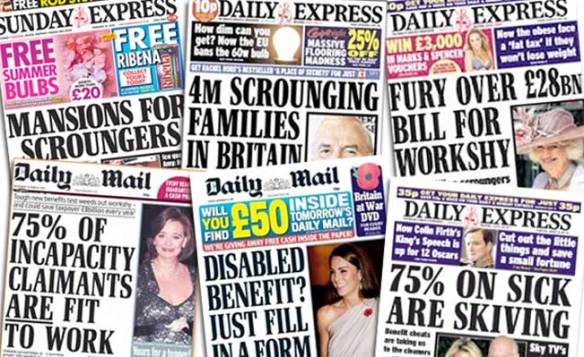
However, most of the public have already contributed to social security, those needing support tend to move in and out of work. Very few people remain out of work on a permanent basis. The Conservatives have created a corrosive and divisive myth that there are two discrete groups in society: tax payers and ‘scroungers’ – a class of economic free riders.

This intentionally divisive narrative of course is not true, since people claiming welfare support also pay taxes, such as VAT and council tax, and most have already worked and will work again, given the opportunity to do so. For those who are too ill to work, as a so-called civilised society, we should not hesitate to support them.

The government’s mindset is very disciplinarian. In their view, everyone else needs ‘corrective treatment’ to ensure that society is shaped and ruled the way they think it ought to be. The government believes that rather than addressing social problems – many of which are created and perpetuated by their own policies, such as growing inequality and absolute poverty – can be addressed by ‘incentivising’ people to ‘behave’ differently. In other words, they believe that people can be punished out of poverty, being ill, being out of work, and from being less “competitive”, cost effective citizens, letting down the Conservative’s constructed, overarching neoliberal state.

The ’round table’ report from the Centre for Social Justice 

Public policies that are supposed to address fundamental human needs arising from sickness and disability are tainted by a neoliberal idée fixe. The leitmotif is a total corporacratic commodification of human needs and relationships. This has entailed the government permitting private companies to build toll gates to essential support services, building hierarchies of human worth within the closed and entropic context of a competitive market place, where resources are “scarce” and people are being herded; where the only holding principle that operates is profit over human need.

In a report from the Centre for Social Justice (an Orwellian title if ever there was one) called REFORMING CONTRIBUTORY BENEFITS (2016), David Cameron is quoted in the introduction: 

“We have already come a long way in the last 5 years. In the last Parliament we created Universal Credit so that work would always pay. We capped benefits so we struck the right balance between incentivising work and supporting the most vulnerable. And we set up the largest programme to get people into work since the 1930s with over a million people coming off the main out of work benefits and over 2 million getting into work. But when it comes to reforming, we still have further to go …” David Cameron, June 2015.

The Centre for Social Justice (CSJ) is a neoliberal right wing think tank, founded by Iain Duncan Smith. The CSJ has played an important role in the design and development of Universal Credit. 

In the opening paragraph, the report says: “William Beveridge’s original blueprint for a welfare state had personal contributions at its core. Indeed, there is widespread consensus that the contributory principle inculcates a degree of responsibility and ownership in a system that has been criticised for breeding dependency.” (My emphasis).

These are views widely held by neoliberal Conservatives, not everyone else.

As UKIM pointed out in their report, the term “welfare dependency” is itself controversial, often carrying derogatory connotations that the recipient of welfare support is unwilling to work. This narrative has diverted attention from the structural factors that cause and entrench poverty, such as government policy, labour market conditions and economic change. Instead of focusing on how to tackle the root causes of poverty, the Conservatives have focused instead on attacking the supposed poor character, morals and psychology of those needing social security support.

This narrative transforms individual experiences of social inequality and being in poverty into a personal failing, rather than a failure of the state. The ideas came from political writers such as Lawrence M. Mead. In his 1986 book Beyond Entitlement: The Social Obligations of Citizenship, Mead argued that American welfare was too permissive, giving out benefit payments without demanding anything from poor people in return, particularly not requiring the recipient to work. Mead viewed this as directly linked to the higher incidence of social problems among poor Americans, more as a cause than an effect of poverty. Neoliberal governments in both the US and UK found these ideas appealing, and the government of Margaret Thatcher imported several other similar US ideas. 

Charles Murray argued that American social policy ignored people’s inherent tendency to ‘avoid hard work’ and to be ‘amoral’, and that from the ‘War on Poverty’ onward the government had given welfare recipients disincentives to work, marry, or have children in wedlock. His 1984 book Losing Ground was also highly influential in the welfare reforms of the 1980s and 90s, and remains so among neoliberal Conservatives. 

Murray exhumed social Darwinism and gave the bones of it originally to Bush and Thatcher to re-cast. Murray’s culture of poverty theory popularised notions that poverty is caused by an individual’s personal deficits; that the poor have earned their position in society; the poor deserve to be poor because this is a reflection of their lack of qualities, poor character and level of abilities.

Of course, this perspective also assumes that the opposite is true: wealthy and “successful” people are so because they are more talented, motivated and less lazy, and are thus more deserving. Just like the widely discredited social Darwinism of the Victorian era, proposed by the likes of Conservative sociologist Herbert Spencer, (who originally coined the phrase “survival of the fittest,” and not Darwin, as is widely held) these resurrected ideas have a considerable degree of popularity in upper-class and elite Conservative circles, where such perspectives provide a justification for extensive privilege. In addition, poor communities are seen as socialising environments where values such as fatalism are transmitted from generation to “workshy” generation.

Charles Murray and Lawrence Mead clearly made an impact on the international policy debate in the 1980s, partly due to the legitimisation that they received from the support of the Reagan and Thatcher administrations for their central claims. They were particularly influential in the growth of work fare and a welfare system based on punishment and psycho-compulsion. Murray claimed the underclass of poor people avoid work because of the “overgenerous” nature of welfare benefits. Mead argued that a “culture of poverty” meant that workfare policies are required to ‘reintegrate’ and ‘incentivise’ the ‘unemployed poor.’ 

This toxic brand of neoliberal anti-welfarism, amplified by the corporate media, has aimed at reconstruction of society’s “common sense” assumptions, values and beliefs. Class, disability and race narratives in particular, associated with traditional prejudices and categories from the right wing, have been used to nudge the UK to re-imagine citizenship, human rights and democratic inclusion as highly conditional.  

Leaving the European Union provides an opportunity for the government to shift what is left of social security from public to private provision

The round table paper discusses the ‘further reform’ to welfare that Cameron hinted at:

One of the reasons why this has not happened so far has been the commitment to EU rules on maintaining a benefit programme that is exportable. The British Government succeeded in establishing that Universal Credit would not be exportable as long as contributory benefits were. 

Had contributory benefits been abolished whilst UK social security was bound by EU law, this would have exposed Universal Credit (the significantly larger budget) to exportability. In light of the British vote to leave the EU, however, there is now the possibility of reforming contributory benefits without breaching EU law.” 

The authors of the report say reforming welfare would mean “[a] new insurance model would also allow competition, greater diversification and, finally, the opportunity for claimants to take control over their long term financial support.” 

During the round table discussion, participants discussed a “potential solution”  put forward by private company Legal & General. The report itself carries legal & General’s logo. 

The suggestion was to replace the contributory benefits system with a low premium social insurance scheme delivered by employers through an auto-enrolment structure. This new social insurance scheme would take the form of a ‘rainy day guarantee’, where beneficiaries would make regular payments into the scheme, which would protect against the risk of “future income shocks as a result of long term sickness or unemployment.”

The target for the new social insurance scheme would initially be individuals from “the professional and skilled class who have fewer transactional experiences with Government. They are less likely to suffer a shock to income from illness or sudden unemployment and often need support  infrequently and for less than six months.”

“The infrastructure of this new social insurance scheme could replicate that of the auto-enrolment pension products that have been phased-in under the previous and current Governments. Employers could offer new employees access to a ‘social insurance product’ that could be administered by a private sector organisation, though partially facilitated by the Government.”

The authors also say: “During the roundtable discussion, a significant question emerged over whether a new social insurance product would be compulsoryor voluntary. One concern raised in discussion was that a voluntarysystem risks not gaining a critical mass that enables it to function,whereas a compulsory programme could undermine public confidence in the state welfare system.”

Yes, the one that most citizens have already contributed to. It is not ‘state’ welfare, it is publicly funded social security.

The report continues: One of the barriers to wide-spread acceptability of a private insurance model ahead of a state-contributory benefits model is the emotional reaction by claimants who have paid taxes but are no longer entitled to a benefit payment. Many trust the system to pay out – any alternative outcome could undermine trust in the state welfare system.

“Herein lies a problem: many people place a high degree of trust in the welfare system, only to be disappointed when it delivers less than they expect it to. Part of the challenge in proposing an insurance model, therefore, is to communicate the benefits compared to the state system.”

The benefits to whom, exactly? Legal & General and the wider private insurance sector ?

More of the rub: “Another challenge is the extent to which a new social insurance model could be extended to include both unemployment and sickness support currently covered by ESA and JSA contributory benefits. PwC (PricewaterhouseCoopers) has estimated that the annual cost of sickness absence in the UK is almost £29 billion. (Hyperlinks added by me). 

“Insurance premiums are calculated on risk and probability, such that if the risk and the probability are high,the premiums will also be high. From an insurance perspective, unemployment is seen as a greater long-term risk than sickness. Company efforts to mitigate the risk may thus mean premiums rise to an amount greater than the £11 per month previously stated.” 

Prioritising private business profit over collective human needs: the neoliberal model

In their conclusion and policy recommendations, the authors say:  

“As this report has discussed, the contributory benefits system is ripe for reform and the proposition of a social insurance model poses a potential solution. With regards to the implementation of a social insurance programme to replace contributory benefits  participants at the round table discussion made the following conclusions: 

  •  Premiums should be treated as income in the Universal Credit system, promoting use of the social insurance system.  
  • The notion of a social insurance model must be communicated correctly; Lessons can be learned from past government announcements on, for example, privately run prisons.
  • The support of business is essential, and communication must be clear as this is another product that sits alongside auto-enrolled pensions, the new lifetime ISA, and the apprenticeship levy
  • High opt-out rates risk destabilising the functionality of a voluntary model, and will therefore determine the necessity of a mandatory system or at the least an opt out model.
  • Individuals who do not draw down on their insurance pot could be offered financial recourse in the form of either a savings or pensions benefit.

“Overall, the opportunity to reform contributory benefits has arrived,the political and economic climate allows for it, and the presence of a strong alternative policy makes it possible and practical.”

You can read the full report here.

Some thoughts

The government says it believes that:

  • the current [welfare] system is too complex
  • there are insufficient incentives to encourage people on benefits to start paid work or increase their hours

The government are aiming to:

  • make the benefit system ‘fairer’ and more affordable
  • reduce poverty, ‘worklessness’ and welfare dependency
  • reduce levels of fraud and error. 

However,  ‘worklessness’ and ‘welfare dependency’ are contested categories based on assumptions and not empirical evidence. 

Our welfare state originally arose as a social security safety net – founded on an assurance that as a civilised and democratic society we value the well-being and health of every citizen.

There was a cross-party political consensus that such provision was in the best interests of the nation as a whole at a time when we were collectively spirited enough to ensure that no one should be homeless or starving in modern Britain.

As such, welfare is a fundamental part of the UK’s development –  our progress – the basic idea of improving people’s lives was at the heart of the welfare state and more broadly, it reflects the evolution of European democratic and rights-based societies.

Now the UK “social security” system is anything but. It has regressed to reflect the flawed and discredited philosophy underpinning the 1834 Poor Law Amendment Act, to become a system of punishments aimed at the poorest and most marginalised social groups. The Poor Law principle of less eligibility – which served as a deterrence to poor people claiming poor relief is embodied in the Conservative claim of Making work pay: benefits have been reduced to make the lowest paid, insecure employment a more appealing option than claiming benefits.

Back in the 1970s, following his remarks on the cycle of deprivation, Keith Joseph established a large-scale research programme devoted to testing its validity. One of the main findings of the research was that there is no simple continuity of social problems between generations of the sort required for his thesis. At least half of the children born into disadvantaged homes do not repeat the pattern of disadvantage in the next generation.

Despite the fact that continuity of deprivation across generations is by no means inevitable – the theory is not supported by empirical research – the idea of the cycle of ‘worklessness’ has become common sense. Clearly, common perceptions of the causes of poverty are (being) misinformed. The individual behaviourist theory of poverty predicts that the same group of people remain in poverty. This doesn’t happen.

However, the structural theory predicts that different people are in poverty over time (and further, that we need to alter the economic structure to make things better). Longitudinal surveys show that impoverished people are not the same people every year. In other words, people move in and out of poverty: it’s a revolving door, as predicted by structural explanations of poverty.

Therefore the very ideological premises of Conservative welfare policy is unevidenced and fundamentally flawed.

Problems with social security provision delivered through private insurance schemes

The National Insurance Scheme (NIS) provides cash benefits for sickness and disability,  unemployment, the death of a partner, retirement, and so on. Citizens already  earn entitlement to these benefits by paying National Insurance contributions;

  • The National Health Service (NHS), which provides medical, dental and optical treatment and which is normally available free of charge only to people who live in Great Britain and Northern Ireland;  
  • The child benefit and Child Tax Credit schemes, which provide cash benefits for people bringing up children;   
  • Non-contributory benefits for certain categories of disabled persons or carers;  
  • Other statutory payments made by employers to employees entitled to maternity, paternity and adoption leave.

The government’s ‘low tax low welfare view of society, coupled with a decade of very low wages and rising costs of living has created ‘tax constraints’ that conflict with the demands made on the welfare state, the government says. Substituting private insurance for tax-financed welfare provision is being touted as some kind of painless way out of those self imposed ‘constraints’.  

However, in general, switching from tax-financed social security to private insurance, where premiums are related to each individual’s risk status, will be ‘regressive’, that is, it will benefit the better-off at the expense of the less well-off. Certain citizens will not be offered cover because their level of risk is too high to make it profitable and economic for private insurance companies. This will also add to the regressive effects. Certain risks will be excluded from cover as a result of the nature of the insurance market.  

If the state still provides some kind of safety net, it may end up with all of the ‘downside risk’ but none of the ‘upside gain’: if things turn out badly and insurers are unable to meet their commitments, the state has to fill the gap created, but if things turn out well, it is the insurers who keep the surplus and profit.

In discussing the future of the welfare state, the question of whether the private sector should take on some of the insurance functions currently provided by social security has  almost inevitably arisen. However, much of this debate has a purely ideological basis.

Switching from social security to private insurance generally increases costs for those on low incomes; premium levels for products mean that those with average incomes and average risk also lose. For many insurance products, women, older people and those in poor health lose the most. 

For many with higher incomes, the role of permanent health insurance is already filled by long-term occupational sick pay while for those with lower incomes, affording enough cover to get clear of means-tested benefit entitlement is difficult. 

Uncertainty over future long-term care needs and costs makes policies virtually impossible to assess, for both consumers and providers, making reliance on private insurance a dubious proposition. The nature of the risks leads to policies which limit coverage and exclude some groups, including those without good employment records and people with disabilities.

Tax-financed provision offers not only the most equitable but also the most efficient solution, minimising costs to average-risk as well as high-risk and low-income ‘consumers’ and preserving the advantages of unified public finances.

Furthermore, it retains the integrity of the original aims of the welfare state and ensures a democratic state.

UKIM’s report to the UNCRPD raised other concerns about the potentially negative impact of Brexit on the human rights of disabled people, which you can read about here.


Related

This explores the overlapping neoliberal ideas aimed at the reform of both welfare and health care in the UK – Rogue company Unum’s profiteering hand in the government’s work, health and disability green paper

The Poverty of Responsibility and the Politics of Blame 

The connection between Universal Credit, ordeals and experiments in electrocuting laboratory rats

 The government plan social experiments to “nudge” sick and disabled people into work

A critique of benefit sanctions:  the Minnesota Starvation Experiment and  Maslow’s Hierarchy of Needs

The benefit cap, phrenology and the new Conservative character divination

Stigmatising unemployment: the government has redefined it as a psychological disorder


My work is unfunded and I don’t make any money from it. But you can support Politics and Insights by making a donation which will help me continue to research and write informative, insightful and independent articles and to provide support to others.

Concerns about the impact of Brexit on the human rights of disabled people in update report to UNCRPD

Image result for Human rights disabled people UK

Yesterday I wrote an article about the government’s shameful lack of progress on disability rights in the UK. I discussed the details of a new report and the recommendations made by the UK Independent Mechanism update report to the UN Committee on the Rights of Persons with Disabilities.

This is a summary of some key concerns that I only touched on in my original write up, and it also focuses on one of the important themes that emerged in the report: the potential impact of Brexit on disabled people’s rights. 

The new report and submission to the UNCRPD – UK Independent Mechanism update report to the UN Committee on the Rights of Persons with Disabilities (published October 2018) – provides an independent assessment of the UK Independent Mechanism (UKIM) on the “disappointing” lack of progress by the UK governments to implement the UN’s recommendations since August 2017. 

A year on, there is still no comprehensive UK-wide strategy demonstrating how the UK will implement the CRPD Committee’s recommendations. There has also been “continued reluctance” from the UK Government to accept the conclusions of the CRPD Committee’s inquiry report on the impact of the UK Government’s policies on the rights of disabled people. 

Disabled people across the UK continue to face serious regression of their rights to an adequate standard of living and social protection, to live independently and to be included in the community. UKIM has reiterated that the grave and systematic violations identified by the CRPD Committee need to be addressed as a matter of urgency and that the overall approach of the UK Government towards social security protection requires a complete overhaul, so that it is informed by human rights frameworks, standards and principles, to ensure disabled people’s rights are respected, protected and fulfilled.

Despite the empirical evidence presented from a variety of researchers and the UN investigation concerning the significantly adverse effect of welfare reform on disabled people’s rights to independent living and to an adequate standard of living and social  security, the UK Government has failed to act on this evidence and to implement the CRPD Committee’s recommendations regarding these rights.

The authors of the report remain seriously concerned about the continued failure of the UK Government to conduct an assessment of the cumulative impact on disabled people  of multiple policy, cuts and law reforms in relation to living standards and social security. 

In the section about prejudice and negative attitudes, the report also cites a shameful example of rhetoric from the government that has potentially reinforced negative attitudes and the stigma surrounding mental health and disability: “This includes the Chancellor of the Exchequer, Philip Hammond, stating before a Committee of the UK Parliament: ‘It is almost certainly the case that by increasing participation in the workforce, including far higher levels of participation by marginal groups and very high levels of engagement in the workforce, for example of disabled people – something we should be extremely proud of – may have had an impact on overall productivity measurements.’

Many people understood this statement as indicating that the increase in disabled people in employment is partly responsible for the UK’s decreasing productivity.”

The report also says that employment rates for disabled people have actually risen only very marginally.  

Conservative prejudice is embedded in social security policy and administration

The UKIM report says that government has not taken appropriate measures to combat negative and discriminatory stereotypes or prejudice against persons with disabilities in public and the media, including the government’s own claims that ‘dependency’ on benefits is in itself a disincentive of employment. This is important because it shows just how embedded Conservative prejudice is in policies and within our social security administration.

The idea that welfare somehow creates the problems it was designed to alleviate, such as poverty and inequality, has become almost ‘common sense’ and because of that, it’s a narrative that remains largely unchallenged. Yet international research has shown that generous welfare provision leads to more, better quality and sustainable employment. 

Moreover, this ideological position has been used politically as a justification to reduce social security provision so that it is no longer an adequate amount to meet citizens’ basic living needs. The aim is to discredit the welfare system itself, along with those needing its support. The government have long wished to replace the publicly funded social security provision ultimately with mandatory private insurance schemes.

The idea that welfare creates ‘dependency’ and ‘disincentivises’ work has been used as a justification for the introduction of cuts and an extremely punitive regime entailing ‘conditionality’ and sanctions. The governenment have selectively used punitive behavioural modification elements of behavioural economics theory and its discredited behaviourist language of ‘incentives’ to steadily withdraw publicly funded social security provision.

However, most of the public have already contributed to social security, those needing support tend to move in and out of work. Very few people remain out of work on a permanent basis. The Conservatives have created a corrosive and divisive myth that there are two discrete groups in society: tax payers and ‘scroungers’ – a class of economic free riders. This of course is not true, since people claiming welfare support also pay taxes, such as VAT and council tax, and most have already worked and will work again, given the opportunity to do so. For those who are too ill to work, as a so-called civilise society, we should not hesitate to support them.

In the recommendations, the authors say the government should implement broad mass media campaigns, in consultation with organisations representing persons with disabilities, particularly those affected by the welfare reform, to promote them as full rights holders, in accordance with the Convention; and adopt measures to address complaints of harassment and hate crime by persons with disabilities, promptly investigate those allegations, hold the perpetrators accountable and provide fair and appropriate compensation to victims.

As a society we take tend to take human rights for granted. We seldom think about rights because much of the time, there is no need to. It’s not until we directly experience discrimination and oppression that we recognise the value of having a universal human rights framework. Our rights define the relationship between citizen and state, and ensure that there is no abuse of power. However, we no longer have equal access to justice and redress for human rights breaches and discrimination. 

The high demand for advice on disability benefits since the government’s welfare reform means that the almost complete removal of welfare benefits from the scope of legal aid has had a disproportionate impact on disabled people or those with a long-term health condition.

People entitled to disability benefits relied on legal aid to support appeals of incorrect decisions and to provide a valuable check on decision-making concerning eligibility for welfare support. The revisions to the financial eligibility criteria for legal aid have had a disproportionate impact on various groups including disabled people, women, children and migrants. This is because of the restrictions that the government placed on legal aid accessibility with the Legal Aid, Sentencing and Punishment of Offenders Act 2012 (LASPO).

There has been a 99% decrease in support provided by the Legal Aid Agency for clients with disability-related welfare benefits issues, compared with pre-LASPO levels, and the total number of such claims has plummeted from 29,801 in 2011/12 to 308 in 2016/17.

The government has failed to ensure access to justice, removing appropriate legal advice and support, including through reasonable and procedural accommodation for disabled people seeking redress and reparation for the violation of their rights, as covered in the  report.

It’s difficult to imagine that this wasn’t a coordinated effort on the part of the government to restrict citizen freedoms, support and access to justice for precisely those who need justice and remedies the most.

Human rights don’t often seem as though they matter, until they do. But by then, it may be too late. 

Concerns about the impact of Brexit on the human rights of disabled people

In 2016, I wrote an article about concerns raised regarding the rights of disabled people following Brexit. Earlier this year, I wrote another article about my concerns that the European fundamental rights charter was excluded in the European Union (EU) withdrawal Bill, including protection from eugenic policy.

The result of the EU referendum on the UK’s membership of the European Union, and forthcoming withdrawal, carries some obvious and very worrying implications for the protection of citizens rights and freedoms in the UK. Historically the UK Conservative government has strongly opposed much of Europe’s social rights agenda.

So it was very concerning that the House of Commons voted down a Labour amendment to ensure that our basic human rights are protected after Brexit, as set out in the European Union Charter. 

The EU Withdrawal Bill threatened to significantly reduce existing human rights protections. It excluded both the EU Charter of Fundamental Rights (in its entirety) and the right of action for violations of EU General Principles from domestic law after the UK’s withdrawal. It also handed sweeping powers to ministers to alter legislation without appropriate parliamentary scrutiny, placing current rights and equality laws at risk.

Worryingly, Suella Fernandes, who was promoted to the Brexit department earlier this year warned in November last year that transposing the ‘flabby’ charter into British law would give UK citizens additional protections on issues such as “biomedicine, eugenics, personal data and collective bargaining.”

However, the very fact that anyone at all in government objects to retaining these fundamental rights and protections indicates that we do very clearly need them.

It should be inconceivable that a democratic legislature would vote to take away citizens rights. The regressive step means the loss of the Charter goes rights that simply don’t exist in the Human Rights Act or in our common law. Gone is the enforceable right to human dignity. Gone are our rights to data protection, comprehensive protection for the rights of the child, a free-standing right to non-discrimination, protection of a child’s best interests and the right to human dignity, refugee rights, the right to conscientious objection, academic freedom and wide-ranging fair trial rights to name but a few. Then there are the losses of economic and social rights. Gone too, are the right to a private life, freedom of speech, equality provisions and employment rights governing how workers are treated. These are all laws that protect us all from abuses of power. 

A group of more than 20 organisations and human rights legal experts, including the Equality and Human Rights Commission, signed an open letter on the importance of the Charter of Fundamental Rights ahead of the EU (Withdrawal) Bill returning to Parliament on 16 January this year. The letter was published in the Observer.

Trevor Tayleur, an associate professor at the University of Law, explained that the charter, although narrower in focus than the Human Rights Act, offers a far more robust defence of fundamental rights.

“At present, the main means of protecting human rights in the UK is the Human Rights Act 1998 (HRA) ,” he said. “This incorporates the bulk of the rights and freedoms enshrined in the European convention on human rights into UK law and thereby enables individuals to enforce their convention rights in the UK courts. However, there is a significant limitation to the protection afforded by the HRA because it does not override acts of parliament.

“In contrast, the protection afforded by the EU charter of fundamental rights is much stronger because where there is a conflict between basic rights contained in the charter and an act of the Westminster parliament, the charter will prevail over the act.” 

Under the HRA, only an individual who is a “victim” of a rights violation can bring a claim, whereas anyone with “sufficient interest” can apply for judicial review based on the Charter (see this briefing at p 11)

In their report, UKIM say:  “There are fears that the significant uncertainty in relation to Brexit will lead to a further deterioration of disabled people’s rights.

“The lack of a devolved government in Northern Ireland is also a specific concern to that jurisdiction, because it is significantly inhibiting the relevant departments from taking the required steps. Without a clear and coordinated plan for how the UK and devolved governments will address the UN recommendations systematically, the limited steps taken so far are unlikely to be enough to address the concerns raised by the CRPD Committee.”

The report goes on to say: “Following the European Union (EU) referendum in June 2016, there continues to be significant uncertainty regarding the future applicability of  existing human rights protections in the UK that derive from EU law. The EU Charter of Fundamental Rights was excluded from the European Union (Withdrawal) Act 2018, meaning that from ‘exit day’ it will no longer apply in domestic law. 

“As a result, domestic protections are more vulnerable to repeal. The Charter goes further than the non-discrimination provisions in the Equality Act 2010 or the European Convention on Human Rights (ECHR). Article 26 of the Charter, in particular, is a useful interpretive tool to support disabled people’s right to independence and integration and participation in the community. 

The European Union (Withdrawal) Act 2018 also leaves human rights protections at risk of being changed through the use of wide-ranging delegated powers. This means that changes to fundamental rights currently protected by EU law can be made by ministers through secondary legislation [statutory instruments, usually reserved for ‘non-controversial policy amendments] without being subject to full parliamentary scrutiny.

The EU is itself a party to the CRPD. Under EU law, international treaties to which the EU is party have a different status than they do under UK law. For example, EU law (unlike UK law) must be interpreted consistently with the CRPD. To ensure there is no regression, and that disabled people in the UK benefit from future progress driven by the CRPD, the UK Government should ensure these protections are incorporated into UK law, for example by giving enhanced status to the CRPD. 

The Conservatives have used secondary legslation to try and quietly push through several very controversial policies over recent years, such as £4bn-worth of cuts to family tax credits, and the removal of maintenance grants from around half a million of the poorest students in England. The changes mainly hit disabled, ethnic minority and older students.

The government have introduced swathes of significant new laws covering everything from fracking to fox hunting and benefit cuts without debate and scrutiny on the floor of the House of Commons. Many of these policies were not included in the Conservatives’ election manifesto and were nodded through by obscure Commons committees without the substance of the change being debated.

After the House of Lords successfully challenged the tax credit instrument, the Government then proposed limiting peers rights to reject statutory instruments. This would mean if one was rejected by the Lords, the ministers would simply have to retable it and it would pass automatically.  All of this should be seen alongside other Conservative proposals – including limits on freedom of information, changes to constituency boundaries and electoral registration, attempts to choke the opposition of funding within the Trade Union Bill, and the Lobbying Act. 

In light of this repressive pattern of behaviour, you could be forgiven for thinking that we’ve entered the realms of constitutional gerrymandering, with an authoritarian executive waging war on the institutions that hold them to account. With its fear of opposition and loathing of challenge, the government wants to stifle debate, shut down opposition and block proper scruting and democratic accountability. 

It is within this authoritarian political context that many of us have raised concerns about the impact of Brexit on the human rights of disabled citizens.

I’m always concerned that language use sometimes reinforces prejudices against disabled people by focusing on us as a group as ‘vulnerable’ and as ‘those in need’, as opposed to citizens and rights holders. However, grave and systematic violations of disabled peoples’ human right inevitably increases our vulnerability to further political abuse. 

The Yogyakarta Principles, one of the international human rights instruments use the term “vulnerability” as such potential to abuse and/or social and economic exclusion. Social vulnerability is created through the interaction of social forces and multiple “stressors”, and resolved through social (as opposed to individual) means. 

Social vulnerability is the product of social inequalities. It arises through social, cultural, political and economic processes. 

While some individuals within a socially vulnerable context may break free from the hierarchical order, social vulnerability itself persists because of structural – social, cultural economical and political – influences that continue to reinforce vulnerability. Some campaigners are very critical of the use of the word ‘vulnerability’, because they feel it leads to attitudes and perceptions of disabled people as passive victims

Since 2010, no social group has organised, campaigned and protested more than disabled people. Many of us have lived through harrowing times under this government and the last, when our very existence has become so precarious because of targeted and cruel Conservative policies and disproportionate cuts to our lifeline support. Yet we have remained strong.in our resolve. Despite this, some of our dear friends and comrades  have been tragically lost – they have not survived, yet many of them were very strong in their resolve to challenge discrimination and oppression.

In one of the wealthiest democratic nations on earth, no group of people should have to fight for their survival. Vulnerability is rather more about the potential for some social groups being subjected to political abuse than it is about individual qualities. Disabled people currently  are and have been. This is empirically verified by the report and conclusions drawn from the United Nations inquiry into the grave and systematic violations of disabled people’s human rights here in the UK, by a so-called democratic government. 

The government’s ‘paternalism’ is authoritarian gaslighting

Over recent years, Conservative policies have become increasingly ‘paternalist’, also reflecting the authoritarian turn, in that they are designed to act upon us, to ‘change’ our behaviours through the use of negative reinforcement (‘incentives’), while we are completely excluded from policy design and aims. Our behaviours are being aligned with neoliberal outcomes, conflating our needs and interests with the private financial profit of the powerful. 

As one of the instigators of the United Nations investigation, to which I regularly submitted evidence regarding the government’s systematic violations of the human rights of disabled people, and as a person with disability, I don’t care for being  described by Damian Green as “patronising” or being told that disabled people – the witnesses of the investigation – presented an “outdated view” of disability in the UK. This is a government minister attempting to discredit and re-write our accounts and experiences while ignoring the empirical evidence we have presented. Such actions are profoundly oppressive.

The only opportunity disabled people have been presented with to effectively express our fears, experiences and concerns about increasingly punitive and discriminatory policies, to voice a democratic opinion more generally and to be heard, has been in dialogue with an international human rights organisation, and still this government refuse to hear what we have to say. Nor are we consulted with, democratically included or invited to participate in the executive’s decision-making that directly affects us. As UKIM note: 

“There is a continued lack of action from the UK and devolved governments on the CRPD Committee’s recommendations. This includes setting up systems that will  ensure that disabled people and their organisations are involved in the design, implementation, and monitoring and evaluation of legislation, policy or programmes that affect their lives. It remains unclear how the new Inter-Ministerial Group on Disability and Society will work with disabled people and their organisations, and UKIM, to promote and monitor implementation of UN CRPD. 

“It is particularly concerning that the UN CRPD’s requirement to effectively involve disabled people and their organisations is not specifically reflected in the inter-ministerial group’s terms of reference. Nor do the terms of reference refer to the CRPD or the CRPD Committee’s recommendations.”

Oppression always involves the objectification of those being dominated; all forms of oppression imply the devaluation of the subjectivity and experiences of the oppressed.

This is very evident in the government’s approach to designing policies that act upon us.  The government has consistently failed to actively consult, engage with and include disabled people, our representative organisations and give due consideration to our views in the design, implementation, monitoring and evaluation of any legislation, policy or programme action related to our rights. Furthermore, the current Minister of State for Disabled People, Health and Work, Sarah Newton, has refused to meet with disabled people and allied organisations. (See also I’m a disabled person and Sarah Newton is an outrageous, gaslighting liar.)

Last year, Theresia Degener, who leads the UN’s Committee on the Rights of Persons with Disabilities (CRPD), said the UK Government has “totally neglected” disabled people, during a two day meeting with UK government officials in Geneva.

Degener told them: “Evidence before us now and in our inquiry procedure as published in our 2016 report reveals that social cut policies have led to a human catastrophe in your country, totally neglecting the vulnerable situation people with disabilities find themselves in.” 

The Government’s welfare cuts have resulted in “grave and systematic violations” of the rights of disabled people – a claim opposed by ministers but supported by UK courts.

For example, Judges have ruled that three of the government’s flagship welfare policies are illegal because of the impact they have on disabled people and single parents. In January 2016, the Court of Appeal declared the so-called ‘bedroom tax’ unlawful because of its consequences for disabled children, as well as victims of domestic violence. 

Sanctions imposed on people who refused to or could not take part in the Department for Work and Pension’s ‘back to work’ schemes were also thrown out by Court of Appeal judges in April 2016. In June 2017 the High Court said the government’s benefit cap is unlawful and causes “real misery for no good purpose”.  This year, a High Court ruling found that the Personal Independence Payments (PIP) policy had discriminated against people with mental health conditions. 

Between 2011 and 2017 the Department of Work and Pensions (DWP) underpaid more than £450,000,000 in means-tested benefits, due to its mishandling of the process by which claimants were moved from incapacity benefit to employment and support allowance.

When announcing its plans to remedy those underpayments on 14th December 2017, the DWP claimed the law ‘barred’ it from paying claimants any underpayments arising before 21st October 2014. That would have had two serious effects: first, up to £150,000,000 of the underpaid benefit would have been kept by the Government instead of passed to citizens who were deprived of it through no fault of their own; and second, any arrears which were paid to disabled people could after 52 weeks have been treated as ‘capital’, and reduced or stopped their ongoing entitlement to benefit.

In March 2018 the Child Poverty Action Group, acting for one affected claimant, brought judicial review proceedings in R (Smith) v Secretary of State for Work and Pensions JR/1249/2018 arguing that the DWP’s position was unlawful. The DWP accepted that it ‘got the law wrong’. The DWP said it will now start making those payments. It was necessary to take legal action against the Government because it said it had no legal power to fully remedy the consequences of a major error it had made in transferring claimants from incapacity benefit to employment and support allowance.

Ministers have also accused by the UN of misleading the public about the impact of Government policies by refusing to answer questions and using statistics in an “unclear way.”

Gaslighting.

The CRPD Committee has requested that the State party (the government) disseminate the concluding observations of their inquiry widely, including to non-governmental organisations and organisations of persons with disabilities, and to disabled people themselves and members of their families, in national and minority languages, including sign language, and in accessible formats, including Easy Read, and to make them available on the government website on human rights. 

That hasn’t happened and is unlikely to do so in the future. So please do share this article – The government’s shameful lack of progress on disability rights in the UK – new report update and submission to the UNCRPD Committee, and the UKIM update and shadow report widely.


I don’t make any money from my work. I’m disabled through illness and on a very low income. But you can make a donation to help me continue to research and write free, informative, insightful and independent articles, and to provide support to others. I co-run a group online that helps people with ESA and PIP claim, assessment, mandatory review and appeal, increasingly providing one to one emotional support, too.

The smallest amount is much appreciated – thank you.

DonatenowButton

The government’s shameful lack of progress on disability rights in the UK – new report update and submission to the UNCRPD Committee

Image result for Human rights disabled people UK

Despite equality being enshrined in protective legislation, disabled people in the UK are facing more barriers, exclusion and falling further behind as they try to thrive in an environment characterised still by oppressive obstruction, misunderstanding and austerity measures that hit home repeatedly, disproportionately and cumulatively.

Disabled people are more likely to be in fuel and food poverty, to have problems finding housing and to be affected by the bedroom tax.

We are underrepresented in politics, find it harder to access support and transport, experience significant health inequalities, and are less likely to be in employment. There is a significant wage gap between disabled and nondisabled people, too.

It is a shameful that in our society millions of disabled people are still not being treated as equal citizens and are denied the everyday rights that others take for granted. 

In August 2017, the United Nations Committee on the Rights of Persons with Disabilities (CRPD Committee) published a report that examined the extent to which the UK and devolved governments are in compliance with the Convention on the Rights of Persons with Disabilities (UN CRPD). 

The CRPD Committee’s main concerns and recommendations to the UK governments were set out in its ‘concluding observations’ in their report, which summarised that the UK government had “gravely and systematically violated the human rights of disabled persons.”

The CRPD Committee requested further information from the UK one year on from the examination of the steps taken to implement its recommendations on: independent living; work and employment; and an adequate standard of living and social protection; as well as some related issues covered in the report on the CRPD Committee’s 2016 inquiry.  

A new report and submission to the UN CRPD – UK Independent Mechanism update report to the UN Committee on the Rights of Persons with Disabilities (published by the Equality and Human Rights Commission (EHRC) in October 2018) – provides an assessment via the UK Independent Mechanism (UKIM) on the steps taken (or not taken) by the UK governments to implement the UN’s recommendations since August 2017.  

The EHRC report says that the UK has taken “only very limited steps to address the concerns and recommendations of the CRPD Committee”. UKIM expressed “disappointment that the UK governments have not seized on this important opportunity to reflect on and progress disability rights.” The report authors are concerned by the lack of a prompt response to the CRPD Committee’s recommendations. 

In particular, 12 months on, there is no comprehensive UK-wide strategy demonstrating how the UK will implement the CRPD Committee’s recommendations. 

There has also been “continued reluctance” from the UK Government to accept the conclusions of the CRPD Committee’s inquiry report on the impact of the UK Government’s policies on the rights of disabled people. 

In May this year, the UK Government announced it was establishing a new Inter-Ministerial Group on Disability and Society.  However, it is particularly worrying that the published terms of reference for the inter-ministerial group do not refer to the CRPD or the CRPD Committee’s recommendations. Furthermore, they do not specifically provide for the effective democratic participation and involvement of disabled people’s organisations or disabled people; and also it is not clear if, and to what extent, devolved administrations are involved in the group. 

The report says that the picture emerging from the most recent evidence about disabled people’s lives remains deeply concerning. Disabled people across the UK continue to face serious regression of many of their rights.

Social protections have been reduced and disabled people and their families continue to be among of the hardest hit. More and more disabled people are finding it difficult to live independently and to be included, and participate, in their communities on an equal basis. 

There are also fears that the significant uncertainty in relation to Brexit will lead to a further deterioration of disabled people’s rights.

The lack of a devolved government in Northern Ireland is also a specific concern to that jurisdiction, because it is significantly inhibiting the relevant departments from taking the required steps. The UKIM report reiterates its view that the grave and systematic violations identified by the CRPD Committee need to be addressed and that the overall approach of the UK Government towards social security protection requires an overhaul, guided by human rights standards and principles, to ensure disabled people’s rights are respected, protected and fulfilled.

Serious concerns about the impact of Brexit on disabled people’s human rights

A serious concern raised in the report – one which I have also raised previously – is that following the European Union (EU) referendum in June 2016, there continues to be significant uncertainty regarding the future applicability of existing human rights protections in the UK that derive from EU law. The EU Charter of Fundamental Rights was excluded from the European Union (Withdrawal) Act 2018, meaning that from ‘exit day’ it will no longer apply in domestic law. As a result, domestic protections are now more vulnerable to repeal.

The Charter goes further than the non-discrimination provisions in the Equality Act 2010 or the European Convention on Human Rights (ECHR). Article 26 of the Charter, in particular, is a useful interpretive tool to support disabled people’s right to  independence and integration and participation in the community. 

The European Union (Withdrawal) Act 2018 also leaves human rights protections at risk of being changed through the use of wide-ranging delegated powers. This means that changes to fundamental rights currently protected by EU law can be made by ministers through secondary legislation (statutory instruments) without being subject to full parliamentary scrutiny – which is something the Conservatives have done on a habitual basis.

Image result for use of statutory instruments kittysjones

The EU is itself a party to the CRPD. Under EU law, international treaties to which the EU is party have a different status than they do under UK law. For example, EU law (unlike UK law) must be interpreted consistently with the CRPD. To ensure there is no regression, and that disabled people in the UK benefit from future progress driven by the CRPD, the UK Government should ensure these protections are incorporated into UK law, for example by giving enhanced status to the CRPD. 

The report authors also noted : “In July 2018, the Secretary of State for International Development hosted the Global Disability Summit, with representatives from disabled people’s  organisations, civil society, governments, and the private sector. The UK Government presented its new Charter for Change, which sets out 10 commitments to achieve full inclusion of disabled people.  

“Although the UK Government has repeatedly reiterated its commitment to making the CRPD a reality for all disabled people in the UK, and has claimed to be a global leader in disability rights, it has not incorporated CRPD rights into domestic law, or taken steps to implement disabled people’s rights systematically across the UK.” 

It was noted in the report that the Scottish Government has also made no formal response to the CRPD  Committee’s concluding observations falling within its devolved competence. However, the Scottish Government has set up an expert advisory group to make recommendations on ‘how Scotland can continue to lead by example in human rights, including economic, social, cultural and environmental rights’. The group will make recommendations to the First Minister before the end of December 2018.

It was also noted that the collapse of the devolved government (Northern Ireland Assembly and Northern Ireland Executive) continues. Consequently, there has been no formal response to the CRPD Committee’s concluding observations falling within devolved competence. In the absence of ministers to provide approval, the relevant devolved departments have reported difficulties in obtaining the authority and resources to action the steps required to implement the CRPD Committee’s recommendations. 

Summary of concerns related to disabled peoples’ right to live independently

CRPD Committee concluding observations in 2017, paragraph 45: ‘The Committee recommends that the State party … : recognize the right to living independently and being included in the community as a subjective right, recognize the enforceability of all its elements, and adopt rights-based policies, regulations and guidelines to ensure implementation; conduct periodic assessments in close consultation with organizations of persons with disabilities to address and prevent the negative effects of policy reforms through sufficiently funded and appropriate strategies in the area of social support and living independently; … [and] allocate sufficient resources to ensure that support services are available, accessible, affordable, acceptable, adaptable and are sensitive to different living conditions for all persons with disabilities in urban and rural areas.”

Findings

The right to live independently in the community is not recognised as a statutory right in the UK and there do not appear to be any plans to change this. The increasing demand, along with reduced funding, for social care, particularly adult social care, may be leading to a regression in disabled people’s article 19 rights to live independently in the community. The shortage of accessible and adaptable homes, and long delays in making existing homes accessible, also has a detrimental effect on the right to live independently. 

There is evidence that social care, particularly adult social care, is at crisis point across the UK and there is a chronic shortage of accessible homes, which impacts negatively on  disabled people’s right to live independently in the community. The right to live independently in the community is not recognised as a statutory right in the UK and there do not appear to be any plans to change this. 

The increasing demand, along with reduced funding, for social care, particularly adult social care, may be leading to a regression in disabled people’s article 19 rights to live independently in the community.  The shortage of accessible and adaptable  homes, and long delays in making existing homes accessible, also has a detrimental effect on the right to live independently. 

Spending for adult social care in England was budgeted to be 3% lower in 2017/18 than in 2009/10.21 As the population has grown over this period, this is equivalent to 9% lower per person, according to the Association of Directors of Adult Social Services (ADASS). This means ‘fewer older and disabled people with more complexcare and support needs getting less long-term care. 

In March 2018, the EHRC started legal action against 13 clinical commissioning groups because the NHS Continuing Healthcare policies restricted funding and failed to account for individual circumstances. This may force disabled people into residential care when their preference is to remain at home. The EHRC is concerned that, in England, the closure of the Independent Living Fund and the devolution of this function to local authorities, without ring-fencing finance for this purpose, has resulted in a postcode lottery for support.  

The EHRC’s inquiry into housing for disabled people across Great Britain (GB), published in May 2018, found new evidence that disabled people face a shortage of accessible and adaptable homes and long delays in making existing homes accessible. Disabled people are not getting the support they need to live independently as the provision of advice, support and advocacy is patchy, and people report that they have nowhere to turn when their housing is unsuitable. 

The EHRC’s survey of local authorities found that just over a quarter (28%) of local authorities in GB set a percentage target for accessible housing. 

Research by the Care Quality Commission (CQC) found that nearly two-thirds of placements in residential-based mental health rehabilitation services are ‘out ofarea’, and very lengthy.26 This means that individuals are usually placed far away both from home and from the local support services that should care for them once they have been discharged. 

The CQC has also reported that some patients who are subject to the Mental Health Act (MHA) 1983 continue to experience care that does not fully protect their rights or ensure their wellbeing. For example, there have been no improvements in involving patients in developing their care plans, and in making sure their views are considered in care decisions. 

Summary of concerns related to the right to an adequate standard of living and social protection (article 28)

CRPD Committee concluding observations in 2017, paragraph 59: ‘The Committee recommends that the State party … introduce, adopt and implement legislative frameworks to ensure that social protection policies and programmes across the State party secure income levels for all persons with disabilities and their families, by taking into account the additional costs relating to disability … ; carry out a cumulative impact assessment, based on disaggregated data, of the recent and forthcoming reforms of the social protection system for persons with disabilities, and in close collaboration with organizations of persons with disabilities define, implement and monitor measures to tackle retrogression in their standard of living and use the cumulative impact assessment as a basis for policy development across the State party; … [and] conduct a review of the conditionality and sanction regimes concerning the Employment and Support Allowance, and tackle the negative consequences on the mental health and situation of persons with disabilities.’

Findings 

There have been a considerable number of research projects focusing on disabled people’s standard of living and social protection. The findings of this research show the disproportionate and significantly adverse effect of welfare reform on disabled people’s rights to independent living and to an adequate standard of living and social security. 

However, the UK Government has failed to act on this evidence and to implement the CRPD Committee’s recommendations regarding these rights.  

New evidence 

Research by the Joseph Rowntree Foundation (JRF) found that 30% of people living in a household with a disabled person live in poverty, compared to 19% of those in households without a disabled person. 

The Institute for Fiscal Studies (IFS) found that people aged 25–54 with a longstanding illness are 50% more likely to live in poverty and deprivation than those without.

However, the gap in living standards between those with a long-standing illness and those without is likely to be an underestimate, since illness and disability are also likely to lead to higher costs of living. 

The National Audit Office (NAO) found that the Department for Work and Pensions  (DWP) has not done enough to protect and support ‘vulnerable claimants’, who have experienced difficulties and hardship during the implementation of Universal Credit. 

The UK Parliament Work and Pensions Select Committee found that, since 2013, 290,000 claimants of the Personal Independence Payment (PIP) and theEmployment and Support Allowance (ESA) only received the correct award after challenging the DWP’s initial decision. 

New evidence suggests that benefit sanctions have had no tangible positive effects in moving disabled people closer to paid work and that the use of sanctions may have exacerbated many disabled people’s existing illnesses and impairments, especially for those with mental health conditions. The EHRC review of recent social security reforms also indicates that sanctions: do little to change claimant motivation; encourage hostility towards support services; and worsen relationships with job centre staff. 

The Council of Europe’s Committee of Social Rights recently concluded that the UK does not conform with the right to social security under the European Social Charter because levels of statutory sick pay, minimum levels of ESA, and long-term incapacity and unemployment entitlements are lower than 40% of the median income, and ‘manifestly inadequate’. 

The EHRC’s analysis of the tax and welfare reforms introduced between May 2010 and January 2018 revealed that their cumulative impact on disabled people by the 2021/22 tax year will be significantly regressive. This is particularly so for policy decisions taken in the 2015–17 Parliament (the impacts of which are, for the most part, still to come). The findings include:

Households with at least one disabled adult and a disabled child will lose over
£6,500 a year (over 13% of their net income).

 Disabled lone parents with at least one disabled child will lose almost £10,000
of their annual net income.

 Adults with behavioural difficulties will lose around £2,350 a year.

 Adults with learning difficulties will lose around £1,750.

Adults with mental health conditions will lose just over £1,799. 

Early findings from an EHRC analysis of the cumulative impact of changes to public  spending indicate that certain groups, including people who are the most severely disabled, are affected disproportionately by public spending cuts.

The combined analysis of the public spending changes and the EHRC’s earlier report on the impact of changes to tax and welfare reforms indicates that the losses in income for households where there is a higher disability score are even greater. 

Recent research commissioned by the Local Government Association (LGA) found that around 900,000 disabled people will see their weekly income fall by at least £50 a week by 2020 due to the cumulative impact of welfare reform. Under Universal Credit the average household containing a disabled person will be worse off in 2020 by £51.47 per week. 

In December 2017, the high court found that the rules brought in by the 2017 regulations that differentiate between physical and mental health issues in the award of the mobility component of PIP are unlawfully discriminatory against people with a mental health condition, in breach of the Human Rights Act 1998.

The EHRC intervened in this case and put forward its view that the rule infringed and was ‘fundamentally at odds with Article 19 CRPD’s guarantees’. The high court agreed. Subsequently, DWP announced that all 1.6 million people receiving PIP would have their claim reviewed, it would end unnecessary PIP reviews for people with the most severe health conditions, and that it is currently developing new guidance. 

Concerns have been raised by disability rights organisations over the delay in implementing the judgment pending the publication of new PIP assessment guidance.  

In June 2018, the high court found that the implementation arrangements of Universal Credit unlawfully discriminated against two severely disabled men who both saw their benefits dramatically reduced when they moved to another local authority area, and were therefore required to claim Universal Credit.

Before moving onto Universal Credit, both men were in receipt of the severe disability premium (SDP) and enhanced disability premium (EDP), which were aimed at meeting the additional care needs of severely disabled people living alone with no carer. The court found that the implementation arrangements were contrary to article 14 ECHR in conjunction with article 1, protocol 1. The EHRC intervened in this case, arguing that article 14 of the ECHR, read with the UN Convention on the Rights of Persons with Disabilities (UN CRPD), imposes positive obligations on the UK to address and remove the obstacles faced by disabled people in enjoying equal rights.

The DWP has subsequently committed to introducing changes that will ensure no severely disabled person in receipt of the SDP will be required to move onto Universal Credit until transitional protection is in place, and to compensate those who have lost out.

Summary of concerns related to the right to work and employment (article 27)

CRPD Committee concluding observations in 2017, paragraph 57: ‘The Committee recommends that the State party … develop and decide upon an effective employment policy for persons with disabilities aimed at ensuring decent work for all persons with disabilities, bearing in mind the State party’s target of 1 million jobs for persons with disabilities, and ensure equal pay for work of equal value, focusing especially on women with disabilities, persons with psychosocial and/or intellectual disabilities and persons with visual impairments, and monitor those developments; … [and] ensure that the legal and administrative requirements of the process to assess working capabilities, including the Work Capability Assessment, are in line with the human rights model of disability, that those who conduct the assessments are qualified and duly trained in that model, and that the assessments take into consideration work-related as well as other personal circumstances.’

Findings 

In the last 12 months, further information has become available on the failure of the UK to safeguard disabled people’s right to work and employment. The UK and devolved governments have announced a number of commitments to address these failings and to implement the relevant CRPD Committee’s recommendations; these commitments are welcomed.

However, concerns are already emerging regarding barriers to their effective implementation, as set out below. These include limited eligibility, funding shortfalls and lack of measurable targets. 

The UK Government has established the Inter-Ministerial Group on Disability and Society, with one of its key aims being to increase disability employment rates. But there are concerns about the practical operations of this group and the omission of a specific reference to the CRPD or the CRPD Committee’s recommendations in its terms of reference. In addition, the listed membership of the inter-ministerial group does not adequately reflect that the devolved governments also have responsibility for taking action to address the disability employment gap. Nor does the group include the participation of disabled people and allied organisations. 

While the disability employment gap has narrowed slightly since 2015, disabled people are still less likely to be in employment than non-disabled people. Disabled people in the UK are paid less on average than non-disabled people.

A recent TUC report found that the disability pay gap (15%) was higher in 2016/17 than in 2013/14, 2014/15 or 2015/16.  It found that, in 2017, the average hourly pay for disabled workers was £9.90, compared with £11.40 for non-disabled workers – resulting in a disability pay gap of £2,730 per year. The TUC also reports that disabled workers are more likely to work in lower-paid occupations than non-disabled workers. Across the UK, there is no requirement on public or private employers to publish information on disability pay gaps.

Summary of concerns related to prejudice and negative attitudes (articles 8 and 16)

CRPD Committee inquiry recommendations 2016, paragraph 114 (h): Take appropriate measures to combat any negative and discriminatory stereotypes or prejudice against persons with disabilities in public and the media, including the assertion that dependency on benefits is in itself a disincentive to seeking employment, implement broad mass media campaigns, in consultation with organizations representing persons with disabilities, particularly those affected by the welfare reform, to promote them as full rights holders, in accordance with the Convention; and adopt measures to address complaints of harassment and hate crime by persons with disabilities, promptly investigate those allegations, hold the perpetrators accountable and provide fair and appropriate compensation to victims.’

Findings

The extensive data available indicate that progress to date is insufficient and, therefore not in line with the CRPD Committee’s recommendations. Prejudice towards disabled people persists. This includes negative attitudes towards disabled people claiming social security benefits and negative assumptions about disabled people’s human value
and quality of life.

New evidence 

In 2017, 75% of students in secondary schools and colleges with autism and Asperger’s syndrome, and 70% of those with a physical disability said they had been bullied compared with 50% of students with no disability. 

Research examining prejudice faced by disabled people found that 32% of disabled people felt there was a lot of disability-related prejudice, but only 22% of nondisabled people thought this was the case. This indicates a gap between the reality of disabled people’s lives and the public’s perception. The study also found evidence that ‘paternalist’ attitudes about disabled people are still prevalent:

 75% of the study’s respondents thought disabled people need to be cared for some or most of the time.

 13% tended to ‘hardly ever’ or ‘never’ think of disabled people as the same as everyone else

In a related study of disabled people, national disability charity Scope found that:

 40% of all respondents indicated that they did not feel valued by society

 49% responded that they feel excluded from society because of their long-term impairment or health condition, and

 42% felt the UK is a good place for disabled people to live.

The police registered 5,558 disability-motivated hate crime cases in England and Wales in 2016/17. This is a 53% increase since 2015/16 (though this significant increase may be partly a reflection of improvements in reporting). Recent research suggests a significant drop-off between the number of cases recorded by the police and the number of prosecutions. Estimates from the Crime Survey for England and Wales indicate an average of 67,000 cases of disability hate crime per yearThe UK Parliament Petitions Select Committee led an inquiry into the online abuse of disabled people, which reported in August 2018.

The Committee produced draft recommendations for consultation, including that: social media companies should be required to ensure their policies and processes are accessible to, and developed in partnership with, disabled people; and that the UK Government commit to introducing new legislation covering online communications by 2020, reflecting findings from the ongoing Law Commission review of the current legal framework. 

UKIM is not aware of any actions to address the main concerns of the CRPD Committee and to combat any negative and discriminatory stereotypes or prejudice against disabled people among the public and in the media. In particular, there have been no steps taken to tackle the negative attitudes towards those claiming social security benefits, and, more broadly, to promote the human rights model of disability.

On the contrary, there are examples of government comments and negative role-modeling that have potentially reinforced negative attitudes and the stigma surrounding mental health and disability.

This includes the Chancellor of the Exchequer, Philip Hammond, stating before a committee of the UK Parliament: ‘It is almost certainly the case that by increasing participation in the workforce, including far higher levels of participation by marginal groups and very high levels of engagement in the workforce, for example of disabled people – something we should be extremely proud of – may have had an impact on overall productivity measurements.’

It’s evident that many people understood this statement as indicating that the increase in disabled people in employment is partly responsible for the UK’s decreasing productivity.

Concerns regarding Access to justice (articles 12 and 13)

CRPD Committee inquiry recommendations in 2016, paragraph 114 (f): ‘‘Ensure access to justice by providing appropriate legal advice and support,including through reasonable and procedural accommodation for persons with disabilities seeking redress and reparation for the alleged violation of their rights, as covered in the present report.’

Findings

Overall there has been little progress on the UK’s implementation of the relevant CRPD Committee recommendations. In the UK, education tribunals are not able to award financial compensation where there has been a finding of disability discrimination or harassment. Despite newly revised guidance, there is no formal system of support in court for people with mental health conditions and learning disabilities in place across the UK.  

There are continuing barriers to accessing justice, for example in relation to social  security cases. There has been a substantial decrease in the number of disabled people being granted legal aid in the wake of the legal aid reforms introduced by the Legal Aid, Sentencing and Punishment of Offenders Act 2012 (LASPO). 

The removal of welfare benefits law from the scope of legal aid has exacerbated the impact of recent welfare reforms, which is likely to have affected disabled people disproportionately. 

People entitled to disability benefits relied on legal aid to support appeals of incorrect decisions and to provide a valuable check on decision-making concerning eligibility for welfare benefits.

New evidence 

Independent research suggests there is poor and inconsistent use of reasonable adjustments in the criminal justice system for defendants with mental health conditions and learning disabilities. 

Particular concern has been raised about the underuse of defendant intermediaries to aid comprehension and participation during criminal justice proceedings. 

Deaf people using an interpreter continue to be denied the opportunity to carry out jury service in courts. Although, since 1999, the UK Government has repeatedly indicated its commitment to address the issue in England and Wales, there have been no changes to date. The EHRC is providing legal assistance in a case involving a deaf man who was told he was not required for jury service after disclosing that he was deaf.

Concerns related to involving disabled people and their organisations (articles 4(3) and 33(3))

CRPD Committee inquiry recommendations 2016, paragraph 114 (g): ‘Actively consult and engage with persons with disabilities through their representative organizations and give due consideration to their views in the design, implementation, monitoring and evaluation of any legislation, policy or programme action related to the rights addressed in the present report.’

Findings 

There is a continued lack of action from the UK and devolved governments on the CRPD Committee’s recommendations. This includes setting up systems that will ensure that disabled people and their organisations are involved in the design, implementation, and monitoring and evaluation of legislation, policy or programmes that affect their lives.  

It remains unclear how the new Inter-Ministerial Group on Disability and Society will work with disabled people and their organisations, and UKIM, to promote and monitor implementation of UN CRPD. It is particularly concerning that the UN CRPD’s requirement to effectively involve disabled people and their organisations is not specifically reflected in the inter-ministerial group’s terms of reference. Nor do
the terms of reference refer to the CRPD or the CRPD committee’s recommendations.  

The Office for Disability Issues (ODI) stated in its State Party report in September 2018 that it had increased its efforts to engage with disabled people and their organisations in recent months, including by creating a new role of stakeholder manager. However, this does not seem to have translated into a publicly available engagement plan or any concrete activities to date.

Dissemination of concluding observations and inquiry findings (article 36)

CRPD Committee concluding observations 2017, paragraph 77: ‘The Committee requests the State party to disseminate the present concluding observations widely, including to non-governmental organizations and organizations of persons with disabilities, and to persons with disabilities themselves and members of their families, in national and minority languages, including sign language, and in accessible formats, including Easy Read, and to make them available on the government website on human rights.’

Findings

There has been little progress regarding the UK and devolved governments’ dissemination of the CRPD Committee’s concluding observations and inquiry findings  Dissemination of the CRPD Committee’s concerns and recommendations by the UK Government and efforst to raise awareness have been minimal.

Neither the concluding observations nor the inquiry report have been published on the UK Government’s website, only its own State Party reports. The CRPD Committee’s reports have also not been made available in accessible formats, including easy read, as requested by the CRPD Committee. The EHRC has published the concluding observations and reproduced them in accessible formats. 

UKIM’s experience is that the UK governments tend to put more energy into reporting to, and examination by, the UN, and less into the follow-up of UN concluding observations. Therefore, one of UKIM’s continuing challenges is to develop and maintain momentum for implementation of UN human rights treaties, including the CRPD. 

Recommendations 

UKIM reiterates its recommendations made to the CRPD Committee during the examination process in August 2017. This list includes all recommendations relevant to the issues covered in this report.

Where necessary, these recommendations have been updated to reflect changes in the policy context and the emergence of new evidence.

The right to live independently in the community (article 19) – independent living funding

The UK Government should act upon the recommendation of the Work and Pensions Select Committee to set out a clear plan for identifying where new Employment and Support Allowance work-related activity group claimants have additional, unavoidable living costs relating to their condition, and ensure a financial support package is in place to adequately support all new claimants looking for, and moving into, work. 

The UK Government should take swift action to reform the work capability assessment to offer a more flexible, personalised approach to providing support to unemployed disabled people, including those with the greatest needs and fluctuating conditions. The focus should be on identifying work potential and the types of adjustments and support that could remove barriers to individuals accessing and staying in work.

This should be separate from any financial assessment. Financial support for people unable to work, or where there are inadequate adjustments or personalised support in place, should not be conditional on actions linked to jobseeking or subject to benefit sanctions. 

The UK Government must take steps to ensure compliance with CRPD article 19 where it has delegated responsibility for independent living funding to local authorities in England. These steps should include:

providing sufficient funding to each local authority to meet the independent living needs of disabled people in their area through mechanisms (such as ring fencing)
that ensure the funding is used for that purpose

 providing guidance to local authorities to clarify what they must do to meet the
requirements of article 19, including examples of best practice, and

 putting in place a monitoring mechanism so that each local authority reports on
independent living funding and activities, and service-user experience, so the  UK Government can assure itself that it is complying with article 19.

The right to an adequate standard of living and social protection (article 28) – poverty, material deprivation and food insecurity 

The UK and devolved governments should examine the factors behind the higher levels of poverty among disabled adults and children and develop strategies to address these factors. The UK and devolved governments should ensure the rights of disabled people, including disabled children, are prioritised within anti-poverty strategies. 

The UK Government should act on the findings of the July 2017 Trussell Trust report on food bank use, in particular the conclusion that an inquiry into the support and  sufficiency of benefit allowances for disabled people is needed, especially in light of 
new reforms which may have a further negative impact.

Updated UK-wide recommendations: 

The UK Government should monitor and publish the impact of welfare reforms on disabled people. This should include assessments of the cumulative impact of taxand social security changes and public spending reductions on disabled people. 

In relation to existing social security entitlement and any future reforms, the UK Government should address the UN criteria for non-retrogression to determine whether potentially regressive measures are temporary, necessary, proportionate and non-discriminatory, and that they do not undercut a core minimum level of protection, putting in place any mitigating measures required to safeguard disabled people’s rights. 

To mitigate some of the adverse impacts on disabled people, the UK Government should: 

 uprate all benefits in line with inflation and review the level of benefits to ensure
this meets adequate living standards

 reinstate the level of work allowance to the 2012 level

 reinstate the severe and enhanced disability premiums under Universal Credit

 provide increased support to disabled people placed in the Employment and Support Allowance work-related activity group that is equivalent to the support group and acknowledges the additional, unavoidable living costs relating to their condition

all full-time disabled students who receive DLA or PIP should be eligible for Universal Credit on the grounds of being treated as having a limited capability for work

 carry out an equality impact assessment of the conditionality and sanctions system on claimants to ensure that sanctions are not disproportionately applied, and that conditionality is reasonable and based on flexibility of easements, specifically for lone parent families, ethnic minority groups and disabled people

 introduce publicly available service standards for the social security system that set out the rights of claimants, are fair and accessible, and measured and reported on

 ensure that work coaches are trained to deliver tailored employment support, providing evidence of the steps taken to ensure that the specific needs of lone parents and disabled people are being met.

The right to work and employment (article 27) – employment gaps and barriers

Updated UK-wide recommendations 

The UK and devolved governments should evaluate how well employment support programmes help disabled people find and stay in work, and take steps to improve their effectiveness. This should include a regular and transparent evaluation of progress made on the UK Government’s ‘Improving lives: the future of work, health and disability’ strategy (November 2017) to ensure progress is seen as a shared, long-term, priority objective across all relevant Government departments.

The UK Government should:

 Introduce interim targets and a statutory reporting requirement on its commitment to a target of one million more disabled people in work over the next 10 years

 report regularly on progress, including by impairment group, and identify steps if progress is insufficient.

The UK Government should ensure that changes to the Access to Work programme comply with article 27 by:

 widening support for mental health and complex health or medical conditions

 monitoring any adverse impact on employment opportunities, for disabled people generally and for people with sensory impairments specifically 

 introducing mitigations such as additional funding flexibilities, and extending transition arrangements, and 

 putting in place a publicity programme for the Access to Work scheme among employers to increase awareness. 

To help remove barriers to recruitment and retention of disabled people, the UK Government should build training on disability law and providing reasonable adjustments into new models of support resulting from the ‘Improving lives’ strategy.

The right to work and employment (article 27) – pay gap

Updated UK-wide recommendations

By April 2019 UK governments should: 

 provide clear and country-appropriate guidance on the classification system to be used for disability monitoring by all types of organisations and practical guidance for different types/sizes of employers on how to collect, report on and use the data.

Once consistent classification, collection and reporting systems are in place to support employers to use employment data effectively, the UK Government should: 

require private, voluntary and listed public sector employers with 250+ employees to monitor and report on disability in recruitment, retention and progression within the workplace by April 2020 

require private, voluntary and listed public employers to publish a narrative and action plan with time-bound targets, informed by analysis of their disability data. 

This analysis should help explain the factors underlying the data and focus on
how to make substantive improvements to the workplace.

Prejudice and negative attitudes (article 8)

The UK and devolved governments should: 

 resource long-term positive awareness-raising campaigns, training and education to address prejudice and negative attitudes towards all disabled people, including those with mental health conditions and those claiming social security benefits 

 ensure that government communications do not fuel prejudicial views, particularly with regard to the rights of disabled people claiming social security benefits, and 

 ensure that there is awareness of the CRPD among disabled people, public service providers, and throughout society

Disability-motivated hate crime, hostility and harassment (articles 8 and 16) 

To address under-reporting of disability-motivated hate crime, the UK and devolved governments should ensure that the police and other statutory agencies evaluate their reporting and recording processes, in consultation with disabled people, and take steps to simplify them. 

The UK and devolved governments should employ consistent data collection methods across countries, the criminal justice system and within individual agencies to allow comparative and chronological analysis.

The UK Government should:

 undertake without delay a full-scale review of the aggravated offences and enhanced sentencing provisions to ensure parity for all characteristics protected under hate crime law

 monitor the use of sentencing guidelines to assess consistency in sentencing across all hate crime strands 

 conduct a review of the provision of third-party reporting of hate crime in England and Wales; evaluate the impact and sustainability of provision; highlight geographical and thematic gaps; and ensure third-party and police recording systems are consistent  

 ensure the police, Crown Prosecution Service and probation services adopt and publish a single, clear definition of a disability hate crime and communicate it effectively to the public and staff.

Access to justice (articles 12 and 13) – legal aid and advice

Updated England and Wales recommendations  

In its review of the Legal Aid, Sentencing and Punishment of Offenders Act 2012 (LASPO) in 2018, the UK Government should consider the full range of evidence available on the impact of legal aid changes on people with certain protected characteristics. It should identify whether there have been disproportionate impacts on particular groups that may have limited their access to justice, and the availability of legal advice from non-government organisations, and take effective steps to mitigate those impacts. Those responsible for the review should seek input from disabled people, wider civil society and the EHRC. 

The UK Government should further review the operation of the telephone gateway service (Civil Legal Advice) in England and Wales with regard to its accessibility  and effectiveness, particularly for disabled people and parents of children with special  educational needs (SEN), and mitigate any adverse impacts.

Access to justice (articles 12 and 13) – court and employment tribunals

Updated England and Wales recommendations  

In light of the Supreme Court judgment on employment tribunal fees and the fundamental rights underpinning the court’s reasoning, the UK Government should not introduce any new barriers to accessing employment tribunals, and should reaffirm its commitment to ensuring equal access to justice for all. 

The UK Government should ensure that all those who paid employment tribunal fees are reimbursed, and take steps to ensure anyone who was deterred from bringing claims because of fees has not been disadvantaged.

We also recommend that the UK Government:

does not proceed with any court closures until it has collected the evidence about court users necessary to conduct a meaningful equality impact assessment, and has conducted that assessment

conducts a thorough assessment of the digital literacy of court users in order to determine the nature and content of the support required to ensure access to justice in the context of increased digitisation, and

establishes a clear evidence base setting out the impacts of virtual processes (including virtual hearings and online court processes) and the equality and human rights issues that need to be addressed before any new measures are introduced or existing pilots are extended.

Access to justice (articles 12 and 13) – disability discrimination in schools

The UK should allow education tribunals to award financial compensation for disability discrimination or harassment in schools.


There are more detailed recommendations in Annex 2  – from page 62 of the report and onwards.

You can read the report in full here

Image result for Human rights disabled people UK


I don’t make any money from my work. I’m disabled through illness and on a very low income. But you can make a donation to help me continue to research and write free, informative, insightful and independent articles, and to provide support to others. The smallest amount is much appreciated – thank you.

DonatenowButton

Damian Hinds rebuked for misusing statistics and being conservative with the truth

The statistics watchdog today issued a stern rebuke to Damian Hinds (pictured last week at the Tory Party conference in Birmingham) accusing his department of misleading the public over school funding and standards

Education Secretary David Hinds’ careful use of numbers doesn’t add up

The chair of the UK’s statistics watchdog has written to education secretary Damian Hinds for the fourth time this year, raising “serious concerns” about his department’s use of school funding statistics.

The UK Statistics Authority (UKSA) launched an investigation into the Department for Education over a minister’s claim that it was spending “record amounts” on school funding, after it emerged that the figures included billions of pounds of university and private school fees.

The figures cited by the DfE and school standards minister Nick Gibb, in defending the government’s spending on education, included the money paid out by university students on tuition fees and money that parents spent on private school fees.

Sir David Norgrove, chair of the UK Statistics Authority, wrote to Hinds this morning, chastising him for repeatedly using misleading statistics to support misleading claims.

Hetan Shah, CEO of the Royal Statistical Society, described the rebuke as “blistering”, and said it was “amazing” for Sir David to send such a letter to a minister. 

“Extraordinary that [the Uk Statistical Authority] has felt it necessary to seek the secretary of state’s reassurance that his department remains committed to the statutory code of practice for statistics and, secondary that [the DfE] will start behaving in a manner that ‘does not mislead’,” he tweeted. 

The row erupted last week after the DfE and Gibb cited figures saying that the UK was the third-highest spender on education as a proportion of economic output in the Organisation for Economic Cooperation and Development, a group of wealthy nations.

His comments came after more than 2,000 headteachers marched to Downing Street to protest at funding cuts. Headteachers also accused the government of eroding trust. Jules White, the head of Tanbridge House school in West Sussex and leader of the Worth Less? group, which has lobbied for fairer funding, said: “Parents and the wider public have a right to know the facts and the government cannot have it both ways; you cannot slash our budgets and then pretend all’s well. 

“The constant use of misinformation is placing an intolerable strain on headteachers’ relationships with the DfE. Trust is being eroded. We respectfully request the DfE to publicly set the record straight and, much more crucially, work with the chancellor to make a real-terms investment in our schools in the upcoming budget. ”

Paul Whiteman, the general secretary of the National Association of Head Teachers, said: “If trust goes, there is little left for the profession to hold on to. Failing to face up to the truth will cheat an entire generation. The chancellor must now step up and rescue education funding. It is in the national interest.”

Mary Bousted, joint leader of the NEU teaching union, branded the DfE’s use of figures as “appalling.”  

Hinds has defended the department’s use of figures today in a letter to the Statistics Authority, and pledged to work closely with it to ensure that “all departmental statistics to be both factually accurate and used in the right context”.

The shadow education secretary, Angela Rayner, said the UKSA letter represented a “humiliating rebuke” for Conservative ministers and called on the government to come clean over the crisis in school funding.

The intervention by the UKSA follows a row last week over a claim by the DfE and the schools standards minister, Nick Gibb, that the UK’s spending on education was the third highest in the world.

Complaints were made to the UKSA after it emerged in a BBC report that the OECD figures on which the claim was based included university student tuition fees as well as fees paid by private school pupils.

Hinds wrote to MPs over the weekend defending his department’s claims, but following its investigation, the UKSA ruled the figure “included a wide range of education expenditure unrelated to publicly funded schools … rather than a comparison of school spending alone. 

The result was to give a more favourable picture. Yet the context would clearly lead readers to expect that the figures referred to spending on schools

An accompanying letter by Ed Humpherson, UKSA’s director general for regulation, to the DfE’s chief statistician piled on the criticism.

“The way statistics have been presented gives a potentially misleading picture of changes in schools funding,” he wrote. “It is important that the department present statistics and data professionally and I encourage you to continue to work with communication teams to minimise the risk of misleading the public.”

The UKSA complained about a DfE tweet on school funding featuring a graph with a truncated axis which had the effect of “exaggerating” school spending figures. The information was also presented in cash terms rather than real terms.

It also criticised Gibb’s claim that in an international survey of reading abilities of nine-year-olds, England had leaped up the rankings last year after decades of falling standards, moving from 19th out of 50 countries to 8th. “This is not correct,” Norgrove pointed out. “Figures published last year show the increase was from 10th place in 2011 to 8th place in 2016.”

The UKSA also ruled on a complaint from shadow education secretary, Angela Rayner, about the DfE’s oft-repeated claim that there were now “1.9 million more young people studying in good or outstanding schools”. The authority said the figure did not give a full picture and should be set in the context of increasing pupil numbers, changes to the inspection framework and out-of-date inspections.

“I am sure you share my concerns that instances such as these do not help to promote trust and confidence in official data, and indeed risk undermining them,” said David Norgrove.

The education secretary responded to the UKSA saying his department was “looking into the precise issues raised” but he went on to largely defend the disputed claims.

Here are both letters:

Header

The Rt Hon Damian Hinds MP
Secretary of State for Education
(via email)

8 October 2018

Dear Secretary of State

I am writing to raise with you serious concerns about the Department for Education’s presentation and use of statistics. 

The UK Statistics Authority has had cause to publicly write to the Department with concerns on four occasions in the past year. 1 

I regret that the Department does not yet appear to have resolved issues with its use of statistics. Last week, the Minister of State for School Standards wrote that, in an international survey of reading abilities of nine-year-olds, England “leapfrogged up the rankings last year, after decades of falling standards, going from 19th out of 50 countries to 8th.”2. This is not correct. Figures published last year show the increase was from 10th place in 2011 to 8th place in 2016. 

My attention has also been drawn to a recent tweet and blog issued by the Department regarding education funding. 3 As the Authority’s Director General for Regulation has noted in a letter to the Department today, figures were presented in such a way as to misrepresent changes in school funding. In the tweet, school spending figures were exaggerated by using a truncated axis, and by not adjusting for per pupil spend. In the blog about government funding of schools (which I note your Department has now updated), an international comparison of spend which included a wide range of education expenditure unrelated to publicly funded schools was used, rather than a comparison of school spending alone. The result was to give a more favourable picture. Yet the context would clearly lead readers to expect that the figures referred to spending on schools. 

The Shadow Secretary of State for Education has written to express concerns about your use of a figure that appears to show a substantial increase in the number of children in high performing schools, as judged by OFSTED. While accurate as far as it goes, this figure does not give a full picture. It should be set in the context of increasing pupil numbers, changes to the inspection framework and some inspections that are now long in the past, as an earlier letter to the Department from the Office of Statistics Regulation pointed out. 

I am sure you share my concerns that instances such as these do not help to promote trust and confidence in official data, and indeed risk undermining them.

I seek your reassurance that the Department remains committed to the principles and practices defined in the statutory Code of Practice for Statistics. In particular, I urge the Department to involve the analysts closely in the development of its communications, to ensure that data are properly presented in a way that does not mislead. 

I have asked the Authority’s Director-General for Regulation, Ed Humpherson to speak with Jonathan Slater, Permanent Secretary at the Department for Education, and to Neil McIvor, Head of Profession for Statistics at the Department for Education, about what the Department might do to improve its practice. 

I am copying this letter to the Minister of State for School Standards, to Mr Slater and Mr McIvor, and to John Pullinger, the National Statistician. 

  Yours sincerely
Sir David
  Sir David Norgrove

1 Letter from Ed Humpherson to Head of Profession (March 2018) National Pupil Database Access
Letter from Sir David Norgrove to Shadow Secretary of State for Education (March 2018), School Funding
Letter from Ed Humpherson to Head of Profession (January 2018) International Reading Literacy Study
Letter from Ed Humpherson to Jonathan Slater (November 2017) Department for Education breaches of the Code of Practice

2 The Telegraph (27 September 2018): Our whizzpopping phonics revolution is transforming literacy in schools
3 Department for Education (28 September 2018): Tweet regarding school funding
Department for Education (28 September 2018): Education in the Media: Funding


response
Dear David,

Thank you for your letter. 

I appreciate you drawing your concerns to my attention and very much welcome the work by the UKSA to ensure communication of statistics across Government meets the highest standards. We are keen to work closely with the UKSA and we want all departmental statistics to be both factually accurate and used in the right context.

We are looking into the precise issues that you raise, and the Permanent Secretary will write to the UKSA shortly with a more detailed response. It may be helpful though to respond on the points of substance, including for the public including for the public
record.

Taking funding first – we need to be clear about different types of funding and spending. However, several statistics in the OECD’s 2018 report comparing expenditure in 2015 (which as you know are the latest comparative data published by the OECD) demonstrate the UK as being among the higher spenders on education at primary and secondary level, whether you look at spend as a share of GDP, spend as a share of government spending or spend per pupil. It is true to say that the OECD has ranked the UK as the third highest for total education spending – the figure which includes tertiary and private education for every country. A more direct statistic about school spending
specifically is that among G7 nations the UK government spent the highest percentage of its GDP on institutions delivering primary and secondary education.

On overall school funding, core funding is rising to £43.5bn by 2019-20. Of course, I recognise that pupil numbers are rising, we are asking schools to do more and schools are facing cost pressures. I am on record setting this out with a range of different audiences and agree that context is important.

Moving on to the survey of reading abilities, it is true to say that we have achieved our highest score in PIRLS since it first began in 2001 – in 2016 we were placed joint 8th. We agree that we could have been clearer that the improvement from 19th to 8th was between 2006 and 2016. We have put a great deal of emphasis on the teaching of phonics, introducing the phonics screening check in 2012, and since then many more six year olds are on track to be fluent readers.

Regarding the 1.9m statistic, I believe it is important to establish that the proportion of children in schools whose last Ofsted judgement was Good or Outstanding has risen from 66% in 2010 to 86% in March 2018; to make this more intelligible we tend to use the number of children rather than a percentage figure – hence we express it as 1.9m more children in Good or Outstanding schools. 

Our methodology is published at: https://www.gov.uk/government/publications/children-in-good-or-outstandingschools-august-2018As you know, Ofsted use a range of triggers for a reinspection, such as an unexpected fall in exam performance.

Naturally we want to ensure we always present those factually accurate statements, and all others, in line with your Code of Practice for Statistics and I look forward to working with your team further on that. More widely, in the interests of making sure the public debate is well-informed, I hope that others who produce and use statistics which become regularly cited will also aspire to the highest standards of data integrity, and that the UKSA can play a role in challenging where data could easily be open to misinterpretation.

Thank you once again and please be assured of my, and my department’s, continued commitment to working with you on the integrity of statistics and informing the public debate.

signature


Related

A list of official rebukes for Tory lies

Esther Mcvey forced to apologise for being conservative with the truth

It’s truly priceless that Iain Duncan Smith can accuse anyone of misrepresenting statistics with a straight face.


I don’t make any money from my work. I’m disabled through illness and on a very low income. But you can make a donation to help me continue to research and write free, informative, insightful and independent articles, and to provide support to others. The smallest amount is much appreciated – thank you.

DonatenowButton

Government plans to use your phone and online data to police your lifestyle and predict ‘threats’ to your health

“Artificial Intelligence in healthcare is currently geared towards improving patient outcomes, aligning the interests of various stakeholders, and reducing healthcare costs.” CB Insights.

healthcare_AI_map_2016_1

The Care.Data scandal

Back in 2014, public concerns rose because drug and insurance companies were able to buy information about patients – including mental health conditions and diseases such as cancer, as well as smoking and drinking habits – from a single English database of medical data that had been created.

Harvested from GP and hospital records, medical data covering the entire population was uploaded to the repository controlled by an arms-length NHS information centre. Never before had the entire medical history of the nation been digitised and stored in one place. Advocates said that sharing data will make medical advances easier and ultimately save lives because it will allow researchers to investigate drug side effects or the performance of hospital surgical units by tracking the impact of interventions on patients. 

However, data protection campaigners warned at the time that individuals were at risk of being identified and claimed notes were often inaccurate. The Department of Health was also criticised for failing to inform people they would be automatically opted into the scheme and would need to fill in a form if they wanted their medical records removed. 

All 26 million households in England were notified about the Care.data scheme, so that individuals could choose to opt out, but many didn’t know they had that choice. Those behind the £50million data-sharing plan said it would “improve healthcare and help medical research.”

Many doctors were so incensed about the failure to protect patients’ data that they opted out their entire surgeries from the database, and the roll-out was eventually aborted in 2014. Privacy experts warned there will be no way for the public to work out who has their medical records or to what use their data will be put. The extracted information contained NHS numbers, date of birth, postcode, ethnicity and gender.

The controversial £7.5 million NHS database (Care.data) was scrapped very quietly on same day as Chilcot Report was released.

Phil Booth of medConfidential – campaigning for medical data privacy – said: “The toxic brand may have ended, but government policy continues to be the widest sharing of every patient’s most private data.” 

Personal data is now used not only to deliver but to deny services, so it’s more important than ever to check what’s on your records.” 

He goes on to say: “Quite apart from the appalling mistreatment of generations of people, the Windrush scandal highlighted two deep problems about government’s handling of personal data. It confirms the government’s default position is one of disbelief – “guilty until proven innocent”, for some groups at least.

And it also confirms that – despite years of experience of the consequences, the government remains utterly cavalier in its stewardship of your data.

From the Home Office hunting people down through their NHS data and their children’s school records, to Google DeepMind’s secret deal intending to feed 1.6 million Royal Free Hospital patient records to its Artificial Intelligence project to Job Centre bosses interfering in medical records, and the Department for Education packaging up students’ personal data for private exploitation – as many have learned, “the power of data” is not always benign. Whether destroying the Windrush generation’s vital records or losing 25 million people’s records in the post, the consequences of poor information handling practices by Departments of the database state are always damaging to citizens.”

He’s right of course. The principle is one of private profits while the public carry the burden of risks every time. 

There is widespread concern over insurance and marketing companies getting access to our personal health data. The bottom line is that patients must have clear information about what happens to their data, how it may be used, and must be given a clearly stated opportunity to opt out.

The ‘business friendly’ government: deja Vu and AI

Theresa May has again pledged millions of pounds to use Artificial Intelligence (AI) to “improve early diagnosis of cancer and chronic disease.” In a speech delivered earlier this year, May also called for the industry and charities to “join the NHS in creating algorithms that can predict a patient’s care requirements based on their medical records and lifestyle information.” 

The government believes that early intervention would provide “less invasive, more affordable and more successful care than late intervention,” which they claim “often fails.”  

While the government has assumed that the unmatched size of the NHS’s collection of data makes it ideal for implementing AI, many are concerned about data privacy.

Importantly, May’s proposal would once again allow commercial firms to access NHS data for profit.

In April 2018, a £1bn AI sector deal between UK Government and industry was announced, including £300million towards AI research. AI is lauded as having the potential to help address important health challenges, such as meeting the care needs of an ageing population. 

Major technology companies – including Google, Microsoft, and IBM – are investing in the development of AI for healthcare and research. The number of AI start-up companies has also been steadily increasing. There are several UK based companies, some of which have been set up in collaboration with UK universities and hospitals.

Partnerships have been formed between NHS providers and AI developers such as IBM, DeepMind, Babylon Health, and Ultromics. Such partnerships have attracted controversy and wider concerns about AI have been the focus of several inquiries and initiatives within industry, and medical and policy communities. 

Last year, Sir John Bell, a professor of medicine at Oxford university, led a government-commissioned review. He said that NHS patient records are uniquely suited for driving the development of powerful algorithms that could “transform healthcare” and seed an “entirely new industry” in profitable AI-based diagnostics. 

Bell describes the recent controversy surrounding the Royal Free hospital in London granting Google DeepMind access to 1.6m patient records as the “canary in the coalmine”. “I heard that story and thought ‘Hang on a minute, who’s going to profit from that?’” he said.

Bell gave the hypothetical example of using an anonymised data for chest radiographs to develop an algorithm that eliminated the need for chest x-rays from the ‘analytical pathway’.

“That’s worth a fortune,” he said. “All the value is in the data and the data is owned by the UK taxpayer. There has to be really serious thought about protecting those interests as we go forward.”

However, Bell highlighted a “very urgent” need to review how private companies are given access to NHS data and the ownership of algorithms developed using these records.

Matt Hancock, the recently appointed health secretary, is now planning a “radical” and highly invasive system of “predictive prevention”, in which algorithms will use detailed data on citizens to send targeted “healthy living messages” to those flagged as having “propensities to health problems”, such as taking up smoking or becoming obese. 

Despite promises to safeguard data, the plans have already once again attracted privacy concerns among doctors and campaigners, who say that the project risks backfiring by scaring people or damaging public trust in NHS handling of sensitive information. People’s medical records will be combined with social and smartphone data to predict who will pick up bad habits and stop them getting ill, under radical government proposals. Of course this betrays a fundamnetal assumption of the government: that illness arises because of  bad “lifestyle choices.” 

Hancock said: “So far through history public health has essentially dealt with populations as a whole.

“The anti-smoking campaign on TV is targeted at everybody. But using data, both medical data — appropriately safeguarded, of course, for privacy reasons — and using other demographic data, you can work out that somebody might have a higher propensity to smoke and then you can target interventions much more closely.”

However, the historical evidence of the government “safeguarding” our data effectively isn’t particularly confidence-inspiring.

Public Health England is already looking at using demographic and smartphone health data to personalise messages on healthy living and plans to launch pilot projects next year.

Initially the data will be limited to broad categories, such as age or postcode. Ultimately, however, including detailed information on individual housing, employment and income or people’s internet use has not been ruled out. 

Hancock said: “We are now exploring digital services that will use information people choose to share, based on consent with only the highest standards on data privacy, to offer them precise and targeted health advice.”

Advice from whom? Unum and other private insurance companies? Businesses selling life style products? The pharma industry? Many campaigners are very concerned that the use of their data may lead to them being discriminated against by insurers or in the workplace.

Concerns

Another concern is how intrusive surveilance and data analytics is and how it may dehumanise patients. One NHS suicide prevention app, for example, that is currently in development, will monitor emails, texts and social media for signs that “people might be about to kill themselves.”

“Technology now allows us to offer people predictive prevention; tailored, intelligent advice on how to live longer, healthier lives,” Hancock said. 

“This used to happen within the brains of the GPs in the partnership when they really knew the community and had personal relationships with everyone in the community. As GPs’ practices have come under more pressure, that’s become harder and we can use data really effectively to target people who have propensities to health problems.”

Another danger is the ongoing demedicalisation of illness and the deprofessionalisation of trained doctors. Healthcare professionals may feel that their autonomy and authority is threatened if their expertise is challenged by AI. The ethical obligations of healthcare professionals towards individual patients might be affected by the use of AI decision support systems, given these might be guided by other priorities or interests, such as political ideology regarding cost efficiency or wider public health concerns.

AI systems could also have a negative impact on individual autonomy. For example, if they restrict choices based on calculations about risk or what is in the best interests of the user.

If AI systems are used to make a diagnosis or devise a treatment plan, but the healthcare professional is unable to explain how these were arrived at, this could also be seen as restricting the patient’s right to make free, informed decisions about their health. Applications that aim to imitate a human professional raise the possibility that the user will be unable to judge whether they are communicating with a real person or with technology.  

Although AI applications have the broad potential to reduce human bias and error, they can also reflect and reinforce biases in the data used to train them. Concerns have been raised about the potential of AI to lead to discrimination in ways that may be hidden or which may not align with legally protected characteristics, such as gender, ethnicity, disability, and age. 

The House of Lords Select Committee on AI has cautioned that datasets used to train AI systems are often poorly representative of the wider population and, as a result, could make unfair decisions that reflect wider prejudices in society. The Committee also found that biases can be embedded in the algorithms themselves, reflecting the beliefs and prejudices of AI developers.

Sam Smith, of the privacy group medconfidential, warned that a “ham-fisted” plan might backfire, given the government’s poor record on data-handing. He said: “Predictive intervention has to be done carefully and in the right context and with great empathy and care, as it’s easy to just look creepy and end up with a ‘Mark Zuckerberg problem’ [where a focus on the power of data leads to a neglect of the human problems it is trying to solve].”

Humans have attributes that AI systems might not be able to authentically possess, such as compassion and empathy. Clinical practice often involves very complex judgments and abilities that AI currently is unable to replicate, such as contexual knowledge (such as existing comorbidities) and and the ability to read social cues. There is also debate about whether some human knowledge is tacit and cannot be taught.

AI could also be used for malicious purposes. For example, there are fears that AI could be used for covert surveillance or screening by private companies and others. AI technologies that analyse motor behaviour, (such as the way someone types on a keyboard), and mobility patterns detected by tracking smartphones, could reveal information about a person’s health without their knowledge. 

Today it’s reported that NHS Digital is set to ignore the IT security recommendations of its own chief information officer, Will Smart, citing the estimated cost of between £800 million and £1 billion. It claims that the investment would not be “value for money”.

The recommendations were the result of a review, published in February, that was commissioned by government in response to the WannaCry ransomware attack, which affected one-fifth of all NHS trusts in the UK. The NHS was especially hard hit, not least due to a lack of up-to-date patching on Windows 7 workstations across the monolithic organisation, one of the biggest employers in the world.

The recommendations in Smart’s review had been endorsed by the National Cyber Security Centre (NCSC).

However, documents acquired under Freedom of Information by the Health Service Journal (HSJ), indicate that NHS Digital has opposed adoption of the recommendations on the grounds that they would not “be value for money”. 

NHS Digital’s response comes despite the organisation coming under sustained and continual cyber attacks, including one called Orangeworm that specifically targets sensitive healthcare data. HSJ adds that malicious phishing websites mimicking NHS trusts have also been found, while one NHS organisation was found to have exposed a sensitive database online.

A scan by NHS Digital, it adds, found 227 medical devices connected to the internet with a known vulnerability. And four out of five NHS trusts failed to even respond to a ‘high severity’ cyber alert issued in April.

The review of NHS IT security by CIO Will Smart came four months aftea damning report into the state of NHS IT security produced by the National Audit Office, which indicated that the NHS and Department of Health didn’t know how to respond to the outbreak.

With such a cavalier approach to basic IT security, it’s difficult to imagine how we can possibly trust the ‘business-friendly’ government and NHS with the stewardship of our personal health data. Personal data has become the currency by which society does business, but advances in technology should not mean organisations racing ahead of people’s basic rights. Individuals should be the ones in control and government and private organisations alike must do better to demonstrate their accountability to the public.

The use of AI in surgery

DA-VINCI-ROBOT

The Da Vinci surgicalrobot 

An inquest heard recently heard how a patient who underwent ”pioneering’ robotic heart valve surgery at the Freeman hospital in Newcastle died days later after the procedure went horribly wrong. 

Stephen Pettitt died because of multiple organ failure, yet it was expected that he was 98-99% chance of surviving the relatively low risk surgerical procedure.

Heart surgeon Sukumaran Nair had been offered training on the use of the robot with the hospital’s gynaecology department – but he refused.

He told a colleague later he could have done more “dry-run” training beforehand, the hearing heard.

The operation was planned to repair a mitral valve but damage was caused by the robot to the interatrial septum. The procedure had to be converted to an open heart operation where the chest was opened up to repair the tear.

Pathologist Nigel Cooper said: “By that time the operation had been going on for a considerable period of time. By the end of the surgery the heart was functioning very poorly.”

Medicines and a machine to help the heart function were brought in but Pettitt’s organs began to shut down and he didn’t recover.

The robot was so loud in use that the surgical team were shouting at one another and the same machine knocked a theatre nurse and destroyed the patient’s stitches, the Newcastle Coroner’s Court heard.

A leading heart surgeon, Professor David Anderson, told Newcastle Coroner’s Court the operation conducted by under-trained Sukumaran Nair, using the Da Vinci surgical robot, would not likely have ended that way had the robot not been used.

Anderson, a consultant cardiac surgeon at Guy’s and St Thomas’s Hospital, London, told the Newcastle hearing that Pettitt’s euroSCORE – the risk factor applied to heart surgery patients – was just 1-2% in normal circumstances.

Such was the concern at the completely botched six-hour-long procedure performed on Stephen Pettitt, that Northumbria police have launched a criminal inquiry.

Nair was fired from his job at Newcastle’s Freeman Hospital and their robotics heart programme ended. Newcastle coroner Karen Dilks recorded a narrative verdict into the retired music teacher’s death.

According to the US company behind the botched procedure, Intuitive Surgical Inc, “The surgeon is 100% in control of the da Vinci System at all times.”

However, there can be “serious complications and death” in any surgery, according to the business.

Risks during surgery include inadvertent cuts, tears, punctures, burns or injury to organs.

Don’t those stated risks negate the justification for using robotics to perform surgery – increased, not decreased, precision?

The company add: “It is advised the surgeon switch from minimally invasive surgery to open surgery (through a large incision) or hand-assisted surgery if problems occur.”

Related

Artificial intelligence (AI) in healthcare and research

GPrX – the company that sells NHS data to sales teams for pharma industry can market products and target the prescribers 


I don’t make any money from my work. I’m disabled through illness and on a very low income. But you can make a donation to help me continue to research and write free, informative, insightful and independent articles, and to provide support to others. The smallest amount is much appreciated – thank you.

DonatenowButton

Government changes to Mental Capacity Act threatens human rights of vulnerable citizens

DoLs

Under the Conservative government, applications for the Deprivation of Liberty of citizens have soared. (Source: Court of Protection hub.) 

In 2014, a Supreme Court judgment significantly widened the definition of deprivation of liberty, meaning more people were subsequently considered to have their liberty deprived. There was a ten-fold increase in the number of deprivation of liberty applications following the judgment. Services struggled to cope, deadlines were “routinely breached” and the Law Commission decided that the system should be replaced. 

Law Commissioner Nicolas Paines QC said the Deprivation of Liberty Safeguards were designed at a time when fewer people were considered deprived of their liberty and now it was “failing” people it was set up to protect.

“It’s not right that people with dementia and learning disabilities are being denied their freedoms unlawfully,” he said.

“There are unnecessary costs and backlogs at every turn, and all too often family members are left without the support they need.”

Over the last eighteen months, the Law Commission – a statutory independent body created by the Law Commissions Act 1965 to keep the law of England and Wales under review and to recommend reform where it is needed – has been reviewing the framework that is called Deprivation of Liberty Safeguards (DoLs) which is put in place when a person who lacks capacity is placed in a care home.

Deprivation of Liberty, which is defined in part of the Mental Capacity Act 2005, is there to ensure that there are checks and balances for the person placed in care, that decisions are made in their best interest and that an independent advocate can be appointed to speak on their behalf in these decision making processes.

The Commission made recommendations to change the law, following public consultation. The recommendations included:

  • Enhanced rights to advocacy and periodic checks on the care or treatment arrangements for those most in need.
  • Greater prominence given to issues of the person’s human rights, and of whether a deprivation of their liberty is necessary and proportionate, at the stage at which arrangements are being devised.
  • Extending protections to all care settings, such as supported living and domestic settings, therefore removing the need for costly and impractical applications to the Court of Protection.
  • Widening the scope to cover 16 and 17 year olds and planned moves between settings.
  • Cutting unnecessary duplication by taking into account previous assessments, enabling authorisations to cover more than one setting and allowing renewals for those with long-term conditions.
  • Extending who is responsible for giving authorisations from councils to the NHS if in a hospital or NHS healthcare setting.
  • A simplified version of the best interests assessment, which emphasises that, in all cases, arrangements must be necessary and proportionate before they can be authorised.

However, the Law Commission recognised that many people who need to be deprived of their liberty at home benefit from the loving support that close family can provide. These reforms, which aimed to widen protections to include care or treatment in the home, were designed to ensure that safeguards can be provided in a simple and unobtrusive manner, which minimises distress for family carers.

Importantly, the Commission also recommended a wider set of reforms which would improve decision making across the Mental Capacity Act. This is not just in relation to people deprived of liberty. All decision makers would be required to place greater weight on the person’s wishes and feelings when making decisions under the Act.

Professionals would also be expected to confirm in writing that they have complied with the requirements of the Mental Capacity Act when making important decisions – such as moving a person into a care home or providing (or withholding) serious medical treatment. 

The government responded and put forward proposals for changing the Mental Capacity Act. However, though this new legislation has been worded carefully, its effect will be to risk the removal of key human rights; it also ignores the entire concept of best interests and has put decision making power over people’s liberty and rights in the hands of organisations and their managers with a commercial interest in decisions and outcomes.  

Any statutory scheme which permits the state to deprive someone of their liberty for the purpose of providing care and treatment must be comprehensible, with robust safeguards to ensure that human rights are observed. 

In July 2018, the government published the Mental Capacity (Amendment) Bill, which if passed into law, will reform the Deprivation of Liberty Safeguards (DoLS), and replace them with a scheme known as the Liberty Protection Safeguards (although the term is not used in the Bill itself).

The Bill draws on the Law Commission’s proposals for reforming DoLS, but generally does not address some of the wider Mental Capacity Act reforms that the Law Commission suggested. Proposed reforms around supported decision making and best interests are not included, for example, and these omissions are very controversial.

In a statement accompanying the proposals the government claims that £200m per year will be saved by local authorities under the new scheme, though the increased role of the NHS and independent sector providers will lead to increased costs elsewhere.

The new responsibilities being imposed on care homes, Clinical Commissioning Groups (CCGs) and hospitals will need some thought, resources and training.

Members of the House of Lords have already warned that the Bill to reform the law on deprivation of liberty does not adequately secure the rights of people subject to restrictive care arrangements. In Parliament’s first debate on the Mental Capacity (Amendment) Bill on 16 May this year, peers questioned several elements of the legislation. 

The Liberty Protection Safeguards are designed to provide a much less bureaucratic system than DoLS for authorising health and social care arrangements that involve a deprivation of liberty to which a person cannot consent.

The proposed Bill has been widely criticised because it contains insufficient safeguards and is not fit for purpose in its current form. It requires serious reconsideration and extensive revision.

applications for DoLs

The vast majority of both home care and residential care in England is now provided by private companies. Both the quality of care in adult social care and the terms and conditions of the workforce have declined over the past two decades as a result of privatisation. 

The Department of Health’s review of Adult Social Care in 2015/16 discussed the introduction of red tape reduction options in non-statutory areas of DoLS applications, in the private sector, and concluded that these had been ‘exhausted’.

The review report (page 30) says: “As such, the Department has funded the Law Commission (as the experts in law reform) to perform a fundamental review of DoLS “with a view to minimising pressures on care providers.” 

That must not come at the expense of safeguarding adults from exploitation for private profit.

In October 2017, the Prime Minister also commissioned a review of the Mental Health Act 1983, seeking to address concerns about how the legislation is currently being used. 

The government called for an Act in step with a ‘modern mental health system’, giving special attention to rising rates of detention and the disproportionate number of people from black and minority ethnic backgrounds being detained under the Act. Terms of reference for the review are available to view online. The review was tasked to appraise existing practice and evidence, formulating recommendations to improve legislation and/or practice in the future. 

The chair of the review is Simon Wessely.  He said “The Mental Health Act goes to the core of the relationship between the individual and the state.

“It poses the question: ‘When is it legitimate to deprive someone of their liberty, even when they have done nothing wrong?’ It sets rules that require professionals to judge if a mentally ill person poses a risk to themselves or others, and hence needs to be detained in order to safely receive treatment. It tries to strike a fair bargain with the detained person, giving them safeguards like second opinions and tribunals to ensure due process.

Reviewing the Act isn’t just about changing the legislation. In some ways that might be the easy part. The bigger challenge is changing the way we deliver care so that people do not need to be detained in the first place. In my experience it is unusual for a detention to be unnecessary – by the time we get to that stage people are often very unwell, and there seems few other alternatives available.

“But that does not mean this was not preventable or avoidable. The solutions might lie with changes to the legislation, but could also come from changes in the way we organise and deliver services. It would also be naïve to deny that much wider factors, such as discrimination, poverty and prejudice, could be playing a role.”

Wessely said his final report will make recommendations that require ‘significant’ new investment in the sector. However the government is looking to save money.

Wessely has played a notorious key role in the demedicalisation of  myalgicencephalomyelitis / chronic fatigue syndrome (ME/CFS) research. Serving as an advisor to the hugely controversial PACE trial, Wessely has defended the study of these illnesses, and the proposed treatment regime of CBT and graded exercise, stating “this trial was a landmark in behavioral complex intervention studies.” Wessley’s purely psychological approach to these physiological illnesses has been widely criticised, he has been accused of “unsupported conclusions derived from faulty analyses.” 

In 1988 the public water supply in Camelford in England was accidentally contaminated with aluminium sulfate. Wessely published a paper in 1995 playing down the effects of the pollution and suggesting ‘significant psychological factors’ were involved. The government formally and unreservedly apologised in 2013, 25 years later, to those whose health was affected by the water supply contamination. 

Things Wessley has said about ME/CFS include “The worst thing to do is tell them to rest”, “exercise is good for these patients” and  “[Welfare] Benefits can often make patients worse”.  See Notes on the involvement of Wessely et al with the Insurance
Industry and how they deal with ME/CFS claims .

I’m not confident that either the stated aims or in the outcome of this ‘independent’ review. The government have already amended the Mental Capacity Act, removing Practice Direction 9, which provided safeguards for people with degenerative illnesses and brain injury in the event of the proposed withdrawal of nutrition and hydration by doctors (See British Medical Association proposals deemed passive ‘euthanasia by stealth’ for disabled people with degenerative illnesses).

See also: Independent review of the Mental Health Act: interim report

The Law Society’s condemnation of the government’s Mental Capacity (Amendment) Bill 2018

The Law Society has issued a rather damning briefing on the Mental Capacity (Amendment) Bill 2018 that moved to a Lords committee stage in early September.

The Society says that the Bill is not fit for purpose: “While agreeing that simplification is needed and acknowledging that there are resource constraints, these constraints are “insufficient justification for not implementing fully the safeguards recommended by the Law Commission.” 

The Briefing also sets out six recommendations for change, reflecting what the authors feel should be the principles underpinning the new framework and why they are concerned that the Bill does not meet those principles, as it includes:

  • an already overly complex scheme being further complicated by a replacement scheme which instead of placing the cared-for person at the centre of the process, significantly dilutes and even removes the existing protections for them
  • the risk of increased burdens on local authorities who will bear ultimate responsibility for mistakes and poor implementation rather than building on the learning from the problems with DoLS and retaining those elements that have been effective whilst removing those which are unnecessary and bureaucratic
  • the cared-for person will not be at the centre of the process but side-lined with decisions being made without proper or even basic protections
  • the removal of the invaluable role of Best Interests Assessors and Relevant Person’s Representatives would leave vulnerable people without protection from unnecessary detention.

You can read the Law Society’s full Briefing here: Parliamentary briefing: Mental Capacity (Amendment) Bill – House of Lords committee stage (PDF 196kb).

Junior health and social care minister Lord O’Shaughnessy opened the debate at the Bill’s second reading in the House of Lords by saying the Liberty Protection Safeguards (LPS) would be less burdensome than DoLS on people, carers and local authorities, saving the latter an estimated £160m a year.

He said it would do this by making consideration of restrictions on people’s liberties a part of their overall care planning and eliminating repeat assessments and authorizations. However, peers from across the House of Lords agreed that several aspects of the bill risked weakening safeguards for people deprived of their liberty.

Labour peer Lord Touhig, vice-president of the National Autistic Society (NAS), voiced concerns about the rights of autistic people under the bill’s proposals, insisting that many of the problems with the existing system had not been addressed.

He cited, as particularly problematic, the removal of the best interests assessment currently provided under DoLS, which ensures that arrangements to deprive a person of their liberty are in the individual’s best interests, necessary to protect them from harm and proportionate to the likelihood and seriousness of that harm.

Under the LPS, the equivalent requirement would be to establish that the arrangements are ‘necessary and proportionate’, one of three criteria that must be met for a LPS authorisation, the others being that the person lacks capacity to consent and is of ‘unsound mind’.

Touhig said: “The new criteria risk losing sight of what is best for the individual and what the individual wants.

“Let us be wary of enacting legislation that pays scant regard to the individual, in particular an individual who is perhaps the most vulnerable in society.”

Liberal Democrat peer Baroness Barker highlighted problems with the ability of bodies authorising LPS arrangements to rely on historic assessments of mental capacity, which may have been carried out for other purposes.

She said: “There is a danger that we might end up with decisions being made about a person’s capacity to make one decision which rests on information that was gathered for a wholly different purpose. That would not be right.”

Under the new title, ‘Liberty Protection Safeguards,’ the proposals mean that the Deprivation of Liberty Safeguard is removed from the Mental Capacity Act 2005, with a new administrative scheme for authorising arrangements when it comes to the deprivation of liberty.

In the Bill it says that the person responsible for decision making should ‘reasonably believe’, action to deprive someone of liberty is necessary to prevent ‘serious deterioration.’ One problem is that there is no guarantee in place that ensures a sharp focus on ensuring decisions are made in the best interest of  vulnerable individuals. It is also important to ensure the new legislation allows for deprivation of liberty to be a very last resort.

There is also nothing in the Bill that explores what training will be made available to  acting mental capacity professionals and where the costs of this will fall.

While the new system aims to remove the problems associated with getting authorisation when moving between a care home and hospital setting will be welcomed, whether this places new pressures on the sector will also need some consideration. It is therefore expected that the debate will consider the cost of new arrangements, with close attention being paid to the £200m a year the government project the system will save local authorities.

The government’s recent amendment is regressive and the changes, instead of looking after people’s best interests, appear to have become a cost-cutting exercise that can only lead to people’s human rights being removed.

In summary, key features of the Liberty Protection Safeguards (LPS) include:

  • Like DoLS (but contrary to the Law Commission’s suggestion) they start at 18. There is no statutory definition of a deprivation of liberty beyond that in the Cheshire West and Surrey Supreme Court judgement of March 2014 – the acid test.
  • Deprivations of liberty have to be authorised in advance by the ‘responsible body’
    • For hospitals, be they NHS or private, the responsible body will be the ‘hospital manager’.
    • For arrangements under Continuing Health Care outside a hospital, the responsible body will be the local CCG (or Health Board in Wales).
    • In all other cases – such as in care homes, supported living schemes (including for self-funders), the responsible body will be the local authority.
  • For the responsible body to authorise any deprivation of liberty, it needs to be clear that:
    • The person lacks the capacity to consent to the care arrangements
    • The person is of unsound mind
    • The arrangements are necessary and proportionate.
  • To determine this, the responsible body must consult with the person and others, to understand what the person’s wishes and feelings about the arrangements are.
  • An individual from the responsible body, but not someone directly involved in the care and support of the person subject to the care arrangements, must conclude if the arrangements meet the three criteria above (lack of capacity; unsound mind; necessity and proportionality).
  • Where it is clear, or reasonably suspected, that the person objects to the care arrangements, then a more thorough review of the case must be carried out by an Approved Mental Capacity Professional.
  • Where there is a potential deprivation of liberty in a care home, the Bill suggests the care home managers should lead on the assessments of capacity, and the judgment of necessity and proportionality, and pass their findings to the local authority as the responsible body. This aspect of the Bill has generated some negative comment, with people feeling that there is insufficient independent scrutiny of the proposed care arrangements.
  • Safeguards once a deprivation is authorised include regular reviews by the responsible body and the right to an appropriate person or an IMCA to represent a person and protect their interests.
  • As under DoLS, a deprivation can be for a maximum of one year initially. Under LPS, this can be renewed initially for one year, but subsequent to that for up to three years.
  • Again, as under DoLS, the Court of Protection will oversee any disputes or appeals.

The new Bill also broadens the scope to treat people, and deprive them of their liberty, in a medical emergency, without gaining prior authorisation.

A critical summary of changes from Law Commission proposals

Although the Bill is based on the proposals produced last year by Law Commission following a government-commissioned review of the law on deprivation of liberty in care, the government has not included several of the commission’s key proposals in the Bill.

Those in government working on the bill had “selectively picked” from the Law Commission’s proposals in place of accepting the “whole package of measures” that had been created to produce “a robust defence” for individuals.

Among Law Commission proposals that have been omitted are the application of the LPS scheme to 16- and 17-year-olds, reforming the best interests test under the Mental Capacity Act 2005 to place a greater weight on people’s wishes and feelings and reforming section 5 of the Mental Capacity Act to restrict the availability of the defence from liability for care staff acting in relation to a person whom they reasonably believe lacks capacity to consent to the actions concerned. 

Some amendments have already been tabled to the Bill by Labour shadow health minister Baroness Thornton. These would apply the reforms to people 16- and 17-year-olds and specify that the provisions must be read in a way which is compatible with Article 5 of the European Convention of Human Rights, which secures the right to liberty.

With several questions regarding the Bill and the government’s decision to stray from the Law Commission’s proposals, it is expected that there will be more challenges.

The changes include:

  • The Commission’s original reference to necessity/proportionality is no longer tied specifically to risk of harm/risk to self, but simply, now, necessity and proportionality; 
  • The Law Commission’s proposed tort of unlawful deprivation of liberty (actionable against a private care provider) has gone; 
  • The LPS ‘line’ of excluding the LPS from the mental health arrangements has been changed, and the current status quo (i.e. objection) as regards the dividing line between the MCA/MHA in DOLS is maintained.

Lord O’Shaughnessy appeared to address this fact in his final comments during the second reading, saying the government would “reflect on” whether changes could be made.

“It has been clear from this debate that there is still much work to be done to provide the right kind of reforms that we all want to see,” O’Shaughnessy said.

Some amendments have already been tabled to the bill by Labour shadow health minister Baroness Thornton. These would apply the reforms to people 16- and 17-year-olds and specify that the provisions must be read in a way which is compatible with Article 5 of the European Convention of Human Rights, which secures the right to liberty.

The first day of the Lords Committee stage of the Mental Capacity (Amendment) Bill took place on 5 September. The Hansard transcript can be found here and here.

‘A backward step’

Sarah Lambert, head of policy and public affairs at the National Autistic Society (NAS), reiterated the arguments of those inside the House of Lords, saying: “NAS has substantial concerns that the bill, as drafted, does not put autistic or other individuals, who lack capacity, at the centre of decisions about their care.”

“Firstly, the bill moves away from the current position, where decisions should be made in someone’s ‘best interests’ and so risks losing sight of what is best for the individual, or what that individual wants.”

“Even though someone may lack capacity to make a decision about their living arrangements, their preferences or wishes should be a central factor in any decision about their lives. This makes it a backward step in protecting the rights people who lack capacity to consent to their care.”

“We will be working with members of the House of Lords and MPs as the bill passes through Parliament to make sure substantial amendments are made to secure the rights of autistic people and others.”

The Bill is so contentious as it does, in places, significantly depart from the recommendations of the Law Commission. Furthermore, the Joint Committee on Human Rights (JCHR) provided a report on the Law Commission’s proposals in July, and this report raised other issues that will need to be considered by Parliament.

One issue highlighted is the importance of establishing a clear definition of “deprivation of liberty” so that Article 5 (of the Human Rights Act) safeguards are applied to those who truly need them. The JCHR recognised that deprivation of liberty is an evolving Convention concept rooted in Article 5; the arising difficulty is how this is interpreted and applied in the context of mental incapacity. 

The report says: “Parliament should provide a statutory definition of what constitutes a deprivation of liberty in the case of those who lack mental capacity in order to clarify the application of the Supreme Court’s acid test and to bring clarity for families and frontline professionals. Without such clarity there is a risk that the Law Commission’s proposals will become unworkable in the domestic sphere.”

Another problem raised is that at present, the Legal Aid Agency can refuse non-means tested certificates for challenges to DoLS where there is no existing authorisation. The current system has produced arbitrary limitations on the right of access to a court. Legal aid must be available for all eligible persons challenging their deprivation of liberty, regardless of whether an authorisation is in place, particularly given the vast number of people unlawfully deprived due to systemic delays and failures, according to the JCHR.

There is also concern raised over the term “of unsound mind”, little understood and arguably more stigmatising. The JCHR has recommended that “further thought be given to replacing ‘unsound mind’ with a medically and legally appropriate term.”

The report concludes: “DoLS apply to those with a mental disorder. LPS will apply to persons of ‘unsound mind’ to reflect the wording of Article 5. We recommend that further thought be given to replacing “unsound mind” with a medically and legally appropriate term and that a clear definition is set out in the Code of Practice.

“The interface between the Mental Capacity Act (MCA) and the Mental Health Act (MHA) causes particular difficulties. Deciding which regime should apply is complex, and causes the courts and practitioners difficulties. The Law Commission proposes to maintain the two legal regimes: the MHA would apply to arrangements for mental disordersthe LPS would apply to arrangements for physical disorders. Inevitably, problems will continue to arise at the interface between these two regimes. We are particularly concerned by two issues.

“Firstly, this proposal requires assessors to determine the primary purpose of the assessment or treatment of a mental or physical disorder–this is difficult where persons have multiple disorders. Secondly, we are concerned that there would be essentially different laws and different rights for people lacking capacity depending upon whether their disorder is mental or physical. We consider that the rights of persons lacking capacity should be the same irrespective of whether they have mental or physical disorders.”

The Law Commission’s Recommendations made an attempt to include protection for a person’s Article 8 rights (of the European Convention on Human Rights: right to a family and private life) within the proposed amendments to the Mental Capacity Act by specifying a list of applicable decisions that require a written record of decision making (including any decision regarding covert medication and contact restrictions).

The Bill makes no reference to this however (despite the government accepting this part of the proposal in their response), focusing only on Article 5 rights. This is likely to be of great concern to many campaigners and stakeholders and therefore may become a pertinent issue in Parliament. In the meantime, the current law on Article 8 authorisations and covert medication remains in place.

The current DOLS framework requires a best interest assessor to determine whether a deprivation of liberty is in a person’s best interests. The Amendment Bill, however, requires no consideration of best interests, only requiring that the arrangements are ‘necessary and proportionate.’

Although this is partly is line with the Law Commission’s proposals that the LPS should remove the focus on best interests to move away from substituted decision making (in line with the Convention on the Rights of Persons with Disabilities), the Bill contains no explanation of what is meant by ‘necessary and proportionate’ or how these should be assessed. It is expected that concern will be raised in Parliament regarding the removal of best interests from the LPS and the lack of guidance surrounding necessity and proportionality.

The Bill will affect the fundamental human rights of hundreds of thousands of people with conditions such as dementia, learning disability and brain injury.

Commenting on the Bill Sue Bott CBE, Deputy CEO Disability Rights UK said:

I am concerned with the contents of this Bill which takes the rights of disabled people backwards. 

“There is nothing more serious for an individual than a decision to deprive them of their liberty yet, as it stands, this Bill will make challenging such decisions difficult and costly with little independent oversight and no commitment to taking the views of the individual into account. 

“I hope members of the House of Lords will, through amendments, be able to radically improve the Bill.”

Among the concerns highlighted by Disability Rights UK are:

  • The very least people, who are detained, need is information about why that decision has been made and what their rights are – there is no provision for this in the Bill
  • The Bill makes access to justice worse than the current system in not providing for non-means tested legal aid
  • There is no provision for the ‘cared for’ person to participate in court proceedings regarding their own liberty
  • Contains offensive and out-of-date language such as ‘unsoundness of mind’
  • Too much power is being given to care home managers to decide about people being deprived of their liberty
  • The Bill moves UK law even further away from the UN Convention on the Rights of People with Disabilities by not providing for supported decision making and for the wishes and feeling of the person to be taken into account.
  • The Bill in its current form is not supported by professionals in this area. 

The right to life and state compliance with Article 2 (ECHR)

The past five years have been challenging in terms of health outcomes in the UK, they add. For example, spending on health and social care year on year has increased at a much slower rate than in previous years, while outcomes in a large number of indicators have deteriorated, including a very rapid recent increase in the numbers of deaths among mental health patients in care in England and Wales. The government has a duty and a role to provide specific care for people experiencing mental health conditions at a time of vulnerability. That role must comply with Article 2, which:

  1. Imposes an obligation on the State to protect the right to life.
  2. Prohibits the State from intentionally killing.
  3. Requires an effective and proper investigation into all deaths caused by the State.
  4. Requires the State to take appropriate steps to prevent accidental deaths by having a legal and administrative framework in place to provide effective deterrence against threats to the right to life. 

The Policing and Crime Act 2017 came into effect to amend the Coroners and Justice Act 2009 and relieved coroners of the duty to hold an inquest into every death where the deceased was subject to a Deprivation of Liberty Safeguards authorisation or was deprived of their liberty through provisions in the Mental Capacity Act 2005. Coroners’ inquests into unnatural deaths involving health and social care organisations are on the increase. 

Where a DOL is in force, the State has effectively curtailed the liberty of the patient; as such when the patient dies then the death is equivalent to a detention in custody. Article 14 of the Convention prohibits discrimination in the enjoyment of the Convention rights. This means that the State must ensure that the right to life of people with mental health conditions is given equal protection to that of other people.  

There have been a number of  other legal developments that change the way decisions about life-prolonging treatments are made, in addition to the recent court judgments and the government’s radical withdrawal of the Court of Protection’s Practice Direction 9E which addresses protections concerning serious medical treatment.

The direction was effectively abolished by the Ministry of Justice  and the changes came into effect last December. The Court of Protection in English law is a superior court of record created under the Mental Capacity Act 2005. It has jurisdiction over the property, financial affairs and personal welfare of people who lack mental capacity to make decisions for themselves. 

One consequence of this is the British Medical Association’s recent proposals in response to legal test cases in which judges ruled that qualified NHS staff and officials no longer required a court’s permission to withdraw artificial nutrition and hydration from those patients who are incapacitated and unable to communicate or feed themselves.

The Supreme Court justices’ decision in July supported the right of doctors to withdraw life-sustaining nutrition on their own authority, provided they had the explicit permission of the patient’s family or, where no family existed, medical proxy. If there is a disagreement and the decision is finely balanced, an application should still be made to the Court Of Protection. 

Changes to protections were introduced via secondary legislation – a negative resolution statutory instrument – there was very little parliamentary scrutiny. Furthermore, as the instrument is subject to negative resolution procedure no statement regarding implications in relation to the European Convention on Human Rights was required from government ministers, nor was public consultation deemed necessary. An Impact Assessment has not been prepared for this instrument. 

The fact that the UK government had already made amendments to safeguarding laws to accommodate these proposals, which took effect last December, and now plan to make it easier to remove people’s liberty under the Mental Health Act without public consultation, has caused deep unease. In the latest proposed changes to the Mental Health Act, the government seems to think it is appropriate to consider restrictions of people’s liberties as part of their overall ‘care package,’ and approach which is not compatible with human rights.

Changing legislation isn’t going to improve the lives of people with mental illness.  Improving mental health services depends on funding, the right number of well-trained staff and the right resources to meet the needs of patients, their families and carers.

More information on concerns about the Bill can be found here

You can read the most recent debate about the Mental Capacity Amendment Bill in the House of Lords on 05 September 2018 here.

Image result for deprivation of freedom


I don’t make any money from my work. If you want to, you can help by making a donation to help me continue to research and write informative, insightful and independent articles, and to provide support to others.


DonatenowButton

British Medical Association proposals deemed passive ‘euthanasia by stealth’ for disabled people with degenerative illnesses

Image result for euthanasia 

The British Medical Association have put forward proposals in response to legal test cases in which judges ruled that qualified NHS staff and officials no longer required a court’s permission to withdraw artificial nutrition and hydration from those patients who are incapacitated and unable to communicate or feed themselves.

The Supreme Court justices’ decision in July supported the right of doctors to withdraw life-sustaining nutrition on their own authority, provided they had the explicit permission of the patient’s family or, where no family existed, medical proxy. If there is a disagreement and the decision is finely balanced, an application should still be made to the Court Of Protection. 

The Court of Protection is the specialist court for all issues relating to people who lack capacity to make specific decisions. The court can make decisions and appoint deputies to make decisions about someone’s property and financial affairs or their healthcare and personal welfare.

Under the Mental Capacity Act 2005 (which is also currently being re-written by the government), the court has the power to:

• make decisions about the personal welfare or property and financial affairs of people who lack the capacity to make such decisions themselves;
• make declarations about a person’s capacity to make a decision;
• make decisions in relation to serious medical treatment cases, which relate to providing, withdrawing or withholding treatment to a person who lacks capacity;
• authorise deprivation of liberty in relation to a person’s care and residence arrangements;
• appoint a deputy to make ongoing decisions on behalf of a person who lacks capacity, in relation to either the person’s personal welfare or property and financial affairs; and
• make decisions about a Lasting Power of Attorney or Enduring Power of Attorney, including whether the power is valid, objections to registration, the scope of the  attorney’s powers and the removal of attorney’s powers

According to the draft proposals currently being circulated by the British Medical Association (BMA), doctors should be granted the authority to end the lives not only of those patients who are near death or in vegetative or minimally conscious states but also “the much larger group of patients who have multiple co-morbidities, frailty or degenerative neurological conditions.”  

This also includes stroke patients and those with “rapidly progressing brain injury.”   

However, on the NHS site, it says: “In most cases, a minimally conscious state isn’t usually considered to be permanent until it’s lasted several years. 

“It’s impossible to predict the chances of someone in a state of impaired consciousness improving.” 

“Supportive treatment is used to give the best chance of natural improvement. 

“This can involve:

  • providing nutrition through a feeding tube 
  • making sure the person is moved regularly so they don’t develop pressure ulcers
  • gently exercising their joints to prevent them becoming tight
  • keeping their skin clean
  • managing their bowel and bladder (for example, using a tube known as a catheter to drain the bladder)
  • keeping their teeth and mouth clean
  • offering opportunities for periods of meaningful activity – such as listening to music or watching television, being shown pictures or hearing family members talking.” 

And importantly: “It’s impossible to predict the chances of someone in a state of impaired consciousness improving.”

The authors of the BMA document say: “Due to the degenerative nature of their condition, these patients are on an expected downward trajectory and will inevitably die, usually as a result of their underlying condition, although perhaps not imminently and could, potentially, go on living for many years.”

In the Executive Summary of the BMA document, it says that no second opinion need be obtained unless there is ‘reasonable doubt about the diagnosis or prognosis, or where the healthcare team has limited experience of the condition in question’ [ …] ‘it is not necessary to wait until (investigations) have been completed’ if there is not ‘sufficient evidence’ that they will ‘affect the outcome of the best interests assessment’ 

Nutrition and hydration delivered by tubes is currently legally defined as ‘medical treatment’ and not ‘basic ‘care’.  

There have been a number of legal developments that change the way such decisions about life-prolonging treatments are made, in addition to the recent court judgments and the government’s radical withdrawal of the Court of Protection’s Practice Direction 9E which addresses protections concerning serious medical treatment.

The direction was effectively abolished by the Ministry of Justice  and the changes came into effect last December. The Court of Protection in English law is a superior court of record created under the Mental Capacity Act 2005. It has jurisdiction over the property, financial affairs and personal welfare of people who lack mental capacity to make decisions for themselves. 

As the changes to protections were introduced via secondary legislation – a negative resolution statutory instrument – there was very little parliamentary scrutiny. Furthermore, as the instrument is subject to negative resolution procedure no statement regarding implications in relation to the European Convention on Human Rights was required from government ministers, nor was public consultation deemed necessary. An Impact Assessment has not been prepared for this instrument. 

The fact that the UK government had already made amendments to safeguarding laws to accommodate these proposals, which took effect last December, and now plan to make it easier to remove people’s liberty under the Mental Health Act without public consultation, has caused deep unease. In the latest proposed changes to the Mental Health Act, the government seems to think it is appropriate to consider restrictions of people’s liberties as part of their overall ‘care package.’

Picture

The Law Society has issued a rather damning briefing on the Mental Capacity (Amendment) Bill 2018 that moved to a Lords committee stage, early last month.

In their briefing, the society say: “While agreeing that simplification is needed and acknowledging that there are resource constraints, these constraints are “insufficient justification for not implementing fully the safeguards recommended by the Law Commission.” 

It is in light of the most recent change in legislation that the British Medical Association (BMA) put forward  proposals that mean doctors may be permitted to end the lives of patients who may otherwise have survived for years, by the withdrawal of nutrition and hydration, without the need to go to court. While this reduces substantial cost to the NHS in terms of legal fees and in the prolonged treatment for some patients, not everyone is comfortable with these developments.

Writing critically about the legislation changes last year, Mohamed Y Rady and Joseph L. Verheijde say:

“(1) starvation and dehydration is certain to cause death without the presence of concurrent life-limiting disease or life-threatening illness and (2) the dying process by starvation and dehydration can last two to three weeks and can be distressful to both patients and their families. We disagree with the legal and clinical stipulation (post-Bland [a legal case]) that assisted nutrition and hydration (ANH) is medical treatment. Instead, as adopted in many other jurisdictions, we hold that ANH constitutes ‘a basic compassionate care service rendered to disabled persons’. 

“We think that court oversight is of practical importance for the safety of the general public and the protection of vulnerable disabled persons in society.

“We outline our rationale for advocating that court oversight should not be limited to Vegative State/Minimal Conscious State but should include any person.”

The authors added:  “The clinical guidelines have distinguished only three levels of disorders of consciousness (DOC) (coma, Vegative State (VG), and Minimal Conscious State (MCS) based on clinical assessment for the presence or absence of awareness and wakefulness. However, the diagnostic accuracy of the guidelines’ criteria and definitions of the three levels of DOC has not been validated scientifically. Cohort studies suggest that the rate of clinical misdiagnosis in VS is at least 41% and this error rate has not declined over the past 15 years.

“Incorrect diagnosis can result in a fatal outcome because of premature withdrawal of medical care and ANH. The clinical guidelines have not yet acknowledged the relevance of contemporary neuroscience advances to increase the diagnostic accuracy and expand on the available therapeutic options in DOC. Incorrect diagnosis and/or withholding of therapy in DOC violates the trust of families in the transparency and truthfulness of clinicians who are making life and death decisions on behalf of their loved ones.

“The clinical guidelines have recommended that a neurological diagnosis and prognosis should be made at least within four weeks after the onset of prolonged DOC to determine futility of continued medical care and ANH (Royal College of Physicians of London. Under these circumstances, we propose that court oversight can provide an additional safeguard by including independent neuroscience experts to confirm the clinical diagnosis and prognosis of DOC and to ensure that the decision-making processes are well-informed and as rigorous as possible. Life and death decisions in DOC should be supported by contemporary neuroscience, among other considerations, and not be based on outdated clinical guidelines.”

In summary, the authors propose that until such time as we have greater clarity and understanding about the disorders of consciousness, and about the legal and ethical principles to be applied, there remains a need for independent oversight and that applications to the court should continue to be obligatory in all cases where the withdrawal of ANH is proposed, at least for the time being.

Their paper can be read in full here.

The BMA proposals to withdraw nutrition and hydration tubes have also been condemned as ‘euthanasia by stealth’.

Dr Peter Saunders, from the group Care Not Killing, said: “This is a recipe for euthanasia by stealth, but all in the name of autonomy and best interests – the very worst kind of doctor paternalism justified on the grounds that the patient would have wanted it.

“There are conceivably tens of thousands of patients in England and Wales who are vulnerable to the use and abuse of this guidance.

“It will be almost impossible to work out what has happened in a given case and there are no legal mechanisms in place for bringing abusers to justice.”

The landmark Bland ruling set down that artificial nutrition and hydration by tube are not normal feeding but ‘medical treatment’. It also said that it might not be in a patient’s best interests to be treated, and if medical treatment is not in the best interests of a patient who cannot speak for themselves, it can be stopped. Tony Bland, a Liverpool football supporter was just twenty-two when he suffered severe brain damage in the crush at Hillsborough football stadium in April 1989. The court ruled that he should be allowed to die.

The BMA document was circulated, however, in June. This follows after a court ruling in 2017, which concluded that there was no requirement for court approval before removing patients’ nutrition and hydration tubes.

More recently in July, the country’s highest appeal court, the Supreme Court, ruled in the test case of a patient known only as ‘Y’ that doctors can decide a patient should die without reference to a court.

A spokesman for the BMA said that decisions surrounding the withdrawal of clinically assisted nutrition and hydration (CANH) presented “clinical, ethical and legal challenges.” 

He added: “Following a number of legal developments, the BMA has been working with the Royal College of Physicians and the General Medical Council to produce guidance on best practice for health professionals when facing decisions about CANH.

“CANH is a form of medical treatment. The aim of medical treatment is not simply to prolong life at all costs, and the courts have been clear that in some circumstances it will not be in the best interests of the individual patients to receive it.

“Those making these decisions must do so in full dialogue with families to determine what is right for the individual patient, and of course, when there is any disagreement the court still has an important role to play.”

These proposals come at a time when health care has been subjected to increasing rationing. 

The BMA document says that the decisions on removing nutrition and hydration tubes should be taken by consultants for hospital patients, or GPs for those in nursing or residential homes or living in their own homes. It was suggested that families or friends should be consulted, usually through ‘best interests meetings’ set up to decide whether it would be better for a patient to live or die. However, the BMA suggested that family and friends should not have the final say on the matter.

In the Executive Summary, the BMA say that no second opinion need be obtained unless there is ‘reasonable doubt about the diagnosis or prognosis, or where the healthcare team has limited experience of the condition in question’ [ …] ‘it is not necessary to wait until (investigations) have been completed’ if there is not ‘sufficient evidence’ that they will ‘affect the outcome of the best interests assessment’ 

Shockingly, the BMA also propose that when patients die after the withdrawal of nutrition and hydration tubes, this should not be mentioned on death certificates. Instead only the underlying original condition should be given.

Professor Patrick Pullicino, from East Kent Hospitals University NHS Trust, said that this directs doctors to falsify death certificates. It tells doctors to put down the pre-existing condition and not that they died of dehydration. It will totally conceal the statistics of patients who are being dehydrated to death.”

Understandably, doctors and campaigners who are opposed to euthanasia and the deliberate termination of life by medical staff have condemned the proposals.

Pullicino, who is the consultant that helped expose the controversial hospital deaths under the discredited Liverpool Care Pathway, said the BMA plan was ‘terrible’. 

He added: “It codifies current practices of withdrawing food and fluid at the end of life and thereby encourages it.

“It facilitates the extension of end-of-life pathways to people with neurological diseases who are not dying, which is a very negative thing because there are a lot of disabled neurological patients.

“It perpetuates the myth of ‘best interests’, which has been shown to be erroneous and reflective of members’ views and not of the real best interests of the patients.”

I agree. My inital thoughts are that we need to guarantee people with disabilities have access to high quality palliative care. We need to have a process which reviews every incidence of proposed euthanasia, and that panel needs to include people with disabilities. We need to ensure that family members and service providers or anyone else who will benefit financially cannot abuse any application for end of life withdrawal of clinically assisted nutrition and hydration.

We also need to ensure the absolute transparency and accountability of decision-makers, which must include an accurate and honest record of cause of death on death certificates. Coroners have a duty to prevent future deaths, where medical mistakes have been made.

There is no clear definition of ‘degenerative diseases’ in the BMA document. Some illnesses, such as multiple sclerosis, lupus and other autoimmune mediated diseases, for example, may be progressive. Several of these illnesses may affect the neurological system. Most of the treatments for this group of disorders are experimental. People can improve over time, with or without some treatments, following periods of being critical ill. Many of the treatments are only prescribed as a last resort, as they are prohibitively expensive (biologics in particular) especially at a time of heavy NHS funding cuts. The outcomes of these diseases are widely variable from one person to the next. People may have indefinite remissions after years of being seriously ill. 

Even if these types of disease are not currently included in the BMA guidelines, complications or co-morbidities and frailty arising over the course of an illness may be.  

What guarantee do we have that the categories won’t expand over time?

The legislative changes have been couched in terms of ‘saving money’. The purpose of the NHS is to save lives. Everyone has the basic right to life, that must not be contingent on the ideological preferences of a ‘small state’ neoliberal government. ‘Best interests’ are not an political category, nor are they open to ideological interpretation. 

The UK government’s brand of ideological paternalism towards poor people claiming welfare support, for example, involves the removal of the means of meeting basic survival needs as a punishment in the form of sanctions, also considered to be in people’s ‘best interests’.

Unemployment itself has been redefined as a psychological or character disorder over the last few years, and the welfare state has become a political environment for administering discipline, which has shifted it away from the original purpose of providing basic support and alleviating poverty. Behavioural economics has contributed to bolstering this perspective by pathologising people who need support from publicly funded public services via claims of ‘cognitive deficits’ of poor people, rather than acknowledging the structural explanations of poverty.  Perish the thought that a socioeconomic system founded on competition would foster inequality. 

In healthcare there has been a shift towards ‘behavioural medicine’ too, apparent in the controversial PACE trial and a general emphasis on people’s ‘lifestyle choices,’ and personal responsibility. However these are extremely overly simplistic ideolological narratives that have not emerged because of robust empirical evidence. Public services were not originally designed to punish poor people who need them. Yet the withdrawal of the means of citizens meeting their basic survival needs seems to have become normalised. Pathologising and punishing people who need the support of public services has somehow become acceptable. 

The increasing rationing of treatments within the NHS and the neoliberal logic underpinning this is also a cause for concern. People who need support from any public service are subjected to increasing conditionality and rationing in an era of neoliberal austerity.

A spokesman for the BMA said that decisions surrounding the withdrawal of clinically assisted nutrition and hydration (CANH) presented “clinical, ethical and legal challenges.” 

He added: “Following a number of legal developments, the BMA has been working with the Royal College of Physicians and the General Medical Council to produce guidance on best practice for health professionals when facing decisions about CANH.

“CANH is a form of medical treatment. The aim of medical treatment is not simply to prolong life at all costs, and the courts have been clear that in some circumstances it will not be in the best interests of the individual patients to receive it.

Those making these decisions must do so in full dialogue with families to determine what is right for the individual patient, and of course, when there is any disagreement the court still has an important role to play.

“We shared the draft guidance in confidence with legal and health professionals and organisations and patient support groups to seek their views. The final version will reflect last month’s Supreme Court judgment when it is published this year.” 

The guidance says it is based on the current legal position which it defines as follows:

  • Clinically assisted nutrition and hydration (CANH) – essentially food and fluids by a fine tube through the nose or through the skin into the stomach – is a form of medical treatment
  • Treatment should only be provided when it is in a patient’s ‘best interests’
  • Decision makers should start from the presumption that it is in a patient’s best interests to receive life-sustaining treatment but that presumption may be overturned in individual cases
  • All decisions should be made in accordance with the Mental Capacity Act 2005 (which the government is proposing to amend).

The 77-page ‘confidential’ document, which is currently out for ‘consultation’ (although only to a few selected individuals), has been prepared by the BMA in conjunction with the Royal College of Physicians (RCP) and the doctors’ regulatory authority, the General Medical Council (GMC). It will not be open for public consultation at any point before publication later in the autumn.

The draft guidance, which builds on case and statute law and on previous practice guidelines, has huge implications for the care of some of the most vulnerable people in England and Wales.

However, it does not permit assisted dying – which is when a patient wants to end their life. British parliaments have consistently refused to legalise active euthanasia or assisted suicide for people with a quality of life they would not find ‘acceptable’ or would not ‘have wanted’. The BMA is proposing that doctors, not patients should make the choice to end a life, and that to end lives by starvation and dehydration, rather than with a lethal injection, is somehow perfectly acceptable.

So acceptable in fact that the BMA propose starvation and dehydration or withdrawal of care (or treatment if you wish) should be left off the death certificate, suggesting instead that the ‘underlying medical condition’ should be recorded as the cause of death. This suggestion does not inspire confidence in transparency and accountability concerning such fundamentally irreversible medical decisions, since the record of death hides errors in judgment and diagnoses, prevents scrutiny and prevents coroners from fulfilling the mandatory obligation to ‘prevent future deaths’ in the case of medical incompetence, negligence, abuse, deceit and error.


I don’t make any money from my work. I am disabled because of an illness called lupus. If you want to, you can help by making a donation to help me continue to research and write informative, insightful and independent articles, and to provide support to others.

I’m currently working on a very old, borrowed, temperamental and slow laptop as mine has broken. I am trying to raise money to buy a reconditioned one so I can keep working. The smallest amount is much appreciated – thank you.

DonatenowButton

Research finds ‘inaccuracies and distortions’ in media coverage of antisemitism and the Labour Party

Noam Chomsky, Yanis Varoufakis, Ken Loach, Brian Eno, Des Freedman, Justin Schlosberg and 21 others write about a recent report by the Media Reform Coalition.

Source: Guardian Letters 

We have long had serious concerns about the lack of due impartiality and accuracy in the reporting of allegations of antisemitism against Jeremy Corbyn and the Labour party. The recent report by the Media Reform Coalition examining coverage of Labour’s revised code of conduct on antisemitism shows that we are right to be concerned. 

The research examined over 250 articles and broadcast news segments and found over 90 examples of misleading or inaccurate reporting. In relation to the IHRA definition of antisemitism that was at the heart of the dispute, the research found evidence of “overwhelming source imbalance” in which critics of Labour’s code of conduct dominated coverage, with nearly 50% of Guardian reports, for example, failing to include any quotes from those defending the code or critiquing the IHRA definition. Moreover, key contextual facts about the IHRA definition – for example that it has only been formally adopted by eight countries (and only six of the IHRA member states) – were consistently excluded. 

The researchers conclude these were not occasional lapses in judgment but “systematic reporting failures” that served to weaken the Labour leadership and to bolster its opponents within and outside of the party. 

It is of course entirely appropriate and necessary for our major news outlets to report on the horrors of antisemitism, but wrong to present it as an issue specific to the Labour party. 

In covering the allegations that Labour is now “institutionally antisemitic”, there have been inaccuracies, clear distortions and revealing omissions across our most popular media platforms. We believe that significant parts of the UK media have failed their audiences by producing flawed reports that have contributed to an undeserved witch-hunt against the Labour leader and misdirected public attention away from antisemitism elsewhere, including on the far right, which is ascendant in much of Europe.

Prof Noam Chomsky
Brian Eno
Francesca Martinez
Yanis Varoufakis
Ken Loach
Raoul Martinez
Justin Schlosberg Birkbeck, University of London
Prof Des Freedman Goldsmiths, University of London
Prof Imogen Tyler Lancaster University
Prof Aeron Davis Goldsmiths, University of London
Prof Annabelle Sreberny Soas, University of London
Prof Greg Philo University of Glasgow
Prof Natalie Fenton Goldsmiths, University of London
Prof David Miller Bristol University
Prof David Hesmondhalgh University of Leeds
Prof James Curran Goldsmiths, University of London
Prof Julian Petley Brunel University
Stephen Cushion Cardiff University
Jason Hickel Goldsmiths, University of London
Einar Thorsen Bournemouth University
Mike Berry Cardiff University
Tom Mills Aston University
Jenny Manson Jewish Voice for Labour
Leah Levane Jewish Voice for Labour
Lindsey German Stop the War Coalition
Mike Cushman Free Speech on Israel
Glyn Secker Jewish Voice for Labour

Image result for media bias uk

Britain has one of the most concentrated media environments in the world, with 3 companies in control of 71% of national newspaper circulation and 5 companies in command of 81% of local newspaper titles.

The Media Reform Coalition has conducted in-depth research on the controversy surrounding antisemitism in the Labour Party, focusing on media coverage of the crisis during the summer of 2018.

The coalition say: “Following extensive case study research, we identified myriad inaccuracies and distortions in online and television news including marked skews in sourcing, omission of essential context or right of reply, misquotation, and false assertions made either by journalists themselves or sources whose contentious claims were neither challenged nor countered. Overall, our findings were consistent with a disinformation paradigm. 

We use the concept of disinformation to denote systematic reporting failures that broadly privileged a particular political agenda and ideological narrative. This does not mean that these failures were intentional or that journalists and news institutions were inherently biased. We recognize, for instance, that resource pressures combined with acute and complex controversies can foster particular source dependencies or blind spots. 

Nor does our research speak in any way to allegations of smear tactics. To interrogate the root causes of disinformation would necessitate a far more wide-ranging study than was undertaken here. We start from the well-founded assumption that concerns about antisemitic hate speech within the Labour Party are genuine and not necessarily or entirely misplaced. There have been unambiguous examples of racist discourse invoking holocaust denial, generalized references to Jews in stereotyped contexts, and critiques of Zionists or Zionism that explicitly use the terms as proxies for Jews. Some of these cases have involved holders of official positions within the party, including local councilors. 

Alongside such cases, there is a contested category of discourse that may be considered offensive or insensitive but not necessarily racist. Indeed, determining what counts as antisemitism lies at the heart of the wider controversy that has been played out in reams of column inches and air time since 2015, and with particular intensity during the spring and summer of 2018. We reserve judgement on this central point of contention but acknowledge legitimate views on both sides, as well as a spectrum in which relatively extreme and moderate positions are easily identifiable. 

We recognize that this controversy – on the surface at least – involves prominent voices in a minority community accusing a major political party of harbouring racism directed towards them. What’s more, these voices have been vocally supported by many high profile Labour MPs. In such circumstances we expect journalists to take these concerns seriously, view them as inherently newsworthy, and not necessarily afford equal time and attention to contesting views. It is also important to stress that journalists must be allowed – on occasion – to get the story wrong: the public interest is never served by an overly cautious press. 

But we do expect professional journalists to strive for accuracy, to establish essential contextual facts in any given story, and to actively seek out dissenting or contesting opinion including, in this case, within the minority group in question, within other affected minorities, and amongst relevant experts (both legal and academic). Nor do the particular complexities and sensitivities absolve journalists of their responsibility to offer a due right of reply to the accused or to interrogate contentious claims made by sources on all sides. 

Overall, we found 95 clear cut examples of misleading or inaccurate reporting on mainstream television and online news platforms, with a quarter of the total sample containing at least one such example. The problem was especially pronounced on television – which reaches far wider audiences by comparison – where two thirds of the news segments on television contained at least one reporting error or substantive distortion.

You can read the rest of the Media Reform Coalition’s report here


Related

Marginalisation of left leaning Jewish groups demonstrates political exploitation of the antisemitism controversy by the right wing

Antisemitism and the Labour party – a deeper look (cont) – Jewish Voice for  Labour

Journalism in the UK is under threat from a repressive, authoritarian government


I don’t make any money from my work. I am disabled because of an illness called lupus. If you want to, you can help by making a donation to help me continue to research and write informative, insightful and independent articles, and to provide support to others.

I’m currently working on a very old, borrowed, temperamental and slow laptop as mine has broken. I am trying to raise money to buy a reconditioned one so I can keep working. The smallest amount is much appreciated – thank you.

DonatenowButton