Author: Kitty S Jones

I’m a political activist with a strong interest in human rights. I’m also a strongly principled socialist. Much of my campaign work is in support of people with disability. I am also disabled: I have an autoimmune illness called lupus, with a sometimes life-threatening complication – a bleeding disorder called thrombocytopenia. Sometimes I long to go back to being the person I was before 2010. The Coalition claimed that the last government left a “mess”, but I remember being very well-sheltered from the consequences of the global banking crisis by the last government – enough to flourish and be myself. Now many of us are finding that our potential as human beings is being damaged and stifled because we are essentially focused on a struggle to survive, at a time of austerity cuts and welfare “reforms”. Maslow was right about basic needs and motivation: it’s impossible to achieve and fulfil our potential if we cannot meet our most fundamental survival needs adequately. What kind of government inflicts a framework of punishment via its policies on disadvantaged citizens? This is a government that tells us with a straight face that taking income from poor people will "incentivise" and "help" them into work. I have yet to hear of a case when a poor person was relieved of their poverty by being made even more poor. The Tories like hierarchical ranking in terms status and human worth. They like to decide who is “deserving” and “undeserving” of political consideration and inclusion. They like to impose an artificial framework of previously debunked Social Darwinism: a Tory rhetoric of division, where some people matter more than others. How do we, as conscientious campaigners, help the wider public see that there are no divisions based on some moral measurement, or character-type: there are simply people struggling and suffering in poverty, who are being dehumanised by a callous, vindictive Tory government that believes, and always has, that the only token of our human worth is wealth? Governments and all parties on the right have a terrible tradition of scapegoating those least able to fight back, blaming the powerless for all of the shortcomings of right-wing policies. The media have been complicit in this process, making “others” responsible for the consequences of Tory-led policies, yet these cruelly dehumanised social groups are the targeted casualties of those policies. I set up, and administrate support groups for ill and disabled people, those going through the disability benefits process, and provide support for many people being adversely affected by the terrible, cruel and distressing consequences of the Governments’ draconian “reforms”. In such bleak times, we tend to find that the only thing we really have of value is each other. It’s always worth remembering that none of us are alone. I don’t write because I enjoy it: most of the topics I post are depressing to research, and there’s an element of constantly having to face and reflect the relentless worst of current socio-political events. Nor do I get paid for articles and I’m not remotely famous. I’m an ordinary, struggling disabled person. But I am accurate, insightful and reflective, I can research and I can analyse. I write because I feel I must. To reflect what is happening, and to try and raise public awareness of the impact of Tory policies, especially on the most vulnerable and poorest citizens. Because we need this to change. All of us, regardless of whether or not you are currently affected by cuts, because the persecution and harm currently being inflicted on others taints us all as a society. I feel that the mainstream media has become increasingly unreliable over the past five years, reflecting a triumph for the dominant narrative of ultra social conservatism and neoliberalism. We certainly need to challenge this and re-frame the presented debates, too. The media tend to set the agenda and establish priorities, which often divert us from much more pressing social issues. Independent bloggers have a role as witnesses; recording events and experiences, gathering evidence, insights and truths that are accessible to as many people and organisations as possible. We have an undemocratic media and a government that reflect the interests of a minority – the wealthy and powerful 1%. We must constantly challenge that. Authoritarian Governments arise and flourish when a population disengages from political processes, and becomes passive, conformist and alienated from fundamental decision-making. I’m not a writer that aims for being popular or one that seeks agreement from an audience. But I do hope that my work finds resonance with people reading it. I’ve been labelled “controversial” on more than one occasion, and a “scaremonger.” But regardless of agreement, if any of my work inspires critical thinking, and invites reasoned debate, well, that’s good enough for me. “To remain silent and indifferent is the greatest sin of all” – Elie Wiesel I write to raise awareness, share information and to inspire and promote positive change where I can. I’ve never been able to be indifferent. We need to unite in the face of a government that is purposefully sowing seeds of division. Every human life has equal worth. We all deserve dignity and democratic inclusion. If we want to see positive social change, we also have to be the change we want to see. That means treating each other with equal respect and moving out of the Tory framework of ranks, counts and social taxonomy. We have to rebuild solidarity in the face of deliberate political attempts to undermine it. Divide and rule was always a Tory strategy. We need to fight back. This is an authoritarian government that is hell-bent on destroying all of the gains of our post-war settlement: dismantling the institutions, public services, civil rights and eroding the democratic norms that made the UK a developed, civilised and civilising country. Like many others, I do what I can, when I can, and in my own way. This blog is one way of reaching people. Please help me to reach more by sharing posts. Thanks. Kitty, 2012

The unarmed Palestinian protestors who were killed on the Gaza border include an 8 month old baby

The United States blocked the adoption of a UN Security Council statement that called for an “independent and transparent investigation” into Israel’s killing of Palestinian protestors on the Gaza border.

The statement, drafted by Kuwait ahead of a meeting on Tuesday, expressed “outrage and sorrow” at the deaths of at least 58 people during demonstrations over the opening of the US embassy in Jerusalem.

It also demanded all countries comply with a decades-old Security Council resolution calling on them not to station diplomatic missions in the contested holy city.

“The Security Council expresses its outrage and sorrow at the killing of Palestinian civilians exercising their right to peaceful protest,” the draft text reads.

“The Security Council calls for an independent and transparent investigation into these actions to ensure accountability.”

The statement also called on “all sides to exercise restraint with a view to averting further escalation and establishing calm”.

Most UN member states say the status of Jerusalem – a sacred city to Jews, Muslims and Christians – should be determined in a final peace settlement and that the relocation of the US embassy has prejudiced any such deal. France, one of the council’s five permanent members, has condemned “the violence of Israeli armed forces against demonstrators” and said president Emmanuel Macron would speak to Israeli prime minister Benjamin Netanyahu on Tuesday.  

On Monday, 10 of the council’s 15 members wrote to UN secretary-general to express profound concern” that a 2016 resolution demanding an end to Israeli settlement building on land that Palestinians want for an independent state was not being implemented. UN Middle East envoy Nickolay Mladenov reported last year that Israel was continuing to flout the demand for an end to settlements, which is prohibited by international law.

Back in January, Trump threatened in a tweet to cut millions in funding support contributions in order to force Palestinian National Authority President Mahmoud Abbas into coming to the negotiating table to hash out a peace deal with Israel. 

In cutting the aid package, the administration appeared to be in line with Trump’s tweet in which he wrote that Palestinians were receiving “hundreds of millions of dollars” but gave the US “no appreciation or respect.” 

Donald J. Trump

@realDonaldTrump

It’s not only Pakistan that we pay billions of dollars to for nothing, but also many other countries, and others. As an example, we pay the Palestinians HUNDRED OF MILLIONS OF DOLLARS a year and get no appreciation or respect. They don’t even want to negotiate a long overdue…

Donald J. Trump

@realDonaldTrump

…peace treaty with Israel. We have taken Jerusalem, the toughest part of the negotiation, off the table, but Israel, for that, would have had to pay more. But with the Palestinians no longer willing to talk peace, why should we make any of these massive future payments to them?

One of the sticking points in the peace process has been the control of Jerusalem. Trump broke with 70 years of diplomatic procedure and announced the US would recognise the holy city as the capital of Israel. 

US Ambassador to the UN, Nikki Haley, had originally advocated for cutting off funds going to UNRWA completely, echoing her sentiments that the world body had an “anti-Israel bias.”

She was talked down after Defence Secretary James Mattis and Secretary of State Rex Tillerson indicated that if the relief agency’s efforts are severely hampered it could cause further unrest in Jordan, an ally which hosts several million Palestinian refugees. 

Nicky whatsit

Nikki Haley walked out of an emergency Security Council meeting yesterday when the Palestinian envoy began to speak, just hours after she praised Israel for acting with “restraint” in handling the protests in Gaza. The meeting was held to discuss the violence in Gaza. Haley told the Security Council that Hamas, with the help of Iran, was to blame for the violence and pointed to “Molotov cocktails being flown into Israel via kites.”

Israeli forces dropped drones with tear gas and shot at Palestinian protesters in Gaza on Monday, Trump’s son-in-law and senior adviser Jared Kushner called the protesters “part of the problem and not part of the solution.” Kushner’s family has longtime ties to Israeli Prime Minister Benjamin Netanyahu, and previously failed to disclose that he once led a group that funded West Bank settlements, which are illegal under international law.

Hours after Kushner’s speech, White House Deputy Press Secretary Raj Shah also claimed that the Palestinian deaths on Monday were “an unfortunate propaganda attempt” by Hamas.

The United States unveiled its new embassy in Jerusalem on Monday, the same day as Israel’s independence day, after having moved its location from Tel Aviv. The move has been roundly condemned by Palestinian leadership and other world leaders, as East Jerusalem — under Israeli occupation since 1967 — has been recognised as the capital of a future Palestinian state by the international community.

But the protests in Gaza were about more than the embassy. Many of those involved were participating in the “March of Return” protests, which began on March 30, and involved tens of thousands of Palestinians marching to the Gaza border fence to demand the right to return to family homes lost in 1948.

Riots in the region had already broken out in the wake of Trump’s “recognition of Jerusalem” and cutting off all aid is likely to have have escalated protests and violence.

UK policy should reflect the asymmetry of the two parties (occupier and occupied), the importance of international law and human rights treaties as a reference point, and accountability for violations of that body of law and of those treaties.

The British Government must suspend the granting of arms export licenses to the Israeli military,  produce, and formulate tougher rules for charities regarding support for settlements, building on the recent Charity Commission warning.

The UK should condition bilateral ties with the Israeli government, including in relation to trade arrangements, in respect for international law and human rights.

British Palestinian scholar-activist Yara Hawari wrote “The past is not in the past. Britain continues to be complicit in the suffering of the Palestinians through its diplomatic and trade relations with Israel”.

Ending that complicity would be the best form of apology.

Israel claims that its troops were “defending its border” and accused Hamas militants of using the protests as a cover for attacks. It said 40,000 Palestinians had taken part in “violent riots” along the border and that some had tried to breach security fences. However, no Jewish people were killed. It’s not clear what danger Israel faced from unarmed protestors, nor is it explained why the response from the military was so absolutely disproportionate.

The unarmed Palestinian people who were atrociously murdered 

Medics and journalists were among the injured in what the Palestinian Authority condemned as a “massacre”.  The Israeli military,  however, claim they were defending the state borders.

The following was published on Tuesday, May 15, 2018, by Middle East Eye.

The Gaza Ministry of Health has released the names of 58 unarmed Palestinians killed. They were protesting for their freedom and dignity. 

From left: Ahmed Alrantisi, Laila Anwar Al-Ghandoor, Ahmed Altetr, Alaa Alkhatib Ezz el-din Alsamaak, Motassem Abu Louley (Photo: Screengrab)

From left: Ahmed Alrantisi, Laila Anwar Al-Ghandoor, Ahmed Altetr, Alaa Alkhatib Ezz el-din Alsamaak, Motassem Abu Louley (Photo: Screengrab) 

Editor’s note: Middle East Eye has live coverage of protests in Palestine and Israel here.

Sixty-one people were either killed or died of wounds inflicted by Israeli forces in the Gaza Strip on Monday and Tuesday as thousands of Palestinians demonstrated across the occupied territory to mark the 70th anniversary of the Nakba.

The youngest victim was just 8 months old. Laila Anwar Al-Ghandoor’s family told media that the baby’s mother had left the child at home to join the demonstrations. When the infant began crying her uncle took her towards the protest area in order to locate his sister. 

Reports on Palestinian social media said Laila had been in a tent away from the security fence when a tear gas canister was dropped by a drone.  

Fresh protests are expected. Tensions are running high as many families bury their dead.

On Tuesday afternoon, the Gaza Ministry of Health released the names of 58 Palestinians killed:

1. Laila Anwar Al-Ghandoor, 8 months old

2. Ezz el-din Musa Mohamed Alsamaak, 14 years old

3. Wisaal Fadl Ezzat Alsheikh Khalil, 15 years old

4. Ahmed Adel Musa Alshaer, 16 years old

5. Saeed Mohamed Abu Alkheir, 16 years old

6. Ibrahim Ahmed Alzarqa, 18 years old

7. Eman Ali Sadiq Alsheikh, 19 years old

8. Zayid Mohamed Hasan Omar, 19 years old

9. Motassem Fawzy Abu Louley, 20 years old

10. Anas Hamdan Salim Qadeeh, 21 years old

11. Mohamed Abd Alsalam Harz, 21 years old

Fadi%20Abu%20Salmi%20-29%20Motaz%20Al-nuFrom left: Fadi Abu Salah, Motaz Al-Nunu, Jihad Mohammed Othman Mousa, Mousa Jabr Abdulsalam Abu Hasnayn, Ezz Eldeen Nahid Aloyutey, Anas Hamdan Salim Qadeeh 

12. Yehia Ismail Rajab Aldaqoor, 22 years old

13. Mustafa Mohamed Samir Mahmoud Almasry, 22 years old

14. Ezz Eldeen Nahid Aloyutey, 23 years old

15. Mahmoud Mustafa Ahmed Assaf, 23 years old

16. Ahmed Fayez Harb Shahadah, 23 years old

17. Ahmed Awad Allah, 24 years old

18. Khalil Ismail Khalil Mansor, 25 years old

19. Mohamed Ashraf Abu Sitta, 26 years old

20. Bilal Ahmed Abu Diqah, 26 years old

21. Ahmed Majed Qaasim Ata Allah, 27 years old

3_46.jpg


From left: Mahmoud Wael Mahmoud Jundeyah, Ibrahim Ahmed Alzarqa, Musab Yousef Abu Leilah, Jihad Mufid Al-Farra, Saeed Mohamed Abu Alkheir, Mohamed Hasan Mustafa Alabadilah (screengrab)
 

22. Mahmoud Rabah Abu Maamar, 28 years old

23. Musab Yousef Abu Leilah, 28 years old

24. Ahmed Fawzy Altetr, 28 years old

25. Mohamed Abdelrahman Meqdad, 28 years old

26. Obaidah Salim Farhan, 30 years old

27. Jihad Mufid Al-Farra, 30 years old

28. Fadi Hassan Abu Salah, 30 years old

29. Motaz Bassam Kamil Al-Nunu, 31 years old

30. Mohammed Riyad Abdulrahman Alamudi, 31 years old

31. Jihad Mohammed Othman Mousa, 31 years old

32. Shahir Mahmoud Mohammed Almadhoon, 32 years old

33. Mousa Jabr Abdulsalam Abu Hasnayn, 35 years old

4_36.jpg
From left: Shahir Mahmoud Mohammed Almadhoon, Khalil Ismail Khalil Mansor, Mahmoud Saber Hamad Abu Taeemah, Mohamed Ashraf Abu Sitta, Mustafa Mohamed Samir Mahmoud Almasry, Obaidah Salim Farhan (screengrab)
 

34. Mohammed Mahmoud Abdulmoti Abdal’al, 39 years old

35. Ahmed Mohammed Ibrahim Hamdan, 27 years old

36. Ismail Khalil Ramadhan Aldaahuk, 30 years old

37. Ahmed Mahmoud Mohammed Alrantisi, 27 years old

38. Alaa Alnoor Ahmed Alkhatib, 28 years old

39. Mahmoud Yahya Abdawahab Hussain, 24 years old

40. Ahmed Abdullah Aladini, 30 years old

41. Saadi Said Fahmi Abu Salah, 16 years old

42. Ahmed Zahir Hamid Alshawa, 24 years old

43. Mohammed Hani Hosni Alnajjar, 33 years old

44. Fadl Mohamed Ata Habshy, 34 years old

45. Mokhtar Kaamil Salim Abu Khamash, 23 years old

46. Mahmoud Wael Mahmoud Jundeyah, 21 years old

47. Abdulrahman Sami Abu Mattar, 18 years old

48. Ahmed Salim Alyaan Aljarf, 26 years old

4_37.jpg
From left: Mohammed Hani Hosni Alnajjar, Yehia Ismail Rajab Aldaqoor, Mohammed Riyad Abdulrahman Alamudi, Ahmed Adel Musa Alshaer, Fadl Mohamed Ata Habshy, Ismail Khalil Ramadhan Aldaahuk (screengrab)
 

49. Mahmoud Sulayman Ibrahim Aql, 32 years old

50. Mohamed Hasan Mustafa Alabadilah, 25 years old

51. Kamil Jihad Kamil Mihna, 19 years old

52. Mahmoud Saber Hamad Abu Taeemah, 23 years old

53. Ali Mohamed Ahmed Khafajah, 21 years old

54. Abdelsalam Yousef Abdelwahab, 39 years old

55. Mohamed Samir Duwedar, 27 years old

56. Talal Adel Ibrahim Mattar, 16 years old

57. Omar Jomaa Abu Ful, 30 years old

58. Nasser Ahmed Mahmoud Ghrab, 51 years old

59 – 61: Unidentified

The UN tweeted this response:


https://www.youtube.com/watch?v=UzOpUMAmRkU


Related

UN spokesman cries on camera over Gaza school attack

The UK government must stop selling arms to Israel and end its own complicity in human rights abuses


I don’t make any money from my work. You can make a donation to help me continue to research and write free, informative, insightful and independent articles, and to provide support to others. The smallest amount is much appreciated – thank you.

DonatenowButton


The UK government must stop selling arms to Israel and end its own complicity in human rights abuses

Image result for uk arms sales to israel

Russia, France, and the UK have all expressed “serious consternation” over the legality of the US Embassy moving to Jerusalem, and Israel’s heavy-handed response to the ‘clashes’ it has provoked, which have reportedly caused at least 58 deaths, including six children under 18, killed by Israeli fire during demonstrations on the day of the US embassy’s inauguration in Jerusalem. There are at least 2,771 injured among Gaza protesters.

Russian Foreign Minister, Sergey Lavrov, said: “We have publicly criticised the move multiple times. International resolutions declare that the status of Jerusalem – one of the most important issues of the entire peace process – must be resolved in direct negotiations between Israel and Palestine.” 

French Foreign Minister Jean-Yves Le Drian also said that Donald Trump’s decision, made last December, “violated international law,” but expressed particular alarm at IDF tactics.

“France calls on all actors to show responsibility to prevent a new escalation,” Le Drian said in a statement. “France again calls on the Israeli authorities to exercise discernment and restraint in the use of force that must be strictly proportionate.” 

The UK government has reaffirmed its commitment to keeping its embassy in Tel Aviv and said it was worried that the unilateral move could derail an already dormant peace process. 

A spokesperson Theresa May said “We are concerned by the reports of violence and loss of life in Gaza. We urge calm and restraint to avoid actions destructive to peace efforts. The UK remains firmly committed to a two-state solution with Jerusalem as a shared capital.” 

I think president Trump is at the helm of that very ship that has now sailed. 

Britain has also called for a UN investigation looking at why “such a volume” of live ammunition was used by Israeli troops against Palestinian protestors in Gaza. That is a truly priceless comment, given the sheer volume of arms sales the UK government has made with Israel. The UK government approves thousands of  arms deals with states it condemns for human rights abuses. And then is “surprised” when those states use them.

Back in 2015, the UK government lifted all restrictions on arms sales to Israel following a year-long review of 12 export licences for weaponry which it admitted may have been used in the bombardment of Gaza.

Then business secretary, Sajid Javid, said his department was satisfied that the licences for material including components for military radar and tanks meet the UK’s export criteria, which ban any sale of arms where there is a “clear risk” that they may be used to commit serious breaches of human rights.” 

The UK gave the go-ahead for dozens of military exports to Israel, including components for drones and air-to-surface missiles, in the immediate aftermath of Operation Protective Edge, which claimed more than 2,000 lives, including those of hundreds of Palestinian civilians.

Campaigners said the exports showed that the government was conducting “business as usual” in its arms sales to Israel and turning a “blind eye” to the risk that UK-made weaponry could be used in any fresh clashes between the Israelis and the Palestinians.

Britain’s refusal to suspend the 12 licences led to the resignation of Foreign Office minister Baroness Warsi, who said Britain’s stance was “morally indefensible”.

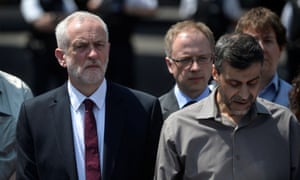
Labour party leader Jeremy Corbyn has today said that Israel’s killing of 58 Palestinian protesters and wounding of thousands more is an “outrage” and a “wanton disregard for international law”. 

He said: “Firing live ammunition into crowds of unarmed civilians is illegal and inhumane and cannot be tolerated.”

The Labour party leader also made comments on the humanitarian situation in Gaza, saying “the majority of the people of the Gaza Strip are stateless refugees, subject to a decade long blockade and the denial of basic human and political rights.

“More than two thirds are reliant on humanitarian assistance, with limited access to the most basic amenities, such as water and electricity,” he added. 

Corbyn has supported for the European Union and UN Secretary-General Antonio Guterres’ call for an independent investigation into Gaza, and long encouraged a review of arms sales to Israel.

He has previously said: “The UK government must support the UN Secretary-General’s call for an independent international inquiry into the killing of protesters in Gaza and review the sale of arms that could be used in violation of international law. The silence from international powers with the responsibility of bringing a just settlement of the Israel-Palestine conflict must end.”

His statement concluded that a return to negotiating a two-state solution is the only way to end the conflict.

Shadow Foreign Secretary Emily Thornberry was equally scathing, calling Israel’s actions “vicious and utterly avoidable slaughter” and urging an independent investigation.

Corbyn said the UK’s response was “wholly inadequate,” adding: “We cannot turn a blind eye to such wanton disregard for international law. That is why Labour is committed to reviewing UK arms sales to Israel while these violations continue.”

Labour MP Luciana Berger said America’s decision to relocate its embassy to Jerusalem was “hugely inflammatory”.

I’m currently researching and writing an in depth article on the UK’s arms trade and the implications of selling weapons and components to states with records of human rights abuse. I’m exploring the symbiotic relationship between neoliberalism and militarism. Scientific and technological research has made possible the manufacture of ever-more complex and powerful modern weaponry with such massive destructive potential and has further increased the risk of large-scale warfare and escalation into nuclear conflict. Yet the UK continues to sell weapons of mass destruction and arms components, which then inflame conflicts and further fuel proxy wars, that are already destabilising our fragile world security.

Information warfare has also gained a growing significance, exemplified by increasing US National Security Agency (NSA) and UK Government Communications Headquarters (GCHQ) global data capture, and has led reference to be made to the evolution of a “military-information complex”. 

There is a detailed list and quarterly breakdown, from Wolverhampton TUC, of UK’s arms and weapon component exports to Israel, going back years, here.

From the 2017 Department of Trade’s Strategic Arms Export Controls document, there are listed details of the exports the UK government made to Israel (page 420): 

Types of goods on licence     No. of licences       Value
Military                                            109                   £215,585,497
Non-military                                    158                  £65,428,168
Both Military and Non-military       7                  £2,545,798

Total                                                   274                 £283,559,464


For:

aircraft military communications equipment.
assault rifles (2).
ballistic test equipment.
body armour.
components for aircraft military communications equipment.
components for assault rifles.
components for ballistic test equipment.
components for body armour (2 licences) [See footnote 13].
components for combat aircraft.
components for combat helicopters (3 licences) [See footnote 23].
components for combat naval vessels (3 licences).
components for decoying/countermeasure equipment (4 licences).
T components for decoying/countermeasure equipment.
components for ground vehicle military communications equipment.
components for launching/handling/control equipment for missiles.
components for launching/handling/control equipment for munitions.
components for military aircraft head-up/down displays.
components for military communications equipment (5 licences).
components for military diving apparatus.
components for military guidance/navigation equipment.
T components for military guidance/navigation equipment.
T components for military helicopters.
components for military improvised explosive device decoying/detection/disposal/jamming equipment.
components for military infrared/thermal imaging equipment (3 licences).
components for military radars (3 licences).

components for military support aircraft (4 licences).
components for military support vehicles.
components for military training aircraft (6 licences).
components for naval electrical/electronic equipment (3 licences).
components for NBC protective/defensive equipment.
components for pistols.
components for sniper rifles.
components for submarines (10 licences) [See footnotes 18, 20, 21].
components for surface-to-air missiles (6 licences).
components for tanks (2 licences).
components for targeting equipment (4 licences).
T components for targeting equipment.
components for weapon control equipment.
decoying/countermeasure equipment.
energetic materials additives.
equipment for the development of multi-role missiles.
equipment for the production of military support aircraft.
equipment for the use of attack alerting/warning equipment (2 licences).
T equipment for the use of military electronic equipment.
equipment for the use of military radars.
equipment for the use of targeting equipment.
T general military vehicle components.
general naval vessel components (3 licences) [See footnote 22].
T high power RF weapon systems (2 licences).
T launching/handling/control equipment for munitions.
military aircraft ground equipment.
military aircraft head-up/down displays (2 licences).
military communications equipment (2 licences).
T military electronic equipment.
military equipment for initiating explosives.
T military guidance/navigation equipment.
military helmets (2 licences) [See footnote 13].
naval electrical/electronic equipment.
rangefinding equipment.
small arms ammunition [See footnote 19].
sniper rifles (4).
targeting equipment (2 licences).
technology for military communications equipment.
technology for military electronic equipment.
technology for military guidance/navigation equipment.
technology for military radars.
technology for multi-role missiles.
test models for multi-role missiles.
training small arms ammunition.
weapon sights (2 licences).
aero-engine assemblies.
T analogue-to-digital equipment.
biotechnology equipment (2 licences).
calibration equipment for guidance/navigation equipment.
civil explosive detection/identification equipment (7 licences).
civil NBC protection clothing.
civil NBC protection equipment.
components for civil explosive detection/identification equipment.
components for magnetometers.
composite structures.
corrosion resistant chemical manufacturing equipment (18 licences).
dimensional measuring equipment.
T direct view imaging equipment.
electromagnetic wave absorbing materials.
equipment for the production of gas turbines.
explosives detection equipment.
extended temperature range integrated circuits.
fibrous/filamentary materials (2 licences) [See footnote 5].
frequency changers (4 licences).
graphite materials.
helium-3.
imaging cameras (18 licences) [See footnotes 17, 25].
T imaging cameras (6 licences).
inertial equipment (3 licences).
information security equipment (28 licences) [See footnotes 10, 15, 31].
T information security equipment (3 licences) [See footnotes 27, 28].
information security software (7 licences).
instrumentation cameras (2 licences).
laser acoustic detection equipment.
lasers (2 licences).
liquid rocket propulsion systems.
machine tools.
magnetometers.
metal alloy cylindrical forms (2 licences).
T network analysers (2 licences) [See footnote 29].
neutron generators (2 licences).
nickel powders.
oscillators.
pressure transducers (11 licences).
T real-time oscilloscopes.
RF direction finding equipment.
semiconductor wafers with epitaxial layers.
T signal analysers (8 licences) [See footnotes 12, 30].
T signal generators (7 licences).
software for information security equipment (7 licences) [See footnotes 10, 15, 31].
sonar log equipment.

There have been more UK parliamentary visits to Israel-Palestine than anywhere in last two years. In total, the visits made either side of the 2017 election were worth more than £2 million, £1.2 million of which came from the Conservative side of the House. Other declarations show that Saudi Arabia, Taiwan and Hong Kong contributed to nearly half of the £1,105,490 worth of travel covered by foreign governments, offering free flights, hotels and meals to their guests.

Labour’s John Mann made trips to Israel, most were related to his role as the UK chair of the Inter-Parliamentary Committee Against Antisemitism. Nevertheless, eyebrows were raised at the discrepancy in declarations between a trip made by Mr Mann to Israel and the Palestinian Territories, said to have cost £818, and a trip to the same area, made by Hendon Conservative Matthew Offord, which he declared as costing $3,450. Offord’s visit — in April 2018 — is understood to have taken place under the auspices of the Conservative Friends of Israel.

Mann, who registered eight overseas visits on the Register of Interests in the year following the election, the most recorded by any MP, said these trips are “part of the job”.

Most trips to Israel and the Palestinian territories were covered by pressure groups including Conservative Friends of Israel, Labour Friends of Israel or Medical Aid for Palestine. And most of them were described as “fact-finding missions”, visiting both Israel and the Palestinian territories.


Britain is now the second biggest arms dealer in the world, official government figures show – with most of the weapons fuelling deadly conflicts in the Middle East.

Since 2010 Britain has also sold arms to 39 of the 51 countries ranked “not free” on the Freedom House “Freedom in the world” report, and 22 of the 30 countries on the UK Government’s own human rights watch list.

A full two-thirds of UK weapons over this period were sold to Middle Eastern countries, where instability has fed into increased risk of terror threats to Britain and across the West.

Israeli tank

Among the export licences granted to 130 British arms-makers, one is for a company selling components for Israel’s main battle tank. Photograph: Atef Safadi/EPA

Through the arms trade, the UK is complicit in the violations of Palestinians’ human rights. Despite the illegal occupation of Palestinian land, the UK remains a major arms exporter to Israel, and purchaser of Israeli weapons and technologies. More than 100 companies manufacturing and selling military equipment to Israel have offices and manufacturing plants in the UK. Many financial institutions are invested in the weapons trade and profit from it. By holding shares in companies that export military technology and weapons to Israel, and by providing and facilitating loans to companies producing such military technology and weapons, these companies are complicit in the murder of Palestinians. 

BAE systems, Rolls Royce, Boeing and Babcock are all involved in providing arms and components to Israel. Banks like HSBC are involved in financing loans for some companies, and have ties with the arms industry. 

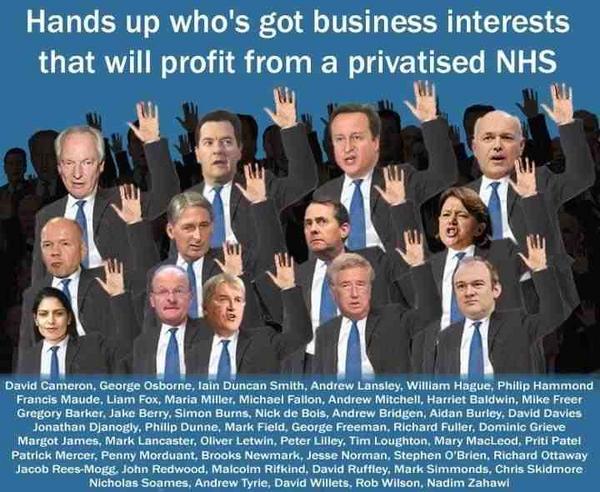
The prime minister’s husband, Philip May, works for a private investors company that is the largest shareholder in arms manufacturer, BAE Systems, whose share price has soared since the recent airstrikes in Syria. The company, Capital Group, is also the second-largest shareholder in Lockheed Martin – a US military arms company that supplies weapons systems, aircraft and logistical support. Its shares have also rocketed since the missile strikes earlier this year. 

Capital Group was also linked to the Paradise Papers scandal in 2017. News and current affairs magazine, Private Eye, suggested at the time that Philip May’s company used offshore law firm Appleby to devise investments in tax havens.

When asked at the time of the scandal about her husband’s role, a spokesperson for the prime minister told reporters: “Mr May is involved in the development of Capital Group’s retirement solutions. He is not an investor but consults with other Capital associates on retirement products and solutions for clients.”

“Capital allocation strategy” is the process of allocating financial resources to different sources to ‘maximize profits’ and ‘increase efficiency’. Overall, it is management’s goal to ‘optimize’ capital allocation so that it generates as much wealth as possible for its shareholders. This is often done using a principle of ‘blind trust’. Investments are carried out through third-party companies. “Blind” investments are unseen. Politicians often place their personal assets in blind trusts to avoid public scrutiny and accusations of conflicts of interest.

Nonetheless, there clearly ARE some serious and deadly conflicts of interest.

Image result for uk arms sales to israel


I don’t make any money from my work. I’m disabled through illness and on a very low income. But you can make a donation to help me continue to research and write free, informative, insightful and independent articles, and to provide support to others. The smallest amount is much appreciated – thank you.

DonatenowButton

The Healthcare Nudge Tax – Hubert Huzzah

Mary Seacole was a British-Jamaican business woman and nurse who set up the British Hotel in the Crimea during the Crimean War. Not as well known as Florence Nightingale, she essentially spent all of her fortune tending to the British Wounded. She was Florence Nightingale’s copay. There are a wide range of reasons why Seacole ended up going from successful Businesswoman to Poverty but the cost of nursing care was a significant contributor.

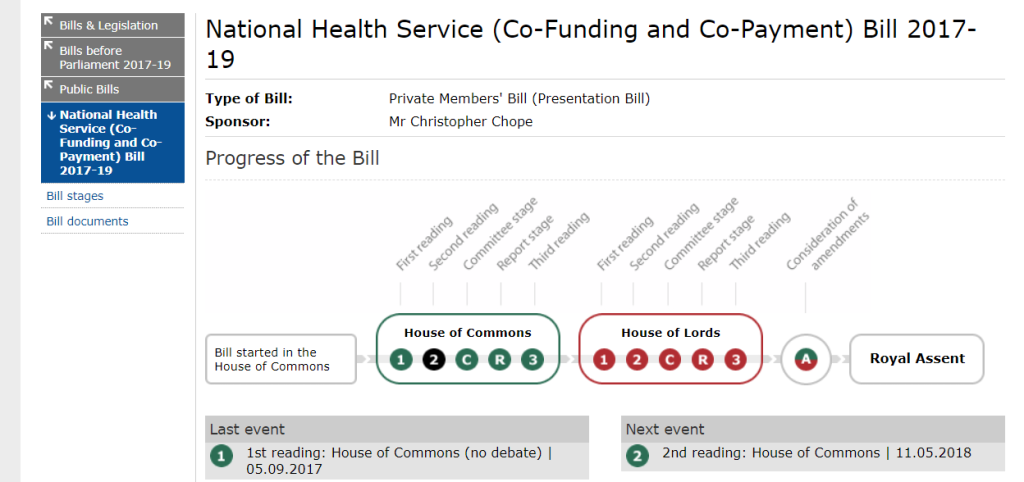
The National Health Service (Co-funding and Co-Payment) Bill 2017-2019 is seen, on the Left, as introducing something new to the National Health Service: co-funding and co-payment. This is untrue: whenever someone pays for spectacles, dental treatment or a visit to the chiropodist, that falls, broadly into co-funding-co-payment. There is no need to legislate for these things. What the Bill is seeking to create is something a lot more than simple co-payment.

Seacole paid for treatment and facilities for British Soldiers in Crimea. She lacked the social connections in Britain to do anything other than pay the full economic costs for her efforts. The important point is that Seacole was co-funding and co-paying the Healthcare provisions of Florence Nightingale. Lacking the connections of Nightingale, Seacole was obliged to pay in full, up front, the market price of nursing care. Unlike Nightingale, Seacole was not economically supported in delivering nursing care. When the Crimean War ended, Seacole came to Britain and was both well known and sympathetically received but poor. Her fortunes were only really restored by patronage and public subscriptions to her.

Sir Christopher Robert “Chopper” Chope OBE son of a Judge, pioneered the sale of Council Houses – with such aggression he became known as Chopper. As Chairman of Conservative Way Forward he has been vocal in promoting the extremes of Thatcherism even to the detriment of his own Party. As a Private Landlord, in 2014, Chope filibustered a Liberal Democrat bill, with cross party support, seeking to make revenge evictions an offence. Again, in 2015, he filibustered a private member’s bill seeking to restrict car parking charges on Carers at hospitals. His vision is resolutely Thatcherite: he steered the Poll Tax through Parliament; and, his chosen tool is the Private Members Bill. Which helped to ensure the Referendum on European Membership took place. What he does not like he talks into the ground.

Which all begs the question of why a Thatcherite former vice-chairman of the Tory Party would be presenting a bill for co-payment and co-funding since the NHS already operates a co-payment system. Indeed, why would a Member of Parliament waste time on something that already happens when there are so many other issues demanding attention. Across Europe there are a variety of ways in which Healthcare is funded. All involve some degree of co-payment.

1. No co-payments: The Netherlands and Malta.

2. Flat-rate co-payments: Austria, Italy.

3. Implied ceiling flat rate co-payment (prepayment certificate): UK.

4. Percentage rates co-payment: Belgium, France, Greece, Estonia, Latvia, Lithuania, Poland, Portugal, Slovakia, Slovenia and Spain.

5. Percentage rate co-payment with annual ceiling: Finland.

6. Uniform percentage co-payment: Cyprus, Germany, Norway.

7. Co-insurance, with percentage decreasing with accumulated expenditure over a given period and with a ceiling: Denmark and Sweden.

8. Deductible co-payment: Ireland, Sweden.

9. Many countries have explicit exemptions for certain products, as well as for some patient and socio-economic groups.

The only places with zero co-payments are the Netherlands and Malta. Co-payment is the usual European model. Co-payment intrinsically limits the amount paid and allows for exemption. Even in Belgium, France, and so on, the percentage co-payment is open to reduction by negotiation, prepayment or even poverty. Importantly, co-payment takes place at the point of delivery. There is always a way to avoid the refusal of treatment with co-payment. The Economists explanation of co-payment is that it provides an entry cost into the Healthcare Market for the Healthcare recipient which avoids moral hazard. Moral hazard occurs when someone increases their exposure to risk when insured because they are insured. It is the accusation placed against the Banks in 2007. When there were claims Banks were ‘too big to fail’, the claims of moral hazard disappeared. Moral hazard only applies if you are, economically, small, according to policy makers. Fundamentally, co-payments across Europe have been about ensuring equity that is fairness not avoiding moral hazard.

Co-payment as a mechanism for ensuring fairness have always been viewed with suspicion by health economists because co-payment leads to value based pricing of healthcare. Value Based Pricing is distinct from Cost Based Pricing in placing a price onto goods or services based on the value to the purchaser not the cost to the provider. Cost Based Pricing determines how much the time and materials a service or goods cost, a profit margin is applied and the buyer charged.

Buyers of Cost Based Pricing products can always push prices down towards cost. The slogan Think like a patient, act like a taxpayer is being repeated, mantra-like, by close friend of Boris Johnson and former president of United Health Group Inc. – an American commercial health company – as the head of NHS England. It is intended to justify the moving of 36 treatments out of the NHS into a purely co-funded basis. Unlike co-payment, co-funding is never waived. Co-funding ensures that there is a fundamental shift in the relationship between Doctor and Patient.

Since 1948, the NHS has operated on the basis that a Doctor makes a decision about the treatment for a Patient and the Patient receives that treatment from the NHS. The decision involves no third parties. Under a co-funding healthcare model – the decisions about the value of the therapy are made by the Third Party Payee. That Third Party Payee both determines the pricing and the availability based on assessments of value. The Third Party explicitly shapes prescribing decisions through various guidelines and incentives. This is the general system that operates in the US where people think like a patient and act like a premium payer – because the tax paid is a premium paid to an Insurer. The difference between the experience of Florence Nightingale and Mary Seacole is the difference between co-payment and co-funding.

Florence Nightingale could decide on any treatment she wished to give to the Troops. When she did so, she could appeal to sponsors and donors to pay for those treatments. Mary Seacole recommended the treatments that she was experienced with which were particularly around communicable diseases such as cholera. Unless she could find an approving donor, she was obliged to pay out of her own funds. Lack of social connections and her acceptance of the need for Soldiers to have a social existence kept donations at a distance.

Both Nightingale and Seacole were operating on a cost based pricing model and the outcome for both were, economically, different. Both Nightingale and Seacole were accepting payments from those they treated but Seacole would waive fees for those who could not pay or if it served the health of others around that person for them to be treated. She was forced into co-funding of treatments because failing to treat cholera simply because someone cannot pay promotes the spread of cholera. It was that utilitarian compassion that made Seacole a national hero. It was also the success of her approach – that of broadly socialised medicine – that helped to galvanise the Far Right of the Conservative Party into demanding Seacole was removed from the national curriculum and to rabid opposition to her statue being erected as a memorial on NHS Property.

Legitimately, there are those who point out that the Tories are racists who have a problem with Black People from the Caribbean in the Health Service. That point is hugely important but ignores that Seacole was obliged to be a completely commercial healthcare provider which bankrupted her. The fundamental problem was not simplistically racism but that private healthcare simply fails to work. Which illustrates the kind of smokescreen that the Tories adopt: nudging people into an argument about one thing when the real issue is elsewhere: talk about racism and lose the NHS or talk about the NHS and suffer racism.

There is no mistake in saying that the Cosmopolitan nature of British society outside Whitehall and the Establishment is what created the NHS, and that Mary Seacole was an important step along the path to the 1948 Act; but, that distracts from what the National Health Service (Co-funding and Co-Payment) Bill 2017-2019 sets out to achieve.

Mary Seacole illustrated what happens when co-payment and co-funding coexist: someone goes bust. Co-payments are limited and, despite being almost universal in their enforcement, can be waived. Poor people should not die because they are not poor. Introducing co-funding ends the capacity to waive a co-payment. Co-payment is a gateway to full co-funding. Co-payment establishes a threshold price and the result is a shift from Cost Based Pricing to Value Based Pricing. Healthcare co-payment, connected to co-funding, nudges policy from Cost Based Healthcare to Value Based Healthcare by claiming that a Value Based Price should be “largely consistent with the values and preferences of the vast majority of the insured population”.

Value Based Pricing sets a prices according to the value of a product or service to the Payer rather than according to the cost of the product to the Seller. There needs to be no connection to cost based prices or even historical prices. The aim is simply to increase profitability without a need to increase sales volumes. Which is essential in commercial healthcare where successful treatment reduces the need for treatment and failed treatment removes customers from the market.

Value Based Pricing principally works in to the benefit of the Seller. It relies on the perceptions of the Buyer which leads right back to Nudge Theory. For Value Based Pricing the single most valuable emotion is not desire but fear. Realistically, it is Fear Based Pricing that relies on the Buyer being in fear of not obtaining the product. Co-payments create low level fear yet co-funding not only creates low level fear in the short term but reinforces that fear in the longer term. Which creates the environment for perpetual nudge. Value Based Pricing leads to such things as Surge Pricing as operated by Gig Economy Apps such as Uber. Surge Pricing raises price when there is higher demand because there is higher fear of not being able to obtain the service. For the Health Service that kind of Surge Pricing would be apparent around “flu season” or communicable disease outbreaks.

Value Based Pricing is not only about maximising profit but also acknowledge to be associated with high levels of fraud. Co-funding creates a purely Value Based Pricing market place, meaning that co-payments are, at best, a loss leader. With the current Co-payment system in place, it would be possible for a Pharmacist to look at a prescription and tell the Patient that a cheaper over the counter alternative exists. The same would be possible with a General Practitioner: it would be possible for a General Practitioner to recommend a box of generic paracetamol at twenty pence instead of a prescription at three pounds eighty.

Under a system where Co-funding and Co-payment are both present, it is normal for both General Practitioners and Pharmacists to be contractually unable to give any pricing advice whatsoever. Indeed, the American Medical Association, found that 28% of prescriptions for generic drugs included an element of overpayment and 6% of branded drugs included an element of overpayment. The prescription has become, for a good many Americans a nudge into purchasing. The General Practitioners and Pharmacists have terms and conditions dictated by a third party: which is the outcome of marketplace healthcare.

Overpayment at the point of dispensing is counted as healthcare fraud. The FBI estimates that Health Care Fraud costs American tax payers $80Bn/y. Of this amount $2.5Bn was recovered through the False Claims Act in the Financial year 2009-2010 at the cost of paying out $0.3Bn to whistle-blowers. Prescription fraud is not the only source of fraud. Wherever there is a mixture of co-payment and co-funding, there is an elevated level of fraud. This includes Billing for services not rendered, overcharging services and items through computer coding, duplicate charges for items, unbundling treatment packages and charging for individual items, excessive and unnecessary services as well as bribes and falsified medical records.

In fact, where there is fraud in any Healthcare System there is a reduction in life expectancy for Healthcare users. This is particularly evident where medical records are falsified for any reason. The single biggest source of fraudulent activity is around Third Parties being involved in the Patient-Doctor relationship.

The annual cost of Fit To Work assessments, in general, was expected to rise to £579m in 2016-17, it did so. Part of that rise was due to Atos walking away from a contract as Third Party to the Doctor Patient relationship for sick and disabled people. Each employment and support allowance (ESA) test had a price hike from £115 to £190 in order to continue doing them. This was hailed as being contracting out of public services when, in fact, it was the invention of a whole new service, already carried out by General Practitioners, in order to create a Third Party to the relationship between Doctors and Patients. The track record of that relationship has been abysmal – the majority of decisions based on the Third Party are overturned by an appeals process. The important thing is not to be distracted by the large, growing, literature and documentation of rising death rates, suicides and failed decisions but to focus on the entire Work Capability Assessment (WCA) being a government contract with Key Performance Indicators (KPI) that drive organisational behaviours.

By walking away from the contract, Atos demonstrated that the DWP were locked into a Value Based Pricing contract and so the 65% price hike from £115 to £190 is perfectly understandable. The simple reason that the Government paid up was that the assessment price was a co-funding arrangement.

The National Health Service (Co-funding and Co-Payment) Bill 2017-2019 sets out to achieve the institutionalisation of co-payment and co-funding into the NHS. Currently Co-payment exists but there is no lever to be pulled that can nudge Patients into behaving as Consumers. In articles about the frequency and magnitude of co-payments exceeding prescription costs, there is frequently expressed the concern that Consumers are prevented from knowing the full nature of the relationship between themselves and the Third Party. For example, Pharmacists and General Practitioners can be placed into a non disclosure relationship with the Third Party where they cannot be told of a better and cheaper treatment. Because the Third Party manages the relationship between Doctor and Patient. Surveys among US Independent Pharmacies indicate that, despite denials, this is common practice. Which makes perfect sense in an economy that is being pushed into Value Based Pricing even if it is reprehensible behaviour.

The promotion of Value Based Pricing into UK Healthcare is not simply about making a profit. It also seeks to promote behaviour change. To change the behaviour of all NHS Patients into being NHS Customers. Without institutionalised co-funding and co-payment as paired policies, turning Patients into Customers becomes an uphill struggle. Christopher Chope navigated the Poll Tax through the Commons, changing a property based taxation into a person based taxation. It turned out badly, yet neither he nor his opposition dwell upon the fundamental change of relationship between Electorate and Local Authorities that it created. The National Health Service (Co-funding and Co-Payment) Bill 2017-2019 has a far bigger impact.

Martin Shkreli, infamous for hiking the price of Tiopronin (trade name Thiola) from $1.30 to $30, caused outrage demonstrates the power of Value Based Pricing. In 2015, in Shkreli’s company acquired Daraprim: an out of patent drug with no generic version available. The price of a dose of the drug in the U.S. market increased from US$13.50 to US$750 per pill. In interviews, Shkreli explained that co-payments would be lower for patients as the new owner of the drug ensured many patients would get the drug at no cost, through a free drug program, and that it sold half of its drugs for one dollar. Which were all technically correct statements.

What they actually revealed was how dysfunctional co-payment becomes in the presence of co-funding. Co-funding introduces the Third Party to the Doctor Patient relationship. Which is already understood to be dysfunctional from the outcomes at the DWP. Importantly co-funding introduces a Choice Architecture into healthcare which makes future healthcare subject to the Libertarian Paternalism of Nudge.

Value Based Pricing is generally acknowledged to lack intellectual honesty. In reality it is a matter of charging what you can get away with not what the product or service costs. Organisations who deliver a product on a Value Based Pricing basis often push Cost Based Pricing onto their supply chain resulting in inflation of profits. In a commercial environment this is poor treatment but in a Healthcare environment it unsustainable poor treatment that kills the customer base as well as the supplier base.

Combined with co-funding, it locks new market entrants out and so ends the possibility of the NHS reducing costs. In that sense, locking co-payment and co-funding together is little more than an invitation to fraud. While Value Based Pricing is controlled by, for example, the National Institute Of Clinical Excellence (NICE), the advocacy is in favour of the Electorate. NICE might well make unpopular decisions but the are decisions that are rational and internationally respected. Passing Value Based Pricing decisions to a Third Party – as happened at the DWP – changes the advocacy to be for the owners of the treatment.

The National Health Service (Co-funding and Co-Payment) Bill 2017-2019 sets out in a deceptively simple amendment to Section 1 followed by an equally simple looking amendment to section 12E of the National Health Service Act 2006. The overall impact is to change the relationship between the NHS and the Patient:

the making and recovery of charges is expressly provided for by or under any enactment, whenever passed”

Allows the Government to introduce charging by Statutory Instrument. A process that takes a week or so. This would allow for charges to be put in places for any treatment, drug, appliance or activity of the NHS by placing a document with the preamble: “In exercise of the powers conferred on me by The National Health Service (Co-funding and Co-Payment) Bill 2018, I hereby make the following Order:” At which point any charge can be placed into effect. The Statutory Instrument simply needs to remain unchallenged for 40 days and it becomes Law. The last occasion that the House of Commons annulled a Statutory Instrument was in 1979. So, whenever a Statutory Instrument is passed into law, NHS Charges to the Patient could be changed. Which simply means that all that is required is an active Lobbying Group and any NHS Tariff could be amended or even new ones created.

Which is not simply about nudging people to eat less sugar or cease smoking. It is about nudging Legislators to slavishly implement Value Based Pricing decisions of a wide range of goods, products, services, treatments and activities of the NHS. While this seems localised to the UK, the truth is the pricing of Drugs and Treatments in the NHS affects purchasing decisions in 40% of the World’s Health Services. Value Based Pricing in a global market is easier if your product is being sold at a premium in an influential local market. The creation of an institutional nudge has immense, global, commercial value. Lobbying in the UK would avoid scrutiny in, for example, the US but the outcome would be the same: Value Based Prices could rise in America. By nudging Legislator rather than end Customer, the cost of nudging is significantly reduced and the impact is far greater. Not only is the nudge guaranteed to work but it has the force of law to prevent it being dismantled.

The NHS has one of the price drug regimes in the World. Co-payment already exists and needs no legislation to be introduced: it is as simple as asking a General Practitioner to prescribe and asking the price. The National Health Service (Co-funding and Co-Payment) Bill 2017-2019 is not about kite flying or testing the waters or increasing choice for patients but about ensuring that Lobbyists are the Third Party getting between Doctors and Patients not only in the UK but right across the World.

What The National Health Service (Co-funding and Co-Payment) Bill 2017-2019 will promise is more choice and better, cheaper care. The experience in the US where co-payment and co-funding is in place is that Health Tourism increases – people find it cheaper to travel to Canada to get a prescription filled – and fraud rises; but, much more importantly, Healthcare ceases to be about health and becomes a significant way for Third Party Investors to manage social behaviour. The biggest Nudge possible: locking everybody into your marketing plans.

In the same way as Martin Shkreli could claim a price rise was a price fall on the basis of complex Value Based Pricing calculations that are commercial secrets, The National Health Service (Co-funding and Co-Payment) Bill 2017-2019 makes commercial secrets obligatory through Statutory Instruments, which not only ensures the NHS is privatised but that the Privatised NHS promotes healthcare cost rises across the planet.

It has been suggested that The National Health Service (Co-funding and Co-Payment) Bill 2017-2019 should be filibustered into oblivion. That would not end the drive toward Privatisation. It would also not prevent the Bill from being presented again in a similar but different form. This is the experience of the Poll Tax: it was never popular but it was navigated towards legislation by careful use of procedure. Similarly the progress of the European Referendum was navigated by the careful use of Private Members’ Bills. The National Health Service (Co-funding and Co-Payment) Bill 2017-2019 is simply another example of the well tried technique of Thatcherite MPs. This time it embeds nudge into a central Institution of Society: the NHS. The Bill should be utterly repudiated and, along with it, the underlying presumption that the entire population can be nudged and deceived and their health manipulated for profit.

Article by Hubert Huzzah

Picture: Statue of Mary Seacole (Grounds of Saint Thomas’s Hospital London). Martin Jennings 2016.


Related

Private bill to introduce further charges to patients for healthcare services is due for second reading today


I don’t make any money from my work. But you can make a donation to help me continue to research and write free, informative, insightful and independent articles, and to provide support to others. The smallest amount is much appreciated – thank you.

DonatenowButton

A response to a critical response to my recent article about antisemitism

Image result for antisemitism

Jim Denham has written a response to my recent article about antisemitism – Antisemitism on the left and in Labour: a reply to Kitty S. Jones. Jewish Voice for Labour published my piece on their site last week.

I’ve written a response to Jim’s response, as there was a strong element of straw man rhetoric in his article – a technique where someone distorts or oversimplifies their opponent’s propositions, reasoning and arguments, in order to make it easier to attack them, and there was an identifiable ad hominem type of “guilt by association” fallacy in play, too. 

I responded with the following: 

Hi Jim,

Good to see we do have some common ground [in that we agree that Marc Wadsworth should not have been expelled from the Labour party].

I just want to raise a couple of points here.

Firstly, you say “what terrible arguments these are for a left winger to be using”. Well I cited RESEARCH, which is evidenced to verify my comments. That isn’t a “terrible argument”, it’s a reasonable one. There is other research too, which says the same thing. Facts matter, inferences, moralising, value judgements and wild assertions reflect someone’s beliefs and assumptions, not facts.

There are a couple of separate issues here that I want to highlight. One is that there is antisemitism within the Labour party. Another is that there has been growing antisemitism within our society in the UK, and wider Europe for some years – and by 2014, it had reached the highest level since records began here. It was quite widely reported in the media at the time.

Back in 2014, I was also raising concerns in my own work about the dangers of racism, antisemitism, a general growth in social prejudice – including a rise in hate crime and discriminatory policies directed against disabled people – and how toxic the encroaching political parochialism and narratives entailing strategic group divisions are for our democracy, how potentially dangerous and devastating for citizens’ wellbeing. I referred to Gordon Allport’s work a lot, too, which was based on his study of the cultural, social and political processes that resulted in the Holocaust.

Labour have the highest party membership. Among that membership are people with antisemitic views. I have seen some of the conspiracy types of antisemitism myself during the 2015 GE campaign among the left. However, a group of those were then in the Green party (as members). Going off research and the most recent parliamentary inquiry, there is no evidence that antisemitism is any higher in the Labour party than it is in society. That’s despite a high level of scrutiny that none of the other Parties have been under. Again rigorous evidence is important rather than opinion. Demanding rigorous evidence does not mean I am denying a problem exists. To imply that is the case is absurd.

The evidence is very important because it is needed to support the Party in addressing how to best deal with genuine and bogus complaints. We have already seen Marc Wadsworth expelled from the party, and we both agree that from the footage, he did not make an antisemitic comment, as he was originally accused. His expulsion does nothing to help us address antisemitism. Nor does the continued jeering, smearing and discrediting of the Party, members and in particular, the leader.

My saying that does NOT mean 1) I don’t care about antisemitism 2) I’m denying it exists or 3) I am trivialising it. It’s a logical fallacy to make those accusations of reasonable and evidenced observations and to make such irrational inferences from them. This is an ad hominem fallacy, a variant of “guilt by association”: informal inductive fallacy of the hasty generalisation or red-herring type and which asserts, by irrelevant association and often by appeal to emotion, that qualities of one thing are inherently qualities of another.

For the record, I feel very strongly about antisemitism, I challenge it wherever I see it, and treat other kinds of prejudice in the same way. I simply don’t tolerate prejudice. Ever.

I care very much about antisemitism and those people in the Party who have antisemitic beliefs must be dealt with, as they have no place in a Party that is founded on principles of equality and diversity. [That does require a Hearing process, where allegations and evidence are considered objectively and fairly, followed by appropriate, commensurate action]. 

Yesterday, someone flagged up a person on Facebook who claimed to support Jeremy Corbyn. He had attacked one of my friends (a Jewish writer), making offensive antisemitic comments. A group of us found a few Facebook accounts by the same person, and on further examination, it turns out he was previously a Margaret Thatcher supporter. He is very racist, and was clearly setting up accounts to troll people. I reported him, nonetheless, to the Party, but doubt very much that he is a member.

He blocked me when I challenged him. I reported him to Facebook, too, and warned others about him via a status update. I’m wondering how many more fake accounts there are on social media, claiming to support Labour, but who aim to discredit the Party instead.

Another important issue is that the debate about antisemitism IS being politically exploited. By the government, by the complicit media and by several Progress MPs. Saying that does NOT entail denying antisemitism exists within the Party. I have already acknowledged it exists. It is a discrete issue. These two propositions do not contradict or negate each other, they co-exist.

Both propositions are equally true. However, the way this has been played strategically – and you’ve done it yourself, Jim – whatever the response is from the Party and members, it is immediately put into the same contexts of either “denial”, “justification”, “whataboutery” or “trivialising”, and even worse, people are being accused of “collaborating” or of  being an “apologist” for antisemitism.

Yet those are emotive, deeply personal attacks, based on fallible inferences with no empirical grounding and large logical gaps. They are not rational and evidenced arguments. They are also, all too often, politically loaded and motivated.

The truth is that 1) antisemitism exists within society 2) antisemitism exists within the Labour party 3) the response we give, no matter how reasonable or well-evidenced, is strategically condemned 4) the antisemitism is being used politically by those who don’t approve of Corbyn’s left of centre politics. ALL of those things are discrete truths. They are co-existing facts. 

Pointing these issues out does NOT mean I am denying that antisemitism exists in the Party, and how dare you or anyone else imply I don’t care about it.

Those who don’t like Corbyn have bent over backwards to make all of this somehow his fault. Yet the problem existed before Corbyn became Party leader. Again, that is evidenced. It seems to me that both Corbyn and members are being bullied into “confessing” that the Party is “rife” with antisemitism. If we present rational debate and evidenced, reasoned comments, we are then accused of denying the problem. If we focus on discussing what we are doing about antisemitism, both personally and within the Party, that is taken as an admission of guilt – that antisemitism is “rife” in the Party.


It’s been reduced to an either/either. Either way, the outcome of all this is being manipulated, and no matter what the Party does or says – no matter what evidence arises, too, that supports what is said and proposed – we are still condemned. The narrative does not change, nor do the allegations. There is no outcome that does not entail a condemnation of Party and leader. There are many people making sure of that. 

It’s a form of political entrapment and bullying [as I outlined in the original article]. This is being carried out on the basis of political beliefs. People on the left ARE being attacked and bullied on social media and in the mainstream media. Apparently this behaviour is acceptable for some people, who are claiming to condemn others for the same behabiours. However, attacking people on the basis of their political beliefs is NOT OK. Our Human Rights Act – Article 10 – outlines this. One form of prejudice, discrimination and harassment does nothing to address another.

My article also explores how all of this has split Jewish communities further, too. That split is marked by ideological differences, and I have seen right-leaning Jewish groups going out of their way in discrediting and outgrouping left-leaning ones. I have seen moderates and media commentators make antisemitic comments about left-leaning Jewish groups in order to discredit and silence them. I provided examples as evidence in my article.

That kinda evidences my key point.

Hope I have clarified my thoughts on this a little more. If you need any more evidence – I found an article about Luciana Berger’s experiences of antisemitism on social media, dated 2014, for example – let me know.

Best wishes, Jim.

Sue.

A further reply

I haven’t touched on the Israel/Palestinian conflict in my own piece. It’s an article, rather than a book… (!) However, I will say that I have observed the conflation of “Zionism” with the conflict. Whenever I encounter this, I point out what Zionism is, and why it is wrong to equate the actions of the Israeli government and military with Zionism and with Jewish people more widely. Some people don’t understand what Zionism means. I’ve found that simply explaining it helps address the lack of understanding better than attacking someone for what they do not know.

I think in your haste to portray some on the left as “uneducated”, with no grasp of Marx and capitalism, you have also stereotyped working class people on the left more widely, and as I said previously, you cannot fight assumption, prejudice and stereotypes by presenting more assumption, prejudice and stereotypes.

We have to take a prefigurative position – you know, be the change you want to see. If you want to live in a world that values diversity, where people are treated with equal respect and each is regarded as having equal worth as human beings, regardless of their group membership and characteristics, you have to practice those principles yourself, first.

Related

Marginalisation of left leaning Jewish groups demonstrates political exploitation of the antisemitism controversy by the right wing – Politics and Insights


I don’t make any money from my work. But you can make a donation to help me continue to research and write free, informative, insightful and independent articles, and to provide support to others. The smallest amount is much appreciated – thank you.

DonatenowButton

Briefing Note: Update on the Salisbury poisonings – the Working Group on Syria, Propaganda and Media

Related image

Earlier this year in Salisbury, following the poisoning of Sergei and Yulia Skripal.

The multinational working group on Syria, propaganda and the media has been established to facilitate research into the areas of organised persuasive communication (including propaganda and information operations) and media coverage, with respect to the 2011-present conflict in Syria, including related topics.

The group is entirely independent, open to academics and independent researchers and is not aligned to any state or non-state actor. In line with ethical expectations, the research group is committed to the upholding of international law and human rights norms.

The group aims to facilitate networking, the development of research papers and research grant bids and to provide a source of reliable, informed and timely analysis for journalists, publics and policymakers.

The aims are to be accomplished through a commitment to the production of rigorous and independent research, examining carefully the various accounts of the conflict in Syria to build an empirically grounded account both of the conflict itself and of the apparatus, practice and content of organised persuasive communication (including propaganda) in relation to the conflict. It is vital in any such endeavour that all available information, and all reputable or appropriate scientific research methods, are utilised to contribute to evidence-based accounts of the conflict and the war of words that accompanies it.

The working group have published the following briefing note: Update on the Salisbury poisonings:- 

The following briefing note is developed by academics researching the use of chemical and biological weapons during the 2011-present war in Syria. The note reflects work in progress. However, the substantive questions raised need answering, especially given the seriousness of the political situation in the Middle East and UK-Russian relations. We welcome comments and corrections.

Authors: Professor Paul McKeigue, Professor David Miller and Professor Piers Robinson (piers.robinson@sheffield.ac.uk/+447764763350).

Working Group on Syria, Media and Propaganda (syriapropagandamedia.org).

Key points

  • The Skripals were exposed to a phosphoroamidofluoridate compound named A-234, of high purity indicating that it was most likely prepared for research purposes.
  • A-234 or similar compounds have been synthesized at bench scale by national chemical defence labs in Russia and the US in the 1990s, and more recently in Iran and Czech. A small quantity of A-234 from a Russian state lab was used in the murder of Ivan Kivelidi and Zara Ismailova in 1995.
  • No data on the toxicity of A-234 are available in the public domain. The police statement that the Skripals were exposed through contact with their front door is implausible as there are no known nerve agents that cause onset of symptoms delayed by several hours, and it is improbable that absorption through the skin would cause both individuals to collapse later at exactly the same time.
  • Although Russia is one of several countries that have synthesized A-234 or similar compounds, there is no evidence other than Vil Mirzayanov’s story that these compounds were ever developed (implying industrial-scale production and testing of munitions) for military use. Mirzayanov’s credibility as an independent whistleblower is undermined by his role in a Tatar separatist movement during 2008-2009, backed by the US State Department.
  • There are multiple indications that the UK is hiding information:- 
    • the withholding of the identity of the compound as A-234. For example, the UK statement to the OSCE 12 April 2018 states only that ‘ the name and structure of that identified toxic chemical is contained in the fall classified report to States Parties’. See also this briefingThe Chief Executive of Porton Down, in his statement 3 April, referred to the compound only as ‘Novichok’.
    • the withholding of information about its toxicity
    • the issue of a Defence and Security Media Advisory notice on the identity of Skripal’s MI6 handler and the attempt to conceal or deny his role in Orbis Business Intelligence.
    • the sequestration of Yulia Skripal.
  • The UK government’s case against Russia, stated in a letter to NATO, is based on asserting that “only Russia has the technical means, operational experience and motive for the attack on the Skripals”. Each of these points is open to question:- 
    • Technical means: it is not seriously disputed that compounds such as A-234 can be produced at bench scale in any modern chemistry lab. 
    • Operational experience: it is alleged that Russia has a track record of state-sponsored assassination, but this is not enough to support the assertion that “only Russia” could have enough experience to attempt unsuccessfully to assassinate two unprotected individuals. 
    • Motive: No other attempted assassinations of defectors from Russian intelligence services have been recorded. Even if such an assassination campaign had been ordered, the Russian state would have good reasons not to initiate it in the first half of 2018. In contrast there are obvious possible motives (outlined below) for other actors to have taken steps to silence Sergei Skripal at this time. 

What was the agent used?

An early report that the hospital was dealing with poisoning caused by an opiate such as fentanyl was most likely based on the initial working diagnosis.  Signs of organophosphate poisoning – constricted pupils, vomiting, reduced consciousness and reduced breathing – could easily be mistaken for opiate overdose, usually a more likely diagnosis.  OPCW has stated that the BZ detected by the Swiss Federal Institute for Nuclear, Biological and Chemical Protection in one of the samples sent by OPCW was not from Salisbury but was in a control sample.

The Russian ambassador reported that on 12 March the Foreign Secretary had told him that the nerve agent used against Mr and Ms Skripal had been identified as A-234.   The OPCW report issued on 12 April did not identify the agent but stated that they had confirmed the identification made by the UK and that this identification had been included in the confidential report provided to “States parties”. 

On 14 April the Russian Foreign Minister stated that A-234 had been reported by the Swiss Federal Institute for Nuclear, Biological and Chemical Protection that was one of the four accredited labs used by OPCW to analyse the Salisbury samples.

Based on public reports, a ChemSpider record for A-234 has been created which assigns it the IUPAC name ethyl [(1E)-1-(diethylamino)ethylidene] phosphoramidofluoridate. Its predicted vapour pressure is very low indicating that it is predicted to be non-volatile. No information on its stability is available.   

The OPCW director Uzumcu stated in a newspaper interview that the agent “seems to be very persistent,” and “not affected by weather conditions”.  This was confirmed the next day by an OPCW press statement that: “the chemical substance found was of high purity, persistent and resistant to weather conditions”.  Ian Boyd, the chief scientific adviser at the Department for Environment, Food and Rural Affairs, was reported to have stated:  “The chemical does not degrade quickly.  You can assume it is not much different now from the day it was distributed”.  No experimental studies of the stability of A-234 have been reported.

Who could have produced A-234 in bench-scale quantities?

It is no longer seriously disputed that, as noted in our earlier briefing, any well equipped university lab can synthesize and purify such chemicals at bench scale.  OPCW reported that the agent (presumably A-234) was of high purity with “almost complete absence of impurities”.   This suggests that it was from a batch that had been synthesized for research, rather than for assassination purposes where it would be unnecessary to purify the agent.

Uzumcu stated in an interview with the New York Times that he had been told by UK officials that 50-100 grams of the agent was used.

“For research activities or protection you would need, for instance, five to 10 grams or so, but even in Salisbury it looks like they may have used more than that. Without knowing the exact quantity, I am told it may be 50, 100 grams or so, which goes beyond research activities for protection”

OPCW quickly contradicted this in a statement that “OPCW would not be able to estimate or determine the amount of the nerve agent that was used in Salisbury on 4 March 2018. The quantity should probably be characterized in milligrams”.

Who has studied A-234 or similar compounds?

Bench-scale research on the toxicity of agents that might be used in chemical warfare is entirely legitimate under the Chemical Weapons Convention, and does not have to be declared to OPCW.

  • Russia

Since our last briefing note, more material from the investigation of the Kivelidi poisoning has been published by Novaya Gazeta, updating the earlier article published on 22 March

The second article includes an image of the mass spectrometry profile of the sample recovered from the telephone handset, which matches that submitted by Edgewood to the NIST98 mass spectrometry database. 

The Russian experts who commented on the original result appear not to have had access to the mass spectrometry profile of A-234, and to have incorrectly reconstructed the structure from a best guess, based on the mass-charge ratios of the fragments, as something like the GV agent (both agents have molecular mass 224 daltons, and a 58-dalton fragment).  

This establishes that Russia had synthesized this compound at bench scale by the mid 1990s, but does not confirm that it was ever developed for military use as alleged by Mirzayanov.

  • US

1997 newspaper article refers to a secret US army intelligence report referring to Russian development of A-232 and its “ethyl analog” A-234, indicating that the designation of these compounds and their structures was known to the US by this time. As noted in our last briefing note, the Edgewood lab submitted a mass spectrometry profile for A-234 to the public database NIST98, which was current from 1998 to 2001.

A patent application submitted by a US government lab in 2008 mentions “Novichoks”, but examination shows that the structures given for these compounds were the dihaloformaldoxime structures previously published as supposed “Novichoks”, not the phosphoramidofluoridates published by Mirzayanov later in 2008.   This does not indicate that the applicants were studying these compounds – most likely they included them to make their patent as broad as possible.

  • Iran and Czechia

study from Iran published in 2016 reported synthesis for research purposes of a compound similar to A-234, differing from it only by the presence of methyl instead of ethyl groups.  In an interview with Czech television, President Zeman stated that in November 2017 the related compound designated A-230 was studied at the Brno Military Research Institute.

  • Other labs

The director of Porton Down has declined to comment on whether Porton Down has stocks of A-234 for research purposes. The OPCW labs that identified A-234 in the specimens from Salisbury were most likely matching it against a mass spectrometry profile in OPCW’s Central Analytical Database.

What is known of the toxicity of A-234?

No data on the toxicity of A-234 are available in the public domain.  The printout of the entry in the NIST 98 database appears to cross-reference an entry in the database RTECS (Registry of Toxic Effects of Chemical Substances)but no entry for this compound now exists in RTECS.

Why was the structure of A-234 revealed?

The structure of A-234 was revealed in a book by Vil S Mirzayanov in 2008, some 13 years after he had emigrated to the US with the story of a secret programme to develop chemical weapons of a class named “Novichoks”. During 2008-2009 the US government, with an active part for the Secretary of State Hillary Clinton, was encouraging the development of a separatist movement in Tatarstan.  As part of this, Mirzayanov was declared head of a Tatar government-in-exile in December 2008.    The publication of his book may thus have been part of an effort to build up Mirzayanov’s status as a dissident.  His role in this operation may explain why subsequent discussion of his book by OPCW delegates was closely monitored (and discouraged) by the US State Department.   Mirzayanov’s involvement in this operation undermines his credibility as an independent whistleblower.

When and where were the Skripals exposed to A-234?

A summary of the different versions on which journalists were apparently briefed by security sources was given by the Russian embassy:-

– The Skripals could be sprayed with poison by attackers in the street (Daily Mail, 6 March, source: “Anti-terror police”).

– The nerve agent could be planted in one of the personal items in Yulia Skripal’s suitcase before she left Moscow for London. According to this theory the toxin was impregnated in an item of clothing or cosmetics or else in a gift that was opened in the house of Sergei Skripal in Salisbury, meaning Yulia Skripal was deliberately targeted to get at her father (The Telegraph, 15 March, source: “Senior sources in the intelligence agencies”).

– The nerve agent could be planted in the air conditioner of the car of Skripals (Daily Mail, 19 March, source: “Security expert Philip Ingram”).

– The Skripals could be poisoned through buckwheat that Yulia Skripal had asked her friend to buy and bring for her father, because she had forgotten to pick up the grocery gifts herself (The Sun, 1 April, source: “British investigators”).

On 28 March the police announced that “at this point in our investigation, we believe the Skripals first came into contact with the nerve agent from their front door”.  

Although it is possible that a nerve agent could be prepared in a formulation that would be absorbed only slowly through the skin, it is implausible that two individuals exposed through contact with the front door would have received doses that caused them to collapse suddenly and so nearly simultaneously that neither had time to call for help, at least three hours later. 

It is more likely that they were attacked shortly before they were found collapsed on the park bench.

Sergei Skripal’s link with Orbis: possible motive for murder

In the first few days after the poisoning there were media reports that Sergei Skripal had been in regular contact with his MI6 handler,  whose Linked-In profile had stated that he was a consultant for Orbis Business Intelligence.  It appears that this  profile was deleted by March 7, and a Defence and Security Media Advisory Notice was issued to caution journalists against disclosing the identity of this consultant. 

However at Skripal’s trial in 2007 his MI6 handler had been identified as Pablo Miller, and the link between Skripal and Miller had been described in detail by Russian opposition media on 6 March.

This link between Skripal and Orbis may be relevant to the dossier compiled by Christopher Steele, the founder of Orbis, containing derogatory information on Donald Trump’s alleged ties to Russia.  This dossier had been used by the FBI to apply for a Foreign Intelligence Surveillance Act court order authorizing surveillance of Trump’s campaign.  By early 2018 the unravelling of this story was creating serious difficulties for Steele and for those he had worked with. 

These difficulties included a referral for criminal investigation by two US Senators, a libel case in the US against the publisher of the dossier which had led to a court ruling that Steele should be questioned in an English court, and a libel case in England against Orbis and Steele.  It is not difficult to postulate a situation in which the potential for damage to US-UK relations could have provided a motive for actors on both sides of the Atlantic to ensure that Sergei Skripal would not be available to give evidence.

The UK government’s position

This was summarized in a letter from the National Security Adviser, Sir Mark Sedwill to the NATO Secretary-General on 13 April 2018.   Sedwill’s letter made several assertions that were substantiated only by “intelligence”:

  • By 1993, when Russia signed the Chemical Weapons Convention, it is likely that some Novichoks had passed acceptance testing, allowing their use by the Russian military
  • Russia further developed some Novichoks after ratifying the convention
  • During the 2000s, Russia commenced a programme to test means of delivering chemical warfare agents and to train personnel from special units in the use of these weapons. This programme subsequently included investigation of ways of delivering nerve agents, including by application to door handles. 
  • In the mid-2000s, President Putin was closely involved in the Russian chemical weapons programme
  • Within the last decade Russia has produced and stockpiled small quantities of Novichoks

Appearing before the House of Commons Defence Committee on 1 May, Sedwill (11:39) extolled the government’s reaction to the Salisbury incident as “an example of the Fusion Doctrine in practice”. 

The Fusion Doctrine brings other government departments under the National Security Council with “the introduction of senior officials as senior responsible owners to deliver each of the NSC’s priorities”.

Sedwill’s involvement in the preparation of the now widely discredited dossier ‘Iraq’s Weapons of Mass Destruction, released in September 2002, calls into question his credibility in making these uncorroborated assertions. 

The UK government’s case as set out by Sedwill is based on asserting that “only Russia has the technical means, operational experience and motive for the attack on the Skripals”.  Each of these points is open to serious criticism:-

  • Technical means: it is not seriously disputed that A-234 can be produced at bench scale in any organic chemistry lab.
  • Operational experience: it is alleged that Russia has a track record of state-sponsored assassination, but this does not support the assertion that only Russia has the operational experience for such an assassination. On the contrary, the failure of the assassination attempt, against two unprotected individuals, suggests that the perpetrators lacked the operational experience and competence that one would expect of state-directed assassins.
  • Motive: no other attempted assassinations of defectors from Russian intelligence services have been recorded. If the Russian state had decided to begin assassinating these defectors, it is unlikely that they would have chosen to start in March 2018, just before the presidential election and three months before the FIFA World Cup.   However, as noted above, it is possible to identify motives for other actors to silence Sergei Skripal at this time.


Acknowledgements

We thank Professor Rudy Richardson of the University of Michigan for advice on the toxicology of nerve agents. 

Related

Update to briefing note ‘Doubts about Novichoks’

From a nerve agent attack to a nuclear threat in 3 days – the very worrying collapse of international diplomacy

D-Notice over Skripal poisoning suggests the information we’ve been given was false


I don’t make any money from my work.  But you can help by making a donation to help me continue to research and write informative, insightful and independent articles, and to provide support to others. The smallest amount is much appreciated – thank you.

DonatenowButton

Telegraph made to pay £30,000 in damages over defamatory article

Jeremy Corbyn and Mohammed Kozbar.

Jeremy Corbyn with Mohammed Kozbar last summer following the far-right terrorist attack near the north London mosque. Photograph: Hannah Mckay/Reuters.

The Sunday Telegraph has been made to pay “substantial damages” to the general secretary of Finsbury Park mosque after it falsely portrayed him as a supporter of “violent lslamist extremism”, as part of yet another attempt to smear and discredit  the Labour leader, Jeremy Corbyn, as well as Mohammed Kozbar, the vice-chair of the Muslim Association of Britain. This was an attempt by the Conservative Telegraph to discredit someone using “guilt by association” – a type of ad hominem fallacy. Use of this type of association fallacy in the media is often used to generate fear as well as to discredit someone.

On 13 March 2016 the newspaper published an article headlined: Corbyn and the mosque leader who blames the UK for Isil.” The story tried to connect the Labour leader to “extremist” views, which the Telegraph alleged were held by Mohammed Kozbar, who also runs the mosque in Corbyn’s Islington North constituency. The Telegraph claimed that Kozbar “blames Britain for Islamic State of Iraq and the Levant [Isil]” and had “called for the destruction of Israel and appeared to praise the recent wave of terrorist stabbings in that country”.

Kozbar issued a libel claim in relation to the article, written by Andrew Gilligan, and a UK court ruled that it had defamed him. A statement, issued by Kozbar and his solicitor, was shared on Twitter by the Muslim Council of Britain’s Miqdaad Versi, who has himself challenged inaccuracies around Islam in the national press.

Kozbar said that he “regretted the lengthy and attritional process” rather than “the newspaper simply apologising and admitting fault.” He added: “I felt that a defamation claim was the only option in order to protect my community at the Finsbury Park Mosque from continued Islamophobic media coverage.”

Kozbar added that he was “falsely portrayed by the newspaper as an individual who supported the use of violence in the Israel-Palestine conflict”.

He said: “I was also falsely described as someone who blamed the UK for Isil. The truth is that I abhor and condemn the use of violence in any situation.”

Kozbar’s lawyer, Jonathan Coad, who took up the case after Kozbar was unsatisfied with a ruling by the press regulator Ipso, said: “While there are many responsible elements of the press, the demonising of Muslims in some parts of it is incredibly destructive.

“These legal proceedings should never have been necessary. The article should not have been published.”

Kozbar said that the article was defamatory and the Sunday Telegraph has now removed the article from its website, published a ruling accepting the article was defamatory, and paid damages understood to be in the region of £30,000 to settle the case. This does not include the newspaper’s costs.

It was not just myself who was the target of this article, it was Jeremy Corbyn,” said Kozbar, following the verdict. “The aim was to damage the reputation of Jeremy and make his progress with the Labour party more difficult.”

In a correction statement issued by the Telegraph on 9 May, the newspaper said: “The  Telegraph has accepted an offer to settle the claim by payment of substantial damages and his costs to be agreed.”

Related Stories

Telegraph sorry over travel article that repeated ‘anti-Semitic trope’ ruled inaccurate by IPSO

Sunday Telegraph pays £20,000 in libel damages to man wrongly described as ‘Islamist activist’


I don’t make any money from my work. I’m disabled through illness and on a very low income. But you can make a donation to help me continue to research and write free, informative, insightful and independent articles, and to provide support to others. The smallest amount is much appreciated – thank you.

DonatenowButton

Disabled people facing government hostility in the UK – Mo Stewart

A protest outside Atos in London in July 2017


Last year I wrote an article about how the social security system in the UK has been re-structured around “ordeals”, which were introduced by the Conservative government in order to discipline and “disincentivise” citizens from claiming welfare support, by undermining any sense of security people may have of fulfiling their most basic needs.  Welfare support is extremely conditional and precarious. Ordeals are intrinsic to a system of punishment that the draconian Conservatives claim will “change the behaviours” of underpaid, unemployed and disabled people. By creating a hostile environment, the government are somehow claiming that it’s possible to simply punish people out of poverty. 

My friend, Mo Stewart writes, today in the Guardian (Letters 

“The British public have reacted to “a sense of betrayal of that so-called British value of fairness” (The hostile environment? Britain’s disabled people live there too, the guardian.com, 26 April). This “sense of betrayal” was only possible because the national press reported the plight of the Windrush scandal, but this is not always the case. Some of the press were happy to promote the exaggerated claims of the Department for Work and Pensions (DWP) which, during five years of coalition government, knowingly misled the public regarding “fake” claimants of disability benefit. Coincidentally, disability hate crimes increased by 213% during the coalition’s term in office.

Influenced by a US healthcare insurance “consultant”, who funded DWP-commissioned research used to justify welfare reforms, the work capability assessment (WCA) adopted the bio-psychosocial model of assessment which has failed all academic scrutiny. The WCA is used by the DWP to resist access to the employment and support allowance (ESA) sickness and disability benefit, which is the financial equivalent of jobseeker’s allowance, so there is no financial incentive when claiming ESA.”

This DWP assessment totally disregards diagnosis, prognosis, past medical history and all medical opinion. Deaths of genuine claimants were always inevitable. There is a reason why the DWP has refused to publish updated ESA mortality totals since February 2014, as suicides linked to the ESA assessment climb. It’s time for this ideological DWP tyranny to end, and for the national press to stop disregarding another national atrocity impacting on disabled people.”

The letter was signed by:

Mo Stewart Independent disability studies researcher 
Professor Woody Caan Editor, Journal of Public Mental Health 
Dr Tanya Titchkosky Professor of disability studies, University of Toronto 
Professor Peter Beresford Professor of citizen participation, Essex University
Dr Marion Hersh Senior lecturer, biomedical engineering, Glasgow University
Dr Dominic Griffiths Senior lecturer in Inclusive Education and SEN, Manchester Metropolitan University
Dr Anne Daguerre Assistant professor in work, employment and welfare, Middlesex University
Dr Simon Duffy Director, Centre for Welfare Reform
Vin West Chair, Arfon Access Group,
and others.

Related image


Related

Rogue company Unum’s profiteering hand in the government’s work, health and disability green paper

The connection between Universal Credit, ordeals and experiments in electrocuting laboratory rats 

Conservative MPs accuse citizens of ‘scaremongering stories’ about experiences of Universal Credit


I don’t make any money from my work. I’m disabled through illness and on a very low income. But you can make a donation to help me continue to research and write free, informative, insightful and independent articles, and to provide support to others. The smallest amount is much appreciated – thank you.

DonatenowButton

Private bill to introduce further charges to patients for healthcare services is due for second reading today

NHS charges

Christopher Chope, a Barrister and the Conservative MP for Christchurch, has proposed a private bill that would make provision for co-funding, and to extend the use of ‘co-payment’ – charges – throughout the National Health Service (NHS); and for “connected purposes.”

Though there are already some charges for health services such dental treatments, eye tests and prescriptions already, experts have warned that if the bill gains assent, it would open the floodgates to charging for a range of other services including GPs appointments and minor operations.

The National Health Service (Co-Funding and CoPayment) Bill would “make provision for co-funding and for the extension of co-payment for NHS services in England” and this will be the second reading of the bill.

MPs are set to debate the proposed bill today.

Recent changes to NHS prescribing guidelines has shown that the co-payment system is far from perfect. Controversial limits to the kind of conditions for which GPs can prescribe medication. Instead, patients will be given advice on what medications to buy from the pharmacy. 

Simon Stevens, Chief Executive of NHS England, said: “Across the NHS our aim is to: ‘Think like a patient, act like a taxpayer’. The NHS is probably the most efficient health service in the world, but we’re determined to keep pushing further. Every pound we save from cutting waste is another pound we can then invest in better A&E care, new cancer treatments and much better mental health services.” 

John O’Connell, Chief Executive of the TaxPayers’ Alliance approved the changes, adding that “It’s great news that NHS England will save a vast amount of taxpayers’ money by curbing prescriptions for basic items that are much cheaper to buy in the supermarket than they are to prescribe. Taxpayers should not be footing the bill for items like anti dandruff shampoo or athlete’s foot powder, so cutting out wasteful spending like this will mean that precious resources can be focused on frontline services. Patients too must remember that these items are not “free” – the money comes out of taxpayers’ pockets, so NHS England should be applauded for this move.”

However, someone should remind Stevens and O’Connell that everyone pays tax and national insurance. This kind of rationing is a steep and slippery slope to a health service that is no longer free at the point of delivery. 

However, NHS has always been free at the point of delivery – that’s one of the founding principles on which it was created. Millions of ordinary people rely on this principle. Under no circumstances must we permit the government to take us back to the time when had to sell their household belongings to see their doctor. Citizens in a civilised  and democratic society should not be penalised financially for being ill and needing NHS services.

Justin Madders MP, Labour’s Shadow Health Minister, said: “Once again we see the Tories’ true colours.

“At a time when the NHS is going through the biggest funding squeeze in its history and more than four million people are waiting for treatment, Tory MPs are proposing a two-tier system where those who can afford it get treated first.

“Labour’s first priority will be to give the NHS the funding it needs to protect an NHS free at the point of use for everyone who needs it.”

Chope has previously tabled a range of other controversial bills.

He was appointed as the Parliamentary Private Secretary to Peter Brooke, the Minister of State at the Treasury in 1986, before being promoted by Margaret Thatcher to serve in her government as the Parliamentary Under Secretary of State at the Department for the Environment later in the same year, where he was responsible for steering through the immensely unpopular “Community Charge” (best known as the Poll tax) legislation.

In June 2013 Chope was one of four MPs who camped outside Parliament in a move to facilitate parliamentary debate on what they called an “Alternative Queen’s Speech” – an attempt to show what a future Conservative government might deliver. 42 policies were listed including reintroduction of the death penalty and conscription, privatising the BBC, banning the burka in public places and preparation to leave the European Union. 

Chope helped to lead backbench support for the motion calling for a European Referendum. He has also been heavily involved in the use of private member’s bills to achieve this aim. Chope came under fire in January 2013 for referring to some staff in the House of Commons as “servants”. Parallels were drawn between this opinion and his views on the minimum wage – which he has called to be abolished.

On 28 November 2014 Chope, a private landlord, filibustered a Liberal Democrat bill with cross party support intended to make revenge evictions an offence.

In 2014 Chope along with six other Conservative Party MPs voted against the Equal Pay (Transparency) Bill which would require all companies with more than 250 employees to declare the gap in pay between the average male and average female salaries.

He came under criticism in late 2014 for repeatedly blocking a bill that would ban the use of wild animals in circus performances, justifying his actions by saying “The EU Membership Costs and Benefits bill should have been called by the clerk before the circuses bill, so I raised a point of order”.

You can read Chope’s latest controversial and draconian bill: The National Health Service (Co-Funding and Co-Payment) Bill here.

GP and NHS campaigner, Bob Gill, says:

Ever wondered why Government wanted to spend a fortune on the charging infrastructure for collecting relatively insignificant sums from illegal immigrants using the NHS?

Well that was the cover story. Reality is that charging was always intended to apply to everyone.

Here is the Bill to extend charging to all.”

Please tell your MPs to attend the debate and to argue and vote against it, whatever party they are.

Here is how to contact your MP.

Template emails are downloadable from the 999 Call for the NHS website.

Let’s not let the Conservatives get away with privatising our NHS by stealth.

Image result for MPs with a vested interest in NHS


Update

The bill did not get through the second reading, as it ran out of time. However,  the Conservatives have rescheduled the bill for another attempt, on Friday 15 June.

Related 

Rogue company Unum’s profiteering hand in the government’s work, health and disability green paper: work as a “health outcome”.


I don’t make any money from my work. I’m disabled through illness and on a very low income. But you can make a donation to help me continue to research and write free, informative, insightful and independent articles, and to provide support to others. The smallest amount is much appreciated – thank you.

DonatenowButton

BBC’s ‘churnalism’ and the government’s PR and ‘strategic communications’ crib sheet

The comment below is from Marcus Moore, a former fellow BBC scriptwriter who has worked for the last three decades as a freelance writer, theatre practitioner and arts consultant. It’s a summary of how Conservatives have corrupted the BBC
The Duke of Hazzard – a flashback to the Thatcher era

I also used to write scripts for the BBC’s Community Programme Unit when I was very young, green and unreservedly creative. I witnessed Marmaduke Hussey’s appointment as Chairman of the BBC’s Board of Governors in 1986, following the death of Stuart Young. His appointment – which was not so much about cleaning out the Augean stables, but rather more about downsizing and refurbishing them – was thanks in part to his close connections to Margaret Thatcher’s Conservative Party. He “steered” the corporation through a period when there was pressure from the Conservative government to do so – it was being heavily criticised for its perceived left wing bias.

Conservatives always make this claim, Boris Johnson and Iain Duncan Smith more recently in 2012, set about “monitoring” the BBC for “left wing bias”. For Conservatives, the more things change, the more they must be made to stay the same.   

What we are left with is reporting that is simply structured along the lines of government announcements. That’s not analysis and news, it is a publicly funded PR and strategic communcations service for an authoritarian government, which clearly sidesteps public interests and any idea of democratic accountability.

September 1986 Hussey received a call from the then home secretary, Douglas Hurd, offering him the chairmanship of the BBC governors.

The corporation was  under constant attack from right wing politicians such as Norman Tebbit and Jeffrey Archer and apparently a constant goad to Margaret Thatcher, infuriated daily by the alleged “pinkoes” running the Today programme.

Only those close to the newspaper business had heard of this former chief executive of Times newspapers, he was notable for leading the company into a confrontation with the trade unions, with the support of William Rees-Mogg, then editor of The Times. They decided on a “big bang” solution, shutting down the newspapers in an effort to bring the unions to heel. Convinced that such shock tactics would cause almost instant capitulation, Hussey and his colleagues had devised no strategy on how to proceed if that did not happen. The closure lasted 50 weeks and, when the papers did finally return, the basic issues remained unresolved. The confrontation ended in ignominious defeat, and eventually, to the acquisition of The Times and Sunday Times by Rupert Murdoch. 

An anonymous briefer at Conservative Central Office said at the time that Hussey’s job was “to make it bloody clear” that change was urgently required; he was “to get in there and sort it out”. Hurd subsequently denied issuing a brief, telling Hussey he would find out what he had to do when he got to the BBC. All the same, Duke went in the BBC awaiting further instructions. 

Within three months of joining the BBC, he had forced the resignation of the director-general, Alasdair Milne – father of Guardian journalist and Corbyn advisor, Seumas Milne – following a series of rows between the BBC and the Conservative government. Milne wasn’t a socialist by any means, but he had represented the more independent spirit of BBC programme making at that time. 

In the 1990s, Hussey also ended up in conflict with director general John Birt over his management style and Panorama’s controversial interview with Diana, Princess of Wales in 1995. It was said that Thatcher had installed Hussey to “sort out” the BBC. Such is the language of authoritarians who don’t like to be held to account. 

Those of a less constrained New Right Conservative view saw Hussey as an illiberal Frankenstein and John Birt as his pet monster. They were devastated by the chairman’s lack of interest or skill in intellectual argument and his readiness to make big decisions on a basis of ignorance or prejudice. Conservative through and through.

Toeing the party line: Conservative bias

In 2016, a study by Cardiff University’s School of Journalism, Media and Cultural Studies revealed that the BBC has a “high dependency” on the Conservative Party for statistics. The study was used by the BBC Trust to conduct a report called Making Sense of Statistics, and confirmed that the Conservatives are responsible for three-quarters of the statistics that the BBC receives (and thus presents to the public) from political sources. This is extremely problematic as the Conservatives have been formally rebuked by the UK Statistics Authority on many occasions for using misleading or manufactured statistical data to justify ideologically driven policies, which reflect a neoliberal hegemony.

The BBC Trust report once again calls the impartiality of the BBC into question, and states that the corporation should not be so content with reporting statistics “straight from a press release”. It also concluded that the BBC has failed to “go beyond the headlines”.  The report went on to say: 

“The content analysis demonstrates that there is an especially high number of political figures providing statistical information on BBC [output],” said the report. “And Conservative politicians represented nearly three-quarters (73%) of these statistical references.

And that:

“BBC journalists need the confidence and skills to go beyond headlines, and to challenge misleading claims.”

“It is reasonable to expect the BBC to cover statements which the UK or devolved governments make. […] However, as Cardiff’s content analysis points out, it does make it vital that those statements are challenged where necessary so that the impartiality of the BBC’s coverage of political affairs is not affected.”

The analysis by Cardiff University found that there were “many instances” where quotes and statistics given to the broadcaster from the Conservative government were simply reported with a complete failure to fact-check and scrutinise the information or even question and challenge it on “any fundamental level”. The Conservatives are effectively handing the BBC a script to read from.

At the same time, the Government has perpetuated a myth that the BBC has a “left wing bias”. It’s a claim that has allowed the Conservatives and right wing to police the corporation and set the wider political agenda. For its part, the BBC has become fearful of crossing certain lines, and so remains generally complaint, and toes the party line.

Many of BBC journalists have Conservative party connections and most of its panelists are from the neoliberal centre right. They not only fail to comprehend and appreciate Jeremy Corbyn’s anti-neoliberalism and promise of policies that provide long overdue priority and support for ordinary citizens, they seem to loathe and fear it. 

The BBC’s political output has long had more than its fair share of Conservatives in prominent roles – none more so than Andrew Neil, who previously worked for the Conservative’s Research Department and who now chairs the holding company that owns the Daily Telegraph and the Spectator. It is unusual for any broadcaster, whether left or right wing, to dominate political coverage as much as Neil does on the BBC, who fronts the weekday Daily Politics show and presents his own programmes on Sunday mornings and Thursday evenings.

The appointment of Robbie Gibb as May’s director of communications was unsurprising; he was treading a well-worn path, after all. May’s predecessor David Cameron appointed the then head of BBC TV News, Craig Oliver, to be his director of communications and before him the then Conservative Mayor of London, Boris Johnson, appointed Guto Hari, a BBC political correspondent, to head of his media team. 

The news that two BBC men were lined up for those positions came at a time when the BBC faces unprecedented criticism from the left for its heavy Conservative bias. Quite properly so. While the Labour party naturally expect negative reporting from a press that is overwhelmingly aligned to the Conservatives and owned by billionaires, many of us have been shocked and appalled by the poor, inaccurate and often hostile coverage the party have received from the BBC, which is now seen as a pro-status quo, pro-establishment organisation.

A succession of senior BBC journalists have accepted that the Corporation’s political coverage struggles to escape the Westminster bubble, which is perhaps one reason why the BBC’s coverage of the last two general elections and the Brexit referendum failed to adequately reflect the national mood (though the BBC was far from being alone in this failing).

The BBC’s political editor, Laura Kuenssberg, has been a particular focus of criticism from Labour party supporters, and was found to have breached the BBC’s impartiality rules in an early and important report on Corbyn. This was intentional, and designed to mislead the public. The broadcaster’s regulator concluded that a Kuenssberg report for the News at Six programme in November 2015 breached the broadcaster’s impartiality and accuracy guidelines, in a ruling that triggered an unreasonably angry response from the corporation’s director of news. 

The News at Six item included a clip of the Labour leader stating: “I am not happy with a shoot-to-kill policy in general. I think that is quite dangerous and I think can often be counterproductive.”

The person who made the complaint is not named, but clarified that it was from neither Corbyn nor “anyone else on his behalf”. The complaint said that the news report misrepresented the Labour leader’s views on the use of lethal force and that it had wrongly suggested he was against the additional security measures which the item had said the Government was proposing. The Trust found that the inaccuracy was “compounded” when Kuenssberg went on to state that Corbyn’s message “couldn’t be more different” to that of the prime minister, who was about to publish anti-terrorism proposals.

Kuenssberg had disgracefully presented that as Corbyn’s response to a question put to him on whether he would be “happy for British officers to pull the trigger in the event of a Paris-style attack”, but as the Trust also concluded, Corbyn had been speaking in a different context. Kuenssberg intentionally edited an interview to give the incorrect impression that Corbyn disagreed with the use of firearms by police in incidents such as that month’s terrorist attacks in Paris. His purported answer to a question as broadcast in the report was in fact his reply to a more general (unbroadcast) question, not specifically about that terrorist attack.  The Trust said that accuracy was particularly important when dealing “with a critical question at a time of extreme national concern.”

It’s impossible to see this as anything other than an attempt to deliberately mislead the public regarding Corbyn’s views. That she wasn’t dismissed indicates just how little the BBC prioritizes and values accuracy, genuine “objectivity” and “impartiality”.  Furthermore, the doctored interview was not taken down from the BBC‘s site for some time, with Conservative MPs continuing to Tweet it.

Sir Michael Lyons, who chaired the BBC Trust from 2007 to 2011 and is a former Labour councillor, said that there had been “some quite extraordinary attacks on the elected leader of the Labour party”.

In 2016, he told the BBC’s The World at One: “I can understand why people are worried about whether some of the most senior editorial voices in the BBC have lost their impartiality on this.

All I’m voicing is the anxiety that has been expressed publicly by others … We had here a charter review process which has been littered with wild kites flown which, we can’t see the string is held by the secretary of state, but the suspicion is that actually it’s people very close to him.

His own comments have suggested that he might be blessed by a future without the BBC. Is the BBC strong enough to withstand a challenge to its integrity and impartiality?”

Lyons said there were “very real suspicions that ministers want to get much closer to the BBC, and that is not in anybody’s interests”. Corbyn told grassroots supporters that it was necessary for Labour to use social media to communicate with the public, because right wing media were censoring political debate in an unprecedented assault on the party. He is absolutely right. 

The commodification of politics and the PR narrative

Vance Packard’s influential 1957 polemic, The Hidden Persuaders, described how “political hucksters” were now treating voters as spectator-consumers, not much  interested in politics or its content, able to be roused only by controversy, stunts and personality. This approach seemed justified, Packard wrote, “by the growing evidence that voters could not be depended on to be rational. There seemed to be a strong illogical or non-logical element in their behaviour, both individually and in masses” (Packard 2007). 

As Packard discovered in his research, this had been happily accepted by the commercial world which was abreast of the new approach – and which was exporting its techniques to the political communicators. He quotes an editorial in an early 1956 edition of the  magazine The Nation’s Business, published by the US Chamber of Commerce, which reported: Both parties will merchandise their candidates and issues by the same methods that business has developed to sell goods […] no flag-waving faithfuls will parade the streets. Instead corps of volunteers will ring doorbells and telephones […] radio spot announcements and ads will repeat phrases with a planned intensity. Billboards will push slogans of proven power […] candidates need […] to look ‘sincerely at the TV camera’. (Packard 2007).

It was an early intimation of the replacement of political parties (the “faithfuls”) by public relations, a movement which has since advanced. Politics has been reduced to brand, reputation management and ‘strategic communications’.  

More recently, the Leveson inquiry concluded that politicians “developed too close a relationship with the Press in a way which has not been in the public interest.” Public relations professionals are charged with organising media space, engagements and ensuring that their political candidate’s public profile stays positive. 
Robbie Gibb, who headed the BBC's political team at Westminster, is Theresa May's new Director of Communications

Robbie Gibb, who headed the BBC’s political team at Westminster, is Theresa May’s new Director of Communications ( Robbie Gibb/Twitter ).

In its election manifesto in 2010 the Conservative party promised to give the National Audit Office “full access” to the BBC‘s accounts in order to make the corporation more accountable for the way it spends the licence fee.

Jeremy Hunt said that the BBC Trust, which replaced the corporation’s board of governors in 2007, had to change and that the Tories were considering “ripping up the charter” ahead of its expiration in 2016 to achieve its plan.

The encroaching government influence on the BBC became more visible to the public in 2016, when the then culture secretary was accused of attempting to “bend the BBC to his political will” after it emerged he planned to have the government directly appoint most members of a new body to run the corporation. 

Despite the early rhetoric about abolishing the trust, the then Culture Secretary, Jeremy Hunt, said he would only act “within the envelope set by the Royal Charter”, so major changes were not possible until the Charter expired after the end of 2016.  Hunt had instead expressed his support for changing the name of the Trust and installing a new non-executive chairman on the BBC’s Executive Board. 

The proposal to scrap the Trust was officially presented to Parliament as part of a charter review white paper on 12 May 2016. Governance of the BBC was transferred to the new BBC Board in April 2017. Sir David Clementi became the new Chairman of the Board.

John Whittingdale said only two or three members of a 13-strong unitary board, which would replace the ‘discredited’ BBC Trust model, would be BBC executives while the rest would be government appointees.

In 2016, the BBC’s director general, Tony Hall, had already flagged his concerns about the Clementi proposals for replacing the BBC trust with the unitary board. In a speech , Lord Hall pointed out that unlike any previous governing body, the unitary board would set the editorial direction of the whole BBC. Neither the trust nor its predecessor – the BBC governors who oversaw the corporation from its founding until 2005 – had such powers.

Hall warned: “It will make key decisions on programmes and services, and it will work with me – as editor in chief – on how we manage our impartial journalism. It doesn’t feel to me that these tasks should be undertaken by government-appointed board members. The BBC is one of the world’s great public service broadcasters – not a state broadcaster. A strong, sustainable BBC needs new safeguards for independence, not yet more erosion.” 

It’s another symptom of how oppressive the government has become, and how apparently acceptable it is to attack, discredit and threaten anyone who even looks as though they may presents a challenge, a criticism or an alternative perspective to threaten an increasingly authoritarian status quo.  

Churnalism and the PR-isation of the news and public affairs

One time BBC Economics Editor Robert Peston – regarded as being among the most authoritative journalists in the UK – publicly lamented his profession’s increasingly “hideous and degrading” reliance on PR material. 

“When I worked on the Sunday Telegraph a decade ago, the fax machine was strategically placed above the waste paper basket so that press releases went straight into what we called the round filing cabinet. Now newspapers are filled with reports based on spurious PR generated surveys and polls, simply to save time and money … More disturbing, perhaps, PRs seem to have become more powerful and effective as gatekeepers and minders of businesses, celebrities and public or semipublic figures … today’s PR industry has become much more machinelike, controlled – and in its slightly chilling way – professional (Peston 2014).

Roy Greenslade, professor of journalism and former Daily Mirror editor, reports similar tensions when he writes, in 2012, that “if the current trends [of more PR practitioners] continue, we will end up without the essential ‘media filter’ [of journalism] that … acts at its best on behalf of a public deluged with self interested public relations material”. He continues: “What we’re talking about here … is an assault on democracy”.

Both of these sentiments capture a zeitgeist of the state of journalism and PR in neoliberal democracies such as the UK and USA, and represent an issue that has moved up academic, public and professional agendas of concern in the last 10-15 years. This is commonly described as ‘churnalism’, which is characterised by a swelling PR industry, blurring job roles and a growing colonization of PR mindsets amongst journalists.

Here, churnalism – the use of unchecked PR material in news – is an outcome of the broader process of structural and professional change, and conflicting interests. PRs want the best possible news coverage for their paying clients, the occupational ideals of journalism are inter alia, “focus on truth, social reporting and democratic education”. Or at least they were.

Add to that the neoliberal turn: an economic model that has led to the marketisation of news and in turn, of journalism practices. What we witness is less original investigation, and more reactive journalism by way of writing up agency copy or PR material. The now habitual incorporation of media releases and other PR material into the news by journalists is not a new phenomenon, but the change in the scale and regularity in which this is now happening is.

A number of recent studies in the UK and US have established the success of PR practitioners in placing subsidies with news media to influence the media agenda, in turn influencing public opinion and the public agenda. There is significant political power to be exercised in both agenda setting and in the framing of news. Power is present in conceptions of agenda-building in media narratives and public discourse. 

There is a climate of growing concern about ascendant PR and journalism in crisis. It should be of central concern that there has been a rapidly growing influence of PR and ‘communication’ professionals in the newsgathering and reporting process, and the consequent diminution of editorial independence and watchdog journalism in the UK.

Studies describe government and political press officers as “increasingly assertive in their relationships with journalists”, not just in terms of information management, but often, to the point of manipulation and aggression.

In truth, the BBC struggles to maintain independence from governments, who set the terms under which it operates, they appoint its most senior figures, who in future will be directly involved in day-to-day managerial decision making, and they set the level of the licence fee, which is the BBC’s major source of income. So given this context within which the BBC operates, it hardly amounts to independence in any substantive sense.

Critics can also point to a number of senior BBC figures with known Conservative associations. The Today presenter and former political editor, Nick Robinson, is a former president of Oxford University’s Conservative Association. James Harding, who as director of news has reputedly centralised the BBC’s news operations, is a former editor of The Times, and the BBC’s high profile political presenter, Andrew Neil, is well known as a right-winger, having briefly worked for the Conservative Party before making his name in Murdoch enterprises.

Robbie Gibb, the frontrunner to be the Tories’ new Alastair Campbell, is Andrew Neil’s editor at the Daily Politics. He is also the brother of Tory Minister Nicholas Gibb. Two senior Tory Ministers are also ex-BBC: Chris Grayling and Michael Gove.

Then there are the declared interests of the Westminster bubble journalists. For example, Andrew Gimson, who is contributing editor of Conservative Home, is a commentator for the BBC, Associated Newspapers, the New Statesman, and he is also an associate  consultant for a PR and political lobbyist consultancy, Lodestone Communications. He specialises in interviewing Cabinet ministers and other Conservative politicians, and wrote Boris Johnson’s biography.  He started his career in the Conservative Research Department and has served as Deputy Editor of the Spectator, political columnist at the Independent on Sunday, and Berlin correspondent for the Daily Telegraph.

BBC political editor/commentator Laura Kuenssberg’s declared interests are: Journalism for The House Magazine. Speaking for Credit Suisse and Ernst and Young (registered July 2017). Chaired events for Intelligence Squared (debate/think tank) and Mischon (law firm), speaking for Healthcare Management Association (membership organisation) and JP Morgan (bank) (registered March 2018). 

Timothy Shipman of the Sunday Times, and also commentator for Sky News, BBC Daily Politics and Sunday Politics, Radio 5 Live, LBC and Talk Radio. Paper Reviewer for BBC News Channel.  Freelance journalism for The Spectator and the New Statesman. Under contract to Kirby Jones, a speaker agency, for public speaking. Fees received from the following for speaking engagements, most arranged via Kirby JonesArtemis Asset management, Association of British Insurers, Axon Moore, Bain & Co, Bank of America Merrill Lynch, British Bookmaker’s Association, Housing 2017, Independent Schools Bursar’s Association, the Legatum Institute, Oakhill Communications, Owen James Group, Policy Connect, Portland Communications, the Publishers Association, Westminster Policy Institute.

Then there is Andrew Neil. His declared interests are as follows: Chairman, Press Holdings Media Group (The Spectator, Spectator Health, Life, Money and Australia; and Apollo, the international arts magazine). Chairman, ITP Magazine Group (Dubai). Chairman, The Addison Club (London). Director, Glenburn Enterprises Limited (provides media and consultancy services). Fees for speaking at, hosting or chairing an event were received from the following organisations: IBC (annual trade fair for global broadcasters); Credit Services Association (industry body for credit services and debt collection); Jefferies (investment bank); Pega Systems (Boston-based software provider); KPMG (global financial services); Construction News (publication for the construction industry); British Growth Fund (provides long-term capital to fast-growing UK companies); Association of Pension Providers (trade body for pensions industry); Retail Motor Industry Association (represents vehicle dealers); Chairman’s Group (private association of company chairmen); HSBC (global bank); White & Case (city law firm); Aberdeen Asset Management (global asset management); Exponent (private equity company); Christie & Co (property advisory service); Mayer Brown (global law firm); Titlestone (property finance company); Knight Frank (global estate agent); EY (global accountancy and consultancy service); Chartered Institute of Procurement and Supply (trade body which provides support for procurement and supply management); Pipeline Industries Guild (trade body for pipeline industries); SES (European satellite provider); Barnet Waddington (provider of actuarial, administration and consultancy services); Digital TV Group (association of digital TV broadcasters); BNP Paribas (global banking group); Philadelphia Committee on Foreign Relations (group of private individuals based in Greater Philadelphia area interested in foreign policy); Raymond Jones (financial services company); Incisive Media (information and events business). (Registered June 2017).

Holders of photo-identity passes as lobby journalists accredited to the Parliamentary Press Gallery or for parliamentary broadcasting are required to register:

Any occupation or employment for which you receive over £760 from the same source in the course of a calendar year, if that occupation or employment is in any way advantaged by the privileged access to Parliament afforded by your pass.’

When the global financial system went into meltdown, BBC interviews were dominated by City voices such as stockbrokers and hedge fund managers, rather than critics of a sector that had plunged the country into disaster. It’s not much of a surprise, however, in view of some of the listed interests of BBC personnel. 

A certain kind of political-economic ‘common sense’ is constructed and negotiated amongst the political-media elite. The fact that this elite often share common private interests is also problematic. This raises serious questions about the capacity of the media to hold the government to account, to understand contemporary democratic politics, let alone entertain the idea of public interests. 

Recent BBC coverage of the local elections was essentially a one party state broadcast. Labour were presented as “failing” to take seats. Yet the figures tell us a different story. While the results could have been better for Labour, the party did not do badly at all. Labour gained 77 seats and the Conservatives lost 33 seats overall.
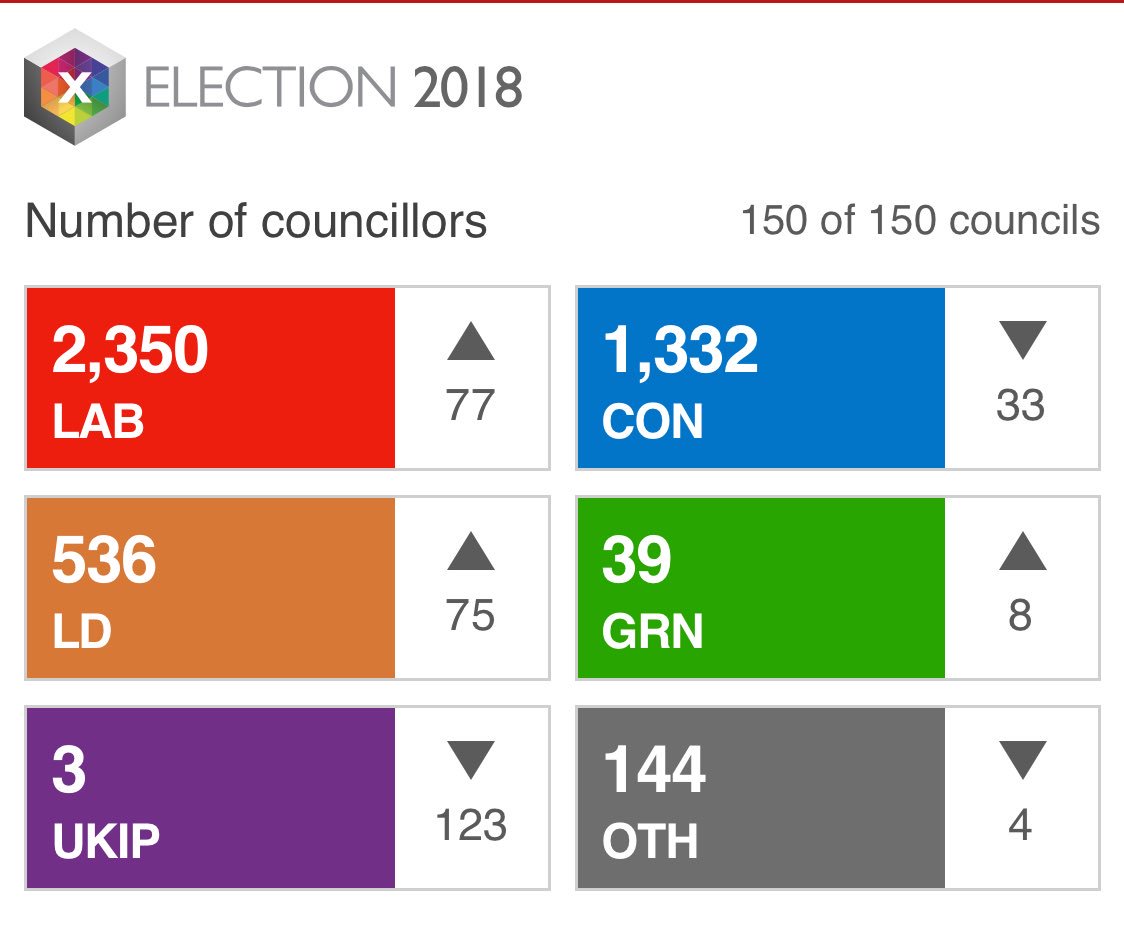
There is no demarcation between corporate, media and government interests. Nick Robinson, former president of Oxford University’s Conservative Association, Kuenssberg and Neil are often held as the conspicuous examples of those promoting neoliberal-Conservative norms. However, those interests are reflected throughout the BBC’s reporting, including those who regularly make editorial decisions, which as study after study has shown, overwhelmingly defers to officialdom and upholds powerful private interests at the expense of public interests. The revolving door between consultancy/strategic communications/ PR companies, the media and the Government indicates the existence of a set of shared narrow norms and an ideological crib sheet.

The narrowly shared understanding of ‘politics’ among an elite of Conservative politicians, big business, the communications and PR industry, news maker sand opinion shapers is not only enormously unrepresentative of the public, but it also displays an increasingly tenuous grasp on broader democratic political reality. 
Image result for BBC bias

The BBC was accused of “extreme bias” after it featured the altered image of Jeremy Corbyn against the Kremlin skyline during a segment about escalating tensions between the UK and Russia on Newsnight, despite presenter Evan Davies’ attempts to justify its use. The Labour leader was depicted wearing a Russian Bolshevik cap against a red-tinted backdrop of the St. Basil’s Cathedral while Ayesha Hazarika, former special advisor to Ed Milliband, and Corbyn ally Chris Williamson MP, were being interviewed about the Government’s response to the Skripal poisoning.

The BBC backdrop embeds a codified message to viewers that is almost subliminal, especially as it was presented on the same day that newspapers like the Daily Mail ran with such headlines as ‘CORBYN, THE KREMLIN STOOGE’.

The image that the BBC claimed to have used and not edited, was taken in 2016 and if you compare the two, there is certainly a red hue that has been applied along with lowerng the contrast and tightening the aspect ratio, which make Corbyn’s clothes appear darker.

This changes the look of the hat he is wearing, which makes it look more like a Russian ushanka hat, whilst there are noticeable differences in the ‘Newsnight’ image and an ushanka, to those who aren’t paying a massive amount of attention to the backdrop or are unable to see a comparison, it would certainly look like one on first look.

The BBC have rejected the criticisms of their programme while acknowledging they did edit the image, by saying that they previously did a similar mock up of Gavin Williamson on the same programme. 

However, it is the context and framing that matters, as I am sure the BBC is very much aware.

Recently, the BBC disclosed a shocking revelation, in an article titled:The vetting files: How the BBC kept out ‘subversives’’ .  Left wing individuals were actively vetted by MI5 and barred from holding positions of influence within the Corporation.

The article says that the purpose of the MI5 vetting candidates for political roles within the BBC was to prevent the formation of a left wing government, stating: “The fear was that ‘evilly disposed’ engineers might sabotage the network at a critical time, or that conspirators might “discredit” the BBC so that ‘the way could be made clear for a left-wing government’”.

Portraying Her Majesty’s opposition as “subversives”  and “conspirators” has some profound implications for democracy.  However, it is still happening – the Labour party are portrayed by the incumbents as pathological, rather than as an essential mechanism of a wider functioning democracy.

For decades the BBC denied that job applicants were subject to political vetting by MI5. But in fact vetting began in the early days of the BBC and “continued until the 1990s”. Paul Reynolds, the first journalist to see all the BBC‘s vetting files, tells the story of the long relationship between the corporation and the Security Service.

“Policy: keep head down and stonewall all questions.” So wrote a senior BBC official in early 1985, not long before the Observer exposed so many details of the work done in Room 105 Broadcasting House that there was no point continuing to hide it.

By that stage, a policy of flatly denying the existence of political vetting – not just stonewalling, but if necessary lying – had been in place for five decades.

As early as 1933 a BBC executive, Col Alan Dawnay, had begun holding meetings to exchange information with the head of MI5, Sir Vernon Kell, at Dawnay’s flat in Eaton Terrace, Chelsea. It was an era of political radicalism and both sides deemed the BBC in need of “assistance in regard to ‘communist’ activities”. 
Vetting file

“Formalities” was the code word for the vetting system

A memo from 1984 gives a run-down of organisations on the banned list. On the left, there were the Communist Party of Great Britain, the Socialist Workers Party, the Workers Revolutionary Party and the Militant Tendency. By this stage there were also concerns about movements on the far right – the National Front and the British National Party.

A banned applicant did not need to be a member of these organisations – association was enough.

Over the years, some BBC executives worried about the “deceptive” statements they had to make – even to an inquisitive MP on one occasion. But when MI5 suggested scaling back the number of jobs subject to vetting, the BBC argued against such a move. Though there were some opponents of vetting within the corporation, they had little influence until the Cold War began to thaw in the 1980s

These revelations completely dismantle the idea that the BBC has ever been a passive, impartial, politically neutral entity. 

Of course, as I’ve outlines, the undue political influence on the BBC becomes clear when we investigate the backgrounds of prominent and influential BBC political figures. There’s arecurring pattern, with direct links to the Conservative party. 

Owen Jones says The main thing I’ve learned from working in the British media is that much of it is a cult. Afflicted by a suffocating groupthink, intolerant of critics, hounds internal dissenters, full of people who made it because of connections and/or personal background rather than merit.”  

The Intellgience services have always worked to prevent a Labour government. Who could forget the fake Zinoviev letter, which was engineered by the establishment using the military and intelligence services to destabilise the first Labour government. 

Britain’s most senior security and intelligence officials discussed the smearing of the Labour party just as it was emerging as a major political force according to previously secret documents. The potential repercussions of attempts by the intelligence agencies to damage the Labour party were debated at length by the little-known Secret Service Committee, later research – now released at the National Archives – shows.

Noam Chomsky once said: “The smart way to keep people passive and obedient is to strictly limit the spectrum of acceptable opinion, but allow very lively debate within that spectrum – even encourage the more critical and dissident views. That gives people the sense that there’s free thinking going on, while all the time the presuppositions of the system are being reinforced by the limits put on the range of the debate.” It’s going down.

Dr Lawrence Britt wrote about the defining features of authoritarianism, fascism and totalitarianism. He outlined that among the key characteristics of a fundamnetal shift away from democracy is political censorship through a controlled mass media. He says that the media is either directly controlled by the Government, or indirectly controlled by government regulation, sympathetic media spokespeople and executives. 

It’s a very sobering thought that the British Broadcasting Corporation currently fulfils all of those criteria. 

Democracy has been profoundly compromised and corrupted by its colonisation. Lobbyists, professional private interest propagandists, corporate and financial power have merged with the state, and are all singing from the same crib sheet.

Related

The BBC’s disgraceful attempt at a McCarthyist-style shaping of public perceptions and flouting impartiality rule

BBC’s Stephen Sackur accuses Tories of spreading propaganda about Jeremy Corbyn, and of being unaccountable and undemocratic

David Dimbleby says Jeremy Corbyn is treated unfairly by a biased right wing press

From the Zinoviev letter to the Labour party coup – the real enemy within


I don’t make any money from my work. I am disabled because of illness and have a very limited income. But you can help by making a donation to help me continue to research and write informative, insightful and independent articles, and to provide support to others. The smallest amount is much appreciated – thank you.

DonatenowButton

The government’s eugenic policy is forcing some women to abort wanted pregnancies

Image result for eugenics 2 child policy UK

The prejudice and stereotypes that fuelled eugenic thinking during the last century. In the UK, the Conservatives’ policies reflect this regressive and authoritarian approach to a class-based ‘population control’. 

In 2015 I wrote an article that expressed my grave concerns about the Conservatives’ welfare cuts. I discussed the Conservatives’ announced plans to cut welfare payments for larger families, in what amounts to a two-child policy. Welfare rules with such a clearly defined eugenic basis, purposefully aimed at reducing the family size of some social groups – in this case the poorest citizens – rarely come without serious repercussions.

Iain Duncan Smith said in 2014 that limiting child benefit to the first two children in a family is “well worth considering” and “could save a significant amount of money.” The idea was being examined by the Conservatives, despite previously being vetoed by Downing Street because of fears that it could alienate parents.

Asked about the idea on the BBC’s Sunday Politics programme, Duncan Smith said:

“I think it’s well worth looking at,” he said. “It’s something if we decide to do it we’ll announce out. But it does save significant money and also it helps behavioural change.”

Firstly, this is a clear indication of the government’s underpinning eugenicist designs – exercising control over the reproduction of the poor, albeit by stealth. It also reflects the erroneous underpinning belief that poverty somehow arises because of faulty individual choices, rather than faulty political decision-making, labour market conditions, ideologically driven socioeconomic policies and politically imposed structural constraints.

Such policies are not only very regressive, they are offensive, undermining human dignity by treating children as a commodity – something that people can be incentivised to do without.

Moreover, a policy aimed at restricting support available for families where parents are either unemployed or in low paid work is effectively a class contingent policy.

I also wrote: Limiting financial support to two children may also have consequences regarding the number of abortions. Abortion should never be an outcome of reductive state policy. By limiting choices available to people already in situations of limited choice – either an increase of poverty for existing children or an abortion – then women may feel they have no choice but to opt for the latter.

That is not a free choice, because the state is inflicting a punishment by withdrawing support for those citizens who have more than two children, which will have negative repercussions for all family members. Furthermore, abortion as an outcome of state policy rather than personal choice is a deeply traumatic experience, as accounts from those who have experienced such coercion have testified. Although dressed up in the terminology of  behavioural economics, if the state limits choices for some social groups, that is a discriminatory, coercive form of behaviourism. Removing support for a third child is also discriminatory.

UK poverty charity Turn2Us recently submitted written evidence to the Work and Pensions select committee, regarding the ongoing inquiry into the impact of the Benefit Cap.

The charity’s report discusses worrying trends reported by their helpline over the last year: “The most worrying trend that is emerging is pregnant women asking the call handler to undertake a benefit check to ascertain what they would be entitled to if they continue with the pregnancy, citing that the outcome will help them to decide whether they continue with the pregnancy or terminate it.” 

Those women who have abortions from choice are very often not prepared emotionally to deal with the aftermath, finding themselves experiencing unexpected grief, anger and depression. 

Post-Abortion Syndrome (PAS) is a group of psychological symptoms that include guilt, anxiety, depression, thoughts of suicide, drug or alcohol abuse, eating disorders, a desire to avoid children or pregnant women, and traumatic flashbacks to the abortion itself.

Women considering abortion and those who feel they have no other choice have a right to know about the possible emotional and psychological risks of their choice. One of the biggest risk factors for the development of PAS arises when the abortion is forced, or chosen under pressure. Research suggests women commonly feel pressured into abortion, either by other people or by circumstances. And sometimes, by the state.

Many people choose to have children when they are in favorable circumstances. However, employment has become increasingly precarious over the last decade, and wages have been depressed and stagnated. The cost of living has also risen, leaving many in hardship. A large number of citizens move in and out of work, as opportunity permits. The Conservatives say that “work is the route out of poverty”, and claim employment is at an “all time high”, yet this has not helped people out of poverty at all. The ‘gig economy’ has simply made opportunities to secure, well paid employment much scarcer.

The two-child policy treats some children as somehow less deserving of support intended to meet their basic needs, purely because of the order of their birth. 

Abortion should be freely chosen, it should never be an outcome of state policy in a so-called civilised democracy.

Yesterday I read about ‘Sally’ (not her real name) and the heartbreaking choice she was forced to make. She says she could not bear for family and friends to know what she has been through, so she wished to remain anonymous. Sally and her partner discovered, almost halfway through her pregnancy, that the government no longer pays child tax credit and the child element of universal credit for more than two children. The rule applies to babies born after April 6, 2017 and it’s been widely condemned by human rights and women’s rights organisations, religious leaders and child poverty campaigners.

Last month the charity mentioned earlier – Turn2us – which helps people to navigate access to social security benefits, tweeted that they have seen a “worrying trend” of pregnant women contacting them with questions about the social security benefits they are entitled to and saying they may have to terminate their pregnancies as a result of the savage cuts.

Sally’s extremely distressing experience adds evidence to this account. She and her partner already have two children; sons aged 4 and 5. She’s currently receiving universal credit after being found fit for work following 12 years of claiming employment and support allowance, as she suffers from PTSD.

She explains that she doesn’t live with her partner as they can’t afford to live together. She goes on to say: “[The pregnancy] wasn’t planned as such but it wasn’t avoided.

“We were happy to have another child if it happened and we had discussed after the last one was born that we would be very happy to have another child.”

Sally explained her partner is looking for work, but is finding it very difficult to find suitable employment.

“He is currently studying to be a personal trainer so he can earn money to support us.”

Knowing that money would be tight but trusting in her partner’s future earning potential and the safety net of the social security safety net, Sally began to buy items for the baby and booked herself in for a scan.

It was her third successful pregnancy so she knew what to expect and was delighted when she began to feel kicks and movement.

Then she says that she heard news that changed everything. “I was four months along and planning what other things we would need to buy for this baby, and then my friend said any child born after 2017, you will not be able to get any extra money for.

Sally replied “that cannot possibly be true.”

But sadly it is. Sally and her partner were then forced to make a decision they would never have contemplated otherwise. “We are barely surviving now,” says Sally.

“I have two sons but I’ve been denied the chance to have a daughter” – [because of] the callous policy that forces women across the country to choose between their unborn child and being able to look after their existing ones.” 

Many people in work rely on tax credits or Universal Credit to support their families because their earnings are too low to meet the cost of living. Even if Sally’s partner found employment, they would still be unable to claim additional support for another child.

Sally told the Mirror that following her termination, she came around from the anaesthetic crying.

She had been fully sedated while the doctors terminated her four-month pregnancy, a pregnancy she says she had desperately wanted to continue. Sally says “It wasn’t planned, but it was very wanted.”

“I was crying when wheeled me in. They kept asking ‘are you sure you want to do this?’ and I couldn’t even answer, I just had to nod my head.” She goes on to say “I think it’s something I will never forgive myself for.”

“I knew we couldn’t do it to the children already born and we couldn’t do it to the unborn child.” Sally added.

“We thought we could make it work somehow but, honestly, even if we both got a job and 85% of our childcare paid for we still could not afford childcare let alone food.”

Cancelling a scan and midwife appointments, Sally instead booked herself in for a termination. At four months gone that could no longer be a swift appointment, she needed a general anaesthetic and an operation.

I cried at every appointment regarding the termination and I woke up crying from the operation as well,” she said.

I think it’s something I will never forgive myself for. I know I should have prevented it from happening in the first place. My partner was devastated but he tried not to show any emotion because I was so upset.

“He also couldn’t come with me as he had to look after our children so I went alone.”

As the couple prepared to end the pregnancy they tried to find a way to make it work.

“Even on the day he kept saying: ‘Are we sure we should do this? There must be some way that we can keep it.’”

In desperation, they even discussed whether her partner should earn money in less legitimate ways. “He was ready to turn back to crime to support us,” admitted Sally. “But I said if he is in jail how can I cope alone with 3 kids and no money?”

It’s left Sally questioning whether politicians have any regard or respect for her children, and what kind of system leaves her with no choice but to abort a wanted pregnancy or rely on crime to get by.

I feel guilty, ashamed, angry. The Government does not value my right to a family at all or my family, I’m being penalised for being born poor.

I have two sons but I’ve been denied the chance to have a daughter unless we live in complete and utter poverty. I’m disgusted by the Government; I think a two-child limit is sick and disgusting.”

No-one should ever be placed in such a terrible and distressing situation in a wealthy, so-called civilised society. 

The Department for Work and Pensions (DWP) has described the two-child limit as “ensur[ing] that the benefits system is fair to those who pay for it, as well as those who benefit from it, ensuring those on benefits face the same financial choices around the number of children they can afford as those supporting themselves through work”.

Everyone pays for the welfare system. People move in and out of work and contribute when they earn. Many people affected by the two-child policy are actually in work. Wages have been depressed and have stagnated, while the cost of living has risen. It’s a myth that there is a discrete class of people that pays tax and another that does not. People who need lifeline welfare support also pay taxes. Many in work are not paid enough to support themselves and therefore rely on support. The problems that needs to be addressed are insecure employment and low pay, but instead the government is punishing citizens for the hardships caused by their own policies

It is grossly inhumane and unfair to punish those citizens and their children affected by circumstances that are constrained because of political and socioeconomic conditions. 

This is a point that completely disregards the fact that 70% of those claiming tax credits are in work, according to the Child Poverty Action Group (CPAG). And it ignores the desperation of women like Sally, forced to abort pregnancies they want to keep.

Clare Murphy, director of external affairs at abortion provider thBritish Pregnancy Advisory Service (BPAS), says: “Financial pressures, job or housing insecurity are often among key reasons for women deciding to end an unwanted pregnancy.

“But the third child benefit cap is more than that because it penalises those already in the most challenging financial circumstances – and as anti-poverty campaigners have noted, it breaks what has been a fundamental link between need and the provision of support, and also discriminates against children simply because of the order they were born in.

“As a charity that has spent the last five decades counselling pregnant women, we know that women don’t decide to continue with pregnancies because they think they could make a bit of money doing so – £7.60 per day to be precise, when it comes to child tax credit for poorer families,” Clare said.

“They do so because that child is wanted and would be a much-loved addition to their family.”  

Moreover, this rule implies that women can always control their fertility when in fact they don’t even have an automatic right to abortion if their contraception lets them down.

“Contraception frequently fails women,” said Clare. “More than half of women we see for advice about unplanned pregnancy were using contraception when they conceived, including many women using the effective hormonal methods.

“We have seen cuts to contraceptive services and one reason BPAS campaigned so hard last year to bring the price of emergency contraception down was because we feared some women were simply being priced out of protection when their regular method failed.

“Ministers speak about people having to make ‘choices’ about the number of children in their families. It is important to note that women in the UK still do not have the right to choose abortion – it can only be provided if two doctors agree that she meets certain criteria and the abortion takes places in specific licensed premises, unlike any other medical procedure.”

Pritie Billimoria, head of communications at Turn2us, said: “A third child is worth no more or no less than a first or second born.

“No parent can see into the future. Parents may be able to comfortably support a third child today but may be a bereavement, divorce or redundancy away from needing state help. We need to see children protected from growing up in poverty in the UK and that means scrapping this limit.”

Parents may become ill or have an accident that leaves them disabled and unable to work, too. It is immoral to punish people and their children for circumstances that are very often outside of their control. 

The policy also been roundly criticised by religious leaders: 60 Church of England bishops joined the Board of Deputies of British Jews and the Muslim Council of Britain to call for the policy to be scrapped. Many childrens’ charities, human rights and equality campaigners have also condemned the policy.

The Government has removed benefits from children who simply have no say in being born or in the number of existing children in their families and the results are already showing.

CPAG estimates that more than 250,000 children will be pushed into poverty as a result of this measure by the end of the decade, representing a 10% increase in child poverty. Meanwhile a similar number of children already living in poverty will fall deeper into poverty.

A Government spokesperson said: “This policy ensures fairness between claimants and those who support themselves solely through work. We’ve always been clear the right exceptions are in place and consulted widely on them.” 

Note the word “solely”. This policy applies to low paid families, too. Yet no family would choose to be poorly paid for their work. This is a punishment for the sins and profit incentive of exploitative employers, and as such, it is profoundly unfair and unjust.

Clare Murphy goes on to say “We see abortion as a fundamental part of women’s healthcare and something which should be a genuine matter of choice – no woman should be left in the position of undergoing abortion because she simply would not be able to put food on the plate or clothes on the back of a new baby. 

As I wrote in 2015, many households now consist of step-parents, forming reconstituted or blended families. The welfare system recognises this as assessment of household income rather than people’s marital status is used to inform benefit decisions. The imposition of a two child policy has implications for the future of such types of reconstituted family arrangements. 

If one or both adults have two children already, how can it be decided which two children would be eligible for child tax credits?  It’s unfair and cruel to punish families and children by withholding support just because those children have been born or because of when they were born. 

And how will residency be decided in the event of parental separation or divorce – by financial considerations rather than the best interests of the child? That flies in the face of our legal framework which is founded on the principle of paramountcy of the needs of the child. I have a background in social work, and I know from experience that it’s often the case that children are not better off residing with the wealthier parent, nor do they always wish to. 

Restriction on welfare support for children will directly or indirectly restrict women’s autonomy over their reproduction. It allows the wealthiest minority freedom to continue having children as they wish, while aiming to curtail the poorest citizens by ‘disincentivising’ them from having larger families, by using financial punishment. It also imposes a particular model of family life on the rest of the population. Ultimately, this will distort the structure and composition of the population, and it openly discriminates against the children of large families. 

People who are in favour of eugenics believe that the quality of a race can be improved by reducing the fertility of “undesirable” groups, or by discouraging reproduction and encouraging the birth rate of “desirable” groups. The government’s notion of “behavioural change” is clearly aimed at limiting the population of working class citizens. 

Eugenics arose from the social Darwinism and laissez-faire economics of the late 19th century, which emphasised competitive individualism, a “survival of the fittest” philosophy and sociopolitical rationalisations of inequality.

Eugenics is now considered to be extremely unethical and it was criticised and condemned widely when its role in justification narratives of the Holocaust was revealed. 

But that doesn’t mean it has gone away. It’s hardly likely that a government of a so-called first world liberal democracy – and fully signed up member of the European Convention on Human Rights and a signatory also to the United Nations Universal Declaration – will publicly declare their support of eugenics, or their authoritarian tendencies, for that matter, any time soon.

Any government that regards some social groups as “undesirable” and formulates policies to undermine or restrict that group’s reproduction rights is expressing eugenicist values, whether those values are overtly expressed as “eugenics” or not.

Human rights and the implications of the Conservatives’ two-child policy 

Article 25 of the Universal Declaration of Human Rights, of which the UK is a signatory, states:

  1. Everyone has the right to a standard of living adequate for the health and well-being of himself and of his family, including food, clothing, housing and medical care and necessary social services, and the right to security in the event of unemployment, sickness, disability, widowhood, old age or other lack of livelihood in circumstances beyond his control.
  2.  Motherhood and childhood are entitled to special care and assistance. All children, whether born in or out of wedlock, shall enjoy the same social protection.

An assessment report by the four children’s commissioners of the UK called on the government to reconsider imposing the deep welfare cuts, voiced “serious concerns” about children being denied access to justice in the courts, and called on ministers to rethink plans at the time to repeal the Human Rights Act.

The commissioners, representing each of the constituent nations of the UK, conducted their review of the state of children’s policies as part of evidence they will present to the United Nations.

Many of the government’s policy decisions are questioned in the report as being in breach of the convention, which has been ratified by the UK.

England’s children’s commissioner, Anne Longfield, said:

“We are finding and highlighting that much of the country’s laws and policies defaults away from the view of the child. That’s in breach of the treaty. What we found again and again was that the best interest of the child is not taken into account.”

Another worry is the impact of changes to welfare, and ministers’ decision to cut  £12bn more from the benefits budget. As of 2015, there were 4.1m children living in absolute poverty – 500,000 more than there were when David Cameron came to power. Earlier this year, the government’s own figures showed that the number of children in poverty across the UK had surged by 100,000 in just one a year, prompting calls for ministers to urgently review cuts to child welfare. Government statistics published on in January  show 4.1 million children are now living in relative poverty after household costs, compared with four million the previous year, accounting for more than 30 per cent of children in the country. The Government’s statistics are likely to understate the problem, too.

It’s noted in the commissioner’s report that ministers ignored the UK supreme court when it found the “benefit cap” – the £25,000 limit on welfare that disproportionately affects families with children, and particularly those with a larger number of children – to be in breach of Article 3 of the convention – the best interests of the child are paramount:

“In all actions concerning children, whether undertaken by public or private social welfare institutions, courts of law, administrative authorities or legislative bodies, the best interests of the child shall be a primary consideration.”

The United Nation’s Convention on the Rights of the Child (UNCRC) applies to all children and young people aged 17 and under. The convention is separated into 54 articles: most give children social, economic, cultural or civil and political rights, while others set out how governments must publicise or implement the convention.

The UK ratified the Convention on the Rights of the Child (UNCRC) on 16 December 1991. That means the State Party (England, Scotland, Wales and Northern Ireland) now has to make sure that every child benefits from all of the rights in the treaty. The treaty means that every child in the UK has been entitled to over 40 specific rights. These include:

Article 1

For the purposes of the present Convention, a child means every human being below the age of eighteen years unless under the law applicable to the child, majority is attained earlier.

Article 2

1. States Parties shall respect and ensure the rights set forth in the present Convention to each child within their jurisdiction without discrimination of any kind, irrespective of the child’s or his or her parent’s or legal guardian’s race, colour, sex, language, religion, political or other opinion, national, ethnic or social origin, property, disability, birth or other status.

2. States Parties shall take all appropriate measures to ensure that the child is protected against all forms of discrimination or punishment on the basis of the status, activities, expressed opinions, or beliefs of the child’s parents, legal guardians, or family members.

Article 3

1. In all actions concerning children, whether undertaken by public or private social welfare institutions, courts of law, administrative authorities or legislative bodies, the best interests of the child shall be a primary consideration.

2. States Parties undertake to ensure the child such protection and care as is necessary for his or her well-being, taking into account the rights and duties of his or her parents, legal guardians, or other individuals legally responsible for him or her, and, to this end, shall take all appropriate legislative and administrative measures.

3. States Parties shall ensure that the institutions, services and facilities responsible for the care or protection of children shall conform with the standards established by competent authorities, particularly in the areas of safety, health, in the number and suitability of their staff, as well as competent supervision.

Article 4

States Parties shall undertake all appropriate legislative, administrative, and other measures for the implementation of the rights recognized in the present Convention. With regard to economic, social and cultural rights, States Parties shall undertake such measures to the maximum extent of their available resources and, where needed, within the framework of international co-operation.

Article 5

States Parties shall respect the responsibilities, rights and duties of parents or, where applicable, the members of the extended family or community as provided for by local custom, legal guardians or other persons legally responsible for the child, to provide, in a manner consistent with the evolving capacities of the child, appropriate direction and guidance in the exercise by the child of the rights recognized in the present Convention.

Article 6

1. States Parties recognize that every child has the inherent right to life.

2. States Parties shall ensure to the maximum extent possible the survival and development of the child.

Article 26

1. States Parties shall recognize for every child the right to benefit from social security, including social insurance, and shall take the necessary measures to achieve the full realization of this right in accordance with their national law.

2. The benefits should, where appropriate, be granted, taking into account the resources and the circumstances of the child and persons having responsibility for the maintenance of the child, as well as any other consideration relevant to an application for benefits made by or on behalf of the child.

Here are the rest of the Convention Articles.


If you have been affected by the issues raised in this article then you can contact Turn2us for benefits advice and support, or BPAS for pregnancy advice and support, including help to end a pregnancy if that’s what you decide.


I don’t make any money from my work. I’m disabled through illness and on a very low income. But you can make a donation to help me continue to research and write free, informative, insightful and independent articles, and to provide support to others. The smallest amount is much appreciated – thank you.

DonatenowButton