Author: Kitty S Jones

I’m a political activist with a strong interest in human rights. I’m also a strongly principled socialist. Much of my campaign work is in support of people with disability. I am also disabled: I have an autoimmune illness called lupus, with a sometimes life-threatening complication – a bleeding disorder called thrombocytopenia. Sometimes I long to go back to being the person I was before 2010. The Coalition claimed that the last government left a “mess”, but I remember being very well-sheltered from the consequences of the global banking crisis by the last government – enough to flourish and be myself. Now many of us are finding that our potential as human beings is being damaged and stifled because we are essentially focused on a struggle to survive, at a time of austerity cuts and welfare “reforms”. Maslow was right about basic needs and motivation: it’s impossible to achieve and fulfil our potential if we cannot meet our most fundamental survival needs adequately. What kind of government inflicts a framework of punishment via its policies on disadvantaged citizens? This is a government that tells us with a straight face that taking income from poor people will "incentivise" and "help" them into work. I have yet to hear of a case when a poor person was relieved of their poverty by being made even more poor. The Tories like hierarchical ranking in terms status and human worth. They like to decide who is “deserving” and “undeserving” of political consideration and inclusion. They like to impose an artificial framework of previously debunked Social Darwinism: a Tory rhetoric of division, where some people matter more than others. How do we, as conscientious campaigners, help the wider public see that there are no divisions based on some moral measurement, or character-type: there are simply people struggling and suffering in poverty, who are being dehumanised by a callous, vindictive Tory government that believes, and always has, that the only token of our human worth is wealth? Governments and all parties on the right have a terrible tradition of scapegoating those least able to fight back, blaming the powerless for all of the shortcomings of right-wing policies. The media have been complicit in this process, making “others” responsible for the consequences of Tory-led policies, yet these cruelly dehumanised social groups are the targeted casualties of those policies. I set up, and administrate support groups for ill and disabled people, those going through the disability benefits process, and provide support for many people being adversely affected by the terrible, cruel and distressing consequences of the Governments’ draconian “reforms”. In such bleak times, we tend to find that the only thing we really have of value is each other. It’s always worth remembering that none of us are alone. I don’t write because I enjoy it: most of the topics I post are depressing to research, and there’s an element of constantly having to face and reflect the relentless worst of current socio-political events. Nor do I get paid for articles and I’m not remotely famous. I’m an ordinary, struggling disabled person. But I am accurate, insightful and reflective, I can research and I can analyse. I write because I feel I must. To reflect what is happening, and to try and raise public awareness of the impact of Tory policies, especially on the most vulnerable and poorest citizens. Because we need this to change. All of us, regardless of whether or not you are currently affected by cuts, because the persecution and harm currently being inflicted on others taints us all as a society. I feel that the mainstream media has become increasingly unreliable over the past five years, reflecting a triumph for the dominant narrative of ultra social conservatism and neoliberalism. We certainly need to challenge this and re-frame the presented debates, too. The media tend to set the agenda and establish priorities, which often divert us from much more pressing social issues. Independent bloggers have a role as witnesses; recording events and experiences, gathering evidence, insights and truths that are accessible to as many people and organisations as possible. We have an undemocratic media and a government that reflect the interests of a minority – the wealthy and powerful 1%. We must constantly challenge that. Authoritarian Governments arise and flourish when a population disengages from political processes, and becomes passive, conformist and alienated from fundamental decision-making. I’m not a writer that aims for being popular or one that seeks agreement from an audience. But I do hope that my work finds resonance with people reading it. I’ve been labelled “controversial” on more than one occasion, and a “scaremonger.” But regardless of agreement, if any of my work inspires critical thinking, and invites reasoned debate, well, that’s good enough for me. “To remain silent and indifferent is the greatest sin of all” – Elie Wiesel I write to raise awareness, share information and to inspire and promote positive change where I can. I’ve never been able to be indifferent. We need to unite in the face of a government that is purposefully sowing seeds of division. Every human life has equal worth. We all deserve dignity and democratic inclusion. If we want to see positive social change, we also have to be the change we want to see. That means treating each other with equal respect and moving out of the Tory framework of ranks, counts and social taxonomy. We have to rebuild solidarity in the face of deliberate political attempts to undermine it. Divide and rule was always a Tory strategy. We need to fight back. This is an authoritarian government that is hell-bent on destroying all of the gains of our post-war settlement: dismantling the institutions, public services, civil rights and eroding the democratic norms that made the UK a developed, civilised and civilising country. Like many others, I do what I can, when I can, and in my own way. This blog is one way of reaching people. Please help me to reach more by sharing posts. Thanks. Kitty, 2012

Choice architecture, neoliberalism and the politics of compliance

Image result for Nudge critical

behavchange
The point for neoliberalism is not to make a model that is more adequate to the real world, but to make the real world more adequate to its model” – Simon Clarke
 (2005). (See also If You Look Behind Neoliberal Economists, You’ll Discover the Rich: How Economic Theories Serve Big Business. The road to serfdom – sponsored by big business).

Nudge: when the luxury of making choices has been commodified and packaged

Choice architecture is a term was coined by libertarian paternalists Richard Thaler and Cass Sunstein (2008). It refers to the practice of influencing choice by changing the manner in which options are presented to people.

For example, this can be done by setting defaults, framing, or adding decoy options. 

Choice architecture influences decision-making by simplifying the presentation of choices, by automatically evoking particular associations, or by making one option more salient or “easier” to choose than the alternatives. It works “beneath” our rational and reflective processes.

Personally, I see choice architecture as starkly lit Orwellian features along the short road and cul-de-sac to choiceless choices. It’s a reductive and determined journey, which ends by the state deciding and determining how citizens ought to be

A government that is acting upon the perceptions and behaviours of citizens in order to align them with politically defined socioeconomic outcomes turns democracy on its head. It detaches public policies from genuine wider public needs and interests. Governments are elected in the expectation that they will behave in ways that meet the needs of a population.

Democracy entails a dialogue between government and citizens. However, nudge closes down that dialogue, and restricts human agency – the capacity of individuals to act independently and to make their own free choices. Policies are increasingly about the government instructing us how to behave. How to be.

Choice architecture redesigns our experiences without our consent. Diversion from the path of those choices chosen for us by choice architects is considered to be pathological. Nudge doesn’t accommodate creative opportunity, critical thinking or any form of genuine learning. It simply claims that we each operate within the confines of bounded rationality. We are cognitively flawed. But nudge doesn’t present the opportunity for citizens to develop awareness of potential limits, to problem-solve or to learn how to become better cognitively equipped.

It’s precisely because we are ALL cognitively flawed that the production of knowledge for governance itself needs be governed.  In this respect, behavioural econmics displays an arrogance and epistemoloical authoritarianism in that it is assumed the theories it’s founded on somehow escape the confines of rational boundaries that everyone else is unable to transcend. It’s like saying “that’s your “human nature”, but not ours”. If we are all cognitively flawed, then no-one is exempt from that rule.

Nudge reduces our experiences to measured, measurable, politically defned quantitative “outcomes”, at the expense of the crucial qualitative accounts and participation of citizens that contribute to a functioning democracy.

Thaler and Sunstein define a “nudge” as:

Any aspect of the choice architecture that alters people’s behaviour in a predictable way without forbidding any options or significantly changing their economic incentives.”

This statement puzzles me. If a behaviour is altered in a predictable way, then how will we know if any of the other potential options were forbidden or not, and surely, it means at the very least that the other possibilities – alternative choices – have been foreclosed intentionally by the choice architect. If it didn’t mean that, then why use nudge at all, how exactly does nudging work, and why are we funding it?

Libertarian paternalism or “nudging” is a mechanism to exploit the ways that individuals deviate from rational choice in order to benefit themselves or society at large – for instance, by using our bias toward the status quo to encourage employees to put more of their paychecks into savings.

This benefits employees because it means they will be able to afford to live when they hit hard times, as state provision such as unemployment support and pensions have been incrementally cut away to almost nothing. The powers that be in the UK regard any kind of welfare provision as a “perverse incentive”. This benefits the government because if everyone pays for their own pension, periods of unemployment, sickness and so on, then the government can spend your national insurance contributions and taxes on other things. Like very wealthy people’s tax cuts. 

The privatisation of choice and consent

Power is defined in the social sciences as the ability to influence (“soft power”) or shape and outright control the behaviour of people (“hard power”). Attempts by a government to shape and control the behaviour of citizens (including the targeting of specific social groups), either via policies or by brute force, isn’t generally considered to be compatible with democracy, social justice or notions of inclusion.

Thaler and Sunstein have claimed that governments always influence citizens’ behaviours. We have laws to deter clearly defined crimes such as murder, theft and so on. However, those laws are clearly stated and citizens are aware of their purpose and that they aim to control socially harmful behaviours. They are transparent. Most people would  agree that they are necessary to protect citizens, and most are aware of the probable consequences of being found breaking those laws.

These are overt attempts to dissuade people from behaving in potentially harmful ways towards others and wider society generally tends to endorse them, regarding them as necessary. Such laws permit us to engage our rational processes precisely because they are visible to us. Nudge is designed to bypass our critical and rational capacities.

Nudge or “behavioural economics” is the attempt to shape people’s socioeconomic behaviours without people being aware of the process or the aim. Nudge ceases to work when people become aware that they are being nudged – it only works “in the dark”. 

The Nudge Unit was part-privatised in 2014, which means it is protected from public scrutiny.  It is no longer subject to the Freedom of Information Act, and it can sue for libel.

Ian Dunt said at the time of the Nudge Unit’s privatisation: “The secrecy and legal might of private firms offering public services is morally indefensible whatever the sector. But in the case of nudge it is particularly dangerous, because this is an organisation specifically tasked with implementing policy on the subconscious of the British public.

However sympathetic we are to the goals nudge is trying to achieve – such as reducing car accidents or increasing tax collection – we should be deeply sceptical of its tactics, which involve influencing the public without them knowing it is happening.

This is what makes nudge so toxic an idea. While it seems more liberal than using legislation to clamp down on unhealthy behaviour, it is actually more pernicious. At least when something is banned, you know you are being prevented from doing it. With nudge, you will never know.”

The application of nudge tends to be asymmetrical – is targeted disproportionately at poor citizens. This is because of the political belief – a weighted bias – that poor people are poor because they make “irrational” and “wrong” choice. Conversly, wealthy people are deemed “rational” precisely because they are wealthy. This is a line of teleological reasoning – rather than being causal explanation of the phenomenon of inequality, the aims, ends, or intentions of the observed phenomenon or behaviour are used to explain the process. Teleology refers to a view that justifies certain phenomena, which are explained by reference to their purposes.  The Conservatives see inequality as functional, because it “encourages competition” and serves as an “incentive”. Social scientific arguments among positivists in particular quite often rest on rational short cuts like this. This short cut is a weighted bias that becomes embedded in the process of how particular areas of research are chosen, how the research is designed, and how interpretation of the results and conclusions are framed. Rather than the “scientific method” in social research serving to ensure value neutrality, quite often it simply distils the ideological premises of it.

Nudge reduces a persons’ choices to one choice – that of the state or “choice architects”. Nudge tends to draw on punishments, threats of punishment and negative reinforcements to change the behaviours of poor people – such as those embedded in welfare conditionality and sanctions, which exploit a cognitive bias we have, apparently, called “loss aversion”

Something that the government and libertarian paternalists choose to ignore is that it is poverty itself that restricts choices, not poor people’s cognitive “abilities” or decision-making. A good example is how the use of credit scoring ultimately leads to the poorest people having to pay the most interest on credit, if they manage to get any at all. Being poor limits our choices for credit, and other ways out of financial hardship. It’s difficult to find work that pays an adequate wage to support an adequate standard of living, especially when you have so few resources that you can’t meet all of your basic needs, let alone pay your broadband bill and meet travel costs.

It’s a very dangerously slippery slope when a group of technocrats claim they have perfected the art of knowing what is best for us, and what our best interests are, especially when it is especially geared towards the political goal of fulfilling “small state” ideology. 

Psychopaths see others as a means to an end, they also like to define other people’s “best interests”. They use justification narratives for their behaviours to manipulate people, which are often plausible, but ultimately, this is simply to get their own way.

Similarly, the Conservatives’ use of nudge reflects their ideological agenda, and their justification narratives reflect an authoritarian turn. 

The rise of nudge refects a miserly neoliberal government with an ideological agenda

If people who are poor are struggling with decision-making, then nudging people – even if “opt out” provision is made (and it generally isn’t) – without their knowledge or informed consent cannot be justified as a “non intrusive” intervention, as behavioural economists try to argue. Nudging reduces our autonomy and imposes a framework of psychological reductionism and determinism.

Nudge reflects a basic “stimulus-response” view of human shaping behaviour, except the word “incentive” has replaced “stimulus” in the old behaviourist terminology. Many behavioural economists talk about cognitive processes, and how flawed most people’s are. But nudge methodology reflects a behaviourist approach – there’s no opportunity for learning, and no consideration of human subjectivity – our inner states, meanings, understandings and so on – all that matters is getting people to comply and behave the way the “choice architects” think we should. Cause and effect.

Nudge was introduced as a policy strategy as a way of cutting costs. Libertarian paternalism is a political doctrine, and is therefore not value-neutral. However, libertarian paternalists argue that their methodology – Randomised Controlled Trials (RTCs) – validates their claim to value neutrality.  Behavioural economists argue that the evidence gathered from RTCs is a better, more reliable and valid form of knowledge than the knowledge of “experts”. But such knowledge is insufficient if it is abstracted from the political side of policymaking in which problems are framed and knowledge given meaning. Furthermore, the RTCs are used to add credibility to the theoretical knowledge of “experts”. But often, those presenting a case for evidence-based policies often ignore the multiplicity of evidence relevant to the policy in question. In this respect, RTCs may be used to filter out alternative accounts of the issue being addressed, and so justifying interventions that are inappropriate or may have unintended (or undeclared and ideologically determined, intended) consequences. 

RTCs are an effective way of determining whether or not a particular intervention has been successful at achieving a specific outcome. One significant concern is that RCTs  are being promoted as the ‘gold standard’ in a hierarchy of evidence that marginalises qualitative research, and the accounts of citizens’ experiences – crucial to a functioning democracy. The government has frequently dismissed citizens accounts of policy impacts as “anecdotal”, claiming that “no causal link” between policy and impact can be demonstrated. Given that some of these accounts have been first hand, and about serious harm caused by policy,  it’s easy to see how the use of  a”scientific methodology” so easily becomes a tool for stifling criticism, debate and a mechanism for political expediency. 

RTCs have been the standard of medical research, and are useful for establishing whether cause-effect relationships exist between treatments and outcomes and for assessing the cost effectiveness of a treatment. However, their use in influencing and quantifying an array of complex human behaviours marks a return of the determinism and reductionism that was central to behaviourist perspectives. 

We must also question the appropriateness of the use of a medical model to frame social problems. Poverty, inequality and the unequal distribution of power doesn’t happen because of some disease process: it is because of government policy and decision-making. No amount of blaming individual citizens’ decision-making and applying “behavioural medicine” to the victims of free neoliberal socioeconomics will remedy that. 

Behaviourism is basically the theory that human and animal behaviour can be explained in terms of conditioning, without appeal to “internal” states -thoughts or feelings – and that psychological disorders are best treated “externally” by altering “faulty” behaviour patterns. Because nudge is used asymmetrically, and targets poor people disproportionately, it is founded on assumptions that reflect traditional prejudices and assumptions about the causes of poverty, and also serves to endorse and extend existing inequalities in wealth, resources and power. Nudge assummes that poor people’s decision-making is the cause of poverty, rather than institutionalised prejudices and the political decision-making that shapes our socioeconomic environment.

One of our fundamental freedoms as human beings is that of decision-making regarding our own lives and experiences. To be responsible for our own thoughts, reflections, intentions and actions is generally felt to be an essential part of what it means to be human.

Of course there are social and legal constraints on some intentions and actions, especially those that may result in harming others, and quite rightly so.

There are other constraints which limit choices, too, insofar that choices are context-bound. We don’t act in an infinite space of opportunities, alternatives, time, information, nor do we have limitless cognitive abilities, for example.

In other words, there are always some limitations on what we can choose to do, and we are further limited because our rationality is bounded. Most people accept this with few problems, because we are still left ultimately with the liberty to operate within those outlined parameters, some of which may be extended to a degree – our capacity for rationality and critical thinking, for example, can be learned and improved upon. But our thoughts, reflections, decisions and actions are our own, held within the realm of our own individual, unique experiences.

However, the government, and the group of behavioural economists and “decision-making psychologists” (employed at the “Nudge” Unit) claim to have found a “practical” and (somehow) “objective way” from the (impossible) perspective of an “outside observer” – in this case, the government – to define our best interests and to prompt us to act in ways that conform to their views. Without our informed consent. “Compliance” is the defintely the governments’ buzzword. Compliance frameworks are embedded in our welfare system and most of our public services. 

Sunstein and Thaler argue that policymakers can preserve an individual’s liberty while still nudging a person towards choices that are supposedly in their best interests. However, since no-one can escape their bounds of their own subjectivity to find some mind-independent vantage point, and since all humans operate within a framework of bounded rationality, the behavioural economists’ claim to value-neutrality, and technocratic appeal to the validity of a “scientific” methodology doesn’t stand up to scrutiny.

The claim to an “objective” scientific methodology does nothing to compensate for the ideological perspectives of the researcher that invariably influence the choice of an area of study, or the nature of generated hypotheses that are tested in artificial environments – “laboratory” conditions. Isolated, tested, short-range hypotheses cannot tell us much about the vast array of complex processes involved in human decision-making, and take any meaningful account of the influence and depth of a cultural, political, social, economic and historical context. As such, they cannot provide a reliable basis for making inferences to real world circumstances.

The results depend on the interpretation and nature of the data used and the reason for the analysis in the first place. Simple causal explanations of behaviour embody reductionism and determinism – and therefore deny human autonomy. Bounded rationality is a theory that proposes we have limited choices, but behaviourist perspectives inform us that basically, we have none. 

Nudge doesn’t take into account that political decision-making also succumbs to the limits of bounded rationality, and that socioeconomic policies impact upon citizens, rather than citizens making choices – “right” or “wrong” ones – about our socioeconomic organisation.  

Medical RCTs are done within the confine a strict ethical framework, with informed consent being central to that framework. The government is conducting experiments on the population without their informed consent. There are no ethical safeguards in place to monitor and acknowledge any potential harm that arises as a consequence of nudging. This is precisely why there is a  need to incorporate qualitative insights into RTCs used to test pubic policy interventions. 

Nudge ignores the negative impact of the attitudes and behaviours of the wealthy and powerful on society

1459165_266124213538634_1461740450_n

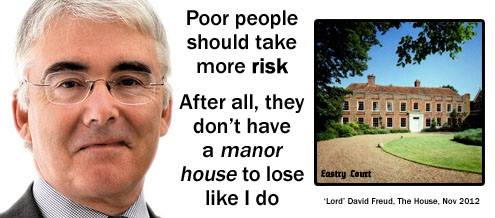
“People who are poorer should be prepared to take the biggest risks; they’ve got least to lose.” Lord Freud, 2012

The risk-taking and greedy behaviours of wealthy people caused a global financial crash, which has ultimately led to countries like the UK imposing austerity on the poorest citizens. Excess in risk taking by and excessive leverage of banks meant that the finance class ignored externalities and relied on bail-outs by the government following the crisis.

The incentive structure of banks encouraged strategies that increased aggregate risk in the economy, and regulators allowed banks to use their own models to calculate and report riskiness. Deregulation is at the core of the 2008 Financial Crisis. The attempt to decrease government involvement in the financial system backfired. Ultimately, deregulation put depositors, consumers, and banks at risk. Those paying the price for the decision-making behaviours of those in positions of power are the poorest citizens. Austerity has been used as a diversion from where the responsibility for the banking crisis lies, and has become a mechanism of administering disipline and ensuring the conformity of the poorest citizens.

Yet their remains a widespread lack of concern for the financial system’s risk to the economy. No lessons appear to have been learned, and no-one is concerned with “changing the behaviours” of the perpetrators of the global recession.

“If we must talk about “poor choices” then we have to address all poor choices. Not just those “poor choices made by the Poor.” Hubert Huzzah

Austerity measures have caused an unacceptable level of harmhardship and absolute poverty – lacking the means to meet basic survival needs, such as food, fuel and shelter – that we haven’t witnessed as a society since before the establishment of the post-war welfare state. We have also witnessed the violation of the human rights of some socially marginalised groups. This point indicates to me that it isn’t poor people who need “behaviour change” programmes: it’s the rich and powerful who create adverse or “pathological” socioeconomic circumstances and events

“Nudge” bears the hallmark of oppression and is symptom of an authoritarian state. It permits those whose decisions have truly devastating impacts on others and our society to simply carry on doing as they choose, whilst punishing those who are blameless, powerless and don’t participate in decisions regarding how our society is organised. 

As such, nudge has become a prop for neoliberal hegemony and New Right Conservative ideology. It’s a technocratic fix to a socioeconomic system that is not only failing, it’s causing distress and harming many citizens.

Nudge addresses the needs of policy-makers. Not the wider public. The behaviourist educational function, made patronisingly explicit by the Nudge Unit, is now operating on many levels, including through policy programmes, institutionalised attitudes and behaviours, in schools, in forms of “expertise”, and even through the state’s influence on the mass media, other cultural systems and at a subliminal level: it’s embedded in the very language that is being used in political narrative.

Thaler acknowledges that regardless of the original intentions, nudge may be skewed by governments, organisations or individuals looking to capitalise on the cognitive biases of people. Whenever he is asked to sign a copy of his book , he writes “nudge for good” which is a plea, he says, to improve the lives of people and avoid “insidious behaviour.”

In the UK, choice architects work to simply maintain the status quo. Therefore nudge doesn’t and cannot offer us any scope for improving people’s lives.

Related image

Grenfell is a stark monument to the systematic disempowerment of citizens because of the decisions made by the architects of neoliberal policies and the utter disregard and negligence of those in positions of power.

Residents of Grenfell Tower had previously raised serious concerns that a catastrophic event could happen. It did. An action group of Grenfell residents said their warnings fell on “deaf ears” after highlighting major safety concerns about the block. The neoliberalisation of the housing market entailed councils part-privatising public housing – putting them into housing associations or ALMOs (arms length management organisations). This management arrangement was distant and remote – a bureaucratic mechanism rather than a democratic community organisation. 

Austerity was (re)introduced in 2010. Public and social housing budgets were slashed and housing associations encouraged to become more commercial and borrow from banks instead of receiving public funding. At the same time, social security and funding for local government were dramatically cut back. In London alone, 10 fire stations, 27 fire engines and more than 600 firefighters have been lost to cuts since 2010. These undermined emergency responses and efforts to prevent fires by inspecting buildings and taking enforcement action under fire safety regulations.

Government hostility to regulation played a significant role in the unfolding of this terrible tragedy. Following a smaller fatal 2009 fire in South London, a series of recommendations including installing sprinkler systems and reviewing the “stay put” advice given to residents living in higher floors in the event of a fire. These recommendations were sat on, ignored, and delayed despite efforts from parliamentarians and campaigners, and even the magazine representing housing professionals. The requirement to carry out a Fire Risk Safety Assessment by the Fire Brigade was changed to make it the responsibility of landlords – Kensington and Chelsea Council opted to use the cheapest company available to them. 

These assessments are not transparent or public and are now the subject of huge public scrutiny along with the series of decisions that led to Grenfell Tower being “re-clad” in the cheap material that facilitated the rapid spread of the fire.

What is clear is that government decision-making, the ideology of deregulation, of privatising, of austerity, combined to kill people in their homes. Their safety and their lives were not valued by the government nor the system they put in place, nor were their voices heard until it was far too late. 

If we must talk about “poor choices” then we must address all poor choices. Not just those “poor choices” made by the poorest and most disempowered citizens.

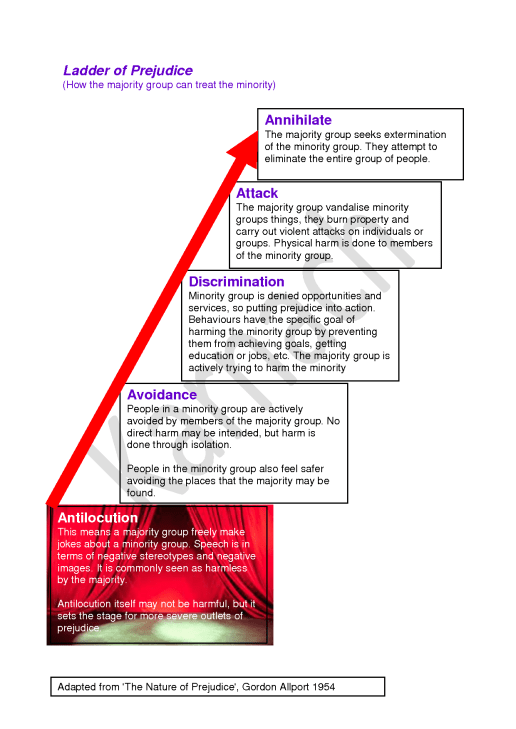
arnstein-ladder-citizenship-participation

                                                                                   <=== You are here

Sherry Arnstein’s Ladder of Citizen Participation and Power


Related

The importance of citizen’s qualitative accounts in democratic inclusion and political participation 

The connection between Universal Credit, ordeals and experiments in electrocuting laboratory rats


I’m currently writing a longer and more in-depth critique of behavioural economics, which will be published very soon.


I don’t make any money from my work. I am disabled because of illness and have a very limited income. But you can help by making a donation to help me continue to research and write informative, insightful and independent articles, and to provide support to others. The smallest amount is much appreciated – thank you.

DonatenowButton

Work and Pensions Committee publishes “damning” evidence of the impact of Universal Credit

Image result for universal credit critical

Committee Chair Frank Field MP calls evidence submitted to the Committee by Halton Housing Trust the “most damning” he has ever read on what he describes as Department for Work and Pensions “maladministration.”

Food bank referrals double

The Halton Trust has accumulated over £400,000 of arrears as a direct result of the rollout of Full Service Universal Credit. This means that just 18% of its tenants owe 55% of all its arrears. Over the last 12 months the number of referrals the Trust has made to local food banks has more than doubled.

The Trust reports on the frequent wrong categorisation of benefit claimants’ eligibility for Advance Payments while Universal Credit is being processed.

In a sample of 1,252 tenants the Trust found that the majority of claimants were eligible for a Benefit Transfer Advance as they were moving from a so-called legacy benefit (like Jobseeker’s Allowance) onto Universal Credit. This is paid back during the first 12 months of a Universal Credit claim.

Advance payments issues

Those claimants who were offered Advance Payments were offered a New Claims Advance that had to be paid back within 6 months: the submission details the even bigger financial problems this caused for families. In addition, the evidence reports:

  • The Department for Work and Pensions refuses to amend the recovery period of the Advance Payment, from 6 months to 12 months, even in the instances where they acknowledge that the claimants should have had a Benefit Transfer Advance.
  • Recovery of the Advance Payment commences immediately with the first Universal Credit payment. This means claimants are continuously playing catch up and are instantly put in debt when the repayment is deducted.
  • As the Advance Payment of either kind are recovered directly from the Universal Credit award, they are being given priority over other essential/actual priority outgoings.
  • When Advanced Payments have been provided there is a lack of any explanation to the customer that this includes a personal allowance and housing cost element. In many cases customers are unsure as to what the money they are receiving is for or what the levels of Advance will be.

Personal budgeting advice unavailable

Despite the Department for Work and Pensions advertising the availability of personal budgeting advice:

  • Halton Housing Trust found that this advice was not available to the vast majority of applicants. This is despite it being an essential element for many applicants at the start of the Universal Credit application process.
  • Local Authorities have been awarded funding to offer Personal Budgeting Support. Despite this, the number of referrals made by the Department locally in Halton has been very low.

Lack of coordinated approach

Further examples cited by the Trust include:

  • Many employers choose to pay their employees early before the Christmas period. The Universal Credit regulations consider this as an increase in income and not an early payment. This triggers a review of their claim, with no payments being made until the end of the subsequent month (January).
  • A lack of coordinated approach between the NHS and DWP. The Trust has recently supported a tenant who received a £50 fine for ticking the “JSA” box on a prescription form, because the form has not been updated with a “Universal Credit” option for receiving free prescriptions, and there are no plans to do so 
  • The Universal Credit application prompts a cessation of Healthy Start vouchers if the claimants were previously in receipt along with their legacy benefit. The Healthy Start system does not yet recognise Full Service Universal Credit.

‘Throwing claimants’ finances into chaos’

Committee Chair, Rt Hon Frank Field MP, said:

“It would be difficult to think, in all my period of Chair of the Select Committee, of a piece of evidence that is so damning on the DWP maladministration which is mangling poorer people’s lives. This maladministration is throwing Universal Credit claimants’ finances into chaos.”

See:

Leave Director admitted the Brexit referendum was won by lying to the public

Buried in a 19,800 word Spectator essay written by former online editor and Vote Leave director Dominic Cummings is an admission: The Brexit referendum was won by lying to the public.

The piece, found here, is well worth reading but also falls victim to classic “mansplaining” (explaining something in a condescending or patronizing way) of a complex issue with many words wasted on prose that most politicians would be proud of, working around the subject rather than delving in to the heart of it.

Of course, that’s for a very good reason, because at the heart of the vote to leave the European Union is an entanglement of lies and propagandist sensationalism that even the most brave souls wouldn’t dare admit to.

There is the admission that the NHS wouldn’t really take back our £350 million EU fee, and that immigration wouldn’t really be capped, and that standards of living wouldn’t really change if we left the EU. All of which are matters that the general public voted on, and all are incorrect.

And so to the damning paragraph that outs the Leave Campaign for what it was:

“Pundits and MPs kept saying ‘why isn’t Leave arguing about the economy and living standards’. They did not realise that for millions of people, £350m/NHS was about the economy and living standards – that’s why it was so effective. It was clearly the most effective argument not only with the crucial swing fifth but with almost every demographic. Even with UKIP voters it was level-pegging with immigration. Would we have won without immigration? No. Would we have won without £350m/NHS? All our research and the close result strongly suggests No. Would we have won by spending our time talking about trade and the Single Market? No way.”

Related image


The connection between Universal Credit, ordeals and experiments in electrocuting laboratory rats

Image result for skinner lab rat

I’m currently writing an article about the intimacy between neoliberalism and behavioural economics, following Richard Thaler’s recent Nobel award. While I was researching, I came across an Institute for Fiscal Studies (IFS) document about Nudge from 2012Tax and benefit policy: insights from behavioural economics, which suggested the introduction of “ordeals” into the social security system. The authors claim it would “deter fraud”. Although the IFS didn’t quite commit to calling for the idea to be implemented formally via policy, they did present the idea as an incontrovertible fact. Yet it is a controversial opinion, which is not supported by empirical evidence.

Introducing ordeals to social security also deters our most vulnerable citizens from claiming the support they need in order to live. Because of this, it wouldn’t be possible to determine the number of people who were intending to make a fraudulent claim. Prior to the welfare “reforms”, social security fraud was estimated at around 0.7 %. However, this very low figure also included bureaucratic and administrative errors, which resulted in overpayments. 

Image result for welfare fraud vs tax fraud

At the least, this comment reflected something of the mindset and taken-for-granted assumptions behind the Conservative welfare “reforms”, and the statement indicates that the “problems” with and subsequent hardships caused by Universal Credit and other forms of welfare support are intended.

The problems we are witnessing with Universal Credit, Employment Support and Allowance and Personal Independent Payment are arising, not because of unintended consequences, or bureaucratic ineptitude, but because of the governments’ “calculated cruelty”, rather than “gross incompetence”.

The idea of intentionally designed environmental “ordeals” indicates the political (misuse) of behaviourism a perspective that underpins libertarian paternalism  – which is the ideological basis of behavioural economics. The claim is that libertarian paternalism is designed to “help” people who behave irrationally and so are not advancing their own “interests” to behave in ways that self-appointed “choice architects” deem beneficial to themselves and society, while interfering only minimally with people who behave rationally.

Public policy over the last 7 years indicates that the poorest citizens are considered cognitively “faulty”, whereas wealthy people are seen as being cognitively competent precisely because they are wealthy. No-one seems to be challenging this fait accompli approach to public policy and ultimately, to altering public perceptions, experimenting on people without their consent, using armchair psychology and techniques of persuasion, and behavioural engineering on the basis of socioeconomic status.

Image result for blaming the poor for their poverty

Richard Thaler once said that if everyone were rational, we would all invest in the stock market. That’s a pretty limited definition of “rational” behaviour. He also believes that poor people actually choose borrowing money and credit at the highest interest rates. This is the problem with having such a narrow ideological view and focus. It skews, limits and reduces perspective because you miss the impact of real and complex social interactions, of inequality; the influence of power relations on social outcomes; exploitation; the consequences of political decision-making and institutionalised class-based attitudes and prejudices on social behaviours, for example. There are structural constraints to consider, and a host of other crucial interconnections that shape outcomes in our highly complex social world.

Behavioural economics tends to focus on the quantification of human experiences, while framing social problems as simply arising due to incompetence of individuals’ decision making and behaviours. In doing so, it’s scope is so limited and it fails to generate meaningful explanations and promote understanding of those experiences. 

Thaler doesn’t discuss the irrational behaviours of very wealthy people who harm the economy by exploiting workers, by tax evasion or offshore banking. Or the finance industry, who never lend money to people who actually desperately need it. Banks and money lenders generally tend to consider any loan or credit for people with little money as “risky” investment and so, with impeccable logic, they hike up the interest rates. It’s not easy to see how that works out any better in terms of the risk of defaults on payments. Poor people pay much more for their credit because of the credit-scoring, profiteering and institutionalised discrimination and behaviours of the finance industry. 

Thaler doesn’t seem to provide much insight into the context and interdependencies of  behaviours. He simply believes that poverty happens because poor people make “poor choices”. However, being poor means having limited choices in a capitalist society, because it is wealth that creates choice and power, and because complex social and political barriers and institutionalised behaviours compound poverty by closing off possibilities for the poorest to gain an adequate income. It costs a lot more to poor than it costs to be wealthy.

Then of course there are the legal and exploitative loan sharks that are circling people who live in poverty. Provident is one of the largest companies in the UK unsecured lending market. This market targets people for whom banks and credit cards are out of reach – mainly the low paid and people with poor credit histories – and it offers them short-term credit, with a typical APR of 272%. These companies make money by locking people into cycles of debt, interest on debt, late payment charges and interest on late payment charges. The Conservatives talk about “cycles of poverty” as if it’s a matter of poor people’s lifestyle choice. It’s not poor people who create poverty and inequality. It’s the exploitative rich. 

Payday lenders such as Wonga, which sprang up during the financial crash of 2007-08, have more recently counted teachers, nurses and vets among their customers. Payday lenders ratchet up eye-watering interest the longer customers take to repay a loan.

Adrian Beecroft

Vulture capitalist Adrian Beecroft, a major investor in payday lender Wonga, and someone who likes to write draconian emloyment policy for the Conservatives, gave the Conservatives a £50,000 pre-election donation in the week to 6 June. Photograph: Catherine Benson/Reuters

However Thaler shows no interest in the social problems created by immoral greed, exploitation and profiteering of wealthy businesses, who rake in huge amounts of interest because a borrower happens to be poor. Instead he blames the poor for the consequences of those apparently normalised behaviours of the wealthy.

It’s easy to see why Thaler’s work made such an impact on the Conservatives. He’s an academic that provides a justification narrative for Conservative prejudices and draconian policies. He is a free market market advocate and so endorses neoliberalism.  This of course exposes the ideological basis of behavioural economics.

The finance industry’s collective risky behaviours caused a global economic crash, yet Thaler remains supremely unconcerned that his work is being used as a series of techniques of persuasion to enforce public conformity, to impose austerity on the poorest, making them pay for the sins of the wealthy; to politically micromanage and enforce social control within a socioeconomic system that is not only failing, but actually harming many citizens, while leaving the wealthy to continue as they were.

Behavioural economics is therefore a prop for a failing neoliberal system and the status quo. It’s just an extention of a totalising ideology. Neoliberal policies contributed to the global crash, and they are also the key reason why so many people’s standard of living is falling. 

It isn’t therefore in the majority’s best interests to have their “best interests” decided for them.

Conservative scroogenomics: punishing poor people by reducing their lifeline income will miraculously cure their poverty

One technique of persuasion used widely in behavioural economics is framing, which is based on the idea that how choices are presented to citizens affects both behavioural and economic outcomes. The environment in which decisions are made can be shaped to provide “cues” to favour particular choices – “nudges” towards [politically determined] “desirable” behavioural and economic outcomes.

Of course nudge is used disproportionately on poor people, and this asymmetry in the distribution of its use is based on an assumption that people who are poor and need social security support are cognitively “incompetent”, lack mental sophistication, all of which leads to “faulty” and politically undesirable non-neoliberal behaviours.

I’m irresistibly reminded of  B.F Skinner’s draconian laboratory-based rat experiments in operant conditioning, using behavioural reinforcement. We have Skinner to thank for the formal conclusion that punishment can be used to reduce “undesirable” behaviours, though despots and tyrants everywhere had always known this to be so.

All types of bullies, from politics to the playground, are crude behaviourists, after all.

Skinner demonstrated how negative reinforcement works by placing rats in his specially designed operant conditioning chamber, called theSkinner box and then subjected them to an electric shock. As the poor rat moved about the box it was trapped in, by chance it would eventually knock a lever that was purposefully placed. Immediately that it did so, the electric current would be switched off.

The rats quickly “learned” to go straight to the lever after being put in Skinner’s torture chamber a few times. The relief of “escaping” the electric current ensured that they would repeat the action again and again. Skinner subsequently added a reward of food when the lever was pressed.

The Skinner Box represents the environment created within our social security system. It’s enclosed. We don’t enter it by choice. Pressing the lever represents fulfilling welfare conditionality criteria and ultimately, it also represents “work”. The “reward”, once you have figured out what the randomly placed set of conditions are and escaped the ordeal of electrocution, is simply provision for one of your most essential and basic living requirements – food. 

In order to eat, the lab rats first have to navigate through the ordeal, designed by the experimenter. 

Punishment can work either by directly applying a painful or unpleasant stimulus like a shock after a response or by removing a potentially “rewarding” stimulus, for instance, such as food in the Skinner Box.

Or by deducting someone’s lifeline income to punish “undesirable behaviours” such as non-compliance with increasingly draconian and irrational welfare conditionality, aimed at “helping people into work”, by the imposition of hunger and the threat of destitution.

Which of course cannot possibly help anyone into work.  It’s not possible to look for work when you are struggling to meet your basic survival needs. Didn’t Abraham Maslow explain this clearly enough?

Food is essential to survival, surely it should never be provided conditionally, or seen as a reward for navigating an intentionally inflicted ordeal simply to elicit narrow political definitions of compliance and conformity. 

The privatisation of choice. No-one is nudging the choice architects

Of course the government’s explanation of the need for welfare sanctions (“making work pay”) doesn’t stand up to much scrutiny, especially once in-work sanctions were introduced. Those on the poorest wages are also punished financially for not “progressing” in work. Yet the fact that work isn’t paying for many people shows that this line of justification for the welfare cuts is utter nonsense.

In-work poverty is a much larger drain on the welfare system than unemployment or disability, and it is created by exploitative employers, executive decision-making and government labor-market deregulation. It not due to any failure of those being paid a pittance for their work. Most of the provision that helped disabled people get back to work has been cut, too. The government is not providing support for people to find work: they are withdrawing it.

The reason that the welfare “reforms” happened is purely about ideological preference, reflecting traditional Tory prejudices. The ultimate aim is to remove social security completely.

Welfare has nothing to do with “rewarding work”. It’s came about to ensure no-one is left unable to meet their basic needs for food, fuel and shelter. How work is rewarded tends to be decided discretely in boardrooms. 

Social security has been redesigned to deter anyone from actually accessing it, because needing such support is deemed “undesirable behaviour”. However, the national insurance scheme was put in place precisely because it was deemed inevitable that at some point in their lives, most citizens would need some support from public services to ensure their welfare, and that their basic survival needs are met.

International research over recent years has indicated that generous welfare systems tend to increase the numbers of people finding work, rather than “disincentivising” them. That a government in a first-world so called liberal democracy considers, and has framed, the provision for fulfilment of basic and essential human survival needs as a “perverse incentive” is frankly terrifying.

Social security was originally designed to ensure that everyone was protected from the worst ravages of unfettered capitalism. To say that we have regressed as a society since then is an understatement. 

Behavioural economics is a technocratic solution to essentially politically created problems. It addresses social problems by simply shifting the blame and responsibility from state to individual. Nudge is increasingly being used to ensure citizens behaviours are compatible with neoliberal ideology.

I also think that the punitive policies being directed at the poorest citizens reflect traditional class-based Conservative prejudices. Labour MP, Laura Pidcock, memorably pointed out the absurdities of the current system, and the relationship between those in power and those being stigmatised, held in contempt, punished and systematically disempowered. (See There Are Fines And Punishments Associated With Most Aspects Of Working Class Life.) 

There are many problems with using punishment as a political instrument of “behavioural change”, such as:

  • Punished behaviour is not forgotten or “unlearned”: it’s  simply suppressed – behaviour may simply revert when punishment is no longer present.
  • Ethical problems as punishments most often entail inflicting a psychological or physical violence on others, without their consent. 
  • There’s a difference between political “persuasion” and state coercion. The path from the former to the latter takes us down a rapidly descending, very slippery slope. Persuasion usually presents opportunity for some dialogue, coercion does not. 
  • No cognitive development or learning opportunities are presented, and so people may well be very confused about why they are being punished. Nudge works only when people are unaware they are being nudged. This requirement for subject naivety forecloses the possibility of informative or instructive dialogue, facilitating development, realising individual potential and of promoting even basic understanding.
  • Causes increased aggression – demonstrates that aggression towards individuals and social groups is an acceptable way to cope with societal problems. It reinforces political authoritarianism. (See Skinner’s frightfully dystopic book: Walden Two, which is a treatise for positivism as much as it is for authoritarianism).
  • It has unintended and harmful consequences. For example, it creates fear that can influence other generalised “undesirable” behaviours.
  • Does not guide toward desired behaviour – reinforcement tells you what to do, punishment only tells you what not to do.
  • Who defines what are deviant or “undesirable behaviours”? Who decides what is an appropriate action to take to discourage such behaviours?  How do we prevent unethical solutions? How do we prevent state actions from simply becoming expressions of political authoritarianism and manifestations of a gross abuse of power? Or expressions of eugenic ideologies and policies? 

We ought to have learned through the history of human atrocities that it’s never a good omen when an already politically marginalised social group is singled out for scapegoating, punishment and dehumanisation by a government. 

164204381
Manipulating social behaviour with antisocial motives

Another key technique of persuasion in behavioural economics is the use of “social preferences”. Individuals are inclined to care not just about their own outcomes but also about those of others. The behavioural “insight” (ironically) is that people derive value from fairness, cooperation and/or from conforming to social norms. These motivations may be [and are] used to give intrinsic “incentives” to make particular choices that accommodate neoliberal outcomes.

So the irony is that people’s tendency towards collectivity, cooperation and fairness may be manipulated by choice architects in order to prop up a system that extends competitive individualism, unfairness and inequality from its very core, in order to ensure politically desirable behaviours that support specific socioeconomic outcomes. 

Social norms may be subjected to political “default setting” which manipulates people’s inclination towards social conformity. For example, it has become “common sense” that poor people are poor because of their own behaviours, rather than because of political decision-making and policy impacting on economic conditions and labour market conditions (deregulation, for example).

In the UK, social security recipients have been transformed into folk devils in order to generate moral panic, to legitimise harsh and punitive welfare cuts and to de-empathise and desensitise the public to the awful consequences of this process. This default has been reset using the bombardment of political and media “norm” narratives. To the point where those claiming any support are quite widely considered as deviant and psychologically pathological.

“Ordeals” have been introduced to the social security system, and can be clearly identified. This isn’t “nudging”, it is a political clobbering. The endless re-assessments and withdrawals of support for disabled people; the introduction of heavily bureaucratic mandatory reviews, designed to deter appeals; the withdrawal of support and the long periods people are being left without any means of meeting even basic needs; the constant threat of and increased use of much harsher welfare sanctions and so on.

Then there are the unofficial, undeclared and non-legislative means that the Department for Work and Pensions (DWP) frequently use to try at every opportunity to end claims. For example, it’s fairly common for the DWP to try to end ESA claims because a disabled person has been awarded PIP – a non means-tested income to support day-to-day independence and meet the costs of the additional needs arising because of disabilities. The DWP often try to claim that this is “standard” process when someone has “another award.” But PIP does not affect your eligibility for ESA at all.

The tactic is designed to force disabled people to go through the thoroughly demoralisng, anxiety-provoking and punitive claim process all over again – which means a reduction in income because they will then only be eligible for the basic rate ESA. This also means there will be another long wait for another harrowing assessment, which presents a further opportunity for the withdrawal of disability support, and so on. This kind of tactic was probably also designed to ensure that people never feel secure while needing support – a kind of informal Poor Law-styled “deterrence”.

Such irrational and government-created ordeals are absolutely intentional. There are even targets for reducing the number of disability support awards built into the private service providers’ contracts for delivering the assessments.  (See also Government guidelines for PIP assessment: a political redefinition of the word ‘objective).

The Conservatives are all on the same page in the Orwellian handbook

I was forced to leave a profession I loved because I became too ill to continue working. My GP had to provide me with a “FIT” note explaining I was NOT fit for work. It’s worth noting the psycholinguistic framing being used here, as the word “fit” at the very least implies that a medical condition is trivial, it will be transient, and won’t be a long-term barrier to work. However, my illness is chronic, progressive and often life-threatening. 

It’s the Conservatves’ post-truth Orwellian approach to political narrative, a tactic that has emerged with the behaviourist turn. Punishment becomes “support”, social control becomes “welfare”, coercion becomes “behavioural economics”, authoritarianism becomes “nudge”, meeting basic survival needs becomes “incentivisation”.

“Employment and Support Allowance” is another example of state psycholinguistic framing and default setting. Despite the fact that ESA is only awarded to sick and disabled people whose doctors and the state (through the privately contracted assessments) have deemed not capable of work, the name suggests that the award is contingent upon people who are too ill to work nonetheless becoming employed.

I was eventually assessed by the state contracted private company Atos and found to be “fit for work”. By this time I was seriously ill. My doctor was outraged at this, and offered his support, so I appealed and won my case. I was placed in Work Related Activity Group (more psycholinguistics in that title, too).

The key message here is that work is the ONLY option for survival. Any work, regardless of whether or not the wage is sufficient to support your living needs. It does not matter if you are ill and disabled, because the government have pared back support and ultimately aim to remove it completely. 

The DWP said I couldn’t have the money I was owed in ESA back pay, following the Tribunal, because, they claimed, I owed them money. And of course I didn’t. It felt like some form of psychological manipulation, like a bullies’ projection technique. This was most definitely intentional, no explanation was ever given for the claim.

It’s almost as if there are some nudge measures in place to ensure that people lower their expectations in terms of the support that the state is obliged to provide with our taxes and national insurance contributions. Why, it’s as if nudge has become a part of a totalising neoliberal ideology. 

It’s as if the government ultimately aims to completely dismantle our social security system. One of the necessary stages along the way to fulfilling that aim is to make sure people no longer feel “secure” in their right to support. Part of that stage is to normalise the steady reduction in supportive provision, one cut at a time. Another prerequisite is the desensitisation of the public to the plight of those being abandoned by the state, by using norm setting and stigmatisation. Finally, it’s necessary to ensure that all routes of  challenge and redress are blocked by, say, coordinating the removal of public services with abolishing legal aid, restricting access to justice and simply ignoring protective legislations such as the Equality and Human Rights Act, dimissing them publicly as a “bureaucratic burden”.

 I did get the back pay soon after several phone calls and a demand for evidence of the “debt”. It was yet another pointless and designed “ordeal”. I was not provided with any explanation of the “error” regarding the non-existent debt.

However, just 3 months after winning the appeal, I received an appointment from the DWP for another ESA assessment. My illness is lifelong, chronic and progressive. The reassessment was of course another ordeal. This is a fairly standard tactic from the DWP, and I am far from alone in experiencing this particular ordeal.

I’m too ill to work, yet the government tell me that “work is the only route out of poverty”. They also tell me that the assessments and other barriers to my support are to ensure that “those most in need” are targeted, and to “protect the public purse”. The fact that there are people dying because they weren’t assessed as being in the “greatest need” of support illustrates very painfully that these politically expedient comments are untrue. 

The government is spending millions of pounds of our money on private profit-seeking companies to administer a system of “incentives” (punishments and ordeals) to coerce our most vulnerable citizens to somehow work or starve and face destitution.

My GP, my consultants, a Tribunal panel, and at the last assessment, Atos, have all said I am not well enough to work. The ordeals that the state has added to my “support” has exacerbated my illness, moving me further, not nearer, to any employment I may have found had I been supported rather than made to face state manufactured ordeal after ordeal.

There is no economic need or justification for welfare cuts. Nor does the systematic scaling back of the welfare state, and the Skinnerian punitive approach, come cheap. 

The political misuse of psychology costs a lot to plan, coordinate and administrate, in terms of costs for government advisors, willing academics, rogue multinationals and thinktanks, to create justification narratives, superficially feasible theoretical frameworks, and creating a technocratic lexicon that draws on pseudoscience, psychobabble, managementspeak and “common sense”. Those employed to do the administrative dirty work also require a salary. The motivation is entirely ideological.

The National Audit Office (NAO) has already indicated that the welfare “reforms” have cost far more money to implement than they have actually saved. (See Doctors bribed with 70-90k salaries to join Maximus and “endorse a political agenda regardless of how it affects patients.”)

For some of us, the Conservatives “long term economic plan” is the road to hell. “Economic competence” has come to mean simply stealing money from the poorest citizens, disdainful moralising about why people are poor and making sick and disabled people suffer. We have witnesed our public funds being handed out to a very wealthy minority in generous tax cuts, who take that money out of the economy and hoard it in private bank accounts.

The rich have their discrete creature comforts, a life of looking the other way, a culture of entitlement, offshore money trees, and a dialogue with the government. The poor have rent arrears, huge debts, eviction notices, hunger and a maximum of 3 visits a year to food banks, if they are referred by a professional. The government doesn’t engage with us, it simply acts upon us as if we were lab rats.

Handing out our public wealth to greedy vulture capitalists isn’t good economics, it’s corruption. It’s not good management of our resources or the economy. 

Being poor is itself an ordeal. 

Yet the government say they expect the use of financial deprivation (sanctions and austerity cuts) to work as a way of “incentivising” people not to be poor. If that actually worked, poor people would have already learned not to be poor. 

Taking money from poor people as a punishment for being poor will simply deepen their poverty and further limit their potential to increase their income, since struggling to survive is pretty time and effort consuming.  Meeting basic survival needs becomes the sole cognitive priority when people are deprived of the means of doing so.

So, you can’t simply punish someone into not being ill or poor. Yet the UK government continues to attempt to do so. This is a particularly irrational approach, reflecting a monstrous form of tyranny. 

Being poor, sick and disabled in the UK under a Conservative government is rather like being married to multiple abusive and gaslighting partners from whom there is absolutely no escape, ever.

It’s a relentless ordeal.

How political ideology informs “science”. 

The simplistic, reductive design of a “behavioural” randomised controlled trial, shown with a test of a new “back to work” programme. There is no category that includes those who cannot work because they are too ill. Or any account of socioeconomic and political factors that may influence labor market conditions or individual circumstances. There is no scope for examining the quality, security and income that work provides (or doesn’t). It’s a very reductionist and deterministic “cause and effect” approach to public policy. Work fare is simply expected to somehow put people into work, and that is the only “route out of poverty”. Despite empirical evidence to the contrary.

The graphic illustrating the nudge “Intervention” and “Control” groups is itself a nudge – it also has a nudge built into it. There are more green “found work” graphics in the “intervention” – which implies that the “intervention” always works. In a genuine Randomised Control Trial (RCT) there is no guarantee that the experimental “intervention” will work – hence the need for a trial. 

There is no potential for dialogue, qualitative feedback, consideration or measure of citizens’ complexity, dignity or wellbeing. It is simply assumed that any work is the only possible outcome. The government work programme presents an imposing, rigid and restrictive choice architecture – there are just two options. Work or face severe, punitive sanctions. There is no opt out opportunity. There are significant ethical considerations raised because subjects are not participating on the basis of informed consent.

There are also implications for democracy. We don’t elect governments to change our perceptions and behaviours by stealth to suit their ideological agendas. In a first world democracy, it is expected that governments ensure all citizens can meet their basic survival needs. The Conservatives are failing to fulfil that function.

The government’s approach to social security for many has become random, controlling and an unremitting, Orwellian trial. 


I don’t make any money from my work. I am disabled because of illness and have a very limited income. But you can help by making a donation to help me continue to research and write informative, insightful and independent articles, and to provide support to others. The smallest amount is much appreciated – thank you.

DonatenowButton

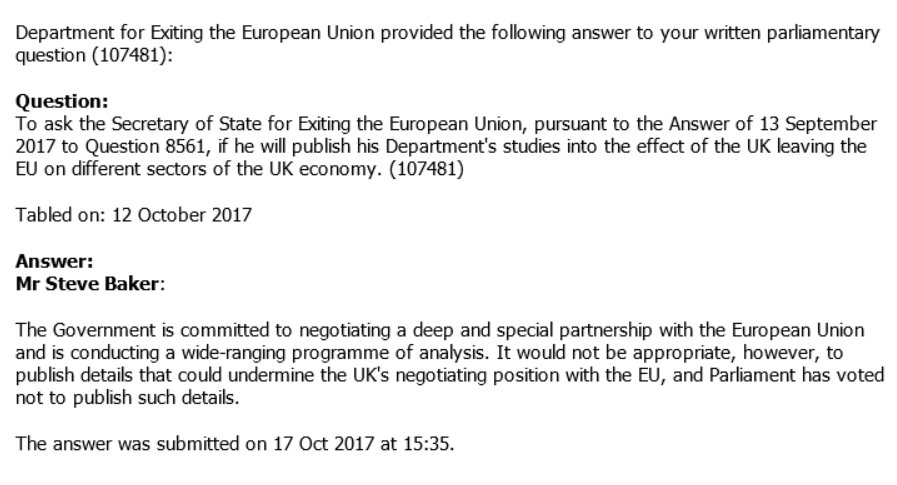
Government refuse to publish Brexit impact assessment. We need to ask why

“Despite calls from over 150 MP’s and threats of legal action, the Department for Exiting The European Union are still refusing to publish Brexit impact assessments.” David Lammy.

Whitehall’s internal risk assessments of the impact of leaving the EU on various sectors of the UK economy have remained the private property of the government. The government’s reluctance to publish them has been one of the most controversial, and widely discussed, features of its approach to Brexit. Ministers say that publication would undermine their hand in the Brexit talks and could influence the debate on Brexit if they were revealed. Circulation of the assessment is said to be highly restricted inside government because of its political sensitivity.

However the government’s authoritarian refusal to publish these documents is undemocratic, and it means the public will be intentionally kept in the  dark about Whitehall’s internal analysis over the economic impact of Brexit. Not a government that’s fond of public scrutiny, transparency and democratic accountability, then.

If you think my use of the term “authoritarian” is a bit strong, it’s worth remembering that in 2012, the government was ordered more than once by the Information Commisioner and by a Tribunal to release the risk register document relating to the impact of the controversial Health and Social Care Bill. Ministers vetoed the disclosure, and said that revealing such information would “interfere with policymaking”, and as such, was “not in the public interest.”  However, the Information Tribunal had ruled that the public interest in publishing the risk register was “very high, if not exceptional”.

Nonetheless, it has never been published for the public to see. Over the last 7 years, I have given many other examples of policies and narrative that indicate the Conservative’s strong authoritarian tendency.

The highly controversial Welfare “Reform” Act ( key measures of which were the introduction of Universal Credit, the “bedroom tax”, changes and steep cuts to disability benefits, the introduction of  a harsh and punitive sanctioning regime and the benefit cap) was defeated several times in parliament. The government implemented it nonetheless, by enforcing the “financial privilege” of the Commons in order to ignore the serious concerns raised and the refuse to entertain the mitigating amendments from the House of Lords.

Parliamentary debate regarding Brexit legislation is at a crucial stage, but opposition parties are given very little information before they are expected to make key decisions and vote on them. This is not an isolated or incidental set of circumstances. It’s emerged as a key Conservative strategy over the last few years, to ensure that parliamentary and public scrutiny and debate of controversial legislation is minimal. It’s a government that likes to get its own way, regardless of what the majority of the population may think. 

Tim Roache, GMB General Secretary, has said: “Brexit isn’t a game – people’s livelihoods and futures are at stake.

The Prime Minister seems to be intentionally keeping people in the dark in her quest to leave the single market and customs union.

The Government must publish their secret impact assessments as soon as possible so people know what’s in store and what the government is putting at risk.

Public services, unions and government need to plan for the future, we can’t do that when the government is hiding so much information from everyone.”

Image result for Brexit memes
There has always been a substantial gap between the Conservatives’ ideological position and economic prudence. Despite assurances earlier this year from the government, the Daily Mail  and the Express that our economy is “thriving”, they have somehow managed to misplace £490bn of our cash. That’s half a trillion pounds. It’s equivalent to 25 per cent of GDP.

This quote from the Daily Mail hasn’t held up very well in the fullness of time:

“In a damning assessment of the scaremongering by the Remain camp, the Office for National Statistics declared that there had been no post-referendum economic shock.”

I think it’s a bit of an economic shock to discover that the UK’s wealth has suddenly diminished from a surplus of £469bn to a net deficit of £22bn, and that investment in the UK by overseas companies and individuals fell from a £120bn surplus in the first half of 2016 to a £25bn deficit, over the same period, in 2017. 

Meanwhile, the government’s decision to leave the EU has itself “raised uncertainty and dented business investment” in the UK, a new report from the Organisation for Economic Cooperation and Development (OECD) has warned. 

The report says that real wages are being stripped back amid soaring inflation, despite low unemployment. Of course this has been a longstanding problem under successive Conservative governments as they have pared back labor market regulation and undermined the very notion of workers rights and collective bargaining. The balance of power was deliberately tipped against unprotected employees, in favour of exploitative and bad employers.

David Cameron introduced enormous fees of £1,200 for anyone seeking redress from an employment tribunal for unfair dismissal or discrimination. The crippling cost had its intended effect – in one year there was a 67% drop in the number who could afford to use tribunals. Only the highly paid or those backed by a union can now seek help. Women have been the hardest hit as sex discrimination cases fell by over 80% in the first year of fees.

Then there came the Trade Union Act which was deliberately designed to set too high a bar for strikes – a conditional ballot requiring a 50% turnout, and 40% of the electorate to vote yes.

General Secretary of the Trades Union Congress, Frances O’Grady, says: 

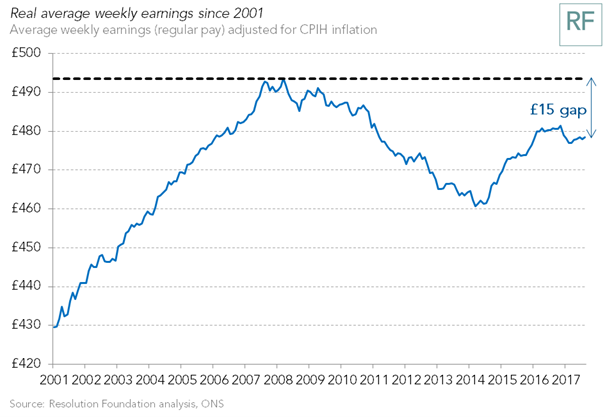
“Pay packets are taking a hammering. This is the sixth month in a row that prices have risen faster than wages.

Britain desperately needs a pay rise. Working people are earning less today (in real-terms) than a decade ago.

The Chancellor must help struggling families when he gives his Budget next month. This means ditching the artificial pay restrictions on nurses, midwives and other public sector workers. And investing in jobs that people can live on.” 

Despite their eyewateringly disingenuous rhetoric, the Tories have never been “the party of the workers”. Real wages are still shrinking , the cost of living is spiralling upwards, inflation was 2.6% in July (the mid-point of the quarter), and jumped to 3% in September.

Today, in response to the ONS employment report that was published, the Resolution Foundation analyst, Stephen Clarke, says:

“Today’s figures confirm the big picture trend that the UK labour market is great at creating jobs, but terrible at raising people’s pay.

“The scale of the pay squeeze over the last decade is so vast that people today are earning no more than they did back in February 2006, despite the economy being 4.4 per cent bigger per person since then.”

Britons would need a £15 per week pay rise to get back to the levels before the financial crisis.

Brexit, the economy and more shenanigans

The 140-page annual report from the OECD outlines the state of Britain’s economy 16 months after last year’s EU Leave vote.

It also says the deadlock in talks has put Britain on course for a “disorderly Brexit”, suggesting: “In case Brexit gets reversed by political decision (change of majority, new referendum, etc), the positive impact on growth would be significant.” 

The deputy leader of the Liberal Democrats said it was clear from the OECD report that a second vote was needed to prevent the harm caused by Brexit.

Jo Swinson said: “Brexit has already caused the UK to slip from top to bottom of the international growth league for major economies.

“This will only get worse if the government succeeds in dragging us out of the single market and customs union, or we end up crashing out of Europe without a deal.”

At least 20 members of May’s cabinet backed remaining in the EU in the run-up to last year’s referendum. 

The Treasury and Conservative ministers have rejected the OECD’s suggestion of second Brexit referendum, despite the warning from the thinktank that Britain must stay close to the EU or face long-term decline, and that reversing the decision to leave would significantly benefit the economy. 

I wonder if Philip Hammond’s Autumn budget on 22 November will continue to push the “balancing the budget” theme – a Conservative euphemism for more austerity, and the poorest citizens having to live within the governments’ dwindling and increasingly miserly “means,” now that he’s somehow misplaced a massive amount from the public purse. It’s going to be very difficult to woo the electorate with such a backdrop of even more looming poverty for the demographic that Conservatives usually direct their traditional prejudices at. For many of us, the “no gain without [your] pain” mantra doesn’t endear the Conservatives or switch on our confidence in their “long-term economic plan”.

There is a veritable chasm between policy and democracy, rhetoric and empirical evidence, not forgetting the galaxy-sized space between facts and techniques of persuasion. Maybe the Conservatives are still trying to convince themselves, in the their typical blustering, unreachable, non-dialogic “because we say so” way that always indicates denial and authoritarianism, that they can persuade a cut-weary public that austerity will suddenly work if we persist for yet another decade.

The “paying down the debt” deadline set by the chancellor has become an elusive goalpost, forever retreating into the future, and now we are expected to believe that by 2025, our economy will be fine and we’ll have a comfortable surplus instead of an ever greedy black hole of trillions.

Back in 2010, we were reassured by George Osborne that the government’s aim was for the deficit to be eliminated by 2015, and in his first budget he said that aim would be achieved, based on the government forecasts of the time. That didn’t happen. By November in 2011, the first surplus was forecast for 2016/17. By December 2013, it had been pushed back again to 2017/18. Now it’s been pushed back to 2025.

That’s providing that the public continue to believe the Conservatives have a shred of economic credibility for the forseeable, of course. Personally, I think that people are starting to grasp that the continuing radical cuts to public spending the economy will continue to shrink rather than expand the economy, because it’s not rocket science, and besides, we have now witnessed 7 years worth of empirical evidence that austerity does not work the way the Conservatives say it will. There’s only so many times that the Conservatives can get away with saying “but the economic damage was greater than we feared”.

The Tories have succeeded in being economical with the truth. But the fullness of time itself – the last 7 long years – has been a very good test of verisimilitude. The Conservatives failed. The public have noticed.

Only months ago, before the election, the government were boasting about the economic “recovery”. Yet when it comes to actual policies, we see more miserly austerity cuts, juxtaposed with generous tax cuts for very wealthy people, and the justification narratives always sound as if those carrying the brunt of austerity cuts – our poorest citizens: disabled people, young people, those on the lowest wages, public sector workers and so on – are somehow culpable personally for the state of the economy, inequality and poverty.

Some disabled people have been forced by the state to “tighten their belts” on behalf of the nation to the point that it has actually killed them. I can’t help but wonder how long the public are willing to sacrifice politically marginalised groups in the name of “the national interest” and “the deficit” just for the sake of fulfilling economic dogma, traditional Conservative prejudice and nasty, antisocial ideology.

The revised figures from the Office for National Statistics figures have weakened the governments’ position in Brexit talks. On Monday, the prime minister is meeting with European Union leaders, Jean-Claude Juncker and the EU’s chief negotiator Michel Barnier, a matter of only days after the exit negotiations were deadlocked.

The OECD said Britain must secure “the closest possible economic relationship” with the EU after Brexit to prevent the economy suffering a long-term decline.

Angel Gurría, the OECD’s secretary general, said Brexit would be as harmful as the second world war blitz and the British would need to act on the propaganda maxim to “keep calm and carry on.” That doesn’t exactly bode well. 

The revision of UK national accounts, the ONS “Blue Book”, shows that the country no longer has a net reserve of foreign assets, and therefore no safety margin while talks with the European Union reach a critical point, as time runs out to reach an agreement.

Is no prime minister better than a bad prime minister?

The half a trillion pounds that has gone missing is equivalent to 25 per cent of GDP.  

The Institute for Fiscal Studies says that if we leave without a deal, trade with the EU would fall by as much as 29%, costing the UK economy between £48.6 billion and £58 billion – the equivalent to between £741 and £884 per person.

The Treasury, rather worryingly,  is equally pessimistic saying it could cost 800,000 jobs, cut GDP by 6% and see the pound fall by 15%.

The Conservatives have succeeded in raising employment figures, but all that means in reality is that more people earning smaller wages.

And the pay squeeze is set to continue.

Maike Currie, investment director for Personal Investing at Fidelity International, says the rise of the ‘gig’ economy, and the government’s public sector pay cap, are partly to blame for the wage squeeze:

Another month, another fall in real household incomes. Today’s wage growth figures show our total earnings including bonuses grew at just 2.2% in the three months to August . With yesterday’s CPI figures showing inflation spiking to an eye watering 3%, the gap between our pay packets and the cost of goods and services continues to remain vast – our wages are not keeping up with the rising cost of living.

“The absence of wage growth remains the missing piece of the puzzle in the UK’s slow road to recovery – high employment should be the worker’s best friend because that’s what pushes up wages. With UK unemployment at a 45-year low, one would think that workers’ bargaining power at the wage negotiation table would improve, yet earnings growth remains elusive and the UK’s workforce is getting poorer. There are many potential reasons for this ranging from poor productivity to the squeeze on public sector pay and the rise of self-employment in the so-called ‘gig economy’.

Treasury documents showed Britain could lose up to £66bn a year if it pursues the hard Brexit option – leaving the single market and EU customs union.

Yet May’s Conservative conference speech signalled that the UK will prioritise immigration over single market access in Brexit talks, which also sent confidence in pound sterling plummeting.

While the longer-term economic impacts of Brexit are yet to unfold, and surprise everyone except the government, today’s report from the Resolution Foundation think-tank strongly suggests that the lowest paid could once again be hardest hit. It’s like everything this government touches upon immediately loses its value.

A draft Cabinet committee paper, which is based on a controversial study published by George Osborne in April during the referendum campaign, says:

“The net impact on public sector receipts – assuming no contributions to the EU and current receipts from the EU are replicated in full –would be a loss of between £38 billion and £66 billion per year after 15 years, driven by the smaller size of the economy.”

This evening the All Party Parliamentary Group on a Better Brexit for Young People released a report on the concerns and priorities for Britain’s youth during the Brexit negotiations. The report, compiled in association with LSE, gathered data from forty focus groups of 18 to 24-year-olds from varying economic, geographical and social backgrounds over an eleven-month period from November 2016 to September 2017.

The report, which is divided into three sections, explores youth views on the current state of Brexit, their concerns about Brexit and their priorities for Brexit negotiations.

In the introduction, it says: 

“[Respondents] spoke of their concern about the economic pressures they face with regard to housing, jobs, and education, and the political, social and economic direction of travel that Brexit represents”.

This opinion, says The LSE say that this is an opinion that was shared by over 90 per cent of those surveyed, demonstrating an overwhelmingly negative view of Brexit and its consequences. It’s clear that the referendum stirred feelings among many young people  of sadness, anger and frustration at the outcome of the referendum, and some of that was directed at people who voted to leave – the majority being older generations.  The government chose not to give the right to vote to 16- and 17-year-olds in the referendum. It is fair to ask whether allowing them to vote could have changed the result of the referendum or not.

Neoliberalism: more business as usual

You’d be forgiven for thinking that the near meltdown of the global financial system would prompt a comprehensive rethink of the principles underlying neoliberalism. Instead, the crisis was exploited to de-fund social welfare provision on a grand scale, to dismantle the social gains from our post-war settlement ) legal aid, the NHS and other public service provision, social housing and civil rights, and to hand out our public funds to a small and very wealthy cabal. Austerity socialised losses for the poorest, and privatised hand outs in the form of tax cuts. Labor market deregulation and increasing trade union regulation also benefitted the wealthiest, resulting in the growth of exploitative wages, job insecurity and poor employment practices for ordinary people, and big profits for the wealthiest. 

Immediately following the referendum result, the Centre for Policy Studies (CPS), a free market thinktank, revealed what many of us suspected – Brexit has presented the Conservatives with a cornucopia of opportunities to extend the principles of an already overarching, totalisin ideology to its absolute limits. The CPS said:

“The weakness of the Labour party and the resolution of the EU question have created a unique political opportunity to drive through a wide-ranging … revolution on a scale similar to that of the 1980s … This must include removing unnecessary regulatory burdens on businesses, such as those related to climate directives and investment fund[s].”

Shortly after, George Osborne proposed to cut corporation tax from 20% to below 15%, to staunch the haemorrhage of investment. During the coming months and years, the unfolding Brexit fueled economic crisis will provide countless pretexts for similar “emergency measures” that solely benefit big business profits and of course “roll back the state”. 

This is inevitable if the current government remain in office. There will be no Brexit risk assessment available to the public. There will be no vote in parliament, no second referendum, no fresh elections: just the most massive, scheming and authoritarian legislative programme in history within the current parliament, in which the Tories command an absolute majority based on 37% of the votes cast in the last general election.

So much for “taking back democratic control”. 

Tom Coberg, writing for the Canary, says:

“[…] it was not long after the 2016 EU referendum that one commentator observed how the Conservatives appeared to be adopting tactics akin to “disaster capitalism“. And that with Brexit:

[…] the prize is the opportunity to rework an almost infinite range of detailed arrangements both inside and outside the UK, to redraw at breakneck speed the legal framework that will govern all aspects of our lives.

May has begun to prepare the public for this. And according to Joe Owen of the Institute for Government, the civil service drew up plans for a ‘no deal’ “months ago”. Though, given the close links between the Tories and Legatum, such a scenario may have been the plan all along.

Or to put it another way: extreme Tory Brexit looks as if it could mean exploitation of the many, for the benefit of the few.”

 We are taking our country back. 

We’re heading for the feudal era, singing Hayek’s deadly anthem all the way. 

When the “free market” came to Chile


I don’t make any money from my work. But you can support Politics and Insights and contribute by making a donation which will help me continue to research and write informative, insightful and independent articles, and to provide support to others. The smallest amount is much appreciated, and helps to keep my articles free and accessible to all – thank you. 

DonatenowButton

The ‘cognitive bias’ of behavioural economics and neuropolitics

technocracy

Richard Thaler was awarded the Nobel Memorial Prize in Economic Sciences for his contributions to developing the field of behavioural economics last month. Thaler, and legal theorist, Cass Sunstein, who co-authored Nudge: Improving Decisions about Health, Wealth and Happiness (2008), have popularised the ideas of libertarian paternalism, which is basically founded on the idea that it is both possible and legitimate for governments, as well as public and private institutions, to affect and change the behaviours of citizens while also [controversially] “respecting freedom of choice.”

Regular readers will know that I don’t like behavioural economics and its insidious and stealthy creep into many areas of public policy and political rhetoric. The lack of critical debate about the application of libertarian paternalism (which is itself a political doctrine) via policies which are designed as systems of political “incentives” at the very least ought to have generated a sense of disquiet and unease from the public and academics alike. 

Using “psychological insights” in public policy – which amount to little more than cheap political techniques of persuasion – no matter how well-meaning the claimed intention is – amounts to a frank state manipulation of the perceptions and behaviours of the public, without their informed consent. 

Furthermore, the application of libertarian paternalist policies is prejudiced – it’s asymmetric because the embedded “nudges” are allegedly designed to target “help” at people who are deemed to behave irrationally; those who don’t make “optimal” decisions and so are not advancing their own or wider society’s interests, while the state interferes only minimally with people who are deemed to behave “rationally”. 

Of course, by some extraordinary coincidence, those who are regarded as behaving rationally are in the minority – they happen to be the very wealthiest citizens. You could easily be forgiven for thinking that behavioural economics is simply a reverberation from within a totalising New Right neoliberal echo chamber. Of course it follows that poverty is the result of the cognitive “deficits” of the poor.

The government would have you believe that poverty has nothing to do with their programme of austerity, their socioeconomic policies, which are generous and indulgent towards the very wealthy, at the expense of the poorest citizens, and the subsequent steeply rising socioeconomic inequality. It’s because of the faulty decision-making of those in poverty.

The political shift back to a behavioural approach to poverty also adds a dimension of cognitive prejudice which serves to reinforce established power relations and perpetuate another layer of prejudice and inequality. It is assumed that those with power and wealth have cognitive competence and know which specific behaviours and decisions are “best” for poor citizens, who are assumed to lack cognitive skills or “bandwidth” (basic cognitive resources). 

It seems to me that the behavioural economists have colluded with the Conservatives in an ideological re-write of the principles of Abraham Maslow’s hierarchy of human needs. They say, for example:

“Research shows that money worries can absorb cognitive bandwidth, leaving less cognitive resources to make optimal decisions.”

“Absorb cognitive bandwidth”? What a load of technocratic psychobabbling and politically expedient tosh.

The solution to the problem of people’s widespread “money worries” isn’t nudge – which is simply more ideology to prop up existing ideology. The answer is to increase the income of those struggling with financial difficulties after seven years of austerity, stagnant wages and a rising cost of living. No amount of nudging poor people will redistribute wealth or reverse the effects of bad political decision-making.   

Maslow said that hunger, homelessness, being unable to keep warm – problems arising when we don’t have resources to meet our basic physical needs – means that our cognitive priorities are reduced to that of just survival. It means that we can’t fulfil our other “higher level” needs until we address our survival prerequisites. So looking for work and meeting compliance and welfare conditionality commitments by jumping through the endless ordeals that the Department for Work and Pensions put in people’s path to “nudge”  them away from social security isn’t going to happen.

I shouldn’t have to say this in 2017, but I will: people have to meet their needs for food, fuel and shelter, or they will simply die. That’s a pretty all-consuming attention grabber. Or struggling to survive absorbs all of a person’s “cognitive bandwidth” if you prefer. It takes up all of your time and effort and becomes your only priority. It’s hardly rocket science, yet the government and their team of behavioural economists seem to be deliberately failing to grasp this fundamental, empirically verified fact. Rather than addressing the socioeconomic and political reasons for poverty, the emphasis is on intrusive state tinkering with the psychological effects of poverty. 

Maslow once said that “The good or healthy society would then be defined as one that permitted people’s highest purposes to emerge by ensuring the satisfying of all their basic needs.”

Instead in the UK, the government employs a Nudge Unit to define how and justify why the UK is a shamefully regressive place where many ordinary citizens are hungry, homeless and without the essential necessities to live. That’s because of neoliberal policies that create crass inequalities, by the way, and has nothing to do with people’s “cognitive bandwidth” or their “optimal” decision-making capacities. 

Behavioural economics makes the political problem of poverty one of poor people’s decision-making capacity, whereas Maslow saw the problem for what it is – a lack of financial resources to meet basic needs. The answer isn’t to mess about nudging or “incentivising” people, and labelling them as “cognitively incompetent”: it is simply to ensure everyone has enough to eat, has shelter and can keep warm. It’s pretty simple, really, no excuses and no amount of managementspeak and psychobabble may exempt a government from ensuring citizens’ basic survival needs are met. Especially in a very wealthy, developed democracy. 

From the government’s perspective, poor people cause poverty. Apparently the theories and “insights” of cognitive bias don’t apply to the theorists applying them to increasingly marginalised social groups. Nor do behavioural economists bother with the “cognitive bias” of the hoarding wealthy, or those whose decisions caused the global crash and Great Recession and the subsequent political decision-making that led to austerity, more aggressive neoliberalism, exploitatively low, stagnating wages and a punitive welfare state that disciplines and punishes citizens, rather than providing for their basic survival needs – which was its original purpose.

No-one is nudging the nudgers. 

Conservative policies are extending a behavioural, cognitive and decision-making hierarchy that simply reflects the existing and increasingly steep hierarchy of power and wealth and reinforces competitive individualism and the unequal terms and conditions of neoliberalism. Behavioural economics has simply added another facet to traditional Conservative class-based prejudice, and a prop for the Conservatives’ profound ideological dislike of the welfare state and other public services.

It’s not “science”, it’s ideology paraded as science 

In the UK, the Behavioural Insight Team is testing libertarian paternalist ideas for conducting public policy by running experiments in which many thousands of participants receive various “treatments” at random. There are ethical issues arising from the use of randomised control trials (RCTs) to test public policies on an unsuspecting population. While medical researchers generally observe strict ethical codes of practice, in place to protect subjects, the new behavioural economists are much less transparent in conducting research and testing public policy interventions.

Consent to a therapy or a research protocol must possess three features in order to be valid. It should be voluntarily expressed, it should be the expression of a competent subject, and the subject should be adequately informed.

It’s highly unlikely that people subjected to the extended use and broadened application of welfare sanctions gave their informed consent to participate in experiments designed to test the theory of “loss aversion,” for example. (See The Nudge Unit’s u-turn on benefit sanctions indicates the need for even more lucrative nudge interventions, say nudge theorists.) Furthermore, the experiments are shaped by certain underpinning assumptions. They are not value-free, as claimed.

There is of course nothing in place to prevent a government from deliberately exploiting a theoretical perspective and research framework as a way to test out highly unethical and ideologically driven policies. How appropriate is it to apply a biomedical model of prescribed policy “treatments” to people experiencing politically and structurally generated social problems, such as unemployment, inequality and poverty, for example?

Conversely, how appropriate is it to frame illness and disability purely in terms of  individuals’ “faulty” perceptions and behaviours? The de-medicalisation of illness and disability is also a part of the Conservatives’ behaviourist turn, which is part of a justification narrative for the dismantling of support services and social security for ill and disabled people who are unable to work. (I’ve written at length about this here – Rogue company Unum’s profiteering hand in the government’s work, health and disability green paper.)

I guess if the government’s purposeful behavioural modification ordeals fail and you die, then at least the state will know that you were “genuinely” in need of support, after all. This logic operates rather like a medieval inquisitional technique, embedded at the core of the Kafkaesque Work Capability Assessment. The government inform us that this is necessary to aim at sifting out those “most in need” so that the government may “target” support provision to “ensure” that this ever-changing, politically redefined and shrinking group of “those most in need” are somehow distinguished from among the much larger group of those who are, in fact, most in need of support.

The government cannot see the woods because they are so busy indiscriminately pruning and felling the trees. 

Most people lacking a strong masochistic tendency would not try to claim disability support unless they desperately needed to. The very tiny minority of fraudulent claimants (less than 0.7%, and some of that tiny percentage includes bureaucratic errors) are unlikely to be deterred by the introduction of ordeals to the social security system, yet this vicious tactic was suggested by the Institute for Fiscal Studies (IFS) among others, to “deter fraud.”

However, byzantine “eligibility tests”, an authoritarian monitoring regime to coerce conformity and compliance of social security recipients, and a “robust” shaming and prosecution policy deter “genuine” applicants. Such processes are extremely intrusive, punitive and ultimately serve to reinforce public and political prejudices.  

Only those who are truly needy and disadvantaged would tolerate this level of state inflicted, coercive, aggressive and crude behaviourism for the provision of completely inadequate levels of support, through public shaming and through frequent, intrusive administrative forays into their personal lives. 

Governments in neoliberal countries portray welfare support as “profligacy” – an “unsustainable” big state over-indulgence – and couple that with a narrative founded on an inextricable dichotomy – that of the “deserving” and “undeserving” poor. Of course this is intentionally socially divisive: it purposefully marginalises and stigmatises those needing support, while creating resentment among those who don’t.   

The behaviourist perspective of structured ordeals as a deterrent is the same thinking that lies behind welfare sanctions, which are state punishments entailing the cruel removal of lifeline income for “non-compliance” in narrowly and rigidly defined “job seeking behaviours.” Sanctions are also described as a “behavioural incentive” to “help” and “encourage” people into work – the very language being used to describe the punitive actions of the state is also a nudge.

Behavioural linguistic techniques are being used to extend the view that state inflicted punishment is somehow in your best interests. It also serves to deny people’s accounts and experiences of punitive and unfair state interventions resulting in often harrowing adverse outcomes.

People who are ill, it is proposed, should be sanctioned, too, which would entail having their lifeline basic health care removed. Apparently, this stripping away of public services is also for our own good. 

The welfare state originally arose to ensure citizens can meet their basic survival needs. Now it is assumed that those who need social security are psychologically abnormal or inept, and have fundamental character flaws (“undeserving”). Social security is no longer about ensuring minimal standards of living, the government is now preoccupied with disciplining the “feckless” poor, apparently aiming to punish them out of poverty.   

On the face of it, welfare policy has been perceived over recent years as facing the challenge of balancing the three goals of keeping costs low, providing sufficient standards of living, and ensuring “work incentives.” This has sometimes been referred to as the “iron triangle” of welfare reform. The term reflects the difficult implicit trade-off between these three conflicting aims. It’s perceived that improvement of one dimension is usually gained only at the expense of weakening another. 

Neoliberal governments have tended to use aims one and three to justify the prioritisation of the second aim, which entails the lowering of costs “on the taxpayer” by lowering the standard of living for welfare recipients, in order to “incentivise” them to find work. The shift to behavioural explanations of poverty – that people need incentives to find a job in the first place – doesn’t, however, stand up to much scrutiny once we see that a large proportion of welfare spending actually goes towards supplementing low wages for those in work. The largest proportion of welfare spending is on pensions. The proportion of the welfare budget taken up by people who are unemployed is very small.
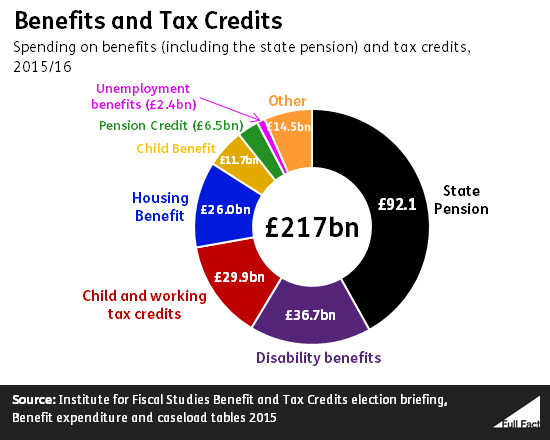
Image result for welfare spending uk pie chart

In the UK, the government have also introduced behaviourist in-work sanctions for people who “fail to progress” in work. Yet most wages are decided by employers, not employees. It’s not as if we have a government that values collective bargaining and the input of trade unions, after all. That’s a policy, therefore, that simply sets people up for sanctioning. It’s irrational and needlessly cruel.

It’s worth keeping in mind that social security constitutes a country’s lowest income security net. The levels of welfare benefits were originally calculated to meet only essential needs, providing sufficient income to cover the costs of just food, fuel and shelter, and are therefore directly related to the very minimum standards of living. 

Criticism of the “scientific” methodology of behavioural economics: promoting neoliberal outcomes and neurototalitarianism

“Epistemic governance” refers to the cognitive and knowledge-related paradigms that underlie a society. Behavioural economists have presented randomised control trials (RCTs) as providing “naively neutral” evidence of what policy interventions work, but this is misleading. RCTs are advocated as an effective way of determining whether or not a particular intervention has been successful at achieving a specific outcome in a narrow context.

One concern about the use of RCTs in public policy-making is that this method is being promoted as the “gold standard” in a hierarchy of evidence that marginalises qualitative research. Quantitative methodology significantly reduces the scope for citizen feedback and detailed accounts of their experiences. The issues of interpretation and meaning are lost in the desire to “tame complexity with numbers”. Such a non-prefigurative (insofar as it is founded on hierarchical values and doesn’t tend to reflect cultural diversity), non-dialogic approach is profoundly incompatible with democratic principles. 

As libertarian paternalism is specifically designed to lead to predetermined outcomes in terms of the behaviours it aims to produce – and it’s also constructed a rather miserable and prejudiced narrative of some humans’ cognitive capabilities (only poor people, reflecting traditional Conservative prejudices) – a major concern is that the predetermined structuring of choice, together with “re-normalisation” strategies, exclude the potential for public engagement and participation in debates concerning what choices and collective normative changes are actually beneficial, fair, desirable, appropriate, safe, right and wrong.

And of course, that raises a serious question about what constitutes “evidence”? 

It’s not so long ago that the Department for Work and Pensions (DWP) manufactured evidence, using fake testimonies, claiming that people actually felt they had benefitted from welfare sanctions. Yet when pressed regarding the authenticity of the testimonies, the DWP then claimed: 

“The photos used are stock photos and along with the names do not belong to real claimants. The stories are for illustrative purposes only. We want to help people understand when sanctions can be applied and how they can avoid them by taking certain actions. Using practical examples can help us achieve this.” 

Those “testimonies” were neither practical nor genuine “examples”.

Academic research, statements from charities and support organisations, the evidence from the National Audit Office, and many individual case studies detailing severe hardship and harm to citizens because of welfare sanctions, have been presented to the government, all of which indicate that the use of financial penalties and harsh conditionality in administering social security does not help people into work. This evidence has been consistently discounted by the government, with claims that the statements are “politically biased” or that “no causal link between policy and adverse effects has been established”. The government have frequently dismissed citizens’ accounts of their harrowing experiences of sanctions as “anecdotal evidence”.

In this respect, libertarian paternalism may be seen as a form of neurototalitarianism. It’s a form of governance that imposes needs and requirements on citizens without any democratic engagement, without acknowledgement or recognition of citizen’s agency, identity, and their own self-defined needs. 

Although advocates of RCTs have argued that this methodology excludes the unverified claims of “experts” in policy making, it ought to be noted that behavioural economists are nonetheless self-made “experts”, with their own technocratic language and mindset, and their “knowledge” of what human behaviours, cognitive strategies and perceptions are “optimal” and serve the “best interests” of the majority of citizens.

Behavioural economics isn’t “science”: it’s founded on a premise of economic moralism. Nudge is all about “encouraging” citizens to behave in social ways relying on market “incentives”, as opposed to regulations. It’s the invisible hand of the state, where increasing privatisation, deregulation, austerity and the shrinking state corresponds with increasing psychoregulation of citizens.

Yet if anything, behavioural economics has highlighted that the neoliberal state is fundamentally flawed – that there are major limitations of the magical thinking behind the “markets-know-best” politics. 

In their critique of the economic rational-behaviour model, libertarian paternalists nonetheless advocate a perspective of rules, adjustments and remedies that ultimately serve to simply modify behaviours to fit the rational-behaviour model – which describes society in terms of self-interested individuals’ actions as explained through rationality, in which choices are consistent because they are made according to personal preference – to deliver the same neoliberal outcomes, by nudging public decision-making from that based on cognitive bias towards those decisions which are deemed cognitively rational. And what passes as “cognitively rational” is defined in terms of economic outcomes, by the neoliberal state.

This of course overlooks the limits on choice that neoliberal policies themselves impose, within in a system constrained by competitive individualism and “market forces”. It also assumes that the choice architects know what our best interests actually are. 

The state is seen as acting to “re-rationalise” citizens: recalibrating perceptions, cognition and behaviours but without engaging with citizens’ rational processes. One criticism of behavioural economics is that it bypasses rational processes altogether, acting below our level of awareness, and as such, it doesn’t offer opportunities for learning and reflection. It’s more about a stimulus-response type of approach. 

In a paper called Personal Responsibility and Changing Behaviour: the state of knowledge and its implications for public policy (Halpern et al., 2004) a group of libertarian paternalists, touting for business, outline a moral argument in which state policies increasingly should “cajole” people in the direction of personal responsibility and choice, since it is said that such an approach “strengthens individual character” and “moral capacity”, following a parental rationale of a distinctly Conservative disciplinary notion of “tough love” (p. 7).

A patchwork of theories on the ecology of behaviour change are discussed in the report: Ivan Pavlov and Burrhus Frederic Skinner’s outdated accounts of an authoritarian brand of behaviourism and conditioning, adaptation and rewards; Robert Cialdini’s business treatise on marketing, influence, compliance, and automatic behaviour patterns; the work of behavioural economists such as Amos Tversky and Daniel Kahneman (1974) on heuristics; and community theories of behaviour, including concepts such as capability, social networks, social capital and social marketing (from Bourdieu, Coleman, Putnam – all cited in Halpern et al., 2004).

The role of the state here is seen not as a service provider to fulfil citizens’ needs, but as an “enabler”, and a public relations service for neoliberalism. The state has become an ultimate re-calibrator of citizens’ perceptions, attitudes, expectations, values and behaviours within the narrow confines of a neoliberal context.

Furthermore, Halpern says of nudge: “it enables public goods to be provided with a lower tax burden.” Describing tax as a “burden” is a form of default setting. Tax may also be seen as an essential public finance mechanism which is essential to economic and social development, providing sufficient revenue to support the productive and redistributive functions of the state. There is also an assumption that cheaper public goods are desirable, and will maintain their functional capacity and social benefits. 

David Cameron’s “Big Society”, the Conservatives’ shift from a rights-based society, to one that entails “citizen responsibilities”, and of course their “low tax low, welfare” perspective are all designs from the libertarian paternalist’s template. Although nudge has been sold in the UK as a way of reducing state intervention, such policies have in reality become more about justifying the increasing intrusion of the state in our everyday life. 

As I’ve hinted, nudge is about much more than changing behaviours based on cognitive bias to promote state defined citizens’ interests. It is also used to “reset” the public’s normative expectations, and for the promotion and inculcation of a fresh set of normative values of personal responsibility, self-help and self-discipline, claimed to be required in order to fulfil policy goals and justify interventions. Nudge is therefore reshaping public expectations regarding a “new relationship” between citizen and the state, where the burden of obligation is being increasingly and disproportionately placed on the poorest citizens.

Appeals to evidence-based policymaking are particularly misleading when they take out the context for interpreting specific forms of evidence. Libertarian paternalism is an imprecise theoretical approach to governance, and has resisted attempts to definitively codify its principles. 

It seems to be a blend of social marketing techniques, psycholinguistics, psychographics, habituation and (re-)normalisation strategies. Libertarian paternalism draws heavily on psychology, capitalising on our dispositions, manipulating choices, perceptions  and behaviours, by using a neuropolitical approach to fulfil neoliberal outcomes. Some of us have also dubbed this approach “neuroliberalism.”

Appeals to evidence in policymaking and debate are also frequently met with further questions on what sort of evidence counts, what it means – how the evidence is to be interpreted, what evidence is credible and importantly, how the policy question is defined and framed in the first place. As I’ve discussed, claims of “evidence” rest on tacit assumptions made in a specific context, so their transferability to another context is controversial. 

Nudge fails to accommodate a range of diverse knowledge sources, public accounts and it does nothing to address the underlying assumptions embedded in behavioural economics, or those of policy-makers using it as a tool to fulfil their own aims and objectives, nor does it acknowledge its own limitations. It fails to acknowledge and reflect different epistemic (relating to knowledge and/or to the degree of its validation) and ethical concerns. Nudge doesn’t accommodate democratic dialogue with, and alternative accounts from, other experts, and most importantly, from citizens. 

This means that any arising new evidence that may challenge the validity and reliability of behavioural economics theory is generally discounted, regardless of the nature and quality of that evidence. And a further problem is that new evidence also requires its own expert interpretation and assessment.

This is a key problem of epistemic governance. The production of evidence for policymaking should also be governed. Evidence is marshalled, interpreted and made to fit policy frameworks by experts. Those advocating the use of RCTs are experts,  specialising in a highly codified form of knowledge, which is not easily accessible to the general public. The claim is that behavioural economics and the findings of RCTs are relevant to policy. This raises some fundamental questions, then, about who counts as an expert, what counts as expertise and similarly, we definitely need to keep asking: what does and does not count as evidence? 

My point is that epistemic governance – the production of knowledge for governance – also needs be governed. It’s a point that others who research policy have also raised.

In order for research data to be of value and of use, it must be both reliable and valid. Reliability refers to the replicability and repeatability of findings. If the study were to be done a second time, would it yield the same results? If so, the data are reliable. If more than one person is observing behaviour or some event, all observers should agree on what is being recorded in order to claim that the data are reliable. Validity refers to the credibility of the research. Are the findings genuine? If a test is reliable, that does not mean that it is valid.

In order to determine cause and effect relationships, three basic conditions must be met:

  1. co-occurrence
  2. correct sequence or timing
  3. ruling out other explanations or “third factors/variables.”

The production of evidence, via testable hypotheses, to verify “knowledge” is insufficient if it is abstracted from the political context of policymaking in which problems are framed and knowledge is interpreted and given meanings.

I may have laboured the point, but it is a very important one. What counts as “evidence” is defined by the frame of reference, which also shapes which hypotheses are formulated and tested. I have already discussed how other forms of empirical evidence are discounted. The government have all too frequently used the quip “There is no evidence of causality between policy and stated events”.

Yet the Conservatives have refused to monitor the impact of their “reforms”, and have intentionally overlooked the important point that correlation often implies causation. Without conducting further investigation and examining the evidence, the government has no grounds whatsoever to dismiss the possibility of a causal relationship. It seems the government only value the principles of positivism when it comes to confronting other people’s knowledge and evidence that conflicts with their own.

Confirmation bias

To come at these problems from a slightly different angle, it’s worth considering the role of confirmation bias in knowledge production, which is the tendency to search for, select, favor, interpret new evidence as confirmation of one’s existing beliefs, expectations, prejudices, theories and hypotheses because we want them to be true. It is a type of cognitive bias and a systematic error of inductive reasoning

Confirmation biases contribute to overconfidence (a person’s subjective confidence in his or her judgements is reliably greater than the objective accuracy of those judgements.) Iain Duncan Smith provided many memorable examples of cognitive bias. In July 2013, Duncan Smith was found by Andrew Dilnot, then Head of the UK Statistics Authority, to have broken their Code of Practice for Official Statistics for his and the DWP’s use of figures in support of, and to justify government policies.

Dilnot also stated that, following an earlier complaint about the handling of statistics by Duncan Smith’s Department, he had previously been told: “that senior DWP officials had reiterated to their staff the seriousness of their obligations under the Code of Practice and that departmental procedures would be reviewed”. 

Duncan Smith’s defence was that: “You cannot absolutely prove those two things are connected – you cannot disprove what I said. I believe this to be right.” Pseudoscience has thrived using similar arguments: propositions are presented as fact and assumed to be true unless you can actually prove otherwise. Unicorns, telekinesis, gnomes and angels exist because I can’t prove they don’t. 

This led Jonathan Portes, director of the National Institute of Economic and Social Research and former chief economist at the Cabinet Office, to accuse the Conservative Party of going beyond spin and the normal political practice of cherry picking of figures, to the act of actually “making things up” with respect to the impact of government policy on employment and other matters. 

“I believe I’m right” is an example of someone more certain that they are correct than they deserve to be, and this authoritarian approach can maintain or even strengthen beliefs in the face of overwhelming evidence to the contrary. It demonstrates a government that is simply digging in the trenches of ideology.

Flawed decision-making due to such biases have commonly arisen in political and organisational contexts. Yet it is public, not political behaviours, that have come to be regarded as “adaptive” to fit highly partisan political frames of reference. Apparently it’s only citizens who make mistakes in their decision-making, and whose behaviours need to be rectified.

We are being told that a lot of what we think is wrong. This is the foundation on which the shift in political emphasis from macro-level interventions to micro-level psychointerventions rests. Yet without exploring alternative and comparative forms of knowledge, this is simply conjecture in justification of the mass provision of state perceptions, behaviours and endorsed lifestyles, not verified fact. 

Nudging neoliberalism

Behavioural economics has roots in the work of Herbert Simon –  another winner of the Nobel Memorial Prize in Economic Sciences in 1978 – on bounded rationalityand grew enormously under the attention of Daniel Kahneman – another Nobel Prize in Economic Sciences winner – and Amos Tversky (1979), who argued that there are two broad features of human judgment and decision-making: various errors in coding mechanisms known as heuristics and biases, that lead to violations of the “laws” of logic and consistency. All of which differs from the neoclassical rational choice economic model, which portrays self-interested actors making rational choices in the market place. 

The prize in Economics is not one of the original Nobel Prizes, it wasn’t bequeathed by and instituted through Alfred Nobel‘s will. It was controversially established in 1968 through a donation from the Swedish Central Bank, on the bank’s 300th anniversary. In the late 1960s, Sweden’s central bank was actively campaigning for the country to pursue a more “market-friendly” approach, and the prize, which was established in 1968 to commemorate the bank’s 300th anniversary, became a tool with which to support this campaign. Of course, the prize gives economists a stamp of approval for the general public and politicians alike, legitimising their entire philosophy. 

Of the 74 laureates so far, 28 are affiliated with the University of Chicago, home of neoliberalism. Among those 28 winners are the early champions of neoliberalism, such as Milton Friedman and Friedrick Hayek. In fact the award has continually reinforced an ideology of the primacy of the “free market.” Hayek and Friedman lent great prestige to the cause of neoliberalism, which has contributed greatly to the creation of a rightward shift in the intellectual and political climate in western democracies.

Conservatives since Margaret Thatcher and Ronald Reagan have been powerfully influenced by neoliberal economists. Thatcher’s first encounter with Hayek, for example, came when he published The Road to Serfdom in 1944. She read it as an undergraduate at Oxford, where it became a formative part of her authoritarian, distinctive and enduring outlook. She was radicalised at the age of 18.  

One area of influence on Thatcher’s New Right policy in particular was Hayek’s low regard of trade union power and collective wage bargaining, he saw it as the primary reason for the UK’s economic difficulties (inflation) during the 70s, stating:

“There can indeed be little doubt to a detached observer that the privileges then granted to the trade unions have become the chief source of Britain’s economic decline.” 

The incoming Labour government in 1974 were also blamed for failing to curb the unions during the inflation crisis. However, major contributing factors to the growth of inflation were rapidly rising oil prices, which increased by 70%, tripling in the early 1970s, and the “Barber Boom and Bust”. In the 1972 budget, the Conservative chancellor, Anthony Barber, oversaw a major deregulation and liberalisation of the banking system, replaced purchase tax and Selective Employment Tax with Value Added Tax, and also relaxed exchange controls.

During his term, the economy suffered due to stagflation and industrial unrest, including a miners strike which led to the Three-Day Week. In 1972 he delivered a budget which was designed to return the Conservatives to power in an election expected in 1974 or 1975. This budget led to a period known as “The Barber Boom”.

The measures in the budget, which included a growth in credit (due to bank deregulation and liberalisation) and consumer spending, which helped create a consumer bubble, led to high inflation, rising living costs and subsequent wage demands from public sector workers. The Conservatives, however, were not returned to office, and Labour were left to deal with rising inflation subsequently, until Thatcher’s government took office.

Hayek pressed Thatcher to quickly cut public expenditure, urging her to balance the budget in one year rather than five – and (unbelievably) to follow more closely the example of Pinochet’s Chile. 

Under successive Conservative governments, and to some extend, under Blair’s New Labour, our society has been increasingly organised on overarching and totalising neoliberal principles. Socioeconomic conditions in the UK have fostered a hierarchical, unequal, competitive and above all, adversarial society, for many. 

Wealth is a private matter, whereas “national debt” has become public responsibility. The poorest citizens carry the largest burden of the debt, under the guise of austerity, which, the government claim, is an economic “necessity.” We are told there is no alternative. Any challenge to this ideological preference is met with contempt, and derisive comments that any policy entailing a shift from free market thinking and competitive individualism towards a more equitable, collectivist socioeconomic organisation is economically “incompetent”, “dangerous” and would require a “magic money tree” to “fund” it. Neoliberalism is held up as the ONLY choice we have regarding our socioeconomic organisation. Behavioural economics simply endorses and extends this hegemonic view.

Austerity is actually central to neoliberal economic strategy, and is one consequence of  right-wing libertarian “small state” dogma. Paradoxically, the role of the Conservative state has expanded rather than shrank, and is now all about enforcing public compliance and conformity within a socioeconomic system that is failing them, and the maintenance of strategies of fear, diversion, disempowerment, social divisions, a politically manufactured “scarcity”, a lowering of public expectations and the formulation of “deterrents.” And the institutionalisation of techniques of persuasion, public relations strategies and propaganda, to prop up and maintain the status quo.

The Conservative’s answer to the social injuries inflicted by their overarching, aggressive neoliberalism is to apply the sticking plaster of more increasingly aggressive neoliberalism.

The behaviourist turn reflects a subtle form of psychoauthoritarianism, which is all about enforcing neoliberalism.

Some people were critical of the fact that Hayek shared the 1974 Nobel Memorial Prize in Economic Sciences with Gunnar Myrdal for his “pioneering work in the theory of money and economic fluctuations and … penetrating analysis of the interdependence of economic, social and institutional phenomena.” Milton Friedman was awarded the 1976 prize in part for his work on monetarism. Awarding the prize to Friedman caused international protests. Friedman was accused of supporting the military dictatorship in Chile because of the relationship of economists of the University of Chicago to Pinochet.

Nudge is a technocratic and authoritarian solution to the terminal condition of neoliberalism. Nudge is being used to prop up a failing brand of particularly virulent Conservative end-stage capitalism. It’s basically the PR, packaging, marketing and advertising industry for, and enforcement of, neoliberalism. Because neoliberalism can’t sell itself to the public.

Ask General Augusto Pinochet. He used the “caravan of death” method of selling the “economic miracle” – neoliberalism – to the populace of Chile. He felt that in order to market the market economy, he simply had to kill all of his political opponents. The Rettig Commission puts the count of murdered individuals at approximately 3,000 during the 17-year Pinochet’s military junta

Related image 

Behavioural economics provides the government with more subtle form of authoritarianism that is about psychological coercion. But citizens are nonetheless dying as a consequence of government policies.

Technocracy

Although traditionally, decisions made by technocrats are based on information derived from methodology rather than opinion, in the UK, behavioural economists, or at least those using behavioural economics in policy, tend to make decisions derived from ideology. 

Technocracy became a popular movement in the United States during the Great Depression when it was held that technical professionals, like engineers and scientists, would have a better understanding than politicians regarding the economy’s inherent complexity. Technocracy often arises during economically turbulent periods. In the states, we saw the rise of cybernetic and system models of society, from the likes of Talcott Parsons.

We also saw the development of political behaviouralism, a political pseudoscience that did not represent or reflect “genuine” political research. Instead, empirical consideration took precedence over normative and moral examination of politics. (See the is/ought distinction and naturalistic fallacy for further discussion on the key problems with this approach.)

Behaviouralism emphasised “an objective, quantified approach” to explain and predict political behaviours. It is associated with the rise of the behavioural sciences, modelled after the natural sciences. Behaviouralists also claimed they can explain political behaviour from an “unbiased, neutral” point of view.

Of course, behaviouralism is often most often attributed to the work of University of Chicago professor Charles Merriam who wrote in the 1920s and 1930s following the Great Depression.

The more things change, it seems the more they stay the same.

Behaviouralism was also founded on an insistence on distinguishing between facts and values. Quantitative evidence versus the abstract and the “anecdotal”. Sound familiar?

However, there’s also a difference between facts and meanings, human behaviours are meaningful and purposeful, human agency arises in contexts of intersubjectively shared meanings, from which there is no cultural or mind-independent, objective vantage point from which we may observe with value neutrality. And surely, abstract values such as “freedom”, “democracy” and “equality” are necessarily central to political discourse. Democratic politics must necessarily draw on the qualitative and the normative dimensions of social realities. 

Behaviouralism was an inevitable consequence of positivism. Auguste Comte (1798-1857,) who was regarded by many as the founding father of social sciences, particularly sociology, and who coined the term positivism,” was a Conservative. He believed social change should happen only as part of an organic, gradual evolutionary process, and he placed value on traditional social order, conventions and structures. Although the notion of positivism was originally claimed to be about the sovereignty of positive (verified) value-free, scientific facts, its key objective was politically Conservative. Positivism in Comte’s view was “the only guarantee against the communist invasion.” (Therborn, 1976: 224).

The thing about the fact-value distinction is that those who insist on it being rigidly upheld the most generally tend to use it the most to disguise their own whopping great ideological commitments. In psychology, we call this common defence mechanism splitting. It’s a very traditionally Conservative way of rigidly demarcating the world, imposing hierarchies of ranking, priority and order, to assure their own ontological security and maintain the status quo, regardless of how absurd this shrinking island of certainty appears to the many who are exiled from it.

Perhaps unsurprisingly, Comte’s starting point is the same as Hayeks, (another Nobel prize economist), namely the existence of a spontaneous order. It’s a Conservative ideological premise, and this is one reason why the current neoliberal  government embrace the notion of positivism without any acknowledgement of its controversies.  

Behaviouralism was a political, not a scientific concept. Moreover, since behaviouralism is not a research tradition, but a political movement, definitions of behaviouralism follow what behaviouralists wanted. Behaviouralists believe “truth or falsity of values (such as democracy, equality, and freedom, etc.) cannot be established scientifically and are beyond the scope of legitimate inquiry. They are therefore dismissed from legitimate consideration.

Christian Bay believed behaviouralism was a pseudopolitical science and that it did not represent “genuine” political research. Bay objected to empirical consideration taking precedence over normative and moral examination of politics.

In sociology, interpretivist researchers assert that the social world is fundamentally unlike the natural world insofar as the social world is meaningful in a way that the natural world is not. As such, social phenomena cannot be studied in the same way as natural phenomena. Interpretivism is concerned with generating explanations and extending understanding rather than simply describing, ranking and measuring social phenomena, and establishing basic cause and effect relationships. 

Behaviouralism initially represented a movement away from “naive empiricism“, but as an approach, it has been criticised for its naive scientism. Additionally, some critics believe that the separation of fact from value makes the empirical study of politics impossible.

Positivist politics was discarded half a century ago, as a reactionary and totalitarian doctrine. It is true to say that, in many respects, Comte was resolutely anti-modern, and he also represents a general retreat from Enlightenment humanism. His somewhat authoritarian positivist ideology, rather than celebrating the rationality of the individual and wanting to protect people from state interference, instead fetishised the scientific method, proposing that a new ruling class of authoritarian technocrats should decide how society ought to be run, and how people should behave. 

Which brings us back to the present. This is a view that the current government, with their endorsement and widespread experimental application of nudge theory, would certainly subscribe to.

History has witnessed the “scientific” theories of Darwin politically caricatured and applied to policy-making and society. We also witnessed the terrible conclusion of social Darwinism, as it inspired and underpinned the eugenics movement, which clearly played a critical role in the terrible genocide programmes, instigated and implemented by the technocratic government in Nazi Germany.

Leading Nazis, and early 1900 influential German biologists, revealed in their writings that Darwin’s theory and publications had a major influence upon Nazi race policies. The ideal that “all people are created equal”, which came to dominate Western ideology through human rights legislative frameworks, arising following the Second World War in response to the atrocities, has not been universal or constant among nations and cultures. Now, here in the UK, it has once again been replaced by neoliberal ideals of market place individualism and competition for “scarce” resources. 

The first formulation of the term “Nudge” and associated principles was developed in cybernetics by James Wilk around 1995 and described by Brunel University academic D. J. Stewart as “the art of the nudge” (sometimes referred to as micronudges.)

Nudge is founded on a variety of cognitive theories, and its methodology has been largely experimental. (See The new Work and Health Programme: government plan social experiments to “nudge” sick and disabled people into work, for example.)

However, important questions have been raised about this approach as it has been advanced in both theory and practice. The recent adoption of wholesale experimentation by governments on a naive public, for example by the UK’s Behavioural Insights Team, the government of New South Wales, and others (Haynes et al, 2012) has attracted attention. In particular, the ethical implications of conducting experiments and the practical issues of their implementation raise important challenges around the maintenance of internal and external validity and the often competing demands of scientists and political decision-makers.

Behavioural economics has been used as a political legitimation of punitive welfare policies, entailing the removal of support for food, fuel and shelter, in the form of welfare sanctions. The government have refused to listen to evidence that challenges the basis of their justification. Nudge is being used as an authoritarian tool to ensure public conformity with inhumane policies and a neoliberal agenda. 

It also extends a supremacist view, in that the public are regarded as “cognitively incompetent”, the theories rest on the assumption that most people don’t know how to act in their own best interests, whatever those interests may be. Yet those formulating the nudges are somehow adept at making decisions and at deciding what is in our “best interests”. 

The coming of the policy lab and the legitimisation of political experimentation

Psychopolicy platforms are not simply the owners of information but are fast becoming owners of the infrastructures of society, too. Nudge has become a prop for neoliberal hegemony and New Right Conservative ideology. It’s become a technocratic fix – pseudo-psychology that doubles up as “common sense”, aimed at maintaining the socioeconomic order. It’s become a naturalised approach to public policy. 

How can behavioural economists claim objectivity when they are active participants within the (intersubjectively constructed) cultural, political, economic and social environment, sharing the same context that allegedly shapes everyone else’s perceptions, conceptions, cognitive capacities and behaviours? 

How exactly does behavioural economics itself miraculously transcend the reductionist and deterministic confines of bounded rationality, cognitive bias, and escape the stimulus-response chain? If all behaviours are determined, then so are political, psychological and economic theories and policies. And so is the pursuit of “objective” evidence.

As well as shaping behaviour, the psychopolitical messages being disseminated are all-pervasive, entirely ideological and not verifiably or reliably rational: they reflect and are shaping, for example, an anti-welfarism that sits with Conservative agendas for welfare “reform”, austerity, the “efficient” small state and also, are being used to legitimise these policy directions. Behavioural economics theory is even being used to “re-educate” our children as to how and who they should be.

Public and “social innovation” labs are enjoying enormous and lucrative political popularity. Nesta’s Innovation Lab has become a key player in the global circulation of policy lab ideas, and a connective node in a variety of lab networks. The Cabinet Office has established Policy Lab UK, a lab at the centre of government. GovLab in New York, MindLab in Denmark, and many others are now part of a global movement of organisations seeking to apply “radically new methods” to the practices of government

Social-emotional learning (SEL) encompasses concepts such as character, education, growth, mindset, “resilience”, “grit”, perseverance, so-called non-cognitive or non-academic and other mass marketed traditional and ghastly public school values, “personal qualities” and “competences.”  

In the last couple of years, social-emotional learning has emerged as a key policy priority from the work of international policy influencers such as the OECD and World Economic Forum; psychological entrepreneurs such as Angela Duckworth’s Character Lab” and Carol Dweck’s “growth mindset” work; venture capital-backed philanthropic advocates (e.g. Edutopia); powerful lobbying coalitions (CASEL) and institutions (Aspen Institute) and government agencies and partners, especially in the US (for example, the US Department of Education “grit” report of 2013) and in the UK: in 2014 an all-party parliamentary committee produced a sanctimoniousCharacter and Resilience Manifesto” in partnership with the Centre Forum think tank, with the Department for Education following up with funding for schools to outsource the development of character education programmes.

Apparently social mobility depends on the characters of people in a society, and has nothing to do with access to opportunities and socioeconomic inequalities. The Manifesto says: “Character and Resilience are major factors in social mobility but are often overlooked in favour of things which are more tangible and easier to measure.” Or more obvious and strongly correlated.

Social-emotional learning theory is the product of a fast policy network of “psy” entrepreneurs, global policy advice, media advocacy, philanthropy, think tanks, technology research and development and venture capital investment.

Together, this alliance have produced shared narratives and vocabularies, aspirations, and offers techniques of quantification of the “behavioural indicators” of classroom behaviours that correlate to psychologically defined categories of character, mindset, grit, and other personal qualities defined by social-emotional learning theory.

As Agnieszka Bates has argued in The management of ‘emotional labour’ in the corporate re-imagining of primary education in England, that psychological advocates of SEL have conceptualized character as determined, but malleable, as well as measurable. SEL defines and manages the character skills that are most valuable to the labour market. As such, she describes SEL as a psycho-economic fusion of economic goals and psychological discourse in a corporatized education system. Specific algorithms and metrics have already been devised by prominent psycho-economic centres of expertise to measure the economic value of social-emotional learning. 

Policies that prioritise “resilience” tend to put the onus of inequalities, poverty and other difficult circumstances and disaster responses on individuals rather than collective, publicly coordinated efforts. Tied to the emergence of neoliberal discourse, the political promotion of  individual citizens’ resilience diverts attention away from governmental responsibility and towards localised, laissez-faire responses. How the term “resilience” or “grit” is defined affects research focuses; different or insufficient definitions will lead to inconsistent research about the same concepts.

Research on resilience has become more heterogeneous in its outcomes and measures, convincing some researchers to abandon the term altogether due to it being attributed to all outcomes of research where results were more positive than expected. Other researchers have pointed to cultural relativity, for example, in the area of indigenous health, where they have shown the impact of culture, history, community values, and geographical settings on resilience in indigenous communities.

Another problem with this type of character education is that it promotes an amoral and careerist “looking out for number one” perspective. This is simply neoliberal competitive individualism in the guise of psychological constructs, rather than being tethered to, say, social conscience or moral imperatives. Achievement is narrowly defined as an endless competition for money, status, highly specific types of “success” and the next win. 

It’s an important distinction, because while it’s fair to acknowledge that it takes grit, courage and self-control to be a successful doctor, teacher or social worker, exactly the same could be said about a suicide bomber or mass murderer. I‘m sure many psychopaths and villians would have scored extremely well in such character assessments, being gritty, extremely hard-working, resilient, supremely self-controlled, charming and wildly optimistic.

Empathy, justice, collectivism and public service seem to be conspicuously absent in the educational shopping list of desirable dog eat dog character traits.

It’s difficult to miss the major influence of Martin Seligman and Christopher Peterson’s Character Strengths and Virtues, which was a major contribution to the methodological study of “positive psychology,” embedded in SEL. Given their focus on “improving human functioning” and “wellbeing”, positive psychology is closely related to “coaching psychology.”

However, Seligman and Peterson’s 24 “character strengths” were derived from religious and philosophical texts, and not from empirical evidence or scientific discourse, it could be argued that opinion has shaped research here rather than research shaping opinion. Furthermore, most of the 24 strengths do not have significant association with all positive outcomes and various studies yield contradictory results. Additionally, some empirical studies show that development of some character strengths can lead to degradation of other strengths. 

In Positive Psychology: A Foucauldian CritiqueMatthew McDonald and Jean O’Callahan argue that the “character strength” approach reflects a new political system of surveillance that risks creating an unintended consequence: disillusionment and alienation in much the same way that the DSM (Diagnostic and Statistical Manual of Mental Disorders) has achieved by marginalising those whose characters do not conform to society’s norms”. Moreover, it is a new regulatory tool for selection, control, and discrimination in the workplace, just as “personality measures” have been used in the past.

The authors further argue that such an approach may influence organisational culture by manipulating employee identity to control and coerce their workforce into more productive modes of functioning. Finally, they believe that Strength-Approaches support neoliberalism in treating the social domain as an economic domain, to promote self-governance, self-reliance and thus serves as tool in the implementation of current workplace policy and welfare “reform” in a number of Western nations, especially the US and UK.

The authors say that positive psychology privileges particular modes of functioning by classifying and categorising character strengths and virtues, supporting a neoliberal economic and political discourse, and has an “adversarial dialogue, with humanistic psychology.” 

Central to antihumanism more generally is the view that concepts of “human nature” “man”, or “humanity” should be rejected as historically relative or metaphysical. Nietzsche argues in Genealogy of Morals that human rights exist as a means for the weak to constrain the strong; as such, they do not facilitate the emancipation of life, but instead, deny it.

However, human rights were formulated to ensure that the powerful are accountable to citizens, and promote the idea that all life has equal worth, regardless of social status. “Constraining” genocide is not only acceptable, it’s desirable. 

Humanist Tzvetan Todorov identified within modernity a trend of thought which emphasises science and within it, the trend towards a deterministic view of the world. He clearly identifies positivist theorist Auguste Comte as an important proponent of this view. 

For Todorov Scientism does not eliminate the will but decides that since the results of science are valid for everyone, this will must be something shared, not individual. In practice, the individual must submit to the collectivity, which “knows” better than he does.” The autonomy of the will is maintained, but it is the will of the group, not the person…scientism has flourished in two very different political contexts…The first variant of scientism was put into practice by totalitarian regimes.” (The Imperfect Garden. 2001. Pg. 23)

Positivism is a form of epistemological totalitarianism. It is an outdated view that society, like the physical world, operates according to general laws, and that all authentic knowledge is that which is verified.

However, the verification principle is itself unverifiable.

Positivism tends to present superficial and descriptive rather than meaningful, in-depth and explanatory accounts of social events and phenomena. In psychology, behaviourism has been the doctrine most closely associated with positivism. Behaviour from this perspective can be described and explained without the need to make ultimate reference to mental events, emotions or to internal psychological processes. Psychology is, according to behaviourists, the isolated “science” of behaviour, and not the mind.

This approach, which has no regard for human reasoning, meanings and phenomenological experience, is echoed in behavioural economics, which generally doesn’t engage with people at the level of conscious awareness and rationality. It is claimed that nudges only work “in the dark,” as it were.

While positivists more generally locate causal relationships at the level of observable surface events, critical realists locate them at the level of deeper, underlying generative mechanisms. For example, in science, gravity is an underlying mechanism that is not directly observable, but it does generate observable effects. In sociology, on a basic level, Marx’s determining base (which determines superstructure) may be regarded as a generative mechanism which gives rise to emergent and observable properties. 

A RCT is a positivist research model in which people are randomly assigned to an intervention or a control (a group with no intervention) and this allows narrow comparisons to be made. Widely accepted as the “gold standard” for clinical trials, the foundation for evidence-based medicine, RCTs are used to establish causal relationships. These kinds of trials usually have very strict ethical safeguards to ensure the fair and ethical treatment of all participants, and these safeguards are especially essential in government trials, given the obvious power imbalances and potential for abuse. A basic principle expressed in the Nuremberg Code is the respect due to persons and the value of a person’s autonomy. And life.

Epistemology is the study or theory of the nature and grounds of knowledge, especially with reference to its limits, reliability and validity. It’s invariably linked with how a researcher perceives our relationship with the world and what “social reality” is (ontology), and how we ought to investigate that world (methodology).

For example, in sociology, some theorists hold that social structures largely determine our behaviour, and so behaviour is predictable and objectively measurable, others emphasise human agency, and believe that we shape our own social reality to a degree, and that it’s mutually and meaningfully negotiated and unfixed. Therefore, detail of how we make sense of the world and navigate it is crucially important, and so is the context.  Behavioural economics and any form of epistemic governance must surely accommodate and reflect this complexity and plurality of perspective.

Neoliberalism is failing. It’s not failing because populations lack rationality, cognitive capacity or “character”: it’s failing because neoliberalism itself doesn’t accommodate and reflect rationality, nor does it fulfil even basic public needs. It places limits on human development and stifles potential.

The political response is also irrational and reflects cognitive bias. The response, so far, has been aimed at coercing citizens to “adapt” to a failing socioeconomic policy framework, rather than to change the framework itself.

Image result for chomsky neoliberalism


I don’t make any money from my work. I am disabled because of illness and have a very limited income. But you can help by making a donation to help me continue to research and write informative, insightful and independent articles, and to provide support to others. The smallest amount is much appreciated – thank you.

DonatenowButton

Our social security has been redesigned. It’s now a welfare deterrent

PIP

Hunger and desperation used quite ruthlessly by a “health care professional” to controversially justify refusing a disability support claim. Access to food banks can only happen if you are referred by a professional, such as a doctor or social worker. Furthermore, you can generally have a maximum of only 3 referrals per year. The ESA and PIP eassessment guidance says that a person must be able to walk the distance specified “reliably, consistently, safely and in a timely manner.”

universal-credit.jpg
Iain Duncan-Smith struggled financially once, but then he got off his backside and was given a Tudor mansion by his father-in-law, the fifth Baron Cottesloe, which proves rewards come to those prepared to make an effort.  Reuters.

“Universal Credit doesn’t go far enough – work won’t pay until people are running naked through stinging nettles to get their benefits.

As Universal Credit develops, it can encourage other skills, so if your electricity has been cut off, you have to screw your application form into a ball and dribble it through a line of cones before kicking it into a bucket. That way you can soon come off benefits and earn £5m a year as a winger for Manchester City.” Mark Steel, writing for the Independent

The Conservative notion of “deserving” and “undeserving” poor is a false dichotomy. No-one deserves to be poor

“Deserving” is a politically divergent word if there ever was one. The Conservatives have used it to apparently wage an all out class war, using austerity as a smokescreen. They certainly don’t take the side of the proverbial underdog. In fact the more need you have, the less this government considers you “deserving” of support and sympathy.

Policies aimed at people with what are politically regarded as “additional needs” are largely about ensuring your compliance, conformity and commitment to “behavioural change”, on the assumption that people somehow erroneously “choose” to need financial support. Claiming any form of state support has come to entail a deeply hostile and extremely challenging process that is causing psychological distress and often, physical harm, to our most vulnerable citizens. There are plently of examples of cases where this has happened documented on this site alone.

Such a disciplinarian mindset is now embedded in social security policy, rhetoric and administration. But we’ve been here before, back in 1832, when the Poor Law Amendment Act was aimed at categorising and managing “deserving” and “undeserving” poor. Those considered “deserving” were unfortunately placed in workhouses and punished by a loss of citizens freedoms and rights, in order to “deter” people from being poor. (See also The New New Poor Law, 2013.)

I’ve yet to come across a single case of someone being punished out of their poverty. Someone ought to send every government minister a copy of Maslow’s hierarchy of human needs, and remind them all that our post-war social security was originally designed and calculated to ensure people could meet the costs of basic survival needs, such as for food, fuel and shelter.

It was recognised back then that people struggling with basic survival requirements were highly unlikely to fulfil other higher level psychosocial potential, such as looking for work. If we want people to find work, we must first ensure they have the necessary resources to do so. And that the work available will make a real difference to their standard of living. 

Poor people don’t create poverty, state decision-making does. The economy and labor market conditions do. The punitive approach to poverty didn’t work in the 1800s and 1900s, and it isn’t working and can’t possibly be made to work now. It’s an ideological dead horse. It died because of the brutal and unrelentless use of too much political brutality, the heavy hand of the state offering all stick and no carrots for poor people.

Being poor is itself punishing enough. Now the poor are being punished for being punished with poverty.  No-one chooses to be poor, our overarching socioeconomic organisation is founded on the very principles of competition. Neoliberalism invariably means there will be a few “winners” (1%) and a lot of “losers” (99%). It’s embedded in the very nature of such a competitive system that emphasises individualism, rather than collectivism, to create increasing inequality and poverty. 

It’s worth considering that people on low pay, or with part-time hours in work are also being sanctioned, if they claim “top up” benefits to supplement their exploitative rate of pay or poor and unstable work conditions. This fact is hardly a good advertisment for the government’s claim of “making work pay”, unless of course we refer back to the poor law reform “deterrence” of 1834. Apparently, making welfare sufficiently punitive to deter people from claiming it is how we make work pay, not by raising wages in line with the cost of living. Silly me. I mistook a propaganda soundbite at face value. It seems old ideolologies die hard, with a vengeance.

Apparently it’s an individual’s fault for not “progressing in work”. Nothing to do with increasingly precarious employment situations, executive decision-making, or a deregulated labor market, of course. 

In-work benefits have effectively subsidised employers’ wage costs. Yet low paid workers are being punished by the government for this state of affairs.

It’s not so long ago that we had a strong trade union movement that used collective bargaining as a method of improving wages and working conditions. But the free market ideologues don’t like trade unions, or welfare provision. They like a neat, tidy and very small, limited interventionist state. Or so they claim.

The paradox, of course, is that in order to reduce supportive provisions, and dismantle the welfare state in order to fulfil the terms and conditions of neoliberalism, the government has to implement strategies that ensure citizen compliance. Many of those strategies are increasingly authoritarian, rather than “non interventionist”, in nature.

It’s not the welfare state, but the state of welfare that is the pressing problem

Private companies have become more firmly embedded in the core concerns of all departments of government in designing and delivering on public and social policies, and policies have become increasingly detached from public need, and more directed at meeting private interests, largely involving making huge and private profits. The Conservatives don’t seem to consider that rogue private businesses like G4S, Atos, Maximus, A4E, and so on, are extensions of the state, fulfilling what are, after all, state-determined functions.

Of course this creates an imbalance between the role of the welfare state in aiding private capital and its role in maintaining and supporting labor, and fulfilling the basic needs of citizens. Corporate welfare underpins neoliberal economies, and it costs the public far more than reduced public provisions promises to save.

In January 2016, the National Audit Office (NAO) published its evaluation of the DWP’s health and disability assessment contracts. It said the cost of each Work Capability Assessment (WCA) had risen from £115 under Atos to £190 under Maximus. The report also states that only half of all the doctors and nurses hired by Maximus – the US outsourcing company brought in by the Department for Work and Pensions (DWP) to carry out the assessments – had even completed their training.

The NAO report summarised:

5.5
Million assessments completed in five years up to March 2015

65%
Estimated increase in cost per Employment and Support Allowance (ESA) assessment based on published information after transfer of the service in 2015 (from £115 to £190)


84%
Estimated increase in healthcare professionals across contracts from 2,200 in May 2015 to 4,050 November 2016

£1.6 billion
Estimated cost of contracted-out health and disability assessments over three years, 2015 to 2018

£0.4 billion
Latest expected reduction in annual disability benefit spending

13%
Proportion of ESA and Personal Independence Payment (PIP) targets met for assessment report quality meeting contractual standard (September 2014 to August 2015).

Before 2010, cuts to disability support were unthinkable. Now the Treasury regards our provision as their pocket money for tax cuts for the very wealthy

This summary reflects staggering economic incompetence, a flagrant, politically motivated waste of tax payers money and even worse, the higher spending has not created a competent or ethical assessment framework, nor is it improving the lives of sick and disabled people. Some people are dying after being wrongly assessed as “fit for work” and having their lifeline benefits brutally withdrawn. Maximus is certainly not helping the government to serve even the most basic needs of sick and disabled people.

However, Maximus, and other private companies involved in the delivery of welfare programmes are serving the needs of a “small state” doctrinaire neoliberal government, and making a massive profit in doing so. It would cost much less to simply pay people the support they were once simply entitled to. However, the Conservatives are systematically dismantling the UK’s social security system, not because there is an empirically justifiable reason or economic need to do so, but because the government has purely ideological, anticollectivist prescriptions. 

As well as the heavy cost of each assessment to the public purse, there is also the considerable cost of many tribunals, because of the many “wrong decisions”on the part of the Department for Work and Pensions. That’s despite the fact that the government introduced another layer of bureacracy in the form of “mandatory review” in order to deter appeals. People going through mandatory review for a decision to stop their ESA cannot claim ESA again until after mandatory review (if you need to appeal, you can claim ESA once you have the review decision), and so are forced to either try and claim Universal Credit, going 6 weeks at least without any support, or to wait out the Review outcome, which has no set time limit, but usually takes at least 6 weeks for the decision about the original decision. Which is usually the same decision as the original decision, due to outrageous targets that were revealed in the department’s response to a Freedom of Information request, that stated staff conducting mandatory reconsideration reviews were held to a “key performance indicator” that said “80 per cent of the original decisions are to be upheld”.

This is a government that claims social security is “unsustainable” and a “burden” on the public purse, yet has no problem with an extraordinary profligacy with public funds and dispossessing tax payers when it comes to implementing “cost-cutting” and draconian welfare “reforms.” Conservative anti-welfare dogma and traditional prejudices are costing the UK billions of pounds. 

The Tories are all about ideology and not facts. As two authors astutely noted recently, the government seems to be driven by an idea that creating the conditions of purgatory for those they consider “undeserving” will somehow cleanse, redeem and purify people into not being so sinfully poor.  So it’s not actually “welfare” any more, but rather, it’s a “correctional” institution, for coercing citizens into conformity, compliance and a class contingent meekness, with a liberal dash of the protestant work ethic in with the catholic inquisition flavoured ingredients in the mix. Yes, the nasty authoritarian Conservatives really do think like this.

Disability support is virtually impossible to access for many people that doctors consider severely disabled, and involves a measured and ritualised humiliation. The assessments are solely designed to look for “discrepancies” in people’s accounts of how their illness/disability impacts on your day to day living. In other words, it is aimed at looking for reasons, no matter how flimsy, to ensure that welfare support for disabled and ill people is pretty much unobtainable.

Those questions you are asked by the (inappropriately named) Health Care Professional (HCP) that seem like innocent conversation, such as “Do you watch TV? Do you like the Soaps?” translate onto a report that says “Can sit unaided for at least half an hour”. “Do you have a pet?”becomes “Can bend to feed cat/dog.” “Do you use the internet at all?” becomes “No evidence of focus or cognitive difficulties, adequate hand dexterity.”

If you wear any jewellry, that may be noted and used as evidence that you have dexterity in your hands, even if you have severe arthritis and can’t fasten your buttons or a zip,  you won’t be asked if you ever remove your locket/ring/earrings. It will be assumed that you do. It’s a kind of opportunism of neglect and assumption used by HCPs to justify refusing some elements of PIP, or all of your claim. Or it’s the difference between being placed in the ESA Support Group, being placed in the WRAG on the lower award, or simply being refused an award altogether, and told you are “fit for work”. 

If you are unfortunate enough to need a referral to a food bank, and you actually manage to get to the appointment,  because you are desperate, that may also be used as evidence that you can walk further than 200 or 500 metres, even if you can’t, and managed to get a lift there and back.

Challenging such ridiculous assumptions wears you down. It creates distress when someone acting as a gatekeeper to the support you need dismisses your medical reports and account with such disdain, just stopping short of calling you a liar. Challenging the reasons provided for the DWP refusing you a PIP or ESA award is tedious, very stressful and time consuming and tiring. I’m sure that if you manage to do so successfully, even the fact that you managed to collate evidence, ask you doctor for supportive evidence and so forth may be used as evidence that you can function too well to warrant any support. If you demonstrate any ingenuity in coping with your condition, you’ve basically had it.

Once upon a time, support for disabled people was designed to help us remain independent, and to enable us to participate in society. PIP is non means-tested and people can claim it (allegedly) whilst in work.

However, I worked for social services until I became too ill to work. I loved my job, and my salary was very good, too. It was a terribly dehumanising experience to have to face the fact I was no longer well enough and fit for my post. 7 years later, at my PIP assessment, it was decided that my previous job “proved” that I don’t currently have “any cognitive problems.”

That’s despite the assessor acknowledging  in the report I now even need an aid to remember to take my treatments and medications, and that during the appointment, I had to be reminded several times what I’d been asked, as I kept forgetting what I was supposed to be answering. I have systemic lupus erythematosus (SLE), and cognitive dysfunction is very commonly experienced  symptom of this illness

People have even been refused PIP at appeal because they “spend too much time on Facebook.” Too much for what, exactly? Last time I checked, there were no laws in place that meant sick and disabled citizens were prohibited from using social media. Since when did it become acceptable for government officials to endorse and promote the social exclusion of disabled people online? 

But apparently, contradictions and paradoxes are allowed if you happen to be the assessing HCP. The report said that I was “thin” abut “adequately nourished”. She didn’t check my vitamin and mineral levels at all. Nor did she ask me about what I ate and how often. She just said that the aids I have were “adequate” (a perch stool, easy to use tin opener and specially designed easy to use cutlery, which are not especially designed for disabled people, but are easier for me to use because of the handle design and the steak knives instead of standard ones.)

What’s the point of welfare “support” if so few people are able to access it, despite their obvious need?

The United Nations (UN) inquiry into the allegations many of us made regarding the systematic abuse of the human rights of disabled people in the UK has exposed the multiple injustices of targeted cuts and the disproportionate burden of austerity heaped on sick and disabled people, their carers and their families, evidencing and detailing the effects of a range of policy measures affecting them that have been introduced since 2010. These include the bedroom tax and cuts to disability benefits, funds to support independence and social care.

The report concludes that the overall effect of what is now an essentially punitive welfare regime, which has been based almost entirely on unevidenced political claims and assumptions, has had an extremely detrimental and regressive effect on the rights of disabled people, to live independently, to meet their basic needs, to seek and stay in work,  and to be able to live an ordinary life as citizens.

The UN report documented multiple violations of disabled people’s rights, including the way that they are politically portrayed as being lazy and a “burden on taxpayers”, the harm to health caused by unfair assessments, the cuts to legal aid and curtailed access to justice, the imposition of the bedroom tax and the ending of the Independent Living Fund.

I wrote a lengthy article about the unsurprising but nonetheless disquieting report findings and recommendations, as I read throughit at the time, here.

The government have of course indignantly refused to accept the findings of the UN, or accept the accounts of individuals and campaigners like me, disability groups and charities, and other organisations. That’s because the government prefer to cling relentlessly to free market dogma and their traditional prejudices rather than face empirical evidence, facts and truths.

The days of genuine support, to ensure disabled people can maintain dignity and independence, and to be socially, economically, politically and culturally included, are gone. PIP and ESA focus exclusively on what you can’t do: on “functionality”. If you walk your dog or take a holiday, this is taken to somehow indicate that you are not ill or disabled enough to need support. In fact the media turns you into some kind of nasty folk devil and state parasite for trying to live as normal life as possible. If the government and media had their way, we would be trapped indoors in abject misery, or institutionalised.

How dare we try to live an ordinary life.

The government have formulated draconian policies aimed particularly at disabled people. And unemployed people, low paid people, and young people. And migrants. And old people who, like many disabled people, have paid in contributions towards a welfare system, should they need it, but now they also have to work until they drop.

Hey, and you thought governments are elected to meet public needs and spend our money wisely? No, apparently we’re here to serve government needs, to behave exactly as the Conservatives think we should. 

Welfare as a deterrent to… well, welfare.


Image result for poverty welfare punishment

And social security has been redesigned to punish those citizens who have the misfortune to find themselves in poverty.


I don’t make any money from my work. But you can support Politics and Insights and contribute by making a donation which will help me continue to research and write informative, insightful and independent articles, and to provide support to others. The smallest amount is much appreciated, and helps to keep my articles free and accessible to all – thank you. 

DonatenowButton

top 100 blogs

Jeremy Corbyn’s greatest success is the discrediting of neoliberalism. He gets my vote

Jeremy Corbyn Labour conference speech in full (2017)

One of Corbyn’s most important achievements is in extending national debate beyond the limits of neoliberal ideology and challenging the hegemony imposed by Margaret Thatcher. The sell by date was last century, it expired in General Pinochet’s Chile. Yet the Tories continue to flog a dead horse, selling England by the pound, while selling the public very short indeed.

With it’s justification narrative of meritocracy, entrenched notions of ‘deserving and undeserving’ applied post hoc to explain away the steeply unequal hierarchy of the economic order, neoliberalism is founded on deeply eugenic ideas and social Darwinism. Neoliberals from Margaret Thatcher onwards have embraced white supremacist thinkers such as Charles Murray

Murray is a statistically minded sociologist by training. Statistics tend to exclude qualitative accounts and details of the populations researched. They don’t do much to generate understandings or meaningful accounts, often imposing a theoretical framework onto those being studied, rather than presenting any meanigful dialogue between researcher and those researched. The result is rather a restricted, one sided account. 

Murray has spent decades working to rehabilitate long-discredited theories of IQ and heredity, turning them into a foundation on which to build a Conservative theory of society that rejects notions of equality and egalitarianism completely. He is fiercely opposed to welfare programmes and social safety nets of any kind. His thinking is embedded in neoliberal narrative.

In Murray’s view, wealth and social power naturally accrue towards a “cognitive elite” made up of high-IQ individuals (who are overwhelmingly white, male, and from well-to-do families), while those on the lower end of the eponymous bell curve form an “underclass” whose misfortunes stem from their ‘low intelligence’. 

It never crossed his mind that IQ tests simply measure a person’s ability to perform IQ tests. Or that other qualities, such as ruthlessness and dark triad traits (psychopathy, narcissism and Machiavellianism) – which are linked by callousness, manipulation, and a lack of remorse and empathy – are a more accurate measure of qualities that result in “success” and financial reward. The reckless behaviours of the financial class that caused the global crash bear out this theory, after all.

Narcissism consists of dominance motivation, a sense of entitlement, and perceived superiority combined with intolerance to criticism. Machiavellianism includes facile social charm, deceitful behaviour aimed at undermining others, and a reliance on manipulation. Psychopathy shows itself in low or absent empathy, an absence of remorse and conscience, high impulsivity, heartless social attitudes, and interpersonal hostility. Taken together, the most powerful tendency underlying all three Dark Triad traits is a knack for sadism, manipulation and exploiting others. 

Research has indicated that Machiavellianism significantly correlated with right-wing authoritarianism and social dominance orientation. Furthermore, narcissism was associated with right-wing authoritarianism, and both narcissism and psychopathy were associated with social dominance orientation. Finally, dark personality traits have been shown to be associated with moral foundations that in turn are linked to Conservatism.

For example, showed that Machiavellianism predicted both ingroup/loyalty and authority/respect, whereas psychopathy was positively associated with ingroup/loyalty. (Also see: The impact of dark tetrad traits on political orientation and extremism: an analysis in the course of a presidential election.)

The myth of economic growth

The Tories have frequently shrieked, with vindictive and borderline hysterical relish, that Labour’s pro-social economic policies reflect “fiscal irresponsibility”, but that doesn’t resonate with the government’s calamitous economic record over the past seven years. Nor does it fit with historic facts and accuracy. 

The Labour party were in power when the global crash happened. The recession in 2007/8 in the UK was not one that happened as a direct consequence of Labour’s policies. The seeds of The Great Recession were sown in the 80s and 90s. The global crisis of 2008 was the result of the financialization process: of the massive creation of fictitious financial capital and the hegemony of a reactionary ideology, neoliberalism, which is based on the assumption that markets are self-regulating and efficient. 

The New Right argued that competition and unrestrained selfishness was of benefit to the whole society in capitalist societies. It asserted that as a nation gets wealthier the wealth will “trickle down” to the poorest citizens, because it is invested and spent thereby creating jobs and prosperity. In fact the global financial crisis has demonstrated only too well that financial markets provide opportunities for investment that extend relatively few extra jobs and that feed a precarious type of prosperity that can be obliterated in just a matter of days. 

Neoliberalism: the social sins and economic incompetence of the New Right

The financial deregulation promoted by the New Right permitted the financial institutions to dictate government policy and allowed wealth to be channelled into speculative investments, exacerbating the volatility of share and housing markets. Neoliberal theories were embraced and cherished by big business because they provided a legitimation for their pursuit of self-interest, personal profit and ample avenues for business expansion.  

Private companies supported the argument that government regulation interfered with business and undermined “enterprise culture”.  In this view, government intervention in the management of the economy is unnecessary and unwise because the market is a “self-correcting” mechanism. There was also certain appeal in free market ideology for governments too, in that it absolved them of responsibility for economic performance and living standards of the population. Government functions were and continue to be consigned to profit-seeking private companies,.

The New Right advocated policies that aided the accumulation of profits and wealth in fewer hands with the argument that it would promote investment, thereby creating more jobs and more prosperity for all. As neoliberal policies were implemented around the world inequalities in wealth and income increased, there were health inequalities and poverty increased, contradicting neoliberal theories that by increasing the wealth at the top, everyone would become more affluent. Public funds were simply funnelled away into private hands.

Neoliberal politics were shaped by the decisions and policy activities of Reagan and Thatcher, the architects of deregulation, privatisation, competition, the somewhat mysterious “market forces”, reduced public spending, austerity and trickle-down economics.

The changes pushed through in the US and the UK in the 80s removed constraints on bankers, made finance more important at the expense of manufacturing and reduced the power of unions, making it difficult for employees to secure as big a share of the national economic wealth as they had in previous decades.

The flipside of rising corporate profits and higher rewards for the top 1% of earners was stagnating wages for ordinary citizens, and of course a higher propensity to get into debt.

The Conservatives have a historical record of economic incompetence, and of ignoring empirical evidence that runs counter to their ideological stance. Margaret Thatcher’s failed neoliberal experiment resulted in a crashed economy in 1980-1, which had devastating consequences for communities and many individuals.

Neoliberalism gives economic goals and profiteering an elevated priority over social goals. Many of the social gains made as a result of our post-war settlement have been unravelled since the 1980s, and this process accelerated from 2010, under the guise of austerity.  Rather than arising as a response to an economic need, austerity is central to neoliberal economic strategy. 

While free market advocates claim that neoliberalism promotes a democratic, minimal state, in practice, the neoliberal state has consistently demonstrated quite the opposite tendency, requiring authoritarianism and extensive, all pervasive ideological apparatus to implement an anti-social economic doctrine. As David Harvey says in A Brief History of Neoliberalismthe neoliberals’ economic ideals suffer from inevitable contradictions that require a state structure to regulate them.

If the citizens were free to make decisions about their own lives democratically, perhaps the first thing they would choose to undertake is interference with the property rights of the ruling elite, therefore posing an existential threat to the neoliberal experiment. Whether these popular aspirations take the form of drives towards  progressive taxation, unionisation or pushing for social policies that require the redistribution of resources, the “minimal state” cannot be so minimal that it is unable to respond to and crush the democratic demands of citizens. 

Any state method that seeks to subvert the democratic demands of citizens, whether it’s through force, coercion, ideology and propaganda or social engineering, is authoritarian.

Following Thatcher’s reluctant but necessary resignation, John Major’s government became responsible for British exit from the ERM after Black Wednesday on 16 September 1992. This led to a loss of confidence in Conservative economic policies and Major was never able to achieve a lead in opinion polls again. The disaster of Black Wednesday left the government’s economic credibility irreparably damaged. It’s a pity that the public tend to forget such historical facts subsequently, at election time.

The abiding consequences of Thatcher’s domestic policies from the 1980s and her policy template and legacy set in motion the fallout from the global neoliberal crisis. We are witnessing the terrible social costs of the current government’s perpetual attempts to fix the terminal problems of neoliberalism with more neoliberalism. 

Under the fraying blue banner, the public are now seeing the incongruence between political narrative and reality; there’s an irreconcilable gap between their own lived experiences of neoliberal policies, and what the government are telling them their experiences are.  

“Ten years after the global financial crash the Tories still believe in the same dogmatic mantra – deregulate, privatize, cut taxes for the wealthy, weaken rights at work, delivering profits for a few, and debt for the many.

[…] We are now the political mainstream. Our manifesto and our policies are popular because that is what most people in our country actually want, not what they’re told they should want.” Jeremy Corbyn.

What is the point of a socioeconomic system that benefits only a minority proportion of citizens? It hardly reflects a functioning democracy.  

Ideology is a linked set of ideas and beliefs that act to uphold and justify an existing or desired arrangement of power, authority, wealth and status in a society. Ideological hegemony arises where a particular ideology, such as neoliberalism, is pervasively reflected throughout a society in all principal social institutions and permeates cultural ideas and social relationships. It’s very difficult to “stand outside” of such a system of belief to challenge it, because it has become normalised, taking on the mantle of “common sense”.

Corbyn has talked about forging a “new common sense” during the Conference season. It’s one that has increasingly resonated with the wider public. If there were a general election tomorrow, Labour would win comfortably. In Jeremy Corbyn’s own words, “a new consensus is emerging.” 

However, neoliberal policies are insidious machinations controlled by the capitalist ruling class, in the context of a historic class struggle, to repress, exploit, extort and subjugate the ruled class. One of the key conditions for this to work is public compliance. Such compliance is garnered through an increasingly authoritarian and repressive state.

Of course, as previous discussed, this is one of the biggest inherent ideologic contradictions within neoliberalism: it demands a lean and small state, austerity, and the dismantling of support mechanisms that ensure the quality of life for all citizens, on the one hand, but requires an authoritarian state that is focussed primarily on public conformity and compliance in order to impose a mode of socioeconomic organisation that benefits so few, and lowers the standard of living for so many.

Neoliberalism was never the way forward: it only went backwards

Conservatives would be better named “Regressives”. They’re elitist and really are nasty authoritarians, who have chosen to impose a socioeconomic model that fails most people, destroys all of our public services, extends exploitation of labour, creates massive inequality and absolute poverty, damages the environment, eats away at public funds while shifting them to private bank accounts. Then the need exists to manufacture political justification narratives to cover the devastating social damage inflicted, which stigmatises and blames everyone who is failed by this failing system for being failed.

If the public had known all along what neoliberalism really is, and what its consequences are, they would never have wanted it. People are dying and other people are buying the planned and prepared bent rationale and political denials. Others simply look the other way. Until the consequences of the sheer unfairness of our social and economic organisation touches their own lives.

Apparently, there is “no causal link between punitive “behavioural change” policies and distress”, apparently. Examples of hardship, harm, suicide and death are simply “anecdotal”. Critics of policies and government decision-making are “scaremongering”, “extremists”, “enemies of the state”,  “deluded commies” and so on. Yet most of us are simply advocates of social democracy and justice. 

If you ever wondered how genocide happens, and how a nation come to somehow accept the terrible deeds of despots, well it starts much like this. It unfolds in barely perceptible stages: it starts with prejudiced language, divisive narratives, the promotion of the work ethic, exclusion, media propaganda, widening political prejudice, scapegoating, outgrouping and stigmatisation, acts of violence, and then extermination.

Our moral boundaries are being pushed incrementally. Before you know it, you hate the “workshy”, you believe that disabled people are shirkers who place an unacceptable burden on the state, you see all refugees and migrants as potential thieves, fraudsters and terrorists, and poor people are simply choosing the easy option. When political role models permit the public to hate, directing anger and fear at marginalised social groups, it isn’t long before the once unacceptable becomes thinkable.

The public conforms to changing norms. We become habituated. It’s difficult to believe a state may intentionally inflict harm on citizens. Our own government is guilty of “grave and systematic” abuses of the human rights of disabled people. A government capable of targeting such punitive policies at disabled people is capable of anything.

Conservatives think that civilised society requires imposed order, top down control and clearly defined classes, with each person aware of their rigidly defined “place” in the social order. Conservatism is a gate-keeping exercise geared towards economic discrimination and preventing social mobility for the vast majority.

David Cameron’s Conservative party got into Office by riding on the shockwaves of the 2008 global banking crisis: by sheer opportunism, dishonesty and by extensively editing the narrative about cause of that crisis. The Conservatives shamefully blamed it on “the big state” and “too much state spending.”

They have raided and devastated the public services and social security that citizens have paid for via taxes and national insurance. Support provision for citizens has been cut to the bone. And then unforgivably, they blamed the victims of those savage, ideologically-directed cuts for the suffering imposed on them by the Conservative Party, using the media to amplify their despicable, vicious scapegoating narratives. 

Setting up competition between social groups for resources just means everyone loses except for the very wealthy and powerful. This last 7 years we have witnessed the dehumanisation of refugees and migrants, of disabled people, of unemployed people, of young people, of the elderly and those on low pay. We have also witnessed the unearned contempt for and subsequent deprofessionalisation of doctors, economists, social scientists, academics, teachers, and experts of every hue in order to silence valid and democratic challenges and criticism of destructive government policies and ideology.

Many of us have pointed out that intent behind austerity has nothing to do with economic necessity, nor is it of any benefit to the economy. It’s simply to redistribute public wealth to private (and often offshore) bank accounts. The many deaths correlated with the Conservative’s punitive policies were considered and dismissed as acceptable “collateral damage”. The government constructed a lie about the economic “need” for people “living within our means” but at the same time as imposing cruel cuts on the poorest citizens, George Osborne awarded an obscene handout in the form of a tax cut of £107, 000 each per year to the millionaires.

Neoliberalism has transformed public funds into the disposible income of the very rich. Disabled people are suffering, and some are dying in poverty, unable to meet their basic needs so that wealthy people can hoard a little more wealth. Since 2010, very wealthy people have enjoyed other fiscally rewarding policy whilst the poorest have endured harsh austerity and seen their living standards deteriorate steadily. We have witnessed the return of absolute poverty – where people cannot meet the costs of their basic survival needs, such as for food, fuel and shelter –  as a direct consequence of the diminished welfare state since 2010. 

The current political and cultural narrative was carefully constructed to hide the truth from the wider population, ensuring that responsibility for individual people’s circumstances was relocated from the state to within those harmed by state actions: those ministers doing the harming via policies simply deny any empirical evidence of harm that they are presented, often clinging to psychological explanations of “mental illness” rather than acknowledging the wider role of adverse socioeconomic circumstances and political decision-making in the increasing number of people ending their own life, for example. Cases are despicably and callously dismissed as mere “anecdotal” accounts.

The harm being inflicted on disabled people in order to snatch back their lifeline support cannot be passed off as being the “unintentional consequences” of policies. The government clearly knew in advance what harm such draconian policies would result in. I say this because the evidence is that planning and preparation went into a comprehensive programme of reducing living conditions, public expectation, civil liberties and human rights. Or at least ignoring human rights legal frameworks. The right to redress and remedy has also been removed.

For example, the withdrawing of legal aid – particularly for welfare and medical negligence cases – preparing in advance for a UN inquiry; the political use of denial, behaviourism and pseudoscience to stifle public criticism; the introduction of mandatory reviews to deter appeals for wrongful Department for Work and Pensions (DWP) decisions; the devastating cuts to every support available to the poorest; the deprofessionalising of GPs and medical professionals; the claims that work is the only route out of poverty (when wages are intentionally depressed and many working people live in poverty) despite, evidence to the contrary, and our national insurance and tax system; the framework of psychological and material coercion inflicted on people claiming any form of welfare, forcing them to accept ANY work, thus pushing wages down further, since that completely removes any chance of wage bargaining; further destroying the unions; the passing of controversial and harmful policies by using statutory instruments, which reduces scope for scrutiny and objection in parliament; re-writing policies, legal rulings and changing the law to accommodate Conservative ideological criteria; shaping media “striver/scrounger” narratives and so on – all of these political deeds indicate a government that was well aware of the harmful consequences of their policies in advance of passing them into law, and that planned ahead, taking measures to stifle the potential for a public backlash.

Jeremy Corbyn’s apparently ‘improbable’ success in promoting a politics of social democracy, justice and integrity has matured, and realigned its centre with national sentiment. The Labour party have succeeded in breaking the neoliberal grip on intellectual thought in the UK, at last.

“For a long period of time, all economic thought has been dominated by trickle down economics, where if you issue tax cuts to corporations and the rich, the money will somehow filter down the rest of society,” John McDonnell says. 

“Well that’s significantly been proven wrong in this recent political debate, and we can see it, whether it’s people queuing up at food banks, housing shortages, millions of children living in poverty, two thirds of those families with someone in work. People all around are realising that this economic theory has failed, and what we’re trying to do is offer them an alternative. That’s what our manifesto was all about.”

A paradigm change is long overdue – by which I mean a substantial shift in the accepted way of thinking about the economy.  It may well be imminent. 

By the end of the second world war, the Keynesian revolution was sufficiently advanced for the Labour party to offer a comprehensive new approach to economic policymaking. Similarly, in 1979, the Conservative party was able to present the main elements of neoliberal thinking as the solution to the economic problems that blighted the economy in the 1970s. Up until recently, there was nothing comparable for the opponents of neoliberalism to latch on to.

New Labour continued with the neoliberal project, though they did temper this with a focus on ensuring adequate social provision to mitigate the worst ravages of untrammelled free market capitalism.

May recently felt the need to defend free market capitalism itself, which is a measure of how terrified the Tories are by Labour’s rise. yet the Conservative manifesto had drawn on left wing rhetoric, in order to appeal. It didn’t, however, because no-one believes the Conservatives’ “progressive” claims any more.

Laughably, the Conservative manifesto claimed: “We do not believe in untrammeled free markets. We reject the cult of selfish individualism. We abhor social division, injustice, unfairness and inequality.”

It’s a pretty desperate improvisation by the Tories as they try to respond to angry citizens and mass concerns about social issues like inequality and growing poverty. However, the Conservatives have never been a “savior” of the working people, as their dismantling of Trade Union power demonstrates all too well. The Tories’ savage cuts to spending on public services belied May’s phoney redistributionist rhetoric. May’s hysterical left-wing posturing against the inequality and social division created by Conservatives has simply confirmed that the Anglo-American neoliberal revolution of the 1980s is over.

Corbyn’s Labour party has built a consensus for change. Such change is essential to ensure that the toothmarks of necessity – the bite of absolute poverty, and the social disarray caused by over 35 years of culminating neoliberalism – are eased, soothed and healed in much the same way that the post-war Keynesian consensus era – which brought with it legal aid, social housing, the NHS and welfare – healed our society following the devastating consequences of a world war. 

McDonnell has also articulated his vision for what he terms a “political renaissance”, where people aren’t limited by existing ideas and structures and have the space to come up with ideas that the party can debate and discuss. This is participatory politics and democracy in action. 

He says: “We’re trying to open up every avenue we possibly can for people to get engaged. It’s about asking people what are you interested in, how do you think it works better, what ideas have you got? It just overcomes some of the staleness we might have had in past years.”

This is a welcomed, long overdue and such a refreshing contrast to Conservatism, which is defined by its opposition to social progressivism. Neoliberals have tried to persuade us that there is no alternative to neoliberalism. They lied. A lot. Now they are dazed and confused because the establishment were so certain that Corbyn’s rise wasn’t supposed to happen. It couldn’t, the media informed us. Over and over.

But it has. It was inevitable. The Labour party had an ace up their sleeve: public interest and democratic accountability. Two sides of the same card.

It’s about time someone lit the way for us, enabling us to find the way out of the dark neoliberal torture dungeon. And once we’ve escaped, we really ought to jail our jailers.

At the very least, neoliberalism should be confined to the dustbin of history.


Image result for neoliberalism eugenic


I don’t make any money from my work. But you can support Politics and Insights and contribute by making a donation which will help me continue to research and write informative, insightful and independent articles, and to provide support to others. The smallest amount is much appreciated, and helps to keep my articles free and accessible to all – thank you. 

DonatenowButton

top 100 blogs

The debate on tuition fees today was a prime example of Tory abuse and bullying

Related image

Today the Speaker of the House of Commons,  John Bercow, was forced to intervene in debate and issue reprimands because of the deplorable behaviour of hectoring and abusive Conservative MPs, who persistently heckled and shouted over Labour’s Angela Rayner’s questions and responses. 

Corbyn promised to scrap university tuition fees. And he will

The Labour party gained a huge swell of student support when they made a manifesto pledge to scrap tuition fees, which increased to £9,000-a-year under the coalition government in 2012. 

However, many recent graduates complained that the pledge was “unfair”, leaving them as a “collateral damage generation” when it comes to tuition fees. Corbyn sympathised with the group, and hinted he may try to find a way of ameliorating or wiping tuition fees debt for thousands of graduates if he was elected on June 8. 

The problem is that if Labour’s tuition fee policy were to be implemented from 2018, students who began three-year degrees between 2012 and 2015 will be the only ones left with £27,000 worth of tuition fee debt.  

Speaking to the NME, Corbyn acknowledged that: “Yes, there is a block of those that currently have a massive debt, and I’m looking at ways that we could reduce that, ameliorate that, lengthen the period of paying it off, or some other means of reducing that debt burden.” 

However, Corbyn admitted at the time that he’s not sure how he would fund such a scheme – in 2013 alone, almost 496,000 people started full-time undergraduate courses in the UK. 

He said: “I don’t have the simple answer for it yet – I don’t think anybody would expect me to, because this election was called unexpectedly; we had two weeks to prepare all this – but I’m very well aware of that problem.” 

“And I don’t see why those that had the historical misfortune to be at university during the £9,000 period should be burdened excessively compared to those that went before or those that come after. I will deal with it. ” 

The Labour party have pledged to scrap tuition fees in their manifesto. That pledge will be honoured in the event of a Labour government. Although there is no pledge to cancel out the debt of those who have already graduated, Corbyn did commit to at least exploring ways of helping graduates to ameliorate their massive debt burden.

The Conservatives have claimed that the Labour party have “broken a promise” to reimburse students who have already graduated. However, that promise was never made. Nor is it in the Labour manifesto. What the shadow Chancellor, John McDonnell, and other MPs have said is that finding the money to do this would be difficult, but nonetheless they will at least try to do so. I think that is refreshingly fair and honest. 

That didn’t stop Conservative MP Amanda Milling MP saying: “Yet another member of Jeremy Corbyn’s top team backtracks on Labour’s promise on student debt – betraying many of the young people who voted for them.” 

She may want to consider that sentence more carefully. The real betrayal was the tripling of student tuition fees, brought in under the Tory-led Coalition. If she considers the acknowledgement of difficulties in reimbursing graduates “a betrayal”, then surely she must also concede that the act of raising of tuition fees and inflicting such massive debts on young people as a result constituted the betrayal in the first place. 

The pledge to scrap tuition fees IS in Labour’s manifesto, and that pledge will be honoured. 

The Tories frequently like to take quotes out of context in order to smear the opposition, and mislead the public. That’s because they cannot win debates with honest, legitimate and rational argument.

The following excerpt is taken from an NME  interview with Jeremy Corbyn on the issue of student debt:

student debt

Speaking to HuffPost UK in May, a Labour Party spokesperson said: We think that it is deeply unfair that a generation has been saddled with huge debts since the Tory-Lib Dem Coalition trebled fees in 2012, and will look for ways to ameliorate this debt burden in future.”  

In May, Corbyn also said he would look at ways to reduce the tuition fee debt of former students, adding : “‘We’ve not got a policy or proposal on it. There wasn’t time between the announcement of the election and the publication of the manifesto but I do understand that point and I’m entirely sympathetic to it.” 

Despite claiming that there is “no magic money tree” when it comes to ensuring that people aren’t individually saddled with the nation’s huge debt, Damian Green has since said that cutting university bills needs a “national debate” in response to Labour winning over youth voters with their manifesto promise to scrap tuition fees. This is a move is all about the Tories winning elections and clinging onto power, rather than about a genuine interest in student debt and wellbeing. If you want a vote from students, then include them in your policy and economic decision-making, rather than marginalising them year in year out. 

Many Tory MPs are angry about the fact that despite their high profile, media amplified, deplorable and persistent personalised smear campaign, Labour received a higher number of votes than they had expected, based on a democratically inclusive manifesto and costed policies.

Disabled people also welcomed the disabled people’s manifesto from Labour, which was also economically inclusive, after five years of Conservative policy that has systematically marginalised us, causing distress and harm, as well as contravening our human rights. That the Conservatives regard this democratic and economic inclusion of the social outgroups they themselves have created as “bribery” speaks volumes about their own nasty authoritarian mindset.

Shadow education secretary Angela Rayner has said: “If they [the Conservatives] want a debate on fees they could start by allowing one in the Commons on their latest fee hike, along with a vote.” 

Rayner, the Shadow Education Secretary, made the application for a debate in the Commons after a previous one scheduled for 19 April – the day after Theresa May called the general election – was cancelled.

MPs had been due to debate a decision made last year to raise university fees to £9,250 from £9,000 per year from 2017 and then with inflation in subsequent years. 

Rayner went on: “Oddly, Mr Speaker, they have been determined not to grant the House a vote since that election,” adding that her party had raised the issue on multiple occasions and had received a letter from Andrea Leadsom, the Commons leader, saying there were no plans to schedule these debates in Government time.

“Both universities and thousands of students across the country are now uncertain about the rate of tuition fees that can be charged,” Ms Rayner added. ”With neither Government nor opposition time being provided, we have no choice but to use Standing Order 24.

“So, Mr Speaker, 109 days since it was first promised by ministers, I ask leave of the House for an emergency debate on their plans to raise tuition fees.” 

Approving the application, John Bercow, the Speaker, said the emergency debate will now take place following the Prime Minister’s Questions on Wednesday (today) – the penultimate day of Government before the summer parliamentary recess. 

The Conservatives have, despite having absolutely no policies that would benefit students, attempted to use the right wing media’s limp and dishonest”pledge breaking” accusations as a blatant attempt to try to discourage students from voting Labour. Additionally, 38 Tory MPs have labelled student voters as “frauds”, claiming that they voted twice, when the electoral commission has found no hard evidence of these claims, just hearsay from the Conservatives. This is an utterly deplorable, dishonest and authoritarian way of conducting what should be democratic political debate. 

Today’s debate

Tory MPs behaved disgracefully, hectoring and refusing to listen and talking over opposition responses pretty much all the way through the debate. They were given a slap down for failing to listen to shadow education secretary Angela Rayner and shouting over her during the emergency debate on tuition fees. The debate was called because the Conservatives used a statutory instrument to push their policy on tuition fees. Statutory instruments are usually reserved for uncontroversial policies, but increasingly, the Conservatives have used them to push through controversial legislation which enables them to pass legislation and amendments without proper parliamentary scrutiny and debate.

sis

The significant increase in the use of statutory instruments by the Conservatives to pass unpopular policies, which bypasses proper democratic scrutiny and signals their authoritarianism loud and clear

Statutory Instruments are the principal form in which delegated legislation is made, and are intended to be used for simple, non-controversial measures, in contrast to more complex items of primary legislation (known as Bills.) The opposition has frequently complained that the Government uses Statutory Instruments to pass complex and controversial legislation which should have been subject to full Parliamentary scrutiny. Universal credit, the legal aid and tax credit cuts are clear examples of the misuse of secondary legislation, each with far-reaching and detrimental socioeconomic consequences for many people.

More Tory hectoring and bullying tactics – another hallmark of authoritarianism 

Speaker John Bercow was forced to intervene after Conservative MPs repeatedly interrupted the Labour politician, who eventually said she would refuse to take any more interventions. 

Bercow said: “It is normal manners and parliamentary etiquette that a member is given the chance to respond to an intervention before being hollered at to take another.

“It’s not a laughing matter. I am telling you what the situation is, and you can accept it whether you like it or not.  Behave.” Bercow also reprimanded the Conservative minister he addressed for smirking at him. 

Throughout the debate, Tory ministers behaved deplorably, heckled, sneered and spoke over the opposition’s questions and responses and repeatedly tried to claim that scrapping “all student debt” was a Labour policy, attempting to divert the debate.

Again, the policy that was stated clearly in the Labour party’s manifesto is the scrapping of tuition fees. The intention to look further at the wider impact of graduate debt was stated in an interview with NME. Yet Tory MPs repeatedly misquoted the NME interview claiming it was a “policy”.

Meanwhile, Labour ARE looking at feasible ways of ameliorating student debt.

Absolutely disgraceful conduct and claims from Tory ministers, which are being intentionally used as a crib sheet propaganda tactic to mislead the public and divert democratic debate.

Image result for angela rayner

Labour’s shadow education secretary, Angela Rayner

You can read today’s full debate here on Hansard.


Related

It’s time the government took some lessons in the ethical use of power and influence amid the discussion about abuse


I don’t make any money from my work and I am not funded. I am disabled because of illness and struggle to get by. But you can help me continue to research and write informative, insightful and independent articles, and to provide support to others, by making a donation. The smallest amount is much appreciated – thank you.

DonatenowButton

Labour member in Northern Ireland issues hunger strike ultimatum – Max Webster

Matt Beeching 

Matt Beeching is a member of a political party you may have heard of, and one quite a lot of us voted for in the 2017 general election.

Nothing unusual about that; except he’s something of a rarity: he’s a member of a political party that fields no candidates in either local or national elections, because Mr Beeching lives in Northern Ireland (originally from Eastleigh, Southampton UK); And he’s a member of a party with one of the biggest affiliations in Europe – the Labour party.

And because of what he sees as terrible wrongs, he says he’s making a stand.

Matt Beeching is presently on hunger protest. He served as a secretary of Upper Bann Labour branch.

Labour agreed a pact not to field candidates against the Social Democratic and Labour Party (SDLP)* in the six counties, and it’s this that’s at the heart of Matt’s decision, he says.

He posted a statement to Facebook on Monday the 17th at midday declaring his intentions, citing both the status of abortion in Northern Ireland (it’s illegal, a stance backed by the DUP, Sinn Fein, and the SDLP), and the inability of the Northern Ireland Executive to discharge its duties in something approaching a fair and democratic manner.

“The SDLP is no longer a party of the working class,” Beeching told me on the phone earlier from his Portadown home.

“They have no interest in the trade union movement. Labour do care
about the working classes, and about unionising workers, but without funding or resources we can’t effectively help people.”

Matt’s Facebook statement goes on to say: “I firmly believe that there is a large cross section of voters in Northern Ireland that are grossly under-represented that truly desire a different approach to the standard orange and green politics.

I am not angry, I am not upset, I am calm and reserved. Therefore, I am prepared to take this action to its ultimate end, however I am hopeful and trustful that the powers that be, that can meet these demands and do not allow this to get to that point. The ball is in their court.”

Beeching, a resident in Northern Ireland for seventeen years, clearly cares about what is happening to the people of the province, but feels that being on the periphery of politics is “meaningless”.

He says: “The Labour party has 3,000 members in Northern Ireland, which is amazing, but without influence we’re not taken seriously. There’s people here who need us and it’s wrong.”

Matt says he feels he has no choice, and that this is a causeworth dying for”, it says in his Facebook statement.

His hunger protest demands are as follows:

Labour UK to allow Labour Party Northern Ireland members to stand candidates for elections at all levels of government in Northern Ireland including Local, Regional Assembly and General Elections;
• Labour Party UK to give Labour Party Northern Ireland full regional status and all support, funding and representatives on NEC as per Welsh and Scottish Labour;
Labour UK to furnish Labour Party in Northern Ireland members full parity in benefits and support as with the other regions;
• Sinn Fein Northern Ireland and The Democratic Unionist Party to come to an agreement and form the Northern Ireland Executive and to start Northern Ireland Assembly parliament as quickly as possible, and to start representing the people that elected them.

He says: “Yes, there’s a review underway at the moment, thanks to the surge in support for Labour in the province, but there’s no timetable, no clear process, no criteria.”

For Beeching, the Labour-shaped hole is proving to be a real issue. And so he says he feels forced to take extreme measures.

“From midnight tonight (17th July 2017) I will refuse to eat any food solids, of any kind, until such time as the… demands have been met in full,” his Facebook statement reads.

This is not a decision I have taken lightly, but feel passionately that it is the only course of action left to take.”

I asked Beeching about the Labour response. He said: “They are aware of it. And yes they’re worried, but this was my decision; I didn’t seek permission from the executive. I am a committed Labour activist and Corbyn supporter. I wish no harm to him or Labour or what the party represents.”

Beeching says: ”People are suffering harshly from Tory austerity… people are suffering now, as we speak but it’s going unchallenged and I don’t think the SDLP are effective in doing that because they only appeal to middle-class nationalists.”

So again, I cannot and will not support, vote for or join a nationalist party. I feel this is unfair and wholly undemocratic. This is something I feel very strongly about.”

In a Facebook live broadcast today, Beeching said: “We are told to support and vote for the SDLP but the system is null and void…

If we are to bring about change in the United Kingdom, we should also recognise the failings in Northern Ireland that affect people and especially to those who vote Labour, and want to vote Labour, but cannot do so. 

Labour’s National Executive Committee is currently undergoing a consultation process on the issue of putting up candidates and it is right that it runs its full course,” adds Matt.

This is indeed a very difficult situation. It is hoped that representatives from the Labour Party will speak with Beeching in the hope of bringing his hunger protest to an early and satisfactory conclusion. 


* The SDLP; Irish: Páirtí Sóisialta Daonlathach an Lucht Oibre) is a social-democratic and Irish nationalist political party in Northern Ireland. The SDLP currently has 12 MLAs in the Northern Ireland Assembly; but lost its three remaining Parliamentary seats in the 2017 general election.

The SDLP has fraternal links with other European social-democratic parties, including the Irish Labour Party and British Labour Party (neither of which contests elections in Northern Ireland), and is affiliated to the Socialist International and Party of European Socialists

The SDLP party platform advocates Irish reunification, and the further devolution of powers while Northern Ireland remains part of the United Kingdom.

Jeremy Corbyn had already launched a consultation on standing candidates in the region after Labour membership there swelled under his leadership.

Guest post by Max Webster, Editor for Provocateur.

Editing and additional information by Kitty Jones