Public interest issues, policy, equality, human rights, social science, analysis
Author: Kitty S Jones
I’m a political activist with a strong interest in human rights. I’m also a strongly principled socialist. Much of my campaign work is in support of people with disability. I am also disabled: I have an autoimmune illness called lupus, with a sometimes life-threatening complication – a bleeding disorder called thrombocytopenia.
Sometimes I long to go back to being the person I was before 2010. The Coalition claimed that the last government left a “mess”, but I remember being very well-sheltered from the consequences of the global banking crisis by the last government – enough to flourish and be myself. Now many of us are finding that our potential as human beings is being damaged and stifled because we are essentially focused on a struggle to survive, at a time of austerity cuts and welfare “reforms”.
Maslow was right about basic needs and motivation: it’s impossible to achieve and fulfil our potential if we cannot meet our most fundamental survival needs adequately.
What kind of government inflicts a framework of punishment via its policies on disadvantaged citizens? This is a government that tells us with a straight face that taking income from poor people will "incentivise" and "help" them into work. I have yet to hear of a case when a poor person was relieved of their poverty by being made even more poor.
The Tories like hierarchical ranking in terms status and human worth. They like to decide who is “deserving” and “undeserving” of political consideration and inclusion. They like to impose an artificial framework of previously debunked Social Darwinism: a Tory rhetoric of division, where some people matter more than others. How do we, as conscientious campaigners, help the wider public see that there are no divisions based on some moral measurement, or character-type: there are simply people struggling and suffering in poverty, who are being dehumanised by a callous, vindictive Tory government that believes, and always has, that the only token of our human worth is wealth?
Governments and all parties on the right have a terrible tradition of scapegoating those least able to fight back, blaming the powerless for all of the shortcomings of right-wing policies. The media have been complicit in this process, making “others” responsible for the consequences of Tory-led policies, yet these cruelly dehumanised social groups are the targeted casualties of those policies.
I set up, and administrate support groups for ill and disabled people, those going through the disability benefits process, and provide support for many people being adversely affected by the terrible, cruel and distressing consequences of the Governments’ draconian “reforms”. In such bleak times, we tend to find that the only thing we really have of value is each other. It’s always worth remembering that none of us are alone.
I don’t write because I enjoy it: most of the topics I post are depressing to research, and there’s an element of constantly having to face and reflect the relentless worst of current socio-political events. Nor do I get paid for articles and I’m not remotely famous. I’m an ordinary, struggling disabled person. But I am accurate, insightful and reflective, I can research and I can analyse.
I write because I feel I must. To reflect what is happening, and to try and raise public awareness of the impact of Tory policies, especially on the most vulnerable and poorest citizens. Because we need this to change. All of us, regardless of whether or not you are currently affected by cuts, because the persecution and harm currently being inflicted on others taints us all as a society.
I feel that the mainstream media has become increasingly unreliable over the past five years, reflecting a triumph for the dominant narrative of ultra social conservatism and neoliberalism. We certainly need to challenge this and re-frame the presented debates, too. The media tend to set the agenda and establish priorities, which often divert us from much more pressing social issues. Independent bloggers have a role as witnesses; recording events and experiences, gathering evidence, insights and truths that are accessible to as many people and organisations as possible. We have an undemocratic media and a government that reflect the interests of a minority – the wealthy and powerful 1%. We must constantly challenge that. Authoritarian Governments arise and flourish when a population disengages from political processes, and becomes passive, conformist and alienated from fundamental decision-making.
I’m not a writer that aims for being popular or one that seeks agreement from an audience. But I do hope that my work finds resonance with people reading it. I’ve been labelled “controversial” on more than one occasion, and a “scaremonger.” But regardless of agreement, if any of my work inspires critical thinking, and invites reasoned debate, well, that’s good enough for me.
“To remain silent and indifferent is the greatest sin of all” – Elie Wiesel
I write to raise awareness, share information and to inspire and promote positive change where I can. I’ve never been able to be indifferent.
We need to unite in the face of a government that is purposefully sowing seeds of division. Every human life has equal worth. We all deserve dignity and democratic inclusion. If we want to see positive social change, we also have to be the change we want to see. That means treating each other with equal respect and moving out of the Tory framework of ranks, counts and social taxonomy. We have to rebuild solidarity in the face of deliberate political attempts to undermine it. Divide and rule was always a Tory strategy. We need to fight back. This is an authoritarian government that is hell-bent on destroying all of the gains of our post-war settlement: dismantling the institutions, public services, civil rights and eroding the democratic norms that made the UK a developed, civilised and civilising country.
Like many others, I do what I can, when I can, and in my own way. This blog is one way of reaching people. Please help me to reach more by sharing posts.
Thanks.
Kitty, 2012
Tory ideology – leading to austerity, which has disproportionately affected the poorest citizens, and “business friendly” deregulation, which has seriously undermined citizens’ wellbeing, health and safety – has killed many people. The Tories’ despicable response is not about stepping up to accountability and responsibility, it is simply always to blame their victims. We have seen seven years of this abusive gaslighting strategy.
It’s time to put this government out of our misery.
Sarah Knapton and HayleyDixonwrite in the Telegraph today: “A litany of failings in building regulation and safety rules have left residents in tower blocks vulnerable for decades. Despite constant warnings from fire experts, nothing was done to improve fire-proofing standards, or even review the current situation.” They present eight times that the victims of Grenfell Tower were let down.”
These were:
A change in the law
Until 1986 all buildings in London fell under the London Building Acts which ensured that external walls must have at least one hour of fire resistance to prevent flames from spreading between flats or entering inside.
But under Margaret Thatcher’s government, those rules were replaced by the National Buildings Regulations and the crucial time stipulation was scrapped.
Instead, materials used on the outside of buildings now only had to meet ‘Class O’ regulations and show that they did not add to the heat or intensity of a fire. But crucially they did not have to be non-combustible. For the past three decades fire safety experts have warned that the ‘Class O’ designation was based on small-scale tests conducted in laboratory conditions and did not properly evaluate cladding in a live fire. A recent London Fire Brigade investigation into the fire at a tower block fire at Shepherd Court in West London in August 2016 found that external cladding had helped the fire to spread.
They found that when exposed to high flames the metal sheet of the cladding had melted away, setting the inner polystyrene foam on fire and allowing ‘flaming droplets’ to fall onto lower floors while helping flames to spread higher up. Fire chiefs wrote to every council in London to warn them of the dangers but no action was taken.
Dangerous cladding
A leading fire safety expert warned Government advisors three years ago that a tragedy like the Grenfell Tower inferno would happen unless they changed rules to ban cheap, flammable insulation used on the outside of buildings.
Arnold Turling said the Grenfell blaze was “entirely avoidable” and that a gap between the panels acted as a ‘wind tunnel’, fanning the flames, and allowing the fire to spread to upper levels.
Turling, a member of the Association of Specialist Fire Protection, said: “Any burning material falls down the gaps and the fire spreads up very rapidly – it acts as its own chimney.”
White cladding pictured on the right of Grenfell TowerCREDIT: EPA
Three years ago Tarling, a chartered surveyor, addressed the British Standards Institute’s seventh annual fire conference in London, at which government fire safety advisor Brian Martin was present.
“I said we will have this type of cladding fire in this country and it will lead to large numbers of deaths,” he said.
It emerged last night that the United States had banned the type of cladding thought to have been used on Grenfell Tower.
The material used on Grenfell Tower was sold under the brand Reynobond which comes in three different varieties: one with a flammable plastic core and two with fire-resistant cores and the cheaper, more combustible, version was banned in the United States in buildings taller than 40 feet.
It is thought that Grenfell’s exterior cladding, added in 2015, had a polyethylene – or plastic – core but conforms to UK standards.
Reynobond’s fire-resistant panel sells for £24 per square metre; £2 more expensive than the standard version.
Following the Shepherd Court fire, insurer RSA wrote a report warning that flammable material in insulation panels “melts and ignites relatively easily”, and can cause “extremely rapid fire spread and the release of large volumes of toxic smoke”.
They concluded: “This allows extensive and violent fire to spread, and makes fire fighting almost impossible.”
Architect and fire safety expert Sam Webb said there was a “conflict” between fire safety and the materials that are used to make buildings more energy efficient.
However Harley Curtain Wall Ltd said that it had installed cladding, with polyisocyanurate inside, a material which is “better than most at resisting fire in tests.”
No government review
After six people died in the Lakanal House fire in south London in 2009, the All-Party Parliamentary Fire Safety and Rescue Group called for a major government review of building regulations. Sucessive ministers since 2013 have said they are still looking at it.
They argued that 4,000 tower blocks across London were at risk because of a lack of fire risk assessments, and panels on the outside walls not providing the necessary fire resistance.
The coroner on the Lakanal House inquest also recommended the government simplify regulations relating to fire safety so they were easier for landlords to understand.
Concerns have been raised about many more tower blocks across London.CREDIT: GETTY
In 2013, then communities secretary Eric Pickles responded to the coroner’s recommendations and promised a review with an updated version of building regulations published in 2016/17.
However, four years on and no review has been completed despite assurances from former housing minister Gavin Barwell, who is now Theresa May’s chief of staff.
A spokesperson for the Department for Communities and Local Government said the work is “ongoing” and would not give a date for when the updated regulations will be published.
A single staircase
Residents in Grenfell Tower made repeated warnings that a single staircase was their only means of escaping the building.
Despite safety concerns of experts, tower blocks in Britain still only have to have one staircase, leaving Britain out of step with other countries in the world.
Russ Timpson, of the Tall Buildings Fire Safety Network, said his “foreign colleagues are staggered” that there is no requirement for a second staircase as he called on the Government to look again at fire safety regulations.
Firefighters struggled to reach the upper levels of Grenfell Tower.CREDIT: EPA
Residents fleeing in Tuesday night’s blaze complained that stairways were blocked, full of smoke and had no sprinkler systems fitted. Firefighters also struggled to get to the upper levels.
Ronnie King, secretary of the All-Party Parliamentary Group Fire Safety & Rescue Group, said: “The staircase should have been protected route for firefighters and people escaping but it was clear that it wasn’t.”
The flats had recently been refitted and fire experts warned that gaps in the walls where new pipes were installed could have allowed flames and smoke to spread quickly through the communal areas.
Missing sprinklers
There was no central sprinkler system at Glenfell which members of the Fire Protection Association said would have “undoubtedly” saved lives.
MPs from All-Party Parliamentary Group Fire Safety & Rescue Group also said that MPs had been calling for sprinklers to be fitted on the outside of tall buildings for years, but said their calls have been ignored.
Currently, sprinklers only need to be fitted up to 30 metres, but in tall buildings like Grenfell it is impossible for fire hoses to reach the upper heights, leaving the top floors without any protection.
An automated hose sprays water onto Grenfell Tower.CREDIT: AFP
The Fire Protection Association said more sprinklers would “undoubtedly” have saved lives.
“Whether they’d have stopped that fire spreading at the speed it did up the outside of that building is another matter,” Jon O’Neill of the FPA said.
“But to have had sprinklers in that building would have created an environment where it would have been easier to rescue people and increase survivability.”
However in 2014 housing minister Brandon Lewis stopped short of forcing buildingdevelopers to fit sprinklers, over fears it could discourage house building.
He said at Westminster Hall Debate: “The cost of fitting a fire sprinkler system may affect house building – something we want to encourage.”
Missing fire doors
London Fire Brigade said claims that doors were not fire-proofed would form part of its ongoing inquiry.
Two separate sources have told The Telegraph that not all the front doors in the tower block were fire-proofed. Official fire brigade advice to stay put in the event of a fire is based on fire doors offering protection to residents told not to leave the building.
Fire doors are designed to stop the fire spreading rapidly through the building rather than being “compartmentalised”.
A fire action sign is displayed inside a block near the 24 storey residential Grenfell Tower.CREDIT: GETTY
Regulations state that all tower blocks being built must have fire doors on the flat, the stairwell and the riser doors, which give access to the pipes.
Building regulations are not retrospective, so cannot force the installation of modern equipment on old buildings.
However, Richard Brownlee, Managing Director of Surrey Fire and Safety Ltd, said that it would be expected that fire doors were installed as part of any refurbishment and installation would be recommended as part of any refurbishment.
Inspections
According to information released by Kensington and Chelsea Council under the Freedom of Information Act, the last time that Grenfell Tower was subject to a full Fire Risk Assessment was December 2015.
There is a requirement for every building to have regular fire risk assessments, but the amended regulations do not specify how frequently this should take place. Industry experts say that best practice is every 12 months.
It is also a requirement to have a fire risk assessment carried out if there is a “material change” to the building. The regulations do not specify how soon that inspection must take place.
The cladding, seen here melted, would have constituted ‘material change’. CREDIT: JULIAN SIMMONDS
The refurbishment to Grenfell Tower was completed in May 2016 and yet it does not appear that any safety checks were carried out, even though the new cladding work consisted of ‘material change.’
Firebreaks
Fires on outside of cladded buildings should have been controlled by firebreaks – gaps in the external envelope to prevent the continual burning of material. Under Building Regulations 1991, developers are warned that they must install systems to prevent flames from leaping from floor to floor.
However the Fire Brigades Union and the Loss Prevention Council and the Buildings Research Establishment have frequently warned more recently that guidance is not adequate in the event of a fire.
And fire safety experts said it was unlikely that firebreaks would have stopped the conflagration at Grenfell.
Dr Stuart Smith, a building surveying and fire safety lecturer at Sheffield Hallam university, said: “The rate at which the building was burning suggests that even if the fire breaks were there, they didn’t work.
“Once the fire had got into the cladding, the rate at which that burns, I’m not sure fire breaks would work anyway.”
Jeremy Corbyn, who visited the community yesterday, to meet and speak with survivors and angry residents, said: “If you cut local authority expenditure then the price is paid somehow.” He was noting the failure to install a sprinkler system and to overhaul fire safety regulations.
Residents say they sought to obtain legal advice over safety concerns but were prevented from doing so by cuts to legal aid. Other tower block residents, many of them among London’s poorest, have been anxiously contacting MPs for fear of a similar fate.
Though fire crews were quick to arrive at the Kensington tower block (engines were there six minutes after being alerted), the effects of cuts were visible. “Put it this way, you’re meant to work on a fire for a maximum of four hours, we’ve been here for 12,” said one firefighter.
The Conservatives’ red tape bonfire
The Conservative’s Cutting Red Tape programme “allows Business to tell Government how it can cut red tape and reduce bureaucratic barriers to growth and productivity within their sector.” The Tories boast these “big successes” in getting rid of “unnecessary bureaucracy”:
Over 2,400 regulations scrapped through the Red Tape Challenge
Saving home builders and councils around £100m by reducing 100s of locally applied housing standards to 5 national standards
£90m annual savings to business from Defra reducing environmental guidance by over 80%
Businesses with good records have had fire safety inspections reduced from 6 hours to 45 minutes, allowing managers to quickly get back to their day job.
Childcare providers now have to read 33 pages of need to know guidanceinstead of wading through over 1,100 pages.
Apparently, “Cutting Red Tape wants to work with business, for business.” I don’t see any benefit at all for citizens, or a democratic representation and reflection of public needs. Back in 2015, business Secretary Vince Cable and Business and Enterprise Minister Matthew Hancock announced that “better enforcement of regulation” is saving businessmore than £40 million every year. What that phrase actually means is not “better enforcement” – it’s deregulation. The Tories are masters of Doublespeak.
TheFocus on Enforcementreview programme, which asks firms to identify poor “enforcement practices” that “hold them back”, has benefited around one million businesses and boosted growth in 9 vital sectors of the economy from coastal developments to childcare. And building.
This builds on government action to scrap or reform regulatory rules which has saved firms some £10 billion over this parliament. It has also undermined health and safety legislation, consideration of which has a direct impact on the welfare of public.
The government is very “business friendly”, but when it comes to the public sector, the relationship is founded on a longstanding animosity.
Boris Johnson told a Labour opponent to “get stuffed”in 2013 when confronted over devastating fire service cuts.
Theresa May accused the Police Federation of “scaremongering” and “crying wolf”, when she was confronted over more cuts to the police. But the recognition and fear that emergency services can bear no further reductions is now becoming widespread.
And it’s also at last becoming very evident that those who have born the brunt of ideologically driven austerity cuts for the past 7 years, so that very wealthy people can pay less tax, are too often paying an unforgivable price for the savage cuts to our public emergency services, in one of the richest nations in the world.
My work is unfunded and I don’t make any money from it. But you can support Politics and Insights and contribute by making a donation which will help me continue to research and write informative, insightful and independent articles, and to provide support to others.
TheSun announced this morning in an exclusive that the Irish Republican party will travel to the House of Commons to take up their seats – despite their century-long policy of abstention in the UK Parliament.
Sinn Fein won seven seats in the Westminster general election, running on an abstentionist ticket that has always been the party’s policy. It’s unlikely that the Sun’s headline is correct. By abstaining from Westminster, Sinn Fein make a powerful statement – that they and the people who vote for them reject British rule and British interference.
However, there has been growing concern among the left nationalist parties in Northern Ireland about the implications of an alliance between the Conservatives and the right wing DUP. That’s worth some discussion.
Fianna Fail is planning to take on Sinn Fein in the Northern Ireland election – with several politicians ‘interested’ in joining them. However, Darragh O’Brien said the party’s move north is not in reaction to what has happened in the UK general election. Given the mocking tone of this tweet, it’s highly unlikely Sinn Fein are going to suddenly change principles they’ve held over a hundred years.
Northern Ireland is still without an Assembly following the 2017 elections and Fianna Fail are planning to contest any future election.
Sinn Fein have expressed a pressing concern about the potentially damaging impact that the Conservative and DUP alliance will have on the Good Friday Agreement (GFA). It isn’t likely that any intervention on the part of the current UK government would be impartial, as required by the GFA, as they are depending heavily on being propped up by the DUP, to remain in power.
Their concerns are shared with other parties. Ulster nationalists say: “It’s of critical importance to remain mindful, the DUP vehemently opposed all proposed peace deals including the 1998 Good Friday Agreement peace deal. In fact, the DUP’s anti-democratic refusal to honour full implementation of the GFA is what caused the collapse of the Stormont mandatory power-sharing Assembly.”
“The DUP has sought to rebut the above concerns, arguing its coalition efforts are no different to Sinn Féin achieving its goal to secure a role in governing Southern Ireland. However, this is a strawman argument. It’s based on ignoring the above ‘rigorous impartiality’ clause imposed on the UK government. Also – given the Irish government has no sovereign control over N Ireland, Irish Sinn Féin’s endeavour in the Republic of Ireland is not incompatible with the above or indeed the below additional provision of our peace agreement:
They go on to say: “Similarly, the Tory government must be obliged to acknowledge the DUP’s historical and current links with paramilitary terrorist gangs.”
“There are other major civil society concerns with the DUP that ought to alarm all decent people. These include not least numerous instances of alleged corruption and discrimination: Brextit dark financing; RHI grants scandal; NAMA millions; Red Sky housing; and sectarian use of state funds funnelled to its supporters in the anti-Catholic Orange Order and often to UDA and UVF terrorist led “community groups” of various hues.”
The active presence of seven Sinn Fein MPs in parliament would reduce the Tory majority to just four.
Sinn Fein’s presence at Westminster will inevitably spark fears among the Conservatives that they are planning to break their boycott and join other opposition parties in opposing Theresa May’s Queen’s Speech.
The Belfast Telegraphreports that a delegation of Sinn Fein MPs is traveling to London for a series of meetings with the Secretary of State James Brokenshire, other political parties and trade unions.
Sinn Fein’s Northern Ireland leader, Michelle O’Neill, said: “There is wide spread concern that Theresa May in seeking a deal with the DUP to remain in office will make the job of re-establishing the Executive more difficult.
“The British Government must demonstrate that they will treat all parties equally and fully honour the agreements. To this end I have sought a meeting with Theresa May as a matter of urgency.
“The deal at Westminster cannot undermine the agreements or the talks to re-establish the executive.
“Regardless of talks between the DUP and Tories all roads must lead back to an Executive, which delivers for all.”
Arlene Foster, the DUP leader, has warned Sinn Fein that the prospect of direct rule should scare Irish Republicans because the DUP now “have greater influence on the UK Government.”
She said: “If others decide that they are not coming back into the devolved administration here in Northern Ireland then those issues will have to be dealt with at Westminster.
“It is really for Sinn Fein to decide where they want those powers to lie.”
Jeremy Corbyn has already unveiled plans to present an alternative Queen’s Speech next week – including pledges to keep the winter fuel allowance, protecting the pensions triple lock and scrapping the bedroom tax, which he hopes will entice enough Tory MPs to deliver a government defeat.
The backing of seven Sinn Fein MPs would reduce the Tory majority to just four – which would bring the Government to the brink of collapse. That’s why there are such fears, I suspect. Whether or not they are justified is another matter. This does, however, indicate that the government is feeling rather vulnerable. Though I am not entirely sure of the Sun’s motive for publishing their article.
A defeat for May would topple her premiership and give Corbyn the chance to form a minority Labour government.
A Sinn Fein insider has refused to rule out taking the historic step of taking seats, if Corbyn offered a referendum on Irish unification. However, it is unlikely that the seven MPs will.
Sinn Fein president Gerry Adams said a referendum on Irish unity was inevitable as rival parties reconvened in Stormont yesterday to restore power-sharing talks following the six-months deadlock.
He said: “One thing we can say for certainty, there is going to be a referendum on Irish unity.
“I can’t say when it’s going to be, but there is going to be such a referendum.”
The parties face a deadline of June 29 before direct rule is imposed on Northern Ireland.
Northern Ireland Secretary James Brokenshire – who flew into Belfast to chair talks yesterday – said he believed a deal to restore power-sharing before the end of the month was possible.
He insisted, remarkably, that the DUP-Tory arrangement in Westminster was an “entirely separate” issue.
But tensions are mounting because of the DUP-Tory alliance, which puts the Good Friday Agreement in jeopardy.
Interesting times.
My work is unfunded and I don’t make any money from it. But you can support Politics and Insights and contribute by making a donation which will help me continue to research and write informative, insightful and independent articles, and to provide support to others.
I think it’s safe to say that election opinion polls are no more useful than paying heed to Boris Johnson on a brandy binge, solemnly casting the runes and making wide ranging wishful but witless declarations. Theresa May made a decision to hold a snap election because Labour were polling badly, she saw an opportunity to increase the Conservative’s majority. She looks rather weak, wobbly and vapid now.
David Davies has loyally taken one on the chin, claiming it was his idea that May called the very ill-advised snap election. I didn’t know that Mr and Mrs May took him on walking holidays with them. That’s a bit weird and implies a kind of kinkiness that doesn’t bear thinking about.
Two of May’s close senior advisors were pushed onto their swords, too, in a bid to divert the blame for such a dreadful election result for the Tories. I wasn’t aware that the government permitted spin artists to write their policies as well as putting them through the PR machine. Still, the privileged class have always sacked their servants whenever they need to re-channel their own accountability.
I’d be more convinced that a sincere change in Tory campaign approach was due by the sacking of the wedgie and dog whistle king, the lizard of Oz, Lynton Crosby. He should go and take Murdoch with him.
The right-wing tabloids also announced the Conservative aim to “destroy” the Labour party, in savage, squawking and despotic headlines such as “Squash the saboteurs” and “Blue murder”. Brendan O’Neill gleefully announced the end of the Labour party in the Spectator back in February. The midstream media predictions and Tory plan backfired spectacularly, though many on the left were very anxious at the time.
Media soundbites bite back hard
Here is a small sample of comments from journalists, now having to eat the toxic bile they spat out, wearing their disguise of professional contrarians. They were just glorified and well-paid trolls after all, attempting to stage-manage our democracy:
“The stench of decay and failure coming from the Labour Party is now overwhelming. From the beginning we were opposed to the Corbyn leadership but, in the spirit of plural debate, happy to open our pages to him and his confidants. Our view was that Corbyn was ill-equipped to be leader of the opposition and, indeed, an aspirant prime minister…There was nothing in his record to suggest that he could remake social democracy or understand, let alone take advantage of, the post-liberal turn in our politics. The decline of Labour pre-dated Corbyn’s leadership, of course, but he and his closest allies have accelerated its collapse into irrelevance.”
“Corbyn’s cadre await the rout with open arms. A growing sense of puzzlement pervades Conservative campaign headquarters. Is their traditional Labour opponent at general elections really fighting to win? Or is something else going on? Obviously the individual Labour candidates will be trying their utmost to get the most votes they can. But the Tories have the peculiar sense that the Labour leadership is not properly trying.”
“I’d been hearing increasingly wild stories about feedback on the doorsteps. One Tory MP told me any seat with a Labour majority of 8,000 or less was a target. Labour MPs said they were drawing that line at 10,000. Then I was told about the Bunker Project. So great is the potential scale of the meltdown, Labour moderates have identified a select group of MPs whose seats must be defended at all costs. They will receive additional financial resources and extra activists.”
“The opposition leader has taken his party deep into the realms of unelectability and irrelevance. Some say he is a nice man, trying his best in a difficult job that he never wanted. That would be true if he had stepped aside by now for someone more suited to the role. Even Mr Corbyn must realise how incompetent he is at leading a serious political party.”
“Corbyn’s Labour Party faces electoral annihilation. Their poll ratings will deteriorate even further when the public finally starts to pay attention properly in the run-up to the next election. Corbyn would be lucky to get more than 26 per cent of the vote – and the Tories will be back over 40 per cent for the first time since John Major…The truth is that it is no longer possible for any sensible Labour politician to serve in Corbyn’s shadow cabinet while retaining their self-respect.”
“This is painful to watch. Labour now dwells in a kind of limbo. Nothing can move forward until he goes, and he will only go in an electoral wipe out…What vainglorious egotism, this willingness to kill a party for the thing he loves. One fundamental of populism is simply that it is popular. He is not.”
“The Tories have gone easy on Corbyn and his comrades to date for the transparently obvious reason that they want to keep them in charge of Labour. In an election, they would tear them to pieces. They will expose the far left’s record of excusing the imperialism of Vladimir Putin’s gangster state, the oppressors of women and murderers of gays in Iran, the IRA, and every variety of inquisitorial and homicidal Islamist movement, while presenting itself with hypocritical piety as a moral force. Will there be 150, 125, 100 Labour MPs by the end of the flaying? My advice is to think of a number then halve it.”
The death toll of the meanstream media resonates with the chimes of freedom.
The view through the Overton Window: the landscape of politics is fundamentally changed
The election results were a surprise to many, including some of those who support Labour. But Corbyn’s real achievement has been that the political landscape has changed forever. It’s a luxuriant and verdant pasture that defies the laws of neoliberal gravity – it’s a new land without the clutter of elite economic enclosures.
Ever since they won a small majority in 2015, the Conservatives have struggled to pass further austerity measures. They were forced to abandon planned cuts to tax credits and disability benefits. Philip Hammond dropped the proposed increase in National Insurance on self-employed citizens only a week after the Budget.
Now, Theresa May announces to her ministers that austerity is over. Take a moment to let that sink in. Corbyn’s aim when he put himself forward as Labour leader was originally to shift the debate about our economic organisation and to challenge the neoliberal orthodoxy.
Austerity is an intrinsic feature of neoliberalism, and has been presented as our only choice of economic organisation, since the Thatcher era. Blair’s continuation, albeit a watered down version, tempered with a handful of social protections to spare us from the worst ravages of unbridled capitalism, seemed to consolidate an “end of history” consensus that it was the only viable option. Of course it isn’t and never was.
Corbyn has succeeded. The consensus is no more. What an extraordinaryachievement. His alternative narrative has demolished the rights’ defining ideology and their reductive economic model of enclosure.
Ed Miliband was hated by the Tories, especially because of his manifesto promise of a progressive, tax among other things, and the mainstain media hated him because of his intention to implement the Leveson recommendations. I think we should give him some credit for planting seeds in a ground that wasn’t quite fertile enough back then for the growth of a perenial bipartisan politics to flourish. It has now.
Theresa May is poised to bring to a close seven years of ideologically driven, painful and pointless austerity after Conservative MPs warned that they would refuse to vote for further cuts. Gavin Barwell, her new advisor, explained that a key reason the Conservative party lost their majority in the election is because it “struggled” to convince people that their “quality of life” would improve under the Tories, while Jeremy Corbyn “tapped” into their concerns.
However, as we learned, it takes rather more than “convincing” rhetoric and “tapping into concerns”: it requires a genuinely alternative narrative and policies that demonstrate a commitment to the promises made. Corbyn did all of that.
Barwell has told the prime minister: “We are in danger of being deserted by the millions of working people who have deserted Labour because they don’t feel we are on their side.
“They feel they [the Tories] are the party of BHS and not the NHS – by BHS I mean the corporate, awful revolting people like that Phillip Green and the dodgy guy he sold it to.”
The Conservatives have finally realised the inevitable: that their ideologically fueled austerity programme has made them pretty much unelectable by large sections of the population. What they hadn’t expected, though, is that young people would mobilise to participate in democracy and register their disaffection and alienation as a consequence of seven years of Tory-inflicted punishment and loss.
An attempt to re-brand the party because of the election result, however, is unlikely to be successful. The Conservatives have never been particularly accountable and transparent, and the public won’t forget the last seven years of punitive austerity that the Tories have now revealed to be neither necessary nor “in the public [or economic] interest.” Given that people have died as a consequence of the relentless austerity programme, such political expediency is highly unlikely to be forgiven.
The Conservative manifesto attack on pensions, the “dementia tax” and proposed winter fuel cuts also demonstrated to everyone that they had no respect for a section of the traditionally more right leaning electorate. If anything should have triggered the recognition that the Conservatives are callous and indifferent to the needs of the electorate, it is their utterly brutal treatment of disabled people for the last few years, leaving many of us suicidal and in utter despair. A moral boundary was crossed with impunity. It was always inevitable that other social groups would be targeted for damaging cuts to their lifeline support sooner or later.
There’s a big difference between having your hand forced to present an image that is simply more palatable to voters and facing difficulties in pushing controversial policy through the legislative process because of a diminished majority, and actually having a genuine motivation to make changes that genuinely benefit the public. Historically, the Conservatives have always been inclined towards authoritarianism, with a view that “there’s no gain without pain”. Their gain, our pain, that is. As for the declaration that austerity has ended, well, I’ll believe it when I see it.
The prime minister spent yesterday apologising to her cabinet and backbenchers, saying that she took full responsibility for losing the party’s Commons majority and running a poor campaign. “I’m the person who got us into this mess and I’m the one who will get us out of it,” she told a meeting of the 1922 Committee last night.
With Parliament being hung, the Conservatives don’t have much of a say, and austerity will all but end because they won’t be able to get further cuts through the legislative process with the ease they experienced previously. The DUP, who the Conservatives will depend on for their majority, have long opposed aggressive spending cuts, despite their controversial roots and extreme social conservatism. Their manifesto called for the abolition of the “bedroom tax” and the maintenance of universal pensioner benefits and the state pension “triple lock”.
Sources have said that Theresa May accepted that the electorate’s tolerance of austerity was “at an end” after Boris Johnson, David Davis and a series of Tory MPs told her that she had “misjudged the public mood.” So it is only the prospect of facing electoral annhilation and “minority related difficulties” that has prompted the so-called U-turn on austerity.
However, I wonder when May will apologise to the public for her party’s last few years of painful and pointless idologically driven austerity programme? Telling her MPs who lost their seats that they “didn’t deserve it” indicates that she still clings to power for the sake of power – authoritarianism – she clearly doesn’t understand democracy and does not respect the needs and wishes of the public.
Voters strongly signaled that they are tired of excruciating budget cuts. May has announced to her Ministers that austerity has ended solely because Jeremy Corbyn presented a viable and resonant alternative narrative for voters.
After accusing Labour of “magic money tree” economics, the Tories are now forced to reluctantly divert their own magic money away from the privileged 1%.
The Labour party’s anti-austerity manifesto helped propel Labour to its highest share of the vote since Tony Blair’s landslide victory in 2001.
There has already been some backlash, however. Fraser Nelson was bastard signaling on behalf of the beneficaries of neoliberalism yesterday on radio 4, telling anyone who was listening to his tedious tirade that “we have to balance the books”. He even defended the devastating cuts, controversially claiming that the decision to limit public expenditure has somehow helped the poorest citizens.
He’s part of the grotesque pro-neoliberal parade, they are currently out in force, telling us it’s okay that we have such a grossly unequal society, that people can’t meet their basic living needs and that working people need to use foodbanks, because the wealthy want to pay less tax and take more of our public funds to park offshore. Selfservatism at its most transparent and it’s very very ugly.
This privileged establishment mouthpiece thinks it’s acceptable that disabled people die prematurely and without dignity because of cuts to their lifeline support, that young people can’t afford a place of their own; that students have to take out the equivalent of a small mortgage just to study for a degree and extend their almost non-existent opportunities; that elderly people are faced with policies that stop just short of a government recommended euthanasia programme, just so the bleating, hectoring minority of beneficiaries of neoliberalism like him, with ridiculous affected accents and a culture of entitlement, pay less tax.
Nelson won’t like the fact that the run-up to the election also exposed a political culture in which debate is framed largely by appeals to base emotion, particularly in the painstream media, and has been disconnectedfrom the details of policies on offer. The Conservatives and the press ran campaigns based on telling people who they should and should not vote for, attempting to stage manage our democracy.
Politics was reduced to fear, smearing, lying and gossip-mongering about individuals. All of the media used the repeated assertion of talking points to which factual rebuttals were ignored. The media have fueled a post-truthapproach to politics, which differs from traditional contesting and falsifying of fact by rendering it of “secondary” importance. The electorate responded, and it’s hard lines for those media hard headlines. Farewell to the authoritarian Tory domination of authoritarian festering fake news.
The targeted dark ads campaign, which reflect a longstanding political misuse of psychology and personal data, were also doomed to fail for the very same reasons. People really don’t like to be told what to think and do, after all.
While post-truth has been described as a contemporary problem, there is a possibility that it has long been a part of political life, but was less notable before the advent of the Internet. Over recent years, we have been propelled into a world in which the state changes historic records daily to fit itspropaganda aims of the day. But now, the public are starting to see this and are resisting the attempts at micro-management of their perceptions and voting behaviours.
Corbyn has established himself as a plausible, respectable, authentic and decent potential prime minister, despite the press gang telling us we shouldn’t under any circumstances see him that way. In the end, the likes of the Spectator, the Sun and Daily Mail did him a favour in scraping their evidently bottomless barrel of totalising ruthlessness, hatefulness, outrageous accusations, lies, half truths and misquotes. They went too far in telling people who they should vote for. Authoritarianism doesn’t work once people see it for what it is.
The Tories have tripped themselves up and lie winded and chaotically sprawling for all to see. They have lost their step on the road to hard Brexit, and lost their momentum. They won’t be able to implement their manifesto, and will struggle desperately to get any new austerity measures through parliament. Even the DUP won’t support more cuts.
But none of this will undo the damage already done.
In contrast to the Conservatives, Labour costed their detailed manifesto meticulously, though it needs a little more work to ensure that the Institute of Fiscal Responsibility (IFS) see it as fully viable. However, the IFS have endorsed it overall, so far.
Barry Gardiner, shadow trade secretary, today spelled out a good Labour line for “achieving the benefits” of the single market: putting jobs and the economy first allows Labour to savage every authoritarian Brexit move that makes people poorer.
Quite properly so. Meanwhile, Labour can now get on with preparing for government.
An old spiritual that sounds so fresh in a new political context of hope.
My work is unfunded and I don’t make any money from it. But you can support Politics and Insights and contribute by making a donation which will help me continue to research and write informative, insightful and independent articles, and to provide support to others.
Former DUP leader, Peter Robinson, (left) in paramilitary uniform, 1986.
The following story, first published in the IrishTimes on 16 May, is of a massive donation to the DUP, which reads like a John le Carré novel – but voters need facts, not fiction.
What connects Brexit, the DUP, dark money and a Saudi prince? By Fintan O’Toole
If Northern Ireland were a normal democracy, the election campaign would be dominated by a single question: how did the Democratic Unionist Partyend up advancing the cause of a united Ireland through its support for Brexit? More specifically: what role did dark money play in that extraordinary decision? This story has all the makings of a John le Carré thriller but democracy on this island needs facts, not fiction.
To recap briefly: two days before the Brexit referendum last June, the Metro freesheet in London and other British cities came wrapped in a four-page glossy propaganda supplement urging readers to vote Leave. Bizarrely, it was paid for by the DUP, even though Metro does not circulate in Northern Ireland. At the time, the DUP refused to say what the ads cost or where the money came from.
We’ve since learned that the Metro wraparound cost a staggering £282,000 (€330,000) – surely the biggest single campaign expense in the history of Irish politics. For context, the DUP had spent about £90,000 (€106,000) on its entire campaign for the previous month’s assembly elections. But this was not all: the DUP eventually admitted that this spending came from a much larger donation of £425,622 (€530,000) from a mysterious organisation, theConstitutional ResearchCouncil.
Mystery
The mystery is not why someone seeking to influence the Brexit vote would want to do so through the DUP. Disgracefully, Northern Ireland is exempt from the UK’s requirements for the sources of large donations to be declared. The mystery, rather, is who were the ultimate sources of this money and why was it so important to keep their identities secret.
The Constitutional Research Council is headed by a Scottish conservative activist of apparently modest means, Richard Cook. It has no legal status, membership list or public presence and there is no reason to believe that Cook himself had half a million euro to throw around. But the DUP has been remarkably incurious about where the money ultimately came from.Peter Geoghegan (sometimes of this parish) and Adam Ramsay of the excellent openDemocracy website did some digging and what they’ve come up with is, to put it mildly, intriguing.
What they found is that Richard Cook has a history of involvement with a very senior and powerful member of the Saudi royal family, who also happens to have been a former director of the Saudi intelligence agency. In April 2013, Cook jointly founded a company called Five Star Investments with Prince Nawwaf bin Abdul Aziz al Saud. The prince, whose address is given as a royal palace in Jeddah, is listed on the company’s initial registration as the holder of 75 per cent of the shares. Cook had 5 per cent. The other 20 per cent of the shares belonged to a man called Peter Haestrup, a Danish national with an address in Wiltshire, whose own colourful history we must leave aside for reasons of space.
No casual investor
Prince Nawwaf, who died in 2015, was no casual investor. He had been Saudi minister for finance, government spokesman and diplomatic fixer before becoming head of intelligence. His son, Mohammed bin Nawwaf, has, moreover, been the Saudi ambassador to both the UK and Ireland since 2005. When Five Star was set up in 2013, Prince Nawwaf was 80, had suffered a stroke and used a wheelchair. It seems rather remarkable that he was going into business with a very minor and obscure Scottish conservative activist. But we have no idea what that business was. Five Star never filed accounts. In August 2014, the Companies Office in Edinburgh threatened to strike it off and in December it was indeed dissolved.
It may be entirely co-incidental that the man who channelled £425,622 to the DUP had such extremely high level Saudi connections. We simply don’t know. We also don’t know whether the current Saudi ambassador had any knowledge of his father’s connection to Richard Cook. But here’s the thing: the DUP claims not to know either. And that is at best reckless and at worst illegal.
Arlene Fostertold the BBC in late February that she did not even know how much the mystery donor had given the party. Then the party, under pressure, revealed the amount, but insisted that ascribing the donation to Cook’s Constitutional Research Council was enough and people should stop asking questions. Then, in early March,Jeffrey Donaldsontold openDemocracy that the DUP did not need to know the true source of the money.
But this is simply untrue. The UK electoral commission is clear: “a donation of more than £500 cannot be accepted… if the donation is from a source that cannot be identified”. The legal onus is on the DUP to establish that the real donor was entitled to put money into a UK political campaign. If it can’t do that, it has to repay the £425,622. Since it has not done so, we have to assume it knows the true source is not, for example, a foreign government – which would be illegal.
The DUP has harmed Northern Ireland and endangered the union it exists to protect. How much did the lure of dark money influence that crazy decision? Any self-respecting voter would want to know.
The Democratic Unionist Party (DUP) is more closely ideologically aligned to the Conservatives than previous coalition partners the Lib Dems, who have ruled themselves out of propping up any minority government. But who are they?
The DUP is a right-wingunionistpolitical party inNorthern Ireland. It was founded byIan Paisleyin 1971, at the height of the Troubles, who led the party for the next 37 years. Now led by ArleneFoster, it is the party with the most seats in the Northern Ireland Assemblyand is the fifth-largest party in the House of Commons of the United Kingdom. Following the 2017 general election, the party has agreed to support a Conservative minority government, following a hung parliament, on a case-by-case basis on matters of “mutual concern”. The DUP have historic links with the Loyalist terrorists.
As social conservatives, they are a party that arose in part to oppose the civil rights movement and nationalism in Northern Ireland.
Conservatives and the DUP have ties that go back many years. When Enoch Powellwas expelled from the Conservative party for his extreme racism and highly divisive politics, he moved to Northern Ireland.
As a unionist, Powell accused the Heath government of undermining the Government at Stormont. He opposed the abolition of the devolved Parliament in 1972. Following his departure from the Conservatives, Powell was recruited by the Ulster Unionists to stand in the seat of South Down, winning it in the second election of 1974. He continued to serve as an MP in Northern Ireland during some of the worst years of the Troubles. Powell strongly opposed the Anglo-Irish Agreement, which gave Dublin a formal say in the running of Northern Ireland for the first time. In a heated exchange in the House of Commons on 14 November 1985, the day before the agreement was signed, Powell accused Prime Minister Margaret Thatcher of “treachery”.
In 1997, Lady Thatcher said Powell was right to oppose the Anglo-Irish Agreement, as she spoke of her regret over the deal.
He believed the only way to stop the IRA was for Northern Ireland to be an integral part of the United Kingdom, governed in the same as its other constituent parts.
His campaign manager was Jeffrey Donaldson. Donaldson said, “I worked alongside two of the greatest names in Unionism in the 20th century.
“Between 1982 and 1984 I worked as Enoch Powell’s constituency agent, successfully spearheading Mr. Powell’s election campaigns of 1983 and 1986.”
Donaldson is the longest serving of the DUP’s MPs.
Ian Paisley pictured with the Red Beret of the Ulster Resistance at a rally in Ballymena, attended by Peter Robinson and Alan Wright Ulster Clubs Chairman.
Despite the fact that the British government claimed neutrality and deployed military forces to Northern Ireland simply to “maintain law and order” during the Troubles, the British security forces focused on republican paramilitaries and activists, and theBallast investigationbythePolice Ombudsmanconfirmed that British forces colluded on several occasions with loyalist paramilitaries, were involved in murder, and furthermore obstructed the course of justice when claims of collusion and murder were investigated.
It’s often a forgotten detail that the British Army shot dead thirteen unarmed male civilians at a proscribed anti-internment rally in Derry, on 30 January, 1972 (“Bloody Sunday”). A fourteenth man died of his injuries some months later and more than fourteen other civilians were wounded. The march had been organised by theNorthern Ireland Civil RightsAssociation(NICRA).
This was one of the most prominent events that occurred during the Northern Irish Conflict as it was recorded as the largest number of people killed in a single incident during the period.
Bloody Sunday greatly increased the hostility of Catholics and Irish nationalists towards the British military and government while significantly elevating tensions during the Northern Irish Conflict. As a result, the Provisional Irish Republican Army (IRA) gained more support, especially through rising numbers of recruits in the local areas.
Government files declassified in 2015 show that the government thought the DUP may have used the Ulster Resistance as “shock troops” during protests against the Anglo-Irish Agreement.
The DUP is firmly opposed to the extension of abortion rights to Northern Ireland. Their leader, Arlene Foster, last year vowed to maintain the province’s ban on abortion, except where the life of the woman is at risk.
Official party policy does not provide an exception from their position on abortion even for victims of rape. The closest they’ve come to concession on the issue was leader Arlene Foster agreeing to “carefully consider” a High Court ruling that said banning abortion for rape victims was against British and European human rights laws.
DUP MP Ian Paisley Jr said gay relationships were “offensive and obnoxious” in 2005 and in 2007 said he was “pretty repulsed by gay and lesbianism”.
The party blocked gay marriage law despite it winning approval by Northern Ireland’s parliament in 2015. They used a legal tool to prevent same-sex unions passing it to law after it passed a knife-edge vote in the Assembly.
Gay marriage divisions threatened to derail this year’s power-sharing talks in Stormont when the DUP refused to back down.
The DUP’s former environment minister described climate change as a “con.” There are also creationists within the party.
Ulster Resistance Flag ‘C’ Division, bearing the Red Hand of Ulster emblem
During the Troubles, the DUP opposed attempts to resolve the conflict that would involve sharing power with Irish nationalists/republicans, and rejected attempts to involve the Republic of Ireland in Northern Ireland affairs. It campaigned against the Sunningdale Agreement of 1974, the Anglo-Irish Agreementof 1985, and the Good FridayAgreement of 1998. In the 1980s, the party moved to create a paramilitary movement, which culminated in the Ulster Resistance.
Back in March, an election was triggered in Northern Ireland. The DUP had slumped in public opinion polls after it emerged that they are linked to a major financial scandal. The Renewable Heat Incentive, known locally as theCash For Ash scandal, was set up under DUP politician Arlene Foster, and appears to have been badly mismanaged, resulting in a loss of some £400 million to the Northern Irish taxpayer.
After Foster refused to stand down, Sinn Fein walked away from the power-sharing agreement, thereby triggering the election.
Foster said she was willing to support a public inquiry into a botched green energy scheme that will cost taxpayers up to £500m and has triggered the current political crisis.
But the Democratic Unionist party leader said she was not afraid of elections to a new Northern Ireland assembly, while acknowledging that any campaign would be rancorous and “brutal”.
Lord Hain said today that the Conservatives have not been neutral regarding Northern Ireland (NI) since Cameron’s government, and have been headed towards “backroom deals” with the DUP for some time. This has all served to undermine the Balance of Powers at Stormont, and risks jeopardising the peace process in NI. As it is, the Assembly, estabished in 1998 following the Good Friday Agreement, is in crisis and has been for months.
The proposed DUP alliance will not help that situation one bit, nor can the Conservatives claim any neutrality in any interventions, since they are so dependent on the DUP to prop them up, permitting them stay in office. But it is power for the sake of power, rather such an alliance serving the national interest.
Northern Ireland’s political settlement is currently teetering on the edge of collapse. If that is to be prevented, somehow the DUP and Sinn Fein need to reach an agreement, re-establishing the Balance of Powers and they probably need support, to be encouraged into doing so. If the British Government is in a formal arrangement with the DUP that will, to put it mildly, greatly complicate the process. How can the Northern Ireland Minister possibly appear to be neutral in any negotiations? To risk peace in Northern Ireland for the sake clinging onto power is despicable.
Article 1 (v) of theGood Friday Agreementcommits the “sovereign government” to exercise its power with “rigorous impartiality.”
As MatthewScottsays: “Only by quibbling over the precise meaning of “sovereign government” can a deal between the DUP and the sovereign government in Westminster be understood as anything other than a breach of the Good Friday Agreement. The spirit of the agreement is abundantly clear: Britain is meant to be impartial between the Northern Ireland parties. It is not acceptable to be Perfidious Albion just to let a broken Prime Minister stagger on for a few more months. By even contemplating this deal Mrs May is playing with a blow-torch in a petrol station.”
My work is unfunded and I don’t make any money from it. But you can support Politics and Insights and contribute by making a donation which will help me continue to research and write informative, insightful and independent articles, and to provide support to others.
The Conservatives have conducted their election campaign with sneering contempt, meaningless soundbites, trivial glittering generalities and barely a veneer of democratic engagement.
The misleading comments, half-truths, out of context one-liners and misquotes that have dominated the Conservatives’ typically authoritarian approach are a disgrace to politics, and the media that has accommodated these deplorable tactics and vapid crib sheet insults without holding the government to account have also played a part in undermining our democracy and distorting the terms of debate.
Any question the Tories are asked that they would prefer not to answer is met with a descent into gossipmongering about Jeremy Corbyn and Diane Abbott. And when pressed, the Conservatives are always conservative with the truth. They are masters at erecting fact proof screens. This shows that the Conservatives have nothing but contempt for our democratic process.
The corporate media are providing fewer and fewer venues for genuine democratic deliberation of political issues. Ordinary citizens are most often being treated as passive receptacles of “information” provided by media networks. It’s all style over content, though. The media should never be reduced to being a front for Conservative fake news.
Indexing, and media framing means that large organizations authorised to advance a news agenda often take their direction from political elites, and rely on those elite actors as sources of “information.” Media literacy and public democratic debate has little room to thrive in such a media environment. That needs to change. The public’s trust in the media has already been undermined considerably over recent years. The biggest concern is the negative impact that this has on our democracy and on public interest.
The Tories have no decorum, nor do they offer any genuine discussion about the details of Conservative policies whatsoever. Even worse, the Conservatives are so arrogant, they don’t feel they have to discuss their policy intentions or behave in an accountable and transparent manner at all. This is a government that have got their own way for far too long. They have spent their campaign telling the public who they should and should not vote for. To vote for anyone but the Conservatives, they say, is “dangerous”.
Not if you happen to be sick and disabled, however. Ask the United Nations.
A strategy of tension and perpetuated myths
Despite what the Conservatives have been saying to the public, Jeremy Corbyn signed a motion in the House of Commons that condemned IRA violence and “extended its sympathy to the relatives of those murdered”.
He supported an early day motion put forward by Labour MP David Winnick to commemorate the victims of the IRA bombing in Birmingham in 1974.
The motion was tabled on the 20 year anniversary of the attack that killed 21 people and injured 182 others and was signed by Corbyn in November 1994.
Themotion said: “This House notes that it is 20 years since the mass killings of 21 people in Birmingham as a result of terrorist violence; deplores that such an atrocity occurred and again extends its deepest sympathy to the relatives of those murdered and also to all those injured. And strongly hopes that the present cessation of violence by the paramilitary organisations in Northern Ireland will be permanent and thus ensure that such an atrocity as took place in Birmingham as well as the killings in many other places both in Northern Ireland itself and Great Britain will never occur again.”
Despite the fact the Labour leader has said several times during televised interviews that he condemns “all bombing” that took place during that period, journalists, political editors and correspondents seem to nonetheless feel a need to constantly ask if he will “denounce” IRA terrorism. The Conservatives have been permitted to peddle untruths and manipulate half truths unchecked. It’s almost as if Lynton Crosby, the high priest of divisive politics, dead cats and dog whistles, has widely distributed a crib sheet of a limited range of limited questions to be repeated over and over, such as this one, to divert everyone from any discussion whatsoever about policies or anything remotely meaningful.
I’m rather disgusted in our so-called “impartial” national media for allowing this to happen without any critical thought or investigation whatsoever. Or genuine facilitation of democratic debate. You know, those things that journalists and such are actually paid to do.
If someone pressed me over and over to denounce the IRA and to imply that England were entirely blameless in the Troubles, I would have been much less polite than Corbyn. This was an absolutely disgusting manipulation of Corbyn’s integrity.
It is possible to feel sympathy for ALL of those deaths and those family and loved ones left behind, in such a tragic, violent and seemingly relentless ethno-nationalist conflict.
Despite the fact that the British government claimed neutrality and deployed military forces to Northern Ireland simply to “maintain law and order”, the British security forces focused on republican paramilitaries and activists, and the Ballast investigation by the Police Ombudsman confirmed that British forces colluded on several occasions with loyalist paramilitaries, were involved in murder, and furthermore obstructed the course of justice when claims of collusion and murder were investigated.
The British Army shot dead thirteen unarmed male civilians at a proscribed anti-internment rally in Derry, on 30 January, 1972 (“Bloody Sunday”). A fourteenth man died of his injuries some months later and more than fourteen other civilians were wounded. The march had been organised by theNorthern Ireland Civil Rights Association(NICRA).
This was one of the most prominent events that occurred during the Northern Irish Conflict as it was recorded as the largest number of people killed in a single incident during the period.
Bloody Sunday greatly increased the hostility of Catholics and Irish nationalists towards the British military and government while significantly elevating tensions during the Northern Irish Conflict. As a result, the Provisional Irish Republican Army (IRA) gained more support, especially through rising numbers of recruits in the local areas.
It’s possible to recognise that those civilian deaths were an outrage and tragic. It’s possible to recognise the pain of their loved ones and families left behind. It’s also possible to condemn the acts of terrorism that left english civilians dead, too. It’s possible to honour ALL of those people who were killed in the conflict. I do.
Human lives are equally precious and have equal worth. It’s a mark of insighfulness, maturity and integrity to recognise this. History has a scattering of despots commiting atrocities and genocide, because they refused to consider all people as human beings. It seems we never learn, though. Holding this perspective does not mean that I cannot also condemn acts of despicable terrorism.
The Good Friday Agreement in 1998 brought lasting peace. History actualy showed that Corbyn’s approach was the right one. So we need to ask ourselves why it is that Theresa May, her party, and the media are so fixated on events that happened over 20 years ago. For the record, Margaret Thatcher heldsecret meetings with the IRA to negotiate peace. John Major also had established links with the IRA for the same reason.
Quite properly so. It’s reasonable to expect our government to explore diplomatic solutions to conflicts in order to keep citizens safe.
It beggars belief that the media have permitted this opportunist political hectoring from the Tories to continue relatively unchallenged. It didn’t take a lot of research – fact checking – to find this information, yet nobody else seems to have bothered.
It’s against the law for politicians to lie about their opponent’s character, or misrepresent them during an election campaign, by the way. I’m saving up all f those dark ads to send to the Electoral Commission with my complaint.
Just to emphasis how absurd the Conservative election campaign has become, it’s worth considering this:
And this
Does Prince Charles have “links with terrorists”?
How about Donald Trump?
Gosh, I have a strong sense of deja vu
There is a picture of Corbyn circulating in both the mainstream media and on social media that was taken in 1995 with Gerry Adams, (of Sinn Fein), in an attempt to try to link Corbyn with IRA “sympathies”, albeit indirectly. The picture was actually taken after the Downing Street Declaration (an agreement between the UK and Ireland that the Northern Irish people had the right to self-determination) which led to the first IRA ceasefire, under Major’s government. Corbyn contributed to the debate by pushing the IRA to abandon the bombings and sit down to negotiate since the 1980s. He has made it clear that he prefers diplomatic solutions to war. Rightly so. War should only ever be considered as a last resort. Wars do not keep people safe, but sometimes they become necessary, of course.
Voting against Anti-Terrorism Legislation
Jeremy Corbyn has voted against Anti-Terrorism Bills. They are complex pieces of legislation which have sometimes presented human rights conflicts within the details, for example. Theresa May also voted against Anti-Terrorism Legislation in 2005. The Conservatives have certainly been conservative with the truth and misled the public, implying that Corbyn is “soft” on terrorism, but of course Theresa May isn’t. Strong and stable propaganda from the Selfservatives.
Amber Rudd said recently on the televised leader’s debate:“I am shocked that Jeremy Corbyn, just in 2011, ‘boasted’ that he had opposed every piece of anti-terror legislation in his 30 years in office.”
Much to Rudd’s discomfort, Corbyn has replied:
“Can I just remind you that in 2005 Theresa May voted against the anti-terror legislation at that time. She voted against it, as did David Davis, as did a number of people that are now in your cabinet, because they felt that the legislation was giving too much executive power.” ( Jeremy Corbyn, BBC Election Debate.)
I looked at the voting records to fact check this. Corbyn is right, of course. Here is what I found:
On 28 Feb 2005: Theresa May voted no on the Prevention of Terrorism Bill — Third Reading
On 9 Mar 2005: Theresa May voted no on Prevention of Terrorism Bill — Rejection of New Lords’ Amendment — Sunset Clause
On 9 Mar 2005: Theresa May voted no on Prevention of Terrorism Bill — Rejection of Lords’ Amendment — Human Rights Obligations
On 10 Mar 2005: Theresa May voted no on Prevention of Terrorism Bill — Insisted Amendment — on Human Rights Obligations
Terrorism Act 2000 – legislation introduced by the Labour government which gave a broad definition of terrorism for the first time. The Act also gave the police the power to detain terrorist suspects for up to seven days and created a list of proscribed terrorist organisations.
May: Absent from the final vote.
Counter-terrorism Act 2008
This legislation gave powers to the police to question terrorist suspects after they had been charged. It also tried to extend detention without charge to 42 days, but the Labour government abandoned this after being defeated in the House of Lords.
May: Absent from thevote.
Political journalists are uninterested in serious political debate, and have permitted, fairly uniformly, Conservative propaganda to frame the debates, with the same misquotes, misinformation and misleading and trivial emphasis being repeated over and over. That the government are using such underhand tactics – mostly smear and fearmongering attempts – to win an election, unchallenged, is disgraceful. To witness such illiberal discussion taking place without a shred of concern is actually pretty frightening.
We have seen, over the last 7 years, the Conservatives’ authoritarianism embedded in punitive policies, in a failure to observe the basic human rights of some social groups, in their lack of accontability and diffusion of responsibility for the consequences of their draconian policies, and in their lack of democratic engagement with the opposition. Hurling personal insults, sneering and shouting over critics has become normalised by the Tories. People don’t recoil any more from what has often been dreadfully unreasonable hectoring. But they ought to.
Journalists may uphold public interest, they may contribute to the damage of democratic discourse, or they may remain indifferent. They make choices. One day the public will recognise those choices for what they are. The media have permitted a government to run an election campaign on simply telling people who they should not vote for, rather than one which informs people of policy choices, impacts and future political intentions. That is not healthy for democracy, which has been reduced by the Conservatives to gossipmongering, a lack of decorum, misquotes, dark ads and nudging people’s voting decisions.
You can learn such a lot about a person from the tone they use, and by a basic analysis of their language. The unforgettable slips by Iain Duncan Smith recently, when pressed about the triple tax lock and manifesto – “Look, what we were trying to get away with… er… get away from, rather…”
Who could forget Cameron’s slip: “We are saving more money for the rich”. A couple of moments of inadvertent truth.
Theresa May says “I will”. A lot.
Jeremy Corbyn says “WE will”.
Only one of them is democratic and open to genuine dialogue. The other one is Theresa May.
My work is unfunded and I don’t make any money from it. But you can support Politics and Insights and contribute by making a donation which will help me continue to research and write informative, insightful and independent articles, and to provide support to others.
If it had only been Jeremy Corbyn calling for Theresa May to resign it would have been merely politicking. But it was not only Corbyn. Steve Hilton, former director of strategy for David Cameron, and director of Political Technology Startup Crowdpac also tweeted that:
“Theresa May responsible for security failures of London Bridge, Manchester, Westminster Bridge. Should be resigning not seeking re-election”.
The underlying problem for Theresa May is that Steve Hilton is coming from a Right Wing, Big Data, Analytics driven perspective while Corbyn is approaching from a Mass Membership Organisation perspective. Both are concluding the same thing: Theresa May is not fit for purpose. Theresa May should resign. Had it been either Corbyn or Hilton it could be dismissed as mere politicking. Corbyn disparaging May for Labour Party political reasons; Hilton disparaging May for Conservative Party political reasons. But it is both.
If it were just Hilton then the problem could be fixed by simply having May resign and having someone else step into her position. She would simply be a replaceable cog in a well oiled machine. If it were just Corbyn then she would simply be replaced and come back at some later time as a renewable cog in a well oiled machine. The call for the resignation of May is not simply a judgement on her but on her entire Party and their ideology.
Which sounds a sweeping and generalised statement. Yet the truth is a verdict delivered from both Mass Membership and Big Data: the Tory Party has failed. In systems design there are two, broad, kinds of systems: fault tolerant and fail fast. Fault tolerant systems can continue operating as intended in the event of the failure of one or more component parts. Where operating quality decreases, the decrease is proportional to the severity of the failure. Which is exactly the kind of system the Tory Party could be if the call to resign was isolated to the Left or the Right. But the call is not. A fail fast system is designed to cease normal operation rather continue flawed processes.
Checking the system’s continuously so any failures can be detected early. A fail-fast system passes responsibility for handling error, but not detecting it, to the next-highest level of the system.
Democracy fails fast and tells you how it failed and that is what is happening right now with the Tory Party. Both Corbyn and Hilton have indicated that the Leader of the Tory Party – Theresa May – has failed to deliver. Increasingly it is clear that she failed to deliver as Home Secretary in terms of Domestic Policy and as Prime Minister in terms of Foreign Policy. These failures were tolerated by her own party for too long. Which led to a Party for which the Member Of Parliament was simply a Bloc Vote for the Cabinet. Ranging from the farcical retrospective legislation of, former leader, Ian Duncan Smith to the desire for a return to ex post facto law making. The doctrine of parliamentary sovereignty permits ex post facto lawmaking but, for example, retrospective criminal laws are prohibited by Article 7 of the European Convention on Human Rights. In order to function as a fault tolerant ruling party, the Human Rights Act, and the connection the the European Convention on Human Rights has to be ended. It is not about the European Union but about the Tory Party failing to realise that Democracy is fault tolerant of Democracy not of individual Parties. Individual Parties must fail and fail fast. Which is currently what the Tory Party is seeking to avoid: the propagation of failure throughout the entire Party.
The call for Theresa May to resign could be dismissed as politics, if it had come from a single direction – Left or Right – but not when it comes from two different direction. In particular, both sources of the call to resign are based, firmly in Big Data. The knee jerk reaction of Theresa May is to call for the ending of encryption on the Internet. This would end the security of banking, promote the kind of Ransomware that attacked the NHS – whose source might well be a State Intelligence Agency – and provides zero protection against any kind of conspiracy.
The model of what would happen if encryption were to be removed from the Internet is the experience of US Air Travellers, where, since 2003, all locked baggage travelling within, or transiting through, the United States of America must be equipped with Travelsentry locks. Travelsentry Locks are designed to allow anyone with a widely held master key to open them. Which is identical to giving back door entry to encryption. Travel to the United States allows the outsourced Contractors at the Transportation Security Administration to open any bag. The result has been a huge, widely investigated, rise in thefts from baggage. Removing encryption from the Internet would only work if the Tory Party were capable of managing everything on the Internet. In short, it is an attempt to bring the UK under the management of the Tory Party.
The call for the resignation of May is not simply a reflection on a single person. The Team around May includes Fiona Hill, Nick Timothy, Lynton Crosby, Jim Messina, Tom Edmonds, Craig Elder and John Godfrey which barely scratches the surface of the system of interlinking advisors necessary to run a Tory Campaign. Unlike Labour where there is a functioning Party Democracy, the Tories continue to have the kind of outdated Management by Patronage that drove the early Industrial Revolution yet stalled and failed by the time of the Wall Street Crash. Calling for May would oblige someone to replace her. Which would be the ideal thing to happen if the Tory Party was not dysfunctional.
In 2016 there was a Leadership Election in the Tory Party. Theresa May emerged as Leader through a series of attritions between Tuesday , July 5 and Monday , July 11. In essence, Liam Fox and Michael Gove were eliminated as they failed to gain sufficient votes and Andrea Leadsom and Stephen Crabb withdrew. Theresa May gathered Gavin Williamson – later appointed Chief Whip – together with a small group of MPs, including Julian Smith, Kris Hopkins, Simon Kirby, Karen Bradley and George Hollingbery. This was, in effect, the management team that took over the Tory Party. A judgement of resign from both the Left and Right of politics is also a judgement on those MPs. It is also a judgement on Crabb and Fox who endorsed May. Indeed, the call to resign is not simply politics but a judgement on the entire process of dressing up patronage as Democracy. Without realising it, the Tories set up the conditions for the fast failure of the Party under May.
In addition to the taint of the Leadership Election leaving the Tory Party united behind a Home Secretary whose record is increasingly and tragically exposed as beneath competence and pathologically flawed there is a record of increasing incompetence that is open to criminal prosecution. Craig Mackinlay is one prospective MP whose behaviour in the 2015 Election has given the Crown Prosection Service sufficient cause to believe they can successfully prosecute him along with Party Workers. The number of MPs, for whom the Crown Prosecution Service declined to prosecute, and their support workers ranks in the dozens. The Party is not suffering from a single bad apple but systemic failure.
Ian Duncan Smith, admitted that the removal of Control Orders from the Home Office repertoire made control of potential Terrorism far harder than under the previous Labour Government. This is one example of how far mediocre managers had been promoted to their level of incompetence within the Tory Party. The systematic in fighting from the Bruges Group onwards that led to the Referendum in 2015 exemplified the kind of fault tolerance that allowed the Tory Party to continue as an organisation. Indeed the Electoral Fraud allegations of 2015 onwards can be dismissed as not being criminal – but only if there is an acceptance that it was due to incompetence. Systematic incompetence on such a large scale begs the question of who that serves.
Which again points to the failure of the Tory Party as a viable political organisation. The multiple calls for May to resign beg the question: who will replace her. Clearly those people most closely aligned to her “election unopposed” in 2016 cannot claim to be better leaders otherwise they would have stood against her. Similarly, those who stood against her lost and that is pivotal in the ideology of the Tory Party. Losers do not simply go away to lick their wounds, they are crushed. Simply by looking at two parts of the last year – without even considering Pro-Remain Tory MPs – it becomes clear that the only way for any Tory, in any Constituency, to claim to be electable as an MP is for them to demonstrate that they are electable as Prime Minister.
For the Tory Party – who have made so much noise about the electability of Corbyn, the question that needs to be asked of every Conservative Party Candidate is: are you personally electable enough to be Prime Minister. Which is the point of failure for the Tory Party: there can be no longer any secret deals made in the Party. The Internet has provided the Electorate with a model for scrutiny of Politicians and Political Parties. The Tory Party does not stand up to scrutiny.
In 2010 with a magically, shiny, new digital strategy the Tory Party could get elected because of the novelty factor. By 2011, they product tested Referenda as a means to give the appearances of mass participation in decision making. At the same time the Parliamentary Voting System and Constituencies Act 2011 instituted a Boundary Review that was intended to radically reduce the number of MPs and the European Union Act 2011 made Referenda necessary for all changes in relationships to Europe. By 2015, the perpetual nudging and the capacity to dispose of the Liberal Democratic Party a Coalition Junior Partners allowed the Torys to be re-elected on the basis of being given a mandate. Which created the perception that the Tories are the natural party of government returned to their natural place. The European Union Referendum Act 2015 followed by the 2016 European Membership Referendum should have been the transition of British Politics to a perpetual Tory Government with Perpetual Austerity.
However, the 2010 digital strategy did something unexpected. The Tory Party had always been able to be fault tolerant within the party and impose fast failure onto society. The digital election strategy began opening up political parties to radical scrutiny. Now the failing of how parties work became part of the daily political skirmish. The 2016 Referendum simply opened up the failures of the Tory Party to scrutiny. Regardless of how anybody voted, it became clear that the Tory objective in having a Referendum was simply to impose the Tory Policy on Europe onto both the UK and the EU. The vote itself was intended to be a meaningless formality. A choice between Remain and Leave.
Choices are something that gets done in a talent show. They are not really democratic and calling them democratic undermines the real decisions and deliberations of democracy. The 2016 Referendum was about transforming decision making into choices. Future Government would simply give the Electorate a list of choices, on a menu, and the Electorate would choose. In essence, transforming all future Government into a fault tolerant machine for delivering policy objectives to Party Donors. Everything would become a variation on the Tory 2016 Leadership Election.
Which exposes the whole Tory Party to a simple problem. If Theresa May should resign then, so too, her whole party should resign. It really is not negotiable. Like it , or not, Democracy is a fail fast system and imposes fast failure onto Parties within that system. The Tory Party drifted along for decades being tolerant of its own faults and resisting the obviously moribund nature of the Party. Democracy has caught up.
Unless there is a Tory who can become Party Leader before the Election, there is no longer any rational cause to vote for any Tory MP. Theresa May should not have called an Election and her party was incompetent to allow her to do so. The shadow of electoral fraud has not vanished and the Party is systematically split on Europe; and, increasingly, the only way to for the Tories to retain power is to become an Authoritarian, Aristocratic Oligarchy.
Which, historically, never went down that well.
Picture: Joseph Cornell, L’Égypte de Mlle Cléo de Mérode cours élémentaire d’histoire naturelle, 1940.
The United Nations Association (UNA-UK) has written to all major UK political parties, asking them for a statement on the United Nations. By shedding light on the approaches taken by different parties we hope to contribute to an informed national conversation on foreign policy, and help raise awareness of the ways in which the international system delivers benefits to British citizens.
The next few years provide the greatest opportunities in a generation for Britain to take a leading part in advancing a progressive international agenda in key areas of international concern from climate change, environmental degradation, womens’ rights, poverty reduction, natural disasters, disease and tackling some of the worst human rights abuses.
For Britain to prosper both at home and abroad, we need to seize the opportunity to shape the international agenda and support institutions like the UN from the dangers arising from global instability.
This means taking unmistakable steps to demonstrating our commitment to the UN and invest in greater diplomacy to harness respect, cooperation and goodwill for Britons across the globe.
The life chances, security and prosperity of our citizens are interdependent on our international agenda. Achieving our goals for our own nation requires working in harmony with other nations and the UN to accomplish a peaceful, progressive international agenda, one that reduces rather than increases tensions with other countries.
Unlike the Conservatives, Labour is deeply committed to improving and enhancing Britain’s support for the UN and we will redouble our efforts to distribute the proceeds of internationalism fairly, protecting and promoting rights and taking a steer from the UN to mitigate conflict.
A Labour Government will put human rights at the heart of our foreign policy and forge meaningful solidarity with other countries to entrench peace, security and trade relations for Britain.
The next Labour Government will commit to smooth British/UN relations, supportive of the UN and cooperative with various UN organs. And as a permanent member of the UN Security Council we will provide a lead by respecting the authority of international law with the aim of establishing a new world order based on conflict resolution, social justice, mutual respect and benefit.
Over the last seven years disabled people have borne the brunt of the cuts inflicted on them by the Conservative Government and the Coalition before them.
The cuts have had a detrimental effect on the lives of disabled people, cutting living standards and undermining their access to education, social care and to justice.
Two years ago the United Nations (UN) convened a committee to investigate state violations of the UN Convention of the Rights of Persons with Disabilities (UN CRPD). Last year the UN published their report and concluded that the Conservative Government had committed ‘grave, systematic violations of the rights of persons with disabilities.’
This is a damning indictment of the treatment of disabled people by the Conservatives, one which shames us as a country.
We believe in a social model of disability, a society which removes the barriers restricting opportunities and choices for disabled people. As such we will build on the previous Labour government’s commitment to disabled people in 2009 as signatories to the UN CRPD. A Labour government will incorporate the UN CRPD into UK law.
We are proud of the manifesto we have developed with, and for, disabled people, and would like to take the opportunity of thanking everyone who has taken part in Labour’s Disability Equality Roadshow over the last year. We have crossed the length and breadth of the country to engage with disabled people and their carers, capturing their views on what needs to change for disabled people to live full and independent lives.
We will continue to work with disabled people in government, fulfilling our promise of ‘nothing about you, without you’.
Jeremy Corbyn, Leader of the Labour Party
Debbie Abrahams, Shadow Work & Pensions Secretary
Marie Rimmer Shadow, Minister for Disabled People.
After seven years of punitive policies and systematic abuse of the human human rights of disabled people by the coalition and Conservative governments, it is such a profound relief to see Labour have developed this manifesto, using consultations as a democratic opportunity to HEAR and include us in political decision making, and will strongly support disabled people and their families. I am proud to have contributed to this via the consultation held in Newcastle.
Here is a brief summary of some of Labour’s policies:
Labour will make it a priority to repeal the numerous cuts in social security support for people with disabilities. They will do this through a new Social Security Bill that will be passed within the first year of the new parliament.
Labour will reverse the £30 per week cut that the Tories recently imposed on disabled people who receive Employment and Support Allowance (ESA).
Labour will scrap the Bedroom Tax that has cruelly and disproportionately hit over 400,000 families with disabled members with punitive charges for “spare” rooms that are often used to store medical equipment, or for carers to sleep in.
Labour will end the pointless and needlessly expensive continuous reassessments of disabled people with permanent disabilities, chronic illness and degenerative illness.
Labour will end the privatisation of disability assessments so that disabled people never again have to face the indignity degradation of having to prove their disability to some corporate bureaucrat with targets to throw as many disabled people off their benefits as possible.
Labour will scrap the discriminatory and degrading Work Capacity Assessment (WCA) regime that costs billions more to administer than it actually saves in reduced payments in social security support for disabled people.
Labour will end the privatisation of disability assessments so that disabled people never again have to face the indignity degradation of having to prove their disability
Labour will scrap the Personal Independence Payment (PIP) assessment regime too.
Labour will replace the WCA and PIP assessment regimes with a system where personal advisers help to provide every disabled person who feels capable of work to develop a tailored personal plan, adopting a genuinely holistic approach. Those who feel they can’t work will be supported without punishment or threat of uncertainty.
Labour will incorporate the UN Convention on the Rights of Persons with Disabilities into UK law. And observe the law.
Labour will scrap the draconian sanctions regime that has consigned hundreds of thousands of disabled people to absolute destitution.
Labour will increase the Carer’s Allowance by £11 per week to bring it into line with the rate of unemployment benefit.
Labour will reverse the Tories’ assault on the Bereavement Allowance.
The Labour Party manifesto is a fantastic demonstration that they have been listening to the concerns of disabled people and their families.
The manifesto presents a set of policies that will make people’s lives better.
I’ve summarised a handful of policies here, so be sure to read the full document.


 It’s time for this out-of-touch, heartless government of barbarians to go …


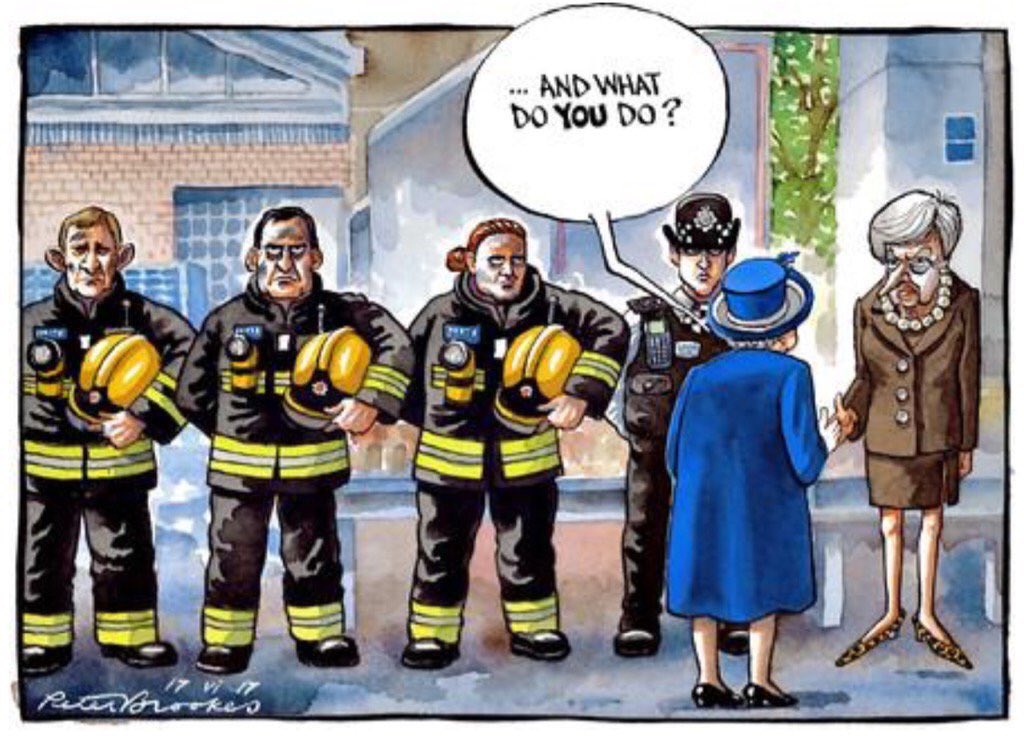


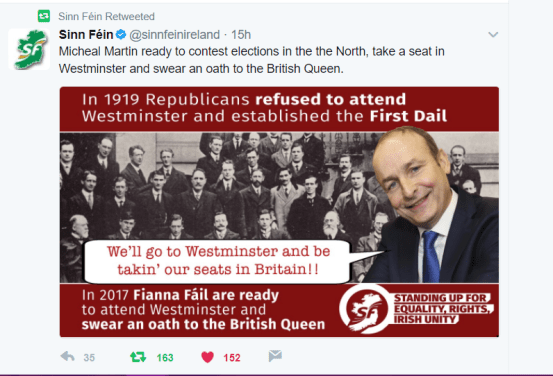
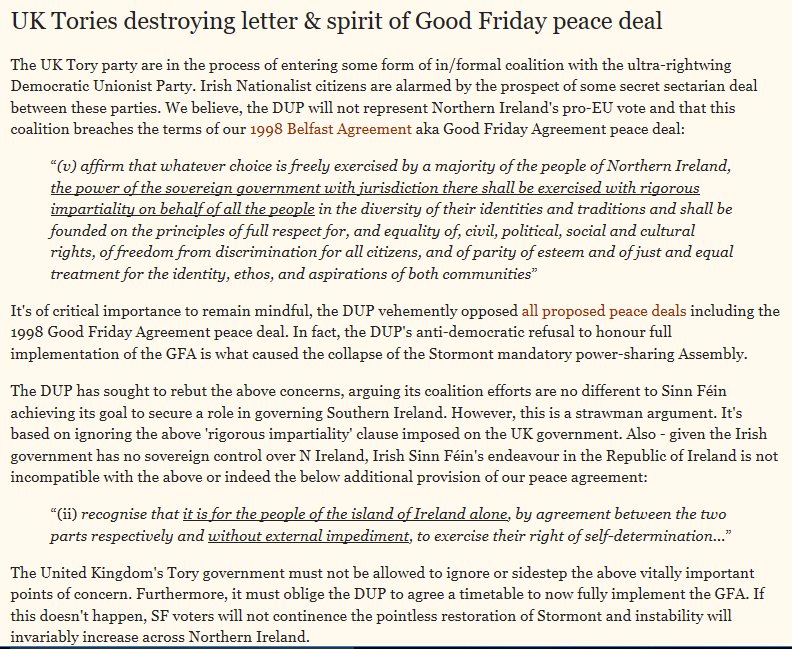


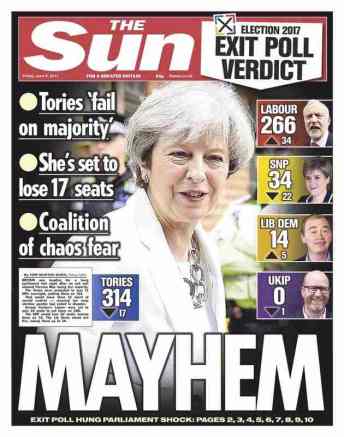


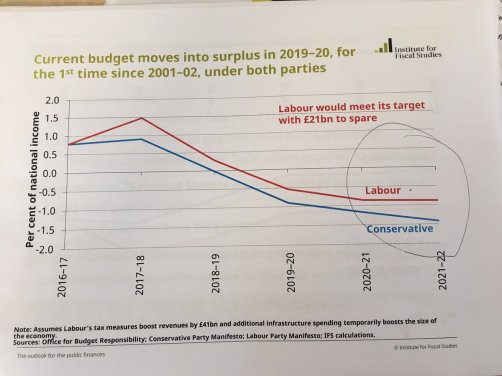


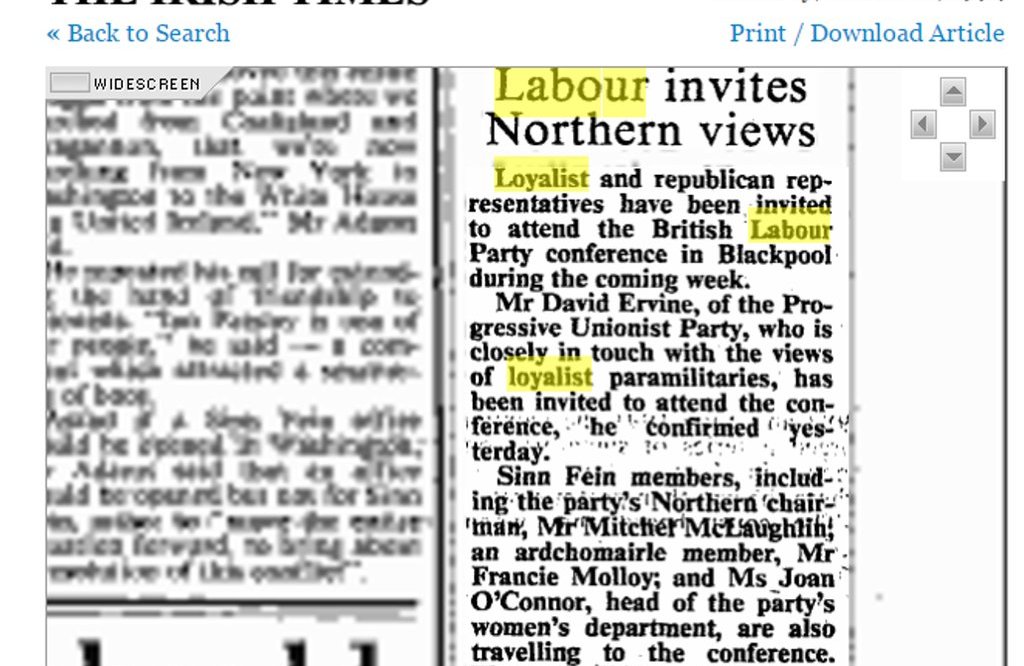
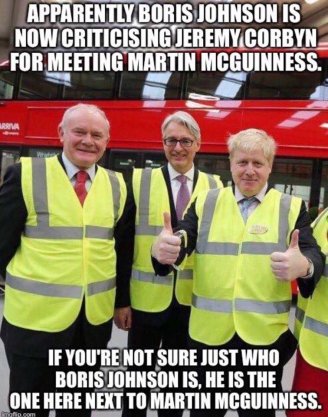


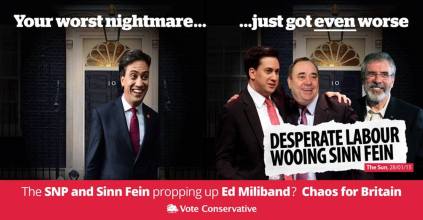




 Politics and Insights