Author: Kitty S Jones

I’m a political activist with a strong interest in human rights. I’m also a strongly principled socialist. Much of my campaign work is in support of people with disability. I am also disabled: I have an autoimmune illness called lupus, with a sometimes life-threatening complication – a bleeding disorder called thrombocytopenia. Sometimes I long to go back to being the person I was before 2010. The Coalition claimed that the last government left a “mess”, but I remember being very well-sheltered from the consequences of the global banking crisis by the last government – enough to flourish and be myself. Now many of us are finding that our potential as human beings is being damaged and stifled because we are essentially focused on a struggle to survive, at a time of austerity cuts and welfare “reforms”. Maslow was right about basic needs and motivation: it’s impossible to achieve and fulfil our potential if we cannot meet our most fundamental survival needs adequately. What kind of government inflicts a framework of punishment via its policies on disadvantaged citizens? This is a government that tells us with a straight face that taking income from poor people will "incentivise" and "help" them into work. I have yet to hear of a case when a poor person was relieved of their poverty by being made even more poor. The Tories like hierarchical ranking in terms status and human worth. They like to decide who is “deserving” and “undeserving” of political consideration and inclusion. They like to impose an artificial framework of previously debunked Social Darwinism: a Tory rhetoric of division, where some people matter more than others. How do we, as conscientious campaigners, help the wider public see that there are no divisions based on some moral measurement, or character-type: there are simply people struggling and suffering in poverty, who are being dehumanised by a callous, vindictive Tory government that believes, and always has, that the only token of our human worth is wealth? Governments and all parties on the right have a terrible tradition of scapegoating those least able to fight back, blaming the powerless for all of the shortcomings of right-wing policies. The media have been complicit in this process, making “others” responsible for the consequences of Tory-led policies, yet these cruelly dehumanised social groups are the targeted casualties of those policies. I set up, and administrate support groups for ill and disabled people, those going through the disability benefits process, and provide support for many people being adversely affected by the terrible, cruel and distressing consequences of the Governments’ draconian “reforms”. In such bleak times, we tend to find that the only thing we really have of value is each other. It’s always worth remembering that none of us are alone. I don’t write because I enjoy it: most of the topics I post are depressing to research, and there’s an element of constantly having to face and reflect the relentless worst of current socio-political events. Nor do I get paid for articles and I’m not remotely famous. I’m an ordinary, struggling disabled person. But I am accurate, insightful and reflective, I can research and I can analyse. I write because I feel I must. To reflect what is happening, and to try and raise public awareness of the impact of Tory policies, especially on the most vulnerable and poorest citizens. Because we need this to change. All of us, regardless of whether or not you are currently affected by cuts, because the persecution and harm currently being inflicted on others taints us all as a society. I feel that the mainstream media has become increasingly unreliable over the past five years, reflecting a triumph for the dominant narrative of ultra social conservatism and neoliberalism. We certainly need to challenge this and re-frame the presented debates, too. The media tend to set the agenda and establish priorities, which often divert us from much more pressing social issues. Independent bloggers have a role as witnesses; recording events and experiences, gathering evidence, insights and truths that are accessible to as many people and organisations as possible. We have an undemocratic media and a government that reflect the interests of a minority – the wealthy and powerful 1%. We must constantly challenge that. Authoritarian Governments arise and flourish when a population disengages from political processes, and becomes passive, conformist and alienated from fundamental decision-making. I’m not a writer that aims for being popular or one that seeks agreement from an audience. But I do hope that my work finds resonance with people reading it. I’ve been labelled “controversial” on more than one occasion, and a “scaremonger.” But regardless of agreement, if any of my work inspires critical thinking, and invites reasoned debate, well, that’s good enough for me. “To remain silent and indifferent is the greatest sin of all” – Elie Wiesel I write to raise awareness, share information and to inspire and promote positive change where I can. I’ve never been able to be indifferent. We need to unite in the face of a government that is purposefully sowing seeds of division. Every human life has equal worth. We all deserve dignity and democratic inclusion. If we want to see positive social change, we also have to be the change we want to see. That means treating each other with equal respect and moving out of the Tory framework of ranks, counts and social taxonomy. We have to rebuild solidarity in the face of deliberate political attempts to undermine it. Divide and rule was always a Tory strategy. We need to fight back. This is an authoritarian government that is hell-bent on destroying all of the gains of our post-war settlement: dismantling the institutions, public services, civil rights and eroding the democratic norms that made the UK a developed, civilised and civilising country. Like many others, I do what I can, when I can, and in my own way. This blog is one way of reaching people. Please help me to reach more by sharing posts. Thanks. Kitty, 2012

George Osborne has always been something of an editor: he’s very conservative with the truth

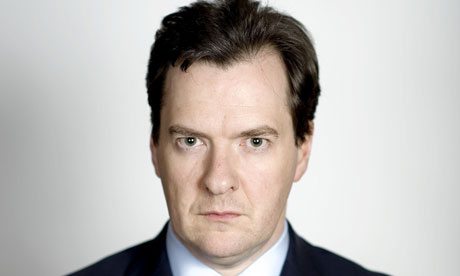
Chancellor George OsborneGeorge Osborne, the financial adviser, after-dinner speaker, author, Kissinger Fellow, chairman of the Northern Powerhouse project, newspaper editor and MP.

Here in the UK, a sitting MP, and a member of the party in office, is the editor of London’s only newspaper. It becomes an almost farcical situation when one considers that London, one of the most cosmopolitan cities in the world, is the most Labour supporting region in the UK. It’s about to have its only local newspaper read like pages from ConservativeHome. The plot sickens.

I seriously doubt that the Standard’s political editor will be pitching a story about the Crown Prosecution Service currently reviewing the Conservatives’ electoral spending, amid the growing evidence of serious electoral fraud, any time soon.

Oh hang on, wasn’t Baronet Osborne one of the key strategic masterminds behind the general election? The same Osborne who regarded the UK social security budget – in particular, the financial safety net that supports disabled people – as disposable income for his equally privileged millionaire peers? He was only forced to climb down over his proposed 4.4 billion of spending cuts to disability benefits after the surprising resignation of the hard faced Work and Pensions Secretary Iain Duncan Smith, who also likes to abandon sinking ships.

Osborne is so hated in London and elsewhere that he was booed by crowds at the Paralympics when handing out medals

Any suggestion that Britain is still a great bastion of first world liberalism and democracy makes me laugh until I cry these days.

Osborne was widely criticised for his decision not to quit his Tatton seat in north-west England since it was announced that he would take up the position as editor of the Evening Standard. He has already rattled the Advisory Committee on Business Appointments (ACOBA) – which is an ethics committee that aims to decide whether job roles for former ministers present a conflict of interest – by announcing the appointment before they were given any time at all to review any potential conflict with his duties as MP and his former role as chancellor. Ex-ministers are supposed to submit their requests and then wait for the committee’s guidance before accepting something and announcing it to the public.

The committee assessing Osborne’s post-ministerial roles is usually given at least a month to carry out research into what contacts a former minister had in his or her department that could constitute a conflict of interest in any new role, but it is understood that some members of the committee were informed less than an hour before Osborne’s appointment was made public. They are now expected to give advice within two weeks.

It’s understood that the committee will be actively considering a call for the former chancellor to delay or decline the role.

Osborne defended his new job on Monday, telling the House of Commons that parliament benefited from members bringing in experience of different sectors alongside their constituency work. He was responding to an urgent question from Labour’s election co-ordinator, Andrew Gwynne, over a potential conflict of interest.

Osborne facetiously remarked “I thought it was important to be here, though unfortunately we have missed the deadline of the Evening Standard

In my view, Mr Speaker, this parliament is enhanced when we have people from all walks of life and different experience in the debate and when people who have held senior ministerial office continue to contribute to the debate.

He’s not exactly a man that cares much for integrity. He seems to think we have forgotten that it was under his chancellorship that the UK lost the Moody’s Investors Service triple A grade, despite Osborne’s key pledge to keep it secure. Moody’s credit ratings represent a rank-ordering of creditworthiness, or expected loss.

The Fitch credit rating was also downgraded due to increased borrowing by the Tories. In fact they borrowed more in 4 years than Labour did in 13. Now they have borrowed more than every single Labour government ever, combined. 

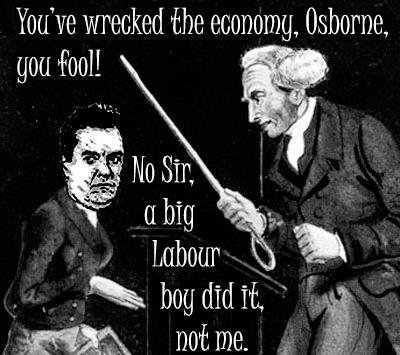
Osborne was rebuked by the Office for Budget Responsibility (OBR) for telling outrageous lies that Labour left the country “close to bankruptcy” following the global recession. However, the economy was officially recovered and growing following the crash, by the last quarter of 2009. Baronet Osborne, the high priest of austerity, put the UK back into recession within months of the Coalition taking office.
539627_450600381676162_486601053_n (2)

Baronet Osborne is not deemed a member of the nobility, but rather, entitled gentry. The rank of a Baronet is a hereditary title awarded by the British Crown. One’s position in an order of precedence is not necessarily an indication of functional importance.

It’s remarkable that despite Osborne’s solid five-year track record of failure, the Tories still mechanically repeat the “always cleaning up Labour’s mess” lie, as if Labour increasing the national debt by 11% of GDP in 13 years, mitigated by a global recession, (caused by bankers and the finance class), is somehow significantly worse than Osborne’s unmitigated record of increasing the national debt by at least £555 billion.

Osborne has ironically demonstrated that it is possible to dramatically cut spending and massively increase debt. At least Labour invested money in decent public service provision, the Conservatives have simply ransacked every public service, handed out our money to their private sector buddies and steadily dismantled the gains we made as a society from the post-war settlement.

Who could forget in September 2007, ahead of the publication of the 2007 Comprehensive Spending Review, Osborne pledged that the Conservative Party would match Labour’s public spending plans for the next three years. He promised increases in public spending of 2% a year,calling Labour charges that the Conservatives would cut public spending “a pack of lies”. He also ruled out any “upfront, unfunded tax cuts.” 

Then there were the expenses scandals, he even had the cheek to claim £47 for two copies of a DVD of his own speech on “value for taxpayers’ money.

Gosh, what, with Osborne being so conservative with the truth, I can really see the Evening Standard taking a credible objective turn.

Sorry, that was a sarcasm typo, I meant authoritarian turn.

However, it has to be said that it’s not as if  Osborne will be editor of a left leaning paper. Who could forget the Evening Standard‘s headlines during the London Mayoral campaigns: Exposed: Sadiq Khan’s family links to extremist organisation – the front page story about Khan’s former brother-in-law once coincidently attending the same rally as a hate preacher – and Why Sadiq Khan cannot escape questions about extremists, a hit and sneer piece that only just stopped just short of accusing Khan of being a terrorist. But I seriously doubt Osborne will have a liberalising impact on the screaming headlined nonsense of this tabloid.

Among the Tory MPs defending Osborne in the Commons was his former cabinet colleague and Times columnist Michael Gove, a former journalist who himself has been tipped as a potential future newspaper editor. He said: “Is it not the case that we believe in a free press and that proprietors should have the right to appoint who they like to be editor, without the executive or anyone else interfering with that decision?

And isn’t it also the case that who represents a constituency should be up to its voters, not the opposition or anyone else?”

Osborne’s appointment will be subjected to wider scrutiny. On Tuesday, the economy committee of the London Assembly will be considering whether the appointment could “affect the neutrality and objectivity of news coverage in London”.

In addition, Osborne will face questioning by his constituents in Tatton, Cheshire, on Friday, when he is expected to attend his local Conservative Association’s annual general meeting. A petition signed by more than 175,000 people was delivered to his constituency office on Monday, calling on the MP to “pick one job and stick to it”.

Andrew Gwynne amongst others in the Labour party, have called for an inquiry. Gwynne wrote to John Manzoni, the permanent secretary to the Cabinet Office, urging him to examine whether there was a breach of the Ministerial Code of Conduct (which was amended yet again last year by Theresa May, following the previous editing in 2015.)

In his letter, he said former ministers must refer any new jobs to the Advisory Committee on Business Appointments (Acoba) to “counter suspicion” and ensure ministers are not “influenced” by private firms while in government. 

Gwynne, Labour’s national elections and campaign coordinator, added: “Disregarding these rules deeply undermines public trust in the democratic processes and does a disservice to those Members that ensure they follow the rules laid out on these matters.”

 shooting-party


Related

It’s time to stop the revolving door reflecting political/corporate interests that spins the news.

Politics and Insights is proud to join other independent media journalists, writers, collectives and organisations across the UK to condemn the appointment of George Osborne as the new editor of the Evening Standard.

Independent media includes any form of autonomous media project that is free from institutional dependencies, and in particular, from the influence of government and corporate interests.

We are not constrained by the interests of society’s major power-brokers.

“For an effective democratic system, we need a vibrant public sphere fuelled by varied independent broadcast and print media. We do not need the ex-Chancellor benefitting from the editorial control of a free London daily which benefits from city-wide circulation to publicise the divisive rhetoric of a right-wing government. When a crisis of representation, fed by a culture of nepotism already plagues so many establishments, Osborne’s appointment is a step in completely the wrong direction.

We write this as independent journalists, committed to holding the powerful to account. We will continue to fight for better representation and healthier political analysis in our media channels, and we will continue to produce the journalism that is missing from the corporate-owned outlets which dominate our newspapers and televisions today.”

Politics and Insights condemns George Osborne’s appointment to the Evening Standard in joint independent media statement


I don’t make any money from my work. I am disabled because of illness and have a very limited income. Successive Conservative chancellors have left me in increasing poverty. But you can help by making a donation to help me continue to research and write informative, insightful and independent articles, and to provide support to others. The smallest amount is much appreciated – thank you. 

DonatenowButton cards

Politics and Insights condemns George Osborne’s appointment to the Evening Standard in joint independent media statement

539627_450600381676162_486601053_n (2)

Politics and Insights is proud to join other independent media journalists, writers, collectives and organisations across the UK to condemn the appointment of George Osborne as the new editor of the Evening Standard.

Independent media includes any form of autonomous media project that is free from institutional dependencies, and in particular, from the influence of government and corporate interests.

We are not constrained by the interests of society’s major power-brokers.

jan22ossie

Here is our joint statement:

The appointment of George Osborne as Editor of the Evening Standard signals the continued demise of trusted mainstream media sources at a time of great political strife in Britain. We have come together to denounce the brazen conflict of interest advocated by this announcement, and to champion the growing need for independent, truthful and representative media channels.

Trust in the mainstream media has never been lower. At present, the number of people who trust the media polls at about 24%. That’s 12% lower than it was before Brexit at the start of 2016, and 2% lower than trust in politicians.

Revolving doors between business, media and politics have severely affected impartial reporting, while political analysis has proven to be a futile exercise when journalists become politicians and politicians become journalists. The Evening Standard’s former editor, Sarah Sands, known for her conservative-leaning views, leaves a Conservative MP in her wake, at the helm of a paper which will offer no challenge to its new editor and his politics.

George Osborne, who comes into this role without any formal journalism experience, will not be bringing an editorial revolution to the Evening Standard to give London the representative newspaper it needs. The appointment of the Tory MP does, however, plainly illustrate a situation which sees personal interests and closed cliques continue to dominate the information disseminated to the masses. To put it very simply, how can a member of parliament hold parliament to account? When the issues of the day relate to policies supported, or indeed created, by Osborne, what can we expect from his editorial stewardship?

Before Osborne’s recent hire as Editor of the Standard, former journalists Michael Gove and Boris Johnson ran a deeply damaging pro-Brexit campaign, facilitated by the nation’s biggest newspapers. Columnists have been paid to spew hate and fear, whether of Muslims, migrants, transgender people, disabled people or other marginalised groups within our society for some time now.

For an effective democratic system, we need a vibrant public sphere fuelled by varied independent broadcast and print media. We do not need the ex-Chancellor benefitting from the editorial control of a free London daily which benefits from city-wide circulation to publicise the divisive rhetoric of a right-wing government. When a crisis of representation, fed by a culture of nepotism already plagues so many establishments, Osborne’s appointment is a step in completely the wrong direction.

We write this as independent journalists, committed to holding the powerful to account. We will continue to fight for better representation and healthier political analysis in our media channels, and we will continue to produce the journalism that is missing from the corporate-owned outlets which dominate our newspapers and televisions today.

Signed:

The Platform
OpenDemocracy

Media Diversified
Skin Deep Magazine
Red Pepper
gal-dem
Consented
Novara Media
Real Media
Media Reform Coalition
Now Then
Campaign for Press and Broadcasting Freedom
Centre for Investigative Journalism
Politics and Insights


17155949_1822049698120118_7951920745723374115_n
Collaborative solidarity

A democratic message from Jeremy Corbyn – contribute to Labour policies

Prefigurative, inclusive, participatory democracy in action. We must be the change we want to see.

The Conservatives don’t really do public consultations in any meaningful sense. But they are an essential part of a functioning democracy. Our current government took an authoritarian turn, prefering to impose policies that act upon people as if they are passive objects, rather than including us in decision-making, as autonomous human subjects. The Conservatives have no consideration for democracy, rights, the law and importantly, public needs.

Have your say in shaping the Labour Party’s policy agenda. It matters. 

Kitty.

jeremy-corbyn
I had the following email from Jeremy Corbyn on 17 March:

Subject: Help us write our policies for the challenges ahead of us.

Dear Sue,

Last year I said that I wanted us to reconnect with our values and our people, so we can rebuild and transform Britain, for the many, not just the few.

To do this we need to hear from you, our members, to harness your views, passions and expertise. 

At conference I set out ten pledges outlining my priorities. I asked Labour’s National Policy Forum to build on this work, to develop Labour’s thinking in these and other key areas.

Today we are launching eight new consultation documents on key issues we’d like your opinions on:  

Find out more and get involved.

The consultation period runs until Wednesday, 31 May 2017. I hope that you, other members and local parties will take the opportunity to read the documents and send in your comments and ideas.

The more people that get involved, the stronger and better our policy making process is.

The best and easiest way to send in your ideas and join the discussion is via our online home of policy making:

www.policyforum.labour.org.uk.

(You’ll need to register an account or use your Labour Login). 

By standing up for what we believe in; by engaging people as we develop our policies; and by building a policy platform together, we can deliver our vision of a more just and better Britain.

Yours,

Jeremy Corbyn MP
Leader of the Labour Party


Remember: You will need to use your new Labour Login to sign in to the consultation

We’ve been in touch to let you know your log in to some systems is changing – this is so we can get to a point where you just have to use one password and user name to access all Labour systems.

If you have signed-up for My Labour, you will already have a Labour Login and will be able to use these details to sign-in. If not, you will need to create a Labour Login.

Successful Appeals Against Disability Assessments – It’s As If There’s Something Wrong With The System

PAY-Protesters-with-posters-outside-the-Dept-of-Work-Pensions

Source: the Independent, written by James Moor.

It’s rapidly becoming clear that Prime Minister Theresa May’s bold pledge to create a Britain that works for everyone should have an asterisk attached to facilitate the addition of “except for those pesky people with disabilities, can’t we pack them off somewhere else?”

In recent days the Government’s plan to cut people with serious mental health conditions out of eligibility for personal independent payments has justifiably come under sustained fire. 

However, the attitude problem displayed by both May’s administration, and that of her predecessor David Cameron, goes beyond that, as a delve into the latest statistics demonstrates.

What they show is that the number of appeals against decisions made by the DWP on the basis of assessments made by the private, profit driven contractors working on its behalf is increasing at a similar speed to that at which Lewis Hamilton exits Silverstone corners. 

They show that there were 60,600 Social Security & Child Support appeals between October and December 2016, an increase of 47 per cent. Even Lewis might think twice about acceleration like that. 

Some 85 per cent of those appeals were accounted for by the Personal Independence Payment (PIP) and the Employment & Support Allowance (ESA).

The rate at which the decisions made by the DWP on the basis of information supplied by the Government’s contractors – Capita and Atos – are overturned is also increasing. 

People started taking notice when it was running at 50 per cent. Now close to two thirds of appeals in the case of the PIP (65 per cent) are successful. The figure is higher still when it comes to ESA (68 per cent). 

I’m given to understand that the people who sit on tribunals have been asked to keep June clear, in an attempt to reduce a growing backlog. So forget about an early summer holiday. 

Needless to say, these people have to be paid, which puts extra cost into the system at a time when the Government says it’s trying to save money. 

Simply applying for either benefit causes a great deal of stress to people with disabilities. Having to go to appeal only exacerbates that. Applicants find themselves in the middle of a process that is humiliating and dehumanising.

That process also seems to throw up scandals with alarming regularity. Channel Four, for example, infamously filmed a Capita assessor saying a claimant had a “disability known as being fat”. Another claimed to have filled out forms before even seeing clients amid pressure to get as many done as quickly as possible. 

Other scandals have involved people with weeks or months to live being told they’re fit for work in the case of ESA, which is paid to people whose fitness to do so is impacted by medical conditions and disabilities. 

Set against that backdrop, is it any wonder that there has been so much criticism of the process, and so many successful appeals? 

If the assessment process worked effectively, and as it should, the number should be limited, and you wouldn’t expect such a large majority to be successful.

Ken Butler, welfare rights advisor at Disability Rights UK, says he is “very worried for all those disabled people who get turned down for benefits and don’t have the time or energy to challenge poor decisions made by the Department for Work and Pensions (DWP)”. 

He adds: “We’d advise all claimants to get benefits advice and, if they are turned down, to use the independent appeals process.”

Butler says that the high success rate of appeals clearly demonstrates that there is something wrong with the system. 

Unless, of course, the system, also savagely criticised by the United Nations, was deliberately set up to be this way. 

Before you suggest that is me indulging in a conspiracy theory, take a moment to think about this. If you make something difficult, stressful and painful, if you litter it with traps, and take the view that everyone getting involved in it is a dirty scrounger until proven otherwise, a lot of people will get put off and won’t apply. Still more won’t appeal when turned down, saving the Government money it can use for things like millionaires tax cuts. 

Dealing with a disability presents enough of a challenge as it is, without having to get to grips with a state that operates in a manner that would have impressed some of George Orwell’s darker characters. Would anyone be terribly surprised to find O’Brien working as a civil servant in the DWP?

The cynicism on display is breathtaking, if my assessment is correct. Alternatively, the situation I’ve discussed could simply have been created by a toxic mix of bureaucratic callousness and incompetence. 

The net effect is the same regardless, which is why there will be peals of bitter laughter emanating from Britain’s disabled community every time those words of Theresa May’s are trotted out. 

You’d be able to hear them if it weren’t for the fact that so many people with disabilities are now trapped in their own homes.  

Psychologists Against Austerity: mobilising psychology for social change

Source: PSYCHOLOGISTS FOR SOCIAL CHANGE

17155949_1822049698120118_7951920745723374115_n

Psychologists Against Austerity are changing our name to reflect the full range of work that we do. We’re now Psychologists for Social Change!

Psychologists for Social Change is a network of applied psychologists, academics, therapists, psychology graduates and others who are interested in applying psychology to policy and political action.  We believe that people’s social, political and material contexts are central to their experiences as individuals.  We aim to encourage more psychologists to draw on our shared experience and knowledge to engage in public and policy debates.

The group started in 2014, when members of the London Community Psychology Network came together to address growing concerns about austerity policies. This lead to a number of meetings in London, and a workshop at the Community Psychology Section Festival. This lead to the development of the briefing paper on the Psychological Impact of Austerity. The briefing paper was launched at the House of Lords in March 2015, followed swifly by our first Week of Action. 

Since then, we have spread through the country with a number of local groups, and many more events, actions and publications.

Our central aims have remained the same since those first early meetings. They are: 

Mobilising Psychologists

One of our central missions has always been to encourage more psychologists to become involed in political and social action. To this end we have developed training for Clinical Psychology Trainees, spoken at conferences, and provided supervision for policy placements. 

Mobilising Psychological Knowledge

We also aim to disseminate psychological knowledge and research in ways that are relevant to current policy concerns. We understand that one of the resources that psychologists have is an understanding of communication and persuasion. This was the impetus for our briefing papers on the Psychological Impact of Austerity and Improving Discussion on Inequality.

Influencing Public and Policy Debates

Drawing on both these resources, of people and knowledge, we aim to move psychologically informed discussion into the public sphere. This has included examining specific policies for their psychological impact, as well as responding to specific policy announcements and media reports.

Campaigns and Actions

Psychologists Against Austerity (PAA) is an ongoing campaign highlighting the costs to mental health of austerity policies. This focusses both on the breadth and depth of cuts to public services and the austerity narrative which has been used to justify these cuts. 

As applied psychologists in the UK we believe it is our public and professional duty to be speaking out against the further implementation of austerity policies. From professional experience and our knowledge of empirical psychological evidence, we know that cuts have been toxic for people’s wellbeing and mental health.

Recent scientific evidence continues to demonstrate links between austerity policies and the nation’s worsening mental health and increasing mental health inequalities.

Responding to this, this campaign aims to mobilise psychologists and psychological knowledge to make a case against further austerity policies.

Publications 

Please visit the Psychologists for social change site for more details.

You can read and download Psychologists Against Austerity: mobilising psychology for social change, published as free content in Critical and Radical Social Work, Volume 4, Number 3, November 2016, pp. 409-413(5) here

Join your local group

Click through the ‘groups’ menu on here to find the group meeting nearest to you. 

If you don’t see a group near you, and you want to start one, click here.

You can also subscribe to our mailing list here.


PAA-550x369

Inquiry into Universal Credit rollout re-launched

images

Following compelling evidence of the problems in the rollout of Universal Credit in its recent follow ups the Work and Pensions Committee has re-launched its inquiry and is accepting written submissions.

However, the inquiry was relaunched last month, on 21 February, and the deadline for written submissions is Monday 20 March 2017.

You can submit your views through the Universal Credit inquiry page.

Call for written submissions

The Committee invites written submissions addressing one or more of the following points:

  • How long are people waiting for their Universal Credit claim to be processed, and what impact is this having on them?
  • How are claimants managing with being paid Universal Credit monthly in arrears?
  • Has Universal Credit improved the accuracy of payments?
  • Have claimants reported making a new claim for Universal Credit, and then found that the system has not registered their claim correctly?
  • What impact is Universal Credit having on rent arrears, what effect is this having on landlords and claimants, and how could the situation be improved?
  • Would certain groups benefit from greater payment process flexibility and, if so, what might the Government do to facilitate it?
  • Does Universal Credit provide people in emergency temporary accommodation with the support they need, and how could this be improved?
  • What impact is Universal Credit having on the income and costs of local authorities, housing associations, charities and other local organisations?
  • How well is Universal Support working, and how could it been improved?
  • What impact has the introduction of full Universal Credit service had in areas where it has replaced the live service?

Chair’s comment:

Frank Field MP, Chair of the Work and Pensions Committee said:

“Huge delays in people receiving payments from Universal Credit have resulted in claimants falling into debt and rent arrears, caused health problems and led to many having to rely on food banks. It is bad enough that UC has a built-in six-week wait between someone applying and them receiving their first payment, but we have heard that many have to wait much longer than this. The adverse impact on claimants, local authorities, landlords and charities is entirely disproportionate to the small numbers currently claiming UC, yet Lord Freud has told us he thinks it will take decades to optimise the system. We have therefore felt compelled to investigate UC yet again. We will examine what its impact is on claimants and those local bodies which deal with them, and what Government needs to do to ease the pressure on those worst affected.”

Further information

New discriminatory regulations for PIP come into effect today

westminster-20121020-00081

A Department for Work and Pensions spokesperson has denied allegations that people with mental health conditions claiming Personal Independence Payment (PIP) are being treated differently to those with physical disabilities: “At the core of PIP’s design is the principle that mental health conditions should be given the same recognition as physical ones”, the spokesperson said.

“In fact, there are more people with mental health conditions receiving the higher rates of both PIP components than the DLA equivalents.

This Government is also investing more in mental health than ever before – spending more than £11 billion this year.”

However, following two independent tribunal rulings that the Department for Work and Pensions (DWP) should expand the scope and eligibility criteria of PIP, which helps both in-work and out-of work disabled people fund their additional living costs, the government is rushing in an “urgent change” to the law to prevent many people with mental health conditions being awarded the mobility component of PIP. The court held that people with conditions such as severe anxiety can qualify for the enhanced rate of the mobility component, on the basis of problems with “planning and following a journey”, or “going out”. 

The government’s new regulations will reverse the recent tribunal ruling and will mean that people with mental health conditions such as severe anxiety who can go outdoors, even if they need to have someone with them, are much less likely to get an award of even the standard rate of the PIP mobility component. The regulations also make changes to the way that the descriptors relating to taking medication are interpreted, again in response to a ruling by a tribunal in favour of disabled people.

The first tribunal said more points should be available in the “mobility” element for people who suffer “overwhelming psychological distress” when travelling alone. The second tribunal recommended more points in the “daily living” element for people who need help to take medication and monitor a health condition. 

It’s worth noting that the Coalition Government enshrined in law a commitment to parity of esteem for mental and physical health in the Health and Social Care Act 2012. In January 2014 it published the policy paper Closing the Gap: priorities for essential change in mental health (Department of Health, 2014), which sets out 25 priorities for change in how children and adults with mental health problems are supported and cared for. The limiting changes to PIP legislation does not reflect that commitment.  

PIP is defined by Capita, the private company employed by the government to carry out “functional assessments of disabled people as “a non means tested benefit for people with a long-term health condition or impairment, whether physical, sensory, mental, cognitive, intellectual, or any combination of these.” It is an essential financial support towards the extra costs that ill and disabled people face, to help them lead as socially and economically inclusive, active and independent lives as possible.

Who will be affected by the reversal of the tribunal rulings?

As I reported previously, from 16 March (today)  the law will be changed so that the phrase “For reasons other than psychological distress” will be added to the start of descriptors c, d and f in relation to “Planning and following journeys” on the PIP form. 

New guidelines circulated by the DWP instruct assessors to disregard the physical impact of mental illness, in relation to how the impairments affect a person’s mobility in completing a journey unaccompanied, which will effectively exclude them from eligibility to the higher mobility component of PIP.

This means that claimants with severe mental illness that impacts on their mobility will be refused the same level of financial support as people with physical disabilities.

It effectively means that people suffering with debilitating mental health conditions are to be denied equal access to the disability benefits system.

People with the following conditions are likely to be affected by the reversal of the independent tribunal’s ruling regarding PIP mobility awards, with conditions in the general category of “severe psychological distress”:

Mood disorders – Other / type not known, Psychotic disorders – Other / type not known, Schizophrenia, Schizoaffective disorder, Phobia – Social Panic disorder, Learning disability – Other / type not known, Generalized anxiety disorder, Agoraphobia, Alcohol misuse, Anxiety and depressive disorders – mixed Anxiety disorders – Other / type not known, Autism, Bipolar affective disorder (Hypomania / Mania), Cognitive disorder due to stroke, Cognitive disorders – Other / type not known, Dementia, Depressive disorder, Drug misuse, Stress reaction disorders – Other / type not known, Post-traumatic stress disorder (PTSD), Phobia – Specific Personality disorder, Obsessive compulsive disorder (OCD).

A case study is included in the new guidance, which says: “Sukhi has sought an award under mobility descriptor 1f as she cannot follow the route of a familiar journey without another person.

However, the [decision maker] determines that because of the wording of mobility descriptor 1f (“for reasons other than psychological distress, cannot follow the route of a familiar journey without another person, an assistance dog or an orientation aid”), any problems following the route due to psychological distress are not relevant.”

PIP consists of two separate components – a daily living component and a mobility element – each paying a standard or enhanced rate, with the enhanced rate paying more than the lower rate. 

In response to the rulings, government have simply chosen to rewrite the law in a way that denies higher PIP payments for those claimants who would have benefited from the rulings, without consulting medical experts, disabled people, advocacy organisations and MPs – including the Work and Pensions parliamentary committee.

Responding to the new guidelines, Paul Farmer, chief executive of the mental health charity Mind, said: “The purpose of PIP is to cover the extra costs people incur because of a disability – decisions makers shouldn’t discriminate between disabilities on the basis of their cause, but decisions should be based on the impact of the disability.

People who struggle to leave the house without support may face the same costs whether their difficulties arise from, for example, a sensory disability or severe anxiety or other mental health problems.

Yet those making decisions about the level of support someone will receive will now be explicitly told to disregard those barriers if they are a result of someone’s mental health problem.”

He added: “This move undermines the Government’s commitment to look at disabled people as individuals, rather than labelling them by their condition, and completely goes against the Government’s commitment to putting mental health on an equal footing with physical health.

Meanwhile, the government’s own expert welfare advisors have said that the changes to PIP – affecting the mentally ill – should be delayed until they have been properly tested and “clearly understood”. 

The Social Security Advisory Committee (SSAC) said in their report that they are “particularly concerned” that overturning the tribunal’s ruling will cause confusion. They warn it is “not clear” how assessors will interpret the changes, raising concerns over a real possibility that claimants will not be “consistently treated”.

The committee have disputed ministers’ claims that emergency legislation must be rushed through today, suggesting the feared increase in costs has been “over-hyped”.

The government claimed the tribunal ruling would cost at least £3.7bn over the next five years – money which should go to “really disabled people who need it”, according to one minister.

The committees’ damning conclusions have sparked angry exchanges in the Commons, with some Tory MPs joining Labour and the Liberal Democrats in criticising the impact of the PIP regulations on some of the most vulnerable citizens.

However, Damian Green, the Work and Pensions Secretary, refused to allow MPs to vote on the changes – insisting that was “above my pay grade”.

Green also acknowledged “a handful of people” could now have their PIP payments cut, having been awarded higher sums in the last few months.

Debbie Abrahams, Labour’s Work and Pensions spokeswoman, said that contradicted repeated assurances – including by Theresa May – that no disabled people would lose money, with only new claimants affected.

And she said: “The Government’s decision to change the law on PIP is a clear example of the way people with mental health conditions are not given equal treatment.”

The SSAC have urged the DWP to consider “testing the proposed changes with health care professionals and decision makers to ensure the policy intent behind the regulation is clearly understood”.

They concluded: “The department should both (a) consult more widely with representative bodies and health care professionals; and (b) improve the estimate of likely impact before the changes are introduced.”

Answering an urgent question in parliament, Mr Green insisted the SSAC was “not challenging the decision” to tighten the criteria for PIP.

But he added: “We think there may be a handful of people whose appeals have gone through the courts in this very, very small period.”

While “that money will not be clawed back from them” they would receive lower PIP payments once those appeals were struck out by the new regulations.

In their recent Equality Analysis PIP assessment criteria document, the government concede that: “Since PIP is a benefit for people with a disability, impairment or long-term health condition, any changes will have a direct effect on disabled people. The vast majority of people receiving PIP are likely to be covered by the definition of “disability” in the Equality Act 2010.

By definition, therefore, the UT [upper tribunal] judgment results in higher payments to disabled people, and reversing its effect will prevent that and keep payments at the level originally intended. The difference in income will clearly make a real practical difference to most affected claimants, and (depending on factors such as their other resources) is capable of affecting their ability to be independently mobile, access services etc – all matters covered by the UN Convention on the Rights of Persons with Disabilities as set out at the start of this Analysis.”

It goes on to say in the document: “However, this does not necessarily mean that the increased payments that would result from the judgment are a fair reflection of the costs faced by those affected, or represent a fair approach as between different groups of PIP claimants.” 

I think it’s much less likely that the government’s decision to subvert the ruling of the upper tribunal reflects any consideration of a fair reflection of costs faced by those affected, or a “fair approach” between different groups of PIP claimants. 

The purpose of Upper Tribunals

The government introduced the restrictive regulations after losing two cases at tribunals, showing an utter contempt for the UK judiciary system. However, the UK tribunal system is part of the national system of administrative justice. 

Administrative law is the body of law that governs the activities of administrative agencies of government. It is designed to independently review the decisions of governments, and as such, it provides protection and promotion of fundamental rights and freedoms for citizens.

The Upper Tribunal is a superior court of record, giving it equivalent status to the High Court and it can both set precedents and can enforce its decisions (and those of the First-tier Tribunal) without the need to ask the High Court or the Court of Session to intervene. It is also the first (and only) tribunal to have the power of judicial review. (The Conservatives have a historical dislike of judicial review. See for example: The real “constitutional crisis” is Chris Grayling’s despotic tendencies and his undermining of the Rule of Law.)

The Tribunals, Courts and Enforcement Act 2007 created a new unified structure for tribunals and recognises legally qualified members of tribunals as members of the judiciary of the United Kingdom who are guaranteed continued judicial independence. This means that the judiciary is kept discrete from other branches of government. That is so that courts are not subjected to improper influence from the other branches of government, or from private or partisan interests.

Judicial Independence is vital and important to the idea of separation of powers. The intent behind this concept is to prevent the concentration of political power and provide for checks and balances. It has been significantly influenced by judicial independence principles developed by international human rights constitutional documents. in the application of the European Convention on Human Rights in British law through the Human Rights Act 1998, which came into force in the UK in 2000.

The government’s new regulations are a particularly autocratic move, aimed at simply overturning two legal rulings that the government did not like, partly because their zealotry concerning their anti-welfarism and “small state” neoliberal ideology has been challenged. The regulations were ushered in and imposed so that they would not be subjected to parliamentary scrutiny and debate or democratic dialogue with disabled people or groups and organisations that support and advocate for those with disability. 

damian-green
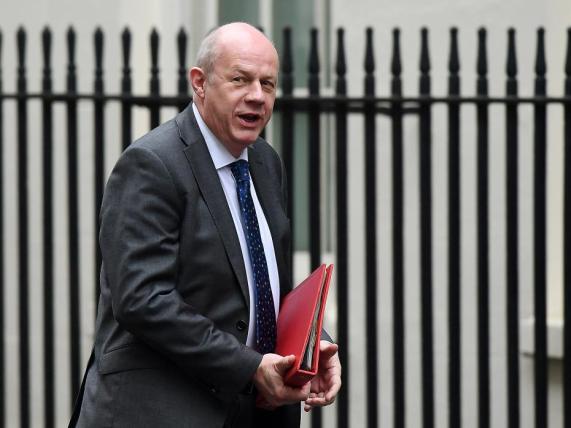
Work and Pensions Secretary Damian Green

Related

Two EDMs have been tabled to stop Tory cuts to disability support, with cross-party endorsement


I don’t make any money from my work. I am disabled because of illness and have a very limited income. But you can help by making a donation to help me continue to research and write informative, insightful and independent articles, and to provide support to others. The smallest amount is much appreciated – thank you. 

DonatenowButton cards

Disabled people are once again confronting the spectre of social isolation – Jane Campbell


Superficially the UK leads the world on disability rights, but colossal cuts are undermining the progress made over the last few decades
 
Lady Jane Campbell at her home in Surbiton, Surrey
Lady Jane Campbell served on the House of Lords select committee reviewing the impact of the Equality Act. Photograph: Martin Godwin for the Guardian

On Monday, disabled representatives from disability organisations across England, Scotland and Wales presented reports to the UN Committee on the Rights of Persons with Disabilities in Geneva. It is now eight years since the UK ratified the UNCRPD with cross-party support and this is the committee’s first full examination of the UK’s performance.

So how are we doing? The government is fond of claiming that the UK is a “world leader” on disability rights. Superficially, this claim remains fairly accurate. We have the most comprehensive and proactive equality law anywhere in the world; social care legislation and practice that embodies the principle of choice and control; a social security system that claims to recognise the extra costs of disability; and law and regulations to advance accessibility.

It is important to remind ourselves of what disabled people have achieved over the past 30-40 years of disability rights activism, as we have charted our journey from objects of care and charity to becoming active, contributing citizens. But any assessment of progress cannot be confined solely to what we now have, or where we were in the past. And judging by the UK’s direction of travel, the government’s claim of world leadership quickly unravels: we are seeing big cuts to services and watering down of rights and opportunities of disabled people. 

Last year, I served on the House of Lords select committee, reviewing the impact of the Equality Act on disabled people. We found that this government’s deregulatory zeal and spending cuts significantly undermined the intended effect of the act. Employment tribunal fees, legal aid cuts and loss of advice services have put the act’s protection beyond the reach of most disabled people. And colossal cuts to the Equality and Human Rights Commission’s budget have left the act under-promoted and unenforced.

The UK’s mental health and mental capacity laws fail to comply with the CRPD, which stipulates that disability cannot be grounds for denying people equal recognition before the law or for depriving people of their liberty. Yet in England, there has been a 10% rise in detention each year for the past two years. More than half of these cases related to people with dementia, and a significant minority to adults with learning disabilities. The sanctioned use of restraint, seclusion and anti-psychotic medication remains commonplace on mental health and learning disabilty wards, violating people’s rights to physical and mental integrity and to live free from torture, inhuman or degrading treatment.

NHS benchmarking data revealed that there were 9,600 uses of restraint during August 2015 in mental health wards in England, while the Learning Disability Census 2015 found that one-third of patients with a learning disability were subject to the use of restraint in 2015-16.

Unexpected deaths of mental health in-patients, or those cared for at home in England, are up by 21% yet, unlike deaths in police, prison or immigration detention, there is no system of independent investigation. Since 2011, hospitals in England have investigated just 222 out of 1,638 deaths of patients with learning disabilities. Among deaths they classed as unexpected, hospitals inquired into just over a third.

The Care Act fails to ensure disabled people’s right to independent living, and swingeing cuts in health, social care and benefits are eroding the availability of support and people’s right to exercise choice and control. Disabled people are confronting the spectre of re-institutionalisation as councils and clinical commissioning groups limit the amount they spend on individual packages of support

The UN disability rights committee has already reported on the negative impact of the UK’s measures to cut social security spending. Yet further disability benefit cuts continue to be implemented and the extension of punitive sanctions to those hitherto assessed as unable to work is being proposed on the back of declining investment in employment support.

“Nothing about us without us” is the international motto of the disability rights movement, but there is little evidence of disabled people being involved in policy development. The last 10 years have seen the proportion of public appointees with a self-declared disability halve in number, while helpful measures to support more disabled people into politics, such as the Access to Elected Office Fund, have been suspended in England.

Advancing the rights of disabled people requires good leadership to establish coherence and coordination in Whitehall, and in devolved and local government. The Office for Disability Issues was set up for this very task, but has become a shadow of its former self. But in Wales and Scotland, things are more positive, with the convention firmly embedded in policy and strategy. 

If the UK wants to maintain the mantle of world leader on disability rights, it must see the forthcoming examination as an opportunity to listen and take stock. If it fails to do so, current and future generations of disabled people face the slow, inexorable slide back towards social death once again.

aaeaaqaaaaaaaad4aaaajdk1ytqwzdyxltjinwytngjhmc05njdlltmyzmu4mty4owi5za

Research finds damaging mental health discrimination ‘built into’ Work Capability Assessment. Again.

Research conducted by academics at Edinburgh’s Heriot-Watt and Napier universities confirms what many of us already knew: that the government’s “fit for work” assessment is causing permanent damage to some people’s mental health, from which they are not recovering. 

The researchers say in their report that the Work Capability Assessment (WCA) experience “for many, caused a deterioration in people’s mental health which individuals did not recover from”.

The study comes at the same time as John Pring, journalist from the Disability News Service (DNS) has exposed private provider Maximus in their use of “brutal and dangerous” questions about suicide intention directed at people with mental health problems during their assessments. 

Dr Jay Watts, a clinical psychologist and academic, told DNS that people should only be asked about suicidal ideation by a trained mental health professional who can offer help, or someone in an “existing trusting relationship with the individual”.

Watts said that WCAs were “degrading and humiliating experiences for most if not all claimants” and were carried out in a space which was “not a trustworthy one”.

She said: “Individuals are required to parade their distress and feel compelled to answer intrusive questions (for the means to live relies on this).”

She went on to say: “To ask about suicide or self-harm in this context brings huge risks.”

She added that such questioning “can be suggestive if the environment is unsafe.”

She said that claimants were “battered with multiple questions about that which is most personal” in disability assessments and questioned about suicide while the assessors are “typing away” on their keyboards.

Watts concluded: “I have no doubt that questions on suicidal ideation, and the degrading manner in which they are asked, are one reason behind the suicide spike associated with the WCA process.”

The tragic case of Michael O’Sullivan, who killed himself after being found fit for work by the government’s disability assessors, has also cast a spotlight on the harmful consequences of the work capability assessment, particularly in relation to people with mental health problems. 

Though O’Sullivan’s suicide is the first to have been judged a direct consequence of being found fit for work, the DWP has conducted 49 internal reviews into benefit-related deaths since 2012, according to data released following freedom of information requests by the Disability News Service.

Of these, no fewer than 40 were conducted following the suicide, or apparent suicide, of a person claiming benefit. This is both profoundly shocking and entirely unsurprising. It is the wholly predictable result of a system designed and operated by people who appear to lack even the most basic understanding of the realities of living with mental illness.

Despite providing reports from three doctors, including his GP, stating that he had long-term depression and agoraphobia, and was unable to work, O’Sullivan was taken off employment support allowance (ESA) and placed on jobseeker’s allowance. The decision to find him fit for work was made after an assessment by a Department for Work and Pensions (DWP) doctor, a former orthopaedic surgeon, who did not factor in the views of any of the three doctors treating O’Sullivan.

Work capability assessments discriminate against people with mental health problems and should be “redesigned entirely”, according to Professor Abigail Marks from Heriot-Watt University’s Centre for Research on Work and Wellbeing. This recent study also established, through dozens of in-depth interviews of people who had been through the tests, that “in the worst cases, the WCA experience led to thoughts of suicide”. Mental health charities said the contents of the interviews “reflect what we hear from people every day”.

The researchers interviewed 30 people with existing mental health conditions who had taken the tests throughout 2016. The majority of subjects suffered from depression or anxiety, whilst a smaller number had more complex issues like bipolar disorder or borderline personality disorder. In addition, the team interviewed individuals from advocacy organisations, Citizens Advice Bureau and a former employee of Ingeus, one of the private Work Programme providers.

Marks said: “It is unacceptable that healthcare professionals who act as assessors for the WCA, for example, physiotherapists, nurses, occupational therapists are not fully qualified or trained to assess mental health conditions, yet they seem to be able to override participants’ own GPs, community psychiatric nurses, and therapists.

The WCA must be entirely redesigned, and focus on the potential barriers to work for both physical and mental health problems.”    

The report also highlighted that WCAs make non-Work Programme work experience, or other voluntary work, almost ‘impossible’ for people with mental health conditions. 

Dr Gavin Maclean, research assistant at Edinburgh Napier University, said: “Many of the participants in the study found the experience of the WCA so damaging that they stopped engaging in work-based activity and did not return to it.

This could further reduce their long-term employability and potentially increase their dependency on benefits.”

Dr Sue Cowan, assistant professor of psychology in the School of Social Sciences, said: “For people with severe and enduring mental health conditions, voluntary work may be as ‘good as it gets’, as one of our participants stated.

This does not mean a failure to obtain more. Rather, it is a recognition that an individual is making a choice, and the current system does not recognise or support that in any way.

The assumption that engaging in voluntary work means an individual is fit for employment should be scrapped; there has to be much greater flexibility about undertaking training while on ESA and much greater value must be placed on voluntary work and work-preparation activity.”

The qualitative study highlights in particular a lack of expertise in mental health problems among WCA assessors and advice from the WCA that was not consistent with what people going through the assessment had been told by their own GPs. In one case recorded in the study, a participant recounted a doctor “actually physically gasping” during an appeal because of the poor quality of evidence recorded by a WCA assessor. 

Some participants reported being in tears or having panic attacks during the tests, and others told the researchers that the assessments were “making me feel worse”.

The researchers said that the extreme stress having to deal with multiple stigmas of being unemployed and having a mental health condition became “self-reinforcing and self-perpetuating”, leading to the deterioration of peoples’ condition.

It says in the report: “Our research has reinforced the fact that people with mental health problems face more stigma and discrimination than those with physical health conditions and that this discrimination is built into the WCA.” 

Professor Marks, the lead author of the study, who is based at Heriot-Watt University, told the Independent that people who worked closely with such cases reported that deterioration in mental health conditions was an “almost universal” response to the tests.

Key causes of extreme stress were said to be a claimant’s fear of losing their lifeline income, the prolonged nature of tests, a lack of specialist mental health training amongst assessors, and the fact the test was “clearly geared towards people with physical disabilities.”

This said, many people with physical disabilities have also stated that the WCA experience has had an adverse effect on their mental health. 

Marks says: “A lot of the people we spoke to were in a position where they are preparing to go back to work before their assessment – they were doing training courses, community initiatives, or volunteering.” 

“They said that after the assessment, because the assessment had caused them so much stress, they were unable to go back and take part in those activities because their mental health had had such a deterioration.

“Talking to the advocacy workers, as well, they said it was almost universal that after people had gone through an assessment there was a significant decrease in their mental health.” 

In October last year the Government announced that it would stop repeat Work Capability Assessments for people with chronic conditions, characterising the repeat assessments it was scrapping as “unnecessary stress and bureaucracy”.

Mental health charity Mind said the WCA was clearly “not fit for purpose” and that its lengthy and costly appeals processes could well make matters worse.

“The findings of this report are concerning but sadly not surprising, as they reflect what we hear from people every day,” Ayaz Manji, the charity’s policy and campaigns officer, said.

“People with mental health problems tell us that the current fit-for-work test causes a great deal of additional anxiety. We know the assessors rarely have sufficient knowledge or expertise in mental health, meaning many people don’t get the right outcome and then have to go through a lengthy and costly appeals process. 

“The current approach is not fit for purpose and needs to be replaced by an open and honest conversation based on each person’s individual needs.”

Debbie Abrahams, the shadow work and pensions minister, said the study was more proof that the WCA “is not only unfit for purpose, but is causing harm to some disabled people”.

She added: “That’s why I have committed Labour to scrapping these assessments completely and replacing them with a holistic, person-centred approach.”

As usual, a Department for Work and Pensions spokesperson dismissed the interviewees’ experiences as not “statistically significant”.

Apparently, qualitative data doesn’t count as “empirical evidence”, or contribute to it. Or put another way, if the government don’t want to count it, it doesn’t count.

The spokesperson said: “Only thirty people were interviewed for this report, which fails to acknowledge any of the significant improvements we have made to our assessments – particularly for people with mental health conditions.” 

“Last year alone at least 35,000 work capability assessments took place in Scotland to help ensure people get the right level of support that they need.”

In fact, 37 interviews were conducted for the study. Furthermore, there is much evidence outside of this study that supports the findings. Qualitative evidence often provides richer, more in-depth, detailed evidence than quantitative studies tend to permit. Yet the government insist that citizens’ own accounts are not important, regularly dismissing them as “anecdotal”.

The government have also failed to conduct a quantitative investigation into the established correlation between WCAs and a deterioration in mental health conditions.

In 2015, the “fit for work” tests, introduced to assess eligibility for disability benefit ESA, were again found to have caused relapses in patients with serious mental health conditions, Dr Jed Boarman, consultant with the Royal College of Psychiatrists, called for an  overhaul of the process.

Boardman, a consultant psychiatrist at the South London and Maudsley NHS trust, also said the WCA discriminates against those with mental health issues. 

Boardman, who treats patients with serious and long-term mental health problems, said: “People with severe long-term problems get very distressed about being assessed, probably because mistakes are made, because the process isn’t perfect, because they don’t feel they are being listened to in their interviews.

“You do see people relapsing as a consequence of getting distressed.”

His comments followed a study, published the previous month, that linked the WCA tests with an additional 590 suicides, increased mental health problems and hundreds of thousands of antidepressant prescriptions.

The study, published by the Journal of Epidemiology and Community Health, showed a correlation between worsening mental health and assessments under the WCA.

The Department for Work and Pensions described the study as “misleading.”

The study’s main author, Benjamin Barr, said it was crucial the DWP takes seriously concerns that WCAs are “severely damaging” mental health. He called on the department to release data it holds to researchers to allow further analysis of the health impact of the controversial test.

Boardman added: “Their primary criticism of our study is that we don’t have data specifically on people going through the WCA and consequent mental health problems,” said Barr, from the University of Liverpool. “They have data on who has died following the WCA and they could facilitate linkage of that data with health causes.”

Thousands of claimants have died after being found fit for work, according to statistics released in August 2015 by the DWP, following a freedom of information request and a determined and successful court appeal by Mike Sivier of Vox Political. Ministers insisted that the figures they have released could not be used to link claimant deaths to welfare reforms, but the government has refused to release figures that would make it possible to assess whether the death rate for people found fit for work is higher than normal.

Boardman and Mark’s concerns are echoed by psychologists and benefit advisers working with claimants, who say they have gathered a lot of qualitative evidence that WCAs cause much additional psychological distress for those with mental health issues.

Related

Maximus ‘admits’ using brutal and dangerous suicide questions – John Pring

Man leaves coroner letter as he fears Work Capability Assessment will kill him

Doctors bribed with 70-90k salaries to join Maximus and “endorse a political agenda regardless of how it affects patients.”

What you need to know about Atos

The importance of citizen’s qualitative accounts in democratic inclusion and political participation

Dying from inequality: socioeconomic disadvantage and suicidal behaviour – report from Samaritans


I don’t make any money from my work. I am disabled because of illness and have a very limited income. The budget didn’t do me any favours at all.

But you can help by making a donation to help me continue to research and write informative, insightful and independent articles, and to provide support to others. The smallest amount is much appreciated – thank you.

DonatenowButton cards

Generous welfare benefits increase the work ethic. The government is wrong about ‘perverse incentives’

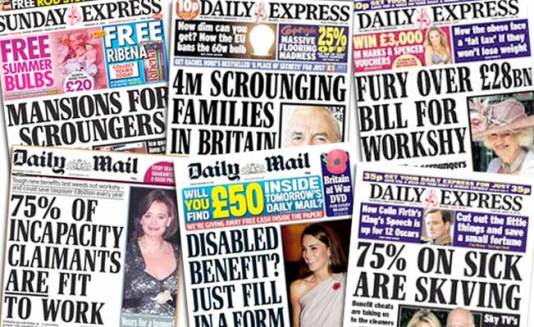
Picture-of-newspaper-headlines-NW10

The UK establishment have intentionally created a scapegoating project. A dominant political and cultural narrative has targeted people needing social security support, constructing welfare folk devils and generating moral panic. This is to justify the dismantling of the welfare state, and to de-empathise the public to the plight of the poorest citizens. The government have misled the public, claiming social security provision leads to a “culture of dependency”. International research shows this is untrue.

Comparative research at an international level has undermined the government claim that the UK welfare state encourages “widespread cultures of dependency” and presents unemployed people with “perverse incentives”. 

study, which links welfare generosity and active labour market policies with increased employment commitment, was published in 2015. It has demonstrated that people are more likely to look for work if they live in a country where welfare provision is generous and relatively unconditional. Empirically, the research includes more recent data, from a larger number of European countries than previous studies.

The research also compared employment motivation in specific sub-sections of communities across countries: ethnic minorities, people in poor health, non-employed people and women, and adds depth to previous studies. It has been concluded that comprehensive welfare provision is increasingly seen as a productive force in society (Bonoli, 2012), that stimulates employment commitment (Esser, 2005) and supports individual inclusion and participation in society and the labour market, particularly among disadvantaged groups

Sociologists Dr Kjetil van der Wel and Dr Knut Halvorsen, from Oslo and Akershus University College, Norway, examined responses to the statement “I would enjoy having a paid job even if I did not need the money” presented to the interviewees for the European Social Survey in 2010.

In a paper published in the journal Work, employment and society, (published by the British Sociological Association and SAGE) titled The bigger the worse? A comparative study of the welfare state and employment commitment, sociologists compare the responses with the amount the country spent on welfare benefits and employment schemes, whilst taking into account the population differences between states.

The researchers found that the more a country paid to unemployed and disabled people, and invested in employment schemes, the more its population were likely to agree with the statement, whether employed or not.

They found that almost 80% of people in Norway, which pays the highest benefits of the 18 countries, agreed with the statement. By contrast in Estonia, one of least generous, only around 40% did. It’s also the case that the countries with the highest levels of financial support for those in need also have the highest employment rates, which challenges neoliberal antiwelfare narratives regarding so-called “perverse incentives” and their highly controversial and stigmatising “scrounger” rhetoric.

The UK was then considered average in terms of our generosity of benefit levels, and the percentage of subjects agreeing with the statement was almost 60%.  However, this research was carried out in 2010, prior to the radical changes to the UK social security system that happened with the Coalition Welfare Reform Act in 2012 and subsequent Conservative policies.

The researchers also found that government programmes which intervene in the labour market to support unemployed people in finding work made it more likely that those people agree that they wanted to work even if they didn’t need the money. In the countries with the most interventionist states, around 80% agreed with the statement and in the least around 45%. The UK’s response, though one of the least interventionist then (and is even less positively interventionist now), was around 60%.

In the article, the researchers say: “Many scholars and commentators fear that generous social benefits threaten the sustainability of the welfare state due to work norm erosion, disincentives to work and dependency cultures. 

A basic assumption is that if individuals can obtain sufficient levels of well-being – economic, social and psychological – from living off public benefits, compared to being employed, they would prefer the former. When a ‘critical mass’ of individuals receive public benefits rather than engaging in paid work, the norms regulating work and benefit behaviour will weaken, setting off a self-reinforcing process towards the ‘self-destruction’ of the welfare state. The more people are recipients of benefits, the less stigmatizing and costly in terms of social sanctions it is to apply for benefits.

However, other commentators suggested that because employment rates are higher in countries with generous welfare states, more people will have positive experience of work. People who receive generous benefits when out of work may feel more inclined to give something back to the state by striving hard to find work.

This article concludes that there are few signs that groups with traditionally weaker bonds to the labour market are less motivated to work if they live in generous and activating welfare states.

The notion that big welfare states are associated with widespread cultures of dependency, or other adverse consequences of poor short term incentives to work, receives little support.”

On the contrary, employment commitment was much higher in all the studied groups in bigger welfare states. Hence, this study’s findings support the welfare resources perspective over the welfare scepticism perspective.”

The UK government launched an unprecedented range of cuts on public services which happened between 2010 to 2015. However, the UK’s millionaires were awarded substantial tax cuts over that time period. George Osborne handed out a cut in tax that rewarded millionaires with £107, 000 each per year at the same time the welfare “reform” bill became policy.

The biggest percentage of cuts affected social security benefits and local government, which has adversely impacted on housing, local authority services and ultimately, on ordinary people in local communities. The cuts in social care and welfare fall disproportionately on two groups that overlap: people in poverty and disabled people. They fall hardest of all on people with the most severe disabilities, who need both benefits and social care.

Using an extremely divisive justification narrative peppered with words such as “workshy” and “scrounger”, and redefining what is “fair”, the government made out that UK tax payers were a discrete group from people needing welfare support, and that the latter group were a kind of economic free rider, sharing a “something for nothing culture”.  The government intentionally fostered resentment in employed people “paying taxes to carry the burden of those who won’t work”.

The Conservatives have persistently claimed that there are moral hazards and adverse behavioural consequences attached to providing poverty relief. This is a view shared by other neoliberal nation states, such as the US.

Policies represent perceptions and establish state instructions regarding how various social groups ought to be perceived and treated. They reflect how a government thinks society should be organised. They encode messages about how people ought to behave and how our individual degree of freedoms are defined, extended or restricted. Policies are always intentional acts that shape socioeconomic organisation.

The government have colonised left wing rhetoric, and conflated social justice and inclusion with work, making citizenship and human rights conditional, and contingent on a person’s economic productivity. They claimed to be “the party of workers”, yet the Conservatives have legislated more than once to undermine collective bargaining and trade unionism more generally. There has been a marked downward shift in wage levels and working conditions over the past six years, as well as drastic reductions in welfare support.

The word “reforms” is now a euphemism for cuts. Words like “support” and “help” are used as techniques of neutralisation, to divert people from the coercive, punitive and targeted elements of the “reforms”. These are semantic shifts of Orwellian proportions. 

The majority of unemployed people move in and out of work, indicating that policy, the economy and labour market conditions, rather than personal failings and dubious “cultures”, are the reason why people become unemployed. The tax payer/benefit claimant dichotomy is a false one. Everyone contributes to welfare, that is why national insurance was introduced: to pay for support provision that you may need in the future.

Furthermore, unemployed people pay taxes, and stealth taxes such as VAT contribute a significant amount to the Treasury. When social security benefits were originally calculated, they covered only the costs of food and fuel. It was assumed that people claiming support were exempt from council tax and paying rent. That is no longer the case, but benefit levels have not risen to adjust for this. 

The highest welfare spending has actually been on pensions, followed by in-work benefits. The latter subsidises employers paying low wages that don’t support families in meeting the costs of living. However, under the new Universal Credit, in-work support will be conditional and significantly reduced, especially for those families on low pay with children. 

The Conservative’s austerity cuts have disproportionally targeted the very people that a fair and civilised society should protect. This was justified partly by the global economic recession, though not everyone was expected to “live within their means” and contribute to reducing the national deficit. Remarkably, those that caused the recession appear to have got off free from obligation to contribute to the reduction of the debt, in a “low tax, low welfare society.”

The Conservative cuts were also justified by the perpetuation of a dominant neoliberal discourse based on small state ideology, antiwelfare myths and the purposeful creation of welfare folk devils and moral panic.

One consequence of the Conservative’s “reforms” has been the return of absolute poverty in the UK – some people cannot meet their basic needs and are going without adequate food and fuel. Many people have suffered distress, harm and some have died as a result of the government’s welfare regime. 

The Samaritan’s recent study – Dying from Inequality – links suicidal behaviours with socioeconomic deprivation. Their report says: “Suicide risk increases during periods of economic recession, particularly when recessions are associated with a steep rise in unemployment, and this risk remains high when crises end, especially for individuals whose economic circumstances do not improve. Countries with higher levels of per capita spending on active labour market programmes, and which have more generous unemployment benefits, experience lower recession-related rises in suicides.”

There is also a further extensive cost to human potential. As Abraham Maslow indicated, if people cannot meet their basic physical needs, they are not likely to fulfil psychosocial ones.

 christianity-and-social-justice-exploring-the-meaning-of-welfare-reform-29-638

Graphic courtesy of Dr Simon Duffy,  The Centre for Welfare Reform.

Related

A bad job is worse for your mental health than unemployment, say UK’s top psychologists

Dying from inequality: socioeconomic disadvantage and suicidal behaviour – report from Samaritans

The Minnesota Starvation Experiment provided empirical evidence that demonstrates clearly why welfare sanctions can’t possibly work as an “incentive” to “make work pay”


I don’t make any money from my work. I am disabled because of illness and have a very limited income. But you can help by making a donation to help me continue to research and write informative, insightful and independent articles, and to provide support to others. The smallest amount is much appreciated – thank you. 

DonatenowButton cards