Author: Kitty S Jones

I’m a political activist with a strong interest in human rights. I’m also a strongly principled socialist. Much of my campaign work is in support of people with disability. I am also disabled: I have an autoimmune illness called lupus, with a sometimes life-threatening complication – a bleeding disorder called thrombocytopenia. Sometimes I long to go back to being the person I was before 2010. The Coalition claimed that the last government left a “mess”, but I remember being very well-sheltered from the consequences of the global banking crisis by the last government – enough to flourish and be myself. Now many of us are finding that our potential as human beings is being damaged and stifled because we are essentially focused on a struggle to survive, at a time of austerity cuts and welfare “reforms”. Maslow was right about basic needs and motivation: it’s impossible to achieve and fulfil our potential if we cannot meet our most fundamental survival needs adequately. What kind of government inflicts a framework of punishment via its policies on disadvantaged citizens? This is a government that tells us with a straight face that taking income from poor people will "incentivise" and "help" them into work. I have yet to hear of a case when a poor person was relieved of their poverty by being made even more poor. The Tories like hierarchical ranking in terms status and human worth. They like to decide who is “deserving” and “undeserving” of political consideration and inclusion. They like to impose an artificial framework of previously debunked Social Darwinism: a Tory rhetoric of division, where some people matter more than others. How do we, as conscientious campaigners, help the wider public see that there are no divisions based on some moral measurement, or character-type: there are simply people struggling and suffering in poverty, who are being dehumanised by a callous, vindictive Tory government that believes, and always has, that the only token of our human worth is wealth? Governments and all parties on the right have a terrible tradition of scapegoating those least able to fight back, blaming the powerless for all of the shortcomings of right-wing policies. The media have been complicit in this process, making “others” responsible for the consequences of Tory-led policies, yet these cruelly dehumanised social groups are the targeted casualties of those policies. I set up, and administrate support groups for ill and disabled people, those going through the disability benefits process, and provide support for many people being adversely affected by the terrible, cruel and distressing consequences of the Governments’ draconian “reforms”. In such bleak times, we tend to find that the only thing we really have of value is each other. It’s always worth remembering that none of us are alone. I don’t write because I enjoy it: most of the topics I post are depressing to research, and there’s an element of constantly having to face and reflect the relentless worst of current socio-political events. Nor do I get paid for articles and I’m not remotely famous. I’m an ordinary, struggling disabled person. But I am accurate, insightful and reflective, I can research and I can analyse. I write because I feel I must. To reflect what is happening, and to try and raise public awareness of the impact of Tory policies, especially on the most vulnerable and poorest citizens. Because we need this to change. All of us, regardless of whether or not you are currently affected by cuts, because the persecution and harm currently being inflicted on others taints us all as a society. I feel that the mainstream media has become increasingly unreliable over the past five years, reflecting a triumph for the dominant narrative of ultra social conservatism and neoliberalism. We certainly need to challenge this and re-frame the presented debates, too. The media tend to set the agenda and establish priorities, which often divert us from much more pressing social issues. Independent bloggers have a role as witnesses; recording events and experiences, gathering evidence, insights and truths that are accessible to as many people and organisations as possible. We have an undemocratic media and a government that reflect the interests of a minority – the wealthy and powerful 1%. We must constantly challenge that. Authoritarian Governments arise and flourish when a population disengages from political processes, and becomes passive, conformist and alienated from fundamental decision-making. I’m not a writer that aims for being popular or one that seeks agreement from an audience. But I do hope that my work finds resonance with people reading it. I’ve been labelled “controversial” on more than one occasion, and a “scaremonger.” But regardless of agreement, if any of my work inspires critical thinking, and invites reasoned debate, well, that’s good enough for me. “To remain silent and indifferent is the greatest sin of all” – Elie Wiesel I write to raise awareness, share information and to inspire and promote positive change where I can. I’ve never been able to be indifferent. We need to unite in the face of a government that is purposefully sowing seeds of division. Every human life has equal worth. We all deserve dignity and democratic inclusion. If we want to see positive social change, we also have to be the change we want to see. That means treating each other with equal respect and moving out of the Tory framework of ranks, counts and social taxonomy. We have to rebuild solidarity in the face of deliberate political attempts to undermine it. Divide and rule was always a Tory strategy. We need to fight back. This is an authoritarian government that is hell-bent on destroying all of the gains of our post-war settlement: dismantling the institutions, public services, civil rights and eroding the democratic norms that made the UK a developed, civilised and civilising country. Like many others, I do what I can, when I can, and in my own way. This blog is one way of reaching people. Please help me to reach more by sharing posts. Thanks. Kitty, 2012

Court maintains benefit sanctions are unlawful

0_0_0_0_370_308_csupload_52703375

Maslow’s hierarchy of human needs. If people cannot fulfil their basic physiological needs, such as for food, fuel and shelter, they cannot move on to meet higher level psychosocial needs, such as looking for work.

The Court of Appeal have dismissed a legal challenge by the Government, the Independent reports.  Sanctions imposed on thousands of benefit claimants for not taking part in the DWP’s so-called “back-to-work” schemes are unlawful, a court has ruled. 

Three Court of Appeal judges upheld an earlier decision by the High Court, potentially paving the way for millions in refunds to people who had their incomes cut while they were unemployed.

But ministers argued that the new law also retroactively applied to people whose sanctions had been imposed before the law was passed.

The High Court and Appeal Court have now both ruled that the retroactive legislation is not lawful, however.  

“We have … held – upholding the decision of the High Court – that in the cases of those claimants who had already appealed against their sanctions the Act was incompatible with their rights under the European Convention on Human Rights,” Lord Justice Underhill said.

“Under the Human Rights Act that ‘declaration of incompatibility’ does not mean that the 2013 Act ceases to be effective as regards those claimants; it is up to the Government, subject to any further appeal, to decide what action to take in response.”

After a previous Supreme Court judgment ruled some sanctions unlawful the Government passed a new law to make them legal. 

The sanctions had originally been ruled unlawful because a court said the Government had not provided sufficient information to claimants on how to make representations before benefits were stopped.

That ruling was won by university graduate Cait Reilly, from Birmingham, who challenged having to work without wages at a local Poundland outlet.

The sanctions system has been widely criticised, including by academics, policy analysists, campaigners, charities and MPs on the Work and Pensions Select Committee. A report by the committee suggested the system might be ‘purely punitive’ and not aimed at helping people find work.

The Government had originally feared that up to £130 million could be paid back in refunds, but the DWP now believes it will only have to pay back under £2 million because of the limited scope of the judgement.

The latest court judgement is the latest in a string of legal setbacks for the Government’s benefit reforms.

The controversial “bedroom tax” was branded “discriminatory” and “unlawful” by a court in January of this year.

Last month the Department also lost a legal challenge to keep problems with Universal Credit under wraps after a freedom of information request from campaigners. 

A spokesperson for the DWP said: “It’s only right that jobseekers do all they can to find work while claiming benefits. We are considering the judgment.”

It’s only right that in a very wealthy first-world liberal democracy we can expect a government to meet their human rights obligations and uphold the law.

Sanctions and welfare cuts can’t possibly “incentivise” people to work as claimed by the Conservatives, a wealth of historical empirical evidence has established that financial insecurity and poverty demotivates people, changes cognitive priority and reduces them to simply struggling to survive.

Workfare coercion in the UK: an assault on persons with disabilities and their human rights – Anne-Laure Donskoy

boycott_workfare_front


Anne-Laure Donskoy
is an independent survivor researcher, this paper was published by the National Survivor User Network (NSUN) for mental health, which is an independent, service-user-led charity that connects people with experience of mental health issues to give us a stronger voice in shaping policy and services.

In a report, titled Workfare coercion in the UK: an assault on persons with disabilities and their human rights, she provides an in-depth consideration of psychocompulsion as a series of state-sponsored human rights violations. I recommend that you read this discussion in full.

She writes: While there is a lot of focus on coercion organised and implemented in psychiatry, less attention is being paid to state engineered welfare measures based on libertarian paternalism, which have coercive practices at their core. Among them are policies that strongly support behavioural change using positive psychology and cognitive behavioural therapy. Freidli and Stearn (2015) call this ‘psychocompulsion.'”

“The narrative of welfare is changing drastically. As Friedli says, we are moving from a “what people have to do [to find work] to what they have to be [demonstrating the right attitude to be employable]”. This is exemplified through the new ‘Work and Health Programme’ planned to be rolled out in England and Wales. This programme has many strands, including:−

  • Embedding psychological services within Job Centres
  • Placing ‘job coaches’ within GP surgeries for people with certain conditions (specifically people with mental health issues): the ‘Working Better’ pilot scheme is funded by the Department for Work and Pensions and the coaches will be provided by welfare to work agency, Remploy (a welfare-to-work subsidiary of the Maximus).”

She goes on to say: “It has come to light that these new programmes are also the subject of ‘research’. The new Work and Health Programme is currently at a research and trialing stage. As Kitty Jones writes, “Part of the experimental nudge element of this research entails enlisting GPs to “prescribe” job coaches, and to participate in constructing “a health and work passport to collate employment and health information.”

However, this ‘research’ (if one can call it so), has been heavily criticised because it is not sanctioned according to the usual robust ethical guidelines. Research that adheres to robust ethical guidelines would absolutely seek not to cause harm to its participants, and would seek their informed consent beforehand. This is not the case here where claimants are the participants, involuntary and ‘unconsented’, of an experiment they know nothing about.

“There are a wide range of legal and Human Rights implications connected with experimentation and research trials conducted on social groups and human subjects.”

A spokesperson for Disabled People Against the Cuts (DPAC), talked of the UN CRPD Committee’s visit to the UK and described the situation thus: It means the UN will examine the vicious and punitive attacks on disabled people’s independent living as well as the cuts which have seen so many placed in inhuman circumstances and has led to unnecessary deaths.”

There is a very detailed and important consideration of the implications of current UK policies within the context of the Convention on the Rights of Persons with Disabilities (CRPD) throughout this excellent article.

nudge2-618375_621x320


Related 

Cited on the article:

https://kittysjones.wordpress.com/2015/11/28/the-goverments-reductive-positivistic-approach-to-social-research-is-a-nudge-back-to-the-nineteenth-century/– The idea that it is both possible and legitimate for governments, public and private institutions to affect and change the behaviours of citizens whilst also [controversially] “respecting freedom of choice.”

https://kittysjones.wordpress.com/2015/12/14/the-department-for-work-and-pensions-dont-know-what-their-ethical-and-safeguarding-guidelines-are-but-still-claim-they-have-some/

Friedli L, et al.MedHumanit2015;41:40–47. doi:10.1136/medhum-2014-010622

http://www.disabilitynewsservice.com/coroners-ground-breaking-verdict-suicide-was-triggered-by-fit-for-work-test/

(among other work)

Watch – And This time its Personal Psychocompulsion & Workfare from wellredfilms on Vimeo.

Other related:

Cameron’s Nudge that knocked democracy down: mind the Mindspace

Let’s keep the job centre out of GP surgeries and the DWP out of our confidential medical records

Nudging conformity and benefit sanctions

My work is unfunded and I don’t make any money from it. But you can support Politics and Insights and contribute by making a donation which will help me continue to research and write informative, insightful and independent articles, and to provide support to others.

DonatenowButton

cards

Study of welfare sanctions – have your say

ImageVaultHandler.aspx

National Audit Office (NAO) is currently undertaking a study of benefit sanctions, in order to:

“… examine whether the Department for Work and Pensions is achieving value for money from its administration of benefit sanctions. This includes how benefit sanctions fit with the intended aims and outcomes of DWP’s wider working age employment policy, whether sanctions are being implemented in line with policy and whether use of sanctions is leading to the intended outcomes for claimants.”

I wrote two days ago about the Department for Work and Pensions document about the Randomised Control Trial (RCT) they are currently conducting regarding in-work “progression.” The document was a submission made to the Work and Pensions Committee in January, as the Committee have conducted an inquiry into in-work conditionality. The document specifies that: This document is for internal use only and should not be shared with external partners or claimants.” 

The Department for Work and Pensions claim that the Trial is about “testing whether conditionality and the use of financial sanctions are effective for people that need to claim benefits in low paid work.” The document focuses on methods of enforcing the “cultural and behavioural change” of people claiming both in-work and out-of-work social security, and evaluation of the Trial will is the responsibility of the Labour Market Trials Unit. (LMTU). Evaluation will “measure the impact of the Trial’s 3 group approaches, but understand more about claimant attitudes to progression over time and how the Trial has influenced behaviour changes.”

Worryingly, claimant participation in the Trial is mandatory. There is clearly no appropriate procedure to obtain and record clearly informed consent from research participants. Furthermore, the Trial is founded on a coercive psychopolitical approach to labour market constraints, and is clearly expressed as a psychological intervention, explicitly aimed at “behavioural change” and this raises some serious concerns about research ethics and codes of conduct.

Sanctions are “penalties that reduce or terminate welfare benefits in cases where claimants are deemed to be out of compliance with  requirements.” They are, in many respects, the neoliberal-paternalist tool of discipline par excellence – the threat that puts a big stick behind coercive welfare programme rules and “incentivises” citizen compliance with a heavily monitoring and supervisory administration. The Conservatives have broadened the scope of behaviours that are subject to sanction, and have widened the application to include previously protected social groups, such as sick and disabled people and lone parents.

There is plenty of evidence that sanctions don’t help people to find work, and that the punitive application of severe financial penalities is having a detrimental and sometimes catastrophic impact on people’s lives. We can see from a growing body of research how sanctions are not working in the way the government claim they intended.

Sanctions, under which people lose benefit payments for between four weeks and three years for “non-compliance”, have come under fire for being unfair, punitive, failing to increase job prospects, and causing hunger, debt and ill-health among jobseekers. And sometimes, causing death.

The Conservative shift in emphasis from structural to psychological explanations of poverty has far-reaching consequences. The reconceptualision of poverty makes it much more difficult to define and very difficult to measure. Such a conceptual change disconnects poverty from more than a century of detailed empirical and theoretical research, and we are witnessing an increasingly experimental approach to policy-making, aimed at changing the behaviour of individuals, without their consent. This turns democracy completely on its head. Policies are meant to meet public needs, rather than being used simply as tools of government to have the public meet ideologically-determined government outcomes.

This approach isolates citizens from the broader structural political, economic, sociocultural and reciprocal contexts that invariably influence and shape an individuals’s experiences, meanings, motivations, behaviours and attitudes, causing a problematic duality between context and cognition. It also places unfair and unreasonable responsibility on citizens for circumstances which lie outside of their control, such as the socioeconomic consequences of political decision-making.

It’s clear that the government intends to continue embedding sanctions in policies which were meant to provide a minimal income for people needing support. This is policy based entirely on ideology and traditional Conservative prejudice, aimed at punishing sick and disabled people, unemployed people, the poorest paid, and part-time workers, inflicting conditions of hardship, distress and absolute poverty on those social groups. Meanwhile, the collective bargaining traditionally afforded us by trade unions has been systematically undermined by successive Conservative governments, showing clearly how the social risks of the labour market are being personalised and redefined as being solely the economic responsibility of individuals rather than the government and profit-driven big business employers.

It’s important that we gather and present as much evidence as possible about the detrimental impact of welfare sanctions. The NAO study will run until the Autumn, so that gives us some time to have our say about our own experiences.

It is easy to make a submission to the study. Just go to the contact page and select welfare and benefits as the topic, and write “FAO Colin Ross” or “Max Tse” in the subject field. Alternatively,  you can email Colin Ross, the audit manager, directly at Colin.ROSS@nao.gsi.gov.uk

0_0_0_0_370_308_csupload_52703375

Maslow’s hierarchy of human needs. If we can’t meet our basic physiological needs, it isn’t likely that we will be able to meet higher level psychosocial needs.

Related

We would like to hear your stories about how the cuts have affected you and your service. We want the wider public and politicians to understand the real life costs of public sector cuts. It can be hard to speak up alone, so we are collating everyone’s stories – together we have more power and a louder voice. We all have stories of frustration, fear and anger, so please use this as a way to tell the world about how the cuts have impacted on you and/or the people you work with. We are interested in stories from everyone who works in, uses, or needs Psychology services:

Psychologists Against Austerity campaign – call for evidence

Stigmatising unemployment: the government has redefined it as a psychological disorder

The politics of punishment and blame: in-work conditionality

Nudging conformity and benefit sanctions

G4S are employing Cognitive Behavioural Therapists to deliver “get to work therapy”

The new Work and Health Programme: government plan social experiments to “nudge” sick and disabled people into work

The importance of citizen’s qualitative accounts in democratic inclusion and political participation

Sanctions can’t possibly “incentivise” people to work. Here’s why


My work is unfunded and I don’t make any money from it. But you can support Politics and Insights and contribute by making a donation which will help me continue to research and write informative, insightful and independent articles, and to provide support to others.

DonatenowButton

cards

Shut The Door On Your Way Out Campaign

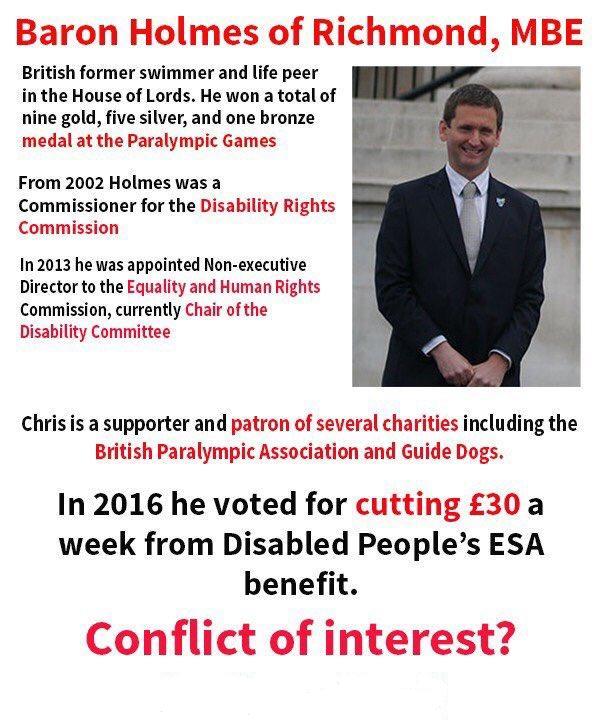
CgtFl6zWYAAwO50
                                                   We call for his resignation.


This cross-border Campaign aims at naming and shaming those colluding in the cuts to disabled people instead of addressing disabled people’s rights. We will be writing a series of letters asking for the resignations of those not defending our rights as appointed to do so.

This letter is to the Chair of EHRC.

Dear Lord Holmes of Richmond,

I wish to draw your attention to the functions that were delegated to the Disability Committee and the Commissions duties as they relate to “disability matters” in:

  • Promoting understanding of the importance of equality and diversity
  • Encourage good practice
  • Promoting equality of opportunity
  • Promoting awareness and understanding of rights
  • Enforcing equality law
  • working towards the elimination of unlawful discrimination and harassment
  • Promoting understanding of good relations

Let me draw your attention to an article printed in the Guardian by the  EHRC on 01.03.2016 http://www.theguardian.com/politics/2016/mar/01/equalities-watchdog-criticises-planned-cuts-to-work-support-allowance

The very body you are a Commissioner for, the EHRC, say that the proposed cuts to ESA will disproportionately affect disabled people, widen inequalities and undermine the UK’s Human Rights obligations.

How can you be seen to be promoting the above when you went on to vote for these cuts to both ESA and PIP as a Conservative Peer, your actions will have a detrimental effect on disabled people’s lives, to both  Independent living and will undermine the UK’s Human Rights obligations.

As a disability rights campaigner I am calling for your immediate resignation of the position you hold as Disability Commissioner and Chair of the Disability Committee for EHRC as alongside my peers and other user led organization’s we think you are no longer worthy of this position.

Look forward to your reply

Susan Archibald
Disability Rights Campaigner.

Please sign the petition and support this campaign – Campaigners Demand For Lord Chris Holmes Resignation.

Supported by:

Dr Stephen Carty -Black Triangle Campaign

Professor Peter Beresford, Co-Chair, Shaping Our Lives

Mo Stewart –Disabled Veteran/Researcher

Dr Simon John Duffy – Centre of Welfare Reform

Gail Ward – Cross Border Alliance

John McArdle-Black Triangle Campaign

Pat Onions – Pats Petition

Rosemary ONeill – Carerwatch

Frances Kelly – Carerwatch/Dead Parrot Campaign

Linda Burnip – DPAC

Debbie Jolly – DPAC

Anita Bellows – DPAC

Merry Cross – DPAC

Rick Burgess – DPAC  Manchester

Paula Peters – DPAC

Annie Bishop – Involve North East & Cumbria for deaf, blind and people with disabilities

Carole Robinson – Bolshy Divas

Tracey Flynn – Bolshy Divas

Catherine Hale – Disability Researcher

C  Richardson – Disability Researcher

Stef Benstead – Disability Researcher

Jayne Linney DEAP

Sue Livett-Campaign for a Fair Society England

Michelle Mayer

Rosemary Trustam-Publisher Community Living Magazine

Jo Walker

Sue Jones – Psychologists against Austerity/Human Rights/Policy Researcher/Writer

Again, if you want to sign our petition please click the link here.


Further reading:

http://www.independent.co.uk/news/uk/politics/dwp-drew-up-plans-to-charge-disabled-people-for-fit-to-work-appeals-internal-documents-reveal-a6993996.html

http://thirdforcenews.org.uk/tfn-news/disability-activists-call-for-commissioner-to-resign?

http://www.mirror.co.uk/news/uk-news/secret-government-plan-charge-disabled-7798786

http://www.disabilitynewsservice.com/tory-peer-faces-calls-to-quit-as-ehrc-commissioner-over-support-for-wrag-cuts/

http://www.disabilitynewsservice.com/revealed-dwps-secret-financially-devastating-proposals-for-benefits-appeals/

http://www.disabilitynewsservice.com/secret-dwp-proposal-to-scrap-esa-substantial-risk-rules-would-breach-right-to-life/

http://www.thenational.scot/news/snp-calls-to-see-reports-on-suicides-following-benefits-cuts.16660


The politics of punishment and blame: in-work conditionality

66864_464287263640807_1896397853_n


The Department for Work and Pensions has submitted a document about the Randomised Control Trial (RCT) they are currently conducting regarding in-work “progression.” The submission was made to the Work and Pensions Committee in January, as the Committee have conducted an inquiry into in-work conditionality. The document specifies that:
This document is for internal use only and should not be shared with external partners or claimants.” 

So please share widely.

The Department for Work and Pensions claim that the Trial is about “testing whether conditionality and the use of financial sanctions are effective for people that need to claim benefits in low paid work.” The document focuses on methods of enforcing the “cultural and behavioural change” of people claiming both in-work and out-of-work social security, and evaluation of the Trial will be the responsibility of the Labour Market Trials Unit. (LMTU). Evaluation will “measure the impact of the Trial’s 3 group approaches, but understand more about claimant attitudes to progression over time and how the Trial has influenced behaviour changes.”

Worryingly, claimant participation in the Trial is mandatory. There is clearly no appropriate procedure to obtain and record clearly informed consent from research participants. Furthermore, the Trial is founded on a coercive psychopolitical approach to labour market constraints, and is clearly expressed as a psychological intervention, explicitly aimed at “behavioural change” and this raises some serious concerns about research ethics and codes of conduct. It’s also very worrying that this intervention is to be delivered by non-qualified work coaches.

The British Psychological Society (BPS) have issued a code of ethics in psychology that provides guidelines for the conduct of research. Some of the more important and pertinent ethical considerations are as follows:

Informed Consent.

Participants must be given the following information relating to:

• A statement that participation is voluntary and that refusal to participate will not result in any consequences or any loss of benefits that the person is otherwise entitled to receive.

• Purpose of the research.

• Procedures involved in the research.

All foreseeable risks and discomforts to the participant (if there are any). These include not only physical injury but also possible psychological.

• Subjects’ right to confidentiality and the right to withdraw from the study at any time without any consequences.

Protection of Participants

Researchers must ensure that those taking part in research will not be caused distress. They must be protected from physical and mental harm. This means you must not embarrass, frighten, offend or harm participants.

Normally, the risk of harm must be no greater than in ordinary life, i.e. participants should not be exposed to risks greater than or additional to those encountered in their normal lifestyles. Withdrawing lifeline support that is calculated to meet the costs of only minimum requirements for basic survival – food, fuel and shelter – as a punishment for non-compliance WILL INVARIABLY cause distress, harm and loss of dignity for the subjects that are coerced into participating in this Trial. Participants should be able to leave a study at any time if they feel uncomfortable.

The Economic and Social Research Council has recently issued a new research ethics framework, and the website has lots of useful guidance that is also worth referring to.

In the UK, the Behavioural Insight Team is testing paternalist ideas for conducting public policy by running experiments in which many thousands of participants receive various “treatments” at random. Whilst medical researchers generally observe strict ethical codes of practice, in place to protect subjects, the new behavioural economists are much less transparent in conducting behavioural research interventions.

Consent to a therapy or a research protocol must possess three features in order to be valid. It should be voluntarily expressed, it should be the expression of a competent subject, and the subject should be adequately informed. It’s highly unlikely that people subjected to the extended use and broadened application of welfare sanctions gave their informed consent to participate in experiments designed to test the theory of “loss aversion,” for example.

Unfortunately there is nothing to prevent a government from deliberately exploiting a research framework as a way to test out highly unethical and ideologically-driven policies. It is not appropriate to apply a biomedical model of prescribed policy “treatments” to people experiencing politically and structurally generated social problems, such as unemployment, inequality and poverty, for example.

Some background

I wrote last year about the Work and Pensions Committee’s in-work progression in Universal Credit inquiry. The Department for Work and Pensions (DWP) intends to establish an “in-work service”, designed to encourage individual Universal Credit claimants on very low earnings to increase their income. Benefit payments may be stopped if claimants fail to take action as required by the DWP. The DWP is conducting a range of pilots to test different approaches but there is very little detail about these. The new regime might eventually apply to around one million people.

We really must challenge the Conservative’s use of words such as “encourage” and “support” and generally deceptive language use in the context of what are, after all, extremely punitive, coercive  policies.

I wrote a statement at the time regarding my own submission to the inquiry, prompted by Frank Field’s spectacularly misguided and conservative statement. Here are a few of the issues and concerns I raised: 

Field refered to the Conservative “welfare dependency” myth, yet there has never been any empirical evidence to support the claims of the existence of a “culture of dependency” and that’s despite the dogged research conducted by Keith Joseph some years ago, when he made similar claims.

In fact, a recent international study of social safety nets from The Massachusetts Institute of Technology (MIT) and Harvard economists categorically refutes the Conservative “scrounger” stereotype and dependency rhetoric. Abhijit Banerjee, Rema Hanna, Gabriel Kreindler, and Benjamin Olken re-analyzed data from seven randomized experiments evaluating cash programs in poor countries and found “no systematic evidence that cash transfer programmes discourage work.”

The phrase “welfare dependencydiverts us from political discrimation via policies, increasing inequality, and it serves to disperse public sympathies towards the poorest citizens, normalising prejudice and resetting social norm defaults that then permit the state to target protected social groups for further punitive and “cost-cutting” interventions to “incentivise” them towards “behavioural change.”

Furthermore, Welfare-to-Work programmes do not “help” people to find jobs, because they don’t address exploitative employers, structural problems, such as access to opportunity and resources and labour market constraints. Work programmes are not just a failure here in the UK, but also in other countries, where the programmes have run extensively over at least 15 years, such as Australia.

Welfare-to-work programes are intimately connected with the sanctioning regime, aimed at punishing people claiming welfare support. Work programme providers are sanctioning twice as many people as they are signposting into employment (David Etherington, Anne Daguerre, 2015), emphasising the distorted priorities of “welfare to work” services, and indicating a significant gap between claimant obligations and employment outcomes.

The Conservatives have always constructed discourses and shaped institutions which isolate some social groups from health, social and political resources, with justification narratives based on a process of class-contingent characterisations and the ascribed responsiblisation of social problems such as poverty, using quack psychology and pseudoscience. However, it is socioeconomic conditions which lead to deprivation of opportunities, and that outcome is undoubtedly a direct consequence of inadequate and discriminatory political decision-making and policy.

It’s worth bearing in mind that many people in work are still living in poverty and reliant on in-work benefits, which undermines the Libertarian Paternalist/Conservative case for increasing benefit conditionality somewhat, although those in low-paid work are still likely to be less poor than those reliant on out-of-work benefits. The Conservative “making work pay” slogan is a cryptographic reference to the punitive paternalist 1834 Poor Law principle of less eligibility.

The government’s Universal Credit legislation has enshrined the principle that working people in receipt of in-work benefits may face benefits sanctions if they are deemed not to be trying hard enough to find higher-paid work. It’s not as if the Conservatives have ever valued legitimate collective wage bargaining. In fact their legislative track record consistently demonstrates that they hate it, prioritising the authority of the state above all else.

There are profoundly conflicting differences in the interests of employers and employees. The former are generally strongly motivated to purposely keep wages as low as possible so they can generate profit and pay dividends to shareholders and the latter need their pay and working conditions to be such that they have a reasonable standard of living.

Workplace disagreements about wages and conditions are now typically resolved neither by collective bargaining nor litigation but are left to management prerogative. This is because Conservative aspirations are clear. Much of the government’s discussion of legislation is preceded with consideration of the value and benefit for business and the labour market. They want cheap labour and low cost workers, unable to withdraw their labour, unprotected by either trade unions or employment rights and threatened with destitution via benefit sanction cuts if they refuse to accept low paid, low standard work. Similarly, desperation and the “deterrent” effect of the 1834 Poor Law amendment served to drive down wages.

In the Conservative’s view, trade unions distort the free labour market which runs counter to New Right and neoliberal dogma. Since 2010, the decline in UK wage levels has been amongst the very worst in Europe. The fall in earnings under the Coalition is the biggest in any parliament since 1880, according to analysis by the House of Commons Library, and at a time when the cost of living has spiralled upwards.

In-work conditionality enforces a lie and locates blame within individuals for structural problems – political, economic and social – created by those who hold power. Despite being a party that claims to support “hard-working families,” the Conservatives have nonetheless made several attempts to undermine the income security of a significant proportion of that group of citizens recently. Their proposed tax credit cuts, designed to creep through parliament in the form of secondary legislation, which tends to exempt it from meaningful debate and amendment in the Commons, was halted only because the House of Lords have been paying attention to the game.

The government intends to continue formulating policies which will punish sick and disabled people, unemployed people, the poorest paid, and part-time workers. Meanwhile, the collective bargaining traditionally afforded us by trade unions has been systematically undermined by successive Conservative governments, showing clearly how the social risks of the labour market are being personalised and redefined as being solely the economic responsibility of individuals rather than the government and profit-driven big business employers.

My work is unfunded and I don’t make any money from it. But you can support Politics and Insights and contribute by making a donation which will help me continue to research and write informative, insightful and independent articles, and to provide support to others.

DonatenowButton

cards


Worklessness is not a trait: why blaming and shaming is not a solution – Mireia Borrell-Porta

npr_dna_1


The recent controversy around the book The Welfare Trait is part of a long-standing debate on whether poverty is caused by structure or behaviour, writes Mireia Borrell-Porta, a Postdoctoral Researcher at the Department of Social Policy and Intervention at the University of Oxford.

Here, she offers her own reading of the book and explains why claiming benefits is not simply a question of personality; instead, a number of other factors – including structural economic and environmental – need to be taken into account.

Mireia also cites my own article – Adam Perkins, Conservative narratives and neuroliberalism  – and like me, she draws a parallel with Adam Perkins’s basic antiwelfarist proposition and the New Right supremicist thinking of Charles Murray.

She says: “‘The Welfare Trait’ by Adam Perkins is currently the subject of controversial debate on mainstream and social media. Having been praised (albeit with some nuances) by the Adam Smith Institute and the Spectator, it has been criticised by The Equality Trust and the Guardian among others. The book’s main argument is that welfare benefits are a ‘production line of unfit children’, and that the welfare state is gradually making new generations ‘resistant to employment.’  This is the result of two phenomena, according to Perkins. First, benefits have the effect of increasing childbirth in workless households more than in working ones. Second, individuals with ‘employment-resistant’ personalities are over-represented among welfare claimants, who then pass these ‘inconvenient traits’ on to their children, making them also less likely to work.”

Mireia goes on to say: “Perkins’ argument is also reminiscent of American conservativism from the mid-1970s. A prominent voice at the time was that of political scientist Charles Murray who, concerned with the fact that poverty in the 1970s did not decline and even rose slightly, grew convinced that the culprits were the decline of the husband-wife family and the drop in work levels among the poor. These trends, he argued, were to be traced to a shift in behaviour on the part of individuals who suffered from poverty. He suggested that individuals are generally rational and make their decisions on work and having children depending on the economic incentives of the time. By increasing or decreasing benefits, the welfare state affects such incentives.

In his later writings, personal character was added to these explanations, leading to his claims that the welfare state not only generated perverse incentives, but also enabled certain people to behave as they ‘naturally’ wanted to behave (i.e. allowing them not to work if they did not want to). Personal character was therefore relevant, and at the same time welfare incentives could have a long-term (detrimental) effect on them. His solution was radical: abolish poverty programmes.”

She concludes: “Anyone studying the relationship between behaviour, character or personality and employment should take these variables into account before claiming that ‘the welfare state becomes a production line for damaged kids’. Because, with parental and children behaviour being influenced by the amount of financial resources in a household, the reasonable approach is not to decrease the level of benefits, as Perkins suggests; this is a case for increasing them.”

You can read this excellent artice in full on the LSE site.

Mireia Borrell-Porta is a Postdoctoral Researcher at the Department of Social Policy and Intervention at the University of Oxford. She completed her PhD at the European Institute at the LSE and holds an MSc in European Political Economy from LSE and a BSc in Economics from Universitat Pompeu Fabra. Mireia’s main research interests focus on the interplay between social norms and economic incentives and their joint impact on individual behaviour. Her areas of interest are social policy, and family policy in particular, and political economy. 

assessment

The myth of meritocracy

Related

The poverty of responsibility and the politics of blame. Part 3 – the Tories want to repeal the 2010 Child Poverty Act

Essentialising marginalised groups and using stigmatising personality constructs to justify dismantling social security is not “science”, it’s psychopolitics

Antisocial personality and lack of conscientiousness is correlated with bogus anti-welfare research

This is an interesting take on Perkins’s book, (and also references my own work –  Adam Perkins, Conservative narratives and neuroliberalism.)

The article is by sociologist Daniel Nehring: Manufactured Controversy: Adam Perkins, the Psychological Imagination and the Marketing of Scholarship

My work isn’t funded and I don’t get paid to write. But you can support Politics and Insights, and help me to continue researching, analysing and writing independently.

The smallest amount is much appreciated, and helps to keep my articles free and accessible to all – thank you.

And a massive thank you to those who have already contributed.

DonatenowButton
cards

Psychologists Against Austerity and People’s Assembly Protest

PAA-550x369

The People’s Assembly are organising a march on Saturday 16th April (next weekend) from 1pm in London, calling for health, homes, jobs and education. It will start at the junction between Gower Street and Euston Road, marching towards Trafalgar Square.

Some of us from Psychologists Against Austerity will be joining the march. If you would like to come along and march with us, we will be meeting outside the Prince of Wales Feathers pub, next to Warren Street station at 12.30pm. This is around the corner from where the march is starting and we will walk over to join them at 12.45pm.

For those of our members in regional groups outside of London, the People’s Assembly are organising coaches from across the country. To see if there is one near to you, have a look at their website: http://www.thepeoplesassembly.org.uk

It would be great to get as many of us there as possible. We are getting a small number of t-shirts printed to see what they look like. If you would like one, bring £10 with you on the day, first come first served! If you have any questions or want to know where we are on the day, feel free to tweet us at @commpsychUK

If you can’t make it to the march, it could be a great opportunity to have a conversation with someone new about the impact of austerity. Our second briefing paper, ‘Improving Public Discussion about Inequality’ might be able to help. Have a read for some ideas about how to communicate the impact of austerity in engaging ways and reach beyond those marching with us on the 16th https://psychagainstausterity.wordpress.com/briefing-paper-preaching-to-the-non-converted/

With best wishes,

Psychologists Against Austerity.
@commpsychuk
www.psychagainstausterity.wordpress.com
https://www.facebook.com/Psychologists-Against-Austerity

The real economic free-riders are the privileged, not the poorest citizens

PAA-550x369


The government’s undeclared preoccupation with
behavioural change through personal responsibility isn’t therapy. It’s simply a revamped version of Samuel Smiles’s bible of Victorian and over-moralising, a Conservative behaviourist hobby-horse: “thrift and self-help” – but only for the poor, of course.

Smiles and other powerful, wealthy and privileged Conservative thinkers, such as Herbert Spencer, claimed that poverty was caused largely by the “irresponsible habits” of the poor during that era. But we learned historically that the socioeconomic circumstances caused by political decision-making creates poverty. Meanwhile, the state abdicates its democratic responsibilities of meeting the public’s needs and for transparency and accountability for the outcomes and social consequences of its own policies.

Conservative rhetoric is designed to have us believe there would be no poor people if the welfare state didn’t somehow “create” them. If the Tories must insist on peddling the myth of meritocracy, then surely they must also concede that whilst such a system has some beneficiaries, it also creates situations of insolvency and poverty for others.

In other words, the same system that allows some people to become very wealthy is the same system that condemns others to poverty.

This wide recognition that the raw “market forces” of the old liberal laissez-faire (and the current starker neoliberalism) causes casualties is why the welfare state came into being, after all – because when we allow such competitive economic dogmas to manifest, there are invariably winners and losers.

That is the nature of “competitive individualism,” and along with inequality, it’s an implicit, undeniable and fundamental part of the meritocracy myth and neoliberal script. And that’s before we consider the fact that whenever there is a Conservative government, there is no such thing as a “free market”: in reality, all markets are rigged for elites. For example, we have a highly regulated welfare state that enforces “behaviour change” via a punitive conditionality regime, coercing a reserve army of labour into any available work, and a highly deregulated labour market which is geared towards making profit and is not prompted to provide adequately for the needs of a labour force.

Society as taxpayers and economic free-riders – a false dichotomy

The Conservatives have constructed a justification narrative for their draconian and ideologically-driven cuts to social security by manufacturing an intentionally socially divisive and oversimplistic false dichotomy. Citizens have been redefined as either taxpayers (strivers) or economic free-riders (skivers). Those people currently out of employment, regardless of the reason, are categorised and portrayed through political rhetoric and in the media as economic free-riders – the “something for nothing culture.” 

However, not only have most people currently claiming social security, including the majority of disabled people, worked and contributed tax and national insurance, people needing social security support also contribute significantly to the Treasury, because they pay the largest proportion of VAT, council tax, bedroom tax, council care costs and a variety of other stealth taxes. 

A massive proportion of welfare expenditure goes towards paying private companies and organisations to “get people back to work” and in rewarding shareholders with savings from the systematic reduction in benefits. This approach has not helped people out of employment to find secure, appropriate work with acceptable levels of pay, because it rests on a never-ending reduction in the value of the minimum benefit level, which was originally calculated to meet subsistence costs – only those costs of fundamental survival needs, such as for fuel, food and shelter – so that those in poverty are made even poorer, less able to meet basic needs, to serve as an “incentive” to make the advantages of any work, regardless of its quality, pay and conditions, appear to be greater than it is.

This is what Conservatives mean by “making work pay.” It’s exactly the same disciplinarian approach as that which was enshrined in the 1834 Poor Law Amendment Act – the principle of less eligibility. The 1834 Act was founded on a political view that the poor were largely responsible for their own situation, which they could change if they chose to do so.

Seriously, does anyone really imagine that people actually choose to be poor?

The impact of this approach on the large numbers of disabled people in particular, who had no choice but to seek welfare in the Workhouse, was that they were treated very harshly and depersonalised

It’s also clear that the underpinning Poor Law Amendment categories of “deserving” and “undeserving” poor – another false dichotomy – and the issue of eligibility for social security is still on the Conservative welfare policy agenda. Worryingly, the current trend is for the government to create stereotypes, frequently portraying the recipients of types of support, such as Disability Living Allowance, as passive or inactive economic free-riders, when in fact the Allowance was paid to some individuals working in the paid labour market, and the withdrawal of such funds, prevents them continuing with such paid work. More recently, the difficulties that many disabled people have encountered in accessing Personal Independence Payments (PIP) because of increasingly narrow eligibility criteria, have meant that many who depend on the income to meet the additional costs of living independently, such as specially adapted motability vehicles, have been forced to give up work.

The state confines its attention mainly to re-connecting disabled people deemed too ill to work with the labour market, without any consideration of potential health and safety risks in the workplace, as a strategy of “support.” Without any support.

As previously summarised, the Conservatives justify the draconian cuts to support as providing “incentives” for people to work, by constructing a narrative that rests on the false and socially divisive taxpayer/free-rider dichotomy:cant

By “trolls” Michael Fabricant actually means disabled people and campaigners responding to his tweet.

Of course one major flaw in Fabricant’s reasoning is that many people passed as fit for work are anything but. The other is that disabled people pay taxes too.

The increasing conditionality of welfare mirrors the increasing conditionality of the labour market

Under the guise of lifting burdens on business, the government has imposed burdens on those with disabilities by removing the “reasonable adjustments” that make living their lives possible and allowing dignity. The labour market is unaccommodating, providing business opportunities for making profit, but increasingly, the needs and rights of the workforce are being politically sidelined. This will invariably reduce opportunities for people to participate in the labour market because of its increasingly limiting terms and conditions.

Of those that may be able to work, over time, their would-be employers have not engaged with legal requirements and provided adjustments in the workplace to support those disabled people seeking employment. The government have removed the Independent Living Fund, and reduced Access to Work support, Personal Independence Payment (PIP) is very difficult to access because of the stringent eligibility criteria, whilst the disability benefit Employment Support Allowance was also redesigned to be increasingly difficult to qualify for.

Policies, which exclude disabled people from their design and rationale, have extended and perpetuated institutional and cultural discrimination against disabled people.

The universal character of human rights is founded on the inherent dignity of all human beings. It is therefore axiomatic that people with medical conditions that lead to disabilities, both mental and physical, have the same human rights as the rest of the human race. The United Nations is currently investigating this government’s gross and systematic violations of the Convention on the Rights of Persons with Disabilities (CRPD), and a recent report from the House of Lords Select Committee on the Equality Act 2010 and Disability, investigating the Act’s impact on disabled people, has concluded that the Government is failing in its duty of care to disabled people, because it does not enforce the act. Furthermore, the Select Committee concludes that the government’s red tape challenge is being used as a pretext for removing protections for disabled people. This is a government that regards the rights and protections of disabled people as nothing more than a bureaucratic inconvenience.

The inflexibility of the labour market isn’t an issue for only disabled people. The Department for Work and Pensions (DWP) intends to establish an “in-work service”, designed to encourage individual Universal Credit claimants on very low earnings to increase their income. Benefit payments may be stopped if claimants fail to take action as required by the DWP. The DWP is conducting a range of pilots to test different approaches but there is very little detail about these. The new regime might eventually apply to around one million people. In december last year, the The Work and Pensions Committee opened an in-work progression in Universal Credit inquiry to consider the Department’s plans and options for a fair, workable and effective approach.

The Conservatives continue to peddle the “dependency” myth, yet there has never been any empirical evidence to support the claims of the existence of a “culture of dependency” and that’s despite the dogged research conducted by Keith Joseph some years ago, when he made similar claims. In fact, a recent international study of social safety nets from The Massachusetts Institute of Technology (MIT) and Harvard economists categorically refutes the Conservative “scrounger” stereotype and dependency rhetoric. Abhijit Banerjee, Rema Hanna, Gabriel Kreindler, and Benjamin Olken re-analyzed data from seven randomized experiments evaluating cash programmes in poor countries and found “no systematic evidence that cash transfer programmes discourage work.”

The phrase “welfare dependencydiverts us from political discrimation via policies, increasing inequality, and it serves to disperse public sympathies towards the poorest citizens, normalising prejudice and resetting social norm defaults that then permit the state to target protected social groups for further punitive and “cost-cutting” interventions to “incentivise” them towards “behavioural change.”

Furthermore, Welfare-to-Work programmes do not “help” people to find jobs, because they don’t address exploitative employers, structural problems, such as access to opportunity and resources and labor market constraints. Work programmes are not just a failure here in the UK, but also in other countries, where the programmes have run extensively over at least 15 years, such as Australia.

Welfare-to-work programes are intimately connected with the sanctioning regime, aimed at punishing people claiming welfare support. Work programme providers are sanctioning twice as many people as they are signposting into employment (David Etherington, Anne Daguerre, 2015), emphasising the distorted priorities of “welfare to work” services, and indicating a significant gap between claimant obligations and employment outcomes.

The Conservatives have always constructed discourses and shaped institutions which isolate some social groups from health, social and political resources, with justification narratives based on a process of class-contingent characterisations and the ascribed responsiblisation of social problems such as poverty, using quack psychology and pseudoscience. However, it is socioeconomic conditions which lead to deprivation of opportunities, and that outcome is undoubtedly a direct consequence of inadequate political decision-making and policy.

It’s worth bearing in mind that many people in work are still living in poverty and reliant on in-work benefits, which undermines the libertarian paternalist/Conservative case for increasing benefit conditionality somewhat, although those in low-paid work are still likely to be less poor than those reliant on out-of-work benefits. 

The government’s Universal Credit legislation has enshrined the principle that working people in receipt of in-work benefits may face benefits sanctions if they are deemed not to be trying hard enough to find higher-paid work. It’s not as if the Conservatives have ever valued legitimate collective wage bargaining. In fact their legislative track record consistently demonstrates that they hate it, prioritising the authority of the state above all else.

There are profoundly conflicting differences in the interests of employers and employees. The former are generally strongly motivated to purposely keep wages as low as possible so they can generate profit and pay dividends to shareholders and the latter need their pay and working conditions to be such that they have a reasonable standard of living.

Workplace disagreements about wages and conditions are now typically resolved neither by collective bargaining nor litigation but are left to management prerogative. This is because of deregulation to suit employers and not employees.  Conservative aspirations are clear. They want cheap labour and low cost workers, unable to withdraw their labour, unprotected by either trade unions or employment rights and threatened with destitution via benefit sanction cuts if they refuse to accept low paid, low standard work. Similarly, desperation and the “deterrent” effect of the 1834 Poor Law amendment served to drive down wages.

The global financial crisis presented an opportunity for Conservative supporters of labour market deregulation to once again champion “economic growth” at any costs by “lifting the regulatory burdens on business.” Neoliberal commentators argued that highly regulated labour markets perform reasonably well during boom periods but cannot cope with recessions – and that therefore the UK and other developed economies need to deregulate their labour markets to ensure a strong economic recovery (even though the UK already has one of the most deregulated labour markets in the developed world).

The “problems” with labour market regulation are seen by Conservatives as being rooted in:

  • The social security system which provides a safety net and maintains basic living standards for those who are out of work, by reducing the gap in living standards between those in and those out of work, it diminishes the incentive to find or keep jobs. Where the safety net is financed by taxes on wages, it also raises total labour costs.
  • Minimum wages which may “price workers out of jobs” if set at levels above those prevailing in an unregulated labour market.
  • Employment protection legislation, such as restrictions on the ability of employers to hire and fire at will, also raises labour costs, diminishes flexibility and willingness to hire, thus reducing employment. (See Beecroft report)
  • Trade unions which raise wages to levels which “destroy jobs and reduce productivity and efficiency through restrictive practices.” (See Trade Union Bill).

Regulation of the labour market, however, is crucial to compensate for the wide inequality in bargaining power between employers and employees; to realise comparative wage justice; to increase employee’s job security and tenure, therefore encouraging investment in skills (both by the employer and employee), which has a positive impact on labour productivity and growth, and to ensure that a range of basic community, health and safety standards are observed in the workplace.

In the Conservative’s view, trade unions distort the free labour market which runs counter to New Right and neoliberal dogma.

Since 2010, the decline in UK wage levels has been amongst the very worst in Europe. The fall in earnings under the Coalition is the biggest in any parliament since 1880, according to analysis by the House of Commons Library, and at a time when the cost of living has spiralled upwards. And whose fault is that? It’s certainly not the fault of those who need financial support to meet their basic survival needs despite being in employment.

So we may counter-argue that: 

  • Genuine minimum standards, including minimum wages are needed. Without them the lower end of the market becomes casualised, insecure and sufficiently low-paid, which in turn also produces major work incentive problems. On the other hand, regulation that protects or gives power to already powerful groups in the labour market creates serious inequality in access to work. Additionally, the creation of special types of labour exempt from normal regulation is particularly unhelpful. It often tends to reinforce the privileged status of core workers while generating jobs which are unsuitable vehicles for tackling the problem of social exclusion.
  • The benefit system needs to take into account that those who take entry-level jobs may require additional help from the welfare state to support their families. Without this type of benefit, adults in poorer families will be the last to take such relatively low-paying entry-level positions. Furthermore, a highly conditional social security system that provides below subsistence-level support also serves to disincentivise people because financial insecurity invariably creates physiological, psychological, behavioural and motivational difficulties, people in circumstances of absolute poverty are forced to shift their cognitive priority to that of surviving, rather than being “work ready.” This was historically observed by social psychologist Abraham Maslow in his classic work on human motivation and well-evidenced in research, such as the Minnesota semistarvation experiment, amongst many other comprehensive studies.
  • Employment taxes, on both employers and employees, should be progressive to support the creation of new jobs rather than making the already employed work longer hours. Yet the UK system also has numerous large incentives to offer employees insecure and short-hour contracts. This is remarkably short-sighted and counterproductive.

 The balance of “incentives” in Conservative policies.

The following cuts came into force in April 2013:

  • 1 April – Housing benefit cut, including the introduction of the ‘bedroom tax’
  • 1 April – Council tax benefit cut
  • 1 April – Legal Aid savagely cut
  • 6 April – Tax credit and child benefit cut
  • 7 April – Maternity and paternity pay cut
  • 8 April – 1% cap on the rise of in working-age benefits (for the next three years)
  • 8 April – Disability living allowance replaced by personal independence payment (PIP), with the aim of saving costs and “targeting” the support
  • 15 April – Cap on the total amount of benefit working-age people can receive 

In 2012, Ed Miliband said: “David Cameron and George Osborne believe the only way to persuade millionaires to work harder is to give them more money.

But they also seem to believe that the only way to make you (ordinary people) work harder is to take money away.”

He was right.

Here are some of the Tory “incentives” for the wealthy:

  • Rising wealth – 50 richest people from the Midlands region increased their wealth by £3.46 billion  to a record £28.5 billion.
  • Falling taxes – top rate of tax cut from 50% to 45% for those earning over £150,000 a year. This is 1% of the population who earn 13% of the income.
  • No mansion tax and caps on council tax mean that the highest value properties are taxed proportionately less than average houses.
  • Benefited most from Quantitative Easing (QE) – the Bank of England say that as 50% of households have little or no financial assets, almost all the financial benefit of QE was for the wealthiest 50% of households, with the wealthiest 10% taking the lions share
  • Tax free living – extremely wealthy individuals can access tax avoidance schemes which contribute to the £25bn of tax which is avoided every year, as profits are shifted offshore to join the estimated £13 trillion of assets siphoned off from our economy
  • £107, 000 each per annum gifted to millionaires in the form of a “tax break.”

Disabled people have carried most of the burden of Conservative austerity cuts:
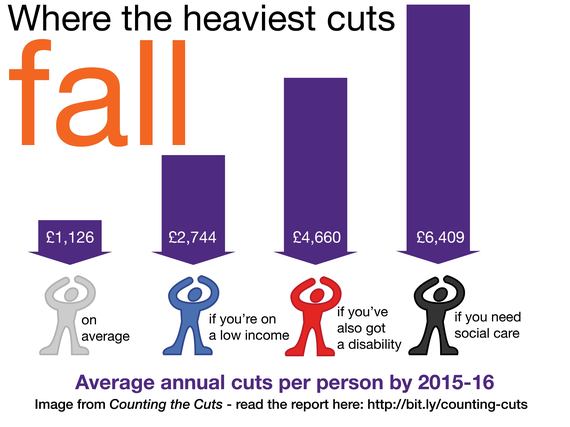
2014-02-17-BurdenoftheCuts-thumb
The Conservatives are on an ideological crusade, which flies in the face of public needs, democracy and sound economics, to shrink the welfare state and privatise our essential services.

In a wealth transfer from the poorest to the very rich, we have witnessed the profits of public services being privatised, but the losses have been socialised – entailing a process of economic enclosure for the wealthiest, whilst the burden of losses have been placed on the poorest social groups and our most vulnerable citizens – largely those who are ill, disabled and elderly. The Conservative’s justification narratives regarding their draconian policies, targeting the poorest social groups, have led to media scapegoating, social outgrouping, persistent political denial of the aims and consequences of policies and reflect a wider process of political disenfranchisement of the poorest citizens, especially sick and disabled people.

This is juxtaposed with the more recent gifted tax cuts for the wealthiest, indicating clearly that Conservatives perceive and construct social hierarchies with policies that extend inequality and discrimination. The axiom of our international human rights is that we each have equal worth. Conservative ideology is fundamentally  incompatable with the UK government’s Human Rights obligations and with Equality law. The chancellor clearly regards public funds for providing essential lifeline support for disabled people as expendable and better appropriated for adding to the disposable income for the wealthy.

Public policy is not an ideological tool for a so-called democratic government to simply get its own way. Democracy means that the voices of citizens, especially members of protected social groups, need to be included in political decision-making, rather than so frankly excluded.

Government policies are expressed political intentions regarding how our society is organised and governed. They have calculated social and economic aims and consequences. In democratic societies, citizen’s accounts of the impacts of policies ought to matter.

However, in the UK, the way that policies are justified is being increasingly detached from their aims and consequences, partly because democratic processes and basic human rights are being disassembled or side-stepped, and partly because the government employs the widespread use of linguistic strategies and techniques of persuasion to intentionally divert us from their aims and the consequences of their ideologically (rather than rationally) driven policies. Furthermore, policies have become increasingly detached from public interests and needs.

We elect governments to meet public needs, not to “change behaviours” of citizens to suit government needs and prop up policy “outcomes” that are driven entirely by traditional Tory prejudice and ideology.
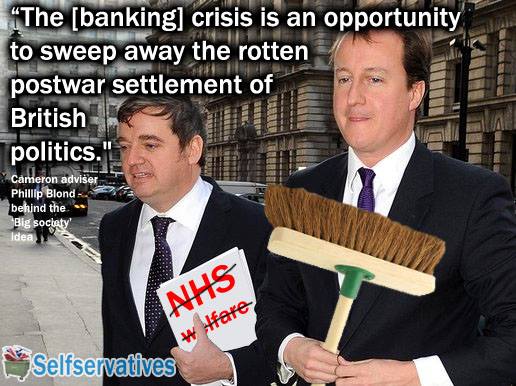
 

proper Blond

I don’t make any money from my work and I’m not funded. You can support Politics and Insights by making a donation to help me continue researching and writing independently, and to continue to help others.

DonatenowButton

A Warning For People on Medication for Depression

beastrabban's avatarBeastrabban\'s Weblog

This is a warning based on my personal experience. Like many people, I suffer from depression, for which I am, thankfully, on medication. However, the government, David Cameron, George Osborne, the head of the health service, Jeremy Hunt, and their corporate paymasters seem to resent the fact that so many people in Britain now are on medicine to treat this condition. So they’re doing their best to throw people off it. About a year or so I had to go to my doctor again for an examination after I had a repeat prescription turned down. I was told that because the government was concerned about the mental wellbeing of sufferers like myself, they were stopping automatic repeat conditions in order to make people see their doctors. It is, I was told, a condition that can get worse, and so it had been decided that sufferers like myself had to be…

View original post 385 more words

Why are parents in England not doing more to stand up for their children?

Tom Pride's avatarPride's Purge

Soon all parents in England – those of us who can’t afford schools like Eton anyway – will be forced to send our children to one of the academy schools run by Cameron’s fat cat mates.

Cameron has, by the way, very nicely allowed his chums in charge of academies to employ any unqualified Tom, Dick or Harry to look after our children. They’re cheaper you see.

And our PM has also scrapped any official lines of complaint should parents be concerned, worried or even outraged by the treatment of their children at an academy school:

This is what happens when you try to hold an academy school to account… good luck parents

Which means Cameron’s mates can more or less do what they like with our kids and there’s nothing any parent can do about it.

I have only one question about all of this.

WHY ARE PARENTS IN ENGLAND NOT DOING MORE…

View original post 17 more words