Author: Kitty S Jones

I’m a political activist with a strong interest in human rights. I’m also a strongly principled socialist. Much of my campaign work is in support of people with disability. I am also disabled: I have an autoimmune illness called lupus, with a sometimes life-threatening complication – a bleeding disorder called thrombocytopenia. Sometimes I long to go back to being the person I was before 2010. The Coalition claimed that the last government left a “mess”, but I remember being very well-sheltered from the consequences of the global banking crisis by the last government – enough to flourish and be myself. Now many of us are finding that our potential as human beings is being damaged and stifled because we are essentially focused on a struggle to survive, at a time of austerity cuts and welfare “reforms”. Maslow was right about basic needs and motivation: it’s impossible to achieve and fulfil our potential if we cannot meet our most fundamental survival needs adequately. What kind of government inflicts a framework of punishment via its policies on disadvantaged citizens? This is a government that tells us with a straight face that taking income from poor people will "incentivise" and "help" them into work. I have yet to hear of a case when a poor person was relieved of their poverty by being made even more poor. The Tories like hierarchical ranking in terms status and human worth. They like to decide who is “deserving” and “undeserving” of political consideration and inclusion. They like to impose an artificial framework of previously debunked Social Darwinism: a Tory rhetoric of division, where some people matter more than others. How do we, as conscientious campaigners, help the wider public see that there are no divisions based on some moral measurement, or character-type: there are simply people struggling and suffering in poverty, who are being dehumanised by a callous, vindictive Tory government that believes, and always has, that the only token of our human worth is wealth? Governments and all parties on the right have a terrible tradition of scapegoating those least able to fight back, blaming the powerless for all of the shortcomings of right-wing policies. The media have been complicit in this process, making “others” responsible for the consequences of Tory-led policies, yet these cruelly dehumanised social groups are the targeted casualties of those policies. I set up, and administrate support groups for ill and disabled people, those going through the disability benefits process, and provide support for many people being adversely affected by the terrible, cruel and distressing consequences of the Governments’ draconian “reforms”. In such bleak times, we tend to find that the only thing we really have of value is each other. It’s always worth remembering that none of us are alone. I don’t write because I enjoy it: most of the topics I post are depressing to research, and there’s an element of constantly having to face and reflect the relentless worst of current socio-political events. Nor do I get paid for articles and I’m not remotely famous. I’m an ordinary, struggling disabled person. But I am accurate, insightful and reflective, I can research and I can analyse. I write because I feel I must. To reflect what is happening, and to try and raise public awareness of the impact of Tory policies, especially on the most vulnerable and poorest citizens. Because we need this to change. All of us, regardless of whether or not you are currently affected by cuts, because the persecution and harm currently being inflicted on others taints us all as a society. I feel that the mainstream media has become increasingly unreliable over the past five years, reflecting a triumph for the dominant narrative of ultra social conservatism and neoliberalism. We certainly need to challenge this and re-frame the presented debates, too. The media tend to set the agenda and establish priorities, which often divert us from much more pressing social issues. Independent bloggers have a role as witnesses; recording events and experiences, gathering evidence, insights and truths that are accessible to as many people and organisations as possible. We have an undemocratic media and a government that reflect the interests of a minority – the wealthy and powerful 1%. We must constantly challenge that. Authoritarian Governments arise and flourish when a population disengages from political processes, and becomes passive, conformist and alienated from fundamental decision-making. I’m not a writer that aims for being popular or one that seeks agreement from an audience. But I do hope that my work finds resonance with people reading it. I’ve been labelled “controversial” on more than one occasion, and a “scaremonger.” But regardless of agreement, if any of my work inspires critical thinking, and invites reasoned debate, well, that’s good enough for me. “To remain silent and indifferent is the greatest sin of all” – Elie Wiesel I write to raise awareness, share information and to inspire and promote positive change where I can. I’ve never been able to be indifferent. We need to unite in the face of a government that is purposefully sowing seeds of division. Every human life has equal worth. We all deserve dignity and democratic inclusion. If we want to see positive social change, we also have to be the change we want to see. That means treating each other with equal respect and moving out of the Tory framework of ranks, counts and social taxonomy. We have to rebuild solidarity in the face of deliberate political attempts to undermine it. Divide and rule was always a Tory strategy. We need to fight back. This is an authoritarian government that is hell-bent on destroying all of the gains of our post-war settlement: dismantling the institutions, public services, civil rights and eroding the democratic norms that made the UK a developed, civilised and civilising country. Like many others, I do what I can, when I can, and in my own way. This blog is one way of reaching people. Please help me to reach more by sharing posts. Thanks. Kitty, 2012

Sick and disabled mother told her benefit is cut on the day she died

A mother who was battling a serious and debilitating lung condition was told that she no longer qualified for benefits on the day she died from her illness.

Dawn Amos, 67, died of chronic obstructive pulmonary disease (COPD), a collection of progressive lung diseases which cause severe breathing difficulties, and increases susceptibility to infections such as pneumonia.

The illness left Dawn with difficulty breathing, she was unable to walk for long periods of time, and she was left struggling to dress herself and unable to manage daily tasks independently.

She received attendance allowance from the Department of Work and Pensions (DWP) to help with the extra costs of her essential personal care for six months, before being reassessed.

Her heartbroken husband Mick Amos, 64, discovered a letter sent from the DWP two days after his wife’s death.

It was a notification that Mrs Amos’s allowance was being withdrawn, based on her “treatment, medication, symptoms and test results.”

The letter had been sent out on November 27, the day that Mr Amos had taken the extremely difficult and very distressing decision to turn off Dawn’s life support machine.

COPD is an incurable, chronic and progressive illness.

Mr Amos said: “It’s disgusting and heartbreaking. We had to turn her machine off.

“How ill do you have to be?

“On the day she died I came downstairs and she couldn’t breathe properly so I phoned the ambulance, who said if she gets worse call us back.

“As soon as I got off the phone she collapsed and I was on the phone again.

“She had stopped breathing and I was doing CPR while I was on the phone to the ambulance.”

Dawn was taken to Broomfield Hospital, where she was put on a life support machine.

Mr Amos and Dawn’s daughter, Karina Mann, agreed to turn off the machine the same day.

Karina, 42, said that her mother had received attendance allowance for six months before they [the DWP] asked to reassess her.

She said: “Obviously she was ill enough for the benefit because we had to watch her die.”

A spokesperson for the Department for Work and Pensions said:

“Our thoughts are with the family of Mrs Amos. The decision was based on evidence which included the opinion of Mrs Amos’ own GP.”

Clearly, the “evidence” was wrong. Again.

However, doctors are not actually permitted to give their medical opinion to the DWP. They are provided with a strictly limited “factual” government form to complete. Such restrictions on qualititative information and medical opinion apply to ALL government forms provided to GPs for the purpose of assessing the “evidence” of patient eligibility for all disability benefits, including Employment Support Allowance. The government informs GPs that:

“Decisions on benefit entitlement are made by non medical decision makers. Decision makers will use your report and will seek the advice of an experienced healthcare professional trained in disability assessment to review and interpret the report where needed.”

The Personal Independence Payment (PIP) form instructs GPs to:

“Please write down facts rather than opinion. We require an objective report – please only include information about symptoms that are recorded in the patient’s records and information about disabling effects that you or another healthcare professional have directly observed.

Please complete all sections as fully as possible but write “not known” if appropriate.  “Not known” can be helpful.”

Members of the General Practitioners Committee (GPC) have voiced concern that patients with long term conditions might be periodically “harrassed” by the Department for Work and Pensions  under the current assessment regime. Dr John Canning, chair of the GPC’s Professional Fees and Regulation Committee and a GP in Middlesbrough voiced concern about patients having to continually “prove” they deserve state support.

The government have persistently ignored the many evidence-based concerns raised by professionals, academic researchers, campaigners and opposition MPs that their austerity policies and anti-welfarism are having an extremely harmful effect, most often on our poorest and most vulnerable citizens.


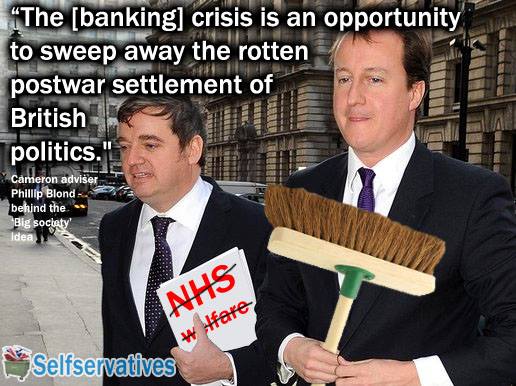
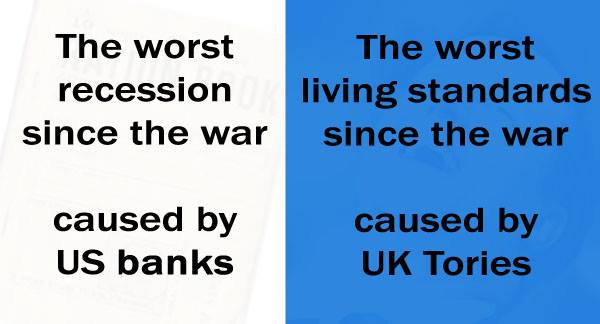
Conservative governments are bad for your health

proper Blond 

Context: the politics of blame

Increasing employment and pushing ill and disabled people into work are key elements of the UK Government’s public health and welfare “reform” agendas. The arguments presented for this approach are primarily economic and particularly, moralistic. The reasoning presented is not founded on biological, psychological or sociological evidence. The government maintains that work is the most effective way to improve the wellbeing of individuals, their families and their communities. There is a perception that unemployment is harmful to physical and mental health, so the corollary has been assumed – that work is beneficial for health. 

However, that does not necessarily follow, and to claim that it does is distinctly unscientific and irrational. As the Conservatives themselves have often pointed out in less appropriate circumstances in order to avoid democratic accountability and responsibility, there is a difference between an association and a causal relationship.

There is a clear ideological context from which the welfare “reforms” proceeded, and the politically-directed media campaigns that have purposefully stigmatised and outgrouped unemployed people demonstrates quite clearly that reducing welfare support is not about a politically calculated extension of social inclusion and social justice policies, Conservative bonhomie, or overall concern for the wellbeing of welfare recipients and people who are disabled.

The government are attempting to entrench neoliberal ideology in our culture by co opting GPs, social workers and other professionals as agents of the state. The idea that “work is a health outcome” has been embedded in policies such as the Orwellian renaming of sick notes (now “fit notes”), which are designed to explore what work a person who is absent from work because of illness may undertake.  However, the government intend a much more far-reaching outcome than simply attempting to reduce the sick “role” and recovery time. The government’s “behavioural change” agenda has become a centrally-orchestrated programme for governance. The provision of public goods and crucial support, from housing and discretionary housing payments to employment benefits and disability support is becoming increasingly conditional. 

Political rhetoric, aimed at perpetuating an extremely divisive and intentionally misleading “strivers and skivers” dichotomy is designed to undermine public support for the welfare state and the other gains of our post-war settlement – the NHS, legal aid and social housing for example – also betrays the lack of coherence, rationality and empirical support for the Conservative’s “reforms.” Furthermore, the extremely targeted, class-contingent and punitive nature of the Conservative austerity programme indicates that the welfare “reforms” were founded on traditional Tory prejudices, rather than on any genuine causal relationship based on empirical evidence and social or economic necessity.

This explains why the government have persistently ignored the many evidence-based concerns raised by academic researchers, campaigners and opposition MPs that their austerity policies are having an extremely harmful effect, most often on our poorest and most vulnerable citizens.

The Conservatives are ideologically bound to notions of a small state, minimal levels of political responsibility and intervention, minimal levels of government spending, the heavy promotion and administration of privatisation, competition, fiscal austerity, deregulation and free trade in order to enhance the role of the private sector in the economy, all of which are the central strands of the neoliberal hegemony. Conservative ideology runs counter to any notion that all citizens must be treated fairly, which also means that they must be given equal economic opportunities and provided with a adequate minimum standard of living. Neoliberal ideology is incompatible with a human rights-based society.

Democracy exists partly to ensure that the powerful are accountable to the public, and particularly to our most vulnerable citizens. This government have blocked that crucial exchange, and show disdain for human rights, the welfare state and the NHS, all of which provides ordinary people and the most vulnerable citizens basic protection from those in power.

Conservatives despise human rights and rights-based social provision. They absurdly claim that welfare provision causes vulnerability, and a “culture of dependency,” despite the fact that there is absolutely no empirical evidence to support this view. History has consistently taught us otherwise. The Conservative’s policies are expressions of contempt for the lessons and empirical evidence from over a century of social history and administration.

Tory rhetoric is designed to have us believe there would be no poor people if the welfare state didn’t somehow “create” them. If the Conservatives must insist on peddling the myth of meritocracy, then surely they must also concede that whilst a neoliberal system has a few beneficiaries, it also creates situations of insolvency and poverty for many others. That is what a system based on competitive individualism is about: it creates a few “winners” and a lot of others lose.

Conservative cuts are based on nothing more than the ridiculous myth that poverty is somehow a lifestyle choice or a moral failing which people can be punished or starved out of. The new Tory neoliberal “paternalists” really seem to believe that if they make life for poor people insufferable, they will simply be “incentivised” to choose to be wealthier. It’s a thinly disguised revamp of the ill-conceived 1834 Poor Law deterrence principle of “less eligibility” – that was supposedly aimed at “making work pay” too. But it didn’t. It’s not possible to frighten and punish people out of poverty. Only a Conservative government would claim to be making work pay by cutting welfare down to the bare bones, rather than increasing wages. The welfare cuts have actually had the effect of driving down wages too.

Of course, by framing the issue of poverty in terms of personal responsibility and morality, the Conservatives have stifled debate and restricted public discussion in the hope that people won’t recognise the wider structural inequalities and economic failings, for which this government are solely responsible.

Debbie Abrahams said: “The Conservatives point the finger at sick and disabled people for the rise in spending. They are still shamelessly spinning their tired “shirkers” and “strivers” narrative, designed to whip up public support for cuts to the most vulnerable. But this divisive rhetoric can no longer conceal the fact their economic strategy has failed. It is the government’s failure that has led to rising social security costs. 

As we saw at the Autumn Statement (2016), borrowing is up, growth is down, deficit targets have been hopelessly missed and wages have flat-lined. At the same time, the government has refused to tackle the driving forces behind increased social security spending, from low pay to high housing costs. Instead, the government is slashing support to those who need it most, exacerbating the financial strain so many are facing this Christmas, and failing its own targets in the process.   

[…] Research by the Joseph Rowntree Foundation suggested that we need to be building 80,000 affordable homes a year to meet demand and keep the current spend on housing benefit stable. This government managed a pathetic 30,000 homes last year. It is this refusal to build enough homes that keeps the housing benefit bill growing. People are left struggling to find somewhere affordable to live, and the state is forced to subsidise the sky-high rents charged by private landlords 

We could also look at tax credits, which currently make up more than £20bn a year in the spending under the cap. Tax credits top up working people’s pay where it is insufficient. Wages today are lower than they were in 2008, and won’t even return to the levels of 2008 until 2021. A record six million workers are paid less than the living wage. This is why tax credit costs have risen – because the government has had to increase the amount spent on topping wages up. 

Labour founded the welfare state to give pensioners and disabled people dignity, to prevent homelessness, children going hungry, and to cover for periods of unemployment or ill-health. It was never designed to be spending tens of billions substituting for low-wage employers or subsidising rip-off landlords.”

Economic productivity is the new health outcome

The claim that “work is good for you” is allegedly based on “scientific evidence” that people in work tend to be healthier than those claiming unemployment and sickness benefits. However, to draw the conclusion that “employment is good for you” from the data is an example of inferring causality inappropriately, from what is only an association. Yet it is being used to prop up Conservative justifications for dismantling the welfare state.

Unemployment has been linked to increased rates of sickness, disability and mental health problems, and to decreased life expectancy. The claim has also been made that it results in an increased use of medication, medical services, and higher hospital admission rates. However, surely it makes much more sense to say that sickness, disability and mental health problems, the use of medication, medical services, and higher hospital admission rates all cause unemployment, rather than the converse. This government seem to have a major problem accepting the fact that sometimes, people really are simply too ill to work.

Most people who are too ill to work are obviously not as healthy as those who can work. That is hardly controversial. However, that doesn’t mean that work itself is good for your health, it just means those who don’t work tend to have worse health than those who do. People don’t work because they have poor health.

Linking ill health with “worklessness” is an ideological preference which ignores other variables. It is much more likely that the “reforms”, which have reduced welfare provision to inadequate levels – leaving people all too often unable to meet their basic needs – is bad for health, rather than being out of work. 

But the Conservatives have used this “evidence” of an association between poor health and unemployment to make an inference based on a “causal link” that hasn’t actually been empirically verified. Iain Duncan Smith has made the claim, for example, that “work is good for you.” He has even claimed that work can make people’s health problems “better.” But that isn’t very likely to be true. It’s akin to claiming that chatting and exercise is a cure for multiple sclerosis, lupus, blindness or cancer. Or that a work coach on prescription will cure rheumatoid arthritis, a disc prolapse or schizophrenia.

This is why I visit my doctor when I am ill, and not Iain Duncan Smith or the government.

The claim that work is good for your health is simply a part of Tory justification narratives for cutting support for sick and disabled people, and hounding people who need to claim benefits. Yet this axiom informs current UK policy towards increased benefit conditionality, harsh sanctions, compulsory work experience and the “workfare” or “work-for-benefits” thinking which the Conservatives favour. However, this is an approach that can never work, unless, of course, the aim is to completely dismantle the welfare state. Oh, hang on…

The biopsychosocial model

The biopsychosocial model (BPS) of ill health is not without controversy, although many see it as more pragmatic or humanistic than the medical model of illness, which came to be regarded as reductionist and deterministic. The biopsychosocial model is the conceptual status quo of contemporary psychiatry, and many believe that it has played an important role in combatting psychiatric dogmatism.

The biological component of the model is based on a traditional allopathic (bio-medical) approach to health. The social part of the model investigates how different social factors such as socioeconomic status, culture and poverty impact on health. The psychological component of the biopsychosocial model looks for potential psychological causes for a health problem such as lack of self-control, emotional turmoil, and negative thinking.

Of course a major criticism is that the BPS model has been used to disingenuously trivialise and euphemise serious physical illnesses, implying either a psychosomatic basis or reducing symptoms to nothing more than a presentation of malingering tactics. This ploy has been exploited by medical insurance companies (infamously by Unum Provident in the USA) and government welfare departments keen to limit or deny access to medical, social care and social security payments, and to manufacture ideologically determined outcomes that are not at all in the best interests of patients, invalidating diagnoses, people’s experience and accounts, and the existence of serious medical conditions. (See also: Getting rich on disability denial, and  A Tale of two Models by Debbie Jolly.)

Unum was involved in advising the government on making the devastating cuts to disabled people’s support in the UK’s controversial Welfare Reform Bill. (See also: The influence of the private insurance industry on the UK welfare reforms.)

This is a government that tends to emphasise citizen responsibilities over rights, moralising and psychologizing social problems, whilst quietly editing out government responsibilities and democratic obligations towards citizens.

For example, poverty, which is caused by political decisions affecting socioeconomic outcomes, is described by the Conservatives, using elaborate victim-blame narratives, and this is particularly objectionable at a time when inequality has never been greater in the UK.

Poverty may only be properly seen in a structural context, including account of the exclusion and oppression experienced by those living in poverty, the global neoliberal order, the gender order, the disability, racial, sexual and other orders which frame social life and precipitate poverty in complex and diverse ways. It’s down to policy-makers to address the structural origins of poverty, not the poor, who are currently regarded as the “collateral damage” – casualities – of politically imposed structural constraints.

Conservative governments are unhealthy

The effects of loss of income on people who can’t work because of illness is a confounding factor, too. How is it possible to isolate the devastating impacts of the Conservative “reforms” and the steady dismantling of the welfare state on unemployed people from the misleading generalisation that unemployment is bad for health? Surely if the Conservatives genuinely believed their own claims, they would be more inclined to increase rather than radically decrease provision and support for unemployed people.

Of course, not all work is beneficial. The review that led to the widespread folk tale that work is good for you is based on research involving people who had common and minor illnesses, and fulfilling, secure jobs. That doesn’t reflect the experiences of many people.

Not all jobs are rewarding and positive experiences, and some work can cause serious risks to health.

Doctor Frank Scheer, a neuroscientist at Harvard Medical School and Brigham and Women’s Hospital in Boston, says:

“There is strong evidence that shift work is related to a number of serious health conditions, like cardiovascular disease, diabetes, and obesity.

These differences we’re seeing can’t just be explained by lifestyle or socioeconomic status.”

Shift work and poor quality working environments and employment conditions are also linked to stomach problems and ulcers, hypertension, depression, musculoskeletal disorders, chronic infections, diabetes, general health complaints, all-cause mortality and an increased risk of accidents or injury. Long working hours are equally linked with a detrimental impact on health, according to medical research – see: The impact of overtime and long work hours on occupational injuries and illnesses: new evidence from the United States.

There is a growing and potentially corrosive problem of low paid, poor quality, precarious and temporary work which threatens levels of social inclusion and, ultimately, the health of the workforce.

Research shows unambiguously that the psychosocial quality of bad jobs is worse than unemployment. Peter Butterworth examined the mental health implications of those moving from unemployment into employment and found that:

“Those who moved into optimal jobs showed significant improvement in mental health compared to those who remained unemployed. Those respondents who moved into poor-quality jobs showed a significant worsening in their mental health compared to those who remained unemployed.”

Overall, unemployed respondents had poorer mental health than those who were employed. However the mental health of those who were unemployed was comparable or superior to those in jobs of the poorest psychosocial quality. (See: The psychosocial quality of work determines whether employment has benefits for mental health: results from a longitudinal national household panel survey.)

More recently, in a letter to the Guardian, the UK’s leading bodies representing psychologists, psychotherapists, psychoanalysts, and counsellors called on the Government “to immediately suspend the benefits sanctions system. It fails to get people back to work and damages their mental health.

Findings from the National Audit Office (NAO) show limited evidence that the sanctions system actually works, or is cost effective.

But, even more worrying, we see evidence from NHS Health Scotland, the Centre for Welfare Conditionality hosted by the University of York, and others, which links sanctions to destitution, disempowerment, and increased rates of mental health problems. This is also emphasised in the recent Public Accounts Committee report, which states that the unexplained variations in the use of benefits sanctions are unacceptable and must be addressed.”

The impact of poverty on health

The largest study of poverty conducted in the UK has laid out the dire extent of British material deprivation – and seriously undercut the government’s claim to be lifting people out of poverty through work.

The Poverty and Social Exclusion in the UK (PSE) project details how, over recent years, the percentage of households living below society’s minimum standard of living has increased from 14% to 33% – despite the fact that the economy has increased in size over the same period. The study found that low wages are a central cause of widespread deprivation. For many people, full-time work is not enough to lift them out of poverty; almost half of the working poor work 40 hours a week or more. And one in six adults in paid work (17%) is poor, suffering low income and unable to afford basic necessities.

Commenting on the study’s findings, Professor Jonathan Bradshaw of the University of York said they showed many parents who work full time still have to make huge sacrifices to try and protect their children from deprivation.

“We already know from DWP data that the majority of children with incomes below the the relative income poverty threshold have a working parent. The PSE survey shows that the majority of deprived children, those lacking two or more socially perceived necessities, and very deprived children (lacking five or more socially perceived necessities) have a working parent.

We found that 65% of the deprived and 58% of the very deprived children had a working parent, and 50% of the deprived and 35% of the very deprived had at least one parent working full-time. Child poverty is not being driven by skivers, but is the consequence of strivers working for low earnings while in-work benefits are being dissipated by government austerity measures.”

Responding to the findings, Clare Bambra, a professor at Durham University, said that the research was a shameful picture of “the devastating and far-reaching human costs of inequality and poverty in the UK today.”

She said:

“It’s shameful for a rich country like ours to be tolerating such levels of poverty especially amongst our children and young people. The mantra that work sets people free from poverty has been shown to be a grand old lie.

We will be living with the long term consequences of this social neglect for decades to come – there are clear links between poverty and reduced life expectancy and higher rates of ill health, especially concentrated in deprived areas and the north.

These findings show us the true cost of austerity.”

Public health experts from Durham University have denounced the impact of Margaret Thatcher’s policies on the wellbeing of the British public in a comprehensive study which examines social inequality in the 1980s.

The study, which looked at over 70 existing research papers, concludes that as a result of unnecessary unemployment, welfare cuts and damaging housing policies, the former prime minister’s legacy includes the unnecessary and unjust premature death of many British citizens, together with a substantial and continuing burden of suffering and loss of wellbeing.

The research shows that there was a massive increase in income inequality under Baroness Thatcher – the richest 0.01 per cent of society had 28 times the mean national average income in 1978 but 70 times the average in 1990, and UK poverty rates went up from 6.7 per cent in 1975 to 12 per cent in 1985.

Baroness Thatcher’s governments wilfully engineered an economic catastrophe across large parts of Britain by dismantling traditional industries such as coal and steel in order to undermine the power of working class organisations, say the researchers. They suggest this ultimately fed through into growing regional disparities in health standards and life expectancy, as well as greatly increased inequalities between the richest and poorest in society.

Professor Clare Bambra from the Wolfson Research Institute for Health and Wellbeing at Durham University, co-author of the research report, commented:

“Our paper shows the importance of politics and of the decisions of governments and politicians in driving health inequalities and population health. Advancements in public health will be limited if governments continue to pursue neoliberal economic policies – such as the current welfare state cuts being carried out under the guise of austerity.”

Thatcher’s policies  have been condemned for causing “unjust premature deaths.” Cameron’s policies are even more class-contingent and cruel.

I think there is a growing body of empirical evidence which indicates clearly that Conservative governments are much worse for public health, prosperity and wellbeing than unemployment.

10407927_677369232332608_5384979058089243718_n

Pictures courtesy of Robert Livingstone


I don’t make any money from my work. I am disabled because of illness and have a very limited income. The budget didn’t do me any favours at all.

But you can help by making a donation to help me continue to research and write informative, insightful and independent articles, and to provide support to others. The smallest amount is much appreciated – thank you.

DonatenowButton cards

Sometimes people are not fit for work, and that includes MPs, Mr Jackson.

1235473_537097386359794_65317730_n (1)

Stewart Jackson, the Conservative MP for Peterborough, has claimed that Labour MP Simon Danczuk has been “stitched up” by supporters of Jeremy Corbyn within the Labour Party. He commented after Mr Danczuk was suspended from the Labour Party pending an investigation into allegations that he sent sexually explicit text messages to a 17-year-old girl.

Posting on Twitter, Jackson said: “Simon Danczuk has obviously been foolish but he’s also been stitched up like a kipper by the Corbyn cronies in UK Labour.” 

Asked why he believed this to be the case, Mr Jackson replied: “Maybe the haste with which he’s been suspended for what appears to be something that is not a criminal offence if stupid.”

“Given he’s had some mental health issues, [the] more compassionate thing would be to have given him space and return to the issue next week.”

It is a serious cause for concern that this MP doesn’t know that it IS a criminal offence for an adult to have any sexual activity with a person under the age of 18, if the older person holds a position of trust and power, as such sexual activity is an abuse of the position of trust. The Sexual Offences Act 2003 provides this specific legal protection.

Danczuk allegedly exchanged a number of sexually explicit text messages with a 17-year-old girl, it has been reported.

Mr Danczuk, who is 49, sent the messages to Sophena Houlihan after she asked him for a job.

She said: “At the time I played along with it, but now I feel like he duped me. I was keen for a career in politics and he is a very high-profile MP and I was in awe of him.”

Mr Danczuk allegedly asked Miss Houlihan to meet at the Labour Party conference and reportedly suggested that she join him on a trip to Spain. He told her that he was “horny”.

It’s absolutely disgraceful that MPs, regardless of their party politics, think it is in any way acceptable to use their position of trust and power to attempt to justify exploitative or sexually predatory behaviours.

However , a lifelong Conservative supporter, felt that it is Mr Danczuk who is the victim of impropriety, and all because of his mere “foolishness.” She overlooked his serial objectification of women and sexist tendencies, then. She tweeted: “Ironic when we were supposed to be introduced to “kinder” politics! Hypocrites. JC et al dangerous.”

Sure. Some people will go to any lengths to divert attention and discredit the opposition leader, no matter how dogmatic, incoherent and ridiculous this shows them up to be. Or misogynistic, for that matter.

I can just see the headlines in the Sun now: Dangerous Jeremy Corbyn supporters made me become a stalking horse and then they turned me into a disgraceful, stalking sexual predator.

If Mr Danczuk is experiencing mental health problems, he deserves support and has my sympathies. However, the situation that has arisen doesn’t just raise issues that are simply about how “kindly” he is treated: it is also important to establish whether or not he is fit for his post and to ensure that he does not pose a risk to members of the public, as well as himself. Suspending Mr Danczuk is not “dangerous” at all, in fact it is the only reasonable and compassionate thing to do.

Last year, Danczuk saidWhen it comes to Mental Health Problems, being in work can be something that really helps. I know that keeping busy and being motivated certainly works for me.”

However, sometimes, people are simply too ill to work. We have an unhealthy political culture and a government that has persistently refused to accept that sometimes, people are very ill and severely incapacitated. We have witnessed an extended, perpetuated, prejudice-driven political moralising and vicious stigmatisation of people who are ill and out of work, presumably so that the unprecedented, uncivilised cuts to essential support for disabled people have a façade of political justification, at least. But certainly not a respectable, legitimate one.

In fact this government have rather horribly and deceitfully normalised coercing people to work, regardless of their physical or mental illness, and regardless of the extent to which a person is disabled. Furthermore, it is regardless of the potentially devastating consequences for the person who is ill, AND the people that they work with or come into contact with.

Sometimes people need to take time out to recover, and should feel that they are permitted to do so without being judged and punished by the state. And sometimes, people are too ill, and no longer fit for their role. Consideration of these issues is compassionate and kind.

Nobody would expect a person who suffers blackouts to drive a bus or bin waggon if they thought through the potentially devastating consequences. But political, cultural, psychological and financial coercion is being used to force people to work – the government continues to cut welfare, which was calculated to cover only the costs of meeting basic needs. Cruel sanctions and strict, inflexible, often unreasonable behavioural conditions are being imposed on lifeline benefit receipt, adversely affecting some of our poorest and most vulnerable citizens; unemployed and disabled people are stigmatised in the media – all of this is done with an utterly callous disregard of a person’s capacity to work, or the availabilty of appropriate and suitable employment opportunities, and this can have tragic consequences.

This is a government that champions outgrouping and scapegoating already socially marginalised groups. It isn’t likely that they will listen to reason, because traditional Tory prejudices concerning minoritized groups are historically established and deeply embedded in Conservative ideological grammar.

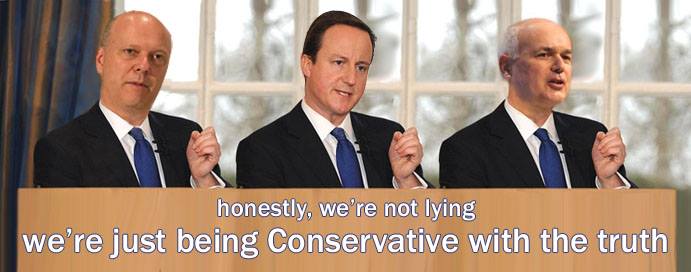
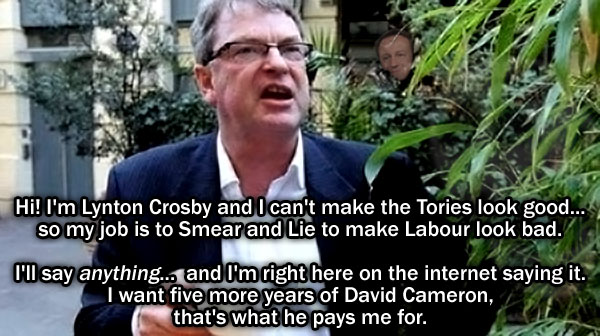
The Conservatives value the use of lies and deceit to get their own way. How fitting that the man who brought truly democratic and liberal values into Conservative electioneering, fostering a respect for diversity and championing equal opportunities, (stop laughing) has finally been awarded a knighthood for his highly salaried dastardy. The lizard of Oz, the kidder for kidders that kidded thousands, did declare war on the Scottish, he is very well known for his dogwhistle racism, but surely divided and prejudiced nations and ever-sinking standards of living are a price well worth paying when we have another Tory government. Hurrah!

The cult of Lyntonism is a by-product of the micro-managerialism, totalitarian tendencies and the widespread use of techniques of persuasion usually reserved for the advertising industry, that has infected the New Right, “libertarian paternalist” Conservative Party. You know, I always thought there is something very pre-war Berlin about the Crosby crocodile smile.

I keep forgeting that this is 2016, and that we live in a first-world liberal democracy. Don’t we?


Happy New year all.

10853165213_ddb97ac601_o
Pictures courtesy of Robert Livingstone

Update: Mr Stewart Jackson has blocked my Twitter account, surprisingly. It’s good to know how much Tory MPs value democratic exchange, reasoned discussion, transparency and accountability…

Blocked


Further news: Simon Danczuk Investigated Over Historic Rape Allegation By Lancashire Police


The Daily Mail calls right wingers stupid, Charlie Brooker made me laugh.


Daily_Mail

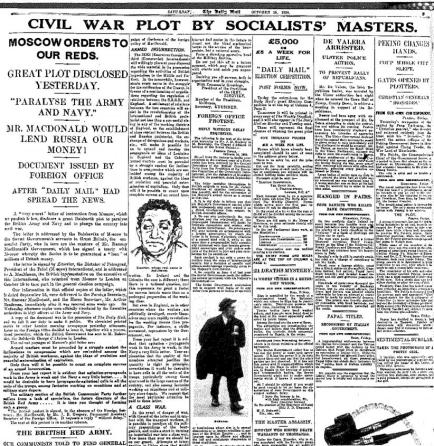
                 A classy Daily Mail moment – the  scandalous, fake Zinoviev letter


This article was originally published in the Guardian.

There was a minor kerfuffle a few weeks ago when the Daily Mail website overtook the New York Times to become the most popular news site in the world.  Liberals can whine all they like, but that’s a formidable achievement, especially considering it’s not really a conventional news site at all, more a big online bin full of pictures of reality stars, with the occasional Stephen Glover column lobbed in to lighten the mood.

The print edition of the paper is edited by Paul Dacre, who is regularly praised by media types for knowing what his customers want, and then selling it to them. This is an extraordinary skill that puts him on the same rarefied level as, say, anyone who works in a shoe shop. Or a bike shop. Or any kind of shop. Or in any absolutely any kind of business whatsoever. Whatever you think about Dacre’s politics, you can’t deny he’s got a job to do, and he does it. Like a peg. Or a ladle. Or even a knee. Dacre is perhaps Britain’s foremost knee.

Curiously, the online version of the Mail has become a hit by doing the reverse of what Dacre is commended for doing. It succeeds by remorselessly delivering industrial quantities of precisely the opposite of what a traditional Mail reader would presumably want to read: frothy stories about carefree young women enjoying themselves. Kim Kardashian or Kelly Brook “pour their curves” into a selection of tight dresses and waddle before the lens and absolutely nobody on the planet gives a toss apart from Mail Online, which is doomed to host the images, and Mail Online’s readers, who flock in their thousands to leave messages claiming to be not in the slightest bit interested in the story they’re reading and commenting on.

Now Mail Online has gone one step further by running a story that not only insults its own readers, but cruelly invites them to underline the insult by making fools of themselves. In what has to be a deliberate act of “trolling”, last Friday it carried a story headlined “Rightwingers are less intelligent than left wingers, says study”. In terms of enraging your core readership, this is the equivalent of Nuts magazine suddenly claiming only gay men masturbate to Hollyoaks babes.

The Mail’s report went on to detail the results of a study carried out by a group of Canadian academics, which appears to show some correlation between low childhood intelligence and rightwing politics. It also claimed that stupid people hold rightwing views in order to feel “safe”. Other items they hold in order to feel safe include clubs, rocks and dustbin lids. But those are easy to let go of. Political beliefs get stuck to your hands. And the only way to remove them is to hold your brain under the hot tap and scrub vigorously for several decades.

As you might expect, many Mail Online readers didn’t take kindly to a report that strived to paint them as simplistic, terrified dimwits. Many leapt from the tyres they were swinging in to furrow their brows and howl in anger. Others, tragically, began tapping rudimentary responses into the comments box. Which is where the tragi-fun really began.

“Stupidest study of them all,” raged a reader called Beth. “So were the testers conservative for being so thick or were they left and using a non study to make themselves look better?” Hmmm. There’s no easy answer to that. Because it doesn’t make sense.

“I seem to remember ‘academics’ once upon a time stating that the world was flat and the Sun orbitted the Earth,” scoffed Ted, who has presumably been keeping his personal brand of scepticism alive since the middle ages.

“Sounds like a BBC study, type of thing they would waste the Licence fee on, load of Cods wallop,” claimed Terry from Leicester, thereby managing to ignore the findings while simultaneously attacking public service broadcasting for something it hadn’t done. For his next trick, Terry will learn to whistle and shit at the same time.

Not all the respondents were stupid. Some were merely deluded. Someone calling themselves “Hillside” from Sydney claimed: “I have an IQ over 200, have six degrees and diplomas and am ‘right-wing’, as are others I know at this higher level of intelligence.” His IQ score is particularly impressive considering the maximum possible score on Mensa’s preferred IQ test is 161.

Whatever the numbers: intellectual dick-measuring isn’t to everyone’s tastes anyway. Simply by highlighting his own intelligence “Hillside” alienated several of his commentbox brethren.

“If there is one person I can not stand and that is a snob who thinks they are intelligent because if they were intelligent and educated they wouldn’t be snobs,” argued Liz from London. Once you’ve clambered over the broken grammar, deliberately placed at the start of the sentence like a rudimentary barricade of piled-up chairs, there’s a tragic conundrum at work here. She claims intellectual snootiness is ugly, which it is, but unfortunately she says it in such a stupid way it’s impossible for anyone smarter than a steak-and-ale pie not to look down on her. Thus, for Liz, the crushing cycle of snobbery continues.

On and on the comments went, turning a rather stark write-up of a daft-sounding study into a sublime piece of live online performance art. A chimps’ tea party of the damned. The Mail has long been a master at trolling lefties; now it’s mischievously turned on its own readers, and the results could only be funnier if the website came with free plastic lawn furniture for them to lob at the screen. You couldn’t make it up.

Welfare sanctions can’t possibly “incentivise” people to work

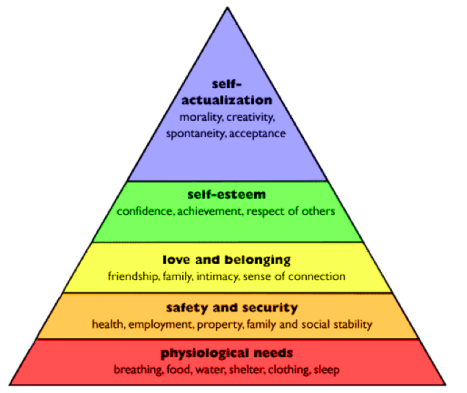
Maslow

Abraham Maslow’s Hierarchy of Human Needs

A summary

The Conservative-led welfare “reforms” had the stated aim of ensuring that benefit claimants – who have been stigmatised and inaccurately redefined as economic free-riders are entitled to a minimum income provided that they uphold responsibilities, which entail being pushed into any available work. Conditionality for social security has been around as long as the welfare state. Eligibility criteria have always been an intrinsic part of the benefits system. For example, to qualify for jobseekers’ allowance, a person has to be out of work, able to work, and seeking employment.

But in recent years welfare conditionality has become conflated with severe financial penalities (sanctions), and has mutated into an ever more stringent, complex, demanding set of often arbitrary requirements, involving frequent and rigid jobcentre appointments, meeting job application targets, providing evidence of job searches and mandatory participation in workfare schemes. The emphasis of welfare provision has shifted from providing support for people seeking employment to increasing conditionality of conduct, enforcing particular patterns of behaviour and monitoring compliance.  In short, welfare has become a hostile environment, designed specifically to deter claims for support.

Sanctions are “penalties that reduce or terminate welfare benefits in cases where claimants are deemed to be out of compliance with  requirements.” They are, in many respects, the neoliberal-paternalist tool of discipline par excellence – the threat that puts a big stick behind coercive welfare programme rules and “incentivises” citizen compliance with a heavily monitoring and supervisory administration. The Conservatives have broadened the scope of behaviours that are subject to sanction, and have widened the application to include previously protected social groups, such as sick and disabled people and lone parents.

There is plenty of evidence that sanctions don’t help people to find work, and that the punitive application of severe financial penalities is having a detrimental and sometimes catastrophic impact on people’s lives. We can see from a growing body of research how sanctions are not working in the way the government claim they intended.

Sanctions, under which people lose benefit payments for between four weeks and three years for “non-compliance”, have come under fire for being unfair, punitive, failing to increase job prospects, and causing hunger, debt and ill-health among jobseekers. And sometimes, causing death.

I’ve always felt that it is self evident – common sense – that if people are already claiming financial assistance which was designed to meet only very basic needs, such as provision for food, fuel and shelter, then imposing further financial penalities would simply reduce those people to a struggle for basic survival, which will inevitably demotivate them and stifle their potential.

However, the current government demand an empirical rigour from those presenting criticism of their policy, yet they curiously fail in meeting the same exacting standards that they demand of others. Often, the claim that “no causal link has been established” is used as a way of ensuring that established correlative relationships, (which often do imply causality,) are not investigated further. Qualitative evidence – case studies, for example – is very often rather undemocratically dismissed as “anecdotal,” which of course stifles further opportunities for research and inquiry.

The Conservative shift in emphasis from structural to psychological explanations of poverty has far-reaching consequences. The partisan reconceptualision of poverty makes it much harder to define and very difficult to measure. Such a conceptual change disconnects poverty from more than a century of detailed empirical and theoretical research, and we are witnessing an increasingly experimental approach to policy-making, aimed at changing the behaviour of individuals, without their consent.

This approach isolates citizens from the broader structural political, economic, sociocultural and reciprocal contexts that invariably influence and shape an individuals’s experiences, meanings, motivations, behaviours and attitudes, causing a problematic duality between context and cognition. It also places unfair and unreasonable responsibility on citizens for circumstances which lie outside of their control, such as the socioeconomic consequences of political decision-making.

I want to discuss two further considerations to add to the growing criticism of the extended use of sanctioning, which are related to why sanctions don’t work. One is that imposing such severe financial penalities on people who need social security support to meet their basic needs cannot possibly bring about positive “behaviour change” or “incentivise” people to find employment, as claimed. This is because of the evidenced and documented broad-ranging negative impacts of financial insecurity and deprivation – particularly food poverty – on human physical health, motivation, behaviour and mental states.

The second related consideration is that “behavioural theories” on which the government rests the case for extending and increasing benefit sanctions are simply inadequate and flawed, having been imported from a limited behavioural economics model (otherwise known as nudge” and libertarian paternalism) which is itself ideologically premised.

I also explored in depth how sanctions and workfare arose from and were justified by nudge theory, which is now institutionalised and deeply embedded in Conservative policy-making. Sanctions entail the manipulation of a specific theoretical cognitive bias called loss aversion.

At best, the new “behavioural theories” are merely theoretical  propositions, at a broadly experimental stage, and therefore profoundly limited in terms of scope and academic rigour, as a mechanism of explanation, and in terms of capacity for generating comprehensive, coherent accounts and understanding about human motivation and behaviour.

I reviewed research and explored existing empirical evidence regarding the negative impacts of food poverty on physical health, motivation and mental health. In particular, I focussed on the Minnesota Semistarvation Experiment and linked the study findings with Abraham Maslow’s central idea about cognitive priority, which is embedded in the iconic hierarchy of needs pyramid. Maslow’s central proposition is verified by empirical evidence from the Minnesota Experiment.

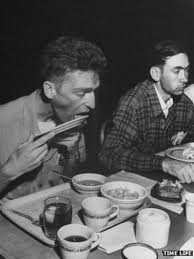
The Minnesota Experiment explored the physical impacts of hunger in depth, but also studied the effects on attitude, cognitive and social functioning and the behaviour patterns of those who have experienced semistarvation. The experiment highlighted a marked loss of ambition, self-discipline, motivation and willpower amongst the subjects once food deprivation commenced. There was a marked flattening of affect, and in the absence of other emotions, Doctor Ancel Keys observed the resignation and submission that hunger manifests.

The understanding that food deprivation dramatically alters emotions, motivation, personality and that nutrition directly and predictably affects the mind as well as the body is one of the legacies of the experiment.

The experiment highlighted very clearly that there’s a striking sense of immediacy and fixation that arises when there are barriers to fulfiling basic physical needs – human motivation is frozen to meet survival needs, which take precedence over all other needs. This is observed and reflected in both the researcher’s and the subject’s accounts throughout the study. If a person is starving, the desire to obtain food will trump all other goals and dominate the person’s thought processes.

In a nutshell, this means that if people can’t meet their basic survival needs, it is extremely unlikely that they will have either the capability or motivation to meet higher level psychosocial needs, including social obligations and responsibilities to seek work. Abraham Maslow’s humanist account of motivation also highlights the same connection between fundamental motives and immediate situational threats.

Ancel Keys published a full report about the experiment in 1950. It was a substantial two-volume work titled The Biology of Human Starvation. To this day, it remains the most comprehensive scientific examination of the physical and psychological effects of hunger.

Keys emphasised the dramatic effect that semistarvation has on motivation, mental attitude and personality, and he concluded that democracy and nation building would not be possible in a population that did not have access to sufficient food.

I also explored the link between deprivation and an increased risk of mental illnesses, including schizophrenia, depression, anxiety and substance addiction. Poverty can act as both a causal factor (e.g. stress resulting from poverty triggering depression) and a consequence of mental illness (e.g. schizophrenic symptoms leading to decreased socioeconomic status and prospects).

Poverty is a significant risk factor in a wide range of psychological illnesses. Researchers recently reviewed evidence for the effects of socioeconomic status on three categories: schizophrenia, mood and anxiety disorders and substance abuse. Whilst not a comprehensive list of conditions associated with poverty, the issues raised in these three areas can be generalised, and have clear relevance for policy-makers.

The researchers concluded: “Fundamentally, poverty is an economic issue, not a psychological one. Understanding the psychological processes associated with poverty can improve the efficacy of economically focused reform, but is not a panacea. The proposals suggested here would supplement a focused economic strategy aimed at reducing poverty.” (Source: A review of psychological research into the causes and consequences of poverty – Ben Fell, Miles Hewstone, 2015.)

There is no evidence that keeping benefits at below subsistence level or imposing punitive sanctions “incentivises” people to work and research indicates it is likely to have the opposite effect. In 2010/2011 there 61,468 people were given 3 days emergency food and support by the Trussell Trust and this rose to 913,138 people in 2013-2014.

Hanna, Gabriel Kreindler, and Benjamin Olken re-analyzed data from seven randomized experiments evaluating cash programs in developing countries and found “no systematic evidence that cash transfer programs discourage work.”

The phrase “welfare dependency” purposefully diverts us from political prejudice, discrimation via policies and disperses public sympathies towards the poorest citizens.

Conservative claims about welfare sanctions are incommensurable with reality, evidence, academic frameworks and commonly accepted wisdom. It’s inconceivable that this government have failed to comprehend that imposing punishment in the form of financial sanctions on people who already have very limited resources for meeting their basic survival needs is not only irrational, it is absurdly and spectacularly cruel.
Minnes

 The Minnesota semistarvation experiment

This is a summary of a much longer, detailed piece of research and review work about welfare sanctions. You can see the original here

Further study of the impact of food deprivation and starvation on psychological and cognitive deterioration: The Psychological Effects of Starvation in the Holocaust

Cognitive function deficits and demotivation associated with food deprivation and hypoglycaemia: Blood glucose influences memory and attention in young adults

Nutritional deficiencies and detrimental consequences for mental health: Nutrition and mental health

A comprehensive study of the detrimental impacts of food insecurity on the development, behaviour, mental health and wellbeing, learning, educational attainment, citizenship and physical health of children in America: Child Food Insecurity: The Economic Impact on our Nation

Comprehensive computerized assessment of cognitive sequelae of a complete 12-16 hour fast

The Minnesota food deprivation experiment also established a link between food insecurity and deprivation and later unhealthful eating practice, eating disorders and obesity: Journal of the American Dietetic Association


UK has shameful but unsurprising levels of inequality


1459720_569627496440116_902730897_n

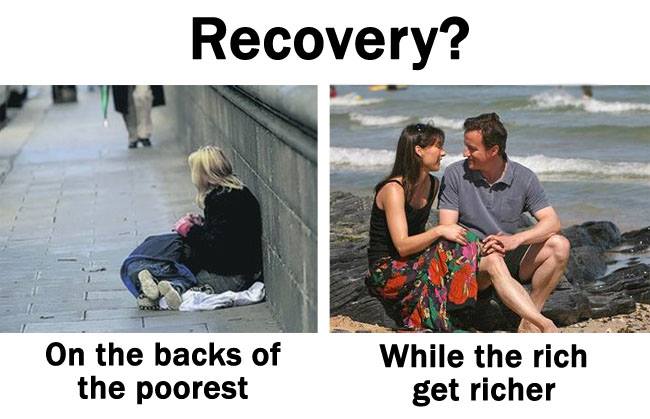
Austerity was never about what works or what is needed. It’s about traditional Tory class-based prejudices. Austerity is simply a front for policies that are entirely founded on Tory ideology, which is  all about handouts to the wealthy that are funded by the poor.

David Cameron has often denied claims that his party has overseen a rapid rise in inequality. In fact last year, Cameron said that inequality is at its lowest level since 1986. I really thought I’d misheard him. 

This wasn’t the first time Cameron has used this lie. We have a government that provides disproportionate and growing returns to the already wealthy, whilst imposing austerity cuts on the very poorest. How can such a government possibly claim that inequality is falling, when inequality is so fundamental to their ideology and when social inequalities are extended and perpetuated by all of their policies? It seems that the standard measure of inequality has been used to mislead us into thinking that the economy is far more “inclusive’ than it is. Yet the UK is one of the wealthiest nations in the world.

Earlier this year a published report by the Dublin-based Foundation for the Improvement of Living and Working Conditions (Eurofound) stated that the UK has become the most unequal country in Europe, on the basis of income distribution and wages.

The report also says that the UK has the highest Gini coefficient of all European Union (EU) member states – and higher than that of the US. The coefficient is a widely used measure of the distribution of income within a nation, and is commonly used to calculate inequality.

A year ago, the Organisation for Economic Cooperation and Development (OECD) published research that confirmed what most of us already knew: that income inequality actually stifles economic growth in some of the world’s wealthiest countries, whilst the redistribution of wealth via taxes and benefits encourages growth. That debunks one of the nastiest Tory myths. Having long been advocates and engineers of social inequality, implying a mythological  “trickle down” as a justification, and hankering after a savage, axe-wielding minarchism, chopping away at our civilising public services and institutions, they are now officially a cult of vicious cranks. The problem is that the general public don’t pay much attention to research like this. They really ought to.

Conservatism is centred around the preservation of traditional social hierarchy and inequality. Tories see this, erroneously, as an essential element for expanding national economic opportunity. But never equal opportunity.

Conservatives think that civilised society requires imposed order, control and clearly defined classes, with each person aware of their rigidly defined “place” in the social order. Conservatism is a gate-keeping exercise geared towards economic discrimination and preventing social mobility for the vast majority. Inequality is so clearly embedded in policies – which are written statements of political intent.

According to the annual Family Spending Review for 2014, published by  the Office for National Statistics (ONS), the richest 1 per cent of the population have as much wealth as the poorest 57 per cent combined.  Wealth inequality has increased since 2012. The richest 10 per cent own half the country’s wealth.

Charities have urged the government to address Britain’s shameful and growing inequality after the figures published this week show that the country’s richest 10 per cent spend as much on alcohol and cigarettes in a week as the poorest spend on gas and electricity. That turns the dominant “feckless” poor narrative in the media on its head. Poverty doesn’t happen because people have poor budgeting skills. Poverty happens because people don’t have enough money to meet their basic needs.

The richest 10 per cent of households spent more per week on furniture – an average of £43.40 – than the poorest spent on food – £30.40.

The average weekly household spend was found to be £531.30, but there was great variation of this amount between the highest and lowest earning 10 per cent – £1,143.40 and £188.50 per week respectively.

By 2011/12, the poorest fifth of households spent 29 per cent of their disposable income on indirect taxes, compared with 14 per cent paid by the richest fifth. All told, the poorest households pay 37 per cent of their gross income in direct and indirect taxes. In other words, the single biggest expenditure for people in poverty is tax. It is, at the very least, morally unjustifiable to be taxing the poor at such a rate. The most important thing the government can do to help the poor is to stop taking their money.

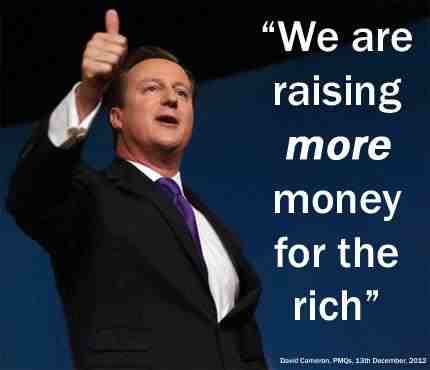
David Cameron did once tell a truth, though it was an inadvertent Freudian-styled slip. He said: We are raising more money for the rich. Yes. From where, I wonder?

Oh yes. The poor.

 382035_141704259313964_676863845_n


 Pictures courtesy of Robert Livingstone


Cuts under Universal Credit are discriminatory and may be illegal

66864_464287263640807_1896397853_n

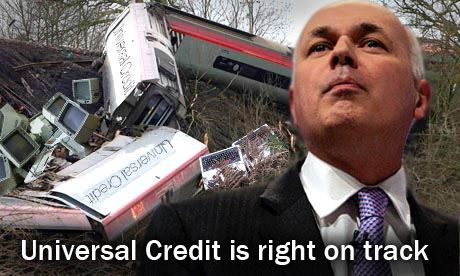
The Labour Party released details of research last month, showing how new claimant families will get lower in-work benefit entitlements when tax credits are replaced by the Universal Credit benefit system.

Owen Smith, the shadow Work and Pensions secretary, said research commissioned from the House of Commons library shows that next year, thousands of working families will be at least £2,500 a year worse off as a result of the government’s cuts to Universal Credit.

Mr Smith MP, responding to Iain Duncan Smith’s recent claim on the Andrew Marr show that “nobody loses a penny” from cuts to Universal Credit, said:

Iain Duncan Smith is completely wrong to say nobody loses a penny from his cuts to in-work support.

 Cutting Universal Credit raises £100m for the government next year and that money has to come from somewhere.

What the Tories aren’t telling us is that the £100m – and a further £9.5 billion over the next five years – comes from the pockets of low- and middle-income families.

That means those currently on Universal Credit face losses of up to £2,400 come April.

Just like tax credit cuts, working families will be worse off next year and just like those cuts, Labour will fight them at every turn.

Earlier this month, analysis from the independent Office for Budget Responsibility, (OBR) suggested the changes to universal credit announced in the July budget would save the Chancellor close to £3bn by 2019-20.

The Labour Party is taking advice from lawyers about the legality of the benefit cuts under universal credit. Owen Smith, the shadow work and pensions secretary, said it is discriminatory that a single mother working full-time on the minimum wage could be almost £3,000 worse off under universal credit than a mother in precisely the same circumstances on tax credits.

The challenge raises the possibility that the new welfare system could be challenged in court.

Although the Chancellor abandoned plans to cut tax credits affecting millions of working families, in his Autumn Statement, it was due to  pressure from the opposition, because the cuts were rejected by the House of Lords and a number of uneasy Tory backbenchers also raised concerns about the negative impact the cuts would have on working families.

Labour MPs have highlighted that claimants will be substantially worse of claiming Universal Credit, the  in-work benefit payments are much lower.

In his autumn statement speech, the Chancellor said: “The simplest thing to do is not to phase these changes in but to avoid them altogether.” But he added: “Tax credits are being phased out anyway as we introduce universal credit.”

The OBR’s analysis show that by 2021 the changes to Universal Credit will save the Treasury almost as much each year as the controversial tax credits policy would have done.

Mr Smith said:

Those lucky enough to stay on tax credits will be massively better off than those on universal credit … That disparity cannot be fair, it cannot be right and it may not even be legal, and we are seeking advice as to the legality of that move.

Mr Smith also confirmed that a Labour government would reverse cuts to benefits happening under Universal Credit. He said:

We will press for the same reversal for the victims of the universal credit heist that will hit precisely the same Tory and Labour constituents just before the next election.

He made the comments in a debate about the welfare cap, after the government sought approval for a motion that said the breach of Osborne’s own fiscal rules were justified because of the reversal of tax credit cuts.

Junior Work and Pensions minister, Shailesh Vara, has confirmed that on current forecasts the cap will not be met for three years.

Universal Credit is to be rolled out gradually, with about 500,000 people on the new benefit by next April. The government has insisted they will be compensated for lower payments through a special scheme called the flexible support fund.

However, Owen Smith said the only money on offer was a £69m grant for job centre managers to help people who are close to getting into work with costs such as bus fares and new clothing.

He said:

Even if it were permissible to use that money, it is in no way going to make up for the £100m shortfall next year, the £1.2bn shortfall the year after, and certainly not the £3bn shortfall in 2020. It is completely impossible and I fear it is also misleading to the public.

Mr Smith also queried the Chancellor’s absence from the House of Commons during the debate, saying he had “carelessly, ignominiously fallen into his own welfare trap” and “slipped on his own smirk”.

He said:

But inexplicably, he’s not here to account for it. Last spring he was quite definite that he should be. He said: ‘The charter makes clear what will happen if the welfare cap is breached. The chancellor must come to parliament, account for the failure of public expenditure control’”.

430835_148211001996623_1337599952_n (1)

Corporate nudging and the graveyard shift: would a stint in a coffin inspire you to work harder?

The emergence of Nudge theory in the 2000s – generally described as a system for change/societal-management, has increasingly been used by governments to understand and alter group behaviour – reinforces the principle that governance must be driven by needs of the people being governed, not by the governing authority.

Nudge theory has found its way into the business management and corporate culture. Although Nudge was initially developed as a concept by behavioural economists, its stated aim was the improvement of society, theorists claimed it was not designed as a mechanism for commercial exploitation, or government manipulation. However, there are no safeguards in place to prevent such exploitation and manipulation in the application of Nudge theories.  

Imagine the scene. You knew office morale had been low for a while, but you never thought senior management would go to quite such lengths to try and get everyone enthusiastic about their jobs again.

You and your co-workers file slowly into the meeting room and an array of perfectly aligned coffins comes into view. As your team development manager smiles and asks you to climb into a coffin – after all, it has your name on it – you are met by a photograph of yourself taken years ago when you still were optimistic about the future: “Now hug the image of yourself” is the final instruction before the coffin’s lid is closed.

No, this is not some bizarre scene from a Philip K Dick novel but an actual motivation exercise reported to have occurred in South Korea.

Faced with high stress levels and low productivity in corporate Korea, some employers have upped the ante, trying to get employees to embrace life at work rather than seek ever more desperate forms of escape. Firms send staff to the Hyowon Healing Centre, where its president explains the rationale behind the coffin ritual: “Our company has always encouraged employees to change their old ways of thinking, but it was hard to bring about any real difference … I thought going inside a coffin would be such a shocking experience it would completely reset their minds for a completely fresh start in their attitudes.”

To get employees in the mood they are shown videos of people overcoming debilitating conditions including cancer. As one employee robotically says as he emerges from a coffin: “I’ve realised I’ve made lots of mistakes. I hope to be more passionate in all the work I do, and spend more time with my family.”

What on earth is going on here? Actually, this extreme motivational technique is symptomatic of how work has changed over the last 20 years. What some call 24/7 capitalism has seen work overtake all other social activities to become the centre of society.

This is not only down to mobile technology, as some have argued, since there is nothing inherent in a smartphone that makes us work 24/7. No, the compulsion to check email and always be “poised to work” stems from the expectation that if you are not ready for that call from the boss then you are somehow deficient, disposable and lacking important qualities. No wonder a survey found 80% of employers find it perfectly appropriate to contact workers outside of business hours.

This weird “24/7 perpetual worker” was always the ideal goal of neoliberal economists such as Friedrich Hayek and Gary Becker. Because homo economicus is considered a superior being, we are constantly encouraged to transform ourselves into tradeable “human capital” and “permanent enterprises” that never switch off in case we miss that crucial deal.

We would expect unions and anti-work lobbyist to be at the forefront of resisting this trend. And they are. But large corporations are also trying to deal with the fallout, recognising the all-too human limits of this extreme ethos. Having unleashed 24/7 capitalism – and the ideal-worker to go with it – some businesses are frantically trying to put the genie back in the bottle.

Some firms in Europe and the US, for example, now deactivate their employees’ email after business hours because they realise that the obsessive-compulsive behaviour it inspires is bad for the worker and bad for business.

A Barclays’ banker was fired after it was leaked he declared to summer interns: “I recommend bringing a pillow to the office (yoga mat works as well). It makes sleeping under your desk a lot more comfortable, in the very likely scenario that you have to do that.” In light of the tragic case of Moritz Erhardt, the intern who died of an epileptic seizure after working nonstop for 72 hours, the comment was deemed very bad taste.

No wonder South Korean employers are taking extreme measures to put work back into perspective: actually ordering workers into a coffin and reminding them that life isn’t all that bad … death is worse.

The intertwined relationship between work and dying is the dark-side of the neoliberal fantasy and ‘ideal’ worker, which probably can’t be reversed so easily. When our society is reconfigured singly around our job or search for one, then work becomes more than something we do among other things: it becomes who we are. Thus escaping our job when things go wrong becomes exceedingly difficult. For how do you escape yourself?

It seems that neoliberal capitalism wants its cake, and to eat it too: a life of nonstop work and normal, balanced individuals. But something has to give.

Indeed, we can imagine the “coffin exercise” backfiring, an employee refusing to ever return to the pettiness of office life after realising that her existence must add up to more than merely sending emails all day. Inspired by neoliberal capitalism’s own contradictions, perhaps we are on the cusp of a new workers’ movement and the coffin exercise is not so morbidly wacky after all.

4928

You can read the original article here.

WHY IS THE DWP FAILING TO PROVIDE PROPER EXPLANATIONS ALONGSIDE ITS LEGISLATION? LORDS TO ASK MINISTER

The lack of Government transparency and accountability is something that has concerned me since 2012. As someone who has used the Freedom of Information Act frequently to try and push for greater transparency and democratic accountability, I can say that there is a deeply concerning gap between the justification narratives being presented by the government for their policies, rational and coherent explanations and the reality of the impact of those policies. My requests to the Department for Work and Pensions (DWP) have not once been met with a coherent, rational response, and the DWP have also regularly refused to meet my requests for information.

Most recently I requested information about the DWP’s ethical guidelines, and was refused on the grounds that meeting the request would cost more than the £600 limit. Yet it’s reasonable to expect that ethical guidelines for any government department are placed in the public domain, and are accessible by service users.

samedifference1's avatarSame Difference

A press release:

The House of Lords Secondary Legislation Scrutiny Committee will next week take oral evidence from the Lord Freud, Minister of State for Welfare Reform on the quality of information that the Department for Work and Pensions has provided in support of statutory instruments.

Since the general election the Committee has published three reports criticising DWP for failing to provide sufficient explanation alongside its Statutory Instruments to enable it to gain a clear understanding of the effect of the instrument under consideration. The Committee has therefore invited the Minister to attend and discuss how his department can do a better job in meeting the Committee’s information requirements.

The Evidence session will start at 12:00 on Tuesday 22 December in Committee Room 3A of the House of Lords

Lord Freud is the Minister for Welfare Reform at the Department for Work and Pensions (DWP) and as such may make…

View original post 74 more words