Author: Kitty S Jones

I’m a political activist with a strong interest in human rights. I’m also a strongly principled socialist. Much of my campaign work is in support of people with disability. I am also disabled: I have an autoimmune illness called lupus, with a sometimes life-threatening complication – a bleeding disorder called thrombocytopenia. Sometimes I long to go back to being the person I was before 2010. The Coalition claimed that the last government left a “mess”, but I remember being very well-sheltered from the consequences of the global banking crisis by the last government – enough to flourish and be myself. Now many of us are finding that our potential as human beings is being damaged and stifled because we are essentially focused on a struggle to survive, at a time of austerity cuts and welfare “reforms”. Maslow was right about basic needs and motivation: it’s impossible to achieve and fulfil our potential if we cannot meet our most fundamental survival needs adequately. What kind of government inflicts a framework of punishment via its policies on disadvantaged citizens? This is a government that tells us with a straight face that taking income from poor people will "incentivise" and "help" them into work. I have yet to hear of a case when a poor person was relieved of their poverty by being made even more poor. The Tories like hierarchical ranking in terms status and human worth. They like to decide who is “deserving” and “undeserving” of political consideration and inclusion. They like to impose an artificial framework of previously debunked Social Darwinism: a Tory rhetoric of division, where some people matter more than others. How do we, as conscientious campaigners, help the wider public see that there are no divisions based on some moral measurement, or character-type: there are simply people struggling and suffering in poverty, who are being dehumanised by a callous, vindictive Tory government that believes, and always has, that the only token of our human worth is wealth? Governments and all parties on the right have a terrible tradition of scapegoating those least able to fight back, blaming the powerless for all of the shortcomings of right-wing policies. The media have been complicit in this process, making “others” responsible for the consequences of Tory-led policies, yet these cruelly dehumanised social groups are the targeted casualties of those policies. I set up, and administrate support groups for ill and disabled people, those going through the disability benefits process, and provide support for many people being adversely affected by the terrible, cruel and distressing consequences of the Governments’ draconian “reforms”. In such bleak times, we tend to find that the only thing we really have of value is each other. It’s always worth remembering that none of us are alone. I don’t write because I enjoy it: most of the topics I post are depressing to research, and there’s an element of constantly having to face and reflect the relentless worst of current socio-political events. Nor do I get paid for articles and I’m not remotely famous. I’m an ordinary, struggling disabled person. But I am accurate, insightful and reflective, I can research and I can analyse. I write because I feel I must. To reflect what is happening, and to try and raise public awareness of the impact of Tory policies, especially on the most vulnerable and poorest citizens. Because we need this to change. All of us, regardless of whether or not you are currently affected by cuts, because the persecution and harm currently being inflicted on others taints us all as a society. I feel that the mainstream media has become increasingly unreliable over the past five years, reflecting a triumph for the dominant narrative of ultra social conservatism and neoliberalism. We certainly need to challenge this and re-frame the presented debates, too. The media tend to set the agenda and establish priorities, which often divert us from much more pressing social issues. Independent bloggers have a role as witnesses; recording events and experiences, gathering evidence, insights and truths that are accessible to as many people and organisations as possible. We have an undemocratic media and a government that reflect the interests of a minority – the wealthy and powerful 1%. We must constantly challenge that. Authoritarian Governments arise and flourish when a population disengages from political processes, and becomes passive, conformist and alienated from fundamental decision-making. I’m not a writer that aims for being popular or one that seeks agreement from an audience. But I do hope that my work finds resonance with people reading it. I’ve been labelled “controversial” on more than one occasion, and a “scaremonger.” But regardless of agreement, if any of my work inspires critical thinking, and invites reasoned debate, well, that’s good enough for me. “To remain silent and indifferent is the greatest sin of all” – Elie Wiesel I write to raise awareness, share information and to inspire and promote positive change where I can. I’ve never been able to be indifferent. We need to unite in the face of a government that is purposefully sowing seeds of division. Every human life has equal worth. We all deserve dignity and democratic inclusion. If we want to see positive social change, we also have to be the change we want to see. That means treating each other with equal respect and moving out of the Tory framework of ranks, counts and social taxonomy. We have to rebuild solidarity in the face of deliberate political attempts to undermine it. Divide and rule was always a Tory strategy. We need to fight back. This is an authoritarian government that is hell-bent on destroying all of the gains of our post-war settlement: dismantling the institutions, public services, civil rights and eroding the democratic norms that made the UK a developed, civilised and civilising country. Like many others, I do what I can, when I can, and in my own way. This blog is one way of reaching people. Please help me to reach more by sharing posts. Thanks. Kitty, 2012

£31 BILLION lost by Whitehall waste

According to the Times, the calculated waste by Whitehall is more than double the £15 billion cuts planned for 2015 onwards, as recently announced by George Osborne.

Details originally posted here: £31 BILLION lost by Whitehall waste.

555114_453356604733873_1986499794_n

Throwing money away through intentional “incompetence”. And it’s our money!

Government departments have wasted over £31 billion in the past two years according to an investigation by the Times.

Analysis of over 70 reports from the National Audit Office and parliamentary select committees shows wasteful overspending in areas such as welfare and capital projects and farm payments.

According to the Times the calculated waste is more than double the £15 billion cuts planned for 2015 onwards, recently announced by George Osborne.

Where the money went to:

Image

Analysis of over 70 reports from the National Audit Office and parliamentary select committees shows wasteful overspending in areas such as welfare, capital projects and farm payments.

Chairman of the Public Accounts Committee, Margaret Hodge, suggested that weaknesses in management, planning and IT skills meant government departments were unable to negotiate cost-effective contracts. Hodge went on to say that better use of government resources and clearer planning could have avoided this year’s cuts to hospitals, the Armed Forces and the civil service.

The investigation found that £10 billion was lost through uncollected income tax, while £6 billion was wasted on delayed or defective defence projects. IT systems, transport schemes and capital projects are also named as sources of overspending and waste.

The Ministry of Defence was cited as the biggest money waster. Several of its most wasteful projects were scrapped in the 2010 Strategic Defence and Security Review. However 15 of the largest spending projects are still under way, one of which involves building an airport carrier which Britain cannot afford to run and which will not be equipped with aircrafts until at least 2020.

The Private Finance Initiative, introduced by John Major, which bridges public-private partnerships, was also criticised for its escalating costs and badly negotiated contracts. The coalition government has used the initiative to launch 60 projects, with a calculated spend of £7 billion.

Francis Maude is quoted as saying, ‘We pledge to be ruthless about hunting down waste and in the first year this Government achieved savings of £3.75 billion through smarter more efficient ways of working.’

Looks like that one will be removed from the internet in due course, then.

Read The Times full investigation here


Multiple Cuts for the Poorest Families and Conservative catechisms

1957929_293215800829475_303676825_o
Policy documents are often a useful source for understanding how language and imagery contribute to the construction of society’s assumptions, values and beliefs. They also demonstrate the privileging and “packaging” of a particular ideology. The government’s 2010 Green paper, 21st Century Welfare, and the White Paper, Universal Credit: Welfare that Works, are both good examples of how such documents are instrumental in constructing a discourse about social security that attempts to justify a deepening of Thatcher’s brand of neoliberalisation.

The documents marginalise the structural causes of persistent and inevitable unemployment and of poverty due to government policy by attempting to linguistically transform these causes into individual pathologies of benefit “dependency” and “worklessness.”  The conservative response to conservative creations and definitions is a raft of policy measures that are about punitive conditionality and removal of lifeline benefits.

The documents indicate a clear conflation of ideas about (a) simplification of the benefits system, (b) work “incentives” and (c) conditionality and sanctions, that has led many to conclude that the welfare “reforms” amount to an attack on the unemployed, sick and disabled at a time when they are least able to do anything about it. Conservative ideology has been disgracefully portrayed as offering new and innovative “solutions” to address Britain’s supposedly broken society, and as a means of offering restoration of “traditional values” and economic competitiveness. These are, of course, Tory catechisms.

Such Conservative ideological codifications have been translated as high unemployment, an increasingly higher cost of living, increasing and deepening poverty, growing social inequalities and punitive “welfare” cuts. These social events are not a consequence of Tory economic strategy: they ARE the Conservative economic strategy. Tories always create recession – Thatcher did, Major did in the early 90s, (see also Black Wednesday), and Cameron has managed a triple-dip recession. Their economic policies don’t ameliorate the consequences of their economic policies.

It’s a curiosity. Conservatives don’t seem to realise we re-translated their catechisms a long time ago. We know this is a socio-economic and cultural war being waged on the majority of citizens. Tory ideology – it’s a doctrinal manual giving basic instruction, usually by rote or repetition. We spotted a couple of centuries back that Conservatives don’t govern and serve: they rule. They are simply aristocratic remnants of the feudal era. As Andrew Dickie said:

These new “garagiste/card-sharping/rent-seeking” baronage know the price of everything and the value of nothing, and their only skills are those of rip-off and plunder, and are a universe away from the real economy and real wealth creation, which will be the task of the serfs – as it always was.” 

But they’ve been losing this war for a couple of hundred years. More than any other group of people, Conservatives are apparently oblivious to their own ideological history, and those who don’t know their history are doomed to… inflict it. (See That Tory revolution and the rise of neofeudalism.)

Recessions are terrible for ordinary people. They create enormous misery by throwing people out of work and out of their homes. How can a political ideology remain so silent about how to address human needs and alleviate suffering? Even worse, how can a political ideology result in recession and human suffering? And then deepen it? The answer is it enormously benefits a handful of conservative wealthy people.

Recession creates an “incentive” for private companies to exploit a desperate, oppressed and (deliberately) impoverished reserve army of labour. It also “justifies” the Tory ideological drive to dismantle the socialist state provisions and services established in the 1940s. The welfare post-war settlement comprised of essential safeguards to protect the vulnerable from the worst ravages of capitalism, along with a cross-party consensus on Keynesian economics. Those safeguards were fought for – we owe SO very much –  our current freedoms – to Chartism, Trade Union pressure, and the sacrifice of thousands of ordinary people in two World Wars – without those, the old feudal set-up would never have changed. But the current conservative-led government has destroyed so much of the foundations of that freedom.

The Tories “care” for the well-being of the general public in the same way that McDonalds care for cattle. 

1.75 million households in Great Britain have seen their incomes cut in the last three years as a result of benefit reforms, according to a new report by Oxfam and the New Policy Institute. We have witnessed the return of absolute poverty this past four years – the welfare state had seen an end to such severe deprivation. Until now.

The report – Multiple Cuts for the Poorest Families – delivers a warning that wide-ranging cuts are changing the shape of welfare support at a time when the rising cost of living is making it extremely difficult for families to meet their basic needs. As a result, disabled people, carers, job seekers and single parents are being pushed ever deeper into poverty.

Since last April, 400,000 households have been pushed further into poverty by cuts to housing benefit and/or council tax support – households affected by both of these cuts typically lose around £18 per week. These are costs they were previously deemed too poor to pay. Benefits were calculated originally to ensure people could meet basic living needs – food and fuel costs. This was amount was calculated on the assumption that full housing costs were also covered by benefit, and that people claiming benefit were exempt from rates/council tax. Of these affected families, 480,000 are seeing their benefits being cut twice as they are affected by more than one of the changes.

Whether a family is affected and by how much varies, based on a range
of factors which are largely out of the control of the individual. They
depend on council tax band, the cost of local housing, family size,
property size and of course, “appropriate” housing availability. But the changes apply irrespective of income.

Mark Goldring, Oxfam Chief Executive, said:

This is the latest evidence of a perfect storm blowing massive holes in the safety net which is supposed to stop people falling further into poverty. We are already seeing people turning to food banks and struggling with rent, council tax, childcare and travel costs to job centres.  At a time when the five richest families in the UK have the same wealth as the bottom 20 percent of the population it is unacceptable that the poorest are paying such a heavy price.”

Oxfam is calling on the Government to determine what the absolute minimum level of support should be for households in different circumstances. It must be high enough to mean that those reliant upon it are not forced to go without. People must be able to meet their survival needs. This is supposed to be a “civilised” first world liberal democracy, isn’t it?

When someone is struggling to meet their basic needs, it’s almost impossible to be motivated to do anything else, even if it’s the solution to their problem. And no amount of deplorable cruelty, such as the Tory “new conditionality” and “incentives” – the terrible and target-driven benefit sanction regime, which entails the withholding of lifeline benefits of the very poorest for up to three years, for example – will change that.

Maslow’s hierarchy of needs is a good reference point for discussion about the obstacles many people in poverty face when trying to provide for their families, in addition to themselves. But whether you recognise Maslow’s framework or not, individuals and families on low-income need to be safe, secure in a home or adequate shelter, financially stable, and possess basic emotional and physical health.

Classic

The lower the needs in the hierarchy, the more fundamental they are to survival and the more a person will tend to abandon the higher needs in order to pay attention to sufficiently meeting the lower needs.

Conservative policies seem to be designed to distract people from their “higher” needs and potential by threatening their lower, basic survival needs. This restricts growth and development in human beings, destroys human potential and so stifles social evolution. And no amount of dishonest rhetoric will ever justify this intentionally inflicted suffering on a population from a government. 

537138_298121333590735_348384495_n (1)
Many thanks to Robert Livingstone for his brilliant pictures

See also:

 Welfare cuts make people feel ‘more secure’.

Techniques of neutralisation

The new new poor law

Freedom of Information tribunal on benefit deaths – April 23

tory cuts
That we live in times when a government can withhold information about the impact of its policies on sick and disabled people, the poorest and the vulnerable is extraordinary, and certainly reflects the fact that we are no longer a democracy.

We knew in 2012 that an average of 73 sick and disabled people were dying after they had their lifeline benefits withdrawn. But now the government refuses to provide us with information about deaths since then. It’s my own belief that this refusal is because the truth will be horrifying and that even those that supported benefit cuts originally will raise their objections when they learn the truth. We cannot claim to be a civilised society when our government policy is killing some of our most vulnerable citizens.

Well done Mike Sivier, for standing up against an increasingly authoritarian government, and good luck from your fellow campaigners.

From Vox Political: Freedom of Information tribunal on benefit deaths – April 23.

“The only way the public can judge whether this has worked, or whether more must be done to prevent unnecessary deaths, is by examining the mortality statistics, but these have been withheld”. 

Yes, just like the toxic clause 99 – mandatory review – silences those wishing to appeal, also hiding evidence from the public eye. The Tories are showing form here.

 In a so-called democracy, ALL campaigning is both essential and part of an inbuilt safeguard against authoritarianism.

Vox Political: Case proven? Government stays away from benefit deaths tribunal

Related:

The ESA ‘Revolving Door’ Process, and its Correlation with a Significant Increase in Deaths amongst the Disabled.
Briefing on How Cuts Are Targeted – Dr Simon Duffy

Austerity, socio-economic entropy and being conservative with the truth

734072_148205235330533_659227219_n

The Coalition have a track record of lying and trying to mislead the public. David Cameron has now been rebuked several times for making false claims: on NHS spending, the rising national debt and the impact of his tax rises and deep spending cuts on economic growth. The Tories invented figures to claim people are now “better off”, but which totally ignored and excluded an account of the impact of significant factors like the rise in VAT, the cost of living, cuts to tax credits and other benefits.

The government is committing fraud on a grand scale. The reason for such deceit has nothing to do with public finances or the state of the economy, and everything to do with shrinking the public realm. There is an irreducibly ideological dimension to Tory economics, and by making it sound “scientific” when really, it’s more akin to philosophy or Tory buck passing, they attempt to lend it an air of authority and legitimacy it does not deserve. 

The only thing that unites Tories is wealth, they mostly thrive on creating social divisions. The Tories have used a justification narrative based on a moral entrepreneur approach to scapegoat and vilify vulnerable social groups in order to justify transferring our public wealth to private bank accounts, behind the façade of austerity. What we are witnessing is a governments’ nonchalant adherence to Tory ideology which scripts policies that generate and perpetuate inequality, no matter what the consequences for the most vulnerable. Or the economy.

The Tories peddled the lie that due to Labour’s management of the economy, the UK was “on the brink bankruptcy” and claim the solution to is to cut government spending with a painful programme of austerity cuts. Of course the UK economy was growing in 2010 when the Tories took over and was subsequently plunged back into recession by Osborne’s austerity policies which have meant that the economy has not grown at all under the coalition; and for much of their tenure has been contracting.

Many economists have said consistently that this is the wrong approach. The best solution is to borrow or, better, create money to invest in infrastructure. But what we have instead is Osbornes’ closed economy, with a colossal redistribution of public funds to few private businesses and millionaires, who are sat on our money, whilst the government is steadily removing even more of our public capital through deep cuts. There is no investment in the infrastructure, public services – it’s a framework of increasing and devastating socio-economic entropy.

The Tories seem to think we have forgotten that it was they that lost the Moody’s Investors Service triple A grade, despite pledges to keep it secure. Moody’s credit ratings represent a rank-ordering of creditworthiness, or expected loss.

The Fitch credit rating was also downgraded due to increased borrowing by the Tories, who have borrowed more in 4 years than Labour did in 13. In fact this Tory administration have borrowed more than every single Labour government ever, combined.

The Tories have seized an opportunity to dismantle the institutions they have always hated since the post-war social democratic settlement – institutions of health, welfare, education, culture and human rights which should be provided for all citizens. The Tories attempt to destroy fundamental public support for the health, education and welfare of its people. Offering and inflicting only regressive, punitive policies and devastating cuts, the Tories lie to drag the compliant, conforming and increasingly shell-shocked electorate along as they dismantle our social democracy, our public services, fundamental rights and the very basis of our civilisation.

Whenever this authoritarian government have been challenged and opposed effectively, they simply ignore or edit the law, veto tribunal rulings or invoke archaic government privilege to bypass opposition and to get their own way with unpopular policies, such as The Health and Social Care Bill and the Welfare “Reforms”.

That a government needs to employ such underhanded methods to pass their policy through the legislative process, and justify such policies by lying, and by the malevolent scapegoating of vulnerable sections of society via the media, informs us that those policies are not addressing public needs, and wishes; that they are not democratically motivated or processed and that they reflect a political ideology which does not accommodate social and economic realities, nor is it fitting for a so-called first world liberal democracy that is a signatory to several international human rights charters to witness a government so deceptive and arbitrary in its approach to legitimacy.

Here is catalogue of officially recognised Tory lies used to justify their unjustifiable policies, which have have resulted in official reprimands:

David Cameron rebuked by statistics watchdog over national debt claims -The PM said the government was ‘paying down Britain’s debts’ in a political broadcast, even though the debt is actually rising.

“Now that his false claims have been exposed, it’s time the prime minister stopped deliberately misleading people about his economic record” – Rachel Reeves.

Finally Exposed! The Deficit Myth! So, David Cameron When Are You Going to Apologise? David Cameron rebuked over austerity claims – David Cameron has been corrected by the Treasury’s own forecaster over claims that cuts in public spending are not reducing economic growth. The Office for Budget Responsibility told the Prime Minister that it does believe that cutting public spending will reduce economic growth in the short term.

Robert Chote, the head of the OBR, contradicted a claim Mr Cameron made this week in a speech about the economy, in which the Prime Minister said the forecaster does not believe cuts are reducing growth.

In fact, as Mr Chote wrote, the OBR believes that cuts in spending and increases in tax will depress economic activity, meaning lower growth.

OBR head rebukes Osborne: the UK was never at risk of bankruptcy. Office for Budget Responsibility chief Robert Chote dismisses the “danger of insolvency”.

In the weeks after he took office, George Osborne justified his austerity programme by claiming that Britain was on “the brink of bankruptcy”. He told the Conservative conference in October 2010: “The good news is that we are in government after 13 years of a disastrous Labour administration that brought our country to the brink of bankruptcy.”

It was, of course, nonsense.

*Please note the original link to the New Statesman article seems to have curiously vanished. So here is a cached link to the same article: OBR head rebukes Osborne: the UK was never at risk of bankruptcy.

David Cameron rebuked over jobs claim Sir Andrew Dilnot, head of the UK Statistics Authority, the independent statistics regulator, said the prime minister was wrong to say figures showed that more than three-quarters of all new jobs went to British citizens when “official statistics do not show the number of new jobs.”

Cameron was attempting to show in an interview for the Daily Telegraph that the government had reversed a situation in its first few years of office when he claimed most new jobs were taken by migrant workers. The interview was widely interpreted as an attempt to win over Ukip voters who believe most jobs created as Britain’s economy recovers are being snapped up by foreigners.

Following a complaint by Jonathan Portes, head of the National Institute for Economic & Social Research, Dilnot confirmed that neither the original fear that migrants were taking British jobs nor the reversal of this trend were supported by official data.

Employment data collected by the Office for National Statistics relates to jobs in the economy whether or not they are newly created by employers. Dilnot said the relevant figures from the ONS showed the number of migrants in the labour force increased by 400,000 over the last five years, an 18% rise, while the number of UK nationals increased by 3%, or 900,000.

Sir Andrew Dilnot, head of the UK Statistics Authority, the independent statistics regulator, said the prime minister was wrong to say figures showed that more than three-quarters of all new jobs went to British citizens when “official statistics do not show the number of new jobs.”

Information Commissioner Christopher Graham launched a scathing rebuke of the decision to exercise the Government’s veto in a report on the case to Parliament. Blocking the publication of a report into the risks of NHS reforms is a sign that ministers want to downgrade freedom of information laws, a watchdog has warned. Health Secretary Andrew Lansley deployed it to block an Information Tribunal ruling that he should meet Labour demands to disclose the document.

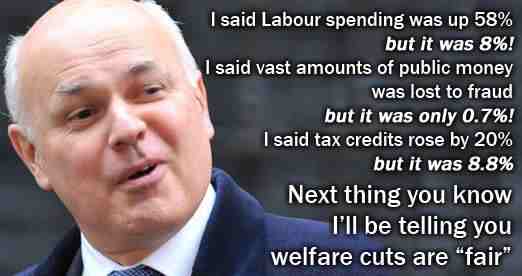
Duncan Smith rebuked by ONS for misuse of benefit statistics – The claim that 8,000 people moved into work as a result of the benefit cap is “unsupported by the official statistics”, says the UK Statistics Authority. In letter to Duncan Smith, Andrew Dilnot writes: “In the manner and form published, the statistics do not comply fully with the principles of the Code of Practice, particularly in respect of accessibility to the sources of data, information about the methodology and quality of the statistics, and the suggestion that the statistics were shared with the media in advance of their publication.”

Another statement by Duncan Smith later in the month also drew criticism and a reprimand. The minister said around 1 million people have been stuck on benefits for at least three of the last four years “despite being judged capable of preparing or looking for work”.

However, the figures cited also included single mothers, people who were seriously ill, and people awaiting testing.

Iain Duncan Smith Rebuked Over Immigration Statistics – Iain Duncan Smith and the Department of Work and Pensions have been accused of publishing misleading immigration figures that were “highly vulnerable to misinterpretation”.Figures showing 371,000 immigrants were on benefits were rushed out by ministers with insufficient regard for “weaknesses” in the data, according to the UK Statistics Authority.

In a strongly-worded rebuke to Work and Pensions Secretary Iain Duncan Smith, the head of the UKSA, sir Michael Scholar, condemned the handling of the research, the Press Association reported.

Sir Michael said that despite being “highly vulnerable to misinterpretation”, the claims were given to the media without the safeguards demanded for official statistics and by issuing the figures as a “research paper”, the DWP had bypassed the need to meet the usual code of conduct, he noted.

Grant Shapps rebuked by UK Statistics Authority for misrepresenting benefit figures – Yet another Conservative politician is caught making it up. Grant Shapps has joined his fellow Conservatives in the data hall of shame. In March, the Tory chairman claimed that “nearly a million people” (878,300) on incapacity benefit had dropped their claims, rather than face a new medical assessment for its successor, the employment and support allowance.

The figures, he said, “demonstrate how the welfare system was broken under Labour and why our reforms are so important”. The claim was faithfully reported by the Sunday Telegraph  but as the UK Statistics Authority has now confirmed in its response to Labour MP Sheila Gilmore (see below), it was entirely fabricated.

In his letter to Shapps and Iain Duncan Smith, UKSA chair Andrew Dilnot writes that the figure conflated “official statistics relating to new claimants of the ESA with official statistics on recipients of the incapacity benefit (IB) who are being migrated across to the ESA”. Of the 603,600 incapacity benefit claimants referred for reassessment as part of the introduction of the ESA between March 2011 and May 2012, just 19,700 (somewhat short of Shapps’s “nearly a million) abandoned their claims prior to a work capability assessment in the period to May 2012.

The figure of 878,300 refers to the total of new claims for the ESA closed before medical assessment from October 2008 to May 2012. Thus, Shapps’s suggestion that the 878,300 were pre-existing claimants, who would rather lose their benefits than be exposed as “scroungers”, was entirely wrong.

As significantly, there is no evidence that those who abandoned their claims did so for the reasons ascribed by Shapps.

The chair of the UK Statistics Authority has rebuked shadow home secretary Chris Grayling – the authority have said  he “must take issue” with claims made by the conservatives and  warned the way they use violent crime statistics is “likely to mislead the public” and damage public trust. Mr Grayling has used a comparison between  figures to suggest that the Labour government has presided over a runaway rise in violent crime.

Even colleague Iain Duncan Smith said that such comparisons were “profoundly misleading and London’s Conservative Mayor, Boris Johnson, described Grayings’ claim as “absolute nonsense”. Chris Grayling made a headline-grabbing speech in which he likened life in Britain’s inner cities to that in Baltimore, Maryland, as portrayed in the acclaimed television series The Wire. Alan Johnson, the Home Secretary, remarked: “The connection between The Wire and Chris Grayling’s grasp on the problems of modern Britain is that they are both fictional.”

Treasury rebuked by UK Statistics Authority for inflation leaks – Britain’s statistics watchdog, ordered the Treasury to review its processes after sensitive inflation data this month was sent to 400 unauthorised people 17 hours before its release. Sir Michael warned: “There is a risk of market manipulation if key economic data fall in to the wrong hands before publication.”

Speculation data was leaking into the market ahead of the Office for National Statistics (ONS) announcement has been rife. Market rumours correctly predicted the last two Consumer Price Index inflation releases just before publication – in April and May.

UK Statistics rebukes Government over NHS spending claims – David Cameron famously promised he would cut the deficit, not the NHS. We now have it in black and white: he is cutting the NHS, not the deficit. There could be no clearer evidence of the failure of this Prime Minister and his Government.

“For months, David Cameron’s Government have made misleading boasts about NHS spending, misrepresenting the true financial difficulties he has brought upon the NHS. At the same time they have recently begun to try to distance themselves from these problems which David Cameron has created, trying to shift the blame to the NHS and its staff”Andy Burnham.

The watchdog has called on ministers to correct claims the coalition has made that they increased NHS spending in England. The UK Statistics Authority upheld a complaint by Labour about government claims the NHS budget had increased in real-terms in the past two years.

The watchdog found the best-available Treasury data suggested real-terms health spending was lower in 2011-12 than in 2009-10. The coalition said during its spending review the NHS budget had gone up.

Coalition rebuked again by UK Statistics Authority  – this time on flood defence spending. Andrew Dilnot says a Treasury graph on infrastructure left readers with “a false impression of the relative size of investment between sectors”. George Osborne and the Treasury have been reprimanded for misleading people about the government’s investment in infrastructure. For example, their chart made it look like investment in flood defences was roughly the same as in other areas, when in fact it was a tiny fraction.

Andrew Dilnot rebukes Treasury again over the false presentation of statistics in the National Infrastructure Plan.

The UK Statistics Authority has censured the Department for Education – Sir Michael Wilshaw – appointed by Mr Gove as Ofsted chief inspector – for using uncertain, weak and “problematic” statistics to claim that England’s schools have tumbled down the global rankings – the central justification for Goves’ sweeping school reforms. But now the government’s own statistics watchdog has called into question the figures at the heart of the education secretary’s argument. His verdict will be seen by critics as a blow to Mr Gove’s claim that England has “plummeted in the world rankings” given that the education secretary has been so unequivocal about the figures, arguing that “these are facts from which we cannot hide”.

Senior Conservative ministers have been rebuked for attempting to cover up Government statistics – showing one of their key housing policies is not working. In his ruling, seen by The Independent, the Information Commissioner roundly rejected the argument put forward by DCLG officials and demanded that the information be released.

“The exemptions cited by DCLG require more than the possible inconvenience in responding to queries about disclosures,” he wrote scathingly.

“The Commissioner considers that DCLG has not provided arguments which demonstrate that disclosure would inhibit the free and frank provision of advice or the free and frank exchange of views for the purposes of deliberation.”

He ordered the information be released.

And what did it show? In a short table released to the Labour Party, it showed that the number of people who begin self-build homes had fallen since the depths of the recession in 2009 under Labour from 11,800 to 10,400 in 2011.

Oddly the department claimed it did not hold the statistics for 2012 – despite the fact that more than five months had elapsed since the period covered by the data.

Theresa May rebuked over illegally deported asylum seeker – Rare court order calls on home secretary to find and bring back Turkish national and investigate UK Border Agency conduct.

The home secretary has returned to the high court and asked Mr Justice Lloyd Jones to set aside the order. The request was rejected and May now has to ensure the man is brought back to the UK. It is rare for orders to be granted by the court calling for people who have been forcibly removed from the UK to be returned and even rarer for the home secretary not to comply with them.

Mr Justice Singh stated that he was “very concerned” the government had failed to comply with his order.

In the court documents a senior UK Border Agency official admitted: “It is regrettable that the claimant was removed in spite of a court order preventing removal.”

Watchdog reprimands Eric Pickles’ department for £217m overdraft – The National Audit Office finding is embarrassing for communities secretary who was praised by chancellor as ‘model of lean government’ – for his ability to impose cuts on struggling councils – he has been reprimanded by the Whitehall spending watchdog for running up an unauthorised departmental overdraft of £217m, the NAO disclosed that the Treasury had imposed a £20,000 fine on his department as a punishment for its poor financial management.

The head of the civil service officially reprimanded David Cameron over the behaviour of his special advisers – following ‘unacceptable’ briefings to journalists, PR Week has learned. Sir Gus O’Donnell was so alarmed at briefings coming out of Government that he wrote a strongly worded letter to the Prime Minister urging him to restrain his aides.

Prime Minister is rebuked  over Liam Fox inquiry, for failing to call in his independent adviser to look at claims that the ministerial code had been breached. Fox resigned after being found guilty of breaching the code in his relations with lobbyist Mr Werritty.

MPs also claim the advisory role itself “lacks independence” after a new candidate was appointed behind closed doors by Mr Cameron.

Office of National Statistics rebukes David Cameron because of his false claim that average waiting time in Accident & Emergency has fallen.

Andrew Dilnot rebukes Cameron regarding the false claim that most new jobs in Britain used to go to foreign workers but now go to British workers.

David Cameron rebuked AGAIN by the Office of National Statistics for the false claim that Britain is “paying down its debts”. The Prime Minister said Britain had been “paying down its debts” during the Tory party conference, Sir Andrew Dilnot, pointed out that, while the deficit has fallen since the Coalition came to power in 2010, debt has risen.

And he noted that he had already rebuked Mr Cameron for making the same claim in a party political broadcast in 2013.

George Osborne rebuked for boasting he halved £1.7bn EU surchargeThe all-party Treasury select committee said: “The suggestion that the £1.7bn bill demanded by the European Union was halved is not supported by published information.”

The committee’s reproach is a blow to Osborne before the general election, when the Tories are expected to come under fire from Eurosceptics inside the party and from Ukip over the size of the UK’s EU contribution.

Finally, Coalition is rebuked by Churches over ‘human cost’ of austerity measures – despite Camerons’ claim that his policies are because of “divine inspiration”

Further evidence – UK Statistics Authority correspondence listcomplaints and responses regarding Tory lies.
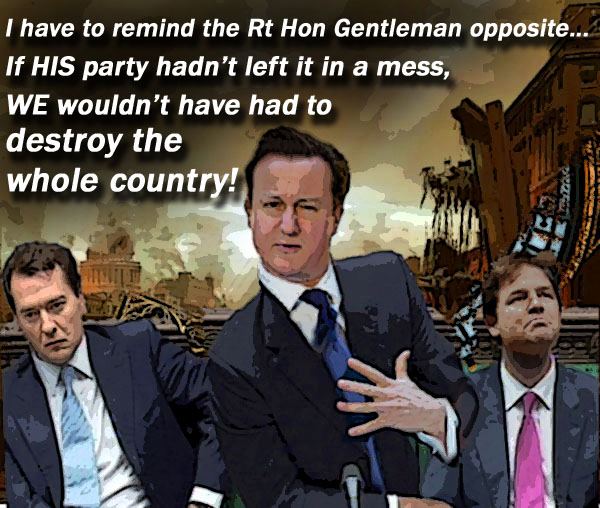
578979_459860714083462_1726333689_n

                   Pictures courtesy of Robert Livingstone

Related articles:

The Great Debt Lie and the Myth of the Structural Deficit

The mess we inherited” – some facts with which to fight the Tory Big Lies

Cameron’s ‘divine inspiration’ came from Max Weber, not God

10257904_309423985875323_7153330499946730765_n
The Department of Work and Pensions announce that they are to be re-named the
“Congregation for the Doctrine of the Faith”. The government have released a statement that although they favoured the strappado, a variety of other methods of trial by ordeal will be used in addition to replace the Work Capability Assessment. Iain Duncan Smith has called for the introduction of dunking – a form of water ordeal and divination – to determine who is disabled enough to build the HS2.

Conservatives have reassured the appalled public by explaining that really, the old English word ordǣl,”  simply means a “judgement or verdict”, so not to worry, as pretending that a word means something else is a magick formula used for ensuring public compliance and conformity. Lynton Crosby has been announced as the new Pontifex Maximus of such formulae. Previous successes include the words “fair”, “reform” and the phrase “making work pay” in the context of the Tory’s neoliberal cunning stunts known collectively as the misnamed “welfare reforms.”

I can see where Cameron thinks he’s coming from with his recent claims of “divine inspiration”. Cameron’s social policies may certainly be regarded as a codified version of the Malleus Malificarum (The Hammer of the Witches).

His ideology is founded on principles similar to those found in Commentarius de Maleficius. There are some uncanny similarities between such legal treatises on witchcraft and the Tory Welfare “Reform” Act, especially regarding the establishing of entitlement to benefits.

“Christians are now the most persecuted religion around the world. We should stand up against persecution of Christians and other faith groups wherever and whenever we can,” says the Prime Minister.

Contrary to what you said, Christians have often been the persecutors, rather than the persecuted, Mr Cameron.

witch-hunt is a search for witches or evidence of witchcraft, often involving carefully manufactured public moral panics. This is a manipulated intense feeling expressed in a population about an issue that appears to threaten the social order. Or in this case, that mythical beast of burden – the right-wing tax payer. Tories are moral entrepreneurs, who have despicably used the media to transform the poorest and most vulnerable social groups into folk devils. Conservatives have always created social tension and ensured that criticism and disagreement are difficult because the matter at the centre of such controversies are taboo.

The right-wing media have aided and abetted the Tories, who have long operated as agents of moral indignation. I can see a very clear, common framework of reference for prejudice and persecution here, Mr Cameron.

Proofs of practising witchcraft in Commentarius de Maleficius read a lot like Techniques of Neutralisation, (Sykes and Matza). The first “proof” is the identification of the “diabolical mark”. Usually, this was a mole or a birthmark. If no such mark was visible, the examiner would claim to have found an invisible mark. Or invent statistics. It seems using physical characteristics as an opportunity and excuse to persecute a social group is no new thing then, in the name of “God”, Mr Cameron. As you know.

The “diabolical pact” was an alleged pact with Satan to perform evil acts in return for rewards. Benefit “Fraud” is the new diabolical pact. Thus spake the grand inquisitor Iain “de Torquemáda”  Duncan Smith.

Mr Duncan Smith claims to know of many invisible families with generations of witches, and feels the need produce imaginary statistics and to take measures to “prevent” this invisible culture of entitlement. To be afraid during the interrogatories is a sure sign of guilt.

This is called being Condemned by the condemners – it’s a formula ensuring an abdication of all responsibility for behaviour, and instead the condemned point to the people condemning them: they  are the problem, not us. What they have done “wrong” excuses persecution, appalling and unforgivable political behaviour and policies.

Denying harm is another technique of neutralisation, which is evident in words like ‘support’, help’, which the Tories use to mask the fact that their blatantly punitive welfare policies are absolutely draconian, with sanctions, for example, involving the withdrawal of the means for citizens to meet their basic survival needs.

Mr Cameron, in 1540: Antonio Venegas de Figueroa, Bishop of Pamplona, sent a circular to the priests in his diocese, explaining that witchcraft was a false belief. He recommended medical treatment for those accused of witchcraft, and blamed the ignorance of the people for their confusion of witchcraft with medical conditions. Didn’t you get the memo?

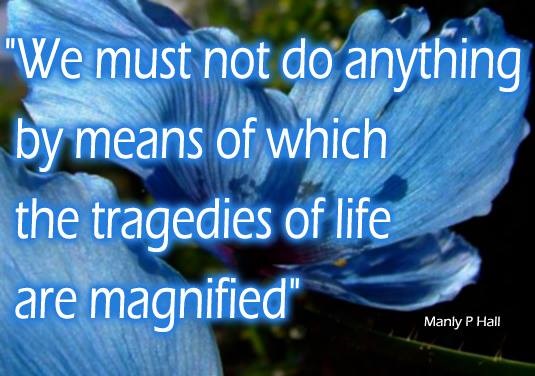
…..For the extraordinarily evil and cruel are always with us.

Manly P Hall

Satirical swipes aside, Cameron’s deluded and quite alarming declaration that “divine inspiration was at work when it came to drafting a key concept for Conservative Party policy” is founded on the Tory affinity with hierarchies and social stratification – and this is reflected in the appeal to “higher authority”. Of course, much of our religious organisation is extremely hierarchical too. This is Cameron’s version of psychobabble, a warped and inverted idea of noblesse oblige, he’s clearly close to meltdown.

And what utter moral cowardice, Cameron’s claim is an attempt to endorse Tory policy by partially disowning responsibility for it himself. It’s obvious that Tory policies have not arisen from anything remotely resembling an “intelligent design”, from a Christian deity or otherwise.

Marx said that: “Religion is the sigh of the oppressed creature, the heart of a heartless world, and the soul of soulless conditions. It is the opiate of the people”.  Yes, and for Cameron and his ilk, social control and moral codification is an attractive feature of religion. And aligning with a doctrine that makes a virtue of virtue, Cameron is attempting to add legitimacy to his unchristian and uncharitable “reforms”.

The Puritan work ethic has long considered indispensable for right wing political ideologues. Protestantism offers a concept of the worldly “calling,” and gives worldly activity and ruthless profiteering a religious character. 

Max Weber’s The Protestant Ethic and the Spirit of Capitalism is a study of the relationship between the ethics of ascetic Protestantism, (which embodies values such as thrift, self help, and hard work) and the emergence of the spirit of modern capitalism.

Weber observed a correlation between being Protestant and being involved in business, and went on to explore religion as a potential cause of modern economic conditions. He concluded that the modern spirit of capitalism sees profit as an end in itself, and pursuing profit as virtuous.

Calvinism promoted the idea that profit and material success as signs and cues of God’s favour. Other religious groups, such as the Pietists, Methodists, and the Baptist sects had similar attitudes, but to a lesser degree. Weber proposed that that this new attitude broke down the traditional economic system, paving the way for modern capitalism, and once capitalism emerged, the ethic took on a life of its own. We are now locked into the spirit of capitalism.

Weber doesn’t exactly argue that Protestantism caused the capitalist spirit, but rather, that they are correlated. He also acknowledges the converse: that capitalism itself had an impact on the development of the religious ideas. It’s a teleology (a doctrine explaining phenomena by final causes) that would appeal to Cameron for obvious reasons.

Cameron clearly hasn’t spotted the gaping contradictions in what he claims. His cognitive dissonance arises from the fact that while he claims to hold true a predestination doctrine – that God has ordained all that will happen, especially with regard to the salvation of some and not others, (particularly associated with the teachings of St Augustine of Hippo and of Calvin), this contradicts Cameron’s beliefs that are evident in his “reforms” for the poor – which are based on the premise that the poor are responsible for their own circumstances, and may be “helped”, coerced, sanctioned and legislated into somehow different “choices” and circumstances.

Cameron fails to reconcile his apparent belief in predestiny with his punitive, welfare “reforms” apparently designed to coerce socially “responsible” citizens into work. 

You can’t argue from a perspective of predetermination that only poor people are responsible for their actions and situations of poverty – that only poor people have a degree of free will – and then go on to formulate punitive policies based on notions of “deserving” and “undeserving” poor people, and a redistribution of wealth from the poorest to the wealthiest. AND claim you believe in God. With a straight face.  

The stunning hypocrisy and incoherence of Cameron’s claim to “divine inspiration” for such uncharitable, unkind, inhumane, persecutory and malevolent deeds as the welfare “reforms”, when empathy and compassion are so widely regarded to be central to Christianity, amongst a diverse range of religions and world-views, demonstrates only too well that Cameron lacks the integrity, depth, basic empathy and regard for others that is crucially required of a leader. He has absolutely no conscience, compassion, remorse or shame.

12787_401370889932445_1764534847_n
  Pictures courtesy of Robert Livingstone

Tory dogma and hypocrisy: the “big state”, bureaucracy, austerity and “freedom”

1965037_301820166635705_1502392114_n (1)

The Tories are not “paying down the debt” as claimed. They are raising more money for the rich.

Labour’s social and economic policy was a success, and this is substantiated by the LSE’s definitive survey of the Blair-Brown years:

There is clear evidence that public spending worked, contrary to popular belief.” Nor did Labour overspend. It inherited “a large deficit and high public sector debt”, with spending “at a historic low” – 14th out of 15 in the EU.

Labour’s spending increased, and money was invested in public services and social programs, and until the crash was still “unexceptional”, either by historic UK standards or international ones.

Until 2007 “national debt levels were lower than when Labour took office”. After years of neglect during the previous Conservative administration [2 recessions during the Thatcher era, another during Major’s],  Labour inherited a mess: public services in very poor state, shabby and squalid public buildings and unforgivably neglected human lives that formed a social deficit much more costly than any Treasury debt.

Labour Ministers set about addressing the causes and devastating effects of poverty and social marginalisation. Both poverty and inequality had risen to levels unprecedented in post-war history. This process accelerated during the 1980s.

Unlike every other post-war decade, in which the benefits of economic growth had been shared across social groups, the economic gains of the 1980s disproportionately benefited the rich at the expense of the poor (Hills, 2004). Social inequality on such a gross level was not only the result of Thatcher’s policies, she celebrated it. She declared that inequality is essential to fostering “the spirit of envy” and hailed greed as a “valuable spur to economic activity”.

The mess that Thatcher left is verified by several longitudinal studies. Dr. Alex Scott-Samuel and colleagues from the Universities of Durham, West of Scotland, Glasgow and Edinburgh, sourced data from over 70 existing research papers, which concludes that as a result of unnecessary unemployment, welfare cuts and damaging housing policies, the former prime minister’s legacy

…includes the unnecessary and unjust premature death of many British citizens, together with a substantial and continuing burden of suffering and loss of well-being.

The article also cites evidence including the substantial increase in income inequality under Thatcher – the richest 0.01% of society had 28 times the mean national average income in 1978 but 70 times the average in 1990, and the rise in UK poverty rates from 6.7% in 1975 to 12% in 1985.

It concludes that:

Thatcher’s governments wilfully engineered an economic catastrophe across large parts of Britain” by dismantling traditional industries such as coal and steel in order to undermine the power of working class organisations, such as unions. This ultimately fed through into growing regional disparities in health standards and life expectancy, as well as greatly increased inequalities between the richest and poorest in society.

Blair established the social exclusion unit inside No 10. “Social exclusion” signified not just poverty, but its myriad causes and symptoms, with 18 task forces examining education, babies’ development, debt, addiction, mental health, housing and much more. Policies followed and so did improvements.

John Prescott’s department published an annual Opportunities for All report that monitored these social targets: 48 out of 59 indicators improved. So when Cameron and his band of brigands sneer that “all Labour did was give tax credits to lift families just over the poverty line” – “poverty plus a pound” – they lie through their teeth.

Contrary to Tory claims, benefits were not Labour’s main instrument of social change: the benefit budget fell as a proportion of spending, outstripped by increases in health, education and other social services.

Despite Blair’s neoliberal turn, Labour’s social policies enshrined principles of equality and inclusion. The Tories deplore such principles, yet that doesn’t stop them claiming that their socially regressive policies are somehow “fair”. Things got better with a Labour administration, money was mostly well spent. That’s not the case now. It’s all being intentionally and spitefully undone. We are moving backwards on just about every positive social measure Labour put in place: the coalition’s “more for less” is exposed as pretence. They are simply raising more money for the rich.

And all because of their driving ideology. George Osborne’s “plan A” isn’t about economics: it amounts to little more than a rehashed Thatcherite ideological agenda of deregulation and labour market “flexibility”, as modelled by the Beecroft report – the assault on the rights of employees, and Labour’s historic equality legislation. The Tory demand for a “nightwatchman state” is both ill-conceived and completely irrelevant to Britain’s economic circumstances.

The Coalition have borrowed more in 4 years than labour did in 13 and have NOTHING to show for it except a handful of wealthier millionaires. And the return of absolute poverty.

We know that austerity was intentionally imposed by the Coalition, using a feigned panic over the budget deficit to front an opportunistic vulture capitalist approach to stripping our public assets. With the Coalition in power for 4 years, the deficit has apparently receded in importance.

We can hope that Labour can return to its  pro-social role of advocating government spending for the provision of public services. Conservatives have always played on dogma and popular prejudice by constantly equating government with bureaucracy. But that’s just the superficial excuse for their obsession with removing every trace of supportive provision and our public services.

It’s more accurate to say that Conservatives equate socially responsible, democratic, caring governments with “bureaucracy”. Conservatives aren’t ever interested in championing independent and merit-based public service. But most criticisms of government bureaucracy are based on myth, not reality.

The agencies that the Tories attack and destroy actually play a valuable and indispensable role in making our society a better place to live. They are the very hallmarks of what makes us civilised, they are how we support vulnerable citizens, ensure equal opportunities, uphold human rights.

The whole point of having human rights is that they apply to EVERYONE – something the Tories never understand – if rights are  not universally applied, then they are worthless. In fact they are hostile to the very notion that we each have equal worth, as we know.

Tories value and develop social hierarchy. When Tories want to make “shrinking” government sound attractive and feasible, they claim they are cutting “bureaucracy” and not social “programs.” Most people recognise the public value of State programs – in the areas of education, health and the environment for example – and don’t want to see these reduced; but everyone hates bureaucracy.

Using the term “bureaucracy” in this way is a rhetorical sleight-of-hand that attempts to obscure the real costs of cutting back on government programs. The lack of coherent reasoning underpinning the rhetoric is because this is simply Tory fundamentalism: it is not founded at all on rational, evidenced discourse.

I’ve said elsewhere that Edwardian levels of inequality led to the Great Depression. Austerity measures under Chancellor Hindenburg contributed to the rise of Nazism. The drop in household income in Japan between 1929 and 1931 led to a wave of assassinations of Government officials and bankers.

Social policies after World War 2 turned the tables and brought peace, with inequality steadily dropping in Britain until recently. But inequality is now returning to pre-war levels. The Tories are incapable of learning from historic lessons, because of their own sense of entitlement, privilege and ideological bondage.

In response to the atrocities committed during the War, the International Community sought to define the rights and freedoms necessary to secure the dignity and worth of each individual. Ratified by the United Kingdom, one of the first countries to do so, in 1951, those human rights originally established in the Universal Declaration have been steadily eroded since the Coalition gained Office.

There’s a clear link between high levels of inequality and failure of Governments to recognise human rights, and to implement them in policies. Authoritarians view the rights of the individual, (including those considered to be human rights by the international community), as subject to the needs of the Government. Of course in democracies, Governments are elected to represent and serve the needs of the population.

Democracy is not only about elections. It is also about distributive and social justice. The quality of the democratic process, including transparent and accountable Government and equality before the law, is critical. Façade democracy occurs when liberalisation measures are kept under tight rein by elites who fail to generate political inclusion.

Related articles:

How remarkable that a government that argues against bureaucracy on the grounds that it’s a “threat to individual freedom” have no problems imposing the Gagging Act and the Legal Aid Act – policies purposefully designed to severely limit our freedoms. But then, the Tories were never known for their rationality, coherence and joined-up narratives. Or for integrity and telling the truth.

Thatcher’s secret plot to dismantle the welfare state and privatise the NHS revealed

The mess we inherited: some facts with which to fight the Tory Big Lies

The great debt lie and the structural deficit myth

539627_450600381676162_486601053_n (2)
scroll2

Osborne’s real aim is not budget surplus, but attack on Welfare State & public sectors It’s not a difficult task for a government to guarantee a safety-net that is always available for anyone who falls on hard times during an era of huge social and economic change. We all fund it, after all. And we all know that unemployment, injury or illness may happen to anyone through no fault of their own. It’s considered a duty of any first-world government to provide the means of basic survival for its citizens and to fund that with the money we contribute via taxes. In fact such an approach to social and economic welfare is internationally codified in human rights.

Article 25 of the Universal Declaration of Human Rights, to which the UK is a signatory, reads:

Everyone has the right to a standard of living adequate for the health and well-being of himself and of his family, including food, clothing, housing and medical care and necessary social services, and the right to security in the event of unemployment, sickness, disability, widowhood, old age or other lack of livelihood in circumstances beyond his control. Motherhood and childhood are entitled to special care and assistance. All children, whether born in or out of wedlock, shall enjoy the same social protection.

The Tories prefer to spend the tax they take from you on Tory donors – private companies that don’t deliver a service but simply fleece profit; on undeserving millionaires’ tax breaks – the feckless, scrounging rich had at least £107,000 each per year extra already. Then there is the never ending list of Tory expense scandals – all at our expense. And tax evasion. Why are we paying for this?

Furthermore, why are we indifferent as a society to the fact that our government is causing harm to our fellow citizens? I can’t comprehend this, how can we have allowed this to happen, as a so-called civilised and once democratic society? It’s about a driving ideology that is socially detrimental, malevolent, and not economically necessary: the Tories do not think that people have a right to food, housing or medical care, that much is clear. But they continue to take the money we have paid since the 1940s for those things. And hand it out to the wealthy.

Despite these facts, the Govt and the right-wing media have the audacity to talk about welfare claimants, as if all our woes are their fault. They aren’t, the spiteful authoritarian Tories are the problem.

1234134_539964652739734_1075596050_n

We can’t afford this government, economically, socially, morally or psychologically. Osborne’s austerity message was seriously undermined, and his lies in trying to blame the last government were demonstrated last November when the Office for National Statistics found that the coalition had borrowed £430.072 billion since it took over, whereas the last Labour government managed to borrow just £429.975 billion in 13 years. –  George Osborne Says Britain’s ‘Best Days Lie Ahead’, Ignoring These 6 Graphs


Many thanks to Robert Livingstone for his brilliant memes

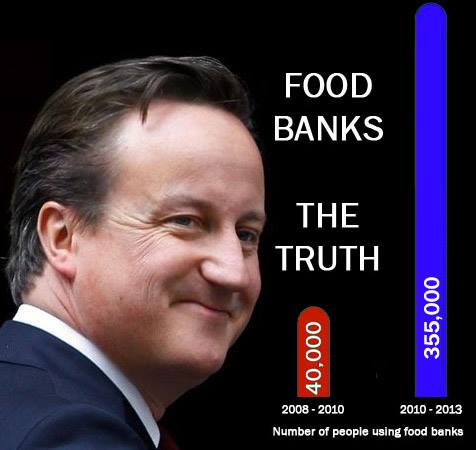
Study finds Need For Food Banks IS Caused By Welfare Cuts

April 9, 2014

Originally posted in the Guardian

The government’s welfare reforms, including benefit sanctions and the bedroom tax, are a central factor in the explosion in the numbers of impoverished people turning to charity food banks, an academic study has said.

The study, part of a three-year investigation into emergency food provision, was carried out by Hannah Lambie-Mumford, a Sheffield University researcher who co-authored a recently published government report into the extent of food aid in the UK.

That report concluded there was insufficient evidence to demonstrate a clear causal link between welfare reform and food bank demand in the UK. But Lambie-Mumford’s new study, to be published on Wednesday, says the rise in demand for charity food is a clear signal “of the inadequacy of both social security provision and the processes by which it is delivered”.

The report warns that as social security safety nets become weaker, there is a danger that charity food could become an integral part of the state welfare provision, or even an replacement for formerly state-funded emergency welfare schemes.

Lambie-Mumford’s study was based on 25 in-depth interviews with a range of food bank staff and volunteers in 2012 and 2013 and found many food banks were adapting to demand by scaling up food collection and storage provision “to accommodate the future trajectory of need”.

Her paper will be presented to an all-party committee of MPs which meets on Wednesday to finalise the terms of an inquiry into hunger and food poverty. The inquiry will examine the rise of food banks, an issue that has become politically charged as ministers attempt to deflect criticism that austerity policies, including welfare cuts, have had the effect of compelling more people on low incomes to rely on food aid.

Lambie-Mumford said her research showed that food banks were expanding to meet rising demand caused in part by a squeeze on welfare entitlements which made already poor people even worse off. This was compounded by inadequate processing of social security claims, including payment delays and “arbitrary and unfair” sanctioning decisions that left claimants without any income at all. There were other factors which had contributed to the rise of food banks, such as low wages and the rise in the cost of food. But it was important that MPs did not duck or underplay the importance of welfare reform. “The tricky thing is that welfare reform is the most political aspect of a political issue. But we should not shy away from it for this reason,” she said.

The welfare minister Lord Freud notoriously claimed last year that more people were going to food banks because the food was free, thereby triggering “almost infinite demand”. Last month Freud admitted people did not turn up “willingly” at food banks but said it was “very hard to know why” they did go.

The Trussell trust, which oversees a network of more than 400 food banks in the UK, has insisted repeatedly that welfare reform is the biggest driver of demand for food parcels. Its third-quarter data, published in March, showed that it helped 614,000 people in the first nine months of this year. Its final-year figures, expected next week, are likely to show that demand has more than doubled in the past 12 months. More than eight out of 10 food bank managers interviewed for the study acknowledged the impact of welfare changes and welfare processes as a factor in driving demand.

A DWP spokesperson said: “This report, which is based on just 25 interviews, fails to consider how welfare reforms are helping people off benefits and into jobs. The truth is that we now have record numbers of people in work, the highest employment rate for five years, and falling unemployment.” A DWP spokesman later added that the report “gave a one-sided view”.


A remarkable comment, given that the DWP don’t track people leaving benefits. This means that government claims of numbers “helped off benefits and into jobs” include those who are sanctioned, those awaiting appeal, mandatory review, the dead, those in hospital and those in prison. I think it’s about time the DWP’s outrageous lies were challenged.

It’s not a difficult task for a government to guarantee a safety-net that is always available for anyone who falls on hard times during an era of huge social and economic change. We all fund it, after all. And we all know that unemployment, injury or illness may happen to anyone through no fault of their own. I consider it a duty of any first world government to provide the means of basic survival for its citizens and fund that with the money we contribute via taxes. In fact such social and economic welfare is a human right. Article 25 of the Universal Declaration of Human Rights, which the UK is a signatory to, reads:

Everyone has the right to a standard of living adequate for the health and well-being of himself and of his family, including food, clothing, housing and medical care and necessary social services, and the right to security in the event of unemployment, sickness, disability, widowhood, old age or other lack of livelihood in circumstances beyond his control. Motherhood and childhood are entitled to special care and assistance. All children, whether born in or out of wedlock, shall enjoy the same social protection.

The Tories prefer to spend the tax they take from you on Tory donors – private companies that don’t deliver a service but simply fleece profit, on undeserving millionaires’ tax breaks – the feckless, scrounging rich had at least £107,000 each per year extra already. Then there is the never ending line up of Tory expense scandals – all at our expense. And tax evasion. Why are we paying for this? And in return, this bunch of greedy opportunists are causing harm to our fellow citizens. I can’t comprehend this, how can we have allowed this to happen, as a so-called civilised, and once democratic society?

It’s about a driving ideology that is socially malevolent, and not economically necessary: the Tories do not think that people have a right to food, housing or medical care, that much is clear. But they continue to take the money we have paid since the 1940s for those things. And hand it out to the wealthy.

Despite these facts, the Government and the right wing media has the Orwellian dystopic cheek to talk about welfare claimants, as if all our woes are their fault. They aren’t, it’s the spiteful authoritarian Tories that are the problem.

They have to go. For the majority – for most peoples’ sake. We can’t afford this government, economically or socially. Kitty.S.Jones.

Techniques of neutralisation – a framework of prejudice

71915_457283111007889_61730291_n

Societies may help to enable or hinder disabled people through policies and attitudes. We have moved such a long way from the Labour era of “celebrating diversity and equality” and from a time of simply celebrating the achievements of disabled people. Now we can’t walk or ride in our wheelchairs with our head up in public for fear of attack, or someone in parliament or the media attempting to invalidate our life experiences, rewriting them, implying we are faking our disability in some way, or that somehow, we made a “wrong life choice” that resulted in our illness and disability, turning us into a “burden on the state” that most of us have contributed to.

We have somehow been labelled the “undeserving poor.” This government have lied and lied to try and justify their punitive policies, claiming that their austerity cuts, which are aimed disproportionately at sick and disabled people and the system of punishing sanctions are “fair.” Our lives have become the moral property of the moralising government, a wilfully ignorant public and egocentric celebrities who like to offer is their “lifestyle tips”. We are no longer free to just be.

How did this level of democratic exclusion, malicious outgrouping and stigmatisation happen in a so-called civilised liberal democracy?

Our own government have deliberately manufactured and perpetuated misconceptions about disabled people via their rhetoric, intentional, strategic lies and manipulated statistics.

The Tories have unforgivably cultivated and manipulated the very worst of the public’s prejudices. They have created prejudiced cultural scripts that justify their policies, which also serve to alienate and scapegoat us, we have become marginalised, outgrouped, defined as the Other.

Language and narrative play a key role in the process of outgrouping and scapegoating. Consider, for example, that some of the most draconian policies are referred to as “reforms.” But we know that the changes, rather than improving people’s lives as implied, the word “reform” has been used by the Conservatives as a euphemism for cuts to essential public services, support and social safety nets. Social security cuts and sanctions that entail the withdrawal of lifeline income to meet basic survival needs (benefits were calculated to meet only the the cost of food, fuel and shelter) are claimed to “help” people to look for work, and to “make work pay.” Cuts to disability income are claimed to “support” disabled people into work.

The idea of techniques of neutralisation was first proposed by David Matza and Gresham Sykes during their work on Edwin Sutherland’s Differential Association in the 1950s. Matza and Sykes were working on juvenile delinquency, they theorised that the same techniques could be found throughout society and published their ideas in Delinquency and Drift, 1964.

They identified the following propaganda methods by which, they believed, delinquents justified their illegitimate actions, and Alexander Alverez identified these methods used at a socio-political level in Nazi Germany to “justify” the Holocaust:

1. Denial of responsibility. The offender(s) will propose that they were victims of circumstance or were forced into situations beyond their control.

For example, this technique was used by the Nazis and usually took the form that the perpetrator was “only carrying out orders from above.”

2. Denial of injury. The offender insists that their actions did not cause any harm or damage.

For example, under the Nazi regime this took the form of special language which hid or disguised what was actually being done, euphemisms in which killing became “special treatment,” “cleansing”and many other similar examples.

3. Denial of the victim. The offender believes that the victim deserved whatever action the offender committed.

For example, The Nazis ensured it was widely believed that Jews were involved in a conspiracy to enslave the whole world, so that killing them was self-defence. Although a fabrication, many Germans, appeared to have believed it to be true.

4. Condemnation of the condemners. The offenders maintain that those who condemn their offence are doing so purely out of spite, or are shifting the blame from themselves unfairly.

For example, claims made by the German government and the media that the other countries that were condemning the Nazis were historically guilty of worse crimes, such as the treatment of blacks and Native Americans in the United States and the treatment of native peoples in the French, British and Spanish colonies.

5. Appeal to higher loyalties. The offender suggests that his or her offence was for the greater good, with long term consequences that would justify their actions, such as protection of a friend/social group/nation.

For example, German perpetrators of genocide thought of themselves as patriots, nobly carrying out their duty.

6. Disengagement and Denial of Humanity is a category that Alverez
added to those techniques formulated by Sykes and Matza because of its special relevance to the Holocaust. Nazi propaganda portrayed Jews and other non-Aryans as subhuman. Dehumanisation was explicitly orchestrated by the government. This also very clearly parallels Gordon Allport’s work on explaining how prejudice arises.

Any one of these six techniques can serve to encourage violence by neutralising the norms against prejudice, aggression and murder, to the extent that they are all implemented together, as they apparently were under the Nazi regime, a whole society can seemingly forget its normative rules, moral values and laws , in order to engage in wholesale prejudice, hatred and genocide.

We really must challenge our own government’s attempts to normalise prejudice. One voice can make a difference amongst many. Social norms are the unwritten rules that govern social behaviour. These are customary standards for behaviour that are widely shared by members of a culture. We know that it is possible for an articulate and vocal minority to stem the normative influence of a larger majority. It’s up to each of us to have a responsible role in meta-scripting  those norms.

Wittgenstein once said “The limits of my language are the limits of my  world.”

Words are powerful. As well as describing, signifying, explaining, persuading, interpreting, deceiving and so on, they may also issue commands and instructions.

Language is impactful and speech is an intentional act. We “spell” words. Spelling may also be described as “words or a formula purported to have magickal powers.” Narratives may create change or support existing orders. With words, both spoken and unspoken, we can shape and re-shape the universe. We can create. We can also destroy. Einstein changed the meaning of the word “mass” and transformed Newton’s universe of structures to his own universe of events. He created a different universe, such is the power of conceptualisation and communication.

We can oppress or liberate with a few intentional words. We can both speak and be the change we want to see. The choice and challenge is collectively ours.


I’m glad it’s April 1st coz of my mad March hair

  1.  2h

    Under the coalition, April is the cruellest month. Apart from all the other, equally cruel months.

    Retweeted by 

  2.  2h We sure did beware the IDS of March though…and the Osborne of March sucked as well.

    So why can’t tweets be shared directly on  FB? It makes no sense!

.