Labour leader Jeremy Corbyn has asked David Cameron at Prime Minister’s Questions today to publish the details of the Government’s response to the United Nations inquiry into the allegations that Conservative policies are breaching the rights of disabled people in the UK. He also asked if the government intended to co-operate with the inquiry.
Such UN investigations are conducted confidentially by the UN and officials will not confirm or deny whether the UK is currently being put under scrutiny.
However, the ongoing inquiry been widely reported by disability rights groups and campaigners. The Department for Work and Pensions has previously declined to comment on the possibility of an investigation.
Mr Corbyn used his final question to ask about the United Nations inquiry into alleged “grave or systemic violations” of the rights of disabled people in the UK. The PM gave a dismissive response, saying the inquiry may not be “all it’s cracked up to be” and said that disabled people in other countries do not have the rights and support that “they” [disabled people] in the UK are offered. Cameron also implied that Labour’s “strong” equality legislation was a Conservative policy. However, theEquality Act was drafted under the guidance of Harriet Harman.
Jeremy Corbyn asks about David Cameron about his response to the UN inquiry at Prime Minister’s Questions
The United Nations team of investigators are expecting to meet with the Equality and Human Rights Commission, members of parliament, individual campaigners and disabled people’s organisations, representatives from local authorities and academics.
The team will be gathering direct evidence from individuals about the impact of government austerity measures, with a focus on benefit cuts and sanctions; cuts to social care; cuts to legal aid; the closure of the Independent Living Fund (ILF); the adverse impact of the Work Capability Assessment (WCA); the shortage of accessible and affordable housing; the impact of the bedroom tax on disabled people, and also the rise in disability hate crime.
Mr Corbyn said:
“This is deeply embarrassing to all of us in this house and indeed to the country as a whole. It’s very sad news.”
The Government’s approach to people with disabilities had been extremely controversial and been met with criticism from campaign groups. Disabled people have borne the brunt of austerity cuts, losing more income and support than any other social group, and this is despite the fact that Cameron promised in 2010 to protect the poorest, sick and disabled people and the most vulnerable.
They target the very groups that a decent society would protect:
People in poverty (1 in 5 of us) bear 39% of all the cuts
Disabled people (1 in 13 of us) bear 29% of all the cuts
People with severe disabilities (1 in 50 of us) bear 15% of all the cuts
The report outlines further discrimination in how the austerity cuts have been targeted. The report says:
The unfairness of this policy is seen even more clearly when we look at the difference between the burden of cuts that falls on most citizens and the burdens that fall on minority groups. By 2015 the annual average loss in income or services will be:
People who are not in poverty or have no disability will lose £467 per year
People who are in poverty will lose £2,195 per year
Disabled people will lose £4,410 per year
Disabled people needing social care will lose £8,832 per year
Work and Pensions Secretary Iain Duncan Smith said at the Conservative party conference speech in Manchester that disabled people “should work their way out of poverty.”
He went on to say:
“We don’t think of people not in work as victims to be sustained on government handouts. No, we want to help them live lives independent of the state.
We won’t lift you out of poverty by simply transferring taxpayers’ money to you. With our help, you’ll work your way out of poverty.”
The Work and Pensions Secretary has been widely criticised for removing support for disabled people who want to work: by closing Remploy factories, scrapping the Independent Living Fund, cuts to payments for a disability Access To Work scheme and cuts to Employment and Support Allowance.
The reformed Work Capability Assessment has been very controversial, with critics labeling them unfair, arbitrary, and heavily bureaucratic, weighted towards unfairly removing people’s sickness and disability benefit and forcing them to look for work.
The bedroom tax also hits disabled people disproportionately, with around two thirds of those affected by the under-occupancy penalty being disabled.
The United Nations have already deemed that the bedroom tax constitutes a violation of the human right to adequate housing in several ways. If, for example, the extra payments force tenants to cut down on their spending on food or heating their home. There are already a number of legal challenges to the bedroom tax under way in British courts. In principle the judiciary here takes into account the international human rights legislation because the UK has signed and ratified the International Covenant on Economic, Social and Cultural Rights.
UN rapporteur Raquel Rolnik called for the UK government last year to scrap its controversial bedroom tax policy. Rolnik’s report was dismissed as a “misleading Marxist diatribe” by Tory ministers, and she had been subject to a “blizzard of misinformation” and xenophobic tabloid reports.
The DWP’s sanctions regime has also been widely discredited, and there has been controvery over death statistics, eventually released by the Department after a long-running refusal to release the information under freedom of information law.
The Daily Mail has already preempted the visit from the special rapporteur, Catalina Devandas Aguilar, who is spearheading the ongoing inquiry into many claims that Britain is guilty of grave or systematic violations of the rights of sick and disabled people, by using racist stereotypes, and claiming that the UN are “meddling”. The Mail blatantly attempted to discredit this important UN intervention and the UN rapporteur before the visit.
Meanwhile, Cameron seems very keen to play the investigation down, and dismiss the impact of his government’s “reforms” on the lives of sick and disabled people.
We are a very wealthy, so-called first-world liberal democracy, the fact that such an inquiry has been deemed necessary at all ought to be a source of great shame for this government.
The Government are planning to fast-track a British Bill of Rights, aiming to get the extremely controversial legislation made law by next summer.
A Bill of Rights was a Conservative manifesto pledge, but is strongly opposed by civil liberties groups that say it will restrict freedoms that are guaranteed under the European Convention on Human Rights (ECHR).
The Independent reports that a 12-week public consultation on the Conservative Bill of Rights will start in November or December this year. It will be worded to clarify that the UK will not pull out of the European Convention of Human Rights, as some critics have feared, (and actually, as David Cameron has pledged previously). It will even mirror much of the ECHR language in an effort to “calm opposition.”
The Conservative Bill of Rights will go straight to the House of Commons without a Green or White Paper, which are usually introduced before legislative scrutiny.
It is understood that Michael Gove will visit Scotland before the consultation is published, when he will try to convince the Scottish government to back the Bill of Rights. He will also need the support of Wales and Northern Ireland. The Bill will need to be carried over to the next Queen’s Speech, expected in May, if it is to become law before MPs leave for summer recess in July.
A cabinet minister told The Independent on Sunday that the summer timescale was “aspirational”, because the Bill could be “really clogged up in the House of Lords” and predicted it was more likely to be law by the end of next year. The upper chamber has some seasoned lawyers, many of whom fear the consequences of scrapping the HRA, and the Tories do not command a majority in the Lords.
The rights protected by the Human Rights Act are quite simple. They include the right to life, liberty and the right to a fair trial; protection from torture and ill-treatment; freedom of speech, thought, religion, conscience and assembly; the right to free elections; the right to fair access to the country’s education system; the right to marry and an overarching right not to be discriminated against. Cameron has argued that it should be repealed just 10 years after its implementation (the Human Rights Act (HRA) came into force in October 2000) … so that he can pass another Act.
No other country has proposed de-incorporating a human rights treaty from its law so that it can introduce a Bill of Rights. The truly disturbing aspect of Cameron’s Bill of Rights pledge is that rather than manifestly building on the HRA, it’s predicated on its denigration and repeal. One has to wonder what his discomfort with the Human Rights Act is. The Act, after all, goes towards protecting the vulnerable from neglect of duty and abuse of power.
The HRA incorporated the ECHR in British law, it is a straightforward statute, that works by allowing individuals in the UK to enforce their rights in their local courts. The Act makes available a remedy for breach of a Convention right without the need to go to theEuropean Court of Human Rightsin Strasbourg.
It was designed to supplement the ECHR. It also requires public authorities to respect the rights of those they serve. As a part of Labour’s 1997 commitment to a new constitutional settlement, it represented a new way of thinking about law, politics and the relationship between public authorities and individuals.
The rights protected by the HRA are drawn from the 1950 European convention on human rights, which was a way of ensuring that we never again witness the full horrors of the second world war, and overwhelmingly, one of the greatest stains on the conscience of humanity – the Holocaust. Winston Churchill was one of the main drivers of the Convention, it was largely drafted by UK lawyers and the UK was one of the first countries to ratify it in 1951.
This was the establishing of a simple set of minimum standards of decency for humankind to hold onto for the future. The European Convention on Human Rights and Fundamental Freedoms (ECHR) was drafted as a lasting legacy of the struggle against fascism and totalitarianism.
Yet the HRA is quite often portrayed by the Right as a party political measure. However, whilst the Human Rights Act is ultimately recognised as one of the greatest legacies of Labour in government, Cameron seems oblivious to the fact that Human Rights are not objects to be bartered away. They arose from struggles that were begun long ago by past generations who gave their lives for these rights to be enshrined in our laws.
The case for the HRA is a strong one. It is a moral case based not only on learning from the history of some of the worst violations of human rights before and during the second world war, but also from recent history – the here and now. If a new settlement based on social inclusion and greater equality is to be reached, the HRA should not be viewed suspiciously, as a burden, but promoted as an instrument of equality, social cohesion and public purpose. It is expected of a democratic government to improve the understanding and application of the Act. That is an international expectation, also.
There is no justification for editing or repealing the Act itself, that would make Britain the first European country to regress in the level and degree of our human rights protection. It is through times of recession and times of affluence alike that our rights ought to be the foundation of our society, upon which the Magna Carta, the Equality Act and the Human Rights Act were built – protecting the vulnerable from the powerful and ensuring those who govern are accountable to the rule of law.
Observation of human rights distinguishes democratic leaders from dictators and despots. Human Rights are the bedrock of our democracy, they are universal, and are a reflection of a society’s and a governments’ recognition of the equal worth of every citizens’ life.
One sentence from the misleadingly titled document that outlines how the Tories plan to scrap the Human Rights Act –Protecting Human Rights in the UK, (found on page 6 ) – is particularly chilling: “There will be a threshold below which Convention rights will not be engaged.”
Basically this means that human rights will no longer be absolute – they will be subject to stipulations and caveats. The government will establish a threshold below which Convention rights will not be engaged, allowing UK courts to strike out what are deemed trivial cases.
The Tories’ motivation for changing our human rights is to allow reinterpretations to work around the new legislation when they deem it necessary. The internationally agreed rights that the Tories have always seen as being open to interpretation will become much more parochial and open to subjective challenge.
Any precedent that allows a government room for manoeuvre around basic and fundamental human rights is incredibly dangerous.
During their last term, the Conservatives contravened the Human Rights ofdisabled people, women and children. It’s clear that we have a government that regards the rights of most of the population as an inconvenience to be brushed aside.
The Conservative conference was a masterpiece of stapled together soundbites and meaninglessglittering generalities. And intentional mystification.Cameron claims that he is going to address “social problems”, for example, but wouldn’t you think that he would have done so over the past five years, rather than busying himselfcreating them? Under Cameron’s government we have become the most unequal country in the European Union, even the US, home of the founding fathers of neoliberalism, is less divided by wealth and income than the UK.
I’m also wondering how tripling university tuition fees and reintroducing banding in classrooms can possibly indicate a party genuinely interested in extending equal opportunities.
“Champions of social justice and opportunities”? Must have been a typo in the transcript: it’s not champions but chancers.
Cameron also claims that the Conservatives are the “party for workers”, and of course lamblasted Labour. Again. Yet it was the Labour party that introduced tax credits to ensure low paid workers had a decent standard of living, and this government are not only withdrawing that support, we are also witnessing wages drop lower than all of the other G20 countries, since 2010, the International Labour Organisation reliably informs us.
This fall not only led to a tight squeeze on living standards, it also led to a shortfall in treasury income in the form of tax revenues. But all of this is pretty standard form for Conservative governments.
It’s interesting to note that the only standing ovation Cameron had for his speech from delegates was not related to policy proposals or even rhetoric. It was a response to the bitter, spiteful and typical Tory bullying approach to any opposition: in this case, an outburst of vindictive, unqualified personal comments, misquotes, misinformation and downright lies about Jeremy Corbyn.
It was more of the usual Conservative claptrap about Labour leaders “hating Britain”. Cameron used an out-of-context quote to paint Jeremy Corbyn as a “security-threatening, terrorist-sympathising, Britain-hating” leader. Cameron had failed to give any context to Mr Corbyn’s comments that he intentionally misquoted, failing, for example, to mention the fact that Corbyn had said the lack of a trial for Bin Laden was the “tragedy”, not his death itself. The deliberate misquote, however, was met with a deft response from the Left, hoisting Cameron by his own petard.
Here is Cameron’s speech in full technicolour and spectacular ontological insecurity:
Even the BBC have called the Conservatives out on their very nasty anti-democratic propaganda campaign against Corbyn.
From the deluge of incoherent commentaries to the mechanisms of telling lies: Conservatives don’t walk the talk
The fact that there is now such an extensive gap between Conservative rhetoric, the claims being made and reality makes the task of critical analysis difficult and somewhat tiring, and I’m not the only writer to comment on this.
The Conservatives use language – semantic shifts – and construct incongruent, dissonance-inducing narratives to misdirect us, and to mask the aims and consequences of their policies. For example, the words “fair”, “support” and the phrase “making work pay” have shifted to become simple socio-linguistic codifications for very regressive punitive measures such as cuts to social security support (comparable with the principle of less eligibility embedded in the Poor Law of 1834) and benefit sanctions.
The most striking thing about the Conservative conference, for me, isn’t just the gap between rhetoric and reality, it is also the gap between the bland vocabulary used and the references, meanings and implications of what was actually being said.
The semantics are also stratified. People who are unaffected by austerity policies will probably take the bland vocabulary at face value. Cameron said:
“The British people are decent, sensible, reasonable, and they just want a government that supports the vulnerable.”
However, the “vulnerable” know a very different realityto the one substituted and described on their behalf. People who are adversely affected by Conservative policy will regard the bland vocabulary as bewildering, deceitful, frightening – especially because of its incongruence with reality – and most likely, as very threatening. Such rhetoric is designed to hide intention, but it is also designed to deliberately invalidate people’s own experiences of Tory policies and ultimately, the consequences of an imposed Tory ideology.
Not that there can be any mistaking the threats aimed at sick and disabled people from Duncan Smith in his Conference speech. He said:
“We won’t lift you out of poverty by simply transferring taxpayers’ money to you. With our help, you’ll work your way out of poverty.”
Of course the Work and Pensions secretary employed a traditionally Tory simplistic, divisive rhetoric that conveniently sections the population into “deserving” tax payers and “undeserving” non-tax paying citizens, to justify his balefully misanthropic attitude towards the latter group, as usual. However, the majority of sick and disabled people have worked and have contributed tax.
As Dr Simon Duffy, from the Centre for Welfare Reform, points out, the poor not only pay taxes they also pay the highest taxes. For example, the poorest 10% of households pay 47% of their income in tax. This is a higher percentage than any other group. We tend to forget that people in poverty pay taxes because we forget how many different ways we are taxed:
VAT
Duties
Income tax
National Insurance
Council tax
Licences
Social care charges, and many others taxes.
Mr Duncan Smith said that many sick and disabled people “wanted to work” and that the Government should give them “support” to find jobs and make sure the welfare system encouraged them to get jobs.
We’ve seen the future and it’s feudal
Ah, he means “making work pay,” which is the Tory super-retro approach to policy-making, based on the 1834 Poor Lawprinciple of less eligibility again. The reality is that sick and disabled people are being coerced by the state into taking any very poorly paid work, regardless of whether or not they can work, and to translate the rhetoric further, Duncan Smith is telling us that the government will ensure the conditions of claiming social security are so dismal and brutal that no-one can survive it.
And Cameron’s promise during his address to the Conservative party conference that “an all-out assault on poverty” would be at the centre of his second term is contradicted by a sturdy research report from the Resolution Foundation that reveals planned welfare cuts will lead to an increase of 200,000 working households living in poverty by 2020.
Duncan Smith also criticised what he claimed was Labour’s “something for nothing culture” which was of course a very supportive and fair, reasonably redistributive system. He also dismissed and scorned the protests against his policies, which his party’s conference has been subject to. But demonstration and protest is a mechanism of democracy for letting a government know that their policies are having adverse consequences.
Many of the disabled protesters at the conference are being hounded, hurt and persecuted by this government and actually, we are fighting for our lives. But clearly this is not a government that listens, nor is it one that likes democratic dialogue and accountability.
In his teeth-grindingly vindictive and blindly arrogant speech, Duncan Smith also criticised the old Employment Support Allowance benefit for signing people off work when they were judged by doctors as too sick to work. He claimed that Labour treated disabled people as “passive victims.” I’m wondering what part of professional judgements that a person is too sick to work this lunatic and small-state fetishist finds so difficult to grasp. Duncan Smith is a confabulating zealot who drives a dogmatic steam-roller over people and their experiences until they take some Tory neo-feudalist deferential, flat-earth shape that he thinks they should be.
Let’s not forget that this government have actually cut support for disabled people who want to work. The Access To Work funding has been severely cut, this is a fund that helps people and employers to cover the extra living costs arising due to disabilities that might present barriers to work. The Independent Living fund was also cruelly scrapped by this Government, which also has a huge impact on those trying their best to lead independent and dignified lives.
By “support to get jobs”, what Duncan Smith actually means is no support at all. He means more workfare – free labor for Tory donors – and more sanctions – the removal of people’s lifeline social security. He also means that good ole’ totalitarian dictum of “behaviour change,” a phrase that the Tories are bandying about a lot, these days. Ask not what the government can do for you.
And what about frail and elderly people needing support?
The public care sector has been cut by a third this past 5 years, yet people are still aging and living longer, so demand for the services has risen. We know that private residential care homes notoriously put profit over care standards, as yet there’s not been an equivalent local authority scandal, but cuts and gross underfunding mean care workers are stretched beyond limit, and there aren’t enough funds to run an adequate home care service. It’s mostly the very frail and elderly who need this service. And it’s those vulnerable citizens that are being increasingly left without adequate care, and certainly not care of a sufficient standard to maintain their dignity.
These are citizens that have paid into a social security system that was established for “cradle to the grave” support if it was needed. This government has so wickedly betrayed them. That’s hardly making a lifetime of work and contribution “pay”.
The knock on effect is that many people without adequate care end up stranded in hospital, taking up beds and resources, through no fault of their own, and as we know, the health service is also desperately struggling to provide adequate service because of Tory cuts.
The aim of Conservatives is not to meet public needs, but to nudge the public into complicity with Conservative ideology
Many writers, a number of MPs and Peers have variously likened Conservative rhetoric to George Orwell’s Doublespeak in his novel Nineteen Eighty Four. Others claim that the idea of a language and thought-manipulating totalitarianregime in the UK is absurd. But that said, I never thought I would witness an era of human rights abuses of disabled people, women and children by the government of a so-called first-world liberal democracy. The same government have also stated it’s their intention to repeal our Human Rights Act and exit the European Convention on Human Rights. I can understand the inclination towards disbelief.
There’s another group of people that know something is wrong, precisely what that is becomes elusive when they try to think about it and the detail slips through their fingers, as it were, when they try to articulate it. But that’s what Tory rhetoric purposefully aims to generate in those who oppose Conservatism: confusion, cognitive dissonance and disbelief.
Which brings me to the government’s woeful brand of “liberatarian paternalism” – manifested in the form of an authoritarianNudge Unit. The fact that it exists at all and that it is openly engaged in changing people’s decision-making without their consent is an indication of an extremely anti-democratic, psychocratic approach to government. The Tories are conducting politics and policy-making using insidious techniques of persuasion and psycholinguistic hocuspocusery for psychic and material profiteering, ordinarily reserved for the very dubious, telemental, manipulative end of the diabolistic advertising industry.
Once a PR man, always a PR man, that’s David Cameron.
By telemental, I mean it’s based on a kind of communication model that is transmissional, linear, mechanistic – where people are treated as conforming, passive “receivers” of information constructs, rather than an interactive, participatory, dialogical and importantly, a democratic one where people are regarded as autonomous critical interpreters and negotiators. We’re being talked at, not with. The Tories are using telementation to communicate their ideological sales pitch, without any democratic engagement with the majority of citizens, and without any acknowledgement of their needs. (Telementation is a concept originally introduced by linguistRoy Harris. )
The co-author of Nudge theory, Cass Sunstein, actually suggested that government monitors political activism online, too. He has some links with GCHQ’s covert online operations which employ social science to inform their psychological operations to influence online interactions and outcomes. Sunstein proposed sending covert agents into “chat rooms, online social networks, or even real-space groups” which spread what he views as “false and damaging conspiracy theories” about the government. “Conspiracy” theories like this one, eh?
The nudging of psychobabble and neuroliberalism
Tory policy is all about social engineering using justification narratives founded on an insensate, draconian ideological and semantic unobtainium equivalent. It’s clear that this government lacks the experience and understanding necessary for the proper use of psychological terms. The content of their smug and vindictive justification narratives and stapled-together, alienating and psychopathic rhetoric deviates markedly from even basic common sense and good judgement.
The Tories reduce long debated, complex ideas to surprisingly spiteful platitudes, and hand us back dogmas gift wrapped in aggrandized certitude.
Malice in blunderland.
There is an accessible government website outlining some of the Nudge Unit’s neurobabble and subliminal messaging “successes”, albeit the more mundane ones, like getting men to pee on the “right” part of a urinal. Or getting people to pay their taxes on time, or to donate organs.
The Nudge Unit’s behaviourism and psychological quackery, however, is all-pervasive. It has seeped into policy, political rhetoric, the media, education, the workplace, health services and is now embedded in our very vocabulary and social narrative. Every time you hear the phrase “behavioural change” you know it’s a government department acting upon citizens everywhere, using basic, crude operant conditioning without their consent, instead of actually doing what public services should and meeting public needs. Instead, citizens are now expected to meet the government’s needs.
Where do you think the government got their pre-constructed ideological defence lexicon of psychobabble – they bandy about insidiously bland words like “incentivise” in the context of coercive state actions – such as the ideas for welfare increased conditionality and brutal operant conditioning based sanctions?
Did anyone actually ask for state “therapy” delivered by gaslighting, anti-socially disordered tyrants?
I sent an FOI asking the Department of Work and Pensions for the figures for sanctions since 2010 to the present, and I asked for the reasons they were applied. I also asked how sanctions can possibly “incentivise” or “help” people into work, and what research and academic/psychological/theoretical framework the claim is premised on, after I pointed out Maslow’s motivation theory based on a hierarchy of needs – accepted conventional wisdom is that you can’t fulfil higher level psycho-social needs without first fulfiling the fundamental biological ones.
If people are reduced to struggling to meet basic survival needs, then they can’t be “incentivised” to do anything else. And even very stupid people know that if you remove people’s means to eat, keep warm and shelter, they will probably die. It’s worth remembering that originally, benefits were calculated to meet only these basic survival needs. That’s why welfare is called a social “safety net”.
Maslow’s hierarchy of needs
There can be no justification whatsoever for removing that crucial safety net, and certainly not as a political punishment for people falling on hard times – that may happen to anyone through no fault of their own.
No matter what vocabulary is used to dress this up and attempt to justify the removal of people’s lifeline benefits, such treatment of citizens by an allegedly democratic, first-world government is unacceptable, despicable, cruel: it’s an act of violence that cannot fail to cause harm and distress, it traps people into absolute poverty and it is particularly reprehensible because it jeopardises people’s lives.
And what kind of government does that?
The nature of deception and psychological trauma
The Government are most certainly lying to project a version of reality that isn’t real. Critical analysis of Tory rhetoric is a very taxing, tiring challenge of endlessly trying to make sense of disturbing relations and incoherent misfits between syntax and semantics, discourse and reality events. There’s a lot of alienating, fake humanism in there.
When politicians lie, there is a break down in democracy, because citizens can no longer play an authentic role in their own life, or participate in good faith in their community, state, and nation. Deception is cruel, confusing, distressing and anxiety-provoking: keeping people purposefully blind to what the real political agendas are and why things are happening in their name which do not have their agreement and assent.
Lying, saying one thing and doing another, creating a charade to project one false reality when something else is going on, is very damaging: it leaves people experiencing such deception deeply disorientated, doubting their own memory, perception and sanity.
To cover their tracks and gloss over the gaping holes in their logic, the Tories employ mystification techniques, the prime function of which is to maintain the status quo. Marx used the concept of mystification to mean a plausible misrepresentation of what is going on (process) or what is being done (praxis) in the service of the interests of one socioeconomic class (the exploiters) over or against another class (the exploited). By representing forms of exploitation as forms of benevolence, the exploiters confuse and disarm the exploited.
The order of concepts is not the order of things
On a psychological level, mystification is used in abusive relationships to negate the experience of abuse, to deceive and to avoid authentic criticism and conflict. Mystification often includes gaslighting, which is a process involving the projection and introjection of psychic conflicts from the perpetrator to the victim, and has a debilitating effect on the victim’s ability to think rationally and often, to function independently of the gaslighter. It can take many forms. In all instances, however, it involves the intentional, cold and cunning distortion of accounts of reality by a predator that systematically undermines the victim’s grasp of what is happening, distorting perceptions of events, editing and re-writing for the gaslighter’s own political, financial, or psychological ends.
And of course, gaslighting exploits the fact that human beings have a tendency to deny and repress those things that are too overwhelming and painful to bear. Much psychotherapy is based on creating a safe space for allowing experience of the dreadful – which as an event has already happened – to “happen.”
A memorable example of psychological mystification is presented in a case study cited by R.D. Laing. (In Did You used to be R.D.Laing, 1989). A woman finds her husband with a naked woman in the living room. She asks: “What is that naked woman doing in my house on my sofa!?” To which her gaslighting husband, without missing a beat, replied: “That isn’t a woman, that’s a waterfall.”
The poor woman felt her grasp of reality weaken, because she had trusted her husband and had always tended to believe him. She lost her self to a period of psychosis because of the deep trauma this event caused her. Her husband was an authoritarian figure. We tend to accept that authority figures tell the truth, with little questioning. But it’s not a safe assumption at all.
She was made to doubt her own perception and account of events, despite the utter absurdity of the alternative account of reality presented to her. To have one’s perception and experience of reality invalidated is very painful, threatening to the self and potentially extremely damaging.
This is a government of authoritarians and psychocrats who have an apparent cognitive dissonance: they decided that rich people are motivated only by fincancial gains, whilst poor people are motivated only by financial losses and punishments. However, when you replace the word “incentive” with the value-laden term “deserve”, and then slot it into an ideological framework with an underpinning social Darwinist philosophy, it becomes more coherent and actually, profoundly unpleasant. The Tories think that “social justice” is about taking money from those who need the most support, and handing it to those who don’t.
This is a government that’s all about manufacturing conformity and obedience. The gospel, according to the likes of Iain Duncan Smith, is that we are the architects of our own misfortunes, but when it comes to good fortunes, well of course, the government claims responsibility for those. Incoherent, puerile proselytizing nonsense.
The truth of the human condition, according to the Tories, is that poor people scrounge, rich people are saintly and the former group needs humiliating and state “therapy” – degrading “paternalistic” corrective treatment, (mostly comprised of a barrage of anti-humanist ideology and the constant threat of, and often actual withdrawal of your lifeline income), whereas the latter group need all the praise, support and state handouts they can get.
This is a government that use a counterfeit and dark triad (particularly Machiavellian) inspired language to create an impression of plausibility and truth, and to hide their true aims. They are demogogues of a radical and reactionary anti-social agenda. Intolerance, fear and hatred, machismo and bullying tendencies are masqueraded as moral rectitude.
This is a government that uses superficial, incongruent, meaningless psychobabble to justify the most savage and cruelly coercive policies that we have seen in the UK during our lifetime. Those social groups unaffected by the policies think that the government are acting in our “best interests”, but people are suffering and dying as a consequence of these policies.
People’s life problems such as unemployment and poverty arise from bad decision-making from the government and are not clinical maladies, the use of or implying of pseudo-clinical terms in political victim-blame narratives and gaslighting is not meaningful or appropriate.
Political psychobabble is designed intentionally to limit the freedom of public comprehension, it neutralises ourown vocabulary, and invalidates our experiences. The nasty party are engaged in psychic profiteering – a government of quacks spouting pretentious gibberish to justify taking money from the poorest citizens and handing it out to the very wealthy.
It’s irrational, incoherent psychobabble from over-controlling, obedience-obsessed irrationalists whose sole aim is to ensure the population conform to government needs, and meet the demands of neoliberalism, rather than, heaven forbid, wanting a democratic government and an economic system that actually meet public needs.
Or if you prefer plainspeak: Tory rhetoric is rather like a long-empty belfry – full of batshit.
GPs are being offered cash to send fewer patients withsuspected cancerto hospital for vital tests.Surgeries can claim thousands of pounds worth of “incentives” for not sending patients to hospitals for tests, scans and operations, according to an investigation by doctors’ magazine Pulse.
First appointments for cancer – which should happen within two weeks of a GP suspecting the disease – are included in some of the targets to cut referrals, the probe found.
The rewards are being offered by Clinical Commissioning Groups (CCGs), local NHS bodies responsible for commissioning of healthcare across the country.
The move comes as the NHS is trying to slash £22billion in costs before 2020.
The Mirror blasted the policy, run by CCGs that were created as part of the Health and Social Care Act of 2012 which began the mass-privatisation of the NHS, in itseditorial:
Bribing family doctors not to send patients to hospitals for cancer tests is sacrificing lives by turning the NHS into a cut-price market place.
GPs should never be awarded bonuses at the cost of the public’s health. Those incentivesare indefensible, because the likelihood is that cancers will go undetected.
Early detection is vital and when England’s cancer survival rates are already among the lowest in Europe, Health Secretary Jeremy Hunt should be demanding that more people are tested sooner.
Doctors must be free to make objective decisions on medical grounds rather than receiving dangerous instructions that reduce patients to financial statistics.
But don’t blame your doctor. Blame the Government. A Tory Government. The NHS wasn’t perfect under Labour but the Tories don’t appear to care at all.
This wasteful party is handing down a death sentence for unsuspecting patients. And that’s unforgiveable.
Do you have relevant expertise and experience or a special interest in the Welfare Reform and Work Bill which is currently passing through Parliament?
If so, you can submit your views in writing to the House of Commons Public Bill Committee which is going to consider this Bill.
Welfare Reform and Work Bill 2015-16
Aims of the Welfare Reform and Work Bill
The Government website claims that the Bill would make provision about reports on progress towards full employment and the apprenticeships target; to make provision about reports on the effect of certain support for troubled families; to make provision about social mobility; to make provision about the benefit cap; to make provision about social security and tax credits; to make provision for loans for mortgage interest; and to make provision about social housing rents.
However, many of us see the Bill as a further economic attack on Britain’s poorest families. I’m concerned it includes many measures that risk trapping more children into poverty.
Beyond the well-publicised cuts to tax credits, which will leave many families on low wages struggling to buy basics, the government also plans to cap benefits. For the moment this will be set at £20,000 (£23,000 in Greater London), but a clause in the Bill allows the government to change the amount in future too – without consulting parliament. This paves the way for the threshold to sink ever lower, consigning children from larger families to the breadline without any democratic scrutiny or safeguarding.
Perhaps the most worrying element of the Bill is the government’s decision to abandon the duty to end child poverty by 2020. Instead this Bill would redefine “poverty”, scrapping income as the way we measure being poor and replacing it with worklessness, addiction and educational attainment. Given that two-thirds of our poorest children already live in low-paid “working” families, this is a completely unacceptable way to measure hardship. Furthermore, addiction is not a class-based problem, it affects wealthy people too, in fact substance abuse – especially alcohol related – is something that affects people who aren’t in poverty more than those who are. As for educational attainment, well Iain Ducan Smith has no qualifications, but he isn’t poor. I’ve a first degree and a Masters and I am poor.
If the causes of poverty, according to Duncan Smith, were in any way correct, we’d see the same people on the dole, year in year out. But we don’t. Instead we see a “revolving door” of claims from people who take low paid, insecure work for months or a couple of years at the most and end up out of work again. Through no fault of their own. This revolving door is consistent with thestructural explanation of poverty – thatgovernment decision-makingand socieconomic circumstances are the causes poverty.
This Bill would make the government dramatically less accountable for its policies, leaving poor families worse off and limiting children’s life chances.
Follow the progress of the Welfare Reform and Work Bill
The Bill was presented to the House on 9 July 2015. On Monday 20 July, the Bill received its Second Reading in the House of Commons where MPs debated the main principles of the Bill.
The Bill has now been sent to the Public Bill Committee where detailed examination of the Bill will take place. The Bill Committee is expected to hold its first oral evidence session on 10 September.
Guidance on submitting written evidence
Deadline for written evidence submissions
The Public Bill Committee is now able to receive written evidence. The sooner you send in your submission, the more time the Committee will have to take it into consideration. The Committee is expected to meet for the first time on Thursday 10 September; it will stop receiving written evidence at the end of the Committee stage on Thursday 15 October.
Please note: When the Public Bill Committee reports, it is no longer able to receive written evidence and it could report earlier than Thursday 15 October 2015.
What should written evidence cover?
Your submission should address matters contained within the Bill and concentrate on issues where you have a special interest or expertise, and factual information of which you would like the Committee to be aware.
Your submission could most usefully:
suggest amendments to the Bill with explanation; and
(when available) support or oppose amendments tabled or proposed to the Bill by others with explanation
It is helpful if the submission includes a brief introduction about you or your organisation. The submission should not have been previously published or circulated elsewhere.
If you have any concerns about your submission, please contact the Scrutiny Unit (details below).
How should written evidence be submitted?
Your submission should be emailed to scrutiny@parliament.uk. Please note that submissions sent to the Government department in charge of the Bill will not be treated as evidence to the Public Bill Committee.
Submissions should be in the form of a Word document. A summary should be provided. Paragraphs should be numbered, but there should be no page numbering.
Essential statistics or further details can be added as annexes, which should also be numbered. To make publication easier, please avoid the use of coloured graphs, complex diagrams or pictures.
As a guideline, submissions should not exceed 3,000 words.
Please include in the covering email the name, address, telephone number and email address of the person responsible for the submission. The submission should be dated.
What will happen to my evidence?
The written evidence will be circulated to all Committee Members to inform their consideration of the Bill.
Most submissions will also be published on the internet as soon as possible after the Committee has started sitting.
The Scrutiny Unit can help with any queries about written evidence.
Scrutiny Unit contact details
Email: scrutiny@parliament.uk Telephone: 020 7219 8387 Address: Ian Hook Senior Executive Officer Scrutiny Unit House of Commons London SW1A OAA
Correlation isn’t quite the same as causality. When researchers talk aboutcorrelation, what they are saying is that they have found a relationship between two, or more, variables. “Correlation does not mean causation” is a quip that researchers chuck at us to explain that events or statistics that happen to coincide with each other are not necessarily causally related.
Correlation means that an association has been established, however, and the possibility of causation isn’t refuted or somehow invalidated by the establishment of a correlation. Quite the contrary. Indeed an established association implies there may also be a causal link. To prove causation, further research into the association must be pursued. So, care should be taken not to assume that correlation never implies causation, because it quite often does indicate a causal link.
Whilst the government deny there is a causal link between their welfare policies, austerity measures and an increase in premature deaths and suicides, they cannot deny there is a clear correlation, which warrants further research – an independent inquiry at the VERY least. But the government are hiding behind this distinction to deny any association at all between policy and policy impacts. That’s just plain wrong.
Correlations between two things may be caused by a third factor that affects both of them. This sneaky, hidden third factor is called aconfounding variable, or simply a confounder.
However, most of the social research you read tends to indicate and discuss a correlation between variables, not a direct cause and effect relationship. Researchers tend to talk about associations, not causation. Causation is difficult but far from impossible to establish, especially in complex sociopolitical environments. It’s worth bearing in mind that establishing correlations is crucial for research and show that something needs to be examined and investigated further. That’s precisely how we found out that smoking causes cancer, for example – through repeated findings showing an association (those good solid, old fashioned science standards of replicability and verification). It is only by eliminating other potential associations – variables – that we can establish causalities.
The objective of a lot of research or scientific analysis is to identify the extent to which one variable relates to another variable. If there is a correlation then this guides further research into investigating whether one action causes the other. Statistics measure occurrences in time and can be used to calculate probabilities. Probability is important in studies and research because measurements, observations and findings are often influenced by variation. In addition, probability theory provides the theoretical groundwork forstatistical inference.
Statistics are fundamental to good government, to the delivery of public services and to decision-making at all levels of society. Statistics provide parliament and the public with a window on the work and performance of a government. Such data allows for the design of policies and programs that aim to bring about a desired outcome, and permits better targeting of resources. Once a policy has been implemented it is necessary to monitor and evaluate the effectiveness of the policy to determine whether it has been successful in achieving the intended outcomes. It is also important to evaluate whether services (outputs) are effectively reaching those people for whom they are intended. Statistics play a crucial role in this process. So statistics, therefore, represent a significant role in good policy making and monitoring. The impact of policy can be measured with statistics.
So firstly, we need to ask why the government are not doing this.
If policy impacts cannot be measured then it is not good policy.
Ensuring accuracy and integrity in the reporting of statistics is a serious responsibility. In cases where there may not be an in-depth understanding of statistics in general, or of a particular topic, the use of glossaries, explanatory notes and classifications ought to be used to assist in their interpretation.
We need to ask why the government refuses to conduct any research into their austerity policies, the impact they are having and the associated deaths and suicides.
Without such research, it isn’t appropriate or legitimate to deny a causal link between what are, after all, extremely punitive, targeted, class contingent policies and an increase in premature mortality rates.
The merits of qualitative research
However, I believe that social phenomena cannot always be studied in the same way as natural phenomena. There are, for example, distinctions to be made between facts and meanings. Qualitative researchers are concerned with generating explanations and extending understanding rather than simply describing and measuring social phenomena and establishing basic cause and effect relationships. Qualitative research tends to be exploratory, potentially illuminating underlying intentions, reasons, opinions, and motivations to human behaviours. It often provides insight into problems, helps to develop ideas, and may also be provide potential for the formulation hypotheses for further quantitative research.
The dichotomy between quantitative and qualitative methodological approaches, theoretical structuralism (macro-level perspectives) and interpretivism (micro-level perspectives) in sociology, for example, is not nearly so clear as it once was, however, with many social researchers recognising the value of both means of data collection and employingmethodological triangulation, reflecting a commitment to methodological and epistemological pluralism. Qualitative methods tend to be much more inclusive, lending participants a dialogic, democratic voice regarding their experiences.
The government have tended to dismiss qualitative evidence of the negative impacts of their policies – presented cases studies, individual accounts and ethnographies – as “anecdotal.”
However, such an approach to research potentially provides insight, depth and rich detail because it explores beneath surface appearances, delving deeper than the simplistic analysis of ranks, categories and counts. It provides a reliable record of experiences, attitudes, feelings and behaviours and prompts an openness that quantitative methods tend to limit, as it encourages people to expand on their responses and may then open up new topic areas not initially considered by researchers. As such, qualitative methods bypass problems regarding potential power imbalances between the researcher and the subjects of research, by permitting participation and creating space for genuine dialogue and reasoned discussions to take place. Research regarding political issues and impacts must surely engage citizens on a democratic basis and allow participation in decision-making, to ensure an appropriate balance of power between citizens and government.
That assumes of course that governments want citizens to engage and participate. There is nothing to prevent a government deliberately exploiting a research framework as a way to test out highly unethical and ideologically-driven policies, and to avoid democratic accountability, transparency and safeguards. How appropriate is it to apply a biomedical model of prescribed policy “treatments” to people experiencing politically and structurally generated social problems, such as unemployment, inequality and poverty, for example?
Conservative governments are indifferent to fundamental public needs
The correlation between Conservative policies and an increase in suicides and premature deaths is a fairly well-established one.
For example, Australian social scientists found the suicide rate in the country increased significantly when a Conservative government was in power.
And an analysis of figures in the UK strongly suggests a similar trend.
The authors of the studies argue that Conservative admininistration traditionally implies a less supportive, interventionist and more market-orientated policy than a Labour one. This may make people feel more detached from society, they added. It also means support tends to be cut to those who need it the most.
Lead researcher Professor Richard Taylor, of the University of Sydney, toldBBC News Online:
“We think that it may be because material conditions in lower socio-economic groups may be relatively better under labour because of government programmes, and there may be a perception of greater hope by these groups under labour.
There is a strong relationship between socio-economic status and suicide.”
The research is published in the Journal of Epidemiology and Community Health.
In one of a series of accompanying editorials, Dr Mary Shaw and colleagues from the University of Bristol say the same patterns were evident in England and Wales between 1901 and 2000.
Rates have been lower under Labour governments and soared under the last Conservative regime, which began in 1979 under Margaret Thatcher.
Interestingly, the authors of more recent research point out that although suicide rates tend to increase when unemployment is high, they were also above average during the 1950s when Britain “never had it so good,” but was ruled by the Conservative party.
Overall, they say, the figures suggest that 35,000 people would not have died had the Conservatives not been in power, equivalent to one suicide for every day of the 20th century or two for every day that the Conservatives ruled.
The UK Conservative Party typically refused to comment on the research.
Not a transparent, accountable and democratic government, then.
More recently, public health experts from Durham University have denounced the impact of Margaret Thatcher’s policies on the wellbeing of the British public in research which examines social and health inequality in the 1980s.
The study, which looked at over 70 existing research papers, concludes that as a result of unnecessary unemployment, welfare cuts and damaging housing policies, the former prime minister’s legacy includes the unnecessary and unjust premature death of many British citizens, together with a substantial and continuing burden of suffering and loss of well-being.
The research shows that there was a massive increase in income inequality under Baroness Thatcher – the richest 0.01 per cent of society had 28 times the mean national average income in 1978 but 70 times the average in 1990, and UK poverty rates went up from 6.7 per cent in 1975 to 12 per cent in 1985.
Thatcher’s governments wilfully engineered an economic catastrophe across large parts of Britain by dismantling traditional industries such as coal and steel in order to undermine the power of working class organisations, say the researchers. They suggest this ultimately fed through into growing regional disparities in health standards and life expectancy, as well as greatly increased inequalities between the richest and poorest in society.
“Our paper shows the importance of politics and of the decisions of governments and politicians in driving health inequalities and population health. Advancements in public health will be limited if governments continue to pursue neoliberal economic policies – such as the current welfare state cuts being carried out under the guise of austerity.”
Housing and welfare changes are also highlighted in the paper, with policies to sell off council housing such as Right to Buy scheme and to reduce welfare payments resulting in further inequalities and causing “a mushrooming of homelessness due to a chronic shortage of affordable social housing.” Homeless households in England tripled during the 1980s from around 55,000 in 1980 to 165,000 in 1990.
And while the NHS was relatively untouched, the authors point to policy changes in healthcare such as outsourcing hospital cleaners, which removed “a friendly, reassuring presence” from hospital wards, led to increases in hospital acquired infections, and laid the ground for further privatisation under the future Coalition government.
The figures analysed as part of the research also show high levels of alcohol and drug-related mortality and a rise in deaths from violence and suicide as evidence of health problems caused by rising inequality during the Thatcher era.
The study, carried out by the Universities of Liverpool, Durham, West of Scotland, Glasgow and Edinburgh, is published in the International Journal of Health Services. It was scientifically peer-reviewed and the data upon which it was based came from more than 70 other academic papers as well as publicly available data from the Office for National Statistics (ONS).
The Government has repeatedly denied any links between social security cuts and deaths, despite the fact that there is mounting and strong evidence to the contrary. Yet it emerged that the Department for Work and Pensions (DWP) has carried out 60 reviews into deaths linked to benefit cuts in the past three years.
The information, released by John Pring, a journalist who runs the Disability News Service (DNS), was obtained through Freedom of Information requests. The data showed there have been 60 investigations into the deaths of benefit claimants since February 2012.
The DWP says the investigations are “peer reviews following the death of a customer.”
Iain Duncan Smith has denied that this review happened:
“No, we have not carried out a review […] you cannot make allegations about individual cases, in tragic cases where obviously things go badly wrong, you can’t suddenly say this is directly as a result of government policy.”
Secretary of State for Work and Pensions, 5 May 2015.
Several disability rights groups and individual campaigners, including myself, have submitted evidence regularly to the United Nations over the past three years, including details of Conservative policies, decision-making narratives and the impact of those policies on sick and disabled people. This collective action has triggered a welcomed international level investigation, which I reported last August: UK becomes the first country to face a UN inquiry into disability rights violations.
The United Nations only launch an inquiry where there is evidence of “grave or systemic violations” of the rights of disabled people.
Government policies are expressed political intentions regarding how our society is organised and governed. They have calculated social and economic aims and consequences.
How policies are justified isincreasingly being detached from their aims and consequences, partly because democratic processes and basic human rights are being disassembled or side-stepped, and partly because the government employs the widespread use of propaganda to intentionally divert us from their aims and the consequences of their ideologically (rather than rationally) driven policies. All bullies and despots scapegoat and stigmatise their victims. Furthermore, policies have become increasingly detached from public interests and needs.
It’s possible to identify which social groups this government are letting down and harming the most – it’s the ones that are being politically marginalised and socially excluded. It’s those groups that are scapegoated and deliberately stigmatised by the perpetrators of their misery.
Iain Duncan Smith and Priti Patel claim that we cannot make a link between government policies and the deaths of some sick and disabled people. There are no grounds whatsoever for that claim. There has been no cumulative impact assessment, no inquiry, no further research regarding an established correlation and a longstanding refusal from the Tories to undertake any of these. There is therefore no evidence for their claim.
Political denial is repressive, it sidesteps democratic accountability and stifles essential debate and obscures evidence. Denial of causality does not reduce the probability of it, especially in cases where a correlation has been well-established and evidenced.
This is Sherry Arnstein’s Ladder of Citizen Participation and Power. Whereabouts are we?
For Arnstein, participation reflects “the redistribution of power that enables the have-not citizens, presently excluded from the political and economic processes, to be deliberately included in the future. It is the strategy by which the excluded join in determining how information is shared, goals and policies are set, tax resources are allocated, programmess are operated, and benefits like contracts and patronage are parceled out. In short, it is the means by which they can induce significant social reform which enables them to share in the benefits of the affluent society.”
A starting point may be the collective gathering of evidence and continual documentation of our individual experiences of austerity and the welfare “reforms”, which we must continue to present to relevant ministers, parliament, government departments, the mainstream media and any organisations that may be interested in promoting citizen inclusion, empowerment and democratic participation.
We can give our own meaningful account of our own experiences and include our own voice, reflecting our own first-hand knowledge of policy impacts, describing how we make sense of and understand our own situations, including the causal links between our own circumstances, hardships, sense of isolation and distress, and Conservative policies, as active, intentional, consciencious citizens. Furthermore, we can collectively demand a democratic account and response (rather than accepting denial) from the government.
I don’t make any money from my work. I am disabled because of illness and have a very limited income. But you can help by making a donation to help me continue to research and write informative, insightful and independent articles, and to provide support to others. The smallest amount is much appreciated – thank you.
Austerity is a political choice not an economic necessity. When the Chancellor rose to his feet at the emergency Budget in July, and when he does so for his Spending Review in October, what is being put forward is an ideologically-driven rolling back of the state.
The analysis published today by the TUC reveals how the Budget gives money to the rich, but takes away from the poor.
This is the Conservative project, dressed up in the post-crisis language of budget deficits and national debt for extra impetus. Inequality doubled under the Thatcher government, and her heirs seem to be doing all they can to ensure that legacy is extended.
The Budget showed austerity is about political choices, not economic necessities. There is money available: the inheritance tax cuts announced in the Budget will lose the exchequer over £2.5billion in revenue between now and 2020. What responsible government committed to closing the deficit would give a tax break that only applies to the richest 4% of households?
The Conservatives are giving away to the very rich in inheritance tax cuts twice as much as reducing the benefit cap will raise by further impoverishing the poorest, and socially cleansing many towns and cities.
Another choice was to cut UK corporation tax to 18%, which at 20% is already the lowest in the G7, lower too than the 25% in China, and half the 40% rate in the United States.
The Treasury estimates that this political choice will see our revenue intake from big business fall by £2.5billion in 2020. That’s nearly twice the amount saved by cutting the tax credits available families with more than two children.
In such circumstances, Labour must be clear: we oppose the Budget, and we oppose austerity. As a group of 40 economists wrote to the Observer a few weeks ago, “opposition to austerity is actually mainstream economics, even backed by the conservative IMF”.
The language of “bringing down the deficit” is non-controversial, it is the method (austerity) that reveals the Chancellor’s agenda as just a cover for the same old Conservative policies: run down public services, slash the welfare state, sell-off public assets and give tax cuts to the wealthiest.
I stood in this race because Labour should not swallow the story that austerity is anything other than a new facade for the same old Conservative plans.
We must close the deficit, but to do so we will make the economy work for all, and create a more equal and prosperous society. Bringing down the deficit on the backs of those on low and average incomes will only mean more debt, more poverty, more insecurity, more anxiety and ultimately more crisis.
We must invest in a more productive economy. Our national infrastructure – energy, housing, transport, digital – is outdated, leaving the UK lagging behind other developed economies. In the Budget, the Chancellor cut back public investment even further.
You cannot cut your way to prosperity. We need to invest in our future. And that takes a strategic state that seeks to shape the economy so that it works for all.
That is the choice for Britain and the choice that Labour must offer.
Jeremy Corbyn is the Labour MP for Islington North and Labour Party leader.
The Government’s Work Programme is making the lives of people with mental health problems worse, and having a detrimental impact on people’s ability to work, research by a leading mental health charity has found.
A report from Mind said the flagship scheme, which requires people to take unpaid work allocated by contractors or face losing their lifeline benefits, was taking entirely the wrong approach and actually damaging people’s motivation and capacity to work.
The research found that most people who are on the scheme because of their mental health problems reported worsening health issues due to their experiences of it.
83 per cent of people surveyed said the scheme’s “support” had made their mental health problems worse or much worse.
The latest statistics from the Department for Work and Pensions(DWP) reveal that less than 8 per cent of people being supported by Employment and Support Allowance (ESA) have moved into employment through the Work Programme. Around half of people on ESA are being supported primarily because of their mental health problems.
“These latest figures provide further evidence that the overwhelming majority of people with disabilities and mental health problems are not being helped by the Government’s flagship back-to-work support scheme. A recent report from Mind found that people with mental health problems are less likely to be supported into employment through the Work Programme than those with other health conditions and are more likely to have their benefits sanctioned.”
Even more worryingly, the majority of respondents to our survey said the Work Programme was actually making their health worse, and as a result they had needed more support from health services and felt further from work than previously. Mind is calling for everyone with a mental health problem who is receiving mainstream support through this scheme to be placed onto a new scheme and offered more personalised, specialist support which acknowledges and addresses the challenges people face in getting and keeping a job.”
Additionally, over three quarters of people – 76 per cent – said the Work Programme had actually made them feel less able to work than before they were coerced to participate in the scheme.
The results resonate with figures released in a number of previous years suggesting that people on the Work Programme are actually far less likely to return to work than people who are simply left to their own initiative.
In the first year of the £450 million programme, just two out of 100 people on the scheme returned to work for more than six months.
In 2013 Labour’s then shadow work and pensions secretary Liam Byrne described the scheme as “literally worse than doing nothing”.
“Cutting someone’s support for failing to meet certain requirements causes not just financial problems but a great deal of psychological distress too.
Mind was one of a group of six mental health organisations to respond to a Work and Pensions Committee Welfare to Work inquirywithin which we voiced concerns with the system and made a number of recommendations for improving benefits and back-to-work support. A number of schemes deliver far more effective support to people with mental health problems, at a fraction of the cost of the Work Programme.
WorkPlace Leeds, for example, delivered by Leeds Mind, costs much less than the Work Programme and achieves far better outcomes, with nearly a third (32 per cent) of people with severe and enduring mental health problems gaining paid employment. Schemes such as these are far more helpful and effective in supporting those ready and able to work into fulfilling, appropriate paid employment, relevant to their individual skills and ambitions.
We wholeheartedly support the Government’s aspiration to halve the disability employment gap by helping a million more disabled people into work. However, this will only happen if bold changes are made. As the Welfare Reform and Work Bill makes its way through Parliament, Mind is calling on Employment Minister Priti Patel to overhaul the benefits system, by focusing less on pressurising people and investing more in tailored, personalised support. We’re calling for everyone with mental health problems on the Work Programme to be taken out of this scheme, and instead given alternative support which acknowledges and addresses the challenges they face in getting and keeping a job.”
There are perverse political incentives for pushing people onto workfare programmes. The DWP has simplified its performance measures and now primarily targets the move by claimants away from benefits, or “off-flow”, as a simple and intuitive measure of performance. However, this gives no information about how individual jobcentres perform in supporting claimants to work. Some may have found work but, in more than 40 per cent of cases, the reason for moving off benefits is not actually recorded.
The government does not track or follow up the destination of all those leaving the benefit system, and so the off-flow figures will inevitably include many having their claim ended for reasons other than securing employment, including sanctions, awaiting mandatory review, appeal, death, hospitalisation, imprisonment, on a government “training scheme” (see consent.me.uk and the Telegraph – those on workfare are counted as employed by the Labour Force Survey, which informs government “employment” statistics.)
Workfare programmes offer further opportunity for imposing sanctions, too. Last year, Iain Duncan Smith met a whistle-blower who has worked for his Department for Work and Pensions for more than 20 years. Giving the Secretary of State a dossier of evidence, the former Jobcentre Plus adviser told him of the development of a “brutal and bullying” culture of “setting claimants up to fail”.
“The pressure to sanction customers was constant,” he said. “It led to people being stitched-up on a daily basis.”
The whistle-blower wished to remain anonymous but gave his details to Iain Duncan Smith, DWP minister Esther McVey and Neil Couling, Head of Jobcentre Plus, who also attended the meeting.
“We were constantly told ‘agitate the customer’ and that ‘any engagement with the customer is an opportunity to sanction’,” he told them.
Iain Duncan Smith and his department have repeatedly denied there are targets for sanctions.
“They don’t always call them targets, they call them ‘expectations’ that you will refer people’s benefits to the decision maker,” the whistle-blower says. “It’s the same thing.”
He said that managers fraudulently altered claimants’ records, adding: “Managers would change people’s appointments without telling them. The appointment wouldn’t arrive in time in the post so they would miss it and have to be sanctioned. That’s fraud. The customer fails to attend. Their claim is closed. It’s called ‘off-flow’ – they come off the statistics. Unemployment has dropped. They are being stitched up.”
The Department of Work and Pensions no longer meets the needs of people requiring support to find work. Instead it serves only the requirements of an ideologically-driven, irrational and authoritarian government.
A disabled man killed himself as a direct result of being found “fit to work” by the government’s work capability assessment, a coroner has ruled. In a report to the Department of Work and Pensions, the coroner for Inner North London demanded it take action to prevent further deaths.
The coroner’s report on the death of Michael O’Sullivan warns of the risk of more such deaths. Michael, a 60-year-old father of two from north London, killed himself at his home after being moved from employment support onto jobseekers allowance, despite providing reports from three doctors, including his GP, that he was suffering from long-term depression and agoraphobia and had been certified as unable to work.
The coroner said that Michael’s anxiety and depression were long-term problems, but the intense anxiety that triggered his suicide was caused by his (then) recent assessment by the DWP as being fit for work.
Previously, the loss or reduction of benefits have beencited as a factor in deaths and suicides of claimantsby coroners. However it is believed to be the first time the work capacity assessment (WCA) process has been blamed directly for the death of a claimant. Iain Duncan Smith can no longer deny a causal link between benefit cuts and suicide following this landmark verdict.
In a document marked “sensitive”, Mary Hassell, the coroner for Inner North London, told the DWP she concluded the “trigger” for his suicide was his “fit for work” assessment and detailed her concerns over future deaths.
The report, known as a Prevention of Future Deaths or Regulation 28 report, Hassell wrote:
“I found the trigger for Mr O’Sullivan’s suicide was his recent assessment by a DWP doctor as being fit for work. During the course of the inquest, the evidence revealed matters giving rise to concerns. In my opinion, there is a risk that future deaths will occur unless action is taken.”
At an inquest into his death last year, Hassell said that O’ Sullivan was suffering from long-term anxiety and depression “but the intense anxiety which triggered his suicide was caused by his recent assessment by the Department of Work and Pensions [benefits agency] as being fit for work and his view of the likely consequences of that”.
The inquest heard that in his assessment, the Department of Work and Pensions (DWP) assessing doctor, a former orthopaedic surgeon, did not factor in the views of any of the three doctors treating O’Sullivan. She also said that he was never asked about suicidal thoughts, despite writing them down in a DWP questionnaire.
Under a heading marked “matters of concern” in her report to the DWP, Hassell said the assessing doctor did not take into account the view of any of the three doctors who were treating O’Sullivan. She said:
“However, the ultimate decision maker (who is not, I understand, medically qualified) did not request and so did not see any reports or letters from Mr O’Sullivan’s general practitioner (who had assessed him as being unfit for work), his psychiatrist or his clinical psychologist.
In my opinion, action should be taken to prevent future deaths and I believe that you and Jobcentre Plus have the power to take such action.”
In its 16-page response to the coroner’s report, the DWP admitted it had got it wrong. It said that its policy to request further evidence when a claimant mentions suicide on claim forms was “regrettably not followed in this case”.
It also said the WCA process remained under “continual review and development”, including through five independent reviews, and concluded:
“We have noted the issues in this case and will continue to monitor our policies around assessment of people with mental health problems while we await the outcome of related litigation.”
The Department of Work and Pensions has conducted at least 60 internal investigations into suicides linked to benefit changes since 2012. Last month, DWP data showed the equivalent ofnearly 90 people died every month after being declared fit for workand losing their benefits between 2011 and 2014.
A Department of Work and Pensions spokesman said last Monday that improvements have been made to the system since the coroner’s report. The spokesman said:
“Following reforms to the work capability assessment, which was introduced in 2008, people are getting more tailored support to return to work instead of being written off on long-term sickness benefits as happened too often in the past.”
—
People were notdying in their thousands before the introduction of the Tory austerity measures. The so-called “reforms” to the work capability test have been going on according to the DWP for the past five years, yet we see no improvement in outcomes.
Reducing a response regarding a suicide brought about by departmental and wider negligence to petty political point scoring, casualising tragic, needless and premature deaths that are linked with the welfare “reforms” and Conservative small state fetishism, is an outrage. This is not an acceptable or appropriate response from the DWP.
This tragic case along with the recorded, detailed evidence of many others, has been presented to the government by campaigners, opposition MPs, and by the parliamentary work and pensions committee as part of their inquiries related to the reforms, clearly demonstrating that government policies are causing harm to people. This case alone ought to have triggered an independent inquiry regarding the impact of the “reforms”, but instead we are presented withpersistent and aggressive denials of a causal link between an increase in premature mortality and Tory policies, such as the non-medical WCA, (which was re-designed by the Tories when they re-contracted Atos to deny people their entitlement to benefits,) without any grounds for those denials whatsoever.
This is a government that has abdicated its responsibility – its democratic, ethical, moral andlegal dutiestowards those people who need the most support. Furthermore, by modelling such callous indifference towards the social groups that they have also stigmatised and scapegoated, this government are also pushing public moral and rational boundaries, too, leading to desensitisation, and anormalisation of prejudice, discrimination and of a government’s actions that are designed to intentionally punish and coerce unemployed, sick and disabled people rather than support them.
We must challenge that and keep pushing back, because the alternative – bystander apathy – is untenable. To do nothing is to give a silent consent to a continuing and devastating cumulative policy impact on the poorest and weakest citizens that is tantamount to eugenics, albeit by stealth.
Sisters and brothers, thank you very much for inviting me here today. I must admit it seems to be a very fast journey we are on at the present time and, to me, it is an enormous honour to be invited to address the TUC. It only seems a very short time ago that your General Secretary, Frances O’Grady, did me the honour of coming to speak at the nominating meeting in my constituency, Islington North, and now she has invited me here to address the TUC. I am very grateful, Frances, for what you did there and I am delighted to be here today because I am, and always will be, an active trade unionist. That is in my body.
I have been a trade union member all my life. I was an organiser for the National Union of Public Employees before I became a Member of Parliament. I realise this is deeply controversial because they are now part of Unison but you can only be in one union at a time; you know the problem. That taught me a great deal about people, about values, and about the value of trade unions in the everyday lives of ordinary people. School cleaners, they have a hard time, school meals workers being badly treated, school caretakers looking for some security in their jobs, all those issues that are day-to-day work of trade unions and those that attack and criticise trade unions should remember this.
There are six million of us in this country. We are the largest voluntary organisation in Britain. Every day we make a difference in looking after people in their ordinary lives as well as a huge contribution in the wider community. Unions are not just about the workplace, they are also about society as a whole, life as a whole, and the right of the working class to have a voice in society as a whole. That is why trade unionism is so important.
We celebrate the values of solidarity, of compassion, of social justice, fighting for the under-privileged, and of working for people at home and abroad. Whilst we value and protect the rights that we have in this country, the same thing does not apply to trade unionists all over the world. Those people that died in that dreadful fire in China where there was a free market philosophy around the operation of a port, fire-fighters died trying to protect other workers who should have been protected by decent health and safety conditions. All around the world, Colombia and many other places, trade unionists try to survive trying to stand up for their rights.
Trade unions in Britain have achieved a fantastic amount in protection and in the wider society. We need to stand in solidarity with trade unionists all over the world demanding exactly the same things as we have secured for ourselves and trying to defend for ourselves. Trade unionism is a worldwide movement, not just a national movement and we should never be ashamed to say that.
There are those that say trade unions are a thing of the past and the idea of solidarity, unity, and community are a thing of the past. Ever since this Labour leadership election was announced, and I have taken part in it, I have spoken at 99 different events all over Britain, 99 events in 99 days. Those events were often very large. They would bring together people that had been estranged from the Labour movement or indeed from the Labour Party and they would bring together young people who had not been involved in that kind of politics before.
What brought them together was a sense of optimism and hope. What brought them together was a sense of the way things can be done better in politics in Britain.
Those values I want restored to the heart of the Labour Party, which was of course itself a creation of the trade unions and socialists in the first place. I have some news to report to you. Ever since last Saturday, large numbers of people have been joining the Labour Party and the last figure I got, that was Saturday afternoon, 30,000 people have become members of the Labour Party. Our membership is now more than a third of a million, and rising. Over half a million people were able to take part in that election.
But the values that people bring to joining the Party and the Party brings to them have to be things that we fight for every single day. I want the unions and the Labour Party to work together to win people over to the basic values we all accept, to change minds, and change politics, so that we can have a Labour government, we can look in a different direction, we can look away from the policy of growing inequality and look to a society that grows in equality, in confidence, in involvement of everybody, and does not allow the gross levels of poverty and inequality to get worse in Britain. That is what the Tories have in store for us.
But Labour must become more inclusive and open and I have had the very interesting task in the last few days of a number of events and a number of challenges.
The first thing I did on being elected was to go and speak at a rally in saying Refugees are Welcome Here because they are victims of human rights abuses and other abuses. I thought it was important to give that message out, that we recognise human rights abuses and the victims of it all over the world from wherever they come, they are human beings just like you and me, we hold out our hands and our hearts to them, and we want to work with them for a safer and better world. They are seeking the same things that we are seeking.
Later, the next day, I wanted also to give a message about how we intend to do things and the kind of society we want. So, I was very proud to accept an invitation to attend a mental health open day in my constituency, or a nearby constituency, to show that we believe the NHS is vital and valuable as it obviously and absolutely is but there are many people who suffer in silence from mental health conditions, suffer the abuse that often goes with those conditions, and the rest of society passes by on the other side. Mental illness is an illness just like any other, it can be recovered from, but we have to be prepared to spend the time and the resources and end the stigma surrounding mental illness which often comes with stress, workplace stress, poverty, and many other things.
There are other messages we have to put and the media has been absolutely full of midnight oil burning sessions in appointments to the new Shadow Cabinet of the Parliamentary Labour Party. After consideration and thought, and lots of discussion, we have assembled and appointed a Shadow Cabinet of a majority of women members for the first time ever in history.
To show how determined we are on a number of specific areas of policy, there is a specific Shadow Minister, Luciana Berger, who is dealing with mental health issues. She will be at the table along with everyone else, and there is a specific Minister dealing with housing, and that is because I believe that John Healey will put the case very well. The issue is that we have to address the housing crisis that faces so many people all over this country. The free market is not solving the problem of homelessness.
The free market is not allowing people to lead reasonable lives when they are paying excessive rents in the private-rented sector. We have to change our housing policies fundamentally by rapidly increasing a council house building programme to give real security to people’s lives.
But there are other issues that we have to address, and that is how we make our party and our movement more democratic. The election process that I have just come through was an electorate of 558,000 people, the largest electorate ever for an internal party election. The number of votes that were cast for me were more than twice the total membership of the Tory Party in the whole country. That is something to savour.
But all those people coming forward to take part in this process came forward, yes, because they were interested, yes, because they were hopeful but, yes, because they wanted to be part of a democratic process where we make policy together. We live in a digital age, we live in an age where communications are much easier and we live in an age where we can put our views to each other in a much quicker and in a much more understandable form. So we don’t need to have policymaking that is top down from an all-seeing, all-knowing leader who decides things. I want everybody to bring their views forward, every union branch, every party branch and every union, so we develop organically the strengths we all have, the ideas we all have and the imagination we all have.
When we have all had a say in how we develop, say, the housing policy, or, say, the health policy, say any other particular area of environmental protection or anything else, if everyone has been involved in that policymaking, they own the policy that is there at the end. They are more determined to campaign and fight for it. They are more likely to mobilise many more people around it, so we don’t go through until 2020 with a series of surprises, but we go through to 2020 with a series of certainties, that we are a growing, stronger movement, we are more confident and more determined than ever and, above all, we are going to win in 2020 so we see the end of this Tory Government.
When politicians get out of touch with reality, they sometimes forget where skillsets really lie. Can I give you an example. When I was a union organiser, we used to get involved in negotiations about work-study arrangements, the time it took to drive a van from place A to place B and how long it took to load the van, all those kind of issues. So we would go in there and start negotiations, and I would always go to the branch meeting before hand and say, “Who here is keen on betting?”
Every hand went up, of course. “Who’s the best at betting?” One particular hand would be pointed to, and I would say, “Can you come along to the negotiations?” “Why?” Because that member had brilliant skills at mental arithmetic — this was pre computer days — and he would work out very quickly, and he would say sotto voce to me, “They are lying to you, Jerry. Don’t accept it”, or whatever. Skills at the workplace, skills of ordinary people, knowledge of ordinary people. The elite in our society look with contempt on people with brilliance and ideas just because they don’t speak like them or look like them. Let’s do things differently and do things together.
Had we had a different approach, would we now have the millstone of private finance initiatives around the necks of so many hospitals and so many schools in this country, or would we, instead, have a more sensible form of public sector borrowing to fund for investment and fund for the future, rather than handing over our public services to hedge funds, which is exactly what this Government would like us to do? Be confident, be strong. We have lots of knowledge and lots of power.
I have worked with unions affiliated to the Labour Party and not affiliated to the Labour Party, and I work with all trade unions because I think that is what the Leader of the Labour Party should do. I think the Leader of the Labour Party, if invited, should always be at the TUC. I see it as an organic link.
I want to say a special mention to one group of workers who are here. They are doing their best to defend something we all own, know and love. Welcome to those strikers from PCS from the National Gallery for what they are going through at the present time. They look after our national treasures in the National Gallery. They do it well.
They love what they do and they love what we have got in our National Gallery. Please, let’s not privatise our galleries and privatise our staff. We welcome and we recognise the skills of those people who work in all those places and so many other places as being a precious national asset, not something to be traded away on the market of privatisation. Well done to you for your campaign.
Yesterday the Tories put the Second Reading of the Trade Union Bill to Parliament, and, sadly, it achieved its Second Reading and it has now gone into Committee. Basically, they are declaring war on organised labour in this country ever since they won the General Election, albeit with the support of 24% of the electorate. Yesterday, I was proud to sit alongside Angela Eagle on our Front Bench to oppose the Trade Union Bill, and she rightly said, and I quote: “This Bill is a dangerous attack on basic liberties that would not be tolerated by the Conservative Party if they were imposed on any other section of society.” Stephen Doughty gave an excellent reply, and Labour MPs spoke with passion, knowledge and understanding of the dangers of this Bill.
It is quite interesting how the Tories champion deregulation wherever regulation is ever mentioned. How many times have we heard that, Ministers for Deregulation, Departments for Deregulation, Ministers who will tear up all regulations? But one thing they really want to regulate is organised labour and the trade unions in this country. I think that sauce for the goose is sauce for the gander, don’t you?
So we have to oppose it and recognise what they are doing. The burdens they are placing, as one Tory MP admitted, are actually the strategy that was used by General Franco in Spain on his control of the trade unions in Spain. They seem to still think that it is right just to attack trade unions because they exist. I am not going to be lectured to by saying, “If the Labour Party gets too close to unions it puts us all on the back foot.” I am sorry. Trade unions are an essential and valuable part of modern Britain. Six million people voluntarily join trade unions and I am proud to be a trade unionist. That is why we are going to fight this Bill all the way. When we have been elected with a majority in 2020, we are going to repeal this Bill and replace it with a workers’ rights agenda and something decent and proper for the future.
Every difficulty actually gives you an opportunity, and the difficulty is that this Bill has been placed in front of us, but it gives us the opportunity to defend civil liberties and traditional freedoms and explain to the wider public, beyond trade union members and others, that it is actually a threat to the liberties of all of us. Because by calling into question the right of free association of trade unions they are actually in contravention, in my view, of Article 11 of the European Convention of Human Rights.
They are also in contravention, as Stephen pointed out in his reply yesterday, to the International Labour Organisation conventions. So we are going to continue our opposition to this. They are threatening the right of peaceful protest by looking to criminalise picketing. They are even threatening the right to free speech by seeking to limit what a union member can say on social media during a dispute. Are we really going to have teams of civil servants or lawyers or police or somebody trawling through massive numbers of twitter messages, Facebook messages, to find something somebody said about their employer or about an industrial dispute?
What kind of intrusive society are they really trying to bring about. We have got to fight this Bill all the way, because if they get it through it’s a damage to civil liberties and for everybody in our society. They will use it as a platform to make other attacks on other sections of our community. Let’s be strong about this.
We also have to promote trade unionism and understand that good trade unions, good trade union organisation, yes, it protects people in the workplace, yes, it leads to better pay, better conditions and better salaries and better promotional opportunities as a whole, but it also means there is often better management in those places where unions are very strong. The two things actually go together and are very important. Where unions are weak, job security is weak, conditions get worse and you look at the results of what this Conservative Government are doing. They want to raise the threshold on strike ballots, so I would like to ask the Prime Minister this question: if you want trade unions to vote in ballots, why leave unions with the most archaic, expensive, inefficient method of voting you could find, why not modernise the balloting?
Above all, why not go forward and secure workplace balloting ensuring that every member of a trade union can vote securely and secretly at their own workplace? That, surely, is something we all want in this Bill for ourselves.
But they are also attacking the rights of trade unions to be involved in the wider society. The Tories have always been concerned about the right of trade unions to be involved in political actions in any way. Why shouldn’t workers, organised together in a union, express a political view? Why shouldn’t they use their funds, if they wish, on political or public campaigning? We had the Act in the last Parliament that restricted the participation of unions and charities in public commentary during elections. This is taking it a stage even further. They seem quite relaxed about the involvement of hedge funds and funny money in politics. They seem absolutely obsessed with the cleanest money in politics, which is trade union funds being used for political campaigning.
So we are going to oppose this Bill with every opportunity we get. We are going to expose it for what it is and we are going to try and stop it passing. As I have said, we will try to replace this Bill with something much better.
But there are other issues that we have to remind ourselves about what is going on at the present time. The Welfare Reform Bill is anything but welfare reform. It is all about building on the cuts they have already made, making the lives of the most vulnerable and poorest people in our society even worse. The disability benefits cuts that have been made over the past five years and the availability of the work test have had some disastrous — appalling — consequences where people have even committed suicide and taken their own lives out of a sense of desperation. I simply ask the question: what kind of a society are we living in where we deliberately put regulations through knowing what the effects are going to be on very poor and very vulnerable people who end up committing suicide? And we say it is all part of a normal process. No, it is not!
The reduction in the benefit cap has the effect of socially cleansing many parts of our cities.
Owen Smith and I had discussions last night about amendments that we are going to put down to the Welfare Reform Bill. As far as I am concerned, the amendments we are putting forward are to remove the whole idea of the benefit cap altogether. We need to raise wages and regulate rents rather than to have a welfare system that do things, of subsidising high rents and low wages. Surely, we can do things differently and better if we really want to? We will bring down the welfare bill in Britain by controlling rents and boosting wages, not by impoverishing families and the most vulnerable people.
I have to leave straightaway after I have concluded my remarks here because I want to be back in Parliament to vote against their attempt to cut the tax credits that act as a lifeline to millions of people. Barnados say it will take £1,200 per year away from a lone parent of two working full time on the minimum wage. The Government says there is no alternative to this. John McDonnell, our new Shadow Chancellor of the Exchequer, is setting out what the alternatives are.
They call us “deficit deniers”, but then they spend billions in cutting taxes for the richest families and for the most profitable businesses. What they are as is “poverty deniers”. They are ignoring the growing queues at food banks; they are ignoring the housing crisis; they are cutting tax credits when child poverty rose by half-a-million under the last government to over four million. Let’s be clear. Austerity is actually a political choice that this Government has taken and they are imposing it on the most vulnerable and poorest in our society.
It is our job as Labour to set out a vision for a better society and campaign proudly against Britain’s greatest democratic organisation, the trade union Movement. Our shared vision will be delivered by shared campaigning, a Labour Party proud to campaign for the trade unions and a trade union Movement proud to campaign with Labour. We have a job to do, to understand the process that has been going through in politics in Britain, to understand the levels of inequality that are there, to understand the levels of insecurity of people on zero-hours contracts, students with massive debts and understand the stress and tension that so many people have.
We are actually quite a rich country. We are actually a country that is deeply unequal. Surely, the whole vision of those who founded our unions and founded our political parties was about doing things differently. That generation, those brilliant people brought us the right to vote, got women the right to vote, brought us the National Health Service and brought us so many other things. We build on that in the way we do our policy, we build on that in the way we develop our movement, and we build on that in the way that we inspire people to come together for a better, more decent, more equal, fairer and more just society. These things are not dreams. These things are practical realities that we, together, intend to achieve.


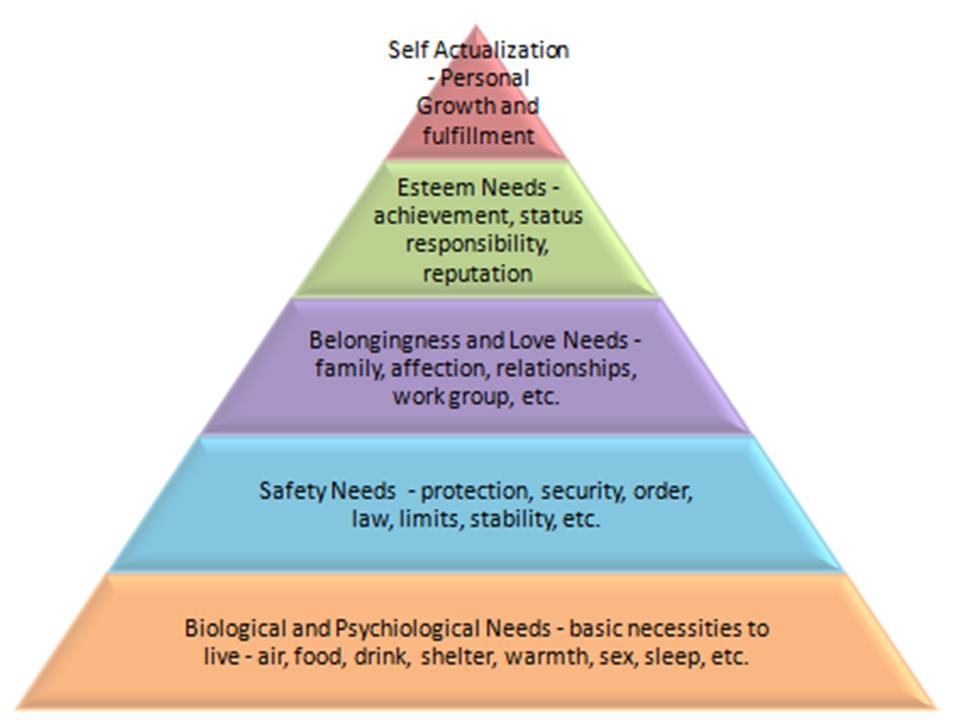


 Politics and Insights