A mother of two children who were murdered by her husband says she fears being made homeless, after the heartless Department for Work and Pensions stopped her disability benefit support, despite being aware of the severe trauma she had experienced and the devastating impact it has had on her mental health.
June Martin, who has been diagnosed as suffering withpost traumatic stress disorder(PTSD) and depression, was considered by the Department for Work and Pensions (DWP) to be ineligible forPersonal Independence Payment (PIP), following an assessment by Independent Assessment Service – formerly known as Atos Healthcare.
June has challenged the accuracy and fairness of the PIP assessment process. She told the Sunday Postthat the assessor only “wanted to know if I could spell ‘world’ backwards and hold my arms above my head.”
She said “I’ve been treated like some kind of scrounger and put on trial, although I’ve done nothing wrong.
“My former husband, who murdered our children, doesn’t have to worry about keeping a roof over his head or where his next meal is coming from but now I do.
She added, tragically: “I’ve been made to feel a burden on society. Maybe it would be better if I wasn’t here.”
On Saturday, May 3, 2008, June walked into her home in Buckhaven, Fife, and found the bodies of disabled Michelle and her little brother Ryan while their father, who had stabbed them 26 times, lay on his bed, pretending to be dead. June’s former husband, Rab Thomson, was found guilty of stabbing 25-year-old Michelle and 7-year-old Ryan and given a life sentence in 2008.
However, despite her struggle to cope with the terrible trauma, the benefits assessment report describes her mental state examination as “unremarkable”.
She said: “I’m now terrified I will lose my rented flat because I can’t keep up the £35 a week I have to find to make up the difference to housing benefit.
“I must have moved over a dozen times because I haven’t been able to settle somewhere I feel safe.
“Just when I finally found a little peace and somewhere I can feel safe, I fear it’s all going to be taken from me now.
“I’ve tried far too many times to take my own life because I just feel there is nothing for me to live for and this has left me feeling like that again.”
MP Patricia Gibson described the case as “shocking” and said: “This is yet another example of the DWP letting down vulnerable people when they most need support. Those living with mental health challenges are poorly understood by DWP assessor and this has to change.”
Left bereft, extremely distressed and suicidal, June has struggled to rebuild her life. She has never recovered from her ordeal, which is absolutely understandable. She had been in receipt of £55.10 a week in disability benefits before being reassessed for PIP.
However, an independent tribunal has unbelievably upheld the DWP decision.
A spokesperson said: “Whilst the tribunal accepts Ms Martin has mental health problems and balance problems, the nature and extent of the resulting limitations are insufficient to score therequired number of points.
“As a result Ms Martin does not qualify for either component of Personal Independent Payment.”
That someone who has faced such a deeply traumatic event as the murder of her children has to then “score a required number of points” to be considered eligible for lifeline support indicates just how profoundly dehumanising and utterly unfit for purpose the disability benefit assessment process is.
June said “Neither the assessor or the tribunal last week seemed to want to know about the trauma I suffer daily reliving finding my children posed as if they were asleep in their beds, or pulling back the covers to find them stabbed to death,” she said.
“I’ve battled so very hard to try and go on, but I’ve had to accept I’ll never get over finding my babies murdered, their blood on the walls and over their toys and teddy bears.
“My disabilities are invisible. They cannot be tested by spelling a word backwards or holding my arms above my head.
“Questions were thrown at me, one after the other. I couldn’t think straight to answer them properly. I’m a mess. I don’t stand up well to questioning. I just blurt things out and I panic.
“I’d written on the official forms that my children were murdered and I found them, but I don’t remember being questioned about that or my inability to live anything like a normal life.”
June also said that the assessor and DWP failed to take into account how her mental health fluctuates from day to day.
June continued: “I don’t know from one day to the other how I will feel, sometimes from one hour to the other”, she said.
“I can get up and go to the supermarket for a loaf of bread one day, but if I hear a child crying it takes me back to the murder scene.
“A smell, a song, someone laughing like my Michelle used to laugh, brings it all back and I have to run away from it.”
A DWP spokesperson offered the usual meaningless and standardised platitudes, saying: “This is a sensitive and distressing set of circumstances and our thoughts remain with Ms Martin.
“We will continue to ensure Ms Martin is receiving all the benefits she is entitled to and gets the support she needs.”
The support that June needs is the reinstatement of her Personal Independence Payment, and an adequate level of support to meet her housing costs, not gaslighting from the DWP.
We live in an age of ubiquitous measurement, where our health and eligibility for support is defined and decided by metric based judgments, and our behaviours and expectations are expected to conform to the government’s notion of an overarching competitive model of the market. In this horrifically cruel, impersonal and dehumanising neoliberal world, eligibility for support depends on whether you score enough points that measure arbitrary criteria of what the state thinks should be measured.
Can you say a “world” backwards? Can you touch your knees? Can you raise an arm? This framework of meaningless tick box criteria bears little resemblance to the many actions and decisions you have to make during your everyday life, and it doesn’t show anything of how someone copes or doesn’t cope. It doesn’t indicate if someone has a network of support, help from other agencies, or if they are completely isolated.
It tells us nothing of whether or not someone can consistently perform one of these prescribed and contradistinctive tasks at an assessment for lifeline support in real life. The more of these meaningless and detatched-from-everyday-living tasks you are perceived as able to perform, the less points you are awarded. If you fail to score enough points, you aren’t considered ‘eligible’ for support, regardless of how much you happen to need it.
The accounts presented in disability assessment reports based on the rigid, inadequate point scoring system and the actual realities of disabled people’s lives are incommensurable.
The Commons Work and Pensions Committee said earlier this year that it had an “unprecedented” response when it asked members of the public to get in touch with their experiences of being assessed.
Some people said reports of their assessments included the results of physical examinations that hadn’t happened. Some reports left out crucial information provided during the interview, and some seemed to refer to entirely different people. Publishing their findings, the MPs said the number of ‘mistakes’ taking place, and the number of decisions eventually overturned on appeal, had created “a lack of trust in both benefits” and led to fears the system is deliberately rigged against claimants.
Stephen Brown, head of North Ayrshire Council’s health and social care partnership, said: “The benefits system often fails to recognise the impact of trauma and its long-term debilitating nature. Our psychologists, psychiatrists and social workers have known this for years and much of their time is spent supporting people to rebuild their lives.”
To rebuild lives, we must first ensure people can meet the costs of their basic living needs – such as for food, fuel and keeping roof over their head.
I don’t make any money from my work. I am disabled because of illness and have a very limited income. But you can help by making a donation to help me continue to research and write informative, insightful and independent articles, and to provide support to others. The smallest amount is much appreciated – thank you.
The Serious Fraud Office (SFO) isconducting a criminal investigation into Serco (and G4S)regarding electronic monitoring contracts – specifically concerning the tagging of prisoners. Although the case was opened and announced in 2014, the case is still ongoing, and islistedunder ‘current cases’. Serco is reliant on the UK public sector for half of the group’s sales: £1.2 billion last year. As a “strategic supplier”, Serco’s contracts include running prisons, Royal Navy tugs and the Atomic Weapons Establishment.
Labour’s Richard Burgon has written to justice secretary David Gauke to express concern over the appointment of a new junior minister who previously worked for the outsourcing giant Serco – which is under criminal investigation for overcharging Gauke’s own department.
In 2013 Serco agreed to pay £68.5 million for overcharging the Ministry of Justice. There were allegations that the government had been billed for the electronic monitoring of people who were still in jail, were not tagged anymore, or were even, in a few cases, dead. Serco also had to pay back £2 million over claims of fraud concerning its prisoner transfer contract. In May 2014 a Survation poll for campaign group We Own It, found that 63% of respondents thought Serco should be banned from bidding for any new public contracts after the firm was investigated for overcharging on government contracts.
Despite the ongoing criminal investigation, it’s rather worrying that Serco continues running one of its most lucrative operations after it was announced in 2016 that the struggling government contractor was to retain its role in the manufacture and maintenance of the warheads for Britain’s Trident nuclear deterrent, and in the storage of UK atomic waste, especially given claims that the company has “mishandled” the disposal of nuclear waste.
After months of contractual wrangling in which investors had feared that Serco and its joint venture partners would lose the work, the Ministry of Defence announced that it is keeping the contract to run the Atomic Weapons Establishment, based at Aldermaston, other sites in Berkshire and at Coulport in Scotland.
It was revealed in the Paradise Papers that Appleby, an offshore law firm, regarded Serco, who run “sensitive” government services in Australia and the UK, as a “high-risk” client, expressing concern about its “history of problems, failures, fatal errors and overcharging”. The company had also presented false data to the NHS at least 252 times, was accused of fraudulent record keeping and had allegedly manipulated results when it failed to meet targets, Appleby’s compliance team warned.
In health services, Serco’s ‘difficulties’ include the poor handling of pathology labs and fatal errors in patient records. At St Thomas’ Hospital, the increase in the number of clinical incidents arising from Serco non-clinical management has resulted in patients receiving incorrect and infected blood, as well as patients suffering kidney damage due to Serco providing incorrect data used for medical calculations. A Serco employee revealed that the company had disgracefully falsified 252 reports to the National Health Service regarding Serco health services in Cornwall.
On 24 October 2017, it was reported that Serco was preparing to buy healthcare contracts from facilities management business Carillion. The deal included 15 contracts, with annual revenues of approximately £90m, for which Serco would pay £47.7m, with Carillion losing £1bn from the value of its order book.
Chief among the law firm Appleby’s concerns about Serco were the numerous allegations of fraud, the cover-up of the abuse of detainees, and the “mishandling” of radioactive waste in the UK.
Serco say: “Within the UK and Europe we work across public service sectors in Justice, Immigration, Healthcare, Defence, Transport and Citizen Services. From providing critical air navigation services for our aviation customers to pursuing innovative approaches to reduce reoffending in our prisons, we seek to transform the experience of our services users”. The company have a finger in many lies.
Edward Argar, Conservative MP for Charnwood, has replaced Phillip Lee at the Ministry of Justice (MoJ) following Lee’s resignation last week over the way Theresa May is delivering Brexit. He is ex-head of UK and Europe Public Affairs at Serco, working there until nine months before he was elected as MP for Charnwood in 2015.
Argar was previously head of UK and Europe public affairs at Serco, which has a number of prisons contracts and previously ran Hassockfield Secure Training Centre, in County Durham, prior to its closure in 2014. Serco runs a total of five private prisons on behalf of the MoJ – Doncaster, Ashfield, Dovegate, Lowdham Grange and Thameside. Doncaster was criticised by inspectors in 2016 who found vermin infestations and “overwhelmed” staff.
The decision to give the company a new £70 million eight-year contract to run Yarl’s Wood has been criticised. Natasha Walter, of Women for Refugee Women, said “Serco is clearly unfit to manage a centre where vulnerable women are held and it is unacceptable the government continues to entrust Serco with the safety of women who are survivors of sexual violence.”
In January this year, a damning report by the Commons Public Accounts Committee described the programme – by this point five years late and £60 million over budget – as “a catastrophic waste of public money which has failed to deliver the intended benefits.”
Argar’s new role will include overseeing the establishment of proposed “secure schools” as part of efforts to place a greater focus on the education and rehabilitation of young offenders.
Argar’s voting record reveal a staunch and mean neoliberal, who believes, unsurprisingly, that the government should make the asylum system more ‘strict’ and should be ‘tough’ on illegal immigration. He strongly supports academy schools, austerity; welfare cuts, including the bedroom tax; mass surveilance and of course, increases in the tax-free allowance. He supports the replacement of Trident 100%, too, which is also unsurprising, given Serco’s role in the nuclear industry. He’s not so keen on equality and human rights legislation, however.
Labour’s shadow justice secretary Richard Burgon has quite rightly asked whether Argar will be dealing with any contracts related to his former employer as part of his work.
The letter, sent on 15 June by shadow justice secretary, Burgon, says: “It is essential that government ministers can command public confidence that they are capable of holding such companies [as Serco] to account.”
It goes on to ask whether “Mr Argar will be involved in any way in liaising on behalf of the Ministry of Justice with the Serious Fraud Office about the ongoing investigation” or “dealing with any of the ministry’s contracts with Serco in his new ministerial capacity”.
The campaign group Transparency International has said that the government should have “mechanisms” in place to avoid the possibility or perception of any firm ‘gaining an advantage.’
Research manager Steve Goodrich said: “When appointing new Ministers it’s imperative that all real or potential conflicts of interest are fully scrutinised and addressed, and mechanisms are in place to avoid any decisions made in the interest of previous employers.
“Failing to do so can lead to the perception or reality that a Ministers may seek to put private interests first at the public’s expense.”
An MOJ source stressed: “There is no conflict of interest simply because someone has worked for a particular employer earlier in their career.
“The Government benefits by having Ministers with a breadth of previous experience.”
And big business benefits by having Ministers in government with a breadth of big business experience, who vote on issues that affect and promote big business interests.
The Ministry of Justice has declined to comment further, when asked if any mechanisms of transparency and accountability would be put in place, but said that Argar had been appointed “in line with normal procedures and rules.”
You can’t help but wonder just how many catastrophic failures it will take to demonstrate conclusively to an ideologically paralysed government that in reality, existing public services markets are a far cry from the paradigm of ‘competitive efficiencies’ in perfect markets. Serco alone has perpetrated more scandals than a public agency would have ever survived. Yet this government has rolled over hundreds of major outsourcing contracts in 2017 without review, many of them 10 years long, because of the current Brexit workload.
Within the neoliberal idiom of public services, there is clearly a fundamental inability to consider collective public interests because of the private profit motive.
You also have to wonder what part of this idiom constitutes “sound public finance.” Yet despite the clear wake of crises thrown up by a fatally flawed outsourcing model, the government stumble on dogmatically, hiding their own ideological reach behind a privatised wall that completely blocks out transparency and democratic accountability.
The companies profit, while all of the risks of privatisation are carried by citizens using the diminished, ‘streamlined’, ‘efficient’ facade services. Meanwhile, democratic transparency and accountability is denied; due to the ‘commercial sensitivity’ of private companies, they cannot be held to account by public appeals to the Freedom Of Information Act (FOI), debarring openness and transparency – the essential foundations for democratic decision making.
—
Here is Richard Burgon’s letter in full:
Dear Secretary of State,
I am writing about the appointment of Edward Argar MP yesterday as a Justice Minister following the resignation of Dr Phillip Lee earlier this week.
Press reports today state that Mr Argar was formerly Head of Public Affairs in the UK and Europe for Serco, the outsourcing giant. A Serco spokesperson confirmed to the media that Mr Argar was employed there for over three years until August 2014.
As you know, Serco plays a significant role in our justice system, including by running five private prisons and in transporting 24,000 prisoners per month to court through the Prison Escort Contract.
The role of the private sector in our justice system is increasingly contentious given the widespread performance failings, for example in the probation service and in detention centres for young people such as Oakhill.
Serco itself has a controversial record in our justice system. It is currently under criminal investigation by the Serious Fraud Office for overcharging in an offender tagging contract. In 2013 it was forced to repay £68.5m to the Ministry of Justice after having charged for tagging offenders, some of whom had died or were back in prison. In addition, Serco previously had to repay £2m to the Ministry of Justice after being found to have falsely recorded prisoners as having been delivered to court on time.
It is essential that government ministers can command public confidence that they are capable of holding such companies to account, that the interests of the public, and not the profits of the corporations, are being put first and that there is no perceived conflict of interest.
Given this could you confirm whether Mr Argar will be involved in any way in liaising on behalf of the Ministry of Justice with the Serious Fraud Office about the ongoing investigation or will be dealing with any of the Ministry’s contracts with Serco in his new ministerial capacity?
Yours
Richard Burgon MP
As I’ve said elsewhere, in the UK market economy, everything is for sale, with the very wealthiest people finding considerable discounts on moral obligations and behavioural ethicality. It’s become very easy to lose track of why some things simply shouldn’t be. The Conservative’s privatisation programme has proved to be a theme park for economic crime and party profit; firms and politicians collude to ensure we have the ‘best’ system that money can buy. It’s a system, however, that is incompatible with democracy and human rights frameworks.
We hear a lot from the new right fundamentalists about how the market place extends ‘liberty’, but there is little discussion about the fundamental imbalance built into the system that has systematically disempowered many others who can’t afford to pay for their liberty. Or their legal fees and penalties. The market place is not neutral. It’s a place where class discrimination is rampant, traditional power relations are fortified and morally constrained behaviour is only ascribed to and required from the poorest citizens. All of this has profound implications for democracy.
‘Public choice’ economics has shaped the neoliberal reforms to the civil service and public institutions, resulting in the slippery sloped internal market in the NHS, the dismantling of the welfare state and outsourcing of many other state functions, student fees in higher education, the destruction of social housing, legal aid provision and the deregulation, bonfire-of-the-red-tape approach of the pro-market regulatory agencies of many other areas of public life, including the financial sector.
The wake of scandals to date, in which large corporations more generally, politicians, and bureaucrats have engaged in criminal activity in order to profit personally, facilitate mergers and block competition; in which officials accept private payments to facilitate private interests, and for public services rendered, demonstrates only too well the extent to which corruption is driven by the very economic and political reforms that are claimed to decrease it.
I don’t make any money from my work. I am disabled because of illness and have a very limited income. But you can help by making a donation to help me continue to research and write informative, insightful and independent articles, and to provide support to others. The smallest amount is much appreciated – thank you.
Earlier this year, I wrote an article about the Universal Credit (UC) rules which will leave many disabled people who are new claimants, who experience a change in circumstances or a break in their claim, without their Disability Income Guarantee.
Those people who qualified for the support component of income-related Employment and Support Allowance and (ESA) are eligible for a disability premium (also called the Disability Income Guarantee.) However, as a result of the abolition of both the severe disability premium (SDP) and enhanced disability premium (EDP) under UC rules, according to the disability charity, Scope, the cut to the disability income guarantee will see disabled people lose as much as £395 a month.
Two disabled people decided to take the government to court over the brutal cuts to their income, which has caused them severe hardship.
Earlier this month, in a landmark judgment, the High Court ruled that the Department for Work and Pensions (DWP) unlawfully discriminated against two severely disabled men who both saw their benefits dramatically reduced when they claimed Universal Credit.
Lawyers representing the men said the ruling showed that the new benefit system was “not working” for the disabled or other claimants, and urged the government to halt the roll-out and overhaul the system to meet peoples’ needs and not “condemn them to destitution”. The two claimants, known only as TP and AR, had both previously been in receipt of the Severe Disability Premium (SDP) and Enhanced Disability Premium (EDP), which were specifically aimed at ensuring the additional care and needs of severely disabled people living alone with no carer are met.
Both people were required to make a claim for universal credit when they moved into new local authorities where the controversial new benefit was being rolled out. According to both the men, they were advised by DWP staff that their benefit entitlement would not change. Yet despite repeated assurances from the government that “no one will experience a reduction in the benefit they are receiving at the point of migration to universal credit where circumstances remain the same”, both men saw an immediate drop in their income of around £178 a month when they were moved over to UC.
When they asked for the top up payments promised by the DWP, they were told that Government policy was that no such payments would be paid until July 2019 when managed migration is due to begin.
As both claimants testified to the court, the sudden drop of income had a devastating impact on them, both physically and psychologically. TP, a former City banker who suffers from a terminal illness, has been struggling to address his care needs, and AR, who suffers from severe mental health issues, has been unable to afford basic necessities.
Earlier this month, the DWP committed the government to ensuring that no severely disabled person in receipt of the SDP will be made to move onto universal credit until transitional protection is in place and also, made a commitment to compensate those like the claimants who have lost out.
Despite this, following the judgment, the Secretary of State for Work and Pensions has sought permission to appeal, maintaining that there was “nothing unlawful” with the way the claimants were treated.
Their lawyer, Tessa Gregory from the human rights team at Leigh Day, told the Court: “Nothing about either of the claimants’ disability or care needs changed, they were simply unfortunate enough to need to move local authorities into a Universal Credit full service area.”
The judge said the impact on the individuals was “clear”, and said the way they were transferred onto universal credit was “manifestly without reasonable foundation” and “failed to strike a fair balance”.
Following the ruling, Ms Gregory said: “This is the first legal test of the roll out of Universal Credit and the system has been found to be unlawfully discriminating against some of society’s most vulnerable.
“Whilst we welcome the Government’s commitment to ensuring that no one in our client’s position will now be moved onto Universal Credit until top up payments are in place, it comes too late as it cannot make up for the months of suffering and grinding poverty our clients and many others like them have already had to endure.
“We call upon Esther McVey to compensate our clients and all those affected without any further delay, and urge her to focus on fixing Universal Credit rather than wasting more public funds appealing this court decision.
“Today’s decision shows again that Universal Credit is not delivering what was promised at the outset. It is not working. It’s not working for the disabled, it’s not working for parents, it’s not working for low-income and part-time employees and it’s not working for the self-employed.
“The government needs to halt the rollout and completely overhaul the system to meet peoples’ needs, not condemn them to destitution. If this doesn’t happen further legal challenges will inevitably follow.
“Disability premiums are not a luxury. They play a crucial role in helping disabled people pay for essentials like food, clothing and bills. The needs of the people involved in this case haven’t changed, and yet they have lost more than £170 per month in support. This isn’t fair.
“Until the Government fully addresses these issues, it will unfairly penalise disabled people for moving over to universal credit.”
A DWP spokesperson said: “The court found in our favour on three of the four points raised by the claimant. We will be applying to appeal on the one point the court found against the Department. This government is committed to ensuring a strong system of support is in place for vulnerable people who are unable to work.”
Clearly the government is committed to trying it on by paying people as little as they can possibly get away with from the public fund. Deliberately cutting money from disabled peoples’ crucial lifeline support can hardly be described as “ensuring a strong system of support is in place”. This response indicates quite clearly that the cut was fully intentional on the part of the government.
The spokesperson added: “Last week, the Secretary of State announced that we will be providing greater support for severely disabled people as they move onto universal credit. And we have gone even further, by providing an additional payment to those who have already moved onto the benefit.”
Yes, because the cut has been ruled as discriminatory and unlawful, not because a choice was actually made to do so. Only the Conservatives could turn prejudice, discrimination and breaking the law into some kind of virtue.
Again this response indicates clearly that these were intended changes, and not merely a consequence of administrative incompetence. There was not a shred of regret expressed by the government regarding the severe hardship these cuts have caused for disabled people.
And this still leaves disabled people claiming the disability support component of Universal Credit for the first time without the Disability Income Guarantee. That is also discriminatory.
The Department for Work and Pensions have claimed UC means that support is “focused on those who need it most”, but a government removing Severe Disability Premium and Enhanced Disability Premium, which is support designed to help severely disabled people who live without a carer – is pulling a basic safety net from citizens with the greatest needs. The premiums were also designed in part to address the problem of cumulative poverty for severely disabled people who cannot work, or who face disadvantage in the labour market because of additional needs and barriers.
This cut will also potentially affect disabled lone parents who may rely on their benefit support to pay for support to shop, cook and wash, for example. The cut may mean that they will be forced to rely on their own children as carers.
Austerity has been carried disproportionately by disabled people
The UC system has made an estimated £11bn in savings, mainly through Treasury cuts to the original set level of universal credit rates – most notably through reductions to work allowances, which will save around £3bn, and the removal of £2bn in disability premium payments – but UC planning and delivery has also incurred £8.5bn in expenses.
Government statistics published last year show 47 per cent of people who were formerly receiving Disability Living Allowance (DLA) saw their support fall or stop altogether when they were reassessed for Personal Independent Payment (PIP).
Of a total of 947,000 claimants who were reassessed in the year up to October 2017, 22 per cent saw their support reduced, while a quarter were disallowed or withdrawn altogether — meaning 443,000 people will have had their claims reduced or removed.
However, the success rate for claimants when appealing Personal Independence Payments (PIP), for example, was 65% in 2016/17. The Mirror has recently reported that the rate of PIP appeal success has hit an all-time high of 71% for the first quarter of 2018.
Labour MP Rosie Duffield secured a debate (her first) which took place a couple of days ago (20 June) about the report by the UN committee on the Rights of Persons with Disabilities (UNCRPD). The report said successive UK governments had committed “grave” and “systematic” violations of disabled people’s human rights. The chair of the committee said the government had created a “human catastrophe” for disabled people. (You can read the full debate here).
The debate addressed last autumn’s report on the UK’s implementation of UNCRPD, and the conclusion of the UN’s disability committee that the UK government should make more than 80 improvements to the ways its laws and policies affect disabled people’s human rights.
In a briefing prepared ahead of the debate, the Equality and Human Rights Commission the other official and independent bodies responsible for monitoring the UK’s progress in implementing the convention – had called on the UK government to describe how it would “comprehensively address” the UN committee’s findings. However, the government has not made any commitment to implementing the committee’s recommendations.
During the debate, Labour MPs accused Sarah Newton, Minister of State for the Department for Work and Pensions, and the government, of making disabled people a “forgotten class”; of allowing the DWP to “endlessly mistreat” them, and of creating a “national scandal”.
Newton dismissed Labour’s comments,using techniques of neutralisation that I’vewritten about before.In short, Newton used a tactic that the Conservatives have used many times before – an indignant and outraged denial. She actually accused the opposition of ‘scaremongering’ again, (and by default, she attempted to discredit disabled citizens’ accounts of their own experiences, which of course flies in the face of democratic accountability).
The Conservatives are denying responsibility for the consequences of their policies, denying harm, denying the victims and condemning the condemners.
Newton said: “I utterly refute the allegations that have been made today: that we are discriminating against disabled people; that we are systematically undermining and violating their human rights, or worst of all that we are targeting their welfare support.”
In her attempt to defend her government’s appalling record on cuts to social security, she also told MPs that there had been “no freeze in the benefits that disabled people receive”.
Although disability living allowance (DLA), personal independence payment (PIP) and the employment and support allowance (ESA) support group top-up are exempt from the benefits freeze – which is set to last to 2020 – there is no exemption for the main component of ESA and the top-up paid to those in the ESA work-related activity group, which continues to be frozen.
Newton claimed that the UN, opposition and again, by default, disabled citizens, were making “irresponsible” allegations. And the courts. Again, this is a technique of neutralisation called “condemning the condemners”, used to ‘switch off ‘someone’s conscience when they plan, or have done, something to cause harm to others. The technique may also be used to push at the normative and moral boundaries of groups and the wider public. (*See below for a full outline of the techniques).
Newton also said that the government was “very disappointed” that the UNCRPD did not “take on board […] the evidence that the government gave them. They did not acknowledge the full range of support.” That’s because it isn’t there.
The UNCRPD report presented extensive, meticulous evidence with their thorough report, gathered from disabled people that have been affected by the welfare cuts, campaign groups, charities and research academics. It also condemned the UK government’s attempts to misrepresent the impact of policies through “unanswered questions”, “misused statistics”, and a “smoke screen of statements.”
It isn’t ‘scaremongering’ to express concern about punitive policies that are targeted to reduce the income of social groups that are already struggling because of limited resources, nor is it much of an inferential leap to recognise that such punitive policies will have some adverse consequences.
Political denial is oppressive – it serves to sustain and amplify a narrow, hegemonic political narrative, stifling pluralism and excluding marginalised social groups, excluding qualitative and first hand accounts of citizen’s experiences, discrediting and negating counternarratives; it sidesteps democratic accountability; stultifies essential public debate; obscures evidence and hides politically inconvenient, exigent truths. Denial of causality does not reduce the probability of it, especially in cases where a correlation has been well-established and evidenced. The government have no empirical evidence to verify their own claims that their punitive policies do not cause harm and distress.
Government policies are expressed political intentions regarding how our society is organised and governed. They have calculated social and economic aims and consequences. In democratic societies, citizen’s accounts of the impacts of policies ought to matter.
However, in the UK, the way that policies are justified is being increasingly detached from their aims and consequences, partly because democratic processes and basic human rights are being disassembled or side-stepped, and partly because the Government employs the widespread use of linguistic strategies and techniques of persuasion and neutralisation to intentionally divert us from their aims and the consequences of their ideologically (rather than rationally) driven policies. Furthermore, policies have become increasingly detached from public interests and needs.
Damian Green, who was the work and pensions secretary at the time the UN report was published. dismissed the highly critical findings . He said, shamefully, that the report was “patronising and offensive” and presented an outdated view of disability in the UK. He said Britain was “a world leader in disability rights and equality”.
But many of us – disabled citizens, disability activists, campaigners, charities and researchers – welcomed the report, saying it accurately highlighted the real economic and social hardships faced by disabled people after years of harsh spending cuts to social security and social care.
The shadow work and pensions secretary at the time, Debbie Abrahams, said the UN report was “crystal clear” in its identification of UK government failures. “It confirms that, despite Theresa May’s warm words, this government is failing sick and disabled people,” she said.
The UN committee said a range of measures introduced since 2010, including the bedroom tax and cuts to disability benefits and social care budgets, had disproportionately and adversely affected disabled people.
Spending cuts had negatively affected the rights of disabled people to live independently, to work and to achieve an adequate standard of living, the report said. The UN urged UK ministers to ensure the rights of disabled people were upheld.
Green said: “At the heart of this report lies an outdated view of disability which is patronising and offensive. We strongly refute its findings. The UN measures success as the amount of money poured into the system, rather than the work and health outcomes for disabled people. Our focus is on helping disabled people find and stay in work, whilst taking care of those who can’t.”
The government said at the time that it spent about £50bn a year to support sick and disabled people – a bigger proportion of GDP than countries including Canada, France and the US.
However, this is plainly untrue. In 2015, the government’s own figures show that even before some of the cuts were implemented, the UK was ninth out of 28 countries, when ranked in terms of the size of its social protection expenditure as a proportion of its gross domestic product (GDP).
In fact Newton’s highly selective statistical ‘data’ was contradicted by the Office for National Statistics (ONS) who also reported that the UK actually spends less than France, as well as Norway, Germany and Spain on disability benefits.
Furthermore, Newton’s figure includes amounts that are not directly related to disability benefit, such as carers’ allowance, housing benefit, council tax allowance, and it also includessome NHS spending.
The government actually spent £39 billion on disability, incapacity and industrial injury benefits in 2017/18. That’s 76% of the total £51 billion that Newton claimed was spent.
Abrahams said the report echoed warnings Labour had been making since 2011 about the effects of the government’s policies on disabled people. It certainly echoed warnings many of us have been making – in my own case, since the welfare “reforms” in 2012.
“The UN committee is clear that its report examines the cumulative impact of legislation, policies and measures adopted from 2010 to October 2016, so the government’s claim that it is outdated does not stand up to scrutiny.
“I am also concerned that the government is labelling the report as patronising, when they are the ones dismissing the concerns raised by disabled people who helped instigate the inquiry in the first place.”
This dismissal is despite being presented with evidence from a wide range of organisations as well as disabled citizens, to whom Conservative policies are causing harm and distress. Yet the government continue to distance themselves from the consequences of their own decision-making, opting to deny them instead. Those are not the reasonable actions of an accountable, democratic government.
Decades of findings in sociology and psychology tell us that as soon as a social group are defined as an outgroup, the public start to see them differently. Because politicians have stereotyped people who claim welfare support, portraying only negative characteristics, the public also perceive only those characteristics. The government, with the help of the media, has purposefully portrayed people claiming welfare support as folk devils: lazy, dishonest, stupid and as scroungers, and so on. This is profoundly dehumanising.
The people being harmed by policies have become outsiders, they’ve been pushed out of the circle of our moral community. The government clearly don’t think of the people enduring terrible distress and hardship as experiencing the same range of autonomy, needs, thought, emotion and motivations that they do; they don’t imagine them feeling things in the same way that they do. This disconnection – a failure to recognise common human characteristics in the other – means that they are denied some measure of empathy, and consequently a sense of ethical and democratic obligation and inclusion.
The Conservatives talk a lot about “evidence-based policy”, but they don’t walk the talk. A weight of evidence has highlighted the cruel, draconian effects of the Tories’ social polices. The government have chosen to deny and ignore it.
This lack of appropriate response indicates a deliberately prejudiced, vicious attack on a significant minority of the population, which the government has absolutely no intention of stopping or putting right any time soon.
—
You can watch the whole debate that was secured by Rosie Duffield here:
—
* Techniques of neutralisation:
Used to switch off the conscience when someone plans or has done something to cause harm to others.
The idea oftechniques of neutralisation was first proposed by David Matza and Gresham Sykes during their work on Edwin Sutherland’s Differential Association in the 1950s. Matza and Sykes were working on juvenile delinquency, they theorised that the same techniques could be found throughout society and published their ideas in Delinquency and Drift, 1964.
They identified the following psychological techniques by which, they believed, delinquents justified their illegitimate actions, and Alexander Alverez further identified these methods used at a socio-political level in Nazi Germany to “justify” the Holocaust:
1. Denial of responsibility. The offender(s) will propose that they were victims of circumstance or were forced into situations beyond their control.
2. Denial of harm and injury. The offender insists that their actions did not cause any harm or damage.
3. Denial of the victim. The offender believes that the victim deserved whatever action the offender committed. Or they may claim that there isn’t a victim.
4. Condemnation of the condemners. The offenders maintain that those who condemn their offence are doing so purely out of spite, ‘scaremongering’ or they are shifting the blame from themselves unfairly.
5. Appeal to higher loyalties. The offender suggests that his or her offence was for the ‘greater good’, with long term consequences that would justify their actions, such as protection of a social group/nation, or benefits to the economy/ social group/nation.
6. Disengagement and Denial of Humanity is a category that Alverez added to the techniques formulated by Sykes and Matza because of its special relevance to the Holocaust. Nazi propaganda portrayed Jews and other non-Aryans as subhuman. A process of social division, stigma, scapegoating and dehumanisation was explicitly orchestrated by the government. This also very clearly parallels Gordon Allport’s work on explaining how prejudice arises, how it escalates, often advancing by almost inscrutable degrees, pushing at normative and moral boundaries until the unthinkable becomes tenable. This stage on the scale of social prejudicemay ultimately result in genocide.
Any one of these six techniques may serve to encourage violence by neutralising the norms against prejudice and aggression to the extent that when they are all implemented together, as they apparently were under the Nazi regime, a society can seemingly forget its normative rules, moral values and laws in order to engage in wholesale prejudice, discrimination, exclusion of citizens, hatred and ultimately, in genocide.
In accusing citizens and the opposition of ‘scaremongering’, the Conservatives are denying responsibility for the consequences of their policies, denying harm, denying distress; denying the victims and condemning the condemners.
I write voluntarily, to do the best I can to raise awareness of political and social issues. In particular I research and write about how policy impacts on citizen wellbeing and human rights. I also co-run a group on Facebook to support other disabled people going through ESA and PIP assessments, mandatory reviews and appeals.
I don’t make any money from my work. I am disabled and don’t have any paid employment. But you can contribute by making a donation and help me continue to research and write informative, insightful and independent articles, and to provide support to others. The smallest amount is much appreciated – thank you.
“Being hit by the bedroom tax is bad enough, but losing your sickness benefits too is even harder.”
Disabled people protest about cuts to benefits Photograph: Alamy Stock Photo
Back in 2014, armed with only a laptop and phone, disabled campaigners started a hunt for the truth. As policies including the bedroom tax, the abolition of disability living allowance, and the rollout of controversial out-of-work sickness benefits hit, War on Welfare (Wow) called on the coalition government to carry out a cumulative impact assessment of the wave of disability cuts to measure the effect on disabled people. It resulted in a debate in parliament – the first time disabled people had secured a debate in the main chamber of the House of Commons – but no action.
Now, four years on, Wow has gained the backing of a cross-party coalition that wants Theresa May’s government to calculate the overall impact of the so-called welfare reformson disabled people. Every party except the Conservatives is in favour of a Commons debate on conducting this assessment, including the DUP. In light of the pressure over Northern Irish abortion reform, their support for detailed analysis of the impact of Tory disability cuts is another awkward clash between May and the DUP’s 10 MPs propping up her administration. But more than that, it’s a sign of hope that ministers may have to finally investigate just what damage their disability cuts are causing – from the social care crisis to cuts to multiple parts of the NHS, to the disastrous rollout of universal credit; now delayed for an extra year until 2023.
Last week’s damning reportby the National Audit Office (NAO) on universal credit castigated the system’s inability to protect and support “vulnerable claimants”. It follows the revelation this month that the government was forced to say it would repay thousands of severely disabled people made worse off under the UCsystem ahead of the high court ruling last weekthat it was “discriminatory” to have docked two disabled men’s benefits after transferring to UC. Following pressure from disability groups, this week ministers made another U-turn, this time to stop repeatedly testing some disabled people for personal independence payments.
The government’s austerity programme has resulted in multiple reductions in income since 2010 that have hit disabled people all at once and disproportionately. Being hit by the bedroom tax is tough – but losing your sickness benefits as well after being found “fit for work” is even harder.
If you need an insight into the damage these policies have done, just go to Wow Voices, a website set up by campaigners that features disabled people explaining the impact of cuts on them. One woman with terminal breast cancer writes of how, for the last 18 months, she’s been told she needs to be reassessed for her benefits every six months, and she’s frantic about the thought of losing her support. “I’ve cried more about this than my terminal diagnosis,” she says.
The UN’s damning report in 2016 into the UK’s “violations” of disabled people’s rights has put further pressure on the government over its treatment of disabled citizens. Meanwhile, the Equality and Human Rights Commission’s own cumulative impact assessment shows that families with a disabled adult and a disabled child will lose £5,500 a year by 2022 as a result of tax and benefit changes – contradicting the government’s claim that such analysis would be “too complex” to do.
This month, research by the Joseph Rowntree Foundation found around 650,000 people with mental and physical health problems were officially destitutein the UK last year – that means being so poor, they can’t afford deodorant, the electric, or regular meals – with social security changes found to be a key cause. It’s bad enough for ministers to take away state support from disabled people en masse, but to refuse to analyse its effects is the definition of irresponsible. The Conservatives must finally shine a light on the impact that disability cuts have had. What are they so afraid of?
I write voluntarily, to do the best I can to raise awareness of political and social issues. In particular I research and write about how policy impacts on citizen wellbeing and human rights. I also co-run a group on Facebook to support other disabled people going through ESA and PIP assessments, mandatory reviews and appeals.
I don’t make any money from my work. I am disabled and don’t have any paid employment. But you can contribute by making a donation and help me continue to research and write informative, insightful and independent articles, and to provide support to others. The smallest amount is much appreciated – thank you.
A research report published on Tuesday by the homeless charity St Mungo’s shows that four out of five (80%) rough sleepers who died in the capitol in 2017 had mental health needs, a huge increase from three in 10 (29%) in 2010. The rise in deaths of rough sleepers with mental health problems have risen sharply over the last seven years, prompting concern that specialist services are not reaching those who need them.
The number of people sleeping rough has risen by 169% since 2010. Last year in England more than 4,700 people slept rough on any one night, and a far larger number experienced rough sleeping during the course of the year.
The charity is calling on the prime minister to take urgent action to prevent more people dying on the streets and ensure that the deaths are not ignored. The charity says the government need to invest more in specialist support, as NHS services are “severely overstretched”. this could sometimes be overlooked. Petra Salva, director of St Mungo’s rough sleeping services, said:
“This is a scandal and something the government needs to recognise and do more about … there should be more funds and support for these groups but instead they have been cut over the years and that correlates in these people stuck living on the streets … these deaths are preventable.”
He added: “The rise is because rough sleepers with mental health support needs end up sleeping rough and the help isn’t there and when it is there it is not quick enough … access to help and support is getting harder and so the prevalence of death … is increasing.”
The report said “Research carried out by St Mungo’s showed that only 32% of the areas where 10 or more people are sleeping rough on any one night commission mental health services actively targeting people sleeping rough.”
The report also featured a survey of dozens of street outreach workers and 63% said they were aware of someone who had died while sleeping rough in their local authority area last year. However, only 23% had experienced a review being carried out.
“With access to vital emergency accommodation and support services getting harder and harder, it is unsurprising that the number people dying on the streets is rising. Urgent action to provide rapid relief from rough sleeping is needed to turn this around,” the report stated.
Having a mental health problem can create the circumstances which can cause a person to become homeless in the first place. Yet poor housing or homelessness can also increase the chances of developing a mental health problem, or exacerbate an existing condition. In turn, this can make it even harder for that person to recover. It also makes it very challenging to develop good mental health, to secure stable housing, to find or maintain a job, to stay physically healthy and to maintain relationships.
The figures come amid concern about the growing number of homeless deaths and the lack of reviews into what has led to them. Out of the hundreds of deaths that have occurred in recent years, reports suggest only eight have resulted in a review.
The Guardian and the Bureau of Investigative Journalists revealed earlier this year that 340 homeless people died on the streets or in temporary accommodation in the last six years, surging from 32 in 2013 to 78 in 2017. A further 59 deaths have been recorded so far this year, already more than the whole of 2016.
In the capital, the only place where a local authority records homeless deaths, 158 people died between 2010 and 2017, an average of one death a fortnight.
Experts and campaigners have warned that without official records, counts and reviews, it’s impossible to determine why so many homeless people are dying and design and take effective action to prevent future deaths.
Howard Sinclair, the St Mungo’s chief executive, said: “This is nothing short of a national scandal. These deaths are premature and entirely preventable.”
Sinclair said that he welcomed the government Homeless Rduction Act set out by Sajid Javid to reduce the number of people sleeping rough.
Though he added: “The forthcoming strategy presents a vital opportunity to make sure no one else dies as a result of sleeping rough. We are calling on the prime minister to follow through on her commitment to end rough sleeping by making sure all parts of the public sector play their part, especially the health, justice and welfare systems.”
The Homelessness Reduction Act received Royal Assent in April 2017 and will commence in April 2018. The Act places a new duty on local authorities to help prevent the homelessness of all families and single people, regardless of priority need, who are eligible for assistance and threatened with homelessness.
Matt Downie, director of policy and external affairs at Crisis, said: “In 21st-century Britain, nobody should be dying on our streets, especially when there is clear evidence to show that rough sleeping – and all forms of homelessness – can be ended.
“Homelessness is a devastating experience. People sleeping on our streets – who are experiencing the most visible form of homelessness – are exposed to everything from sub-zero temperatures, to violence, to debilitating illnesses. And all of these dangers puts them at serious risk of death.”
Back in 2016, Theresa May unveiled the £40 million package designed to prevent homelessness by intervening to help individuals and families before they ‘end up on the streets.’ It was claimed that the ‘shift’ in government policy will move the focus away from dealing with the consequences of homelessness and place prevention ‘at the heart’ of the Prime Minister’s approach. I criticised the approach at the time, as it was framed with a narrative of individualism, and was based on a considerable degree of political prejudice regarding the causes of homelessness, which positioned citizen ‘decision-making’ as a key factor.
The Conservatives fail or refuse to recognise that many problems in wider society arise as a consequence of a prejudiced ideology that shapes political decision making, and that contributes significantly towards homelessness. These structural causes include a lack of affordable housing; high levels of poverty, low wages, the high cost of living, unemployment and underemployment; welfare cuts, punitive sanctions and problems with the way benefits system operates. Also, the way that social housing is rationed has a direct impact on levels of homelessness.
In 2016, Sajid Javid, then Communities Secretary, announced that the Government will support reforms to England’s anti-homelessness laws and strengthen local authority duties to prevent people becoming homeless. But local authorities are already struggling to meet their statutory obligations because of years of underfunding because of the Conservatives’ ideological austerity.
The Homelessness Reduction Bill – a private member’s bill put forward by Conservative MP Bob Blackman – will place a duty on local authorities to help eligible people at risk of homelessness to secure accommodation, 56 days before they are threatened with eviction. However, councils have already expressed their concerns regarding delayed government code of guidance and funding on the Homelessness Reduction Act.
Announcing the Government’s support of the bill, Javid said: “No one should have to sleep rough on the streets. We want to build a country that works for everyone, not just the privileged few. That’s why we are determined to do all we can to help those who lose their homes and provide them with the support they need to get their lives back on track.
“This Government is therefore, very pleased to support Bob Blackman MP’s Private Members Bill, with its ambitious measures to help reduce homelessness.”
Blackman, the Conservative MP for Harrow East, said he welcomed the Government’s decision. He added: “Throughout my 24 years in local government prior to becoming an MP, I saw the devastation that can be caused by homelessness first hand, with too many people simply slipping through the net under the current arrangements.
“By backing this bill, the Government is demonstrating its commitment to an agenda of social justice and also shows that it is willing to listen. I look forward to working with Ministers going forward in order to bring about this important change in legislation.”
The 2013 annual State of the Nation report by the charities Crisis and Joseph Rowntree Foundation (JRF) revealed that the number sleeping rough had risen by six per cent in England that year, and by 13 per cent in London. There has been a 10 per cent increase in those housed temporarily, including a 14 per cent rise in the use of bed and breakfast accommodation.
Writing just a year after the highly controversial Welfare Reform Act was ushered through the legislative process on the back of Cameron’s claim to the “financial privilege” of the Commons , the JRF report authors explicitly blamed the Government’s welfare cuts for compounding the problems caused by the high cost and shortage of housing as demand outstripped supply. The researchers found found that the cap on housing benefit made it more difficult to rent from a private landlord, especially in London, and claimed the controversial “bedroom tax” has caused a sharp rise in arrears for people in public housing, particularly in the Midlands and North.
A separate survey by Inside Housing magazine showed that councils and housing associations are increasingly resorting to the threat of eviction, as the loss of an adequate social security safety net is causing increasing hardship for social housing tenants. The reduction of council tax benefit for people who were previously exempt from paying council tax has also contributed significantly to experiences of material hardship, too.
Ministers have emphatically denied that their reforms have contributed to the return of homelessness. However, homelessness has now risen in each of the years since the Tory-led coalition was formed – after falling sharply in the previous six years, and has continued to rise rapidly, since.
The government’s welfare policies have emerged as the biggest single trigger for homelessness now the economy has allegedly recovered, and are likely to increase pressure on households for the next few years, with the new benefit cap increasing the strain, according to the independent research findings in the HomelessnessMonitor 2015, the annual independent audit, published by Crisis and the Joseph Rowntree Foundation.
The Homelessness Monitor study 2015 found:
Housing benefit caps and shortages of social housing has led to homeless families increasingly being placed in accommodation outside their local area, particularly in London. Out-of-area placements rose by 26% in 2013-14, and account for one in five of all placements.
Welfare reforms such as the bedroom tax contributed to an 18% rise in repossession actions by social landlords in 2013-14, a trend expected to rise as arrears increase and temporary financial support shrink
Housing benefit cuts played a large part in the third of all cases of homelessness last year caused by landlords ending a private rental tenancy, and made it harder for those who lost their home to be rehoused.
The study said millions of people are experiencing precarious circumstances because of “hidden homelessness”, including families forced by financial circumstances to live with other families in the same house, and people categorised as “sofa surfers” who sleep on friends’ floors or sofas because they have nowhere to live.
At the same time, the Department for Work and Pensions also announced that it was cutting funding for homeless hostels and supported housing for disabled people by reducing supported housing benefit rent payments for three years. The homelessness reduction bill in the current policy context is yet another example of how Conservatives don’t seem to manage coherent, joined up thinking.
Howard Sinclair, the chief executive of the homelessness charity St Mungo’s, said the cut would leave the homeless charity with £3 million a year less to spend on services.
“The rent reduction will threaten the financial viability of some of our hostels and other supported housing schemes and offers no direct benefit to vulnerable tenants who mostly rely on housing benefit to cover their housing costs,” he said.
It’s just not good enough that the Government simply attempts to manipulate and colonise progressive rhetoric, claiming they ‘stand for social justice’, when they very clearly don’t walk the talk.
Conservative neoliberal “small state” anti-welfare policies are increasing homelessness. The bedroom tax, council tax benefit reductions, housing benefit reductions, welfare caps, sanctions, the deregulation of private sector, the selling off and privatising of social housing stock have all contributed to the current crisis of homelessness.
It was particularly remarkable that May claimed the government are “doing the right thing for social justice” yet the Conservative policy framework is, by its very design, inevitably adding to the precariousness of the situations those people with the least financial security are in.
Affordable, accessible and safe accommodation brings stability and security; provides a gateway to access health services like GPs; enhances social and community inclusion; and provides the basis for the right to private and family life. A home is vital for good mental and physical health, allowing people to live in safety, security, peace and dignity.
Currently there is no such ‘right to housing’ in itself, however, the right to an adequate standard of living, including housing, is recognised in the UN Covenant on Economic, Social and Cultural Rights.
Of course, there are numerous factors which can cause people to become homeless, many of which are beyond individual control, such as lack of affordable housing, disability and poverty. But what really needs to be highlighted is the two-way relationship between homelessness and mental health.
Government policies haven’t worked because they overlook the obvious. Despite Theresa May’s claims, the government tends to simply address the effects and not the real causes of homelessness. Unless the government actually address the growing inequality, poverty and profound insecurity that their own policies have created, then homelessness and absolute poverty will continue to increase.
You can help a homeless person by contacting Streetlink. (Click) When a rough sleeper is reported via the Streetlink app, or by phone – telephone number 0300-500 0914.
The details you provide are sent to the local authority concerned, so they can help connect the person to local services and support. You will also receive an update on what action was taken so you’ll know if the situation was resolved. StreetLink aims to offer the public a means to act when they see someone sleeping rough, and is the first step someone can take to ensure rough sleepers are connected to the local services and support available to them.
I write voluntarily, to do the best I can to raise awareness of political and social issues. In particular I research and write about how policy impacts on citizen wellbeing and human rights.
I don’t make any money from my work. I am disabled and don’t have any paid employment. But you can contribute by making a donation and help me continue to research and write informative, insightful and independent articles, and to provide support to others. The smallest amount is much appreciated – thank you.
The UK’s most extensivestudy of welfare conditionalityhas found that welfare sanctions are “ineffective” at “supporting” people into work and are more likely to reduce those affected to poverty, ill-health or survival crime.
Despite dogmatic claims by Conservative ministers in recent years that rigorously enforced conditionality – including mandatory 35-hour job searches – “‘incentivised’ claimants to move off benefits into work”, the research found the positive impact was negligible.
The Economic and Social Research Council-funded study of welfare conditionality was carried out between 2013 and 2018 by researchers at six universities. It included repeat qualitative interviews over two years with 481 welfare service users in England and Scotland as well as interviews with 57 policy experts and 27 focus groups.
The five-year research programme that has been following the lives of hundreds of claimants concludes that the controversial policy of cutting benefits as a punishment for alleged failures to comply with jobcentre rules has been “little short of disastrous.”
For those people interviewed for the study who did gain employment, the most common outcome was a series of short-term, insecure jobs, interspersed with periods of unemployment, rather than a shift into sustained, well-paid work.
Sanctions generally delivered poor outcomes, including debt, poverty and reliance on charities such as food banks, the study found. Often imposed for trivial and seemingly cruel reasons, they frequently triggered high levels of stress, anxiety and depression.
The director of the study, Professor Peter Dwyer, based at the University of York, said “The outcomes from sanctions are almost universally negative.”
One research finding is that, in many cases, the threat of sanctions had the unintended effect of encouraging a “culture of counterproductive compliance and futile behaviour” among some claimants, who learned “the rules of the game” rather than becoming genuinely “engaged with work.” This of course is through necessity, as social security payments are claimed by people who need support to meet their basic survival needs: welfare (barely) covers the costs of food, fuel and shelter.
The authors of the research paper conclude: “Benefit sanctions do little to enhance people’s motivation to prepare for, seek or enter paid work. They routinely trigger profoundly negative personal, financial, health and behavioural outcomes.”
Many campaigners, including myself, have been pointing this out for years. It’s a fundamental truth – established by Abraham Maslow, and verified by a range of comprehensive studies, including the Minnesota semi-starvation experiment – that if people cannot meet their basic survival needs, that becomes their “cognitive priority” – their primary motivation. People caught in absolute poverty cannot then higher level psychosocial needs, until their basic survival needs are met. It takes a monstrously authoritarian government to ignore these empirical facts and to continue to punish citizens by withdrawing their fundamental means of survival.
The researchers call for a review of the use of sanctions, including an immediate moratorium on benefit sanctions for disabled peoplewho are disproportionately affected, together with an urgent “rebalancing” of the social security system to focus less on compliance and more on helping claimants into work.
The research report says that in the “rare” cases where claimants did move off benefits into sustained work, personalised job support, not sanctions, was the key factor. With few exceptions, however, jobcentres were more focused on enforcing benefit rules rather than helping people gain employment.
“Although some examples of good practice are evident, much of the mandatory job search, training and employment support offered by Jobcentre Plus and external providers is too generic, of poor quality and largely ineffective in enabling people to enter and sustain paid work,” the report says.
It’s very worrying that the research highlighted those citizens with “chaotic lives” – who were homeless or had addictions, for example – reacted to the “inherent hassle” of the conditionality system by dropping out of the social security system altogether. In some cases, they moved into survival crime, such as drug dealing.
Low-paid workers on universal credit who were subject to so-called“in-work conditionality”– a requirement for them to work more hours or face sanctions – in some cases elected to sign off, foregoing rent support and tax credits, to avoid what they saw as constant, petty harassment from jobcentre staff.
Welfare conditionality – the notion that eligibility for benefits and services should be linked to claimants’ compliance with certain rules and behaviours – has been progressively embedded into the UK social security system since the 1990s, although the scope and severity intensified dramatically after 2012, when the Conservative-led coalition “reformed” the welfare system.
Sanctions are imposed when claimants supposedly breach stringent jobcentre rules, typically by failing to turn up for appointments on time, or at all, or for failing to apply for “enough jobs”. They are effectively fined by having their benefit payments stopped for a minimum of four weeks (about £300) and a maximum of three years. This means that money to meet their basic living requirements is cut.
At its peak in 2013, under the then secretary of state for work and pensions, Iain Duncan Smith, there were more than a million sanctions. Between 2010 and 2015, a quarter of all people on jobseeker’s allowance were sanctioned, with the Department for Work and Pensions (DWP) issuing £132m in sanctions penalties in 2015.
Sanctions fell to 350,000 in 2016 as a series of critical reports emerged questioning their effectiveness and calling for changes, including from the all-partywork and pensions select committee, the DWP’s social security advisory committee and the National Audit Office.
Dalia Ben-Galim, the policy director at the single parents’ charity Gingerbread, said: “Rather than threatening single parents with sanctions and widening the ‘conditionality’ agenda, it would be much more valuable to enable the conditions to support employment such as affordable childcare, access to flexible work and personalised support through job centres.”
A DWP spokesperson said: “Our research shows that over 70% of JSA claimants say sanctions make it more likely they will comply with reasonable and agreed requirements, and it is understandable that people meet certain expectations in return for benefits.
The DWP spokesperson continued with platitudes: “We tailor requirements to individual cases and sanctions are only used in a very small percentage of cases when people fail to meet their agreed requirements set out in their claimant commitment.”
Labour’s shadow secretary for work and pensions Margaret Greenwood said: “The current sanctions system is immoral and ineffective. It is not helping people into employment and at the same time is leaving vulnerable people on the brink of destitution, without any source of income for long periods.”
The authors of the report further conclude that the DWP’s sanctions regime:
“…compromises attempts to end child poverty. At best, current practice fails to support lone parents in the way proposed; at worst, it compounds the disadvantage they already face. The ethical legitimacy of the present system is highly questionable as a consequence.”
Conservative anti-welfare discourse excludes the structural context of unemployment and poverty from public conversation by transforming these social problems into individua ones of ‘welfare dependency’ and ‘worklessness.’ The consequence is an escalating illogic of authoritarian policy measures which have at their core the intensification of punitive conditionality.
Such policies and interventions are then rationalised as innovative […] ultimately the presented political aim is to ‘mend’ Britain’s supposedly ‘broken society’ and to restore a country that ‘lives within its means’… bringing about a neoliberal utopia built on ‘economic competitiveness’ in a ‘global race.’
Disadvantage has become an individualised, private matter, rather than […] an inevitable feature of neoliberal […] competitive individualism. This allows the state to depoliticise social problems, while at the same time, justifying […] changing citizens’ behaviours to fit with neoliberal outcomes.
The government’s policies, founded on scapegoating already marginalised social groups, and creating “hostile environments” for the poorest citizens, including those with disabilities, who have been disproportionately weighed down with the burden of austerity, have caused immeasurable human suffering and untold damage to the very fabric of what was once a civilised society.
The answer to the problems generated by the politically imposed system of neoliberalism that fails the majority of citizens, according to the dogmatic government, is to apparently apply even more rigid neoliberal policies as an almost farcical sticking plaster.
The Conservative’s answer to social problems such as inequality and poverty, which own policies createand extend, is to impose ideologically formulated “behavioural change” programmes on the poorest citizens, as a prop for dismally failing neoliberalism. All authoritarians are bullies and all bullies aim to change the behaviours of others. This technocratic and authoritarian approach to policy always entails the creation of scapegoats that the government then punish.
In 2002, as party chairwoman, Theresa May told the Conservatives that they were seen as the “nasty party”. Sixteen years later and under her premiership, that description of an authoritarian and rigidly ideologically driven government has never been more apt.
I don’t make any money from my work. I am disabled because of illness and have a very limited income. But you can help by making a donation to help me continue to research and write informative, insightful and independent articles, and to provide support to others. The smallest amount is much appreciated – thank you.
Russia, France, and the UK have all expressed “serious consternation” over the legality of the US Embassy moving to Jerusalem, and Israel’s heavy-handed response to the ‘clashes’ it has provoked, which have reportedly caused at least 58 deaths, including six children under 18, killed by Israeli fire during demonstrations on the day of the US embassy’s inauguration in Jerusalem. There are at least 2,771 injured among Gaza protesters.
Russian Foreign Minister, Sergey Lavrov, said: “We have publicly criticised the move multiple times. International resolutions declare that the status of Jerusalem – one of the most important issues of the entire peace process – must be resolved in direct negotiations between Israel and Palestine.”
French Foreign Minister Jean-Yves Le Drian also said that Donald Trump’s decision, made last December, “violated international law,” but expressed particular alarm at IDF tactics.
“France calls on all actors to show responsibility to prevent a new escalation,” Le Drian said in a statement. “France again calls on the Israeli authorities to exercise discernment and restraint in the use of force that must be strictly proportionate.”
The UK government has reaffirmed its commitment to keeping its embassy in Tel Aviv and said it was worried that the unilateral move could derail an already dormant peace process.
A spokesperson Theresa May said “We are concerned by the reports of violence and loss of life in Gaza. We urge calm and restraint to avoid actions destructive to peace efforts. The UK remains firmly committed to a two-state solution with Jerusalem as a shared capital.”
I think president Trump is at the helm of that very ship that has now sailed.
Britain has also called for a UN investigation looking at why “such a volume” of live ammunition was used by Israeli troops against Palestinian protestors in Gaza. That is a truly priceless comment, given the sheer volume of arms sales the UK government has made with Israel. The UK government approves thousands of arms deals with states it condemns for human rights abuses. And then is “surprised” when those states use them.
Back in 2015, the UK government lifted all restrictions on arms sales to Israel following a year-long review of 12 export licences for weaponry which it admitted may have been used in the bombardment of Gaza.
Then business secretary, Sajid Javid, said his department was satisfied that the licences for material including components for military radar and tanks meet the UK’s export criteria, which ban any sale of arms where there is a “clear risk” that they may be used to commit serious breaches of human rights.”
The UK gave the go-ahead for dozens of military exports to Israel, including components for drones and air-to-surface missiles, in the immediate aftermath of Operation Protective Edge, which claimed more than 2,000 lives, including those of hundreds of Palestinian civilians.
Campaigners said the exports showed that the government was conducting “business as usual” in its arms sales to Israel and turning a “blind eye” to the risk that UK-made weaponry could be used in any fresh clashes between the Israelis and the Palestinians.
Britain’s refusal to suspend the 12 licences led to the resignation of Foreign Office minister Baroness Warsi, who said Britain’s stance was “morally indefensible”.
Labour party leader Jeremy Corbyn has today said that Israel’s killing of 58 Palestinian protesters and wounding of thousands more is an “outrage” and a “wanton disregard for international law”.
He said: “Firing live ammunition into crowds of unarmed civilians is illegal and inhumane and cannot be tolerated.”
The Labour party leader also made comments on the humanitarian situation in Gaza, saying “the majority of the people of the Gaza Strip are stateless refugees, subject to a decade long blockade and the denial of basic human and political rights.
“More than two thirds are reliant on humanitarian assistance, with limited access to the most basic amenities, such as water and electricity,” he added.
Corbyn has supported for the European Union and UN Secretary-General Antonio Guterres’ call for an independent investigation into Gaza, and long encouraged a review of arms sales to Israel.
He has previously said: “The UK government must support the UN Secretary-General’s call for an independent international inquiry into the killing of protesters in Gaza and review the sale of arms that could be used in violation of international law. The silence from international powers with the responsibility of bringing a just settlement of the Israel-Palestine conflict must end.”
His statement concluded that a return to negotiating a two-state solution is the only way to end the conflict.
Shadow Foreign Secretary Emily Thornberry was equally scathing, calling Israel’s actions “vicious and utterly avoidable slaughter” and urging an independent investigation.
Corbyn said the UK’s response was “wholly inadequate,” adding: “We cannot turn a blind eye to such wanton disregard for international law. That is why Labour is committed to reviewing UK arms sales to Israel while these violations continue.”
Labour MP Luciana Berger said America’s decision to relocate its embassy to Jerusalem was “hugely inflammatory”.
I’m currently researching and writing an in depth article on the UK’s arms trade and the implications of selling weapons and components to states with records of human rights abuse. I’m exploring the symbiotic relationship between neoliberalism and militarism. Scientific and technological research has made possible the manufacture of ever-more complex and powerful modern weaponry with such massive destructive potential and has further increased the risk of large-scale warfare and escalation into nuclear conflict. Yet the UK continues to sell weapons of mass destruction and arms components, which then inflame conflicts and further fuel proxy wars, that are already destabilising our fragile world security.
Information warfare has also gained a growing significance, exemplified by increasing US National Security Agency (NSA) and UK Government Communications Headquarters (GCHQ) global data capture, and has led reference to be made to the evolution of a “military-information complex”.
There is a detailed list and quarterly breakdown, from Wolverhampton TUC, of UK’s arms and weapon component exports to Israel, going back years, here.
aircraft military communications equipment. assault rifles (2). ballistic test equipment. body armour. components for aircraft military communications equipment. components for assault rifles. components for ballistic test equipment. components for body armour (2 licences) [See footnote 13]. components for combat aircraft. components for combat helicopters (3 licences) [See footnote 23]. components for combat naval vessels (3 licences). components for decoying/countermeasure equipment (4 licences). T components for decoying/countermeasure equipment. components for ground vehicle military communications equipment. components for launching/handling/control equipment for missiles. components for launching/handling/control equipment for munitions. components for military aircraft head-up/down displays. components for military communications equipment (5 licences). components for military diving apparatus. components for military guidance/navigation equipment. T components for military guidance/navigation equipment. T components for military helicopters. components for military improvised explosive device decoying/detection/disposal/jamming equipment. components for military infrared/thermal imaging equipment (3 licences). components for military radars (3 licences).
components for military support aircraft (4 licences). components for military support vehicles. components for military training aircraft (6 licences). components for naval electrical/electronic equipment (3 licences). components for NBC protective/defensive equipment. components for pistols. components for sniper rifles. components for submarines (10 licences) [See footnotes 18, 20, 21]. components for surface-to-air missiles (6 licences). components for tanks (2 licences). components for targeting equipment (4 licences). T components for targeting equipment. components for weapon control equipment. decoying/countermeasure equipment. energetic materials additives. equipment for the development of multi-role missiles. equipment for the production of military support aircraft. equipment for the use of attack alerting/warning equipment (2 licences). T equipment for the use of military electronic equipment. equipment for the use of military radars. equipment for the use of targeting equipment. T general military vehicle components. general naval vessel components (3 licences) [See footnote 22]. T high power RF weapon systems (2 licences). T launching/handling/control equipment for munitions. military aircraft ground equipment. military aircraft head-up/down displays (2 licences). military communications equipment (2 licences). T military electronic equipment. military equipment for initiating explosives. T military guidance/navigation equipment. military helmets (2 licences) [See footnote 13]. naval electrical/electronic equipment. rangefinding equipment. small arms ammunition [See footnote 19]. sniper rifles (4). targeting equipment (2 licences). technology for military communications equipment. technology for military electronic equipment. technology for military guidance/navigation equipment. technology for military radars. technology for multi-role missiles. test models for multi-role missiles. training small arms ammunition. weapon sights (2 licences). aero-engine assemblies. T analogue-to-digital equipment. biotechnology equipment (2 licences). calibration equipment for guidance/navigation equipment. civil explosive detection/identification equipment (7 licences). civil NBC protection clothing. civil NBC protection equipment. components for civil explosive detection/identification equipment. components for magnetometers. composite structures. corrosion resistant chemical manufacturing equipment (18 licences). dimensional measuring equipment. T direct view imaging equipment. electromagnetic wave absorbing materials. equipment for the production of gas turbines. explosives detection equipment. extended temperature range integrated circuits. fibrous/filamentary materials (2 licences) [See footnote 5]. frequency changers (4 licences). graphite materials. helium-3. imaging cameras (18 licences) [See footnotes 17, 25]. T imaging cameras (6 licences). inertial equipment (3 licences). information security equipment (28 licences) [See footnotes 10, 15, 31]. T information security equipment (3 licences) [See footnotes 27, 28]. information securitysoftware (7 licences). instrumentation cameras (2 licences). laser acoustic detection equipment. lasers (2 licences). liquid rocket propulsion systems. machine tools. magnetometers. metal alloy cylindrical forms (2 licences). T network analysers (2 licences) [See footnote 29]. neutron generators (2 licences). nickel powders. oscillators. pressure transducers (11 licences). T real-time oscilloscopes. RF direction finding equipment. semiconductor wafers with epitaxial layers. T signal analysers (8 licences) [See footnotes 12, 30]. T signal generators (7 licences). software for information security equipment (7 licences) [See footnotes 10, 15, 31]. sonar log equipment.
There have been more UK parliamentary visits to Israel-Palestine than anywhere in last two years. In total, the visits made either side of the 2017 election were worth more than £2 million, £1.2 million of which came from the Conservative side of the House. Other declarations show that Saudi Arabia, Taiwan and Hong Kong contributed to nearly half of the £1,105,490 worth of travel covered by foreign governments, offering free flights, hotels and meals to their guests.
Labour’s John Mann made trips to Israel, most were related to his role as the UK chair of the Inter-Parliamentary Committee Against Antisemitism. Nevertheless, eyebrows were raised at the discrepancy in declarations between a trip made by Mr Mann to Israel and the Palestinian Territories, said to have cost £818, and a trip to the same area, made by Hendon Conservative Matthew Offord, which he declared as costing $3,450. Offord’s visit — in April 2018 — is understood to have taken place under the auspices of the Conservative Friends of Israel.
Mann, who registered eight overseas visits on the Register of Interests in the year following the election, the most recorded by any MP, said these trips are “part of the job”.
Most trips to Israel and the Palestinian territories were covered by pressure groups including Conservative Friends of Israel, Labour Friends of Israel or Medical Aid for Palestine. And most of them were described as “fact-finding missions”, visiting both Israel and the Palestinian territories.
Britain is now the second biggest arms dealerin the world, official government figures show – with most of the weapons fuelling deadly conflicts in the Middle East.
Since 2010 Britain has also sold arms to 39 of the 51 countries ranked “not free” on the Freedom House “Freedom in the world” report, and 22 of the 30 countries on the UK Government’s own human rights watch list.
A full two-thirds of UK weapons over this period were sold to Middle Eastern countries, where instability has fed into increased risk of terror threats to Britain and across the West.
Among the export licences granted to 130 British arms-makers, one is for a company selling components for Israel’s main battle tank. Photograph: Atef Safadi/EPA
Through the arms trade, the UK is complicit in the violations of Palestinians’ human rights. Despite the illegal occupation of Palestinian land, the UK remains a major arms exporter to Israel, and purchaser of Israeli weapons and technologies. More than 100 companies manufacturing and selling military equipment to Israel have offices and manufacturing plants in the UK. Many financial institutions are invested in the weapons trade and profit from it. By holding shares in companies that export military technology and weapons to Israel, and by providing and facilitating loans to companies producing such military technology and weapons, these companies are complicit in the murder of Palestinians.
BAE systems, Rolls Royce, Boeing and Babcock are all involved in providing arms and components to Israel. Banks like HSBC are involved in financing loans for some companies, and have ties with the arms industry.
The prime minister’s husband, Philip May, works for a private investors company that is the largest shareholder in arms manufacturer, BAE Systems, whose share price has soared since the recent airstrikes in Syria. The company, Capital Group, is also the second-largest shareholder in Lockheed Martin – a US military arms company that supplies weapons systems, aircraft and logistical support. Its shares have also rocketed since the missile strikes earlier this year.
Capital Group was also linked to the Paradise Papers scandal in 2017. News and current affairs magazine, Private Eye, suggested at the time that Philip May’s company used offshore law firm Appleby to devise investments in tax havens.
When asked at the time of the scandal about her husband’s role, a spokesperson for the prime minister told reporters: “Mr May is involved in the development of Capital Group’s retirement solutions. He is not an investor but consults with other Capital associates on retirement products and solutions for clients.”
“Capital allocation strategy” is the process of allocating financial resources to different sources to ‘maximize profits’ and ‘increase efficiency’. Overall, it is management’s goal to ‘optimize’ capital allocation so that it generates as much wealth as possible for its shareholders. This is often done using a principle of ‘blind trust’. Investments are carried out through third-party companies. “Blind” investments are unseen. Politicians often place their personal assets in blind trusts to avoid public scrutiny and accusations of conflicts of interest.
Nonetheless, there clearly ARE some serious and deadly conflicts of interest.
I don’t make any money from my work. I’m disabled through illness and on a very low income. But you can make a donation to help me continue to research and write free, informative, insightful and independent articles, and to provide support to others. The smallest amount is much appreciated – thank you.
Last year I wrote an article about how the social security system in the UK has been re-structured around “ordeals”, which were introduced by the Conservative government in order to discipline and “disincentivise” citizens from claiming welfare support, by undermining any sense of security people may have of fulfiling their most basic needs. Welfare support is extremely conditional and precarious. Ordeals are intrinsic to a system of punishment that the draconian Conservatives claim will “change the behaviours” of underpaid, unemployed and disabled people. By creating a hostile environment, the government are somehow claiming that it’s possible to simply punish people out of poverty.
“The British public have reacted to “a sense of betrayal of that so-called British value of fairness”(The hostile environment? Britain’s disabled people live there too, the guardian.com, 26 April). This “sense of betrayal” was only possible because the national press reported the plight of the Windrush scandal, but this is not always the case. Some of the press were happy to promote the exaggerated claims of the Department for Work and Pensions (DWP) which, during five years of coalition government, knowingly misled the public regarding “fake” claimants of disability benefit. Coincidentally, disability hate crimes increased by 213% during the coalition’s term in office.
Influenced by a US healthcare insurance “consultant”, who funded DWP-commissioned research used to justify welfare reforms, the work capability assessment (WCA) adopted the bio-psychosocial model of assessment which has failed all academic scrutiny. The WCA is used by the DWP to resist access to the employment and support allowance (ESA) sickness and disability benefit, which is the financial equivalent of jobseeker’s allowance, so there is no financial incentive when claiming ESA.”
This DWP assessment totally disregards diagnosis, prognosis, past medical history and all medical opinion. Deaths of genuine claimants were always inevitable. There is a reason why the DWP has refused to publish updated ESA mortality totals since February 2014, as suicides linked to the ESA assessment climb. It’s time for this ideological DWP tyranny to end, and for the national press to stop disregarding another national atrocity impacting on disabled people.”
The letter was signed by:
Mo Stewart Independent disability studies researcher Professor Woody CaanEditor, Journal of Public Mental Health Dr Tanya TitchkoskyProfessor of disability studies, University of Toronto Professor Peter BeresfordProfessor of citizen participation, Essex University Dr Marion Hersh Senior lecturer, biomedical engineering, Glasgow University Dr Dominic Griffiths Senior lecturer in Inclusive Education and SEN, Manchester Metropolitan University Dr Anne DaguerreAssistant professor in work, employment and welfare, Middlesex University Dr Simon DuffyDirector, Centre for Welfare Reform Vin WestChair, Arfon Access Group, and others.
I don’t make any money from my work. I’m disabled through illness and on a very low income. But you can make a donation to help me continue to research and write free, informative, insightful and independent articles, and to provide support to others. The smallest amount is much appreciated – thank you.
Christopher Chope, a Barrister and the Conservative MP for Christchurch, has proposed a private bill that would make provision for co-funding, and to extend the use of ‘co-payment’ – charges – throughout the National Health Service (NHS); and for “connected purposes.”
Though there are already some charges for health services such dental treatments, eye tests and prescriptions already, experts have warned that if the bill gains assent, it would open the floodgates to charging for a range of other services including GPs appointments and minor operations.
Recent changes to NHS prescribing guidelines has shown that the co-payment system is far from perfect. Controversial limits to the kind of conditions for which GPs can prescribe medication. Instead, patients will be given advice on what medications to buy from the pharmacy.
Simon Stevens, Chief Executive of NHS England, said: “Across the NHS our aim is to: ‘Think like a patient, act like a taxpayer’. The NHS is probably the most efficient health service in the world, but we’re determined to keep pushing further. Every pound we save from cutting waste is another pound we can then invest in better A&E care, new cancer treatments and much better mental health services.”
John O’Connell, Chief Executive of the TaxPayers’ Alliance approved the changes, adding that “It’s great news that NHS England will save a vast amount of taxpayers’ money by curbing prescriptions for basic items that are much cheaper to buy in the supermarket than they are to prescribe. Taxpayers should not be footing the bill for items like anti dandruff shampoo or athlete’s foot powder, so cutting out wasteful spending like this will mean that precious resources can be focused on frontline services. Patients too must remember that these items are not “free” – the money comes out of taxpayers’ pockets, so NHS England should be applauded for this move.”
However, someone should remind Stevens and O’Connell that everyone pays tax and national insurance. This kind of rationing is a steep and slippery slope to a health service that is no longer free at the point of delivery.
However, NHS has always been free at the point of delivery – that’s one of the founding principles on which it was created. Millions of ordinary people rely on this principle. Under no circumstances must we permit the government to take us back to the time when had to sell their household belongings to see their doctor. Citizens in a civilised and democratic society should not be penalised financially for being ill and needing NHS services.
Justin Madders MP, Labour’s Shadow Health Minister, said: “Once again we see the Tories’ true colours.
“At a time when the NHS is going through the biggest funding squeeze in its history and more than four million people are waiting for treatment, Tory MPs are proposing a two-tier system where those who can afford it get treated first.
“Labour’s first priority will be to give the NHS the funding it needs to protect an NHS free at the point of use for everyone who needs it.”
He was appointed as the Parliamentary Private Secretary to Peter Brooke, the Minister of State at the Treasury in 1986, before being promoted by Margaret Thatcher to serve in her government as the Parliamentary Under Secretary of State at the Department for the Environment later in the same year, where he was responsible for steering through the immensely unpopular “Community Charge” (best known as thePoll tax) legislation.
In June 2013 Chope was one of four MPs who camped outside Parliament in a move to facilitate parliamentary debate on what they called an “Alternative Queen’s Speech” – an attempt to show what a future Conservative government might deliver. 42 policies were listed including reintroduction of the death penalty and conscription, privatising the BBC, banning the burka in public places and preparation to leave the European Union.
Chope helped to lead backbench support for the motion calling for a European Referendum. He has also been heavily involved in the use of private member’s bills to achieve this aim. Chope came under fire in January 2013 for referring to some staff in the House of Commons as “servants”. Parallels were drawn between this opinion and his views on the minimum wage – which he has called to be abolished.
On 28 November 2014 Chope, a private landlord, filibustered a Liberal Democrat bill with cross party support intended to make revenge evictions an offence.
In 2014 Chope along with six other Conservative Party MPs voted against the Equal Pay (Transparency) Bill which would require all companies with more than 250 employees to declare the gap in pay between the average male and average female salaries.
He came under criticism in late 2014 for repeatedly blocking a bill that would ban the use of wild animals in circus performances, justifying his actions by saying “The EU Membership Costs and Benefits bill should have been called by the clerk before the circuses bill, so I raised a point of order”.
You can read Chope’s latest controversial and draconian bill: The National Health Service (Co-Funding and Co-Payment) Bill here.
GP and NHS campaigner, Bob Gill, says:
“Ever wondered why Government wanted to spend a fortune on the charging infrastructure for collecting relatively insignificant sums from illegal immigrants using the NHS?
Well that was the cover story. Reality is that charging was always intended to apply to everyone.
Here is the Bill to extend charging to all.”
Please tell your MPs to attend the debate and to argue and vote against it, whatever party they are.
Let’s not let the Conservatives get away with privatising our NHS by stealth.
Update
The bill did not get through the second reading, as it ran out of time. However, the Conservatives have rescheduled the bill for another attempt, on Friday 15 June.
I don’t make any money from my work. I’m disabled through illness and on a very low income. But you can make a donation to help me continue to research and write free, informative, insightful and independent articles, and to provide support to others. The smallest amount is much appreciated – thank you.
The prejudice and stereotypes that fuelled eugenic thinking during the last century. In the UK, the Conservatives’ policies reflect this regressive and authoritarian approach to a class-based ‘population control’.
In 2015 I wrote an article that expressed my grave concerns about the Conservatives’ welfare cuts. I discussed the Conservatives’ announced plansto cut welfare payments for larger families, in what amounts to a two-child policy. Welfare rules with such a clearly defined eugenic basis, purposefully aimed at reducing the family size of some social groups – in this case the poorest citizens – rarely come without serious repercussions.
Iain Duncan Smith said in 2014 thatlimiting child benefit to the first twochildren in a family is “well worth considering” and “could save a significant amount of money.” The idea was being examined by the Conservatives, despite previously being vetoed by Downing Street because of fears that it could alienate parents.
Asked about the idea on the BBC’s Sunday Politics programme, Duncan Smith said:
“I think it’s well worth looking at,” he said. “It’s something if we decide to do it we’ll announce out. But it does save significant money and also it helps behavioural change.”
Firstly, this is a clear indication of the government’s underpinning eugenicist designs – exercising control over the reproduction of the poor, albeit by stealth. It also reflects the erroneous underpinning belief that poverty somehow arises because of faulty individual choices, rather than faulty political decision-making, labour market conditions, ideologically driven socioeconomic policies and politically imposed structural constraints.
Such policies are not only very regressive, they are offensive, undermining human dignity by treating children as a commodity – something that people can be incentivised to do without.
Moreover, a policy aimed at restricting support available for families where parents are either unemployed or in low paid work is effectively a class contingent policy.
I also wrote: Limiting financial support to two children may also have consequences regarding the number of abortions. Abortion should never be an outcome of reductive state policy. By limiting choices available to people already in situations of limited choice – either an increase of poverty for existing children or an abortion – then women may feel they have no choice but to opt for the latter.
That is not a free choice, because the state is inflicting a punishment by withdrawing support for those citizens who have more than two children, which will have negative repercussions for all family members. Furthermore, abortion as an outcome of state policy rather than personal choice is a deeply traumatic experience, as accounts from those who have experienced such coercion have testified. Although dressed up in the terminology of behavioural economics, if the state limits choices for some social groups, that is a discriminatory, coercive form of behaviourism. Removing support for a third child is also discriminatory.
UK poverty charity Turn2Us recently submitted written evidence to the Work and Pensions select committee, regarding the ongoing inquiry into the impact of the Benefit Cap.
The charity’s report discusses worrying trends reported by their helpline over the last year: “The most worrying trend that is emerging is pregnant women asking the call handler to undertake a benefit check to ascertain what they would be entitled to if they continue with the pregnancy, citing that the outcome will help them to decide whether they continue with the pregnancy or terminate it.”
Those women who have abortions from choice are very often not prepared emotionally to deal with the aftermath, finding themselves experiencing unexpected grief, anger and depression.
Post-Abortion Syndrome (PAS) is a group of psychological symptoms that include guilt, anxiety, depression, thoughts of suicide, drug or alcohol abuse, eating disorders, a desire to avoid children or pregnant women, and traumatic flashbacks to the abortion itself.
Women considering abortion and those who feel they have no other choice have a right to know about the possible emotional and psychological risks of their choice. One of the biggest risk factors for the development of PAS arises when the abortion is forced, or chosen under pressure. Research suggests women commonly feel pressured into abortion, either by other people or by circumstances. And sometimes, by the state.
Many people choose to have children when they are in favorable circumstances. However, employment has become increasingly precarious over the last decade, and wages have been depressed and stagnated. The cost of living has also risen, leaving many in hardship. A large number of citizens move in and out of work, as opportunity permits. The Conservatives say that “work is the route out of poverty”, and claim employment is at an “all time high”, yet this has not helped people out of poverty at all. The ‘gig economy’ has simply made opportunities to secure, well paid employment much scarcer.
The two-child policy treats some children as somehow less deserving of support intended to meet their basic needs, purely because of the order of their birth.
Abortion should be freely chosen, it should never be an outcome of state policy in a so-called civilised democracy.
Yesterday I read about ‘Sally’ (not her real name) and the heartbreaking choice she was forced to make. She says she could not bear for family and friends to know what she has been through, so she wished to remain anonymous. Sally and her partner discovered, almost halfway through her pregnancy, that the government no longer pays child tax credit and the child element of universal credit for more than two children. The rule applies to babies born after April 6, 2017 and it’s been widely condemned by human rights and women’s rights organisations, religious leaders and child poverty campaigners.
Last month the charity mentioned earlier –Turn2us –which helps people to navigate access to social security benefits, tweeted that they have seen a “worrying trend” of pregnant women contacting them with questions about the social security benefits they are entitled toand saying they may have to terminate their pregnancies as a result of the savage cuts.
Sally’s extremely distressing experience adds evidence to this account. She and her partner already have two children; sons aged 4 and 5. She’s currently receiving universal credit after being found fit for work following 12 years of claiming employment and support allowance, as she suffers from PTSD.
She explains that she doesn’t live with her partner as they can’t afford to live together. She goes on to say: “[The pregnancy] wasn’t planned as such but it wasn’t avoided.
“We were happy to have another child if it happened and we had discussed after the last one was born that we would be very happy to have another child.”
Sally explained her partner is looking for work, but is finding it very difficult to find suitable employment.
“He is currently studying to be a personal trainer so he can earn money to support us.”
Knowing that money would be tight but trusting in her partner’s future earning potential and the safety net of the social security safety net, Sally began to buy items for the baby and booked herself in for a scan.
It was her third successful pregnancy so she knew what to expect and was delighted when she began to feel kicks and movement.
Then she says that she heard news that changed everything. “I was four months along and planning what other things we would need to buy for this baby, and then my friend said any child born after 2017, you will not be able to get any extra money for.
Sally replied “that cannot possibly be true.”
But sadly it is. Sally and her partner were then forced to make a decision they would never have contemplated otherwise. “We are barely surviving now,” says Sally.
“I have two sons but I’ve been denied the chance to have a daughter” – [because of] the callous policy that forces women across the country to choose between their unborn child and being able to look after their existing ones.”
Many people in work rely on tax credits or Universal Credit to support their families because their earnings are too low to meet the cost of living. Even if Sally’s partner found employment, they would still be unable to claim additional support for another child.
Sally told the Mirror that following her termination, she came around from the anaesthetic crying.
She had been fully sedated while the doctors terminated her four-month pregnancy, a pregnancy she says she had desperately wanted to continue. Sally says “It wasn’t planned, but it was very wanted.”
“I was crying when wheeled me in. They kept asking ‘are you sure you want to do this?’ and I couldn’t even answer, I just had to nod my head.” She goes on to say “I think it’s something I will never forgive myself for.”
“I knew we couldn’t do it to the children already born and we couldn’t do it to the unborn child.”Sally added.
“We thought we could make it work somehow but, honestly, even if we both got a job and 85% of our childcare paid for we still could not afford childcare let alone food.”
Cancelling a scan and midwife appointments, Sally instead booked herself in for a termination. At four months gone that could no longer be a swift appointment, she needed a general anaesthetic and an operation.
“I cried at every appointment regarding the termination and I woke up crying from the operation as well,” she said.
“I think it’s something I will never forgive myself for. I know I should have prevented it from happening in the first place. My partner was devastated but he tried not to show any emotion because I was so upset.
“He also couldn’t come with me as he had tolook after our children so I went alone.”
As the couple prepared to end the pregnancy they tried to find a way to make it work.
“Even on the day he kept saying: ‘Are we sure we should do this? There must be some way that we can keep it.’”
In desperation, they even discussed whether her partner should earn money in less legitimate ways. “He was ready to turn back to crime to support us,” admitted Sally. “But I said if he is in jail how can I cope alone with 3 kids and no money?”
It’s left Sally questioning whether politicians have any regard or respect for her children, and what kind of system leaves her with no choice but to abort a wanted pregnancy or rely on crime to get by.
“I feel guilty, ashamed, angry. The Government does not value my right to a family at all or my family, I’m being penalised for being born poor.
“I have two sons but I’ve been denied the chance to have a daughter unless we live in complete and utter poverty. I’m disgusted by the Government; I think a two-child limit is sick and disgusting.”
No-one should ever be placed in such a terrible and distressing situation in a wealthy, so-called civilised society.
The Department for Work and Pensions (DWP) has described the two-child limit as “ensur[ing] that the benefits system is fair to those who pay for it, as well as those who benefit from it, ensuring those on benefits face the same financial choices around the number of children they can afford as those supporting themselves through work”.
Everyone pays for the welfare system. People move in and out of work and contribute when they earn. Many people affected by the two-child policy are actually in work. Wages have been depressed and have stagnated, while the cost of living has risen. It’s a myth that there is a discrete class of people that pays tax and another that does not. People who need lifeline welfare support also pay taxes. Many in work are not paid enough to support themselves and therefore rely on support. The problems that needs to be addressed are insecure employment and low pay, but instead the government is punishing citizens for the hardships caused by their own policies
It is grossly inhumane and unfair to punish those citizens and their children affected by circumstances that are constrained because of political and socioeconomic conditions.
This is a point that completely disregards the fact that 70% of those claiming tax credits are in work, according to the Child Poverty Action Group (CPAG). And it ignores the desperation of women like Sally, forced to abort pregnancies they want to keep.
Clare Murphy, director of external affairs at abortion provider the British Pregnancy Advisory Service(BPAS), says: “Financial pressures, job or housing insecurity are often among key reasons for women deciding to end an unwanted pregnancy.
“But the third child benefit cap is more than that because it penalises those already in the most challenging financial circumstances – and as anti-poverty campaigners have noted, it breaks what has been a fundamental link between need and the provision of support, and also discriminates against children simply because of the order they were born in.
“As a charity that has spent the last five decades counselling pregnant women, we know that women don’t decide to continue with pregnancies because they think they could make a bit of money doing so – £7.60 per day to be precise, when it comes to child tax credit for poorer families,” Clare said.
“They do so because that child is wanted and would be a much-loved addition to their family.”
Moreover, this rule implies that women can always control their fertility when in fact they don’t even have an automatic right to abortion if their contraception lets them down.
“Contraception frequently fails women,” said Clare. “More than half of women we see for advice about unplanned pregnancy were using contraception when they conceived, including many women using the effective hormonal methods.
“We have seen cuts to contraceptive services and one reason BPAS campaigned so hard last year to bring the price of emergency contraception down was because we feared some women were simply being priced out of protection when their regular method failed.
“Ministers speak about people having to make ‘choices’ about the number of children in their families. It is important to note that women in the UK still do not have the right to choose abortion – it can only be provided if two doctors agree that she meets certain criteria and the abortion takes places in specific licensed premises, unlike any other medical procedure.”
Pritie Billimoria, head of communications at Turn2us, said: “A third child is worth no more or no less than a first or second born.
“No parent can see into the future. Parents may be able to comfortably support a third child today but may be a bereavement, divorce or redundancy away from needing state help. We need to see children protected from growing up in poverty in the UK and that means scrapping this limit.”
Parents may become ill or have an accident that leaves them disabled and unable to work, too. It is immoral to punish people and their children for circumstances that are very often outside of their control.
The policy also been roundly criticised by religious leaders: 60 Church of England bishops joined the Board of Deputies of British Jews and the Muslim Council of Britain to call for the policy to be scrapped. Many childrens’ charities, human rights and equality campaigners have also condemned the policy.
The Government has removed benefits from children who simply have no say in being born or in the number of existing children in their families and the results are already showing.
CPAG estimates that more than 250,000 children will be pushed into poverty as a result of this measure by the end of the decade, representing a 10% increase in child poverty. Meanwhile a similar number of children already living in poverty will fall deeper into poverty.
A Government spokesperson said: “This policy ensures fairness between claimants and those who support themselves solely through work. We’ve always been clear the right exceptions are in place and consulted widely on them.”
Note the word “solely”. This policy applies to low paid families, too. Yet no family would choose to be poorly paid for their work. This is a punishment for the sins and profit incentive of exploitative employers, and as such, it is profoundly unfair and unjust.
Clare Murphy goes on to say “We see abortion as a fundamental part of women’s healthcare and something which should be a genuine matter of choice – no woman should be left in the position of undergoing abortion because she simply would not be able to put food on the plate or clothes on the back of a new baby.
As I wrote in 2015, many households now consist of step-parents, forming reconstituted or blended families. The welfare system recognises this as assessment of household income rather than people’s marital status is used to inform benefit decisions. The imposition of a two child policy has implications for the future of such types of reconstituted family arrangements.
If one or both adults have two children already, how can it be decided which two children would be eligible for child tax credits? It’s unfair and cruel to punish families and children by withholding support just because those children have been born or because of when they were born.
And how will residency be decided in the event of parental separation or divorce – by financial considerations rather than the best interests of the child? That flies in the face of our legal framework which is founded on the principle of paramountcy of the needs of the child. I have a background in social work, and I know from experience that it’s often the case that children are not better off residing with the wealthier parent, nor do they always wish to.
Restriction on welfare support for children will directly or indirectly restrict women’s autonomy over their reproduction. It allows the wealthiest minority freedom to continue having childrenas they wish, while aiming to curtail the poorest citizens by ‘disincentivising’ them from having larger families, by using financial punishment. It also imposes a particular model of family life on the rest of the population. Ultimately, this will distort the structure and composition of the population, and it openly discriminates against the children of large families.
People who are in favour of eugenics believe that the quality of a race can be improved by reducing the fertility of “undesirable” groups, or by discouraging reproduction and encouraging the birth rate of “desirable” groups. The government’s notion of “behavioural change” is clearly aimed at limiting the population of working class citizens.
Eugenics arose from the social Darwinism and laissez-faire economics of the late 19th century, which emphasised competitive individualism, a “survival of the fittest” philosophy and sociopolitical rationalisations of inequality.
Eugenics is now considered to be extremely unethical and it was criticised and condemned widely when its role in justification narratives of the Holocaust was revealed.
But that doesn’t mean it has gone away. It’s hardly likely that a government of a so-called first world liberal democracy – and fully signed up member of the European Convention on Human Rights and a signatory also to the United Nations Universal Declaration – will publicly declare their support of eugenics, or their authoritarian tendencies, for that matter, any time soon.
Any government that regards some social groups as “undesirable” and formulates policies to undermine or restrict that group’s reproduction rights is expressing eugenicist values, whether those values are overtly expressed as “eugenics” or not.
Human rights and the implications of the Conservatives’ two-child policy
Article 25 of the Universal Declaration of Human Rights, of which the UK is a signatory,states:
Everyone has the right to a standard of living adequate for the health and well-being of himself and of his family, including food, clothing, housing and medical care and necessary social services, and the right to security in the event of unemployment, sickness, disability, widowhood, old age or other lack of livelihood in circumstances beyond his control.
Motherhood and childhood are entitled to special care and assistance. All children, whether born in or out of wedlock, shall enjoy the same social protection.
Anassessment report by the four children’s commissioners of the UK called on the government to reconsider imposing the deep welfare cuts, voiced “serious concerns” about children being denied access to justice in the courts, and called on ministers to rethink plans at the time to repeal the Human Rights Act.
The commissioners, representing each of the constituent nations of the UK, conducted their review of the state of children’s policiesas part of evidence they will present to the United Nations.
Many of the government’s policy decisions are questioned in the report as being in breach of the convention, which has been ratified by the UK.
England’s children’s commissioner, Anne Longfield, said:
“We are finding and highlighting that much of the country’s laws and policies defaults away from the view of the child. That’s in breach of the treaty. What we found again and again was that the best interest of the child is not taken into account.”
Another worry is the impact of changes to welfare, and ministers’ decision to cut £12bn more from the benefits budget. As of 2015, there were 4.1m children living in absolute poverty – 500,000 more than there were when David Cameron came to power. Earlier this year, the government’s own figures showed that the number of children in poverty across the UK had surged by 100,000 in just one a year, prompting calls for ministers to urgently review cuts to child welfare. Government statistics published on in January show 4.1 million children are now living in relative poverty after household costs, compared with four million the previous year, accounting for more than 30 per cent of children in the country. The Government’s statistics are likely to understate the problem, too.
It’s noted in the commissioner’s report that ministers ignored the UK supreme court when it found the “benefit cap” – the £25,000 limit on welfare that disproportionately affects families with children, and particularly those with a larger number of children – to be in breach of Article 3 of the convention – the best interests of the child are paramount:
“In all actions concerning children, whether undertaken by public or private social welfare institutions, courts of law, administrative authorities or legislative bodies, the best interests of the child shall be a primary consideration.”
The United Nation’s Convention on the Rights of the Child (UNCRC) applies to all children and young people aged 17 and under. The convention is separated into 54 articles: most give children social, economic, cultural or civil and political rights, while others set out how governments must publicise or implement the convention.
The UK ratified the Convention on the Rights of the Child (UNCRC) on 16 December 1991. That means the State Party (England, Scotland, Wales and Northern Ireland) now has to make sure that every child benefits from all of the rights in the treaty. The treaty means that every child in the UK has been entitled to over 40 specific rights. These include:
Article 1
For the purposes of the present Convention, a child means every human being below the age of eighteen years unless under the law applicable to the child, majority is attained earlier.
Article 2
1. States Parties shall respect and ensure the rights set forth in the present Convention to each child within their jurisdiction without discrimination of any kind, irrespective of the child’s or his or her parent’s or legal guardian’s race, colour, sex, language, religion, political or other opinion, national, ethnic or social origin, property, disability, birth or other status.
2. States Parties shall take all appropriate measures to ensure that the child is protected against all forms of discrimination or punishment on the basis of the status, activities, expressed opinions, or beliefs of the child’s parents, legal guardians, or family members.
Article 3
1. In all actions concerning children, whether undertaken by public or private social welfare institutions, courts of law, administrative authorities or legislative bodies, the best interests of the child shall be a primary consideration.
2. States Parties undertake to ensure the child such protection and care as is necessary for his or her well-being, taking into account the rights and duties of his or her parents, legal guardians, or other individuals legally responsible for him or her, and, to this end, shall take all appropriate legislative and administrative measures.
3. States Parties shall ensure that the institutions, services and facilities responsible for the care or protection of children shall conform with the standards established by competent authorities, particularly in the areas of safety, health, in the number and suitability of their staff, as well as competent supervision.
Article 4
States Parties shall undertake all appropriate legislative, administrative, and other measures for the implementation of the rights recognized in the present Convention. With regard to economic, social and cultural rights, States Parties shall undertake such measures to the maximum extent of their available resources and, where needed, within the framework of internationalco-operation.
Article 5
States Parties shall respect the responsibilities, rights and duties of parents or, where applicable, the members of the extended family or community as provided for by local custom, legal guardians or other persons legally responsible for the child, to provide, in a manner consistent with the evolving capacities of the child, appropriate direction and guidance in the exercise by the child of the rights recognized in the present Convention.
Article 6
1. States Parties recognize that every child has the inherent right to life.
2. States Parties shall ensure to the maximum extent possible the survival and development of the child.
Article 26
1. States Parties shall recognize for every child the right to benefit from social security, including social insurance, and shall take the necessary measures to achieve the full realization of this right in accordance with their national law.
2. The benefits should, where appropriate, be granted, taking into account the resources and the circumstances of the child and persons having responsibility for the maintenance of the child, as well as any other consideration relevant to an application for benefits made by or on behalf of the child.
If you have been affected by the issues raised in this article then you can contact Turn2usfor benefits advice and support, or BPAS for pregnancy advice and support, including help to end a pregnancy if that’s what you decide.
I don’t make any money from my work. I’m disabled through illness and on a very low income. But you can make a donation to help me continue to research and write free, informative, insightful and independent articles, and to provide support to others. The smallest amount is much appreciated – thank you.
















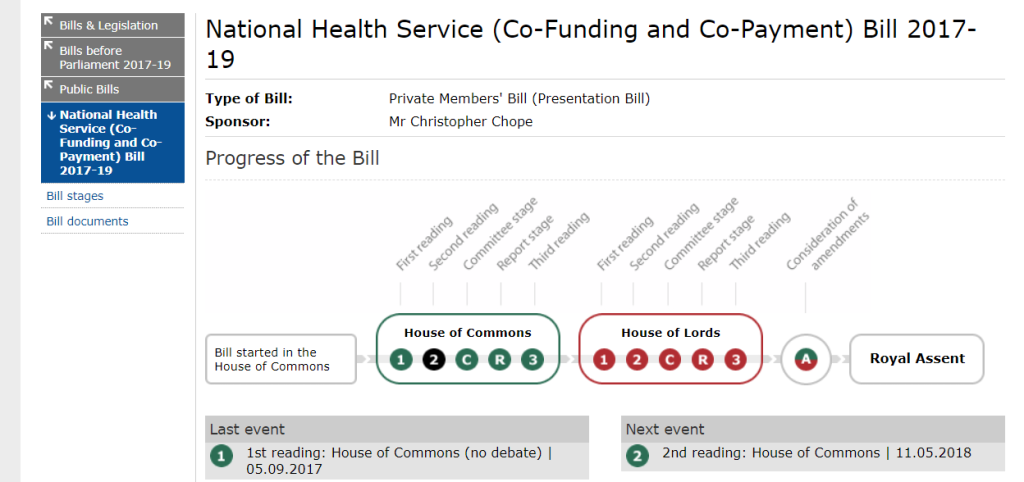
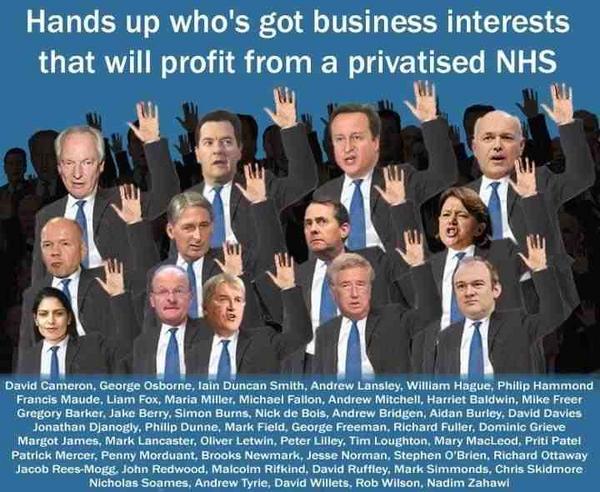


 Politics and Insights