Category: Democracy

More allegations of Tory election fraud, now we need to talk about democracy

The Conservative Party are facing another investigation from the Electoral Commission following evidenced allegations that they operated a secret call centre during the general election campaign, breaching electoral law, an undercover investigation by Channel 4 News has revealed. 

An undercover reporter working for Channel 4 News secured work at Blue Telecoms, a company in Neath, South Wales. In an area plagued by unemployment and low wages, the call centre hired up to a hundred people on zero-hours contracts. For weeks, they contacted thousands of potential voters in marginal seats across the UK. 

The hired callers were told to say they were working for a market research company called “Axe Research”. No such company is registered in England and Wales. Furthermore, callers were instructed to say that the call centre was situated in Cardiff, rather than Neath.

The investigation has uncovered underhand and potentially unlawful practices at the centre, in calls made on behalf of the Conservative Party. These allegations include:

Paid canvassing on behalf of Conservative election candidates – illegal under election law.

● Political cold calling to prohibited numbers

● Misleading calls claiming to be from an “independent market research company” which does not appear to exist

The Conservative Party have admitted it had commissioned Blue Telecoms to carry out “market research and direct marketing calls” during the campaign, and insisted the calls were legal.

A Conservative spokesman said: “Political parties of all colours pay for market research and direct marketing calls. All the scripts supplied by the party for these calls are compliant with data protection and information law.”

Under the Representation of the People Act, it is illegal to employ someone “for payment or promise of payment as a canvasser for the purpose of promoting or procuring a candidate’s election”.

Call centre employees working on behalf of the party used a script that certainly appeared to canvass for support on film, rather than conduct market research. On the day of the election, call centre employees contacted voters to promote individual candidates.

Anya Proops, a QC specialising in information law, told Channel 4 that political parties had to ensure that third parties working on their behalf followed the law.

“It’s an illegal practice, it’s prohibited under the legislation and in so far as it’s something which has tainted the overall result in favour of a political candidate, then it can void that result.” 

Blue Telecoms is run by Sascha Lopez. He told The Guardian: “In relation to the Conservative party project, I am unable to comment on the content of the scripts or calls to TPS [Telephone Preference Service] numbers, as the scripts and lists of who to call and when to call were given to us by Conservative campaign HQ in London and were not influenced by my team.”

However, a whistleblower at the call centre told Channel 4 News that they had been making potentially unlawful phone calls to voters. 

Undecided voters were fed key Conservative campaign messages, including references to the Brexit negotiations and warnings about a hung parliament.

On the day that voters went to the polls, undecided voters were told that: “the election result in your marginal constituency is going to be very close between Theresa May’s Conservatives and Jeremy Corbyn’s Labour Party”. Callers were also recorded quoting media articles that were pro-Conservative. Operating from a script, the staff claimed they were carrying out calls for “market research” and “polling”. 

One caller is recorded saying: “It was reported in the Daily Mirror in September last year that Jeremy Corbyn is not concerned about the numbers of people coming to live in the UK and it was reported on Sky News this year that Theresa May has restated her pledge to reduce net Migration.”

People were then asked: “Just thinking about these reports in the media and the reports that you live in a marginal constituency that may determine who is prime minister. So does knowing that you live in a marginal constituency that will determine who is prime minister for the Brexit negotiations, does that make you a lot more likely to vote for Theresa May’s Conservative candidate or a little more likely to vote for Theresa May’s Conservative candidate, or are you still unsure, or does it not make a difference?”

The broadcaster’s evidence suggests that on the day of the election, staff called voters in 10 marginal seats, including Bridgend, Gower, Clwyd South and Wrexham.

As the election campaign started, the information commissioner, Elizabeth Denham, wrote to all the major political parties reminding them of the law around telephone calls and data protection. She said that calling voters to promote a political party was “direct marketing” and was regulated by law.

A week before the election, the same call centre staff started saying they were calling on behalf of Theresa May’s Conservatives.

The Conservative party said the call centre was conducting “market research” on its behalf, and was not canvassing for votes. The call centre confirmed it was employed by the party, but has so far denied canvassing on its behalf. 

The Channel 4 undercover reporter has captured evidence that certainly seems to refute that claim. 

The use of ‘big data’ and psychographic targeting

Teams of statisticians and behavioural psychologists who subscribe to the burgeoning practice of “psycho­graphic targeting” have designed their own version of a Myers-Briggs personality test. The original test explores “the basic differences in the ways individuals prefer to use their perception and judgement.”

The test data is supplemented by recent issue surveys, and information from online surveilance, together they are used to categorise political supporters, who then receive psychologically tailored canvassing messages, social media targeting, phone calls and doorstep visits. The micro-targeting of voters has been around for a while, but the Conservative operation has deepened the intensity of the effort and the use of vast resources of psychological data.

This is the campaign approach from a government that claims to advocate a “small state” and “minimal interventions”. However the methods being used which entail the manipulation and management of public perceptions and voting behaviours resemble those of authoritarian regimes, not a healthy liberal democracy. 

Authoritarian propagandists attempt to convey power by defining reality. The reality they portray is usually very simple. The account of reality is offered with the primary goal of switching voters’ value systems to align with the authoritarian value system.

This whole approach is the logical conclusion of the libertarian paternalists‘ “behavioural change” agenda that has been embedded in policies designed by the nudge unit since 2010 in the UK. The political misuse of psychology has been disguised as some kind of technocratic “fix” for a failing neoliberal paradigm, and paraded as neutral “science”. However, its role as an authoritarian prop for an ideological imposition on the population has always been apparent to some of us, especially given the more visible evidence of political narratives and the stage management of our democracy via an extremely manipulative mainstream media over recent years.

The Conservatives’ behaviour change agenda is designed to align citizen’s perceptions and behaviours with neoliberal ideology and the interests of the state. However, in democratic societies, governments are traditionally elected to reflect and meet public needs. The use of “behaviour change” policy involves the state acting upon individuals, and instructing them how they must be. This is profoundly undemocratic. In fact it turns democracy completely on its head. 

A dark message for democracy

Political “dark” advertising that is only seen by its intended recipients is a much greater cause for concern than “fake news” in the spread of misinformation, because it is invisible to everyone but the person being targeted. This means that the individually tailored messages are not open to public scrutiny, nor are they fact checked.

A further problem is that no-one is monitoring the impact of the tailored messages and the potential to cause harm to individuals. The dark adverts are designed to exploit people’s psychological vulnerabilities, using personality profiling, which is controversial in itself. Intentionally generating and manipulating fear and anxiety to influence political outcomes isn’t a new thing. Despots have been using fear and slightly less subtle types of citizen “behaviour change” programmes for a long time. 

The right wing media’s blatant propaganda approach to election campaigning on behalf of the Tories had already contributed significantly to a serious erosion of democratic norms in the UK, the undermining of public trust, to such an extent that profoundly anti-democratic alternatives suddenly seem perfectly acceptable here.

The reality is that often, authoritarians construct an incongruent, flimsy and meaningless language of democracy in order to erect a fact proof screen around an undemocratic reality.  They offer a lot of glittering generalities to the public. However, those apparently incoherent, meaningless slogans are especially designed to signal intents to groups from which the government wants to gain approval. Dog whistling and wedge issues are used extensively by the right.  

Dog whistling is closely associated with a broader wedge strategy, whereby the political party introduces a divisive or controversial social issue into a campaign, aligning its own stance with the dissenting faction of its opponent party, with the goal of causing vitriolic debate inside the opposing party, defection of its supporters, and the legitimising of sentiment which had previously been considered inappropriate. Political campaigns use wedge issues to exploit tension within a targeted population, and undermine unity. 

In light of this, it’s hardly a shocking revelation that an authoritarian government is also using highly tailored and underhanded “dark adverts” to target individuals online, on the basis of information gathered about them and then applied to a process of extensive psychological profiling in order to influence voting behaviours, and the election outcome.

UK voters are being targeted with highly specific and manipulative messages in an attempt to influence their vote.

The shadowy world of online political advertising has until recently gone largely unmonitored, despite the huge power and reach of Facebook and despite social media messaging now thought to have contributed to the election of Donald Trump and the Vote Leave victory.

The new forms of psychological electioneering are invisible to all but the individual people they are designed to reach and influence. 

During the EU referendum, Vote Leave spent a whopping 98 per cent of its £6.8m budget on digital advertising, mostly via Facebook. In the 2015 election, the Conservatives spent £1.2m on digital campaigning, compared with Labour’s £160,000. This meant that the Conservatives reached 17 million people per week, while Labour reached only 16 million in their best month. Facebook claimed that the Conservatives had been able to serve adverts to 80 cent of the site’s users in key marginals. It also boasted that the company “played a part on a highly targeted campaign, helping the Conservatives to speak to the right people over and over again.”

The private companies and individuals who are stage managing our democracy

Dr Simon Moores, visiting lecturer in the applied sciences and computing department at Canterbury Christ Church University and a technology ambassador under the Blair government, said the Information Commisioners Office’s recent decision to shine a light on the use of big data in politics was timely. He said:

“A rapid convergence in the data mining, algorithmic and granular analytics capabilities of companies like Cambridge Analytica and Facebook is creating powerful, unregulated and opaque ‘intelligence platforms’. In turn, these can have enormous influence to affect what we learn, how we feel, and how we vote. The algorithms they may produce are frequently hidden from scrutiny and we see only the results of any insights they might choose to publish.”

He goes on to say: ”They were using 40-50,000 different variants of an ad every day that were continuously measuring responses and then adapting and evolving based on that response.”

Strategic Communication Laboratories (SCL) is a British behavioural science company. The SCL Group, that once advised Nato on so-called “psy-ops”, is a private British behavioural research and strategic communication company. The company describes itself as “global election management agency”.  SCL’s approach to propaganda is based upon a methodology developed by the associated Behavioural Dynamics Institute (BDI). Nigel Oakes founded the latter and also set up Strategic Communication Laboratories and using the new methodology from BDI, ran election campaigns and national communication campaigns for a broad variety of international governments. BDI say: “The goal of the BDI is to establish Behavioural Dynamics as a discipline for the study of group behaviour change.”

There isn’t much information around about BDI‘s connection with military operations, though links with NATO are well-established – see Countering propaganda: NATO spearheads use of behavioural change science, for example. From the article: “Target Audience Analysis, a scientific application developed by the UK based Behavioural Dynamics Institute, that involves a comprehensive study of audience groups and forms the basis for interventions aimed at reinforcing or changing attitudes and behaviour.”

SCL on the other hand, has a clearly defined defence and military division who: “Target Audience Analysis, a scientific application developed by the UK based Behavioural Dynamics Institute, that involves a comprehensive study of audience groups and forms the basis for interventions aimed at reinforcing or changing attitudes and behaviour.”

SCL has different “verticals” in politics, military and commercial operations. All of those operations are based on the same methodology (Target Audience Analysis) and, as far as can be discerned from the outside, SCL and affiliates have very obscure corporate structures with confusing ownership.

In the United States, SCL has gained public recognition mainly though its affiliated corporation Cambridge Analytica (CA). It was created in 2013 as an offshoot of its British parent company (the SCL Group,) to participate in US politics. In 2014, CA was involved in 44 US political races. Their site says: Cambridge Analytica uses data to change audience behavior.” 

And:

PERSUASION

“More effectively engage and persuade voters using specially tailored language and visual ad combinations crafted with insights gleaned from behavioral understandings of your electorate.”

And: “Leveraging CA’s massive team of data scientists and academics, CA is able to provide optimal audience segments based on big data and psychographic modeling. Then, using a sophisticated electronic data delivery system, CA is able to provide TV advertising campaign data that may be used to inform media buyers about shows that have the highest concentrations of target audiences and the least amount of waste; all of which leading to higher media ROI [return on investment] and more voter conversions.”

The company is heavily funded by the family of Robert Mercer, an American hedge-fund billionaire. I’ve mentioned Mercer in a previous article about the right’s undue influence on the media and on voting behaviour. Mercer made his money as a pioneer in the field of Computational Linguistics.

Mercer later became joint CEO of Renaissance Technologies, a hedge fund that makes its money by using algorithms to model and trade on the financial markets. 

One of its funds, Medallion, which manages only its employees’ money, is the most successful in the world – generating $55bn so far. And since 2010, Mercer has donated $45m to different political campaigns – all Republican – and another $50m to non-profits – all right wing, ultra-conservative. This is a billionaire who is trying to reshape the world according to his personal interests, beliefs, wishes and wont. He is an advocate of the neoliberal right, who seek to combine a market economy and economic deregulation with the traditional right wing beliefs in patriotism, élitism, and law and order, delivered within an authoritarian framework. Mercer is known for his anti-welfare and right libertarian views.

To give you a flavour of Mercer’s interests, you only need to follow the money trail: he funds a climate change denial thinktank, the Heartland Institute, and he likes to disrupt the mainstream media. In this aim, he is helped by his close associate Steve Bannon, self-declared “economic nationalist”, Trump’s campaign manager and now chief strategist. The money he gives to the Media Research Center, with its paranoid, anti-progressive mission of correcting “liberal bias” is just one of his pet media projects. He has also worked as vice president of Cambridge Analytica‘s board, the private data-analytics that is owned largely by the Mercer family

Mercer and his family are major donors to Conservative political causes such as Breitbart News. He is the principal benefactor of the Make America Number 1 political action committee (Super PAC). Around 2012, Mercer reportedly invested $5 million in the British data science company, the SCL Group. Most political campaigns run highly sophisticated micro-targeting efforts to locate voters. SCL promised much more, claiming to be able to manipulate voter behaviour through psychographic modeling. This was precisely the kind of work Mercer values.

SCL claimed to be able to formulate complex psychological profiles of voters. These, say the company, would be used to tailor the most persuasive possible message, acting on that voter’s personality traits, hopes or fears.

Of course Mercer was a major supporter of Donald Trump’s 2016 campaign for president and Brexit in the UK. Mercer donated the services of the data analytics company Cambridge Analytica to Nigel Farage and UKIP. The company was able to “advise” and influence Leave.eu through harvesting data from people’s Facebook profiles in order to target them with individualised persuasive messages to vote for Brexit. However, Leave.eu did not inform the UK electoral commission of the donation, contrary to the law which demands that all donations valued over £7,500 must be reported. 

When SCL Elections formed Cambridge Analytica in 2013, the company hired researchers from Cambridge University, hence the name. CA collects data on voters using sources such as demographics, consumer behaviour, internet activity, and other public and private sources. CA is using psychological data derived from millions of Facebook users, largely without users’ permission or knowledge. The company is also trying to change people’s perceptions and behaviours without their consent.

The company maintains offices in New York City, Washington, D.C., and London.

Cambridge Analytica claim to predict not just peoples’ voting intentions and preferences, but also their personality types. The company is proprietorial about its precise methods, but says large-scale research into personality types, based on hundreds of thousands of interviews with citizens, enables them to chart voters against five main personality types – openness, conscientiousness, extraversion, agreeableness and neuroticism. With its head office in London, the company is “A global election management agency, skilled in applying behavioural modeling and microtargeting solutions to political campaigns.”

The marketisation of democracy: the highest bidder wins all, while claiming to speak for the “ordinary person”

Stephen K. Bannon, President Trump’s chief strategist and the intellectual force behind his nationalist agenda, said in February that the new administration is locked in an unending battle against the media and other globalist forces to “deconstruct” an “outdated system of governance”. Jennifer Rubin in The Washington Post writes:

“’They’re going to continue to fight,’” Bannon said of the media, which he repeatedly described as ‘the opposition party,’ and other forces he sees as standing in the president’s way. ‘If you think they are giving you your country back without a fight, you are sadly mistaken.’

Atop Trump’s agenda, Bannon said, was the ‘deconstruction of the administrative state’ — meaning a system of taxes, regulations and trade pacts that the president and his advisers believe stymie economic growth and infringe upon one’s sovereignty.

For those who doubted Trump-Bannon’s determination to destroy the liberal international order that has kept world war at bay and promoted global prosperity since the end of World War II, this will come as a rude awakening. Bannon’s simultaneous attack on the media suggests that it is not simply about trade or immigration policy.”

So data technology, surveilance, psychology and social media and manipulative messaging campaigns are being combined in a powerful new way to sway opinions and win elections without people’s knowledge. In essence, a new, dark, subliminal propaganda war is being waged against citizens by those who wield power, serving the narrow interests of those who do and who are funded by a hidden few who want to weild power also.

Lynton Crosby has been a close advisor in the Conservative election campaigns of Australia, Canada and the UK, and is well known for his racist dog whistling and wedge strategies, influential at an international level.

“In a campaign, what you try to do is either change or reinforce some perceptions that people have in order to influence their behaviour,” says Crosby. 

Crosby’s emphasis is on “below the radar” campaigning, and the targeting of marginal constituencies with highly localised campaigning, latching on to local issues and personalities. To find such divisive and potentially diversionary issues, Crosby’s business partner Mark Textor runs focus groups to find which social groups to target with what questions. Crosby is said to focus on delivering simple messages, targeting marginal constituencies and the use of lots of polls and data. 
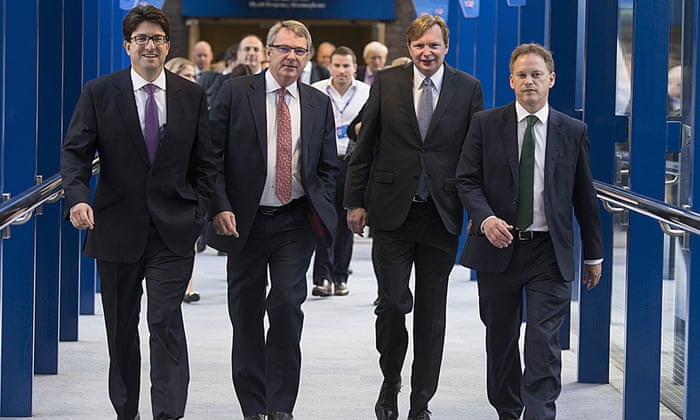
 Lynton Crosby, second left, at the party’s annual conference in 2015 with, from left, Lord Feldman, Jim Messina (former Obama campaign chief also hired by the Tories) and then party chairman Grant Shapps. Photograph: David Hartley/Rex

“In a campaign, what you try to do is either change or reinforce some perceptions that people have in order to influence their behaviour,” Crosby says.

Their site commentary highlights whose “democratic” interests Crosby and Textor serve:

“We combine decades of experience in research, political campaigns, strategic communications, media, and corporate intelligence to deliver winning strategies at the highest levels of business and government.

Having worked on successful election campaigns across four continents, we understand the need for timely, actionable intelligence, so our clients can focus the right message and resources on their most persuadable ‘swing voters’ to get the results they want.”

Note the reference to “behaviour changing messages”.

textor

Crosby Textor also claim that: “the team are specialists in advising major companies in how to position themselves to ensure they are integral to government decision-making.”

It was Crosby that created the campaign for the Conservatives with the slogan “Are you thinking what we’re thinking?”: a series of posters, billboards, TV commercials and direct mail pieces with messages such as “It’s not racist to impose limits on immigration” and “how would you feel if a bloke on early release attacked your daughter?” focused on hot-button issues like “dirty” hospitals, landgrabs by “gypsies” and restraints on police behaviour.

In April 2016, Mayor of London and Conservative, MP Boris Johnson, was accused of “dog whistle racism” by Shadow Chancellor of the Exchequer and Labour MP John McDonnell, when Johnson suggested US President Barack Obama held a grudge against the United Kingdom due to his “ancestral dislike of the British Empire” as a result of his “part-Kenyan” heritage after Obama expressed his support for the UK to vote to remain in the European Union ahead of the UK’s referendum on EU membership. Crosby also tried to link Sadiq Khan with terrorist organisations –  the Conservative mayoral candidate’s campaign, was run by Crosby Textor

Mark Textor, co-founder of the private company, was mentored by the late Richard Wirthlin, a pollster who was chief strategist to US President Ronald Reagan. Someone else with past connections to the Wirthlin Group is Kellyanne Conway, President Trump’s election campaign manager and now counsellor to the president, serving alongside Steve Bannon, assistant to the President and White House chief strategist.

All singing from the same crib sheet.

Since Trump’s inauguration, Conway has been embroiled in a series of controversies, including using the phrase “alternative facts, making reference to a “Bowling Green massacre” which never occurred, (Conway “cited” it as justification for a travel and immigration ban from seven Muslim-majority countries enacted by Trump), claiming Michael Flynn had the full confidence of the president hours before he was dismissed, and publicly endorsing commercial products associated with the president’s daughter Ivanka Trump. As a result, a number of media outlets have called her credibility into question, with some refusing her requests for one-on-one interviews.

When such manipulative tactics are exposed from time to time, it’s like a curtain shifting temporarily to give you a glimpse into another dimension, populated by billionaires and a handful of mercenary henchmen who drew up the machinations of a war being waged on democracies, in order to terraform political landscapes to suit the dystopic interests of one percent of the global population, at the expense of the needs of the ninety nine percent. You would be forgiven for thinking that the world and the media are being run almost exclusively by a small number of elitist, pan-nationalist aliens. It’s not a conspiracy theory. It’s a reality.

Jim Messina is a political adviser who was the White House Deputy Chief of Staff for Operations under President Barack Obama from 2009 to 2011 and served as the campaign manager for Obama’s highly successful 2012 re-election campaign. Messina was hired as a campaign strategy adviser to the UK Conservative Party in August 2013. Messina operated from the US during the 2015 general election campaign. He has made statements about his personal admiration for David Cameron. Theresa May has also added him to her team of strategists. 

Gone are the days when it was expected that the public decided who to vote for because of the policies on offer from each party. Now the government focuses on the use of private political masters of the dark campaign arts, who use “political-voter surveillance” techniques, along with a combative and emotional approach to messaging, rather than a rational and reasonable one, and a level of cunning that most definitely treads around the very outer edges of ethics. 

One of Messina’s key strategic methods is finding and targeting swing voters through the meticulous gathering and monitoring of voter information using private polls, and the use of social media “targeting”.  He uses social networking techniques and social media, having sought and received advice from top names in the tech world including Steve Jobs.

Messina uses micro-targeting based on online data. His approach is based on the in-depth psychometrically profiling of people, using publicly available data, including their Facebook “likes” and group memberships. This information is used to create effective and directed digital dark advertising to target millions of voters and manipulate their psychological tendencies and play to their traits.  

Messina has developed a private consulting firm –The Messina Group, which “works with organizations in the private, public, and social sectors to achieve their strategic goals.” The company has an office in London, on Old Park Lane. It says on the site says:

“Using state of the art data and analytics, The Messina Group can harness and amplify the reach of your social network. We accurately model your organization’s likely supporter, voter, or consumer, and – by overlaying that with your existing social media base – we can develop a targeted list of potential new supporters. This targeted, person-to-person sharing is the future of advertising in a fundamentally digital and social world. The Messina Group will ensure that your organization is ahead of the competition.” 

One tactic integrated in this method is aimed at generating a bandwaggon effect, which I have discussed at length elsewhere. The bandwagon effect occurs in voting: some people vote for those candidates or parties who are likely to succeed (or are proclaimed as such by the media). The bandwagon propaganda technique has been applied to situations involving majority opinion, such as political outcomes, where people alter their opinions to the majority view. 

Such a shift in opinion can occur because individuals draw inferences from the decisions of others, which shapes an informational cascade. A cascade develops when people “abandon their own information in favour of inferences based on earlier people’s actions, regardless of how irrational that may be. Bandwaggon propaganda draws on our natural tendency towards social conformity.

During the 2015 general election, the government were accused of trying to “buy the general election” by quietly raising the legal spending limit by £6.2 million to £32.7m in the face of concerns from the Electoral Commission over “undue influence”. The party has reportedly amassed a war chest of more than £70 million. The change to the law on candidates’ election spending, passed without parliamentary debate.

A new project called Who Targets Me, has been attempting to address the lack of transparency of targeted election messaging, by recruiting social media users to share information on what political adverts they are seeing.

It says on their site: “Analysing the aggregated data will allow us to draw out insights about exactly which demographics are being targeted and the exact media and language that campaigners are using to influence your vote.”

In an effort to do something about the lack of transparency, Who Targets Me built a browser extension for Facebook users to download that will then report live to that individual when a political advert is being targeted at them. It also tracks that information in its database. You can sign up to be a Who Targets Me volunteer here.

Given the instability of the government, following the general election delivering a hung parliament, it’s likely that political advertising will continue. You will need to use the Chrome browser and install the Who Targets Me extension.

The Information Commissioner’s Office has already launched a wide-ranging investigation over possible breaches of UK data laws. The Conservatives have so far refused to supply examples of adverts the party is sending to individual voters on Facebook, despite the growing concern over unregulated online election activity.

One problem is money. There are no spending limits on digital advertising and, put simply, the more you spend the more people you reach. Until now, that means it is primarily the wealthier, Conservative campaigns that have benefited.

Another is that psychological influences are different from transparent attempts at rational, reasoned and material persuasion, because they operate outside of conscious awareness. Hiding in plain sight, they trigger involuntary emotive responses in the human subconscious that most people are powerless to resist – and that happens even when they know they’re being influenced. Much of the material being used to “persuade” is dishonest, and aimed at simply smearing the opposition and generating irrational and unfounded fears, rather than open discussion, about political and socioeconomic alternatives to neoliberalism and social conservatism. 

Such tactics are nothing less than a political micro-management of the public’s beliefs an behaviours and are ultimately aimed at nudging your voting decisions to maintain a profoundly unbalanced, increasingly pathological and authoritarian status quo. Such tactics deployed in manufacturing consensus are widely used, and combined, they also serve to reduce public expectation of opposition and in doing so establish diktats: it’s a way of mandating acceptance of ideology, policies or laws by presenting them as if they are the only viable alternative.

There is a much needed public debate to be had about the distinction between political “persuasion” and “manipulation”.

And another about undue political influence. In their summary of electoral offences, the electoral commission says: “A person may also be guilty of undue influence if they impede or prevent any voter from freely exercising their right to vote – even where the attempt is unsuccessful.

Also: “It is an illegal practice to make or publish a false statement of fact about the personal character or conduct of a candidate in order to affect the return of a candidate at an election.”

“Certain offences relate specifically to election campaign publicity material. Election campaign publicity material must contain an imprint, not resemble a poll card and not contain a false statement as to the personal character or conduct of another candidate.”

The Conservatives have certainly taken advantage of our basic tendency to be more motivated by the threat of something presented and subsequently perceived as “bad” than by the presented opportunity for examining positive alternatives.

This is not just a story about the political and commercial misuse of social psychology and data analytics. It has to be understood in the context of a military contractor using military strategies on a civilian population. The public.

David Miller, a professor of sociology at Bath University and an authority in psyops and propaganda, says it is “an extraordinary scandal that this should be anywhere near a democracy. It should be clear to voters where information is coming from, and if it’s not transparent or open where it’s coming from, it raises the question of whether we are actually living in a democracy or not.”

Related:

Social media is being used to stage manage our democracy using nudge-based strategies

EXPOSED: CONSERVATIVES IN HOUSE ‘SURVEY’ TEAM

The great British Brexit robbery: how our democracy was hijacked

Negative campaigning, emotions and political participation

Inverted totalitarianism and neoliberalism

What I don’t understand about Conservatism

‘Tory Election Fraud’ Investigation Sees Conservatives Fined £70,000 By Electoral Commission

Political polls, think tanks and propaganda: the antidemocratic writing on the wall

Strategies and motives for resistance to persuasion: an integrative framework

How To Use 10 Psychological Theories To Persuade People

CONTROVERSIAL GCHQ UNIT ENGAGED IN DOMESTIC LAW ENFORCEMENT, ONLINE PROPAGANDA, PSYCHOLOGY RESEARCH

How Covert Agents Infiltrate the Internet to Manipulate, Deceive, and Destroy Reputations – Glenn Greenwauld

Theresa May pledges to create new internet that would be controlled and regulated by government 


I don’t make any money from my work. But you can support Politics and Insights and contribute by making a donation which will help me continue to research and write informative, insightful and independent articles, and to provide support to others. The smallest amount is much appreciated, and helps to keep my articles free and accessible to all – thank you. 

DonatenowButton

top 100 blogs

Conservatives forced to say they’ll ‘end austerity’ because they face electoral extinction

5939d6ea1d00004600cc1f8f

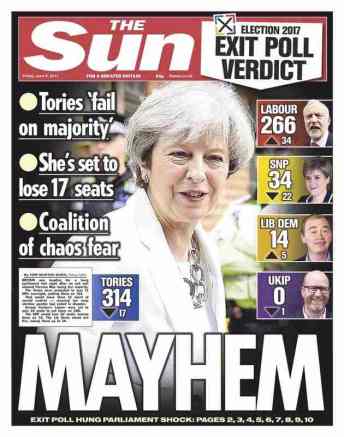
I think it’s safe to say that election opinion polls are no more useful than paying heed to Boris Johnson on a brandy binge, solemnly casting the runes and making wide ranging wishful but witless declarations. Theresa May made a decision to hold a snap election because Labour were polling badly, she saw an opportunity to increase the Conservative’s majority. She looks rather weak, wobbly and vapid now.

David Davies has loyally taken one on the chin, claiming it was his idea that May called the very ill-advised snap election. I didn’t know that Mr and Mrs May took him on walking holidays with them. That’s a bit weird and implies a kind of kinkiness that doesn’t bear thinking about.

Two of May’s close senior advisors were pushed onto their swords, too, in a bid to divert the blame for such a dreadful election result for the Tories. I wasn’t aware that the government permitted spin artists to write their policies as well as putting them through the PR machine. Still, the privileged class have always sacked their servants whenever they need to re-channel their own accountability.

I’d be more convinced that a sincere change in Tory campaign approach was due by the sacking of the wedgie and dog whistle king, the lizard of Oz, Lynton Crosby. He should go and take Murdoch with him.

The right-wing tabloids also announced the Conservative aim to “destroy” the Labour party, in savage, squawking and despotic headlines such as “Squash the saboteurs” and “Blue murder”. Brendan O’Neill gleefully announced the end of the Labour party in the Spectator back in February. The midstream media predictions and Tory plan backfired spectacularly, though many on the left were very anxious at the time.  

Media soundbites bite back hard

Here is a small sample of comments from journalists, now having to eat the toxic bile they spat out, wearing their disguise of professional contrarians. They were just glorified and well-paid trolls after all, attempting to stage-manage our democracy:

Jason Cowley, The New Statesman, March 30

“The stench of decay and failure coming from the Labour Party is now overwhelming. From the beginning we were opposed to the Corbyn leadership but, in the spirit of plural debate, happy to open our pages to him and his confidants. Our view was that Corbyn was ill-equipped to be leader of the opposition and, indeed, an aspirant prime minister…There was nothing in his record to suggest that he could remake social democracy or under­stand, let alone take advantage of, the post-liberal turn in our politics. The decline of Labour pre-dated Corbyn’s leadership, of course, but he and his closest allies have accelerated its collapse into irrelevance.”

Dominic Lawson, Sunday Times, April 30

“Corbyn’s cadre await the rout with open arms. A growing sense of puzzlement pervades Conservative campaign headquarters. Is their traditional Labour opponent at general elections really fighting to win? Or is something else going on? Obviously the individual Labour candidates will be trying their utmost to get the most votes they can. But the Tories have the peculiar sense that the Labour leadership is not properly trying.”

Dan Hodges, Daily Mail, April 29

“I’d been hearing increasingly wild stories about feedback on the doorsteps. One Tory MP told me any seat with a Labour majority of 8,000 or less was a target. Labour MPs said they were drawing that line at 10,000. Then I was told about the Bunker Project. So great is the potential scale of the meltdown, Labour moderates have identified a select group of MPs whose seats must be defended at all costs. They will receive additional financial resources and extra activists.”

Sebastian Payne, Financial Times, March 17

“The opposition leader has taken his party deep into the realms of unelectability and irrelevance. Some say he is a nice man, trying his best in a difficult job that he never wanted. That would be true if he had stepped aside by now for someone more suited to the role. Even Mr Corbyn must realise how incompetent he is at leading a serious political party.”

Allister Heath, Daily Telegraph, January 6

“Corbyn’s Labour Party faces electoral annihilation. Their poll ratings will deteriorate even further when the public finally starts to pay attention properly in the run-up to the next election. Corbyn would be lucky to get more than 26 per cent of the vote – and the Tories will be back over 40 per cent for the first time since John Major…The truth is that it is no longer possible for any sensible Labour politician to serve in Corbyn’s shadow cabinet while retaining their self-respect.” 

Suzanne Moore, The Guardian, January 11

“This is painful to watch. Labour now dwells in a kind of limbo. Nothing can move forward until he goes, and he will only go in an electoral wipe out…What vainglorious egotism, this willingness to kill a party for the thing he loves. One fundamental of populism is simply that it is popular. He is not.”  

Nick Cohen, The Observer, March 18  

“The Tories have gone easy on Corbyn and his comrades to date for the transparently obvious reason that they want to keep them in charge of Labour. In an election, they would tear them to pieces. They will expose the far left’s record of excusing the imperialism of Vladimir Putin’s gangster state, the oppressors of women and murderers of gays in Iran, the IRA, and every variety of inquisitorial and homicidal Islamist movement, while presenting itself with hypocritical piety as a moral force. Will there be 150, 125, 100 Labour MPs by the end of the flaying? My advice is to think of a number then halve it.”

The death toll of the meanstream media resonates with the chimes of freedom.


Image result for Jeremy Corbyn

The view through the Overton Window: the landscape of politics is fundamentally changed

The election results were a surprise to many, including some of those who support Labour. But Corbyn’s real achievement has been that the political landscape has changed forever. It’s a luxuriant and verdant pasture that defies the laws of neoliberal gravity – it’s a new land without the clutter of elite economic enclosures.

Ever since they won a small majority in 2015, the Conservatives have struggled to pass further austerity measures. They were forced to abandon planned cuts to tax credits and disability benefits. Philip Hammond dropped the proposed increase in National Insurance on self-employed citizens only a week after the Budget.

Now, Theresa May announces to her ministers that austerity is over. Take a moment to let that sink in. Corbyn’s aim when he put himself forward as Labour leader was originally to shift the debate about our economic organisation and to challenge the neoliberal orthodoxy.

Austerity is an intrinsic feature of neoliberalism, and has been presented as our only choice of economic organisation, since the Thatcher era. Blair’s continuation, albeit a watered down version, tempered with a handful of social protections to spare us from the worst ravages of unbridled capitalism, seemed to consolidate an “end of history” consensus that it was the only viable option. Of course it isn’t and never was. 

Corbyn has succeeded. The consensus is no more. What an extraordinary achievement. His alternative narrative has demolished the rights’ defining ideology and their reductive economic model of enclosure. 

Ed Miliband was hated by the Tories, especially because of his manifesto promise of a progressive, tax among other things, and the mainstain media hated him because of his intention to implement the Leveson recommendations. I think we should give him some credit for planting seeds in a ground that wasn’t quite fertile enough back then for the growth of a perenial bipartisan politics to flourish. It has now.  

Theresa May is poised to bring to a close seven years of ideologically driven, painful and pointless austerity after Conservative MPs warned that they would refuse to vote for further cuts. Gavin Barwell, her new advisor, explained that a key reason the Conservative party lost their majority in the election is because it “struggled” to convince people that their “quality of life” would improve under the Tories, while Jeremy Corbyn “tapped” into their concerns.

However, as we learned, it takes rather more than “convincing” rhetoric and “tapping into concerns”: it requires a genuinely alternative narrative and policies that demonstrate a commitment to the promises made. Corbyn did all of that.

Barwell has told the prime minister: “We are in danger of being deserted by the millions of working people who have deserted Labour because they don’t feel we are on their side.  

“They feel they [the Tories] are the party of BHS and not the NHS – by BHS I mean the corporate, awful revolting people like that Phillip Green and the dodgy guy he sold it to.”

804-cover-1200

The Conservatives have finally realised the inevitable: that their ideologically fueled austerity programme has made them pretty much unelectable by large sections of the population. What they hadn’t expected, though, is that young people would mobilise to participate in democracy and register their disaffection and alienation as a consequence of seven years of Tory-inflicted punishment and loss.

An attempt to re-brand the party because of the election result, however, is unlikely to be successful. The Conservatives have never been particularly accountable and transparent, and the public won’t forget the last seven years of punitive austerity that the Tories have now revealed to be neither necessary nor “in the public [or economic] interest.” Given that people have died as a consequence of the relentless austerity programme, such political expediency is highly unlikely to be forgiven.

The Conservative manifesto attack on pensions, the “dementia tax” and proposed winter fuel cuts also demonstrated to everyone that they had no respect for a section of the traditionally more right leaning electorate. If anything should have triggered the recognition that the Conservatives are callous and indifferent to the needs of the electorate, it is their utterly brutal treatment of disabled people for the last few years, leaving many of us suicidal and in utter despair. A moral boundary was crossed with impunity. It was always inevitable that other social groups would be targeted for damaging cuts to their lifeline support sooner or later.

There’s a big difference between having your hand forced to present an image that is simply more palatable to voters and facing difficulties in pushing controversial policy through the legislative process because of a diminished majority, and actually having a genuine motivation to make changes that genuinely benefit the public. Historically, the Conservatives have always been inclined towards authoritarianism, with a view that “there’s no gain without pain”. Their gain, our pain, that is. As for the declaration that austerity has ended, well, I’ll believe it when I see it.

The prime minister spent yesterday apologising to her cabinet and backbenchers, saying that she took full responsibility for losing the party’s Commons majority and running a poor campaign. “I’m the person who got us into this mess and I’m the one who will get us out of it,” she told a meeting of the 1922 Committee last night.

With Parliament being hung, the Conservatives don’t have much of a say, and austerity will all but end because they won’t be able to get further cuts through the legislative process with the ease they experienced previously. The DUP, who the Conservatives will depend on for their majority, have long opposed aggressive spending cuts, despite their controversial roots and extreme social conservatism. Their manifesto called for the abolition of the “bedroom tax” and the maintenance of universal pensioner benefits and the state pension “triple lock”.

Sources have said that Theresa May accepted that the electorate’s tolerance of austerity was “at an end” after Boris Johnson, David Davis and a series of Tory MPs told her that she had “misjudged the public mood.” So it is only the prospect of facing electoral annhilation and “minority related difficulties” that has prompted the so-called U-turn on austerity.

However, I wonder when May will apologise to the public for her party’s last few years of painful and pointless idologically driven austerity programme? Telling her MPs who lost their seats that they “didn’t deserve it” indicates that she still clings to power for the sake of power – authoritarianism – she clearly doesn’t understand democracy and does not respect the needs and wishes of the public.

Voters strongly signaled that they are tired of excruciating budget cuts. May has announced to her Ministers that austerity has ended solely because Jeremy Corbyn presented a viable and resonant alternative narrative for voters.

After accusing Labour of “magic money tree” economics, the Tories are now forced to reluctantly divert their own magic money away from the privileged 1%.

The Labour party’s anti-austerity manifesto helped propel Labour to its highest share of the vote since Tony Blair’s landslide victory in 2001.

There has already been some backlash, however. Fraser Nelson was bastard signaling on behalf of the beneficaries of neoliberalism yesterday on radio 4, telling anyone who was listening to his tedious tirade that “we have to balance the books”. He even defended the devastating cuts, controversially claiming that the decision to limit public expenditure has somehow helped the poorest citizens. 

He’s part of the grotesque pro-neoliberal parade, they are currently out in force, telling us it’s okay that we have such a grossly unequal society, that people can’t meet their basic living needs and that working people need to use foodbanks, because the wealthy want to pay less tax and take more of our public funds to park offshore. Selfservatism at its most transparent and it’s very very ugly.

This privileged establishment mouthpiece thinks it’s acceptable that disabled people die prematurely and without dignity because of cuts to their lifeline support, that young people can’t afford a place of their own; that students have to take out the equivalent of a small mortgage just to study for a degree and extend their almost non-existent opportunities; that elderly people are faced with policies that stop just short of a government recommended euthanasia programme, just so the bleating, hectoring minority of beneficiaries of neoliberalism like him, with ridiculous affected accents and a culture of entitlement, pay less tax.

Nelson won’t like the fact that the run-up to the election also exposed a political culture in which debate is framed largely by appeals to base emotion, particularly in the painstream media, and has been disconnected from the details of policies on offer. The Conservatives and the press ran campaigns based on telling people who they should and should not vote for, attempting to stage manage our democracy.

Politics was reduced to fear, smearing, lying and gossip-mongering about individuals. All of the media used the repeated assertion of talking points to which factual rebuttals were ignored. The media have fueled a post-truth approach to politics, which differs from traditional contesting and falsifying of fact by rendering it of “secondary” importance. The electorate responded, and it’s hard lines for those media hard headlines. Farewell to the authoritarian Tory domination of authoritarian festering fake news.

The targeted dark ads campaign, which reflect a longstanding political misuse of psychology and personal data, were also doomed to fail for the very same reasons. People really don’t like to be told what to think and do, after all.

While post-truth has been described as a contemporary problem, there is a possibility that it has long been a part of political life, but was less notable before the advent of the Internet. Over recent years, we have been propelled into a world in which the state changes historic records daily to fit its propaganda aims of the day. But now, the public are starting to see this and are resisting the attempts at micro-management of their perceptions and voting behaviours. 

corbyn rainbow.png

Corbyn has established himself as a plausible, respectable, authentic and decent potential prime minister, despite the press gang telling us we shouldn’t under any circumstances see him that way. In the end, the likes of the Spectator, the Sun and Daily Mail did him a favour in scraping their evidently bottomless barrel of totalising ruthlessness, hatefulness, outrageous accusations, lies, half truths and misquotes. They went too far in telling people who they should vote for. Authoritarianism doesn’t work once people see it for what it is.

The Tories have tripped themselves up and lie winded and chaotically sprawling for all to see. They have lost their step on the road to hard Brexit, and lost their momentum. They won’t be able to implement their manifesto, and will struggle desperately to get any new austerity measures through parliament. Even the DUP won’t support more cuts.

But none of this will undo the damage already done.

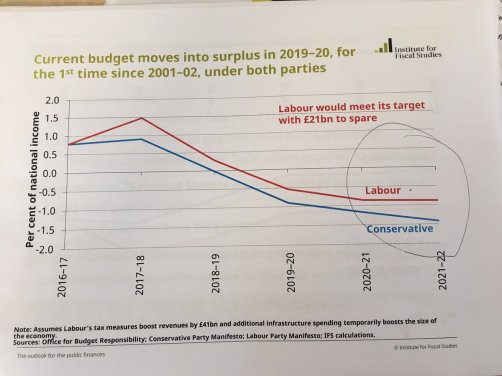
In contrast to the Conservatives, Labour costed their detailed manifesto meticulously, though it needs a little more work to ensure that the Institute of Fiscal Responsibility (IFS) see it as fully viable. However, the IFS have endorsed it overall, so far.

DAwfPxtWAAEs8DG

Barry Gardiner, shadow trade secretary, today spelled out a good Labour line for “achieving the benefits” of the single market: putting jobs and the economy first allows Labour to savage every authoritarian Brexit move that makes people poorer.

Quite properly so. Meanwhile, Labour can now get on with preparing for government.

An old spiritual that sounds so fresh in a new political context of hope.


My work is unfunded and I don’t make any money from it. But you can support Politics and Insights and contribute by making a donation which will help me continue to research and write informative, insightful and independent articles, and to provide support to others.

DonatenowButton

David Dimbleby says Jeremy Corbyn is treated unfairly by a biased right wing press

Image result for Biased media UK

David Dimbleby has confirmed what many of us already knew – that Jeremy Corbyn has been treated unfairly and misrepresented by the media.

Dimbleby will be interviewing both Jeremy Corbyn and Theresa May for a Question Time special on Thursday. Dimbleby said that most British newspapers show a right wing bias and complained of their “lazy pessimism”.

He said: “I don’t think anyone could say that Corbyn has had a fair deal at the hands of the press, in a way that the Labour party did when it was more to the centre, but then we generally have a rightwing press.”

He also suggested the Labour leader has more support among the public than he does among the parliamentary Labour party.

He went on to say: “My own prediction is that, contrary to the scepticism and lazy pessimism of the newspapers and the British media, it’s going to be a really fascinating night, and it will drive home some messages about our political system and the political appeal of different parties that no amount of polling or reading the papers will tell us.”

Just four months ago, the BBC Trust found a BBC political editor inaccurately reported Jeremy Corbyn’s views about shoot-to-kill policies in the aftermath of the terror attacks in Paris. 

The broadcaster’s regulator concluded that Laura Kuenssbergs report for the News at Six in November 2015 breached the broadcaster’s impartiality and accuracy guidelines, in a ruling that triggered an angry response from the corporation’s director of news. 

The News at Six item included a clip of Jeremy Corbyn saying: “I am not happy with a shoot-to-kill policy in general. I think that is quite dangerous and I think can often be counterproductive.”

Kuenssberg had presented the clip as Corbyn’s response to a question put to him on whether he would be “happy for British officers to pull the trigger in the event of a Paris-style attack”, but the Trust concluded that Corbyn had been speaking in a different context.

The Labour leader had acually been responding to a question about whether he would be happy to order police or military “to shoot to kill” on Britain’s streets – and not specifically regarding a Paris-style terrorist attack in the UK. 

The Trust agreed with the complainant that the news report misrepresented the Labour leader’s views on the use of lethal force and that it had wrongly suggested he was against the additional security measures which the item had said the government was proposing. The Trust also found that the inaccuracy was “compounded” when Kuenssberg went on to claim that Corbyn’s message “couldn’t be more different” to that of the prime minister, who was about to publish anti-terrorism proposals. 

The Trust agreed with the complainant, pointing out that accuracy in any one programme rather than the entire output was particularly important when dealing “with a critical question at a time of extreme national concern”.

The news item was edited to mislead the public. It’s a curious thing that the Conservatives have frequently used the very same tactic of deliberately misquoting Corbyn to misrepresent his views in their election campaign. It’s time there were tighter laws on this kind of nasty manipulation of pubic perceptions and opinion. 

It was agreed that: “According to this high standard [of accuracy], the report had not been duly accurate in how it framed the extract it used from Mr Corbyn’s interview.”

Inaccurate portrayals like this have become normalised by the media and the government.

However, it isn’t just the way that responses are mispresented that is problematic. The framing of issues is also heavily biased, reflecting the permitted success of the Conservatives and a predominantly right wing press to shape the entire news agenda. What we hear and read is a long way from impartiality and accuracy. 

BBC’s Steven Sackur has said that as soon as Corbyn was elected, the Conservatives “issued propaganda” suggesting that Corbyn is a “threat” to national security. He also pointed directly to the government’s fundamental lack of accountability, transparency and democracy in the unprecedented move to refuse to share military and intelligence information in 2015, which is conventionally shared with the leader of the opposition.

“National security” is a theme that has run through the Conservatives campaigns and media commentary since. It works because it generates fear. It’s the political use of psychological manipulation at its very worst, as it presents an “enemy” for the public to vote against, rather than something inspiring to vote for. 

The Conservative party always emphasise and distort issues of national defense and magnifies our perception of threat, whether of foreign aggressors, immigrants, terrorists, or “invading” ideologies like Socialism (see the Zinoviev letter, for example). They reduce and present the world as a frightening place, and justify authoritarian policies to remedy the perceived threats. This is then used to portray the party as “strong”, and any opposition as “weak”. 

The Conservatives, with the cooperation of most of the media, are using this strategy of tension, designed intentionally to create public alarm – to portray the left as a “threat” to the wellbeing of society – and it reverberates around the media, to be used as part of an arsenal of pro-establishment, anti-progressive propaganda to discredit Corbyn. That is before he even has an opportunity to put the record straight. Yet even a glance through the Labour manifesto shows that this “threat” patently untrue.

The media does not engage the public, instead there is a pre-determined, biased and right wing agenda being imposed and then presented as a consensus. The media is   contributing significantly to public cynicism and alienation and sowing divisiveness. We are witnessing the erosion of the media’s role of watchdog, as a guardian of public interest, and as a conduit between the governing and the governed. We are witnessing the mainstreaming of democratic decay.


Related

Election coverage alert 30 May: Distorted debates, vacuous interviewing techniques and more fake news in the Telegraph – 

The erosion of democracy and the repression of mainstream media in the UK


I don’t make any money from my work. I am disabled because of illness and have a very limited income. But you can help by making a donation to help me continue to research and write informative, insightful and independent articles, and to provide support to others. The smallest amount is much appreciated – thank you.

DonatenowButton


A brief and blunt discussion about ‘economic competence’ before the general election

Image result for people power

The question asked shouldn’t ever have been how will Labour fund their costed manifesto. We have permitted this expedient Conservative diversion for long enough. It should have been exposed for what it is when George Osborne was rebuked for lying about Labour’s administration and economic management, and David Cameron was rebuked twice for claiming that his government were “paying down the debt“. They have done no such thing, however, and despite a substantial number of official rebukes for telling lies, the Conservatives have remained blatantly conservative with the truth

The real question that matters is this: where is the public’s money that citizens, their parents and grandparents have paid into the Treasury all these years? Why is there nothing to show for it over the past seven years? Why are increasing numbers of citizens of every age experiencing hardship and distress

This is a despicable way for a government to treat people who have contributed to this country’s fortune and development.

Why are older people being robbed of their lifelong national insurance contribution and tax investment and now being told they must fund their own care?  Why are older people being forced to work longer before they may retire? New government “calculations” suggest a “hard Brexit” – with migration being dramatically reduced – could push up the age of retirement and force people to work into their mid-70s. It has created further uncertainty regarding the future of state pensions.

At the same time, there has been an unprecedented rise in the mortality rate, according to Office for National Statistics (ONS) data. For the past few decades, there has been a very strong improvement in life expectancy in the UK, both at birth but also for older people 

But that trend has slowed down since 2011, and is now reversing. According to the actuarial company, Mercer, winter deaths of people aged 65 and over has increased by 11 per cent over the last two years. Yet the Conservatives are planning to cut winter fuel payements to “target those most in need”.

There’s that Tory phrase again, which reflects a euphemising tendency of a government that does not care for the welfare of UK citizens, and signals the intent to strip away every single civilised public support mechanism and provision that has grown from the social gains of our post-war settlement. The social gains PAID FOR BY THE PUBLIC FOR THE PUBLIC. 

What kind of government does not care that citizens are dying prematurely because of their policies? Or that cases of malnutrition in the UK are rising?

Why are d
isabled people being left without adequate living standards, dignity, independence and sometimes, being left to die, because we have a government that can’t even observe their basic human rights? The only rights that matter to the Conservatives are the property “rights” of the wealthy and the right of millionaires to accummulate more money by dispossessing everyone else.

The “Economic Enclosure Acts” would be a more fitting name for the Conservative “reforms” and austerity programme.

Where has the money gone that was taken from those people targeted with punitive policies and a deeply patronising “behaviour change” agenda that simply reflects a government’s traditional class prejudices, all in the name of “economic growth” and the ideologically driven Conservative austerity programme, the burden of which fell on our poorest and most vulnerable citizens?

What kind of government financially punishes disabled and elderly people simply for being disabled and old? It’s the Conservatives that need to change their behaviours. Perhaps someone should inform the economic Darwinists in government that we moved on from dehumanising eugenic policies after the terrible consequences of them in Nazi Germany. 

What is the point of a government in an “economically stable”and wealthy first world country that does not ensure a basic standard of living and health for the majority of citizens, and fails to fulfil basic human rights obligations?

This is a government that has failed to protect the human rights of our children.

Why are our children going hungry, fed by food banks and by concerned school teachers when their parents are in work or have worked? Why are young people under 25, disabled people and people in social housing not considered worthy of having a secure home of their own? 

Why are those in low paid or part time, insecure work being punished by the government with in-work sanctions, for the sins of exploitative, increasingly unregulated employers and rubbish government supply-led labour market policies that clearly don’t work?

We have permitted a government to relinquish its responsibilities and obligations towards some members of the public. Why doesn’t the social and economic welfare of these social groups matter to the government? Are we not citizens in a so-called first world democracy?

Where is the investment in our public services? Why are rogue multinationals making billions from the public on the pretext of “saving money”? If that’s “economic competence” then I’m Jerry Cornelius, one of the greatest fictional and darkly hilarious anti-hero nihilists of all time. 

What have the Conservatives done wth OUR money, our NHS and our public services? And why on earth would we continue letting them “disappear” our money, adding to the now massive national deficit? The Conservatives have borrowed more money this past seven years than every single Labour government combined throughout history. There is NOTHING to show for it, except for a few rogue multinationals like Atos, Maximus and G4S making huge and private profit and a few millionaires hoarding our wealth and demanding more.

The UK now has the highest level of  socioeconomic inequality in Europe.

THIS is what Cameron meant when he said he would “tackle” the “culture of entitlement”. He meant that ordinary people would no longer be treated as democratic citizens with rights. He meant that our society should regress to a time when there was no legal aid, social housing, welfare state and no National Health Service. Despicably, the Conservatives have deliberately stigmatised groups of citizens in order to get away with dismantling our social safeguards, caliming that they are a “burden” to “tax payers”. As the older generation about to be hit with pension cuts and the “dementia tax” will tell you, ordinary people are ALL tax payers. 

The authoritarians need to go.

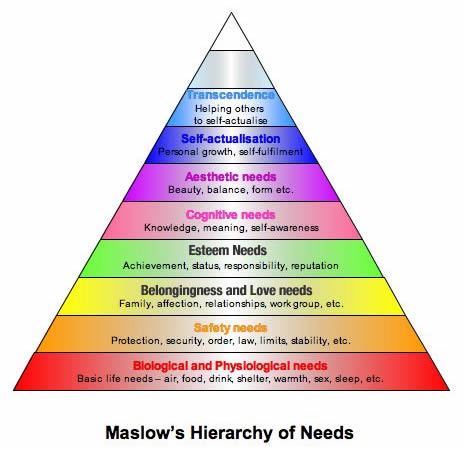
The NHS and welfare state are essential for the lives, health and wellbeing of our fellow citizens as well as ourselves. Without being able to meet basic needs, people are unable to meet higher level psychosocial ones, such education and work. Ancel Keys once said “Starved people cannot be taught democracy.” Abraham Maslow would certainly agree with that. He said  “Man lives by bread alone when there is no bread.” When people are hungry, food becomes their only priority and motivation.

Any effective measure of a government’s economic competence must surely include an evaluation of the proportion of a population that are able to meet their basic living requirements. 

maslows_hierarchy_of_needs-4
If you value our public services, including those providing emergency care such as the NHS, the the fire service, police, social care, mental health services, social security and pensions and education, all of which have been savagely cut these past 7 years, then you need to know that they are NOT safe in Conservative hands. Nor are our human rights. A genuinely strong and stable economy ought to include everyone. 

The Labour Party has made a comittment in their manifesto to ensure that our public services are safe, funded and there for everyone who needs them. They will also preserve our human rights act. Human rights are there to ensure the wealthy and powerful are accountable to the rest of us, and to ensure governments don’t abuse and exclude social groups, such as disabled people, elderly people and children. Like access to justice – and legal aid has also almost gone at the hands of the Conservatives – human rights are the bedrock of democratic societies.

If you value the civilised and civilising features of our society, then you must vote on 8 June to preserve them. If you don’t have need of them yourself, consider that your parents, children and friends may do in the future. Let’s halt the socially regressive destruction of our public services.

Let’s make sure that everyone is included in our society, and ensure that we live in a democracy.

Let’s make June the end of May. 

Let’s take our country forward again.

 Image result for Vote Labour


I don’t make any money from my work. I am disabled because of illness and have a very limited income. 

But you can help by making a donation to help me continue to research and write informative, insightful and independent articles, and to provide support to others. The smallest amount is much appreciated – thank you.

DonatenowButton

Noam Chomsky endorses Jeremy Corbyn. Here’s why

Image result for Noam Chomsky

Professor Noam Chomsky has urged the British electorate to vote for Labour. In an exclusive interview with the Guardian, earlier this month, Chomsky stated: “If I were a voter in Britain, I would vote for him.”

The linguist, cognitive academic and philosophical anarchist endorsed Jeremy Corbyn, and observes that the Labour Party would be doing far better in opinion polls if it were not for the “bitter” hostility of the mainstream media.

As Chomsky is world renowned for being a major critic of neoliberalism, it comes as no surprise that he supports a candidate who would reverse the radical socioeconomic reforms that Britain has gone through since the Thatcher era.

He said there were a lot of factors involved, but insisted that Labour would not be trailing the Conservatives so heavily in the polls if the media was more open to Corbyn’s agenda.  He said: “If he had a fair treatment from the media – that would make a big difference.” 

Asked what motivation he thought newspapers had to oppose Corbyn, Chomsky said the Labour leader had, like Bernie Sanders in the US, broken out of the “elite, liberal consensus” that he claimed was “pretty conservative”.

It’s potentially a fresh and hopeful view from the Overton window, if only we would open the curtains.

The academic, who was in Britain to deliver a lecture at the University of Reading on what he believes is the deteriorating state of western democracy, says that voters had turned to the Conservatives in recent years because of “an absence of anything else”.

He said: “The shift in the Labour party under [Tony] Blair made it a pale image of the Conservatives which, given the nature of the policies and their very visible results, had very little appeal for good reasons.”

He added that Labour had needed to “reconstruct itself” in the interests of working people, with concerns about human and civil rights at its core, arguing that such a programme could appeal to the majority of people. As a human rights activist, I have to agree.

Chomsky said that the future must lie with the left of the party. “The constituency of the Labour party, the new participants, the Momentum group and so on … if there is to be a serious future for the Labour party that is where it is in my opinion,” he said.

The comments came as Chomsky prepared to deliver a university lecture entitled Racing for the precipice: is the human experiment doomed?

He told the Guardian that he believed people had created a “perfect storm” in which the key defence against the existential threats of climate change and the nuclear age were being radically weakened.

“Each of those is a major threat to survival, a threat that the human species has never faced before, and the third element of this pincer is that the socio-economic programmes, particularly in the last generation, but the political culture generally has undermined the one potential defence against these threats,” he said.

Chomsky described the defence as a “functioning democratic society with engaged, informed citizens deliberating and reaching measures to deal with and overcome the threats”. 

He said that neoliberal policies are the reason for the breakdown in democracy, they had transferred power from public institutions to markets and deregulated financial institutions while failing to benefit ordinary people. 

It’s certainly true that neoliberalism is incompatible with democracy and human rights frameworks.

He said: “In 2007 right before the great crash, when there was euphoria about what was called the ‘great moderation’, the wonderful economy, at that point the real wages of working people were lower – literally lower – than they had been in 1979 when the neoliberal programmes began. You had a similar phenomenon in England.”

Chomsky said that the disillusionment that followed gave rise to the surge of anti-establishment movements – including Donald Trump and Brexit, but also Emmanuel Macron’s victory in France and the rise of Corbyn and Sanders. 

He said: The Sanders achievement was maybe the most surprising and significant aspect of the November election. Sanders broke from a century of history of pretty much bought elections. That is a reflection of the decline of how political institutions are perceived.”

But he said the positions that the US senator, who challenged Hillary Clinton for the Democratic nomination, had taken would not have surprised Dwight Eisenhower, who was US president in the 1950s.

“[Eisenhower] said no one belongs in a political system who questions the right of workers to organise freely, to form powerful unions. Sanders called it a political revolution but it was to a large extent an effort to return to the new deal policies that were the basis for the great growth period of the 1950s and 1960s.”

Chomsky believes that Corbyn stands in the same tradition.

The media is the massage

Chomsky has written extensively about the role of the free market media in reinforcing dominant ideology and maintaining the unequal distribution and balance of power. 

In Manufacturing Consent, Chomsky and Herman explore the pro-establishment media’s role in establishing the apparence of a political and economic orthodoxy (neoliberalism) and extending a seemingly normative compliance with state policies, while also marginalising antithetical or alternative perspectives, dismissing them as heresy. In the US and UK, most left wing commentors have a very diminished media platform from which to present their perspectives and policy proposals.

This “free-market” version of censorship is more subtle and difficult to identify, challenge and undermine than the equivalent propaganda system which was present in Nazi Germany or the Soviet Union. 

As Chomsky argues, the mainstream press is corporate owned and so reflects corporate priorities and interests. While acknowledging that some journalists are dedicated and well-intentioned, he says that the choice of topics and issues featured in the mass media, the unquestioned premises on which that “coverage” rests, and the range of opinions that are expressed are all constrained to reinforce the state’s dominant ideology.

Last year, research by YouGov found that the British media is the most right wing in Europe. Readers also ranked the British press as the most biased in all of the seven countries surveyed.

Noam Chomsky: I would vote for Jeremy Corbyn (extended interview) – BBC Newsnight

Noam Chomsky’s 8-Point Rationale for Voting for the “Lesser Evil” Candidate

Although this was written about the American political system, it applies equally well to the UK one.

Chomsky says: “Critics of “lesser evil voting” (LEV) should consider that their footing on the high ground may not be as secure as they often take for granted. 

Generally associated with the religious left, secular leftists implicitly invoke it when they reject LEV on the grounds that “a lesser of two evils is still evil.” Leaving aside the obvious rejoinder that this is exactly the point of lesser evil voting – i.e. to do less evil, what needs to be challenged is the assumption that voting should be seen a form of individual self-expression rather than as an act to be judged on its likely consequences. 

The basic moral principle at stake is simple: not only must we take responsibility for our actions, but the consequences of our actions for others are a far more important consideration than feeling good about ourselves.

Leaving aside the obvious rejoinder that this is exactly the point of lesser evil voting-i.e. to do less evil, what needs to be challenged is the assumption that voting should be seen a form of individual self-expression rather than as an act to be judged on its likely consequences, specifically those outlined in 4). The basic moral principle at stake is simple: not only must we take responsibility for our actions, but the consequences of our actions for others are a far more important consideration than feeling good about ourselves.

While some would suggest extending the critique by noting that the politics of moral witness can become indistinguishable from narcissistic self-agrandizement, this is substantially more harsh than what was intended and harsher than what is merited. That said, those reflexively denouncing advocates of LEV on a supposed “moral” basis should consider that their footing on the high ground may not be as secure as they often take for granted to be the case.

A third criticism of LEV equates it with a passive acquiescence to the bipartisan status quo under the guise of pragmatism, usually deriving from those who have lost the appetite for radical change. It is surely the case that some of those endorsing LEV are doing so in bad faith-cynical functionaries whose objective is to promote capitulation to a system which they are invested in protecting. Others supporting LEV, however, can hardly be reasonably accused of having made their peace with the establishment.

Their concern, as alluded to in 6) and 7) inheres in the awareness that frivolous and poorly considered electoral decisions impose a cost, their memories extending to the ultra-left faction of the peace movement having minimized the comparative dangers of the Nixon presidency during the 1968 elections. The result was six years of senseless death and destruction in Southeast Asia and also a predictable fracture of the left setting it up for its ultimate collapse during the backlash decades to follow.

The broader lesson to be drawn is not to shy away from confronting the dominance of the political system under the management of the two major parties. Rather, challenges to it need to be issued with a full awareness of their possible consequences.

This includes the recognition that far right victories not only impose terrible suffering on the most vulnerable segments of society but also function as a powerful weapon in the hands of the establishment center, which, now in opposition can posture as the “reasonable” alternative. A Trump presidency, should it materialize, will undermine the burgeoning movement centered around the Sanders campaign, particularly if it is perceived as having minimized the dangers posed by the far right.

A more general conclusion to be derived from this recognition is that this sort of cost/benefit strategic accounting is fundamental to any politics which is serious about radical change. Those on the left who ignore it, or dismiss it as irrelevant are engaging in political fantasy and are an obstacle to, rather than ally of, the movement which now seems to be materializing.

Finally, it should be understood that the reigning doctrinal system recognizes the role presidential elections perform in diverting the left from actions which have the potential to be effective in advancing its agenda. These include developing organizations committed to extra-political means, most notably street protest, but also competing for office in potentially winnable races. The left should devote the minimum of time necessary to exercise the LEV choice then immediately return to pursuing goals which are not timed to the national electoral cycle.

*****

1) Voting should not be viewed as a form of personal self-expression or moral judgement directed in retaliation towards major party candidates who fail to reflect our values, or of a corrupt system designed to limit choices to those acceptable to corporate elites.

2) The exclusive consequence of the act of voting in 2016 will be (if in a contested “swing state”) to marginally increase or decrease the chance of one of the major party candidates winning.

3) One of these candidates, Trump, denies the existence of global warming, calls for increasing use of fossil fuels, dismantling of environmental regulations and refuses assistance to India and other developing nations as called for in the Paris agreement, the combination of which could, in four years, take us to a catastrophic tipping point. Trump has also pledged to deport 11 million Mexican immigrants, offered to provide for the defense of supporters who have assaulted African American protestors at his rallies, stated his “openness to using nuclear weapons”, supports a ban on Muslims entering the U.S. and regards “the police in this country as absolutely mistreated and misunderstood” while having “done an unbelievable job of keeping law and order.” Trump has also pledged to increase military spending while cutting taxes on the rich, hence shredding what remains of the social welfare “safety net” despite pretenses.

4) The suffering which these and other similarly extremist policies and attitudes will impose on marginalized and already oppressed populations has a high probability of being significantly greater than that which will result from a Clinton presidency.

5) 4) should constitute sufficient basis to voting for Clinton where a vote is potentially consequential-namely, in a contested, “swing” state.

6) However, the left should also recognize that, should Trump win based on its failure to support Clinton, it will repeatedly face the accusation (based in fact), that it lacks concern for those sure to be most victimized by a Trump administration.

7) Often this charge will emanate from establishment operatives who will use it as a bad faith justification for defeating challenges to corporate hegemony either in the Democratic Party or outside of it. They will ensure that it will be widely circulated in mainstream media channels with the result that many of those who would otherwise be sympathetic to a left challenge will find it a convincing reason to maintain their ties with the political establishment rather than breaking with it, as they must.

8) Conclusion: by dismissing a “lesser evil” electoral logic and thereby increasing the potential for Clinton’s defeat the left will undermine what should be at the core of what it claims to be attempting to achieve.”

 
 —
 

Noam Chomsky is institute professor emeritus in the Department of Linguistics and Philosophy at Massachusetts Institute of Technology. His most recent books are Who Rules the World? (Metropolitan Books, 2016) and Requiem for the American Dream: The 10 Principles of Concentration of Wealth & Power (Seven Stories Press, 2017). His website is www.chomsky.info.

Theresa May’s Vapid Vision for a One-Party State – William Davies

The following article is written in part by William Davies and published in The New York Times, on May 11, 2017.

LONDON — Britain today confronts a variety of deep, even existential, uncertainties. The terms of its exit from the European Union, the country’s long-term economic prospects and Scotland’s future within the United Kingdom are all in the balance. In contrast to these unknowns, the outcome of the general election on June 8 already feels concrete: The Conservatives, consistently between 17 percent and 20 percent ahead in the polls, are on course for a landslide victory.

In calling this election (despite promises not to) and in her campaigning for it, Prime Minister Theresa May is exploiting this contrast. The Conservatives are being presented as a new type of “people’s party,” under which everyone can huddle to stay safe from the multiple storms that are brewing. Mrs. May and her party are treating this election as too important to be reduced to political divides. With no explanation of how, she claims that “every single vote for me and Conservative candidates will be a vote that strengthens my hand in the negotiations for Brexit.”

This is where Mrs. May’s strategy and rhetoric become disconcerting. Ever since she took over from David Cameron last summer, she has spoken as if Britain is a nation harmoniously united, aside from the divisive forces of party politics and liberal elites seeking to thwart the “will of the people.” The first part of this is simply untrue: Forty-eight percent of the public voted to remain in the European Union, while the other 52 percent held various ideas of what leaving could or should mean in practice.

Prime Minister Theresa May of Britain speaks at the Dhamecha Lohana Centre in Harrow, England, on Monday. CreditPool photo by Stefan Rousseau


Mrs. May’s idea that her opponents are merely playing self-interested political “games” is a classic populist trope, one that suggests that constitutional democracy is really an obstacle standing between people and leader. The prime minister’s rhetoric since calling the general election has implied that the best outcome for “the national interest” would be to eradicate opposition altogether, whether that be in the news media, Parliament or the judiciary. For various reasons (not least the rise of the Scottish National Party) it is virtually impossible to imagine the Labour Party achieving a parliamentary majority ever again, as Mrs. May well knows. To put all this another way, the main purpose of this election is to destroy two-party politics as Britain has known it since 1945. 

One way in which Mrs. May has aggressively pursued this outcome is in her unusual framing of the choice before the British electorate. We are used to politicians presenting policy proposals and promises to the public. Of course, in practice this involves spin doctors seeking to cast their party’s policies in the best light, news outlets twisting the message depending on their political biases and many voters turning away in disgust because they don’t believe a word politicians say. That’s the routine.

The Labour Party, despite occasional populist swipes at the news media, has been sticking roughly to this script. There is a certain irony in this, seeing as Labour, under the socialist leadership of Jeremy Corbyn, has become viewed by many pundits and voters as an implausible party of government. But Labour has nevertheless been regularly putting out clear and reasonably worked-out policy proposals since the election was announced on April 18.

By contrast, Mrs. May has made scarcely any statements regarding policy. Her speeches and campaign literature are peppered with the slogan “strong and stable leadership,” a phrase she then recites on the few occasions that she takes questions from journalists or members of the public. The very basis on which she is asking to be trusted and to be elected seems different from an ordinary policy platform. From a leader of a party still in thrall to Margaret Thatcher, Mrs. May’s virtual silence on the economy is astonishing. The decision to vote Conservative is not to be based on knowledge of what a Conservative government will do — nobody has much of a clue about anything right now — but because of the desperate need for “strong and stable leadership.”

scroll2

May doesn’t speak to us in the recognisable language of a first world liberal democracy. She loathes our proud heritage of human rights. Her inauthentic glittering generalities, delivered robot-style, mask an underlying ideological narrative of scorched earth neoliberal policies, the details of which she refuses to share with us.

That said, it isn’t terribly surprising. If the votes in the general election were to be cast on the strength of public policies, rather than wedge issues and cringeworthy dog whistling slogans, then the Labour party will most certainly win. The Conservatives have left a blaze trail of antisocial policies, which the public have thus far been slow to register. A win for the Conservatives in June will be regarded as an endorsement for the party to finish dismantling the social gains of our post-war settlement: legal aid, welfare, the NHS, social housing and a genuine democracy.

May’s has previously stated her support for a Bill of Rights, one that doesn’t “bind the hands of parliament”. The Conservatives still intend to try and repeal our existing Human Rights Act. This is very worrying, since human rights were designed originally to protect citizens from authoritarian governments like this one. 

The Conservatives have already taken away legal aid, which is so clearly contrary to the very principle of equality under the law. In fact they have turned legal aid into an instrument of discrimination. The government has also tried to dismantle another vital legal protection  – judicial review – which has been used to stop them from abusing political power on several occasions.

The years immediately after the second world war marked a turning point in the history of human rights, as the world reeled in horror at the rise of fascism and the Nazi concentration camps, there came an important realisation that although fundamental rights should be respected as a matter of course, without formal protection, human rights concepts are of little use and consolation to those facing persecution.

So in response to the atrocities committed during the war, the international community sought to define the rights and freedoms necessary to secure the dignity and worth of each and every individual. In 1948 the newly formed United Nations adopted the Universal Declaration of Human Rights (UDHR), one of the most important agreements in world history.

Democracy is one of the universal core values and principles of the United Nations. Respect for human rights and fundamental freedoms and the principle of holding periodic and genuine elections by universal suffrage are essential elements of democracy. These values are embodied in the Universal Declaration of Human Rights and further developed in the International Covenant on Civil and Political Rights which enshrines a host of political rights and civil liberties underpinning meaningful democracies.

Human rights, democracy and the rule of law are core values of the European Union, too. Embedded in its founding treaty, they were reinforced when the EU adopted the Charter of Fundamental Rights in 2000, and strengthened still further when the Charter became legally binding with the entry into force of the Lisbon Treaty in 2009.

A legally binding human rights framework must be applied universally, and implemented without the “interpretation” and interference from individual governments. Furthermore, the State must fund the means of contract enforcement and free and fair trial legal costs, for those who cannot afford it.

If the State fails to fulfil this contingent function, then citizens simply cease to be free.

Image result for Pinochet propaganda

Pinochet claimed that Chile needed a “strong and stable leadership”, following his coup d’état. He went on to become adept at using his power to kill his political opponents – the “saboteurs”.

Government policies are expressed political intentions, regarding how our society is organised and governed. They have calculated social and economic aims and consequences.

How policies are justified is being increasingly detached from their aims and consequences, partly because democratic processes and basic human rights are being disassembled or side-stepped, and partly because the government employs the widespread use of propaganda to intentionally divert us from their aims and the consequences of their ideologically (rather than rationally) driven policies. Furthermore, policies have become increasingly detached from public interests and needs.

No wonder the Prime Minister chooses not to discuss Conservative policies and future policy proposals. 

Opposition and a plurality of perspectives are essential to a democracy. To dismiss anyone with a different view as a “saboteur” is to speak the language of tyranny. This translates as “democracy is sabotaging May’s government.”


“In a way, the world-view of the Party imposed itself most successfully on people incapable of understanding it. They could be made to accept the most flagrant violations of reality, because they never fully grasped the enormity of what was demanded of them, and were not sufficiently interested in public events to notice what was happening.”
George Orwell, Nineteen Eighty-Four.

The primary purpose of propaganda, for Orwell, is to eliminate individual thought and expression. In using euphemisms and metaphors, for example, which one does not create by him or herself, an individual neither creates his/her thoughts nor chooses his/her words; the process of thinking is completely eliminated.

Hannah Arendt wrote Origins of Totalitarianism during the 1940s, a period following on from the atrocities of world war two. Her research raises some fundamental questions about how tyranny can arise and also, the most dangerous forms of political scapegoating and dehumanisation, and the horrific inhumanity to which it can lead. Arendt’s analysis of propaganda and the function of intentional state lies seems particularly relevant here and now in the UK.  

Arendt explained that in Nazi Germany, the opposition was poorly equipped to fight the state because they didn’t understood either the purpose of propaganda or the language of totalitarianism.

The language reveals an intent. So, for example, when the Nazis formulated propaganda about the Jewish community, the opposition would focus on the lack of truth content, and meticulously fact-check the statements made, revealing them to be lies. 

However, Arendt goes on to explain that the propaganda was never intended to be a statement of fact, it was meant to be an outline of intention. 

The Tory creation of socioeconomic scapegoats, involving vicious stigmatisation of vulnerable social groups, particularly endorsed by the mainstream media, is simply a means of manipulating public perceptions and securing public acceptance of the increasingly punitive and repressive basis of the Conservatives’ welfare “reforms”, and the steady stripping away of essential state support and lifeline provision. That the othering rhetoric appeared in the media – the deliberate political act of spoiling and stigmatising a group identity – signaled the government’s intentions towards those groups that were targeted. 

The linguistic downgrading of human life requires dehumanising metaphors: a dehumanising socio-political system using a dehumanising language, and it is becoming familiar and pervasive: it has seeped almost unnoticed into our lives. 

The political construction of social problems also marks an era of increasing state control of citizens with behaviour modification techniques, (under the guise of paternalistic libertarianism) all of which are a part of the process of restricting access rights to welfare provision.

The mainstream media has been complicit in the process of constructing deviant welfare stereotypes – folk devils – and in generating moral outrage that is primarily emotive, rather than having any basis in rationality, from the public.

McGill University political philosophy professor, Jacob T. Levy says “The great analysts of truth and language in politics [including] George Orwell, Hannah Arendt, Vaclav Havel – can help us recognize this kind of lie for what it is…. Saying something obviously untrue, and making your subordinates repeat it with a straight face in their own voice, is a particularly startling display of power over them. Sometimes – often – a leader with authoritarian tendencies will lie in order to make others repeat his lie both as a way to demonstrate and strengthen his power over them.It’s something that was endemic to totalitarianism.”

Arendt and others recognised, writes Levy, that “being made to repeat an obvious lie makes it clear that you’re powerless.” She also recognized the function of an avalanche of lies to render a populace powerless to resist, the phenomenon we now refer to asgaslighting”:

quote-the-result-of-a-consistent-and-total-substitution-of-lies-for-factual-truth-is-not-that-hannah-arendt-115-98-77

“The Party told you to reject the evidence of your eyes and ears. It was their final, most essential command… And if all others accepted the lie which the Party imposed – if all records told the same tale – then the lie passed into history and became truth.”  George Orwell, Nineteen eighty-four.

Kitty S Jones.


I don’t make any money from my work. But you can contribute by making a donation and help me continue to research and write informative, insightful and independent articles, and to provide support to others. The smallest amount is much appreciated – thank you.

DonatenowButton


A democratic message from Jeremy Corbyn – contribute to Labour policies

Prefigurative, inclusive, participatory democracy in action. We must be the change we want to see.

The Conservatives don’t really do public consultations in any meaningful sense. But they are an essential part of a functioning democracy. Our current government took an authoritarian turn, prefering to impose policies that act upon people as if they are passive objects, rather than including us in decision-making, as autonomous human subjects. The Conservatives have no consideration for democracy, rights, the law and importantly, public needs.

Have your say in shaping the Labour Party’s policy agenda. It matters. 

Kitty.

jeremy-corbyn
I had the following email from Jeremy Corbyn on 17 March:

Subject: Help us write our policies for the challenges ahead of us.

Dear Sue,

Last year I said that I wanted us to reconnect with our values and our people, so we can rebuild and transform Britain, for the many, not just the few.

To do this we need to hear from you, our members, to harness your views, passions and expertise. 

At conference I set out ten pledges outlining my priorities. I asked Labour’s National Policy Forum to build on this work, to develop Labour’s thinking in these and other key areas.

Today we are launching eight new consultation documents on key issues we’d like your opinions on:  

Find out more and get involved.

The consultation period runs until Wednesday, 31 May 2017. I hope that you, other members and local parties will take the opportunity to read the documents and send in your comments and ideas.

The more people that get involved, the stronger and better our policy making process is.

The best and easiest way to send in your ideas and join the discussion is via our online home of policy making:

www.policyforum.labour.org.uk.

(You’ll need to register an account or use your Labour Login). 

By standing up for what we believe in; by engaging people as we develop our policies; and by building a policy platform together, we can deliver our vision of a more just and better Britain.

Yours,

Jeremy Corbyn MP
Leader of the Labour Party


Remember: You will need to use your new Labour Login to sign in to the consultation

We’ve been in touch to let you know your log in to some systems is changing – this is so we can get to a point where you just have to use one password and user name to access all Labour systems.

If you have signed-up for My Labour, you will already have a Labour Login and will be able to use these details to sign-in. If not, you will need to create a Labour Login.

Urgent: UK-US trade inquiry and consultation quietly launched by select committee, deadline for submissions this Monday

923022_488684277867772_33457858_n

A Commons Select Committee launched a public inquiry on 2 February. The International Trade Committee invited the public to send their views regarding the upcoming UK-US trade deal. The Committee will use those ideas to form recommendations for the government’s approach to the deal. 

However, in addition to the fact that the inquiry wasn’t widely publicised, the time scale given for responding is less than a month. The deadline for written submissions is (unbelievably) Monday 27 February 2017

The Conservatives wholly endorsed the Trans Pacific Partnership (TPP) and the Transatlantic Trade and Investment Partnership (TTIP), which would have enshrined the rights of corporations under International Law, and restrict future governments in overturning the changes through the threat of expensive legal action. These are the largest trade agreements in history, and yet they are NOT open for review, debate or amendment by Parliaments or the public.

The agreements would have shifted the balance of power between corporations and the state – effectively creating a corporatocracy. It would have NO democratic foundation or restraint whatsoever. The main thrust of the agreement was that corporations will be able to actively exploit their increased rights through the TPP and TTIP to extend the interests of the corporation, which is mostly to maximise their profits.

Human rights and public interests certainly would not have been a government priority. Six hundred US corporate advisors have had input into the TTIP. The draft text was not made available to the public, press or policy makers. The level of secrecy around the trade agreement was unparalleled. The majority of US Congress were also kept in the dark while representatives of US corporations were consulted and privy to the details.

A major concern for many of us was that many of the regulations likely to be affected under TTIP are designed to protect our health and the environment by setting safe levels of pesticides in food and chemicals in our toiletries and household cleaning products for example. These safeguards will be eroded or eliminated, potentially exposing people to greater risks of unsafe, unregulated commercial goods to support the interests of multinationals.

The infamous TTIP (and the EU-Canada trade deal CETA) provide likely blueprints for future trade deals. So we also have a good idea of what kind of potential dangers for our public services, such as the NHS, lie ahead. Trump, like the Conservative government here in the UK, is a strong advocate of deregulation and “free market competition” – which effectively means that (even more) of our public services are at risk of being sold off to big multinational companies.

The Conservative privatisation programme has been an unmitigated failure. We have witnessed scandalous price rigging, massive job losses and job insecurity, decreased wages and poorer working conditions, profoundly decreased standards in service delivery, disempowerment of our unions, and above all, at terrible cost to many citizens. But then the Conservatives will always swing policy towards benefiting private companies and not the public, as we know. In Britain, privatisation is primarily driven by the neoliberal New Right’s ideological motives, to “roll back the frontiers of the State” and to “increase efficiency”. 

SumOfUs – a global campaign that fights for people over profits, and is committed to curbing the growing power of corporations – have drafted six key demands for a better, more just trade deal with the aim of “letting Theresa May know right from the start that we won’t let her turn Brexit into a corporate takeover.” 

The SumOfUs community has urged the UK government to uphold the following principles in negotiating a trade agreement with the US: 

1. Labour, climate and human rights agreements and how they’re implemented in UK law should take precedence over the trade agreement.

2. Violations of human rights, workers’ rights and environmental protection should be sanctionable, and those sanctions meaningful and effective. 

3. Negotiations need to happen transparently and inclusively. Text proposals as well as consolidated treaty texts need to be published to allow for public scrutiny and robust debate. Corporations must not be granted privileged access.

4. No special rights for investors. The deal should not enable US corporations to sue the UK over policy in the public interest that threatens their profits.

5. All public services must be exempt and protected from corporate takeover. 

6. No race to the bottom on regulation – all laws should be harmonised to the highest standard and should always allow a party to go beyond the levels of protections agreed upon.

You can visit SumOfUs site to add your name to their message to the International Trade Committee, and endorse the six outlined principles. 

The inquiry is to examine the potential for a UK-US trade agreement, the opportunities and challenges any agreement might present and the implications for the production and sale of goods and services on both sides of the Atlantic. It will make recommendations to the Government on how it should approach trade relations with the US. 

Interested organisations or individuals are invited to submit written evidence to the Committee. (Quickly.)

Terms of reference

The Committee is particularly interested in the following:

  • what the UK’s priorities and objectives should be in negotiating any such agreement;
  • the possible impacts (positive and negative) on specific sectors of the UK economy from such an agreement;
  • the extent to which any agreement could and should open up markets in services, including public services; 
  • the extent to which any agreement could and should open up markets in public procurement;
  • how any agreement should approach regulation, including regulatory harmonisation;
  • what dispute-resolution mechanism should form part of any such agreement; and
  • what involvement, if any, the UK should seek to have in the North American Free Trade Area or any future regional free trade agreement involving the USA.

Send a written submission to the International Trade Committee

Update: The deadline for written submissions is extended to Tuesday 7 March 2017. Written evidence should be submitted via the inquiry page, so you will still have to act quickly to have your say.

Chair’s comments

On launching the inquiry, Committee Chair Angus MacNeil MP commented:

“It seems highly likely that a trade deal with the US will be this Government’s first step in their attempts to reshape the UK’s economic relationship with the rest of the world. This will be a tough test. The UK will be entering negotiations led by a newly formed department. They may feel the need for a deal to show the rest of the world, and domestic audience, that the UK is open for business. And any outline agreement could impact on how our negotiations progress with the EU. 

The US might not be expected to offer many concessions, either. In his first days in office, President Trump has not shied away from implementing his campaign pledges, no matter how radical. How will his pledge to buy American and hire American sit with his aim to negotiate a deal “very quickly” with the UK? Is the President’s desire to prove his reputation for winning in deals bad news for a UK wanting some form of equal partnership?

Most importantly, this is a necessary inquiry as we must move beyond the showmanship and controversy that will no doubt be a feature of this process, and drill down to the detail of what is proposed. What should be the UK’s red lines? What sectors could win and lose? Will access to public services be on the table? 

Crucially, we want to explore how far Ministers should be prepared to go to get the marquee deal they are after.”

Related

A UK trade deal with Trump? Be careful what you wish for

imgres


I don’t make any money from my work. I am disabled because of illness  and have a very limited income. But you can help by making a donation to help me continue to research and write informative, insightful and independent articles, and to provide support to others. The smallest amount is much appreciated – thank you.

DonatenowButton cards

The new neoliberal witch prickers and Academics Anonymous

education_2990311b

In February 2015, the characteristically intemperate David Cameron said that the Conservatives are waging an all-out war on mediocrity” in schools. In higher education, there is a drive to quantify the humanities and make them achievement-oriented instead of collaborative and intellectual.

This is a government that has already proposed a retrogressive, enforced segregation of pupils based on ability, setting inclusion policy back at least 30 years. This is also an attack on the very principle of inclusion. Conservative policies have always tended to establish and perpetuate social hierarchies, ranking and outgrouping. 

Neoliberalism has turned our society into one that seems to value only reductionist, deterministic, technocratic and instrumental modes of thought and methods that simply entail quantification and reduction of the diversity of human experiences. The humanities, social sciences and arts have been politically sidelined. Funding is being cut in universities. 

This jeopardises public awareness, stifles debate about issues of social justice and other important sociocultural concerns in education. It devalues subjective experiences, meaning, insight, understanding, interpretation, intention and a wide range of other qualities that make up what it is to be human. It’s a profoundly dehumanising economic framework.

In May, the government’s Higher Education White Paper, Success as a Knowledge Economy, set out a rigidly economistic perspective, stating that “progress is found via choice and competition”, indicating the political aim to complete the process of neoliberalising our universities.

Will Davies describes the awful jargon in the document as “empty sloganeering” and “euphemisms for destruction” in his excellent article for The Sociological Review, in July. He also quotes Andrew McGettigan, who says: 

“This is a document that bristles with resentment towards the established university sector. One wants to ask: why do you hate universities so much? What exactly is the problem? It is sad to imagine the task faced by its anonymous Whitehall authors, almost certainly university-educated, perhaps in their late 20s or 30s with memories of university life still relatively clear.

Perhaps they chose a civil service career over more lucrative alternatives because they’d long been interested in politics or were attracted to the quirks and traditions of public office. The authors of this document would know that what they’ve written is bullshit.”

There’s more than a whiff of technocratic idealism peppered throughout the paper, with phrases like: “perfectly calibrated ‘satisfaction’ and fees, where every ‘incentive’ is ‘aligned’.”

As Stefan Collini has observed:

“It is the application of this [neoliberal market] model to universities that produces the curious spectacle of a right-wing government championing students. Traditionally, of course, students have been understood by such governments, at least from the 1960s onwards, as part of the problem. They “sponged off” society when they weren’t “disrupting” it.

But now, students have come to be regarded as a disruptive force in a different sense, the shock-troops of market forces, storming those bastions of pre-commercial values, the universities. If students will set aside vague, old-fashioned notions of getting an education, and focus instead on finding the least expensive course that will get them the highest-paying job, then the government wants them to know that it will go to bat for them.”

You can see clearly that the government regards universities as some sort of neoliberal sorting mechanism. It’s all part of the regressive positivist service: relentless measurement, rating and monitoring.

As Davies points out, “teaching” has been reduced: it’s just one more euphemism, like “provider” or “stakeholder.” He’s right. “Knowledge” is reduced to the status of commodity. Intelligence becomes private equity. Students are reduced to consumers. They are buying a neoliberal outcome: a possibility of more a comfortable place in a social Darwinist food chain. Pedagogy has been replaced by econometrics. In the government white paper, the word “competition” makes 47 appearances, “critical thinking” just the  one (and only as a “soft skill attractive to employers.”) It seems the humanities, arts and social sciences are missing in action.

The White Paper outlines that “we need to confront the possibility of some institutions choosing (or needing) to exit the market. This is a crucial part of a healthy, competitive and well-functioning market.” Every institution will need “a student protection plan in place to prepare for the event of closure. In other words, it’s a Conservative neoliberal utopia of “creative destruction” through competition, nudging the exit of the “underperforming.” In other words, the Conservatives are telling us here that some universities will have to go. 

Anti-intellectualism

Michael Gove’s assertion that “people in this country have had enough of experts” indicates a virulent authoritarian strain of anti-intellectualism, marking the triumph of the irrational over the rational, prejudice over theoretical framework and hypothesis, and techniques of persuasion over empirical evidence. It’s prevalent in political discourse. Reactionary anti-expert sentiments arise most often whenever political dogma is exposed and challenged by experts and research evidence. What we are left with is the tyranny of ideology and the political anecdote. In this context the only objective truths that matters are the (almost supernatural) “market forces,” power and money. 

It’s crucial that there is an organised challenge to the corporate managerialists who have seized universities and subverted their purpose, transforming them into homogenous, subdued, and above all, controversy-free, managed enclosures.

Intellectuals should play a role in informing opinion and shaping debate, but those who have the most to contribute, especially to political debates and to shaping policy, come from those departments that are now on the danger list in many universities. This is partly because they don’t bring in huge amounts of money in research grants.

The government prefers a technocratic approach to public policy, founded on a pseudo-intellectualism that is concerned only with the escalating illogic of neoliberalism and narrow, dehumanising economic outcomes. Social psychology and public policy are replaced with private, cost-effective, experience-shrinking nudge, the diversity of the social sciences and any democratic dialogue with the public are increasingly submerged because of a prejudice for Conservative neo-positivism in social research and a narrow instrumentalist approach to economic outcomes, for example. These simply serve to fuel the circulatory, self-confirming neoliberal idiom of belief from within.

“Fascism combats […] not intelligence, but intellectualism  which is  a sickness of the intellect […] not a consequence of its abuse, because the intellect cannot be used too much. It derives from the false belief that one can segregate oneself from life.” – Giovanni Gentile, addressing a Congress of Fascist Culture, Bologna, 30 March 1925

Authoritarians (including fascists) often use anti-intellectual propaganda and public sentiment to oppress political dissent. It’s used to maintain political stability and a rigid social order. During the 1970s in Cambodia under the rule of Pol Pot and the Khmer Rouge, people were killed simply for being academics or even for merely wearing glasses (as it suggested literacy) in the Killing Fields.

In the Spanish Civil War and the following dictatorship, General Francisco Franco’s civilian repression, the White Terror campaign, killed an estimated 200,000 civilians, heavily targeting writers, artists, teachers and professors. In Brazil, the liberational and radical educator, Paulo Freire, was first imprisoned, then exiled for “being ignorant”,  he was an “international subversive” and a “traitor to Christ and the people of Brazil” according to the organisers of the coup d’ Etat.

O
n 16 November, 1989, the Jesuit rector of the Universidad Centroamericana in El Salvador, the Rev. Ignacio Ellacuría, was dragged from his bed in the middle of the night and shot point-blank in his garden by an elite military squad. Five other Jesuit priests and educators, along with their housekeeper and her daughter, were ordered to lie face down on the lawn and were brutally executed.

The Rev. Ignacio Martín-Baró was a liberational social psychologist whose research focused on the psychic conditions of living in a context of structural violence. The Rev. Segundo Montes taught anthropology with a view to the effects of social stratification and the displaced victims of the civil war. The Rev. Amando López Quintana was the chairman of the philosophy department but worked weekends as a parish priest and championed a mass-literacy campaign, like Paulo Freire. This is because literacy was a prerequisite for voting. These were rare heroes, champions of liberation, equality and social justice, who died because their beliefs and practices challenged the established order and power structure.

Those who value education really should read Freire’s Pedagogy Of The Oppressed.

Here in the UK, we are witnessing a different, much less directly brutal kind of political silencing. It’s more of a psychic war. There is a diminishment of critical thought and counter-narrative, involving the undermining of intellectual standards within learning and public discourse which tends to trivialise meaningful information, culture and academic standards. Such a “dumbing down” disguises the intellectual complexity of issues, controversies, perspectives in a debate and arguments presented, reducing controversy to oversimplistic soundbites, at the expense of factual accuracy, meaningful depth and rationality.

It’s difficult to see how the government can make any claim to “extending choices” for students in such a repressive and ever-shrinking context.

There is diminishing political support for the arts, cultural studies, literature, social sciences, politics, philosophy and history in a neoliberal context. Yet many of these subjects incubate fertile and radical critique and conceptually frame crucial public debates. Radical voices are being silenced, alternative narratives are being erased, intellectuals are being ostracised. In a functioning democracy, scrutiny, critique and debate regarding the state is essential. Without these, we become at best a managed democracy; its mechanisms and processes a mere facade.

Being Conservative with the truth

“Anti-intellectualism has been a constant thread winding its way through our political and cultural life, nurtured by the false notion that democracy means that ‘my ignorance is just as good as your knowledge'”.  Issac Asimov 

 Anti-intellectualism has always performed a strategic Conservative ideological function – which is to shield the status quo from systematic criticism. 

Edmund Burke, the philosophical founder of modern Conservatism, favoured an anti-intellectualism which succeeded as a strategy of deterrence against radicalism; it became  the basis of a hegemonic strategy for the British elite establishment to strengthen and maintain their position. It’s been on the Conservative ideological cheat sheet ever since.

Burke’s ideology of anti-theory and “common sense” has been enormously successful. It’s become somewhat ingrained in our national character, yet his plea and his deep suspicion of theory and the abstract was nothing more than part of his philosophical defence of the ruling order. If anything, the last five years ought to have taught those of us with a commitment to progressive politics that we should steer well clear of sloganised rhetoric and the discourse of “common sense,” with its empty but glittering generalities. 

Of course Burke was a leading skeptic with respect to democracy. Although he admitted that theoretically, in “some cases” it might be desirable, he insisted a democratic government in Britain in his day would not only be inept, but also (strangely) oppressive. He opposed democracy for a couple of basic reasons. Firstly, he believed that government required a degree of intelligence, skill and knowledge of the sort that occurred rarely among the public. So, he was certainly an elitist on more than one level.

Secondly, he thought that if they had the vote, common people had “dangerous and angry passions” that could be aroused easily by demagoguery; he feared that the authoritarian impulses that could be harnessed by these passions would undermine the cherished traditions of Conservatism and established religion, leading to revolution and confiscation of property. Historically, the Conservatives have managed to make political dissent seem alien to the national psyche. The steep power and privilege structure in the UK is almost invisible to us, and difficult to question, precisely because it has become so normalised. Similarly, more recently, neoliberalism has become a doxa; it’s presented as a fait accompli – as common sense; the only possible way of political, social and economic organisation.

Justine Greening meet Paulo Friere. You know you really should.

Freire recognised that emphasis on individual characteristics are a result of social relations, and to view such individualistically de-emphasises the role of social structure and is responsible for the incorrect attribution of sociopolitical problems to the individual. Liberation education and psychology address this by re-orienting the focus from an individualistic to a social one. Using this framework, the behaviour of oppressed people is conceptualised not through intra-psychic processes, but as a result of an alienating environment.

Freire advocated authentic dialogue-based learning, where the role of the student shifts from object to active, critical subject. Freire heavily endorsed students’ ability to think critically about their education situation, this way of thinking allows them to recognise connections between their individual problems and experiences and the social contexts in which they are embedded.

Realising one’s consciousness is the first step of praxis, which is defined as the power and know-how to take action against oppression, whilst stressing the importance of liberating education. Praxis involves engaging in a cycle of theory, application, evaluation, reflection, and then referring back to theory. Social transformation is possible through praxis at the collective level.

The key concept of liberation education and psychology is concientización: critical consciousness – a recognition of the intrinsic connectedness of the person’s experience and the sociopolitical structure. Freire believed education to be a political act that could not be divorced from pedagogy. Freire defined this as a main tenet of his critical “Pedagogy of the Oppressed.” Teachers and students must become aware of the politics that surround education. The way students are taught and what they are taught serves a political agenda. Teachers themselves have political notions that they bring into the classroom.

Freire attacked what he called the “banking” concept of education, in which the student was viewed as a passive participant – empty accounts to be “filled” by the teacher. He notes that “it transforms students into receiving objects. It attempts to control thinking and action, leads men and women to adjust to the world, and inhibits their creative power.” 

In 1999, PAULO, a National Training Organisation named in honour of Freire, was established in the United Kingdom. This agency was approved by the New Labour Government to represent some 300,000 community-based education practitioners working across the UK (myself included). It was a platform also, perhaps surprisingly, for Blair’s re-democratising democracy programme, based on a dialogic democracy, and a recognition of the centrality of life politics.

PAULO was given formal responsibility for setting the occupational training standards for people working in this field, and was based on a revolutionary anarchist/Marxist model of critical education. Even outside of that political context, Freire’s collective works, and especially Pedagogy of the Oppressedhas huge value and merit as a direction for an approach to teaching which is based on self awareness, community awareness, political awareness, responsibility, critical thinking, creativity, dialogue and social solidarity, and not on manipulation and oppression.

The Tories, however, are unrelentingly authoritarian, and this is reflected in their notions of “education”, which are: “Raising standards (through “setting” and taking those segregated off record: the “disappeared”)… and restoring discipline – so our children can compete with the world’s best and enjoy a better future.”

So nothing at all there about developing human potential, personal development, social development or even building the fundamental capacity for critical thinking.

A person who has not had opportunities to think critically about social and political reality, but simply accepts it is thereby participating in the world in a way that has been organised and designed for him/her by others.

If being human means exercising choice and freedom, then such uncritical, passive acceptance means being less than human.

But Tories prefer us that way. They don’t like to extend equal opportunities.

Meet the new professional witch prickers

The following letter was originally published in the Guardian on 8 August, 2014. It describes the high and dry wind that blew in metricised competition, a mythology of pure instrumentalism, to be administered by a billowing, neologistic managerial bureaucracy

Dear leaders,

I address you as “leaders” because, for some reason (perhaps manager comes too close to rhyming with janitor for your liking), you’ve increasingly taken to styling yourselves in this way. How grand. How imposing. How spurious.

Leaders are followed. The capacity and willingness to drive people along with the use of the pitchfork of threatened redundancy or the flaming torch of disciplinary action does not make a leader and the mere fact that you so brazenly call yourselves leaders is evidence of the malaise that prompts me to write.

For the record, if you’re not Alexander, Napoleon, Monty or the modern equivalent you’re not really a leader. Be neither managers nor leaders. Be provosts, masters, principals, vice-chancellors, rectors, deans, registrars, bursars. How quaint. How medieval. How refreshing.

Some problems

I know you think I ought to feel insignificant, as a mere teaching and research drone. My saying any of this is, of course, in forlorn hope. You listen to us all, and ignore us all: very egalitarian; very democratic.

Dictators (elected or not) always ignore everyone who’s not a member of the ruling clique. You’re not collegial just because you go around addressing people as colleagues all the time. Actually, there’s an inverse relationship. The more you say it, the more you show that you don’t really believe it. You simply want secure fiefdoms for the members of your cliques at the expense of making others into vassals with even fewer rights than hitherto.

Everything is directed towards that end. You break your own rules and make it up as you go along to suit yourselves. There is no genuine collegiality, no trust, no sense of equality in a republic of ideas.

So, whether you’re elected leaders (as in older universities such as mine) or appointed, your currency is the same: ill-conceived change to entrench the interests of your cliques and for the sake of being seen to do something. It’s a simple truth, but lost on people who “lead”, that all progress requires change but not all change constitutes progress. There is such a thing as change for the worse and that’s what you’re presiding over. Take three examples:

  • Instead of standing up for the idea of the university against the league tablers you prefer riding the tail of that tiger – taking the credit when an institution’s on the up and making sure we catch the blame when it’s falling.
  • Seemingly, there’s never enough money… except when there’s more for new administrative staff: courtiers for the ruling clique.
  • And, of course, there’s money to pay for rebranding. (But don’t you realise that the only thing any branding consultant ever sells is him- or herself? They persuade the shallow-minded to think in their terms and sell the idea that they can unerringly influence others as well.)

Some solutions

1) Defend what we do against governments and other external interests with vigour and courage.

2) Don’t change for the sake of being seen to do something and don’t confuse change with progress.

3) Accept that the university is a community made up of all those who serve it, not your plaything; nobody can be sacrificed in your name.

4) Stay involved, but don’t interfere. (Although there’s more science in scientology than management science.)

5) Trust academics to do good work. (Almost all of them do.)

6) Favour principles, not rules, but follow the rules you have and stop letting power win over truth and reason.

7) Remember that culture trumps system.

8) Stop thinking and speaking in the terms given by the deadly triumvirate: pseudo-intellectuals, neo-liberals and technofuturists.

9) Never again use the word strategy: with whom are you at war?

10) Stop calling people colleagues until you’ve learned to mean it.

Yours,

Homo Academicus

PS. I’m sorry if I’ve written this in something too much like English for your liking, not enough “going forwards”, “high level vision statements” and so forth, but I still use words to reveal, not to obscure.

PPS. Are you remotely troubled that so many academics are resorting to anonymous writing/blogging to say these things?

Ren? Magritte, Golconde, 1953, Restored by Shimon D. Yanowitz, 2009  øðä îàâøéè, âåì÷åðã, 1953, øñèåøöéä ò"é ùîòåï éðåáéõ, 2009

Golconda – René Magritte

This anonymous academic is a professor in the arts and has taught in universities and colleges in Scotland, England and Ireland.

If you’d like to contribute an anonymous piece about the trials and tribulations of university life, contact claire.shaw@theguardian.com.

 —

I don’t make any money from my work. But you can contribute by making a donation and help me continue to research and write informative, insightful and independent articles, and to provide support to others. The smallest amount is much appreciated – thank you.

DonatenowButton cards

From the Zinoviev letter to the Labour party coup – the real enemy within

crispin-blunt-conservative_4493847


Last September I wrote about an unusually unbiased BBC World News interview with Crispin Blunt (pictured above), the (then) Chairman of the Foreign Affairs Select Committee. The interview highlighted an ongoing crisis of democracy and reflects a broader, longstanding and insidious establishment conflict with the Labour party. Blunt told Stephen Sackur during the interview that the government is not under any obligation to share intelligence information with the (then) new Labour leader Jeremy Corbyn. 

His comments came just days after a senior serving general, scaremongering anonymously in the Sunday Timessaid Corbyn’s victory had been greeted with “wholesale dismay” in the army. The general said that any plans to scrap Trident, pull out of Nato or announce “any plans to emasculate and shrink the size of the armed forces” will meet fierce opposition. His hint that some in the military planned an illegal seizure of the state if Corbyn wins the next General Election is particularly extraordinary. He said the army would “use whatever means possible, fair or foul to maintain security.”

A coup d’état is an anachronistic and violent method of political engineering that ordinarily happens only in one-party fascist, totalitarian and despotic states, it’s not an event you would expect to see used as a threat in a so-called first world liberal democracy.

Regardless of how far-fetched the threats may seem, that a general feels it’s okay to threaten a coup or “mutiny” against a future left wing government using the mainstream right-wing press as a mouthpiece is a cause for some concern. It’s a symptom of how oppressive the establishment have become, and how apparently acceptable it is to attack, discredit and threaten anyone who presents a challenge and an alternative perspective to the status quo.  

The nameless, gutless and anti-democratic general’s comments reminded me of the Zinoviev letter, and the other subversive plots in the 1960s and 1970s that were engineered by the establishment using the military and intelligence services to destabilise Harold Wilson’s government.

The Labour leader has said that as far as the party is concerned, the UK’s role in Nato is a matter for discussion for the shadow cabinet, the party at large and most importantly, the public. Emily Thornberry announced that there will be a public consultation regarding the value of the UK nuclear deterrent. That is, after all, the democratic thing to do.

The anonymous general claimed that there would be “mass resignations at all levels and you would face the very real prospect of an event which would effectively be a mutiny” if Corbyn became [democratically elected as] prime minister.

The threat, regardless of its authenticity, is undoubtedly part of a broader strategy of tension, designed purposefully to create public alarm – to portray the left as a threat to the well-being of society – and it has continued to reverberate around the media; used as part of an arsenal of pro-establishment, anti-progressive propaganda to discredit Corbyn and the left.  

Mr Blunt told BBC Hardtalk Stephen Sackur that the serving general’s opinion was “inappropriate”, did not reflect the view of the government and that if Jeremy Corbyn were elected prime minister the army like everyone else would have to carry out the instructions of the elected government. 

In the meantime, Blunt said that it was a matter for the government to decide how much access to “privileged information” the leader of the opposition had. There would be no point in passing on such information if it would not “achieve consensus.”

In other words, the government don’t want a critical and democratic dialogue about potential military decisions. They are refusing to include anyone else in crucial political decision-making processes.

Sackur said that as soon as Corbyn was elected, the Conservatives “issued propaganda” suggesting that Corbyn is a threat to national security. He also pointed directly to the government’s fundamental lack of accountability, transparency and democracy in the unprecedented move to refuse to share military and intelligence information, which is conventionally shared with the leader of the opposition.

Blunt simply confirmed Stephen Sackur’s point about the government’s lack of democracy, accountability and transparency. Sackur exposed the rank hypocrisy of a government that claims to be democratic, yet does not tolerate parties with differing views, nor does it invite or engage in dialogue and critical debate, choosing instead to exercise totalitarian control over what ought to be democratic decision-making, the will and thoughts of others, including the public that a government is meant to serve.


Perhaps a coup in the event of a left wing win in 2020 isn’t so far-fetched in the current oppressive political climate.

You can see the Hardtalk interview here, which is still up on the BBC iPlayer: http://bbc.in/1WgxmXF

From the Zinoviev letter to GBH and Spycatcher: the real enemy within

A scene from Alan Bleasdale’s perceptive GBH, a much misunderstood, darkly comedic series from 1991. Some commentators in the mainstream media at the time portrayed GBH as an indication that Bleasdale had shifted to the right, claiming that he was attempting to discredit the militant left. Many drew purposeful and convenient parallels with Derek Hatton and one of the central characters, Michael Murray.

However, for me there was a deeper, important and far more sinister message, which was not part of the mainstream conversation. Bleasdale’s central theme is an infiltation of the Labour party by MI5, ordered by the Conservative government at the time. Their aim was to recruit, manipulate and indoctrinate local “young bulls” with quasi left wing ideology to have them assist, unknowingly, in destablising and discrediting the Labour party in its entirety.

It’s certainly true that the far right, racism and social conflict always bloom and flourish under Conservative governments.

Fueling social tensions, MI5 agents provocateurs were prepared to use the ethnic communities to foster social division, in the hope of causing riots and ultimately, the hardened right wing thugs (MI5 were eventually revealed as the real thugs here) dismissed the minority groups as collateral damage, a callous, calculated move that was deemed necessary to destroy the Labour party.

MI5 staged a series of violent racist assaults on the city’s ethnic minorities, using hired local hardcases posing as police officers. They “made things happen.” Ultimately to preserve the status quo. In the drama, it’s eventually revealed that the plot to destablise the left involves Britain’s entire intelligence community.

Many felt that Bleasdale was portraying the end of socialism, but if he was, it was ultimately at the hand of the Tories – the real enemy within – not the militant left.

It’s not such a far-fetched “conspiracy theory”, especially in light of other developments, such as Peter Wright’s Spycatcher and Seamas Milne’s work The enemy Within.

The Zinoviev letter – one of the greatest but almost forgotten British political scandals of last century – was forged by a MI6 agent’s source and almost certainly leaked by MI6 or MI5 officers to the Conservative Party, according to an official report published in 1999.

Britain’s most senior security and intelligence officials discussed the smearing of the Labour party just as it was emerging as a major political force according to previously secret documents.

The potential repercussions of attempts by the intelligence agencies to damage the Labour party were debated at length by the little-known Secret Service Committee, later research – now released at the National Archives – shows.

Of course it was not the only time Britain’s intelligence agencies were implicated in attempts to destabilise a Labour government. A group of right wing intelligence officers attempted to destabilise Harold Wilson’s administrations in the 1960s and 70s.

One newly released document at the National Archives is a minute of the Secret Service Committee, dated 11 March 1927. It quotes Sir William Tyrrell, top official at the Foreign Office, referring to a conversation he had with the prime minister, Stanley Baldwin, about politically inspired leaks by the police special branch as well as the security and intelligence agencies.

Baldwin’s main concern, said Tyrrell, was the fear that the political work done at Scotland Yard might at any moment give rise to a scandal, owing to the Labour party obtaining some “plausible pretext to complain that a government department was being employed for party politics.”

On 8 October, 1924, Britain’s first Labour government lost a vote of confidence in the House of Commons. The next day the Foreign Office was evidently sent a copy of a letter, purportedly originally sent from Grigori Zinoviev, the president of Comintern, addressed to the central committee of the Communist Party of Great Britain. The letter urged the party to stir up the British proletariat and the military in preparation for class war.

On 25 October the letter appeared in the heavily Conservative-biased Daily Mail just four days before the election. The political and diplomatic repercussions were immense.

The Daily Mail published a series of sensationalist headlines:

  • Civil War Plot by Socialists’ Masters
  • Moscow Order to Our Reds
  • Great Plot Disclosed Yesterday
  • Paralyse the Army and Navy
  • Mr. MacDonald Would Lend Russia Our Money

Here is the entire Zinoviev letter:

Very secret

Executive Committee, Third Communist International.

To the Central Committee, British Communist Party.

Presidium, September 15, 1924. Moscow.

Dear Comrades,

The time is approaching for the Parliament of England to consider the Treaty concluded between the Governments of Great Britain and the S.S.S.R. for the purpose of ratification. The fierce campaign raised by the British bourgeoisie around the question shows that the majority of the same, together with reactionary circles, are against the Treaty for the purpose of breaking off an agreement consolidating the ties between the proletariats of the two countries leading to the restoration of normal relations between England and the S.S.S.R.

The proletariat of Great Britain, which pronounced its weighty word when danger threatened of a break-off of the past negotiations, and compelled the Government of MacDonald to conclude the treaty, must show the greatest possible energy in the further struggle for ratification and against the endeavours of British capitalists to compel Parliament to annul it.

It is indispensable to stir up the masses of the British proletariat to bring into movement the army of unemployed proletarians whose position can be improved only after a loan has been granted to the S.S.S.R. for the restoration of her economics and when business collaboration between the British and Russian proletariats has been put in order. It is imperative that the group in the Labour Party sympathising with the Treaty should bring increased pressure to bear upon the Government and Parliamentary circles in favour of the ratification of the Treaty.

Keep close observation over the leaders of the Labour Party, because these may easily be found in the leading strings of the bourgeoisie. The foreign policy of the Labour Party as it is, already represents an inferior copy of the policy of the Curzon Government. Organize a campaign of disclosure of the foreign policy of MacDonald.

The I.K.K.I. (Executive Committee, Third [Communist] International) will willingly place at your disposal the wide material in its possession regarding the activities of British Imperialism in the Middle and Far East. In the meanwhile, however, strain every nerve in the struggle for the ratification of the Treaty, in favour of a continuation of negotiations regarding the regulation of relations between the S.S.S.R. and England.

A settlement of relations between the two countries will assist in the revolutionising of the international and British proletariat not less than a successful rising in any of the working districts of England, as the establishment of close contact between the British and Russian proletariat, the exchange of delegations and workers, etc., will make it possible for us to extend and develop the propaganda of ideas of Leninism in England and the Colonies.

Armed warfare must be preceded by a struggle against the inclinations to compromise which are embedded among the majority of British workmen, against the ideas of evolution and peaceful extermination of capitalism. Only then will it be possible to count upon complete success of an armed insurrection. In Ireland and the Colonies the case is different; there is a national question, and this represents too great a factor for success for us to waste time on a prolonged preparation of the working class.

But even in England, as other countries, where the workers are politically developed, events themselves may more rapidly revolutionise the working masses than propaganda. For instance, a strike movement, repressions by the Government etc.

From your last report it is evident that agitation-propaganda work in the army is weak, in the navy a very little better. Your explanation that the quality of the members attracted justifies the quantity is right in principle, nevertheless it would be desirable to have cells in all the units of the troops, particularly among those quartered in the large centres of the country, and also among factories working on munitions and at military store depots. We request that the most particular attention be paid to these latter.

In the event of danger of war, with the aid of the latter and in contact with the transport workers, it is possible to paralyse all the military preparations of the bourgeoisie, and make a start in turning an imperialist war into a class war. Now more than ever we should be on our guard.

Attempts at intervention in China show that world imperialism is still full of vigour and is once more making endeavours to restore its shaken position and cause a new war, which as its final objective is to bring about the break-up of the Russian Proletariat and the suppression of the budding world revolution, and further would lead to the enslavement of the colonial peoples. ‘Danger of War’, ‘The Bourgeoisie seek War’, ‘Capital fresh Markets’ – these are the slogans which you must familiarise the masses with, with which you must go to work into the mass of the proletariat. These slogans will open to you the doors of comprehension of the masses, will help you to capture them and march under the banner of Communism.

The Military Section of the British Communist Party, so far as we are aware, further suffers from a lack of specialists, the future directors of the British Red Army.

It is time you thought of forming such a group, which together with the leaders, might be in the event of an outbreak of active strife, the brain of the military organisation of the party.

Go attentively through the lists of the military ‘cells’ detailing from them the more energetic and capable men, turn attention to the more talented military specialists who have for one reason or another, left the Service and hold Socialist views. Attract them into the ranks of the Communist Party if they desire honestly to serve the proletariat and desire in the future to direct not the blind mechanical forces in the service of the bourgeoisie, but a national army.

Form a directing operative head of the Military Section.

Do not put this off to a future moment, which may be pregnant with events and catch you unprepared.

Desiring you all success, both in organisation and in your struggle.

With Communist Greetings,

President of the Presidium of the I.K.K.I.

ZINOVIEV

Member of the Presidium: McMANUS

Secretary: KUUSINEN

Some historians say that the letter aided the Conservative party in hastening the collapse of the Liberal party which led to a decisive Conservative victory. Curiously, a now familiar tactic.

Others say the letter was an example of Conservative deceit, which in 1924, enabled Britain’s Conservative party to cheat their way to a general election victory. Personally, I’m inclined to believe the latter. It’s not as if the Conservatives have a history of democratic engagement, transparency, accountability and honesty, after all.

The letter came at a sensitive time in relations between Britain and the Soviet Union, due to the Conservative opposition to the parliamentary ratification of the Anglo-Soviet trade agreement of 8 August 1924.

The publication of the letter was severely embarrassing to Prime Minister James Ramsay MacDonald and his Labour party. The chance of a victory was dashed as the spectre of internal revolution and a government oblivious to the “red peril” dominated the public consciousness, via the media.

MacDonald’s attempts to establish doubt regarding the authenticity of the letter were catastrophically in vain, hampered by the document’s widespread acceptance amongst Tory government officials. MacDonald told his Cabinet he “felt like a man sewn in a sack and thrown into the sea.”

New light on the scandal which triggered the fall of the first Labour government in 1924 is shed in a study by Gill Bennett, chief historian at the Foreign Office, commissioned by Robin Cook in 1998.

Bennett’s investigation implicates Desmond Morton, an MI6 officer and close friend of Churchill who appointed him personal assistant during the second world war, and also points to Major Joseph Ball, an MI5 officer who joined Conservative Central Office in 1926. Ball later went on to be one of the earliest spin doctors – for the Tories.

The exact route of the forged letter to the Daily Mail will probably never be known. There were other possible conduits, including Stewart Menzies, a future head of MI6 who, according to MI6 files, admitted sending a copy to the Mail.

In summary, the letter was purported to be from Grigori Zinoviev, president of the Comintern, the internal communist organisation, called on British communists to mobilise “sympathetic forces” in the Labour party to support an Anglo-Soviet treaty (including a loan to the Bolshevik government) and to encourage “agitation-propaganda” in the armed forces.

As stated, on 25 October, 1924, just four days before the election, the Mail splashed headlines across its front page claiming: Civil War Plot by Socialists’ Masters: Moscow Orders To Our Reds; Great Plot Disclosed. Labour lost the election by a landslide.

Bennett said the letter “probably was leaked from SIS [the Secret Intelligence Service, commonly known as MI6] by somebody to the Conservative Party Central Office.” She named Major Ball and Mr Morton, who was responsible for assessing agents’ reports.

“I have my doubts as to whether he thought it was genuine but [Morton] treated it as if it was,” she said.

She described MI6 as being at the centre of the scandal, although it was impossible to say whether the head of MI6, Admiral Hugh Sinclair, was involved.

Bennett also said there was “no evidence of a conspiracy” in what she called “the institutional sense.”

But there was no evidence that refuted such a conspiracy either. The security and intelligence community at the time consisted of a “very, very incestuous circle, an elite network” who went to school together. Their allegiances, she says in her report, “lay firmly in the Conservative camp.”

Bennett had full access to secret files held by MI6 (though some have been destroyed) and MI5. She also saw Soviet archives in Moscow before writing her 128-page study. The files show the forged Zinoviev letter was widely circulated, including to senior army officers, to inflict maximum damage on the Labour government.

She found no evidence to identify the name of the forger. The report says there is no hard evidence that MI6 agents in Riga were directly responsible – though it is known they had close contacts with White Russians – or that the letter was commissioned in response to British intelligence services’ “uneasiness about its prospects under a re-elected Labour government.”

The report does not tie up loose ends. But by putting a huge amount of material into the public domain, it at least allows people to make up their own minds. Important questions remain, and may always go unanswered – such as who actually forged the letter.

However, if Bennett is right in her suggestion that MI6 chiefs did not set up the forgery, her report claims that MI6 deceived the Foreign Office by asserting it did know who the source was – a deception it used to insist, wrongly, that the Zinoviev letter was genuine.

Bennett claims that we cannot conclude the scandal brought down Ramsay Macdonald’s government, which had already lost a confidence vote and Liberal support on which it depended was disappearing.

“In electoral terms,” she says, “the impact of the Zinoviev letter on Labour was more psychological than measurable.”

I don’t agree.

Firstly, I think that it’s a fairly safe and balanced conclusion that the Intelligence Services lack diversity, with a strong tendency to recruit staunch establishmentarians. The impact was calculated to be measurable. Secondly, the media has always exercised enormously heavy influence on voters, I find it a little odd that such a connection was deemed insignificant. Especially given the wide use of black propaganda, very evident at the time.

Besides, this isn’t an isolated event, and there does appear to be an established relationship between Conservative governments and the secret services staging persistent attempts at “destabilising,” discrediting and smearing the left. And the media.

Fast-forward to more recent events, and low and behold, the mainstream media are still feeding us the fear-mongering and pseudo-warnings of an “evil Communist threat.” Last year we heard how the late Ralph Miliband “influenced” his son, “Red Ed,”  with the media claiming that the then Labour leader’s policies are founded on a “legacy of evil” and a “poisonous creed.” That’s once again according to the very pro-establishment, corrupt Daily Mail, of course. (See also: Tory Fascist Lie Machine The Daily Mail Has Met Its Match.) Same old tactics.

Miliband had established the International Anti-Austerity Alliance to challenge the neoliberal consensus, his progressive tax proposals and promise to implement the Leveson recommendations chafed the establishment’s ass.

The Comintern and Soviet government vehemently and consistently denied the authenticity of the document. Grigori Zinoviev issued a denial on 27 October 1924 (two days before the election), which was finally published in the December 1924 issue of The Communist Review, considerably well after the MacDonald government had fallen.

Zinoviev declared:

“The letter of 15th September, 1924, which has been attributed to me, is from the first to the last word, a forgery. Let us take the heading. The organisation of which I am the president never describes itself officially as the “Executive Committee of the Third Communist International”; the official name is “Executive Committee of the Communist International.” Equally incorrect is the signature, “The Chairman of the Presidium.” The forger has shown himself to be very stupid in his choice of the date. On the 15th of September, 1924, I was taking a holiday in Kislovodsk, and, therefore, could not have signed any official letter. […]

It is not difficult to understand why some of the leaders of the Liberal-Conservative bloc had recourse to such methods as the forging of documents. Apparently they seriously thought they would be able, at the last minute before the elections, to create confusion in the ranks of those electors who sincerely sympathise with the Treaty between England and the Soviet Union. It is much more difficult to understand why the English Foreign Office, which is still under the control of the Prime Minister, MacDonald, did not refrain from making use of such a white-guardist forgery.”

Peter Wright, a former MI5 officer, showed in Spycatcher – a candid autobiography – how elements in his agency worked against the Wilson government in the 1970s.

Despite the Thatcher government’s attempts to prevent publication, the book gained worldwide attention. MI5’s own archives have shown there was a “permanent file” on the Labour leader throughout his time in office. He is the only serving prime minister to have a permanent Secret Service file.

MI5 opened the dossier in 1945 when Mr Wilson became an MP after communist civil servants suggested he had similar “political sympathies.”

His file was so secret that he was given the pseudonym Norman John Worthington.

Sir Michael Hanley, MI5 director general from 1972, went to even greater lengths to conceal its existence by removing it from the central index, meaning any search would result in a “no trace.”

Personal permission from Sir Michael was required to access it.

This is backed up by corroborating interviews with senior figures at the time.

These events unfolded at a time when the establishment, from the intelligence services down to parts of Fleet Street, were paranoid about the “threat of communism.” So paranoid it seems they were prepared to believe a prime minister of Britain was an active Soviet spy.

At a time of continuing Cold War tensions, industrial unrest was rife, the country had suffered power cuts and a three-day working week and in 1975 the government was being warned privately that the consequences would be severe if it could not curb inflation.

Whilst some on the hard left believed revolution was imminent, former military figures, angry at the extent of union control, were building private armies, in preparation for the coming conflict, according to the then BBC investigative journalist Barrie Penrose. (Penrose co-authored The Pencourt File with another journalist, Roger Courtiour.)

Meetings with Wilson were secretly recorded in 1976 by both the journalists (Penrose and Courtiour) weeks after his shock departure from Number 10.

“Wilson spoke darkly of two military coups which he said had been planned to overthrow his government in the late 1960s and in the mid 1970s,” Penrose writes.

Wilson told the journalists they “should investigate the forces that are threatening democratic countries like Britain.”

In his book, Peter Wright also tells of a plot to force Wilson’s resignation by MI5 agents who were convinced he was a Communist spy. Wright’s account is often dismissed as an exaggeration, but fresh evidence of plots surfaced in 2006.

Penrose says that witnesses confirm such plotting “wasn’t in the fevered imagination of an embittered ex-PM.”

Writing about the drama documentary The Plot Against Harold Wilson, shown on BBC Two at 21:00 on Thursday 16 March, 2006, Penrose concludes:

“You may ask, at the end of the programme, how much of it can be believed. My view now, as it was then, is that Wilson was right in his fears…. in answer to the question ‘how close did we come to a military government’ I can only say – closer than we’d ever be content to think.”


Harold Wilson, Aneurin Bevan, Ian Mikardo, Tom Driberg and Barbara Castle of the Keep Left Group (1951)

Chris Mullins, a former Foreign Office minister and author, writes:

“By the time A Very British Coup was published, in 1982, the political climate was even more propitious. Prompted by the imminent arrival of cruise missiles, CND demonstrations were attracting crowds in excess of 200,000. The establishment was getting so twitchy that, as we later learned, Michael Heseltine had set up a special unit in the Ministry of Defence to counter the impact of CND.

The US was getting twitchy too. When A Very British Coup was published I was editor of the political weekly Tribune, and we were selling the book by mail order through the paper. A few days after the first advert appeared we were intrigued to receive an order from the US embassy. We duly dispatched a copy and waited to see what would happen next. We did not have to wait long.

An invitation arrived to lunch with the minister, the most important man at the embassy after the ambassador. He even sent his bullet-proof Cadillac to Tribune’s modest headquarters in Gray’s Inn Road to convey me to his mansion in Kensington.

At first I assumed that I was one of a number of guests, but no: there was just the minister, two of his colleagues, an Asian butler and myself.

“Why are you interested in a minnow like me?” I inquired.

“I reckon,” he drawled, “that you are among the top 1,000 opinion formers in the country.”

“Well, I must be about number 999.”

“The other 999 have been here too.”

A year or two later I received from an anonymous source an envelope posted in Brussels. It contained an internal US state department memorandum addressed to US diplomats in London listing a number of questions they were to put to “authorised contacts” in London regarding the balance of power within the Labour party and opinion regarding the US bases in general and the impending arrival of cruise missiles in particular. Although, in retrospect, we can see they had no cause for concern, there is no doubt that alarm bells were ringing in Washington.

A Very British Coup attracted attention elsewhere too. It was helpfully denounced in the correspondence columns of the Times, and as a result sales in Hatchards of Piccadilly almost matched those at the leftwing bookshop Collets. (When it comes to selling books, a high-profile denunciation is worth half a dozen friendly reviews and I have always done my best to organise one).

Thereafter interest might have faded, but for events conspiring to make it topical. In August 1985 the Observer revealed that an MI5 officer, Brigadier Ronnie Stoneham, was to be found in room 105 at Broadcasting House. His job? Stamping upturned Christmas trees on the personnel files of BBC employees he deemed to be unsuitable for promotion. Students of A Very British Coup will know that my head of MI5, Sir Peregrine Craddock, was also vetting BBC employees. What’s more, he also had a spy on the general council of CND – and in due course the MI5 defector Cathy Massiter revealed that there had indeed been such a spy. His name was Harry Newton.

Finally, in 1987 Peter Wright, a retired MI5 officer, caused a sensation with his claim that he and a group of MI5 colleagues had plotted to undermine the Wilson government. Suddenly the possibility that the British establishment might conspire with its friends across the Atlantic to destabilise the elected government could no longer be dismissed as leftwing paranoia.”

The Enemy Within

Margaret Thatcher branded Arthur Scargill and the other leaders of the 1984-5 miners’ strike the enemy within. With the publication of Seumas Milne’s bestselling book a decade later, the full irony of that accusation became clear. There was an enemy within. But it was not the National Union of Mineworkers (NUM) that was out to subvert liberty. It was the secret services of the British state – operating inside the NUM itself.

Seumas Milne reveals the astonishing lengths to which the government and its intelligence machine were prepared to go to destroy the power of Britain’s miners’ union. Using phoney bank deposits, staged cash drops, forged documents, agents provocateurs and unrelenting surveillance, MI5 and police Special Branch set out to discredit Scargill and other miners’ leaders.

Now we know that the Tory prime minister intended to extend the charge of seditious insurrection, not only to left wing Labour councils in Liverpool and London resisting cuts in services, but against the Labour party as a whole.

Planted tales of corruption were seized on by the media and both Tory and Labour politicians in what became an unprecedentedly savage smear campaign. This is one of the UK’s most important post-war class confrontations. We are currently facing another in the form of a battle for the heart and soul of the Labour party – Corbyn has come to represent for many among the working classes that very heart and soul, still beating strongly under a gangrened body of neoliberal apologists and class traitors.. 

Milne has highlighted the continuing threat posed by the security services to democracy today.

Milne describes the Conservative government’s systematic resort to anti-democratic measures to break the resistance of Britain’s most powerful union: from the use of the police and security services to infiltrate and undermine the miners’ union to the manipulation of the courts and media to discredit and tie the hands of its leaders.

He says:

“A decade after the strike, I called the book I wrote about that secret war against the miners “The Enemy Within”, because the phrase turned out to have multiple layers of meaning. As the evidence has piled up with each new edition, the charge that Thatcher laid at the door of the National Union of Mineworkers can in fact be seen to fit her own government’s use of the secret state far better.

It wasn’t just the militarised police occupation of the coalfields; the 11,000 arrests, deaths, police assaults, mass jailings and sackings; the roadblocks, fitups and false prosecutions – most infamously at the Orgreave coking plant where an orgy of police violence in June 1984 was followed by a failed attempt to prosecute 95 miners for riot on the basis of false evidence.

It’s that under the prime minister’s guidance, MI5, police Special Branch, GCHQ and the NSA were mobilised not only to spy on the NUM on an industrial scale, but to employ agents provocateurs at the highest level of the union, dirty tricks, slush funds, false allegations, forgeries, phoney cash deposits and multiple secretly sponsored legal actions to break the defence of the mining communities.

In the years since, Thatcher and her former ministers and intelligence mandarins have defended such covert action by insisting the NUM leaders were “subversive” because they wanted to bring down the government. Which of course they did – but “legitimately,” as Scargill remarked recently, by bringing about a general election – as took place in the wake of the successful coal strike of 1974.

In reality, as 50 MPs declared when some of these revelations first surfaced, Thatcher’s government and its security apparatus were themselves guilty of the mass “subversion of democratic liberties”. And, as the large-scale malpractices of police undercover units have driven home in the past couple of years, their successors are still at it today.”


The insidious threat to democracy is still very real, hidden in plain view. And plain clothes.

File:MI5 crest and logo.png

See also:

Wilson, MI5 and the rise of Thatcher – Lobster

Bugger – Adam Curtis

How Covert Agents Infiltrate the Internet to Manipulate, Deceive, and Destroy Reputations – Glenn Greenwald

Controversial GCHQ Unit Engaged in Domestic Law Enforcement, Online Propaganda, Psychology Research – Glenn Greenwald and Andrew Fishman

Think the idea of UK leftie movements being infiltrated is all a conspiracy theory? Here are some of the times it’s actually happened – Raphael Schlembach


I don’t currently make any money at all from my work and I’m not funded. But you can support Politics and Insights and contribute by making a donation which will help me continue to research and write informative, insightful and independent articles and to provide support to others. I co-run groups to support disabled people going through the claims, review and appeal process. The smallest amount is much appreciated, and helps to keep my articles free and accessible to all – thank you.

DonatenowButton

I wrote this article for Scisco Media, a new and revolutionary independent platform for news, analysis and alternative media.