Category: Democracy

Brexit, dirty campaigning, the TTIP and a case for Remain

images


“We cannot be content with the state of the EU as it stands. But that does not mean walking away, but staying to fight together for a better Europe.”  Jeremy Corbyn, Statement to The Guardian, 28 July 2015.

Despite his reservations, and a desire to see progressive reform within the European Union, Mr Corbyn strongly supports the Remain campaign. He has been very clear about his views, and he has presented powerful arguments to support his position. He says:

“I have seen first-hand jobs, investment, workers’ rights and environmental protection that being part of the EU helps secure for working people. That’s why, despite its faults, I believe it’s best we vote to stay and work with our friends to make the changes Europe needs.”

It was therefore something of a surprise to see the Leave campaign use a quote with such malicious intent from Mr Corbyn, that was so outdated and out of context, to deliberately mislead people into thinking that the Labour leader supports Brexit.

This post was sponsored on Facebook, and came up more than once in my feed: Stand with Jeremy Corbyn.  

The site is promoted by Matthew Elliot, the founder and former Chief Executive of the TaxPayers’ Alliance and Big Brother Watch. He also acted as Campaign Director for the successful NOtoAV campaign in the 2011 Alternative Vote referendum. He is the Founder and was the Chief Executive of Business for Britain, and is now the Chief Executive of the Vote Leave Campaign Committee, having founded and been the chief executive of the main Vote Leave.

Elliott also founded the Politics and Economics Research Trust (PERT) in 2004. Labour MP and former Shadow Minister for Europe, Emma Reynolds, raised significant questions about the affairs of the TPA and PERT, she wrote to the Charity Commission and said that “PERT may be in breach of charities legally binding commitments to preserve their independence, specifically regarding political activity and the delivery of charitable objectives.”

Of £532,000 PERT paid out in grants in 2014, £300,000 went to the TPA and £205,000 to Business for Britain, both of which are Eurosceptic. £10,000 went to Global Britain, which has campaigned for Brexit. Charitable trusts are not allowed to be used for political purposes under British charity law.

There were some pretty grubby tricks employed during November 2015, when the group established a fake company in order to gain entry to a speech being given by the Prime Minister at the Confederation of British Industry where they heckled him and held banners stating “CBI = voice of Brussels.” Dominic Cummings, campaign director of Leave, subsequently stated:

“You think it is nasty? You ain’t seen nothing yet. These guys have failed the country, they are going to be under the magnifying glass. Tough shit … It is going to be tough”.

The campaign group also stated their intention to target and disrupt meetings of pro-EU organisations and companies. In a letter to the Electoral Commission, Eric Pickles, the former Conservative cabinet minister, said he believed Vote Leave had disqualified itself from lead status in the referendum (which entitles the campaign to public funding) after it pledged to run a “nasty” campaign against opponents.

The European referendum, some have argued, is more important than any general election, because it will potentially change Britain’s relationship with Europe and the rest of the world. There’s a lot of grand and quaint imperialist talk from the Leave camp about power, sovereignty and Britain’s “place in the world.” But it’s a clever sales pitch, nonetheless, as it harnesses the public restiveness, which reflects a broader disquiet with social democracy in the UK. 

I have to agree with Michael Sandel’s comment, in his excellent interview in today’s New Stateman with Jason Crowley: “A big part of the debate has been about economics – jobs and trade and prosperity – but my hunch is that voters will decide less on economics than on culture and ­questions of identity and belonging.”

The Right have always been strongly inclined towards socioeconomic outgrouping, creating categories of others, using stigma and scapegoating techniques to formulate justification narratives for policy that is purposefully designed to impose gross social inequalities. This alienates already marginalised groups, fragments social identities, and of course, breaks social solidarity. It’s therefore no surprise that immigration and othering have been the focus of a substantial part of the Brexit campaign.

He goes on to say: “Social democracy is in desperate need of reinvigoration, because it has over the past several decades lost its moral and civic energy and purpose. It’s become a largely managerial and technocratic orientation to politics. It’s lost its ability to inspire working people, and its vision, its moral and civic vision, has faltered. So for two generations after the Second World War, social democracy did have an animating vision, which was to create and to deepen and to articulate welfare states, and to moderate and provide a counterbalance to the power of unfettered market capitalism.

“This was the raison d’être of social democracy, and it was connected to a larger purpose, which was to empower those who were not at the top of the class system, to empower working people and ordinary men and women, and also to nurture a sense of solidarity and an understanding of citizenship that enabled the entire society to say we are all in this together. But over the past, well, three or four decades, this sense of purpose has been lost, and I think it begins with the Ronald Reagan/Margaret Thatcher era.”   

Yes, the transatlantic neoliberal turn. The commentary throughout the article is coherent and compelling, and well worth the read.

Leaving the EU would mean the UK giving up its place and influence in Europe, turning back the clock and retreating from the established global power networks of the 21st century. It would also legitimize the Conservatives’ crusade against what remains of a political settlement based on an inclusive, multicultural democracy. Without a level of international scrutiny and legal safeguards, I believe that this Conservative governments’ already evident authoritarian inclinations would be held under rather less constraint. 

The Labour Party, except for a small handful of eurosceptics, is now firmly pro-Europe  – we are, after all, internationalists – despite the fact that leader Jeremy Corbyn has in the past questioned whether the EU structure delivers more for business than it does workers. The Scottish National Party, most of the Liberal Democrats, Green Party and Welsh nationalists Plaid Cmyru are firmly placed with the ‘In’ camp. 

Jeremy Corbyn has said that David Cameron must not have a carte blanche to negotiate away workers’ rights as part of his desired EU reform package, ahead of the in-out referendum. However, Corbyn knows for sure that workers’ rights will not be stronger if the UK ends up outside the EU. 

It was the New Labour Government who ended the Tories’ opt-out on EU social policy (the “social chapter” as it was then called) back in 1998. The Trades Union Congress (TUC) have also staunchly defended workers’ rights in the EU over the last two decades. Now Cameron is aiming to undermine such positive EU employment laws in the UK, as the Tories successfully did back in the 1990s with an across-the-board opt-out. This said, Cameron’s “re-negotiation” has been pretty quickly sidelined. 

A Labour government could easily opt back into any areas that the Tories did succeed in opting-out of, as long as the UK is still an EU member state. The real attack on workers’ rights would inevitably happen if the UK left the EU. Then it would be straightforward for the Tory government to repeal other directives protecting workers’ rights. And they would – obligations to implement EU laws would cease, and so leaving the EU would reduce rather than help workers’ rights. And joining the EU again in the future would be very difficult – it would require a new referendum and fresh negotiations with Brussels, at the very least.

One final point. Some on the Left have said that the Transatlantic Trade and Investment Partnership (TTIP) is a reason for them to vote to leave the EU.  I can understand this, because the TTIP will lead to a large-scale transfer of democratic power to multinationals. It is a blueprint for deregulation and privatisation. 

The Left Leave group argue that the deal promotes the privatisation of the NHS, and that leaving the EU would mean avoiding TTIP and hence save Britain’s free healthcare system. However, TTIP would still have a strong influence on the UK economy. Once outside the EU, the UK would be unable to stop the TTIP, or shape it. TTIP would create a transatlantic marketspace that would influence British firms and the UK economy by aligning regulation in the US and EU.  

Britain would need to stop trading with both the EU and the US to escape the TTIP’s regulations. The EU, like the US, would most likely remain an important trading partner for the UK in the event of a success for the Brexit campaign. Brexit is premised on extreme free trade agreements coupled with looser regulation to make us more “competitive.” 

The TTIP deal was supposed to be signed by now – but together, the Progressive Alliance of Socialists and Democrats (S&D) group and Europe’s people have seriously stalled things. Would it really be possible to stop such a move if we couldn’t link up with campaigners across Europe? If being in the EU has brought us TTIP, it has also brought us the means to stop it. Labour MEPs fought hard to secure support within the EU to get the toxic Investor State Dispute Settlement (ISDS) clause removed from the TTIP at the negotiating table last year. 

This was an excellent achievement by our own Labour MEPs within the broader S&D group. The ISDS contradicts principles of democratic accountability and would potentially allow one government to bind another for decades to come. Unlike the great majority of other treaties, investment treaties have very long minimum lifespans ranging up to 30 years. 

Much debate has arisen concerning the impact of controversial ISDS on the capacity of governments to implement reforms and legislative and policy programs related to public health, environmental protection, labour and human rights. 

In the UK, we already have a highly corporatised Government. We have witnessed scandalous price-rigging, and massive job losses, decreased standards in service delivery and a disempowerment of our Unions. This is because the Tories will always swing policy towards profiting private companies and not towards meeting public needs, as we know. 

In Britain, privatisation was primarily driven by Tory neoliberal ideological motives, to “roll back the frontiers of the State.” 

This Conservative government has done everything possible to push the most extreme version of TTIP, just as they’ve fought against pretty much every financial regulation, from bankers bonuses to a financial transaction tax. Cameron has his own programme of stripping away laws that direct big business towards reasonable behaviours and standards, no matter how important those laws are for safeguarding people and our environment.

 —

Related

Three excellent articles: –

EU debate: what are the real choices? – Red Pepper

The energy of the Brexiteers and Trump is born of the failure of elites Michael Sandel / Jason Cowley

#BREXIT ANTI-IMMIGRATION ARGUMENT CONTINUES WAR AGAINST POOR – Rupert Dreyfus/Consented


I don’t make any money from my work. But you can support Politics and Insights and contribute by making a donation which will help me continue to research and write informative, insightful and independent articles, and to provide support to others. The smallest amount is much appreciated, and helps to keep my articles free and accessible to all – thank you.
DonatenowButton

Stephen Crabb’s obscurantist approach to cuts in disabled people’s support

proper Blond

It’s less than two months ago that the new Work and Pensions secretary, Stephen Crabb, assured us that the Government had “no further plans” for specific welfare cuts. Now, he has admitted that welfare is to be the source of further austerity cuts to “bring down the deficit,” bearing in mind that the last budget saw alternative  and far more fair, humane measures taken off the table when the Conservatives controversially announced cuts to disability benefits to fund tax cuts for the most affluent – the top 7% of earners. The Chancellor raised the threshold at which people start paying the 40p tax. This leaves the poorest and some of our most vulnerable citizens carrying the entire burden of austerity and the whole responsibility for cutting the deficit.

Of course Crabb assumes we believe that austerity is an economic necessity and not an ideological choice. However, austerity is being used as a euphemism for the systematic dismantling of the gains of our post-war settlement: welfare, social housing, the NHS, legal aid and democracy. There is no such thing as conditional democracy. It can’t be rationed out or applied with prejudice and discrimination. That would make it something else, more akin to totalitarianism and not a necessarily inclusive democracy.

The Government has already made substantial cuts to the Employment and Support Allowance disability benefit, cutting the rate for new claimants in the Work Related Activity Group by £30 a week from 2017. Now the Work and Pensions Secretary has said he wants to go further than the £12 billion welfare cuts declared in the Conservative manifesto and to “re-frame discussion” around disability welfare support, signalling his intention to cut expenditure on disability benefits through further reform to the welfare system. The Conservatives are clearly using the word “reform” as a euphemism for dismantling the welfare state in its entirety.

Prior to 2010, cutting support for sick and disabled people was unthinkable, but the “re-framing” strategy and media stigmatising campaigns have been used by the Conservatives to systematically cut welfare, push the public’s normative boundaries and to formulate moralistic justification narratives for their draconian policies. Those narratives betray the Conservative’s intentions.

Crabb said that he will set out a “discursive” Green Paper on the additional proposed cuts to disability benefits later this year. Iain Duncan Smith had previously promised a more formal White Paper which was considered key to persuading Tory rebels to vote through the cuts despite opposition in February.

The shadow Work and Pensions secretary, Owen Smith, said that the Government should reverse the ESA cuts which had already been passed, adding that the Conservatives needed to offer clarity on how the “reforms” would support disabled people into work.

He said: “Yet again the Tories have let down disabled people, by breaking their promise to quickly publish firm plans on supporting disabled people in to work.

“When the Tories forced through cuts to Employment Support Allowance in the face of widespread opposition they bought off their own rebels with a promise to have a firm plan in place by the summer.

“Now the new Secretary of State has confirmed that he is going to downgrade the plan to a Green Paper, effectively kicking the issue in to the long grass for months, if not years.

The flimsy case for the cuts to Employment Support Allowance is now totally blown apart by this broken promise and the Tories must listen to Labour’s calls for them to be reversed.”

Remarkably, Crabb has claimed that disability benefit cuts are among policies “changing things for the better.” However, if cutting people’s income is such a positive move, we do need to ask why the Conservatives won’t consider taxing wealthy people proportionately, distributing the burden of austerity more fairly amongst UK citizens, instead of handing out money for tax cuts to those who need the very least support, at the expense of those who need the most.

The secretary for Work and Pensions has said: “The measures  that have either already been legislated for or announced get us to the £12 billion [welfare cuts planned in the Conservative manifesto].

Does that mean welfare reform comes to an end? I would say no. I’ve already pointed to what I see as one of the big challenges of welfare reform – and that’s around work and health.”

Crabb told MPs on Work and Pensions Select Committee that he would deploy “smart strategies” for cutting expenditure on disability and sickness benefits and would hopefully be able to secure the support of disability charities.

“In terms of how you make progress of welfare reform there when you are talking about people who are very vulnerable, people with multiple barriers, challenges, sicknesses, disabilities – I am pretty clear in my mind that you can’t just set targets for cutting welfare expenditure,” he said.

“When you’re talking about those cohorts of people you’ve actually got to come up with some pretty smart strategies for doing it which carry the support and permission of those people and organisations who represent those people who we are talking about.”

Both Crabb and his predecessor, Duncan Smith, have claimed that there are “millions of sick and disabled people parked on benefits,” yet rather than providing support for those who may be able to work, the Conservatives have abolished the Independent Living Fund and made substantial reductions to payments for the Access To Work scheme, creating more barriers instead of providing support for those who feel they are well enough to work.

A government advisor, who is a specialist in labour economics and econometrics, has proposed scrapping all ESA sickness and disability benefits. Matthew Oakley, a senior researcher at the Social Market Foundation, recently published a report entitled Closing the gap: creating a framework for tackling the disability employment gap in the UK, in which he proposes abolishing the ESA Support Group. To meet extra living costs because of disability, Oakley says that existing spending on PIP and the Support Group element of ESA should be brought together to finance a new extra costs benefit. Eligibility for this benefit should be determined on the basis of need, with an assessment replacing the WCA and PIP assessment. The Conservative definition of “the basis of need” seems to be an ever-shrinking category.

Oakely also suggests considering a “role that a form of privately run social insurance could play in both increasing benefit generosity and improving the support that individuals get to manage their conditions and move back to work.”

I’m sure the private company Unum would jump at the opportunity. Steeped in controversy, with a wake of scandals that entailed the company denying people their disabilty insurance, in 2004, Unum entered into a regulatory settlement agreement (RSA) with insurance regulators in over 40 US states. The settlement related to Unum’s handling of disability claims and required the company “to make significant changes in corporate governance, implement revisions to claim procedures and provide for a full re-examination of both reassessed claims and disability insurance claim decisions.

The company is the top disability insurer in both the United States and United Kingdom. By coincidence, the  company has been involved with the UK’s controversial Welfare Reform Bill, advising the government on how to cut spending, particularly on disability support. What could possibly go right?

It’s difficult to see how someone with a serious, chronic and progressive illness, (which most people in the ESA Support Group have) can actually “manage” their illness and “move back into work.” The use of the extremely misinformed, patronising and very misleading term manage implies that very ill people actually have some kind of choice in the matter. For people with Parkinson’s disease, rheumatoid arthritis, lupus and multiple sclerosis, cancer and kidney failure, for example, mind over matter doesn’t fix those problems, positive thinking and sheer will power cannot cure these illnesses, sadly. Nor does refusing to acknowledge or permit people to take up a sick role, or imposing benefit conditionality and coercive policies to push chronically ill people into work by callous and insensitive and medically ignorant assessors, advisors and ministers.  

The Reform think tank has also recently proposed scrapping what is left of the disability benefit support system, in their report Working welfare: a radically new approach to sickness and disability benefits and has called for the government to set a single rate for all out of work benefits and reform the way sick and disabled people are assessed. 

Reform says the government should cut the weekly support paid to 1.3 million sick and disabled people in the ESA Support Group from £131 to £73. This is the same amount that Jobseeker’s Allowance claimants receive. However, those people placed in the Support Group after assessement have been deemed by the state as unlikely to be able to work again. It would therefore be very difficult to justify this proposed cut.

Yet the authors of the report doggedly insist that having a higher rate of weekly benefit for extremely sick and disabled people encourages them “to stay on sickness benefits rather than move into work.”

The report recommended savings which result from removing the disability-related additions to the standard allowance should be reinvested in support services and extra costs benefits – PIP. However, as outlined, the government have ensured that eligibility for that support is rapidly contracting, with the ever-shrinking political and economic re-interpretation of medically defined sickness and disability categories and a significant reduction in what the government deem to be a legitimate exemption from being “incentivised” into hard work.

The current United Nations investigation into the systematic and gross violations of the rights of disabled people in the UK because of the Conservative welfare “reforms” is a clear indication that there is no longer any political commitment to supporting disabled people in this country, with the Independent Living Fund being scrapped by this government, ESA for the work related activiy group (WRAG) cut back, PIP is becoming increasingly very difficult to access, and now there are threats to the ESA Support Group. The Conservative’s actions have led to breaches in the CONVENTION on the RIGHTS of PERSONS with DISABILITIES – CRPD articles 4, 8, 9, 12, 13, 14, 15, 17, and especially 19, 20, 27 and 29 (at the very least.) There are also probable violations of articles 22, 23, 25, 30, 31.

The investigation began before the latest round of cuts to ESA were announced. That tells us that the government is unconcerned their draconian policies violate the human rights of sick and disabled people.

And that, surely, tells us all we need to know about this government.

 —

This post was written for Welfare Weekly, which is a socially responsible and ethical news provider, specialising in social welfare related news and opinion.


I don’t make any money from my work. But you can support Politics and Insights and contribute by making a donation which will help me continue to research and write informative, insightful and independent articles, and to provide support to others. The smallest amount is much appreciated, and helps to keep my articles free and accessible to all – thank you.
DonatenowButton
cards


Psychologists Against Austerity and People’s Assembly Protest

PAA-550x369

The People’s Assembly are organising a march on Saturday 16th April (next weekend) from 1pm in London, calling for health, homes, jobs and education. It will start at the junction between Gower Street and Euston Road, marching towards Trafalgar Square.

Some of us from Psychologists Against Austerity will be joining the march. If you would like to come along and march with us, we will be meeting outside the Prince of Wales Feathers pub, next to Warren Street station at 12.30pm. This is around the corner from where the march is starting and we will walk over to join them at 12.45pm.

For those of our members in regional groups outside of London, the People’s Assembly are organising coaches from across the country. To see if there is one near to you, have a look at their website: http://www.thepeoplesassembly.org.uk

It would be great to get as many of us there as possible. We are getting a small number of t-shirts printed to see what they look like. If you would like one, bring £10 with you on the day, first come first served! If you have any questions or want to know where we are on the day, feel free to tweet us at @commpsychUK

If you can’t make it to the march, it could be a great opportunity to have a conversation with someone new about the impact of austerity. Our second briefing paper, ‘Improving Public Discussion about Inequality’ might be able to help. Have a read for some ideas about how to communicate the impact of austerity in engaging ways and reach beyond those marching with us on the 16th https://psychagainstausterity.wordpress.com/briefing-paper-preaching-to-the-non-converted/

With best wishes,

Psychologists Against Austerity.
@commpsychuk
www.psychagainstausterity.wordpress.com
https://www.facebook.com/Psychologists-Against-Austerity

The importance of citizens’ qualitative accounts in democratic inclusion and political participation

disempowerment
Government policies are expressed political intentions regarding how our society is organised and governed. They have calculated social and economic aims and consequences. In democratic societies, citizens’ accounts of the impacts of policies ought to matter.

However, in the UK, the way that policies are justified is being increasingly detached from their aims and consequences, partly because democratic processes and basic human rights are being disassembled or side-stepped, and partly because the government employs the widespread use of linguistic strategies and techniques of persuasion to intentionally divert us from their aims and the consequences of their ideologically (rather than rationally) driven policies. Furthermore, policies have become increasingly detached from public interests and needs.

The merits of quantitative analysis

The government have denied there is a causal link between their welfare policies, austerity measures and an increase in mental distress, premature death and suicide. However, ministers cannot deny there is a clear and well-established correlation, which warrants further research. But the government are hiding behind a distinction often made by researchers, to avoid accountability and to deny any association at all between policy and policy impacts. That’s just plain wrong.

Correlation isn’t quite the same as causality. When researchers talk about correlation, what they are saying is that they have found a relationship between two (or more) variables. “Correlation does not mean causation” is a quip that researchers and quite often, the government, chucks at us to explain that events or statistics that happen to coincide with each other are not necessarily causally related.

However, the possibility of causation isn’t refuted by political denial or somehow invalidated by the establishment of a correlation. Quite the contrary. Indeed an established association implies there may also be a causal link. To prove causation, further research into the association between variables must be pursued. So, care should be taken not to make an assumption that correlation never implies causation, because it quite often does indicate a causal link.

Correlations between two things may be caused by a third factor that affects both of them. This sneaky, hidden third factor is called a confounding variable, or sometimes, simply a confounder.

However, a lot of social research tends to indicate and discuss a correlation between variables, not a direct cause and effect relationship. Researchers are inclined to talk cautiously about associations.

It’s worth bearing in mind that establishing correlation is crucial for research and shows that something needs to be examined and investigated further. That’s precisely how we found out that smoking causes cancer, for example – through repeated findings showing an association (those good solid, old fashioned science standards of replicability and verification). It is only by systematically eliminating other potential associations – variables – that we can establish causalities.

The objective of most research or scientific analysis is to identify the extent to which one variable relates to another variable and the direction of the association. If there is a correlation then this guides further research into investigating whether one action causes the other. Statistics measure occurrences in time and can be used to calculate probabilities. Probability is important in research because measurements, observations and findings are often influenced by variation. In addition, probability theory provides the theoretical groundwork for statistical inference.

Statistics are fundamental to good government; to the delivery of public services and to decision-making at all levels of society. Statistics provide parliament and the public with a window on the work, performance and intentions of a government. Such data allows for the design of policies and programmes that aim to bring about a desired and stated outcome, and permits better targeting of resources.

Once a policy has been implemented it is necessary to monitor and evaluate the effectiveness of the policy to determine whether it has been successful in achieving the intended outcomes. It is also important to evaluate whether services (outputs) are effectively reaching those people for whom they are intended. Statistics play a crucial role in this process. So statistics, therefore, represent a significant role in good policy-making, monitoring and political accountability. The impact of policy can be measured with statistics.

So firstly, we need to ask why the government are not doing this.

If policy impacts cannot be measured then it is not good policy.

Ensuring accuracy and integrity in the reporting of statistics is a serious responsibility. In cases where there may not be an in-depth understanding of statistics in general, or of a particular topic, the use of glossaries, explanatory notes and classifications ought to be used to assist in their interpretation.

Statistics can be presented and used in ways that may lead readers and politicians to draw misleading conclusions. It is possible to take numbers out of context, as Iain Duncan Smith, amongst others, is prone to do. However, official statistics are supposed to be produced impartially and free from political influence, according to a strict code of practice. This is a government that systematically breaches the code of conduct. See: List of official rebukes for Tory lies and statistical misrepresentations, for example.

We need to ask why the government refuses to conduct any research into their austerity policies, the impacts they are having and the associated mental distress, physical harm, deaths and suicides.

Without such research, it isn’t appropriate or legitimate to deny a causal link between what are, after all, extremely punitive, targeted, class-contingent policies and an increase in adverse consequences, such as premature mortality rates.

It isn’t unreasonable to be concerned about policies that are targeted to reduce the income of those social groups already struggling because of limited resources, nor is it much of an inferential leap to recognise that such policies will have some adverse consequences.

In social research, traditionally, quantitative methods emphasise maintaining objectivity, and aim to keep social inquiries “value-free.” However, the area of study is intentionally selected by researchers, funded by interested parties and there are problems related to the connection between observation and interpretation. Perhaps every observation is an interpretation, since “facts” are seen through a lens of perceptions, pre-conceptions and ideology.

The Joseph Rowntree Foundation choose to study poverty. Cynical Iain Duncan Smith simply changes the definition of it to reduce its visibility.

The importance of qualitative research: who are the witnesses?

Social phenomena cannot always be studied in the same way as natural phenomena, because human beings are subjective, intentional and have a degree of free will. One problem with quantitative research is that it tends to impose theoretical frameworks on those being studied, and it limits responses from those participating in the study.

Social reality is not “out there” waiting to be discovered: we are constructing and reconstructing it meaningfully. However, politically, there’s been a marked shift away from understanding the lived experiences of real people in context.

There are also distinctions to be made between facts, values and meanings. Qualitative researchers are concerned with generating explanations and extending understanding rather than simply describing and measuring social phenomena and establishing basic cause and effect relationships. Qualitative research tends to be exploratory, potentially illuminating underlying intentions, responses, beliefs, reasons, opinions, and motivations to human behaviours.

This type of analysis often provides insights into social problems, helps to develop ideas and establish explanations, and may also be used to formulate hypotheses for further quantitative research.

The dichotomy between quantitative and qualitative methodological approaches, theoretical structuralism (macro-level perspectives) and interpretivism (micro-level perspectives) in sociology, for example, is not nearly so clear as it once was, however, with many social researchers recognising the value of both means of data and evidence collection and employing methodological triangulation, reflecting a commitment to methodological and epistemological pluralism.

Qualitative methods tend to be much more inclusive than quantitative analysis, lending participants a dialogic, democratic and first hand voice regarding their own experiences.

The current government have tended to dismiss qualitative evidence from first hand witnesses of the negative impacts of their policies – presented cases studies, individual accounts and ethnographies – as “anecdotal.” However, that is a very authoritarian approach to social administration and it needs to be challenged. 

The most rigid form of quantitative research, associated with positivism, is a traditionally Conservative way of rigidly demarcating the world, imposing hierarchies of priority, worth and order, to assure ontological security and maintain the status quo, regardless of how absurd this shrinking island of certainty appears to the many of us that are being systematically exiled from it.

Neither positivism nor Conservatism extend an acknowledgement, recognition or account of human diversity – which is among our greatest assets, after all. It’s a curious ideological tension for neoliberal Conservatives: they value competitive individualism on the one hand, but have such rigid ideas about pluralism and social group deviations from imposed, value-laden norms, on the other. 

Competitive individualism arises from competitive systems, rather than co-operative, collective ones. The function of the system is to maintain inequality in the society and fields of human engagement, based on the largely unchallenged notions of ‘deserving’ and ‘undeserving’. These are tacit notions at the heart of meritocracy. Neoliberals believe that competition acts as an incentive to people’s behaviours, encouraging a “race to the top”. Those at the top then ‘trickle down’ wealth to benefit the poorest citizens, according to this behaviourist theory. But of course that hasn’t happened.

In any system of competition, there are inevitably relatively few ‘winners’ and rather more ‘losers’. Such is the logic of competition. And most people don’t share their trophies with others.

The competition is rigged in any case, since the Conservatives are not too keen on widening access to equality of opportunity. Such is the acrobatic, logic of elitism. 

The Conservatives don’t like social individualism, difference or diversity within society.  For them, the only individualism worth anything is that defined and categorised by how much money you have.  A ‘good citizen’ is wealthy. The logic follows that they must be ‘good’ to be so wealthy, after all.  Such is the politically convenient circular argument of meritocracy. 

In the current context, the Conservatives’ approach to ‘research’ is tantamount to a politically extended epistemological totalitarianism. (Epistemology is an important and underpinning branch of philosophy that extends various theories of the nature and grounds of knowledge in the social sciences, particularly with reference to its limits, reliability and validity.)

It’s merely politically convenient to use a discredited positivist approach to policy-making, because such pseudoscientific narratives can be used to legitimise and impose virtually any policy.  Pseudoscience was once used to justify eugenic policies, after all. This is an approach that purposefully excludes citizens’ accounts. It’s authoritarian.

However, a qualitative approach to research potentially provides insight, depth and richly detailed accounts. The evidence collected is much more coherent and comprehensive, because it explores beneath surface appearances, and reaches above causal relationships, delving much deeper than the simplistic analysis of ranks, categories and counts.

It provides a reliable and rather more authentic record of experiences, attitudes, feelings and behaviours, it prompts an openness and is expansive, whereas quantitative methods tend to limit and are somewhat reductive. Qualitative research methods encourage people to expand on their responses and may then open up new issues and topic areas not initially considered by researchers. 

As such, qualitative methods are prefigurative and bypass problems regarding potential power imbalances between the researcher and the subjects of research, by permitting participation and creating space for genuine dialogue and reasoned discussions to take place. Research regarding political issues and policy impacts must surely engage citizens on a democratic, equal basis and permit participation in decision-making, to ensure an appropriate balance of power between citizens and the state.

That assumes, of course, that governments want citizens to engage and participate. There is nothing to prevent a government deliberately exploiting a research framework as a way to test out highly unethical and ideologically-driven policies, and to avoid democratic accountability, transparency and public safeguards. How appropriate is it to apply a biomedical model of prescribed policy “treatments” to people experiencing politically and structurally generated social problems, such as unemployment, inequality and poverty, for example? This is happening and needs to be challenged.

Iain Duncan Smith and Priti Patel, amongst other ministers, claim that we cannot make a link between government policies and the increasing number of deaths of sick and disabled people. There are no grounds whatsoever for their claim. There has been no cumulative impact assessment or monitoring of welfare policies, no inquiry, no further research regarding an established correlation and a longstanding refusal from the Tories to undertake any of these. There is therefore no evidence for their claim.

Such political denial is oppressive – it serves to sustain and amplify a narrow, hegemonic political narrative, stifling pluralism and excluding marginalised social groups, excluding alternative accounts of citizen’s experiences, negating counternarratives; it sidesteps democratic accountability, stultifies essential public debate, obscures evidence and hides politically inconvenient, exigent truths. Denial of causality does not reduce the probability of it, especially in cases where a correlation has been well-established and evidenced.

So, how do we address these issues?

Democracy is not something we have: it’s something we have to DO 

Government ministers like to hear facts, figures and statistics all the time. What we need to bring to the equation is a real, live human perspective. We need to let ministers know how the policies they are implementing and considering directly impact ourselves, their constituents and social groups more widely. One of the most powerful things we can do to make sure the government listens to our concerns is to engage and support the organisation of family, friends, neighbours and wider communities. While many people regard state or national-level politics as an intractable mess that’s impossible to influence, collective voices really do make a difference. The best weapon of influence we have is meticulous documentation of our experiences.

Once upon a time, policy was a response from government aimed at meeting public needs. It was part of an intimate democratic dialogue between the state and citizens. Traditional methods of participating in government decision-making include:

  • political parties or individual politicians
  • lobbying decision-makers in government
  • community groups
  • voluntary organisations
  • public opinion
  • public consultations
  • the media
  • prefigurative politics

Nowadays, policies have been unanchored from any democratic dialogue regarding public needs and are more about monologues aimed at shaping those needs to suit the government and rigid policy outcomes. For many of us, policies are being formulated to act upon us as if we are objects, rather than autonomous human subjects. This political dehumanisation has contributed significantly to a wider process of social outgrouping and increasing stigmatisation.

But in democracies, Governments are elected to represent and serve the needs of the population. Democracy is not only about elections. It is also about distributive and social justice. The quality of the democratic process, including transparent and accountable Government and equality before the law, is crucial to social organisation, yet it seems the moment we become distracted, less attentive and permit inequality to fundamentally divide our society, the essential details and defining features of democracy seem to melt into air.

arnstein-ladder-citizenship-participation

 Sherry Arnstein’s Ladder of Citizen Participation and Power.

Whereabouts are you on the ladder? I think socioeconomic status has some bearing on how far up people place themselves and how much power they feel they have to influence decision-making. 

For Arnstein, participation reflects “the redistribution of power that enables the have-not citizens, presently excluded from the political and economic processes, to be deliberately included in the future. It is the strategy by which the excluded join in determining how information is shared, goals and policies are set, tax resources are allocated, programmess are operated, and benefits like contracts and patronage are parceled out. In short, it is the means by which they can induce significant social reform which enables them to share in the benefits of the affluent society.”

A starting point may be the collective gathering of evidence and continual documentation of our individual narratives concerning experiences of austerity and the welfare “reforms”, which we must continue to present to relevant ministers, parliament, government departments, the mainstream media and any organisations that may be interested in promoting citizen inclusion, empowerment and democratic participation.

We can give our own meaningful account of our own experiences and include our own voice, reflecting our own first hand witnessing, experiencing and knowledge of policy impacts, describing how we make sense of and understand our situations, including the causal links between our own circumstances, hardships, sense of isolation and distress, and Conservative policies and subsequent socioeconomic frameworks, as active, intentional, conscientious citizens. Furthermore, we can collectively demand a democratic account and response (rather than accepting denial and a refusal to engage) from the government.

ImageVaultHandler.aspx

Related

How can we find out whether people are really turning against democracy? – Democratic Audit UK

Psychologists Against Austerity campaign – call for evidence

The Psychological Impact of Austerity – Psychologists Against Austerity

A critique of Conservative notions of social research

The Conservative approach to social research – that way madness lies

Research finds strong correlation between Work Capability Assessment and suicide

Suicides reach a ten year high and are linked with welfare “reforms”

I don’t make any money from my work, and I’m not funded. You can help to support Politics and Insights by making a donation to help me continue to research and write independently and continue to support other people

DonatenowButton
cards

Why I strongly support Trade Unionism

10553308_680322242037307_1558281906340939819_n

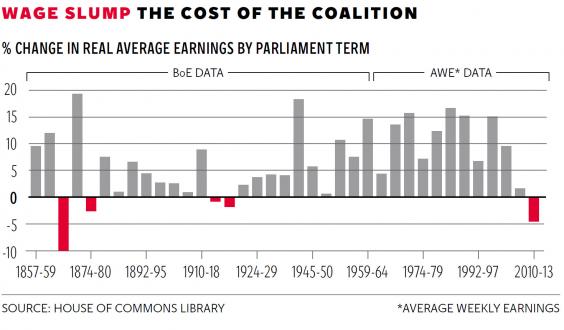
Trade Unions are fundamental to a functional democracy. Research shows that Trade Unionism is linked with higher levels of social equality and better public services, as well as better working conditions and rates of pay that ensure people have a decent standard of living. The Conservatives have always hated Trade Unions because Tory governments tend to value, perpetuate and endorse inequality and poor pay. We currently have the highest levels of social inequality in the EU, and it’s even greater than in the USA. We also have the biggest wage drop, pay hasn’t fallen this much since the 1800s. Tories like cheap labor, and profit for big business

That isn’t in ordinary people’s best interests. The largest study of UK deprivation shows that full-time work is no longer a safeguard against poverty. Yet Conservatives claim to be the party for “hard-working people.”

web-earnings-graphic

In a democratic society, governments don’t attempt to oppress opposition by using partisan policies to restrict their funding in order to turn a first world nation into a one party state. This government has established quite an impressive track record of punishing its critics to silence them. The proposed abolition of the Lords’ right to vote on or veto secondary legislation, delivered by the Strathclyde Review, but written in the rancorous and authoritarian hand of David Cameron, is another measure of draconian decision-making to stifle dissent, a tactic commonly deployed, it seems, when the Conservatives are faced with challenges and the prospect of not getting their own way, regardless of how unpopular and unreasonable their own way is.

Cameron’s rancour arose following the defeat in the House of Lords of a sneaky legslation in the form of a Statutory Instument that would have removed in work support for workers on low pay – tax credits. The defeat and ensuing publicity of the Lords debate and the exposure of an underhand legislative move forced the government to back down. But the shadow secretary for Work and Pensions, Owen Smith, has pointed out that cuts to benefit in-work entitlements being introduced through Universal Credit mean that the controversial tax credit reductions have been simply been “rebranded” by the government rather than reversed.

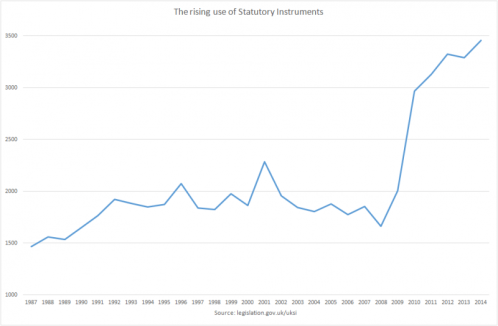
Secondary legislation is unamendable and is allocated 90 minutes debate in the Commons at best, by the Conservatives. Secondary legislation in the form of Statutory Instruments was only ever intended for non-controversial and small tidying up legislative measures. A Tory aide admitted that the Government are trying to get as much unpopular legislation in through the secondary route as possible. But this has been very evident anyway. The government is intent on dismantling any inconvenient piece of the constitution.

sis

Then there are the electoral reforms and proposed constituency boundary changes which are aimed at decreasing opposition votes and increasing Conservative seats. These are all examples of a very worrying authoritarian approach that the Conservatives have adopted to stifle challenges and concerns regarding the ideological basis and the impact of their policies without any democratic dialogue whatsoever.

Trade union funding is the cleanest money in politics: it comes from you and me, and therefore will ensure our interests are reflected in policy-making, rather than just those of big business tax-avoiding Tory donors.

It’s very worrying that vulture capitalists like Adrian Beecroft, a longstanding Conservative donor, has been permitted to re-write our employment laws as part of the government’s wider “labor market “reform.” Amongst Beecroft’s known personal investments are Gnodal, a computer networking company, and Wonga.com, an eye-wateringly high interest, opportunist loan company, that commodifies the poorest people with low credit ratings for massive profits. Beecroft has donated more than £500,000 to the Conservative Party since 2006.

The Beecroft Report caused considerable controversy because it recommended that the government should cut “red tape” in order to make the hiring and firing of employees much easier. In the report, Beecroft claimed this would help to “boost the economy” although no evidence for this was provided. It was alleged that significant sections of the report had been doctored. It was also reported that some recommendations had been removed from the original draft of the report.

The (then) Secretary of State for Business, Vince Cable, condemned the report, saying it was unnecessary for the government to scare workers. Beecroft responded by accusing Cable of being “a socialist who does little to help business” and cited his own personal experience of “having to pay out” £150,000 for unfairly dismissing an HR employee as one of the reasons he included the idea in the report. In an excellent article, James Moore, writing for the Independent, said that the Beecroft report contained “the seeds of the ruthless social Darwinism” and he connected the recommendation to Beecroft’s career of cutting jobs, and highlighted Beecroft’s long history of “wholesale attacks on workers’ terms and conditions.”

In a society that puts profit before people; where employees are regarded as a disposable cost and not an asset to employers; where noone but the powerful have rights; where wages are kept to the bare minimum, there can be no economic growth. Instead we are witnessing increasing economic enclosure and widespread exclusion – small pockets of privilege characterised by stagnant, accumulated wealth and increasingly widespread poverty elsewhere. With little public spending to stimulate small business and general growth, there can be no economic security.

All Conservative politics pivot on a fundamental commitment – the defence of privilege, status, and thus sustaining social inequality. But it is only by shifting money from the high-hoarding rich to the high-spending rest of us, and not the other way around, that investment and growth may be stimulated and sustainable.

images

Despite their recent rhetoric, the Conservatives are not and never have been the “party for workers.” New measures under Universal Credit will make benefit payments to people who are in work, but on low earnings, conditional on them taking “certain steps” to increase their pay or hours.

Many people in work are still living in poverty and reliant on in-work benefits, which undermines the libertarian paternalist/Conservative case for increasing benefit conditionality somewhat, although those in low-paid work are still likely to be less poor than those reliant on out-of-work benefits. The Conservative “making work pay” slogan is a cryptographic reference to the punitive paternalist 1834 Poor Law principle of less eligibility.

The government’s Universal Credit legislation has enshrined the principle that working people in receipt of in-work benefits may face benefits sanctions if they are deemed not to be trying hard enough to find higher-paid work. It’s not as if the Conservatives have ever valued legitimate collective wage bargaining.

In fact their legislative track record consistently demonstrates that they hate it, prioritising the authority of the state above all else. There are profoundly conflicting differences in the interests of employers and employees. The former are generally strongly motivated to purposely keep wages as low as possible so they can generate profit and pay dividends to shareholders and the latter need their pay and working conditions to be such that they have a reasonable standard of living.

Workplace disagreements about wages and conditions are now typically resolved neither by collective bargaining nor litigation but are left to management prerogative. This is because Conservative aspirations are clear. They want cheap labor and low cost workers, unable to withdraw their labor, unprotected by either trade unions or employment rights and threatened with destitution via benefit sanction cuts if they refuse to accept low paid, low standard work. Similarly, desperation and the “deterrent” effect of the 1834 Poor Law amendment served to drive down wages.

In the Conservative’s view, Trade Unions distort the free labor market which runs counter to New Right and neoliberal dogma. Since 2010, the decline in UK wage levels has been amongst the very worst in Europe. That isn’t a coincidence. It’s an intended consequence of Conservative policy.

The Conservatives talk a lot about the need for citizen responsibility, but seem to have exempted themselves. They also seem to have forgotten that responsibities are generally balanced with citizen rights. The right to withdraw labour as a last resort in industrial disputes is fundamental to free societies, as the European Convention on Human Rights recognises.

Not that this government concerns itself with international human rights laws. We are currently the first country to face a UN inquiry into serious disability rights violations. Conservative policies are also in breach of the human rights of children and women. Conservatives operate from within a non-cooperative, competitive individualist, relatively non-altruistic framework . Their anti-humanist, social Darwinist, anti-welfare policies reflect this. 

The government’s proposed changes to Trade Union laws are a major attack on civil liberties. The Conservative’s proposals have been criticised by Liberty, Amnesty International and the British Institute of Human Rights, amongst others. The three organisations issued this joint statement:

“By placing more legal hurdles in the way of unions organising strike action, the Trade Union Bill will undermine ordinary people’s ability to organise together to protect their jobs, livelihoods and the quality of their working lives.

“It is hard to see the aim of this bill as anything but seeking to undermine the rights of all working people. We owe so many of our employment protections to trade unions and we join them in opposing this bill.”

Trade unionists are at the forefront of the struggle for human rights; they are committed to social justice and international solidarity, and typically have strong community roots. These values make them prime targets of this government’s repression. 

 320px-London_Trades_Demonstration

“I oppose the government’s Trade Union Bill and I will stand up for rights and freedom at work.” Sign the petition here.

The Strathclyde Review clarifies the Conservatives’ authoritarianism


“The Government appear to consider that any defeat of an Statutory Instrument by the Lords is a breach of convention. We disagree.” Lord Norton of Louth (Conservative)

“The conduct of Parliament is a matter for Parliament, not the Executive. The Executive is accountable to Parliament, not the other way round.” Lord Forsyth of Drumlean (Conservative)

“The assertion is that this House had acted in defiance of the Government’s “electoral mandate”. But the Conservative Party never told voters that it intended to make massive cuts to in-work benefits, and it won a House of Commons majority of only 12 seats on the votes of just 24% of the total electorate, so the claim that the Lords defied an electoral mandate is tosh.” Lord Howarth of Newport (Labour). Source: Hansard.

A Bicameral Parliament is one in which two assemblies share legislative power. The main purpose of the House of Lords is to act as a deliberative assembly, providing expert scrutiny to ensure democratic checks on the power of the Lower House, and where necessary, to provide a counterbalance for excessively partisan legislation that makes no concession to the accommodation and representation of minority views. The House of Lords provides an essential additional layer of democratic process which helps to prevent the so-called “tyranny of the majority” and divisive, potentially damaging partisan changes to public life.

There is always a need to ensure additional checks and balances against incumbent governments and for extending opportunities to review and improve the quality of legislation. There is always a need to broaden the political participation of particular groups in society and to explore ways by which under-represented groups may be identified and included in political processes.

A review by Lord Strathclyde, commissioned by a rancorous and retaliatory David Cameron following the delay and subsequently effective defeat of government tax credit legislation in the House of Lords, recommends curtailing the powers of Upper House. 

Strathclyde proposes that the House of Commons is given the final say over secondary legislation (in particular, Statutory Instruments), which is frequently being used for political manoeuvring to edit the details of Acts, and ensure rules, regulations and even changes to legal definitions are made by ministerial order, rather than by the rather more open and democratic process of primary legislation: it’s being used as a way of bypassing Parliamentary scrutiny. 

In fairness, on page 6 of the report, Lord Strathclyde says:

“I believe it would be appropriate for the Government to take steps to ensure that Bills contain an appropriate level of detail and that too much is not left for implementation by statutory instrument.”

The problem is that Statutory Instruments (SI) are being over-used and are under-scrutinised in the Commons. SIs have become a major form of law-making activity in the UK. In 2015, the UK Parliament passed 34 Acts, whilst 1,999 Statutory Instruments were made. (In fact, 2015 has been a relatively light year for SIs: in 2013 and 2014, 3,292 and 3,486 SIs were made.)

The Government ensure they have a majority on any SI committee and MPs are chosen by Whips. The Hansard Society estimate that SIs currently account for as much as 80 per cent of the Government legislation that impacts citizens. However, they are given substantially less Parliamentary time than Bills, enabling Government to push through their legislative programme with very little scrutiny, exacerbating a lack of democratic transparency and accountability of the Executive (the Government).

The report details 3 possible options:

  • option 1 would remove the House of Lords from the Statutory Instrument procedure altogether – to take Statutory Instruments through the House of Commons only
  • option 2 would seek to retain the present role of the House of Lords but clarify the restrictions on how its powers should be exercised, by codifying them passing a resolution
  • option 3 is a compromise option would create a new procedure in primary legislation. The new procedure would allow the House of Lords to ask the House of Commons to think again when a disagreement exists but gives the final say to the elected House of Commons

Strathclyde has recommended option 3. However that would have a profound impact on our constitutional democracy.

The Hansard Society said that:

“Most criticism of the system is concerned with the negative resolution procedure where the initiative lies with the Opposition to table appropriate annulment motions in the form of Early Day Motions (known as “prayers”). Given that the Government controls almost all the available parliamentary time in the Commons, unless the Opposition can persuade the Government to provide time, either on the floor of the House or in Standing Committee, the SI will not be debated.

The time limit (of an hour and an half) imposed on debates should be removed.”

The Society also recommend far more robust pre-legislative scrutiny mechanisms.

Lord Craig of Radley (Cross-Bencher) points out that:

“Since 2010, 34 Acts have been passed by Parliament with Henry VIII powers. Before us at present there are five Bills with Henry VIII powers. In case your Lordships are not familiar with Henry VIII powers, I should like to read from Clause 68 of the Scotland Bill, which states: “The Secretary of State may by regulations make … such consequential provision in connection with any provision of Part 1, 3, 4, 5 or 6, or … such transitional or saving provision in connection with the coming into force of any provision of Part 1, 3, 4, 5 or 6 … Regulations under this section may amend, repeal, revoke or otherwise modify any of the following (whenever passed or made)” — and so it goes on. In other words, if your Lordships think that you have passed a Bill, you have not — because the Secretary of State can amend it by statutory instrument.”

Baroness Smith of Basildon (Labour) said she would like to thank Lord Strathclyde for his report, and:

“For the extraordinary speed with which it has been produced and the vigour with which he has sought to defend the Government’s exceptionally weak rationale for undertaking it.”

She also said:

“Lord Strathclyde asks for responsible Opposition. We provide that but seek responsible Government.”

Baroness Andrews (Labour) said:

“We have had to refer back to this House secondary legislation which contains substantial policy changes with substantial impacts — for example, the draft hunting regulations, immigration changes, and universal credit. In this Session alone, 32 SIs have had to be corrected by government after serious flaws were identified and 16 have had to be withdrawn completely.

If we add to that ministerial failure to provide impact statements, or Explanatory Memoranda which do the opposite of what they are supposed to do, a picture emerges of a Government who not only deliberately exploit secondary legislation and reduce parliamentary scrutiny in the process but are resentful of proper scrutiny. If we were to lose our exceptional power to reject SIs, Parliament would lose a legitimate brake on government excess. However, it would also reduce the credibility of the scrutiny process as a whole and open the gate to greater abuse. What is needed, which the noble Baroness, Lady Hayman, anticipated, is a wholesale review of secondary legislation to remind Ministers of their public duty to be open and transparent about policy and legislation, to be accountable, and to respect—in fact, invite—the role of scrutiny.

We should not see this as a stand-alone report; rather, it should be seen alongside other legislation and proposals—for example, the lobbying Bill in the previous Parliament that restricted the ability of charities and other groups to campaign for their causes; new limits on freedom of information; and the Trade Union Bill, debated this week, which will strip the Labour Party of its funding, quite contrary to the balanced proposals from the Committee on Standards in Public Life. We have seen reports of Ministers being told to make increased use of statutory instruments to drive through legislation without proper scrutiny; and now we have the proposal to remove this House’s power to veto the same secondary legislation that the Government favour. It is hard not to see this as an authoritarian Executive waging war on the institutions that hold them to account. The Government are seeking to stifle debate, shut down opposition and block proper scrutiny. They are a Government who fear opposition and loathe challenge.”

Lord McNally (Liberal Democrat) said:

“I may want to see this House reformed, but I have no wish to see it become Mr Cameron’s poodle, and a neutered poodle at that.”

I suspect this is a Government that would prefer a world of neutered poodles.

disempowerment
Conservative Paternalism


A full transcript of this important debate can be found here

You can also watch the excellent contributions here.

WHY IS THE DWP FAILING TO PROVIDE PROPER EXPLANATIONS ALONGSIDE ITS LEGISLATION? LORDS TO ASK MINISTER

The lack of Government transparency and accountability is something that has concerned me since 2012. As someone who has used the Freedom of Information Act frequently to try and push for greater transparency and democratic accountability, I can say that there is a deeply concerning gap between the justification narratives being presented by the government for their policies, rational and coherent explanations and the reality of the impact of those policies. My requests to the Department for Work and Pensions (DWP) have not once been met with a coherent, rational response, and the DWP have also regularly refused to meet my requests for information.

Most recently I requested information about the DWP’s ethical guidelines, and was refused on the grounds that meeting the request would cost more than the £600 limit. Yet it’s reasonable to expect that ethical guidelines for any government department are placed in the public domain, and are accessible by service users.

samedifference1's avatarSame Difference

A press release:

The House of Lords Secondary Legislation Scrutiny Committee will next week take oral evidence from the Lord Freud, Minister of State for Welfare Reform on the quality of information that the Department for Work and Pensions has provided in support of statutory instruments.

Since the general election the Committee has published three reports criticising DWP for failing to provide sufficient explanation alongside its Statutory Instruments to enable it to gain a clear understanding of the effect of the instrument under consideration. The Committee has therefore invited the Minister to attend and discuss how his department can do a better job in meeting the Committee’s information requirements.

The Evidence session will start at 12:00 on Tuesday 22 December in Committee Room 3A of the House of Lords

Lord Freud is the Minister for Welfare Reform at the Department for Work and Pensions (DWP) and as such may make…

View original post 74 more words

A critique of Conservative notions of social research

images
The goverment’s archaic positivist approach to social research shows that they need a team of sociologists and social psychologists, rather than the group of “libertarian paternalists” – behavioural economists – at the heart of the cabinet office, who simply nudge the public to behave how they deem appropriate, according to a rigid, deterministic, reductive neoliberal agenda and traditional, class-contingent Conservative prejudices.


Glossary

Epistemology – The study or theory of the nature and grounds of knowledge, especially with reference to its limits, reliability and validity. It’s invariably linked with how a researcher perceives our relationship with the world and what “social reality” is (ontology), and how we ought to investigate that world (methodology). For example, in sociology, some theorists held that social structures largely determine our behaviour, and so behaviour is predictable and objectively measurable, others emphasise human agency, and believe that we shape our own social reality to a degree, and that it’s mutually and meaningfully negotiated and unfixed. Therefore, detail of how we make sense of the world and navigate it is important.

Interpretivism – In sociology, interpretivists assert that the social world is fundamentally unlike the natural world insofar as the social world is meaningful in a way that the natural world is not. As such, social phenomena cannot be studied in the same way as natural phenomena. Interpretivism is concerned with generating explanations and extending understanding rather than simply describing and measuring social phenomena, and establishing basic cause and effect relationships.

Libertarian paternalism – The idea that it is both possible and legitimate for governments, public and private institutions to affect and change the behaviours of citizens whilst also [controversially] “respecting freedom of choice.”

MethodologyA system of methods used in a particular area of study or activity to collect data. In the social sciences there has been disagreement as to whether validity or reliability ought to take priority, which reflected ontological and epistemological differences amongst researchers, with positivism, broadly speaking, being historically linked with structural theories of society – Emile Durkheim’s structural-functionalism, for example – and quantitative methods, usually involving response-limiting surveys, closed-ended questionaires and statistical data collection, whereas interpretive perspectives, such as symbolic interactionism, phenomenology and ethnomethodology, tend to be associated with qualitative methods, favoring open-ended questionaires, interviews and participant observation.

The dichotomy between quantitative and qualitative methodological approaches, theoretical structuralism (macro-level perspectives) and interpretivism (micro-level perspectives) is not nearly so clear as it once was, however, with many sociologists recognising the value of both means of data collection and employing methodological triangulation, reflecting a commitment to methodological and epistemological pluralism. Qualitative methods tend to be more inclusive, lending participants a dialogic, democratic voice regarding their experiences.

Ontology – A branch of metaphysics concerned with the nature of reality and being. It’s important because each perspective within the social sciences is founded on a distinct ontological view.

Positivism – In sociology particularly, the view that society, like the physical world, operates according to general laws, and that all authentic knowledge is that which is verified. However, the verification principle is itself unverifiable.

Positivism tends to present superficial and descriptive rather than in-depth and explanatory accounts of social phenomena. In psychology, behaviourism has been the doctrine most closely associated with positivism. Behaviour from this perspective can be described and explained without the need to make ultimate reference to mental events or to internal psychological processes. Psychology is, according to behaviourists, the “science” of behaviour, and not the mind.

Critical realism – Whilst positivists and empiricists more generally, locate causal relationships at the level of observable surface events, critical realists locate them at the level of deeper, underlying generative mechanisms. For example, in science, gravity is an underlying mechanism that is not directly observable, but it does generate observable effects. In sociology, on a basic level, Marx’s determining base (which determines superstructure) may be regarded as a generative mechanism which gives rise to emergent and observable properties.

Randomised controlled trials (RCTs) – RCT is a positivist research model in which people are randomly assigned to an intervention or a control (a group with no intervention) and this allows comparisons to be made. Widely accepted as the “gold standard” for clinical trials, the foundation for evidence-based medicine, RCTs are used to establish causal relationships. These kinds of trials usually have very strict ethical safeguards to ensure the fair and ethical treatment of all participants, and these safeguards are especially essential in government trials, given the obvious power imbalances and potential for abuse. A basic principle expressed in the Nuremberg Code is the respect due to persons and the value of a person’s autonomy, for example.

In the UK, the Behavioural Insight Team is testing paternalist ideas for conducting public policy by running experiments in which many thousands of participants receive various “treatments” at random. Whilst medical researchers generally observe strict ethical codes of practice, in place to protect subjects, the new behavioural economists are much less transparent in conducting research and testing public policy interventions. Consent to a therapy or a research protocol must possess three features in order to be valid. It should be voluntarily expressed, it should be the expression of a competent subject, and the subject should be adequately informed. It’s highly unlikely that people subjected to the extended use and broadened application of welfare sanctions gave their informed consent to participate in experiments designed to test the theory of “loss aversion,” for example.

There is nothing to prevent a government deliberately exploiting a research framework as a way to test out highly unethical and ideologically-driven policies. How appropriate is it to apply a biomedical model of prescribed policy “treatments” to people experiencing politically and structurally generated social problems, such as unemployment, inequality and poverty, for example?

cogs

The increasing conditionality and politicisation of “truths”

The goverment often claim that any research revealing negative social consequences arising from their draconian policies, which they don’t like to be made public “doesn’t establish a causal link.”  Recently there has been a persistent, aggressive and flat denial that there is any “causal link” between the increased use of food banks and increasing poverty, between benefit sanctions and extreme hardship and harm, between the work capability assessment and an increase in numbers of deaths and suicides, for example.

The government are referring to a scientific maxim: “Correlation doesn’t imply causality.” 

It’s true that correlation is not the same as causation.

It’s certainly true that no conclusion may be drawn regarding the existence or the direction of a cause and effect relationship only from the fact that event A and event B are correlated. Determining whether there is an actual cause and effect relationship requires further investigation. The relationship is more likely to be causal if the correlation coefficient is large and statistically significant, as a general rule of thumb. (For anyone interested in finding out more about quantitative research methods, inferential testing and statistics, this is a good starting point – Inferential Statistics.)

Here are some minimal conditions to consider in order to establish causality, taken from Hills criteria:

  • Strength: A relationship is more likely to be causal if there is a plausible mechanism between the cause and the effect.
  • Coherence: A relationship is more likely to be causal if it is compatible with related facts and theories.
  • Analogy: A relationship is more likely to be causal if there are proven relationships between similar causes and effects.
  • Specificity: A relationship is more likely to be causal if there is no other likely explanation.
  • Temporality: A relationship is more likely to be causal if the effect always occurs after the cause.
  • Gradient: A relationship is more likely to be causal if a greater exposure to the suspected cause leads to a greater effect.
  • Plausibility: A relationship is more likely to be causal if there is a plausible mechanism between the cause and the effect.

Hill’s criteria can be thought of as elements within a broader process of critical thinking in research, as careful considerations in the scientific method or model for deciding if a relationship involves causation. The criteria don’t all have to be met to suggest causality and it may not even be possible to meet them in every case. The important point is that we can consider the criteria as part of a careful and relatively unbiased research process. We can also take other precautionary steps, such as ensuring that there are no outliers or excessive uncontrolled variance, ensuring the populations sampled are representative and generally taking care in our research design, for example.

However, it is inaccurate to say that correlation doesn’t imply causation. It quite often does.

Furthermore, the government are implying that social research is valid only if it conforms to strict and archaic positivist criteria, and they attempt to regularly dismiss the propositions and research findings of social scientists as being “value-laden” or by implying that they are, at least. However, it may also be said that values enter into social inquiry at every level, including decisions to research a social issue or not, decisions to accept established correlations and investigate further, or not, which transforms research into a political act. (One only need examine who is potentially empowered or disempowered through any inquiry and note the government response to see this very clearly).

It’s noteworthy that when it comes to government claims, the same methodological rigour that they advocate for others isn’t applied. Indeed, many policies have clearly been directed by ideology and traditional Tory prejudices, rather than valid research and empirical evidence. For example, it is widely held by the Conservatives that work is the “only route out of poverty”. Yet since 2010, the decline in UK wage levels has been amongst the very worst in Europe. The fall in earnings under the Tory-led Coalition is the biggest in any parliament since 1880, according to analysis by the House of Commons Library, and at a time when the cost of living has spiralled upwards. Many people in work, as a consequence, are now in poverty, empirically contradicting government claims.

web-earnings-graphic

So what is positivism?

Positivism was a philosophical and political movement which enjoyed a very wide currency in the second half of the nineteenth century. It was extensively discredited during the twentieth century.

Auguste Comte (1798-1857,) who was regarded by many as the founding father of social sciences, particularly sociology, and who coined the term “positivism,” was a Conservative. He believed social change should happen only as part of an organic, gradual evolutionary process, and he placed value on traditional social order, conventions and structures. Although the notion of positivism was originally claimed to be about the sovereignty of positive (verified) value-free, scientific facts, its key objective was politically Conservative. Positivism in Comte’s view was “the only guarantee against the communist invasion.” (Therborn, 1976: 224).

The thing about the fact-value distinction is that those who insist on it being rigidly upheld the loudest generally tend to use it the most to disguise their own whopping great ideological commitments. In psychology, we call this common defence mechanism splitting.  “Fact, fact, fact!” cried Mr Thomas Gradgrind. It’s a very traditionally Conservative way of rigidly demarcating the world, imposing hierarchies of priority and order, to assure their own ontological security and maintain the status quo, regardless of how absurd this shrinking island of certainty appears to the many who are exiled from it.

Perhaps unsurprisingly, Comte’s starting point is the same as Hayek’s, namely the existence of a spontaneous order. It’s a Conservative ideological premise, and this is one reason why the current neoliberal Tory government of self-described “libertarian paternalists” embrace positivism without any acknowledgement of its controversy.

However, positivist politics was discarded half a century ago, as a reactionary and totalitarian doctrine. It’s is true to say that, in many respects, Comte was resolutely anti-modern, and he also represents a general retreat from Enlightenment humanism. His somewhat authoritarian positivist ideology, rather than celebrating the rationality of the individual and wanting to protect people from state interference, instead fetishised the scientific method, proposing that a new ruling class of authoritarian technocrats should decide how society ought to be run and how people should behave. This is a view that the current government, with their endorsement and widespread experimental application of nudge theory, would certainly subscribe to.

Science, correlation and causality

Much scientific evidence is based on established correlation of variables – they are observed to occur together. For example, correlation is used in Bell’s theorem to disprove local causality. The combination of limited available methodologies has been used together with the dismissing “correlation doesn’t imply causation” fallacy on occasion to counter important scientific findings. For example, the tobacco industry has historically relied on a dismissal of correlational evidence to reject a link between tobacco and lung cancer, especially in the earliest stages of the research, but there was a clearly and strongly indicated association. 

Science is manifestly progressive, insofar as over time its theories tend to increase in depth, range and predictive power.

Established correlations in both the social and natural sciences may be regarded, then, as a starting point for further in-depth and rigorous research, with the coherence, comprehensiveness and verisimilitude of theoretical propositions increasing over time. This is basically a critical realist position, which is different from the philosophical positivism that dominated science and the social sciences two centuries ago, with an emphasis on strictly reductive empirical evidence and the verification principle (which is itself unverifiable).

Positivist epistemology has been extensively critiqued for its various limitations in studying the complexities of  human experiences. One critique focuses on the positivist tendency to carry out studies from a “value-free” outsider perspective in an effort to maintain objectivity, whilst the insider or subjective perspective is ignored. There is no mind-independent, objective vantage point from which social scientists may escape the insider. A second critique is that positivism is reductionist and deterministic. It emphasises quantification and ignores and removes context, meanings, autonomy, intention and purpose from research questions by ignoring unquantifiable variables.

It therefore doesn’t extend explanations and understanding of how we make sense of the world. A third critique is that positivism entails generalisation of data which renders results inapplicable to individual cases; data are used to describe a population without accounting for significant micro-level or individual variation. Because of these and other problems, positivism lost much favour amongst sociologists and psychologists in particular. 

Verification was never the sole criterion of scientific inquiry. Positivism probably lost much more methodological and epistemological currency in the social sciences than the natural sciences, because humans cannot be investigated in the same way as inert matter. We have the added complication of consciousness and [debatable] degrees of intentionality, so people’s behaviour is much more difficult to measure, observe and predict. There’s a difference between facts and meanings, human behaviours are meaningful and purposeful, human agency arises in contexts of intersubjectively shared meanings. But it does seem that prediction curiously becomes easier at macro-levels when we examine broader social phenomena, mechanisms and processes. (It’s a bit like quantum events: quite difficult to predict at subatomic level, but clarifying, with events apparently becoming more predictable at the level we inhabit and observe every day.)

Now, whilst correlation isn’t quite the same as “cause and effect”, it often strongly indicates a causal link, and what usually follows once we have established a correlation is further rigorous research, eliminating “confounding” variables and bias systematically (we do use rigorous inference testing in the social sciences). Correlation is used when inferring causation; the important point is that such inferences are made after correlations are confirmed as real and all causational relationships are systematically explored using large enough data sets.

The standard process of research and enquiry, scientific or otherwise, doesn’t entail, at any point, a flat political denial that there is any relationship of significance to concern ourselves with, nor does it involve withholding data and a refusal to investigate further.

Positivism and psychology

Positivism was most closely associated with a doctrine known as behaviourism during the mid-20th century in psychology. Behaviourists confined their research to behaviours that could be directly observed and measured. Since we can’t directly observe beliefs, thoughts, intentions, emotions and so forth,  these were not deemed to be legitimate topics for a scientific psychology. One of the assumptions of behaviourists is that free-will is illusory, and that all behaviour is determined by the environment either through association or reinforcement. B.F. Skinner argued that psychology needed to concentrate only on the positive and negative reinforcers of behaviour in order to predict how people will behave, and  everything else in between (like what a person is thinking, or their attitude) is irrelevant because it can’t be measured.

So, to summarise, behaviourism is basically the theory that human (and animal) behaviour can be explained in terms of conditioning, without appeal to wider socioeconomic contexts, consciousness, character, traits, personality, internal states, intentions, purpose, thoughts or feelings, and that psychological disorders and “undesirable” behaviours are best treated by using a system of reinforcement and punishment to alter behaviour “patterns.”

In Skinner’s best-selling book Beyond Freedom and Dignity1971, he argued that freedom and dignity are illusions that hinder the science of behaviour modification, which he claimed could create a better-organised and happier society, where no-one is autonomous, because we have no autonomy. (See also Walden Two1948: Skinner’s dystopian novel).

There is, of course, no doubt that behaviour can be controlled, for example, by threat of violence, actual violence or a pattern of deprivation and reward. Freedom and dignity are values that are intrinsic to human rights. Quite properly so. All totalitarians, bullies  and authoritarians are behaviourists. Skinner has been extensively criticised for his sociopolitical pronouncements, which many perceive to be based on serious philosophical errors. His recommendations are not based on “science”, but on his own covert biases and preferences.

Behaviourism also influenced a positivist school of politics that developed in the 50s and 60s in the USA. Although the term “behavouralism” was applied to this movement, the call for political analysis to be modeled upon the natural sciences, the preoccupation with researching social regularities, a commitment to verificationism, an experimental approach to methodology, an emphasis on quantification and the prioritisation of a fact-value distinction: keeping moral and ethical assessment and empirical explanations distinct, indicate clear parallels with the school of behaviourism and positivism within psychology.

The political behaviouralists proposed, ludicrously, that normative concepts such as “democracy,” “equality,” “justice” and “liberty” should be rejected as they are not scientific – not verifiable or falsifiable and so are beyond the scope of “legitimate” inquiry. 

Behaviourism has been criticised within politics as it threatens to reduce the discipline of political analysis to little more than the study of voting and the behaviour of legislatures. An emphasis on  the observation of data deprives the field of politics of other important viewpoints – it isn’t a pluralist or democratic approach at all – it turns political discourses into monologues and also conflates the fact-value distinction.

Every theory is built upon an ideological premise that led to its formation in the first place and subsequently, the study of  “observable facts” is intentional, selective and purposeful. As Einstein once said: “the theory tells you what you may observe.”

The superficial dichotomisation of facts and values also purposefully separates political statements of what is from what ought to be. Whilst behavouralism is itself premised on prescriptive ideology, any idea that politics should include progressive or responsive prescriptions – moral judgements and actions related to what ought to be – are summarily dismissed.

Most researchers would agree that we ought to attempt to remain as objective as possible, perhaps aiming for a relative value-neutrality, rather than value-freedom, when conducting research. It isn’t possible to be completely objective, because we inhabit the world that we are studying, we share cultural norms and values, we are humans that coexist within an intersubjective realm, after all. We can’t escape the world we are observing, or the mind that is part of the perceptual circuit.

But we can aim for integrity, accountability and transparency. We can be honest, we can critically explore and declare our own interests and values, for example. My own inclination is towards value-frankness, rather than value-freedom – we can make the values which have been incorporated in the choice of the topic of research, and of the formulation of hypotheses clear and explicit at the very outset. The standardised data collection process itself is uncoloured by personal feelings (that is, we can attempt to collect data reliably and systematically.) However, the debate about values and the principle of objectivity is a complex one, and it’s important to note that symbolic interactionists and post modernists, amongst others, have contended that all knowledge is culturally constructed. (That’s a lengthy and important discussion for another time.)

Nudge: from meeting public needs to prioritising political needs

The idea of “nudging” citizens to do the “right thing” for themselves and for society heralds the return of behaviourist psychopolitical theory. Whilst some theorists claim that nudge is premised on notions of cognition, and so isn’t the same as the flat, externalised stimulus-response approach of behaviourism, my observation is that the starting point of nudge theory is that our cognitions are fundamentally biased and faulty, and so the emphasis of nudge intervention is on behaviour modification, rather than on engaging with citizen’s cognitive or deliberative capacities.

In other words, our tendency towards cognitive bias(es) render us incapable of rational decision-making, so the state is bypassing democratic engagement and prescribing involuntary and experimental behavioural change to “remedy” our perceived cognitive deficits.

Behaviourists basically stated that only public events (behaviours of an individual) can be objectively observed, and that therefore private events (intentions, thoughts and feelings) should be ignored. The paternal libertarians are stating that our cognitive processes are broken, and should be ignored. What matters is how people behave. It’s effectively another reductionist, instrumental stimulus-response approach based on the same principles as operant conditioning.

Nudge is very controversial. It’s experimental use on an unconsenting population has some profound implications for democracy,  which is traditionally based on a process of dialogue between the public and government, ensuring that the public are represented: that governments are responsive, shaping policies that address identified social needs. However, Conservative policies are no longer about reflecting citizen’s needs: they are increasingly all about instructing us how to be.

The context-dependency and determination of value-laden nudge theory

Libertarian paternalists are narrowly and uncritically concerned only with the economic consequences of decisions within a neoliberal context, and therefore, their “interventions” will invariably encompass enforcing behavioural modifiers and ensuring adaptations to the context, rather than being genuinely and more broadly in our “best interests.” Defining human agency and rationality in terms of economic outcomes is extremely problematic. And despite the alleged value-neutrality of the new behavioural economics research it is invariably biased towards the status quo and social preservation rather than progressive social change.

At best, the new “behavioural theories” are merely theoretical, at a broadly experimental stage, and therefore profoundly limited in terms of scope and academic rigour; as a mechanism of explanation and in terms of capacity for generating comprehensive and coherent accounts and understandings of human motivation and behaviour.

Furthermore, in relying upon a pseudo-positivistic experimental approach to human cognition, behavioural economists have made some highly questionable ontological and epistemologial assumptions: in the pursuit of methodological individualism, citizens are isolated from the broader structural political, economic and sociocultural and established reciprocal contexts that invariably influence and shape an individuals’s experiences, meanings, motivations, behaviours and attitudes, causing a deeply problematic duality between context and cognition.

Yet many libertarian paternalists reapply the context they evade in explanations of human behaviours to justify the application of their theory in claiming that their “behavioural theories” can be used to serve social, and not necessarily individual, ends, by simply acting upon the individual to make them more “responsible.” But “responsible” is defined only within the confines of a neoliberal economic model. (See, for example: Personal Responsibility and Changing Behaviour: the state of knowledge and its implications for public policyDavid Halpern, Clive Bates, Geoff Mulgan and Stephen Aldridge, 2004.)

In other words, there is a relationship between the world that a person inhabits and a person’s perceptions, intentions and actions. Any theory of behaviour and cognition that ignores context can at best be regarded as very limited and partial. Yet the libertarian paternalists overstep their narrow conceptual bounds, with the difficulty of reconciling individual and social interests somewhat glossed over. They conflate “social interests” with neoliberal outcomes.

The ideological premise on which the government’s “behavioural theories” and assumptions about the negative impacts of neoliberalism on citizens rests is fundamentally flawed, holding individuals responsible for circumstances that arise because of market conditions, the labor market, political decision-making, socioeconomic constraints and the consequences of increasing “liberalisation”, privatisation and marketisation.

Market-based economies both highly value and extend competitive individualism and “efficiency”,  which manifests a highly hierarchical social structure, and entails the adoption of economic Darwinism. By placing a mathematical quality on social life (Bourdieu, 1999), neoliberalism has encouraged formerly autonomous states to regress into penal states that value production, competition and profit above all else, including attendance to social needs and addressing arising adverse structural level constraints, the consequences of political decision-making and wider socioeconomic issues, such as inequality and poverty.

As a doxa, neoliberalism has become a largely unchallenged reality. It now seems almost rational that markets should be the allocators of resources; that competition should be the primary driver of social problem-solving, innovation and behaviour, and that societies should be composed of individuals primarily motivated by economic conditions and their own economic productivity. Despite the Conservative’s pseudo-positivist claims of value-neutrality, the economic system is being increasingly justified by authoritarian moral arguments about how citizens ought to act.

The rise of a new political behaviourism reflects, and aims at perpetuating, the hegemonic nature of neoliberalism.

11196235_481003708719482_8797603064126897147_n

Image courtesy of Tiago Hoisel


Independent Commission on Freedom of Information call for evidence. You have until November 20th

demcracy

The matter of Government transparency and accountability is so important to David Cameron that the Conservatives would like to end our right to ask questions via the Freedom of Information Act (FoI).

The Act gives us the right to ask for information from public bodies, rather than depending on what the government is prepared to let us see. Such information allows us to make informed decisions and to challenge the government with evidence when policies have adverse outcomes. Any attempt to curtail public access to information will have profound implications for government openess, transparency, accountability and for democracy.

Many campaigners have voiced fears that government proposals could make it more difficult, and costly, for the media and public to use the Act to access information held by public bodies.

Chris Grayling, Tory tyrant extraordinaire, along with others in his party, has a history of altering and editing laws that he regards an inconvenience. He claims that it is wrong that the Freedom of Information Act was being used as a research tool to generate stories for the media and that is not acceptable.” 

But surely research, investigation, providing evidence and sharing information and news with the public is what we ought to expect from the media, it’s precisely those criteria that establish high quality journalism.

Grayling’s outrageous remarks were condemned by Tom Watson, the deputy leader of the Labour party, who believes the FoI Act should be strengthened, not undermined. I agree.

Watson said: “Chris Grayling’s assertion that the Freedom of Information Act is ‘misused’ to generate stories for the media betrays a greater truth about this government’s thinking. 

“What they’d really like to see is less open government. It is the job of journalists to hold the government to account on behalf of the public. The Freedom of Information Act is a vital tool in their armoury which should not and must not be removed or weakened.”

Grayling said it should be used for “those who want to understand why and how government is taking decisions”. It is, and that includes by journalists who inform the public about those decisions and the likes of bloggers such as me – a lot of my work wouldn’t be possible without the FoI Act, I use it frequently so I can share crucial information, as do many other bloggers.

Many of us submitted a FOI regarding the mortality rates of sick and disabled people undergoing the controversial work capability assessment, after the government refused to publish the information after 2011, and fellow blogger Mike Sivier from Vox Political fought in court to ensure that this important information was finally released.

And who can forget Steven Preece’s request from Welfare Weekly, that revealed the Department of Work and Pensions (DWP) had lied about the “success” of the punitive sanction regime, using fake characters giving fake testimonies, which the DWP published in a leaflet and were subsequently forced to retract it. Steven’s FoI, details of which were widely shared by the mainstream media, (as were the details of Mike Sivier’s FoI) highlighted that the government is not above shameful lying to get its own way.

There’s a strong element of cooperative work amongst bloggers. I submitted a subsequent request for further detailed information about sanctions recently, which has yielded a lot of information that I’m researching around, so I can also share information and analysis, too. Writers frequently draw on other people’s FoIs to analyse, cross reference and to share important information.

I was memorably refused information about the government risk register regarding the Health and Social Care Bill back in 2012, and despite being ordered by the Information Commissioner and a tribunal to release that information, we have yet to see it. The claim behind the refusal was that it isn’t “in public interests”that the information is released. I beg to differ.

We clearly have a government that doesn’t like democratic processes, dialogue and public engagement regarding its policies and impacts and any kind of critical appraisal and challenge.

The very short timescale of the public consultation regarding the future of the Freedom of Information Act also indicates an utter lack of respect for democratic process and the public’s right to access information that they feel is in their best interests to know. The call for information was published on the November 9, and the closing date for submissions is November 20. That’s scandalous.

The Independent Commission on Freedom of Information’s terms of reference require it to consider the implications for the Freedom of Information Act 2000 of the uncertainty around the Cabinet veto and the practical operation of the Act as it has developed over the last 10 years in respect of the deliberative space afforded to public authorities. The Commission is also interested in “the balance between transparency and the burden of the Act on public authorities more generally.”

The Independent Commission on Freedom of Information invites anyone to submit evidence on the questions raised in the call for evidence paper. See: Independent Commission on Freedom of Information: call for evidence

Ways to respond:

Labour will reinstate Legal Aid – John van der Luit-Drummond

994596_517805604955639_608589568_n

Jeremy Corbyn has said that “Society cannot survive on charity, goodwill, and food banks. It has to rely on the basis of a welfare state that ensures that no one falls into destitution, and a legal system that ensures no one goes unrepresented in the courts.”

He said that he shares agreement with members of his shadow justice team, that the Labour party under Ed Miliband’s leadership had not given legal aid the attention it deserved in the last general election.

“It wasn’t given enough prominence either by us or in the general debates at the election itself, I want to see a rights-based society and the right to justice is crucial, therefore the right to legal aid is absolutely essential,” he said.

The Labour party leader said the government’s £350m worth of cuts to the Ministry of Justice (MoJ) budget had clearly meant many people were not getting justice, and in many cases were going unrepresented in court.

corbyn

Speaking exclusively to Solicitors Journal, following a barnstorming address at a legal aid forum to a gathering of legal professionals, Jeremy Corbyn said the government’s reforms to the justice system meant firms were pulling out of legal aid to concentrate on more lucrative practice areas, to the detriment of young practitioners.

“At the moment a lot of lawyers feel they can’t be dealing with legal aid, they have to find something else to do, hence the number of firms that don’t want to get involved in legal aid or just do commercial law because that is the only way they can make a living. It is not good for anyone. We need a proper legal system,” said Corbyn.

“It is a deterrent for young people going into law in the future, so we end up with young lawyers not being able to work. If you can, stick at it. Try and stay there because people need good lawyers. They need that representation. I want to see the restoration of legal aid in the new parliament and hopefully we will have a Labour majority to bring it about.”

Labour plan to produce a draft report on the legal aid crisis by April next year and present a finished version at the Labour party conference in Liverpool in September 2016 that can then be used as a “thoughtful and credible justice policy” by the party.

You can read the full exclusive article from Solictors Journal here

Related

The Coming Tyranny and the Legal Aid Bill

Children are being denied justice and their human rights by legal aid cuts

Lord Bach: Civil Legal Aid – a disaster area?

Devastating blow to Grayling as judges halt his legal aid reform