Category: Inequality

Worklessness is not a trait: why blaming and shaming is not a solution – Mireia Borrell-Porta

npr_dna_1


The recent controversy around the book The Welfare Trait is part of a long-standing debate on whether poverty is caused by structure or behaviour, writes Mireia Borrell-Porta, a Postdoctoral Researcher at the Department of Social Policy and Intervention at the University of Oxford.

Here, she offers her own reading of the book and explains why claiming benefits is not simply a question of personality; instead, a number of other factors – including structural economic and environmental – need to be taken into account.

Mireia also cites my own article – Adam Perkins, Conservative narratives and neuroliberalism  – and like me, she draws a parallel with Adam Perkins’s basic antiwelfarist proposition and the New Right supremicist thinking of Charles Murray.

She says: “‘The Welfare Trait’ by Adam Perkins is currently the subject of controversial debate on mainstream and social media. Having been praised (albeit with some nuances) by the Adam Smith Institute and the Spectator, it has been criticised by The Equality Trust and the Guardian among others. The book’s main argument is that welfare benefits are a ‘production line of unfit children’, and that the welfare state is gradually making new generations ‘resistant to employment.’  This is the result of two phenomena, according to Perkins. First, benefits have the effect of increasing childbirth in workless households more than in working ones. Second, individuals with ‘employment-resistant’ personalities are over-represented among welfare claimants, who then pass these ‘inconvenient traits’ on to their children, making them also less likely to work.”

Mireia goes on to say: “Perkins’ argument is also reminiscent of American conservativism from the mid-1970s. A prominent voice at the time was that of political scientist Charles Murray who, concerned with the fact that poverty in the 1970s did not decline and even rose slightly, grew convinced that the culprits were the decline of the husband-wife family and the drop in work levels among the poor. These trends, he argued, were to be traced to a shift in behaviour on the part of individuals who suffered from poverty. He suggested that individuals are generally rational and make their decisions on work and having children depending on the economic incentives of the time. By increasing or decreasing benefits, the welfare state affects such incentives.

In his later writings, personal character was added to these explanations, leading to his claims that the welfare state not only generated perverse incentives, but also enabled certain people to behave as they ‘naturally’ wanted to behave (i.e. allowing them not to work if they did not want to). Personal character was therefore relevant, and at the same time welfare incentives could have a long-term (detrimental) effect on them. His solution was radical: abolish poverty programmes.”

She concludes: “Anyone studying the relationship between behaviour, character or personality and employment should take these variables into account before claiming that ‘the welfare state becomes a production line for damaged kids’. Because, with parental and children behaviour being influenced by the amount of financial resources in a household, the reasonable approach is not to decrease the level of benefits, as Perkins suggests; this is a case for increasing them.”

You can read this excellent artice in full on the LSE site.

Mireia Borrell-Porta is a Postdoctoral Researcher at the Department of Social Policy and Intervention at the University of Oxford. She completed her PhD at the European Institute at the LSE and holds an MSc in European Political Economy from LSE and a BSc in Economics from Universitat Pompeu Fabra. Mireia’s main research interests focus on the interplay between social norms and economic incentives and their joint impact on individual behaviour. Her areas of interest are social policy, and family policy in particular, and political economy. 

assessment

The myth of meritocracy

Related

The poverty of responsibility and the politics of blame. Part 3 – the Tories want to repeal the 2010 Child Poverty Act

Essentialising marginalised groups and using stigmatising personality constructs to justify dismantling social security is not “science”, it’s psychopolitics

Antisocial personality and lack of conscientiousness is correlated with bogus anti-welfare research

This is an interesting take on Perkins’s book, (and also references my own work –  Adam Perkins, Conservative narratives and neuroliberalism.)

The article is by sociologist Daniel Nehring: Manufactured Controversy: Adam Perkins, the Psychological Imagination and the Marketing of Scholarship

My work isn’t funded and I don’t get paid to write. But you can support Politics and Insights, and help me to continue researching, analysing and writing independently.

The smallest amount is much appreciated, and helps to keep my articles free and accessible to all – thank you.

And a massive thank you to those who have already contributed.

DonatenowButton
cards

Psychologists Against Austerity and People’s Assembly Protest

PAA-550x369

The People’s Assembly are organising a march on Saturday 16th April (next weekend) from 1pm in London, calling for health, homes, jobs and education. It will start at the junction between Gower Street and Euston Road, marching towards Trafalgar Square.

Some of us from Psychologists Against Austerity will be joining the march. If you would like to come along and march with us, we will be meeting outside the Prince of Wales Feathers pub, next to Warren Street station at 12.30pm. This is around the corner from where the march is starting and we will walk over to join them at 12.45pm.

For those of our members in regional groups outside of London, the People’s Assembly are organising coaches from across the country. To see if there is one near to you, have a look at their website: http://www.thepeoplesassembly.org.uk

It would be great to get as many of us there as possible. We are getting a small number of t-shirts printed to see what they look like. If you would like one, bring £10 with you on the day, first come first served! If you have any questions or want to know where we are on the day, feel free to tweet us at @commpsychUK

If you can’t make it to the march, it could be a great opportunity to have a conversation with someone new about the impact of austerity. Our second briefing paper, ‘Improving Public Discussion about Inequality’ might be able to help. Have a read for some ideas about how to communicate the impact of austerity in engaging ways and reach beyond those marching with us on the 16th https://psychagainstausterity.wordpress.com/briefing-paper-preaching-to-the-non-converted/

With best wishes,

Psychologists Against Austerity.
@commpsychuk
www.psychagainstausterity.wordpress.com
https://www.facebook.com/Psychologists-Against-Austerity

The real economic free-riders are the privileged, not the poorest citizens

PAA-550x369


The government’s undeclared preoccupation with
behavioural change through personal responsibility isn’t therapy. It’s simply a revamped version of Samuel Smiles’s bible of Victorian and over-moralising, a Conservative behaviourist hobby-horse: “thrift and self-help” – but only for the poor, of course.

Smiles and other powerful, wealthy and privileged Conservative thinkers, such as Herbert Spencer, claimed that poverty was caused largely by the “irresponsible habits” of the poor during that era. But we learned historically that the socioeconomic circumstances caused by political decision-making creates poverty. Meanwhile, the state abdicates its democratic responsibilities of meeting the public’s needs and for transparency and accountability for the outcomes and social consequences of its own policies.

Conservative rhetoric is designed to have us believe there would be no poor people if the welfare state didn’t somehow “create” them. If the Tories must insist on peddling the myth of meritocracy, then surely they must also concede that whilst such a system has some beneficiaries, it also creates situations of insolvency and poverty for others.

In other words, the same system that allows some people to become very wealthy is the same system that condemns others to poverty.

This wide recognition that the raw “market forces” of the old liberal laissez-faire (and the current starker neoliberalism) causes casualties is why the welfare state came into being, after all – because when we allow such competitive economic dogmas to manifest, there are invariably winners and losers.

That is the nature of “competitive individualism,” and along with inequality, it’s an implicit, undeniable and fundamental part of the meritocracy myth and neoliberal script. And that’s before we consider the fact that whenever there is a Conservative government, there is no such thing as a “free market”: in reality, all markets are rigged for elites. For example, we have a highly regulated welfare state that enforces “behaviour change” via a punitive conditionality regime, coercing a reserve army of labour into any available work, and a highly deregulated labour market which is geared towards making profit and is not prompted to provide adequately for the needs of a labour force.

Society as taxpayers and economic free-riders – a false dichotomy

The Conservatives have constructed a justification narrative for their draconian and ideologically-driven cuts to social security by manufacturing an intentionally socially divisive and oversimplistic false dichotomy. Citizens have been redefined as either taxpayers (strivers) or economic free-riders (skivers). Those people currently out of employment, regardless of the reason, are categorised and portrayed through political rhetoric and in the media as economic free-riders – the “something for nothing culture.” 

However, not only have most people currently claiming social security, including the majority of disabled people, worked and contributed tax and national insurance, people needing social security support also contribute significantly to the Treasury, because they pay the largest proportion of VAT, council tax, bedroom tax, council care costs and a variety of other stealth taxes. 

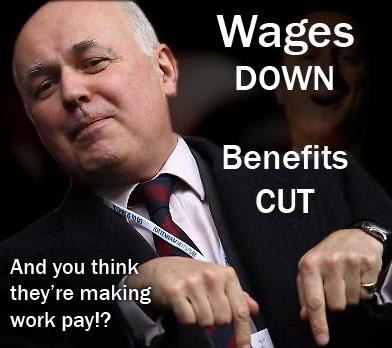
A massive proportion of welfare expenditure goes towards paying private companies and organisations to “get people back to work” and in rewarding shareholders with savings from the systematic reduction in benefits. This approach has not helped people out of employment to find secure, appropriate work with acceptable levels of pay, because it rests on a never-ending reduction in the value of the minimum benefit level, which was originally calculated to meet subsistence costs – only those costs of fundamental survival needs, such as for fuel, food and shelter – so that those in poverty are made even poorer, less able to meet basic needs, to serve as an “incentive” to make the advantages of any work, regardless of its quality, pay and conditions, appear to be greater than it is.

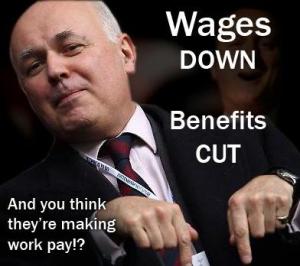
This is what Conservatives mean by “making work pay.” It’s exactly the same disciplinarian approach as that which was enshrined in the 1834 Poor Law Amendment Act – the principle of less eligibility. The 1834 Act was founded on a political view that the poor were largely responsible for their own situation, which they could change if they chose to do so.

Seriously, does anyone really imagine that people actually choose to be poor?

The impact of this approach on the large numbers of disabled people in particular, who had no choice but to seek welfare in the Workhouse, was that they were treated very harshly and depersonalised

It’s also clear that the underpinning Poor Law Amendment categories of “deserving” and “undeserving” poor – another false dichotomy – and the issue of eligibility for social security is still on the Conservative welfare policy agenda. Worryingly, the current trend is for the government to create stereotypes, frequently portraying the recipients of types of support, such as Disability Living Allowance, as passive or inactive economic free-riders, when in fact the Allowance was paid to some individuals working in the paid labour market, and the withdrawal of such funds, prevents them continuing with such paid work. More recently, the difficulties that many disabled people have encountered in accessing Personal Independence Payments (PIP) because of increasingly narrow eligibility criteria, have meant that many who depend on the income to meet the additional costs of living independently, such as specially adapted motability vehicles, have been forced to give up work.

The state confines its attention mainly to re-connecting disabled people deemed too ill to work with the labour market, without any consideration of potential health and safety risks in the workplace, as a strategy of “support.” Without any support.

As previously summarised, the Conservatives justify the draconian cuts to support as providing “incentives” for people to work, by constructing a narrative that rests on the false and socially divisive taxpayer/free-rider dichotomy:cant

By “trolls” Michael Fabricant actually means disabled people and campaigners responding to his tweet.

Of course one major flaw in Fabricant’s reasoning is that many people passed as fit for work are anything but. The other is that disabled people pay taxes too.

The increasing conditionality of welfare mirrors the increasing conditionality of the labour market

Under the guise of lifting burdens on business, the government has imposed burdens on those with disabilities by removing the “reasonable adjustments” that make living their lives possible and allowing dignity. The labour market is unaccommodating, providing business opportunities for making profit, but increasingly, the needs and rights of the workforce are being politically sidelined. This will invariably reduce opportunities for people to participate in the labour market because of its increasingly limiting terms and conditions.

Of those that may be able to work, over time, their would-be employers have not engaged with legal requirements and provided adjustments in the workplace to support those disabled people seeking employment. The government have removed the Independent Living Fund, and reduced Access to Work support, Personal Independence Payment (PIP) is very difficult to access because of the stringent eligibility criteria, whilst the disability benefit Employment Support Allowance was also redesigned to be increasingly difficult to qualify for.

Policies, which exclude disabled people from their design and rationale, have extended and perpetuated institutional and cultural discrimination against disabled people.

The universal character of human rights is founded on the inherent dignity of all human beings. It is therefore axiomatic that people with medical conditions that lead to disabilities, both mental and physical, have the same human rights as the rest of the human race. The United Nations is currently investigating this government’s gross and systematic violations of the Convention on the Rights of Persons with Disabilities (CRPD), and a recent report from the House of Lords Select Committee on the Equality Act 2010 and Disability, investigating the Act’s impact on disabled people, has concluded that the Government is failing in its duty of care to disabled people, because it does not enforce the act. Furthermore, the Select Committee concludes that the government’s red tape challenge is being used as a pretext for removing protections for disabled people. This is a government that regards the rights and protections of disabled people as nothing more than a bureaucratic inconvenience.

The inflexibility of the labour market isn’t an issue for only disabled people. The Department for Work and Pensions (DWP) intends to establish an “in-work service”, designed to encourage individual Universal Credit claimants on very low earnings to increase their income. Benefit payments may be stopped if claimants fail to take action as required by the DWP. The DWP is conducting a range of pilots to test different approaches but there is very little detail about these. The new regime might eventually apply to around one million people. In december last year, the The Work and Pensions Committee opened an in-work progression in Universal Credit inquiry to consider the Department’s plans and options for a fair, workable and effective approach.

The Conservatives continue to peddle the “dependency” myth, yet there has never been any empirical evidence to support the claims of the existence of a “culture of dependency” and that’s despite the dogged research conducted by Keith Joseph some years ago, when he made similar claims. In fact, a recent international study of social safety nets from The Massachusetts Institute of Technology (MIT) and Harvard economists categorically refutes the Conservative “scrounger” stereotype and dependency rhetoric. Abhijit Banerjee, Rema Hanna, Gabriel Kreindler, and Benjamin Olken re-analyzed data from seven randomized experiments evaluating cash programmes in poor countries and found “no systematic evidence that cash transfer programmes discourage work.”

The phrase “welfare dependencydiverts us from political discrimation via policies, increasing inequality, and it serves to disperse public sympathies towards the poorest citizens, normalising prejudice and resetting social norm defaults that then permit the state to target protected social groups for further punitive and “cost-cutting” interventions to “incentivise” them towards “behavioural change.”

Furthermore, Welfare-to-Work programmes do not “help” people to find jobs, because they don’t address exploitative employers, structural problems, such as access to opportunity and resources and labor market constraints. Work programmes are not just a failure here in the UK, but also in other countries, where the programmes have run extensively over at least 15 years, such as Australia.

Welfare-to-work programes are intimately connected with the sanctioning regime, aimed at punishing people claiming welfare support. Work programme providers are sanctioning twice as many people as they are signposting into employment (David Etherington, Anne Daguerre, 2015), emphasising the distorted priorities of “welfare to work” services, and indicating a significant gap between claimant obligations and employment outcomes.

The Conservatives have always constructed discourses and shaped institutions which isolate some social groups from health, social and political resources, with justification narratives based on a process of class-contingent characterisations and the ascribed responsiblisation of social problems such as poverty, using quack psychology and pseudoscience. However, it is socioeconomic conditions which lead to deprivation of opportunities, and that outcome is undoubtedly a direct consequence of inadequate political decision-making and policy.

It’s worth bearing in mind that many people in work are still living in poverty and reliant on in-work benefits, which undermines the libertarian paternalist/Conservative case for increasing benefit conditionality somewhat, although those in low-paid work are still likely to be less poor than those reliant on out-of-work benefits. 

The government’s Universal Credit legislation has enshrined the principle that working people in receipt of in-work benefits may face benefits sanctions if they are deemed not to be trying hard enough to find higher-paid work. It’s not as if the Conservatives have ever valued legitimate collective wage bargaining. In fact their legislative track record consistently demonstrates that they hate it, prioritising the authority of the state above all else.

There are profoundly conflicting differences in the interests of employers and employees. The former are generally strongly motivated to purposely keep wages as low as possible so they can generate profit and pay dividends to shareholders and the latter need their pay and working conditions to be such that they have a reasonable standard of living.

Workplace disagreements about wages and conditions are now typically resolved neither by collective bargaining nor litigation but are left to management prerogative. This is because of deregulation to suit employers and not employees.  Conservative aspirations are clear. They want cheap labour and low cost workers, unable to withdraw their labour, unprotected by either trade unions or employment rights and threatened with destitution via benefit sanction cuts if they refuse to accept low paid, low standard work. Similarly, desperation and the “deterrent” effect of the 1834 Poor Law amendment served to drive down wages.

The global financial crisis presented an opportunity for Conservative supporters of labour market deregulation to once again champion “economic growth” at any costs by “lifting the regulatory burdens on business.” Neoliberal commentators argued that highly regulated labour markets perform reasonably well during boom periods but cannot cope with recessions – and that therefore the UK and other developed economies need to deregulate their labour markets to ensure a strong economic recovery (even though the UK already has one of the most deregulated labour markets in the developed world).

The “problems” with labour market regulation are seen by Conservatives as being rooted in:

  • The social security system which provides a safety net and maintains basic living standards for those who are out of work, by reducing the gap in living standards between those in and those out of work, it diminishes the incentive to find or keep jobs. Where the safety net is financed by taxes on wages, it also raises total labour costs.
  • Minimum wages which may “price workers out of jobs” if set at levels above those prevailing in an unregulated labour market.
  • Employment protection legislation, such as restrictions on the ability of employers to hire and fire at will, also raises labour costs, diminishes flexibility and willingness to hire, thus reducing employment. (See Beecroft report)
  • Trade unions which raise wages to levels which “destroy jobs and reduce productivity and efficiency through restrictive practices.” (See Trade Union Bill).

Regulation of the labour market, however, is crucial to compensate for the wide inequality in bargaining power between employers and employees; to realise comparative wage justice; to increase employee’s job security and tenure, therefore encouraging investment in skills (both by the employer and employee), which has a positive impact on labour productivity and growth, and to ensure that a range of basic community, health and safety standards are observed in the workplace.

In the Conservative’s view, trade unions distort the free labour market which runs counter to New Right and neoliberal dogma.

Since 2010, the decline in UK wage levels has been amongst the very worst in Europe. The fall in earnings under the Coalition is the biggest in any parliament since 1880, according to analysis by the House of Commons Library, and at a time when the cost of living has spiralled upwards. And whose fault is that? It’s certainly not the fault of those who need financial support to meet their basic survival needs despite being in employment.

So we may counter-argue that: 

  • Genuine minimum standards, including minimum wages are needed. Without them the lower end of the market becomes casualised, insecure and sufficiently low-paid, which in turn also produces major work incentive problems. On the other hand, regulation that protects or gives power to already powerful groups in the labour market creates serious inequality in access to work. Additionally, the creation of special types of labour exempt from normal regulation is particularly unhelpful. It often tends to reinforce the privileged status of core workers while generating jobs which are unsuitable vehicles for tackling the problem of social exclusion.
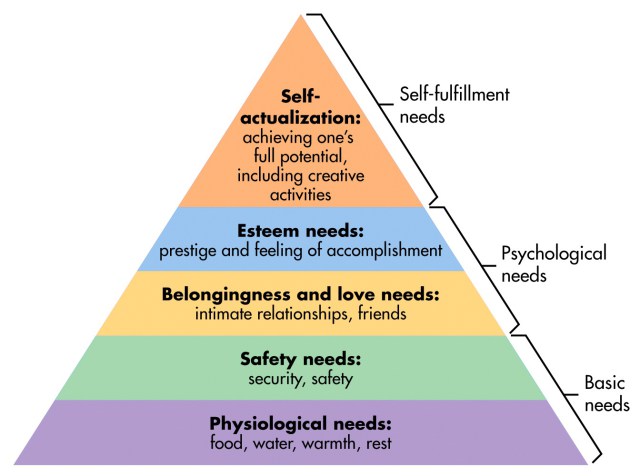
  • The benefit system needs to take into account that those who take entry-level jobs may require additional help from the welfare state to support their families. Without this type of benefit, adults in poorer families will be the last to take such relatively low-paying entry-level positions. Furthermore, a highly conditional social security system that provides below subsistence-level support also serves to disincentivise people because financial insecurity invariably creates physiological, psychological, behavioural and motivational difficulties, people in circumstances of absolute poverty are forced to shift their cognitive priority to that of surviving, rather than being “work ready.” This was historically observed by social psychologist Abraham Maslow in his classic work on human motivation and well-evidenced in research, such as the Minnesota semistarvation experiment, amongst many other comprehensive studies.
  • Employment taxes, on both employers and employees, should be progressive to support the creation of new jobs rather than making the already employed work longer hours. Yet the UK system also has numerous large incentives to offer employees insecure and short-hour contracts. This is remarkably short-sighted and counterproductive.

 The balance of “incentives” in Conservative policies.

The following cuts came into force in April 2013:

  • 1 April – Housing benefit cut, including the introduction of the ‘bedroom tax’
  • 1 April – Council tax benefit cut
  • 1 April – Legal Aid savagely cut
  • 6 April – Tax credit and child benefit cut
  • 7 April – Maternity and paternity pay cut
  • 8 April – 1% cap on the rise of in working-age benefits (for the next three years)
  • 8 April – Disability living allowance replaced by personal independence payment (PIP), with the aim of saving costs and “targeting” the support
  • 15 April – Cap on the total amount of benefit working-age people can receive 

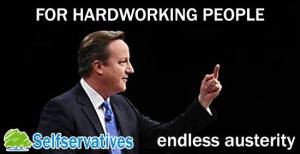
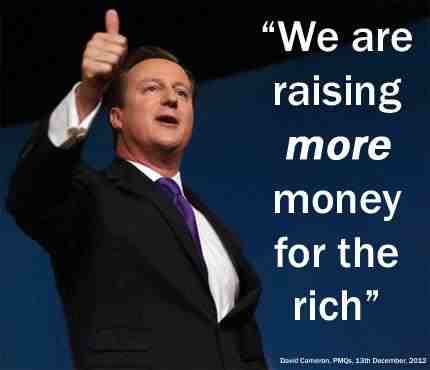
In 2012, Ed Miliband said: “David Cameron and George Osborne believe the only way to persuade millionaires to work harder is to give them more money.

But they also seem to believe that the only way to make you (ordinary people) work harder is to take money away.”

He was right.

Here are some of the Tory “incentives” for the wealthy:

  • Rising wealth – 50 richest people from the Midlands region increased their wealth by £3.46 billion  to a record £28.5 billion.
  • Falling taxes – top rate of tax cut from 50% to 45% for those earning over £150,000 a year. This is 1% of the population who earn 13% of the income.
  • No mansion tax and caps on council tax mean that the highest value properties are taxed proportionately less than average houses.
  • Benefited most from Quantitative Easing (QE) – the Bank of England say that as 50% of households have little or no financial assets, almost all the financial benefit of QE was for the wealthiest 50% of households, with the wealthiest 10% taking the lions share
  • Tax free living – extremely wealthy individuals can access tax avoidance schemes which contribute to the £25bn of tax which is avoided every year, as profits are shifted offshore to join the estimated £13 trillion of assets siphoned off from our economy
  • £107, 000 each per annum gifted to millionaires in the form of a “tax break.”

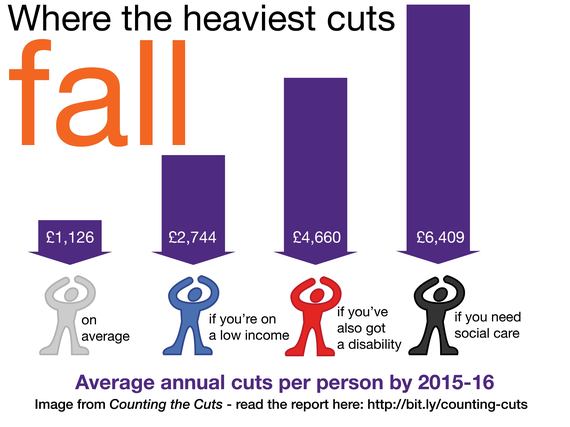
Disabled people have carried most of the burden of Conservative austerity cuts:

2014-02-17-BurdenoftheCuts-thumb
The Conservatives are on an ideological crusade, which flies in the face of public needs, democracy and sound economics, to shrink the welfare state and privatise our essential services.

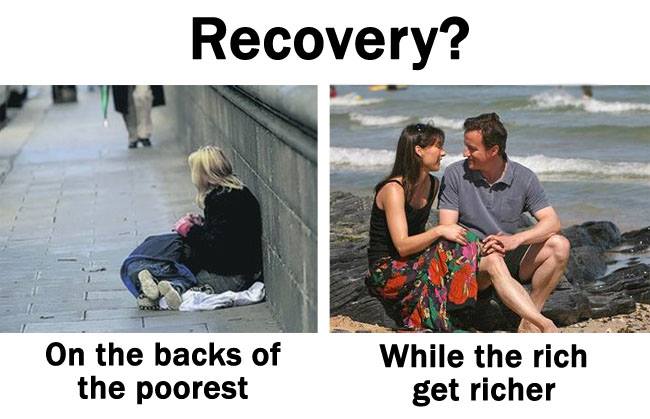
In a wealth transfer from the poorest to the very rich, we have witnessed the profits of public services being privatised, but the losses have been socialised – entailing a process of economic enclosure for the wealthiest, whilst the burden of losses have been placed on the poorest social groups and our most vulnerable citizens – largely those who are ill, disabled and elderly. The Conservative’s justification narratives regarding their draconian policies, targeting the poorest social groups, have led to media scapegoating, social outgrouping, persistent political denial of the aims and consequences of policies and reflect a wider process of political disenfranchisement of the poorest citizens, especially sick and disabled people.

This is juxtaposed with the more recent gifted tax cuts for the wealthiest, indicating clearly that Conservatives perceive and construct social hierarchies with policies that extend inequality and discrimination. The axiom of our international human rights is that we each have equal worth. Conservative ideology is fundamentally  incompatable with the UK government’s Human Rights obligations and with Equality law. The chancellor clearly regards public funds for providing essential lifeline support for disabled people as expendable and better appropriated for adding to the disposable income for the wealthy.

Public policy is not an ideological tool for a so-called democratic government to simply get its own way. Democracy means that the voices of citizens, especially members of protected social groups, need to be included in political decision-making, rather than so frankly excluded.

Government policies are expressed political intentions regarding how our society is organised and governed. They have calculated social and economic aims and consequences. In democratic societies, citizen’s accounts of the impacts of policies ought to matter.

However, in the UK, the way that policies are justified is being increasingly detached from their aims and consequences, partly because democratic processes and basic human rights are being disassembled or side-stepped, and partly because the government employs the widespread use of linguistic strategies and techniques of persuasion to intentionally divert us from their aims and the consequences of their ideologically (rather than rationally) driven policies. Furthermore, policies have become increasingly detached from public interests and needs.

We elect governments to meet public needs, not to “change behaviours” of citizens to suit government needs and prop up policy “outcomes” that are driven entirely by traditional Tory prejudice and ideology.


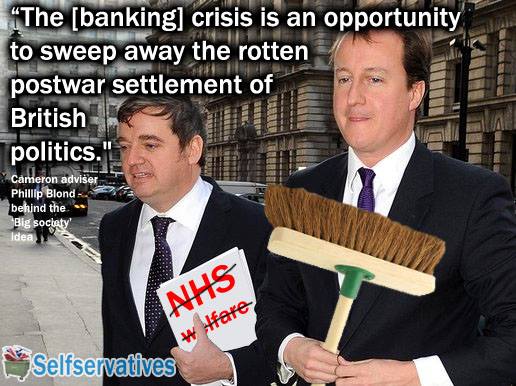
proper Blond

I don’t make any money from my work and I’m not funded. You can support Politics and Insights by making a donation to help me continue researching and writing independently, and to continue to help others.

DonatenowButton

Antisocial personality and lack of conscientiousness is correlated with bogus anti-welfare research

9686687899_74d73c6216_o

Many of us presented extensive and comprehensive rational criticism of Adam Perkin’s book The Welfare Trait, in which Perkins claims to present “scientific proof” that the social security system is creating a generation of work-resistant personalities; that “generous” welfare means that more children are born into disadvantaged households.

According to Perkins, the combination of these two effects means that the welfare state itself is directly increasing, in the long-run, the number of individuals whose personality is leading them to be workshy. He uses these propositions to attempt to add credibility to his lazy, New Right and untenable claim that cutting welfare even further is necessary to prevent poor people from having more children than wealthier people, who are described by Perkins as having solid citizen traits. His work contains many assumptions and prejudices, fundamental methodological flaws, basic logical and mathematical errors, the unconscientious misuse of other researcher’s work, and he dismally fails to support his dismal central proposals and dismal conclusions.

I’m still wondering how studies of mice running around on a wheel can possibly tell us anything about human behaviour, as last time I checked, mice hadn’t evolved to create a welfare state, and had no idea about the complexities concerning the division of labour in capitalist societies. Or power relationships for that matter. Still, there’s nothing like a cage to emphasise exploitative relationships, a life of performance instead of meaning, and the joys of repetitive, pointless tasks that permit only dreams of escape and freedom.

Perkins doesn’t reserve his disdain for people who need social security to mere subtext, his choice of terms and phrases throughout his discourse have an eye-wateringly crude blatancy that simply drips a superficial sense of smug superiority, whilst also inadvertently betraying his own deeper sense of inadequacy. This was also evident in some of his dialogue with critics of his work.

Some of the best criticisms I saw include those of social scientist Andy Fugard, from the University College London (UCL), Jonathan Portes from the National Institute of Economic and Social Research, economist Michael O’Connor, international political economist Richard Murphy, fellow blogger and commentator Johnny Void, profilic writer on Bad Science, Ben Goldacre, The Equality Trust, Bernadette Meaden from the Ekklesia think tank, writer and Guardian journalist Dawn Foster, amongst many others.

My own critique was written after I saw the Adam Smith Institute’s original gushing endorsement of Perkins’s spectacularly misanthropic book. I had some discussion with Richard Murphy about it at the time. However, , who wrote the glowing review of The Welfare Trait without actually reading it critically, has since added this to his article:

smith-perkins.png
With many thanks to @AnitaBellows12 for spotting the addition. Sabisky’s page on the ASI has since been deleted.

The Adam Smith Institute has been the impetus behind Conservative policy agendas and was the primary intellectual drive behind the privatisation of state-owned industries during the premiership of Margaret Thatcher, and alongside the Centre for Policy Studies and Institute of Economic Affairs, advanced a neoliberal approach towards public policy on privatisation, taxation, education, and healthcare, and have advocated the replacement of much of the welfare state by private insurance schemes.

That the Institute originally seized upon Perkins’s offensive, prejudiced narrative – a blunt eugenic treatise and toxic brand of psychopolitical New Right antiwelfarism and pseudoscientific neuroliberalism – doesn’t come as a surprise. However, such an embarrassing climbdown in the face of well presented and overwhelming evidence that The Welfare Trait is utter nonsense on stilts leaves us wondering just how much psychopolitical rubbish the think tank have previously got away with peddling.

As Johnny Void points out:“It would take another book to point out all the errors, bias and misuse of evidence in The Welfare Trait which reads more like a fervent conspiracy theory than a piece of academic research.  It is genuinely astonishing, to the point of suspicion, that it received peer review and was published at all.  What is not so surprising is the jubilant reaction of right wing pundits who declared their nasty little prejudices finally proved.”

Perkins misuses the cover and credibility of science to blame the casualities of politically designed socioeconomic systems for their own circumstances and problems and to justify an existing social power and wealth hierarchy. It’s no coincidence that eugenicists like Perkins and their wealthy supporters also share a mutual antipathy for political progressivism, trade unionism, collectivism, notions of altruism and of co-operation and class struggle. Now that is profoundly antisocial.

Perkins likes to discuss at some length other people’s alleged traits and personalities, many of which he makes up as he goes along, such as “solid citizen traits” and “employment-resistant personality”. But perhaps he should pay a little more attention to research into the established dark triad, which is a group of three personality traits: narcissism, Machiavellianism and psychopathy. And look a little closer to home:

The thing is, I’m only being a little tongue in cheek here. Perkins does not like to be challenged, that quickly became very apparent. I think Perkins’s “analysis” highlights only to well the scale of problems that researchers who lack a genuine work ethic, any degree of conscientiousness, any degree of value-neutrality, methodological credibility, philosophical integrity and academic fluency present us with.

While Perkins’s book conveniently fits with Conservative small state ideology, psychopolitical behaviourist narratives, and “culture of dependency” rhetoric, there has never been evidence to support any of the claims that the welfare state creates social problems or psychological pathologies. Historically, such claims tend to reflect partisan interests and establish dominant moral agendas aimed at culturally isolating social groups, discrediting and spoiling their identities, micromanaging dissent, and then such discourses are used in simply justifying crass inqualities and hierarchies of human worth that have been politically defined and established.

We must also challenge the rise of eugenic ideology, again.

Eugenics and its stable mate, social Darwinism, has always placed different classes and races in hierarchies and arrayed them in terms of socially constructed notions of “inferiority” and “superiority.” Charles Murray’s controversial and thoroughly debunked work The Bell Curve: Intelligence and Class Structure in American Life presents another example of a discredited right-wing ideological architect, funded by the New Right, who was then used to prop up an authoritarian Conservative antiwelfarist dogma that was also paraded as “science.”

Murray had considerable influence on the New Right Thatcher and Reagan governments. Critics were often dismissed, on the basis that they were identified with “censorious political correctness,” which of course is simply a right-wing attempt to close down genuine debate and stifle criticism. The Bell Curve was part of a wider campaign to justify inequality, racism, sexism, and provided a key theme in Conservative arguments for antiwelfarism and anti-immigration policies.

I’m experiencing a distinct sense of déjà vu.

images.jpg

Related

Adam Perkins, Conservative narratives and neuroliberalism

Essentialising marginalised groups and using stigmatising personality constructs to justify dismantling social security is not “science”, it’s psychopolitics

Criticisms of Adam Perkins and ‘The Welfare Trait’ – Psychology Brief

Adam Perkins: ‘Welfare dependency can be bred out’ – Dawn Foster, The Guardian

A comment on the use of results from “Does welfare reform affect fertility? Evidence from the UK”, Journal of Population Economics, in Adam Perkins’ book, The Welfare Trait – Mike Brewer

The Welfare Trait – Bernadette Meaden

It’s absurd to tie being ‘workless’ to doing no work. Just ask a mother  – Ben Chu, The Independent

My work is unfunded and I don’t make any money from it. But you can support Politics and Insights and contribute by making a donation which will help me continue to research and write informative, insightful and independent articles, and to provide support to others.

DonatenowButton

cards


G4S are employing Cognitive Behavioural Therapists to deliver “get to work therapy”

BpXsHmOIAAEHmBe

Background

Last April, more than 400 psychologists, counsellors and academics signed an open letter condemning the profoundly disturbing psychological implications of the government’s austerity and welfare reform measures. The group of professionals said that over the past five years the types of issues causing clients distress had shifted dramatically and now include increasing inequality, outright poverty and that people needing support because of structural problems, such as benefits claimants, are being subjected to a “new, intimidatory kind of disciplinary regime”.

The signatories of the letter, published in The Guardian, express concern over chancellor George Osborne’s plans, laid out in the latest budget, to embed psychological therapy in a coercive back-to-work agenda. Osborne said the government will aim to give online CBT to 40,000 recipients of Jobseeker’s Allowance, Employment and Support Allowance, people on the Fit for Work programme, as well as putting therapists in more than 350 job centres.

The letter stated that the government’s proposed policy of linking social security benefits to the receipt of “state therapy” is utterly unacceptable. The measure, casually described as “get to work therapy,” was discussed by George Osborne during his last budget.

The letter’s signatories, all of whom are experts in the field of mental health, have said such a measure is counter-productive, “anti-therapeutic,” damaging and professionally unethical. The intimidatory disciplinary regime facing benefits claimants would be made even worse by further unacceptable proposals outlined in the budget.

I raised my own concerns about Osborne’s proposals in March last year. Amongst the groups represented by the signatories were Psychologists Against Austerity, Britain’s Alliance for Counselling and Psychotherapy, Psychotherapists and Counsellors for Social Responsibility, the Journal of Public Mental Health, and a range of academic institutions including Goldsmiths, Birkbeck, the University of London, the University of Amsterdam, Manchester Metropolitan University and the University of Brighton.

The proposals are widely held to be profoundly anti-therapeutic, potentially very damaging and professionally unethical. With such a narrow objective, the delivery will invariably be driven by an ideological agenda, politically motivated outcomes and meeting limited targets, rather than being focused on the wellbeing of individuals who need support and who may be vulnerable.

A major concern that many of us have raised is regarding consent to participation, as, if benefit conditionality is attached to what ought to be a voluntary engagement, that undermines the fundamental principles of the right to physical and mental care. Such an approach would reduce psychologists to simply acting as agents of state control, enforcing compliance and conformity. That is not therapy: it’s psychopolitics and policy-making founded on a blunt behaviourism, which is pro-status quo, imbued with Conservative values and prejudices. It’s an approach that does nothing whatsoever to improve public life or meet people’s needs.

The highly controversial security company G4S are currently advertising for Cognitive Behavioural Therapists to deliver “return-to-work” advise in Surrey, Sussex and Kent.

The Role Description:

  • Manage a caseload of Customers and provide return-to-work advice and guidance regarding health issues.
  • Targeted on the level, number and effectiveness of interventions in re-engaging Customers and Customer progression into work.
  • Focus on practical techniques that enable them to manage their conditions to enter and sustain employment.
  • Work with Customers on a one-to-one basis and in groups to provide support on a range of mental health conditions. Refer clients to relevant external health or specialist services as required
  • Conduct bio-psychosocial assessments via face-to-face and telephone-based interventions and produce tailored action plans to support Customers in line with contractual MSO.
  • Deliver specific health for employment workshops and input into delivery models to support achievement of MSO
  • Build relationships with key stakeholders including GP’s, employers and relevant NHS bodies
  • Identify and build relationships with other organisations that contribute to the successful delivery of the programme.
  • Expected to contribute substantially to the development of the service. Including the routine collection, review and feedback of activity/data, ensuring that activity targets are adhered to.

Basic Requirements

  • Experience of delivering CBT.
  • Evidence of understanding of Welfare to Work and the issues that unemployed people face.

This is yet another lucrative opportunity for private companies to radically reduce essential provision for those that really need support, nonetheless, costing the public purse far more to administer than such an arrangement could possibly save, despite the government’s dogged determination to rip every single penny from sick and disabled people and drive them into low paid, insecure jobs.

G4S priorities and the ideological context

“We are saving the taxpayer £120 million a year in benefit savings.” Sean Williams – Welfare to Work, Managing Director, G4S.

Welfare to work schemes exploit unemployed people desperately seeking work. Work programmes are mandatory, if people refuse to participate, they face sanctions, entailing the withdrawal of their lifeline benefit, which was originally calculated to meet basic physiological needs only. Workfare is unpaid labour provided as a handout to business, tax payers are subsidising the wage bill of the private sector. Workfare also serves to drive wages down, it is a disincentive for employers to create jobs that pay a fair wage. 

Anti-workfare group Boycott Workfare say that workfare replaces jobs and undermines working conditions and wages. A research report in 2012 found a Work Programme success rate of just 2.3%. Given that 5% of people who are unemployed in the long term would be expected to find employment if left to their own devices, the Work Programme is considered less successful than leaving people to make their own choices regarding their own work experiences.

Work as a “health” outcome

The Conservatives have come dangerously close to redefining unemployment as a psychological disorder, and employment is being redefined as a “health outcome.” The government’s Work and Health programme involves a plan to integrate health and employment services, aligning the outcome frameworks of health services, Improving Access To Psychological Therapies (IAPT), Jobcentre Plus and the Work Programme. 

But the government’s aim to prompt public services to “speak with one voice” is founded on questionable ethics. This proposed multi-agency approach is reductive, rather than being about formulating expansive, coherent, comprehensive and importantly, responsive provision.

Psychopolitics is not therapy. It’s all about (re)defining the experience and reality of a social group to justify dismantling public services (especially welfare), and that is form of gaslighting intended to extend oppressive political control and micromanagement. In linking receipt of welfare with health services and “state therapy,” with the single intended outcome explicitly expressed as employment, the government is purposefully conflating citizen’s widely varied needs with economic outcomes and diktats, isolating people from traditionally non-partisan networks of relatively unconditional support, such as the health service, social services, community services and mental health services.

Public services “speaking with one voice” will invariably make accessing support conditional, and further isolate already marginalised social groups. It will damage trust between people needing support and professionals who are meant to deliver essential public services, rather than simply extending government dogma, prejudices and discrimination.

Conservatives really seem to believe that the only indication of a person’s functional capacity, value and potential is their economic productivity, and the only indication of their moral worth is their capability and degree of willingness to work. But unsatisfactory employment – low-paid, insecure and unfulfiling work – can result in a decline in health and wellbeing, indicating that it is poverty and growing inequality, rather than unemployment, that increases the risk of experiencing poor mental and physical health.

Moreover, in countries with an adequate social safety net, poor employment (low pay, short-term contracts), rather than unemployment, has the biggest detrimental impact on mental health.

There is ample medical evidence (rather than political dogma) to support this account. (See the Minnesota semistarvation experiment, for example. The understanding that food deprivation in particular dramatically alters cognitive capacity, emotions, motivation, personality, and that malnutrition directly and predictably affects the mind as well as the body is one of the legacies of the experiment.)

Systematically reducing social security, and increasing conditionality, particularly in the form of punitive benefit sanctions, doesn’t “incentivise” people to look for work. It simply means that people can no longer meet their basic physiological needs, as benefits are calculated to cover only the costs of food, fuel and shelter. Food deprivation is closely correlated with both physical and mental health deterioration. Maslow explained very well that if we cannot meet basic physical needs, we are highly unlikely to be able to meet higher level psychosocial needs. The government proposal that welfare sanctions will somehow “incentivise” people to look for work is pseudopsychology at its very worst and most dangerous.

In the UK, the government’s welfare “reforms” have further reduced social security support, originally calculated to meet only basic physiological needs, which has had an adverse impact on people who rely on what was once a social safety net. Poverty is linked with negative health outcomes, but it doesn’t follow that employment will ameliorate poverty sufficiently to improve health outcomes. In fact record numbers of working families are now in poverty, with two-thirds of people who found work in 2014 taking jobs for less than the living wage, according to the annual report from the Joseph Rowntree Foundation a year ago.

Essential supportive provision is being reduced by conditionally, by linking it to such a narrow outcome – getting a job – and this will reduce every service to nothing more than a political semaphore, and service provision to a behaviour modification programme based on punishment, with a range of professionals being politically co-opted as state enforcers. The Government is intending to “signpost the importance of employment as a health outcome in mandates, outcomes frameworks, and interactions with Clinical Commissioning Groups.”

The fact that the Conservatives also plan to make receipt of benefits contingent on participation in “treatment” worryingly takes away the fundamental right of consent. I submitted a Freedom of Information request to the Department for Work and Pensions last year to ask for details of their methods of gaining claimant consent, their ethical framework and safeguards regarding the trialing of the new Work and Health programme. My request was rather unreasonably refused on the grounds of cost. I also sent the same request to the Cabinet Office, since the Behavioural Insights Team are involved in the design of the trials. Worryingly, the Office did not have the information.

Therapy in job centres and employment advisors in GP surgeries will not address inequality, and the social conditions that are the consequence of political decision-making and imposed economic frameworks, so it permits society to look the other way, whilst the government continue to present mental illness as an individual weakness or vulnerability, and a consequence of “worklessness” rather than a fairly predictable result of living in a highly unequal, competitive society, and arising because of experiences of living stigmatised, marginalised lives because of politically expedient policy-directed material deprivation.

Private firms like G4s, awarded multimillion-pound contracts to run the Work Programme, advised that there should be many more cases where claimants have their benefits stripped as punishment for failing to seek work. G4S earned £183m to help unemployed people to find work through the Government’s Work Programme. During the first eight months of the programme G4S asked benefit offices to sanction 7,780 claimants. In fact the company has effectively sanctioned many more people than it has “helped” into work.

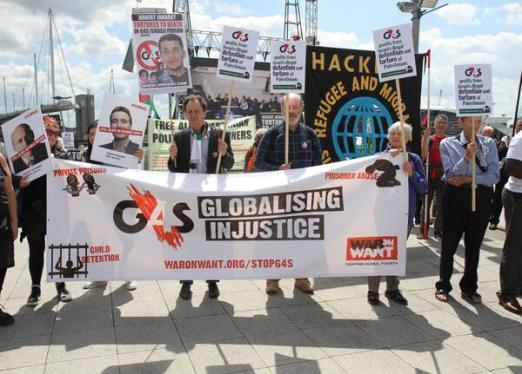
There really should not be a role for G4S in the health service. G4S has left a wake of atrocities committed against vulnerable people in the UK and in other countries, including human rights abuses: exploitation, torture, causing deaths and forcing anti-psychotic injections on vulnerable prisoners to ensure they are passive and compliant.

Here is little information about G4S’s track record of working with vulnerable individuals and marginalised social groups, though this list is by no means exhaustive:

Human rights abuse allegations

Disabled ex-serviceman Peter McCormack, aged 79, was chained to a prison officer employed by G4S for eight days while in Royal Liverpool University Hospital after a heart attack in March 2012. The restraint was removed only briefly for him to take off his upper clothing, and when he was under heavy sedation undergoing an heart procedure. But he remained chained even when using the toilet and shower. McCormack, who has a disability as a result of being shot through the knee while serving with the Royal Engineers during the 1956 Suez crisis, spent 14 days attached by his wrist to a 2.5 metre closet chain, despite having been described as a model prisoner. Judge Graham Wood QC ruled in September 2014 that “During this time he was humiliated and his dignity was affronted.” Mr McCormack was detained because he may have faced a modest criminal sentence at most for breach of a regulatory offence in relation to his business.

McCormack was awarded £6,000 compensation for breach of his human rights. The judge criticised the evidence given by G4S’s then head of security, saying it was “less than impressive … It is a reasonable conclusion that she simply ignored a recommendation from a security manager.”

Unacceptable use of force by UK Border Agency

In October 2012 the Chief Inspector of Prisons, Nick Hardwick published his inspection report into the G4S-managed Cedars Pre-Departure Accommodation UK Border Agency (UKBA). G4S were criticised for using “non-approved techniques” during one particular incident in which a pregnant woman’s wheelchair was tipped up whilst her feet were held. The incident used “non-approved techniques” causing significant risk to the baby and was a “simply not acceptable” use of substantial force. Hardwick said: “There is no safe way to use force against a pregnant woman and to initiate it for the purpose of removal is to take an unacceptable risk.”

Significant force was also used against six out of the 39 families, including two children, at the centre, which holds families for up to a week, the report said.

Judith Dennis, of the Refugee Council, called for UKBA to heed the report’s recommendations, which include that force should only ever be used against pregnant women and children to prevent harm.

Jerry Petherick, managing director of G4S custodial and detention services, said the welfare of people in its care was its top priority.

The unlawful killing of Jimmy Mubenga

In October 2010, three G4S-guards restrained and held down 46-year-old Angolan deportee  called Jimmy Mubenga on departing British Airways flight 77, at Heathrow Airport. Security guards kept him restrained in his seat as he began shouting and seeking to resist his deportation. Police and paramedics were called when Mubenga lost consciousness. The aircraft, which had been due to lift off,  returned to the terminal. Mubenga was pronounced dead later that evening at Hillingdon hospital. Passengers reported hearing cries of “don’t do this” and “they are trying to kill me.” Scotland Yard’s homicide unit began an investigation after the death became categorised as “unexplained”. Three private security guards, contracted to escort deportees for the Home Office, were released on bail, after having been interviewed about the incident.

In February 2011, The Guardian reported that G4S guards in the United Kingdom had been repeatedly warned about the use of potentially lethal force on detainees and asylum seekers. Confidential informants and several employees released the information to reporters after G4S’s practices allegedly led to the death of Jimmy Mubenga. An internal document urged management to “meet this problem head on before the worst happens” and that G4S was “playing Russian roulette with detainees’ lives.” The following autumn, the company once again faced allegations of abuse. G4S guards were accused of verbally harassing and intimidating detainees with offensive and racist language.

In July 2012, the Crown Prosecution Service (CPS) announced its conclusion that there was “insufficient evidence to bring any charges for Mr Mubenga’s death” against G4S or any of its former employees. On 9 July 2013 an inquest jury, in a nine-to-one decision, found that Mubenga’s death was caused by the G4S guards “using unreasonable force and acting in an unlawful manner.” 

Exploitation

In August 2014, G4S was again criticised for using immigrant detainees as cheap labour, with some being paid as little as £1 per hour. The Home Office defended the practice, and said: “The long-standing practice of offering paid work to detainees has been praised by Her Majesty’s inspectorate of prisons as it helps to keep them occupied whilst their removal is being arranged. Whether or not they wish to participate is entirely up to the detainees themselves. This practice is not intended to substitute the work of trained staff”

Abuse of vulnerable young people at Medway Secure Training Centre in Kent

A BBC Panorama investigation into abuse at a young offenders unit in Kent, run by security firm G4S, exposed child neglect and abuse. The Panorama programme provided shocking footage at Medway Secure Training Centre in Rochester following reports from a whistleblower. Shot by an undercover journalist who posed as a security officer, the footage shows staff using excessive force to restrain youngsters, bullying, lying when reporting incidents and boasting about hurting the inmates. The film shows a a senior officer restraining a 14-year-old boy by pressing his fingers on his throat.

One boy had injured himself by cutting his arm and staff piled on to restrain him, then left him in a cell crying, despite knowing that the boy’s mother had recently died and he was grieving. G4S employees boasted not only about harming children but also falsifying records so the company was not fined for losing control. Footage showed a vulnerable boy who was having his room cleared of anything he could harm himself with, was apparently choked and slammed on a bed. 

The programme also revealed officers lying about incidents to cover up their actions. 

G4S has been paid £140,000 per year per child held in Medway.

Among the allegations relating to ten boys aged 14 to 17, uncovered by Panorama and now subject to investigation are that Medway staff:

  • Slapped a teenager several times on the head
  • Pressed heavily on the necks and throats of young people
  • Used restraint techniques unnecessarily – and that included squeezing a teenager’s windpipe so he had problems breathing
  • Used foul language to frighten and intimidate – and boasted of mistreating young people, including using a fork to stab one on the leg and making another cry uncontrollably
  • Tried to conceal their behaviour by ensuring they were beneath CCTV cameras or in areas not covered by them

South Africa prison torture and abuse accusations

In October 2013, the BBC reported that there are allegations of prisoners being tortured at Mangaung Prison in South Africa. The security firm G4S was given the contract to run the prison in 2000. The BBC cites research from the Wits Justice Project at Wits University in Johannesburg, claiming that dozens of the nearly 3,000 inmates at the G4S prison have been tortured using electroshock and forced injections. As of October 2013, G4S said it was investigating the allegations.

Leaked footage revealed that complaints of forced injections – that is, involuntary medication with powerful anti-psychotic drugs, with serious side effects, we true.

Emergency security team warders have further said that they would assist in administering forced injections up to five times a week.

Human rights abuse and violence at Manus Island Asylum Centre

G4S provided security in the Manus Island asylum processing centre in Papua New Guinea, and failed to maintain basic human rights standards and protect asylum seekers from harm, the complaint lodged to the Organisation for Economic Co-Operation and Development (OECD) alleged.

In 2008, Aboriginal elder, Mr Ward, cooked to death while being transported by G4S, more than 220 miles across searing Goldfields in a badly maintained van with faulty air conditioning in January 2008. He had third degree burns from contact with the searing hot metal floor of the van. The guards driving the prison van did not stop to check his welfare or see if he needed a toilet break, food or water until, they say, they heard a thud from the back. Even then they didn’t unlock both the cell doors, and instead threw water on Mr Ward through the chained-up inner door. The Department of Corrective Services, the prisoner transport contractor – G4S, and the prison van driver Graham Powell were also prosecuted by WorkSafe. Corrective Services and G4S were each fined $285,000 for their role in Mr Ward’s death. Mr Powell was fined $9000. Prison officer Nina Mary Stokoe was fined $11,000 for her role in the death of Mr Ward.

The Australian government nonetheless contracted G4S to oversee management and security at the Manus Island centre from February 2013 to March 2014, despite this.

Rachel Ball, the director of advocacy at the Human Rights Law Centre, said under government-endorsed OECD guidelines, multinational companies were obliged to respect human rights and avoid contributing to human rights abuses.

“In February this year G4S guards at the detention facility on Manus Island went on what can only be described as a violent rampage,” she said.

“Reza Berati was killed, one man lost his eye, another had his throat slit, and 77 others were treated for serious injuries including head wounds, a gunshot wound, broken bones and lacerations.

“G4S was directly involved in this violence through its role in arbitrary detention and poor conditions that led to the unrest, and through the direct participation of its employees in the violence.”

Ball said the company had not been held to account for its role in the violence, prompting the joint complaint between her organisation and the British non-government organisation Rights and Accountability in Development.

Conditions in the camp have also been strongly criticised by UN agencies and human rights groups.

Fraud allegations

In July 2013, British Justice Secretary, Chris Grayling, asked the Serious Fraud Office to investigate G4S for overcharging for tagging criminals in England and Wales, claiming that it and rival company Serco charged the government for tagging people who were not actually being monitored, including tags for people in prison or out of the country, and a small number who had died. G4S was given an opportunity to take part in a forensic audit but initially refused.

Following the completion of a review by the Cabinet Office into major contracts across government, Francis Maude and the Cabinet Office announced in December 2013, that their review had “found no evidence of deliberate acts or omissions by either firm leading to errors or irregularities in the charging and billing arrangements on the 28 contracts investigated.”

In March 2014, G4S agreed to pay a settlement of £109 million to the government, incorporating a refund for “disputed” services and reimbursement of additional costs.

Scandal also followed G4S’s management of London Olympic security, back in 2012 when it failed to deliver enough guards to police the games. As a result 3,500 military troops were drafted in. 

Despite these issues, G4S won significant new work for the British government in 2014 including selection by the Department for Work and Pensions to manage community work placement contracts, a deal providing healthcare services for prisons in the north east, and patient transport for the NHS.

G4S’s involvement in the recruitment of cognitive behavioural therapists to work with vulnerable unemployed people is a very worrying development.

Mindful of the company’s failure to fully investigate its ethical practices, RT compiled a list of past instances G4S has broken standards.

The Guardian: Outsourced services fail the vulnerable – “Red front doors in Middlesbrough, red wristbands in Cardiff. Not long ago another group of vilified people were also made to mark their doors and wear a distinctive badge – the yellow star. Who is advising Clearsprings?” And G4S. Dr Jonathan Fluxman

PAA-550x369


My work isn’t funded. But you can support Politics and Insights, and help me to continue researching, analysing and writing independently.

The Labour Party is considering a Universal Basic Income policy

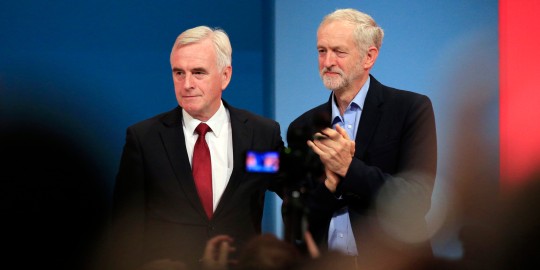
o-JEREMY-CORBYN-JOHN-MCDONNELL-facebook.jpg

There was some speculation last year about the possibility of the Labour Party leader, Jeremy Corbyn, lending his support to the idea of basic universal income. Basic income (which is sometimes called “citizen’s income” or “universal income”) is the idea that absolute poverty can be alleviated by providing every member of a society with an unconditional subsistence income. Supporters of basic income argue that it would alleviate absolute poverty and would also motivate people to work because they would always better off, as work-related income would be additional to their subsistence income. 

Jeremy Corbyn had stated during the leadership contest that he was interested in the idea of a “guaranteed social wage” but that he believed there were issues that needed to be worked through.

Richard Murphy is a highly esteemed economist at Tax Research UK and an advocate of basic income. He’s also the co-author of Financing the Social State (pdf), which recommends the implementation of basic income in the U.K. This policy paper was published in 2013 by the Centre for Labour and Social Studies. Grassroots supporters across the left are happy to see Richard Murphy is involved in drafting Corbyn’s economic policy.

John McDonnell, the shadow chancellor, has said that the Labour Party will consider universal basic income as a part of its new policy, during a recent talk at the London School of Economics. He said: “It’s an idea we want to look at. Child benefit was a form of basic income so it’s not something that I would rule out.”

At the very least, this indicates the idea of universal provision has regained some credence in the face of a longstanding and seemingly unchallengeable political norm of increasing means-testing and welfare conditionality, established by the Thatcher adminstration, and radically extended by the current government.

McDonnell also said that economists were “close to consensus” that the Conservative Party’s austerity policies had failed, highlighting a largely welcomed and clear opposition to rigid, neoliberal Osbornomics. It’s true that austerity was founded purely on ideology and traditional Conservative prejudices, it was a political decision taken in the context of better alternatives and more humane choices. The poorest citizens have been targeted for the largest proportion of austerity cuts, with disabled people carrying the financial largest burden. It’s worth remembering that after the global recession of 2007, we were in economic recovery by the last quarter of 2009, without any need for austerity.

1379986_541109785958554_2049940708_n

Last month, an Early Day Motion (EDM) on the policy, tabled by Green Party MP Caroline Lucas, calls on the Government to commission research into the idea of universal basic income’s effects and examine its feasibility to replace the UK’s existing social security system, instead paying all citizens a flat, unconditional income, which would likely come in place of existing social security measures like means-tested benefits.

The motion, which raises the profile of the idea, says the policy “has the potential to offer genuine social security to all while boosting entrepreneurialism.”

But opponents of the basic income have raised concerns including work disincentives, lack of targeted support for those most in need, and the size of the political spending commitment required.

Lucas says:

“The basic income offers genuine social security to everyone and sweeps away most of the bureaucracy of the current welfare system. Fundamentally it would allow people the freedom and flexibility to do more of what they want to do – as well as supporting them in the caring roles they might need – or choose – to do,” she said.

“A basic income would also protect people from rising insecurity in our increasingly ‘flexible’ labour market and help rebuild our crumbling welfare state. I also know from speaking to people in my own constituency that the stability of a basic income could be a real boost to freelancers and entrepreneurs who need support to experiment, learn and take risks, while keeping their heads above water.”

“It’s crucial that any shift towards this bold new policy protects and increases the income for the poorest and those who aren’t able to work. A universal payment for all must not undermine additional help for those who need it most.”

However, last year, the Citizen’s Income Trust (CIT), which has given advice to the Green Party and often cited by the Greens, has modelled the party’s scheme and discovered a major design flaw. It was revealed that that 35.15% of households would lose money, with many of the biggest losers among the poorest households. At the time, Malcolm Torry, director of the CIT, which is a small charitable research body, said: “I am not sure the Green party has yet taken on our new research or the need to retain a means-tested element. We have only just published the new work.”

The criticisms of the scheme, as well as doubts about costings, led the Greens to make a temporary tactical retreat on the issue, with the party’s leader, Natalie Bennett, saying detailed costings for the policy would not be available in the manifesto last March. The Greens had proposed a citizen’s income of around £72 to every adult in Britain regardless of wealth and existing income, which would cost the Treasury around £280bn.

One longstanding criticism of basic income is that it would provide  payments to citizens that are already very wealthy, perpetuating social inequality, and wasting resources.

The CIT added that if the policy was applied without a means-tested component, then poorer households would end up receiving far less in state benefits than they would under the existing system. 

In 2012, an affordability study done in the Republic of Ireland by Social Justice Ireland found that basic income would be affordable with a 45% income tax rate. This would lead to an improvement in income for the majority of the population.

At a time when the politically planned decline in state provision leaves us questioning how we may prepare for the future, state provision funded by taxation seems by far the most fair way of providing for social support in the long term, and is part of a philosophy that each person, community and society as a whole should care for all. Furthermore, as we have witnessed the biggest and most sustained drop in wages since the 1800s, the government’s assurances that “work is the only route from poverty” no longer carry weight and credibility. For many, work does not “pay.”

430835_148211001996623_1337599952_n (1)

Collectivist values are under threat – the failure of “reformed” social security, which has in reality entailed ideologically-driven cuts to the poorest people’s lifeline income, leaves people marginalised, excluded from society, and increasingly, in absolute poverty, is clear evidence of this loss of the core principles of community cohesion, consensus and the post-war collectivist spirit. Collectivism is founded on the idea that everyone has equal worth, and that equality does not imply a lack of unique individuality, but an equal amount of freedom and equal opportunity to develop one’s own potential. Collectivists also tend to strongly favour inclusion and democratic decision-making.

One valid concern about raising people’s household wealth through citizen’s income is that it would encourage inflation. The price of services may rise. Rents may be hiked by private landlords, for example. After the introduction of child tax credits, many private childcare companies subsquently massively increased their prices, and it wasn’t unusual for some to demand payments for a full year, which included periods when childcare wasn’t required. An introduction of basic income must also, therefore, include a package of anti-inflationary measures (such as rent caps) or the value of the payment will soon be eroded, as basic costs for essentials and services rise.

One of the strongest arguments for basic income is that people would no longer be compelled to work in order to meet their basic needs. This means that employers would find it difficult to exploit workers, and would be pushed to offer decent wages, good terms and employment conditions in order to attract workers. People would have greater freedom to pursue meaningful, suitable and appropriate employment rather than having to take any job to avoid poverty and destitution.

However, opponents claim that the incentive to work would be destroyed because basic income is unconditional. Nonetheless it’s difficult to justify dehumanising policies that keep people financially desperate so that they take any job, regardless of its pay, security, terms and conditions. That ignores the fact that people have potential, skills and talents, and simply reduces working to a way of meeting only basic survival needs, which demotivates people and means that they are not willing participants in their working lives. Very wealthy people that inherited fortunes often continue to work, it’s a nonsense that keeping people close to starvation can “incentivise” them in any way at all, other than to fight for their survival. That reduces and regresses society, uncivilising us.

De-commodifying labor by decoupling work from income liberates people from the “tyranny of wage slaveryand leaves a space for innovation, creativitity and rebalances power relationships between wealthy, profit-motivated employers and employees.

There is little support for basic income from the Conservatives, as a means of redistributing income. Whilst a handful of right-wing advocates of basic income generally favour the minimisation or abolition of the public provision of welfare, some have cited basic income as a viable strategy to reduce the amount of bureaucratic administration that is prevalent in many contemporary welfare systems.

Yet we have seen an unprecedented increase in a dark, unaccountable  bureacracy this past five years, with private companies such as Atos, Maximus, and the likes of A4E and other private welfare-for-work providers marking the increased conditionality of welfare support – for both out of work support, and soon, for support paid to those in low paid and part-time work. Conservative inclination has been towards substantially raising the (increasingly privatised and for profit) administrative costs of welfare, whilst at the same time radically reducing the lifeline benefits for people needing support for meeting basic needs.

Conservatives may well raise the “something for nothing” objection to basic income, which is founded on the absurd idea that the only way people may contribute to society is through paid labor. Yet non-remunerated activities such as bringing up children, caring for elderly or sick and disabled relatives, supporting vulnerable neighbours, community work, volunteering for charities or investing time and effort in other voluntary endeavours such as contributions to the arts, sharing knowledge, education, writing, are all clearly valuable contributions to society, but these skills and activities have been steadily devalued, whilst providing an increasingly passive, exploitable, disposable (“flexible”) labor force for employers is seen by the Conservatives as somehow fulfiling the best of our potential.

The Conservatives would have us believe that any kind of social security system, which supports the casualties of free-markets, somehow creates those casualties, via vague pet theories of unverified mechanisms such as a “culture of dependency” and a “something for nothing” culture. But we know that the competitive, market choice-driven Tory policies create a few haves and many have-nots.

Even the most ardent neoliberalist would concede that whilst such a free-market system creates clear winners, it also invariably creates casualities – situations of insolvency for others. Inequality is a fundamental element of the meritocracy script that neoliberals so often pull from the top pockets of their bespoke suits. It’s the big contradiction in the smug, vehement meritocrat’s competitive individualism narrative.

This is why the welfare state came into being, after all – because when we allow such competitive economic dogmas to manifest, there are always winners and losers. It’s hardly “fair”, therefore, to leave the casualties of competition facing destitution and starvation, with a hefty, cruel and patronising barrage of calculated psychopolicical scapegoating, politically-directed cultural blamestorming, and a coercive, pathologising and punitive behaviourist approach to the casualities of inbuilt, systemic, inevitable and pre-designated sentences of economic exclusion and poverty.

For me, the most compelling argument for a basic income comes from Abraham Maslow, who was humanist psychologist. He proposed his classical theory of motivation and the hierarchical nature of human needs in 1943. Maslow said basically that the imperative to fulfil basic needs will become stronger the longer the duration that they are denied. For example, the longer a person goes without food, the more hungry and preoccupied with food they will become.

So, a person must satisfy lower level basic biological needs before progressing on to meet higher level personal growth needs. A pressing need would have to be satisfied before someone would give their attention to the next highest need. If a person has not managed to meet their basic physical needs, it’s highly unlikely that they will be motivated to fulfil higher level psychosocial ones.

Maslow’s theory has certainly been verified by the findings of the Minnesota semi-starvation Experiment, and other studies of the effects of food deprivation. Abraham Maslow’s humanist account of motivation also highlights the same connection between fundamental motives and immediate situational threats.

The experiment highlighted a striking sense of immediacy and fixation that arises when there are barriers to fulfiling basic physical needs – human motivation is frozen to meet survival needs, which take precedence over all other needs. This is observed and reflected in both the researcher’s and the subject’s accounts throughout the study. If a person is starving, the desire to obtain food will trump all other goals and dominate the person’s thought processes. This idea of cognitive priority is also clearly expressed in Maslow’s needs hierarchy. 

In a nutshell, this means that if people can’t meet their basic survival needs, it is extremely unlikely that they will have either the capability or motivation to meet higher level psychosocial needs, including personal aspirations, social obligations and responsibilities, and the capacity to seek employment.

Keeping people in a state of desperation to meet their basic needs damages social cohesion, places limits on both individual’s and society’s developmental and progressive potential: it stifles personal and social growth. A basic income would liberate people from the all-consuming struggle to meet basic survival needs, allowing them to live meaningful lives. A basic income would rebalance citizen’s rights and responsibilities fairly. It would also ensure that the state does not abuse and exploit socially protected groups.

As a very wealthy first-world nation, ensuring that all citizens can meet their basic needs for food, fuel and shelter is the very least we ought to expect from a so-called democratic government.

maslow-5

Maslow’s classic hierarchy of human needs


 —

I don’t make any money from my work. But you can support Politics and Insights and contribute by making a donation which will help me continue to research and write informative, insightful and independent articles, and to provide support to others. The smallest amount is much appreciated, and helps to keep my articles free and accessible to all – thank you.

DonatenowButton
cards

Conservative welfare “reforms” – the sound of one hand clapping

1022654909

“Labour MPs sat perplexed … By cutting housing benefit for the poor, the Government was helping the poor. By causing people to leave their homes, the Government was helping people put a roof over their heads. By appealing the ruling that it discriminated against the vulnerable, the Government was supporting the vulnerable.

Yes, this was a tricky one.” – From an unusually insightful article in the Telegraph about the incoherence of Conservative welfare rhetoric:  How bedroom tax protects the vulnerable.

“Ministers keep using the mantra that their proposals are to protect the most vulnerable when, quite obviously, they are the exact opposite. If implemented their measures would, far from protecting the most vulnerable, directly harm them. Whatever they do in the end, Her Majesty’s Government should stop this 1984 Orwellian-type misuse of language.”  – Lord Bach, discussing the Legal Aid Bill. Source: Hansard, Column 1557, 19 May, 2011.

Conservative policies are incoherent: they don’t fulfil their stated aims and certainly don’t address public needs. Furthermore, Conservative rhetoric has become completely detached from the experiences of most citizens and their everyday realities.

Under the Equality Act, provision was made by the Labour government to ensure that legislations didn’t discriminate against protected social groups, which included disabled people. However, the need for public bodies in England to undertake or publish an equality impact assessment of government policies, practices and decisions was quietly removed by David Cameron in April 2011. The legal requirement in the Equality Act that ensured public bodies attempt to reduce inequalities caused by socio-economic factors was also scrapped by Theresa May in November 2010, who said she favoured a greater focus on “fairness” rather than “equality.”

The Conservatives have since claimed to make welfare provision “fair” by introducing substantial cuts to benefits and introducing severe conditionality requirements regarding eligibility to social security, including the frequent use of extremely punitive benefit sanctions as a means of “changing behaviours,” highlighting plainly that the Conservatives regard unemployment and disability as some kind of personal deficit on the part of those who are, in reality, simply casualties of unfortunate circumstances, bad political decision-making and subsequent politically-constructed socio-economic circumstances.

The word “fair” originally meant “treating people equally without favouritism or discrimination, without cheating or trying to achieve unjust advantage.” Under the Conservatives, we have witnessed a manipulated semantic shift, “fair” has become a Glittering Generality – part of a lexicon of propaganda that simply props up Tory ideology in an endlessly erroneous and self-referential way. Conservative ideology is permeating language, prompting semantic shifts towards bland descriptors which mask power and class relations, coercive state actions and political intentions. One only need to look at the context in which the government use words like “fair”, “support”, “help”, “justice” , “equality” and “reform” to recognise linguistic behaviourism in action. Or if you prefer, Orwellian doublespeak.

The altered semantics clearly signpost an intentionally misleading Conservative narrative, constructed on the basic, offensive idea that people claiming welfare do so because of “faulty” personal characteristics, and that welfare creates problems, rather than it being an essential mechanism aimed at alleviating poverty, extending social and economic support and opportunities – social insurance and security when people need it.

The government claims to be “committed to supporting the most vulnerable” and ensuring “everyone contributes to reducing the deficit, and where those with the most contribute the most.” That is blatantly untrue, as we can see from just a glance at Conservative policies.

2014-02-17-BurdenoftheCuts-thumb

Conservative rhetoric is a masterpiece of stapled together soundbites and meaningless glittering generalities. And intentional mystification. Glittering Generalities are being used to mask political acts of discrimination.

Cameron claims that he is going to address “inequality” and “social problems”, for example, but wouldn’t you think that he would have done so over the past five years, rather than busying himself creating those problems via policies? Under Cameron’s government, we have become the most unequal country in the European Union, even the USA, home of the founding fathers of neoliberalism, is less divided by wealth and income, than the UK.

I’m also wondering how tripling university tuition fees, removing bursaries and maintainance grants for students from poorer backgrounds and reintroducing banding in classrooms can possibly indicate a party genuinely interested in extending “equal opportunities.”

It’s perplexing that a government claiming itself to be “economically competent” can possibly attempt to justify spending more tax payers money on appealing a Supreme Court decision that the bedroom tax policy is discriminatory, when it would actually cost less implementing the legal recommendations of the court. As Owen Smith, Shadow Work and Pensions Secretary, said: “Just the Supreme Court session itself will cost the Government more in legal fees than the £200,000 needed to exempt domestic abuse victims affected.

“If the Tories had an ounce of decency they could have stood by the decision and exempted the two groups.

“Instead they are instructing expensive lawyers to fight in the Supreme Court for the right to drive people further into poverty.”

As a consequence of the highly discriminatory and blatantly class-contingent Tory policies, rampant socio-economic inequality apparently is the new Tory “fair”. There is a clear incongruence between Conservative rhetoric and the impact of their policies. This is further highlighted by the fact that the UK is currently being investigated by the United Nations regarding serious contraventions of the human rights of sick and disabled people, and other marginalised groups, because of the dire impact of Conservative welfare “reforms.”

It’s clear that the austerity cuts which target the poorest are intentional, ideologically-driven decisions, taken within a context of other available choices and humane options.

The rise in the need for food banks in the UK, amongst both the working and non-working poor, over the past five years and the return of absolute poverty, not seen since before the advent of the welfare state in this country, makes a mockery of government claims that it supports the most vulnerable.

Income tax receipts to the Treasury have fallen because those able to pay the most are being steadily exempted from social responsibility, and wages for many of the poorer citizens have fallen, whilst the cost of living has risen significantly over this past five years.

The ideologically motivated transfer of funds from the poorest half of the country to the more affluent has not contributed to deficit reduction. It doesn’t take a genius to work out that the cumulative impact of Tory tax and welfare changes, from out-of-work and in-work benefits to council tax support, to the cut in the top rate of income tax and an increase in tax-free personal allowances, has been extremely regressive and detrimental to the poorest.

The revenue gains from the tax changes and benefit cuts were offset by the cost of tax reductions, particularly the increase in the income tax personal allowance, benefitting the wealthiest.

The Treasury response to this is to single out the poorest yet again for more cuts to “balance the books” – which basically translates as the Conservative “small state” fetish, and deep dislike of the gains we made from the post-war settlement. Yet for a government that claims a non-interventionist stance, it sure does make a lot of interventions. Always on behalf of the privileged class, with policies benefitting only the wealthy minority.

How can Conservatives believe that poor people are motivated to work harder by taking money from them, yet also apparently believe that wealthy people are motivated by giving them more money? This is not “behavioural science,” it’s policy-making founded entirely on traditional Tory prejudices.

The government claim that “Every individual policy change is carefully considered, including looking at the effect on disabled people in line with legal obligations,” but without carrying out a cumulative impact assessment, the effects and impacts of policies can’t possibly be accurately measured. And that is intentional, too.

Despite being a party that claims to support “hard-working families,” the Conservatives have nonetheless made several attempts to undermine the income security of a signifant proportion of that group of citizens recently. Their proposed tax credit cuts, designed to creep through parliament in the form of secondary legislation, which tends to exempt it from meaningful debate and amendment in the Commons, was halted only because the House of Lords have been paying attention to the game.

The use of secondary legislation has risen at an unprecedented rate, reaching an extraordinary level since 2010, and it’s increased use is to ensure that the Government meet with little scrutiny and challenge in the House of Commons when they attempt to push through controversial and unpopular, ideologically-driven legislation.

Conservative cuts are most often applied by stealth, using statutory instruments. This indicates a government that is well aware that its policies are not fit for purpose.

We can’t afford Conservative ideological indulgence.

The National Audit Office (NAO) scrutinises public spending for Parliament and is independent of government. An audit report earlier this month concluded that the Department for Work and Pension’s spending on contracts for disability benefit assessments is expected to double in 2016/17 compared with 2014/15. The government’s flagship welfare-cut scheme will be actually spending more money on the assessments themselves than it is saving in reductions to the benefits bill – as Frances Ryan pointed out in the Guardian, it’s the political equivalent of burning bundles of £50 notes.

The report also states that only half of all the doctors and nurses hired by Maximus – the US outsourcing company brought in by the Department for Work and Pensions to carry out the assessments – had even completed their training.

The NAO report summarises:

5.5
Million assessments completed in five years up to March 2015

65%
Estimated increase in cost per ESA assessment based on published information after transfer of the service in 2015 (from £115 to £190)


84%
Estimated increase in healthcare professionals across contracts from 2,200 in May 2015 to 4,050 November 2016

£1.6bn
Estimated cost of contracted-out health and disability assessments over three years, 2015 to 2018

£0.4 billion
Latest expected reduction in annual disability benefit spending

13%
Proportion of ESA and PIP targets met for assessment report quality meeting contractual standard (September 2014 to August 2015).

This summary reflects staggering and deliberate economic incompetence, a flagrant, politically-motivated waste of tax payers money and even worse, the higher spending has not created a competent or ethical assessment framework, nor is it improving the lives of sick and disabled people.

The government claim they want to “help” sick and disabled people into work, but nearly 14,000 disabled people have lost their mobility vehicle after the changes to Personal Independence Payments (PIP) assessment, which are carried out by private companies. Many more, yet to be reassessed, are also likely to lose their specialised vehicles.

In 2012, Esther McVey revealed that the new PIP  was about cutting costs and that there were targets to reduce the number of successful claims when she told the House of Commons:330,000 of claimants are expected to either lose their benefit altogether or see their payments reduced.How else could she have known that before those people were actually assessed? A recent review led the government to conclude that PIP doesn’t currently fulfil the original policy intent, which was to cut costs and “target” the benefit to “those with the greatest need.”

That basically meant a narrowing of eligibility criteria for people formerly claiming Disability Living Allowance, increasing the number of reassessments required, and limiting the number of successful claims. The government have used the review to attempt to justify further restrictions to PIP eligibility, aimed at cutting support for people who require aids to meet fundamental needs such as preparing food, dressing, basic and essential personal care and managing incontinence. “Greatest need” has become an ever-shrinking category under Conservative austerity measures. 

DPAC

The use of political pseudo-psychological “diagnoses” to both stigmatise and “treat” what are generally regarded by the Conservatives as deviant behaviours from cognitively incompetent citizens, infering that the problem lies within the individual rather than in their circumstances, or arise as a consequence of political decision-making and socio-economic models, has become the new normal. We are discussing people here who have been deemed too ill to work by their own doctor AND the state. Not for the first time, the words Arbeit macht frei spring to mind.

Welfare has been redefined: it is preoccupied with assumptions about and modification of the behaviour and character of recipients rather than with the alleviation of poverty and ensuring economic and social wellbeing.

The stigmatisation of people needing benefits is designed purposefully to displace public sympathy for the poor, and to generate moral outrage, which is then used to further justify the steady dismantling of the welfare state.

It is the human costs that are particularly distressing, and in a wealthy, first world liberal democracy, such draconian policies ought to be untenable. Some people are dying after being wrongly assessed as “fit for work” and having their lifeline benefits brutally withdrawn. Maximus is certainly not helping the government to serve even the most basic needs of sick and disabled people.

However, Maximus is serving the needs of a “small state” doctrinaire neoliberal government. The Conservatives are systematically dismantling the UK’s social security system, not because there is an empirically justifiable reason or economic need to do so, but because the government has purely ideological, anticollectivist prescriptions. Those prescriptions are costing the UK in terms of the economy, but MUCH worse, it is costing us in terms of our decent, collective, civilised response to people experiencing difficult circumstances through no fault of their own; it’s costing the most vulnerable citizens their wellbeing and unforgivably, it is also costing precious human lives.

It’s not just that Conservative rhetoric is incoherent and incongruent with the realities created by their policies. Policy-making has become increasingly detached from public needs and instead, it is being directed at “incentivising” and “changing behaviours” of citizens to meet a rigidly ideological state agenda. That turns democracy completely on its head. There is no longer a genuine dialogue between government and citizens, only a diversionary and oppressive state monologue.

And it’s the sound of one hand clapping.

one hand clapping

There are many ways of destroying people’s lives, not all of them are obvious. Taking away people’s means of meeting basic survival needs, such as money for food, fuel and shelter – which are the bare essentials that benefits were originally calculated to cover – invariably increases the likelihood that they will die. The people most adversely and immediately affected are those who have additional needs for support.

The moment that sick and disabled people were defined as a “burden on the state” by the government, we began climbing Allport’s Ladder of Prejudice.

Whilst I am very aware that we need take care not to trivialise the terrible events of  world war 2 and Nazi Germany by making casual comparisons, there are some clear and important parallels on a socio-political level and a psycho-social one, that I feel are crucially important to recognise.

Gordon Allport studied the psychological and social processes that create a society’s progression from prejudice and discrimination to genocide. In his research of how the Holocaust happened, he describes socio-political processes that foster increasing social prejudice and discrimination and he demonstrates how the unthinkable becomes acceptable: it happens incrementally, because of a steady erosion of our moral and rational boundaries, and propaganda-driven changes in our attitudes towards “others” that advances culturally, by almost inscrutable degrees.

The process always begins with the political scapegoating and systematic dehumanisation of a social group and with ideologies that identify that group as an “enemy” or a social “burden” in some way. A history of devaluation of the group that becomes the target, authoritarian culture, and the passivity of internal and external witnesses (bystanders) all contribute to the probability that violence against that group will develop, and ultimately, if the process is allowed to continue evolving, genocide.

If you think this observation is “extreme” then you really haven’t been paying attention. By 2012, hate crime incidents against disabled people had risen to be the highest ever recorded. By 2015, there was a further 41 per cent rise in disability hate crime. This is the so-called “civilised” first world, very wealthy liberal democracy that is the UK.

Most disabled people have worked, contributed to society, paid taxes and national insurance. Those that haven’t genuinely cannot work, and as a decent, civilised society, we should support them. Being ill and disabled is not a “lifestyle choice.” Unfortunately it can happen to anyone. A life-changing accident or illness doesn’t only happen to others: no-one is exempted from such a possibility. That this government thinks it can get away with peddling utter nonsense about the characters, lives and motivations of a marginalised social group, dehumanising them, directing hatred, resentment, prejudice and public derision towards them, demonstrates only too well just how far we have moved away from being a decent, civilised society. 

It seems to be almost weekly that there’s a report in the media about a sick and disabled person dying after being told by the state that they are “fit for work” and their lifeline benefits have been halted, or because the state has sanctioned someone and withdrawn their only support. There are many thousands more suffering in silence, fearful and just about living.


Mother who faced bedroom tax eviction after son’s suicide found hanged with note to David Cameron

An inquest has heard that Frances McCormack, a 53-year-old school cook, had been hounded for bedroom tax payments since the tragic suicide of her 16-year-old son, Jack Allen, in 2013. A handwritten note, dated 10 days before her death, was found in her bedroom, part of which was addressed to David Cameron, outlining the hardships and distress that the Bedroom Tax was causing her.

Ms McCormack’s body was discovered by her close friend Natalie Richardson at her home in Maltby, near Rotherham.

An eviction notice was served on Ms McCormack the day before her body was discovered, the court heard.

Frances McCormack had been helping Rotherham Council with its suicide prevention work following the tragic suicides of an increasing number of local young people.

Her ex-husband Jimmy Allen said after the inquest: “She was a strong-willed woman and a good, loving mother. This was a totally unseen body blow to the family.”

Close friend Natalie Richardson told the Doncaster inquest: “Frances had spoken to me previously about the property.

“She wanted to buy into it, it was where the three boys were raised and where Jack took his last breaths, ate his last meal and spoke his last words.

“She was a very strong woman, very strong minded. I felt she was getting a lot better with herself. She had decided to go out a bit more, she had started going to the gym, she was very focused and always had something to do.

“She never gave me any kind of inkling and was strong for me when my partner passed away. She was my rock.”

A Department for Work and Pensions spokesman said: “Our sympathies are with the family of Ms McCormack. This is a tragic and complex issue and it would be misleading to link it to one cause.”

The cause of Frances McCormack’s suicide was the distressing impact of a cruel and punitive policy that is intentionally designed to target our poorest and most vulnerable citizens. Frances was already vulnerable because she was grieving her son. But she was also bravely supporting others, in her contributions to suicide prevention work. It must have been profoundly distressing to receive notice that she was to be forced out of her family home.

How many more suicides will it take before this souless, indifferent government recognise the all too often devastating consequences of their “reforms” and engage with citizens, honestly and openly investigating their accounts, and those of campaigners, academics and professionals? There is an established correlation between Conservative austerity cuts and an increase in suicides and deaths that demands urgent investigation.

Surely what is needed, instead of a wall of oppressive political denial, is a democratically accountable impact assessment of the Conservative’s draconian and ideologically-driven policies. Denying other people’s experiences of inflicted political cruelty is the hallmark of Despotism. It’s not the behaviour one would expect from an elected government in a first-world liberal democracy.

Recent research by Iain Duncan Smith’s own department showed 78% of bedroom tax victims were penniless by the month’s end and at least half had to turn down their heating.

The study report was released on December 17 – the very last day of parliament before the Christmas break.

The Labour Party have confirmed the report was received by the Department for Work and Pensions on December 8 and signed off completely for publication on December 11.

A Department for Work and Pensions spokesman insisted it was standard practice for there to be a week’s delay between reports being received and published online.

But the shadow work and pensions secretary Owen Smith said: 

“The Tories are right to be ashamed about a report showing the Bedroom Tax is driving people deeper and deeper in to poverty.

“Iain Duncan Smith should show some decency, by being honest about the damage his hated policy is causing. Then listen to Labour’s calls to scrap the Bedroom Tax at once.”

The government released 36 ministerial statements – compared to three or four on an average day – in a mountain of information on the last day of Parliament before Christmas. Anyone would think the Conservatives want to avoid any democratic scrutiny or accountability.

Alison Garnham of the Child Poverty Action Group said:

“The DWP’s own evaluation finds the ‘bedroom tax’ is not only pushing families into hardship but it’s also failing to free up more accommodation for families – the key argument ministers used to justify this controversial policy.

“This is a long and deep look at a hugely controversial policy – it really should not have been released just as MPs rise for Christmas.”

Department for Work and Pensions sources maintain that the bedroom tax is “fair”, claiming that it was “wrong” that “taxpayers had to “subsidise” benefit claimants to live in houses that are “larger than they require.”

However, most benefit claimants have actually worked or are working in low paid jobs, and have therefore contributed to their own provision.

It would be far more reasonable, credible and valid to object to the “taxpayer” having to subsidise big businesses who are avoiding paying their taxes. The public are paying for a grotesquely greedy level of bonuses and multimillion figure salaries awarded to incompetent private sector CEOs. Only a quarter of government revenue comes from income tax, with much of the rest coming from national insurance and indirect taxes such as VAT, paid by the population as a whole, including by those people needing social security. But tax avoidance is widespread amongst much of the corporate and wealthy elite that benefits so much from state handouts. There’s a real “culture of entitlement” that the Conservatives happily endorse. And it is costing us far more than the welfare state, established for those in need, after the war.

In the Conservative benefit-cutting climate of austerity Britain, one of the wealthiest nations of the world, disability charities have reported that the despicable scapegoating “scrounger” rhetoric has provoked a significant surge in abuse and hate crime towards disabled people. But the behaviour of state-funded private contractors such as G4S and Atos must surely raise the question of who the “scroungers” really are.

In April 2014, Atos was forced to abandon their contract with the government because of a growing backlash, but not before they had syphoned off very large sums of public money. Meanwhile, sick and disabled people have had their support brutally slashed to the bone, people have died as a consequence of that. Yet our welfare state is being used as a sporting arena for big business profit-making, eating up public funds that were supposed to help people who have encountered difficulties meeting their basic needs through losing their job or becoming ill. Now there is a cause for public and political outrage.

The selling of our public services and lucrative contracting out of state functions to private companies who exchange public money for a notoriously poor service is a prominent feature of Tory “small state” Britain. Tax-funded corporate welfare has never been more generous. Another such woefully inept business is A4e, a welfare-to-work company dogged by controversy over poor performance and corruption. Former chairman Emma Harrison paid herself £8.6m in dividends, all courtesy of the taxpayer. In February 2014, four former A4e employees admitted committing acts of fraud and forgery after charging the state for working for clients that did not even exist.

The Conservative’s draconian policies, which they claim were intended to “solve” Britain’s housing crisis, have done nothing but actually make it worse. The Tories have overseen the withdrawal of the right to lifetime tenancies, introduced a dubious “help to buy” guarantee that further inflates housing costs and they have imposed an arbitrary benefits cap, applied indiscriminately whatever a family’s size or needs, which will see an exodus of poorer people, effectively bringing about a “social cleansing” of the capital and other major cities.

Few groups have suffered more than disabled people from this government’s five years in office. Though the human rights of women and children have also been violated by this government’s grinding and unrelentlessly discriminatory legislative machine.

I wrote earlier about the grave concerns regarding the impact of the next round of proposed housing benefit cuts on the most vulnerable social groups from within the housing sector. A specialist housing association has warned that people under the age of 35 in mental health accommodation face rent shortfalls of almost £200 a week under  government plans to cap housing benefit for social housing tenants at Local Housing Allowance rates. Financial modelling shows that at least 95 per cent of supported housing providers would be forced to evict their tenants if the government succeeds in slashing housing benefits.

Capping benefits at the level of Local Housing Allowance (LHA), the council-administered benefit for people in the private rented sector, would affect almost everyone in supported housing.

Every single Tory austerity measure targets the most vulnerable and those citizens with the very least to lose, and not “those with the broadest shoulders,” as Cameron claimed would be the case in 2010.

Charities, mental health professionals, campaigners and researchers have warned the government that austerity cuts are causing mental distress and are linked to rise in suicides.  Research published in September 2015 by Mind, the UK’s largest mental health charity, reported that for people with mental health problems, the Government’s flagship back-to-work scheme, the Work Programme, made their distress worse in 83 per cent of cases. 

A letter, published before the 2015 election, signed by 442 professionals ranging from psychologists to epidemiologists, stated:

“The past five years have seen a radical shift in the kinds of issues generating distress in our clients: increasing inequality and outright poverty, families forced to move against their wishes, and, perhaps most important, benefits claimants (including disabled and ill people) and those seeking work being subjected to a quite new, intimidatory kind of disciplinary regime.”

Psychologists Against Austerity, an alliance of mental health professionals, formed with the aim of directly challenging the cuts and welfare changes that they said were adding to mental distress. The group produced a briefing paper that includes five “austerity ailments” that contribute to worsening mental distress and despair. These are: humiliation and shame, instability and insecurity, isolation and loneliness, being trapped or feeling powerless, and fear and distrust.

The government continue to deny any “causal link” between their draconian policies and an increase in suicide, refusing to carry out an investigation into the impacts of their callous legislative authoritarianism that not only treats our poorest and most vulnerable citizens with disgusting contempt, but also systematically and shamefully contravenes their human rights.


2014-02-17-BurdenoftheCuts-thumb

Soul-breaking government scheme to provide ‘expert’ employment ‘support’ to young people in schools

430835_148211001996623_1337599952_n (1)


The so-called ‘small state’ government have pledged to intrude schools to place ‘demand-led, Jobcentre Plus staff to supplement careers guidance and help schools deliver their statutory duty to provide high-quality, independent and impartial careers advice.’

See government press release: Jobcentre Plus support rolled out to schools.

Isn’t all existing careers advice impartial?

Ah, I see that impartial now means: ‘to inform independent choice,’ according to the newly introduced Careers and Enterprise Company, who will work with Jobcentre Plus staff ‘to ensure schools receive a coherent and aligned offer.’

Aligned to what? 

The needs of local businesses and the neoliberal labour market and not the needs of young people.

To inform independent choice. That’s a bit like saying “If you do everything I say, you will be truly free to make your own choices.  

The Tories are experts in linguistic behaviourism, telling lies and social control freakery, but not very much else.

Impartial. It’s another one of those Tory definitions that mean something else completely. Like helping or supporting people into work, which actually means a crude type of punitive behaviourism  – the imposition of  punitive financial sanctions if you don’t do exactly what you are told, and actually, quite often, even if you do. I’ve never understood how starvation and destitution can ever help or incentivise anyone to find a job, especially when experience and empirical evidence tells us otherwise. The welfare state has been weaponised against the people it was designed to support: a penultimate, vindictive Tory tactic before they completely dismantle it once and for all.

In 2015, the government’s Earn or Learn taskforce announced a new 3-week programme to give young jobseekers an ‘unprecedented level of support that will help them find work within 6 months.’  Personally, I shudder at the very thought of the Tories supporting my own children. I don’t want them anywhere near young people more generally. Regressive and Orwellian Tory ‘support’ has killed adults. There is no conceivable way that this bunch of tyrants can ever be trusted with our children’s future.

From 2017, the new programme will offer ‘an intensive curriculum’ involving practicing job applications and interview techniques as well as extensive job searches, and is expected to take 71 hours over the first 3 weeks of the claim. Welcome to the ultimate libertarian paternalist’s dystopic ‘education’ programme.

This ‘expert employment support to young people’ has been launched by two utterly inept, lying, dogmatic Conservatives with a history of formulating extremely nasty, punitive approaches to state defined ‘welfare and wellbeing’ – Iain Duncan Smith and Priti Patel.

Someone should put them straight: education includes the opportunity to attend college and university. Curiously, the Conservative brand of ‘impartial’ career advice seems to be all about big business ‘leading the way’ by instilling the protestant work ethic in our children. Life and learning is about working for people who make profits. That is the order of the world. 

Children from the age of twelve are to be coached to undertake ‘work experience.’ To clarify, that’s work fare – stacking shelves at Poundland or sweeping floors at your local McDonald‘s, for no pay.

It’s difficult to see what kind of educational process such a Conservative ‘curriculum’ entails, although it does include a sequence of instruction: a barely concealed hidden curriculum which reinforces existing social inequalities by ‘educating’ students according to their class, promoting the acceptance of a social pre-destiny of exploitation without promoting rational and reflective consideration.

A veritable pedagogy of the oppressed.

Duncan Smith babbles:

This scheme is fundamentally about social mobility and social justice – ensuring we give all young people the best chance to get on in life.

Someone should tell this idiot that social justice is all about the fair and just relationship between the individual and society. This is measured by the distribution of wealth, resources, opportunities, freedoms for personal activity and social privileges. It is about removing barriers to social mobility, the creation of social safety nets and economic justice. There is no mention of work fare for adults and children, exploitation, corporate profits and Tory donors in any standard definition of social justice anywhere.

Steve Bell cartoon

It’s not as if the Conservatives have historically shown the slightest interest in and recognition of realising human potential. That’s far too progressive and would require the capacity for democratic dialogue instead of paternalist preaching and lofty class-contingent, traditionally prejudiced, moralising. The Tories have always prefered a steeply hierarchical world, comprised of ascribed social status.

What the Conservatives plan is a blatant programme of indoctrination and political micromanagement to ensure that young people learn their place and accept a future of exploitative, low paid, insecure jobs, without the prospect of real opportunities or the chance to go to university. It’s more psychoregulation and authoritarian politics and has nothing to do with genuine needs-led or evidence-based policy.

And it’s to be delivered in our schools: transforming them from Ideological State Apparatuses – ideologies have the function of masking the exploitative arrangements on which class societies are based – into unmasked Repressive State Apparatuses. Hidden in plain view.

Authoritarianism tends to become more visible and frankly expressed over time.

demcracy


I don’t make any money from my work. I am disabled because of illness and have a very limited income. But you can help by making a donation to help me continue to research and write informative, insightful and independent articles, and to provide support to others. The smallest amount is much appreciated – thank you.

DonatenowButton

UK has shameful but unsurprising levels of inequality


1459720_569627496440116_902730897_n

Austerity was never about what works or what is needed. It’s about traditional Tory class-based prejudices. Austerity is simply a front for policies that are entirely founded on Tory ideology, which is  all about handouts to the wealthy that are funded by the poor.

David Cameron has often denied claims that his party has overseen a rapid rise in inequality. In fact last year, Cameron said that inequality is at its lowest level since 1986. I really thought I’d misheard him. 

This wasn’t the first time Cameron has used this lie. We have a government that provides disproportionate and growing returns to the already wealthy, whilst imposing austerity cuts on the very poorest. How can such a government possibly claim that inequality is falling, when inequality is so fundamental to their ideology and when social inequalities are extended and perpetuated by all of their policies? It seems that the standard measure of inequality has been used to mislead us into thinking that the economy is far more “inclusive’ than it is. Yet the UK is one of the wealthiest nations in the world.

Earlier this year a published report by the Dublin-based Foundation for the Improvement of Living and Working Conditions (Eurofound) stated that the UK has become the most unequal country in Europe, on the basis of income distribution and wages.

The report also says that the UK has the highest Gini coefficient of all European Union (EU) member states – and higher than that of the US. The coefficient is a widely used measure of the distribution of income within a nation, and is commonly used to calculate inequality.

A year ago, the Organisation for Economic Cooperation and Development (OECD) published research that confirmed what most of us already knew: that income inequality actually stifles economic growth in some of the world’s wealthiest countries, whilst the redistribution of wealth via taxes and benefits encourages growth. That debunks one of the nastiest Tory myths. Having long been advocates and engineers of social inequality, implying a mythological  “trickle down” as a justification, and hankering after a savage, axe-wielding minarchism, chopping away at our civilising public services and institutions, they are now officially a cult of vicious cranks. The problem is that the general public don’t pay much attention to research like this. They really ought to.

Conservatism is centred around the preservation of traditional social hierarchy and inequality. Tories see this, erroneously, as an essential element for expanding national economic opportunity. But never equal opportunity.

Conservatives think that civilised society requires imposed order, control and clearly defined classes, with each person aware of their rigidly defined “place” in the social order. Conservatism is a gate-keeping exercise geared towards economic discrimination and preventing social mobility for the vast majority. Inequality is so clearly embedded in policies – which are written statements of political intent.

According to the annual Family Spending Review for 2014, published by  the Office for National Statistics (ONS), the richest 1 per cent of the population have as much wealth as the poorest 57 per cent combined.  Wealth inequality has increased since 2012. The richest 10 per cent own half the country’s wealth.

Charities have urged the government to address Britain’s shameful and growing inequality after the figures published this week show that the country’s richest 10 per cent spend as much on alcohol and cigarettes in a week as the poorest spend on gas and electricity. That turns the dominant “feckless” poor narrative in the media on its head. Poverty doesn’t happen because people have poor budgeting skills. Poverty happens because people don’t have enough money to meet their basic needs.

The richest 10 per cent of households spent more per week on furniture – an average of £43.40 – than the poorest spent on food – £30.40.

The average weekly household spend was found to be £531.30, but there was great variation of this amount between the highest and lowest earning 10 per cent – £1,143.40 and £188.50 per week respectively.

By 2011/12, the poorest fifth of households spent 29 per cent of their disposable income on indirect taxes, compared with 14 per cent paid by the richest fifth. All told, the poorest households pay 37 per cent of their gross income in direct and indirect taxes. In other words, the single biggest expenditure for people in poverty is tax. It is, at the very least, morally unjustifiable to be taxing the poor at such a rate. The most important thing the government can do to help the poor is to stop taking their money.

David Cameron did once tell a truth, though it was an inadvertent Freudian-styled slip. He said: We are raising more money for the rich. Yes. From where, I wonder?

Oh yes. The poor.

 382035_141704259313964_676863845_n


 Pictures courtesy of Robert Livingstone