Category: Political ideology

Poor working and social conditions are being propped up by the mass provision of CBT

freedom

According to the Counsellor’s Guide to Working with EAP, by 2013, almost 50% of the UK workforce was supported by an Employee Assistance Programme (EAP), representing 13.79 million people. The EAP industry began in the UK during the mid-1980s and has since become firmly established, with a rapid expansion in schemes following the recommendations made by Carol Black and David Frost in their report on sickness absence (Black & Frost, 2011). A high percentage of the larger public and private sector organisations and an increasing number of small to medium sized enterprises provide their employees with access to some form of short-term EAP service.  

The EAP association say, in their 2013 Market Watch report: “The difficult economic climate of the past five years may also be a driver, as employers look to support staff with non-work related issues to prevent these from intruding on the workplace.”

The Conservative’s austerity programme in the UK has presented the wellbeing industry with many lucrative business opportunities, and there are many profits being made on the growing poverty, inequality, social injustices and inevitable subsequent psychological distress of the population.

The relentless political drive towards the privatisation of government functions has turned traditional public services, social security and other safety net provision into profit-making enterprises as well. 

A major cause of economic inequality within market economies such as the UK is the determination of wages by the market. The systematic (and partisan) undermining of trade unions over recent years via Conservative legislation has seen the collapse of collectivism as the main way of regulating employment, and a substantial loss of space for bargaining for working rights, conditions and pay. The substantial cuts to social security support over the past few years have also served to drive wages down further

Neoliberalism, which was adopted as an overarching socioeconomic policy during the Thatcher and Reagan era onward, is premised on an idea that tight monetary control will contain inflation, and that labour market deregulation combined with regressive tax and benefit reform will somehow secure full employment. The expectation is that the more unequal redistribution of income and the freeing up of markets will dramatically improve competitive economic performance, and that the benefits of this higher rate of growth will trickle down the income distribution, benefiting everyone. Of course, that hasn’t happened.

The CBT technocratic sticking plaster

EAPs commonly use Cognitive Behavioural Therapy – usually in digital form – online or by phone – and it’s a “workplace-focused programme” to assist in the identifying and resolving of employee concerns, which affect, or may affect, performance. Such employee concerns typically include, but are not limited to:

Personal matters – health, relationship, family, financial, emotional, legal, anxiety, alcohol, drugs and other related issues.

Work matters – work demands, fairness at work, working relationships, harassment and bullying, personal and interpersonal skills and work/life balance.

According to NHS Choices, Cognitive behavioural therapy (CBT) is a talking therapy that can help you manage your problems by changing the way you think and behave.

CBT is a talking therapy that can help you manage YOUR problems by changing the way YOU think and behave. It doesn’t address your circumstances as such, nor does it address the socioeconomic and political context that imposes constraints and increasingly untenable living conditions on people.

In fact, the briefing document for counsellors working with EAP says:

“When working with an EAP referral it is important to remember that the organisation is your client as well as the individual concerned, therefore there will be two people who will be ‘in the room’ with you. It is, after all, the employer that is indirectly funding the sessions. Developing your understanding of the organisation will help you work with both ‘clients’ since an insight into the type of business and the pressures of this work can help you build up a rapport with the client.

[…] The employer is often keen to know whether the support offered by the EAP is having a business benefit. This will be part of the implicit or explicit requirements of the employer and they may need to have evidence of any return on investment. For instance, is there evidence that the employee/client has returned to work more quickly as a result of the counselling? Has the counselling prevented the client from taking time off work for sickness?”

This presents a constraining framework of conflicted interests for counsellors with favourable “outcomes” invariably weighted towards employers and not employees. How, for example, does a counsellor support someone in a decision to leave their job and find another with better conditions, more security and pay? In this context, the mass provision of CBT may be regarded as a technocratic “fix” for poor employment and social conditions, and is rather more about policing critical thinking and dissenting behaviours in the workplace than providing support for employees. Treating each individual as if the problems lie “within” their thoughts and behaviours also serves to discourage collective bargaining to improve workplace (and social) conditions.  

Although the briefing paper doesn’t tell us if 50% of the UK workforce have actually accessed the EAP services, the perceived need for this service provision and the growth of the industry tells us a lot about employment and social conditions in the UK.

And what does the mass provision of CBT tell us about how this is being addressed?

CBT has become a means of re-socialising those who have become casualities of neoliberalism to accept and internalise the normative “logic” of neoliberalism. It’s a repressive state “therapy” for micromanaging dissent and critical thinking. It inhibits progressive social change, by locating all of our socioeconomic and political problems within the thoughts and behaviours of individuals.

Meanwhile private providers are making lots of profit on something that can never work in the long term. By coercing individuals to accept the terrible burdens and ravages of neoliberalism, the state and co-opted agencies are propping up a socioeconomic system that is collapsing, and in the process, it is profoundly harming people.


My work is unfunded and I don’t make any money from it. But you can support Politics and Insights by making a donation which will help me continue to research and write informative, insightful and independent articles, and to continue to provide support to others.

DonatenowButton

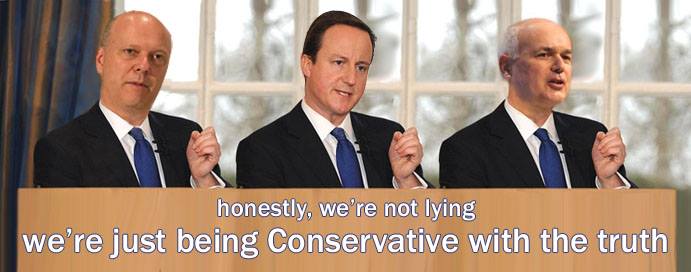
George Osborne has always been something of an editor: he’s very conservative with the truth

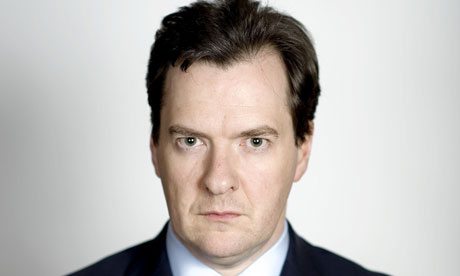
Chancellor George OsborneGeorge Osborne, the financial adviser, after-dinner speaker, author, Kissinger Fellow, chairman of the Northern Powerhouse project, newspaper editor and MP.

Here in the UK, a sitting MP, and a member of the party in office, is the editor of London’s only newspaper. It becomes an almost farcical situation when one considers that London, one of the most cosmopolitan cities in the world, is the most Labour supporting region in the UK. It’s about to have its only local newspaper read like pages from ConservativeHome. The plot sickens.

I seriously doubt that the Standard’s political editor will be pitching a story about the Crown Prosecution Service currently reviewing the Conservatives’ electoral spending, amid the growing evidence of serious electoral fraud, any time soon.

Oh hang on, wasn’t Baronet Osborne one of the key strategic masterminds behind the general election? The same Osborne who regarded the UK social security budget – in particular, the financial safety net that supports disabled people – as disposable income for his equally privileged millionaire peers? He was only forced to climb down over his proposed 4.4 billion of spending cuts to disability benefits after the surprising resignation of the hard faced Work and Pensions Secretary Iain Duncan Smith, who also likes to abandon sinking ships.

Osborne is so hated in London and elsewhere that he was booed by crowds at the Paralympics when handing out medals

Any suggestion that Britain is still a great bastion of first world liberalism and democracy makes me laugh until I cry these days.

Osborne was widely criticised for his decision not to quit his Tatton seat in north-west England since it was announced that he would take up the position as editor of the Evening Standard. He has already rattled the Advisory Committee on Business Appointments (ACOBA) – which is an ethics committee that aims to decide whether job roles for former ministers present a conflict of interest – by announcing the appointment before they were given any time at all to review any potential conflict with his duties as MP and his former role as chancellor. Ex-ministers are supposed to submit their requests and then wait for the committee’s guidance before accepting something and announcing it to the public.

The committee assessing Osborne’s post-ministerial roles is usually given at least a month to carry out research into what contacts a former minister had in his or her department that could constitute a conflict of interest in any new role, but it is understood that some members of the committee were informed less than an hour before Osborne’s appointment was made public. They are now expected to give advice within two weeks.

It’s understood that the committee will be actively considering a call for the former chancellor to delay or decline the role.

Osborne defended his new job on Monday, telling the House of Commons that parliament benefited from members bringing in experience of different sectors alongside their constituency work. He was responding to an urgent question from Labour’s election co-ordinator, Andrew Gwynne, over a potential conflict of interest.

Osborne facetiously remarked “I thought it was important to be here, though unfortunately we have missed the deadline of the Evening Standard

In my view, Mr Speaker, this parliament is enhanced when we have people from all walks of life and different experience in the debate and when people who have held senior ministerial office continue to contribute to the debate.

He’s not exactly a man that cares much for integrity. He seems to think we have forgotten that it was under his chancellorship that the UK lost the Moody’s Investors Service triple A grade, despite Osborne’s key pledge to keep it secure. Moody’s credit ratings represent a rank-ordering of creditworthiness, or expected loss.

The Fitch credit rating was also downgraded due to increased borrowing by the Tories. In fact they borrowed more in 4 years than Labour did in 13. Now they have borrowed more than every single Labour government ever, combined. 

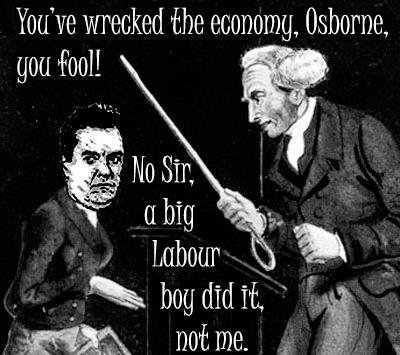
Osborne was rebuked by the Office for Budget Responsibility (OBR) for telling outrageous lies that Labour left the country “close to bankruptcy” following the global recession. However, the economy was officially recovered and growing following the crash, by the last quarter of 2009. Baronet Osborne, the high priest of austerity, put the UK back into recession within months of the Coalition taking office.

539627_450600381676162_486601053_n (2)

Baronet Osborne is not deemed a member of the nobility, but rather, entitled gentry. The rank of a Baronet is a hereditary title awarded by the British Crown. One’s position in an order of precedence is not necessarily an indication of functional importance.

It’s remarkable that despite Osborne’s solid five-year track record of failure, the Tories still mechanically repeat the “always cleaning up Labour’s mess” lie, as if Labour increasing the national debt by 11% of GDP in 13 years, mitigated by a global recession, (caused by bankers and the finance class), is somehow significantly worse than Osborne’s unmitigated record of increasing the national debt by at least £555 billion.

Osborne has ironically demonstrated that it is possible to dramatically cut spending and massively increase debt. At least Labour invested money in decent public service provision, the Conservatives have simply ransacked every public service, handed out our money to their private sector buddies and steadily dismantled the gains we made as a society from the post-war settlement.

Who could forget in September 2007, ahead of the publication of the 2007 Comprehensive Spending Review, Osborne pledged that the Conservative Party would match Labour’s public spending plans for the next three years. He promised increases in public spending of 2% a year,calling Labour charges that the Conservatives would cut public spending “a pack of lies”. He also ruled out any “upfront, unfunded tax cuts.” 

Then there were the expenses scandals, he even had the cheek to claim £47 for two copies of a DVD of his own speech on “value for taxpayers’ money.

Gosh, what, with Osborne being so conservative with the truth, I can really see the Evening Standard taking a credible objective turn.

Sorry, that was a sarcasm typo, I meant authoritarian turn.

However, it has to be said that it’s not as if  Osborne will be editor of a left leaning paper. Who could forget the Evening Standard‘s headlines during the London Mayoral campaigns: Exposed: Sadiq Khan’s family links to extremist organisation – the front page story about Khan’s former brother-in-law once coincidently attending the same rally as a hate preacher – and Why Sadiq Khan cannot escape questions about extremists, a hit and sneer piece that only just stopped just short of accusing Khan of being a terrorist. But I seriously doubt Osborne will have a liberalising impact on the screaming headlined nonsense of this tabloid.

Among the Tory MPs defending Osborne in the Commons was his former cabinet colleague and Times columnist Michael Gove, a former journalist who himself has been tipped as a potential future newspaper editor. He said: “Is it not the case that we believe in a free press and that proprietors should have the right to appoint who they like to be editor, without the executive or anyone else interfering with that decision?

And isn’t it also the case that who represents a constituency should be up to its voters, not the opposition or anyone else?”

Osborne’s appointment will be subjected to wider scrutiny. On Tuesday, the economy committee of the London Assembly will be considering whether the appointment could “affect the neutrality and objectivity of news coverage in London”.

In addition, Osborne will face questioning by his constituents in Tatton, Cheshire, on Friday, when he is expected to attend his local Conservative Association’s annual general meeting. A petition signed by more than 175,000 people was delivered to his constituency office on Monday, calling on the MP to “pick one job and stick to it”.

Andrew Gwynne amongst others in the Labour party, have called for an inquiry. Gwynne wrote to John Manzoni, the permanent secretary to the Cabinet Office, urging him to examine whether there was a breach of the Ministerial Code of Conduct (which was amended yet again last year by Theresa May, following the previous editing in 2015.)

In his letter, he said former ministers must refer any new jobs to the Advisory Committee on Business Appointments (Acoba) to “counter suspicion” and ensure ministers are not “influenced” by private firms while in government. 

Gwynne, Labour’s national elections and campaign coordinator, added: “Disregarding these rules deeply undermines public trust in the democratic processes and does a disservice to those Members that ensure they follow the rules laid out on these matters.”

 shooting-party


Related

It’s time to stop the revolving door reflecting political/corporate interests that spins the news.

Politics and Insights is proud to join other independent media journalists, writers, collectives and organisations across the UK to condemn the appointment of George Osborne as the new editor of the Evening Standard.

Independent media includes any form of autonomous media project that is free from institutional dependencies, and in particular, from the influence of government and corporate interests.

We are not constrained by the interests of society’s major power-brokers.

“For an effective democratic system, we need a vibrant public sphere fuelled by varied independent broadcast and print media. We do not need the ex-Chancellor benefitting from the editorial control of a free London daily which benefits from city-wide circulation to publicise the divisive rhetoric of a right-wing government. When a crisis of representation, fed by a culture of nepotism already plagues so many establishments, Osborne’s appointment is a step in completely the wrong direction.

We write this as independent journalists, committed to holding the powerful to account. We will continue to fight for better representation and healthier political analysis in our media channels, and we will continue to produce the journalism that is missing from the corporate-owned outlets which dominate our newspapers and televisions today.”

Politics and Insights condemns George Osborne’s appointment to the Evening Standard in joint independent media statement


I don’t make any money from my work. I am disabled because of illness and have a very limited income. Successive Conservative chancellors have left me in increasing poverty. But you can help by making a donation to help me continue to research and write informative, insightful and independent articles, and to provide support to others. The smallest amount is much appreciated – thank you. 

DonatenowButton cards

New discriminatory regulations for PIP come into effect today

westminster-20121020-00081

A Department for Work and Pensions spokesperson has denied allegations that people with mental health conditions claiming Personal Independence Payment (PIP) are being treated differently to those with physical disabilities: “At the core of PIP’s design is the principle that mental health conditions should be given the same recognition as physical ones”, the spokesperson said.

“In fact, there are more people with mental health conditions receiving the higher rates of both PIP components than the DLA equivalents.

This Government is also investing more in mental health than ever before – spending more than £11 billion this year.”

However, following two independent tribunal rulings that the Department for Work and Pensions (DWP) should expand the scope and eligibility criteria of PIP, which helps both in-work and out-of work disabled people fund their additional living costs, the government is rushing in an “urgent change” to the law to prevent many people with mental health conditions being awarded the mobility component of PIP. The court held that people with conditions such as severe anxiety can qualify for the enhanced rate of the mobility component, on the basis of problems with “planning and following a journey”, or “going out”. 

The government’s new regulations will reverse the recent tribunal ruling and will mean that people with mental health conditions such as severe anxiety who can go outdoors, even if they need to have someone with them, are much less likely to get an award of even the standard rate of the PIP mobility component. The regulations also make changes to the way that the descriptors relating to taking medication are interpreted, again in response to a ruling by a tribunal in favour of disabled people.

The first tribunal said more points should be available in the “mobility” element for people who suffer “overwhelming psychological distress” when travelling alone. The second tribunal recommended more points in the “daily living” element for people who need help to take medication and monitor a health condition. 

It’s worth noting that the Coalition Government enshrined in law a commitment to parity of esteem for mental and physical health in the Health and Social Care Act 2012. In January 2014 it published the policy paper Closing the Gap: priorities for essential change in mental health (Department of Health, 2014), which sets out 25 priorities for change in how children and adults with mental health problems are supported and cared for. The limiting changes to PIP legislation does not reflect that commitment.  

PIP is defined by Capita, the private company employed by the government to carry out “functional assessments of disabled people as “a non means tested benefit for people with a long-term health condition or impairment, whether physical, sensory, mental, cognitive, intellectual, or any combination of these.” It is an essential financial support towards the extra costs that ill and disabled people face, to help them lead as socially and economically inclusive, active and independent lives as possible.

Who will be affected by the reversal of the tribunal rulings?

As I reported previously, from 16 March (today)  the law will be changed so that the phrase “For reasons other than psychological distress” will be added to the start of descriptors c, d and f in relation to “Planning and following journeys” on the PIP form. 

New guidelines circulated by the DWP instruct assessors to disregard the physical impact of mental illness, in relation to how the impairments affect a person’s mobility in completing a journey unaccompanied, which will effectively exclude them from eligibility to the higher mobility component of PIP.

This means that claimants with severe mental illness that impacts on their mobility will be refused the same level of financial support as people with physical disabilities.

It effectively means that people suffering with debilitating mental health conditions are to be denied equal access to the disability benefits system.

People with the following conditions are likely to be affected by the reversal of the independent tribunal’s ruling regarding PIP mobility awards, with conditions in the general category of “severe psychological distress”:

Mood disorders – Other / type not known, Psychotic disorders – Other / type not known, Schizophrenia, Schizoaffective disorder, Phobia – Social Panic disorder, Learning disability – Other / type not known, Generalized anxiety disorder, Agoraphobia, Alcohol misuse, Anxiety and depressive disorders – mixed Anxiety disorders – Other / type not known, Autism, Bipolar affective disorder (Hypomania / Mania), Cognitive disorder due to stroke, Cognitive disorders – Other / type not known, Dementia, Depressive disorder, Drug misuse, Stress reaction disorders – Other / type not known, Post-traumatic stress disorder (PTSD), Phobia – Specific Personality disorder, Obsessive compulsive disorder (OCD).

A case study is included in the new guidance, which says: “Sukhi has sought an award under mobility descriptor 1f as she cannot follow the route of a familiar journey without another person.

However, the [decision maker] determines that because of the wording of mobility descriptor 1f (“for reasons other than psychological distress, cannot follow the route of a familiar journey without another person, an assistance dog or an orientation aid”), any problems following the route due to psychological distress are not relevant.”

PIP consists of two separate components – a daily living component and a mobility element – each paying a standard or enhanced rate, with the enhanced rate paying more than the lower rate. 

In response to the rulings, government have simply chosen to rewrite the law in a way that denies higher PIP payments for those claimants who would have benefited from the rulings, without consulting medical experts, disabled people, advocacy organisations and MPs – including the Work and Pensions parliamentary committee.

Responding to the new guidelines, Paul Farmer, chief executive of the mental health charity Mind, said: “The purpose of PIP is to cover the extra costs people incur because of a disability – decisions makers shouldn’t discriminate between disabilities on the basis of their cause, but decisions should be based on the impact of the disability.

People who struggle to leave the house without support may face the same costs whether their difficulties arise from, for example, a sensory disability or severe anxiety or other mental health problems.

Yet those making decisions about the level of support someone will receive will now be explicitly told to disregard those barriers if they are a result of someone’s mental health problem.”

He added: “This move undermines the Government’s commitment to look at disabled people as individuals, rather than labelling them by their condition, and completely goes against the Government’s commitment to putting mental health on an equal footing with physical health.

Meanwhile, the government’s own expert welfare advisors have said that the changes to PIP – affecting the mentally ill – should be delayed until they have been properly tested and “clearly understood”. 

The Social Security Advisory Committee (SSAC) said in their report that they are “particularly concerned” that overturning the tribunal’s ruling will cause confusion. They warn it is “not clear” how assessors will interpret the changes, raising concerns over a real possibility that claimants will not be “consistently treated”.

The committee have disputed ministers’ claims that emergency legislation must be rushed through today, suggesting the feared increase in costs has been “over-hyped”.

The government claimed the tribunal ruling would cost at least £3.7bn over the next five years – money which should go to “really disabled people who need it”, according to one minister.

The committees’ damning conclusions have sparked angry exchanges in the Commons, with some Tory MPs joining Labour and the Liberal Democrats in criticising the impact of the PIP regulations on some of the most vulnerable citizens.

However, Damian Green, the Work and Pensions Secretary, refused to allow MPs to vote on the changes – insisting that was “above my pay grade”.

Green also acknowledged “a handful of people” could now have their PIP payments cut, having been awarded higher sums in the last few months.

Debbie Abrahams, Labour’s Work and Pensions spokeswoman, said that contradicted repeated assurances – including by Theresa May – that no disabled people would lose money, with only new claimants affected.

And she said: “The Government’s decision to change the law on PIP is a clear example of the way people with mental health conditions are not given equal treatment.”

The SSAC have urged the DWP to consider “testing the proposed changes with health care professionals and decision makers to ensure the policy intent behind the regulation is clearly understood”.

They concluded: “The department should both (a) consult more widely with representative bodies and health care professionals; and (b) improve the estimate of likely impact before the changes are introduced.”

Answering an urgent question in parliament, Mr Green insisted the SSAC was “not challenging the decision” to tighten the criteria for PIP.

But he added: “We think there may be a handful of people whose appeals have gone through the courts in this very, very small period.”

While “that money will not be clawed back from them” they would receive lower PIP payments once those appeals were struck out by the new regulations.

In their recent Equality Analysis PIP assessment criteria document, the government concede that: “Since PIP is a benefit for people with a disability, impairment or long-term health condition, any changes will have a direct effect on disabled people. The vast majority of people receiving PIP are likely to be covered by the definition of “disability” in the Equality Act 2010.

By definition, therefore, the UT [upper tribunal] judgment results in higher payments to disabled people, and reversing its effect will prevent that and keep payments at the level originally intended. The difference in income will clearly make a real practical difference to most affected claimants, and (depending on factors such as their other resources) is capable of affecting their ability to be independently mobile, access services etc – all matters covered by the UN Convention on the Rights of Persons with Disabilities as set out at the start of this Analysis.”

It goes on to say in the document: “However, this does not necessarily mean that the increased payments that would result from the judgment are a fair reflection of the costs faced by those affected, or represent a fair approach as between different groups of PIP claimants.” 

I think it’s much less likely that the government’s decision to subvert the ruling of the upper tribunal reflects any consideration of a fair reflection of costs faced by those affected, or a “fair approach” between different groups of PIP claimants. 

The purpose of Upper Tribunals

The government introduced the restrictive regulations after losing two cases at tribunals, showing an utter contempt for the UK judiciary system. However, the UK tribunal system is part of the national system of administrative justice. 

Administrative law is the body of law that governs the activities of administrative agencies of government. It is designed to independently review the decisions of governments, and as such, it provides protection and promotion of fundamental rights and freedoms for citizens.

The Upper Tribunal is a superior court of record, giving it equivalent status to the High Court and it can both set precedents and can enforce its decisions (and those of the First-tier Tribunal) without the need to ask the High Court or the Court of Session to intervene. It is also the first (and only) tribunal to have the power of judicial review. (The Conservatives have a historical dislike of judicial review. See for example: The real “constitutional crisis” is Chris Grayling’s despotic tendencies and his undermining of the Rule of Law.)

The Tribunals, Courts and Enforcement Act 2007 created a new unified structure for tribunals and recognises legally qualified members of tribunals as members of the judiciary of the United Kingdom who are guaranteed continued judicial independence. This means that the judiciary is kept discrete from other branches of government. That is so that courts are not subjected to improper influence from the other branches of government, or from private or partisan interests.

Judicial Independence is vital and important to the idea of separation of powers. The intent behind this concept is to prevent the concentration of political power and provide for checks and balances. It has been significantly influenced by judicial independence principles developed by international human rights constitutional documents. in the application of the European Convention on Human Rights in British law through the Human Rights Act 1998, which came into force in the UK in 2000.

The government’s new regulations are a particularly autocratic move, aimed at simply overturning two legal rulings that the government did not like, partly because their zealotry concerning their anti-welfarism and “small state” neoliberal ideology has been challenged. The regulations were ushered in and imposed so that they would not be subjected to parliamentary scrutiny and debate or democratic dialogue with disabled people or groups and organisations that support and advocate for those with disability. 

damian-green
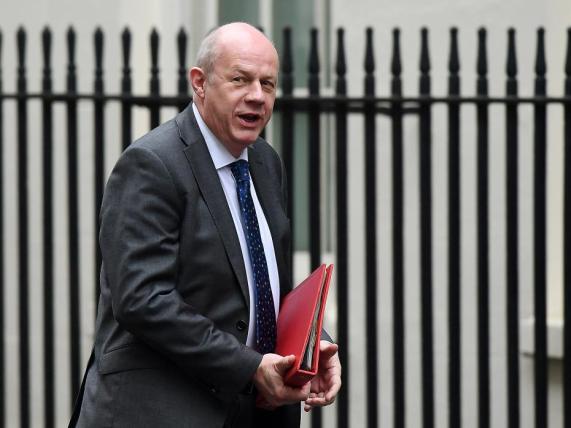
Work and Pensions Secretary Damian Green

Related

Two EDMs have been tabled to stop Tory cuts to disability support, with cross-party endorsement


I don’t make any money from my work. I am disabled because of illness and have a very limited income. But you can help by making a donation to help me continue to research and write informative, insightful and independent articles, and to provide support to others. The smallest amount is much appreciated – thank you. 

DonatenowButton cards

Generous welfare benefits increase the work ethic. The government is wrong about ‘perverse incentives’

Picture-of-newspaper-headlines-NW10

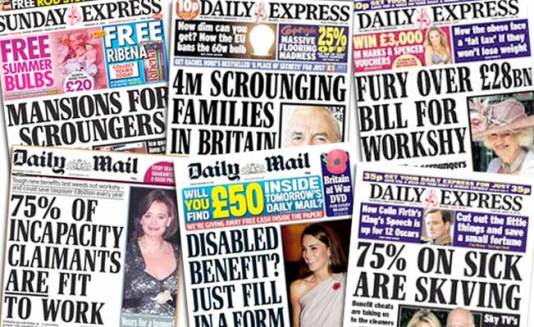
The UK establishment have intentionally created a scapegoating project. A dominant political and cultural narrative has targeted people needing social security support, constructing welfare folk devils and generating moral panic. This is to justify the dismantling of the welfare state, and to de-empathise the public to the plight of the poorest citizens. The government have misled the public, claiming social security provision leads to a “culture of dependency”. International research shows this is untrue.

Comparative research at an international level has undermined the government claim that the UK welfare state encourages “widespread cultures of dependency” and presents unemployed people with “perverse incentives”. 

study, which links welfare generosity and active labour market policies with increased employment commitment, was published in 2015. It has demonstrated that people are more likely to look for work if they live in a country where welfare provision is generous and relatively unconditional. Empirically, the research includes more recent data, from a larger number of European countries than previous studies.

The research also compared employment motivation in specific sub-sections of communities across countries: ethnic minorities, people in poor health, non-employed people and women, and adds depth to previous studies. It has been concluded that comprehensive welfare provision is increasingly seen as a productive force in society (Bonoli, 2012), that stimulates employment commitment (Esser, 2005) and supports individual inclusion and participation in society and the labour market, particularly among disadvantaged groups

Sociologists Dr Kjetil van der Wel and Dr Knut Halvorsen, from Oslo and Akershus University College, Norway, examined responses to the statement “I would enjoy having a paid job even if I did not need the money” presented to the interviewees for the European Social Survey in 2010.

In a paper published in the journal Work, employment and society, (published by the British Sociological Association and SAGE) titled The bigger the worse? A comparative study of the welfare state and employment commitment, sociologists compare the responses with the amount the country spent on welfare benefits and employment schemes, whilst taking into account the population differences between states.

The researchers found that the more a country paid to unemployed and disabled people, and invested in employment schemes, the more its population were likely to agree with the statement, whether employed or not.

They found that almost 80% of people in Norway, which pays the highest benefits of the 18 countries, agreed with the statement. By contrast in Estonia, one of least generous, only around 40% did. It’s also the case that the countries with the highest levels of financial support for those in need also have the highest employment rates, which challenges neoliberal antiwelfare narratives regarding so-called “perverse incentives” and their highly controversial and stigmatising “scrounger” rhetoric.

The UK was then considered average in terms of our generosity of benefit levels, and the percentage of subjects agreeing with the statement was almost 60%.  However, this research was carried out in 2010, prior to the radical changes to the UK social security system that happened with the Coalition Welfare Reform Act in 2012 and subsequent Conservative policies.

The researchers also found that government programmes which intervene in the labour market to support unemployed people in finding work made it more likely that those people agree that they wanted to work even if they didn’t need the money. In the countries with the most interventionist states, around 80% agreed with the statement and in the least around 45%. The UK’s response, though one of the least interventionist then (and is even less positively interventionist now), was around 60%.

In the article, the researchers say: “Many scholars and commentators fear that generous social benefits threaten the sustainability of the welfare state due to work norm erosion, disincentives to work and dependency cultures. 

A basic assumption is that if individuals can obtain sufficient levels of well-being – economic, social and psychological – from living off public benefits, compared to being employed, they would prefer the former. When a ‘critical mass’ of individuals receive public benefits rather than engaging in paid work, the norms regulating work and benefit behaviour will weaken, setting off a self-reinforcing process towards the ‘self-destruction’ of the welfare state. The more people are recipients of benefits, the less stigmatizing and costly in terms of social sanctions it is to apply for benefits.

However, other commentators suggested that because employment rates are higher in countries with generous welfare states, more people will have positive experience of work. People who receive generous benefits when out of work may feel more inclined to give something back to the state by striving hard to find work.

This article concludes that there are few signs that groups with traditionally weaker bonds to the labour market are less motivated to work if they live in generous and activating welfare states.

The notion that big welfare states are associated with widespread cultures of dependency, or other adverse consequences of poor short term incentives to work, receives little support.”

On the contrary, employment commitment was much higher in all the studied groups in bigger welfare states. Hence, this study’s findings support the welfare resources perspective over the welfare scepticism perspective.”

The UK government launched an unprecedented range of cuts on public services which happened between 2010 to 2015. However, the UK’s millionaires were awarded substantial tax cuts over that time period. George Osborne handed out a cut in tax that rewarded millionaires with £107, 000 each per year at the same time the welfare “reform” bill became policy.

The biggest percentage of cuts affected social security benefits and local government, which has adversely impacted on housing, local authority services and ultimately, on ordinary people in local communities. The cuts in social care and welfare fall disproportionately on two groups that overlap: people in poverty and disabled people. They fall hardest of all on people with the most severe disabilities, who need both benefits and social care.

Using an extremely divisive justification narrative peppered with words such as “workshy” and “scrounger”, and redefining what is “fair”, the government made out that UK tax payers were a discrete group from people needing welfare support, and that the latter group were a kind of economic free rider, sharing a “something for nothing culture”.  The government intentionally fostered resentment in employed people “paying taxes to carry the burden of those who won’t work”.

The Conservatives have persistently claimed that there are moral hazards and adverse behavioural consequences attached to providing poverty relief. This is a view shared by other neoliberal nation states, such as the US.

Policies represent perceptions and establish state instructions regarding how various social groups ought to be perceived and treated. They reflect how a government thinks society should be organised. They encode messages about how people ought to behave and how our individual degree of freedoms are defined, extended or restricted. Policies are always intentional acts that shape socioeconomic organisation.

The government have colonised left wing rhetoric, and conflated social justice and inclusion with work, making citizenship and human rights conditional, and contingent on a person’s economic productivity. They claimed to be “the party of workers”, yet the Conservatives have legislated more than once to undermine collective bargaining and trade unionism more generally. There has been a marked downward shift in wage levels and working conditions over the past six years, as well as drastic reductions in welfare support.

The word “reforms” is now a euphemism for cuts. Words like “support” and “help” are used as techniques of neutralisation, to divert people from the coercive, punitive and targeted elements of the “reforms”. These are semantic shifts of Orwellian proportions. 

The majority of unemployed people move in and out of work, indicating that policy, the economy and labour market conditions, rather than personal failings and dubious “cultures”, are the reason why people become unemployed. The tax payer/benefit claimant dichotomy is a false one. Everyone contributes to welfare, that is why national insurance was introduced: to pay for support provision that you may need in the future.

Furthermore, unemployed people pay taxes, and stealth taxes such as VAT contribute a significant amount to the Treasury. When social security benefits were originally calculated, they covered only the costs of food and fuel. It was assumed that people claiming support were exempt from council tax and paying rent. That is no longer the case, but benefit levels have not risen to adjust for this. 

The highest welfare spending has actually been on pensions, followed by in-work benefits. The latter subsidises employers paying low wages that don’t support families in meeting the costs of living. However, under the new Universal Credit, in-work support will be conditional and significantly reduced, especially for those families on low pay with children. 

The Conservative’s austerity cuts have disproportionally targeted the very people that a fair and civilised society should protect. This was justified partly by the global economic recession, though not everyone was expected to “live within their means” and contribute to reducing the national deficit. Remarkably, those that caused the recession appear to have got off free from obligation to contribute to the reduction of the debt, in a “low tax, low welfare society.”

The Conservative cuts were also justified by the perpetuation of a dominant neoliberal discourse based on small state ideology, antiwelfare myths and the purposeful creation of welfare folk devils and moral panic.

One consequence of the Conservative’s “reforms” has been the return of absolute poverty in the UK – some people cannot meet their basic needs and are going without adequate food and fuel. Many people have suffered distress, harm and some have died as a result of the government’s welfare regime. 

The Samaritan’s recent study – Dying from Inequality – links suicidal behaviours with socioeconomic deprivation. Their report says: “Suicide risk increases during periods of economic recession, particularly when recessions are associated with a steep rise in unemployment, and this risk remains high when crises end, especially for individuals whose economic circumstances do not improve. Countries with higher levels of per capita spending on active labour market programmes, and which have more generous unemployment benefits, experience lower recession-related rises in suicides.”

There is also a further extensive cost to human potential. As Abraham Maslow indicated, if people cannot meet their basic physical needs, they are not likely to fulfil psychosocial ones.

 christianity-and-social-justice-exploring-the-meaning-of-welfare-reform-29-638

Graphic courtesy of Dr Simon Duffy,  The Centre for Welfare Reform.

Related

A bad job is worse for your mental health than unemployment, say UK’s top psychologists

Dying from inequality: socioeconomic disadvantage and suicidal behaviour – report from Samaritans

The Minnesota Starvation Experiment provided empirical evidence that demonstrates clearly why welfare sanctions can’t possibly work as an “incentive” to “make work pay”


I don’t make any money from my work. I am disabled because of illness and have a very limited income. But you can help by making a donation to help me continue to research and write informative, insightful and independent articles, and to provide support to others. The smallest amount is much appreciated – thank you. 

DonatenowButton cards

A brief view of the budget

budget-hammond-commons-6

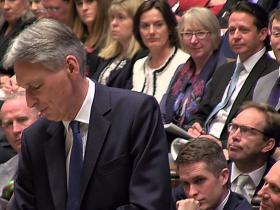
He’s not very bright our chancellor, is he? Self-employed people face an increase in their National Insurance (NI) contributions as the Chancellor says he wants to “tackle the unfair burden on people in employment”. Presumably he means self employed people are not in employment. Yet they certainly aren’t included in unemployment figures, either. Last time I checked, employment means “the state of having paid work.”

That’s yet another broken manifesto pledge.

Gutto Bebb, Conservative Welsh minister, hit out at the proposals and called on the Government to “apologise.” Iain Duncan Smith added his voice to calls for a rethink of proposed changes to the National Insurance contributions after Hammond suggested that Brexit is responsible for the Government’s tax raid – conveniently mentioning Brexit for the first time regarding his budget. But he later denied that self-employed workers were paying the price for Brexit. Hard to keep up with what passes as the Conservative brand of reasoning and justification. It certainly makes me feel dizzy and nauseous, that’s for sure.

Hammond could have simply reduced the rate of NI that employees pay instead. He’s a bit of a wally. We did have a period of economic growth last year, second to only Germany, apparently. Good old Tories, eh?  Hurrah!

But I wonder who will benefit from that, assuming it’s really a growth in the economy? It won’t be disabled people claiming Personal Independence Payment (PIP) with severe psychological distress who can’t leave the house, that’s for sure. Or those suffering epilepsy, both types of diabetes and blackouts who need support with managing their treatments and monitoring their health conditions.

17191393_10154323613132014_6367986618227533020_n

A period of Orwellian growth. The economy is currently being propped up by increasing personal debt.  

All of these conditions in fact: Diabetes mellitus (category unknown), Diabetes mellitus Type 1 (insulin dependent), Diabetes mellitus Type 2 (non-insulin dependent), Diabetic neuropathy, Diabetic retinopathy, Disturbances of consciousness – Nonepileptic – Other / type not known, Drop attacks, Generalised seizures (with status epilepticus in last 12 months), Generalised seizures, (without status epilepticus in last 12 months), Narcolepsy, Non epileptic Attack disorder (pseudoseizures), Partial seizures (with status epilepticus in last 12 months), Partial seizures (without status epilepticus in last 12 months), Seizures – unclassified Dizziness – cause not specified, Stokes Adams attacks (cardiovascular syncope), Syncope – Other / type not known.

And these:  Mood disorders – Other / type not known, Psychotic disorders – Other / type not known, Schizophrenia, Schizoaffective disorder, Phobia – Social Panic disorder, Learning disability – Other / type not known, Generalized anxiety disorder, Agoraphobia, Alcohol misuse, Anxiety and depressive disorders – mixed Anxiety disorders – Other / type not known, Autism, Bipolar affective disorder (Hypomania / Mania), Cognitive disorder due to stroke, Cognitive disorders – Other / type not known, Dementia, Depressive disorder, Drug misuse, Stress reaction disorders – Other / type not known, Post-traumatic stress disorder (PTSD), Phobia – Specific Personality disorder, Obsessive compulsive disorder (OCD).

What kind of government cuts support for those needing help to manage medication, monitor a health condition, or both?

What kind of government cuts mobility support for people who can’t leave the house alone?

It seems that most people who are actually ill won’t be eligible for PIP. I wonder which people the government have in mind when they say “those in greatest need”?

Oh, it’s the millionaires again. Phew! Silly me.

From the Equality Trust:

pie wealth

The poorest people lose out from the budget yet again, of course. The distribution of wealth won’t change, with many households in the lowest deciles being worse off. The graph above does not show the full extent of the difference between the richest and the rest of society. This is because the top 1% have incomes substantially higher than the rest of those in the top 10%. In 2012, the top 1% had an average income of £253,927 and the top 0.1% had an average income of £919,882.

If you earn a few hundred thousand, you are set to do rather well yet again from another Tory budget. It’s remarkable how those need it least always get the financial “incentive” isn’t it?  Carrots for the fat cats.  It’s the delux model of “incentives”.

Meanwhile those who need it most pay for those who need it least. Poor people get the budget premium “incentive”, which includes standing on the naughty step, and thinking about what you have not done.

The Tories like wielding a stout stick and giving out a good thrashing for those who dare to fall ill. 

And just to clarify, social justice, equality and inclusion are NOT the same thing as work. They should exist independently of someone’s employment status. Otherwise, “inclusion” takes an Orwellian turn to the far right. We know from history that work doesn’t really set us free. People “enjoying the security and dignity of work” does not entail ensuring those who can’t work or who lost their job are utterly insecure, hungry or destitute. 

The government’s “pledge” to increase adult social care funding is being paid for by increases in council tax, some of which will be paid by those previously exempted from council tax because they are sick, disabled or unemployed. Social security was originally calculated to meet only the cost of fuel and food on the assumption that people needing support would be exempt from rent and council tax. That no longer is the case.

The rises due to come into force from April will not be sufficient to avoid strapped for cash councils having to make deep cuts to essential services, including road repair, parks, children’s centres, leisure centres and libraries. All of this in a time of “economic growth”. It looks like austerity is to be a permanent feature of Conservative neoliberal policy-making.

For many families who are just about managing, the withdrawal of state support for those who are in low paid work is hardly an incentive to “make work pay”. Of course Hammond has ignored the scandal of in-work poverty. This is one of the other austerity measures that he has chosen to keep. Introducing sanctions for those claiming social security because their employers don’t pay them enough to live on is simply a big bully’s stick, which would be better aimed at exploitative and miserly big business employers. Fancy punishing people because profit driven businesses pay as little as possible. 

It’s all the same peevish and spiteful mentality as “making work pay.” Instead of ensuring workers get a decent rate of pay, like you’d think from the Tory claim, the truly nasty party cut benefits and decided to impose punishing conditions on people who need state support indiscriminately, regardless of the reason, instead.

That’s pure upper class prejudice and malice.

And greed. 

banksy-elephant-in-room1
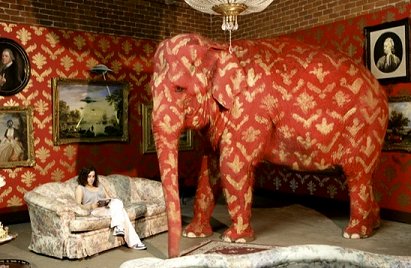
Meet Brexit, by the way, he’s the big elephant in the room, Mr Hammond


I don’t make any money from my work. I am disabled because of illness  and have a very limited income. The budget didn’t do me any favours at all.

But you can help by making a donation to help me continue to research and write informative, insightful and independent articles, and to provide support to others. The smallest amount is much appreciated – thank you.

DonatenowButton cards

Two EDMs have been tabled to stop Tory cuts to disability support, with cross-party endorsement

aaeaaqaaaaaaaad4aaaajdk1ytqwzdyxltjinwytngjhmc05njdlltmyzmu4mty4owi5za

I reported last week that the Liberal Democrats were planning an Early Day Motion (EDM) to halt the government’s authoritarian Personal Independence Payment (PIP) regulations. The new regulations are designed by the government to disregard the rulings of two upper tribunals regarding the scope of eligibility criteria for disabled people claiming PIP. However, upper tribunals are part of a body of administrative law that governs the activities of the administrative agencies of government. It is designed to independently review the decisions of governments, and as such, it provides protection and promotion of fundamental rights and freedoms for citizens.

The Upper Tribunal is a superior court of record, giving it equivalent status to the High Court and it can both set precedents and can enforce its decisions (and those of the First-tier Tribunal) without the need to ask the High Court or the Court of Session to intervene. It is also the first (and only) tribunal to have the power of judicial review. (The Conservatives have a historical dislike of judicial review. See for example: The real “constitutional crisis” is Chris Grayling’s despotic tendencies and his undermining of the Rule of Law.)

The first EDM has already gained excellent cross-party support. It’s primary sponsor is Tim Farron. Signatories include Jeremy Corbyn, Debbie Abrahams and a number of other Labour Party MPs, Caroline Lucas (Green Party), Jonathan Edwards (Plaid Cymru) and Scottish National Party MPs.  

It says: “That an humble Address be presented to Her Majesty, praying that the Social Security (Personal Independence Payment) (Amendment) Regulations 2017 (S.I., 2017, No. 194), dated 22 February 2017, a copy of which was laid before this House on 23 February, be annulled.”

From 1 April 2017, further cuts to Employment and Support Allowance (ESA) are to be introduced, again via statutory instrument (which are usually reserved for non-controversial policy amendments only). The new regulations mean that claimants who are placed in the Work-Related Activity Group (WRAG) will lose around £30 a week, receiving the same rate of payment as those claiming Jobseeker’s Allowance and the equivalent in Universal Credit.

Another EDM was tabled by the Labour Party, with the primary sponsor being Jeremy Corbyn, which says: “That an humble Address be presented to Her Majesty, praying that the Employment and Support Allowance and Universal Credit (Miscellaneous Amendments and Transitional and Savings Provisions) Regulations (S.I., 2017, No. 204), dated 23 February 2017, a copy of which was laid before this House on 27 February, be annulled.”

Disabled people have already carried a disproportionately large burden of austerity cuts.


2014-02-17-BurdenoftheCuts-thumb


The cuts to disability support have been widely opposed, yet the government apparently pays little heed to the need for democratic accountability. 

You can support disabled people who are being targeted by ever-increasingly punitive Conservative policies that are having an extremely damaging impacon us by emailing your MP and asking them to sign both EDMs. (Contact details here).


Related

A black day for disabled people – disability benefit cuts enforced by government despite widespread opposition

House of Lords debate: ESA – Monday 07 March 2016 (From 3.06pm)

MP attacks cuts hitting disabled people – Debbie Abrahams

Leading the debate against the Welfare Reform and Work Bill – 3rd reading – Debbie Abrahams

My speech at the Changes to Funding of Support for Disabled People Westminster Hall Debate – Debbie Abrahams

Man leaves coroner letter as he fears Work Capability Assessment will kill him

The government need to learn about the link between correlation and causality. Denial of culpability is not good enough.

The new Work and Health Programme: government plan social experiments to “nudge” sick and disabled people into work

Stephen Crabb’s obscurantist approach to cuts in disabled people’s support

A Critique of Conservative notions of “Social Research”

The DWP mortality statistics: facts, values and Conservative concept control


I don’t make any money from my work and I have limited income due to illness. But you make a donation and help me continue to research and write free, informative, insightful and independent articles, and to provide support to others. The smallest amount is much appreciated – thank you.

DonatenowButton cards


Government rebuked again for misusing statisics – this time on homelessness

1235473_537097386359794_65317730_n (1)
Liberal Democrat peer, Baroness Rosalind Grender, has submitted a formal complaint to the UK Statistics Authority about the government’s misuse of homelessness statistics in press notices and parliamentary debates.

In a letter responding to her concerns, Ed Humpherson, the Authority’s director general, said he agreed with her complaint. He described the Department’s use of the figures as “disappointing” and that it was “potentially misleading” to the public.

It’s not the first time the government has been reprimanded officially, for trying to mislead the public. Who could forget David Cameron being rebuked by the statistics watchdog over national debt claims – The PM said the government was “paying down Britain’s debts” in a political broadcast, even though the debt was rising (and continues to increase).

Then there was Iain Duncan Smith’s unforgettable misuse of benefit statistics – he was rebuked by Office for National Statistics (ONS) for his claim that 8,000 people moved into work as a result of the benefit cap which was found to be “unsupported by the official statistics.” 

Later in that same month, Duncan Smith also drew criticism and a reprimand for claiming around 1 million people have been “stuck on benefits” for at least three of the last four years “despite being judged capable of preparing or looking for work”. However, the figures cited also included single mothers, people who were seriously ill, and people awaiting assessment.

Anyone would think that the Conservatives are trying to hide the damaging consequences of their draconian policies. (See: The DWP mortality statistics: facts, values and Conservative concept control.) 

The UK Statistics Authority disputed figures announced by the Department for Communities and Local Government, which claimed last year that homelessness had been more than halved since 2003.

However, the government’s claim was based on a very narrow statutory definition of homelessness which included only those who authorities are obliged to help. The number did not take into account homeless people who were given assistance under other schemes.The overall number of people facing homelessness has not dropped. The government also did not explicitly include the statutory homelessness definition in parliamentary debates in the House of commons and Lords, or in press releases.

A spokesperson for the Department for Communities and Local Government said: “We’re aware of the issue raised and have taken steps to make sure this does not arise in future.”

Baroness Grender welcomed the finding saying that the Government “has been caught out playing a numbers game, rather than accepting there is a problem, and getting on with the important work of finding solutions”.  

“It is time to stop spinning the statistics and start solving the problem,” she said.


Looks like my list from 2014  – A list of official rebukes for Tory lies – needs updating.


Related

Government backs new law to prevent people made homeless through government laws from becoming homeless

Labour Party To Refer Groundless Iain Duncan Smith Claim To Statistics Watchdog Again


I don’t make any money from my work. I am disabled because of illness and have a very limited income. But you can help by making a donation to help me continue to research and write informative, insightful and independent articles, and to provide support to others. The smallest amount is much appreciated – thank you. 

DonatenowButton cards


The poor state of child health in the UK

uk-child-poverty

Neoliberalism is based on competitive individualism and mythical “market forces”. In such a competitive system, where the majority of people are left to sink or swim, most are pitched against the tide, as it were, since the very design of the economy means that only the wealthiest make significant gains.  It’s therefore inevitable there will be a few “winners” and many “losers”.

That’s what “competition” means. It means no rewards for most people – inequality and poverty for the 99%. It’s not possible to “work hard” to change this. Inequality is built into the very system of our socioeconomic organisation. Therefore it’s hardly fair or appropriate for a government to blame and punish people for the failings of their own imposed dominant ideology – a political and economic mode of organisation – which most ordinary people did not intentionally choose.

A  major report – State of child health – says that child health in the UK is falling behind that of many other European countries. It also confirms a strong link between growing inequality and poverty in the UK and increasing poor health and mortality. This comes at the same time as another key study found that poverty has a significantly damaging impact on the mental health and behaviour of children. 

The report raises particular concerns over rates of mortality, mental health issues and obesity among the young. Children living in the most deprived areas are much more likely to be in poor health, be overweight, suffer from asthma, have poorly managed diabetes, experience mental health problems and die early.

The in-depth report, from the Royal College of Paediatrics and Child Health (RCPCH), has emphasised that poverty is the cause of many child health problems.

UK health ministers claim that money was being invested in services to help tackle health inequalities.

The report looked at 25 health indicators, including asthma, diabetes and epilepsy, as well as obesity, breastfeeding and mortality, to provide a snapshot of children’s health and wellbeing.

It said there had been huge improvements in child health in the UK in the past 100 years, but since the mid-1990s “there has been a slowing of progress”.

This has left the UK falling behind other European nations in a number of league tables. For example, in 2014 the UK had a higher infant mortality rate (of 3.9 per 1,000 live births) than nearly all comparable Western European countries.

Infant mortality ranges from 3.6 in Scotland to 3.9 in England and Wales, and 4.8 in Northern Ireland.

Rates of smoking during pregnancy – an important factor in the health of babies – are also higher in the UK than in many European countries, at 11.4% in England and nearly 15% in Scotland.

Levels of smoking were highest in deprived populations and in mothers under 20, the report found.

Also, more than one in five children starting primary school in England, Wales and Scotland are overweight or obese, and there has been little improvement in these figures over the past 10 years.

Obesity leads to a significantly increased risk of serious life-long health problems, including type 2 diabetes, heart disease and cancer.  

In 2010 a report for the government in England by Sir Michael Marmot set out the social factors governing health and pointed to the role of a child’s early years in determining life chances. Now, leading child health experts are saying that little progress has been made since then and that health inequality is still blighting the lives of young people.

The Royal College of Paediatrics and Child Health has stated that the wide gap between rich and poor is damaging infant health around the UK.

The college president, Professor Neena Modi, argues that a lot more needs to be done to improve child health and that it is “particularly troubling that stark inequalities have widened in the last five years.”

Mortality rate worsens

The report says that the UK ranks high amongst Western European countries on mortality rates for infants under the age of one. Deprivation is strongly correlated with death rates among children.

The report says that many of the causes of infant mortality are preventable and asserts that issues such as fetal growth restriction disproportionately affect the least advantaged families in society. Diet and adequate nutrition, for example, play a key role in healthy birth weight.

Reducing child poverty, with benefits and housing policy playing a part, are crucial for improving infant survival, according to the report.

New mortality data was published in January by the Office for National Statistics, which also underlines the scale of inequalities in the UK.

Modi also said: “Poor health in infancy, childhood, and young adult life will ultimately mean poor adult health, and this in turn will mean a blighted life and poor economic productivity. The UK is one of the richest countries in the world; we can and must do better, for the sake for each individual, and that of the nation as a whole.” 

Sarah Toule, head of health information at World Cancer Research Fund, agrees:“We strongly support RCPCH’s call on the government to close the poverty gap and improve our children’s health and future.”

The report calls for child health to be pushed high up the government’s agenda, as a cross-departmental issue. Each government – Scotland, Wales, Northern Ireland and England – should develop a child health and wellbeing strategy and consider children’s health in all policymaking.

Both type 1 and type 2 diabetes are on the rise

According to the report, there was also evidence that young people in the UK had low wellbeing compared with other comparable countries.

Type 2 diabetes is increasing. However, the report said that the UK could do much better at monitoring and managing type 1 diabetes, which is an increasingly common autoimmune condition amongst children and young people in the UK, though unrelated to “lifestyle choices” or obesity. It can lead to very serious long-term health problems if it isn’t adequately medically monitored and managed.

The report lays out a number of key recommendations for improving the health and wellbeing of the nation’s children.

These include: 

  • Each UK Government to develop a child health and wellbeing strategy, coordinated, implemented and evaluated across the nation 
  • Each UK Government to adopt a ‘child health in all policies’ approach 
  • UK Government to introduce a ban on the advertising of foods high in saturated fat, sugar and salt in all broadcast media before 9pm 
  • Each UK Government to develop cross-departmental support for breastfeeding; this should include a national public health campaign and a sector wide approach that includes employers, to support women to breastfeed  
  • An expansion of national programmes to measure the height and weight of infants and children after birth, before school and during adolescence 
  • A reversal of public health cuts in England, which are disproportionately affecting children’s services 
  • The introduction of minimum unit alcohol pricing in England, Wales, and Northern Ireland, in keeping with actions by the Scottish Government  
  • UK Government to extend the ban on smoking in public places to schools, playgrounds and hospitals 
  • UK Government to prohibit the marketing of electronic cigarettes to children and young people 
  • National public health campaigns that promote good nutrition and exercise before, during and after pregnancy  

The high number of Sure Start centre closures runs counter to the government’s rhetoric on improving children’s life chances across society. Sure Start was an innovative and ambitious Labour government initiative, introduced in 1998, aimed at supporting the most deprived families and safeguarding children. In 2010, Gordon Brown said the Conservatives would cut Sure Start spending by £200m, forcing 20% of all centres to close. Maria Miller, the (then) shadow children’s minister, dismissed this as “scaremongering”, saying the scheme had the Conservative party’s “full commitment”.   However, increasing numbers of the centres have shut under the coalition and Conservative governments, with 12 closing in 2011, 27 in 2012 and 33 in 2013. In 2014 the number increased to 85, and then 156 in 2015. 

Neil Leitch, chief executive of the Pre-school Learning Alliance, said the figures were worrying.

“Children’s centres are a vital source of advice and practical support for families – especially those more disadvantaged families – and so for so many to be disappearing at a time when there is so much government rhetoric on ‘closing the gap’ and improving children’s life chances seems completely contradictory,” he said.

The State of Child Health report said poverty left children from deprived backgrounds with far worse health and wellbeing than children growing up in affluent families.

One in five children in the UK is living in poverty, the report says, though other estimates have been higher.

The report urges the four governments of the UK to reduce the growing health gap between rich and poor children.  

Key messages to governments from the report

  • Poverty is associated with adverse health, developmental, educational and long-term social outcomes.
  • Nearly one in five children in the UK is living in poverty. This is predicted to increase. Therefore strategies are urgently needed to reduce poverty and to mitigate its impact on child health outcomes.
  • Improving the health outcomes of children living in poverty requires provision of good-quality, effective and universal prevention and health care services. 
  • All professionals caring for children should advocate for and support policies that reduce child poverty.

An ‘all-society approach’ is needed

Professor Modi who is the president of the Royal College of Paediatrics and Child Health, said she was disappointed by the findings of the report.

“We know the adverse economic impact of poor child health on a nation and yet we singularly seem to be incapable of doing anything substantive about it.”

Modi said other European countries had much better results than the UK in closing the health gap between rich and poor children.

“Their policies are much more child friendly and child focused,” she said.

“We have a tokenistic recognition of the importance of child health in all policies in this country, but we don’t have that translated into real action.”

She added the UK could transform the health gap with an “all-society approach”.

“As citizens we can say very loudly and clearly we do want a focus on child health and wellbeing… we can bring in child health in all national policies and make sure our government does have a strategy that crosses all departments.”

The Child Poverty Action Group also applauded the report’s recommendations. “The Royal College’s report demonstrates all too clearly how poverty in the UK is jeopardising children’s health,” said Alison Garnham, chief executive. 

“We are nowhere near where we should be on children’s wellbeing and health given our relative wealth. In the face of a projected 50% increase in child poverty by 2020, this report should sound alarms. It is saying that unless we act, the price will be high – for our children, our economy and our overstretched NHS which will take the knock-on effects.

A cross-governmental approach, considering child health in every policy, was the right one, Garnham said. “But the overall question the report raises for our prime minister is will she continue with the deep social security and public service cuts she inherited – to the detriment of our children’s health – or will she act to ensure that families have enough to live on so that all children get a good start? If other comparable countries can produce results that put them in the top ranks for child health, why not us?” 

A spokesman from the Department of Health in England claimed the government would be investing more than £16bn in local government public health services to “help tackle inequalities.”

There was no mention, however, of protecting children from poverty. The austerity programme, which impacts on the poorest citizens most of all, and other government policies cannot possibly do anything else but extend and deepen social inequalities.

Recommended key actions

  • Governments must introduce comprehensive programmes to reduce child poverty.
  • Increase awareness among health professionals of the impact of poverty on health and support all professionals working with children to become advocates for their patients experiencing poverty.
  • Ensure universal early years’ public health services are prioritised and supported, with targeted supports for children and families experiencing poverty.
  • Provide good quality, safe and effective prevention and care throughout the public health and healthcare service with a particular focus on primary care in order to mediate the adverse health effects of poverty.
  • Support research that examines the relationship between social and financial disadvantage and children’s health. 
  • Support the continued recording of income-based measures of poverty so that trends and impacts of service provision can be meaningfully assessed, with a focus on achieving a target of less than 10% of children experiencing relative low income poverty.
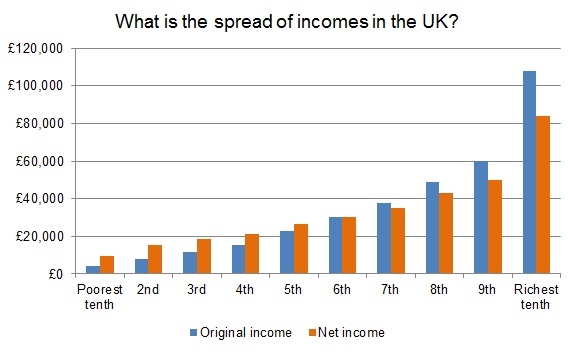
what-is-the-spread-of-incomes-in-the-uk-2014-15

Our children are the first generation in the UK in a very long time, if ever, to have much less than their parents and grandparents. Their lives are far less secure than ours have been. It’s not because of a lack of resources, it’s because of the greed of a small ruling elite and because of neoliberal ideology and policies. We have already lost the social gains of our post-war settlement: public services, social housing, legal aid, universal welfare and unconditional healthcare are either gone, or almost gone.

We must not allow this steady dismantling of our shared, public services, supports and safeguards to continue, as a society. We are one of the wealthiest nations in the world, and we have sufficient resources to support those most in need. It’s simply that the government chooses not to, preferring to be generous to the wealthiest minority, with tax cuts handed out from the public purse, and spending our public finds on being “business friendly” instead of recognising and reflecting public needs.

We must work together to challenge the toxic dominant ideology that places profit over and above human need and social wellbeing. We each share some of the responsibility for this. We now need to work on how to change this for the better, collectively. For our children and the future.

For a copy of the State of Child Health report, and the recommendations for each UK nation, visit the State of Child Health web pages.
xwqmoakmvjdjrpau0pbz
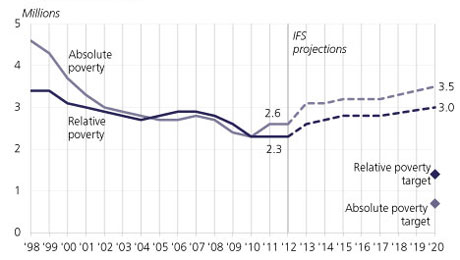
Children in poverty (before housing costs), UK, financial years 1998/99 to 2012/13; Institute for Fiscal Study (IFS) projections to 2020/21.  (Source:
 Child poverty for 2020 onwards: Key issues for the 2015 Parliament.)

Related

Nearly two-thirds of children in poverty live in working families

Poverty has devastating impact on children’s mental health

Health cuts most likely cause of steep rise in mortality, government in denial

New research uncovers ‘class pay gap’ in Britain’s professions – Social Mobility Commission.


I don’t make any money from my work. But you can help me continue to research and write informative, insightful and independent articles, and to provide support to others by making a donation. The smallest amount is much appreciated – thank you.

DonatenowButton cards

Poverty has devastating impact on children’s mental health

images

Research from the University of Liverpool – published today in The Lancet Public Health shows that children who “move into” poverty are more likely to suffer from social, emotional and behavioural problems than children who remain out of poverty.

The UK Government has recently questioned whether the relative measure of income poverty used in this research (a household income that is less than 60% of the national average) is a good indicator of children’s life chances.

The Government has claimed that it is better to increase the number of parents who are employed, than use the social security system to prevent children moving into poverty. However, we know that being employed carries no guarantee of escaping poverty.

Exploring the impact

This research challenges the government’s view, it was found that living in poverty adversely affected children’s and mothers’ mental health even if there was no change in the mother’s employment status.

Researchers from the University’s Department of Public Health and Policy explored the impact that being in poverty had on the mental health of children and their mothers,  using a nationally representative sample of children born in 2000 and followed up until 2012 (UK Millennium Cohort Study).

The researchers identified 6063 families who were not in poverty and had no mental health problems when their child was 3 years old. They tracked these families and compared the mental health of those that “moved into poverty” to those that remained out of poverty by the time their child was 11 years old.

Negative effect

Fourteen percent (844) of these 6063 families experienced poverty over this period. The children that experienced poverty were 40% more likely to develop social, emotional or behavioural problems, compared to those that remained out of poverty. The mothers who “moved into” poverty were also 44% more likely to develop mental health problems and this partially explained the negative effect that poverty had on children’s mental health.

Dr Sophie Wickham, Wellcome Trust Research Fellow at the University’s Department of Public Health and Policy, said: “Our study shows that moving into poverty damages children’s mental health. Child mental health in the UK is poor, with roughly one in eight children reporting mental health problems, and this is partly because Child poverty is higher in the UK than in other European countries.

“Our findings reinforce the need to monitor income-based measures of child poverty to track the effect that government’s policies are having on children’s lives. In order to improve mental health in the UK it is essential that children are protected from the toxic effects of growing up in poverty.”

Damaging life chances

Alison Garnham, Chief Executive of Child poverty Action Group, said: “This comprehensive study shows how children’s mental health is compromised by poverty.   It tells us loud and clear that inadequate family income damages children’s life chances – and having a working parent doesn’t stop that damage from happening.

“Working poverty is still poverty. With one in four children in poverty in the UK, and projections that numbers may rise by half by 2020, that should ring alarms. The well-being of our next generation is at stake: surely that is a compelling reason for re-instating poverty-reduction targets that, along with most of the Child Poverty Act, were scrapped last year.  Without targets to track progress on eradicating poverty, how can we know if we’re improving or further jeopardising our children’s well-being?”

The report says that in a UK cohort, first transition into income poverty during early childhood was associated with an increase in the risk of child and maternal mental health problems. These effects were independent of changes in employment status. Transitions to income poverty do appear to affect children’s life chances and actions that directly reduce income poverty of children are likely to improve child and maternal mental health.

Mental health problems, many of which have their origins in childhood, are a substantial cause of morbidity globally, and improvement of child mental health is a policy priority. Findings from the study indicate that increases in child poverty in the UK are likely to negatively affect child and maternal mental health, independent of employment transitions and other important confounders. This finding is important in the UK policy context because use of income-based poverty measures have been the subject of debate and child poverty levels are predicted to rise by 50% by 2020.

Receipt of tax credits in the UK, which operate below the 60% household income threshold, could have minimised the fall in income experienced by people experiencing poverty during this time and declines in income and mental health effects could have been greater in the absence of this policy than with this policy. The Government plans to replace tax credits with a new benefit—Universal Credit—reducing payments to low-income families. Future research should investigate whether or not these changes in welfare policy modify the relation between poverty transitions and mental health observed in this study.

The research findings reinforce the need to maintain an income-based measure of child poverty and use it to monitor trends and the effects on health of policies that affect children’s lives. 

The full study, entitled The effect of a transition into poverty on child and maternal mental health: a longitudinal analysis of the UK Millennium Cohort Study can be found here.

maslows_hierarchy_of_needs-4
Related

The impact of a Conservative government on Child Poverty – analysis of report by UNICEF

Conservative policies are in breach of the UN Convention on the Rights of the Child

The poverty of responsibility and the politics of blame. Part 3 – the Tories want to repeal the 2010 Child Poverty Act

Largest study of UK poverty shows full-time work is no safeguard against deprivation


I don’t make any money from my work. But you can help me continue to research and write informative, insightful and independent articles, and to provide support to others by making a donation. The smallest amount is much appreciated – thank you.

DonatenowButton cards

Select Committee says governance code for large companies with social impact is crucial, following inquiry into collapse of BHS

imgres

Philip Green

The Work and Pensions Committee have called for new duty on company directors to have regard to pension schemes and for Insolvency Service reports to be published in the public interest. 

On 28 April last year the Committee launched its joint inquiry into the collapse of British Home Stores (BHS) and the origins of its huge pension scheme deficit. BHS was a private company but the effects of its collapse spanned widely: not least to its thousands of employees and pensioners.

The three month inquiry examined corporate governance in Sir Philip Green’s companies, which are privately held and ultimately owned offshore by Lady Green. It found a near-complete absence of the constructive challenge that is the hallmark of good corporate governance. Green, a “dominant personality”, ran his companies as a personal empire with boards taking decisions with reference to a shared understanding of his wishes rather than the interests of each individual company.

An extraordinary and scandalous tale unfolded in which the greedy main players took lavish rewards at the expense of the employees and pensioners of the company. Inter-company loans and property deals, related-party transactions and the hurried disposal of BHS to a wholly unsuitable buyer all proceeded with woefully inadequate checks and balances. The poor corporate governance in Green’s companies was epitomised by the complacent performance of Lord Grabiner, a director of several of the Green empire subsidiaries.

In July last year, MPs catalogued a litany of failures culminating in an “at any cost” disposal of the company and pension deficit to a wholly unsuitable “chancer”. In their inquiry report about BHS, the Work and Pensions and Business and Innovations and Skills Committees concluded that Green chose to rush through the offloading of a beleaguered high street institution, which was losing money and encumbered with a massive pension fund deficit, to a buyer who he was clearly aware was “manifestly unsuitable”, with Green forced to finance the sale himself.

Though the ownership of Dominic Chappell and his associates was “incompetent and self-serving”, the ultimate fate of the company was sealed on the day it was sold. Advisers were paraded by both sides as an “expensive badge of legitimacy for people who would otherwise be bereft of credibility” while the Taveta group directors (owned by Green’s billionaire wife, Tina Green) failed to provide a semblance of independent oversight or challenge in a corporate group run as a personal fiefdom by a single dominant individual.

MPs heard hours of oral testimony and considered thousands of pages of written evidence in the inquiry, which began when BHS crashed into administration just 13 months after the ill-advised and under-funded sale to Chappell. The Committees said that the evidence at times resembled a “circular firing squad”, with a series of key witnesses appearing to believe they could absolve themselves of responsibility by blaming others. Green himself “adopted a scattergun approach”, liberally firing blame to all angles except his own.

The unacceptable face of capitalism

The report documents the systematic plunder of BHS at the cost of the 11,000 jobs and 20,000 people’s pensions now at risk.  Green, Chappell and the respective directors, advisers and hangers-on who all got rich or richer are all culpable, with the losers being the ordinary employees and pensioners.

The Committees said this is “the unacceptable face of capitalism” and that the story of BHS begs much wider questions about the gaps in company law and pension regulation that must be addressed. The two Committees turned to those question in subsequent inquiry hearings.

The headline figures that Green bought BHS for £200 million and sold it 14 years later for £1 cannot disguise the true picture. He did not invest in the company and then “unfortunately” failed to make it succeed. Green systematically extracted hundreds of millions of pounds from BHS, paying very little tax and fantastically enriching himself and his family, leaving the company and its pension fund weakened to the point of the inevitable collapse of both. Lady Green is still being paid tens of millions of pounds of tax free repayments on the loan that was engineered to sell BHS from one Green family business to another, and will be for some years to come.

A moral duty to act on the pension schemes

  • When Green bought BHS the pension schemes were in surplus. As these schemes declined into substantial and unsustainable deficit he and his directors repeatedly resisted requests from trustees for higher contributions. Such contributions were not charitable donations: they were the means of the employer meeting its obligations for deferred pay. Green had a responsibility to be aware of the growth of the deficit and he was aware of it. That there is a massive deficit is ultimately his responsibility.
  • The Committees say Green must act now to find a resolution for the BHS pensioners, a “moral duty” which will undoubtedly require him to make a large financial contribution. Green’s failure until now to resolve the pension fund’s problems contributed substantially to the demise of BHS, along with chronic under-investment and the systematic extraction of hundreds of millions of pounds from the increasingly ailing company.
  • The Arcadia board cited a variety of explanations for pausing Project Thor, ranging from Christmas to the Scottish independence referendum and instability in Ukraine. In fact, the primary reason was Green’s resistance to TPR’s moral hazard requests. He did not wish to respond to requests for information regarding historic dividends, management charges, sale and leaseback arrangements, inter-company loans and the use of BHS shares or assets as collateral for company purchases. At best this demonstrated a lack of willingness to act to secure the pension fund’s future.

Incredible wealth followed by retail demise

  • In his early years of ownership, Green cut costs, sold assets and paid substantial dividends offshore to the ultimate benefit of his wife.  The so-called “King of the High Street” failed to invest sufficiently in stores or reinvent the business to beat the prevailing high street competition. The Committees found “little to support the reputation for retail business acumen for which he received his knighthood” and say “we don’t doubt that Green had some affection for BHS – to an extent it created him. Now it could also bring him down” 
  • Green’s family accrued incredible wealth during the early, profitable years of BHS ownership. Over the duration of their tenure, significantly more money left the company than was invested in it. There is no evidence of improved turnover, market share, or major increase in investment that might be expected from a leading retailer. BHS was involved in a number of transactions with a complex web of companies, many registered offshore: whether BHS benefited financially from these transactions is far from clear. What is clear is that the Green family did.
  • The report documents the ways Green was able to boost BHS’s profitability in the short-term while ultimately fatally undermining its ability to survive. The early years improvement in BHS’s profitability appears to have been achieved primarily through cost-cutting measures and squeezing suppliers. Crucially, BHS’s turnover remained flat through much of Green’s tenure and declined in the latter years. Green initially cut costs but he did not grow the business.
  • One mechanism of (tax-lite) cash extraction to other Green family companies was through the sale of property: in 2001, BHS Group sold ten BHS stores for £106 million to Carmen Properties Ltd – a Jersey-registered company owned ultimately owned by Lady Green – as part of a sale-and-leaseback arrangement. BHS Ltd then paid rent to Carmen for the use of these properties. They were ultimately sold back to BHS as part of the sale to RAL for only £70m (with the proceeds of the sale going to Lady Green as the sole beneficial owner) but, over the lifetime of the sale-and-leaseback arrangement, rent of £153 million was paid by BHS to Carmen.

Egregious failures of corporate governance

  • Green’s rush to drive through the sale of BHS – “a chain that had become a financial millstone and threatened his reputation” – was the culmination of a sorry litany of failures of corporate governance and greed.  Regulatory concerns were circumvented, advisers were heavily incentivised to progress the deal. Dominic Chappell, his friends and associates were enticed by the personal rewards on offer without taking any personal risks. The Committees published for the first time with their report the Due Diligence reports produced by Olswang (and associated RAL Board minutes), which show their advice against the purchase and express concern that RAL were reliant on Green making good his unwritten assurances. (RAL= Retail Acquisitions Ltd.)
  • The complacent performance of Lord Grabiner as the non-executive Chairman of the Taveta group boards represented the apogee of weak corporate governance. It was his responsibility to provide independent challenge and oversight. Instead he was content to provide a veneer of establishment credibility to the group while happily disengaging from the key decisions he had a responsibility to scrutinise. For this deplorable performance he received a considerable salary. It is permissible in law for a director to delegate certain functions to other persons, but if a director allows himself to be dominated, or manipulated by one of their number, he may have gone beyond the boundaries of what is proper. He could be found to be in breach of duty and subject to disqualification. All directors of Taveta and RAL have serious questions to answer about their performance in those roles.
  • Green faced a considerable challenge in finding a credible buyer for a business that was consistently losing money and had a pension scheme with a large and growing deficit. It was clear that Chappell’s team were out of their depth, woefully short of the requisite experience and expertise, notably lacking the credible senior retailer Green once insisted on. They brought no new money to the deal, took no personal risk, could offer no equity and had no means of raising funds on a sustainable basis. Ultimately, Chappell and RAL failed all of Sir Philip’s nominal tests for a buyer. They were manifestly unsuitable owners of BHS. It is inconceivable that someone with Green’s experience seriously considered otherwise.

Collapse under incompetent and self-serving RAL

  • The report documents the true numbers behind the sale. The board of Taveta Investments Ltd was presented, two weeks after the event, with a rosy picture, while the reality was very different. The balance sheet included cash for immediate liabilities, property deals that took many months to materialise, funds that went to RAL never to return and equity that was a loan on punitive terms. It was patently obvious that there was not enough cash in BHS to give it a realistic chance of even medium term survival.
  • RAL’s failures include some blame for the pension scheme, which they accepted responsibility for with a “negligent and cavalier disregard for the risks and potential consequences”, negligence which “continued into their incompetent and self-serving ownership of the company”. In putting his “home team” first, Chappell and his fellow directors were personally enriched as BHS failed around them. Two directors jumped ship on the day that RAL acquired the business with personal financial rewards that it would take many BHS employees decades to  earn. The others continued to profit handsomely from their positions without fulfilling their requisite responsibilities.
  • In effect, Chappell “had his hands in the till”. His description of £2.6 million that he personally took, in addition to an outstanding £1.5 million family loan, as a “drip” in the ocean is an insult to the employees and pensioners of BHS that he let down.

Chairs’ comments

 Frank Field MP, Chair of the Work and Pensions Committee, said:

“One person, and one person alone, is really responsible for the BHS disaster. While Sir Philip Green signposted blame to every known player, the final responsibility for up to 11,000 job losses and a gigantic pension fund hole is his. His reputation as the king of retail lies in the ruins of BHS. His family took out of BHS and Arcadia a fortune beyond the dreams of avarice, and he’s still to make good his boast of ‘fixing’ the pension fund. What kind of man is it who can count his fortune in billions but does not know what decent behaviour is?”

Iain Wright MP, Chair of the Business, Innovation and Skills Committee, said:

“BHS’s demise has created many losers, particularly the 11,000 staff facing the loss of their jobs and the 20,000 pensioners facing significant reductions to their pensions. The actions of people in this sorry and tragic saga have left a stain on the reputation of business which reputable and honourable people in enterprise and commerce will find appalling. The sale of BHS in March 2015 is crucial to its eventual collapse a year later. The sale of BHS to a consortium led by a twice-bankrupt chancer with no retail experience should never have gone ahead; and this was obvious at the time. The reason it did, however, was Sir Philip Green. He was determined to get the deal done, no matter that the buyer could not deliver what BHS needed. There was a complete failure of corporate governance, with Sir Philip bulldozing the sale through, without proper oversight or challenge from his weak and impotent board.

While BHS staff face uncertain job prospects and pensioners worry about their future entitlements, it’s clear that a large cast of directors, advisers, and hangers-on enriched themselves off the back of BHS, including Dominic Chappell and his fellow RAL directors. Chappell took no risk and put no money into the venture and yet gained huge rewards as BHS crumbled around him. His failure is bad enough but that he effectively had his hands in the till is an insult to the employees and pensioners of BHS that he let down so badly.”

In response to the Government’s consultation on corporate reform, the Work and Pensions Committee’s most recent report says that the corporate governance and reporting requirements for public listed companies should be extended to private companies that have an important social impact: large private companies and those with over 5,000 defined benefit pension scheme members.

It also says that company directors should have a new duty to pension fund trustees, as the representatives of pension scheme members, in addition to those stakeholders they are already obliged to have regard to. Allied to the more substantial recommendations on pension law and regulation in its December 2016 Report, the Committee concluded these changes would reduce the chance of another company collapsing in the manner of BHS.

The key themes that emerged during the inquiry included:

  • lamentable corporate governance in what was a large private company
  • a paucity of publicly available information about the state of the company and its pension fund
  • the absence of a voice in the running of the company for those who relied on its success for the security of their pension saving.

Committee recommendations

Holding company directors to account

  • Public listed companies are required to comply with the Financial Reporting Council Corporate Governance Code and its reporting requirements or publicly explain why they are not. This is a proportionate approach for companies of social importance. Transparency about governance arrangements, performance and risk can better equip stakeholders to hold company directors to account. Wider awareness of the state of the BHS pension schemes may have pressured Sir Philip Green into taking more reparative action, sooner.

Large companies should be subject to the Financial Reporting Council Corporate Governance Code

  • Private companies that are large, as defined by Government, or have over 5,000 defined benefit pension scheme members, should be made subject to the the Financial Reporting Council (FRC) Corporate Governance Code on a comply or explain basis. The report includes a table of the top 30 largest private companies in the UK, with many household names like John Lewis, Clarks, Matalan, Virgin Atlantic, River Island, Pret a Manger – and the Arcadia Group – that would fall under the parameters of this recommendation. Many well-governed large private companies already follow best practice on transparency.

Include pension scheme trustees in section 172 of Companies Act

  • Pension scheme trustees should be added to section 172(1) of the Companies Act 2006. The list of stakeholders company directors must have regard to – and report on the exercise of their duties to – does not include defined benefit pension scheme beneficiaries or the trustees who must act in their interests. Incomes of pensioners in retirement are reliant on the sustained success of the sponsoring company but they are at particular risk of being neglected in corporate decision making as no one makes the case for former employees. The inclusion of pension scheme trustees in section 172 might increase the chances both that directors would take into account the interests of current and future pensioners in carrying out their duties, and that those who have failed to do so will be held accountable in the courts.

Publication of Insolvency Service investigation reports

Publication of correspondence with Arcadia

The Committee publishes with the report a series of correspondence with Ian Grabiner, Arcadia Chief Executive, and the Arcadia Group pension trust, charting its efforts to get information about the group’s pension schemes into the public domain. Arcadia’s pension schemes are over £200 million in deficit, but all parties have refused to provide information regarding the 2013 valuation and recovery plan, or the levels of employer contributions.

Chair’s comment

Frank Field MP, Chair of the Committee, said:

“For a company with a big social and economic footprint like BHS it is simply not enough to be accountable to shareholders – particularly when one shareholder owns most of the stock. The sorry tale of its sale and collapse, putting 11,000 people out of work and leaving a pension fund £571million in the red, with 20,000 pensioners facing an uncertain financial future, was a result of gross failures of corporate governance. Would the story have played out the same way if its directors had to be open about the financial decisions they were making for its future? The finances and leadership of a company with so many people depending on it should be open to scrutiny.

We have already expressed our grave concerns about corporate governance in the Green empire, and we know the Arcadia pension fund is also now in substantial deficit. We have been pressing Arcadia’s directors and pension trustees for detailed information on their schemes but very little is published and neither the company nor the trustees – who unlike the BHS schemes do not have an independent Chair – will tell us. Does Sir Philip not want us to know that he was being relatively generous to the Arcadia schemes while the BHS schemes floundered and the company headed inexorably for insolvency? Was he neglecting both? It can’t be right that basic information like the schedule of employer contributions and the length of the recovery plan is not in the public domain. If it goes under then levy-payers and pensioners foot the bill.”

You can read the full consultation response on corporate governance reform from the Work and Pensions Committee here.

804-cover-1200

You can watch Philip Green present evidence on the collapse of BHS to the Business, Innovation and Skills Committee and Work and Pensions Committee, Wednesday 15 June 2016 here:  https://goo.gl/eeUggP

Related

In 2010, UK Uncut’s spokesman, Daniel Garvin, said: “Philip Green is a tax avoider, and yet is regarded by David Cameron as an appropriate man to advise the government on austerity. His missing millions need to be reclaimed and invested into public services not into his wife’s bank account.”  See: Philip Green to be target of corporate tax avoidance protest The Guardian.


I don’t make any money from my work. But you can help by making a donation to help me continue to research and write informative, insightful and independent articles, and to provide support to others. The smallest amount is much appreciated – thank you.

DonatenowButton cards