Category: Social Policy

Government changes to Mental Capacity Act threatens human rights of vulnerable citizens

DoLs

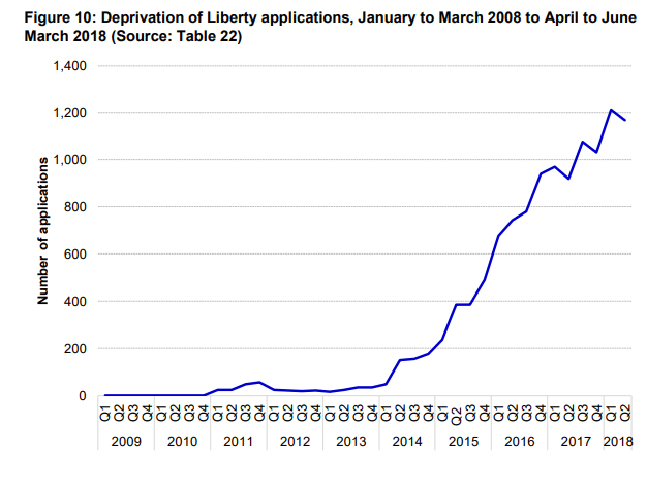
Under the Conservative government, applications for the Deprivation of Liberty of citizens have soared. (Source: Court of Protection hub.) 

In 2014, a Supreme Court judgment significantly widened the definition of deprivation of liberty, meaning more people were subsequently considered to have their liberty deprived. There was a ten-fold increase in the number of deprivation of liberty applications following the judgment. Services struggled to cope, deadlines were “routinely breached” and the Law Commission decided that the system should be replaced. 

Law Commissioner Nicolas Paines QC said the Deprivation of Liberty Safeguards were designed at a time when fewer people were considered deprived of their liberty and now it was “failing” people it was set up to protect.

“It’s not right that people with dementia and learning disabilities are being denied their freedoms unlawfully,” he said.

“There are unnecessary costs and backlogs at every turn, and all too often family members are left without the support they need.”

Over the last eighteen months, the Law Commission – a statutory independent body created by the Law Commissions Act 1965 to keep the law of England and Wales under review and to recommend reform where it is needed – has been reviewing the framework that is called Deprivation of Liberty Safeguards (DoLs) which is put in place when a person who lacks capacity is placed in a care home.

Deprivation of Liberty, which is defined in part of the Mental Capacity Act 2005, is there to ensure that there are checks and balances for the person placed in care, that decisions are made in their best interest and that an independent advocate can be appointed to speak on their behalf in these decision making processes.

The Commission made recommendations to change the law, following public consultation. The recommendations included:

  • Enhanced rights to advocacy and periodic checks on the care or treatment arrangements for those most in need.
  • Greater prominence given to issues of the person’s human rights, and of whether a deprivation of their liberty is necessary and proportionate, at the stage at which arrangements are being devised.
  • Extending protections to all care settings, such as supported living and domestic settings, therefore removing the need for costly and impractical applications to the Court of Protection.
  • Widening the scope to cover 16 and 17 year olds and planned moves between settings.
  • Cutting unnecessary duplication by taking into account previous assessments, enabling authorisations to cover more than one setting and allowing renewals for those with long-term conditions.
  • Extending who is responsible for giving authorisations from councils to the NHS if in a hospital or NHS healthcare setting.
  • A simplified version of the best interests assessment, which emphasises that, in all cases, arrangements must be necessary and proportionate before they can be authorised.

However, the Law Commission recognised that many people who need to be deprived of their liberty at home benefit from the loving support that close family can provide. These reforms, which aimed to widen protections to include care or treatment in the home, were designed to ensure that safeguards can be provided in a simple and unobtrusive manner, which minimises distress for family carers.

Importantly, the Commission also recommended a wider set of reforms which would improve decision making across the Mental Capacity Act. This is not just in relation to people deprived of liberty. All decision makers would be required to place greater weight on the person’s wishes and feelings when making decisions under the Act.

Professionals would also be expected to confirm in writing that they have complied with the requirements of the Mental Capacity Act when making important decisions – such as moving a person into a care home or providing (or withholding) serious medical treatment. 

The government responded and put forward proposals for changing the Mental Capacity Act. However, though this new legislation has been worded carefully, its effect will be to risk the removal of key human rights; it also ignores the entire concept of best interests and has put decision making power over people’s liberty and rights in the hands of organisations and their managers with a commercial interest in decisions and outcomes.  

Any statutory scheme which permits the state to deprive someone of their liberty for the purpose of providing care and treatment must be comprehensible, with robust safeguards to ensure that human rights are observed. 

In July 2018, the government published the Mental Capacity (Amendment) Bill, which if passed into law, will reform the Deprivation of Liberty Safeguards (DoLS), and replace them with a scheme known as the Liberty Protection Safeguards (although the term is not used in the Bill itself).

The Bill draws on the Law Commission’s proposals for reforming DoLS, but generally does not address some of the wider Mental Capacity Act reforms that the Law Commission suggested. Proposed reforms around supported decision making and best interests are not included, for example, and these omissions are very controversial.

In a statement accompanying the proposals the government claims that £200m per year will be saved by local authorities under the new scheme, though the increased role of the NHS and independent sector providers will lead to increased costs elsewhere.

The new responsibilities being imposed on care homes, Clinical Commissioning Groups (CCGs) and hospitals will need some thought, resources and training.

Members of the House of Lords have already warned that the Bill to reform the law on deprivation of liberty does not adequately secure the rights of people subject to restrictive care arrangements. In Parliament’s first debate on the Mental Capacity (Amendment) Bill on 16 May this year, peers questioned several elements of the legislation. 

The Liberty Protection Safeguards are designed to provide a much less bureaucratic system than DoLS for authorising health and social care arrangements that involve a deprivation of liberty to which a person cannot consent.

The proposed Bill has been widely criticised because it contains insufficient safeguards and is not fit for purpose in its current form. It requires serious reconsideration and extensive revision.
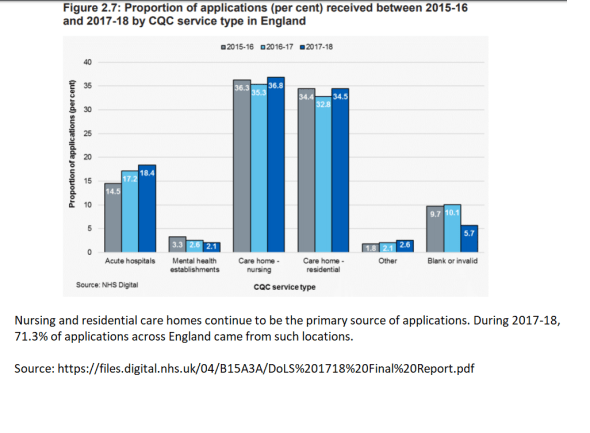
applications for DoLs

The vast majority of both home care and residential care in England is now provided by private companies. Both the quality of care in adult social care and the terms and conditions of the workforce have declined over the past two decades as a result of privatisation. 

The Department of Health’s review of Adult Social Care in 2015/16 discussed the introduction of red tape reduction options in non-statutory areas of DoLS applications, in the private sector, and concluded that these had been ‘exhausted’.

The review report (page 30) says: “As such, the Department has funded the Law Commission (as the experts in law reform) to perform a fundamental review of DoLS “with a view to minimising pressures on care providers.” 

That must not come at the expense of safeguarding adults from exploitation for private profit.

In October 2017, the Prime Minister also commissioned a review of the Mental Health Act 1983, seeking to address concerns about how the legislation is currently being used. 

The government called for an Act in step with a ‘modern mental health system’, giving special attention to rising rates of detention and the disproportionate number of people from black and minority ethnic backgrounds being detained under the Act. Terms of reference for the review are available to view online. The review was tasked to appraise existing practice and evidence, formulating recommendations to improve legislation and/or practice in the future. 

The chair of the review is Simon Wessely.  He said “The Mental Health Act goes to the core of the relationship between the individual and the state.

“It poses the question: ‘When is it legitimate to deprive someone of their liberty, even when they have done nothing wrong?’ It sets rules that require professionals to judge if a mentally ill person poses a risk to themselves or others, and hence needs to be detained in order to safely receive treatment. It tries to strike a fair bargain with the detained person, giving them safeguards like second opinions and tribunals to ensure due process.

Reviewing the Act isn’t just about changing the legislation. In some ways that might be the easy part. The bigger challenge is changing the way we deliver care so that people do not need to be detained in the first place. In my experience it is unusual for a detention to be unnecessary – by the time we get to that stage people are often very unwell, and there seems few other alternatives available.

“But that does not mean this was not preventable or avoidable. The solutions might lie with changes to the legislation, but could also come from changes in the way we organise and deliver services. It would also be naïve to deny that much wider factors, such as discrimination, poverty and prejudice, could be playing a role.”

Wessely said his final report will make recommendations that require ‘significant’ new investment in the sector. However the government is looking to save money.

Wessely has played a notorious key role in the demedicalisation of  myalgicencephalomyelitis / chronic fatigue syndrome (ME/CFS) research. Serving as an advisor to the hugely controversial PACE trial, Wessely has defended the study of these illnesses, and the proposed treatment regime of CBT and graded exercise, stating “this trial was a landmark in behavioral complex intervention studies.” Wessley’s purely psychological approach to these physiological illnesses has been widely criticised, he has been accused of “unsupported conclusions derived from faulty analyses.” 

In 1988 the public water supply in Camelford in England was accidentally contaminated with aluminium sulfate. Wessely published a paper in 1995 playing down the effects of the pollution and suggesting ‘significant psychological factors’ were involved. The government formally and unreservedly apologised in 2013, 25 years later, to those whose health was affected by the water supply contamination. 

Things Wessley has said about ME/CFS include “The worst thing to do is tell them to rest”, “exercise is good for these patients” and  “[Welfare] Benefits can often make patients worse”.  See Notes on the involvement of Wessely et al with the Insurance
Industry and how they deal with ME/CFS claims .

I’m not confident that either the stated aims or in the outcome of this ‘independent’ review. The government have already amended the Mental Capacity Act, removing Practice Direction 9, which provided safeguards for people with degenerative illnesses and brain injury in the event of the proposed withdrawal of nutrition and hydration by doctors (See British Medical Association proposals deemed passive ‘euthanasia by stealth’ for disabled people with degenerative illnesses).

See also: Independent review of the Mental Health Act: interim report

The Law Society’s condemnation of the government’s Mental Capacity (Amendment) Bill 2018

The Law Society has issued a rather damning briefing on the Mental Capacity (Amendment) Bill 2018 that moved to a Lords committee stage in early September.

The Society says that the Bill is not fit for purpose: “While agreeing that simplification is needed and acknowledging that there are resource constraints, these constraints are “insufficient justification for not implementing fully the safeguards recommended by the Law Commission.” 

The Briefing also sets out six recommendations for change, reflecting what the authors feel should be the principles underpinning the new framework and why they are concerned that the Bill does not meet those principles, as it includes:

  • an already overly complex scheme being further complicated by a replacement scheme which instead of placing the cared-for person at the centre of the process, significantly dilutes and even removes the existing protections for them
  • the risk of increased burdens on local authorities who will bear ultimate responsibility for mistakes and poor implementation rather than building on the learning from the problems with DoLS and retaining those elements that have been effective whilst removing those which are unnecessary and bureaucratic
  • the cared-for person will not be at the centre of the process but side-lined with decisions being made without proper or even basic protections
  • the removal of the invaluable role of Best Interests Assessors and Relevant Person’s Representatives would leave vulnerable people without protection from unnecessary detention.

You can read the Law Society’s full Briefing here: Parliamentary briefing: Mental Capacity (Amendment) Bill – House of Lords committee stage (PDF 196kb).

Junior health and social care minister Lord O’Shaughnessy opened the debate at the Bill’s second reading in the House of Lords by saying the Liberty Protection Safeguards (LPS) would be less burdensome than DoLS on people, carers and local authorities, saving the latter an estimated £160m a year.

He said it would do this by making consideration of restrictions on people’s liberties a part of their overall care planning and eliminating repeat assessments and authorizations. However, peers from across the House of Lords agreed that several aspects of the bill risked weakening safeguards for people deprived of their liberty.

Labour peer Lord Touhig, vice-president of the National Autistic Society (NAS), voiced concerns about the rights of autistic people under the bill’s proposals, insisting that many of the problems with the existing system had not been addressed.

He cited, as particularly problematic, the removal of the best interests assessment currently provided under DoLS, which ensures that arrangements to deprive a person of their liberty are in the individual’s best interests, necessary to protect them from harm and proportionate to the likelihood and seriousness of that harm.

Under the LPS, the equivalent requirement would be to establish that the arrangements are ‘necessary and proportionate’, one of three criteria that must be met for a LPS authorisation, the others being that the person lacks capacity to consent and is of ‘unsound mind’.

Touhig said: “The new criteria risk losing sight of what is best for the individual and what the individual wants.

“Let us be wary of enacting legislation that pays scant regard to the individual, in particular an individual who is perhaps the most vulnerable in society.”

Liberal Democrat peer Baroness Barker highlighted problems with the ability of bodies authorising LPS arrangements to rely on historic assessments of mental capacity, which may have been carried out for other purposes.

She said: “There is a danger that we might end up with decisions being made about a person’s capacity to make one decision which rests on information that was gathered for a wholly different purpose. That would not be right.”

Under the new title, ‘Liberty Protection Safeguards,’ the proposals mean that the Deprivation of Liberty Safeguard is removed from the Mental Capacity Act 2005, with a new administrative scheme for authorising arrangements when it comes to the deprivation of liberty.

In the Bill it says that the person responsible for decision making should ‘reasonably believe’, action to deprive someone of liberty is necessary to prevent ‘serious deterioration.’ One problem is that there is no guarantee in place that ensures a sharp focus on ensuring decisions are made in the best interest of  vulnerable individuals. It is also important to ensure the new legislation allows for deprivation of liberty to be a very last resort.

There is also nothing in the Bill that explores what training will be made available to  acting mental capacity professionals and where the costs of this will fall.

While the new system aims to remove the problems associated with getting authorisation when moving between a care home and hospital setting will be welcomed, whether this places new pressures on the sector will also need some consideration. It is therefore expected that the debate will consider the cost of new arrangements, with close attention being paid to the £200m a year the government project the system will save local authorities.

The government’s recent amendment is regressive and the changes, instead of looking after people’s best interests, appear to have become a cost-cutting exercise that can only lead to people’s human rights being removed.

In summary, key features of the Liberty Protection Safeguards (LPS) include:

  • Like DoLS (but contrary to the Law Commission’s suggestion) they start at 18. There is no statutory definition of a deprivation of liberty beyond that in the Cheshire West and Surrey Supreme Court judgement of March 2014 – the acid test.
  • Deprivations of liberty have to be authorised in advance by the ‘responsible body’
    • For hospitals, be they NHS or private, the responsible body will be the ‘hospital manager’.
    • For arrangements under Continuing Health Care outside a hospital, the responsible body will be the local CCG (or Health Board in Wales).
    • In all other cases – such as in care homes, supported living schemes (including for self-funders), the responsible body will be the local authority.
  • For the responsible body to authorise any deprivation of liberty, it needs to be clear that:
    • The person lacks the capacity to consent to the care arrangements
    • The person is of unsound mind
    • The arrangements are necessary and proportionate.
  • To determine this, the responsible body must consult with the person and others, to understand what the person’s wishes and feelings about the arrangements are.
  • An individual from the responsible body, but not someone directly involved in the care and support of the person subject to the care arrangements, must conclude if the arrangements meet the three criteria above (lack of capacity; unsound mind; necessity and proportionality).
  • Where it is clear, or reasonably suspected, that the person objects to the care arrangements, then a more thorough review of the case must be carried out by an Approved Mental Capacity Professional.
  • Where there is a potential deprivation of liberty in a care home, the Bill suggests the care home managers should lead on the assessments of capacity, and the judgment of necessity and proportionality, and pass their findings to the local authority as the responsible body. This aspect of the Bill has generated some negative comment, with people feeling that there is insufficient independent scrutiny of the proposed care arrangements.
  • Safeguards once a deprivation is authorised include regular reviews by the responsible body and the right to an appropriate person or an IMCA to represent a person and protect their interests.
  • As under DoLS, a deprivation can be for a maximum of one year initially. Under LPS, this can be renewed initially for one year, but subsequent to that for up to three years.
  • Again, as under DoLS, the Court of Protection will oversee any disputes or appeals.

The new Bill also broadens the scope to treat people, and deprive them of their liberty, in a medical emergency, without gaining prior authorisation.

A critical summary of changes from Law Commission proposals

Although the Bill is based on the proposals produced last year by Law Commission following a government-commissioned review of the law on deprivation of liberty in care, the government has not included several of the commission’s key proposals in the Bill.

Those in government working on the bill had “selectively picked” from the Law Commission’s proposals in place of accepting the “whole package of measures” that had been created to produce “a robust defence” for individuals.

Among Law Commission proposals that have been omitted are the application of the LPS scheme to 16- and 17-year-olds, reforming the best interests test under the Mental Capacity Act 2005 to place a greater weight on people’s wishes and feelings and reforming section 5 of the Mental Capacity Act to restrict the availability of the defence from liability for care staff acting in relation to a person whom they reasonably believe lacks capacity to consent to the actions concerned. 

Some amendments have already been tabled to the Bill by Labour shadow health minister Baroness Thornton. These would apply the reforms to people 16- and 17-year-olds and specify that the provisions must be read in a way which is compatible with Article 5 of the European Convention of Human Rights, which secures the right to liberty.

With several questions regarding the Bill and the government’s decision to stray from the Law Commission’s proposals, it is expected that there will be more challenges.

The changes include:

  • The Commission’s original reference to necessity/proportionality is no longer tied specifically to risk of harm/risk to self, but simply, now, necessity and proportionality; 
  • The Law Commission’s proposed tort of unlawful deprivation of liberty (actionable against a private care provider) has gone; 
  • The LPS ‘line’ of excluding the LPS from the mental health arrangements has been changed, and the current status quo (i.e. objection) as regards the dividing line between the MCA/MHA in DOLS is maintained.

Lord O’Shaughnessy appeared to address this fact in his final comments during the second reading, saying the government would “reflect on” whether changes could be made.

“It has been clear from this debate that there is still much work to be done to provide the right kind of reforms that we all want to see,” O’Shaughnessy said.

Some amendments have already been tabled to the bill by Labour shadow health minister Baroness Thornton. These would apply the reforms to people 16- and 17-year-olds and specify that the provisions must be read in a way which is compatible with Article 5 of the European Convention of Human Rights, which secures the right to liberty.

The first day of the Lords Committee stage of the Mental Capacity (Amendment) Bill took place on 5 September. The Hansard transcript can be found here and here.

‘A backward step’

Sarah Lambert, head of policy and public affairs at the National Autistic Society (NAS), reiterated the arguments of those inside the House of Lords, saying: “NAS has substantial concerns that the bill, as drafted, does not put autistic or other individuals, who lack capacity, at the centre of decisions about their care.”

“Firstly, the bill moves away from the current position, where decisions should be made in someone’s ‘best interests’ and so risks losing sight of what is best for the individual, or what that individual wants.”

“Even though someone may lack capacity to make a decision about their living arrangements, their preferences or wishes should be a central factor in any decision about their lives. This makes it a backward step in protecting the rights people who lack capacity to consent to their care.”

“We will be working with members of the House of Lords and MPs as the bill passes through Parliament to make sure substantial amendments are made to secure the rights of autistic people and others.”

The Bill is so contentious as it does, in places, significantly depart from the recommendations of the Law Commission. Furthermore, the Joint Committee on Human Rights (JCHR) provided a report on the Law Commission’s proposals in July, and this report raised other issues that will need to be considered by Parliament.

One issue highlighted is the importance of establishing a clear definition of “deprivation of liberty” so that Article 5 (of the Human Rights Act) safeguards are applied to those who truly need them. The JCHR recognised that deprivation of liberty is an evolving Convention concept rooted in Article 5; the arising difficulty is how this is interpreted and applied in the context of mental incapacity. 

The report says: “Parliament should provide a statutory definition of what constitutes a deprivation of liberty in the case of those who lack mental capacity in order to clarify the application of the Supreme Court’s acid test and to bring clarity for families and frontline professionals. Without such clarity there is a risk that the Law Commission’s proposals will become unworkable in the domestic sphere.”

Another problem raised is that at present, the Legal Aid Agency can refuse non-means tested certificates for challenges to DoLS where there is no existing authorisation. The current system has produced arbitrary limitations on the right of access to a court. Legal aid must be available for all eligible persons challenging their deprivation of liberty, regardless of whether an authorisation is in place, particularly given the vast number of people unlawfully deprived due to systemic delays and failures, according to the JCHR.

There is also concern raised over the term “of unsound mind”, little understood and arguably more stigmatising. The JCHR has recommended that “further thought be given to replacing ‘unsound mind’ with a medically and legally appropriate term.”

The report concludes: “DoLS apply to those with a mental disorder. LPS will apply to persons of ‘unsound mind’ to reflect the wording of Article 5. We recommend that further thought be given to replacing “unsound mind” with a medically and legally appropriate term and that a clear definition is set out in the Code of Practice.

“The interface between the Mental Capacity Act (MCA) and the Mental Health Act (MHA) causes particular difficulties. Deciding which regime should apply is complex, and causes the courts and practitioners difficulties. The Law Commission proposes to maintain the two legal regimes: the MHA would apply to arrangements for mental disordersthe LPS would apply to arrangements for physical disorders. Inevitably, problems will continue to arise at the interface between these two regimes. We are particularly concerned by two issues.

“Firstly, this proposal requires assessors to determine the primary purpose of the assessment or treatment of a mental or physical disorder–this is difficult where persons have multiple disorders. Secondly, we are concerned that there would be essentially different laws and different rights for people lacking capacity depending upon whether their disorder is mental or physical. We consider that the rights of persons lacking capacity should be the same irrespective of whether they have mental or physical disorders.”

The Law Commission’s Recommendations made an attempt to include protection for a person’s Article 8 rights (of the European Convention on Human Rights: right to a family and private life) within the proposed amendments to the Mental Capacity Act by specifying a list of applicable decisions that require a written record of decision making (including any decision regarding covert medication and contact restrictions).

The Bill makes no reference to this however (despite the government accepting this part of the proposal in their response), focusing only on Article 5 rights. This is likely to be of great concern to many campaigners and stakeholders and therefore may become a pertinent issue in Parliament. In the meantime, the current law on Article 8 authorisations and covert medication remains in place.

The current DOLS framework requires a best interest assessor to determine whether a deprivation of liberty is in a person’s best interests. The Amendment Bill, however, requires no consideration of best interests, only requiring that the arrangements are ‘necessary and proportionate.’

Although this is partly is line with the Law Commission’s proposals that the LPS should remove the focus on best interests to move away from substituted decision making (in line with the Convention on the Rights of Persons with Disabilities), the Bill contains no explanation of what is meant by ‘necessary and proportionate’ or how these should be assessed. It is expected that concern will be raised in Parliament regarding the removal of best interests from the LPS and the lack of guidance surrounding necessity and proportionality.

The Bill will affect the fundamental human rights of hundreds of thousands of people with conditions such as dementia, learning disability and brain injury.

Commenting on the Bill Sue Bott CBE, Deputy CEO Disability Rights UK said:

I am concerned with the contents of this Bill which takes the rights of disabled people backwards. 

“There is nothing more serious for an individual than a decision to deprive them of their liberty yet, as it stands, this Bill will make challenging such decisions difficult and costly with little independent oversight and no commitment to taking the views of the individual into account. 

“I hope members of the House of Lords will, through amendments, be able to radically improve the Bill.”

Among the concerns highlighted by Disability Rights UK are:

  • The very least people, who are detained, need is information about why that decision has been made and what their rights are – there is no provision for this in the Bill
  • The Bill makes access to justice worse than the current system in not providing for non-means tested legal aid
  • There is no provision for the ‘cared for’ person to participate in court proceedings regarding their own liberty
  • Contains offensive and out-of-date language such as ‘unsoundness of mind’
  • Too much power is being given to care home managers to decide about people being deprived of their liberty
  • The Bill moves UK law even further away from the UN Convention on the Rights of People with Disabilities by not providing for supported decision making and for the wishes and feeling of the person to be taken into account.
  • The Bill in its current form is not supported by professionals in this area. 

The right to life and state compliance with Article 2 (ECHR)

The past five years have been challenging in terms of health outcomes in the UK, they add. For example, spending on health and social care year on year has increased at a much slower rate than in previous years, while outcomes in a large number of indicators have deteriorated, including a very rapid recent increase in the numbers of deaths among mental health patients in care in England and Wales. The government has a duty and a role to provide specific care for people experiencing mental health conditions at a time of vulnerability. That role must comply with Article 2, which:

  1. Imposes an obligation on the State to protect the right to life.
  2. Prohibits the State from intentionally killing.
  3. Requires an effective and proper investigation into all deaths caused by the State.
  4. Requires the State to take appropriate steps to prevent accidental deaths by having a legal and administrative framework in place to provide effective deterrence against threats to the right to life. 

The Policing and Crime Act 2017 came into effect to amend the Coroners and Justice Act 2009 and relieved coroners of the duty to hold an inquest into every death where the deceased was subject to a Deprivation of Liberty Safeguards authorisation or was deprived of their liberty through provisions in the Mental Capacity Act 2005. Coroners’ inquests into unnatural deaths involving health and social care organisations are on the increase. 

Where a DOL is in force, the State has effectively curtailed the liberty of the patient; as such when the patient dies then the death is equivalent to a detention in custody. Article 14 of the Convention prohibits discrimination in the enjoyment of the Convention rights. This means that the State must ensure that the right to life of people with mental health conditions is given equal protection to that of other people.  

There have been a number of  other legal developments that change the way decisions about life-prolonging treatments are made, in addition to the recent court judgments and the government’s radical withdrawal of the Court of Protection’s Practice Direction 9E which addresses protections concerning serious medical treatment.

The direction was effectively abolished by the Ministry of Justice  and the changes came into effect last December. The Court of Protection in English law is a superior court of record created under the Mental Capacity Act 2005. It has jurisdiction over the property, financial affairs and personal welfare of people who lack mental capacity to make decisions for themselves. 

One consequence of this is the British Medical Association’s recent proposals in response to legal test cases in which judges ruled that qualified NHS staff and officials no longer required a court’s permission to withdraw artificial nutrition and hydration from those patients who are incapacitated and unable to communicate or feed themselves.

The Supreme Court justices’ decision in July supported the right of doctors to withdraw life-sustaining nutrition on their own authority, provided they had the explicit permission of the patient’s family or, where no family existed, medical proxy. If there is a disagreement and the decision is finely balanced, an application should still be made to the Court Of Protection. 

Changes to protections were introduced via secondary legislation – a negative resolution statutory instrument – there was very little parliamentary scrutiny. Furthermore, as the instrument is subject to negative resolution procedure no statement regarding implications in relation to the European Convention on Human Rights was required from government ministers, nor was public consultation deemed necessary. An Impact Assessment has not been prepared for this instrument. 

The fact that the UK government had already made amendments to safeguarding laws to accommodate these proposals, which took effect last December, and now plan to make it easier to remove people’s liberty under the Mental Health Act without public consultation, has caused deep unease. In the latest proposed changes to the Mental Health Act, the government seems to think it is appropriate to consider restrictions of people’s liberties as part of their overall ‘care package,’ and approach which is not compatible with human rights.

Changing legislation isn’t going to improve the lives of people with mental illness.  Improving mental health services depends on funding, the right number of well-trained staff and the right resources to meet the needs of patients, their families and carers.

More information on concerns about the Bill can be found here

You can read the most recent debate about the Mental Capacity Amendment Bill in the House of Lords on 05 September 2018 here.

Image result for deprivation of freedom


I don’t make any money from my work. If you want to, you can help by making a donation to help me continue to research and write informative, insightful and independent articles, and to provide support to others.


DonatenowButton

Disability campaigners & organisations meet with Labour ministers to discuss devastating impacts of government’s draconian disability policies

this ESA round


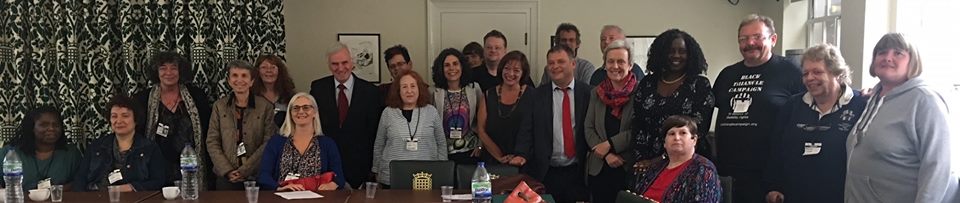
The group meeting at Portcullis House, Westminster. 

On Wednesday, many of the disabled campaigners, researchers and organisations that have played a key role in exposing the discrimination and harm caused by the government’s social security reforms travelled to Westminster to attend a meeting with five Labour shadow ministers. The meeting was chaired by Shadow Chancellor John McDonnell.

The original idea for a meeting of politicians, activists and researchers had come from Black Triangle’s John McArdle, who had put the idea to John McDonnell.

The meeting was conducted under the Chatham House rule, so although the contributions made during the meeting may be reported, the names of those who spoke and their organisations cannot, unless they spoke afterwards, specifically adding comment on record. I was permitted to report the names of the five shadow ministers who attended.

Other ministers participating were Margaret Greenwood (Shadow Secretary of State for Work and Pensions), Marsha de Cordova (Shadow Minister for Disabled People); Mike Amesbury, (Shadow Employment Minister) and Lyn Brown, (Shadow Treasury Minister, with responsibility for social mobility).

This initial meeting is to be the launch of a series of campaigning efforts and consultation between the Labour party, disabled activists, researchers and allied organisations. Labour is also hoping to secure support from members of other political parties in the longer term.

A second meeting is set to take place later this autumn.

The discussion was particularly focused on the harm, psychological distress and deaths caused by the controversial work capability assessment (WCA), but concerns were also expressed around the table about the damage caused to disabled people by the government’s roll out of universal credit. Some of us had also submitted work in advance of the meeting and contributed to shaping the agenda.

Other crucial concerns were raised about the ongoing problems with personal independence payment (PIP), the harm caused by the welfare conditionality regime and sanctions, and the cuts to social care support. There was also discussion about the cumulative impact of the government’s reforms on disabled women. 

There was discussion about the importance of putting the government’s reforms into an ideological and historical perspective, which highlighted how successive governments have been strongly influenced by the US insurance industry, which had led to disabled people seeking support  “to be treated as bogus claimants”.

Added to this are criticisms of how the biopsychosocial model of disability, notions of ‘the sick role’ and ‘behavioural medicine’ have provided an underpinning ideology and veneer of political credibility to justify the steady and incremental dismantling of lifeline welfare support for disabled people.

One key commentator on this subject added “The WCA was brought in to destroy public confidence in the welfare state.”

Linked with this was concern raised at the continuing roll-out of the Improving Access to Psychological Therapies (IAPT) programme, which has led to mental health professionals to “come out with the sort of language we are hearing from the Department for Work and Pensions”. 

One contributor told the meeting: “You can’t divorce what’s happening in DWP with what’s happening in psychiatry.” 

She also added that the approach by IAPT practitioners, who largely draw on the Cognitive Behaviour Therapy (CBT) model, is tantamount to political gaslighting, since it blames the victims of circumstances that caused at a structural level, and are therefore beyond an individual’s control. The government’s ideological claim that ‘work is a health outcome’ has also been embedded in IAPT practices and aims, despite there being very little evidence that employment is generally beneficial to people with mental health problems. Evidence has emerged that some kinds of employment are in fact further damaging to mental health.

There was also a call for nurses and GPs to be held to account for the way they had compromised their own medical ethics in dealing with requests for evidence to support disability benefit claims and in acting  in the role of assessor for private contractors.

There was a little dispute regarding precisely where the focus should lie concerning the work capability assessment, with some people feeling quite strongly that our aim should be simply to see it abolished. The Labour party are committed to scrapping the highly controversial assessment process, but it was recognised that it’s highly unlikely the current government will do the same. One activist told the meeting that there was a need both for “harm reduction”, to address the immediate problems with the assessment process, and “system change” to secure the eventual abolition of the WCA altogether.

He pointed out: “Saying ‘change the WCA right now’ is not saying ‘keep the WCA’, it is saying ‘stop it killing so many people’.”

Several contributors said that the government had made a deliberate attempt to create a “hostile environment for disabled people”. 

The meeting was broadly welcomed by disabled activists. Shadow chancellor, John McDonnell, added afterwards that he believed the meeting could herald the start of “a significant movement to expose the brutality of the system” and secure “permanent change”.

There were representatives present from many of the disabled-led grassroots organisations who have campaigned for many years against the Conservative’s punitive reforms and the disproportionate targeting of the disabled community with austerity measures. There were also researchers, union representatives and journalists gathered together to add to the discussion and to contribute in planning a response to the government’s persistent denials that there is a correlation between their policies and serious harm. 

McDonnell told journalists after the meeting: “I think this is a breakthrough meeting in terms of getting many of the relevant organisations and individuals together who have their concerns about what is happening to disabled people and their treatment in the welfare system.

I think it is the start of what could be a significant movement to expose the brutality of the system, but more importantly to secure permanent change.”

Marsha de Cordova, the shadow minister for disabled people, said that it was the first time that the various groups had been brought around the same table to talk about different issues – including crucial concerns about the imminent “migration” from benefits such as employment and support allowance onto universal credit – that all fed into the idea that the government had created a “hostile environment towards disabled people”.

She said: “It is good that we are talking about it. It’s great that we are bringing people around the table, and mainly disabled people.”

The meeting has consolidated new momentum and hopefully, a unity to our diverse and ongoing campaigns against the mounting injustices surrounding the welfare reforms, austerity, the fatally flawed Work Capability Assessment, welfare conditionality and sanctions, the targeted cuts embedded in Personal Independent Payment and universal credit. 

We will be challenging the government’s persistent denial of a ‘causal link’ between their draconian welfare policies and the distress, systematic human rights violations, serious harm and deaths of disabled people that have arisen in correlation with those policies. Unless the government permit an independent inquiry into the terrible injustices that have followed in the wake of the welfare reform acts, they cannot provide evidence to support their own claims.

Related

John McDonnell attacks Tory disability cuts and vows to address suicides linked to welfare reforms

Labour’s Disability Equality Roadshow comes to Newcastle

Nothing about you without you – the Labour party manifesto for disabled people


I don’t make any money from my work. I am disabled because of an illness called lupus. If you want to, you can help by making a donation to help me continue to research and write informative, insightful and independent articles, and to provide support to others.
I’m currently working on a very old, borrowed, temperamental and slow laptop as mine has broken. I am trying to raise money to buy a reconditioned one so I can keep working. The smallest amount is much appreciated – thank you.

DonatenowButton

John McDonnell attacks Tory disability cuts and vows to address suicides linked to welfare reforms

Comradely? Labour leadership says nothing untoward about local parties expressing concern about sitting MPs

On Wednesday I am travelling down to Westminster. I have been invited to attend a meeting chaired by Labour’s shadow chancellor, John McDonnell. Welfare experts, researchers and campaigners are to contribute to a new drive to expose the mental health impacts and other harms linked with the government’s controversial reforms, such as the Work Capability (WCA) and Personal Independence Payment (PIP) assessments.

We will also explore and identify the wider impacts of the government’s Employment and Support Allowance (ESA) policies on the economy and society. 

The Labour party is committed to scrapping the fundamnetally flawed assessments, and have placed equalities at the centre of Labour party economic research through cross-departmental and multi-disciplinary collaboration. A Labour government will also undertake a specific stock-take of welfare policy and benefit sanctions to address the rising number of suicides, which have soared in recent years. The Labour party have said that they will place equalities at the centre of Labour’s economic research through cross-departmental and multi-disciplinary collaboration.

Speaking to the Huffington Post, the shadow chancellor says that he became furious during a Parliamentary debate when he demanded a comprehensive assessment of the cumulative impact of welfare reforms on disabled people and the government refused. He praised the website Calum’s List, which details the cases of at least 60 deaths linked to welfare cuts.

He added: We said to the Government we know now from Calum’s List, listing people from reports in the press and elsewhere of people committing suicide as a result of Government cuts.

We knew the Government were monitoring some coroners’ reports and we wanted them published, [then DWP minister Esther] McVey wouldn’t and I got really angry.”

“Next week, what we are doing is getting a group of campaigning organisations and a group of experts together to talk about the way in which Work Capability Assessments are still having an impact, to try to get to the bottom in terms of mental health and suicide.”

McDonnell added that Labour’s first Queen’s Speech include legislation “making sure we have a welfare and benefit system that lifts people out of poverty”.

He said that his Hayes and Harlington constituency casework now operates an open-door system four days a week due to demand from people hit by government cuts. 

He added: “Helen who runs my office said the casework now is on a scale and a depth of suffering that we’ve never seen before. And this in a constituency with the [Heathrow] airport, high levels of employment but wages not matching the housing costs and the pressure on people working all hours just to keep a roof over their heads.

“If anything goes wrong they fall out of the system. Last month we were dealing with two families living in cars. We also have the ‘beds in sheds’ phenomenon, families living in a shed or garage rented out to them, it’s staggering really.

“Before this last eight years, those sort of horrendous situations would be infrequent but you wouldn’t have someone so heavily sanctioned. The sanctions often impact on people with mental health conditions hardest.”

The Labour party’s track record of inclusion and democratic consultation with disabled citizens and their communities contrasts starkly with the Conservative’s exclusionary ‘we know better than you’ approach to disability policies. The government have imposed cuts on disabled people, acting upon them as if they are objects of policy rather than being citizens within a democracy.  

Government policies are expressed political intentions regarding how our society is organised and governed. They have calculated social and economic aims and consequences. In democratic societies, citizens’ accounts of the impacts of policies ought to matter.

However, in the UK, the way that welfare policies are justified is being increasingly detached from their aims and consequences, partly because democratic processes and basic human rights are being disassembled or side-stepped, and partly because the government employs the widespread use of linguistic strategies and techniques of persuasion to intentionally divert us from their aims and the consequences of their ideologically (rather than rationally) driven policies. Furthermore, policies have more generally become increasingly detached from public interests and needs.

McDonnell was involved in the setting up of Disabled People Against the Cuts (DPAC). Furthermore, after a nationwide round of consultations with disabled people about policies which enshrine the Equality and Human Rights acts, led by Debbie Abrahams, the Labour party wrote a manifesto, outlining policies for disabled people, called Nothing about you without you .

DSCN3314.JPG

Alex Cunningham, me, Debbie Abrahams and Gail Ward after the Disability Equality Roadshow in December, 2016.

The government have persistently refused to acknowledge that there is a ‘causal link’ between their punitive welfare policy programme – which has seen vulnerable citizens, including many disabled people, lose their lifeline support – and has been correlated with the rise in distress, suicides, harm and premature mortality among ill and disabled people in particular.

The correlation has consistently been recognised by disabled citizens, and evidenced by researchers, charities and disabled peoples’ organisations over the last few years. Although correlation is not the same thing as ‘causation’, it quite often implies a causal relationship. The problem is that the government have simply refused to investigate the established association further, choosing to simply deny the established link exists instead. That is completely unacceptable. 

Without further investigation of the many concerns raised, the government have no evidence whatsoever to verify their own claims of there being ‘no causal link’ precisely because they consistently refuse to conduct an inquiry regarding the established correlation between policies and harm, or to undertake a cumulative impact assessment of those policies. 

The UN Convention on the Rights of Disabled Persons (CRPD) says (in article four) that governments must, in implementing the convention, “closely consult with and actively involve persons with disabilities… through their representative organizations”. It also says (article 33) that “civil society, in particular persons with disabilities and their representative organizations, shall be involved and participate fully” in monitoring the implementation of the convention in each country. In July, Sarah Newton, the minister for disabled people, refused to meet a coalition of disabled people’s organisations, in an apparent breach of the UN disability convention.

At the very least, Newton shows no inclination whatsoever to listen to the accounts of the lived experiences of disabled people, nor does she value a democratic dialogue with us. That is profoundly worrying.

In July, the Shadow Disabilities Minister, Marsha De Cordova, also once again raised in parliament the fact that the United Nations (UN) had found “grave and systematic violations of disabled people’s rights” in the UK.

The Labour MP added: “This government’s policies have created a hostile environment causing grave violations on disabled people.”

Newton responded by claiming “it’s ‘not true’ that disabled people face a hostile environment.” She also asked the opposition not to say “things” that they “know are not true”. 

The United Nations (UN) and the Equalities and Human Rights Commission have already verified the truth of the statements, presented many times by Labour shadow ministers, disability charities and disabled people to an indifferent government. 

However, the Conservatives have a track record of denying empirical findings that don’t match their predetermined and ideological expectations. They simply deny and dismiss any criticism of their  discriminatory policies. Damian Green, the Work and Pensions Secretary at the time of the UN inquiry report, famously claimed that cuts to support for disabled people did “not necessarily mean worse outcomes.” That is a bit of a climb down to previous claims from the government that cuts to lifeline support for disabled people ‘help’ them into work by removing the ‘perverse incentives’ of provision. 

In July, in a rather frightening and repressive, authoritarian outburst, Newton went on to claim that the opposition’s comments were “dangerous” and “deter” people who need support from claiming it. However, it is government policies that are dangerous, and that have created a series of ordeals and barriers in the assessment process, designed to weight the assessments towards permitting the Department for Work and Pensions (DWP) to refuse people support.

Much of Newton’s response to legitimate criticism entails rationalisation techniques that are designed to undermine the credibility of the accounts of others and especially that of the narrator by editing the narrative, and presenting an alternative order of events. More broadly, the right wing media took up this role on behalf of the government, in scapegoating and stigmatising disabled people and others who need social security support, in advance of the welfare reform act. By portraying disabled people as ‘fakes’, ‘scroungers’ and as an ‘economic burden’, this rhetoric was designed to create folk devils, and to justify punitive cuts to ‘undeserving’ disabled people. 

Image result for negative media portrayals of disabled people

Image result for negative media portrayals of disabled people

Many of us have been through the ordeals that claiming ESA entails and then faced further ordeals confronting mandatory reconsideration and appeal.Many of us have been deterred from claiming PIP. That was my own experience too. Despite needing PIP from 2011, I couldn’t face claiming PIP until I really had to. I put it off for seven years because my experience of the ESA assessments was so horrible and distressing, it made me seriously ill, because the stress exacerbated my symptoms. (I have lupus).  My local authority supported me with the claim when they provided aids and adaptations to help my mobility in my home.

Conservative ministers conveniently overlook the fact that many disabled people have worked and contributed to the UK’s  social security provision via tax and through the national insurance system. I worked for many years until I became too ill to do so in 2010. 

Newton went on to say: “We have very strong protections for people with disabilities in our country.”

Newton even had the cheek to cite Labour’s Equality Act as a ‘protection’ for disabled people, as if it was the Conservatives who designed this policy. This is same Act that the government has violated over and over because of their welfare ‘reforms’ and austerity programme. This protection was brought about by the last Labour government, which also included the Human Rights Act, and signing the UK up to the Convention on the Rights of Persons with Disabilities (UNCRPD) – an international human rights treaty intended to protect the rights and dignity of persons with disabilities.

The UK’s established human rights and equality frameworks have been methodically ignored by this government, who decided to target disabled people with a significantly disproportionate burden of their ideological austerity programme. The UN found that the Conservatives’ treatment of disabled people gravely and systematically violates our human rights. The evidence gathered by the UN came from disabled people’s accounts (including mine) and those of disability organisations, academic researchers and charities.

This is a government that has systematically marginalised disabled people economically  socially and politically, sidestepping human rights and equality legal frameworks. Apparently the government doesn’t regard democratic accountability to disabled people as particularly important. Instead, ministers simply lie and deny other people’s experiences and accounts. 

Newton also shamefully suggested people losing their motability cars, scooters and wheelchairs should complain to the Motability charity – not the government. It’s not the charity that are creating a hostile environment for disabled people, carrying out assessments that are absolutely unfit for purpose. It is not the charity’s fault that assessments are inaccurate and designed to ensure as few people as possible are given a full PIP award.

This is a repressive, opaque, unaccountable and profoundly undemocratic government that simply refuse to accept any responsibility for the consequences of their own actions.

If the government genuinely believed that there is no causal link whatsoever between their cuts, extremely punitive policies and the distress, harm, increased suicide rate and deaths of disabled people, surely the way to provide evidence of their claim is to permit an independent investigation, and to undertake a thorough cumulative assessment of their policies.

Instead, it seems blunt denials and techniques of neutralisation are the government’s prefered response to legitimate criticism and serious concerns regarding the welfare and wellbeing of disabled people in the UK. 

Techniques of neutralisation: 

These are strategies often used to switch off the conscience when someone plans or has done something to cause harm to others. They most often entail rationalisations of denial.

The idea of techniques of neutralisation was first proposed by criminologists David Matza and Gresham Sykes during their work on Edwin Sutherland’s Differential Association in the 1950s. Matza and Sykes were working on juvenile delinquency, they theorised that the same techniques could be found throughout society and published their ideas in Delinquency and Drift, 1964.

They identified the following psychological techniques by which, they believed, delinquents justified ‘illegitimate’ or morally unacceptable actions, and Alexander Alverez further identified these methods used at a socio-political and psychological level in Nazi Germany to attempt to “justify” the Holocaust:

1. Denial of responsibility. The offender(s) will propose that they were victims of circumstance or were forced into situations beyond their control.

2. Denial of harm and injury. The offender insists that their actions did not cause any harm or damage.

3. Denial of the victim. The offender believes that the victim deserved whatever action the offender committed. Or they may claim that there isn’t a victim.

4. Condemnation of the condemners. The offenders maintain that those who condemn their offence are doing so purely out of spite, ‘scaremongering’ or they are shifting the blame from themselves unfairly. 

5. Appeal to higher loyalties. The offender suggests that his or her offence was for the ‘greater good’, with long-term consequences that would justify their actions, such as protection of a social group/nation, or benefits to the economy/ social group/nation.

6. Disengagement and Denial of Humanity is a category that Alverez added to the techniques formulated by Sykes and Matza because of its special relevance to the Holocaust. Nazi propaganda portrayed Jews and other non-Aryans as subhuman. A process of social division, scapegoating and dehumanisation was explicitly orchestrated by the government.

This also very clearly parallels Gordon Allport’s work on explaining how prejudice arises, how it escalates, often advancing by almost inscrutable degrees, pushing at normative and moral boundaries until the unthinkable becomes tenable. This stage on the scale of social prejudice may ultimately result in genocide.

Any one of these six techniques may serve to encourage violence by neutralising the norms against prejudice and aggression to the extent that when they are all implemented together, as they apparently were under the Nazi regime, a society can seemingly forget its normative rules, moral values and laws in order to engage in wholesale prejudice, discrimination, exclusion of citizens, hatred and ultimately, in genocide. 

I’m not comparing what is happening to disabled people in the UK with the Holocaust, though it is worth noting that disabled people were among the first group that were murdered by the Nazis. What I am saying is the techniques used to exclude, and to normalise the political oppression of a group, are the same. They are also used as a form of ‘norm default setting’ to desenisitise the public to the circumstances and experiences of groups being politically targeted with discriminatory and oppressive treatment. 

In accusing citizens and the opposition of ‘scaremongering’, the Conservatives are denying responsibility for the consequences of their policies, denying harm, denying  distress; denying the victims and condemning the condemners.

A spokesperson for the Department for Work and Pensions said: “Suicide is a complex issue and our sympathies are always with those left behind, but it’s misleading to link it to welfare reforms.

“We continually review and make improvements where needed, for example strengthening the Work Capability Assessment service by stopping reassessments for those with the most severe and lifelong conditions, and introducing video recording in PiP assessments.

 “We are committed to ensuring people get the support they need, and to improving lives. Decisions for PiP and ESA are made following consideration of all the evidence, including from someone’s doctor or medical specialist. Meanwhile sanctions are only applied in a small minority of cases when someone fails to meet their agreed requirements.”

Earlier this week the government stressed that it was committed to ensuring that disabled people get the support they need. 

We don’t agree.

For many of us, the government’s approach to social security has become random, controlling and an unremitting Orwellian trial. 


I don’t make any money from my work. But you can make a donation if you wish and help me continue to research and write informative, insightful and independent articles, and to provide support to others. The smallest amount is much appreciated – thank you.

DonatenowButton

This Government Is No World Leader On Disability – Its Record Is Shameful

This article was written by Marsha de Cordova, who is the Labour MP for Battersea, on 24 July. It was originally published in the HuffPost.

At today’s Global Disability Summit, the government will present itself as a leader on disability rights – disabled people know that it is anything but.

Today the government will host the Global Disability Summit in London but the Tories are no world leaders on disability rights – their record is abysmal.

The government’s hypocrisy is no more clearly demonstrated than in the fact that the Secretary of State hosting the summit – which is aimed at guaranteeing “the rights, freedoms, dignity and inclusion” of disabled people – is Penny Mordaunt, who was herself minister for disabled people when a UN report found that the government had violated disabled people’s rights. 

The UN published this report two years ago, after the UN Committee on the Rights of Persons with Disabilities had taken the unprecedented step of investigating one of its signatories – the UK government – for breaching its obligations under the UN Convention on the Rights of Persons with Disabilities.

The committee’s findings were unambiguous: The government had caused “grave and systematic” violations of disabled people’s rights. The committee chair described austerity as having led to a “human catastrophe” for disabled people.

These judgements were hardly news to the millions of disabled people who had been struggling under government policies.

The hypocrisy of the government is staggering. The Minister for Disabled People recently had the audacity to claim that she was “utterly committed” to the UN Convention on the Rights of Persons with Disabilities”, yet the government is still yet to even provide a detailed response to the UN Committee’s more than 80 recommendations, and it rejected the UN’s damning judgement out of hand.

This hypocrisy is starkly evident in the summit’s “Charter for Change”, which takes as its cornerstone the UN Convention on the Rights of Persons with Disabilities. Since the Secretary of State overseeing the summit was a former Minister for Disabled People in a government that was condemned by the UN for breaking that convention, how can she talk with a straight face to world leaders and disabled people’s organisations about this?

The charter includes 10 commitments for participants to agree to, 8 of which the government has itself clearly violated (and one of which is empty posturing).

For example, it calls on countries to commit to “gather and use better data and evidence to understand and address the scale, and nature, of challenges faced by persons with disabilities”.

Yet one of the major recommendations from the committee is for the government to carry out a cumulative impact assessment of its tax and social security changes since 2010, something the government has stubbornly refused to do.

We know this can be done – the Equality and Human Rights Commission has done it, finding that those changes had a particularly damaging impact on disabled people.

Another call of the charter is for countries to “eliminate stigma and discrimination through legislation”. This will sound like a bad joke to the estimated 220,000 disabled people wrongly denied social security support due to what the High Court called “blatantly discriminatory” changes to Personal Independence Payments.

The charter concludes with a commitment to “hold ourselves and others to account for the promises we have made here today.” For this commitment to be made by Mordaunt’s department – under whose watch the government excused itself from promises it was committed to as part of the UN Convention – beggars belief. 

This government treats disabled people with disdain and contempt. From the Bedroom Tax to swingeing cuts to Personal Independence Payments, government cuts have been felt most acutely by those already struggling.

The Department for Work and Pensions charge sheet of failures is long, including an “error” that led to more than 70,000 ill and disabled people being underpaid thousands in Employment and Support Allowance, with what a public accounts committee recently described as a “culture of indifference” leading to it taking six years for this error to begin to be corrected.

The government’s Work Capability Assessments, carried out by profit-driven private companies, have been linked to a dramatic increase in the number of disabled people attempting suicide.

At the Global Disability Summit, the government will try to present itself as a world leader on disability rights. But disabled people know that it is anything but.

Let us remind them of the verdict of the United Nations: “Grave and systematic” rights violations, a “human catastrophe” for disabled people.

On behalf of all those disabled people whose voices have been ignored, we cannot and will not let the government escape the truth. Their record on disability rights shames this country.

Related

A few thoughts on the implications of the United Nations report


I write voluntarily, and do the best I can to raise awareness of political and social issues. In particular I research and write about how policy impacts on citizen wellbeing and human rights. I also co-run a group on Facebook to support other disabled people going through ESA and PIP assessments, mandatory reviews and appeals.

I don’t make any money from my work. I am disabled and don’t have any paid employment. But you can contribute by making a donation and help me continue to research and write informative, insightful and independent articles, and to provide support to others. The smallest amount is much appreciated – thank you.

DonatenowButton

The government’s eugenic turn violates human rights, costing families at least £2,800 each so far, according to DWP statistics

See the world through the eyes of society’s weakest members, and then tell anyone honestly that our societies are good, civilised, advanced, free.” Zygmunt Bauman.

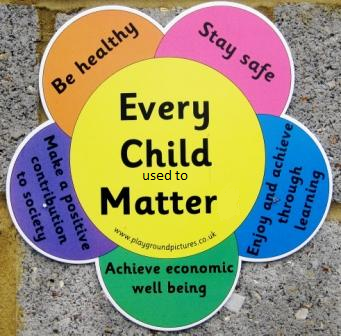
every child used to matter

Every Child Matters was Labour’s comprehensive and effective child welfare and protection policy that the Conservatives scrapped the day after they took office in 2010. The phrase “Every Child Matters” was immediately replaced with the phrase “helping children achieve more”. This reflects a fundmental change of emphasis from a rights-based society, for which both government and citizen share responsibility, to one where the individual is held solely responsible for their circumstances, regardless of structural conditions and the impact of political policies. 

What was a “Children’s Plan” under the last Labour government is now a “free market education plan”, marking the Conservatives shift from free schools to “for profit” schools. 

The price of having more children than the state deems acceptable

Department for Work and Pensions (DWP) statistics released today show that more than 70,000 low-income families lost at least £2,800 each last year after having their entitlement to benefits taken away as a result of the government’s “two-child policy”.

The joint analysis conducted by the DWP and HMRC shows that from 6 April 2017, just under 865,000 households with a third or subsequent child were claiming child tax credits or Universal Credit. Of these, DWP and HMRC claim that 70,620 reported a third or subsequent child after 6 April 2017, and that consequently they weren’t receiving  benefit support for at least one child. Around 38% of those families affected were lone parents – 26,800 of them in totalcourt ruling in June 2017 deemed the policy as discriminatory towards lone parents with children under two. 

The two-child policy means that households claiming child tax credit or universal credit, who have a third or subsequent child born after 6 April 2017, are unable to claim a child element worth £2,780 a year for those children. Iain Duncan Smith has said that the draconian policy has been designed to “incentivise behavioural change”, reflecting the government’s keen embrace of wonk behavioural economics in order to prop up a failing neoliberal administration.

Presumably Duncan Smith doesn’t think that people on low incomes who need social security support should have children. However, 59% of those families affected by the cruel an uncivilised imposed cut in their low income are in work. Financially punishing them for having a child isn’t going to change the profiteering behaviours of the draconian government, exploitative employers or the precarious conditions of the labour market. These are events and circumstances beyond the control of families and their children. 

Many people have children when they are relatively affluent, and may then fall on hard times through no fault of their own. It’s hardly “fair” to punish people for the structural conditions that are largely shaped through government policies based on neoliberal economics. However, Duncan Smith claimed, nonetheless, that the policy would force claimants to make the “same life choices as families not on benefits, and ‘incentivise’ them [imported US managementspeak, which means ‘to motivate’] to seek work or increase their hours.”

The Conservatives have seemingly overlooked the fact that when people struggle to meet their basic needs, they are rather less likely to be able to improve their socio-economic situation, since necessity rather than choice becomes their key motivation. Punishing people who have little income by taking away even more cannot possibly help them to improve their situation. It can only serve to inflict further suffering and distress.

The statistics also showed that 190 women were “exempted” from the eugenic policy, which the government has insisted is “working” and had been “delivered compassionately,” after they were forced to prove to officials their third child was conceived as a result of rape. The women have had to disclose rape in order to claim benefits under the government’s two-child benefit policy, according to the official DWP stats released today. That’s 190 women forced to disclose being sexually assaulted just to feed their children.

The so-called rape clause has been widely condemned by campaigners, who say it is outrageous a woman must account for the circumstances of her rape to qualify for support. The SNP MP Alison Thewliss called it “one of the most inhumane and barbaric policies ever to emanate from Whitehall”. 

A government spokesperson said: “The policy to provide support in child tax credit and universal credit for a maximum of two children ensures people on benefits have to make the same financial choices as those supporting themselves solely through work.”

Adding ludicrously: “We are delivering this in the most effective, compassionate way, with the right exceptions and safeguards in place.” George Orwell’s dystopian novel became a government handbook of citizen “behavioural change”.

The rollout of universal credit will increase the number of families affected. All new claims for the benefit after February 2019 will have the child element restricted to two children in a family, even if they were born before the policy was introduced.

Personal decision-making and citizen autonomy is increasingly reduced as neoliberal governments see human behaviours as a calculated investment for future economic returns. Now, having a child if you happen to be relatively poor invites the same outraged response from the right as those we saw leading up to the welfare ‘reforms’ regarding the very idea of people on welfare support owning flat screen TVs and Iphones.

Apparently, people struggling to get by should do without anything that would make their life a little more bearable. You can only have public and political sympathy and support if you lead the most wretched life. Perish the thought that you may have bought your TV during better times, when you had a job that paid enough to live on. Or decided to have a child.

However, it is profoundly cruel and dehumanising to regard children as a commodity. Economic ‘efficiency’ and the ‘burden on the tax payer’ are excuses being used to justify withholding public funds for fundamental human necessities, for dismantling welfare and other social safety nets.

There is no discrete class of tax payers; everyone pays tax, including those who need social security provision

Campaigners have said that the number of families affected by the policy would drive up UK poverty levels, putting an estimated 200,000 children into hardship.

In April this year, 60 Christian, Muslim and Jewish religious leaders condemned the policy, arguing it would lead to a rise in child poverty and abortions.

Alison Garnham of the Child Poverty Action Group said: “An estimated one in six UK children will be living in a family affected by the two-child limit once the policy has had its full impact. It’s a pernicious, poverty-producing policy.”

She went on to say:

“Our analysis with IPPR last year found 200,000 children will be pulled into poverty by the two-child limit. Today’s DWP statistics now show it’s already having a damaging impact – and at a fast pace. These are struggling families, most of them in work, who will lose up to £2,780 a year – a huge amount if you’re a parent on low pay.

“An estimated one in six UK children will be living in a family affected by the two-child limit once the policy has had its full impact. It’s a pernicious, poverty-producing policy. Even when times are tough, parents share family resources equally among their children, but now the government is treating some children as less deserving of support purely because of their order of birth.”

Jamie Grier, the development director at the welfare advice charity Turn2us, said: “We are still contacted by parents, the majority of whom are in work, fretting over whether this policy means they might consider terminating their pregnancy.” (See The government’s eugenic policy is forcing some women to abort wanted pregnancies.)


The curtailment of benefits for mothers and chilren is a form of negative eugenics, as is using financial ‘incentives’ to ‘nudge’ women claiming welfare support to use contraception.

Frederick Osborn defined eugenics as a philosophy with implications for social order. The Conservatives see eugenics as a political concern for governance. The view arises from a focus on neoliberalism and particularly, with competitive individualism. It is linked with the Conservatives’ views concerning economic productivity, and managing resources and wealth. The Conservatives believe that poverty arises because of ‘faulty’ perceptions, cognitions and behaviours of poor people. The two-child policy is aimed at maintaining the socio-economic order. Modern eugenics is market-based and austerity driven.  

Eugenics rejects the doctrine that all human beings are born equal and redefined moral worth purely in terms of genetic fitness. However the UK government is more concerned with economic “fitness”. The doctrine challenges the idea of human equality and opens up new forms of discrimination and stigmatisation.

Eric Hobsbawm (1996) among others has pointed out in The Age of Capital 1848-1875, mounting concentrations of wealth were coupled with the massive displacement of populations and socio-economic disruption on a previously unimaginable scale. At the core of this process of destructive change is the commodification process, which has transformed human needs into marketable goods.

As the welfare state and social protection systems are being dismantled, neoliberal governments have called forth a new social imaginary of ‘functional’ and ‘dysfunctional’ people. The ‘dysfunctional’ are simply those that haven’t managed to any accumulate wealth – which is the majority of us. The deployment of terms such as ‘deserving’, ’empowerment’, ‘grit’ and ‘resilience’ in policy discourses and the way these are being used to pathologise service users and to reconstruct the relationship between the state and citizens indicates an authoritarian government that seems determined to micromanage the psychology, self perceptions and characters of those it deems ‘dysfunctional’. 

This idea, which also underpins the pseudoscientific discipline of behavioural economics is one way of justifying huge wealth inequality and maintain the status quo. It also serves to create a utopian free-market order with the power of the state and to extend this logic to every corner of society. As sociologist Loïc Wacquant said, neoliberalism represents an “articulation of state, market and citizenship that harnesses the first to impose the stamp of the second onto the third.”

Childrens’ worth, for the Conservatives, may be counted out in pounds and pence or not at all.

The Conservatives believe it is necessary to govern through a particular register, that of the economy. The government offers economic ‘opportunities’ for only the ‘right kind’ of people. As a neoliberal form of governmentality, we are witnessing the construction of a new meritocratic ‘common-sense’ in which the rule of the ‘brightest and best’, those with the highest level of cognitve functioning, is presented simply as a form of rational economic ‘natural selection’. The two-child policy reflects this view of  a marketised ‘natural selection’ mechanism.

A major criticism of eugenic policies is that, regardless of whether “negative” or “positive” policies are used, they are susceptible to abuse because the criteria of selection are determined by whichever group is in political power at the time. Furthermore, negative eugenics in particular is considered by many to be a violation of basic human rights, which include the right to reproduction. Another criticism is that eugenic policies eventually lead to a loss of genetic diversity,

The political restriction of support to two children seems to be premised on the assumption that it’s the same “faulty” families claiming social security year in and year out. However, extensive research indicates that people move in and out of poverty – indicating that the causes of poverty are ‘structural rather than arising because of individual psychological or cognitive ‘deficits’. 

The Conservatives have always held an elitist view of humanity – wealthy people are seen as worthy, noble and moral, and poorer people are regarded as biologically-driven, impulsive and crassly sexualised. This set of prejudices justifies a harsh set of social policies that aims to abolish government assistance to the ‘undeserving’ poor, while preserving and enhancing the privileges accorded to their ‘deserving’ betters. 

These ideas can be traced back in part to an 18th-century English clergyman—and Thomas Robert Malthus, who was one of the founders of classical economics. Malthus wanted an end to poor relief and advocated exposing unemployed people to the harsh disciplines of the market.

Malthus maintained that despite a ‘generous’ welfare system, poverty in England kept increasing. He also believed that welfare created ‘peverse incentives’ –  Conservatives echo these claims that support to unemployed citizens always creates more of the poverty it aims to alleviate. From this view, receiving ‘unearned’ resources ‘incentivises’ unemployed people not to seek work, thus perpetuating their own condition.

Central to Malthus’s ‘scarcity of resources thesis’ (paralleled with the Conservatives’ austerity programme an ‘deficit reduction’) is the idea that hunger and deprivation serves to discipline the unemployed people to seek work and control childbirth. Apparently, cruelty is the key to prosperity.

The Conservatives are contemporary Malthusians, who endorse removing benefits as a necessity to compel citizens to work, and when in work, to work even harder, regardless of whether their children suffer in the punitive process of imposed deprivation.

Malthus believed that poor people procreate recklessly, whereas wealthy people excercise ‘moral restraint’. The Conservatives’ draconian social policies also depend on the endorsement of divisive cultural prejudices and dehumanising views of poor and vulnerable citizens. 

The two-child policy is an indication of the government’s underpinning eugenicist ideology and administrative agenda, designed to exercise control over the reproduction of the poor, albeit by stealth. It also reflects the underpinning belief that poverty somehow arises because of ‘faulty’ individual choices, rather than faulty political decision-making and ideologically driven socio-economic policies.

Such policies are not only very regressive, they are offensive, undermining human dignity by treating children as a commodity – something that people can be incentivised to do without. This reveals the government’s  bleak and dystopic view of a society where financial outcomes override all other considerations, including human lives.

Conservatives’ two-child policy violates human rights

I wrote in 2015 about some of the implications of the two-child policy. Many households now consist of step-parents, forming reconstituted or blended families. The welfare system recognises this as assessment of household income rather than people’s marital status is used to inform benefit decisions. The imposition of a two-child policy has implications for the future of such types of reconstituted family arrangements.

If one or both adults have two children already, how can it be decided which two children would be eligible for child tax credits?  It’s unfair and cruel to punish families and children by withholding support just because those children have been born or because of when they were born.

And how will residency be decided in the event of parental separation or divorce – by financial considerations rather than the best interests of the child? That flies in the face of our legal framework which is founded on the principle of paramountcy of the needs of the child. I have a background in social work, and I know from experience that it’s often the case that children are not better off residing with the wealthier parent, nor do they always wish to. 

Restriction on welfare support for children will inevitably directly or indirectly restrict women’s autonomy over their reproduction. It allows the wealthiest minority freedom to continue having children as they wish, while aiming to curtail the poorest citizens by ‘disincentivising’ them from having larger families, by using financial punishment. It also imposes a particular model of family life on the rest of the population. Ultimately, this will distort the structure and composition of the population, it openly discriminates against the children of larger families . 

People who are in favour of eugenic policies believe that the quality of a race can be improved by reducing the fertility of “undesirable” groups, or by discouraging reproduction and encouraging the birth rate of “desirable” groups. The government’s notion of “behavioural change” is clearly aimed at limiting the population of working class citizens. And taking public funds from public services. 

Any government that regards some social groups as “undesirable”, regardless of the reason, and which formulates policies to undermine or restrict that group’s reproduction rights, is expressing eugenicist values, whether those values are overtly expressed as “eugenics” or not.

Article 25 of the Universal Declaration of Human Rights, of which the UK is a signatory, states:

  1. Everyone has the right to a standard of living adequate for the health and well-being of himself and of his family, including food, clothing, housing and medical care and necessary social services, and the right to security in the event of unemployment, sickness, disability, widowhood, old age or other lack of livelihood in circumstances beyond his control.
  2.  Motherhood and childhood are entitled to special care and assistance. All children, whether born in or out of wedlock, shall enjoy the same social protection.

An assessment report by the four children’s commissioners of the UK called on the government to reconsider imposing the deep welfare cuts, voiced “serious concerns” about children being denied access to justice in the courts, and called on ministers to rethink plans at the time to repeal the UK’s Human Rights Act.

The commissioners, representing each of the constituent nations of the UK, conducted their review of the state of children’s policies as part of evidence they will present to the United Nations.

Many of the government’s policy decisions are questioned in the report as being in breach of the convention, which has been ratified by the UK.

England’s children’s commissioner, Anne Longfield, said:

“We are finding and highlighting that much of the country’s laws and policies defaults away from the view of the child. That’s in breach of the treaty. What we found again and again was that the best interest of the child is not taken into account.”

It’s noted in the commissioner’s report that ministers ignored the UK supreme court when it found the “benefit cap” – the £25,000 limit on welfare that disproportionately affects families with children, and particularly those with a larger number of children – to be in breach of Article 3 of the convention – the best interests of the child are paramount:

“In all actions concerning children, whether undertaken by public or private social welfare institutions, courts of law, administrative authorities or legislative bodies, the best interests of the child shall be a primary consideration.”

The United Nation’s Convention on the Rights of the Child (UNCRC) applies to all children and young people aged 17 and under. The convention is separated into 54 articles: most give children social, economic, cultural or civil and political rights, while others set out how governments must publicise or implement the convention.

The UK ratified the Convention on the Rights of the Child (UNCRC) on 16 December 1991. That means the State Party (England, Scotland, Wales and Northern Ireland) now has to make sure that every child benefits from all of the rights in the treaty. The treaty means that every child in the UK has been entitled to over 40 specific rights. These include:

Article 1

For the purposes of the present Convention, a child means every human being below the age of eighteen years unless under the law applicable to the child, majority is attained earlier.

Article 2

1. States Parties shall respect and ensure the rights set forth in the present Convention to each child within their jurisdiction without discrimination of any kind, irrespective of the child’s or his or her parent’s or legal guardian’s race, colour, sex, language, religion, political or other opinion, national, ethnic or social origin, property, disability, birth or other status.

2. States Parties shall take all appropriate measures to ensure that the child is protected against all forms of discrimination or punishment on the basis of the status, activities, expressed opinions, or beliefs of the child’s parents, legal guardians, or family members.

Article 3

1. In all actions concerning children, whether undertaken by public or private social welfare institutions, courts of law, administrative authorities or legislative bodies, the best interests of the child shall be a primary consideration.

2. States Parties undertake to ensure the child such protection and care as is necessary for his or her well-being, taking into account the rights and duties of his or her parents, legal guardians, or other individuals legally responsible for him or her, and, to this end, shall take all appropriate legislative and administrative measures.

3. States Parties shall ensure that the institutions, services and facilities responsible for the care or protection of children shall conform with the standards established by competent authorities, particularly in the areas of safety, health, in the number and suitability of their staff, as well as competent supervision.

Article 4

States Parties shall undertake all appropriate legislative, administrative, and other measures for the implementation of the rights recognized in the present Convention. With regard to economic, social and cultural rights, States Parties shall undertake such measures to the maximum extent of their available resources and, where needed, within the framework of international co-operation.

Article 5

States Parties shall respect the responsibilities, rights and duties of parents or, where applicable, the members of the extended family or community as provided for by local custom, legal guardians or other persons legally responsible for the child, to provide, in a manner consistent with the evolving capacities of the child, appropriate direction and guidance in the exercise by the child of the rights recognized in the present Convention.

Article 6

1. States Parties recognize that every child has the inherent right to life.

2. States Parties shall ensure to the maximum extent possible the survival and development of the child.

Article 26

1. States Parties shall recognize for every child the right to benefit from social security, including social insurance, and shall take the necessary measures to achieve the full realization of this right in accordance with their national law.

2. The benefits should, where appropriate, be granted, taking into account the resources and the circumstances of the child and persons having responsibility for the maintenance of the child, as well as any other consideration relevant to an application for benefits made by or on behalf of the child.

Here are the rest of the Convention Articles.

If you have been affected by the issues raised in this article then you can contact Turn2us for benefits advice and support, or BPAS for pregnancy advice and support, including help to end a pregnancy if that’s what you decide.


Related 

A brief history of social security and the reintroduction of eugenics by stealth

UN to question the Conservatives about the two-child restriction on tax credits

The government has failed to protect the human rights of children

European fundamental rights charter to be excluded in the EU withdrawal Bill, including protection from eugenic policy


I don’t make any money from my work. I’m disabled through illness and on a very low income. But you can make a donation to help me continue to research and write free, informative, insightful and independent articles, and to provide support to others. The smallest amount is much appreciated – thank you.

DonatenowButton

Very important consultation on the migration of people onto universal credit from legacy benefits

Related image

The Social Security Advisory Committee (SSAC) has launched an important public consultation on the government’s proposals for moving all existing claimants of a working age income-related benefit to Universal Credit.

From next year the Department for Work and Pensions (DWP) will begin the process of moving claimants in receipt of one or more of the following benefits to Universal Credit:

  • Working Tax Credit
  • Child Tax Credit
  • income-based Jobseeker’s Allowance
  • income-related Employment and Support Allowance
  • Income Support
  • Housing Benefit

The wide-ranging draft legislation, which was presented to the Committee for scrutiny at its meeting on 20 June 2018, sets out the government’s proposals on:

  1. requirements for claimants on existing benefits to make a claim for Universal Credit (including the deadlines for doing so) and arrangements for ending their existing benefit
  2. the calculation, award and ongoing treatment of transitional protection

The task of safely moving around 3 million claimants (in around 2 million households) from legacy benefits to Universal Credit raises important questions about the delivery challenge facing the department and the potential impact on claimants.

SSAC has therefore decided to examine this draft legislation, and the impacts that flow from it, in more detail. To help inform this work, the committee would welcome evidence from a broad range of organisations and individuals who have good insight into and/or experience of the following aspects of these proposals:

  • the overall migration timetable
  • arrangements for contacting claimants and inviting claims from them
  • issues associated with making a claim, and ending legacy benefit claims
  • the calculation of transitional protection (including the treatment of earnings and capital)
  • the impact of proposed transitional protection (including how easily it will be delivered and the degree to which it will be understood by claimants)
  • the impact on workers, including the self-employed
  • equality impact (whether there will be particular effects for different groups and how these can best be addressed), for example are there any groups that will not be covered by transitional protection?
  • monitoring and evaluation

The Committee would welcome responses to ensure that its advice to the Secretary of State for Work and Pensions is informed by a range of perspectives. The committee would welcome real or hypothetical case studies or specific examples as part of that evidence.

Paul Gray, the Committee’s Chair, said:

“The planned rollout of Universal Credit is now reaching its most critical and challenging stage. The government’s draft proposals involve major issues on both detailed entitlement rules and delivery logistics, and are due to be debated in Parliament later this year. SSAC is keen to ensure that the scrutiny report it submits to ministers and Parliament is as well-informed as possible, and we therefore strongly encourage all organisations and individuals with relevant evidence to take part in this consultation process.”

The government has said that migration onto Universal Credit will take place between 2019 and 2023. Under the recent government proposals, people currently receiving Employment and Support Allowance (ESA) will receive a letter informing them that their benefits will be stopped and asking them to make a new claim to Universal Credit. The proposals suggest people will be given between one and three months to do this, with some circumstances in which that would be extended.

Some thoughts on the government’s proposals

The ‘managed migration’ entails claimants making a new claim for Universal Credit, which could mean that people with health problems may see their benefits stopped entirely while they struggle with the difficult and lengthy process of applying for Universal Credit. These are people who have already been through a rigorous and stressful assessment process and declared eligible for benefits because they are disabled or unwell. A gap in support for ill or disabled or people would leave them very vulnerable, and may have distressing and potentially harmful consequences.

It’s not as if the government have a particularly good track record on managing migrations. It’s difficult to find any good faith regarding the ‘managed’ transition to Universal Credit for so many people from a complex variety of legacy benefits, when the Conservatives’ welfare ‘reforms’ have had such a profoundly damaging effect on so many people already. This is because the word ‘reforms’ has been used to euphemise cruel austerity cuts that have fallen disproportionately on the poorest citizens.

Nor have the government demontrated that they are particularly observant of human rights frameworks and equality legislation. In fact their track record indicates they hold such safeguards and mechanisms of accountability in contempt.

This is a good reason why the 50 page poorly worded government document requires very careful scrutiny via a consultation. It’s not appropriate or adequate for the government to adopt a ‘test and learn’ approach that lacks safeguarding measures for those at risk of vulnerability through a cut or delay in their lifeline income, while the government attempts to get this right through trial and error at their expense. 

The ‘safeguards’ that government has proposed simply do not address the concern that people will be left without a source of income during the migration. It’s completely unfair to place all the responsibility on severely unwell people to have to reapply for a new benefit and risk losing their income in the process.

The government should take full responsibility for migrating ill and disabled people onto Universal Credit smoothly and safely while protecting their income, health and wellbeing. 

If people have to make a claim for Universal Credit due to a change in circumstances, such as moving house, or living with a new partner, rather than simply being migrated from the legacy benefit, that may also potentially place at risk any transitional protections they would have been entitled to, such as the severe disability premiums that some people are entitled to on ESA, since those are not included in Universal Credit. It’s also not clear if such a group would have to go through reassessment. That would also cause hardship and distress, because of the long waiting period between assessments, mandatory review and appeal.

Originally, the government had implied that migration from ESA to Universal Credit would not entail having to make a claim, and that provided the claimant’s circumstances have not changed, they would receive a transitional protection to compensate for the loss of the severe disability allowance and other amounts under legacy benefits which are not covered by Universal Credit. 

A regulation [2(6)] has been ‘inserted’ which will introduce a ‘Gateway Condition’ into previous social security regulations from 2014, so that claimants who are receiving:

  • income-related Employment and Support Allowance (ESA(IR);
  • income-based Jobseeker’s Allowance (JSA(IB));
  •  Income Support (IS); or 
  •  HB; 

and have the Severe Disability Premium (SDP) included in their award will not be
able to claim UC. Instead, rather than naturally migrate to UC, they will remain on
their existing benefit if they have a change of circumstance that would require a new claim for a benefit that UC is replacing to be made.

This is because of a recent landmark High Court ruling, earlier this month, in which the Court ruled that the Department for Work and Pensions (DWP) unlawfully discriminated against two severely disabled men, who both saw their benefits dramatically reduced when they claimed Universal Credit, as they lost their SDP under Universal Credit rules. 

However, there is no clear mention in the document of what will happen to those who receive Enhanced Disability Premium (EDP) on ESA, which is also not payable under Universal Credit. Also, there needs to be more discussion and debate around clarifying the details of how the tapering of transitional protections is going to happen, and indeed, if this should happen at all. 

It’s difficult to forget that disabled people who were ‘migrated’ from Disability Living Allowance (DLA) to Personal Independent Payment (PIP) were also ‘invited’ to apply for PIP following notification of their claim for DLA being closed, which meant facing reassessment. Many people lost their eligibility for this lifeline support, and others were assessed as eligible for only part of an award, leaving them with rather less money than they had before they claimed PIP. Many have lost their motability vehicles as a consequence of losing the mobility component at reassessment for PIP.

These are just some of the worrying issues that the government’s latest proposals raise, which need to be addressed. We need to respond collectively to this consultation as a matter of urgency. 

The overall effect and impacts of the proposed amendments placed before the Committee, outlined in the 50 page government document, are to be subject to a government ‘test and learn’ approach to implementation. It is unacceptable that those migrated first onto Universal Credit are regarded by the government as a sort of group of experimental test cases, when a rigorous impact assessment would have been much more appropriate to safeguard these citizens from hardships and distress created by government policy and administration.

People who need social security, paid for by the public, among whom are people needing social security support, and those who may in the future, are not lab rats for the government to experiment on without their consent. Most unemployed, underemployed, disabled or ill people have contributed to the Treasury and deserve better management of their money, adequate provision and rather more competent policy administration by the government.

Having read through the government proposal document, it does say that there are certain protections for claimants who have a disability or a health problem when they ‘transition’ to UC from ESA or incapacity benefits. Such protections include:

  • ensuring that a capability for work determination for ESA can automatically be applied to the UC award; and 
  •  paying the Limited Capability for Work addition in UC if they have been continuously entitled to ESA and entitled to the Work-Related Activity Component in ESA prior to 3rd April 2017. 

Glancing through this document, it not very clearly outlined what will happen to those people with a more recent award of the Work-Related Activity Component, or to those where there has been a break in their previous entitlement since April 2017. 

Regulation 19 states that in cases where ESA claimants had the Support Component (SC) or Work-Related Activity Component (WRAC) applied to their award immediately before they make a claim for UC, if ESA claimants have the SC applied to their ESA award, the Limited Capability for Work and Work-Related Activity (LCWRA) element in UC would be applied to their UC award, without the need for a Work Capability Assessment (WCA), from the start of their first (UC) assessment period.

An assessment period is one month. Entitlement to Universal Credit depends on your circumstances and your income in each complete assessment period. This potentially introduces a degree of uncertainty for people on long-term disability support, who rely on a degree of financial security to manage day-to-day living with additional needs. 

UC is ordinarily paid monthly in arrears, and there is very little discussion in the government proposal document about how the gap will be bridged when legacy benefit claims are closed. There is mention that in some circumstances, where a claim for full housing benefit is in place, people migrated onto Universal Credit may claim a kind of ‘run on’, for a two-week period. However, housing benefit is always paid in arrears, and the two week run-on would simply cover the period of arrears from legacy benefits.

Regulation 20 states that with cases where the ESA assessment phase has not ended at the point the claimant claims UC, any unspent portion of the 13-week ESA assessment phase is carried forward and, if awarded, the appropriate UC element will apply. 

The proposed regulations will be subject to the affirmative resolution procedure and, as such, will need to be debated in both Houses of Parliament. Affirmative procedure is a type of parliamentary procedure relating to statutory instruments (SIs), which are traditionally reserved for non-controversial policies. 

An SI laid under the affirmative procedure must be actively approved by both Houses of Parliament. Certain SIs on financial matters are only considered by the Commons. However affirmative resolution SIs require the approval of Parliament.

SSAC is an independent advisory body of the Department for Work and Pensions. The Committee’s role is to give advice on social security issues; scrutinise and report on social security regulations (including tax credits) and to consider and advise on any matters referred to it by the Secretary of State for Work and Pensions or the Northern Ireland Department for Communities.

The Committee’s Chair is Paul Gray. Its membership comprises: Bruce Calderwood, David Chrimes, Carl Emmerson, Chris Goulden, Philip Jones, Jim McCormick, Grainne McKeever, Dominic Morris, Seyi Obakin, Judith Paterson, Charlotte Pickles, Liz Sayce and Victoria Todd.

Most social security regulations go before SSAC for scrutiny, the only significant exceptions being regulations which go to other advisory bodies or set benefit rates. When SSAC has considered regulations which it has asked to be formally referred, its response is made in the form of a report to the Secretary of State for Work and Pensions. That report must be presented to Parliament when the regulations are laid with a statement from the Secretary of State showing what has been done (or is intended to be done) about the SSAC’s recommendations (section 174(1) and (2) of the Social Security Administration Act 1992).

Please read the regulations and explanatory memorandum in full if you intend to send a response regarding the consultation.

Responses should be submitted to the Committee Secretary by no later than 10am on Monday 20 August:

The Committee Secretary 
Social Security Advisory Committee 
5th Floor 
Caxton House 
Tothill Street 
London 
SW1H 9NA 

Alternatively responses can be emailed to – ssac.consultation@ssac.gsi.gov.uk

I will need to read through all of the government proposals carefully in order to make my own full response, which I’ll publish in due course.

And of course, Universal Credit, its impact, adequacy and performance as a form of social security, needs some more careful scrutiny, too. 

Image result for Universal credit


I don’t make any money from my work. I’m disabled through illness and on a very low income. But you can make a donation to help me continue to research and write free, informative, insightful and independent articles, and to provide support to others. The smallest amount is much appreciated – thank you.

DonatenowButton

It’s time government ministers stopped lying about their attack on disabled people

Image result for centre for welfare reform simon duffy

Earlier this year, I wrote an article about the Universal Credit (UC) rules which will leave many disabled people who are new claimants, who experience a change in circumstances or a break in their claim, without their Disability Income Guarantee.

Those people who qualified for the support component of income-related Employment and Support Allowance and (ESA) are eligible for a disability premium (also called the Disability Income Guarantee.) However, as a result of the abolition of both the severe disability premium (SDP) and enhanced disability premium (EDP) under UC rules, according to the disability charity, Scopethe cut to the disability income guarantee will see disabled people lose as much as £395 a month.

Two disabled people decided to take the government to court over the brutal cuts to their income, which has caused them severe hardship.

Earlier this month, in a landmark judgment, the High Court ruled that the Department for Work and Pensions (DWP) unlawfully discriminated against two severely disabled men who both saw their benefits dramatically reduced when they claimed Universal Credit. 

Lawyers representing the men said the ruling showed that the new benefit system was “not working” for the disabled or other claimants, and urged the government to halt the roll-out and overhaul the system to meet peoples’ needs and not “condemn them to destitution”. The two claimants, known only as TP and AR, had both previously been in receipt of the Severe Disability Premium (SDP) and Enhanced Disability Premium (EDP), which were specifically aimed at ensuring the additional care and needs of severely disabled people living alone with no carer are met.

Both people were required to make a claim for universal credit when they moved into new local authorities where the controversial new benefit was being rolled out. According to both the men, they were advised by DWP staff that their benefit entitlement would not change. Yet despite repeated assurances from the government that “no one will experience a reduction in the benefit they are receiving at the point of migration to universal credit where circumstances remain the same”, both men saw an immediate drop in their income of around £178 a month when they were moved over to UC.

When they asked for the top up payments promised by the DWP, they were told that Government policy was that no such payments would be paid until July 2019 when managed migration is due to begin.

As both claimants testified to the court, the sudden drop of income had a devastating impact on them, both physically and psychologically. TP, a former City banker who suffers from a terminal illness, has been struggling to address his care needs, and AR, who suffers from severe mental health issues, has been unable to afford basic necessities.

Earlier this month, the DWP committed the government to ensuring that no severely disabled person in receipt of the SDP will be made to move onto universal credit until transitional protection is in place and also, made a commitment to compensate those like the claimants who have lost out.  

Despite this, following the judgment, the Secretary of State for Work and Pensions has sought permission to appeal, maintaining that there was “nothing unlawful” with the way the claimants were treated. 

Their lawyer, Tessa Gregory from the human rights team at Leigh Day, told the Court: “Nothing about either of the claimants’ disability or care needs changed, they were simply unfortunate enough to need to move local authorities into a Universal Credit full service area.”

The judge said the impact on the individuals was “clear”, and said the way they were transferred onto universal credit was “manifestly without reasonable foundation” and “failed to strike a fair balance”.

Following the ruling, Ms Gregory said: “This is the first legal test of the roll out of Universal Credit and the system has been found to be unlawfully discriminating against some of society’s most vulnerable. 

“Whilst we welcome the Government’s commitment to ensuring that no one in our client’s position will now be moved onto Universal Credit until top up payments are in place, it comes too late as it cannot make up for the months of suffering and grinding poverty our clients and many others like them have already had to endure.

“We call upon Esther McVey to compensate our clients and all those affected without any further delay, and urge her to focus on fixing Universal Credit rather than wasting more public funds appealing this court decision.

“Today’s decision shows again that Universal Credit is not delivering what was promised at the outset. It is not working. It’s not working for the disabled, it’s not working for parents, it’s not working for low-income and part-time employees and it’s not working for the self-employed.  

“The government needs to halt the rollout and completely overhaul the system to meet peoples’ needs, not condemn them to destitution. If this doesn’t happen further legal challenges will inevitably follow.

“Disability premiums are not a luxury. They play a crucial role in helping disabled people pay for essentials like food, clothing and bills. The needs of the people involved in this case haven’t changed, and yet they have lost more than £170 per month in support. This isn’t  fair.

Until the Government fully addresses these issues, it will unfairly penalise disabled people for moving over to universal credit.”

A DWP spokesperson said: “The court found in our favour on three of the four points raised by the claimant. We will be applying to appeal on the one point the court found against the Department. This government is committed to ensuring a strong system of support is in place for vulnerable people who are unable to work.”

Clearly the government is committed to trying it on by paying people as little as they can possibly get away with from the public fund. Deliberately cutting money from disabled peoples’ crucial lifeline support can hardly be described as “ensuring a strong system of support is in place”. This response indicates quite clearly that the cut was fully intentional on the part of the government.

The spokesperson added: “Last week, the Secretary of State announced that we will be providing greater support for severely disabled people as they move onto universal credit. And we have gone even further, by providing an additional payment to those who have already moved onto the benefit.”

Yes, because the cut has been ruled as discriminatory and unlawful, not because a choice was actually made to do so. Only the Conservatives could turn prejudice, discrimination and breaking the law into some kind of virtue.

Again this response indicates clearly that these were intended changes, and not merely  a consequence of administrative incompetence. There was not a shred of regret expressed by the government regarding the severe hardship these cuts have caused for disabled people. 

And this still leaves disabled people claiming the disability support component of Universal Credit for the first time without the Disability Income Guarantee. That is also discriminatory. 

The Department for Work and Pensions have claimed UC means that support is “focused on those who need it most”, but a government removing Severe Disability Premium and Enhanced Disability Premium, which is support designed to help severely disabled people who live without a carer – is pulling a basic safety net from citizens with the greatest needs. The premiums were also designed in part to address the problem of cumulative poverty for severely disabled people who cannot work, or who face disadvantage in the labour market because of additional needs and barriers. 

This cut will also potentially affect disabled lone parents who may rely on their benefit support to pay for support to shop, cook and wash, for example. The cut may mean that they will be forced to rely on their own children as carers.

Austerity has been carried disproportionately by disabled people

The UC system has made an estimated £11bn in savings, mainly through Treasury cuts to the original set level of universal credit rates – most notably through reductions to work allowances, which will save around £3bn, and the removal of £2bn in disability premium payments – but UC planning and delivery has also incurred £8.5bn in expenses.

Government statistics published last year show 47 per cent of people who were formerly receiving Disability Living Allowance (DLA) saw their support fall or stop altogether when they were reassessed for Personal Independent Payment (PIP).

Of a total of 947,000 claimants who were reassessed in the year up to October 2017, 22 per cent saw their support reduced, while a quarter were disallowed or withdrawn altogether — meaning 443,000 people will have had their claims reduced or removed.

However, the success rate for claimants when appealing Personal Independence Payments (PIP), for example, was 65% in 2016/17. The Mirror has recently reported that the rate of PIP appeal success has hit an all-time high of 71% for the first quarter of 2018.

Labour MP Rosie Duffield secured a debate (her first) which took place a couple of days ago (20 June) about the report by the UN committee on the Rights of Persons with Disabilities (UNCRPD). The report said successive UK governments had committed “grave” and “systematic” violations of disabled people’s human rights. The chair of the committee said the government had created a “human catastrophe” for disabled people. (You can read the full debate here).  

The debate addressed last autumn’s report on the UK’s implementation of UNCRPD, and the conclusion of the UN’s disability committee that the UK government should make more than 80 improvements to the ways its laws and policies affect disabled people’s human rights.

In a briefing prepared ahead of the debate, the Equality and Human Rights Commission  the other official and independent bodies responsible for monitoring the UK’s progress in implementing the convention – had called on the UK government to describe how it would “comprehensively address” the UN committee’s findings. However, the government has not made any commitment to implementing the committee’s recommendations.

During the debate, Labour MPs accused Sarah Newton, Minister of State for the Department for Work and Pensions, and the government, of making disabled people a “forgotten class”; of allowing the DWP to “endlessly mistreat” them, and of creating a “national scandal”.

Newton dismissed Labour’s comments, using techniques of neutralisation that I’ve written about before. In short, Newton used a tactic that the Conservatives have used many times before – an indignant and outraged denial. She actually accused the opposition of ‘scaremongering’ again, (and by default, she attempted to discredit disabled citizens’ accounts of their own experiences, which of course flies in the face of democratic accountability). 

The Conservatives are denying responsibility for the consequences of their policies, denying harm, denying the victims and condemning the condemners. 

In her attempt to defend her government’s appalling record on cuts to social security, she also told MPs that there had been “no freeze in the benefits that disabled people receive”.

But this is not true, a fact that has been repeatedly pointed out to Tory ministers and her party.

Although disability living allowance (DLA), personal independence payment (PIP) and the employment and support allowance (ESA) support group top-up are exempt from the benefits freeze – which is set to last to 2020 – there is no exemption for the main component of ESA and the top-up paid to those in the ESA work-related activity group, which continues to be frozen.

Newton claimed that the UN, opposition and again, by default, disabled citizens, were making “irresponsible” allegations. And the courts. Again, this is a technique of neutralisation called “condemning the condemners”, used to ‘switch off ‘someone’s conscience when they plan, or have done, something to cause harm to others. The technique may also be used to push at the normative and moral boundaries of groups and the wider public.  (*See below for a full outline of the techniques).

Newton also said that the government was “very disappointed” that the UNCRPD did not “take on board […] the evidence that the government gave them. They did not acknowledge the full range of support.” That’s because it isn’t there.

The UNCRPD report presented extensive, meticulous evidence with their thorough report, gathered from disabled people that have been affected by the welfare cuts, campaign groups, charities and research academics. It also condemned the UK government’s attempts to misrepresent the impact of policies through “unanswered questions”, “misused statistics”, and a “smoke screen of statements.” 

It isn’t ‘scaremongering’ to express concern about punitive policies that are targeted to reduce the income of social groups that are already struggling because of limited resources, nor is it much of an inferential leap to recognise that such punitive policies will have some adverse consequences. 

Political denial is oppressive – it serves to sustain and amplify a narrow, hegemonic political narrative, stifling pluralism and excluding marginalised social groups, excluding qualitative and first hand accounts of citizen’s experiences, discrediting and negating counternarratives; it sidesteps democratic accountability; stultifies essential public debate; obscures evidence and hides politically inconvenient, exigent truths. Denial of causality does not reduce the probability of it, especially in cases where a correlation has been well-established and evidenced. The government have no empirical evidence to verify their own claims that their punitive policies do not cause harm and distress.

Government policies are expressed political intentions regarding how our society is organised and governed. They have calculated social and economic aims and consequences. In democratic societies, citizen’s accounts of the impacts of policies ought to matter.

However, in the UK, the way that policies are justified is being increasingly detached from their aims and consequences, partly because democratic processes and basic human rights are being disassembled or side-stepped, and partly because the Government employs the widespread use of linguistic strategies and techniques of persuasion and neutralisation to intentionally divert us from their aims and the consequences of their ideologically (rather than rationally) driven policies. Furthermore, policies have become increasingly detached from public interests and needs.

Damian Green, who was the work and pensions secretary at the time the UN report was published. dismissed the highly critical findings . He said, shamefully, that the report was “patronising and offensive” and presented an outdated view of disability in the UK. He said Britain was “a world leader in disability rights and equality”.

But many of us – disabled citizens, disability activists, campaigners, charities and researchers – welcomed the report, saying it accurately highlighted the real economic and social hardships faced by disabled people after years of harsh spending cuts to social security and social care.

The shadow work and pensions secretary at the time, Debbie Abrahams, said the UN report was “crystal clear” in its identification of UK government failures. “It confirms that, despite Theresa May’s warm words, this government is failing sick and disabled people,” she said.

The UN committee said a range of measures introduced since 2010, including the bedroom tax and cuts to disability benefits and social care budgets, had disproportionately and adversely affected disabled people.

Spending cuts had negatively affected the rights of disabled people to live independently, to work and to achieve an adequate standard of living, the report said. The UN urged UK ministers to ensure the rights of disabled people were upheld.

Green said: “At the heart of this report lies an outdated view of disability which is patronising and offensive. We strongly refute its findings. The UN measures success as the amount of money poured into the system, rather than the work and health outcomes for disabled people. Our focus is on helping disabled people find and stay in work, whilst taking care of those who can’t.”

The government said at the time that it spent about £50bn a year to support sick and disabled people – a bigger proportion of GDP than countries including Canada, France and the US.

However, this is plainly untrue. In 2015, the government’s own figures show that even before some of the cuts were implemented, the UK was ninth out of 28 countries, when ranked in terms of the size of its social protection expenditure as a proportion of its gross domestic product (GDP). 

In fact Newton’s highly selective statistical ‘data’ was contradicted by the Office for National Statistics (ONS) who also reported that the UK actually spends less than France, as well as Norway, Germany and Spain on disability benefits.

Furthermore, Newton’s figure includes amounts that are not directly related to disability benefit, such as carers’ allowance, housing benefit, council tax allowance, and it also includes some NHS spending.

The government actually spent £39 billion on disability, incapacity and industrial injury benefits in 2017/18. That’s 76% of the total £51 billion that Newton claimed was spent.

Abrahams said the report echoed warnings Labour had been making since 2011 about the effects of the government’s policies on disabled people. It certainly echoed warnings many of us have been making – in my own case, since the welfare “reforms” in 2012.

“The UN committee is clear that its report examines the cumulative impact of legislation, policies and measures adopted from 2010 to October 2016, so the government’s claim that it is outdated does not stand up to scrutiny.

“I am also concerned that the government is labelling the report as patronising, when they are the ones dismissing the concerns raised by disabled people who helped instigate the inquiry in the first place.”

This dismissal is despite being presented with evidence from a wide range of organisations as well as disabled citizens, to whom Conservative policies are causing harm and distress.  Yet the government continue to distance themselves from the consequences of their own decision-making, opting to deny them instead. Those are not the reasonable actions of an accountable, democratic government. 

Decades of findings in sociology and psychology tell us that as soon as a social group are defined as an outgroup, the public start to see them differently. Because politicians have stereotyped people who claim welfare support, portraying only negative characteristics, the public also perceive only those characteristics. The government, with the help of the media, has purposefully portrayed people claiming welfare support as folk devils: lazy, dishonest, stupid and as scroungers, and so on. This is profoundly dehumanising. 

The people being harmed by policies have become outsiders, they’ve been pushed out of the circle of our moral community. The government clearly don’t think of the people enduring terrible distress and hardship as experiencing the same range of autonomy, needs, thought, emotion and motivations that they do; they don’t imagine them feeling things in the same way that they do. This disconnection – a failure to recognise common human characteristics in the other – means that they are denied some measure of empathy, and consequently a sense of ethical and democratic obligation and inclusion.

The Conservatives talk a lot about “evidence-based policy”, but they don’t walk the talk. A weight of evidence has highlighted the cruel, draconian effects of the Tories’ social polices. The government have chosen to deny and ignore it. 

This lack of appropriate response indicates a deliberately prejudiced, vicious attack on a significant minority of the population, which the government has absolutely no intention of stopping or putting right any time soon.


You can watch the whole debate that was secured by Rosie Duffield here


* Techniques of neutralisation: 

Used to switch off the conscience when someone plans or has done something to cause harm to others. 

The idea of techniques of neutralisation was first proposed by David Matza and Gresham Sykes during their work on Edwin Sutherland’s Differential Association in the 1950s. Matza and Sykes were working on juvenile delinquency, they theorised that the same techniques could be found throughout society and published their ideas in Delinquency and Drift, 1964.

They identified the following psychological techniques by which, they believed, delinquents justified their illegitimate actions, and Alexander Alverez further identified these methods used at a socio-political level in Nazi Germany to “justify” the Holocaust:

1. Denial of responsibility. The offender(s) will propose that they were victims of circumstance or were forced into situations beyond their control.

2. Denial of harm and injury. The offender insists that their actions did not cause any harm or damage.

3. Denial of the victim. The offender believes that the victim deserved whatever action the offender committed. Or they may claim that there isn’t a victim.

4. Condemnation of the condemners. The offenders maintain that those who condemn their offence are doing so purely out of spite, ‘scaremongering’ or they are shifting the blame from themselves unfairly. 

5. Appeal to higher loyalties. The offender suggests that his or her offence was for the ‘greater good’, with long term consequences that would justify their actions, such as protection of a social group/nation, or benefits to the economy/ social group/nation.

6. Disengagement and Denial of Humanity is a category that Alverez
added to the techniques formulated by Sykes and Matza because of its special relevance to the Holocaust. Nazi propaganda portrayed Jews and other non-Aryans as subhuman. A process of social division, stigma, scapegoating and dehumanisation was explicitly orchestrated by the government. This also very clearly parallels Gordon Allport’s work on explaining how prejudice arises, how it escalates, often advancing by almost inscrutable degrees, pushing at normative and moral boundaries until the unthinkable becomes tenable. This stage on the scale of social prejudice may ultimately result in genocide.

Any one of these six techniques may serve to encourage violence by neutralising the norms against prejudice and aggression to the extent that when they are all implemented together, as they apparently were under the Nazi regime, a society can seemingly forget its normative rules, moral values and laws in order to engage in wholesale prejudice, discrimination, exclusion of citizens, hatred and ultimately, in genocide.

In accusing citizens and the opposition of ‘scaremongering’, the Conservatives are denying responsibility for the consequences of their policies, denying harm, denying  distress; denying the victims and condemning the condemners.


I write voluntarily, to do the best I can to raise awareness of political and social issues. In particular I research and write about how policy impacts on citizen wellbeing and human rights. I also co-run a group on Facebook to support other disabled people going through ESA and PIP assessments, mandatory reviews and appeals.

I don’t make any money from my work. I am disabled and don’t have any paid employment. But you can contribute by making a donation and help me continue to research and write informative, insightful and independent articles, and to provide support to others. The smallest amount is much appreciated – thank you.
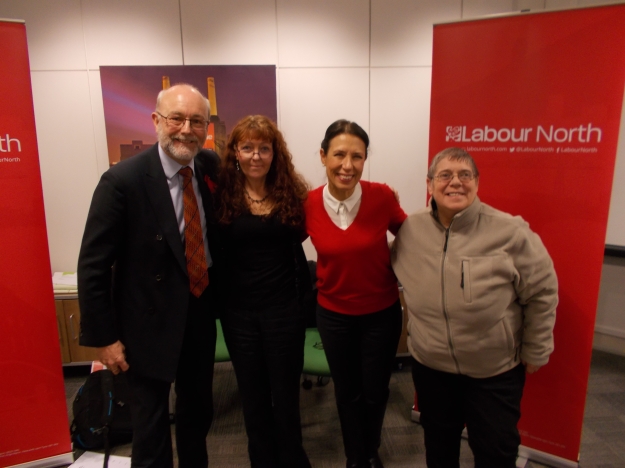
DonatenowButton


Why won’t ministers come clean about the impact of cuts on disabled people? – Frances Ryan


B
ack in 2014, armed with only a laptop and phone, disabled campaigners started a hunt for the truth. As policies including the bedroom tax, the abolition of disability living allowance, and the rollout of controversial out-of-work sickness benefits hit, War on Welfare (Wow) called on the coalition government to carry out a cumulative impact assessment of the wave of disability cuts to measure the effect on disabled people. It resulted in a debate in parliament – the first time disabled people had secured a debate in the main chamber of the House of Commons – but no action

Now, four years on, Wow has gained the backing of a cross-party coalition that wants Theresa May’s government to calculate the overall impact of the so-called welfare reforms on disabled people. Every party except the Conservatives is in favour of a Commons debate on conducting this assessment, including the DUP. In light of the pressure over Northern Irish abortion reform, their support for detailed analysis of the impact of Tory disability cuts is another awkward clash between May and the DUP’s 10 MPs propping up her administration. But more than that, it’s a sign of hope that ministers may have to finally investigate just what damage their disability cuts are causing – from the social care crisis to cuts to multiple parts of the NHS, to the disastrous rollout of universal credit; now delayed for an extra year until 2023

Last week’s damning report by the National Audit Office (NAO) on universal credit castigated the system’s inability to protect and support “vulnerable claimants”. It follows the revelation this month that the government was forced to say it would repay thousands of severely disabled people made worse off under the UC system ahead of the high court ruling last week that it was “discriminatory” to have docked two disabled men’s benefits after transferring to UC. Following pressure from disability groups, this week ministers made another U-turn, this time to stop repeatedly testing some disabled people for personal independence payments.

The government’s austerity programme has resulted in multiple reductions in income since 2010 that have hit disabled people all at once and disproportionately. Being hit by the bedroom tax is tough – but losing your sickness benefits as well after being found “fit for work” is even harder.

If you need an insight into the damage these policies have done, just go to Wow Voices, a website set up by campaigners that features disabled people explaining the impact of cuts on them. One woman with terminal breast cancer writes of how, for the last 18 months, she’s been told she needs to be reassessed for her benefits every six months, and she’s frantic about the thought of losing her support. “I’ve cried more about this than my terminal diagnosis,” she says. 

The UN’s damning report in 2016 into the UK’s “violations” of disabled people’s rights has put further pressure on the government over its treatment of disabled citizens. Meanwhile, the Equality and Human Rights Commission’s own cumulative impact assessment shows that families with a disabled adult and a disabled child will lose £5,500 a year by 2022 as a result of tax and benefit changes – contradicting the government’s claim that such analysis would be “too complex” to do. 

This month, research by the Joseph Rowntree Foundation found around 650,000 people with mental and physical health problems were officially destitute in the UK last year – that means being so poor, they can’t afford deodorant, the electric, or regular meals – with social security changes found to be a key cause. It’s bad enough for ministers to take away state support from disabled people en masse, but to refuse to analyse its effects is the definition of irresponsible. The Conservatives must finally shine a light on the impact that disability cuts have had. What are they so afraid of?


Related

The government response to the WoW petition is irrational, incoherent nonsense on stilts

The government refuse to carry out a cumulative impact assessment of welfare “reforms”. Again


I write voluntarily, to do the best I can to raise awareness of political and social issues. In particular I research and write about how policy impacts on citizen wellbeing and human rights. I also co-run a group on Facebook to support other disabled people going through ESA and PIP assessments, mandatory reviews and appeals.

I don’t make any money from my work. I am disabled and don’t have any paid employment. But you can contribute by making a donation and help me continue to research and write informative, insightful and independent articles, and to provide support to others. The smallest amount is much appreciated – thank you.

British Psychological Society reaffirms its opposition to welfare sanctions

PAA-550x369

The UK’s leading professional associations for psychological therapies have reaffirmed their opposition to welfare sanctions.

The British Association for Behavioural and Cognitive Psychotherapies, British Association for Counselling and Psychotherapy, British Psychoanalytic Council, British Psychological Society and UK Council for Psychotherapy between them represent more than 110,000 psychologists, counsellors, psychotherapists, psychoanalysts and psychiatrists who practise psychotherapy and counselling.

In a joint response to the recent report of the Welfare Conditionality project, the organisations say:

“Our key concerns remain that not only is there no clear evidence that welfare sanctions are effective, but that they can have negative effects on a range of outcomes including mental health.

“We continue to call on the Government to address these concerns, investigate how the jobcentre systems and requirements may themselves be exacerbating mental health problems and consider suspending the use of sanctions subject to the outcomes of an independent review.”

The organisations reaffirmed the clear position against welfare sanctions that they took in a 2016 joint response.

Dr Lisa Morrison Coulthard the British Psychological Society’s acting director of policy said:

“We are delighted to sign this joint statement. The Society has seen increasing evidence that benefit sanctions undermine people’s health and wellbeing, and that people with multiple and complex needs are disproportionately subject to them.”

I’ve written a lot of critical articles over the last few years about the government’s controversial welfare policies. The Conservatives claim that welfare sanctions “incentivise” people to look for work. However, the authoritarian application of a behaviourist idea – that punishment somehow motivates people to “change their behaviour” – especially when such punishment involves the cruel and barbaric removal of people’s means of meeting their most fundamental survival needs – food, fuel and shelter – contradicts conventional wisdom and flies in the face of a substantial body of empirical evidence.

Making provision for meeting fundamental human needs so rigidly conditional is an atrociously brutal act. There is simply no justification for a government in a very wealthy democracy to behave in such an inhumane manner. 

Social security is a safety net that most people have contributed towards. It came into being to ensure that no citizen would face absolute poverty – hunger and destitution – when they experience hardships, in a civilised and civilising democracy.

Punitive welfare sanctions are an extremely regressive policy. It was widely recognised during the 1940s that absolute poverty reduces citizens’ motivation and prevents us from fulfilling our potential at an individual level and as a society. 

Click here to read the Society’s recent comment on benefit sanctions.

Click here to read the statement from the five organisations. 

I wrote about the extensive study of  welfare conditionality here: Research shows that Tory ‘hostile environment’ of welfare sanctions doesn’t help people to find work.

Related

Stigmatising unemployment: the government has redefined it as a psychological disorder

Psychologists Against Austerity: mental health experts issue a rallying call against coalition policies 

The power of positive thinking is really political gaslighting

Psychologists Against Austerity: mobilising psychology for social change

The politics of punishment and blame: in-work conditionality

Disabled people are sanctioned more than other people, accordingto research

The connection between Universal Credit, ordeals and experiments in electrocuting laboratory rats

Nudging conformity and benefit sanctions

G4S are employing Cognitive Behavioural Therapists to deliver “get to work therapy”

The new Work and Health Programme: government plan social experiments to “nudge” sick and disabled people into work

The importance of citizen’s qualitative accounts in democratic inclusion and political participation

Sanctions can’t possibly “incentivise” people to work. Here’s why


I don’t make any money from my work. I am disabled because of illness and have a very limited income. But you can help by making a donation to help me continue to research and write informative, insightful and independent articles, and to provide support to others. The smallest amount is much appreciated – thank you.

DonatenowButton

Grieving daughter handed her mother’s ashes to ESA assessor to prove she wasn’t ‘fit for work’


A grieving daughter furiously handed an urn containing her mother’s ashes to a benefit health care professional who turned up to assess if the dead woman was fit for work, following an inexcusable and heartless blunder by the Department for Work and Pensions. 

Louise Broxton had suffered a host of neurological problems for which she received welfare support. She tragically died from lung cancer at the age of just 47 in August.

Her daughter, Hatti, immediately informed the authorities of her mother’s death and all her benefits were cancelled. After initially saying the information had been placed on file, however, some seven months later the Department for Work and Pensions sent an assessor to the door of her home in Wolverhampton to see if Louise was “fit for work.”

Hatti, a prison administrator, said: “I’m so upset and angry about what’s happened.

“It’s our government that has done this to us.

I’m only 27 and my brother has just turned 17. We’ve been through enough already and we don’t need this.

“I told the DWP afterwards I’d love to live in the world that the DWP live in, the one where my mum’s still alive. But she’s been gone for seven months.

When Mum passed away August last year, everyone was notified.

“I got an acknowledgement from the DWP themselves to say that mum had died.

“They stopped paying her benefits, and paid the arrears they owed her into my account because I am her next of kin.

“But on February 28 we got a letter addressed to Mum saying they were going to do a home visit on March 13 to assess her disabilities for ESA.


Hatti continued: “I was furious about it so I decided not to phone them about the mistake. Instead I waited to see if they would actually have the balls to do the home visit.

“I booked the day off work and stayed at home to wait for someone to come. My cousin came round to support me.

The letter stated they’d be coming between 11am and 2pm and they would contact to book an appointment.

“Obviously they haven’t been able to contact Mum because her phone has been cut off. They had my details as next of kin but they didn’t contact me.”

At 1pm Hatti had a knock on the door from the Employment and Support Allowance assessor.

She invited him inside and, seeing her cousin sat on the sofa, the doctor asked if she was Louise.

Hatti said: “My cousin replied, ‘No, I’m not,’ and I said, ‘Hang on a minute.’

“I walked over to the mantle piece in the lounge where we keep mum’s remains in an an urn decorated with a rose. I picked up her urn, turned around, and said ‘This is Louise Broxton and you’ve come to assess her?’

“He was completely mortified, as you would be. He apologised and offered his condolences.

I told him, ‘I’m not doing this to embarrass you, but the letter and having you on my door today, that’s twice the DWP have missed something.’”

Hatti says the assessor had not looked at her mum’s medical records, which would have shown him she was dead.

She also believes the Department for Work and Pensions (DWP) missed three opportunities to realise something was wrong – when they sent the letter, when no one responded to their request, and when the doctor missed Louise’s medical records.

Hatti asked the doctor to leave and inform his bosses of the mistake straight away. 

She said: “I had gone through all the correct channels to report my mother’s passing and his visit was very upsetting.

“He admitted he hadn’t even been through mum’s medical records which would have said quite clearly at the end – deceased.

She said: “It’s not the case that my mum died a couple of weeks ago. Then a crossover would be understandable and I would accept their apology. 

After the doctor left, within 10 minutes the DWP rang. The lady apologised and offered her condolences, but after admitting their mistake she tried to leave it at that. 

“That’s not good enough. I want policies in place and procedures to be followed. I don’t want anyone else to be in my situation.” 

A DWP spokesperson said: “We’ve apologised to Ms Broxton for the distress caused by the administrative error.” 

Hatti’s mother, Louise Broxton


I don’t make any money from my work, as a disabled researcher and writer. But you can help by making a donation to help me continue to research and write informative, insightful and independent articles, and to provide support to others. The smallest amount is much appreciated – thank you.

DonatenowButton