Category: Social Policy

Inquiry into Universal Credit rollout re-launched

images

Following compelling evidence of the problems in the rollout of Universal Credit in its recent follow ups the Work and Pensions Committee has re-launched its inquiry and is accepting written submissions.

However, the inquiry was relaunched last month, on 21 February, and the deadline for written submissions is Monday 20 March 2017.

You can submit your views through the Universal Credit inquiry page.

Call for written submissions

The Committee invites written submissions addressing one or more of the following points:

  • How long are people waiting for their Universal Credit claim to be processed, and what impact is this having on them?
  • How are claimants managing with being paid Universal Credit monthly in arrears?
  • Has Universal Credit improved the accuracy of payments?
  • Have claimants reported making a new claim for Universal Credit, and then found that the system has not registered their claim correctly?
  • What impact is Universal Credit having on rent arrears, what effect is this having on landlords and claimants, and how could the situation be improved?
  • Would certain groups benefit from greater payment process flexibility and, if so, what might the Government do to facilitate it?
  • Does Universal Credit provide people in emergency temporary accommodation with the support they need, and how could this be improved?
  • What impact is Universal Credit having on the income and costs of local authorities, housing associations, charities and other local organisations?
  • How well is Universal Support working, and how could it been improved?
  • What impact has the introduction of full Universal Credit service had in areas where it has replaced the live service?

Chair’s comment:

Frank Field MP, Chair of the Work and Pensions Committee said:

“Huge delays in people receiving payments from Universal Credit have resulted in claimants falling into debt and rent arrears, caused health problems and led to many having to rely on food banks. It is bad enough that UC has a built-in six-week wait between someone applying and them receiving their first payment, but we have heard that many have to wait much longer than this. The adverse impact on claimants, local authorities, landlords and charities is entirely disproportionate to the small numbers currently claiming UC, yet Lord Freud has told us he thinks it will take decades to optimise the system. We have therefore felt compelled to investigate UC yet again. We will examine what its impact is on claimants and those local bodies which deal with them, and what Government needs to do to ease the pressure on those worst affected.”

Further information

New discriminatory regulations for PIP come into effect today

westminster-20121020-00081

A Department for Work and Pensions spokesperson has denied allegations that people with mental health conditions claiming Personal Independence Payment (PIP) are being treated differently to those with physical disabilities: “At the core of PIP’s design is the principle that mental health conditions should be given the same recognition as physical ones”, the spokesperson said.

“In fact, there are more people with mental health conditions receiving the higher rates of both PIP components than the DLA equivalents.

This Government is also investing more in mental health than ever before – spending more than £11 billion this year.”

However, following two independent tribunal rulings that the Department for Work and Pensions (DWP) should expand the scope and eligibility criteria of PIP, which helps both in-work and out-of work disabled people fund their additional living costs, the government is rushing in an “urgent change” to the law to prevent many people with mental health conditions being awarded the mobility component of PIP. The court held that people with conditions such as severe anxiety can qualify for the enhanced rate of the mobility component, on the basis of problems with “planning and following a journey”, or “going out”. 

The government’s new regulations will reverse the recent tribunal ruling and will mean that people with mental health conditions such as severe anxiety who can go outdoors, even if they need to have someone with them, are much less likely to get an award of even the standard rate of the PIP mobility component. The regulations also make changes to the way that the descriptors relating to taking medication are interpreted, again in response to a ruling by a tribunal in favour of disabled people.

The first tribunal said more points should be available in the “mobility” element for people who suffer “overwhelming psychological distress” when travelling alone. The second tribunal recommended more points in the “daily living” element for people who need help to take medication and monitor a health condition. 

It’s worth noting that the Coalition Government enshrined in law a commitment to parity of esteem for mental and physical health in the Health and Social Care Act 2012. In January 2014 it published the policy paper Closing the Gap: priorities for essential change in mental health (Department of Health, 2014), which sets out 25 priorities for change in how children and adults with mental health problems are supported and cared for. The limiting changes to PIP legislation does not reflect that commitment.  

PIP is defined by Capita, the private company employed by the government to carry out “functional assessments of disabled people as “a non means tested benefit for people with a long-term health condition or impairment, whether physical, sensory, mental, cognitive, intellectual, or any combination of these.” It is an essential financial support towards the extra costs that ill and disabled people face, to help them lead as socially and economically inclusive, active and independent lives as possible.

Who will be affected by the reversal of the tribunal rulings?

As I reported previously, from 16 March (today)  the law will be changed so that the phrase “For reasons other than psychological distress” will be added to the start of descriptors c, d and f in relation to “Planning and following journeys” on the PIP form. 

New guidelines circulated by the DWP instruct assessors to disregard the physical impact of mental illness, in relation to how the impairments affect a person’s mobility in completing a journey unaccompanied, which will effectively exclude them from eligibility to the higher mobility component of PIP.

This means that claimants with severe mental illness that impacts on their mobility will be refused the same level of financial support as people with physical disabilities.

It effectively means that people suffering with debilitating mental health conditions are to be denied equal access to the disability benefits system.

People with the following conditions are likely to be affected by the reversal of the independent tribunal’s ruling regarding PIP mobility awards, with conditions in the general category of “severe psychological distress”:

Mood disorders – Other / type not known, Psychotic disorders – Other / type not known, Schizophrenia, Schizoaffective disorder, Phobia – Social Panic disorder, Learning disability – Other / type not known, Generalized anxiety disorder, Agoraphobia, Alcohol misuse, Anxiety and depressive disorders – mixed Anxiety disorders – Other / type not known, Autism, Bipolar affective disorder (Hypomania / Mania), Cognitive disorder due to stroke, Cognitive disorders – Other / type not known, Dementia, Depressive disorder, Drug misuse, Stress reaction disorders – Other / type not known, Post-traumatic stress disorder (PTSD), Phobia – Specific Personality disorder, Obsessive compulsive disorder (OCD).

A case study is included in the new guidance, which says: “Sukhi has sought an award under mobility descriptor 1f as she cannot follow the route of a familiar journey without another person.

However, the [decision maker] determines that because of the wording of mobility descriptor 1f (“for reasons other than psychological distress, cannot follow the route of a familiar journey without another person, an assistance dog or an orientation aid”), any problems following the route due to psychological distress are not relevant.”

PIP consists of two separate components – a daily living component and a mobility element – each paying a standard or enhanced rate, with the enhanced rate paying more than the lower rate. 

In response to the rulings, government have simply chosen to rewrite the law in a way that denies higher PIP payments for those claimants who would have benefited from the rulings, without consulting medical experts, disabled people, advocacy organisations and MPs – including the Work and Pensions parliamentary committee.

Responding to the new guidelines, Paul Farmer, chief executive of the mental health charity Mind, said: “The purpose of PIP is to cover the extra costs people incur because of a disability – decisions makers shouldn’t discriminate between disabilities on the basis of their cause, but decisions should be based on the impact of the disability.

People who struggle to leave the house without support may face the same costs whether their difficulties arise from, for example, a sensory disability or severe anxiety or other mental health problems.

Yet those making decisions about the level of support someone will receive will now be explicitly told to disregard those barriers if they are a result of someone’s mental health problem.”

He added: “This move undermines the Government’s commitment to look at disabled people as individuals, rather than labelling them by their condition, and completely goes against the Government’s commitment to putting mental health on an equal footing with physical health.

Meanwhile, the government’s own expert welfare advisors have said that the changes to PIP – affecting the mentally ill – should be delayed until they have been properly tested and “clearly understood”. 

The Social Security Advisory Committee (SSAC) said in their report that they are “particularly concerned” that overturning the tribunal’s ruling will cause confusion. They warn it is “not clear” how assessors will interpret the changes, raising concerns over a real possibility that claimants will not be “consistently treated”.

The committee have disputed ministers’ claims that emergency legislation must be rushed through today, suggesting the feared increase in costs has been “over-hyped”.

The government claimed the tribunal ruling would cost at least £3.7bn over the next five years – money which should go to “really disabled people who need it”, according to one minister.

The committees’ damning conclusions have sparked angry exchanges in the Commons, with some Tory MPs joining Labour and the Liberal Democrats in criticising the impact of the PIP regulations on some of the most vulnerable citizens.

However, Damian Green, the Work and Pensions Secretary, refused to allow MPs to vote on the changes – insisting that was “above my pay grade”.

Green also acknowledged “a handful of people” could now have their PIP payments cut, having been awarded higher sums in the last few months.

Debbie Abrahams, Labour’s Work and Pensions spokeswoman, said that contradicted repeated assurances – including by Theresa May – that no disabled people would lose money, with only new claimants affected.

And she said: “The Government’s decision to change the law on PIP is a clear example of the way people with mental health conditions are not given equal treatment.”

The SSAC have urged the DWP to consider “testing the proposed changes with health care professionals and decision makers to ensure the policy intent behind the regulation is clearly understood”.

They concluded: “The department should both (a) consult more widely with representative bodies and health care professionals; and (b) improve the estimate of likely impact before the changes are introduced.”

Answering an urgent question in parliament, Mr Green insisted the SSAC was “not challenging the decision” to tighten the criteria for PIP.

But he added: “We think there may be a handful of people whose appeals have gone through the courts in this very, very small period.”

While “that money will not be clawed back from them” they would receive lower PIP payments once those appeals were struck out by the new regulations.

In their recent Equality Analysis PIP assessment criteria document, the government concede that: “Since PIP is a benefit for people with a disability, impairment or long-term health condition, any changes will have a direct effect on disabled people. The vast majority of people receiving PIP are likely to be covered by the definition of “disability” in the Equality Act 2010.

By definition, therefore, the UT [upper tribunal] judgment results in higher payments to disabled people, and reversing its effect will prevent that and keep payments at the level originally intended. The difference in income will clearly make a real practical difference to most affected claimants, and (depending on factors such as their other resources) is capable of affecting their ability to be independently mobile, access services etc – all matters covered by the UN Convention on the Rights of Persons with Disabilities as set out at the start of this Analysis.”

It goes on to say in the document: “However, this does not necessarily mean that the increased payments that would result from the judgment are a fair reflection of the costs faced by those affected, or represent a fair approach as between different groups of PIP claimants.” 

I think it’s much less likely that the government’s decision to subvert the ruling of the upper tribunal reflects any consideration of a fair reflection of costs faced by those affected, or a “fair approach” between different groups of PIP claimants. 

The purpose of Upper Tribunals

The government introduced the restrictive regulations after losing two cases at tribunals, showing an utter contempt for the UK judiciary system. However, the UK tribunal system is part of the national system of administrative justice. 

Administrative law is the body of law that governs the activities of administrative agencies of government. It is designed to independently review the decisions of governments, and as such, it provides protection and promotion of fundamental rights and freedoms for citizens.

The Upper Tribunal is a superior court of record, giving it equivalent status to the High Court and it can both set precedents and can enforce its decisions (and those of the First-tier Tribunal) without the need to ask the High Court or the Court of Session to intervene. It is also the first (and only) tribunal to have the power of judicial review. (The Conservatives have a historical dislike of judicial review. See for example: The real “constitutional crisis” is Chris Grayling’s despotic tendencies and his undermining of the Rule of Law.)

The Tribunals, Courts and Enforcement Act 2007 created a new unified structure for tribunals and recognises legally qualified members of tribunals as members of the judiciary of the United Kingdom who are guaranteed continued judicial independence. This means that the judiciary is kept discrete from other branches of government. That is so that courts are not subjected to improper influence from the other branches of government, or from private or partisan interests.

Judicial Independence is vital and important to the idea of separation of powers. The intent behind this concept is to prevent the concentration of political power and provide for checks and balances. It has been significantly influenced by judicial independence principles developed by international human rights constitutional documents. in the application of the European Convention on Human Rights in British law through the Human Rights Act 1998, which came into force in the UK in 2000.

The government’s new regulations are a particularly autocratic move, aimed at simply overturning two legal rulings that the government did not like, partly because their zealotry concerning their anti-welfarism and “small state” neoliberal ideology has been challenged. The regulations were ushered in and imposed so that they would not be subjected to parliamentary scrutiny and debate or democratic dialogue with disabled people or groups and organisations that support and advocate for those with disability. 

damian-green
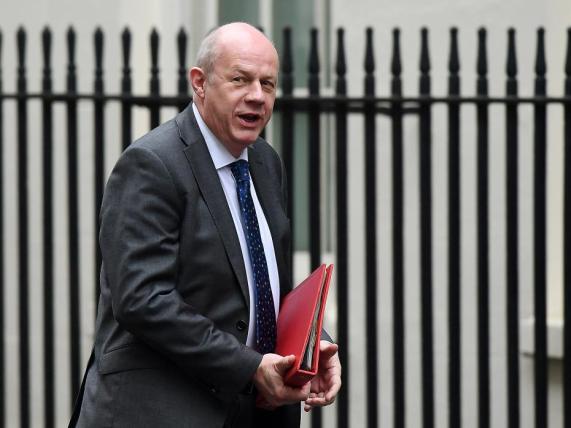
Work and Pensions Secretary Damian Green

Related

Two EDMs have been tabled to stop Tory cuts to disability support, with cross-party endorsement


I don’t make any money from my work. I am disabled because of illness and have a very limited income. But you can help by making a donation to help me continue to research and write informative, insightful and independent articles, and to provide support to others. The smallest amount is much appreciated – thank you. 

DonatenowButton cards

Disabled people are once again confronting the spectre of social isolation – Jane Campbell


Superficially the UK leads the world on disability rights, but colossal cuts are undermining the progress made over the last few decades
 
Lady Jane Campbell at her home in Surbiton, Surrey
Lady Jane Campbell served on the House of Lords select committee reviewing the impact of the Equality Act. Photograph: Martin Godwin for the Guardian

On Monday, disabled representatives from disability organisations across England, Scotland and Wales presented reports to the UN Committee on the Rights of Persons with Disabilities in Geneva. It is now eight years since the UK ratified the UNCRPD with cross-party support and this is the committee’s first full examination of the UK’s performance.

So how are we doing? The government is fond of claiming that the UK is a “world leader” on disability rights. Superficially, this claim remains fairly accurate. We have the most comprehensive and proactive equality law anywhere in the world; social care legislation and practice that embodies the principle of choice and control; a social security system that claims to recognise the extra costs of disability; and law and regulations to advance accessibility.

It is important to remind ourselves of what disabled people have achieved over the past 30-40 years of disability rights activism, as we have charted our journey from objects of care and charity to becoming active, contributing citizens. But any assessment of progress cannot be confined solely to what we now have, or where we were in the past. And judging by the UK’s direction of travel, the government’s claim of world leadership quickly unravels: we are seeing big cuts to services and watering down of rights and opportunities of disabled people. 

Last year, I served on the House of Lords select committee, reviewing the impact of the Equality Act on disabled people. We found that this government’s deregulatory zeal and spending cuts significantly undermined the intended effect of the act. Employment tribunal fees, legal aid cuts and loss of advice services have put the act’s protection beyond the reach of most disabled people. And colossal cuts to the Equality and Human Rights Commission’s budget have left the act under-promoted and unenforced.

The UK’s mental health and mental capacity laws fail to comply with the CRPD, which stipulates that disability cannot be grounds for denying people equal recognition before the law or for depriving people of their liberty. Yet in England, there has been a 10% rise in detention each year for the past two years. More than half of these cases related to people with dementia, and a significant minority to adults with learning disabilities. The sanctioned use of restraint, seclusion and anti-psychotic medication remains commonplace on mental health and learning disabilty wards, violating people’s rights to physical and mental integrity and to live free from torture, inhuman or degrading treatment.

NHS benchmarking data revealed that there were 9,600 uses of restraint during August 2015 in mental health wards in England, while the Learning Disability Census 2015 found that one-third of patients with a learning disability were subject to the use of restraint in 2015-16.

Unexpected deaths of mental health in-patients, or those cared for at home in England, are up by 21% yet, unlike deaths in police, prison or immigration detention, there is no system of independent investigation. Since 2011, hospitals in England have investigated just 222 out of 1,638 deaths of patients with learning disabilities. Among deaths they classed as unexpected, hospitals inquired into just over a third.

The Care Act fails to ensure disabled people’s right to independent living, and swingeing cuts in health, social care and benefits are eroding the availability of support and people’s right to exercise choice and control. Disabled people are confronting the spectre of re-institutionalisation as councils and clinical commissioning groups limit the amount they spend on individual packages of support

The UN disability rights committee has already reported on the negative impact of the UK’s measures to cut social security spending. Yet further disability benefit cuts continue to be implemented and the extension of punitive sanctions to those hitherto assessed as unable to work is being proposed on the back of declining investment in employment support.

“Nothing about us without us” is the international motto of the disability rights movement, but there is little evidence of disabled people being involved in policy development. The last 10 years have seen the proportion of public appointees with a self-declared disability halve in number, while helpful measures to support more disabled people into politics, such as the Access to Elected Office Fund, have been suspended in England.

Advancing the rights of disabled people requires good leadership to establish coherence and coordination in Whitehall, and in devolved and local government. The Office for Disability Issues was set up for this very task, but has become a shadow of its former self. But in Wales and Scotland, things are more positive, with the convention firmly embedded in policy and strategy. 

If the UK wants to maintain the mantle of world leader on disability rights, it must see the forthcoming examination as an opportunity to listen and take stock. If it fails to do so, current and future generations of disabled people face the slow, inexorable slide back towards social death once again.

aaeaaqaaaaaaaad4aaaajdk1ytqwzdyxltjinwytngjhmc05njdlltmyzmu4mty4owi5za

A bad job is worse for your mental health than unemployment, say UK’s top psychologists

PAA-550x369

Last month, the following letter was sent to the Independent, titled The DWP must see that a bad job is worse for your mental health than unemployment:

“We, the UK’s leading bodies representing psychologists, psychotherapists, psychoanalysts, and counsellors, call on the Government to immediately suspend the benefits sanctions system. It fails to get people back to work and damages their mental health.

Findings from the National Audit Office (NAO) show limited evidence that the sanctions system actually works, or is cost effective.

But, even more worrying, we see evidence from NHS Health Scotland, the Centre for Welfare Conditionality hosted by the University of York, and others, which links sanctions to destitution, disempowerment, and increased rates of mental health problems. This is also emphasised in the recent Public Accounts Committee report, which states that the unexplained variations in the use of benefits sanctions are unacceptable and must be addressed.

Vulnerable people with multiple and complex needs, in particular, are disproportionately affected by the increased use of sanctions.

Therefore, we call on the Government to suspend the benefits sanctions regime and undertake an independent review of its impact on people’s mental health and wellbeing.

But suspending the sanctions system alone is not enough. We believe the Government also has to change its focus from making unemployment less attractive, to making employment more attractive – which means a wholesale review of the back to work system.

We want to see a range of policy changes to promote mental health and wellbeing. These include increased mental health awareness training for Jobcentre staff – and reform of the work capability assessment (WCA), which may be psychologically damaging, and lacks clear evidence of reliability or effectiveness.

We urge the Government to rethink the Jobcentre’s role from not only increasing employment, but also ensuring the quality of that employment, given that bad jobs can be more damaging to mental health than unemployment.

This should be backed up with the development of statutory support for creating psychologically healthy workplaces.

These policies would begin to take us towards a welfare and employment system that promotes mental health and wellbeing, rather than one that undermines and damages it.

Professor Peter Kinderman, President, British Psychological Society (BPS)

Martin Pollecoff, Chair, UK Council for Psychotherapy (UKCP)

Dr Andrew Reeves, Chair, British Association for Counselling and Psychotherapy (BACP)

Helen Morgan, Chair, British Psychoanalytic Council (BPC)

Steve Flatt, Trustee, British Association of Behavioural and Cognitive Psychotherapies (BABCP)”

“Making work pay” for whom?

pie wealth

It’s a draconian, crude behaviourist and armchair technocratic government that would claim to “make work pay” by decreasing social security support for the poorest members of society, rather than raising wages to meet the rising costs of living. This approach was justified by claims that poor people became “dependent” on benefits because the welfare state provides “perverse incentives” for people seeking employment. However, there is no empirical evidence of these claims. Keith Joseph, a leading New Right advocate of the welfare dependency theories, set out to try and establish evidence dependency during the Thatcher era, and failed. Both Thatcher and Joseph wanted to extend Victorian bourgeois values of thrift, self-reliance and charity among all classes.

Such an approach has benefitted no-one but wealthy employers motivated by a profit incentive, as people who are out of work or claiming disability related benefits have become increasingly desperate. These imposed conditions have created a reserve army of labour, which has subsequently served to devalue labour, and drive wages down. We now witness high levels of in-work poverty, too. The Victorian Poor Law principle of less eligibility had the same consequences, and also “made work pay.” It’s shameful that in 2017, the government still believe that it is somehow effective and appropriate to punish people into not being poor. Especially when the government’s own policies are constructing inequality and poverty.

Last week I wrote about the Samaritans report: Dying from inequality: socioeconomic disadvantage and suicidal behaviour, which strongly links socioeconomic disadvantage and inequality with psychological distress and suicidal behaviours. The report reiterates that countries with higher levels of per capita spending on active labour market programmes, and which have more generous unemployment benefits, experience lower recession-related rises in suicides.

Research has consistently found that in countries with a generous social safety net, poor employment (low pay, poor conditions, job insecurity short-term contracts), rather than unemployment, has the biggest detrimental impact on mental health. This is particularly true of neoliberal states with minimal and means tested welfare regimes. It seems health and wellbeing are contingent on the degree to which individuals, or families, can uphold a socially acceptable standard of living independently of market participation, and on the kind of social stratification  (socioeconomic hierarchies indicating levels of inequality) is fostered by social policies.

Furthermore, despite the government’s rhetoric on welfare “dependency”, and the alleged need for removing the “perverse incentives” from the social security system by imposing a harsh conditionality framework and a compliance regime – using punitive sanctions – and work capability assessments designed to preclude eligibility to disability benefits, research shows that generous social security regimes make people more likely to want to work, not less.

The government’s welfare “reforms” have already invited scathing international criticism because they have disproportionately targeted cuts at those with the least income. Furthermore, the government have systematically violated the human rights of those with mental and physical disabilities. In a highly critical UN report last year, following a lengthy inquiry, it says: “States parties should find an adequate balance between providing an adequate level of income security for persons with disabilities through social security schemes and supporting their labour inclusion. The two sets of measures should be seen as complementary rather than contradictory.”

However, the UK government have continued to conflate social justice and inclusion with punitive policies and cuts, aimed at coercing disabled people towards narrow employment outcomes that preferably bypass any form of genuine support and the social security system completely. 

See – UN’s highly critical report confirms UK government has systematically violated the human rights of disabled people.

430835_148211001996623_1337599952_n (1)

Kitty.


I don’t make any money from my work. I am disabled because of illness and have a very limited income. The budget didn’t do me any favours at all.

But you can help by making a donation to help me continue to research and write informative, insightful and independent articles, and to provide support to others. The smallest amount is much appreciated – thank you.

DonatenowButton cards


Protest at the 10th annual New Savoy conference – Mental Wealth Alliance


image-04-02-2017-at-15-15

        Map of venue here 

Find out more about the Mental Wealth Alliance and the background to this New Savoy action here

Source: the free psychotherapy network

“As the links between mental health and DWP benefits policies have developed (see this Government catalogue of Work and Health reports between 2005 and 2014 – https://www.gov.uk/government/collections/health-work-and-wellbeing-evidence-and-research ) so has the link between Psy Professional bodies and the DWP.

New Savoy has welcomed this marriage of workfare and IAPT/psychological well-being support. See their statement on welfare reform here – http://www.newsavoypartnership.org/joint-pledge-on-welfare.htm 

For several years New Savoy invited DWP and DoH ministers to open their conferences (e.g. Lord Freud and Norman Lamb).

The Kitty Jones blog is very informative on the developing use of psychological coercion within the workfare system (e.g. https://kittysjones.wordpress.com/2015/10/28/the-government-plan-to-nudge-sick-and-disabled-people-into-work/) as is the Friedli and Stearn paper – http://mh.bmj.com/content/41/1/40.full

It was in the spring of 2015, when Osborne’s budget proposed co-locating IAPT workers in Jobcentres, that a number of Alliance and PCSR therapists contacted MH activist groups like the Mental Health Resistance Network and DPAC to see if we could work together to oppose the use of psychological therapy to get people off benefits and back to work.

The issue for us, of course, was the abuse of therapeutic ethics and practice through its application to support the goals and culture of DWP workfare – a policy direction based on political ideology, not clinical need.

We see a shared cause between MH claimants on the receiving end of these policies and the unethical and demeaning working conditions of practitioners/workers providing the services. On the latter, see for example – https://www.theguardian.com/healthcare-network/2016/feb/17/were-not-surprised-half-our-psychologist-colleagues-are-depressed

The Mental Wealth Alliance (formerly MW Foundation) was born out of subsequent meetings between MH activists, professionals and welfare campaigners. It is an umbrella for 18 organisations concerned with MH, therapy and welfare:

Mental Health Resistance Network; Disabled People Against Cuts; Recovery in the Bin; Boycott Workfare; The Survivors Trust; Alliance for Counselling and Psychotherapy; College of Psychoanalysts; Psychotherapists and Counsellors for Social Responsibility; Psychologists Against Austerity; Free Psychotherapy Network; Psychotherapists and Counsellors Union; Critical Mental Health Nurses’ Network; Social Work Action Network (Mental Health Charter); National Unemployed Workers Combine; Merseyside County Association of Trades Union Councils; Scottish Unemployed Workers’ Network; National Health Action Party; Making Waves

In April 2015 the Alliance for Counselling and Psychotherapy organised a Guardian letter signed by over 400 psy professionals on the consequences for people’s mental health of the Governments austerity cuts, and in particular the plans to expand the use of therapists to ‘encourage’ MH benefits claimants into work – https://freepsychotherapynetwork.com/mwa-response-to-the-psy-professional-bodies-statement-on-benefit-sanctions-and-mental-health-301116/

https://www.theguardian.com/society/2015/apr/17/austerity-and-a-malign-benefits-regime-are-profoundly-damaging-mental-health

At the same time, the MWA began an exchange of letters with the five main psy professional organisations, expressing  our outrage at their support for and participation in DWP workfare programmes. The latest contribution from MWA to this exchange is the response to their statement on sanctions which can be found here – https://freepsychotherapynetwork.com/mwa-response-to-the-psy-professional-bodies-statement-on-benefit-sanctions-and-mental-health-301116/.    

The earlier exchanges can be found here – https://allianceblogs.wordpress.com/2016/04/28/mwf_letters_2/ 

The only organisation that has responded to our request to meet and talk about the issues is BABCP who we met in November last year, shortly before the recent statement on sanctions.

Members of the MWA have campaigned together against the co-location of IAPT, psychological support services in Jobcentres in June 2015 – https://www.theguardian.com/society/2015/jun/26/mental-health-protest-clinic-jobcentre-streatham 

The locating of DWP work counsellors in GP practices in March 2016 – http://islingtonnow.co.uk/2016/03/07/putting-job-advisers-in-doctors-surgeries-will-harm-patients-say-protesters/

New Savoy partnership July 2016 – http://dpac.uk.net/2016/06/protest-against-work-cure-therapy-5th-july-london/ and video here –  https://www.youtube.com/watch?v=VBbXK1Ac7W0 

Here is the double sided leaflet we gave out to attendees of the conference. Very relevant to the March protest – https://freepsychotherapynetwork.files.wordpress.com/2016/07/notinournamenothingaboutus-final.pdf

Associates of MWA helped organise a lobby at the BPS annual conference this January – https://freepsychotherapynetwork.com/united-against-welfare-cuts-against-reform-report-from-the-lobby-of-the-british-psychological-society-conference-18th-january-2017/

We have held two major conferences – in Bermondsey and Liverpool – on welfare reform and psycho-compulsion. Reports here – https://allianceblogs.wordpress.com/2016/04/15/welfare-coercion-conference-report-part-1/  and here – http://socialworkfuture.org/campaigns-events/529-mh-and-welfare-reform-conference-report

We have participated in the Free Psychotherapy Network’s conference and the Psychologists and the Benefits System conference in Manchester – http://www.walkthetalk2015.org/news/psychologists-and-benefits-system.”

My contribution to the latter is here – https://kittysjones.wordpress.com/2016/10/11/welfare-conditional-citizenship-and-the-neuroliberal-state-conference-presentation/

Read more here – Some background to the MWA and the New Savoy demo and lobby Wednesday 15th March 2017


Mental Wealth Alliance response to the psy professional bodies’ statement on benefit sanctions and mental health

aaeaaqaaaaaaaad4aaaajdk1ytqwzdyxltjinwytngjhmc05njdlltmyzmu4mty4owi5za

The British Psychological Society (BPS) has responded jointly with other psychological bodies to call on the UK Government to suspend its cruel and degrading benefit sanctions regime.

The BPS say that the government should suspend its benefit sanctions system as it fails to get people back to work and damages their mental health. s

The professional bodies highlight evidence that sanctions, or the threat of sanctions (benefit cuts following a claimant’s failure to comply with jobcentre conditions, e.g. missing an appointment with their work coach) can result in destitution, hardship, widespread anxiety and feelings of disempowerment.

The call came in a joint response to the Government’s consultation, ‘Improving Lives’, from the British Psychological Society, the British Association of Counselling and Psychotherapy, the British Psychoanalytic Council, the British Association for Behavioural and Cognitive Psychotherapies and the UK Council for Psychotherapy.

Findings from the National Audit Office  show that there is limited evidence the sanctions system actually works, or is cost effective. The bodies argue that the Government needs to change focus from trying to make unemployment less attractive, to trying to make employment more attractive.

BPS President Professor Peter Kinderman said:

“We call for the benefits sanctions regime to be suspended until the completion of an independent review of their impact on people’s mental health and wellbeing

While there is evidence that the sanctions process is undermining mental health and wellbeing, there is no clear evidence that it leads to increased employment.  Vulnerable people with specific multiple and complex needs are being disproportionately affected by the increased use of sanctions.”

In order to improve mental health, the bodies have also called for:

  • Jobcentres to care about the quality of work they provide – citing evidence that bad jobs can be more damaging to mental health than unemployment.
  • The development of statutory support for creating psychologically healthy workplaces.
  • Increased mental health awareness training for jobcentre staff.
  • Review and reform of the work capability assessment (WCA), which may be psychologically damaging, and lacks clear evidence of reliability or effectiveness. 

The Mental Wealth Alliance have written a response to the collective statement on benefit sanctions and mental health:

Source: the free psychotherapy network

From:

Mental Wealth Alliance [1]

 Mental Health Resistance Network; Disabled People Against Cuts; Recovery in the Bin; Boycott Workfare; The Survivors Trust; Alliance for Counselling and Psychotherapy; College of Psychoanalysts; Psychotherapists and Counsellors for Social Responsibility; Psychologists Against Austerity; Free Psychotherapy Network; Psychotherapists and Counsellors Union; Social Work Action Network (Mental Health Charter); National Unemployed Workers Combine; Merseyside County Association of Trades Union Councils; Scottish Unemployed Workers’ Network; Critical Mental Health Nurses’ Network; National Health Action Party.

To:

British Association for Behavioural and Cognitive Psychotherapies

British Association for Counselling and Psychotherapy

British Psychoanalytic Council

British Psychological Society

United Kingdom Council for Psychotherapy

30th January 2017

MWA response to the psy professional bodies’ statement on benefit sanctions and mental health  30th November 2016

We welcome the call from the psychological therapy bodies for the government to suspend the use of sanctions by the DWP subject to the outcomes of an independent review of its welfare policies and their potential damage to the mental health of benefit claimants. Given the accumulation of evidence over many years of the material and psychological suffering inflicted on benefit claimants by workfare-based conditionality[2], it has been frankly shocking that the professional bodies directly concerned with the mental health of the nation have preferred to welcome and participate in workfare policies rather than publicly and vociferously dissociate themselves.

The timing of the statement is given to be the recent report on sanctions by the National Audit Office. Welcome as its report is, the NAO’s perspective on government policy is primarily monetary, not one of health, ethics and social justice. Its “vision is to help the nation spend wisely”.  The choice of this timing represents realpolitik on the part of the professional bodies no doubt, as perhaps is the intention of the conditional statement: “The sanctions process may be detrimental to people’s mental health and wellbeing”. But surely as psychotherapists and counsellors we can do better to represent the overwhelming evidence of personal suffering on such a scale than point to poor returns on expenditure and an ambivalent proposal that sanctions may be detrimental to people’s mental health.

Sanctions are only one dimension, albeit at the sharp end, of a welfare regime based on the political assertion that people need to be coerced off benefits and “nudged” into work. The psychological pressure of WCA and PIP assessments, job search rules, work programmes on “good employee” behaviours and the regular cuts to welfare benefits generally are part and parcel of the psycho-compulsion of the DWP benefits regime.[3]

We dispute the government’s premise that work is a therapeutic priority for people suffering from mental health difficulties. The marshalling of evidence for this modern-day workhouse mentality lacks both substance and integrity. Work has become the ideological mantra for neoliberal welfare policies.

Obviously where people want to work and where employment possibilities exist that will support and nourish people’s mental health, then encouragement, training and professional support should be available. But why is there no acknowledgement of the hundreds of thousands of claimants with mental health difficulties who cannot work, whether they want to or not?[4] Where is the evidence that people with mental health difficulties are actually benefiting from what is now two decades of workfare conditionality in the UK? Where is the evidence that in our current labour market decent jobs exist that will nourish people’s mental health? And where is the evidence that psychological therapy for benefit claimants with long-term mental health disabilities succeeds in supporting them into decent jobs they want, can survive and maintain?

When the professional bodies say, “an estimated 86-90% of people with mental health conditions that are not in employment want to work”, they are supporting the proposition that getting into work is an overwhelmingly important and efficacious goal for this group of benefit claimants. It is not clear where this figure comes from and what it means.

A similar figure is quoted by The Royal College of Psychiatrists’ report on Mental Health and Work (2013)[5], making use of a Sheffield study by J. Secker and others (2001)[6]. In fact, Secker finds that of their sample of 149 unemployed service users, when asked if they were interested in work of any kind – including voluntary and supported work –  “around half (47%) responded positively, and almost the same proportion (43%) had a tentative interest. Only 15 people (10%) had no interest in work”. At the same time, only 25% of respondents saw full-time employment as a long-term goal. 71% said that their preferred vocational assistance would be “help for mental health/keep current service”.[7]

This study does not translate into “86-90% of people with mental health conditions that are not in employment want to work”.[8] What it points to is the complex texture of attitudes, desires and fears around waged work that are the common experience of service users, alongside the harsh realities of the current labour market, the socio-economic environment generally, and the dire state of mental health services of all kinds more particularly.[9]

From our point of view, the professional bodies’ statement is a step in the right direction. It is a step that must now be followed through with active political pressure on the DWP and the Dept of Health to suspend sanctions and set up an independent review of their use, including the damage they inflict on people’s mental health.  Parliament has already called for such a review.[10]

But more than this, the remit of such a review should include all aspects of conditionality in a benefits system that deploy psycho-compulsion through mandatory rules or through the more subtle imposition of behavioural norms which aim to override the claimant’s voice.

We again suggest that the psy professional bodies would benefit by widening their own conversations to include service users and the rank and file of their membership. They would also win more credibility as organisations with ethical and social values independent of the government’s policies of dismantlement of social security and the welfare state if they were willing to make transparent their currently private conversations with DWP.


[1] Mental Wealth Alliance (MWA), formerly the Mental Wealth Foundation, is a broad, inclusive coalition of professional, grassroots, academic and survivor campaigns and movements. We bear collective witness and support collective action in response to the destructive impact of the new paradigm in health, social care, welfare and employment. We oppose the individualisation and medicalisation of the social, political and material causes of hardship and distress, which are increasing as a result of austerity cuts to services and welfare and the unjust shift of responsibility onto people on low incomes and welfare benefits. Our recent conference focused on Welfare Reforms and Mental Health, Resisting the Impact of Sanctions, Assessments and Psychological Coercion.

[2] Parliamentary committees, the national press, endless reports from charities, service user organisations, people with disabilities, claimants unions and workfare campaigners have been reporting the physical and psychological damage of ‘welfare reform’ and its tragic outcomes for a decade.

[3] On psycho-compulsion and the benefits system see Friedli and Stearn http://mh.bmj.com/content/41/1/40.full and https://vimeo.com/157125824

[4] In February 2015 over a million people claiming ESA under a MH diagnosis were in either the Support Group or WRAG. Over 70% of new applicants for ESA are found unfit for work

https://www.gov.uk/government/uploads/system/uploads/attachment_data/file/470545/3307-2015.pdf

[5]https://www.gov.uk/government/uploads/system/uploads/attachment_data/file/212266/hwwb-mental-health-and-work.pdf p.17

[6] Secker, J., Grove, B. & Seebohm, P. (2001) Challenging barriers to employment, training and education for mental health service users. The service users’ perspective. London: Institute for Applied Health & Social Policy, King’s College London.

[7] Ibid, pp. 397-399

[8] Compare a DWP survey of disabled working age benefit claimants in 2013. 56% of 1,349 respondents agreed that they wanted to work. Only 15% agreed that they were currently able to work. Only 23% agreed that having a job would be beneficial for their health. https://www.gov.uk/government/uploads/system/uploads/attachment_data/file/224543/ihr_16_v2.pdf

[9] For example, some of this complexity is flagged by Blank, Harries and Reynolds (2012) The meaning and experience of work in the context of severe and enduring mental health problems: An interpretative phenomenological analysis Work: 47 45(3)    “Stigma, the disclosure of a mental health problem and the symptoms of the mental health problem are frequently described, as well as feelings of hopelessness, seeing recovery as uncertain, and feeling a lack of encouragement from services. Difficulties in accessing occupational health services, having a disjointed work history, lack of work experience, age, lack of motivation and fears about competency, as well as the social benefits system and caring commitments, are also experienced as barriers to accessing employment for people with mental health problems.”

[10] https://www.parliament.uk/business/committees/committees-a-z/commons-select/work-and-pensions-committee/news/benefit-sanctions-report


I don’t make any money from my work. I am disabled because of illness and have a very limited income. But you can help by making a donation to help me continue to research and write informative, insightful and independent articles, and to provide support to others. The smallest amount is much appreciated – thank you. 

DonatenowButton cards

Lords table motion to kill new Tory restrictions on PIP

westminster-20121020-00081

It’s estimated that around 160,000 disabled people will be stripped of their entitlement to support for the additional costs they face because of their disability after the government shifted the goalposts to deal with upper tribunal legal rulings, according to the Labour Party.

Debbie Abrahams, shadow work and pensions secretary, said: “Instead of listening to the court’s criticisms of personal independence payment assessments and correcting these injustices, the government has instead decided to undermine the legal basis of the rulings.

This is an unprecedented attempt to subvert an independent tribunal judgment by a government with contempt for judicial process.

By shifting the goalposts, the Tory government will strip entitlements from over 160,000 disabled people, money which the courts believe is rightfully theirs.

This is a step too far, even for this Tory government. Labour will stand with disabled people, who have already borne the brunt of seven years of austerity, in fighting this injustice.”

(See also:  Government subverts judicial process and abandons promise on mental health ‘parity of esteem’ to strip people of PIP entitlement. )

Labour opposes the reform and will also seek to block the statutory instrument in the House of Lords and the House of Commons.

According to the Liberal Democrat Voice, the Liberal Democrats have tabled a motion to kill the government attempts to severely restrict disability benefits. 

The government will have used a statutory instrument that amends the Welfare Reform Act 2012. However, statutory instruments are generally used for non-controversial policy changes, and changes that don’t require much parliamentary scrutiny and debate. That clearly is not the case for the Conservative’s contentious Personal Independence Payment regulations, that attempt to overturn court rulings that are meant to be independent of government influence.

The move follows the recent undemocratic announcement by the government that they will be tightening the criteria for claimants of Personal Independence Payments (PIP) which will see people with serious illnesses such as diabetes, epilepsy and a wide range of mental illnesses left without support.

The purpose of Upper Tribunals

The government has introduced the restrictive regulations after losing two cases at tribunals, showing an utter contempt for the UK judiciary system. However, the UK tribunal system is part of the national system of administrative justice

Administrative law is the body of law that governs the activities of administrative agencies of government. It is designed to independently review the decisions of governments, and as such, it provides protection and promotion of fundamental rights and freedoms for citizens.

The Upper Tribunal is a superior court of record, giving it equivalent status to the High Court and it can both set precedents and can enforce its decisions (and those of the First-tier Tribunal) without the need to ask the High Court or the Court of Session to intervene. It is also the first (and only) tribunal to have the power of judicial review. (The Conservatives have a historical dislike of judicial review. See for example: The real “constitutional crisis” is Chris Grayling’s despotic tendencies and his undermining of the Rule of Law.)

The Tribunals, Courts and Enforcement Act 2007 created a new unified structure for tribunals and recognises legally qualified members of tribunals as members of the judiciary of the United Kingdom who are guaranteed continued judicial independence. This means that the judiciary is kept discrete from other branches of government. That is so that courts are not subjected to improper influence from the other branches of government, or from private or partisan interests.

Judicial Independence is vital and important to the idea of separation of powers. The intent behind this concept is to prevent the concentration of political power and provide for checks and balances. It has been significantly influenced by judicial independence principles developed by international human rights constitutional documents. in the application of the European Convention on Human Rights in British law through the Human Rights Act 1998, which came into force in the UK in 2000.

The government’s new regulations are a particularly autocratic move, aimed at simply overturning two legal rulings that the government did not like, partly because their zealotry concerning their anti-welfarism and “small state” neoliberal ideology has been challenged. The regulations were ushered in and imposed so that they would not be subjected to parliamentary scrutiny and debate or democratic dialogue with disabled people or groups and organisations that support and advocate for those with disability. 

From Penny Mordaunt’s statement:

“The first judgement held that needing support to take medication and monitor a health condition should be scored in the same way as needing support to manage therapy, like dialysis, undertaken at home. Until this ruling, the assessment made a distinction between these two groups, on the basis that people who need support to manage therapy of this kind are likely to have a higher level of need, and therefore face higher costs.

The second held that someone who cannot make a journey without assistance due to psychological distress should be scored in the same way as a person who needs assistance because they have difficulties navigating. By way of example, the first group might include some people with isolated social phobia or anxiety, whereas the second group might include some people who are blind. Until this ruling, the assessment made a distinction between these two groups, on the basis that people who cannot navigate, due to a visual or cognitive impairment, are likely to have a higher level of need, and therefore face higher costs.”

Responding to the announcement, Baroness Cathy Bakewell, Liberal Democrat Shadow Secretary of State for Work and Pensions, said:

“The government is using its recent losses in court as an excuse to severely restrict disability benefits. Rather than listening to the ruling they are using it to make matters worse for disabled people – that is utterly outrageous.

What makes things even worse is that they have sneaked this announcement out under the cover of by-elections. These decisions impact the lives of vulnerable people, Liberal Democrats will not allow the Conservatives to get away with treating people with disabilities with such total contempt.”

The Liberal Democrats contributed to scuppering the government’s plans to restrict tax credits back in October 2015.

Personally, I welcome any collaborative effort to challenge the Conservative’s draconian policies which deny people the help and support that they need. 


Related

Government defeated twice on tax credit cuts in House of Lords

Government signal move to curb the powers of the House of Lords after tax credit defeat

The Strathclyde Review clarifies the Conservatives’ authoritarianism

A black day for disabled people – disability benefit cuts enforced by government despite widespread opposition


I don’t make any money from my work. I am disabled because of illness and have a very limited income. But you can help by making a donation to help me continue to research and write informative, insightful and independent articles, and to provide support to others. The smallest amount is much appreciated – thank you.

DonatenowButton cards

Dangerous new changes planned to force sick people into work – or into poverty – Debbie Abrahams

With many thanks to Open Democracy.

The government promised to help disabled people back into work. They’re failing – and now it looks like they’re targeting those who need higher levels of support.


The punitive changes to social security for sick and disabled people were recently highlighted in the film I, Daniel Blake

The Government published its long-awaited ‘Improving Lives: Work, Health and Disability’ Green Paper at the end of October 2016 after originally promising a White Paper in 2015. The White Paper was supposed to define how disabled people would be supported into work and meet the Government’s manifesto pledge of halving the disability employment gap of 34% by 2020 (currently it stands at 32%).

The employment gap was used to justify further draconian cuts in social security support for disabled people in the Welfare Reform and Work (WRW) Bill published last summer. In particular, the Bill announced cuts of approximately £1,500 a year in Employment and Support Allowance to half a million people in the Work-Related Activity Group (ESA WRAG) – those people who had been found not fit for work, but who may be in the future – to be introduced in April 2017.

The 2016 Welfare Reform and Work Act followed the 2012 Welfare Reform Act which Scope estimated by 2018 will have cut nearly £28bn of social security support to 3.7m disabled people. Of course this doesn’t include £4.6bn cuts in social services support since 2010 or the NHS crisis, both of which affect disabled people.

The Green Paper, the consultation for which closed on 17th February just 6 weeks before the ESA WRAG cuts come into place, makes the bold claim that ‘…employment can… promote recovery.’

The issue I have with this statement, and the tone of the Green Paper as a whole, is that this implies that disabled people and people with chronic conditions would recover if only they tried a bit harder, or their doctors weren’t such soft touches. It doesn’t mention ‘shirkers’ directly but comments on how some people with the same condition languish in the ESA Support Group whilst others “flourish at work”, making it clear that’s what they’re thinking, ignoring their own rhetoric about “not treating everyone in a one-size-fits-all way”.

As a former Public Health consultant who researched into the health effects of work and worklessness, I agree that some work is good for health, but I don’t agree with the Government’s flawed thinking underpinning this: that it’s OK for people to return to work when they are still not fit, because it may help. This is not just unsound, it’s dangerous.

The scapegoating of disabled people, which includes people with physical or mental impairments and long-term health conditions as defined under the 2010 Equality Act, has been a hallmark of this Government and the previous Coalition. But even the conclusion of the United Nations inquiry that the UK Government has been responsible for ‘grave…systematic violations’ of the UN Convention on the Rights of Persons with Disabilities since 2010, has been met with Government stonewalling.

It is already well established that disabled people are twice as likely to live in poverty as non-disabled people as a result of the extra costs associated with their disability. Currently 4.2 million disabled people live in poverty and I have been informed from unpublished analysis by an Economic and Social Research Council research project that this is getting worse.

The Government has refused to stop the cuts to ESA WRAG and Universal Credit’s Limited Capacity to Work which come in this April, which will undoubtedly increase the numbers of disabled people living in poverty, threatening their health and well-being. Various discretionary funds may be available, for example the Flexible Support Fund, but there is no guarantee of support and they are quite specific in what they can be used for.

The timing of these cuts when there has been a negligible reduction in the disability employment gap is quite shocking. The Green Paper rings alarm bells that people in the ESA Support Group are the next to be targeted. Linked to this, the new Work Capability Assessment criteria which the Government announced last September (after I committed to scrap the Work Capability Assessment) will be published later this year. These will give a clear indication what the Government’s real agenda is.

The Green Paper also talks about employers and the need for them to invest more in workplace health and occupational health support. This is, of course, very important; 90% of disability and long-term health conditions are acquired, so it is absolutely right to examine what can be done to reduce the risk of employees falling ill and how employers can make reasoned adjustments to support an employee to stay in work if they become disabled. But Access to Work helped only 36,000 disabled people stay in or access work in 2015 out of the 1.4m disabled people who are fit and able to work.

To date, the Disability Confident Campaign launched in 2015 has been a dismal failure making a negligible impact on the disability employment gap. Changes in employer attitudes and behaviour needs practical support, including Access to Work. But what is the Government doing to support employers, especially small businesses given that nearly half the workforce is employed by them? How can a small business access affordable, timely occupational health support? With the NHS in crisis and waiting times for non-urgent treatments escalating, how will timely interventions to help people back to work be delivered?

As always with this Government and the previous Coalition, they are happy to point fingers at everyone else without taking any responsibility themselves. They talk about the impact of work on health and the need for ‘culture change’ and to ‘reinforce health as a work outcome’ but what about the impacts of the social security system on the health of claimants? Their policies have a direct impact on people’s health in the punitive, humiliating way they are too often implemented, but also through the real, enduring poverty and hardship people are forced to live under.

Labour will hold this Conservative Government to account on all these areas, developing meaningful, alternative, approaches with disabled people, employees, and employers as part of our Disability Equality Roadshow. If this Government is committed to a fairer society, they should stop trying to rebuild the economy off the backs of poor, sick and disabled people.

Labour believe, like the NHS, our social security system should be there for all of us in our time of need, based on principles of inclusion, support and security for all, assuring us of our dignity.   

Related

Labour’s Disability Equality Roadshow is a nationwide public consultation about policy with disabled people  Make sure you go and have your say – Labour’s Disability Equality Roadshow comes to Newcastle

The next Disability Equality Roadshow event will be held in London on 27th Feb. Sign up here, to see when the consultation will be held in your area: Eventbrite -Labour’s Disability Equality Roadshow-Brixton. Attending the consultations is free.


I don’t make any money from my work. I am disabled because of illness and have a very limited income. But you can help by making a donation to help me continue to research and write informative, insightful and independent articles, and to provide support to others. The smallest amount is much appreciated – thank you.

DonatenowButton cards

Government subverts judicial process and abandons promise on mental health ‘parity of esteem’ to strip people of PIP entitlement

2014-02-17-BurdenoftheCuts-thumb

Personal Independence Payment is a non means tested benefit for people with a long-term health condition or impairment, whether physical, sensory, mental, cognitive, intellectual, or any combination of these. It is an essential financial support towards the extra costs that ill and disabled people face, to help them lead as full, active and independent lives as possible.

Before 2010, policies that entailed cutting lifeline support for disabled people and those with serious illnesses were unthinkable. Now, systematically dismantling social security for those citizens who need support the most has become the political norm.

Any social security policy that is implemented with the expressed aim of “targeting those most in need” and is implemented to replace a policy that is deemed “unsustainable” is invariably about cost cutting, aimed at reducing the eligibility criteria for entitlement. The government were explicit in their statement about the original policy intent behind Personal Independence Payment. However, what it is that defines those “most in need” involves ever-shrinking, constantly redefined categories, pitched at an ever-shifting political goalpost.

Disability benefits were originally designed to help sick and disabled people meet their needs, additional living costs and support people sufficiently to allow  a degree of dignity and independent living. You would be mistaken in thinking, however, that Personal Independent Payment was designed for that. It seems to have been designed to provide the Treasury with ever-increasing pocket money. Or as the source of profit for private providers who constantly assess, monitor, coerce and attempt to “incentivise” those people being systematically punished and impoverished by the state to make “behaviour changes,” which entail them not being disabled or ill and taking any available employment, regardless of its suitability. 

The government have already considered ways of reducing the eligibility criteria for the daily living component of Personal Independence Payment (PIP) by narrowing definitions of aids and appliances, and were kite flying further limits to eligibility for PIP last  year

Two independent tribunals have ruled that the Department for Work and Pensions (DWP) should expand the scope and eligibility criteria of Personal Independence Payment (PIP), which helps both in-work and out-of work disabled people fund their additional living costs. 

Following a court ruling in favour of disabled people last month, the government is rushing in an “urgent change” to the law to prevent many people with mental health conditions being awarded the mobility component of PIP. The court held that people  with conditions such as severe anxiety can qualify for the enhanced rate of the mobility component, on the basis of problems with “planning and following a journey”, or “going out”. 

The government’s new regulations will reverse the recent ruling and means that people with mental health conditions such as severe anxiety who can go outdoors, even if they need to have someone with them, are much less likely to get an award of even the standard rate of the PIP mobility component. The new regulations also make changes to the way that the descriptors relating to taking medication are interpreted, again in response to a ruling by a tribunal in favour of disabled people.

The first tribunal said more points should be available in the “mobility” element for people who suffer “overwhelming psychological distress” when travelling alone. The second tribunal recommended more points in the “daily living” element for people who need help to take medication and monitor a health condition. 

The Department for Work and Pensions (DWP) warned that it would cost £3.7bn extra by 2022 to  implement the court rulings. The government have responded by formulating “emergency legislation” to stop the legal changes that the upper tribunals had ruled on from happening. From 16 March the law will be changed, without any democratic conversation with disabled people and related organisations, or debate in parliament, so that the phrase “For reasons other than psychological distress” will be added to the start of descriptors c, d and f in relation to “Planning and following journeys” on the PIP form.

It’s worth noting that the Coalition Government enshrined in law a commitment to parity of esteem for mental and physical health in the Health and Social Care Act 2012. In January 2014 it published the policy paper Closing the Gap: priorities for essential change in mental health (Department of Health, 2014), which sets out 25 priorities for change in how children and adults with mental health problems are supported and cared for. The limiting changes to PIP legislation does not reflect that commitment.  

The new regulations are being rushed in without any dialogue with the Social Security Advisory Committee, too. 

The government have designed regulations which would, according to Penny Mordaunt, be about “restoring the policy originally intended when the Government developed the PIP assessment”.

The original policy intent was to create an opportunity to limit eligibility for those people previously claiming Disability Living Allowance (DLA) whilst they were being reassessed for PIP, which replaced DLA. And to limit successful new claims. 

Mordaunt also said in a written statement to MPs: “If not urgently addressed, the operational complexities could undermine the consistency of assessments, leading to confusion for all those using the legislation, including claimants, assessors, and the courts.

“It is because of the urgency caused by these challenges, and the implications on public expenditure, that proposals for these amendments have not been referred to the Social Security Advisory Committee before making the regulations.”

An ever-shifting, ever-shrinking goalpost

Any social security policy that is implemented with the expressed aim of “targeting those most in need” is invariably about cost cutting and reducing eligibility criteria for entitlement. The government were explicit in their statement about the original policy intent of Personal Independence Payment. 

The government has already considered ways of reducing eligibility criteria for the daily living component of Personal Independence Payment by narrowing definitions of aids and appliances, last  year

Prior to the introduction of PIP, Esther McVey stated that of the initial 560,000 claimants to be reassessed by October 2015, 330,000 of these are targeted to either lose their benefit altogether or see their payments reduced.

We ought to challenge a government that displays such contempt for the judicial system, and ask where the ever-reductive quest for the ever-shrinking category of “those with the greatest need” will end. 

Labour’s Shadow Work and Pensions Secretary, Debbie Abrahams MP, criticised the government’s decision to overturn the tribunal rulings, she said“Instead of listening to the court’s criticisms of PIP assessments and correcting these injustices, this government have instead decided to undermine the legal basis of the rulings”.

Abrahams added: “This is an unprecedented attempt to subvert an independent tribunal judgement by a right-wing government with contempt for judicial process.

By shifting the goal posts, the Tory Government will strip entitlements from over 160,000 disabled people, money which the courts believe is rightfully theirs. This is a step too far, even for this Tory government.”

The government seem to think that PIP is a policy that ought to benefit only the needs of a government on an ideological crusade to reduce social security away to nothing – “to target those in greatest need” – an ever-shrinking, constantly redefined and shifting category of disability.

It is not a democratic government: they are unwilling to engage in a dialogue with the public or to recognise and reflect public needs: that’s an authoritarian elite taking public money and handing it out to a very wealthy minority group in the form of “incentivising” tax cuts, who then say to the public that providing lifeline support for disabled people and those with mental health/medical conditions is “unsustainable”.

Implications for the UK’s obligations regarding the UN convention on the human rights of disabled persons and the Equality Act

The new PIP changes, pushed through without any public conversation or democratic exchange with disabled people, are in breach of both the UN convention on the rights of disabled persons, and the UK Equality Act.

In the Equality Analysis PIP assessment criteria document, the government concede that: “Since PIP is a benefit for people with a disability, impairment or long-term health condition, any changes will have a direct effect on disabled people. The vast majority of people receiving PIP are likely to be covered by the definition of “disability” in the Equality Act 2010.

By definition, therefore, the UT [upper tribunal] judgment results in higher payments to disabled people, and reversing its effect will prevent that and keep payments at the level originally intended. The difference in income will clearly make a real practical difference to most affected claimants, and (depending on factors such as their other resources) is capable of affecting their ability to be independently mobile, access services etc – all matters covered by the UN Convention on the Rights of Persons with Disabilities as set out at the start of this Analysis.”

It goes on to say in the document: “However, this does not necessarily mean that the increased payments that would result from the judgment are a fair reflection of the costs faced by those affected, or represent a fair approach as between different groups of PIP claimants.” 

People with the following conditions are likely to be affected by the reversal of the upper tribunal’s ruling on those needing support to manage medication, monitor a health condition, or both:

Diabetes mellitus (category unknown), Diabetes mellitus Type 1 (insulin dependent), Diabetes mellitus Type 2 (non-insulin dependent), Diabetic neuropathy, Diabetic retinopathy, Disturbances of consciousness – Nonepileptic – Other / type not known, Drop attacks, Generalised seizures (with status epilepticus in last 12 months), Generalised seizures, (without status epilepticus in last 12 months), Narcolepsy, Non epileptic Attack disorder (pseudoseizures), Partial seizures (with status epilepticus in last 12 months), Partial seizures (without status epilepticus in last 12 months), Seizures – unclassified Dizziness – cause not specified, Stokes Adams attacks (cardiovascular syncope), Syncope – Other / type not known.

People with the following conditions are likely to be affected by the reversal of the independent tribunal’s ruling regarding PIP mobility awards, with conditions in the general category of “severe psychological distress”:

Mood disorders – Other / type not known, Psychotic disorders – Other / type not known, Schizophrenia, Schizoaffective disorder, Phobia – Social Panic disorder, Learning disability – Other / type not known, Generalized anxiety disorder, Agoraphobia, Alcohol misuse, Anxiety and depressive disorders – mixed Anxiety disorders – Other / type not known, Autism, Bipolar affective disorder (Hypomania / Mania), Cognitive disorder due to stroke, Cognitive disorders – Other / type not known, Dementia, Depressive disorder, Drug misuse, Stress reaction disorders – Other / type not known, Post-traumatic stress disorder (PTSD), Phobia – Specific Personality disorder, Obsessive compulsive disorder (OCD).

The government’s so-called commitment to a “parity of esteem for mental health and physical health” was clearly nothing more than an empty promise – an opportunistic platitude. This is a government that says  one thing and then does exactly the opposite.

 It’s all part of a broader gaslighting and linguistic techniques of neutralisation strategy that passes as Conservative “justification” for their draconian deeds and bullying, discriminatory and uncivilised austerity regime, aimed disproportionately at disabled people.

Commenting on the Ministerial announcement (made yesterday, 23rd February), Rob Holland, Public Affairs Manager at Mencap and Disability Benefits Consortium Parliamentary Co-Chair said:

“We are concerned by these changes to the criteria for Personal Independence Payment (PIP). These risk further restricting access to vital support for thousands of disabled people. Last year, MPs strongly opposed restrictions to PIP and the Government promised no further cuts to disability benefits. Other changes have already had a devastating impact on thousands and in far too many cases people have had to rely on tribunals to access the support they need.

We are deeply disappointed as a coalition of over 80 organisations representing disabled people that we were not consulted about these proposals and their potential impact. The Government must ensure the views of disabled people are properly considered before they proceed with these changes.”

tough-choices


The full ministerial statement can be read here.

Download a copy of the new regulations here.

Related

PIP disability benefit test ‘traumatic and intrusive’

PIP and the Tory monologue

Government guidelines for PIP assessment: a political redefinition of the word ‘objective’


I don’t make any money from my work. I am disabled because of illness  and have a very limited income. But you can help by making a donation to help me continue to research and write informative, insightful and independent articles, and to provide support to others. The smallest amount is much appreciated – thank you.

DonatenowButton cards

The poor state of child health in the UK

uk-child-poverty

Neoliberalism is based on competitive individualism and mythical “market forces”. In such a competitive system, where the majority of people are left to sink or swim, most are pitched against the tide, as it were, since the very design of the economy means that only the wealthiest make significant gains.  It’s therefore inevitable there will be a few “winners” and many “losers”.

That’s what “competition” means. It means no rewards for most people – inequality and poverty for the 99%. It’s not possible to “work hard” to change this. Inequality is built into the very system of our socioeconomic organisation. Therefore it’s hardly fair or appropriate for a government to blame and punish people for the failings of their own imposed dominant ideology – a political and economic mode of organisation – which most ordinary people did not intentionally choose.

A  major report – State of child health – says that child health in the UK is falling behind that of many other European countries. It also confirms a strong link between growing inequality and poverty in the UK and increasing poor health and mortality. This comes at the same time as another key study found that poverty has a significantly damaging impact on the mental health and behaviour of children. 

The report raises particular concerns over rates of mortality, mental health issues and obesity among the young. Children living in the most deprived areas are much more likely to be in poor health, be overweight, suffer from asthma, have poorly managed diabetes, experience mental health problems and die early.

The in-depth report, from the Royal College of Paediatrics and Child Health (RCPCH), has emphasised that poverty is the cause of many child health problems.

UK health ministers claim that money was being invested in services to help tackle health inequalities.

The report looked at 25 health indicators, including asthma, diabetes and epilepsy, as well as obesity, breastfeeding and mortality, to provide a snapshot of children’s health and wellbeing.

It said there had been huge improvements in child health in the UK in the past 100 years, but since the mid-1990s “there has been a slowing of progress”.

This has left the UK falling behind other European nations in a number of league tables. For example, in 2014 the UK had a higher infant mortality rate (of 3.9 per 1,000 live births) than nearly all comparable Western European countries.

Infant mortality ranges from 3.6 in Scotland to 3.9 in England and Wales, and 4.8 in Northern Ireland.

Rates of smoking during pregnancy – an important factor in the health of babies – are also higher in the UK than in many European countries, at 11.4% in England and nearly 15% in Scotland.

Levels of smoking were highest in deprived populations and in mothers under 20, the report found.

Also, more than one in five children starting primary school in England, Wales and Scotland are overweight or obese, and there has been little improvement in these figures over the past 10 years.

Obesity leads to a significantly increased risk of serious life-long health problems, including type 2 diabetes, heart disease and cancer.  

In 2010 a report for the government in England by Sir Michael Marmot set out the social factors governing health and pointed to the role of a child’s early years in determining life chances. Now, leading child health experts are saying that little progress has been made since then and that health inequality is still blighting the lives of young people.

The Royal College of Paediatrics and Child Health has stated that the wide gap between rich and poor is damaging infant health around the UK.

The college president, Professor Neena Modi, argues that a lot more needs to be done to improve child health and that it is “particularly troubling that stark inequalities have widened in the last five years.”

Mortality rate worsens

The report says that the UK ranks high amongst Western European countries on mortality rates for infants under the age of one. Deprivation is strongly correlated with death rates among children.

The report says that many of the causes of infant mortality are preventable and asserts that issues such as fetal growth restriction disproportionately affect the least advantaged families in society. Diet and adequate nutrition, for example, play a key role in healthy birth weight.

Reducing child poverty, with benefits and housing policy playing a part, are crucial for improving infant survival, according to the report.

New mortality data was published in January by the Office for National Statistics, which also underlines the scale of inequalities in the UK.

Modi also said: “Poor health in infancy, childhood, and young adult life will ultimately mean poor adult health, and this in turn will mean a blighted life and poor economic productivity. The UK is one of the richest countries in the world; we can and must do better, for the sake for each individual, and that of the nation as a whole.” 

Sarah Toule, head of health information at World Cancer Research Fund, agrees:“We strongly support RCPCH’s call on the government to close the poverty gap and improve our children’s health and future.”

The report calls for child health to be pushed high up the government’s agenda, as a cross-departmental issue. Each government – Scotland, Wales, Northern Ireland and England – should develop a child health and wellbeing strategy and consider children’s health in all policymaking.

Both type 1 and type 2 diabetes are on the rise

According to the report, there was also evidence that young people in the UK had low wellbeing compared with other comparable countries.

Type 2 diabetes is increasing. However, the report said that the UK could do much better at monitoring and managing type 1 diabetes, which is an increasingly common autoimmune condition amongst children and young people in the UK, though unrelated to “lifestyle choices” or obesity. It can lead to very serious long-term health problems if it isn’t adequately medically monitored and managed.

The report lays out a number of key recommendations for improving the health and wellbeing of the nation’s children.

These include: 

  • Each UK Government to develop a child health and wellbeing strategy, coordinated, implemented and evaluated across the nation 
  • Each UK Government to adopt a ‘child health in all policies’ approach 
  • UK Government to introduce a ban on the advertising of foods high in saturated fat, sugar and salt in all broadcast media before 9pm 
  • Each UK Government to develop cross-departmental support for breastfeeding; this should include a national public health campaign and a sector wide approach that includes employers, to support women to breastfeed  
  • An expansion of national programmes to measure the height and weight of infants and children after birth, before school and during adolescence 
  • A reversal of public health cuts in England, which are disproportionately affecting children’s services 
  • The introduction of minimum unit alcohol pricing in England, Wales, and Northern Ireland, in keeping with actions by the Scottish Government  
  • UK Government to extend the ban on smoking in public places to schools, playgrounds and hospitals 
  • UK Government to prohibit the marketing of electronic cigarettes to children and young people 
  • National public health campaigns that promote good nutrition and exercise before, during and after pregnancy  

The high number of Sure Start centre closures runs counter to the government’s rhetoric on improving children’s life chances across society. Sure Start was an innovative and ambitious Labour government initiative, introduced in 1998, aimed at supporting the most deprived families and safeguarding children. In 2010, Gordon Brown said the Conservatives would cut Sure Start spending by £200m, forcing 20% of all centres to close. Maria Miller, the (then) shadow children’s minister, dismissed this as “scaremongering”, saying the scheme had the Conservative party’s “full commitment”.   However, increasing numbers of the centres have shut under the coalition and Conservative governments, with 12 closing in 2011, 27 in 2012 and 33 in 2013. In 2014 the number increased to 85, and then 156 in 2015. 

Neil Leitch, chief executive of the Pre-school Learning Alliance, said the figures were worrying.

“Children’s centres are a vital source of advice and practical support for families – especially those more disadvantaged families – and so for so many to be disappearing at a time when there is so much government rhetoric on ‘closing the gap’ and improving children’s life chances seems completely contradictory,” he said.

The State of Child Health report said poverty left children from deprived backgrounds with far worse health and wellbeing than children growing up in affluent families.

One in five children in the UK is living in poverty, the report says, though other estimates have been higher.

The report urges the four governments of the UK to reduce the growing health gap between rich and poor children.  

Key messages to governments from the report

  • Poverty is associated with adverse health, developmental, educational and long-term social outcomes.
  • Nearly one in five children in the UK is living in poverty. This is predicted to increase. Therefore strategies are urgently needed to reduce poverty and to mitigate its impact on child health outcomes.
  • Improving the health outcomes of children living in poverty requires provision of good-quality, effective and universal prevention and health care services. 
  • All professionals caring for children should advocate for and support policies that reduce child poverty.

An ‘all-society approach’ is needed

Professor Modi who is the president of the Royal College of Paediatrics and Child Health, said she was disappointed by the findings of the report.

“We know the adverse economic impact of poor child health on a nation and yet we singularly seem to be incapable of doing anything substantive about it.”

Modi said other European countries had much better results than the UK in closing the health gap between rich and poor children.

“Their policies are much more child friendly and child focused,” she said.

“We have a tokenistic recognition of the importance of child health in all policies in this country, but we don’t have that translated into real action.”

She added the UK could transform the health gap with an “all-society approach”.

“As citizens we can say very loudly and clearly we do want a focus on child health and wellbeing… we can bring in child health in all national policies and make sure our government does have a strategy that crosses all departments.”

The Child Poverty Action Group also applauded the report’s recommendations. “The Royal College’s report demonstrates all too clearly how poverty in the UK is jeopardising children’s health,” said Alison Garnham, chief executive. 

“We are nowhere near where we should be on children’s wellbeing and health given our relative wealth. In the face of a projected 50% increase in child poverty by 2020, this report should sound alarms. It is saying that unless we act, the price will be high – for our children, our economy and our overstretched NHS which will take the knock-on effects.

A cross-governmental approach, considering child health in every policy, was the right one, Garnham said. “But the overall question the report raises for our prime minister is will she continue with the deep social security and public service cuts she inherited – to the detriment of our children’s health – or will she act to ensure that families have enough to live on so that all children get a good start? If other comparable countries can produce results that put them in the top ranks for child health, why not us?” 

A spokesman from the Department of Health in England claimed the government would be investing more than £16bn in local government public health services to “help tackle inequalities.”

There was no mention, however, of protecting children from poverty. The austerity programme, which impacts on the poorest citizens most of all, and other government policies cannot possibly do anything else but extend and deepen social inequalities.

Recommended key actions

  • Governments must introduce comprehensive programmes to reduce child poverty.
  • Increase awareness among health professionals of the impact of poverty on health and support all professionals working with children to become advocates for their patients experiencing poverty.
  • Ensure universal early years’ public health services are prioritised and supported, with targeted supports for children and families experiencing poverty.
  • Provide good quality, safe and effective prevention and care throughout the public health and healthcare service with a particular focus on primary care in order to mediate the adverse health effects of poverty.
  • Support research that examines the relationship between social and financial disadvantage and children’s health. 
  • Support the continued recording of income-based measures of poverty so that trends and impacts of service provision can be meaningfully assessed, with a focus on achieving a target of less than 10% of children experiencing relative low income poverty.
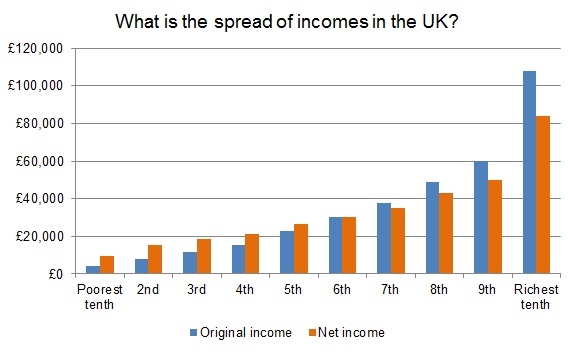
what-is-the-spread-of-incomes-in-the-uk-2014-15

Our children are the first generation in the UK in a very long time, if ever, to have much less than their parents and grandparents. Their lives are far less secure than ours have been. It’s not because of a lack of resources, it’s because of the greed of a small ruling elite and because of neoliberal ideology and policies. We have already lost the social gains of our post-war settlement: public services, social housing, legal aid, universal welfare and unconditional healthcare are either gone, or almost gone.

We must not allow this steady dismantling of our shared, public services, supports and safeguards to continue, as a society. We are one of the wealthiest nations in the world, and we have sufficient resources to support those most in need. It’s simply that the government chooses not to, preferring to be generous to the wealthiest minority, with tax cuts handed out from the public purse, and spending our public finds on being “business friendly” instead of recognising and reflecting public needs.

We must work together to challenge the toxic dominant ideology that places profit over and above human need and social wellbeing. We each share some of the responsibility for this. We now need to work on how to change this for the better, collectively. For our children and the future.

For a copy of the State of Child Health report, and the recommendations for each UK nation, visit the State of Child Health web pages.
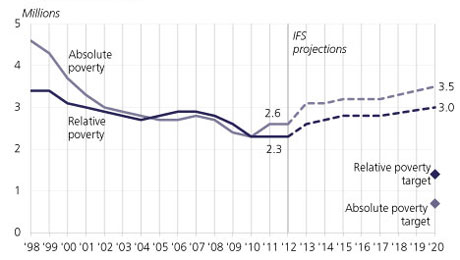
xwqmoakmvjdjrpau0pbz
Children in poverty (before housing costs), UK, financial years 1998/99 to 2012/13; Institute for Fiscal Study (IFS) projections to 2020/21.  (Source:
 Child poverty for 2020 onwards: Key issues for the 2015 Parliament.)

Related

Nearly two-thirds of children in poverty live in working families

Poverty has devastating impact on children’s mental health

Health cuts most likely cause of steep rise in mortality, government in denial

New research uncovers ‘class pay gap’ in Britain’s professions – Social Mobility Commission.


I don’t make any money from my work. But you can help me continue to research and write informative, insightful and independent articles, and to provide support to others by making a donation. The smallest amount is much appreciated – thank you.

DonatenowButton cards