Category: Uncategorized

George Osborne ignored civil servants’ warnings of increased child poverty due to 1% public sector cap

Image result for George osborne

Back in July 2015, George Osborne, then chancellor, announced that the 1% public sector pay cap would be extended for four years – a policy that had not been included in the Conservative manifesto. The cap remained in force until the 2018/19 pay round.

Documents released under the Freedom of Information Act show that Osborne had received advice from civil servants warning him that the policy would “make it more difficult for low-income families with children to access essential goods, and will therefore make it harder for the government to hit the Child Poverty Act targets.”

Authoritarian Osborne ignored civil servants’ warnings that extending the public sector pay cap would force children into poverty, the newly released documents reveal. Civil servants also warned that extending the cap “could increase financial pressure on families of public sector workers which may have a negative impact on family relationships”.

The previously undisclosed warnings are contained in a ministerial decision record obtained by GMB union. The papers reveal that ministers had also considered freezing public sector pay for two years. 

The Treasury released the paper to GMB after a prolonged delay and following being instructed to respond to the GMB by the information commissioner. Rehana Azam, GMB’s national secretary, said the pay freeze had a devastating impact on the union’s members for many years.

Osborne’s policy has directly affected over a million families with children. There are an estimated 2.4 million dependent children in households in which there is at least one public sector worker in the UK.

Azam went on to say : “This document is a mark of shame on ministers who imposed years of real-terms pay cuts in the full knowledge that it would condemn families and children to poverty.

“If Theresa May is serious about ending ‘burning injustices’, she must use this budget to reverse the fall in living standards that this government has imposed on ordinary working people.”

It emerged earlier this month that the cap on benefits, also imposed by Osborne in 2015, will mean that low-income families will miss out on an extra £210 a year from April. Analysis by the Resolution Foundation highlighted that more than 10m households will face a real-terms loss of income from the government’s austerity measures, introduced when Osborne was chancellor. It was also reported this week that Philip Hammond, Osborne’s successor, is considering imposing regional public sector pay rates. However, similar proposals were defeated in the 2010 to 2015 parliament.

A Whitehall source confirmed that the Treasury is considering overhauling the system to allow greater regional variation in pay rises. The chief secretary to the Treasury, Liz Truss, reportedly told the cabinet that pay rises should be ‘determined by retention, performance and productivity.’

The reasoning means that those working in London and the south-east could receive greater increases because pay in other regions is already more “competitive” with private sector levels, the source confirmed.

Meanwhile, Hammond is under increasing pressure to loosen curbs on spending after May used her conference speech in Birmingham to tell voters that next year’s spending review would mark the end of almost a decade of austerity.

George Osborne was contacted for comment and has not responsed at the time of writing.

Image result for George osborne


My work is unfunded and I don’t make any money from it. This is a pay as you like site. If you wish you can support me by making a one-off donation or a monthly contribution. This will help me continue to research and write independent, insightful and informative articles, and to continue to support others.

DonatenowButton

Public and Commercial Services Union wins £3 million compensation from the Department for Work and Pensions

Image result for PCS union

The Public and Commercial Services Union (PCS) has won a major victory over the government. The High Court has ruled that ministers acted illegally by withdrawing check-off, the decades-old practice of collecting members’ union subscriptions directly from their pay packet.

The union has won £3 million from the government because of the illegal moves the Department for Work and Pensions (DWP) used to try to ‘crush’ the PCS.

In 2015 the union was at the heart of opposition to the government, fighting against the government’s cuts and closures andchallenging when the Conservatives were robbing members of their redundancy rights. The union were steadfast in opposing austerity.

As a result the then Conservative Cabinet Office minister, Francis Maude, took a particularly vicious and authoritarian decision to attack members’ terms and conditions, also launching an offensive on union reps and attempting to bankrupt the PCS. Maude announced overnight that he would not allow members to pay their union subscriptions directly from their pay packets. However, this was a system that had been in operation for many decades. A union spokesperson said he did that because he knew that 90% of the union’s  income came from that method.

Magnificent campaign

PCS say: “In a magnificent campaign we signed up over 160,000 members to pay their subs by direct debit in a matter of weeks and months to stop us from going bankrupt and to ensure we could continue to represent members at work. We also took legal action in the High Court to show that the government had acted illegally, and to get compensation. Today that case has been settled and in a humiliating defeat for the government, in its attempt to smash PCS and other unions in the public sector, it has to pay £3 million compensation and all of our legal costs.

“In the DWP, reps and members worked hard together to ensure that PCS didn’t suffer as a result of check-off ending. Fran Heathcote, DWP President said ‘Our members recognised this attack for what it was, and it is pleasing to learn that the courts have recognised that too’.

“We now plan to take legal action against every major government department because of the illegal way they’ve treated us.”

PCS General Secretary Mark Serwotka said: “Today’s announcement tells us we have settled one departmental case on union busting, we have many more to come. That’s good news for all of us, and now we’ll ensure we use that money to benefit our members.

“This goes to show that this union can win. We can win in the courts and we can win through campaigning. We’ve defeated the government on the Civil Service Compensation Scheme and we’re waiting for the outcome of a judicial review on the way the government handled pay this year because we believe they did not consult us lawfully. But we’ve got more campaigns to fight. We’ve still got to challenge the government on pay, and ensure that next year we can win above inflation pay rises.

“We will continue to take them to court when we can, but the key to winning is to be a stronger union in every workplace. If you know a colleague who hasn’t joined PCS, please urge them to join. If you’re a member consider becoming a rep. The more of us who are in the union, the more of us who are active means we won’t just beat the government in court we will beat them in our campaigning, too.”

I say well done. A splendid, well fought victory.


Related

Why I strongly support Trade Unionism

The link between Trade Unionism and equality

The “Let Lynton Lobby Bill” – Grubby Partisan Politics and a Trojan Horse


My work is unfunded and I don’t make any money from it. This is a pay as you like site. If you wish you can support me by making a one-off donation or a monthly contribution. This will help me continue to research and write independent, insightful and informative articles, and to continue to support others.

DonatenowButton

Conservative MSP faces calls to resign over eugenic comments about benefits claimants

Michelle Ballantyne

 Michelle Ballantyne MSP

A Conservative Member, of the Scottish Parliament (MSP) has said welfare claimants ‘cannot have as many children as they like’ during her defence of the government’s welfare reforms.

The Conservative spokesperson on social security made the claim that poor people should not have more than two children, during a debate on poverty and inequality at Holyrood. The Scottish Government’s Cabinet Secretary for Communities and Local Government, Aileen Campbell MSP, intervened to ask whether the spokesperson was “proud of the two child limit and proud of the rape clause”.  

MSP Michelle Ballantyne said, “It is fair that people on benefit cannot have as many children as they like, while people who work and pay their way and don’t claim benefits don’t have to make decisions about the number of children they have”.

Ballantyne seems to have overlooked the fact that many people may have their children while in work. Over the last eight years, employment has become precarious, with many people moving in and out of work frequently. Furthermore, as wages have stagnated and been devalued, many people in work also rely on welfare to ensure they can meet their basic needs. Yet she implies that those claiming social security are a distinct class of  people who don’t work.  

Scottish National Party MSP, Tom Arthur, furiously criticised Ballantyne’s offensive eugenic suggestion, stating: “In my two and half years in this parliament, the contribution from Michelle Ballantyne was one of the most disgraceful speeches I have ever heard.

“Six minutes of pompous Victorian moralising, that would have been better suited to the pages of a Dickens novel.

“And to suggest that poverty should be a barrier to a family, that people who are poor are not entitled to any more than two children – what an absolutely disgraceful position.

“And she should be utterly, utterly ashamed of herself.”

Ballantyne previously called for a debate on “whether we feel there should be no restriction on the number of children you can have”.  She was widely condemned for her appalling defence of the two-child cap on benefits.

Ballantyne has argued previously that welfare recipients should have limits imposed on their right to a family life. In an interview in May this year, she said: “That’s a debate we’re going to have to have in Scotland in terms of whether we feel there should be no restriction on the number of children you can have.”

She added: “If you are looking for it in terms of what is nice, and what feels good then it’s easy to say we shouldn’t impose limits.”

In the same interview, Ballantyne made the ludicrous claim that, while foodbank demand was rising, “what we haven’t got is hard evidence about what the real causes are… I haven’t yet seen the concrete evidence of where that’s coming from.”

Foodbank providers have repeatedly provided evidence linking demand with Conservative welfare policy, including sanctions and the roll-out of Universal Credit.


SNP MSP Tom Arthur said: “The mask has well and truly slipped. Michelle Ballantyne’s horrific comments were not a slip of the tongue, but instead reflected her long-standing views.

“And now that these previous, utterly unacceptable comments about imposing a ‘restriction’ on the number of children people should have has come to light, she should withdraw the remark and apologise for it.

“The two child cap will put 150,000 Scottish children at greater risk of poverty by 2021 – but to Michelle Ballantyne, that’s a price worth paying so she can lecture those in low paid work or who’ve fallen on hard times.

“The Tories truly are the nasty party.”

Arthur has since called on Ballantyne to resign. He said: “Michelle Ballantyne’s comments were vile and ignorant – and should have no place in Scottish political life”, he said.

“Given her comments, and what we now know about her hypocrisy and her form on the issue, Michelle Ballantyne’s position as Tory welfare spokesperson is completely untenable.

“That Ruth Davidson thought someone with Ms Ballantyne’s views would be acceptable in this role is all we need to know about the Scottish Tories.

“If Ms Davidson and her Deputy won’t remove Ms Ballantyne she should resign as Tory welfare spokesperson – otherwise it will be clear that the Tories are prepared to drag the debate into the gutter as their welfare cuts drive more and more children into poverty.”

The two-child policy was passed into law via universal credit. The original idea for treating children as a commodity and moralising about what items poor people should spend their money on came from Iain Duncan Smith – the Tory consensus is definitely no flat screen TVs, (has anyone tried to buy one that isn’t flat-screened now?) or iphones, and certainly not more children than the government deems appropriate for poorer families.

The Conservatives really do think like this. It’s not just a ‘slip’ by one nasty MSP. It’s now a fundamental part of the wretched and punitive welfare policy framework. 

And the punch line:

Related

The government’s eugenic policy is forcing some women to abort wanted pregnancies

The government’s eugenic turn violates human rights, costing families at least £2,800 each so far, according to DWP statistics

UN to question the Conservatives about the two-child restriction on tax credits

A brief history of social security and the reintroduction of eugenics by stealth

Eugenics is hiding behind Hitler, and informs Tory policies


My work is unfunded and I don’t make any money from it. This is a pay as you like site. If you wish you can support me by making a one-off donation or a monthly contribution. This will help me continue to research and write independent and informative articles, and to continue to support others.

DonatenowButton

Former Universal Credit staff reveal call targets and ‘deflection scripts’

Image result for universal credit logo

Joanne Huggins worked on the universal credit helpline in the Grimsby service centre for nearly two years before quitting in April. She had worked in social housing and understood the social security system but was still surprised by what she found. I did not expect it to be so fundamentally flawed,” she told Patrick Butler, in a Guardian interview back in July.

She had hoped she would be able to help resolve the problems reported by claimants, some of whom would call in upset after payments were late, or were unexpectedly reduced, but soon found the system resistant to offering quick or easy assistance.

“It felt like these were not people that you serve, not customers, not important, but people who get in the way of what you are are trying to do, which was to hit call targets,” she said.

She said it was “heartbreaking” having to block or deflect vulnerable claimants, telling them that they would not be paid, or would have to submit a new claim, or have a claim closed for missing a jobcentre appointment, or be sanctioned – a penalty fine for breaching benefit conditions – or go to the food bank.

She added that the system felt crude rather than intuitive, and her role often felt adversarial. Huggins said: “It was more about getting the person off the phone, not helping.”

Bayard Tarpley also worked in the Grimsby centre. He said the system was not only avoidably complex but failed to anticipate that claimants may find it difficult. Tarpley gives countless examples of how his experience showed that the system is designed irrationally, or clumsily, or in a way that confuses staff as well as claimants and leads directly to people not receiving the lifeline financial support they need and are entitled to.

Tarpley said:

“Universal credit is like one of those old Disney cartoons with a leaky boat. The holes spring up, and Bugs Bunny or whoever sticks a finger in, but then a new hole appears, and they end up sprawled across the boat trying to block all the leaks. The holes aren’t the problem, though, it’s the boat” 

Staff often get confused by the welter of system updates, guidance and memos.

“This results in a massive variation in understanding between agents, teams and especially service centres, meaning that claimants can call three times in a row and get three different answers to a query.”

He added:

“This piled excessive responsibilities on to call centre staff. When people call up with very specific questions about how their terminal illness affects their benefit, it’s me that answers that question. It’s me that has to judge whether it’s appropriate to ask a claimant if her third child is the result of sexual assault because it may affect her benefit entitlement.

“The decisions I make on a daily basis have an impact on how quickly someone is able to pay their landlord, turn the heating back on, get their children to school. I have made decisions that have resulted in people being evicted, and decisions I have made have led people to tell me that it is the reason they are self-harming.

“I would argue that I am scarcely qualified for any of those things, never mind all of them.”

Now, the former Universal Credit service centre advisor, Bayard Tarpley, has revealed details of a ‘deflection script’ that staff are given to get claimants off the phone. Speaking to Sky News, ahead of a major report on Universal Credit that is due to be released by the Public Accounts Committee (PAC) today, Tarpley echoed earlier concerns raised by Huggins. about call targets. 

He said:  I think certainly from a frontline position I wasn’t particularly confident that Universal Credit was meeting that goal of helping people work and making them better off based on their circumstances.”

He added:

“We were encouraged to end the call sooner so that we could quickly get through things.

“There didn’t seem to be a lot of changes that were specifically there to support claimants.

“So there was there is something called the deflection script. It was a piece of paper that explains what to do when someone calls in.

“Even if a problem could be solved then and there on the phone we were encouraged to do everything in our power to get them to hang up the phone and do that online.”

The Department for Work and Pensions (DWP) released a statement that denies the existence of such a deflection script but added that “staff may use aides to effectively deal with claimants.”

A spokesperson added: “We take the training of our call handling staff extremely seriously to ensure they are prepared to handle a range of enquiries, regardless of how long they might take – there is no policy to get callers off the phones.

“Since 2010, one million people have been lifted out of absolute poverty, with on average 1,000 more people going into work each and every day since 2010.”

Whistleblower Tarpley concludes:

The DWP’s ‘culture of denial’

With the chancellor under intense pressure to act in his budget next Monday to cushion the impact of the the universal credit system, the public accounts committee has warned that the government has ignored the concerns of those at the sharp end. The committee took evidence from charities and local authorities, which told MPs they had seen sharp increases in rent arrears and food bank usage among new recipients of universal credit, not least because of the five-week wait for the first payment.

The DWP’s own survey found that 40% of people were experiencing financial difficulties eight or nine months into their claim, and work and pensions secretary Esther McVey recently admitted the rollout would leave “some people worse off”.

The committee has said McVey’s department has repeatedly been unresponsive to on-the-ground evidence about the practical problems with universal credit, and what it called the “unacceptable hardship” faced by many.

“The department’s systemic culture of denial and defensiveness in the face of any adverse evidence presented by others is a significant risk to the programme,” the MPs said, citing the DWP’s response to an earlier critical report by the National Audit Office (NAO).

McVey was forced to apologise to parliament earlier this year, when the NAO’s head, Sir Amyas Morse, complained that she had misrepresented the report as positive, when it had called for a “pause” in the rollout of universal credit.

Several of the organisations that gave evidence told the committee they had a positive relationship with local jobcentres, but found it impossible to influence the DWP nationally.

Meg Hillier, the public accounts committee’s chair, said: “This report provides further damning evidence of a culture of indifference at DWP – a department disturbingly adrift from the real-world problems of the people it is there to support.”

The committee said the help available to people moving over to universal credit, known as “universal support”, which is funded by the DWP but commissioned by councils, is patchy, and “not fit for purpose” – because it does not include debt advice, for example

By June this year, 980,000 people were already in receipt of universal credit, with another 7.5 million due to move over to the new system. So far, only new claimants, or those whose circumstances have changed, have been moved on to universal credit.

The government recently delayed so-called “managed migration”, which will allow existing claimants to be moved across, from January 2019 to later in the year, apparently because it feared being defeated by backbench rebels in parliament if it tabled the necessary regulations.

The committee criticised the DWP’s claim that switching to universal credit will save taxpayers up to £8bn, by coaxing more people back into the workforce. They said that the department cannot say how it will measure whether the targets have been hit – or how many of those moving into work would have done so under the old system anyway.

A DWP spokesperson said: “We will carefully consider the findings in the report – a number of which we are already working on. For example, we have recently begun a new partnership with Citizens Advice to deliver better support to the most vulnerable, and are working with stakeholders to ensure the Managed Migration process for people moving onto Universal Credit works smoothly. 

“So far this year we have already announced several improvements to Universal Credit, such as plans to reinstate housing benefit for vulnerable 18-21 year olds, making direct payments to landlords, offering 100% advances and providing an additional 2 weeks of housing benefit for claimants.”

The so-called improvements are very clearly not enough. Legacy benefits were calculated to meet very basic living costs. Because universal credit leaves many people worse off, it means that they are facing unacceptable levels of extreme hardship and situations of absolute poverty – where people can’t meet their fundamental survival needs such as food, fuel and shelter. In this respect, Universal Credit is now not just failing our contemporary standards of addressing poverty but those of William Beveridge in the 1940s.

Until that issue is addressed, universal credit will continue fail the people it was allegedly designed to support. 


My work is unfunded and I don’t make any money from it. This is a pay as you like site. If you wish you can support me by making a one-off donation or a monthly contribution. This will help me continue to research and write independent, insightful and informative articles, and to continue to support others.
DonatenowButton

PMQs showcases a government that is spiteful and Conservative with the truth


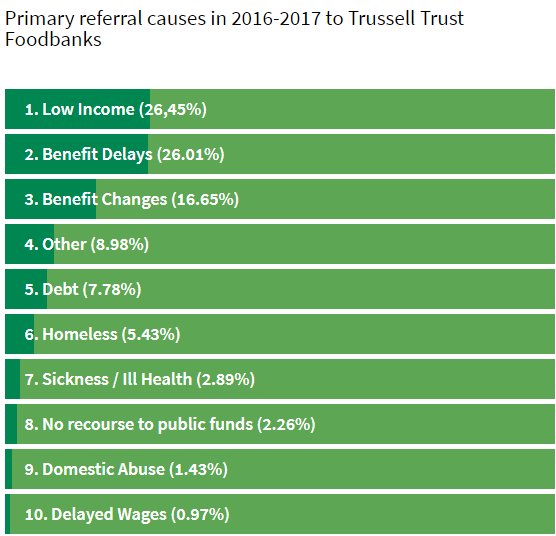
In a very wealthy so-called liberal democracy, from 2016 to last year, these are the reasons why people were referred to food banks. The highest number of referals are among the low earners, demonstrating the government’s slogan ‘making work pay’ is a myth. Work does not pay for many. However, the government chooses to gaslight the population about consequences of it’s policies.

Today in Prime Minister’s Questions: 

As my local Labour MP, Kevan Jones quipped: “the Conservatives will be celebrating re-opening workhouses next.”

The spite and malice on the Prime Minister’s face as she responds to the opposition, using blatant and snide playground gestures to intimidate never fails to anger me. It’s disgraceful that the government reduce serious political issues to immature ‘win or lose’ game playing and PR tactics.

The truth is that Universal Credit is not just failing our ‘relative’ contemporary standards of poverty but those of William Beveridge in the 1940s. Conservatives accuse Labour of ‘taking us back to the seventies’, but May’s government have taken us back to the 1940s, and to absolute poverty levels that existed before there was a welfare state. Absolute poverty is when people cannot meet their basic survival needs: food, fuel and shelter. The UK’s publicly funded social security system is no longer an adequate provision for people to meet the costs of their most fundamental and universal human needs. 

This is a government that has demanded the most from those citizens with the very least under the guise of austerity, while handing out public funds to the private banks accounts of the wealthiest.

Theresa May also selectively and maliciously quoted a section of a book – Economics For The Many  – which was edited by Shadow Chancellor John McDonnell, declaring Labour’s costed manifesto “doesn’t add up”. the Prime Minister went on it to claim the Labour party would “wreck the economy”, but as usual she was being Conservative with the facts.

She attempted to make it look like Professor Simon Wren-Lewis was criticising Labour’s economic strategy, but he wasn’t. The quote mining – a frequently used Conservative strategy to present lies and to mislead parliament and the public – referred to a book chapter May referred to by Wren Lewis , an economist and member of Labour’s Economic Advisory Committee.  Basically the chapter says that Labour will ensure: 

  • The Government is spending less than it takes in in tax within five years
  • Government debt is falling within five years
  • Labour will only borrow for investment and infrastructure, not for day-to-day spending.

Wren Lewis never said that Labour’s manifesto didn’t ‘add up’. He said that other people claimed it didn’t add up. And he said that it didn’t matter.

Wren Lewis notes in the chapter that the Institute for Fiscal Studies (IFS)claimed it ‘doesn’t add up’ – which is a very different thing. And actually, the IFS didn’t really say that either. It said that it was “hard to say” whether Labour’s pledge to reduce debt was compatible with their promises of a wave of nationalisations of water and energy.

The IFS said essentially that because the Labour party would transform the economy so radically, it would be impossible to say whether their manifesto costings would be accurate.

It’s a priceless cheek, as well as a malicious attack, especially considering that the Conservatives did not bother to cost their own manifesto at all.

The blatant lie also shows the prime minister’s utter contempt for democracy.

Finally, a word about the Conservative’s crowing regarding ‘their’ employment levels. 

The ‘high employment’ narrative does not benefit citizens, who face zero hour contracts, little employment security and more than half of those people needing to claim welfare support are in work. The Conservative’s definition of ‘employment’ includes people who work as little as one hour a week. It includes carers. It also includes people who have been sanctioned.

Now there is a perverse incentive to furnish a hostile environment of Department for Work and Pensions’ administrative practices in action.

When the Conservatives took office in 2010, on average citizens earned £467 a week. The latest figures from the Office for National Statistics (ONS) show that we now take home £460 a week. In other words, average wages have gone down in real terms during the eight years of Conservative-Lib Dem and Conservative governments, while the cost of living has risen substantially. It’s a misleading to make these claims at all when weekly earnings are actually 1.3 per cent lower now in real terms than they were when the Conservatives took office in 2010.

Furthermore, the ONS also produced household data suggesting that the true rate of unemployment is 4 times greater than the government’s preferred statistic.

The Conservative’s official definition of unemployment disguises the true rate, of course. In reality, about 21.5% of all working-age people (defined as ages 16 to 64) are without jobs, or 8.83 million people, according to the Office for National Statistics. I know whose statistics I believe, given the Conservative’s track record of abusing figures and telling lies.

Here is more data here on the effect of chronic underemployment of the unemployment rate, and the depressing Conservative reality of the ‘business friendly’ gig economy.

Conservatives being conservative with the truth as ever.

And spiteful.


I don’t make any money from my work. But you can help me by making a donation to help me continue to research and write informative, insightful and independent articles, and to provide support to others. The smallest amount is much appreciated – thank you. 

DonatenowButton

CEO of charity speaks out about the devastating impact of Universal Credit despite threats

Image result for homeless people

The founder of a homeless charity has claimed she won’t be able to receive any Lottery funding unless she stops publicly criticising universal credit and the government. She claimed an official told her to not express any more of her opinions about universal credit and the government or she won’t receive any money.

The Big Lottery Fund is an executive non-departmental public body, sponsored by the government’s Department for Digital, Culture, Media and Sport.

The charity was set up last year to help homeless and vulnerable people in Torbay. The charity founder and chief executive, Ellie Waugh, has previously said that an unofficial policy of ‘social cleansing’ is being applied to remove homeless people from Torquay town centre. 

The charity has been offering support services and food to the homeless and disadvantaged groups from its offices in Castle Road, opposite Torquay Town Hall.

Waugh said it had been feeding around 200 people a week during the summer, with up to 500 in the winter, and there was a group of around 20 regular visitors who spent a lot of time at the centre.

Last December the charity applied to the Conservative Torbay Council for permission to use the building as an advice centre so the services could carry on being provided at the building.

Earlier this year a business leader controversially accused the charity of ‘attracting more homeless people to the area’, and blamed that for causing a fall in takings at some shops.

Waugh said the charity was told in July it had to stop feeding people and to only permit a maximum of five clients at a time in the building. 

In January Waugh said the charity was asked by a senior Torbay councillor to close early on a day when major investors were coming to discuss a multi-million development – because homeless people were an ‘eyesore’. And there was more controversy a month later when Torquay Chamber of Trade chairman Susie Colley blamed the charity for an increase in rough-sleeping and begging in the town centre, which was ‘harming trade and seeing shop takings fall.’

In March, business people in the seaside town started naming and shaming beggars they believe to be “fake” as part of a campaign to drive them off the streets. The Sun, however, has claimed that these business people are a part of the charity, whic of course is rubbish. The vigilante campaign was started by a pub owner, Ashley Sims, who threatened to ‘name and shame anyone falsely claiming to be homeless.’ The campaign was heavily criticised by the police. 

Many people support the charity’s work at the centre and a petition with 81 names backing the application was handed in to Torbay Council in May.

In October the charity said it had found homes for more than 600 people and jobs or training for 150 more. 

One supporter wrote: “This is a vital service needed for the vulnerable, homeless and those in need in the local community. It provides an excellent service to the community and is of benefit to the area.” 

Another said: “I feel that this service is a major asset to Torbay; its service provided to me was crucial to being re-homed and they also provided a great general care in my health and well-being.”

Now, Waugh has chosen to speak out about the devastating impact of Universal Credit despite threats from the Council and funders, because she thinks the public needs to know how dire the situation is for many people. Charities are not permitted to criticise government policies such as Universal Credit and may lose funding and aid as a consequence.

The charity were due what would have been their first grant from the Big Lottery Fund but Waugh said they were “screwed” after speaking out and would now probably receive nothing.

Trustee Shirley Holbrook said she was in the room when lottery official allegedly made the statement. She said: “She said categorically if we were to receive a big lottery grant we would be unable to speak out against Universal Credit or any other government measure that affected our clients adversely.

“We are not a political organisation. We speak out about homelessness because we deal with the results of it every day.” She said the main problem with Universal Credit was it was paid at the end of the month, while the old system saw claimants get cash at the beginning of the month.

Holbrook added that the charity has launched a crowdfunding page to make up for the money they have missed out on from the Big Lottery Fund. The charity helps up to three hundred people per week and is run by Waugh and another full-time member of staff with a team of 17 volunteers.

A spokesperson for Big Lottery Fund said it funded Humanity Torbay £10,000 in July 2017 which was announced as part of its publicly disclosed funding announcement. They said it was actively working with them on their further application for £130k and no decision has been yet made on this.

The spokesperson added: “It is incorrect to suggest we would withhold funding from any organisation on the basis of what they say publicly on social issues. We fund thousands of projects that are run by organisations that, in the course of their other activities, may also campaign on a range of topics or issues. “While we are clear – and it’s our stated policy – that our funding cannot be directly used for such activity, we do not prevent any grant holder from voicing their views on an issue that is important to them, their organisation or community.”

This is one of Waugh’s online accounts of the desperation, harm and utter destruction of people’s lives that Universal Credit is inflicting on increasing numbers. She regularly posts videos online in which she talks about the impacts of the controversial new benefits system on the homeless.

Ellie Waugh speaking out: “It’s absolutely awful out there”.


I don’t make any money from my work. But you can help me by making a donation to help me continue to research and write informative, insightful and independent articles, and to provide support to others. The smallest amount is much appreciated – thank you. 

DonatenowButton

Director of medical research says rise in cases of sepsis is because of NHS funding cuts and overcrowding in hospitals

Deaths from sepsis recorded in England’s hospitals have risen by more than a third in two years, according to data collected by a leading safety expert. 

According to Sir Brian Jarman, the director of the Dr Foster research unit at Imperial College London, the number of recorded deaths where the primary cause was sepsis was 11,328 in 2014-15. By 2016-17 there were 15,722 deaths in hospital or within 30 days of discharge where sepsis was the leading cause, an increase of 38.8%.

Jarman, whose unit sends real-time alerts to hospitals that fall behind the expected mortality rate, blamed the increase partially on the consequences of real-terms funding cuts.

“The biggest thing that’s important seems to be the number of staff – doctors per bed,” he told BBC Radio 4’s Today programme in August. “One of the secondary important things is the overcrowding of hospitals. The level of overcrowding shouldn’t be more than 85% [bed occupancy], and it’s been going over 90% in recent years.”

Jarman, a former president of the British Medical Association, said the number of beds available had halved and the number of admissions had roughly doubled over the past 30 years – an “amazing change of provision of healthcare”.

In 2015, an inquiry found that 40% of patients with sepsis who arrived in A&E had not been reviewed by senior doctors quickly enough. There were also avoidable delays in giving patients intravenous antibiotics in nearly a third of cases (29%).

Every death from sepsis is a tragedy, yet too often the warning signs are missed – there is a need to get far better at spotting sepsis across the NHS and this advice shows how vital it is for clinicians to treat life-threatening symptoms as soon as possible.

Last year, Jeremy Hunt, then the health secretary, told a private memorial service for a one-year-old boy who died from sepsis that the child was let down by the NHS and the government.

Speaking at the service in Cornwall, Hunt said he had “come here to say sorry” to the family of William Mead, who died after the emergency services failed to diagnose a fatal case of sepsis. Hunt told those gathered at Truro Cathedral: “I as health secretary, the government, and the NHS, let down William.

“I’ve come here to say sorry. This weekend William should have been enjoying beautiful Cornish sunshine with his parents.

“We didn’t spot his sepsis before it was too late.”

William’s motherMelissa Mead, has become a prominent campaigner for better diagnostics of sepsis, saying that the NHS system was “broken”.

She has also described her son’s final hours, his symptoms and her repeated pleas to health services in painstaking detail on her blog site.

In February 2017, I developed sepsis, which is caused by an overly aggressive immune response to an infection. In my case, it happened because I had developed pneumonia while I had ‘flu. In sepsis (sometimes called septicaemia) the immune response causes widespread and severe inflammation and a drop in blood pressure (‘shock’), which leads to organ damage and other life threatening complications. The problem is that people often feel unwell when they have an infection, and sepsis is insidious. It can advance  very rapidly. I developed pneumonia and sepsis within four days of starting with influenza symptoms, by the fourth evening, my symptoms had become life threatening. 

I thought my symptoms were simply because I had a severe strain of influenza, and hadn’t realised I had developed pneumonia. My sons had both been very poorly the week before, while they had the ‘flu, too. By the time I knew something was very wrong, I was already in septic shock, and despite having an almost overwhelming urge to crawl back to my warm bed and just sleep, a sudden weird sense of impending doom kept me from doing so. Had I gone back to bed, I would never have woken again. 

Although Jarman believes that staff shortages and overcrowding on wards are partly to blame for the rise in sepsis, NHS England have said more conditions were being classed as sepsis than before, and a spokesperson added that efforts had also been made to improve diagnosis. However, it’s not quite true that more deaths from sepsis are being recorded as being caused by sepsis.

Dr Ron Daniels, chief executive of the UK Sepsis Trust and an intensive care consultant, said sepsis was one of the most common causes of death in the UK, it’s responsible for killing up to 44,000 people a year – in hospital and in the community.

He said that hospital records made it almost impossible to keep track of the true number of deaths through sepsis, because, he added: “It’s very common that if someone dies of sepsis that it’s coded or reported as simply being the underlying infection.

“So they might die of sepsis in an intensive care unit with multiple organ failure – but they’re recorded as a death from pneumonia. We need to fix that problem before we can truly understand the scale of sepsis.

The best way for us to do that is to develop a prospective data system like a registry that exists for other conditions, so that we can really get a national picture of what’s going on.”

He added: “The treatment for sepsis, if it’s caught early enough, involves very basic interventions – looking for the source of the infection, giving antibiotics.

“For every hour we delay in giving antibiotics, the patient’s risk of dying increases by a few per cent, so it’s essential that we spot it early and deliver the basics of care quickly.”

Jarman hopes his research data can be used to improve the survival chances of hospital patients who developed sepsis, via alerts that he sends to hospitals that are falling behind.

He said “Some of those hospitals with a lower death rate have got particular ways of reducing mortality from septicaemia, which the others we hope might learn from, and also we hope that by giving them this alert, within a month or two of the actual happening, they can actually get in there and do something quickly.”

There has been more of a focus on screening for sepsis in the NHS in recent years, led by the UK Sepsis Trust, which was formed by a group of clinicians at the Good Hope Hospital near Birmingham.

However, the fact that deaths from sepsis are commonly recorded as being caused by an underlying infection, rather than abnormal immune response to it – sepsis – means that gathering mortality data about hospital practices in diagnosis and management of sepsis is likely to lead to inaccurate results and cannot be relied on to improve recognition and diagnostic practices, or treatment.

Some reasons why sepsis is increasing

Vulnerability to sepsis is becoming more widespread. This is thought to be for a number of reasons:

  • More opportunities for infections to become complicated – more people are having invasive procedures and organ transplants, and more of us are taking immunosuppressive drugs and chemotherapies
  • Rising antibiotic resistance – microbes are becoming immune to drugs that would otherwise control infections

People more likely to get sepsis include:

  • Those with underlying lung disease, such as COPD and asthma
  • Those with illnesses that affect their immune response, such as HIV, leukaemia, chronic illness such as diabetes, lupus, and some other connective tissue /autoimmune diseases
  • Those taking immunosuppressant therapies, such as people who have had organ transplants, those with autoimmune illnesses, those with cancer having chemotherapy, or those on long-term steroid treatment 
  • Those who have had their spleen removed

Other predictors of higher severe sepsis incidence rates include socioeconomic status (those in poverty and destitution are at greater risk), and urbanicity.

In a context of austerity and cuts to basic social security and the NHS, it seems almost inevitable that cases of sepsis will increase.  

Any infection can trigger sepsis, including minor accidental cuts and insect bites that have become infected, but the following types of infections are more likely to cause sepsis:

  • Pneumonia
  • Meningitis
  • Abdominal infection 
  • Kidney/ urinary tract infection
  • Appendicitis
  • Infection of the gallbladder
  • Some cases of ‘flu

Symptoms of sepsis include:

  • Fever above 101ºF or a temperature below 96.8ºF (above 38.3º Celsius or below 36º C)
  • Heart rate higher than 90 beats per minute (tachycardia)
  • Fast, shallow breathing – rate higher than 20 breaths per minute (tachypnea)
  • Infection.

Other symptoms may be:

  • Dizziness or feelings of faintness
  • Confusion or a drop in alertness, or any other unusual change in mental state, including a feeling of doom or a real fear of death
  • Slurred speech
  • Diarrhoea, nausea, or vomiting
  • Severe muscle pain and extreme general discomfort
  • Difficulty breathing – shortness of breath
  • Low urine output (not needing to urinate for a whole day, for example)
  • Skin that is cold, clammy, and pale, blue, discolored or mottled
  • Skin that is cool and pale at the extremities, signaling poor blood supply (poor perfusion)
  • Loss of consciousness

It’s crucial to seek immediate medical attention if someone has more than one or two those symptoms, though loss of consciousness and severe breathing difficulty always need urgent medical attention.

The earlier you seek treatment, the greater are the chances of survival.

Sepsis medical criteria

There are two tools or sets of criteria that doctors use to determine the severity of your condition. One is the systemic inflammatory response syndrome (SIRS). SIRS is defined when you meet two or more of the following criteria:

  • Fever of more than 38°C (100.4°F) or less than 36°C (96.8°F), often with chills and shivering
  • Heart rate of more than 90 beats per minute (tachycardia)
  • Respiratory rate of more than 20 breaths per minute or arterial carbon dioxide tension (PaCO 2) of less than 32 mm Hg
  • Abnormal white blood cell count

Another tool is the “quick sequential organ failure assessment” (qSOFA). It uses the results of three criteria:

  • Low blood pressure
  • High respiratory rate (greater than 22 breaths per minute)
  • Glasgow coma scale score of less than 15. (This scale is used to determine your level of consciousness.)

A positive qSOFA is determined if two or more of the above measurements are abnormal. Some doctors prefer using qSOFA because unlike the SIRS criteria, qSOFA does not require laboratory tests and so may be used to make a prompt assessment. This means it can also be used by paramedics – as it was in my case. The results of either or both of these assessments will help doctors determine care promptly.

Tests, diagnosis and treatment of sepsis

The first step that doctors and paramedics take in diagnosing sepsis is to observe the symptoms. Sepsis is a major challenge to diagnose, and in Intensive Care Units it’s one of the leading causes of death. It is also a leading cause of people being readmitted to hospital. Sepsis arises unpredictably and can progress very rapidly.

When doctors observe the typical signs and symptoms of sepsis, they will also consider the patient’s medical history and be alerted to possible sepsis if there has been a recent infection, a surgical or catheter procedure, or if the patient is particularly vulnerable to infection – because of compromised immunity, for example.

The main treatment for sepsis and septic shock is antibiotics, as most cases are caused by a bacterial infection, though viral and fungal agents less commonly may also cause sepsis. If someone has severe sepsis and septic shock, antibiotics will be given directly into a vein (intravenously). Often other support is provided, such as oxygen, ventilation, or dialysis, is also given to support organ function, depending on how well a person’s organs are coping. Methods to stabilise blood pressure are often used, along with administered anticoagulants to prevent blood clots.

Ideally, antibiotic treatment should start within an hour of diagnosis to reduce the risk of serious complications or death. Intravenous antibiotics are usually replaced by tablets after two to four days (though sometimes longer). Antibiotics may have to take them for 7 to 10 days or longer, and often for a while after someone leaves hospital, depending on the severity of their condition.

Doctors may have to make a quick “best guess” at the type of infection and, therefore, the type of antibiotics needed, because speed in treating the infection is of the greatest importance; waiting for laboratory sample tests would hold up a potentially lifesaving intervention. Treatment may be adjusted once the causative microbe has been identified.

Antibiotics alone may be sufficient at a very early stage of sepsis, but treatment needs to be given very promptly.

For later stages of sepsis and septic shock, emergency hospital treatment will be needed (often in the intensive care unit); additional to the IV antibiotics, it may include:

  • Intravenous fluids (especially during the first 24 to 48 hours after admission, if you have severe sepsis or septic shock.
  • Vasopressors (to raise blood pressure)
  • Central lines
  • Anticoagulants (to prevent blood clots)
  • Other means of organ support as necessary, such as oxygen therapy, mechanical ventilation or dialysis

Severe sepsis is associated with a drop in blood pressure. Low blood pressure reduces the amount of oxygen and nutrients going to the body’s organs. This drop causes damage to the body’s major organs.

Septic shock advances when adequate blood pressure cannot be restored despite treatment with IV fluids. Septic shock may progress very quickly to multiple organ failure and death.

Complications from septic shock may cause symptoms of:

  • Kidney failure
  • Lung failure
  • Heart failure
  • Blood clots
  • Death

Prompt medical attention, diagnosis and treatment are key to surviving sepsis.

Often, paramedics may test for a rise in blood sugar as hyperglycemia is very common in people who are critically ill with sepsis, regardless of whether they have diabetes. Mine had risen despite the fact I had been unable to keep food down for four days. Mine is usually on the low side generally, but it had risen while I was ill. No one really knows why this happens. 

Laboratory tests at the hospital include a blood test to measure C-reactive protein (CRP), which is a substance in the blood that is produced by the liver, and it is used to measure levels of inflammation in the body. It’s used often to test for some types of autoimmune illness flares, too.

A CRP level of more than 10 milligrams per litre (10mg/L) indicates clinically significant inflammation. However, when someone has a severe infection such as pneumonia, it is usually very high – often between 100-200, and sometimes higher. A high CRP is generally linked with infection severity, and a CRP of 200 + is fairly common in sepsis. A CRP above 300 is associated with a poorer prognosis. Mine was 396 by the time I got to hospital. 

CRP tests are very clever science and extremely useful. It’s not possible to make a diagnosis from the test result alone, but used in conjunction with other tests, CRP results can support a diagnosis. And the CRP level may also be used to judge how effective treatments are. The CRP “resolves” – comes down quite quickly, often before a patient starts to feel better – when their treatment, such as antibiotics, is successful. Two or three days into the IV antibiotic treatment, my CRP was down to 193.

Other biochemical tests include blood clotting assessments, a white cell count, measurements of serum lactate, procalcitonin and something called alkaline phosphatase, all of which collectively may helpt to diagnose a severe infection and a severe systemic inflammatory response syndrome (SIRS), which is the key feature of sepsis

Testing is usually done to determine which family of bacteria has caused the infection so that antibiotic treatment may be tailored to treat it. 

It’s important that doctors maintain a high suspicion of sepsis  when someone hasan infection and symptoms, which is necessary to help prevent deaths.

In my case, the paramedics were highly suspicious of sepsis because I was tachycardic, my breathing was rapid, and I had an impeding sense of doom. My temperature was very raised and my blood glucose was raised. My blood pressure had plummeted to 70/40. There were no oxygen exchange noises in my lower lungs, so pneumonia was quickly diagnosed. An x ray later confirmed the pneumonia. I was given IV fluids to help raise my blood pressure and an antibiotic in the ambulance. I have no doubt these measures helped save my life.


Early suspicion of sepsis helps save lives.


imgres

I wrote about my own experience of sepsis here, which includes more detailed information. The most shocking part ofthis experience was the fact I had not realised I was so gravely ill. So I wanted to raise awareness of this insidious and often fatal condition: Surviving sepsis: awareness raising and a case study


I don’t make any money from my work. I am disabled because of illness and have a very limited income. But you can help by making a donation to help me continue to research and write informative, insightful and independent articles, and to provide support to others. The smallest amount is much appreciated – thank you. 

DonatenowButton

My response to Brandon Lewis when he invited me to support the Conservatives

Image result for brandon lewis and theresa May

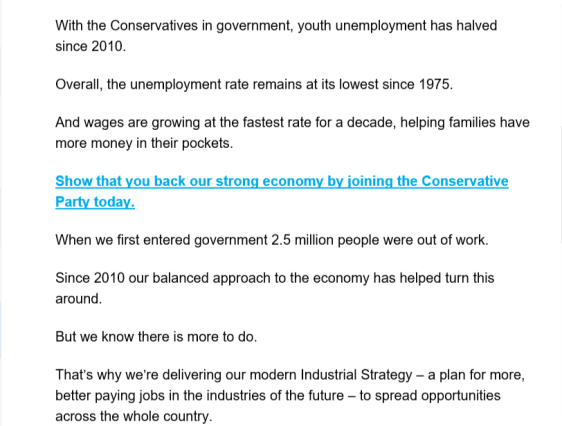
I was surprised to get the following email from Brandon Lewis, the Conservative party chairman, yesterday. 

I’ve published my response below the email.

Brandon lewis1

Brandon Lewis 2

brandon lewis 3

My response:

I want to share some news with you, Brandon,

I won’t ever be supporting the Conservatives. 

The government claims that austerity will ensure our children don’t inherit debt. That’s utter rubbish. I have seen my 2 youngest sons struggle making ends meet to get through university. Their tuition fees cost a lot more than our young people are permitted to borrow through the student loans company to meet their living costs each year. Despite the poorest students struggling to get by, they will still come away from university with a debt that is the same size as my mortgage was in 2003. My sons also lost their Education Maintenance Allowance because of your government.  To be frank, your party have caused my family and loved ones nothing but increasing hardship.

That’s how much this government values young people. Not very much. Certainly not enough to invest in their future, or in in opportunities that are meaningful and secure. My generation had access to free higher education. This generation is the first in a long time to be worse of than their parents were, in multiple ways, and not just because of the heavy costs of an education.

One of the first acts the Tories did when they took office in 2010 was to scrap Labour’s Every Child Matters child protection and welfare policy. In fact Gove quietly removed it the very day after the election. They then decimated youth services.

Jobs have become increasingly precarious. Worker’s rights and conditions are deteriorating and exploitation is flourishing because you have viciously attacked trade unionism and undermined the principle of collective bargaining. You have also deregulated the labour market because you are, after all, the ‘business friendly’ party.

Conservative corporatocratic principles have tilted the balance of power away from workers, leading to blatantly exploitative employment practices and grim, insecure working conditions. Your ‘business friendly’ agenda is the reason for bank bailouts, excessive pay for CEOs, increasing socioeconomic inequality, as well as the exploitation of national treasuries, people, and natural resources. Such an approach constitutes proto-fascism. 

Historically, fascists have operated from a social Darwinist perspective of human relations. Like the Conservatives, they create and value inequality. In terms of economic practices, this has generally meant promoting the interests of successful and monopolistic big business while destroying trade unions and other organisations of the working class. Fascists also promoted nationalism. I’m sure you don’t need me to point out the numerous uncomfortable parallels here, including your party’s stranglehold on the media. 

“Fascism should more appropriately be called Corporatism because it is a merger of state and corporate power” – attributed to Benito Mussolini, but probably came from Giovanni Gentile, the philosopher of fascism, in the first edition of the Italian Encyclopedia (Enciclopedia Treccani).

In 2013, JP Morgan wrote a document, which I read at the time – The Euro Area Adjustment—About Half-Way There. Firstly,  they say that financial measures are necessary to ensure that major investment houses such as JP Morgan can continue to reap huge profits from their speculative activities in Europe. Secondly, the authors maintain, it is necessary to impose ‘political reforms’ aimed at suppressing opposition to the massively unpopular austerity measures being imposed at the behest of the banks. 

The authors write: “The political systems in the periphery were established in the aftermath of dictatorship, and were defined by that experience. Constitutions tend to show a strong socialist influence, reflecting the political strength that left-wing parties gained after the defeat of fascism.

“Political systems around the periphery typically display several of the following features: weak executives; weak central states relative to regions; constitutional protection of labour rights; consensus-building systems which foster political clientalism; and the right to protest if unwelcome changes are made to the political status quo. The shortcomings of this political legacy have been revealed by the crisis.

Whatever the historical inaccuracies in their analysis, there can not be the slightest doubt that the authors of the JP Morgan report are arguing for governments to adopt authoritarianism to complete the process of social counterrevolution that is already well underway across Europe.

What JP Morgan is making clear is that anything resembling ‘socialism’ or left inclinations must be removed from political structures; localism must be replaced with strong, central authority; labour rights must be removed, consensus (democracy) and the right to protest must be curtailed. In short, JP Morgan called for authoritarian measures to suppress the working class and wipe out its social gains since the post-war settlement. This is the unadulterated anti-philanthropic voice of neoliberalism, which your party has embraced. 

Last year 16,333 people in the London borough of Kensington and Chelsea voted in the general election for Jeremy Corbyn’s Labour party, a constituency that has always been Conservative. Curiously, as the Financial Times pointed out, Kensington is where the senior European bankers live.  Andrea Orcel, chief executive of UBS’s investment bank, is among its denizens. BNP Paribas employs 7,500 people in London, and above VP level, most of them live in the vicinity of South Kensington station – 25% of inhabitants of the South Kensington neighbourhood in particular work in finance. It is inferred that the swing happened in part because of the complete hash that your party is making of Brexit.

Your ‘high employment’ narrative does not benefit citizens, who face zero hour contracts, little employment security and more than half of those people needing to claim welfare support are in work. Your definition of ‘employment’ includes people who work as little as one hour a week. It includes carers. It also includes people who have been sanctioned.

Now there is a perverse incentive to furnish a hostile environment of DWP administrative practices in action.

When your party took office in 2010, on average citizens earned £467 a week. The latest figures from the Office for National Statistics (ONS) show that we now take home £460 a week. In other words, average wages have gone down in real terms during the eight years of Conservative-Lib Dem and Conservative governments, while the cost of living has risen substantially. It’s a misleading to make these claims at all when weekly earnings are actually 1.3 per cent lower now in real terms than they were when the Conservatives took office in 2010.

Furthermore, the ONS also produced household data suggesting that the true rate of unemployment is 4 times greater than the government’s preferred statistic.

The Conservative’s official definition of unemployment disguises the true rate, of course. In reality, about 21.5% of all working-age people (defined as ages 16 to 64) are without jobs, or 8.83 million peopleaccording to the Office for National Statistics. I know whose statistics I believe, given your party’s track record of abusing figures and telling lies.

Here is more data here on the effect of chronic underemployment of the unemployment rate, and the depressing new reality of the gig economy.

Conservatives being conservative with the truth as ever.

As ever we are witnessing the same old cheap labour Conservatism, where profits grow and wages are a stagnated pittance. Private companies gatekeep resources and services that were originally intended to meet the most basic needs of citizens, costing the tax payer billions while offering nothing in return but misery and cruel ideologically driven behaviourist practices. 

The clue is in the name: the word “Tory” I guess. It derives from the Middle Irish word tóraidhe, which means outlaw, robber or brigand, from the Irish word tóir, meaning “pursuit”, since outlaws were “pursued men”. It was originally used to refer to an Irish outlaw and later applied to Confederates or Royalists in arms. The term was originally one of abuse. As far as I am concerned, it remains so.

The Tories live by plundering. They steal people’s wages, public services, human rights and liberties, public provision and labour, in order to raise more money for the rich.

People know that wages are low, because of their daily experiences. The cost of living has risen, while wages have remained depressed throughout the last 8 years. People in work have had to queue at food banks, and in-work poverty is growing. Meanwhile you have pared publicly funded welfare support down to the bone. We pay for public services that your government seems to think we shouldn’t need. Your government is a sanctimonious, arrogant Victorian relic, with scant regard for citizens rights and democracy.

A personal account of why I won’t ever support the Conservatives

I’m a disabled person and from where I am trying to stand, I can see very clearly and first hand how your government have taken money from the poorest citizens and handed it out to your very wealthy and powerful friends. At the same time that you were imposing austerity on the poorest citizens and savage cuts on welfare and public services – placing a disproportionate burden on disabled people in particular – you were handing out tax cuts to millionaires to the tune of £107,000 each per year. Your austerity programme was very class contingent. Your generosity is pure elitism in action. Your ‘accumulation by wealthy through dispossession of the poorest’ approach to economics creates a hole in our economy which you attempt to plug every time by squeezing the poorest citizens. It’s a vicious cycle of vicious class discrimination and despotic behaviour, Brandon. 

And you richly reward private companies to gatekeep publicly funded services, causing those who have funded and continue to fund those safety net provisions distress and harm when they need to access the support they have paid for.

I have experienced this first hand. After working for many years, I became too ill to work in 2010, just as the Conservative-led coalition took office. I was forced to give up a social work job I loved because I was very ill. The last 8 years have been the bleakest I have ever known. Not just because I am seriously ill, but because your government have treated my human rights and those of other disabled people as somehow optional and increasingly conditional. Yet the whole point of human rights is that they are universal.

Disabled people like me have been forced to carry the heaviest burden of austerity because of traditional Conservative prejudices. In the last 8 years I have undergone 4 assessments, mandatory review, appeal and years of unwarranted distress and hardship, exacerbating my illness. I lost my home.

At my last ESA assessment, I was so ill that I collapsed. It was just 3 months after I had won my appeal. The nurse who conducted my first assessment said I was fit for work and I scored zero points. Her report must have been about someone else, because it bore no resemblance to my disability, my illness, my life or the assessment. At my last ESA assessment, I ensured that the interview was recorded. The doctor I saw could not understand why the Department for Work and Pensions had sent me for a reassessment when I was so clearly very unwell and having to take chemotherapy. Remarkably, following my collapse, he kindly sent me home in a taxi and Atos paid for it. It was either that or an ambulance.

Because my experiences claiming ESA were so distressing, I couldn’t face claiming PIP for SEVEN years. My local council had helped me, despite the miserly cuts you have imposed on them, (especially in view of the current surplus) because I needed aids and appliances in my home to maintain my mobility, and they offered support with my PIP claim. The assessment experience was once again appalling, leaving me in a lot more pain than when I arrived for the examination. Furthermore, I was told I could not have a point awarded for cognitive difficulties, despite the fact it was noted in the report that I needed prompting during the interview several times, and that my short-term memory is poor – I need aids to remember to take my medication, for example.

The assessor, having acknowledged my cognitive difficulties, went on to conclude somewhat incoherently that it wasn’t a problem. The point was the difference between a basic award and an enhanced award.  The reasoning for deducting that point went as follows: I used to have a driving licence in 2003. I worked as a social worker until 2010 – when I became too ill to work. She also said that I have a degree (gained in 1996, long before I became ill). Therefore there is ‘no evidence’ that [in 2017] my illness has caused cognitive problems, despite it being known to do so. I haven’t been able to drive since 2005 because I developed a sensitivity to flicker, which causes partial seizures. Just driving past lamp posts, telegraph posts and trees triggers vertigo, blindness, severe coordination difficulties, speech difficulties, altered states of consciousness, and muscle rigidity and twitching. I haven’t worked for 8 years, since becoming seriously ill. 

The DWP didn’t even bother to respond to my request for a mandatory review.

My experiences are not isolated events. They have become commonplace for so many others. Your government continues to refuse to listen to people like me. You have dismissed us, deplorably, as ‘scaremongers’. Such political gaslighting is shameful.

You have refused to listen to the concerns raised by the United Nations regarding the systematic and grave violations of disabled people’s human rights because of your excruciatingly punitive policies that create hostile environments for those social groups your government clearly despises.

So I’m sure you will understand why I cannot ever support an authoritarian government that refuses to listen to so many citizens’ accounts of their experiences of extremely punitive government policies, or one that refuses to democratically include them in policy design and support them in participating in the economy and society.

What is the point of a government of a wealthy country that not only fails to ensure that all citizens can meet their basic survival needs, but also remains completely indifferent to those needs?

So my answer is no, Brandon.

Ask yourself: what has your party ever done for people like me, my loved ones and my friends? 

With utmost sincerity,

Sue Jones

Related

Conservatism in a nutshell

JP Morgan wants Europe to be rid of social rights, democracy, employee rights and the right to protest (2013)


I don’t make any money from my work and have a very limited income. But you can help  if you like by making a donation to help me continue to research and write informative, insightful and independent articles, and to provide support to others. The smallest amount is much appreciated – thank you. 

DonatenowButton 

Meet Helena McAleer: a humane, thoroughly decent private landord who cares about her tenants

Image result for private rental sector

Five days ago, I wrote an article about why private landlords are calling for a ‘major overhaul’ of universal credit. I discussed why some are refusing to let properties to ‘high risk’ universal credit claimants. Mortgage lenders often refuse to give mortgages to buy-to-let landlords with tenants who claim welfare support. Universal credit has created further concern because of the larger shortfall in rent allowance and rent price, and the new policy is leaving large numbers of tenants struggling with hefty arrears in part because of the long wait for the claims to be processed, too. 

I also talked about Helena McAleer, a private landlord who was reduced to tears after NatWest said she had breached her mortgage terms by letting her two-bedroom property in Belfast to a tenant in receipt of support from the state. The tenant is an older woman, who suffers from mental health problems and would struggle with the moving process, Helena explained.

She was given the cruel ultimatum of making her tenant homeless or footing a £2,500 bill to leave the NatWest deal, after asking for a further advance from the lender. 

She told Mortgage Solutions: “I was angry at the fact that another human being could ask me to kick out another human being.

“It was very black and white…  they don’t think about that person, you’re just an anonymised piece of data… that’s what hurt me, that’s not fair.”

She added: “[The tenant] is a vulnerable older lady, she has mental health issues; I’m not putting her out on the street.”

The marketing innovation manager remortgaged to NatWest in January through broker Habito, providing information about her tenant’s situation to the digital adviser.

But when Helena approached NatWest about taking money out of the property to buy in London in September, the lender said it had not been disclosed that the tenant was in receipt of government support.

She refused to remove the tenant and asked NatWest to reconsider.

The tenant has been in place since 2016 and is set to stay for the foreseeable future.

Helena has been in touch to tell me about her petition, which calls on the government to stop banks discriminating against welfare recipients.

She says “Some banks refuse mortgages to buy to let landlords who let to welfare recipients. My bank instructed me to “seek an alternative tenant” if I wished to keep my mortgage because my tenant was a welfare recipient.

“The government must close these loopholes, as they are a breach of basic human rights.

“A survey of 1,137 private landlords for housing charity Shelter in 2017 found that 43% had an outright ban on letting to such claimants (welfare recipients).”

This isn’t only because landlords are discriminatory, many banks prohibit landlords from renting to reliable tenants just because of their circumstances. Welfare recipients are not 2nd class citizens they deserve access to safe, secure, habitable, and affordable homes as is their Human Right.

Helena goes on to say in her Facebook post: “You may not know this but I have a buy-to-let mortgage with NatWest and on the 27th September they asked me to “seek an alternative tenant” simply because my tenant is in recipient of “Social Security/Government benefits” or my other option is to find a new mortgage elsewhere and pay a £2500 penalty for moving.

“I was beyond disgusted by the statement. Actually more than that I cried my eyes out for hours, how could a bank, a person at a bank make the decision that I had to kick someone out of their home simply because of their circumstances, because fundamentally that’s what they are asking me to do.

“She has been an extremely reliable tenant for over 2.5 years and I have only had the NatWest mortgage for 6 months. They initially didn’t question the fact that the rent money was coming into my account from the NIHE (Northern Ireland Housing Executive), when questioned on this they said it wasn’t their job to check where the money was coming from only that i was receiving it. So as far as I am concerned they failed to do their due diligence and neither I nor my tenant should suffer because of this. They stated “the mortgage should not have been agreed by our underwriters if NatWest were aware the payments were coming from DSS.”

“Everyone here knows me, you know there’s no way I’d ever ever make someone homeless, so I am currently in the process of moving my mortgage to a more ethical provider and leaving Natwest, I mean moving my current account savings accounts the whole shebang. And knowing me, you’ll know that I won’t stop there, I will always fight to the end for something I believe to be right.

“However, what I have since discovered since this began, is that this policy is symptomatic of discrimination across the entire buy-to-let banking system. “A survey of 1,137 private landlords for housing charity Shelter in 2017 found that 43% had an outright ban on letting to such claimants (benefit recipients). A further 18% preferred not to let to them.” But this isn’t because landlords are necessarily discriminatory, that’s not the real story, this is because banks prohibit many landlords like myself from renting to reliable tenants just because of their circumstances. These people are not second class citizens they deserve the opportunity to live to the same standards as the rest of society.

“The facts are, that there are more than one million families in the UK waiting on the government to provide social housing. This could be alleviated by landlords being allowed to let to these families. According to Shelter, eight million people are only one paycheck away from being unable to pay for their home. This issue could affect us all, not just those currently receiving social benefits.

“In the last few weeks, I have spoken with several charities who have pledged their support, including Shelter who are supporting from a legal perspective, the battle isn’t over yet, so watch this space. I have spoken with the Labour Minister for housings’ office who is speaking directly with Natwest. The story has been published in the press and i’ve started this petition. I’ve been busy .

“So this is why I now need your help, I created this petition to get the government to put legislation in place that would prevent banks, even banks owned by the state, that’s you and me, from discriminating against people on benefits fundamentally denying them their basic human right to safe, secure, habitable, and affordable homes.

“To make this a success I need the support of as many people as possible, I need you to sign and share this petition as far and wide as possible to get the government to take action We need 100,000 signatures (that’s doable) to have this debated in parliament.

“Please sign the petition and share on Facebook, twitter and any other social platforms you happen to be on.

“We have a real opportunity to make a difference to so many people’s lives. We are lucky to live in a world where determined individuals can make an impact on the world in ways that might not have been possible before.

“If anyone has any contacts who would like to know more information to help me spread this story further, please get in touch.”

Please sign the petition and share this widely. 

Thanks.

Thank you Helena for your hard work. And for caring.

Some further information

Shelter has a guide on ‘convincing’ a landlord to rent to you. It says local councils may keep lists of private landlords who accept tenants on housing benefit, and that some websites such as SpareRoom allow you to select a “DSS OK” filter. There is also a website called Dssmove that connects tenants with agents and landlords “that say yes to DSS”.

Smartmove can also help tenants make a claim for housing benefit and Discretionary Housing Payments.

The House of Commons Library has produced a briefing on this issue. 


Image result for private rental sector DSS welcome

Related

Why private landlords are calling for ‘major overhaul’ of Universal Credit, many refuse to let properties to ‘high risk’ universal credit claimants


My work is unfunded and I don’t make any money from it. But you can support Politics and Insights if you like by making a donation which will help me continue to research and write informative, insightful and independent articles and to provide support to others.

DonatenowButton

Tens of thousands of people claiming ESA owed thousands each due to government blunder

Tens of thousands of disabled people are set to receive backdated benefit payments averaging £5,000 following a government error. The Department for Work and Pensions (DWP) has revealed it will pay out more than £1.5bn after “shoddy administration” meant about 180,000 people did not receive benefits they were legally entitled to after being ‘migrated’ from Incapacity Benefit to Employment and Support Allowance (ESA).

The average underpayment for each person is estimated to be about £5,000, but some people will be owed significantly more, with approximately 20,000 having been underpaid around £11,500 and a small number owed as much as £20,000.

The error was first thought to have resulted in underpayment for 70,000 disabled people over seven years, but a government document published on Wednesday shows it is expected to have affected far more people, with the estimated back payments bill having risen from £340m to £970m. 

The average underpayment for each person affected is estimated to be about £5,000, but some people will be owed significantly more, with approximately 20,000 people having been underpaid around £11,500 and a small number owed as much as £20,000.

Initially, the government said there would be up to £150m that may never be paid back because arrears would only be accounted for as far back as 21 October 2014, the date of a legal tribunal ruling – meaning some would never have been reimbursed. However, following legal action, ministers made a U-turn in July and subsequently announced it would pay back the thousands of disabled people in full. 

In July, Esther McVey, the minster for work and pensions, made a ministerial statement: “The Department has analysed the relationship between ‘official error’ and section 27 of the Social Security Act 1998 in regulating how and to what extent arrears can be paid. As a result of the conclusions of this analysis, we will now be paying arrears to those affected back to their date of conversion to ESA.

“My department will be contacting all those identified as potentially affected as planned. Once an individual is contacted, and the relevant information gathered, they can expect to receive appropriate payment within 12 weeks.” 

Marsha de Cordova, Labour’s shadow minister for disabled people, accused the Conservatives of creating a “hostile environment for sick and disabled people”.

She added: “Disabled people have been short-changed and denied the social security they were entitled to. The government must ensure that disabled people who have been so unfairly treated are properly compensated.”

McVey also confirmed that once contacted, claimants would be provided with a dedicated free phone number on which they can make contact with the department.

The government said it was in the process of reviewing about 570,000 ESA cases that could be affected, and that it expects to complete the process by the end of 2019.

A DWP spokesperson said: “Anyone affected by this historic error will receive all of the money they are entitled to. That is why we have created a dedicated team of over 400 staff to examine cases, and have paid back around £120m so far. 

“We have worked with charities and other disability organisations to make sure that we are providing the right support to all affected claimants and are hiring and allocating more staff to do that.”

Responding at the time of the ruling, Carla Clarke, solicitor for Child Poverty Action Group, which launched the legal action, said: “Poor and inadequate DWP processes left up to 70,000 [now estimated at 180,000] disabled individuals without the support they should have received to help them with their additional costs.  

Justice required that the DWP error was corrected in its entirety for the people affected, many of whom are owed arrears from 2011. We are pleased that the DWP agreed that this was correct following our legal action. 

However, it shouldn’t be necessary to take a government department to court to achieve justice for people who have been failed by officials making avoidable errors.”

The government’s hostile environment and Personal Independence Payments

Image result for universal credit disabled people criticism

The government announced in January this year that every person receiving Personal Independence Payments (PIP) will have their claim reviewed. A total of 1.6 million of the main disability benefit claims will be reviewed, with around 220,000 people expected to receive more money.

The decision came after the DWP decided not to challenge a court ruling that said changes to PIP were unfair to people with mental health conditions. The review could cost £3.7bn by 2023.

The minister for disabled people, Sarah Newton, said the DWP was embarking on a “complex exercise and of considerable scale”.

She added: “Whilst we will be working at pace to complete this exercise, it is important that we get it right.”

The government should have got it right in the first place. It shouldn’t be necessary to take a government department to court to achieve justice for people who have been failed by officials.

Ministers made changes to PIP in 2017 which limited the amount of support people with mental health conditions could receive. As a result, people who were unable to travel independently on the grounds of psychological distress – as opposed to other conditions – were not entitled to the enhanced mobility rate of the benefit. 

The government pressed ahead with these changes, despite criticism from an independent tribunal in 2016.

In 2017, an independent review of PIP was highly critical of the assessment system, after revealing 65% of those who appealed against rejected claims saw the decision overturned by judges.

Last December, a High Court judge ruled the alterations “blatantly discriminate” against people with psychiatric problems and were a breach of their human rights.

Work and Pensions Secretary Esther McVey subsequently announced that the government would not appeal against the judgement, despite not agreeing with ‘certain aspects of it.’ 

 Disability income guarantee cut under Universal Credit

The first legal challenge against Universal Credit in June this year found that the government discriminated against two men with severe disabilities who were required to claim the new benefit after moving into new local authority area.

Prior to moving, both men were in receipt of the Severe Disability Premium (SDP) and Enhanced Disability Premium (EDP), which were specifically aimed at meeting the additional care needs of severely disabled people living alone with no carer, as part of their Employment and Support Allowance entitlement.

Recently released figures from the DWP suggest that 500,000 individuals are in receipt of the SDP. Both the SDP and EDP have been axed and are not available under Universal Credit. According to both the men, they were advised by DWP staff that their benefit entitlement would not change.

Despite repeated assurances from the government that “no one will experience a reduction in the benefit they are receiving at the point of migration to Universal Credit where circumstances remain the same” both claimants saw an immediate drop in their income of around £178 a month when they were moved onto Universal Credit.

When they asked for top up payments they were told that government policy was that no such payments would be paid until July 2019, when managed migration would begin.

The court ruled that the implementation of Universal Credit and the absence of any ‘top up’ payments for disabled people as compared to others constitutes discrimination contrary to the European Convention on Human Rights. Following months of litigation, McVey, Secretary of State for Work and Pensions, carried out a policy U-turn and committed the government to ensuring that no severely disabled person in receipt of the SDP will be made to move onto Universal Credit until transitional protection is in place and also committed to compensating those like the two disabled men who have lost out.

Despite this, following hand down of the judgment the Secretary of State for Work and Pensions has sought permission to appeal, maintaining that there was “nothing unlawful” with the way the disabled claimants were treated.

However, a subsequent court case resulted in agreement on compensation for the two men. TP will now receive £3,277 for past financial losses and £3,240 for the pain and distress he has been caused, as well as £173.50 a month to cover the shortfall in his benefits pending transitional protection coming into force.

AR will receive £2,108 for past financial losses and £2,680 for the anxiety and distress he was caused, as well as a monthly payment of £176 to make up the shortfall in his benefits.

The DWP had initially attempted to keep the terms of the agreement secret. However, the High Court ordered the department to disclose the details of the compensation settlement. 

Marsha de Cordova, Labour’s shadow minister for disabled people, said: “This again demonstrates the government’s mistreatment of disabled people.

“These men were assured by the government that they wouldn’t lose out on universal credit but they were left thousands of pounds out of pocket, which severely impacted on their wellbeing.

“Esther McVey should now compensate all those who lost out, reverse cuts to transitional protection, and withdraw her appeal against the original finding of discrimination.

“The government must also stop the roll out of universal credit and fix its fundamental flaws.

“The next Labour government will transform our social security system, ensuring it is there to support disabled people to live independently and with dignity.”

Tessa Gregory, from the law firm Leigh Day, who represented the two men, known only as AR and TP, welcomed the financial settlements.

But she called on McVey to compensate all other claimants in similar positions, and to reconsider her decision to appeal the finding of discrimination.

She said AR and TP had called on McVey to “urgently” reconsider draft regulations which currently only compensate disabled people in their position with a flat rate payment of £80 a month.

Gregory said: “This plainly does not reflect the actual loss suffered by our clients and thousands like them and compounds the unlawful treatment to which they have been subjected.”

The DWP have refused to answer questions about the case, including how many disabled people it believed had so far lost out on EDP and SDP in the move to universal credit, and whether McVey would reconsider her decision to compensate others in the same position as AR and TP by only £80 a month.

A DWP spokesman confirmed: “The government is appealing the decision of the judicial review, but in the interim we have agreed to make payments to the lead claimants.”

Figures published by the DWP suggest that, in February this year, there were 4,000 SDP claimants and 14,000 EDP claimants (including 3,000 who received both EDP and SDP) who have been moved onto universal credit.

The DWP has previously said it will stop moving claimants of SDP onto universal credit until the introduction of transitional protection next year, while all those who have already lost out through such a move will receive some backdated payments.

But it has not offered them the full compensation agreed with AR and TP and there has been no mention so far of claimants who previously received EDP but not SDP before their move onto universal credit.

And the DWP has still not been able to explain how it justifies not providing equivalent levels of support to new disabled claimants of universal credit, who will receive lower payments than those transferred onto universal credit from legacy benefits such as income-related ESA.

DNS has been forced to complain to the Information Commissioner’s Office about DWP’s refusal to offer a detailed description of how the introduction of universal credit – and the loss of the premiums – will impact disabled people financially.

I did some joint work with Alex, who writes at Universal Credit Sufferer, after a third sector welfare advisor informed us that people claiming PIP were being told to claim legacy benefits – ESA or JSA if they are fit for work – by the DWP and that they were not allowed to sign onto Universal Credit. 

Following several calls between us to the DWP press office, it was clear that staff were not at all clear about this situation. The response we eventually got was “We need to check with officials and come back to you tomorrow.” However, I didn’t get a follow-up call. 

It seems that all new claims for Universal Credit will not be accepted if the person claiming is in receipt of the Personal Independence Payment (PIP) Daily Living Component. However, this move has not been widely publicised. Both Alex and I found that when we used Universal Credit’s online application portal, it will not accept a claim if you declare you are in receipt of Personal Independence Payment (PIP).

While it may be a reluctantly positive move on the part of the government to ensure that disabled people won’t be forced into claiming universal credit and therefore losing their disability premiums, this isn’t a long term solution. It nothing to address the loss of the premiums for new disabled claimants. Nor does it address the controversial and fatally flawed assessment and appeal processes that are unfit for purpose under any welfare circumstance.

But the road to tyranny is mostly paved by government that create hostile environments for some groups and ignore citizens’ accounts of the impacts of their actions on citizens.


Related

Conservative MPs accuse citizens of ‘scaremongering stories’ about experiences of Universal Credit.

Work and Pensions Committee publishes “damning” evidence of the impact of Universal Credit

Disabled people ‘worse off’ under universal credit


I don’t make any money from my work.  But if you like, you can help by making a donation and enable me to continue to research and write informative, insightful and independent articles, and to provide support to others going through disability benefit assessment processes and appeals. The smallest amount is much appreciated – thank you.

DonatenowButton