Category: Uncategorized

Authoritarians don’t do democracy

gettyimages-1007970946

“A great democracy does not make it harder to vote than to buy an assault weapon.” former President Bill Clinton.

In the US, civil rights groups opposed voter ID laws because, they say, they discriminate against low-income and minority voters — groups that tend to vote Democratic. About 25 percent of eligible black voters and 16 percent of Hispanic voters did not have photo ID, compared with 9 percent of whites, according to the Brennan Center for Justice at New York University.

The center says many poor voters can’t afford cars or vacations abroad, and thus don’t have driver’s licenses or passports, and will be unfairly burdened by the cost of obtaining birth certificates and travelling to a government agency to secure a photo ID. In a recent opinion condemning Wisconsin’s voter ID law, US Circuit Judge Richard Posner — a President Reagan appointee — compared the laws to the poll tax implemented to stop blacks from voting in the Jim Crow–era South.

“The only reason to impose voter ID laws”, said Posner, “is to discourage voting by persons likely to vote against the party responsible for imposing the burdens.” The available evidence indicates that voting fraud in the US was not a problem. In states such as Texas, citizens could apply for a “free election ID card”, but then have to pay for the official documents that are needed to apply for the cards. 

Voter suppression is an attempt to reduce the number of voters who might vote against a government. The tactics of voter suppression range from seemingly minor changes to make voting difficult or less convenient for some demographic groups, to psychologically and physically intimidating and attacking prospective voters, which is illegal.

Voter suppression works if a significant number of voters are intimidated or disenfranchised.  According to the Brennan Center for Justice, the US states most likely to enact voting restrictions were states with the highest African-American turnout in the 2008 election.

Gerrymandering isn’t confined to recognisably despotic regimes. The US – “the land of the free” has shown a proclivity towards making democracy conditional. So has the UK.

Any law that presents reduced choice and bureaucratic barriers to voting in elections for the poorest citizens – in this case, it may mean going without food or fuel in order to fulfil the conditions to vote – is not indicative of a functioning democracy.

Yet the wealthiest citizens tend to vote more frequently. Nonvoters are more likely to be poor, young, or from an ethnic background. Some research also indicates they’re more likely to align with the Democratic Party in the states, and the Labour party in the UK.

Currently in the UK, in order to vote, it is compulsory for members of a household to register before every election. The ‘head of the household’ (a Tory anachronism) is obliged to provide their National Insurance number, name other family members of voting age in the household and provide dates of birth for family members. Individual family members then also have to register to vote individually.

Voters must be on the electoral roll in order to vote in national, local or European elections. A fixed address is also required in order for an individual to vote in an election. To provide for persons who are considered ‘transient’, if an individual lacking a fixed address wants to vote, they may register by filling in a ‘Declaration of local connection’ form. This establishes a connection to the area based on the last fixed address someone had, or the place where they spend a substantial amount of their time (e.g. a homeless shelter).

Those eligible to vote are sent a confirmatory polling card with a voter ID number on it. When that is presented at the polling station, citizens’ details are already on a list there, and each person is ticked off once they turn up to vote, after providing their identifying details.

That is effectively a voter ID system, which is already in place. The card is an ID card, which the council issues when they know that you are authentic and eligible to vote.

The UK government has recently announced controversial plans to prevent people from voting unless they can provide photographic identification, prompting accusations it is attempting to “rig the next election”. These are reasonable allegations, on the premise that any barrier placed in front of the democratic right to vote of some groups in a population is discriminatory.

Current proposals by the Conservative Party to require one of several forms of expensive photo ID in order to vote are likely to reduce the turnout of young and poor voters, who are more likely to vote for the Labour party.

The government was previously told to ditch its controversial voter ID policy after new analysis found that it had stopped “thousands” of people voting in local elections in the limited trials in 2017 and 2018. Bearing in mind that this was a limited trial, that number proportionally replicated at a national level would fundamentally damage our democracy.

Charities including Age UK and Liberty have joined forces with groups such as the Electoral Reform Society to demand that the government stop the “dangerous and undemocratic” policy. The LGC analysis suggests that the number of people turned away could have influenced the election result in some areas. In Mid Sussex, 78 people were denied a vote and there were three cases in which a candidate won by less than 25 votes. 

Demanding a rethink of the policy in March last year, a group of 40 charities and academics said Electoral Commission figures showed there were only 28 allegations of impersonation out of almost 45 million votes in 2017, and one conviction.

“Decades of international studies show that restrictive identification requirements are particularly disadvantageous to certain voter groups who are less likely to possess approved ID for a variety of socio-economic and accessibility reasons,” said their letter, sent to the government.

“Voter ID reforms could therefore affect young people, older people, disabled people, transgender and gender non-conforming people, BAME communities and the homeless.”

Darren Hughes, chief executive of the Electoral Reform Society (ERS), said last year: “There is anecdotal evidence emerging from the pilot areas that people have been denied their democratic right to vote because of the voter ID requirements.

“Thousands of people were told they could not vote because of “draconian” ID requirements in five local election areas on 3 May 2018, according to analysis by the Electoral Reform Society (ERS). 

Based on figures released by electoral observers at ID trial area polling stations, the ERS estimate 3,981 people were denied a ballot paper across the five pilot areas (1.67 per cent of those who tried to vote).

Voter ID trials took place in Bromley, Woking, Gosport, Watford and Swindon in what the campaigners have branded a “dark day for politics.”

Hughes, Chief Executive of the Electoral Reform Society, said: “Britain prides itself on being a leading democracy – but it is a dark day for politics when thousands of blameless people turn out to vote only to be refused.

“Our estimates, based on evidence gathered by electoral observers, reveal the shocking scale of the problem. These trials have been shown up to be the chaotic, undemocratic mess many predicted.

“This is exactly what we feared: that this draconian measure would result in blameless individuals being disenfranchised.”

The Labour party said the figures proved that the voter ID trial should be “abandoned immediately” and accused the government of frank voter suppression.

In a country without universal, free or cheap access to ID, such a move is dangerous, misguided and profoundly undemocratic. The policy will make it harder for millions of ordinary citizens to vote. A 2015 Electoral Commission report, for example, pointed out that 3.5 million citizens in the UK do not have access to photo ID, while 11 million citizens do not have a passport or driving licence.

The government claims that the introduction of voter ID will tackle fraud and corruption, in particular “personation”. But this is a completely disproportionate response to the extremely rare incidence of personation at the polling station.

Official figures show that of the 266 cases of electoral fraud investigated by police in 2018, personation fraud at the polling station accounted for just eight of the allegations made. No further action was taken for seven of these allegations, and one was locally resolved.

At the last election, several Tory MPs claimed that many young people had voted more than once. However, following over a thousand formal complaints to the Electoral Commission, upon investigation there was no evidence found to substantiate these claims.

Some Conservatives claim very loudly that the Labour party have “double standards” since ID is required to attend Labour party meetings. However, this is a typical Tory diversion strategy. The proof of ID requirement is true of all parties, and a party membership card is issued free of charge to party members.

The request to present membership cards at Labour party meetings is reasonable, in any case, since the Conservatives have a track record of attempting to deceitfully infiltrate Labour party meetings to use illegal entrapment methods to fuel their own smear tactics and propaganda campaigns. 

The Tories have created a hostile environment for disadvantaged voters

We may debate whether election results would be different if the entire population voted, but voting determines more than which candidate or party wins or loses. It ultimately influences which policies elected officials enact and whose interests candidates ignore and acknowledge.

Research in the US  found that nonvoters are more likely, for example, to support a redistribution of wealth, affordable housing and expanded social safety net programmes, according to a Pew Research Center analysis of Census Bureau data. Many would-be voters face a range of barriers, including: voter ID laws, registration difficulty, being disabled or having criminal records. Hundreds of thousands of nonvoters want to vote, but can’t.

If you think the government’s new emphasis on further ID documentation for voting is a good idea, well, universal credit and the welfare ‘reforms’ were presented as good ideas. But the Tories are never honest about their real aims, and those aims are invariably much less than as honourable as they try to claim. 

After all, the last group of people who were asked to provide documentation of their ID – which had been placed in the care of the Home Office, under Theresa May – were the Windrush generation citizens. That didn’t end well.

This move for further costly ID evidence is simply another hostile environment designed to ensure that as few people as possible who would most likely vote for the  Labour party will be permitted to do so. Many people with low income can’t afford to drive or pay for/renew their passport.

There will be other as yet unforeseen problems too. The limited trial run at the last election saw thousands of people being turned away without being allowed to vote. At a national level, this would have massive implications for our democracy.

The authoritarianism of the Conservative has become increasingly apparent over the last nine years. From “dark ads”,  the development of hostile environments, grubby organisations that spend all their time smearing the opposition to the misuse of psychological behaviourism to alter and micromanage the perceptions of citizens concerning the government’s draconian austerity policies, to the increased use of secondary legislation, in the form of statutory instruments to sidestep democracy and hammer through very controversial legislation without adequate parliamentary scrutiny.

And of course, authoritarians don’t do rights or democracy. 


We don’t make any money from our work. But you can contribute by making a donation and help me continue to research and write informative, insightful and independent articles, and to continue to provide support for others.

My site is also advert free because I pay for an advert free WordPress plan. 

The smallest amount is much appreciated – thank you.

DonatenowButton

The Unsettled Status Of Alexander Boris de Pfeffel Johnson.

Windrush War Memorial Brixton

In a chaotic attempt to demonstrate how easy it is for European Union Citizens to obtain Settled Status, Alexander Boris de Pfeffel Johnson may find himself in a dawn removal, by the Home Office, from Number Ten. An unnamed Sauce at the Home Office explaining that Alexander might well have genealogical evidence of ancestry back to Prince Paul of Württemberg but he lacks basic records for the last thirty years living in the United Kingdom.

Home Office officials were concerned that Alexander had changed his name to Boris and dropped the de Pfeffel completely. Lacking a notarised Deed Poll document with the name change raises concerns that the name Boris Johnson may well be a, “Flag of convenience raised by some specie of Privateer,” Tallulah Brockman Bankhead said, and that, “raises concerns about the validity of the residence of Mister de Pfeffel Johnson,” and that, “the lack of an initial capital letter in de Pfeffel Johnson suggests it may well not be an English Name at all.”

The Spokesman for the Home Office, Tallulah Brockman Bankhead, stated with some degree of insouciance that none of these matters were definite cause to refuse Settled Status but the fact that Mister de Pfeffel Johnson lives in temporary accommodation does cause some worry among the Visa and Immigration Service Preferred Outsourcing Suppliers: Carpathia. Carpathia were unavailable for comment when contacted via their Tortuga based call centre due to high traffic volumes although Carpathia did confirm that a number of collisions with vehicles had occurred.

A Birth Certificate issued in New York might well prove to be as elusive as any of the other documents required to establish Settled Status. Given an employment record that includes at least more than one dismissal for making up facts, turning in copy late, and a series of adverse decisions in the Higher Courts, Mister de Pfeffel Johnson is not expected to proffer any believable Long Form Birth Certificate in time to avoid removal from his Downing Street Address. Former member of the Democratic State Committee of Pennsylvania and Birth Certificate Expert, Philip J. Berg, who brought action that alleged, “that Obama was born in Mombasa, Kenya,” was unavailable to answer questions. The Visa and Immigration Service cannot simply take on trust that the Long Form Birth Certificate is not subject to any kind of controversy. The chequered family background of international itinerance and peripatetic habit being one of the many alarm bells ringing at the Department.

The habit of Mister de Pfeffel Johnson of seeking Focus Group approval for public statements has proven difficult for much of the Application Process. Rumours of a Ghost Writer for the Settled Status Application Forms were dismissed as being, “as likely as being locked in a disused fridge” and of significant questions being the result of consultation not reality, such as his alleged marriage to a sixty one year old Molly Sugden at the age of nineteen. It is unlikely that the Late Molly Sugden would have been able to accommodate a bigamous marriage with an Old Etonian forty-two years her junior.

Following the Historical Method of Mister de Pfeffel Johnson the Home Office will be relying on the etymology of Pfeffel in making a determination. Unfortunately for Mister de Pfeffel Johnson, the name Pfeffel derives from the German pfaffe or “pope”. Given the recent misunderstanding about Privy Council Advice to the Monarch – who has her own Church – this determination may well be formatively adverse.

Concerns have been raised over 150,000 outstanding cases, as employers cite ‘ongoing issue’ of communicating with staff about visa changes, which might delay a complete determination of Mister de Pfeffel Johnson’s employment status and hence his entitlement status. With Mister de Pfeffel Johnson being in an occupation that probably requires an Exceptional Talent Visa, it is uncertain if his future employment can be maintained under present regulations. His sense of entitlement is undoubtable but remains undetermined. Home Secretary Pretty Patella was unavailable for comment, which is probably for the best.

On grounds of income it is unclear if Mister de Pfeffel Johnson would be eligible for a Teir One Investor Visa – particularly since his Brexit project has already cost £66Bn according to the Institute of Fiscal Studies. Which dwarfs any ostensible income from innovative Jams tomorrow or the £2m-£10m investment in the United Kingdom that the Visa usually requires. Chancellor of the Exchequer Savage Javelin was unavailable for comment, which is, again, probably for the best.

Unlike Damian Wawrzyniak, Celebrity and Royal Chef, or Magdalena Lyubomirova Filipova-Rivers, South Oxfordshire District Councillor, Mister de Pfeffel Johnson is unlikely to suffer from a hostile environment for anything. Like Dexter Bristol, Mister de Pfeffel Johnson will manage to die of natural causes but that will, likely, be uncomplicated by Coroners questioning the role of the Home Office into his demise. Mister de Pfeffel Johnson has, like many people in the richest postcodes, a life expectancy of eighty seven years. Exactly the same lifespan as the Late Molly Sugden.

Picture: African and Caribbean Memorial, initially unveiled 2014, unveiled at the 2017 Windrush Day (22nd June) Commemoration and Celebration.
Nubian Jak Community Trust and Madstone Limited.


We don’t make any money from our work. But you can contribute by making a donation and help me continue to research and write informative, insightful and independent articles, and to continue to provide support for others.

My site is also advert free because I pay for an advert-free WordPress plan. 

The smallest amount is much appreciated – thank you.

DonatenowButton

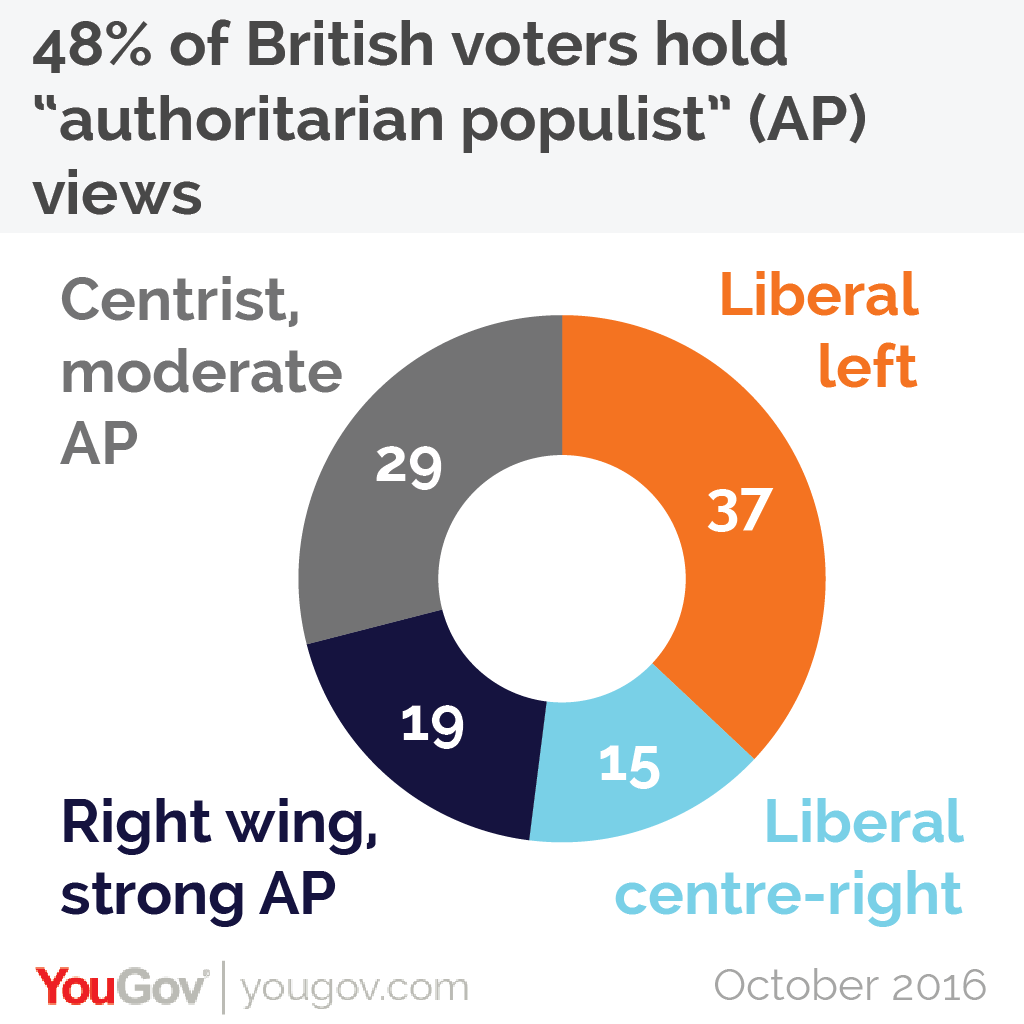
It’s not just the PM, the entire government are authoritarian

AP groups pie renamed-01

Interesting that this YouGov study identifies a proportion of the so-called centrist “moderates” as authoritarian populists, too. It’s something I’ve always suspected, making this group the real extremists within the Labour party. It does explain a lot, and I’d bet my sun hat that those “moderates” are also neoliberals, sharing a significant patch of common ground with the Tories.

Media euphemisms have obscured the truth for almost a decade: the Tories are authoritarians.

The BBC report that Boris Johnson “has no respect for the norms of democratic policy” and that he “misled” the queen”.

The word for that is authoritarianism.

“Authoritarian” was originally a word to describe one more in favour of obedience to authority than personal liberty. I’ve been pointing out since 2012 that the Tories have all the hallmarks of an authoritarian regime. Conservatism has always been an unprincipled apology for the interests of the ruling class and elite. Conservatism has traditionally favoured authoritarian rule.

In the 1980s, the use of a new academic term became common among some political scientists when describing the neoliberal politics of Ronald Reagan and Margaret Thatcher: “authoritarian populism”. This term was based on the theory that they and their supporters shared a core set of attitudes: cynicism over human rights, anti-immigration, an anti-EU position in Britain, and favouring a strong emphasis on defence as part of wider foreign policy.

Conservatives tend to treat the rule of law with contempt. The Cameron administration hammered the controversial welfare “reforms” through into legislation by citing an archaic law – “commons privilege” – despite the fact that it failed to pass through parliament, and no-one wanted the policy implemented. It was imposed, nonetheless.

The government have claimed that the provision of support for citizens from public funds – our social security – presents a “moral hazard” and “perverse incentives”. They used this rationale to cruelly cut people’s lifeline support. Apparently, lining the pockets of rogue multinationals with private profit to prevent people accessing the basic support they have paid into is acceptable, as is handing out millions of pounds of public funds in “tax breaks” to millionaires. 

This is a government that doesn’t care whether or not citizens can meet their basic survival needs. Over the last decade, we have seen the rise of absolute poverty – where people cannot afford to meet fundamental survival needs such as the provision of food, heating and shelter. We have seen the rise of unjust, punitive policies and growing inequalities.

We have also witnessed emergent expressions of eugenic and social Darwinist ideology underpinning controversial policies such as the tax credit two-child policy.  Iain Duncan Smith claimed the policy would bring about “behavioural change”, discouraging poor people from having children. This cut is particularly unkind as the result is that the state penalises children on the arbitrary basis of how many brothers and sisters they have – a decision out of their hands. The policy violates the human rights of third and subsequent children within a family.

The Tories have told lie after lie and got away with it. In the Commons, MPs are not permitted by convention to use the word “liar”. But democratic accountability should matter rather more than convention. It’s about time that changed.

Back in 2010, few people recognised the arrival of a new form of authoritarian nationalism in the UK. By 2012, it was pretty plain to some of us. But we were often dismissed as “scaremongers” at the time. 

In 2012, the Conservatives’ Health and Social Care bill was also pushed through legislation at unholy speed. We are still waiting for the government to fulfil the court ruling, and those of the information commissioner regarding the release of the policy  risk register to the public. I put in an Freedom of Information request, asking for the risk register to be placed in the public domain, and was told by government that “it isn’t in the public interest” to see the catastrophic risk assessment of the policy.

We’ve yet to see the full details of a No Deal Brexit risk assessment.

The Trade Union Bill and the Organised Crime and Police Act aimed at curtailing public protest and was a marked attack on civil liberties. The Tories ensured that private companies made profits from their unprecedented cuts to public services. They, and the vulture capitalist corporations that benefited from the Conservatives’ policies wanted to ensure that strike action and democratic protests were stifled.  In short, the Tories have always seen human rights and democratic norms as a political inconvenience – “red tape” – as have the exploitative big business political bed partners. 

Let’s not forget the multiple “grave and systematic” human right violations of disabled people because of  draconian Tory policies. The United Nations investigated the impact of policies, because in 2012, I wrote to the UN and presented evidence subsequently – along with many others. We have submitted empirical evidence of the despotic policy framework that has resulted in human rights violations, and the subsequent suffering of ill and disabled people over several years. The UN report was conclusive.

People have died as a direct consequence of Tory policies, the government should have been removed from office when that finding was reported. Especially when they refused to conduct an inquiry and continued to deny there was any problem with their draconian welfare policy. It seems that the loss of human life is considered rather less serious than telling lies to the queen and suspending parliament to avoid democratic scrutiny. However, all of these events are closely connected. 

The Tories have been avoiding democratic scrutiny since they took office back in 2010. The tactics that this government have used to cling onto power amounts to a tyrannical and despicable misuse of psychology, and in particular, behaviourism. All despots are behaviourists. 

Over the last decade, neoliberals have used what appear to be objective categories of group behaviours and measurement, which seem to fit very neatly with the pre-existing power structure. And reinforce it. Furthermore, the value-laden categories also form the basis of targeted scapegoating and justification narratives, deployed to make very punitive, controversial policies seem somehow reasonable. 

Then there is the utterly woeful performance of the media in holding government to account. That’s because the government ‘brief’ commentators and journalists regarding what they may and may not say – they have ideological control of most of the mainstream media.

0_Iain-Duncan-Smith

Iain Duncan Smith announced in 2012 that he was “monitoring the BBC for “left wing bias”. It was plain back then what was happening. And nothing changed.

The Tories do whatever they can get away with. Authoritarianism advances by almost inscrutable degrees – moral and legal boundaries are pushed incrementally. 

Until suddenly, everyone sees it for what it is. But once you hear the jackboots, it’s rather too late.

It’s taken a decade of damage and suffering. We must not let this happen ever again. 


I don’t make any money from my work. I’m disabled because of illness and I’m often skint. But you can make a donation to help me continue to research and write free, informative, insightful and independent articles, and to provide support to others. The smallest amount is much appreciated – thank you.

DonatenowButton

Why is the UK so unequal?

http___com.ft.imagepublish.upp-prod-eu.s3.amazonaws

The US and UK share an ideology of ‘free-market’ fundamentalism and competitive individualism. More widely called ‘neoliberalism’ these ideas were introduced, respectively, on both sides of the Atlantic by Ronald Reagan and Margaret Thatcher. 

Earlier this year, Angus Deaton, professor of economics at Princeton University and a Nobel laureate, launched a five-year review on the subject of inequality. Sir Angus, who is teaming up with the Institute for Fiscal Studies, with funding from the Nuffield Foundation, a charity, intends the review to be the “most comprehensive scientific analysis of inequalities yet attempted”, examining not just the gaps between the rich and poor, but also differences in health outcomes, political power and economic opportunities in British society and across the world.

It will attempt to answer which inequalities are beneficial, providing “incentives” for people to strive harder, and which should be stamped out because they are derived from luck or cronyism and, according to Sir Angus, “make a mockery of democracy”.

Personally, I have some major issues with the neoliberal language of “incentives.” In its crudest formulation this entails providing the conditions for the market sector to produce growth, and accepting that this will somehow result in inequality, and then relying on some vague mechanism of redistribution of some portion of this growth to help repair the inequality that has resulted from its production. Over the last decade, we have witnessed those ‘safety net’ mechanisms being dismantled, leaving a large proportion of society with dwindling resources, while a few people have become obscenely wealthy. The language of “incentives” implies that it is human behaviour and not market fundamentalism, that creates growing inequality.

But that isn’t true. Neoliberalism has failed the majority of citizens horribly, the evidence of which is stifling both the UK economy  and our potential as a society. There are a few beneficiaries, who, curiously enough, are working flat out to promote the failing system of economic and social organisation that was ushered in by the Thatcher administration, while viciously attacking any ideas that oppose their dogma and challenge their stack of vested interests.

The Deaton review starts from the premise that not all inequalities are bad. Deaton and the IFS also believe that inequalities based on luck or rigging the system are far worse than those based on the skills of individuals: “If working people are losing out because corporate governance is set up to favour shareholders over workers, or because the decline in unions has favoured capital over labour and is undermining the wages of workers at the expense of shareholders and corporate executives, then we need to change the rules,” Deaton said.

This assumption that cronyism and damaging activities of the rich have left others in poverty has raised hackles in some free-market circles. Ryan Bourne, economist at the Cato Institute, for example. He says the IFS should be careful not to assume wrongdoing just from data showing rising inequalities, and: “Income inequality, for example, can be increased through entrepreneurs making fortunes off hugely welfare-enhancing new products,” he said. Whether or not this is correct, many UK officials are concerned that the market economy is in danger of becoming rigged against ordinary people.”

Andrew Tyrie, chair of the Competition and Markets Authority, the competition watchdog, admitted earlier this year that the authorities had been “slow” to address shortcomings in competition and rip-offs and would in future “be doing and saying a lot more”.

I have a lot more to say on this topic, too.

I’m planning to produce a series of in depth articles on inequality and growing poverty in the UK. To introduce this series of works, I’ve invited a guest writer, Kenura Medagedara.

Here is Kenura’s article:

Despite having the fifth-largest economy in the world, the United Kingdom is a surprisingly unequal society. It has the fifth-highest income inequality in Europe. The top 20% highest earners earn six times more than the poorest 20%. The top 10% of wealthiest households own five times more wealth than the bottom 50%.

These statistics may not come as such a surprise to some of us. Unfortunately, Britain’s historic class divisions are showing signs of increasing. But why is Britain so unequal, especially compared to other wealthy nations? And what can we do about it? These are the questions I’ll be trying to answer in this article.

The problem of inequality

Before I discuss any of this, I should first explain why inequality is so dangerous. We all know that absolute poverty is bad, as it means that people can’t afford to survive. We also understand that undeserved wealth is problematic, as it gives some people an unfair advantage over others. Did you know, for instance, that the third-wealthiest landowner in Britain, Hugh Grosvenor, amassed his £9 billion fortune entirely through inheritance?

Like I said, most people can see the problems with these two issues. However, (as many of those on the right point out), these issues aren’t intrinsic to inequality. It is possible to conceive of an economy where inequality exists, but the poorest household still has its basic needs met, and measures like inheritance tax can somewhat prevent situations like the one described above. So what’s wrong with inequality?

One of the main problems is inequality of opportunity. In any society, there are a limited number of opportunities available. Big companies only have so many vacancies, top universities only have so many places. Even in a society where absolute poverty doesn’t exist, opportunities for social mobility will still be limited. And these opportunities tend to stay in the hands of the rich. There are a wide range of reasons for this, from subtle ones like poorer students facing more mental stress when applying to university than richer ones as the cost of them failing is significantly higher, to more obvious ones like wealthy people being able to afford additional courses and qualifications to make them more qualified for higher-paying jobs. Either way, economic inequality brings about very unfair circumstances.

Money in politics

Another problem is that of political power. In a democracy, everyone’s voice should be heard equally, through universal suffrage. However, money can significantly increase someone’s political power. For example, they can afford a party membership, giving their party more money to spend on advertising campaigns to win elections. They can also make donations to influence policy decisions. In these ways, the wealthy have an unfair say in politics over the economically disadvantaged. Technically, this could be remedied by certain policies, such as all political parties receiving the same amount of funding from the government, but this seems very implausible, so I’d argue that inequality remains the real issue here.

From a more pragmatic perspective, economic inequality actually hinders economic growth. A 2014 study by the OECD found that the UK’s failure to address inequality meant that its economic growth was six to nine percentage points lower than it could otherwise haven been. This is because, as previously mentioned, people from poorer backgrounds find it harder to get good education opportunities as the rich can use their wealth to give them an unfair advantage. As a result, the poor get low-skilled jobs contributing little to the economy, whilst the rich get high-skilled jobs with relatively little competition, and so are generally not as efficient as they should be. It turns out that reducing inequality actually benefits everyone.

Why is the UK so unequal?

Before we can combat inequality, we first need to understand what causes it. In the UK, one of the main causes is the housing market. Currently, only 64% of all households are owned, compared to 71% in 2003. And this is expected to get worse; the average wage in London is 16 times less than what would be needed for a deposit. A house is normally the most expensive asset someone will own. Britain’s situation has meant that the children of homeowners inherited vast sums of money, giving them a huge advantage over people who weren’t as lucky.

This has allowed them to afford their own property, and buy more assets to generate even more wealth. This makes the rich get exponentially richer, whilst the poor are forced to cope with higher rents due to increased housing demand, reducing their disposable income and effectively making them poorer. As a result, 10% of households own 44% of all wealth, while the poorest 50% of households own just 9%.

Education

But this isn’t the whole story; after all, the UK has a fairly average wealth distribution compared to other OECD nations. Another major source of inequality is the education system. Despite the fact that this is often touted as the ‘great equaliser’, only 21% of children eligible for free school meals go to university, compared to 85% of children from private schools. As a result, those from poorer backgrounds tend to get low-paying jobs, whilst the opposite is true for the wealthy. This ensures that the rich stay rich and the poor stay poor.

One major reason for this contrast is the price of nursery. The average price of full-time nursery in the UK is £242 per week, which is roughly 50% of the average household disposable income. Those on lower incomes will struggle to afford this compared to richer parents. This may explain why economically disadvantaged children even do much worse than their wealthier counterparts in primary school.

Solutions

To solve wealth inequality, the government must reform council tax. This is one of the main reasons why the housing market is in such bad shape. Firstly, this policy is regressive. According to a report by the Institute for Public Policy Research (IPPR), a household in band A property in London pays almost five times what a band H household would pay as a proportion of property value. Additionally, in 2013 the government simultaneously devolved council tax benefits and cut funding for it, forcing councils to start taxing those on the very lowest incomes. As a result, council tax has greatly contributed to economic inequality.

One possible solution is to exempt those on the lowest incomes from paying council tax. This will somewhat stop the tax from being regressive if poor households simply don’t have to pay it. Another, more long term, solution could be to scrap council tax entirely, and replace it with an annual flat rate tax. This would guarantee that the policy is progressive. According to City Metric, a 0.25% tax would raise the same revenue for London as the current system, but 80% of households will pay less.

To solve the gap in education, one possibility is to make nursery free. In a 2016 report on child well-being in rich countries, UNICEF called for high quality early education and care for children to reduce inequality in education. Making it free would certainly achieve this. In addition to this, British charity Teach First, who work to reduce educational inequality, claim that the government needs to increase the amount of teachers in schools in deprived areas. This will reduce class sizes, which plays a big role in the success of the pupils.

Conclusion

To conclude, economic equality is vital to achieve political equality and equality of opportunity, and also creates more economic growth. Two of the main causes of inequality in the UK are the housing market and the education system, both of which require serious reform if we’re to solve this issue.

Inequality is a very complex problem, and I’m not suggesting that this article has magically solved all of the issues that cause it. However, hopefully more discussion on this topic will eventually give us the answers.

If you enjoyed this article, you may want to check out Kenura’s blog for more analysis of British politics.


I don’t make any money from my work. But if you like, you can contribute by making a donation which helps me continue to research and write informative, insightful and independent articles, and to provide support to others going through disability  assessment and appeals. The smallest amount is much appreciated – thank you.

DonatenowButton

The Peterloo Massacre

200656
The Manchester Observer was a short-lived non-conformist Radical newspaper based in Manchester, England. Its radical agenda led to an invitation to Henry “Orator” Hunt to speak at a public meeting in Manchester. The Peterloo massacre and the shutdown of the newspaper resulted from that Public Meeting.

By 1819, the allocation of Parliamentary constituencies did not reflect population distribution. The major urban centres of Manchester, Salford, Bolton, Blackburn, Rochdale, Ashton-under-Lyne, Oldham and Stockport, had a combined population of almost one million. They were represented only by their county MPs. Lancashire was represented by two members of parliament: John Blackburne of Hale Hall and Edward Smith Stanley, (Lord Stanley). Lord Stanley was a Conservative Whig and member of the “Derby Dilly” – a breakaway group of Conservative Whigs. The name derives from the family title “Earl of Derby” and the name of a stagecoach: the “Diligence” or “Dilly”; The title was bestowed on the Group by Irish Nationalist Leader Daniel O’Connell in a scathing reference to an erratic coach, with Stanley driving the horses.

It was quickly picked up by others, and the name stuck. Stanley’s reputation was as the “Prince Rupert of Debate”: leading his followers to attack but unable to rally them afterwards. As a result, it was difficult to estimate the number of MPs who were actually part of the ‘Dilly’. But the name did highlight the turmoil of the Ruling Classes. Change was very much in the air. 

Both Blackburne and Stanley were Oxford educated Landowners whose families had “been in politics” for some time and were not liking the change. Not the Cooperativism and Utopian Socialism of one time Manchester resident Robert Owen – Pioneer of the Cooperative Movement and member of the Manchester Board of Health. As Whigs they were aware of the rising demands of the emerging Working Class. There was something in the air.

Indeed, in 1820, The Radical War burst out in Scotland when A Committee of Organisation for Forming a Provisional Government put placards around the streets of Glasgow late on Saturday the first of April, calling for an immediate national strike. By the third of April there was a strike.

Work stopped over a wide area of central Scotland including Stirlingshire, Dunbartonshire, Renfrewshire, Lanarkshire and Ayrshire, with an estimated total of around 60,000 stopping work, particularly in weaving communities. Eighty eight men were charged with treason. The leaders – Andrew Hardie and John Baird – were hanged and beheaded. The last beheadings in the British Isles. 

The 1819 Peterloo Massacre was normal, not exceptional.

Voting, in 1819, was restricted to the adult male owners of freehold land with a rateable value greater than forty shillings. The equivalent of a rateable value of about £172 as of 2018, which equates, approximately, to owning a Freehold property worth £172,000. The amounts are approximations as the Rateable Value was largely abolished with the introduction of the Poll Tax of 1990. This property qualification resulted in very few people having the Vote. Those who did have the vote numbered around two percent of the population, and, in Lancashire the number was even lower. When 60,000 people turned out to hear Orator Hunt talk, they outnumbered the voting population for the whole of Lancashire. 

The imbalance of power was not simply between Men and Women but between Rich and Poor. Indeed, Radicals were demanding that Women get the Vote. Which “moderates” saw as a step too far. Indeed Women – over thirty, of a certain class – only got the Vote after violent confrontation with the Liberals – under Asquith – and Moderates in 1918: almost a century after Orator Hunt stated that Women, who were single, tax paying and of sufficient property should be permitted to vote.

Equality of voting rights only really came about with the 1928 Representation of the People Act. The Parliament (Qualification of Women) Act 1918 only allowed propertied women to vote and almost all men. The Franchise for all Working Class Adults has only really existed for about ninety years. The Electoral Register for Local and National Elections only became the same register in 1949 and the voting age fixed at 18 in 1969. Every step of the way was fought for. 

In 1819 votes in Lancashire could only be cast at the county town of Lancaster, by a public spoken declaration at the hustings. There was no Secret Ballot. Britain’s first secret ballot box, which was used in Pontefract in 1872, was mandated by the Ballot Act of 1872. The Liberal candidate, H.C. Childers was elected MP for the town and the Returning Officer announced the result of the secret ballot in the Town Hall after the votes had been counted.

In 1819, the vote was cast by standing up in public and announcing for whom you cast your vote. The Returning Officer would then record the cast vote. This was of much concern to Chartists who saw the affront to democracy in people being influenced – by drunkenness or threats – at the hustings. Indeed, the specific Electoral Offence of “treating” derives from the practice of candidates providing food and drink at the hustings to induce a favourable vote.

The first automatic secret ballot box was built and patented in Merthyr Tydfil by a former iron puddler, turned grocer, William Gould. Gould was disparaged as a “Chartist Lip” – who served as a Poor Law Guardian – but understood secret ballots prevented industrialists and landowners having influence at the ballot box. The principle behind his ballot box was that each voter had a token and each candidate a ballot box. The voter inserted the token into the box of their choice and the vote was registered onto a clock face on the box. This would reduce the potential for intimidation. Despite campaigning, his idea was not adopted. In terms of secrecy of the vote, it was a huge step up from the spoken declaration at the hustings. 

The problem of getting to Lancaster is that most working people would need to walk. Using modern roads, the hike would be about seventeen hours each way at a brisk pace. In addition, time would be needed to be taken away from working; food would need to be carried and accommodation organised. The large scale movement of people was a terrifying prospect for Justices and Politicians and Landowners. An election in which there was Universal Adult Suffrage would have been revolutionary with hundreds of thousands of people moving to Lancaster to cast a vote.

The logistics of voting, alone, would have extended the ballot to weeks if not months. Which would increase the time away from work and the food required and, in no uncertain terms, disrupt the entire economy. The Rotten Boroughs were not simply a symptom of corruption but of the collapse of the practical political and economic life of the Country. 

Stockport fell within the county constituency of Cheshire, with the same franchise, but with the hustings held at Chester. This would have complicated the matter further. Both Chester and Lancaster Returning Officers would be obliged to confer and coordinate. Many MPs were returned by Rotten Boroughs such as Old Sarum in Wiltshire, with one voter who elected two MPs. Dunwich in Suffolk had almost completely disappeared into the sea yet returned Members of Parliament. Closed Boroughs with more voters, dependent on a local magnate meant that more than half of all MPs were elected by boroughs under the control of a total of just 154 proprietors. This hugely disproportionate influence on Parliament of the United Kingdom drove calls for reform.

The Manchester Observer was formed by a group of radicals that included John Knight. John Saxton and James Wroe. The popularist form of articles aimed at the growing literate working-class meant that, within twelve months, it was selling 4,000 copies per week to its local audience and more further afield. By late 1819 it was being sold in most of the booming industrialised cities – Birmingham, Leeds, London, Salford – all calling for non-conformist reform of the Houses of Parliament. It was a powerful demand for Democracy to be part of life for everyone and not just the few. 

Orator Hunt stated: 

“The Manchester Observer is the only newspaper in England that I know, fairly and honestly devoted to such reform as would give the people their whole rights.”

The non-conformist articles, combined with a popularist style, often resulted in the main journalists of T. J. Evans, John Saxton and James Wroe constantly being sued for libel. Being found guilty, particularly for articles critical of Parliament’s structure, resulted in jail which then raised circulation. Despite its popularity, the radical agenda was seen as bad for sales by traditionalist conformist-Whig businesses. Advertising revenue remained low with only one of its 24 columns being filled by adverts. The lack of advertising meant the Observer was always in financial difficulties.

In Early 1819, Johnson, Knight and Wroe of the Manchester Observer formed the Patriotic Union Society. Leading radicals and reformists in Manchester joined the organisation, including members of the First Little Circle. The First Little Circle had formed in 1815, influenced by the ideas of Jeremy Bentham and Joseph Priestley. While the members were Unitarians, the political ideas were practical, utilitarian and resolutely reforming. Members went on to become Editors and Members of Parliament and to be involved in the Businesses of Manchester whose emerging Municipal Socialist, Cooperativist and Feminist movements would have a lasting impact on Britain.

The objective of the Patriotic Union Society was parliamentary reform both locally and, in the longer term, nationally. The Patriotic Union Society invited Henry “Orator” Hunt and Major John Cartwright to speak at a public meeting in Manchester. The national agenda of Parliamentary reform, and the local agenda to gain two Parliamentary Members for Manchester and one for Salford, were to be the subject of the speech but, to avoid the police or courts banning the meeting, the Patriotic Union Society and the Observer advertised only, “a meeting of the county of Lancashire, than of Manchester alone.” 

On August 19th 1819, at St Peter’s Field, Manchester, cavalry charged into a crowd of 60,000-80,000 Men, Women and Children. As the meeting began, local magistrates called on the Manchester and Salford Yeomanry to arrest Orator Hunt and those on the hustings with him. A Yeomanry charge into the crowd, knocked down a woman and killed a child before detaining Hunt. The 15th Hussars were then summoned by the Chairman of the Lancashire and Cheshire Magistrates, William Hulton. They charged with sabres drawn, killing 18 people and injuring 700 more. The Hussars had been ordered to Manchester by a panicked government who believed an insurrection was being planned on the basis of an intercepted message between the Manchester Observer’s founder – Joseph Johnson – and Orator Hunt: 

“Nothing but ruin and starvation stare one in the face in the streets of Manchester and the surrounding towns, the state of this district is truly dreadful, and I believe nothing but the greatest exertions can prevent an insurrection. Oh, that you in London were prepared for it.” 

The Local Magistrate, William Hulton, had the meeting declared illegal as the intention of choosing representatives without the Monarch’s Permission was seditious and a serious misdemeanour. This began a series of planned meetings and cancellations with the terms of the meeting being constantly changed to conform to the desire for Members Of Parliament and the repeated escalation of the State against the Radicals. Eventually, the Meeting was policed by six hundred of the 15th Hussars; the 88th Regiment of Foot Cavalry; two six-pounder guns from the Royal Horse Artillery unit; four hundred men of the Cheshire Yeomanry; four hundred special constables; and one hundred and twenty cavalry of the Manchester and Salford Yeomanry.

The Yeomanry were described by the Manchester Observer as being, “generally speaking, the fawning dependents of the great, with a few fools and a greater proportion of coxcombs, who imagine they acquire considerable importance by wearing regimentals”.

Subsequent descriptions include, “younger members of the Tory party in arms”, and, by later historians, “the local business mafia on horseback”.

Field Marshal John Byng, 1st Earl of Strafford, rather than supervising events as he had indicated he would, spent the day at York Races – where he had two entries – and left the matter of Manchester in the hands of Guy L’Estrange.

HC Deb 24 November 1819 vol 41 cc228-301

No. 36. REPORT from Lieutenant Colonel l’Estrange, inclosed in the foregoing.

Dated Manchester, August 16, 1819, eight o’clock, P. M. 

...I have, however, great regret in stating, that some of the unfortunate people who attended this meeting have suffered from sabre wounds, and many from the pressure of the crowd…

Geo. L’Estrange,
Lieut. Col. 31st regiment.

The Military rioted and massacred the Civilians; many, of whom, were wearing their Sunday Best Clothes and had marched from all around Manchester. Carrying banners and organised for a picnic. The imbalance of power was not simply political but of brute force. There were banners for Manchester Female Reform Society – Votes for Women! – “No Corn Laws”, “Annual Parliaments”, “Universal suffrage” and “Vote By Ballot”. Nothing really radical. Mary Fildes (born Pritchard) a political activist and an early suffragette was on the platform with Orator Hunt.

Mary remained a radical and was later arrested, in 1833, as a member of The Female Political Union of the Working Classes. She was arrested for distributing “pornography” – in fact contraceptive advice. The only banner to survive has the words “Liberty and and Fraternity” and “Unity and Strength” carried by Thomas Redford – who was cut down by cavalry. The crowd was dispersed in about ten minutes; but rioting was sparked as far away as Macclesfield and Oldham.

Field Marshal Byng was promoted to lieutenant general in 1825; then advanced to Knight Grand Cross of the Order of the Bath in 1828; advancing, again, to Commander-in-Chief of Ireland and then to the Privy Council of Ireland. He was elected as a Whig Member of Parliament for Poole in Dorset in October 1831. One of the few military men to supported the 1832 Reform Bill. His role in Peterloo never once prevented him from enjoying political power. 

Wroe, as then editor of the Observer, described the incident at the Peterloo massacre. He took his headline from the Battle of Waterloo four years previously. Subsequently, Wroe wrote pamphlets entitled, “The Peterloo Massacre: A Faithful Narrative of the Events”. They sold out each print run for 14 weeks with national circulation. Saxton, having been on the hustings with Hunt, was arrested and imprisoned. He stood trial with Hunt at York Assizes.

His defence that he was present as a reporter, not participant in the hustings party, was successful. The success of his defence did not sit well with the Government. Hunt was sentenced to five years at Ilchester Jail, fined one thousand pounds and made to find two sureties of five hundred pounds having escaped the charge of High Treason.

The Observer printed an article claiming that, “something was previously arranged”, as Manchester Royal Infirmary had been emptied of patients, on the 15th of August, anticipating the massacre. That all the surgeons had been summoned to attend on 16th. The Board of the infirmary vigorously denied this. The Liverpool Government then instigated repeated prosecutions of the Manchester Observer and those associated with it. Vendors were prosecuted for seditious libel. Fifteen charges of seditious libel were brought against Wroe, his wife and his two brothers resulting in the temporarily suspension of publication. Wroe relinquished ownership of the copyright and resumed under the last proprietor of the Manchester Observer (Thomas John Evans). At trial Wroe was found guilty on two specimen charges.

The other charges against him, his wife and his brothers being given “to lie”. The charges would only lie provided the publication of “libels” ceased. Wroe was sentenced to six months imprisonment and fined £100 with a further six months, and being bound over to keep the peace for two years, to give a surety of £200 and to find two other sureties of £50 each.

The prosecuted charges related not to anything in the Manchester Observer, but to articles in Sherwin’s Weekly Political Register, which Wroe had previously sold. It was clear that the Liverpool Government wished to silence Wroe and took the most certain way of doing so. Prosecuting Richard Carlile, who had been present at Peterloo enabled prosecution on the coat tails of conviction. Carlile wrote an article on the “Horrid Massacres At Manchester”. The Government responded by closing Sherwin’s Weekly Political Register. Carlile responded by changing the name to The Republican and writing: 

“The massacre… should be the daily theme of the Press until the murderers are brought to justice…. Every man in Manchester who avows his opinions on the necessity of reform, should never go unarmed – retaliation has become a duty, and revenge an act of justice.”

Carlile was then prosecuted for blasphemy, blasphemous libel and sedition and publishing material that might encourage people to hate the government; for publishing Tom Paine’s Common Sense, The Rights of Man and the Age of Reason. In October 1819 he was found guilty of the blasphemy and seditious libel and sentenced to three years which enabled Wroe to be caught up in the moral panic of atheist Republicanism and prosecuted with impunity.

The sentences were said to have been reduced because of the distressed state of the Wroes. A distress brought about by the Government but which cast the Government in a poor light. It was a delicate balance to secure an effective remedy to the power of Wroes publications. Wroes successor, Evans, was subsequently (June 1821) convicted on one charge of a seditious libel another of libelling a private individual and imprisoned for eighteen months and bound over for three years in the sum of £400 with two other sureties of £200. By then the 11 members of the first Little Circle excluding William Cowdroy Jnr. of the Manchester Gazette had helped cotton merchant John Edward Taylor found The Manchester Guardian.

The Manchester Observer had ceased publication. The Government had driven it into silence by repeated prosecution. The final editorial recommending:

“I would respectfully suggest that the Manchester Guardian, combining principles of complete independence, and zealous attachment to the cause of reform, with active and spirited management, is a journal in every way worthy of your confidence and support.”

Percy Bysshe Shelley was in Italy at the time of Peterloo. In response, Shelley wrote “The Masque of Anarchy: written on the Occasion of the Massacre at Manchester“. Because of radical press restrictions, it was not published until 1832 – the same year as The Representation of the People Act (1832).

The Act introduced a system of voter registration, to be administered by the Overseers of the Poor; and instituted a system of courts to review disputes relating to “voter qualification”. The Act limited the duration of polling to two days – formerly forty days. The reform act increased the number of people able to vote, across the country, to about 650,000 – about ten times the largest estimate of the number of people attending Peterloo.

When Shelley wrote:

“Men of England, heirs of Glory,
Heroes of unwritten story,
Nurslings of one mighty Mother,
Hopes of her, and one another;
Rise like Lions after slumber
In unvanquishable number,
Shake your chains to earth like dew
Which in sleep had fallen on you –
Ye are many – they are few.”

He was writing lyrics for punk bands like The Mekons, Scritti Politti and Strike Anywhere. The radical sentiments of Peterloo never vanished regardless of how submerged they were. Indeed Shelley is claimed to be part of the inspiration for the Arab Spring, Ghandi and numerous other radical causes. The truth is closer: “A spectre is haunting Manchester – the spectre of Peterloo. All the powers of old England have entered into a holy alliance to exorcise this spectre: Liberal and Tory, Johnson and Swinson, European Research Group and Big Data-spies.” To paraphrase those later journalists of the Manchester Guardian: Friedrich Engels and Karl Marx.

For a few months following Peterloo it seemed England shook, towards an armed rebellion. Abortive uprisings took place in Huddersfield and Burnley, the Yorkshire West Riding Revolt, the Cato Street conspiracy, the Cinderloo Uprising in the Coalbrookdale Coalfield, the Pentrich rising, the March of the Blanketeers, the Spa Fields, and the Radical War ll made the end of Regency Civilisation more and more vivid. The Government introduced the Six Acts, to suppress radical meetings and publications. By the end of 1820 every significant working-class radical reformer was in jail. Civil liberties were largely gone.

Two hundred years later, the Tories are again splitting and civil liberties are again being rolled back.


Picture: The Skelmanthorpe Flag. Anonymous.

Image © Kirklees Museums & Galleries

Alternative spaces of failure. Disabled ‘bad boys’ in alternative further education provision

(2019). Alternative spaces of failure. Disabled ‘bad boys’ in alternative further education provision. Disability & Society. Ahead of Print.

Source: Alternative spaces of failure. Disabled ‘bad boys’ in alternative further education provision

Sarah Newton lied to parliament and the public about the DWP’s standardised letter to GPs following ‘fit for work’ assessment

newton

Sarah Newton, former minister of state for disabled people.

It’s very evident over the last decade that neither she nor her party actually support disabled people.

Last month and previously, I reported about the controversial issues raised by the Department for Work and Pensions’ standard ESA65B GP’s letter template, which was only relatively recently placed on the government site, following a series of probing Parliamentary Written Questions instigated by Emma Dent Coad, addressed to the minister of state for disabled people. Her responses to the questions were repetitive, vague, unevidenced and did not address the questions raised. 

Campaigners and MPs have called for the Department for Work and Pensions’ (DWP) amended letter to GPs to be scrapped after it emerged that ill and disabled people appealing against unfair work capability assessment (WCA) decisions were left in near destitution after their GPs refused to provide further ‘fit notes’, because they were instructed that they did not need to by DWP officials.

It emerged that ministers ordered changes to the standard-issue letter to remove references that made it clear to GPs they may have to issue a medical statement if their patient wished to appeal against a WCA decision. The DWP claims this was not intended to dissuade GPs from issuing fit notes. 

However, it’s highly unlikely that government ministers ordered the amendment to the letter for another purpose, as there are none. This was a calculated strategy to deter people from appealing DWP decisions, by leaving them in severe financial hardship.

The mandatory review was also introduced for similar reasons, since people are left without any income while the DWP reviews its decision, a process which can take longer than six weeks.  

Those people who challenge WCA decisions are entitled to continue to receive employment and support allowance (ESA) at basic rate, worth £73.10 a week while they await their appeal hearing, but to do so they must obtain fit notes from their GPs to provide evidence that they are too ill to work.

They must also first await the outcome of a mandatory review before submitting their appeal. Before a claimant may lodge an appeal, they must first ask the DWP to ‘reconsider’ their original decision. There is no limit on how long the DWP may take to reconsider the original decision regarding their award. 

The DWP has a stated target of upholding 80% of their original decisions, so the majority of people then have to appeal following the review outcome.  The law says that the claimant may claim basic rate ESA following mandatory review if they wish to proceed with an appeal.

So the misleading change to the template letter routinely sent from the DWP to GPs has led to people who have lodged an appeal against an unfair decision being stopped from claiming basic rate ESA while awaiting the appeal hearing. This prevents many low-income disabled people from accessing any financial support while they wait for months on end to go to tribunal. Furthermore, we know that catastrophically inaccurate decisions following the assessments within the DWP are pretty much the norm. Nationally, 72% of people who appeal against their work capability assessment decision are successful.

Entitlement to ESA pending appeal is enshrined in the ESA Regulations to cover the whole of the period leading up the hearing. It is also possible to have the payment backdated to cover the Mandatory Review waiting period too – it can take over six weeks for the DWP to review their original decision, over which time people are left without welfare support.

ESA pending appeal is not paid automatically – people usually have to ask for it, and must provide fit notes from their GP, presenting these along with their appeal acknowledgment letter from the Tribunal Courts to their local Job Centre. The Job Centre should report back to the DWP who will arrange for ESA pending appeal to be paid.

From last year, then minister for disabled people, Sarah Newton, responded to one of several Written Questions from Emma Dent Coad, saying: “The ESA65B letter is issued to GPs in every case where an Employment and Support Allowance (ESA) claimant has been found ‘fit for work’. This process was built into the IT system as part of the introduction of ESA in October 2008.

That is partly untrue, since the original wording has been amended. 

Newton went on to say: “Following a Ministerial requirement by the Cabinet Secretary, which was endorsed by the Secretary of State for Work and Pensions, the content of the ESA65B letter has been improved in order to explain to GPs the type of support customers can expect to receive from their local Jobcentre, and to ask GPs to encourage customers in their efforts to return to work.” [My emphasis]. 

The decision to change the letter template was made without any scrutiny from or consultation with parliament or the public.

The standard template letter, titled Help us support your patient to return to or start work says: “We assessed [Title] [First name] [Surname] on and decided that [select] is capable of doing some work, but this might not be the same type of work [select] may have done before.

“We know most people are better off in work, so we are encouraging [Title] [First name] [Surname] to find out what type of work [select] may be able to do with [select] health condition or disability through focused support at [select] local Jobcentre Plus.

“In the course of any further consultations with [Title] [First name] [Surname] we hope you will also encourage [select] in [select] efforts to return to, or start, work

“Please do not give [Title] [First name] [Surname] any more fit notes relating to [select] disability/health condition for ESA purposes.

Newton responded to one of several Written Questions from Emma Dent Coad, saying: “The ESA65B letter is issued to GPs in every case where an ESA claimant has been found ‘fit for work’. This process was built into the IT system as part of the introduction of ESA in October 2008. 

“Following a Ministerial requirement by the Cabinet Secretary, which was endorsed by the Secretary of State for Work and Pensions, the content of the ESA65B letter has been improved in order to explain to GPs the type of support customers can expect to receive from their local Jobcentre, and to ask GPs to encourage customers in their efforts to return to work.” [My emphasis]. 

Professor Helen Stokes-Lampard, the chair of the Royal College of GPs (RCGP), said the lack of clarity over when GPs should issue fit notes could put patients’ finances and health at risk. “No GP wants that, and it only serves to threaten the long-standing trust that patients have in their family doctor.”

Until 2017 the standard letter advised GPs that if their patient appealed against the WCA decision they must continue to provide fit notes.

However, on (undisclosed) ministerial orders, the letter now states that GPs “do not need to provide any more fit notes for ESA purposes”. It does not mention the possibility that the patient may appeal, or that a fit note is needed for the patient to obtain ESA payments until the appeal is heard.

Frank Field, the chair of the work and pensions select committee, also raised the issue with Newton back in January. Newton replied that the wording was amended “to make the letter simpler and clearer”, adding that DWP communications were intended to be “clear, understandable and fit for purpose”.

The purpose appears to be to deter people from appealing unfair DWP decisions concerning the loss of their social security disability award.

Field replied that the wording was “not having the desired effect”, and urged her to revise it to make clear ESA claimants on appeal were entitled to fit notes. “This simple step could greatly ease the stress and worry that people who are awaiting an appeal experience.”

Newton told Field: “We are committed to ensuring our communication is clear, which is why the wording of this letter was cleared by both the British Medical Association and the Royal College of General Practitioners (RCGP). However, we will of course consider feedback when revising the letter.”  Newton tends to stick to a script in her responses, though. She told Emma Coad Dent exactly the same thing, almost word for word last year, in her response to a Written Question.

As I commented in a previous article, it was extremely unclear on what basis the RCGP agreed to the new wording as the change was agreed at a DWP stakeholder meeting for which, according to Newton, there are no formal minutes.

Newton confirmed this in the correspondence between herself and Field, as well as in her responses to Emma Coad Dent’s long series of Written Questions on this issue.

Firstly, on 16 May, last year, Newton says: “The Cabinet Secretary first issued the requirement to revise the ESA65B letter in November 2014.

“The wording of the ESA65B was changed to emphasise the benefits of work and to ask GPs to encourage their patients in their efforts to return to some form of work.”

Then, according to Newton: “The British Medical Association and the Royal College of General Practitioners agreed to the revised wording of the ESA65B on 4 August 2016.” 

However, in June last year, she also said, in response to a Written Question from Emma Dent Coad: “DWP’s Legal Service cleared the revised wording on 29 July 2016 and the then Secretary of State for Work and Pensions subsequently authorised the changes.”

Yet when asked in November last year what written evidence her Department holds on the British Medical Association and Royal College of General Practitioners agreement to the revised wording of the ESA65B letters sent to claimants’ GPs when they fail the work capability assessment, she replied: “There is no written evidence relating to the agreement obtained from the British Medical Association and the Royal College of General Practitioners on the revised wording of the ESA65B letter.

“In accordance with the Answer of 30 May 2018 to Question 146987, agreement on the final wording of the ESA65B was obtained via the regular meetings DWP holds with both organisations.” 

She was being conservative with the truth. In other words, she was telling lies.

Following a series of distressing reports about people dying as they await the result of the Personal Independent Payment (PIP) and ESA assessments, the Work and Pensions select Committee has published the Royal College of GPs’ (RCGP) and the British Medical Association’s (BMA) views on DWPs controversial advice to doctors on “Fit Notes” for people awaiting the outcome of an ESA appeal.

The Committee asked both  organisations (PDF PDF 163 KB)Opens in a new window  (PDF PDF 163 KB)Opens in a new window for their input, following DWP’s repeated claims that they had approved the advice, given in a letter (form, ESA65B) to the GPs of people who have been denied ESA after assessment: PIP and ESA Assessments.

The Committee has described the assessment processes for disability/incapacity benefits as “gruelling” and “error-ridden”, potentially forcing claimants into DWP’s “arduous, protracted” reconsideration and appeals process. People who have been denied ESA at the assessment stage, but who are awaiting the results of their appeal are entitled to an “assessment rate” of ESA, in recognition of the hardship they may endure during the potentially lengthy wait for their appeal.

However, in recent months the Committee has been investigating concerns (PDF PDF 1.41 MB)Opens in a new window that the advice DWP is giving to doctors about the system and process is causing confusion, leading directly to people being left without the lifeline income they are entitled to.

I have reported previously that people have died soon after being declared ‘fit for work’ by the DWP, after the Department have contacted a patients’ doctor without notifying  them, telling the GP not to issue any more ‘fit’ notes. 

Comments from RCGP and BMA 

The Department has claimed in response to the Committee (PDF PDF 219 KB)Opens in a new windowthat Agreement on the final wording of the revised ESA65B was obtained via the regular meetings DWP holds” with both the British Medical Association and Royal College of GPs”, (PDF PDF 84 KB)Opens in a new window and that the wording is the outcome of “close and extensive working between DWP, BMA and RCGP.” (PDF PDF 165 KB)Opens in a new window

Both medical professionals’ associations’ have now written to the Committee – and in the case of the RCGP, directly to the Secretary of State (PDF PDF 199 KB)Opens in a new window – expressing their concerns about both DWP’s advice to GPs and its characterisation of their approval or endorsement. The RCGPs said:

“Without a fit note from their GP, claimants who are awaiting the outcome of their appeal will not be able to receive ESA. They would therefore have to seek Universal Credit or Jobseekers Allowance, and subsequently try and meet the work-seeking requirements of those benefits, potentially endangering their health in the process. As such the College is deeply concerned about the potential impact of this on doctors and their relationships with potentially vulnerable patients.”

As the BMA describes in its response to the Committee (PDF PDF 164 KB)Opens in a new window:  

“By way of background the BMA attends meetings with the RCGP and the DWP where information is shared with the aim of improving working practices between the DWP and clinicians. While the BMA may act in an advisory capacity it does not have the authority to clear, approve or otherwise sign off any DWP correspondence or policies and would see this as being clearly outside of our remit…At a meeting with the DWP and RCGP a BMA representative was given sight of the ESA65B amended letter. The BMA considers that sight of this letter was for the purposes of information sharing and did not agree or otherwise sign off the content of the letter.”

The Royal College of GPs put the same point to the Committee (PDF PDF 197 KB)Opens in a new window:

We are aware that the Department claims that ‘The British Medical Association and the Royal College of General Practitioners agreed to the revised wording of the ESA65B on 4 August 2016’. However, there is some ambiguity about what was said in the referenced meeting with the DWP. Since the DWP did not keep any written records of what was said at this meeting [as DWP admits in its latest letter to the Committee (PDF PDF 165 KB)Opens in a new window], we are unable to provide further clarity.”

The RCGP statement continues:

“Since these changes were made, significant evidence has come to light about the negative impact that these changes have had in relation to patient care, leading to some patients being denied fit notes by their doctors. We are concerned that the current wording of ESA65B does not sufficiently clearly indicate that there are circumstances in which GPs may need to continue to issue fit notes for their patients. It is essential that communication with GPs is as clear as possible, to uphold the high levels of trust that exist between GPs and their patients. As a minimum we would want to see the wording of the ESA65B letter urgently changed to its previous wording.”  

This means that ministers have once again mislead both parliament and the public in claiming that both medical professional organisations agreed to the wording of a controversial letter which told GPs not to provide benefits officials with proof that seriously ill patients were unfit for work.

I’ve reported on this particular issue more than once, and highlighted the parliamentary dialogue between Newton, who resigned in March, and the DWP, who have said in separate statements that the document wording “was cleared by both the British Medical Association and the Royal College of General Practitioners”.

Both organisations have now dismissed Newton and the DWPs’ claim. In the letter, the BMA,  said that they did not “clear” the wording, they were simply been shown the letter template during a meeting at the DWP.

When the organisation wrote to Frank Field, Pensions select committee, the letter states categorically that: “The BMA considers that sight of this letter was for the purposes of information sharing and did not agree or otherwise sign off the content of the letter.” 

The RCGP has told work and Pensions secretary Amber Rudd  that the letter “does not clearly indicate that there are exceptions to this wording, including if a claimant is appealing against the decision”. 

The Royal College raised fears that vulnerable patients awaiting the outcome of appeals may further harm their health by trying to meet the requirements of other benefits such as Universal Credit or Jobseeker’s Allowance.

However, a DWP spokesperson told me: “We have regular discussions with the BMA and RCGP to ensure we deliver effective support to disabled people and those with health conditions.

“The wording of this letter was discussed as part of these meetings, as both organisations confirm, as was the release of the final letter.

“Of course we recognise the concerns of GPs which is why we are discussing a revised letter with the BMA and RCGP and have issued clear guidance for GPs in the meantime.”

So, not only did the DWP and Conservative ministers lie and get caught out, they have continued to repeat the lie following its exposure.

Meanwhile citizens who are ill and disabled are left in dangerous situations with unacceptable levels of hardship, and some have died as a consequence, yet the government continues to present and mechanically repeat crib sheeted PR and strategic comms responses to limit the political damage of justified concern and criticism of their cruel, miserly, punitive, discriminatory, robotic neoliberalism and authoritarian policies that target those with the least in any way they can to prevent them from accessing the support that their taxes and National Insurance have contributed to creating. 

When David Cameron said the Conservative party was going to address the ‘culture of entitlement’, and ‘change the relationship between citizens and the state’ this is precisely the kind of underhand, targeted discrimination he had in mind. The ‘low tax, low welfare society’ is one where the wealthiest pay very little tax and the poorest citizens – in work and out – simply go without the means of meeting their most fundamental needs. 

The wider political aim is to systematically dismantle every single welfare and public service and to normalise the brutality of this process by almost inscrutable degrees, by telling lies that attempt to neutralise the serious concerns raised by campaigners, opposition MPs, academics, charities and medical professionals. This method of political gaslighting is much worse than lying, because it is a calculated, deliberate method of psychological manipulation and abuse.


I don’t make any money from my work. But if you like, you can contribute by making a donation which helps me continue to research and write informative, insightful and independent articles, and to provide support to others going through disability  assessment and appeals. The smallest amount is much appreciated – thank you.
DonatenowButton