Tag: austerity

The government’s in-work sanctions are incompatible with ‘halving the disability employment gap’ (and other ideological problems)

imgres

The government have introduced in-work sanctioning for low paid and part-time workers to “incentivise” them to “progress” in work. Historically, wages and employment conditions were raised, and hours were often negotiated by Trade Unions. Now those decisions are entirely down to the executive decisions of employers not employees. Sanctioning employees is grossly unfair, because they have very little negotiating and bargaining power (especially since the raft of Conservative anti-collectivist and anti-Trade Union legislation) to improve their lot.

There is also a significant growing body of empirical evidence that informs us sanctions do not work as the government claim.

It’s not as if employees’ behaviour is at fault or that they would ever actually want poor pay, fewer rights and adverse working conditions – that’s down to exploitative employers who are primarily profit driven. It’s hardly fair to punish workers for the motivations and behaviour of their employers.

There are profoundly conflicting differences in the interests of employers and employees. The former are generally strongly motivated to purposely keep wages as low as possible so they can generate profit and pay dividends to shareholders and the latter need their pay and working conditions to be such that they have a reasonable standard of living. 

Clearly, the weight of favour in policy-making is heavily towards big business profiteering. Implying that the behaviours of workers are a problem in this context is simply another way justification is presented for the further erosion of state responsibility and support and ultimately, the long term plan is to remove such support completely.

Workplace disagreements about wages and conditions are now typically resolved neither by collective bargaining nor litigation but are left to management prerogative. This is because Conservative aspirations are clear. Much of the government’s discussion of legislation is preceded primarily with consideration of the value and benefit for big business and the labour market. They want a cheap labour  force and low cost workers, unable to withdraw their labour, unprotected by either Trade Unions or employment rights and threatened with destitution via benefit sanction cuts if they refuse to accept low paid, low standard work. Similarly, desperation and the “deterrent” effect of the 1834 Poor Law Amendment Act – the principle of less eligibility – also served to drive down wages.

In the Conservative’s view, trade unions distort the free labour market which runs counter to New Right and neoliberal dogma. Since 2010, the decline in UK wage levels has been amongst the very worst in Europe. The fall in earnings under the Coalition is the biggest in any parliament since 1880, according to analysis by the House of Commons Library, and at a time when the cost of living has spiraled upwards.

In-work conditionality enforces a lie and locates blame within individuals for structural problems – political, economic and social – created by those who hold power. Despite being a party that claims to support “hard-working families,” the Conservatives have nonetheless made several attempts to undermine the income security of a significant proportion of that group of citizens recently. Their proposed tax credit cuts, designed to creep through parliament in the form of secondary legislation, which tends to exempt it from meaningful debate and amendment in the Commons, was halted only because peers in the House of Lords have been paying attention to the game.

Sanctioning people in work flies in the face of the government’s previous “hard working families” mantra. But it also flies in the face of their aim to “help” disabled people into work. Many of disabled people would have to work part-time: reduced and flexible hours are also a reasonable adaptation, especially for people who are ill. Many of us also have to accommodate hospital appointments, often with a variety of specialists, as well as hospital based treatment regimes. All of which probably makes us much more likely to face in-work sanctioning in the future.

How does this address the “disability employment gap”? 

The government propose tax cuts and other rewards for employers who employ disabled people in their recent consultation on work, health and disability. However, it is against the law to treat someone less favourably than someone else because of a personal characteristic, such as being disabled.

Furthermore, disabled people have a legal RIGHT to work and to be included in the economy, and I think in light of this, employers should be fined for not employing a quota of disabled people instead. “Disability Confident” is supposed to be about supporting disabled people, not providing publicly funded handouts to employers, whilst at the same time, financially punishing the very people that the policy is supposedly designed to “support.”

There was some very worrying discussion in the recent work health and disability green paper about new mandatory “health and work conversations” in which work coaches will use “specially designed techniques” to “help” disabled Employment and Support Allowance (ESA) claimants “identify their health and work goals, draw out their strengths, make realistic plans, and build resilience and motivation.” Apparently these conversations were “co-designed with disabled people’s organisations and occupational health professionals and practitioners and the Behavioural Insights Teamthe controversial Nudge Unit, which is part-owned by the Cabinet Office and Nesta. 

It’s very evident that “disabled people’s organisations” were not major contributors to the design. It’s especially telling that those people to be targeted by this “intervention” were completely excluded from the conversation. Sick and disabled people are reduced to objects of public policy, rather than being seen as citizens and democratic subjects capable of rational dialogue.

Systematically reducing social security, and increasing conditionality, particularly in the form of punitive benefit sanctions, doesn’t “incentivise” people to look for work. It simply means that people can no longer meet their basic physiological needs, as benefits are calculated to cover only the costs of food, fuel and shelter. In fact sanctioning people make it less likely that they will find work.

Food deprivation is closely correlated with both physical and mental health deterioration. Maslow explained very well that if we cannot meet basic physical needs, we are highly unlikely to be able to meet higher level psychosocial needs. The government proposal that welfare sanctions will somehow “incentivise” people to look for work is pseudopsychology at its very worst and most dangerous. State imposed sanctions on sick and disabled people are known to have very harmful consequences. In fact sanctions create significant difficulties and distress for everyone subjected to them. (See also An example of in-work conditionality: when work doesn’t pay).

In the UK, the government’s welfare “reforms” have further reduced social security support, originally calculated to meet only basic physiological needs, which has had an adverse impact on people who rely on what was once a social safety net. Poverty is linked with negative health outcomes, but it doesn’t follow that employment will alleviate poverty sufficiently to improve health outcomes.

In fact record numbers of working families are now in poverty, with two-thirds of people who found work in 2014 taking jobs for less than the living wage, according to the annual report from the Joseph Rowntree Foundation a year ago.

Essential supportive provision is being systematically reduced by increasing conditionally; by linking support to such a narrow outcome – getting a job – and this will ultimately reduce every service to nothing more than a state behaviour modification programme based on punishment, with a range of professionals being politically co-opted as state enforcers of an ideology  which is perpetuating and accentuating socioeconomic problems in the first place.

Work is not a “health” outcome

The Government is intending to “signpost the importance of employment as a health outcome in mandates, outcomes frameworks, and interactions with Clinical Commissioning Groups.”

A Department for Work and Pensions research document published back in 2011 – Routes onto Employment and Support Allowance – said that if people believed that work was good for them, they were less likely to claim or stay on disability benefits.

It was decided that people should be “encouraged” to believe that work was “good” for health. There is no empirical basis for the belief, and the purpose of encouraging it is simply to cut the numbers of disabled people claiming ESA by “encouraging” them into work. Some people’s work is undoubtedly a source of wellbeing and provides a sense of purpose. That is not the same thing as being “good for health”.

For a government to use data regarding opinion rather than empirical evidence to claim that work is “good” for health indicates a ruthless mercenary approach to fulfill their broader aim of dismantling social security and to uphold their ideological commitment to supply-side policy.

From the document: “The belief that work improves health also positively influenced work entry rates; as such, encouraging people in this belief may also play a role in promoting return to work.”

The aim of the research was to “examine the characteristics of ESA claimants and to explore their employment trajectories over a period of approximately 18 months in order to provide information about the flow of claimants onto and off ESA.”

The document also says: “Work entry rates were highest among claimants whose claim was closed or withdrawn suggesting that recovery from short-term health conditions is a key trigger to moving into employment among this group.”

“The highest employment entry rates were among people flowing onto ESA from non-manual occupations. In comparison, only nine per cent of people from non-work backgrounds who were allowed ESA had returned to work by the time of the follow-up survey. People least likely to have moved into employment were from non-work backgrounds with a fragmented longer-term work history. Avoiding long-term unemployment and inactivity, especially among younger age groups, should, therefore, be a policy priority. ” 

“Given the importance of health status in influencing a return to work, measures to facilitate access to treatment, and prevent deterioration in health and the development of secondary conditions are likely to improve return to work rates”

The government made a political and a particularly partisan decision, rather than one that has any an evidence base, to promote the cost-cutting and unverified, irrational belief that work is a “health” outcome.

Furthermore, the research does conclude that health status itself is the greatest determinant in whether or not people return to work. That means that those not in work are not recovered and have longer term health problems that tend not to get better.

Work does not “cure” ill health. To mislead people in such a way is not only atrocious political expediency, it’s actually potentially downright harmful and dangerous.

The government’s Work and Health programme involves a plan to integrate health and employment services, aligning the outcome frameworks of health services, Improving Access To Psychological Therapies (IAPT), Jobcentre Plus and the Work programme.

2020health – Working Together is a report from 2012 that promotes the absurd notion of work as a health outcome. This is a central theme amongst the ideas that are driving the fit for work and the work and health and programme. Developing this idea further, Dame Carol Black and David Frost’s Health at Work – an independent review of sickness absence was aimed at reviewing ways of “reducing the cost of sickness to employers, ‘taxpayers’ and the economy.”

Seems that the central aim of the review wasn’t a genuine focus on sick and disabled people’s wellbeing and “health outcomes,” then. Black and Frost advocated changing sickness certification to further reduce the influence of GPs in “deciding entitlement to out-of-work sickness benefits.”

The subsequent “fit notes” that replaced GP sick notes (a semantic shift of Orwellian proportions) were designed to substantially limit the sick role and reduce recovery periods, and to “encourage” GPs to disclose what work-related tasks patients may still be able to perform. The idea that employers could provide reasonable adjustments that allowed people who are on sick leave to return to work earlier, however, hasn’t happened in reality.

The British Medical Association (BMA) has been highly critical of the language used by the government when describing the fit for work service. The association said it was “misleading” to claim that fit for work was offering “occupational health advice and support” when the emphasis was on sickness absence management and providing a focused return to work.

The idea that work is a “health” outcome is founded on an absurd and circular Conservative logic: it’s an incorrect inference based on the fact that people in work are healthier than those out of work. It’s true that they are, however, the government have yet again confused causes with effects. Work does not make people healthier: it’s simply that healthy people can work and do. People who have long term or chronic illnesses most often can’t work. It has been historically  and empirically established that poverty is closely correlated with disproportionate levels of ill health, and it’s most probable that targeted austerity, leading to increasingly inadequate welfare provision, has made a significant contribution to poorer health outcomes, too.

The government’s main objection to sick leave and illness more generally, is that it costs businesses money. The government remain committed to a supply-side labour market model. However, as inconvenient as it may be, politically and economically, it isn’t ever going to be possible to cure people of serious illnesses by cruelly coercing them into work.The government’s aim to prompt public services to “speak with one voice” is founded on questionable ethics. This proposed multi-agency approach is reductive, rather than being about formulating expansive, coherent, comprehensive and importantly, responsive provision.

This is psychopolitics. It’s all about (re)defining the experience and reality of a social group to justify dismantling public services (especially welfare), and that is form of gaslighting intended to extend oppressive political control and micromanagement. In linking receipt of welfare with health services and “state therapy,” with the single intended outcome explicitly expressed as employment, the government is purposefully conflating citizen’s widely varied needs with economic outcomes and diktats, isolating people from traditionally non-partisan networks of relatively unconditional support, such as the health service, social services, community services and mental health services.

Public services “speaking with one voice” will invariably make accessing support conditional, and further isolate already marginalised social groups. It will damage trust between people needing support and professionals who are meant to deliver essential public services, rather than simply extending government dogma, prejudices and discrimination.

However, unsatisfactory employment – low-paid, insecure and unfulfiling work – can result in a decline in health and wellbeing, indicating that poverty and growing inequality, rather than unemployment, increases the risk of experiencing poor mental and physical health.

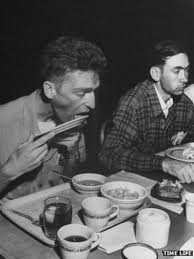
People are experiencing poverty both in work and out of work. Moreover, in countries with an adequate social safety net, poor employment (low pay, short-term contracts), rather than unemployment, has the biggest detrimental impact on mental health. There is ample medical evidence to challenge the current political dogma, and to support this account. (See the Minnesota semistarvation experiment, for example. The understanding that food deprivation in particular dramatically alters cognitive capacity, emotions, motivation, personality, and that malnutrition directly and predictably affects the mind as well as the body is one of the legacies of the experiment.)

Systematically reducing social security, and increasing conditionality, particularly in the form of punitive benefit sanctions, doesn’t “incentivise” people to look for work. It simply means that people can no longer meet their basic physiological needs, as benefits are calculated to cover only the costs of food, fuel and shelter.Food deprivation is closely correlated with both physical and mental health deterioration. Maslow explained very well that if we cannot meet basic physical needs, we are highly unlikely to be able to meet higher level psychosocial needs.

The government proposal that welfare sanctions will somehow “incentivise” people to look for work is pseudopsychology at its very worst and most dangerous.In the UK, the government’s welfare “reforms” have further reduced social security support, originally calculated to meet only basic physiological needs, which has had an adverse impact on people who rely on what was once a social safety net.

Poverty is linked with negative health outcomes, but it doesn’t follow that employment will alleviate poverty sufficiently to improve health outcomes.In fact record numbers of working families are now in poverty, with two-thirds of people who found work in 2014 taking jobs for less than the living wage, according to the annual report from the Joseph Rowntree Foundation a year ago.

Essential supportive provision is being reduced by conditionally; by linking it to such a narrow outcome – getting a job – and this will reduce every service to nothing more than a political semaphore and service provision to a behaviour modification programme based on punishment, with a range of professionals being politically co-opted as state enforcers. 

I have pointed out previously that there has never been any research that demonstrates unemployment is a direct cause of ill health or that employment directly improves health, and the existing studies support the the idea that the assumed causality between unemployment and health may actually run in the opposite direction.It’s not that unemployment is causing higher ill health, but that ill health and discrimination are causing higher unemployment. If it were unemployment causing ill health, at a time when the government assures us that employment rates are currently “the highest on record,” why are more people becoming sick?

The answer is that inequality and poverty have increased, and these social conditions, created by government policies, have long been established by research as having a correlational relationship with increasing mental and physical health inequalities. For an excellent, clearly written and focused development of these points, the problem of “hidden” variables and political misinterpretation, see Jonathan Hulme’s Work won’t set us

– childhood immunisation
– antibiotics
– access to education, and particularly, improving female literacy
– increasing social equality

Given that, as statistics sadly show, the health of the poorest in the UK is again declining despite the first four factors mainly still being accessible to even the UK’s very poorest, one can only point at the worsening inequalities and social injustices as a significant cause. The Marmot review pretty much concludes the same. “

Addressing these issues is not consistent with the ideological thrust of Conservative policies, unfortunately, since the government insist that social problems such as poverty and ill health (the biopsychosocial model, with an emphasis on the “psychosocial” elements) are due to individual “behaviours.” Their approach to date has been to level punitive policies with an embedded core of behaviour modification techniques which usually entails the punitive removal of lifeline income at the poorest citizens – casually called “incentivising” and “supporting” – whilst addressing the behaviours of the wealthy with a system of publicly funded financial reward. This simply recreates, deepens, perpetuates and accentuates existing inequalities.

Empirical research published two years ago demonstrated the high a cost the country paid in terms of health and wellbeing for the Thatcher administration’s neoliberal economic and social policies. The study, which examined at material from existing research and data from the Office for National Statistics, illustrates that Thatcherism resulted in the unnecessary and unjust premature deaths of British citizens, together with a substantial and continuing burden of suffering and a widespread degradation of wellbeing.

Co-author and researcher Professor Clare Bambra from the Wolfson Research Institute of Health and Wellbeing said that deaths from violence and suicide all increased substantially during the Thatcher era in comparison with other countries. Regional inequalities in life expectancy between north and south were also exacerbated, as were health inequalities between the richest and poorest in British society.

Professor Bambra also says that the welfare cuts implemented by Thatcher’s governments led to a rise in poverty rates from 6.7% in 1975 to 12% by 1985; poverty is well known to be one of the major causes of ill health and mortality. Income inequality also increased in the Thatcher period, as the richest 0.01% of society had 28 times the mean national average income in 1978 but 70 times the average by 1990. Other research (The Spirit Level) indicates that income inequality is internationally associated with higher mortality and morbidity.

Yet earlier this year, the welfare reform minister, Lord Freud, refused to monitor the number of people who take their own lives as a result of the £120-a-month cut planned for those people in the work related activity group (WRAG), claiming employment and support allowance from April 2017. Concerns were raised in the House of Lords, when Baroness Meacher, amongst others, warned that for the most vulnerable citizens, the cut was “terrifying” and bound to lead to increased debt.

Condemning the truly callous and terrible actions of the Treasury, she urged ministers to monitor the number of suicides in the year after the change comes in, adding: “I am certain there will be people who cannot face the debt and the loss of their home, who will take their lives.”

Many people have died as a consequence of the welfare “reforms.”

Not only have the government failed to carry out an impact assessment regarding the cuts, Lord Freud said that the impact, potential increase in deaths and suicides won’t be monitored, apart from “privately” because individual details can’t be shared and because that isn’t a “useful approach”.

He went on to say “We have recently produced a large analysis on this, which I will send to the noble Baroness. That analysis makes it absolutely clear that you cannot make these causal links between the likelihood of dying – however you die – and the fact that someone is claiming benefit.”

However, a political refusal to investigate an established correlation between the welfare “reforms” and an increase in the mortality statistics of those hit the hardest by the cuts – sick and disabled people – is not the same thing as there being no causal link. Often, correlation implies causality and therefore such established links require further investigation. It is not possible to disprove a causal link without further investigation.

Whilst the government continue to deny there is a “causal link” between their punitive welfare policies, austerity measures and an increase in premature deaths and suicides, they cannot deny there is a clear correlation , which warrants further research and political accountability.

We have a government that provides disproportionate and growing returns to the already wealthy, whilst imposing austerity cuts on the very poorest. How the government possibly claim that inequality is falling, when inequality is so fundamental a prop to their ideology and when social inequalities are extended and perpetuated by all of their policies? It seems an Orwellian re-writing of language about inequality is being used to mislead us into thinking that the economy is far more “inclusive’ than it is. The number of vulture private businesses payrolled by the government to deliver increasingly ideologically biased and punitive welfare, health and social care “services” has risen dramatically this past six years, all of which has cost the UK taxpayer billions.

Meanwhile, those people who need essential supportive public services are facing severe cuts to their lifeline provision. Many of the multinationals contracted by the government are paid to cut the costs of public services, but are costing the public far more than they save.far more than they save. This brand of neoliberal crony capitalist is an entrenched mindset that needs to radically change, because the only beneficiaries are big businesses, and at the expense of those people with the highest level of need. The government’s policies are harming our most vulnerable citizens.

It seems that for wealthy people, “incentives” are always financial rewards, and for poor people, “incentives” simply involve grossly unfair financial punishments, which have too often challenged people’s  capacity to meet basic survival needs.

It’s time to challenge the class-based prejudice and blatant discrimination that is embedded in Conservative policies, which ultimately may only serve to deepen existing wealth and health inequality and increase social and economic division.

75629_107145729354964_2536493_n


I don’t make any money from my work. But you can make a donation and help me continue to research and write informative, insightful and independent articles, and to provide support to others. The smallest amount is much appreciated – thank you.

DonatenowButton cards

Malnutrition, austerity and eugenics.

Minnes

Earlier this year, I reported that figures released by The Office of National Statistics (ONS) showed 391 people died from malnutrition in 2015. There were 746 hospital admissions for malnutrition in just 12 months. The statistics also showed two people in the UK are admitted to hospital with the condition every day in what campaigners have called a “national scandal.” 

Official figures more recently from the Department of Health reveal that people with malnutrition accounted for 184,528 of days in hospital beds taken up in England taken up last year, a huge rise on 65,048 in 2006-07. The sharp increase is adding to the pressures on hospitals, which are already struggling with record levels of overcrowding and limited resources because of underfunding.

161127-malnutrition-stats

Critics and campaigners have said the upward trend is a result of austerity and rising absolute poverty, deep cutbacks in recent years to meals on wheels services for the elderly and inadequate social care support, especially for older people. 

Theresa May has made it clear there will be no end to Tory austerity, she said:“What I’m clear about is we’re going to continue as we have done in Government over the last six years – ensuring that we’re a country that can live within our means.” 

The figures once again directly contradict the glib claim from government ministers that the rise in the use of food banks is linked to the fact that there are now more of them. Ludicrously, millionaire David Freud has claimed that people use food banks just because they provide a  “free good”.  However, research shows that people turn to charity food as a last resort following a crisis such as the loss of a job, the delays and problems accessing social security benefits, and through benefit sanctions. 

People may only be referred to a food bank by a professional such as a social worker or GP. If someone turns up without a voucher, food bank staff put them in touch with relevant local agencies who can assess whether they need a voucher and signpost them to the right services. The number of people receiving emergency food is disproportionate to the number of new food banks opening: following the welfare “reforms”, by 2013, numbers helped by food banks increased by 170% whilst there was only a 76% increase in new food banks opening. 

Over 50% of children living in poverty in the UK are from working households and many of the people helped by food banks are in work, with the rising cost of living combined with no rise in low wages causing many to hit a crisis where they can’t afford to met basic needs such as eating.

Jonathan Ashworth, the shadow health secretary, unearthed the latest figures in a response to a recent parliamentary question submitted to the health minister Nicola Blackwood. He said: 

“These figures paint a grim picture of Britain under the Conservatives. Real poverty is causing vulnerable people, particularly the elderly, to go hungry and undernourished so much so that they end up in hospitalOur research reveals a shocking picture of levels of malnutrition in 21st-century England and the impact it has on our NHS. This is unacceptable in modern Britain.”

In a very wealthy first-world  democracy, it is completely unacceptable that anyone is left hungry, malnourished and in absolute poverty.

The Department of Health figures showed that the number of “bed days” accounted for by someone with a primary or secondary diagnosis of malnutrition rose from 128,361 in 2010-11, the year the coalition came to power, to 184,528 last year – a 61% rise over five years.

The National Institute for Health and Care Excellence classes someone as malnourished if they have a body mass index of less than 18.5, have suffered the unintentional loss of more than 10% of their weight over the last three to six months, or if they have a BMI under 20 and have unintentionally seen their weight drop by more than 5% over the previous three to six months.

The worrying decision by the chancellor, Philip Hammond, not to fund the NHS or social care with any more money in his autumn statement last week will only worsen this already unacceptable situation.

Ashworth said: “The reality is the government have failed this week to both give the NHS and social care the extra investment it needs while also failing to invest in prevention initiatives to foster healthier lifestyles. The cuts to public health budgets along with an emaciated obesity strategy are both utterly misguided.” 

Figures are not available for exactly how many patients accounted for the 184,528 bed days last year, but information supplied to Ashworth by the House of Commons library shows that 57% of the patients were women and that 42% were over-65s.

Worryingly, four out of five people who needed inpatient hospital care because of malnutrition were admitted as an emergency, which suggests their health had deteriorated significantly in the days before they were taken in.

Not enough health and social care professionals have the time or knowledge to correctly identify malnutrition.

Stephen Dalton, the chief executive of the NHS Confederation, which represents hospitals, said: “Our members take malnutrition seriously. Good nutrition is a fundamental human right our citizens can expect, and vulnerable, particularly older, people are most at risk of serious consequences if denied basic compassionate care. At a time of unprecedented demand on health and social care we need to be alert and will take seriously any reliable evidence of basic care not being delivered.”

Time and time again, when challenged and confronted with overwhelming empirical evidence of the harm that their class-contingent austerity policies and welfare “reforms” are inflicting on citizens, the government simply deny any “causal link”. They say that the increase in absolute poverty, malnutrition and hunger, deaths and distress are unrelated to their policies, which they claim to be “working”.

With no sign that the government are going to emerge from behind their basic defence mechanism of collective denial – nor are the Conservatives remotely interested in investigating a clear correlation between their blatant attacks on the poorest citizens via their draconian policies and the terrible hardships people are suffering –  we do have to wonder what the real intention is underpinning such clearly targeted austerity.

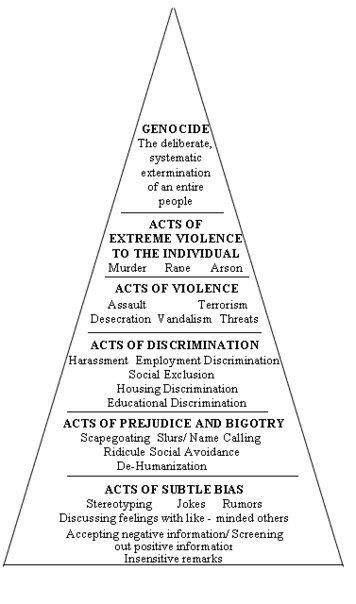
Conservative ideology seems to be founded on the hypothesis of an inborn and “natural order” – a society that is based on a human hierarchy of worth. The Conservatives feel justified that they are part of a superior class in society and therefore they have an entitlement to hold power. Their policies don’t include the majority of us in their design or aims. The government are not democratic, they are authoritarians. Conservative policies act upon ordinary citizens and have become increasingly detached from citizen needs.

I was accused of the terrible crime of being an “interfering do-gooder” recently by someone with social Darwinist ideals. I couldn’t understand his ferocity. Then I made a connection, the proverbial penny dropped. Again. I suddenly felt very weary, disgusted and shocked – the recognition froze me. Again

Historically, eugenicists thought that misguided “do-gooders”, by giving poor people help and support, were allowing them to survive “unnaturally”, and were consequently interfering in human “natural selection”, a benign force which they thought was “deselecting” the people with the “weakest” genes and the “moral defectives”.  The Conservatives moralise about people who are poor and their punitive anti-welfare policies indicate plainly that they think that poor people have moral deficits.

The Conservative message that poverty is caused by character or behavioural “defects” and not socioeconomic and political circumstances should have been ringing alarm bells very loudly everywhere. The problem with authoritarian governments is they usually have sufficient power, one way or another, to mute the alarm. The first base of power over public perceptions that all authoritarians build is invariably facilitated by the corporate mass media. 

Austerity, “the national debt”, “a country living within its means”, “hardworking families”, the scrounger/striver rhetoric, “hard choices” and the “culture of entitlement” has all been a smokescreen for eugenic policies.

We cannot find any comfort in the belief that the government are simply neglectful policy makers. The persistent and loud denial regarding the increasingly precarious existence of the poorest citizens – especially disabled people – and the loud refusal to investigate the correlation between austerity policies and social outcomes that are damaging and harmful, and to consider the empirical evidence of humanitarian harm presented by citizens, academics, charities and campaigners, indicates a government that is not ignorant of the consequences, yet has no intention of changing their policies. The Conservatives are appallingly unconcerned about the terrible harm they are inflicting on invididuals and on our society.

 “Eugenic goals are most likely to be attained under another name than eugenics.” – Frederick Osborn

00632639d492f019c3b926c95ecf003f

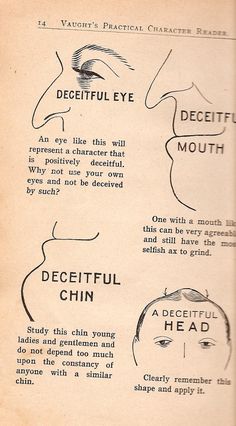
The art of character divination: this type of historical human stereotyping still exists. It is evident in Conservative narratives and their calculated justification rhetoric of draconian welfare policies:

apsimg1481

I don’t make any money from my work. But you can help by making a donation and help me continue to research and write informative, insightful and independent articles, and to provide support to others. The smallest amount is much appreciated – thank you.

DonatenowButton cards

Dr. Robert J. Lifton’s Eight Criteria for Thought Reform, Cult Thinking and how they relate to Neoliberalism

behavchange
Dr Robert J. Lifton is a psychologist who studied and identified the techniques of mass persuasion and groupthink used in propaganda and in cults (from political to religious). I found his interesting article about the eight criteria for “thought reform” on the International Cultic Studies Association (ICSA) site.

What struck me immediately about Lifton’s criteria is how easily they may be applied to neoliberalism – a totalising, authoritarian New Right ideology, imposed by an elite of very financially secure and powerful oppressors. Neoliberalism is incompatible with democracy, values of equality and human rights. It also requires narratives of othering in order for governments to justify the inequality that neoliberalism is designed to cause. 

Over the last few years, much of the population in the UK have experienced growing inequality and increasingly precarious socioeconomic circumstances, exacerbated by class-contingent neoliberal austerity and ‘small state’ policies.

The neoliberal approach to public policy has become naturalised. Political theorist Francis Fukuyama announced in 1992 that the great ideological battles between “east and west” were over, and that ‘western [neo]liberal democracy’ had triumphed. He was dubbed the “court philosopher of [post-industrial] global capitalism” by John Gray.

In his book The End of History and the Last Man, Fukuyama wrote:

“At the end of history, it is not necessary that all societies become successful liberal societies, merely that they end their ideological pretensions of representing different and higher forms of human society…..What we are witnessing, is not just the end of the cold war, or a passing of a particular period of postwar history, but the end of history as such: that is, the end point of mankind’s ideological evolution and the universalisation of western liberal democracy as the final form of human government.”

I always saw Fukuyama as an ardent champion of ultra-neoliberalism, he disguised his conservatism behind apparently benign virtue words and phrases (as part of a propaganda technique called Glittering Generalities), such as “Man’s universal right to freedom.” 

He meant the same sort of self-interested “freedom” as Ayn Rand: “a free mind and a free market are corollaries.” He meant the same kind of implicit social Darwinist notions long held by Conservatives like Herbert Spencer – where the conditions of the market rather than evolution decides who is “free,” who survives, and as we know, the market is rigged by the invisible hand of government.

Fukuyama’s ideas have been absorbed culturally, and serve to normalise the dominance of the right, and stifle the rationale for critical debate. Additionally a political context has been created to pathologize the left.

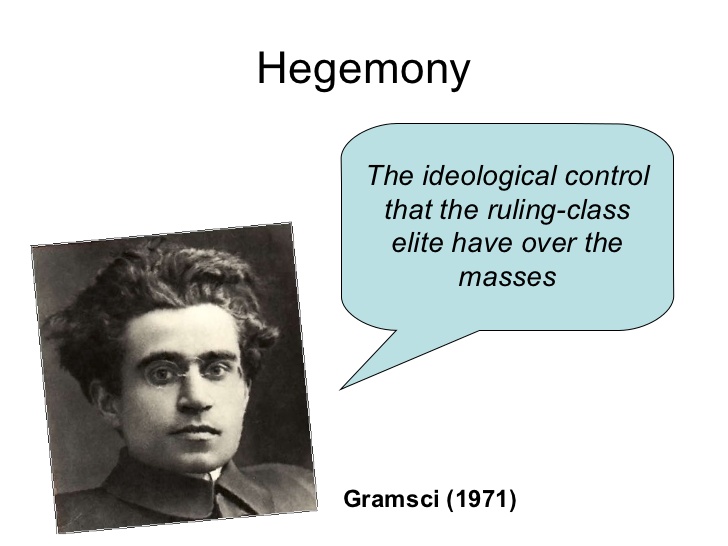
Fukuyama’s work is a celebration of neoliberal hegemony. It’s an important work to discuss simply because it has been so widely and tacitly accepted, and because of that, some of the implicit, taken-for-granted assumptions and ramifications need to be made explicit. 

Neoliberalism requires an authoritarian approach to public administration. Rather than an elected government recognising and meeting public needs, instead, we now have a government manipulating citizens to adapt their views, behaviours and circumstances to meet the politically defined needs of the state, in the form of ‘nudging’ and behavioural economics. 

This turns democracy on its head. It is also presents us with a political framework that is incompatible with the UK’s international human rights obligations and equality legislation. 

Government policies have become increasingly irrational.  We have a government that has decided work is a health outcome, for example. In an absurd world where medical sick notes have been politically redefined as fit notes, sick and disabled people are apparently no longer exempt from work, which is now held to be a magic “cure”. The only way out of the politically imposed punitive and increasing poverty for those who cannot work is… to work. (See: Let’s keep the job centre out of GP surgeries and the DWP out of our confidential medical records.) 

Neoliberalism has become a doxa in the Western world. Here in the UK, citizen behaviours are being aligned with politically defined neoliberal outcomes, via policies that extend behaviour modification techniques, based on methodological behaviourism. Policies that “incentivise” have become the norm. This is a psychocratic approach to administration: the government are delivering public policies that have an expressed design and aim to act upon individuals, with an implicit set of instructions that inform citizens how they should be

Aversives and punishment protocols are most commonly used. Coercive welfare policies are one example of this. The recent eugenics by stealth policy entailing the restricting of welfare support to two children only is another. Both were introduced with the explicitly stated political intention of “changing behaviours” of poorer citizens. Those that cannot or will not conform are politically stigmatised and outgrouped, as well as being being further “disciplined” by state-imposed economic sanctions.

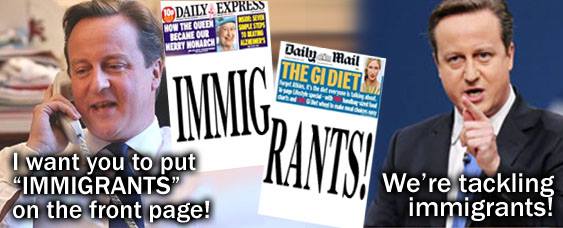
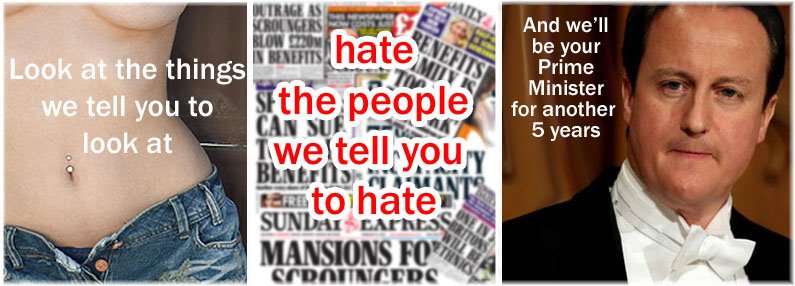
Another particularly successful way of neutralising opposition to an ideology is to ensure that only those ideas that are consistent with that ideology saturate the media and are presented as orthodoxy. Every Conservative campaign has been a thoroughly dispiriting and ruthless masterclass in media control.

Communication in the media is geared towards establishing a dominant paradigm and maintaining an illusion of a consensus. This ultimately serves to reduce democratic choices. Such tactics are nothing less than a political micro-management of your beliefs and are ultimately aimed at nudging your voting decisions and maintaining a profoundly unbalanced, pathological status quo. (See also: Inverted totalitarianism and neoliberalism.)

As a frame of analysis, Lifton’s criteria are very useful in highlighting parallels between cult thinking and how political dogma may gain an illusion of consensus; how it becomes a dominant paradigm and is accepted as everyday “common sense.” 

Kitty.

Lifton’s criteria for “thought reform” are:

  1. Milieu Control.  This involves the control of information and communication both within the environment and, ultimately, within the individual, resulting in a significant degree of isolation from society at large.

  2. Mystical Manipulation.  There is manipulation of experiences that appear spontaneous but in fact were planned and orchestrated by the group or its leaders in order to demonstrate divine authority, spiritual advancement or some special gift or talent, such as claims of having a high IQ, that will then allow the leader to reinterpret events, scripture, and experiences as he or she wishes. (This can include “natural order” ideas and political doxa.) 
  3. Demand for Purity.  The world is viewed as black and white and the members are constantly exhorted to conform to the ideology of the group and strive for perfection.  The induction of guilt and/or shame is a powerful control device used here. (Stigma and political outgrouping is used to deter and exile non-conformists.)
  4. Confession.  Sins, as defined by the group, are to be confessed either to a personal monitor or publicly to the group.  There is no confidentiality; members’ “sins,” “attitudes,” and “faults” are discussed and exploited by the leaders. (Mainstream media have bombarded us with “confessions” of “scroungers”, for example. The lives and experiences of those out of work have become public moral “property.”)
  5. Sacred Science.  The group’s doctrine or ideology is considered to be the ultimate Truth, beyond all questioning or dispute.  Truth is not to be found outside the group.  The leader, as the spokesperson for God or for all humanity, is likewise above criticism. (Ties in with Conservative notions of a “natural social order.” But also, pseudoscience may be used to justify controversial policies.)
  6. Loading the Language.  The group interprets or uses words and phrases in new ways so that often the outside world does not understand.  This jargon consists of thought-terminating cliches; slogans which serve to alter members’ thought processes to conform to the group’s way of thinking. (See Glittering Generalities and The Conservatives are colonising progressive rhetoric.)
  7. Doctrine over person.  Member’s personal experiences are subordinated to the sacred science and any contrary experiences must be denied or reinterpreted to fit the ideology of the group. 
  8. Dispensing of existence.  The group has the prerogative to decide who has the right to exist and who does not.  This is usually not literal but means that those in the outside world are not saved, unenlightened, unconscious and they must be converted to the group’s ideology.  If they do not join the group or are critical of the group, then they must be rejected by the  members.  Thus, the outside world loses all credibility.  In conjunction, should any member leave the group, he or she must be rejected also.  (Lifton, 1989)

*Italics in blue added by me.

Related

Nudging conformity and benefit sanctions: a state experiment in behaviour modification

The new Work and Health Programme: government plan social experiments to “nudge” sick and disabled people into work

Cameron’s Nudge that knocked democracy down: mind the Mindspace.

Link: The Government Communication Service guide to communications and behaviour changegcs-guide-to-communications-and-behaviour-change1


I don’t make any money from my work. But you can support my work by making a donation and help me continue to research and write informative, insightful and independent articles, and to provide support to others. The smallest amount is much appreciated – thank you.
DonatenowButton

Report on the UK Government’s failing human rights record submitted to UN

humanrights-01.jpg

coalition of 175 civil society organisations has raised grave concern about the impact of the government’s welfare “reforms” and living standards in the UK, hate crimes, mental health, deteriorating prison conditions, stop and search powers and the Conservative’s plans to repeal the Human Rights Act, among other issues. The organisations include Age UK, Just Fair, Inclusion (London and Scotland), the TUC, Unicef UK, Rights Watch, The Law Centres Network, Mind, the Mental Health Foundation and Stonewall. 

The coalition contributed to a report which calls on the United Nations (UN) to recognise the evidence from the wide range of civil society groups and to ensure the UK Government, and the devolved administrations, are accountable for taking appropriate action and measures to redress many raised human rights concerns. The report authors caution that a high proportion of the 132 recommendations from the last United Nations hearings in 2012 have not been implemented.

The British Institute of Human Rights (BIHR) announced the launch of the Joint Civil Society Report, on the 22 September. It was submitted to the United Nations in Geneva last Thursday as part of the Universal Periodic Review of the UK. 

The report was produced as part of Human Rights Check UK project, which has been assessing human rights changes since the UK was last reviewed by the UN in 2012. BIHR have engaged with over 175 organisations across England, Scotland and Wales through both a call for evidence and by hosting a series of events across Great Britain. These groups range from local community advocacy groups to large national organisations, working on issues such as health, age related issues, children’s issues, justice, education, welfare and many others.

Many of the issues and concerns raised in this report of 84 pages have been under-reported in the mainstream media.

The human rights framework in the UK is being eroded

A key theme throughout the evidence received are serious concerns regarding the proposed repeal of the Human Rights Act. Civil society organisations were worried that a new Bill of Rights would offer weaker human rights protections, particularly impacting the most vulnerable members of society.

The report says repeal of the act would be a “denigration of international human rights law.” It also says in the submission: “The UK’s retrogressive debates are already negatively influencing other countries. There is increasing concern that the UK’s political rhetoric will, if not checked, threaten the coherence and credibility of the post-second world war human rights settlement.”

The report also says: The rhetoric in national media and among senior officials often repeatedly misrepresents and misreports judicial cases, “blaming” human rights laws for situations/decisions which are about other laws or are only partially about human rights (often centring on groups considered “unpopular” or “undeserving”). When the Human Rights Act has positively supported people, this is rarely discussed.

It is vital that the UK Government guarantees it will build upon the Human Rights Act, rather than amending or repealing it via a new bill of rights. Refusal to give such a guarantee should be recognised as an indication that there is a significant risk of the human rights framework in the UK being eroded.”

These are all concerns that I have raised myself over the last two years, along with many other campaigners.

Other key issues raised were related to growing poverty and inequality across the UK as a result of welfare “reforms” and austerity measures. The report reflects the damaging impact that Conservative policies are having on a number of human rights issues, including access to justice, children and women’s rights and the right to an adequate standard of living. These are problems and themes which many of us have been campaigning and writing about for the last four or five years.

Social security no longer alleviates poverty and homelessness

Many concerns were raised about the impact of the welfare cuts, growing poverty and an inadequate standard of living in the UK. The report said that recent policy and legislative changes have seen a regression in standards of living and the welfare system’s ability to tackle poverty, homelessness and unemployment. Many organisations reported that this is having a negative impact on marginalised social groups, among which are some of our most vulnerable citizens. 

For example, the abolition of disability premiums may result in 100,000 disabled children losing up to £28 a week. Changes to personal allowances will leave single parents with severe disability needs with £73 less a week. There was recognition of the discriminatory impact of the bedroom tax on disabled adults and children, carers, domestic violence victims, separated parents and others.

The benefit cap disproportionately impacts on single parents, children and BME groups. The Supreme Court ruled that the cap violates the United Nations Convention on the Rights of the Child  (UNCRC) but did not overturn the policy. The UK Government has further reduced the cap to £20,000 per annum for households outside of London and £23,000 for those within Greater London through the Welfare Reform Work Act 2016, affecting 92,000 more households.

The report also said that benefit sanctions have significantly increased and that evidence strongly suggests links to rising destitution and food bank use. Many people have received sanctions in “error”. The authors pointed out that there is no empirical evidence that sanctioning is in any way effective in “getting people back to work”. 

It was also noted that the government claim to have introduced a National Living Wage in 2016, to increase minimum wage to over £9 per hour by 2020. This does not apply to those under 25. Rates are not set in accordance with recommendations from the Living Wage Foundation.

Further concerns raised are freezes to working-age benefits for four years from April 2017, the removal of the Child Tax Credit entitlement for third or subsequent children born after 6 April,  repeal of the Child Poverty Act 2010. Although the Government will publish child poverty data, there are no longer statutory targets or a duty to report.

The report authors also acknowledged that there been an unprecedented rise in the use of food banks, and several submissions directly related this to welfare cuts and austerity measures. One million people were provided with 3 days of emergency food in 2015/16. 

It was noted that the Parliamentary committee recently (2015) assessed the impact of the Equality Act 2010 on disability discrimination, concluding it was unsatisfactory. Particular issues raised in evidence submissions include: the significant and disproportionate impact of welfare cuts on disabled people, e.g. Work Capability Assessments have seen many disabled people incorrectly assessed as fit for work; concerns about the portrayal of disabled people as “benefit scroungers”, perpetuated by some sections of the media and political leaders, and new tribunal fees being a disincentive to bringing discrimination cases forward. 

There was also widespread concern expressed that cuts to legal aid have impacted on the most disadvantaged groups in society, deterring potentially successful legal cases and challenges, and removing sources of advice and support. There is a disproportionate impact on women, children, BME communities, disabled people and people living in poverty.

Among the recommendations made:-

The UK government should:

  •  Monitor and review the impact of welfare reforms on living standards, increased poverty and food insecurity, and work to break the link between welfare support and poverty
  •  Pause and review its sanctioning policy, ensuring no person is pushed in to destitution
  •  Abolish the spare room subsidy since it causes destitution and has not served its purpose
  •  Reconsider changes to child poverty policy and ensure no child is living  in poverty
  •  Create a living wage that accurately reflects the cost of living within the UK

Among other human rights failings, the report highlights the fact that race is the most commonly recorded motivation (82%) for hate crimes in England and Wales and that the Brexit vote coincided with a surge in such offences. It links reports on the government’s policy of creating a “hostile environment” for migrants with discrimination against those from minority communities. It’s true that political and media rhetoric about migration is loaded with dehumanising metaphors.

Mental health service funding cuts and government policies are having negative impacts on vulnerable people

Evidence submitted highlighted a number of serious issues, including:

  • The underfunding of mental health services, resulting in just 25% of people receiving help.
  • In England, funding for mental health trusts has dropped in real terms by 8.25% since 2010.
  • Shortfalls in services have resulted in the police responding to people in crisis. In 2014-15, in England and Wales, the police picked up 23,128 people in mental health crisis and 4,537 were taken to a police cell because there was no other safe place available (although this is down from the previous year).
  •  Patients being placed in units far away from their home and support networks as a result of closing in-patient units. In 2015-16, 5,411 patients were sent ‘out of area’.
  •  The disparity across the UK in accessing talking therapies. In 2014-15, 33% of people in England waited longer than 28 days to start treatment following referral and 7% longer than 90 days. In Wales, data shows 57% of people waited over three months for an assessment and their first session.
  •  Concern that legal protections for people with mental capacity issues are not sufficient, including that the Mental Capacity Act and the Deprivation of Liberty Safeguards in England and Wales are no longer fit for purpose (the Law Commission is reviewing both) and that the Adults with Incapacity Act in Scotland is not compatible with human rights standards.

Trade Unions and charities have been systematically disempowered

Serious concern was expressed that recent legislation has introduced unjustified, disproportionate and discriminatory restrictions on trade unions activities. The Trade Union Act 2016 sets statutory thresholds and substantial new legal hurdles which unions must overcome to take lawful industrial action in defence of their jobs, livelihoods, wages and working conditions.

The “Lobbying Act” has created additional layers of regulation for charities and Trade Unions, already subject to rules on political activities. The Lobbying Act’s chilling effect has been reported across jurisdictions. Research found 63% of charity respondents said the Act will make it harder to achieve their charitable objectives.

The recent Hodgson Review concluded that the Act did not strike the right balance. The UK Government has yet to respond to the report’s recommendations.  CSOs are also critical of UK Government proposals to introduce an “anti-advocacy clause”, restricting organisations that receive public money from lobbying Government.

There are concerns about flawed research underpinning the proposal and its impact on civil society organisations (CSOs) being able to amplify community voices with the State. This has implications for democracy.

The Trade Union Act 2016 sets statutory thresholds and substantial new legal hurdles which unions must overcome to take lawful industrial action in defence of their jobs, livelihoods and working conditions.

There is widespread concern about the impact of the UK referendum to leave the European Union on human rights. Whilst the Human Rights Act is separate from the EU, a number of other rights-based standards emanate from the EU, including equality and employment law standards. 

Stephen Bowen, the chief executive of BIHR, said: “The UK government needs to listen, not just to the United Nations but to the voices of the huge range of organisations closer to home that have shared their serious concern. They are troubled the government is taking the UK towards further isolationism and disregarding the United Nations, worsening the situation with welfare and legal aid cuts, and wanting to scrap the Human Rights Act, weakening its accountability for our rights at home as well as internationally.”

The report was launched on 22 September at Westminster, with contributions from Sir Nicolas Bratza (Chair of BIHR, and former president of the European Court of Human Rights), David Isaac CBE (Chair of the Equality and Human Rights Commission), the Rt Hon. Harriet Harman QC MP (Chair of the Joint Committee of Human Rights) and BIHR deputy director, Sanchita Hosali.

Harriet Harman, welcomed the report for its breadth and depth, and said she would be raising the issues explained with the Justice Secretary, Liz Truss, when she appears at the JCHR next month. Harriet spoke about how the UK level government debates on human rights were leading to a corrosion of rights domestically, and undermining the core principle of universalism. 

She spoke of how the UK needs to recognise and celebrate, not disparage, international accountability, whether that be at the UN or the European Court of Human Rights. Yet the contrast between what the UK Government says domestically versus what is said at the UN can be like “hearing two different administrations.”

Director, Stephen Bowen, conveyed whole-hearted thanks to the 175+ organisations that have helped shape BIHR’s report, to root it in the very real and pressing issues many people in the UK face in ensuring their universal human rights are respected, protected and fulfilled. The breadth and depth of organisations involved is a testament to how significant human rights are in the UK.


images


I don’t make any money from my work. But you can contribute by making a donation and help me continue to research and write informative, insightful and independent articles, and to provide support to others. The smallest amount is much appreciated – thank you.

DonatenowButton cards

Conservative social security policy is not founded on rational analysis and evidence

650
Recently I wrote an article about the new benefit cap which parodied Conservative ideology, traditional class prejudices and subsequent justification narratives for their welfare “reforms”, likening the latter to nineteenth century character divination – phrenology in particular. Sometimes, it’s easier to highlight the ridiculous by simply ridiculing it.

A lot of my work is themed around serious and rational critique of Conservative shortcomings when it comes to the whole process of policy-making and research, from the theories” that inform the process, to the ideologically-driven impacts and narrow neoliberal aims and outcomes, which have led to some catastrophic social consequences. This is because austerity has been aimed exclusively at those citizens who had the very least to start off with. Sick and disabled people have been systematically and disproportionately targeted for cuts to their support.

2014-02-17-BurdenoftheCuts-thumb

I’ve written previously about the government’s increasing use of secondary legislation to push through controversial and highly partisan policies without an adequate degree of parliamentary scrutiny and debate. The public are entirely excluded from this process. This is one way that the Conservatives have been getting away with highly prejudiced, ideologically-driven policies that have not been analysed in terms of safeguarding citizens, impact, compatibility with our international human rights obligations and are neither adequately justified nor evidenced. 

The Strathclyde review and Conservative authoritarianism

Secondary legislation is unamendable and is allocated 90 minutes debate in the Commons at best, by the Conservatives. Secondary legislation in the form of Statutory Instruments was only ever intended for non-controversial and small tidying up legislative measures. A Tory aide admitted that the government are trying to get as much unpopular legislation in through the secondary route as possible. But this has been very evident anyway. The government is intent on dismantling any inconvenient piece of the constitution.

In a democracy there is always a responsibility and need to ensure additional checks and balances against incumbent governments and for extending opportunities to review and improve the quality of legislation. There is always a need to broaden the political participation and democratic inclusion of particular groups in society; to explore ways by which under-represented groups may be identified and included in political decision-making processes.

Statutory Instruments are the principal form in which delegated legislation is made, and are intended to be used for simple, non-controversial measures, in contrast to more complex items of primary legislation (known as Bills.) The opposition has frequently complained that the government uses Statutory Instruments to pass complex and controversial legislation which should have been subject to full Parliamentary scrutiny. Universal credit, the legal aid and tax credit cuts are clear examples of the misuse of secondary legislation, each with far-reaching and detrimental socioeconomic consequences for many people.

The steep rise in the use of Statutory Instruments since 2010 is an indication of how the Conservatives are politically managing pre-legislative scrutiny, stifling healthy debate, curtailing opposition, and side-stepping essential democratic transparency and accountability. It’s also an indication that much Conservative legislation is ideologically-driven rather than needs-driven: the use of secondary legislation as a means of avoiding scrutiny demonstrates that the government are aware that much of their planned programme won’t stand up to close Parliamentary examination and rational debate.

Lord Strathclyde was asked in October last year by David Cameron to undertake a “rapid review” that considered how to secure the decisive role of the House of Commons in relation to its primacy on financial matters and secondary legislation. Of course, Strathclyde’s report was published by the Government on the 17 December, 2015, which marked the final sitting of Parliament before Christmas. Nonetheless the media did actually cover the contents of the report and some of the implications of the recommendations made.

Strathclyde concluded in his report that the House of Lords should be permitted to ask the Commons to “think again” when a disagreement on proposed legislation exists, but should not be allowed to veto. MPs would ultimately make a decision on whether a measure is passed into law. The review focuses in particular on the relationship between the Commons and the Lords, in relation to the former’s primacy on financial matters and secondary legislation.

The key problem is that Statutory Instruments (SI) are being over-used and are under-scrutinised in the Commons. SIs have become a major form of law-making activity in the UK. In 2015, the UK Parliament passed 34 Acts, whilst 1,999 Statutory Instruments were made. (In fact, 2015 has been a relatively light year for SIs: in 2013 and 2014, 3,292 and 3,486 SIs were made.)

The government ensure they have a majority on any SI committee and MPs are chosen by Whips. The Hansard Society estimate that SIs currently account for as much as 80 per cent of the Government legislation that impacts citizens. However, they are given substantially less Parliamentary time than Bills, enabling government to push through their ideologically designed legislative programme with very little scrutiny, exacerbating a lack of democratic transparency and accountability of the Executive (the government). 

Further presented justification for grotesquely unfair policies from the Conservatives is based on a claim that “we have a clear mandate to do this.” The concept of a government having a legitimate mandate to govern via the fair winning of a democratic election is a central component of representative democracy. However, new governments who attempt to introduce policies that they did not make explicit and public during an election campaign are said to not have a legitimate mandate to implement such policies. 

In order to keep his promises on further future tax cuts for higher earners, George Osborne made even more cuts to public services, public sector pay and the social security safety net that are so deep they will severely damage both the economy and potentially, the fabric of our society. The Institute for Fiscal Studies (IFS) have criticised Osborne’s proposed tax credit cuts, because it is “at odds” with wider Conservative stated aims to “support hardworking families”.

Research conducted by the IFS calculated that only around quarter of money take from families through tax credit cuts would be returned by the new National “Living Wage”.Tax credits are payments made by the government to people on lower incomes, most of whom are in work. 

Cameron effectively ruled out cutting the benefit before the election, telling a voter’s Question Time that he “rejected” proposals to cut tax credits and did not want to do so. The cuts are part of £12bn cuts to the social security budget that the government is to make – the details of which the Conservatives refused to announce before the election.

However, in an unprecedented move, the Conservatives have threatened a constitutional “showdown”, and have refused to engage in dialogue with peers that want kill off the proposed Tory cuts. The government warned the House of Lords it would trigger a full-scale constitutional crisis by pressing ahead with their plans. 

The review by Lord Strathclyde, commissioned by a rancorous and retaliatory Cameron followed the delay and subsequently effective defeat of government tax credit legislation in the House of Lords, and it has, of course, recommended curtailing the powers of Upper House. 

Strathclyde proposed that the House of Commons is given the final say over secondary legislation (in particular, Statutory Instruments), which are, as previously stated, frequently being used for political manoeuvring to edit the details of Acts, and ensure rules, regulations and even changes to legal definitions are made by ministerial order, rather than by the rather more open and democratic process of primary legislation: it’s being used as a way of bypassing Parliamentary scrutiny. 

sis

The view from the Social Security Advisory Committee

More recently, the Chair of the Social Security Advisory Committee (SSAC) has also concluded that “pressure from the Treasury” resulted in welfare changes being pushed through parliament “without meaningful analysis of impact or interactions with other parts of the benefit system.” He also raises the same issues that I previously have regarding the government’s increased use of secondary legislation.

In a very damning report on how the government develops welfare policies, SSAC Chair Paul Gray says top-down pressure from the former chancellor, Osborne, to meet Budget deadlines meant legislation was being rushed without proper analysis or scrutiny.

In a foreword to the report, Gray writes: “On the basis that primary legislation was to be debated in some detail in Parliament, the Government was not required to bring the majority of these provisions to SSAC.

Consequently, the amount of secondary legislation presented to us in the first few months of the reporting year was lighter than usual.

By contrast from September onwards a number of sets of regulations were presented to us for scrutiny – most with their origins in the Chancellor of the Exchequer’s Budget proposals for reducing benefit expenditure.”

He goes on to say: “The Committee has observed that legislation required to deliver policies announced by the Chancellor during his Budget or autumn statements is often developed at pace to meet challenging deadlines set by HM Treasury.

This has regularly resulted in secondary legislation being presented to us without meaningful analysis of impact or interactions with other parts of the benefit system.

The absence of evidence underpinning some of the Government’s policy choices has been a significant concern to us over the past year, and we hope that the Government will adjust this aspect of its approach to policy-making in the coming year.”

He added: “The committee has noted in the past the absence of analytical material on the cumulative impact of welfare reforms.”

Gray also draws attention in particular to tax credit changes proposed in the summer budget highlighting “the lack of available evidence to support the policy changes being presented to us”.

Gray concludes: “There can be no question that this committee is hampered in its role of scrutinising proposed changes in cases where the supporting explanatory material and evidence is scant.”

It’s a point I have made myself many many times. However, unlike the government, I do tend to include evidence and analysis in my ongoing critique of Conservative policies.

The ideological drive to dismantle the welfare state

Despite the relentless Conservative attacks on social security since 2010, (which is funded by the citizens that it supports when they experience hardships), Theresa May will not rule out delivering yet more brutal welfare cuts if the economy suffers a downturn because of Britain exiting the EU. The prime minister refused to offer any guarantees that she will spare struggling families if Whitehall savings are needed in the coming months. 

May has made it clear there will be no end to Tory austerity, she said: “What I’m clear about is we’re going to continue as we have done in Government over the last six years – ensuring that we’re a country that can live within our means.”

I’m just wondering how awarding millionaires £107,000 each per year in the form of a “tax break” in 2012 at the same time as introducing the radical cuts to social security can possibly be construed as an act that ensures “a country that can live within our means.” It seems to me that the Conservatives want to completely dismantle our welfare state, along with all the other gains of our social settlement (social housing, the NHS, legal aid and public services) but fear public opposition.

So rather than be honest about their intention, the Conservatives have chosen to stigmatise people needing welfare support to disperse public sympathy, to create scapegoats and generate moral panic. The public gradually come to accept the anti-welfare narrative as “fact”, despite the lack of evidence and analysis. Moral and rational boundaries will be pushed, prejudice will advance stage by stage. The incremental cuts will continue until there is nothing left to cut.

Earlier this year, the chancellor was forced to try and defend his decision to use the cuts in disability benefits to fund tax breaks for the wealthy. Controversially, the cuts benefitted the top 7% of earners. The Chancellor raised the threshold at which people start paying 40p tax, in a move that saw many wealthier people pulled out of the higher rate of income tax. 

Osborne callously claimed that the Conservative government was “increasing spending on disabled people”, he said: “Controlling welfare bills is part of what you need to do if you’re a secure country confronting the problems in the world.” It was an utterly ludicrous comment.

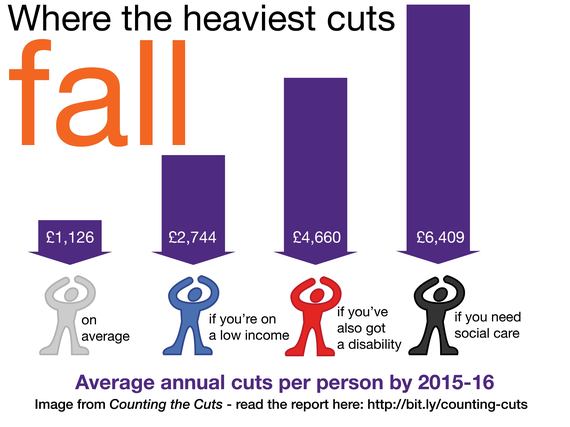
The cuts to ESA and PIP show an intended substantial reduction on government spending to essential support for disabled people.

In a wealth transfer from the poorest to the very rich, we have witnessed the profits of public services being privatised, but the losses have been socialised – entailing a process of economic enclosure for the wealthiest. The burden of losses have been placed on the poorest social groups and some of our most vulnerable citizens – largely those people who are ill, disabled and elderly. The Conservative’s justification narratives regarding their draconian policies, targeting the poorest social groups, have led to media scapegoating, social outgrouping, persistent political denial of the aims and consequences of policies and reflect a wider process of political disenfranchisement of the poorest citizens, especially sick and disabled people.

That the cuts are ideologically driven, and have nothing whatsoever to do with economic necessity, was demonstrated only too well by the National Audit Office (NAO) report earlier this year. The NAO scrutinises public spending for Parliament and is independent of government. The report indicates how public services are being appropriated for purely private benefit.

The audit report in January concluded that the Department for Work and Pension’s spending on contracts for disability benefit assessments is expected to double in 2016/17 compared with 2014/15. The government’s flagship welfare-cut scheme will be actually spending more money on the assessments conducted by private companies than it is saving in reductions to the benefits bill.

From the report:

£1.6 billion
Estimated cost of contracted-out health and disability assessments over three years, 2015 to 2018

£0.4 billion
Latest expected reduction in annual disability benefit spending.

This summary reflects staggering economic incompetence, a flagrant, politically motivated waste of tax payer’s money and even worse, the higher spending has not created a competent or ethical assessment framework, nor is it improving the lives of sick and disabled people. Some people are dying after being wrongly assessed as “fit for work”and having their lifeline benefits brutally withdrawn. Private companies like Maximus are paid millions from our welfare budget, yet they are certainly not “helping the government” to serve even the most basic needs of sick and disabled people.

However, private companies serve the private needs of a “small state” doctrinaire neoliberal government, and making lots of private profit whilst it does so. The Conservatives are systematically dismantling the UK’s social security system, not because there is an empirically justifiable reason or economic need to do so, but because the government has purely ideological, anticollectivist, antidemocratic, profoundly uncivilising prescriptions and longstanding class-based prejudices.

When the Conservatives say they are going to “tackle poverty”, what they mean is that they intend to rigidly police the poor, rather than alleviate poverty. Meanwhile, the new right’s economic enclosure act – austerity – will continue to impoverish many more. The state will respond to each crisis with more authoritarianism and psychopolitical techniques of persuasion, amplified via the media. And the wealthy and powerful will become wealthier and more powerful.

Unless we collectively fight back.

— 

Related

The Conservative approach to social research – that way madness lies

Cases of malnutrition continue to soar in the UK

Two key studies show that punitive benefit sanctions don’t ‘incentivise’ people to work, as claimed by the government

Benefit Sanctions Can’t Possibly ‘Incentivise’ People To Work – And Here’s Why


I don’t make any money from my work. But you can contribute by making a donation and help me continue to research and write informative, insightful and independent articles, and to provide support to others. The smallest amount is much appreciated – thank you.
DonatenowButton


Dead cat conditioning, attention deficit and the social order

blog56_johnnicola_sadface


Last week I wrote about hundreds of people dying of malnutrition in the UK over this past twelve months alone, as a consequence of government policies. I wrote about how our universities are no longer permitting free speech and critical thinking, and how dissenting academics have taken to blogging, using pseudonyms and writing anonymous letters because of the repressive political developments in the UK.  I am now about to write another piece on how our Human Rights Act is to be scrapped and replaced by a Conservative Bill of Frights.

The Labour party needs to be collectively opposing the government and addressing these pressing, socially calamitous issues, raising public awareness regarding the profound damage that this authoritarian government are inflicting on our society and drafting remedial policy outlines which extend social justice and equality. 

In the Labour Party Forum – a Facebook group for party members – I was told that my post about the implications of the Government Higher Education white paper, along with an analysis of the illogic of neoliberalism and its consequences is “irrelevant” to the Labour party.

There is a problem with that. 

If the Labour party is to reach out and persuade the electorate that they have an alternative which is better than the current government, they will need to recognise and to fully understand issues that are affecting the wider public. In the Labour Party forum, every single post (except mine) is about about the leadership debate. But being engaged with what is culturally popular isn’t always in our best interests.

The comments from members are dripping with bad feeling, oozing impotent anger and bleeding bitterness. The party infighting is clearly visible on every thread, the hostility is palpable, and all of this in a group that was once united in fighting the real enemy of ordinary people: the Tories. The old, easy camaraderie among members has seeped away.  Cooperation has plummeted sickeningly down the chasms of division. Fallen socialist values, lying broken. Many who claim they are fighting for a “socialist party” seem to have forgotten to practice what they preach. 

I do understand the anger that many feel in the face of a neoliberal, right wing establishment openly demonstrating a hegemonic stranglehold via the media, with endless streams of poisonous propaganda. We witness overt claims, subtexts and a level of perpetual subliminal messaging about who is fit to lead our country and who isn’t. The attacks on Corbyn in particular highlight just how the powers that be in the UK  have ensured that alternatives to the status quo never become established as a part of our mainstream conceptual and linguistic universe. The media write them out. There is a war going on, for sure. But this is nothing new.

The roots of our current crisis of democracy and class warfare go back a long way, and many of these have been embedded deeply in the changes to Britain’s sociopolitical economy since the Thatcher era. Neoliberalism is a doxa, it didn’t come into being as a means of social and economic organisation because it works: it became mainstreamed “common sense” because the establishment won. 

I gave an interview last year to Phil, who is a very public sociologist on the All That Is Solid site, outlining my own position on developments within the Labour party. Since then, I have written just two articles about party ideology, values and the leadership issues. I do write regularly about ideology, propaganda and the techniques of persuasion that are used by the establishment and media to maintain the status quo. This is an issue that extends well beyond the arising claustrophobic parochialism of Labour party disunity, leadership battles and current disarray. 

The media is the message

Social control is maintained in part by the use of a strategy of distraction, which is designed to divert public attention from important issues and changes determined by the political and economic elites, using a technique of flooding continuous diversions and insignificant information. Distraction strategy is also used to prevent public interest in essential knowledge that is then used to exercise control, whilst ensuring those being controlled are also completely disarmed.  The media maintain public attention, and divert it away from real social and economic problems. The public become an audience captivated by matters of no real importance. I’m probably loosely paraphrasing Noam Chomsky, here. 

From within the Westminster playpen, originating from the likes of Conservative babysitter, Lynton Crosby, the dead cat strategy is basically deployed as a major distraction tactic, usually entailing insulting diversion from a government’s political controversies and failings. So when, for example, the government are investigated by the United Nations for contravening basic human rights, they will scream that the opposition leader is somehow a threat to our national security. 

Everyone will gasp, clutch their brand of indignation and moral panic, and bang on about that for the rest of the week. The fact that democracy is gone for a burton, or human rights are being sidestepped and people are dying because of austerity policies is buried under a pile of furry corpses piling up on the allegoric political table, whilst commentators across the land discuss Jeremy Corbyn’s tweed jacket and beard. 

Then there is the age-old strategy of dīvide et īmpera. Every person on the left of the political spectrum knows what “divide and rule” means. It refers to a strategy that breaks up existing power structures, undermines democracy, and especially prevents smaller power groups from organising, collaborating, cooperating and forming alliances, by creating rivalries, fostering discord, distrust and enmity among the groups. Hello.

Thing is, despite these strategies being common knowledge, this hasn’t stopped many Labour party supporters using the disgracefully unreliable and establishment-collaborative media to present their own personal preferences. The Labour Pary Forum is filled with trivial articles about Owen Smith, this, Jeremy Corbyn, that and Tom Watson, the other, the comment threads full of screaming  indignation and neatly blinkered participants.

Socialist politics is supposed to be conscientious, and rather more about the social, not the personal.

This week, we see  the Independent, the Spectator, the Mirror, the Huffington Post, Politics Home, the London Economic, Channel four, amongst many others, report an audience booing the mention of a perceived political rival at a rally comprised of his opponent’s supporters. I’m all for freedom of speech, but for crying out loud, why and how is this by now mind-numbing tittle tattle considered to be NEWS? And even more importantly, why do social media campaigners think it is?

Don’t look away now

banksy-elephant-in-room1


Only a matter of weeks ago, a Labour MP was murdered by a far right fanatic, because of her political work, and because we are a distracted society that permits a right wing authoritarian othering and outgrouping demagoguery.

But now there are no ripples on the pond.

How can so many people seemingly forget such a horror? It’s almost as if this outrageous, politically motivated murder was a normal event, expected and accepted. Why are we allowing an ideology-driven and opportunistic establishment to divide our society into hierarchies of human worth and value? There’s an underpinning message in policies and political rhetoric that some lives are worth more than others; it’s has crept in unchecked, almost unnoticed, and we have allowed that to happen because we look the other way. In fact many of us seem quite determined to look the other way.

It’s not only migrants that are being politically and socially outgrouped. Disabled people are experiencing an unprecedented increase in hate crime and people are dying of malnutrition in the 5th wealthiest nation of the world. People are dying because of a government’s policies here in the UK. Prejudices are flourishing, violence growing. This is the kind of society we have become. Yet many people are still not paying attention. We are being conditioned not to look and not to see.

Whilst so many people are so happily distracted and so easily diverted by the most trivial details, our democracy is being quietly dismantled, the social gains of our post-war settlement have been almost erased from history, our human rights are being sidelined and re-written to shift the balance of obligation and responsibility from the state to the individual. Such profoundly damaging developments with such dire and toxic implications for our country ought to be recognised and challenged. Citizens are dying prematurely because of class contingent Conservative policies in a post-welfare, low waged Britain.

Those of us who reject austerity and neoliberalism are not “Trot entryists” , “revolutionaries” , “militants” or “extremists”. We are simply people who see beyond prejudiced ideologies and doxas. We recognise neoliberalism only works for 1% of the population. Furthermore, I am certain that in a world where people paid attention, instead of being distracted by mainstreamed, dominant narratives and  the mind-numbingly mediocre, homogenenised X factor culture, almost everyone else would recognise this, too.

I support Corbyn. Not because I invest in a superficial cult of personality type of politics. Not because I see a Corbyn-led Labour party as an end in itself. I have always maintained that a Labour government would simply mark a viable starting point  – the means – for a concerted campaign for social justice and equality.

I support Corbyn because I object to the destruction of people’s lives and the dismantling of protective civilised and civilising social structures because of a neoliberal and social Darwinist politics that invariably creates, through class contingent policies, inequality and social injustice – a few winners and many losers, the latter are then blamed by the state for the faults that are actually intrinsic to the system and extended by the state. I believe that in democracies, governments are elected to meet public needs, we don’t elect them to manipulate public perceptions and nudge us into meeting political and narrow, economic needs. I also believe that progress won’t happen unless we actively participate in democratic processes and work to extend them. Democracy (rather like intelligence) isn’t something we have: it’s something we must DO.

 The current infighting will kill the Labour movement. Vote for Corbyn, (or don’t), but there’s no need for the endless and insular justifications of your voting choice. Let’s keep some perspective and deal with what we NEED to – the  much bigger picture –  instead of impotently bickering among ourselves about a single issue. Socialism is surely all about a vision of the kind of society that is just and fair for the majority; it’s not about personal preferences and narrowly individualist perspectives.

Right now, the establishment have got us exactly where they want us. Their corporate media mouthpieces have made sure of that. The infighting, meanwhile, is destroying the Labour movement from within. 

But we can resist dead cats, Conservative bouncing bomb propaganda and such blatant techniques of persuasion… really, we can do so much better than this.

We won’t do so if we ignore the wider social realities and policy impacts being shaped by an authoritarian government.

sociologyexchangecouk-shared-resource-5-728It’s time to fight back


CONTRIBUTE TO POLITICS AND INSIGHTS

I don’t make any money from my work. But you can contribute by making a donation and help me continue to research and write informative, insightful and independent articles, and to provide support to others. The smallest amount is much appreciated – thank you.
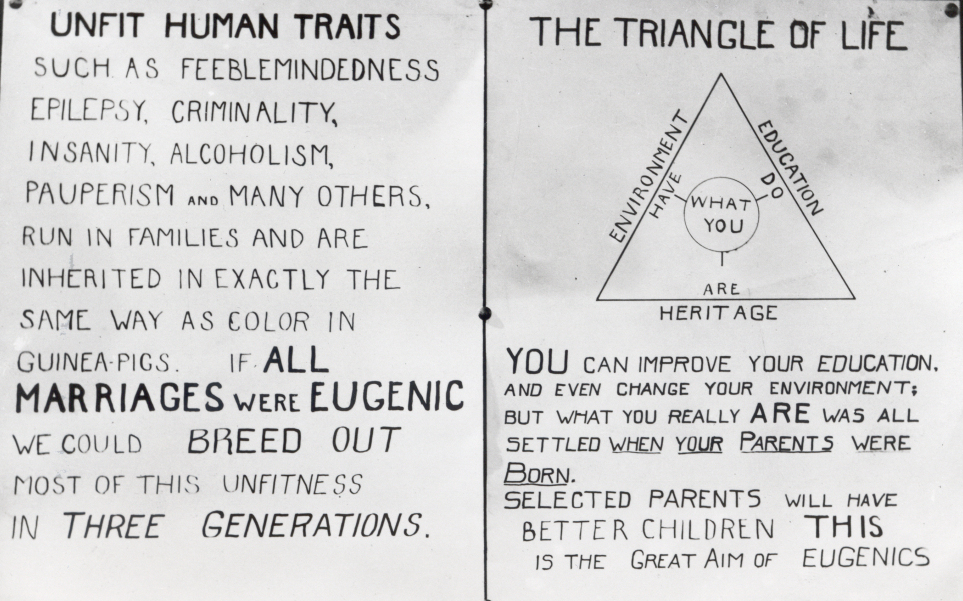


Who killed Jo Cox?


Jo-Cox-composite-image-2016.6.17-7.57-large_trans++qVzuuqpFlyLIwiB6NTmJwfSVWeZ_vEN7c6bHu2jJnT8

I’ve said before, probably more than once, that the Conservatives are, on the whole, supremicist creatures of habit rather than reason. They carry with them a poisonous, heavy burden of longstanding, traditional grudges and prejudices. That is why their policies are so stifling and anti-progressive for the majority of us. It’s why Tory policies don’t meet public needs and are so blatantly class-contingent.

There’s always an air of doom and gloom when we have a Tory government, and a largely subdued, depressed, repressed nation, carrying vague and fearful intuitions that something truly catastrophic is just around the corner.

It usually is.

I can remember the anxiety and creeping preternatural fear infecting and agitating young people back in the eighties, and our subsequent teenage, transcendent defiance, which we carried like the banners at the Rock Against Racism marches, in the Thatcher era. It struck me more than once that we always witness the social proliferation of ultranationalist sentiments and fascist ideals whenever we have a Tory government, too. It stems from the finger-pointing divide and rule mantra: it’s them not us, them not us. But of course history refutes as much as it verifies, and we learned that it’s been the Tories all along. Well, some of us did, anyway

With a Conservative government, the general public are always fighting something. Poverty, inequality, social injustice: we fight for political recognition of our fundamental rights, which the Tories always circumvent. We fight despair and material hardship, caused by the rising cost of living, low wages, high unemployment and the intentionally manufactured recessions that are a key characteristic of every single neoliberal Tory government. 

I think people mistranslate what that something is; they quickly lose sight of what they are fighting, of why they feel fearful.  A loss of identity and sense of belonging is inevitable, because Tory rhetoric is all about outgrouping and othering: dividing, fragmenting society into alienated bite-sized manageable pieces by amplifying an ultimately anomic, pathologically paranoid narrative of sneaking suspicions and hate thy neighbours

The Tories are and always have been psychocrats. They insidiously intrude into people’s everyday thoughts and try to nudge, micro-manage and police them. They use Orwellian-styled rhetoric crowded with words like “market forces”, “meritocracy” “autonomy”, “incentivisation”, “democracy”, “efficient, small state”, and even “freedom”, whilst all the time they are actually extending a brutal, bullying, extremely manipulative, all-pervasive and socially damaging authoritarianism.

The man who murdered Jo Cox in cold blood, who shot her, stabbed her, then continued to brutally kick her when she was on the ground, was apparently described as a “loner”. Neighbours expressed their shock at the atrocity he has committed, because he was “quiet” and because he also has a strong work ethic. He tidies people’s gardens and he had said that he believed “hard work” could cure mental illness. That’s a Conservative notion, by the way. Work is now considered to be a “health” outcome. We have a government that wants to put therapists in jobcentres and job coaches in GP surgeries. Not that all hardworking and reserved people are right-wing or murderers, of course. Nor are most people with mental health problems.

He said: “All these [mental health-related] problems are alleviated by doing voluntary work. Getting out of the house and meeting new people is a good thing, but more important in my view is doing physically demanding and useful labour.”

999622_566748676727998_1599547969_n

I wonder how many of those people who readily misjudged Mair because of his superficial politeness and reserved nature would be equally quick to condemn those who cannot work because they are sick and disabled?  Or those so poor that it takes every ounce of energy they have to simply survive, with none spare for cutting people’s hedges or passing on horticultural tips?

The hardworking taxpayer and economic free-rider myth is founded on a false dichotomy, since it is estimated that around 70% of households claim benefits of one kind or another at some point in their lives. In the current climate of poor pay, poor working conditions, job insecurity, and high living costs, the myth of an all pervasive welfare-dependent something for nothing culture is being used to foster prejudice and resentment towards those unfortunate enough to be out of work. It also serves to bolster Right-wing justification narratives that are entirely ideologically driven, which are aimed at dismantling the welfare state, whilst concurrently undermining public support for it.

Thomas Mair was clearly wrong about “hard work” being anything like a positive “mental health outcome” and so are the Tories. It’s frustrating that people don’t pay enough attention to details and look beyond surface appearances. Since when was being “quiet” or submissively “hard working” anything to do with being a decent, humane, moral, empathic and good citizen? And since when did having those qualities exclude the possibility that someone may be a murderer?

As someone with an academic background in psychology (and sociology), and as someone who also worked within mental health services, I have yet to encounter a mental illness that directs people to plan and carry out the brutal murder of their political opponents.

Thomas Mair, it emerges, is a neo-Nazi. He was living quietly, he presented himself to his community as a plausible, calm, respectable character, generating positive public perceptions of himself, whilst arming himself and planning to carry out a murder in a calculated, cold-blooded manner. All of those very dutiful people out there conforming to the frightfully exploitative and alienating Tory redefinition of our social norms, and a narrative that imposes directives of how a small group of authoritarians think we ought to be, seem to fail to recognise how empty such superficial gestures are, and how they lack meaning when they are premised on repression, festering hatred, fear of others and such rage-driven motives. It’s time to take a closer look at what is happening here. Here is where people are getting poorer, more excluded, isolated, more fearful, suspicious, lonelier and angrier by the day. 

And who really bothered to get to know Thomas Mair?

How quickly his local community disassociated themselves from him, preferring instead to see him as some kind of pathological mystery; someone with “mental health problems” hiding in their midst, rather than as a member of the community, as someone living and sharing a realm of intersubjective cultural meanings. Us and them again. He was apparently a pillar of the community, until it was very plain that actually, he wasn’t.

599849_369461329790068_1640090166_n

More than one person killed Jo Cox. Surely our whole, indifferent, ever so competitively individualistic, neoliberal, right-wing, increasingly intolerant, prejudiced society is also culpable. Sure, it was only one person that pulled the trigger of a gun and wielded the knife, but Jo was murdered by a process of unfolding prejudice and hate every bit as much as by the person and weapons chosen and purposefully gathered to carry out the terrible and intentional act. It’s all too easy to dismiss this terrible murder as a random and meaningless act carried out in isolation by a “mentally ill loner” (yet another prejudice), but we must not take the easy option: there is an awful, but far bigger and more important truth to be found in exploring the broader context of these horrific events, difficult though that is. 

The Conservatives (and those further Right) have parochialised both explanations of and responses to the global economic crisis, reducing us to a gossiping around the parish-pump type of politics. Parochialism entails neglect of the interests of identified “outsiders”, and this kind of isolationist tendency has also provided a political platform for nationalism. Parochialism tends to support inter-group hostilities, and it tends to lead to violations of human rights, as we are currently witnessingParochialism directly opposes a fundamental set of [internationally agreed] principles that constitute these rights: namely that all humans beings are of equal worth, and that human rights are universally applicable – they apply to everyone.

Even to the social groups that you don’t like.

It’s also worth bearing in mind that fascists never stop at discriminating against and persecuting the one social group of your choice. Fascists are fascists and tend to discriminate almost indiscriminately. However, fascists generally spare the establishment, curiously enough. Pastor Martin Niemöller famously observed public complicity and the consequences of bystander apathy and silence when he wrote: First they came for the socialistsand I did not speak out – Because I was not a Socialist…”

Of course Britain is not divided by race and culture: it’s divided by wealth inequalities fueled by the government’s ideology, policies and austerity programme.  Blaming people who are unemployed, sick and disabled, refugees and immigrants for the failings of the government has fueled misperceptions that drive support for the far-Right. People complain they can’t get council houses, surely the only really honest question an honest politician ought to ask is: “Why aren’t there more council houses?”

And when there are large numbers of people receiving unemployment benefit or tax credits, then the only honest question to ask is: “Why is the economy failing to provide enough jobs, or pay adequate wages?”

As a society that once promised equality and democracy, we now preside over massive inequalities of wealth: that’s a breeding ground for racism, classism and other vicious resentments.

Hate crime directed at disabled people has risen over the past five years, and is now at the highest level it’s ever been since records began. That’s the kind of society we have become.

Austerity cuts and the steady and deliberate erosion of democratic inclusion have served to awaken the disgruntled beast within people, the one that feeds on anger, disempowerment, demoralisation, fear, resentment and uncertainty. And loss of a sense of meaning and identity.

And wherever antipathy and a degree of enmity exist, the far-Right have always tried to perpetuate, exploit and increase rancour. The fascism of the 20s and 30s gained prominence because it played on wider public fears, manipulating them, and deflecting attention, as ever, from those who are truly to blame for dire social conditions: the ever-greedy elite. There’s a well-established link between political extremism, economic hardship and recession and social cleavages, with the far-Right “anti-system” parties now deceitfully winning the support of those who would never previously have thought of themselves as extremists. 

Such extremism and rancour feeds the disgruntled beast. The political Right have always sought to divide sections of the poor and middle class and set them to fight one against the other; to have us see enemies in our midst which do not exist, so that we see economic policies – the Tory-rigged “free market” competition – as the solution rather than the cause of our problems.

And here we are again.

When you just feed disgruntled beasts, you only end up with beasts.

I’ve often written about the Right’s tendency to infrahumanise, dehumanise and create categories of “others”; scapegoating, using a media manufactured stigma to extend the politics of division and prejudice, and hate-mongering rhetoric.  I’ve also written about how Conservative governments always work to encourage the rise of far-right groups and a toxic climate of nationalism. Thatcher’s government was no different. Now they need to take some responsibility for what that kind of context does to people’s sense of identity and mental health, to social solidarity and community cohesion. They need to take some responsibility for transforming what was a diverse and reasonably tolerant culture into one of labeling and bullying, and ultimately into, dear God, one of murder: Perhaps the Conservatives need to read Gordon Allport’s work about how prejudice escalates and as a reminder from history about the terrible social consequences of that, again.

Gordon Allport studied the psychological and social processes that create a society’s progression from prejudice and discrimination to genocide. In his research of how the Holocaust happened, he describes socio-political processes that foster increasing social prejudice and discrimination and he demonstrates how the unthinkable becomes tenable: it happens incrementally, because of a steady erosion of our moral and rational boundaries, and propaganda-driven changes in our attitudes towards politically defined others, that advances culturally, by almost inscrutable degrees.

Decades of research findings in sociology and psychology inform us that as soon as a group can be defined as an outgroup, people will start to view them differently. The very act of demarcating groups begins a process of ostracisation.

The process always begins with the political scapegoating of a social group and with ideologies that identify that group as  the Other: an “enemy” or a social “burden” in some way. A history of devaluation of the group that becomes the target, authoritarian culture, and the passivity of internal and external witnesses (bystanders) all contribute to the probability that violence against that group will develop, and ultimately, if the process is allowed to continue evolving, extermination of the group being targeted.

Economic recession, uncertainty and political systems on the authoritarian -> totalitarian spectrum contribute to shaping the social conditions that seem to trigger Allport’s escalating scale of prejudice.

Prejudice requires the linguistic downgrading of human life, it requires dehumanising metaphors: a dehumanising socio-political system using a dehumanising language, and it has now become familiar and all-pervasive: it has seeped almost unnoticed into our lives. Because we permitted it to do so. 

‘Though some of us do challenge it, we need the wider public to recognise their moral and rational boundaries are being politically manipulated and systematically pushed. That has consequences. Increasing inequality, poverty, prejudice, discrimination and social injustice and social isolation, decreasing democracy, social inclusion and civic rights are just some such consequences. There are many more, some happening at a profoundly existential level. All at a time when supportive provision is being steadily withdrawn, public and mental health services are in crisis because of the Conservative cuts to funding. And many people are dying as a consequence.

Let’s freeze this, let’s stop and observe the context and full horror of this awful event for a moment, so we can see something of the enormity of the tragic murder of Jo Cox. She was a dedicated Labour MP, who fought tirelessly for social justice. She was just 41 and was taken from a husband and two young children, as well as her friends and constituents. Her final words were “my pain is too much.” Jo’s grieving husband, Brendan, has urged us to “fight the hatred that killed her.”  We must.

It must be time to recognise that each and every one of us bears some responsibility and has some positive contribution to make to the kind of society we live in.

And want to live in.

And surely that society is not the one we witness today.


Allport's scale

Adapted from Gordon Allport’s The Nature of Prejudice”

Related 

The Psychological Impact of Austerity – Psychologists Against Austerity

Mainstream politicians ‘clueless on migration debate’, says Jo Cox’s husband – Brendan Cox /  Patrick Wintour

Jo Cox: The Labour MP who campaigned tirelessly for refugees

Jo Cox’s Husband Brendan Pays Moving Tribute To Labour MP After Shooting In Birstall, West Yorkshire

UKIP: Parochialism, Prejudice and Patriotic Ultranationalism

The disgruntled beast

Aktion Arbeitsscheu Reich, Human Rights and infrahumanisation


I don’t make any money from my work. But you can support Politics and Insights and contribute by making a donation which will help me continue to research and write informative, insightful and independent articles, and to provide support to others. The smallest amount is much appreciated, and helps to keep my articles free and accessible to all – thank you.

DonatenowButton
cards

Two key studies show that punitive benefit sanctions don’t ‘incentivise’ people to work, as claimed by the government

2B7E5E0E00000578-3203497-News_Frames_even_mocked_up_their_own_version_of_the_company_s_le-a-19_1439993426113

Satirical Twitter response after Welfare Weekly used a Freedom of Information request to reveal that the Department for Work and Pensions had been using fake claimants and made-up comments to justify the use of punitive welfare sanctions

The government’s controversial benefit sanctions regime can cause “damage to the wellbeing of vulnerable claimants and can lead to hunger, debt and destitution”, according to a damning new report, which debunks Tory myths that benefit sanctions – denying people who are already struggling the only means by which to support themselves and their families – “incentivise people into work.”

In a report titled Benefit Conditionality and Sanctions in Salford – One Year on, commissioned by Salford City Council in 2014, comprised of a task force of Salford’s Financial Inclusion Practitioner’s Group (FIPG), it was concluded that, far from than “incentivising” people to move into work, the sanctions regime actually serves as a demotivator and barrier, preventing people from engaging in appropriate training, volunteering and employment-related activities.

Furthermore, the sudden loss of income caused by removing benefits – through the imposition of a punitive sanctions regime – often damages people’s mental health, creates tensions within family relationships and may cause individuals to turn to crime in order to meet their basic survival needs.

The report says: “Despite the drop in numbers in Salford receiving a benefit sanction, for those who are sanctioned the impact is devastating. 

“A ‘financial shock’ such as a sanction causes both immediate and longer term impact as most people do not have the means to save, so have no safety net. This presents an emergency need for money to buy food, pay for heating and essential travel costs.”

The report also says that the rate of people being sanctioned in the area has not reduced over the previous 12 month period. But, critically, it adds: “Register sizes are decreasing and we believe this is in part due to a growing number of “disappeared“. These are claimants who drop their benefit claim or who move off benefit but do not take up employment. The Government has refused to publish destination data.”  (See also: Government under fire for massaging unemployment figures via benefit sanctions from Commons Select Committee.)

The report goes on to say: “From the wide range of responses we have received from Salford agencies working with claimants, despite the fall in sanctions, the impact of sanctions both on claimants and services within the City cannot be overstated and the harsh regime will be expected to include additional groups as Universal Credit rolls out nationally this year.”

The report follows on from an interim study, published in October 2014, which predicted that sanctioning would most likely lead to extreme material hardship, mental health problems such as depression, and an increasing reliance on loan sharks. The interim report was submitted as evidence to the parliamentary inquiry into the impact of benefit sanctions.

Salford City Mayor, Paul Dennett said: “People on benefits are already struggling to afford food, heating and essential costs. They can’t save so they have no financial safety net. They live in dread of being sanctioned  which isn’t the right frame of mind for job hunting, volunteering or going back into education.” 

Rebecca Long Bailey, the Labour MP for Salford and Eccles, has said that the research “shows charities are increasingly having to step in to support claimants who are thrown into crisis due to delays and sanctions”. 

She added: “As an MP, I have seen some truly horrific cases, where the effects have been severe damage to my constituents’ mental and physical health, as well as the tragic case of David Clapson, who was found dead in his flat from diabetic ketoacidosis, two weeks after his benefits were suspended. His sister discovered her brother’s body and found his electricity had been cut off, meaning the fridge where he stored his insulin was no longer working. They must know that sanctioning people with diabetes is very dangerous but the system treats people as statistics and numbers. 

This report shows where we are in Salford today, one year on from the original report. Sadly, it illustrates the devastating impact sanctions have on the lives of people who are already struggling to make ends meet.”

Earlier this month, another collaborative research project, which is based at York university, also launched the publication of first wave findings from an ongoing study on the effects and ethics of welfare conditionality. This project started in 2013 and will finish in 2018. The researchers, from a variety of universities across the UK, draw on data from interviews with 52 policy stakeholders, 27 focus groups conducted with practitioners, and 480 “wave a” qualitative longitudinal interviews with nine groups of welfare service users in England and Scotland.  The study includes 480 people living in Bath, Bristol, Edinburgh, Glasgow, Greater Manchester, Inverness, London, Peterborough, Sheffield and Warrington, and is aimed at determining what longer-term effects the sanctions and employment “support” are having.

Most respondents report negative experiences of conditional welfare interventions. Linking continued receipt of benefit and services to mandatory behavioural requirements under threat of sanction has created widespread anxiety and feelings of disempowerment among claimants.

The impacts of benefit sanctions are universally reported by welfare service users as profoundly negative. Routinely, sanctions had severely detrimental financial, material, emotional and health impacts on those subject to them. There was evidence of certain individuals disengaging from services or being pushed toward “survival crime”. Harsh, disproportionate or inappropriate sanctioning created deep resentment and feelings of injustice. 

A recurring theme in peoples’ experiences was that sanctions or other enforcement measures were out of proportion to the “offence”, such as being a few minutes late for an appointment. Many reported being sanctioned following administrative mistakes by Jobcentre or Work Programme staff.

The Claimant Commitment was criticised for not taking sufficient account of individuals’ capabilities, wider responsibilities and/or vulnerabilities. Many saw Jobcentre Plus in particular as being primarily concerned with monitoring compliancy with behavioural requirements, imposing discipline and enforcement, rather than providing any meaningful support.

At the heart of welfare conditionality is an unfounded belief that it will change service users’ behaviour. Research to date in this first wave of findings has found very little evidence of welfare conditionality bringing about positive behaviour change in terms of preparing for or finding paid work and/or ending what is assumed to be “irresponsible behaviour” (rather than a consequence of the realities of labour market and socioeconomic constraints.)

Many welfare service users challenged the notion that they did not want to work. Virtually all interviewees in this study expressed a desire to work in the future when, and if, their personal situations made this possible. 

If you want to take part in this study, please get in touch if you live in one of these areas: Bath, Bristol, Edinburgh, Glasgow, Greater Manchester, Inverness, London, Peterborough, Sheffield and Warrington. Your personal details will be kept confidential.


Related 

Exclusive: DWP Admit Using Fake Claimant’s Comments In Benefit Sanctions Leaflet

Benefit Sanctions Can’t Possibly ‘Incentivise’ People To Work – And Here’s Why

Nudging conformity and benefit sanctions

0_0_0_0_370_308_csupload_52703375

My work is unfunded and I don’t make any money from it. But you can support Politics and Insights and contribute by making a donation which will help me continue to research and write informative, insightful and independent articles, and to provide support to others.

DonatenowButton
cards

Secret ‘internal reviews’ show clear link between Tory welfare ‘reforms’ and suicides

tory cuts


I’ve written more than one lengthy critique of Tory notions of what passes for “research” methods, and often criticised Conservative refusals to accept the research findings of academics regarding, for example, established links between the Work Capability Assessment, increased suicide and mortality, the link between sanctions and increased mortality. The Tory plea for the universal and unqualified dismissal of whatever they deem to be criticism of their policies is often based on the claim that “no causal link has been established.”

As I have pointed out previously, whilst correlation certainly isn’t quite the same thing as cause and effect, it quite often strongly hints at a causal link, and as such, warrants further investigation.

It is inaccurate to say that correlation doesn’t imply causation. It quite often does. Correlation means that an association has been established. The tobacco industry, for example, has historically relied on exactly the same dismissal of correlational evidence to reject the established link between tobacco and lung cancer.

The standard process of research doesn’t entail, at any point, a flat political denial that there is any relationship of significance to concern ourselves with, nor does it involve a systematic and deliberate withholding of relevant data, attempts at censoring democratic dialogue, and a point blank refusal to investigate further. Furthermore, the government claims that there is “no evidence of a causal link ” is unverified. There is no evidence to support government claims that there isn’t such a link, either. In fact empirical evidence strongly refutes the Conservative’s persistent claims of no association between the welfare cuts and an increase in suicide and mortality.

I’ve observed more than once that when it comes to government claims, the same methodological rigour that they advocate for others isn’t applied. Indeed, many policies have clearly been directed by ideology and traditional Tory prejudices, rather than being founded on valid research and empirical evidence. The fact that no cumulative impact assessment has been carried out with regard to the welfare “reforms” indicates a government that is not interested in accountability, and examining the potential negative outcomes of policy-making. Policies are supposed to be about meeting public needs and not about inflicting Conservative dogma and old prejudices in the form of financial punishment on previously protected social groups.

We need to ask why the government has so persistently refused to undertake cumulative impact assessments and conduct open, publicly accessible research into their austerity policies, the impact they are having and the associated deaths and suicides.

Without such research, it isn’t appropriate or legitimate to deny a causal link between what are, after all, extremely punitive, targeted, class-contingent policies and an increase in premature mortality rates.

Government policies are expressed political intentions regarding how our society is organised and governed. They have calculated social and economic aims and consequences. Political denial of responsibility is repressive, it sidesteps democratic accountability and stifles essential debate and obscures evidence. Denial of causality does not reduce the probability of it, especially in cases where a correlation has been well-established and evidenced. Nor does attempting to hide the evidence.

Being civilised, holding values of decency and having legitimate concerns about the welfare and wellbeing of sick and disabled citizens have all been depreciated as mere matters of “subjective interpretation” and not as worthy subjects of political, rational or objective discussion. This isn’t a government prepared to engage in a democratic dialogue with citizens, it is one intent on imposing authoritarianism.

 —

The following article titled “Suicides of benefit claimants reveal DWP flaws, says inquiry” was written by Patrick Butler and John Pring, for The Guardian on Friday 13th May 2016 22.59 UTC

A series of secret internal inquiries into the deaths of people claiming social security reveal that ministers were repeatedly warned of shortcomings in the treatment of vulnerable claimants facing potentially traumatic cuts to their benefits entitlements.

The conclusions are contained in 49 Department for Work and Pensions (DWP) inquiry reports finally released to campaigners on Friday after a two-year Freedom of Information (FOI) battle. Some 40 of the reports followed a suicide. In 10 cases, the claimant had had their benefits sanctioned.

Although the heavily redacted reports do not draw a direct link between the death of a claimant and problems caused by their dealings with the benefits system, they highlight widespread flaws in the handling by DWP officials of claims by people with mental illness or learning difficulty.

The reports, called “peer reviews,” appear to challenge blanket claims by ministers that there is no connection between government welfare reform policies and the deaths of vulnerable claimants.

Several suggest that claimants who died may not have received adequate support from DWP staff handling their benefit claims. At least five of the reports call for major reviews or substantial changes to procedures on identifying and supporting vulnerable claimants.

Many of them centre on the much-criticised Work Capability Assessment (WCA), the test used to assess whether claimants are fit for work. Campaigners argue the tests are flawed and linked to health relapses, depression, self-harm, and suicides.

Activists have linked the WCA to a string of tragic deaths – including poet Paul Reekie, former sheep farmer Nick Barker and ex-security guard Brian McArdle – all of whom died after being found “fit for work” and told by the DWP that they would lose their out-of-work disability benefits.

Peer reviews are triggered when a claimant death is “associated with a DWP activity”. The reports released on Friday were drawn up between February 2012 and August 2014, when an FOI request was originally submitted.

One report warns that vulnerable claimants risked being overlooked by DWP officials, with potentially harmful consequences, because staff resources were stretched by a ministerial decision to push ahead with the speedy re-assessment of hundreds of thousands of incapacity benefit claimants.

It says: “The risk associated with disregarding the possibility that some of these claimants need more support or a different form of engagement is that we fail to recognise more cases like [name redacted] with consequent potential impact on the claimant.”

The report adds: “We need to ask whether or not in the context of a fast-moving environment of high [claimant re-assessment] volumes and anticipated levels of performance, the current process requires, encourages and supports … colleagues to independently and systematically consider claimant vulnerability.”

Another report suggests that while official written policy demanded vulnerable claimants to be treated appropriately this was not implemented in practice. It says: “This case may highlight a dislocation between policy intent and what actually happens to claimants who are vulnerable.”

Ministers initially denied back in 2014 that they held any records on people whose deaths may have been linked to benefits system. Although they subsequently admitted that so-called “peer-review” investigations had been carried out since 2012, they argued social security laws prevented them from publishing them.

A DWP spokesman said it would be wrong to link benefit claims with deaths. “Any suicide is a tragedy and the reasons for them are complex, however it would be inaccurate and misleading to link it solely to a person’s benefit claim.”

They added that guidance was provided to staff on how best to support vulnerable claimants. Ministers were not routinely shown the reviews, which were undertaken internally help staff to deal with complex and challenging benefit cases.

However, they were unable to say whether ministers or senior officials had acted on any of the recommendations contained in the 49 reviews.

Disability News Service, a specialist press agency which submitted the original FOI request to obtain the reports, asked the Office of the Information Commissioner to review the DWP decision. The ICO ruled in favour of the DWP in July 2014, but a subsequent appeal was upheld in March and ministers ordered to publish the reports.

Officials have removed from the reports any references to the specific events that triggered an investigation, as well as dates, names of claimants or staff and locations. Several of the inquiry reports have been stripped of almost all data.

But a number retain entries under the heading “Lessons learned”. Collectively these show that investigators examining the links between a claimant’s death and their treatment by local DWP officials uncovered persistent problems.

They found frontline officials were often unable to identify potentially vulnerable claimants, failed to deal sensitively or appropriately with them, or anticipated problems they may have negotiating their way around the welfare bureaucracy.

Investigators found, variously, that communication between officials and vulnerable claimants was often poor, that practice guidelines were not followed, and that benefits staff often rigidly adhered to the rulebook rather than using “common sense” in their dealings with claimants.

In two instances, investigators reported that it was difficult to carry out a proper inquiry because DWP records had been purged, or not kept properly. In another instance the investigator concluded that officals precedural actions were followed correctly and could not have prevented the death of the claimant.

Other peer review findings include:

• Local DWP branch officials should be given awareness training to deal with “customers who made suicide/self harm declarations”, one report urges. It concludes: “In learning from this experience it is clear there is work to do”.

• In one local office staff failed to provide adequate support for vulnerable claimants, according to a report. It says: “It is clear that we had several opportunities to identify and address the errors made over the duration of this claim, but we neglected to do so”.

• DWP staff who decide on whether to award or disallow disability benefit claims should always consider the claimants’ full historical case files and medical history, a report concludes, to “minimise the risk of withdrawing benefit inappropriately and placing a vulnerable claimant at risk”.

It is understood nine similar DWP peer reviews have since been undertaken since August 2014 and are subject to further FOI requests.

guardian.co.uk © Guardian News & Media Limited 2010


Sign the petition asking the government to examine the DWP, ATOS & Maximus’s culpability for deaths of benefit claimants

“There’s been a marked increase in the number of deaths & suicides of claimants recently found “fit for work” by work capability assessments, possibly implying those benefits entitlements were removed hastily and that the DWP, ATOS & Maximus failed in its duty of care to vulnerable benefit claimants.”

I don’t make any money from my work. But you can support Politics and Insights and contribute by making a donation which will help me continue to research and write informative, insightful and independent articles, and to provide support to others. The smallest amount is much appreciated, and helps to keep my articles free and accessible to all – thank you.
DonatenowButtoncards

Through the looking glass darkly: the Conservatives are colonising progressive rhetoric

Vocabulary+word+cloud.jpg

“When I use a word,” Humpty Dumpty said in rather a scornful tone, “it means just what I choose it to mean — neither more nor less.”

“The question is,” said Alice, “whether you can make words mean so many different things.”

“The question is,” said Humpty Dumpty, “which is to be master — that’s all.”
Lewis Carroll, Through the Looking Glass

Semantic thrifts: being Conservative with the truth

Much communication in the media is geared towards establishing a dominant paradigm and maintaining an illusion of a consensus. This excludes pluralism and ultimately serves to reduce democratic choices. Such an approach is ultimately aimed at nudging your voting decisions and maintaining a profoundly unbalanced, pathological status quo.

Presenting an alternative narrative is difficult because the Conservatives have not only framed all of the issues to be given public priority – they set and stage-manage the media agenda – they have also dominated the narrative; they constructed and manage the political lexicon and now treat words associated with the Left, such as welfare, like semantic landmines, generating explosions of right-wing scorn, derision and ridicule – words like cooperation, inclusion, mutual aid, reciprocity, equality, nationalisation, redistribution and the like are simply dismissed as mere anachronisms that need to be stricken from public conversation and exiled from our collective consciousness, whilst all the time enforcing a bland language of an anti-democratic political doxa.

However, the Conservatives have also raided from the progressive lexicon, and I’m far from alone in noticing the Conservative colonisation of traditionally progressive rhetoric in recent years, using in abundance terms such as “fair”, “support”, “protection”, “freedom” , “opportunity”, “reform” and even “social justice” to pepper their speeches.

Last October, even Dan Hodges noticed the linguistic imports. He said: “Prison reform. Ethnic minority rights. Gay rights. A national housing “crusade”. An “all out assault on poverty”. An attack on “the lowest social mobility in the developed world”. These were the main themes of the Conservative Party leader’s – I’ll repeat that, the Conservative Party leader’s – address to his annual conference. I expected David Cameron to attempt to park his tank on Labour’s lawn.

… It wasn’t just what David Cameron said, but how his party reacted to it. The section of his speech where he said “I want us, the Conservatives, to end discrimination and finish the fight for real equality in Britain today,” was met with a standing ovation.”

The Conservatives have plundered from left wing discourse purely to broaden their superficial appeal and to neutralise opposition to controversial and contentious policy. The legislative context in which such language is being used is completely at odds with how it is being described by purposefully stolen terms and phrases. It’s disorientating and cognitive dissonance inducing to see the language of social justice, democracy, inclusion and equality being used to justify and describe policies which extend social injustice, authoritarianism, exclusion and inequality.

There is a growing chasm between Conservative discourse, and policy intents and outcomes. There isn’t a bridge between rhetoric and reality. Last week I wrote about the chancellor’s budget, and said:

Only a Conservative minister would claim that taking money from sick and disabled people is somehow “fair,” or about “helping”, “supporting” or insultingly, “incentivising” sick and disabled people who have already been deemed unfit for work by their doctors and the state via the work capability assessment to work.

The Tories all too frequently employ such semantic shifts and euphemism – linguistic strategies – as an integral part of a wider range of techniques of neutralisation that are used, for example, to provide linguistic relief from conscience and to suspend moral constraint – to silence both “inner protest” and public objections – to the political violation of social and moral norms; to justify acts that cause harm to others whilst also denying there is any subsequent harm being inflicted; to deny the target’s and casualties’ accounts and experiences of political acts of harm, and to neutralise remorse felt by themselves or other witnesses.

Media discourse has often preempted the Conservative austerity cuts, resulting in the identification, stereotyping and scapegoating of the groups in advance of the targeted, discriminatory policies. Media discourse is being used as a vehicle for the government to push their ideological agenda forward without meeting legitimate criticism, public scrutiny and without due regard for essential democratic processes and safeguards.

The five neutralisation techniques identified by Gresham Sykes and David Matza are: denial of responsibility, denial of injury, denial of victims, appeal to higher loyalties, and condemnation of condemners.

The really critical part of Sykes and Matza’s argument is that rationalisations precede immoral, cruel or controversial acts and are a key factor in making deviant behaviour possible (amongst delinquents, the mafia or Conservative ministers). As such, the rationalisations betray intent.

The cuts of £120 a month to the disability benefit Employment Support Allowance  are also claimed to be “fair.” and “supportive.” Though I have yet to hear a coherent and rational  explanation of how this can possibly be the case. Ministers claimed that people subjected to the ESA Work Related Activity Group cuts could claim PIP if they required support with extra living costs, but now we are told that PIP is to be cut, too.

Osborne ludicrously claimed that the Conservative government was “increasing spending on disabled people”, he said: “Controlling welfare bills is part of what you need to do if you’re a secure country confronting the problems in the world.”

But as Andrew Marr amongst others pointed out, the cuts to ESA and PIP show an intended substantial reduction on government spending to essential support for disabled people.

PIP was introduced by the Conservatives to “target those most in need” and to save money. Despite David Cameron promising before the general election that there would be no further cuts to disability support, ministers nonetheless have claimed that the proposed cuts to PIP are once again to “target those most in need”, which would leave many of those disabled people originally defined as being most in need on an ever-shrinking island.

Linguistic stealth and slick trickery

The Conservatives have co-opted a progressive language to disguise extremely regressive policies, and to blur and manipulate traditional ideological boundaries. It’s purely strategy rather than ideological direction. They have quite cunningly [re-]framed a partisan narrative, dressing it up as common sense. For example, policies are framed using the phrases like “social justice”, “fighting poverty”, Conservatives present themselves as the “party for working people” and claim concern for ensuring people “fulfil their potential”. These are phrases ordinarily associated with discourses of the Left.

This framing makes it much more difficult for the Left to focus public debate on the issues central to social democracy. Equality of opportunity, linked with open social mobility, merit and freedom, is another central value and objective for progressives. However, equality appears to be increasingly couched in negative terms, as opposed to merit, and often associated with social injustice, inefficiency and unfairness by the Conservatives.

Under the Equality Act, provision was made by the Labour government to ensure that legislations didn’t discriminate against protected social groups, which included disabled people. However, the need for public bodies in England to undertake or publish an equality impact assessment of government policies, practices and decisions was quietly removed by David Cameron in April 2011. The legal requirement in the Equality Act that ensured public bodies attempt to reduce inequalities caused by socio-economic factors was also scrapped by Theresa May in November 2010, who said that she favoured a greater focus on “fairness” rather than “equality”, claiming that many people felt “alienated” by the equality agenda.

The Conservatives have paid a lot of money to advisors to develop ways of expressing their world-view and the use of misleading discourse, almost invariably contradicted by policy, practice and outcomes, is intentional.

The Tories use euphemism a lot to neutralise criticism and to present a facade of judicious, equitable rationale for draconian policies founded on ideology and traditional Tory prejudices. The redefinition of the financial crisis as a state – specifically, “irresponsible government” – rather than a market failure, and a narrative of “enhanced efficiency and responsibility in public administration” translates into policy practice as cuts to the public sector, drastic cuts to the post-war settlement social safety net budgets and a steady erosion of workers´ rights, “excellence and free choice in education or health service provision” means widespread privatisation – and a deterioration of public services, leaving  citizen’s with considerably less choice and increasingly unmet needs.

The Conservative’s progressive rhetoric conceals a partisan determination to impose neoliberal policies that shrink the size of the state, while defending traditional Conservative vested interests among the financial sector and the wealthy.

Yet Cameron and his chancellor have successfully placed the blame for the deficit on Labour’s trumped up charge of “profligacy” in government, despite the fact that we were out of recession caused by the global financial crisis, by the last quarter of 2009. Despite the fact that the Conservatives created a recession in 2011, and we lost our Fitch and Moody triple A credit ratings, despite Osborne’s promises and assurances that we wouldn’t. The Conservatives have a historically verified tendency to create recessions, too. The Thatcher administration did, and so did John Major’s. How did the public forget these events? Black Wednesday is estimated to have cost us £3.4 billion. The constant repetition of the profligacy lie, ad nauseam, supplanted the public’s accurate perception of the underlying events.

Tory ideology is about handouts to the wealthy funded by the poor

“David Cameron and George Osborne believe the only way to persuade millionaires to work harder is to give them more money.’

‘But they also seem to believe that the only way to make you (ordinary people) work harder is to take money away.” Ed Miliband, 2012.

Taxation of the wealthy is framed as an unfair burden – an affliction or punishment, propped up by constant implicit references to debunked notions such as trickle-down wealth and job creation. Policies extending social injustice are being reframed as social justice.

Framing takes a long time to develop, and this particular frame was developed by the New Right on both sides of the Atlantic. It does leave progressives with a fight to articulate the moral basis for progressive taxation, obstructed by the outrageous Conservative myth that wealthy people have somehow amassed their wealth all by themselves and therefore deserve it and more. The truth is that it is ordinary UK taxpayers who support the infrastructure of wealth accumulation. It is only fair that those who benefit most from this should also pay their equal share.

Without the veneer of democratic engagement and respectability that the Conservatives raided from discourses of the Left, Conservative policies would appear as they really are: driven by a narrow ideology, based on traditional Tory prejudices and completely indefensible.


wc30allbrightedit1.jpg
This image contains 24 word clouds, representing the 24 categories into which a sample of roughly 130,000 statements from UK House of Commons parliamentarians, all made between 2006 and the present day, were partitioned by the clustering algorithm. Each cloud contains ten words; the larger the word, the more representative it is of the cluster. The colouring is also meaningful: red words have meanings more closely aligned with remarks by Labour politicians; blue words, with those of Conservatives; and yellow words, with the sentiments of Liberal Democrats.See source: Clustering debates from UK politicians.


Recommended

How the Tories Use the Language of Social Justice to Sell Us Social Injustice

How to Respond to Conservatives –  George Lakoff


I don’t make any money from my work and I’m not funded. You can support Politics and Insights by making a donation to help me continue researching and writing independently, and to continue to help others.

DonatenowButton
cards