Tag: PIP

Campaigners organise ‘First Do No Harm lobby’, aimed at preventing further social security related deaths

this ESA round

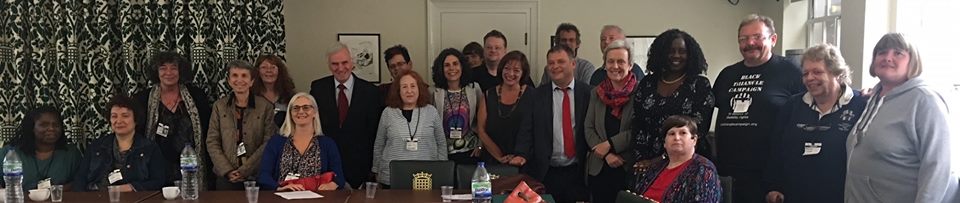
Disabled campaigners, researchers and organisations who have played a key role in exposing the discrimination and harm caused by the government’s social security reforms have been travelling to Westminster to attend round table discussions with five Labour shadow ministers. The meetings are chaired by Shadow Chancellor John McDonnell. I was invited to attend by John McDonnell’s office in September, because of my own ongoing campaign work.

The meetings are also the launch of a series of campaigning efforts and consultation between the Labour party, disabled activists, researchers and allied organisations. Labour MPs also hope to secure support from members of other political parties in the longer term.

We will be continuing to challenge the government’s persistent denial of a ‘causal link’ between their draconian social security policies and the distress, systematic human rights violations, serious harm and deaths of disabled people that have arisen in correlation with those policies.

Unless the government undertakes a cumulative impact assessment of the harm and  injustices that have followed in the wake of their welfare reform acts, they cannot provide evidence to support their own claims and flat denials that their policies are causing hardship, harm and distress. 

Public health experts from the Universities of Liverpool and Oxford have also produced a research report titled First, do no harm’: are disability assessments associated with adverse trends in mental health? A longitudinal ecological study. It highlights that the process of reassessing people on incapacity benefit for the new employment and support allowance (ESA) from 2010 to 2013 was “associated with” an extra 590 suicides, 279,000 additional cases of self-reported mental health problems, and the prescribing of a further 725,000 anti-depressants.

Speaking to the Huffington Post last year, the shadow chancellor said that he became furious during a Parliamentary debate when he demanded a comprehensive assessment of the cumulative impact of welfare reforms on disabled people and the government refused. He praised the website Calum’s List, which details the cases of at least 60 deaths linked to welfare cuts.

He added:  “We said to the Government we know now from Calum’s List, listing people from reports in the press and elsewhere of people committing suicide as a result of Government cuts.

We knew the Government were monitoring some coroners’ reports and we wanted them published, but [then DWP minister Esther] McVey wouldn’t and I got really angry.”

“Next week, what we are doing is getting a group of campaigning organisations and a group of experts together to talk about the way in which Work Capability Assessments are still having an impact, to try to get to the bottom in terms of mental health and suicide.”

McDonnell added that Labour’s first Queen’s Speech include legislation “making sure we have a welfare and benefit system that lifts people out of poverty”.

He said that his Hayes and Harlington constituency casework now operates an open-door system four days a week due to demand from people hit by government cuts. 

He added: “Helen who runs my office said the casework now is on a scale and a depth of suffering that we’ve never seen before. And this in a constituency with the [Heathrow] airport, high levels of employment but wages not matching the housing costs and the pressure on people working all hours just to keep a roof over their heads.

“If anything goes wrong they fall out of the system. Last month we were dealing with two families living in cars. We also have the ‘beds in sheds’ phenomenon, families living in a shed or garage rented out to them, it’s staggering really.

“Before this last eight years, those sort of horrendous situations would be infrequent but you wouldn’t have someone so heavily sanctioned. The sanctions often impact on people with mental health conditions hardest.”

The Labour party’s track record of inclusion and democratic consultation with disabled citizens and their communities contrasts starkly with the Conservative’s exclusionary ‘we know better than you’ approach to disability policies. The government have imposed cuts on disabled people, acting upon them as if they are objects of policy rather than being citizens within a democracy.  

Government policies are expressed political intentions regarding how our society is organised and governed. They have calculated social and economic aims and consequences. In democratic societies, citizens’ accounts of the impacts of policies ought to matter.

However, in the UK, the way that welfare policies are justified is being increasingly detached from their aims and consequences, partly because democratic processes and basic human rights are being disassembled or side-stepped, and partly because the government employs the widespread use of linguistic strategies and techniques of persuasion to intentionally divert us from their aims and the consequences of their ideologically (rather than rationally) driven policies. Furthermore, policies have more generally become increasingly detached from public interests and needs.

The Labour party listen to citizens’ accounts, and have always acknowledged our concerns. John McDonnell was involved in the setting up of Disabled People Against the Cuts (DPAC). After a nationwide round of consultations with disabled people about policies which enshrine the Equality and Human Rights acts, led by Debbie Abrahams, the Labour party wrote an additional manifesto, outlining policies for disabled people, called Nothing about you without you, which many of us have contributed to.

DSCN3314.JPG

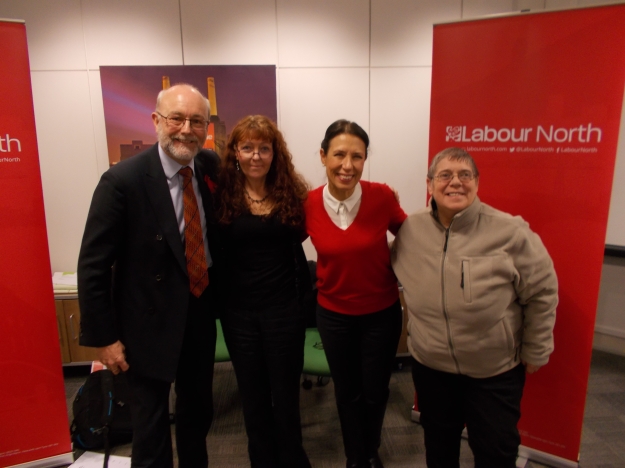
Alex Cunningham, me, Debbie Abrahams and Gail Ward after the Disability Equality Roadshow and consultation in December, 2016.

The First Do No Harm lobby on 13 February aims to expose the continued harm caused to disabled people by government social security reforms, and to seek safeguarding changes to the social security system. It follows many years of growing concerns about the controversial Work Capability Assessment (WCA) and the failure of Department for Work and Pensions (DWP) ministers to make the necessary changes to make the assessment process safe.

Disability rights campaigners and MPs will focus on the repeated failure of the DWP to ensure that the “further medical evidence” needed to demonstrate a disabled person’s eligibility for out-of-work disability benefits is always collected, particularly for claimants with mental health conditions.

The three key asks of the lobby are:

1. To incorporate the principle of “First Do No Harm” into the assessment process for disabled people in the welfare system.
2. To call for the publication of a cumulative impact assessment of social security changes to disabled people.
3. To implement an assessment framework that treats disabled people with dignity and respect.

The lobby has been facilitated by Labour’s Treasury and work and pensions teams, through shadow chancellor John McDonnell and shadow work and pensions secretary Margaret Greenwood. Both Labour MPs and activists hope that MPs from all parties will attend. 

Shadow chancellor, John McDonnell has previously said that he believed the ongoing meetings with disability rights campaigners and allied organisations could herald the start of “a significant movement to expose the brutality of the system” and secure “permanent change”.

He told Disability News Service: “Disabled people have had enough of the continuing austerity, attacks and discrimination.

“The lobby will brief on the plight of disabled people and lobby for reform to protect against this harm.” The aim is to push for the principle of “First Do No Harm” to be included in the benefits assessment process, through a framework that “treats disabled people with dignity and respect”.

The lobby also aims to push the government to acknowledge years of raised concerns by our community to carry out a cumulative assessment of the impact of its social security cuts and reforms on disabled people. 

Campaigners will also call for an end to the government’s punitive sanctions and conditionality regime.

The First Do No Harm lobby is the first organised action arising from the ongoing meetings between disabled activists and allies and Labour shadow ministers, including John McDonnell, Margaret Greenwood and shadow minister for disabled people Marsha de Cordova.

Both Margaret Greenwood and Marsha de Cordova are to speak at the briefing as part of the lobby on 13 February.

A mass lobby is one way of using your right to turn up to the House of Commons and request a meeting with your MP as one of his or her constituents. An MP’s role is to represent a constituent’s interests – even if he or she does not entirely agree with them. As each MP may have up to 90,000 constituents to look after, it is best to be as brief, clear and courteous as possible when you meet your MP.   

Disabled people or allies who want their MP to attend the lobby should write to their MP – you can find MP’s email addresses here: WriteToThem – to inform them you wish to seek an appointment on the day of the lobby. 

The lobby is due to take place on Wednesday 13 February between 1pm and 6pm, with the briefing from 2-3.30pm, in the Palace of Westminster’s committee room 15. The committee room can be used for one-to-one meetings with MPs or further discussions on the issue from 1pm-2pm and then from 3.30pm-6pm 

ESA lalst 3

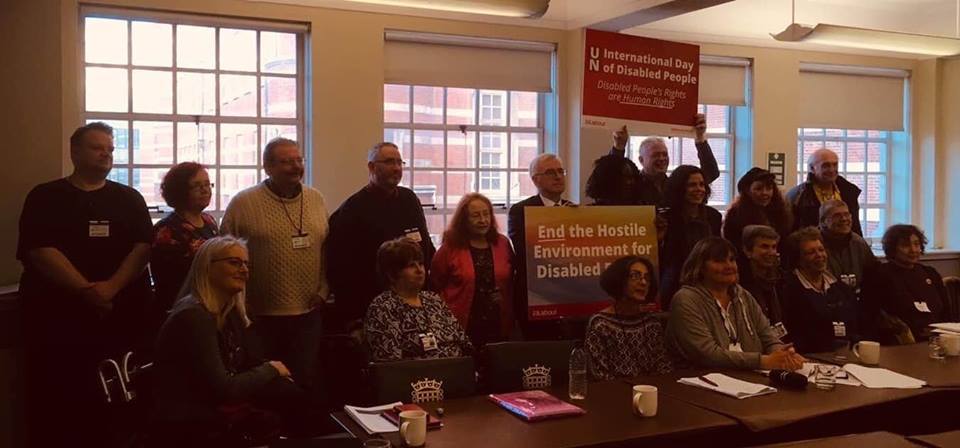
The most recent meeting at Portcullis House, Westminster.


Related

John McDonnell attacks Tory disability cuts and vows to address suicides linked to welfare reforms

Lobby aims to persuade MPs that DWP must First Do No Harm on assessments

Labour’s Disability Equality Roadshow comes to Newcastle

Nothing about you without you – the Labour party manifesto for disabled people

I very much wanted to attend this very important mass lobby and contacted my MP in respect of this. However, unfortunately I am currently not well enough to travel down to Westminster. I will, however, be working hard promoting the event on social media. 


I don’t make any money from my work. But you can make a donation if you wish and help me continue to research and write informative, insightful and independent articles, and to provide support to others going through disability claims, assessments, mandatory reviews and appeals. The smallest amount is much appreciated – thank you.

DonatenowButton

Universal Credit is an unmitigated catastrophe for ill and disabled people

Image result for pictures universal credit

I co-run an online advice and support group for people going through Personal Independence Payment (PIP) and Employment and Support Allowance (ESA) claims, assessments, mandatory reviews and appeals. Recently there has been a spike in people being reassessed for their awards of both kinds of support much earlier than expected. Furthermore, many are seeing their longstanding awards being taken from them by the Department for Work and Pensions following the reassessment, when this is clearly unjustifiable.

Failing a work capability assessment usually triggers migration onto Universal Credit.

For example, a significant proportion of this group have chronic or degenerative illnesses that are not going to improve. If someone with such a condition is deemed unfit for work, or in need of extra support to meet their needs and maintain independence, given that it’s highly improbable that their condition will improve,  it’s more than unreasonably cruel that following review, these people have lost their awards, most often based on highly inaccurate reports from assessors and the Department’s decision makers.

One person received a letter notifying her of an early ESA review – it wasn’t due until next year – just days after she had seen her PIP award removed, following a review that was not due until 2021. 

Those people claiming Universal Credit (UC) and needing a work capability assessment because they have not previously received ESA are experiencing long delays (often around six months) before the assessment appointments are finally arranged. This is true even when there is clear evidence of ill health and/or disability, and it means people miss out on additional payments. Some are being subjected to conditionality and sanctions because they are being given inappropriate requirements to look for work while they wait for their assessment. 

A recurring problem with UC is the failure of DWP staff to include a limited capability for work (LCW) or limited capability for work related activity (LCWRA) element in a claim for Universal Credit for people moving from ESA, who had already been assessed as entitled to the equivalent element in ESA. These components are supposed to be automatically included in UC but people are reporting that it this is not happening.

Two people who had been claiming ESA for two or more years, both placed in the support group following their assessments, triggered ‘natural migration’ when they claimed Discretionary Housing Payment (DHP) because of hardship. One person’s local council had wrongly made ‘non dependent’ deductions for her adult son, pushing her into hardship and rent arrears. As she was awarded PIP at the daily living rate, non dependent deductions should not have been made, as the standard daily living award exempts people from those deductions in this group of PIP  claimants.   

She later reported that non dependent deductions were wrongly taken from her UC housing element, also. She said that the problem arose because PIP awards are not logged on the system, which means that once the underpayments were eventually rectified, she still had to remind her advisor that she was exempt from non dependent deductions being made to her housing costs. The problem keeps arising, however, with some of the deductions still being made some months. She also told me that her mandatory review request was completely ignored.

The DHP application from both people in the support group triggered a move from existing benefits on to UC. When migrated from ESA on to UC, people in the ESA support group should be automatically awarded the extra element of UC (the ‘limited capability for work-related activity element’) and should not be required to undertake any work related activity. However this did not happen and both were refused this element. Another person was told, wrongly, that she would need to undergo another work capability assessment and another was asked to undertake inappropriate work related activities which he were unable to carry out because of his illness.  

Several others have also reported that they have submitted requests for mandatory review and not had any response. One person was told that they had to ring to request the review, rather than requesting it in writing. She was then told that because more than one month had passed since the decision she was challenging, she could not request a mandatory review. 

Special rules exist for terminally ill people who are expected to live less than six months, to fast-track their claims for support and to allow certain health-related payments to be paid at the highest rate without needing further assessment. One person applied for UC and was incorrectly told that there was no special rules provision under UC. She was asked to provide evidence that she could not carry out work related activities before she could receive the payments due to her and have her work related conditionality lifted, despite the fact she had submitted a DS 1500 report from her consultant.

Another person who is terminally ill told me that his advisor said there was no evidence that he had submitted a DS 1500 report. By this time, he had already waited seven weeks for his UC claim to be processed. He was still waiting for a PIP assessment date. 

Another problem arising for disabled people is that some are experiencing difficulty making new-style ESA claims (which are based on National Insurance contributions, rather than being income related) in ‘full service’ jobcentre areas, and are being wrongly advised to claim UC in circumstances where that is not required. 

One very vulnerable young person told me that he was flatly refused when he asked to claim the disability element of UC. His GP had told him he was unfit for work. His work coach said that he was “not allowed” to claim disability benefit under UC rules. He was sanctioned because he could not carry out  work related activities, which also had an impact on his partner. He needed support with a mandatory review request and his doctor submitted a report from the young man’s consultant. His sanction was overturned after seven weeks. That is seven weeks of hunger, fuel poverty and threats of eviction because of mounting rent arrears. 

Transitional protection for disabled people

The government recently announced transitional protections, include paying the Limited Capability for Work element in Universal Credit if someone has been continuously entitled to ESA and entitled to the Work-Related Activity Component in ESA prior to 3rd April 2017 and are migrated to Universal Credit. This means people with ESA awards after that date, or those making a new claim for UC will not get the disability income guarantee which is only provisionally available to others.

The government have recently postponed the migration of people who have a PIP award onto UC, because there is no transitional protection in place, which means people will lose their disability premium. Transitional protection of disabled peoples’ disability income guarantee is not due to come into effect until later this year (July). 

However, when people have a change in circumstances, they are automatically migrated onto UC. The change may include moving house, or a change in the amount of support you get, or someone joining or leaving your household. It’s been reported that changes to housing benefit awards – such as an increase, or a DHP award – have also triggered ‘natural migration’ onto UC. 

People who already claim Working Tax Credit and become ill are being asked to claim UC. Those who claim income-based jobseeker’s allowance and need to attend court or Jury Service, or are remanded in custody, are also being asked to claim UC.  If someone starts work that would normally entitle them to working tax credits, or if they work, but their hours drop below 16 hours a week, they will be asked to claim UC. If someone already claims Child Tax Credits and income based legacy benefits and starts work with enough hours to satisfy Working Tax Credit conditions, they will also be asked to claim UC.

A high court judgement last year said that the loss of disability premiums (the disability income guarantee) under UC is discriminatory and contrary to the European Convention on Human Rights. 

The government conceded after some reluctance that they would ensure transitional protection is in place for people who receive the severe disability premium via their legacy benefits. However, there are three types of disability premium, and the government have so far only mentioned protecting one of them, though it is implied that the other premiums will be included. 

Many of us have said previously that the government’s ‘flagship’ failure, UC, is about implementing further cuts to social security support by stealth. However, the loss of income to disabled people through hidden cuts was under-reported. Last year I wrote about how the disability income guarantee that legacy benefits ensured had been removed from UC – Disability Income Guarantee abolished under Universal Credit rules – a sly and cruel cut.

The draft regulations setting out the managed migration process, including details of transitional protection, were consulted on by the Social Security Advisory Committee  (SSAC) in July 2018. The SSAC report and the Government’s response were published in November 2018. Some changes were made to the Regulations as a result of SSAC’s report. The draft regulations were also published on November 2018 and were expected to be debated in Parliament this month (January 2019.)

However, in the draft regulations, only one of the three disability rates is mentioned in the planned transitional provisions – the Severe Disability Premium (SDP). 

On the government site, it says there a three rates under ESA and/or PIP:

“Disability premium

You’ll get:

  • £33.55 a week for a single person
  • £47.80 a week for a couple

Severe disability premium

You’ll get:

  • £64.30 a week for a single person
  • £128.60 a week for a couple if you’re both eligible

Some couples will be eligible for the lower amount of £64.30 a week instead.

Enhanced disability premium

You’ll get:

  • £16.40 a week for a single person
  • £23.55 a week for a couple if at least one of you is eligible

You can get the disability premium on its own. You might get the severe or enhanced disability premium as well if you’re eligible for them. There are (complex) rules of eligibility which are outlined on the same site. For example, if you have a ‘non dependent’ child living with you, that makes you ineligible for the severe disability premium, but you may be entitled to one or both of the others.

If you get income-related Employment and Support Allowance (ESA) you cannot get the disability premium, but you may still qualify for the severe and enhanced premiums.”

The draft regulations did not clarify whether all of the disability income guarantee rates will be included in the transitional protections arrangements. 

In a letter to the Social Security Advisory Committee, the government says of the new draft regulations: “They also introduce transitional protection payments and additional provisions to support existing and former Severe Disability Premium recipients.”

The Secretary of State for Work and Pensions also says in the letter: “In designing Universal Credit, one of the key aims was to simplify the existing system. For people with health conditions and disabilities, a conscious choice was made not to replicate every aspect of disability provision in the current system, which contains 7 different disability payments. Instead, the right levels of support can be provided through 2 rates of payments, reflecting the current Employment and Support Allowance components.” [My emphasis]

The choice was originally to cut all disability premiums for those with a ‘change in circumstances’ and new claims. The hardships that this decision has caused were intentional. 

A House of Commons briefing paper entitled Universal Credit and the claimant count outlines why “Universal Credit is increasing the number of people claiming unemployment benefits, by requiring a broader group of claimants to look for work than was the case under Jobseeker’s Allowance.” 

However, UC also requires other groups of people who were previously exempt from conditionality to look for work, or to increase their hours and pay, if they already work.

This means that the increased application of conditionality and sanctions regime will affect families and couples, where one person – not necessarily the person who has made the claim – has been sanctioned. For the first time, UC will mean families who are in work but on low pay will also be subject to sanctioning if they don’t make efforts to increase their hours or pay. It’s not clear what provision is in place to safeguard children and vulnerable family members form the impact of severe hardship when a family member is sanctioned.

Furthermore, last year the government’s own research, together with a mass of other studies, have clearly demonstrated that sanctions do not work as the Conservatives claim they were intended to. Frank Field, chair of the Work and Pensions Committee, accused ministers of trying to bury the findings of a secret DWP report, rather than give parliament the chance to debate how to better help low-paid workers. 

Field said if UC were to be built into a “line of defence against poverty, rather than an agent in its creation”, a more careful application of sanctions would require “urgent attention”.

He added: “Likewise, any new service to help the low-paid should be built around the provision by a dedicated caseworker of information, advice and guidance, as part of a clear and agreed contract which is aimed at helping them to earn more money and, crucially, overcoming the barriers that currently prevent them from being able to do so.” 

The government’s report came after a major report from the UK’s biggest food bank network found the rollout of UC would trigger an explosion in food bank use, with data showing that moving onto the new welfare support was the fastest growing cause of food bank referrals. The Trussell Trust said urgent changes to the new welfare system were needed to protect vulnerable claimants from falling into hardship or dropping out of the benefit system altogether. 

Garry Lemon, director of policy at the Trussell Trust, said: “We owe it to ourselves to have a benefits system that gives us support when we need it most, and ensures everyone has enough money to afford the absolute essentials. 

“Yet our research shows that the more people are sanctioned, the more they need foodbanks. On top of this, government’s own research shows that sanctioning under universal credit has no effect in encouraging people to progress in work. 

“With the next stage of universal credit about to rollout to three million people, it is vital that we learn from evidence on the ground and avoid the mistakes of the past.” 

Margaret Greenwood, Labour’s shadow work and pensions secretary, said it was “shocking” that the government was sanctioning working people who are “just trying to do the right thing”.

She said: “This report shows that there is no evidence that sanctioning helps people increase their earnings. Meanwhile, wages are still below 2008 levels and millions of people are stuck in insecure work. 

“Universal credit is clearly failing in its current form. Labour is committed to a root-and-branch review of the social security system to ensure it tackles poverty and provides support when people need it.” 

In a damning report in 2016, the National Audit Office castigated the DWP for failing to monitor people whose benefits had been docked and suggested the system cost more money than it saved. 

Yet a DWP spokesperson said: “The ‘in work progression trials’ helped encourage claimants to increase their hours, seek out progression opportunities and take part in job-related training.

“The trials delivered positive results for many of the lowest paid people who claim universal credit and we are now considering the findings.” 

This is political gaslighting, which reveals a government’s intentions to continue implementing a draconian welfare policy, regardless of the significant and mounting empirical evidence – including from their own research – demonstrating this punitive does nothing to ‘support’ people into work, or into better paid jobs. In fact it prevents people from doing anything other than struggling to survive.

The briefing – Universal Credit and the claimant count  – says “In Full Service areas existing legacy benefit claimants may move onto Universal Credit if they experience a change of circumstances such that they would have had to make a new claim for a different legacy benefit. As new claims for legacy benefits are no longer possible, only Universal Credit can be claimed.  The DWP refers to this as “natural migration.”

“Existing legacy benefit claimants whose circumstances do not change will remain on their existing benefits until they are invited to make a claim for Universal Credit at the final “managed migration” stage. This is expected to begin in late 2020 and be completed by December 2023, but will be preceded by a managed migration pilot involving 10,000 households starting in July 2019.”

The briefing provides an outline of why the claimant count has risen in areas where UC has been rolled out:

“Universal Credit requires a broader span of people to look for work than was the case for legacy benefits.

“The introduction of Universal Credit means that more claimants are required to look for work as a condition of receiving the benefit. This is referred to as “conditionality”.

“For example, someone out of work who previously claimed Child Tax Credit or Housing Benefit but not Jobseeker’s Allowance was not required to look for work. Under Universal Credit they are required to look for work, subject to certain exceptions.

“Similarly, under Universal Credit, the partners of claimants are now required to seek work. Previously, if someone was in employment and claiming tax credits or housing benefits but their partner was not in work (and not claiming Jobseeker’s Allowance), there was no requirement for their partner to look for work. This is no longer the case, subject to an earnings threshold and certain exceptions.

“The OBR has estimated that conditionality will be extended to around 300,000 additional claimants.

“Additional conditionality will also be applied to Universal Credit claimants who would otherwise have received Education and Support Allowance (ESA), and the OBR has estimated that around 150,000 claimants will be required to look for work as a result. Furthermore, the OBR has forecast that around 450,000 newly-eligible Universal Credit claimants will face further additional conditionality requirements (though not necessarily an obligation to look for work).”

If people are not obliged to look for work, what is the point in imposing conditionality them?

And: “New claimants who are awaiting or appealing Work Capability Assessments are being required to look for work. Some of the claimants who under the legacy system would previously have claimed ESA are initially subject to all work-related
requirements upon starting a new claim to Universal Credit, pending their Work Capability Assessment.

“New ESA claimants who can provide a ‘fit note’ are treated as having a limited capacity for work pending their Work Capability Assessment. This is not the default position under Universal Credit.

“Although a claimant must meet with a Jobcentre Plus Work Coach within seven days of applying for Universal Credit to agree the conditions attached to their receipt of benefits, the period until a Work Capability Assessment takes place is often much longer. During this period, Work Coaches set conditionality based on their understanding of the claimant’s health condition, but there are concerns that Work Coaches may struggle to identify claimant support needs accurately.

“Those claimants who are required to look for work will be included in the claimant count statistics. We might expect some to drop out of the claimant count again once the Work Capability Assessment has taken place, assuming they are judged to have limited capability for work, but they can remain on full conditionality for an extended period (and thus remain in the claimant count statistics).”

And confirming the accounts of disabled people I have supported:

“In addition, there have been reports that some claimants moving from ESA onto Universal Credit who have limited capability for work are being required to undergo a new Work Capability Assessment, and in the meantime are subject to full conditionality. Under Regulation 19 of the Universal Credit (Transitional Provisions) Regulations 2014 (SI 2014/1230 as amended), these people should be treated, from the outset of their Universal Credit application, as having limited capacity for work without the need for a Work Capability Assessment. The Child Poverty Action Group (CPAG) has reported this as one of the most common problems highlighted by advisers.” 

It’s crossed my mind more than once that the sudden increase in early ESA and PIP reassessments may be linked to an aim to reduce the costs of the government’s unanticipated legal requirement to pay disabled and ill people transitional protection when they are migrated onto UC, or when they are forced to claim UC because of a change in circumstance – hence work coaches telling people in both ESA groups frequently that they have to undergo another assessment, when the rules state very clearly that they don’t.

The cases  I have highlighted here reflect only my most serious concerns about some of the consequences UC is having for ill and disabled people. It’s worrying that the problems I have outlined were not confined to just a couple of areas; the errors and problems seem to be entrenched on a systemic and national scale.


Related 

The rush to throw sick or disabled people off ESA and force them onto Universal Credit goes on while the DWP talks bollocks about support…


My work is unfunded and I don’t make any money from it. This is a pay as you like site. If you wish you can support me by making a one-off donation or a monthly contribution. This will help me continue to research and write independent, insightful and informative articles, and to continue to provide support others who are affected by the welfare ‘reforms’DonatenowButton

DWP disclose controversial mortality rates of those awaiting PIP assessments

Image result for PIP assessments kittysjones

The Department for Work and Pensions (DWP) has disclosed that over 21,000 ill and disabled people died waiting for their Personal Independence Payment (PIP) assessment to be completed, between April 2013 and 30 April 2018. PIP is claimed by people with a range of health conditions and disabilities, many of which are chronic, degenerative or life limiting.

newton

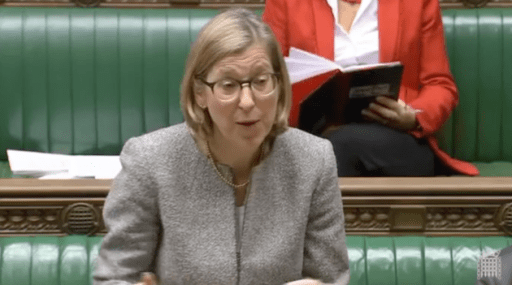
Sarah Newton, the Minister of State for Disabled People, published the figures on 11 January following a question raised in parliament by Labour MP Madeleine Moon in December: “How many people have died while waiting for their personal independence payment assessment to be completed; and what were the conditions those people died from?”

Newton responded: “All benefit claims can be made under the special rules for people who are terminally ill which will mean that they are fast tracked. These are currently being cleared within 6 working days for new claimants to PIP. The Department would encourage all claimants with a terminal illness to let the department know and to apply using the special rules.

The cause of death of PIP claimants is not collated centrally by the Department.”

Over 3.6 million applications to PIP were made between April 2013 and 30th April 2018. Of these:

  • 4,760 claimants1 died between their case being referred to, and returned from, an assessment provider;
  • 73,800 claimants died within 6 months of their claim being registered; and
  • 17,070 claimants died after registering but prior to the DWP making a decision on their claim. Details of the claimant’s primary medical condition, where recorded, are in the accompanying spreadsheet.”

The total number of PIP claimants who died was 95,000. But Newton’s response does not indicate at what stage of their claim the 73,800 people, who died within six months of it being registered, were at. Nor does it indicate what those people who did not have terminal or degenerative illnesses died of – including those with mental illness. For example, 270 of those mortalities are listed as having had anxiety and/or depressive disorders as their primary disorder.

Of those who did have terminal illnesses, we need to ask why these people were  cruelly left waiting so long for their assessment, if, as Newton claims, they are ‘fast tracked’ through the claim and assessment process.

Newton also warns on her data release: “This is unpublished data… It should be used with caution and it may be subject to future revision.”

There is, however, an Excel spreadsheet that indicates some of the primary conditions of those people who have died. But we cannot assume that those mortalities have arisen as a consequence of the recorded condition.

The DWP are experts at reluctantly providing data that lacks both context and details, which, they often say, they simply don’t collate. And 9,020 people’s main condition was not recorded at all by the DWP.  There is no means of useful comparison between mortality rates year by year, or a reference point to start from. A similar statistical analysis of Disability Living Allowance (DLA) claimant mortalities would help us establish a useful baseline. 

I rang the DWP press office on Friday for a response and to ask for details of DLA claimant pre-assessment mortality rates, and was promised an email that has not arrived. 

Personal experience

As someone who has undergone both Employment and Support Allowance (ESA) and PIP assessments, I know from personal experience they are dehumanising, and  the stress they create exacerbates the symptoms of chronic illness. I have lupus. 

Back in 2013, I wrote about the terrible impact of  stressful, continuous work capability assessments on disabled people, particularly those with chronic illness. It’s long been understood that distress exacerbates the symptoms of both physical and mental illness. In my case, the ESA assessments and subsequent Tribunal were so stressful that the process itself created a deterioration in my mental health at the time.

My physical symptoms worsened to the point where I became severely underweight at less than seven and a half stones. I was often left without enough money to buy food and keep warm. I also have Raynaud’s, which means I have to keep warm. My rheumatologist prescribed a chemotherapy – methotrexate – and other immune suppressants to halt the rapid acceleration in disease activity and to try and stop the subsequent wake of permanent widespread damage being done to my body. 

Those exacerbations were stress-related, and have left a wake of damage to my joints, nerves, tendons, organs and blood cells, and, together with the treatments, the severe illness flares have irrepairably damaged my immune system, leaving me even more susceptible to serious infections like pneumonia, abcesses, kidney infection and an abnormal immune response to those – sepsis.

I was very poorly when I claimed ESA, but was critically ill by the time I was forced to appeal the DWP’s decision that I was ‘fit for work’.  

A government that cared about monitoring the impact of its’ policies on vulnerable citizens would do a much better job of collating and recording information about mortalities, and would also present a context that permits us to make meaningful comparisons. Instead, we see the Conservatives micromanaging information with expedience, while claiming that there is “no causal link established” between policy and any increase in harm or mortality.

However, the government have no grounds for making that claim, since there has been a persistent refusal to carry out a cumulative impact assessment of the welfare reforms, or to open an inquiry regarding the many concerns raised and cases presented where people have suffered harm, distress and premature mortality, indicating a correlation with the government’s policy changes.

Although correlation isn’t the same thing as causality, it often implies causality. Without further investigation, we cannot say that there is or isn’t a causal relationship between punitive policies and distress, harm, premature mortality. But we can say there is an association evident. It’s worth bearing in mind that much social science research establishes correlations, not causality.

Government guidelines for PIP assessment: a political redefinition of the word ‘objective’

The Department for Work and Pensions have issued a guidance document for providers carrying out assessments for PIP. It can be found here: PIP Assessment Guide. From the document: “The HP should check the consistency of what is being said by using different approaches, asking questions in different ways or coming back to a previous point. When considering inconsistencies, HPs should bear in mind that some claimants may have no insight into their condition, for example claimants with cognitive or developmental impairments.”

This approach – “checking for inconsistencies” by using indirect questioning and assumption is NOT “objective”. It is a calculated strategy to justify a starting point of disbelief and skepticism regarding the accounts provided by ill and disabled people about the impact of their conditions and disabilities on their day-to-day living. As such, it frames the entire assessment process, weighting it towards evidence gathering to justify refusing awards, rather than being “objective”, as claimed.

It’s simply a method based on side-stepping and discounting people’s own accounts of their experiences of their disability, and any medical evidence submitted to verify that.

Prior to the introduction of PIP, Esther McVey stated that of the initial 560,000 claimants to be reassessed by October 2015, 330,000 of these are targeted to either lose their benefit altogether or see their payments reduced. Of course the ever-shrinking category of “those with the greatest need” simply reflects a government that has made a partisan political decision to cut disabled people’s essential income to fund a financial gift to the wealthiest citizens. There is no justification for this decision, nor is it remotely “fair”, as the government claims.

It becomes easier to disassociate from someone you view “objectively” and to distance yourself from the impact of your calculated and target-led decision-making, constrained within a highly political framework. Such an objectification of a person or group of people serves to de-empathise us, which is a key characteristic requirement of neoliberal ideology, embedded in inhumane “small state” policy and extended via administrative (and outsourced, privatised) practices. It leaves us much less likely to relate to the circumstances, emotions or accept the needs and choices of others.

Surely a considerable part of our experience of being objectively diagnosed as ill and/or disabled, in any case, is initiated by a person’s subjective experience of it, rather than categories and counts; quantifiable, reductive and speculative statements about how we may perform highly specific tasks.

Quantitative medical evidence is important, because it does often give a general indication of conditions that would entail loss of function. But considering medical evidence isn’t a central part of the assessment process. Whether or not we can perform certain tasks, and inferences drawn from that are the central considerations for PIP eligibility.

The tasks I was asked to perform at assessment were not related to those I carry out from day to day. Consequently, as they were unfamiliar, I had no idea what I could and couldn’t actually do. It was a shocking experience for me to learn how much mobility I have lost in my hands, wrists, shoulders and neck. It was also very painful attempting what looked like simple movements, which the assessor demonstrated as she conducted the examination. Because she moved quickly from one movement to another, I had no time to assess if I could do the activities. I was trembling because of the pain and effort, and couldn’t understand why I was struggling with what looked like basic movements. I left in a lot more pain than when I arrived. My shoulder and calf swelled inexplicably during the assessment and I couldn’t walk for over a week afterwards.

Many conditions “fluctuate” – they vary so much that it’s difficult to assess performance of specific tasks consistently. Many conditions become progressively worse at a varied pace, often leaving little scope for a person developing coping strategies and adapting their everyday lives to the changes as they happen, such as a progressive loss of mobility, cognitive impairment, mood changes, anxiety, depression, sleep disruption and other psychological impacts, and the increasing pain and fatigue that they may experience.   

If the process were genuinely “fair, accurate and objective” then there would be no need for mandatory reviews and scrutiny through the appeals process. The introduction of the mandatory review – another layer of bureaucracy and a barrier to justice, where the DWP decide whether their first decision should be changed – has deterred many from appealing wrong decisions.

Those making the decisions about PIP awards are: “trained DWP staff who are familiar with the legislation governing PIP, but who do not have a healthcare background. The HP enables CMs to make fair and accurate decisions by providing impartial, objective and justified advice.”

The PIP assessment is geared towards looking for “inconsistencies” in “functional limitations”. For example, if you say you can’t sit unaided for half an hour, but then say that you watch soaps on TV, it will be assumed you sit unaided for at least half an hour to watch TV, and that will be classed as a “discrepancy between the reported need and the actual needs of the claimant.”

The whole assessment process is set up and designed to look for “inconsistencies.” In other words, the assessor is looking for any excuse to justify a decision that you are not among those in “greatest need” for a PIP award. The entire process happens within a framework of reducing welfare costs, after all. This makes a mockery of the government’s fondness for using the words “objective” and “fair.”

What has become clear is this so-called support for those who are “in the greatest need” is not working for disabled and ill citizens. It most certainly does not help disabled people maintain their dignity and support them in independent living.

It is not such a big inferential leap to conclude that continually cutting essential lifeline support for ill and disabled people will ultimately lead to harm, distress, hardship and other negative consequences, and will, ultimately, have wider political, social, cultural and economic “adverse” consequences, too.

dpac


For people who can’t translate the coded statement at the foot of the Excel Spreadsheet, it says:

These figures include claims made under both Normal Rules and Special Rules for the Terminally Ill and include new claims and Disability Living Allowance (DLA) to PIP reassessment claims. · This is unpublished data from the PIP computer system (PICS) management information. It should be used with caution and it may be subject to future revision. · Claimants may often have multiple disabling conditions upon which the decision is based but only the primary condition as recorded on the PIPCS. · Figures are rounded to the nearest 10 and ‘#’ is used for totals of greater than 0 but less than 5. · Components may not sum to totals due to rounding.


My work is unfunded and I don’t make any money from it. This is a pay as you like site. If you wish you can support me by making a one-off donation or a monthly contribution. This will help me continue to research and write independent, insightful and informative articles, and to continue to provide support others who are affected by the welfare ‘reforms’. 

DonatenowButton

The government prioritises corporate welfare at the expense of social welfare

facade welfare

The welfare ‘reforms’: public policies for private profit

It’s widely assumed that public services are organized and delivered for the benefit of citizens. The reality, however, is very different. The more we scrutinise the role and function of different government departments and programmes, the clearer it becomes that they are being redesigned to bring direct and indirect benefits to private businesses.

In 2014, Aditya Chakrabortty wrote in the Guardian: “[…] as the Tory faithful cheered on George Osborne’s cuts in benefits for the working-age poor, a little story appeared that blew a big hole in the welfare debate. Tucked away in the Guardian last Wednesday, an article revealed that the British government had since 2007 handed Disney almost £170m to make films here. Last year alone the Californian giant took £50m in tax credits. By way of comparison, in April the government will scrap a £347m crisis fund that provides emergency cash for families on the verge of homelessness or starvation.

“Benefits are what we grudgingly hand the poor; the rich are awarded tax breaks. Cut through the euphemisms and the Treasury accounting, however, and you’re left with two forms of welfare. Except that the hundreds given to people sleeping on the street has been deemed unaffordable. Those millions for $150bn Disney, on the other hand, that’s apparently money well spent –whoever coined the phrase “taking the Mickey” must have worked for HM Revenue.”

Ministers have admitted this week that more than 4,500 disabled people were wrongly stripped of their benefits despite having a good reason for missing reassessments. The Department for Work and Pensions has now acknowledged the ‘blunder’ – more than one year after a court ruling that the disability living allowance (DLA) payments should not have been stopped. The grossly unfair withdrawal of support happened when disabled people were being transfered from DLA to the government’s cost cutting replacement benefit, personal independent payments (PIP). Disabled people had their lifeline payments stopped entirely.

“We expect around 4,600 people to gain as a result of this review exercise,” a statement from Sarah Newton to MPs says.

But those disabled people are not “gaining” anything. They are simply being paid what they should have been paid.

The admission was slipped out as MPs left Westminster for their Christmas break, as one of a dozen last-day announcements. The disability equality charity Scope described it as “deplorable”.

The latest mistake comes in the wake of the DWP admitting to £970m of underpayments to people being migrated onto Employment and Support Allowance (ESA) between 2011 and 2014. Ministers were accused of creating a “hostile environment for sick and disabled people” following the blunder, which occurred when claimants were transferred onto the main sickness benefit, ESA.

Both PIP and DLA are designed to help people with the extra costs of disability, or long-term health conditions, yet any award is reluctantly made, and all too often people have to go to court to challenge extremely inaccurate assessment reports and enormously unfair decision-making.

If the British public are to fund corporations, they should expect and demand that those businesses observe certain conditions of basic fairness. It’s difficult, however, to challenge what is hidden from view.

In his article, Chakraborrty discusses the work of Kevin Farnsworth, a senior lecturer in social policy at the University of York, who has spent the best part of a decade studying corporate welfare – delving through Whitehall spreadsheets and others, and poring over Companies House filings. He’s produced the first ever comprehensive audit of the British corporate welfare state.

Chakrabortty says: “Farnsworth has achieved something extraordinary: he has yanked into the open an £85bn subsidy that big business and the government would rather you didn’t know about.

“Thinking over this giant corporate bung, two responses immediately suggest themselves. First, it shows up the stupidity of all those newspaper spreads and BBC discussions constantly demanding “What would you cut?”, like some middlebrow ransom note (“Choose now: or the lollipop lady gets it”). It’s a question you’ll be hearing more and more in the run-up to the election. Perhaps next time, as well as mentioning schools, fire services and benefits, some brave Radio 4 presenter will mention the business coaching and marketing and advocacy services provided by the Department for Business (annual cost: nearly £5bn).”

But it was more a case of “choose now and disabled people still got it.” The cuts to the welfare support for the poorest citizens – paid for by the public FOR the public – were carefully planned and coordinated. Private companies were hired to fulfil a role of  discrediting disabled people’s accounts of their disability, and to engage in very bad report writing, with an ultimate aim of resource gatekeeping. At the same time, legal aid was withdrawn to prevent citizens from accessing justice and seeking redress.

Meanwhile, the government and media constructed a narrative to demonise and condemn the poorest citizens, labelling them as undeserving “scroungers” and would be “fraudsters.”

The state’s costly private gatekeepers of public funds

The government has awarded at least £1.4billion of outsourcing contracts linked to the roll-out of Universal Credit and other welfare reforms since 2012.

As Universal Credit continues to be rolled out, forcing the poorest citizens into debt, food poverty and rent arrears, new data has shown the  private companies that have profited from implementing the government’s social security reforms.

The data, which was obtained by HuffPost UK,  was generated by searching Department for Work and Pensions (DWP) public contract tenders for Universal Credit and related keywords. It reveals the vast sums the DWP has spent carrying out health and disability assessments on disabled people claiming support.

The information has prompted mental health and disability charities to call for the DWP to urgently review the failing system of assessment.

Among the companies that have won contracts are global consultancy giants. Some of the firms’ names are known to the public, but details of the awarded contracts are not.

A huge £595million contract was awarded to American consultancy group Maximus to provide health and disability assessments, the largest single DWP contract related to welfare reform since 2012, according to the data.

Atos and Capita also won contracts totalling £634million to carry out assessments for Personal Independence Payments (PIP), a disability benefit.

Consultancy firm Deloitte was awarded a £750,000 contract for work to support the Universal Credit programme and a £3million deal was signed with IT firm Q-Nomy to develop an appointment booking service for the social security payment, which is intended to simplify working-age benefits.

Recap: “Deloitte were responsible for advising Carillion’s board on risk management and financial controls, failings in the business that proved terminal. Deloitte were either unable to identify effectively to the board the risks associated with their business practices, unwilling to do so, or too readily ignored them.” Frank Field

Another £60,000 contract was awarded for the purchase of MacBooks for Universal Credit to Software Box Limited.

Vicki Nash, head of policy and campaigns at mental health charity Mind, told HuffPost UK: “Despite the vast amounts the government spends on benefits assessments – delivered by companies like Atos, Capita and Maximus – we hear every week from people with mental health problems who get the wrong decision, leaving them without support.

“We’ve long been calling for an overhaul of benefits assessments so that they work for those being put through them. For many people with long-term mental health problems, there’s no need to be put through the stress and pressure of repeated reassessments.”

Geoff Fimister, of the Disability Benefits Consortium, which represents 80 charities, added: “These are very large amounts of public money to be spending on services that are falling short.”

The DWP has awarded 76 separate contracts related to welfare reform since 2012, totalling £1.4billion.

But it is estimated that the true figure will be higher as prior to 2015 some government procurement tenders were not published publicly. This changed from 2015 onwards when new rules under the Public Contracts Regulations 2015 meant all tenders had to be made public.

Four of the contracts also show a £0 value and do not include the contract amount.

Tussell’s figures show the DWP has awarded £4.7billion in outsourced contracts across all areas of its work since 2012.

It is clear from the information publicly available that contracts relating to Universal Credit and Personal Independence Payments (PIP) constitute the vast majority of the DWP’s sub-contracting pre-2015. 

But from 2015 onwards, when the data is more robust, this trend was reversed.

Since January 2015, only about 2% (£66million) of DWP contract awards relate to Universal Credit or other welfare reforms of a total £2.8billion bill.

The most valuable contract since 2015 was an £8.2million award to Serco to manage a call centre for claimants of the disability benefit PIP.

The second was a £6million award to Advanced Personnel Management Group to provide healthcare staff to help conduct work capability assessments for Universal Credit and Employment Support Allowance. 

Also included are multiple contracts awarded in 2017 regarding Phase 2 of the New Enterprise Allowance scheme, which offers support to those claiming Universal Credit to become self-employed and start businesses.

A contract of £8.2million has been awarded to Serco to deliver a new claims telephony service for Personal Independence Payments.

Gus Tugendhat, founder of Tussell, said: “With the controversial rollout of Universal Credit still very much a work in progress, contract notices analysed by Tussell provide insight into some of the challenges the government is facing, including with IT systems and recruiting healthcare professionals for assessments.

“While the challenges are many, the government deserves credit for its transparency which we hope to see maintained.”

Universal Credit is being introduced to replace six existing benefits with one monthly payment and the government says it is a more streamlined system that will ‘help move people into work.’ 

But it is rather more expensive to deliver.

The DWP said that technical support was vital to carry out a digital delivery on the scale of Universal Credit and said the department operates within strict procurement guidelines to ensure maximum value for money.

The DWP claim that while Universal Credit will cost £1.7billion to deliver, the new system will bring about £8billion a year in economic benefits when fully rolled out. 

A DWP spokeswoman told HuffPost UK: “This is a random selection of some of our contracts spanning six years covering a range of DWP services and benefits, used by hundreds of thousands of people, that offer support to jobseekers to move into work, while having the right care in place for those that cannot work.”

The 10 highest value contracts awarded by DWP linked to Universal Credit and welfare reforms since 2012

  • £595million to Maximus People Services Ltd for health and disability assessment services. 
  • £207million to Atos for Personal Independence Payments assessment service Lot 1 contract extension (Lot numbers refer to different geographical areas)
  • £184million to Atos for Personal Independence Payments assessment service Lot 3
  • £122million to Capita for Personal Independence Payments assessment service contract extension Lot 1
  • £122million to Capita for Personal Independence Payments assessment service contract Extension Lot 2
  • £90million to Atos for a medical services IT contract
  • £8.2million to Serco to deliver a new claims telephony service for Personal Independence Payments
  • £6million to Advanced Personnel Management Group to provide healthcare staff to conduct work capability assessments for Universal Credit and Employment Support Allowance
  • £3.9million to Pinnacle People Limited for Phase 2 of the New Enterprise Allowance Scheme in the north east to support people into self-employment and to start their own businesses
  • £3.3million to Ixion Holdings (Contracts) Limited for Phase 2 of the New Enterprise Allowance Scheme in London and the home counties

Source: Tussell

Farnsworth’s research should have triggered a public debate about the size and uses of the corporate welfare state.

In his article about corporate welfare, Aditya Chakrabortty goes on to say “[…] what you get on the issue is silence. A very congenial silence for the CBI and other business lobby groups, who can urge ministers to cut benefits for the poor harder and faster, knowing their members are still getting their bungs.

“An agreeable silence for Osborne and David Cameron, who still argue that the primary problem in Britain is that the public sector “crowds out” private enterprise, without ever acknowledging how much the public subsidises business.”

Most of all, a silence at the very centre of our democracy.

Personally, I agree with Chakrabortty’s conclusion: I’ll believe we’re getting somewhere when Channel 4 puts on Corporate-Benefits Street – with White Dee replaced by the likes of Amazon founder and inveterate tax-dodger Jeff Bezos, or the sweatshop  king pension-swindling crook, Philip Green.

804-cover-1200


I don’t make any money from my work. If you want to, you can help by making a donation to help me continue to research and write informative, insightful and independent articles, and to provide support to others.

DonatenowButton

Labour party pledge to reinstate legal aid, restoring equal access to justice

Image result for justice

The Labour party will restore legal aid for people appealing against cuts to social security, such as Universal Credit and Personal Independent Payment, the shadow justice secretary, Richard Burgon, is to announce.

The UN special rapporteur on extreme poverty and human rights, Philip Alston, warned last month that cuts to legal aid meant many could no longer afford “to challenge benefit denials or reductions” and were “thus effectively deprived of their human right to a remedy”. 

Back in 2012, I warned that without equal access to justice, citizens simply cease to be free. I strongly welcome this move from the opposition, in particular because I regard access to justice – a basic human right – as absolutely fundamental to a functioning democracy.

Those seeking to challenge decisions by the Department for Work and Pensions (DWP) on social security payments, many of which are incorrect and unfair, will be able to gain access to legal advice to help them pursue appeals, Labour has pledged.

Burgon argues that restoring such financial support would encourage the DWP to get decisions right the first time, thereby reducing costs for the Ministry of Justice (MoJ).

More than two-thirds of appeals against DWP decisions on personal independence payments (PIP) and employment support allowance (ESA) are successful, says the Labour party, adding that those decisions have affected thousands of vulnerable people with illnesses, disabilities or in poor health. 

Since the Coalition government’s Legal Aid, Sentencing and Punishment of Offenders Act (Laspo) came into effect in early 2013, the number of people receiving legal aid to challenge benefit decisions has fallen by 99%. The MoJ spends more than £100m a year on tribunals disputing appeals against benefit decisions.

In addition, the DWP has spent more than £100m on PIP and ESA reviews and appeals since October 2015. That means  the state is spending huge amounts of money to get its’ own way in imposing wrongful decisions, while ensuring those affected cannot easily challenge such unjust decision making processes, which become embedded into an increasingly punitive social security system. It’s difficult to regard this as anything other than a politically coordinated attack on the rights of citizens and the welfare state by the Conservatives.

Since the Laspo act came into effect, many expert social security lawyers have left the field because cases were no longer funded. The MoJ has experienced the deepest cuts of any Whitehall department since 2010; its budget is to shrink further over the next two years.

Burgon said: “People should never be expected to navigate a complex appeals process all by themselves. That can force some to give up their claim altogether after a wrong initial decision. Others endure months of stress trying to prepare their own case. It’s bad now but will be even more difficult after universal credit’s rollout.

“Cuts to early legal advice have been a false economy. Ensuring that people are armed with expert legal advice to take on incorrect benefits decisions will not only help people get the benefits they are entitled to, it should make it less likely that flawed decision takes place in the first place, which would be good for the individuals themselves, and help to tackle the tens of millions of pounds spent on administering appeals against flawed decisions.”

Unless, of course, the intention all along was to ensure that the state’s ‘incorrect’ decisions stand. I rather suspect that is so.

The number of people granted legal aid in welfare cases has plummeted from 91,431 in 2012-13 to 478 in 2017-18, according to Legal Aid Agency figures.

A 2010 Citizens Advice report (pdf) concluded that for every £1 of legal aid expenditure on benefits advice, the state potentially saved £8.80.

Labour estimates that to restore early legal advice to pre-Laspo levels for benefits cases would cost £18m a year and help about 90,000 cases.

The party has already pledged to restore legal aid funding for advice in all housing cases, reversing far-reaching cuts imposed by the government five years ago. It has also promised to re-establish early advice entitlements in the family courts and to review the legal aid means tests.

Burgon says “Cuts have left vulnerable people without the legal support they need when faced with a rogue landlord, a difficult family breakup, or Theresa May’s “hostile environment. 

“But of all the cuts to legal aid, the slashing of advice for ill and disabled people unfairly denied their benefits is one of the cruellest. It creates the shameful situation where people are first denied the financial support to which they are legally entitled and then must struggle through a complex appeal without legal advice, causing further stress and anxiety.”

He says that the Labour-initiated Bach commission on access to justice outlined the direction in which the government needs to go. The Conservatives’ review (due before Christmas) should follow its recommendation to boost funding for early legal advice. Instead, however, it’s likely to be ‘another missed opportunity’. 

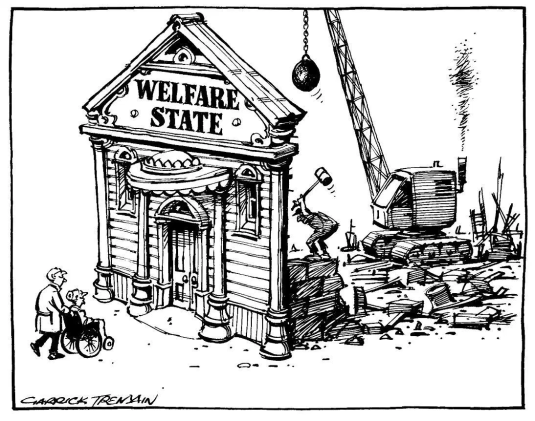
As Burgon notes, next year marks the 70th anniversary of the Legal Aid and Advice Act of 1949. Too often, legal aid has been treated as the forgotten pillar of the welfare state. Access to health and education are rightly recognised as the right of every citizen. Access to justice should be too.


See also: Labour will restore legal aid so all citizens have access to justice – not just the rich


My work is unfunded and I don’t make any money from it. But you can support Politics and Insights and contribute by making a donation which will help me continue to research and write informative, insightful and independent articles, and to provide support to others.

DonatenowButton

Neil was forced to spend 6 hours applying for Universal Credit just after having surgery for brain cancer

Neil MacVicar is in remission from a brain tumour (Photo: Fabio De Paola)

Neil MacVicar is now in remission from a brain tumour (Photo: Fabio De Paola) 

Neil MacVicar was diagnosed with cancer at the age of 25 in December 2016. Doctors found a tumour the “size of a plum” on his brain.

Just twelve days after neurosurgery to remove the growth, when he should have been recovering and preparing for gruelling radiotherapy, Neil was forced to go to the Jobcentre to sign on for Universal Credit.

The application can be difficult for claimants in good health. For a cancer patient  struggling with exhaustion and confusion from an operation, it was nearly impossible. It took Neil six gruelling hours in total to complete his application.

He was staying with his family in Inverness at the time, and Neil cannot understand why, given his circumstances, he was made to endure that and why the Jobcentre could not have obtained the information from his doctors.

He is now in remission after successful surgery and treatment, and says he was let down by the “bizarre” system. 

Neil told inews :“They had me sitting in the actual Jobcentre for a little bit trying to fill in the forms. Then I went home and had to do it. My concentration was all over the place so it took me absolutely ages. I don’t understand why they couldn’t just get that [information] from the doctors.”

“I thought I was being perceived as scamming the system. I had cancer. I felt really let down to be honest,” he says.

It took Neil a while to realise there was something wrong with his health. He moved to London from Scotland seven years ago, was working hard as a bar manager at the time. The work was “stressful work with long hours” but he started to experience dizziness, which he suspected was related to an earache. With his symptoms getting worse, he went to hospital while visiting his family in Inverness, on Scotland’s northeast coast.

He said: “Doctors realised I had a brain tumour the size of a plum. They rushed me through to Aberdeen for surgery. And then a week or two later they phoned me to say it was cancer. It wasn’t a benign tumour.”

Knowing he would have to stay in Scotland for the duration of his treatment, Neil decided to keep renting his room in Islington, northwest London. “I thought I would be bouncing back and returning to my normal life relatively quickly.”

Before he began six weeks of aggressive radiotherapy, Neil tried to sign on to Universal Credit. Following the stressful and lengthy application process, his anger and disappointment only intensified as he had to wait about six weeks for his first payment to come through. When his money did arrive, Neil was shocked at the amount: £780. It covered his rent and bills for his room in London but left him with barely anything to live on day-to-day. 

“I phoned them up to say there must be mistake. I was kept on hold for an hour at a time when I was going through my radiotherapy only to be told because I’m 25, I’m not an adult so I should just move back in with my parents. And then they told me it was my fault for living in Islington and that it’s expensive there and I could just move somewhere cheaper.

He added: “I’m very independent. I’ve lived by myself since I was 19 so hearing that I’m not an adult was absolutely insane to me. I was old enough to get married, buy booze and serve in the army but [I wasn’t considered an] adult [to get] benefits. It really got me down.”

After recovery over a few months, Neil moved back to London in June 2017 and continued to receive Universal Credit. He was eager to get back into work but could only do a part-time job because the cancer had left him with severe fatigue. 

“There was no support there. I kept saying to my work coach [Jobcentre employees who help claimants move into employment] I was desperate for work. She didn’t lift a single finger to help me find anything. Nothing at all. Which has really pissed me off to be honest.”

Neil, now 27, has found a job as a support worker for a charity which helps people with mental health problems receive their benefits. He says his experience with Universal Credit has left him feeling “down, angry and upset”. 

“I had multiple times when I was in tears because of it. On top of everything; the amount of shit I had to go through with the cancer and surgery.”

He added: “I think if I didn’t have the support network of my parents and friends I’d either be homeless or dead and that’s the reality. As a cancer patient, every single bit of this has penalised me for trying to move forward in my life. There has been no help or support [from the Jobcentre], only from charities which are inundated with people struggling with Universal Credit.”  

Macmillan Cancer Support’s chief executive Lynda Thomas said: “People with cancer should be able to focus their energy on their health, not worrying about how to make ends meet when they are too unwell to work.”

“It is unacceptable to force patients to risk infection at Jocentres, log onto computers from hospital and wait more than a month for vital financial support, even at the end of their lives.

“The system is failing people with cancer and we urge the Government to fix this benefit, before tens of thousands more vulnerable people are put at risk of hardship.”

A Department for Work and Pensions spokesperson said: “Universal Credit is a flexible benefit, and we can reschedule appointments, if people make us aware that they are unwell.

“We’re committed to ensuring that people with health conditions get the support they’re entitled to. Decisions on PIP are made following consideration of all the information provided by the claimant, including supporting evidence from their GP or medical specialist.”

The Department seem to disregard the fact that sometimes people are simply too ill to provide an indifferent wall of bureaucracy with endless evidence that they are ‘really’ ill. 

Anyone in need of welfare advice can call Macmillan’s free support line on 0808 808 00 00 or visit www.macmillan.org.uk 


My work is unfunded and I don’t make any money from it. This is a pay as you like site. If you wish you can support me by making a one-off donation or a monthly contribution. This will help me continue to research and write independent, insightful and informative articles, and to continue to support others.

DonatenowButton

Council told me to submit an FoI for the details of my housing benefit award and alleged DHP ‘overpayments’

Image result for Discretionary housing payments

Last year I fell into difficulties because my housing benefit was decreased. I struggled to make up the shortfall to pay my rent. I also had to pay council tax as my council tax benefit was reduced. I made an appointment with my local council welfare service, who advised me to claim Discretionary Housing Payments. They supported me in working out my monthly expenses and they found that I was over £200 a month short to meet my basic living costs, including rent. I was very ill at the time with a severe flare up of lupus and my mobility was extremely poor. 

The welfare service contacted occupational therapy on my behalf, and they organised an appointment for an assessment, and subsequently, for the provision of some aids and adaptations in my home because I often struggle getting about. The welfare service advised me to claim Personal Independent Payment (PIP) and supported me with my claim. I had such a distressing experience claiming Employment and Support Allowance (ESA) in 2011, having to appeal the decision, then almost immediately after winning at tribunal, I was sent for a re-assessment, that I had put off claiming PIP for six years, even though I needed the support very much. The distress and strain caused by each assessment, including the one for PIP, has exacerbated my illness.

The housing team decided that Discretionary Housing Payment (DHP) would be awarded for a year. This is a fairly standard award length. The DHP was to help cover the extra cost I had because of the deductions being made to my housing benefit while my son was at home. He took six months out from university because in February 2017 I developed pneumonia and sepsis. I was very seriously ill and almost died because I developed severe sepsis and septic shock. My son supported me after I came home from hospital, while I recovered, which took several months.

When I was awarded PIP, my housing benefit was amended and an increase in my award was backdated to the date of my claim for PIP. Because my son was staying at home, deductions had been made – the bedroom tax – because he was classed as a ‘non dependent’, even though he had no income for that period, as he is a student. The council tax charge arose because of the same reason. Although my rented property is a private one, my local council nonetheless call the non dependent deduction a bedroom tax. 

Councils are not allowed to make deductions for non dependents from people who have a PIP award with the daily living component. I came across this rule on the government site. I notified the council and explained the rule, as they didn’t seem to know about it. I was then reassessed and awarded the money that was deducted from my housing benefit for the bedroom tax, and the council backdated the amount they repaid to when I first made my PIP claim, which was from late July to April, 2017.

I received a letter explaining how my housing benefit had been worked out again. I then received a letter from the Discretionary Housing Payments section of the council, saying I had been overpaid DHP from April to July. This is because my housing benefit had increased and the increase was backpaid.

I was told I had to repay the DHP. It was deducted from my housing benefit without further discussion – leaving me short again for my rent and defeating the objective of DHP. I had claimed DHP early last year because of the bedroom tax shortfall. 

I was not informed about the rule that councils cannot make deductions for non dependents if someone is awarded the daily living component of PIP, I had to find that out myself. Nor did the council indicate that if my housing benefit was increased by the housing benefit section retrospectively, that would mean I may have to repay my DHP. I was not informed that if the housing benefit sector had made an error, I may be expected to repay the DHP awarded. However, the error occured through no fault on my part, so I ought to have challenged the claim of overpayment, but I did not know the rules about this at the time.

I was not informed at the time I made my claim for DHP that if I got my PIP award, my housing benefit would increase and that the increase would be backdated to the date of my PIP claim. It’s also reasonable to assume that the housing benefit office would have taken into account that I had a DHP award when they paid me the money for the  deductions they had made over that period. 

Money was taken from my housing benefit to recover the DHP, which left me in hardship again every month. This defeats the whole stated purpose of DHP awards.

However, I have since learned that DHP ‘overpayments’ are only deemed as such in certain circumstances, which are not applicable in my case. I should not have been asked to repay my DHP.

I also learned that deductions for overpayments CANNOT be made from ongoing housing benefit awards, Universal Credit awards or any other benefit. Housing benefit and DHP are seperate awards.

The council have violated rules that are clearly stated on the council’s own website as well as those set out in the government guidance for DHP

In a document called Discretionary Housing Payments Guidance Manual on the government website, it says: “A DHP cannot be recovered from on-going HB or UC. This is unlike HB overpayments where there is a regulatory provision to allow recovery from on-going HB. There are also no provisions for the recovery of overpaid DHPs from other prescribed benefits.”

It also says:  “You can only recover a DHP if you decide that payment has been made
as a result of:

 a misrepresentation or failure to disclose a material fact by the claimant (either fraudulently or otherwise), or
 an error made when the application was determined.”

Neither of those criteria apply. When the application was determined, I was not in receipt of PIP. The bedroom tax and council tax deductions were being made, and that  predated my application for DHP and was not through any fault of my own. The non dependent deductions continued until after I had notified the council of my PIP award, and I had to inform them of the rule about PIP daily living component and non dependent deductions myself before they reassessed my claim, because I read the rules about this on the government PIP website last year. 

I was then awarded the total amount that had been deducted for a ‘non dependent.’ I had to ring several times before the council tax I had paid was given back. The council had not even considered repaying me those deductions. I was not informed at any time that I may be asked to repay any of the DHP award, and I think it is fair to assume that the housing benefit department took the DHP award into account when they made their decision to pay me the deductions they had taken, and when they calculated the amount I was owed. 

The DHP section claimed I was overpaid despite the fact that this doesn’t tally with government guidelines, which outline what circumstances may be defined as an overpayment. None of the criteria applied to the circumstances of my claim. The guidance states that if the claimant has not contributed to an error, then they should not be asked to repay any DHP. 

The money was deducted from my housing benefit award from towards the end of last year, and throughout most of this year – I had to ring and ask for the weekly deductions to be reduced early this year as they were causing me hardship. The minimum deduction the DHP section said they could make was £10 per week, and they had been taking £20 per week.

It seems the council are not aware of the rules that apply to non deductions and PIP, or to DHP awards and the rule that says ‘recovery’ cannot be made by making deductions to ongoing housing benefit/Universal Credit. But it is too late for me to query or challenge the recovery as all of that DHP award period has now been taken from my housing benefit. I only found the government DHP guidelines this year, because another problem has arisen.

It seems that people who claim any support have to become welfare specialists in order to understand the rules and guidelines because many administrative authorities don’t seem to know them. Or perhaps they know about them but are reluctant to apply them until they have to.

Yet today I checked the council’s website and found a section on DHP administration, and the rules I have cited here are clearly written in their own guidlelines. 

It gets worse: another error

From April this year, the council had been making more ‘non dependent’ deductions for my other son who, they now tell me, was assumed to have left home because he was in university. That, they told me, left me with a ‘spare room’. The council did not tell me they had reduced my payments, or provide any explanation. The DHP section were also making deductions from my housing benefit, though my award from DHP was ended at the time. That is not supposed to happen according to the government and my local council’s rules.

The government guidelines say that if there is a deemed overpayment of DHP, it cannot be deducted from an ongoing housing benefit or universal credit award. I did not know this at the time, and the deductions continued until September, when I rang the council to ask why my housing benefit payments were so low, leaving me with a huge shortfall to find for my rent. I did know about the DHP deductions, but had assumed that the council were acting according to the rules. They told me that my son had left home and gone to university. I explained that he had not. Again. 

My youngest son left university last September. While he was at university, he returned home out of term times, and was therefore legally classed as living at home. 

The council had previously assumed my older son had left home too when he first went to university, but I found the rule on the government website that says if students return home – out of term times, for example – then they are legally classed as living at home and non dependent deductions cannot be made in these circumstances.

I challenged the decision to reduce my housing benefit at that time, because the council benefit office notified me of their intention. They ended the deductions for the ‘spare room’, because I provided evidence that my son returned home outside of term times.

However, I had NO notification about the decision to deduct money from my housing benefit for my younger son – a ‘bedroom tax’ – or any explanation why my benefit was reduced. He returned home out of term times (so was legally classed as living at home) and anyway, the dates that the housing benefit office applied the bedroom tax, my son had already left university and returned home permanently. As I am in receipt of PIP daily care component, they cannot make deductions for a ‘non dependent’ from my housing benefit. 

I challenged the underpayments and was paid the money that was deducted, again, as it was the councils’ mistake because they did not notify me about why they were making deductions, and gave me no opportunity to challenge the decision.

With the recent letter explaining how the reimbursment had been worked out from the housing benefit section, there was a notification from DHP section dated 25 September this year, thanking me for a claim I never made this year – they had retrospectively made an award and backdated it to last year, which I thought was very odd at the time I got the bundle of documents in the post.

Now, low and behold DHP section are claiming once again that I have been ‘overpaid’ for the period they retrospectively made the award (my rent allowance was more than £60 a month short at the time leaving me with more than £80 per month to find for my rent. DHP administrators now say they want more than half of what I was reimbursed by the housing benefit section back. However, as far as I was aware, that reimbursement was my shortfall in housing benefit, FROM the housing benefit office, which is not the same thing as DHP. The council can’t tell me what deductions had been made by DHP section and what deductions were made for the bedroom tax from the beginning of April to September this year

Going through my bank statements, I can see something isn’t right with what the DHP section are claiming because it doesn’t seem that I was paid the DHP for the most recent period. The amounts I received for housing costs were way too low, even accounting for the deductions for my son, made in error on the housing benefit sections’ part. And the housing benefit section would surely not reimburse DHP payments as they are seperate thing. Yet DHP section claim I have been ‘paid twice’. To complicate things further, DHP were making deductions from my housing benefit over some of this period too for the previous ‘overpayment’. 

I went through the housing benefit amounts I was originally paid on my bank statement over the last year and a half. The amounts I got over the period varied. Up until late September, 2017, it was clear that I was getting DHP, as the shortfall between my housing benefit and rent was £50. Then my overall housing benefit amount dropped by a further £20 fortnightly. This is the period that DHP now claim I was ‘overpaid’, yet I can’t see any evidence they actually paid me my award over this time span on my bank statement.

It’s very confusing and the lack of transparency regarding payment details means that I am struggling to work out exactly what was deducted for bedroom tax, what DHP were deducting at the time, and what they were actually paying me, since they claim they were making payments.

I asked the council yesterday for a breakdown of information regarding this matter yesterday and I was advised, unbelievably, to submit a Freedom of Information (FoI) request.

I’m not sure that people can submit FoIs about themselves. I think he probably meant meant a Data Subject Access Request (SAR), on reflection. However it should not be down to me to have to inform the council of the rules they ought to be following and to have to interpret badly worded advice. It’s reasonable to expect that council advisors give correct information and advice. 

In any event, bearing in mind that I have a month to submit my request for a review, and SARs often take quite a bit of time (and there’s no guarantee that the information will be provided), I think this was absolutely appalling advice. I asked for a precise breakdown of my payments and deductions – something you would expect a council to provide as a matter of transparency and as reasonable practice, and was subsequently presented with bureaucratic barriers to accessing that information.

The advisor I spoke to seemed as confused as me. I told him that DHP section are not permitted to make deductions from my ongoing housing benefit award, and he asked me where I got that information from. He then claimed that DHP can be deducted from a DHP award, implying that is what has happened. However, I pointed out that my DHP award had ended in April 2018 (it was awarded for one year) and DHP had been making deductions since then until October this year. He fell silent at that point. 

On my local council’s website, it says: “Where a DHP is found to have been overpaid the Benefit Service will consider whether it is appropriate to recover it in full, in part or not at all. As a general rule overpayments caused by official error will not be recovered, unless the customer caused or contributed to the error or was aware that too much was being paid.”

I did not cause or contribute to the error, nor was I aware if too much was paid or not.

It also says: “Notifications to the customer on overpaid DHP’s shall offer the opportunity
to seek a re-consideration.

63. Under no circumstances will recovery be sought for DHP from housing
benefit payments or universal credit payments due to the customer.”

So the advisor was claiming to be unaware of the council’s own rules, and furthermore, the council HAVE made deductions from my housing benefit award for DHP ‘overpayment’ from April to September this year when the council’s own rules state clearly that DHP administrators should not do so. 

It also says on the council’s website: “DHP overpayments can be written off in accordance with the authority’s current write off policy.”

If the council don’t consider that is an option in my case, as a disabled person who has been deemed ‘vulnerable’, it is highly unlikely they will for others in similar circumstances. 

I have now received an invoice for the amount DHP claims I was overpaid. However, the invoice has defined the overpayment as ‘housing benefit’, which is of course incorrect. I have been given 7 days to pay the amount. 

DHPs are discretionary and not subject to the statutory appeals mechanism, but they are subject to mandatory review.

Reading the government guidelines, the options available to DHP administrators are to a involve a debt collection agency and/or to take me to court if I don’t/can’t pay. I can’t pay. 

The council have told me to write a ‘complaint’. I was not informed of any further options.

However, reading the government guidlelines, my options are to ask for a review. If the matter is unresolved after that, I may then refer this matter to an independent council ombudsman. I can also ask for a judicial review. 

I shall be pursuing each of those options as necessary, if the situation remains unresolved.

I’m an ill and disabled person in receipt of PIP and the ESA support component. The council health and adult care section have assessed me and provided aids and adaptions in my home. The support I received from the council’s welfare service and occupational therapy has been excellent.

The housing benefit and DHP offices, however, have let me down very badly. My claim for DHP has actually increased my hardship in the longer term, and rather than mitigating the effects of government welfare reform and alleviating consequential hardships that affect vulnerable people, as intended, it has made my situation worse and caused me a significant amount of confusion, anxiety and distress.

I suffer with cognitive difficulties because of my illness, and trying to sort out mistakes made by the council and research the rules that the council ought to know about and apply has been both extremely stressful and difficult. I lost a night of sleep going through my bank statements yesterday. All of these events have seriously undermined my trust in the housing benefit and DHP offices, as these mistakes span over 2 years.

All of this very clearly highlights just how unfit for purpose government provision for ‘those most in need’ actually is.

I have two children, one still at university, both still live at home. I think that the political term ‘non dependents’ is a particularly nasty and authoritarian redefinition of adult children in poorer families, that undermines family bonds and attempts to redefine family relationships in terms of financial arrangements.

Neither of my younger sons can be defined as ‘non dependent’ because they still need a lot of financial and other kinds of support from me. I have a modestly sized 3 bedroomed house which has been adapted to meet my needs. There are no ‘spare rooms’, and my rent is actually relatively low. That said, the Local Housing Allowance (LHA) has been frozen for some years now, which means people like me have a large shortfall between the amount of housing benefit they can claim and the rent costs. 

The bedroom tax was a particularly spiteful Conservative policy aimed at the poorest citizens, and it has disproportionately affected disabled people. It’s a very authoritarian government that feels comfortable dictating the precise amount of living space some citizens are permitted, but then does not make any further provision to ensure that people can actually meet those mean spirited specifications. 

Image result for discretionary housing benefit reasons for awards


Related

Discretionary Housing Payments Guidance Manual


My work is unfunded and I don’t make any money from it. This is a pay as you like site. If you wish you can support me by making a one-off donation or a monthly contribution. This will help me continue to research and write independent, insightful and informative articles, and to continue to support others.

DonatenowButton


My response to Brandon Lewis when he invited me to support the Conservatives

Image result for brandon lewis and theresa May

I was surprised to get the following email from Brandon Lewis, the Conservative party chairman, yesterday. 

I’ve published my response below the email.

Brandon lewis1

Brandon Lewis 2

brandon lewis 3

My response:

I want to share some news with you, Brandon,

I won’t ever be supporting the Conservatives. 

The government claims that austerity will ensure our children don’t inherit debt. That’s utter rubbish. I have seen my 2 youngest sons struggle making ends meet to get through university. Their tuition fees cost a lot more than our young people are permitted to borrow through the student loans company to meet their living costs each year. Despite the poorest students struggling to get by, they will still come away from university with a debt that is the same size as my mortgage was in 2003. My sons also lost their Education Maintenance Allowance because of your government.  To be frank, your party have caused my family and loved ones nothing but increasing hardship.

That’s how much this government values young people. Not very much. Certainly not enough to invest in their future, or in in opportunities that are meaningful and secure. My generation had access to free higher education. This generation is the first in a long time to be worse of than their parents were, in multiple ways, and not just because of the heavy costs of an education.

One of the first acts the Tories did when they took office in 2010 was to scrap Labour’s Every Child Matters child protection and welfare policy. In fact Gove quietly removed it the very day after the election. They then decimated youth services.

Jobs have become increasingly precarious. Worker’s rights and conditions are deteriorating and exploitation is flourishing because you have viciously attacked trade unionism and undermined the principle of collective bargaining. You have also deregulated the labour market because you are, after all, the ‘business friendly’ party.

Conservative corporatocratic principles have tilted the balance of power away from workers, leading to blatantly exploitative employment practices and grim, insecure working conditions. Your ‘business friendly’ agenda is the reason for bank bailouts, excessive pay for CEOs, increasing socioeconomic inequality, as well as the exploitation of national treasuries, people, and natural resources. Such an approach constitutes proto-fascism. 

Historically, fascists have operated from a social Darwinist perspective of human relations. Like the Conservatives, they create and value inequality. In terms of economic practices, this has generally meant promoting the interests of successful and monopolistic big business while destroying trade unions and other organisations of the working class. Fascists also promoted nationalism. I’m sure you don’t need me to point out the numerous uncomfortable parallels here, including your party’s stranglehold on the media. 

“Fascism should more appropriately be called Corporatism because it is a merger of state and corporate power” – attributed to Benito Mussolini, but probably came from Giovanni Gentile, the philosopher of fascism, in the first edition of the Italian Encyclopedia (Enciclopedia Treccani).

In 2013, JP Morgan wrote a document, which I read at the time – The Euro Area Adjustment—About Half-Way There. Firstly,  they say that financial measures are necessary to ensure that major investment houses such as JP Morgan can continue to reap huge profits from their speculative activities in Europe. Secondly, the authors maintain, it is necessary to impose ‘political reforms’ aimed at suppressing opposition to the massively unpopular austerity measures being imposed at the behest of the banks. 

The authors write: “The political systems in the periphery were established in the aftermath of dictatorship, and were defined by that experience. Constitutions tend to show a strong socialist influence, reflecting the political strength that left-wing parties gained after the defeat of fascism.

“Political systems around the periphery typically display several of the following features: weak executives; weak central states relative to regions; constitutional protection of labour rights; consensus-building systems which foster political clientalism; and the right to protest if unwelcome changes are made to the political status quo. The shortcomings of this political legacy have been revealed by the crisis.

Whatever the historical inaccuracies in their analysis, there can not be the slightest doubt that the authors of the JP Morgan report are arguing for governments to adopt authoritarianism to complete the process of social counterrevolution that is already well underway across Europe.

What JP Morgan is making clear is that anything resembling ‘socialism’ or left inclinations must be removed from political structures; localism must be replaced with strong, central authority; labour rights must be removed, consensus (democracy) and the right to protest must be curtailed. In short, JP Morgan called for authoritarian measures to suppress the working class and wipe out its social gains since the post-war settlement. This is the unadulterated anti-philanthropic voice of neoliberalism, which your party has embraced. 

Last year 16,333 people in the London borough of Kensington and Chelsea voted in the general election for Jeremy Corbyn’s Labour party, a constituency that has always been Conservative. Curiously, as the Financial Times pointed out, Kensington is where the senior European bankers live.  Andrea Orcel, chief executive of UBS’s investment bank, is among its denizens. BNP Paribas employs 7,500 people in London, and above VP level, most of them live in the vicinity of South Kensington station – 25% of inhabitants of the South Kensington neighbourhood in particular work in finance. It is inferred that the swing happened in part because of the complete hash that your party is making of Brexit.

Your ‘high employment’ narrative does not benefit citizens, who face zero hour contracts, little employment security and more than half of those people needing to claim welfare support are in work. Your definition of ‘employment’ includes people who work as little as one hour a week. It includes carers. It also includes people who have been sanctioned.

Now there is a perverse incentive to furnish a hostile environment of DWP administrative practices in action.

When your party took office in 2010, on average citizens earned £467 a week. The latest figures from the Office for National Statistics (ONS) show that we now take home £460 a week. In other words, average wages have gone down in real terms during the eight years of Conservative-Lib Dem and Conservative governments, while the cost of living has risen substantially. It’s a misleading to make these claims at all when weekly earnings are actually 1.3 per cent lower now in real terms than they were when the Conservatives took office in 2010.

Furthermore, the ONS also produced household data suggesting that the true rate of unemployment is 4 times greater than the government’s preferred statistic.

The Conservative’s official definition of unemployment disguises the true rate, of course. In reality, about 21.5% of all working-age people (defined as ages 16 to 64) are without jobs, or 8.83 million peopleaccording to the Office for National Statistics. I know whose statistics I believe, given your party’s track record of abusing figures and telling lies.

Here is more data here on the effect of chronic underemployment of the unemployment rate, and the depressing new reality of the gig economy.

Conservatives being conservative with the truth as ever.

As ever we are witnessing the same old cheap labour Conservatism, where profits grow and wages are a stagnated pittance. Private companies gatekeep resources and services that were originally intended to meet the most basic needs of citizens, costing the tax payer billions while offering nothing in return but misery and cruel ideologically driven behaviourist practices. 

The clue is in the name: the word “Tory” I guess. It derives from the Middle Irish word tóraidhe, which means outlaw, robber or brigand, from the Irish word tóir, meaning “pursuit”, since outlaws were “pursued men”. It was originally used to refer to an Irish outlaw and later applied to Confederates or Royalists in arms. The term was originally one of abuse. As far as I am concerned, it remains so.

The Tories live by plundering. They steal people’s wages, public services, human rights and liberties, public provision and labour, in order to raise more money for the rich.

People know that wages are low, because of their daily experiences. The cost of living has risen, while wages have remained depressed throughout the last 8 years. People in work have had to queue at food banks, and in-work poverty is growing. Meanwhile you have pared publicly funded welfare support down to the bone. We pay for public services that your government seems to think we shouldn’t need. Your government is a sanctimonious, arrogant Victorian relic, with scant regard for citizens rights and democracy.

A personal account of why I won’t ever support the Conservatives

I’m a disabled person and from where I am trying to stand, I can see very clearly and first hand how your government have taken money from the poorest citizens and handed it out to your very wealthy and powerful friends. At the same time that you were imposing austerity on the poorest citizens and savage cuts on welfare and public services – placing a disproportionate burden on disabled people in particular – you were handing out tax cuts to millionaires to the tune of £107,000 each per year. Your austerity programme was very class contingent. Your generosity is pure elitism in action. Your ‘accumulation by wealthy through dispossession of the poorest’ approach to economics creates a hole in our economy which you attempt to plug every time by squeezing the poorest citizens. It’s a vicious cycle of vicious class discrimination and despotic behaviour, Brandon. 

And you richly reward private companies to gatekeep publicly funded services, causing those who have funded and continue to fund those safety net provisions distress and harm when they need to access the support they have paid for.

I have experienced this first hand. After working for many years, I became too ill to work in 2010, just as the Conservative-led coalition took office. I was forced to give up a social work job I loved because I was very ill. The last 8 years have been the bleakest I have ever known. Not just because I am seriously ill, but because your government have treated my human rights and those of other disabled people as somehow optional and increasingly conditional. Yet the whole point of human rights is that they are universal.

Disabled people like me have been forced to carry the heaviest burden of austerity because of traditional Conservative prejudices. In the last 8 years I have undergone 4 assessments, mandatory review, appeal and years of unwarranted distress and hardship, exacerbating my illness. I lost my home.

At my last ESA assessment, I was so ill that I collapsed. It was just 3 months after I had won my appeal. The nurse who conducted my first assessment said I was fit for work and I scored zero points. Her report must have been about someone else, because it bore no resemblance to my disability, my illness, my life or the assessment. At my last ESA assessment, I ensured that the interview was recorded. The doctor I saw could not understand why the Department for Work and Pensions had sent me for a reassessment when I was so clearly very unwell and having to take chemotherapy. Remarkably, following my collapse, he kindly sent me home in a taxi and Atos paid for it. It was either that or an ambulance.

Because my experiences claiming ESA were so distressing, I couldn’t face claiming PIP for SEVEN years. My local council had helped me, despite the miserly cuts you have imposed on them, (especially in view of the current surplus) because I needed aids and appliances in my home to maintain my mobility, and they offered support with my PIP claim. The assessment experience was once again appalling, leaving me in a lot more pain than when I arrived for the examination. Furthermore, I was told I could not have a point awarded for cognitive difficulties, despite the fact it was noted in the report that I needed prompting during the interview several times, and that my short-term memory is poor – I need aids to remember to take my medication, for example.

The assessor, having acknowledged my cognitive difficulties, went on to conclude somewhat incoherently that it wasn’t a problem. The point was the difference between a basic award and an enhanced award.  The reasoning for deducting that point went as follows: I used to have a driving licence in 2003. I worked as a social worker until 2010 – when I became too ill to work. She also said that I have a degree (gained in 1996, long before I became ill). Therefore there is ‘no evidence’ that [in 2017] my illness has caused cognitive problems, despite it being known to do so. I haven’t been able to drive since 2005 because I developed a sensitivity to flicker, which causes partial seizures. Just driving past lamp posts, telegraph posts and trees triggers vertigo, blindness, severe coordination difficulties, speech difficulties, altered states of consciousness, and muscle rigidity and twitching. I haven’t worked for 8 years, since becoming seriously ill. 

The DWP didn’t even bother to respond to my request for a mandatory review.

My experiences are not isolated events. They have become commonplace for so many others. Your government continues to refuse to listen to people like me. You have dismissed us, deplorably, as ‘scaremongers’. Such political gaslighting is shameful.

You have refused to listen to the concerns raised by the United Nations regarding the systematic and grave violations of disabled people’s human rights because of your excruciatingly punitive policies that create hostile environments for those social groups your government clearly despises.

So I’m sure you will understand why I cannot ever support an authoritarian government that refuses to listen to so many citizens’ accounts of their experiences of extremely punitive government policies, or one that refuses to democratically include them in policy design and support them in participating in the economy and society.

What is the point of a government of a wealthy country that not only fails to ensure that all citizens can meet their basic survival needs, but also remains completely indifferent to those needs?

So my answer is no, Brandon.

Ask yourself: what has your party ever done for people like me, my loved ones and my friends? 

With utmost sincerity,

Sue Jones

Related

Conservatism in a nutshell

JP Morgan wants Europe to be rid of social rights, democracy, employee rights and the right to protest (2013)


I don’t make any money from my work and have a very limited income. But you can help  if you like by making a donation to help me continue to research and write informative, insightful and independent articles, and to provide support to others. The smallest amount is much appreciated – thank you. 

DonatenowButton 

Disability campaigners & organisations meet with Labour ministers to discuss devastating impacts of government’s draconian disability policies

this ESA round


The group meeting at Portcullis House, Westminster. 

On Wednesday, many of the disabled campaigners, researchers and organisations that have played a key role in exposing the discrimination and harm caused by the government’s social security reforms travelled to Westminster to attend a meeting with five Labour shadow ministers. The meeting was chaired by Shadow Chancellor John McDonnell.

The original idea for a meeting of politicians, activists and researchers had come from Black Triangle’s John McArdle, who had put the idea to John McDonnell.

The meeting was conducted under the Chatham House rule, so although the contributions made during the meeting may be reported, the names of those who spoke and their organisations cannot, unless they spoke afterwards, specifically adding comment on record. I was permitted to report the names of the five shadow ministers who attended.

Other ministers participating were Margaret Greenwood (Shadow Secretary of State for Work and Pensions), Marsha de Cordova (Shadow Minister for Disabled People); Mike Amesbury, (Shadow Employment Minister) and Lyn Brown, (Shadow Treasury Minister, with responsibility for social mobility).

This initial meeting is to be the launch of a series of campaigning efforts and consultation between the Labour party, disabled activists, researchers and allied organisations. Labour is also hoping to secure support from members of other political parties in the longer term.

A second meeting is set to take place later this autumn.

The discussion was particularly focused on the harm, psychological distress and deaths caused by the controversial work capability assessment (WCA), but concerns were also expressed around the table about the damage caused to disabled people by the government’s roll out of universal credit. Some of us had also submitted work in advance of the meeting and contributed to shaping the agenda.

Other crucial concerns were raised about the ongoing problems with personal independence payment (PIP), the harm caused by the welfare conditionality regime and sanctions, and the cuts to social care support. There was also discussion about the cumulative impact of the government’s reforms on disabled women. 

There was discussion about the importance of putting the government’s reforms into an ideological and historical perspective, which highlighted how successive governments have been strongly influenced by the US insurance industry, which had led to disabled people seeking support  “to be treated as bogus claimants”.

Added to this are criticisms of how the biopsychosocial model of disability, notions of ‘the sick role’ and ‘behavioural medicine’ have provided an underpinning ideology and veneer of political credibility to justify the steady and incremental dismantling of lifeline welfare support for disabled people.

One key commentator on this subject added “The WCA was brought in to destroy public confidence in the welfare state.”

Linked with this was concern raised at the continuing roll-out of the Improving Access to Psychological Therapies (IAPT) programme, which has led to mental health professionals to “come out with the sort of language we are hearing from the Department for Work and Pensions”. 

One contributor told the meeting: “You can’t divorce what’s happening in DWP with what’s happening in psychiatry.” 

She also added that the approach by IAPT practitioners, who largely draw on the Cognitive Behaviour Therapy (CBT) model, is tantamount to political gaslighting, since it blames the victims of circumstances that caused at a structural level, and are therefore beyond an individual’s control. The government’s ideological claim that ‘work is a health outcome’ has also been embedded in IAPT practices and aims, despite there being very little evidence that employment is generally beneficial to people with mental health problems. Evidence has emerged that some kinds of employment are in fact further damaging to mental health.

There was also a call for nurses and GPs to be held to account for the way they had compromised their own medical ethics in dealing with requests for evidence to support disability benefit claims and in acting  in the role of assessor for private contractors.

There was a little dispute regarding precisely where the focus should lie concerning the work capability assessment, with some people feeling quite strongly that our aim should be simply to see it abolished. The Labour party are committed to scrapping the highly controversial assessment process, but it was recognised that it’s highly unlikely the current government will do the same. One activist told the meeting that there was a need both for “harm reduction”, to address the immediate problems with the assessment process, and “system change” to secure the eventual abolition of the WCA altogether.

He pointed out: “Saying ‘change the WCA right now’ is not saying ‘keep the WCA’, it is saying ‘stop it killing so many people’.”

Several contributors said that the government had made a deliberate attempt to create a “hostile environment for disabled people”. 

The meeting was broadly welcomed by disabled activists. Shadow chancellor, John McDonnell, added afterwards that he believed the meeting could herald the start of “a significant movement to expose the brutality of the system” and secure “permanent change”.

There were representatives present from many of the disabled-led grassroots organisations who have campaigned for many years against the Conservative’s punitive reforms and the disproportionate targeting of the disabled community with austerity measures. There were also researchers, union representatives and journalists gathered together to add to the discussion and to contribute in planning a response to the government’s persistent denials that there is a correlation between their policies and serious harm. 

McDonnell told journalists after the meeting: “I think this is a breakthrough meeting in terms of getting many of the relevant organisations and individuals together who have their concerns about what is happening to disabled people and their treatment in the welfare system.

I think it is the start of what could be a significant movement to expose the brutality of the system, but more importantly to secure permanent change.”

Marsha de Cordova, the shadow minister for disabled people, said that it was the first time that the various groups had been brought around the same table to talk about different issues – including crucial concerns about the imminent “migration” from benefits such as employment and support allowance onto universal credit – that all fed into the idea that the government had created a “hostile environment towards disabled people”.

She said: “It is good that we are talking about it. It’s great that we are bringing people around the table, and mainly disabled people.”

The meeting has consolidated new momentum and hopefully, a unity to our diverse and ongoing campaigns against the mounting injustices surrounding the welfare reforms, austerity, the fatally flawed Work Capability Assessment, welfare conditionality and sanctions, the targeted cuts embedded in Personal Independent Payment and universal credit. 

We will be challenging the government’s persistent denial of a ‘causal link’ between their draconian welfare policies and the distress, systematic human rights violations, serious harm and deaths of disabled people that have arisen in correlation with those policies. Unless the government permit an independent inquiry into the terrible injustices that have followed in the wake of the welfare reform acts, they cannot provide evidence to support their own claims.

Related

John McDonnell attacks Tory disability cuts and vows to address suicides linked to welfare reforms

Labour’s Disability Equality Roadshow comes to Newcastle

Nothing about you without you – the Labour party manifesto for disabled people


I don’t make any money from my work. I am disabled because of an illness called lupus. If you want to, you can help by making a donation to help me continue to research and write informative, insightful and independent articles, and to provide support to others.

I’m currently working on a very old, borrowed, temperamental and slow laptop as mine has broken. I am trying to raise money to buy a reconditioned one so I can keep working. The smallest amount is much appreciated – thank you.

DonatenowButton

Research confirms the government is creating a hostile environment for people claiming disability benefit

A protest by disabled people against benefits cuts

A recent research report launched last month by anti-poverty charity Zacchaeus 2000 Trust (Z2K) reveals the devastating impacts that the government’s welfare reforms are having on the lives of people who are disabled or severely unwell. 

Those benefits that were supposed to provide support for disabled people – Employment and Support Allowance (ESA) and Personal Independence Payment (PIP) – are leaving hundreds of thousands of disabled and unwell people wrongly assessed and denied the vital Social Security benefit they are entitled to. Without this essential income, many people are pushed into debt, face rent arrears and eviction and have to rely on food banks to survive.

Poor design and implementation of the assessments means PIP and ESA are failing, forcing ill and disabled people to go through arduous and distressing reviews and appeals processes just to access the payments they are entitled to. The numbers of people who are wrongly assessed and let down by the system are likely to be much higher than official appeal figures suggest.

The report, Access Denied: Barriers to Justice in the Disability Benefits System, shows some of the hardship, harm and distress this causes – and the long and difficult process people have to go through to finally get the support they deserve.

“For the past two years I’ve been surviving on foodbanks, borrowing money and well-wishers helping me. Even now I’ve got over £8,000 debts to pay people.” Kalifa, ESA claimant

“I went to see my doctor and I said ‘I can’t stand this anymore.’ I would wake up in the middle of the night worrying about this.” Darren, PIP claimant

After being wrongly turned down at assessment, claimants must first go through Mandatory Reconsideration (MR), which can take anything from a few days to several months. The Department for Work and Pensions (DWP) argues that claims are fully reviewed at this stage, but the fact that 69 per cent of claimants win their appeal after having gone through MR proves that the MR itself is failing to correct the assessment’s flaws.

While those who reach the appeal do eventually receive a fair hearing, the arduous process means many never make it to this stage. Drastic cuts to legal aid mean countless ill and disabled people cannot get the legal support and representation required – and which significantly improves chances of success: 88 per cent of the clients Z2K itself supports win their appeal. The Government’s cuts to legal aid and reduced local funding for advice charities means many disabled people are losing out purely because they cannot afford private legal advice.

Raji Hunjan, CEO of Z2K, said “The whole appeal process – and the months of financial and emotional hardship people have to go through to get there – could be avoided if DWP got assessments right in the first place.

“Instead of creating such a hostile environment for those who are disabled, and assuming everyone is trying to cheat the system, ministers urgently need to recognise the reality of people’s disabilities and illnesses and give them the support they deserve.

“That means fixing the assessments, fundamentally improving MR and reinstating legal aid for disability appeals.”

The report recommends clear changes to the assessment, MR and appeal stages, in order to ensure that disabled and unwell people no longer have to suffer to get the payments they are entitled to.

  • DWP and its contracted assessors must start recording all ESA and PIP assessments to ensure an improvement in their accuracy;
  • DWP should introduce a new quality management framework for its contracted assessors and meaningful penalties to hold those companies to account for the quality of their work;
  • If DWP will not commit to reforms to the Mandatory Reconsideration (MR) stage to ensure it corrects inaccurate assessments, MR should be scrapped and claimants should be allowed to go straight to an appeal hearing at the Tribunal;
  • The Government should reinstate legal aid for disability benefits appeals.

Access Denied: Barriers to Justice in the Disability Benefits System illustrates the many barriers to justice that disabled people face, and highlights the potential solutions. It is based on in-depth research with Z2K’s clients, whose claims for ESA and PIP have been rejected – despite them having severe illnesses and disabilities.  Their stories reveal not only the serious flaws in the assessments, but also the personal impacts and enormous obstacles people face in challenging the assessment decision.

You can read the press release here.

The research findings come in the wake of the recent report from the National Audit Office (NAO), which says the Department for Work and Pensions (DWP) has underpaid benefits to the tune of £1.7bn over the last year, while official errors have also seen a significant rise in over-payments.

Underpayments now account for £1.7 billion of government welfare expenditure, while over-payments have soared to a record £3.7 billion.

The report exposes the shocking extent of departmental errors and layers of Kafkaesque bureaucracy, with the chairman of the Commons Work and Pensions Committee describing the current welfare system as “a pinball machine”.

Frank Field, told the Press Association: “It’s like a pinball machine, the payments system – you might get an overpayment, you might get an underpayment.

“Lots of people are not being paid Universal Credit when they should be, causing hardship, and the same department is overpaying others – what is going on?”

But the data shows that while Universal Credit has the highest level of over-payments, at 7.2%,  has the greatest amount of underpayments at 3.7%. That figure does not include those denied PIP and who are forced to ask for Mandatory Review and then appeal.

The research also comes as Sarah Newton belligerently denied in parliament that disabled people claiming support face a politically designed hostile environment, and the Work and Pensions Secretary, Esther McVey, faces mounting calls to resign, after falsely claiming that an NAO report suggested that the roll-out of Universal Credit should be “accelerated.” 

The UK government’s treatment of disabled people has been extremely controversial for many years, with the United Nations accusing ministers of “grave and systematic” violations of disabled people’s human rights following their extensive inquiry.

But despite the many concerns, challenges, presented empirical evidence and official rebukes of the government’s prejudiced and discriminatory welfare policies, the cruel treatment of sick and disabled people in the UK continues, with ministers dogmatically denying their punitive policies cause any harm and distress, indicating that the government has no intention of making positive changes any time soon.


Related

Government guidelines for PIP assessment: a political redefinition of the word ‘objective’

A disabled man with an inoperable brain tumour has been left without social security support

Esther Mcvey forced to apologise for being conservative with the truth

I’m a disabled person and Sarah Newton is an outrageous, gaslighting liar


I don’t make any money from my work. I’m disabled through illness and on a very low income. But you can make a donation to help me continue to research and write free, informative, insightful and independent articles, and to provide support to others. I co-run a group that supports disabled and ill people going through ESA and PIP claims, assessments and appeals.

Any donation is very much appreciated – thank you.

DonatenowButton