Tag: United Nations

UN to question the Conservatives about the two-child restriction on tax credits

get

The government’s decision to limit child tax credits to two children only per family, unless a further child is the result of rape, has been referred to a United Nations human rights panel. 

The government has made an exception to the tax credit limit for children conceived through rape – though what policies will be put in place to process this exemption have yet to be specified.

A formal complaint by the Scottish National Party MP Alison Thewliss to the UN will be examined by its official committee on the rights of the child, before hearings on the impact of the Conservative’s welfare “reforms” next week. A UK government delegation will have to explain how the “reforms” conform to the UN obligations on child poverty. 

The UN has asked the UK government to provide evidence on whether ministers had carried out an impact assessment into how the welfare cuts including the implementation of the benefits cap “and other benefits cuts” would affect children.

In a letter to Alison Thewliss, the UN said it had also asked for information on “the measures being taken to mitigate negative impact of this reform on the enjoyment of the rights of children, particularly those in vulnerable situations”.

The UN committee is expected to deliver its final recommendations to the UK government in early June.
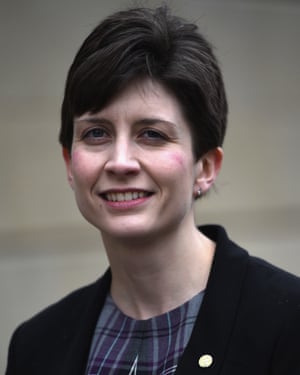
Alison Thewliss.
                                                                   Alison Thewliss.

Thewliss, who held a meeting with the welfare reform minister Lord Freud earlier this week, described the rape clause as “medieval”. She said it “stigmatises mother and child, and risks discriminating against those who may for religious or traditional reasons have larger families.”

Eugenics by stealth

Last year I wrote about the government plans to restrict child tax credit payments to two children in families, with the stated intention of directing behavioural change, so that poor families wouldn’t have more children that they “can afford.” This assumes, of course that family situations remain static, and that people don’t experience downward mobility because of job market insecurity, accident or ill health. The Conservatives had announced plans to cut welfare payments for larger families at that time. Whilst this might not go quite as far as imposing limits on the birth of children for poor people, it does effectively amount to a two-child policy.

A two-child policy is defined as a government-imposed limit of two children allowed per family or the payment of government subsidies only to the first two children. 

The restriction in support for children of larger families significantly impacts on the autonomy of families, and their freedom to make decisions about their family life. Benefit rules purposefully aimed at reducing family size rarely come without repercussions.

It’s worth remembering that David Cameron ruled out cuts to tax credits before the election when asked during interviews. Tax credit rates weren’t actually cut in the recent Budget – although they were frozen and so will likely lose some of their value over the next four years because of inflation.

Some elements were scrapped, and of course some entitlements were restricted. But either way a pre-election promise not to cut child tax credits sits very uneasily with what was announced in the budget.

Iain Duncan Smith said last year that limiting child benefit to the first two children in a family is “well worth considering” and “could save a significant amount of money.” The idea was being examined by the Conservatives, despite previously being vetoed by Downing Street because of fears that it could alienate parents. Asked about the idea on the BBC’s Sunday Politics programme, Duncan Smith said:

“I think it’s well worth looking at,” he said. “It’s something if we decide to do it we’ll announce out. But it does save significant money and also it helps behavioural change.”

Firstly, this is a clear indication of the Tories’ underpinning eugenicist designs – exercising control over the reproduction of the poor, albeit by stealth. It also reflects the underpinning belief that poverty somehow arises because of faulty individual choices, rather than faulty political decision-making and ideologically driven socioeconomic policies.

Such policies are not only very regressive, they are offensive, undermining human dignity by treating children as a commodity – something that people can be incentivised to do without.

Moreover, a policy aimed at restricting support available for families where parents are either unemployed or in low paid work is effectively a class-contingent policy.

The tax child credit policy of restricting support to two children seems to be premised on the assumption that it’s the same “faulty” families claiming benefits year in and year out. However, extensive research indicates that people move in and out of poverty – indicating that the causes of poverty are structural rather than arising because of individual psychological or cognitive deficits.

The Joseph Rowntree Foundation published a study that debunked  the notion of a “culture of worklessness” in 2012.  I’ve argued with others more recently that there are methodological weaknesses underlying the Conservative’s regressive positivist/behaviourist theories, especially a failure to scientifically test the permanence or otherwise of an underclass status, and a failure to distinguish between the impact of “personal inadequacy” and socioeconomic misfortune.

Limiting financial support to two children may also have consequences regarding the number of abortions. Abortion should never be an outcome of reductive state policy. By limiting choices available to people already in situations of limited choice – either an increase of poverty for existing children or an abortion, then women may feel they have no choice but to opt for the latter. That is not a free choice, because the state is inflicting a punishment by withdrawing support for those choosing to have more than two children, which will have negative repercussions for all family members.

Many households now consist of step-parents, forming reconstituted or blended families. The welfare system recognises this as assessment of household income rather than people’s marital status is used to inform benefit decisions. The imposition of a two-child policy has implications for the future of such types of reconstituted family arrangements.

If one or both adults have two children already, how can it be decided which two children would be eligible for child tax credits?  It’s unfair and cruel to punish families and children by withholding support just because those children have been born or because of when they were born. Or because of the circumstances of their birth.

And how will residency be decided in the event of parental separation or divorce – by financial considerations rather than the best interests of the child? That flies in the face of our legal framework which is founded on the principle of paramountcy of the needs of the child. I have a background in social work, and I know from experience that it’s often the case that children are not better off residing with the wealthier parent, nor do they always wish to.

Restriction on welfare support for children will directly or indirectly restrict women’s autonomy over their reproduction. It allows the wealthiest minority to continue having babies as they wish, whilst aiming to curtail the poor by disincentivisingbreeding” of the “underclass.” It also imposes a particular model of family life on the rest of the population. Ultimately, this will distort the structure and composition of the population, and it openly discriminates against the children of large families.

Article 25 of the Universal Declaration of Human Rights, of which the UK is a signatory, reads:

  1. Everyone has the right to a standard of living adequate for the health and well-being of himself and of his family, including food, clothing, housing and medical care and necessary social services, and the right to security in the event of unemployment, sickness, disability, widowhood, old age or other lack of livelihood in circumstances beyond his control.
  2.  Motherhood and childhood are entitled to special care and assistance. All children, whether born in or out of wedlock, shall enjoy the same social protection.

The United Nation’s Convention on the Rights of the Child (UNCRC) applies to all children and young people aged 17 and under. The convention is separated into 54 articles: most give children social, economic, cultural or civil and political rights, while others set out how governments must publicise or implement the convention.

The UK ratified the Convention on the Rights of the Child (UNCRC) on 16 December 1991. That means the State Party (England, Scotland, Wales and Northern Ireland) now has to make sure that every child benefits from all of the rights in the treaty. The treaty means that every child in the UK has been entitled to over 40 specific rights. These include:

Article 6

1. States Parties recognize that every child has the inherent right to life.

2. States Parties shall ensure to the maximum extent possible the survival and development of the child.

Article 26

1. States Parties shall recognize for every child the right to benefit from social security, including social insurance, and shall take the necessary measures to achieve the full realization of this right in accordance with their national law.

There are other relevant Convention Articles here, which the Conservative’s two-child policy also potentially compromises or violates.
_47839782_logo_226


My work is unfunded and I don’t make any money from it. But you can support Politics and Insights and contribute by making a donation which will help me continue to research and write informative, insightful and independent articles, and to provide support to others.


DonatenowButton

cards


Iain Duncan Smith abandoned his own sinking ship

Impact of tories on income.jpg

Analysis of George Osborne’s budget from the Institute for Fiscal Studies.

Stephen Crabb has been appointed as the new work and pensions secretary, after Iain Duncan Smith resigned in a flurry of controversy on Friday.

Mr Duncan Smith has said the latest planned cuts to disability benefits were “not defensible” in a Budget that benefited higher-earning taxpayers.

David Cameron said he was “puzzled and disappointed” that Mr Duncan Smith had decided to go when they had agreed to have a rethink about the policies

Iain Duncan’s Smith’s letter of resignation must be a BIG embarrassment to the  Government. It was certainly designed to inflict maximum damage particularly on Chancellor George Osborne. I’ve previously noted that the Chancellor has a tendency to regard the Department for Work and Pensions as little more than an annex to the Treasury, and the welfare budget as the Treasury’s disposable income, but I never anticipated that Duncan Smith would come to say that he sees it that way, too. This is, after all, a minister that has invented statistics and told some pretty far-fetched fibs to prop up justifications of his policies that entail some pretty draconian measures, such as sanctions and work fare, after all.

Yet surprisingly, Duncan Smith has also quite willingly and very publicly provided the government’s opponents with ammunition. He has effectively denounced not only Osborne’s budget, but also, his targeted austerity measures, yet curiously, Duncan Smith has until now been one of the most ideologically devout Thatcherite Conservatives, which is reflected in every policy he has formulated.

He has basically said what many of us have been saying for a long time: that the cuts are political and not because of economic necessity, nor will they help the economy. He also as good as said he doesn’t think we are “all in it together”. It turns out that Osborne blamed Duncan Smith for the Personal Independence Payment (PIP) and Employment Support Allowance (ESA) cuts. But Duncan Smith has been a very quiet man recently, often conspicuous by his absence during parliamentary debates, with Priti Patel left defending the ESA cuts in particular in the Commons.

However, the Department for Work and Pensions did a review of PIP last year, and that’s where the “justification” for the cuts came from – a sample of just 150 people, which was hardly a representative sample. It’s difficult to imagine that IDS didn’t order that review. But it was Osborne who announced the cuts to PIP, not Iain Duncan Smith. Just who carries the original responsibility for the proposed PIP cuts is probably never going to be fully untangled from the crossfire of accusations and counter accusations. But surely Cameron is ultimately responsible for Conservative policies?

In his resignation letter, Iain Duncan Smith says:

“I have for some time and rather reluctantly come to believe that the latest changes to benefits to the disabled, and the context in which they’ve been made are, a compromise too far. While they are defensible in narrow terms, given the continuing deficit, they are not defensible in the way they were placed within a budget that benefits higher earning taxpayers. They should have instead been part of a wider process to engage others in finding the best way to better focus resources on those most in need.

I am unable to watch passively while certain policies are enacted in order to meet the fiscal self imposed restraints that I believe are more and more perceived as distinctly political rather than in the national economic interest.

Too often my team and I have been pressured in the immediate run up to a budget or fiscal event to deliver yet more reductions to the working age benefit bill. There has been too much emphasis on money saving exercises and not enough awareness from the Treasury, in particular, that the government’s vision of a new welfare-to-work system could not be repeatedly salami-sliced.

It is therefore with enormous regret that I have decided to resign. You should be very proud of what this government has done on deficit reduction, corporate competitiveness, education reforms and devolution of power.

I hope as the government goes forward you can look again, however, at the balance of the cuts you have insisted upon and wonder if enough has been done to ensure ‘we are all in this together’ “

You can read the letter in full here

You can see Cameron’s response in full here

Many Conservatives have suggested that Duncan Smith – a supporter of Brexit – had been looking over several weeks for an opportunity to resign, and claimed that he wanted to find a moment when he could inflict maximum damage on the campaign led by Cameron and Osborne to keep Britain in the European Union. But writing in the Observer, Bernard Jenkin, a Tory MP and chair of the Commons public administration select committee, says that Duncan Smith was not prepared to tolerate another raid on the disability budget.

Referring to the prime minister’s letter to Duncan Smith, in which Cameron said he was “puzzled” by the resignation, Jenkin says: “What that letter does not make clear is that the £4bn savings in the budget from welfare still stands and, once again, Iain was being told to find similar cuts from other benefits for working-age people – including for the disabled – again undermining the positive incentives that make it worthwhile for them to take work. That is what he finds morally indefensible.”

However, Debbie Abrahams, the shadow minister for disabled people, who has faced Duncan Smith many times during Commons debates and Work and Pensions Committee inquiries, says she does not accept the reasons Iain Duncan Smith has given for resigning, and believes he chose to resign so he could “embarrass the government as much as he can”.

She adds that planned cuts to disability benefit payments in the Budget were “grossly unfair” and would hit “the most vulnerable in society at the same time the highest earners are getting tax cuts”. 

She says she is grateful that many Conservative MPs are critical of the proposals, but adds: 

“We must make sure that this last cut that has been announced around Personal Independence Payments is stopped and does not carry on.”

The resignation is particularly surprising given that, just hours earlier, the Treasury shelved the proposed cuts to PIP – following threats of a Tory backbench rebellion. Three Tory MPs – including mayoral candidate Zac Goldsmith – have  also been asked to resign as patrons of disability charities over their support for the recent welfare cuts. The complete failure of the austerity project is finally unravelling the Conservatives, and at a time when the Brexit faction of the party is already causing considerable disarray.

Even some of the most loyal Tories were finding it difficult to defend taking money away from sick and  disabled people – particularly since many of those who receive PIP are in work, and in fact some rely on it to stay in work. The cuts to ESA and PIP take place in the context of a Tory manifesto that included a pledge not to cut disability benefits. In fact in March last year, the Prime Minister signalled that the Conservatives will protect disabled claimants from welfare cuts in the next parliament (this one). Cameron said the Conservatives would not “undermine” PIP, which was introduced under the Coalition to save money by “targeting those most in need.” Now it seems those most in need are not the ones originally defined as such.

Controversially, the cuts to disability benefits were planned to fund tax cuts for the most affluent – the top 7% of earners. The Chancellor raised the threshold at which people start paying the 40p tax, in a move that will  see many wealthier people pulled out of the higher rate of income tax, in the coming budget. Mr Osborne said that he wants to “accelerate progress” towards the Conservative’s manifesto pledge of raising the threshold for the 40p rate to £50,000 in 2020. The average annual income in the UK is around £27,000.

The Labour Party have urged Stephen Crabb to appear before MPs on Monday to announce formally that the cuts to disability benefits had been dropped. Owen Smith, the shadow work and pensions secretary, said: “His very first act as secretary of state must be to come to parliament on Monday to announce the full reversal of cruel Tory cuts that will see 370,000 disabled people lose £3,500 a year.”

He also urged Crabb to “stand up to a Treasury that is intent on cutting support for those most in need to pay for tax breaks for those who least need them”.

The main retaliation from the Conservative frontbench has been that Duncan Smith knew about the disability cuts (which he did) and that this is an act of mischief and sabotage designed and timed to destablise Cameron regarding Europe. It may well be. But the divisions had already caused wobbles, Duncan Smith just delivered a swift and hefty kick to the “in” crowd.

However, it’s also clear there has been a rising tension between the Treasury and the Department for Work and Pensions for some time. Duncan Smith felt that the benefits system could be scaled back only so far. Osborne and Cameron would prefer to see the welfare state completely dismantled.

Nonetheless, we have witnessed Duncan Smith’s long term disconnection from the impacts of his policies. He has persistently refused to engage with critics raising serious concerns about the consequences of the welfare “reforms”. He has refused to carry out a cumulative impact assessment of his policies and absolutely refused to monitor the impacts, most of which have been dire for sick and disabled people, and when the specifics of negative consequences were pointed out to him, he has typically reacted with denial, anger and accusations of “scaremongering.”

Duncan Smith used the mantra “there’s no proof of causality” to dismiss those who recognised a correlation between his welfare “reforms” and an increase in premature mortality rates and suicide. He has consistently and quite unforgivably shown that he is more concerned about hiding evidence and stifling criticism than he is about conscienciously investigating the harmful and sometimes devastating consequences that his policies have had on many people.

On the day he resigned, Duncan Smith’s department lost a four year legal battle to keep the many potentially humiliating problems with Universal Credit from the public.

Whatever the reasons may be for Duncan Smith’s resignation, he has certainly highlighted very well that Conservative budget decisions are partisan, taken for  party political interest rather than with consideration for the national interest. But in more than one way.

It’s also worth bearing in mind that it is Iain Duncan Smith’s “reforms” that have prompted a United Nations inquiry into grave and systematic violations of the human rights of disabled people. It’s highly unlikely that Duncan Smith’s reputation will be enhanced in the long-term regarding his legislative legacy, particularly regarding disabled people. He has collaborated with other ministers in designing and extending techniques of neutralisation to attempt justify what are extremely prejudiced, discriminatory and punitive policies aimed at the poorest citizens.

This is a man who has removed people from a structural socioeconomic context and then intentionally blamed them for their individual socioeconomic circumstances, most of which have been created by this government’s actions since 2010. Every single Conservative budget has taken money from the poorest and gifted it to the wealthiest. It’s inconceivable that Tory ministers don’t understand such policies will invariably extend and perpetuate inequality and poverty.

Duncan Smith has damned himself, but nonetheless, a Conservative minister resigning and stating that it is because of a Conservative budget, publicly citing reasons that correlate with the opposition’s objections regarding the government’s ideologically driven and targeted austerity, is a particularly damning turn of events for the Conservative Party as a whole, that’s for sure.

Now that Duncan Smith has publicly denounced the Conservative austerity project, I wonder if he will also recognise and embrace the rational expertise and economic competence of a real party of social justice, which rescued this country from the consequences of a global recession by the last quarter of 2009, whilst Osborne had us back in recession by 2011, and lost us our triple A Fitch and Moody credit ratings after promising not to. I wonder if Duncan Smith now supports the fair party with a track record of verifiable economic expertise – that would be the Labour Party.

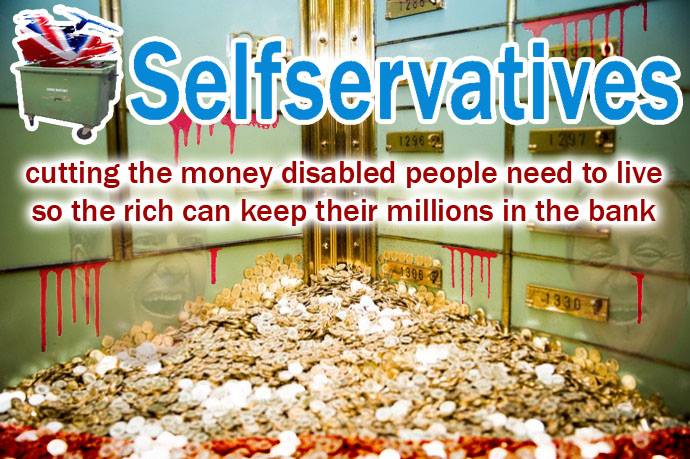
rich keep millons
Picture courtesy of Robert Livingstone

I don’t make any money from my work and I’m not funded. You can support Politics and Insights by making a donation to help me continue researching and writing independently, and to continue to help others.

DonatenowButton
cards

Iain Duncan Smith is complaining about valid criticisms of his draconian policies by journalists and social media commentators

36626_217452248405831_532419169_n

The Work and Pensions Select Committee has just published some letters between Frank Field, the chair, and Iain Duncan Smith, who responded to questions about the correlation between benefit assessments and suicide.

Mr Field had asked what data the Department for Work and Pensions collects on the deaths of benefit claimants.

The issue had been raised in a research report by Oxford University and Liverpool University entitled First Do No Harm, which I also reported on last year.

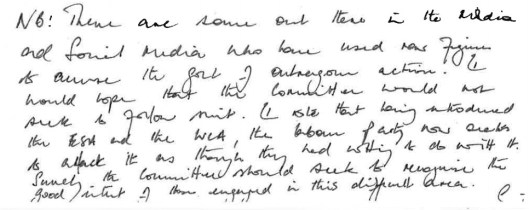
The letter addressed to Frank Field MP, features a barely legible hand-written footnote warning against listening to those “in the media and on social media” who “accuse the Government of outrageous actions.”

Duncan Smith writes in the footnote:

“There are some out there in the media and social media who have used [raw?] [ons ?- Office for National Statistics?] figures to accuse the govt of outrageous actions.

I would hope that the committee would not seek to follow suit. I [illegible] [note?] that having introduced ESA and the WLA, the Labour Party now seeks to attack it as though they had nothing to do with it.

Surely the committee should seek to recognise the good intent of those engaged in this difficult area.”

2014-02-17-BurdenoftheCuts-thumb
I would say that this blatant political discrimination constitutes an “outrageous action.” It’s difficult to recognise any “good intent” here, Mr Duncan Smith.

The correlation between the work capability assessment and suicide was established by academic researchers, not by journalists or social media commentators. We simply reported the findings.

Iain Duncan Smith will be accusing the United Nations (UN) of failing to see the government’s “good intent” when the inquiry into “grave and systematic violations” of the rights of disabled people in the UK concludes, next. Despite the fact that we are the first country to face such an inquiry, and given that the UN investigate only when there is evidence of grave and systematic violations of human rights, the prime minister has already dismissed the significance of the inquiry, ludicrously claiming “it may not be all it’s cracked up to be.”

It’s particularly noteworthy that when it comes to government claims, the same methodological rigour that they advocate for others isn’t applied. Indeed, many policies have clearly been directed by ideology and traditional Tory prejudices, rather than valid research and empirical evidence. The fact that no cumulative impact assessment has been carried out with regard to the welfare “reforms” indicates a government that is not interested in accountability, and examining the potential negative outcomes of policy-making. Policies are supposed to be about meeting public needs and not about inflicting Conservative dogma and old prejudices in the form of financial punishment on protected social groups.

As someone with a background in the social sciences, I have written extensive criticism of Iain Duncan Smith’s peculiar brand of epistemological and methodological fascism. He’s not exactly well known for his skill in statistical analysis, having been rebuked more than once for being notoriously conservative with the truth and numbers. Yet he feels compelled to dismiss the accounts of academics, campaigners, empirical evidence and the many qualitative accounts of those adversely impacted by his policies, in his vain attempt to exercise a stranglehold on his own peculiar brand of “truth.”

The goverment often claim that any research revealing negative social consequences arising from their draconian policies, which they don’t like to be made public “doesn’t establish a causal link.”  Recently there has been a persistent, aggressive and flat denial that there is any “causal link” between the increased use of food banks and increasing poverty, between benefit sanctions and extreme hardship and harm, between the work capability assessment and an increase in numbers of deaths and suicides, for example.

The government are referring to a scientific maxim: “Correlation doesn’t imply causality.” 

The tobacco industry made exactly the same claim about the established link between lung cancer and smoking.

It’s true that correlation is not the same as causation.

It’s certainly true that no conclusion may be drawn regarding the existence or the direction of a cause and effect relationship only from the fact that event A and event B are correlated.

Determining whether there is an actual cause and effect relationship requires further investigation.

This is something the government has persistently refused to do. (Here’s a full critique of Conservative methods of “social research”. I sent Mr Duncan Smith a copy, along with some information about proper definitions and measurement of poverty, but he clearly hasn’t read either. Unless he has included those in his arrogant and dismissive horror of “accusations”  criticisms on social media of course)

It is completely inaccurate to say that correlation doesn’t imply causation. It quite often does.

Here’s a final comment from a social media-based campaigner, analytical writer and a qualified social scientist who knows about statistical inference, causality and correlation and suchlike:

Iain Duncan Smith, you’re a blatant numpty.

160211IDSnote-outrageousaction

You can read the full letter here.

Conservative welfare “reforms” – the sound of one hand clapping

1022654909

“Labour MPs sat perplexed … By cutting housing benefit for the poor, the Government was helping the poor. By causing people to leave their homes, the Government was helping people put a roof over their heads. By appealing the ruling that it discriminated against the vulnerable, the Government was supporting the vulnerable.

Yes, this was a tricky one.” – From an unusually insightful article in the Telegraph about the incoherence of Conservative welfare rhetoric:  How bedroom tax protects the vulnerable.

“Ministers keep using the mantra that their proposals are to protect the most vulnerable when, quite obviously, they are the exact opposite. If implemented their measures would, far from protecting the most vulnerable, directly harm them. Whatever they do in the end, Her Majesty’s Government should stop this 1984 Orwellian-type misuse of language.”  – Lord Bach, discussing the Legal Aid Bill. Source: Hansard, Column 1557, 19 May, 2011.

Conservative policies are incoherent: they don’t fulfil their stated aims and certainly don’t address public needs. Furthermore, Conservative rhetoric has become completely detached from the experiences of most citizens and their everyday realities.

Under the Equality Act, provision was made by the Labour government to ensure that legislations didn’t discriminate against protected social groups, which included disabled people. However, the need for public bodies in England to undertake or publish an equality impact assessment of government policies, practices and decisions was quietly removed by David Cameron in April 2011. The legal requirement in the Equality Act that ensured public bodies attempt to reduce inequalities caused by socio-economic factors was also scrapped by Theresa May in November 2010, who said she favoured a greater focus on “fairness” rather than “equality.”

The Conservatives have since claimed to make welfare provision “fair” by introducing substantial cuts to benefits and introducing severe conditionality requirements regarding eligibility to social security, including the frequent use of extremely punitive benefit sanctions as a means of “changing behaviours,” highlighting plainly that the Conservatives regard unemployment and disability as some kind of personal deficit on the part of those who are, in reality, simply casualties of unfortunate circumstances, bad political decision-making and subsequent politically-constructed socio-economic circumstances.

The word “fair” originally meant “treating people equally without favouritism or discrimination, without cheating or trying to achieve unjust advantage.” Under the Conservatives, we have witnessed a manipulated semantic shift, “fair” has become a Glittering Generality – part of a lexicon of propaganda that simply props up Tory ideology in an endlessly erroneous and self-referential way. Conservative ideology is permeating language, prompting semantic shifts towards bland descriptors which mask power and class relations, coercive state actions and political intentions. One only need to look at the context in which the government use words like “fair”, “support”, “help”, “justice” , “equality” and “reform” to recognise linguistic behaviourism in action. Or if you prefer, Orwellian doublespeak.

The altered semantics clearly signpost an intentionally misleading Conservative narrative, constructed on the basic, offensive idea that people claiming welfare do so because of “faulty” personal characteristics, and that welfare creates problems, rather than it being an essential mechanism aimed at alleviating poverty, extending social and economic support and opportunities – social insurance and security when people need it.

The government claims to be “committed to supporting the most vulnerable” and ensuring “everyone contributes to reducing the deficit, and where those with the most contribute the most.” That is blatantly untrue, as we can see from just a glance at Conservative policies.

2014-02-17-BurdenoftheCuts-thumb

Conservative rhetoric is a masterpiece of stapled together soundbites and meaningless glittering generalities. And intentional mystification. Glittering Generalities are being used to mask political acts of discrimination.

Cameron claims that he is going to address “inequality” and “social problems”, for example, but wouldn’t you think that he would have done so over the past five years, rather than busying himself creating those problems via policies? Under Cameron’s government, we have become the most unequal country in the European Union, even the USA, home of the founding fathers of neoliberalism, is less divided by wealth and income, than the UK.

I’m also wondering how tripling university tuition fees, removing bursaries and maintainance grants for students from poorer backgrounds and reintroducing banding in classrooms can possibly indicate a party genuinely interested in extending “equal opportunities.”

It’s perplexing that a government claiming itself to be “economically competent” can possibly attempt to justify spending more tax payers money on appealing a Supreme Court decision that the bedroom tax policy is discriminatory, when it would actually cost less implementing the legal recommendations of the court. As Owen Smith, Shadow Work and Pensions Secretary, said: “Just the Supreme Court session itself will cost the Government more in legal fees than the £200,000 needed to exempt domestic abuse victims affected.

“If the Tories had an ounce of decency they could have stood by the decision and exempted the two groups.

“Instead they are instructing expensive lawyers to fight in the Supreme Court for the right to drive people further into poverty.”

As a consequence of the highly discriminatory and blatantly class-contingent Tory policies, rampant socio-economic inequality apparently is the new Tory “fair”. There is a clear incongruence between Conservative rhetoric and the impact of their policies. This is further highlighted by the fact that the UK is currently being investigated by the United Nations regarding serious contraventions of the human rights of sick and disabled people, and other marginalised groups, because of the dire impact of Conservative welfare “reforms.”

It’s clear that the austerity cuts which target the poorest are intentional, ideologically-driven decisions, taken within a context of other available choices and humane options.

The rise in the need for food banks in the UK, amongst both the working and non-working poor, over the past five years and the return of absolute poverty, not seen since before the advent of the welfare state in this country, makes a mockery of government claims that it supports the most vulnerable.

Income tax receipts to the Treasury have fallen because those able to pay the most are being steadily exempted from social responsibility, and wages for many of the poorer citizens have fallen, whilst the cost of living has risen significantly over this past five years.

The ideologically motivated transfer of funds from the poorest half of the country to the more affluent has not contributed to deficit reduction. It doesn’t take a genius to work out that the cumulative impact of Tory tax and welfare changes, from out-of-work and in-work benefits to council tax support, to the cut in the top rate of income tax and an increase in tax-free personal allowances, has been extremely regressive and detrimental to the poorest.

The revenue gains from the tax changes and benefit cuts were offset by the cost of tax reductions, particularly the increase in the income tax personal allowance, benefitting the wealthiest.

The Treasury response to this is to single out the poorest yet again for more cuts to “balance the books” – which basically translates as the Conservative “small state” fetish, and deep dislike of the gains we made from the post-war settlement. Yet for a government that claims a non-interventionist stance, it sure does make a lot of interventions. Always on behalf of the privileged class, with policies benefitting only the wealthy minority.

How can Conservatives believe that poor people are motivated to work harder by taking money from them, yet also apparently believe that wealthy people are motivated by giving them more money? This is not “behavioural science,” it’s policy-making founded entirely on traditional Tory prejudices.

The government claim that “Every individual policy change is carefully considered, including looking at the effect on disabled people in line with legal obligations,” but without carrying out a cumulative impact assessment, the effects and impacts of policies can’t possibly be accurately measured. And that is intentional, too.

Despite being a party that claims to support “hard-working families,” the Conservatives have nonetheless made several attempts to undermine the income security of a signifant proportion of that group of citizens recently. Their proposed tax credit cuts, designed to creep through parliament in the form of secondary legislation, which tends to exempt it from meaningful debate and amendment in the Commons, was halted only because the House of Lords have been paying attention to the game.

The use of secondary legislation has risen at an unprecedented rate, reaching an extraordinary level since 2010, and it’s increased use is to ensure that the Government meet with little scrutiny and challenge in the House of Commons when they attempt to push through controversial and unpopular, ideologically-driven legislation.

Conservative cuts are most often applied by stealth, using statutory instruments. This indicates a government that is well aware that its policies are not fit for purpose.

We can’t afford Conservative ideological indulgence.

The National Audit Office (NAO) scrutinises public spending for Parliament and is independent of government. An audit report earlier this month concluded that the Department for Work and Pension’s spending on contracts for disability benefit assessments is expected to double in 2016/17 compared with 2014/15. The government’s flagship welfare-cut scheme will be actually spending more money on the assessments themselves than it is saving in reductions to the benefits bill – as Frances Ryan pointed out in the Guardian, it’s the political equivalent of burning bundles of £50 notes.

The report also states that only half of all the doctors and nurses hired by Maximus – the US outsourcing company brought in by the Department for Work and Pensions to carry out the assessments – had even completed their training.

The NAO report summarises:

5.5
Million assessments completed in five years up to March 2015

65%
Estimated increase in cost per ESA assessment based on published information after transfer of the service in 2015 (from £115 to £190)


84%
Estimated increase in healthcare professionals across contracts from 2,200 in May 2015 to 4,050 November 2016

£1.6bn
Estimated cost of contracted-out health and disability assessments over three years, 2015 to 2018

£0.4 billion
Latest expected reduction in annual disability benefit spending

13%
Proportion of ESA and PIP targets met for assessment report quality meeting contractual standard (September 2014 to August 2015).

This summary reflects staggering and deliberate economic incompetence, a flagrant, politically-motivated waste of tax payers money and even worse, the higher spending has not created a competent or ethical assessment framework, nor is it improving the lives of sick and disabled people.

The government claim they want to “help” sick and disabled people into work, but nearly 14,000 disabled people have lost their mobility vehicle after the changes to Personal Independence Payments (PIP) assessment, which are carried out by private companies. Many more, yet to be reassessed, are also likely to lose their specialised vehicles.

In 2012, Esther McVey revealed that the new PIP  was about cutting costs and that there were targets to reduce the number of successful claims when she told the House of Commons:330,000 of claimants are expected to either lose their benefit altogether or see their payments reduced.How else could she have known that before those people were actually assessed? A recent review led the government to conclude that PIP doesn’t currently fulfil the original policy intent, which was to cut costs and “target” the benefit to “those with the greatest need.”

That basically meant a narrowing of eligibility criteria for people formerly claiming Disability Living Allowance, increasing the number of reassessments required, and limiting the number of successful claims. The government have used the review to attempt to justify further restrictions to PIP eligibility, aimed at cutting support for people who require aids to meet fundamental needs such as preparing food, dressing, basic and essential personal care and managing incontinence. “Greatest need” has become an ever-shrinking category under Conservative austerity measures. 

DPAC

The use of political pseudo-psychological “diagnoses” to both stigmatise and “treat” what are generally regarded by the Conservatives as deviant behaviours from cognitively incompetent citizens, infering that the problem lies within the individual rather than in their circumstances, or arise as a consequence of political decision-making and socio-economic models, has become the new normal. We are discussing people here who have been deemed too ill to work by their own doctor AND the state. Not for the first time, the words Arbeit macht frei spring to mind.

Welfare has been redefined: it is preoccupied with assumptions about and modification of the behaviour and character of recipients rather than with the alleviation of poverty and ensuring economic and social wellbeing.

The stigmatisation of people needing benefits is designed purposefully to displace public sympathy for the poor, and to generate moral outrage, which is then used to further justify the steady dismantling of the welfare state.

It is the human costs that are particularly distressing, and in a wealthy, first world liberal democracy, such draconian policies ought to be untenable. Some people are dying after being wrongly assessed as “fit for work” and having their lifeline benefits brutally withdrawn. Maximus is certainly not helping the government to serve even the most basic needs of sick and disabled people.

However, Maximus is serving the needs of a “small state” doctrinaire neoliberal government. The Conservatives are systematically dismantling the UK’s social security system, not because there is an empirically justifiable reason or economic need to do so, but because the government has purely ideological, anticollectivist prescriptions. Those prescriptions are costing the UK in terms of the economy, but MUCH worse, it is costing us in terms of our decent, collective, civilised response to people experiencing difficult circumstances through no fault of their own; it’s costing the most vulnerable citizens their wellbeing and unforgivably, it is also costing precious human lives.

It’s not just that Conservative rhetoric is incoherent and incongruent with the realities created by their policies. Policy-making has become increasingly detached from public needs and instead, it is being directed at “incentivising” and “changing behaviours” of citizens to meet a rigidly ideological state agenda. That turns democracy completely on its head. There is no longer a genuine dialogue between government and citizens, only a diversionary and oppressive state monologue.

And it’s the sound of one hand clapping.

one hand clapping

There are many ways of destroying people’s lives, not all of them are obvious. Taking away people’s means of meeting basic survival needs, such as money for food, fuel and shelter – which are the bare essentials that benefits were originally calculated to cover – invariably increases the likelihood that they will die. The people most adversely and immediately affected are those who have additional needs for support.

The moment that sick and disabled people were defined as a “burden on the state” by the government, we began climbing Allport’s Ladder of Prejudice.

Whilst I am very aware that we need take care not to trivialise the terrible events of  world war 2 and Nazi Germany by making casual comparisons, there are some clear and important parallels on a socio-political level and a psycho-social one, that I feel are crucially important to recognise.

Gordon Allport studied the psychological and social processes that create a society’s progression from prejudice and discrimination to genocide. In his research of how the Holocaust happened, he describes socio-political processes that foster increasing social prejudice and discrimination and he demonstrates how the unthinkable becomes acceptable: it happens incrementally, because of a steady erosion of our moral and rational boundaries, and propaganda-driven changes in our attitudes towards “others” that advances culturally, by almost inscrutable degrees.

The process always begins with the political scapegoating and systematic dehumanisation of a social group and with ideologies that identify that group as an “enemy” or a social “burden” in some way. A history of devaluation of the group that becomes the target, authoritarian culture, and the passivity of internal and external witnesses (bystanders) all contribute to the probability that violence against that group will develop, and ultimately, if the process is allowed to continue evolving, genocide.

If you think this observation is “extreme” then you really haven’t been paying attention. By 2012, hate crime incidents against disabled people had risen to be the highest ever recorded. By 2015, there was a further 41 per cent rise in disability hate crime. This is the so-called “civilised” first world, very wealthy liberal democracy that is the UK.

Most disabled people have worked, contributed to society, paid taxes and national insurance. Those that haven’t genuinely cannot work, and as a decent, civilised society, we should support them. Being ill and disabled is not a “lifestyle choice.” Unfortunately it can happen to anyone. A life-changing accident or illness doesn’t only happen to others: no-one is exempted from such a possibility. That this government thinks it can get away with peddling utter nonsense about the characters, lives and motivations of a marginalised social group, dehumanising them, directing hatred, resentment, prejudice and public derision towards them, demonstrates only too well just how far we have moved away from being a decent, civilised society. 

It seems to be almost weekly that there’s a report in the media about a sick and disabled person dying after being told by the state that they are “fit for work” and their lifeline benefits have been halted, or because the state has sanctioned someone and withdrawn their only support. There are many thousands more suffering in silence, fearful and just about living.


Fabian Commission condemns Cameron’s indifference to growing food poverty

poverty+kid

Poverty, and particularly child poverty, is increasing. Welfare cuts, austerity measures and low wages have pushed hundreds of thousands, including more than 300,000 children, below the poverty line since 2012, despite Tory claims to the contrary, according to the New Policy Institute (NPI) thinktank, who undertook a study after the government refused to bring forward the publication of official data which would have shown the impact on poverty figures of the major welfare reforms introduced in 2013, and enabled the coalition’s record to be properly scrutinised before the election.

The Fabian Society has accused the Government of lacking a strategy to combat food poverty and said proposed tax-credit cuts could become an even bigger driver of poverty and food insecurity than low wages. A year-long independent food and poverty commission by the Fabian Society found the Government lacks any strategy for addressing hunger in the UK, making a mockery of the prime minster’s party conference pledge to lead “an all-out assault on poverty” earlier this month.

The Fabian Commission on Food and Poverty has brought together experts, as well as those experiencing poverty, to look at the roles of government, civil society and the food industry in increasing the availability and accessibility of sustainable, nutritious food.

The final report of the Fabian Commmission on Food and Poverty is due to be launched later today.

The Commission is chaired by Geoff Tansey, a renowned writer, consultant and Trustee of the Food Ethics Council. The Commission also includes leading representatives from across civil society, trade unions, academia and the food industry.

Food is becoming more and more expensive, and falling real incomes make healthy, nutritious diets less affordable. Yet food plays a wider role in society than nutrition. We use it to celebrate family events, milestones, rites of passage, festivals, to socialise with, and to express ourselves. Food poverty also means that people often experience social exclusion as well as hunger.

Yet only last week, David Cameron insisted at Prime Minister’s Questions: “I do not want anyone in our country to have to rely on food banks.”

Whilst the chair of the commission, Geoff Tansey, acknowledged Cameron’s comments, he said: “But for food – people’s most basic need – he currently has no means of achieving this aim and no plan to deliver a reduction in food banks, let alone tackle the other links between food and poverty.

“The commission has even found that the Government has no count of the number of people who currently lack secure access to nutritious, affordable food.”

A recent NHS statistics release show that 7,366 people were admitted to hospital with a primary or secondary diagnosis of malnutrition between August 2014 and July this year, compared with 4,883 cases in the same period from 2010 to 2011 – a rise of more than 50 per cent in just four years. Cases of other diseases rife in the Victorian era including scurvy (an illness arising through a lack of vitamin C), scarlet fever, cholera and whooping cough have also increased since 2010.

Chris Mould, chairman of the Trussell Trust, which runs a nationwide network of foodbanks, said they saw “tens of thousands of people who have been going hungry, missing meals and cutting back on the quality of the food they buy”. 

“We meet families from across the UK struggling to put enough food on the table and, at the extreme end, you get people who are malnourished,” he said. “We often see parents who are going without food so that they can feed their children, and these parents often struggle to afford enough nutritious food for their children, too. We don’t think anyone should have to go hungry in the UK, which is why we’re working to engage the public, other charities and politicians across parties to find solutions to the underlying causes of food poverty.”

The Mirror revealed on Monday how food bank volunteers will feed hundreds more hungry children this week:  Children from deprived families will go without free school meals during half term, leaving their hard-up parents unable to afford an additional meal every day.

The desperate reliance on food banks was one of the problems investigated by the panel, during its fact-finding tour interviewing food producers, charities and those living on the breadline.

Mr Tansey has warned it was “not enough to ensure people don’t go hungry. Food banks are just the tip of the iceberg of a much bigger problem.

“We need to make sure no-one lives in fear of not being able to feed themselves or their family, and to break the bigger links between food and poverty and their effect on people’s health, the environment and working conditions.”

The Fabian Society wants an end to food banks by 2020. Its report also calls for a tax on sugary drinks to see if the higher price cuts demand for unhealthy food, appointing a minister charged with eliminating household food insecurity and launching “food access plans” so people find it easier to buy “affordable, nutritious food”.

The commission’s report says: “We need to recognise that food banks and charitable food providers are not solutions to household food insecurity, they are symptoms of society’s failure to ensure everybody is sustainably well-fed.”

The report also notes that many people who are too poor to afford food do not use food banks for fear of the stigma of being labelled.

The report comes just two months after the children’s commissioner issued a report warning that the government’s continued austerity programme, especially the welfare reforms, does not conform to the standards of the United Nations Convention on the Rights of the Child, which protects children from the adverse effects of government economic measures.

Government turns its back on international laws, scrutiny and standards: it’s time to be very worried

564882_438358886199493_1982719183_n

Concerns have been raised by lawyers and legal experts that Conservative ministers have quietly abandoned the longstanding principle that members of the government should be bound by international law.

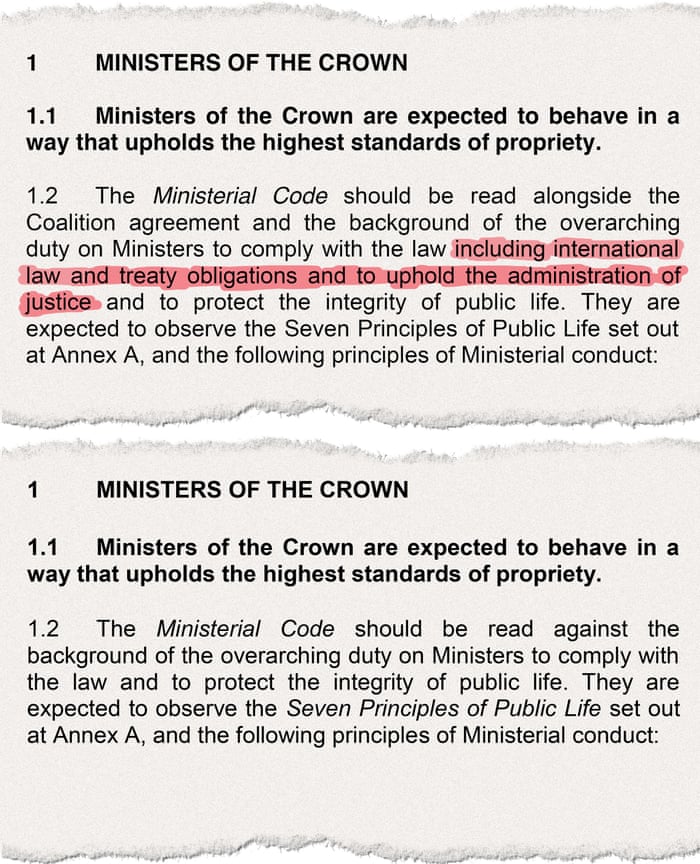
The rewritten ministerial code, which was updated on October 15  without any announcement, sets out the standard of conduct expected of ministers. It has been quietly edited. The latest version of the code is missing a key element regarding the UK’s complicity with international law. 

The previous code, issued in 2010, said there was an “overarching duty on ministers to comply with the law including international law and treaty obligations and to uphold the administration of justice and to protect the integrity of public life”.

The new version of the code has been edited to say only that there is an “overarching duty on ministers to comply with the law and to protect the integrity of public life”.

Legal experts say key issues affected by the change could include decisions about “whether to go to war or use military force, such as the use of drones in Syria, any decision made by an international court about the UK and any laws not incorporated into English law, such as human rights legislation and the Geneva conventions.

Ministerial code changes between 2010 and 2015.
Photograph: Government handout – courtesy of the Guardian

This comes as the UK government is facing another United Nations inquiry regarding widespread allegations that the Conservative welfare reforms breach the Human Rights of disabled people. It also comes following the government announcement this week that there are plans to scrap the Human Rights Act by next summer, to replace it with a controversial “British Bill of Rights.”

Raquel Rolnik, the UN’s special rapporteur for housing, found the bedroom tax to contravene human rights and in 2013, she called for the Tory “spare room subsidy” to be suspended immediately. In a wide-ranging report she also calls for the extension of grants to provide more social housing, the release of public land, build-or-lose measures to target landbanks and increased private rented sector regulation. None of these are recommendations which the Conservatives have been remotely willing to entertain, instead they have directed hostility towards the United Nations.

The Conservatives have already taken away access to legal aid from the poorest and most vulnerable citizens, in a move branded contrary to the very principle of equality under the law. Last year, Grayling, then the Justice Secretary, was accused of turning legal aid into an instrument of discrimination by a court, because of his attempt to introduce a residency test to legal aid access, a move which exceeded his statutory powers when he devised it.

He has also tried to dismantle a vital legal protection available to the citizen – judicial review – which has been used to stop him abusing his powers again and again. Judicial review is the mechanism by which citizens can hold the government to its own laws. With the Criminal Justice and Courts Bill, the justice secretary tried to put it out of reach.

Grayling, suffered a defeat in the House of Lords vote on his plans to curtail access to judicial review, which would have made it much harder to challenge government decisions in court.

Peers voted by 247 to 181, a majority of 66, to ensure that the judges keep their discretion over whether they can hear judicial review applications after a warning from a former lord chief justice, Lord Woolf, that the alternative amounted to an “elective dictatorship”.

He has tried to restrict legal aid for domestic abuse victims, welfare claimants seeking redress for wrongful state decisions, victims of medical negligence, for example.

It’s very worrying that this is a government that wants to leave Europe behind and sever the connection with the European Convention on Human Rights.  It’s a government that wants to do as it pleases, free from international scrutiny and what it clearly sees as the constraints of international law and the judgments of international courts.

The Conservatives have demonstrated an eagerness to take away citizens’ rights to take their case to the European court, with many of their actions clearly based on an intent on tearing up British legal protections for citizens and massively bolstering the powers of the state.

The Guardian reports that a legal challenge against the change will be lodged on Friday by Rights Watch, an organisation which works to hold the government to account. Yasmine Ahmed, its director, said:

“This amendment to the ministerial code is deeply concerning. It shows a marked shift in the attitude and commitment of the UK government towards its international legal obligations.”

In his preamble to the new ministerial code, David Cameron says: “People want their politicians to uphold the highest standards of propriety. That means being transparent in all we do.”

However, I reported last year that in terms of international standards of conduct, the Conservatives are not doing well. Transparency International flagged up many areas of concern in their report: A mid-term assessment of the UK Coalition Government’s record on tackling corruption

The Cabinet Office has of course denied there was any intention to weaken international law and the administration of justice by omitting the phrases from the new code.

A spokesman said:

“The code is very clear on the duty that it places on ministers to comply with the law. ‘Comply with the law’ includes international law.

The wording was amended to bring the code more in line with the civil service code. The obligations remain unchanged by the simplified wording. The ministerial code is the prime minister’s guidance to his ministers on how they should conduct themselves in public office.”

However, a Conservative party policy document promises that the ministerial code will be rewritten in the context of the UK withdrawing from the European convention on human rights. In order to help achieve these aims the document says:

“We will amend the ministerial code to remove any ambiguity in the current rules about the duty of ministers to follow the will of Parliament in the UK.”

Lord Falconer, Labour’s shadow lord chancellor, said:

“If this is what ministers are planning to do it is shocking. We are a country that prides itself on operating in accordance with the rule of law. That has always meant both domestic and international law.

This is a message we have sent out both internally and externally. If we are now regarding compliance with international law for ministers as optional that is staggering. If ministers breach international law it will no longer be misconduct.”

The Guardian cites Ken Macdonald QC, the former director of public prosecutions, who said:

“It is difficult to believe that this change is inadvertent. If it’s deliberate, it appears to advocate a conscious loosening of ministerial respect for the rule of law and the UK’s international treaty obligations, including weakening responsibility for the quality of justice here at home.

In a dangerous world, the government should be strengthening its support for the rule of law, not airbrushing it out of the ministerial code. On every level, this sends out a terrible signal.”

Ironically, on the same day that the new code was quietly released, the attorney general, Jeremy Wright, gave a keynote address about the importance of international law to an audience of government lawyers at the Government Legal Service International Law Conference.

Wright said:

“The constitutional principle to respect the rule of law and comply with our international obligations is reflected in the ministerial code – which applies to me as much as to any other minister. The code states that there is an overarching duty on ministers to comply with the law, including international law and treaty obligations and to uphold the administration of justice and to protect the integrity of public life.”

It is not clear whether or not the attorney general was informed about the changes to the ministerial code at the time of his speech. Both the Cabinet Office and the attorney general’s office have declined to answer this question.

Tory ministers are a major source of national embarrassment when they denounce the European Court of Human Rights whilst instructing the rest of the world, including other European states, to respect our collective international human rights obligations and “the rule of law.” Human Rights legislation exists throughout the free world. Free speech, the right to a fair trial, respect for private life and the prohibition on torture are values which distinguish democratic societies from despotic states.

There is no justification for editing obligations to upholding international laws, human rights or for repealing the Human Rights Act: that would make Britain the first European country to regress in the level and degree of our human rights protection. It is through times of recession and times of affluence alike that our rights ought to be the foundation of our society, upon which the Magna Carta, the Equality Act and the Human Rights Act were built – protecting the vulnerable from the powerful and ensuring those who govern are accountable to the rule of law.

Update: Former head of government’s legal service says obligation that ministers must comply with international law – dropped from revised ministerial code – had irritated PM: No 10 ‘showing contempt for international law’


I don’t make any money from my work and I am not funded. I am disabled because of illness and struggle to get by. But you can help me continue to research and write informative, insightful and independent articles, and to provide support to others, by making a donation. The smallest amount is much appreciated – thank you.

DonatenowButton

Prime minister dismisses UN inquiry into government’s discriminatory treatment of disabled people

disability_2218977b

Labour leader Jeremy Corbyn has asked David Cameron at Prime Minister’s Questions today to publish the details of the Government’s response to the United Nations inquiry into the allegations that Conservative policies are breaching the rights of disabled people in the UK. He also asked if the government intended to co-operate with the inquiry.

Such UN investigations are conducted confidentially by the UN and officials will not confirm or deny whether the UK is currently being put under scrutiny.

However, the ongoing inquiry been widely reported by disability rights groups and campaigners. The Department for Work and Pensions has previously declined to comment on the possibility of an investigation.

Mr Corbyn used his final question to ask about the United Nations inquiry into alleged “grave or systemic violations” of the rights of disabled people in the UK. The PM gave a dismissive response, saying the inquiry may not be “all it’s cracked up to be” and said that disabled people in other countries do not have the rights and support that “they” [disabled people] in the UK are offered. Cameron also implied that Labour’s “strong” equality legislation was a Conservative policy. However, the Equality Act was drafted under the guidance of Harriet Harman.

Jeremy Corbyn asks about David Cameron about his response to the UN inquiry at Prime Minister’s Questions

The United Nations team of investigators are expecting to meet with the Equality and Human Rights Commission, members of parliament, individual campaigners and disabled people’s organisations, representatives from local authorities and academics.

The team will be gathering direct evidence from individuals about the impact of government austerity measures, with a focus on benefit cuts and sanctions; cuts to social care; cuts to legal aid; the closure of the Independent Living Fund (ILF); the adverse impact of the Work Capability Assessment (WCA); the shortage of accessible and affordable housing; the impact of the bedroom tax on disabled people, and also the rise in disability hate crime.

Mr Corbyn said:

“This is deeply embarrassing to all of us in this house and indeed to the country as a whole. It’s very sad news.”

The Government’s approach to people with disabilities had been extremely controversial and been met with criticism from campaign groups. Disabled people have borne the brunt of austerity cuts, losing more income and support than any other social group, and this is despite the fact that Cameron promised in 2010 to protect the poorest, sick and disabled people and the most vulnerable.

In 2013, Dr Simon Duffy at the Centre for Welfare Reform published a briefing outlining how the austerity cuts are targeted. The report says:

The cuts are not fair.

They target the very groups that a decent society would protect:

  • People in poverty (1 in 5 of us) bear 39% of all the cuts
  • Disabled people (1 in 13 of us) bear 29% of all the cuts
  • People with severe disabilities (1 in 50 of us) bear 15% of all the cuts

The report outlines further discrimination in how the austerity cuts have been targeted. The report says:

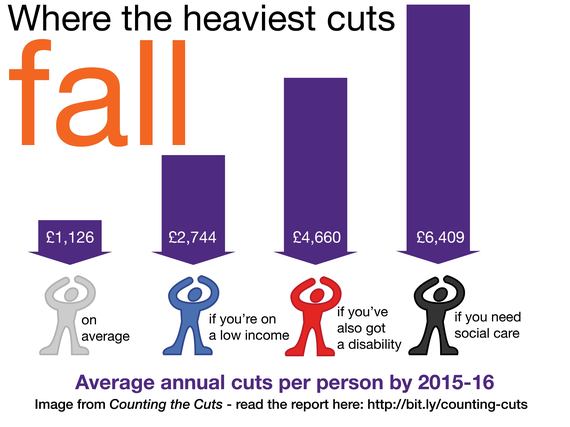
The unfairness of this policy is seen even more clearly when we look at the difference between the burden of cuts that falls on most citizens and the burdens that fall on minority groups. By 2015 the annual average loss in income or services will be:

  • People who are not in poverty or have no disability will lose £467 per year
  • People who are in poverty will lose £2,195 per year
  • Disabled people will lose £4,410 per year
  • Disabled people needing social care will lose £8,832 per year

Work and Pensions Secretary Iain Duncan Smith said at the  Conservative party conference speech in Manchester that disabled people “should work their way out of poverty.”

The Work and Pensions Secretary has been widely criticised for removing support for disabled people who want to work: by closing Remploy factories, scrapping the Independent Living Fund, cuts to payments for a disability Access To Work scheme and cuts to Employment and Support Allowance.

The reformed Work Capability Assessment has been very controversial, with critics labeling them unfair, arbitrary, and heavily bureaucratic, weighted towards unfairly removing people’s sickness and disability benefit and forcing them to look for work.

The bedroom tax also hits disabled people disproportionately, with around two thirds of those affected by the under-occupancy penalty being disabled.

The United Nations have already deemed that the bedroom tax constitutes a violation of the human right to adequate housing in several ways. If, for example, the extra payments force tenants to cut down on their spending on food or heating their home. There are already a number of legal challenges to the bedroom tax under way in British courts. In principle the judiciary here takes into account the international human rights legislation because the UK has signed and ratified the International Covenant on Economic, Social and Cultural Rights.

The right to adequate housing is recognised in a number of international human rights instruments that the UK has signed up to.

UN rapporteur Raquel Rolnik called for the UK government last year to scrap its controversial bedroom tax policy. Rolnik’s report was dismissed as a “misleading Marxist diatribe” by Tory ministers, and she had been subject to a “blizzard of misinformation” and xenophobic tabloid reports.

The DWP’s sanctions regime has also been widely discredited, and there has been controvery over death statistics, eventually released by the Department after a long-running refusal to release the information under freedom of information law.

The Daily Mail has already preempted the visit from the special rapporteur, Catalina Devandas Aguilar, who is spearheading the ongoing inquiry into many claims that Britain is guilty of grave or systematic violations of the rights of sick and disabled people, by using racist stereotypes, and claiming that the UN are “meddling”. The Mail blatantly attempted to discredit this important UN intervention and the UN rapporteur before the visit.

Meanwhile, Cameron seems very keen to play the investigation down, and dismiss the impact of his government’s “reforms” on the lives of sick and disabled people.

We are a very wealthy, so-called first-world liberal democracy, the fact that such an inquiry has been deemed necessary at all ought to be a source of great shame for this government.


It’s truly priceless that Iain Duncan Smith can accuse anyone of misrepresenting statistics with a straight face.

430847_149933881824335_1645102229_n (1)

I’m not well at the moment and supposed to be resting, but I must make some comment on record regarding the disgraceful behaviour yesterday in parliament of Priti Patel and Iain Duncan Smith, such is my utter disbelief, disgust and outrage.

For example, Debbie Abrahams (Oldham East and Saddleworth) (Labour) asked the very reasonable question:

“The Government’s own data show that people in the work-related activity group are twice as likely to die than the general population. How can the Secretary of State justify £30-a-week cuts for people in that category?”

Duncan Smith made a petty and vindictive retort to avoid answering the question:

“The hon. Lady put out a series of blogs on the mortality stats last week that were fundamentally wrong. Her use of figures is therefore quite often incorrect. I simply say to her—[Interruption.] She has had an offer to meet the Under-Secretary of State for Work and Pensions, my hon. Friend the Member for North Swindon (Justin Tomlinson), time and again, but she just wants to sit in the bitter corner screaming abuse.”

Hardly a reasonable and adult response to a very reasonable question, which wasn’t anything remotely like “screaming abuse” as claimed. In light of the many official public rebukes that the Tories have faced for telling lies and using fake statistics, and given the fact that the Government face a United Nations inquiry regarding the fact that their welfare “reforms” are incompatible with the Convention on the Rights of Persons with Disabilities, it’s truly remarkable that Priti Patel and Iain Duncan Smith have the cheek to call disability campaigners “thugs” and imply the opposition MPs are “liars”, when they are faced with valid concerns and founded criticisms regarding the consequences of their draconian policies.

This said, a well-known bullying tactic is projection of the bully’s own inadequacies and nasty traits onto their victims to cover their tracks. Scapegoating is used to divert public attention, to discredit the victims and invalidate their experience of bullying and to justify the bully’s own vicious actions towards their targets. It’s so telling that bullies always accuse others of the very things that they themselves are guilty of.

Rather than do the decent, democratic thing and organise an independent inquiry into the Work Capability Assessment related deaths of sick and disabled people, and carry out a legally required cumulative impact assessment of their nasty, punitive and cruel welfare “reforms”, the Tories prefer to simply loudly and repeatedly deny that there is any correlation between their policies and the increased mortality statistics, released recently by the Department of Work and Pensions, following the order of the Information commissioner and a tribunal ruling.

Debbie Abrahams, amongst others, had raised concerns regarding the  recent mortality statistics release, as well as calling for an inquiry into the cruel sanctions regime that is leaving people without their lifeline benefits, and too often, without the means of meeting basic survival needs. The aggression, malice, defensive diversionary tactics and lack of capacity for rational response that Patel and Duncan Smith demonstrated was frankly far beyond disgusting: it was frightening.

These ministers are sneering, dishonourable, dishonest and callous Social Darwinist stains in British political history and they need removing from the position of power that they occupy, simply on the grounds that they are formulating and continually justifying policies that cause harm, distress, and sometimes, terrible and tragic consequences for sick and disabled people. That they demonstrate such a fundamental lack of concern for the welfare of UK citizens and persist in their refusal to accept that there is even a possibility that Tory policies may be causing harm to ill and disabled people is a very damning indictment.

Yet these ministers have no grounds whatsoever for their claims that there is no provable causal link between their policies and the increase in mortality, because the correlation is shown by their own record of statistics. The same statistics that they fought very hard to withhold.

Denial, sneering and directing malice at anyone who raises concerns and by accusing everyone else of being liars does not constitute a reasoned debate, as is expected of a government, nor does it count as empirical evidence of the claims being made by Tory ministers.

So it’s absolutely priceless comment from Patel and Duncan Smith that opposition ministers, who have raised concerns and cited cases of extreme hardship and tragic deaths many times – all recorded on the Hansard record, as well as in the media – that are clearly correlated with the welfare “reforms,” are “liars” and are “misrepresenting statistics” by the despicable liar Iain Duncan Smith.

It’s very reasonable to raise concerns about policies that are damaging people. It’s unreasonable of the government to deny those concerns have any legitimacy, despite evidence to the contrary. Many of us have gone through the Tory-reformed Work Capability Assessment more than once and know only too well what a dreadfully stressful experience it is, and how the strain tends to exacerbate illness, only to be dismissed by the Tories and told that the accounts we have provided and the cases we present as evidence of the urgent need for investigation are merely “anecdotal”.

Yet when the government talk of “scroungers”, the “workshy”, “generations of ‘worklessness’”, a “culture of entitlement”, a “something for nothing culture”, we are expected to accept that at face value as “empirical evidence”. With no offer of reasoned discussion.

The Tories are masters at closing down crucial open and democratic debate, which worries me greatly. This is not a government that models responsible and accountable behaviours towards UK citizens, or the opposition parties, for that matter.

With further debate about the assisted dying Bill due in parliament, one Tory minister said: “ We have to legislate on behalf of the weak and vulnerable”. However, the Tories’ track record on policies aimed at the weak and vulnerable is hardly shining with compassion and good intention.

This is a government that doesn’t provide adequate support for many sick and disabled people to live, so I doubt it has the capacity for the compassionate administration of assisted dying. It’s a government that prefers to simply scapegoat rather than support social groups and dismiss them as some kind of “burden on the state”. How could we be sure that “euthanasia” won’t simply become another Tory method of reducing welfare and healthcare costs?

Yet most sick and disabled people have worked and paid for their own support provision. And for those that have been unable to work, any civilised country would choose to support them, rather than direct malice at them. I don’t think this is a good context to debate euthanasia – with such an untrustworthy and unreasonable government in power and with their history of draconian policies, and rationing of health care and welfare for those most in need of support. Such class-directed rationing of services and the systematic closing down of access to support is very clearly underpinned by Social Darwinist ideology.

In fact I am very worried because history has taught us that there’s a very steep, slippery slope from euthanasia to eugenics.

As I have discussed elsewhere, the point-blank refusal to enter into an open debate and allow an open, independent inquiry into the deaths that are correlated with Tory policy is extremely worrying and reflects a callous, irrational and undemocratic government that draws on a toxic and implicit eugenicist ideology and presents a distinctly anti-enlightenment, impervious epistemological fascism from which to formulate justification narratives for their draconian policies, in order to avoid democratic accountability and to deflect well-reasoned and justified criticism.

This is not the conduct expected of a government of a very wealthy, so-called first-world liberal democracy. It’s not the behaviour of accountable, responsible, decent, moral, rational and reasonable people, either.

See also:

Black Propaganda

Iain Duncan Smith used false statistics again to justify disability benefit cuts again

A list of official rebukes for Tory lies

Department of Department of Work and Pensions officials admit to using fake claimant’s comments to justify benefit sanctions

The Department of Whopping Porkies is rebuked as claimants suddenly develop mysterious superpowers after being sanctioned

A distillation of thoughts on Tory policies aimed at the vulnerable

We can reduce the Welfare Budget by billions: simply get rid of Iain Duncan Smith

UN officials to visit UK over coming months to investigate whether Iain Duncan Smith’s “reforms” to disability benefits are compatible with Human Rights

The Daily Mail is a far-right rag and an utter disgrace for meddling in the Human Rights of sick and disabled people

Techniques of neutralisation – a framework of prejudice

UK becomes the first country to face a UN inquiry into disability rights violations

385294_195107567306966_1850351962_nPictures courtesy of Robert Livingstone


I don’t make any money from my work. I am disabled because of illness and have a very limited income. But you can help by making a donation to help me continue to research and write informative, insightful and independent articles, and to provide support to others. The smallest amount is much appreciated – thank you.
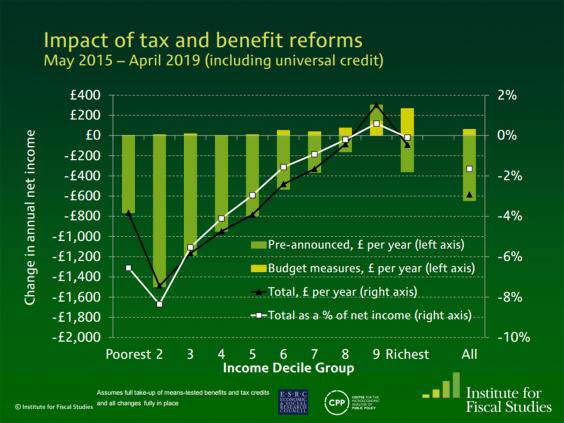
DonatenowButton cards

The Daily Mail is a far-right rag and an utter disgrace for meddling in the Human Rights of sick and disabled people

10177255_710935002309364_996655242459079802_n

I reported yesterday that the United Nations (UN) is investigating the UK government’s welfare “reforms” and the consequences of them for evidence of abuses of the human rights of sick and disabled people. The Daily Mail has preempted the visit from the special rapporteur, Catalina Devandas Aguilar, who is expected to visit the UK in the coming months to spearhead the ongoing inquiry into many claims that Britain is guilty of grave or systematic violations of the rights of sick and disabled people, by using racist stereotypes, and claiming that the UN are “meddling”. The Mail has blatantly attempted to discredit this important UN intervention and the UN rapporteur before the visit even takes place.

“Meddling” is a curious and interesting word to use, as oppose to “wrong” or, say, “inaccurate”. It implies that the government are already aware that their policies are in breach of the human rights of sick and disabled people, but that they simply don’t welcome independent and international scrutiny of the fact.

There was not a shred of concern expressed in the Mail article regarding the cruel treatment of sick and disabled people by the government. It wasn’t mentioned once that whilst sick and disabled people have been targeted by the government with cuts to their income that are disproportionately large, the millionaires of this country got a handout of £107,000 each per year, in the form of a tax “break”. That choice of policy was made intentionally and purposefully, designed to target the most vulnerable citizens – already amongst the poorest – for further cuts to their lifeline benefits. In 2012:

  • Disabled people (1 in 13 of us) bore 29% of all the cuts
  • People with severe disabilities (1 in 50 of us) bore 15% of all the cuts.

Further cuts to benefits since 2012 will make these proportions even larger now.

Thanks to the Centre for Welfare Reform for this info graphic.

The specialised rapporteur, sent by the UN’s Committee on the Rights of Persons with Disabilities, will report back on a range of issues, including whether welfare cuts have harmed disabled people. This is because we are a voluntary signatory to the Convention on the rights of disabled person, and as such, we are expected to meet the international standards and the legal obligations in terms of the human rights of disabled people.

Tory MP Ian Liddell-Grainger last night described the inquiry as “the most absurd and offensive nonsense”.

As a sick and disabled person, I can confirm that Ian Liddell-Grainger is the one who is talking absurd and offensive nonsense. He added: “I am not an expert on disability rights in Costa Rica [the rapporteur’s country of origin], but I suspect Miss Devandas Aguilar might be better off focusing her efforts much closer to home. The UN should keep their noses out.”

Clearly Mr Liddell-Grainger doesn’t know anything at all about disbility rights or international laws. I’m sure his comments are uttered by every despotic minister that has ever faced an inquiry into their conduct towards others: “the UN should keep their noses out” echoes bullies and tyrants everywhere.

Not very encouraging comment, in terms of government response, openness, accountability,  transparency and democracy, then, bearing in mind that a UN inquiry is only ordered where the UN committee believes there is evidence of grave or systematic violations of the rights of disabled people. We are a very wealthy, so-called first-world liberal democracy, the fact that such an inquiry has been deemed necessary at all ought to be a source of great shame for this government.

Looking at some of the comments on the Daily Mail site, I can’t help wondering if some members of the wider public would still look the other way if the government rounded up the sick and disabled people of this country and shot them in front of TV cameras. The thing is, starvation through cutting off lifeline benefits, sanctions, stress through inhumane policies, invalidating someone’s experience of being seriously ill by constant re-assessment and telling them to work when they cannot, and shooting, they all result in death.

And dead is dead.

Eugenics by stealth is still eugenics.

Bystander apathy is complicity.

And people ARE dying as a consequence of this government’s policies.

Welfare reforms break UN convention

Amnesty International has condemned the erosion of human rights of disabled people in UK

A distillation of thoughts on Tory policies aimed at the vulnerable

Aktion Arbeitsscheu Reich, Human Rights and infrahumanisation

Despotic paternalism and punishing the poor. Can this really be England?

Stigmatising unemployment: the government has redefined it as a psychological disorder

Tory Fascist Lie Machine The Daily Mail Has Met Its Match

And not forgetting the fascistic Daily Mail’s involvement in attempting to discredit the left by publishing the fake Zinoviev letter – From Spycatcher and GBH to the Zinoviev letter – an emergent pattern and the real enemy within

Anyone wishing to make a submission regarding the inquiry may contact the UN here:

Catalina Devandas Aguilar
Special rapporteur on the rights of persons with disabilities
Address: OHCHR-UNOG; CH-1211 Geneva 10, Switzerland
Email: sr.disability@ohchr.org

292533_330073053728896_1536469241_nPictures courtesy of Robert Livingstone

UN officials to visit UK over coming months to investigate whether Iain Duncan Smith’s “reforms” to disability benefits are compatible with Human Rights

292533_330073053728896_1536469241_n

I reported last year that the UK has become the first country to face a United Nations inquiry into disability rights violations. A formal investigation was launched by the United Nation’s Committee regarding the Rights of Persons with Disabilities.

Officials from the United Nation’s Committee on the Rights of Persons with Disabilities are to visit Britain after the Tories announced a wave of new austerity measures, including slashing disability benefits by a further £30 a week.

Thousands of sick and disabled people claiming Employment and Support Allowance (ESA) are to have their weekly payment cut from £102.15 to £73.10, which is the same amount as jobseekers’ allowance, if they are assessed as being able to undertake “work-related activity”. Bearing in mind that in order to claim ESA in the first place, prior to assessment, a doctor has already deemed this group of people unfit for work, the move to cut lifeline benefits further is especially cruel and inhumane.

We signed up to the Convention on the Rights of Persons with Disabilities under the last Labour government. On 8 June 2009, the UK government ratified the Convention, signaling its commitment to take concrete action to comply with the legal rights and obligations contained in the Convention. The Government also ratified the Convention’s Optional Protocol.

The Optional Protocol to the Convention on the Rights of Persons with Disabilities is a side-agreement to the Convention on the Rights of Persons with Disabilities. It was adopted on 13 December 2006, and entered into force at the same time as its parent Convention on 3 May 2008. As of July 2015, it has 92 signatories and 87 state parties.

The Optional Protocol establishes an individual complaints mechanism for the Convention similar to that of other Conventions. But this Protocol also accepts individual rights on economic, social and cultural rights. Parties agree to recognise the competence of the Committee on the Rights of Persons with Disabilities to consider complaints from individuals or groups who claim their rights under the Convention have been violated. The Committee can request information from and make recommendations to a party.

In addition, parties may also permit the Committee to investigate, report on and make recommendations on “grave or systematic violations” of the Convention.

In December 2014, the UN Human Rights Council created the role of UN Special Rapporteur on the rights of persons with disabilities. Part of the Special Rapporteur’s broad mandate is to report annually to the Human Rights Council and General Assembly with recommendations on how to better promote and protect the rights of persons with disabilities.

The Special Rapporteur chose to focus her first report on a thematic inquiry into the right to social security, globally. The report will be published in October 2015.

The Commission’s response focuses on three areas from the UK that are highly relevant to the Special Rapporteur’s inquiry:

  • The impact of reforms to the UK’s social security system on disabled people’s rights to independence and to an adequate standard of living;
  • Whether the design and delivery of health and social care services in England is consistent with the rights to physical and mental health, independent living and freedom from cruel, inhuman or degrading treatment or punishment; and
  • The impact of reforms affecting access to civil law justice in England and Wales on disabled people’s right to effective access to justice.

The Commission’s response to the UN Special Rapporteur’s inquiry into persons with disabilities right to social security can be found here.

The Disability Convention requires governments to designate one or more independent mechanisms to “promote, protect and monitor implementation” of the Convention.

The Commission, which is Britain’s National Human Rights Institution, has been designated alongside the Scottish Human Rights Commission, the Northern Ireland Human Rights Commission and the Northern Ireland Equality Commission to fulfill this role in UK.

The Sunday Herald has more recently reported that UN officials will visit the UK in the next few months to investigate whether Iain Duncan Smith’s welfare “reforms” have led to “grave or systematic violations” of disabled people’s human rights.  According to the Scottish Herald, a leading Scottish disability charity has been advised that a visit by the Special Rapporteur and members of the Committee on the rights of persons with disabilities is expected in the “near future”.

United Nations (UN) investigations are conducted confidentially, I’ve already submitted reports and evidence regarding the impact of the welfare “reforms” on sick and disabled people. I’ve mostly focussed on the withdrawal of the Independent Living Fund (ILF), the adverse consequences of the Work Capability Assessment, workfare and sanctions.

Anyone wishing to make a submission may contact the UN here:

Catalina Devandas Aguilar
Special rapporteur on the rights of persons with disabilities
Address: OHCHR-UNOG; CH-1211 Geneva 10, Switzerland
Email: sr.disability@ohchr.org

The Department of Work and Pensions have refused to comment regarding the inquiry.

Shocking statistics published by the Department of Work and Pensions last week showed thousands of people have died after being declared “fit for work”. The figures, which did not detail the cause of the deaths, revealed that at least 2,380 people died between December 2011 and February 2014 within six weeks of a work capability assessment (WCA), which found them found them fit for work.

Bill Scott, director of policy at Inclusion Scotland, a consortium of disability organisations, said: “The UN have notified us they will be visiting Britain to investigate … and want to meet with us when they come, sometime in the next few months.”

Inclusion Scotland has also made a submission to the study being prepared by the Special Rapporteur on the Rights of Persons with Disabilities, Catalina Devandas-Aguilar, which is examining the right of disabled people to social protection.

In the submission, Inclusion Scotland warned that the UK Government’s welfare reforms are “jeopardising disabled people’s right to life” by increasing the risk of suicide after loss of benefits. Last week, the Sunday Herald revealed that DWP staff had been given official guidance on how to deal with suicidal claimants left penniless after suffering benefit sanctions.

The Inclusion Scotland submission also highlights a series of shocking findings, including that disabled people in some areas of Scotland are waiting for up to ten months to access Personal Independent Payment (PIP) disability benefits, due to delays in assessments taking place.

Dr Simon Duffy, director of think tank The Centre for Welfare Reform, said independent research carried out since 2010 had shown the UK Government has targeted cuts mostly at people in poverty and people with disabilities. Disabled people have been targeted by cuts nine times more than other citizens. It also found that people with disabilities, who make up one in 13 of the population, bore almost a third (29%) of the cuts.

He added:

In fact the people with the most severe disabilities have faced cuts several times greater than those faced by cuts to the average citizen. This policy has been made even worse by processes of assessment and sanctions that are experienced as stigmatising and bullying.

The government has utterly failed to find jobs for the people they target – people who are often very sick, who have disabilities or who have mental health problems.

Instead we are seeing worrying signs that they are increasing rates of illness, suicide and poverty.

Many disabled people’s rights campaigners, such as Samuel Miller, Robert LivingstoneMike Sivier and myself, amongst others, welcome this development. Many  campaigners and organisations have made submissions to the UN, using the Optional Protocol mechanism. As I’ve said elsewhere, our political freedoms and human rights must not be subservient to Tory notions of economic success. Democracy is not about the private accumulation of wealth. It is about the wise use of the collective wealth for the common good of the public – that must extend to include ALL of our citizens. And a decent, civilised, democratic society supports its vulnerable members and upholds universal human rights.

Disabled people have been stigmatised, scapegoated and subjected to cuts in their lifeline support because of the financial mistakes and poor decision-making of government.

We need to ask why our Government has so far refused to instigate or agree an inquiry into the substantial rise in deaths amongst sick and disabled people, as these deaths are so clearly correlated with policy changes.  Or why a cumulative impact assessment has not been carried out regarding the consequences of these extremely draconian policies.

37079_433060243430176_1848475368_n

Pictures courtesy of Robert Livingstone, used with thanks