Tag: welfare reforms

Debbie Abrahams MP Calls Slow Disability Payments “Unjust And Inhumane”

536738_306169162785952_999031084_nOldham East and Saddleworth MP Debbie Abrahams is calling for an end to the ‘injustice of delayed payments to disabled and terminally ill people’.

Mrs Abrahams has spoken in a Westminster debate detailing her concerns about the quality of the Personal Independence Payment (PIP), how assessments are processed, and the huge toll slow payments are putting on thousands of disabled people and their families.

In her speech, the Labour MP said: “Along with other Labour MPs I welcome welfare reforms where we can see there will be genuine benefit.

“But the PIP process has been beset with problems since it was introduced – the toll of process cannot be overestimated.”

The National Audit Office report, which came out in February last year, described it as a ‘poor early operational performance’ with ‘long uncertain delays’ for new PIP claimants.

At that time, the average wait was 107 days – for terminally ill claimants, claims were taking 28 days on average.

Mrs Abrahams added: “I heard from a woman whose partner has cancer and is waiting for radiotherapy – they have been living on £113 a week since they applied at the beginning of April.

“There is also an effect on passported benefits such as a carer’s allowance, disability premiums and concessionary travel.”

It is estimated that 602,000 people currently receiving Disability Living Allowance will not be eligible for PIP, by 2018 – £24billion will have been cut from 3.7million disabled people.

Mrs Abrahams noted that about a third of respondents to a survey of more than 4,000 Parkinson’s suffers said they are ‘financially worse off’ since being diagnosed.

She said: “For more than a quarter of them money concerns are having a negative impact on their Parkinson’s.

“Some 42,000 people are waiting more than 42 weeks, and four out of 10 people are still waiting for their PIP claim to be processed.”

After the debate Debbie said: “How the government expects people to manage with no money for so long is a complete mystery to me.

“It was clear from this debate that there is no remorse from the government. I still find it hard to comprehend their injustice and inhumanity.

“There is evidence of a culture of intimidation and general hassling of claimants on JSA, ESA and DLA/PIP – the delays are just another way of making people ‘give up’.

“If there is one message I would like to get across it is that this could be you or me!

“We could become ill, or have an accident and become disabled, or lose our jobs and then we’d rely on our welfare system.

“We should be proud not just of our NHS but of all parts of our welfare system. This is what a wealthy, humane society such as the UK should do for its citizens. 

“Yes, there will always be people who misuse the system but they are a tiny, tiny minority and not as the government always tries to imply the majority. The evidence just doesn’t support them.”

Thanks to Neil Athey.

10177255_710935002309364_996655242459079802_nPictures courtesy of Robert Livingstone.

Propaganda techniques part one: Glittering Generalities – language and the New Word Order.

Image result for securing a better futurePropaganda techniques

Introduction.

This is part one of a series of articles I am writing about propaganda techniques, with the aim of explaining the seven main types that The Institute for Propaganda Analysis identified in 1938, and looking at current examples of their use.

Propaganda techniques are still very commonly used in the media, in advertising, in politics, in rhetoric and debate. In the US, much of the work by the Institute of Propaganda Analysis tended to focus on the techniques of persuasion used by Stalin and Hitler. Many people think that there is no need for research nowadays, but propaganda techniques are still being used widely.

In Britain, the current government has adopted a psychocratic approach to governing, reflected in public policies that have a central aim of  directing”behavioural change” of targeted social groups, and are founded on quasi-scientific understandings of the basis of human decision-making.

The Conservatives claim to champion the small-state and minimal intervention, yet the consequences of their policies insidiously intrude into people’s everyday experiences and thoughts. Our attitudes and beliefs are being manipulated, our decision-making is being “nudged,” citizens are being micro-managed and policed by the state.

The Conservatives use Orwellian-styled rhetoric crowded with words like “market forces”, “meritocracy” “autonomy”, “incentivisation”, “democracy”, “efficient, small state”, and even “freedom”, whilst all the time they are actually extending a brutal, bullying, extremely manipulative, all-pervasive state authoritarianism.

Furthermore, this authoritarianism entails a mediacratic branch of government that powerfully manipulates public opinion. The mind-numbing mainstream media is conformative rather than informative, and is designed to manufacture and manage public consensus, whilst setting agendas for what ought to be deemed important issues. The media is scripting events rather than simply reporting them, filtering information by deciding which events may and may not have precedence.

And really, it’s the same old same old. Propaganda is an extremely powerful weapon and seizing control of the mainstream media is one of the first things that all tyrants do:

“Everything within the state, nothing outside the state, nothing against the state.” Benito Mussolini.

The current government is not interested in any form of democratic dialogue. They simply want to set a rigid agenda to control socio-political outcomes to benefit the powerful and wealthy elite.

We are witnessing attempts to control virtually all aspects of social life, including the economy, education, our private life, morals and the beliefs and attitudes of citizens. We are also seeing the rise of political behaviourism, which is closely linked with totalitarian forms of thinking.

The officially proclaimed ideology penetrates into the deepest reaches of societal structure and the totalitarian government seeks to completely control the thoughts and actions of its citizens.” Richard Pipes.

Recent public policies related to behavioural change exploit the emotive, automatic drivers of decision-making through methods such as subconscious priming or default settings. This is extremely worrying, as it bypasses rational processes, and has some serious implications for conceptions of human autonomy and agency, which is central to the design of liberal democracies.

Democracy is based on a process of dialogue between the public and government, ensuring that the public are represented: that governments are responsive, shaping policies that address identified social needs. However, Conservative policies are no longer about reflecting citizen’s needs: they are increasingly all about telling us how to be.

So we do need to expose and challenge such insidious, anti-democratic state control freakery and psychocratic shenanigans.

scroll2Part 1. Glittering Generalities: all that glitters is glib, not gold.

Glittering Generalities is one category of the seven main propaganda techniques identified by the Institute for Propaganda Analysis in 1938. It’s a device often used by the media and in political rhetoric to persuade us to approve and accept something without examining any evidence.

This is a propaganda technique purposefully designed to divert and distract, so that people are less likely to develop their own critical thoughts. This said, the purpose of all forms of propaganda is to tell you what to think, and not how to think.

Glittering Generalities capitalise on increasingly sloganised political discourses, leading to a loss of conceptual clarity, over-idealisation and they also reflect conceptual miserliness – a tendency for some people to prefer simple, superficial and easy answers, rather than having to expend time and effort to grapple with complexity, critical analysis and the need to weigh up evidence. They also succeed in conveying codified messages that reference underpinning discourses which are often prejudiced and controversial, but presented in a way that bypasses any detailed scrutiny, as a consensus view and “common sense.”  An example is the slogan “Taking our country back” as it references an underpinning racist, supremicist discourse.

Gordon Allport’s Principle of Least Effort is a theory that humans engage in economically prudent thought processes, taking “short-cuts” instead of acting like “naive scientists” who rationally investigate, weigh evidence, costs and benefits, test hypotheses, and update their expectations based upon the results of the “experiments” that are a part of our everyday actions.

Sometimes we are more inclined to act as cognitive misers, using mental short-cuts to make assessments and decisions, concerning issues and ideas about which we know very little, as well as issues of great salience.

The term “Cognitive Miser” was coined by Fiske and Taylor (in 1984) to refer, like Allport, to the general idea that individuals frequently rely on simple and time efficient strategies when evaluating information and making decisions.

Rather than rationally and objectively evaluating new information, the cognitive miser assigns new information to categories that are easy to process mentally. These categories arise from prior information, including schemas, scripts and other knowledge structures, such as stereotypes, that have been stored in our memory.

The cognitive miser tends not to extend much beyond established belief when considering new information. This of course may perpetuate prejudices and cognitive biases.

Glittering Generalities imply – or signpost us – via common stock phrases to our own tacit knowledge, which often lies below our current focal awareness – prior information, beliefs, ideals, values, schemata and mental models, stereotypes and so on, creating the impression that the person using the terms and phrases understands and sees the world as you do, creating a false sense of rapport by doing so. Or the feeling that some very important recognition has been made.

Glittering Generalities propaganda is sometimes based on a kind of logical fallacy known as Equivocation – it is the misleading use of a term with more than one meaning (usually by glossing over which meaning is intended at a particular time)

Glittering Generalities is a technique very often used by people who seek to stifle debate, sidestep accountability and suppress democratic processes. Because Glittering Generalities tend to obscure or gloss over serious areas of disagreement, they hide controversy and submerge alternative propositions.

As such, Glittering Generalities may often be used to neutralise opposition to dominant ideas. It’s a way of disguising partisanship and of manipulating and reducing democratic choices. It’s part of a process of the political micro-management of your beliefs and decision-making.

It also reduces public expectation of opposition and in doing so it contributes to establishing diktats: it’s a way of mandating acceptance of ideology, policies or laws by presenting them as if they are the only viable alternative.

This propaganda technique bypasses rationality altogether, by employing morally laden or emotionally appealing words and phrases so closely associated with highly valued concepts and beliefs that carry conviction – convince us – without need for enquiry, supporting information or reason.

The meanings of such words and phrases is generally based on a loose, tacit public consensus, often varying between groups and individuals. Semantic shift describes a process of how the meanings of words may change over time, but meanings also shift and vary amongst social groups. Language is elusive and changeable. (Words like wicked and bad, for example, shifted subculturally. Originally: evil, corrupt, sinful, malevolent → superb, excellent, great, fantastic. ) Let’s not forget that when we use language, it is with purpose and intent.

So, Glittering Generalities are rather like platitudes or clichés presented as semantic signs to cognitive short-cuts that are often used to distract and placate people, they provide a superficial, broad, symbolic map to a logical cul-de-sac. They are superficially appealing and convincing but ultimately empty, meaningless words or phrases.

To summarise, Glittering Generalities may be identified by the following criteria:

  • Use of attractive, but vague “virtue” words that make speeches and other communications sound good, but in practice say nothing in particular.
  • Use of lulling linguistic patterns such as alliteration, metaphor and reversals that turn your words into easy to remember soundbites that often flow and rhyme in hypnotic patterns.
  • Use of words that appeal to morals and values, which often themselves are related to triggering of powerful emotions.
  • A common element of glittering generalities are intangible nouns that embody ideals, such as freedom, democracy, integrity, justice, respect.

Some further examples of Glittering Generalities are: economic plan, all in it together, big society,  freedom, family values, the common good, democracy,  principles, choice, incentivise, efficiency, fairness, hard-working families, parental choice, a caring society, fiscal responsibility, market choice, meritocracy, personal responsibility, making work pay, scroungers and strivers, anti-austerity, socialism, progressive, disenfranchised, deceit, Westminster establishment, the needs of the people, but that’s all just semantics really.

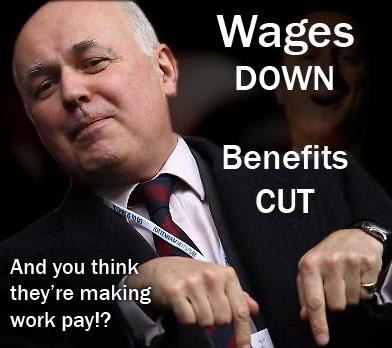
A good example of a Glittering Generality is the Conservative’s phrase “making work pay.” It refers to the Tory welfare “reforms” which were nothing to do with the level of wages. How does reducing benefits for unemployed people actually make work pay? Especially given the fact that wages have dropped for those in work, at the same time, the cost of living has risen, and consequently many working people are now living in poverty. The question to ask is: making work pay for whom?

The Tories have an Orwellian dexterity in manipulating semantic shifts. They do like to dress-up words and parade them as something else. For example, take the word “reform,” which usually means to make changes to an institution, policy or practice in order to improve it. The welfare “reforms” have involved the steep and steady reduction of welfare provision and an increase in political scapegoating and victim-blame narratives.

We have also seen the return of absolute poverty since the “reforms” were (undemocratically) implemented in 2012, which can hardly be considered as an “improvement” to what came before the Tories made savage and brutal cuts to poor people’s lifeline benefits, making them even poorer, with some people dying as a consequence.

Then there is the Tory drift on the word “fair.”  It’s generally taken to mean treating people equally without favouritism or discrimination, and without cheating or trying to achieve unjust advantage.

However, the Conservatives have repeatedly claimed that cutting people’s lifeline benefits is “fair.”  As I’ve previously stated, the value of wages has also dropped to its lowest level ever, whilst the cost of living has risen and many in low paid work are now living in poverty, in reality the welfare cuts have simply made people desperate enough to take any low paid work, which does not alleviate circumstances of poverty.

Furthermore, how can the welfare cuts be regarded as remotely fair, when they took place in a context where the government handed out £107,000 of public funds to each millionaire, in the form of an annual tax break?

Finally, it’s not only the Tories that utilise propaganda techniques, and some parties on the Left have also used Glittering Generalities. These parties especially capitalized on the public’s growing cynicism and dissatisfaction with the “Westminster establishment.” UKIP and the Scottish National Party drew on nationalism (and independence,) whilst using superficial, simplistic and ambiguous phrases and symbols, the Green Party and other Left-wing factions also drew on public dissatisfaction with “mainstream parties” and appealed to people’s hopes and fears to present an “alternative.”

Both the Greens and the Scottish nationalists presented a rhetoric skillfully tailored and laden with words and phrases that reflect progressive ideals whilst also claiming a position that opposed austerity. Yet this lacked integrity, as the rhetoric wasn’t fully connected to actual manifesto policies.

Crucially, the Scottish National Party’s spending plans implied deeper cuts than Labour’s plans entailed over the next five years, as the Institute for Fiscal Studies (IFS) said in a report in April, highlighting a “considerable disconnect” between the nationalist’s rhetoric on austerity and their policies.

The Green Party had a similar disconnect between an anti-austerity rhetoric and their incompatable policy proposals of a zero-growth economy and the universal citizen’s income. The latter was heavily criticised because, as it was modelled, the universal basic income would create deeper poverty for the poorest citizens and further extend social inequality.

The Labour Party ran a more rational but superficially less appealing campaign based on improving the material conditions of society for the majority of people. The policy plans for an extensively redistributive tax system, for example, matched the rhetoric about addressing growing social inequality, as well as a social reality. But the current climate of  right-wing anti-intellectualism, widespread disillusionment with the political establishment and increasing public disengagement from democracy doesn’t prompt a rational exploration of policy proposals and any analysis of potential consequences for society from many people.

UN report: Britains ‘boy’s club culture’ – women in the UK are left vulnerable to violence, poverty & hardship


I wrote last year that Conservative small-state ideology has led to “depopulated” social policies, resuting in the dehumanisation of people in some social groups, and it indicates that Tory policy-makers see the public as objects of their policies, and not as human subjects. Policies are inceasingly being detached from public needs. We therefore need to ask whose needs Conservative policies are fulfilling.

In 2010 the Equality and Human Rights Commission warned the government about its potential failure to meet its legal duties. This followed concerns raised by the Fawcett Society amongst others, regarding the estimated grossly disproportionate impact of the austerity cuts on women.

The Commission recognised the serious concerns about the impact of the deficit reduction measures on vulnerable groups and, in particular, following the House of Commons library report, the impact of the budget on women. The Commission stated:

We have written to the Treasury to ask for reassurance that they will comply with their equality duties when making decisions about the overall deficit reduction, and in particular in relation to any changes to tax and benefits for which they are directly responsible.”

A more inclusive understanding of the range of impacts on both men and women is essential in the formulation of gender-aware, as opposed to gender-blind, policy responses to recession and recovery. It’s clear that the UK government is not interested in collating information regarding impacts and subsequent implications regarding inequality, yet they do have a legal duty to do so.

A previous United Nations Committee report on the Elimination of Discrimination against Women highlights areas where women’s rights in the UK had come to a standstill and appallingly, shamefully, some rights have been reversed.

On August 13, 2013, the Committee on the Elimination of Discrimination against Women released its concluding observations on the UK’s seventh periodic report on 26 July 2013.

Concerns raised by the Committee include protection from discrimination under the Public Sector Equality Duty, the impact of austerity measures on women and women’s services, and restrictions on women’s access to legal aid.

The Equality and Human Rights Commission (EHRC) published its submission to the United Nations Committee on the Elimination of All Forms of Discrimination Against Women on 1 July 2013. In its submission the Commission, as a national human rights institution, identifies key issues it believes should be highlighted as actions following the examination and sets out a number of questions the Committee may wish to put to the Government. You can see a full list here – UK Government still in breach of the human rights convention on gender discrimination.

Despite Labour’s protective Human Rights Act and Equality Act, Britain has become increasingly sexist, has an all-pervasive, patriarchal “boy’s club culture” and Conservative austerity measures are leaving women increasingly vulnerable to violence, poverty and hardship, the UN special rapporteur for women, Rashida Manjoo, has recently said.

The special rapporteur said there was “a more visible presence of sexist portrayals of women and girls” and a “marketisation of women’s and girls’ bodies” in the UK, which was “more pervasive than elsewhere.”

She warned that sexual bullying and harassment were now “routine” in UK schools, according to NGOs she had interviewed, and recommended that schools have mandatory education modules on sexism. “The state has a responsibility to protect, to prevent, to punish, to provide effective remedies,” she said. “These are part of the state’s responsibility.”

Rashida added: “Have I seen this level of sexist cultures in other countries? It hasn’t been so in-your-face.”

Amongst the figures quoted in her report are: 30% of women in England and Wales have reported experience of domestic abuse since the age of 16; 77 women were killed by partners or former partners in 2012-13; 18,915 sexual crimes against children were recorded in England and Wales in 2012-13; and almost one in three 16- to 18-year-old girls have experienced “groping” or other unwanted sexual touching at school.

The special rapporteur also drew attention to the disproportionate impact of funding cuts on the provision of services to women and girls at risk of violence, and the adverse consequenes of the Tory welfare “reforms.”

Access to trauma services, financial support and housing are crucial, yet current reforms to the funding and benefits system continue to adversely impact women’s ability to address safety and other relevant issues,” Rashida said.

She added that the austerity cuts “not only [affected] the specific provision of ‘violence against women’ services’, but also had a more general impact as poverty and unemployment were known contributory factors.”

“Service providers argue that they are being forced to make cuts to their frontline services as a result of reduced funding, whether by closing refuges, reducing support hours, or increasing waiting lists … current reforms to the funding and benefits system continue to adversely impact women’s ability to address safety and other relevant issues.”

Manjoo also heavily criticised the bedroom tax, she recognised that it makes it very difficult for women to escape domestic violence. She also attacked the Conservative government’s austerity programme.

She said: “Austerity measures are having an effect on the provision of services to address violence against women, as well as other cross-cutting issues affecting women such as poverty and unemployment.” 

Rashida Manjoo quite properly condemned the lack of human rights-driven government measures to combat violence against women and girls.

The special rapporteur, who travelled across the UK during a 16-day fact-finding mission into violence against women, said she was barred at the gates of Yarl’s Wood immigration detention centre on Monday, on instructions “from the highest levels of the Home Office”.

Manjoo received reports of violations at the privately run Yarl’s Wood centre, near Bedford, before her visit to the UK, and said she wanted to verify the allegations of abuse. Last month a Jamaican woman, Christine Case, 40, died at the centre, which holds about 400 women.

After repeated unsuccessful requests to the Home Office, the investigator attempted an independent visit to Yarl’s Wood. Under the terms of her mandate, Manjoo should have been offered unrestricted access.  A Home Office spokesperson said a tour of Yarl’s Wood “was never agreed as part of this fact-finding mission.” 

So much for democratic, open, transparent and accountable government.

In her preliminary report, (and unsurprisingly,) Manjoo said the number of women detained in prisons and immigration centres in the UK was rising, with a significant over-representation of black and minority ethnic women.

“A large number of women in detention have a history of being subjected to violence prior to being imprisoned … the strong link between violence against women and women’s incarceration, whether prior to, during or after incarceration, needs to be fully acknowledged,” she said.

Manjoo also said the UK court system is “widely perceived to be biased in favor of men.

Rashida Manjoo’s full 24 page report is expected to be published later this year and will be presented at a meeting of the UN Human Rights Council in Geneva on Tuesday.

The report’s findings echo the views of  many campaigners, including hundreds of psychotherapists, counsellors and mental health practitioners, who in April used a rallying, open letter to the Guardian to warn against “malign” welfare reforms and severe austerity measures.

The group of signatories, made up of therapists, psychotherapists and mental health experts, said Britain has seen a “radical shift” in the mental state of ordinary people since the coalition came to power.

British society has been “thrown completely off balance by the emotional toxicity of neoliberal thinking” and the distress this is causing and the wide adverse effects of this ideology are particularly visible in therapists’ consulting rooms.

This letter sounds the starting-bell for a broadly based campaign of organisations and professionals against the damage that neoliberalism is doing to the nation’s mental health,” they added.

A democratic government, especially in a very wealthy, so-called liberal first-world country, is expected to reflect and accommodate the needs of a population in its policy-making, and to formulate policies within a human rights framework.

That clearly is not happening in the UK.


Related

Welfare reforms and the language of flowers: the Tory gender agenda

994596_517805604955639_608589568_n
Pictures courtesy of Robert Livingstone


I don’t make any money from my work. But you can support Politics and Insights and contribute by making a donation which will help me continue to research and write informative, insightful and independent articles, and to provide support to others. The smallest amount is much appreciated, and helps to keep my articles free and accessible to all – thank you. 

DonatenowButton

Stigmatising unemployment: the government has redefined it as a psychological disorder

proper Blond

The current government has made the welfare system increasingly conditional on the grounds that “permissive” welfare policies have led to welfare “dependency.” Strict behavioural requirements and punishments in the form of sanctions are an integral part of the Conservative ideological pseudo-moralisation of welfare, and their  “reforms” aimed at making claiming benefits much less attractive than taking a low paid, insecure, exploitative job.

Welfare has been redefined: it is preoccupied with assumptions about and modification of the behaviour and character of recipients rather than with the alleviation of poverty and ensuring economic and social wellbeing.

The stigmatisation of people needing benefits is designed purposefully to displace public sympathy for the poor, and to generate moral outrage, which is then used to further justify the steady dismantling of the welfare state.

But the problems of austerity and the economy were not caused by people claiming welfare, or by any other powerless, scapegoated, marginalised group for that matter, such as migrants. The problems have arisen because of social conservatism and neoliberalism. The victims of this government’s policies and decision-making are being portrayed as miscreants – as perpetrators of the social problems caused by the government’s decisions, rather than as the casualities.

And actually, that a recognisable bullying tactic known as projection, (the vehicle for projection is blame, criticism and allegation), as is scapegoating.

The 2015 budget included plans to provide online Cognitive Behaviour Therapy to 40,000 claimants and people on the Fit for Work programme, as well as putting therapists in more than 350 job centres.

I wrote an article in March about the government plans to make the receipt of social security benefits conditional on undergoing “state therapy.” I raised concern about ethical issues – such as consent, the inappropriateness of using behaviour modification as a form of “therapy,” and I criticised the proposed Cognitive Behaviour Therapy (CBT) programme on methodological and theoretical grounds, as well as considering wider implications.

I’ve written at length about the coercive and punitive nature of the conservative psychopolicy interventions, underpinning the welfare “reforms,” and giving rise to increased welfare “conditionality” and negative sanctions.

In particular, I’ve focussed on the influence of the Cabinet’s Behavioural Insights Team or “nudge unit” and “the application of behavioural science and psychology to public policy. (See: The nudge that knocked down democracy, The power of positive thinking is really political gaslighting, and Despotic paternalism and punishing the poor. Can this really be England? )

I was pleased to see that the BBC reported a summary of the research findings of Lynne Friedli and Robert Stearn, which was supported by the Wellcome Trust. The report – Positive affect as coercive strategy: conditionality, activation and the role of psychology in UK government workfare programmes reflects many of the concerns raised by other professionals. I strongly recommend you read it. (See: Psychologists Against Austerity: mental health experts issue a rallying call against coalition policies.)

The BBC summarised from the report that benefit claimants are being forced to take part in “positive thinking” courses in an effort to “change their personalities.” Those people claiming benefits that do not exhibit a “positive” outlook must undergo “reprogramming” or face having their benefits cut. This is humiliating for job seekers and does not help them find suitable work.

New benefit claimants are interviewed to find out whether they have a “psychological resistance” to work, with those deemed “less mentally fit” given more “intensive coaching.”

And unpaid work placements are increasingly judged on psychological results, such as improved motivation and confidence, rather than whether they have led to a job.

The co-author of the report, Lynne Friedli, describes such programmes, very aptly, as “Orwellian.” She says:

“Claimants’ ‘attitude to work’ is becoming a basis for deciding who is entitled to social security – it is no longer what you must do to get a job, but how you have to think and feel.

“This makes the government’s proposal to locate psychologists in job centres particularly worrying.

“By repackaging unemployment as a psychological problem, attention is diverted from the realities of the UK job market and any subsequent insecurities and inequalities it produces.”

Friedli also criticised the way psychologists were being co-opted as “government enforcers” and called on professional bodies to denounce the practice.

Quite rightly so. It’s our socio-economic system, and the ideologues who shape it that present the problems, not the groups of people forced to live in it as its casualities – the “collateral damage” of neoliberalism and social conservatism.

“I don’t think anything can justify forced psychological coercion. If people want to go on training courses that should be entirely voluntary,” Lynne told BBC News.

She also questioned the aim of the motivational courses and welfare-to-work placements, which felt like “evangelical” self-help seminars.

“Do we really want a world where the only kind of person considered employable is a ‘happy clappy’, hyper-confident person with high self-esteem?

“That is a very a narrow set of characteristics. There is also a role in the workplace for the ‘eeyore’ type.”

Absolutely. Frankly, I would rather have health and safety programmes that are designed by a pessimist, capable of thinking of the worst case scenario, for example, than by a jolly, positively biased, state-coerced optimist.

I would also prefer pessimistic appraisal of social policies. That way, we may actually have impact assessments carried out regarding the consequences of Conservative policies, instead of glib, increasingly Orwellian political assurances that are on the other, more scenic, illusory side across the chasm from social realities.

Although pessimism and depression are considered to be affective disorders, in a functional magnetic resonance imaging study of the brain, depressed patients were shown to be more accurate in their causal attributions of positive and negative social events, and in self assessments, and assessment of their own performance of tasks, than non-depressed participants, who demonstrated a positive bias.

As a former community-based psychosocial practitioner who saw the merits and value of a liberationist model, the question that needs to be asked is: for whose benefit is CBT being used, and for what purpose? Seems to me that this is about helping those people on the wrong side of punitive government policy to accommodate that, and to mute negative responses to negative situations.

The socially dispossessed are being coerced by the state, part of that process is the internalisation of the negative images of themselves created and propagated by their oppressors.

CBT is not based on a genuinely liberational approach, nor is it based on any sort of democratic dialogue. It’s all about modifying and controlling behaviour, particularly when it’s aimed at such a narrow, politically defined and specific outcome.

The problem that we need to confront is politically designed and perpertuated social injustice, rather than the responses and behaviour of excluded, stigmatised individuals in politically oppressed, marginalised social groups.

CBT is founded on blunt oversimplifications of what causes human distress – for example, in this case it is assumed that the causes of unemployment are psychological rather than socio-political, and that assumption authorises intrusive state interventions that encode a Conservative moral framework which places responsibility on the individual, who is characterised as “faulty.”

However, democracy is based on a process of dialogue between the public and government, ensuring that the public are represented: that governments are responsive, shaping policies that address identified social needs. Conservative policies are quite clearly no longer about reflecting citizen’s needs: they are increasingly about telling us how to be.

As I have said elsewhere, as well as aiming at shaping behaviour, the psycho-political messages being disseminated are all-pervasive, entirely ideological and not remotely rational: they reflect and are shaping an anti-welfarism that sits with Conservative agendas for neoliberal welfare “reform”, austerity policies, the small State (minarchism) and also legitimises them. (I’ve written at length elsewhere about the fact that austerity isn’t an economic necessity, but rather, it’s a Tory ideological preference.) The Conservatives are traditional, they are creatures of habit, rather than being responsive and rational.

Conservative narratives, amplified via the media, have framed our reality, stifled alternatives, and justified Tory policies that extend psychological coercion including through workfare; benefit sanctions; in stigmatising the behaviour and experiences of poor citizens and they endorse the loss of autonomy for citizens who were disempowered to begin with.

Many of the current ideas behind “reforming” welfare come from the Behavioural Insights  Team – the Nudge Unit at the heart of the Cabinet. Nudge theory has made Tory ideology, with its totalitarian tendencies, seem credible, and the Behavioural Insights Team have condoned, justified and supported punitive, authoritarian policies, with bogus claims about “objectivity” and by using discredited pseudoscience. Those policies have contravened the human rights of women, children and disabled people, to date.

Nudge-based policy is hardly in our “best interests,” then.

526544_532055030197363_2137237288_n
Pictures courtesy of Robert Livingstone


I don’t make any money from my work. I am disabled because of illness. But you can contribute by making a donation and help me continue to research and write informative, insightful and independent articles, and to provide support to others.

The smallest amount is much appreciated – thank you.

DonatenowButton

Despotic paternalism and punishing the poor. Can this really be England?

382035_141704259313964_676863845_n
Framing the game

Earlier this year, David Cameron defended his welfare “reforms”, claiming that: “Labour has infantilised benefit claimants”, and he argued it was “not big-hearted” to leave people claiming sickness allowances when “they could be incentivised to get treatment for alcohol dependence or obesity.”

I should not need to point out that despite the bizarre attempt at stigmatising sick and disabled people with such a loaded, moralising and media agenda-setting comment from our PM, the majority of people claiming sickness benefits are neither dependent on alcohol nor are they claiming because they are obese. This said, I think that alcohol dependence and obesity are illnesses that ought to be treated with compassion instead of moralising. But the general public on the whole do not hold this view. Cameron knows that. In fact Cameron has contributed to the scapegoating of social groups, outgrouping and public division significantly over the past five years

I claim sickness benefit simply because I have a life-threatening illness called lupus. There is no cure, and no-one may imply I am ill because of “life-style choices”. However, people using alcohol often have underlying mental distress, and drinking alcohol is pretty much a social norm. Poverty often means that people are forced to buy the cheapest food, which is the least healthy option. Some illnesses and disabilities cause mobility problems, and some treatments cause weight gain. So it cannot be assumed that alcohol dependence and obesity are simply about “making wrong choices” after all. 

I have to say that it IS “big-hearted” to leave me claiming benefits, Mr Cameron, because I am no longer fit for work. Indeed I was forced to take my case to tribunal after your government tried to “kindly” incentivise me to abandon my legitimate claim for sickness benefit, and the tribunal panel decided that if I were return to my profession(s) (social work and previously, youth and community work – with young people at risk of offending,) that would, though no fault of my own, place me in situations that are an unacceptable risk to my health and safety, and of course would also place others – vulnerable young people – at risk. Which is why I claimed sickness benefit in the first place – because I am too ill to work.

Libertarian paternalism isn’t “fatherly”

Mr Cameron, however, thinks he knows better and continues to insist that it is is everyone’s best interests to work. I can assure him that isn’t the case. So can many others with chronic illnesses and disabilities.

Back in 2013, Esther McVey defended the increased use of welfare conditionality and benefit sanctions in front of the work and pensions committee by infantilising claimants and playing the behaviourist paternalistic libertarian nudge card. She said: “What does a teacher do in a school? A teacher would tell you off or give you lines or whatever it is, detentions, but at the same time they are wanting your best interests at heart.”

“They are teaching you, they are educating you but at the same time they will also have the ability to sanction you.”

Since when did the state become comparable with a strict, punitive, authoritarian headmaster at a remedial school called “we know what’s best for you” in this so-called first-world liberal democracy?  That is not democracy at all: it’s despotic paternalism.

One of the cruellest myths of inequality is that some people are poor because they lack the capability to be anything else. Meritocracy is a lie. It is used to justify the obscene privileges and power at the top of our steep social hierarchy and the cruel exclusion and crushing, humiliating deprivation at the bottom. No-one seems to want to contemplate that people are poor because some people are very very rich, and if the very rich have a little less, the poor could have a little more.

Neoliberalism is a socioeconomic system founded entirely on competition. This means that people have to compete for resources and opportunities, including jobs. Inevitably such as system generates “winners” and “losers”. Poverty has got nothing to do with personal “choices”; the system itself creates inequalities.

Deserving and undeserving: the rich deserve more money, the poor deserve punishment

At least one third of those people with the most wealth have inherited it. It’s a manifestation of prejudice that poor people are seen as “less deserving”, based on “ability” and on vulgar assumptions regarding people’s personal qualities and character. In fact the media, mostly talking to itself,  in judging “the undeserving”  has given a veneer of moral authority to an ancient Conservative prejudice. It’s very evident in policies. The austerity cuts don’t apply to the fabulously lucky wealthy. Whilst the poorest citizens have seen their welfare cut and wages decrease, as the cost of living spirals upwards, millionaires were handed a tax break of £107, 000 each per year.

Surely our stratified social system of starkly divided wealth, resources, power, privilege and access is punishment enough for poor people.

As Ed Miliband pointed out: “David Cameron and George Osborne believe the only way to persuade millionaires to work harder is to give them more money.

But they also seem to believe that the only way to make you (ordinary people) work harder is to take money away.”  So Tory “incentives” are punitive, but only if you are poor. Wealth, apparently, is the gift that just keeps on giving.

Tories create “scroungers” and “skivers”

As I’ve commented elsewhere, it’s truly remarkable that whenever we have a Conservative government, we suddenly witness media coverage of an unprecedented rise in the numbers of poor people who suddenly seem to develop a considerable range of baffling personal ineptitudes and immediately dysfunctional lives.

We see a proliferation of  “skivers” and “scroungers”, an uprising of “fecklessness”, a whole sneaky “culture of entitlement”, “drug addicts”, a riot of general all-round bad sorts, and apparently, the numbers of poor people who suddenly can’t cook a nutritious meal has climbed dramatically, too. We are told that starvation is not because of a lack of money and access to food, but rather, it’s because people don’t know how to budget and cook.

That’s odd, because I always thought that poverty is a consequence of the way society is organised and how resources are allocated through government policies.

That’s a fundamental truth that we seem to be losing sight of, because of the current poverty of state responsibility and the politics of blame.

However, the current government has made the welfare system increasingly conditional on the grounds that “permissive” welfare policies have led to welfare “dependency”.  Strict behavioural requirements and punishments in the form of sanctions were an integral part of the conservative moralisation of welfare, and their  “reforms” aimed to make claiming benefits less attractive than taking a low paid, insecure job.

Sanctions simply worsen the position of the most vulnerable and disadvantaged citizens. Creating desperation by removing people’s means of basic survival forces them into low paid, insecure work and exerts a further downward pressure on conditions of employement and wages. It commodifies the reserve army of labor, which is strictly in the interests of exploitative, profit-driven plutocrats.

Can this really be England? 

Cruel Brittania. A man with heart problems was sanctioned because he had a heart attack during a disability benefits assessment and so failed to complete the assessment. A lone mother was sanctioned because she was a little late for a jobcentre  interview, as her four year old daughter needed the toilet.

A man with diabetes was sanctioned because he missed an appointment due to illness, he died penniless, starving, without electricity and alone as a consequence. His electricity card was out of credit, which meant that the fridge where he should have kept his insulin chilled was not working. Three weeks after his benefits were stopped he died from diabetic ketoacidosis – because he could not take his insulin. Here are 11 more irrational, unfair, purely punitive applications of sanctions.

How can removing the basic means of survival for the poorest people in our society possibly incentivise them, “help them into work” or be considered to be remotely “fair”?

There are targets set for imposing benefit sanctions. Jobcentre managers routinely put pressure on staff to sanction people’s benefits, according to their union. Failure to impose “enough” sanctions is said to result in staff being “subject to performance reviews” or losing pay.  “Success” as an employee at the jobcentre is certainly not about helping people to get a job but rather, it’s about tricking them out of the money they need to meet their basic needs. Such as food, fuel and shelter. Welfare is no longer a safety net: it is an institutionalisation of systematic state punishment of our poorest citizens.

Angela Neville worked as an adviser in Braintree jobcentre, Essex, for four years and she has written a play with two collaborators, her friends Angela Howard and Jackie Howard, both of whom have helped advocate for unemployed people who were threatened with benefit sanctions by jobcentre staff.

One central motivation behind the play was how “morally compromising” the job had become. In one scene an adviser tells her mother that it’s like “getting brownie points” for cruelty. When Neville herself became redundant in 2013, she was warned about being sanctioned for supposedly being five minutes late to a jobcentre interview.

There was a strong feeling among the playwrights that the tendencies in wider society and the media to stigmatise and vilify benefits claimants needed to be challenged and refuted. The play opens with a scene where “nosey neighbours” spot someone on sickness benefit in the street and assume they must be skiving instead of working.

This perspective is one shared widely amongst disabled people, groups, organisations and charities that advocate for and support disabled people, and is evidenced by the rapid rise of disability-related hate crime since 2010, reaching the highest level since records began by 2012. The UK government is currently the first to face a high-level international inquiry, initiated by the United Nations Committee because of “grave or systemic violations” of the rights of disabled people.

That ought to be a source of shame for the both the government and the public, especially considering that this country was once considered a beacon of human rights, we are (supposedly) a first-world liberal democracy, and a very wealthy nation, yet our government behave like tyrants towards the most vulnerable citizens of the UK. And the public have endorsed this.

“This play is about getting people to bloody think about stuff. Use their brains. Sometimes I think, crikey, we are turning into a really mean, spying on our neighbour, type of society,” Angela said.

The title of the play, Can This be England? is an allusion to the disbelief that Angela Neville and many of us feel at how people on benefits are being treated. And she describes the play, in which she also acts, as a “dramatic consciousness-raising exercise”. The idea behind this production is that the play may be performed very simply, with minimum rehearsal. Scripts are carried throughout and few props are used.

It can take place in any room of a suitable size, and there is no need for stage lighting. The script is freely available to all who wish to use it for performances to raise awareness (non-commercial purposes). Click HERE to download a PDF file. If you find it useful please e-mail any feedback to Angela Neville at the Show and Tell Theatre Company.

Psychopolitics

Welfare has become increasingly redefined: it is now pre-occupied with assumptions about and modification of the behaviour and character of recipients rather than with the alleviation of poverty and ensuring economic and social well-being. The stigmatisation of people needing benefits is designed purposefully to displace public sympathy for the poor, and to generate moral outrage, which is then used to further justify the steady dismantling of the welfare state.

Framed by ideological concerns, the welfare “reforms” reflect an abandonment of concern for disadvantage and the meeting of human needs as ends in themselves. We have witnessed an extremely punitive system emerge, under the Tories, at a time when jobs are becoming increasingly characterised by insecurity and poor pay. Last year, two-thirds of people who found work took jobs for less than the living wage (£7.85 an hour nationally, £9.15 in London), according to the annual report from the Joseph Rowntree Foundation.

There are as many people in work that are now in poverty as there are out of work, partly due to a vast increase in insecure work on zero-hours contracts, or in part-time or low-paid self-employment. Poverty-level wages have been exacerbated by the number of people reliant on privately rented accommodation and unable to get social housing, the report said. Evictions of tenants by private landlords outnumber mortgage repossessions and are the most common cause of homelessness. The rapidly rising cost of living – price rises for food, energy and transport – have so many people on low pay struggling to make ends meet.

But pay for people on what were comfortable incomes previously is now outstripped by inflation, leaving many more struggling with rising prices. Public spending has decreased, having a knock-on effect on the economy.

Economic Darwinism doesn’t promote growth

Last year, I wrote about the study from the Organisation for Economic Co-operation and Development (OECD), who found what most of us already knew: that income inequality actually stifles economic growth in some of the world’s wealthiest countries, whilst the redistribution of wealth via taxes and benefits encourages growth.

The report from the OECD, a leading global think tank, shows basically that what creates and reverses growth is the exact opposite of what the current right-wing government are telling us, highlighting the rational basis and fundamental truth of Ed Miliband’s comments in his speech – that the Tory austerity cuts are purely ideologically driven, and not about managing the economy at all.

There is a dimension of vindictiveness in the Tory claim that cutting people’s lifeline benefits will somehow “make work pay”, once you see past the Orwellian unlogic of the statement, and recognise the extent of waged poverty in the UK. Making work pay would rationally need to involve a rise in wages, surely, but that has not happened.

To understand this, it is important to grasp the elitist socio-economic priorities that are embedded in Conservative ideology, which I’ve outlined previously in Conservatism in a nutshell. The whole idea beneath the Orwellian doublespeak is comparable with the punitive Poor Law Amendment Act of 1834 – in particular, we can see a clear parallel with the 1834 “less eligibility principle” and the Tory notion of “making work pay” which I’ve previously discussed in The New New Poor Law.

The parallels are underpinned by a shift from macro-level socio-economic explanations of poverty and state responsibility to micro-level punitive, moral psychologising, scapegoating, and the abdication of state (and public) responsibility.

Policies provide a conceptual frame of reference, which tend to shape public attitudes, they are also deeply symbolic gestures that convey subliminal messages. The Conservative war on welfare and the NHS further devalues the worth of human life, turning the needy into a disposable state commodity, a coerced, desperate reserve army of cheap labour.

It also conveys the message that to care about the survival and well-being of others is futile; it pathologises collectivism, cooperation and altruism. This is a government that operates entirely by generating fear and division, on a social, economic and cultural level, but also, increasingly intrusively, within phenomenological, psychological and psychic dimensions too.

How did the poor become such an easy enemy of the state, and how can the public believe the dominant narrative that pathologises the victim, and fail to recognise the irrational, circular argument of benefit sanctions, when the conservatives’ reasoning is that the application of sanctions demonstrates the moral ineptitude of the individual – but it merely acts to justify poverty and inequality.

The perverse logic runs as follows: welfare for the poorest citizens – those who require collective responses to poverty – can only retain public support by threatening to, and by actually making the poorest even poorer. Is this really welfare?

No, not any more.

How can welfare ever be about some politically manufactured, apocryphal and malevolent desire for retribution, based on pseudo-moralising about the poor and demoralised, and a concern for the spiteful, perverted, mean-spirited sense of satisfaction for the better off, at the expense of the material and biological well-being of those in need: the poorest and most vulnerable citizens?

Conservative rhetoric is designed to have us believe there would be no poor if the welfare state didn’t “create” them. If the Conservatives must insist on peddling the myth of meritocracy, then surely they must also concede that whilst such a system has some beneficiaries, it also creates situations of insolvency and poverty for many others.

Democracy exists partly to ensure that the powerful are accountable to the vulnerable. The Conservatives have blocked that crucial exchange, they despise the welfare state, which provides the vulnerable with protection from  exploitation by the powerful.

As I’ve argued elsewhere, the wide recognition that unbridled capitalism causes casualties is why the welfare state came into being, after all – because when we allow such competitive economic dogmas to manifest, there is inevitably going to be winners and losers. That is the nature of competitive individualism, and along with crass inequality, it’s an implicit, undeniable and fundamental part of the meritocracy script.

Poverty is created by government policies that reflect a pursuit of free market ideals;  by the imposition of neoliberal economic policies – the sort of policies that ensure taxes cuts for the wealthy, banish fiscal and other business regulations, shred the social safety net, and erode social cohesion and stability, whilst directing the media and population to chant the diversionary mantra of self-reliance and individual responsibility.

Poverty intrudes on people’s lives, it dominates attention and constantly commands that our biologically-driven priorities are met, it reduces cognitive resources, it demotivates, it overwhelms, it reduces experience of the world to one of material paramountcy which cannot be transcended, it stifles human potential.

Need is NOT greed, regardless of the malicious justification narratives in the media and spiteful political rhetoric from the champions of social Darwinism and the Randian self-serving free market. Meeting basic survival imperatives – food, warmth and shelter – is a fundamental prerequisite for life. If the means for meeting these basic survival needs is taken away, then people will die. Surely even the most cold, callous, psychopathic and dogmatic defenders of the status quo can manage to work that one out.

Punishing poor people with more poverty is savage, obscene, barbaric, brutal, and can NEVER work to “incentivise” people to not be poor, nor can it change the pathological idiom that shapes and imposes such unfortunate, unforgiving and unforgivable circumstances on those with the least in the first place.
430835_148211001996623_1337599952_n (1)With thanks to Robert Livingstone for his excellent memes

Mother sanctioned for taking four year old child to the toilet

430847_149933881824335_1645102229_n (1)A mother from Fife was left without money for a month because she stopped to take her four-year-old daughter to the toilet, making her 10 minutes late for an appointment.

The heartless benefit sanction has left a struggling mother unable to pay heating bills and relying on a food bank to feed her children.

Children’s charity Barnardo’s revealed the mum’s plight but have kept her personal details private.

Barnardo’s Mark Ballard said: “She was without money for four weeks and was unable to purchase fuel cards for her gas and electricity meters or feed her children.

A number of other household bills went unpaid and she had to borrow money from friends and relatives to survive. This put her further into debt and damaged relationships with people who were previously supportive.”

The Scottish Welfare Committee are investigating the impact of Tory welfare reforms on women. MSPs will hear from 12 charities and groups including Barnardo’s, the Scottish Refugee Council, Women’s Aid and the Scottish TUC.

About 20 per cent of women’s income comes from the benefits and tax credit system – compared with 10 per cent for men – according to a study by the Fawcett Society.

Since 2010, £26billion of cuts have been made to benefits, tax credits, pay and pensions. About 85 per cent of those cuts were taken from women’s incomes.

Pregnant women are also being penalised by the sanctions regime, according to charity One Parent Families Scotland.

Clare Adamson, a member of the welfare committee, said: “There needs to be an immediate review of the UK Government’s conditionality and sanctions regime.

The Department for Work and Pensions should not be allowed to impose any more unfair sanctions on vulnerable people. We need the power to put a stop to this relentless assault on vulnerable people and to design a new and better system.”

The UK Government have repeatedly denied claims that welfare advisers are encouraged to hit sanctions targets.

A spokesman added: “Sanctions are only used as a last resort for the tiny minority who refuse to take up the support which is on offer.”

That is clearly NOT the case here. A mother taking a child to the toilet, and being late for an appointment is not someone refusing to “take up the support on offer,” nor was this sanction applied as “a last resort.”

This would hardly pass a test of reasonableness.

Scottish Tory welfare spokesman Alex Johnstone said: “Our welfare reform measures have worked in reducing poverty by getting people off benefits and back to work.”

I don’t believe that depriving mothers and their children of their lifeline benefit, which was originally calculated to meet basic and essential survival costs can ever be considered to be “reducing poverty” or helping this person into work. In fact it’s obvious to most people that such a callous act is likely to do the exact opposite.

There is now a large amount of evidence indicating that sanctions are most often applied in an arbitrary and extremely unfair way, plunging families into severe poverty, with devastating effects on people’s health and well-being.

995658_494538353949031_779653065_nThanks to Robert Livingstone for his excellent memes.

Suicides reach a ten year high and are linked with welfare “reforms”

Figures released in February by the Office for National Statistics (ONS) indicate that suicide rates, which had fallen consistently since 1981, are now at their highest in over a decade. It is primarily male suicides which have increased.

The figures for 2013 give a total of 6,233 deaths by suicide, 252 more than in 2012.

Suicide rates are highest in areas of high unemployment, with the north-east of England having the highest rate and London the lowest. Older males are now the most at risk, with 45-59 year olds having the highest rate.

The link between the welfare “reforms” and increased suicide risk has been highlighted by Mind, amongst other organisations. The charity has found that people with mental illnesses are having their benefits cut more than those with other kinds of illnesses.

There has been growing concern regarding how benefits are administered in relation to vulnerable individuals and last year, revelations that the Department for Work and Pensions had internally investigated 60 suicides related to benefit changes led to calls for greater accountabilty and transparency.

As an organisation, Mind is supportive of those with mental health problems being helped into work. But they find that often people are pushed before they are properly well. Research published last year by Mind found that people with mental illness were having their benefits cut more than people with other illnesses.

Most of the telephone calls to Mind’s national helpline are from those wanting to talk about suicide and self-harm, followed by advice on support services, mainly advocacy and welfare benefits.

Kauppinen, who has worked at Mind for 10 years, said that the team used to help people with mental health problems remain stable. But she said they have seen more clients in crisis in recent years.

“We see people in crisis every week,” she said. “I started here in 2005, but when it came to 2010-11, it became crisis work rather than having people just stay where they are.”

Tom Pollard, policy and campaigns manager at Mind, said:

“Pressurising people by threatening to stop their benefits causes a great deal of financial problems and emotional distress, with some people attempting to take their own lives as a result.”

“While the right type of employment can be beneficial to wellbeing, the support offered to those on mandatory back-to-work schemes such as the Work Programme is far too generic to effectively help people with mental health problems move towards employment. We need to see an overhaul of the system with more tailored specialised support and less focus on sanctioning.”

Kauppinen added: “There is very limited mental health awareness from people assessing clients in the new Work Programme. They find it very difficult to ask questions and you can see that the assessors are awkward. It takes a long time to train someone in mental health awareness.”

If you are experiencing suicidal thoughts, please contact the Samaritans, their number is: 08457 90 90 90.

Related:

Benefits and suicide: “You have to be strong to ask for help”the Guardian.

377683_445086432227557_1770724824_n (1)Thanks to Robert Livingstone

As predicted, Mandatory Review has effectively destroyed independent Tribunals

IDS_nSection 102 and Schedule 11 of the Welfare Reform Act, (Clause 99) is the (State) power to require revision before appeal. People who wish to challenge a benefit decision will no longer be allowed to lodge an appeal immediately. Instead, the government introduced mandatory revision or review stage, during which a different Department of Work and Pensions (DWP) decision maker will reconsider the original decision and the evidence and, if necessary, send for more information.

Many of us have campaigned since 2012 to raise awareness of Clause 99. During the Consultation period, I wrote a set of responses to the government’s proposals, which many people used as a template for their own responses.  I remember that we ALL RAISED THE SAME CONCERNS.

In summary, the main concerns were that basic rate Employment Support Allowance was to be withdrawn during the mandatory review period, leaving sick and disabled people with no money to live on, whilst the DWP reconsidered their own “fit for work decisions” that were wrong.

I know that our consultation responses were ignored by the government. The changes were introduced anyway, despite our grave concerns. Since October 2013 people have to apply for mandatory review separately before they can lodge an appeal. We were also very worried that no time limit was established for the DWP to undertake and complete the mandatory review. Our concerns were fully justified, as it’s emerged that people are waiting 7-10 weeks for the mandatory review decision. Meanwhile, these people cannot appeal. And have no money to live on.

An added concern is that this system as it stands demands such a lot from people who may be very vulnerable, seriously ill and/or have mental health problems. Their difficulties are exacerbated by cuts in legal aid for welfare rights advice and cuts in local authority grants. There is a significant contraction of the availability of help for those who need it the most from advice agencies.

A Benefit Sanctions Briefing was released on 18 February 2015 by the Department of Work and Pensions, comprising of an update of sanctions statistics up to the end of September 2014, and for the first time it also included the outcomes of Mandatory Reviews (or sometimes called “reconsiderations.”)

Dr David Webster, Senior Research Fellow at Glasgow University, said: “The Mandatory Reconsideration system (MR), introduced on 28 October 2013, has fundamentally changed the whole appeal process, introducing additional steps and a new Jobcentre Plus structure. MR has cut the proportion of Job Seekers Allowance sanctions which are challenged by claimants from about one third (33%) to about 20-25%. Employment Support Allowance sanction challenges have returned to below their pre-MR level, at about 45%.

The independent element in the system offered by Tribunals has been effectively destroyed, completely in the case of Employment Support Allowance and almost completely for Job Seekers Allowance, where only 0.14% of sanction decisions are now being taken to a Tribunal.

MR has had no overall impact on the proportion of Job Seekers Allowance sanctions overturned, which remains at about 13%. But the proportion of Employment Support Allowance sanctions overturned has fallen from about 35% to about 20%.

The most disturbing possibility is that Employment Support Allowance claimants’ medical conditions are rendering them unable to cope effectively with the phone calls made to them by DWP officials at home during the MR process.”

He also said: “Job Seekers Allowance (JSA) Reconsiderations and Appeals: The revised DWP statistics show much lower claimant success rates at both internal DWP reconsideration and Tribunal appeal. However, success rates for the few who appeal to a Tribunal have risen and successful Tribunal appeals are at an all-time high. For a claimant prepared to go all the way in the appeal process, the probability of overturning a sanction is now 51%.

Employment Support Allowance (ESA) claimants have higher success rates than JSA claimants at reconsideration and appeal.

In 2013 their reconsideration success rate was 56.1% and their appeal success rate was 26.1%. A higher proportion of ESA claimants than JSA claimants ask for reconsideration. This proportion has been rising rapidly, from below 10% up to March 2011, to over 40% during 2013.

The proportion appealing to Tribunals is lower, only about 1%. In 2013 there were 8,428 reconsiderations or appeals where the claimant was successful in overturning an ESA sanction.

The big surge in ESA sanctions during 2013 was due to penalties for failure to participate in work-related activity. By December 2013 this reason accounted for 87% of ESA sanctions, the other 13% being for failure to attend a work-related interview.

This is in contrast to the experience under the Labour government, when the only reason for sanction was failure to attend an interview [without good reason], and there were no sanctions in relation to work-related activity.

Dr David Webster has submitted evidence to the House of Commons Work and Pensions Committee Inquiry into benefit sanctions.

Many of the key issues with the mandatory review can be seen summarised herehere and here. Sheila Gilmore and Dame Anne Begg have covered these extensively during the ongoing Work and Pensions Committee ESA inquiry, as well as during the course of the many separately tabled debates.

Clause 99 – Mandatory Review – was undoubtedly introduced to make appealing wrong decisions that we are fit for work almost impossible. Sick and disabled people are effectively being silenced by this Government, and the evidence of a brutal, dehumanising, undignified and grossly unfair system of “assessment” is being hidden.

It also hides the crass unfairness and terrible consequences of Tory draconianism – the using of behavioural modification techniques in the form of benefit sanctions that have now been integrated into welfare “conditionality” criteria, and imposed on people who are already struggling materially, some of who are sick and disabled.

Most of those people claiming benefts do so through no fault of their own. To punish people by removing all of their income – and thus their only means of meeting basic survival needs – so arbitrarily, is obscene in a so-called civilised society.

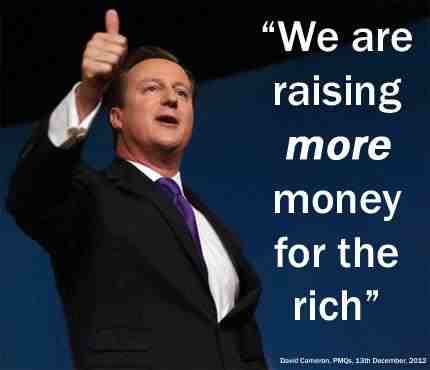
The only way for a tiny group of people to become obscenely rich is for huge masses of others to be kept chronically poor. The tories have spent five years lying to us about who “deserves” what, but the bottom line is this: almost every tory policy has intentionally resulted in money being taken from the poorest or money being handed to the [already] wealthiest and most powerful. (See: Follow the Money: Tory Ideology is all about handouts to the wealthy that are funded by the poor and ‘We are raising more money for the rich’ revisited: some thoughts.)

Related

Clause 99, Catch 22 – The ESA Mandatory Second Revision and Appeals

Clause 99, Catch 22 – State sadism and silencing disabled people

Clause 99, Catch 22 and Penning is telling lies

The New New Poor Law

Sanctions misery for tens of thousands of families this Christmas

Pregnant and sanctioned just in time for christmas… Sanctioned and frozen to death….The latest news from Ashton Under Lyne Jobcentre.

Rachel Reeves promises to remove benefit sanction targets with a Labour Government

Government under fire for massaging unemployment figures via benefit sanctions from Commons Select Commitee

Benefit sanctions are not fair and are not helping people into work

Rising ESA sanctions: punishing the vulnerable for being vulnerable

430835_148211001996623_1337599952_n (1)Many thanks to Robert Livingstone for the memes.

Inflicting suffering on those in need is now at the heart of our benefits system – Frances Ryan

430847_149933881824335_1645102229_n (1)The main part of this article was originally published in the Guardian on 10 March and was written by Frances Ryan.

I tend to think I am beyond shock at the actions of the Department for Work and Pensions (DWP) now. The expectation that this government is capable of morality or even basic competence was lost some time ago, somewhere between enacting policy that pushes people already in poverty into losing their homes and denying deaf, blind eight-year-olds disability benefits. Still, Dispatches’ Benefits Britain investigation was painful viewing.

During seven weeks of undercover work at a universal credit contact centre in Bolton, Channel 4 journalists witnessed a farcical mess of centralised IT failure. But what really stood out were the underhand tactics DWP staff were found to use against claimants: from deliberately withholding hardship payments from people struggling after having their benefits sanctioned, to hiding the flexible fund put in place to pay for clothes or a bus fare they needed to help them get a job.

What Dispatches showed is not an isolated incident, a black spot polluting an otherwise untarnished record. It is an example of both attitude and action that runs through the entire system: the growing conditionality on benefits, the withholding of emergency help, all the way back to how benefits are assessed.

As of last week, there is quantitative evidence that the notorious fit-for-work tests are inflicting damage to disabled people’s bodies (not to mention the impact on their minds). Yes, we have now reached a point where the benefit system is making disabled and chronically ill people sicker. Over 60% of disabled people going through the work capability assessment – designed by the DWP and sold off to private firms – report being in pain afterwards. Others said their condition was made worse or their recovery delayed. One claimant surveyed, who has progressive rheumatoid arthritis, said she left her appointment “feeling absolutely awful and suffered a lot of pain in the following days.” She went on to have a stroke a few weeks later.

It might be worth remembering that this is an assessment that is meant to help people – one million people are due to go through the process this year – if only because those orchestrating it appear to have forgotten. It is the same cavalier attitude to the vulnerable that means claimants have killed themselves after being spat out by the benefit system, as if desperation and distress means nothing.

We are sliding back to the notion that suffering helps the soul, that the underclass – be it the unemployed, the disabled, or chronically ill – need to be trained in order to behave. And, as almost a secondary consequence, their punishment cuts the welfare bill down. A bonus all round.

The ideology of a small state or the belief that benefits build dependency are crass, irrelevant details to what at its core is simply a decision about how to treat a human being. This is particularly damning when one person has all the power and the other is forced through economic necessity to take whatever humiliation or pain they are given. To do that to someone – let alone hundreds of thousands – is no accident. It is a conscious decision, that has been made over and over again by this government.

scroll2I wrote this last year:

Here are two articles about the terrible, extremely harsh and punitive consequences of the governments’ historically regressive, ethically challenging benefit sanctions regime. This is a very cruel and limited application of operant conditioning: the government are applying punishment to vulnerable people who need the support of lifeline benefits to meet their fundamental survival needs, under the guise of “paternalistic libertarianism.”

The punishments are applied most frequently to the most vulnerable people. Our welfare system was designed to support people, but under the Tory-led Coalition, it has been transformed into an administration that is run on unethical principles, akin to the Milgram experiment, with the difference that the punishments used are real, and decisions to punish welfare claimants are resulting in very real and terrible consequences.

It’s a biological fact that when people cannot meet their basic survival needs – food, fuel and shelter – they will die. Everybody understands this, no matter how well-insulated by personal wealth they may be.

The government understands this.

The welfare “reforms” are harming people, and are causing deaths. Full article – Benefit sanctions are not fair and are not helping people into work.

Related

Aktion Arbeitsscheu Reich, Human Rights and infrahumanisation

Techniques of neutralisation – a framework of prejudice

Cameron’s Nudge that knocked democracy down – a summary of the implications of Nudge theory


385294_195107567306966_1850351962_nThanks to Robert Livingstone for the memes.


David Freud was made to apologise for being a true Tory in public

1459165_266124213538634_1461740450_n

Lord Freud, a Conservative Welfare Reform Minister, has admitted comments he made that some disabled people are  not worth” the full national minimum wage”  were “offensive”, after they were disclosed by Ed Miliband during Prime Minister’s Questions yesterday afternoon. The Labour leader has called on the Tory peer to resign. Cameron called for a full apology from Freud.

He has since apologised after slipping up and suggesting that disabled people are “not worth” the national minimum wage and some could only be paid “£2 an hour.” Cameron says the comments made by Lord Freud at the Tory conference do not represent the views of government. However, his austerity measures and the welfare “reforms” tell us a very different story.

Cameron betrayed his anger at being challenged when he once again alluded to his severely disabled late son, Ivan, and his late father, as he told Miliband that he would take no lectures on disabled people.

This is not the first time that the prime minister has used his son in anger, as a tactic designed to cause others emotional discomfort, deflect criticism and to avoid answering difficult questions regarding this government’s harsh and punitive policies towards disabled people.

The Labour leader quoted Freud, saying: “You make a really good point about the disabled. There is a group where actually, as you say, they’re not worth the full wage.”

Amidst cries of “outrage” and “shame” from the Labour benches, Mr Miliband said: “To be clear about what the Welfare Reform Minister said, it’s very serious. He didn’t just say disabled people weren’t worth the minimum wage, he went further and he said he was looking at whether there is something we can do, if someone wants to work for £2 an hour.”

He added: “Surely someone holding those views can’t possibly stay in your Government?”

Cameron said: “Those are not the views of the government, they are not the views of anyone in the government. The minimum wage is paid to everybody, disabled people included.”

Clearly very angry, the prime minister added: “Let me tell you: I don’t need lectures from anyone about looking after disabled people. So I don’t want to hear any more of that. We pay the minimum wage, we are reforming disability benefits, we want to help disabled people in our country, we want to help more of them into work. And instead of casting aspersions why doesn’t he get back to talking about the economy.”  

Once again, note the rhetorical diversionary tactics that Cameron used.

Miliband responded: “I suggest, if he wants to protect the rights of disabled people, he reads very carefully what his welfare minister has said because they are not the words of someone who ought to be in charge of policy related to disabled people.

“In the dog days of this government the Conservative party is going back to its worst instincts – unfunded tax cuts, hitting the poorest hardest, now undermining the minimum wage. The nasty party is back.”

In the Guardian said: We are in the climate of the Work Programme  and  employment and support allowance travesties, in jobseeker’s allowance sanctions and personal independent payment delays.

Coerced, free labour and a shrinking, ever conditional benefit system. Freud has not spoken out of turn, but encapsulated Conservative attitudes to both disabled people and workers: pay them as little as possible and they will be grateful for it.

The Tories are not content with forcing disabled people into work. They want to pay them a pittance when they get there. I suppose we can thank Freud. The government has been producing enough measures that infers disabled people are slightly less than human. He’s finally said it out loud.”

I couldn’t agree more. Freud’s comments are simply a reflection of a wider implicit and fundamental Social Darwinism underpinning Tory ideology, and even Tim Montgomerie, who founded the Conservative­Home site has conceded that: “Conservative rhetoric often borders on social Darwinism…and has lost a sense of social justice.”

Of course the problem with such an ideological foundation is that it directly contradicts the basic principles that modern, western democracy was founded on, it is incompatible with our Human Rights Act, which enshrines the principle that we are each of equal worth. And our Equality Act, introduced by Labour to ensure that people are not discriminated against on the grounds of their disability, gender, age and a variety of other protected characteristics.

Sam Bowman, research director of the Adam Smith Institute, has said that Freud was “shamefully mistreated” by Labour leader Ed Miliband.

The Adam Smith Institute – a think tank that promotes Conservative “libertarian and free market ideas”, minarchism and claims it is:“known for its pioneering work on privatization, deregulation, and tax reform, and for its advocacy of internal markets in healthcare and education, working with policy-makers”  – has, perhaps unsurprisingly, defended Lord Freud’s disgraceful comments regarding striving disabled workers.

Mr Bowman said: “His (Freud’s) point was that the market value of some people’s wages is below the minimum wage. This is often true of the severely disabled and can have appalling consequences for their self-esteem and quality of life.”

He added: “To point out that someone’s market value is less than minimum wage has nothing to do with their moral value as human beings.”

I beg to differ. We have a government that claims meritocratic principles define those who are worthy and deserving of wealth.We have a government that generates socially divisive narratives founded on ideological dichotomies like strivers and skivers. We have a government that systematically disregards the human rights of disabled people. Their very policies define the moral value they attribute to the poor, disabled people and the wealthy, respectively. This defence is based on a false distinction, because the Tories conflate market value and moral value explicitly, their policies are evidence of that.

The think tank president, Madsen Pirie,  once said: “We propose things which people regard as being on the edge of lunacy. The next thing you know, they’re on the edge of policy.”  

This group of neoconservatives brought you the fundamentals of Thatcher’s poll tax, the Adam Smith Institute was also the ideological driving force behind the sales of council house stock. If you need any further convincing of their Tory credentials, then their proposals that the National Health Service should establish an internal market with hospitals buying the use of facilities from other districts and from the private sector ought to be sufficient.

The Institute has always been a fierce critic of the NHS, it thinks that the government should only regulate healthcare and that healthcare should be privately funded and privately provided by private sector companies. The Adam Smith Institute said: Congratulations to the new Health Secretary Andrew Lansley, for what could be the biggest revolution in the UK’s state-run National Health Service for 60 years. 

Also recommended by this group of privatisation vultures was an internal market system for UK schools that would have (reduced) state funds to follow students to independently run academic institutions. This approach to school funding is now Coalition policy. Following the Institute’s call for the use of private businesses by local governments, many council-run local services, such as waste collection and cleaning, were contracted out. Additionally, local governments are now required to solicit competitive bids for local services.

And it was this group of Hayek-worshipping, pro-exploitation neofeudalists, who don’t declare their funding sources, that called for a radical shake-up of welfare policy, which would make work requirements absolutely central to the benefits system. These proposals subsequently became Tory policy.

And who could forget their peddling of unfettered free markets and trade as an objection to fair trade?

In the UK and elsewhere, such Conservative neoliberal ideas have drastically changed how states operate. By heavily promoting market-based economies that highly value competition and efficiency, such neoliberalist economies have moved countries to retrogressively adopting Social Darwinist philosophies to prop up free market “logic”. 

Bourdieu (1999) contends that neoliberalism as a form of national governance has become a doxa, or an unquestioned and simply accepted world-view.(See also Manufacturing consensus: the end of history and the partisan man.)

Harvey (2005) is not surprised that the ideas of capitalism have been infused into political, social, and cultural institutions at state-level. By placing a mathematical quality on social life, the neoconservatives have encouraged a formerly autonomous state to regress into penal state that values production, competition, and profit above all else, and social issues and consequences are increasingly disregarded.

Tories view their brand of economics as a social science that is capable of explaining all human behaviours, since all social agency is thought to be directed by a rationale of individualistic and selfish goals. And the focus on the individual means that ideas related to concepts such as “the public good” and realities such as “the community” are now being discarded as unnecessary components of a welfare state.

Unsurprisingly, then, high unemployment, gross inequality, and increasingly absolute poverty are increasingly blamed on individuals rather than on structural/economic constraints.

Tory economic policy is designed to benefit only a very small class of people. Such a world-view also makes it easier to justify the thought that some people are deserving of much more than others because, after all, it is a common refrain that we are all responsible for our own destinies. (See the just-world fallacy.)

Freud’s comment was not a momentary lapse, nor was it unrepresentative of Tory views more generally. He is the contemptuous architect of the grossly punitive Tory Bedroom Tax that disproportionately affects households of disabled people. The Tories endorsed Freud’s discriminatory policy proposal, and savagely ridiculed the UN rapporteur, Raquel Rolnik, when she pointed out, very professionally and reasonably, that the policy contravened human rights.

He is the same government minister that rejected suggestions that austerity policies have led to an increase in food bank use – making the jaw-droppingly astonishing suggestion that food bank charities are somehow to blame. This former investment banker and peer told the Lords that the increase in the usage of food banks was “supply led”.

He said: “If you put more food banks in, that is the supply. Clearly, food from the food banks is a free good and by definition with a free good there’s almost infinite demand.”

Poverty reduced to individual neoliberal motivational formulae. Yet it is the government that are responsible for policies that create and sustain inequality and poverty.

In the wake of the longer wait for unemployment benefits introduced by George Osborne, a massive increase in the use of cruel benefit sanctions, the introduction of the mandatory review, during which benefits are not payable to disabled people, Freud also rejected suggestions by leading food bank operators that delays in benefit payments drove demand for emergency food aid.

Such brutal, dehumanising and inequitable treatment of our most vulnerable citizens cannot be regarded as an exceptional incident: the Tories have formulated policies that have at their very core the not so very subliminal message that we are worthless and undeserving of support, basic honesty and decency.

Social Darwinism, with its brutalising indifference to human suffering, has been resurrected from nineteenth century and it fits so well with the current political spirit of neoliberalism. As social bonds are replaced by narcissistic, unadulterated materialism, public concerns are now understood and experienced as utterly private miseries, except when offered up to us on the Jerry Springer Show or Benefit Street as spectacle.

The Tories conflate autonomy (the ability to act according to our own internalised beliefs and values) with independence (not being reliant on or influenced by others). Tories like Freud have poisoned the very idea that we are a social species, connected by mutual interdependencies that require a degree of good will, kindliness and willingness to operate beyond our own exclusive, strangle hold of self-interest.

The time has come to ask ourselves what possible benefit to society such a government actually is – what use is an authoritarian, punitive state that is more concerned with punishing, policing and reducing citizens than with nurturing, supporting and investing in them?

224079_411432638926270_715135125_n

Tory Values Explained In One Easy Chart