Author: Kitty S Jones

I’m a political activist with a strong interest in human rights. I’m also a strongly principled socialist. Much of my campaign work is in support of people with disability. I am also disabled: I have an autoimmune illness called lupus, with a sometimes life-threatening complication – a bleeding disorder called thrombocytopenia. Sometimes I long to go back to being the person I was before 2010. The Coalition claimed that the last government left a “mess”, but I remember being very well-sheltered from the consequences of the global banking crisis by the last government – enough to flourish and be myself. Now many of us are finding that our potential as human beings is being damaged and stifled because we are essentially focused on a struggle to survive, at a time of austerity cuts and welfare “reforms”. Maslow was right about basic needs and motivation: it’s impossible to achieve and fulfil our potential if we cannot meet our most fundamental survival needs adequately. What kind of government inflicts a framework of punishment via its policies on disadvantaged citizens? This is a government that tells us with a straight face that taking income from poor people will "incentivise" and "help" them into work. I have yet to hear of a case when a poor person was relieved of their poverty by being made even more poor. The Tories like hierarchical ranking in terms status and human worth. They like to decide who is “deserving” and “undeserving” of political consideration and inclusion. They like to impose an artificial framework of previously debunked Social Darwinism: a Tory rhetoric of division, where some people matter more than others. How do we, as conscientious campaigners, help the wider public see that there are no divisions based on some moral measurement, or character-type: there are simply people struggling and suffering in poverty, who are being dehumanised by a callous, vindictive Tory government that believes, and always has, that the only token of our human worth is wealth? Governments and all parties on the right have a terrible tradition of scapegoating those least able to fight back, blaming the powerless for all of the shortcomings of right-wing policies. The media have been complicit in this process, making “others” responsible for the consequences of Tory-led policies, yet these cruelly dehumanised social groups are the targeted casualties of those policies. I set up, and administrate support groups for ill and disabled people, those going through the disability benefits process, and provide support for many people being adversely affected by the terrible, cruel and distressing consequences of the Governments’ draconian “reforms”. In such bleak times, we tend to find that the only thing we really have of value is each other. It’s always worth remembering that none of us are alone. I don’t write because I enjoy it: most of the topics I post are depressing to research, and there’s an element of constantly having to face and reflect the relentless worst of current socio-political events. Nor do I get paid for articles and I’m not remotely famous. I’m an ordinary, struggling disabled person. But I am accurate, insightful and reflective, I can research and I can analyse. I write because I feel I must. To reflect what is happening, and to try and raise public awareness of the impact of Tory policies, especially on the most vulnerable and poorest citizens. Because we need this to change. All of us, regardless of whether or not you are currently affected by cuts, because the persecution and harm currently being inflicted on others taints us all as a society. I feel that the mainstream media has become increasingly unreliable over the past five years, reflecting a triumph for the dominant narrative of ultra social conservatism and neoliberalism. We certainly need to challenge this and re-frame the presented debates, too. The media tend to set the agenda and establish priorities, which often divert us from much more pressing social issues. Independent bloggers have a role as witnesses; recording events and experiences, gathering evidence, insights and truths that are accessible to as many people and organisations as possible. We have an undemocratic media and a government that reflect the interests of a minority – the wealthy and powerful 1%. We must constantly challenge that. Authoritarian Governments arise and flourish when a population disengages from political processes, and becomes passive, conformist and alienated from fundamental decision-making. I’m not a writer that aims for being popular or one that seeks agreement from an audience. But I do hope that my work finds resonance with people reading it. I’ve been labelled “controversial” on more than one occasion, and a “scaremonger.” But regardless of agreement, if any of my work inspires critical thinking, and invites reasoned debate, well, that’s good enough for me. “To remain silent and indifferent is the greatest sin of all” – Elie Wiesel I write to raise awareness, share information and to inspire and promote positive change where I can. I’ve never been able to be indifferent. We need to unite in the face of a government that is purposefully sowing seeds of division. Every human life has equal worth. We all deserve dignity and democratic inclusion. If we want to see positive social change, we also have to be the change we want to see. That means treating each other with equal respect and moving out of the Tory framework of ranks, counts and social taxonomy. We have to rebuild solidarity in the face of deliberate political attempts to undermine it. Divide and rule was always a Tory strategy. We need to fight back. This is an authoritarian government that is hell-bent on destroying all of the gains of our post-war settlement: dismantling the institutions, public services, civil rights and eroding the democratic norms that made the UK a developed, civilised and civilising country. Like many others, I do what I can, when I can, and in my own way. This blog is one way of reaching people. Please help me to reach more by sharing posts. Thanks. Kitty, 2012

Is hypocritical PM a ‘terrorist sympathiser’? He called for Osama Bin Laden to face trial in 2001.

Boris

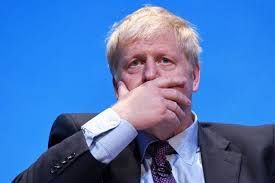
Boris  Johnson, a grubby liar and hypocrite.

Yesterday, I was the person who spent just two minutes researching Boris Johnson’s position and previous comments in the media on Osama Bin Laden. While researching, I found the Telegraph article that the Johnson wrote in 2001. The Conservatives have condemned Jeremy Corbyn’s statement that Bin Laden should have faced a trial. 

Grubby, nasty quote mining and giant unverifiable inductive leaps over the amoral void, by habitual hypocrits and liars. That sums up Conservative propaganda.

In 2011, a special forces raid on the al-Qaida chief’s Pakistan compound resulted in Bin Laden and four others being shot dead.

George Osborne, among other Conservatives, claimed a Labour Party led by Corbyn would “pose a threat to national security” because, he claimed, Corbyn “sympathises with terrorists”.

This claim has been made by the Tory party many times. 

David Cameron has described Jeremy Corbyn a “security threat” and “terrorist sympathiser”. In the Corbyn interview from which Cameron quoted without context, the Labour leader had already described the New York bombings as a “tragedy”, and was explaining that the “tragedy” of Bin Laden’s death was that he was assassinated and did not face trial.

More recently, an unscrupulous and dishonest Boris Johnson accused Jeremy Corbyn of seeking to “legitimate the actions of terrorists” in his speech after the 2017 Manchester bombing, 

However, in 2001, Boris Johnson said that he also supported Bin Laden facing a trial. Curiously, no-one has yet called him a terrorist sympathiser or a threat to national security. The media have slavishy amplified the Conservatives’ propaganda without any fact checking whatsoever.

I did some fact checking because I was sick of seeing the Conservatives’ deceitful and ruthless quote mining of Jeremy Corbyn’s comments, which are taken out of context then used to prop up outrageous political claims such as “Corbyn hates the UK”. The Tories are so full of this kind of unscrupulous, flimsy propaganda shit. They’ve got away with it for far too long. This is not the standard of political discourse and debate we should expect to see in a healthy democracy. The Tories have raced to the bottom of the pit marked “amoral”, dragging a mostly unresistant media with them.

I posted Boris Johnson’s Op-Ed article in the Daily Telegraph on December 13, 2001 – just three months after the 9/11 terrorist attacks – on Twitter, to expose his sheer hypocrisy and dishonesty. It went viral.

Job done. Exposing lies and hypocrisy used to be the job of our paid journalists, but that is no longer the case here in the UK, with few notable exceptions.

RT  have run an article on this issue. I don’t expect that the UK media will.

Another under-reported matter is that Boris Johnson called for the “break up” of the NHS back in 2002. The Prime Minister made the speech in 2002 while a backbench Tory MP, criticising Labour’s refusal to consider breaking up the NHS. It comes as Donald Trump flies into the UK amid concerns of a US trade deal which would damage the health service. Johnson has previously said that the government should examine “the experience of other countries that have a far better record of health care provision … because they do not rely exclusively on a top-down monopolistic health service of the kind we have in this country.”

That’s Tory-speak for privatisation. The so-called libertarian right wing see the NHS as the last bastion of a collectivist tradition that they want to eradicate completely from British society. 
NHS

They loathe it because they see it as a form of decadence, and as antithetical to the fundamentalist principles of ‘competition; and the vulture capitalist’s right to make money out of anything – an idea that has driven more than four decades of neoliberal elitist ‘reform.’

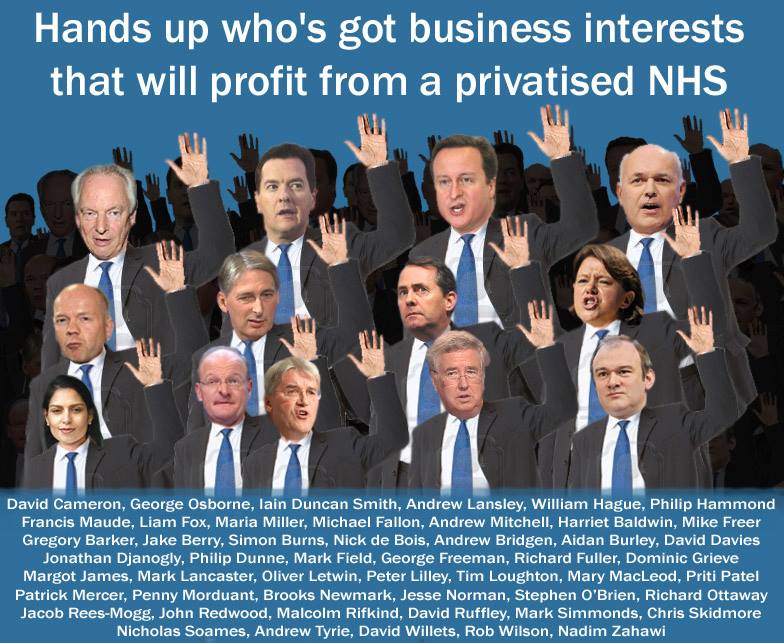
Some of the Tories have direct connections to companies that want to make money out of NHS privatisation (see above). I wonder if that has some bearing on their view.  

Boris Johnson probably didn’t want you to see this. Or perhaps he simply has a very poor long term memory.

Boris Johnson was blocked from accessing state secrets as foreign secretary because Downing Street felt he was a security risk

The Conservatives have repeatedly claimed that HM’s opposition leader is a “risk to national security”, but don’t produce any evidence of this.

However, the party had to restrict Boris Johnson’s access to intelligence because he was such a liability:

  • Theresa May tried to restrict Boris Johnson’s access to secret intelligence when he was foreign secretary.
  • The then prime minister wanted Johnson not to be shown some secret intelligence when he was appointed in July 2016, BBC News reported.
  • Sources said Downing Street’s decision was based on a variety of factors, including a lack of trust in Johnson, and personal enmity between him and May
  • The report followed claims in 2017 that British spy chiefs were “wary” of sharing information with Johnson because they didn’t trust him.

Theresa May repeatedly withheld sensitive intelligence from Boris Johnson when he was foreign secretary, because they believed he would leak the information.

May wanted the then foreign secretary to not to be shown certain sensitive secret intelligence when he was appointed in July 2016, BBC News reported, citing multiple security sources.

Downing Street’s move is said to have worried security chiefs at the time because of the foreign secretary’s role in authorising sensitive operations.

Johnson was aware of Downing Street’s decision at the time and was “very unhappy about it,” it was reported. Sources close to Johnson insisted there was no row about information access and claimed he saw everything he needed to for his role.

Johnson first visited the headquarters of MI6, the government’s foreign intelligence service, as foreign secretary three months after his appointment when he was shown around by its chief Alex Younger.

Johnson praised the work of the security services and said: “Even from my relatively short period as foreign secretary I can testify to how vital the work they do is.”

But at the same time a row was taking place about whether Johnson should have access to all the intelligence produced by the UK’s spies, the BBC reported, despite the fact ministerial responsibility lay with Johnson for MI6 and GCHQ, another branch of the intelligence service.

The New Statesman reported at the time that multiple diplomats had doubts over Johnson’s personal style as foreign secretary.

A month previously, he had said the ISIS stronghold of Sirte, the Libyan city, could be “the next Dubai” once they “clear the dead bodies away.” It may be a sentence that would be appropriate down the pub with a few of the boys, but it isn’t a statement that reflects a prime minister of calibre.

 Boris Johnson is not fit to be prime minister. 

People like me have increasingly taken on the role of public interest journalism and research to fill the void, and most of us are unpaid.

I became too ill to work in 2010. I have lupus, which is progressive, and in my case, has many and complex symptoms. The illness has had a huge impact on my mobility, for example, and my immunity to infection. I rely on the state support that I paid into over my working life, but frequently struggle to get by, like far too many others.

I don’t like asking people for money. I rarely do, though like other independent writers, I have a donate button at the foot of most of my articles. I write first and foremost because I feel I must. We need reliable sources of information in an era of fake news and authoritarian state propaganda. Our mainstream media has badly let the UK public down. It does not hold the government to account, as a rule. This has seriously undermined the UK’s democracy. 

However, if you feel you would like to support my site so I can keep on keeping on, you can always make a donation. The smallest amount is always valued. It helps me pay for my site, for a WordPress plan that doesn’t allow advertising, and my broadband bills. I also have to pay to access research sometimes.

I would also thank those who have made generous donations over the last few years to support my work and help me keep going.

Much love and solidarity X

#VoteLabour2019


My work is unfunded and I don’t make any money from it. But you can support Politics and Insights and contribute by making a donation which will help me continue to research and write informative, insightful and independent articles, and to provide support to others.

DonatenowButton

The problem with Jeremy Corbyn? The ranting incoherence of the mass media

Corbyn


My son Jake asked me yesterday:”What is it with the Guardian’s existential insecurity and deep political cognitive dissonance? (Yep, he’s a philosophy student). He said “they’re all over the place. What’s that about?” He said that he expected the unintelligible mob-mouthing from the headlines of the right wing rags such as the Express and Sun, but felt the disease has spread to what he had previously considered the “reasonably reasonable media.”  

He commented that even the Guardian and Independent have now succumbed to bouts of “febrile tutting, compulsive McCarthyist curtain twitching, spasmodic sneering and barnyard braying” at HM’s leader of the opposition The “mass hysteria, he says, has become a “shape-shifting reactionist wreck of contradiction, screeching mob mentality headlines, demanding ever- impossible, unreasonable  standards  of just one politician: Jeremy Corbyn.”

He thought I should gather together evidence of contradictions to highlight his point, but found someone had already done an outstanding job of that.

Ladies and gentlemen, I give you Colin Millar’s extraordinary gallery of empirical evidence.

And yes, Jake’s observations are absolutely right.

9,406 views 

There is a possibility Jeremy Corbyn will be Prime Minister of the UK by the end of next week. There is no better time to highlight how, no matter what Corbyn does or whatever position he takes, his critics will attack him – even if they totally contradict themselves (thread). 

Corbyn opposes the exploitation of foreign sweatshop-workers – Labour MPs compare him to Nigel Farage:

John Rentoul

@JohnRentoul

Astonishing. McDonald’s a decent co making good food that most voters enjoy, & Labour says no http://www.thesun.co.uk/sol/homepage/news/politics/7081614/Jeremy-Corbyn-and-cronies-snub-McDonalds-from-Labour-conference.html 

Latest News headlines, exclusives and opinion | The Sun

thesun.co.uk

149 people are talking about this

Corbyn is not like Trump, says James O’Brien:

James O’Brien

@mrjamesob

I’m no fan but it’s really, really not. Trump attacks the ones telling the truth; Corbyn attacks the ones peddling racist lies. https://twitter.com/montie/status/1044916199761616896 

Tim Montgomerie

@montie

Hard to tell the difference between Trump and Corbyn in their constant attacks on the free press

1,567 people are talking about this

Corbyn is even worse than Trump, says James O’Brien:


Anti-Semitism row is allowing Corbyn to hide from the media’ Anti-Semitism is to Corbynites what fake news is to Trump, says guest columnist James O’Brien

Jeremy Corbyn is simply too principled:

spiked@spikedonline

“This week we have had a chilling insight into Corbyn’s authoritarianism. For a politician to make open threats against the press is deeply disturbing. He cares nothing for free speech or press freedom.”

Brendan O’Neill on the Corbynista threat to liberty

Embedded video

218 people are talking about this

Corbyn is no threat whatsoever to life as we know it (Brendan O’Neill):

spiked@spikedonline

“There’s a great irony to the Czech spy story: Corbyn insists he wasn’t involved with the Stalinists and yet he has responded in a quite Stalinist way to this story.”

Brendan O’Neill on Sky

Embedded video

167 people are talking about this

Jeremy Corbyn has no interest in power (Nick Cohen):

But conversely, Nick Cohen also believes Corbyn isn’t radically left-wing enough:


What Labour needs now is a takeover by real left-wing radicals | The Spectator

To say that the Labour party is in crisis because it is ‘too left-wing’ is to miss the point spectacularly. With eyes wide open, and all democratic…

Dan Hodges now, saying Corbyn is too keen for Brexit:

(((Dan Hodges)))

@DPJHodges

The reason Corbyn is adopting a more aggressively pro-Brexit stance is the same reason he’s aggressively rejecting the IHRA definition. He’s calculated he can take Labour Remainer votes for granted. They’ll sulk a bit, then say “but the food-banks”, and vote for him.

607 people are talking about this

Before Hodges criticises Corbyn for not wanting Brexit at all:


Mitch Benn: Corbyn isn’t brave enough to change his mind on Brexit:

Mitch Benn🇬🇧🇪🇺

@MitchBenn

Corbyn doesn’t have the guts to allow his position on Brexit to be challenged and the membership don’t have the guts to make him.

261 people are talking about this

Mitch Benn: Ok, Corbyn has changed his mind on Brexit – what a coward! 


Mitch Benn: Has the penny finally dropped for Jeremy?

Ok, this is intriguing…

Corbyn was wrong not to oppose Theresa May’s Brexit plan (Philip Collins):

Corbyn was wrong not to support Theresa May’s Brexit Plan (Philip Collins):

Labour must stop trying to frustrate Brexit It will take a speechwriter of iron discipline to resist the metaphor of renaissance. When the prime minister describes the British position on the European ..

Peter Mandleson: By not opposing Tory Brexit, Corbyn is betraying the national interest:


Colin adds: I don’t have soundcloud, but you can buy my book – detailing the best football rivalry you have never fully appreciated:amazon.co.uk/Frying-Pan-Spa…

Oh yeah, and you can vote Labour on 12 December to help fix this country. 


I don’t make any money from my work, and I’m not funded. You can help to support Politics and Insights by making a donation to help me continue to research and write independently and continue to support other people

DonatenowButton

Research shows ‘unprecedented’ rise in infant mortality linked to poverty in England

slide1

Slide from my presentation on neoliberalism, the still face paradigm and poverty at Beyond the Therapy Room psychology conference, 2019.

According to new research, an unprecedented rise in infant mortality in England is linked to poverty, according to new research. An additional 570 infant deaths, compared to what would have been expected based on historical trends, were recorded in the country from 2014-2017. Around one-third of those deaths, which related to children under the age of one, were linked to rising poverty.

The results of the new study by researchers from the University of Liverpool, University of Leeds and Newcastle University, which analysed data from 2000-2017, have now been released. In their report, published in BMJ Open, the researchers note that infant mortality rates often act as an indicator of the changing overall health of societies, as well as an early warning system for future adverse trends.

Rising infant mortality is unusual in wealthy, high income countries, and international statistics show that infant mortality has continued to decline in most wealthy countries in recent years. 

But in England, social security cuts in the last decade have taken their toll on the poorest communities.

In the study, the researchers grouped 324 local authorities into five categories (quintiles) based on their level of income deprivation, with Quintile 1 being the most affluent and Quintile 5 the most deprived.

Inferential testing – using a statistical model –  was used to quantify the association between regional changes in child poverty  and infant mortality during the same period. 

The researchers found that “a sustained and unprecedented rise” in infant mortality in England from 2014-2017 was not experienced evenly across the population.

In the most deprived local authorities, the previously declining trend in infant mortality had reversed and mortality increased. This led to an additional 24 infant deaths per 100,000 live births per year, relative to the previous trend.

There was no significant change from the pre-existing trend in the most affluent local authorities. As a result, inequalities in infant mortality increased, with the gap between the most and the least deprived local authority areas widening by 52 deaths per 100,000 births.

Overall from 2014-2017, there were a total of 572 “excess infant deaths” compared to what would have been expected based on historical trends, the report says.

The researchers estimate that each 1% increase in child poverty was significantly associated with an extra 5.8 infant deaths per 100,000 live births.

The findings suggest that about one-third of the increases in infant mortality between 2014 and 2017 may be attributed to rising child poverty, equivalent to an extra 172 infant deaths.

Professor David Taylor-Robinson of the University of Liverpool, the lead author on the research, said the study “provides evidence that the unprecedented rise in infant mortality disproportionately affected the poorest areas of the country, leaving the more affluent areas unaffected”.

“Our analysis also linked the recent increase in infant mortality in England with rising child poverty, suggesting that about a third of the increase in infant mortality from 2014-17 may be attributed to rising child poverty. 

“These findings are really concerning given that child poverty is rising. It is time for the government to reverse this trend establishing a welfare system that protects children from poverty.” 

Taylor-Robinson said child poverty has “a myriad of adverse impacts on other aspects of child health that will have repercussions for decades to come”.

“In the context of increasing health inequalities in England, policies that reduce poverty and social inequalities are likely to reduce the occurrence of infant mortality and that of many other adverse child health outcomes,” he added. 

Cuts to social security 

The report notes the impact of “sustained reductions” in social security benefits in England in the last decade. It states: 

“Since 2010, there have been sustained reductions in the welfare benefits available to families with children, including the abolition of child benefit and child tax credit for the third child or more; reductions in the value of tax credits and below-inflation up-rating of most working-age benefits; housing benefit reforms including the under occupancy charge (most commonly referred to as ‘bedroom tax’) and introduction of universal credit; and household caps on total benefit receipt (regardless of how many children are in the household).

“These welfare changes have disproportionately affected the most deprived local authorities and regions and have led to a rise in child poverty.”

Dr Paul Norman of the University of Leeds, who also worked on the research, noted that the findings show “an unprecedented rise in the deaths of children under one year of age”.

He said the researchers’ next step is “to examine the gestational age and the number of weeks at which infants die, to learn more about when key interventions may be needed or when they are being missed”.

“This will inform the urgent action needed by national and local governments, and help drive the health and social care policies needed to reduce infant mortality rates,” Norman said. 

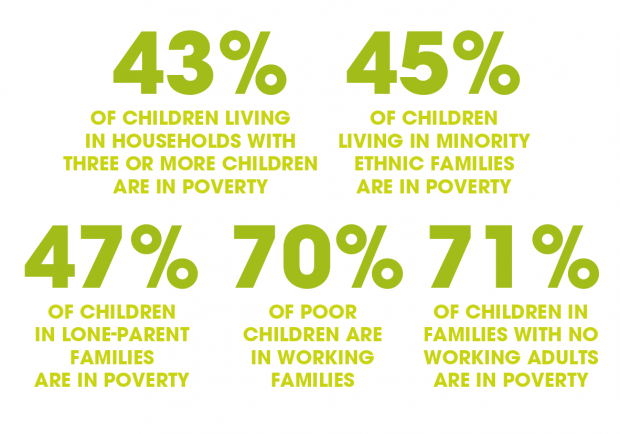
The facts and figures from the Child Poverty Action Group (CPAG) show the reality of child poverty in the UK, and which groups are affected most:CPAG Infographics July 2019 v1-04

Related

Studies find higher premature mortality rates are correlated with Conservative governments

Austerity is “economic murder” says Cambridge researcher

Suicides reach a ten year high and are linked with welfare “reforms

Conservative governments are bad for your health


I don’t make any money from my work. But you can support Politics and Insights and contribute by making a donation which will help me continue to research and write informative, insightful and independent articles, and to provide support to others. The smallest amount is much appreciated, and helps to keep my articles free and accessible to all – thank you. 
DonatenowButton

Matt Hancock mocked and scorned at his own hustings


A leaked video reveals that the West Suffolk Conservative MP and Health Secretary, Matt Hancock was roundly mocked as outraged constituents objected loudly to his appalling comments to divert attention from his party’s lies. Hancock has been MP for West Suffolk since 2010.  

Hancock raises scornful responses from constituents as he tries to reiterate the government’s lie about plans to employ 50,000 more nurses. He was shouted down. 

Clearly rattled, Hancock then falls back on the worn out Tory default position – slander the opposition as a desperate diversion strategy.

No-one fell for it. Instead, the insufferable Hancock drowned out by an outraged audience until the microphone was finally taken away from him.

Probably an act of kindness for all concerned, under the circumstances.

cock


I  don’t make any money from my work. But you can help if you like by making a donation to help me continue to research and write free, informative, insightful and independent articles, and to provide support to others. The smallest amount is much appreciated – thank you.

DonatenowButton

Letter: As economists we believe the Labour party deserves to form the next UK government

A letter to the Financial Times from David G Blanchflower and others, with 163 economists as signatories:

The UK economy needs reform. For too long it has prioritised consumption over investment, short-term financial returns over long-term innovation, rising asset values over rising wages, and deficit reduction over the quality of public services.

The results are now plain. We have had 10 years of near zero productivity growth. Corporate investment has stagnated. Average earnings are still lower than in 2008. A gulf has arisen between London and the South East and the rest of the country. And public services are under intolerable strain — which the economic costs of a hard Brexit would only make worse. We now moreover face the urgent imperative of acting on the climate and environmental crisis.

Given private sector reluctance, what the UK economy needs is a serious injection of public investment, which can in turn leverage private finance attracted by the expectation of higher demand. Such investment needs to be directed into the large-scale and rapid decarbonisation of energy, transport, housing, industry and farming; the support of innovation- and export-oriented businesses; and public services. It is clear that this will require an active and green industrial strategy, aimed at improving productivity and spreading investment across the country. 

Experience elsewhere (not least in Germany) suggests a National Investment Bank would greatly help. With long-term real interest rates now negative, it makes basic economic sense for the government to borrow for this, spreading the cost over the generations who will benefit from the assets. As the IMF has acknowledged, when interest payments are low and investment raises economic growth, public debt is sustainable.

At the same time, we need a serious attempt to raise wages and productivity. A higher minimum wage can help do this, alongside tighter regulation of the worst practices in the gig economy. Bringing workers on to company boards and giving them a stake in their companies, as most European countries do in some form, will also help. The UK’s outlier rate of corporation tax can clearly be raised, not least for the highly profitable digital companies.

As economists, and people who work in various fields of economic policy, we have looked closely at the economic prospectuses of the political parties. It seems clear to us that the Labour party has not only understood the deep problems we face, but has devised serious proposals for dealing with them.

We believe it deserves to form the next government.
David G Blanchflower, Bruce V Rauner,

Professor of Economics, Dartmouth College; Professor of Economics. University of Stirling; former member, Bank of England Monetary Policy Committee.

Victoria Chick Emeritus Professor of Economics, University College London.

Lord Meghnad Desai Emeritus Professor of Economics, London School of Economics and Political Science.

Stephany Griffith-Jones Emeritus Professorial Fellow, Institute of Development Studies, University of Sussex; Financial Markets Director, Initiative for Policy Dialogue, Columbia University.

Simon Wren-Lewis Emeritus Professor of Economics and Fellow of Merton College, University of Oxford. On behalf of 163 signatories. 

The letter and a complete list of signatories is here.


I  don’t make any money from my work. But you can help if you like by making a donation to help me continue to research and write free, informative, insightful and independent articles, and to provide support to others. The smallest amount is much appreciated – thank you.
DonatenowButton

An open letter to the Chief Rabbi from an Imam, about Jeremy Corbyn

See here for source:  An open letter to the Chief Rabbi about Jeremy Corbyn from Imam Ajmal Masroor

Dear Chief Rabbi Ephraim Mirvis

My name is Ajmal Masroor. I have been an Imam for almost 30 years and I write to you today as your brother in faith and humanity.

I proudly practice Islam in our multicultural and multi-faith country, without fear or prejudice, despite the rising levels of Islamophobia. I take a keen interest in politics and believe in actively influencing change, which is why I stood for Parliament twice – once in 2010 and again in 2018.

I believe people of faith must play an active role in all aspects of our society, including politics. As such, I welcome your letter to The Times, where you urge us to vote with our conscience. Both our Jewish and Islamic traditions place conscience at the core of our Godly life on this Earth. I would like to take this opportunity to thank you for reminding us of our innate, God-gifted tool: the conscience.

However, I vehemently disagree with the rest of your assertions, where you suggest that Jeremy Corbyn is unfit to be our next Prime Minister. You blame Jeremy Corbyn personally for the antisemitic behaviour of Labour Party members. In my humble opinion, you have made a severe error of judgment in calling Jeremy Corbyn unfit to be our Prime Minister. Before I express why, do you believe that Boris Johnson is more fit to be our Prime Minister?

In the upcoming general election, we are limited in our choices. We know that the Liberal Democrats will never achieve enough support to win the election. We are left with a choice between the Conservative party and the Labour party. Under the Conservative party, our country has witnessed unprecedented levels of poverty, inequality, austerity, homelessness and division. The Conservative party has sold its soul to Nigel Farage’s UKIP, and now Brexit party. The true moderate and centre ground Conservative politicians have been pushed out or side-lined by the extremists within this party. If your assertion is that Jeremy Corbyn’s Labour should not be supported, are you endorsing the Conservative party, that is deeply hostile to the multicultural and multi-faith fabric of our society? Inadvertently, are you telling the Jewish community to vote for a deeply Islamophobic party? Is this your idea of voting with our conscience?

We are men of faith, and you will agree that the practise of double standards in all faiths is abhorrent. When I read about your selective outrage – calling out the Labour party for its failure to stamp out antisemitism – while turning a blind eye to the Conservative party’s Islamophobia, I felt deeply disappointed. Antisemitism is evil and we should all stand against it with all our might. Islamophobia is also evil, and we should equally stand against it. I find it deeply hypocritical when people do not observe fairness and consistency when struggling against all kinds of evil. In Judaism, as in Islam, justice and fair dealings are considered closest to Godliness. Sadly, your letter did not display justice or fairness towards Jeremy Corbyn, and instead came across as a cheap attempt at political posturing.

If I was told to choose between a lying, philandering and narcissistic clown and a truthful, principled and humble socialist, my choice would be easy. I would never entrust the future of our country to the hands of a man who is an occupational liar. I would never ask the people of our country to vote for a man who makes a mockery of clean and principled politics. The only thing Boris Johnson is interested in is himself; not our country, and certainly not community cohesion.

Jeremy Corbyn has a forty year track record of selfless service to his constituency and the absolute interest of all people in our country. He has always been a genuine friend of the minorities, disadvantaged and vulnerable. Why would you suggest that he was unfit for the Prime Minister’s office?

What is Jeremy Corbyn’s actual crime that has led you to deeming him unfit for the job? Has Jeremy Corbyn personally been accused of antisemitism? The answer is an emphatic ‘no’! He has never been accused of antisemitism.

On the other hand, Boris Johnson has made many inflammatory and deeply offensive remarks about Islam and Muslim women, including citing Islam as the reason for backwardness, violence and economic degeneration within the Muslim communities. He has also likened Muslim women, who wear face covering, to “bank robbers” and “letter boxes”. In the week of his remark, anti-Muslim hate crime spiked by more than 300%. And he hasn’t stopped at the Muslim community alone. His opinion and remarks on minority communities has been abhorrent, including saying he was afraid of black men; that black people were “piccaninnies” with “watermelon smiles”, and referred to gay men as “bum boys”. Is this the rhetoric you expect from the leader of our country?

I know the Labour party is accused of antisemitism, and the UK human rights commission is currently investigating it. I pray the investigation is thorough and where strands of antisemitism are identified, that they are promptly and swiftly removed and publicly admonished. But surely you would agree that the Conservative party should also be investigated for Islamophobia. Allegation alone is not enough for faith leaders like us to charge entire parties. Our claims must be substantiated, with credible evidence, and then we must wait for investigations to completed and for those findings to be made public. Both of our religious traditions have a rich, ethical parameter on how to deal with accusations, and how to challenge hatred. I am saddened to say that I believe you have violated this very principle by adding further fuel to an allegation; an act that is not only irresponsible but astoundingly dangerous in the middle of the most important election of our time.

I have always respected you as a man of faith and expected you to adhere to a higher standard of moral and ethical probity. I did not expect your high office to be compromised by spreading aspersions on Jeremy Corbyn. By doing so, you have become actively involved in what is essentially a smear campaign against Jeremy Corbyn, who has never been antisemitic in his life. The plain truth is that there are numerous accounts of Jeremy Corbyn championing all forms of campaigns to eradicate hate crime from our society, including standing up for the rights of our Jewish communities in and around the UK. He has equally championed the right of the Palestinians too. He has recognised failings within the party, taken responsibility for these, offered an apology and vowed to do better. He has been honest and upright, and as a man of faith, I would expect you to follow suit.

Your statement carries with it a grave dishonesty, and I am deeply disappointed by it. In a time of political and social crisis across the world, let us adhere to honesty first and foremost. And in this very spirit, let me ask you: have you called Jeremy Corbyn antisemitic because he has been critical of the Israeli government’s policy of occupation, expansion of illegal settlements and dehumanisation of the Palestinian people? Using your pulpit to broadcast the same message as those who have weaponised antisemitism is plainly irresponsible.

It beggar’s belief that you would find criticism of Israel or its political ideology of Zionism as antisemitism. No state or political ideology is beyond reproach. You falsely labelling Jeremy Corbyn as an anti-Semite will not silence people, nor will it deter people from standing up against Israeli aggression and violence against the Palestinian people.

It pains me to know that as a man of faith first and foremost, you have been a clear supporter of the Israeli government’s aggression against the Palestinian people. In August 2014, you wrote that Israel had “understandably and justifiably defended her citizens” by taking disproportionate and indiscriminate military action in Gaza, killing innocent men, women and children. Israel continues its illegal policies of assassination, destruction of Palestinian homes, confiscation of Palestinian people’s land, occupation, collective punishment and keeps an iron fist around the Palestinian people’s right to freely move – even within their own areas. It has built the disgraceful apartheid wall and it steals water from the Palestinians and then sells it back to the Palestinians. You have remained silent about the state-sponsored injustices perpetrated by Israel, and now you are criticising Jeremy Corbyn of anti-Semitism for championing the rights of Palestinians.

You have been a supporter of Benyamin Netanyahu, who has been convicted on many corruption charges, including fraud, breach of trust and bribery. You have no moral authority to lecture us on how Jeremy Corbyn is unfit to be the Prime Minister of our country. You have politicised your spiritual position to influence voters and I believe this is totally wrong. You are abusing your office to silence criticism of Israel, and that too is totally wrong. As a man of faith, you should know better.

If we believe that as men of faith, we should be leading our communities in the way of honesty and integrity, I would urge you to reconsider your position. Our people deserve better; we can and should be better.

Your brother in faith,
Imam Ajmal Masroor
London

@chiefrabbi

Jeremy Corbyn


Image may contain: 2 people, people smiling, beard and closeup

A note of clarity: The Labour party is not being investigated “for antisemitism.” The inquiry is focused on the complaints procedure and processes the party uses in addressing allegations and complaints, to ensure they are effective. Other strands of the inquiry will also examine how the party has adopted recommendations, for example, in the Chakrabarty report, among others. This inquiry will take place within the framework of compliance with the Equality Act.

Kitty.


I  don’t make any money from my work. But you can help if you like by making a donation to help me continue to research and write free, informative, insightful and independent articles, and to provide support to others. The smallest amount is much appreciated – thank you.
DonatenowButton


BBC, the IFS, neoliberalism, Keynesianism and political dishonesty about economics

Absolutely.

The BBC is under pressure to examine its impartiality standard. 

In this context, it was interesting to note that last night on BBC’s Question Time, it was claimed that neither the government’s nor the Labour party’s spending plans “stand up to scrutiny.” It was implied that both the Conservatives AND the Labour party were “misleading” the public. This is simply not true.

Whether the BBC failed to do some research on this issue, or whether this was a deliberate conflation of the two main parties as a result of an inbuilt bias, it points to an ongoing fundamental failure of the broadcaster to serve the public interest and deliver balanced and impartial commentary.

Yesterday in the Institute of Fiscal Study’s (IFS) analysis of the three major parties’ manifestos, it was conceded that Labour’s “vision is of a state not so dissimilar to those seen in many other successful western European economies”.  Furthermore, under a Labour government, public spending would be at a lower share of national income than Germany and many other European countries.

The BBC’s headline reporting, claiming that both Labour’s and the Conservative’s spending plans were “not credible”, does not acknowledge the IFS’s broader and more important message, following the initial analysis: that the UK faces a fundamental choice about its future direction. 

IFS director, Paul Johnson, noted that the Conservatives were offering “more of the same”(austerity) and that “there is little to say about Conservative proposals” since “they believe most aspects of public policy are just fine as they are”.

In contrast, Johnson argued that Labour has “vast ambition” and that it wants to “change everything” – but he did question whether this was achievable in the short term. That’s his job. 

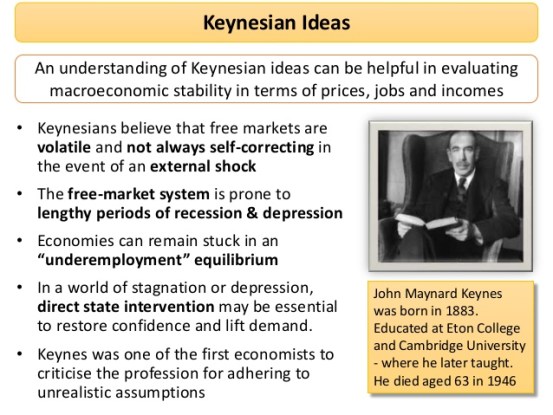
It’s worth noting, however, that Labour’s economic modeling is a big shift away from neoliberalism. With a strong element of ‘mixed economy thinking’, Labour’s manifesto embraces Keynesianism, the model upon which are post-war democratic settlement was based – which gave rise to the creation of the NHS, the welfare state, legal aid, social housing among many other social gains. As such, it is difficult to judge this within a dominant neoliberal framework, since the fundamental ideological premises of the two models are poles apart.

For some context, it’s well worth reading George Monbiot’s excellent article: Neoliberalism – the ideology at the root of all our problems.

Economist John Maynard Keynes was writing at the time of the Great Depression during the 1930s, he sought to understand what went wrong. Keynes disagreed with the classical liberal model – laissez faire – in which governments did not intervene in the economy in the event of recession. Instead he advocated for increased government expenditures and lower taxes to stimulate demand and pull the global economy out of the depression. This approach also led to policies which emphasised the welfare of ordinary citizens as a priority.

Keynes

While Keynesian theory allows for increased government spending during recessionary times, it also calls for government restraint in a rapidly growing economy. This prevents the increase in demand that spurs inflation. It also forces the government to cut deficits and save for the next ‘down cycle’ in the economy.

The BBC’s coverage of the initial IFS report 

The BBC presented cherry-picked comments from the IFS’ initial verdict of party manifestos, and excluded any analysis from economists and academics.

To clarify, the IFS specifically criticised the Labour party’s planned increases to public investment, arguing that the public sector currently lacks the capacity to “ramp up that much, that fast”. As it stands.

That does not suggest the Labour party have been dishonest at all. 

But more importantly, the IFS appears to have accepted the central argument that Labour makes: that increasing spending and investment has a multiplier effect that would boost economic growth. This is a sharp shift away from the neoliberal framework that was put in place by Margaret Thatcher, which had a central strategy of austerity and low public spending. 

The IFS concluded that Labour’s plans, surprisingly, could boost output by £22bn, returning about half that in tax – vastly more than the £5bn assumed by Labour’s own plans. The institute say Labour’s manifesto should be seen as “a long-term prospectus for change rather than a realistic deliverable plan for a five-year parliament”.  This statement somewhat mitigates the early concern regarding the achievability of Labour’s plans in the short term.

The public and governments commonly overestimate what can be done in two years, but underestimate what can be achieved in 10. Under a Labour government, Britain would be a radically different country at the end of the 2020s than at the beginning. Under the Conservatives, nothing at all would change. Austerity would stifle growth and entrench inequality further. 

In fact the Director of the IFS said that, under Tory plans, spending on public services apart from healthcare would still be 14% lower by 2023/24 than it was in 2010/11.

Despite this, he said the Conservatives were continuing to “pretend that tax rises will never be needed to secure decent public services” – and said a pledge from the party not to raise income tax, national insurance or VAT over the next five years was “ill-advised”.

“It is highly likely that the Conservatives would end up spending more than their manifesto implies, and thus taxing or borrowing more,” Johnson added.

Many economists believe that fundamental change and investment is now needed to enable the economy to gain the required momentum to escape the stagnation in which it has been trapped for a decade. As the IFS said yesterday, the choice could not be starker. The Conservatives are only offering the UK more of the same. 

163 economists and academics wrote to the Financial Times, in support of the Labour Party’s manifesto. The economists signed a public letter offering broad support for its proposals for higher public investment to kick start growth and raise productivity. The letter lamented Britain’s poor economic performance of the past decade, and called for “a serious injection of public investment” and said Britain would benefit from greater state involvement in national economic management.

“It seems clear to us that the Labour party has not only understood the deep problems we face, but has devised serious proposals for dealing with them. We believe it deserves to form the next government,” the letter said. 

This support from economists for Labour’s proposals comes as a boost for the party at a time when the Conservatives, who have led the government since 2010, are attacking the party’s manifesto as “likely to cause an economic crisis within months.”

However, the Conservatives inherited an economy that had been taken out of recession caused by the global crash, by the last quarter of 2009. The Conservatives caused another UK recession in 2011. Furthermore, it was the Conservative government that presided over the loss of  the UK’s Fitch and Moody’s triple A international credit status. It’s remarkable that the government managed to maintain the deceit of “economic competence” as long as they have, in the face of such blatant mismanagement of UK finances. 

Michael Jacobs, professor of political economy at Sheffield university, who co-ordinated the letter, said it had been “surprisingly easy” to find economists willing to sign. Many know that fundamental change and a shift away from the neoliberal model is essential for the future prosperity of the UK. 

“The easiest thing for academic economists to do is sit on the fence,” he said, adding that “although academics generally do not go out on a limb, most had been willing to say that the UK faced a big choice and that enough of Labour’s programme accords with their own views”. This is a positive endorsement for Labour’s manifesto.

David Blanchflower was one of the signatories, he is tenured economics professor at Dartmouth College, inthe US. Others include Victoria Chick, emeritus professor of economics at University College London; Meghnad Desai, emeritus professor of economics at the London School of Economics; Stephany Griffith-Jones, emeritus professorial fellow at the Institute of Development Studies; and Simon Wren-Lewis, emeritus professor of economics at Merton College, University of Oxford.

The letter challenged the Conservative claim that it had run a “strong economy” since 2010, saying there had been: 

“10 years of near zero productivity growth”, stagnant corporate investment, low wage growth and increasingly strained public services. With business investment having fallen for most of the past two years, the authors said higher public investment would help raise growth and productivity on its own as well as “leverag[ing] private finance attracted by the expectation of higher demand”.

The IFS accepted Labour’s method of boosting the economy via investment. After a lost decade under the Tories, it’s what Britain needs.

The contrasts within the IFS analysis are highlighted by Tom Kibasi, a writer and researcher on politics and economics. Writing in the Guardian, he says:

“The Tories appear to have broken with the political consensus formed after the Brexit referendum: that the public are hungry for change. Their commitment to the status quo is both an enormous political gamble and a rebuke to working people whose wages have been stagnant for a decade, to the sick waiting for NHS treatment, the elderly suffering from a social care crisis, and more than 4 million children living in poverty.

“It is hard to view it as anything but a monument to born-to-rule entitlement: victory is assumed rather than earned. In the face of a social and economic crisis, the Tories will face the electorate with a solemn promise to do nothing.

“Yet the emptiness of the Conservative manifesto should come as no surprise: it is the logical conclusion of a lost decade for Britain. For nearly 10 years now, Conservative thinking has been defined by the presence of absence: an ideological programme of austerity to slash back the state. The IFS confirmed today that austerity was now “baked in” to Tory plans for the future. Where an active state should be, the Tories intend to leave a void.

“As a political project, Brexit merely prolongs the void, with a false promise that all the problems of the present will magically be solved. In truth, there is no substantive problem to which Brexit is the solution; instead, it nourishes and sustains the nothingness. The IFS starkly warned that Johnson’s “die in a ditch” promise to terminate the transition period by the end of 2020 risked doing serious economic damage.

“The impulse to destroy rather than to create has become the hallmark of 40 years of Tory government – wrecking our industrial base and trade unions under Margaret Thatcher, the public realm under David Cameron, and our international relationships under Theresa May and Boris Johnson.

“But perhaps the most revealing aspect of the IFS analysis was the dishonesty of the Conservatives’ stated plans. The IFS points out that the Tories “would end up spending more than their manifesto implies and thus taxing or borrowing more”, with their proposals riddled with uncosted commitments and vague aspirations.

“Perhaps it should be little surprise that the character of the Tory manifesto reflects the man who leads their party.”

After a decade of austerity, many people are conditioned to accept it was somehow ‘necessary’ rather than it being an ideologically driven choice –  one of several political choices. After a decade of austerity, many are incredulous at the idea that the sixth-largest economy in the world could afford to provide a decent standard of living for its people – that things could be better for them.

But they can be so much better.

The power of the austerity argument is, of course, reinforced by the experience of poverty.

Paul Johnson wrote: “The bigger picture with regard to Labour’s plans is that it is planning a much bigger role for the state in the running of the economy. That’s what nationalisations mean and it’s what government spending an extra 2 per cent of national income on capital projects means. The real resources — workers, raw materials, machinery — would be diverted from the private sector to the public.

“The question, then, is not so much how much all this would all cost; rather, it is how confident are we that these resources would be put to better use in public hands than in private.”

The answer is this: public money in public hands profits the public and  is ploughed back into the economy. By contrast, low public spending and investment and privatisation squeeze the public and costs us in a myriad of ways. Private profit takes money out of the economy, leaving a black hole. It drives wages and living standards down. It drives the quality of public services and utilities down, since the profit motive places profit about meeting public needs.

Labour’s manifesto promises a much needed break from the neoliberal model, which has entrenched inequality and fuelled a growth in absolute poverty within our society. As an ideology, neoliberalism in practice has demonstrated a fundamental incompatibility  with human rights and democracy, particularly evident over the last few years, with reports from the United Nations condemning government policies and the devastating impacts these have had on ordinary people, and in particular, on the violation of disabled people’s human rights, and those of the poorest citizens. 

It’s worth reading  Labour’s economic programme isn’t just radical – it’s credible, too, written by Grace Blakeley, who is the New Statesman’s economics commentator and a research fellow at IPPR. 

You can also hear the comments that Fiona Bruce made on Question Time, on political trust and the IFS report, among other things here.


I  don’t make any money from my work. But you can help if you like by making a donation to help me continue to research and write free, informative, insightful and independent articles, and to provide support to others. The smallest amount is much appreciated – thank you.
DonatenowButton


Boris Johnson is a melt

scared

The Conservative Party is embroiled in a pretty vicious row with Channel 4 over the broadcaster’s decision to “empty chair” Boris Johnson during its election debate on climate change last night, after he failed to turn up. 

Michael Gove offered to take his place, turning up at the studio with the gutless wonder’s father, Stanley Johnson, but the broadcaster said the invitation was for leaders only. Johnson senior was apparently in the ‘spin room’ during the debate with the other party leaders. But he couldn’t make this go away.

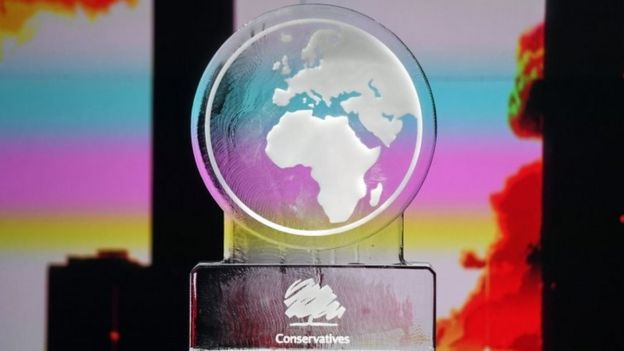
The Tories wrote to Ofcom, saying that placing an ice sculpture on the PM’s podium was a “provocative partisan stunt”. The increasingly paranoid Tories have implied that Channel 4 conspired with and “did a deal” with Jeremy Corbyn. However, it was Johnson’s decision to avoid the debate and duck scrutiny. 

The Labour party has also accused Johnson of “hiding from scrutiny”. Quite properly so. 

Urging the regulator to take action against Channel 4, the Conservative Party accused the broadcaster of “breaking its duty to be impartial” and citing other alleged examples of bias. Seems the Tories are not getting all of their own way with the broadcast media, after all. (See also BBC row with the Tories over ‘misleading’ Facebook advert.)

In a letter to Ofcom, the party says Channel 4 News staged a “provocative partisan stunt, which would itself constitute making a political opinion in its own right” by substituting the PM with an ice sculpture. 

However, there was no giant picture of the Kremlin in the backgound, with a photograph of Boris Johnson imposed on it, wearing a hat that had been photoshopped to look very Russian in the studio… 

Meanwhile, #BorisJohnsonIsAMelt is trending on Twitter.

Conservative sources also briefed journalists at BuzzFeed News and the Telegraph that “if we are re-elected we will have to review Channel 4’s Public Services Broadcasting obligations”.

Channel 4’s public service broadcasting licence is up for renewal in 2024.

Labour’s deputy leader Tom Watson said it was “deeply concerning for Boris Johnson’s Conservative Party to threaten Channel 4 in this way”.

Conservative ice sculptureImage copyrightPA MEDIA
Channel 4 replaced Boris Johnson with an ice sculpture which slowly melted during the debate


Watson has written to Ofcom to urge the regulator to “call out this meddling”.

His letter adds: “Boris Johnson has banned the Daily Mirror from its battle bus, ducked the Andrew Neil interview and now attempted to bully Channel 4.”

Meanwhile, Gove, a former environment secretary, said he was disappointed not to be allowed to take part in the climate debate, adding: “We have a record we are proud of and we want to defend.”

Channel 4 also replaced Brexit Party leader Nigel Farage with ice in the hour-long programme, as he also declined to participate in the debate. 

Channel 4 News editor Ben de Pear said: “These two ice sculptures represent the emergency on planet earth, not in any human form but are a visual metaphor for the Conservative and Brexit parties after their leaders declined our repeated invitations to attend tonight’s vital climate debate.”

The Emergency On Planet Earth debate featured Labour leader Jeremy Corbyn, Liberal Democrat leader Jo Swinson, Scottish First Minister and SNP leader Nicola Sturgeon, Plaid Cymru’s leader Adam Price and Green co-leader Sian Berry.

“Empty chairing” is where a debate or interview is conducted without one of its participants.

‘Hiding from scrutiny’

The debate’s presenter Krishnan Guru-Murthy had urged the Tory leader to change his mind, assuring him he would get a fair hearing.

He said: “This debate has been called for by hundreds of thousands of people from all sorts of different walks of life.”

Guru-Murthy said the leaders would be grilled on how people’s lives will have to change – whether it would involve giving up red meat, going on holiday or ending fast fashion.

Meanwhile, Labour has published 60 questions it wants Boris Johnson to answer, including on sexism, the NHS, Brexit and his ministers.

The party has accused Johnson of “hiding from scrutiny” and its questions include: “Are you scared of Andrew Neil?”

On Thursday, Johnson refused to say whether he would agree to an interview with the BBC’s Andrew Neil, who has already grilled Labour leader Jeremy Corbyn, the SNP’s Nicola Sturgeon, and is planning to interview other party leaders.

When asked several times by the BBC’s Ben Wright if he would take part, Boris Johnson would not confirm it, saying he would have “all sorts of interviews with all sorts of people”. Johnson – who was interviewed by Neil during the Conservative leadership election in July – confirmed negotiations were still taking place, but he said it was “not my job” to make the final decision.

He added: “Other people than me are responsible for those discussions and negotiations, and I do not want to pre-empt what they may decide.”

SNP leader Nicola Sturgeon and Labour leader Jeremy Corbyn took part in 30-minute interviews with  Neil earlier this week.

The BBC’s interview with Lib Dem leader Jo Swinson is set to air on 4 December and another with Brexit Party leader Nigel Farage will be shown on 5 December.

The BBC said it was “in ongoing discussions” with No 10, but said they had not “yet been able to fix a date” for the sit-down discussion between presenter Andrew Neil and the PM.

Looks like he’s frit.


I  don’t make any money from my work. But you can help if you like by making a donation to help me continue to research and write free, informative, insightful and independent articles, and to provide support to others. The smallest amount is much appreciated – thank you.

DonatenowButton

Michael Rosen discusses antisemitism

Michael Rosen shared this article on the Think Left site.

1. I’ve met people who think that there are no Jews left in the Labour Party.

2. I’ve met people who think that the Chief Rabbi is in some way or another in charge of, or a representative of all Jews in Britain.

Neither of these statements is true or anything like true.

There are several Jewish candidates for the Labour Party. There are thousands of Labour Party members who are Jewish. Several times in the media people have said how it’s impossible or ‘not safe’ for Jews to stay in the Labour Party. It’s not impossible. If the media had wanted to, they could have asked Jewish MPs, Jewish candidates in this election ‘Is it impossible or unsafe for you to be in the Labour Party?’ It has been dishonest of them to have not done that.

There are also Rabbis who have either said that they will vote Labour and/or have expressed great concern over the way Jewish religious leaders (Rabbi Romain and the Chief Rabbi) have intervened in this election. You can read about these Rabbis in the Jewish Chronicle online: Rabbi Danny Rich and Rabbi Howard Cooper.

This tells us that within the religious part of Jewish life, there are people who are worried about how religious leaders have politicised religion. In the past this has been levelled at Muslims for having brought in ‘communalist politics’. Commentators like Nick Cohen were particularly scathing about this at the time of, say, George Galloway being elected. The silence in the mass media about the dangers of a religious group saying, in effect, ‘don’t vote for Party X’ are very great. Howard Cooper could see a danger that it could invite persecution.

In this particular election, it is also particularly dangerous because it is a two-horse race. Saying ‘don’t vote Labour’ is in effect saying, ‘Let’s have a victory for the Tories’. This is no surprise, as the Chief Rabbi welcomed the election of Boris Johnson to the leadership of the Tory Party and blessed him.

Johnson is a bigot and a liar. He and the Tories have been quite content to snuggle up to extreme right wing and antisemitic parties in Europe – like Orban in Hungary. He has also kept quiet about the pattern of antisemitism coming from Jacob Rees-Mogg, who has talked of his Jewish colleagues in the House of Commons as ‘illuminati’, questioned whether they ‘understand’ the constitution, he has done the ‘Soros jibe’ (this is an antisemitic ‘trope’ about the financier Soros deemed to be an international wheeler and dealer); Rees-Mogg has also retweeted a tweet from the Alternative für Deutschland – the far-right organisation in Germany and he has had dinner with the far-right British organisation, ‘Traditional Britain Group’. There are other incidents of antisemitism in the Tory party that Boris Johnson has ‘kept silent’ about (Crispin Blunt, Suella Braverman, Toby Young).

Yet, the Chief Rabbi is in effect entrusting those who regard him as their figurehead to a Johnson Tory government!

For clarity’s sake, the Chief Rabbi may ‘speak for’ a majority of Jews in the UK but he does not ‘represent’ them. He is the leader of the United Synagogue which has a congregation of around 40,000. According to the Board of Deputies there are 284,000 Jews in the UK. Half of us are affiliated to synagogues, half of us are not.

In all the surveys of Jewish opinion in the UK, I have never been sure of how the survey of the 142,000 non-religious Jews is done. How do they find us? One survey created a ‘panel’ having found secular Jews by focussing on Jews in areas where there is a high Jewish population and people having ‘Jewish names’. Ahem ahem – apart from Hebrew and Hebraic names there are no Jewish names. Most Jews in this country have German, Polish (if they (we) are ‘Ashkanzim’ or Sephardi names which may be e.g. Italian or Spanish) and/or we have English names! What’s more, since the arrival of many EU citizens, there are many Germans and Poles who have names that before were considered to be ‘Jewish’ like ‘Meyer’ – a standard German name that some Jews have.

The surveys may be accurate – perhaps – but this method of polling looks decidedly dodgy. I have challenged this many times on twitter and no one has successfully defended it so far.

I have been asked several times to come on the radio and TV to talk about supporting Corbyn. I have refused. I have said to the producer – ‘Do the honest thing, talk to a Labour voting rabbi, and/or a Jewish Labour candidate and/or a Jewish Labour Party member.’ The reason why I say this is because

a) I can’t answer any questions that the interviewers ask all the time ‘Is enough being done? Are Jews being bullied in meetings etc’ I don’t want to screw up this matter by appearing on programmes and saying ‘I don’t know…’ or ‘some of my best friends are Jewish and they tell me….x’ It’s a trap.

b) The times I have appeared e.g. on al-Jazeera, the method of dealing with me (or Miriam Margolyes or Alexei Sayle) is to say that we represent no one. At one level, I have to say that that is true. I have never pretended and can’t pretend and would never pretend that I ‘represent’ any other Jews. I have no trouble making another claim that I am entitled to have my views but again, is not great TV in a 2 minute interview!

For the record, for people who are not Jewish: I am no less Jewish than the Chief Rabbi. I was brought up knowing that I was Jewish, and have participated in all my life (read, studied, reflected on, been particularly interested in ) secular Jewish activities to do with Jewish writers, artists, and Jewish history and have of course reflected on this in my writing in hundreds of different ways. I see myself as a poet and performer who has absorbed many traditions one of which is ‘aggadic’ – that of Jewish story-telling.

To say these things has invited Jews and non-Jews on twitter to call me a ‘kapo’ (a Jewish concentration camp guard), a ‘used Jew’ (that from the editor of ‘Jewish News’), someone who ‘dons the cloak of Jewishness’ (a Jewish DJ and actor), one of the ‘useful Jewish idiots’ (from the commentator Dan Hodges, ‘a cheerleader for Soros’ (from Lee Harpin political editor of the Jewish Chronicle), and a plea to the BBC to not employ me to present ‘Word of Mouth’ (from the QC Simon Myerson and the campaigner against antisemitism (!) Euan Philips.

Clearly some people think that the best way to combat antisemitism is to be antisemitic.

Further: the whole question of ‘antisemitism’ has been fogged by an unknowing or unwilling lack of clarity over distinctions between slurs, prejudice, bias, discimination, persecution, incitement to antisemitic violence, and the violence itself. There are times when you might have thought that UK Jews were experiencing a pogrom.

Secondly, the minimum requirements for a claim that there is a ‘problem’ in a given area (e.g. antisemitism in the Labour Party) is that it is distinctly and measurably worse than in other places or in society as a whole. If that hasn’t been shown , (and it hasn’t been) it’s not a Labour Party problem it’s a societal problem.

I’ve known Jeremy Corbyn for 30 years. He is no antisemite. He has put his neck on the line hundreds of times in opposing racism, antisemitism, far right fascism, holocaust denial.

For the record the sudden loss of Jewish support for Labour came when Miliband was leader who the Jewish Chronicle described as ‘toxic’ for Jewish voters. MIliband is Jewish. It was his support for recognition of Palestine before negotiations that did for him, they said. Being Jewish was no shield against this hostility.

Ask me, who am I ‘safer’ with: a Johnson-led government with its record of the ‘hostile environment’, persecution of Windrush generation, and persistent antisemitic jibes from leading party members or this Labour Party, and I say, Labour every time.

But I don’t look at the election purely through a Jewish prism. It is a clear class issue: a Tory government will continue to ravage the lives of of working class people through attacks on wages, public services, and the disabled. A Labour government will halt these and start to reverse them.

World business (‘capitalism’) is in crisis: huge levels of debt, massive ‘productivity’ problems (in their frenzy to compete with each other) a slew towards ‘economic nationallism’ (the Steve Bannon philosophy ) and Johnson is riding the Bannon bus which is driven by the US. The US are desperate to create a bogus ‘free trade’ world, which in actual fact is a US-protectionist world. Johnson is backing this as a ‘solution’.

I’m voting Labour.

Rabbinical Executive of United European Jews write to Jeremy Corbyn dismissing UK media commentary as ‘propaganda’

Corbyn

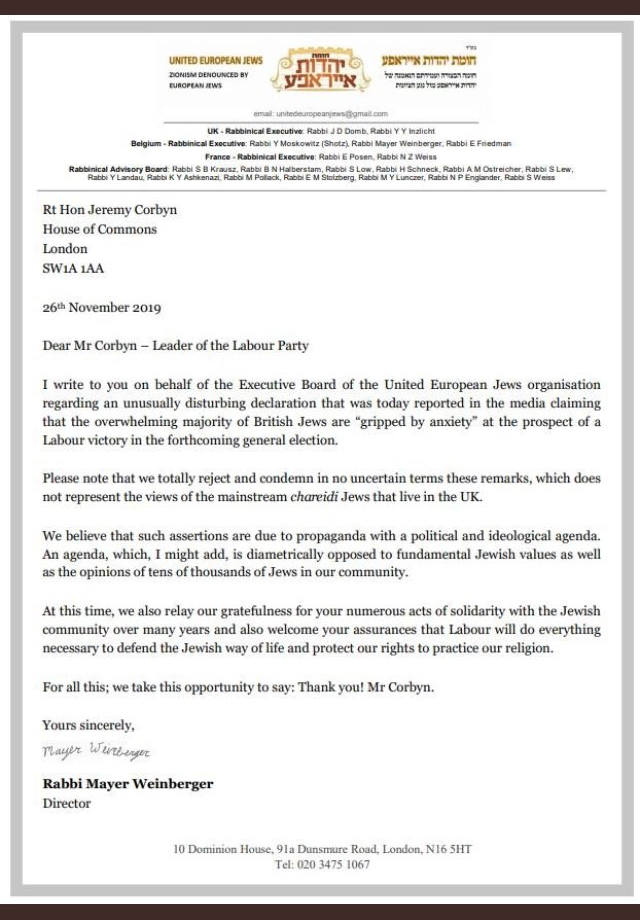
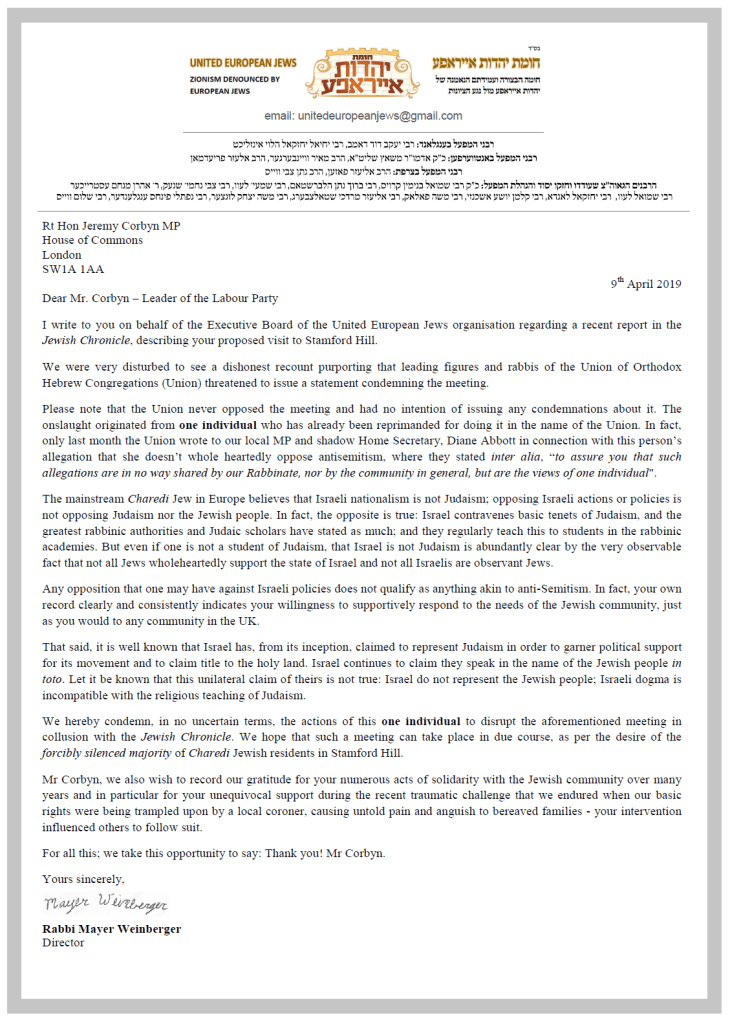
Yesterday a Director of the UK Rabbinical Executive Board wrote a letter to Jeremy Corbyn which, it said, represented the views of the United European Jews organisation (UEJ). The letter said that the organisation “reject and condemn in no uncertain terms” the recent comments in the media, claiming that the “majority of British Jews are gripped by anxiety” at the prospect of a Labour government. The letter states that the media commentary does not represent the views of mainstream Chareidi  Jews who live in the UK.

The letter continues: “We believe that such assertions are due to propaganda with a political and ideological agenda”, which, the group add, “is an agenda diametrically opposed to fundamental  Jewish values, as well as the opinions of tens of thousands of Jews in our community”.

The Rabbinical Executive’s letter goes on to thank the Labour party leader for his “numerous acts of solidarity with the Jewish community over many years”.

A press released by UEJ describes the organisation:

United European Jews is a pan-European organisation that performs research and advocacy concerning topics of Judaism, Jewish identity, and antisemitism. The institute was founded by Rabbi Mayer Weinberger of Belgium in conjunction with Jewish faith leaders throughout Europe.

We engage in educational activities which spread information and catalyze action. UEJ offers a view of Jewish identity that at its core is representative of the mainstream 70,000 chareidi Jews that live in the UK, who do not identify with Israeli nationalism or politics as elemental to their Jewish identity.

We advocate the traditional Orthodox Jewish idea that Jewish identity is defined only by Jewish religious doctrine and is independent of foreign nationalist components. As British Jews, our home and country is the United Kingdom, and our religion is Judaism.
Here is the letter in full:

Letter corbyn

It will be very interesting to see if the media in the UK report on this letter, rather than continuing the concerted attempts to stage manage our democracy.

I would personally like to thank the Rabbinical Executive Board for such a candid, kindly and hope-inspiring letter to a candid, kindly and hope-inspiring politician.

Earlier this year, a similar letter was sent that condemned attempts to report that a  meeting between Corbyn and representatives of London’s Charedi Jewish community had been abandoned because of ‘outrage’ among the community.

The letter also records “our gratitude for your numerous acts of solidarity with the Jewish Community over many years” and thanked Corbyn for his support with recent concerns regarding a coroner who was unsympathetic and unaccommodating to Jewish faith and burial custom

Corbyn’s letter seen by the Gazette, said: “Coroner Hassell’s approach goes against our Jewish and Muslim residents’ faith and is preventing them from grieving for their lost loved ones.”

The letter, co-signed by Emily Thornberry, MP for Islington South & Finsbury, and Islington councillor Richard Watts, notes that other coroner services, including Salford and Bolton’s Coroner Services, use magnetic resonance imaging scans in autopsies, removing the need for “invasive post-mortem techniques that go against a number of religious practices”.

“We regret that Coroner Hassell’s conduct … to date has caused significant upset and undue trauma for people who are already suffering so much and simply want to grieve,’ it states. 

Corbyn said: ‘I have been approached by the Jewish and Muslim communities in Islington and I’m very concerned about the stress families are going through in not being able to complete burials in line with their faiths. I fully support their efforts to ensure public services respect their religious beliefs and traditions – and the coroner service should be no exception.”

2nd letter Jewish

Related

Letter endorsing Jeremy Corbyn signed by key Jewish public figures and  academics

Marginalisation of left leaning Jewish groups demonstrates political exploitation of the antisemitism controversy by the right wing

Over 200 Jewish Labour supporters say: Jeremy Corbyn’s Labour is a Crucial Ally in the Fight against Antisemitism

34 Orthodox Rabbis reject allegations against ‘respected leader’ Jeremy Corbyn

Joseph Finlay, Jeremy Corbyn is an Anti-Racist, Not an Anti-Semite

 Fifty Times Jeremy Corbyn Stood with Jewish People

Anna Boyle, 40 Examples of Corbyn Opposing Antisemitism


I don’t make any money from my work. My site costs me to run. But you can contribute if you like by making a donation and help me continue to research and write free, informative, insightful and independent articles, and to continue to provide support to others who are going through traumatic social security disability assessments and appeals. The smallest amount is much appreciated – thank you.

DonatenowButton