Category: Austerity

Thousands of disabled people have lost their specialist Motability vehicles because of Conservative benefit cuts and many more are likely to be affected

westminster-20121020-00081


In 2012, Esther McVey, then the Minister for people with disabilities, as good as admitted there are targets to reduce or remove eligibility for the new disability benefit Personal Independent Payment (PIP), which was to replace Disability Living Allowance. How else could she know in advance of people’s reassessment that 330,000 of claimants are expected to either lose their benefit altogether or see their payments reduced as she had informed the House of Commons?

This was a clear indication that the new assessment framework was designed to cut support for disabled people. A recent review led the government to conclude that PIP doesn’t currently fulfil the original policy intent, which was to cut costs and “target” the benefit to “those with the greatest need.”

That basically meant a narrowing of eligibility criteria for people formerly claiming Disability Living Allowance, increasing the number of reassessments required, and limiting the number of successful claims. The government have used the review to attempt to justify further restrictions to PIP eligibility, aimed at cutting support for people who require aids to meet fundamental needs such as preparing food, dressing, basic and essential personal care and managing incontinence. “Greatest need” has become an ever-shrinking category under Conservative austerity measures. 

McVey also said that around 200 disabled people in every parliamentary constituency were likely to lose their Motability vehicle when she changed the qualifying walking distance limit from 50 metres to 20-metres. 

And she pointed out that one of the Department for Transport’s own publications, Inclusive Mobility, recommends that “seating should be provided on pedestrian routes at intervals of no more than 50 metres, and that parking spaces for blue badge holders should preferably be provided within 50 metres of the facilities they serve”.

The Motability Scheme helped around 650,000 disabled people to lease specialist cars, wheelchairs and scooters. Anyone on the highest level of the Disability Living Allowance (DLA) was entitled to join the scheme which also helped to pay for expensive adaptations. Motability provides financial help (grants) to disabled people who would not otherwise be able to afford the vehicle or adaptations they need, and the charity undertakes a range of fundraising activities to contribute to the provision of financial help to those Scheme customers whose allowance does not cover the cost of the mobility solution that they need.

Last year, Motability revealed that around 100 disabled people claiming PIP are losing their crucial vehicle benefit every week.

According to Motability, who lease specialised cars and powered wheelchairs to disabled people, 3,000 out of 8,000 of their customers who have so far been reassessed for PIP, who were previously claiming the Disability Living Allowance, have lost their eligibility for the scheme and have therefore had to give up their vehicles.

Motability raised concerns that the government reforms to DLA would affect many more. It has.

Nearly 14,000 disabled people have had their mobility vehicle confiscated after the changes to benefit assessment, which are carried out by private companies. Many more, yet to be reassessed, are also likely to lose their specialised vehicles.

Under the new PIP rules thousands more people who rely on disability allowance to keep their independence are set to lose their vehicles. Many had been adapted to meet their owners’ needs and many campaigners warn that it will lead to a devastating loss of independence for disabled people.

A total of 45% or 13,900 people, were deemed as not needing the higher rate of PIP, and therefore lost their vehicles after reassessment. And out of the 31,200 people who were once on the highest rate of DLA who have been reassessed, just 55%, or 17,300 – have kept their car.

Given that many Motability vehicles are specially adapted to meet the highly individual needs of each person, I wonder what happens to all of those vehicles that are lost under the new restricted benefit eligibility criteria.

Around 51,200 disabled people have joined the Motability scheme using their PIP. Around 360,000 more people will undergo PIP reassessments and that will include “indefinite” or “lifetime” awards under the original DLA support.

Perhaps the government expect that severely and chronically ill people will miraculously recover, their progressive illness will stop progressing, maybe people will grow new limbs, find cures of their own where medical professionals and drug companies have failed and battle their “choice” of disability alone.

Being disabled is very expensive. The charity Scope has calculated that disabled people pay a huge financial penalty over and above the everyday living costs faced by the typical able-bodied person – on average £550 per month. One in ten pay more than £1000 a month over the odds.

Expenses range from door-to-door taxis to get around, extra heating costs, pricey specialist items like wheelchairs, hoists, or stair lifts. There may be extra laundry costs, continence aids, special dietary requirements, a need for home help and meals on wheels. Some disabilities place more wear and tear on shoes and clothing, some people need suitable kinds of footwear. Non-prescription medical items are also an additional cost. These are just a few examples of extra expenses. There are many more that most able-bodied people wouldn’t ever need to think of.

Liz Sayce, chief executive of Disability Rights UK, said: “Being disabled costs money.

The Personal Independence Payment is supposed to help with those costs, but many people are being denied the benefit because they are not assessed properly. Sometimes that means people lose their cars; a massive blow which impacts on their ability to remain independent, take part in their communities or get and keep a job.”

Recent research revealed that of all the appeals related to PIP, 60% of tribunals have ruled in the claimant’s favour.

Motability provides a support package, including a £2,000 grant, to anyone forced to leave the scheme following a PIP reassessment.

The charity added: “This helps individuals to remain mobile, in many cases by purchasing a used car. Motability has already provided some £16m in support through this transitional package.”

The Conservative claim that “Government is committed to supporting the most vulnerable” doesn’t stand up to scrutiny, given the Conservative policy record, including cruelly scrapping the Independent Living Fund, which has had a hugely negative impact on those trying their best to lead independent and dignified lives, and the Access To Work funding has been severely cut, this is also a fund that helps people and employers to cover the extra living costs arising due to disabilities that might present barriers to work. 

Mr Duncan Smith said at the Conservative conference last year that many sick and disabled people “wanted to work” and that the Government should give them “support” to find jobs and make sure the welfare system encouraged them to get jobs. I’m wondering what the word “support” actually means to Conservatives, because there’s every indication that over the past five years, there has only been a withdrawal of essential support and lifeline benefits from those who need them the most.

Article 19 of the United Nations Convention on the rights of persons with disabilities states that persons with disabilities have access to a range of in-home, residential and other community support services, including personal assistance necessary to support living and inclusion in the community, and to prevent isolation or segregation from the community. Article 20 states that Parties shall take effective measures to ensure personal mobility with the greatest possible independence for persons with disabilities, including by:

a) Facilitating the personal mobility of persons with disabilities in the manner and at the time of their choice, and at affordable cost;

b) Facilitating access by persons with disabilities to quality mobility aids, devices, assistive technologies and forms of live assistance and intermediaries, including by making them available at affordable cost;

c) Providing training in mobility skills to persons with disabilities and to specialist staff working with persons with disabilities;

d) Encouraging entities that produce mobility aids, devices and assistive technologies to take into account all aspects of mobility for persons with disabilities.

Article 28 requires that States Parties recognise the right of persons with disabilities to an adequate standard of living for themselves and their families, including adequate food, clothing and housing, and to the continuous improvement of living conditions, and should take appropriate steps to safeguard and promote the realisation of these rights without discrimination on the basis of disability.

It’s difficult to see how the government’s cuts to lifeline disability benefits can possibly be consistent with their obligations to uphold human rights law. 

 

images

If even the DWP isn’t Disability Confident, how will a million disabled people get jobs? – Bernadette Meaden

Nobody would expect a person who suffers blackouts to drive a bus or bin waggon once they had thought through the potentially devastating consequences. But political, cultural, psychological and financial coercion is being used to force sick and disabled people to work – the government continues to cut welfare, which was calculated originally to cover only the costs of meeting basic needs.

Cruel sanctions and strict, inflexible, often unreasonable behavioural conditions are being imposed on lifeline benefit receipt, adversely affecting some of our poorest and most vulnerable citizens; unemployed and disabled people are being stigmatised by the government and the media – all of this is done with an utterly callous disregard of a person’s capacity to work, and importantly, the availabilty of appropriate and suitable employment opportunities, and this can often have tragic consequences.

Modern employment practices, which have an increasingly strong focus on attendance micromanagement, present yet another barrier for disabled people who want to work.

The following is taken from an excellent article which was posted on Bernadette Meaden’s blog, on January 16, 2016.

The numbers of disabled people in ‘absolute poverty’ (unable to meet their basic needs) has risen steeply following welfare reforms. Yet in his most recent party conference speech Iain Duncan Smith said to disabled people, “We won’t lift you out of poverty by simply transferring taxpayers’ money to you. With our help, you’ll work your way out of poverty.”

The recent case  of a Department for Work and Pensions (DWP) employee sacked for taking time off for illness illustrates a truth that the government does not acknowledge. Modern employment practices often appear to be incompatible with its aim of getting sick and disabled people off disability benefits and into work.

In this particular case it was reported that after working at the DWP for thirty four years, Ms Powell, who has a disability, fell foul of its sickness absence procedure, whereby formal action is taken against employees after eight days absence, or four spells of absence within a 12-month period.

‘Health problems meant that Ms Powell was frequently off sick. As some of her absences were related to a disability, her trigger point was adjusted from the usual eight to 12 days. However, Ms Powell later went over her allotted 12 days’ absence by a few days, and she was dismissed.’

A year earlier, a DWP whistleblower had revealed :

“Attendance management continues to get more draconian and sackings have become a regular occurrence: a recent guideline instructed managers to consider dismissal for staff off work for longer than 28 days regardless of the reason.”

So despite its own Disability Confident campaign, which calls on employers to “help improve employment opportunities for disabled people and retain disabled people and those with long term health conditions in your business”, the DWP itself seems unable to provide employment for people who may have long or frequent spells of illness. This would suggest that if you have, say, a long term fluctuating health condition, or a disability that requires frequent hospital appointments, you will find it very difficult to keep a job at the DWP.

Of course the DWP is not alone in this. We know that in some workplaces the pressure to attend even when very ill is overwhelming. At the Sports Direct warehouse, for instance, it was reported that over a two year period, 76 calls for an ambulance had been made, with 36 cases classed as ‘life-threatening’ including strokes, convulsions and breathing problems. One woman gave birth in the toilets, and employees said they were too frightened to take time off when they were ill, in case they lost their job. The employment agency that supplied staff to the warehouse had a ‘six strikes and you’re out’ policy, where a strike could include being off sick, or taking ‘excessive or long toilet breaks’. Very few people with a long term health condition would find it possible to keep their job in these circumstances. 

The reality is that in a fiercely competitive economy and austerity-driven government departments, there is very little room for anyone who has a long term health problem. Perhaps somebody in the government should do a little experiment. Try applying for jobs and declaring a long-term illness or disability which may require regular absences. See how easy it is to get a job.

You can read the rest of Bernadette’s excellent article here.

Related
The new Work and Health Programme: the government plan social experiments to “nudge” sick and disabled people into work

Man walks into Ashton Under Lyne Jobcentre, gets sanctioned goes home and commits suicide. Another day outside the Jobcentre.

11196235_481003708719482_8797603064126897147_n

Source: Man walks into Ashton Under Lyne Jobcentre, gets sanctioned goes home and commits suicide. Another day outside the Jobcentre.

More: Sanctions are founded on Tory psychobabble. You can’t “incentivise” people by starving them

Benefit Sanctions can’t possibly ‘incentivise’ people to work – here’s why


Sick and disabled mother told her benefit is cut on the day she died

A mother who was battling a serious and debilitating lung condition was told that she no longer qualified for benefits on the day she died from her illness.

Dawn Amos, 67, died of chronic obstructive pulmonary disease (COPD), a collection of progressive lung diseases which cause severe breathing difficulties, and increases susceptibility to infections such as pneumonia.

The illness left Dawn with difficulty breathing, she was unable to walk for long periods of time, and she was left struggling to dress herself and unable to manage daily tasks independently.

She received attendance allowance from the Department of Work and Pensions (DWP) to help with the extra costs of her essential personal care for six months, before being reassessed.

Her heartbroken husband Mick Amos, 64, discovered a letter sent from the DWP two days after his wife’s death.

It was a notification that Mrs Amos’s allowance was being withdrawn, based on her “treatment, medication, symptoms and test results.”

The letter had been sent out on November 27, the day that Mr Amos had taken the extremely difficult and very distressing decision to turn off Dawn’s life support machine.

COPD is an incurable, chronic and progressive illness.

Mr Amos said: “It’s disgusting and heartbreaking. We had to turn her machine off.

“How ill do you have to be?

“On the day she died I came downstairs and she couldn’t breathe properly so I phoned the ambulance, who said if she gets worse call us back.

“As soon as I got off the phone she collapsed and I was on the phone again.

“She had stopped breathing and I was doing CPR while I was on the phone to the ambulance.”

Dawn was taken to Broomfield Hospital, where she was put on a life support machine.

Mr Amos and Dawn’s daughter, Karina Mann, agreed to turn off the machine the same day.

Karina, 42, said that her mother had received attendance allowance for six months before they [the DWP] asked to reassess her.

She said: “Obviously she was ill enough for the benefit because we had to watch her die.”

A spokesperson for the Department for Work and Pensions said:

“Our thoughts are with the family of Mrs Amos. The decision was based on evidence which included the opinion of Mrs Amos’ own GP.”

Clearly, the “evidence” was wrong. Again.

However, doctors are not actually permitted to give their medical opinion to the DWP. They are provided with a strictly limited “factual” government form to complete. Such restrictions on qualititative information and medical opinion apply to ALL government forms provided to GPs for the purpose of assessing the “evidence” of patient eligibility for all disability benefits, including Employment Support Allowance. The government informs GPs that:

“Decisions on benefit entitlement are made by non medical decision makers. Decision makers will use your report and will seek the advice of an experienced healthcare professional trained in disability assessment to review and interpret the report where needed.”

The Personal Independence Payment (PIP) form instructs GPs to:

“Please write down facts rather than opinion. We require an objective report – please only include information about symptoms that are recorded in the patient’s records and information about disabling effects that you or another healthcare professional have directly observed.

Please complete all sections as fully as possible but write “not known” if appropriate.  “Not known” can be helpful.”

Members of the General Practitioners Committee (GPC) have voiced concern that patients with long term conditions might be periodically “harrassed” by the Department for Work and Pensions  under the current assessment regime. Dr John Canning, chair of the GPC’s Professional Fees and Regulation Committee and a GP in Middlesbrough voiced concern about patients having to continually “prove” they deserve state support.

The government have persistently ignored the many evidence-based concerns raised by professionals, academic researchers, campaigners and opposition MPs that their austerity policies and anti-welfarism are having an extremely harmful effect, most often on our poorest and most vulnerable citizens.


Welfare sanctions can’t possibly “incentivise” people to work

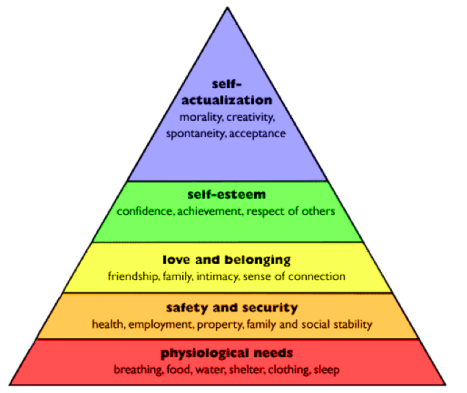
Maslow

Abraham Maslow’s Hierarchy of Human Needs

A summary

The Conservative-led welfare “reforms” had the stated aim of ensuring that benefit claimants – who have been stigmatised and inaccurately redefined as economic free-riders are entitled to a minimum income provided that they uphold responsibilities, which entail being pushed into any available work. Conditionality for social security has been around as long as the welfare state. Eligibility criteria have always been an intrinsic part of the benefits system. For example, to qualify for jobseekers’ allowance, a person has to be out of work, able to work, and seeking employment.

But in recent years welfare conditionality has become conflated with severe financial penalities (sanctions), and has mutated into an ever more stringent, complex, demanding set of often arbitrary requirements, involving frequent and rigid jobcentre appointments, meeting job application targets, providing evidence of job searches and mandatory participation in workfare schemes. The emphasis of welfare provision has shifted from providing support for people seeking employment to increasing conditionality of conduct, enforcing particular patterns of behaviour and monitoring compliance.  In short, welfare has become a hostile environment, designed specifically to deter claims for support.

Sanctions are “penalties that reduce or terminate welfare benefits in cases where claimants are deemed to be out of compliance with  requirements.” They are, in many respects, the neoliberal-paternalist tool of discipline par excellence – the threat that puts a big stick behind coercive welfare programme rules and “incentivises” citizen compliance with a heavily monitoring and supervisory administration. The Conservatives have broadened the scope of behaviours that are subject to sanction, and have widened the application to include previously protected social groups, such as sick and disabled people and lone parents.

There is plenty of evidence that sanctions don’t help people to find work, and that the punitive application of severe financial penalities is having a detrimental and sometimes catastrophic impact on people’s lives. We can see from a growing body of research how sanctions are not working in the way the government claim they intended.

Sanctions, under which people lose benefit payments for between four weeks and three years for “non-compliance”, have come under fire for being unfair, punitive, failing to increase job prospects, and causing hunger, debt and ill-health among jobseekers. And sometimes, causing death.

I’ve always felt that it is self evident – common sense – that if people are already claiming financial assistance which was designed to meet only very basic needs, such as provision for food, fuel and shelter, then imposing further financial penalities would simply reduce those people to a struggle for basic survival, which will inevitably demotivate them and stifle their potential.

However, the current government demand an empirical rigour from those presenting criticism of their policy, yet they curiously fail in meeting the same exacting standards that they demand of others. Often, the claim that “no causal link has been established” is used as a way of ensuring that established correlative relationships, (which often do imply causality,) are not investigated further. Qualitative evidence – case studies, for example – is very often rather undemocratically dismissed as “anecdotal,” which of course stifles further opportunities for research and inquiry.

The Conservative shift in emphasis from structural to psychological explanations of poverty has far-reaching consequences. The partisan reconceptualision of poverty makes it much harder to define and very difficult to measure. Such a conceptual change disconnects poverty from more than a century of detailed empirical and theoretical research, and we are witnessing an increasingly experimental approach to policy-making, aimed at changing the behaviour of individuals, without their consent.

This approach isolates citizens from the broader structural political, economic, sociocultural and reciprocal contexts that invariably influence and shape an individuals’s experiences, meanings, motivations, behaviours and attitudes, causing a problematic duality between context and cognition. It also places unfair and unreasonable responsibility on citizens for circumstances which lie outside of their control, such as the socioeconomic consequences of political decision-making.

I want to discuss two further considerations to add to the growing criticism of the extended use of sanctioning, which are related to why sanctions don’t work. One is that imposing such severe financial penalities on people who need social security support to meet their basic needs cannot possibly bring about positive “behaviour change” or “incentivise” people to find employment, as claimed. This is because of the evidenced and documented broad-ranging negative impacts of financial insecurity and deprivation – particularly food poverty – on human physical health, motivation, behaviour and mental states.

The second related consideration is that “behavioural theories” on which the government rests the case for extending and increasing benefit sanctions are simply inadequate and flawed, having been imported from a limited behavioural economics model (otherwise known as nudge” and libertarian paternalism) which is itself ideologically premised.

I also explored in depth how sanctions and workfare arose from and were justified by nudge theory, which is now institutionalised and deeply embedded in Conservative policy-making. Sanctions entail the manipulation of a specific theoretical cognitive bias called loss aversion.

At best, the new “behavioural theories” are merely theoretical  propositions, at a broadly experimental stage, and therefore profoundly limited in terms of scope and academic rigour, as a mechanism of explanation, and in terms of capacity for generating comprehensive, coherent accounts and understanding about human motivation and behaviour.

I reviewed research and explored existing empirical evidence regarding the negative impacts of food poverty on physical health, motivation and mental health. In particular, I focussed on the Minnesota Semistarvation Experiment and linked the study findings with Abraham Maslow’s central idea about cognitive priority, which is embedded in the iconic hierarchy of needs pyramid. Maslow’s central proposition is verified by empirical evidence from the Minnesota Experiment.

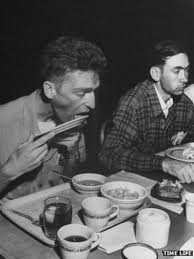
The Minnesota Experiment explored the physical impacts of hunger in depth, but also studied the effects on attitude, cognitive and social functioning and the behaviour patterns of those who have experienced semistarvation. The experiment highlighted a marked loss of ambition, self-discipline, motivation and willpower amongst the subjects once food deprivation commenced. There was a marked flattening of affect, and in the absence of other emotions, Doctor Ancel Keys observed the resignation and submission that hunger manifests.

The understanding that food deprivation dramatically alters emotions, motivation, personality and that nutrition directly and predictably affects the mind as well as the body is one of the legacies of the experiment.

The experiment highlighted very clearly that there’s a striking sense of immediacy and fixation that arises when there are barriers to fulfiling basic physical needs – human motivation is frozen to meet survival needs, which take precedence over all other needs. This is observed and reflected in both the researcher’s and the subject’s accounts throughout the study. If a person is starving, the desire to obtain food will trump all other goals and dominate the person’s thought processes.

In a nutshell, this means that if people can’t meet their basic survival needs, it is extremely unlikely that they will have either the capability or motivation to meet higher level psychosocial needs, including social obligations and responsibilities to seek work. Abraham Maslow’s humanist account of motivation also highlights the same connection between fundamental motives and immediate situational threats.

Ancel Keys published a full report about the experiment in 1950. It was a substantial two-volume work titled The Biology of Human Starvation. To this day, it remains the most comprehensive scientific examination of the physical and psychological effects of hunger.

Keys emphasised the dramatic effect that semistarvation has on motivation, mental attitude and personality, and he concluded that democracy and nation building would not be possible in a population that did not have access to sufficient food.

I also explored the link between deprivation and an increased risk of mental illnesses, including schizophrenia, depression, anxiety and substance addiction. Poverty can act as both a causal factor (e.g. stress resulting from poverty triggering depression) and a consequence of mental illness (e.g. schizophrenic symptoms leading to decreased socioeconomic status and prospects).

Poverty is a significant risk factor in a wide range of psychological illnesses. Researchers recently reviewed evidence for the effects of socioeconomic status on three categories: schizophrenia, mood and anxiety disorders and substance abuse. Whilst not a comprehensive list of conditions associated with poverty, the issues raised in these three areas can be generalised, and have clear relevance for policy-makers.

The researchers concluded: “Fundamentally, poverty is an economic issue, not a psychological one. Understanding the psychological processes associated with poverty can improve the efficacy of economically focused reform, but is not a panacea. The proposals suggested here would supplement a focused economic strategy aimed at reducing poverty.” (Source: A review of psychological research into the causes and consequences of poverty – Ben Fell, Miles Hewstone, 2015.)

There is no evidence that keeping benefits at below subsistence level or imposing punitive sanctions “incentivises” people to work and research indicates it is likely to have the opposite effect. In 2010/2011 there 61,468 people were given 3 days emergency food and support by the Trussell Trust and this rose to 913,138 people in 2013-2014.

Hanna, Gabriel Kreindler, and Benjamin Olken re-analyzed data from seven randomized experiments evaluating cash programs in developing countries and found “no systematic evidence that cash transfer programs discourage work.”

The phrase “welfare dependency” purposefully diverts us from political prejudice, discrimation via policies and disperses public sympathies towards the poorest citizens.

Conservative claims about welfare sanctions are incommensurable with reality, evidence, academic frameworks and commonly accepted wisdom. It’s inconceivable that this government have failed to comprehend that imposing punishment in the form of financial sanctions on people who already have very limited resources for meeting their basic survival needs is not only irrational, it is absurdly and spectacularly cruel.

Minnes

 The Minnesota semistarvation experiment

This is a summary of a much longer, detailed piece of research and review work about welfare sanctions. You can see the original here

Further study of the impact of food deprivation and starvation on psychological and cognitive deterioration: The Psychological Effects of Starvation in the Holocaust

Cognitive function deficits and demotivation associated with food deprivation and hypoglycaemia: Blood glucose influences memory and attention in young adults

Nutritional deficiencies and detrimental consequences for mental health: Nutrition and mental health

A comprehensive study of the detrimental impacts of food insecurity on the development, behaviour, mental health and wellbeing, learning, educational attainment, citizenship and physical health of children in America: Child Food Insecurity: The Economic Impact on our Nation

Comprehensive computerized assessment of cognitive sequelae of a complete 12-16 hour fast

The Minnesota food deprivation experiment also established a link between food insecurity and deprivation and later unhealthful eating practice, eating disorders and obesity: Journal of the American Dietetic Association


UK has shameful but unsurprising levels of inequality


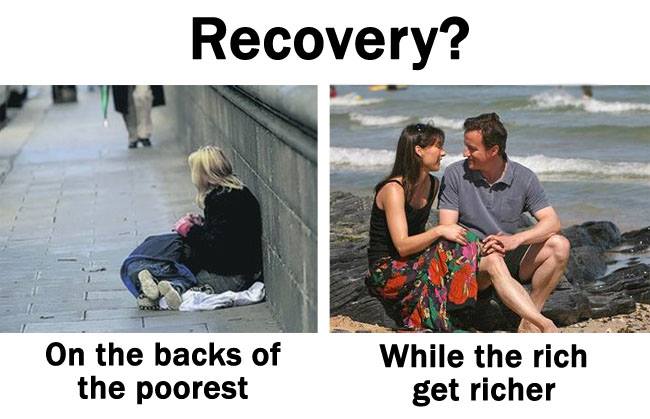
1459720_569627496440116_902730897_n

Austerity was never about what works or what is needed. It’s about traditional Tory class-based prejudices. Austerity is simply a front for policies that are entirely founded on Tory ideology, which is  all about handouts to the wealthy that are funded by the poor.

David Cameron has often denied claims that his party has overseen a rapid rise in inequality. In fact last year, Cameron said that inequality is at its lowest level since 1986. I really thought I’d misheard him. 

This wasn’t the first time Cameron has used this lie. We have a government that provides disproportionate and growing returns to the already wealthy, whilst imposing austerity cuts on the very poorest. How can such a government possibly claim that inequality is falling, when inequality is so fundamental to their ideology and when social inequalities are extended and perpetuated by all of their policies? It seems that the standard measure of inequality has been used to mislead us into thinking that the economy is far more “inclusive’ than it is. Yet the UK is one of the wealthiest nations in the world.

Earlier this year a published report by the Dublin-based Foundation for the Improvement of Living and Working Conditions (Eurofound) stated that the UK has become the most unequal country in Europe, on the basis of income distribution and wages.

The report also says that the UK has the highest Gini coefficient of all European Union (EU) member states – and higher than that of the US. The coefficient is a widely used measure of the distribution of income within a nation, and is commonly used to calculate inequality.

A year ago, the Organisation for Economic Cooperation and Development (OECD) published research that confirmed what most of us already knew: that income inequality actually stifles economic growth in some of the world’s wealthiest countries, whilst the redistribution of wealth via taxes and benefits encourages growth. That debunks one of the nastiest Tory myths. Having long been advocates and engineers of social inequality, implying a mythological  “trickle down” as a justification, and hankering after a savage, axe-wielding minarchism, chopping away at our civilising public services and institutions, they are now officially a cult of vicious cranks. The problem is that the general public don’t pay much attention to research like this. They really ought to.

Conservatism is centred around the preservation of traditional social hierarchy and inequality. Tories see this, erroneously, as an essential element for expanding national economic opportunity. But never equal opportunity.

Conservatives think that civilised society requires imposed order, control and clearly defined classes, with each person aware of their rigidly defined “place” in the social order. Conservatism is a gate-keeping exercise geared towards economic discrimination and preventing social mobility for the vast majority. Inequality is so clearly embedded in policies – which are written statements of political intent.

According to the annual Family Spending Review for 2014, published by  the Office for National Statistics (ONS), the richest 1 per cent of the population have as much wealth as the poorest 57 per cent combined.  Wealth inequality has increased since 2012. The richest 10 per cent own half the country’s wealth.

Charities have urged the government to address Britain’s shameful and growing inequality after the figures published this week show that the country’s richest 10 per cent spend as much on alcohol and cigarettes in a week as the poorest spend on gas and electricity. That turns the dominant “feckless” poor narrative in the media on its head. Poverty doesn’t happen because people have poor budgeting skills. Poverty happens because people don’t have enough money to meet their basic needs.

The richest 10 per cent of households spent more per week on furniture – an average of £43.40 – than the poorest spent on food – £30.40.

The average weekly household spend was found to be £531.30, but there was great variation of this amount between the highest and lowest earning 10 per cent – £1,143.40 and £188.50 per week respectively.

By 2011/12, the poorest fifth of households spent 29 per cent of their disposable income on indirect taxes, compared with 14 per cent paid by the richest fifth. All told, the poorest households pay 37 per cent of their gross income in direct and indirect taxes. In other words, the single biggest expenditure for people in poverty is tax. It is, at the very least, morally unjustifiable to be taxing the poor at such a rate. The most important thing the government can do to help the poor is to stop taking their money.

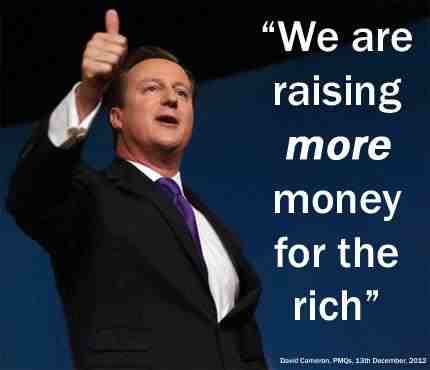
David Cameron did once tell a truth, though it was an inadvertent Freudian-styled slip. He said: We are raising more money for the rich. Yes. From where, I wonder?

Oh yes. The poor.

 382035_141704259313964_676863845_n


 Pictures courtesy of Robert Livingstone


Universal Credit “in-work progression” inquiry launched – call for evidence

ImageVaultHandler.aspx

The Work and Pensions Committee opened an in-work progression in Universal Credit inquiry on the 9th December.

Background of the inquiry

The Department for Work and Pensions (DWP) intends to establish an “in-work service”, designed to encourage individual Universal Credit claimants on very low earnings to increase their income. Benefit payments may be stopped if claimants fail to take action as required by the DWP. The DWP is conducting a range of pilots to test different approaches but there is very little detail about these. The new regime might eventually apply to around one million people.

The Committee is considering the Department’s plans and options for a fair, workable and effective approach.

These measures will make benefit payments to people who are in work, but on low earnings, conditional on them taking certain steps to increase their pay or hours.

Scope of the inquiry:

Written submissions are invited addressing the following points:

    • DWP’s plans for in-work progression pilots in 2015/16, and how they should be evaluated
    • Which organisations are best-placed to deliver the in-work service for DWP e.g. Jobcentre Plus/other providers from the private, public or voluntary sectors?
    • What should in-work progression support entail and how should it be delivered (e.g. regularity and nature of contact with claimants)?
    • Which groups of claimants should be included and which should be exempt?
    • How should employers be encouraged to facilitate progression?
    • In what circumstances would it be appropriate to sanction a Universal Credit claimant who is in work?
    • Is there any UK or international evidence on effective ways of encouraging in-work progression?

The deadline for submissions is Monday 18 January 2016.

Chair’s comment

Rt Hon Frank Field MP DL, Chair of the Work and Pensions Committee, said:

“The welfare-to-work strategy of successive governments has begun to crack the dependency on out-of-work benefits that had appeared to be an almost intractable problem. Efforts now also need to be focused on a welfare-to-work strategy that not only moves claimants off out-of-work benefit, but more importantly helps them move up the pay ladder and out of poverty. Too many people on low benefit incomes have been encouraged into low-paid jobs whose rewards are only brought up to a more acceptable income level by tax credits and other in-work benefits. I hope our Committee therefore will examine the available evidence and carefully develop an approach to in-work support which is effective, and which people accept as fair.”

I will publish my own submission, prompted by Frank Field’s spectacularly misguided and conservative statement, in due course. Here are a few of the issues and concerns I will be raising: 

Field refers to the Conservative “dependency” myth, yet there has never been any empirical evidence to support the claims of the existence of a “culture of dependency” and that’s despite the dogged research conducted by Keith Joseph some years ago, when he made similar claims. In fact, a recent international study of social safety nets from The Massachusetts Institute of Technology (MIT) and Harvard economists categorically refutes the Conservative “scrounger” stereotype and dependency rhetoric. Abhijit Banerjee, Rema Hanna, Gabriel Kreindler, and Benjamin Olken re-analyzed data from seven randomized experiments evaluating cash programs in poor countries and found “no systematic evidence that cash transfer programmes discourage work.”

The phrase “welfare dependencydiverts us from political discrimation via policies, increasing inequality, and it serves to disperse public sympathies towards the poorest citizens, normalising prejudice and resetting social norm defaults that then permit the state to target protected social groups for further punitive and “cost-cutting” interventions to “incentivise” them towards “behavioural change.”

Furthermore, Welfare-to-Work programmes do not “help” people to find jobs, because they don’t address exploitative employers, structural problems, such as access to opportunity and resources and labor market constraints. Work programmes are not just a failure here in the UK, but also in other countries, where the programmes have run extensively over at least 15 years, such as Australia.

Welfare-to-work programes are intimately connected with the sanctioning regime, aimed at punishing people claiming welfare support. Work programme providers are sanctioning twice as many people as they are signposting into employment (David Etherington, Anne Daguerre, 2015), emphasising the distorted priorities of “welfare to work” services, and indicating a significant gap between claimant obligations and employment outcomes.

The Conservatives have always constructed discourses and shaped institutions which isolate some social groups from health, social and political resources, with justification narratives based on a process of class-contingent characterisations and the ascribed responsiblisation of social problems such as poverty, using quack psychology and pseudoscience. However, it is socioeconomic conditions which lead to deprivation of opportunities, and that outcome is undoubtedly a direct consequence of inadequate political decision-making and policy.

It’s worth bearing in mind that many people in work are still living in poverty and reliant on in-work benefits, which undermines the libertarian paternalist/conservative case for increasing benefit conditionality somewhat, although those in low-paid work are still likely to be less poor than those reliant on out-of-work benefits. The Conservative “making work pay” slogan is a cryptographic reference to the punitive paternalist 1834 Poor Law principle of less eligibility.

The government’s Universal Credit legislation has enshrined the principle that working people in receipt of in-work benefits may face benefits sanctions if they are deemed not to be trying hard enough to find higher-paid work. It’s not as if the Conservatives have ever valued legitimate collective wage bargaining. In fact their legislative track record consistently demonstrates that they hate it, prioritising the authority of the state above all else.

There are profoundly conflicting differences in the interests of employers and employees. The former are generally strongly motivated to purposely keep wages as low as possible so they can generate profit and pay dividends to shareholders and the latter need their pay and working conditions to be such that they have a reasonable standard of living.

Workplace disagreements about wages and conditions are now typically resolved neither by collective bargaining nor litigation but are left to management prerogative. This is because Conservative aspirations are clear. They want cheap labor and low cost workers, unable to withdraw their labor, unprotected by either trade unions or employment rights and threatened with destitution via benefit sanction cuts if they refuse to accept low paid, low standard work. Similarly, desperation and the “deterrent” effect of the 1834 Poor Law amendment served to drive down wages.

In the Conservative’s view, trade unions distort the free labor market which runs counter to New Right and neoliberal dogma. Since 2010, the decline in UK wage levels has been amongst the very worst in Europe. The fall in earnings under the Coalition is the biggest in any parliament since 1880, according to analysis by the House of Commons Library, and at a time when the cost of living has spiralled upwards. And whose fault is that?

It’s certainly not the fault of those who need financial support to meet their basic survival needs despite being in employment.

Send a written submission through the in-work progression in Universal Credit inquiry page.

Don’t forget the deadline is Monday 18 January 2016.

8+Ways+to+Protect+Yourself+From+Emotional+Manipulation

Excess Winter Mortality in England and Wales rise by 151%

211055

The Office for National Statistics (ONS) released a health and social care statistical bulletin last month about the excess mortality figures last winter, and a projection of figures for this year. In 2014-2015, there was a 151% rise in excess winter deaths in England and Wales, which represents the biggest yearly increase since records began.

Excess deaths in winter (EWD) continue to be an important public health issue in the UK, potentially amenable to effective interventions. This excess mortality is highest in both relative and absolute terms in elderly people and for certain disease groups. It also varies from area to area. EWD are also associated with cold weather. However, it has been observed that other countries in Europe, especially the colder Scandinavian countries have relatively fewer excess winter deaths in winter compared to the UK.

Elderly people, individuals with low incomes (up to 9 million people in the UK live in fuel poverty), sick and disable people, those with mental health problems, babies and children under five, and pregnant women are considered vulnerable when the outside temperature drops below 6°C. Not all people living in fuel poverty is on benefits or are pension age. In fact, a study last winter found that half of households living in fuel poverty in the UK had someone in work.

The ineffective influenza vaccine was partly blamed for some of the increase over the 2014-15 period. The flu vaccine was quoted to have quite a low effectiveness, between 3% or 4%. By the end of the period it was quoted at 34%, but that is still below what we would expect, which is at least 50% effectiveness. However, most people offered the ‘flu vaccine are also offered a pneumonia vaccine. Pneumonia, a respiratory disease, is a complication of ‘flu that is the biggest cause of mortality. But pneumonia is a complication of other illnesses, too. People are much more susceptible to pneumonia when they are also malnourished and living in poverty. And the category “respiratory disease” includes asthma, bronchitis and a range of other illnesses. The ‘flu vaccine’s efficacy is really something of a red herring. Respiratory disease is always a major cause of death in the UK and research shows consistently that it is more likely to be correlated with poverty than an ineffective ‘flu vaccine.

Janet Morrison, the chief executive of the charity Independent Age, described the figures as shocking. She said: “Even discounting the impact of the flu, the figures are still far higher than in previous years.”

“Councils, the government and energy companies need to help with things like insulating homes and assistance with energy bills for vulnerable customers. But there are also simple things we can all do like checking on our frail and elderly family and neighbours in cold weather. And making sure they are able to take up their flu vaccination, wrap up warm and eat well.”

There were more excess winter deaths in females than in males, as is the case over previous years. Male excess winter deaths increased from 7,210 to 18,400, and female deaths from 10,250 to 25,500 between 2013-14 and 2014-15.

In 2014/15 excess  winter deaths increased significantly in all age groups compared with 2013/14.

Main points of the ONS Bulletin:

  • An estimated 43,900 excess winter deaths occurred in England and Wales in 2014/15; the highest number since 1999/00, with 27% more people dying in the winter months compared with the non-winter months.
  • The majority of deaths occurred among people aged 75 and over; there were an estimated 36,300 excess winter deaths in this age group in 2014/15, compared with 7,700 in people aged under 75.
  • There were more excess winter deaths in females than in males in 2014/15, as in previous years. Male excess winter deaths increased from 7,210 to 18,400, and female deaths from 10,250 to 25,500 between 2013/14 and 2014/15.
  • Respiratory diseases were the underlying cause of death in more than a third of all excess winter deaths in 2014/15.
  • The excess winter mortality index was highest in the South West in 2014/15 and joint lowest in Yorkshire and The Humber, and Wales.

Last month, David Cameron dismissed questions from Jeremy Corbyn about a looming winter crisis in the NHS (and the impact of the proposed cuts to tax credits) by mocking Labour’s move to the left under the new leader.

The prime minister declined an invitation from Corbyn to guarantee that the NHS will avoid a winter crisis this year and instead joked that he would award the Labour leader “full Marx” for creating his own winter crisis in his party.

Cameron has a very nasty habit of trivialising and diverting attention from what are often serious life and death issues for many of our most vulnerable UK citizens.

1375646_536960593040140_93313082_n

Image courtesy of Robert Livingstone

This post was written for Welfare Weekly, which is a socially responsible and ethical news provider, specialising in social welfare related news and opinion.

Corbyn has to get rid of the fanatics mistakenly called ‘realists’ and ‘moderates’

This is an excellent article, first published on the Flassbeck International Economics site, written by political economist, Doctor Will Denayer, which outlines the extensive damage that neoliberalism has caused to Britain and to democracy, endorsed and extended by successive governments since 1979. The author details the propaganda campaign pitched to discredit Corbyn, and concludes with an analysis of how the Labour Party under Jeremy Corbyn can win the next election, and says that the so called Labour “moderates” are anything but moderate. 

I was happy to see my own work linked and cited, too. Kitty.


jeremy-corbyn-1

Anmerkung Heiner Flassbeck: Wie nicht anders zu erwarten, formiert sich bei den Funktionären der Labour-Partei in England massiver Widerstand gegen Jeremy Corbyn, den von der Basis gewählten neuen Vorsitzenden. Will Denayer beschreibt die Stimmung in England sehr gut und zeigt das typische Dilemma auf, in dem sich sozialdemokratische Parteien wiederfinden, die nicht bereit sind, gesamtwirtschaftliche Überlegungen zur Basis ihres Handelns zu machen. Auch in Deutschland kennt man das zur Genüge.
 

For many months, it was a shameful and despicable spectacle to see the Labour bosses mount an attack of the lowest kind imaginable on  a candidate for the leadership of their party because he is a socialist. Or perhaps he’s just a social-democrat. The fear that the Labour party could fall into the hands of a social-democrat was too much for them to bear, so the political and media elite concocted to character-assassinate Jeremy Corbyn. Hundreds of vile articles were produced: Corbyn is an anti-Semite, a sexist, he is friends with the IRA, he is a pacifist, an old hippie, an ideological fossil from a bygone age, he is against the monarchy, with Corbyn we can’t win the 2020 elections. The labour bosses expelled thousands from the party on the flimsiest of excuses: they were ‘infiltrators’ from the left or from the right.

Corbyn received more criticism from the press than any other politician in living memory – and not only from tabloids such as The Sun or The Daily Mail. The liberal The Guardian, The Independent and the BBC gave Corbyn more contempt in a mere couple of months than Cameron suffered in years (see here for the last one of today). According to Jonathan Cook this highlights that, since Blair, both Labour and the Tories have been equally committed to upholding neoliberalism.

You can have either hardcore neoliberalism or slightly more softcore neoliberalism, but that is it (see also here). That is the horizon of British politics.

The assassination hasn’t worked. During the campaign, hundreds of thousands joined the Labour party. It was gigantic. The number of party members tripled. Something big was happening. Blair wrote two articles for The Guardian, begging not to vote for Corbyn’s Alice in Wonderland policies. People told him to go to The Hague. Gordon Brown produced a long diatribe. No one listened. The reason was simple: here is a man that the social base of Labour believes in, a man who speaks their language and defends their interests. Corbyn won by an enormous landslide: he got 59.5 % of the votes. Burnham got 19%, Cooper 17%, Kendall 4.5%.

The people had spoken, but in an oligarchy that does not count. The anti-Corbyn campaign intensified. When Corbyn said that he opposes modernising Trident, rebellion within the party and the shadow cabinet broke out, never mind that military experts and even generals say that he is right. And now, there is the issue of bombing IS. It is not important that a large majority of the population backs Corbyn. The crisis is so acute that manymoderates’ are leaving the party. Barbara Ellen explained her motives in The Guardian. She thinks that her party has been taken over by ‘a bunch of conceited hippies refusing to budge from their favourite beanbags.’ As she explains, ‘the terrible abyss of the Corbyn problem’ is how to deal with ‘politicians who think that looking electable is beneath them.’ And the term moderate became an insult: ‘it is considered too centrist, restrained, temperate, cautious.’

If Corbyn wants to survive, he has to get rid of these ‘moderates’ because they are fanatics. If Corbyn cannot win the 2020 election without the moderates, he cannot win the election with them either. Here’s why. Have a look at policy and what the moderates stand for. It is ideological garbage to portray these people as ‘moderates.’ There is nothing moderate about them and nothing social-democratic either. The Tories claim that there is enormous benefit fraud in the country: 28% to 30% of all social welfare claims may be fraudulent. They cite it as one of the reasons why ‘welfare reform’ is necessary. The real fraud in benefit claims is 0.3–0.5%.

As Owen Jones explains in Chav. The Demonization of the Working Class, that is far from the whole picture: many people abstain from benefits because they are afraid of getting in problems with the Department of Work or with Immigration. Of course, some people’s lives literally depend on benefits. Lose your benefits and you are done. The moderates know about these problems – everybody knows it.

According to Lansley and Mack, who wrote Breadline Britain, twenty million people in the UK are living in poverty. Three and a half million adults go hungry so they can feed their children. Energy prices doubled over the last decade, while average wages fell and benefit cuts push more people in poverty.

More than half of those in poverty are in employment, so it is hard to say that poverty is caused by the fickleness of those who are unwilling to work (see also here). Epidemiological research established a link between the Work Capability Assessment (WCA) and suicide (see also here). This was the reason for an expert group of the UN to step in. The research found that every 10,000 assessments led to around six suicides.

Since there have been more than 1 million assessments, there may be more than 600 people who have taken their own lives who would otherwise have not. The truth of the matter is that both the Conservatives and the Labour moderates have responded with utter indifference to these outright scandalous figures.  Kitty S Jones also refers to a study from Durham University that puts austerity in historical perspective. As a result of unnecessary recession, planned de-industrialisation to break the unions and the Labour opposition, unemployment, welfare cuts and housing policies, Thatcher’s legacy includes the premature death of many British citizens, together with a substantial and continuing intergenerational burden of suffering and loss of wellbeing. The research shows that the massive increase in income inequality under Thatcher – the richest 0.01 per cent of society had 28 times the mean national average income in 1978. By 1990, this was 70 times.

But Cameron has gone much further than Thatcher ever did in cutting essential support and services for protected social groups, such as sick and disabled people and poor citizens. What did the ‘moderates’ of Labour ever do about any of it, except giving speeches about a deserving society? Speaking of Alice in Wonderland: Blair asked Labour party members to vote against a social democrat, so that Labour could remain functional in implementing austerity of a degree that was even never seen under Thatcher.

It gets worse. I present the argument that the lack of any concrete reaction and outcry from Labour to the persecution (yes, persecution!) of the unemployed, the sick, the disabled and the poorest as undeserving scroungers cost Labour the election last May. The rhetoric of Labour is all about improving lives for hard working people, damn those without a job. Labour completely bowed to the ideology, which became, in effect the centre piece of New Labour, that the unemployed had to be made responsible, with an iron fist if necessary, that they had to be activated.

To those who say that Corbyn cannot win an election, the answer is that they lost one. It is clear that Labour lost the elections in last May because it alienated a large part of its traditional base (see here for analysis). And they went on after the elections. When the Tories passed the new welfare reform bill – more austerity, more cuts in welfare and in services, more privatisations, more workfare and more exclusion – many Labour moderates voted in favour of the bill.

The Tories pledged to give the NHS, the National Health Service, an extra £8 billion funding, but the reality is that cancer patients are being denied treatment because of lack of NHS funds.The NHS is safe in our handspromised Cameron, but in the meantime private firms have been handed 41% of the NHS, close to 10,000 NHS beds have been shut, close to 7,500 specialist nurses have been axed, ambulance stations have been closed, unfilled general practitioner posts quadrupled in the last 4 years and the NHS budget saw the worst real-term cut since 1973. Apart from delivering carefully crafted speeches, the Labour moderates did nothing.

Osborne, the chancellor of the Exchequer, created more debt than Labour did in 13 years, indeed, he oversaw the biggest rise in national debt since World War II. According to a City University Report, the budget deficit that Osborne wanted to cut to zero will rise to £40 billion by 2020. The main reason is that the treasury has underestimated the impact of welfare and departmental spending cuts on the broader economy and especially cuts to public sector investment (oh surprise!). The great majority of the public is, of course, opposed to the tornado of privatisations (see graph), but that is no reason to not go ahead with it. Still, I know of no example – not a single one – of the Labour moderates opposing the privatisations.

will
The Tory government oversaw the longest sustained decline in average wages since records began, while, in the same period, the average FTSE100 (Financial Times Stock Exchange 100) executive saw a 151% pay rise. Again, not one word from the moderates. Comedian Chris Purchase made a completely valid point: even if people on benefits do nothing else than drink and smoke (as common hallucination and prejudice go), they would still be paying more tax in the UK individually than Amazon. Did the moderates ever come up with a concrete policy measure that tackles tax evasion? Experts estimate that tax evasion costs the UK economy £25 billion every year, although
Lansley and Mack think that the true figure is likely to be far higher: up to a quarter of the world’s wealth is held in offshore accounts.

If the moderates did not do any of this, what did they do? They made £800 billion available to the bankers. Blair and Brown took the country to war. They introduced fees for students. In the meantime undergraduate student’s fees became the highest in the industrialised world (see here). They committed to austerity and fully accepted the ideology of welfare reform. They deregulated the financial economy and cut public services. The Labour moderates are pro TTIP. In what is still the fourth richest country on earth, close to 7,500 people were admitted to hospital because of malnutrition. Scurvy, scarlet fever, cholera and whooping cough have been increaing since 2010, (see here) but when is the last time that you heard a Labour moderate address homelessness or evictions? This is why Corbyn rose to power. Corbyn won on the basis of an authentic popular revolt of the population against austerity and neoliberalism, be it blue or red. People have enough.

But last week, Corbyn went too far. He opposes Cameron’s plan to bomb IS. Perhaps even more than 100 Labour MPs plan to defy him over the Syria air strikes. This is a real crisis. Twelve years after the moderates took the UK into an illegal war in which ca. 1.3 million Iraqis died, they do it again. This time the pretext is that there is an immanent threat and that an attack will make the UK safer. This is nonsense.

As Todhunter writes in Counterpunch, in the 12 years that preceded the invasion of Iraq, 65 people in Europe died by various terrorist attacks. In the 12 years since the invasion, the terrorist kill rate increased by nearly 600%. Apart from being utterly counterproductive (a point also made by Sahra Wagenknecht in the Tagesschau), bombing IS is illegal: there is no UN mandate for such action, no authorisation from Syria. And who’s paying? Defence Secretary Fallon defends the need ‘to spend less on some things like the welfare system and to spend more on things that really matter to keep our country safe’ (see here). As Todhunter says, with a £12 billion saving on cuts to the welfare budget, Fallon attempts to justify a £12 billion increase to the military budget to help pay for warships, Boeing maritime patrol crafts, surveillance drones and Lockheed Martin jets. The Labour moderates are losing their mind over the fact that Corbyn has the temerity to disagree.

There is only one reason why Labour cannot win an election under Corbyn on a left social democratic platform. Millions have been hammered by Tory austerity. Corbyn can win. The problem is that the Labour bosses want him gone. Corbyn’s policies are not their policies. It is very well possible that Corbyn will be ousted. It would prove that democracy and decency are gone. Frankly, the odds are against him.

You can read the original article here

Court rules that Tory benefit cap unlawfully discriminates against disabled people

10407927_677369232332608_5384979058089243718_n

A high court judge has ruled that Iain Duncan Smith’s welfare policy unlawfully discriminates against disabled people by failing to exempt their carers from the benefit cap. The ruling is the second this year to criticise the cap. In March, the supreme court found that the cap left people claiming benefits unable to house, feed or clothe their family and was therefore in breach of the UK’s obligations regarding international human rights.

Mr Justice Collins said the government’s decision to apply the cap to full-time carers for adult relatives had created serious financial hardship for them, forcing many to give up caring for loved ones, and had also placed extra costs on the NHS and care services.

The ruling comes after two carers brought the case against the Department for Work and Pensions (DWP) following serious concerns that the benefit cap would unfairly harm those who care for their disabled children and relatives. The carers were caring for more than 35 hours a week, the judge said that they were effectively in work, even though they were in receipt of benefits, and therefore should be exempt from the cap.

Carers are able to claim about £60 a week if they care for relatives. These claims, however, were to be included in the £500 a week  benefit cap, which was introduced by the government in the belief that so-called “workless” families need to experience financial loss, a decrease in basic security and a severe decline in their standard of living in order to “incentivise” them to try harder to get a job.

On Thursday, the High Court ruled that the government had breached article 14 of the European Convention on Human Rights. Family carers who receive Carer’s Allowance should be exempt from the benefit cap. The High Court ruled that the Secretary of State for Work and Pensions had indirectly discriminated disabled people by failing to exempt unpaid carers for disabled family members from the cap.

Collins said: “To describe a household where care was being provided for at least 35 hours a week as ‘workless’ was somewhat offensive. To care for a seriously disabled person is difficult and burdensome and could properly be regarded as work.” 

Campaigners have welcomed the decision, highlighting the damaging effects the cap would have had on carers looking after  adult disabled relatives.

Rebecca Hilsenrath, chief executive of the Equality and Human Rights Commission, said: “We are pleased that the court has found the impact on disabled people of losing a family carer had not been properly considered.

“The effect could be profound and the loss of a trusted carer devastating.

“The substantial reduction of income could jeopardise the ability of those affected to continue to care for severely disabled relatives. The court noted that the Secretary of State did not provide any information to Parliament about the effect on disabled people if their family carer were unable to continue.

“The court also held that, rather than saving public money, it would cost considerably more for the care to be provided by local authorities or the NHS.”

Laywers acting for the secretary of state had argued that unpaid carers should be treated as unemployed people who should have to make the same choices as anyone else about whether to work or cut their living costs. But Collins said those providing full-time care could not be in full-time work unless they gave up or cut back significantly on their caring responsibilities.

Unpaid carers made “a huge contribution to society” and “saved the taxpayer the equivalent of £119bn a year,” he said. Were carers forced to give up their role, taxpayer-funded services would have to spend huge amounts providing the care instead.

The judge added that the government should exempt carers because “the cost to public funds if the cap is to be maintained is likely to outweigh to a significant extent the cost of granting the exemption.”

He said: “Nowhere in the impact assessments or in what was put before Parliament was the effect on the disabled of loss of family carers raised. It in my view should have been, since it ought to have been apparent that the impact of a possible loss of a trusted family carer could be profound.

“Reconsideration will I hope be given to whether the present regulatory regime is appropriate, having regard to the hardship it can and does produce.”

A DWP spokesperson said: “We are pleased that the court agrees that the benefit cap pursues a legitimate and lawful aim.

The court didn’t actually agree that.

“The Government values the important role of carers in society – and 98% are unaffected by the cap. We are considering the judgment and will respond in due course.”

On Thursday, the following “urgent” bulletin was released from the Department for Work and Pensions:

Judicial Review in the case of R v Secretary of State of the inclusion of Carer’s Allowance in the benefit cap.

1. Today the judgment has been handed down in a judicial review in the case of R v Secretary of State of the inclusion of Carer’s Allowance in the benefit cap.

2. We are pleased that the Court agrees that the benefit cap pursues a legitimate and lawful aim.

3. However the Court has asked us to look again at the indirect impact on those disabled people whose carer is subject to the cap on household benefit payments.

4. We will consider this judgment and set-out our position in due course. We are continuing to apply the benefit cap as now, and there is no change to applying the cap to carers.

 
The bulletin also provides some questions with answers to enable staff to respond to any enquiries they may receive. You can read those here.

The standard responses to many of the anticipated questions are:

 “We are considering the judgment and will set-out our position in due course.”

“The benefit cap continues to apply.”

 Steve Bell cartoon