Category: Austerity

Nudging conformity and benefit sanctions: a state experiment in behaviour modification

cogs


“Behavioural theory is a powerful tool for the government communicator, but you don’t need to be an experienced social scientist to apply it successfully to your work.”
Alex Aiken
Executive Director of
Government Communications


Normalising structural violence and state punishment 

Conservative anti-welfare discourse excludes the structural context of unemployment and poverty from public conversation by transforming these social problems into individual pathologies of “welfare dependency” and “worklessness.” The consequence is an escalating illogic of authoritarian policy measures which have at their core the intensification of punitive conditionality. These state interventions are justified by the construction and mediation of stigma, which is directed at already marginalised social groups that the policies target.

The groups, which include ill and disabled people, people who are unemployed, are painted with a Malthusian brush, as a “burden on the state” and a drain on what are politically portrayed and publicly seen as scarce resources in an era of austerity. Political processes of scapegoating, stigmatisation and outgrouping have been amplified by a largely complicit UK corporate media. These calculated outgrouping narratives have in turn been used to legitimise state violence.

Such policies and interventions are then rationalised as innovative and new political and economic responses. Behavioural economics theories, which “nudge” is a part of, for example, are aimed at “changing the behaviours” of citizens perceived to “make the wrong choices” – ultimately the presented political aim is to mend Britain’s supposedly “broken society” and to restore a country that “lives within its means”, according to a narrow, elitist view, bringing about a neoliberal utopia built on “economic competitiveness” in a “global race.” 

Disadvantage has become an individualised, private matter: it has been politically reduced and is explained as a private, internal characteristic of disadvantaged individuals, rather than it being an inevitable feature of a socioeconomic form of organisation founded on competitive individualism. This allows the state to depoliticise it, making disadvantage the private and sole responsibility of citizens, whilst at the same time, justifying a psychopolitical approach to changing citizen’s behaviours to fit with neoliberal outcomes. 

Institutions structure political struggles, they provide models, schemas and scripts for citizen’s behaviours. Bureaucratic norms within the welfare state have become increasingly about moral rectification. Debate about addressing structural inequality and poverty has been transformed into political rhetoric about behavioural incentives to change what are deemed to be poor people’s biased attitudes, cognitive deficits and faulty actions. Apparently, wealthy people don’t have these flaws. 

Welfare dependency is now a synonym for poverty, with its perceived dimensions of moral/psychological dependency accepted as a character “trait” or a “personality disorder.”  The sociopolitical relations of subordination, exploitation and economic organisation that were hidden within the discourse of “dependency” have now completely disappeared from public conversations about poverty. 

Context

Narratives about social security in the UK that emphasise a deepening of neoliberalisation became particularly virulent in the context of the global economic crash, which raised threats to the New Right neoliberal hegemony.

In August 2008, James Purnell, then Work and Pensions secretary, ordered a review of welfare to cut costs. The review explored how behavioural economics (nudge) may be used to “motivate” those claiming  welfare support and to establish what the “right conditions” are for the long-term unemployed or to deal with those thought to be “abusing the system.”

The review also addressed issues such as how people’s aversion to loss could be used to reduce the claimant count, which included consideration of the loss of high regard in the community; respect for legitimate authority; reciprocity – including a sense of obligation to give something back – and finally, “social proof” (using normative setting) – responding to the behaviour of others, such as their successful search for work.

Following some targeted survey work carried out by the Department for Work and Pensions, it was claimed that more than half of claimants say they are more likely to look for work because of the threat of sanctions. It was also suggested that attaching more stringent conditions to welfare could draw on the then latest British interest in nudge economics, and the “hidden art of persuasion.” This took place in a context of other European countries and the US exploring similar radical welfare reforms. (See also: Experiments on Unemployment Benefit Sanctions and Job Search Behaviour, 2004).

However, the direct evidence on the impact of sanctions largely concerns how it affected the compliance; rule-following job seeking behaviour and employment rates of those who have actually experienced or been formally warned of a sanction. However, how “employment rates” are actually measured poses a problem, as, in the UK, an outcome of employment is assumed if someone’s claim is closed.

Several US studies have used high quality designs to analyse differences in post-welfare outcomes and found that, on average, those who are sanctioned out of the welfare system are less likely to enter employment than those who leave for other reasons. Sanctioned welfare leavers are more likely to experience severe hardship and some become disconnected from income and other support systems.

Purnell resigned in 2009, as Gordon Brown refused to implement his neoliberal welfare proposals. The Nudge Unit was established and formally instituted as part of the Cabinet in 2010, under Cameron’s coalition government.

I’ve written more than one critical piece about the Government’s part-privatised Nudge Unit – the Behavioural Insights Team – particularly its insidious and malevolent influence on the range of psychocratic policies aimed at “behavioural changes” which are now being imposed on the poorest citizens. 

From the shrinking category of legitimate “disability” to forcing people to work for no pay on exploitative workfare schemes, “nudge” has been used to euphemistically frame punitive policies, “applying the principles of behavioural economics to the important issue of the transition from welfare to work.” (See: Employing BELIEF:Applying behavioural economics to welfare to work, 2010.)

The Conservatives have claimed to make welfare provision “fair” by introducing substantial cuts to benefits and harsh conditionality requirements regarding eligibility to social security, including the frequent use of extremely punitive benefit sanctions as a means of “changing behaviours,” and “incentivising” people to find work, highlighting plainly that the Conservatives regard unemployment and disability as some kind of personal deficit on the part of those who are, in reality, simply casualties of structural constraints; labor market conditions, exclusion from acceptable living standards because of cuts to income and rising living costs, bad political decision-making and subsequent policy-shaped socioeconomic circumstances.

The word “fair” originally meant “treating people equally without favouritism or discrimination, without cheating or trying to achieve unjust advantage.” Under the Conservatives, we have witnessed more than one manipulated semantic shift, words like “fair” , “support” , “reform” , “responsibility”, “opportunities” and “help” , for example, have become embedded in a narrative of superficial  Glittering Generalities – part of a lexicon of persuasion and precarious psychosemantics that simply prop up Tory ideology  – an idiom of belief – in an endlessly erroneous, irrational and self-referential way.

The problem is that the power of a system of such implicit beliefs to defeat valid objections one by one is entirely due to the circularity  and self-perpetuating nature of such systems, as Iain Duncan Smith, who stands firmly within this idiom, consistently demonstrates only too well. After being rebuked by the UK Statistics Authority (ONS) for his claim that his policies have “forced 8,000 benefit claimants back into work” in 2013, he was informed politely that this wasn’t empirically evidenced – his claim could not be proven with his statistics. His response was: “I have a belief that I am right […] you cannot disprove what I said.” His “theory” tells him what he may observe.

There is a gulf between the rhetoric and empirical evidence on benefit sanctions. The evidence base is both small and limited in its scope, and it does not accommodate the differing approaches to preventing poverty and promoting opportunity that arise in international policy design. Increased welfare conditionality and sanctions are too narrowly based on a rhetoric of moral(ising) philosophy, and takes a highly selective approach evidence.

Iain Duncan Smith is the expert Tory pop-psychologist, fluent in psychobabble words like “incentivise” and “behavioural change” and whilst he demands rigorous research standards from academics and his critics, he doesn’t ever uphold those same standards himself.

If you “just know” you’re right, then does it matter if you regularly make up the evidence to support your mighty powers of New Right and very neoliberal intuitions?  It ought to, and it would if Conservative policy was genuinely based on meeting public needs, evidence and objective measures of effectiveness, rather than being based on prejudice and political expediency.

Words like “fair” and “help” now signpost an intentionally misleading Conservative discourse. Nudge permeates language, prompting semantic shifts towards bland descriptors which mask power and class relations, coercive state actions and political intentions. One only need to look at the context in which the government use words like “fair”, “support”, “help” “justice” and “reform” to recognise linguistic behaviourism in action. Or if you prefer, Orwellian doublespeak.

The Conservatives have orchestrated semantic shifts which reflect neoliberal values and reference a distinctive New Right ideological repertoire, from which is constructed basic pseudo-scientific justification narratives, asserting that people claiming welfare do so, as I said previously, because of “faulty” personal characteristics and various types of cognitive incompetence and laziness. In short, the government have pathologised and stigmatised unemployment, redefining it as a psychological disorder.

The government have also problematised welfare, based on the absurd New Right idea that financial support when people really need it somehow creates problems, rather than it being an essential mechanism aimed at alleviating poverty, extending social and economic support, justice and opportunities: social insurance and security

The government have adopted a strongly disciplinarian approach to structural problems such as poverty, using narratives that are strikingly reminiscent of the attitudes and values that shaped the extremely punitive and ill-conceived 1834 Poor Law amendment act.

The post-war welfare state is founded on the idea that government plays a key role in ensuring the protection and promotion of the economic and social well-being of its citizens. It is based on the principles of equality of opportunity, equitable distribution of wealth, and both political and social responsibility for those unable to avail themselves of the minimal provisions for health and wellbeing.

Restricting choices to “choice”

The increased use and rising severity of benefit sanctions became an integrated part of welfare “conditionality” in 2012. Sanctions are based on a principle borrowed from behavioural economics theory – a cognitive bias called “loss aversion.” It refers to the idea that people’s tendency is to strongly prefer avoiding losses to acquiring gains. The idea is embedded in the use of sanctions to “nudge” people towards compliance with welfare rules of conditionality, by using a threat of punitive financial loss, since the longstanding, underpinning Conservative assumption is that people are unemployed because of behavioural deficits.

I’ve argued elsewhere, however, that benefit sanctions are more closely aligned with operant conditioning (behaviourism) than “libertarian paternalism,” since sanctions are a severe punishment intended to modify behaviour and restrict choices to that of compliance and conformity or destitution.

Libertarian paternalists claim that whilst it is legitimate for government, private and public institutions to affect behaviour the aims should be to ensure that “people should be free to opt out of specified arrangements if they choose to do so.” The nudges favoured by libertarian paternalists are also supposed to be “unobtrusive.” That clearly is not the case with the application of coercive, draconian Conservative welfare sanctions.

Last year I wrote about the connection between the Nudge Unit’s pseudoscientific obsession with manipulating people’s decision-making by utilising various cognitive bias theories – in this case, particularly, the behavioural economic theory of loss aversion and the increased use and severity of benefit sanctions. Though most people succumbing to the Nudge Unit’s guru effect (ironically, another cognitive bias) think that “nudging” is just about prompting men to pee on the right spot in urinals, or about persuading us to donate organs and to pay our taxes on time. Nudge is at the very heart of the New  Right’s neo-behaviourist turn, which entails the application of operant conditioning to individualise and privatise social problems such as inequality and poverty. 

When it comes to technocratic fads like nudge, it’s worth bearing in mind that truth and ethics quite often have an inversely proportional relationship with the profit motive. It’s a cognitive bias, if you will.

For anyone curious as to how such tyrannical behaviour modification techniques like benefit sanctions arose from the bland language, inane, managementspeak acronyms and pseudo-scientific framework of “paternal libertarianism” – nudge – read this paper, focused almost exclusively on New Right small state obsessions, paying particular attention to the part about loss aversion, on page 7.

And this on page 18: The most obvious policy implication arising from loss aversion is that if policy-makers can clearly convey the losses that certain behaviour will incur, it may encourage people not to do it,” and page 46: “Given that, for most people, losses are more important than comparable gains, it is important that potential losses are defined and made explicit to jobseekers (e.g. the sanctions regime).”

The recommendation on that page: We believe the regime is currently too complex and, despite people’s tendency towards loss aversion, the lack of clarity around the sanctions regime can make it ineffective. Complexity prevents claimants from fully appreciating the financial losses they face if they do not comply with the conditions of their benefit.”

The Conservatives duly “simplified” sanctions by extending them in terms of severity and increasing the frequency of use. Sanctions have also been extended to include previously protected social groups, such as disabled people.

The paper was written in November 2010, prior to the Coalition policy of increased “conditionality” and the extended sanctions element of the Tory-led welfare “reforms” in 2012.

Sanctioning welfare recipients by removing their lifeline benefit – originally calculated to meet the cost of only basic survival needs – food, fuel and shelter – isn’t about “arranging choice architecture”, it’s not nudging: it’s operant conditioning. It’s a brand of particularly dystopic, psychopolitical behaviourism, and is all about a totalitarian level of micromanaging people to ensure they are obedient and compliant to the needs of  the “choice architects” and policy-makers. Nudge in this context is nothing more than a prop for austerity, neoliberalism and social conservatism.

It is all-pervasive, nudge permeates political rhetoric and discursive practices. Words like “help” and “support” disguise coercive and punitive state actions. Bland language is used to normalise inequality and discriminatory political practices. The word “incentivise,” for example, is used a lot by the Conservatives, but to wealthy people, it means financial privileges in the form of tax cuts and privatised wealth, and to poor people, it means having lifeline income taken away by the state. 

Deploying behavioural modification techniques (and without the public’s consent) marginalises political discussion, stifles public debate, sidesteps democratic dialogue, problem-solving, criticism and challenges and forecloses the possibility of social justice considerations.

Furthermore, an individual’s autonomy, which is also the basis of his or her dignity, as a person, is worthy of protection and should not be interfered with by any kind of behavioural modification, “nudge” or otherwise. Nor should removing people’s lifeline income designed to meet only basic survival needs ever be withdrawn as a state “correction” and punishment.

Nudge operates at a much broader level, too. The intentional political construction of folk devils and purposeful culturally amplified references to a stereotype embodying fecklessness, idleness and irresponsibility, utilising moral panic and manufactured public outrage as an effective platform for punitive welfare reform legislation, is one example of the value-laden application of pseudoscientific “behavioural insights” theory. The new paternalists have drawn on our psychosocial inclinations towards conformity, which is evident in the increasing political use of manipulative normative messaging. (For example, see: The Behavioral Insights Team in the U.K. used social normative messages to increase tax compliance in 2011.) 

The paternalist’s behavioural theories have been used to increasingly normalise a moral narrative based on a crude underpinning “deserving” and “undeserving” dichotomy, that justifies state interventions imposing conditions of extreme deprivation amongst some social groups – especially those previously considered legally protected. Public rational and moral boundaries have been and continue to be nudged and shifted, incrementally. Gordon Allport outlined a remarkably similar process in his classic political psychology text, The Nature of Prejudice, which describes the psychosocial processes involved in the construction of categorical others, and the subsequent escalating scale of prejudice and discrimination

In the UK, the growth and institutionalisation of prejudice and discrimination is reflected in the increasing tendency towards the  transgression of international legal human rights frameworks at the level of public policy-making. Policies that target protected social groups with moralising, stereotypical normative messages, accompanied with operant disciplinary measures, have led to extremely negative and harmful outcomes, but there is a marked political and social indifference to the serious implications and consequences of the impacts of such policies .

The theory tells you what you may observe

There is no evidence that welfare sanctions improve employment outcomes. There is no evidence that sanctions “change behaviours.” There is, in any case, a substantial difference between people conforming with welfare conditionality and rules and gaining appropriate and secure employment.

One difficulty is that since 2011, Job Centre Plus’s (JCP) primary key performance indicator has been off-flow from benefit at the 13th, 26th, 39th and 52nd weeks of claims. Previously JCP’s performance had been measured against a range of performance indicators, including off-flows from benefit into employment.

Indeed, when asked for evidence by the Work and Pensions Committee, one minister, in her determination to defend the Conservative sanction regime, regrettably provided misleading information on the destinations of JSA, Income Support and Employment Support Allowance claimants from 2011, that pre-dated the new sanctions regime introduced in 2012, in an attempt to challenge the findings of the University of Oxford/LSHTM study on the effects of sanctions on getting JSA claimants off-flow. (Fewer than 20% of this group of people who were no longer in receipt of JSA were recorded as finding employment.) Source: Benefit sanctions policy beyond the Oakley Review – Work and Pensions.

Studies have shown that being “treated” by at least one “stick” (punitive measure) significantly reduces an individual’s earnings after periods of unemployment; on the other hand, participating in a supportive programme affects earnings positively.

 Treatment and policy regime effects of Carrots and Sticks, in % of average earnings

 Effects are expressed in percent of average monthly earnings within 3.5 years after unemployment (3547 CHF = 3290 EUR = 3575 USD in sample). Treatment effects: effects of being exposed to at least one carrot (job search assistance, training) or stick (sanction, workfare programme).

Source: Arni, P, Lalive, R, and G J van den Berg (2015) “Treatment versus regime effects of Carrots and Sticks”, IZA Discussion Paper 9457.

It’s remarkably difficult to reconcile state imposed responsibilities that illiberally target only one social group, with democracy and universal human rights, which are based on core principles like dignity, fairness, equality, respect and autonomy.

We ought to question the claim that the manipulation of public decision-making to cut costs to the state is in our “best interests.” Who is nudging the nudgers, and  clearly they have their own whopping great “cognitive biases.”

Behavioural modification techniques are particularly prone to abuse because they are very effective – all tyrants and bullies are behaviourists – and such techniques represent, because of the range of subtle to threatening methods in which they exercise control and can elicit compliance, a political tool that is difficult to observe, challenge and control.

It’s also worth noting that the application of nudge is entirely experimental and nonconsenusal. For the record, when a government in a so called first world liberal democracy – that are generally expected to recognise and address public needs – decides to act upon citizens to change their behaviours to meet partisan, ideologically directed outcomes, we tend to call that authoritarianism, not nudge.

If it wasn’t for this government’s “behaviourist turn” and psychosemantic approach to the inequality and poverty that their policies tend to extend, the Department for Work and Pensions would have been renamed “The Department for Punitive State Correction and Neoliberal Behaviour Modification Experiments.” 

 
Nudge. It’s become another clever little euphemism. 
gcs-guide-to-communications-and-behaviour-change1From the Ministry of euphemism and semantic thrifts, 1984th edition


I wrote much of this as part of a considerably longer piece, but felt that this particular point and the evidence regarding the intensification of sanctions was lost in the weight of other important issues raised in the original article: The government plan social experiments to “nudge” sick and disabled people into work


Related

The benefit cap, phrenology and the new Conservative character divination

Man with diabetes had to have his leg amputated because of benefit sanctions

Cases of malnutrition continue to soar in the UK

Two key studies show that punitive benefit sanctions don’t ‘incentivise’ people to work, as claimed by the government


I don’t make any money from my work. But you can help by making a donation and help me continue to research and write free, informative, insightful and independent articles, and to provide support to others. The smallest amount is much appreciated – thank you.


DonatenowButton cards

When the Right don’t know what their right hand is doing: more embarrassment for the PM regarding the impact of austerity cuts on Tory councils

gret deceitDavid Cameron is under investigation for an alleged breach of the ministerial code, (despite the Tories’ recent edit of it.) He’s been accused of not separating his constituency role with his cabinet role, showing his own constituency preferential treatment regarding Tory austerity cuts.

The Labour Party wrote to the Cabinet Secretary to request a ruling on whether the prime minister broke the code of ethics and conduct after inviting Tory councillors into Downing Street for a private meeting to discuss Tory cuts to frontline services in his Witney constituency.

The ministerial code prevents ministers from using government facilities for party or constituency activities, and this is why Labour has written to the Cabinet Secretary, Sir Jeremy Heywood, asking for a ruling. 

Leaked letters revealed that Cameron became embroiled in an embarrassing row with Oxfordshire County Council, complaining about the impact of “counter-productive” cuts to essential services in his constituency and offered help from Downing Street advisers. 

Labour’s Shadow Cabinet Office minister, Jon Ashworth, told the Today programme: “What I am concerned about is that the Prime Minister seems to be conflating his ministerial role with his role as the member of parliament for Witney.” 

The Prime Minister had protested to the council: “I was disappointed at the long list of suggestions floated – to make significant cuts to frontline services – from elderly day centres, to libraries, to museums. 

“This is in addition to the unwelcome and counter-productive proposals to close children’s centres across the county. I would have hoped that Oxfordshire would instead be following the best practice of Conservative councils from across the country in making back-office savings and protecting the front line.”

He invited Ian Hudspeth, the Oxfordshire county council leader, to Downing Street to discuss the county’s financial situation.

The council leader, who reminded Mr Cameron that he “worked hard to assist you in achieving a Conservative majority”, responded that government funding had almost halved since 2010 and that the council had taken as much out of the back office as possible.

Now another Tory council has written to the PM and to the chancellor, complaining bitterly about the Conservative austerity cuts.

The Conservative leader of Somerset County Council, John Osman, has said in his two letters that it was with “profound sadness” he was writing to object to the proposed reductions to local government budgets:

“The continuing impacts of austerity will affect Somerset County Council’s ability to deliver key services such as:

Children’s social care
Adults social care
Learning disabilities
Special Educational Needs Students
Concessionary fares travel”

He also said in both letters that the public would not “accept a 30 per cent reduction in NHS or education funding” and “Therefore we should not have to accept these damaging reductions to these key services.”

It’s quite remarkable that Conservative councillors don’t seem to grasp what austerity – which is a prop for Conservative small state ideology – actually means to public services and people. They seem to think that the cuts only ought to apply to Labour councils, who already face disproportionately larger cuts to their budgets than Tory councils, in some of the UK’s most deprived areas.

Local authorities controlled by Labour in the north have been the  hardest hit by central government cuts over the past five years, whilst Conservative town halls escaped the lightest, a study by the Sheffield Political Economy Research Institute (SPERI) found.

DWP Staff Gifted £42 Million in ‘Bonus Bonanza’.

IDS_n

At a time when the Conservatives have inflicted draconian cuts on those needing financial support because of illness, disability or losing their job, justifying this by their claim of “economic necessity” and the need to “live within our means” to “pay down the debt”, which is increasing rather than decreasing, the “responsibilities” imposed by the Tory austerity measures apply only to those with the very least.

Meanwhile, Whitehall bureaucrats, many involved in the implementation of the punitive welfare cuts, pocketed more than £90million in hand-outs last year.

Figures obtained by The Huffington Post UK show that in the year to April, 12 Government departments forked out £89.4million in bonuses to staff.

The most rewarding was Department for Work and Pensions, overseen by Iain Duncan Smith, which handed out £42.1million in bonuses to its staff – £38.1million of which went to Senior Civil Servants. And these figures only relate to 12 out of the 20 Government departments, meaning the total bonus figure could soar to almost £140million if the average pay out of almost £7million per department continues.

Labour MP Andrew Gwynne, who uncovered the figures, said: “For all his talk of belt-tightening, these figures show that David Cameron is happy to splash the cash on bonuses.

“Whilst the NHS is in crisis, this bonus bonanza would pay for thousands of new nurses.”

In 2012, the then Treasury minister Danny Alexander vowed to end bonuses for “run of the mill performance” as the coalition Government slashed departmental budgets.

Since 2010-11 the Government says it has restricted awards for senior civil servants to the “top 25 per cent of performers.”

Mark Serwotka, general secretary of the Public and Commercial Services Union called for the bonus system to be scrapped.

He said: “It is unfair and favours the already well paid. The money should be put towards decent pay rises, especially considering that since 2010 rank and file civil servants have seen their real incomes fall by 20 per cent.”

Prospect, a union for professionals, defended the civil service workers and he claimed the focus on bonuses is a “distraction” from the drop in take home pay of many civil servants.

Deputy general secretary Garry Graham said: “Pay in the private sector is increasingly buoyant with average increases running at more than 3.5 per cent. Civil servants have been told that average increases will be capped at 1 per cent until 2020.

“Pay rates in the private sector outstrip those of the public sector – and that gap is only forecast to increase, creating real problems in recruiting and retaining staff, particularly the professional specialists and managers Prospect represents.

“Many, if not all of our members would happily forgo the opportunity to earn a bonus in return for a decent and fair increase to their base pay.

“Government has created the bonus culture in the civil service, not the staff. And only 1 per cent of the civil service paybill is spent on bonuses.”

In a statement alongside his department’s figures, Work and Pensions Minister Justin Tomlinson said: “In line with Civil Service pay guidance, DWP rewards employees for their performance through either end of year non-consolidated payments and/or in-year payments. In year payments are limited to 0.23 per cent of the total DWP paybill.

I can’t help wondering what indicators are used to measure “performance,” and what actually constitutes “good performance.”

This post was written for Welfare Weekly, which is a socially responsible and ethical news provider, specialising in social welfare related news and opinion.

Conservatives in disarray as Osborne signals raid on Duncan Smith’s Universal Credit funds

Chancellor George Osborne

George Osborne and Iain Duncan Smith have clashed over the chancellor’s plans to soften the impact of tax credit cuts by raiding the budget for Universal Credit.

The Centre for Social Justice (CSJ), which was founded by Iain Duncan Smith, insists that the Chancellor could use this month’s Autumn Statement to ease the impact of the controversial changes without risking his drive for a budget surplus.

In a critical report, the thinktank warned against taking money from Duncan Smith’s flagship Universal Credit scheme to sweeten the tax credit pill. Duncan Smith said that he’s concerned that the raid will serve to “undermine people’s incentive to work.”

The CSJ said in their report that the UC reforms meant by 2020 only 9% of those currently getting tax credits would still be receiving them.

Instead, it was suggested that the Government could “help people to work more hours” or introduce a transitional fund for those hardest hit.

But Osborne is nonetheless preparing to fund plans to soften the impact of tax credit cuts by making people claiming Universal Credit forgo as much as 75p of every extra pound they earn. At present Universal Credit recipients lose 65p for every extra pound they earn. Osborne is thought to be examining plans to increase the figure, known as the “taper”, to 75p.

The most expensive course of action would be to only impose the tax credit cuts on new claimants – but the authors note that it would have the “least social and political cost”.

The chief executive of the Centre for Social Justice, Baroness Stroud, who is a former special adviser to the Work and Pensions Secretary said:

“There are no easy choices, but these are the options the Chancellor has. What he should not do is raid Universal Credit to pay for any transitional changes or he will be recreating the same problem there.

“The projected savings through changes to tax credits is £4.4 billion, the Government plans to turn a surplus of £10 billion in 2019-20 and of 11.6 billion in 2020-21.

“Why have a surplus if we can’t protect those on the lowest pay, doing the right thing by taking work?

“The Chancellor can protect these workers and have a surplus by 2020.

“This Government is set to achieve its historic aim to make sure work always pays more than welfare, we shouldn’t put that at risk.”

Paul Johnson, the Director of the respected Institute for Fiscal Studies, questioned whether the move would raise enough to limit the impact of tax credits. He said: “If you are also increasing the taper rate then you are losing quite a lot of the key design of Universal Credit.”

Both the Treasury and the Deparment for Work and Pensions have declined to comment, but Conservative Tim Montgomerie, a columnist for The Times and founder of the Conservative Home website, said he believed George Osborne “could be forced to resign” over his tax credit omnishambles, and he warned that the chancellor faces a “massive rebellion” from his own party because the policy  is “terrible politics”.

“You cannot fight an election saying you are standing up for hard-working families then you cut benefits for hard-working families,” he said.

Perhaps it is time for the Conservatives to recognise that policies are not an ideological tool designed to ensure the government gets its own way in exercising traditional Tory prejudices towards the working and non-working poor.

However, in fairness there has been a series of right-wing backbenchers that have aired their disquiet at the cuts, although that unease may have be motivated by a pragmatic rather than an any ethical objection. The proposed tax credit cuts do make a mockery of the Tory claims to ensuring that “work always pays,”and presents the public with an incoherent narrative that has now lost any credibilty.

Montgomerie said:

“I don’t think George Osborne will tweak,” he said. “If he does just try to get away with this, he will not just be defeated in the Lords, he will be defeated in the Commons.”

539627_450600381676162_486601053_n (2)Courtesy of Robert Livingstone

 —

This post was written for Welfare Weekly, which is a socially responsible and ethical news provider, specialising in social welfare related news and opinion.

Tories and equality? Don’t make me laugh

gret deceitThe government have claimed to be “committed to supporting the most vulnerable” and ensuring “everyone contributes to reducing the deficit, and where those with the most contribute the most.”

Cameron claimed that he intends to devote much of his time in office to “an all-out assault on poverty”, in his speech to the Conservative Party conferencehe also said he wanted to tackle “deep social problems” and “boost social mobility” and remarkably, to “finish the fight for real equality.” 

I can’t help wondering with trepidation what “real equality” actually means to the government.

So, do the Tories walk the talk? Let’s have a look at their track record. Let’s judge prudently, by deeds not words.

Here’s a list of Conservative-led policies from their last term in office:-

The following cuts, amongst others, came into force in April 2013, affecting the poorest citizens:

  • 1 April – Housing benefit cut, including the introduction of the ‘bedroom tax’
  • 1 April – Council tax benefit cut
  • 1 April – Legal Aid savagely cut
  • 6 April – Tax credit and child benefit cut
  • 7 April – Maternity and paternity pay cut
  • 8 April – 1% cap on the rise of in working-age benefits (for the next three years)
  • 8 April – Disability living allowance replaced by personal independence payment (PIP)
  • 15 April – Cap on the total amount of benefit working-age people can receive 
  • Independent Living Fund for disabled people – scrapped
  • Access To Work grant for disabled people – cut

Here are some of the Tory “incentives” for the wealthy:

  • Rising wealth – 50 richest people from this region increased their wealth by £3.46 billion last year to a record £28.5 billion.
  • Falling taxes – top rate of tax cut from 50% to 45% for those earning over £150,000 a year. This is 1% of the population who earn 13% of the income. The wealthiest had a tax cut of £170,000 each per year.
  • No mansion tax and caps on council tax mean that the highest value properties are taxed proportionately less than average houses. Meanwhile, those previously exempt from council tax claiming social security now have to pay due to reductions in their benefit.
  • Benefitted most from Quantitative Easing (QE) – the Bank of England say that as 50% of households have little or no financial assets, almost all the financial benefit of QE was for the wealthiest 50% of households, with the wealthiest 10% taking the lions share
  • Tax free living – extremely wealthy individuals can access tax avoidance schemes which contribute to the £25bn of tax which is avoided every year, as profits are shifted offshore to join the estimated £13 trillion of assets siphoned off from our economy.

As a consequence of the highly discriminatory and blatantly class-contingent Tory policies, inequality in the UK has risen to the highest level amongst all EU countries, and tops even the US – the fatherland of neoliberalism.

Rampant socio-economic inequality apparently is the new Tory “real equality”.

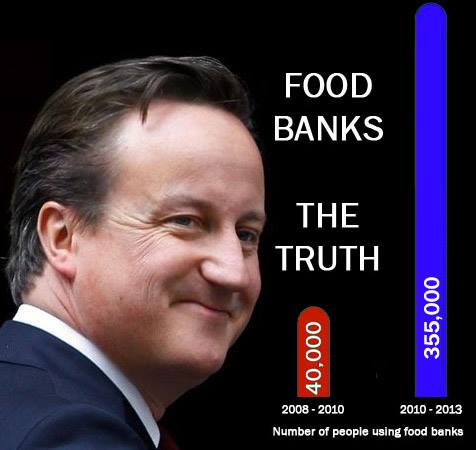
The rise in the need for food banks in the UK, amongst both the working and non-working poor over the past five years and the return of absolute poverty, not seen since before the advent of the welfare state in this country, makes a mockery of government claims that it supports the most vulnerable. 

Income tax receipts to the Treasury have fallen because those able to pay the most are being steadily exempted from responsibility, and wages for many of poorer citizens have fallen, whilst the cost of living has risen significantly over the past five years.

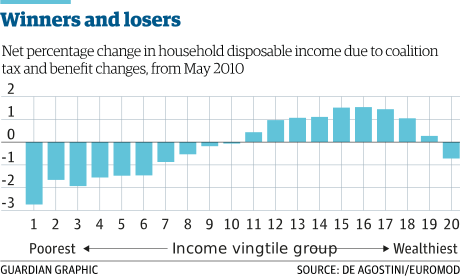
The ideologically motivated transfer of funds from the poorest half of the country to the more affluent has not contributed to deficit reduction. It doesn’t take a genius to work out that the cumulative impact of Tory tax and welfare changes, from out-of-work and in-work benefits to council tax support, to the cut in the top rate of income tax and an increase in tax-free personal allowances, has been extremely regressive and detrimental to the poorest citizens.

The revenue gains from the tax changes and benefit cuts were offset by the cost of tax reductions, particularly the increase in the income tax personal allowance, benefitting the wealthiest.

The Treasury response to this is to single out the poorest yet again for more cuts to “balance the books” – which basically translates as the Conservative “small state” fetish, and deep dislike of the gains we made from the post-war settlement. Yet for a government that claims a non-interventionist stance, it sure does make a lot of interventions. Always on behalf of the privileged class, with policies benefitting only the wealthy minority.

How can Conservatives believe that poor people are motivated to work harder by taking money from them, yet also apparently believe that wealthy people are motivated by giving them more money?

Conservatives regard unemployment and disability as some kind of personal deficit on the part of those who are, in reality, simply casualties of bad political decision-making and subsequent policy-shaped socio-economic circumstances.

The Tory answer to policy-imposed structural constraints is to blame the individual and impose punitive measures to bring about “behavioural change.”

Hang on, don’t we elect governments to meet public needs, not to “change behaviours” of citizens to suit government needs?

This is not about “free markets”, “human nature” or the Tory’s new pet “behavioural science.” It’s policy-making founded entirely on traditional Tory prejudices.

Thanks to The Centre for Welfare Reform for the graphic

Related

There is no such thing as a ‘one nation’ Tory: they always create two nations

Conservatism in a nutshell

Tory dogma and hypocrisy: the “big state”, bureaucracy, austerity and “freedom”

NHS hospital to offer food parcels to patients at risk of malnutrition – Rachel Pugh

1390648_548165358586330_1740107407_n

This article was written by and first published in the Guardian today.

A central food collection point will sit by the canteen at Tameside hospital.

A central food collection point will sit by the canteen at Tameside hospital. Photograph: Christopher Thomond for the Guardian

Emergency staff at a hospital are being asked to offer food boxes discreetly to patients they believe may benefit as they are discharged amid rising concerns among doctors of malnourishment.

Tameside hospital in Greater Manchester is also planning to open a permanent food bank collection centre inside the hospital next month to help the nutrition of both patients and locals in the area.

News of the move came after it was announced on Wednesday by the work and pensions secretary Iain Duncan Smith that job advisers have been posted in a food bank in Manchester as part of a trial set to be rolled out across the UK.

Bosses at Tameside hospital said they had made the decision after doctors and nurses became worried about what they said was a significant rise in patients showing signs of malnourishment, and also staff living locally becoming worried about some neighbours. Staff have been given training to spot malnourishment.

Tameside hospital’s chief executive, Karen James, said: “I was talking to an old lady recovering on a ward, who was in financial difficulties and chose to feed her dog first after paying the bills, whilst she went without. It’s heartrending.”

Elsewhere, the Queen Elizabeth hospital in Birmingham opened a food and clothing bank on its main premises earlier this month, and a spokeswoman said on Wednesday that they had been inundated with donations. In the summer the Royal Victoria Infirmary in Newcastle began offering parcels to parents using its neonatal care unit.

Malnutrition affects three million people in the UK and costs the NHS an estimated £5bn a year.

Malnourished surgical patients have complication and mortality rates three to four times higher than normally nourished patients, with longer hospital admissions. Similar findings have been described in medical patients, and particularly the elderly.

Tameside hospital was placed in special measures in summer 2013 after a review by the NHS England medical director, Sir Bruce Keogh. It was taken out of special measures in September this year.

A spokeswoman for Birmingham’s Queen Elizabeth hospital said its scheme was part of a wider community initiative that involves using hospital land for community orchards, gardens and beekeeping. Twice a month, the hospital hosts a farmer’s market, one of the largest in Birmingham. “Food banks are about more than food,” said the hospital. “People who are referred to them are also offered practical and emotional support by signposting other agencies, whether that is financial advice or counselling services or in some cases help with clothing.”

Speaking earlier on Wednesday, Duncan Smith told the Work and Pensions Committee that people who turn to charities for help when they cannot afford to eat will be given advice on claiming benefits and finding work while they pick up emergency food parcels.

“I am trialling at the moment a job adviser situating themselves in the food bank for the time that the food bank is open, and we are already getting very strong feedback about that,” he said. “If this works and if the other food banks are willing to encompass this and we think it works, we think we would like to roll this out across the whole of the UK.”

Robert Devereux, the permanent secretary to the Department for Work and Pensions, who appeared alongside Duncan Smith at the hearing, said two advisers had been working one day a week at the Lalley Welcome Centre in Manchester.

Duncan Smith said: “They are to provide support to people who come in, and that can include people saying: ‘I haven’t had my payment’,” giving the example of a claimant whose money was delayed because officials had not seen the right documents.”


Corbyn’s best PMQs reveals Prime Minister evades accountability regarding impact of tax credit cuts

Prime ministers questions today

Today, David Cameron strategically evaded a question about his government’s controversial tax credit cuts six times today. The Labour leader, Jeremy Corbyn, had a Jeremy Paxman moment when he repeatedly asked whether people would be left worse off by the cuts after the Treasury revises the proposals.But despite pressing the question, Cameron has yet to respond to it rationally and directly.

Corbyn also challenged Cameron regarding the persistent denial before the election from the Conservatives – including from Cameron, Michael Gove, and the chief whip, that they intended to cut tax credits

The Treasury was forced re-examine the plans after the House of Lords voted down the government’s tax credit cuts twice, tabling amendments to delay the plans until the governmernt took on board new evidence about the negative impacts of the cuts, and until there was better compensation for workers who could lose an average of £1,300 a year.

In a blustering non-response to the Labour leader’s question, Cameron complained that the tax credit plans were defeated by Labour and other opposition peers in a “new alliance of the unelected and unelectable”.

Corbyn responded to an increasingly furious Prime Minister with: “This is not a constitutional crisis. This is a crisis for 3 million people.” 

Corbyn again asked:  “Can he confirm they will not make anyone worse off?”
Cameron responded with:  “He will have to be patient… we will set out our proposals in the Autumn Statement.”

Corbyn said: “People are “very concerned”… “Is he going to cut tax credits or not?”

Cameron said that: “£12 billion welfare cuts were promised in the Tory manifesto. …  I’m happy to have a debate as to how we cut welfare”… “because of what happened in the other place.

“We need to reform welfare.”

The Labour leader cited the case of “Karen” who was concerned about the cuts and said “people are very worried about what’s going to happen to them”.
He said: “Following the events in the Lords on Monday evening, and the rather belated acceptance from the prime minister of the result there, can you now guarantee to the house and the wider country that nobody will be worse off next year as a result of cuts to working tax credits?”

However, the prime minister simply refused to elaborate how the government would reduce the impact of the cuts.

Cameron said : “What I can guarantee is we remain committed to the vision of a high-pay, low-tax, lower welfare economy. We believe the way to ensure everyone is better off is keep growing our economy, keep inflation low, keep cutting people’s taxes and introduce the national living wage.

As for our changes, the chancellor will set them out in the autumn statement.”

Corbyn continued to press Cameron for an answer several times. Cameron admitted that “every penny we do not save” from welfare would have to be found elsewhere,” indicating that the government clearly regards lifeline benefits to poor families as the Treasury’s “disposable income“, and no matter what those political decisions to cut the deficit on the backs of those with the least will cost people in terms of income and living standards, whether in work or not, this government intends to continue with swingeing austerity cuts that target the poorest.

It’s clear that the Prime Minister doesn’t have a response for either Jeremy Corbyn or for all of those hard-working people who are set to lose income and see a drop in their living standards because of the tax credit cuts – many of whom may have voted Conservative at the last election, reassured before the election that their welfare support was safe.

A senior Labour spokesperson said the party regarded Cameron’s House of Lords review “as a smokescreen to cover up the real problem of tax credits”.

Fabian Commission condemns Cameron’s indifference to growing food poverty

poverty+kid

Poverty, and particularly child poverty, is increasing. Welfare cuts, austerity measures and low wages have pushed hundreds of thousands, including more than 300,000 children, below the poverty line since 2012, despite Tory claims to the contrary, according to the New Policy Institute (NPI) thinktank, who undertook a study after the government refused to bring forward the publication of official data which would have shown the impact on poverty figures of the major welfare reforms introduced in 2013, and enabled the coalition’s record to be properly scrutinised before the election.

The Fabian Society has accused the Government of lacking a strategy to combat food poverty and said proposed tax-credit cuts could become an even bigger driver of poverty and food insecurity than low wages. A year-long independent food and poverty commission by the Fabian Society found the Government lacks any strategy for addressing hunger in the UK, making a mockery of the prime minster’s party conference pledge to lead “an all-out assault on poverty” earlier this month.

The Fabian Commission on Food and Poverty has brought together experts, as well as those experiencing poverty, to look at the roles of government, civil society and the food industry in increasing the availability and accessibility of sustainable, nutritious food.

The final report of the Fabian Commmission on Food and Poverty is due to be launched later today.

The Commission is chaired by Geoff Tansey, a renowned writer, consultant and Trustee of the Food Ethics Council. The Commission also includes leading representatives from across civil society, trade unions, academia and the food industry.

Food is becoming more and more expensive, and falling real incomes make healthy, nutritious diets less affordable. Yet food plays a wider role in society than nutrition. We use it to celebrate family events, milestones, rites of passage, festivals, to socialise with, and to express ourselves. Food poverty also means that people often experience social exclusion as well as hunger.

Yet only last week, David Cameron insisted at Prime Minister’s Questions: “I do not want anyone in our country to have to rely on food banks.”

Whilst the chair of the commission, Geoff Tansey, acknowledged Cameron’s comments, he said: “But for food – people’s most basic need – he currently has no means of achieving this aim and no plan to deliver a reduction in food banks, let alone tackle the other links between food and poverty.

“The commission has even found that the Government has no count of the number of people who currently lack secure access to nutritious, affordable food.”

A recent NHS statistics release show that 7,366 people were admitted to hospital with a primary or secondary diagnosis of malnutrition between August 2014 and July this year, compared with 4,883 cases in the same period from 2010 to 2011 – a rise of more than 50 per cent in just four years. Cases of other diseases rife in the Victorian era including scurvy (an illness arising through a lack of vitamin C), scarlet fever, cholera and whooping cough have also increased since 2010.

Chris Mould, chairman of the Trussell Trust, which runs a nationwide network of foodbanks, said they saw “tens of thousands of people who have been going hungry, missing meals and cutting back on the quality of the food they buy”. 

“We meet families from across the UK struggling to put enough food on the table and, at the extreme end, you get people who are malnourished,” he said. “We often see parents who are going without food so that they can feed their children, and these parents often struggle to afford enough nutritious food for their children, too. We don’t think anyone should have to go hungry in the UK, which is why we’re working to engage the public, other charities and politicians across parties to find solutions to the underlying causes of food poverty.”

The Mirror revealed on Monday how food bank volunteers will feed hundreds more hungry children this week:  Children from deprived families will go without free school meals during half term, leaving their hard-up parents unable to afford an additional meal every day.

The desperate reliance on food banks was one of the problems investigated by the panel, during its fact-finding tour interviewing food producers, charities and those living on the breadline.

Mr Tansey has warned it was “not enough to ensure people don’t go hungry. Food banks are just the tip of the iceberg of a much bigger problem.

“We need to make sure no-one lives in fear of not being able to feed themselves or their family, and to break the bigger links between food and poverty and their effect on people’s health, the environment and working conditions.”

The Fabian Society wants an end to food banks by 2020. Its report also calls for a tax on sugary drinks to see if the higher price cuts demand for unhealthy food, appointing a minister charged with eliminating household food insecurity and launching “food access plans” so people find it easier to buy “affordable, nutritious food”.

The commission’s report says: “We need to recognise that food banks and charitable food providers are not solutions to household food insecurity, they are symptoms of society’s failure to ensure everybody is sustainably well-fed.”

The report also notes that many people who are too poor to afford food do not use food banks for fear of the stigma of being labelled.

The report comes just two months after the children’s commissioner issued a report warning that the government’s continued austerity programme, especially the welfare reforms, does not conform to the standards of the United Nations Convention on the Rights of the Child, which protects children from the adverse effects of government economic measures.

Welfare must not be seen as the Treasury’s disposable income

In the 2010 Coalition emergency budget, David Cameron claimed that austerity measures were to be introduced only to reduce the deficit.

Doesn’t anyone else remember that since then, David Cameron stood up at a Lord Mayor’s banquet in London, in front of the financial elite, in November 2013 and ostensibly admitted – and from an ostentatious golden throne, no less – that austerity was not an emergency response to difficult economic events after all, but a permanent disassembling of the state, signalling that he had no intention of resuming public spending once the structural deficit has been eliminated.

Many of us had already recognised that the cuts were ideologically driven. But not enough of us to make a difference in May and to vote and prevent an unforgivable betrayal of future generations. It’s also a grievous betrayal of the previous generations who fought to establish universal suffrage and fought to secure the post-war settlement. Our Social Security, Legal Aid and National Health Service. These are civilising and civilised prerequisites for a fair, human rights-based first world democracy.

proper Blond
There was another fall in income tax receipts that sent Britain’s deficit
spiralling to £12.1bn in August, the widest shortfall in government funding since 2012. So where is our money going exactly?

For a government whose raison d’etre is deficit reduction, the Conservatives aren’t very good at all. And the rigid emphasis on a series of self-imposed fiscal moving goalposts is distracting the government from the social, moral and democratic obligations it is also expected to uphold.

The Office for National Statistics said low wages and a dip in corporation tax receipts were to blame for the worsening situation, which will put pressure on George Osborne ahead of “tough” expenditure decisions due in November when Whitehall agrees its five-year spending targets.

But if you look at Conservative policies, which are designed to redistribute and privatise public wealth, it’s easy to see why this has happened.

The Conservatives regard the income of the poorest as somehow dispensable – the compensatory and disposable income of the Conservative state. Yet the very mention of raising taxes for the rich is met with shrieks of outrage and threats to leave the country. This is always justified in advance by a fresh mainstream narration of the puritan work ethic and the myth of meritocracy.

What’s yours is mine, what’s mine is my own.

What did the imperturbable chancellor promise before the election? True to Tory form, more of the same: austerity for the poor, more public services cuts, and tax breaks for the wealthiest. No mention of tax credit cuts, though, even when Conservatives were asked directly about those. Several times.

But further cuts to lifeline benefits and public services are surely untenable. Absolute poverty has risen dramatically this past four years, heralding the return of Victorian illnesses that are associated with malnutrition. People have died as a consequence of the welfare “reforms”. Supporting the wealthy has already cost the poorest so very much, yet this callous, indifferent, morally nihilistic government are casually discussing taking even more from those with the very least.

Our welfare state arose as a social security safety net – founded on an assurance that as a civilised and democratic society we value the wellbeing and health of every citizen.

There was a cross-party political consensus that such provision was in the best interests of the nation as a whole at a time when we were collectively spirited enough to ensure that no one should be homeless or starving in modern Britain.

As such, welfare is a fundamental part of the UK’s development –  our progress – the basic idea of improving people’s lives was at the heart of the welfare state and more broadly, it reflects the evolution of European democratic and rights-based societies.

A welfare state is founded on the idea that government plays a key role in ensuring the protection and promotion of the economic and social wellbeing of its citizens. It is based on the principles of equality of opportunity, equitable distribution of wealth, and both political and social responsibility for those unable to avail themselves of the minimal provisions for wellbeing.

It was recognised that people experienced periods of economic difficulty because of structural constraints such as unemployment and recession, through no fault of their own. It was also recognised that poor health and disability may happen to anyone through no fault of their own.

The welfare state arose in the UK during the post-war period, and following the Great Depression, for numerous reasons, most of these were informed by research carried out into the causes of poverty, its effects on individuals and more broadly, on the UK economy. There were also political reasons for the Conservatives and Liberals supporting the poorer citizens – the newly enfranchised working class.

Charles Booth in London and Sebohm Rowntree in York carried out the first serious studies of poverty and its causes. They both discovered that the causes were structural – casual labour, low pay, unemployment, illness and old age – not laziness, fecklessness, drunkenness and gambling, as previously assumed. The poverty studies raised awareness of the extent of poverty in Britain and the myriad social problems that caused it, and that it caused.

The Boer war of 1899-1902 highlighted the general poor state of health of the nation. One out of every three volunteers failed the army medical due to malnutrition, other illnesses due to poor diet and very poor living conditions. The military informed the government at the time of the shockingly poor physical condition of many of those conscripted.

We learned that the effects of poverty were potentially damaging to  the whole of society. Health problems and infectious disease – rife in the overcrowded slums – could affect rich and poor alike. It was recognised that the economy suffered if large numbers of people were too poor to buy goods and social problems such as exploitation, debt, crime, prostitution and drunkenness were a direct result of poverty, and not the cause of it.

Related image
The discovery of  widespread poor health as a consequence of poverty raised concerns about Britain’s future ability to compete with new industrial nations such as Germany and the USA. National efficiency would only increase if the health and welfare of the population improved. It was recognised that welfare is about extending opportunities, not “dependency”.

At the same time, the growth of the Labour Party and Trade Unionism presented a threat to the Liberals and the Conservatives. The new working class voters were turning to these organizations to improve their lives. The traditionally laissez-faire Liberals recognised this and supported the idea of government support for the working class.

Yet since 2010, there’s been an unprecedented, historic assault on the very ideal of social security, and it’s sustained and systematic: it didn’t stop with the 2012 welfare cuts.

As I’ve said elsewhere, welfare has been redefined by the Conservatives: it is pre-occupied with assumptions about and modification and monitoring of the behaviour and character of recipients, rather than with the alleviation of poverty and ensuring economic and social well-being.

Policies aimed at restricting support available for families where parents are either unemployed or in low paid work are effectively class contingent policies.

The vast total of around £25bn in benefit cuts already set in motion by the chancellor brings in less than he has freely handed out in personal tax allowances, generous tax breaks, petrol duties and corporation tax cuts. To govern is to make choices. It’s worth noting that the Conservative’s “difficult choices” are resolved by targeting the same social groups, over and over.

Cuts to welfare have been offset by the cost of tax cuts higher up income scale, with no overall contribution to paying down deficit, according to an unsurprising comprehensive study of social policies.

Professor John Hills, director of the London School of Economics (LSE) Centre for Analysis of Social Exclusion, said: “Protection of some of the core parts of the welfare state from the greatest cuts, and initial protection of the value of benefits, meant that those at the bottom, and important services, were initially shielded from the worst effects of the recession.

“But in the second part of the coalition’s period, selective cuts to benefits and to unprotected services have begun to take their toll, leaving the next government … with much greater social policy challenges than the coalition inherited.”

If David Cameron had been honest and declared that his government intended to dismantle our social infrastructure; the welfare state (and yes, that means in-work benefits too), the NHS, legal aid, and to refuse to honour any meaningful legal commitment to human rights, whilst handing out the money generated from this unravelling of our civilising institutions and services, in the form of handsome rewards to feckless millionaires, would he be in office now?

The Tory mantra “Making work pay” is a doublespeak soundbite version of the 1834 Poor Law principle of less eligibility, which is founded on the atrocious idea that poverty is caused by people simply refusing to work, and it can be “cured” if it is made as unbearable as possible. People will work if they are shamed and psychologically coerced. The whole idea of less eligibility is that “workless” people have to be kept in penury to “teach” them value of the work ethic and to discourage others from becoming an “idle pauper.”

But many poor people are in work.

The tax credit cuts proposed by the Conservatives exposed the “shirker” myth for what it is: a lazy, barely coherent narrative – a cover story for an ideologically driven and increasingly irrational government that is happy to reintroduce Dickensian levels of absolute poverty so that a few rich people can increase their wealth. Punishing poor people and creating a desperate class that are prepared to work for next to nothing rather than starve on a grossly inadequate and punitive social security system serves to drive wages down further, reduces working conditions and removes constraint from private sector profit-making.

It serves to dampen down collective bargaining. It changes the relationship between employers and employees, as well as between the state and citizens, turning increasingly desperate, impoverished people into a reserve army of cheap labour.

The welfare “reforms” were never about “making work pay.”

Unless, of course, you ask “for whom, precisely?” 

1379986_541109785958554_2049940708_nCourtesy of Robert Livingstone

Related

The Tories’ war on welfare has caused untold suffering. Here are three ways we can stop it

The New New Poor Law

Conservatism in a nutshell