Category: Conservatives

Transparency International slams Cameron on corruption: “UK must get its own house in order”

images

Image courtesy of Steve Bell

In 2014, I wrote a lengthy article called A reminder of the established standards and ethics of Public Office, as the UK Coalition have exempted themselves, and in it, I discussed the many facets of Conservative corruption. I also highlighted that Transparency International have flagged up many areas of concern in their report: A mid-term assessment of the UK Coalition Government’s record on tackling corruption.

Here is a list of the main causes for concern from 2014, many of which we have reported also:

  • There is no coordinated strategy or action plan to combat corruption in the UK. Data on corruption are not currently collected or are subsumed with other data such as fraud.
  • There is no strategic plan or clear channels of accountability; this is symptomatic of the lack of coordination surrounding Whitehall’s anti-corruption efforts.
  • Resources available to the institutions responsible for fighting corruption have been significantly reduced by the Government. Notably, the Serious Fraud Office’s budget has been cut from £51 million in 2008-9 to £33m in 2012-13. Its budget is expected to fall further to £29m by 2014-15.
  • The Government is seeking to amend the Freedom of Information Act to make it easier for authorities to refuse requests on cost grounds.
  • This Government is threatening to reduce the access of civil society and others to use judicial review mechanisms.
  • Legal Aid is being cut extensively, this is likely to deny access to justice to individuals and groups who are victims of corruption.
  • The Government’s Localism Act abolished the Audit Commission, which in addition to overseeing and commissioning audit for local government and other bodies like the NHS, had statutory functions for investigating financial management and value for money. There was insufficient public discussion and consultation on the decision to abolish the Audit Commission and to debate and discuss the alternatives to it.
  • The Leveson enquiry and associated criminal investigations revealed a disturbing picture of the cosy relationship between politicians and the media, the bribing of police officers by journalists and the lack of will to hold the media accountable even when laws had clearly been broken.
  • Concentration of media ownership remains a significant corruption risk. The Government has thus far failed to implement the Leveson reforms or any alternative.
  • Labour’s Bribery Act has succeeded in encouraging many private companies to implement adequate procedures to combat corruption. However the Coalition has reduced resources for investigation and prosecution.
  • The “Generals for hire scandal” in October 2012 suggests that the current system of controls and oversight of movement between the Government and the private sector is insufficient. There have been too many similar scandals. In July 2012 the Public Administration Select Committee (PASC) recommended that Advisory Committee on Business Appointments (ACoBA) be replaced by a new, statutory, Conflicts of Interest and Ethics Commissioner. This recommendation has been ignored by the Government.
  • The Government has failed to address the problems with Tory political party funding.
  • Cash-for-access scandals indicate that donations to the government are a major source of vulnerability to corruption. Current funding rules lead to a lack of public trust in political parties. 42% of voters believe that donations of over £100,000 are designed to gain access and influence over the Tory party.
  • It has been estimated that billions of pounds of dirty money is laundered into and through the UK each year. Currently the UK and its Overseas Dependent Territories and Crown Dependencies do not require companies to declare who the ultimate beneficial ownership are of companies and trusts. Action taken against the facilitators and enablers of corruption is inadequate, for example, the lawyers, bankers and accountants that handle corrupt transactions.

Now, Tom Pride writes that the anti-corruption organisation, Transparency International, has issued a warning that Cameron must do more to combat corruption. 

You can read the the full statement here.

Read Tom Pride’s full article on Pride’s Purge.


Tom Pride's avatarPride's Purge

In an extraordinary statement, anti-corruption organisation Transparency International has told David Cameron he must do more to combat corruption in his own country.

The strong warning comes on the same day Cameron hosted a summit of international leaders focusing on combating corruption.

Transparency International openly derides the UK’s credentials on corruption, slamming UK companies for “overseas bribery“, the City of London for “laundering corrupt assets” as well as “dirty money” in the UK’s property market and “political corruption scandals” at home.

You can read the the full statement here.

The mainstream press in the UK is unlikely to report this, so please share. Thanks:

View original post

The real economic free-riders are the privileged, not the poorest citizens

PAA-550x369


The government’s undeclared preoccupation with
behavioural change through personal responsibility isn’t therapy. It’s simply a revamped version of Samuel Smiles’s bible of Victorian and over-moralising, a Conservative behaviourist hobby-horse: “thrift and self-help” – but only for the poor, of course.

Smiles and other powerful, wealthy and privileged Conservative thinkers, such as Herbert Spencer, claimed that poverty was caused largely by the “irresponsible habits” of the poor during that era. But we learned historically that the socioeconomic circumstances caused by political decision-making creates poverty. Meanwhile, the state abdicates its democratic responsibilities of meeting the public’s needs and for transparency and accountability for the outcomes and social consequences of its own policies.

Conservative rhetoric is designed to have us believe there would be no poor people if the welfare state didn’t somehow “create” them. If the Tories must insist on peddling the myth of meritocracy, then surely they must also concede that whilst such a system has some beneficiaries, it also creates situations of insolvency and poverty for others.

In other words, the same system that allows some people to become very wealthy is the same system that condemns others to poverty.

This wide recognition that the raw “market forces” of the old liberal laissez-faire (and the current starker neoliberalism) causes casualties is why the welfare state came into being, after all – because when we allow such competitive economic dogmas to manifest, there are invariably winners and losers.

That is the nature of “competitive individualism,” and along with inequality, it’s an implicit, undeniable and fundamental part of the meritocracy myth and neoliberal script. And that’s before we consider the fact that whenever there is a Conservative government, there is no such thing as a “free market”: in reality, all markets are rigged for elites. For example, we have a highly regulated welfare state that enforces “behaviour change” via a punitive conditionality regime, coercing a reserve army of labour into any available work, and a highly deregulated labour market which is geared towards making profit and is not prompted to provide adequately for the needs of a labour force.

Society as taxpayers and economic free-riders – a false dichotomy

The Conservatives have constructed a justification narrative for their draconian and ideologically-driven cuts to social security by manufacturing an intentionally socially divisive and oversimplistic false dichotomy. Citizens have been redefined as either taxpayers (strivers) or economic free-riders (skivers). Those people currently out of employment, regardless of the reason, are categorised and portrayed through political rhetoric and in the media as economic free-riders – the “something for nothing culture.” 

However, not only have most people currently claiming social security, including the majority of disabled people, worked and contributed tax and national insurance, people needing social security support also contribute significantly to the Treasury, because they pay the largest proportion of VAT, council tax, bedroom tax, council care costs and a variety of other stealth taxes. 

A massive proportion of welfare expenditure goes towards paying private companies and organisations to “get people back to work” and in rewarding shareholders with savings from the systematic reduction in benefits. This approach has not helped people out of employment to find secure, appropriate work with acceptable levels of pay, because it rests on a never-ending reduction in the value of the minimum benefit level, which was originally calculated to meet subsistence costs – only those costs of fundamental survival needs, such as for fuel, food and shelter – so that those in poverty are made even poorer, less able to meet basic needs, to serve as an “incentive” to make the advantages of any work, regardless of its quality, pay and conditions, appear to be greater than it is.

This is what Conservatives mean by “making work pay.” It’s exactly the same disciplinarian approach as that which was enshrined in the 1834 Poor Law Amendment Act – the principle of less eligibility. The 1834 Act was founded on a political view that the poor were largely responsible for their own situation, which they could change if they chose to do so.

Seriously, does anyone really imagine that people actually choose to be poor?

The impact of this approach on the large numbers of disabled people in particular, who had no choice but to seek welfare in the Workhouse, was that they were treated very harshly and depersonalised

It’s also clear that the underpinning Poor Law Amendment categories of “deserving” and “undeserving” poor – another false dichotomy – and the issue of eligibility for social security is still on the Conservative welfare policy agenda. Worryingly, the current trend is for the government to create stereotypes, frequently portraying the recipients of types of support, such as Disability Living Allowance, as passive or inactive economic free-riders, when in fact the Allowance was paid to some individuals working in the paid labour market, and the withdrawal of such funds, prevents them continuing with such paid work. More recently, the difficulties that many disabled people have encountered in accessing Personal Independence Payments (PIP) because of increasingly narrow eligibility criteria, have meant that many who depend on the income to meet the additional costs of living independently, such as specially adapted motability vehicles, have been forced to give up work.

The state confines its attention mainly to re-connecting disabled people deemed too ill to work with the labour market, without any consideration of potential health and safety risks in the workplace, as a strategy of “support.” Without any support.

As previously summarised, the Conservatives justify the draconian cuts to support as providing “incentives” for people to work, by constructing a narrative that rests on the false and socially divisive taxpayer/free-rider dichotomy:cant

By “trolls” Michael Fabricant actually means disabled people and campaigners responding to his tweet.

Of course one major flaw in Fabricant’s reasoning is that many people passed as fit for work are anything but. The other is that disabled people pay taxes too.

The increasing conditionality of welfare mirrors the increasing conditionality of the labour market

Under the guise of lifting burdens on business, the government has imposed burdens on those with disabilities by removing the “reasonable adjustments” that make living their lives possible and allowing dignity. The labour market is unaccommodating, providing business opportunities for making profit, but increasingly, the needs and rights of the workforce are being politically sidelined. This will invariably reduce opportunities for people to participate in the labour market because of its increasingly limiting terms and conditions.

Of those that may be able to work, over time, their would-be employers have not engaged with legal requirements and provided adjustments in the workplace to support those disabled people seeking employment. The government have removed the Independent Living Fund, and reduced Access to Work support, Personal Independence Payment (PIP) is very difficult to access because of the stringent eligibility criteria, whilst the disability benefit Employment Support Allowance was also redesigned to be increasingly difficult to qualify for.

Policies, which exclude disabled people from their design and rationale, have extended and perpetuated institutional and cultural discrimination against disabled people.

The universal character of human rights is founded on the inherent dignity of all human beings. It is therefore axiomatic that people with medical conditions that lead to disabilities, both mental and physical, have the same human rights as the rest of the human race. The United Nations is currently investigating this government’s gross and systematic violations of the Convention on the Rights of Persons with Disabilities (CRPD), and a recent report from the House of Lords Select Committee on the Equality Act 2010 and Disability, investigating the Act’s impact on disabled people, has concluded that the Government is failing in its duty of care to disabled people, because it does not enforce the act. Furthermore, the Select Committee concludes that the government’s red tape challenge is being used as a pretext for removing protections for disabled people. This is a government that regards the rights and protections of disabled people as nothing more than a bureaucratic inconvenience.

The inflexibility of the labour market isn’t an issue for only disabled people. The Department for Work and Pensions (DWP) intends to establish an “in-work service”, designed to encourage individual Universal Credit claimants on very low earnings to increase their income. Benefit payments may be stopped if claimants fail to take action as required by the DWP. The DWP is conducting a range of pilots to test different approaches but there is very little detail about these. The new regime might eventually apply to around one million people. In december last year, the The Work and Pensions Committee opened an in-work progression in Universal Credit inquiry to consider the Department’s plans and options for a fair, workable and effective approach.

The Conservatives continue to peddle the “dependency” myth, yet there has never been any empirical evidence to support the claims of the existence of a “culture of dependency” and that’s despite the dogged research conducted by Keith Joseph some years ago, when he made similar claims. In fact, a recent international study of social safety nets from The Massachusetts Institute of Technology (MIT) and Harvard economists categorically refutes the Conservative “scrounger” stereotype and dependency rhetoric. Abhijit Banerjee, Rema Hanna, Gabriel Kreindler, and Benjamin Olken re-analyzed data from seven randomized experiments evaluating cash programmes in poor countries and found “no systematic evidence that cash transfer programmes discourage work.”

The phrase “welfare dependencydiverts us from political discrimation via policies, increasing inequality, and it serves to disperse public sympathies towards the poorest citizens, normalising prejudice and resetting social norm defaults that then permit the state to target protected social groups for further punitive and “cost-cutting” interventions to “incentivise” them towards “behavioural change.”

Furthermore, Welfare-to-Work programmes do not “help” people to find jobs, because they don’t address exploitative employers, structural problems, such as access to opportunity and resources and labor market constraints. Work programmes are not just a failure here in the UK, but also in other countries, where the programmes have run extensively over at least 15 years, such as Australia.

Welfare-to-work programes are intimately connected with the sanctioning regime, aimed at punishing people claiming welfare support. Work programme providers are sanctioning twice as many people as they are signposting into employment (David Etherington, Anne Daguerre, 2015), emphasising the distorted priorities of “welfare to work” services, and indicating a significant gap between claimant obligations and employment outcomes.

The Conservatives have always constructed discourses and shaped institutions which isolate some social groups from health, social and political resources, with justification narratives based on a process of class-contingent characterisations and the ascribed responsiblisation of social problems such as poverty, using quack psychology and pseudoscience. However, it is socioeconomic conditions which lead to deprivation of opportunities, and that outcome is undoubtedly a direct consequence of inadequate political decision-making and policy.

It’s worth bearing in mind that many people in work are still living in poverty and reliant on in-work benefits, which undermines the libertarian paternalist/Conservative case for increasing benefit conditionality somewhat, although those in low-paid work are still likely to be less poor than those reliant on out-of-work benefits. 

The government’s Universal Credit legislation has enshrined the principle that working people in receipt of in-work benefits may face benefits sanctions if they are deemed not to be trying hard enough to find higher-paid work. It’s not as if the Conservatives have ever valued legitimate collective wage bargaining. In fact their legislative track record consistently demonstrates that they hate it, prioritising the authority of the state above all else.

There are profoundly conflicting differences in the interests of employers and employees. The former are generally strongly motivated to purposely keep wages as low as possible so they can generate profit and pay dividends to shareholders and the latter need their pay and working conditions to be such that they have a reasonable standard of living.

Workplace disagreements about wages and conditions are now typically resolved neither by collective bargaining nor litigation but are left to management prerogative. This is because of deregulation to suit employers and not employees.  Conservative aspirations are clear. They want cheap labour and low cost workers, unable to withdraw their labour, unprotected by either trade unions or employment rights and threatened with destitution via benefit sanction cuts if they refuse to accept low paid, low standard work. Similarly, desperation and the “deterrent” effect of the 1834 Poor Law amendment served to drive down wages.

The global financial crisis presented an opportunity for Conservative supporters of labour market deregulation to once again champion “economic growth” at any costs by “lifting the regulatory burdens on business.” Neoliberal commentators argued that highly regulated labour markets perform reasonably well during boom periods but cannot cope with recessions – and that therefore the UK and other developed economies need to deregulate their labour markets to ensure a strong economic recovery (even though the UK already has one of the most deregulated labour markets in the developed world).

The “problems” with labour market regulation are seen by Conservatives as being rooted in:

  • The social security system which provides a safety net and maintains basic living standards for those who are out of work, by reducing the gap in living standards between those in and those out of work, it diminishes the incentive to find or keep jobs. Where the safety net is financed by taxes on wages, it also raises total labour costs.
  • Minimum wages which may “price workers out of jobs” if set at levels above those prevailing in an unregulated labour market.
  • Employment protection legislation, such as restrictions on the ability of employers to hire and fire at will, also raises labour costs, diminishes flexibility and willingness to hire, thus reducing employment. (See Beecroft report)
  • Trade unions which raise wages to levels which “destroy jobs and reduce productivity and efficiency through restrictive practices.” (See Trade Union Bill).

Regulation of the labour market, however, is crucial to compensate for the wide inequality in bargaining power between employers and employees; to realise comparative wage justice; to increase employee’s job security and tenure, therefore encouraging investment in skills (both by the employer and employee), which has a positive impact on labour productivity and growth, and to ensure that a range of basic community, health and safety standards are observed in the workplace.

In the Conservative’s view, trade unions distort the free labour market which runs counter to New Right and neoliberal dogma.

Since 2010, the decline in UK wage levels has been amongst the very worst in Europe. The fall in earnings under the Coalition is the biggest in any parliament since 1880, according to analysis by the House of Commons Library, and at a time when the cost of living has spiralled upwards. And whose fault is that? It’s certainly not the fault of those who need financial support to meet their basic survival needs despite being in employment.

So we may counter-argue that: 

  • Genuine minimum standards, including minimum wages are needed. Without them the lower end of the market becomes casualised, insecure and sufficiently low-paid, which in turn also produces major work incentive problems. On the other hand, regulation that protects or gives power to already powerful groups in the labour market creates serious inequality in access to work. Additionally, the creation of special types of labour exempt from normal regulation is particularly unhelpful. It often tends to reinforce the privileged status of core workers while generating jobs which are unsuitable vehicles for tackling the problem of social exclusion.
  • The benefit system needs to take into account that those who take entry-level jobs may require additional help from the welfare state to support their families. Without this type of benefit, adults in poorer families will be the last to take such relatively low-paying entry-level positions. Furthermore, a highly conditional social security system that provides below subsistence-level support also serves to disincentivise people because financial insecurity invariably creates physiological, psychological, behavioural and motivational difficulties, people in circumstances of absolute poverty are forced to shift their cognitive priority to that of surviving, rather than being “work ready.” This was historically observed by social psychologist Abraham Maslow in his classic work on human motivation and well-evidenced in research, such as the Minnesota semistarvation experiment, amongst many other comprehensive studies.
  • Employment taxes, on both employers and employees, should be progressive to support the creation of new jobs rather than making the already employed work longer hours. Yet the UK system also has numerous large incentives to offer employees insecure and short-hour contracts. This is remarkably short-sighted and counterproductive.

 The balance of “incentives” in Conservative policies.

The following cuts came into force in April 2013:

  • 1 April – Housing benefit cut, including the introduction of the ‘bedroom tax’
  • 1 April – Council tax benefit cut
  • 1 April – Legal Aid savagely cut
  • 6 April – Tax credit and child benefit cut
  • 7 April – Maternity and paternity pay cut
  • 8 April – 1% cap on the rise of in working-age benefits (for the next three years)
  • 8 April – Disability living allowance replaced by personal independence payment (PIP), with the aim of saving costs and “targeting” the support
  • 15 April – Cap on the total amount of benefit working-age people can receive 

In 2012, Ed Miliband said: “David Cameron and George Osborne believe the only way to persuade millionaires to work harder is to give them more money.

But they also seem to believe that the only way to make you (ordinary people) work harder is to take money away.”

He was right.

Here are some of the Tory “incentives” for the wealthy:

  • Rising wealth – 50 richest people from the Midlands region increased their wealth by £3.46 billion  to a record £28.5 billion.
  • Falling taxes – top rate of tax cut from 50% to 45% for those earning over £150,000 a year. This is 1% of the population who earn 13% of the income.
  • No mansion tax and caps on council tax mean that the highest value properties are taxed proportionately less than average houses.
  • Benefited most from Quantitative Easing (QE) – the Bank of England say that as 50% of households have little or no financial assets, almost all the financial benefit of QE was for the wealthiest 50% of households, with the wealthiest 10% taking the lions share
  • Tax free living – extremely wealthy individuals can access tax avoidance schemes which contribute to the £25bn of tax which is avoided every year, as profits are shifted offshore to join the estimated £13 trillion of assets siphoned off from our economy
  • £107, 000 each per annum gifted to millionaires in the form of a “tax break.”

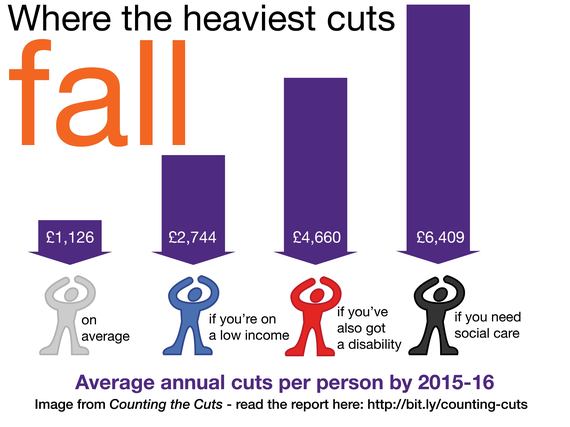
Disabled people have carried most of the burden of Conservative austerity cuts:
2014-02-17-BurdenoftheCuts-thumb
The Conservatives are on an ideological crusade, which flies in the face of public needs, democracy and sound economics, to shrink the welfare state and privatise our essential services.

In a wealth transfer from the poorest to the very rich, we have witnessed the profits of public services being privatised, but the losses have been socialised – entailing a process of economic enclosure for the wealthiest, whilst the burden of losses have been placed on the poorest social groups and our most vulnerable citizens – largely those who are ill, disabled and elderly. The Conservative’s justification narratives regarding their draconian policies, targeting the poorest social groups, have led to media scapegoating, social outgrouping, persistent political denial of the aims and consequences of policies and reflect a wider process of political disenfranchisement of the poorest citizens, especially sick and disabled people.

This is juxtaposed with the more recent gifted tax cuts for the wealthiest, indicating clearly that Conservatives perceive and construct social hierarchies with policies that extend inequality and discrimination. The axiom of our international human rights is that we each have equal worth. Conservative ideology is fundamentally  incompatable with the UK government’s Human Rights obligations and with Equality law. The chancellor clearly regards public funds for providing essential lifeline support for disabled people as expendable and better appropriated for adding to the disposable income for the wealthy.

Public policy is not an ideological tool for a so-called democratic government to simply get its own way. Democracy means that the voices of citizens, especially members of protected social groups, need to be included in political decision-making, rather than so frankly excluded.

Government policies are expressed political intentions regarding how our society is organised and governed. They have calculated social and economic aims and consequences. In democratic societies, citizen’s accounts of the impacts of policies ought to matter.

However, in the UK, the way that policies are justified is being increasingly detached from their aims and consequences, partly because democratic processes and basic human rights are being disassembled or side-stepped, and partly because the government employs the widespread use of linguistic strategies and techniques of persuasion to intentionally divert us from their aims and the consequences of their ideologically (rather than rationally) driven policies. Furthermore, policies have become increasingly detached from public interests and needs.

We elect governments to meet public needs, not to “change behaviours” of citizens to suit government needs and prop up policy “outcomes” that are driven entirely by traditional Tory prejudice and ideology.
 

proper Blond

I don’t make any money from my work and I’m not funded. You can support Politics and Insights by making a donation to help me continue researching and writing independently, and to continue to help others.

DonatenowButton

Through the looking glass darkly: the Conservatives are colonising progressive rhetoric

Vocabulary+word+cloud.jpg

“When I use a word,” Humpty Dumpty said in rather a scornful tone, “it means just what I choose it to mean — neither more nor less.”

“The question is,” said Alice, “whether you can make words mean so many different things.”

“The question is,” said Humpty Dumpty, “which is to be master — that’s all.”
Lewis Carroll, Through the Looking Glass

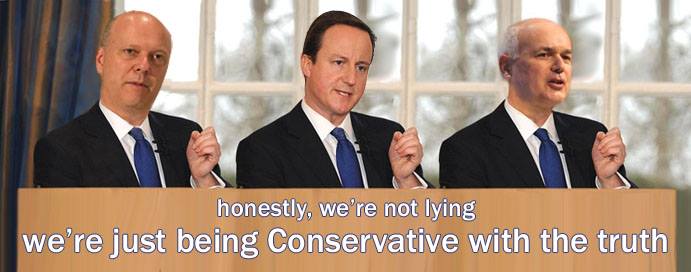
Semantic thrifts: being Conservative with the truth

Much communication in the media is geared towards establishing a dominant paradigm and maintaining an illusion of a consensus. This excludes pluralism and ultimately serves to reduce democratic choices. Such an approach is ultimately aimed at nudging your voting decisions and maintaining a profoundly unbalanced, pathological status quo.

Presenting an alternative narrative is difficult because the Conservatives have not only framed all of the issues to be given public priority – they set and stage-manage the media agenda – they have also dominated the narrative; they constructed and manage the political lexicon and now treat words associated with the Left, such as welfare, like semantic landmines, generating explosions of right-wing scorn, derision and ridicule – words like cooperation, inclusion, mutual aid, reciprocity, equality, nationalisation, redistribution and the like are simply dismissed as mere anachronisms that need to be stricken from public conversation and exiled from our collective consciousness, whilst all the time enforcing a bland language of an anti-democratic political doxa.

However, the Conservatives have also raided from the progressive lexicon, and I’m far from alone in noticing the Conservative colonisation of traditionally progressive rhetoric in recent years, using in abundance terms such as “fair”, “support”, “protection”, “freedom” , “opportunity”, “reform” and even “social justice” to pepper their speeches.

Last October, even Dan Hodges noticed the linguistic imports. He said: “Prison reform. Ethnic minority rights. Gay rights. A national housing “crusade”. An “all out assault on poverty”. An attack on “the lowest social mobility in the developed world”. These were the main themes of the Conservative Party leader’s – I’ll repeat that, the Conservative Party leader’s – address to his annual conference. I expected David Cameron to attempt to park his tank on Labour’s lawn.

… It wasn’t just what David Cameron said, but how his party reacted to it. The section of his speech where he said “I want us, the Conservatives, to end discrimination and finish the fight for real equality in Britain today,” was met with a standing ovation.”

The Conservatives have plundered from left wing discourse purely to broaden their superficial appeal and to neutralise opposition to controversial and contentious policy. The legislative context in which such language is being used is completely at odds with how it is being described by purposefully stolen terms and phrases. It’s disorientating and cognitive dissonance inducing to see the language of social justice, democracy, inclusion and equality being used to justify and describe policies which extend social injustice, authoritarianism, exclusion and inequality.

There is a growing chasm between Conservative discourse, and policy intents and outcomes. There isn’t a bridge between rhetoric and reality. Last week I wrote about the chancellor’s budget, and said:

Only a Conservative minister would claim that taking money from sick and disabled people is somehow “fair,” or about “helping”, “supporting” or insultingly, “incentivising” sick and disabled people who have already been deemed unfit for work by their doctors and the state via the work capability assessment to work.

The Tories all too frequently employ such semantic shifts and euphemism – linguistic strategies – as an integral part of a wider range of techniques of neutralisation that are used, for example, to provide linguistic relief from conscience and to suspend moral constraint – to silence both “inner protest” and public objections – to the political violation of social and moral norms; to justify acts that cause harm to others whilst also denying there is any subsequent harm being inflicted; to deny the target’s and casualties’ accounts and experiences of political acts of harm, and to neutralise remorse felt by themselves or other witnesses.

Media discourse has often preempted the Conservative austerity cuts, resulting in the identification, stereotyping and scapegoating of the groups in advance of the targeted, discriminatory policies. Media discourse is being used as a vehicle for the government to push their ideological agenda forward without meeting legitimate criticism, public scrutiny and without due regard for essential democratic processes and safeguards.

The five neutralisation techniques identified by Gresham Sykes and David Matza are: denial of responsibility, denial of injury, denial of victims, appeal to higher loyalties, and condemnation of condemners.

The really critical part of Sykes and Matza’s argument is that rationalisations precede immoral, cruel or controversial acts and are a key factor in making deviant behaviour possible (amongst delinquents, the mafia or Conservative ministers). As such, the rationalisations betray intent.

The cuts of £120 a month to the disability benefit Employment Support Allowance  are also claimed to be “fair.” and “supportive.” Though I have yet to hear a coherent and rational  explanation of how this can possibly be the case. Ministers claimed that people subjected to the ESA Work Related Activity Group cuts could claim PIP if they required support with extra living costs, but now we are told that PIP is to be cut, too.

Osborne ludicrously claimed that the Conservative government was “increasing spending on disabled people”, he said: “Controlling welfare bills is part of what you need to do if you’re a secure country confronting the problems in the world.”

But as Andrew Marr amongst others pointed out, the cuts to ESA and PIP show an intended substantial reduction on government spending to essential support for disabled people.

PIP was introduced by the Conservatives to “target those most in need” and to save money. Despite David Cameron promising before the general election that there would be no further cuts to disability support, ministers nonetheless have claimed that the proposed cuts to PIP are once again to “target those most in need”, which would leave many of those disabled people originally defined as being most in need on an ever-shrinking island.

Linguistic stealth and slick trickery

The Conservatives have co-opted a progressive language to disguise extremely regressive policies, and to blur and manipulate traditional ideological boundaries. It’s purely strategy rather than ideological direction. They have quite cunningly [re-]framed a partisan narrative, dressing it up as common sense. For example, policies are framed using the phrases like “social justice”, “fighting poverty”, Conservatives present themselves as the “party for working people” and claim concern for ensuring people “fulfil their potential”. These are phrases ordinarily associated with discourses of the Left.

This framing makes it much more difficult for the Left to focus public debate on the issues central to social democracy. Equality of opportunity, linked with open social mobility, merit and freedom, is another central value and objective for progressives. However, equality appears to be increasingly couched in negative terms, as opposed to merit, and often associated with social injustice, inefficiency and unfairness by the Conservatives.

Under the Equality Act, provision was made by the Labour government to ensure that legislations didn’t discriminate against protected social groups, which included disabled people. However, the need for public bodies in England to undertake or publish an equality impact assessment of government policies, practices and decisions was quietly removed by David Cameron in April 2011. The legal requirement in the Equality Act that ensured public bodies attempt to reduce inequalities caused by socio-economic factors was also scrapped by Theresa May in November 2010, who said that she favoured a greater focus on “fairness” rather than “equality”, claiming that many people felt “alienated” by the equality agenda.

The Conservatives have paid a lot of money to advisors to develop ways of expressing their world-view and the use of misleading discourse, almost invariably contradicted by policy, practice and outcomes, is intentional.

The Tories use euphemism a lot to neutralise criticism and to present a facade of judicious, equitable rationale for draconian policies founded on ideology and traditional Tory prejudices. The redefinition of the financial crisis as a state – specifically, “irresponsible government” – rather than a market failure, and a narrative of “enhanced efficiency and responsibility in public administration” translates into policy practice as cuts to the public sector, drastic cuts to the post-war settlement social safety net budgets and a steady erosion of workers´ rights, “excellence and free choice in education or health service provision” means widespread privatisation – and a deterioration of public services, leaving  citizen’s with considerably less choice and increasingly unmet needs.

The Conservative’s progressive rhetoric conceals a partisan determination to impose neoliberal policies that shrink the size of the state, while defending traditional Conservative vested interests among the financial sector and the wealthy.

Yet Cameron and his chancellor have successfully placed the blame for the deficit on Labour’s trumped up charge of “profligacy” in government, despite the fact that we were out of recession caused by the global financial crisis, by the last quarter of 2009. Despite the fact that the Conservatives created a recession in 2011, and we lost our Fitch and Moody triple A credit ratings, despite Osborne’s promises and assurances that we wouldn’t. The Conservatives have a historically verified tendency to create recessions, too. The Thatcher administration did, and so did John Major’s. How did the public forget these events? Black Wednesday is estimated to have cost us £3.4 billion. The constant repetition of the profligacy lie, ad nauseam, supplanted the public’s accurate perception of the underlying events.

Tory ideology is about handouts to the wealthy funded by the poor

“David Cameron and George Osborne believe the only way to persuade millionaires to work harder is to give them more money.’

‘But they also seem to believe that the only way to make you (ordinary people) work harder is to take money away.” Ed Miliband, 2012.

Taxation of the wealthy is framed as an unfair burden – an affliction or punishment, propped up by constant implicit references to debunked notions such as trickle-down wealth and job creation. Policies extending social injustice are being reframed as social justice.

Framing takes a long time to develop, and this particular frame was developed by the New Right on both sides of the Atlantic. It does leave progressives with a fight to articulate the moral basis for progressive taxation, obstructed by the outrageous Conservative myth that wealthy people have somehow amassed their wealth all by themselves and therefore deserve it and more. The truth is that it is ordinary UK taxpayers who support the infrastructure of wealth accumulation. It is only fair that those who benefit most from this should also pay their equal share.

Without the veneer of democratic engagement and respectability that the Conservatives raided from discourses of the Left, Conservative policies would appear as they really are: driven by a narrow ideology, based on traditional Tory prejudices and completely indefensible.


wc30allbrightedit1.jpg
This image contains 24 word clouds, representing the 24 categories into which a sample of roughly 130,000 statements from UK House of Commons parliamentarians, all made between 2006 and the present day, were partitioned by the clustering algorithm. Each cloud contains ten words; the larger the word, the more representative it is of the cluster. The colouring is also meaningful: red words have meanings more closely aligned with remarks by Labour politicians; blue words, with those of Conservatives; and yellow words, with the sentiments of Liberal Democrats.See source: Clustering debates from UK politicians.


Recommended

How the Tories Use the Language of Social Justice to Sell Us Social Injustice

How to Respond to Conservatives –  George Lakoff


I don’t make any money from my work and I’m not funded. You can support Politics and Insights by making a donation to help me continue researching and writing independently, and to continue to help others.

DonatenowButton
cards

Iain Duncan Smith abandoned his own sinking ship

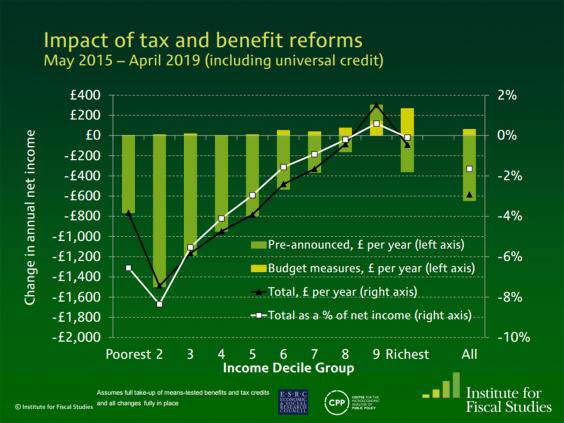
Impact of tories on income.jpg

Analysis of George Osborne’s budget from the Institute for Fiscal Studies.

Stephen Crabb has been appointed as the new work and pensions secretary, after Iain Duncan Smith resigned in a flurry of controversy on Friday.

Mr Duncan Smith has said the latest planned cuts to disability benefits were “not defensible” in a Budget that benefited higher-earning taxpayers.

David Cameron said he was “puzzled and disappointed” that Mr Duncan Smith had decided to go when they had agreed to have a rethink about the policies

Iain Duncan’s Smith’s letter of resignation must be a BIG embarrassment to the  Government. It was certainly designed to inflict maximum damage particularly on Chancellor George Osborne. I’ve previously noted that the Chancellor has a tendency to regard the Department for Work and Pensions as little more than an annex to the Treasury, and the welfare budget as the Treasury’s disposable income, but I never anticipated that Duncan Smith would come to say that he sees it that way, too. This is, after all, a minister that has invented statistics and told some pretty far-fetched fibs to prop up justifications of his policies that entail some pretty draconian measures, such as sanctions and work fare, after all.

Yet surprisingly, Duncan Smith has also quite willingly and very publicly provided the government’s opponents with ammunition. He has effectively denounced not only Osborne’s budget, but also, his targeted austerity measures, yet curiously, Duncan Smith has until now been one of the most ideologically devout Thatcherite Conservatives, which is reflected in every policy he has formulated.

He has basically said what many of us have been saying for a long time: that the cuts are political and not because of economic necessity, nor will they help the economy. He also as good as said he doesn’t think we are “all in it together”. It turns out that Osborne blamed Duncan Smith for the Personal Independence Payment (PIP) and Employment Support Allowance (ESA) cuts. But Duncan Smith has been a very quiet man recently, often conspicuous by his absence during parliamentary debates, with Priti Patel left defending the ESA cuts in particular in the Commons.

However, the Department for Work and Pensions did a review of PIP last year, and that’s where the “justification” for the cuts came from – a sample of just 150 people, which was hardly a representative sample. It’s difficult to imagine that IDS didn’t order that review. But it was Osborne who announced the cuts to PIP, not Iain Duncan Smith. Just who carries the original responsibility for the proposed PIP cuts is probably never going to be fully untangled from the crossfire of accusations and counter accusations. But surely Cameron is ultimately responsible for Conservative policies?

In his resignation letter, Iain Duncan Smith says:

“I have for some time and rather reluctantly come to believe that the latest changes to benefits to the disabled, and the context in which they’ve been made are, a compromise too far. While they are defensible in narrow terms, given the continuing deficit, they are not defensible in the way they were placed within a budget that benefits higher earning taxpayers. They should have instead been part of a wider process to engage others in finding the best way to better focus resources on those most in need.

I am unable to watch passively while certain policies are enacted in order to meet the fiscal self imposed restraints that I believe are more and more perceived as distinctly political rather than in the national economic interest.

Too often my team and I have been pressured in the immediate run up to a budget or fiscal event to deliver yet more reductions to the working age benefit bill. There has been too much emphasis on money saving exercises and not enough awareness from the Treasury, in particular, that the government’s vision of a new welfare-to-work system could not be repeatedly salami-sliced.

It is therefore with enormous regret that I have decided to resign. You should be very proud of what this government has done on deficit reduction, corporate competitiveness, education reforms and devolution of power.

I hope as the government goes forward you can look again, however, at the balance of the cuts you have insisted upon and wonder if enough has been done to ensure ‘we are all in this together’ “

You can read the letter in full here

You can see Cameron’s response in full here

Many Conservatives have suggested that Duncan Smith – a supporter of Brexit – had been looking over several weeks for an opportunity to resign, and claimed that he wanted to find a moment when he could inflict maximum damage on the campaign led by Cameron and Osborne to keep Britain in the European Union. But writing in the Observer, Bernard Jenkin, a Tory MP and chair of the Commons public administration select committee, says that Duncan Smith was not prepared to tolerate another raid on the disability budget.

Referring to the prime minister’s letter to Duncan Smith, in which Cameron said he was “puzzled” by the resignation, Jenkin says: “What that letter does not make clear is that the £4bn savings in the budget from welfare still stands and, once again, Iain was being told to find similar cuts from other benefits for working-age people – including for the disabled – again undermining the positive incentives that make it worthwhile for them to take work. That is what he finds morally indefensible.”

However, Debbie Abrahams, the shadow minister for disabled people, who has faced Duncan Smith many times during Commons debates and Work and Pensions Committee inquiries, says she does not accept the reasons Iain Duncan Smith has given for resigning, and believes he chose to resign so he could “embarrass the government as much as he can”.

She adds that planned cuts to disability benefit payments in the Budget were “grossly unfair” and would hit “the most vulnerable in society at the same time the highest earners are getting tax cuts”. 

She says she is grateful that many Conservative MPs are critical of the proposals, but adds: 

“We must make sure that this last cut that has been announced around Personal Independence Payments is stopped and does not carry on.”

The resignation is particularly surprising given that, just hours earlier, the Treasury shelved the proposed cuts to PIP – following threats of a Tory backbench rebellion. Three Tory MPs – including mayoral candidate Zac Goldsmith – have  also been asked to resign as patrons of disability charities over their support for the recent welfare cuts. The complete failure of the austerity project is finally unravelling the Conservatives, and at a time when the Brexit faction of the party is already causing considerable disarray.

Even some of the most loyal Tories were finding it difficult to defend taking money away from sick and  disabled people – particularly since many of those who receive PIP are in work, and in fact some rely on it to stay in work. The cuts to ESA and PIP take place in the context of a Tory manifesto that included a pledge not to cut disability benefits. In fact in March last year, the Prime Minister signalled that the Conservatives will protect disabled claimants from welfare cuts in the next parliament (this one). Cameron said the Conservatives would not “undermine” PIP, which was introduced under the Coalition to save money by “targeting those most in need.” Now it seems those most in need are not the ones originally defined as such.

Controversially, the cuts to disability benefits were planned to fund tax cuts for the most affluent – the top 7% of earners. The Chancellor raised the threshold at which people start paying the 40p tax, in a move that will  see many wealthier people pulled out of the higher rate of income tax, in the coming budget. Mr Osborne said that he wants to “accelerate progress” towards the Conservative’s manifesto pledge of raising the threshold for the 40p rate to £50,000 in 2020. The average annual income in the UK is around £27,000.

The Labour Party have urged Stephen Crabb to appear before MPs on Monday to announce formally that the cuts to disability benefits had been dropped. Owen Smith, the shadow work and pensions secretary, said: “His very first act as secretary of state must be to come to parliament on Monday to announce the full reversal of cruel Tory cuts that will see 370,000 disabled people lose £3,500 a year.”

He also urged Crabb to “stand up to a Treasury that is intent on cutting support for those most in need to pay for tax breaks for those who least need them”.

The main retaliation from the Conservative frontbench has been that Duncan Smith knew about the disability cuts (which he did) and that this is an act of mischief and sabotage designed and timed to destablise Cameron regarding Europe. It may well be. But the divisions had already caused wobbles, Duncan Smith just delivered a swift and hefty kick to the “in” crowd.

However, it’s also clear there has been a rising tension between the Treasury and the Department for Work and Pensions for some time. Duncan Smith felt that the benefits system could be scaled back only so far. Osborne and Cameron would prefer to see the welfare state completely dismantled.

Nonetheless, we have witnessed Duncan Smith’s long term disconnection from the impacts of his policies. He has persistently refused to engage with critics raising serious concerns about the consequences of the welfare “reforms”. He has refused to carry out a cumulative impact assessment of his policies and absolutely refused to monitor the impacts, most of which have been dire for sick and disabled people, and when the specifics of negative consequences were pointed out to him, he has typically reacted with denial, anger and accusations of “scaremongering.”

Duncan Smith used the mantra “there’s no proof of causality” to dismiss those who recognised a correlation between his welfare “reforms” and an increase in premature mortality rates and suicide. He has consistently and quite unforgivably shown that he is more concerned about hiding evidence and stifling criticism than he is about conscienciously investigating the harmful and sometimes devastating consequences that his policies have had on many people.

On the day he resigned, Duncan Smith’s department lost a four year legal battle to keep the many potentially humiliating problems with Universal Credit from the public.

Whatever the reasons may be for Duncan Smith’s resignation, he has certainly highlighted very well that Conservative budget decisions are partisan, taken for  party political interest rather than with consideration for the national interest. But in more than one way.

It’s also worth bearing in mind that it is Iain Duncan Smith’s “reforms” that have prompted a United Nations inquiry into grave and systematic violations of the human rights of disabled people. It’s highly unlikely that Duncan Smith’s reputation will be enhanced in the long-term regarding his legislative legacy, particularly regarding disabled people. He has collaborated with other ministers in designing and extending techniques of neutralisation to attempt justify what are extremely prejudiced, discriminatory and punitive policies aimed at the poorest citizens.

This is a man who has removed people from a structural socioeconomic context and then intentionally blamed them for their individual socioeconomic circumstances, most of which have been created by this government’s actions since 2010. Every single Conservative budget has taken money from the poorest and gifted it to the wealthiest. It’s inconceivable that Tory ministers don’t understand such policies will invariably extend and perpetuate inequality and poverty.

Duncan Smith has damned himself, but nonetheless, a Conservative minister resigning and stating that it is because of a Conservative budget, publicly citing reasons that correlate with the opposition’s objections regarding the government’s ideologically driven and targeted austerity, is a particularly damning turn of events for the Conservative Party as a whole, that’s for sure.

Now that Duncan Smith has publicly denounced the Conservative austerity project, I wonder if he will also recognise and embrace the rational expertise and economic competence of a real party of social justice, which rescued this country from the consequences of a global recession by the last quarter of 2009, whilst Osborne had us back in recession by 2011, and lost us our triple A Fitch and Moody credit ratings after promising not to. I wonder if Duncan Smith now supports the fair party with a track record of verifiable economic expertise – that would be the Labour Party.

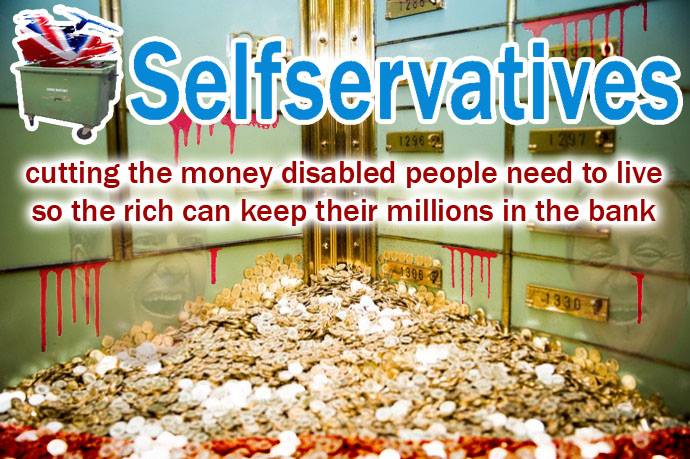
rich keep millons
Picture courtesy of Robert Livingstone

I don’t make any money from my work and I’m not funded. You can support Politics and Insights by making a donation to help me continue researching and writing independently, and to continue to help others.

DonatenowButton
cards

The Conservative approach to social research – that way madness lies

b584


I’ve written more than one lengthy critique of Tory notions of what passes for “research” methods (so I’ll make this one relatively short), and often criticised Tory refusals to accept the research findings of academics regarding, for example, established links between the Work Capability Assessment, increased suicide and mortality, the link between sanctions and increased mortality. The Tory plea for the universal and unqualified dismissal of whatever they deem to be criticism of their policies is often based on the claim that “no causal link has been established.”

As I have pointed out on many occasions previously, whilst correlation certainly isn’t quite the same thing as cause and effect, it quite often strongly hints at a causal link, and as such, warrants further investigation.

It is therefore inaccurate to say that correlation doesn’t imply causation. It quite often does. The tobacco industry has historically relied on exactly the same dismissal of correlational evidence to reject any discussion of an established link between tobacco and lung cancer.

The standard process of research and investigation doesn’t entail, at any point, a flat political denial that there is any relationship of significance to concern ourselves with, nor does it involve a systematic and deliberate withholding of relevant data, attempts at censoring democratic dialogue, and a point blank refusal to investigate further. Furthermore, the government claims that there is “no evidence of a causal link ” is unverified. There is no evidence to support government claims that there isn’t such a link, either.

I’ve observed more than once that when it comes to government claims, the same methodological rigour that they advocate for others isn’t applied. Indeed, many policies have clearly been directed by ideology and traditional Tory prejudices, rather than being founded on valid research and empirical evidence.

The fact that no cumulative impact assessment has been carried out with regard to the welfare “reforms” indicates a government that is not interested in accountability, and examining the potential negative outcomes of policy-making. Policies are supposed to be about meeting public needs and not about inflicting Conservative dogma and old prejudices in the form of financial punishment on previously protected social groups. How on earth can taking lifeline income from people who are already poor ever cure poverty or unemployment?

Where is the causal link between work and improved health outcomes? One confounder there is the effect of the ideologically-driven Tory welfare cuts that massively reduce the quality of life for those who need to claim social security. It’s not “worklessness” but rather, it is Tory “reforms” and a refusal to accept that sometimes people cannot work that lead to poor health outcomes, and all too often, the somewhat traditional Conservative habit of refusing to listen to the public they are meant to serve democratically results in premature deaths.

And what about the discredited theories that stereotype the poor – as a diversionary and scapegoating convenience – like the “cycle of deprivation,” “cycle of dependency” made-up words and pre-loaded concepts such as “worklessness” and “workshy” presented as a fictitious medical condition or personality disorder, or the deliberately divisive “culture of entitlement”? There is NO empirical evidence that these categories exist as the Conservatives claim.

Sir Keith Joseph researched the “cycle of deprivation” theory extensively some years back and found NO evidence to support it, despite his dogmatic assertion of its existence. Again there are confounders. How do you separate the effects of policies and ideologically-driven political decision-making, subsequently discriminatory socio-economic conditions and of course, pure bad luck from people’s politically constructed “innate” traits or maliciously ascribed character “flaws”?

People exist in structural contexts, no amount of political pretending that they don’t will ever hide the fact that every single Conservative budget has taken money from the poorest citizens and our publicly funded services and gifted it to the wealthiest. It’s inconceivable that ministers don’t recognise that such policies create economic enclosure, perpetuate crass inequality and extend poverty.

Where is the causal link between welfare sanctions and people getting jobs? Or between the Work Capability Assessment and disabled people being “supported” or better off? Or between workfare and people finding appropriate, secure, quality jobs with fair wages that actually alleviates poverty?

Where is the causal link between austerity measures and economic growth? Or between austerity and a reduced national debt for that matter? Or between tax cuts for the wealthy and “trickle-down” prosperity for everyone else?

Where is the causal link between privatisation and better, more “efficient” services? Not to be found in examples such as Atos, Maximus, G4S, A4E, Circle, Serco, City Link, and many more, that’s for sure. Private companies by and large make hefty profits by inflating prices, radically cutting jobs and the quality of services delivered (“efficiency”), whilst generating scandal after scandal.

As a vast social and economic experiment, privatisation has massively failed the British public, and has grotequely rewarded a handful of unscrupulous, greedy, wealthy people – grotesquely rewarded, grotesquely undertaxed – whilst ordinary people in the UK face spiralling living costs and the obscene, cruel limitations of austerity to prop up the fraternity of vulture neoliberals and perpetrators of a toxic rhetoric that attempts to justify decreasing public inclusion in a shrivelling economy.

From a government that has been rebuked many times for manufacturing and misusing statistics, making claims that are fictions, inventing testimonies regarding the fake impacts of their draconian policies, sneaking through controversial and undemocratic policies via statutory instruments because they KNOW that those policies won’t stand up to scrutiny, it’s remarkable that any member of the Conservative party have the cheek to claim “no causal link has been established” when confronted with empirical evidence and strong correlational links from meticulous academic research.

The inherent contradictions of Conservative discourse and the construction of ideological mythologies that are translated into stigmatising mechanisms and anti-humanist policies are seen at their most stark in Conservative anti-welfarism, and themes of social Darwinism.

Neoliberal mythologies are manifested in a narrative of meritocracy and in extended in notions of “deserving and “undeserving”, whilst rapidly expanding social inequalities and increasing poverty, and increasingly limited access to justice and remedy, reflect a broader political refusal to engage in democratic dialogue with the electorate and a dogmatic determination to pursue anti-progressive, neoliberal programmes, which empirical evidence informs us, are socially harmful and destructive.


technocracy

I don’t make any money from my work. But you can support Politics and Insights and contribute by making a donation which will help me continue to research and write informative, insightful and independent articles, and to provide support to others. The smallest amount is much appreciated, and helps to keep my articles free and accessible to all – thank you.

DonatenowButton
cards

Soul-breaking government scheme to provide ‘expert’ employment ‘support’ to young people in schools

430835_148211001996623_1337599952_n (1)


The so-called ‘small state’ government have pledged to intrude schools to place ‘demand-led, Jobcentre Plus staff to supplement careers guidance and help schools deliver their statutory duty to provide high-quality, independent and impartial careers advice.’

See government press release: Jobcentre Plus support rolled out to schools.

Isn’t all existing careers advice impartial?

Ah, I see that impartial now means: ‘to inform independent choice,’ according to the newly introduced Careers and Enterprise Company, who will work with Jobcentre Plus staff ‘to ensure schools receive a coherent and aligned offer.’

Aligned to what? 

The needs of local businesses and the neoliberal labour market and not the needs of young people.

To inform independent choice. That’s a bit like saying “If you do everything I say, you will be truly free to make your own choices.  

The Tories are experts in linguistic behaviourism, telling lies and social control freakery, but not very much else.

Impartial. It’s another one of those Tory definitions that mean something else completely. Like helping or supporting people into work, which actually means a crude type of punitive behaviourism  – the imposition of  punitive financial sanctions if you don’t do exactly what you are told, and actually, quite often, even if you do. I’ve never understood how starvation and destitution can ever help or incentivise anyone to find a job, especially when experience and empirical evidence tells us otherwise. The welfare state has been weaponised against the people it was designed to support: a penultimate, vindictive Tory tactic before they completely dismantle it once and for all.

In 2015, the government’s Earn or Learn taskforce announced a new 3-week programme to give young jobseekers an ‘unprecedented level of support that will help them find work within 6 months.’  Personally, I shudder at the very thought of the Tories supporting my own children. I don’t want them anywhere near young people more generally. Regressive and Orwellian Tory ‘support’ has killed adults. There is no conceivable way that this bunch of tyrants can ever be trusted with our children’s future.

From 2017, the new programme will offer ‘an intensive curriculum’ involving practicing job applications and interview techniques as well as extensive job searches, and is expected to take 71 hours over the first 3 weeks of the claim. Welcome to the ultimate libertarian paternalist’s dystopic ‘education’ programme.

This ‘expert employment support to young people’ has been launched by two utterly inept, lying, dogmatic Conservatives with a history of formulating extremely nasty, punitive approaches to state defined ‘welfare and wellbeing’ – Iain Duncan Smith and Priti Patel.

Someone should put them straight: education includes the opportunity to attend college and university. Curiously, the Conservative brand of ‘impartial’ career advice seems to be all about big business ‘leading the way’ by instilling the protestant work ethic in our children. Life and learning is about working for people who make profits. That is the order of the world. 

Children from the age of twelve are to be coached to undertake ‘work experience.’ To clarify, that’s work fare – stacking shelves at Poundland or sweeping floors at your local McDonald‘s, for no pay.

It’s difficult to see what kind of educational process such a Conservative ‘curriculum’ entails, although it does include a sequence of instruction: a barely concealed hidden curriculum which reinforces existing social inequalities by ‘educating’ students according to their class, promoting the acceptance of a social pre-destiny of exploitation without promoting rational and reflective consideration.

A veritable pedagogy of the oppressed.

Duncan Smith babbles:

This scheme is fundamentally about social mobility and social justice – ensuring we give all young people the best chance to get on in life.

Someone should tell this idiot that social justice is all about the fair and just relationship between the individual and society. This is measured by the distribution of wealth, resources, opportunities, freedoms for personal activity and social privileges. It is about removing barriers to social mobility, the creation of social safety nets and economic justice. There is no mention of work fare for adults and children, exploitation, corporate profits and Tory donors in any standard definition of social justice anywhere.

Steve Bell cartoon

It’s not as if the Conservatives have historically shown the slightest interest in and recognition of realising human potential. That’s far too progressive and would require the capacity for democratic dialogue instead of paternalist preaching and lofty class-contingent, traditionally prejudiced, moralising. The Tories have always prefered a steeply hierarchical world, comprised of ascribed social status.

What the Conservatives plan is a blatant programme of indoctrination and political micromanagement to ensure that young people learn their place and accept a future of exploitative, low paid, insecure jobs, without the prospect of real opportunities or the chance to go to university. It’s more psychoregulation and authoritarian politics and has nothing to do with genuine needs-led or evidence-based policy.

And it’s to be delivered in our schools: transforming them from Ideological State Apparatuses – ideologies have the function of masking the exploitative arrangements on which class societies are based – into unmasked Repressive State Apparatuses. Hidden in plain view.

Authoritarianism tends to become more visible and frankly expressed over time.

demcracy


I don’t make any money from my work. I am disabled because of illness and have a very limited income. But you can help by making a donation to help me continue to research and write informative, insightful and independent articles, and to provide support to others. The smallest amount is much appreciated – thank you.

DonatenowButton

Sometimes people are not fit for work, and that includes MPs, Mr Jackson.

1235473_537097386359794_65317730_n (1)

Stewart Jackson, the Conservative MP for Peterborough, has claimed that Labour MP Simon Danczuk has been “stitched up” by supporters of Jeremy Corbyn within the Labour Party. He commented after Mr Danczuk was suspended from the Labour Party pending an investigation into allegations that he sent sexually explicit text messages to a 17-year-old girl.

Posting on Twitter, Jackson said: “Simon Danczuk has obviously been foolish but he’s also been stitched up like a kipper by the Corbyn cronies in UK Labour.” 

Asked why he believed this to be the case, Mr Jackson replied: “Maybe the haste with which he’s been suspended for what appears to be something that is not a criminal offence if stupid.”

“Given he’s had some mental health issues, [the] more compassionate thing would be to have given him space and return to the issue next week.”

It is a serious cause for concern that this MP doesn’t know that it IS a criminal offence for an adult to have any sexual activity with a person under the age of 18, if the older person holds a position of trust and power, as such sexual activity is an abuse of the position of trust. The Sexual Offences Act 2003 provides this specific legal protection.

Danczuk allegedly exchanged a number of sexually explicit text messages with a 17-year-old girl, it has been reported.

Mr Danczuk, who is 49, sent the messages to Sophena Houlihan after she asked him for a job.

She said: “At the time I played along with it, but now I feel like he duped me. I was keen for a career in politics and he is a very high-profile MP and I was in awe of him.”

Mr Danczuk allegedly asked Miss Houlihan to meet at the Labour Party conference and reportedly suggested that she join him on a trip to Spain. He told her that he was “horny”.

It’s absolutely disgraceful that MPs, regardless of their party politics, think it is in any way acceptable to use their position of trust and power to attempt to justify exploitative or sexually predatory behaviours.

However , a lifelong Conservative supporter, felt that it is Mr Danczuk who is the victim of impropriety, and all because of his mere “foolishness.” She overlooked his serial objectification of women and sexist tendencies, then. She tweeted: “Ironic when we were supposed to be introduced to “kinder” politics! Hypocrites. JC et al dangerous.”

Sure. Some people will go to any lengths to divert attention and discredit the opposition leader, no matter how dogmatic, incoherent and ridiculous this shows them up to be. Or misogynistic, for that matter.

I can just see the headlines in the Sun now: Dangerous Jeremy Corbyn supporters made me become a stalking horse and then they turned me into a disgraceful, stalking sexual predator.

If Mr Danczuk is experiencing mental health problems, he deserves support and has my sympathies. However, the situation that has arisen doesn’t just raise issues that are simply about how “kindly” he is treated: it is also important to establish whether or not he is fit for his post and to ensure that he does not pose a risk to members of the public, as well as himself. Suspending Mr Danczuk is not “dangerous” at all, in fact it is the only reasonable and compassionate thing to do.

Last year, Danczuk saidWhen it comes to Mental Health Problems, being in work can be something that really helps. I know that keeping busy and being motivated certainly works for me.”

However, sometimes, people are simply too ill to work. We have an unhealthy political culture and a government that has persistently refused to accept that sometimes, people are very ill and severely incapacitated. We have witnessed an extended, perpetuated, prejudice-driven political moralising and vicious stigmatisation of people who are ill and out of work, presumably so that the unprecedented, uncivilised cuts to essential support for disabled people have a façade of political justification, at least. But certainly not a respectable, legitimate one.

In fact this government have rather horribly and deceitfully normalised coercing people to work, regardless of their physical or mental illness, and regardless of the extent to which a person is disabled. Furthermore, it is regardless of the potentially devastating consequences for the person who is ill, AND the people that they work with or come into contact with.

Sometimes people need to take time out to recover, and should feel that they are permitted to do so without being judged and punished by the state. And sometimes, people are too ill, and no longer fit for their role. Consideration of these issues is compassionate and kind.

Nobody would expect a person who suffers blackouts to drive a bus or bin waggon if they thought through the potentially devastating consequences. But political, cultural, psychological and financial coercion is being used to force people to work – the government continues to cut welfare, which was calculated to cover only the costs of meeting basic needs. Cruel sanctions and strict, inflexible, often unreasonable behavioural conditions are being imposed on lifeline benefit receipt, adversely affecting some of our poorest and most vulnerable citizens; unemployed and disabled people are stigmatised in the media – all of this is done with an utterly callous disregard of a person’s capacity to work, or the availabilty of appropriate and suitable employment opportunities, and this can have tragic consequences.

This is a government that champions outgrouping and scapegoating already socially marginalised groups. It isn’t likely that they will listen to reason, because traditional Tory prejudices concerning minoritized groups are historically established and deeply embedded in Conservative ideological grammar.

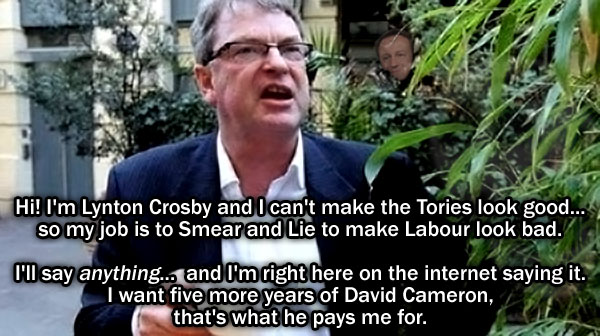
The Conservatives value the use of lies and deceit to get their own way. How fitting that the man who brought truly democratic and liberal values into Conservative electioneering, fostering a respect for diversity and championing equal opportunities, (stop laughing) has finally been awarded a knighthood for his highly salaried dastardy. The lizard of Oz, the kidder for kidders that kidded thousands, did declare war on the Scottish, he is very well known for his dogwhistle racism, but surely divided and prejudiced nations and ever-sinking standards of living are a price well worth paying when we have another Tory government. Hurrah!

The cult of Lyntonism is a by-product of the micro-managerialism, totalitarian tendencies and the widespread use of techniques of persuasion usually reserved for the advertising industry, that has infected the New Right, “libertarian paternalist” Conservative Party. You know, I always thought there is something very pre-war Berlin about the Crosby crocodile smile.

I keep forgeting that this is 2016, and that we live in a first-world liberal democracy. Don’t we?


Happy New year all.

10853165213_ddb97ac601_o
Pictures courtesy of Robert Livingstone

Update: Mr Stewart Jackson has blocked my Twitter account, surprisingly. It’s good to know how much Tory MPs value democratic exchange, reasoned discussion, transparency and accountability…

Blocked


Further news: Simon Danczuk Investigated Over Historic Rape Allegation By Lancashire Police


Universal Credit “in-work progression” inquiry launched – call for evidence

ImageVaultHandler.aspx

The Work and Pensions Committee opened an in-work progression in Universal Credit inquiry on the 9th December.

Background of the inquiry

The Department for Work and Pensions (DWP) intends to establish an “in-work service”, designed to encourage individual Universal Credit claimants on very low earnings to increase their income. Benefit payments may be stopped if claimants fail to take action as required by the DWP. The DWP is conducting a range of pilots to test different approaches but there is very little detail about these. The new regime might eventually apply to around one million people.

The Committee is considering the Department’s plans and options for a fair, workable and effective approach.

These measures will make benefit payments to people who are in work, but on low earnings, conditional on them taking certain steps to increase their pay or hours.

Scope of the inquiry:

Written submissions are invited addressing the following points:

    • DWP’s plans for in-work progression pilots in 2015/16, and how they should be evaluated
    • Which organisations are best-placed to deliver the in-work service for DWP e.g. Jobcentre Plus/other providers from the private, public or voluntary sectors?
    • What should in-work progression support entail and how should it be delivered (e.g. regularity and nature of contact with claimants)?
    • Which groups of claimants should be included and which should be exempt?
    • How should employers be encouraged to facilitate progression?
    • In what circumstances would it be appropriate to sanction a Universal Credit claimant who is in work?
    • Is there any UK or international evidence on effective ways of encouraging in-work progression?

The deadline for submissions is Monday 18 January 2016.

Chair’s comment

Rt Hon Frank Field MP DL, Chair of the Work and Pensions Committee, said:

“The welfare-to-work strategy of successive governments has begun to crack the dependency on out-of-work benefits that had appeared to be an almost intractable problem. Efforts now also need to be focused on a welfare-to-work strategy that not only moves claimants off out-of-work benefit, but more importantly helps them move up the pay ladder and out of poverty. Too many people on low benefit incomes have been encouraged into low-paid jobs whose rewards are only brought up to a more acceptable income level by tax credits and other in-work benefits. I hope our Committee therefore will examine the available evidence and carefully develop an approach to in-work support which is effective, and which people accept as fair.”

I will publish my own submission, prompted by Frank Field’s spectacularly misguided and conservative statement, in due course. Here are a few of the issues and concerns I will be raising: 

Field refers to the Conservative “dependency” myth, yet there has never been any empirical evidence to support the claims of the existence of a “culture of dependency” and that’s despite the dogged research conducted by Keith Joseph some years ago, when he made similar claims. In fact, a recent international study of social safety nets from The Massachusetts Institute of Technology (MIT) and Harvard economists categorically refutes the Conservative “scrounger” stereotype and dependency rhetoric. Abhijit Banerjee, Rema Hanna, Gabriel Kreindler, and Benjamin Olken re-analyzed data from seven randomized experiments evaluating cash programs in poor countries and found “no systematic evidence that cash transfer programmes discourage work.”

The phrase “welfare dependencydiverts us from political discrimation via policies, increasing inequality, and it serves to disperse public sympathies towards the poorest citizens, normalising prejudice and resetting social norm defaults that then permit the state to target protected social groups for further punitive and “cost-cutting” interventions to “incentivise” them towards “behavioural change.”

Furthermore, Welfare-to-Work programmes do not “help” people to find jobs, because they don’t address exploitative employers, structural problems, such as access to opportunity and resources and labor market constraints. Work programmes are not just a failure here in the UK, but also in other countries, where the programmes have run extensively over at least 15 years, such as Australia.

Welfare-to-work programes are intimately connected with the sanctioning regime, aimed at punishing people claiming welfare support. Work programme providers are sanctioning twice as many people as they are signposting into employment (David Etherington, Anne Daguerre, 2015), emphasising the distorted priorities of “welfare to work” services, and indicating a significant gap between claimant obligations and employment outcomes.

The Conservatives have always constructed discourses and shaped institutions which isolate some social groups from health, social and political resources, with justification narratives based on a process of class-contingent characterisations and the ascribed responsiblisation of social problems such as poverty, using quack psychology and pseudoscience. However, it is socioeconomic conditions which lead to deprivation of opportunities, and that outcome is undoubtedly a direct consequence of inadequate political decision-making and policy.

It’s worth bearing in mind that many people in work are still living in poverty and reliant on in-work benefits, which undermines the libertarian paternalist/conservative case for increasing benefit conditionality somewhat, although those in low-paid work are still likely to be less poor than those reliant on out-of-work benefits. The Conservative “making work pay” slogan is a cryptographic reference to the punitive paternalist 1834 Poor Law principle of less eligibility.

The government’s Universal Credit legislation has enshrined the principle that working people in receipt of in-work benefits may face benefits sanctions if they are deemed not to be trying hard enough to find higher-paid work. It’s not as if the Conservatives have ever valued legitimate collective wage bargaining. In fact their legislative track record consistently demonstrates that they hate it, prioritising the authority of the state above all else.

There are profoundly conflicting differences in the interests of employers and employees. The former are generally strongly motivated to purposely keep wages as low as possible so they can generate profit and pay dividends to shareholders and the latter need their pay and working conditions to be such that they have a reasonable standard of living.

Workplace disagreements about wages and conditions are now typically resolved neither by collective bargaining nor litigation but are left to management prerogative. This is because Conservative aspirations are clear. They want cheap labor and low cost workers, unable to withdraw their labor, unprotected by either trade unions or employment rights and threatened with destitution via benefit sanction cuts if they refuse to accept low paid, low standard work. Similarly, desperation and the “deterrent” effect of the 1834 Poor Law amendment served to drive down wages.

In the Conservative’s view, trade unions distort the free labor market which runs counter to New Right and neoliberal dogma. Since 2010, the decline in UK wage levels has been amongst the very worst in Europe. The fall in earnings under the Coalition is the biggest in any parliament since 1880, according to analysis by the House of Commons Library, and at a time when the cost of living has spiralled upwards. And whose fault is that?

It’s certainly not the fault of those who need financial support to meet their basic survival needs despite being in employment.

Send a written submission through the in-work progression in Universal Credit inquiry page.

Don’t forget the deadline is Monday 18 January 2016.

8+Ways+to+Protect+Yourself+From+Emotional+Manipulation

Tories and equality? Don’t make me laugh

gret deceitThe government have claimed to be “committed to supporting the most vulnerable” and ensuring “everyone contributes to reducing the deficit, and where those with the most contribute the most.”

Cameron claimed that he intends to devote much of his time in office to “an all-out assault on poverty”, in his speech to the Conservative Party conferencehe also said he wanted to tackle “deep social problems” and “boost social mobility” and remarkably, to “finish the fight for real equality.” 

I can’t help wondering with trepidation what “real equality” actually means to the government.

So, do the Tories walk the talk? Let’s have a look at their track record. Let’s judge prudently, by deeds not words.

Here’s a list of Conservative-led policies from their last term in office:-

The following cuts, amongst others, came into force in April 2013, affecting the poorest citizens:

  • 1 April – Housing benefit cut, including the introduction of the ‘bedroom tax’
  • 1 April – Council tax benefit cut
  • 1 April – Legal Aid savagely cut
  • 6 April – Tax credit and child benefit cut
  • 7 April – Maternity and paternity pay cut
  • 8 April – 1% cap on the rise of in working-age benefits (for the next three years)
  • 8 April – Disability living allowance replaced by personal independence payment (PIP)
  • 15 April – Cap on the total amount of benefit working-age people can receive 
  • Independent Living Fund for disabled people – scrapped
  • Access To Work grant for disabled people – cut

Here are some of the Tory “incentives” for the wealthy:

  • Rising wealth – 50 richest people from this region increased their wealth by £3.46 billion last year to a record £28.5 billion.
  • Falling taxes – top rate of tax cut from 50% to 45% for those earning over £150,000 a year. This is 1% of the population who earn 13% of the income. The wealthiest had a tax cut of £170,000 each per year.
  • No mansion tax and caps on council tax mean that the highest value properties are taxed proportionately less than average houses. Meanwhile, those previously exempt from council tax claiming social security now have to pay due to reductions in their benefit.
  • Benefitted most from Quantitative Easing (QE) – the Bank of England say that as 50% of households have little or no financial assets, almost all the financial benefit of QE was for the wealthiest 50% of households, with the wealthiest 10% taking the lions share
  • Tax free living – extremely wealthy individuals can access tax avoidance schemes which contribute to the £25bn of tax which is avoided every year, as profits are shifted offshore to join the estimated £13 trillion of assets siphoned off from our economy.

As a consequence of the highly discriminatory and blatantly class-contingent Tory policies, inequality in the UK has risen to the highest level amongst all EU countries, and tops even the US – the fatherland of neoliberalism.

Rampant socio-economic inequality apparently is the new Tory “real equality”.

The rise in the need for food banks in the UK, amongst both the working and non-working poor over the past five years and the return of absolute poverty, not seen since before the advent of the welfare state in this country, makes a mockery of government claims that it supports the most vulnerable. 

Income tax receipts to the Treasury have fallen because those able to pay the most are being steadily exempted from responsibility, and wages for many of poorer citizens have fallen, whilst the cost of living has risen significantly over the past five years.

The ideologically motivated transfer of funds from the poorest half of the country to the more affluent has not contributed to deficit reduction. It doesn’t take a genius to work out that the cumulative impact of Tory tax and welfare changes, from out-of-work and in-work benefits to council tax support, to the cut in the top rate of income tax and an increase in tax-free personal allowances, has been extremely regressive and detrimental to the poorest citizens.

The revenue gains from the tax changes and benefit cuts were offset by the cost of tax reductions, particularly the increase in the income tax personal allowance, benefitting the wealthiest.

The Treasury response to this is to single out the poorest yet again for more cuts to “balance the books” – which basically translates as the Conservative “small state” fetish, and deep dislike of the gains we made from the post-war settlement. Yet for a government that claims a non-interventionist stance, it sure does make a lot of interventions. Always on behalf of the privileged class, with policies benefitting only the wealthy minority.

How can Conservatives believe that poor people are motivated to work harder by taking money from them, yet also apparently believe that wealthy people are motivated by giving them more money?

Conservatives regard unemployment and disability as some kind of personal deficit on the part of those who are, in reality, simply casualties of bad political decision-making and subsequent policy-shaped socio-economic circumstances.

The Tory answer to policy-imposed structural constraints is to blame the individual and impose punitive measures to bring about “behavioural change.”

Hang on, don’t we elect governments to meet public needs, not to “change behaviours” of citizens to suit government needs?

This is not about “free markets”, “human nature” or the Tory’s new pet “behavioural science.” It’s policy-making founded entirely on traditional Tory prejudices.

Thanks to The Centre for Welfare Reform for the graphic

Related

There is no such thing as a ‘one nation’ Tory: they always create two nations

Conservatism in a nutshell

Tory dogma and hypocrisy: the “big state”, bureaucracy, austerity and “freedom”

Philip Davies sabotages Free Hospital Parking Bill for Carer’s by out-talking time

Shameless Philip Davies Showed Tories’ Nasty Side By Filibustering Free Hospital Parking For Carers’

The Conservative MP for Shipley, Philip Davies, has intentionally blocked a proposed law to introduce free hospital parking for carers by speaking in the House of Commons for 93 minutes in order to use up the time allocated for the debate. Conservative MPs Christopher Chope and David Nuttall, who spoke for another hour and 20 minutes between them, also contributed to underhandedly “talking out the Bill.”

The private member’s Bill was brought forward by Julie Cooper, Labour MP for Burnley, and set out a proposed exemption to controversial hospital parking charges for carers. At the moment hospitals have “discretionary powers” to grant exemptions to parking charges.

Davies used a tactic called filibustering – where MPs speak for so long that a vote is delayed or prevented – he spoke about his opposition to the bill for more than an hour and a half. This meant that MPs ran out of time to vote on the law, as backbench debates are time-limited.

The Shipley MP has been accused of profound hypocrisy, because he  claimed £11.67 for parking in 2014-15 and £16 in 2013-14. He has also Davies also claimed parking fees for meetings with local councillors and constituents.

He argued that the proposals would mean “higher car parking charges for everybody else who visits the hospital in order to protect that revenue stream for the hospitals”. Though he stretched the point, talking so much that his lengthy monolgue left no time for a democratic vote on the Bill.

Nuttall, the MP for Bury North, also said it was inevitable that one of the consequences of the bill would be to “divert part of the healthcare budget that could otherwise be used for frontline national health services, potentially life-saving services, to cover car parking maintenance and all the associated costs”.

However, Labour MP Khalid Mahmood condemned the Conservative’s  tactics by some on the government benches.

“Owing to the assassins on the government benches more than two hours of time has, bizarrely, been taken up, and I do not think that I will be able to go into all the important issues that I wished to raise,” he said.

It’s a slap in the face for carers, because the bill, effectively sabotaged during the debate, will now be delayed, as it will be placed at the bottom of the pile of private members’ bills, but health minister Alistair Burt said the guidance principles sent to hospital trusts by the government detailing who should be granted concessions or exemptions would now explicitly mention carers.

Julie Cooper, who introduced her hospital parking charges (exemption for carers) bill to the Commons for its second reading, said the charges placed an unfair financial burden on those caring for disabled, seriously ill or older friends and relatives.

She spoke about her experience of caring for her own mother when she was in hospital. “Each night when I left tired and distressed I queued up to pay for my parking,” she said.

“At that time it was costing me £40 a week. On one of those days driving out of the car park, it occurred to me that I was lucky because I could afford to pay this charge and I went on to reflect on the matter and I thought what about those people who can’t afford to pay?”

It’s not the first time Davies and the Conservatives have used filibustering to sabotage Bills, On July 3, 1998, Labour MP Michael Foster’s Wild Mammals (Hunting with Dogs) Bill was stymied and blocked in parliament by opposition filibustering.

And only last November (2014), Philip Davies and Conserative MPs Christopher Chope successfully filibustered a Private Member’s Bill that would prohibit retaliatory evictions. Davies’s speech however, was curtailed by Deputy Speaker Dawn Primarolo for disregarding her authority, after she ordered Davies to wrap up his then-hour long speech. A closure motion moved by the government, which was agreed to 60–0, failed due to being inquorate.

Recently Davies has also filibustered legislation to stop rogue landlords evicting tenants asking for basic repairs. He also tried to thwart legislation to enshrine the Government aid budget in law – despite the legislation having the support of all three main parties.

Previously, Davies has contributed in preventing attempts by backbenchers to get mandatory smoke detectors fitted in rented properties, regulate payday lenders and force councils to provide support to those who care for the disabled.

And earlier this month – using a different tactic – he managed to prevent a Bill banning the use of wild animals in circuses from even being debated in the Commons. Among other things Davies has objected to gay marriage, regulating lobbyists, allowing MPs to tweet in the House of Commons and banning smoking in cars with children. Last week he came out strongly in favour of the oppresive ban on sending books to prisoners.

This post was written for Welfare Weekly, which is a socially responsible and ethical news provider, specialising in social welfare related news and opinion.