Category: Conservatives

Select committee to investigate link between ‘survival sex’ and Universal Credit

amber rudd

In February, Amber Rudd finally conceded that the increased use of food banks is partly down to problems in rolling out Universal Credit, following a long line of Conservative ministers who have persistently and loudly denied their is any link between welfare cuts and people needing food banks to make ends meet.

The work and pensions secretary said she was “absolutely clear there were challenges with the initial roll-out” of the benefit and that the difficulty in accessing money was “one of the causes” of the rise.

But she also said that the government had “made changes to help tackle food insecurity”.

Although it seemed like a “promising” acknowledgement, little has changed. Many people are still notable to meet their fundamental survival needs. Universal Credit has been plagued with multiple problems since its inception in 2010. Eight years later, and those problems remain, with a wake of often devastating consequences in those communities where this flagship failure has been rolled out. The Labour party has called for ministers to halt the roll-out “as a matter of urgency”.

Austerity has caused a surge in “survival crime” – where absolute poverty has driven people to shoplift food and to prostitution. 

Frank Field raised the issue of “survival sex” in parliament last October, telling the then work and pensions secretary, Esther McVey, that some women in his Birkenhead constituency were “were taking to the red light district for the very first time” because of Universal Credit.

Relentlessly hard-faced McVey replied that job centre work coaches would be able to help the women off the streets, adding that “in the meantime” Field could “tell these ladies that now we’ve got record job vacancies – 830,000 and perhaps there are other jobs on offer”.

Now, the Commons Work and Pensions Select Committee have launched an inquiry into a possible link between Universal Credit and so-called “survival sex”, after evidence has emerged that problems with the UK Government’s flagship welfare reform have resulted in some women so impoverished by universal credit or sanctions that they have turned to prostitution to pay rent, feed their families, and generally meet the costs of basic survival needs.

The Committee has opened this phase in its ongoing Universal Credit inquiry in response to reports from charities and support organisations that increasing numbers of people—overwhelmingly women—have been pushed into “survival sex” as a direct result of welfare policy ‘changes’ (cuts).

In his recent report on extreme poverty in the UK, the UN Special Rapporteur, Professor Philip Alston, described meeting people who:

Depend on food banks and charities for their next meal, who are sleeping on friends’ couches because they are homeless and don’t have a safe place for their children to sleep, who have sold sex for money or shelter.

Through its work on different elements and consequences of Universal Credit over the last two years, the Work and Pensions Select Committee has identified a number of features of the policy that may contribute to those claiming social security having difficulty meeting survival needs.

  • The wait for a first Universal Credit payment, which is a minimum of five weeks but can be a lot longer;
  • The accumulation of debt: for example, as a result of third-party deductions to benefits or taking out an Advance Payment at the start of a claim;
  • Sanctions, which are applied at a higher rate under Universal Credit than under the system it replaces.

New Universal Credit claimants are made to wait at least five weeks before receiving an initial payment, although recent changes to the payment system mean people can ask for advances to help tide them over while they await their first payment. However, the advances must be repaid over time, which traps people in a cycle of debt.

Frank Field MP, Chair of the Committee, said: “We have heard sufficient evidence, and are sufficiently worried, to launch this inquiry to begin to establish what lies behind the shocking reports of people being forced to exchange sex to meet survival needs.

“This is an investigation, and we do not yet know what we will uncover.

“But if the evidence points to a direct link between this kind of survival sex and the administrative failures of Universal Credit, Ministers cannot fail to act.”

Niki Adams, a spokeswoman for the English Collective of Prostitutes, a self-help organisation for sex workers, said there had been an increase in prostitution in the UK as a result of rising poverty and cuts to single-parent benefits.

The devastating impact of benefit cuts and sanctions on women’s incomes began before Universal Credit, which for many women, especially lone parents, she said, had the effect of making an already precarious financial situation worse.

“If you are on benefits it is already a very low level of income. If your income is then reduced, that’s when you find women going back into prostitution, or going into it for the first time,” she added.

The Select Committee wants to hear from Universal Credit claimants who have “had to exchange sex for basic living essentials, like food or somewhere to live”.

They say: “We understand that telling your story might be difficult.

“You can ask for your evidence to be anonymous (we’ll publish your story, but not your name or any personal details about you) or confidential (we’ll read your story but we won’t publish it).”

The Committee will also hear oral evidence in Parliament later in this inquiry.

 The deadline for submitting evidence is Monday 29 April 2019.

Terms of reference: Universal Credit and Survival Sex.

Evidence may be submitted through the Committee’s website.

universal-credit-forcing-women-into-prostitution


I don’t make any money from my work. I’m disabled through illness and on a very low income. But you can make a donation to help me continue to research and write free, informative, insightful and independent articles, and to provide support to others going through Universal Credit, PIP and ESA assessment, mandatory review and appeal. The smallest amount is much appreciated – thank you.

DonatenowButton

Misleading DWP letter to GPs is depriving disabled people of lifeline support

newton

Credit: PA Images

Last month I reported about the issues raised by the Department for Work and Pensions’ ESA65B GP’s letter template, which was only recently placed on the government site, following a series of Parliamentary Written Questions.

Campaigners and MPs have called for the Department for Work and Pensions (DWP) standard letter to GPs to be scrapped after it emerged that ill and disabled appealing against unfair work capability assessment (WCA) decisions were left in near destitution after their GPs refused to provide further ‘fit notes’, because they were advised they did not need to by DWP officials.

It emerged that ministers ordered changes to the standard-issue letter to remove references that made it clear to GPs they may have to issue a medical statement if their patient wished to appeal against a WCA decision. The DWP claims this was not intended to dissuade GPs from issuing fit notes. 

Those people who challenge WCA decisions are entitled to continue to receive employment and support allowance (ESA) at basic rate, worth £73.10 a week while they await their appeal hearing, but to do so they must obtain fit notes from their GPs to prove they are too ill to work.

They must also await the outcome of a mandatory review.  Before a claimant may lodge an appeal, the must first ask the DWP to ‘reconsider’ their original decision. However, the DWP has a stated target of upholding 80% of their original decisions, so the majority of people then have to appeal following the review outcome. The law says that the claimant may claim basic rate ESA following mandatory review if they wish to proceed with an appeal.

So the misleading change to the template letter routinely sent from the DWP to GPs has led to people who have lodged an appeal against an unfair decision being blocked from claiming ESA while awaiting the appeal hearing. This prevents many low-income disabled people from accessing financial support while they wait for months on end to go to tribunal. Furthermore, we know that catastrophically inaccurate assessments within the DWP are pretty much the norm. Nationally, 72% of people who appeal against their work capability assessment decision are successful.

Entitlement to ESA pending appeal is enshrined in the ESA Regulations to cover the whole of the period leading up the hearing. It is also possible to have the payment backdated to cover the Mandatory Review waiting period too – it can take over six weeks for the DWP to review their original decision, over which time people are left without welfare support.

ESA pending appeal is not paid automatically – people usually have to ask for it, and must provide fit notes from their GP, presenting these along with their appeal acknowledgment letter from the Tribunal Courts to their local Job Centre. The Job Centre should report back to the DWP who will arrange for ESA pending appeal to be paid.

From last year, then minister for disabled people, Sarah Newton, responded to one of several Written Questions from Emma Dent Coad, saying: “The ESA65B letter is issued to GPs in every case where an Employment and Support Allowance (ESA) claimant has been found ‘fit for work’. This process was built into the IT system as part of the introduction of ESA in October 2008. 

“Following a Ministerial requirement by the Cabinet Secretary, which was endorsed by the Secretary of State for Work and Pensions, the content of the ESA65B letter has been improved in order to explain to GPs the type of support customers can expect to receive from their local Jobcentre, and to ask GPs to encourage customers in their efforts to return to work.” [My emphasis]. 

The decision to change the letter template was made without any scrutiny from or consultation with parliament or the public.

The standard letter, titled “Help us support your patient to return to or start work.” says: “We assessed [Title] [First name] [Surname] on and decided that [select] is capable of doing some work, but this might not be the same type of work [select] may have done before.

“We know most people are better off in work, so we are encouraging [Title] [First name] [Surname] to find out what type of work [select] may be able to do with [select] health condition or disability through focused support at [select] local Jobcentre Plus.

“In the course of any further consultations with [Title] [First name] [Surname] we hope you will also encourage [select] in [select] efforts to return to, or start, work

“Please do not give [Title] [First name] [Surname] any more fit notes relating to [select] disability/health condition for ESA purposes.

Minister for disabled people, Sarah Newton, responded to one of several Written Questions from Emma Dent Coad, saying: “The ESA65B letter is issued to GPs in every case where an ESA claimant has been found ‘fit for work’. This process was built into the IT system as part of the introduction of ESA in October 2008. 

“Following a Ministerial requirement by the Cabinet Secretary, which was endorsed by the Secretary of State for Work and Pensions, the content of the ESA65B letter has been improved in order to explain to GPs the type of support customers can expect to receive from their local Jobcentre, and to ask GPs to encourage customers in their efforts to return to work.” [My emphasis]. 

Professor Helen Stokes-Lampard, the chair of the Royal College of GPs (RCGP), said the lack of clarity over when GPs should issue fit notes could put patients’ finances and health at risk. “No GP wants that, and it only serves to threaten the long-standing trust that patients have in their family doctor.”

Until 2017 the standard letter advised GPs that if their patient appealed against the WCA decision they must continue to provide fit notes.

However, on (undisclosed) ministerial orders, the letter now states that GPs “do not need to provide any more fit notes for ESA purposes”. It does not mention the possibility that the patient may appeal, or that a fit note is needed for the patient to obtain ESA payments until the appeal is heard.

Frank Field, the chair of the work and pensions select committee, has also raised the issue with the then disability minister Sarah Newton back in January. Newton replied that the wording was amended “to make the letter simpler and clearer”, adding that DWP communications were intended to be “clear, understandable and fit for purpose”.

Field replied that the wording was “not having the desired effect”, and urged her to revise it to make clear ESA claimants on appeal were entitled to fit notes. “This simple step could greatly ease the stress and worry that people who are awaiting an appeal experience.”

A DWP spokesperson said: “These letters simply inform GPs when a claimant has been found fit for work and are not intended to dissuade them from issuing fit notes for ESA appeal purposes, to claim otherwise is inaccurate.”

However, there is a hint the letter may be changed. Newton told Field: “We are committed to ensuring our communication is clear, which is why the wording of this letter was cleared by both the British Medical Association and the Royal College of General Practitioners (RCGP). However, we will of course consider feedback when revising the letter.”  Newton tends to stick to a script in her responses, though. She told Emma Coad Dent exactly the same thing, almost word for word last year, in her response to a Written Question.

It remains very unclear on what basis the RCGP agreed to the new wording as the change was agreed at a DWP stakeholder meeting for which, according to Newton, there are no formal minutes. Newton confirmed this in the correspondence between herself and Field, as well as in her responses to Emma Coad Dent’s long series of Written Questions on this issue.

Firstly, on 16 May, last year, Newton says: “The Cabinet Secretary first issued the requirement to revise the ESA65B letter in November 2014.

“The wording of the ESA65B was changed to emphasise the benefits of work and to ask GPs to encourage their patients in their efforts to return to some form of work.”

Then, according to Newton: “The British Medical Association and the Royal College of General Practitioners agreed to the revised wording of the ESA65B on 4 August 2016.” 

However, in June last year, she also said, in response to a Written Question from Emma Dent Coad: “DWP’s Legal Service cleared the revised wording on 29 July 2016 and the then Secretary of State for Work and Pensions subsequently authorised the changes.”

Yet when asked in November last year what written evidence her Department holds on the British Medical Association and Royal College of General Practitioners agreement to the revised wording of the ESA65B letters sent to claimants’ GPs when they fail the work capability assessment, she replied: “There is no written evidence relating to the agreement obtained from the British Medical Association and the Royal College of General Practitioners on the revised wording of the ESA65B letter.

“In accordance with the Answer of 30 May 2018 to Question 146987, agreement on the final wording of the ESA65B was obtained via the regular meetings DWP holds with both organisations.” 

Newton had previously also said: “In accordance with the Answer of 3 July 2018 to Question 155402, the information is not available as there is no written minute of the meeting between officials from this Department and representatives from the British Medical Association and the Royal College of General Practitioners on the revised wording of the ESA65B letter.” 

In June last year, Dent Coad asked Newton who attended the meetings between officials in her Department and the (a) British Medical Association and (b) Royal College of General Practitioners on the revised wording of the ESA65B; and if she would place in the Library a copy of the minutes of those meetings. Newton responded on 03 July 2018:  

“The names of the participants representing the British Medical Association and the Royal College of General Practitioners who attended the meetings referred to constitute their personal data and in accordance with data protection principles, they will not be disclosed without informed consent. DWP officials did not take minutes of these meetings.”

And: “No other external stakeholders were consulted on the development of the revised ESA65B letter.”

Newton has also said in response to Written Questions: “The Department is committed to ensuring all of its communications are clear, accurate and understandable and we continuously improve our letters. We engage regularly with the welfare benefits advice sector and disability charities and take into account all of the feedback we receive.”

“We have received comments from a number of sources including MPs, stakeholder organisations and GPs on the current version of the ESA65B letter and will take all of their feedback into account when revising it.”

I should hope so. The idea of the state persuading doctors and other professionals to “sing from the same [political] hymn sheet”, by promoting work outcomes in social and health care settings is more than a little Orwellian. Co-opting professionals to police the welfare system is very dangerous. 

In linking receipt of welfare with health services and “state therapy,” with the single intended outcome explicitly expressed as employment, the government is purposefully conflating citizen’s widely varied needs with economic outcomes and diktats, isolating people from traditionally non-partisan networks of relatively unconditional support, such as the health service, social services, community services and mental health services.

Public services “speaking with one voice” as the government are urging, will invariably make accessing support conditional, and further isolate already marginalised social groups. Citizens’ safe spaces for genuine and objective support is shrinking as the state encroaches with strategies to micromanage those using public services. This encroachment will damage trust between people needing support and professionals who are meant to deliver essential public services, rather than simply extending government dogma, prejudices and discrimination.


Related

Jobcentre tells GP to stop issuing sick notes to patient assessed as ‘fit for work’ and he died.

GPs told to consider making fit notes conditional on patients having appointment with work coach

Let’s keep the job centre out of GP surgeries and the DWP out of our confidential medical records


I don’t make any money from my work. I’m disabled through illness and on a very low income. But you can make a donation to help me continue to research and write free, informative, insightful and independent articles, and to provide support to others going through Universal Credit, PIP and ESA assessment, mandatory review and appeal. The smallest amount is much appreciated – thank you.

DonatenowButton

Council told vulnerable young person with mental health problems they could cope with homelessness as well as a ‘normal’ person

homeless

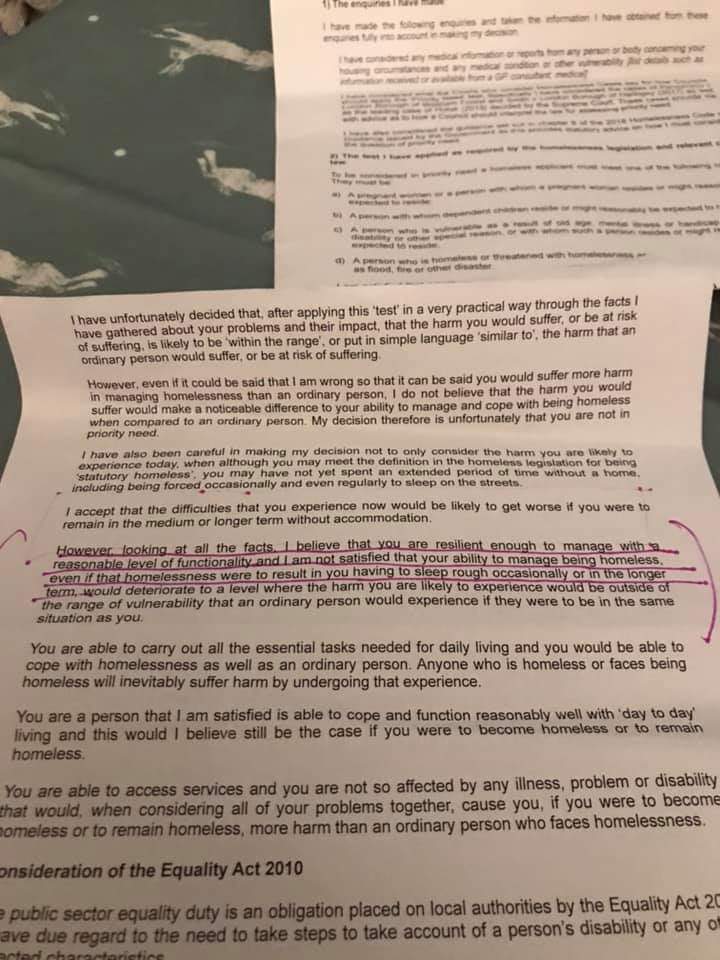
A Conservative council in Torbay has refused to support a young person with serious mental health problems, saying that they should be able to cope with being homeless and living on the streets like any “ordinary person” would.

In a letter, the council say that they had decided the young person would be no more vulnerable or at risk of harm than an ‘ordinary person’.

The appallingly callous letter, which also implies that people who have mental health problems are not ‘ordinary’ people, was posted online yesterday by the homeless charity, Humanity Torbay. 

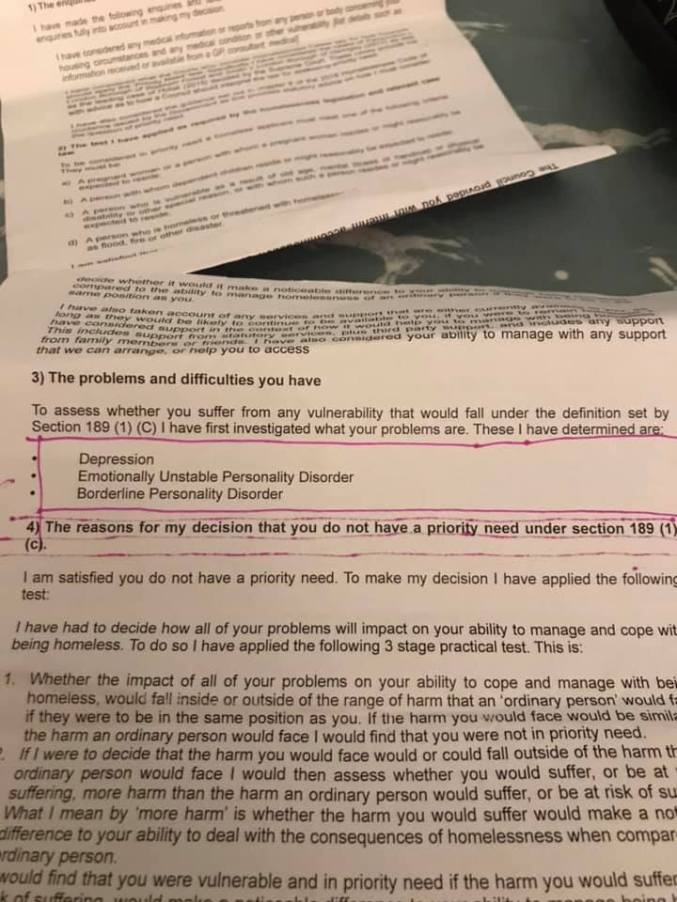
Two of the conditions the young person has – depression and emotionally unstable personality disorder – each carry with them a significant risk of suicide.  People with the latter condition experience a pattern of sometimes rapid fluctuation from periods of confidence to despair, with fear of abandonment and rejection. There is a particularly strong tendency towards suicidal thinking and self-harm.

Transient psychotic symptoms, including brief delusions and hallucinations, may also be present. It is also associated with substantial impairment of social, psychological and occupational functioning and quality of life. Associated illnesses include post traumatic stress disorder (PTSD), eating disorders, recurrent self harm, anxiety and depression. Physical illnesses related to this condition are: 

  • Arteriosclerosis
  • Hypertension
  • Hepatic disease
  • Cardiovascular disease
  • Gastrointestinal disease
  • Arthritis
  • Sexually transmitted infections (risk factor is increased because of poor impulse control).

Being homeless will increase each of these risks substantially.

People with emotionally unstable personality disorder are particularly at risk of suicide. 

A controversial council

Last month Torbay council paid £3m for the Proper Cornish factory in Bodmin, Cornwall, in a controversial bid to improve finances. The council announced it was  halting all non urgent expenditure due to a projected overspend of £2.8 million in 2018.

The council say they are trying to grow its revenues with business investments, and has spent £100m on four properties in the last financial year. The authority’s multi-million property portfolio includes hotels, office blocks and distribution centres in different parts of the country.

They claim that the council can invest up to £200m in “opportunities and assets” to generate income. Last month, cross-party opposition also emerged against a plan for Torbay Council to invest £15m in a new distribution warehouse near Exeter said to be for online retailer Amazon.

Meanwhile citizens in the area are being stripped of their opportunities and assets, with rising numbers being unable to meet even their fundamental survival needs – food, fuel and shelter.

Furthermore, evidence clearly shows that there is a considerable link between homelessness and mental health problems; however, this link is often overlooked. Sometimes mental health problems can lead to homelessness, but it’s also evident that being homeless contributes significantly to the worsening existing mental ill health, and it also creates mental illness.

A home is vital for stability, good mental and physical health, allowing people to live in safety, security, peace and dignity. Of course, there are numerous factors which can cause people to become homeless, many of which are beyond an individual’s control, such as lack of affordable housing, disability and poverty. But what really needs to be highlighted to this council is the two-way relationship between homelessness and mental ill health. Homelessness will invariably exacerbate an existing mental health condition. In turn, this can make it even harder for that person to cope, recover and to improve their circumstances.

Staff who work with homeless individuals in councils, shelters, hostels and health services, must be aware of their emotional and psychological needs, wellbeing, and put their safety first.

The homeless population currently struggle to access healthcare and tend to rely on A&E when they reach crisis point. Torbay council, who seem to operate within a business model, have nonetheless failed to recognise that their approach is ultimately more costly, and reflects very poor management of public funds.  

Although there is no such ‘right to housing’ in itself, the right to an adequate standard of living, including housing, is recognised in the UN Covenant on Economic, Social and Cultural Rights.

The letter from the Council was written to attempt to justify the council’s decision to not make the young person a priority for housing under Section 189(1) C of the Housing Act, 1996. The Council’s decision clearly violates the Equality Act 2010, as it fails to recognise the eligibility criteria laid out in the Act. All public authorities, including local authorities and other registered providers of social housing, are subject to the public sector equality duty to have ‘due regard’ to the need to:

  • eliminate unlawful discrimination
  • advance equality of opportunity, and
  • foster good relations between people who share a protected characteristic and people who do not.

This allows for positive discrimination in relation to disability (see the Public sector equality duty for more on this). Under the Equality Act, mental illness is also included in the category of disability, which is a ‘protected characteristic’. 

Under the Housing Act legislation, priority need for accommodation was established. 

(1) The following have a priority need for accommodation—

(a) a pregnant woman or a person with whom she resides or might reasonably be expected to reside;

(b) a person with whom dependent children reside or might reasonably be expected to reside;

(c) a person who is vulnerable as a result of old age, mental illness or handicap or physical disability or other special reason, or with whom such a person resides or might reasonably be expected to reside;

(d) a person who is homeless or threatened with homelessness as a result of an emergency such as flood, fire or other disaster.

Torbay homeless

Torbay 2

The shocking council letter to a vulnerable young person with mental ill health.

Charity and community group Humanity Torbay say they have shown the decision letter to a solicitor, while not disclosing any personal details, to protect the identity of the vulnerable young person concerned.

This person showed the charity the letter, however, because they wished the public to see the awful situation they were placed in and the risks they were exposed to because of the council’s decision, despite being so unwell and vulnerable to begin with.

A spokesperson for Humanity Torbay said: What is so appalling, what completely horrified us is that this person was not considered priority need after being housed temporarily.

“The most chilling part of all this was that this particular person who came to us was in great distress and need. It’s so terrible that they were told that “however looking at all the facts I believe that you are resilient enough to manage with a reasonable level of functionality and I’m not satisfied that your ability to manage being homeless even that homelessness must result in you having to sleep rough occasionally or in the longer term would deteriorate to a level where the harm you’re likely to experience would be outside of the range of vulnerability of that an ordinary person would experience.” 

“What shocked us was the fact we saw this young person’s doctors’ letters as well. We are sure this is happening all over the country but this is Torbay Council, who we have desperately tried to work with. 

“We felt a care of duty to our client who asked us to give this to the public so they could see what is going on. We have been very careful to make sure this persons identity is not compromised in anyway and as we say, we have spoken to a solicitor because we are horrified and shocked that somebody with severe depression and other medical conditions is deemed fit to be able to sleep on the streets.

“Torbay Council are well aware of what gender this person is as well.”

This is another factor that adds to the already considerable vulnerability of this young person. 

Last year, a report was published about Torbay’s homeless crisis, saying that £918,800 investment over five years was needed to “reach a point where homelessness levels would plateau”.

The council seem rather more interested in investing in property, business and land, however. 

The charity Crisis were commissioned by the Shekinah Mission in Plymouth to carry out a detailed piece of work to respond to the rising number of rough sleepers in Torbay. 

The authors say they spoke with a range of organisations as well as 50 people who have experienced homelessness in Torbay – although Humanity Torbay say they were not contacted. The report resulted in Torbay Council deciding to ‘relocate services and move to a dispersed accommodation model‘ and create ‘a team to support people with the most complex lives integrated with other social care pathways’. 

John Hamblin, Chief Executive of Shekinah, said: “For over 25 years, Shekinah has been supporting people who are homeless and rough sleeping. During this time we have repeatedly seen the failure of the current accommodation system to support people with multiple and complex needs. The result has been the creation of a revolving door system where people are falling in and out of services and are often left with no access to accommodation. We are hoping that through this Nationwide Foundation funded study, Shekinah and its partners can start to realise the aspiration that everyone deserves a place to call home.”

I agree. Everyone deserves a place to call home. Shelter is, after all, a fundamental human survival need. But we have reached a stage, as a society, where the most vulnerable citizens are not considered a priority for support. Those are the people that are most in need of it.


I don’t make any money from my work. I’m disabled through illness and on a very low income. But you can make a donation to help me continue to research and write free, informative, insightful and independent articles, and to provide support to others going through Universal Credit, PIP and ESA assessment, mandatory review and appeal. The smallest amount is much appreciated – thank you.

DonatenowButton

UN calls on UK government to scrap ‘pernicious’ two-child benefit cap and rape clause

Screenshot-32

The UK Government has been urged to abandon its “pernicious” two child policy and rape clause, following the publication of a United Nations Human Rights report.

The new report published today by the Committee on the Elimination of Discrimination against Women (CEDAW), made a number of recommendations including that the two child tax credit limit be repealed. The report authors also warn that Universal Credit risks trapping domestic abuse victims in situations of poverty and violence. 

Last year, leader of the Labour party, Jeremy Corbyn, wrote to the Prime Minister, calling on the Government to bring forward policies to reverse the “shocking trends of rising poverty, rising homelessness and rising destitution”, promising to “expedite” a range of measures through Parliament with Labour support, including: ending the two child limit and scrapping the ‘rape clause.’ 

The two child limit, and the ‘non-consensual sex exemption’ – commonly known as the ‘rape clause’ – has been the subject of significant opposition since it was challenged in the 2015 Budget, including by the SNP’s Alison Thewliss, among others. 


SNP MP Alison Thewliss has stepped call for an end to the two child limit
Alison Thewliss. Courtesy of The Scotsman


The report says: “The Committee recalls its previous concluding observations and remains concerned that the payment of Universal Credit, which consolidates six separate income-related benefits, into a single bank account under the Universal Credit system risks depriving women in abusive relationships access to necessary funds and trapping them in situations of poverty and violence.

“It also expresses deep concern at the introduction of a two-child tax credit limit except in certain circumstances such as rape, which has a perverse and disproportionate impact on women.

“The Committee also expresses its concern that the increase in the state pension age for women from 60 to 66, following several legislative changes, has affected the pension entitlements of women born in the 1950s, and is contributing to poverty, homelessness and financial hardships among the affected women.”

The Committee calls on the UK Government to:

(a) Ensure that women in abusive situations are able to independently access payments under the Universal Credit system;

(b) Repeal the two-child tax credit limit;

(c) Take effective measures to ensure that the increase in the State pension age from 60 to 66 does not have a discriminatory impact on women born in the 1950s.

The policy limits child tax credit to the first two children. A number of exceptions were set out, including for a child born as a result of “non-consensual conception”. Work and Pensions Secretary Amber Rudd announced a rollback in January, but faced claims that she was creating “two classes of family” by scrapping it for some claimants but not others. 

Human rights and the implications of the Conservatives’ two-child policy 

Article 25 of the Universal Declaration of Human Rights, of which the UK is a signatorystates:

  1. Everyone has the right to a standard of living adequate for the health and well-being of himself and of his family, including food, clothing, housing and medical care and necessary social services, and the right to security in the event of unemployment, sickness, disability, widowhood, old age or other lack of livelihood in circumstances beyond his control.
  2.  Motherhood and childhood are entitled to special care and assistance. All children, whether born in or out of wedlock, shall enjoy the same social protection.

An assessment report last year, by the four children’s commissioners of the UK called on the government to reconsider imposing the deep welfare cuts, voiced “serious concerns” about children being denied access to justice in the courts, and called on ministers to rethink plans at the time to repeal the Human Rights Act.

More than 70,000 low-income families lost up to £2,800 each last year after having their entitlement to benefits taken away as a result of the government’s “two-child policy”, official figures showed. The statistics revealed that during the first year of operation, 59% of the 73,500 families who lost financial support for a third child were in work. Nine per cent of UK claimant households with three or more children were affected.

Margaret Greenwood, Labour’s shadow work and pensions secretary, said: “These figures are truly shocking. The two-child limit is an attack on low-income families, is morally wrong and risks pushing children into poverty.

“It cannot be right that the government is making children a target for austerity, treating one child as if they matter less than another. Labour will make tackling child poverty the priority it should be.”

Margaret-Greenwood-


Margaret Greenwood, shadow Work and Pensions Secretary

Alison Garnham, the chief executive of Child Poverty Action Group, said: “An estimated one in six UK children will be living in a family affected by the two-child limit once the policy has had its full impact. It’s a pernicious, poverty-producing policy.”

Jamie Grier, the development director at the welfare advice charity Turn2us, said: “We are still contacted by parents, the majority of whom are in work, fretting over whether this policy means they might consider terminating their pregnancy.”

The policy was introduced by the former work and pensions secretary Iain Duncan Smith, who described it as a “brilliant idea”, despite it being criticised as a “Chinese-style clampdown on the poor”. Duncan Smith said it would force claimants to make the same life choices as families not on benefits, and incentivise them to seek work or increase their hours.

Commenting on the report, Alison Thewliss MP said: “This most recent condemnation is a damning confirmation of what is a truly cruel and pernicious policy by this heartless UK Tory Government.

“Having ceased rollout of the policy to third and subsequent children born before April 2017, the DWP Secretary of State Amber Rudd must now recognise that the two child policy is unfair for everyone who is affected by it.

“No one can plan for the whole course of their family life, and social security should be a safety net for all of us when we need it.

“Only today, I met with a host of organisations, representing a number of sections of society – including women’s and religious groups – and all were unequivocal in their opposition to the two child policy.

“It is tantamount to social engineering, and it is pushing increasing numbers of families into poverty.

“I will be writing to the UK Government to ask for immediate action on CEDAW’s findings. Amber Rudd must do the right thing and end the two child limit for good.”

Related

The government’s eugenic policy is forcing some women to abort wanted pregnancies


I don’t make any money from my work. I’m disabled through illness and on a very low income. But you can make a donation to help me continue to research and write free, informative, insightful and independent articles, and to provide support to others going through Universal Credit, PIP and ESA assessment, mandatory review and appeal. The smallest amount is much appreciated – thank you.

DonatenowButton

Former DWP boss tells how Tory policies pushed her to quit her job

Doyle

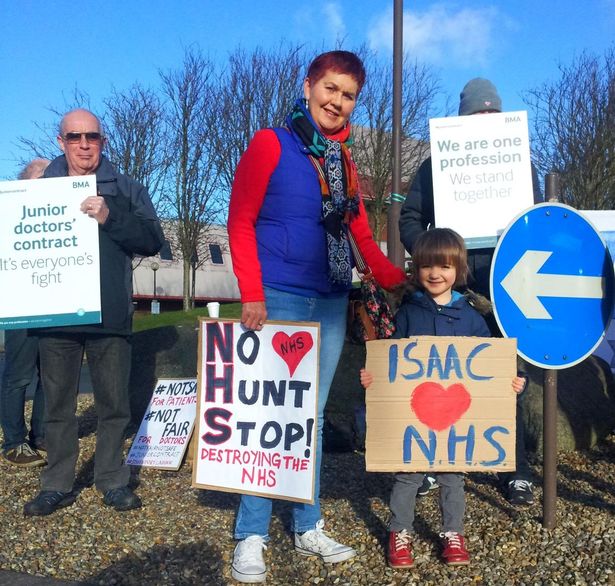
Mhairi Doyle with her grandson Isaac supporting junior doctors at Southport Hospital. Picture courtesy of the Liverpool Echo.

A Merseyside councillor has spoken out about why she retired from the Department for Work and Pensions (DWP) after 25 years. She says it’s because she “refused to be complicit in how the Tories treat vulnerable people.”

Mhairi Doyle, Labour councillor for Norwood ward in Southport, was also the social inclusion manager for Merseyside in the Department of Work and Pensions until 2012. She moved to Southport in 1988, having been born and raised in Edinburgh.

Doyle received an MBE for her work with disadvantaged people, especially her work with Street Sex Workers in Liverpool, and has worked at local, regional and national levels developing policy to help change lives.

She said: “I was working with heroin users, sufferers of domestic violence, people who were in and out of prison, homeless people… with some funding we managed to create networks to support people and help them out of horrendous situations.

“We were getting about 80% of people back into work.

“It took time and energy but we had a really good thing going. And then the coalition government came in and everything was cut, gone in an instant.

“Everyone was shocked when I said I was retiring; they used to joke that I’d have to be carried out, I loved my job so much. But I could not be complicit in the way the Tories think it’s acceptable to treat vulnerable people.”

Doyle said that there have been abrupt changes in the ethos of job centres since 2012. She said: “We used to be there to help and advise, but it’s gone from being a service about people to a service about numbers.

“The benefit regime is so harsh. They say people don’t have targets on benefit sanctions but it’s all semantics – there is an expectation on staff to cut benefits.

“I’m not having a go at anybody who works at job centres. It’s a difficult job and it’s not well-paid, it’s the system. Workers are expected to get people out the door quickly and get them to do it online, but not everyone is computer literate or has internet access.”

She added: “The bulk of my caseload is people struggling to get the benefits they need to live on, and a lot of these people work.”

She continued: “When I moved here I was told, as many of us were, that a vote for Labour was a wasted vote. So, to keep the Tories out I voted Lib Dem until 2010, when I voted Lib Dem and still got the Tories.

“Even worse, they took part in and enabled all the devastating cuts still affecting us today.

“I don’t think it is fair that our NHS is being sold off piece by piece or that my grandson when he gets out of university, will leave with over £50,000 of debt.

“And I don’t think it is fair that the Tories and Lib Dems have starved our local council of money, forcing them into such difficult decisions over services and amenities and then stand back and blithely criticise when they are the very reason it is happening.”

In a completely meaningless response, a DWP spokesman reading from the DWP crib sheet, said: “Finding work is the best route towards prosperity and Universal Credit is a force for good, providing tailored support for over 1.6 million people as they find jobs faster and stay working longer.

“Extra digital help and budgeting support are also available.”

The comment doesn’t address the issues raised by Doyle at all, nor do the political platitudes mitigate the hostile environment that has been engineered by successive Conservative-led governments, which is having dire consequences for many people, both in and out of work.

Doyle 2

Mhairi Doyle, pictured here alongside Bootle MP Peter Dowd and Southport Labour members, won her seat in 2018.  Picture courtesy of the Liverpool Echo.


I don’t make any money from my work. I’m disabled through illness and on a very low income. But you can make a donation to help me continue to research and write free, informative, insightful and independent articles, and to provide support to others. The smallest amount is much appreciated – thank you.

DonatenowButton

Court victory for disabled EU benefit claimants at appeal

lady.justice.small

Two disabled people who moved to the UK from other EU countries have won an important Appeal Court case which entitles them to disability-related benefits in the UK from shortly after they arrived rather than having to wait two years.

The case, brought by Child Poverty Action Group and Harrow Law Centre, will ensure that disabled EU citizens and their carers who have a “genuine and sufficient” connection to the UK will receive social security support at an earlier point if they relocate to the UK.

The ruling overturns an Upper Tribunal finding that had denied both households benefits. And it confirms that the “genuine and sufficient” link which must be demonstrated by claimants in these circumstances is to the UK as a whole, rather than to its social security system.

One of the claimants, Ms Mohamed, is a Somalian-born woman who after 14 years’ residence in Germany as a German citizen came to the UK to settle here, aged 65.

When her health deteriorated to the point where she could no longer live alone and required the care of her daughter, a British citizen living in the UK, she claimed Attendance Allowance (AA). Her claim was refused.

The other claimant is 18-year-old Brandon Kavanagh, an Irish citizen who was diagnosed with Asperger’s Syndrome as a child.

His mother, a British citizen, moved to Ireland when she was a teenager but returned to the UK in 2013 with her children to escape domestic violence and to be closer to her family, from whom she receives support. Her son was then aged 12.

She claimed Disability Allowance (DLA) for her son when she arrived in the UK, but her claim was refused.

Between 2011 and 2013 she had received care allowances for her son and for herself from the Irish social security system.

Both were refused disability-related benefits on the grounds that they hadn’t been in the UK long enough to pass the so-called ‘past presence test’.

The test requires people claiming disability benefits to have been in Britain for 104 weeks of the 156 weeks before they claim. EU citizens may be able to meet this test by combining, in certain circumstances, the time they have lived in another EU state with the time they lived in the UK.

Alternatively, the test doesn’t apply to EU citizens if they can establish a genuine and sufficient link to the UK.

Both claimants appealed the refusal of their benefit claims. In Brandon Kavanagh’s case he lost the appeal while Ms Mohamed was successful in hers. Brandon appealed to the Upper Tribunal in his case and the Secretary of State for Work and Pensions appealed in Ms Mohamed’s case.

The cases then went jointly to an Upper Tribunal which found that although the “genuine and sufficient link” needed to be to the UK as a whole rather than limited to its social security system and that such a link may be established on the basis of presence alone, neither of the claimants could demonstrate a sufficiently strong link to the UK.

In a judgement handed down yesterday, the Court of Appeal ruled that both claimants had a genuine and sufficient connection to the UK when they claimed disability benefits shortly after their arrival and that the approach taken by the Upper Tribunal was flawed and unduly inflexible because it failed to take account of all the particular, personal circumstances and motives of the claimants which, in the round, proved the required sufficient link.

The Judges say: “… objective evidence of the [genuine and sufficient] link is plainly critical but evidence of the motives, intentions and expectations of the applicant are not to be ignored if they are relevant to proof of the link and are convincing.”

In Kavanagh’s case, the judges found the fact that his mother was fleeing domestic violence explained and confirmed her settled intention to remain in the UK, her country of nationality.

She needed the support of her wider family in England, enrolled her children in English schools, closed her only bank account in Ireland, severed all ties with the Republic and had no intention of returning.

In the case of Ms Mohamed, she suffered a number of physical ailments including osteoporosis, rheumatoid arthritis and high blood pressure.

She used a wheelchair, required support with mobility and daily activities such as washing, cooking meals, dressing and administering medication and had moved to the UK to join her daughter, a British citizen who provides daily care for her.

Commenting on the judgement, Child Poverty Action Group’s Head of Litigation Carla Clarke said: “This is a strong judgement which recognises that justice requires decision makers to take a wide view of all the relevant facts and motives where a genuine and sufficient link to the UK must be proved for benefit purposes.

“Both of our clients already had strong family ties to the UK and a clear intention to settle here when they first claimed disability benefits yet they were denied help with the extra costs of disability because, as today’s judgement finds, the criteria for proving a sufficient link to the UK has been too narrowly applied.

“Today’s ruling means that disabled EU citizens, including UK citizens, who relocate or return to the UK from another EU country because their carer is fundamentally connected to the UK will receive the financial help they need because of their disability at a much earlier point.”


My work is unfunded and I don’t make any money from it. But you can support Politics and Insights and contribute by making a donation which will help me continue to research and write informative, insightful and independent articles, and to provide support to others.

DonatenowButton

The UK in 2019: Dickensian levels of poverty, malnutrition, scurvy and rickets

 Tories and their tall stories

The government have claimed over the last few successive years that the numbers of people in work has reached ‘record levels’. The Conservatives claim that work has ‘many benefits’. One of those claims, for example, is that “work is a health outcome”. So we should reasonably expect that the general health of the population has improved since around 2015, when the claimed employment ‘boom’ began, if the government’s claim were true.

However, that has certainly not happened. In fact public health  has generally has got worse In 2014, the government tried to claim that a substantial drop in food sales was because of ‘market competition’, rather than the growth in absolute poverty. Public spending in food stores fell for the first time on record in July of that year, which put the the UK’s alleged recovery in doubt. Such a worrying, unprecedented record fall in food sales indicated then that many citizens evidently had not felt the benefit of the so-called recovery.

It remains the case that what the government is telling us is nothing like the lived experiences of many citizens. The claimed economic ‘benefits’ of a Conservative government are not reaching the majority of citizens. In fact many citizens have been pushed into absolute poverty, while the wealthiest citizens have enjoyed a substantial boost to their own disposable income. This shift in public funds is intentional, as the government’s policies have been fundamentally designed to move public wealth from the public domain to the private one.

Cameron’s one moment of truth was when he made a slip, declaring that the Conservatives were “raising more money for the rich”. The Conservatives only ever tell the truth in error, it seems.

Reported cases of malnutrition caused by food poverty have significantly risen

The number of people who are so malnourished they have to go to hospital has more than tripled in the last ten years, and is continuing to rise. In 2017,  8,417 patients were treated for malnutrition. By then, the cases of malnutrition had risen by approximately 400% compared to the number of cases during the global recession in 2008.

Of those admitted in 2017, 143 were under the age of nine and another 238 were aged between ten and 19. Shocking statistics also showed that the number of people in hospital with scurvy, a serious deficiency illness arising because of a lack of vitamin C, has doubled in the same period from 61 to 128 cases.

The shameful figures lay bare the true human cost of cuts in wages and social security in a context of ever-rising food prices and the general costs of living.

These rising figures for hospital admissions because of malnutrition in England by NHS Digital show just the tip of the ­iceberg, as GPs say they have been treating ­thousands more less serious cases of malnutrition, without referring them to our already over-burdened hospitals.

Last year, shadow health secretary Jonathan Ashworth said: “It’s absolutely shameful that malnutrition and scurvy admissions to hospital have risen so ­dramatically after eight years of Conservative rule.

“As the sixth largest economy in the world, surely we are better than this.

“But this is the consequence of eight years of cuts to public services, the cost of living rising and falling real wages hacking away at the social fabric of our society.

“Labour in government will lead an all-out assault on the unacceptable health ­inequalities facing our society.”

Dianne Jeffrey, Chairman of the Malnutrition Taskforce, said: “I find these figures incredibly concerning. We already know up to 1.3 million of our older friends, relatives and neighbours are malnourished or at risk.”

Increasingly, children are also at risk.

Additionally, the Lancashire Evening Post reports that doctors at hospitals in Preston and Chorley, Lancashire, have seen a sharp increase in malnutrition over the last three years. They say they are seeing patients with rickets and scurvy.  Patients were admitted to hospital with malnutrition around 70 times at the Lancashire Teaching Hospitals NHS Foundation Trust in the 12 months up to March 2018, according to NHS Digital data. 

This was an increase of around 75 per cent from the same period two years ago, when there were 40 recorded cases. The county’s NHS Foundation Trust also saw cases of rickets and scurvy during 2017-18.

Natalie Thomas, the community assistant at the Salvation Army which runs the food bank in Preston, says she is not shocked that hospitals in the county have seen people suffering from scurvy and rickets. “It’s scary, it really is but I’m really not all that shocked knowing what we see in here,” she said.

“It’s like we are going backwards in time. It’s quite believable with the amount of bags [of food] we are giving out at the moment.

“It’s not getting any better. Since July when Universal Credit came in we’ve been giving out approximately 1,000 bags of food a month. Since then we have not had any quieter months during the year because people are now getting monthly benefit payments rather than fortnightly payments.

“It’s not surprising for us. The Lancashire Teaching Hospitals NHS Foundation Trust is also collecting food for us.” 

Food banks rarely give out fresh fruit and vegetables, however, since they are perishable foods. Because of storage issues, the food bank in Preston does not hand out fresh fruit and vegetables on a regular basis.

Major Alex Cadogan said: “We are not medical professionals but in our food parcels we try and give out a healthy diet but we can only give what we are given. 

“When we are sometimes in receipt of fresh fruit and vegetables we distribute it as rapidly as we can. We do hand out tinned fruit and vegetables regularly.” 

Vitamin C is needed by humans every day to prevent scurvy, as the body cannot store it. It is a water soluble vitamin, and it is easily destroyed by canning processes and by over-cooking. It’s found most in a range of fresh fruit and vegetables. Vitamin D, which is fat soluble, can be stored in the body. It is found in milk, cheese, yogurt, egg yolks, oily fish such as tuna, salmon, sardines and mackerel. Lack of vitamin D causes rickets and other bone disorders. Lack of calcium and vitamin D can also affect the development of children’s teeth and cause osteoporosis later in life.

Hard Times

Scurvy and rickets were rife in Preston – and most other industrial towns and cities – during the Victoria era. And it was Preston’s heavy industry that formed the inspiration for one of Charles Dickens’ best-known books. The author, famed for his books about the impoverished working classes in Victorian England, spent three months in Preston. His time in the city is widely believed to have inspired his novel Hard Times, about people living in extreme poverty. 

These are the socioeconomic conditions that the Conservative government have recreated through their policies, which have reduced and stagnated wages and cut social security support radically, while the cost of living has dramatically increased, causing severe hardship for many families both in work and out. Meanwhile the very wealthy are rewarded with generous tax cuts from the public purse. 

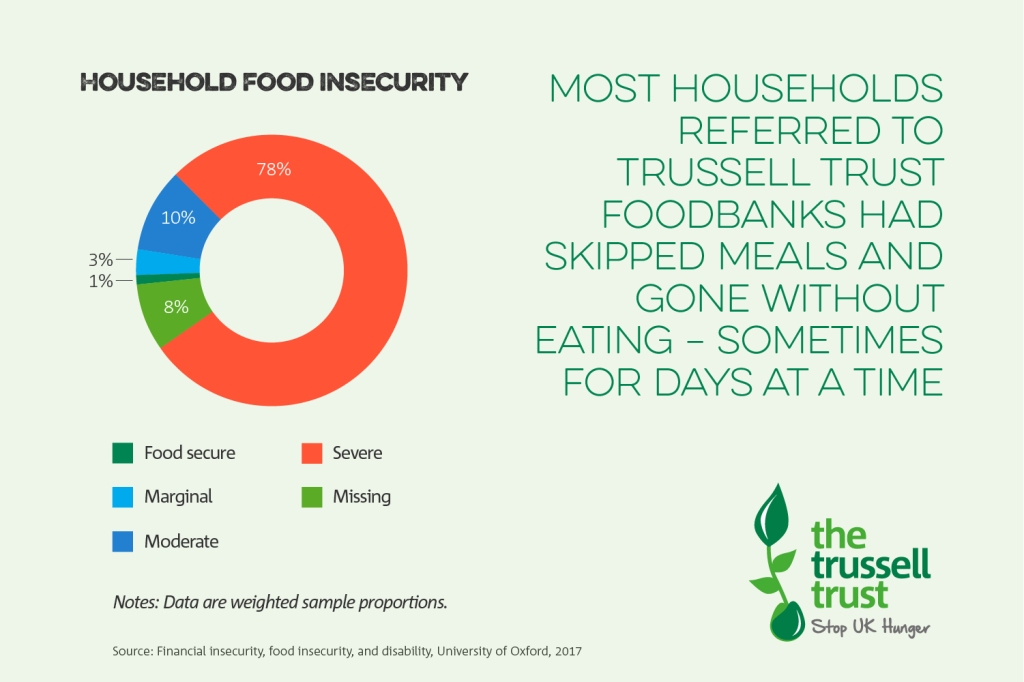
Across England, the number of cases of malnutrition increased by a further 18 %, from 7,855 cases in 2015-16 to 9,307 cases in 2017-18. The Joseph Rowntree Foundation warned that over 1.5 million households across the country are regularly left struggling to afford basic survival essentials such as food.

Chris Goulden, from the organisation, said: “Living in poverty can severely restrict a family’s ability to put food on the table and lead a healthy life.

“The poorest fifth of households spend twice as much of their income on food and fuel compared with those in the richest fifth, meaning those on the lowest incomes are most vulnerable to price rises, inflation and the benefits squeeze.”

Public Health England recommends that people follow its Eatwell Guide to make sure they are eating a healthy, balanced diet. However, a 2018 report by independent think tank the Food Foundation found more than one in four households would need to spend more than a quarter of their disposable income after housing costs to meet the guide’s recommendations. For parents in the bottom 20 per cent of earners, the cost would be 42 per cent of their income.

The Food Foundation have warned that the figures were signs of a “broken food system”. Executive director Anna Taylor said: “Although cases of rickets, scurvy and malnutrition are caused by a complicated range of factors, they are not conditions that we should have to be talking about anymore in a country as wealthy as the UK.

“Nearly four million children in the UK live in households for whom a healthy diet is unaffordable. We need industry and government to take action now to ensure that everyone has access to enough nutritious food.”

A spokesperson from the Department of Work and Pensions claims there are now fewer households with low incomes.

“We know there’s more to do to ensure that every family has access to nutritious, healthy food”, she said.

“Malnutrition is a complex issue and most patients diagnosed in England have other serious health and social problems.

“For people that need extra support with their living costs we spend £90 billion a year on working-age benefits and will be spending £28 billion more by 2022 than we do now.”

However, while malnutrition may sometimes be caused by relatively rare illnesses that cause absorption problems in the stomach, the most common cause of malnutrition, scurvy and rickets is vitamin and mineral deficiency, which is due to a lack of access to adequate, fresh and varied food, due to absolute poverty.  This is why the number of reported cases of malnutrition is rising. 

Meanwhile charities, food banks and campaigners have continually warned that many households simply cannot afford a healthy diet, and have called for government action to increase access to nutritious food.

Oxford-research-blog-100


My work is unfunded and I don’t make any money from it. But you can support Politics and Insights and contribute by making a donation which will help me continue to research and write informative, insightful and independent articles, and to provide support to others.

DonatenowButton

The government’s identity verification portal – Verify – is another Tory flagship failure

gov.uk verify icon

The National Audit Office has strongly criticised the government’s flagship identity verification scheme. The damning report says Gov.UK Verify has fallen well short of its target of 25 million users by 2020, managing only 3.6 million so far.

The government has had to lower its estimates for Verify’s financial benefits by 75%.

Nineteen government services currently use Verify, such as the Department for Work and Pensions, in the process of delivering universal credit, those claiming a tax refund from HM Revenue & Customs (HMRC) and HM Land Registry’s Sign your mortgage deed may all be accessed through Verify, too.

The National Audit Office (NAO) scrutinises public spending for Parliament and is independent of government. The NAO have published its investigation on Verify, the government’s flagship identity verification portal. It has found Verify’s performance has consistently been below the standards initially set, and take-up among the public and departments has been much lower than expected.

Verify asks people wanting to sign up to government services via the GOV.UK website to pick a commercial identity provider to check and verify their identity. Current providers include Barclays, Digidentity, Experian, Post Office and secureidentity/Morpho. (Royal Mail and CitizenSafe/GBG were also providers but recently decided not to continue as identity providers on the commercial terms applying from October 2018.)

For those that do use Verify, problems are widespread.

Currently only 48% of people who try to sign up for the service are successful on their first try.

This rate is even lower (38%) for universal credit claimants using the service to authenticate their identity online. This has led to increased operational costs, with the Department for Work and Pensions (DWP) expecting its spend on manual verification to be about £40m over the next decade.

The NAO’s report follows on from their previous work on Verify in the Digital transformation in government report. This found that Verify’s take-up had been undermined by its performance and that Government Digital Service had lost focus on the longer-term strategic case for the project.

The Government Digital Service (GDS), part of the Cabinet Office, developed Verify to be the default way for people to prove their identities so they can access online government services securely. It originally intended for Verify to be largely self-funding by the end of March 2018.

However, the NAO’s investigation highlights that the number of people and departments using Verify is well below expectations. GDS has significantly revised down its estimated financial benefits by over £650 million, for the period 2016-17 to 2019-20, from £873 million to £217 million. Government also continues to fund it centrally, although it announced in October 2018 that this would stop in March 2020.

In 2016 GDS forecast that 25 million people would use Verify by 2020. By February 2019, 3.6 million people had signed up for the service. If current trends continue, approximately just 5.4 million users will have signed up by 2020.

Nineteen government services currently use Verify, less than the 46 expected to by March 2018, and of those, at least 11 can still be accessed through other online systems. Some government service users, such as Universal Credit claimants, have experienced problems. As a result, departments have needed to undertake more manual processing than they anticipated, increasing their costs.

Verify uses commercial providers to check people’s identities. GDS has reported a verification success rate of 48% at February 2019, against a projection of 90%. The success rate measures the proportion of people who succeed in signing up for Verify, having had their identities confirmed by a commercial provider. It does not count the number of people dropping out before they finish their applications nor indicate whether people can actually access and use the government services they want after signing up with Verify.

The vast majority of funding comes from central government (and ultimately, the tax payer). Verify has cost at least £154 million by December 2018 but this is likely to be an underestimate of all costs, as GDS’s reported spend does not include costs of departments reconfiguring their systems to use Verify.

The largest component of known costs, some £58 million, was payments to commercial providers. In addition, out of seven departments invoiced for their use of Verify from 2016-17 only one department (HMRC) has paid. The total amount invoiced was £3.6 million, of which £2 million is currently still outstanding.

Universal Credit remains Verify’s biggest government customer base in verifying claimants identities and remains the major constraint in closing Verify.

However, most claimants cannot even use Verify to apply for Universal Credit: only 38% of Universal Credit claimants can successfully verify their identity online (of the 70% of claimants that attempt to sign up through Verify). The Department for Work and Pensions (DWP) is working with GDS on an improvement plan to increase the number of claimants successfully verified.

Verify has been subject to over 20 internal and external reviews, including a July 2018 review by the Infrastructure and Projects Authority that recommended Verify be closed as quickly as practicable, bearing in mind Universal Credit’s critical dependency on it. This followed a Cabinet Office and Treasury decision in May 2018 to approve GDS’s proposal to ‘reset’ Verify in an attempt to improve its performance and take up.

Meg Hillier MP, who chairs the Public Accounts Committee, called Verify “a textbook case of government’s over-optimism and programme-management failure.”

“Despite spending at least £154m on Verify, only half the people that try to sign up are able to use it and take-up is much lower than expected.”

The report notes that the total cost of Verify is in fact likely to exceed £154m, as this figure does not include the amount it has cost departments to reconfigure their systems to use Verify.

Of the known costs, more than one-third has gone on payments to the commercial identity providers behind the system, including Barclays and the Post Office.

The Cabinet Office announced in October 2018 that government would stop funding Verify in March 2020. It has capped the amount it will spend on Verify during this time to £21.5 million. GDS has confirmed 18-month contracts with five commercial identity providers who will continue to verify people’s identities. After March 2020, GDS’s intention is for the private sector to take over responsibility for Verify.

GDS will withdraw from its operational role running Verify from April 2020. GDS claims that under a market-based model, departments will procure Verify’s services directly from commercial providers. This means departments that currently do not pay their full usage costs for Verify would have to in future.

The NAO report concludes: “Unfortunately, Verify is also an example of many of the failings in major [government] programmes that we often see, including optimism bias and failure to set clear objectives. Even in the context of GDS’s redefined objectives for the programme, it is difficult to conclude that successive decisions to continue with Verify have been sufficiently justified.” 

The full privatisation of this service is highly likely to present further problems, however, since the prospect of private profit introduces perverse incentives, which empirical evidence demonstrates are clearly linked with poor service standards and delivery.

It is a purely ideological strategy that has resulted in the poor management of public funds increasingly over the last few decades, and particularly, over this past eight years.


My work is unfunded and I don’t make any money from it. This is a pay as you like site. If you wish you can support me by making a one-off donation or a monthly contribution. This will help me continue to research and write independent, insightful and informative articles, and to continue to support others going through PIP and ESA assessment, mandatory review and appeal.

DonatenowButton

Tory racism is embedded in policy and clearly evident in Tory social media groups

racism

A Conservative councillor has been suspended by the Conservative Party after a Facebook group he moderates was found to contain several Islamophobic and racist comments.

Martyn York, a Conservative councillor in Wellingborough, was a moderator for “Boris Johnson: Supporters’ Group”, which included  members whose comments called for the bombing of mosques around the UK. Dorinda Bailey, a former Conservative council candidate, has also been accused of supporting Islamophobia with her comments following a post in the group calling for mosques to be bombed.

Furthermore, the group, which has 4,800 members, can only be joined after receiving approval from moderators, and its guidelines explicitly call on members not to post hate speech. 

Comments in the group, however, seriously violate these rules, with several referring to Muslims as “ragheads” and calling immigrants “cockroaches”.

In one comment, the mayor of London, Sadiq Khan, is called a “conniving little muzrat”, and Muslim Labour MP Naz Shah is also targeted with abuse and told to “p*** off to [her] own country”.

Someone posted in the group that any mosques “found to preach hate” should be shut down, another group member responded: “Bomb the f****** lot.” 

Bailey responded, without a trace of irony: “I agree, but any chance you could edit your comment please. No swearing policy.”

There were also comments in the group telling an African solider to “p*** off back to Africa” and for Labour MP Fiona Onasanya to be “put on a banana boat back home”.

After the offensive posts were brought to his attention, Conservative Party chairman Brandon Lewis confirmed York’s suspension and said Bailey was no longer a member of the party.

The Muslim Council of Britain (MCB), which has repeatedly called for an inquiry into Islamophobia in the Conservative Party, said this was further evidence of a “significant problem”.

“A Facebook group led by Conservative politicians containing unashamed bigotry has made it completely apparent that there is a significant problem with racism and Islamophobia within the party of government,” a spokesperson for the MCB said.

“Polls revealing that half of all Conservative voters in 2017 believe Islam to be a threat to the British way of life have shown how widespread this sentiment is. We reiterate our call for the government to launch an inquiry into Islamophobia and lead by example by committing to tackle bigotry everywhere, not just where it’s politically convenient.”

There government were happy enough to ensure an inquiry into the allegations of antisemitism in the Labour party, and ‘inappropriate’ posts on social media took place. However, the conclusions of the Home Office Committee contradicted the claims being made on the right and among the neoliberal centrists, about the Labour party.

Nonetheless, the claims have continued, indicating a degree of underpinning political expedience and media misdirection.commons-select-committee-antisemitism

That is not to say there is no antisemitism at all among Labour party members, and where allegations arise, those MUST be addressed. However, it does indicate that political and media claims that the party is ‘institutionally antisemitic’ are completely unfounded. 

It is also absolutely reasonable to point this out. 

Unlawful and discriminatory Conservative policy

Meanwhile the Conservatives have continued to embed their prejudices and racism in  discriminatory policies. For example, in 2014 Theresa May was the Home Secretary who introduced the disgraceful Hostile Environment legislation that ultimately led to the Windrush scandal.  On March 1st 2019 a central mechanism of that legislation was ruled unlawful by the High Court because of the way it has unleashed a wave of racism, and because it was found to violate the European Convention on Human Rights. 

Judge Martin Spencer found the policy caused landlords to discriminate against both black and ethnic minority British people and foreign UK residents.

He also ruled that rolling out the scheme in Scotland, Wales or Northern Ireland without further evaluation would be “irrational” and breach equality laws.

“The evidence, when taken together, strongly showed not only that landlords are discriminating against potential tenants on grounds of nationality and ethnicity but also that they are doing so because of the scheme,” Mr Justice Spencer told the court on Friday.

He added “It is my view that the scheme introduced by the government does not merely provide the occasion or opportunity for private landlords to discriminate, but causes them to do so where otherwise they would not.”

The changes that came into force in 2016 required private landlords to check the immigration status of potential tenants, or face unlimited fines or even prison for renting to undocumented migrants, coercing landlords into becoming agents of the state, effectively.

Judge Martin Spencer said: “The government cannot wash its hands of responsibility for the discrimination which is taking place by asserting that such discrimination is carried out by landlords acting contrary to the intention of the scheme.”

He also said he had found that Right to Rent had “little or no effect” on controlling immigration and that the Home Office had “not come close” to justifying it.

The legal challenge was launched by the Residential Landlords Association (RLA) and Joint Council for the Welfare of Immigrants (JCWI), which called Right to Rent a “key plank of Theresa May’s hostile environment” policy.

Chai Patel, JCWI legal policy director, said: “Now that the High Court has confirmed that Ms May’s policy actively causes discrimination, parliament must act immediately to scrap it.

“But we all know that this sort of discrimination, caused by making private individuals into border guards, affects almost every aspect of public life – it has crept into our banks, hospitals, and schools. Today’s judgment only reveals the tip of the iceberg and demonstrates why the Hostile Environment must be dismantled.” 

John Stewart, policy manager for the RLA, called the ruling a “damning critique of a flagship government policy”. 

He added : “We have warned all along that turning landlords into untrained and unwilling border police would lead to the exact form of discrimination the court has found.” 

Rather than accept the High Court’s findings, a Home Office spokesperson has said that an independent mystery shopping exercise found “no evidence of systemic discrimination”.

“We are disappointed with the judgement and we have been granted permission to appeal, which reflects the important points of law that were considered in the case. In the meantime, we are giving careful consideration to the judge’s comments,” he added.

I have written at length about the prejudiced, discriminatory and unlawful policies that the Conservatives have directed at ill and disabled people over the last few years. I also submitted evidence to the United Nations on this matter. However, the UN’s findings of “grave and systematic violations” of disabled peoples’ human rights, and the examples of structural violence inflicted on our politically marginalised community currently fails to get the media attention that mere allegations of antisemitism within the Labour party attracts.

People are suffering harm and psychological distress, and increasingly, some are dying, as a direct consequence of oppressive, cruel, illegal and dangerously authoritarian Conservative policies, while shamefully, much of the media prefers to look the other way.

That is, where the state directs them to ‘look’. 

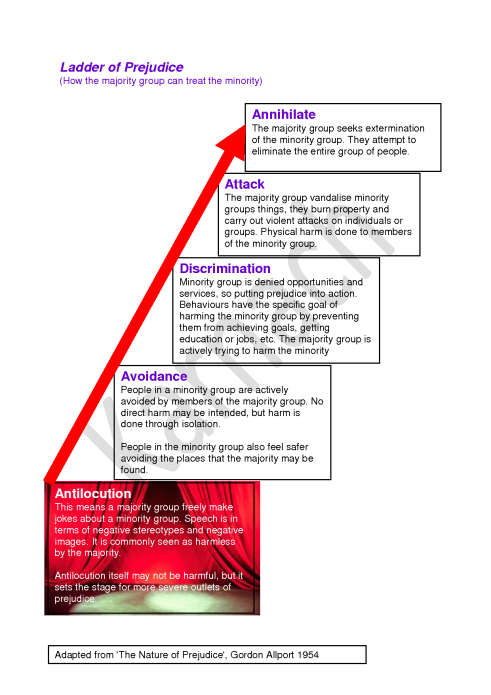
If you’ve ever wondered how some societies have permitted conscious cruelty to flourish, to the point where entire groups are targeted with oppressive and discriminatory policies resulting in distress, harm and death, I have to tell you that it’s pretty much like this.

Allport's ladder


My work is unfunded and I don’t make any money from it. This is a pay as you like site. If you wish you can support me by making a one-off donation or a monthly contribution. This will help me continue to research and write independent, insightful and informative articles, and to continue to support others going through PIP and ESA assessment, mandatory review and appeal.

DonatenowButton

The media’s fanfare of a Corbyn-backed second referendum is untrue

fake news

The mainstream media have just widely announced that Jeremy Corbyn is to back a second EU referendum. However, this is very dishonest, as no referendum motion has actually been tabled.

Furthermore, the media also need to learn the significant difference between a ‘people’s vote’, which is about asking the public about the terms of Brexit, and a completely new referendum. The Conservative office posted a highly dishonest tweet claiming that the Labour party are somehow “trying to stop Brexit”, so I am deeply suspicious of the fanfare of completely incorrect announcements in the media this evening.

Here is the Labour party’s  actual press release:

“From: Labour Party Press Office press@labour.org.uk
Sent: 25 February 2019 17:27
To: Labour Party Press Office press@labour.org.uk
Subject: NEWS FROM LABOUR: Labour to table amendment to make its credible alternative plan the UK’s Brexit negotiating position

Labour to table amendment to make its credible alternative plan the UK’s Brexit negotiating position.

Jeremy Corbyn MP, Leader of the Labour Party, will tomorrow (Tuesday 26 February) seek to enshrine Labour’s five Brexit demands in law by tabling an amendment to the government’s Brexit motion.

Labour’s amendment would force the government to make its credible alternative plan the Government’s negotiating objectives. Labour’s five demands for the Brexit deal are:

· A permanent and comprehensive customs union with the EU;
· close alignment with the Single Market underpinned by shared institutions and obligations;
· dynamic alignment on rights and protections;
· commitments on participation in EU agencies and funding programmes, including in areas such as the environment, education, and industrial regulation; and
· unambiguous agreements on the detail of future security arrangements, including access to the European Arrest Warrant and vital shared databases.

Jeremy Corbyn will tell a meeting of Labour’s Parliamentary Labour Party this evening that the party will back the Cooper-Letwin amendment to take ‘No Deal’ off the table and announce that Labour will also put forward or support an amendment in favour of a public vote to prevent a damaging Tory Brexit.

Speaking at tonight’s meeting of the Parliamentary Labour Party, Jeremy Corbyn MP, Leader of the Labour Party, will say:

“The Prime Minister is recklessly running down the clock, in an attempt to force MPs to choose between her botched deal and a disastrous No Deal. We cannot and will not accept.

“Last week, after our visit to talk to EU officials and leaders in Brussels and Madrid, no one can be in any doubt Labour’s alternative Brexit plan is serious and credible. We are convinced our alternative, which puts jobs and living standards first, could command support in the House of Commons, bring people who voted Leave and Remain together, and be negotiated with the EU.

“That’s why we will be putting down an amendment in parliament this week setting out Labour’s plan: for a comprehensive customs union with a UK say; close alignment with the single market; guarantees on rights and standards; protection for Britain’s role in EU agencies; and a security agreement which guarantees access to the European arrest warrant and vital shared databases. And we will be calling for legislation to underpin this mandate.

“We will also be backing the Cooper-Letwin amendment to rule out a No Deal outcome. One way or another, we will do everything in our power to prevent No Deal and oppose a damaging Tory Brexit based on Theresa May’s overwhelmingly rejected deal.

“That’s why, in line with our conference policy, we are committed to also putting forward or supporting an amendment in favour of a public vote to prevent a damaging Tory Brexit being forced on the country.”

Ends

Notes to editors

  • The full text of Labour’s amendment, to be tabled tomorrow, reads:

That this House instructs Ministers

(a) to negotiate with the EU for changes to the Political Declaration to secure:

(i)                a permanent and comprehensive customs union with the EU;

(ii)              close alignment with the single market underpinned by shared institutions and obligations;

(iii)             dynamic alignment on rights and protections;

(iv)             commitments on participation in EU agencies and funding programmes, including in areas such as the environment, education, and industrial regulation; and

(v)               unambiguous agreement on the detail of future security arrangements, including access to the European Arrest Warrant and vital shared databases;

(b) to introduce primary legislation to give statutory effect to this negotiating mandate;

There is no mention of another referendum in the amendment.

The press release does mention Labour’s intention, which is in line with their Conference policy – to put forward an amendment if all other options to prevent a Conservative no-deal Brexit are exhausted.

Labour’s position has not changed.

The amendment tabled on 29 January was defeated because the so-called moderates in the party refused to support it. The official Opposition’s amendment was defeated by division, 327 to 296. This amendment would have required Parliament to consider and vote on options which prevent the UK leaving the EU without a deal

So, in conclusion, no motion for a new referendum has been tabled.

So we need to ask why the media are claiming otherwise?


I don’t make any money from my work. I am struggling to get by, like many other ill and disabled people. But if you like, you can contribute by making a donation and help me continue to research and write informative, insightful and independent articles, and to provide support to others going through the disability assessment process, mandatory review and appeals. The smallest amount is much appreciated – thank you.
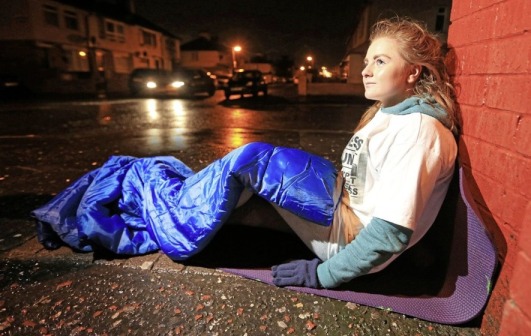
DonatenowButton