Category: Social Policy

Workfare coercion in the UK: an assault on persons with disabilities and their human rights – Anne-Laure Donskoy

boycott_workfare_front


Anne-Laure Donskoy
is an independent survivor researcher, this paper was published by the National Survivor User Network (NSUN) for mental health, which is an independent, service-user-led charity that connects people with experience of mental health issues to give us a stronger voice in shaping policy and services.

In a report, titled Workfare coercion in the UK: an assault on persons with disabilities and their human rights, she provides an in-depth consideration of psychocompulsion as a series of state-sponsored human rights violations. I recommend that you read this discussion in full.

She writes: While there is a lot of focus on coercion organised and implemented in psychiatry, less attention is being paid to state engineered welfare measures based on libertarian paternalism, which have coercive practices at their core. Among them are policies that strongly support behavioural change using positive psychology and cognitive behavioural therapy. Freidli and Stearn (2015) call this ‘psychocompulsion.'”

“The narrative of welfare is changing drastically. As Friedli says, we are moving from a “what people have to do [to find work] to what they have to be [demonstrating the right attitude to be employable]”. This is exemplified through the new ‘Work and Health Programme’ planned to be rolled out in England and Wales. This programme has many strands, including:−

  • Embedding psychological services within Job Centres
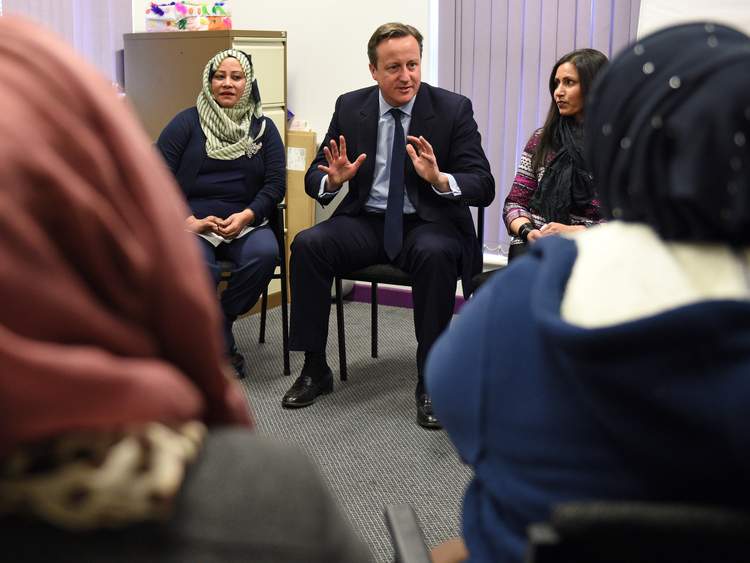
  • Placing ‘job coaches’ within GP surgeries for people with certain conditions (specifically people with mental health issues): the ‘Working Better’ pilot scheme is funded by the Department for Work and Pensions and the coaches will be provided by welfare to work agency, Remploy (a welfare-to-work subsidiary of the Maximus).”

She goes on to say: “It has come to light that these new programmes are also the subject of ‘research’. The new Work and Health Programme is currently at a research and trialing stage. As Kitty Jones writes, “Part of the experimental nudge element of this research entails enlisting GPs to “prescribe” job coaches, and to participate in constructing “a health and work passport to collate employment and health information.”

However, this ‘research’ (if one can call it so), has been heavily criticised because it is not sanctioned according to the usual robust ethical guidelines. Research that adheres to robust ethical guidelines would absolutely seek not to cause harm to its participants, and would seek their informed consent beforehand. This is not the case here where claimants are the participants, involuntary and ‘unconsented’, of an experiment they know nothing about.

“There are a wide range of legal and Human Rights implications connected with experimentation and research trials conducted on social groups and human subjects.”

A spokesperson for Disabled People Against the Cuts (DPAC), talked of the UN CRPD Committee’s visit to the UK and described the situation thus: It means the UN will examine the vicious and punitive attacks on disabled people’s independent living as well as the cuts which have seen so many placed in inhuman circumstances and has led to unnecessary deaths.”

There is a very detailed and important consideration of the implications of current UK policies within the context of the Convention on the Rights of Persons with Disabilities (CRPD) throughout this excellent article.

nudge2-618375_621x320


Related 

Cited on the article:

https://kittysjones.wordpress.com/2015/11/28/the-goverments-reductive-positivistic-approach-to-social-research-is-a-nudge-back-to-the-nineteenth-century/– The idea that it is both possible and legitimate for governments, public and private institutions to affect and change the behaviours of citizens whilst also [controversially] “respecting freedom of choice.”

https://kittysjones.wordpress.com/2015/12/14/the-department-for-work-and-pensions-dont-know-what-their-ethical-and-safeguarding-guidelines-are-but-still-claim-they-have-some/

Friedli L, et al.MedHumanit2015;41:40–47. doi:10.1136/medhum-2014-010622

http://www.disabilitynewsservice.com/coroners-ground-breaking-verdict-suicide-was-triggered-by-fit-for-work-test/

(among other work)

Watch – And This time its Personal Psychocompulsion & Workfare from wellredfilms on Vimeo.

Other related:

Cameron’s Nudge that knocked democracy down: mind the Mindspace

Let’s keep the job centre out of GP surgeries and the DWP out of our confidential medical records

Nudging conformity and benefit sanctions

My work is unfunded and I don’t make any money from it. But you can support Politics and Insights and contribute by making a donation which will help me continue to research and write informative, insightful and independent articles, and to provide support to others.

DonatenowButton

cards

The biggest barrier that disabled people face is a prejudiced government

b584


The very act of renaming incapacity benefit support for sick and disabled people “employment and support allowance” signaled the political intent to make that support precarious, with an aim of pushing people previously exempted from work on medical grounds from lifeline social security protection into work on political grounds, regardless of the consequences. The word “allowance” means the amount of something that is permitted, especially within a set of regulations or for a specified purpose. This language shift signaled the increasing contingency of support for disabled people.

It also reduced and transformed the sick role, making it increasingly transitory, redefining chronic, incurable conditions as somehow transient, and marking a shift from medical definitions of sickness and disability to psychopolitical redefinitions, which are ultimately aimed at pushing forward a small state neoliberalist agenda. Welfare provision is being steadily dismantled. 

However, changing the name and making the eligibility criteria for support much more stringent has not helped sick and disabled people into work. It has simply created circumstances of further disadvantage, hardship and distress for many people.

It hasn’t worked because many of those people affected by the nudge-styled rebranding of their lifeline support and draconian cuts to “incentivise” people to take up and cherish the Puritan work ethic, as the paternalistic Conservatives think we ought to, are simply too ill to work.

Of those that may be able to work, over time, their would-be employers have not engaged with legal requirements and provided adjustments in the workplace to support those disabled people seeking employment. The government have removed the Independent Living Fund, and reduced Access to Work support, Personal Independence Payment (PIP) is very difficult to access because of the stringent eligibility criteria, whilst the disability benefit Employment and Support Allowance was also redesigned to be increasingly difficult to qualify for.

But political word games, and intentions to attempt to shrink the categories of what is deemed “illness and disability” along with the ever-shrinking state, don’t cure illness and disability, and it’s offensive to witness a very wealthy first world so-called democratic government viciously hounding and shamefully coercing a group of people, negatively labeling them as a “burden on the taxpayer”, and forcing them to take any low paid, insecure work, without any support whatsoever, despite the fact their doctor and the state, via the work capability assessment, have deemed them already to be unfit for work, whilst at the same time leaving this group on an isolated, ever-shrinking island with ever-decreasing lifeline support.

Perhaps PIP ought to include invisible bootstraps in the aids and appliances categories.

This is juxtaposed with the recent gifted tax cuts for the wealthiest, indicating clearly that Conservatives perceive and construct social hierarchies with policies that extend inequality and discrimination. The axiom of our international human rights is that we each have equal worth. Conservative ideology is fundamentally  incompatable with the UK government’s Human Rights obligations and with Equality law. The chancellor clearly regards public funds for providing essential lifeline support for disabled people as expendable and better appropriated for adding to the disposable income for the wealthy.

Most people (over three-quarters ) who are disabled became so during their working life. There is an implicit political prejudice regarding disability, evident in policy-making, which is that it is an undesirable state and somehow preventable. There is another more explicitly stated prejudice, which relates to the oversimplistic false dichotomy of society. Citizens have been redefined as taxpayers or economic free-riders. However, not only have most disabled people worked and contributed tax and national insurance, people claiming social security also contribute significantly to the Treasury, because we pay VAT, council tax, bedroom tax and a variety of other stealth taxes.

The state confines its focus and responsibility mainly at re-connecting disabled people with the labor market, without any consideration of potential health and safety risks in the workplace, as a strategy of “support,” and justifies the draconian cuts to support as providing “incentives” for people to work, by constructing a narrative that rests on the bogus and socially divisive taxpayer/free-rider dichotomy:

 “You answer if a disabled person can’t work there is NO cut but if they can but won’t, why should taxpayers subsidise them & trolls go mad!”

 By “trolls” Michael Fabricant actually means disabled people and campaigners responding to his tweet.

What happens to those people that can’t work or cannot find an understanding employer, prepared to make reasonable adjustments in the workplace?

On becoming ill – it can happen to anyone

I am medically ill and my illness (lupus) affects my mobility, focus and general wellbeing. I am restricted in what I can do, and the symptoms and exacerbations are very unpredicable. However, it is economic, political and cultural forces which have created and continue to create my ongoing disability and social marginalisation, not my illness. Many of my problems are compounded because of an unadapted physical environment, a lack of resources and the attitudes of others, particularly the current government’s.

I don’t accept that health problems ought to be seen as the cause of the socioeconomic deprivation and exclusion that many of us are experiencing, because the real cause is entirely political. Policies, which exclude disabled people from their design and rationale, have extended and perpetuated institutional and cultural discrimination against disabled people.

My own illness arose partly because of a genetic predisposition, partly because of my gender and hormonal events which often trigger the illness, and probably a variety of other complex reasons, none of which specialists fully understand yet. Prior to becoming very ill, I led a very active and healthy life. I worked hard in a job I loved. My diet is and always has been balanced and healthy, I enjoyed outdoor activities such as climbing, abseiling, archery and walking. I was never inactive or overweight, and I am not stupid when it comes to health issues. Lupus isn’t a “lifestyle choice” and it didn’t arise because of something I did wrong.

All the same, I frequently get well-meaning but bad advice to try different diets, “natural” herbal remedies (people forget that they contain chemicals) – usually the immune- enhancing ones like echinacea, which my rheumatologist has already advised could be very dangerous – and the best one of all: “You should stop taking the heavy duty medication and ‘cleanse your system’.” That would be medication that I take to keep me alive because I tried and ran out of all the other options. I usually recommend a simple course of water melons for such “experts”, to be taken at four hourly intervals, rectally.

Like many other ill and disabled people, I have worked for most of my life. My work was rewarding, and the professional roles I took up have entailed developing inspirational ways to support and enable others, from voluntary work with Women’s Aid and Victim Support, to salaried youth and community work, social work, mental health work and delivering training. I worked whilst being ill for a number of years.

By 2010, I simply couldn’t work any more. My previous and mostly background joint, nerve and muscle pain suddenly became all consuming. My ankles, knees, wrists and fingers swelled. I caught a cold at work which turned to pneumonia on two occasions in 2009. I had apparently random finger abcesses, inexplicable kidney infections, and bruised every time I was touched. I had severe nerve pain in my face and optic nerves, which affects my vision. My hips and lower spine became stiff and painful, my shoulders became frozen. I had a painful rash across my face that looked like eczema, only it wasn’t. I was profoundly tired all of the time, and weighed less than eight stones. My GP ran some tests and everything came back lupus, with complications such as a severe autoimmune bleeding disorder, very low immunity to infection and neurological involvement.

Working put my safety, health and wellbeing at substantial risk. It also potentially exposed other people to risk, too, because of the impact of my illness on my judgments, reliability and consistency, eyesight, ability to supervise, mobility and so on. A tribunal agreed with this assessment in 2012.

It was a very painful recognition that I could no longer work, my decision to leave was very difficult, compounded by a sense of loss of self worth and meaning. I felt that my experience, developed skills, not to mention time and effort invested in studying for a highly vocational Master’s degree, were meaningless and unavailing. However, I was completely unprepared for the damaging impact of the political othering and socioeconomic outgrouping that followed from 2010.

And the poverty. I came to feel that I had been politically redefined as somehow “deviant” by 2012. A much needed transformation to add to the grieving process for the person I was before my body became a traitor. Cheers, Mr Cameron, for the milk of human blindness. The Sex Pistols got it a bit wrong back in the last days of counter-culture and agitprop: it’s not just anarchy that we need for the UK, it’s a modicum of empathy, too.

Doctors and rehabilitation professionals continually recommend medical treatments and practices even though they know that these will not necessarily improve my quality of life. Most of the treatments for autoimmune illnesses such as lupus are largely experimental: comprised of chemotherapies and immune suppressants that carry their own life-threatening risks, and being ill with lupus and other autoimmune illnesses presents a constant and difficult process of weighing up of such risks – life threats from the illness versus life threats and serious life-changing risks from the treatments. 

The dangers that arise when everyone thinks they are an expert on illness and disability

That didn’t stop a job advisor, during my time in the employment support allowance work-related activity, group telling me I should take the chemotherapy methotrexate because her friend with rheumatoid arthritis had some benefit from it. Methotrextate helps around 25% of people taking it, to various degrees, but it cannot cure the illness. Side-effects include sudden death, blindness, liver, kidney and heart failure, lung fibrosis, thrombocytopenia – a serious bleeding disorder which I already have – and death from an overwhelming infection, which I am already susceptible to, since my immune system is easily compromised and broken, amongst many other problems.

As it happens, I had already tried methotrexate for many months, administered by injection into my stomach. It didn’t work and the side-effects were truly diabolical, adding to my existing misery and multiplying symptoms. Another treatment, considered far less risky, called hydroxychloroquine, damaged my retina because I was prescribed too high a dosage, I’m now partially sighted.

However, the unqualified advice from a job coach overlooked that I have a different illness than her friend, and that methotrexate is a black box drug with life-threatening side-effects. Everyone seems to think they are a medical expert nowadays, and that’s the government’s doing, since they have been redefining illness and disability, making it a moral and public matter rather than a private, medical issue. Such political negative role-modelling has permitted a rise in expressions of social prejudice towards disabled people, which is why hate crime has risen significantly since 2010 and is now at the highest level since records began.  

We are either deserving or non-deserving, abled or disabled, never just ill or physically disadvantaged. Our lives have somehow become public property, with all manner of unqualified people feeling entitled to intrude at an intimate level to tell us how to “manage” our illness better. Or to transform media tropes and political folk devils into forms of justification for abuse.

Job centre staff it seems will recommend anything, including unqualified advice about medical treatments, regardless of the risks that may be involved, to coerce people from what was once a social safety net and into any job, regardless of its appropriateness, quality, pay, security, and importantly, it’s potential impact on people’s health and safety.

Last October, I flagged up the extremely worrying government plans to place job coaches in GP practices, with provision made for job centre staff to “update” people’s medical files. The government hadn’t announced this  “intervention” in the lives of disabled people, nor had we been consulted or involved in its design. I found out about it quite by chance because I read Matthew Hancock’s recent conference speech: The Future of Public Services.

I researched a little further and found an article in Pulse which confirmed Hancock’s comments: GP practices to provide advice on job seeking in new pilot scheme.

The government plans to merge health and employment services, and are now attempting to redefine work as a clinical outcome. Unemployment has been stigmatised and politically redefined as a psychological disorder, and the government claims somewhat incoherently that the “cure” for unemployment due to illness and disability, and sickness absence from work, is work.

This is why I visit my doctor and not David Cameron or George Osborne when I need advice, support and treatment related to my medical (and not political) condition.

It’s a prejudiced government that has edited the script regarding sick roles – we no longer have medical sick notes, they have been replaced by political fit notes. The subtext is that we must participate in the world of mainstream work without any choices, without reasonable adaptations and without support. Without any acknowledgement of illness and disability, in fact. Or, we have to accept being redefined, our identity rewritten as “dependent”, “impaired” “unfit for work” as a trade-off for a degree of meagre support.

All of our previous achievements and contributions are forgotten. We once celebrated the achievements of disabled people, but now, we cannot, because disabled people are systematically repressed. We are politically defined as either fit for work (and thus not seen as “disabled”) or not. There are no other options for us, unless we happen to be very wealthy as well as ill.

Singing the body politic in our own voices

We don’t fit with neoliberal dogma and the Tory ideals of “individual responsibility”, competition, a “small state” and compulsory (low) paid employment to enhance profits for the elite’s old boys network. Any positive association with impairment, such as reasonable allowances made or degrees of freedom from the Tory notion of “social obligations” and “responsibilities,” is prohibited. We are faced with an overly simplistic, terribly reductive and dehumanising either/or choice.

We are deemed either fit for work, or too disabled to work, with no accommodation made for what we may be able to contribute in myriad ways to society, nor is our past accumulative experience and skill regarded as a valuable. The moment there is a hint we may have some kind of tenuous work-related capability, all support is withdrawn. However, once we are deemed unfit for work, we are denied full citizen’s status and economic inclusion.

This narrow political approach does nothing to enable and support people, nor does it reflect human diversity. It simply disables us further and denies us autonomy and the right to define ourselves. It’s an approach that actually punishes people for the abilities, experience and skills that they have, stifling human potential. The moment those abilities and skills are revealed at a work capability assessment, all support is withdrawn and those qualities remain unfulfilled. Instead of investing in personal development and extending opportunities, the government is simply cutting social security and public service costs at our expense. It’s not actually their money to cut.

We are expected to participate in an unaccommodating and increasingly competitive job market or suffer the dehumanising consequences and impoverishment of claiming social security long-term. And the people profiting from this are the competing, vulture capitalist private “service” providers.

2014-02-17-BurdenoftheCuts-thumb

There is no support for creating circumstances where our skills may be transfered. There is no support to help anyone adapt their skills and experience to fit future employment. Access to higher education has been restricted because of the steep rise in cost, especially for mature and disabled students. There is nothing in place to ensure that employers recognise disabled people’s skills and experiences and make adaptations to accommodate people wanting to work, and no safety net at all to encourage personal development for disabled people, since all support is tied to rigid definitions of disability. You can either work or not.

Under the guise of lifting burdens on business, this government has imposed burdens on those with disabilities by removing the “reasonable adjustments” that make living our lives possible and allow us some dignity. The labor market is hostile and unaccommodating, providing business opportunities for making profit, but increasingly, the needs and rights of the workforce are being politically sidelined. This will invariably reduce opportunities for people to participate in the labor market because of its increasingly limiting terms and conditions.

This highlights the paramount importance of shifting the political focus to the pressing need to change a disabling culture and to actually listen to our lived experiences, including us in policy design from that of merely coercing us into fitting reductive Conservative definitions to accommodate and fit in with a neoliberal model of society.

We have smug, wealthy and healthy Conservatives redefining disablity, our identity is ascribed by others who have handed us a socially devalued status: we are being told who we are and how we must be.

Citizen’s “needs” are being aligned with politically defined neoliberal outcomes. Those most acutely aware of this are those politically assigned a lower status in the increasingly steep socioeconomic hierarchy. Stigma and othering is used politically to justify the hierarchy and the consequent crass inequalities, which are designed and mediated through policies, not citizens.

Stigma arises because of the perceptions of the oppressor, not those being oppressed. But perhaps it’s time that people who are “working hard” to contribute to the increasingly enclosed economy paused and observed what is going down, because disabled people are not the only ones being stigmatised and radically reduced by a particularly toxic combination of social conservatism and neoliberalism. Punitive and coercive welfare conditionality, including sanctioning, has recently been extended to those in low paid employment and part-time work, as tax credits and additional support vanish under the guise of “universal credit”. The bedroom tax is likely to be extended to the elderly. How does this in any way ensure that “work pays”?  All this will do is increase the precariousness of people’s situations and substantially increase their vulnerability.

The recognition and celebration of human potential, diversity and equal worth has been superceded by an all-pervasive Puritan “hard work” ethic. Our worth is being defined purely in terms of our economic contribution. We are measured out in pounds and pennies whilst making billions for a handful of other people. That is a value that comes exclusively from the dominant paradigm-shaping elite – the ones who actually profit from your hard work.

You don’t.

The government’s new “health and work” programme is actually workfare for sick and disabled people. Apparently, slave labor for big business is good for our “health” and has the added bonus of adding substantially to profits for friends of the Conservatives. It’s amazing how quickly the public have accepted the political semantic shifts, such as “work programme” – compulsory labor for no wage, which was originally about “exploitation” and has now been redefined as “work experience”. Apparently that is also “fair”, “inclusive”, “good” for our health and “makes work pay”.

Makes work pay for whom?

Disability can no longer be considered solely as a medical problem, affecting only a minority of the population. It must be seen for what it is: as a civil rights issue as central to mainstream political discourse. This government uses draconian policies to act UPON disabled people, it does not value our lived experiences nor does it listen and RESPOND to us. It’s a government that simply tells us how we must BE. That is profoundly undemocratic, it discriminates against us and excludes a social group on the basis of a protected characteristic.

There are and have been a lot of ways to define disability, it has variously has been defined through the eugenic model, a medical model, charity model, rights-based model, social model and a radical model. Now it’s time for a disabled people’s model, founded on our lived experiences and varied needs.

Understanding that oppressive situations have not arisen through any fault of our own, and that the oppression is real and has a basis in sociopolitical prejudice and discrimination provides us with the courage needed, and a more solid ground on which to fight for liberation. It always seems to be the case that fighting social injustice is left to the very people who have been excluded and systematically deprived of a political voice and power, it’s always down to us to make others listen. Yet it is invariably the case that when one social group is targeted for political prejudice and discriminatory policies, it affects everyone. Historically we have learned it quickly follows that other groups are singled out, too.

The universal character of human rights is founded on the inherent dignity of all human beings. It is therefore axiomatic that people with medical conditions that lead to disabilities, both mental and physical, have the same human rights as the rest of the human race.

The United Nations is currently investigating this government’s gross and systematic violations of the Convention on the Rights of Persons with Disabilities (CRPD), and a recent report from the House of Lords Select Committee on the Equality Act 2010 and Disability, investigating the Act’s impact on disabled people, has concluded that the Government is failing in its duty of care to disabled people, because it does not enforce the act.

Furthermore, the Select Committee concludes that the government’s red tape challenge is being used as a pretext for removing protections for disabled people. It’s a government that regards the rights and protections of disabled people as a mere bureaucratic inconvenience.

There’s a certain irony regarding the Conservative preoccupation with preserving social order: their rigid ideologically-driven policies create the very things they fear – dissent, insecurity, disorder and the raising of public awareness and recognition of a pressing need for social change and reform. It’s seems to be the case that Conservative governments prompt a growth of social challenges that encourage the flourishing of the very radicalism and revolutionary ideas that they fear and loathe.

That is what happens when people are oppressed.

 11081126_792213310848199_1993005711793194503_n

Picture courtesy of Robert Livingstone


I don’t make any money from my work and I’m not funded. You can support Politics and Insights by making a donation to help me continue researching and writing independently, and to continue to help others.

DonatenowButton
cards

Osborne’s housing benefit cap could mean tens of thousands of the most vulnerable citizens losing their homes

994596_517805604955639_608589568_n

Grave concerns regarding the impact of proposed housing benefit cuts on the most vulnerable social groups have also arisen. Last month a specialist housing association warned that people under the age of 35 in mental health accommodation face rent shortfalls of almost £200 a week under  government plans to cap housing benefit for social housing tenants at Local Housing Allowance rates.

John Healey MP, Labour’s Shadow Cabinet Minister for Housing and Planning, warned at the time that housing providers could be forced to close accommodation for the most vulnerable because of housing benefit cuts.

Brighton Housing Trust (BHT) said that its fincancial modelling of the impact of capping housing benefit for social tenants, including supported housing tenants, at Local Housing Allowance rates revealed that 70% of all its homes would be unaffordable to under 35s under the plan, as they would only qualify for the “shared room rate” – the cost of renting a single room within a house.

The Trust said in its specialist supported housing, under-35s would face a shortfall of between £52.60 and £193.49 in 71 of 101 mental health units. There would also be shortfalls of up to £75 per week in specialist drug and alcohol units, homelessness hostels and young people’s accommodation.

Tenants older than 35 would also be unable to afford many of the homes, although the benefit gaps would be smaller.

BHT is a specialist housing association which provides for tenants with support needs, even in much of its general needs accommodation.

The association warned that the government’s offer of additional Discretionary Housing Payments to plug the rent shortfalls would also be insufficient.

The housing benefit cuts which were announced last Autumn in  George Osborne’s budget Statement are claimed to be aimed at bringing housing benefit rates for social housing in line with the sums paid to landlords in the private sector. However, the National Housing Federation has raised further concerns in a press release statement today. The Federation’s Chief Executive, David Orr, said:

“New homes for people with support needs – vulnerable people – that would be being built have been cancelled.

The impacts of the LHA cap are real and immediate. The threat alone has caused the building of thousands of specialist homes for the nation’s most vulnerable to grind to a halt. And if the cap comes into force, our research suggests that 156,000 specialist homes could be lost.

The PM has said that this would be a government that supports the vulnerable. But if this cap applies, society’s most vulnerable – dementia patients, women fleeing domestic violence, army veterans suffering mental health problems, older and disabled people – will be asked to find an extra £68 a week.

“We have repeatedly tried to engage the Government on the urgency and severe impacts of this cap on supported housing – we need clarity that this won’t apply to those in specialist homes today.”

Mr Osborne said the move, which will affect England, Scotland and Wales, would deliver savings of £225m by 2020-21, and is part of a £12bn package of cuts from the welfare bill. Conservative ministers claim they are reviewing the sheltered housing sector “to ensure it works in the best way possible”.

But hundreds of planned new sheltered accommodation units have been delayed or scrapped owing to proposed cuts to housing benefit. And several housing associations have said they are no longer financially viable. The National Housing Federation (NHF) has calculated that nearly 2,500 units have so far been scrapped or delayed as sheltered housing providers face losing an average of £68 a week per tenant.

Flats for elderly people and people with learning disabilities are more expensive to build and run because they provide crucial additional support. Concerns raised about the cap on housing benefit will affect society’s poorest and most vulnerable people, such as  women fleeing domestic violence, dementia patients,  army veterans suffering mental health problems, older and disabled people, because these peoeple  will need to find an extra £68 a week.

BBC News reports that a further four housing associations confirmed their plans had needed to change:

  • Southdown Housing in East Sussex has ben forced to scrap plans for 18 units for people with learning disabilities
  • Knightstone Housing in Somerset has delayed a complex of 65 homes for the elderly and 13 properties for learning-disabled people
  • In Manchester, Contour Homes has had to put on hold a scheme to build 36 units for the elderly
  • In North Yorkshire, Harrogate Neighbours has delayed construction of 55 extra care flats

John Healey MP Labour’s Shadow Cabinet Minister for Housing and Planning, has commented further today on the new reports of the effect that the Chancellor’s planned cuts to housing benefit are having on specialist accommodation for elderly and vulnerable people. He said:

“George Osborne’s crude cuts to housing benefit could mean tens of thousands of people losing their homes, including elderly people with dementia, veterans and women fleeing domestic violence.

“The consequences of these cuts are being felt right now, with the building of thousands of new homes stopped or scrapped because of Ministers’ failure to act.

“Labour will continue to lead the opposition to these crude cuts. George Osborne must halt these dangerous plans and consult fully with housing providers to safeguard this essential specialist housing.”

1459720_569627496440116_902730897_n
Pictures courtesy of Robert Livingstone

Maximus ‘has falsified results of fitness for work tests’, says MP – John Pring

By John Pring

The discredited US outsourcing giant contracted to carry out “fitness for work” tests on behalf of the government has been accused by an MP of “falsifying” the results of assessments.

Labour MP Louise Haigh attacked the track record, ethics and even criminal behaviour of Maximus in delivering public contracts in the US, during a debate on the work capability assessment (WCA).

But she also highlighted what she described as a “disconcerting pattern of behaviour” by Maximus in the UK since taking over the WCA contract from Atos last year.

She said: “There seems to be an alarming trend of cases being rejected based on factual errors or even – I hesitate to say this – falsification.”

Haigh (pictured speaking in the debate), a shadow Cabinet Office minister, also raised concerns that there was no way for the public to check whether targets set for Maximus by the government – such as the number of serious complaints and the payment of travel expenses within nine working days – were being met.


You can read the rest of this excellent article here

Related

Doctors bribed with 70-90k salaries to join Maximus and “endorse a political agenda regardless of how it affects patients.”

Iain Duncan Smith is complaining about valid criticisms of his draconian policies by journalists and social media commentators

36626_217452248405831_532419169_n

The Work and Pensions Select Committee has just published some letters between Frank Field, the chair, and Iain Duncan Smith, who responded to questions about the correlation between benefit assessments and suicide.

Mr Field had asked what data the Department for Work and Pensions collects on the deaths of benefit claimants.

The issue had been raised in a research report by Oxford University and Liverpool University entitled First Do No Harm, which I also reported on last year.

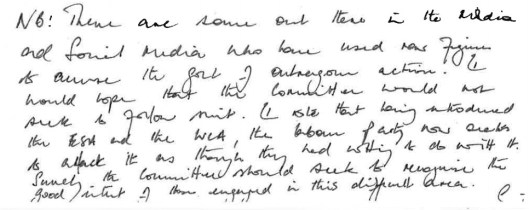
The letter addressed to Frank Field MP, features a barely legible hand-written footnote warning against listening to those “in the media and on social media” who “accuse the Government of outrageous actions.”

Duncan Smith writes in the footnote:

“There are some out there in the media and social media who have used [raw?] [ons ?- Office for National Statistics?] figures to accuse the govt of outrageous actions.

I would hope that the committee would not seek to follow suit. I [illegible] [note?] that having introduced ESA and the WLA, the Labour Party now seeks to attack it as though they had nothing to do with it.

Surely the committee should seek to recognise the good intent of those engaged in this difficult area.”

2014-02-17-BurdenoftheCuts-thumb
I would say that this blatant political discrimination constitutes an “outrageous action.” It’s difficult to recognise any “good intent” here, Mr Duncan Smith.

The correlation between the work capability assessment and suicide was established by academic researchers, not by journalists or social media commentators. We simply reported the findings.

Iain Duncan Smith will be accusing the United Nations (UN) of failing to see the government’s “good intent” when the inquiry into “grave and systematic violations” of the rights of disabled people in the UK concludes, next. Despite the fact that we are the first country to face such an inquiry, and given that the UN investigate only when there is evidence of grave and systematic violations of human rights, the prime minister has already dismissed the significance of the inquiry, ludicrously claiming “it may not be all it’s cracked up to be.”

It’s particularly noteworthy that when it comes to government claims, the same methodological rigour that they advocate for others isn’t applied. Indeed, many policies have clearly been directed by ideology and traditional Tory prejudices, rather than valid research and empirical evidence. The fact that no cumulative impact assessment has been carried out with regard to the welfare “reforms” indicates a government that is not interested in accountability, and examining the potential negative outcomes of policy-making. Policies are supposed to be about meeting public needs and not about inflicting Conservative dogma and old prejudices in the form of financial punishment on protected social groups.

As someone with a background in the social sciences, I have written extensive criticism of Iain Duncan Smith’s peculiar brand of epistemological and methodological fascism. He’s not exactly well known for his skill in statistical analysis, having been rebuked more than once for being notoriously conservative with the truth and numbers. Yet he feels compelled to dismiss the accounts of academics, campaigners, empirical evidence and the many qualitative accounts of those adversely impacted by his policies, in his vain attempt to exercise a stranglehold on his own peculiar brand of “truth.”

The goverment often claim that any research revealing negative social consequences arising from their draconian policies, which they don’t like to be made public “doesn’t establish a causal link.”  Recently there has been a persistent, aggressive and flat denial that there is any “causal link” between the increased use of food banks and increasing poverty, between benefit sanctions and extreme hardship and harm, between the work capability assessment and an increase in numbers of deaths and suicides, for example.

The government are referring to a scientific maxim: “Correlation doesn’t imply causality.” 

The tobacco industry made exactly the same claim about the established link between lung cancer and smoking.

It’s true that correlation is not the same as causation.

It’s certainly true that no conclusion may be drawn regarding the existence or the direction of a cause and effect relationship only from the fact that event A and event B are correlated.

Determining whether there is an actual cause and effect relationship requires further investigation.

This is something the government has persistently refused to do. (Here’s a full critique of Conservative methods of “social research”. I sent Mr Duncan Smith a copy, along with some information about proper definitions and measurement of poverty, but he clearly hasn’t read either. Unless he has included those in his arrogant and dismissive horror of “accusations”  criticisms on social media of course)

It is completely inaccurate to say that correlation doesn’t imply causation. It quite often does.

Here’s a final comment from a social media-based campaigner, analytical writer and a qualified social scientist who knows about statistical inference, causality and correlation and suchlike:

Iain Duncan Smith, you’re a blatant numpty.

160211IDSnote-outrageousaction

You can read the full letter here.

Conservatives plan stealth raid on in-work benefits and the long-term phasing out of child benefit


Tory UK

Picture courtesy of Tina Millis

The respected Institute for Fiscal Studies (IFS) has warned in a recent Green budget report that George Osborne’s plan to achieve a budget surplus will result in 500,000 families losing child benefit and tens of thousands having to pay a higher tax rate. More than half a million families will be stripped of child benefit over the next five years under a series of “stealth” tax raids by the Chancellor to help “balance the books.” Fuel duty will also need to be be significantly raised over the next five years or Osborne will face a £3billion black hole in his surplus plans.

Currently those earning £50,000 will lose some benefit and those earning £60,000 or more lose it all. Eventually, the report concluded, even those earning modest wages and paying the basic rate of tax will start to lose their child benefit entitlement.

The authors of the report concluded that Mr Osborne’s tax plans “lack any coherent principle” and called for more transparency, adding: “If the desire is for these tax rates to apply to a greater fraction of individuals than is currently the case, it would be better for politicians to state this clearly, rather than achieving the outcome through stealth using fiscal drag.”

Osborne’s promise to deliver a budget surplus from 2019-20 is “risky” and could have a long-term impact on the UK because the Government refuse to borrow money to fund large-scale infrastructure projects, despite low inflation.

Total public spending, excluding health, will be at its lowest level since 1948 as a proportion of national income.

The authors said: “If continued indefinitely, child benefit would be received by fewer and fewer families over time.

“But if this is the government’s intention, it would again be better to state this clearly rather than achieving it by stealth.”

Tim Loughton, a former Conservative education minister, branded the IFS findings a “double whammy” for families who are already paying the 40p higher rate of income tax.

He said: “This was inevitable. It inevitably means more and more families suffer a double whammy of having to pay higher rate tax because of the freezing of the threshold and losing out on all or most of their child benefit at the same time.

“This is hardly helpful for hardworking families trying to do the right thing for their children – if you don’t index up the rates and if you have very complicated formula that doesn’t accurately reflect household income … it’s a double unfairness.”

The Treasury has declined to comment on the IFS criticism of the Office of Responsible Budget (OBR) charter, which Osborne has committed to. But a spokesperson has said: “There may be bumpy times ahead – so here in the UK we must stick to the plan that’s cutting the deficit.”

That will invariably mean further austerity cuts. Up until recently austerity targeted those claiming out of work benefits, particularly those who are unemployed because they are sick and disabled. But increasingly, austerity is being aimed at those in low paid or part-time work, and the middle classes are set to lose further income, under the Conservative plans, too.

Despite being a party that claims to support “hard-working families,” the Conservatives have nonetheless made several attempts to undermine the income security of a signifant proportion of that group of citizens recently. Their proposed tax credit cuts, designed to creep through parliament in the form of secondary legislation, which tends to exempt it from meaningful debate and amendment in the Commons, was halted only because the House of Lords have been paying attention to the game.

The use of secondary legislation has risen at an unprecedented rate, reaching an extraordinary level since 2010, and it’s increased use is to ensure that the Government meet with little scrutiny and challenge in the House of Commons when they attempt to push through controversial and unpopular, ideologically-driven legislation. The Shadow secretary for Work and Pensions, Owen Smith, has pointed out that cuts to benefit in-work entitlements being introduced through Universal Credit mean controversial tax credit reductions have been simply been “rebranded” by the government rather than reversed.

In the Spending Review last November, George Osborne announced that tax credit reforms, which were set to almost halve the income level at which support is withdrawn from £6,420 to £3,850, would not be enacted, an analysis of the changes published by the Office for Budget Responsibility (OBR) highlighted that cuts to work allowances in Universal Credit, which set the level at which benefits will begin to be withdrawn under the new system, have not been reversed. Furthermore, people claiming Universal Credit needing in-work benefit because of low pay and  part-time hours will be expected to increase their wages and working hours, or controversially, face losing their benefit.

The Chancellor has cut in half the amount people can earn before their working tax credit starts to “taper” (reduce) – down from £6,420 to £3,850 from April 2016. Restrictions to eligibility for child tax credit means that families with more than two children are set to lose a significant amount of weekly income from April 2017. whilst the flat £545 “family element” paid before the amount for each child will also be removed completely. This will affect people in work, the think-tank Resolution Foundation said that working mothers would be worst hit – accounting for 70% of money saved by the Treasury, but overall the cuts will hit those out of work the hardest.

Many of us recognised the Tory “making work pay” mantra for what it was in 2012, when the first welfare “reforms” were pushed through parliament against widespread resistance, on the back of “financial privilege.” It was and always has been a diversion to allow the Conservatives to dismantle our welfare state, and reduce the value of labour, in much the same way as the 1834 Poor Law principle of less eligibility, which fulfilled the same purpose. The Poor Law Committee also wanted to “make work pay.” Since 2012, steadily rising in-work poverty has shown that having a job no longer provides a route out of poverty.

web-earnings-graphic

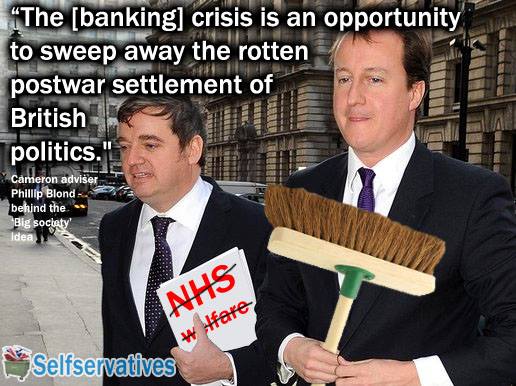
The IFS report conclusions simply confirm what many of us have suspected since 2012: that the government have a secret long-term aim to completely dismantle the social gains of our post-war settlement: the welfare state, affordable social housing provision, the National Health Service and access to justice through legal aid.

proper Blond
Picture courtesy of Robert Livingstone

Frank Field’s New Report: Fixing Broken Britain?


In a study report that was published today – Fixing Broken Britain? An audit of working-age welfare reform since 2010, Labour MP Frank Field and co-author Andrew Forsey argue that: 

The Department for Business, Innovation and Skills should take a lead role in tackling the dependence of employers and landlords, whose subsidies in the form of tax credits and Housing Benefit have grown exponentially, by raising wages and productivity.

… the next front in welfare reform will see a fundamental switch from the Department for Work and Pensions – historically always responsible for welfare reform – to the Department for Business, Innovation and Skills, reflecting the new reform agenda.

Field and Forsey, writing for the cross-party think tank Civitas, propose that the next step of welfare reform:

 … involves a renewed drive to help those who have not yet been found a job under the Work Programme – principally the over-50s and the disabled. This should involve weighting the payment-by-results systems further in favour of those claimants facing the steepest barriers to work. This major task, and the prompt and efficient payment of benefits, should be the primary objective of the Department for Work and Pensions.

We believe the payment-by-results system the government introduced now requires a significant recalibration to give the most disadvantaged participants a fighting chance of getting and keeping a job.

The language used in the publication is controversial and I was both concerned and disappointed to see the phrase “welfare dependency” used more than once. It alludes to the Conservative claims of a so-called “culture of dependency”, for which there has never been any supportive empirical evidence presented, (and that’s despite Sir Keith Joseph’s notorious best efforts and meticulous but ultimately forlorn research into a neoliberal New Right myth.)

However, there is much empirical evidence to support structural explanations of unemployment and poverty, but the current government has tended to psychopoliticise these issues, blaming the character and attitudes of unemployed people, reflected in language shifts – for example, the frequent use of words such as “worklessness” which implies responsibility and choice – making unfortunate circumstances a very personal  burden – as opposed to “unemployment”, which at least accommodates factors such as labour market constraints, economic conditions, structural inequalities, state responsibilities and the consequences of political decision-making.

Field and Forsey also recommend “identifying claimants’ strengths and difficulties” as early as possible once they begin claiming benefit; early referrals to the new Work and Health Programme for those on any benefit in most need of support; and lifting the cap on numbers who can enrol on the voluntary welfare-to-work programme for claimants with disabilities, and extending the time for which they can participate.

The problem is that referrals are unlikely to be on a voluntary basis. One of the aims of the Work and Health Programme is to enlist the support of GPs in “prescribing” work coaches to sick and disabled people. Given the confidential nature of the patient/doctor relationship, such an intrusive measure is likely to ultimately undermine people’s trust in their GP, and leave sick people who genuinely cannot work feeling harrassed and coerced by the state. There is good evidence that the work programme has not increased sustainable employment outcomes, and furthermore, it has harmed people with mental health problems.

In fairness to Field and Dorsey, they do accommodate some structural factors in their analysis. They say:

A second major new front against benefit dependency involves raising the earnings of low-paid workers, which requires a national productivity strategy that can be built around the new National Living Wage. The major objective here is to prevent yesterday’s workless poor becoming today’s working poor.

The conditionality attached to the receipt of benefit may have made work an easier option, but real wage growth at the bottom end of the labour market has been the missing piece of the government’s welfare reform puzzle.

In order to enshrine work as the best route out of poverty, the next front in welfare reform must build upon the National Living Wage to deliver the higher productivity that can sustain rising real incomes across the board. This policy needs to be driven by the Secretary of State for Business, Innovation and Skills.

Field and Forsey criticise Universal Credit, stating that if it is ever rolled out nationally, it will not “incentivise” work.  They go on to say:

The government’s flagship welfare scheme will only deliver a lower marginal tax rate for certain groups of claimants and even for them it will be undermined by Universal Credit’s failure to encompass council tax support and free school meals.

Because of Universal Credit’s higher taper rate for many claimants the strategy of fixing “broken Britain” by offering lower withdrawal rates than the current system lies in ruins.

If creating an incentive to work is the goal the present system for the vast majority of claimants meets that goal more effectively. Any reduction in the marginal tax rate will only come for particular groups of Universal Credit claimants should the benefit be introduced.

But then, the failure of Universal Credit to encompass also Council Tax support and free school meals will throw all of these calculations into a mild chaos, to put it at its gentlest.

However, it’s clear that the whole point of Universal Credit is to facilitate a further withdrawal of funding for welfare support.

Field and Forsey argue in the report that because there is little prospect of Universal Credit being rolled out fully by 2020,  George Osborne should act now to “protect lower-paid families with children within the framework of the welfare cuts he is planning.”

They formulate a five-point plan for in-work benefit reform in the current parliament:

  • The tax credit system should be centred on lower-paid workers with children, with entitlements to families earning up to twice the level of the National Living Wage, a ceiling of £32,000.
  • By 2020, childless couples and single workers without children should no longer be eligible for support from the tax credit system.
  • Jobcentre Plus should be revamped so that staff have the skills to help claimants in work increase their hours and/or pay, either in their current job or by finding a new one.
  • Tax credit claimants should be allowed to increase their earnings by up to £5,000 in any 18-month period without any clawback of entitlement, so that they do not lose large chunks of income for working more or for better pay.
  • Vulnerable workers who cannot currently work a full week should be allowed to work up to 24 hours a week and claim Jobseeker’s Allowance or Employment and Support Allowance, rather than the current 16-hour maximum.

They say:

These five reforms would be much more effective in protecting those in work on modest earnings than anything the government is proposing. They build around the revolutionary idea the chancellor has introduced into British politics, particularly welfare reform, namely of introducing a National Living Wage.

This move begins the process of transferring the responsibility for lower earners’ welfare to employers and the Department for Business, Innovation and Skills, and away from the Department for Work and Pensions and Her Majesty’s Revenue and Customs.

However, this is a heavily corporate-sponsored “business friendly” neoliberal government with a clear anti-welfare agenda. What could possibly go right?

 —

 This post was written for Welfare Weekly, which is a socially responsible and ethical news provider, specialising in social welfare related news and opinion.

Audit finds whereabouts and circumstances of 1.5 million people leaving welfare records each year “a mystery”

10270806_319228004894921_8005540502444686357_n

Labour MP Frank Field has called on the government to conduct a survey into the circumstances of those hundreds of thousands of citizens whose benefit income is withdrawn each year under the current harsh sanctioning regime.

Mr Field, who also chairs the Commons Work and Pensions Committee, carried out a forensic audit of the government’s welfare reform programme – Fixing Broken Britain? An audit of working-age welfare reform since 2010, which is to be published today (18 January 2016) by Civitas and co-authored by Andrew Forsey.

Worryingly, the research found that the whereabouts of 1.5 million people leaving the welfare records each year is “a mystery.” The authors also raise concern that the wellbeing of at least a third of those who have been sanctioned “is anybody’s guess.” It’s not the first time these concerns have been raised.

It emerged in 2014, during an inquiry which was instigated by the parliamentary Work and Pensions Select Committee, that research conducted by Professor David Stuckler shows more than 500,000 Job Seekers Allowance (JSA) claimants have disappeared from unemployment statistics, without finding work, since the sanctions regime was toughened in October, 2012.

This means that in August 2014, the claimant count – which is used to gauge unemployment – is likely to be very much higher than the 970,000 figure that the government is claiming, if those who have been sanctioned are included.

The research finding confirms what many of us already knew.

Professor Stuckler, who has analysed data from 375 local authorities, said:

“The data clearly show that many people are not leaving Job Seekers Allowance for work but appear to be being pushed off in unprecedented numbers in association with sanctions.”

The Work and Pensions Committee decided to conduct a further in depth inquiry into benefit sanctions policy at the time, following the findings of the research. This inquiry considered aspects of sanctions policy which were outside the remit of the Oakley Review. (You can see the terms of reference for the inquiry, and submissions were invited, all details of which are here – Committee launch inquiry into benefit sanctions.)

Labour MP Debbie Abrahams said:

“Sanctions are being applied unfairly to job-seekers, as well as the sick and disabled.

The reason the Government is doing this is that it gets them off the JSA claimant figures, so it looks like there are fewer people unemployed.”

Mrs Abraham added:

“Hundreds of thousands of people have had their benefits stopped for a minimum of four weeks and then approximately a quarter of these people, from the research that I’ve seen, are disappearing.

They are leaving and we don’t know where they are going. That’s an absolute indictment of this policy and it’s a little bit worrying if we’re trying to tout this internationally as a real success story.”

The MP for Oldham East and Saddleworth, and shadow disability minister memorably added:

“People have died after being sanctioned, Minister.”

The Government claims that sanctioned claimants who leave the benefit system are going into work – they also claim that their punitive sanctions regime “works”. But the Oxford study found this is untrue in a “majority” of cases. At the time, the government were accused of massaging unemployment figures via benefit sanctions.

Frank Field and Andrew Forsey write:

“The number of sanctions was halved in the year leading up to the 2015 election, but it still remained at half a million. Sanctions are therefore being applied at a scale unknown since the Second World War, and the operation of sanctions on this scale makes for a most significant change in the social security system as it has existed in the post-war period.

A number of people – we know not how large a number – are being totally disconnected from both work and welfare, and risk being exposed to destitution.

Justice calls for a major survey of what happens to the hundreds of thousands of people thrown off the welfare rolls each year through the sanctioning process. It is unacceptable, not only for this government but for its predecessor and those who will follow, to take away benefit from a mass of people each year and not trouble themselves with how this army of people survive. For that is what is happening under the government’s sanctions policy. The ability to track the wellbeing of the whole population is now a part of being a grown up government, let alone a ‘One Nation’ government.”

In the report, Field and Forsey call for four safeguarding reforms, “to restore greater fairness and transparency to the sanctions regime.” They:

  • Propose that the government must forthwith begin a survey so that they can answer the simple but crucial question of what happens to those citizens expelled from the welfare rolls who appear not to find work.
  • Welcome the government’s decision to trial a Yellow Card early warning system, but suggest that should it fail to prevent injustices from occurring, the government should supplement this policy with the option for Jobcentre Plus staff of issuing a non-financial sanction for a claimant’s first failure to meet the terms of their Claimant Commitment. 
  • Recommend that the Department for Work and Pensions trials a ‘grace period’ for vulnerable claimants of Jobseeker’s Allowance or Employment and Support Allowance, during which the requirements placed upon them are eased at times of transition or acute difficulty.
  • Request information from the government showing how much expenditure is withdrawn through its policy of sanctioning claimants.

Last year year, the Work and Pensions Select Committee heard independent estimates that since late 2012 sanctions had resulted in at least £275m being withheld from benefit claimants (the comparable figure for 2010 was £50m). Committee member Debbie Abrahams MP said that the Department for Work and Pensions will not give or does not have actual figures.

However, it’s truly remarkable that the government somehow manage to pull numbers out of their secret Thunderball when they believe it’s in their own interests to do so. The latest “employment” figures, for example. How likely is it that those numbers are remotely accurate when we have a government that happily presides over the disappearance of many thousands of sanctioned people every year from their accounts?

This post was written for Welfare Weekly, which is a socially responsible and ethical news provider, specialising in social welfare related news and opinion.

Universal Credit “in-work progression” inquiry launched – call for evidence

ImageVaultHandler.aspx

The Work and Pensions Committee opened an in-work progression in Universal Credit inquiry on the 9th December.

Background of the inquiry

The Department for Work and Pensions (DWP) intends to establish an “in-work service”, designed to encourage individual Universal Credit claimants on very low earnings to increase their income. Benefit payments may be stopped if claimants fail to take action as required by the DWP. The DWP is conducting a range of pilots to test different approaches but there is very little detail about these. The new regime might eventually apply to around one million people.

The Committee is considering the Department’s plans and options for a fair, workable and effective approach.

These measures will make benefit payments to people who are in work, but on low earnings, conditional on them taking certain steps to increase their pay or hours.

Scope of the inquiry:

Written submissions are invited addressing the following points:

    • DWP’s plans for in-work progression pilots in 2015/16, and how they should be evaluated
    • Which organisations are best-placed to deliver the in-work service for DWP e.g. Jobcentre Plus/other providers from the private, public or voluntary sectors?
    • What should in-work progression support entail and how should it be delivered (e.g. regularity and nature of contact with claimants)?
    • Which groups of claimants should be included and which should be exempt?
    • How should employers be encouraged to facilitate progression?
    • In what circumstances would it be appropriate to sanction a Universal Credit claimant who is in work?
    • Is there any UK or international evidence on effective ways of encouraging in-work progression?

The deadline for submissions is Monday 18 January 2016.

Chair’s comment

Rt Hon Frank Field MP DL, Chair of the Work and Pensions Committee, said:

“The welfare-to-work strategy of successive governments has begun to crack the dependency on out-of-work benefits that had appeared to be an almost intractable problem. Efforts now also need to be focused on a welfare-to-work strategy that not only moves claimants off out-of-work benefit, but more importantly helps them move up the pay ladder and out of poverty. Too many people on low benefit incomes have been encouraged into low-paid jobs whose rewards are only brought up to a more acceptable income level by tax credits and other in-work benefits. I hope our Committee therefore will examine the available evidence and carefully develop an approach to in-work support which is effective, and which people accept as fair.”

I will publish my own submission, prompted by Frank Field’s spectacularly misguided and conservative statement, in due course. Here are a few of the issues and concerns I will be raising: 

Field refers to the Conservative “dependency” myth, yet there has never been any empirical evidence to support the claims of the existence of a “culture of dependency” and that’s despite the dogged research conducted by Keith Joseph some years ago, when he made similar claims. In fact, a recent international study of social safety nets from The Massachusetts Institute of Technology (MIT) and Harvard economists categorically refutes the Conservative “scrounger” stereotype and dependency rhetoric. Abhijit Banerjee, Rema Hanna, Gabriel Kreindler, and Benjamin Olken re-analyzed data from seven randomized experiments evaluating cash programs in poor countries and found “no systematic evidence that cash transfer programmes discourage work.”

The phrase “welfare dependencydiverts us from political discrimation via policies, increasing inequality, and it serves to disperse public sympathies towards the poorest citizens, normalising prejudice and resetting social norm defaults that then permit the state to target protected social groups for further punitive and “cost-cutting” interventions to “incentivise” them towards “behavioural change.”

Furthermore, Welfare-to-Work programmes do not “help” people to find jobs, because they don’t address exploitative employers, structural problems, such as access to opportunity and resources and labor market constraints. Work programmes are not just a failure here in the UK, but also in other countries, where the programmes have run extensively over at least 15 years, such as Australia.

Welfare-to-work programes are intimately connected with the sanctioning regime, aimed at punishing people claiming welfare support. Work programme providers are sanctioning twice as many people as they are signposting into employment (David Etherington, Anne Daguerre, 2015), emphasising the distorted priorities of “welfare to work” services, and indicating a significant gap between claimant obligations and employment outcomes.

The Conservatives have always constructed discourses and shaped institutions which isolate some social groups from health, social and political resources, with justification narratives based on a process of class-contingent characterisations and the ascribed responsiblisation of social problems such as poverty, using quack psychology and pseudoscience. However, it is socioeconomic conditions which lead to deprivation of opportunities, and that outcome is undoubtedly a direct consequence of inadequate political decision-making and policy.

It’s worth bearing in mind that many people in work are still living in poverty and reliant on in-work benefits, which undermines the libertarian paternalist/conservative case for increasing benefit conditionality somewhat, although those in low-paid work are still likely to be less poor than those reliant on out-of-work benefits. The Conservative “making work pay” slogan is a cryptographic reference to the punitive paternalist 1834 Poor Law principle of less eligibility.

The government’s Universal Credit legislation has enshrined the principle that working people in receipt of in-work benefits may face benefits sanctions if they are deemed not to be trying hard enough to find higher-paid work. It’s not as if the Conservatives have ever valued legitimate collective wage bargaining. In fact their legislative track record consistently demonstrates that they hate it, prioritising the authority of the state above all else.

There are profoundly conflicting differences in the interests of employers and employees. The former are generally strongly motivated to purposely keep wages as low as possible so they can generate profit and pay dividends to shareholders and the latter need their pay and working conditions to be such that they have a reasonable standard of living.

Workplace disagreements about wages and conditions are now typically resolved neither by collective bargaining nor litigation but are left to management prerogative. This is because Conservative aspirations are clear. They want cheap labor and low cost workers, unable to withdraw their labor, unprotected by either trade unions or employment rights and threatened with destitution via benefit sanction cuts if they refuse to accept low paid, low standard work. Similarly, desperation and the “deterrent” effect of the 1834 Poor Law amendment served to drive down wages.

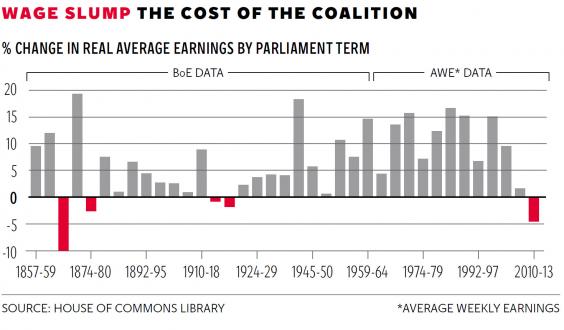
In the Conservative’s view, trade unions distort the free labor market which runs counter to New Right and neoliberal dogma. Since 2010, the decline in UK wage levels has been amongst the very worst in Europe. The fall in earnings under the Coalition is the biggest in any parliament since 1880, according to analysis by the House of Commons Library, and at a time when the cost of living has spiralled upwards. And whose fault is that?

It’s certainly not the fault of those who need financial support to meet their basic survival needs despite being in employment.

Send a written submission through the in-work progression in Universal Credit inquiry page.

Don’t forget the deadline is Monday 18 January 2016.

8+Ways+to+Protect+Yourself+From+Emotional+Manipulation