Category: Uncategorized

Amber Rudd seems confused about the difference between ‘compassion’ and ‘conscious cruelty’

rudd

Image courtesy of Getty Images.

Last week, Amber Rudd made the claim that Universal Credit is “delivered with professionalism and care and compassion.”

However, it is clear – in the words of the public accounts committee, last year – that there is a very real “culture of indifference” within the Department for Work and Pensions and wider government.

Quite often, that “indifference” spills over into conscious cruelty – the term coined by  filmmaker Ken Loach for the UK social security system, during the filming of I, Daniel Blake.

In December, Amber Rudd appeared to strike a conciliatory tone, in in her first appearance before the work and pensions select committee, saying she was enthusiastic about Universal Credit but would not rush the rollout of the new system simply to meet ‘arbitrary timetables.’ Although she acknowledged concerns about the often devastating impact of the social security cuts on the most vulnerable citizens, she said her aim was to ‘restore public confidence’ in Universal Credit.

The problem is that ministers such as Amber Rudd are rather more concerned that Universal Credit has proved politically toxic for the government as a result of policy and design flaws, such as a five-week wait for an initial payment that have left thousands of people in debt, suffering from depression, and reliant on food banks, rather than the devastating impacts an chaos it is wreaking on citizens.

The government is in a weakened position, and is looking to secure support from the opposition for Theresa May’s Brexit deal. The PM has even recently phoned  union leaders to try and garner their support, which is an unprecedented move for a Conservative leader. So it’s unlikely that the ‘conciliatory’ tone is sincere or likely to last beyond the threats to power that the government currently faces. 

Rudd was responding to MPs’ concerns that up to 1 million ill and disabled claimants are at risk of destitution and isolation when they are transferred on to universal credit over the next three years, at the time.

Let’s not forget that last November, Rudd has used her first appearance in the House of Commons as work and pensions secretary to condemn an independent UN inquiry into poverty in the UK, over what she claimed was the “extraordinary political nature” of its language. Her response was about damage limitation to the government’s reputation rather than about engaging with the empirical evidence and recommendations presented in Philip Alston’s report.

The UN’s rapporteur on extreme poverty and human rights said the government had inflicted poverty on people through austerity and called levels of child poverty “not just a disgrace but a social calamity and an economic disaster”. He also heavily criticised Universal Credit, which had been beset by ‘problems’ since its inception.

Asked about the tone of the UN report, May’s spokesman said: “We strongly disagree with the analysis.” However, it was a meticulously evidenced ‘analysis.’ The evidence for the report was provided by many people who have been adversely affected – and some people’s lives have been utterly devastated –  by austerity and the Conservative’s welfare ‘reforms’.

However, Rudd has nonetheless publicly promised to deliver “a fair, compassionate and efficient benefits system”, claiming that it has “good intentions” at its heart. 

What ‘good intentions are those?’

Dr Heather Wetherell, a GP, posted the following on Twitter last year:

Dear @DWP,

When a distraught mother has lost her young daughter, please can you tell me why you wont accept “grief reaction” as a sick note diagnosis? Telling a grieving mum this is not an illness is extremely insensitive. You have also wasted NHS time.

She added: “3 days after her daughter died, she got call from the DWP saying did she realise she couldn’t claim Attendance Allowance anymore & had to sign on Job Seekers. Mother panicked & found herself at a job interview the following week – at which she broke down in tears.

“She phoned me in a state on way home from the interview. I was horrified they had put her through this. I’m so upset by it all.”

Wetherell says that when her patient informed the Department for Work and Pensions (DWP) of her bereavement and she was told,  “that’s not an illness… You need to go to your doctor and get a proper/better diagnosis” (she can’t recall exactly which word they used, but remembers feeling totally humiliated and felt they thought she was a fraud.)

Last year, Kirsty Scott told how her 19-year-old son and husband died within 18 months of each other. However, despite suffering physical and mental health conditions with a severely disabled son to look after, she was refused Personal Independence Payment (PIP) and Employment and Support Allowance (ESA).

She said: “Getting into the workhouse would have been an easier option.

“When my letter was sent to refuse me ESA it did not reflect what had gone on in the assessment.

“The language used was disgusting – things like ‘it is a lifestyle choice not to get out of bed’ or ‘the death of two close family members did not impact on my life enough’.

“I had lost my son and my husband, I was caring for a disabled son. Half of my family gone and they thought it was ok to say these things to me?

“I can’t tell you what it felt like when I got that letter, the desperation. It was like they thought I lied.

“There was no humanity in it whatsoever. My mental health went downhill.”

Clearly, the UK’s social security system does not facilitate people’s human rights, nor does it protect their dignity. DWP staff don’t practice safeguarding or even recognise a trauma informed approach to protect vulnerable citizens. It seems that callousness and cruelty have become habituated within the administrative structure, entrenched in policy designs within an ideological framework that has normalised the intended ‘hostile environment’.

Government policies are expressed political intentions regarding how our society is to be organised and governed. They have calculated social and economic aims and consequences. In democratic societies, citizens’ accounts of the impacts of policies ought to matter.

However, in the UK, the way that policies are justified and implemented is being increasingly detached from their aims and consequences, partly because democratic processes and basic human rights are being disassembled or side-stepped, and partly because the government employs the widespread use of linguistic strategies and techniques of persuasion to intentionally divert us from their aims and the consequences of their ideologically (rather than rationally) driven policies.

Furthermore, Conservative policies have become increasingly detached from public interests and needs.

Over the last 8 years, the Conservatives have coldly conceived society as a hierarchy of human value, from the pinnacle of supremicism, self-appointed authority and from behind their fact proof ideological screen. They have historically cast the poorest and the most vulnerable citizens as the putative “enemies of civilization.” Social Darwinism is written in bold throughout their policies.

There has never been a clearer contrast between the values and approach of the two main political parties: the Conservatives are authoritarian, they plainly imply that some people’s lives don’t matter – the food bank debate and the bedroom tax debate are further examples of cruelty, and of how Conservatives have reduced human subjects to objects of derision.

While Labour MPs spoke out in the debates about the terrible difficulties that vulnerable families in their constituencies are facing, we were faced with the unedifying spectacle of Tory MPs laughing, jeering and shouting their spiteful glee at the plight of those people that this government have intentionally impoverished – after all, policies are plain and legislated statements of intent.

By contrast, the Labour Party have fostered a counter-narrative that is decent, democratic, inclusive and centralises the fundamental equal worth of each human life. Labour’s policies are intentionally founded on a strong commitment to human rights – without which there can be no meaningful social justice and democracy.

The Conservatives have always been stunted in their vision for society by their own elitism and  preoccupation with the superficial characteristics and taxonomic ranking of human beings – the emphasis being on “what” we are  rather than the rather more important “who” we are. Because of this lack of social intelligence, the government has undermined our progress as a society, stifled human potential and failed to value human diversity and failed to recognise the equal worth of every citizen’s life, because of their own assembled fantasy of corrosive, elitist ideological myths.

I would like to thank Tom Pride for his article DWP tells grieving mother to find job 3 days after death of young child: “grief is not an illness”, which has informed some of this one. 


My work is unfunded and I don’t make any money from it. This is a pay as you like site. If you wish you can support me by making a one-off donation or a monthly contribution. This will help me continue to research and write independent, insightful and informative articles, and to continue to provide support others who are affected by the welfare ‘reforms’. 

DonatenowButton


Amber Rudd’s masterclass in Doublespeak

crudd.jpg

Yesterday, heartless Amber Rudd was accused of shrugging off ‘heartbreaking’ Universal Credit experiences and stories by suggesting they are about only “one or two” people. 

This is a government who tell us with a straight face that inflicting absolute poverty on the poorest citizens is somehow going to make them less poor. This ideological framework is also imposed upon people in low paid work, struggling to meet their basic living costs. So the government slogan “making work pay” is meaningless Orwellian tosh, as is the Conservative’s longstanding ‘culture of dependency’ thesis and ideological justification narrative for inflicting devastating cuts on those who can least manage to get by. 

The Work and Pensions Secretary made the outrageous comments after being confronted by the Mirror about flaws in Universal Credit.

For years many of us have published articles ranging from flaws in the social security system, affecting millions, to struggling readers who’ve been forced to food banks, as well as administrative ineptitude and bullying that has often had catastrophic consequences. The roll out of Universal Credit has caused hunger, destitution, deaths and suicides, let’s be frank and pay some attention to the empirical evidence, rather than expedient ideological soundbites.  

Amber Rudd told the Mirror: “Some of the criticisms that have come from various publications have been based on one or two particular individuals where the advice hasn’t worked for them.”

That statement flies in the face of empirical evidence. On this site alone there are MANY individual accounts of the harms arising as a result of Universal Credit. And to claim the reason for these harms is because “the advice hasn’t worked or them” is a serious and disgusting trivialisation of the psychological distress and trauma, the deaths, suicides, rising numbers of those facing hunger, hardship, and destitution that Universal Credit, combined with such systematic government denial and indifference, is causing.

She added: “But in the vast majority of cases, and I would urge everybody who hasn’t to take the opportunity to speak to work coaches, the sort of support that individuals get is a completely different approach to what they had previously.”

Yes. It’s not actually support. It’s a programme of discipline, coercion and punishment.

However it isn’t work coaches who have to live with the consequences of a system that was designed to be an increasingly standardised Conservative hostile environment. The government seem to believe that publicly funded public services should serve as a deterrent to people needing support from the public services they have paid into. 

What matters most is the accounts of citizens, which tell their experiences of the system, not of those administrating it. But citizens’ voices are being intentionally stifled, edited out and worse, their accounts are being re-written by politically expedient civil servants and government ministers. This presentation of ideological fictions and the use of gaslighting techniques is usually the preserve of totalitarian regimes, it’s not the behaviour one would expect of a democratic government in a so-called liberal society. 

Governments with such limited social intelligence don’t lie very convincingly, but they do tend to be hard faced and tenacious. The real horror is their utter indifference and lack of responsiveness: that they really don’t care. They continue to demand our suspension of belief and dizzying cognitive dissonance. The relationship between citizen and state is one of abuse, founded on gaslighting strategies.

Rudd added: “And it is delivered with professionalism and care and compassion.”

Sure. The kind of “professionalism, care and compassion” that leaves a terminally ill man without sufficient support to meet his most basic needs, or that leaves a pregnant mother in extreme hardship, homeless, and resulting in the loss of her unborn child. Or one that pushes people towards suicide.

There is very little empirical evidence of the “professionalism, care and compassion” that Rudd claims. Furthermore, the trivialisation and persistent denials of the harm, distress and extreme hardship that is being inflicted on people because of government policies are all utterly unacceptable behaviours from a government minister, reflecting a profound spite within policy design, a profound lack of political accountability and a profound indifference for the consequences of these behaviours on the lives of ordinary people.

In fact, former Universal Credit staff reveal call targets and ‘deflection scripts, which means staff having to block or deflect vulnerable claimants, telling them that they would not be paid, or would have to submit a new claim, or have a claim closed for missing a jobcentre appointment, or be sanctioned – a penalty fine for breaching benefit conditions – or go to the food bank.

One whistleblower said that her role often felt adversarial. She said: “It was more about getting the person off the phone, not helping.” That’s a very strange kind of “compassion.”

As researchers have concluded, Universal Credit is a complicated, dysfunctional and punitive’ system that makes people increasingly anxious, distressed, with some of the most vulnerable citizens in the UK being pushed to consider suicide, and it ‘simply doesn’t work.’ (See Universal Credit is a ‘serious threat to public health’ say public health researchersfor example).

devastating National Audit Office report last year about Universal Credit concluded that the DWP was institutionally defensive and prone to dismissing uncomfortable evidence of operational problems. Welfare secretary at the time, Esther McVey, felt the need to make a speech in July in which she promised that where problems arose in future the department would “put our hands up, [and] admit things might not be be going right”.

It’s also clear – in the words of the public accounts committee – that there is a “culture of indifference” within the DWP and wider government.

It’s time that government ministers started to listen to citizens’ voices, to service users – as well as campaigners, researchers, charities and the opposition Parties. And the United Nations – instead of presenting denials that policies are seriously harming people. But there is every indication that they won’t. 

Universal Credit’s malign effects are obvious to anyone who actually looks, and is willing to listen to the voices of those affected by this punitive, mean-spirited and fixated, theory-laden, ideologically driven, miserly provision, that was, at the end of the day, paid for by the very public who are claiming it.

Labour MP Maria Eagle flatly stated that Rudd’s comments are “not true” and are “out of touch”.

She said: “The entire design of the system puts people in debt and the benefit cuts accompanying its introduction have made it far worse.” 

Rudd was questioned by the Mirror after she said yesterday: “Maybe things that were  proposed previously weren’t effective or weren’t compassionate in the way that I want them to be.”

Mirror journalists asked if she could, ‘hand on heart’, say it was “compassionate” to double UC claimants this year, keep the two-child limit and keep the benefit freeze until 2020.

Rudd did not respond to the question, instead replying: “The overall product that is Universal Credit is absolutely compassionate.”

Product? That’s a very odd word to use for lifeline support – the public services that are our social insurance which people have paid into for those times when they need it. 

And using key words from a government strategic comms crib sheet – James Cleverly among others has also opted for the word ‘compassionate’ to describe the welfare ‘reforms’ – does not make those narratives the reality experienced by citizens who need to access support from public services. Saying it does not make it real. This is something the Conservatives seem to have overlooked – that their narratives don’t match people’s realities. That’s the problem with telling lies – the empirical evidence catches up with you sooner or later.

Starving people and leaving them in destitution is not ‘compassionate’. Using a publicly funded public service to deliver punitive and a blunt, coercive, authoritarian behavioural modification programme is not ‘compassionate’. These are the actions and narratives of a government dipping a toe into the realms of totalitarianism.

Rudd claimed that UC needs to be ‘improved’, including to make it fairer to woman, but also said it was a “vital reform delivering a fair and compassionate welfare system”, “by far the most important and crucial reform” and a “force for good”.

Yesterday, the high court concluded that the Universal Credit assessment is illegal. The first judicial review verdict of Universal Credit found that the cutting of severe disability premiums from those who had previously claimed ESA was discriminatory.  How many more legal changes will it take to make the government act with some decency and observe basic laws and human rights?

Ideological mythologies

Rudd went on to claim, somewhat incoherently, that the ‘old system’ was “broken”, “not a utopia that we should return to” and under Labour someone unemployed could receive “£100,000 housing benefit per year.”

The charity Fullfact submitted a freedom of information (FoI) request to the DWP in 2012, following the same claims from David Freud, among other Conservative minsters, that people claiming social security support were receiving £100,000 housing benefit per year. The figures in the response showed that over four out of every five Housing Benefit claims are below £100 per week (the equivalent of £5,200 per year) according to the September 2010 figures, while only 70 out of over 4.5 million recipients claimed over £1000 per week, around 0.001% of the total.

Even this is likely to overstate the number claiming £100,000 per year however, as a family would need to claim over £1,900 per week to hit this total. Previous FoI responses from the Department have suggested around five families were awarded this amount.

Ministers and the media repeatedly failed to highlight what is such a small number of the total, and printed screaming and misleading headlines that were inaccurate, without putting this into a wider context. While the evidence suggests that there are a small number of Housing Benefit claims of more than £100,000 per year –  around five – these cases are very much the exception rather than the rule. Focusing exclusively on these outliers without first putting them into context, where over 80% of claims are below £100 per week, has [intentionally] distorted the debate about welfare, aimed at de-empathising the public and providing a justification narrative for cuts.  

Other information drawn from the FoI request found that larger claims tended to come from larger families, and the average household size for people claiming over £40,000 was six. For more details, do check out the numbers in the request itself, which is available here.

People weren’t suffering profound distress, hunger, destitution, suicide ideation and dying because of the ‘old system’.

Perhaps ‘utopias’ are relative. What we are currently witnessing is not “compassionate” or a “force for the good”: it is the dystopic system of an authoritarian state inflicting punishment, discipline and coercion on our most vulnerable citizens.

It’s a state programme that dispossesses citizens, with catastrophic human costs, to fund the tax cuts demanded by a handful of powerful and wealthy vultures, who live lavishly within a culture of entitlement, while the rest of us are increasingly impoverished.

facade-welfare

Amber Rudd claims that Universal Credit is ‘compassionate’. She must have been taking lessons in Doublespeak again.


I originally published this as part of a larger article. 


My work is unfunded and I don’t make any money from it. This is a pay as you like site. If you wish you can support me by making a one-off donation or a monthly contribution. This will help me continue to research and write independent, insightful and informative articles, and to continue to provide support others who are affected by the welfare ‘reforms’. 

DonatenowButton

The DWP left a terminally ill man penniless until after he died

0_jill-fennell mark

Jill Fennell and her partner Mark Scholfield. She says: “The benefits system is barbaric and inhumane.” (Image: Jill Fennell/Facebook).

A man who was terminally ill with cancer was forced to spend his final days penniless as he waited for a Universal Credit payment that cruelly arrived the day after he died.

Mark Scholfield was made to endure an eight-week delay for the social security payment before he died, aged just 62, of mouth cancer.

Mark’s partner, Jill Fennell, who was with him for 23 years, said: “When you’ve been given a devastating blow, being told you have terminal cancer, money is the last thing anyone should be worrying about.

“The benefits system is barbaric and inhumane.”

Jill, also 62, said self-employed musician, Mark, was unable to work for two months before he had his diagnosis in February 2017. He was told his condition was terminal, she said, and initially, he was  encouraged to apply for fast-track Employment Support Allowance (ESA) to help him meet the costs of living and pay bills.

However, because he lived in Camberwell, South London, where the government’s controversial flagship failure – Universal Credit – was being rolled out, he was told that he did not qualify for ESA.

Instead he had to apply to Universal Credit (UC). The Department for Work and Pensions (DWP) often use Credit Reference Agencies to verify the identity citizens making a claim, but Mark had never had credit, and he was told that must visit a Jobcentre with ID.

Jill said that despite his failing health and diagnosis of terminal cancer, Mark was forced by the DWP to go through a health and work assessment over the phone. She  said that she was distraught, and  left “screaming hysterically down the phone”, asking “did they realise he was dying?”

After five weeks Mark received his first payment, which just about covered rent and council tax, but left him with little to live on. But for the next eight weeks he did not receive any more money, and died on July 19, 2017.

It was only after Mark’s death that Jill discovered an ESA payment had been made a day later, as well as a UC payment.

She said: “Mark had needed the money while he was alive to live his final months in some level of comfort and dignity, but he was denied that.”

A DWP spokesperson said: “Our thoughts are with Mr Scholfield’s friends and family.

“While Mr Scholfield was receiving Universal Credit, we are extremely sorry for the delay in his ESA payment which should have been fast-tracked.”

That response is simply unacceptable. Because this kind of glib, standardised apology for an apology is happening far too frequently, it to reflect any shred of sincerity, meaning, reflection or learning on the part of the DWP.  

Linguistic behaviourism: cruelty is compassion, indifference is care

Yesterday, heartless Amber Rudd was accused of shrugging off ‘heartbreaking’ Universal Credit experiences and stories by suggesting they are about only “one or two” people. 

This is a government who tell us with a straight face that inflicting absolute poverty on the poorest citizens is somehow going to make them less poor. This ideological framework is also imposed upon people in low paid work, struggling to meet their basic living costs. So the government slogan “making work pay” is meaningless Orwellian tosh, as is the Conservative’s longstanding ‘culture of dependency’ thesis and ideological justification narrative for inflicting devastating cuts on those who can least manage to get by. 

The Work and Pensions Secretary made the outrageous comments after being confronted by the Mirror about flaws in Universal Credit.

For years many of us have published articles ranging from flaws in the social security system, affecting millions, to struggling readers who’ve been forced to use food banks to survive, as well as administrative ineptitude and bullying that has often had catastrophic consequences. The roll out of Universal Credit has caused hunger, destitution, deaths and suicides, let’s be frank and pay some attention to the empirical evidence, rather than expedient ideological soundbites.  

Amber Rudd told the Mirror: “Some of the criticisms that have come from various publications have been based on one or two particular individuals where the advice hasn’t worked for them.

That statement flies in the face of empirical evidence. On this site alone there are MANY individual accounts of the harms arising as a result of Universal Credit. And to claim the reason for these harms is because “the advice hasn’t worked or them” is a serious and disgusting trivialisation of the psychological distress and trauma, the deaths, suicides, rising numbers of those facing hunger, hardship, and destitution that Universal Credit, combined with such systematic government denial and indifference, is causing.

“But in the vast majority of cases, and I would urge everybody who hasn’t to take the opportunity to speak to work coaches, the sort of support that individuals get is a completely different approach to what they had previously.”

Yes. It’s not actually support. It’s a programme of discipline, coercion and punishment.

It isn’t work coaches who have to live with the consequences of a system that was designed to be an increasingly standardised Conservative hostile environment. The government seem to believe that publicly funded public services should serve as a deterrent to people needing support from the public services they have paid into.

Work coaches don’t have to live with the direct consequences of state policies. What matters most is the accounts of citizens, which tell their raw, first hand experiences of the system, not of those administrating it. But citizens’ voices are being intentionally stifled, edited out and worse, their accounts are being re-written by politically expedient civil servants and government ministers. This presentation of ideological fictions and the use of gaslighting techniques is usually the preserve of totalitarian regimes, it’s not the behaviour one would expect of a democratic government in a so-called liberal society. 

Governments with such limited social intelligence don’t lie very convincingly, but they do tend to be hard faced and tenacious. The real horror is their utter indifference and lack of responsiveness: that they really don’t care. They continue to demand our suspension of belief and dizzying cognitive dissonance. The relationship between citizen and state is one of abuse, founded on gaslighting strategies.

There is very little empirical evidence of the “professionalism, care and compassion” that Rudd claims. Furthermore, the trivialisation and persistent denials of the harm, distress and extreme hardship that is being inflicted on people because of government policies are all utterly unacceptable behaviours from a government minister, reflecting a profound spite within policy design, a profound lack of political accountability and a profound indifference for the consequences of these behaviours on the lives of ordinary people.

Rudd added: “And it is delivered with professionalism and care and compassion.”

Sure. The kind of “professionalism, care and compassion” that leaves a terminally ill man without sufficient support to meet his most basic needs, or that leaves a pregnant mother in extreme hardship, homeless, and resulting in the loss of her unborn child. Or one that pushes people towards suicide.

And former Universal Credit staff reveal call targets and ‘deflection scripts, which means staff having to block or deflect vulnerable claimants, telling them that they would not be paid, or would have to submit a new claim, or have a claim closed for missing a jobcentre appointment, or be sanctioned – a penalty fine for breaching benefit conditions – or go to the food bank.

One whistleblower said that her role often felt adversarial. She said: “It was more about getting the person off the phone, not helping.” That’s a very strange kind of “compassion.”

As researchers have concluded, Universal Credit is a complicated, dysfunctional and punitive’ system that makes people increasingly anxious, distressed, with some of the most vulnerable citizens in the UK being pushed to consider suicide, and it ‘simply doesn’t work.’ (See Universal Credit is a ‘serious threat to public health’ say public health researchersfor example).

A devastating National Audit Office report last year about Universal Credit concluded that the DWP was institutionally defensive and prone to dismissing uncomfortable evidence of operational problems. Welfare secretary at the time, Esther McVey, felt the need to make a speech in July in which she promised that where problems arose in future the department would “put our hands up, [and] admit things might not be be going right”.

It’s also clear – in the words of the public accounts committee – that there is a “culture of indifference” within the DWP and wider government.

It’s time that government ministers started to listen to citizens’ voices, to service users – as well as campaigners, researchers, charities and the opposition Parties. And the United Nations – instead of presenting denials that policies are seriously harming people. But there is every indication that they won’t. 

Universal Credit’s malign effects are obvious to anyone who actually looks, and is willing to listen to the voices of those affected by this punitive, mean-spirited and fixated, theory-laden, ideologically driven, miserly provision, that was, at the end of the day, paid for by the very public who are claiming it.

Labour MP Maria Eagle flatly stated that Rudd’s comments are “not true” and are “out of touch”.

She said: “The entire design of the system puts people in debt and the benefit cuts accompanying its introduction have made it far worse.” 

Rudd was questioned by the Mirror after she said yesterday: “Maybe things that were  proposed previously weren’t effective or weren’t compassionate in the way that I want them to be.”

Mirror journalists asked if she could, ‘hand on heart’, say it was “compassionate” to double UC claimants this year, keep the two-child limit and keep the benefit freeze until 2020.

Rudd did not respond to the question, instead replying: “The overall product that is Universal Credit is absolutely compassionate.”

Product? That’s a very odd word to use for lifeline support – the public services that are our social insurance which people have paid into for those times when they need it. 

And using key words from a government strategic comms crib sheet – James Cleverly among others has also opted for the word ‘compassionate’ to describe the welfare ‘reforms’ – does not make those narratives the reality experienced by citizens who need to access support from public services. Saying it does not make it real. This is something the Conservatives seem to have overlooked – that their narratives don’t match people’s realities. That’s the problem with telling lies – the empirical evidence catches up with you sooner or later.

Starving people and leaving them in destitution is not ‘compassionate’. Using a publicly funded public service to deliver punitive and a blunt, coercive, authoritarian behavioural modification programme is not ‘compassionate’. These are the actions and narratives of a government dipping a toe into the realms of totalitarianism.

Rudd claimed that UC needs to be ‘improved’, including to make it fairer to woman, but also said it was a “vital reform delivering a fair and compassionate welfare system”, “by far the most important and crucial reform” and a “force for good”.

Yesterday, the high court concluded that the Universal Credit assessment is illegal. The first judicial review verdict of Universal Credit found that the cutting of severe disability premiums from those who had previously claimed ESA was discriminatory.  How many more legal changes will it take to make the government act with some decency and observe basic laws and human rights?

Rudd went on to claim, somewhat incoherently, that the ‘old system’ was “broken”, “not a utopia that we should return to” and under Labour someone unemployed could receive “£100,000 housing benefit per year.”

The charity Fullfact submitted a freedom of information (FoI) request to the DWP in 2012, following the same claims from David Freud, among other Conservative minsters, that people claiming social security support were receiving £100,000 housing benefit per year. The figures in the response showed that over four out of every five Housing Benefit claims are below £100 per week (the equivalent of £5,200 per year) according to the September 2010 figures, while only 70 out of over 4.5 million recipients claimed over £1000 per week, around 0.001% of the total.

Even this is likely to overstate the number claiming £100,000 per year however, as a family would need to claim over £1,900 per week to hit this total. Previous FoI responses from the Department have suggested around five families were awarded this amount.

Ministers and the media repeatedly failed to highlight what is such a small number of the total, and printed screaming and misleading headlines that were inaccurate, without putting this into a wider context. While the evidence suggests that there are a small number of Housing Benefit claims of more than £100,000 per year –  around five – these cases are very much the exception rather than the rule. Focusing exclusively on these outliers without first putting them into context, where over 80% of claims are below £100 per week, has [intentionally] distorted the debate about welfare, aimed at de-empathising the public and providing a justification narrative for cuts.  

Other information drawn from the FoI request found that larger claims tended to come from larger families, and the average household size for people claiming over £40,000 was six. For more details, do check out the numbers in the request itself, which is available here.

People weren’t suffering profound distress, hunger, destitution, suicide ideation and dying because of the ‘old system’.

Perhaps ‘utopias’ are relative. What we are currently witnessing is not “compassionate” or a “force for the good”: it is the dystopic system of an authoritarian state inflicting punishment, discipline and coercion on our most vulnerable citizens.

It’s a state programme that dispossesses citizens, with catastrophic human costs, to fund the tax cuts demanded by a handful of powerful and wealthy vultures, who live lavishly within a culture of entitlement, while the rest of us are increasingly impoverished.

facade-welfare

Amber Rudd claims that Universal Credit is ‘compassionate’. She must have been taking lessons in Doublespeak again.


My work is unfunded and I don’t make any money from it. This is a pay as you like site. If you wish you can support me by making a one-off donation or a monthly contribution. This will help me continue to research and write independent, insightful and informative articles, and to continue to provide support others who are affected by the welfare ‘reforms’. 

DonatenowButton

Woman loses her baby after Universal Credit ‘error’ forced her to sleep in a car park

misccariage _homeless_couple_01

Ryan Gifford and Debbie Ballard, both 23, who were made homeless just before Christmas (Image: Devon Live).

A young couple in Devon were left facing homelessness because of an error with Universal Credit rent payments which resulted in them being forced to sleeping rough. Their distressing circumstances of destitution and severe hardship resulted in Debbie Ballard, aged 23, to suffer a miscarriage.

Debbie and her partner, Ryan Gifford, were forced to spend 15 nights sheltering in a car park after a DWP error meant that an ‘automatic’ rent payment was missed.

The couple say they became homeless just before Christmas. It happened  after being moved onto Universal Credit. A rent payment was missed and their landlord subsequently evicted them.

They are now staying in emergency accommodation, but the terrible damage has already been done as they have lost their unborn child.

Debbie said: “Losing my baby makes me feel like s**t. I feel useless and worthless. And now I have lost another baby.

“I was about six weeks pregnant when we were street homeless in December. I had a miscarriage because of all the stress.

“All we want is a chance for us to be a proper family.”

Before they were evicted, the couple were living in a flat, but were switched onto the new benefits system when they had a row, and Ryan took Debbie off his claim. However, due to the change in circumstance, they were automatically switched onto Universal Credit.

Originally, their rent was paid directly to the landlord but a payment was missed in the changeover and the pair were evicted due to being in arrears.

Debbie said: “We were living in a flat. It was full of mould and rats outside and we had made complaints to the landlords.

“Our Housing Benefit was being paid direct to the landlord but when it switched over to Universal Credit he said we were in arrears and served us with a notice and said he would take us to court.”

The couple say they did not receive any notification letters about the changeover to Universal Credit, and before they realised, their housing benefit was stopped and it was too late.

Debbie said: “It’s too late now. We should have been told that before we were made homeless.

They said it was because of a change in circumstances. We were without money for eight weeks. We were literally begging and borrowing from everybody we knew.

“At the beginning of December, we had 15 days sleeping on the streets because of Universal Credit. We were sleeping in a car park on the harbour. It was really horrible.

“It was so cold at night. If you go down to the bottom car park near the Harvester pub it’s warm in there.

“But there’s an alarm that goes off every 10 minutes for 20 seconds.

“You can’t sleep but it’s warmer.

“We have to pay £20 a time to wash and dry our clothes because there’s no washing facilities in temporary accommodation. Everything is really expensive. It’s really hard.”

Ryan said: “We lost our home when we were switched over to Universal Credit. Now we are expected to live on a joint sum of £161 a month.”

“I want Universal Credit to stop. I think that now Universal Credit is coming in properly it’s going to get a lot worse. It’s going to be a nightmare.

“Anybody who has a drink or drug habit is going to be shoplifting to feed their habits.”

Debbie and Ryan received support from local homelessness charity People Assisting Torbay’s Homeless, where they now volunteer.

“When we were on the streets you felt like you were taking one step forward and four steps back.

“Now we are in emergency accommodation and we are expected to live on £161 a month.

“I am trying my hardest but I hit barriers everywhere I go.”

PATH chairman Kath Friedrich said: “There is nothing wrong with the theory of Universal Credit. On paper it’s fine.

“But what’s causing all these problems is that all these pre-payment, backdated loans are handed out like sweeties to people who do not have budgeting skills while they are waiting for their Universal Credits.

“Then when they finally get their money all the loans are deducted. We’ve got lots of people coming in here who are only getting £10 a week to live on.

Sometimes they are paying back old loans they didn’t even know they had.”

A Department for Work and Pensions spokesman said: “We are working with Mr Gifford to support him with his Universal Credit claim.

“If requested we can arrange for rent to be paid directly to the landlord.”

The Department are very good at delivering ad hoc platitudes that are all to often founded on glib promises of rather too little too late, increasingly frequently with tragic consequences.


My work is unfunded and I don’t make any money from it. This is a pay as you like site. If you wish you can support me by making a one-off donation or a monthly contribution. This will help me continue to research and write independent, insightful and informative articles, and to continue to provide support others who are affected by the welfare ‘reforms’. 
DonatenowButton

High Court finds DWP unlawful on universal credit assessments

The High Court found today that the way the Department for Work and Pensions (DWP) has been assessing income from employment through its Universal Credit (UC) work assessment periods is unlawful. This is the second Judicial Review of UC,  I wrote about it in December last year – Government faces second judicial review of universal credit.

Lord Justice Singh and Mr Justice Lewis ruled today (11 January) that the DWP has been wrongly interpreting the universal credit regulations.  They said in their judgment that treating claimants as having earned twice as much as they do if they happen to receive two pay cheques in one monthly assessment period,  and as having no earnings in the next assessment period is “odd in the extreme” and “…. could be said to lead to nonsensical situations”.
 
They added that the DWP’s incorrect interpretation of the regulations had caused “…severe cash flow problems for the claimants living as they do on low incomes with little or no savings”.

The judicial review case, brought by solicitors Leigh Day and Child Poverty Action Group on behalf of four lone mothers, challenged the rigid, automated assessment system in universal credit which meant the mothers lost several hundreds of pounds each year and were subject to large variations in their universal credit awards because of the dates on which their paydays and universal credit ‘assessment periods’ happened to fall.    

The mothers had monthly paydays that ‘clashed’ with the dates of their monthly universal credit assessment periods, with the result that if they were paid early some months, because their payday fell on a weekend or bank holiday for example, they were treated as receiving two monthly wages in one assessment period – which in turn dramatically reduced their UC award –   and as receiving no wages at all the next month.  This is a problem which has affected many working claimants and has been widely reported. 

In addition to creating wildly fluctuating universal credit awards, when the mothers received two pay cheques in one assessment period, they lost the benefit of one month’s work allowance. The work allowance is the amount of earnings claimants with children or with limited capability for work can keep in full before universal credit is tapered away at a rate of 63p per pound, worth hundreds of pounds each year.  

This flaw in the system has denied working parents the additional financial support that they are entitled to in order to help them in work and ensure that “work always pays.” The severe fluctuations in their universal credit awards and therefore their total monthly income has also caused major cash flow difficulties for parents on very low incomes, leading to them falling into debt and, for some, having to choose between paying their rent or paying their childcare costs.

The DWP refused to adjust the mothers’ assessment periods or to attribute monthly wages paid early to the actual assessment period in which they were earned, so as to enable them to avoid varying awards and cash losses.

During the court proceedings the Secretary of State argued that despite the hardship being caused, the way in which income was being assessed was “lawful”, it made sense given the automated nature of Universal Credit and that this was an issue which employers should remedy rather than the DWP.  

All of these arguments were rejected by the Court who found that correctly interpreted, the regulations mean the DWP can and should adjust its calculation of universal credit awards when “it is clear that the actual amounts received in an assessment period do not, in fact, reflect the earned income payable in respect of that period”.  In other words, wages are to be allocated to the month in which they were earned, rather than to the assessment period in which they were received.

Although the DWP sought to justify its lack of action on the basis that there would be extra costs involved in making adjustments to its systems, the court was clear that it must nevertheless comply with the regulations as correctly interpreted, stating: 

“If the regulations, properly interpreted, mean that the calculation must be done in a particular way, that is what the law requires. We do not belittle the administrative inconvenience or the cost involved but the language of the regulations cannot be distorted to give effect to a design which may have proceeded on a basis which is wrong in law.”  

Tessa Gregorysolicitor from Leigh Day who represented the first Claimant, Ms Danielle Johnson, stated:

“My client is a hard working single mum doing her very best to support her family. She is precisely the kind of person Universal Credit was supposed to help, yet the DWP designed a rigid income assessment system which left her £500 out of pocket over the year and spiralling into debt due to a fluctuating income. Quite rightly the Court has found that the Secretary of State has been acting unlawfully and ruled that a correct interpretation of the regulations would not lead to such absurd results. 

It is extraordinary that when this issue was first raised, the Secretary of State did not act quickly to remedy the problem, instead choosing to fight these four women in court arguing that the system was fit for purpose despite the hardship being caused to working families. This is yet another demonstration of how broken Universal Credit is and why its roll out must be stopped.

In light of the judgment, Amber Rudd must take immediate steps to ensure that no other claimants are adversely affected and she should also ensure all those who have suffered because of this unlawful conduct are swiftly and fairly compensated.”   
 Commenting on the judgment, CPAG’s solicitor Carla Clarke said: 
 
“This is a very welcome and common-sense judgment which clearly establishes that the DWP has been applying its universal credit regulations incorrectly.    Working parents on low incomes should not lose out on the support that Parliament intended them to receive because the DWP has designed a rigid process that is out of step with both actual reality and the law.   

“Our clients have been doing everything they can to support themselves and their young children through work but the rigid assessment system in universal credit has caused them untold hardship, stress and misery with them being forced repeatedly to manage on half of their usual total monthly income despite their fixed outgoings remaining the same.  They have each ultimately questioned why they are even working.  

“That it should have required them to go to court to challenge the DWP’s position is a testament to their commitment to bring up their children in a working household but it is a situation they should never have been put in. Today’s result should mean that in future no one will lose out on their universal credit awards or face the hardship that my clients have faced simply because of when their payday happens to fall.”  


I don’t make any money from my work. I have a very limited income. But you can help if you like, by making a donation to help me continue to research and write informative, insightful and independent articles, and to provide support to others affected by the Conservative’s welfare ‘reforms’. The smallest amount is much appreciated – thank you.

DonatenowButton

Prime minister phones union leaders in desperate attempt to peddle her Brexit deal

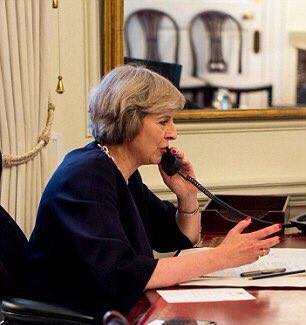
theresa may on phone

Theresa May has taken the completely unprecedented move for a Conservative PM of telephoning union leaders, including Unite’s Len McCluskey, a close ally of Jeremy Corbyn, to lobby support for her Brexit plans ahead of next week’s Commons showdown. 

I think he gave her pleading a swerve.

She also called Tim Roache, the general secretary of the GMB union. It was the first time she had spoken to either man since she became Prime Minister in 2016, indicating her desperation. Downing Street has also confirmed that she plans to call other union leaders, thought to include Unison’s Dave Prentis, in the run-up to Tuesday’s “meaningful vote” on her Brexit blueprint.

I’m sure the draconian policies designed to stifle trade union freedoms, which took our country down a dark path, will have been forgotten by now. We’ve all really valued the big move away from freedom and towards greater control for the state over our lives over the last eight years. Who could possibly object to state micromanagement and such authoritarian attacks on unions and collective bargaining, diminishing citizen freedoms that are not theirs to give away.

The EU Social Charter of Rights was intentionally excluded by May’s government from the Withdrawal Bill. Many Conservatives see Brexit as an opportunity for more deregulation and ‘cutting red tape.’ Priti Patel, for example, said: “If we could just halve the EU social and employment legislation we could deliver a £4.3bn boost to the economy.”

A boost for whom?

When Conservatives talk of a boost to the economy, they are usually referring a boost in private profits that comes at the expense of ordinary citizens.

Back in 1984, Margaret Thatcher reached the absurd conclusion it wasn’t possible for someone to be in a union and be loyal to their country. Consequently, GCHQ employees in Cheltenham were denied their basic rights and could no longer have the protection of a union at work. Fourteen workers who refused to give up their union membership cards were unceremoniously sacked.

In 2013, the coalition government introduced fees for taking cases to employment tribunals, claiming it would cut “weak and unnecessary cases”. This not only limited access to justice for some of the most vulnerable citizens in our society, it also gave some of the most unscrupulous bosses free reign exploit people, to abuse health and safety and employment law, knowing there was little chance of being called to account.  In July 2017, the Supreme Court ruled that the Tribunal fees were unlawful and the government was forced to reimburse all those who had paid them. This is a prime example of a vindictive government policy which hurt employees.

In 2015, when the Conservatives were elected with an overall majority, they attacked the trade unions and their right to organise and strike. The right to strike is a fundamental freedom in our democracy.

Now the Conservatives have the brass neck to treat worker’s rights as a mere bargaining chip to get their own way. A means to an end, nothing more. I’m pleased to say that Roache gave her a scornful rebuff to her bargaining bid. He said: “I represent 620,000 working people and it’s about time their voices were heard. After nearly three years I’m glad the Prime Minister finally picked up the phone.

“As you would expect, I was very clear about GMB’s position – the deal on the table isn’t good enough and non-binding assurances on workers’ rights won’t cut it.”

“If the deal genuinely did the the job for GMB members, our union would support it, but it doesn’t,” he added.

Both unions came out against her deal, saying her efforts to woo them were nowhere near enough to get their support. 

May’s approach is all the more surprising because of her previous lack of engagement with the TUC’s Frances O’Grady, revealing last year that she had only met the PM once since she came to power.

The PM has also launched an attempt to sell the merits of her withdrawal agreement to Labour backbenchers in an apparent recognition that she needs to reach out to opposition MPs to avert a very heavy defeat. The government is also preparing to back an amendment tabled by Labour MPs John Mann, Caroline Flint, Lisa Nandy and Gareth Snell to give stronger guarantees that EU workers’ rights and environmental safeguards are enshrined in British law.

Mann met the PM last night along with others, including Flint and Snell, to discuss working together.

It’s rather late in the day for the PM to suddenly declare her concern for worker’s rights. The Conservatives have spent the last eight years destroying people’s job security, and any opportunity for worker’s to exercise collective bargaining. People claiming social security, for example, are coerced into accepting any employment, regardless of pay or conditions, otherwise they face sanction – the withdrawal of their lifeline support, which is barely enough, as it is, to meet basic living costs. 

May has gone out of her way to meet small groups of Labour MPs from strongly Leave-supporting constituencies. Nandy, the MP for Wigan, told the BBC that the PM would only win backing for her agreement if she negotiated with the majority of MPs opposed to no deal or a hard Brexit.

“That’s the importance of what happened this week. Finally there seems to be a recognition from the Conservative leadership that they are going to have to do that,” she said.

Downing Street described May’s contact with union leaders as “constructive” and denied that the move was a sign of desperation.

A spokeswoman said: “It’s part of her ongoing engagement with leaders from across the United Kingdom.”

She added: “The PM speaks to leaders across a range of industries, business groups, and has done that consistently throughout this process and today she spoke to a couple of union leaders and there will be further engagement in the days ahead.”

The news comes as a fresh analysis from the BBC indicates that the PM could face a whopping 228 vote loss. 


Related

The link between Trade Unionism and equality 


I don’t make any money from my work. I have a very limited income. But you can help if you like, by making a donation to help me continue to research and write informative, insightful and independent articles, and to provide support to others affected by the Conservative’s welfare ‘reforms’. The smallest amount is much appreciated – thank you.

DonatenowButton

Defending disinformation against democracy: the Integrity Initiative

Inside the Integrity Initiative, the UK gov’s information war on the public with Journalists Max Blumenthal, Ben Norton and Professor David Miller.

The Institute for Statecraft and its offshoot, the Integrity Initiative, constitute a secret propaganda network tied to the UK security services. They bring together high-ranking military and intelligence personnel, journalists and academics to manufacture and disseminate propaganda serving the geopolitical and economic aims of the UK and those of its allies.

The Integrity Initiative is a self declared ‘charity’, funded by the UK Foreign Office, British Army and Ministry of Defence, which has been described by the Sunday Mail as a right wing infowars unit.

The Institute for Statecraft, which “led” the Integrity Initiative, was traced to this mill in Fife (Image: Sunday Mail.)

Created by the NATO-affiliated, UK-funded Institute for Statecraft in 2015, the Integrity Initiative was unmasked in November after Anonymous hackers released a volume of documents detailing a web of politicians, journalists, military personnel, scientists and academics involved in purportedly fighting ‘Russian disinformation.’

The highly secretive, government-bankrolled “network of networks” has found itself under scrutiny for smearing Her Majesty’s opposition leader Jeremy Corbyn as a ‘Kremlin stooge’ – ostensibly as part of its crusade against ‘Russian disinformation.’ The Initiative has received more than £2.2million from the Foreign Office in two years to – in one minister’s words – “defend democracy against disinformation.”

The latest leaks indicate that the organisation played a central role in shaping media narratives after Sergei Skripal and his daughter Yulia were mysteriously poisoned in Salisbury last March. It’s notable that many of the draconian anti-Russia measures that the group advocated as far back as 2015 were swiftly implemented following the Skripal affair – even as London refused to back up its blame frame with evidence.

Within days of the Skripal poisonings, the Institute solicited its services to the Foreign and Commonwealth Office (FCO), offering to “study social media activity in respect of the events that took place, how news spread, and evaluate how the incident is being perceived” in a number of countries.

After receiving the government’s endorsement, the Integrity Initiative launched Operation Iris,’ enlisting the “global investigative solutions” company Harod Associates to analyse social media activity related to the Skripal incident. 

The latest release of hacked documents also revealed a curious link between the Integrity Initiative and Skripal himself – a connection made all the more suspicious by the group’s central role in coordinating a determined and evidence-free  campaign to implicate and punish Moscow for the alleged nerve-agent attack.

One document from July 2018 contains contact details for Pablo Miller, Skripal’s MI6 recruiter, handler and (conveniently) neighbour in Salisbury. Miller, it seems, had been invited to a function hosted by the Institute. The plot sickens.

I have wondered what happened to Yulia Skripal. Worryingly, she has dropped off the media radar.

David Miller, Professor of Political Sociology at the University of Bristol School for Policy Studies, has said that despite being ignored by the media, leaks from Integrity Initiative have paralysed the operations of this UK-funded covert influence network, and could ultimately lead to its dismantling.

Miller also believes that: “People have a right to know how the Government are spending their money, and the views being promoted in their name.”

I agree. I think it’s obscene that our money is being spent on covert military grade psyop operations designed specifically to micromanage our perceptions of reality and to stage-manage our democracy. 

He adds: “This [leak] has made a mess of [Integrity Initiative’s] operations, they are spending most of their time now trying to fire-fight on the coverage this is getting. And they are not doing essentially what they are being paid to do, which is to counter the Russians.

“The British government is getting bad value for money, if it was ever getting ‘better’ value.”

As part of the Working Group on Syria, Propaganda and Media, which studies Western attempts to control media coverage of key international events, Miller has played a crucial role in studying the four tranches of data anonymously uploaded and sourced from the previously little-known group, which has been backed by the UK Foreign Office, NATO and Facebook, to the tune of over £1 million per year.

The documents, whose authenticity has not been denied by government, contain details of psyops against public figures, of the manipulation of media coverage from leading outlets, and have also revealed worldwide networks of prominent journalists and academics, secretly engaged to discredit, at every turn, pro-Moscow points of view and left wing political developments.

Despite the refusal by all of those named to either admit their connection or to say that there was nothing untoward in their activities, Miller believes that the exposure has made it more difficult for them to push and publish anti-Russian content.

The Integrity Initiative has waged an information and propaganda war on the public. Yet nothing has been done to address the scandal surrounding this McCarthyist UK government-funded think tank, which has attacked Jeremy Corbyn and the anti-war left and laundered disinformation through the corporate media under the guise of ‘countering Russia’. 

“Most of the people named are trying to pretend that this is not all of great significance, but the revelation of the involvement of the government in manipulating other countries, and the political process in the UK, is extremely damaging for them,”  Miller says. 

Miller has also said that Parliament needs to conduct a more sustained inquiry into Integrity Initiative, and Jeremy Corbyn smears. 

For Miller, the “cardinal sin” from a UK perspective was the smearing of the Labour Party leader Jeremy Corbyn, as a potential ‘Kremlin ally’ in Whitehall, which means that a state-paid intelligence operation has been manipulating domestic politics.

Miller also points to the absence of coverage of what he calls a “real, genuine scandal” in top news sources, which, he says, are themselves implicated in the scandal fallout.

Miller also sates that, at the very least, this exposure should lead to a crucial national dialogue about the role intelligence agencies should play in public life and in influencing politics.

Why, it’s as if the role of MI6 in the faked Zinoviev letter has habituated the Establishment to maintain the status quo at all cost, including the stage-managing of our democracy, using anti-Russian sentiment as a template. It’s also apparently become such normalised behaviour that it’s hiding in plain view.

“Integrity Initiative are beyond the realms of sense. The activities they are engaged in are morally and ethically dubious, and will certainly – as we can see already – backfire on them,” Miller continued.

“This will result hopefully in the ending of this operation, and if we are lucky, a sensible discussion in parliament about controlling the future of British covert operations.”

Funding shot up to £2.6 million in 2018-19, with £1.96 million from the FCO and the rest from the US State Department, NATO and the American neoconservative Smith Richardson Foundation. Facebook, which plays in integral role in imposing censorship on behalf of the US, donated £100,000. See: UK Integrity Initiative heavily involved in Skripal affair.

Shadow Foreign Secretary Emily Thornberry has said: “It is one of the cardinal rules of British public life that official resources should not be used for party political purposes.

“So, it is simply outrageous that the clearly mis-named ‘Integrity Initiative’ – funded by the Foreign Office to the tune of £2.25 million over the past two years – has routinely been using its Twitter feed to disseminate personal attacks and smears against the Leader of the Opposition, the Labour Party and Labour officials.”

Andrew Fisher, an aide to the Labour leader, said: “This astonishing story really deserves attention.”

Labour MSP Neil Findlay said: “Such clear political attacks and propaganda shouldn’t be coming from any charity.

“We need to know why the Foreign Office have been funding it.”

Isn’t it obvious?

Surveillance capitalism: citizens as a means to an end

So far I haven’t seen anyone make the connection between the exposure of the Integrity Initiative and the Cambridge Analytica scandal. Or the fact that the government hired several murky companies plying the same methods as Cambridge Analytica in their election campaign, spending hundreds of thousands of pounds of citizens’ money so the Conservatives could target them with personalised dark ads and psyop-crafted strategic comms

As soon as the Conservatives casually announced their ‘behaviour change’ agenda back in 2010, and instituted the ‘Nudge Unit’, a scandal of the type surrounding  Cambridge Analytica/SCL was inevitable. How could anyone expect that an increasingly authoritarian government, somewhat defined by resistance to change, would resist the temptation to draw on ‘behavioural science’ techniques to manipulate citizens’ perceptions, cognitions, behaviours, choices, and ultimately, their voting decisions?

‘Surveillance capitalism’ was the term coined in 2015 by Harvard academic Shoshanna Zuboff to describe this large-scale surveillance and modification of human behaviour for profit. It involves the predictive analysis of big datasets describing the lives, choices and behaviours of tens or hundreds of millions of people, allowing correlations and patterns to be identified, information about individuals inferred and analysised, and future behaviour and decisions to be predicted. This is then used to influence behaviours through personalised and ‘dynamic’ targeted advertising. 

This whole process is refined by an experimental approach – testing a range of variations of adverts on different demographics to determine what works best. Every time we log on we potentially become the unwitting and thus non consenting subject of trials designed to determine how to most effectively extract money from us or to persuade us of something. The common denominator is the covert use of powerful behavioural modification strategies: psyops. 

Our personal data is being used to construct ‘persuasion profiles’, using sets of estimates – based on probabilities – on the effectiveness of particular influence-strategies on individuals, which are also based on past responses to these strategies. Some of these companies are also experimenting with biometrics.

We are led to believe that it is other states that seek to meddle in the UK’s elections. The use of data analytics and psychological profiling to target people on social media with political content, has had a profound political impact, but it remains largely unappreciated. Political campaigning has shifted from being a public process to being a private, personalised series of micro-monitoring strategies, enabled by access to the apparatus and mechanisms of surveillance capitalism. It’s a process that has led to the government regarding citizens as a means to an end – that being simply maintaining power, upholding the status quo.

The Snowden leaks in 2013 concerning GCHQ and the NSA’s covert activities made controversial headlines around the world. GCHQ’s stated aim was to compile a profile of the internet habits of every user on the web.  The Investigatory Powers Act, commonly known as the “snooper’s charter, permits the security and intelligence agencies legal authority to acquire personal datasets from technology companies in bulk, and the UK government is reported to be exploring an agreement with the US that would give British intelligence agencies better access to these databases.

Data sharing between surveillance companies and state security and intelligence agencies is well established. In the US, tech companies have been forced to hand over data about their users to the NSA for some time. When Yahoo refused, they were threatened with a $250,000 fine, every day, with the fine doubling every week that their non-compliance continued, faced with the prospect of financial ruin, they acquiesced.

Clearly, monitoring and surveillance practices have changed the relationship between the citizen and the state, shifting the balance of power and distorting democracy.

It cannot be right for either private companies or governments to use citizens as Pavlovian dogs. Such personalised psychological persuasive strategies seriously undermine the human autonomy that is central to human dignity and democracy.  

Related

 Documents of the “Integrity Initiative” Part 4  – Anonymous (4 January 2019)

The chilling manipulations of the Institute for Statecraft are straight out of the cold war playbook – Chris Williamson, Morning Star Online

Social media is being used to stage manage our democracy using nudgebased strategies

Disinformation and ‘fake news’: Interim Repor–  House of Commons
Digital, Culture, Media and Sport Select Committee 

The Art of Deception: Training for a New Generation of Online Covert Operations – The Intercept

Controversial GCHQ Unit Engaged in Domestic Law Enforcement, Online Propaganda, Psychology Research – Glenn Greenwald and Andrew Fishman

The government hired several murky companies plying the same methods as Cambridge Analytica in their election campaign


I don’t make any money from my work. I have a very limited income. But you can help if you like, by making a donation to help me continue to research and write informative, insightful and independent articles, and to provide support to others affected by the Conservative’s welfare ‘reforms’. The smallest amount is much appreciated – thank you.

DonatenowButton

A man ended his life when his ESA award was stopped, because he couldn’t find work

0_damo_lawler

Damien Lawler, who had a generous nature and a heart of gold. (Image: Karen Lawler)

Last year on 19 July, Karen Lawler found her son Damien, aged 34, dead at his flat in Newtown Court, Hull.

Damien killed himself after struggling to find work and his social security support – Employment and Support Allowance (ESA) was due to be stopped. Known as ‘Damo’ to his family, he was found dead in his flateast Hull, flat with a suicide note in his hand.

In the note, he wrote that he felt like a “hindrance” and “couldn’t carry on anymore” after having no success for the numerous job applications he had made. He also wrote that his ESA was due to be cancelled, and he was so terrified about being put on Jobseeker’s Allowance he was experiencing “stupid” panic attacks.

He wrote: “I’m sorry for all the pain and heartache I’m leaving behind. I love you with all my heart but I can’t carry on anymore.”

Damien’s mother, Karen Lawler, spoke of her heartache and described her son as someone “with a heart of gold”.  She said: “He never had much money but he would always give his last penny or his last cigarette to a homeless person on the street. He always had a care for the homeless.” 

“He had a wicked sense of humour and a heart of gold. He would do anything for anybody.”

Lawler, who found her son after letting herself into his home on July 19, 2018, said her son had been suffering depression for a number of years, and said more needed to be done to support people with mental health issues.  She said: “Damo was just so tired and exhausted with it all.

“There was not enough support for him.

“There’s just nothing there. He’s not the only one. The recent cases with males in Hull is going sky high because they can’t cope anymore.”

An inquest on Tuesday heard Ms Lawler took her son to his GP in November 2013 after he deliberately self-harmed, using a Stanley knife to cut off his toe nails. He was prescribed with anti-depressants but his mental health difficulties took a turn for the worse in 2017.

During a visit to his GP in January 2018, Damien revealed he had thoughts of self-harm and suicide. He was advised to return to the surgery for further consultation, but he did not follow through with the appointments.

Many people who are ill and struggling find it very difficult to keep appointments, especially when they face difficulties accessing acute services for help. Many need immediate help to follow from the first appointment, because by that time, they are in crisis. But all too often, people in terrible distress, with suicide ideation, are being told they must attend yet another appointment.

This system sets up a bureaucratic wall, placing an all too often insurmountable barrier between citizens in the greatest need – those least ability to cope with navigating the wall – and the services and support they need to access. 

We must also question the decision to end Damien’s ESA award, when he was so clearly ill and unfit for work. We must challenge a system that leaves people feeling as if they are some kind of ‘burden’ simply because they are ill.  

“There needs to be something there if they do not turn up for any appointments,” said Ms Lawler.  “They cannot just discharge someone. They need to try and find out why they have not come to the appointment. Maybe contacting a next of kin or something.

She added: “I don’t know what the answer is and I don’t suppose there is an easy answer but something needs to be changed. Something has got to change in Hull, it really has.”

I agree. Something has to change. The social security and health care systems no longer function to meet fundamental human needs. Instead they have been redesigned to provide as little support as possible at the lowest costs, while a host of private companies make profits at citizens’ expense. 

The Coroner, James Hargan, returned a verdict of suicide.

If you need help

Please, please talk to someone.

Samaritans (116 123)
 samaritans.org operates a 24-hour service available every day of the year. If you prefer to write down how you’re feeling, or if you’re worried about being overheard on the phone, you can email Samaritans at jo@samaritans.org , write to Freepost RSRB-KKBY-CYJK, PO Box 9090, STIRLING, FK8 2SA and visit http://www.samaritans.org  find your nearest branch.

CALM (0800 58 58 58) thecalmzone.net has a helpline is for men who are down or have hit a wall for any reason, who need to talk or find information and support. They’re open 5pm to midnight, 365 days a year.

Childline (0800 1111 ) runs a helpline for children and young people in the UK. Calls are free and the number won’t show up on your phone bill. 

PAPYRUS (0800 068 41 41) is a voluntary organisation supporting teenagers and young adults who are feeling suicidal. 

Depression Alliance is a charity for people with depression. It doesn’t have a helpline, but offers a wide range of useful resources and links to other relevant information depressionalliance.org 

Students Against Depression is a website for students who are depressed, have a low mood or are having suicidal thoughts. Bullying UK is a website for both children and adults affected by bullying studentsagainstdepression.org

You can also contact me on this site any time, too. I’m a good and experienced listener. I can also signpost people to organisations that can help.


I don’t make any money from my work. I have a very limited income. But you can help if you like, by making a donation to help me continue to research and write informative, insightful and independent articles, and to provide support to others affected by the Conservative’s welfare ‘reforms’. The smallest amount is much appreciated – thank you.

DonatenowButton

A Tory responded uncleverly to ‘I, Daniel Blake’

A great article which ‘unclevers’ Cleverly

ducksoap's avatarducksoap

Ken Loach’s film ‘I, Daniel Blake’ was broadcast on TV on Saturday evening.  In a direct response to the film and to the reaction to it, Tory deputy chair James Cleverly, the dictionary definition of nominative indeterminism, vomited a few dishonest platitudes mixed with his usual snide.

His words (taken from unclever tweets) are in italics below followed by my jacksons.

I regularly help constituents who have had problems with the benefits system.”
No-one believes that Cleverly has ever helped anyone in his life.  Every claimant has problems with the benefits system because the system was designed by the Tories to be problematic.

“I know that it is far from perfect, can be intimidating and mistakes can have devastating consequences.”
It was designed to be inadequate.  The problems people face are deliberate features of the benefits system.

“The system we inherited from Labour was complicated, full…

View original post 652 more words

Hello: Which Service, Please?

l-egypte-de-mlle-cleo-de-merode-cours-l-mentaire-d-histoire-naturelle-1940.jpg!large

Joseph Cornell was an American Surrealist. Possibly less known than Salvador Dalí or Max Ernst but a significant, if invisible, contributor. Cornell worked with assemblage and collage to build tiny Wunderkammer of places he had never visited or people he had never met. Much of his life was defined by caring for his mother and disabled brother. Yet, he managed to keep in contact with international artists and produce a body of work that recycled once beautiful objects into things of beauty and wonder. Cornell worked in a cultural parallel to the creation and production of computer systems: he reused and recycled in innovative ways. He transformed the discarded into desirable objects which tell stories appealing to Art Collectors – works have been sold for $5.3m despite Cornell living in relative poverty for much of his life. Caring has always been costly. 

The Government Digital by Default Strategy seeks to emulate the kind of amplification of effort that Cornell achieved. Published in November 2012, the Strategy has fourteen illuminating action points that define what it is the Government seeks to achieve. In general, the strategic direction being taken is one of transforming government into a flat, lean, low cost, machine; of eliminating anything superfluous to the delivery of the task; of reducing spending by up to £1.8Bn a year; moving all Government Services to a single website. The entire strategy seems utterly marvellous, aspirationally wonderful and easy to achieve in 2012. By 2013 the shiny glint was gone.

Investigation had found that 18% of the population were not willing to go online at all although 6% might be persuaded. This was not deemed to be a death knell for the Strategy because Action Point Nine of the Strategy specifically states, “This means that people who have rarely or never been online will be able to access services offline, and we will provide additional ways for them to use the digital services.”

A commitment that was rolled out to the seven key Departments who handle the majority of Central Government transactions: HM Revenue and Customs (HMRC), Department for Transport (DFT), Department for Work and Pensions (DWP), Ministry of Justice (MOJ), Department for Business Innovation and Skills (BIS), Department for Environment Food and Rural Affairs (Defra), and the Home Office. 

HMRC, being the Department that does most online transactions – and has done even before the Digital By Default Strategy – had a perfectly functional identity checking system. This system had been working and refined since before the debacle of Labour’s Identity Card. Indeed, the HMRC identity check was an aspirational blueprint for the Identity Card. When the Cameron Government came to power, the Identity Card was dumped and, immediately, private companies such as Experian, Equifax, Barclays and others were invited to become “Identity Services Providers”.

Identity Services Providers use the Electoral Register, your credit history, your outstanding debts and your payment history to determine a credit score. For people who use cash – through necessity or decision – this Credit Score is useless. For example, a person who has never had a credit card will fail to have an accurate credit score and a person who buys a house in cash will never have a good credit score. The entire industry of credit scoring is based on the idea that a company can collect all the relevant financial information about someone and be certain the information is correct. Indeed, the early Credit Scoring Industries gained exemptions from the Data Protection Act 1984 to ensure they could collect private information without penalty.

Over the decades the number of people for whom Credit Scoring Industries have accurate information has stabilised at about 30% of the population. Which means, in the shiny world of Digital By Default the Government’s privatised Identity Service Providers cannot identify 30% of the people who need to be identified in order to use Government Digital Services. This is a stark contrast to the HMRC identity checking which identified everybody who participates in the Economy with a success rate of over 97%. 

Digital By Default has a grand set of objectives. Many of them are aimed at reuse and recycling of information in order to flatten Government hierarchies – to shrink the State. Many of them are twaddle that looks good on a Management Consultant’s report but fail when exposed to reality. For example: Action 03 All departments will ensure that they have appropriate digital capability in-house, including specialist skills immediately fails when the development is outsourced. Specialist skills take time to nurture and develop.

Exactly like Commercial Companies, the Government has no desire to pay to train or pay to develop those skills. Which means a rash of Contract Workers and increasingly unfair and unreasonable contract terms. Such as defining Contract Workers as being Workers and therefore to be taxed as Workers but without having any of the Rights associated with Workers because they are contractors. In the grand scheme of things, this is a minor niggle. It is, however, a minor niggle that is amplified by technology. Contractors move on seeking the highest payer and leave without completing work and only complete work defined.

The debacle of the Universal Credit Computer Systems demonstrates that poor Management and unreasonable treatment of Skilled Workers ends badly. The Universal Credit System works as defined and has no flexibility to work otherwise because the desire to shrink the State and do everything cheaper overrides any design skills that exist in appropriating, reusing and recycling existing systems. 

The single biggest failing of Digital By Default is that it has been colonised by Nudge Theory. The default of digital is a policy lever that the Government can pull and magically people will be nudged to use the service and so the non-digital alternative will never be required. Which has then informed the reduction of the number of Civil Servants – regardless of practical necessity – in a masterly exemplification of the lump of labour fallacy.

The truth is that the Government has failed to genuinely engage with the Digital By Default Strategy for a wide range of ideologically driven reasons which fetishise Business Best Practice but fails to engage by following one of the stated aims of the Strategy: Departmental and transactional agency boards will include an active digital leader. 

When it came to the Northern Irish Border, the Government simply stated that there would be a technological solution in place. When the European Union asked the most basic of design questions the entire claim fell apart. Not because the European Union was seeking to frustrate anything but because the Government is profoundly ignorant of what Digital actually means. By insisting that Leadership is needed they have circumvented the precise thing that is essential to every digital strategy, public or private: delivery.

The aim of the Strategy: Departmental and transactional agency boards will include an active digital leader only works if All departments [will] ensure that they have appropriate digital capability in-house, including specialist skills. Leadership without delivery is like a Shipping Line without Ships. 

Fundamentally the Digital By Default Strategy is a sales document which short changes the Civil Service and lays out a prospectus of outsourcing. The failure to build any kind of Management structure to ensure that outsourcing delivered the same services, but digitally, is nowhere more obvious than in Universal Credit. A project that has more than 100,000 transactions, according to Digital By Default, fall under Action Two: Services handling over 100,000 transactions each year will be re-designed, operated and improved by a skilled, experienced and empowered Service Manager” and need to be consistent with Action Nine: “This means that people who have rarely or never been online will be able to access services offline, and we will provide additional ways for them to use the digital services.”

The evidence is that Universal Credit achieves none of this. Universal Credit is digital only – which means Action Nine can never be achieved. However, Universal Credit can be outsourced as it becomes a “simple endpoint service”. People turn up, log on and claim. 

The “turn up, log on and claim” approach does not work. The approach automatically excludes that 18% of the population who are not on line and conflates the 6% who can be persuaded to go on line with the 12% who have no means or interest. The failure of the commercial Identity Service Providers to know who 30% of the adult population are raises the exclusion to somewhere between 18% and 48%.

The kind of fetish of Big Data that accompanies the “turn up, log on and claim” approach is quite particular. It is the fetish of demanding more information than is needed because the process fails with insufficient information and can filter out information.

It is normal behaviour in systems development: see what data can be gathered and then move backwards towards what is required; but in Big Data the approach is to overcollect and then see how to monetise the non-essential data. Which has been the essential business model of Credit Checking Agencies who grew out of Catalogues such as Great Universal Stores deciding to monetise their record of debts. 

The “turn up, log on and claim” approach needs a complete and accurate record of transactions to exist in order to work. That means an accurate record for every person of working age – for working age benefits – in order to function effectively. It is not some end point service like a credit check which simply says yes or no to a question such as does this person have a credit score greater than X? The Digital By Default approach assumes that the complexity of Universal Credit can be a simple endpoint service.

Which is exactly what technical developers sell to their managers when Big Data applications are developed. It can all be simple because a computer can do that. What is rarely discussed is the question: what happens when it goes wrong? 

Action Fourteen: Policy teams will use digital tools and techniques to engage with and consult the public is a statement that every development project – regardless of the development methodology – proposes they will do: consult the end users. The consultation for Universal Credit has not included the Public. It has included the Think Tanks The Institute for Government – whose board of directors include Morgan Stanley Bankers, Former Bank of England Directors, Conservative Politicians and members of the House of Lords – Centre for Social Justice – whose directors include Conservative Politicians, links to American Right Wing pressure groups, a smattering of the Lords and various Right Wing Politicians.

The Consultation with Think Tanks is, in development terms, consulting with the public. But it is not consultation with the End User Community. Morgan Stanley Bankers are unlikely to need to budget to put a fiver’s credit onto the electricity meter in order to make the benefit work. It is, as Developers might say, a low probability use case scenario. 

Which leaves the entire development of Digital By Default firmly outside of the realm of the End Users and with the System Owners. In other words: Universal Credit is not broken. It does what it is designed to do because it does what the consultation discovered was a requirement. Reflect on those who were actually consulted: Right Wing Politicians and Bankers. The same people who created and sustained the 2007 Financial Collapse. Universal Credit does what it is designed to do: eliminate Government Employees, lower the cost of benefits – most frequently by delaying or refusing them – and shrink the use of Government Services in order to have “small government”.

The Digital By Default strategy documents outline the way in which the technical aspirations of the technically illiterate Government can be nudged into amplified effect so that small decisions cascade rapidly, significantly and with increased impact.

The most significant problem with the Digital By Default strategy has been appallingly naive management. From the pathological good news culture at the Department for Work and Pensions that resulted in the delay, cancellation and restarting of the Universal Credit development project to the ending of the existence of the Vehicle Levy Disc. The good news culture of the Universal Credit development project is well documented; but, the more telling is the Vehicle Levy Disc. Coincident with the abolition of the Disc, the revenue from Vehicle Excise Duty began to fall. The loss of the Disc acting as a nudge for people to not commit to payment.

The badge of good citizenship that was embodied in the historic tax disc was simply dumped because the digital service neither needed the disc nor wanted the additional cost of posting out discs. It was a money saving measure that resulted in the loss of the daily nudge: you will need to pay the car tax in three months… …two months… …the end of this month… 

The truth is that the Digital by Default strategy has resulted in services which are Dysfunctional by Default. The public that is consulted is not the End User Community but groups with an ideological, financial and career limiting interest in the outcome. When Cornell built his assemblages he did so in the kitchen, at night, after his brother and mother were safely resting. His biography tells how he would use an open oven for heat and would clear all of his work away before his family awoke. What he understood was the weaving of mythology, the evocation of symbolic exchanges from deep within his audience.

The work of Cornell illustrates that it takes significant efforts to achieve things where there are limits, barriers and powerful, inescapable, constraints in place. There are very few people who can claim the same Artistic Success as Cornell along with the limiting domestic circumstances. Many female artists have been crushed by the existence of the Domestic and there are very, very, very few significant artists with the same constraints as Cornell. 

Which is not to make broad, unsustained, claims about the History of Art but a highlighting of the very real fact that the political policies of the Government are formed and limited by their life experience. The failures of Universal Credit are illustrations that the theory of human nature and existence that underpin the approach are not really applicable to society. The truth is that Computer Systems amplify symbolic, social and political exchanges and can make social existence, literally, unbearable by enforcing political decisions and symbolic exchanges that are utterly alien.

Computer Systems are not just numerical calculation machines but also culture machines. Life is not Digital By Default and where Digital can enrich and enhance Life there is a clear divergence between Government Policy and Life. The underlying drive is to use Digital to remake Society as something that does not really exist. Something that is virtual.

A return to the Thatcherite Mantra: there is no such thing as society. Except, unlike when Thatcher was pandering to the embryonic Credit Reference Agencies, the Government is pandering to organisations who want to monetise all information about everybody. 

The truth is that, Government has ceased to have worldly experiences such as Cornell had. The result is a range of digital services designed to service an ideology which places profit and shareholder value above everything. The system design is already leading to loss of life and to significant patterns of dysfunction in society. Yet, the Digital By Default strategy remains unquestioned. It is leading to wild swings that are, systematically destabilising society and casting us all adrift into the unnatural histories of neoliberalism.

Picture: L’Egypte de Mlle Cleo de Merode, cours élémentaire d’histoire naturelle, Joseph Cornell, 1940.

Article by Hubert Huzzah