Category: Welfare

The Labour Party is considering a Universal Basic Income policy

o-JEREMY-CORBYN-JOHN-MCDONNELL-facebook.jpg

There was some speculation last year about the possibility of the Labour Party leader, Jeremy Corbyn, lending his support to the idea of basic universal income. Basic income (which is sometimes called “citizen’s income” or “universal income”) is the idea that absolute poverty can be alleviated by providing every member of a society with an unconditional subsistence income. Supporters of basic income argue that it would alleviate absolute poverty and would also motivate people to work because they would always better off, as work-related income would be additional to their subsistence income. 

Jeremy Corbyn had stated during the leadership contest that he was interested in the idea of a “guaranteed social wage” but that he believed there were issues that needed to be worked through.

Richard Murphy is a highly esteemed economist at Tax Research UK and an advocate of basic income. He’s also the co-author of Financing the Social State (pdf), which recommends the implementation of basic income in the U.K. This policy paper was published in 2013 by the Centre for Labour and Social Studies. Grassroots supporters across the left are happy to see Richard Murphy is involved in drafting Corbyn’s economic policy.

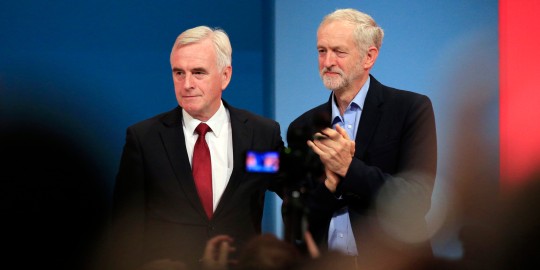
John McDonnell, the shadow chancellor, has said that the Labour Party will consider universal basic income as a part of its new policy, during a recent talk at the London School of Economics. He said: “It’s an idea we want to look at. Child benefit was a form of basic income so it’s not something that I would rule out.”

At the very least, this indicates the idea of universal provision has regained some credence in the face of a longstanding and seemingly unchallengeable political norm of increasing means-testing and welfare conditionality, established by the Thatcher adminstration, and radically extended by the current government.

McDonnell also said that economists were “close to consensus” that the Conservative Party’s austerity policies had failed, highlighting a largely welcomed and clear opposition to rigid, neoliberal Osbornomics. It’s true that austerity was founded purely on ideology and traditional Conservative prejudices, it was a political decision taken in the context of better alternatives and more humane choices. The poorest citizens have been targeted for the largest proportion of austerity cuts, with disabled people carrying the financial largest burden. It’s worth remembering that after the global recession of 2007, we were in economic recovery by the last quarter of 2009, without any need for austerity.
1379986_541109785958554_2049940708_n

Last month, an Early Day Motion (EDM) on the policy, tabled by Green Party MP Caroline Lucas, calls on the Government to commission research into the idea of universal basic income’s effects and examine its feasibility to replace the UK’s existing social security system, instead paying all citizens a flat, unconditional income, which would likely come in place of existing social security measures like means-tested benefits.

The motion, which raises the profile of the idea, says the policy “has the potential to offer genuine social security to all while boosting entrepreneurialism.”

But opponents of the basic income have raised concerns including work disincentives, lack of targeted support for those most in need, and the size of the political spending commitment required.

Lucas says:

“The basic income offers genuine social security to everyone and sweeps away most of the bureaucracy of the current welfare system. Fundamentally it would allow people the freedom and flexibility to do more of what they want to do – as well as supporting them in the caring roles they might need – or choose – to do,” she said.

“A basic income would also protect people from rising insecurity in our increasingly ‘flexible’ labour market and help rebuild our crumbling welfare state. I also know from speaking to people in my own constituency that the stability of a basic income could be a real boost to freelancers and entrepreneurs who need support to experiment, learn and take risks, while keeping their heads above water.”

“It’s crucial that any shift towards this bold new policy protects and increases the income for the poorest and those who aren’t able to work. A universal payment for all must not undermine additional help for those who need it most.”

However, last year, the Citizen’s Income Trust (CIT), which has given advice to the Green Party and often cited by the Greens, has modelled the party’s scheme and discovered a major design flaw. It was revealed that that 35.15% of households would lose money, with many of the biggest losers among the poorest households. At the time, Malcolm Torry, director of the CIT, which is a small charitable research body, said: “I am not sure the Green party has yet taken on our new research or the need to retain a means-tested element. We have only just published the new work.”

The criticisms of the scheme, as well as doubts about costings, led the Greens to make a temporary tactical retreat on the issue, with the party’s leader, Natalie Bennett, saying detailed costings for the policy would not be available in the manifesto last March. The Greens had proposed a citizen’s income of around £72 to every adult in Britain regardless of wealth and existing income, which would cost the Treasury around £280bn.

One longstanding criticism of basic income is that it would provide  payments to citizens that are already very wealthy, perpetuating social inequality, and wasting resources.

The CIT added that if the policy was applied without a means-tested component, then poorer households would end up receiving far less in state benefits than they would under the existing system. 

In 2012, an affordability study done in the Republic of Ireland by Social Justice Ireland found that basic income would be affordable with a 45% income tax rate. This would lead to an improvement in income for the majority of the population.

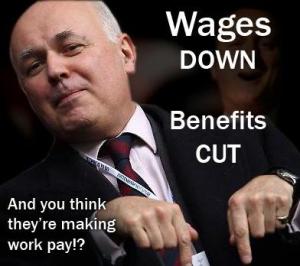
At a time when the politically planned decline in state provision leaves us questioning how we may prepare for the future, state provision funded by taxation seems by far the most fair way of providing for social support in the long term, and is part of a philosophy that each person, community and society as a whole should care for all. Furthermore, as we have witnessed the biggest and most sustained drop in wages since the 1800s, the government’s assurances that “work is the only route from poverty” no longer carry weight and credibility. For many, work does not “pay.”
430835_148211001996623_1337599952_n (1)

Collectivist values are under threat – the failure of “reformed” social security, which has in reality entailed ideologically-driven cuts to the poorest people’s lifeline income, leaves people marginalised, excluded from society, and increasingly, in absolute poverty, is clear evidence of this loss of the core principles of community cohesion, consensus and the post-war collectivist spirit. Collectivism is founded on the idea that everyone has equal worth, and that equality does not imply a lack of unique individuality, but an equal amount of freedom and equal opportunity to develop one’s own potential. Collectivists also tend to strongly favour inclusion and democratic decision-making.

One valid concern about raising people’s household wealth through citizen’s income is that it would encourage inflation. The price of services may rise. Rents may be hiked by private landlords, for example. After the introduction of child tax credits, many private childcare companies subsquently massively increased their prices, and it wasn’t unusual for some to demand payments for a full year, which included periods when childcare wasn’t required. An introduction of basic income must also, therefore, include a package of anti-inflationary measures (such as rent caps) or the value of the payment will soon be eroded, as basic costs for essentials and services rise.

One of the strongest arguments for basic income is that people would no longer be compelled to work in order to meet their basic needs. This means that employers would find it difficult to exploit workers, and would be pushed to offer decent wages, good terms and employment conditions in order to attract workers. People would have greater freedom to pursue meaningful, suitable and appropriate employment rather than having to take any job to avoid poverty and destitution.

However, opponents claim that the incentive to work would be destroyed because basic income is unconditional. Nonetheless it’s difficult to justify dehumanising policies that keep people financially desperate so that they take any job, regardless of its pay, security, terms and conditions. That ignores the fact that people have potential, skills and talents, and simply reduces working to a way of meeting only basic survival needs, which demotivates people and means that they are not willing participants in their working lives. Very wealthy people that inherited fortunes often continue to work, it’s a nonsense that keeping people close to starvation can “incentivise” them in any way at all, other than to fight for their survival. That reduces and regresses society, uncivilising us.

De-commodifying labor by decoupling work from income liberates people from the “tyranny of wage slaveryand leaves a space for innovation, creativitity and rebalances power relationships between wealthy, profit-motivated employers and employees.

There is little support for basic income from the Conservatives, as a means of redistributing income. Whilst a handful of right-wing advocates of basic income generally favour the minimisation or abolition of the public provision of welfare, some have cited basic income as a viable strategy to reduce the amount of bureaucratic administration that is prevalent in many contemporary welfare systems.

Yet we have seen an unprecedented increase in a dark, unaccountable  bureacracy this past five years, with private companies such as Atos, Maximus, and the likes of A4E and other private welfare-for-work providers marking the increased conditionality of welfare support – for both out of work support, and soon, for support paid to those in low paid and part-time work. Conservative inclination has been towards substantially raising the (increasingly privatised and for profit) administrative costs of welfare, whilst at the same time radically reducing the lifeline benefits for people needing support for meeting basic needs.

Conservatives may well raise the “something for nothing” objection to basic income, which is founded on the absurd idea that the only way people may contribute to society is through paid labor. Yet non-remunerated activities such as bringing up children, caring for elderly or sick and disabled relatives, supporting vulnerable neighbours, community work, volunteering for charities or investing time and effort in other voluntary endeavours such as contributions to the arts, sharing knowledge, education, writing, are all clearly valuable contributions to society, but these skills and activities have been steadily devalued, whilst providing an increasingly passive, exploitable, disposable (“flexible”) labor force for employers is seen by the Conservatives as somehow fulfiling the best of our potential.

The Conservatives would have us believe that any kind of social security system, which supports the casualties of free-markets, somehow creates those casualties, via vague pet theories of unverified mechanisms such as a “culture of dependency” and a “something for nothing” culture. But we know that the competitive, market choice-driven Tory policies create a few haves and many have-nots.

Even the most ardent neoliberalist would concede that whilst such a free-market system creates clear winners, it also invariably creates casualities – situations of insolvency for others. Inequality is a fundamental element of the meritocracy script that neoliberals so often pull from the top pockets of their bespoke suits. It’s the big contradiction in the smug, vehement meritocrat’s competitive individualism narrative.

This is why the welfare state came into being, after all – because when we allow such competitive economic dogmas to manifest, there are always winners and losers. It’s hardly “fair”, therefore, to leave the casualties of competition facing destitution and starvation, with a hefty, cruel and patronising barrage of calculated psychopolicical scapegoating, politically-directed cultural blamestorming, and a coercive, pathologising and punitive behaviourist approach to the casualities of inbuilt, systemic, inevitable and pre-designated sentences of economic exclusion and poverty.

For me, the most compelling argument for a basic income comes from Abraham Maslow, who was humanist psychologist. He proposed his classical theory of motivation and the hierarchical nature of human needs in 1943. Maslow said basically that the imperative to fulfil basic needs will become stronger the longer the duration that they are denied. For example, the longer a person goes without food, the more hungry and preoccupied with food they will become.

So, a person must satisfy lower level basic biological needs before progressing on to meet higher level personal growth needs. A pressing need would have to be satisfied before someone would give their attention to the next highest need. If a person has not managed to meet their basic physical needs, it’s highly unlikely that they will be motivated to fulfil higher level psychosocial ones.

Maslow’s theory has certainly been verified by the findings of the Minnesota semi-starvation Experiment, and other studies of the effects of food deprivation. Abraham Maslow’s humanist account of motivation also highlights the same connection between fundamental motives and immediate situational threats.

The experiment highlighted a striking sense of immediacy and fixation that arises when there are barriers to fulfiling basic physical needs – human motivation is frozen to meet survival needs, which take precedence over all other needs. This is observed and reflected in both the researcher’s and the subject’s accounts throughout the study. If a person is starving, the desire to obtain food will trump all other goals and dominate the person’s thought processes. This idea of cognitive priority is also clearly expressed in Maslow’s needs hierarchy. 

In a nutshell, this means that if people can’t meet their basic survival needs, it is extremely unlikely that they will have either the capability or motivation to meet higher level psychosocial needs, including personal aspirations, social obligations and responsibilities, and the capacity to seek employment.

Keeping people in a state of desperation to meet their basic needs damages social cohesion, places limits on both individual’s and society’s developmental and progressive potential: it stifles personal and social growth. A basic income would liberate people from the all-consuming struggle to meet basic survival needs, allowing them to live meaningful lives. A basic income would rebalance citizen’s rights and responsibilities fairly. It would also ensure that the state does not abuse and exploit socially protected groups.

As a very wealthy first-world nation, ensuring that all citizens can meet their basic needs for food, fuel and shelter is the very least we ought to expect from a so-called democratic government.
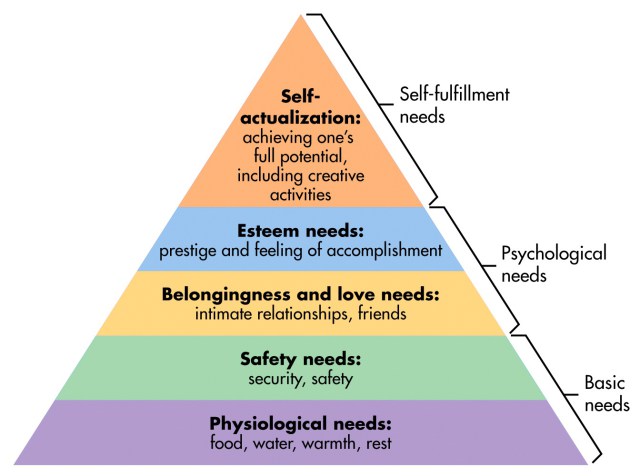
maslow-5

Maslow’s classic hierarchy of human needs


 —

I don’t make any money from my work. But you can support Politics and Insights and contribute by making a donation which will help me continue to research and write informative, insightful and independent articles, and to provide support to others. The smallest amount is much appreciated, and helps to keep my articles free and accessible to all – thank you.

DonatenowButton
cards

Excess Winter Mortality in England and Wales rise by 151%

211055

The Office for National Statistics (ONS) released a health and social care statistical bulletin last month about the excess mortality figures last winter, and a projection of figures for this year. In 2014-2015, there was a 151% rise in excess winter deaths in England and Wales, which represents the biggest yearly increase since records began.

Excess deaths in winter (EWD) continue to be an important public health issue in the UK, potentially amenable to effective interventions. This excess mortality is highest in both relative and absolute terms in elderly people and for certain disease groups. It also varies from area to area. EWD are also associated with cold weather. However, it has been observed that other countries in Europe, especially the colder Scandinavian countries have relatively fewer excess winter deaths in winter compared to the UK.

Elderly people, individuals with low incomes (up to 9 million people in the UK live in fuel poverty), sick and disable people, those with mental health problems, babies and children under five, and pregnant women are considered vulnerable when the outside temperature drops below 6°C. Not all people living in fuel poverty is on benefits or are pension age. In fact, a study last winter found that half of households living in fuel poverty in the UK had someone in work.

The ineffective influenza vaccine was partly blamed for some of the increase over the 2014-15 period. The flu vaccine was quoted to have quite a low effectiveness, between 3% or 4%. By the end of the period it was quoted at 34%, but that is still below what we would expect, which is at least 50% effectiveness. However, most people offered the ‘flu vaccine are also offered a pneumonia vaccine. Pneumonia, a respiratory disease, is a complication of ‘flu that is the biggest cause of mortality. But pneumonia is a complication of other illnesses, too. People are much more susceptible to pneumonia when they are also malnourished and living in poverty. And the category “respiratory disease” includes asthma, bronchitis and a range of other illnesses. The ‘flu vaccine’s efficacy is really something of a red herring. Respiratory disease is always a major cause of death in the UK and research shows consistently that it is more likely to be correlated with poverty than an ineffective ‘flu vaccine.

Janet Morrison, the chief executive of the charity Independent Age, described the figures as shocking. She said: “Even discounting the impact of the flu, the figures are still far higher than in previous years.”

“Councils, the government and energy companies need to help with things like insulating homes and assistance with energy bills for vulnerable customers. But there are also simple things we can all do like checking on our frail and elderly family and neighbours in cold weather. And making sure they are able to take up their flu vaccination, wrap up warm and eat well.”

There were more excess winter deaths in females than in males, as is the case over previous years. Male excess winter deaths increased from 7,210 to 18,400, and female deaths from 10,250 to 25,500 between 2013-14 and 2014-15.

In 2014/15 excess  winter deaths increased significantly in all age groups compared with 2013/14.

Main points of the ONS Bulletin:

  • An estimated 43,900 excess winter deaths occurred in England and Wales in 2014/15; the highest number since 1999/00, with 27% more people dying in the winter months compared with the non-winter months.
  • The majority of deaths occurred among people aged 75 and over; there were an estimated 36,300 excess winter deaths in this age group in 2014/15, compared with 7,700 in people aged under 75.
  • There were more excess winter deaths in females than in males in 2014/15, as in previous years. Male excess winter deaths increased from 7,210 to 18,400, and female deaths from 10,250 to 25,500 between 2013/14 and 2014/15.
  • Respiratory diseases were the underlying cause of death in more than a third of all excess winter deaths in 2014/15.
  • The excess winter mortality index was highest in the South West in 2014/15 and joint lowest in Yorkshire and The Humber, and Wales.

Last month, David Cameron dismissed questions from Jeremy Corbyn about a looming winter crisis in the NHS (and the impact of the proposed cuts to tax credits) by mocking Labour’s move to the left under the new leader.

The prime minister declined an invitation from Corbyn to guarantee that the NHS will avoid a winter crisis this year and instead joked that he would award the Labour leader “full Marx” for creating his own winter crisis in his party.

Cameron has a very nasty habit of trivialising and diverting attention from what are often serious life and death issues for many of our most vulnerable UK citizens.

1375646_536960593040140_93313082_n

Image courtesy of Robert Livingstone

This post was written for Welfare Weekly, which is a socially responsible and ethical news provider, specialising in social welfare related news and opinion.

Specialist Disability Employment Advisors in Jobcentres cut by over 60 per cent

536738_306169162785952_999031084_n

Full-time specialist disability employment advisors who are posted in jobcentres have been radically reduced since 2011. The full-time advisors are employed to help disabled people navigate the support system and find employment. Over the last four years, the number of specialist advisors fell by over 60 per cent, from 226 to just 90.

The government says that the advisors will be replaced by unqualified  non-specialist “work coaches” as part of its Universal Credit programme, which also extends welfare conditionality, entailing sanctions, to people in part-time and low paid work.

We reported last week that the work coach scheme is to extend from jobcentres to GP practices, to prevent sick and disabled people from “leaving the job market” and “claiming Employment Support Allowance” (ESA), with pilots already underway.

The latest figures on jobcentre advisors were released by ministers in response to a Parliamentary question by Labour MP Emily Thornberry.

A spokesman for the Department for Work and Pension said the fall in advisor numbers was consistent with Government policy.

“With the introduction of Universal Credit disabled people looking for work now have access to Work Coaches who are trained to provide tailored support specific to their individual needs. As we continue to make our mainstream services more accessible to disabled jobseekers it is expected that the number of Disability Employment Advisors will continue to decline.”

“The Government is committed to halving the disabled employment gap and the most recent disabled employment figures show that 226,000 more disabled people found work over the past year.”

Charities have responded, saying that the specialist advisors are absolutely crucial for people with disabilities who have to navigate the support system and that their reduction will undermine the Government’s own claim of “supporting people in to work.”

The government have also cut in work support for disabled people, such as the Access to Work fund, which helps people and employers cover costs of disabilities that may present a barrier to work. Under the Equality Act, employers are obliged to make “reasonable adjustments” to the workplace to support people with disabilities.

A coalition of 100 disability charities had warned that the government cuts threaten disabled people’s rights earlier this year, and last month, especially those with learning disability and mental health problems, charities also called for a halt in the government’s cuts to ESA, which will be reduced, removing the work-related activity component, so that people will receive the same amount as jobseekers with no disability, which will make it more difficult for disabled people to find work, and may have an adverse impact on people with health conditions.

The cuts to specialist employment support for people with disabilities flies in the face of  Iain Duncan Smith’s comments during the Tory conference – that sick and disabled people need to see work as their route out of poverty. It’s difficult to see how that can be achieved when the government is busy closing down the transport system, as it were.

Duncan Smith commented at the Conservative conference: “We don’t think of people not in work as victims to be sustained on government handouts. No, we want to help them live lives independent of the state.

“We won’t lift you out of poverty by simply transferring taxpayers’ money to you. With our help, you’ll work your way out of poverty.”

We can’t help wondering what “help” actually means to Conservatives, because there is every indication that they don’t use the word in a conventional sense. Usually when Tories use the word “help” or “support”, it indicates some sort of penalty or punishment: a reference to the extended draconian benefit conditionality and  sanctions regime

Elliot Dunster, group head of policy, research and public affairs at disability charity Scope, has said that the fall in specialist assistance was concerning:

“Disability employment advisors make a huge difference in supporting disabled people into work – providing expert, personalised advice and guidance.

“We’re very concerned to see this drop in the number of job centres that have fulltime specialist advisors for disabled people. Disabled people are pushing hard to find work, but continue to face huge barriers, ranging from inaccessible workplaces to employer attitudes. 

“Disability employment advisors help tackle these barriers. The Government has set out a welcome ambition to halve the disability employment gap. To do this disabled people must have access to specialist, tailored employment support.”

Dan Scorer, head of policy at Mencap, has warned that the replacement generalist advisors would “simply not have the training” required:

“People with a learning disability find the demands placed upon them difficult while claiming Job Seekers Allowance or Employment and Support Allowance.

“Some find them impossible and we are worried that there is not the right support in Jobcentres to help them. Families tell us that a lack of learning disability training and cuts to DEAs is leading to many people with a learning disability being unfairly sanctioned and receiving insufficient support to appeal decisions, or the right support to find employment.

“Even if the reduction in DEAs in some part of the country is due to the rolling out of Universal Credit and part of a strategic move to generic advisors, we are concerned that these advisors will simply not have the training to fully support claimants with a learning disability.

“The problems with the administration of benefits and changes in the benefits system, combined with future cuts to benefits and social care, is causing fear and anxiety among the 1.4 million people with a learning disability and their families in the UK who are scared they could be isolated in their local communities.”

Mind have already warned that the transition away from specialist help under Universal Credit would make the benefits system more difficult for people with mental health issues. Policy manager, Tom Pollard told the Independent:

“We’re pretty sceptical of the ability of those jobcentre advisors to be able to understand the barriers that people with mental health issues face.” 

Labour MP Debbie Abrahams recently challenged Priti Patel, the employment minister, during work and pensions questions in the Commons recently to raise concerns about the negative impacts of social security sanctions on the mental health of claimants.

During the session the Patel had claimed: “Our staff are trained to support claimants with mental health conditions and there is no evidence to suggest that such claimants are being sanctioned more than anybody else.”

Mrs Abrahams, Shadow minister for Disabled People, responded: “The minister may have inadvertently slipped up there. There is clear evidence from last year that 58 per cent, more than half, of people with mental health conditions on the employment and support allowance work-related activity group were sanctioned.”

A recent Freedom of Information request showed that between April, 2014, and March this year there were almost 20,000 benefit sanctions received by people who were out of work because of their mental health.

However, in this same period only 6,340 of the group were successfully supported into employment during the same period by the Work Programme.

Tom Pollard said: “Figures obtained by us show that people with mental health problems are more likely to have their benefits stopped than those with other conditions.

“Last year, the Department of Work and Pensions issued more sanctions to people with mental health problems being supported by Employment and Support Allowance than they did to those with other health conditions.

“Stopping somebody’s benefits, or threatening to stop them, is completely the wrong approach to help people with mental health problems find work — it’s actually counterproductive.

“In continually refusing to listen to calls for a review of the use of sanctions, the Government is not only undermining its ambition of helping a million more disabled people into work, but is also failing its duty of care for the health and wellbeing of hundreds of thousands of people with mental health problems.”

The Department of Work and Pension’s own research shows that the threat of sanctions does ensure that people who need support from social security comply with benefit rules, but that doesn’t actually help them to find work. It also tends to undermine confidence, and many jobcentre advisors have expressed concern that people with mental illness are more likely to be sanctioned simply because they would have greater difficulty meeting the strict conditionality criteria and because of the greater pressure to sanction “non-compliance” from government. (page 54)

But we deeply suspect that sanctions are precisely what the government are referencing when they use the phrase “helping people into work.”

This post was written for Welfare Weekly, which is a socially responsible and ethical news provider, specialising in social welfare related news and opinion.

Government refuses to review the negative impact of sanctions on people with mental illness

Illustration by Jack Hudson.

The increased use and rising severity of benefit sanctions became an integrated part of welfare “conditionality” in 2012. Sanctions are based on the behavioural theory called “loss aversion,” which is borrowed from economics and decision theory. Loss aversion refers to the idea that people’s tendency is to strongly prefer avoiding losses to acquiring gains. The idea is embedded in the use of sanctions to “nudge” people towards “changing their behaviours,” by using a threat of punitive loss, since the underpinning assumption is that people are unemployed because of personal behavioural deficits and making “wrong decisions,” rather than because of socio-economic conditions and political policy decisions.

However, a wealth of evidence has demonstrated that sanctioning does not help clients into work; indeed, it is more likely to make it much harder to get a job. Furthermore, sanctions are often applied in an arbitrary manner, without due regard to proportionality, rationality or for the health and wellbeing of people claiming benefits.

The Government is facing renewed calls for an independent review to examine its controversial benefit sanctions policy and to ensure vulnerable people are protected. However, Department of Work and Pensions minister, Priti Patel, has refused to examine the effect of its  sanctions regime on the mental health of people who are affected by it.

MPs used a question session in the Commons to raise concerns over the impact of benefit sanctions on the mental health of claimants.

Employment minister, Patel, said any analysis of the temporary benefit cuts’ effects would be “misleading” in isolation and that their effect should therefore not be examined.

“There are many factors affecting an individual’s mental health. To assess the effect of sanctions in isolation of all other factors would be misleading,” she told MPs at a Work and Pensions Questions session in the House of Commons.

She also claimed that there was no evidence that sanctions particularly affected people with mental health problems – a claim contrary to the results of independent research.

More than 100 people with mental health issues have their benefits sanctioned every day, according to figures released earlier this year.

The government’s refusal to engage with criticism of the sanction system’s effect on mental health comes after the highly critical study by the charity Mind.

83 per cent of Work Programme participants with mental health issues surveyed by Mind said the scheme’s “support” had made their mental health problems worse of much worse.

Jobseekers are to be given 14 days’ notice before facing benefit sanctions under a new scheme being trialled next year by the Department for Work and Pensions (DWP).

But the government were questioned why they are waiting until next year to trial this idea.

Eilidh Whiteford, the SNP’s social justice and welfare spokeswoman, told Ms Patel: “The so-called yellow pilot scheme is actually an admission by the Government that the sanctions regime isn’t working at the present time, and it’s particularly badly failing people with serious mental illnesses.

“Why is the Government waiting until next year to bring in this pilot scheme, and in the meantime will they please just stop sanctioning people who are seriously ill?”

Ms Patel said she would “respectfully disagree” with Ms Whiteford, adding: “Claimants are only asked to meet reasonable requirements taking into account their circumstances and I think, as you will find with the pilots as they are under way, that again this is about how we can integrate support for claimants and importantly provide them with the support and the guidance to help them get back to work.”

Ms Whiteford insisted the reality is people with mental health problems are being “disproportionately sanctioned”, adding that has been clear for “some time”.

Ms Patel replied: “For a start, the Government has been listening and we have responded to the Work and Pensions Select Committee, hence the reason we will be trialling and piloting the new scheme.”

She reiterated staff in jobcentres are trained to support claimants with mental health conditions, adding: “There is no evidence to suggest mental health claimants are being sanctioned more than anybody else.”

Shadow work and pensions minister Debbie Abrahams told Ms Patel: “You may have inadvertently slipped up there.

“There is clear evidence from last year that 58% of people with mental health conditions on the Employment Support Allowance work-related activity group were sanctioned.

“Obviously that’s over half and that’s the equivalent to 105,000 people – 83% in a Mind survey say that their health condition was made worse as a result of this.”

Data released by the mental health charity Mind recently revealed the scale of sanctions imposed on people with mental health problems being supported by out-of-work disability benefits.

Obtained by the charity under the Freedom of Information Act, the figures show that there were up to three times more benefit sanctions issued by the Department for Work and Pensions (DWP) to people with mental health problems last year than there were people “supported” into work.

There were almost 20,000 benefits sanctions received by people who were out of work because of their mental health last year, while only 6340 of this group were successfully supported into a job during the same period.

Professor Jamie Hacker Hughes, President of the British Psychological Society, said:

“Today’s news, from a Freedom of Information request made by the mental health charity Mind, shows that three times as many people are subject to benefit sanctions as those who have been supported back into work.”

“We in the British Psychological Society have become increasingly concerned about benefit sanctions and a number of other issues concerning the psychological welfare of those on benefits.

“We have repeatedly sought a meeting with the Secretary of State and his team and now repeat that request so that his Department may become aware of the most up-to-date psychological research and opinion on these issues.

“There are approximately 250,000 people receiving the benefit Employment and Support Allowance who need this support primarily because of their mental health. People can be sanctioned – have their benefits cut – if they fail to participate in work-related activity, including missing appointments or being late for meetings or CV writing workshops.

“However, many people with mental health problems find it difficult to participate in these activities due to the nature of their health problem and the types of activities they’re asked to do, which are often inappropriate.”

The government has a duty to monitor the impact of its policies, and to make the results public. Sanctions are founded on theory and experimental behavioural science, which adds a further dimension of legitimacy to calls for a review into the impacts of sanctions on people.

This post was written for Welfare Weekly, which is a socially responsible and ethical news provider, specialising in social welfare related news and opinion.

The government response to the WoW petition is irrational, incoherent nonsense on stilts

disability_2218977b

Preamble

The Government has persistently ignored calls for a full assessment of the impact of Welfare, Social Care and NHS reform on disabled people and their families. The number of households with a disabled family member living in “absolute poverty” increased by 10% between 2013 and 14. Absolute poverty isn’t the same as relative deprivation – our usual measure of poverty – absolute poverty means that people can’t meet their basic needs, such as access to food, fuel or shelter.

Since the WoW petition collected 104,000 signatures, the Government has claimed the Institute for Fiscal Studies (IFS) have said it was too difficult to do a Cumulative Impact Assessment (CIA), the IFS subsequently contradicted the claim and said it could be done. EHRC and the Social Security Advisory Committee have also called for a CIA of how cuts have affected disabled people and their families. A CIA undertaken by Landman Economics, the National Institute of Economic and Social Research and The Centre for Welfare Reform have demonstrated that disabled people have been hit the hardest by austerity cuts.

 You can sign the petition here.

Here is the Government’s blustering, inadequate and importantly, unevidenced response to the WoW petition:

“The Government is committed to a fair tax and welfare system where everyone contributes to reducing the deficit, and where those with the most contribute the most. Every individual policy change is carefully considered, including looking at the effect on disabled people in line with legal obligations.

However, it is not possible, using the Government’s existing analytical tools, to produce a cumulative assessment of the impact of policies on disabled people. HM Treasury has a world-leading distributional model, which it has used since 2010 to publish analysis of the impacts of policy decisions on households across the income distribution. This model uses the Living Cost and Food Survey (LCF), which does not have information on disability status. It contains expenditure information which allows analysis of the impacts of indirect taxes such as VAT and fuel duty, and underpins a unique model of public service usage; both of these enable HMT to consider the impacts of all of the Government tax and spending decisions which directly affect households.

As well as the inability to identify who has a disability in the data, most analysis of the impacts of welfare reforms tend to be limited in that they take static snapshots of benefit changes. Fundamental reforms are designed to support people in to employment and will therefore enable people to generate more income for themselves. Analysis needs to take account of behaviour change of reforms rather than the more limited approach of focusing solely on benefit changes

This analysis shows that the proportion of welfare and public service spending which benefits poorer households has not changed since 2010-11, with half of all spending on welfare and public services still going to the poorest 40% of households in 2017-18. At the same time, the richest fifth of households will pay a greater proportion of taxes than in 2010-11 as a result of government policy – and more than all other households put together.

The Government spends around £50 billion on disability benefits and services annually, and expenditure on sick and disabled people is higher than the OECD average. Welfare changes since 2010 have included protections for key vulnerable groups least able to increase their earnings, including those who need additional support as a result of disability. In the Welfare Reform and Work Bill 2015:
• Many disability-related elements of the benefit system are still uprated by the Consumer Price Index
• The additional component for those in the Support Group of Employment and Support Allowance and Universal Credit (UC) equivalents has been maintained
• Households which include a member who is in receipt of Disability Living Allowance, Personal Independence Payment, the Support Component of Employment and Support Allowance or UC equivalents are exempt from the benefit cap.

Overall, reforms are focused on supporting people to find and keep work where appropriate. Growing evidence over the last decade shows work can keep people healthy as well as promote recovery which is why, as part of the Government’s objective to achieve full employment, it aims to halve the disability employment gap. Last year 226,000 more disabled people found work and to continue this success the Government has extended Access to Work to provide support to more disabled people in pre-employment, launched Specialist Employability Support to provide intensive, specialist support to the disabled people who need the most help and has extended Work Choice, providing tailored support to disabled people, to 2017. The Disability Confident campaign is working with employers to ensure that they understand the benefits of recruiting and retaining disabled people in work

Sickness Absence in the workplace is also a major issue, with employees off sick for four weeks or more being at greater risk of not returning to work. The Government recognises the importance of early support which is why Fit for Work has been developed; giving access to free, impartial work-related health advice to help employees on sick leave get back to work.

In terms of Social Care and NHS reforms, the Government is committed to supporting the most vulnerable. The Care Act 2014 introduces a modern system to promote and maintain the wellbeing of those with care and support needs so they can live independently. This includes introduction of a new national eligibility threshold which allows local authorities to maintain previous levels of access for service users. This threshold is set out in Eligibility Regulations, and local authorities cannot tighten eligibility beyond this threshold. The Act also provides new legislative focus on personalisation by placing personal budgets into law for the first time for people and carers, increasing opportunities for greater choice and control, so that people can choose social care best suited to meet their needs.”

Department for Work and Pensions

The government is quietly rewriting our protective laws

Under the Equality Act, provision was made by the Labour government to ensure that legislations didn’t discriminate against protected social groups, which included disabled people. However, the need for public bodies in England to undertake or publish an equality impact assessment of government policies, practices and decisions was quietly removed by David Cameron in April 2011. The legal requirement in the Equality Act that ensured public bodies attempt to reduce inequalities caused by socio-economic factors was also scrapped by Theresa May in November 2010, who said she favoured a greater focus on “fairness” rather than “equality.”

The Conservatives have since claimed to make welfare provision “fair” by introducing substantial cuts to benefits and introducing severe conditionality requirements regarding eligibility to social security, including the frequent use of extremely punitive benefit sanctions as a means of “changing behaviours,” highlighting plainly that the Conservatives regard unemployment and disability as some kind of personal deficit on the part of those who are, in reality, simply casualties of bad political decision-making and subsequent policy-shaped socio-economic circumstances.

Semantic shifts – how Glittering Generalities are being used to mask political acts of discrimination

The word “fair” originally meant “treating people equally without favouritism or discrimination, without cheating or trying to achieve unjust advantage.” Under the Conservatives, we have witnessed a manipulated semantic shift, “fair” has become a Glittering Generality – part of a lexicon of propaganda that simply props up Tory ideology in an endlessly erroneous and self-referential way.

It now signposts an intentionally misleading Conservative narrative, constructed on the basic, offensive idea that people claiming welfare do so because of “faulty” personal characteristics, and that welfare creates problems, rather than it being an essential mechanism aimed at alleviating poverty, extending social and economic support and opportunities – social insurance and security when people need it.

The government claims to be “committed to supporting the most vulnerable” and ensuring “everyone contributes to reducing the deficit, and where those with the most contribute the most.” That is blatantly untrue, as we can see from just a glance at Conservative policies:-

The following cuts, amongst others, came into force in April 2013:

  • 1 April – Housing benefit cut, including the introduction of the ‘bedroom tax’
  • 1 April – Council tax benefit cut
  • 1 April – Legal Aid savagely cut
  • 6 April – Tax credit and child benefit cut
  • 7 April – Maternity and paternity pay cut
  • 8 April – 1% cap on the rise of in working-age benefits (for the next three years)
  • 8 April – Disability living allowance replaced by personal independence payment (PIP)
  • 15 April – Cap on the total amount of benefit working-age people can receive 

Here are some of the Tory “incentives” for the wealthy:

  • Rising wealth – 50 richest people from this region increased their wealth by £3.46 billion last year to a record £28.5 billion.
  • Falling taxes – top rate of tax cut from 50% to 45% for those earning over £150,000 a year. This is 1% of the population who earn 13% of the income. The wealthiest had a tax cut of £170, ooo each per year.
  • No mansion tax and caps on council tax mean that the highest value properties are taxed proportionately less than average houses. Meanwhile, those previously exempt from council tax claiming social security now have to pay due to reductions in their benefit.
  • Benefited most from Quantitative Easing (QE) – the Bank of England say that as 50% of households have little or no financial assets, almost all the financial benefit of QE was for the wealthiest 50% of households, with the wealthiest 10% taking the lions share
  • Tax free living – extremely wealthy individuals can access tax avoidance schemes which contribute to the £25bn of tax which is avoided every year, as profits are shifted offshore to join the estimated £13 trillion of assets siphoned off from our economy.

As a consequence of the highly discriminatory and blatantly class-contingent Tory policies, inequality in the UK has risen to the highest level amongst all EU countries, and tops even the US. Rampant socio-economic inequality apparently is the new Tory “fair”.

The rise in the need for food banks in the UK, amongst both the working and non-working poor, over the past five years and the return of absolute poverty, not seen since before the advent of the welfare state in this country, makes a mockery of government claims that it supports the most vulnerable. 

Income tax receipts to the Treasury have fallen because those able to pay the most are being steadily exempted from responsibility, and wages for many of poorer citizens have fallen, whilst the cost of living has risen significantly over this past five years.

The ideologically motivated transfer of funds from the poorest half of the country to the more affluent has not contributed to deficit reduction. It doesn’t take a genius to work out that the cumulative impact of Tory tax and welfare changes, from out-of-work and in-work benefits to council tax support, to the cut in the top rate of income tax and an increase in tax-free personal allowances, has been extremely regressive and detrimental to the poorest.

The revenue gains from the tax changes and benefit cuts were offset by the cost of tax reductions, particularly the increase in the income tax personal allowance, benefitting the wealthiest.

The Treasury response to this is to single out the poorest yet again for more cuts to “balance the books” – which basically translates as the Conservative “small state” fetish, and deep dislike of the gains we made from the post-war settlement. Yet for a government that claims a non-interventionist stance, it sure does make a lot of interventions. Always on behalf of the privileged class, with policies benefitting only the wealthy minority.

How can Conservatives believe that poor people are motivated to work harder by taking money from them, yet also apparently believe that wealthy people are motivated by giving them more money? This is not “behavioural science,” it’s policy-making founded entirely on traditional Tory prejudices.

The government claim that “Every individual policy change is carefully considered, including looking at the effect on disabled people in line with legal obligations,” but without carrying out a cumulative impact assessment, the effects and impacts of policies can’t possibly be accurately measured.

May I suggest that the government listens to disabled people, instead of dismissing our evidenced, valid accounts of the negative impacts of policy as “anecdotal” and attempting to invalidate our experiences. Policies ought to be about meeting identified public needs, that’s what we elect governments to do in democracies. Democracy means that the voices of citizens, especially members of protected social groups, need to be included in political decision-making, rather than so frankly excluded and rather than having their experiences negated by a bullying, aggressive political denial strategy. Public policy is not an ideological tool for a so-called democratic government to simply get its own way.

The government have persistently simply denied any accounts of the adverse consequences of their policies on disabled people, and have refused to effectively monitor policy impacts, indicating plainly that it values perverse ideology much more than it values the lives of real people.

Furthermore, the claim that “it is not possible to carry out a cumulative assessment of the impact of policies on disabled people” doesn’t stand up to scrutiny in the face of the various assessments carried out by a variety of under-resourced organisations, academics and campaign groups.

I suggest that the government pays attention to the findings of these important pieces of research, and learns from them, especially concerning how to research effectively, how to formulate evidence-based policies and how to budget for impact assessments, because if severely underfunded organisations and charities can manage that, so can the government. It’s a matter of priorities.

If the government had paid attention to laws, including international ones, as claimed, instead of trying to edit out the parts that are inconvenient to them, then there would be no need for the United Nation’s inquiries into human rights violations of disabled people, and the negative social, economic and cultural impacts of their welfare “reforms” on vulnerable social groups

Someone please put Iain Duncan Smith out of our misery

The persistent denial from the Secretary of State for Work and Pensions that there is a correlation between the government’s welfare cuts and an increase in mortality, including suicide, flies in the face of evidence presented by the Work and Pensions Committee earlier this year, when the cross-party Committee of MPs said that since 2012 there have been at least 40 cases of people taking their own lives because of problems with welfare payments

The MPs called for an independent review into benefit sanctions, and said that they were “causing severe financial hardship” and are behind the rise in food banks. It was reported that the Department for Work and Pensions has investigated 49 cases where a claimant has died.

Of these, 40 involved a suicide, the Work and Pensions Select Committee said. But the DWP was unwilling to say how many of the deaths were a result of benefit sanctions or say if it had changed its policies as a result.

The statement: “Analysis needs to take account of behaviour change of reforms rather than the more limited approach of focusing solely on benefit changes”  is another indication of this government’s perverse ideological commitment as opposed to any commitment to upholding political obligation towards meeting the needs and promoting the wellbeing of citizens.

We elect governments to meet public needs, not to “change behaviours” of citizens to suit government needs.

The government’s undeclared preoccupation with behavioural change through personal responsibility, not to be found in their manifesto, is just another revamped version of Samuel Smiles’s bible of Victorian and over-moralising hobby-horse: “thrift and self-help” – but only for the poor, of course. Smiles and other powerful, wealthy and privileged Conservative thinkers, such as Herbert Spencer, claimed that poverty was caused largely by the irresponsible habits of the poor during that era. But we learned historically that socio-economic circumstances caused by political-decision making creates poverty.

This government endorses the proliferation of insecure, low paid work, welfare that punishes people to the point of desperation, with no regard for their life or wellbeing, in order to “incentivise” them to take  any job, (no matter how poorly paid and unsuitable it is) and removing income from the poorest more generally, whilst handing out our money to the wealthy. That’s not citizens behaving “fecklessly” or irresponsibly: that’s the government.

If punishing people actually worked to “help” (yet another Tory euphemism) people into work, the Department of Work and Pensions would have had no need to write fake testimonials from fake characters to attempt a nasty and ludicrous justification of benefit sanctions.

The “making work pay,” approach, which is Toryspeak for retrogressive policy-making, based on the 1834 Poor Law principle of less eligibility again.  The reality is that sick and disabled people are being coerced by the state into taking any very poorly paid work, regardless of whether or not they can work, and to translate the Tory rhetoric further, Duncan Smith is telling us that the government will continue to ensure the conditions of claiming social security are so dismal and brutal that few people can survive it.

When we inform this government that people are dying, and that this is correlated with Tory policies, they simply deny it without any evidence to substantiate their claims. The lack of concern and instant dismissal of concerns about this correlation is not the kind of behaviour one would expect from government in a first-world liberal democracy.

Making work pay for whom?

Recent research indicates that not all work serves to “keep people healthy as well as promote recovery.” The assumption that work can promote recovery in the case of people with disability is both unfounded and absurd. We have yet to hear of a single case involving a job miracle entailing people’s limbs growing back, vision being restored, or a wonder cure for heart failure, cerebral palsy, multiple sclerosis and lupus, for example.

The government’s Fit for Work scheme is founded on exactly the same misinformative nonsense. It supports profit-making for wealthy employers, at the expense of the health and wellbeing of employees that have been signed off work because of medically and professionally recognised illness that acts as a barrier to work capabilities.

Furthermore, there is no proof that work in itself is beneficial. Indeed much research evidence strongly suggests otherwise.

And where have we heard these ideas before: “Arbeit macht frei“?

The Behavioural Insights Team (Nudge Unit) is an arm of government that influences and shapes experimental policies which act UPON as opposed to FOR the population, without their consent, to CHANGE PEOPLE’S BEHAVIOUR. That’s a branch of the government controlling or attempting to control people’s everyday actions without them knowing about it. Or consenting to it.

It’s a dangerous road to travel down – the political notion that citizens should be totally subject to an absolute state authority is the basis of totalitarianism.

The government frequently bandy around phrases and terms like “behavioural change” and “incentivising” but this is the new policy marketingspeak – as irritating and cringeworthy as meaningless corporatespeak, including soundbites – empty generalities – like “blue sky thinking,” and “upskilling.” The Nudge Unit’s behaviour theories (not “science”) are nothing more than psycho-linguisticbabble that is constructed as a prop for Tory small state ideology, and to support their aim of steadily dismantling the gains of our post war settlement. Cut by cut.

It’s unacceptable in a so-called liberal democracy that a government endorses  “incentivising” people (a psychocratic euphemism for state coercion) to take any insecure, poorly paid work that doesn’t alleviate poverty, by the use of sanctions, which entail the removal of people’s lifeline benefits originally designed to meet basic survival needs – food, fuel and shelter – making people desperate and placing them in situations of crisis and absolute poverty. How on earth is that “fair” and how does it “make work pay”? It’s morally repugnant, ethically reprehensible, academically nonsensical and democratically untenable.

It’s not possible to “incentivise” people by starving them.

Cruelty is the new “help”

The claim that “Government is committed to supporting the most vulnerable” also doesn’t stand up to scrutiny, given the Conservative policy record, including cruelly scrapping the Independent Living Fund, which as had a hugely negative impact on those trying their best to lead independent and dignified lives, and the Access To Work funding has been severely cut, this is a fund that helps people and employers to cover the extra living costs arising due to disabilities that might present barriers to work. 

Finally, I feel obliged to point out that the welfare “reforms” have cost far more to implement than they have saved the “tax paying” public, indicating once again that the welfare “reforms” and other austerity measures are not because of economic necessity: they are entirely ideologically motivated.

I strongly suggest that We reduce the Welfare Budget by billions: by simply getting rid of Iain Duncan Smith.

 —

Related

The government just delivered a massive ‘F*ck you’ to sick and disabled people across Britain – Kerry-Anne Mendoza

More about the WoW campaign:

WoW petition’s success is an incredible result for Britain’s sick and disabled as they campaign against Tory War on Welfare

Who is WoW?

Wow petition and campaign site

Update: Today – 3rd November – The WOW campaign have published their own response to the government: WOWpetition Press Release 3Nov2015.pdf

37079_433060243430176_1848475368_nCourtesy of Robert Livingstone

This article was written as a guest post on Political Sift


From homes fit for heroes to the end of secure, lifelong social housing tenancies

Social housing arose to supply uncrowded, well-built homes on secure tenancies at reasonable rents to primarily working class people. The First World War indirectly provided a new impetus for house building programmes, when the poor physical health and condition of many urban recruits to the army raised alarm. This led to a post-war campaign – Homes fit for heroes and in 1919 the Government first required councils to provide housing, helping them to do so through the provision of subsidies, under the Housing Act 1919.

Determined to “lift the shadow of the workhouse from the homes of the poor”, David Lloyd George also promised “a land fit for heroes.” But it was after the Second World War that council house building programmes and inner city slum clearance began in earnest. There was and still is a constant demand for social housing, and “waiting lists” are maintained, with preference being given to those in greatest need.

The post-war settlement refers to an era of public policy consensus that included support for collectivism, a mixed economy, access to justice, healthcare, social housing and a broader welfare state. It lasted until the monetarism and privatisation programmes of the New Right government of Thatcher.

Thatcher’s “right to buy” scheme depleted social housing stock, and there was a sharp decline in the building of new council homes, as she legislated to prevent councils reinvesting money from the sales of housing in building new council houses.

Now the Conservative government is planning to scrap lifetime security of tenure for renters in council and housing association properties, in favour of in favour of fixed-term contracts, according to housing industry reports. Up until recently, most tenants in council and housing association properties had lifetime security, compare to private renters who generally face six-month or one year tenancies.

However, the Tory bedroom tax has eroded the very idea of secure social housing tenure, because people on unemployment benefits, low wages and particularly disabled people now face either an unaffordable housing benefit penalty (and therefore a rise in the amount they have to pay in rent) if they are deemed to be “under-occupying” their home.

Now, under government plans, social landlords will no longer be able to automatically issue tenancies on a lifetime basis and would instead be forced to offer fixed-term lets for prospective tenants.

Although social landlords have been allowed to issue five-year tenancies since the Government changed the law in 2012, only around 1 in 10 new tenancies have seen the offer taken up.

In July the government said it would review the use of lifetime tenancies and limit their use. Civil servants have briefed several sector figures in the last few weeks that this strategy will go as far as preventing landlords offering lifetime tenancies to new tenants.

The Government and the social housing sector recently had a major disagreement over Tory plans to extend its Right To Buy policy to housing associations.

Landlords initially threatened legal action over the proposals when they first appeared in the Tory manifesto, but were apparently encouraged to agree a deal that involved no primary legislation.

The Government recently cut social housing rents in the budget but is planning to raise them for higher earners, under a new policy dubbed “pay to stay”.

Although Natalie Elphicke, co-author of the Treasury-commissioned House/Elphicke review of council house building, has previously urged that lifetime tenancies are restricted to groups such as those in “extreme old age” or “highly disabled” people, at the moment there is no guarrantee  that this will happen.

Michael Gelling, chair of the Tenants and Residents Organisations of England (TAROE), said the prospect was “alarming”, and that long-term tenancies gave tenants and communities stability.

Civil servants are said to be briefing industry figures on the changes, with an official announcement due within the next few months.

A spokesperson for the Department for Communities and Local Government told Inside Housing: “More details will be available in due course.”

547145_195460507271672_1145852710_nCourtesy of Robert Livingstone

This post was written for Welfare Weekly, which is a socially responsible and ethical news provider, specialising in social welfare related news and opinion.

NHS hospital to offer food parcels to patients at risk of malnutrition – Rachel Pugh

1390648_548165358586330_1740107407_n

This article was written by and first published in the Guardian today.

A central food collection point will sit by the canteen at Tameside hospital.

A central food collection point will sit by the canteen at Tameside hospital. Photograph: Christopher Thomond for the Guardian

Emergency staff at a hospital are being asked to offer food boxes discreetly to patients they believe may benefit as they are discharged amid rising concerns among doctors of malnourishment.

Tameside hospital in Greater Manchester is also planning to open a permanent food bank collection centre inside the hospital next month to help the nutrition of both patients and locals in the area.

News of the move came after it was announced on Wednesday by the work and pensions secretary Iain Duncan Smith that job advisers have been posted in a food bank in Manchester as part of a trial set to be rolled out across the UK.

Bosses at Tameside hospital said they had made the decision after doctors and nurses became worried about what they said was a significant rise in patients showing signs of malnourishment, and also staff living locally becoming worried about some neighbours. Staff have been given training to spot malnourishment.

Tameside hospital’s chief executive, Karen James, said: “I was talking to an old lady recovering on a ward, who was in financial difficulties and chose to feed her dog first after paying the bills, whilst she went without. It’s heartrending.”

Elsewhere, the Queen Elizabeth hospital in Birmingham opened a food and clothing bank on its main premises earlier this month, and a spokeswoman said on Wednesday that they had been inundated with donations. In the summer the Royal Victoria Infirmary in Newcastle began offering parcels to parents using its neonatal care unit.

Malnutrition affects three million people in the UK and costs the NHS an estimated £5bn a year.

Malnourished surgical patients have complication and mortality rates three to four times higher than normally nourished patients, with longer hospital admissions. Similar findings have been described in medical patients, and particularly the elderly.

Tameside hospital was placed in special measures in summer 2013 after a review by the NHS England medical director, Sir Bruce Keogh. It was taken out of special measures in September this year.

A spokeswoman for Birmingham’s Queen Elizabeth hospital said its scheme was part of a wider community initiative that involves using hospital land for community orchards, gardens and beekeeping. Twice a month, the hospital hosts a farmer’s market, one of the largest in Birmingham. “Food banks are about more than food,” said the hospital. “People who are referred to them are also offered practical and emotional support by signposting other agencies, whether that is financial advice or counselling services or in some cases help with clothing.”

Speaking earlier on Wednesday, Duncan Smith told the Work and Pensions Committee that people who turn to charities for help when they cannot afford to eat will be given advice on claiming benefits and finding work while they pick up emergency food parcels.

“I am trialling at the moment a job adviser situating themselves in the food bank for the time that the food bank is open, and we are already getting very strong feedback about that,” he said. “If this works and if the other food banks are willing to encompass this and we think it works, we think we would like to roll this out across the whole of the UK.”

Robert Devereux, the permanent secretary to the Department for Work and Pensions, who appeared alongside Duncan Smith at the hearing, said two advisers had been working one day a week at the Lalley Welcome Centre in Manchester.

Duncan Smith said: “They are to provide support to people who come in, and that can include people saying: ‘I haven’t had my payment’,” giving the example of a claimant whose money was delayed because officials had not seen the right documents.”


Corbyn’s best PMQs reveals Prime Minister evades accountability regarding impact of tax credit cuts

Prime ministers questions today

Today, David Cameron strategically evaded a question about his government’s controversial tax credit cuts six times today. The Labour leader, Jeremy Corbyn, had a Jeremy Paxman moment when he repeatedly asked whether people would be left worse off by the cuts after the Treasury revises the proposals.But despite pressing the question, Cameron has yet to respond to it rationally and directly.

Corbyn also challenged Cameron regarding the persistent denial before the election from the Conservatives – including from Cameron, Michael Gove, and the chief whip, that they intended to cut tax credits

The Treasury was forced re-examine the plans after the House of Lords voted down the government’s tax credit cuts twice, tabling amendments to delay the plans until the governmernt took on board new evidence about the negative impacts of the cuts, and until there was better compensation for workers who could lose an average of £1,300 a year.

In a blustering non-response to the Labour leader’s question, Cameron complained that the tax credit plans were defeated by Labour and other opposition peers in a “new alliance of the unelected and unelectable”.

Corbyn responded to an increasingly furious Prime Minister with: “This is not a constitutional crisis. This is a crisis for 3 million people.” 

Corbyn again asked:  “Can he confirm they will not make anyone worse off?”
Cameron responded with:  “He will have to be patient… we will set out our proposals in the Autumn Statement.”

Corbyn said: “People are “very concerned”… “Is he going to cut tax credits or not?”

Cameron said that: “£12 billion welfare cuts were promised in the Tory manifesto. …  I’m happy to have a debate as to how we cut welfare”… “because of what happened in the other place.

“We need to reform welfare.”

The Labour leader cited the case of “Karen” who was concerned about the cuts and said “people are very worried about what’s going to happen to them”.
He said: “Following the events in the Lords on Monday evening, and the rather belated acceptance from the prime minister of the result there, can you now guarantee to the house and the wider country that nobody will be worse off next year as a result of cuts to working tax credits?”

However, the prime minister simply refused to elaborate how the government would reduce the impact of the cuts.

Cameron said : “What I can guarantee is we remain committed to the vision of a high-pay, low-tax, lower welfare economy. We believe the way to ensure everyone is better off is keep growing our economy, keep inflation low, keep cutting people’s taxes and introduce the national living wage.

As for our changes, the chancellor will set them out in the autumn statement.”

Corbyn continued to press Cameron for an answer several times. Cameron admitted that “every penny we do not save” from welfare would have to be found elsewhere,” indicating that the government clearly regards lifeline benefits to poor families as the Treasury’s “disposable income“, and no matter what those political decisions to cut the deficit on the backs of those with the least will cost people in terms of income and living standards, whether in work or not, this government intends to continue with swingeing austerity cuts that target the poorest.

It’s clear that the Prime Minister doesn’t have a response for either Jeremy Corbyn or for all of those hard-working people who are set to lose income and see a drop in their living standards because of the tax credit cuts – many of whom may have voted Conservative at the last election, reassured before the election that their welfare support was safe.

A senior Labour spokesperson said the party regarded Cameron’s House of Lords review “as a smokescreen to cover up the real problem of tax credits”.

Fabian Commission condemns Cameron’s indifference to growing food poverty

poverty+kid

Poverty, and particularly child poverty, is increasing. Welfare cuts, austerity measures and low wages have pushed hundreds of thousands, including more than 300,000 children, below the poverty line since 2012, despite Tory claims to the contrary, according to the New Policy Institute (NPI) thinktank, who undertook a study after the government refused to bring forward the publication of official data which would have shown the impact on poverty figures of the major welfare reforms introduced in 2013, and enabled the coalition’s record to be properly scrutinised before the election.

The Fabian Society has accused the Government of lacking a strategy to combat food poverty and said proposed tax-credit cuts could become an even bigger driver of poverty and food insecurity than low wages. A year-long independent food and poverty commission by the Fabian Society found the Government lacks any strategy for addressing hunger in the UK, making a mockery of the prime minster’s party conference pledge to lead “an all-out assault on poverty” earlier this month.

The Fabian Commission on Food and Poverty has brought together experts, as well as those experiencing poverty, to look at the roles of government, civil society and the food industry in increasing the availability and accessibility of sustainable, nutritious food.

The final report of the Fabian Commmission on Food and Poverty is due to be launched later today.

The Commission is chaired by Geoff Tansey, a renowned writer, consultant and Trustee of the Food Ethics Council. The Commission also includes leading representatives from across civil society, trade unions, academia and the food industry.

Food is becoming more and more expensive, and falling real incomes make healthy, nutritious diets less affordable. Yet food plays a wider role in society than nutrition. We use it to celebrate family events, milestones, rites of passage, festivals, to socialise with, and to express ourselves. Food poverty also means that people often experience social exclusion as well as hunger.

Yet only last week, David Cameron insisted at Prime Minister’s Questions: “I do not want anyone in our country to have to rely on food banks.”

Whilst the chair of the commission, Geoff Tansey, acknowledged Cameron’s comments, he said: “But for food – people’s most basic need – he currently has no means of achieving this aim and no plan to deliver a reduction in food banks, let alone tackle the other links between food and poverty.

“The commission has even found that the Government has no count of the number of people who currently lack secure access to nutritious, affordable food.”

A recent NHS statistics release show that 7,366 people were admitted to hospital with a primary or secondary diagnosis of malnutrition between August 2014 and July this year, compared with 4,883 cases in the same period from 2010 to 2011 – a rise of more than 50 per cent in just four years. Cases of other diseases rife in the Victorian era including scurvy (an illness arising through a lack of vitamin C), scarlet fever, cholera and whooping cough have also increased since 2010.

Chris Mould, chairman of the Trussell Trust, which runs a nationwide network of foodbanks, said they saw “tens of thousands of people who have been going hungry, missing meals and cutting back on the quality of the food they buy”. 

“We meet families from across the UK struggling to put enough food on the table and, at the extreme end, you get people who are malnourished,” he said. “We often see parents who are going without food so that they can feed their children, and these parents often struggle to afford enough nutritious food for their children, too. We don’t think anyone should have to go hungry in the UK, which is why we’re working to engage the public, other charities and politicians across parties to find solutions to the underlying causes of food poverty.”

The Mirror revealed on Monday how food bank volunteers will feed hundreds more hungry children this week:  Children from deprived families will go without free school meals during half term, leaving their hard-up parents unable to afford an additional meal every day.

The desperate reliance on food banks was one of the problems investigated by the panel, during its fact-finding tour interviewing food producers, charities and those living on the breadline.

Mr Tansey has warned it was “not enough to ensure people don’t go hungry. Food banks are just the tip of the iceberg of a much bigger problem.

“We need to make sure no-one lives in fear of not being able to feed themselves or their family, and to break the bigger links between food and poverty and their effect on people’s health, the environment and working conditions.”

The Fabian Society wants an end to food banks by 2020. Its report also calls for a tax on sugary drinks to see if the higher price cuts demand for unhealthy food, appointing a minister charged with eliminating household food insecurity and launching “food access plans” so people find it easier to buy “affordable, nutritious food”.

The commission’s report says: “We need to recognise that food banks and charitable food providers are not solutions to household food insecurity, they are symptoms of society’s failure to ensure everybody is sustainably well-fed.”

The report also notes that many people who are too poor to afford food do not use food banks for fear of the stigma of being labelled.

The report comes just two months after the children’s commissioner issued a report warning that the government’s continued austerity programme, especially the welfare reforms, does not conform to the standards of the United Nations Convention on the Rights of the Child, which protects children from the adverse effects of government economic measures.

Government defeated twice on tax credit cuts in House of Lords

Lords voting

I doubt there’s a single person on low pay that is happy about the Conservative proposals to cut their tax credits and subsequently, their living standards, further. Today, research by welfare reform group Policy in Practice comes as peers prepare to debate George Osborne’s proposals, and it concludes that two-thirds of working tax credit recipients will be worse off in 2020.

The tax credit cuts were deliberately left out of the Tory manifesto, and when asked directly if his government was going to cut tax credits, Cameron chose to lie and said no. Now the Conservatives are claiming that this policy, never declared before the election, is somehow a “central plank” of the budget. The claim that Conservatives had previously declared cuts to welfare doesn’t stand up to scrutiny, either, because they did not specify what cuts they would make, despite being asked several times, and they claim to be a party that is all about “making work pay”. 

The Conservatives are claiming that the cuts were “democratically voted” through in the House of Commons, yet their majority in the lower House may not have happened at all, had they been honest prior to the election and declared their intention to cut people’s tax credits. 

The threats issued to the Upper House from the government arose  because the Conservatives are facing defeat on what is an extremely unpopular reform, even amongst their own party ranks, and are truly remarkable, showing a contempt for democratic process and a lack of willingness to engage in genuine, transparent democratic dialogue.

Earlier this year, the Institute for Fiscal Studies (IFS) asked George Osborne to specify how he will reach targets announced in the budget, given that the poorest had been the hardest hit by draconian benefit cuts already. The IFS said that the worst of the UK’s spending cuts are still to come.

I said at the time that it’s not that Osborne can’t answer the IFS challenge: he won’t.

David Gauke, the Treasury secretary at the time was pressed repeatedly on the BBC’s Daily Politics to explain if the Tories would detail their planned welfare cuts beyond the £3billion previously specified.

He replied: “We will set it out nearer the time which will be after the election.”

Pre-general election television comments have exposed Prime Minister David Cameron’s lies about his party’s proposal to reduce child tax credits. During a special episode of BBC’s Question Time, aired in April, presenter David Dimbleby asks: “There are some people that are worried about you cutting child tax credits, are you saying absolutely as a guarantee that you’d never have it?”

To which the Prime Minister responds: “First of all child tax credit we increased by 450 pounds …” Dimbleby interjects: “And it’s not going to fall?” to which the PM clearly replies: “It’s not going to fall.”

It’s therefore a bit much to hear lectures on democratic process from a government that was so dishonest to the electorate before the election.

Following an impassioned, powerful and eventful three-hour debate, the Lords voted by 289 votes to 272 – a majority of 17 – for low-income families to be given “full transitional protection” from the cuts for at least three years.

They also supported a motion by 307 votes to 277 – a majority of 30 – calling for the cuts to be delayed until the Government responds to analysis of their impact by the Institute for Fiscal Studies and considers “mitigating action”.

Lord Campbell observed in the House of Lords Tax credit debate today that because of the Conservatives pre-election lies, and because the public were deliberately misled by several statements saying there would be “no cuts to tax credits,”  that “constitutional convention and niceties are not a priority.”

There are three separate motions from the Liberal Democrats, Labour and the crossbenchers presented to the Peers, calling for the cuts to be either scrapped or paused and re-scrutinised after further evidence has been gathered. The Liberal Democrats want to completely scrap the changes, which is a risky tactic that many have deemed a “fatal motion.” Labour are seeking to delay the changes, so that the Commons may re-scrutinise them in light of new evidence, and respond to that evidence, to mitigate the impact on the poorest, and crossbencher, Lady Meacher, is also calling for a delay in the cuts.

During the Lords debate, Baroness Smith said that 60% of the population want to see a u-turn on this policy. She also points out that the original Labour tax credit legislation wasnt subject to financial privilege. She said that the government truncated the legislative process to introduce a wide reaching and radical change of policy, to avoid a degree of scrutiny. Baroness Hollis urged peers to support the working poor, not government. She argued that the Commons votes were taken based on incomplete evidence. Her very powerful speech was delivered to a completely silent Upper House.

Labour’s shadow Lords leader Baroness Smith expressed her regret that the focus of the debate has been largely on the constitution rather than the people that will be affected by the changes.

She said there is “no constitutional crisis at all”, and “peers will not exceed their powers but will also not be cowed in their responsibility to hold the government to account.”

The Clerk of the Parliaments has confirmed that Commons financial privilege does not extend to statutory instruments. Many Peers have pointed out throughout the debate that welfare policy isn’t “budgetary.”

Conservative Chancellor Lord Lawson said: “I am torn because I believe there are aspects to these measures which need to be reconsidered and indeed changed. The great harm, or a great deal of the harm, is at the lowest end and that is what needs to be looked at again. That is what concerns me.

I think it is perfectly possible with tweaking it to take more from the upper end of the tax credit scale and less from the lower end of the tax credit scale.”

He also said  “It is not just listening which is required [from the government] but change”.

Baroness Hollis said that the government will save money as a result of the increase in the minimum wage. And by 2019 most tax credit claimants won’t be claiming tax credits because they will be on universal credit. Taken over the course of the parliament, the government will be making savings, “probably exceeding the very cuts the government demands,” she said.

The Reverend Christopher Foster pointed out that wage levels are low and the cuts are likely to have a very negative impact, including raising indebtedness, social injustice, damaged lives, ruining life chances, with detrimental consequences to mental health. He said this government provides  “a carrot for some, a stick for others” .

He went on to say that the cuts to the poorest are morally indefensible – “a punishment, not encouragement”.  He urged a vote in the interests of the poorest workers, saying he was appalled at the government for “masking the issues.” He called for house to clearly express disapproval at the government proposals. He said: “The Bill is not acceptable in its current form.” Like others, he emphasised that the government has moral obligations, and needs to do more than simply meeting fiscal targets.

Conservative Lord Mackay tried to argue a case for Commons financial privilege, as did other Conservative peers, including Lord Tebbit.

Baroness Lister pointed out that no impact assesment was carried out regarding the cuts, and said “the Bill is an example of none evidence-based policy making.”

She said “It betrays a lack of understanding of policy and people’s lives,” and added “getting an impact assessment from the government is like pulling teeth”.

She also pointed out that the cuts will affect protected groups. Carers and disabled people will be negatively impacted, and the self-employed won’t have their losses offset at all by the “living wage.”

She cited the Resolution Foundation research, that finds 200, 000 children, rising to 600,000 by 2020, will be plunged into poverty because of the proposed cuts. She said there is “no adequate defence of policy – lone parents will be hardest hit. Tax allowances and the living wage won’t mitigate the impact.”

She concluded that child tax credits were introduced to address child poverty, and that the Bill penalises hard work. She pointed out that “the House of Lords has a role of scrutinising policy – and this policy doesn’t stand up to scrutiny”.

The first vote was on Liberal Democrat Baroness Manzoor’s amendment to move to the above motion: “to leave out all the words after “that” and insert “this House declines to approve the draft Regulations laid before the House o7 September.”

This would have killed off the legislation, but it was defeated by by 310 votes to 99 – a majority of 211.