Tag: David Cameron

Granfalloonery, scapegoating, social dominance theory and Conservatism

images

Anyone who has read Kurt Vonnegut’s Cat’s Cradle will know what a granfalloon is. The University of Chicago awarded Vonnegut a Master’s in anthropology for what was essentially a work of satire, irony, black humor and parody. The term has since been adopted by market researchers and social scientists.

A granfalloon is a group of people who affect a proud and shared identity or some cohesive purpose, but whose mutual association is actually meaningless – associations and societies based on a shared but ultimately fabricated premise. Yet members often feel very superior in some way to others.

Granfalloons are powerful propaganda devices because they are easy to create and, once established, the granfalloon then defines social reality, establishes a normative order, by demarcating and maintaining social identities. Granfalloons also play to our strong normative tendencies towards sociability, grouping and a fundamental need for a sense of belonging, based on perceived shared characteristics. They tend not to like deviations from the norm. Or at least from what they perceive as the norm.  

However, group identities constructed around labels such as “strivers”, “tax payers” and “hard working families” are non inclusive, too. These are created politically to justify economic exclusion and outgrouping, and to manage public perceptions. Exclusive language and dominant, prejudiced narrative is an effective means of social control since it can be used to frame the interpretation of events. The group categories are designed to create or redefine moral norms and also, to stigmatise, to define deviance and to create scapegoats.

One of the purposes of the construction of granfalloons is to create categories of outsiders, as much as it is to create a false sense of privilege amongst ingroup members.

The granfalloon technique is used in advertising, in political rhetoric and by pseudoscientists, cults and other dubious groups, as a technique of persuasion in which individuals are encouraged to identify with a particular granfalloon or social group. The pressure to identify with a group is meant as a method of securing the individual’s loyalty and commitment through adoption of the group’s symbols, slogans, language, norms, rituals, actions, goals and beliefs. We like to conform and we like to “belong” and that is manipulated endlessly by granfallooners everywhere.

It’s ultimately very socially divisive. 

Think of UKIP’s extensive granfalloonery; the shrinking island of logic; an ever-decreasing ingroup of supremicists, and you get the gist. The only people who properly “belong” in UKIP  are older, “hard done by” white labourers, predominantly but not quite exclusively males, who don’t like anyone else’s social groups. Everyone else is “privileged” in some way, and that’s a bad thing to be, apparently. Scapegoating can often cause oppressed groups to attack other oppressed groups. Even when injustices are committed against a minority group by a majority ingroup, minorities sometimes lash out against a different minority group in lieu of confronting the more powerful majority.

Sometimes the oppressed can be very oppressive too.

Then there is the “all in it together” granfalloonery of Conservatism, where social groups are targeted by the ever-electioneering, purposeful and powerful elite to vote for policies that serve absolutely no-one but the elite, and cause real harm to other group members of society. All that “hate thy neighbour stuff”, you know: it’s the sick and disabled people, the unemployed people, the ethnic minorities, the working poor, the junior doctors, the unions, the Labour Party, Harold Wilson, Ed Miliband, Jeremy Corbyn, the “extremist” critics and academics. How very dare they.

But the biggest miscreants of all are in office, for crying out loud. “They’re behind you!” came the pantomime call from a usually passive, disengaged audience. We all know the score, yet here we are as an entire society of sub-grouped granfalloons, following all the divisive finger-pointing and scapegoating like dizzy, distracted cats running around in circles chasing unravelling strings.

tumblr_m81dzafFA21qcekj1o1_500

The Conservatives are creatures of habit rather than reason. Traditional. That is why their policies are so anti-progressive, and stifling for the majority of us. It’s also why Tory policies don’t meet public needs. 

I’ve observed before that there’s always an air of doom and gloom when we have a Tory government, and a largely subdued, depressed, repressed nation, carrying vague and fearful intuitions that something truly catastrophic is just around the corner.

I’ve said more than once before that we always witness the social proliferation of fascist ideals with a Tory government, too. It stems from the finger-pointing divide and rule mantra: it’s them not us, them not us. But history refutes as much as it verifies, and we learned that it’s been the Tories all along.

With a Conservative government, we are always fighting something. Poverty, social injustice: we are forced to compete and fight for political recognition of our fundamental rights, which the Tories always circumvent. We fight despair and material hardship, caused by the rising cost of living, low wages, high unemployment or more recently, underemployment, and recession that is characteristic of every Tory government.

I think people often mistranslate what that something is. Because Tory rhetoric is all about othering: dividing, atomising of society into bite-sized manageable pieces by amplifying a narrative of sneaking suspicion and hate thy neighbour via the media. Scapegoating serves as a mechanism of psychological dumping and emotional relief in acts of misplaced aggression towards oppressed outgroups for oppressed ingroups. The social order is maintained this way.

In social psychology, the granfalloon concept stems from research by the British social psychologist Henri Tajfel, in particular, from social identity theory. The significance of ingroup and outgroup categorization was identified using a method that has come to be known as the minimal group paradigm. In his research, Tajfel found that strangers would form groups on the basis of completely inconsequential criteria, such as liking certain paintings, fictions, pseudoscientific dogmas or Elvis.

In one study, Tajfel’s experimental subjects were asked to watch a coin toss. They were then designated to a particular group based on whether the coin landed on heads or tails. The subjects placed in groups based on such meaningless associations between them have consistently been found to “act as if those sharing the meaningless labels were kin or close friends.” Research demonstrates that people are differentially influenced by ingroup members. That is, under conditions where group categorisation is psychologically salient, people will shift their beliefs in line with ingroup social norms.

Outgrouping leads to the homogeneity effect. This is a process where the perception of members of an outgroup as being homogenous arises (“all the same”), while members of one’s ingroup are perceived as being individual and diverse. This is especially likely to occur on the basis of prejudiced, stereotyped negative characteristics. Of course ingroup members can be perceived as being similar to one another in regards to loosely identified positive characteristics. This effect is called ingroup homogeneity.

Authoritarian governments often utilise granfalloonery, maintaining social order by the creation of social allegiances through various means of outgrouping and ingrouping, socialisation and indoctrination. This is also used to justify prejudice, discrimination and socioeconomic inequality.

Being sociable is a positive human quality. But perhaps being duped by trivia and artificially constructed categories, intentionally stigmatised identities and politically constructed social taxonomies is also a human tendency. It seems so.

Granfalloonery is used as a propaganda technique. It is an improper appeal to emotion, which purposefully bypasses the rational thought-processes of populations. It used for the purpose of changing the opinions of a targeted audience or population. The closely related Bandwagon technique involves encouraging people to think or act in some way simply because other people are doing so.

Some people much prefer wide social inequalities. Social dominance orientation (SDO) is conceptualised as a measure of individual differences in levels of group-based discrimination; that is, it is a measure of a person’s preference for status-ranking and hierarchy within society and domination over what are perceived as lower-status outgroups. It is a predisposition toward anti-egalitarianism within and between social groups. High scores of SDO predict stereotyping, discrimination and prejudice. SDO correlates with forms of right-wing authoritarianism. Hello Mrs May.

The concept of SDO as a measurable individual difference arose from social dominance theory. Individuals who score high in SDO desire to maintain and, in many cases, increase the differences between social statuses of different groups, as well as individual group members. Typically, they are controlling, manipulative, competitive, aggressive, dominating, tough, and relatively unempathic, uncaring power-seekers. People scoring high in SDO also prefer hierarchical group orientations. Often, people who score high in SDO have strongly held beliefs in ‘meritocracy’, hierarchical societies and forms of social Darwinism.

See also:

Groupthink

False-consensus effect

How to sell a pseudoscience – Anthony R. Pratkanis

Don’t believe everything you think: cognitive dissonance

3822587_600x600


I don’t make any money from my work. But you can support Politics and Insights and contribute by making a donation which will help me continue to research and write informative, insightful and independent articles, and to provide support to others. The smallest amount is much appreciated, and helps to keep my articles free and accessible to all – thank you.

DonatenowButton

Conservative welfare “reforms” – the sound of one hand clapping

1022654909

“Labour MPs sat perplexed … By cutting housing benefit for the poor, the Government was helping the poor. By causing people to leave their homes, the Government was helping people put a roof over their heads. By appealing the ruling that it discriminated against the vulnerable, the Government was supporting the vulnerable.

Yes, this was a tricky one.” – From an unusually insightful article in the Telegraph about the incoherence of Conservative welfare rhetoric:  How bedroom tax protects the vulnerable.

“Ministers keep using the mantra that their proposals are to protect the most vulnerable when, quite obviously, they are the exact opposite. If implemented their measures would, far from protecting the most vulnerable, directly harm them. Whatever they do in the end, Her Majesty’s Government should stop this 1984 Orwellian-type misuse of language.”  – Lord Bach, discussing the Legal Aid Bill. Source: Hansard, Column 1557, 19 May, 2011.

Conservative policies are incoherent: they don’t fulfil their stated aims and certainly don’t address public needs. Furthermore, Conservative rhetoric has become completely detached from the experiences of most citizens and their everyday realities.

Under the Equality Act, provision was made by the Labour government to ensure that legislations didn’t discriminate against protected social groups, which included disabled people. However, the need for public bodies in England to undertake or publish an equality impact assessment of government policies, practices and decisions was quietly removed by David Cameron in April 2011. The legal requirement in the Equality Act that ensured public bodies attempt to reduce inequalities caused by socio-economic factors was also scrapped by Theresa May in November 2010, who said she favoured a greater focus on “fairness” rather than “equality.”

The Conservatives have since claimed to make welfare provision “fair” by introducing substantial cuts to benefits and introducing severe conditionality requirements regarding eligibility to social security, including the frequent use of extremely punitive benefit sanctions as a means of “changing behaviours,” highlighting plainly that the Conservatives regard unemployment and disability as some kind of personal deficit on the part of those who are, in reality, simply casualties of unfortunate circumstances, bad political decision-making and subsequent politically-constructed socio-economic circumstances.

The word “fair” originally meant “treating people equally without favouritism or discrimination, without cheating or trying to achieve unjust advantage.” Under the Conservatives, we have witnessed a manipulated semantic shift, “fair” has become a Glittering Generality – part of a lexicon of propaganda that simply props up Tory ideology in an endlessly erroneous and self-referential way. Conservative ideology is permeating language, prompting semantic shifts towards bland descriptors which mask power and class relations, coercive state actions and political intentions. One only need to look at the context in which the government use words like “fair”, “support”, “help”, “justice” , “equality” and “reform” to recognise linguistic behaviourism in action. Or if you prefer, Orwellian doublespeak.

The altered semantics clearly signpost an intentionally misleading Conservative narrative, constructed on the basic, offensive idea that people claiming welfare do so because of “faulty” personal characteristics, and that welfare creates problems, rather than it being an essential mechanism aimed at alleviating poverty, extending social and economic support and opportunities – social insurance and security when people need it.

The government claims to be “committed to supporting the most vulnerable” and ensuring “everyone contributes to reducing the deficit, and where those with the most contribute the most.” That is blatantly untrue, as we can see from just a glance at Conservative policies.

2014-02-17-BurdenoftheCuts-thumb

Conservative rhetoric is a masterpiece of stapled together soundbites and meaningless glittering generalities. And intentional mystification. Glittering Generalities are being used to mask political acts of discrimination.

Cameron claims that he is going to address “inequality” and “social problems”, for example, but wouldn’t you think that he would have done so over the past five years, rather than busying himself creating those problems via policies? Under Cameron’s government, we have become the most unequal country in the European Union, even the USA, home of the founding fathers of neoliberalism, is less divided by wealth and income, than the UK.

I’m also wondering how tripling university tuition fees, removing bursaries and maintainance grants for students from poorer backgrounds and reintroducing banding in classrooms can possibly indicate a party genuinely interested in extending “equal opportunities.”

It’s perplexing that a government claiming itself to be “economically competent” can possibly attempt to justify spending more tax payers money on appealing a Supreme Court decision that the bedroom tax policy is discriminatory, when it would actually cost less implementing the legal recommendations of the court. As Owen Smith, Shadow Work and Pensions Secretary, said: “Just the Supreme Court session itself will cost the Government more in legal fees than the £200,000 needed to exempt domestic abuse victims affected.

“If the Tories had an ounce of decency they could have stood by the decision and exempted the two groups.

“Instead they are instructing expensive lawyers to fight in the Supreme Court for the right to drive people further into poverty.”

As a consequence of the highly discriminatory and blatantly class-contingent Tory policies, rampant socio-economic inequality apparently is the new Tory “fair”. There is a clear incongruence between Conservative rhetoric and the impact of their policies. This is further highlighted by the fact that the UK is currently being investigated by the United Nations regarding serious contraventions of the human rights of sick and disabled people, and other marginalised groups, because of the dire impact of Conservative welfare “reforms.”

It’s clear that the austerity cuts which target the poorest are intentional, ideologically-driven decisions, taken within a context of other available choices and humane options.

The rise in the need for food banks in the UK, amongst both the working and non-working poor, over the past five years and the return of absolute poverty, not seen since before the advent of the welfare state in this country, makes a mockery of government claims that it supports the most vulnerable.

Income tax receipts to the Treasury have fallen because those able to pay the most are being steadily exempted from social responsibility, and wages for many of the poorer citizens have fallen, whilst the cost of living has risen significantly over this past five years.

The ideologically motivated transfer of funds from the poorest half of the country to the more affluent has not contributed to deficit reduction. It doesn’t take a genius to work out that the cumulative impact of Tory tax and welfare changes, from out-of-work and in-work benefits to council tax support, to the cut in the top rate of income tax and an increase in tax-free personal allowances, has been extremely regressive and detrimental to the poorest.

The revenue gains from the tax changes and benefit cuts were offset by the cost of tax reductions, particularly the increase in the income tax personal allowance, benefitting the wealthiest.

The Treasury response to this is to single out the poorest yet again for more cuts to “balance the books” – which basically translates as the Conservative “small state” fetish, and deep dislike of the gains we made from the post-war settlement. Yet for a government that claims a non-interventionist stance, it sure does make a lot of interventions. Always on behalf of the privileged class, with policies benefitting only the wealthy minority.

How can Conservatives believe that poor people are motivated to work harder by taking money from them, yet also apparently believe that wealthy people are motivated by giving them more money? This is not “behavioural science,” it’s policy-making founded entirely on traditional Tory prejudices.

The government claim that “Every individual policy change is carefully considered, including looking at the effect on disabled people in line with legal obligations,” but without carrying out a cumulative impact assessment, the effects and impacts of policies can’t possibly be accurately measured. And that is intentional, too.

Despite being a party that claims to support “hard-working families,” the Conservatives have nonetheless made several attempts to undermine the income security of a signifant proportion of that group of citizens recently. Their proposed tax credit cuts, designed to creep through parliament in the form of secondary legislation, which tends to exempt it from meaningful debate and amendment in the Commons, was halted only because the House of Lords have been paying attention to the game.

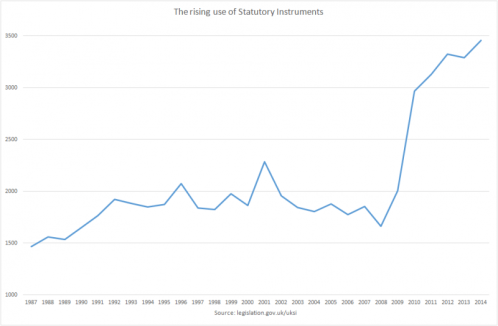
The use of secondary legislation has risen at an unprecedented rate, reaching an extraordinary level since 2010, and it’s increased use is to ensure that the Government meet with little scrutiny and challenge in the House of Commons when they attempt to push through controversial and unpopular, ideologically-driven legislation.

Conservative cuts are most often applied by stealth, using statutory instruments. This indicates a government that is well aware that its policies are not fit for purpose.

We can’t afford Conservative ideological indulgence.

The National Audit Office (NAO) scrutinises public spending for Parliament and is independent of government. An audit report earlier this month concluded that the Department for Work and Pension’s spending on contracts for disability benefit assessments is expected to double in 2016/17 compared with 2014/15. The government’s flagship welfare-cut scheme will be actually spending more money on the assessments themselves than it is saving in reductions to the benefits bill – as Frances Ryan pointed out in the Guardian, it’s the political equivalent of burning bundles of £50 notes.

The report also states that only half of all the doctors and nurses hired by Maximus – the US outsourcing company brought in by the Department for Work and Pensions to carry out the assessments – had even completed their training.

The NAO report summarises:

5.5
Million assessments completed in five years up to March 2015

65%
Estimated increase in cost per ESA assessment based on published information after transfer of the service in 2015 (from £115 to £190)


84%
Estimated increase in healthcare professionals across contracts from 2,200 in May 2015 to 4,050 November 2016

£1.6bn
Estimated cost of contracted-out health and disability assessments over three years, 2015 to 2018

£0.4 billion
Latest expected reduction in annual disability benefit spending

13%
Proportion of ESA and PIP targets met for assessment report quality meeting contractual standard (September 2014 to August 2015).

This summary reflects staggering and deliberate economic incompetence, a flagrant, politically-motivated waste of tax payers money and even worse, the higher spending has not created a competent or ethical assessment framework, nor is it improving the lives of sick and disabled people.

The government claim they want to “help” sick and disabled people into work, but nearly 14,000 disabled people have lost their mobility vehicle after the changes to Personal Independence Payments (PIP) assessment, which are carried out by private companies. Many more, yet to be reassessed, are also likely to lose their specialised vehicles.

In 2012, Esther McVey revealed that the new PIP  was about cutting costs and that there were targets to reduce the number of successful claims when she told the House of Commons:330,000 of claimants are expected to either lose their benefit altogether or see their payments reduced.How else could she have known that before those people were actually assessed? A recent review led the government to conclude that PIP doesn’t currently fulfil the original policy intent, which was to cut costs and “target” the benefit to “those with the greatest need.”

That basically meant a narrowing of eligibility criteria for people formerly claiming Disability Living Allowance, increasing the number of reassessments required, and limiting the number of successful claims. The government have used the review to attempt to justify further restrictions to PIP eligibility, aimed at cutting support for people who require aids to meet fundamental needs such as preparing food, dressing, basic and essential personal care and managing incontinence. “Greatest need” has become an ever-shrinking category under Conservative austerity measures. 

DPAC

The use of political pseudo-psychological “diagnoses” to both stigmatise and “treat” what are generally regarded by the Conservatives as deviant behaviours from cognitively incompetent citizens, infering that the problem lies within the individual rather than in their circumstances, or arise as a consequence of political decision-making and socio-economic models, has become the new normal. We are discussing people here who have been deemed too ill to work by their own doctor AND the state. Not for the first time, the words Arbeit macht frei spring to mind.

Welfare has been redefined: it is preoccupied with assumptions about and modification of the behaviour and character of recipients rather than with the alleviation of poverty and ensuring economic and social wellbeing.

The stigmatisation of people needing benefits is designed purposefully to displace public sympathy for the poor, and to generate moral outrage, which is then used to further justify the steady dismantling of the welfare state.

It is the human costs that are particularly distressing, and in a wealthy, first world liberal democracy, such draconian policies ought to be untenable. Some people are dying after being wrongly assessed as “fit for work” and having their lifeline benefits brutally withdrawn. Maximus is certainly not helping the government to serve even the most basic needs of sick and disabled people.

However, Maximus is serving the needs of a “small state” doctrinaire neoliberal government. The Conservatives are systematically dismantling the UK’s social security system, not because there is an empirically justifiable reason or economic need to do so, but because the government has purely ideological, anticollectivist prescriptions. Those prescriptions are costing the UK in terms of the economy, but MUCH worse, it is costing us in terms of our decent, collective, civilised response to people experiencing difficult circumstances through no fault of their own; it’s costing the most vulnerable citizens their wellbeing and unforgivably, it is also costing precious human lives.

It’s not just that Conservative rhetoric is incoherent and incongruent with the realities created by their policies. Policy-making has become increasingly detached from public needs and instead, it is being directed at “incentivising” and “changing behaviours” of citizens to meet a rigidly ideological state agenda. That turns democracy completely on its head. There is no longer a genuine dialogue between government and citizens, only a diversionary and oppressive state monologue.

And it’s the sound of one hand clapping.

one hand clapping

There are many ways of destroying people’s lives, not all of them are obvious. Taking away people’s means of meeting basic survival needs, such as money for food, fuel and shelter – which are the bare essentials that benefits were originally calculated to cover – invariably increases the likelihood that they will die. The people most adversely and immediately affected are those who have additional needs for support.

The moment that sick and disabled people were defined as a “burden on the state” by the government, we began climbing Allport’s Ladder of Prejudice.

Whilst I am very aware that we need take care not to trivialise the terrible events of  world war 2 and Nazi Germany by making casual comparisons, there are some clear and important parallels on a socio-political level and a psycho-social one, that I feel are crucially important to recognise.

Gordon Allport studied the psychological and social processes that create a society’s progression from prejudice and discrimination to genocide. In his research of how the Holocaust happened, he describes socio-political processes that foster increasing social prejudice and discrimination and he demonstrates how the unthinkable becomes acceptable: it happens incrementally, because of a steady erosion of our moral and rational boundaries, and propaganda-driven changes in our attitudes towards “others” that advances culturally, by almost inscrutable degrees.

The process always begins with the political scapegoating and systematic dehumanisation of a social group and with ideologies that identify that group as an “enemy” or a social “burden” in some way. A history of devaluation of the group that becomes the target, authoritarian culture, and the passivity of internal and external witnesses (bystanders) all contribute to the probability that violence against that group will develop, and ultimately, if the process is allowed to continue evolving, genocide.

If you think this observation is “extreme” then you really haven’t been paying attention. By 2012, hate crime incidents against disabled people had risen to be the highest ever recorded. By 2015, there was a further 41 per cent rise in disability hate crime. This is the so-called “civilised” first world, very wealthy liberal democracy that is the UK.

Most disabled people have worked, contributed to society, paid taxes and national insurance. Those that haven’t genuinely cannot work, and as a decent, civilised society, we should support them. Being ill and disabled is not a “lifestyle choice.” Unfortunately it can happen to anyone. A life-changing accident or illness doesn’t only happen to others: no-one is exempted from such a possibility. That this government thinks it can get away with peddling utter nonsense about the characters, lives and motivations of a marginalised social group, dehumanising them, directing hatred, resentment, prejudice and public derision towards them, demonstrates only too well just how far we have moved away from being a decent, civilised society. 

It seems to be almost weekly that there’s a report in the media about a sick and disabled person dying after being told by the state that they are “fit for work” and their lifeline benefits have been halted, or because the state has sanctioned someone and withdrawn their only support. There are many thousands more suffering in silence, fearful and just about living.


Why I strongly support Trade Unionism

10553308_680322242037307_1558281906340939819_n

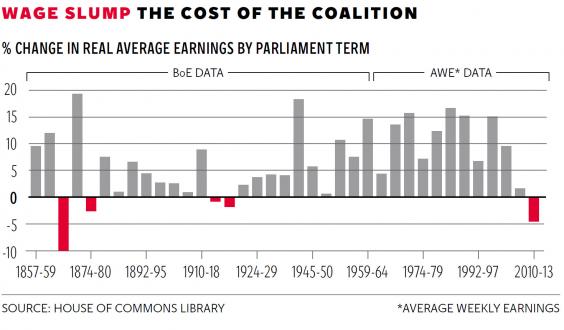
Trade Unions are fundamental to a functional democracy. Research shows that Trade Unionism is linked with higher levels of social equality and better public services, as well as better working conditions and rates of pay that ensure people have a decent standard of living. The Conservatives have always hated Trade Unions because Tory governments tend to value, perpetuate and endorse inequality and poor pay. We currently have the highest levels of social inequality in the EU, and it’s even greater than in the USA. We also have the biggest wage drop, pay hasn’t fallen this much since the 1800s. Tories like cheap labor, and profit for big business

That isn’t in ordinary people’s best interests. The largest study of UK deprivation shows that full-time work is no longer a safeguard against poverty. Yet Conservatives claim to be the party for “hard-working people.”

web-earnings-graphic

In a democratic society, governments don’t attempt to oppress opposition by using partisan policies to restrict their funding in order to turn a first world nation into a one party state. This government has established quite an impressive track record of punishing its critics to silence them. The proposed abolition of the Lords’ right to vote on or veto secondary legislation, delivered by the Strathclyde Review, but written in the rancorous and authoritarian hand of David Cameron, is another measure of draconian decision-making to stifle dissent, a tactic commonly deployed, it seems, when the Conservatives are faced with challenges and the prospect of not getting their own way, regardless of how unpopular and unreasonable their own way is.

Cameron’s rancour arose following the defeat in the House of Lords of a sneaky legslation in the form of a Statutory Instument that would have removed in work support for workers on low pay – tax credits. The defeat and ensuing publicity of the Lords debate and the exposure of an underhand legislative move forced the government to back down. But the shadow secretary for Work and Pensions, Owen Smith, has pointed out that cuts to benefit in-work entitlements being introduced through Universal Credit mean that the controversial tax credit reductions have been simply been “rebranded” by the government rather than reversed.

Secondary legislation is unamendable and is allocated 90 minutes debate in the Commons at best, by the Conservatives. Secondary legislation in the form of Statutory Instruments was only ever intended for non-controversial and small tidying up legislative measures. A Tory aide admitted that the Government are trying to get as much unpopular legislation in through the secondary route as possible. But this has been very evident anyway. The government is intent on dismantling any inconvenient piece of the constitution.

sis

Then there are the electoral reforms and proposed constituency boundary changes which are aimed at decreasing opposition votes and increasing Conservative seats. These are all examples of a very worrying authoritarian approach that the Conservatives have adopted to stifle challenges and concerns regarding the ideological basis and the impact of their policies without any democratic dialogue whatsoever.

Trade union funding is the cleanest money in politics: it comes from you and me, and therefore will ensure our interests are reflected in policy-making, rather than just those of big business tax-avoiding Tory donors.

It’s very worrying that vulture capitalists like Adrian Beecroft, a longstanding Conservative donor, has been permitted to re-write our employment laws as part of the government’s wider “labor market “reform.” Amongst Beecroft’s known personal investments are Gnodal, a computer networking company, and Wonga.com, an eye-wateringly high interest, opportunist loan company, that commodifies the poorest people with low credit ratings for massive profits. Beecroft has donated more than £500,000 to the Conservative Party since 2006.

The Beecroft Report caused considerable controversy because it recommended that the government should cut “red tape” in order to make the hiring and firing of employees much easier. In the report, Beecroft claimed this would help to “boost the economy” although no evidence for this was provided. It was alleged that significant sections of the report had been doctored. It was also reported that some recommendations had been removed from the original draft of the report.

The (then) Secretary of State for Business, Vince Cable, condemned the report, saying it was unnecessary for the government to scare workers. Beecroft responded by accusing Cable of being “a socialist who does little to help business” and cited his own personal experience of “having to pay out” £150,000 for unfairly dismissing an HR employee as one of the reasons he included the idea in the report. In an excellent article, James Moore, writing for the Independent, said that the Beecroft report contained “the seeds of the ruthless social Darwinism” and he connected the recommendation to Beecroft’s career of cutting jobs, and highlighted Beecroft’s long history of “wholesale attacks on workers’ terms and conditions.”

In a society that puts profit before people; where employees are regarded as a disposable cost and not an asset to employers; where noone but the powerful have rights; where wages are kept to the bare minimum, there can be no economic growth. Instead we are witnessing increasing economic enclosure and widespread exclusion – small pockets of privilege characterised by stagnant, accumulated wealth and increasingly widespread poverty elsewhere. With little public spending to stimulate small business and general growth, there can be no economic security.

All Conservative politics pivot on a fundamental commitment – the defence of privilege, status, and thus sustaining social inequality. But it is only by shifting money from the high-hoarding rich to the high-spending rest of us, and not the other way around, that investment and growth may be stimulated and sustainable.

images

Despite their recent rhetoric, the Conservatives are not and never have been the “party for workers.” New measures under Universal Credit will make benefit payments to people who are in work, but on low earnings, conditional on them taking “certain steps” to increase their pay or hours.

Many people in work are still living in poverty and reliant on in-work benefits, which undermines the libertarian paternalist/Conservative case for increasing benefit conditionality somewhat, although those in low-paid work are still likely to be less poor than those reliant on out-of-work benefits. The Conservative “making work pay” slogan is a cryptographic reference to the punitive paternalist 1834 Poor Law principle of less eligibility.

The government’s Universal Credit legislation has enshrined the principle that working people in receipt of in-work benefits may face benefits sanctions if they are deemed not to be trying hard enough to find higher-paid work. It’s not as if the Conservatives have ever valued legitimate collective wage bargaining.

In fact their legislative track record consistently demonstrates that they hate it, prioritising the authority of the state above all else. There are profoundly conflicting differences in the interests of employers and employees. The former are generally strongly motivated to purposely keep wages as low as possible so they can generate profit and pay dividends to shareholders and the latter need their pay and working conditions to be such that they have a reasonable standard of living.

Workplace disagreements about wages and conditions are now typically resolved neither by collective bargaining nor litigation but are left to management prerogative. This is because Conservative aspirations are clear. They want cheap labor and low cost workers, unable to withdraw their labor, unprotected by either trade unions or employment rights and threatened with destitution via benefit sanction cuts if they refuse to accept low paid, low standard work. Similarly, desperation and the “deterrent” effect of the 1834 Poor Law amendment served to drive down wages.

In the Conservative’s view, Trade Unions distort the free labor market which runs counter to New Right and neoliberal dogma. Since 2010, the decline in UK wage levels has been amongst the very worst in Europe. That isn’t a coincidence. It’s an intended consequence of Conservative policy.

The Conservatives talk a lot about the need for citizen responsibility, but seem to have exempted themselves. They also seem to have forgotten that responsibities are generally balanced with citizen rights. The right to withdraw labour as a last resort in industrial disputes is fundamental to free societies, as the European Convention on Human Rights recognises.

Not that this government concerns itself with international human rights laws. We are currently the first country to face a UN inquiry into serious disability rights violations. Conservative policies are also in breach of the human rights of children and women. Conservatives operate from within a non-cooperative, competitive individualist, relatively non-altruistic framework . Their anti-humanist, social Darwinist, anti-welfare policies reflect this. 

The government’s proposed changes to Trade Union laws are a major attack on civil liberties. The Conservative’s proposals have been criticised by Liberty, Amnesty International and the British Institute of Human Rights, amongst others. The three organisations issued this joint statement:

“By placing more legal hurdles in the way of unions organising strike action, the Trade Union Bill will undermine ordinary people’s ability to organise together to protect their jobs, livelihoods and the quality of their working lives.

“It is hard to see the aim of this bill as anything but seeking to undermine the rights of all working people. We owe so many of our employment protections to trade unions and we join them in opposing this bill.”

Trade unionists are at the forefront of the struggle for human rights; they are committed to social justice and international solidarity, and typically have strong community roots. These values make them prime targets of this government’s repression. 

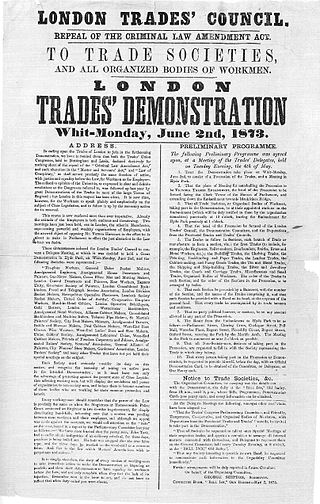
 320px-London_Trades_Demonstration

“I oppose the government’s Trade Union Bill and I will stand up for rights and freedom at work.” Sign the petition here.

The Strathclyde Review clarifies the Conservatives’ authoritarianism


“The Government appear to consider that any defeat of an Statutory Instrument by the Lords is a breach of convention. We disagree.” Lord Norton of Louth (Conservative)

“The conduct of Parliament is a matter for Parliament, not the Executive. The Executive is accountable to Parliament, not the other way round.” Lord Forsyth of Drumlean (Conservative)

“The assertion is that this House had acted in defiance of the Government’s “electoral mandate”. But the Conservative Party never told voters that it intended to make massive cuts to in-work benefits, and it won a House of Commons majority of only 12 seats on the votes of just 24% of the total electorate, so the claim that the Lords defied an electoral mandate is tosh.” Lord Howarth of Newport (Labour). Source: Hansard.

A Bicameral Parliament is one in which two assemblies share legislative power. The main purpose of the House of Lords is to act as a deliberative assembly, providing expert scrutiny to ensure democratic checks on the power of the Lower House, and where necessary, to provide a counterbalance for excessively partisan legislation that makes no concession to the accommodation and representation of minority views. The House of Lords provides an essential additional layer of democratic process which helps to prevent the so-called “tyranny of the majority” and divisive, potentially damaging partisan changes to public life.

There is always a need to ensure additional checks and balances against incumbent governments and for extending opportunities to review and improve the quality of legislation. There is always a need to broaden the political participation of particular groups in society and to explore ways by which under-represented groups may be identified and included in political processes.

A review by Lord Strathclyde, commissioned by a rancorous and retaliatory David Cameron following the delay and subsequently effective defeat of government tax credit legislation in the House of Lords, recommends curtailing the powers of Upper House. 

Strathclyde proposes that the House of Commons is given the final say over secondary legislation (in particular, Statutory Instruments), which is frequently being used for political manoeuvring to edit the details of Acts, and ensure rules, regulations and even changes to legal definitions are made by ministerial order, rather than by the rather more open and democratic process of primary legislation: it’s being used as a way of bypassing Parliamentary scrutiny. 

In fairness, on page 6 of the report, Lord Strathclyde says:

“I believe it would be appropriate for the Government to take steps to ensure that Bills contain an appropriate level of detail and that too much is not left for implementation by statutory instrument.”

The problem is that Statutory Instruments (SI) are being over-used and are under-scrutinised in the Commons. SIs have become a major form of law-making activity in the UK. In 2015, the UK Parliament passed 34 Acts, whilst 1,999 Statutory Instruments were made. (In fact, 2015 has been a relatively light year for SIs: in 2013 and 2014, 3,292 and 3,486 SIs were made.)

The Government ensure they have a majority on any SI committee and MPs are chosen by Whips. The Hansard Society estimate that SIs currently account for as much as 80 per cent of the Government legislation that impacts citizens. However, they are given substantially less Parliamentary time than Bills, enabling Government to push through their legislative programme with very little scrutiny, exacerbating a lack of democratic transparency and accountability of the Executive (the Government).

The report details 3 possible options:

  • option 1 would remove the House of Lords from the Statutory Instrument procedure altogether – to take Statutory Instruments through the House of Commons only
  • option 2 would seek to retain the present role of the House of Lords but clarify the restrictions on how its powers should be exercised, by codifying them passing a resolution
  • option 3 is a compromise option would create a new procedure in primary legislation. The new procedure would allow the House of Lords to ask the House of Commons to think again when a disagreement exists but gives the final say to the elected House of Commons

Strathclyde has recommended option 3. However that would have a profound impact on our constitutional democracy.

The Hansard Society said that:

“Most criticism of the system is concerned with the negative resolution procedure where the initiative lies with the Opposition to table appropriate annulment motions in the form of Early Day Motions (known as “prayers”). Given that the Government controls almost all the available parliamentary time in the Commons, unless the Opposition can persuade the Government to provide time, either on the floor of the House or in Standing Committee, the SI will not be debated.

The time limit (of an hour and an half) imposed on debates should be removed.”

The Society also recommend far more robust pre-legislative scrutiny mechanisms.

Lord Craig of Radley (Cross-Bencher) points out that:

“Since 2010, 34 Acts have been passed by Parliament with Henry VIII powers. Before us at present there are five Bills with Henry VIII powers. In case your Lordships are not familiar with Henry VIII powers, I should like to read from Clause 68 of the Scotland Bill, which states: “The Secretary of State may by regulations make … such consequential provision in connection with any provision of Part 1, 3, 4, 5 or 6, or … such transitional or saving provision in connection with the coming into force of any provision of Part 1, 3, 4, 5 or 6 … Regulations under this section may amend, repeal, revoke or otherwise modify any of the following (whenever passed or made)” — and so it goes on. In other words, if your Lordships think that you have passed a Bill, you have not — because the Secretary of State can amend it by statutory instrument.”

Baroness Smith of Basildon (Labour) said she would like to thank Lord Strathclyde for his report, and:

“For the extraordinary speed with which it has been produced and the vigour with which he has sought to defend the Government’s exceptionally weak rationale for undertaking it.”

She also said:

“Lord Strathclyde asks for responsible Opposition. We provide that but seek responsible Government.”

Baroness Andrews (Labour) said:

“We have had to refer back to this House secondary legislation which contains substantial policy changes with substantial impacts — for example, the draft hunting regulations, immigration changes, and universal credit. In this Session alone, 32 SIs have had to be corrected by government after serious flaws were identified and 16 have had to be withdrawn completely.

If we add to that ministerial failure to provide impact statements, or Explanatory Memoranda which do the opposite of what they are supposed to do, a picture emerges of a Government who not only deliberately exploit secondary legislation and reduce parliamentary scrutiny in the process but are resentful of proper scrutiny. If we were to lose our exceptional power to reject SIs, Parliament would lose a legitimate brake on government excess. However, it would also reduce the credibility of the scrutiny process as a whole and open the gate to greater abuse. What is needed, which the noble Baroness, Lady Hayman, anticipated, is a wholesale review of secondary legislation to remind Ministers of their public duty to be open and transparent about policy and legislation, to be accountable, and to respect—in fact, invite—the role of scrutiny.

We should not see this as a stand-alone report; rather, it should be seen alongside other legislation and proposals—for example, the lobbying Bill in the previous Parliament that restricted the ability of charities and other groups to campaign for their causes; new limits on freedom of information; and the Trade Union Bill, debated this week, which will strip the Labour Party of its funding, quite contrary to the balanced proposals from the Committee on Standards in Public Life. We have seen reports of Ministers being told to make increased use of statutory instruments to drive through legislation without proper scrutiny; and now we have the proposal to remove this House’s power to veto the same secondary legislation that the Government favour. It is hard not to see this as an authoritarian Executive waging war on the institutions that hold them to account. The Government are seeking to stifle debate, shut down opposition and block proper scrutiny. They are a Government who fear opposition and loathe challenge.”

Lord McNally (Liberal Democrat) said:

“I may want to see this House reformed, but I have no wish to see it become Mr Cameron’s poodle, and a neutered poodle at that.”

I suspect this is a Government that would prefer a world of neutered poodles.

disempowerment
Conservative Paternalism


A full transcript of this important debate can be found here

You can also watch the excellent contributions here.

UK has shameful but unsurprising levels of inequality


1459720_569627496440116_902730897_n

Austerity was never about what works or what is needed. It’s about traditional Tory class-based prejudices. Austerity is simply a front for policies that are entirely founded on Tory ideology, which is  all about handouts to the wealthy that are funded by the poor.

David Cameron has often denied claims that his party has overseen a rapid rise in inequality. In fact last year, Cameron said that inequality is at its lowest level since 1986. I really thought I’d misheard him. 

This wasn’t the first time Cameron has used this lie. We have a government that provides disproportionate and growing returns to the already wealthy, whilst imposing austerity cuts on the very poorest. How can such a government possibly claim that inequality is falling, when inequality is so fundamental to their ideology and when social inequalities are extended and perpetuated by all of their policies? It seems that the standard measure of inequality has been used to mislead us into thinking that the economy is far more “inclusive’ than it is. Yet the UK is one of the wealthiest nations in the world.

Earlier this year a published report by the Dublin-based Foundation for the Improvement of Living and Working Conditions (Eurofound) stated that the UK has become the most unequal country in Europe, on the basis of income distribution and wages.

The report also says that the UK has the highest Gini coefficient of all European Union (EU) member states – and higher than that of the US. The coefficient is a widely used measure of the distribution of income within a nation, and is commonly used to calculate inequality.

A year ago, the Organisation for Economic Cooperation and Development (OECD) published research that confirmed what most of us already knew: that income inequality actually stifles economic growth in some of the world’s wealthiest countries, whilst the redistribution of wealth via taxes and benefits encourages growth. That debunks one of the nastiest Tory myths. Having long been advocates and engineers of social inequality, implying a mythological  “trickle down” as a justification, and hankering after a savage, axe-wielding minarchism, chopping away at our civilising public services and institutions, they are now officially a cult of vicious cranks. The problem is that the general public don’t pay much attention to research like this. They really ought to.

Conservatism is centred around the preservation of traditional social hierarchy and inequality. Tories see this, erroneously, as an essential element for expanding national economic opportunity. But never equal opportunity.

Conservatives think that civilised society requires imposed order, control and clearly defined classes, with each person aware of their rigidly defined “place” in the social order. Conservatism is a gate-keeping exercise geared towards economic discrimination and preventing social mobility for the vast majority. Inequality is so clearly embedded in policies – which are written statements of political intent.

According to the annual Family Spending Review for 2014, published by  the Office for National Statistics (ONS), the richest 1 per cent of the population have as much wealth as the poorest 57 per cent combined.  Wealth inequality has increased since 2012. The richest 10 per cent own half the country’s wealth.

Charities have urged the government to address Britain’s shameful and growing inequality after the figures published this week show that the country’s richest 10 per cent spend as much on alcohol and cigarettes in a week as the poorest spend on gas and electricity. That turns the dominant “feckless” poor narrative in the media on its head. Poverty doesn’t happen because people have poor budgeting skills. Poverty happens because people don’t have enough money to meet their basic needs.

The richest 10 per cent of households spent more per week on furniture – an average of £43.40 – than the poorest spent on food – £30.40.

The average weekly household spend was found to be £531.30, but there was great variation of this amount between the highest and lowest earning 10 per cent – £1,143.40 and £188.50 per week respectively.

By 2011/12, the poorest fifth of households spent 29 per cent of their disposable income on indirect taxes, compared with 14 per cent paid by the richest fifth. All told, the poorest households pay 37 per cent of their gross income in direct and indirect taxes. In other words, the single biggest expenditure for people in poverty is tax. It is, at the very least, morally unjustifiable to be taxing the poor at such a rate. The most important thing the government can do to help the poor is to stop taking their money.

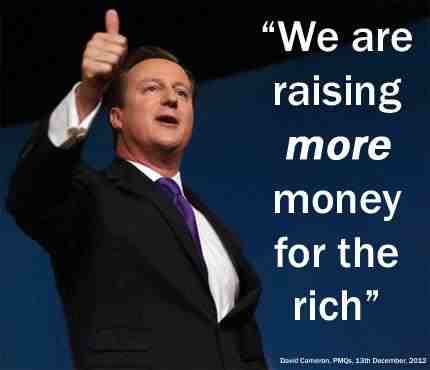
David Cameron did once tell a truth, though it was an inadvertent Freudian-styled slip. He said: We are raising more money for the rich. Yes. From where, I wonder?

Oh yes. The poor.

 382035_141704259313964_676863845_n


 Pictures courtesy of Robert Livingstone


Excess Winter Mortality in England and Wales rise by 151%

211055

The Office for National Statistics (ONS) released a health and social care statistical bulletin last month about the excess mortality figures last winter, and a projection of figures for this year. In 2014-2015, there was a 151% rise in excess winter deaths in England and Wales, which represents the biggest yearly increase since records began.

Excess deaths in winter (EWD) continue to be an important public health issue in the UK, potentially amenable to effective interventions. This excess mortality is highest in both relative and absolute terms in elderly people and for certain disease groups. It also varies from area to area. EWD are also associated with cold weather. However, it has been observed that other countries in Europe, especially the colder Scandinavian countries have relatively fewer excess winter deaths in winter compared to the UK.

Elderly people, individuals with low incomes (up to 9 million people in the UK live in fuel poverty), sick and disable people, those with mental health problems, babies and children under five, and pregnant women are considered vulnerable when the outside temperature drops below 6°C. Not all people living in fuel poverty is on benefits or are pension age. In fact, a study last winter found that half of households living in fuel poverty in the UK had someone in work.

The ineffective influenza vaccine was partly blamed for some of the increase over the 2014-15 period. The flu vaccine was quoted to have quite a low effectiveness, between 3% or 4%. By the end of the period it was quoted at 34%, but that is still below what we would expect, which is at least 50% effectiveness. However, most people offered the ‘flu vaccine are also offered a pneumonia vaccine. Pneumonia, a respiratory disease, is a complication of ‘flu that is the biggest cause of mortality. But pneumonia is a complication of other illnesses, too. People are much more susceptible to pneumonia when they are also malnourished and living in poverty. And the category “respiratory disease” includes asthma, bronchitis and a range of other illnesses. The ‘flu vaccine’s efficacy is really something of a red herring. Respiratory disease is always a major cause of death in the UK and research shows consistently that it is more likely to be correlated with poverty than an ineffective ‘flu vaccine.

Janet Morrison, the chief executive of the charity Independent Age, described the figures as shocking. She said: “Even discounting the impact of the flu, the figures are still far higher than in previous years.”

“Councils, the government and energy companies need to help with things like insulating homes and assistance with energy bills for vulnerable customers. But there are also simple things we can all do like checking on our frail and elderly family and neighbours in cold weather. And making sure they are able to take up their flu vaccination, wrap up warm and eat well.”

There were more excess winter deaths in females than in males, as is the case over previous years. Male excess winter deaths increased from 7,210 to 18,400, and female deaths from 10,250 to 25,500 between 2013-14 and 2014-15.

In 2014/15 excess  winter deaths increased significantly in all age groups compared with 2013/14.

Main points of the ONS Bulletin:

  • An estimated 43,900 excess winter deaths occurred in England and Wales in 2014/15; the highest number since 1999/00, with 27% more people dying in the winter months compared with the non-winter months.
  • The majority of deaths occurred among people aged 75 and over; there were an estimated 36,300 excess winter deaths in this age group in 2014/15, compared with 7,700 in people aged under 75.
  • There were more excess winter deaths in females than in males in 2014/15, as in previous years. Male excess winter deaths increased from 7,210 to 18,400, and female deaths from 10,250 to 25,500 between 2013/14 and 2014/15.
  • Respiratory diseases were the underlying cause of death in more than a third of all excess winter deaths in 2014/15.
  • The excess winter mortality index was highest in the South West in 2014/15 and joint lowest in Yorkshire and The Humber, and Wales.

Last month, David Cameron dismissed questions from Jeremy Corbyn about a looming winter crisis in the NHS (and the impact of the proposed cuts to tax credits) by mocking Labour’s move to the left under the new leader.

The prime minister declined an invitation from Corbyn to guarantee that the NHS will avoid a winter crisis this year and instead joked that he would award the Labour leader “full Marx” for creating his own winter crisis in his party.

Cameron has a very nasty habit of trivialising and diverting attention from what are often serious life and death issues for many of our most vulnerable UK citizens.

1375646_536960593040140_93313082_n

Image courtesy of Robert Livingstone

This post was written for Welfare Weekly, which is a socially responsible and ethical news provider, specialising in social welfare related news and opinion.

The Prime Minister is negotiating far-reaching welfare reform with the EU

Image result for EU

The BBC report that the prime minister has made welfare reform one of his key European Union (EU) demands. The current EU legal restrictions preventing EU citizens from being discriminated against have led to government ministers increasingly focusing on ideas that would also prevent thousands of UK citizens from getting in-work benefits.

Ministers have said that an EU treaty change will be required to make any major welfare changes.

The legal barriers to direct discrimination within the treaty have meant that ministers are focusing on finding welfare savings that are based on indirect discrimination – these are options that disproportionately affect EU migrants but would also impact on UK citizens.

One proposal under consideration would mean that all claimants will be denied in-work benefits unless they have received unemployment benefit in the previous year. The proposal could see someone who has worked for many years failing to qualify for support if their income fell because, for example, their employer cut their hours.

Whitehall officials have told the BBC that people claiming some in-work benefits may be better off giving up their job temporarily as a consequence of the government’s EU negotiations.

David Cameron has insisted that he has a mandate to pursue such EU reform following the Conservatives’ general election victory.

He wants to renegotiate the terms of the UK’s membership ahead of an in/out referendum by the end of 2017. He has said that he will campaign for Britain to remain in the EU only if he gets the reforms that he wants.

However, Cameron has said he would “not give a running commentary” on the negotiations.

A document seen by BBC News in the summer from government lawyers to ministers indicated legal problems with current government proposals, it said: “imposing additional requirements on EU workers that do not apply to a member state’s own workers constitutes direct discrimination which is prohibited under current EU law.”

The legal opinion came several months after a speech by David Cameron last November in which he first announced his intention to stop EU migrants from claiming in-work benefits – housing benefit and working tax credits – for four years. However,  a four-year residency test for all benefit claimants has now been fully costed and is being considered by Treasury officials.

It would also mean that UK residents, even if they had lived in the UK all of their lives, would be ineligible for in-work benefits for four years from their 18th birthday.

A third suggestion has been proposed by Oliver Letwin, the former policy minister who now oversees the cabinet office. Letwin has proposed that in-work benefits should be denied to people who had not paid enough National Insurance contributions for three years.

This proposal was seen as being problematic however, said one official, as it would change the nature of Universal Credit and may conversely make EU migrants eligible for out-of-work benefits.

The prime minister remains insistent about pushing for welfare reform in his EU negotiations, despite officials believing the changes already introduced have tightened the system considerably.

“New EU migrants now face one of the toughest in-work benefit systems in Europe when they come here,” said one official.

“We have made benefit tourism a thing of the past.”

BBC News said that Whitehall officials told them they were not fully consulted about the legality of the proposals prior to Cameron’s speech in November.

However, it’s not just the legality of the proposals that are problematic: some officials have said that the politics of them are, too. Conservative  ministers are wary as these options will affect tens of thousands of British people and could undermine one of the government’s central messages, that people should always be better off in work.

Nigel Farage said that the prime minister’s renegotiation strategy was unravelling. Speaking on the Radio 4 Today programme, he said: “Even the one area where he was going to go to the European Council and try to get a rule change, actually we’ve surrendered already by saying we will change the British social security system.” 

“So young couples in this country, aged 21, who work and have got children, will, if this goes ahead, be better off not working than being in work. I think it’s appalling.”

The EU welfare proposals follow on from the recent controversial proposed cuts to tax credits, which were widely criticised by both Conservatives and the opposition, partly because they undermine the work ethic that the Tories value so much. Last month, Paul Johnson, the director of the Institute for Fiscal Studies, has said it was “arithmetically impossible” for the increase in the minimum wage to compensate for the loss in tax credits. In the post-budget briefing, the IFS said 13 million families would lose an average of £240 a year, while 3 million families would lose over £1,000 a year.

This post was written for Welfare Weekly, which is a socially responsible and ethical news provider, specialising in social welfare related news and opinion.

Tory MP Slams ‘Completely Unacceptable’ Child Tax Credit Cuts After He Researches Impact

imagesA timely reminder of the warnings about Osborne’s cuts from the spending review last autumn.

Conservative MP for Stevenage, Stephen McPartland, has conscientiously boycotted a meeting with a treasury minister David Gaulke, after he discovered that tax credits will be cut, despite assurances to the contrary from the Government.

McPartland did some research, he asked the House of Commons Library for statistical information and found that it calls into question the prime minister’s promise that child tax credits were “not going to fall”.

McPartland, who is one of the two Conservatives that voted against tax credit cuts in September, says that information from the Commons Library reveals that 830,000 families would see their child tax credit support cut in 2015/16 because of measures proposed in the summer budget.

He said the current policy is: “Completely unacceptable and destroys the government’s final defence that planned cuts do not apply to child tax credits.” 

He said: “I am grateful to the House of Commons Library for providing me with these statistics, which sadly prove that many working families will see their Child Tax Credits cut. In fact, the example below clearly demonstrates that the family will currently receive 87% of their maximum Child Tax Credit award. However, this will be cut to 51% in April, when the planned changes take effect, which is unacceptable.”

He told the Telegraph: “I am boycotting the meeting and the media are not invited, as he [Mr Gauke] does not want to talk about the cuts to child tax credits I have uncovered.

“I just think it’s inappropriate that a Treasury minister is coming to Stevenage to talk about giving money away in tax credits to businesses when as a member of the same government I’m trying to stop the disastrous impact of the tax credit changes are going to have.”

Shadow chief secretary to the Treasury, Seema Malhotra, responded: “It is simply astounding that David Cameron and George Osborne’s failure to address concerns around their proposed tax credit cuts means one of their own MPs has had to protest in this way.”

Gordon Brown – who was the designer of tax credits when he was Chancellor – spoke at a meeting with the Child Poverty Action Group in central London today. He said that the tax-credit cuts are “totally counter to British Values” and warned child poverty would hit a 50-year high if the reforms are not abandoned in full.

He pointed out that the cuts will undermine the work ethic that the Tories value so much, and act as a disincentive for people with families wanting to work. He also said that the cuts will mean that there is “less compassion for children in our country which is surely one of the most important features of a civilised society.”

He concluded that the tax credits cuts “anti-work, anti-family, anti-children, anti-fairness, anti-women, and in my opinion anti-British”. 

Related

Osborne’s Tax Credit Cuts Nothing Less Than An Omnishambles

This post was written for Welfare Weekly, which is a socially responsible and ethical news provider, specialising in social welfare related news and opinion.

Amnesty International UK poll shows little support for abolition of Human Rights Act

994442_352804464870608_5110112617916821526_n (1)

In response to the atrocities committed during World War two, the International Community sought to define the rights and freedoms necessary to secure the dignity and worth of each individual. In 1948 the newly formed United Nations adopted the Universal Declaration of Human Rights (UDHR), one of the most important agreements in world history.

Shortly afterwards another newly formed international body, the Council of Europe, set about giving effect to the UDHR in a European context. The resulting European Convention on Human Rights was signed in 1950 and ratified by the United Kingdom, one of the first countries to do so, in 1951. At the time there were only ten members of the Council of Europe.

Now 47 member countries subscribe to the European Convention, and in 1998 the Human Rights Act was passed by the Labour Party in order to “give further effect” to the European Convention in British law. It consolidates international laws and includes provision for the British public have their cases heard British courts instead of having to travel to Strasbourg.

We reported that the Government intend to controversially scrap the Human Rights Act by next summer, and replace it with a British “Bill of Rights.”

A  12-week public consultation on the Conservative Bill of Rights will start in November or December this year. It will be worded to clarify that the UK will not pull out of the European Convention of Human Rights (ECHR), as some critics have feared, it will even mirror much of the ECHR language in an effort to “calm opposition.”

However, Amnesty International (UK) have commissioned a poll, and it seems that the British public are not particularly willing to see any change to existing Human Rights legislation, with only one in 10 people in the UK (11%) believing that scrapping the Human Rights Act should be a government priority.

The poll results were released over the weekend, and also showed that almost half (46%) of people in the UK would not want to remove any of the rights currently included in the Human Rights Act from a new bill of rights. This said, a minority (16%) also felt that the death penalty should not be outlawed in a new bill.

The new ComRes survey found that more than three-quarters (78%) of people in the UK think that rights, laws and protections must apply to everyone equally in order to be effective, while 67% agree that governments should not be able to choose which rights they enforce.

Kate Allen, the Director of Amnesty UK, said the survey indicates that the Government should abandon its “ill-advised” plans to repeal the Human Rights Act because there is “simply no appetite” for it.

She said: “The British people clearly want the Government to get on with their proper business of the day-to-day running of the country, and abandon these destructive plans.

“It’s quite right that it shouldn’t be up to governments to pick and choose which rights we are entitled to and select who they deem worthy of them. It took ordinary people a very long time to claim these rights and we mustn’t let politicians take them away with the stroke of a pen.

“It’s great to have it confirmed that British people think that rights and protections must apply to everyone equally in order to work at all.

“That includes people whose beliefs and actions we might profoundly disagree with, and it’s all the more important we stick to our enduring principles in challenging times.

“This is no time for the British government to set about dismantling and undermining human rights protections.”

We reported have that the government is currently facing investigations regarding serious allegations of contraventions of the human rights of disabled people and other protected social groups. The UK is also in breach of the rights of women and children.

A leak has revealed that Michael Gove will unveil British bill of rights to replace the Human Rights Act before Christmas. The justice minister is reportedly also seeking a “crackdown” on the so-called “human rights industry,” introducing measures intended to reduce the compensation individuals can win from public bodies following human rights claims.

Human rights groups have called the Government’s desire to scrap the  Human Rights Act “destructive”. The Ministry of Justice has of course claimed the details leaked over the weekend, were “speculation”.

The leaked draft proposals, which will be put out for a three-month consultation within weeks, indicate that the UK will remain a signatory to the European Convention on Human Rights. However, domestic courts would not be “automatically bound” to follow European Court rulings and ministers are also considering ways of guaranteeing the UK parliament’s sovereignty explicitly in law.

Harriet Harman, who is now the chair of parliament’s Joint Committee on Human Rights, has written to Michael Gove, asking whether he could confirm that the government had officially ruled out withdrawing from the European Convention on Human Rights and if it would “abide by the final judgment of the ECHR in any case to which they are parties”.

I can quite understand her need for some clarity on this issue, as Cameron has previously pledged to leave the ECHR. The Sunday Times have released details of a leak revealing plans to scrap the Human Rights Act. Again.

Harman said: “In the first six months, government proposals have gone from a bill in the Queen’s speech to ‘proposals’ to ‘a consultation’. The timescale has moved from the first 100 days to this autumn and thenin a few months’ time‘.

“There is no more clarity about the government’s plans than there was back in May: we have no indication as to whether the government intends to publish a white paper, draft clauses or indeed a draft bill for pre-legislative scrutiny. It’s essential that such a vital issue is widely scrutinised and debated – and not just by politicians and lawyers. Twelve weeks is not enough.”

Lord Falconer, Labour’s Shadow Justice Secretary, responding to the reports in the Sunday Times of the Tories’ plans, said:

“These are ill-thought out, illiterate and dangerous plans. The Human Rights Act has helped some of the most vulnerable people in our society. To talk about a “victims’ culture” is shocking and clear evidence that the Tories are intent on reducing people’s fundamental rights.

“They say they don’t want to withdraw from the European Convention on Human Rights but their plans clearly show that they have misunderstood the relationship between our courts and the European Court and their approach could result in such tensions that we would have to withdraw. 

“For the Government to dither over this issue and send a message that it’s ok to pick and choose the human rights you like does incredible damage both at home and to the UK’s standing in the world.

“Labour will stand firm in support of the Human Rights Act and oppose any watering down of people’s fundamental rights.”

Equal access to justice and protection of universal Human Rights is the bedrock of democracy, the alternative to this is that some people simply cease to be free.

The HRA is quite often portrayed by the Right as a party political measure. However, whilst the Human Rights Act is ultimately recognised as one of the greatest legacies of Labour in government, Cameron seems oblivious to the fact that Human Rights are not objects to be bartered away. They arose from struggles that were begun long ago by past generations who gave their lives for these rights to be enshrined in our laws.

Labour’s Human Rights Act ought to be a source of national pride. It is a civilised and a civilising law. It ensures that Britain remains a nation where key universal benchmarks of human decency and protections against state abuse are upheld by the courts. 

There is already a modern British bill of rights already. It is called the Human Rights Act.