Tag: mental health

Specialist Disability Employment Advisors in Jobcentres cut by over 60 per cent

536738_306169162785952_999031084_n

Full-time specialist disability employment advisors who are posted in jobcentres have been radically reduced since 2011. The full-time advisors are employed to help disabled people navigate the support system and find employment. Over the last four years, the number of specialist advisors fell by over 60 per cent, from 226 to just 90.

The government says that the advisors will be replaced by unqualified  non-specialist “work coaches” as part of its Universal Credit programme, which also extends welfare conditionality, entailing sanctions, to people in part-time and low paid work.

We reported last week that the work coach scheme is to extend from jobcentres to GP practices, to prevent sick and disabled people from “leaving the job market” and “claiming Employment Support Allowance” (ESA), with pilots already underway.

The latest figures on jobcentre advisors were released by ministers in response to a Parliamentary question by Labour MP Emily Thornberry.

A spokesman for the Department for Work and Pension said the fall in advisor numbers was consistent with Government policy.

“With the introduction of Universal Credit disabled people looking for work now have access to Work Coaches who are trained to provide tailored support specific to their individual needs. As we continue to make our mainstream services more accessible to disabled jobseekers it is expected that the number of Disability Employment Advisors will continue to decline.”

“The Government is committed to halving the disabled employment gap and the most recent disabled employment figures show that 226,000 more disabled people found work over the past year.”

Charities have responded, saying that the specialist advisors are absolutely crucial for people with disabilities who have to navigate the support system and that their reduction will undermine the Government’s own claim of “supporting people in to work.”

The government have also cut in work support for disabled people, such as the Access to Work fund, which helps people and employers cover costs of disabilities that may present a barrier to work. Under the Equality Act, employers are obliged to make “reasonable adjustments” to the workplace to support people with disabilities.

A coalition of 100 disability charities had warned that the government cuts threaten disabled people’s rights earlier this year, and last month, especially those with learning disability and mental health problems, charities also called for a halt in the government’s cuts to ESA, which will be reduced, removing the work-related activity component, so that people will receive the same amount as jobseekers with no disability, which will make it more difficult for disabled people to find work, and may have an adverse impact on people with health conditions.

The cuts to specialist employment support for people with disabilities flies in the face of  Iain Duncan Smith’s comments during the Tory conference – that sick and disabled people need to see work as their route out of poverty. It’s difficult to see how that can be achieved when the government is busy closing down the transport system, as it were.

Duncan Smith commented at the Conservative conference: “We don’t think of people not in work as victims to be sustained on government handouts. No, we want to help them live lives independent of the state.

“We won’t lift you out of poverty by simply transferring taxpayers’ money to you. With our help, you’ll work your way out of poverty.”

We can’t help wondering what “help” actually means to Conservatives, because there is every indication that they don’t use the word in a conventional sense. Usually when Tories use the word “help” or “support”, it indicates some sort of penalty or punishment: a reference to the extended draconian benefit conditionality and  sanctions regime

Elliot Dunster, group head of policy, research and public affairs at disability charity Scope, has said that the fall in specialist assistance was concerning:

“Disability employment advisors make a huge difference in supporting disabled people into work – providing expert, personalised advice and guidance.

“We’re very concerned to see this drop in the number of job centres that have fulltime specialist advisors for disabled people. Disabled people are pushing hard to find work, but continue to face huge barriers, ranging from inaccessible workplaces to employer attitudes. 

“Disability employment advisors help tackle these barriers. The Government has set out a welcome ambition to halve the disability employment gap. To do this disabled people must have access to specialist, tailored employment support.”

Dan Scorer, head of policy at Mencap, has warned that the replacement generalist advisors would “simply not have the training” required:

“People with a learning disability find the demands placed upon them difficult while claiming Job Seekers Allowance or Employment and Support Allowance.

“Some find them impossible and we are worried that there is not the right support in Jobcentres to help them. Families tell us that a lack of learning disability training and cuts to DEAs is leading to many people with a learning disability being unfairly sanctioned and receiving insufficient support to appeal decisions, or the right support to find employment.

“Even if the reduction in DEAs in some part of the country is due to the rolling out of Universal Credit and part of a strategic move to generic advisors, we are concerned that these advisors will simply not have the training to fully support claimants with a learning disability.

“The problems with the administration of benefits and changes in the benefits system, combined with future cuts to benefits and social care, is causing fear and anxiety among the 1.4 million people with a learning disability and their families in the UK who are scared they could be isolated in their local communities.”

Mind have already warned that the transition away from specialist help under Universal Credit would make the benefits system more difficult for people with mental health issues. Policy manager, Tom Pollard told the Independent:

“We’re pretty sceptical of the ability of those jobcentre advisors to be able to understand the barriers that people with mental health issues face.” 

Labour MP Debbie Abrahams recently challenged Priti Patel, the employment minister, during work and pensions questions in the Commons recently to raise concerns about the negative impacts of social security sanctions on the mental health of claimants.

During the session the Patel had claimed: “Our staff are trained to support claimants with mental health conditions and there is no evidence to suggest that such claimants are being sanctioned more than anybody else.”

Mrs Abrahams, Shadow minister for Disabled People, responded: “The minister may have inadvertently slipped up there. There is clear evidence from last year that 58 per cent, more than half, of people with mental health conditions on the employment and support allowance work-related activity group were sanctioned.”

A recent Freedom of Information request showed that between April, 2014, and March this year there were almost 20,000 benefit sanctions received by people who were out of work because of their mental health.

However, in this same period only 6,340 of the group were successfully supported into employment during the same period by the Work Programme.

Tom Pollard said: “Figures obtained by us show that people with mental health problems are more likely to have their benefits stopped than those with other conditions.

“Last year, the Department of Work and Pensions issued more sanctions to people with mental health problems being supported by Employment and Support Allowance than they did to those with other health conditions.

“Stopping somebody’s benefits, or threatening to stop them, is completely the wrong approach to help people with mental health problems find work — it’s actually counterproductive.

“In continually refusing to listen to calls for a review of the use of sanctions, the Government is not only undermining its ambition of helping a million more disabled people into work, but is also failing its duty of care for the health and wellbeing of hundreds of thousands of people with mental health problems.”

The Department of Work and Pension’s own research shows that the threat of sanctions does ensure that people who need support from social security comply with benefit rules, but that doesn’t actually help them to find work. It also tends to undermine confidence, and many jobcentre advisors have expressed concern that people with mental illness are more likely to be sanctioned simply because they would have greater difficulty meeting the strict conditionality criteria and because of the greater pressure to sanction “non-compliance” from government. (page 54)

But we deeply suspect that sanctions are precisely what the government are referencing when they use the phrase “helping people into work.”

This post was written for Welfare Weekly, which is a socially responsible and ethical news provider, specialising in social welfare related news and opinion.

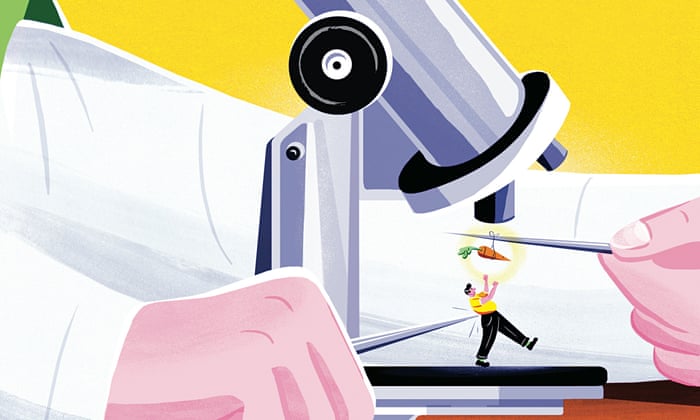
Government refuses to review the negative impact of sanctions on people with mental illness

Illustration by Jack Hudson.

The increased use and rising severity of benefit sanctions became an integrated part of welfare “conditionality” in 2012. Sanctions are based on the behavioural theory called “loss aversion,” which is borrowed from economics and decision theory. Loss aversion refers to the idea that people’s tendency is to strongly prefer avoiding losses to acquiring gains. The idea is embedded in the use of sanctions to “nudge” people towards “changing their behaviours,” by using a threat of punitive loss, since the underpinning assumption is that people are unemployed because of personal behavioural deficits and making “wrong decisions,” rather than because of socio-economic conditions and political policy decisions.

However, a wealth of evidence has demonstrated that sanctioning does not help clients into work; indeed, it is more likely to make it much harder to get a job. Furthermore, sanctions are often applied in an arbitrary manner, without due regard to proportionality, rationality or for the health and wellbeing of people claiming benefits.

The Government is facing renewed calls for an independent review to examine its controversial benefit sanctions policy and to ensure vulnerable people are protected. However, Department of Work and Pensions minister, Priti Patel, has refused to examine the effect of its  sanctions regime on the mental health of people who are affected by it.

MPs used a question session in the Commons to raise concerns over the impact of benefit sanctions on the mental health of claimants.

Employment minister, Patel, said any analysis of the temporary benefit cuts’ effects would be “misleading” in isolation and that their effect should therefore not be examined.

“There are many factors affecting an individual’s mental health. To assess the effect of sanctions in isolation of all other factors would be misleading,” she told MPs at a Work and Pensions Questions session in the House of Commons.

She also claimed that there was no evidence that sanctions particularly affected people with mental health problems – a claim contrary to the results of independent research.

More than 100 people with mental health issues have their benefits sanctioned every day, according to figures released earlier this year.

The government’s refusal to engage with criticism of the sanction system’s effect on mental health comes after the highly critical study by the charity Mind.

83 per cent of Work Programme participants with mental health issues surveyed by Mind said the scheme’s “support” had made their mental health problems worse of much worse.

Jobseekers are to be given 14 days’ notice before facing benefit sanctions under a new scheme being trialled next year by the Department for Work and Pensions (DWP).

But the government were questioned why they are waiting until next year to trial this idea.

Eilidh Whiteford, the SNP’s social justice and welfare spokeswoman, told Ms Patel: “The so-called yellow pilot scheme is actually an admission by the Government that the sanctions regime isn’t working at the present time, and it’s particularly badly failing people with serious mental illnesses.

“Why is the Government waiting until next year to bring in this pilot scheme, and in the meantime will they please just stop sanctioning people who are seriously ill?”

Ms Patel said she would “respectfully disagree” with Ms Whiteford, adding: “Claimants are only asked to meet reasonable requirements taking into account their circumstances and I think, as you will find with the pilots as they are under way, that again this is about how we can integrate support for claimants and importantly provide them with the support and the guidance to help them get back to work.”

Ms Whiteford insisted the reality is people with mental health problems are being “disproportionately sanctioned”, adding that has been clear for “some time”.

Ms Patel replied: “For a start, the Government has been listening and we have responded to the Work and Pensions Select Committee, hence the reason we will be trialling and piloting the new scheme.”

She reiterated staff in jobcentres are trained to support claimants with mental health conditions, adding: “There is no evidence to suggest mental health claimants are being sanctioned more than anybody else.”

Shadow work and pensions minister Debbie Abrahams told Ms Patel: “You may have inadvertently slipped up there.

“There is clear evidence from last year that 58% of people with mental health conditions on the Employment Support Allowance work-related activity group were sanctioned.

“Obviously that’s over half and that’s the equivalent to 105,000 people – 83% in a Mind survey say that their health condition was made worse as a result of this.”

Data released by the mental health charity Mind recently revealed the scale of sanctions imposed on people with mental health problems being supported by out-of-work disability benefits.

Obtained by the charity under the Freedom of Information Act, the figures show that there were up to three times more benefit sanctions issued by the Department for Work and Pensions (DWP) to people with mental health problems last year than there were people “supported” into work.

There were almost 20,000 benefits sanctions received by people who were out of work because of their mental health last year, while only 6340 of this group were successfully supported into a job during the same period.

Professor Jamie Hacker Hughes, President of the British Psychological Society, said:

“Today’s news, from a Freedom of Information request made by the mental health charity Mind, shows that three times as many people are subject to benefit sanctions as those who have been supported back into work.”

“We in the British Psychological Society have become increasingly concerned about benefit sanctions and a number of other issues concerning the psychological welfare of those on benefits.

“We have repeatedly sought a meeting with the Secretary of State and his team and now repeat that request so that his Department may become aware of the most up-to-date psychological research and opinion on these issues.

“There are approximately 250,000 people receiving the benefit Employment and Support Allowance who need this support primarily because of their mental health. People can be sanctioned – have their benefits cut – if they fail to participate in work-related activity, including missing appointments or being late for meetings or CV writing workshops.

“However, many people with mental health problems find it difficult to participate in these activities due to the nature of their health problem and the types of activities they’re asked to do, which are often inappropriate.”

The government has a duty to monitor the impact of its policies, and to make the results public. Sanctions are founded on theory and experimental behavioural science, which adds a further dimension of legitimacy to calls for a review into the impacts of sanctions on people.

This post was written for Welfare Weekly, which is a socially responsible and ethical news provider, specialising in social welfare related news and opinion.

PIP refused for allegedly spending too much time on Facebook

Facebook-Logo-Wallpaper-Full-HD

Thanks to Benefits and Work for this post.

A shocked welfare rights worker, posting on Rightsnet, has revealed how his client had their personal independence payment (PIP) appeal refused because of the amount of time the claimant allegedly spent on Facebook.

Accused of lying
The claimant had appealed to a first-tier tribunal about the decision on their PIP claim and attended an oral hearing with a representative.

Whilst considering their mental health, the claimant was asked by the panel whether they ever used Facebook. The claimant replied that they did so ‘now and again’.

After all the evidence had been taken, the claimant and their representative returned to the waiting room while the tribunal made their deliberations.

However, when they were called back before the panel to hear the decision, the claimant was accused of lying to the tribunal. The medical panel member had the claimant’s Facebook page open on their smartphone and was reading from it, clearly taking the view that the number of posts was too frequent to be regarded as ‘now and again’.

Because the evidence gathering phase of the appeal had ended, the claimant was not allowed to respond, they could only listen to the decision of the tribunal in shocked silence.

Thus they were given no opportunity to challenge the accusation that they were lying or to explain that their partner also used their Facebook page.

Instead, they must now go through the lengthy process of asking for a statement of reasons from the tribunal judge – which can take many weeks or months to be provided – before asking for the decision to be set aside or appealing to the upper tribunal.

Breach of natural justice
There is a very strong probability that the decision will be overturned because it is such a flagrant breach of natural justice: the decision was based on evidence acquired by the panel itself from elsewhere and the claimant was given no opportunity to comment on it.

But, as well as leaving a big question mark over the quality of training for tribunal members, this episode also raises the possibility that claimants’ use of social media may in the future be used as evidence when making decisions on benefits entitlement.

If all the facts are collected and the claimant is given the opportunity to comment on them, this may just be another indignity that claimants are expected to learn to live with. Either that or claimants will need to make sure that their online life is kept as private as possible.

But if decisions are made based on partial evidence and wrong assumptions, as in this case, it will simply lead to more unfairness and injustice for sick and disabled people.

View the topic on Rightsnet

The new social prescribing: ask not what your government can do for you

socialprescribing


I have a background in community work and have always seen it as a progressive mechanism for social transformation; challenging oppression; extending inclusion and democracy; offering learning and personal growth opportunities; empowerment, social justice, equity, fairness, participation, self-determination, amongst many other things. Communities potentially provide essential support for individuals, groups and organisations, and opportunities for reciprocity. Good community work promotes human development, and fosters civic responsibility through solidarity, cooperation and mutual aid.

Social prescribing is basically a community-based referral: it’s a means of enabling primary care services to refer patients with psycho-social, emotional or practical needs to a range of local, non-clinical services, often provided by the voluntary and community sector, and it’s aim is to improve people’s mental health, physical health and wellbeing, using community interventions.

In practice this means that GPs, nurses and other healthcare practitioners work with patients to identify non-medical opportunities or interventions that will help, improving support and the wider social aspects of their lives. The services that patients can choose from include everything from debt counselling, support groups, allotments and walking clubs, to community cooking classes and one-to-one coaching. Both evidence and commons sense suggests that social prescribing may be particularly appropriate and beneficial for isolated, marginalised groups. And needs-led community provision that supports and enhances psychosocial health and wellbeing is an excellent idea.

Poor mental health is often correlated with poverty, (Melzer et al. 2004) poor community integration, and competitiveness amongst social groups (Arrindell et al., 2003). Key questions arise as to the efficacy, therefore, of working with individuals, when much research suggests community work would be more effective (Orford, 2008).

So far so good.

I had the following message yesterday from friend and fellow writer, Linda:

“I have received an email from my local Tory MP letting me (and other constituents) know that he is going to be setting up a ‘Mental Health Surgery’ Hub with a ‘Mental Health Expert’ who will be handing out ‘social Prescriptions’ as he says he is aware that many mental health problems are caused by ‘Social Problems’. Im wondering if there is perhaps a wider agenda from the Conservatives.”

This is the relevant paragraph taken from his email:

“Since my election in May I have been surprised at the number of my constituents with different mental health issues, so much so I am looking to run a surgery ‘hub’ with a mental health specialist so people can drop in and have their needs assessed and be issued with a form of ‘social prescription’. I recognise many mental health issues are caused or exacerbated by social factors so sometimes a social solution can be more effective than a medical one.

I did a little research.

The 2010 Marmot Review (Fair Society, Healthy Lives) of health inequalities identified social prescribing as an, “approach [that] facilitates greater participation of patients and citizens and support in developing health literacy and improving health and wellbeing”.

It identified additional NHS healthcare costs linked to inequality as being well in excess of £5.5 billion per year. It is claimed that social prescriptions can cut the NHS bill.

However, despite the growing popularity of social prescriptions amongst cash and resource-strapped professionals, the University of York has surprisingly produced research to show that there is little good quality evidence that social prescribing is cost-effective.

But the thing that bothers me the most is the link that the Conservative government have made between social prescriptions, cost-cutting and (as I deeply suspected) as a mechanism of extending behavioural modification (euphemistically called “nudging” by the government’s team of behavioural economists and decision-making “experts”).

I read several current reviews of social precribing, each mentioning both criteria in recommendations for “success.”:

“The work of social prescribing health trainers fits with the approach of the Coalition Government as described in its White Paper on Public Health which emphasises the need to ‘build people’s self esteem and confidence’ in order to bring about changes in behaviour.”

It also fits with the Marmot Review’s recommendation on tackling the social problems that undermine health and with the Coalition Government’s approach to behaviour change as outlined in recent publications such as MINDSPACE.” (Link added by me.)

and:

“In times when finances are under pressure and the NHS is charged with achieving ‘better for less’, primary care needs to be looking at how to do things differently.”

Nesta, who now partly own the Government’s Behavioural Insights Team (the Nudge Unit) are of course at the forefront of promoting social prescriptions amongst medical professionals, firmly linking what is very good idea with very anti-democratic Conservative notions of behaviour change, citizen responsibility and small-state ideology. So, it’s no longer just about helping people to access a wider range of community-based services and support, social prescribing has also places strong emphasis on “encouraging patients to think about how they can take better care of themselves.”

Of course, there is what may easily be construed as a whopping self-serving process of linking behavioural change with social prescribing, opening some potentially very lucrative opportunities for Nesta.  

However, taken at face value, the idea of promoting patient participation in their own care sounds very democratic and reasonable. Common sense, in fact.

In this context, social prescribing can be seen as a logical extention of the Biopsychosocial model (BPS) of ill health. The biological component of the model is based on a traditional allopathic (bio-medical) approach to health. The social part of the model investigates how different social factors such as socioeconomic status, culture and poverty impact on health. The psychological component of the biopsychosocial model looks for potential psychological causes for a health problem such as lack of self-control, difficulties with coping, emotional turmoil, and negative thinking.

Of course a major criticism is that the BPS model has been used to disingenuously trivialise and euphemise serious physical illnesses, implying either a psychosomatic basis or reducing symptoms to nothing more than a presentation of malingering tactics. This ploy has been exploited by medical insurance companies (infamously by Unum Provident in the USA) and government welfare departments keen to limit or deny access to medical, social care and social security payments, and to manufacture ideologically determined outcomes that are not at all in the best interests of patients, invalidating diagnoses, people’s experience and accounts, and the existence of serious medical conditions.

Unum was involved in advising the government on making the devastating cuts to disabled people’s support in the UK’s controversial Welfare Reform Bill. (See also: The influence of the private insurance industry on the UK welfare reforms.)

Secondly, this is a government that tends to emphasise citizen responsibilities over rights, moralising and psychologizing social problems, whilst quietly editing out government responsibilities and democratic obligations towards citizens.

For example, poverty, which is caused by political decisions affecting socioeconomic outcomes, is described by the Conservatives, using elaborate victim-blame narratives, and this is particularly objectionable at a time when inequality has never been greater in the UK. Poverty may only be properly seen in a structural context, including account of the exclusion and oppression experienced by those living in poverty, the global neoliberal order, the gender order, the disability, racial, sexual and other orders which frame social life and precipitate poverty in complex and diverse ways. It’s down to policy-makers to address the structural origins of poverty, not the poor, who are the casualities of politically imposed structural constraints.

In this context, social prescriptions are used to maintain the status quo, and are likely to be part of a broader process of responsibility ascription – based on the traditional Conservative maxim of self-help, which is used to prop up fiscal discipline and public funding cuts, the extensive privatisation of public services, defense of private property and privilege, and of course, the free market. The irony of the New Right, neoliberal, paternalistic libertarianism is that the associated policies are not remotely libertarian. They are strongly authoritarian. It’s a government that doesn’t respond to public needs, but rather, it’s one that pre-determines public interests to fit within an ideological framework

A government that regards individuals as the architects of their own misfortune tends to formulate policies that act upon individuals to change their behaviour, rather than to address the structural constraints (and meet public needs,) such as social injustice and unequal access to resources. This isn’t a government prepared to meet public needs at all. Instead it’s a government that expects citizens to change their behaviour to accommodate the government’s ideologically directed needs.

That approach flies in the face of established professional community work values and principles.

Poor people suffering mental ill health because we live in a society that is extremely unequal, are blamed by the government for the “symptoms” of their poverty – poor eating habits and “lifestyle choices”. But poverty is all about limited choices, which is itself not a “lifestyle choice.” No-one actually chooses to be poor. Government policies, social structures and systemic failures create poverty.

The Conservatives extend an economic Darwinism, coupled with an extremely intrusive disciplinary approach, mass surveillance and a stigmatising rhetoric, whilst moralising a free-market framework that constrains many and preserves the privilege of a few. The absurdity is this: if an economic framework isn’t meeting the needs of a population, it isn’t an adequate response for the government to act upon citizens who have become casualities of that framework, to persuade or coerce people into fitting within an increasingly harmful and useless socioecomomic ideology.

There is a clear correlation with low socioeconomic status and poor mental health. Poverty is a complex, multidimensional phenomenon, encompassing the lack of means to satisfy basic needs, lack of control over resources, often, a lack of access to education, exclusion from opportunities, and poor health. Poverty is intrinsically alienating and distressing, and of particular concern are the direct and indirect effects of poverty on the development of psychosocial stress. (See also: The Psychological Impact of Austerity – Psychologists Against Austerity.)

State “therapy” aimed at changing the behaviour of individuals diverts attention from growing inequality, and from policies that are creating circumstances of absolute poverty. It also diverts attention from the fact that if people cannot meet their basic physiological needs, they cannot possibly be “incentivised” to meet higher level psychosocial ones. 

I wrote a critical analysis of the government proposal to introduce Cognitive Behaviour Therapists to deliver state “therapy” in job centres earlier this year, with the sole aim of improving “employment outcomes.” There is also an extensive critique of Cognitive Behaviour Therapy (CBT) included in the article, along with some discussion about the merits of community work, which is very relevant to this discussion. (See: The power of positive thinking is really political gaslighting.)

I also wrote earlier this year about how the government has stigmatised and redefined unemployment, problematizing and re-categorising it as an individual psychological disorder. Both articles are very pertinent to this discusion. (See: Stigmatising unemployment: the government has redefined it as a psychological disorders.)

Welfare has been redefined: it is a now a reflecton of a government pre-occupied with assumptions about and modification of the behaviour and character of recipients rather than with the alleviation of poverty and ensuring economic and social wellbeing.

The stigmatisation of people needing benefits is designed purposefully to displace public sympathy for the poor, and to generate moral outrage, which is then used to further justify the steady dismantling of the welfare state.

Many psychosocial problems have arisen because of social conservatism and neoliberalism. The victims of this government’s policies and decision-making are being portrayed as miscreants – as perpetrators of the social problems caused by the government’s decisions.

It’s all too often the case that good ideas are placed in political ideological frameworks, distorted, and are then applied to simply justify and prop up dogma.

Meanwhile, mental health services are facing crisis because of budget cuts by this government, Local Authorities and community services have also been cut to the bone. (See: The cost of the cuts: the impact on local government and poorer communities.) Those with mental health problems are stranded on an ever-shrinking island.

Policy initiatives such as social prescriptions, which focus on how to remediate problems at an individual level, seeing both poverty and mental illness, for example, as simply states of being – rather than dealing with the generative political and economic practices and social relations framework which precipitated that state in the first place, effectively depoliticises political problems leaving people with an internalised state of oppression, disabling them from taking effective action.

The political refusal to permit people to voice their concerns and anxieties in political rather than personal terms further exacerbates sociopolitical marginalisation, low status, it breaks a sense of connectedness with others and wider communities, it reinforces a sense isolation and of personal responsibility for circumstances that are politically constructed and disowned.


The Psychological Impact of Austerity – Psychologists Against Austerity

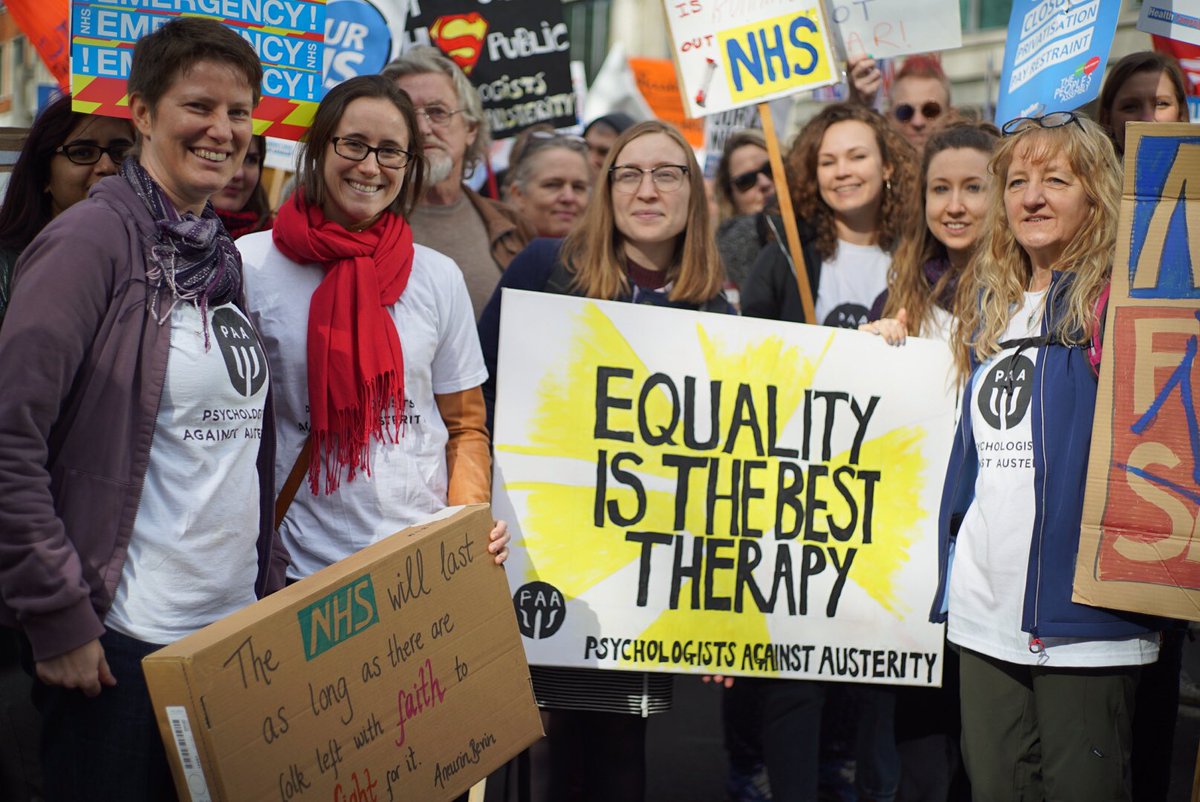
Image result for psychologists against austerity

A recent report from the Psychologists Against Austerity collective directly links cuts to public services with mental health problems.

Well-established psychological research that explains these links already exists. However, this knowledge has been missing from the debate on austerity so far.

Psychologists are often in a position to see the effects that social and economic changes have on people. We also occupy a relatively powerful position as professionals and therefore have an ethical responsibility to speak out about these effects.

Introduction

The Coalition government since 2010 has implemented a program of cuts to public services and welfare that has disproportionately affected  the most vulnerable people in our society in the name of ‘Austerity’. Measures like the bedroom tax, cuts to disability benefits, the introduction of Universal Credit and cuts to local government, social services and NHS budgets have been presented by the Coalition as necessary to the UK’s economic recovery.

Ideas like ‘the nation has maxed out its credit card’ and austerity as a painful but necessary medicine have been used to frame these policy choices as unavoidable and moral.

We argue that recent cuts are both avoidable and immoral. As psychologists we are often in a position to see the effects that societal and economic conditions have on people.

Psychologists also occupy a relatively powerful position as professionals with access to resources like theory and research and therefore have an ethical responsibility to speak about these effects. Indeed, according to the British Psychological Society (BPS) code of ethics, part of the standard for competence is sensitivity to developments in our social and political context.

It is imperative to take into account the psychological costs of austerity for individuals and communities. Psychological impacts of recent austerity policies have been little discussed in media and policy debates, yet there is clear and robust research linking recent austerity policies with damaging psychological outcomes.

Work at an epidemiological level on social determinants of health like the Marmot Review and The Spirit Level shows robust evidence for the effects of social inequality on health, including emotional well-being. Mental health problems are associated with markers of low income and social economic status in all the developed nations, no matter which indicator is used. There are indications of higher levels of mental health problems following austerity, with a rise in antidepressant prescriptions, and GPs reporting increasing numbers of mental health appointments, and a rise in male suicides.

Since the financial crisis, suicides have increased in European countries that have adopted austerity policies (UK, Greece, Spain and Portugal), but not in those who have protected their welfare state (Iceland and Germany). In this paper, we assume that the emotional well-being of societies and individuals is determined by multiple factors that interact with each another. These include economic, societal, familial, psychological and biological influences.

We use the terms ‘emotional well-being’, ‘distress’ and ‘mental health problems’ rather than ‘mental illness’. This is because there is disagreement about whether emotional difficulties are best understood as a product of individual pathology, or a consequence of toxic environments and difficult life experiences. We use diagnostic terminology as a proxy for a wide range of experiences of distress, which are biographically unique. As psychologists, we believe that the diagnostic and medical understanding of ‘mental illness’ often neglects socioeconomic context.

As Lynne Friedli says:

“Mental health is produced socially: the presence or absence of mental health is above all a social indicator and therefore requires social, as well as individual solutions.”

Psychological research provides evidence for some of the wide range of pathways by which increasing social inequality and austerity increase emotional distress. In this paper, we have outlined well-established pathways to short and long term psychological damage from austerity policies; we have called these ‘austerity ailments’.

They are:

  • Humiliation and shame
  • Fear and distrust
  • Instability and insecurity
  • Isolation and loneliness
  • Being trapped and powerless

Key conclusions

Austerity policies have damaging psychological costs. Mental health problems are being created in the present, and further problems are being stored for the future.

We have identified five ‘Austerity Ailments’. These are specific ways in which austerity policies impact on mental health. These experiences have been shown to increase mental health problems. Prolonged humiliation following a severe loss trebles the chance of being diagnosed with clinical depression. Job insecurity is as damaging for mental health as unemployment.

Feeling trapped over the long term nearly trebles the chances of being diagnosed with anxiety and depression. Low levels of trust increase the chance of being diagnosed with depression by nearly 50 per cent.

These five ‘ailments’ are indicators of problems in society, of poisonous public policy, weakness of social cohesion and inequalities in power and wealth. We also know what kind of society promotes good health.

Key markers are that societies are equal, participatory and cohesive.

Some important indicators of a psychologically healthy society are:

1. Agency
2. Security
3. Connection
4. Meaning
5. Trust

Mental health isn’t just an individual issue. To create resilience and promote wellbeing, we need to look at the entirety of the social and economic conditions in which people live.

Implications and recommendations

The evidence presented in this report indicates that a range of key psychological experiences can be directly linked to public policy, and are sensitive to macro social and economic changes.

It is therefore crucial that policy makers and service developers consider the psychological impacts of current and future policies. Creating the conditions for wellbeing and resilience directly helps to prevent distress in the short and long term, thereby saving resources and reducing suffering.

 We call for:

  • Social policy that works towards a more equitable and participatory society, to facilitate individual well-being, resilient places, and strong communities.
  •  Policy makers to take into account the psychological impacts of macro social and economic changes.
  • A social security system that empowers and supports, rather than punishing people in times of need.
  • Public services to increase focus on preventing distress, improving citizen participation and social justice, as well as help facilitate the five positive indicators above.
  • Co-production to be one such model of public service reform. This approach harnesses individuals’ and communities’ assets and expertise rather than viewing them just as passive recipients of and burdens on services.
  • A community-led approach to mental health and emotional wellbeing that develops collective responses to individual needs and by doing so works to strengthen communities and build on communal resources.

You can read the full briefing paper here.


Image result for psychologists for social change


I don’t make any money from my work. I’m disabled through illness and on a very low income. But you can make a donation to help me continue to research and write free, informative, insightful and independent articles, and to provide support to others. The smallest amount is much appreciated – thank you.

DonatenowButton

Psychologists Against Austerity: mental health experts issue a rallying call against coalition policies.

PAA-550x369

I wrote an article in March about the government plans to make the receipt of social security benefits for those with mental illnesses conditional on undergoing “state therapy.” I raised concern about ethical issues – such as consent, the inappropriateness of using behaviour modification as a form of “therapy,” and I criticised the proposed Cognitive Behaviour Therapy (CBT) programme on methodological and theoretical grounds, as well as considering wider social implications.

The 2015 budget included plans to provide online CBT to 40,000 claimants and people on the Fit for Work programme, as well as putting therapists in more than 350 job centres.

Since I wrote, over 400 psychotherapists, counsellors and mental health practitioners have written an open letter, published by the Guardian, about the broader, profoundly disturbing psychological and quality-of-life implications of the coalition government’s austerity cuts and policies. However, the letter was particularly critical of the government’s benefits sanctions scheme, which has been condemned by many of us – human rights advocates across the state – as brutal, unjust, ill-conceived, ineffective and inhumane.

In particular, the letter stated that the government’s proposed policy of linking social security benefits to the receipt of “state therapy” is utterly unacceptable. The measure, casually coined “get to work therapy,” was discussed by Chancellor for the Exchequer George Osborne during his last budget.

The letter’s supporters included psychotherapist and writer Susie Orbach. She called the Conservative proposals “beyond shocking.” Echoing the concerns I raised earlier this year, she said:

“It undermines the fundamental principles of one’s right to physical and mental care – that you have to be able to consent and that the people you go to have to be highly trained and have your best interests and aren’t meeting targets.”

The letter’s signatories, all of whom are experts in the field of mental health, have said such a measure is counter-productive, “anti-therapeutic,” damaging and professionally unethical. The “intimidatory disciplinary regime” facing benefits claimants would be made even worse by further unacceptable proposals outlined in the budget.

Among the groups represented by the signatories were Psychologists Against Austerity, Britain’s Alliance for Counselling and Psychotherapy, Psychotherapists and Counsellors for Social Responsibility, the Journal of Public Mental Health, and a range of academic institutions including Goldsmiths, Birkbeck, the University of London, the University of Amsterdam, Manchester Metropolitan University, the University of Brighton, Disabled People Against the Cuts and others.

More generally, the wider reality of a society thrown completely off-balance by the emotional toxicity of social conservatism combined with economic neoliberalism (which I have argued is manifestly authoritarian) is affecting Britain in profound and complex ways, the distressing effects of which are often most visible in therapist’s consulting rooms.

This letter sounds the starting-bell for a broadly based campaign of organisations and professionals against the damage that neoliberalism is doing to the nation’s mental health.

The letter said that for now, we call on all the parties in this election to make it clear that they will urgently review such regressive, anti-therapeutic practices, and appropriately refashion their commitment to mental health if and when they enter government.

Andrew Samuels, an Essex University professor, and immediate past chair of the UK Council for Psychotherapy, said he believed there was “a bit of a public school ethos” behind the work-capability regime introduced under the conservative-liberal democrat coalition and new conservative plans.

Characterising the government attitude as “Pull yourself together man, for heaven’s sake,” Samuels added: “It is wholly inappropriate. It symbolises a society that has lost all moral compass.”

Absolutely. Public schools are notorious for a culture of bullying. However, it’s one thing to be treated as a privileged and insulated public school boy by a peer from an elite background to “character building” rhetoric, but quite another to adopt that same bullying approach towards the ill and most vulnerable citizens. All to justify an ideological drive to “shrink the state” and remove support from the poorest.

All of this said, public schools are regarded by many as institutions that inflict a particularly British form of child abuse and social control. I also think it has to be said that soul trauma and pain don’t respect social status.

Samuels insisted the open letter was not “pro-Labour” but was aimed at getting a review of measures taken and proposed over the past five years.

He said: “If Labour decides afterwards all this is in order, it will go on. But I don’t think it will.”

The Labour Party does value professional opinion and rational discourse. The Conservatives, on the other hand, are not widely recognised as a party that welcomes democratic, open debate, transparency and accountability. The Tories simply exclude critical professionals and representative organisations that may challenge and disagree from the discourse.

A spokesperson for Labour said mental health “is the biggest unaddressed health challenge of our age.”

“It’s essential that we give mental health the priority it deserves if we are to thrive as a nation and ensure the NHS remains sustainable for the future,” he said.

The Labour Party have pressured the government to “write parity of esteem between physical and mental health into law,” and in the response, Labour have stated that the party is committed to implementing this policy if elected in May.

The spokesman pledged the Labour will bring an end to the “scandal of the neglect of child mental health,” indicating a welcomed return to a comprehensive preventative approach. He said: “It is simply not right that when three-quarters of adult mental illnesses begin in childhood, children’s mental health services get just six per cent of the mental health budget.”

Richard House of the Alliance for Counselling and Psychotherapy, the letter’s main organiser, said there had been a mounting groundswell of concern: “When one hears story after story of dramatic negative health impacts, psychological and physical, after people are subjected to these back-to-work practices, the time has surely come for an ‘emotional audit’ of the impact of what, to many, appear to be heartless, un-thought-through policies that are merely penalising and punishing the already disadvantaged still further.”

Yes, the time has come for a change of government. On May 7, we must ensure that the regressive, oppressive regime of the past five years is replaced by a progressive, inclusive and democratic alternative.

Related

The power of positive thinking is really political gaslighting

The just world fallacy

Cameron’s Nudge that knocked democracy down – a summary of the implications of Nudge theory

Rising ESA sanctions: punishing the vulnerable for being vulnerable

Suicides reach a ten year high and are linked with welfare “reforms”

Mental Health Services in crisis because of Coalition cuts to funding

The Psychology of Austerity

A group of mental health professionals have come together under the banner of Psychologists Against Austerity (PAA) to highlight the psychological impact of austerity.

Now, with only a few weeks to go before the general election, PAA have started a campaign calling for a Parliamentary Inquiry into the psychological damage austerity has wreaked across the UK.

You can read more and sign our petition here: 38degrees/psychological costs of austerity inquiry.


I don’t make any money from my work. But you can support Politics and Insights and contribute by making a donation which will help me continue to research and write informative, insightful and independent articles, and to provide support to others. The smallest amount is much appreciated, and helps to keep my articles free and accessible to all – thank you. 

DonatenowButton

Sticks and stones: abusive labels, self concept – when words become weapons

The socio-political perspective.

My friend Harry Ottley once told me, many years ago, that I could kill a man with words. It was at a time when I was struggling to come to terms with a series of horrible events. Recovering from trauma takes time and for a while, I wasn’t myself. I didn’t want any company at the time, and Harry, who simply wanted to offer support, found me somewhat antisocial and blunt.

We can heal, though. It takes time, a lot of soul-searching, it’s often a very painful process and there are no short cuts. One of the reasons I decided to study psychology and sociology was my abiding interest in how we are immersed in each other: we exist, connect, shape and are shaped in a social context: in an inter-subjective realm, our behaviours affect each other, often profoundly.

Language, narratives, ideologies, norms and all of the mechanisms we draw on to make sense of and to navigate the universe can stifle us, damage and repress us, but may also transform and liberate us.

Harry is right. What we say to each other matters very much.

The range of what we say and think and do is limited by what we don’t notice. And because we fail to notice that we fail to notice, there is little we can do to change; until we notice how failing to notice shapes our thoughts and deeds

Some people often use the “freedom of speech” plea to justify their prejudice. They say they have a right to express their thoughts. But speech is an intentional ACT. Hate speech is intended to do harm – it’s used purposefully to intimidate and exclude vulnerable groups. Hate speech does not “democratise” speech, it tends to monopolise it. Nor is it  based on reason, critical thinking or open to debate. Bigotry is a crass parody of opinion and free speech. Bigots are conformists – they tend not to have independent thought. Prejudice thrives on Groupthink.

Being inequitable, petty or prejudiced isn’t “telling it like it is” – a claim which is an increasingly common tactic for the right, and particularly UKIP – it’s just being inequitable, petty or prejudiced.  And some things are not worth saying. Really. We may well have an equal right to express an opinion, but not all opinions are of equal worth.

And the right-wing do frequently dally with hate speech. Hate speech generally is any speech that attacks a person or group on the basis of their race, religion, gender, disability, or sexual orientation. In law, hate speech is any speech, gesture or conduct, writing, or display which is forbidden because it may incite violence or prejudicial action against or by a protected individual or group, or because it disparages or intimidates a protected individual or group. Critics have argued that the term “hate speech” is a contemporary example of Newspeak, used to silence critics of social policies that have been poorly implemented in order to appear politically correct.

This term was adopted by US conservatives as a pejorative term for all manner of attempts to promote multiculturalism and identity politics, particularly, attempts to introduce new terms that sought to leave behind discriminatory baggage attached to older ones, and conversely, to try to make older ones taboo.

“Political correctness” arose originally from attempts at making language more culturally inclusive. Critics of political correctness show a curious blindness when it comes to examples of “conservative correctness.” Most often, the case is entirely ignored, or censorship of the Left is justified as a positive virtue.Perhaps the key argument supporting this form of linguistic and conceptual inclusion is that we still need it, unfortunately. We have a right-wing Logocracy, creating pseudo-reality by prejudicial narratives and words. We are witnessing that narrative being embedded in extremely oppressive policies and in their justification.

The negative impacts of hate speech cannot be mitigated by the responses of third-party observers, as hate speech aims at two goals. Firstly, it is an attempt to tell bigots that they are not alone. It validates and reinforces prejudice.

The second purpose of hate speech is to intimidate a targeted minority, leading them to question whether their dignity and social status is secure. In many cases, such intimidation is successful. Furthermore, hate speech is a gateway to harassment and violence. (See Allport’s scale of prejudice, which shows clearly how the Nazis used “freedom of speech” to incite hatred and then to incite genocide.) As Allport’s scale indicates, hate speech and incitement to genocide start from often subtle expressions of prejudice.

The dignity, worth and equality of every individual is the axiom of international human rights. International law condemns statements which deny the equality of all human beings. Article 20(2) of the ICCPR requires states to prohibit hate speech. Hate speech is prohibited by international and national laws, not because it is offensive, but rather, because it amounts to the intentional degradation and repression of groups that have been historically oppressed.

The most effective way to diffuse prejudice is an early preventative approach via dialogue: positive parenting, education and debate. Our schools, media and public figures have a vital part to play in positive role-modelling, like parents, in challenging bigotry, encouraging social solidarity, respect for diversity and in helping to promote understanding and empathy with others.

Hate speech categories are NOT about “disagreement” or even offence. Hate speech doesn’t invite debate. It’s about using speech to intentionally oppress others. It escalates when permitted, into harassment and violence. We learn this from history, and formulated human rights as a consequence.

UKIP would have us unlearn the lessons of the Holocaust so that people can say “I’m not being racist, but…” or “It’s not wrong to say immigrants should be sent home…” and so on.

Wittgenstein once said: “The limits of my language are the limits of my  world.”

Words are powerful. As well as describing, signifying, explaining, persuading, interpreting, obscuring, deceiving and so on, they may also issue commands and instructions. We “spell” words. Spelling may also be described as “words or a formula purported to have magickal powers.” Words act upon others and elicit responses.

Yes, they may profoundly impact on others. With words, both spoken and unspoken, we can shape and re-shape the universe. We shape and transform each other. We can create. Einstein changed the meaning of the word “mass” and transformed Newton’s universe of structures to his own – one of events. It’s a different universe.

We can oppress or liberate with a few intentional words. The choice is ours.

The psychological perspective

“Every relationship. . . implies a definition of self by others and other by self. . . A person’s ‘own’ identity can never be completely abstracted from his identity-for-others.” From Self and Others – R D Laing.

The human mind is social. Through a process of symbolic interactions, beginning as children, humans begin to define themselves meaningfully within the context of their socialisations.

The looking-glass self is a social psychological concept, first mentioned in Human Nature and the Social Order by Charles Cooley in 1902. It’s basis is that a person’s sense of self-hood arises from social, interpersonal interactions and the perceptions of others. We internalise those interactions. The term refers to how people shape their self-concepts based on their understanding of how others perceive them.

People tend to conform to how they think others think them to be,  especially children, since they don’t have the necessary experiences and inner resources to reject labels, and it’s difficult, or arguably impossible, to act differently from how a person thinks he or she is perpetually perceived. Individuals use language and thought as the basis of their self concept.

Cooley said: “The thing that moves us to pride or shame is not the mere mechanical reflection of ourselves, but an imputed sentiment, the imagined effect of this reflection upon another’s mind.”

Self-fulfilling prophecy is the behavioural confirmation effect, in which behaviour, influenced by expectations, causes those expectations to come true. People react, not only to the situations they are in, but also, and often primarily, to the way they perceive the situations and to the meaning they ascribe to their perceptions.

Sociologists often use the Pygmalion effect, interchangeably with self-fulfilling prophecy, and the effect is most often cited with regard to educational under-attainment, social class, race.

“When teachers expect students to do well and show intellectual growth, they do; when teachers do not have such expectations, performance and growth are not so encouraged and may in fact be discouraged in a variety of ways. How we believe the world is and what we honestly think it can become have powerful effects on how things will turn out.”  James Rhem, executive editor for the online National Teaching and Learning Forum.

In the context of race, gender and class, negative labelling is often associated with  socio-political control mechanisms and prejudice. Stereotypes and labels estrange us from our authentic possibilities. The attributions and labels that people exchange on a symbolic level, also have the function of instruction or injunction, this function may be denied,  giving rise to one type of “mystification”, rather like hypnotic suggestion.

“Pain in this life is not avoidable, but the pain we create avoiding [our own] pain is avoidable.” Ronnie D Laing.

It’s almost impossible for individuals – especially children – to avoid experiencing changes to their psyche and  subsequent actions following repeated emotional abuse (and physical abuse, psychological violence is so very often a precursor to physical violence).

Research consistently shows that children subjected to verbal aggression, may exhibit a range of serious disorders, including chronic depression, anxiety, post-traumatic stress disorder, dissociation and anger. Words Can Be Weapons is a powerful multimedia campaign based in China that illustrates how words may be turned into weapons, to illustrate that what we say can hurt and damage others, very literally.

The number of crimes committed by juveniles has doubled in China, and the Centre For Psychological Research in Shenyang says its studies link juvenile crime to childhood emotional abuse – a taboo subject in China. The centre partnered with the Beijing office of advertising agency Ogilvy and Mather. Six teenagers were interviewed in Shenyang Detention Centre about negative, hurtful statements their parents had said to them in the past, such as “moron” and “You’re a disgrace.” The video then transforms these words, powerfully, into replications of the actual weapons these young people later went on to use to commit crimes.

Juggi Ramakrishnan, Ogilvy and Mather’s executive creative director in Beijing, said, in a press release: “Verbal abuse of children is like setting off a time bomb. It explodes only much later, long after the original perpetrator has left the scene. And it is society that pays the price, as is evident from the rising rate of juvenile crime. We really needed to tell this ‘cycle-of-violence’ story in a way that will make people sit up and take notice.”

One young person begins his interview by saying:  “I guess my world must be a dark one… My mother would yell at me every day, often telling me to go away and die.”

When he heard these words again, this time from his manager, he lost his self-control and stabbed him. The campaign took the words that had haunted him his entire life, and turned them into a knife, like the one he had used in his assault.

The campaign, in the English language version of the video was published on YouTube in April but has only recently garnered the attention it deserves. It has all the content from the project, including full interviews with the young people who are residents in the Detention Centre, at: wordscanbeweapons.co

We know from extensive research that victims of emotional and psychological abuse may also become perpetrators, particularly if no support has been available for the victim. Though many do not.

Damaged self-esteem and psychological injury destabilises us, it may lead to learned, created and distorted or false behaviours as a defence against further psychic injury. Abusers distort our sense of self, lower our self-worth, disorder our emotional responses to others, destroy our faith in our own judgements, skew our perception of others, and erode our personal boundaries.

For children and young people especially, there’s a risk of victim or victimiser roles being normalised, because the experience of alternative  interactions is limited.

In psychology and sociology, internalisation is the process that involves the integration of attitudes, values, standards and the opinions of others into one’s own identity or sense of self.

Studies suggest that young people who have internalised a view of their self as “positive and good” tend to have a developmental trajectory toward pro-social behaviour, those with damaged selves are more likely struggle with the social rules, codes and norms of conduct, empathic affects to others, and adaptive behavioural strategies.

Our selves may be either authentic or false. False selves tend to be an adaptation to false realities.(As opposed to fake selves, which are contrived to manipulate others).

We live in times when the media constructs such false realities every day, with the UK government directing a scapegoating and vilification process which targets vulnerable groups, because of Tory traditional prejudices, in order to justify their ideological inclinations to dismantle the social gains of our post-war settlement, withdraw publicly funded state support for those in need. We have a conservative social order built upon bullying, abuse and coercion from the aristocratic top down: it’s a hierarchy of control and power. And the only authentic quality David Cameron has is his inauthenticity. He’s a typical public school bully, and his atrocious role-modeling gives others permission to bully.

As a consequence, everyday untenable situations arise for those least able to cope with them, because we internalise identity, and through a process of attribution, this currently involves political pretence, dishonesty, illusion, elusion, delusion, and media collusion. This is a government that has normalised abuse on every level, and the consequences of that inflicted psychic trauma will be with us for several generations to come.

7664_531871386882394_1484375941_n
Gaslighting
is a form of  mental abuse in which false information is presented with the intent of making victims doubt their own memory, perception and sanity. Instances may range from simple denial by an abuser that previous abusive incidents ever occurred, to the staging of  events and using a narrative with the intention of disorienting the victim, and “invalidating” their experience. The UK government uses gaslighting techniques, by calling critics “scaremongers”, by claiming cuts to services and provisions are “reforms”, and that coercive welfare sanctions “support” people into work, or “make work pay”, especially given the largest fall in wages ever.

Pictures courtesy of  Robert Livingstone 


I don’t make any money from my work. But you can support Politics and Insights and contribute by making a donation which will help me continue to research and write informative, insightful and independent articles, and to provide support to others. The smallest amount is much appreciated, and helps to keep my articles free and accessible to all – thank you. 

DonatenowButton

top 100 blogs

Mental Health Services in crisis because of Coalition cuts to funding


tory cuts

A succession of Conservative governments have demonstrated very clearly that when it comes to funding established and crucial provisions for our most vulnerable citizens, they lack the foresight required to grasp that reducing funding means reducing our public services to a bare capacity for “firefighting” only – crisis management – rather than a much preferred “preventative” approach.

Under the guise of a “policy of deinstitutionalisation”, Thatcher’s “Care in the Community” Bill was about anything but care: it was all about cutting costs, as reflected in the experiences of many people leaving long term institutional care and being left to fend for themselves in the community. 

Previous Conservative governments of 1979 to 1997 had been responsible for a series of changes in the conceptualisation and delivery of community care services. . In particular, this period saw the introduction of a series of private sector approaches and terminology, as well as the gradual transition of social workers and social services departments into service “purchasers” rather than necessarily the providers of care. As a result of these changes, the community care landscape changed dramatically.

And now, as predicted by many professionals who have consistently warned of the harmful consequences of the Heath and Social Care Bill, it’s the case that a serious funding shortage for mental health services in England is putting patients (and staff) at grave risk. A lack of resources and staff is severely compromising care in parts of the country, with frontline teams often being left to carry the burden of risk, to the detriment of patients.  NHS hospitals are experiencing a massive surge in the number of patients attempting to self-harm and take their own lives, new figures have revealed.

The data, disclosed by UK mental health trusts, following Labour Party freedom of information requests, indicates suicide and self-harm attempts increased by 50 percent in mental health hospitals across Britain between 2010 and 2013. In the past year alone, incidents of patients attempting to take their own lives or inflict self-harm in the institutions has risen by 30 percent.

The FOI requests were tendered by Labour’s Luciana Berger, who is the Shadow Minister for Public Health. Fifty NHS mental health trusts were approached in total, and each was asked for the number of self-harm incidents and suicide attempts on their wards over the past four years. Twenty-nine supplied figures, while twenty one failed to respond. This comes as experts warn that acute mental health services are in crisis and struggling to cope with demand. NHS staff are working very hard in very difficult circumstances. Although the Royal College of Psychiatrists recommends occupancy levels of 85%, figures show that mental health wards are operating over capacity, with some running at up to 138%, and the shortage of beds has forced some mental health patients to travel hundreds of miles for treatment. Figures from the BBC show that minimum of 1,711 mental health beds were closed between April 2011 and August 2013. 

A recent investigation by Health Service Journal (HSJ) revealed that there are 3,640 fewer nurses and 213 fewer doctors working in mental health in April this year compared to staffing levels two years ago. Mental health spending has been cut for the first time in a decade, by the Coalition. 

The same investigation showed that the NHS’s mental health trusts have lost over £250 million of their funding in the same period.

Number of self-harm and suicide attempts across 29 Mental Health Trusts:

2010 2011 2012 2013
Total 14815 16711 17946 23053
Average 511 576 619 795

Luciana Berger MP, Labour’s Shadow Minister for Public Health, said:

“This increase in self-harm and suicide attempts on NHS wards is deeply concerning.

“Mental health services have been squeezed year on year, the number of specialist doctors and nurses has dropped and there aren’t enough beds to meet demand. The pressure this is putting on mental health wards is intolerable.

“It is unacceptable that people in touch with mental health services may not be getting the support they need. These are some of the most vulnerable patients in our NHS. Ministers must now take urgent action to tackle this crisis.”

And given that 42 percent of the NHS mental health trusts approached by Labour failed to issue a concrete response to the party’s recent inquiry, the true extent of this crisis may be considerably more serious than  Luciana Berger’s recently published figures indicate.

Pressure on mental health beds is so severe that some patients are having to be sectioned to secure necessary care, a survey of doctors (conducted by online journal Community Care) found. Sectioning someone under the Mental Health Act – denying them their liberty – should only be done when a person is a risk either to themselves or others. It is a legal process led by a social worker (an approved mental health professional) working alongside two doctors. A patient cannot be sectioned purely to secure a bed, but the survey suggests doctors are being influenced towards detaining someone if it will make it more likely a necessary bed can be accessed.

Sir Simon Wessely, president of the Royal College of Psychiatrists, said that the figures were “a glaring warning sign” that mental health is “running dangerously close to collapse”.  If Wessely is concerned, we all ought to be.

The Government has been criticised for allowing mental health services to be cut disproportionately, as the NHS as a whole undergoes the most severe budget cut in its history.

1912510_690135534389311_7775048840596309303_o

Picture courtesy of Robert Livingstone scroll2

If you are supporting someone who feels suicidal – you  can download a pdf from MIND, that provides information and practical suggestions for what you can do and where you can go for support. 

From  Rethink – Mental health information – Crisis contacts

From NHS Choices – Mental health helplines

Sane Line: 0845 767 8000 (6pm – 11pm every day) www.sane.org.uk

Samaritans: 08457 90 90 90 (24 hours every day)  www.samaritans.org

The just world fallacy

1459165_266124213538634_1461740450_n
The Tories now deem anything that criticises them as “abusive”. Ordinary campaigners are labelled “extremists” and pointing out flaws, errors and consequences of Tory policy is called “scaremongering”.

Language and psychology are a powerful tool, because this kind of use “pre-programs” and sets the terms of any discussion or debate. It also informs you what you may think, or at least what you need to circumnavigate first in order to state your own account or present your case. This isn’t simply name-calling or propaganda: it’s a deplorable and tyrannical silencing technique.

The government have gathered together a Behavioural Insights Team (BIT) – it is a part of the Cabinet Office – which is comprised of both behavioural psychologists and economists, who apply positivist (pseudo) psychological techniques to social policy. The approach is not much different to the techniques of persuasion used in the shady end of the advertising industry.  They produce positive psychology courses which the Department for Work and Pensions (DWP) are using to ensure participants find satisfaction with their lot; the DWP are also using psychological referral with claims being reconsidered on a mandatory basis by civil servant “decision makers”, as punishment for non-compliance with the new regimes of welfare conditionality for which people claiming out of work benefits are subject.

Positive psychology courses, and the use of psychological referral as punishment for non-compliance with the new regimes of welfare conditionality applied to people claiming out of work benefits are example of the (mis)application of Cognitive Behavioural Therapy (CBT).

CBT is all about making a person responsible for their own thoughts and how they perceive events and experiences and can sometimes be used to empower people. But used in this context, it’s a political means to push an ideological agenda, entailing the “responsibilisation” of poverty, with claimants being blamed for not having a job or for being ill and/or disabled.

However, responding with anger, sadness and despair is normal to many events and circumstances, and to deny that in any way is actually grotesque, cruel and horrendously abusive – it’s a technique called gaslighting – a method of psychological abuse that is usually associated with psychopathic perpetrators.

Gaslighting techniques may range from a simple denial by abusers that abusive incidents have occurred, to events and accounts staged by the abusers with the intention of disorienting the targets (or “victims”.)

The government is preempting any reflection on widening social inequality and injustice by using these types of behavioural modification techniques on the poor, holding them entirely responsible for the government’s economic failures and the consequences of  class contingent policies.

Sanctions are applied to “remedy” various “defects” of individual behaviour, character and attitude. Poor people are being coerced into workfare and complicity using bogus psychology and bluntly applied behavioural modification techniques.

Poor people are punished for being poor, whilst wealthy people are rewarded for being wealthy. Not only on a material level, but on a level of socially and politically attributed esteem, worth and value.

We know from research undertaken by sociologists, psychologists and economists over the past century that being poor is bad for mental wellbeing and health. The government is choosing to ignore this and adding to that problem substantially by stripping people of their basic dignity and autonomy.

The application of behavioural science is even more damaging than the hateful propaganda and media portrayals, although both despicable methods of control work together to inflict psychological damage on more than one level. “Positive psychology” and propaganda serve to invalidate individual experiences, distress and pain and to appropriate blame for circumstances that lie entirely outside of an individual’s control and responsibility.

Social psychologists such as Melvin Lerner followed on from Milgam’s work in exploring social conformity and obedience, seeking to answer the questions of how regimes that cause cruelty and suffering maintain popular support, and how people come to accept social norms and laws that produce misery and suffering.

The just-world” fallacy is the cognitive bias (assumption) that a person’s actions always bring morally fair and fitting consequences to that person, so that all honourable actions are eventually rewarded and all evil actions are eventually punished.

The fallacy is that this implies (often unintentionally) the existence of cosmic justice, stability, or order, and also serves to rationalise people’s misfortune on the grounds that they deserve it. It is an unfounded, persistent and comforting belief that the world is somehow fundamentally fair, without the need for our own moral agency and responsibility.

The fallacy appears in the English language in various figures of speech that imply guaranteed negative reprisal, such as: “You got what was coming to you,” “What goes around comes around,” and “You reap what you sow.” This tacit assumption is rarely scrutinised, and goes some way to explain why innocent victims are blamed for their misfortune.

The Government divides people into deserving and undeserving categories – the “strivers” and “scroungers” rhetoric is an example of how the government are drawing on such fallacious tacit assumptions – that utilises an inbuilt bias of some observers to blame victims for their suffering – to justify social oppression and inequality that they have engineered via policy.

The poorest are expected to be endlessly resilient and resourceful, people claiming social security are having their lifeline benefits stripped away and are being forced into a struggle to meet their basic survival needs. This punitive approach can never work to “incentivise” or motivate in such circumstances, because we know that when people struggle to meet basic survival needs they are too pre-occupied to be motivated to meet other less pressing needs.

Maslow identifies this in his account of the human hierarchy of needs, and many motivational studies bear this out. This makes the phrase trotted out by the Tories: “helping people into work” to justify sanctions and workfare not only utterly terrifying, but also inane.

Unemployment is NOT caused by “psychological barriers” or “character flaws”. It is caused by feckless and reckless governments failing to invest in growth projects. It’s not about personal “employability”, it’s about neoliberal economics, labour market conditions, political policies and subsequent socio-structural problems.

Public policy is not a playground for the amateur and potentially dangerous application of brainwashing techniques via the UK government’s Behavioural Insights Team (BIT) or “nudge unit”. This is NOT being nasty in a nice way: it is being nasty in a nasty way; it’s utterly callous.

The rise of psychological coercion, “positive affect as coercive strategy”, and the recruitment of economic psychologists for designing the purpose of  monitoring, modifying and punishing people who claim social security benefits raises important ethical questions about psychological authority. Psychology is being used as a prop for neoliberal ideology.

We ought to be very concerned about the professional silence so far regarding this adoption of a such a psychocratic, neo-behavourist approach to social control and an imposed conformity by this government.

430847_149933881824335_1645102229_n (1)

Pictures courtesy of Robert Livingstone 

Related reading:

AFTER FORCED-PSYCHOMETRIC-TEST DEBACLE, NOW JOBCENTRES OFFER ONLINE CBT – Skywalker

The Right Wing Moral Hobby Horse:Thrift and Self Help, But Only For The Poor

From Psycho-Linguistics to the Politics of Psychopathy. Part 1: Propaganda.

The Poverty of Responsibility and the Politics of Blame

Whistle While You Work (For Nothing): Positive Affect as Coercive Strategy – The Case of Workfare by Lynne Friedli and Robert Stearn (A must read)


I don’t make any money from my work. But you can support Politics and Insights and contribute by making a donation which will help me continue to research and write informative, insightful and independent articles, and to provide support to others. The smallest amount is much appreciated, and helps to keep my articles free and accessible to all – thank you. 

DonatenowButton