Author: Kitty S Jones

I’m a political activist with a strong interest in human rights. I’m also a strongly principled socialist. Much of my campaign work is in support of people with disability. I am also disabled: I have an autoimmune illness called lupus, with a sometimes life-threatening complication – a bleeding disorder called thrombocytopenia. Sometimes I long to go back to being the person I was before 2010. The Coalition claimed that the last government left a “mess”, but I remember being very well-sheltered from the consequences of the global banking crisis by the last government – enough to flourish and be myself. Now many of us are finding that our potential as human beings is being damaged and stifled because we are essentially focused on a struggle to survive, at a time of austerity cuts and welfare “reforms”. Maslow was right about basic needs and motivation: it’s impossible to achieve and fulfil our potential if we cannot meet our most fundamental survival needs adequately. What kind of government inflicts a framework of punishment via its policies on disadvantaged citizens? This is a government that tells us with a straight face that taking income from poor people will "incentivise" and "help" them into work. I have yet to hear of a case when a poor person was relieved of their poverty by being made even more poor. The Tories like hierarchical ranking in terms status and human worth. They like to decide who is “deserving” and “undeserving” of political consideration and inclusion. They like to impose an artificial framework of previously debunked Social Darwinism: a Tory rhetoric of division, where some people matter more than others. How do we, as conscientious campaigners, help the wider public see that there are no divisions based on some moral measurement, or character-type: there are simply people struggling and suffering in poverty, who are being dehumanised by a callous, vindictive Tory government that believes, and always has, that the only token of our human worth is wealth? Governments and all parties on the right have a terrible tradition of scapegoating those least able to fight back, blaming the powerless for all of the shortcomings of right-wing policies. The media have been complicit in this process, making “others” responsible for the consequences of Tory-led policies, yet these cruelly dehumanised social groups are the targeted casualties of those policies. I set up, and administrate support groups for ill and disabled people, those going through the disability benefits process, and provide support for many people being adversely affected by the terrible, cruel and distressing consequences of the Governments’ draconian “reforms”. In such bleak times, we tend to find that the only thing we really have of value is each other. It’s always worth remembering that none of us are alone. I don’t write because I enjoy it: most of the topics I post are depressing to research, and there’s an element of constantly having to face and reflect the relentless worst of current socio-political events. Nor do I get paid for articles and I’m not remotely famous. I’m an ordinary, struggling disabled person. But I am accurate, insightful and reflective, I can research and I can analyse. I write because I feel I must. To reflect what is happening, and to try and raise public awareness of the impact of Tory policies, especially on the most vulnerable and poorest citizens. Because we need this to change. All of us, regardless of whether or not you are currently affected by cuts, because the persecution and harm currently being inflicted on others taints us all as a society. I feel that the mainstream media has become increasingly unreliable over the past five years, reflecting a triumph for the dominant narrative of ultra social conservatism and neoliberalism. We certainly need to challenge this and re-frame the presented debates, too. The media tend to set the agenda and establish priorities, which often divert us from much more pressing social issues. Independent bloggers have a role as witnesses; recording events and experiences, gathering evidence, insights and truths that are accessible to as many people and organisations as possible. We have an undemocratic media and a government that reflect the interests of a minority – the wealthy and powerful 1%. We must constantly challenge that. Authoritarian Governments arise and flourish when a population disengages from political processes, and becomes passive, conformist and alienated from fundamental decision-making. I’m not a writer that aims for being popular or one that seeks agreement from an audience. But I do hope that my work finds resonance with people reading it. I’ve been labelled “controversial” on more than one occasion, and a “scaremonger.” But regardless of agreement, if any of my work inspires critical thinking, and invites reasoned debate, well, that’s good enough for me. “To remain silent and indifferent is the greatest sin of all” – Elie Wiesel I write to raise awareness, share information and to inspire and promote positive change where I can. I’ve never been able to be indifferent. We need to unite in the face of a government that is purposefully sowing seeds of division. Every human life has equal worth. We all deserve dignity and democratic inclusion. If we want to see positive social change, we also have to be the change we want to see. That means treating each other with equal respect and moving out of the Tory framework of ranks, counts and social taxonomy. We have to rebuild solidarity in the face of deliberate political attempts to undermine it. Divide and rule was always a Tory strategy. We need to fight back. This is an authoritarian government that is hell-bent on destroying all of the gains of our post-war settlement: dismantling the institutions, public services, civil rights and eroding the democratic norms that made the UK a developed, civilised and civilising country. Like many others, I do what I can, when I can, and in my own way. This blog is one way of reaching people. Please help me to reach more by sharing posts. Thanks. Kitty, 2012

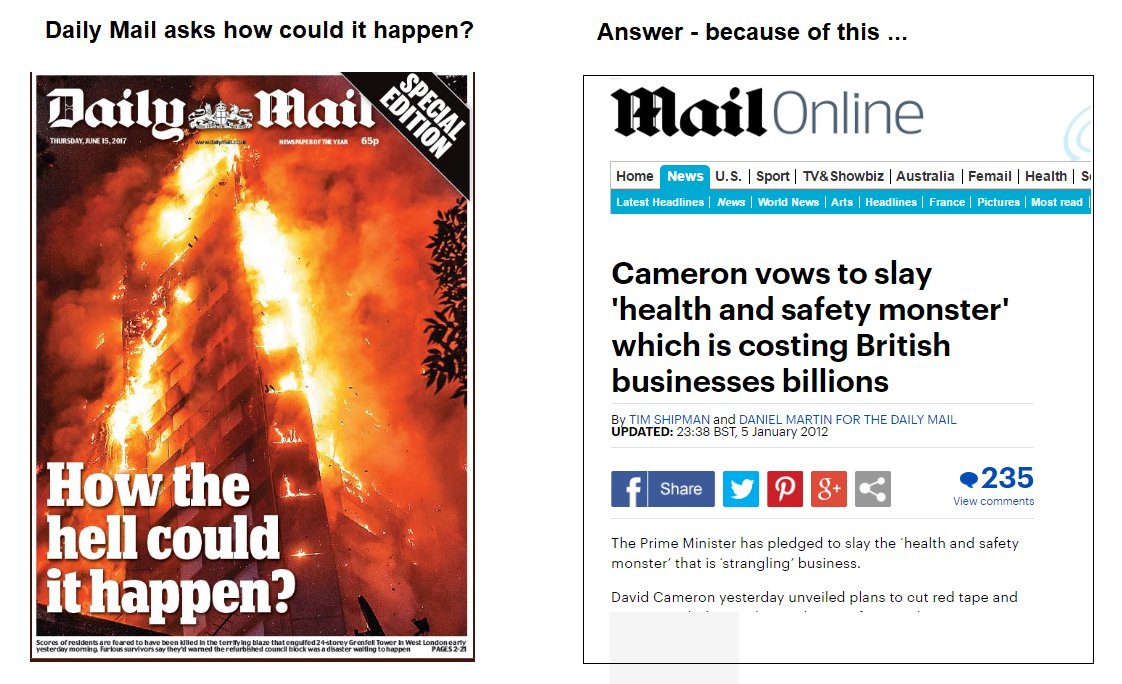
It’s time the government took some lessons in the ethical use of power and influence amid the discussion about abuse


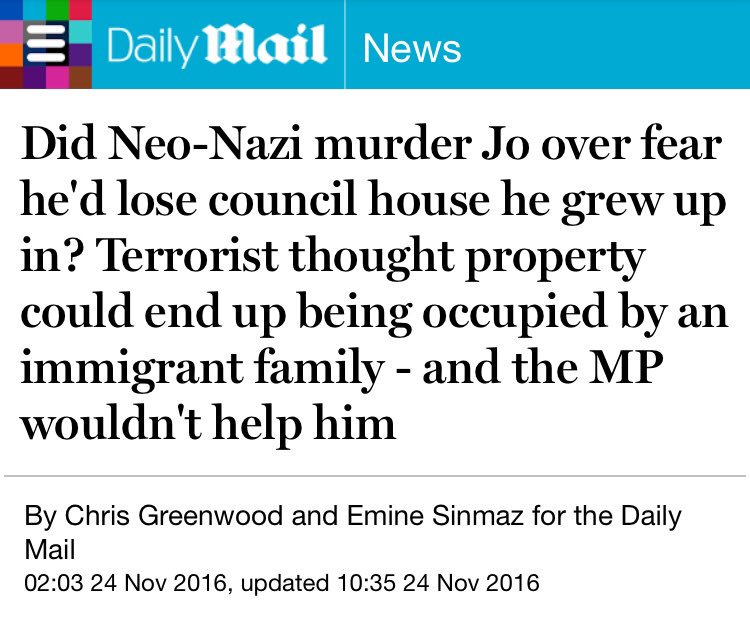
Image result for Daily Mail Jo Cox Image result for Daily Mail Jo CoxImage result for This is for britainImage result for Daily Mail Jo Cox

Image result for Daily Mail Jo Cox

Irresponsible racist scapegoating discourse and an utter incapacity to join the dots in the media. When Jo Cox was murdered, her killer shouted “Britain First” – the name of the political party formed by former BNP members, which has over 1.5m likes on Facebook. The Daily Mail buried the news of his conviction for murdering a sitting MP on page 30, almost as if the Mail thought it was somehow unimportant.

Minority groups are demonised and denigrated as a matter of routine and tradition – at what point does our feigning ignorance of this process turn into complicity with it? The problems we face as a society are not caused by immigration, but by socioeconomic inequality, with widespread, growing poverty, exclusion and youth unemployment faced by working class people of all ethnic backgrounds. Pointing the finger at immigrants is an attempt to mask how current government policy is actually exacerbating inequality.

The rise in targeted abuse of MPs of all stripes

It’s quite remarkable that Conservative MP, Simon Hart, claims: “Abuse of candidates and activists is “driving people away from politics,” and it’s also entirely predictable that he almost exclusively blames left wing campaigners. However, we do need to tread carefully when using labels such as “bullying” and “abuse”. We need to be careful not to allow politicians to lump reasonable opposition, challenges, legitimate democratic dialogue and action into the same category as examples of abuse.  

This is a government, after all, that has sneeringly labelled those reasonably calling for an end to austerity, adequate funding for our public services and adequate social security protection for disabled people as “unrepentant Marxists”, “Trots”, “the Hard Left”, “the Loony Left”,  and who ran almost all of their election campaign as a strategic, pointed, deeply personal smear attack on Corbyn and some of the shadow cabinet. 

The Conservatives ran an election campaign that was almost entirely about character assassinations and smearing the opposition, rather than offered policies. It was also about telling the electorate who they must and must not vote for. They seem to have forgotten that it is the public who decide who is “fit” to run the country, not the increasingly authoritarian incumbent government. We live in a democracy, after all, not a one-party state.

Hart told HuffPost UK that “silence” from Jeremy Corbyn and the Labour grassroots campaign organisation Momentum had meant the intimidation of candidates had increased. Labour immediately responded, expressing “deep dismay and concern at the vitriolic personal attacks” carried out and financed by the Conservative Party.

A spokesperson for Momentum dismissed Hart’s criticism as a “ludicrous smear”. I’m inclined to agree. Many of the right wing tabloids have predictably tried to blame Jeremy Corbyn entirely for political attacks.

Yet the same tabloids have printed horrifically dishonest, abusive articles about Corbyn, and historically, against the Labour Party  more generally.

Image result for Labour zinoviev letter Daily Mail

One of the great political scandals of the 20th century. Shortly before the 1924 general election, a letter purporting to be from Grigory Zinoviev at the Comintern in Moscow to the Communist Party of Great Britain appeared in the Daily Mail, along with “concerns” about a proletariat revolution.  The Conservative landslide victory four days later was in part attributed to the fake letter, which is now known to have been a forgery.

Corbyn has previously revealed that the abuse thrown at him over the course of the Labour leadership campaign has been “deeply hurtful” to his family and close friends. Yet he has consistently said: “We’re not responding in any way; we don’t do that kind of [abusive] politics.”

Hart, the MP for Carmarthen West and South Pembrokeshire, said the “general thuggishness” of the election campaign was “deterring” people from getting involved politics. 

I agree. Right wing thuggishness is writ large in screaming headlines, smear campaigns and slanderous columns. The Conservative approach to election campaigns has normalised abuse.  The nasty party probably think that positive role modelling involves the fashioning of voodoo dolls of the opposition out of plasticine to stick their malicious and vindictive pins into.
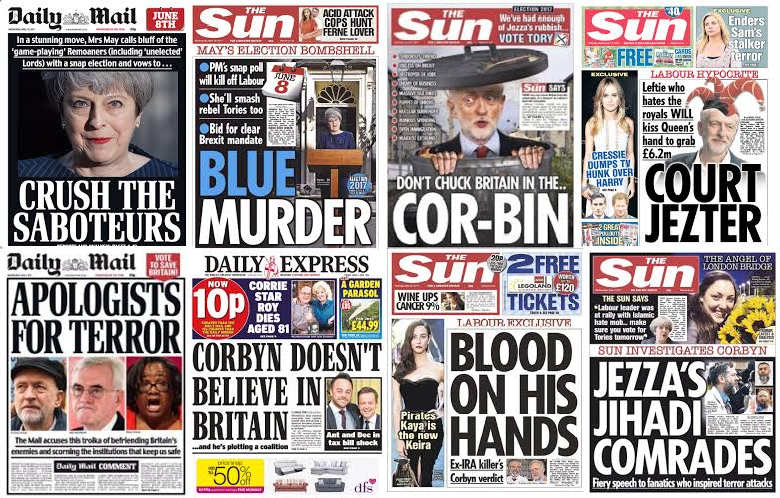
Vile headlines.png
It becomes obvious with a little scrutiny who is actually doing the attacking on a very personal level. Debate and political criticism are one thing: personal commentaries, character assassinations, attacks, threats, bullying, abuse and harassment are another. I have seen that quite often, abusive tactics include manipulating people’s perceptions and diverting attention to portray themselves as the injured party, with their target being portrayed as the villain. 

The danger of portraying democratic opposition as “abuse”

The Conservatives seem to be outraged at the very idea of political opposition, to the extent that the Conservatives’ rhetoric and practices are now bordering on political totalitarianism. 

The Conservatives have a habit of stifling legitimate criticism, personalising public issues and frequently labelling the opposition’s concerns with negative terms such as “scaremongering” , “grandstanding” and “crying wolf” in what ought to be democratic debate.

This kind of discrediting  and dismissive language, and unwillingness to engage in a genuine dialogue, sidestepping accountability and transparency, sends a wider message out to the public. Cameron’s “one nation” politics has extended more of a one party state message, creating an illusion of a national consensus bandwaggon that does not exist. 

In a letter to Conservative party chairman, Sir Patrick McLoughlin, Labour’s Ian Lavery and voter engagement spokesman Cat Smith wrote: “The Conservatives ran a negative, nasty campaign, propagating personal attacks, smears and untruths, particularly aimed at one of the most prominent women MPs, and indeed the first black woman MP, Diane Abbott.

“Such attacks on politicians, the consequent intimidating and abusive language and threats of violence towards them online, deter many people from entering politics. Parties and politicians have a responsibility to set an example, by treating others with dignity and respect, including those with whom we strongly disagree. The Conservative Party has instead promoted personal attacks as a core component of its national campaign.

“Abuse against candidates on social media is completely unacceptable. The Conservative Party perpetrated this on an industrial scale by spending millions of pounds to post highly personalised and nasty attack adverts on voters’ Facebook timelines without their permission.”

They say that the Labour party “fought a positive, hopeful campaign” and insisted that all its MPs ran campaigns based on its policies rather than personal attacks.

All of this is certainly verified by the televised debates and media coverage of the election campaigns.Image result for Jeremy Corbyn's positive election campaign

On Monday, Theresa May asked whether Jeremy Corbyn was “doing enough in response to complaints of intimidation” and said she was “surprised at any party leader who’s not willing to condemn that”. Yet Corbyn has publicly condemned personal abuse many times.

May has ordered a review of the law after saying she had been shocked at the number of colleagues who had talked to her about intimidation and harassment during the campaign. It’s notable and telling, however, that the mainstream media’s role in the general election campaigns won’t be included in the remit of this inquiry.

I deeply suspect that this inquiry will be about the hijacking of abuse from the right: it won’t be about an intention to genuinely deal with cross-party cases of abuse to eliminate it, but it will  be about an ambition to weaponise abuse, using it as a political prop to attack the left and silence criticism.  

By emphasising online abuse only, and ignoring the elephant in the room – the hateful right wing media and the Conservatives’ own abusive approach to public debate – the Conservatives are attempting to paint the entire left as being defined by viciousness and hatred, intolerant of opposition, threatening even, according to this narrative  –  and that of course will be used to justify why they must be kept from power.

That’s absolute hypocrisy, indicating clearly that the Conservatives see the mainstream media as an asset, rather than as a source of aggressive and divisive right wing ideological narratives.

It may also be used to justify more repressive reform to social media. May has already pledged to create new internet that would be controlled and regulated by government. I can’t help wondering if that will entail a “management” of “left wing bias”. Who can forget Iain Duncan Smith’s despotic and hysterical  “monitoring” of the BBC for any “bias”.

As I write, every single right wing broadsheet has a deeply misleading published article portraying the left as being entirely responsible for abuse of (all) MPs. Yet the report was about abuse directed at BOTH Conservatives and Labour MPs.
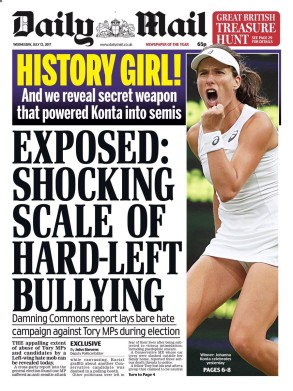
Image result for Hard left abuse

The Conservative Party have cheer-led the personal abuse people on the left receive. The Tories made a strategic decision to discredit, smear and delegitimise the official opposition, portraying Labour’s left supporters as “extremists”, “dangerous”, and “terrorist sympathisers”. Such an attack tactic has some very chilling and profoundly anti-democratic implications, because it leaves the left exposed as a dangerous internal enemy, which legitimises radical right wingers’ belief that the left needs to be “eliminated”.

The “abuse” accusation is one of many techniques used by the right to police the boundaries of “acceptable” political thought.

The right and the dangers of dog whistle politics

It is worth remembering that it was a Labour MP, Jo Cox, who was murdered by a far right terrorist. This has been linked to the rhetoric employed by hardcore right wing Brexit campaign. Others, including myself, have linked it with a growth in wider social prejudiceand the social divisions which have been politically fostered, motivated and manipulated by the Conservatives. Lynton Crosby’s dog whistle racism and negative campaigning strategies have been a key feature of elections over recent years and have normalised below the radar “coded” racist messaging, with the inbuilt “safeguard” of plausible deniability.  

Dog whistling is designed to trigger previously indoctrinated prejudice, bigotry and  hatred without being recognised by outsiders as hateful speech in prejudiced communities. The legitimising of sentiment which has previously been considered inappropriate is one of Crosby’s trademarks, and this approach has steadily pushed at public moral boundaries, making hate speech and hate crime much more likely. 

The philosopher Jennifer Saul has how the linguistic drift of increasingly intolerant speech can lead to racist violence. As we become habituated to a subject of speech, our standard of what is acceptable to say (or not say) shifts, which in turn opens up possibilities for how we may act.

Of course intolerant speech is that which creates categories of outgrouped others, and this process of othering hasn’t been confined to ethnic minorities. The Conservatives have also stigmatised disabled people, social security claimants more generally, trade unions, public sector workers, among others and have systematically demonised and personally discredited critics, opposition (including charities and academics), and especially, those on the left.

The government has consistently sent out a broader message, in the form of a series of coded emotive appeals and sometimes, quite explicitly stated, that the left has/will take your taxes and give it to “undeserving” minorities. Those “minorities” are disabled people, people in low paid work, people who have lost their job, as well as asyum seekers and migrants.

As opposed to undeserving millionaires and rogue multinationals.

The Conservatives have normalised bullying and intimidation to silence dissent

Conservative MP Anna Soubry has spoken out at the Conservatives’ “bully boy tactics” employed against Mark Carney by some of her Tory colleagues. Carney came in for attacks from senior Brexiteers like Michael Gove and William Hague, while other pro-Leave campaigners have called on him to be sacked as governor of the Bank of England. In the run-up to the EU referendum, Tories accused Carney of “interfering” in the campaign by his simple and evidenced warning about the economic effects of a vote to leave.

Speaking to Sky News, former business minister Soubry said: “This is what I mean about almost bully boy tactics, this idea that you just slag people off and then you go to some of our newspapers and they join in this very unpleasant campaign which means people like Mark Carney don’t have any defence, they can’t really come out and fight their corner as they should do.

“He shouldn’t be attacked in the way that he was. He’s done a great job. He was universally recognised as being a real coup for our Bank of England, for our country. I’m just sad that he seems to be going early, but I’m delighted he’s staying.

“We all seem to have almost taken leave of our senses in this country.”

The language mirrored that used in an article for LabourList from Rebecca Long-Bailey, then the Shadow Chief Secretary to the Treasury.

She wrote at the time: “That a committed public servant like Dr Carney has been the subject of briefings, on and off the record, questioning his fitness for the role – when he himself has no opportunity to respond – is an indictment of the toxic atmosphere now brewing inside the Conservative party.

Denigrating reasonable criticism and monstering campaigns for social justice

Work and Pensions Secretary Damian Green criticised “irresponsible scaremongering” by Labour and insisted the Tories “will always look after the most vulnerable”, following legitimate concerns raised by the opposition about the impact of the proposed dementia tax and cuts to winter fuel payments for the elderly. The United Nations inquiry into the Conservatives’ grave and systematic abuse of disabled people’s human rights certainly doesn’t support Green’s claims. He said: “At the heart of this report lies an outdated view of disability which is patronising and offensive. We strongly refute its findings.”

However, it is the government that hold a deeply patronisingoutdated and discriminatory view of disability, and they are the ones dismissing the concerns raised over and over by disabled people who pushed to instigate and evidence the inquiry in the first place, because the government have disgracefully and systematically marginalised us, and consistently refused to listen to our grave concerns about the harms, distress and premature deaths that Conservative welfare policies are increasingly correlated with. 

Hart says: “I wrote to every MP at the beginning of last week to say would they like to come up with examples of where this has been happening and the only examples I’ve had are of attacks by the left on the right. If there are others, I haven’t heard of them.” 

“I know a lot of Labour MPs have been subject to quite nasty abuse over a number of years now. It’s not exclusively left-wing attacking right-wing, or left-wing attacking center, but there is certainly more evidence of that than there is the contrary.”

Perhaps Hart doesn’t read the tabloids. Or listen to the malicious comments of his colleagues made frequently during election campaigns.

Try as I might, I just simply can’t imagine Jeremy Corbyn calling Boris Johnson a “mutton-headed old mugwump”, or a “benign herbivore”. Nor can I imagine him dismissing United Nations rapporteurs as “loopy Brazilian lefties” or “partisan marxists”.

Tory MP Stewart Jackson tweeted that Miss Rolnick was a ¿loopy Brazilian leftie with no evidence masquerading as a serious UN official¿

The Conservatives don’t take independent criticism of the adverse effects of their draconian policies very well. However, the UK is a signatory to the International Covenant on Economic, Social and Cultural Rights, which means that Ms Rolnik’s independent findings should carry weight within the British justice system and prompt the government to abandon this most inhumane of policies. Rather than approach this public issue with impartiality, government ministers decided instead to launch a disgraceful personal attack on Raquel Rolnik.

Image result for Raquel Rolnik British media

I condemn personal attacks and abuse on MPs of any political stripe. However, it seems to me that the Conservatives are launching a gaslighting campaign, with the sole intention of diverting attention from their own appalling track record on systematic abuse and bullying, and to attempt to further discredit the left.  

What about the abuse directed by right wingers on social media?  Some have claimed that Corbyn supporters are a “cult”, painting a picture of Corbyn’s supporters as “blind” followers of a strange doctrine. It links us with some of the worst instances in political history and develops a narrative that positions Corbyn and his supporters as “dangerous”. It is a poisonous term that should be deployed with caution. But sadly, that hasn’t stopped Corbyn’s opponents.

Image result for Hard left abuse
This tweet has now been deleted. It’s from Financial Times’ political columnist Janan Ganesh, who seems to have realised his is a difficult narrative to push, as the likes of Stephen Hawkings, Noam Chomsky and much of the academic world explicitly endorse Corbyn’s project.

The Telegraph has patronisingly declared that young people who voted Labour are “deluded about Jeremy Corbyn, and about much else besides”. With the likes of Tory MP, Andrew Bridgen complaining: “The BBC will do everything they can to get their hero Jeremy Corbyn into Downing Street. Now with things like this year’s Glastonbury, it’s becoming ever more blatant.

“They are at the stage where if the BBC give it one more push, we will end up with a Marxist in No 10.”

 “Marxist” is used as a term of abuse here. Yet in this context, a marxist is simply someone who wants to adequately fund public services, raise our standard of living and introduce a progressive tax system  – something that the Conservatives have deemed “reckless” and only possible with the help of a magic money tree. Mind you, that same magic money tree has been supporting the millionaires in handouts for the past few years.

At the same time that George Osborne told us that we needed to make cuts, rolling out his austerity programme that targeted the poorest citizens, he awarded millionaires £107, 000 each per year in the form of a handout tax cut. 

You have to worry at this particularly authoritarian comment, too: “If the BBC feel Labour are potentially close to power, any semblance of impartiality can be disregarded because with the Left, the ends always justify the means.” 

The BBC’s coverage of the event does not indicate “bias”, it’s simply coverage of an event. In a healthy democracy, that should never even be an issue. It’s not the BBC that decides voter’s intentions. It is the voters. It is the nation that decides what is in the “national interest” not the Conservatives.

Labour’s pledge to make university education free was claimed to be “the £11 billion bribe”, according to the Daily Mail. Unlike, for instance, the £350 million “save the NHS” lie plastered on Boris Johnson’s Brexit campaign bus. Or the Liberal Democrats’ giant cardboard cutout promise that tuition fees would absolutely never in a million years go up to 9K per year. Nope. Honest…

Since when was an inclusive manifesto considered “bribery”? Have we travelled so far down the road of Conservative authoritarianism, which has normalised the politics of stigma and exclusion, that reaching out and democratically engaging with politically betrayed, marginalised social groups to acknowledge and reflect their needs is considered so baffling and alien?

The language use that has been used to describe people exercising a democratic right to protest peacefully against government policies, variously described as “mobs”, a “rabble” and “thugs”.  As a disabled activist I have been called an “extremist” by the Conservatives and their supporters.

In 2015, a campaign group working to protect the NHS criticised Employment Minister Priti Patel, after she allegedly described members that gathered at her office – some of whom were elderly and others were disabled – as a “thuggish gang”.

Members of the People’s NHS gathered outside Patel’s constituency HQ in Witham, Essex, to urge her to protect the NHS against the Transatlantic Trade and Investment Partnerships which they fear will lead to the health service being privatised. A photo of the protest shows around a dozen peaceful demonstrators holding a banner reading “fight for our NHS” and protecting themselves from the rain with umbrellas.   

Patel responded to the demonstration by writing to Unite union boss Len McCluskey, who she wrongly believed was heading the campaign. The letter read, according to The Sunday Mirror, that the woman who works at the Witham Conservative Association office “felt harassed, frightened and intimated” by “a thuggish gang of People’s NHS campaigners”. Patel went on to accuse the group of “intimidation and harassment”. 

However, someone in a position of power using such derogatory labels to discredit, smear and pathologise people raising legitimate criticism is intimidation, harassment and bullying. We live in a democracy, and the right to protest is a manifestation of the right to freedom of assembly, the right to freedom of association, and the right to freedom of speech. Whether the authoritarian Conservatives like it or not.  From the historical UK Labour movement, civil rights protesters such as Rosa Parks in 1950s America, to the 60,000 participants in Gandhi’s Salt march, people throughout history have chosen to resist injustice because, as Rosa herself said, they’re “tired of giving in”. In contemporary Britain, disabled people are fighting a battle of life and death proportions. People are dying as a consequence of draconian policies. No-one is listening, so we protest.

The Conservatives fear civil unrest, yet every Tory government prompts protest because of their grossly injust, punitive policies. Protest is what happens when governments refuse to listen. It’s what happens when policies are non-inclusive and nasty. It’s what happens when ideologies are manifested, causing people distress and harm.

Simon Hart has complained that almost half his election campaign boards were defaced, stolen or damaged, adding that he and other MPs received abuse on social media “on an almost daily basis”.

“These are things that have significant financial consequences and it’s driving people away from politics, even on the fringes, at a time when actually it’s never been more important that they’re part of politics,” he said.

The importance of practicing what you preach, and keeping your own house in order

Related image

However, Hart seems to have forgotten all about the details of his own election campaign, and some of the issues arising because of his election boards being placed without permission on private property. In fact one of the Tory MP’s own campaigners attacked a local resident, slamming his van door on the man, and hurting his arm, before driving at him – in a row over Hart’s election boards.

John Kilcoyne, a Conservative campaigner for Hart, infuriated local Adam Morres, after he put up signs promoting Hart in a field near the local’s home in Manorbier, Wales, back in May. Morres took them down and billed the local Conservative party for rent and damages – but then caught Kilcoyne putting them back up a day later.

The video appears to show the volunteer smacking the villager in the arm with his van door – before repeatedly DRIVING his van at him along a rural road. The police arrived moments later and are now investigating the incident.

Morres said: “Normally, I would choose who to vote for based on their policies, but in this instance I will be choosing based on the party I think has employees who aren’t going to attack me.”

The furore began on Sunday, May 7, when Morres was out for a walk with his ex-partner in the fields that she rents for her horses. They spotted two blue signs supporting incumbent MP Simon Hart nailed to a fence post inside the field. Morres says that he phoned the Electoral Commission who he said told him they could be removed, so he took them down the next day.

He invoiced Camarthen West and South Pembrokeshire Conservatives £50 for rent and damages.

“The damages are in case out neighbours thought the signs meant we were Conservative voters,” he added sarcastically. 

He claims John Kilcoyne – named as the seconder on Mr Hart’s 2015 election nomination document, came to both his home and his partner’s house. Kilcoyne claimed he had permission of the land owner to put the signs up, and left. Moments later  spotted him back next to his ex’s field getting new “Simon Hart” signs out of his van and the two men rowed.

The video appears to show the pair arguing before the volunteer sharply pulls his van door onto Morres’ arm before mocking him, saying: “Watch out, watch out.” He denied his actions. With a smirk.

Morres phoned the police and when he stood in front of the van to record the licence plate, claims Kilcoyne repeatedly drove at him. 

The footage on the video – taken moments before police arrived – appears to show the car inching towards him as he moves away across the road before driving off.

Astonishingly, Morres woke up the next day to find the signs had been reinstated.

“The police have told us not to touch them in case they get damaged and Simon Hart claims criminal damage,” he said. 

Dyfed-Powys Police said: “The force received a report of an assault without injury at approximately 9.40am on Tuesday, May 9.

“The incident took place at Wheelers Way, Manorbier. The investigation is ongoing.”

The Welsh Conservative Party and Simon Hart refused to comment. Kilcoyne, from Pembroke Dock, Pembrokeshire, said: “Have you spoken to Mr Hart?

“I’m in the same position as Mr Hart. There is a police officer dealing with it. I have nothing at all to add.”

Meanwhile, Wales Office minister Guto Bebb said he had also been a victim of online intimidation, and has surprisingly accused serving police officers of being among those who have abused him.

Ah yes, the sensitive Guto Bebb, who dismissed Dylan Barlow’Asperger’s syndrome as a “sob story” in a series of emails after his constituent raised questions on foreign matters.  

The MP for Aberconwy, North Wales, wrote: “If you have mental health issues then you should possibly refrain from commenting in the public domain since it might create problems for you.”

I’m disabled because of illness. I am a campaigner that supports Labour’s policies. I have had a lot of abuse, ranging from name-calling such as “leftard” , “trot”, “loony leftist”, “scrounger” , “lazy” to organised hate and smear campaigns, malicious communications that have used my social media account details and my photograph, resulting in death threats, rape threats, threats to my family and a threat from Combat 18. I involved the police at the time. I have also received very offensive comments calling for disabled people to be shot.  
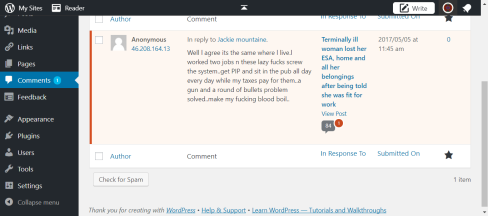
disability hate speech

Conservative rhetoric, policy practices and in particular, their anti-welfare campaign which has been amplified by the media, has systematically dehumanised and scapegoated disabled people and migrants, and has contributed significantly to my experiences of abuse these last few years.

Divisive rhetoric, such as Cameron’s “scroungers and strivers” dichotomy, and traditional, embedded Conservative prejudices (based on class, ableism, economic productivity, ethnicity and gender) have added to the problems of social division,  encouraging and legitimising hate speech and hate crime.

The unedifying sight of Conservative ministers’ sneering contempt and laughter when they hear accounts of people suffering hardships and harm because of their policies in parliament isn’t a rare event. The persistent denial of a “causal link” between policy, hardship and distress, and refusal to investigate an established correlation between policy and hardship – all of this sends out a negative message to the wider public.

The message is that hate speech, bullying and abuse of marginalised social groups is permitted, and by gaslighting – negating or attempting to invalidate those group’s common experiences of harm and distress – the Conservatives have othered, isolated and dehumanised them.

A major contributing factor to the increase in bullying is the collective behaviours of the current government, which has perpetuated, permitted and endorsed prejudices against marginalised social groups, such as disabled and unemployed people, with a complicit media amplifying these prejudices. Their policies embed a punitive approach towards the poorest social groups. This in turn means that those administering the policies, such as staff at the Department for work and pensions and job centres, for example, are also bound by punitive, authoritarian behaviours directed at a targeted group.

People affected by those behaviours are then encouraged to blame other marginalised groups – migrants and asylum seekers, people who are “not really” disabled, and others politically deemed “undeserving”. This creates a hierarchy of needs, when the reality is simply that people have different but equally pressing needs for basic support. Everyone, after all, needs food, fuel and shelter. Without being able to fulfil those basic needs, we cannot fulfil higher level psychosocial needs.

As authority figures and role models, the government’s behaviour establishes a framework of acceptability. Parliamentary debates are conducted with a clear basis of one-upmanship and aggression rather than being founded on rational exchange and mutual respect. Indeed, the prime minister sneers at rationality and does not engage in a democratic dialogue, instead she employs the tactics of a bully: denial, scapegoating, vilification, attempts at discrediting, smearing and character assassinations. This in turn gives wider society permission and approval to do the same.

At prime minister’s questions, Cameron found it hard to rein in his Flashman reflex. His answers were frequently ever more sneering and personal, determined to characterise his political rival as weak and useless. It was not pleasant to watch the jabbing finger and the reddened face, especially when the Tory backbenchers behind him join in with bullying jeers.

Even Steve Hilton, David Cameron’s former aide has accused the political establishment of bullying Jeremy Corbyn after he was elected as Labour leader in what he described as “incredibly unattractive” behaviour.

It’s dangerous behaviour

Scapegoating has a wide range of focus: from “approved” enemies of very large groups of people down to the scapegoating of individuals by other individuals. The scapegoaters’ target always experiences a terrible sense of being personally edited and re-written, with the inadequacies of the bully inserted into public accounts of their character, isolation, ostracism, exclusion and sometimes, expulsion and elimination. The sense of isolation is often heightened by other people’s reluctance to become involved in challenging bullies, usually because of a bystander’s own discomfort and fear of reprisal.

Another tactic commonly used by Conservatives is projection – a defense mechanism used to displace responsibility of one’s negative behaviour and traits by attributing them to someone else. It ultimately acts as a diversion that avoids ownership and accountability. Simon Hart’s emphasis on “left wing bullying” is an attempt to steer us away from his own party’s entrenched prejudices, draconian policies, bullying practices and the hectoring approach to dialogue and debate.

The Conservatives have played the “blameshifting game” on many occasions over the past seven years. The objectives of the game of course are that it simplistically dichotomises issues, turning debate into often diversionary, personalised, simplistic arguments of reductive one upmanship: for the Conservatives, it’s about winning  and getting your own way, while others lose and are also blamed for everything that’s wrong with them. Ad hominem arguments have been normalised by Conservatives.

Image result for disability stigmatising messages in the newspapers

It’s time for the government to consider the impact of negative role modelling – Conservatives regularly use abusive language when challenged. Politicians have a responsibility to set an example, by treating others with dignity and respect, including those with whom they may strongly disagree. However, the Conservatives seem to regard opposition and challenges as an irritating inconvenience rather than as an essential feature of a functioning democracy.

The Conservative Party has promoted personal attacks as a core component of its national election campaigns, and has used stigma as a justification for extremely punitive policies that target marginalised groups. 

Bullying and abuse within the Conservative party

Let’s not forget poor Elliott Johnson: the young Conservative who was destroyed by the party he loved, and subsequently took his own life in 2015, aged just 21, as a result of blackmail and persistent bullying. Earlier this year, the Conservative party were accused of ­withholding evidence from police about the death of the young party activist who said he was systematically bullied. Others have since come forward – a further 13 alleged victims of Mark Clarke came forward, the so-called “Tatler Tory,” over a 20-month period, and allegations included six accusations of “sexually inappropriate behaviour”.

Clarke, who was appointed by the party to run its RoadTrip2015 election campaign, came under heavy scrutiny after Elliott Johnson, a young Tory activist, took his own life in September 2015 and named Clarke as his tormentor in a suicide note.

Then there was the Tory MP who “faked” a death threat, accused of threatening to sack a member of staff if she took four weeks off work sick – as advised by her doctor. 

Telford MP Lucy Allan was accused of launching a “vicious” verbal attack on a female staff member who phoned in sick. Allan accused the alleged bullying victim Arianne Plumbly of having an “alcohol problem,” dismissing her claims to be ill as “pathetic”. In a recording of the telephone call handed to the Evening Standard,  Allan is heard telling the alleged bullying target Arianne Plumbly: “I’m not paying you for that then; it’s ridiculous” and told her she had “pissed around on my life”. 

The Nasty Party and dehumanising language

Rosemary Carroll, a Conservative councillor, shared a post about a man asking for benefits for his pet dog, making very offensive racist comparisons.

She was Mayor of Pendle until last month but was suspended from her party after the post appeared on her account, pending an inquiry.

The post

Only last week, a Tory Brexiteer described the UK leaving the EU without a deal as a “real n****r in the woodpile” at a meeting of eurosceptics in Central London. 

Anne Marie Morris, MP for Newton Abbot since 2010, made the astonishing remark while discussing what financial services deal the UK could strike with Brussels after 2019.

The phrase she used is from the nineteenth Century, and refers to slavery. It is thought the phrase arose in reference to instances of the concealment of fugitive slaves in their flight north under piles of firewood.

The origin of the phrase is from the practice of transporting pulpwood on special railroad cars. In the era of slavery, the pulpwood cars were built with an outer frame with the wood being stacked inside in rows and stacks. Given the nature of the cars, it was possible to smuggle persons in the pile itself, giving rise to the phrase.  

In July 2008, the leader of the British Conservative Party, David Cameron, was urged to sack Conservative peer Lord Dixon-Smith, who said in the House of Lords that concerns about government housing legislation were “the n***er in the woodpile”. Dixon-Smith said the phrase had “slipped out without my thinking”, and that “It was common parlance when I was younger”. 

Despite using the racist term, none of Morris’s fellow panelists, including Tory MPs Bill Cash and John Redwood, reacted at the time. 

Racism isn’t the only traditional Conservative prejudice. Who could forget David Freud’s offensive comments, made when he was a Conservative Welfare Reform Minister, that some disabled people are not worth the full national minimum wage”  and that some “could only be paid £2 an hour.” Cameron claimed the disgraceful comments made by Lord Freud at the Tory conference do not represent the views of government. 

However, his government’s punitive austerity measures and the welfare “reforms” tell us a very different story. The comments came to light after they were disclosed by Ed Miliband during Prime Minister’s Questions

Freud’s comments are simply a reflection of a wider implicit and fundamental Social Darwinism underpinning Tory ideology, and even Tim Montgomerie, who founded the Conservative­Home site has conceded that: “Conservative rhetoric often borders on social Darwinism […] and has lost a sense of social justice.”  

David Freud was made to apologise for simply being a Tory in public. The Conservatives have systematically blamed poor people for their poverty rather than acknowledge that poverty arises as a consequence of political decision-making and policies that financially penalise the poorest while handing out rewards to the wealthiest

Conservative policies are not only entirely ideologically-driven, they reflect traditional Tory prejudices. We have a government that uses words like workshy to describe marginalised social groups. This is a government that is intentionally scapegoating poor people, unemployed people, disabled people, asylum seekers and migrants. If that isn’t bullying and abuse, I don’t know what is.

One Tory councillor, Alan Mellins – called for the “extermination of gypsies”, more than one Tory MP has called for illegal and discriminatory levels of pay for disabled people. Philip Davies has also said that the national minimum wage is “more a hindrance than a help” for disabled people, and proposed that we are paid less. A Conservative deputy mayor – retired GP, Owen Lister –  said, unforgivably, that the “best thing for disabled children is the guillotine.”

Let’s not forget Boris Johnson’s grossly racist comments describing black people as “piccaninnies” with “watermelon smiles” in the Telegraph in 2002. He only apologised when he first ran for London mayor in 2008.

And Cabinet minister Oliver Letwin also escaped disciplinary action after it was revealed that he had said black people have “bad moral attitudes” when he was a top adviser to Thatcher. He actually said that any government schemes to help black people would be wasted in “the disco and drugs trade.” 

In August, 201, Dover Conservative councillor Bob Frost describes rioters as “jungle bunnies.” He lost his teaching job but the Tories suspended him for just two months. In 2014, he referred to the prospective Middle Eastern buyers of Dover port as “sons of camel drivers.” No action was taken.

In January 2013, Enfield Conservative councillor Chris Joannides compared Muslim children to black bin bags in a Facebook post. In April 2014, Barnet councillor Tom Davey complained online about “benefit claiming scum”, and said that it might be easier to find a job if he were “a black female wheelchair-bound amputee who is sexually attracted to other women.” He was not disciplined by the party.  

These are NOT “slips”, it’s patently clear that the Tories believe these comments are acceptable, just as long as they aren’t made in public. We need only look at the discriminatory nature of policies such as the legal aid bill, the wider welfare “reforms”, the cuts aimed at disabled people s support and services – which were unthinkable before 2010 – and tresearch the consequences of austerity for the most vulnerable citizens, those with the “least broad shoulders” and the least to lose – to understand that these comments reflect accurately how Conservatives actually think

2014-02-17-BurdenoftheCuts-thumb

That any of this is considered acceptable behaviour by a government – who serve as public role models – is an indication of just how far our society has regressed in terms of human rights and our democratic ideals of equality and diversity. This is a government that has purposefully seeded and permitted social prejudice in order to gain support and power. 

The Tory creation of socioeconomic scapegoats, involving vicious stigmatisation of vulnerable and protected social groups, particularly endorsed by the mainstream media, is simply a means of de-empathising the population, manipulating public perceptions and securing public acceptance of the increasingly punitive and repressive basis of the Tories’ crass neoliberal welfare “reforms”, and the steady stripping away of essential state support and provision, for the public, which the public have paid for via taxes and national insurance.

At the same time that austerity was imposed on the poorest citizens, the millionaires were awarded a £107,000 each per year tax cut. It seems only some of us have to “live within our means”. 

The political construction of social problems also marks an era of increasing state control of citizens with behaviour modification techniques, (under the guise of paternalistic libertarianism and behavioural economic theories), all of which are a part of the process of restricting access rights to welfare provision. Discriminatory political practices and rhetoric send out a message to the public, and that permits wider prejudice, hate speech, hate crime and discrimination.

The mainstream media has been complicit in the process of  constructing deviant welfare stereotypes, folk devils and in engaging prejudice and generating moral outrage from the public. 

The growing inequalities we are witnessing in western neoliberal “democracies” create profound psychological trauma, hermetic material and ontological insecurity. Humans are fundamentally social beings. We thrive best when we have a social rationale which tends towards the promotion of cooperative and collective creativity. This was perhaps expressed best in our civilised, progressive institutions and civilising practices, facilitated by the social gains and economic organisation that arose from the post-war settlement.  

Those gains are now being systematically dismantled. Our culture has been saturated with conceptual schema that demand we remain committed to a socioeconomic Darwinism, a kind of economic enclosure: a neoliberal competitive individualist obsession with our private, inner experiences, the pursuit of economic self-interest, and ultimately, this embellishes our separability from other human beings. It alienates us. 

Neoliberalism scripts social interactions that are founded on indifference to others, tending to be dehumanising, adversarialand hierarchical in nature, rather than social and cooperative. Neoliberalism is the antithesis of the responsive, animated human face; of collectivism, mutual support, universalism, cooperation and democracy. Neoliberalism has transformed our former liberal democracy into an authoritarian “still faced” state that values production, competition and profit above all else; including citizens’ lives, experiences, freedoms, wellbeing, democratic inclusion and social conditions that support all of this. 

Neoliberal socioeconomic organisation has perpetuated hierarchies of human worth, and pitched social groups against one another in a fight for resources.

I condemn all abuse, be it from the left or right of the political spectrum.

However, it’s time the government took some lessons in the ethical use of power and influence, democratic inclusion and accountability.

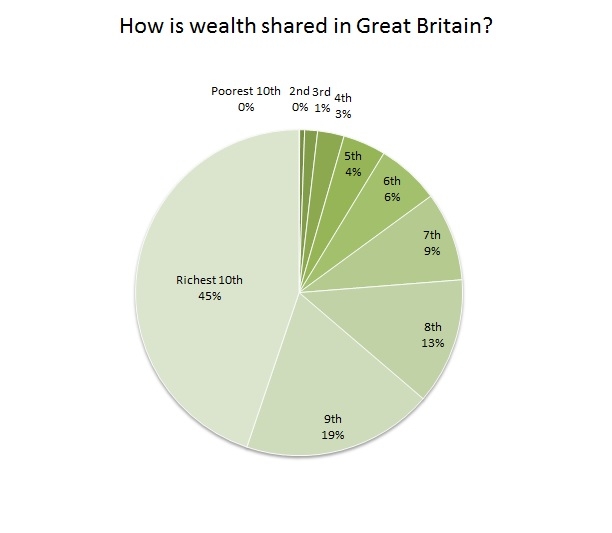
pie-wealth

The still face paradigm, the just world fallacy, inequality and the decline of empathy

Ken Loach Criticises BBC’s “Disgusting” Political Bias Ahead of U.K. Election

More allegations of Tory election fraud, now we need to talk about democracy

MPs speak out about ‘sinister’ election abuse

Death threats and daily hate: MPs recall abuse they have received

Not one day more: Tory councillor suspended for sneering racism and vindictive Tory anti-welfarism

Some of the lies politicians and the media have told about Jeremy Corbyn 

Tory attack ad misrepresents Corbyn views on IRA

A couple more lies that politicians and the media have told about Jeremy Corbyn – editing someone’s character is abusive

From the Zinoviev letter to the Labour party coup – the real enemy within

Conservatives, cruelty and the collective unconscious


I don’t make any money from my work and I am not funded. I am disabled because of illness and struggle to get by. But you can help me continue to research and write informative, insightful and independent articles, and to provide support to others, by making a donation. The smallest amount is much appreciated – thank you.

DonatenowButton


Radiate Coinage – Hubert Huzzah

dinas.png

The Deal between the Democratic Unionist Party and the Conservative and Unionist Party can be criticised for a lot of reasons. The accusation that it is a bribe is roughly denied by the Conservative and Unionist Party. The claim that it should trigger payments to Scotland under the Barnett Formula are dismissed because this is additional money and not expenditure for issues for which the devolved administrations, as distinct from Westminster, are responsible. The Barnett Formula dismissal and the denial of bribery combine to suggest that the Conservative and Unionist Party have made a fundamental error of negotiation.

Big Data is all about bringing together large data sets from multiple sources, combining them, using statistical argument and data processing power to draw conclusions. It is as much about exploring the data as deciding what to do. The Conservative and Unionist Party and the Democratic Unionist Party – the CUP and DUP – insistence that this is legitimately extra money that is additional spending can be examined through the ideas of Big Data. The existence of Electoral Law makes understanding the money correct incredibly important for the CUP and DUP and Democracy. The money needs to be additional to whatever would have been spent had the DUP not been part of the Government but also it needs to be money that is extra across the whole budget in order to fall outside of the Barnett Formula.

The Barnett Formula is a principle for calculation and a formula. Expenditure on issues for which the devolved administrations, as distinct from Central Government, are responsible is governed by the Barnett Formula’s principle. Any change in England will automatically lead to a proportionate matching change for the devolved governments in Wales, Scotland and Northern Ireland. The principal issue is control. If Central Government directs and controls the expenditure then the expenditure falls out of the Barnett Formula principle but if the expenditure is controlled by the devolved administration then it falls inside the principle.

The first claim being made by the CUP and DUP Government is that the money is not covered by the principle which means that the expenditure is controlled by Central Government and is therefore exempt from being matched by payouts to other administrations. In essence the DUP must do as instructed with the expenditure.

This requires a particular interpretation of the actual Formula part of the Barnett Formula.

There are four parts to the Formula: 

F: the amount of extra funding in Scotland, Wales or Northern Ireland
P: the population proportion compared to England
E: the additional funding given to England
C: the extent to which relevant English departmental programme is comparable with services carried out by the Devolved administration 

F = PEC                                                                                                   (1) 

Once you know PEC it becomes possible to work out F. Which seems pedantic to say but it highlights how people understand mathematics. It also highlights how the CUP and DUP are seeking to reinterpret the Barnett Formula for their own purposes. The essential attempt at reinterpretation is to suggest that this additional money which would mean that the extent to which relevant English Departmental programmes can be compared ceases to have meaning. In essence the Barnett Formula is avoided by suggesting there is something exceptional about Northern Ireland and so the Barnett Formula can be ignored. 

The Barnett Formula was a 1979 innovation to help negotiate in Cabinet between Departments in the lead up to devolution of powers and, according to the House of Commons Library, has no legal standing or democratic justification. The danger for the Barnett Formula is that it is uniquely sensitive to negotiating positions: once you know PEC you can work out F. 

If the Government of the day gives £X to England or Scotland or Northern Ireland or Wales then it is possible to infer how much additional money the other three places might legitimately expect. The CUP and DUP have insisted that the money falls outside of the Barnett Formula and so those expectations can be driven by one thing and one thing only: the per capita amount. The extent to which relevant English departmental programme is comparable with services carried out by the Devolved administration is irrelevant to additional money outside of the Barnett Formula and so the expectation amount depends upon the strength of the bargaining position. It is a real example of a municipal market at work where each identifiable region negotiates with Central Government for additional money. For the CUP and DUP, committed to free market economics this is an obvious development that fits with their stated ideological stance.

What is clear from the CUP and DUP agreement is that the outcome is based upon negotiation not formulation. It is an outcome that can be applied across constituencies. By understanding the claim that the CUP and DUP make – that this is not a bribe or corrupt practice within either the letter or spirit of Electoral Law – the amounts given to the ten DUP Constituencies forms the basis for calculating what every single Constituency should seek to negotiate to achieve. This is money that is outside the Barnett Formula and so can only be calculated on the basis of a per capita basis. In other words, the Government only avoids the accusation of corruption by accepting an adaptation of the Barnett Formula.

The Government is, effectively maintaining that funding is not corrupt. Which suggests that all Constituencies – or at least those constituencies that argue for it – should receive a proportional funding allotment. In short, the CUP and DUP formula is a per capita allotment. Using the same principle as the Poll Tax, the CUP and DUP have devised a Poll Credit – a kind of reverse Poll Tax. In the same way that the Poll Tax was a tax levied on every adult, without reference to income or resources, the Poll Credit is a benefit disbursed outside of reference to equitable principles. What can be understood from the Benefit disbursement is that the Government consider an additional amount of financial support should be given to People who demonstrate those qualities that are admired by the CUP and DUP. In short it is a Tamworth Manifesto Formula.

The Tamworth Manifesto defined what it is to be a Tory. It is a document central to the ideology of the Tories for almost two centuries. It sets the Tories against a perpetual vortex of agitation and proposes reform to survive as being the central principle of Tory Ideology. That principle of reforming to survive has replaced the principle of the Barnett Formula with a Tamworth Principle. It is a principle that relies on expenditure only when necessary for the survival of the Tory Government. In short: it puts a price on Tory power and it is the price that the Tories would seek to pay in any negotiations.

The CUP and DUP will claim that the people of the United Kingdom will benefit from the Tamworth Formula. The benefit – the Poll Creditcomes about from knowing what the price the Tories are willing to pay for support in Parliament. We know it amounts to about £1.5Bn between ten DUP Members of Parliament. To be more precise, their constituencies. The Poll Credit would be the amount per capita – per head – the Tories are willing to pay for support. Using the Tamworth Formula with the known figures of £1.5Bn distributed to the DUP Constituencies as follows:

Infrastructure £750m
Roads £150m
Broadband £150m
Health Service £200m
Health Service Deficit £50m
Mental Health £50m
Community Deprivation £100m
Education £50m
Total £1.5Bn 

This equates to a Poll Credit per person of £3,985 based on the Electoral Populations of the DUP seats. The detail for the spending of that £3,985 is as follows: 

Infrastructure £1,992
Roads £399
Broadband £399
Health Service £531
Health Service Deficit £133
Mental Health £133
Community Deprivation £266
Education £133
Total £3,985 

Which comes from applying the Tamworth Manifesto principles. The DUP and CUP avoid the accusation that there is a bribe being offered or accepted. A bribe would be absurd: no Parliamentary Party would ever consider offering or accepting anything so corrupt. Particularly not when Public Money was involved. This Poll Credit is in addition to any planned spending – to avoid being regulated by the Barnett Formula

In short, the Tamworth Manifesto principles give a quantifiable and reasonable demand for each and every Member of Parliament to begin negotiations for additional spending in their Constituency. Not only does the additional expenditure in non-DUP Constituencies demonstrate that this is not a bribe, it also demonstrates that, for purposes of reforming to survive the Tory Party must entertain, seriously, negotiations with Members of Parliament for specific amounts of funding to be spent in their constituency. Within the constraints of the spending allocations defined by the DUP and CUP Confidence and Supply arrangement, Members of Parliament would be reasonable in seeking £3,985 per Voter in their Constituency. 

Disbursing £3,985 per voter, in additional spending, would be the sign that the Conservative Party has taken seriously the Localism Act 2011 and the Cities and Local Government Devolution Act 2016. Going against the spirit of these Laws – that the Conservative Party sought, and put in place, during a Coalition and then again during a Majority Government would be a rejection of the core principle of the Tory Party as put forward by the Tamworth Manifesto. In short, the Government has unwittingly announced the starting price for the ending of Austerity. 

It is a long price list. The total value is £138,157,375,788 or about £138.2Bn. The figure is not exact as there are roundings of values and the total includes the money already given to the DUP. It amounts to about £69Bn of additional spending. That is over and above the expected budget. Because, anything else would be a bribe. The full list of Poll Credit amounts, listed by Constituency is several pages of figures. But it is instructive. Ranging from Na h-Eileanan An Iar, the cheapest, at £53,239,298 through to Bristol West, the most expensive at £386,699,750. This is not some reflection of the politics of each MP but of the Poll Credit principle that arises from the abolition of the Barnet Formula principle. Indeed, some MPs with the highest price include Theresa May at £298,924,238 or Leo Docherty in Aldershot at £208,339,956 or even Phillipa Parry at £94,070,366

The difficulty with these sort of notes is that it is difficult to show all 651 price tags without the text becoming tedious. Adding a formula into any kind of document, according to anecdotal evidence, cuts the audience by half. Turning it into an infographic obscures a lot of information. 

Sometimes detail is necessary. For example, if the money were distributed by Party then the picture would be something like this:

Conservative £71Bn
Democratic Unionist Party £2Bn
Green £0.25Bn
Independent £0.1Bn
Labour £55Bn
Liberal Democrat £2.2Bn
Plaid Cymru £0.5Bn
Scottish National Party £5.5Bn
Sinn Fein £1.3Bn 

It is an inexact set of figures. Approximations of where bidding should begin. But this is the kind of political marketplace the Tories have created in order to pretend they are not being propped up with a bribe. 

 —


Picture: Item from the “Installation Works from The Chapman Family Collection 2002” (Jake and Dinos Chapman).

Guest post by Hubert Huzzah

Not one day more: Tory councillor suspended for sneering racism and vindictive Tory anti-welfarism

Rosemary Carroll

Councillor Rosemary Carroll

A Conservative councillor has been suspended for her sneering racism and despicable prejudice regarding welfare claimants. Some media outlets have described the comments as a “joke”. It wasn’t.

Rosemary Carroll, a Conservative councillor, shared a post about a man asking for benefits for his pet dog, making offensive rascist comparisons.

She was Mayor of Pendle until last month but was suspended from her party after the post appeared on her account this week.

The local Conservative branch posted a statement about the “inappropriate post” on Facebook after the allegations came to light.

Councillor Joe Cooney, leader of the Conservatives on Pendle Council, said Councillor Rosemary Carroll was suspended pending an investigation.

The comments, which have now been deleted, compared an Asian person claiming social security support to a dog. 

Speaking before the suspension was confirmed, Carroll said she had meant to delete the post but ended up publishing it “by mistake”.

Philip Mousdale, Pendle Council’s corporate director, said he received two formal complaints about the post at the time.

He said the complaints against the councillor, who represents Earby Ward, allege she had breached the council’s code of conduct.

“As monitoring officer for the council I’m looking into the complaints,” Mousdale added.

Cooney said: “We will not tolerate racism of any form. Rosemary Carroll has been suspended from the Conservative Group on Pendle Borough Council and the Conservative Party with immediate effect, pending a full investigation in due course.”

Carroll claims she planned to post an apology for her bigotry.

However, this is not an isolated incident, and the Conservatives continue to show utter contempt for both people of colour as well as people who need welfare support, as this extremely offensive post from one of their Councillors shows.

Conservative councillor 'posted joke comparing Asian people to dogs'
Damage limitation

                        The obscene and extremely offensive original post

This isn’t a one-off, it’s how many Tories actually think

When it comes to displays of prejudice, the Conservatives have a long history. It’s no coincidence that the far right flourishes under every Tory government, from Thatcher in particular, to present day.

Racism isn’t the only traditional Conservative prejudice. Who could forget David Freud’s offensive comments, made when he was a Conservative Welfare Reform Minister, that some disabled people are  not worth the full national minimum wage”  and that some “could only be paid £2 an hour.” Cameron claimed the disgraceful comments made by Lord Freud at the Tory conference do not represent the views of government. 

However, his government’s punitive austerity measures and the welfare “reforms” tell us a very different story. The comments came to light after they were disclosed by Ed Miliband during Prime Minister’s Questions.

Freud’s comments are simply a reflection of a wider implicit and fundamental Social Darwinism underpinning Tory ideology, and even Tim Montgomerie, who founded the Conservative­Home site has conceded that: “Conservative rhetoric often borders on social Darwinism […] and has lost a sense of social justice.” 

David Freud was made to apologise for simply being a Tory in public.

Social Darwinism, with its brutal and uncivilising indifference to human suffering, has been resurrected from the nineteenth century and it fits so well with the current political spirit of neoliberalism. As social bonds are replaced by narcissistic, unadulterated materialism, public concerns are now understood and experienced as utterly private miseries, except when offered up to us on the Jerry Springer Show or Benefit Street as spectacle.

Conservative policies are entirely ideologically-driven. We have a government that uses words like workshy to describe vulnerable social groups. This is a government that is intentionally scapegoating poor, unemployed, disabled people, asylum seekers and migrants.

One Tory councillor, Alan Mellins – called for the “extermination of gypsies”, more than one Tory MP has called for illegal and discriminatory levels of pay for disabled people. Philip Davies has also said that the national minimum wage is “more a hindrance than a help” for disabled people, and proposed that we are paid less. A Conservative deputy mayor – retired GP, Owen Lister –  said, unforgivably, that the “best thing for disabled children is the guillotine.”

Let’s not forget Boris Johnson’s grossly racist comments describing black people as “piccaninnies” with “watermelon smiles” in the Telegraph in 2002. He only apologised when he first ran for London mayor in 2008.

And Cabinet minister Oliver Letwin also escaped disciplinary action after it was revealed that he had said black people have “bad moral attitudes” when he was a top adviser to Thatcher. He actually said that any government schemes to help black people would be wasted in “the disco and drugs trade.” 

In August, 201, Dover Conservative councillor Bob Frost describes rioters as “jungle bunnies.” He lost his teaching job but the Tories suspended him for just two months. In 2014, he referred to the prospective Middle Eastern buyers of Dover port as “sons of camel drivers.” No action was taken.

In January 2013, Enfield Conservative councillor Chris Joannides compared Muslim children to black bin bags in a Facebook post. In April 2014, Barnet councillor Tom Davey complained online about “benefit claiming scum”, and said that it might be easier to find a job if he were “a black female wheelchair-bound amputee who is sexually attracted to other women.” He was not disciplined by the party.  

These are NOT “slips”, it’s patently clear that the Tories believe these beliefs and comments are acceptable, just as long as they aren’t made in public. We need only look at the discriminatory nature of policies such as the legal aid bill, the wider welfare “reforms”, the cuts aimed at disabled peoples support and services – which were unthinkable before 2010 – and to research the consequences of austerity for the most vulnerable citizens, those with the “least broad shoulders” and the least to lose – to understand that these comments reflect accurately how Conservatives actually think.
The fact that dog whistle politics – political messaging employing coded language that appears to mean one thing to the general population but has an additional, different or more specific resonance for a targeted and prejudiced subgroup, maintaining plausible deniability by avoiding overtly racist language – has been normalised by the likes of Lynton Crosby, and is intrinsic to Conservative  campaigns, indicates clearly that the Conservatives want to appeal to racist groups.

Crosby created a campaign for the Conservatives with the slogan “Are you thinking what we’re thinking?”: a series of posters, billboards, TV commercials and direct mail pieces with messages like “It’s not racist to impose limits on immigration” and “how would you feel if a bloke on early release attacked your daughter?” which focused on “hot-button issues” like dirty and over-stretched hospitals, “landgrabs” by “gypsies” and restraints on police behaviour.  

In the 2016 London Mayoral Election, Conservative candidate Zac Goldsmith ran a dog whistle campaign against Labour’s Sadiq Khan, playing on Khan’s Muslim faith by suggesting he would target Hindus and Sikhs with a “jewellery tax” and attempting to link him to extremists.

That this is considered acceptable behaviour by a government – who serve as public role models – is an indication of just how far our society has regressed in terms of human rights and our democratic ideals of equality and diversity. This is a government that has purposefully seeded and permitted social prejudice in order to gain support and power. 

This is a government that is creating and manipulating public prejudice to justify massive socio-economic inequalities and their own policies that are creating a steeply hierarchical society based on social Darwinist survival of the wealthiest neoliberal “small state” ideology.

The dispossession of the majority to ensure the relentless acculation of wealth for an elitist and greedy minority.  

The Tory creation of socioeconomic scapegoats, involving vicious stigmatisation of vulnerable and protected social groups, particularly endorsed by the mainstream media, is simply a means of de-empathising the population, manipulating public perceptions and securing public acceptance of the increasingly punitive and repressive basis of the Tories’ crass neoliberal welfare “reforms”, and the steady stripping away of essential state support and provision, for the public, which the public have paid for via taxes and national insurance.

At the same time that austerity was imposed on the poorest citizens, the millionaires were awarded a £107,000 each per year tax cut. It seems only some of us have to “live within our means”. 

The political construction of social problems also marks an era of increasing state control of citizens with behaviour modification techniques, (under the guise of paternalistic libertarianism and behavioural economic theories), all of which are a part of the process of restricting access rights to welfare provision. Discriminatory political practices and rhetoric send out a message to the public, and that permits wider prejudice, hate speech, hate crime and discrimination.

The mainstream media has been complicit in the process of  constructing deviant welfare stereotypes and in engaging prejudice and generating moral outrage from the public:

“If working people ever get to discover where their tax money really ends up, at a time when they find it tough enough to feed their own families, let alone those of workshy scroungers, then that’ll be the end of the line for our welfare state gravy train.” James Delingpole 2014.

Delingpole was a close friend of Cameron’s at university. Apparently, they would get stoned and listen to Supertramp regularly, whilst hatching their profoundly antisocial and anti-democratic obscenities. Their plot sickens.

Poverty cannot be explained away by reference to simple individualist narratives of the workshy scrounger as the likes of Delingpole claim, no matter how much he would like to apply such simplistic, blunt, stigmatising, dehumanizing labels that originated from the Nazis (see arbeitssheu.)

Poverty arises because of the consequence of political decisions, and structural conditions.

Climbing Allport’s ladder

Gordon Allport studied the psychological and social processes that create a society’s progression from prejudice and discrimination to genocide. In his research of how the Holocaust happened, he describes sociopolitical processes that foster increasing social prejudice and discrimination and he demonstrates how the unthinkable becomes tenable: it happens incrementally, because of a steady erosion of our moral and rational boundaries, and propaganda-driven changes in our attitudes towards politically defined others, that advances culturally, by almost inscrutable degrees. 

The process always begins with political scapegoating of a social group and with ideologies that identify that group as the Other: a common “enemy” or a social “burden” in some way. A history of devaluation of the group that becomes the target, authoritarian culture, and the passivity of internal and external witnesses (bystanders) all contribute to the probability that violence against that group will develop, and ultimately, if the process is allowed to continue evolving, extermination of the group being targeted. 

Economic recession, uncertainty and political systems on the authoritarian -> totalitarian spectrum contribute to shaping the social conditions that seem to trigger Allport’s escalating scale of prejudice.

In the UK, the media is certainly being used by the right-wing as an outlet for blatant political propaganda, and much of it is manifested as a pathological persuasion to hate others. The Conservatives clearly have strong authoritarian tendencies, as I have been pointing out since 2012, when the welfare “reform” act was pushed through parliament with unholy haste, with the excuse of “economic privilege”, despite the widespread opposition to that bill. The authoritarianism of the Tories is most evident in their anti-democratic approach to policy, human rights, equality, social inclusion and processes of government accountability.

Vulnerable groups are those which our established principles of social justice demand we intervene to help, support and protect. However, the Conservative’s rhetoric is aimed at a deliberate identification of citizens as having inferior behaviour.

The poorest  citizens are presented as a problem group because of their individual faulty characteristics, and this is intentionally diverting attention from wider socioeconomic and political causes of vulnerability. Individual subjects experiencing hardships have been placed beyond state protection and are now the objects of policies that embody punitive and crude behaviourism, and pathologising, coercive elements of social control.

After seven years of Conservative governments, our most vulnerable citizens are no longer regarded as human subjects, they have become objects of the state, which is acting upon them, not for or on behalf of them. 

This has turned our democracy completely on its head.

It quite often isn’t until someone Carroll, Freud or Mellins push our boundaries of decency a little too far. Then we suddenly see it, and wonder how such prejudiced and discriminatory comments could be deemed acceptable and how anyone could possibly think they would get away with such blatantly offensive rhetoric without being challenged. It’s because they have got away with less blatantly offensive comments previously: it’s just that they pushed more gently and so it wasn’t obvious, we simply didn’t see.

During a debate in the House of Lords, Freud described the changing number of disabled people likely to receive the employment and support allowance as a “bulge of, effectively, stock”After an outraged response, this was actually transcribed by Hansard as “stopped”, rendering the sentence meaningless.  He is not the only person in the Department for Work and Pensions who uses this term. The website describes disabled people entering the government’s work programme for between three and six months as 3/6Mth stock.

This infrahumanised stock are a source of profit for the companies running the programme. The Department’s delivery plan recommends using  credit reference agency data to cleanse the stock of fraud and error”.

The linguistic downgrading of human life requires dehumanising metaphors: a dehumanising socio-political system using a dehumanising language, and it is becoming familiar and pervasive: it has seeped almost unnoticed into our lives.

As Allport’s scale of prejudice indicates, hate speech and incitement to genocide start from often subliminal expressions of prejudice and subtle dehumanisation, which escalate. Germany didn’t wake up one morning to find Hitler had arranged the murder of millions of people. It happened, as many knew it would, and was happening whilst they knew about it. And many opposed it, too. It still happened.

The dignity and equal worth of every human being is the axiom of international human rights. International law condemns statements which deny the equality of all human beings.

As a so-called civilised and wealthy society, so should we. It’s time we said goodbye to austerity, the right-wing politics of inequality and prejudice.

This is a government that thinks that PEOPLE are a disposable commodity – “collateral damage” of a failing neoliberal mode of organisation. People dying as a result of austerity cuts are passed off by Tory ministers as “anecdotal evidence.” The government claim there is no “provable causality” between their policies and premature deaths. Yet there is a well-established correlation, that requires further investigation, which the government has so far refused to undertake. But it is very clear that Conservative policies are driven by traditional Tory prejudices.

It really is time to say not one day more.

And never, ever again.

Image result for allports ladder of prejudice

Update

A Tory Brexiteer has described the UK leaving the EU without a deal as a “real n****r in the woodpile” at a meeting of eurosceptics in Central London.

Anne Marie Morris, MP for Newton Abbot since 2010, made the astonishing remark while discussing what financial services deal the UK could strike with Brussels after 2019.

The phrase she used is from the nineteenth Century, and refers to slavery. It is thought the phrase arose in reference to instances of the concealment of fugitive slaves in their flight north under piles of firewood.

The origin of the phrase is from the practice of transporting pulpwood on special railroad cars. In the era of slavery, the pulpwood cars were built with an outer frame with the wood being stacked inside in rows and stacks. Given the nature of the cars, it was possible to smuggle persons in the pile itself, giving rise to the phrase.  

In July 2008, the leader of the British Conservative Party, David Cameron, was urged to sack Conservative peer Lord Dixon-Smith, who said in the House of Lords that concerns about government housing legislation were “the n***er in the woodpile”. Dixon-Smith said the phrase had “slipped out without my thinking”, and that “It was common parlance when I was younger”

Despite using the racist term, none of Morris’s fellow panelists, including Tory MPs Bill Cash and John Redwood, reacted at the time.

After saying just 7% of financial services in the UK would be affected by Brexit, Morris said: “Now I’m sure there will be many people who’ll challenge that, but my response and my request is look at the detail, it isn’t all doom and gloom.

“Now we get to the real n****r in the woodpile which is in two years what happens if there is no deal?”

Morris said: “The comment was totally unintentional. I apologise unreservedly for any offence caused.”  

She has been suspended.  

However, such supremicist, hierarchical thinking and language is entrenched in Conservative rhetoric and practices. This is far from an isolated case of an offensive, racist, prejudiced speech act.


I don’t make any money from my work and I am not funded. I am disabled because of illness and struggle to get by. But you can help me continue to research and write informative, insightful and independent articles, and to provide support to others, by making a donation. The smallest amount is much appreciated – thank you.

DonatenowButton

PIP assessments are dehumanising, degrading, very distressing and potentially harmful

Related image

I co-run a support group for people going through Employment and Support Allowance (ESA) and Personal Independent Payment assessments and appeals. I have heard many people’s harrowing experiences of these assessments, I have written about them, and I’ve written critically about the assessment process itself. However, it isn’t until you experience one of these assessments for yourself that you may fully appreciate just how utterly distressing, surreal, degrading and dehumanising the process actually is. Or how potentially harmful.

I had my first ever Personal Independence Payment (PIP) assessment today. I have systemic lupus and pulmonary fibrosis, among other problems, all of which affect my mobility and capacity to live independently, day-to-day. My consultant is a rheumatologist and more recently, I have been seeing a pulmonary consultant. Other specialists I sometimes need to see are a neurologists, opthalmologists, physiotherapists and haematologists.

After a bout of pneumonia and sepsis earlier this year, which almost cost me my life, a follow-up scan found further lung problems, which have probably been ongoing for some time. Fibrosis can happen as a result of connective tissue illnesses like lupus, scleroderma or rheumatoid arthritis. It can also happen to people whose conditions have been treated with a chemotherapy called methotrexate – which I was given from 2012 onwards. My mother, who had rheumatoid arthritis, died suddenly of pulmonary fibrosis in 2009. The coroner said it was a complication of her illness, not because of a treatment. She was never given methotrexate.

The interview part of the assessment seemed okay, initially. I provided further evidence regarding my recent assessment, undertaken by my local council’s Occupational Therapy Service, which led to the prescription of aids and appliances in my home. The assessment report was quite clear about my basic medical conditions and day-to-day mobility limitations. I was asked about medication. I explained that following my second appointment with my new rheumatologist, I was prescribed some new medications, including one for secondary Raynaud’s syndrome, which has arisen because of my having lupus, as a complication.

A recent thermal imaging and microvascular study shows that this condition has got worse over time, and so my rheumatologist prescribed a treatment called Amlodipine. It concerned me that the Health Care Professional looked confused and skeptical when she asked for a list of my medication, and she said that this is a treatment for high blood pressure, she seemed to disbelieve what I had told her. I explained that I don’t have high blood pressure, and that calcium channel blockers such as Amlodipine are used for more than one condition, such as certain types of angina – which I also don’t have – and secondary Raynaud’s syndrome, which I do have. 

I was asked about the impact of my illnesses on my day-to-day living. At one point I explained that I find preparing and chopping food difficult because of the tendonitis in both wrists. I have been diagnosed with De Quervian’s Tenosynovitis, which makes putting any weight or strain on my wrists very painful.

I was also concerned that I was then asked if I have had my wrists splinted. This shows a lack of understanding about my condition. I have had splints but it did not make any difference to my wrists. I was diagnosed with De Quervain’s syndrome by my rheumatologist and a physiotherapist in 2011, but had the problem for considerably longer. As my physiotherapist pointed out, my wrists are not injured or strained through overuse and so won’t get better with rest or splinting. This is because they are damaged by a chronic systemic inflammatory disease process that is ongoing, and he told me it is medication rather splinting that is needed to try to manage the level of inflammation in my body as a whole.

Splinting my wrists is akin to putting a plaster cast on a knee affected by rheumatoid arthritis, or a plaster on cancer. It won’t help at all. That the HCP didn’t seem to understand the difference between the chronic inflammatory symptoms of connective tissue disease and curable strain and injury related conditions bothered me.

Another thing that bothered me is that I was asked about the frequency of my periods of severe illness and how that impacts on my ability to manage things like personal care. She wanted an actual number of days, which of course is impossible to give with any precision when you have a fluctuating condition. Sometimes I struggle getting dressed and spend days on end in my pyjamas, and the HCP asked me “how often”? I tried to give an average number of days per month, but because the acute flares of my illness vary so much from month to month, week to week, that was very difficult to do. She also seemed impatient that I struggled to try and work out an average. I have cognitive problems as a result of my illness.

Another problem is that I struggle with washing my hair sometimes, and she demanded to know how often I need assistance with that task. The best I could do was to explain that when I have no help, I can go up to two weeks at a time with matted, unwashed hair. I felt embarrased and ashamed enough in having to discuss these personal difficulties with someone I have never met, but it was made to feel somehow like a confict, that part of the discussion. I felt that if I didn’t provide precise and quantified “evidence”, the qualitative details – my experience of my disability – would not be taken seriously by the HCP. 

Another problem with the assessments that worries me is that there was nowhere near enough time to discuss the complex impact of all my complex medical conditions and wide-ranging symptoms on my day-to-day life.

The ‘examination’

After discussion of my conditions and how my illnesses impact on upon my day-to-day living, I was asked to do some tasks during an examination, which have left me in a huge amount of pain. I also felt stripped of dignity, because I struggled to manage the exercises and felt very anxious and distressed. I was shocked at some of the tasks I was asked to do, and also shocked at the fact I couldn’t actually undertake a number of these tasks. My shock turned to anger later, as I had to leave in significantly more pain that I had arrived with at the start of the appointment. I was also asked to do each of the unfamiliar tasks and exercises in quick succession, which made assessing any likely pain and potential damage difficult before trying to do them.

It is also a traumatic experience to suddenly discover that your illness has insidiously robbed you of a degree of mobility that you previously assumed you had. That is always a shock. 

Last year, my GP was carrying out a standard examination and smear, when my hips locked painfully, as I tried to move my legs. She couldn’t completeher examination and the procedure as my egs would not move. After this, she told me to not get up for a while, and she described the experience – discovering that my mobility had been painfully restricted by my illness – as “traumatic.” It was.

I have, among other problems, very painful inflammatory arthritis and tendonitis in my knees, hips, spine, Achilles’ tendons and ankles. Because the inflammation and damage is bilateral and symmetrical – affecting both knees, both hips, both ankles and both Achilles’ tendons equally, and across my lower spine – it leaves me unable to compensate for pain, stiffness and weakness by shifting my weight and balance onto another limb, as that is also weak, stiff and painful. It leaves me unsteady. I often use a stick to stop me falling over, but as an aid for walking, it’s pretty useless generally, because my shoulders, elbows and wrists also won’t take any of my weight.

The inflammation process causes marked stiffness as well as severe pain, and so restricts my mobility. I was asked to “squat down” at the start of the examination. I refused, and told the assessor that I couldn’t do that. It would have certainly caused me severe pain and possibly an injury. As I can’t support weight on my shoulders and wrists – I also have osteoporosis in my wrists and hands –  had I tried and fallen backwards, I may have easily ended up with a fractured bone. I was horrified at being asked to do that. I struggled to equate the “health care professional” with what I had been asked to do, and felt confused and shocked that she had asked me to do something that may have been harmful.

I also felt that the HCP may have misconstrued my comments that I couldn’t undertake this task as an unwillingness to cooperate, as she looked unhappy about it. She did ask why, and I explained. I felt that trying some of the other tasks she set, which looked to be less dangerous, would at least demonstrate that I wasn’t being uncooperative, and most looked like they wouldn’t inflict any damage at first glance, when she demonstrated them.

However, other exercises I tried to do resulted in my neck locking and severe pain when I was told to turn my head to look over my shoulder – and couldn’t. I have neck problems through longstanding inflammation there and an upper spine injury involving a displaced vertebrae, which is sometimes very painful. In addition, the problems in my shoulders also contributed significantly to the level of pain when I turned my neck, and my neck clicked painfully at the base of my skull. 

I was asked to put my hands and wrists in positions that looked impossible to me. I tried, though. I was asked to line the backs of my wrists up with my hands flat, which I couldn’t do, and it hurt me a lot to try this.

Phalens-maneuver
This is called Phalen’s Manoeuvre. I was asked to do what is actually a provocative diagnostic test for carpal tunnel syndrome – which entails compression of the median nerve. The test provokes the symptoms of carpal tunnel problems, in the same way that the painful Finkelstein test provokes symptoms of severe pain in people with De Quervain’s. I have never been diagnosed with carpal tunnel problems, but I do have more than one diagnosis of bilateral De Quervian’s Tenosynovitis, as stated previously.

I tried to do this manoeuvre, even though it isn’t applicable to my condition (though I didn’t know that at the time, I have since researched the test, as I wanted to know why I couldn’t perform it). I couldn’t even get close to managing it, it hurt my shoulders a lot when I tried to align my elbows at right angles with my dropped finger tips, and I couldn’t drop my wrists fully due to an incredible pain and stiffness that I had not expected. The backs of my wrists simply painfully refused to meet.

I do struggle with pain when putting any weight on my wrists, but didn’t realise how much they had stiffened up, restricting their movement. Not being able to perform this movement doesn’t mean I actually have carpal tunnel syndrome. Nonetheless, I feel that given my previous concrete diagnosis, I was put through this painful and traumatic series of medical tests for no good reason. 

This is the problem with a short assessment of complex conditions. Many of my problems and diagnoses go back years, and only some of them are summarised neatly on my consultant’s report. My relationship with my new rheumatologist started in April, my old one moved in 2015. My new rheumatologist decided to “challenge” the previous diagnoses of two former rheumatologists. Her report to my GP was woefully inaccurate because she had not read my notes or listened to what I told herLong story short, she re-diagnosed me, inaccurately, with fibromyalgia, she didn’t read my notes, she sent me for tests and scans I had already had previously, whilst suspending my treatment pending results. The scans and tests took months. That resulted in a serious lupus flare, which culminated in a bout of pneumonia and sepsis. During the time I was in hospital, I was re-diagnosed with lupus following abnormal test results. My having lupus is thought to be the key reason why I had got so ill – unfortunately, lupus leaves me very susceptible to serious infections like pneumonia, kidney infections and sepsis. I now have a new rheumatologist who says I definitely have lupus.

Atos say they won’t carry out ‘diagnostic tests’ but they did.

In the appointment letter from Atos, it says: “The Health Professional will talk to you about how your health condition affects your daily life”. Much of this was covered with the council’s initial care plan report, but I did discuss my health issues and barriers to independence at length during the assessment.

The letter from Atos then says: “This will not be a full physical examination or an attempt to diagnose your symptoms.” 

My neck and shoulders are stiff, painful and I currently have limited mobility in them, yet I was asked to put my hands behind my head, raise my arms and so on. Loud joint cracking, popping, creaking and gasps of pain and my screwed up face didn’t stop the demands of what I felt was the impossible. I was actually sweating and trembling with the effort and pain, and still she did not stop the “examination”. I felt I couldn’t say no, as I would have seemed somehow unreasonable. I kept thinking that if I tried, gently, I was at least showing willing, and that would be okay, but unfortunately I wasn’t. 

It’s difficult to equate these artificial manoeuvres with day-to-day activities, and therefore it is also difficult recognise the impact it would have on my mobility limits before I tried them and to gauge how much a movement in isolation is going to hurt. 

Immediately following the examination/tests, my left calf has inexplicably swollen to twice its normal size, I could feel the uncomfortable tightness in it, and the swelling was visible through my jeans, whilst still with the assessor, and I commented on it.

My pain level has significantly increased everywhere. I had no groin or neck or elbow pain when I arrived until I was asked to do activities that were beyond my capability and that caused me a good deal of needless pain. I felt undignified trying to do those tasks, shocked and dazed at the pain, and sometimes, at how limited my movements have become. It was an extremely distressing and dehumanising experience. I was also shocked at how the effort made me tremble and sweat, and at how my clear distress was completely ignored by a so-called “health care professional”.

Of course I am going to make a formal complaint about this. It shouldn’t cause people so much pain and distress to be assessed for support. And any examination part of the assessment ought to take your medical conditions and descriptions of mobility constraints fully into consideration without such a grueling and painful examination regime.

It is worth bearing in mind that in addition to my own account, medical evidence from my rheumatologist was submitted in advance, and a report of recent assessments by a council occupational therapist who prescribed aids and adaptations, which clearly outlined my mobility difficulties, following two assessments, was also submitted. This was a report written by a qualified professional and was based on her own examination of my level of functionality and mobility while I tried to perform directed tasks in my home, such as climbing stairs, preparing food and using a bath board in my bathroom.

The fundamental difference between the assessments is that the one for my care plan allowed me to undertake tasks at my own pace, with dignity, and the Atos assessment did not. The former also felt like it was a genuine assessment of my needs, with support being the aim, whereas the latter felt like some sort of skeptic’s test to see if a way could be found to claim my account and those of my doctors were somehow incorrect. The Atos assessment was so horrifying because it felt like it was about reluctantly providing support for maintaining my independence as a very last resort only. 

According to the government’s PIP handbook, for a descriptor to apply to a claimant they must be able to reliably complete an activity as described in the descriptor. Reliably means whether they can do so:

 safely – in a manner unlikely to cause harm to themselves or to another person, either during or after completion of the activity.

The descriptors at no point demand that a person completes the Phalen manoeuvre or squats. The brief and painful completion of raising your hands above your head does not demonstrate either a fluctuating ability to do so, or your ability to hold your arms up long enough to, say, wash your hair and rinse it, even on a good day. Nor does it adequately account for severe pain, profound fatigue, coordination difficulty and breathlessness that often impact on any performance of that task. I did point this out, and the fact that the activities had left me in a lot of pain.

It’s now the day after my PIP assessment. I am still in a lot of pain with my joints and tendons. I feel ill, anxious, depressed and I am still shocked and angry. I can’t even manage to wash today. I have also developed pain on the left side of my chest, which feels rather like pleuritis. I feel really unwell, profoundly tired and haven’t felt this bad since my bout of pneumonia. The assessment hasn’t made me ill – I was already seriously ill. But it HAS exacerbated by symptoms. 

No-one should be made to feel worse because of an assessment for support. The activities I was asked to do should have been stopped when it became clear I was struggling. I stated I was in pain, I was visibly sweating, trembling, weak and clearly in a lot of pain with the effort, and as a “health professional”, the assessor should have halted that examination. I am very concerned that unintended harm may be caused by assessors conducting examinations because they do not have qualification, sufficient information or understanding about patients’ conditions.

My condition, for example, has left a trail of individual symptom diagnoses and medical data that goes back many years. With such a complex array of joint and tendon problems, I felt that there was absolutely no consideration of the impact that, say, a hand and wrist manoeuvre may have on a person’s damaged shoulders and elbows, as well as their wrists, or how a neck movement may impact on an upper spine injury and inflammatory shoulder problems, as well as the neck.

Given the assessment report I submitted and medical evidence, in addition to my own account, I feel that such a painful physical examination ought to be restricted to cases of absolute necessity. I don’t believe those simple isolated movements I was asked to do can possibly demonstrate he complex limitations on my day-to-day independence, and how I manage (or don’t) to cope with domestic tasks and general mobility.

The fact I couldn’t do some of them was both traumatising and humiliating, as well as very painful. I am still in a lot of pain as a result. 

The shame of being there to explain to a stranger about your illnesses, the intimate details of your life, your vulnerabilities and why you need help, is difficult enough, without the added distress of being coldly assessed by someone who doesn’t understand your conditions and does not care that what they ask you to do may be traumatising, painful and potentially very damaging.

Image result for PIP disability

Related

What you need to know about Atos assessments

Government guidelines for PIP assessment: a political redefinition of the word ‘objective’ 

Government subverts judicial process and abandons promise on mental health ‘parity of esteem’ to strip people of PIP entitlement

Tory MP says PIP should only go to ‘really disabled’ people, not those with anxiety ‘taking pills 

Disabled mum took fatal overdose after she was refused PIP

Fear of losing disability support led a vulnerable man to a horrific suicide

Theresa May euphemizes savage cuts to PIP when confronted by an angry disabled person demanding democratic accountability


I don’t make any money from my work. But you can support Politics and Insights and contribute by making a donation which will help me continue to research and write informative, insightful and independent articles, and to provide support to others. The smallest amount is much appreciated, and helps to keep my articles free and accessible to all – thank you.

DonatenowButton

More allegations of Tory election fraud, now we need to talk about democracy

The Conservative Party are facing another investigation from the Electoral Commission following evidenced allegations that they operated a secret call centre during the general election campaign, breaching electoral law, an undercover investigation by Channel 4 News has revealed. 

An undercover reporter working for Channel 4 News secured work at Blue Telecoms, a company in Neath, South Wales. In an area plagued by unemployment and low wages, the call centre hired up to a hundred people on zero-hours contracts. For weeks, they contacted thousands of potential voters in marginal seats across the UK. 

The hired callers were told to say they were working for a market research company called “Axe Research”. No such company is registered in England and Wales. Furthermore, callers were instructed to say that the call centre was situated in Cardiff, rather than Neath.

The investigation has uncovered underhand and potentially unlawful practices at the centre, in calls made on behalf of the Conservative Party. These allegations include:

Paid canvassing on behalf of Conservative election candidates – illegal under election law.

● Political cold calling to prohibited numbers

● Misleading calls claiming to be from an “independent market research company” which does not appear to exist

The Conservative Party have admitted it had commissioned Blue Telecoms to carry out “market research and direct marketing calls” during the campaign, and insisted the calls were legal.

A Conservative spokesman said: “Political parties of all colours pay for market research and direct marketing calls. All the scripts supplied by the party for these calls are compliant with data protection and information law.”

Under the Representation of the People Act, it is illegal to employ someone “for payment or promise of payment as a canvasser for the purpose of promoting or procuring a candidate’s election”.

Call centre employees working on behalf of the party used a script that certainly appeared to canvass for support on film, rather than conduct market research. On the day of the election, call centre employees contacted voters to promote individual candidates.

Anya Proops, a QC specialising in information law, told Channel 4 that political parties had to ensure that third parties working on their behalf followed the law.

“It’s an illegal practice, it’s prohibited under the legislation and in so far as it’s something which has tainted the overall result in favour of a political candidate, then it can void that result.” 

Blue Telecoms is run by Sascha Lopez. He told The Guardian: “In relation to the Conservative party project, I am unable to comment on the content of the scripts or calls to TPS [Telephone Preference Service] numbers, as the scripts and lists of who to call and when to call were given to us by Conservative campaign HQ in London and were not influenced by my team.”

However, a whistleblower at the call centre told Channel 4 News that they had been making potentially unlawful phone calls to voters. 

Undecided voters were fed key Conservative campaign messages, including references to the Brexit negotiations and warnings about a hung parliament.

On the day that voters went to the polls, undecided voters were told that: “the election result in your marginal constituency is going to be very close between Theresa May’s Conservatives and Jeremy Corbyn’s Labour Party”. Callers were also recorded quoting media articles that were pro-Conservative. Operating from a script, the staff claimed they were carrying out calls for “market research” and “polling”. 

One caller is recorded saying: “It was reported in the Daily Mirror in September last year that Jeremy Corbyn is not concerned about the numbers of people coming to live in the UK and it was reported on Sky News this year that Theresa May has restated her pledge to reduce net Migration.”

People were then asked: “Just thinking about these reports in the media and the reports that you live in a marginal constituency that may determine who is prime minister. So does knowing that you live in a marginal constituency that will determine who is prime minister for the Brexit negotiations, does that make you a lot more likely to vote for Theresa May’s Conservative candidate or a little more likely to vote for Theresa May’s Conservative candidate, or are you still unsure, or does it not make a difference?”

The broadcaster’s evidence suggests that on the day of the election, staff called voters in 10 marginal seats, including Bridgend, Gower, Clwyd South and Wrexham.

As the election campaign started, the information commissioner, Elizabeth Denham, wrote to all the major political parties reminding them of the law around telephone calls and data protection. She said that calling voters to promote a political party was “direct marketing” and was regulated by law.

A week before the election, the same call centre staff started saying they were calling on behalf of Theresa May’s Conservatives.

The Conservative party said the call centre was conducting “market research” on its behalf, and was not canvassing for votes. The call centre confirmed it was employed by the party, but has so far denied canvassing on its behalf. 

The Channel 4 undercover reporter has captured evidence that certainly seems to refute that claim. 

The use of ‘big data’ and psychographic targeting

Teams of statisticians and behavioural psychologists who subscribe to the burgeoning practice of “psycho­graphic targeting” have designed their own version of a Myers-Briggs personality test. The original test explores “the basic differences in the ways individuals prefer to use their perception and judgement.”

The test data is supplemented by recent issue surveys, and information from online surveilance, together they are used to categorise political supporters, who then receive psychologically tailored canvassing messages, social media targeting, phone calls and doorstep visits. The micro-targeting of voters has been around for a while, but the Conservative operation has deepened the intensity of the effort and the use of vast resources of psychological data.

This is the campaign approach from a government that claims to advocate a “small state” and “minimal interventions”. However the methods being used which entail the manipulation and management of public perceptions and voting behaviours resemble those of authoritarian regimes, not a healthy liberal democracy. 

Authoritarian propagandists attempt to convey power by defining reality. The reality they portray is usually very simple. The account of reality is offered with the primary goal of switching voters’ value systems to align with the authoritarian value system.

This whole approach is the logical conclusion of the libertarian paternalists‘ “behavioural change” agenda that has been embedded in policies designed by the nudge unit since 2010 in the UK. The political misuse of psychology has been disguised as some kind of technocratic “fix” for a failing neoliberal paradigm, and paraded as neutral “science”. However, its role as an authoritarian prop for an ideological imposition on the population has always been apparent to some of us, especially given the more visible evidence of political narratives and the stage management of our democracy via an extremely manipulative mainstream media over recent years.

The Conservatives’ behaviour change agenda is designed to align citizen’s perceptions and behaviours with neoliberal ideology and the interests of the state. However, in democratic societies, governments are traditionally elected to reflect and meet public needs. The use of “behaviour change” policy involves the state acting upon individuals, and instructing them how they must be. This is profoundly undemocratic. In fact it turns democracy completely on its head. 

A dark message for democracy

Political “dark” advertising that is only seen by its intended recipients is a much greater cause for concern than “fake news” in the spread of misinformation, because it is invisible to everyone but the person being targeted. This means that the individually tailored messages are not open to public scrutiny, nor are they fact checked.

A further problem is that no-one is monitoring the impact of the tailored messages and the potential to cause harm to individuals. The dark adverts are designed to exploit people’s psychological vulnerabilities, using personality profiling, which is controversial in itself. Intentionally generating and manipulating fear and anxiety to influence political outcomes isn’t a new thing. Despots have been using fear and slightly less subtle types of citizen “behaviour change” programmes for a long time. 

The right wing media’s blatant propaganda approach to election campaigning on behalf of the Tories had already contributed significantly to a serious erosion of democratic norms in the UK, the undermining of public trust, to such an extent that profoundly anti-democratic alternatives suddenly seem perfectly acceptable here.

The reality is that often, authoritarians construct an incongruent, flimsy and meaningless language of democracy in order to erect a fact proof screen around an undemocratic reality.  They offer a lot of glittering generalities to the public. However, those apparently incoherent, meaningless slogans are especially designed to signal intents to groups from which the government wants to gain approval. Dog whistling and wedge issues are used extensively by the right.  

Dog whistling is closely associated with a broader wedge strategy, whereby the political party introduces a divisive or controversial social issue into a campaign, aligning its own stance with the dissenting faction of its opponent party, with the goal of causing vitriolic debate inside the opposing party, defection of its supporters, and the legitimising of sentiment which had previously been considered inappropriate. Political campaigns use wedge issues to exploit tension within a targeted population, and undermine unity. 

In light of this, it’s hardly a shocking revelation that an authoritarian government is also using highly tailored and underhanded “dark adverts” to target individuals online, on the basis of information gathered about them and then applied to a process of extensive psychological profiling in order to influence voting behaviours, and the election outcome.

UK voters are being targeted with highly specific and manipulative messages in an attempt to influence their vote.

The shadowy world of online political advertising has until recently gone largely unmonitored, despite the huge power and reach of Facebook and despite social media messaging now thought to have contributed to the election of Donald Trump and the Vote Leave victory.

The new forms of psychological electioneering are invisible to all but the individual people they are designed to reach and influence. 

During the EU referendum, Vote Leave spent a whopping 98 per cent of its £6.8m budget on digital advertising, mostly via Facebook. In the 2015 election, the Conservatives spent £1.2m on digital campaigning, compared with Labour’s £160,000. This meant that the Conservatives reached 17 million people per week, while Labour reached only 16 million in their best month. Facebook claimed that the Conservatives had been able to serve adverts to 80 cent of the site’s users in key marginals. It also boasted that the company “played a part on a highly targeted campaign, helping the Conservatives to speak to the right people over and over again.”

The private companies and individuals who are stage managing our democracy

Dr Simon Moores, visiting lecturer in the applied sciences and computing department at Canterbury Christ Church University and a technology ambassador under the Blair government, said the Information Commisioners Office’s recent decision to shine a light on the use of big data in politics was timely. He said:

“A rapid convergence in the data mining, algorithmic and granular analytics capabilities of companies like Cambridge Analytica and Facebook is creating powerful, unregulated and opaque ‘intelligence platforms’. In turn, these can have enormous influence to affect what we learn, how we feel, and how we vote. The algorithms they may produce are frequently hidden from scrutiny and we see only the results of any insights they might choose to publish.”

He goes on to say: ”They were using 40-50,000 different variants of an ad every day that were continuously measuring responses and then adapting and evolving based on that response.”

Strategic Communication Laboratories (SCL) is a British behavioural science company. The SCL Group, that once advised Nato on so-called “psy-ops”, is a private British behavioural research and strategic communication company. The company describes itself as “global election management agency”.  SCL’s approach to propaganda is based upon a methodology developed by the associated Behavioural Dynamics Institute (BDI). Nigel Oakes founded the latter and also set up Strategic Communication Laboratories and using the new methodology from BDI, ran election campaigns and national communication campaigns for a broad variety of international governments. BDI say: “The goal of the BDI is to establish Behavioural Dynamics as a discipline for the study of group behaviour change.”

There isn’t much information around about BDI‘s connection with military operations, though links with NATO are well-established – see Countering propaganda: NATO spearheads use of behavioural change science, for example. From the article: “Target Audience Analysis, a scientific application developed by the UK based Behavioural Dynamics Institute, that involves a comprehensive study of audience groups and forms the basis for interventions aimed at reinforcing or changing attitudes and behaviour.”

SCL on the other hand, has a clearly defined defence and military division who: “Target Audience Analysis, a scientific application developed by the UK based Behavioural Dynamics Institute, that involves a comprehensive study of audience groups and forms the basis for interventions aimed at reinforcing or changing attitudes and behaviour.”

SCL has different “verticals” in politics, military and commercial operations. All of those operations are based on the same methodology (Target Audience Analysis) and, as far as can be discerned from the outside, SCL and affiliates have very obscure corporate structures with confusing ownership.

In the United States, SCL has gained public recognition mainly though its affiliated corporation Cambridge Analytica (CA). It was created in 2013 as an offshoot of its British parent company (the SCL Group,) to participate in US politics. In 2014, CA was involved in 44 US political races. Their site says: Cambridge Analytica uses data to change audience behavior.” 

And:

PERSUASION

“More effectively engage and persuade voters using specially tailored language and visual ad combinations crafted with insights gleaned from behavioral understandings of your electorate.”

And: “Leveraging CA’s massive team of data scientists and academics, CA is able to provide optimal audience segments based on big data and psychographic modeling. Then, using a sophisticated electronic data delivery system, CA is able to provide TV advertising campaign data that may be used to inform media buyers about shows that have the highest concentrations of target audiences and the least amount of waste; all of which leading to higher media ROI [return on investment] and more voter conversions.”

The company is heavily funded by the family of Robert Mercer, an American hedge-fund billionaire. I’ve mentioned Mercer in a previous article about the right’s undue influence on the media and on voting behaviour. Mercer made his money as a pioneer in the field of Computational Linguistics.

Mercer later became joint CEO of Renaissance Technologies, a hedge fund that makes its money by using algorithms to model and trade on the financial markets. 

One of its funds, Medallion, which manages only its employees’ money, is the most successful in the world – generating $55bn so far. And since 2010, Mercer has donated $45m to different political campaigns – all Republican – and another $50m to non-profits – all right wing, ultra-conservative. This is a billionaire who is trying to reshape the world according to his personal interests, beliefs, wishes and wont. He is an advocate of the neoliberal right, who seek to combine a market economy and economic deregulation with the traditional right wing beliefs in patriotism, élitism, and law and order, delivered within an authoritarian framework. Mercer is known for his anti-welfare and right libertarian views.

To give you a flavour of Mercer’s interests, you only need to follow the money trail: he funds a climate change denial thinktank, the Heartland Institute, and he likes to disrupt the mainstream media. In this aim, he is helped by his close associate Steve Bannon, self-declared “economic nationalist”, Trump’s campaign manager and now chief strategist. The money he gives to the Media Research Center, with its paranoid, anti-progressive mission of correcting “liberal bias” is just one of his pet media projects. He has also worked as vice president of Cambridge Analytica‘s board, the private data-analytics that is owned largely by the Mercer family

Mercer and his family are major donors to Conservative political causes such as Breitbart News. He is the principal benefactor of the Make America Number 1 political action committee (Super PAC). Around 2012, Mercer reportedly invested $5 million in the British data science company, the SCL Group. Most political campaigns run highly sophisticated micro-targeting efforts to locate voters. SCL promised much more, claiming to be able to manipulate voter behaviour through psychographic modeling. This was precisely the kind of work Mercer values.

SCL claimed to be able to formulate complex psychological profiles of voters. These, say the company, would be used to tailor the most persuasive possible message, acting on that voter’s personality traits, hopes or fears.

Of course Mercer was a major supporter of Donald Trump’s 2016 campaign for president and Brexit in the UK. Mercer donated the services of the data analytics company Cambridge Analytica to Nigel Farage and UKIP. The company was able to “advise” and influence Leave.eu through harvesting data from people’s Facebook profiles in order to target them with individualised persuasive messages to vote for Brexit. However, Leave.eu did not inform the UK electoral commission of the donation, contrary to the law which demands that all donations valued over £7,500 must be reported. 

When SCL Elections formed Cambridge Analytica in 2013, the company hired researchers from Cambridge University, hence the name. CA collects data on voters using sources such as demographics, consumer behaviour, internet activity, and other public and private sources. CA is using psychological data derived from millions of Facebook users, largely without users’ permission or knowledge. The company is also trying to change people’s perceptions and behaviours without their consent.

The company maintains offices in New York City, Washington, D.C., and London.

Cambridge Analytica claim to predict not just peoples’ voting intentions and preferences, but also their personality types. The company is proprietorial about its precise methods, but says large-scale research into personality types, based on hundreds of thousands of interviews with citizens, enables them to chart voters against five main personality types – openness, conscientiousness, extraversion, agreeableness and neuroticism. With its head office in London, the company is “A global election management agency, skilled in applying behavioural modeling and microtargeting solutions to political campaigns.”

The marketisation of democracy: the highest bidder wins all, while claiming to speak for the “ordinary person”

Stephen K. Bannon, President Trump’s chief strategist and the intellectual force behind his nationalist agenda, said in February that the new administration is locked in an unending battle against the media and other globalist forces to “deconstruct” an “outdated system of governance”. Jennifer Rubin in The Washington Post writes:

“’They’re going to continue to fight,’” Bannon said of the media, which he repeatedly described as ‘the opposition party,’ and other forces he sees as standing in the president’s way. ‘If you think they are giving you your country back without a fight, you are sadly mistaken.’

Atop Trump’s agenda, Bannon said, was the ‘deconstruction of the administrative state’ — meaning a system of taxes, regulations and trade pacts that the president and his advisers believe stymie economic growth and infringe upon one’s sovereignty.

For those who doubted Trump-Bannon’s determination to destroy the liberal international order that has kept world war at bay and promoted global prosperity since the end of World War II, this will come as a rude awakening. Bannon’s simultaneous attack on the media suggests that it is not simply about trade or immigration policy.”

So data technology, surveilance, psychology and social media and manipulative messaging campaigns are being combined in a powerful new way to sway opinions and win elections without people’s knowledge. In essence, a new, dark, subliminal propaganda war is being waged against citizens by those who wield power, serving the narrow interests of those who do and who are funded by a hidden few who want to weild power also.

Lynton Crosby has been a close advisor in the Conservative election campaigns of Australia, Canada and the UK, and is well known for his racist dog whistling and wedge strategies, influential at an international level.

“In a campaign, what you try to do is either change or reinforce some perceptions that people have in order to influence their behaviour,” says Crosby. 

Crosby’s emphasis is on “below the radar” campaigning, and the targeting of marginal constituencies with highly localised campaigning, latching on to local issues and personalities. To find such divisive and potentially diversionary issues, Crosby’s business partner Mark Textor runs focus groups to find which social groups to target with what questions. Crosby is said to focus on delivering simple messages, targeting marginal constituencies and the use of lots of polls and data. 

 Lynton Crosby, second left, at the party’s annual conference in 2015 with, from left, Lord Feldman, Jim Messina (former Obama campaign chief also hired by the Tories) and then party chairman Grant Shapps. Photograph: David Hartley/Rex

“In a campaign, what you try to do is either change or reinforce some perceptions that people have in order to influence their behaviour,” Crosby says.

Their site commentary highlights whose “democratic” interests Crosby and Textor serve:

“We combine decades of experience in research, political campaigns, strategic communications, media, and corporate intelligence to deliver winning strategies at the highest levels of business and government.

Having worked on successful election campaigns across four continents, we understand the need for timely, actionable intelligence, so our clients can focus the right message and resources on their most persuadable ‘swing voters’ to get the results they want.”

Note the reference to “behaviour changing messages”.

textor

Crosby Textor also claim that: “the team are specialists in advising major companies in how to position themselves to ensure they are integral to government decision-making.”

It was Crosby that created the campaign for the Conservatives with the slogan “Are you thinking what we’re thinking?”: a series of posters, billboards, TV commercials and direct mail pieces with messages such as “It’s not racist to impose limits on immigration” and “how would you feel if a bloke on early release attacked your daughter?” focused on hot-button issues like “dirty” hospitals, landgrabs by “gypsies” and restraints on police behaviour.

In April 2016, Mayor of London and Conservative, MP Boris Johnson, was accused of “dog whistle racism” by Shadow Chancellor of the Exchequer and Labour MP John McDonnell, when Johnson suggested US President Barack Obama held a grudge against the United Kingdom due to his “ancestral dislike of the British Empire” as a result of his “part-Kenyan” heritage after Obama expressed his support for the UK to vote to remain in the European Union ahead of the UK’s referendum on EU membership. Crosby also tried to link Sadiq Khan with terrorist organisations –  the Conservative mayoral candidate’s campaign, was run by Crosby Textor

Mark Textor, co-founder of the private company, was mentored by the late Richard Wirthlin, a pollster who was chief strategist to US President Ronald Reagan. Someone else with past connections to the Wirthlin Group is Kellyanne Conway, President Trump’s election campaign manager and now counsellor to the president, serving alongside Steve Bannon, assistant to the President and White House chief strategist.

All singing from the same crib sheet.

Since Trump’s inauguration, Conway has been embroiled in a series of controversies, including using the phrase “alternative facts, making reference to a “Bowling Green massacre” which never occurred, (Conway “cited” it as justification for a travel and immigration ban from seven Muslim-majority countries enacted by Trump), claiming Michael Flynn had the full confidence of the president hours before he was dismissed, and publicly endorsing commercial products associated with the president’s daughter Ivanka Trump. As a result, a number of media outlets have called her credibility into question, with some refusing her requests for one-on-one interviews.

When such manipulative tactics are exposed from time to time, it’s like a curtain shifting temporarily to give you a glimpse into another dimension, populated by billionaires and a handful of mercenary henchmen who drew up the machinations of a war being waged on democracies, in order to terraform political landscapes to suit the dystopic interests of one percent of the global population, at the expense of the needs of the ninety nine percent. You would be forgiven for thinking that the world and the media are being run almost exclusively by a small number of elitist, pan-nationalist aliens. It’s not a conspiracy theory. It’s a reality.

Jim Messina is a political adviser who was the White House Deputy Chief of Staff for Operations under President Barack Obama from 2009 to 2011 and served as the campaign manager for Obama’s highly successful 2012 re-election campaign. Messina was hired as a campaign strategy adviser to the UK Conservative Party in August 2013. Messina operated from the US during the 2015 general election campaign. He has made statements about his personal admiration for David Cameron. Theresa May has also added him to her team of strategists. 

Gone are the days when it was expected that the public decided who to vote for because of the policies on offer from each party. Now the government focuses on the use of private political masters of the dark campaign arts, who use “political-voter surveillance” techniques, along with a combative and emotional approach to messaging, rather than a rational and reasonable one, and a level of cunning that most definitely treads around the very outer edges of ethics. 

One of Messina’s key strategic methods is finding and targeting swing voters through the meticulous gathering and monitoring of voter information using private polls, and the use of social media “targeting”.  He uses social networking techniques and social media, having sought and received advice from top names in the tech world including Steve Jobs.

Messina uses micro-targeting based on online data. His approach is based on the in-depth psychometrically profiling of people, using publicly available data, including their Facebook “likes” and group memberships. This information is used to create effective and directed digital dark advertising to target millions of voters and manipulate their psychological tendencies and play to their traits.  

Messina has developed a private consulting firm –The Messina Group, which “works with organizations in the private, public, and social sectors to achieve their strategic goals.” The company has an office in London, on Old Park Lane. It says on the site says:

“Using state of the art data and analytics, The Messina Group can harness and amplify the reach of your social network. We accurately model your organization’s likely supporter, voter, or consumer, and – by overlaying that with your existing social media base – we can develop a targeted list of potential new supporters. This targeted, person-to-person sharing is the future of advertising in a fundamentally digital and social world. The Messina Group will ensure that your organization is ahead of the competition.” 

One tactic integrated in this method is aimed at generating a bandwaggon effect, which I have discussed at length elsewhere. The bandwagon effect occurs in voting: some people vote for those candidates or parties who are likely to succeed (or are proclaimed as such by the media). The bandwagon propaganda technique has been applied to situations involving majority opinion, such as political outcomes, where people alter their opinions to the majority view. 

Such a shift in opinion can occur because individuals draw inferences from the decisions of others, which shapes an informational cascade. A cascade develops when people “abandon their own information in favour of inferences based on earlier people’s actions, regardless of how irrational that may be. Bandwaggon propaganda draws on our natural tendency towards social conformity.

During the 2015 general election, the government were accused of trying to “buy the general election” by quietly raising the legal spending limit by £6.2 million to £32.7m in the face of concerns from the Electoral Commission over “undue influence”. The party has reportedly amassed a war chest of more than £70 million. The change to the law on candidates’ election spending, passed without parliamentary debate.

A new project called Who Targets Me, has been attempting to address the lack of transparency of targeted election messaging, by recruiting social media users to share information on what political adverts they are seeing.

It says on their site: “Analysing the aggregated data will allow us to draw out insights about exactly which demographics are being targeted and the exact media and language that campaigners are using to influence your vote.”

In an effort to do something about the lack of transparency, Who Targets Me built a browser extension for Facebook users to download that will then report live to that individual when a political advert is being targeted at them. It also tracks that information in its database. You can sign up to be a Who Targets Me volunteer here.

Given the instability of the government, following the general election delivering a hung parliament, it’s likely that political advertising will continue. You will need to use the Chrome browser and install the Who Targets Me extension.

The Information Commissioner’s Office has already launched a wide-ranging investigation over possible breaches of UK data laws. The Conservatives have so far refused to supply examples of adverts the party is sending to individual voters on Facebook, despite the growing concern over unregulated online election activity.

One problem is money. There are no spending limits on digital advertising and, put simply, the more you spend the more people you reach. Until now, that means it is primarily the wealthier, Conservative campaigns that have benefited.

Another is that psychological influences are different from transparent attempts at rational, reasoned and material persuasion, because they operate outside of conscious awareness. Hiding in plain sight, they trigger involuntary emotive responses in the human subconscious that most people are powerless to resist – and that happens even when they know they’re being influenced. Much of the material being used to “persuade” is dishonest, and aimed at simply smearing the opposition and generating irrational and unfounded fears, rather than open discussion, about political and socioeconomic alternatives to neoliberalism and social conservatism. 

Such tactics are nothing less than a political micro-management of the public’s beliefs an behaviours and are ultimately aimed at nudging your voting decisions to maintain a profoundly unbalanced, increasingly pathological and authoritarian status quo. Such tactics deployed in manufacturing consensus are widely used, and combined, they also serve to reduce public expectation of opposition and in doing so establish diktats: it’s a way of mandating acceptance of ideology, policies or laws by presenting them as if they are the only viable alternative.

There is a much needed public debate to be had about the distinction between political “persuasion” and “manipulation”.

And another about undue political influence. In their summary of electoral offences, the electoral commission says: “A person may also be guilty of undue influence if they impede or prevent any voter from freely exercising their right to vote – even where the attempt is unsuccessful.

Also: “It is an illegal practice to make or publish a false statement of fact about the personal character or conduct of a candidate in order to affect the return of a candidate at an election.”

“Certain offences relate specifically to election campaign publicity material. Election campaign publicity material must contain an imprint, not resemble a poll card and not contain a false statement as to the personal character or conduct of another candidate.”

The Conservatives have certainly taken advantage of our basic tendency to be more motivated by the threat of something presented and subsequently perceived as “bad” than by the presented opportunity for examining positive alternatives.

This is not just a story about the political and commercial misuse of social psychology and data analytics. It has to be understood in the context of a military contractor using military strategies on a civilian population. The public.

David Miller, a professor of sociology at Bath University and an authority in psyops and propaganda, says it is “an extraordinary scandal that this should be anywhere near a democracy. It should be clear to voters where information is coming from, and if it’s not transparent or open where it’s coming from, it raises the question of whether we are actually living in a democracy or not.”

Related:

Social media is being used to stage manage our democracy using nudge-based strategies

EXPOSED: CONSERVATIVES IN HOUSE ‘SURVEY’ TEAM

The great British Brexit robbery: how our democracy was hijacked

Negative campaigning, emotions and political participation

Inverted totalitarianism and neoliberalism

What I don’t understand about Conservatism

‘Tory Election Fraud’ Investigation Sees Conservatives Fined £70,000 By Electoral Commission

Political polls, think tanks and propaganda: the antidemocratic writing on the wall

Strategies and motives for resistance to persuasion: an integrative framework

How To Use 10 Psychological Theories To Persuade People

CONTROVERSIAL GCHQ UNIT ENGAGED IN DOMESTIC LAW ENFORCEMENT, ONLINE PROPAGANDA, PSYCHOLOGY RESEARCH

How Covert Agents Infiltrate the Internet to Manipulate, Deceive, and Destroy Reputations – Glenn Greenwauld

Theresa May pledges to create new internet that would be controlled and regulated by government 


I don’t make any money from my work. But you can support Politics and Insights and contribute by making a donation which will help me continue to research and write informative, insightful and independent articles, and to provide support to others. The smallest amount is much appreciated, and helps to keep my articles free and accessible to all – thank you. 

DonatenowButton

top 100 blogs

Social media is being used to stage manage our democracy using nudge-based strategies


Image result for Online propaganda

A study from the University of Oxford, published this month, has concluded what many of us already know: bots, shills and trolls are working together to spread propaganda and disinformation, disrupt discussions, discredit individuals and are attempting to manipulate social media users’ political views.

The report warns: “Computational propaganda is one of the most powerful new tools against democracy.” 

The Oxford Internet Institute says that computational propaganda is the use of algorithms, automation, and human curation to purposefully distribute misleading information over social media networks. Social media are actively used as a tool for public opinion manipulation in diverse ways and on various topics.

Bots and trolls work to stifle authentic and reasoned debate between people in favour of a social network populated by (usually aggressive) argument and soundbites and they can simply make online measures of social support, such as the number of  “likes” (which can, of course, be bought), look larger  – crucial in creating the illusion of consensus and encouraging a bandwaggon effect.

In democracies, social media are actively used for computational propaganda, through broad efforts at opinion manipulation and by targeted experiments on particular segments of the public (which is antidemocratic in itself). This strategy isn’t so far removed from the “big data” approach, where individuals are targeted in election campaigns to receive personal messages that are highly tailored, designed to appeal to certain categories of “personality types” as discerned by the use of extensive data mining and psychological profiling techniques. 

The report also says that “In every country we found civil society groups trying, but struggling, to protect themselves and respond to active disinformation campaigns.” 

The research team involved 12 researchers across nine countries who, altogether, interviewed 65 experts, analyzed tens of millions posts on seven different social media platforms during scores of elections, political crises, and national security incidents.

They say that in democracies, individual users design and operate fake and highly automated social media accounts. Political candidates, campaigns and lobbyists rent larger networks of accounts for purpose-built campaigns while governments assign public resources to the creation, experimentation and use of such accounts.

Ultimately the presence of bots, shils and trolls on social media is a right-wing bid to stage manage our democracy, in much the same way that the biggest proportion of the rabidly right-wing corporate media has, until recently.

The report describes online propaganda as a “phenomenon that encompasses recent digital misinformation and manipulation efforts”, which “involves learning from and mimicking real people so as to manipulate public opinion across a diverse range of platforms and device networks”.

According to the report, bots “played a small but strategic role” in shaping Twitter conversations during the EU referendum last year. Bots work most effectively and powerfully when working together with trolls.

Political bots, social media bots used for political manipulation, are also effective tools for strengthening online propaganda and hate campaigns. One person, or a small group of people, can use an army of political bots on Twitter to give the illusion of large-scale consensus. Bots are increasingly being used for malicious activities associated with spamming and harassment.

According to the report authors: “The family of hashtags associated with the argument for leaving the EU dominated, while less than one percent of sampled accounts generated almost a third of all the messages.”

Political bots, built to look and act like real citizens, are being deployed in determined anti-democratic efforts to silence oppostion and to push official state messaging. Political campaigners, and their supporters, deploy political bots – and computational propaganda more broadly – during elections in attempts to sway the vote and defame critics. 

Anonymous political actors harness key elements of computational propaganda such as false news reports, coordinated disinformation campaigns, and troll mobs to attack human rights defenders civil society groups, and independent commentators and journalists.

The report warns “Computational propaganda is one of the most powerful new tools against democracy.” Facebook in particular has attracted a great deal of criticism in recent months, due to the rise and promotion of fake news.

Mark Zuckerberg initially denied that false stories spread through the social network had an effect on the US Presidential election, but changed his stance soon after.

The University of Oxford report says social media sites need to redesign themselves in order to regain trust.

The role of Intelligence Services in the deployment of psy-ops


In 2015, Glenn Greenwauld published a series of documents from the Joint Threat Research Intelligence Group (JTRIG). He says that though its existence was secret until 2014, JTRIG quickly developed a distinctive profile in the public understanding, after documents from the National Security Agency (NSA) whistleblower Edward Snowden revealed that the unit had engaged in “dirty tricks” like deploying sexual “honey traps” designed to discredit targets, launching denial-of-service attacks to shut down internet chat rooms, pushing veiled propaganda onto social networks and generally warping discourse online. 

JTRIG’s tactics include seeding propaganda on social media, impersonating people online, and creating false blog posts to discredit targets.

A fascinating and must-read 42-page document from 2011 is particularly revealing, detailing JTRIG’s activities. It provides the most comprehensive and sweeping insight to date into the scope of this unit’s extreme methods. Entitled “Behavioral Science Support for JTRIG’s Effects and Online HUMINT [Human Intelligence] Operations,” it describes the types of targets on which the unit focuses, the psychological and behavioral research it commissions and exploits, and its future organizational aspirations.

The document is authored by a psychologist, Mandeep K. Dhami, a professor of  “Decision Psychology”. Dhami has provided advice on how JTRIG can improve its approach and attain “desired outcomes”, for example, by applying behavioural theories and research around persuasive communication, compliance, obedience, conformity, and the creation of trust and distrust.

Among other things, the document lays out tactics that the agency uses to manipulate public opinion, its scientific and psychological research into how human thinking and behaviour can be profiled and influenced, and the broad range of targets that are traditionally the province of law enforcement rather than intelligence agencies.

Since the general election in the UK, there has been a noticably massive increase in right-wing trolling presence and activity on Twitter. Most of the activity is directed towards discrediting Jeremy Corbyn. It’s very easy to spot a troll. They make outrageous claims that often read like tabloid headlines, resort quickly to personal attacks and attempts to discredit and smear when you disagree, and they never debate reasonably or evidence their comments.

In my experience, some, however, may initially engage reasonably, make a few concessions to evidenced debate, then suddenly show their true colours, by moving the goalposts of the debate constantly to include more disinformation, and by becoming aggressive, very personal and exceedingly irrational. My own management strategy is to address the claims made with a little evidence and fact, and block unhesitantly when it invariably turns ugly. 

The Oxford University research report concludes: “For democracies, we should assume that encouraging people to vote is a good thing. Promoting political news and information from reputable outlets is crucial. Ultimately, designing for democracy, in systematic ways, will help restore trust in social media systems. 

Computational propaganda is now one of the most powerful tools against democracy. Social media firms may not be creating this nasty content, but they are the platform for it. 

“They need to significantly redesign themselves if democracy is going to survive social media.”


Further reading

From the Intercept:

THE “CUBAN TWITTER” SCAM IS A DROP IN THE INTERNET PROPAGANDA BUCKET 

CONTROVERSIAL GCHQ UNIT ENGAGED IN DOMESTIC LAW ENFORCEMENT, ONLINE PROPAGANDA, PSYCHOLOGY RESEARCH

How Covert Agents Infiltrate the Internet to Manipulate, Deceive, and Destroy Reputations – Glenn Greenwauld

Theresa May pledges to create new internet that would be controlled and regulated by government 

The media need a nudge: the government using ‘behavioural science’ to manipulate the public isn’t a recent development, nudging has been happening since 2010


Image result for online intelligence propaganda operations


I don’t make any money from my work. But you can support Politics and Insights and contribute by making a donation which will help me continue to research and write informative, insightful and independent articles, and to provide support to others. The smallest amount is much appreciated, and helps to keep my articles free and accessible to all – thank you.

DonatenowButton

Judicial review rules benefit cap unlawfully discriminates against lone parents

JS109990034

The  Conservatives have been dealt a blow by a high court judgement today, which ruled that the government’s highly controversial benefit cap unlawfully discriminates against lone parents with young children. The imposing of a benefit cap on tens of thousands of lone parents with children under the age of two is not only unlawful, it has has resulted in “real damage” to the families affected, the high court has ruled.

The judicial review challenge brought by four lone parent families, concerned the reduced benefit cap introduced by the Welfare Reform and Work Act 2016. The revised benefit cap drastically reduced housing benefits, leaving lone parent families across the country unable to afford basic life necessities to care for their children.

Mr Justice Collins has ruled that the application of the revised benefit cap to lone parents with children under two amounts to unlawful discrimination and that “real damage” is being caused to the claimants and families like theirs across the country.

The flagship welfare policy meant that there is a cap on total benefits, at either £23,000 a year in London, or £20,000 for the rest of the UK. The Department of Work and Pensions (DWP) had said that people were exempt from the cap if they work at least 16 hours per week – which the claimants said discriminated against lone parents with children under the age of two.

The benefit cap, which limits the total amount households can receive in benefits to £20,000 a year, or £23,000 in Greater London, was claimed to be  an “incentive” to “support” unemployed people to move into work. In reality, it has hindered people who want to prepare for work, demotivating them because they are struggling financially to meet their basic needs. Implying that taking support away from people – making cuts – is somehow “support” is a particularly ludicrous Conservative claim.

Mr Justice Collins said in his judgment that the policy visited “real misery to no good purpose” on lone parents with very young children who were subject to the cap despite there being no “official” requirement for them to find work. However, even for those citizens who are required by the state to seek work, it is still very difficult to justify cutting those people’s support, too, since welfare was designed to meet only basic needs.

Lone parents with children under two do not qualify for free childcare and so would find it difficult and often impossible to juggle working the minimum 16 hours a week required to evade the cap while finding means to care for the child. 

He said: “The evidence shows that the cap is capable of real damage to individuals such as the claimants. They are not workshy but find it, because of the care difficulties, impossible to comply with the work requirement.”

Most lone parents with children aged under two were not the sort of households the cap was intended to cover and it was “obvious” that it would exacerbate poverty. “Real misery is being caused to no good purpose.

He continued by stating that: “Most lone parents with children under two are not the sort of households the cap was intended to cover and, since they will depend on DHP (Discretionary Housing Payments), they will remain benefit households.”

Cutting people’s lifeline support causes extreme hardship and harm

Campaigners have argued that the benefit cap is a powerful driver of poverty and destitutionOfficial estimates published earlier this year show 50,000 low-income families caring for an estimated 126,000 children were at risk of serious financial hardship after being trapped by the lower benefit cap.

Rebekah Carrier, the solicitor acting on behalf of the families, said: “The benefit cap has had a catastrophic impact upon vulnerable lone parent families and children across the country. Single mothers like my clients have been forced into homelessness and reliance on food banks as a result of the benefit cap.

“Thousands of children have been forced into poverty, which has severe long-term effects on their health and wellbeing.” 

She added: “We are pleased that today’s decision will relieve my clients – and other lone parent families around the country – from the unfair impacts of austerity measures which have prevented them from being able to provide basic necessities for their children.” 

The Conservatives have said they intend to appeal the decision. The DWP has been given leave to appeal against the ruling. A spokesperson said: “We are disappointed with the decision and intend to appeal. Work is the best way to raise living standards, and many parents with young children are employed.”

Alison Garnham, chief executive of the Child Poverty Action Group charity, said: “In exposing the absurdity and cruelty of the benefit cap, we hope this case is the beginning of the end for this nasty policy. It is a policy that punishes the vulnerable for being vulnerable and even fails on its own terms.”

In 2015, although the Supreme Court found that the original cap was lawful, a majority found that it breached the rights of children. Despite evidence of the impact upon child poverty and amidst calls to review the way the benefit cap works, the benefit cap was lowered again in November 2016. The new annual limit was reduced significantly, with lower rates for households outside of London. Previously, London seem to bear the brunt of the policy but the revised cap is now affecting thousands of households across the country.

Mark Serwotka, general secretary of civil servants’ union the PCS, said the benefit cap should be scrapped.

He said: “As the union that represents DWP staff, we opposed the benefit cap from the outset because we knew it was cruel and unnecessary, and would drive families into poverty and homelessness.

“We welcome the judge’s ruling and comments about the misery being caused ‘to no good purpose’, and we now call on the Government not just to tweak the cap but to scrap it entirely.”

Labour leader Jeremy Corbyn described the ruling as a “further demonstration of the failure of this government’s austerity agenda”.

“It is failing in its own terms, it’s failing our communities, and it’s failing the most vulnerable in our country – including the victims of domestic violence and those facing homelessness,” he said.

“Labour has stood against the benefit cap, its discrimination against parents with children and the government’s cruel austerity programme. 

He called on the Government not to appeal the decision, and to “end this discrimination against parents and children”. 

Earlier this year, I wrote an article about comparative research at an international level, which has undermined the government claim that the UK welfare state encourages “widespread cultures of dependency” and presents unemployed people with “perverse incentives”.

The study, which links welfare generosity and active labour market policies with increased employment commitment, was published in 2015. It has demonstrated that people are more likely to look for work if they live in a country where welfare provision is generous and relatively unconditional. Empirically, the research includes more recent data from a larger number of European countries than previous studies. 

The research also compared employment motivation in specific sub-sections of communities across countries: ethnic minorities, people in poor health, non-employed people and women, and adds depth to previous studies. It has been concluded that comprehensive welfare provision is increasingly seen as a productive force in society (Bonoli, 2012), that stimulates employment commitment (Esser, 2005) and supports individual inclusion and participation in society and the labour market, particularly among disadvantaged groups. 

The researchers found that the more a country paid to unemployed and disabled people, and invested in employment schemes, the more its population were likely to agree with the statement, whether employed or not. 

The research findings challenge the Conservative’s neoliberal ideology, antiwelfare narratives regarding so-called “perverse incentives”, their highly controversial and stigmatising “scrounger” rhetoric and the brutal welfare cuts, implemented in stages since 2012. 

Welfare was originally intended to cover only basic needs: it allows families to pay rent, buy food, keep warm and simply keep going. When families get less money because of the Benefit Cap, the government’s own research shows that large numbers of people go into debt, end up with rent arrears, and can’t afford adequate food. Through no fault of their own. When people are struggling and can’t meet their basic needs, surviving becomes their overwhelming priority. This demotivates people, and means that it is almost impossible for them to meet their higher level psychosocial needs. Such as the need to look for work.

The government’s draconian welfare policies are founded on a “small state” neoliberal ideology, traditional Conservative class-based prejudices and a mean spirited, punitive approach to public needs.

Lies, damn lies and sadistics. The Tories have introduced sanctions which affect people in work who are low paid or work part-time. People have to prove that they are trying to “progress in work”. Once upon a time, we had a strong trade union movement for collective bargaining. Nowadays, when employers exploit workers, paying them a pittance, the employee is punished by the government.


I don’t make any money from my work and I have no funding. I am disabled because of illness. You can support Politics and Insights and by making a voluntary donation which will help me continue to research and write informative, insightful and independent articles, and to provide support for others. The smallest amount is much appreciated, and helps to keep my articles free and accessible to all – thank you.

DonatenowButton


Dangerous electrical faults were historically ignored at Glenfell Tower


Image result for Pictures of Grenfell UK

The Grenfell Tower fire is thought to have been started by a fridge catching fire. You may well wonder how on earth that could happen.

Fridges are notoriously extremely flammable and give off toxic fumes when they burn. Many house fires start with appliance faults, especially fridge freezers. It’s possible the fridge was faulty, of course.

London Fire Service have highlighted the dangers of fridge freezers previously, and have called on manufacturers to make them safer. There is, on average, one fridge freezer fire a week in the capital and the service has been lobbying the industry to make their fridges and freezers more fire resistant for the some years.  

However, there is a record of longstanding electrical faults which had resulted in surges to electrical appliances and light fittings in the Kensington Tower block, creating a huge fire risk, which had been repeatedly reported and repeatedly ignored by the Kensington and Chelsea Tenant Management Organisation.

The fire service had reportedly been called out to the initial fridge fire that is thought to have started the inferno, and it was successfuly dealt with. However, fire service workers soon realised with horror that the outside of the building was on fire. Whether the fridge was faulty, or whether it exploded because of an electrical fault, it is in no way the fault of the resident that the fridge caused a fire, and that the outside of the building caught fire. He had also alerted his neighbours about the fire inside his flat after calling the fire brigade.

This account gives more credence to the theory that the flammable cladding, used to make the building look better, somehow was ignited by the fridge fire, which then caused the fire to rage with such ferocity throughout the entire tower block. This should not have happened, since each flat is a self-contained concete unit, designed to contain fire. But the fire raged inside of the tower as well as on the outside.

It is also thought that fitted sprinklers would have helped to contain the fire. None had been fitted when the refurbishment was completed. There was also only one escape route, down a single staircase. 

Arnold Tarling, fire safety expert, told Panorama: “This building has been taken from a safe building where fire could not possibly spread across the surface of the building from flat to flat to one which was a death trap.”

He has previously said: “Had it been left alone it would never have burned like this.”

Philip Hammond has said the type of material used in the cladding is illegal in the UK.

Tarling, a surveyor and fire protection specialist, gave a TV interview in which he broke down as he spoke of warning three years ago of the threat posed by the type of cladding used on Grenfell Tower, after he had learned of the tragedy. 

In a recent interview, Tarling said of Hammond’s comments:

“It’s b*llocks, frankly. I don’t blame him [Hammond] for being wrong as he’ll be going on information given to him by aides, but it’s simply not true.

The regulations are incredibly convoluted and unclear, but essentially the type of cladding used on Grenfell Tower was perfectly legal, under current legislation, because the exterior of the cladding panels was non-flammable. Under Appendix A of the Building Regulations 2010 fire safety documentonly the outward-facing surface needs to be fire-resistant.

Those advising Hammond will be relying on calling the cladding panels ‘insulation’, which has different rules – but even in that section, it says ‘See Appendix A’ and takes you back to the same rule.

The law is complicated and badly constructed, but under it those panels were legal to use even though they’re known to be dangerous.

The material in those ‘sandwich’ panels was polyethylene, which is classified under the regulations as a ‘thermoplastic’, because it softens at below 200°C – in fact, it’s liquid at 120°C, barely above the temperature of boiling water. You couldn’t make a kettle out of it because it would collapse, but you can legally use it as a building material under current legislation.”

Tarling warned the government of the dangers posed in using the type of cladding that is likely to be responsible for the Grenfell conflagration. Tests are now to be carried out on around 600 high rises across England to see if cladding fitted to the outside is safe, the government said, following concerns raised about the safety of other buildings. So far, samples from three tower blocks – one in London and two thought to be elsewhere – were found to be combustible. More test results are expected to be made public within days.

Today, on the BBC’s Breakfast programme, Tarling spoke of a “firewall” between government and experts, who have raised concern about the discrepancy between fire safety regulation and building regulation for years. He mentioned that the polyurethane insulating material used both inside the cladding, and inside the wallspaces of some tower blocks releases highly toxic hydrogen cyanide gas when it burns. Some furnishings also release this gas when burned, too. It was confirmed by medical staff that survivors who were being treated for smoke inhalation also needed treatment for hydrogen cyanide poisioning. Carbon monoxide is often produced in quantity during residential fires, too, and both gases present a significant threat to life, in addition to the fire itself.

He also mentioned the exposed gas pipes, which had been relocated outside of the flats in the refurbishment, placed in the stairwell – the only escape route. 

Like all high-rises, the Grenfell tower was originally designed to keep a fire contained in the flat where it started and keep the escape route – the stairway – protected.

Witnesses say that the corridors and staircases became smoke-logged. If there is a single fire in a single flat, if the building “works properly”, there should be virtually no smoke in the corridor and no smoke in the stairwell. If there is smoke, it suggests there is something wrong with the compartmentation of the building. It may be that the refurbishment changed the internal design of the tower, so that the fire wasn’t contained inside the building, which burned as ferociously as the outside.

Image result for Inside grenfell

The electical faults

So far, there has been no comment about the cause of the fridge explosion.

The residents’ organisation, Grenfell Action Group, has long criticised the fire safety standards of Kensington and Chelsea Tenant Management Organisation which manages around 9,400 properties.

This included the lack of notices to tenants about what to do in the event of a fire, piles of rubbish being dumped, and concerns over where boilers and gas pipes were placed. In its blog it warned that “catastrophe” was inevitable and “only a matter of time”. A local councillor, Judith Blakeman, who sits on the tenant management organisation, raised concerns in March about the National Grid installation of gas risers or pipes in the stairwell as part of the refurbishment. She was assured by the landlord that they would be boxed in with “fire-rated” protection, but this does not appear to have been done. It is known that work was still being done to box in the gas pipes running along floors. The London fire brigade said last Thursday morning they had not been able to put out the flames until they had isolated a ruptured gas main in the block. Residents also voiced fears about the relocating of boilers into hallways during the refurbishment.

KCTMO has two current enforcement notices from the London Fire Brigade, for Hazelwood Tower and for Adair Tower, where a fire required the evacuation of 50 residents. The notices highlight a string of safety failures by the company. 

I found the following very troubling historical record of electrical faults, power surges and serious damage, as a result, to tenants’ electrical appliances and light fittings, on the Grenfell Action Group’s blog site:

“In May 2013 a serious electrical fault causing multiple power surges at Grenfell Tower posed a major fire risk to residents many of whom witnessed smoke coming from light fittings and other electrical appliances, some of which actually exploded. Despite the fact that these highly alarming incidents were reported to the TMO on 11th May no effective action was taken until the problems escalated out of control on 29th May 2013.

The power surges had been ongoing for 18 days with multiple reports by residents of electrical appliances catching fire and sometimes exploding, but multiple reports to the TMO by Grenfell Tower residents were treated with a dismissive and sceptical attitude. When electrical engineers were sent to investigate they insisted that the apparent smoking of electrical appliances was probably caused by steam from water dripping onto the appliances. Residents found these dismissive theories deeply insulting and we believe they demonstrated a shockingly blasé and complacent attitude by the TMO and its agents.

Consequently no effective action was taken until a near catastrophic incident occurred on the weekend of Sunday 29th May which affected multiple households and damaged many electrical appliances beyond repair. On that Sunday there were severe power surges throughout the night that continued through the following morning. A flood of calls from Grenfell Tower residents to the TMO out-of-hours emergency repairs service finally prompted the TMO to order a more thorough investigation of the power surge issue. They installed specialised metering equipment that soon revealed that there were indeed serious power surges which were subsequently traced to arcing in a damaged mains power cable supplying Grenfell Tower. The cause of the damage, they claimed, was unknown. The mains cable was subsequently repaired and surge protection was later added.

The resident groups, having been vindicated at last, were furious at the complacency and negligence of the TMO responses throughout the 18 days of the power surge ordeal. They appealed to the RBKC Housing and Property Scrutiny Committee and it was agreed that representatives from Grenfell Tower would attend the meeting of the Committee on 16th July 2013 to report and discuss their concerns. The TMO also attended the meeting and presented their own report which contradicted the residents accounts of what had occurred and downplayed the seriousness of the matter and the fire risk involved.

Robert Black, the CEO of the TMO, also alleged that the Grenfell Action Group and other local stakeholders, such as the Grenfell Tower Leaseholders Association, had made misleading statements on our blog and in round robin emails. When we later challenged him to substantiate these allegations by specifying which of the statements he believed to be misleading he declined to do so and failed to provide any evidence for this and other derogatory statements he had made to the Scrutiny Committee.

When the residents groups were eventually able to study the minutes of the meeting and the report that was submitted by the TMO we were horrified to discover that the Scrutiny Committee had chosen to accept the TMO version of events and had given little creedence to the explicit health and safety concerns highlighted earlier by the resident groups in an email to the Chair of the Scrutiny Committee on 9th July.

Incidentally the Committee Report, submitted several weeks after the incident, included the following remarks:

“It is too early to say whether the problem has been fully resolved and where responsibility lies for the cause. It is possible that the fault that has been rectified is not the primary cause.”

Grenfell Tower residents were never informed whether the primary cause of the electrical problem was ever identified.

Source: Grenfell Action Group.

Also related: GRENFELL TOWER – FROM BAD TO WORSE

“[…] They had woken to find smoke issuing from various electrical appliances in their homes, including the light fixtures, and descended in panic to the estate office to demand help and assistance.  Emergency electricians who attended later in the day were finally, it seems, able to identify the source of the problem. An emergency temporary electrical by-pass supply has been provided and the necessary follow–up works will be carried out in the near future.

It is very clear at this stage that the electrical supply to Grenfell Tower has been in a very dangerous condition for several weeks. It is equally clear that the authorities had been repeatedly warned of this  but had failed to react with sufficient urgency and had failed to take adequate remedial measures.

As evidence of this we present the extract below from an email sent on 13th May by Shah Ahmed,  Chair of the Grenfell Tower Leaseholders Association, to Robert Black at TMO and various RBKC councillors and TMO officers:

Continuous Power Surges in Grenfell Tower

There have been two weeks of power surges in the building, most notably in the early hours of the morning and throughout the evening and night time. Electronic apparatus are seriously affected by these surges. Computers are turned on and off, lights continually flicker becoming very dim and extremely bright in the space of a few seconds.

On 11th May 2013 at 9:05pm we had numerous power surges in the space of a minute, and in that process my computer and monitor literally exploded with smoke seeping out from the back and the smell of burnt electronics filled our entire computer. My monitor also fused at the same time. When I called the TMO out of hours service the standard textbook response was given to us that I was the first one to report such a problem and I was made to feel like a fool reporting such an issue, which resulted in years of data being lost forever.

Please note if the power surges continue at Grenfell Tower, it would be very dangerous and costly because it is interfering with electric and electronic items in the household, including the telephone line, television, fridge, washing machine, computer etc”.

A NUMBER OF THINGS NEED TO HAPPEN NOW:

  • Grenfell Tower residents are demanding an emergency meeting with RBKC and TMO officers to fully explain what went wrong with the electrical supply, and why the TMO failed to respond with appropriate urgency. This meeting should be arranged as a matter of urgency.
  • Officers attending the meeting should be prepared to explain why electrical engineers who ordered the planned power cut in Grenfell Tower between 08:30-17:30 on Saturday 18th May failed to identify and rectify a serious and dangerous fault in the electrical supply at that time.
  • A single staircase with no natural light is the only emergency exit route from Grenfell Tower. The emergency lighting system in that stairwell should be thoroughly checked to ensure that neither the system itself, nor any of the individual battery packs, has been damaged by the power surges of recent weeks. If there is damage it should be immediately repaired as a matter of urgency.
  • A number of electrical appliances belonging to Grenfell Tower residents were damaged or destroyed by power surges in recent weeks, although the amount off such damage and the number of victims is not yet known. On the face of it either the TMO or its electrical contractors would appear to be liable, but so far the TMO has denied any liability. Liability for this damage must be ascertained as soon as possible and all residents whose property was damaged should be fully compensated, including those whose refrigerated food was spoilt during the planned power cut on 18th May.

RBKC councillors please take careful note of the above. We feel very strongly that there needs to be much closer scrutiny by TMO Technical Services Officers of the performance of contractors, particularly those supplying essential and emergency services, and much closer scrutiny by RBKC scrutiny committees of the TMO and its service delivery arrangements and monitoring.”


Theresa May faces legal challenge regarding DUP ‘arrangement’

Image result for DUP Tory arrangement

Talks between the DUP and the Government “haven’t proceeded in a way that DUP would have expected”, sources have told Sky News.

Apparently, Northern Ireland’s Democratic Unionist Party (DUP) is urging the Government to give “greater focus” to the negotiations and that the “party can’t be taken for granted”. It has been widely expected that the DUP will want more money for Northern Ireland as part of the deal.

A day before setting out her legislative measures in the Queen’s Speech, Theresa May has yet to secure a deal with the DUP to allow her Government programme to survive a Commons vote.

The talks have been ongoing since the Conservatives failed to win an outright parliamentary majority in a disastrous General Election on 8 June.

May says she is confident that the DUP will eventually back her, but a deal remains elusive.

The wider context of politics in Northern Ireland is adding to problems, and the government’s involvement in attempts to restore the power-sharing executive at Stormont is under criticism. Many of us have said that this is problematic because May cannot claim impartiality in negotiations, since she is relying on the DUP to prop up her government. There are also worrying implications for the Good Friday Agreement, and many of us have been concerned that a Conservative and DUP arrangement may be in breach of the agreement, and may compromise the important peace deal.

Almost on cue, the Guardian reports that Theresa May is facing a landmark legal challenge over her proposed deal with the Democratic Unionist party on the grounds that it breaches the Good Friday agreement. 

An experienced legal team, which has been involved in constitutional challenges, is planning to apply for a judicial review of the deal once it is announced. 

High court judges would be asked to examine whether the pact breaches the British government’s commitment to exercise “rigorous impartiality” in the Good Friday agreement. 

The case, which could be heard in the supreme court because of its constitutional significance, follows warnings by politicians from all sides that the deal risks undermining the peace process in Northern Ireland.

The transport secretary, Chris Grayling, said on Tuesday that the deal to support the Conservative’s minority government may not be sealed until after the Queen’s speech.

It is understood that the legal challenge has been in preparation for some time but that any action would be announced after the prime minister outlines the deal in the coming days. 

Lawyers are believed to have found a lead claimant to fight the case, similar to the role that the investment banker Gina Miller had when she won a supreme court ruling ordering ministers to introduce emergency legislation to authorise Britain’s departure from the EU in January.

It is understood that potential lead claimants have been warned to expect significant press attention – Miller has said the Brexit case made her the most hated woman in Britain – and that the claim will need to be crowdfunded. 

Lawyers are understood to be keen for the judicial review to be heard before the end of this year at the latest.

An announcement of a deal between the Conservatives and the DUP to form a minority government was expected last Wednesday but was delayed due to the Grenfell Tower fire, in which it was announced that at least 79 people died or are presumed dead. Many expect that number to rise.

Politicians from all sides have warned the prime minister that striking a deal with Arlene Foster’s party could put the fragile peace in Northern Ireland at risk.

Sir John Major said last week that a deal risked alienating armed republicans and loyalists, and cause resentment in other parts of the UK if the government made promises to spend large amounts of public money.

The Sinn Féin president, Gerry Adams, also accused May of not honouring the Good Friday agreement after meeting the prime minister last week.

The Guardian is also aware that a Northern Ireland law firm has considered a similar challenge. 

The legal challenge is likely to focus on subsection five of article 1 of the 1998 Good Friday agreement, which states that the UK and Irish governments “affirm that whatever choice is freely exercised by a majority of the people of Northern Ireland, the power of the sovereign government with jurisdiction there shall be exercised with rigorous impartiality on behalf of all the people in the diversity of their identities and traditions and shall be founded on the principles of full respect for, and equality of, civil, political, social and cultural rights, of freedom from discrimination for all citizens, and of parity of esteem and of just and equal treatment for the identity, ethos and aspirations of both communities.”

The phrase “rigorous impartiality” and what it implies is likely to be the crucial legal issue to be tested. 

In a commentary last week, Colin Harvey, professor of human rights law at Queen’s University, Belfast, wrote: “‘Rigorous impartiality’… is central to the Good Friday agreement and to the British-Irish agreement (an international treaty between the UK and Ireland). The concept flows from the complex right of self-determination on which the current British-Irish constitutional compromise is based.

“Any deal between the Conservative party and the DUP that infringed the above principles or strayed directly onto Good Friday agreement territory (such as, for example, ruling out a unity referendum) runs a real risk of being in breach of article 1 of the British-Irish agreement.”


Today in History2
Related

I don’t make any money from my work. But you can support Politics and Insights and contribute by making a donation which will help me continue to research and write informative, insightful and independent articles, and to provide support to others. The smallest amount is much appreciated, and helps to keep my articles free and accessible to all – thank you.

DonatenowButton

Grenfell, inequality and the Conservatives’ bonfire of red tape

Residents were trapped "screaming for their lives" as flames raged through a 27-storey tower block in Notting Hill in the early hours today

The Grenfell Tower fire reflects a colossal betrayal of working class people’s trust by the state. The Conservatives have emphasised “economic growth” at the expense of citizen’s welfare in their policies since taking office in 2010. This is a government that has rewarded the propertied class and punished the renting class (by inflicting policies such as the bedroom tax, and the welfare cap, for example). It’s a government that values and supports profiteering landlords, who have lobbied against essential safeguarding regulation, and one that has also imposed massive local authority budget cuts. 

It’s estimated that there are more than 700 tower blocks in London. These range from the brand new luxury apartments to the post-war council-owned buildings which were seen as a convenient cure to problems caused by the crumbling and unsanitary 19th Century slums.

Around 8% of Londoners now live in tower blocks. Some of the flats are bought for millions; others are relatively low-cost social housing, rented from a local council at a fraction of the private rate. Grenfell Tower itself was designed in 1967, building started in 1972 and finished in 1974.

Originally built as municipal housing as part of the slum clearances of the 1960s, it had 120 one and two-bedroom flats over 20 of its 24 storeys, and was renovated in 2016.

Grenfell House is in a neighbourhood ranked among the most deprived 10% in England.

The BBC’s Bethan Bell says

“Just two miles away – or four stops along the Circle/Hammersmith and City line – is 3 Merchant Square, a 21-storey tower that is part of a new development around Paddington Basin. The contemporary block was finished in 2016 and holds 60 apartments over 15 storeys.

It’s a different world. The penthouse apartment was sold for £7.5m. One-bedroom flats are at least £1m.

Surrounded by restaurants and bars, workers and residents can lounge on deckchairs on a newly-built floating park. Lunchtime yoga sessions are held and there’s a luxury fitness club.

There’s an enormous fountain and a bridge created by renowned designer Thomas Heatherwick, a nursery and winter garden.

But nice though these peripheries undoubtedly are, they don’t keep people safe from fire. For that, we must have a look at the specifications of the apartments in the tower. 

Once you get past the sales brochure description of 3 Merchant Square’s walnut cutlery drawer inserts and integral wine coolers, the adjustable mood lighting and heated bathroom walls, you come to the fire safety details: Every flat has not only ceiling mounted smoke detectors but sprinklers.

The International Fire Sprinkler Association (IFSA) says that automatic fire sprinkler systems are the single most effective fire protection measure available, and are able to make up for a wide range of other fire protection deficiencies.

There has never been a multiple loss of life from a fire developing in a building protected by a properly designed, installed and maintained fire sprinkler system. While fire sprinkler systems have been required in new high-rise residential buildings in England since 2007, it is not compulsory to retrofit them into existing buildings. So Grenfell Tower had none.”

It’s a tale of two cities.

The former chief fire officer Ronnie King, honorary secretary of the all-party parliamentary group on fire safety and rescue – which had recommended fitting sprinklers to buildings to save lives – has said the regulations “badly need updating” and “three successive ministers have not done it”.

“My own thinking is there was the red tape challenge and they don’t really want to put regulation on to businesses, adding a burden.

“It’s one of those that if you bring in a new regulation, you have got to give three up to get it.” 

This echoes my own comments yesterday

In 2012, David Cameron vowed to “cut back on the health and safety legislation “monster”, and to “kill off the health and safety culture for good.” The Conservatives’ Cutting Red Tape programme allows Business to tell Government how it can cut red tape and reduce bureaucratic barriers to growth and productivity within their sector.” The Tories boast these “big successes” in getting rid of “unnecessary bureaucracy”: 

  • Over 2,400 regulations scrapped through the Red Tape Challenge
  • Saving home builders and councils around £100m by reducing 100s of locally applied housing standards to 5 national standards
  • £90m annual savings to business from Defra reducing environmental guidance by over 80%
  • Businesses with good records have had fire safety inspections reduced from 6 hours to 45 minutes, allowing managers to quickly get back to their day job. 

Among others.  

Apparently, “Cutting Red Tape wants to work with business, for business.” I don’t see any balanced democratic representation and reflection of public needs. Back in 2015, business Secretary Vince Cable and Business and Enterprise Minister Matthew Hancock announced that “better enforcement of regulation” is saving business more than £40 million every year. What that phrase actually means is not “better enforcement” – it’s deregulation. The Tories are masters of Doublespeak. 

The Focus on Enforcement review programme, which asks companies to identify poor “enforcement practices” that “hold them back”, has benefited around one million businesses and boosted growth in 9 vital sectors of the economy from coastal developments to childcare. And building. 

This “builds on government action to scrap or reform regulatory rules which has saved firms some £10 billion over this parliament.” It has also undermined health and safety legislation, consideration of which has a direct impact on the welfare of public. Conservative ideology prioritises private profit over human needs. New Right neoliberalism is all about privatisation, fiscal austerity, deregulation, free trade, and a “small state” commitment entailing reductions in government spending in order to increase the role of the private sector in the economy and society.

The problem is that the government regards regulations as an inconvenience – as raising unnecessary obstacles to free market economics – business, growth, competition and “innovation”, while disregarding the fact that regulations actually serve important social objectives. 

The Conservatives have long argued that “red tape” impedes freedom and “damages productivity”. They have glibly assured us that the UK would be a better place with a lot of deregulation and fewer bureacratic “barriers” to business. The 2010-15 Tory Health and Safety “reforms” (that word is always a Conservative euphemism for cuts) have been motivated, for example, by a belief that: “good health and safety is important, but the burden of excessive health and safety rules and regulations on business had become too great and a damaging compensation culture was stifling innovation and growth. We want to protect people in the workplace while reducing the burden of unnecessary health and safety rules and regulations on businesses.”

The “red tape” that the Conservatives regard with such disdain consists of laws that provide essential public protections and rights that prioritise citizen’s lives. The freedoms being protected by this government are those of the rich to exploit the poor, of corporations to exploit employees and the public, of landlords to exploit their tenants and, to nick a sentence from George Monbiot, of industry to use the planet as its dustbin.

2012 report by the British Automatic Fire Sprinkler Association (BAFSA) concluded that fire sprinklers could be retrofitted with tenants in place at a cost of about £1,150 a flat. Since the 24-storey Grenfell Tower contained 120 flats, it would have worked out at £138,000. That’s significantly less than the £2.6m spent on the cosmetic cladding and replacement windows

Architect and fire expert Sam Webb said: “We are still wrapping post-war high-rise buildings in highly flammable materials and leaving them without sprinkler systems installed, then being surprised when they burn down.

I really don’t think the building industry understands how fire behaves in buildings and how dangerous it can be. The government’s mania for deregulation means our current safety standards just aren’t good enough.”

Some of these issues were raised in a report following a fatal fire at a tower block in 2009 in Camberwell, in which six people were killed.

The Secretary of State for Communities and Local Government, Sajid Javid, said his predecessor in the role had accepted the report’s recommendations and put them into action.

He said: “The coroner did not recommend new planning regulations. The coroner recommended a change in the guidance. There is a lot of information out there and it is right that it is independently looked at by a judge-led inquiry.” 

When asked whether the government would retrofit sprinkler systems to tower blocks, he said: “I don’t think we can immediately jump to the conclusion that sprinklers is the issue here. We will do whatever it takes.”

An associate pastor of Notting Hill Community Church, Danny Vance, says “the poor are constantly neglected” in the city.

He said: “The disparity between rich and poor in this city is disgusting. This would not have happened to the £5m flats around the corner” [from the Grenfell tower].

Theresa May has announced a £5 million emergency fund for the survivors of the Grenfell inferno, amid angry protests over the government’s lack of appropriate reaction to the tragedy, and what survivors see as the slow emergence of information with regard to loved ones and friends who are still missing.

It’s worth considering that the Conservatives consistently spend close to the £19m general election spending limit on their campaigns. In comparison with the funding offered to people and their families who have lost loved ones and friends, their homes, and all of their belongings, it highlights a problem with our democracy. It is one of political priority. Much more money is spent by the Conservatives on staying in power than it is on pressing social need, reflecting the somewhat corrupt priorities of this government. 

The Labour party have said that the £5 million isn’t enough. It really isn’t. 

Grenfell Tower stands as a dreadful symbol of the failings of austerity for which the Conservatives are culpable. It’s an emblem of the intentional Conservative attacks on our poorer citizens. Tory MPs have sneeringly  rejected housing regulation; they implemented cuts to councils responsible for retro-fitting fire suppressants; they disregarded the coroner’s instructions after the 2009 Lakanal House tragedy; and plan to opt out of EU safety regulations. Conservative Kensington and Chelsea council have regularly blocked its ears to tenants’ well-founded anxieties

For many, the blackened husk of Grenfell Tower is a terrible and tragic monument to inequality. It stands as an awful accusation. It should not be the case that society’s most disadvantaged citizens suffer most from the mistakes of the powerful. The state should protect and value citizens’ lives – each life has equal worth, it is equally precious – and not remain indifferent to people who complain that their home is potentially a death trap, neglecting their fundamental concerns and needs. We live in a society where our government values property rights over more fundamental human rights. It’s a democracy for property-owners, but not for tenants.

Danny Dorling has highlighted that black and minority ethnic people in social housing are disproportionately housed in flats, to the extent that most black children in London and Birmingham are housed above the sixth floor. This is not to do with a shortage of housing, but is a reflection of the fact that not only are ethnic minorities more likely to be working-class by wage and occupation, but they experience discrimination – tacitly or blatantly – when allocated housing. Jeremy Corbyn and other Labour MPs are absolutely right to call for the use of empty homes in Kensington to rehouse locally those made homeless, and experiencing such devastating losses, by the fire. 

We live in a society where it’s become normal and somehow acceptable that the privileged class can buy their safety, their security, rights and their legal representation, while many working class people and those citizens who are vulnerable have none of these. 

Grenfell Tower is a charred and bitter testament to how our poorest citizens are placed at risk because we live in a society that values unfettered private profiteering, no matter what the cost to ordinary people, and the superficial and appearance over what really matters – people’s lives. The deadly cladding was added as cheaply as possible to improve the view for others, while the sprinklers, working alarm and fire extinguishers that would have saved lives were omitted. 

Emergency services personnel on top of Grenfell Tower in west London after the fire 
Related

Grenfell is a horrific consequence of a Conservative ‘leaner and more efficient state’

The Conservatives are forced to end austerity because they face a turning tide and electoral extinction

London protests as they happened: Demonstrators demand justice for Grenfell victims after day of fury and sorrow


My work is unfunded and I don’t make any money from it. But you can support Politics and Insights and contribute by making a donation which will help me continue to research and write informative, insightful and independent articles, and to provide support to others.

DonatenowButton