GPs are being offered cash to send fewer patients withsuspected cancerto hospital for vital tests.Surgeries can claim thousands of pounds worth of “incentives” for not sending patients to hospitals for tests, scans and operations, according to an investigation by doctors’ magazine Pulse.
First appointments for cancer – which should happen within two weeks of a GP suspecting the disease – are included in some of the targets to cut referrals, the probe found.
The rewards are being offered by Clinical Commissioning Groups (CCGs), local NHS bodies responsible for commissioning of healthcare across the country.
The move comes as the NHS is trying to slash £22billion in costs before 2020.
The Mirror blasted the policy, run by CCGs that were created as part of the Health and Social Care Act of 2012 which began the mass-privatisation of the NHS, in itseditorial:
Bribing family doctors not to send patients to hospitals for cancer tests is sacrificing lives by turning the NHS into a cut-price market place.
GPs should never be awarded bonuses at the cost of the public’s health. Those incentivesare indefensible, because the likelihood is that cancers will go undetected.
Early detection is vital and when England’s cancer survival rates are already among the lowest in Europe, Health Secretary Jeremy Hunt should be demanding that more people are tested sooner.
Doctors must be free to make objective decisions on medical grounds rather than receiving dangerous instructions that reduce patients to financial statistics.
But don’t blame your doctor. Blame the Government. A Tory Government. The NHS wasn’t perfect under Labour but the Tories don’t appear to care at all.
This wasteful party is handing down a death sentence for unsuspecting patients. And that’s unforgiveable.
“No, we have not carried out a review […] you cannot make allegations about individual cases, in tragic cases where obviously things go badly wrong, you can’t suddenly say this is directly as a result of government policy”– Iain Duncan Smith, Secretary of State for Work and Pensions, 5 May 2015.
Back in July, the Information Commissioner’s Office opened an investigation into four of the UK’s largest charities, following allegations that their fundraisers contacted people registered with the government’s opt-out nuisance call database.
David Cameron led the calls for fundraising regulators to investigate whether a 92-year-old poppy-seller, found dead in Avon Gorge after committing suicide, had been under pressure from charities asking for donations.
A spokesperson for the Information Commissioner’s Office, the watchdog responsible for enforcing data protection laws, said: “We’re aware of allegations raised against several charities, and will be investigating whether there have been any breaches of the Data Protection Act or privacy and electronic communication regulations.”
It was the workers at a London call centre, fundraising on behalf of the charities, who were accused of calling, and being prepared to take money from, vulnerable people, including the elderly and those living with dementia, the Daily Mail reported.
Those with dementia and Alzheimer’s were allegedly being treated as legitimate targets – as long as they agree to the call and are able to answer a few basic questions over the phone.
Cameron said: “I know there is a code that is meant to protect people from feeling pressured by charities and I hope the Fundraising Standards Board will look at whether any more could have been done to prevent this.”
So, Mr Cameron didn’t hesitate to make a connection between a tragic suicide and the policy of “charities, who were accused of calling, and being prepared to take money from, vulnerable people.” As it happens, he drew the wrong inference from remarkably little empirical evidence. I say remarkably little, because in similar circumstances involving suicides and deaths in other social groups, David Cameron demands that people don’t make any inferences at all and from much more reliable evidence than he had to draw on in order to conclude that an investigation was warranted into the impact of charities’ fundraising requests.
This said, one tragic death really ought to trigger an inquiry into policy. That is the right thing to do.
The coroner’s report on the death of Michael O’Sullivan warns of the risk of more such deaths. Michael, a 60-year-old father of two from north London, killed himself at his home after being moved from employment support onto jobseekers allowance, despite providing reports from three doctors, including his GP, that he was suffering from serious long-term depression and agoraphobia and had been certified as unable to work.
The coroner said that Michael’s anxiety and depression were long-term problems, but the intense anxiety that triggered his suicide was caused by his (then) recent assessment by the DWP as being fit for work.
Surprisingly, David Cameron did not lead any calls for an investigation into the policies that caused this tragic suicide, despite the coroner’s report and widely shared, well-documented, (and evidenced) concerns that the Department of Work and Pensions is placing sick and disabled people under enormous strain which is unacceptably harmful and distressing. The Conservative welfare reforms included an increase in benefit “conditionality” which involves punitive sanctions and rigid assessments that are not designed to provide support, but rather, to save money and remove people’s eligibility for lifeline social security benefit, causing them severe hardship, harm, and sometimes, causing their death.
In other words, the Department of Work and Pensions “are prepared to take money from vulnerable people.” This is the only income that people claiming benefits have to meet their basic survival needs.
Furthermore, Mr Cameron has persistently refused to carry out even basic monitoring of the impact of his government’s policies despite longstanding public concerns about the fact that they are causing sick and disabled people harm. This government have doggedly refused to release information regarding the mortality rates of people who face the negative impact of Conservative policies every day.
David Clapson, 59, was a former soldier and had type-one diabetes, he died in last year after he was sanctioned – his benefit was stopped as a punishment – because he missed an appointment at the jobcentre. The coroner reported that Mr Clapson had no food in his stomach, £3.44 in the bank and no money on his electricity meter card, leaving him unable to operate his fridge where he kept insulin, which has to be kept refrigerated. He died of diabetic ketoacidosis because he couldn’t take his insulin.
In addition to tragic cases like those of Michael and David that are reported in the media, there are many others raised in parliament by MPs and through the work of select committees, which are evidenced on the parliamentary Hansard record of course. Additionally, some of us also keep a record of the growing number of people who have died prematurely because of the welfare “reforms”.
Furthermore, the United Nations believe there is sufficient evidence to warrant an investigation into the impact of Tory policies, the UK has become the first developed country to be the subject of an inquiry into “grave and systematic” violations of the rights of disabled people. Wouldn’t you think that this would prompt some concern and scrutiny of policies and impacts from the Government? But it hasn’t.
The government persistently deny there is any correlation between suffering, hardship, an increase in suicide and deaths amongst disabled people and their punitive policies. Yet there is substantial evidence to demonstrate a very clear correlation, and certainly more than enough to warrant an inquiry into the harmful impact of the policies on sick and disabled people. After all, one unrelated death was sufficient to warrant an inquiry into the fundraising policy of charities.
Campaigners have fought to ensure that information about the harmful impact of government reforms was open to public scrutiny. The truth, however, still remains hidden beneath the excessively and purposeful bureaucratic management of this information and political denials of culpability. Mike Sivier, a fellow campaigner and writer at Vox Political, requested a tribunal after he made a Freedom of Information request for access to the information – and it was refused. Over the last three years, many of us submitted FOI requests for the same information and all were refused.
This is not an accountable, transparent or democratic Government. Let’s not forget the political fabrication of case studies of people “helped” by having their lifeline benefits stopped, presumably because they couldn’t find any real people who would attest to such absurd, ideologically driven, class contingent political acts of targeted cruelty. What real person would ever claim that starvation, being cold and facing destitution “helped” them in any way?
After suppressing information for years, the Department of Work and Pensions finally released data about the deaths of sick and disabled people, but the release was partial, and was not responsive to the detailed request made for detailed and specific information. In fact the data was presented in such an intentionally contextless and incomplete way that there wasn’t even scope for analytical cross comparisons to be made. The release was deliberately limited and impenetrable, as the department of Work and Pensions acknowledged when the report was published with this proviso:
“Any causal effect between benefits and mortality cannot be assumed from these statistics. Additionally, these isolated figures provide limited scope for analysis and nothing can be gained from this publication that would allow the reader to form any judgement as to the effects or impacts of the Work Capability Assessment.”
I will leave you to draw your own inferences regarding the startling disparity and incoherence apparent in the two distinct government responses to suicides and deaths in two separate and differentially valued social groups – one that is politically marginalised, one that is not – and the government suppression of information regarding the impact of their targeted, draconian austerity policies.
All lives have equal worth. But I think it’s safe to say that we’re not “all in it together” as Cameron claimed. He believes that some lives are more important and some suicides are more worthy of investigation than others. It is very clear that this government does not care about the lives and welfare of sick and disabled people.
Call me cynical but I wonder which social group are more likely to vote Conservative?
Austerity is a political choice not an economic necessity. When the Chancellor rose to his feet at the emergency Budget in July, and when he does so for his Spending Review in October, what is being put forward is an ideologically-driven rolling back of the state.
The analysis published today by the TUC reveals how the Budget gives money to the rich, but takes away from the poor.
This is the Conservative project, dressed up in the post-crisis language of budget deficits and national debt for extra impetus. Inequality doubled under the Thatcher government, and her heirs seem to be doing all they can to ensure that legacy is extended.
The Budget showed austerity is about political choices, not economic necessities. There is money available: the inheritance tax cuts announced in the Budget will lose the exchequer over £2.5billion in revenue between now and 2020. What responsible government committed to closing the deficit would give a tax break that only applies to the richest 4% of households?
The Conservatives are giving away to the very rich in inheritance tax cuts twice as much as reducing the benefit cap will raise by further impoverishing the poorest, and socially cleansing many towns and cities.
Another choice was to cut UK corporation tax to 18%, which at 20% is already the lowest in the G7, lower too than the 25% in China, and half the 40% rate in the United States.
The Treasury estimates that this political choice will see our revenue intake from big business fall by £2.5billion in 2020. That’s nearly twice the amount saved by cutting the tax credits available families with more than two children.
In such circumstances, Labour must be clear: we oppose the Budget, and we oppose austerity. As a group of 40 economists wrote to the Observer a few weeks ago, “opposition to austerity is actually mainstream economics, even backed by the conservative IMF”.
The language of “bringing down the deficit” is non-controversial, it is the method (austerity) that reveals the Chancellor’s agenda as just a cover for the same old Conservative policies: run down public services, slash the welfare state, sell-off public assets and give tax cuts to the wealthiest.
I stood in this race because Labour should not swallow the story that austerity is anything other than a new facade for the same old Conservative plans.
We must close the deficit, but to do so we will make the economy work for all, and create a more equal and prosperous society. Bringing down the deficit on the backs of those on low and average incomes will only mean more debt, more poverty, more insecurity, more anxiety and ultimately more crisis.
We must invest in a more productive economy. Our national infrastructure – energy, housing, transport, digital – is outdated, leaving the UK lagging behind other developed economies. In the Budget, the Chancellor cut back public investment even further.
You cannot cut your way to prosperity. We need to invest in our future. And that takes a strategic state that seeks to shape the economy so that it works for all.
That is the choice for Britain and the choice that Labour must offer.
Jeremy Corbyn is the Labour MP for Islington North and Labour Party leader.
A disabled man killed himself as a direct result of being found “fit to work” by the government’s work capability assessment, a coroner has ruled. In a report to the Department of Work and Pensions, the coroner for Inner North London demanded it take action to prevent further deaths.
The coroner’s report on the death of Michael O’Sullivan warns of the risk of more such deaths. Michael, a 60-year-old father of two from north London, killed himself at his home after being moved from employment support onto jobseekers allowance, despite providing reports from three doctors, including his GP, that he was suffering from long-term depression and agoraphobia and had been certified as unable to work.
The coroner said that Michael’s anxiety and depression were long-term problems, but the intense anxiety that triggered his suicide was caused by his (then) recent assessment by the DWP as being fit for work.
Previously, the loss or reduction of benefits have beencited as a factor in deaths and suicides of claimantsby coroners. However it is believed to be the first time the work capacity assessment (WCA) process has been blamed directly for the death of a claimant. Iain Duncan Smith can no longer deny a causal link between benefit cuts and suicide following this landmark verdict.
In a document marked “sensitive”, Mary Hassell, the coroner for Inner North London, told the DWP she concluded the “trigger” for his suicide was his “fit for work” assessment and detailed her concerns over future deaths.
The report, known as a Prevention of Future Deaths or Regulation 28 report, Hassell wrote:
“I found the trigger for Mr O’Sullivan’s suicide was his recent assessment by a DWP doctor as being fit for work. During the course of the inquest, the evidence revealed matters giving rise to concerns. In my opinion, there is a risk that future deaths will occur unless action is taken.”
At an inquest into his death last year, Hassell said that O’ Sullivan was suffering from long-term anxiety and depression “but the intense anxiety which triggered his suicide was caused by his recent assessment by the Department of Work and Pensions [benefits agency] as being fit for work and his view of the likely consequences of that”.
The inquest heard that in his assessment, the Department of Work and Pensions (DWP) assessing doctor, a former orthopaedic surgeon, did not factor in the views of any of the three doctors treating O’Sullivan. She also said that he was never asked about suicidal thoughts, despite writing them down in a DWP questionnaire.
Under a heading marked “matters of concern” in her report to the DWP, Hassell said the assessing doctor did not take into account the view of any of the three doctors who were treating O’Sullivan. She said:
“However, the ultimate decision maker (who is not, I understand, medically qualified) did not request and so did not see any reports or letters from Mr O’Sullivan’s general practitioner (who had assessed him as being unfit for work), his psychiatrist or his clinical psychologist.
In my opinion, action should be taken to prevent future deaths and I believe that you and Jobcentre Plus have the power to take such action.”
In its 16-page response to the coroner’s report, the DWP admitted it had got it wrong. It said that its policy to request further evidence when a claimant mentions suicide on claim forms was “regrettably not followed in this case”.
It also said the WCA process remained under “continual review and development”, including through five independent reviews, and concluded:
“We have noted the issues in this case and will continue to monitor our policies around assessment of people with mental health problems while we await the outcome of related litigation.”
The Department of Work and Pensions has conducted at least 60 internal investigations into suicides linked to benefit changes since 2012. Last month, DWP data showed the equivalent ofnearly 90 people died every month after being declared fit for workand losing their benefits between 2011 and 2014.
A Department of Work and Pensions spokesman said last Monday that improvements have been made to the system since the coroner’s report. The spokesman said:
“Following reforms to the work capability assessment, which was introduced in 2008, people are getting more tailored support to return to work instead of being written off on long-term sickness benefits as happened too often in the past.”
—
People were notdying in their thousands before the introduction of the Tory austerity measures. The so-called “reforms” to the work capability test have been going on according to the DWP for the past five years, yet we see no improvement in outcomes.
Reducing a response regarding a suicide brought about by departmental and wider negligence to petty political point scoring, casualising tragic, needless and premature deaths that are linked with the welfare “reforms” and Conservative small state fetishism, is an outrage. This is not an acceptable or appropriate response from the DWP.
This tragic case along with the recorded, detailed evidence of many others, has been presented to the government by campaigners, opposition MPs, and by the parliamentary work and pensions committee as part of their inquiries related to the reforms, clearly demonstrating that government policies are causing harm to people. This case alone ought to have triggered an independent inquiry regarding the impact of the “reforms”, but instead we are presented withpersistent and aggressive denials of a causal link between an increase in premature mortality and Tory policies, such as the non-medical WCA, (which was re-designed by the Tories when they re-contracted Atos to deny people their entitlement to benefits,) without any grounds for those denials whatsoever.
This is a government that has abdicated its responsibility – its democratic, ethical, moral andlegal dutiestowards those people who need the most support. Furthermore, by modelling such callous indifference towards the social groups that they have also stigmatised and scapegoated, this government are also pushing public moral and rational boundaries, too, leading to desensitisation, and anormalisation of prejudice, discrimination and of a government’s actions that are designed to intentionally punish and coerce unemployed, sick and disabled people rather than support them.
We must challenge that and keep pushing back, because the alternative – bystander apathy – is untenable. To do nothing is to give a silent consent to a continuing and devastating cumulative policy impact on the poorest and weakest citizens that is tantamount to eugenics, albeit by stealth.
Iwrote earlierabout the way the Department of Work and Pensions (DWP) heavily micro-managed the recent Mortality Statistics release, and how the Government are using an excessively bureaucratic approach to ensure that no inferences are drawn from the data published, insisting that it’s “wrong” to link the mortality rates of sick and disabled people with punitive, Conservative austerity policies.
However, the accounts and experiences of sick and disabled people and their families (recorded in the media, in parliamentary inquiries, Commons debates – all preserved on the Hansard record) inform us that there is a clear correlation between the Tory “reforms” and increased distress, a loss of dignity and autonomy, financial insecurity and insolvency, increasing ill health, and sometimes, the death, of disabled people.
When confronted in the Commons, Iain Duncan Smith and other ministers dispensed with civilised debate, and simply blocked any discussion regarding concerns raised by the opposition about the negative impact of the Tory welfare cuts on sick and disabled people. Values of decency and legitimate concerns about the welfare of sick and disabled citizens were depreciated as mere matters of “subjective interpretation” and not as worthy subjects of political, rational or objective discussion.
TheMortality Statistics releasefrom Department of Work and Pension “provides further commentary on the appropriate use of this information” – in other words, it informs us what we may and may not do with the “data”, and carries this pre-emptive caution:
“Any causal effect between benefits and mortality cannot be assumed from these statistics. Additionally, these isolated figures provide limited scope for analysis and nothing can be gained from this publication that would allow the reader to form any judgement as to the effects or impacts of the Work Capability Assessment.”
Bearing in mind that the information in the release came about because of many Freedom of Information (FOI) requests from many of us, and the rulings of the Information Commissioner and a tribunal (Mike SivierfromVox Politicalappealed against the original decision by the Information Commissioner and the DWP to refuse the Freedom of Information requests), it’s difficult to see why the Government have been so determined, firstly, to withhold the information requested, secondly, when forced to make the release, to present the information in a decontextualized way that renders it virtually meaningless, thirdly, to go to such extraordinary lengths to instruct us how we may and may not analyse the data and fourthly, to respond to any interpretive reference to the data as “wrong”, refusing to engage in any further discussion.
Unless of course it’s a Government that doesn’t want open and democratic accountability and public scrutiny of the often devastating impact of its policies.
Debbie Abrahams, the new shadow minister for disabled people, has long been an outstanding campaigner and spokesperson for disabled people. Earlier this month, she asked David Cameron:
“Two weeks ago, the Work and Pensions Secretary’s Department not only admitted to falsifying testimonies in leaflets, but published data on the deaths of people on sickness benefit, which showed that they are four times more likely to die than the general population. That was after the Secretary of State told the House that these data did not exist. Given that, and his offensive remarks earlier this week—referring to people without disabilities as “normal”—when will the Prime Minister take control and respond to my call for the Work and Pensions Secretary to be investigated for breaching the ministerial code?”
Here is the Ministerial code. Ministers are also expected to observe the seven Nolan Principles, which are the basis of the ethical standards of conduct that is expected of all holders of public office.
Today, Debbie received the following written response to her question from the Prime sinister Minister:
I’ve already addressed a lot of the content above, however I couldn’t help but note the apparent “policing” of Debbie’s tweets. The response isn’t a rational or reasonable one, and certainly not of a standard that is expected of a prime minister.
How can the use of fake statements from fake characters about fictitious “benefits” of harsh sanctions – the arbitrary and punitive removal of lifeline income to support people in meeting basic survival needs – ever “help claimants and advisers to understand the benefit system”?
How is telling lies about the impact of policy and constructing fake positive testimonies ever “illustrative”? That was no “error”: it was an intentional, deceitful act designed solely to mislead the public and to justify the Conservative’s crass and primitive behaviourist approach to what was once our social security.
As is the insistence that “the statisticsshowed it is quite wrong to suggest any causal link between the death of an individual and their benefit claim.” Tosh. The statistics showed no such thing, they did not demonstrate that there is no existing causal link – but the data was presented in a way that intentionally obscures such a link. That does not mean we can conclude there’s no connection between increased mortality and the Conservative “reforms” at all.
Whilst we are warned not to draw inferences of causal links from the statistics, the prime minister thinks that it’s perfectly appropriate to do just that himself. Yet there is no empirical evidence whatsoever to support his denial of a causal link. The statistical data does not falsify or refute the proposition that such a link exists. We have plenty ofrecorded evidence, however, to support our proposition that Tory policies are actuallyharming people.
Tory policies do. Margaret Thatcher’s policies caused premature deaths, too, and her Cabinet were far less harsh towards sick and disabled people than Cameron’s government. A research report which looked at over 70 existing research papers, concludes that as a result of unnecessary unemployment, welfare cuts and damaging housing policies, the former prime minister’s legacy includes the unnecessary and unjust premature death of many British citizens, together with a substantial and continuing burden of suffering and loss of well-being.
It doesn’t take a genius to work out that if you inflict stress and harm on people who are already ill, by withholding their lifeline support, by constantly reassessing them and telling them they are fit for work when they clearly are not, by invalidating their experiences, by forcing them to fight for the means of survival –without the means of survival, it will probably exacerbate any illness and quite possibly this will kill them.
As Idiscussed earlier today, Cameron and his government have consistently displayed an absolute lack of concern for sick and disabled people, who haveborne the brunt of Tory austerity cuts. Yet it’s inconceivable that Conservatives don’t grasp the fact that their policies are at least potentially very harmful, and certainly very punitive in nature.
I’vediscussedmany times before that Tory ideology is founded on toxicsubterranean values and principles,which are anachronistic and incompatible with a society that has evolved to value democracy, human rights and the socio-economic gains from our post-war settlement.
Conservativeshave always seen inequalityas a necessary and beneficial element to a market driven economy, for example, and their policies tend to assemble a steeply hierarchical society, especially given their small state fetishism, which involves removing socio-economic support services and civilising mechanisms such as welfare, free healthcare and access to legal aid.
Beneath the familiar minarchist, class contingent Conservative policies and neoliberal schema is a tacit acceptance of socioeconomic Darwinism, and a leaning towards eugenicist principles, expressed most clearlyrecently in the withdrawal of tax credit supportfor low paid families with more than two children, in order to “change behaviours” as Iain Duncan Smith put it. The reasoning behind this is the government believe they can “nudge” poor people into “breeding” less. Such a class contingent policy reflects a deep prejudice and also demonstrates an authoritarianism that is certainly incompatible with democracy and human rights.
The Tories employ techniques of neutralization which are used to rationalise or justify acts that contravene social norms or that are illegal. There are five basic techniques of neutralization; denial of responsibility, denial of injury, denial of victims, condemnation of the condemners, and an appeal to higher loyalties.
The recognition oftechniques of neutralisationby David Matza and Gresham Sykes happened during their work on Edwin Sutherland’sDifferential Associationin the 1950s. Matza and Sykes were working on juvenile delinquency at the time, and they theorised that the same techniques could be found throughout society and published their ideas in Delinquency and Drift, 1964.
It was Alexander Alverez who identified that these techniques were used more broadly at a socio-political level in Nazi Germany to“justify” the Holocaust. He added a sixth technique – Disengagement and Dehumanisation.
Such techniques allow people to neutralise and temporarily suspend their commitment to societal and moral values, and to switch off their own “inner protests”, providing them with the freedom to commit deviant acts. Some people don’t have such inner protests – psychopaths, for example – but they may employ techniques of neutralization to manipulate, and switch off the conscience protests of others.
It’s clear that this is a method frequently employed by the government. The Tories systematically attempt to to distort meanings, to withhold, or deny any evidence that may expose the impact of their draconian policies on targeted social groups.
For example, when they habitually use the word “reform”, when referring to is cutting funding or support. and “help” and “support” is Tory-speak that means to coerce and punish.The claim that the bedroom tax is “helping” people into work” or “helping child poverty” – when empirical research shows that 96% of those affected by the bedroom tax canNOT downsize due to a lack of available homes in their area – is a completely outrageous lie. People can’t move as there is a housing crisis, which is due to a lack of affordable homes and appropriately sized accommodation.
How can policies that further impoverish the poorest ever “help them to into work” or alleviate poverty? It’s glib, irrational tosh from a Government that can’t do coherent, joined up thinking, and even worse, thinks that we can’t either.
Forms of social prejudice are normalised gradually, almost inscrutably and incrementally – in stages. Allport describes the political, social and psychological processes, and how techniques of persuasion – propaganda – are used to facilitate stigmatising and dehumanisation of targeted groups to justify discrimination, until the unthinkable becomes acceptable, because of a steady erosion of our moral and rational boundaries.
The prejudice happens on a symbolic level first – via language – and it starts with subtlety, such as the use of divisive and stigmatising phrases like “scroungers and strivers” in the media and political rhetoric, referring to people who need support and social security as “stock”, suggesting that disabled people are not worth a minimum wage and so on.
These comments and strategies are not “mistakes”, this is howConservatives really think. People who are prejudiced very seldom own up, and nor do bullies. They employ linguistic strategies, deceitful, diversionary and irrational responses that makes challenging them very difficult.
But as history has taught us, we really must challenge them.
This is an excellent, substantial collection of evidenced lies, deceits and more lies from Ian Duncan Smith, collated by Bob Ellard, researcher for DPAC– The IDS Files: the truth is out there
I wrotelast weekabout the exchange in the Commons between Debbie Abrahams and Iain Duncan Smith regarding theMortality Statistics Reportreleased by Department of Work and Pensions. Debbie Abrahams asked a very reasonable question:
“The Government’s own data show that people in the work-related activity group are twice as likely to die than the general population. How can the Secretary of State justify £30-a-week cuts for people in that category?”
Duncan Smith gave a petty, vindictiveand unqualifiedretort to avoid answering the question:
“The hon. Lady put out a series of blogs on the mortality stats last week that were fundamentally wrong. Her use of figures is therefore quite often incorrect. I simply say to her—[Interruption.] She has had an offer to meet the Under-Secretary of State for Work and Pensions, my hon. Friend the Member for North Swindon (Justin Tomlinson), time and again, but she just wants to sit in the bitter corner screaming abuse.”
Adversarial style over meaningful content every time.
It’s certainly true that Conservatives advocate a limited ambition in politics, especially when it comes to maintaining the state support of even basic levels of human welfare. Small state fetishist Duncan Smith failed to provide a rational and evidenced response to a very reasonable question. He didn’t qualify why he thought that the blogs on the mortality statistics release last week were “fundamentally wrong,” either.
It has to be said that in light of the manyofficial public rebukes that the Tories have faced fortelling liesandusing misrepresentations of statisticsto justify their own value-laden, ideologically driven policies, and given the fact that the Governmentface a United Nations inquiryregarding the fact that their welfare “reforms” are incompatible with the Convention on the Rights of Persons with Disabilities, it’s truly remarkable that Priti Patel and Iain Duncan Smith have the cheek tocall disability campaigners “thugs”and state that all other accounts of the mortality statistics are “wrong”, or to imply that opposition MPs are “liars”, when they are faced with valid concerns and founded criticisms regarding the consequences of their draconian policies.
Moreover, being civilised, values of decency and legitimate concerns about the welfare of sick and disabled citizens were depreciated as mere matters of “subjective interpretation” and not as worthy subjects of political, rational or objective discussion.
TheMortality Statistics releasefrom Department of Work and Pension “provides further commentary on the appropriate use of this information” – in other words, it informs us what we may and may not do with the “data”, and carries this pre-emptive caution:
“Any causal effect between benefits and mortality cannot be assumed from these statistics.
Additionally, these isolated figures provide limited scope for analysis and nothing can be gained from this publication that would allow the reader to form any judgement as to the effects or impacts of the Work Capability Assessment.”
The way that the statistical data was intentionally presented without context, clarification or meaning, but with a warning that we may not draw any inferences from it lends a whole new layer of meaning to the phrase “the disappeared”.
The question we ought to ask is why? Firstly, why is it the case that we are being told that there is no reliable data regarding the impact of the Government’s policies, including their reformed Work Capability Assessment?
And of course, what is being hidden beneath the excessively bureacratic management of information?
What kind of Government doesn’t concern itself with the well-being of citizens that it is meant to represent? A basic expectation surely ought to be that Governments monitor the effects of policy, especially the sort of policies that are, by their very design, likely to have a negative impact on sick and disabled people.
Cutting lifeline benefits, and using punishment in the form of sanctions to leave people without money to meet basic survival needs is never going to have a positive, or, to use a toryism, “incentivising” impact on people who are deemed medically unfit for work. The Government know this. And everyone who claims Employment Support Allowance may only do so because a qualifieddoctor has provided an evidenced statement that those people are unfit for work.
And what justification can there possibly be for a Government that is persistently refusing to carry out a cumulative impact assessment on such extensive, far-reaching welfare “reforms”?
When it comes to “knowledge” and “evidence,” the most significant struggle in what passes for Conservative epistemology is simply nothing more than wrestling with a grasping and malicious stranglehold over control of the terms of discourse. Those who can frame a controversial issue or concept in terms they prefer have the advantage in shaping and controlling public opinion.
Though Chivers questioned the inferences and experiences of disabled people and disability campaigners back then, and though he stated how abysmally “unclear” the previous mortality statistics release was, remarkably, he didn’t once question that or investigate why.
Additionally, MPs, including Dennis Skinner, John McDonnell, Michael Meacher, Debbie Abrahams, Sheila Gilmore, Anne Begg, and Glenda Jackson, amongst many others, have raised concerns regarding people’s awful experiences of the negative impact of the Tory “reforms” as well as the mortality statistics, meticulously citing the evidence of case studies, often from their own constituencies. Those cited cases are recorded on the parliamentary Hansard site.
As well as via the use of early day motions (EDM) and adjournment debate, the many problems concerning the consequences of the welfare “reforms” are also addressed rigorously by the Work and Pensions Committee, through formal inquiries, (again, seeHansard record,)which are also informed by witnesses and empirical evidence.
The Tories have dismissed such collective accounts of individual cases as “anecdotal evidence,” whilst also dismissing any attempt to cite quantitative data – statistics – as “wrong” simply to divert criticism of their policies and diminish public sympathy and concern.
I’m wondering where the empirical evidence is for Tory notions, such as a “culture of worklessness” or the “something for nothing culture”. Or for “making work pay”. The Tories tend to adopt a pseudo-positivist stance, claiming credibility via their ideological assumptions and by making invalid inferences from statistics when it suits them, and dismissing other accounts as merely “subjective”, yet no-one conflates the fact-value distinction more than the rigidly ideologically bound, staunchly neoliberal Conservatives, who produce every discussion as if there are no alternatives to Conservatism at all.
Statistics tend to dehumanise, and exclude people’s own validating accounts of experiences of the social phenomena they measure. In a democratic society, qualitative accounts – “the people’s voice” – ought to matter to the Government. The impact of such draconian, punitive policies cannot be reduced to abstract speculation regarding what inferences may and may not be drawn from statistics: this is about very real experiences, real lives and real people being damaged and some, destroyed, in a real world of real and brutal Tory policies.
I’ve argued elsewhere that the point-blank refusal to enter into open debate and to allow an independent inquiry into the deaths that aremost likelycorrelated with Tory policy reflects a callous, irrational and undemocratic government that draws on an underpinning toxic socialDarwinist ideology and presents a distinctly anti-enlightenment, imperviousepistemologicalfascism from which to formulate justification narratives for their draconian policies, in order to avoid democratic accountability and to deflect well-reasoned and justified criticism.
The lack of rational responses from Iain Duncan Smith, or concern about the welfare of the sick and disabled people that hetellinglydifferentiates from “normal” people, and the message from his Department, urging us not to make inferences about the deaths of sick and disabled people is an oblique reference to the fact/value distinction. It’s a method called “framing”. Such concept control is a way of rigging the debate: You must talk about this controversial issue using our categories, terms, and definitions only.
Or a way of avoiding debate altogether.
The fact/valuedistinction is the alleged difference between descriptive statements (about what is) and prescriptive or normative statements (about what ought to be). Facts are one sort of thing, values another sort of thing, and the former never determine the latter. That’s the idea, anyway. But it isn’t considered to be very clear-cut when it comes to the “social sciences” such as politics and economics. I go further than the critics of logical positivism, and propose that it’s a false dichotomy anyway, especially where politics and policy-making are concerned, as these are invariably value-laden activities.
Whenever the Conservatives talk about “difficult decisions” or “tough choices”, they are in fact reflecting their own subjectivity and indulging Tory values, demonstrating their intentionality – and the capacity for a degree of free-will. Those “difficult decisions” have included the wilful handing out of £107,000 each per year to millionaires, in the form of a tax-break, and the intentional cutting of our social security down to the bone, the purposeful cutting of crucial public support services.
Sick and disabled people in this country have borne the brunt of the Tory directed austerity cuts. These cuts were the “tough choice” that the Tories freely made, ignoring less cruel and harmful alternative choices that could have been made. The Tories are masters at foreclosing possibilities.
Government policies are expressed political intentions, regarding how our society is organised and governed. They have calculated social and economic aims and consequences.
How policies are justified is increasingly being detached from their aims and consequences, partly because democratic processes and basic human rights are being disassembled or side-stepped, and partly because the government employs the widespread use of propaganda to intentionally divert us from their aims and the consequences of their ideologically (rather than rationally) driven policies. Furthermore, policies have become increasingly detached from public interests and needs.
Regardless of what kind of epistemology you may subscribe to, there are no “facts” that can ever justify the targeted political persecution of social groups in democratic societies. And the Tories know exactly what the impacts of their policies are likely to be. The level and extent of the stigmatisation and scapegoating of sick and disabled people in the media, coming from the Conservative camp to justify punitive cuts informs us of that.
Politics is invariably about values. That’s not a bad thing in itself. However, being open and honest about those values is crucial, and expected behaviour from a democratically elected government.
Human societies are not shaped by unchanging natural laws, despite what the Tories try and tell you. They are shaped by ideas of what ought to be. We make moral judgements about how to live and be. We have potential, intention and we make collective, cooperative decisions about how best to organise society. We progress, we change and evolve.
Well, except during those times that we have regressive, authoritarian Right-wing Governments.
Governments ought to face their moral obligations towards the well-being and interests of all citizens, to take responsibility for their ethical decisions and own their value-judgements. Rather than disguise them as shallow and meaningless “facts” to hide behind, as the pseudo-positivist Tories frequently do.
It’s truly remarkable that Tories loudly attribute the capacity for moral agency to people claiming benefits, for example, formulating punitive sanctions and “assessments” to both shape and question the morality of the poor constantly, yet stand outside of any obligation to morality and ethical behaviour themselves. It’s always someone else’s responsibility, never theirs.
Any claim to “value-freedom” in political decision-making does not and cannot exempt ministers from moral responsibility, or justify moral indifference.
A genuinely rational and morally responsible Government would hold an independent investigation into the reasons why people have died after being told they are “fit for work” when they clearly were not, and commit to keeping data that effectively monitors and accurately reflects the impact of policy changes on citizens. A genuinely rational and morally responsible Government would be concerned about the possibility that their policies are harming people and causing deaths.
After all, this is a first-world liberal democracy, isn’t it?
I don’t make any money from my work. I am disabled because of illness and have a very limited income. But you can help by making a donation to help me continue to research and write informative, insightful and independent articles, and to provide support to others. The smallest amount is much appreciated – thank you.
Sisters and brothers, thank you very much for inviting me here today. I must admit it seems to be a very fast journey we are on at the present time and, to me, it is an enormous honour to be invited to address the TUC. It only seems a very short time ago that your General Secretary, Frances O’Grady, did me the honour of coming to speak at the nominating meeting in my constituency, Islington North, and now she has invited me here to address the TUC. I am very grateful, Frances, for what you did there and I am delighted to be here today because I am, and always will be, an active trade unionist. That is in my body.
I have been a trade union member all my life. I was an organiser for the National Union of Public Employees before I became a Member of Parliament. I realise this is deeply controversial because they are now part of Unison but you can only be in one union at a time; you know the problem. That taught me a great deal about people, about values, and about the value of trade unions in the everyday lives of ordinary people. School cleaners, they have a hard time, school meals workers being badly treated, school caretakers looking for some security in their jobs, all those issues that are day-to-day work of trade unions and those that attack and criticise trade unions should remember this.
There are six million of us in this country. We are the largest voluntary organisation in Britain. Every day we make a difference in looking after people in their ordinary lives as well as a huge contribution in the wider community. Unions are not just about the workplace, they are also about society as a whole, life as a whole, and the right of the working class to have a voice in society as a whole. That is why trade unionism is so important.
We celebrate the values of solidarity, of compassion, of social justice, fighting for the under-privileged, and of working for people at home and abroad. Whilst we value and protect the rights that we have in this country, the same thing does not apply to trade unionists all over the world. Those people that died in that dreadful fire in China where there was a free market philosophy around the operation of a port, fire-fighters died trying to protect other workers who should have been protected by decent health and safety conditions. All around the world, Colombia and many other places, trade unionists try to survive trying to stand up for their rights.
Trade unions in Britain have achieved a fantastic amount in protection and in the wider society. We need to stand in solidarity with trade unionists all over the world demanding exactly the same things as we have secured for ourselves and trying to defend for ourselves. Trade unionism is a worldwide movement, not just a national movement and we should never be ashamed to say that.
There are those that say trade unions are a thing of the past and the idea of solidarity, unity, and community are a thing of the past. Ever since this Labour leadership election was announced, and I have taken part in it, I have spoken at 99 different events all over Britain, 99 events in 99 days. Those events were often very large. They would bring together people that had been estranged from the Labour movement or indeed from the Labour Party and they would bring together young people who had not been involved in that kind of politics before.
What brought them together was a sense of optimism and hope. What brought them together was a sense of the way things can be done better in politics in Britain.
Those values I want restored to the heart of the Labour Party, which was of course itself a creation of the trade unions and socialists in the first place. I have some news to report to you. Ever since last Saturday, large numbers of people have been joining the Labour Party and the last figure I got, that was Saturday afternoon, 30,000 people have become members of the Labour Party. Our membership is now more than a third of a million, and rising. Over half a million people were able to take part in that election.
But the values that people bring to joining the Party and the Party brings to them have to be things that we fight for every single day. I want the unions and the Labour Party to work together to win people over to the basic values we all accept, to change minds, and change politics, so that we can have a Labour government, we can look in a different direction, we can look away from the policy of growing inequality and look to a society that grows in equality, in confidence, in involvement of everybody, and does not allow the gross levels of poverty and inequality to get worse in Britain. That is what the Tories have in store for us.
But Labour must become more inclusive and open and I have had the very interesting task in the last few days of a number of events and a number of challenges.
The first thing I did on being elected was to go and speak at a rally in saying Refugees are Welcome Here because they are victims of human rights abuses and other abuses. I thought it was important to give that message out, that we recognise human rights abuses and the victims of it all over the world from wherever they come, they are human beings just like you and me, we hold out our hands and our hearts to them, and we want to work with them for a safer and better world. They are seeking the same things that we are seeking.
Later, the next day, I wanted also to give a message about how we intend to do things and the kind of society we want. So, I was very proud to accept an invitation to attend a mental health open day in my constituency, or a nearby constituency, to show that we believe the NHS is vital and valuable as it obviously and absolutely is but there are many people who suffer in silence from mental health conditions, suffer the abuse that often goes with those conditions, and the rest of society passes by on the other side. Mental illness is an illness just like any other, it can be recovered from, but we have to be prepared to spend the time and the resources and end the stigma surrounding mental illness which often comes with stress, workplace stress, poverty, and many other things.
There are other messages we have to put and the media has been absolutely full of midnight oil burning sessions in appointments to the new Shadow Cabinet of the Parliamentary Labour Party. After consideration and thought, and lots of discussion, we have assembled and appointed a Shadow Cabinet of a majority of women members for the first time ever in history.
To show how determined we are on a number of specific areas of policy, there is a specific Shadow Minister, Luciana Berger, who is dealing with mental health issues. She will be at the table along with everyone else, and there is a specific Minister dealing with housing, and that is because I believe that John Healey will put the case very well. The issue is that we have to address the housing crisis that faces so many people all over this country. The free market is not solving the problem of homelessness.
The free market is not allowing people to lead reasonable lives when they are paying excessive rents in the private-rented sector. We have to change our housing policies fundamentally by rapidly increasing a council house building programme to give real security to people’s lives.
But there are other issues that we have to address, and that is how we make our party and our movement more democratic. The election process that I have just come through was an electorate of 558,000 people, the largest electorate ever for an internal party election. The number of votes that were cast for me were more than twice the total membership of the Tory Party in the whole country. That is something to savour.
But all those people coming forward to take part in this process came forward, yes, because they were interested, yes, because they were hopeful but, yes, because they wanted to be part of a democratic process where we make policy together. We live in a digital age, we live in an age where communications are much easier and we live in an age where we can put our views to each other in a much quicker and in a much more understandable form. So we don’t need to have policymaking that is top down from an all-seeing, all-knowing leader who decides things. I want everybody to bring their views forward, every union branch, every party branch and every union, so we develop organically the strengths we all have, the ideas we all have and the imagination we all have.
When we have all had a say in how we develop, say, the housing policy, or, say, the health policy, say any other particular area of environmental protection or anything else, if everyone has been involved in that policymaking, they own the policy that is there at the end. They are more determined to campaign and fight for it. They are more likely to mobilise many more people around it, so we don’t go through until 2020 with a series of surprises, but we go through to 2020 with a series of certainties, that we are a growing, stronger movement, we are more confident and more determined than ever and, above all, we are going to win in 2020 so we see the end of this Tory Government.
When politicians get out of touch with reality, they sometimes forget where skillsets really lie. Can I give you an example. When I was a union organiser, we used to get involved in negotiations about work-study arrangements, the time it took to drive a van from place A to place B and how long it took to load the van, all those kind of issues. So we would go in there and start negotiations, and I would always go to the branch meeting before hand and say, “Who here is keen on betting?”
Every hand went up, of course. “Who’s the best at betting?” One particular hand would be pointed to, and I would say, “Can you come along to the negotiations?” “Why?” Because that member had brilliant skills at mental arithmetic — this was pre computer days — and he would work out very quickly, and he would say sotto voce to me, “They are lying to you, Jerry. Don’t accept it”, or whatever. Skills at the workplace, skills of ordinary people, knowledge of ordinary people. The elite in our society look with contempt on people with brilliance and ideas just because they don’t speak like them or look like them. Let’s do things differently and do things together.
Had we had a different approach, would we now have the millstone of private finance initiatives around the necks of so many hospitals and so many schools in this country, or would we, instead, have a more sensible form of public sector borrowing to fund for investment and fund for the future, rather than handing over our public services to hedge funds, which is exactly what this Government would like us to do? Be confident, be strong. We have lots of knowledge and lots of power.
I have worked with unions affiliated to the Labour Party and not affiliated to the Labour Party, and I work with all trade unions because I think that is what the Leader of the Labour Party should do. I think the Leader of the Labour Party, if invited, should always be at the TUC. I see it as an organic link.
I want to say a special mention to one group of workers who are here. They are doing their best to defend something we all own, know and love. Welcome to those strikers from PCS from the National Gallery for what they are going through at the present time. They look after our national treasures in the National Gallery. They do it well.
They love what they do and they love what we have got in our National Gallery. Please, let’s not privatise our galleries and privatise our staff. We welcome and we recognise the skills of those people who work in all those places and so many other places as being a precious national asset, not something to be traded away on the market of privatisation. Well done to you for your campaign.
Yesterday the Tories put the Second Reading of the Trade Union Bill to Parliament, and, sadly, it achieved its Second Reading and it has now gone into Committee. Basically, they are declaring war on organised labour in this country ever since they won the General Election, albeit with the support of 24% of the electorate. Yesterday, I was proud to sit alongside Angela Eagle on our Front Bench to oppose the Trade Union Bill, and she rightly said, and I quote: “This Bill is a dangerous attack on basic liberties that would not be tolerated by the Conservative Party if they were imposed on any other section of society.” Stephen Doughty gave an excellent reply, and Labour MPs spoke with passion, knowledge and understanding of the dangers of this Bill.
It is quite interesting how the Tories champion deregulation wherever regulation is ever mentioned. How many times have we heard that, Ministers for Deregulation, Departments for Deregulation, Ministers who will tear up all regulations? But one thing they really want to regulate is organised labour and the trade unions in this country. I think that sauce for the goose is sauce for the gander, don’t you?
So we have to oppose it and recognise what they are doing. The burdens they are placing, as one Tory MP admitted, are actually the strategy that was used by General Franco in Spain on his control of the trade unions in Spain. They seem to still think that it is right just to attack trade unions because they exist. I am not going to be lectured to by saying, “If the Labour Party gets too close to unions it puts us all on the back foot.” I am sorry. Trade unions are an essential and valuable part of modern Britain. Six million people voluntarily join trade unions and I am proud to be a trade unionist. That is why we are going to fight this Bill all the way. When we have been elected with a majority in 2020, we are going to repeal this Bill and replace it with a workers’ rights agenda and something decent and proper for the future.
Every difficulty actually gives you an opportunity, and the difficulty is that this Bill has been placed in front of us, but it gives us the opportunity to defend civil liberties and traditional freedoms and explain to the wider public, beyond trade union members and others, that it is actually a threat to the liberties of all of us. Because by calling into question the right of free association of trade unions they are actually in contravention, in my view, of Article 11 of the European Convention of Human Rights.
They are also in contravention, as Stephen pointed out in his reply yesterday, to the International Labour Organisation conventions. So we are going to continue our opposition to this. They are threatening the right of peaceful protest by looking to criminalise picketing. They are even threatening the right to free speech by seeking to limit what a union member can say on social media during a dispute. Are we really going to have teams of civil servants or lawyers or police or somebody trawling through massive numbers of twitter messages, Facebook messages, to find something somebody said about their employer or about an industrial dispute?
What kind of intrusive society are they really trying to bring about. We have got to fight this Bill all the way, because if they get it through it’s a damage to civil liberties and for everybody in our society. They will use it as a platform to make other attacks on other sections of our community. Let’s be strong about this.
We also have to promote trade unionism and understand that good trade unions, good trade union organisation, yes, it protects people in the workplace, yes, it leads to better pay, better conditions and better salaries and better promotional opportunities as a whole, but it also means there is often better management in those places where unions are very strong. The two things actually go together and are very important. Where unions are weak, job security is weak, conditions get worse and you look at the results of what this Conservative Government are doing. They want to raise the threshold on strike ballots, so I would like to ask the Prime Minister this question: if you want trade unions to vote in ballots, why leave unions with the most archaic, expensive, inefficient method of voting you could find, why not modernise the balloting?
Above all, why not go forward and secure workplace balloting ensuring that every member of a trade union can vote securely and secretly at their own workplace? That, surely, is something we all want in this Bill for ourselves.
But they are also attacking the rights of trade unions to be involved in the wider society. The Tories have always been concerned about the right of trade unions to be involved in political actions in any way. Why shouldn’t workers, organised together in a union, express a political view? Why shouldn’t they use their funds, if they wish, on political or public campaigning? We had the Act in the last Parliament that restricted the participation of unions and charities in public commentary during elections. This is taking it a stage even further. They seem quite relaxed about the involvement of hedge funds and funny money in politics. They seem absolutely obsessed with the cleanest money in politics, which is trade union funds being used for political campaigning.
So we are going to oppose this Bill with every opportunity we get. We are going to expose it for what it is and we are going to try and stop it passing. As I have said, we will try to replace this Bill with something much better.
But there are other issues that we have to remind ourselves about what is going on at the present time. The Welfare Reform Bill is anything but welfare reform. It is all about building on the cuts they have already made, making the lives of the most vulnerable and poorest people in our society even worse. The disability benefits cuts that have been made over the past five years and the availability of the work test have had some disastrous — appalling — consequences where people have even committed suicide and taken their own lives out of a sense of desperation. I simply ask the question: what kind of a society are we living in where we deliberately put regulations through knowing what the effects are going to be on very poor and very vulnerable people who end up committing suicide? And we say it is all part of a normal process. No, it is not!
The reduction in the benefit cap has the effect of socially cleansing many parts of our cities.
Owen Smith and I had discussions last night about amendments that we are going to put down to the Welfare Reform Bill. As far as I am concerned, the amendments we are putting forward are to remove the whole idea of the benefit cap altogether. We need to raise wages and regulate rents rather than to have a welfare system that do things, of subsidising high rents and low wages. Surely, we can do things differently and better if we really want to? We will bring down the welfare bill in Britain by controlling rents and boosting wages, not by impoverishing families and the most vulnerable people.
I have to leave straightaway after I have concluded my remarks here because I want to be back in Parliament to vote against their attempt to cut the tax credits that act as a lifeline to millions of people. Barnados say it will take £1,200 per year away from a lone parent of two working full time on the minimum wage. The Government says there is no alternative to this. John McDonnell, our new Shadow Chancellor of the Exchequer, is setting out what the alternatives are.
They call us “deficit deniers”, but then they spend billions in cutting taxes for the richest families and for the most profitable businesses. What they are as is “poverty deniers”. They are ignoring the growing queues at food banks; they are ignoring the housing crisis; they are cutting tax credits when child poverty rose by half-a-million under the last government to over four million. Let’s be clear. Austerity is actually a political choice that this Government has taken and they are imposing it on the most vulnerable and poorest in our society.
It is our job as Labour to set out a vision for a better society and campaign proudly against Britain’s greatest democratic organisation, the trade union Movement. Our shared vision will be delivered by shared campaigning, a Labour Party proud to campaign for the trade unions and a trade union Movement proud to campaign with Labour. We have a job to do, to understand the process that has been going through in politics in Britain, to understand the levels of inequality that are there, to understand the levels of insecurity of people on zero-hours contracts, students with massive debts and understand the stress and tension that so many people have.
We are actually quite a rich country. We are actually a country that is deeply unequal. Surely, the whole vision of those who founded our unions and founded our political parties was about doing things differently. That generation, those brilliant people brought us the right to vote, got women the right to vote, brought us the National Health Service and brought us so many other things. We build on that in the way we do our policy, we build on that in the way we develop our movement, and we build on that in the way that we inspire people to come together for a better, more decent, more equal, fairer and more just society. These things are not dreams. These things are practical realities that we, together, intend to achieve.
I had my own issues with Full Fact last year, when the site supported Tom Chivers of the Telegraph in denying that sick and disabled people had died after their lifeline benefits had been stopped by the Department of Work and Pensions, despite the fact that the Hansard Parliamentary record and the media have recorded many examples of this being the case. The row I had with Tom Chivers last year about the mortality statistics can be seen here – Black Propaganda.
This article is from Mike Sivier at Vox Political:
Here’s a slimy little article for you: Sam Ashworth-Hayes’ piece on the benefit deaths at Full Fact.
The fact-checking website set him to respond to reporting of the DWP’s statistical release on incapacity benefit-related deaths, and he’s done a proper little cover-up job.
“It was widely reported that thousands of people died within weeks of being found ‘fit for work’ and losing their benefits,” he scribbled.
“This is wrong.
“Within weeks of ending a claim, not within weeks of an assessment.”
Not true – unless Sam is saying the DWP has failed to answer my Freedom of Information request properly.
If Sam had bothered to check the FoI request to which the DWP was responding, he would have seen that it demanded the number of ESA claimants who had died since November 2011, broken down into categories including those who had been found fit for work and those who had had an appeal completed after a ‘fit for work’ decision.
The date the claim ended is irrelevant; the fact that they were found fit for work and then died is the important part.
If the DWP finds someone fit for work, then it ends the claim anyway, you see. Obviously.
But Sam continues: “If someone is found fit for work, they can appeal the decision, and continue to receive ESA during the appeal process. There is no way of telling how long after the start of the appeal process those claims ended.”
Not true.
The statistical release covers those who had had such an appeal completed and then died – 1,360 of them. The release does not state that they should be considered separately from those who had a fit for work decision, meaning that this is one of several areas in which the release is not clear. In order to err on the side of caution, This Writer has chosen not to add them to the 2,650 total of those found fit for work. Any who were still deemed to be fit for work after their appeal ended, I have deemed to be among the 2,650.
The release most emphatically does not mention those who had appealed against a fit for work decision, but the appeal was continuing when they died, as Sam implies. The DWP asked me to alter my request to exclude them, and I agreed to do so. Therefore Sam’s claim is false. Nobody included in these figures died mid-appeal. Some died after being found fit for work again. Some died after winning their appeal and while they were continuing to receive their benefit – but they do not skew the figures because they aren’t added onto the number we already had (we don’t know how many of them succeeded because the DWP has chosen to follow the letter of the FoI request and has not provided that information). The outcome of the appeal is, therefore, irrelevant.
The point is, the decision that they were fit for work was wrong, because they died.
Let’s move on. Under a section entitled Mortality rates matter, Sam burbles:
“If 2,380 people were found fit for work from late 2011 to early 2014, and all 2,380 subsequently died in the process of challenging that decision, that would indicate that something was almost certainly going wrong in the assessment process.”
2,380? He means 2,650! For a person supposedly checking the facts, this was an elemental mistake to make.
“But if 2 million people were found to be fit for work, there would be less concern that the assessment process was going wrong; one in 1,000 dying could just be the result of the ‘normal’ level of accident, misfortune and sudden illness.
“If we want to know if people found fit for work are more likely to die than the general population, then age-standardised mortality rates would let us make that comparison while adjusting for differences in age and gender.
“Unfortunately, the DWP has not published an age-standardised mortality rate for those found ‘fit for work’.”
Fortunately, This Writer has been directed to a site whose author has attempted just that. This person states that the problem is that we don’t know how many people were found fit for work in total – only that there were 742,000 such decisions during the period in question. This would suggest that the number of people dying within the two-week period used by the DWP is 0.35 per cent of the total. We know that there were 74,600 deaths among the general working-age population in 2013 – a population totalling around 39 million – meaning the chance of dying within any two-week period was 0.007 per cent. So, using these crude figures, the probability of an incapacity benefits claimant dying after being found fit for work is no less than 50 times higher than for the working-age population as a whole, and probably much higher.
So sure, if Sam thinks mortality rates matter, let him look at that.
The government’s release of mortality statistics related to sickness and disability benefits has caused fierce debate about what the figures actually mean. It has to be said that the way the figures were presented – in a flat descriptive way – makes drawing causal links and inferences very difficult and making useful comparisons impossible. This of course was intentional.
There’s a simple difference between descriptive and inferential statistics – descriptive statistics simply summarise a current dataset, it’s just raw data. Subsequently, analysis is limited to the data and does not provide a scope that permits the extrapolation of any conclusions about a group or population. Inferential statistics are usually used to test an hypothesis, and aim to draw conclusions about an additional population outside of the dataset. Inferential statistics allow researchers to make well-reasoned inferences about the populations in question, and may be tested for validity and reliability, using variousappropriate formulae.
To complicate matters further, the Department for Work and Pensions (DWP) claim that they don’t keep detailed information regarding whether a person died before or after their benefit claim was ended. So when the data is about people who died within six weeks of their claim ending, it could mean that the claim ended before they died, or after, because the person had died.
Of course the question we need to ask is why the DWP don’t keep a more accurate record of that data. And furthermore, why are the government so supremely unconcerned about even basic monitoring of the consequences of their welfare “reforms” on sick and disabled people?
I had a lengthy debate withTom Chivers from the Telegraphlast year about this very issue. He said that it was most reasonable to assume that the overwhelming majority of deaths happened before the claim ended, rather than the converse being true. He criticised campaigners for claiming that people were dying as a consequence of the “reforms”.
So it isn’t a reasonable assumption that most people died and then had their claim closed, on the part of Tom Chivers (and others) at all. But there’s more.
I made astatistical cross comparison of deaths, using the same Department for Work and Pensions statistics as Tom Chivers, though my analysis was undertaken the year before his. I found that the data showed people having their claim for Employment Support Allowance (ESA) stopped, between October 2010 and November 2011, with a recorded date of death within six weeks of that claim ceasing, who were until recently claiming Incapacity Benefit (IB) – and who were migrated onto ESA – totalled 310.
Between January and November 2011, those having their ESA claim ended, with a recorded date of death within six weeks of that claim ending totalled 10,600.
This is a very substantial, significant statistical variation over a comparatively similar time scale (although the 10,600 deaths actually happened over a shorter time scale – by 3 months) that appears to be correlated with the type of benefit and, therefore, the differing eligibility criteria – the assessment process – as both population samples of claimants on ESA and IB contain little variation regarding the distribution in the cohorts in terms of severity of illness or disability. Bearing in mind that those who were successfully migrated to ESA from IB were assessed and deemed unfit for work, (under a different assessment process, originally) one would expect that the death rates would be similar to those who have only ever claimed ESA.
This is very clearly not the case.
Further evidence that very ill and disabled people have been excluded from an award of ESA may be found in the statistical outcomes of tribunals – there is a consistently very high success rate amongst those who have appealed Atos/DWP decisions, over that time period. Those on IB were not required to have continuous assessments, whereas those on ESA are constantly required to undergo the Work Capability Assessment.
Dr Steven Bick indicated that there aretargetsto reduce the number of people who “qualify” for ESA payments, the WCA is unfairly and irrationally weighted towards finding people fit for work, often when it’s clearly not the case,so each assessment is simply an opportunity for the DWP to end claims. Many claimants have described a “revolving door” process of endless assessment, ceased ESA claim, (based on an outcome of almost invariably being wrongly “assessed” as fit for work), appeal, successful appeal outcome, benefit reinstated, only to find just three months later that another assessment is required.
The uncertainty and loss of even basic security that this process creates, leading to constant fear and anxiety, is having a damaging, negative impact on the health and well-being of so many. A significant proportion of those required to have endless assessments have very obviously serious illnesses such as cancer, kidney failure, lung disease, heart disease, severe and life-threatening chronic conditions such as multiple sclerosis, lupus, myalgic encephalomyelitis, rheumatoid arthritis, brain tumours, severe heart conditions, and severe mental health illness, for example. To qualify for ESA, the claimant must provide a note from a doctor stating that the person is unfit for work.
There can be no justification for subjecting people who are so ill to further endless assessments, and to treating us as if we have done something wrong. Negative labelling, marginalising and stigmatising sick and disabled people via propaganda in the media, using despiteful and malicious terms such as “fraudster”, “workshy” and “feckless” is a major part of the government’s malevolent attempt at justification for removing the lifeline of support from sick and disabled citizens.
In addition to very justified anxieties regarding the marked increase in disability hate crime that the Tory-led propaganda campaign has resulted in, many sick and disabled people have also stated that they feel harassed and bullied by the Department for Work and Pensions and Atos. All of this is taking place in a setting of government generosity to very wealthy people, with Osborne implementing austerity cuts, which disproportionately target the poorest citizens, at the same time as he awarded millionaires £107, 000 each per year in the form of a tax cut.
Many sick and disabled people talk of the dread they feel when they see the brown Atos envelope containing the ESA50 form arrive through the letter box. The strain of constantly fighting for ESA entitlement – a lifeline support calculated to meet basic needs – and perpetually having to prove that we are a ‘deserving’ and ‘genuine’ sick and disabled person is clearly taking a toll on so many people’s health and well being. I know from personal experience that this level of stress and anxiety exacerbates chronic illness.
Many families of those who have died have said that the constant strain, anxiety and stress of this revolving door process has contributed significantly to their loved ones’ decline in health and subsequent death. The figures from the DWP, and the marked contrast between the ESA and IB death statistics certainly substantiate these claims. At a meeting in June 2012,British Medical Association doctors voted that the Work Capability Assessment (WCA) should be ended “with immediate effect and be replaced with a rigorous and safe system that does not cause unavoidable harm to some of the weakest and vulnerable in society”.
On 22 May 2013, a landmark decision by the courts in a judicial review brought by two individuals with mental health problems ruled that the WCA is not fit for purpose, and that Atos assessments substantially disadvantage people with mental health conditions. Despite the ruling’s authoritative importance, the decision had a similar lack of real-world effect as it did not halt or slow down the WCA process: Atos and the DWP have ignored the judgement and its implications.
Many of us have reasonably demanded a cumulative impact assessment of government welfare policies, AND an inquiry into thestatistically significant increase in mortality rates correlated with the government’s welfare “reforms” aimed at sick and disabled people, only to be told that the cases we present as evidence of the need for investigation are merely “anecdotal”.
Yet when the government talk of “scroungers”, the “workshy”, “generations of ‘worklessness'”, a “culture of entitlement”, a “something for nothing culture”, we are expected to accept that at face value as ’empirical evidence”. With no offer of evidence or reasoned discussion to support these ideological claims.
There is an argument to be had (which I’ve presented previously) about the need for more methodological pluralism in social and political research, with a leaning towards qualitative data. The government should not be attempting to invalidate people’s accounts of their own everyday experiences and attempting to re-write them to suit themselves. I’ve a strongly qualitative preference when it comes to methodology, because of issues relating to validity, reliability and because of the meaningful, authentic, rich details that can be gathered this way. Using quantitative methods only tends to exclude the voices of those groups that are being studied. Qualitative methodologies also tend to be more conducive to understanding issues being researched, rather than simply describing them numerically. Statistics tend to dehumanise because they exclude the narratives of citizens’ lived experiences, and of how they make sense of their circumstances.
As it is, we have ministers shamefully rebuked by the Office for National Statistics (ONS) for lying to justify extremely punitive welfare cuts, more than once, yet with even more cuts to come, and an ongoing United Nations’ inquiry into this government’s human rights abuses, it’s very worrying that there is a silence and lack of concern from the wider public about any of these issues.
The point blank refusal to enter into an open debate and open an inquiry into the deaths that are correlated with Tory policy reflects a callous, irrational and undemocratic government that draws on an underpinning toxic social Darwinist ideology and presents a distinctly anti-enlightenment, impervious epistemological fascism from which to formulate justification narratives for their draconian policies, in order to avoid democratic accountability and to deflect well-reasoned and justified criticism.
That ought to be a cause for considerable concern for the wider public of the UK – a very wealthy, former first-world liberal democracy.
Endnote
A few people have asked me what epistemology means. It’s a branch of philosophy, very relevant to science and the social sciences, that is the study and investigation of the origin, nature, methods, and limits of human knowledge. It’s about what and how we understand. It’s related to ontology, which is the study of the nature of reality and existence, and both branches of philosophy are important to social sciences such as politics, sociology and psychology, influencing methodology – informing how we conduct research.
I’m always happy to explain any terms or phrases I use. I sometimes use sociology or psychology terminology and conceptual frameworks, because these are often very useful for presenting clearly defined and very specific meanings, and for framing debates meaningfully to raise our understanding of social issues. But I don’t assume everyone has done a degree in the social sciences, so please don’t hesitate to ask for meanings.
I always do when I don’t understand something.
I don’t make any money from my work. But you can help by making a donation to help me continue to research and write informative, insightful and independent articles, and to provide support to others. The smallest amount is much appreciated – thank you.
A recentreport from the Psychologists Against Austerity collective directly links cuts to public services with mental health problems.
Well-established psychological research that explains these links already exists. However, this knowledge has been missing from the debate on austerity so far.
Psychologists are often in a position to see the effects that social and economic changes have on people. We also occupy a relatively powerful position as professionals and therefore have an ethical responsibility to speak out about these effects.
Introduction
The Coalition government since 2010 has implemented a program of cuts to public services and welfare that has disproportionately affected the most vulnerable people in our society in the name of ‘Austerity’. Measures like the bedroom tax, cuts to disability benefits, the introduction of Universal Credit and cuts to local government, social services and NHS budgets have been presented by the Coalition as necessary to the UK’s economic recovery.
Ideas like ‘the nation has maxed out its credit card’ and austerity as a painful but necessary medicine have been used to frame these policy choices as unavoidable and moral.
We argue that recent cuts are both avoidable and immoral. As psychologists we are often in a position to see the effects that societal and economic conditions have on people.
Psychologists also occupy a relatively powerful position as professionals with access to resources like theory and research and therefore have an ethical responsibility to speak about these effects. Indeed, according to the British Psychological Society (BPS) code of ethics, part of the standard for competence is sensitivity to developments in our social and political context.
It is imperative to take into account the psychological costs of austerity for individuals and communities. Psychological impacts of recent austerity policies have been little discussed in media and policy debates, yet there is clear and robust research linking recent austerity policies with damaging psychological outcomes.
Work at an epidemiological level on social determinants of health like the Marmot Review and The Spirit Level shows robust evidence for the effects of social inequality on health, including emotional well-being. Mental health problems are associated with markers of low income and social economic status in all the developed nations, no matter which indicator is used. There are indications of higher levels of mental health problems following austerity, with a rise in antidepressant prescriptions, and GPs reporting increasing numbers of mental health appointments, and a rise in male suicides.
Since the financial crisis, suicides have increased in European countries that have adopted austerity policies (UK, Greece, Spain and Portugal), but not in those who have protected their welfare state (Iceland and Germany). In this paper, we assume that the emotional well-being of societies and individuals is determined by multiple factors that interact with each another. These include economic, societal, familial, psychological and biological influences.
We use the terms ‘emotional well-being’, ‘distress’ and ‘mental health problems’ rather than ‘mental illness’. This is because there is disagreement about whether emotional difficulties are best understood as a product of individual pathology, or a consequence of toxic environments and difficult life experiences.We use diagnostic terminology as a proxy for a wide range of experiences of distress, which are biographically unique. As psychologists, we believe that the diagnostic and medical understanding of ‘mental illness’ often neglects socioeconomic context.
As Lynne Friedli says:
“Mental health is produced socially: the presence or absence of mental health is above all a social indicator and therefore requires social, as well as individual solutions.”
Psychological research provides evidence for some of the wide range of pathways by which increasing social inequality and austerity increase emotional distress. In this paper, we have outlined well-established pathways to short and long term psychological damage from austerity policies; we have called these ‘austerity ailments’.
They are:
Humiliation and shame
Fear and distrust
Instability and insecurity
Isolation and loneliness
Being trapped and powerless
Key conclusions
Austerity policies have damaging psychological costs. Mental health problems are being created in the present, and further problems are being stored for the future.
We have identified five ‘Austerity Ailments’. These are specific ways in which austerity policies impact on mental health. These experiences have been shown to increase mental health problems. Prolonged humiliation following a severe loss trebles the chance of being diagnosed with clinical depression. Job insecurity is as damaging for mental health as unemployment.
Feeling trapped over the long term nearly trebles the chances of being diagnosed with anxiety and depression. Low levels of trust increase the chance of being diagnosed with depression by nearly 50 per cent.
These five ‘ailments’ are indicators of problems in society, of poisonous public policy, weakness of social cohesion and inequalities in power and wealth. We also know what kind of society promotes good health.
Key markers are that societies are equal, participatory and cohesive.
Some important indicators of a psychologically healthy society are:
1. Agency
2. Security
3. Connection
4. Meaning
5. Trust
Mental health isn’t just an individual issue. To create resilience and promote wellbeing, we need to look at the entirety of the social and economic conditions in which people live.
Implications and recommendations
The evidence presented in this report indicates that a range of key psychological experiences can be directly linked to public policy, and are sensitive to macro social and economic changes.
It is therefore crucial that policy makers and service developers consider the psychological impacts of current and future policies. Creating the conditions for wellbeing and resilience directly helps to prevent distress in the short and long term, thereby saving resources and reducing suffering.
We call for:
Social policy that works towards a more equitable and participatory society, to facilitate individual well-being, resilient places, and strong communities.
Policy makers to take into account the psychological impacts of macro social and economic changes.
A social security system that empowers and supports, rather than punishing people in times of need.
Public services to increase focus on preventing distress, improving citizen participation and social justice, as well as help facilitate the five positive indicators above.
Co-production to be one such model of public service reform. This approach harnesses individuals’ and communities’ assets and expertise rather than viewing them just as passive recipients of and burdens on services.
A community-led approach to mental health and emotional wellbeing that develops collective responses to individual needs and by doing so works to strengthen communities and build on communal resources.
I don’t make any money from my work. I’m disabled through illness and on a very low income. But you can make a donation to help me continue to research and write free, informative, insightful and independent articles, and to provide support to others. The smallest amount is much appreciated – thank you.


 Picture courtesy of Robert Livingstone


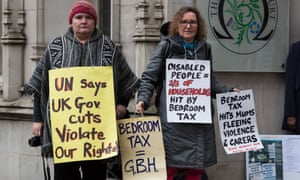


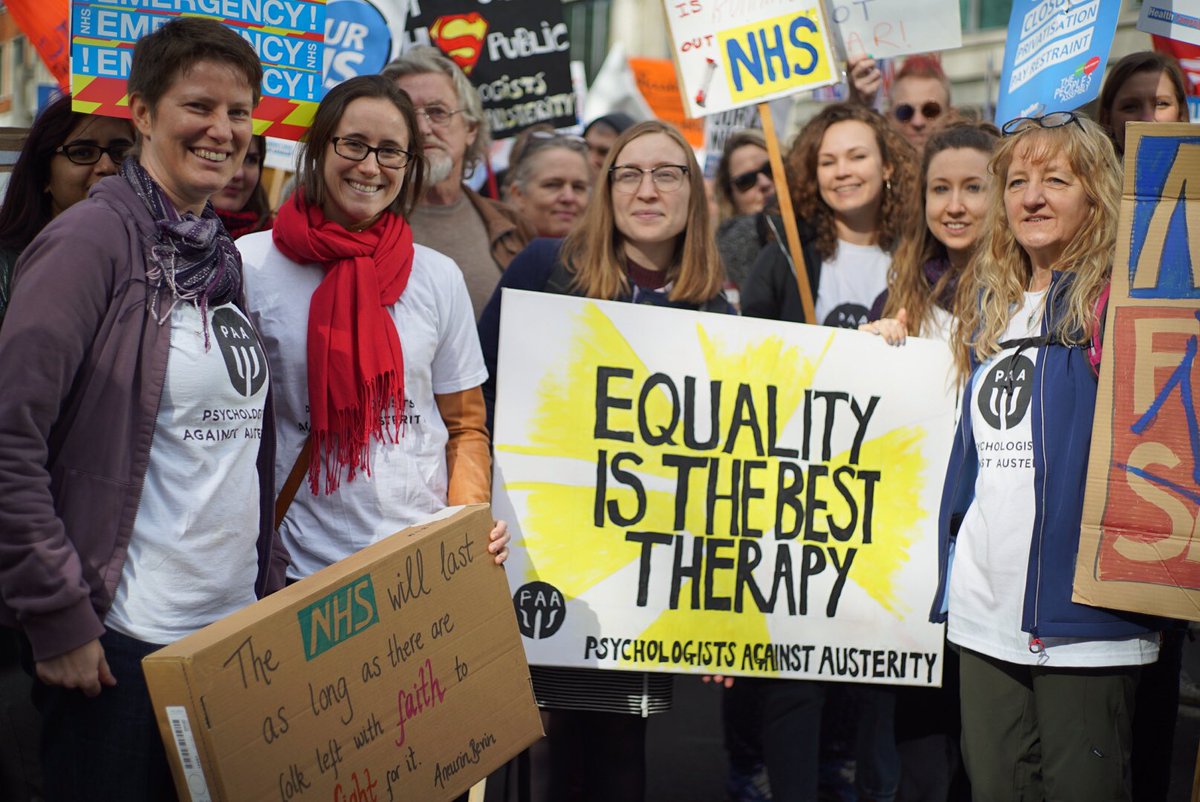


 Politics and Insights