Smart Cards entered our collective consciousness during autumn 2012, as Iain Duncan Smith declared his intention to discipline Britain’s “troubled” families. In unveiling his proposals at the Conservative Conference back in October 2012, Duncan Smith attempted to frame the cards as better value for taxpayers’ money, implying that poor people don’t pay taxes, (when the poorest actually pay proportionally more) and his rhetoric was extremely stigmatising.
Then MP Alex Shelbrooke presented his private member’s bill in December 2012, providing us with yet another shuddering glimpse into the underlying Tory moral outrage, prejudice and punitive attitudes towards people claiming benefits. He argued for a “welfare cash card” to limit spending to absolute basics. Isn’t welfare provision as it is just enough to cover the absolute basics for survival? It’s calculated to meet the cost of food, fuel and shelter only.
Despite his scapegoating narrative about addressing “idleness”, Shelbrooke’s proposal was intended to apply to those in work, who claim benefits such as tax credits and housing benefit, penalising and outgrouping those on a minimum or low wage, also. The plan was to restrict the goods that people claiming benefits could buy with their cards. Not so much offering a “nudge” or “incentive”, but rather, a bludgeoning enforcement.
Government proposals: virtual food vouchers and automated nudge
Earlier this year, the governmentset out proposals in a report regarding howBlockchain Technologies’distributed ledger technology which provides “efficient and transparent” digital records of cryptocurrency transactions, could be used for public services. In their report called Distributed Ledger Technology: Beyond block chain, the government’s scientific advisor says:
“Distributed ledger technology (DLTs) offer significant challenges to established orthodoxy and assumptions of best practice, far beyond the recording of transactions and ledgers. These potentially revolutionary organisational structures and practices should be experimentally trialed — perhaps in the form of technical and non-technical demonstrator projects — so that practical, legal and policy implications can be explored.”
“Areas where we believe work could be taken forward include the protection of national infrastructure, reducing market friction for SMEs [Small and medium-sized enterprises] and the distribution of funds from Department for Work and Pensions and other government departments.” [Boldings mine.]
A distributed ledger is a database that can record financial, physical or electronic assets for sharing across a network through what is claimed to be entirely transparent updates of information.
Its first incarnation was Blockchain in 2008, which underpinned digital cash systems such as Bitcoin. The technology has now evolved into a variety of models that may be applied to different business problems.
Speaking at Payments Innovation Conference earlier this month, Lord Freud, one of the main architects of the welfare “reforms” said:
“Claimants are using an app on their phones through which they are receiving and spending their benefit payments. With their consent, their transactions are being recorded on a distributed ledger to support their financial management.”
The Department for Work and Pensions (DWP) has been working withBarclays, Npower, University College London and a UK-based distributed ledger platform startup called GovCoin to create an app which tracks people’s benefit spending.
The ongoing trial which, is designed to demonstrate “the practical applications of the technology,” began in June. It’s another Conservative experiment on people claiming social security.
Jeremy Wilson, the vice chairman of corporate banking at Barclays, said: “This initiative focuses on adding an additional layer of richer data and identity onto payments, so that a deeper and more effective relationship can be established between the government and claimants.”
I wonder exactly what that “effective relationship” will entail? I bet it’s not one based on mutual respect and democratic dialogue. I also wonder if the Department for Work and Pensions will be issuing people who have no income with Smart phones.
How will the collected information on spending be used? Are we going to see people claiming social security being named and shamed for buying Mars bars, a bottle of wine or a book? Or birthday and Christmas presents for their children? Will the state be sanctioning people that make purchases which the government deems “unnecessary”?
He added: “We are keen to see how the positive potential of this service develops and adds to our wider efforts to explore the uses of distributed ledger technology.”
Distributed ledger technology was identified as a way of potentially “saving billions of pounds a year from welfare fraud and overpayment errors.“
Oh, that whoppingly over-inflated 0.7% of claimants again. Just imagine how many trillions we would save if we used technology to get a grip of tax avoidance.
The technology is hoped to provide a cheap and easy way of getting welfare claimants without bank accounts into the system as well as verifying their identities, and would also provide a “transparent account of how public money was spent, transform the delivery of public services and boost productivity,” the government’s chief science adviser, Sir Mark Walport, said in a report last January. Those same words are used every time vulture capitalists are circling a public service.
Walport said: “Distributed ledger technology has the potential to transform the delivery of public and private services.” More words from the vulture capitalist crib sheet of glittering generalities.
“It has the potential to redefine the relationship between government and the citizen in terms of data sharing, transparency and trust and make a leading contribution to the government’s digital transformation plan.”
The government distributes £3.8bn in payments every day. However, there are some concerns over how protection of data and privacy with the technology will be “managed.”
The Open Data Institute welcomed the findings on the whole. However, it warned that the government must be wary of the challenges involved in blockchain technology and apply it in an effective way. They say: “We agree that blockchains could be used to build confidence in government services, through public auditability, and could also be used for widely distributed data collection and publishing, such as supply chain information. Smart contracts also hold great potential; what if your train tickets were smart contracts that meant you paid less for delayed trains?”
Smart cards and smart contracts, the more things change, the more the Tories stay the same.
Further: “However, in our research we have seen cases where people are trying to bolt old, failed or impossible policy and business ideas onto the new technology or to unnecessarily reinvent things that work perfectly well.”
The institute also warned of the privacy issues raised by incorporating private data and suggested the government better develop and solve these challenges by focusing on industry specific groups such as the finance or healthcare sectors.
Having failed in introducing the punitive smart card more than once, the Conservatives are now resorting to a stealthy introduction of a variation to curtail the freedom of poor people claiming social security, using cryptocurrency, state regulation and an unprecedented, Orwellian level of state monitoring and control of what people who are struggling to make ends meet are buying.
Some further thoughts
Conservatives claim to endorse personal responsibility, limited government, free markets, individual liberty, and deregulation, amongst other things. They believe the role of government should be to provide people the freedom necessary to pursue their own goals. Conservatives claim their policies generally emphasise “empowerment of the individual to solve problems”. So how does any of this tally with harsh welfare cuts, public service cuts, restrictions on the right to by certain goods, the removal of access to legal aid, limiting housing options for the poorest, bedroom tax, numerous human rights contraventions, psychocompulsion through increasingly stringent welfare “conditionality” and the draconian sanction regime, for example?
Limiting “consumer choice” and spending flies in the face of the Tories’ own free market dogma. Furthermore, as it stands legally, the government cannot currently stipulate how people claiming benefits spend their money.
The Tory definition of “troubled family” conflates poverty, ill health, unemployment and criminality. Iain Duncan Smith claims to be targeting substance abusers (“drug addicts” and “alcoholics”) but it’s clear that the government’s definition means he’s referring largely to the poor and disabled people. His proposal to deal with people who don’t buy their children food because they’re “drug addicted” would actually target people who don’t buy food because they can’t afford it.
This post was written for Welfare Weekly, which is a socially responsible and ethical news provider, specialising in social welfare related news and opinion.
I’ve writtenmorethanone critical pieceabout the Government’s part-privatisedBehavioural Insights Team(Nudge Unit), particularly with regard to its insidious and malevolent influence, manifested in a range of psychoregulation policies aimed at “behavioural changes” which are being imposed on the poorest citizens. Technocracy is the “science of social engineering.” Nudge is a technocratic approach to fulfilling the requirements of neoliberalism. It’s about maintaining an established socioeconomic order, rather than advancing progressive social change.
In 1932, Howard Scott and Marion King Hubbert founded Technocracy Incorporated, and proposed that money be replaced by energy certificates. The group argued that “apolitical, rational engineers should be vested with authority to guide an economy into a thermodynamically balanced load of production and consumption, thereby doing away with unemployment and debt.” Sounds just like old school sociological Functionalismto me: it’s a systems theory – utterly tautological and deterministic tosh. Bear with me, because there’s a couple of contemporary parallels I want to discuss.
The Conservatives prefer to do away with unemployment and debt by “incentivising behaviour change” to ensure that poor people who don’t have any money to live on are punished out of their poverty.
Smart Cards, another antiwelfarist, technocratic imposition, entered our collective consciousness during autumn 2012, as Iain Duncan Smith declared his intention to discipline Britain’s “troubled” families. In unveiling his proposals at the Conservative Conference back in October 2012, Duncan Smith attempted to frame the cards as better value for taxpayers’ money, implying that poor people don’t pay taxes, (when the poorest actually pay proportionally more) and his rhetoric was extremely stigmatising.
Then MP Alex Shelbrooke presented his private member’s bill in December 2012, providing us with yet another shuddering glimpse into the underlying Tory moral outrage, prejudice and punitive attitudes towards people claiming benefits. He argued for a “welfare cash card” to limit spending to absolute basics. Isn’t welfare provision as it is just enough to cover the absolute basics for survival? It’s calculated to meet the basic cost of food, fuel and shelter only.
Despite his scapegoating narrative about addressing “idleness”, Shelbrooke’s proposed psychocompulsion was intended to apply to those in work, who claim benefits such as tax credits and housing benefit, penalising and outgrouping those on a minimum or low wage, also. The plan was to restrict the goods that people claiming benefits could buy with their cards. Not so much offering a “nudge” or “incentive”, but rather, delivering a bludgeoning enforcement, without a shred of respect for diverse needs and individuals’ autonomy and choice.
A principled objection is that we should not be stigmatising or inflicting punishments on people, or reducing their freedom to spend money as they need and wish, just because they are forced to spend some time out of work, or because they aren’t paid a wage that is sufficient to live on. Such an approach is extremely draconian.
Having been previously rejected, this is certainly not a democratically endorsed policy.
This is an authoritarian restriction on what people claiming benefits may buy, and a limiting of lifestyle choices that they are permitted. It is a particularly spitefully directed ideological move that does not make any sense in terms of the wider economy, or in terms of any notion of “supporting” people, and “fairness.” The latter two categories of reason would entail extending opportunities and freedoms, not repressing them.
Financial hardship already limits choice. When people are struggling financially, budgeting isn’t the problem: low wages, benefit cuts and rising costs of essential items are. Those factors are ultimately shaped by government policies, not poor people.
No matter how this is dressed up by the Tories, poor people don’t respond to “corrective” narratives and coercive policy like Pavlov’s dogs. Yet the Tories nevertheless insist on placing a psychopolitical variant of operant conditioning – behaviour modification – at the core of their increasingly repressive class-contingent policies. This isn’t about state “assistance” for the entitled poor, most of who have worked and contributed to the treasury, contrary to the politically expedient “economic free rider” label. It’s about traditional Tory prejudices, state interference and coercion. It’s more blaming and punishing the casualities of neoliberalism and social conservatism.
Having failed in introducing the punitive smart card more than once, the Conservatives are now resorting to a stealthy introduction of a variation to curtail the freedom of poor people claiming social security, using cryptocurrency, state regulation and an unprecedented, Orwellian level of state monitoring and control of what people who are struggling to make ends meet are buying.
Some basic (but wordy) definitions
Cryptocurrency is a medium of exchange, alternative to Fiat currencies, which uses a type of virtual currency, such as bitcoin. It uses cryptography for security and anti-counterfeiting measures. Public and private keys are often used to transfer cryptocurrency between individuals. Ownership of bitcoins, for example, implies that a user can spend bitcoins associated with a specific address. To do so, a payer must digitally sign the transaction using the corresponding private key. Without knowledge of the private key, the transaction cannot be signed and bitcoins cannot be spent. The network verifies the signature using the public key.
Bitcoin is a pseudonymous currency, meaning that funds are not tied to real-world entities, but rather, to bitcoin addresses. For cryptocurrency enthusiasts, the pseudoanonymity element is attractive, as it tends to empower individuals rather than institutions. Cryptocurrencies typically feature decentralised and unregulated control, and transactions are recorded in a public distributed ledger called the blockchain.
Owners of bitcoin addresses are not explicitly identified, but all transactions on the blockchain are public
The value of a cryptocurrency is determined by the market (whatever people are willing to pay for it). The welfare or state of your nation’s economy will not affect the value of your cryptocurrency. The value of a cryptocurrency is based solely on global supply and demand and functions much like a commodity on the stock market.
Cryptocurrencies are ordinarily used outside of existing banking and governmental institutions and exchanged over the Internet. They have often been seen by the establishment as a “rogue currency”, and as a potential threat to the monetary order. Because of the pseudoanonymity afforded by “virtual assets”, cryptocurrency is also sometimes used in controversial settings such as online darknet markets, like Silk Road, accessible by Tor, (free software for enabling anonymous communication, it conceals a user’s location and usage) which further minimises the risk of detection by law enforcement agencies. (See: Silk Road and Bitcoin.)
People in Russia and China have been bypassing very strict surveillance laws by using bitcoin-like cryptocurrencies in order to communicate securely. Cryptocurrencies, starting with bitcoin, have emerged and been increasingly utilised almost in parallel with revelations from National Security Agency (NSA) whistle-blower Edward Snowden about mass government surveillance.
As the sheer extent of government spying still continues to emerge, encrypted communication services become important and have surged in popularity. Tech companies, including Facebook, Google and Apple, have capitalised on this by adding encryption to their services. However revelations that these same companies seem complicit in the NSA’s surveillance operations have led to some reservations from users. Now it seems the UK government wants to utilise cryptocurrency, inverting the political freedom it allowed by turning it into a tool of state control.
Government proposals: virtual food vouchers and automated nudge
Earlier this year, the government set out proposals in a report regarding how Blockchain Technologies’ distributed ledger technology which provides “efficient and transparent” digital records of cryptocurrency transactions, could be used for public services. In their report called Distributed Ledger Technology: Beyond block chain, the government’s scientific advisor says:
“Distributed ledger technology (DLTs) offer significant challenges to established orthodoxy and assumptions of best practice, far beyond the recording of transactions and ledgers. These potentially revolutionary organisational structures and practices should be experimentally trialed — perhaps in the form of technical and non-technical demonstrator projects — so that practical, legal and policy implications can be explored.”
“Areas where we believe work could be taken forward include the protection of national infrastructure, reducing market friction for SMEs [Small and medium-sized enterprises] and the distribution of funds from Department for Work and Pensions and other government departments.” [Boldings mine.]
To recap, a distributed ledger is a database that can record financial, physical or electronic assets for sharing across a network through what is claimed to be entirely transparent updates of information.
Its first incarnation was Blockchain in 2008, which underpinned digital cash systems such as Bitcoin. The technology has now evolved into a variety of models that may be applied to different business problems.
Speaking at Payments Innovation Conference earlier this month, Lord Freud, one of the main architects of the welfare “reforms” said:
“Claimants are using an app on their phones through which they are receiving and spending their benefit payments. With their consent, their transactions are being recorded on a distributed ledger to support their financial management.”
The Department for Work and Pensions (DWP) has been working with Barclays,Npower, University College London and a UK-based distributed ledger platform startup called GovCoin to create an app which tracks people’s benefit spending.
The ongoing trial which, is designed to demonstrate “the practical applications of the technology,” began in June. It’s yet anotherConservative experiment on people claiming social security.
Jeremy Wilson, the vice chairman of corporate banking at Barclays, said: “This initiative focuses on adding an additional layer of richer data and identity onto payments, so that a deeper and more effective relationship can be established between the government and claimants.”
I wonder exactly what that “effective relationship” will entail? I bet it’s not one based on mutual respect and democratic dialogue. I also wonder if the Department for Work and Pensions will be issuing people who have no income with Smart phones.
How will the collected information on spending be used? Are we going to see people claiming social security being named and shamed for buying Mars bars, a bottle of wine or a book? Or birthday and Christmas presents for their children? Will the state be sanctioning people that make purchases which the government deems “unnecessary”?
He added: “We are keen to see how the positive potential of this service develops and adds to our wider efforts to explore the uses of distributed ledger technology.”
Distributed ledger technology was identified as a way of potentially “saving billions of pounds a year from welfare fraud and overpayment errors.”
Oh, that whoppingly over-inflated 0.7% of claimants again. Many of whom were simply overpaid as the result of an administrative error, after all. Just imagine how many trillions we would save if we used technology to get a grip of tax avoidance and tackle offshore tax havens, and addressing the “spending habits” of the hoarding wealthy.
The technology is hoped to provide a cheap and easy way of getting welfare claimants without bank accounts into the system as well as verifying their identities, and would also provide a “transparent account of how public money was spent, transform the delivery of public services and boost productivity,” the government’s chief science adviser, Sir Mark Walport, saidin a report last January. Those same words are used every time vulture capitalists are circling a public service, on the hunt for easy profits.
Walport said: “Distributed ledger technology has the potential to transform the delivery of public and private services.”
More words from the vulture capitalist crib sheet of glittering generalities.
“It has the potential to redefine the relationship between government and the citizen in terms of data sharing, transparency and trust and make a leading contribution to the government’s digital transformation plan.”
The government distributes £3.8bn in payments every day. However, there are some serious concerns over how protection of data and privacy with the technology will be “managed.”
The Open Data Institute (ODI) welcomed the findings on the whole. However, it warned that the government must be wary of the challenges involved in blockchain technology and apply it in an effective way. They say: “We agree that blockchains could be used to build confidence in government services, through public auditability, and could also be used for widely distributed data collection and publishing, such as supply chain information. Smart contracts also hold great potential; what if your train tickets were smart contracts that meant you paid less for delayed trains?”
Smart cards and smart contracts, the more things change, the more the Tories stay the same.
Further comment from the ODI: “However, in our research we have seen cases where people are trying to bolt old, failed or impossible policy and business ideas onto the new technology or to unnecessarily reinvent things that work perfectly well.”
The institute also warned of the privacy issues raised by incorporating private data and suggested the government better develop and solve these challenges by focusing on industry specific groups such as the finance or healthcare sectors.
Some thoughts
Conservatives claim to endorse personal responsibility, limited government, free markets, individual liberty, and deregulation, amongst other things. They believe the role of government should be to provide people the freedom necessary to pursue their own goals. Conservatives claim their policies generally emphasise “empowerment of the individual to solve problems”.
So how does any of this tally with harsh welfare cuts, public service cuts, restrictions on the right to by certain goods, the removal of access to legal aid, limiting housing options for the poorest, bedroom tax, numerous human rights contraventions, increasing conditionality for ill and disabled people, psychocompulsion through increasingly stringent welfare behavioural conditionality and the draconian sanction regime, for example?
Limiting consumer choice and spending flies in the face of the Tories’ own free market dogma. Furthermore, as it stands legally, the government cannot currently stipulate how people claiming benefits spend their money. So they would have to re-write the law to suit their “policy outcomes.” Again.
The Tory definition of “troubled family”conflates poverty, ill health, unemployment and criminality. Iain Duncan Smith claims to be targeting substance abusers (“drug addicts” and “alcoholics”) but it’s clear that the government’s definition means he’s referring largely to the poor and disabled people. His proposal to deal with people who don’t buy their children food because they’re “drug addicted” would actually target people who don’t buy food because they can’t afford it.
Once again we see the disciplinarian and psychocratic Tories stigmatising the poorest people for the conditions that Tory policies have caused. If such “troubled families” existed (and the Joseph Rowntree foundation research has put paid to the myth of “families with three generations unemployed”), it would not be reasonable to treat their situations as an issue of personal spending choices rather than a consequence of how our economy is run.
The Tories have, over the past five years, parodied a political process that is supposed to be about engaging the publics’ rational, conscious minds, as well as facilitating their needs within society. The UK is not an inclusive democracy. Instead we see the employment of a behaviourist brand of psychocomplulsion, and the media are complicit in propping up an increasingly incoherent, irrational and profoundly prejudiced ideology which informs class-contingent, anti-social and deeply damaging neoliberal policies.
I’ve pointed out previously that government policies are expressed political intentions regarding how our society is organised and governed. They have calculated social and economic aims and consequences.
In democratic societies, citizen’s accounts of the impacts of policies ought to matter. “Accountability to the taxpayer” is being used more and more by the state as a justification to exclude those needing financial support from democratic society. Yet those people claiming benefits are not the same people year by year. The “economic free-rider” myth assumes that people claiming welfare do so continuously, yet we know that most move in and out of work, being forced to undertake insecure, poorly paid work regularly. It’s hardly fair to punish people for the detrimental conditions of the wider labor market.
In the UK, the way that policies are justified is being increasingly detached from their aims and consequences, partly because democratic processes and basic human rights are being disassembled or side-stepped, and partly because the government employs the widespread use of linguistic strategies and techniques of persuasion to intentionally divert us from their aims and the consequences of their ideologically (rather than rationally) driven policies. Furthermore, policies have become increasingly detached from public interests and needs. Instead, policy is about directing us in how to be. We are being coerced into behaving only in ways that accommodate and prop up neoliberalism.
Neoliberalism is a system of economic arrangements that greatly benefits a few powerful and wealthy people and impoverishes the majority of the public incrementally. As each social group reaches a crisis – struggling to survive – scapegoating narratives are constructed and disseminated via the media that blame them for their insolvency, creating socially divisive and politically managed categories of “others,” which serve to de-empathise the rest of the population and divert them from the fundamental fact that it isn’t the poor that create poverty: it is the neoliberal decision-makers and those who are steadily removing and privatising our public funds and ebulliently shrinking state responsibility towards citizens, leaving many at the mercy of “market forces” without a state safety net – it’s economic Darwinism.
—
“Workers of the World unite. You have nothing to lose but their blockchains.” Hubert Huzzah
—
All despots and bullies are behaviourists. They inflict punishment on others to get the “outcomes” that they want.
Governments are elected to reflect and accommodate public need. In the UK, the government expects the public to change their perceptions, expectations and behaviours to meet the government’s need. They say:
“Behaviour change is one of the primary functions of government communications – helping change and save lives, helping the government run more effectively as well as save taxpayer’s money.
Our approach is to use a mix of awareness raising, persuasion, practical help and behavioural theory, to demonstrate why changes in behaviour are important and to make these changes easy for the public to adopt”.
I don’t make any money from my work. But you can support Politics and Insights and contribute by making a donation which will help me continue to research and write informative, insightful and independent articles, and to provide support to others. The smallest amount is much appreciated, and helps to keep my articles free and accessible to all – thank you.
The government’s undeclared preoccupation withbehavioural change through personal responsibilityisn’t therapy. It’s simply a revamped version of Samuel Smiles’s bible of Victorian and over-moralising, a Conservative behaviourist hobby-horse: “thrift and self-help” – but only for the poor, of course.
Smiles and other powerful, wealthy and privileged Conservative thinkers, such as Herbert Spencer, claimed that poverty was caused largely by the “irresponsible habits” of the poor during that era. But we learned historically that the socioeconomic circumstances caused by political decision-making creates poverty. Meanwhile, the state abdicates its democratic responsibilities of meeting the public’s needs and for transparency and accountability for the outcomes and social consequences of its own policies.
Conservative rhetoric is designed to have us believe there would be no poor people if the welfare state didn’t somehow “create” them. If the Tories must insist on peddling the myth of meritocracy, then surely they must also concede that whilst such a system has some beneficiaries, it also creates situations of insolvency and poverty for others.
In other words, the same system that allows some people to become very wealthy is the same system that condemns others to poverty.
This wide recognition that the raw “market forces” of the old liberal laissez-faire (and the current starker neoliberalism) causes casualties is why the welfare state came into being, after all – because when we allow such competitive economic dogmas to manifest, there are invariably winners and losers.
That is the nature of “competitive individualism,” and along with inequality, it’s an implicit, undeniable and fundamental part of the meritocracy myth and neoliberal script. And that’s before we consider the fact that whenever there is a Conservative government, there is no such thing as a “free market”: in reality, all markets are rigged for elites. For example, we have a highly regulated welfare state that enforces “behaviour change” via a punitive conditionality regime, coercing a reserve army of labour into any available work, and a highly deregulated labour market which is geared towards making profit and is not prompted to provide adequately for the needs of a labour force.
Society as taxpayers and economic free-riders – a false dichotomy
The Conservatives have constructed a justification narrative for their draconian and ideologically-driven cuts to social security by manufacturing an intentionally socially divisive and oversimplistic false dichotomy. Citizens have been redefined as either taxpayers (strivers) or economic free-riders (skivers). Those people currently out of employment, regardless of the reason, are categorised and portrayed through political rhetoric and in the media as economic free-riders – the “something for nothing culture.”
However, not only have most people currently claiming social security, including the majority of disabled people, worked and contributed tax and national insurance, people needing social security support also contribute significantly to the Treasury, because they pay the largest proportion of VAT, council tax, bedroom tax, council care costs and a variety of other stealth taxes.
A massive proportion of welfare expenditure goes towards paying private companies and organisations to “get people back to work” and in rewarding shareholders with savings from the systematic reduction in benefits. This approach has not helped people out of employment to find secure, appropriate work with acceptable levels of pay, because it rests on a never-ending reduction in the value of the minimum benefit level, which was originally calculated to meet subsistence costs – only those costs of fundamental survival needs, such as for fuel, food and shelter – so that those in poverty are made even poorer, less able to meet basic needs, to serve as an “incentive” to make the advantages of any work, regardless of its quality, pay and conditions, appear to be greater than it is.
This is what Conservatives mean by “making work pay.” It’s exactly the same disciplinarian approach as that which was enshrined in the 1834 Poor Law Amendment Act – the principle of less eligibility.The 1834 Act was founded on a political view that the poor were largely responsible for their own situation, which they could change if they chose to do so.
Seriously, does anyone really imagine that people actually choose to be poor?
The impact of this approach on the large numbers of disabled people in particular, who had no choice but to seek welfare in the Workhouse, was that they were treated very harshly and depersonalised.
It’s also clear that the underpinning Poor Law Amendment categories of “deserving” and “undeserving” poor – another false dichotomy – and the issue of eligibility for social security is still on the Conservative welfare policy agenda. Worryingly, the current trend is for the government to create stereotypes, frequently portraying the recipients of types of support, such as Disability Living Allowance, as passive or inactive economic free-riders, when in fact the Allowance was paid to some individuals working in the paid labour market, and the withdrawal of such funds, prevents them continuing with such paid work. More recently, the difficulties that many disabled people have encountered in accessing Personal Independence Payments (PIP) because of increasingly narrow eligibility criteria, have meant that many who depend on the income to meet the additional costs of living independently, such as specially adapted motability vehicles, have been forced to give up work.
The state confines its attention mainly to re-connecting disabled people deemed too ill to work with the labour market, without any consideration of potential health and safety risks in the workplace, as a strategy of “support.” Without any support.
As previously summarised, the Conservatives justify the draconian cuts to support as providing “incentives” for people to work, by constructing a narrative that rests on the false and socially divisive taxpayer/free-rider dichotomy:
By “trolls” Michael Fabricant actually means disabled people and campaigners responding to his tweet.
Of course one major flaw in Fabricant’s reasoning is that many people passed as fit for work are anything but. The other is that disabled people pay taxes too.
The increasing conditionality of welfare mirrors the increasing conditionality of the labour market
Under the guise of lifting burdens on business, the government has imposed burdens on those with disabilities by removing the “reasonable adjustments” that make living their lives possible and allowing dignity. The labour market is unaccommodating, providing business opportunities for making profit, but increasingly, the needs and rights of the workforce are being politically sidelined. This will invariably reduce opportunities for people to participate in the labour market because of its increasingly limiting terms and conditions.
Of those that may be able to work, over time, their would-be employers have not engaged with legal requirements and provided adjustments in the workplace to support those disabled people seeking employment. The government have removed the Independent Living Fund, and reduced Access to Work support, Personal Independence Payment (PIP) is very difficult to access because of the stringent eligibility criteria, whilst the disability benefit Employment Support Allowance was also redesigned to be increasingly difficult to qualify for.
Policies, which exclude disabled people from their design and rationale, have extended and perpetuated institutional and cultural discrimination against disabled people.
The universal character of human rights is founded on the inherent dignity of all human beings. It is therefore axiomatic that people with medical conditions that lead to disabilities, both mental and physical, have the same human rights as the rest of the human race. The United Nations is currently investigatingthis government’s gross and systematic violations of the Convention on the Rights of Persons with Disabilities (CRPD), and a recent report from theHouse of Lords Select Committeeon the Equality Act 2010 and Disability, investigating the Act’s impact on disabled people, has concluded that the Government is failing in its duty of care to disabled people, because it does not enforce the act. Furthermore, the Select Committee concludes that the government’sred tape challengeis being used as a pretext for removing protections for disabled people. This is a government that regards the rights and protections of disabled people as nothing more than a bureaucratic inconvenience.
The inflexibility of the labour market isn’t an issue for only disabled people. The Department for Work and Pensions (DWP) intends to establish an “in-work service”, designed to encourage individual Universal Credit claimants on very low earnings to increase their income. Benefit payments may be stopped if claimants fail to take action as required by the DWP. The DWP is conducting a range of pilots to test different approaches but there is very little detail about these. The new regime might eventually apply to around one million people. In december last year, the The Work and Pensions Committee opened an in-work progression in Universal Credit inquiryto consider the Department’s plans and options for a fair, workable and effective approach.
The Conservatives continue to peddle the “dependency” myth, yet there has never been any empirical evidence to support the claims of the existence of a “culture of dependency” and that’s despite the dogged research conducted by Keith Joseph some years ago, when he made similar claims. In fact, a recent international study of social safety nets from The Massachusetts Institute of Technology (MIT) and Harvard economists categorically refutes the Conservative “scrounger” stereotype and dependency rhetoric. Abhijit Banerjee, Rema Hanna, Gabriel Kreindler, and Benjamin Olken re-analyzed data from seven randomized experiments evaluating cash programmes in poor countries and found “no systematic evidence that cash transfer programmes discourage work.”
The phrase “welfare dependency” diverts us from political discrimation via policies, increasing inequality, and it serves to disperse public sympathies towards the poorest citizens, normalising prejudice and resetting social norm defaults that then permit the state to target protected social groups for further punitive and “cost-cutting” interventions to “incentivise” them towards “behavioural change.”
Furthermore, Welfare-to-Work programmes do not “help” people to find jobs, because they don’t address exploitative employers, structural problems, such as access to opportunity and resources and labor market constraints. Work programmes are not just a failure here in the UK, but also in other countries, where the programmes have run extensively over at least 15 years, such as Australia.
Welfare-to-work programes are intimately connected with the sanctioning regime, aimed at punishing people claiming welfare support. Work programme providers are sanctioning twice as many people as they are signposting into employment (David Etherington, Anne Daguerre, 2015), emphasising the distorted priorities of “welfare to work” services, and indicating a significant gap between claimant obligations and employment outcomes.
The Conservatives have always constructed discourses and shaped institutions which isolate some social groups from health, social and political resources, with justification narratives based on a process of class-contingent characterisations and the ascribed responsiblisation of social problems such as poverty, using quack psychology and pseudoscience. However, it is socioeconomic conditions which lead to deprivation of opportunities, and that outcome is undoubtedly a direct consequence of inadequate political decision-making and policy.
It’s worth bearing in mind that many people in work are still living in poverty and reliant on in-work benefits, which undermines the libertarian paternalist/Conservative case for increasing benefit conditionality somewhat, although those in low-paid work are still likely to be less poor than those reliant on out-of-work benefits.
The government’s Universal Credit legislation has enshrined the principle that working people in receipt of in-work benefits may face benefits sanctions if they are deemed not to be trying hard enough to find higher-paid work. It’s not as if the Conservatives have ever valued legitimate collective wage bargaining. In fact their legislative track record consistently demonstrates that they hate it, prioritising the authority of the state above all else.
There are profoundly conflicting differences in the interests of employers and employees. The former are generally strongly motivated to purposely keep wages as low as possible so they can generate profit and pay dividends to shareholders and the latter need their pay and working conditions to be such that they have a reasonable standard of living.
Workplace disagreements about wages and conditions are now typically resolved neither by collective bargaining nor litigation but are left to management prerogative. This is because of deregulation to suit employers and not employees. Conservative aspirations are clear. They want cheap labour and low cost workers, unable to withdraw their labour, unprotected by either trade unions or employment rights and threatened with destitution via benefit sanction cuts if they refuse to accept low paid, low standard work. Similarly, desperation and the “deterrent” effect of the 1834 Poor Law amendment served to drive down wages.
The global financial crisis presented an opportunity for Conservative supporters of labour market deregulation to once again champion “economic growth” at any costs by “lifting the regulatory burdens on business.” Neoliberal commentators argued that highly regulated labour markets perform reasonably well during boom periods but cannot cope with recessions – and that therefore the UK and other developed economies need to deregulate their labour markets to ensure a strong economic recovery (even though the UK already has one of the most deregulated labour markets in the developed world).
The “problems” with labour market regulation are seen by Conservatives as being rooted in:
The social security system which provides a safety net and maintains basic living standards for those who are out of work, by reducing the gap in living standards between those in and those out of work, it diminishes the incentive to find or keep jobs. Where the safety net is financed by taxes on wages, it also raises total labour costs.
Minimum wages which may “price workers out of jobs” if set at levels above those prevailing in an unregulated labour market.
Employment protection legislation, such as restrictions on the ability of employers to hire and fire at will, also raises labour costs, diminishes flexibility and willingness to hire, thus reducing employment. (See Beecroft report)
Trade unions which raise wages to levels which “destroy jobs and reduce productivity and efficiency through restrictive practices.” (See Trade Union Bill).
Regulation of the labour market, however, is crucial to compensate for the wide inequality in bargaining power between employers and employees; to realise comparative wage justice; to increase employee’s job security and tenure, therefore encouraging investment in skills (both by the employer and employee), which has a positive impact on labour productivity and growth, and to ensure that a range of basic community, health and safety standards are observed in the workplace.
In the Conservative’s view, trade unions distort the free labour market which runs counter to New Right and neoliberal dogma.
Since 2010, the decline in UK wage levels has been amongst the very worst in Europe. The fall in earnings under the Coalition is the biggest in any parliament since 1880, according to analysis by the House of Commons Library, and at a time when the cost of living has spiralled upwards.And whose fault is that? It’s certainly not the fault of those who need financial support to meet their basic survival needs despite being in employment.
So we may counter-argue that:
Genuine minimum standards, including minimum wages are needed. Without them the lower end of the market becomes casualised, insecure and sufficiently low-paid, which in turn also produces major work incentive problems. On the other hand, regulation that protects or gives power to already powerful groups in the labour market creates serious inequality in access to work. Additionally, the creation of special types of labour exempt from normal regulation is particularly unhelpful. It often tends to reinforce the privileged status of core workers while generating jobs which are unsuitable vehicles for tackling the problem of social exclusion.
The benefit system needs to take into account that those who take entry-level jobs may require additional help from the welfare state to support their families. Without this type of benefit, adults in poorer families will be the last to take such relatively low-paying entry-level positions. Furthermore, a highly conditional social security system that provides below subsistence-level support also serves to disincentivise people because financial insecurity invariably creates physiological, psychological, behavioural and motivational difficulties, people in circumstances of absolute poverty are forced to shift their cognitive priority to that of surviving, rather than being “work ready.” This was historically observed by social psychologist Abraham Maslow in his classic work on human motivation and well-evidenced in research, such as the Minnesota semistarvation experiment, amongst many other comprehensive studies.
Employment taxes, on both employers and employees, should be progressive to support the creation of new jobs rather than making the already employed work longer hours. Yet the UK system also has numerous large incentives to offer employees insecure and short-hour contracts. This is remarkably short-sighted and counterproductive.
The balance of “incentives” in Conservative policies.
The following cuts came into force in April 2013:
1 April – Housing benefit cut, including the introduction of the ‘bedroom tax’
1 April – Council tax benefit cut
1 April – Legal Aid savagely cut
6 April – Tax credit and child benefit cut
7 April – Maternity and paternity pay cut
8 April – 1% cap on the rise of in working-age benefits (for the next three years)
8 April – Disability living allowance replaced by personal independence payment (PIP), with the aim of saving costs and “targeting” the support
15 April – Cap on the total amount of benefit working-age people can receive
In 2012, Ed Miliband said: “David Cameron and George Osborne believe the only way to persuade millionaires to work harder is to give them more money.
But they also seem to believe that the only way to make you (ordinary people) work harder is to take money away.”
He was right.
Here are some of the Tory “incentives” for the wealthy:
Falling taxes – top rate of tax cut from 50% to 45% for those earning over £150,000 a year. This is 1% of the population who earn 13% of the income.
No mansion tax and caps on council tax mean that the highest value properties are taxed proportionately less than average houses.
Benefited most from Quantitative Easing (QE) – the Bank of England say that as 50% of households have little or no financial assets, almost all the financial benefit of QE was for the wealthiest 50% of households, with the wealthiest 10% taking the lions share
Tax free living – extremely wealthy individuals can access tax avoidance schemes which contribute to the £25bn of tax which is avoided every year, as profits are shifted offshore to join the estimated £13 trillion of assets siphoned off from our economy
£107, 000 each per annum gifted to millionaires in the form of a “tax break.”
Disabled people have carried most of the burden of Conservative austerity cuts:
The Conservatives are on an ideological crusade, which flies in the face of public needs, democracy and sound economics, to shrink the welfare state and privatise our essential services.
In a wealth transfer from the poorest to the very rich, we have witnessed the profits of public services being privatised, but the losses have been socialised – entailing a process of economic enclosure for the wealthiest, whilst the burden of losses have been placed on the poorest social groups and our most vulnerable citizens – largely those who are ill, disabled and elderly. The Conservative’s justification narratives regarding their draconian policies, targeting the poorest social groups, have led to media scapegoating, social outgrouping, persistent political denial of the aims and consequences of policies and reflect a wider process of political disenfranchisement of the poorest citizens, especially sick and disabled people.
This is juxtaposed with the more recent gifted tax cuts for the wealthiest, indicating clearly that Conservatives perceive and construct social hierarchies with policies that extend inequality and discrimination. The axiom of our international human rights is that we each have equal worth. Conservative ideology is fundamentally incompatable with the UK government’s Human Rights obligations and with Equality law. The chancellor clearly regards public funds for providing essential lifeline support for disabled people as expendable and better appropriated for adding to the disposable income for the wealthy.
Public policy is not an ideological tool for a so-called democratic government to simply get its own way. Democracy means that the voices of citizens, especially members of protected social groups, need to be included in political decision-making, rather than so frankly excluded.
Government policies are expressed political intentions regarding how our society is organised and governed. They have calculated social and economic aims and consequences. In democratic societies, citizen’s accounts of the impacts of policies ought to matter.
However, in the UK, the way that policies are justified is being increasingly detached from their aims and consequences, partly because democratic processes and basic human rights are being disassembled or side-stepped, and partly because the government employs the widespread use of linguistic strategies and techniques of persuasion to intentionally divert us from their aims and the consequences of their ideologically (rather than rationally) driven policies. Furthermore, policies have become increasingly detached from public interests and needs.
We elect governments to meet public needs, not to “change behaviours” of citizens to suit government needs and prop up policy “outcomes” that are driven entirely by traditional Tory prejudice and ideology.
—
I don’t make any money from my work and I’m not funded. You can support Politics and Insights by making a donation to help me continue researching and writing independently, and to continue to help others.
The very act of renaming incapacity benefit support for sick and disabled people “employment and support allowance” signaled the political intent to make that support precarious, with an aim of pushing people previously exempted from work on medical grounds from lifeline social security protection into work on political grounds, regardless of the consequences. The word “allowance” means the amount of something that is permitted, especially within a set of regulations or for a specified purpose. This language shift signaled the increasing contingency of support for disabled people.
It also reduced and transformed the sick role, making it increasingly transitory, redefining chronic, incurable conditions as somehow transient, and marking a shift from medical definitions of sickness and disability to psychopolitical redefinitions, which are ultimately aimed at pushing forward a small state neoliberalist agenda. Welfare provision is being steadily dismantled.
However, changing the name and making the eligibility criteria for support much more stringent has not helped sick and disabled people into work. It has simply created circumstances of further disadvantage, hardship and distress for many people.
It hasn’t worked because many of those people affected by the nudge-styled rebranding of their lifeline support and draconian cuts to “incentivise” people to take up and cherish the Puritan work ethic, as the paternalistic Conservatives think we ought to, are simply too ill to work.
Of those that may be able to work, over time, their would-be employers have not engaged with legal requirements and provided adjustments in the workplace to support those disabled people seeking employment. The government have removed the Independent Living Fund, and reduced Access to Work support, Personal Independence Payment (PIP) is very difficult to access because of the stringent eligibility criteria, whilst the disability benefit Employment and Support Allowance was also redesigned to be increasingly difficult to qualify for.
But political word games, and intentions to attempt to shrink the categories of what is deemed “illness and disability” along with the ever-shrinking state, don’t cure illness and disability, and it’s offensive to witness a very wealthy first world so-called democratic government viciously hounding and shamefully coercing a group of people, negatively labeling them as a “burden on the taxpayer”, and forcing them to take any low paid, insecure work, without any support whatsoever, despite the fact their doctor and the state, via the work capability assessment, have deemed them already to be unfit for work, whilst at the same time leaving this group on an isolated, ever-shrinking island with ever-decreasing lifeline support.
Perhaps PIP ought to include invisible bootstraps in the aids and appliances categories.
This is juxtaposed with the recent gifted tax cuts for the wealthiest, indicating clearly that Conservatives perceive and construct social hierarchies with policies that extend inequality and discrimination. The axiom of our international human rights is that we each have equal worth. Conservative ideology is fundamentally incompatable with the UK government’s Human Rights obligations and with Equality law. The chancellor clearly regards public funds for providing essential lifeline support for disabled people as expendable and better appropriated for adding to the disposable income for the wealthy.
Most people (over three-quarters ) who are disabled became so during their working life. There is an implicit political prejudice regarding disability, evident in policy-making, which is that it is an undesirable state and somehow preventable. There is another more explicitly stated prejudice, which relates to the oversimplistic false dichotomy of society. Citizens have been redefined as taxpayers or economic free-riders. However, not only have most disabled people worked and contributed tax and national insurance, people claiming social security also contribute significantly to the Treasury, because we pay VAT, council tax, bedroom tax and a variety of other stealth taxes.
The state confines its focus and responsibility mainly at re-connecting disabled people with the labor market, without any consideration of potential health and safety risks in the workplace, as a strategy of “support,” and justifies the draconian cuts to support as providing “incentives” for people to work, by constructing a narrative that rests on the bogus and socially divisive taxpayer/free-rider dichotomy:
“You answer if a disabled person can’t work there is NO cut but if they can but won’t, why should taxpayers subsidise them & trolls go mad!”
By “trolls” Michael Fabricant actually means disabled people and campaigners responding to his tweet.
What happens to those people that can’t work or cannot find an understanding employer, prepared to make reasonable adjustments in the workplace?
On becoming ill – it can happen to anyone
I am medically ill and my illness (lupus) affects my mobility, focus and general wellbeing. I am restricted in what I can do, and the symptoms and exacerbations are very unpredicable. However, it is economic, political and cultural forces which have created and continue to create my ongoing disability and social marginalisation, not my illness. Many of my problems are compounded because of an unadapted physical environment, a lack of resources and the attitudes of others, particularly the current government’s.
I don’t accept that health problems ought to be seen as the cause of the socioeconomic deprivation and exclusion that many of us are experiencing, because the real cause is entirely political. Policies, which exclude disabled people from their design and rationale, have extended and perpetuated institutional and cultural discrimination against disabled people.
My own illness arose partly because of a genetic predisposition, partly because of my gender and hormonal events which often trigger the illness, and probably a variety of other complex reasons, none of which specialists fully understand yet. Prior to becoming very ill, I led a very active and healthy life. I worked hard in a job I loved. My diet is and always has been balanced and healthy, I enjoyed outdoor activities such as climbing, abseiling, archery and walking. I was never inactive or overweight, and I am not stupid when it comes to health issues. Lupus isn’t a “lifestyle choice” and it didn’t arise because of something I did wrong.
All the same, I frequently get well-meaning but bad advice to try different diets, “natural” herbal remedies (people forget that they contain chemicals) – usually the immune- enhancing ones like echinacea, which my rheumatologist has already advised could be very dangerous – and the best one of all: “You should stop taking the heavy duty medication and ‘cleanse your system’.” That would be medication that I take to keep me alive because I tried and ran out of all the other options. I usually recommend a simple course of water melons for such “experts”, to be taken at four hourly intervals, rectally.
Like many other ill and disabled people, I have worked for most of my life. My work was rewarding, and the professional roles I took up have entailed developing inspirational ways to support and enable others, from voluntary work with Women’s Aid and Victim Support, to salaried youth and community work, social work, mental health work and delivering training. I worked whilst being ill for a number of years.
By 2010, I simply couldn’t work any more. My previous and mostly background joint, nerve and muscle pain suddenly became all consuming. My ankles, knees, wrists and fingers swelled. I caught a cold at work which turned to pneumonia on two occasions in 2009. I had apparently random finger abcesses, inexplicable kidney infections, and bruised every time I was touched. I had severe nerve pain in my face and optic nerves, which affects my vision. My hips and lower spine became stiff and painful, my shoulders became frozen. I had a painful rash across my face that looked like eczema, only it wasn’t. I was profoundly tired all of the time, and weighed less than eight stones. My GP ran some tests and everything came back lupus, with complications such as a severe autoimmune bleeding disorder, very low immunity to infection and neurological involvement.
Working put my safety, health and wellbeing at substantial risk. It also potentially exposed other people to risk, too, because of the impact of my illness on my judgments, reliability and consistency, eyesight, ability to supervise, mobility and so on. A tribunal agreed with this assessment in 2012.
It was a very painful recognition that I could no longer work, my decision to leave was very difficult, compounded by a sense of loss of self worth and meaning. I felt that my experience, developed skills, not to mention time and effort invested in studying for a highly vocational Master’s degree, were meaningless and unavailing. However, I was completely unprepared for the damaging impact of the political othering and socioeconomic outgrouping that followed from 2010.
And the poverty. I came to feel that I had been politically redefined as somehow “deviant” by 2012. A much needed transformation to add to the grieving process for the person I was before my body became a traitor. Cheers, Mr Cameron, for the milk of human blindness. The Sex Pistols got it a bit wrong back in the last days of counter-culture and agitprop: it’s not just anarchy that we need for the UK, it’s a modicum of empathy, too.
Doctors and rehabilitation professionals continually recommend medical treatments and practices even though they know that these will not necessarily improve my quality of life. Most of the treatments for autoimmune illnesses such as lupus are largely experimental: comprised of chemotherapies and immune suppressants that carry their own life-threatening risks, and being ill with lupus and other autoimmune illnesses presents a constant and difficult process of weighing up of such risks – life threats from the illness versus life threats and serious life-changing risks from the treatments.
The dangers that arise when everyone thinks they are an expert on illness and disability
That didn’t stop a job advisor, during my time in the employment support allowance work-related activity, group telling me I should take the chemotherapy methotrexate because her friend with rheumatoid arthritis had some benefit from it. Methotrextate helps around 25% of people taking it, to various degrees, but it cannot cure the illness. Side-effects include sudden death, blindness, liver, kidney and heart failure, lung fibrosis, thrombocytopenia – a serious bleeding disorder which I already have – and death from an overwhelming infection, which I am already susceptible to, since my immune system is easily compromised and broken, amongst many other problems.
As it happens, I had already tried methotrexate for many months, administered by injection into my stomach. It didn’t work and the side-effects were truly diabolical, adding to my existing misery and multiplying symptoms. Another treatment, considered far less risky, called hydroxychloroquine, damaged my retina because I was prescribed too high a dosage, I’m now partially sighted.
However, the unqualified advice from a job coach overlooked that I have a different illness than her friend, and that methotrexate is a black box drug with life-threatening side-effects. Everyone seems to think they are a medical expert nowadays, and that’s the government’s doing, since they have been redefining illness and disability, making it a moral and public matter rather than a private, medical issue. Such political negative role-modelling has permitted a rise in expressions of social prejudice towards disabled people, which is why hate crime has risen significantly since 2010 and is now at the highest level since records began.
We are either deserving or non-deserving, abled or disabled, never just ill or physically disadvantaged. Our lives have somehow become public property, with all manner of unqualified people feeling entitled to intrude at an intimate level to tell us how to “manage” our illness better. Or to transform media tropes and political folk devils into forms of justification for abuse.
Job centre staff it seems will recommend anything, including unqualified advice about medical treatments, regardless of the risks that may be involved, to coerce people from what was once a social safety net and into any job, regardless of its appropriateness, quality, pay, security, and importantly, it’s potential impact on people’s health and safety.
Last October,I flagged upthe extremely worrying government plans to place job coaches in GP practices, with provision made for job centre staff to “update” people’s medical files. The government hadn’t announced this “intervention” in the lives of disabled people, nor had we been consulted or involved in its design. I found out about it quite by chance because I read Matthew Hancock’s recent conference speech:The Future of Public Services.
The government plans to merge health and employment services, and are now attempting to redefine work as a clinical outcome. Unemployment has been stigmatised and politically redefined as apsychological disorder, and the government claims somewhat incoherently that the “cure” for unemployment due to illness and disability, and sickness absence from work, is work.
This is why I visit my doctor and not David Cameron or George Osborne when I need advice, support and treatment related to my medical (and not political) condition.
It’s a prejudiced government that has edited the script regarding sick roles – we no longer have medical sick notes, they have been replaced by political fit notes. The subtext is that we must participate in the world of mainstream work without any choices, without reasonable adaptations and without support. Without any acknowledgement of illness and disability, in fact. Or, we have to accept being redefined, our identity rewritten as “dependent”, “impaired” “unfit for work” as a trade-off for a degree of meagre support.
All of our previous achievements and contributions are forgotten. We once celebrated the achievements of disabled people, but now, we cannot, because disabled people are systematically repressed. We are politically defined as either fit for work (and thus not seen as “disabled”) or not. There are no other options for us, unless we happen to be very wealthy as well as ill.
Singing the body politic in our own voices
We don’t fit with neoliberal dogma and the Tory ideals of “individual responsibility”, competition, a “small state” and compulsory (low) paid employment to enhance profits for the elite’s old boys network. Any positive association with impairment, such as reasonable allowances made or degrees of freedom from the Tory notion of “social obligations” and “responsibilities,” is prohibited. We are faced with an overly simplistic, terribly reductive and dehumanising either/or choice.
We are deemed either fit for work, or too disabled to work, with no accommodation made for what we may be able to contribute in myriad ways to society, nor is our past accumulative experience and skill regarded as a valuable. The moment there is a hint we may have some kind of tenuous work-related capability, all support is withdrawn. However, once we are deemed unfit for work, we are denied full citizen’s status and economic inclusion.
This narrow political approach does nothing to enable and support people, nor does it reflect human diversity. It simply disables us further and denies us autonomy and the right to define ourselves. It’s an approach that actually punishes people for the abilities, experience and skills that they have, stifling human potential. The moment those abilities and skills are revealed at a work capability assessment, all support is withdrawn and those qualities remain unfulfilled. Instead of investing in personal development and extending opportunities, the government is simply cutting social security and public service costs at our expense. It’s not actually their money to cut.
We are expected to participate in an unaccommodating and increasingly competitive job market or suffer the dehumanising consequences and impoverishment of claiming social security long-term. And the people profiting from this are the competing, vulture capitalist private “service” providers.
There is no support for creating circumstances where our skills may be transfered. There is no support to help anyone adapt their skills and experience to fit future employment. Access to higher education has been restricted because of the steep rise in cost, especially for mature and disabled students. There is nothing in place to ensure that employers recognise disabled people’s skills and experiences and make adaptations to accommodate people wanting to work, and no safety net at all to encourage personal development for disabled people, since all support is tied to rigid definitions of disability. You can either work or not.
Under the guise of lifting burdens on business, this government has imposed burdens on those with disabilities by removing the “reasonable adjustments” that make living our lives possible and allow us some dignity. The labor market is hostile and unaccommodating, providing business opportunities for making profit, but increasingly, the needs and rights of the workforce are being politically sidelined. This will invariably reduce opportunities for people to participate in the labor market because of its increasingly limiting terms and conditions.
This highlights the paramount importance of shifting the political focus to the pressing need to change a disabling culture and to actually listen to our lived experiences, including us in policy design from that of merely coercing us into fitting reductive Conservative definitions to accommodate and fit in with a neoliberal model of society.
We have smug, wealthy and healthy Conservatives redefining disablity, our identity is ascribed by others who have handed us a socially devalued status: we are being told who we are and how we must be.
Citizen’s “needs” are being aligned with politically defined neoliberal outcomes. Those most acutely aware of this are those politically assigned a lower status in the increasingly steep socioeconomic hierarchy. Stigma and othering is used politically to justify the hierarchy and the consequent crass inequalities, which are designed and mediated through policies, not citizens.
Stigma arises because of the perceptions of the oppressor, not those being oppressed. But perhaps it’s time that people who are “working hard” to contribute to the increasingly enclosed economy paused and observed what is going down, because disabled people are not the only ones being stigmatised and radically reduced by a particularly toxic combination of social conservatism and neoliberalism. Punitive and coercive welfare conditionality, including sanctioning, has recently been extended to those in low paid employment and part-time work, as tax credits and additional support vanish under the guise of “universal credit”. The bedroom tax is likely to be extended to the elderly. How does this in any way ensure that “work pays”? All this will do is increase the precariousness of people’s situations and substantially increase their vulnerability.
The recognition and celebration of human potential, diversity and equal worth has been superceded by an all-pervasive Puritan “hard work” ethic. Our worth is being defined purely in terms of our economic contribution. We are measured out in pounds and pennies whilst making billions for a handful of other people. That is a value that comes exclusively from the dominant paradigm-shaping elite – the ones who actually profit from your hard work.
You don’t.
The government’s new “health and work” programme is actually workfare for sick and disabled people. Apparently, slave labor for big business is good for our “health” and has the added bonus of adding substantially to profits for friends of the Conservatives. It’s amazing how quickly the public have accepted the political semantic shifts, such as “work programme” – compulsory labor for no wage, which was originally about “exploitation” and has now been redefined as “work experience”. Apparently that is also “fair”, “inclusive”, “good” for our health and “makes work pay”.
Makes work pay for whom?
Disability can no longer be considered solely as a medical problem, affecting only a minority of the population. It must be seen for what it is: as a civil rights issue as central to mainstream political discourse. This government uses draconian policies to act UPON disabled people, it does not value our lived experiences nor does it listen and RESPOND to us. It’s a government that simply tells us how we must BE. That is profoundly undemocratic, it discriminates against us and excludes a social group on the basis of a protected characteristic.
There are and have been a lot of ways to define disability, it has variously has been defined through the eugenic model, a medical model, charity model, rights-based model, social model and a radical model. Now it’s time for a disabled people’s model, founded on our lived experiences and varied needs.
Understanding that oppressive situations have not arisen through any fault of our own, and that the oppression is real and has a basis in sociopolitical prejudice and discrimination provides us with the courage needed, and a more solid ground on which to fight for liberation. It always seems to be the case that fighting social injustice is left to the very people who have been excluded and systematically deprived of a political voice and power, it’s always down to us to make others listen. Yet it is invariably the case that when one social group is targeted for political prejudice and discriminatory policies, it affects everyone. Historically we have learned it quickly follows that other groups are singled out, too.
The universal character of human rights is founded on the inherent dignity of all human beings. It is therefore axiomatic that people with medical conditions that lead to disabilities, both mental and physical, have the same human rights as the rest of the human race.
Furthermore, the Select Committee concludes that the government’sred tape challengeis being used as a pretext for removing protections for disabled people. It’s a government that regards the rights and protections of disabled people as a mere bureaucratic inconvenience.
There’s a certain irony regarding the Conservative preoccupation with preserving social order: their rigid ideologically-driven policies create the very things they fear – dissent, insecurity, disorder and the raising of public awareness and recognition of a pressing need for social change and reform. It’s seems to be the case that Conservative governments prompt a growth of social challenges that encourage the flourishing of the very radicalism and revolutionary ideas that they fear and loathe.
That is what happens when people are oppressed.
Picture courtesy of Robert Livingstone
—
I don’t make any money from my work and I’m not funded. You can support Politics and Insights by making a donation to help me continue researching and writing independently, and to continue to help others.
Government policies are expressed political intentions regarding how our society is organised and governed. They have calculated social and economic aims and consequences. In democratic societies, citizens’ accounts of the impacts of policies ought to matter.
However, in the UK, the way that policies are justified is being increasingly detached from their aims and consequences, partly because democratic processes and basic human rights are being disassembled or side-stepped, and partly because the government employs the widespread use of linguistic strategies and techniques of persuasion to intentionally divert us from their aims and the consequences of their ideologically (rather than rationally) driven policies. Furthermore, policies have become increasingly detached from public interests and needs.
The merits of quantitative analysis
The government have denied there is a causal link between their welfare policies, austerity measures and an increase in mental distress, premature death and suicide. However, ministers cannot deny there is a clear and well-established correlation, which warrants further research. But the government are hiding behind a distinction often made by researchers, to avoid accountability and to deny any association at all between policy and policy impacts. That’s just plain wrong.
Correlation isn’t quite the same as causality. When researchers talk about correlation, what they are saying is that they have found a relationship between two (or more) variables. “Correlation does not mean causation” is a quip that researchers and quite often, the government, chucks at us to explain that events or statistics that happen to coincide with each other are not necessarily causally related.
However, the possibility of causation isn’t refuted by political denial or somehow invalidated by the establishment of a correlation. Quite the contrary. Indeed an established association implies there may also be a causal link. To prove causation, further research into the association between variables must be pursued. So, care should be taken not to make an assumption that correlation never implies causation, because it quite often does indicate a causal link.
However, a lot of social research tends to indicate and discuss a correlation between variables, not a direct cause and effect relationship. Researchers are inclined to talk cautiously about associations.
It’s worth bearing in mind that establishing correlation is crucial for research and shows that something needs to be examined and investigated further. That’s precisely how we found out that smoking causes cancer, for example – through repeated findings showing an association (those good solid, old fashioned science standards of replicability and verification). It is only by systematically eliminating other potential associations – variables – that we can establish causalities.
The objective of most research or scientific analysis is to identify the extent to which one variable relates to another variable and the direction of the association. If there is a correlation then this guides further research into investigating whether one action causes the other. Statistics measure occurrences in time and can be used to calculate probabilities. Probability is important in research because measurements, observations and findings are often influenced by variation. In addition, probability theory provides the theoretical groundwork for statistical inference.
Statistics are fundamental to good government; to the delivery of public services and to decision-making at all levels of society. Statistics provide parliament and the public with a window on the work, performance and intentions of a government. Such data allows for the design of policies and programmes that aim to bring about a desired and stated outcome, and permits better targeting of resources.
Once a policy has been implemented it is necessary to monitor and evaluate the effectiveness of the policy to determine whether it has been successful in achieving the intended outcomes. It is also important to evaluate whether services (outputs) are effectively reaching those people for whom they are intended. Statistics play a crucial role in this process. So statistics, therefore, represent a significant role in good policy-making, monitoring and political accountability. The impact of policy can be measured with statistics.
So firstly, we need to ask why the government arenot doing this.
If policy impacts cannot be measured then it is not good policy.
Ensuring accuracy and integrity in the reporting of statistics is a serious responsibility. In cases where there may not be an in-depth understanding of statistics in general, or of a particular topic, the use of glossaries, explanatory notes and classifications ought to be used to assist in their interpretation.
We need to ask why the government refuses to conduct any research into their austerity policies, the impacts they are having and the associatedmental distress, physical harm, deaths and suicides.
Without such research, it isn’t appropriate or legitimate to deny a causal link between what are, after all,extremely punitive, targeted, class-contingent policies and an increase in adverse consequences, such as premature mortality rates.
It isn’t unreasonable to be concerned about policies that are targeted to reduce the income of those social groups already struggling because of limited resources, nor is it much of an inferential leap to recognise that such policies will have some adverse consequences.
In social research, traditionally, quantitative methods emphasise maintaining objectivity, and aim to keep social inquiries “value-free.” However, the area of study is intentionally selected by researchers, funded by interested parties and there are problems related to the connection between observation and interpretation. Perhaps every observation is an interpretation, since “facts” are seen through a lens of perceptions, pre-conceptions and ideology.
The Joseph Rowntree Foundation choose to study poverty. Cynical Iain Duncan Smith simplychanges the definitionof it to reduce its visibility.
The importance of qualitative research: who are the witnesses?
Social phenomena cannot always be studied in the same way as natural phenomena, because human beings are subjective, intentional and have a degree of free will. One problem with quantitative research is that it tends to impose theoretical frameworks on those being studied, and it limits responses from those participating in the study.
Social reality is not “out there” waiting to be discovered: we are constructing and reconstructing it meaningfully. However, politically, there’s been a marked shift away from understanding the lived experiences of real people in context.
There are also distinctions to be made between facts, values and meanings. Qualitative researchers are concerned with generating explanations and extending understanding rather than simply describing and measuring social phenomena and establishing basic cause and effect relationships. Qualitative research tends to be exploratory, potentially illuminating underlying intentions, responses, beliefs, reasons, opinions, and motivations to human behaviours.
This type of analysis often provides insights into social problems, helps to develop ideas and establish explanations, and may also be used to formulate hypotheses for further quantitative research.
The dichotomy between quantitative and qualitative methodological approaches, theoretical structuralism (macro-level perspectives) and interpretivism (micro-level perspectives) in sociology, for example, is not nearly so clear as it once was, however, with many social researchers recognising the value of both means of data and evidence collection and employing methodological triangulation, reflecting a commitment to methodological and epistemological pluralism.
Qualitative methods tend to be much more inclusive than quantitative analysis, lending participants a dialogic, democratic and first hand voice regarding their own experiences.
The current government have tended to dismiss qualitative evidence from first hand witnesses of the negative impacts of their policies – presented cases studies, individual accounts and ethnographies – as “anecdotal.” However, that is a very authoritarian approach to social administration and it needs to be challenged.
The most rigid form of quantitative research, associated with positivism, is a traditionally Conservative way of rigidly demarcating the world, imposing hierarchies of priority, worth and order, to assure ontological security and maintain the status quo, regardless of how absurd this shrinking island of certainty appears to the many of us that are being systematically exiled from it.
Neither positivism nor Conservatism extend an acknowledgement, recognition or account of human diversity – which is among our greatest assets, after all. It’s a curious ideological tension for neoliberal Conservatives: they value competitive individualism on the one hand, but have such rigid ideas about pluralism and social group deviations from imposed, value-laden norms, on the other.
Competitive individualism arises from competitive systems, rather than co-operative, collective ones. The function of the system is to maintain inequality in the society and fields of human engagement, based on the largely unchallenged notions of ‘deserving’ and ‘undeserving’. These are tacit notions at the heart of meritocracy. Neoliberals believe that competition acts as an incentive to people’s behaviours, encouraging a “race to the top”. Those at the top then ‘trickle down’ wealth to benefit the poorest citizens, according to this behaviourist theory. But of course that hasn’t happened.
In any system of competition, there are inevitably relatively few ‘winners’ and rather more ‘losers’. Such is the logic of competition. And most people don’t share their trophies with others.
The competition is rigged in any case, since the Conservatives are not too keen on widening access to equality of opportunity. Such is the acrobatic, logic of elitism.
The Conservatives don’t like social individualism, difference or diversity within society. For them, the only individualism worth anything is that defined and categorised by how much money you have. A ‘good citizen’ is wealthy. The logic follows that they must be ‘good’ to be so wealthy, after all. Such is the politically convenient circular argument of meritocracy.
In the current context, the Conservatives’ approach to ‘research’ is tantamount to a politically extended epistemological totalitarianism. (Epistemology is an important and underpinning branch of philosophy that extends various theories of the nature and grounds of knowledge in the social sciences, particularly with reference to its limits, reliability and validity.)
It’s merely politically convenient to use a discredited positivist approach to policy-making, because such pseudoscientific narratives can be used to legitimise and impose virtually any policy. Pseudoscience was once used to justify eugenic policies, after all. This is an approach that purposefully excludes citizens’ accounts. It’s authoritarian.
However, a qualitative approach to research potentially provides insight, depth and richly detailed accounts. The evidence collected is much more coherent and comprehensive, because it explores beneath surface appearances, and reaches above causal relationships, delving much deeper than the simplistic analysis of ranks, categories and counts.
It provides a reliable and rather more authentic record of experiences, attitudes, feelings and behaviours, it prompts an openness and is expansive, whereas quantitative methods tend to limit and are somewhat reductive. Qualitative research methods encourage people to expand on their responses and may then open up new issues and topic areas not initially considered by researchers.
As such, qualitative methods are prefigurative and bypass problems regarding potential power imbalances between the researcher and the subjects of research, by permitting participation and creating space for genuine dialogue and reasoned discussions to take place. Research regarding political issues and policy impacts must surely engage citizens on a democratic, equal basis and permit participation in decision-making, to ensure an appropriate balance of power between citizens and the state.
That assumes, of course, that governments want citizens to engage and participate. There is nothing to prevent a government deliberately exploiting a research framework as a way to test out highly unethical and ideologically-driven policies, and to avoid democratic accountability, transparency and public safeguards. How appropriate is it to apply a biomedical model of prescribed policy “treatments” to people experiencing politically and structurally generated social problems, such as unemployment, inequality and poverty, for example? This is happeningand needs to be challenged.
Iain Duncan Smith and Priti Patel, amongst other ministers, claim that we cannot make a link between government policies and the increasing number of deaths of sick and disabled people. There are no grounds whatsoever for their claim. There has been no cumulative impact assessment or monitoring of welfare policies, no inquiry,no further researchregarding an established correlation and a longstanding refusal from the Tories to undertake any of these. There is therefore no evidence for their claim.
Such political denial is oppressive – it serves to sustain and amplify a narrow, hegemonic political narrative, stifling pluralism and excluding marginalised social groups, excluding alternative accounts of citizen’s experiences, negating counternarratives; it sidesteps democratic accountability, stultifies essential public debate, obscures evidence and hides politically inconvenient, exigent truths. Denial of causality does not reduce the probability of it, especially in cases where a correlation has been well-established and evidenced.
So, how do we address these issues?
Democracy is not something we have: it’s something we have to DO
Government ministers like to hear facts, figures and statistics all the time. What we need to bring to the equation is a real, live human perspective. We need to let ministers know how the policies they are implementing and considering directly impact ourselves, their constituents and social groups more widely. One of the most powerful things we can do to make sure the government listens to our concerns is to engage and support the organisation of family, friends, neighbours and wider communities. While many people regard state or national-level politics as an intractable mess that’s impossible to influence, collective voices really do make a difference. The best weapon of influence we have is meticulous documentation of our experiences.
Once upon a time, policy was a response from government aimed at meeting public needs. It was part of an intimate democratic dialogue between the state and citizens. Traditional methods of participating in government decision-making include:
political parties or individual politicians
lobbying decision-makers in government
community groups
voluntary organisations
public opinion
public consultations
the media
prefigurative politics
Nowadays, policies have been unanchored from any democratic dialogue regarding public needs and are more about monologues aimed at shaping those needs to suit the government and rigid policy outcomes. For many of us, policies are being formulated to act upon us as if we are objects, rather than autonomous human subjects. This political dehumanisation has contributed significantly to a wider process of social outgrouping and increasing stigmatisation.
But in democracies, Governments are elected to represent and serve the needs of the population. Democracy is not only about elections. It is also about distributive and social justice. The quality of the democratic process, including transparent and accountable Government and equality before the law, is crucial to social organisation, yet it seems the moment we become distracted, less attentive and permit inequality to fundamentally divide our society, the essential details and defining features of democracy seem to melt into air.
Sherry Arnstein’s Ladder of Citizen Participation and Power.
Whereabouts are you on the ladder? I think socioeconomic status has some bearing on how far up people place themselves and how much power they feel they have to influence decision-making.
For Arnstein, participation reflects “the redistribution of power that enables the have-not citizens, presently excluded from the political and economic processes, to be deliberately included in the future. It is the strategy by which the excluded join in determining how information is shared, goals and policies are set, tax resources are allocated, programmess are operated, and benefits like contracts and patronage are parceled out. In short, it is the means by which they can induce significant social reform which enables them to share in the benefits of the affluent society.”
A starting point may be the collective gathering of evidence and continual documentation of our individual narratives concerning experiences of austerity and the welfare “reforms”, which we must continue to present to relevant ministers, parliament, government departments, the mainstream media and any organisations that may be interested in promoting citizen inclusion, empowerment and democratic participation.
We can give our own meaningful account of our own experiences and include our own voice, reflecting our own first hand witnessing, experiencing and knowledge of policy impacts, describing how we make sense of and understand our situations, including the causal links between our own circumstances, hardships, sense of isolation and distress, and Conservative policies and subsequent socioeconomic frameworks, as active, intentional, conscientious citizens. Furthermore, we can collectively demand a democratic account and response (rather than accepting denial and a refusal to engage) from the government.
I don’t make any money from my work, and I’m not funded. You can help to support Politics and Insights by making a donation to help me continue to research and write independently and continue to support other people
That isn’t in ordinary people’s best interests. The largest study of UK deprivation shows that full-time work is no longer a safeguard against poverty. Yet Conservatives claim to be the party for “hard-working people.”
In a democratic society, governments don’t attempt to oppress opposition by using partisan policies to restrict their funding in order to turn a first world nation into a one party state. This government has established quite an impressive track record of punishing its critics to silence them. The proposed abolition of the Lords’ right to vote on or veto secondary legislation, delivered by the Strathclyde Review, but written in the rancorous and authoritarian hand of David Cameron, is another measure of draconian decision-making to stifle dissent, a tactic commonly deployed, it seems, when the Conservatives are faced with challenges and the prospect of not getting their own way, regardless of how unpopular and unreasonable their own way is.
Cameron’s rancour arose following the defeat in the House of Lords of a sneaky legslation in the form of a Statutory Instument that would have removed in work support for workers on low pay – tax credits. The defeat and ensuing publicity of the Lords debate and the exposure of an underhand legislative move forced the government to back down. But the shadow secretary for Work and Pensions, Owen Smith, has pointed out that cuts to benefit in-work entitlements being introduced through Universal Credit mean that the controversial tax credit reductions have been simply been “rebranded” by the government rather than reversed.
Secondary legislation is unamendable and is allocated 90 minutes debate in the Commons at best, by the Conservatives. Secondary legislation in the form of Statutory Instruments was only ever intended for non-controversial and small tidying up legislative measures. A Tory aide admitted that the Government are trying to get as much unpopular legislation in through the secondary route as possible. But this has been very evident anyway. The government is intent on dismantling any inconvenient piece ofthe constitution.
Then there are the electoral reforms and proposed constituency boundary changes which are aimed at decreasing opposition votes and increasing Conservative seats. These are all examples of a very worrying authoritarian approach that the Conservatives have adopted to stifle challenges and concerns regarding the ideological basis and the impact of their policies without any democratic dialogue whatsoever.
Trade union funding is the cleanest money in politics: it comes from you and me, and therefore will ensure our interests are reflected in policy-making, rather than just those of big business tax-avoiding Tory donors.
It’s very worrying that vulture capitalists like Adrian Beecroft, a longstanding Conservative donor, has been permitted to re-write our employment laws as part of the government’s wider “labor market “reform.” Amongst Beecroft’s known personal investments are Gnodal, a computer networking company, andWonga.com, an eye-wateringly high interest, opportunist loan company, that commodifies the poorest people with low credit ratings for massive profits. Beecroft has donated more than £500,000 to the Conservative Party since 2006.
The Beecroft Report caused considerable controversy because it recommended that the government should cut “red tape” in order to make the hiring and firing of employees much easier. In the report, Beecroft claimed this would help to “boost the economy” although no evidence for this was provided. It was alleged that significant sections of the report had been doctored. It was also reported that some recommendations had been removed from the original draft of the report.
The (then) Secretary of State for Business, Vince Cable, condemned the report, saying it was unnecessary for the government to scare workers. Beecroft responded by accusing Cable of being “a socialist who does little to help business” and cited his own personal experience of “having to pay out” £150,000 for unfairly dismissing an HR employee as one of the reasons he included the idea in the report. In an excellent article, James Moore, writing for the Independent, said that the Beecroft report contained “the seeds of the ruthless social Darwinism” and he connected the recommendation to Beecroft’s career of cutting jobs, and highlighted Beecroft’s long history of “wholesale attacks on workers’ terms and conditions.”
In a society that puts profit before people; where employees are regarded as a disposable cost and not an asset to employers; where noone but the powerful have rights; where wages are kept to the bare minimum, there can be no economic growth. Instead we are witnessing increasing economic enclosure and widespread exclusion – small pockets of privilege characterised by stagnant, accumulated wealth and increasingly widespread poverty elsewhere. With little public spending to stimulate small business and general growth, there can be no economic security.
All Conservative politics pivot on a fundamental commitment – the defence of privilege, status, and thus sustaining social inequality. But it is only by shifting money from the high-hoarding rich to the high-spending rest of us, and not the other way around, that investment and growth may be stimulated and sustainable.
Despite their recent rhetoric, the Conservatives are not and never have been the “party for workers.” New measures under Universal Credit will make benefit payments to people who are in work, but on low earnings, conditional on them taking “certain steps” to increase their pay or hours.
Many people in work are still living in poverty and reliant on in-work benefits, which undermines the libertarian paternalist/Conservative case for increasing benefit conditionality somewhat, although those in low-paid work are still likely to be less poor than those reliant on out-of-work benefits. The Conservative “making work pay” slogan is a cryptographic reference to the punitive paternalist 1834 Poor Law principle ofless eligibility.
The government’s Universal Credit legislation has enshrined the principle that working people in receipt of in-work benefits may face benefits sanctions if they are deemed not to be trying hard enough to find higher-paid work. It’s not as if the Conservatives have ever valued legitimate collective wage bargaining.
In fact theirlegislative track recordconsistentlydemonstrates that they hate it, prioritising the authority of the state above all else. There are profoundly conflicting differences in the interests of employers and employees. The former are generally strongly motivated to purposely keep wages as low as possible so they can generate profit and pay dividends to shareholders and the latter need their pay and working conditions to be such that they have a reasonable standard of living.
Workplace disagreements about wages and conditions are now typically resolved neither by collective bargaining nor litigation but are left to management prerogative. This is because Conservative aspirations are clear. They want cheap labor and low cost workers, unable to withdraw their labor, unprotected by either trade unions or employment rights and threatened with destitution via benefit sanction cuts if they refuse to accept low paid, low standard work. Similarly, desperation and the “deterrent” effect of the 1834 Poor Law amendment served to drive down wages.
In the Conservative’s view, Trade Unions distort the free labor market which runs counter to New Right and neoliberal dogma. Since 2010,the decline in UK wage levelshas been amongst the very worst in Europe. That isn’t a coincidence. It’s an intended consequence of Conservative policy.
The Conservatives talk a lot about the need for citizen responsibility, but seem to have exempted themselves. They also seem to have forgotten that responsibities are generally balanced with citizen rights. The right to withdraw labour as a last resort in industrial disputes is fundamental to free societies, as the European Convention on Human Rights recognises.
Not that this government concerns itself with international human rights laws. We are currently the first country to face a UN inquiry into serious disability rights violations. Conservative policies are also in breach of the human rights of children and women. Conservatives operate from within a non-cooperative, competitive individualist, relatively non-altruistic framework . Their anti-humanist, social Darwinist, anti-welfare policies reflect this.
The government’s proposed changes to Trade Union laws are a major attack on civil liberties. The Conservative’s proposals have been criticised by Liberty, Amnesty International and the British Institute of Human Rights, amongst others. The three organisations issued this joint statement:
“By placing more legal hurdles in the way of unions organising strike action, the Trade Union Bill will undermine ordinary people’s ability to organise together to protect their jobs, livelihoods and the quality of their working lives.
“It is hard to see the aim of this bill as anything but seeking to undermine the rights of all working people. We owe so many of our employment protections to trade unions and we join them in opposing this bill.”
Trade unionists are at the forefront of the struggle for human rights; they are committed to social justice and international solidarity, and typically have strong community roots. These values make them prime targets of this government’s repression.
“I oppose the government’s Trade Union Bill and I will stand up for rights and freedom at work.” Sign the petition here.
The so-called ‘small state’ government have pledged to intrude schools to place ‘demand-led, Jobcentre Plus staff to supplement careers guidance and help schools deliver their statutory duty to provide high-quality, independent and impartial careers advice.’
Ah, I see that impartial now means: ‘to inform independent choice,’ according to the newly introduced Careers and Enterprise Company, who will work with Jobcentre Plus staff ‘to ensure schools receive a coherent and aligned offer.’
Aligned to what?
The needs of local businesses and the neoliberal labour market and not the needs of young people.
To inform independent choice. That’s a bit like saying “If you do everything I say, you will be truly free to make your own choices.
The Tories are experts in linguistic behaviourism, telling lies and social control freakery, but not very much else.
Impartial. It’s another one of those Tory definitions that mean something else completely. Like helping or supporting people into work, which actually means a crude type of punitive behaviourism – the imposition of punitive financial sanctions if you don’t do exactly what you are told, and actually, quite often, even if you do. I’ve never understood how starvation and destitution can ever help or incentivise anyone to find a job, especially when experience and empirical evidence tells us otherwise. The welfare state has been weaponised against the people it was designed to support: a penultimate, vindictive Tory tactic before they completely dismantle it once and for all.
In 2015, the government’s Earn or Learn taskforce announced a new 3-week programme to give young jobseekers an ‘unprecedented level of support that will help them find work within 6 months.’ Personally, I shudder at the very thought of the Tories supporting my own children. I don’t want them anywhere near young people more generally. Regressive and Orwellian Tory ‘support’ has killed adults. There is no conceivable way that this bunch of tyrants can ever be trusted with our children’s future.
From 2017, the new programme will offer ‘an intensive curriculum’ involving practicing job applications and interview techniques as well as extensive job searches, and is expected to take 71 hours over the first 3 weeks of the claim. Welcome to the ultimate libertarian paternalist’s dystopic ‘education’ programme.
This ‘expert employment support to young people’ has been launched by two utterly inept, lying, dogmatic Conservatives with a history of formulating extremely nasty, punitive approaches to state defined ‘welfare and wellbeing’ – Iain Duncan Smith and Priti Patel.
Someone should put them straight: education includes the opportunity to attend college and university. Curiously, the Conservative brand of ‘impartial’ career advice seems to be all about big business ‘leading the way’ by instilling the protestant work ethic in our children. Life and learning is about working for people who make profits. That is the order of the world.
Children from the age of twelve are to be coached to undertake ‘work experience.’ To clarify, that’s work fare – stacking shelves at Poundland or sweeping floors at your local McDonald‘s, for no pay.
It’s difficult to see what kind of educational process such a Conservative ‘curriculum’ entails, although it does include a sequence of instruction: a barely concealed hidden curriculum which reinforces existing social inequalities by ‘educating’ students according to their class, promoting the acceptance of a social pre-destiny of exploitation without promoting rational and reflective consideration.
This scheme is fundamentally about social mobility and social justice – ensuring we give all young people the best chance to get on in life.
Someone should tell this idiot that social justice is all about the fair and just relationship between the individual and society. This is measured by the distribution of wealth, resources, opportunities, freedoms for personal activity and social privileges. It is about removing barriers to social mobility, the creation of social safety nets and economic justice. There is no mention of work fare for adults and children, exploitation, corporate profits and Tory donors in any standard definition of social justice anywhere.
It’s not as if the Conservatives have historically shown the slightest interest in and recognition of realising human potential. That’s far too progressive and would require the capacity for democratic dialogue instead of paternalist preaching and lofty class-contingent, traditionally prejudiced, moralising. The Tories have always prefered a steeply hierarchical world, comprised of ascribed social status.
What the Conservatives plan is a blatant programme of indoctrination and political micromanagement to ensure that young people learn their place and accept a future of exploitative, low paid, insecure jobs, without the prospect of real opportunities or the chance to go to university. It’s more psychoregulation and authoritarian politics and has nothing to do with genuine needs-led or evidence-based policy.
And it’s to be delivered in our schools: transforming them from Ideological State Apparatuses – ideologies have the function of masking the exploitative arrangements on which class societies are based – into unmasked Repressive State Apparatuses. Hidden in plain view.
Authoritarianism tends to become more visible and frankly expressed over time.
I don’t make any money from my work. I am disabled because of illness and have a very limited income. But you can help by making a donation to help me continue to research and write informative, insightful and independent articles, and to provide support to others. The smallest amount is much appreciated – thank you.
Concerns have been raised by lawyers and legal experts that Conservative ministers have quietly abandoned the longstanding principle that members of the government should be bound by international law.
The rewrittenministerial code, which was updated on October 15 without any announcement, sets out the standard of conduct expected of ministers. It has been quietly edited. The latest version of the code is missing a key element regarding the UK’s complicity with international law.
The previous code, issued in 2010, said there was an “overarching duty on ministers to comply with the law including international law and treaty obligations and to uphold the administration of justice and to protect the integrity of public life”.
The new version of the code has been edited to say only that there is an “overarching duty on ministers to comply with the law and to protect the integrity of public life”.
Legal experts say key issues affected by the change could include decisions about “whether to go to war or use military force, such as the use of drones in Syria, any decision made by an international court about the UK and any laws not incorporated into English law, such as human rights legislation and the Geneva conventions.”
Ministerial code changes between 2010 and 2015. Photograph: Government handout – courtesy of the Guardian
This comes as the UK government is facing another United Nations inquiry regarding widespread allegations that the Conservative welfare reforms breach the Human Rights of disabled people. It also comes following the government announcement this week that there are plans to scrap the Human Rights Act by next summer, to replace it with a controversial “British Bill of Rights.”
Raquel Rolnik, the UN’s special rapporteur for housing, found the bedroom tax to contravene human rights and in 2013, she called for the Tory “spare room subsidy” to be suspended immediately. In a wide-ranging report she also calls for the extension of grants to provide more social housing, the release of public land, build-or-lose measures to target landbanks and increased private rented sector regulation. None of these are recommendations which the Conservatives have been remotely willing to entertain, instead they have directed hostilitytowards the United Nations.
The Conservatives have already taken away access to legal aid from the poorest and most vulnerable citizens, in a move branded contrary to the very principle of equality under the law. Last year, Grayling, then the Justice Secretary, was accused of turning legal aid into an instrument of discrimination by a court, because of his attempt to introduce a residency test to legal aid access, a move which exceeded his statutory powers when he devised it.
He has also tried to dismantle a vital legal protection available to the citizen – judicial review – which has been used to stop him abusing his powers again and again. Judicial review is the mechanism by which citizens can hold the government to its own laws. With the Criminal Justice and Courts Bill, the justice secretary tried to put it out of reach.
Grayling, suffered a defeat in the House of Lords vote on his plans to curtail access to judicial review, which would have made it much harder to challenge government decisions in court.
Peers voted by 247 to 181, a majority of 66, to ensure that the judges keep their discretion over whether they can hear judicial review applications after a warning from a former lord chief justice, Lord Woolf, that the alternative amounted to an “elective dictatorship”.
He has tried to restrict legal aid for domestic abuse victims, welfare claimants seeking redress for wrongful state decisions, victims of medical negligence, for example.
It’s very worrying that this is a government that wants to leave Europe behind and sever the connection with the European Convention on Human Rights. It’s a government that wants to do as it pleases, free from international scrutiny and what it clearly sees as the constraints of international law and the judgments of international courts.
The Conservatives have demonstrated an eagerness to take away citizens’ rights to take their case to the European court, with many of their actions clearly based on an intent on tearing up British legal protections for citizens and massively bolstering the powers of the state.
The Guardian reports that a legal challenge against the change will be lodged on Friday by Rights Watch, an organisation which works to hold the government to account. Yasmine Ahmed, its director, said:
“This amendment to the ministerial code is deeply concerning. It shows a marked shift in the attitude and commitment of the UK government towards its international legal obligations.”
In his preamble to the new ministerial code, David Cameron says: “People want their politicians to uphold the highest standards of propriety. That means being transparent in all we do.”
The Cabinet Office has of course denied there was any intention to weaken international law and the administration of justice by omitting the phrases from the new code.
A spokesman said:
“The code is very clear on the duty that it places on ministers to comply with the law. ‘Comply with the law’ includes international law.
The wording was amended to bring the code more in line with the civil service code. The obligations remain unchanged by the simplified wording. The ministerial code is the prime minister’s guidance to his ministers on how they should conduct themselves in public office.”
However, a Conservative party policy document promises that the ministerial code will be rewritten in the context of the UK withdrawing from the European convention on human rights. In order to help achieve these aims the document says:
“We will amend the ministerial code to remove any ambiguity in the current rules about the duty of ministers to follow the will of Parliament in the UK.”
Lord Falconer, Labour’s shadow lord chancellor, said:
“If this is what ministers are planning to do it is shocking. We are a country that prides itself on operating in accordance with the rule of law. That has always meant both domestic and international law.
This is a message we have sent out both internally and externally. If we are now regarding compliance with international law for ministers as optional that is staggering. If ministers breach international law it will no longer be misconduct.”
The Guardian cites Ken Macdonald QC, the former director of public prosecutions, who said:
“It is difficult to believe that this change is inadvertent. If it’s deliberate, it appears to advocate a conscious loosening of ministerial respect for the rule of law and the UK’s international treaty obligations, including weakening responsibility for the quality of justice here at home.
In a dangerous world, the government should be strengthening its support for the rule of law, not airbrushing it out of the ministerial code. On every level, this sends out a terrible signal.”
Ironically, on the same day that the new code was quietly released, the attorney general, Jeremy Wright, gave a keynote address about the importance of international law to an audience of government lawyers at the Government Legal Service International Law Conference.
Wright said:
“The constitutional principle to respect the rule of law and comply with our international obligations is reflected in the ministerial code – which applies to me as much as to any other minister. The code states that there is an overarching duty on ministers to comply with the law, including international law and treaty obligations and to uphold the administration of justice and to protect the integrity of public life.”
It is not clear whether or not the attorney general was informed about the changes to the ministerial code at the time of his speech. Both the Cabinet Office and the attorney general’s office have declined to answer this question.
Tory ministers are a major source of national embarrassment when they denounce the European Court of Human Rights whilst instructing the rest of the world, including other European states, to respect our collective international human rights obligations and “the rule of law.” Human Rights legislation exists throughout the free world. Free speech, the right to a fair trial, respect for private life and the prohibition on torture are values which distinguish democratic societies from despotic states.
There is no justification for editing obligations to upholding international laws, human rights or for repealing the Human Rights Act: that would make Britain the first European country to regress in the level and degree of our human rights protection. It is through times of recession and times of affluence alike that our rights ought to be the foundation of our society, upon which the Magna Carta, the Equality Act and the Human Rights Act were built – protecting the vulnerable from the powerful and ensuring those who govern are accountable to the rule of law.
—
Update: Former head of government’s legal service says obligation that ministers must comply with international law – dropped from revised ministerial code – had irritated PM: No 10 ‘showing contempt for international law’
I don’t make any money from my work and I am not funded. I am disabled because of illness and struggle to get by. But you can help me continue to research and write informative, insightful and independent articles, and to provide support to others, by making a donation. The smallest amount is much appreciated – thank you.
The Conservative conference was a masterpiece of stapled together soundbites and meaninglessglittering generalities. And intentional mystification.Cameron claims that he is going to address “social problems”, for example, but wouldn’t you think that he would have done so over the past five years, rather than busying himselfcreating them? Under Cameron’s government we have become the most unequal country in the European Union, even the US, home of the founding fathers of neoliberalism, is less divided by wealth and income than the UK.
I’m also wondering how tripling university tuition fees and reintroducing banding in classrooms can possibly indicate a party genuinely interested in extending equal opportunities.
“Champions of social justice and opportunities”? Must have been a typo in the transcript: it’s not champions but chancers.
Cameron also claims that the Conservatives are the “party for workers”, and of course lamblasted Labour. Again. Yet it was the Labour party that introduced tax credits to ensure low paid workers had a decent standard of living, and this government are not only withdrawing that support, we are also witnessing wages drop lower than all of the other G20 countries, since 2010, the International Labour Organisation reliably informs us.
This fall not only led to a tight squeeze on living standards, it also led to a shortfall in treasury income in the form of tax revenues. But all of this is pretty standard form for Conservative governments.
It’s interesting to note that the only standing ovation Cameron had for his speech from delegates was not related to policy proposals or even rhetoric. It was a response to the bitter, spiteful and typical Tory bullying approach to any opposition: in this case, an outburst of vindictive, unqualified personal comments, misquotes, misinformation and downright lies about Jeremy Corbyn.
It was more of the usual Conservative claptrap about Labour leaders “hating Britain”. Cameron used an out-of-context quote to paint Jeremy Corbyn as a “security-threatening, terrorist-sympathising, Britain-hating” leader. Cameron had failed to give any context to Mr Corbyn’s comments that he intentionally misquoted, failing, for example, to mention the fact that Corbyn had said the lack of a trial for Bin Laden was the “tragedy”, not his death itself. The deliberate misquote, however, was met with a deft response from the Left, hoisting Cameron by his own petard.
Here is Cameron’s speech in full technicolour and spectacular ontological insecurity:
Even the BBC have called the Conservatives out on their very nasty anti-democratic propaganda campaign against Corbyn.
From the deluge of incoherent commentaries to the mechanisms of telling lies: Conservatives don’t walk the talk
The fact that there is now such an extensive gap between Conservative rhetoric, the claims being made and reality makes the task of critical analysis difficult and somewhat tiring, and I’m not the only writer to comment on this.
The Conservatives use language – semantic shifts – and construct incongruent, dissonance-inducing narratives to misdirect us, and to mask the aims and consequences of their policies. For example, the words “fair”, “support” and the phrase “making work pay” have shifted to become simple socio-linguistic codifications for very regressive punitive measures such as cuts to social security support (comparable with the principle of less eligibility embedded in the Poor Law of 1834) and benefit sanctions.
The most striking thing about the Conservative conference, for me, isn’t just the gap between rhetoric and reality, it is also the gap between the bland vocabulary used and the references, meanings and implications of what was actually being said.
The semantics are also stratified. People who are unaffected by austerity policies will probably take the bland vocabulary at face value. Cameron said:
“The British people are decent, sensible, reasonable, and they just want a government that supports the vulnerable.”
However, the “vulnerable” know a very different realityto the one substituted and described on their behalf. People who are adversely affected by Conservative policy will regard the bland vocabulary as bewildering, deceitful, frightening – especially because of its incongruence with reality – and most likely, as very threatening. Such rhetoric is designed to hide intention, but it is also designed to deliberately invalidate people’s own experiences of Tory policies and ultimately, the consequences of an imposed Tory ideology.
Not that there can be any mistaking the threats aimed at sick and disabled people from Duncan Smith in his Conference speech. He said:
“We won’t lift you out of poverty by simply transferring taxpayers’ money to you. With our help, you’ll work your way out of poverty.”
Of course the Work and Pensions secretary employed a traditionally Tory simplistic, divisive rhetoric that conveniently sections the population into “deserving” tax payers and “undeserving” non-tax paying citizens, to justify his balefully misanthropic attitude towards the latter group, as usual. However, the majority of sick and disabled people have worked and have contributed tax.
As Dr Simon Duffy, from the Centre for Welfare Reform, points out, the poor not only pay taxes they also pay the highest taxes. For example, the poorest 10% of households pay 47% of their income in tax. This is a higher percentage than any other group. We tend to forget that people in poverty pay taxes because we forget how many different ways we are taxed:
VAT
Duties
Income tax
National Insurance
Council tax
Licences
Social care charges, and many others taxes.
Mr Duncan Smith said that many sick and disabled people “wanted to work” and that the Government should give them “support” to find jobs and make sure the welfare system encouraged them to get jobs.
We’ve seen the future and it’s feudal
Ah, he means “making work pay,” which is the Tory super-retro approach to policy-making, based on the 1834 Poor Lawprinciple of less eligibility again. The reality is that sick and disabled people are being coerced by the state into taking any very poorly paid work, regardless of whether or not they can work, and to translate the rhetoric further, Duncan Smith is telling us that the government will ensure the conditions of claiming social security are so dismal and brutal that no-one can survive it.
And Cameron’s promise during his address to the Conservative party conference that “an all-out assault on poverty” would be at the centre of his second term is contradicted by a sturdy research report from the Resolution Foundation that reveals planned welfare cuts will lead to an increase of 200,000 working households living in poverty by 2020.
Duncan Smith also criticised what he claimed was Labour’s “something for nothing culture” which was of course a very supportive and fair, reasonably redistributive system. He also dismissed and scorned the protests against his policies, which his party’s conference has been subject to. But demonstration and protest is a mechanism of democracy for letting a government know that their policies are having adverse consequences.
Many of the disabled protesters at the conference are being hounded, hurt and persecuted by this government and actually, we are fighting for our lives. But clearly this is not a government that listens, nor is it one that likes democratic dialogue and accountability.
In his teeth-grindingly vindictive and blindly arrogant speech, Duncan Smith also criticised the old Employment Support Allowance benefit for signing people off work when they were judged by doctors as too sick to work. He claimed that Labour treated disabled people as “passive victims.” I’m wondering what part of professional judgements that a person is too sick to work this lunatic and small-state fetishist finds so difficult to grasp. Duncan Smith is a confabulating zealot who drives a dogmatic steam-roller over people and their experiences until they take some Tory neo-feudalist deferential, flat-earth shape that he thinks they should be.
Let’s not forget that this government have actually cut support for disabled people who want to work. The Access To Work funding has been severely cut, this is a fund that helps people and employers to cover the extra living costs arising due to disabilities that might present barriers to work. The Independent Living fund was also cruelly scrapped by this Government, which also has a huge impact on those trying their best to lead independent and dignified lives.
By “support to get jobs”, what Duncan Smith actually means is no support at all. He means more workfare – free labor for Tory donors – and more sanctions – the removal of people’s lifeline social security. He also means that good ole’ totalitarian dictum of “behaviour change,” a phrase that the Tories are bandying about a lot, these days. Ask not what the government can do for you.
And what about frail and elderly people needing support?
The public care sector has been cut by a third this past 5 years, yet people are still aging and living longer, so demand for the services has risen. We know that private residential care homes notoriously put profit over care standards, as yet there’s not been an equivalent local authority scandal, but cuts and gross underfunding mean care workers are stretched beyond limit, and there aren’t enough funds to run an adequate home care service. It’s mostly the very frail and elderly who need this service. And it’s those vulnerable citizens that are being increasingly left without adequate care, and certainly not care of a sufficient standard to maintain their dignity.
These are citizens that have paid into a social security system that was established for “cradle to the grave” support if it was needed. This government has so wickedly betrayed them. That’s hardly making a lifetime of work and contribution “pay”.
The knock on effect is that many people without adequate care end up stranded in hospital, taking up beds and resources, through no fault of their own, and as we know, the health service is also desperately struggling to provide adequate service because of Tory cuts.
The aim of Conservatives is not to meet public needs, but to nudge the public into complicity with Conservative ideology
Many writers, a number of MPs and Peers have variously likened Conservative rhetoric to George Orwell’s Doublespeak in his novel Nineteen Eighty Four. Others claim that the idea of a language and thought-manipulating totalitarianregime in the UK is absurd. But that said, I never thought I would witness an era of human rights abuses of disabled people, women and children by the government of a so-called first-world liberal democracy. The same government have also stated it’s their intention to repeal our Human Rights Act and exit the European Convention on Human Rights. I can understand the inclination towards disbelief.
There’s another group of people that know something is wrong, precisely what that is becomes elusive when they try to think about it and the detail slips through their fingers, as it were, when they try to articulate it. But that’s what Tory rhetoric purposefully aims to generate in those who oppose Conservatism: confusion, cognitive dissonance and disbelief.
Which brings me to the government’s woeful brand of “liberatarian paternalism” – manifested in the form of an authoritarianNudge Unit. The fact that it exists at all and that it is openly engaged in changing people’s decision-making without their consent is an indication of an extremely anti-democratic, psychocratic approach to government. The Tories are conducting politics and policy-making using insidious techniques of persuasion and psycholinguistic hocuspocusery for psychic and material profiteering, ordinarily reserved for the very dubious, telemental, manipulative end of the diabolistic advertising industry.
Once a PR man, always a PR man, that’s David Cameron.
By telemental, I mean it’s based on a kind of communication model that is transmissional, linear, mechanistic – where people are treated as conforming, passive “receivers” of information constructs, rather than an interactive, participatory, dialogical and importantly, a democratic one where people are regarded as autonomous critical interpreters and negotiators. We’re being talked at, not with. The Tories are using telementation to communicate their ideological sales pitch, without any democratic engagement with the majority of citizens, and without any acknowledgement of their needs. (Telementation is a concept originally introduced by linguistRoy Harris. )
The co-author of Nudge theory, Cass Sunstein, actually suggested that government monitors political activism online, too. He has some links with GCHQ’s covert online operations which employ social science to inform their psychological operations to influence online interactions and outcomes. Sunstein proposed sending covert agents into “chat rooms, online social networks, or even real-space groups” which spread what he views as “false and damaging conspiracy theories” about the government. “Conspiracy” theories like this one, eh?
The nudging of psychobabble and neuroliberalism
Tory policy is all about social engineering using justification narratives founded on an insensate, draconian ideological and semantic unobtainium equivalent. It’s clear that this government lacks the experience and understanding necessary for the proper use of psychological terms. The content of their smug and vindictive justification narratives and stapled-together, alienating and psychopathic rhetoric deviates markedly from even basic common sense and good judgement.
The Tories reduce long debated, complex ideas to surprisingly spiteful platitudes, and hand us back dogmas gift wrapped in aggrandized certitude.
Malice in blunderland.
There is an accessible government website outlining some of the Nudge Unit’s neurobabble and subliminal messaging “successes”, albeit the more mundane ones, like getting men to pee on the “right” part of a urinal. Or getting people to pay their taxes on time, or to donate organs.
The Nudge Unit’s behaviourism and psychological quackery, however, is all-pervasive. It has seeped into policy, political rhetoric, the media, education, the workplace, health services and is now embedded in our very vocabulary and social narrative. Every time you hear the phrase “behavioural change” you know it’s a government department acting upon citizens everywhere, using basic, crude operant conditioning without their consent, instead of actually doing what public services should and meeting public needs. Instead, citizens are now expected to meet the government’s needs.
Where do you think the government got their pre-constructed ideological defence lexicon of psychobabble – they bandy about insidiously bland words like “incentivise” in the context of coercive state actions – such as the ideas for welfare increased conditionality and brutal operant conditioning based sanctions?
Did anyone actually ask for state “therapy” delivered by gaslighting, anti-socially disordered tyrants?
I sent an FOI asking the Department of Work and Pensions for the figures for sanctions since 2010 to the present, and I asked for the reasons they were applied. I also asked how sanctions can possibly “incentivise” or “help” people into work, and what research and academic/psychological/theoretical framework the claim is premised on, after I pointed out Maslow’s motivation theory based on a hierarchy of needs – accepted conventional wisdom is that you can’t fulfil higher level psycho-social needs without first fulfiling the fundamental biological ones.
If people are reduced to struggling to meet basic survival needs, then they can’t be “incentivised” to do anything else. And even very stupid people know that if you remove people’s means to eat, keep warm and shelter, they will probably die. It’s worth remembering that originally, benefits were calculated to meet only these basic survival needs. That’s why welfare is called a social “safety net”.
Maslow’s hierarchy of needs
There can be no justification whatsoever for removing that crucial safety net, and certainly not as a political punishment for people falling on hard times – that may happen to anyone through no fault of their own.
No matter what vocabulary is used to dress this up and attempt to justify the removal of people’s lifeline benefits, such treatment of citizens by an allegedly democratic, first-world government is unacceptable, despicable, cruel: it’s an act of violence that cannot fail to cause harm and distress, it traps people into absolute poverty and it is particularly reprehensible because it jeopardises people’s lives.
And what kind of government does that?
The nature of deception and psychological trauma
The Government are most certainly lying to project a version of reality that isn’t real. Critical analysis of Tory rhetoric is a very taxing, tiring challenge of endlessly trying to make sense of disturbing relations and incoherent misfits between syntax and semantics, discourse and reality events. There’s a lot of alienating, fake humanism in there.
When politicians lie, there is a break down in democracy, because citizens can no longer play an authentic role in their own life, or participate in good faith in their community, state, and nation. Deception is cruel, confusing, distressing and anxiety-provoking: keeping people purposefully blind to what the real political agendas are and why things are happening in their name which do not have their agreement and assent.
Lying, saying one thing and doing another, creating a charade to project one false reality when something else is going on, is very damaging: it leaves people experiencing such deception deeply disorientated, doubting their own memory, perception and sanity.
To cover their tracks and gloss over the gaping holes in their logic, the Tories employ mystification techniques, the prime function of which is to maintain the status quo. Marx used the concept of mystification to mean a plausible misrepresentation of what is going on (process) or what is being done (praxis) in the service of the interests of one socioeconomic class (the exploiters) over or against another class (the exploited). By representing forms of exploitation as forms of benevolence, the exploiters confuse and disarm the exploited.
The order of concepts is not the order of things
On a psychological level, mystification is used in abusive relationships to negate the experience of abuse, to deceive and to avoid authentic criticism and conflict. Mystification often includes gaslighting, which is a process involving the projection and introjection of psychic conflicts from the perpetrator to the victim, and has a debilitating effect on the victim’s ability to think rationally and often, to function independently of the gaslighter. It can take many forms. In all instances, however, it involves the intentional, cold and cunning distortion of accounts of reality by a predator that systematically undermines the victim’s grasp of what is happening, distorting perceptions of events, editing and re-writing for the gaslighter’s own political, financial, or psychological ends.
And of course, gaslighting exploits the fact that human beings have a tendency to deny and repress those things that are too overwhelming and painful to bear. Much psychotherapy is based on creating a safe space for allowing experience of the dreadful – which as an event has already happened – to “happen.”
A memorable example of psychological mystification is presented in a case study cited by R.D. Laing. (In Did You used to be R.D.Laing, 1989). A woman finds her husband with a naked woman in the living room. She asks: “What is that naked woman doing in my house on my sofa!?” To which her gaslighting husband, without missing a beat, replied: “That isn’t a woman, that’s a waterfall.”
The poor woman felt her grasp of reality weaken, because she had trusted her husband and had always tended to believe him. She lost her self to a period of psychosis because of the deep trauma this event caused her. Her husband was an authoritarian figure. We tend to accept that authority figures tell the truth, with little questioning. But it’s not a safe assumption at all.
She was made to doubt her own perception and account of events, despite the utter absurdity of the alternative account of reality presented to her. To have one’s perception and experience of reality invalidated is very painful, threatening to the self and potentially extremely damaging.
This is a government of authoritarians and psychocrats who have an apparent cognitive dissonance: they decided that rich people are motivated only by fincancial gains, whilst poor people are motivated only by financial losses and punishments. However, when you replace the word “incentive” with the value-laden term “deserve”, and then slot it into an ideological framework with an underpinning social Darwinist philosophy, it becomes more coherent and actually, profoundly unpleasant. The Tories think that “social justice” is about taking money from those who need the most support, and handing it to those who don’t.
This is a government that’s all about manufacturing conformity and obedience. The gospel, according to the likes of Iain Duncan Smith, is that we are the architects of our own misfortunes, but when it comes to good fortunes, well of course, the government claims responsibility for those. Incoherent, puerile proselytizing nonsense.
The truth of the human condition, according to the Tories, is that poor people scrounge, rich people are saintly and the former group needs humiliating and state “therapy” – degrading “paternalistic” corrective treatment, (mostly comprised of a barrage of anti-humanist ideology and the constant threat of, and often actual withdrawal of your lifeline income), whereas the latter group need all the praise, support and state handouts they can get.
This is a government that use a counterfeit and dark triad (particularly Machiavellian) inspired language to create an impression of plausibility and truth, and to hide their true aims. They are demogogues of a radical and reactionary anti-social agenda. Intolerance, fear and hatred, machismo and bullying tendencies are masqueraded as moral rectitude.
This is a government that uses superficial, incongruent, meaningless psychobabble to justify the most savage and cruelly coercive policies that we have seen in the UK during our lifetime. Those social groups unaffected by the policies think that the government are acting in our “best interests”, but people are suffering and dying as a consequence of these policies.
People’s life problems such as unemployment and poverty arise from bad decision-making from the government and are not clinical maladies, the use of or implying of pseudo-clinical terms in political victim-blame narratives and gaslighting is not meaningful or appropriate.
Political psychobabble is designed intentionally to limit the freedom of public comprehension, it neutralises ourown vocabulary, and invalidates our experiences. The nasty party are engaged in psychic profiteering – a government of quacks spouting pretentious gibberish to justify taking money from the poorest citizens and handing it out to the very wealthy.
It’s irrational, incoherent psychobabble from over-controlling, obedience-obsessed irrationalists whose sole aim is to ensure the population conform to government needs, and meet the demands of neoliberalism, rather than, heaven forbid, wanting a democratic government and an economic system that actually meet public needs.
Or if you prefer plainspeak: Tory rhetoric is rather like a long-empty belfry – full of batshit.
“Generals andMajors always seem so unhappy ‘less they got a war.” Colin Moulding, XTC
In a BBC World News interview, Crispin Blunt, the Chairman of the Foreign Affairs Select Committee, said that the government is not under any obligation to share intelligence information with the new Labour leader Jeremy Corbyn.
His comments came just days after a senior serving general, scaremongering anonymously to the Sunday Times, said Mr Corbyn’s victory had been greeted with “wholesale dismay” in the army. The general said that any plans to scrap Trident, pull out of Nato or announce “any plans to emasculate and shrink the size of the armed forces” will meet fierce opposition. His hint that some in the military planned an illegal seizure of the state if Corbyn wins the next General Election is particularly extraordinary. He said the army would “use whatever means possible, fair or foultomaintain security.”
A coup d’état is an anachronistic and violent method of political engineering that happens only in one-party fascist, totalitarian and despotic states, it’s not an event you would expect to see used as a threat in a so-called first world liberal democracy.
Regardless of how far-fetched the threats may seem, that a general feels it’s okay to threaten a coup or “mutiny” against a future left-wing government using the mainstream right-wing press as a mouthpiece is a cause for some concern. It’s a symptom of how oppressive the establishment have become, and how apparently acceptable it is to attack, discredit and threaten anyone who presents a challenge and an alternative perspective to the status quo.
The nameless, gutless and anti-democratic general’s comments reminded me of the Zinoviev letter, and the subversive plots in the 1960s and 1970s by the military and intelligence services to destabilise Harold Wilson’s government.
The Labour leader has said that as far as the party is concerned, the UK’s role in Nato is a matter for discussion for the shadow cabinet, the party at large and most importantly, the public. Emily Thornberry announced that there will be a public consultation regarding the value of the UK nuclear deterrent. That is, after all, the democratic thing to do.
The anonymous general claimed that there would be “mass resignations at all levels and you would face the very real prospect of an event which would effectively be a mutiny” if Mr Corbyn became [democratically elected] as prime minister.
The threat, regardless of its authenticity, is undoubtedly part of a broader strategy of tension, designed purposefully to create public alarm – to portray the left as a threat to the wellbeing of society – and it will reverberate around the media, to be used as part of an arsenal of pro-establishment, anti-progressive propaganda to discredit Corbyn.
Mr Blunt told BBC Hardtalk‘s Stephen Sackur that the serving general’s opinion was “inappropriate”, did not reflect the view of the government and that if Jeremy Corbyn were elected prime minister the army like everyone else would have to carry out the instructions of the elected government.
In the meantime, Blunt said that it was a matter for the government to decide how much access to “privileged information” the leader of the opposition had access to. There would be no point in passing on such information if it would not “achieve consensus.”
In other words, the government don’t want a critical and democratic dialogue about potential military decisions. They are refusing to include anyone else in crucial political decision-making processes, if they don’t agree with the government. This kind of response is usually associated with authoritarian states, not liberal democracies.
Sackur said that as soon as Corbyn was elected, the Conservatives “issued propaganda” suggesting that Corbyn is a threat to national security. He also pointed directly to the government’s fundamental lack of accountability, transparency and democracy in the unprecedented move to refuse to share military and intelligence information, which is conventionally shared with the leader of the opposition.
Blunt simply confirmed Stephen Sackur’s point about the government’s lack of democracy, accountability and transparency.
Sackur exposed the rank hypocrisy of a government that claims to be democratic, yet does not tolerate parties with differing views, nor does it invite or engage in dialogue and critical debate, choosing instead to exercise totalitarian control over what ought to be democratic decision-making, thewill and thoughtsofothers, including the public that a government is meant to serve.
Perhaps a coup in the event of a left-wing win in 2020 isn’t so far-fetched in the current oppressive political climate.
You can see the Hardtalk interview here on iPlayer:





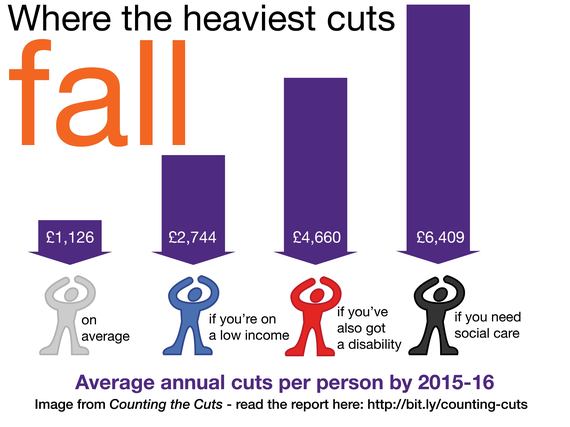
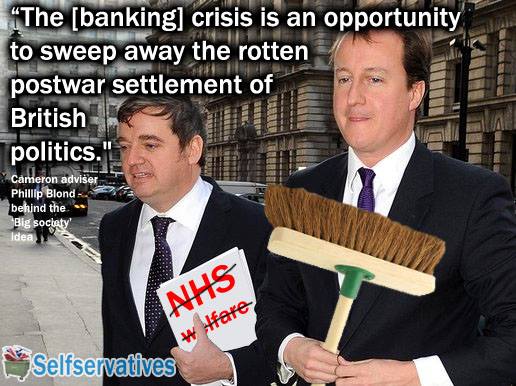




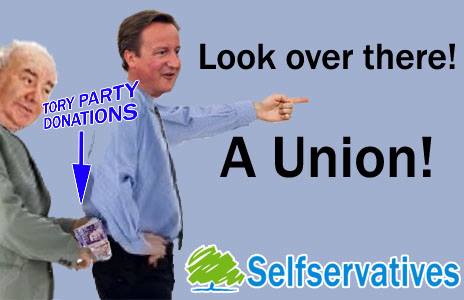
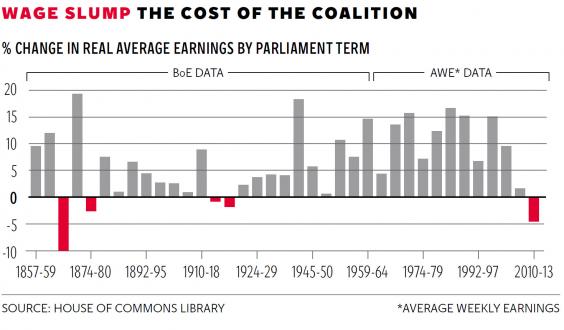
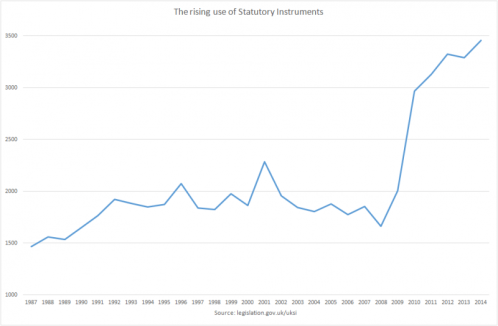

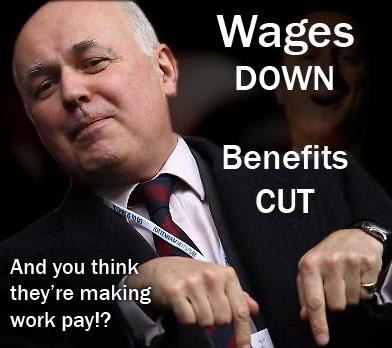




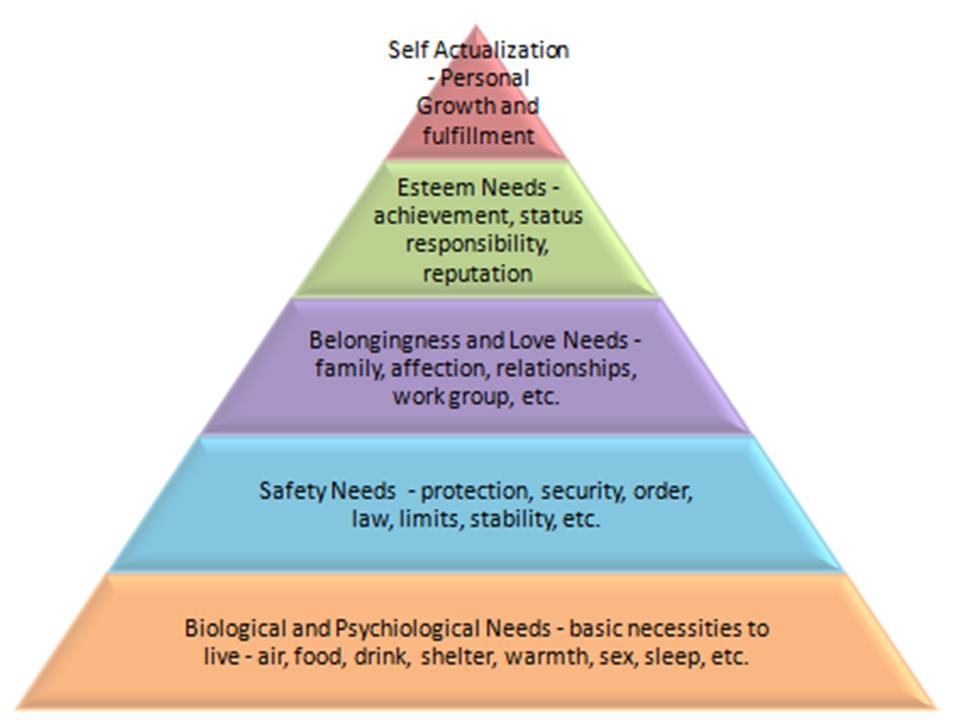




 Politics and Insights