In 2013, The Guardianrevealedthat Britain’s Foreign and Commonwealth Office (FCO) had illegally withheld 1.2 million (later revisedto 600,000) historic documents from the public, in flagrant breach of theUK Public RecordsAct. The documents – which include the desk diary of Soviet spy Donald Maclean; case files from Nazi persecution compensation claims; and masses of material removed from Hong Kong – were being held atHanslope Park, a secret, high-security compound in Buckinghamshire that the FCO shares with intelligence agencies MI5 and MI6.
Now documents concerning the Falklands war, Northern Ireland’s ‘Troubles’ and the infamous Zinoviev letter – in which MI6 officers plotted to bring about the downfall of the first Labour government – are all said to have been ‘misplaced’, too.
The Conservatives do like their purges. Back in 2013, they travelled beyond the acceptable into an Orwellian realm and wiped a decade of speeches from the internet, rewriting their own history.
It seems an entire file on the Zinoviev letter scandal is claimed to have been ‘lost’ after Home Office civil servants ‘took it away’. The Home Office declined to say why it was taken or when or how it was lost. Nor would it say whether any copies had been made.
Not to worry, though. In 2015 I made a copy of the Zinoviev letter in full, here, while I was researching it for an article.
Other missing files include those concerning the controversial British colonial administration in Palestine, tests on polio vaccines and long-running territorial disputes between the UK and Argentina.
Almost 1,000 files, each thought to contain dozens of papers, are claimed to be ‘lost’. In most cases, the entire file is said to have been ‘mislaid’ after being removed from public view at the archives and taken back to Whitehall.
In other cases, papers from within files have been carefully selected and taken away.
For example, Foreign Office officials removed a few papers in 2015 from a file concerning the 1978 murder of Georgi Markov, a dissident Bulgarian journalist who died after being shot in the leg with a tiny pellet containing ricin while crossing Waterloo Bridge in central London. The Foreign Office subsequently told the National Archives that the papers taken were nowhere to be found.
After being questioned by the Guardian, Foreign Office said it had managed to locate most of the papers and return them to the archives. A couple, however, are still missing. The Foreign Office declined to say why it had taken the papers, or whether it had copies.
Other files the National Archives has listed as ‘misplaced while on loan to government department’ include one concerning the activities of the Communist party of Great Britain at the height of the cold war; another detailing the way in which the British government took possession of Russian government funds held in British banks after the 1917 revolution; an assessment for government ministers on the security situation in Northern Ireland in the early 1970s; and three files about defence agreements between the UK and newly independent Malaya in the late 1950s, shortly before the two countries went to war with Indonesia.
The disappearances of these documents highlights the ease with which government departments can commandeer official papers long after they have been declassified and made available to historians and the public at the archives at Kew, south-west London.
A Freedom of Information Act request in 2014 showed that 9,308 files were returned to government departments in this way in 2011. The following year 7,122 files were loaned out, and 7,468 in 2013. The National Archives says Whitehall departments are strongly encouraged to promptly return them, but apparently, they are not under any obligation to do so.
A spokesperson said “The National Archives regularly sends lists to government departments of files that they have out on loan. If we are notified that a file is missing, we do ask what actions have been done and what action is being taken to find the file.”
Some historians have been particularly distrustful of the Foreign Office since 2013, followingthe Guardian disclosurethat the department had been unlawfully hoarding 1.2m historical files at the high-security compound near Milton Keynes in Buckinghamshire.
The hoard came to light during high court proceedings brought by a group of elderly Kenyans who were detained and abused during the Mau Mau insurgency in 1950s Kenya, when the Foreign Office admitted it had withheld thousands of colonial-era files.
A few years earlier, the Ministry of Defence refused to consider a number of files for release under the Freedom of Information Act on the grounds that they ‘may have been exposedto asbestos’.
The files concerned such matters as arms sales to Saudi Arabia, UK special forces operations against Indonesia and interrogation techniques. The Ministry of Defense denied it was using the presence of asbestos in an old archive building as an excuse to suppress the documents.
Dr Tristram Hunt MP, the historian and MP who sits on the all–party Parliamentary group on archives and history, said: “To have areas of the national memory erased like this is worrying.” He plans to table written questions to Lord McNally, the Justice Minister with responsibility for The National Archives, to ask about the documents.
He said: “I’m hopeful it’s a temporary aberration. These things do get lost and come back to life.
“History is an asset in this country. It’s a natural resource, like oil. We have a lot of it and we need to take care of it.”
Shadow Cabinet Office Minister Jon Trickett said: “The ‘loss’ of documents about controversial periods in history is unacceptable.
“The British people deserve to know what the Government has done in their name and their loss will only fuel accusations of a cover up.
“These important historical documents may be a great loss to history – and their disappearance must urgently be investigated.”
With a straight face, a Government spokesman said: “This is the most transparent Government in history and we are committed to making public as many records as possible, while balancing the need to protect the small amount of information that remains sensitive.
“Last year 95 per cent of government records that were transferred to the National Archives were made public and since 2013 the Government has doubled the amount of material it reviews and releases each year, as we honour our commitment of releasing documents after 20 years.”
However, the record number of files withheld from release to the National Archives, along with those apparently ‘disappeared’ ought to raise serious concerns about the government’s approach to democratic accountability and transparency.
I don’t make any money from my work. I am disabled because of illness and have a very limited income. However you can help by making a donation to help me continue to research and write informative, insightful and independent articles, and to provide support to others. The smallest amount is much appreciated – thank you.
This post follows on from my previous article, which critically addresses David Gauke’s irrational defence of the punitive use of social security sanctions.
Some logical gaps in government rhetoric
The government claim that more people are in employment. However, the government have ensured via systematic deregulation that the ‘supply-side’ labour market is designed tosuit the wants of employersand not the needs of employees. Supply-side policies include the promotion of greater competition in labour markets, through the removal of ‘restrictive’ practices, such as the protection of employment.
For example, as part of supply-side reforms in the 1980s, trade union powers were greatly reduced by a series of measures including limiting worker’s ability to call a strike, and by enforcing secret ballots of union members prior to strike action.
More recently, the Conservatives have attacked trade unions again, encroaching on work place democracy and civil rights. People claiming social security are being coerced by the state to take any job available, regardless of conditions and pay, or face sanctions.
This also seriously undermines any kind of bargaining for better pay and working conditions. It leaves workers without protection against profit-driven monopsonist employers (large employers that tend to dominate the employment market, such as Capita, G4S, Atos, Amazon, Uber, for example) leading to lower and lower wages. The government’s claims about the merits of increased labour market ‘flexibility’ have nonetheless introduced a considerable degree of precarity, which makes workers feel insecure, and more fearful of losing their jobs. It has also led to lower wage growth and rapidly increasing inequality.
As a consequence of government decision-making, much employment is insecure and wages have been driven down to the point where they are exploitative and no longer cover even the basic livings costs of workers.Wages have stagnated, and are most likely toremain stagnatedfor the foreseeable future.
So we now have a politically constructed economic situation where even nursesand teachers are forced to visit food banks because they can’t afford to eat.
The official UK unemployment rate has been well below the EU average for some years,and the as the government keeps pointing out, the employment rate is almost at a historic high,yet the welfare state is seen as a major concern, with the government claiming it presents people with ‘perverse incentives’, which prevent them from working.That very clearly isn’t true. However, the employment figures disguise the serious problem of under-employment, employment precarity and low wages.
Furthermore, a recent report from the Joseph Rowntree Foundation reveals that more than a fifth of the UK population is now living in poverty amid the worst decline for children and pensioners in decades. Nearly 400,000 more children and 300,000 more pensioners are now living in poverty than five years ago, during which time there have been continued increases in poverty across both age groups – prompting experts to warn that hard-fought progress towards tackling destitution is ‘in peril’.
The analysis highlights that 3 factors which had, over previous decades, led to a fall in poverty, are now cause for concern; social security support for many of those on low incomes ensured that people didn’t experience severe hardship and poverty, but it has been falling in real terms, changes to welfare policy have seen the numbers in poverty rising again, affordable social housing is no longer accessible and rents are increasing (particularly in the private sector), and lastly, rising employment is no longer reducing poverty.
Work very clearly does not pay.
The UK is regressing. We have a government that is undoing the social gains made following our progressive post-war settlement.
The economic problems, inequality and poverty that we are witnessing have not arisen because welfare creates ‘disincentives’ to work, nor is there a shortage of ‘hard workers’ or a sudden growth in the number of ‘shirkers’, or people with faulty characters, as every Conservative government since Margeret Thatcher has claimed.
There is a shortage of good, secure and adequately salaried jobs. The small rise in the national minimum wage will unfortunately be offset with increasing living costs and the welfare cuts to both in and out of work social security. It’s not, by the way, a ‘national living wage’, as the Tories keep trying to claim. It’s a very modest rise in the minimum wage, which is rather long overdue.
‘Making work pay’ is a simply a Conservative euphemism for the dismantling of the welfare state – a civilised and civilising institution that came into existence to ensure that no-one faces starvation, destitution and the ravages of absolute poverty.
Most of our welfare spending goes on pensions, first, then the bulk of the rest goes on supporting people in work who are paid exploitatively low wages.
Making work pay for employers: the ‘business friendly’ government
Trade unions are disempowered, because the government hates any form of collective bargaining which is aimed at improving the living and working conditions of ordinary people. They legislated to ensure that any collective action is very difficult. The government also punishes people on low pay with sanctions. As if taking money from people already on the breadline will somehow address the profit seeking executive decisions of employers. That’s cruel beyond belief.
The Joseph Rowntree Foundation report says that the squeeze on living standards now risks storing up problems for the future, with people being caught in a ‘standstill generation’ – one where people are unable to build the foundations for a decent, secure life.
Over the last couple of days, I have seen a few people of pension age claiming that pensions are ‘not welfare’. That pensions are a ‘right’, and that people who paid in all their lives deserve support. Of course they do.
However, so do our young people (who live in a much less kind society than the one our generation enjoyed), working people, disabled people and everyone else who faces material hardship. We ALL pay into the welfare state. It was designed to provide ‘from the cradle to the grave’ support for everyone who should need it, as set out in Sir William Beveridge’s report Social Insurance and Allied Services, published on 1 December 1942.
Beveridge’s vision was for an national insurance-based welfare state in which entitlement would be earned largely by the function the citizen undertook, either through work or by assuming caring responsibilities. When Winston Churchill finally turned his attention to domestic politics after the Second World War he conjured up the phrase by which Beveridge’s proposals would be described: he envisaged a compulsory national insurance that would afford coverage ‘from the cradle to the grave’.
Social security originally included maternity grants, child benefit, unemployment and sickness benefits, old-age pensions and a grant to cover the costs of death.
The underpinning welfare principles of universalism and collectivism
The national insurance scheme is intuitively fair to most people, it is based on collective ethics, rather than being governed by private market insurance rules.
‘Welfare’ means Wellbeing/Safety/Health. Beverage was tasked with the responsibility of determining what was needed for Britain to take care of the basic needs of citizens, ensuring no-one lived in poverty, and to create a set of reforms that ensured everyone had a basic standard of living, regardless of their circumstances.
Welfare was originally designed to be universally accessible when people were in need of assistance. No-one deserves support in meeting their basic survival needs more than anyone else. Or rather, every person ought to have the same right to adequately meet the costs necessary for survival – basic costs for fundamental needs such as for food, fuel and shelter, for example.
It’s a measure of how successful the Conservatives’ intentional, purposefully divisive stigmatising campaign has been of those in receipt of social security that some social groups want to now distance themselves from the very term ‘welfare’.
Yet the welfare state was a truly great British achievement, it was a civilised and civilising reform that improved the lives of many, sparing them the abject misery of absolute poverty. The Conservatives don’t pay for welfare provision: we do. Yet to hear their anti-welfare rhetoric and to read their anti-humanist ideology, anyone would think the funding comes from their own pockets, such is their scorn and indignation that people should have, and expect the right, to an adequate standard of living and healthcare.
Yet this is what Cameron had in mind when he said he wanted to end ‘the culture of entitlement’. He was signalling that the Conservatives intend to dismantle welfare, other public services and provisions. The government portrays our welfare state as a ‘free good’, but WE have already paid for it. As did our parents.
Instead of regarding welfare as ‘unsustainable’ and as the problematic ‘vulnerability’ of some citizens requiring support in a system that invariably creates wealth for a few, and increasing hardship for the many, perhaps it’s time to view the government’s obsession with welfare conditionality, ‘behaviour change’ and punitive sanctions – which have turned a provision aimed at meeting basic material needs into a means of disciplining poor people – and with dismantling our social security, for what this really is: state oppression.
In the 1940s, a widely shared international consensus specifically linked social welfare to democratic citizenship, upholding universal rights, greater equality and social justice. We share with Europe a common history of social rights, democratic participation and welfare capitalism. In light of the recent global transformations of the economic order, significant changes in the distribution of wealth and power have reshaped the meaning of citizenship and redefined the relationship between the state and citizens in a post-welfare-state era. The lasting and damaging effects of austerity and inequality will inevitably negatively influence democratic inclusion and participation, as well as having a profound impact on people’s material wellbeing.
David Stuckler and Sanjay Basu show in their book, The Body Economic: Why Austerity Kills(2013), that the human costs of dismantling the welfare state may be measured out in increased morbidity and mortality figures, as evidenced in the global recession. The book explores government responses to financial crises through the lens of health outcomes. The authors argue that austerity is never the right prescription as it hinders return to growth and causes immense suffering to citizens’ health and wellbeing.
In those countries that maintained their welfare system, no such increases occurred. Stuckler and Banjay also point out that those countries which maintained their welfare system recovered quicker from the recession than those that didn’t, indicating that welfare spending is an excellent stimulus to the economy.
The truth is that for Conservatives, their perceived problems of the welfare state is not really an issue of its ‘sustainability’ or cost, it is a purely ideological issue. The Conservatives’ most treasured class-based prejudices and beliefs in the not so free Free Market are chronically and morbidly offended by it.
I guess Beverage didn’t foresee the sixth great ‘evil’ – the overarching anti-collectivism of belligerently imposed neoliberal socioeconomics, which extends ever-widening inequality and increasing poverty of the masses wherever it travels.
Welfare was designed for everyone in need, regardless of their age. That was the whole point of welfare – to ensure no-one in the UK is starving and destitute.
As citizens, we need to stand on our hind legs and bypass the intentionally divisive rhetoric. We need to stand together to defend what is OURS: the welfare state was never funded by the government and never was.
The wefare budget is therefore not the government’s money to cut.
I don’t make any money from my work. But you can support Politics and Insights and contribute by making a donation which will help me continue to research and write informative, insightful and independent articles, and to provide support to others. The smallest amount is much appreciated, and helps to keep my articles free and accessible to all – thank you.
Trickle down economics is a form of laissez-fairecapitalism in general and more specifically, it is a form of supply side economics. Whereas general supply side theory favours lowering taxes overall, trickle down advocates prefer targeting the very wealthy for lower taxes. Trickle down theory is implicit in neoliberal discourse. As such, it’s become politically normalised. It’s become a form of tacit knowledge.
However, the term trickle down originated as a joke by humorist Will Rogers and it is often used to criticise economic policies based on a justification of ‘competitive individualism’ and ‘meritocracy’, which strongly favour and reward the wealthy and privileged, while being framed as ‘good’ for the average citizen. This of course is political hocus pocus and snake oil economics. The government has been pulling at supply side economic levers which, for some time, have been attached to nothing.
The economic ‘success’ of governments has increasingly been measured by an aggregated data set that fails to take into account actual wealth distribution, merit, social contribution, inequality, poverty, or even the welfare and health of public they claim to represent. This kind of economics has become overarching and totalising, sucking in the social realm of human relationships and transforming them into hierarchies of economic (and political) worth.
Democracy is shrinking with the economy, as more and more money, political power and influence is concentrated in fewer and fewer hands.
The richest 1% of people in the UK own almost a quarter of the country’s wealth. The huge levels of inequality in the UK were revealed in a detailed assessment by Credit Suisse last year, that also showed the richest 5% of people in the country own 44% of all wealth.
Commenting on the report, Sally Copley, the charity’s Head of UK Policy Programmes and Campaigns, said: “The wealthiest one percent of the population – who own nearly a quarter of all the country’s wealth – continue to do well whilst so many people in Britain are just about managing to stay above the poverty line.
“Globally, the richest one percent own more wealth than the rest of the world put together. This huge gap between rich and poor is undermining economies, destabilising societies and holding back the fight against poverty.”
As we have recently learned, the wealth accumulated among the richest 1%, through the systematic dispossession of the rest of the population, is rather more likely to trickle offshore and to be hoarded than finding its way to the Treasury and then redistributed to ordinary citizens, rewarding them with a long awaited break from the futile, self-defeating consequences of neoliberalism: austerity, increasing poverty and inequality.
There is an expanding and gaping hole in the economy as more and more money is funnelled off by the government to hand out to the wealthy, while increasing numbers of other citizens are now teetering on the brink of the chasm without an adequate social safety net or political lifeline.
What remains of our public services are now also in private hands, serving the private interests of vulture profit seekers.
Multiple studies have found a correlation between trickle down economics and reduced economic growth. Conservatives since Thatcher and Reagan, however, have insisted on imposing it, despite recessions, and the resulting social damage caused by rising inequality and poverty. When neoliberalism fails, the Conservative answer is to simply apply more aggressive neoliberal policies and increasing authoritarianism.
According to the economist John Kenneth Galbraith, trickle down theory was once called the rather less elegant “horse and sparrow” theory, a couple of centuries back, which goes something like this: You feed the big horse all of the oats and the wee birds can feed in its wake.
Which is fine only if you happen to like a diet of horse sh*t.
I don’t make any money from my work.You can support Politics and Insights and contribute if you like by making a donation which will help me continue to research and write informative, insightful and independent articles, and to provide support to others. The smallest amount is much appreciated and helps to keep my articles free and accessible to all – thank you.
The Electoral Commission has launched another investigation into whether campaign group Momentum breached rules on spending at the last General Election.
The Commission issued a statement, which says:
“The rules governing spending at UK Parliamentary general elections by permitted participants, including non-party campaigners, are set out in the Political Parties, Elections and Referendums Act 2000 (PPERA).
The investigation will look at:
whether or not Momentum spent in excess of the spending limits for an unauthorised non-party campaigner in the UK Parliamentary general election;
whether or not Momentum submitted a return that did not include accurate donation information and/or the required declaration stating that the donation return was complete and accurate;
whether or not Momentum submitted a return that was not a complete statement of payments made in respect of controlled expenditure;
whether or not Momentum submitted a return that did not include all invoices for payments of more than £200.
It is possible that during the course of the investigation, the Commission will identify potential contraventions and/or offences under PPERA other than those set out above.
All the Commission’s investigations are conducted in accordance with our Enforcement Policy.”
Bob Posner, the Electoral Commission’s Director of Political Finance and Regulation and Legal Counsel, said:
“Momentum are a high profile active campaigning body. Questions over their compliance with the campaign finance rules at June’s general election risks causing harm to voters’ confidence in elections. There is significant public interest in us investigating Momentum to establish the facts in this matter and whether there have been any offences.
“Once complete, the Commission will decide whether any breaches have occurred and, if so, what further action may be appropriate, in line with its enforcement policy.”
Rules for non-party campaigners
Rules have been in place since 2000 for all campaigners that spend money on regulated campaigning activities. These rules include campaigners and campaigning organisations which are not political parties but whose activities can be reasonably regarded as intending to influence voters in the run-up to an election.
The law enables non-party campaigners which wish to undertake ‘targeted spending’ – intended to influence people to vote for one particular registered political party or any of its candidates – to do so within prescribed spending limits. These are £31,980 in England; £3,540 in Scotland; £2,400 in Wales; and £1,080 in Northern Ireland. These limits apply during the regulated period which is 9 June 2016 to 8 June 2017.
Registered non-party campaigners are only entitled to spend above these limits if they have the authorisation of the political party that they are promoting. If that party provides authorisation, the registered non-party campaigner can spend up to the limit authorised by the political party. It is an offence to spend above the statutory limits without the party’s authorisation. Should the party provide authorisation for a higher spending limit, any spending by that non-party campaigner up to that limit would count towards the party’s national spending limit.
A spokesperson for Momentum said: “Momentum put a lot of effort and resources into detailed budgeting and financial procedures during the election to ensure full compliance.
“Our election campaign was delivered on a low budget because it tapped into the energy and enthusiasm of tens of thousands of volunteers across the country.
“Much of the Electoral Commission investigation refers to administrative errors that can be easily rectified. We have a good working relationship with the Electoral Commission, and will fully comply with the investigation going forward.”
Momentum have been under almost continuous investigation since 2015, following various complaints ranging from data mining to sending unsolicited emails. The Information Commissioner’s Office (ICO), however, found no evidence to substantiate what was a handful of complaints. A disclosure from the ICO states:
The ICO made enquiríes around Momentum using personal data to contact Labour part members following a small number of complaints December 2O15.
We did not find any breach of the Data Protection Act.
Consequently there is no strong evidence in this case to indicate that Momentum has breached the DPA. We do not, therefore, intend to look further into this concern unless you can provide some evidence to indicate that Momentum did in fact obtain your personal data from the Labour Party.
We are aware of media reports about this matter but the ICO works on the basis of evidence and to date we have not been provided with any such evidence. I should also explain that we do not have any wider concerns about Momentum’s information rights practice at this point. Therefore we have not raised your concern with Momentum on this occasion and are not taking any further action in relation to your concern.
However, your concern will be kept on file and this will help us over time to build a picture of Momentum’s information rights practices.
Thank you for bringing this matter to our attention. Yours sincerely Joy Corne Lead Case Officer Information Commissioner’s Office.
Following the General Election in July, the Electoral Commission highlighted “troubling” reports that a number of people (students) had voted twice in the election, saying evidence had emerged of people admitting to the offence online.
An election analyst had cast doubt over claims that someConservatives could have lost their seats in theGeneral Election due to double-voting by students.
More than 1,000 emails were sent to the watchdog by members of the public over the issue, while 38 Conservative MPs also complained about the alleged crimes. Of course the Commission found no evidence of double-voting.
It’s as if the Conservatives deliberately refuse to understand that some people don’t want to vote for them, especially groups that have been targeted for draconian Conservative policies. The Tories have not been kind to young people.
The Conservatives also have longstanding form in smearing and discrediting their opponents in the most outrageous manner. Disabled people can testify to that. As can jeremy Corbyn. Just a glance at the right-wing press tells you all you need to know about Conservative rumour-mongering, lies and utterly psychopathic ruthlessness.
Here is the outcome of a previous ECO inquiry:
Most media outlets have reported this second inquiry. The timing certainly draws a little fire away from the current catastrophic punch-drunk and incoherent stumblings of the Government. I predict that once the media have finished beating their drums, the matter will simply vanish from the public news radar, finally coming to rest in that graveyard where all dead cat strategies end up bouncing to.
It’s in a tiny village in a City called ‘distraction’, a called ‘no evidence’ , where people speak the language misdirection.
I don’t make any money from my work. But you can support Politics and Insights and contribute by making a donation which will help me continue to research and write informative, insightful and independent articles, and to provide support to others. The smallest amount is much appreciated, and helps to keep my articles free and accessible to all – thank you.
After trying to address a rudely interrupting, unhearing, unfeeling, jeering and sneering Conservative party to deliver his response to the budget today, Jeremy Corbyn called the government “uncouth” and “uncaring” in a passionate speech, with barely constrained anger at how Conservatives’ policies are creating hardship and suffering for some of our most vulnerable citizens. A Conservative had made an inappropriate and ageist comment about Corbyn’s age, while he was addressing the Conservatives’ brutal cuts to social care.
Corbyn spoke in defence of those elderly people suffering cuts in care budgets. It has been alleged that Conservative Party whip Andrew Griffiths – hiding out of sight of the Speaker’s chair – said the Labour leader should “be in a care home” himself.
Many of us have also used those words among others – uncouth and uncaring – many times over the past seven years to describe a government that laughed when hearing about people suffering because of their policies, laughed at the accounts of those suffering hardships because of the impact of the bedroom tax, laughed at the misery of those having to visit food banks. This is the same government that has stripped our public services bare, presided over falling and stagnating wages and huge hikes in the cost of living, removed lifeline support from ill and disabled people, stripping them of the means of meeting their basic needs, their independence and dignity, and savagely reducing funding to our local authorities, and essential public services such as health and social care.
As Labour MP Laura Pidcock says: “It was absolutely right to be angry at the attitude of members on the benches opposite – shouting him down when he’s talking about serious issues, like the lack of social care services as a result of massive cuts (£6 billion) to budgets. This neglect, these holes in our safety net for vulnerable people, hurt people in reality. It is not a game.”
We have seen, over the last 7 years, the Conservatives’ authoritarianism embedded in punitive policies, in a failure to observe the basic human rights of some social groups, in their lack of accountability and diffusion of responsibility for the consequences of their draconian policies, and in their lack of democratic engagement with the opposition. Hurling personal insults, sneering and shouting over critics has become normalised by the Conservatives. They don’t debate, they simply attack on a personal level. This is not the standard and quality of debate that the public expect. Yet people don’t recoil any more from what has often been dreadfully unreasonable hectoring and terribly poor decorum. But they reallty ought to.
The budget details – pretty much more of the same
Philip Hammond finally faced up to the problem of “slower growth than predicted.” What a pity he didn’t have the balls to own the REASONS for that, which are chiefly linked to the seven year long economically inept, miserly austerity programme, aimed solely at ordinary people, especially the poorest citizens, and the deluxe “incentivisation” package designed to overindulge the hoarding wealthy.
The nations’ redistributed wealth simply trickles offshore, as we have discovered.
Those of us opposing the implicit “trickle down” philosophy of the government have won this debate several times over. Yet still the Tories persist in peddling magical thinking and neoliberal mythologies. The budget is simply more of the same economic ineptitude.
The answer to failing neoliberism is apparently more neoliberalism. It’s a budget of more of the same.
The Office for Budget Responsibility (OBR) has presented a rather grim picture, slashing an average of 0.7% percentage points off UK trend productivity growth each year. That means the economy will be at least 3% smaller in 2020 than previously expected, leading to the sharpgrowth downgrade. It’s another sign that the UK economy is weaker than we were led to believe by the bumbling government, who are not delivering the “robust” growth that policymakers have claimed.
Economy now forecast to be £65bn smaller in 2020 than the forecast in the March 2016 Budget. Lack of productivity growth a huge problem. #Budget2017
The OBR has also revised up its expected mortality rate. It’s now expected that 502,000 pensioners will die each year, up from 476,000 previously.
The OBR says:
“This is consistent with life expectancy increasing less than projected since mid-2014. By 2022, the population in this age group [adults aged above the state pension age] is 1.2% lower than previously assumed.”
What this means is that our life expectancy is falling, which is shameful in a developed and wealthy nation.
“This is a ‘nothing has changed’ budget from an out-of-touch Government with no idea of the reality of people’s lives and no plan to improve them.
Philip Hammond has completely failed to recognise the scale of the emergency in our public services.
Today’s budget has found no meaningful funding for our schools still facing their first real terms funding cuts since the mid-90s and nothing even approaching the scale needed to address the crisis in our NHS or local government.”
Corbyn has also condemned Philip Hammond’s second Budget as Chancellor, saying that it demonstrates a “record of failure with a forecast of more to come”.
The Labour leader, who was not provided with an advance sight of Hammond’s Budget, criticised the Government for repeatedly pushing back its target to eliminate Britain’s deficit, now it’s not likely to be “paid down” until at least 2030. If ever. I don’t think the Conservatives care about the deficit. They are rather more interested in privatising public services, and taking money from the poorest to hand out to the wealthiest. Their policies are not practical, they are simply ideological, revealing the very worst of their own traditional prejudices.
Corbyn said that 120,000 children would spend this Christmas living in temporary accommodation, he said: “Three new pilot schemes for rough sleepers simply doesn’t cut it.
“It’s a disaster for those people sleeping on our streets, forced to beg for the money for a night shelter,” he added. “They’re looking for action now from government to give them a roof over their heads.”
Corbyn also cited cuts to police officer numbers and rising levels of in-work poverty. He also criticised the Government for failing to take action to tackle credit card debt.
He said: “Debt is being racked up because the Government is weak on those who exploit people, such as rail companies hiking up fares above inflation year on year, and water companies and energy suppliers.”
The Labour party leader also criticised the Government’s measures on housing, saying very little was mentioned about the private rented sector – even though landlords were paid £10bn in housing benefit.
“With this Government delivering the worst rate of house building since the 1920s and 250,000 fewer council homes, any commitment would be welcome,” he said.
“But we’ve been here before. The Government promised 200,000 starter homes three years ago. Not a single one has yet been built in those three years.
“We need a large scale publicly funded house-building programme, not this Government’s accounting tricks and empty promises.”
Concluding his speech, Corbyn said: “We were promised with lots of hype a revolutionary Budget, the reality is nothing has changed.
You can watch Corbyn’s speech in full here
Here is a transcript of the core parts of his speech:
Mr Deputy Speaker, this Budget has been an advertisement for just how out-of-touch this government is with the reality of people’s lives. Pay is now lower for most people than it was in 2010 and wages are now falling again.
Economic growth in the first three quarters of this year is the lowest since 2009 and the slowest of the major economies in the G7.
It’s a record of failure with a forecast of more. Economic growth has been revised down. Productivity growth has been revised down. Business investment revised down.
People’s wages and living standards revised down. What sort of “strong economy, fit for the future” is that?
The deficit was due to be eradicated by 2015, then 2016, then 2017, then 2020 and now 2025. They’re missing their major targets but the failed and damaging policy of austerity remains.
The number of people sleeping rough has doubled since 2010 and 120,000 children will spend this Christmas in temporary accommodation. In some parts of the country life expectancy is actually starting to fall.
The last Labour government lifted a million children out of poverty. Under this government an extra 1 million children will be plunged into poverty by the end of this Parliament. 1.9 million pensioners and one in six are living in poverty – the worst rate in Western Europe.
Falling pay, slow growth, and rising poverty. This is what the Chancellor has the barefaced cheek to call a “strong economy”.
His predecessor said they would put the burden on “those with the broadest shoulders”. How has that turned out?
The poorest tenth of households will lose about 10 per cent of their income by 2022 while the richest will lose just 1 per cent.
So much for “tackling burning injustices”. This government is tossing fuel on the fire.
Personal debt levels are rising and 8.3 million people are over-indebted. If he wants to help people out of debt, he should back Labour’s policy for a Real Living Wage of £10 per hour by 2020.
And with working class young people now leaving university with £57,000 of debt – because this government trebled tuition fees – this government’s new policy to win over young people is to keep fees at £9,250. But that is just one of a multitude of injustices presided over by this government. Another is Universal Credit, which Labour has called on ministers to pause and fix. That’s the view of this House. It’s the verdict of those on the frontline with evidence showing food bank use increases 30 per cent where Universal Credit is rolled out. And the benches opposite should listen to Martin’s experience, a full-time worker on the minimum wage, he says: “I get paid four weekly meaning that my pay date is different each month”, because of that, under the UC system he was paid twice in a month and deemed to have earned too much so his UC was cut off. He goes on: “This led me into rent arrears and I had to use a food bank for the first time in my life”. This Chancellor’s solution to a failing system causing more debt; is to offer a loan. And the six week wait, with 20 per cent waiting even longer, becomes a five week wait. This system has been run down by £3 billion cuts to Work Allowances, the two-child limit and the perverse ‘rape clause’ – and caused evictions because housing benefit isn’t paid direct to the landlord. So I say to the Chancellor: put this broken system on hold, so it can be fixed, and keep a million more children out of poverty. For years we have had the rhetoric of a “long-term economic plan” that never meets its targets; when what all too many are experiencing is long-term economic pain. And the hardest hit are disabled people, single parents and women. So it is disappointing the Chancellor did not back the campaign of my Hon Friend for Brent Central, Dawn Butler, to end period poverty. The Conservative manifesto has now been shredded and some ministers opposite have since put forward decent proposals, several conspicuously borrowed from the Labour manifesto. Let me tell the Chancellor, as socialists we are happy to share. The Communities Secretary called for £50 billion of borrowing to invest in housebuilding. Presumably the Prime Minister slapped him down for wanting to “bankrupt Britain”. The Health Secretary has said the pay cap is over but where is the money to fund a pay rise? The Chancellor hasn’t been clear today, not for NHS workers nor for our police, firefighters, teachers or teaching assistants, bin collectors, tax collectors or our armed forces personnel. Will the Chancellor listen to Claire? She says, “My Mum works for the NHS. She goes above and beyond for her patients. Why does the government think it’s ok to under pay, over stress and underappreciate all that work?” The NHS Chief Executive says “the budget for the NHS next year is well short of what is currently needed”. The Health Secretary said in 2015 he would fund another 5,000 GPs, but in the last year we have 1,200 fewer GPs. We’ve lost community nurses. We’ve lost mental health nurses. The Chancellor promised £10 billion in 2015 but delivered only £4.5 billion so we’ll wait for the small print on today’s announcement. It certainly falls well short of the £6 billion Labour would have delivered. Over a million of our elderly aren’t receiving the care they need. Over £6 billion will have been cut from social care budgets by March next year. Our schools will be 5 per cent worse off by 2019 despite the Conservative manifesto promising that no school would be worse off. 5,000 head teachers from 25 counties wrote to the Chancellor, saying “we are simply asking for the money that is being taken out of the system to be returned”. Robert wrote to me saying, “As a senior science technician my pay has been reduced by over 30 per cent. I’ve seen massive cuts at my school. Good teachers and support staff leave“. According to this government, 5,000 head teachers are wrong. Robert is wrong. The IFS is wrong. Councils are warning that services for vulnerable children are under more demand than ever, yet have a £2 billion shortfall. Local councils will have lost nearly 80 per cent in direct funding by 2020. In reality, across the country this means women’s refuges closing, youth centres closing, libraries closing, museums closing. But compassion can cost very little and just £10 million is needed to establish the child funeral fund campaigned for by my hon friend for Swansea East, Carolyn Harris. Under this government there are 20,000 fewer police officers. And another 6,000 community support officers, and 11,000 Fire Service staff have been cut too. Our communities cannot be kept safe on the cheap. Tammy explains how this has affected her: “our police presence has been taken away meaning increasing crime. As a single parent I no longer feel safe in my own village, particularly after dark.” Mr Deputy Speaker, five and a half million workers earn less than the living wage, a million more than just five years ago. And the Chancellor can’t even see 1.4 million unemployed people. There is a crisis of low pay and insecure work, affecting 1 in 4 women, and 1 in 6 men, a record 7.4 million people in working households in poverty. If we want workers earning better pay, less dependent on in-work benefits, we need to strengthen trade unions. the most effective means to boost workers’ pay. Instead this government weakened trade unions and introduced Employment Tribunal fees – now scrapped thanks to Unison’s legal victory. And Mr Deputy Speaker, why didn’t the Chancellor take the opportunity to make two changes to control debt? Firstly, to cap credit card debt so that nobody pays back more than they borrowed. And secondly, to stop credit card companies increasing people’s credit limit without their say so. Debt is being racked up because this government is weak on those who exploit people: the rail companies hiking fares above inflation year-on-year, the water companies and the energy suppliers. During the general election it promised an energy cap that would benefit “around 17 million families on standard variable tariffs”. But every bill tells millions of families the government has broken its promise. And with £10 billion in housing benefit going into the pockets of private landlords every year, housing is a key factor in driving up the welfare bill. With this government delivering the worst rate of housebuilding since the 1920s and a quarter of a million fewer council homes, any commitment is welcome. But we’ve been here before. The government promised 200,000 starter homes three years ago and not a single one has been built. We need a large scale public house building programme, not this government’s accounting tricks and empty promises. We back the abolition of stamp duty for first-time buyers because it was another Labour policy at the election, not a Tory one. It’s this government’s continual preference for spin over substance that means, across this country, the words “Northern Powerhouse” and “Midlands Engine” are now met with derision. Yorkshire and Humber gets only one-tenth of the transport investment per head given to London. And government figures show that every region in the north of England has seen a fall in spending on services since 2012. The Midlands, East and West, is receiving less than 8 per cent of total transport infrastructure investment, compared with over 50 per cent going to London. In the East and West Midlands 1 in 4 workers are paid less than the living wage. So much for the ‘Midlands Engine’. Re-announced funding for the Transpennine rail route won’t cut it and today’s other announcements won’t redress the balance. Combined with counterproductive austerity, this lack of investment has consequences in sluggish growth and shrinking pay packets, and public investment has virtually halved. Under this government, the UK has the lowest rate of public investment in the G7, but it is now investing in driverless cars after months of road-testing back seat driving in government. By moving from RPI to CPI indexation on business rates the Chancellor has adopted another Labour policy, but why don’t they go further and adopt Labour’s entire business rates pledges including exempting plant and machinery and annual revaluation of business rates. Nowhere has that been more evident than over Brexit. Following round after round of fruitless Brexit negotiations the Brexit Secretary has been shunted out for the Prime Minister who has got no further. Every major business organisation has written to the government telling them to pull their finger out. Businesses are delaying investment decisions, but if this government doesn’t get its act together soon they will be taking relocation decisions. Crashing out with ‘No deal’ and turning Britain into a tin-pot tax haven will damage people’s jobs and living standards, serving only a wealthy few. It’s not as if this government isn’t doing its best to protect tax havens and their clients in the meantime. The Paradise papers have again exposed how a super-rich elite is allowed to get away with dodging taxes. This government has opposed measure after measure in this House, and in the European Parliament, to clamp down on the tax havens that facilitate this outrageous leaching from the public purse. Mr Deputy Speaker, too often it feels like there is one rule for the super-rich and another for the rest of us. The horrors of Grenfell Tower were a reflection of a system that puts profits before people, that fails to listen to working class people. In 2013 this government received advice in a coroner’s report that sprinklers should be fitted in all high rise buildings. Today this government failed to fund the £1 billion investment needed to make homes safe. The Chancellor says councils should contact them, but Nottingham has, Westminster has, and they’ve been refused! In a Parliament building scheduled to be retrofitted with sprinklers, to protect us, the message from this government to people living in high rise homes is: You matter less. Our country is marked by growing inequality and injustice. We were promised a revolutionary Budget. The reality is nothing has changed. People were looking for help from this Budget, they have been let down. Let down by a government that like the economy they’ve presided over is weak and unstable and in need of urgent change. They call this Budget, ‘Fit for the Future’. The reality is this is a government no longer fit for office.
I don’t make any money from my work. But you can support Politics and Insights and contribute by making a donation which will help me continue to research and write informative, insightful and independent articles, and to provide support to others. The smallest amount is much appreciated, and helps to keep my articles free and accessible to all – thank you.
The Equality and Human Rights Commission (EHRC) said an analysis of all the changes to tax, social security and public spending since the Conservatives came to power in 2010 showed the poorest citizens have been hit hardest by tax, social security and public spending reforms and are set to lose at least 10% of their income.
Ahead of next week’s budget, the Commission has published its independent report on the impact that changes to all tax, social security and public spending reforms from 2010 to 2017 will have on people by 2022.
Undertaken as a “cumulative impact assessment”, the Commission’s report, which looks at the impact the reforms have had on various groups across society, highlights that those political decisions will affect some groups more than others:
black households will face a 5% loss of income (more than double the loss for white households)
families with a disabled adult will see a £2,500 reduction of income per year (this is £1,000 for non-disabled families
families with a disabled adult and a disabled child will face a £5,500 reduction of income per year (again, compared to £1,000 for non-disabled families)
lone parents will struggle with a 15% loss of income (the losses for all other family groups are between 0 and 8%)
and women will suffer a £940 annual loss (more than double the loss for men)
the biggest average losses by age group, across men and women, are experienced by the 65 to 74 age group (average losses of around £1,450 per year) and the 35 to 44 age group (average losses of around £1,250 per year).
The government have persistently claimed that conducting a cumulative impact assessment of their “reforms” is “too difficult”.
David Isaac, of the EHRC, says: “We have encouraged the government to carry out this work for some time, but sadly they’ve refused. We have shown that it is possible.”
The Centre for Welfare Reform calculated that disabled people are being hitnine harder than the rest of the population. These organisations managed to carry out cumulative impact assessments, and without the generous funding that the government has at their disposal. This demonstrates that there is a difference between finding something “difficult” to undertake, and not actually wanting to undertake the task, while making glib excuses to avoid doing so.
Public policies are expressed political intentions regarding how our society is organised and governed. They have calculated social and economic aims and consequences. Governments generally monitor the impact of their policies. The Conservatives have refused to monitor the impact of their draconian welfare policies because they knew in advance that they are discriminatory.
Austerity policies target already economically marginalised groups, cutting their incomes further. It’s not plausible that ministers were unaware that this would lead to further economic disadvantage of those groups, while widening social inequality and increasing poverty.
While the poorest citizens are set to lose nearly 10% of their incomes, a minority of the wealthiest citizens will lose barely 1%, yet the government claim that inequality has “reduced.” Despite the claims that “We’re all in it together” and “we want to help tjose people “just about managing”, it’s clear that Conservative policies are completely detached from public interests and needs. Conservative austerity policies are designed and intended to intentionally discriminate aginst the very poorest citizens.
It is against the law to discriminate against socially protected groups – including on the grounds of ethnicity, gender, age and disability. The government’s traditional ideological prejudices, which have been clearly expressed in their socioeconomic policies, have brought about:
the less favourable treatment of groups with protected characteristics
the targeting of some social groups disproportionately with austerity policies that extend direct discrimination, leaving people with protected characteristics at an unfair disadvantage
Prices, as measured by official inflation figures, are nearly 14% higher now than they were in 2010, although Unison say that between the start of 2010 and the close of 2015, the cost of living, as measured by the Retail Prices Index, rose by a total of 19.5%. This creates even further hardship for those people already targeted by Conservative austerity cuts.
Traditional Conservative prejudices, which have ultimately led to economic marginalisation, disadvantage and stigmatisation of some social groups
David Isaac, the Chair of the EHRC, which is responsible for making recommendations to government on the compatibility of policy and legislation with equality and human rights standards, warned of a “bleak future”.
Isaac said: “The Government can’t claim to be working for everyone if its policies actually make the most disadvantaged people in society financially worse off. We have encouraged the Government to carry out this work for some time, but sadly they have refused. We have shown that it is possible to carry out cumulative impact assessments and we call on them to do this ahead of the 2018 budget.
“If we want a prosperous and, in line with the Prime Minister’s vision, a fair Britain that works for everyone, the Government must come clean and provide a full and cumulative impact analysis of all current and future tax and social security policies. It is not enough to look at the impact of individual policy changes. If this doesn’t happen those most in need will face an extremely bleak future.”
The Commission is calling on the Government to:
commit to undertaking cumulative impact assessments of all tax and social security policies ahead of the 2018 budget
reconsider existing policies that are contributing to negative financial impacts for those who are most disadvantaged
implement the socio-economic duty from the Equality Act 2010 so public authorities must consider how to reduce the impact of socio-economic disadvantage of people’s life chances (the Conservatives edited the Labour party’s original version of Equality Act and removed this duty before implementing it).
The assessment undertaken by the EHRC considered changes to income tax, national insurance contributions, indirect taxes (VAT and excise duties), means-tested and non-means-tested social security benefits, tax credits, universal credit, national minimal wage and national living wage.
I don’t make any money from my work. I am disabled because of illness and have a very limited income. I don’t have a plasma TV or Sky. I do eat a lot of porridge, though. Successive Conservative chancellors have left me in increasing poverty. But you can help by making a donation to help me continue to research and write informative, insightful and independent articles, and to provide support to others. The smallest amount is much appreciated – thank you.
Yesterday I had the following email from Jeremy Corbyn:
Sue, we’ve just found out that the Tories in Kensington have been asking residents how important the Grenfell tragedy is on a scale of 0-10.
It is insulting and insensitive.
Preventing another fire like Grenfell couldn’t be more important. And Theresa May has the power to do it — she could use next Wednesday’s budget to set aside money to fit social housing with sprinklers that would save lives. Let’s make sure she hears our message.
Please sign thisand tell the Tories why Grenfell must not be ignored.
Sign thisand help us make sure that residents of high rise social housing can sleep safely with the knowledge that they are being listened to.
Jeremy Corbyn Leader of the Labour Party
“It’s like they need instructions for being human.” Kay Bailey
I agree, the Conservatives’ survey is crass and insensitive, it trivialises the Grenfell tragedy, putting it at the same level of priority as refuse collection and local parking facilities, which is insulting and callous. Asking people to place such an avoidable and tragic event on a scale of priority, from one to ten, is both brutal and shows a complete lack of responsibility and remorse on the part of the government.
I don’t make any money from my work. But you can support me by making a donation and help me continue to research and write informative, insightful and independent articles, and to provide support to others. The smallest amount is much appreciated – thank you.
The left believe that in order to address prejudice and discrimination, it’s important to address the language we use as a society, changing it to reflect an increasingly diverse society, where everyone feels at safe, included and one in which citizens attempt to avoid giving needless offence to one another.
By ensuring terms that reflect prejudice are not part of our everyday language habits, it is hoped that as a society, we can cultivate and extend tolerance and basic principles of courtesy, equality and decency to our fellow human beings, reflecting a healthy pluralism.
However, the right see a conspiracy in “political correctness”. The phrase is used by Conservatives and the far right in a derogatory way that implies hidden and powerful forces determined to suppress inconvenient truths by the policing of language and thought. For the right, political correctness is an hegemonic, stifling and Stalinist-styled orthodoxy, that pressures us into a fashionable conformity. The right see political correctness as a means of closing down debate, not that they particularly favour candour more generally. Just the sort of “speaking one’s mind” that involves directing stigma at historically marginalised groups.
Apparently, open, civil discourse need not be civil, prefigurative and inclusive. Or open, for that matter.
The fact that Western civilization has been inherently unfair to ethnic minorities, women, disabled people, poor people and homosexuals has always been at the centre of politically correct thinking. Historically and internationally, support for affirmative action grew to achieve goals such as bridging inequalities in employment and pay, increasing access to education, promoting diversity, and redressing historical wrongs, harms, or hindrances. Affirmative action is intended to promote the opportunities of defined minority groups within a society to give them equal access to that of the majority population, and to address disadvantage.
In the UK, affirmative action is illegal, we have a history of “positive action”, which is more about focusing on ensuring equal opportunity and, for example, targeted advertising campaigns to encourage ethnic minority candidates to join the police force.
Any discrimination, quotas or favouritism due to sex, race and ethnicity among other “protected characteristics” is generally illegal for any reason in education, employment, during commercial transactions, in a private club or association, and while using public services.
The Equality Act 2010 (established by the Labour government, amended, reduced and implemented by the Conservative-led coalition) established the principles of equality and their implementation in the UK.
It’s fair that all social groups are able to participate in all provided opportunities including educational, employment, promotional and training opportunities, surely. The right claim to cherish the notion of a meritocracy, after all. A genuine meritocracy would alienate no-one.
Political correctness arose to help compensate for past discrimination, persecution or exploitation by the ruling class of a culture, and to address existing discrimination, which ultimately strengthens social cohesion – something else that traditional Conservatives claimed to cherish. Political correctness is about universal human rights. It’s about inclusion and democracy.
Instead, however, political correctness is seen by many on the right as a some kind of dictatorship of virtue. The left are often ridiculously accused of “virtue signalling” and being “do-gooders” by the right. I’ve often wondered what the ideal alternative to a “do-gooder” would be, for those making this simultaneously slapstick and surreal accusation.
The right abandon the principles of political science, democracy, civil debate, diplomacy and inclusion and simply assail the characters of their critics. They get personal. They can’t seem to disagree without being disagreeable. They prefer to simply “crush the saboteurs”, rather than engage in rational dialogue. But without dialogue and the basic principles and mechanisms of exchange, we don’t have a healthy, pluralist democracy. Instead, we have a group of people imposing their narrow worldview, language, thoughts and personal prejudices upon a population. Using political narratives that focus on outgrouping already marginalised citizens according to their economic status – which is in turn created by a process of outgrouping – is not “telling it like it is”. It’s telling us how it is going to be.
It’s not just that the right resent political correctness for what they see as a mechanism for suppressing their own traditional prejudices. They use carefully calibrated undemocratic language to argue against the very idea of a carefully calibrated language that came about to simply extend principles of fairness, equality and democratic inclusion. Ultimately, political correctness is about democracy and a fair model of socioeconomic organisation.
The right don’t like political correctness because they don’t like the very idea that all human lives have equal worth. They prefer hierarchical ranking and hierarchical socioeconomic organisation. That’s what the Conservative notion of “competition” means. It’s not real competition of course, because without a degree of “political correctness”, there is no level playing field to compete from.
Some social groups simply don’t have access to opportunities to “compete” fairly for even a basic share of wealth and power. “Telling it like it is”, and “speaking your mind” is actually rather more about stating which social groups are allowed to participate as citizens in a society, and which groups aren’t.
A homo… what?
Politics reduced to homophily is also a politics without a shred of democracy. By interacting only with others who are like themselves, anything that government ministers experience as a result of their position, influence and power simply gets reinforced. It comes to typify “people like us” and demarcates “people like them”. It’s the basis of a political othering process.
Homophily – which is basically a tendency to associate only with those like yourself – also shapes the “old-boys network” and the revolving door of power between politicians and corporate entities: a politics in which a handful of people who went to the same public school or university use their positions of power and influence to mutually benefit each other. It’s a movement of personnel between roles as legislators and the industries potentially affected by legislation and regulation. The result is that legislation and deregulation happens which benefits only those included in the revolving door interaction. That’s not a large proportion of the population at all.
I think this is what Conservatives mean when they say we live in a “meritocracy”. This is clearly not compatible with democracy.
Nudging privilege and kicking the poor
Then of course there are the academics who support Conservative neoliberalism, such as the “libertarian paternalists”, for example, who have found their way into the very heart of the Conservatives’ political decision-making process regarding policy. Nudge is comprised of a very lucrative set of theories that have the added value of simply propping up the status quo. Nudge is mostly aimed at “improving thedecisions” of poor people, who, it is claimed, are poor because of their “faulty” cognitive processes and behaviours.
The behavioural economists at the heart of the technocratic Nudge Unit, which is at the very heart of the cabinet office, claim they are “scientific”, as they use a scientific methodology – randomised control trials – to “verify” their various hypotheses. However, by isolating and exploring what they perceive as basic causal relationships in experimental circumstances, they effectively screen out context and other potential variables – such as the structural and historical causes of poverty, brought about by political decision-making, for example – and so such “experiments” effectively screen their own ideological commitments from view. The hypotheses being tested are without context and history, they are superficial and highlight all of the flaws of old school positivism very well.
Furthermore, libertarian paternalism reduces society in all of its complexity to a basic system of “incentives” and responses. The government frequently dismiss citizens’ accounts and qualitative experiences as “anecdotal”, and claim that any criticism of Conservative policies isn’t valid because individual cases don’t establish a “causal link” between policies and the citizens’ stated consequences of policies.
An example of this is the many cases of harm and high number of deaths that have been raised which correlate with the Conservative welfare “reforms” and austerity. However, policies are designed to have consequences. The government simply isn’t interested in monitoring those, evidently.
Nor is it interested in the empirical evidence that citizens have provided. The representation of social reality produced by positivism was always inherently and artificially Conservative, maintaining the status quo. At the very least, Conservatives would do well to consider that correlation often implies causality, even though it isn’t quite the same thing. As such, established correlation invites further inquiry, not point-blank political denials.
The welfare “reforms” are strongly correlated with an increase in premature deaths and suicides. A democratic government would be concerned with those consequences and would be open to at least exploring the possibility that those consequences are causally linked with their draconian policies.
If you are one of those people who think political correctness is a detriment to politically vibrant debates, you have it all back to front: People who use politically correct language aren’t trying to stifle insensitive speech, or moify freedom of expression. They’re simply trying to out-compete that speech in a free and open exchange. Those who oppose political correctness – with its very emphasis being on the ability to include and articulate varied and opposing viewpoints – are the ones who are trying to close debate down.
It’s not a coincidence that many people who despise political correctness are also strongly anti-intellectual, too.
When “freedom of speech” is just an excuse for narratives of hate
The right quite often seem to use the freedom of speech plea to justify their prejudice. They say they have a right to express their thoughts. But speech is an intentional ACT. Hate speech is intended to do harm – it’s used purposefully to intimidate and exclude vulnerable groups. Hate speech does not “democratise” speech, it tends to monopolise it. Nor is it based on reason, critical thinking or open to debate. Prejudice is a crass parody of opinion and free speech. Bigots are conformists – they tend not to have independent thought. Instead they have prejudice andgroupthink.
Being inequitable, petty or prejudiced isn’t “telling it like it is” – a claim which has become a common tactic for the right, and particularly UKIP – it’s just being inequitable, petty or prejudiced. Some things are not worth saying. Really. We may well have an equal right to express an opinion, but not all opinions are of equal worth. And UKIP do frequently dally with hate speech. Hate speech generally is any speech that attacks a person or group on the basis of their characteristics, for example, because of their race, religion, gender, disability, or sexual orientation.
In law, hate speech is any speech, gesture or conduct, writing, or display which is forbidden because it may incite violence or prejudicial action against or by a protected individual or group, or because it disparages or intimidates a protected individual or group. Critics have argued that the term “hate speech” is a contemporary example of Newspeak, used to silence critics of social policies that have been poorly implemented in order to appear politically correct.
However, the term “political correctness” was adopted by US Conservatives as a pejorative for all manner of attempts to promote multiculturalism and identity politics, particularly, attempts to introduce new terms that sought to leave behind discriminatory baggage attached to older ones, and conversely, to try to make older onestaboo.
It’s important not to lose sight of the fact that “political correctness” arose originally from attempts at making language more culturally inclusive. Critics of political correctness show a curious blindness when it comes to examples of Conservative correctness. Most often, the case is entirely ignored or censorship of the left is justified as a positive virtue. Perhaps the key argument supporting this form of linguistic and conceptual inclusion is that we still need it, unfortunately. We live in a country ruled by a right-wing logocracy, creating pseudo-reality by prejudicial narratives and words. We are witnessing that narrative being embedded in extremely oppressive policies and in justifications for such oppressive policies.
The negative impacts of hate speech cannot be mitigated by the responses of third-party observers, as hate speech aims at two goals. Firstly, it is an attempt to tell bigots that they are not alone. It validates and reinforces prejudice. It extends a “permission” for social prejudice, discrimination and hatred.
The second purpose of hate speech is to intimidate a targeted minority, leading them to question whether their dignity and social status is secure. Furthermore, hate speech is a gateway to harassment and violence. (SeeAllport’s scale of prejudice, which shows clearly how the Nazis used “freedom of speech” to incite social prejudice, discrimination, hatred and then to incite and justify genocide.)
As Gordon Allport’s scale of social prejudice indicates, hate speech and incitement to genocide start from often subtle expressions of prejudice. The dignity, worth and equality of every individual is the axiom of international human rights. International law condemns statements which deny the equality of all human beings.
Article 20(2) of the International Covenant on Civil and Political Rights (the ICCPR) requires states to prohibit hate speech. Hate speech is prohibited by international and national laws, not because it is offensive, but rather, because it amounts to the intentional degradation and repression of groups that have been historically oppressed.
The most effective way to diffuse prejudice is an early preventative approach via dialogue: education and debate. Our schools, media and public figures have a vital part to play in positive role-modelling, in challenging bigotry, encouraging social solidarity, respect for diversity and in helping to promote understanding and empathy with others.
Hate speech categories are NOT about “disagreement” or even offence. Hate speech doesn’t invite debate. It’s about using speech to intentionally oppress others. It escalates when permitted, into harassment and violence. We learned this from history, and formulated human rights as a consequence. The far right in particular would have us unlearn the lessons of the Holocaust so that people can say “I’m not being racist, but…” or “It’s not wrong to say immigrants should be sent home…” and so on.
The UK was once proudly multicultural, pluralist, democratic, rich and diverse, it was one that had learned from history and evolved. It was founded on genuine progress and civil rights movements, reflecting the past battles of historically oppressed groups fought and won – which gave us hard-earned freedoms to be who we are without fear.
Now, we have a government that has ushered in a post-civil-rights era. One that is fine with radically reducing our social security so that it no longer provides support that is sufficient to meet basic survival needs, just so that exploited and poorly paid workers can feel a little better about being so poorly paid and exploited. It’s a government that is comfortable with displacing responsibility for the hardships that many are suffering because of the failure of neoliberal policy, by blaming multiculturalism and political correctness.
Of course it’s not the intentional slashing of public services, welfare, healthcare, legal aid, accessible social housing, lowered taxes for the wealthy, union busting, privatisation and outsourcing that are the causes of our problems. It is those foreign “others”. Nothing to do with political priorities, decision-making and ideology. Of course not.
Recently, in response to anger regarding the recent Paradise Papers leak, Tory MP Justine Greening said on BBC’s Question Time that tax avoidance isn’t “illegal”. She also claimed we have a “culture” of tax avoidance, and said “it isn’t just wealthy people who don’t pay their taxes.”
However, it’s not illegal to claim social security, either, but ordinary people going through difficult circumstances have been vilified and politically persecuted whilst very wealthy tax avoiders are free to enjoy their culture of entitlement. The government have themselves loudly promoted the ideal of a “low tax, low welfare society”, to fit in with their rigid neoliberal ideological framework.
It’s worth watching this particular Question Time (below), because it highlights the huge discrepancies between Conservative rhetoric (and their use of statistics) and the reality that ordinary citizens actually experience. Aditya Chakrabortty raised the issue of Conservatives’ policies sending disabled people to their deaths, and a Conservative representative shouted out from the audience that this is “rubbish” and “disgusting”, closing down the debate before it had even started. As someone who researches and writes extensively about the impact of public policies, I can say categorically that Chakrabortty is right. I write about those people who have been sent to their deaths because of Conservative policies. There are many such catastrophic cases discussed on this site alone.
BBC Question Time from Croydon – 9th of November 2017
“Paying down the deficit” is the sole responsibility of the poorest, evidently. Those of us who need the public services and protections that we have already paid into have seen our standard of living plummet into conditions of absolute poverty over the past 7 years, while the minority of wealthy people enjoy a politically endorsed accumulation of even more wealth and hoard it offshore, leaving a black hole in the economy, and at our substantial expense. No amount of political narrating can render this “fair” or even remotely democratic.
With its overseas territories, the UK dominates the map of tax havens. Britain is one of the world’s largest tax havens. Within the European Union (EU), the British government has been slowing down the EU’s fight against tax avoidance and money laundering for the last few years.
It’s a government that is all about lowering living standards, and crucially, our expectations, and our regard of each other. So much mean-spirited resentment has been kindled and perpetuated by the Conservatives, amongst the oppressed, aimed at the oppressed. It’s nothing more than diversion tactic to maintain the status quo. It’s an old trick: the powerful encourage the much less powerful to vent their rage and fear against those who may have been their allies, and to delude themselves into thinking that they have been liberated. It costs the powerful nothing; but it pays frightful dividends.
All forms of prejudice – racism, sexism, ablism, ageism and so on – are both fundamental expressions and the cause of an unequal distribution of power and wealth. The UK has regressed this past 7 years, with discrimination becoming normalised again via Conservative policies.
The prejudice comes from the top down. It’s institutionalised via policies, political rhetoric, behaviours and is amplified by the media. And negative role modelling from those in positions of power. Just take a look at the collective behaviours of the current government. It speaks volumes about their traditional prejudices and attitudes, and it also imposes a narrow frame of reference for attitudes and behaviours towards others on the nation.
Furthermore, the tactic of scapegoating is used to justify discrimination, responsibility and political accountability. Scapegoating a process where a group is made to bear theblamefor the actions of others and tosufferintheirplace. Scapegoats become the objects of irrational hostility, and the process of scapegoating fosters deep divisions within a society.
The real tyranny was never political correctness. We are not “taking” anything back, we are witnessing the shaping a frightening future. Such divide and rule politicking is a deadly strategy calculated to circumvent political correctness, and reflects the Conservatives’ strongly authoritarian impulses. It sets in place a social race to the bottom, and ultimately, leaves us with only the rungs of Allport’s ladder of social prejudice within our reach to climb.
I don’t make any money from my work. But you can support Politics and Insights and contribute by making a donation which will help me continue to research and write informative, insightful and independent articles, and to provide support to others. The smallest amount is much appreciated, and helps to keep my articles free and accessible to all – thank you.
Theresa May faces increasing pressure to strip two more cabinet ministers of their posts following separate conroversies involving Priti Patel and Boris Johnson.
Senior Conservatives said both ministers had committed sackable offences which have materially damaged the UK’s interests and those of its citizens.
The controversy around Patel’s unofficial trip to Israel grew, as it emerged she may have omitted to tell May she discussed funnelling UK aid cash to the country’s army despite Downing Street asking for full details of her visit.
Foreign Secretary Boris Johnson faced pressure in the House of Commons, were he denied he made undiplomatic comments that were clearly recorded in Parliament and which led to the Iranian judiciary threatening to doublea British woman’sprison sentence unfairly. The 38-year-old British woman was arrested and jailed in Iran, accused of spreading propaganda, with a central part of her defence being that she had never worked teaching journalists in the country, but was merely there on holiday.
But when Johnson mistakenly told MPs in a public hearing that she had been “teaching journalists”, Ms Zaghari-Ratcliffe was hauled in front of an Iranian court and threatened with another five years in prison – on top of her existing five-year sentence.
These ministerial gaffes come less than a week after the Prime Minister was forced to push Michael Fallonout of her Cabinet, following allegations about sexually inappropriate behaviour. And then there are the emerging allegations regarding Damian Green and Mark Garnier, who both face Cabinet Office investigations over inappropriate conduct, too.
According to the government, Priti Patel, the International development secretary, failed to inform the Prime Minister about the meetings she had in Israel, including discussions of plans to send funds to the Israeli army, to support “humanitarian operations” in the Golan Heights. Amid the recent Conservative diplomatic omnishambles, Patelwas already facing demands she should quit the post after failing to come clean with Theresa May over 12 other meetings she has held with senior Israeli figures, including prime minister Benjamin Netanyahu.
Sources from the Department for International Development (DfID) confirmed on Tuesday night that Patel held further meetings in September with Israeli government officials without adhering to proper procedures. It emerged that Patel had two further meetings in September without government officials. She met the Israeli public security minister Gilad Erdan in Westminster and Israeli foreign ministry official Yuval Rotem in New York.
She was also rebuked by No 10 after giving the false impressionin an interview with theGuardianthat foreign secretary Boris Johnson and the Foreign Office knew about the meetings.
At 13 out of a total of 14 meetings with Israeli officials over August and September, she was accompanied by Lord Polak, a lobbyist and a leading member of Conservative Friends of Israel.
No 10 on Tuesday said Patel had not informed the prime minister about the “aid to Israel” discussions at a crunch meeting on Monday which was supposed to draw a line under the controversy.
The Foreign Office advised that because Britain did not officially recognise Israel’s annexation of the area, (it’s been an area of longstanding geopolitical dispute) it would be hard for the Department for International Development to work there.
Speaking in the Commons, Foreign Office minister Alistair Burt defended Patel’s “perfectly legitimate” right to raise the matter – saying it was within the context of providing medical help for Syrian refugees who could not get assistance in their own country.
Labour’s Kate Osamor said it was a “black and white case” of the ministerial code being broken, and called for Patel’s resignation.
Writing to the prime minister, Labour’s deputy leader Tom Watson said he understood Patel had met UK officials during the holiday.
“I have been informed that while she was in Israel, Ms Patel met officials from the British consulate general Jerusalem, but that the fact of this meeting has not been made public,” he wrote.
“If this were the case, then it would surely be impossible to sustain the claim that the Foreign and Commonwealth Office was not aware of Ms Patel’s presence in Israel.”
He added: “The existence of such a meeting or meetings would call into question the official account of Ms Patel’s behaviour, and the purpose of her visit.”
In a her disjointed statement on the government site, Patel says: “On Friday 3rd November, the Secretary of State was quoted in the Guardian newspaper as follows:
“Boris knew about the visit. The point is that the Foreign Office did know about this, Boris knew about [the trip].”
This quote may have given the impression that the Secretary of State had informed the Foreign Secretary about the visit in advance. The Secretary of State would like to take this opportunity to clarify that this was not the case. The Foreign Secretary did become aware of the visit, but not in advance of it.
“The stuff that is out there is it, as far as I am concerned. I went on holiday and met with people and organisations. As far as I am concerned, the Foreign Office have known about this. It is not about who else I met, I have friends out there.”
And: “The Secretary of State regrets the lack of precision in the wording she used in these statements, and is taking this opportunity to clarify the position.”
The comments looked like a pretty terrible attempt to gloss over what were apparently out and out lies. On the face of it.
But perhaps the lies are not entirely Patel’s.
She then goes on to disclose the meetings in her statement. The official story is that Theresa May learned about the proposals from reports in the media, and Downing Street sources “confirmed” this.
However, Stephen Pollard at the Jewish Chronicle says that he understands Patel was told by Number 10 not to include the extra meetings so as not to embarrass the Foreign and Commonwealth Office. In an interesting development, information emergedfrom two different sources, that Patel did disclose the meeting with Mr Rotem but was told by Number 10 not to include it as it would embarrass the Foreign and Commonwealth Office. In addition, the article goes on to say that although Patel’s meeting with Israeli Prime Minister Benjamin Netanyahu was not authorised in advance, the British government was made aware of it within hours.
The Jewish Chronicle says: “On 22 August – the same day as Ms Patel spoke to Mr Netanyahu – Middle East minister Alistair Burt and David Quarrey, the British Ambassador to Israel, met Michael Oren, Deputy Minister at the Israeli Prime Minister’s Office. According to the notes of the meeting, Mr Oren referred to Patel having had a successful meeting with Mr Netanyahu earlier.
It is understood that this information was then conveyed to Number 10.
In addition, Prime Minister Theresa May spoke to Patel in advance of the UN General Assembly and they discussed the Development Secretary’s meeting with Mr Netanyahu, as well as the details of Ms Patel’s plan for UK aid to be shared with the Israelis. Mrs May agreed that the idea was sensible but needed sign off from the FCO.”
Of course Downing Street deny telling International Development Secretary Patel to withhold the information. A spokesman for May accepted Number 10 knew about a meeting between Patel and Yuval Rotem, but said the minister’s department did not put it in a list disclosing 12 meetings that took place on her summer holiday “because it occurred several months later.”
The Number 10 spokesman said Patel did disclose the September 18 meeting when she met and was censured by Theresa May on Monday.
He explained that the reason the meeting did not appear on the list of disclosed appointments was because the Department for International Development had confined the list to those that took place on her summer holiday to Israel.
Several reports have claimed Number 10 instructed Patel not to publicise the Rotem meeting, because it would be too embarrassing for Boris Johnson and the Foreign Office.
It was thought the emergence of the Rotem meeting in New York would give the prime minister further reason to sack Patel, who was expected to lose her job yesterday.
However, she resigned. She was ordered back from an official trip in Africa by the PM and summoned to Downing Street over the row, yesterday.
In her resignation letter, Patel said: “While my actions were meant with the best of intentions, my actions also fell below the standards of transparency and openness that I have promoted and advocated.
“I offer a fulsome apology to you and to the government for what has happened and offer my resignation.”
In her reply, the prime minister said: ‘‘As you know the UK and Israel are close allies, and it is right that we should work closely together. But that must be done formally, and through official channels.
”That is why, when we met on Monday I was glad to accept your apology and welcomed your clarification about your trip to Israel over the summer.
“Now that further details have come to light it is right you have decided to resign.”
The question is what did the Foreign Office already know of Priti Patel’s visit to Israel?
I don’t make any money from my work. But you can support Politics and Insights and contribute by making a donation which will help me continue to research and write informative, insightful and independent articles, and to provide support to others. The smallest amount is much appreciated, and helps to keep my articles free and accessible to all – thank you.
It’s absolutely freezing here in the North East. There’s a sparkling, thick layer of frost outside of my window every morning and the road gritters are out around the village every night.In some parts of the county, temperatures as low as minus 7 have been reported.
It’s an awful and distressing thought that there are homeless people who will be fighting to survive hypothermia and worse at this time of year. But it’s far more awful and distressing for those who are facing homelessness. This dangerous, freezing weather kills people who are exposed outdoors very quickly, especially at night when shops and public buildings are closed and locked up. In 2017, in one of the wealthiest nations, the number of people who are homeless is increasing, and as a society, we’ve permitted that to happen.
Research underlines the particular difficulties many councils will face finding accommodation for young people and families over the next two to three years. This is because of the severity of local authority budget cuts. There are serious concerns for single young people because of rising unemployment, benefit cuts and spiralling rents.
Two thirds of local authorities told us they expect it to be “much more difficult” to help 18-21 year olds access housing in the next few years. These concerns will be amplified by planned removal of entitlement to support with housing costs for manypeople in this age group.
Once again this year’sHomelessness Monitorwarns about ongoing welfare reforms with the discrepancy between Local Housing Allowance and rents highlighted as a significant barrier to council attempts to house homeless applicants.
An ongoing upward trend in officially estimated rough sleeper numbers remained evident in 2016, with the national total up by 132 per cent since 2010. The welfare cuts introduced in this decade, and those planned for introduction in the coming years, will
cumulatively reduce the incomes of poor households in and out of work by some £25 billion a year by 2020/21.
This is in a context where existing welfare cuts, economic trends, and higher housing costs associated with the growth of private renting have already increased poverty amongst members of working families to record levels.
Then there are the recently publicised failings of Universal Credit, which was designed to reduce welfare spending, rather than to improve support for people who need it.
And it’s going to get worse. The welfare “reforms” announced in the summer 2015 Budget and Autumn Statement will have particularly marked consequences both for families with more than two children, and for young single people.
These groups will either potentially be entirely excluded from support with their housing costs (if 18-21 and not subject to an exemption), or subject to Shared Accommodation Rate limits on eligible rents in the social as well as the private rented sector. Consequently, these are the groups that local authorities report greatest difficulty in rehousing.
More than 300,000 people in Britain – equivalent to one in every 200 – are officially recorded as homeless or living in inadequate homes, according to figures released by the charity Shelter. Using official government data and freedom of information returns from local authorities, it estimates that 307,000 people are sleeping rough, or accommodated in temporary housing,bed and breakfast rooms, or hostels – an increase of 13,000 over the past year. However, Shelter say that this is likely to be an underestimation
Polly Neate, chief executive of Shelter, said: “It’s shocking to think that today, more than 300,000 people in Britain are waking up homeless. Some will have spent the night shivering on a cold pavement, others crammed into a dingy hostel room with their children. And what is worse, many are simply unaccounted for.
“On a daily basis, we speak to hundreds of people and families who are desperately trying to escape the devastating trap of homelessness. A trap that is tightening thanks to decades of failure to build enough affordable homes and the impact of welfare cuts.”
Although public perceptions of homelessness are dominated by rough sleeping, Shelter points out that the single leading cause of recorded homelessness is the ending of a private tenancy, accounting for three in every 10 cases, and often triggered by a combination of soaring rents and housing benefit cuts.
A National Audit Office (NAO) inquiry in September criticised the government for failing to geta grip on homelessness, despite recorded numbers of homeless people rising every year since 2010. The NAO said local housing allowance cuts helped fuel the crisis, which cost us around £1bn a year.
One in five young people in the UK have sofa-surfed in the past year and almost half of them have done so for more than a month. In a country that is among the wealthiest in the world, how can this be possible?
A reportby the London Assembly housing committee on hidden homelessness is a timely reminder of an issue that goes unseen by most of the public and by many local and national politicians.
However, as a so-called civilised society, we mustn’t look the other way. In cold weather, the plight of people who have no shelter is especially harsh, and many passersby may struggle to know what to do. But here are small things we can each do to make a difference, and reduce the dangers of freezing weather for homeless citizens. For example:
We could stop, smile and buy someone a warm drink, or provide some warm food.
We could set up places were people can take their old coats and blankets, socks, hats, gloves, scarves – and then distribute those to people sleeping rough. Or even set up a point in each town so that homeless people know where to go for warm clothes that have been donated.
We can also contact Streetlink. (Click) When a rough sleeper is reported via the Streetlink app, or by phone – telephone number 0300-500 0914. The details you provide are sent to the local authority concerned, so they can help connect the person to local services and support. You will also receive an update on what action was taken so you’ll know if the situation was resolved. StreetLink aims to offer the public a means to act when they see someone sleeping rough, and is the first step someone can take to ensure rough sleepers are connected to the local services and support available to them.
The thing is, we must do something. We must not become desensitised to the fact that so many people are struggling to survive. Shelter is one of our most fundamental survival needs, and it’s shameful that people in the UK cannot meet their most basic needs. It’s not enough to simply spare a thought. That doesn’t save lives, unless we act on those thoughts.
Please don’t just walk on by.
I’m disabled through an illness called lupus. I don’t make any money from my work. However, I do what I can, when I can, and in my own way. You can support Politics and Insights and contribute by making a donation which will help me continue to research and write informative, insightful and independent articles, and to provide support to others. The smallest amount is much appreciated, and helps to keep my articles free and accessible to all – thank you.



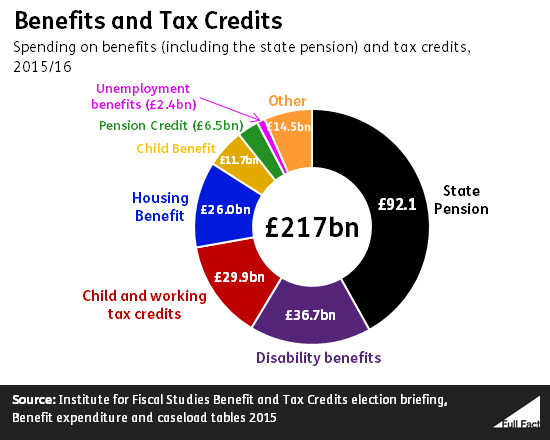

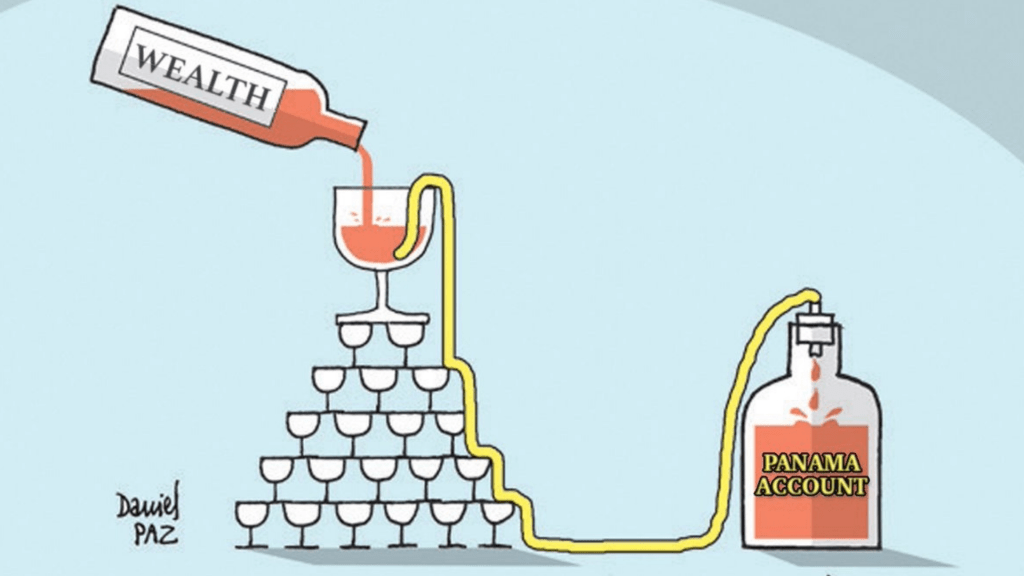



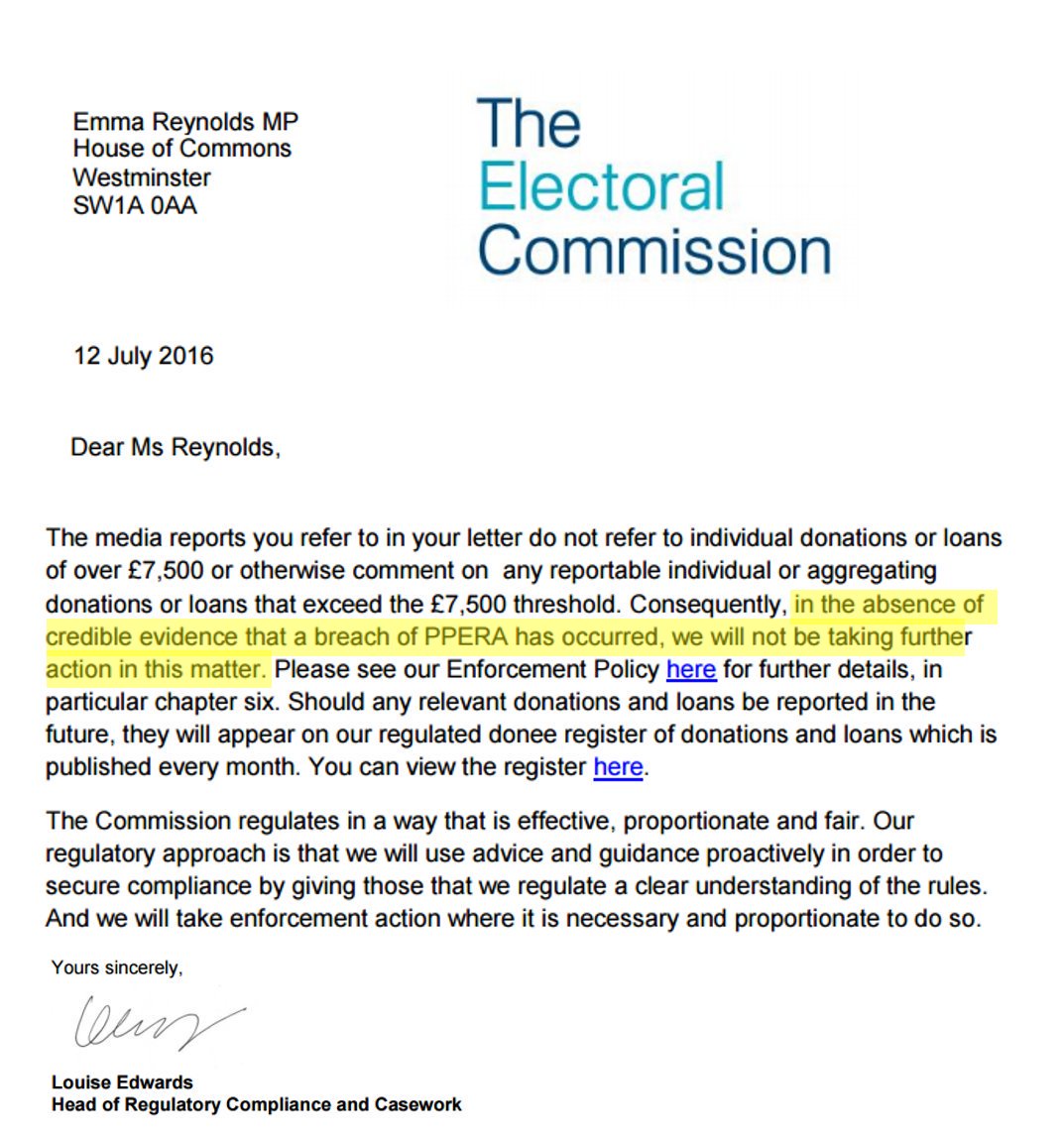


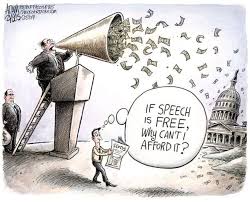


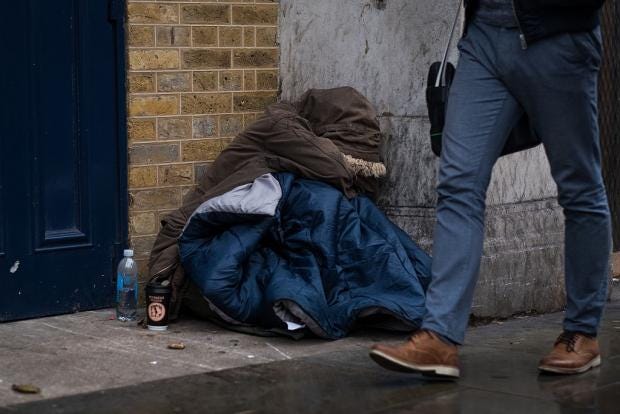

 Politics and Insights