Author: Kitty S Jones

I’m a political activist with a strong interest in human rights. I’m also a strongly principled socialist. Much of my campaign work is in support of people with disability. I am also disabled: I have an autoimmune illness called lupus, with a sometimes life-threatening complication – a bleeding disorder called thrombocytopenia. Sometimes I long to go back to being the person I was before 2010. The Coalition claimed that the last government left a “mess”, but I remember being very well-sheltered from the consequences of the global banking crisis by the last government – enough to flourish and be myself. Now many of us are finding that our potential as human beings is being damaged and stifled because we are essentially focused on a struggle to survive, at a time of austerity cuts and welfare “reforms”. Maslow was right about basic needs and motivation: it’s impossible to achieve and fulfil our potential if we cannot meet our most fundamental survival needs adequately. What kind of government inflicts a framework of punishment via its policies on disadvantaged citizens? This is a government that tells us with a straight face that taking income from poor people will "incentivise" and "help" them into work. I have yet to hear of a case when a poor person was relieved of their poverty by being made even more poor. The Tories like hierarchical ranking in terms status and human worth. They like to decide who is “deserving” and “undeserving” of political consideration and inclusion. They like to impose an artificial framework of previously debunked Social Darwinism: a Tory rhetoric of division, where some people matter more than others. How do we, as conscientious campaigners, help the wider public see that there are no divisions based on some moral measurement, or character-type: there are simply people struggling and suffering in poverty, who are being dehumanised by a callous, vindictive Tory government that believes, and always has, that the only token of our human worth is wealth? Governments and all parties on the right have a terrible tradition of scapegoating those least able to fight back, blaming the powerless for all of the shortcomings of right-wing policies. The media have been complicit in this process, making “others” responsible for the consequences of Tory-led policies, yet these cruelly dehumanised social groups are the targeted casualties of those policies. I set up, and administrate support groups for ill and disabled people, those going through the disability benefits process, and provide support for many people being adversely affected by the terrible, cruel and distressing consequences of the Governments’ draconian “reforms”. In such bleak times, we tend to find that the only thing we really have of value is each other. It’s always worth remembering that none of us are alone. I don’t write because I enjoy it: most of the topics I post are depressing to research, and there’s an element of constantly having to face and reflect the relentless worst of current socio-political events. Nor do I get paid for articles and I’m not remotely famous. I’m an ordinary, struggling disabled person. But I am accurate, insightful and reflective, I can research and I can analyse. I write because I feel I must. To reflect what is happening, and to try and raise public awareness of the impact of Tory policies, especially on the most vulnerable and poorest citizens. Because we need this to change. All of us, regardless of whether or not you are currently affected by cuts, because the persecution and harm currently being inflicted on others taints us all as a society. I feel that the mainstream media has become increasingly unreliable over the past five years, reflecting a triumph for the dominant narrative of ultra social conservatism and neoliberalism. We certainly need to challenge this and re-frame the presented debates, too. The media tend to set the agenda and establish priorities, which often divert us from much more pressing social issues. Independent bloggers have a role as witnesses; recording events and experiences, gathering evidence, insights and truths that are accessible to as many people and organisations as possible. We have an undemocratic media and a government that reflect the interests of a minority – the wealthy and powerful 1%. We must constantly challenge that. Authoritarian Governments arise and flourish when a population disengages from political processes, and becomes passive, conformist and alienated from fundamental decision-making. I’m not a writer that aims for being popular or one that seeks agreement from an audience. But I do hope that my work finds resonance with people reading it. I’ve been labelled “controversial” on more than one occasion, and a “scaremonger.” But regardless of agreement, if any of my work inspires critical thinking, and invites reasoned debate, well, that’s good enough for me. “To remain silent and indifferent is the greatest sin of all” – Elie Wiesel I write to raise awareness, share information and to inspire and promote positive change where I can. I’ve never been able to be indifferent. We need to unite in the face of a government that is purposefully sowing seeds of division. Every human life has equal worth. We all deserve dignity and democratic inclusion. If we want to see positive social change, we also have to be the change we want to see. That means treating each other with equal respect and moving out of the Tory framework of ranks, counts and social taxonomy. We have to rebuild solidarity in the face of deliberate political attempts to undermine it. Divide and rule was always a Tory strategy. We need to fight back. This is an authoritarian government that is hell-bent on destroying all of the gains of our post-war settlement: dismantling the institutions, public services, civil rights and eroding the democratic norms that made the UK a developed, civilised and civilising country. Like many others, I do what I can, when I can, and in my own way. This blog is one way of reaching people. Please help me to reach more by sharing posts. Thanks. Kitty, 2012

Why I strongly support Trade Unionism

10553308_680322242037307_1558281906340939819_n

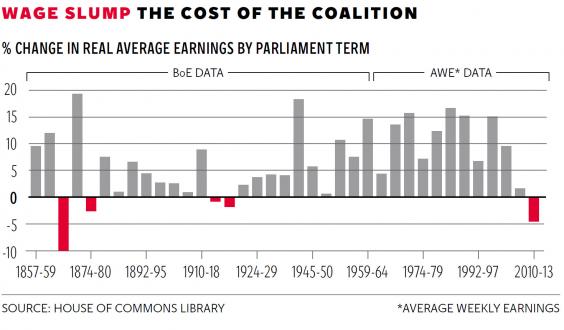
Trade Unions are fundamental to a functional democracy. Research shows that Trade Unionism is linked with higher levels of social equality and better public services, as well as better working conditions and rates of pay that ensure people have a decent standard of living. The Conservatives have always hated Trade Unions because Tory governments tend to value, perpetuate and endorse inequality and poor pay. We currently have the highest levels of social inequality in the EU, and it’s even greater than in the USA. We also have the biggest wage drop, pay hasn’t fallen this much since the 1800s. Tories like cheap labor, and profit for big business

That isn’t in ordinary people’s best interests. The largest study of UK deprivation shows that full-time work is no longer a safeguard against poverty. Yet Conservatives claim to be the party for “hard-working people.”
web-earnings-graphic

In a democratic society, governments don’t attempt to oppress opposition by using partisan policies to restrict their funding in order to turn a first world nation into a one party state. This government has established quite an impressive track record of punishing its critics to silence them. The proposed abolition of the Lords’ right to vote on or veto secondary legislation, delivered by the Strathclyde Review, but written in the rancorous and authoritarian hand of David Cameron, is another measure of draconian decision-making to stifle dissent, a tactic commonly deployed, it seems, when the Conservatives are faced with challenges and the prospect of not getting their own way, regardless of how unpopular and unreasonable their own way is.

Cameron’s rancour arose following the defeat in the House of Lords of a sneaky legslation in the form of a Statutory Instument that would have removed in work support for workers on low pay – tax credits. The defeat and ensuing publicity of the Lords debate and the exposure of an underhand legislative move forced the government to back down. But the shadow secretary for Work and Pensions, Owen Smith, has pointed out that cuts to benefit in-work entitlements being introduced through Universal Credit mean that the controversial tax credit reductions have been simply been “rebranded” by the government rather than reversed.

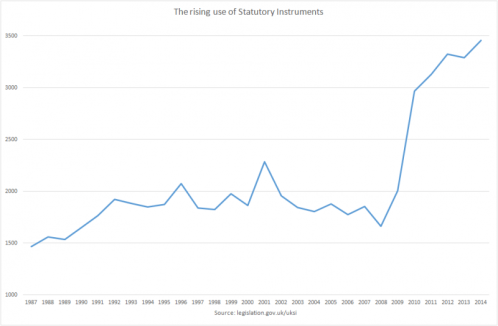
Secondary legislation is unamendable and is allocated 90 minutes debate in the Commons at best, by the Conservatives. Secondary legislation in the form of Statutory Instruments was only ever intended for non-controversial and small tidying up legislative measures. A Tory aide admitted that the Government are trying to get as much unpopular legislation in through the secondary route as possible. But this has been very evident anyway. The government is intent on dismantling any inconvenient piece of the constitution.
sis

Then there are the electoral reforms and proposed constituency boundary changes which are aimed at decreasing opposition votes and increasing Conservative seats. These are all examples of a very worrying authoritarian approach that the Conservatives have adopted to stifle challenges and concerns regarding the ideological basis and the impact of their policies without any democratic dialogue whatsoever.

Trade union funding is the cleanest money in politics: it comes from you and me, and therefore will ensure our interests are reflected in policy-making, rather than just those of big business tax-avoiding Tory donors.

It’s very worrying that vulture capitalists like Adrian Beecroft, a longstanding Conservative donor, has been permitted to re-write our employment laws as part of the government’s wider “labor market “reform.” Amongst Beecroft’s known personal investments are Gnodal, a computer networking company, and Wonga.com, an eye-wateringly high interest, opportunist loan company, that commodifies the poorest people with low credit ratings for massive profits. Beecroft has donated more than £500,000 to the Conservative Party since 2006.

The Beecroft Report caused considerable controversy because it recommended that the government should cut “red tape” in order to make the hiring and firing of employees much easier. In the report, Beecroft claimed this would help to “boost the economy” although no evidence for this was provided. It was alleged that significant sections of the report had been doctored. It was also reported that some recommendations had been removed from the original draft of the report.

The (then) Secretary of State for Business, Vince Cable, condemned the report, saying it was unnecessary for the government to scare workers. Beecroft responded by accusing Cable of being “a socialist who does little to help business” and cited his own personal experience of “having to pay out” £150,000 for unfairly dismissing an HR employee as one of the reasons he included the idea in the report. In an excellent article, James Moore, writing for the Independent, said that the Beecroft report contained “the seeds of the ruthless social Darwinism” and he connected the recommendation to Beecroft’s career of cutting jobs, and highlighted Beecroft’s long history of “wholesale attacks on workers’ terms and conditions.”

In a society that puts profit before people; where employees are regarded as a disposable cost and not an asset to employers; where noone but the powerful have rights; where wages are kept to the bare minimum, there can be no economic growth. Instead we are witnessing increasing economic enclosure and widespread exclusion – small pockets of privilege characterised by stagnant, accumulated wealth and increasingly widespread poverty elsewhere. With little public spending to stimulate small business and general growth, there can be no economic security.

All Conservative politics pivot on a fundamental commitment – the defence of privilege, status, and thus sustaining social inequality. But it is only by shifting money from the high-hoarding rich to the high-spending rest of us, and not the other way around, that investment and growth may be stimulated and sustainable.
images

Despite their recent rhetoric, the Conservatives are not and never have been the “party for workers.” New measures under Universal Credit will make benefit payments to people who are in work, but on low earnings, conditional on them taking “certain steps” to increase their pay or hours.

Many people in work are still living in poverty and reliant on in-work benefits, which undermines the libertarian paternalist/Conservative case for increasing benefit conditionality somewhat, although those in low-paid work are still likely to be less poor than those reliant on out-of-work benefits. The Conservative “making work pay” slogan is a cryptographic reference to the punitive paternalist 1834 Poor Law principle of less eligibility.

The government’s Universal Credit legislation has enshrined the principle that working people in receipt of in-work benefits may face benefits sanctions if they are deemed not to be trying hard enough to find higher-paid work. It’s not as if the Conservatives have ever valued legitimate collective wage bargaining.

In fact their legislative track record consistently demonstrates that they hate it, prioritising the authority of the state above all else. There are profoundly conflicting differences in the interests of employers and employees. The former are generally strongly motivated to purposely keep wages as low as possible so they can generate profit and pay dividends to shareholders and the latter need their pay and working conditions to be such that they have a reasonable standard of living.

Workplace disagreements about wages and conditions are now typically resolved neither by collective bargaining nor litigation but are left to management prerogative. This is because Conservative aspirations are clear. They want cheap labor and low cost workers, unable to withdraw their labor, unprotected by either trade unions or employment rights and threatened with destitution via benefit sanction cuts if they refuse to accept low paid, low standard work. Similarly, desperation and the “deterrent” effect of the 1834 Poor Law amendment served to drive down wages.

In the Conservative’s view, Trade Unions distort the free labor market which runs counter to New Right and neoliberal dogma. Since 2010, the decline in UK wage levels has been amongst the very worst in Europe. That isn’t a coincidence. It’s an intended consequence of Conservative policy.

The Conservatives talk a lot about the need for citizen responsibility, but seem to have exempted themselves. They also seem to have forgotten that responsibities are generally balanced with citizen rights. The right to withdraw labour as a last resort in industrial disputes is fundamental to free societies, as the European Convention on Human Rights recognises.

Not that this government concerns itself with international human rights laws. We are currently the first country to face a UN inquiry into serious disability rights violations. Conservative policies are also in breach of the human rights of children and women. Conservatives operate from within a non-cooperative, competitive individualist, relatively non-altruistic framework . Their anti-humanist, social Darwinist, anti-welfare policies reflect this. 

The government’s proposed changes to Trade Union laws are a major attack on civil liberties. The Conservative’s proposals have been criticised by Liberty, Amnesty International and the British Institute of Human Rights, amongst others. The three organisations issued this joint statement:

“By placing more legal hurdles in the way of unions organising strike action, the Trade Union Bill will undermine ordinary people’s ability to organise together to protect their jobs, livelihoods and the quality of their working lives.

“It is hard to see the aim of this bill as anything but seeking to undermine the rights of all working people. We owe so many of our employment protections to trade unions and we join them in opposing this bill.”

Trade unionists are at the forefront of the struggle for human rights; they are committed to social justice and international solidarity, and typically have strong community roots. These values make them prime targets of this government’s repression. 
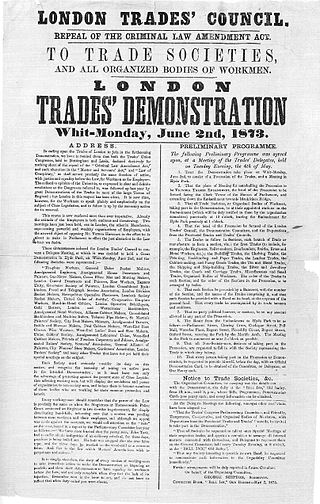
 320px-London_Trades_Demonstration

“I oppose the government’s Trade Union Bill and I will stand up for rights and freedom at work.” Sign the petition here.

Thousands of disabled people have lost their specialist Motability vehicles because of Conservative benefit cuts and many more are likely to be affected

westminster-20121020-00081


In 2012, Esther McVey, then the Minister for people with disabilities, as good as admitted there are targets to reduce or remove eligibility for the new disability benefit Personal Independent Payment (PIP), which was to replace Disability Living Allowance. How else could she know in advance of people’s reassessment that 330,000 of claimants are expected to either lose their benefit altogether or see their payments reduced as she had informed the House of Commons?

This was a clear indication that the new assessment framework was designed to cut support for disabled people. A recent review led the government to conclude that PIP doesn’t currently fulfil the original policy intent, which was to cut costs and “target” the benefit to “those with the greatest need.”

That basically meant a narrowing of eligibility criteria for people formerly claiming Disability Living Allowance, increasing the number of reassessments required, and limiting the number of successful claims. The government have used the review to attempt to justify further restrictions to PIP eligibility, aimed at cutting support for people who require aids to meet fundamental needs such as preparing food, dressing, basic and essential personal care and managing incontinence. “Greatest need” has become an ever-shrinking category under Conservative austerity measures. 

McVey also said that around 200 disabled people in every parliamentary constituency were likely to lose their Motability vehicle when she changed the qualifying walking distance limit from 50 metres to 20-metres. 

And she pointed out that one of the Department for Transport’s own publications, Inclusive Mobility, recommends that “seating should be provided on pedestrian routes at intervals of no more than 50 metres, and that parking spaces for blue badge holders should preferably be provided within 50 metres of the facilities they serve”.

The Motability Scheme helped around 650,000 disabled people to lease specialist cars, wheelchairs and scooters. Anyone on the highest level of the Disability Living Allowance (DLA) was entitled to join the scheme which also helped to pay for expensive adaptations. Motability provides financial help (grants) to disabled people who would not otherwise be able to afford the vehicle or adaptations they need, and the charity undertakes a range of fundraising activities to contribute to the provision of financial help to those Scheme customers whose allowance does not cover the cost of the mobility solution that they need.

Last year, Motability revealed that around 100 disabled people claiming PIP are losing their crucial vehicle benefit every week.

According to Motability, who lease specialised cars and powered wheelchairs to disabled people, 3,000 out of 8,000 of their customers who have so far been reassessed for PIP, who were previously claiming the Disability Living Allowance, have lost their eligibility for the scheme and have therefore had to give up their vehicles.

Motability raised concerns that the government reforms to DLA would affect many more. It has.

Nearly 14,000 disabled people have had their mobility vehicle confiscated after the changes to benefit assessment, which are carried out by private companies. Many more, yet to be reassessed, are also likely to lose their specialised vehicles.

Under the new PIP rules thousands more people who rely on disability allowance to keep their independence are set to lose their vehicles. Many had been adapted to meet their owners’ needs and many campaigners warn that it will lead to a devastating loss of independence for disabled people.

A total of 45% or 13,900 people, were deemed as not needing the higher rate of PIP, and therefore lost their vehicles after reassessment. And out of the 31,200 people who were once on the highest rate of DLA who have been reassessed, just 55%, or 17,300 – have kept their car.

Given that many Motability vehicles are specially adapted to meet the highly individual needs of each person, I wonder what happens to all of those vehicles that are lost under the new restricted benefit eligibility criteria.

Around 51,200 disabled people have joined the Motability scheme using their PIP. Around 360,000 more people will undergo PIP reassessments and that will include “indefinite” or “lifetime” awards under the original DLA support.

Perhaps the government expect that severely and chronically ill people will miraculously recover, their progressive illness will stop progressing, maybe people will grow new limbs, find cures of their own where medical professionals and drug companies have failed and battle their “choice” of disability alone.

Being disabled is very expensive. The charity Scope has calculated that disabled people pay a huge financial penalty over and above the everyday living costs faced by the typical able-bodied person – on average £550 per month. One in ten pay more than £1000 a month over the odds.

Expenses range from door-to-door taxis to get around, extra heating costs, pricey specialist items like wheelchairs, hoists, or stair lifts. There may be extra laundry costs, continence aids, special dietary requirements, a need for home help and meals on wheels. Some disabilities place more wear and tear on shoes and clothing, some people need suitable kinds of footwear. Non-prescription medical items are also an additional cost. These are just a few examples of extra expenses. There are many more that most able-bodied people wouldn’t ever need to think of.

Liz Sayce, chief executive of Disability Rights UK, said: “Being disabled costs money.

The Personal Independence Payment is supposed to help with those costs, but many people are being denied the benefit because they are not assessed properly. Sometimes that means people lose their cars; a massive blow which impacts on their ability to remain independent, take part in their communities or get and keep a job.”

Recent research revealed that of all the appeals related to PIP, 60% of tribunals have ruled in the claimant’s favour.

Motability provides a support package, including a £2,000 grant, to anyone forced to leave the scheme following a PIP reassessment.

The charity added: “This helps individuals to remain mobile, in many cases by purchasing a used car. Motability has already provided some £16m in support through this transitional package.”

The Conservative claim that “Government is committed to supporting the most vulnerable” doesn’t stand up to scrutiny, given the Conservative policy record, including cruelly scrapping the Independent Living Fund, which has had a hugely negative impact on those trying their best to lead independent and dignified lives, and the Access To Work funding has been severely cut, this is also a fund that helps people and employers to cover the extra living costs arising due to disabilities that might present barriers to work. 

Mr Duncan Smith said at the Conservative conference last year that many sick and disabled people “wanted to work” and that the Government should give them “support” to find jobs and make sure the welfare system encouraged them to get jobs. I’m wondering what the word “support” actually means to Conservatives, because there’s every indication that over the past five years, there has only been a withdrawal of essential support and lifeline benefits from those who need them the most.

Article 19 of the United Nations Convention on the rights of persons with disabilities states that persons with disabilities have access to a range of in-home, residential and other community support services, including personal assistance necessary to support living and inclusion in the community, and to prevent isolation or segregation from the community. Article 20 states that Parties shall take effective measures to ensure personal mobility with the greatest possible independence for persons with disabilities, including by:

a) Facilitating the personal mobility of persons with disabilities in the manner and at the time of their choice, and at affordable cost;

b) Facilitating access by persons with disabilities to quality mobility aids, devices, assistive technologies and forms of live assistance and intermediaries, including by making them available at affordable cost;

c) Providing training in mobility skills to persons with disabilities and to specialist staff working with persons with disabilities;

d) Encouraging entities that produce mobility aids, devices and assistive technologies to take into account all aspects of mobility for persons with disabilities.

Article 28 requires that States Parties recognise the right of persons with disabilities to an adequate standard of living for themselves and their families, including adequate food, clothing and housing, and to the continuous improvement of living conditions, and should take appropriate steps to safeguard and promote the realisation of these rights without discrimination on the basis of disability.

It’s difficult to see how the government’s cuts to lifeline disability benefits can possibly be consistent with their obligations to uphold human rights law. 


images

Let’s keep the job centre out of GP surgeries and the DWP out of our confidential medical records


Image result for work coaches : you can still work if you are ill UK
Source: Work, health and disability green paper: improving lives. Consultation outcome


Last year I wrote a critical article about the government’s new
Work and Health Programme, I flagged up concerns regarding government plans to enlist GPs in prescribing work coaches for people who are sick and disabled, and in providing advice on job-seeking. The private and confidential patient-doctor relationship ought to be about addressing medical health problems, and supporting people who are ill, not about creating yet another space for an over extension of the coercive arm of the state to “help people into work”, regardless of whether or not they are actually well enough to cope with working.

I also posted my article on the Pulse site for medical professionals last October, raising some of my concerns. I proposed that the government may use the “intervention” as a further opportunity for sanctioning sick and disabled people for “non-compliance”, and I expressed concern that this would conflict with the ethics and role of a doctor. I also stated my concern about the potential this pilot has for damaging the trust between doctors and their patients. I do support the idea of social prescribing in theory, but this scheme is certainly not that. This is plain state harassment and coercion.

It’s interesting to see that among all those listed present at the various pilot-related meetings behind closed doors regarding the government’s new Work and Health programme, there isn’t a single sick and disabled person or relevant representative charity to be found. That’s telling, because it means that the provision is not founded on consultation, is not designed to be inclusive from the start, nor does it have a democratic or representative foundation. It’s another case of government policy that acts upon groups people, prescriptively, as if they were objects, rather than human subjects with identifiable needs and the capacity for democratic dialogue.

I discovered last October, almost by chance, that the Nudge Unit team have been working with the Department for Work and Pensions and the Department of Health to trial social experiments aimed at finding ways of: “preventing people from falling out of the jobs market and going onto Employment and Support Allowance (ESA).”

“These include GPs prescribing a work coach, and a health and work passport to collate employment and health information. These emerged from research with people on ESA, and are now being tested with local teams of Jobcentres, GPs and employers.”  Source: Matthew Hancock’s conference speech: The Future of Public Services.

Now GPs have raised their own concerns about sharing patient data with the Department for Work and Pensions – and quite properly so. Pulse reports that the Department for Work and Pensions (DWP) plans to extract information from GP records, including the number of Med3s or so-called “fit notes” issued by each practice and the number of patients recorded as “unfit” or “maybe fit” for work, in an intrusive move described by GP leaders as amounting to “state snooping.”

Part of the reason for this renewed government attack on sick and disabled people is that the Government’s flagship fit note scheme, which replaced sick notes five years ago in the hope it would see GPs sending thousands more employees back to work to reduce sickness-related absence, despite GPs having expressed doubts since before its launch, has predictably failed.

The key reason for the failure is that employers did not take responsibility for working with employees and GPs seriously, and more than half (59%) of employers said they felt unable to support employees by making all of the legally required workplace adjustments for those who had fit notes signed as “may be fit for work.” Rather than address this issue with employers, the government has decided instead to simply coerce patients back into work without essential support.

Another reason for the failure of this scheme is that most people who need time off from work are ill and genuinely cannot return to work until they have recovered. Regardless of the government’s concern for the business and state costs of sick leave, people cannot be simply ushered out of illness and into work by the state to “contribute to the economy.” When a GP says a person is “unfit for work”, they generally ARE unfit for work, regardless of whether the government likes that or not.

The government plans to merge health and employment services, and are now attempting to redefine work as a clinical outcome. Unemployment has been stigmatised and politically redefined as a psychological disorder, the government claims somewhat incoherently that the “cure” for unemployment due to illness and disability, and sickness absence from work, is work.

This is the kind of mentality that the new Work and Health programme is founded on: Dr Josephine Sauvage, the joint vice chair of NHS Islington CCG and a GP at City Road Medical Practice, where the programme is being trialed currently, said the programme can help patients.

She said: “When we become ill we often stop doing those things that get us out and about and bring fulfilment to our lives.”

Yes, that’s what being chronically ill means: we often become incapacitated and sometimes we can’t do all of the things we did before. But since when is working the only source of fulfilment? And how does forcing people who are ILL to look for ANY job, regardless of pay, security, terms and conditions and appropriateness lead to “fulfilment”? A patient is defined as:

  • A person who requires medical care.
  • A person receiving medical care or medical treatment.
  • A person under a physician’s care for a particular disease or condition.

There is no mention of a person’s employment status or the pressing need for a job prescription in that definition.

As part of the Work and Health programme, beginning next month, the DWP plans to access people’s medical information. Employment coaches will be able to directly “update” a patient’s medical record.

GPs will have to inform patients of the access to information and any extraction of confidential information from their medical files, but cannot withhold information unless their patient explicitly objects.

Sofia Lind, a senior journalist at Pulse, says: GPs, as data controllers, will be required to tell patients in person, via notices in the practice and on the practice website of the impending extraction.”

Patients have the right to object to the use and disclosure of confidential information that isn’t used for their medical care.

Patients can explicitly refuse their consent to data sharing. The Data Protection Act 1998 covers personal information including health records. Further provision under Article 8 of the Human Rights Act 1998 establishes a right to respect for private and family life. This underscores the duty to protect the privacy of individuals and preserve the confidentiality of their health records.

There is also additional guidance from the British Medical Association (BMA) here – GPs as Data controllers guidance. (PDF)

You can:

Write your own letter to the GP health centre. Here is a basic letter template in 3 formats that you can download and use:

Opt out letter (PDF)

Opt out letter (MS Word)

Opt out letter (Rich Text)

Make sure you state clearly that don’t wish for any of your data and medical information, including details of your fit notes, to be shared with the DWP and any other third party. You can also:

In addition to sharing information with the DWP, due to changes in legislation, your GP can now be required to upload personal and identifiable information from the medical record of every patient in England to central servers at the Health and Social Care Information Centre (HSCIC).

Once this information leaves your GP practice, your doctor will no longer be in control of what data is passed on or to whom. This information will include diagnoses, investigations, treatments and referrals as well as other things you may have shared with your doctor including your weight, alcohol consumption, smoking and family history. Each piece of information will be identifiable as it will be uploaded with your NHS number, date of birth, post code, gender and ethnicity. NHS England – the body now in charge of commissioning primary care services across England – will manage and use the information extracted by HSCIC for a range of purposes, none of which are to do with your direct medical care.

Whenever I am ill, I don’t ever consider consulting Iain Duncan Smith or the government more generally for advice. There are very good reasons for this. I don’t want to be confronted with pseudoscientific Conservative anti-welfare dogma, I prefer instead to seek the expert, trusted medical opinion of a qualified doctor. I expect professional medical care, not brute state coercion and a punishment regime that is particularly reminiscent of the 1834 Poor Law amendment Act.

And despite assurances from those professionals currently trialing the Work and Health programme that all participation is (currently) voluntary, against the current backdrop of ever-increasing welfare conditionality, the political stigmatisation of people not in work, the frequent punitive deployment of benefit sanctions, the mandatory  welfare-to-work schemes, it’s difficult to imagine a Conservative scheme that will not entail exercising Conservative prejudice and pseudoscientific justifications of Tory economic Darwinist ideology.

It’s hardly the case that the state has an even remotely credible track record of assessing people’s medical conditions, nor is it the case that this government bothers itself with empirical evidence, or deigns to listen to concerns raised by citizens, academics, professionals and charities regarding the harm that their policies are causing. This is a government that can’t even manage to observe basic human rights, let alone care about citizen’s best interests, health and wellbeing.

It’s not possible to make people who are ill better by punishing them, in just the same way as state coercion and using prejudiced language doesn’t “cure” poverty.  I don’t need more quack medicine on top of the current heavy doses of Conservative big state psychopolitics, traditional prejudices and subsequent quacking, slapstick psychobabble. It’s bad enough that Jeremy Hunt thinks he’s the all singing homeopathic Minister for magic and that Iain Duncan Smith thinks he can miraculously cure sick and disabled people by simply forcing them to work. The side-effects of five years of the Conservative’s ontologically insecure rhetoric, that’s been largely ranting, repetitive, incoherent monologue, are nauseating enough. Nobody should need to say any of this in 2016, but tragically, we seem to have a government that hasn’t yet escaped the feudal era. Or playing with their alchemy sets.

I’m in full agreement with Boycott Workfare, the Mental Health Resistance Network, and Disabled People Against the Cuts. I shared my original article with two of those groups and I’m pleased that they have since organised a protest for March 4, 3pm at the City Road Surgery, 190-196 City Road, London EC1V 2QH to raise public awareness of the issues and implications outlined. I just wish I was currently well enough to get to the protest.

They say: GP surgeries are for medical treatment, the job centre is for “employment coaching” and job-hunting.

And governments in first-world liberal democracies are for creating policies that actually meet public needs, rather than imposing totalitarian control, manipulating and micromanaging citizens to meet government needs and political outcomes.

650

My work isn’t funded. But you can support Politics and Insights, and help me to continue researching, analysing and writing independently.

Covert agents gaming Facebook to suppress political dialogue and censor information

deception_p47.png


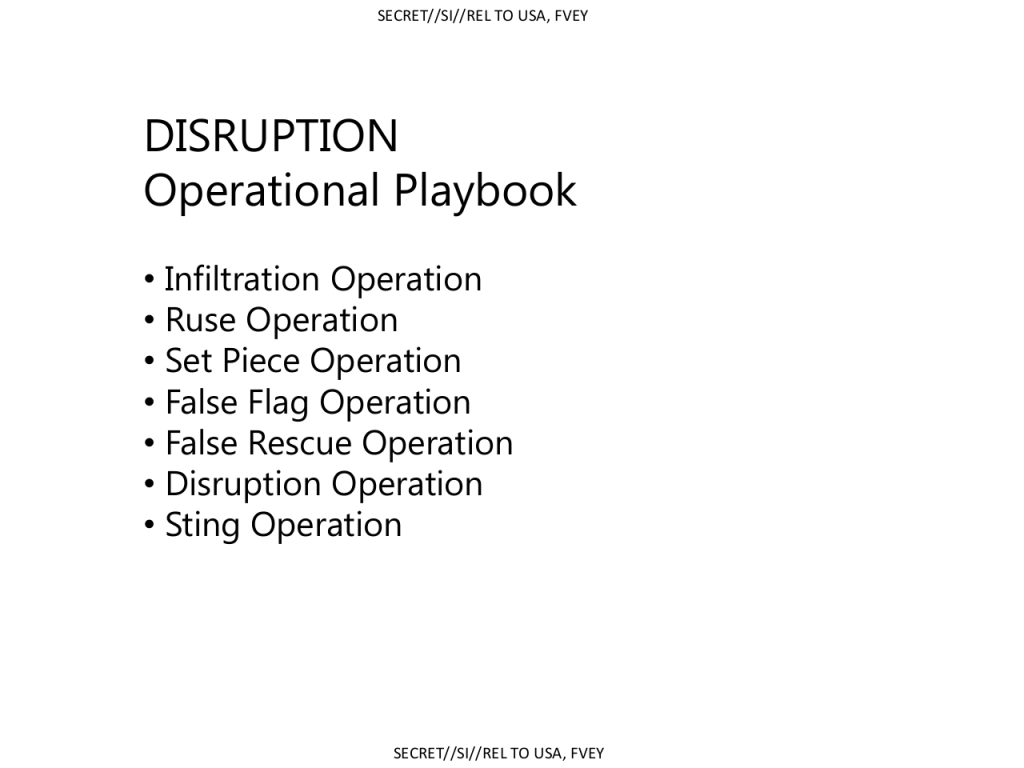
Here is an illustrative list of tactics from the latest GCHQ document.


8+Ways+to+Protect+Yourself+From+Emotional+Manipulation


Yesterday morning whilst I was sharing this post in groups on Facebook, I received a notification informing me that my account was temporarily restricted, and that I wasn’t allowed to comment or post in Facebook groups for three days. No reason for the ban was provided, though the notice allowed me to click on “appeal,” which I did. But Facebook staff never read and respond to appeals or feedback.

This is the third such ban I have had from Facebook in the last twelve months, I have never been given any reasons for the restrictions on my account, and I have asked several times for them. There is provision for flagging up errors by following a link that says “if you think you are seeing this notice by mistake.” Facebook have never once provided any explanation of their actions, nor have they responded to my appeal or to any accounts of my experience. 

My post had been removed in some of the groups I’d posted in and people informed me that where it remained, when they tried to open the link, it said “Content not available.”

There is nothing in the article that breaches Facebook’s “Community Standards” or that is offensive. There was nothing in the previous blogs that earned me a ban which could be deemed abusive or offensive either.

My previous bans happened the day after the election and earlier this month. Both times I was posting one of my own articles when the account restrictions were applied. I wasn’t even informed of the duration of the ban on the previous occasions. Just prior to the last ban, someone reported a meme by Robert Livingstone that I used as a group photo in a Facebook group I set up. Facebook notified me that the person complaining had said it contained “graphic violence”, though in fairness, it wasn’t removed.

544840_330826693653532_892366209_n

The “offending” meme

The group in question is all about criticising Conservative anti-welfare policies, exposing Iain Duncan Smith and the government’s anti-humanist ideological prescriptions. Someone clearly shouldn’t have joined.

At the same time, someone also reported several of my personal photos on my own page as “offensive” and my account as “fake” so this is looking like a targeted campaign to try and restrict the sharing of my posts. It’s not the first time this has happened. I also know that I’m not the only person this has happened to. My site is reasonably popular, with 1, 143, 370 readers so far, and my articles also get quite widely shared. However, someone somewhere clearly doesn’t like what I write.

I left a couple of groups last year because Facebook sent me a notification whenever I tried to post an article on those sites that the content had been reported as “abusive or offensive” by members. They were groups claiming to support the Labour Party. As far as bloggers go, I’m probably amongst the top ten most pro-Labour commentators. But regardless of which party you support, censorship should bother everyone. It’s not only humble bloggers that are being silenced. It’s not so long ago that government agents marched into a Guardian office and smashed up the hard drives storing the Snowden leaks. Once you hear the jackboots, it’s too late.

Someone told me that the article earning me the ban has probably been reported by a group of people determined to trigger a Facebook algorithm in order to get the ban imposed.

Political gaming and manipulating group discussion outcomes on Facebook by using an algorithm for the censorship of reasonable and factual comments or information that you disagree with is a very problematic and particularly totalitarian tactic. If that’s what you have to resort to, it means that you have no credible arguments, can’t engage in mature dialogue and it reflects very badly on your opinions, world-view, personal integrity and ethics more generally.

Most groups I am a member of are left-leaning political debate groups – if you can’t debate democratically and have to resort to such oppressive and cowardly tactics to shut down discussion then it really is time for you to leave. With articles, you always have the option of not reading them. Especially recommended for those of you with right-wing fragile ego syndome, incoherent ideologies and non-robust views and prejudices. And GCHQ.

Now for the punchline. I have a Facebook Community page – Politics and Insights – where Facebook regularly offer to “boost” my posts for a fee. I don’t make any money from writing and so don’t have cash to invest in promoting my site. The post that got me the ban was shared a lot from my page, and so Facebook offered to boost it, only if I paid money, of course … 

Last year I was harrassed by the charming Tommy Robinson, co-founder of the far-right English Defence League (EDL), on Twitter. I told him to stop mithering me and to go peddle far-right myths elsewhere. He then designed a meme that used my account photograph and details, claiming I had said that “child abuse is a far-right myth”, which of course is untrue. I didn’t mention child abuse at all. There was also an invitation on the meme for people to “let her know what you think of this” and details of my account were on there with the comment “she can be found here.”

The meme was circulated repeatedly by Britain First, some UKIP groups, on the National Front page, amongst others. As a consequence I received numerous death threats, threats of rape and a threat involving Combat 18, a neo-Nazi organisation, that is the armed branch of Blood and Honour. My crime? Simply being a Labour Party supporter and irritating Tommy Robinson by telling him to do one from my Twitter page. It’s also possible that my involvement with the Rock Against Racism movement back in the eighties marked my card.

I involved the police, and reports were made to Facebook about Tommy Robinson’s nasty design by a police officer and others regarding the malicious content of the meme and concerns about my personal safety. Guess what? Facebook did not remove the meme or ban any of the posters. The meme wasn’t just malicious, nor did it compromise just my own safety – my children also received threats – it was illegal, too. 

Perhaps it’s time for an alternative to Facebook, a large social media platform where the Tories can’t buy favours and power, and where free speech is actually permitted. I don’t think Facebook banned my post and restricted my account because of a political motivation to do so. But those who reported my article to trigger the ban definitely have a political agenda, and Facebook don’t care about that, nor do they apply “Community Standards” consistently, fairly and when they actually ought to.

Meanwhile I’m not sure about the value of complaining to Facebook, I have yet to have a response from them. However it may be done at the Feedback link. It may also be useful to report the algorithm as a bug.

Further reading

Coup engulfs Facebook’s largest Corbyn group

Letter to the Guardian from Amnesty International and other Human Rights Organisations –Inquiry needed into GCHQ’s spying on us

“Government plans to monitor and influence internet communications, and covertly infiltrate online communities in order to sow dissension and disseminate false information, have long been the source of speculation.

Harvard Law Professor Cass Sunstein, [co-author of “Nudge”], a close Obama adviser and the White House’s former head of the Office of Information and Regulatory Affairs, wrote a controversial paper in 2008 proposing that the US government employ teams of covert agents and pseudo-independent advocates to “cognitively infiltrate” online groups and websites, as well as other activist groups.

Sunstein also proposed sending covert agents into “chat rooms, online social networks, or even real-space groups” which spread what he views as false and damaging “conspiracy theories” about the government.” Glenn Greenwald – How Covert Agents Infiltrate the Internet to Manipulate, Deceive, and Destroy Reputations

The banned post. Please share widely – Doctors bribed with 70-90k salaries to join Maximus and “endorse a political agenda regardless of how it affects patients.”

Doctors bribed with 70-90k salaries to join Maximus and “endorse a political agenda regardless of how it affects patients.”

maximus-logoYes, but which people?


The National Audit Office (NAO) scrutinises public spending for Parliament and is independent of government. An audit report earlier this month concluded that the Department for Work and Pension’s spending on contracts for disability benefit assessments is expected to double in 2016/17 compared with 2014/15. The government’s flagship welfare-cut scheme will be actually spending more money on the assessments themselves than it is saving in reductions to the benefits bill – as
Frances Ryan pointed out in the Guardian, it’s the political equivalent of burning bundles of £50 notes.

The report also states that only half of all the doctors and nurses hired by Maximus – the US outsourcing company brought in by the Department for Work and Pensions to carry out the assessments – had even completed their training.

The NAO report summarises:

5.5
Million assessments completed in five years up to March 2015

65%
Estimated increase in cost per ESA assessment based on published information after transfer of the service in 2015 (from £115 to £190)


84%
Estimated increase in healthcare professionals across contracts from 2,200 in May 2015 to 4,050 November 2016

£1.6 billion
Estimated cost of contracted-out health and disability assessments over three years, 2015 to 2018

£0.4 billion
Latest expected reduction in annual disability benefit spending

13%
Proportion of ESA and PIP targets met for assessment report quality meeting contractual standard (September 2014 to August 2015).

This summary reflects staggering economic incompetence, a flagrant, politically motivated waste of tax payers money and even worse, the higher spending has not created a competent or ethical assessment framework, nor is it improving the lives of sick and disabled people. Some people are dying after being wrongly assessed as “fit for work” and having their lifeline benefits brutally withdrawn. Maximus is certainly not helping the government to serve even the most basic needs of sick and disabled people.

However, Maximus is serving the needs of a “small state” doctrinaire neoliberal government. The Conservatives are systematically dismantling the UK’s social security system, not because there is an empirically justifiable reason or economic need to do so, but because the government has purely ideological, anticollectivist prescriptions.

This is a government that claims social security is “unsustainable” and a “burden” on the public purse, yet has no problem with an extraordinary profligacy with public funds and dispossessing tax payers when it comes to implementing “cost-cutting” and draconian welfare “reforms.” Conservative anti-welfare dogma and prejudice are costing the UK billions of pounds.

In April 2014, Atos was forced to abandon their contract with the government because of a growing public backlash, but not before they had profited from very large sums of public money. Meanwhile, sick and disabled people have had their support callously slashed to the bone, people have suffered and some have died as a consequence of that. Yet our welfare state is being used as a sporting arena for big business profit-making, eating up public funds that were supposed to help people who have encountered difficulties meeting their basic needs through disability, losing their job or becoming ill.

The selling of our public services and lucrative contracting out of state functions to private companies who exchange public money for a notoriously poor service is a prominent feature of Tory “small state” Britain.

The Department for Work and Pensions uses the controversial work capability assessments to decide if people are eligible for benefits or to force those on long-term sick leave back into work. The assessment is conducted using a computer software package called Logic Integrated Medical Assessment (LiMA) application.

The assessments are heavily weighted towards finding people capable for work, regardless of the medical evidence presented by claimant’s own doctors. Patients with severe brain damage, kidney failure, cancer, multiple sclerosis and Parkinson’s Disease, amongst many others with seriously incapacitating illnesses, have been found fit for work. On 24 April 2013, a woman who was a double heart and lung transplant patient died in hospital only days after she had been told that her Incapacity Benefit was being stopped and that she was fit for work. There are many other instances of grave errors in the decision-making of the Department for Work and Pensions which are based on the work capability assessment.

Between April 2015 and March 2018, the Department for Work and Pensions expects to carry out around 7 million assessments which it estimates will cost a total of £1.6 billion.

The National Audit Office report on contracted-out “health and disability assessments” states that the cost of providing assessments is rising and providers are still struggling to meet expected performance standards, and that providers continue to struggle with hiring and training staff.

From the NAO summary:

“The Department continues, however, to struggle with setting targets and requirements with clear evidence and failed to adequately test bidders’ assumptions, for example about staff training, during the contract tender process. It does not yet have a clear strategy for contracting-out assessments and risks damaging market interest through tight procurement timetables, inflexibility towards critical assumptions and lack of transparency.

…For PIP, both providers have failed to meet targets for the quality of assessment reports since October 2013. The Department is paying more for assessments, caused in part by capacity shortages pushing up salaries.”

In the last month, recruitment website healthjobs.co.uk has added almost 100 job advertisements for “functional assessor” roles with Maximus, the US company contracted by the Department for Work and Pensions to conduct work capability assessments. Applicants are required to have two years post-qualification medical experience and are offered positions with whoppingly “incentivising” salaries that start at £72,000, with some roles attracting salaries of up to £98,000. The salary for a junior doctor working in the National Health Service (NHS) with two years of experience is approximately £30,000.

Junior doctors working within the NHS were forced to take industrial action recently – the first strike action for more than four decades – over the government’s proposed new junior doctor contracts, because of serious concerns about patient safety, the quality of doctor’s working lives and the lack of recognition regarding the strain of working long and unsocial hours.

The British Medical Association said:

“The biggest threat to patient care is the government’s insistence on removing safeguards which prevent junior doctors from being forced to work dangerously long hours without breaks, with patients facing the prospect of being treated by exhausted doctors.

“The government is threatening to impose contracts in which junior doctors have no confidence and which represents the first step in a wholesale attack on all NHS staff at night and over weekends. We want a contract that is safe for patients, fair for juniors and good for the NHS.”

Maximus offer substantially better working conditions and pay for junior doctors, but compromising patient safety is an inevitable consequence of the company drive to provide administrative solutions to improve the cost effectiveness … and efficiency of government-sponsored benefit programs.

One NHS doctor, Karl Norrington, noted on Twitter that despite Maximus’s company motto: “Helping Government Serve the People” – in reality Maximus is: “paying drs to medically endorse a political agenda regardless of how it affects patients.”

enhanced-9119-1453733217-2

Related

The disturbing truth about disability assessments

Why I blew the whistle on Atos fitness-for-work test

We can reduce the Welfare Budget by billions: simply get rid of Iain Duncan Smith


WordPress theme error: for Fs sake

375px-F_Word_Logo.svg

I usually use the Syntax theme for my site, because its fonts are easy to read and the simplicity of the theme tends to emphasise the content of articles rather than the style. However, yesterday a curious fault developed, and letter Fs were removed from texts – it was any F followed by the letter I or L. So words like “financial”, “benefit” and deficit” were F less.

I tried changing the font first of all, but that didn’t make any difference to the problem.

I was forced to change the site theme, which remedied the error. However some of my articles have now got seemingly random font irregularities and some paragraph spacing problems. Some of the text has what looks like superscript whimsically inserted here and there. I do apologise if you come across any articles that have been re-translated into a facetious font-styled slapstick comedy show with randomly allocated, frivolously large gaps chucked in.

If there are any affected articles that you want to share, let me know and I will address the errors as quickly as possible. Meanwhile, it’s just a case of plodding through each one I find and putting it right manually, editing and updating.

As well as affecting Syntax, it seems the newer Ecto theme has also been blighted by the same “un F ing” error.

WordPress are reporting that: “A glitch with liguatures (like fl and fi) was introduced in the Merriweather font a few days ago.”

These things are sent to try us. Though for what, I don’t know.

Still at least I’m back to being fully furnished with Fs and can get on with being my usual brand of


on my F inclusive site

Mother who faced bedroom tax eviction after son’s suicide found hanged with note to David Cameron

An inquest has heard that Frances McCormack, a 53-year-old school cook, had been hounded for bedroom tax payments since the tragic suicide of her 16-year-old son, Jack Allen, in 2013. A handwritten note, dated 10 days before her death, was found in her bedroom, part of which was addressed to David Cameron, outlining the hardships and distress that the Bedroom Tax was causing her.

Ms McCormack’s body was discovered by her close friend Natalie Richardson at her home in Maltby, near Rotherham.

An eviction notice was served on Ms McCormack the day before her body was discovered, the court heard.

Frances McCormack had been helping Rotherham Council with its suicide prevention work following the tragic suicides of an increasing number of local young people.

Her ex-husband Jimmy Allen said after the inquest: “She was a strong-willed woman and a good, loving mother. This was a totally unseen body blow to the family.”

Close friend Natalie Richardson told the Doncaster inquest: “Frances had spoken to me previously about the property.

“She wanted to buy into it, it was where the three boys were raised and where Jack took his last breaths, ate his last meal and spoke his last words.

“She was a very strong woman, very strong minded. I felt she was getting a lot better with herself. She had decided to go out a bit more, she had started going to the gym, she was very focused and always had something to do.

“She never gave me any kind of inkling and was strong for me when my partner passed away. She was my rock.”

A Department for Work and Pensions spokesman said: “Our sympathies are with the family of Ms McCormack. This is a tragic and complex issue and it would be misleading to link it to one cause.”

The cause of Frances McCormack’s suicide was the distressing impact of a cruel and punitive policy that is intentionally designed to target our poorest and most vulnerable citizens. Frances was already vulnerable because she was grieving her son. But she was also bravely supporting others, in her contributions to suicide prevention work. It must have been profoundly distressing to receive notice that she was to be forced out of her family home.

How many more suicides will it take before this souless, indifferent government recognise the all too often devastating consequences of their “reforms” and engage with citizens, honestly and openly investigating their accounts, and those of campaigners, academics and professionals? There is an established correlation between Conservative austerity cuts and an increase in suicides and deaths that demands urgent investigation.

Surely what is needed, instead of a wall of oppressive political denial, is a democratically accountable impact assessment of the Conservative’s draconian and ideologically-driven policies. Denying other people’s experiences of inflicted political cruelty is the hallmark of Despotism. It’s not the behaviour one would expect from an elected government in a first-world liberal democracy.

Recent research by Iain Duncan Smith’s own department showed 78% of bedroom tax victims were penniless by the month’s end and at least half had to turn down their heating.

The study report was released on December 17 – the very last day of parliament before the Christmas break.

The Labour Party have confirmed the report was received by the Department for Work and Pensions on December 8 and signed off completely for publication on December 11.

A Department for Work and Pensions spokesman insisted it was standard practice for there to be a week’s delay between reports being received and published online.

But the shadow work and pensions secretary Owen Smith said: 

“The Tories are right to be ashamed about a report showing the Bedroom Tax is driving people deeper and deeper in to poverty.

“Iain Duncan Smith should show some decency, by being honest about the damage his hated policy is causing. Then listen to Labour’s calls to scrap the Bedroom Tax at once.”

The government released 36 ministerial statements – compared to three or four on an average day – in a mountain of information on the last day of Parliament before Christmas. Anyone would think the Conservatives want to avoid any democratic scrutiny or accountability.

Alison Garnham of the Child Poverty Action Group said:

“The DWP’s own evaluation finds the ‘bedroom tax’ is not only pushing families into hardship but it’s also failing to free up more accommodation for families – the key argument ministers used to justify this controversial policy.

“This is a long and deep look at a hugely controversial policy – it really should not have been released just as MPs rise for Christmas.”

Department for Work and Pensions sources maintain that the bedroom tax is “fair”, claiming that it was “wrong” that “taxpayers had to “subsidise” benefit claimants to live in houses that are “larger than they require.”

However, most benefit claimants have actually worked or are working in low paid jobs, and have therefore contributed to their own provision.

It would be far more reasonable, credible and valid to object to the “taxpayer” having to subsidise big businesses who are avoiding paying their taxes. The public are paying for a grotesquely greedy level of bonuses and multimillion figure salaries awarded to incompetent private sector CEOs. Only a quarter of government revenue comes from income tax, with much of the rest coming from national insurance and indirect taxes such as VAT, paid by the population as a whole, including by those people needing social security. But tax avoidance is widespread amongst much of the corporate and wealthy elite that benefits so much from state handouts. There’s a real “culture of entitlement” that the Conservatives happily endorse. And it is costing us far more than the welfare state, established for those in need, after the war.

In the Conservative benefit-cutting climate of austerity Britain, one of the wealthiest nations of the world, disability charities have reported that the despicable scapegoating “scrounger” rhetoric has provoked a significant surge in abuse and hate crime towards disabled people. But the behaviour of state-funded private contractors such as G4S and Atos must surely raise the question of who the “scroungers” really are.

In April 2014, Atos was forced to abandon their contract with the government because of a growing backlash, but not before they had syphoned off very large sums of public money. Meanwhile, sick and disabled people have had their support brutally slashed to the bone, people have died as a consequence of that. Yet our welfare state is being used as a sporting arena for big business profit-making, eating up public funds that were supposed to help people who have encountered difficulties meeting their basic needs through losing their job or becoming ill. Now there is a cause for public and political outrage.

The selling of our public services and lucrative contracting out of state functions to private companies who exchange public money for a notoriously poor service is a prominent feature of Tory “small state” Britain. Tax-funded corporate welfare has never been more generous. Another such woefully inept business is A4e, a welfare-to-work company dogged by controversy over poor performance and corruption. Former chairman Emma Harrison paid herself £8.6m in dividends, all courtesy of the taxpayer. In February 2014, four former A4e employees admitted committing acts of fraud and forgery after charging the state for working for clients that did not even exist.

The Conservative’s draconian policies, which they claim were intended to “solve” Britain’s housing crisis, have done nothing but actually make it worse. The Tories have overseen the withdrawal of the right to lifetime tenancies, introduced a dubious “help to buy” guarantee that further inflates housing costs and they have imposed an arbitrary benefits cap, applied indiscriminately whatever a family’s size or needs, which will see an exodus of poorer people, effectively bringing about a “social cleansing” of the capital and other major cities.

Few groups have suffered more than disabled people from this government’s five years in office. Though the human rights of women and children have also been violated by this government’s grinding and unrelentlessly discriminatory legislative machine.

I wrote earlier about the grave concerns regarding the impact of the next round of proposed housing benefit cuts on the most vulnerable social groups from within the housing sector. A specialist housing association has warned that people under the age of 35 in mental health accommodation face rent shortfalls of almost £200 a week under  government plans to cap housing benefit for social housing tenants at Local Housing Allowance rates. Financial modelling shows that at least 95 per cent of supported housing providers would be forced to evict their tenants if the government succeeds in slashing housing benefits.

Capping benefits at the level of Local Housing Allowance (LHA), the council-administered benefit for people in the private rented sector, would affect almost everyone in supported housing.

Every single Tory austerity measure targets the most vulnerable and those citizens with the very least to lose, and not “those with the broadest shoulders,” as Cameron claimed would be the case in 2010.

Charities, mental health professionals, campaigners and researchers have warned the government that austerity cuts are causing mental distress and are linked to rise in suicides.  Research published in September 2015 by Mind, the UK’s largest mental health charity, reported that for people with mental health problems, the Government’s flagship back-to-work scheme, the Work Programme, made their distress worse in 83 per cent of cases. 

A letter, published before the 2015 election, signed by 442 professionals ranging from psychologists to epidemiologists, stated:

“The past five years have seen a radical shift in the kinds of issues generating distress in our clients: increasing inequality and outright poverty, families forced to move against their wishes, and, perhaps most important, benefits claimants (including disabled and ill people) and those seeking work being subjected to a quite new, intimidatory kind of disciplinary regime.”

Psychologists Against Austerity, an alliance of mental health professionals, formed with the aim of directly challenging the cuts and welfare changes that they said were adding to mental distress. The group produced a briefing paper that includes five “austerity ailments” that contribute to worsening mental distress and despair. These are: humiliation and shame, instability and insecurity, isolation and loneliness, being trapped or feeling powerless, and fear and distrust.

The government continue to deny any “causal link” between their draconian policies and an increase in suicide, refusing to carry out an investigation into the impacts of their callous legislative authoritarianism that not only treats our poorest and most vulnerable citizens with disgusting contempt, but also systematically and shamefully contravenes their human rights.


2014-02-17-BurdenoftheCuts-thumb

Government housing benefit cuts will have “catastrophic impact” on the most vulnerable social groups

o-HOMELESS-YOUTH-facebook.jpg

John Healey MP, Labour’s Shadow Cabinet Minister for Housing and Planning, has warned that housing providers could be forced to close accommodation for the most vulnerable because of housing benefit cuts.

Mr Healey responded to a recent survey released yesterday which reveals that 95 per cent of specialist housing providers could be forced to close accommodation for the most vulnerable because of housing benefit cuts. He said:

“Last month, we revealed that George Osborne’s cuts to housing benefit support for thousands of elderly, disabled and homeless people could mean that vital supported accommodation across the country could close.

This new survey confirms the catastrophic impact these cuts could have.

George Osborne must halt these dangerous plans, publish a full impact assessment and consult fully with housing providers to safeguard this essential housing for those who need it.”

Grave concerns regarding the impact of the proposed housing benefit cuts on the most vulnerable social groups have also arisen within the housing sector. A specialist housing association has warned that people under the age of 35 in mental health accommodation face rent shortfalls of almost £200 a week under  government plans to cap housing benefit for social housing tenants at Local Housing Allowance rates.

Brighton Housing Trust (BHT) have said that its fincancial modelling of the impact of capping housing benefit for social tenants, including supported housing tenants, at Local Housing Allowance rates revealed that 70% of all its homes would be unaffordable to under 35s under the plan, as they would only qualify for the “shared room rate” – the cost of renting a room within a house.

All its general needs housing in Brighton would become unaffordable to under-35s by between £12 and £32 per week. In its specialist supported housing, under-35s would face a shortfall of between £52.60 and £193.49 in 71 of 101 mental health units. There would also be shortfalls of up to £75 per week in specialist drug and alcohol units, homelessness hostels and young people’s accommodation.

Tenants older than 35 would also be unable to afford many of the homes, although the benefit gaps would be smaller.

BHT is a specialist housing association which provides for tenants with support needs, even in much of its general needs accommodation.

The association has warned that the government’s offer of additional Discretionary Housing Payments to plug the rent shortfalls would be insufficient.

The housing sector is urgently lobbying for an exemption for supported and sheltered housing from the LHA cap.


327,379 sick and disabled people were not paid their Christmas Bonus last year

david-cameron-main.jpg


Labour’s shadow Work and Pensions Secretary, Owen Smith MP, has accused the Department of Work and Pensions (DWP) of being “cruel and incompetent”, after at least 327,379 sick and disabled people were left without their £10 Christmas Bonus.

Benefits were originally calculated to meet only the basic costs of food, fuel and shelter. The Pensioners and Family Income Supplement Payments Act 1972 ensured that a Christmas Bonus of £10 is paid to the recipients of some benefits as a one off payment. The subsequent Pensioners’ Payments and Social Security Act of 1979 established the Bonus permanently, although the amount has never been uprated in line with rising prices and living costs. 

On the government site, it says:

The Christmas Bonus is a one-off tax-free £10 payment made before Christmas, paid to people who get certain benefits in the qualifying week. This is normally the first full week of December.

You don’t need to claim – you should get paid automatically.

Mr Smith said:

“They’ve [the DWP] now been forced to admit that 300,000 people went short because they couldn’t even manage to make a simple payment in time for the holidays.

People have always known the Tories are cruel, but they used to think they were at least competent.

Iain Duncan Smith seems to be having a good go at proving they’re both cruel and incompetent.”

A DWP spokesperson responded, saying 

“All regular ESA payments were made on time over Christmas, with the majority of people receiving their additional Christmas seasonal payment on schedule.

Due to an administrative error, a small minority may not receive their additional Christmas seasonal payment until the end of January.”

Some people have yet to receive their payment. How long does it take to fix an “administrative error”?

I can’t help but wonder about the reason presented by the DWP for the payment delays. I don’t believe it’s the truth, although I’d be amongst the first to acknowledge the Department’s wide-ranging ineptitude.

I am a sick and disabled person who claims ESA. Having worked all of my life, and after being forced though illness to give up a job and profession that I loved, I have to say that my standard of living has very drastically dropped, and I have experienced absolute poverty – times when I have not been able to meet even basic needs, such as keeping  warm and eating adequately. In 2012, a tribunal agreed with my decision to leave work on the grounds that my illness is now so severe it presents unacceptable risks to myself and potentially, to others in the work environment, as I am no longer able to fulfil even the basic responsibilities that my work entailed, reliably, consistently and safely. My consultant and GP fully supported my decision.

I wasn’t paid the Christmas Bonus in 2012, 2013 and 2014. I rang the DWP in 2014, when I realised I was entitled to the payment. After being told twice that the money had been paid into my account and it hadn’t, in October 2015, I finally received the backdated payments. I got a bizarre letter explaining that whilst the DWP had said they had paid me, they hadn’t, which I already knew.

I received my Christmas Bonus for 2015 on 14 January. It seems to me that the DWP seldom pay the Bonus unless you actually ask for it (several times) or unless an MP applies some ethical and rational pressure, as Owen Smith has done.

The government believe that any kind of welfare support creates perverse incentives for people not to work. There is no empirical evidence to support this claim. They also think that the general public are “cognitively incompetent,” drawing on the new paternalist behavioural economics (“nudge”) theoretical framework, their basic proposition is that we are fundamentally irrational and make faulty decisions that are founded entirely on our “cognitive biases.” Of course the new army of self-appointed cognitive experts and nudgers exist outside the realms of their own universal theory of “human nature” and are thus exempted from nudges. Poor people who need financial support are not.

The Tories also claim that one of the problems of providing social security arises because we believe the resulting income gain from employment is not enough to compensate for the (increased) work effort. However, the truly rational solution of course would be to raise the lowest wages, to provide a clear and positive “incentive” to work, when people are able, but instead the government have opted for a psychocratic, punitive approach, stigmatising those who are too ill to work to justify cutting essential lifeline benefits to amounts that barely cover the cost of meeting basic survival needs, adding the perpetual threat and administration of sanctions – which entail the complete withdrawal of support –  for any perceived non-compliance.

The conditionality regime means that eligibility for support requires constantly demonstrating an unbounded willingness to attend often pointless, resource and time-consuming jobcentre lectures from work coaches and advisors and applying for any job presented, regardless of its appropriateness, security or pay.

The Tories ludicrously claim that this punitive approach, entailing the systematic withdrawing of essential support, and the incremental dismantling of the welfare state, is “making welfare fair”,  “making work pay” , “helping people into work” and “supporting sick and disabled people” indicating an Orwellian tendency to turn the meaning of ordinary words into a form of tyranny.

Sanctions are founded on and legitimised by claptrap and psychobabble that originated from the pseudoscientific Behavioural Insights Team, too.  Perhaps the Tory “Grudge” Unit is a much more appropriate name for this mean and vindictive collection of neoliberal cognitive supremicists and economic Darwinists. Armchair psychopaths.

In particular, sanctions are founded on a theory of a cognitive bias called “loss aversion” which is being manipulated and turned into a big state stick to ensure that poor people are compliant with draconian benefit conditionality. “Loss aversion” is a behavioural economics theory that attempts to euphemise draconian policies; a substituted expression that serves as a technique of neutralisation for diabolical state actions designed to instil a deep fear of destitution and starvation amongst the increasingly growing precariat, we are perpetually “downsizing” our needs and expectations to become desperate, impoverished, needing to claim support from a system that most, if not all of us have paid into.

From the shrinking category of legitimate “disability” to forcing people to work in insecure jobs for low wages or for no pay at all on exploitative work fare schemes, nudge is being used to prop up neoliberal ideology, social conservatism, and to euphemistically frame punitive policies, “applying the principles of behavioural economics to the important issue of the transition from welfare to work.” (See Employing BELIEF:Applying behavioural economics to welfare to work, 2010 and Nudging Conformity and Benefit Sanctions, 2015.)

The steady drop in real wages since 2010, according to the Office for National Statistics, is the longest for 50 years. The fall in earnings under the Conservatives is the biggest in any parliament since 1880, according to analysis by the House of Commons Library.  “Making work pay” for whom, we should ask.

The Tories have a strongly anti-welfare ideology, and they also advocate using the tools of behavioural economics to “incentivise” people to work, and further claim that social security encourages dependency. Nudge theorists have proposed that making people’s present more livable with any kind of “cash gifts” only amplifies the alleged cognitive tendency people have to overestimate the magnitude of immediate benefits relative to the more distant ones of working. This is the kind of thinking that underpins Conservative policies aimed at keeping people who need to claim support perpetually poor, insecure and fearful.

However, there’s no such thing as a “cycle of benefit dependency”, it’s a traditional Tory prejudice and is based on historically unevidenced myths. Poverty arises because of socioeconomic circumstances that are unmitigated through government decision-making. In fact this government has intentionally extended and perpetuated inequality through its policies.

It’s therefore easy to see how deliberately withholding the Christmas Bonus would be justified by government officials. This government believes that people who have fallen on hard times and are desperate for financial support are driven by a “culture of entitlement.” People needing social security are being politically redefined as economic free riders. But most people claiming benefit have paid tax, national insurance, and continue to pay VAT and other hidden taxes. There is no discrete class of taxpayers: we ALL pay taxes, except of course for a number of the very wealthy and big businesses. Implying that people claiming social security are a “burden” on working people’s taxes is a fact screen, erected to prop up Tory ideology. Meanwhile the welfare state is being steadily dismantled by a government of neoliberal ideologues.

Perhaps this was just another paternalist experimental “trial” aimed at nudging sick and disabled people into work, and of course, it would be based entirely on operationalising the whopping cognitive biases and traditional prejudices of the Tories.

1002589_521987671204099_896277269_n (1)