Category: Uncategorized

A comparison of Labour and Conservative manifestos – CLASS

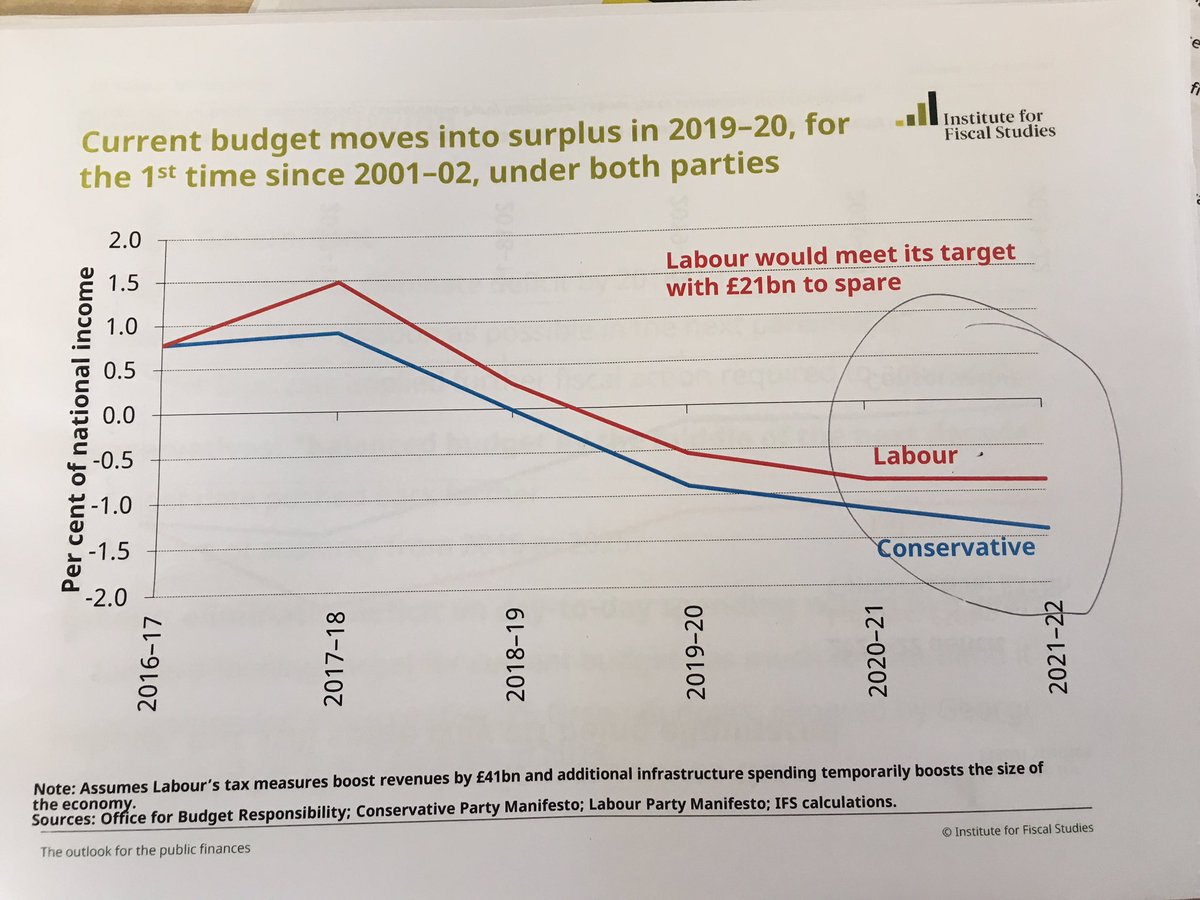
The Institute For Fiscal Studies (IFS) analysis of the Conservative and Labour manifesto proposals, which shows that both parties will run a surplus by 2019/20 , with Labour having £21 Billion spare. 

The Centre for Labour and Social Studies (CLASS) is a thinktank established in 2012 to act as a centre for left debate and discussion. Originating in the labour movement, CLASS works with a broad coalition of supporters, academics and experts to develop and advance alternative policies. 

CLASS produces briefings, policy papers and think pieces to influence policy development, which spans a field. Projects already underway address issues of growth and the economy, work and pay, housing and equality, security and aspiration, democracy and welfare, amongst many others.

CLASS have produced a comprehensive briefing which  breaks down and compares Labour and Conservative manifesto proposals across policy areas including public services, tax, education, employment and Brexit.

Here is a summary. I recommend you read the full report here.

Brexit

Labour has pledged to focus on jobs and living standards as the first priorities in Brexit negotiations:

 Labour states that leaving the EU with no deal would be the worst possible outcome, and reject it as a possibility.

 Labour has accepted the end of freedom of movement, meaning that the UK will have to leave the single market.

 Labour wants to maintain as many benefits of the single market and customs union as possible.

 Labour will scrap the Conservatives’ Great Repeal Bill, replacing it with an EU Rights and Protections Bill that will protect working rights, consumer rights, equality law and environmental protections.

The Conservatives have made Brexit a central theme in their manifesto, stating that it is the biggest challenge the UK will face in most of our lifetimes.

 The Conservative manifesto maintains that no deal would be better than a bad deal.

 The Conservatives have pledged to scrap freedom of movement as a red line in Brexit negotiations. This means that the UK will leave the single market, which is made clear in the manifesto.

 The Conservative manifesto pledges a deep and special relationship with the EU, but there are no specific details. 

Conclusion: Both Labour and the Conservatives have pledged to accept the referendum result, and both parties voted to trigger Article 50 and start the formal process of leaving the EU.

However, their priorities in Brexit negotiations are different. The Conservatives’ acceptance that no deal is a possibility for Brexit would have huge implications for the UK economy. We welcome Labour’s statement that leaving with no Brexit deal should not be an option.

Immigration

The Labour party has stated that freedom of movement will end post-Brexit, but have not pledged to reduce immigration.

 Labour would guarantee the rights of EU migrants in the UK immediately.

 Labour will not set an arbitrary target on immigration levels to the UK.

 Labour will reintroduce the Migrant Impact Fund, to ensure that increased migration in certain areas does not place a strain on public services. The Conservative party have pledged to end freedom of movement and reduce migration, claiming that when immigration is too high it is difficult to build a cohesive society.

 The Conservatives will not guarantee the rights of EU citizens before Brexit negotiations start.

 Despite missing their immigration targets repeatedly while in government, the Conservatives have again pledged to reduce immigration to the tens of thousands -including students.

Conclusion: Both parties are committing to ending freedom of movement post-Brexit. This could have serious consequences for the UK – 10% of our doctors and 4% of our nurses are from elsewhere in the EU.

It is also concerning to see that students will be included in Conservative immigration numbers. However, while the Conservatives continue to suggest that immigration must be limited, Labour have stated that immigration targets are unhelpful. This is a positive step forward in our national conversation about migration.

Tax and redistribution

Labour pledges to make the taxation system fairer through a combination of increasing existing taxes on the top 5%, new taxes, and tighter rules on existing taxes to crack down on evasion and avoidance. This aims to raise £48.6bn in revenue. Key proposals are as follows:

 Lowering the 45p additional rate threshold to £80k (Top 5%) and reintroducing the 50p rate on earnings above £123k. Raising £6.4bn.

 Excessive Pay Levy: paid by employers directly on salaries over £330k. Raising £1.3bn.1

 Increase corporation tax to 26% in 2020–21 (2011 levels) with a lower rate for companies with annual profits below £300k. Raising £19.4bn.

 Introduce a Robin Hood Tax – a tax of about 0.05% on financial transactions. Raising £26bn.

 A clamp down on tax avoidance. Raising £6.5bn. A £3.9bn allowance has been made for behavioural changes and uncertainty.

The Conservatives have emphasised a low tax economy with a new deal for ordinary people (see our employment section). As could be expected with a low tax focus, their plans are more modest than Labour’s:

 Increase the personal allowance to £12,500 and the higher rate of tax to £50,000 by 2020.

 Cut corporation tax to 17% by 2020.

 Conduct re-evaluations more frequently to prevent large changes.

 Stop tax avoidance and evasion.

Conclusion: Tax is one of the biggest dividing lines between the parties. We welcome Labour’s plan for increased taxes on the rich and bold measures to tackle inequality. We are concerned that the Conservatives plan for a low tax economy would simply mean high earners and corporations gain, while low and middle income earners would see their wages eaten away by inflation.

Investment

Labour announced a £250bn fund for investment in infrastructure – transport, energy systems, telecommunications – scientific research, and housing (to be raised by borrowing). Funds will be targeted at:

 Extending HS2 into Scotland.

 Building Crossrail for the North.

 Investment in new, state-of-the-art low-carbon gas and renewable electricity production.

 Universal superfast broadband by 2022.

 3% of GDP on research and development.

 A goal of 60% of jobs created through investment to be high skilled.

The Conservatives have also proposed an industrial strategy with major investment in infrastructure, skills and research and development. They plan to continue the existing £170bn infrastructure investment plan over the next parliament. A part of this funding will come from borrowing and part is already allocated in the budget.

They aim to:

 Meet OECD average of 2.4% of GDP on research and development.

 Launch a £23bn National Productivity Investment Fund.

Conclusion: Both parties have pledged to invest in infrastructure and skills. Labour’s measures are more ambitious in outlook and funding, and are more clearly costed. CLASS believes that this big and bold idea brings the investment the UK so vitally needs.

Environment

 The Labour party used their manifesto to link the environment to sustainable agricultural industries and flood defences. Their main policies are:

 An end to fracking.

 Championing sustainable farming, food and fishing by investing in and promoting skills, technology, market access and innovation.

 Introduce a new Clean Air Act to deal with illegal levels of air pollution.  Halt the privatisation of public forests.

The Conservative party talked about the environment in the context of business, with relatively little on environmental protections by themselves, arguing for:

 More fracking, hailing the technique as a “revolution”.

 Devise a new “agri-environment system”.

 Produce a 25 year Environment Plan.

 A pledge to be the first generation to leave the environment in a better state than they inherited it.

Conclusion: There are clear dividing lines on the environment, most noticeably regarding fracking, with the Labour party firmly opposed to the industry, and the Conservatives proudly supportive.

There is also the matter of Labour’s greater emphasis on environmental protection and clean air, and lack of Tory attention to these issues. Given this divide, we do not see how a Conservative government would be the one to leave the environment in a better state.

NHS and social care

The Labour party has focused on additional funding for the NHS and social care, stating that cuts to NHS and social care budgets by previous Conservative governments have led those services to crisis point.

 Labour has committed to £30bn in extra NHS funding over the next parliament.

 Labour has committed £8bn for social care over the next parliament.

 Labour pledges to guarantee access to NHS treatment within 18 weeks, and that patients will be seen in A&E within 4 hours. The Conservative party manifesto has pledged to increase NHS spending, while proposing new rules for social care costs.

 Conservatives will increase NHS spending by at least £8bn over the next parliament.

 The Conservatives propose ensuring that anyone who needs social care will be able to keep £100,000 of assets.

 People will be able to defer payment on social care until after their death, enabling them to keep their house.

Four days after the Conservative manifesto launch, Theresa May announced that there will be a cap on the amount an individual will pay towards their care, despite the manifesto mentioning no cap and specifying only that no one would be left with less than £100,000 in assets after paying care costs. There has been speculation that a narrowing poll lead led to this announcement, which the Conservatives refuse to describe as a change.

Conclusion: We welcome commitments to properly fund the NHS, but Conservative commitments do not equal the missing funding identified by many campaigners, and their figure is less than a third of Labour’s commitment.

The Conservative social care proposals are also flawed, as people would be likely to pass on their assets to their children to avoid charges. While four in five councils can’t cope with the demand for elderly social care, Labour’s proposals for a big funding boost would be the better option for social care.

Education

The Labour party has pledged to create a National Education Service to reform our education system.

 Labour will reverse cuts to school funding.

 Labour will increase Sure Start funding.

 Labour will create a National Education Service for cradle to grave education, free at the point of use.

 Labour will reduce class sizes to less than 30 for all five, six and seven year olds.

 Labour has pledged to scrap tuition fees and reintroduce maintenance grants.

 Labour has pledged to restore the Education maintenance Allowance (EMA).

 Labour will provide free Further Education, including English lessons. The Conservative party has made pledges to increase school funding and make sure that more children attend good schools.

 The Conservatives have pledged that no school will have their budget cut as a result of the new funding formula.

 The Conservatives will build 100 new free schools a year.

 Conservatives will lift restriction on creating grammar schools.

 Conservatives will open a specialist maths school in every major English city.

 Conservatives will stop universal free school lunches for primary age children, replacing them with free universal breakfasts. The savings will be used for £4bn in schools funding over the next parliament.

Conclusion: Labour’s commitment to reversing school cuts should be welcomed – 99% of schools will have per pupil funding cut by 2020 under current government policy.1 The creation of a national education service for lifelong learning is another welcome proposal, enabling people to retrain in a fast changing jobs market.

However, we were disappointed to see another commitment to new grammar schools from the Conservatives, with a pledge to lift restrictions on the creation of new selective schools. As we have highlighted before, there is no evidence that shows grammar schools increase social mobility – it actually shows the opposite.

Welfare system

The Conservative party state that they have no plans for further radical welfare system reform in the next parliament. The Conservatives will therefore continue to roll out universal credit.

The Labour party has pledged to reform the controversial Universal Credit program. Labour has also pledged to:

 Scrap the bedroom tax.

 Scrap punitive benefit sanctions. 

 Scrap the Work Capability Assessment.

 Scrap cuts to bereavement support.

 Restore housing benefit for under 21s.

Conclusion: After several years of cuts to benefits, and numerous examples of suffering caused by those cuts, it is disappointing to see no changes to the welfare system proposed by the Conservatives. However, we should welcome commitments by Labour to scrap some of the worst features of recent welfare reforms.

Working rights and employment  

Labour released a 20-point plan to increase workers’ rights and provide better security at work. The most important are as follows:

 Give all workers equal rights from day one, whether part-time or temporary.  Ban zero hours contracts.

 Legislate to ensure that recruitment of labour from abroad does not undercut workers at home.

 Repeal the Trade Union Act and roll out sectoral collective bargaining.

 Maximum pay ratios of 20:1 in the public sector and in companies bidding for public contracts.

 Raise the Minimum Wage to the level of the Living Wage (expected to be at least £10 per hour by 2020) – for all workers aged 18 or over.

 End the Public Sector Pay Cap.

 Action on bogus self-employment so the law assumes a worker is an employee unless the employer can prove otherwise.

 Double paid paternity leave to four weeks and increase paternity pay.

The Conservatives have taken a different focus on workers’ rights. Their promises are certainly less ambitious, but there are some positive commitments:

 A statutory right to a year’s unpaid leave to care for a relative.

 EU workers’ rights protected.

 Protection from the gig economy.

 Improve worker representation on boards – watered down from previous commitments to have workers on boards.

 A right to training.

However, the Conservatives have weakened their National Living Wage commitment to meet 60% of the median wage by 2020. With rising inflation, this is likely to cause increased poverty among low earners.

Conclusion: Although this is one of the Conservative party’s more worker friendly manifestos, Labour’s finger is definitely more on the pulse when it comes to workers’ rights. Labour’s manifesto has a real potential to tackle the deep inequality that the UK suffers from.

Inequalities

Labour has pledged a range of measures to reduce equality for several groups. Some of these include:

 Labour will assess future policy for its impact on women.

 Bring offences against LGBT people in line with hate crimes based on race and faith.

 Labour will introduce a requirement for equal pay audits on large employers to tackle the pay gap faced by BME workers.

 Labour would classify British Sign Language as a recognised language.

The Conservative party had a particular focus on disability discrimination.

 A one year national insurance holiday for companies who employ a person with a disability.

 The Conservatives will continue plans to tackle hate crimes against a person based on their sexual orientation, gender identity, disability and religion.

 The Conservatives will review access for disabled people and pledge to work with service providers to reduce any extra costs faced by people with disabilities. 

Conclusion: Labour have proposed concrete policies to help improve equalities in the UK. Although the Conservatives have clearly stated a commitment to people with disabilities, this is in the context of cuts to benefits under a Conservative government which have had a disproportionate impact on people with disabilities.

Housing

The Labour Party has an ambitious goal of council house building and a raft of protections for renters:

 Build 100,000 council and housing association dwellings for every year of the next parliament.

 Build more affordable housing.

 Make three year tenancies the norm.

 Abolish the bedroom tax.

 Inflation capped rent increases, and a ban on letting agent fees.

 New minimum standards introduced for the private rental sector.  Reinstate housing benefit for 18-21 year olds.

 A plan to end rough sleeping within the next Parliament, with 4,000 additional homes for people with a history of rough sleeping.

The Conservative Party is also making bold pledges on house building:

 A promise to deliver on their 2015 manifesto commitment to build a million homes by 2020, and a pledge to built another 500,000 homes by 2022.

 A new generation of fixed-term council housing linked to a new Right to Buy.

 Free up more land for new homes.

 Give housing associations more flexibility to increase their stock.

 Give councils more power to intervene when developers don’t act on planning permissions.

 Look at increasing protections for renters

Conclusion: We are happy to see commitments from both parties to building large numbers of houses, though this does reflect how bad the crisis has become.

We call on both parties to commit to building 200,000 social houses to meet demand. We applaud the multiple new protections for renters from Labour, and are concerned with the lack of firm policy commitments from the Tories.

Pensions

Labour plans bring both strong protections for pensions and a potentially radical shift in pensions policy. Proposals include:

 Keeping the triple lock on pensions, so the state pension rises by 2.5%, inflation, or earnings growth.

 Commission a new review of the pension age, to develop a flexible retirement policy reflecting people’s contributions, the variations in life expectancy and the varying health effects of work.

 The Winter Fuel Allowance and free bus passes will be guaranteed as universal benefits.

 Protect pensions of UK citizens living overseas.

The Conservative proposals broke with the political consensus on pensions and the elderly (See the social care section for more detail on that particular policy). Their commits on pensions are:

 Means testing the winter fuel allowance (potentially affecting 9m pensioners).

 Change to a double lock on pensions, so they go up in line with earnings or inflation, whichever is higher (removing the third 2.5% lock).

 Measures to protect private pensions by increasing punishment for mismanaging schemes.  

Conclusion: We are happy to see commitments from both parties to building large numbers of houses, though this does reflect how bad the crisis has become. We call on both parties to commit to building 200,000 social houses to meet demand.

We applaud the multiple new protections for renters from Labour, and are concerned with the lack of firm policy commitments from the Tories. 

Public services and nationalisation

The Labour party has pledged to prioritise public service over private profit, and stated that prices have risen and services have suffered in privatised industries.

 Renationalise railways by bringing them back into public ownership as franchises expire.

 Renationalise Royal Mail.

 Establish publically owned regional water companies.

The Conservative party have pledged to take action on rip-off bills.

 Pledge to freeze energy bills, a policy that was also in the 2015 Labour manifesto.

 Pledge an independent review into energy costs.

 Pledge the largest investment in railways since the Victorian era and extra capacity to tackle overcrowding.

Conclusion: Labour have made it clear that privatisation of public services, all natural monopolies, has not worked. We should welcome the commitment to nationalise industries to make them accountable to the public who use them, and with the aim of reducing prices.

The Conservatives have made no pledges on nationalisation, but have promised rail investment. It is unlikely that investment alone could tackle the issues facing our railways. 


Related

What Labour achieved

Image result for manifesto 2017


I don’t make any money from my work. I am disabled because of illness and have a very limited income. But you can help by making a donation to help me continue to research and write informative, insightful and independent articles, and to provide support to others. The smallest amount is much appreciated – thank you.

DonatenowButton


Osborne criticises the government’s manifesto, while charities are silenced by ‘gagging act’

539627_450600381676162_486601053_n (2)

George Osborne, the architect of many an omnishambolic budget, has called the Conservative manifesto “the most disastrous in recent history” in a suprisingly critical editorial

The London Evening Standard derided the Tories’ campaign attempt to launch a “personality cult” around the prime minister. Osborne attacked Theresa May’s handling of Brexit as marred by “high-handed British arrogance”.  He said the campaign had “meandered from an abortive attempt to launch a personality cult around May to the self-inflicted wound of the most disastrous manifesto in recent history”.

He has already mocked May’s net migration target as “economically illiterate” and branded Brexit a “historic mistake” since becoming the London paper’s editor.

The editorial then mockingly suggested the current conversation among Downing Street aides would likely be along the lines of: “Honey, I shrunk the poll lead.”

The Evening Standard has also criticised the government’s manifesto meltdown over the  highly unpopular “dementia tax”, saying: “Just four days after the Conservative manifesto proposals on social care were announced, Theresa May has performed an astonishing U-turn, and bowed in the face of a major Tory revolt over plans to increase the amount that elderly homeowners and savers will pay towards their care in old age. 

There will now be a cap on the total care costs that any one individual faces. The details are still sketchy but it is not encouraging that the original proposals were so badly thought through.” 

In another article titled U-turn on social care is neither strong nor stable”, it says: “Current Tory leaders should have been ready to defend their approach. Instead we had a weekend of wobbles that presumably prompted today’s U-turn. The Pensions Secretary Damian Green was unable to answer basic questions in a TV interview about who will lose their fuel payments, and how much extra money will go into social care.

“Either the Government is prepared to remove these payments from millions of pensioners who are not in poverty, and don’t receive pension credit, and spend their substantial savings on social care; or they chicken out, target the tiny percentage of pensioners who are on higher tax rates, save paltry sums and accept the whole manoeuvre is a gimmick. Certainly, if the savings are to pay for a new care cap, then many pensioners will lose their winter fuel payment. This isn’t for consultation after an election — it’s an issue of honesty before an election.”

With the Tories’ poll lead diminishing, Liberal Democrat leader Tim Farron has warned that the proposed “dementia tax” would become May’s version of the poll tax which led to Margaret Thatcher’s downfall.

Whilst Osborne is free to speak his mind, it’s an irony that many charities have complained they have been silenced from criticising the Conservative social care plans despite the fact they will be hugely damaging to elderly and disabled people across the country.

One chief executive of a major charity in the social care sector has told the Guardian that they felt “muzzled” by the Transparency of Lobbying, non-Party Campaigning, and Trade Union Administration Bill – a controversial legislation introduced in 2014  which heavily restricts organisations from intervening on policy during an election period.

The charity said May’s decision to means test winter fuel allowance would “inadvertently” result in some of the poorest pensioners in the country losing the support, adding that “will literally cost lives”.

The charity also claimed that the so-called “dementia tax” on social care in the home would stop people who need support from seeking it.

“We are ready to speak out at one minute past midnight on 9 June,” the charity leader added, but stressed they were too afraid to do so now.

Sir Stephen Bubb, who runs the Charity Futures thinktank but previously led Acevo, an umbrella organisation for voluntary organisations, said it was notable how quiet his sector had been about the policy.

He went on to say: “The social care proposals strike at the heart of what charities do but they should be up in arms about them but it hasn’t happened. It is two problems: there is the problem of the so-called “gagging act”, but also the general climate of hostility towards charities means there is a lot of self censorship.” 

“Charities that once would have spoken out are keeping quiet and doing a disservice to their beneficiaries. They need to get a bit of a grip.” 

He cited the example of the Prime Minister hitting out at the British Red Cross after its chief executive claimed his organisation was responding to a “humanitarian crisis” in hospitals and ambulance services.

May accused the organisation of making comments that were “irresponsible and overblown”.

It’s not the only time the Conservatives have tried to gag charities for highlighting the dire impacts of Tory policies. In 2014, MPs reported Oxfam to the Charity Watchdog for campaigning against poverty. I guess the Joseph Rowntree Foundation had better watch it, too. What next, will they be reporting the NSPCC for campaigning for children’s welfare?

'Lifting the lid on austerity Britain reveals a perfect storm - and it's forcing more and more people into poverty' tweeted Oxfam
Lifting the lid on austerity Britain reveals a perfect storm – and it’s forcing more and more people into poverty.

The Oxfam campaign that sent the Conservatives into an indignant rage and to the charity watchdog to complain was an appeal to ALL political parties to address growing poverty. Oxfam cited some of the causes of growing poverty in the UK, identified through research (above).

Tory MP Priti Patel must have felt that the Conservatives are exempt from this appeal, due to being the architects of the policies that have led to a growth in poverty and inequality, when she said: “With this Tweet they have shown their true colours and are now nothing more than a mouthpiece for left wing propaganda.”

I’m wondering when concern for poverty and the welfare of citizens become the sole concern of “the left wing”. That comment alone speaks volumes about the attitudes and prejudices of the Conservatives.

Bubb said: “That was a warning shot. So many charity leaders do feel that if they do speak out there will be some form of comeback on them. The Charity Commission has been notably absent in defending charity rights to campaign – the climate has been hostile to the charity voice.” 

There is some fear that charities face a permanent “chilling effect” after the Electoral Commission said they must declare any work that could be deemed political over the past 12 months to ensure they are not in breach of the Lobbying Act. 

Another senior figure also said charities were too afraid to speak out on the social care proposals. “We are all scared of the lobbying act and thus most of us are not saying much during the election. There was the same problem in the EU referendum – if you criticise the government then you are being “political”.

During the referendum a row broke out after the Charity Commission
issued guidelines that some charities interpreted as preventing them from making pro-EU arguments. 

Head of the organisation, William Shawcross, dismissed the charge by Margaret Hodge MP that his Euroscepticism was to blame for the issuing of the advice from the commission on when charities could intervene on the issue.

Steve Reed, shadow minister for civil society, said the Labour party would scrap the lobbying act because it had “effectively gagged” charities.

Desperate, underpaid NHS paramedic tells Theresa May: “I’ve seen things no one should have to witness”

Tom Pride's avatarPride's Purge

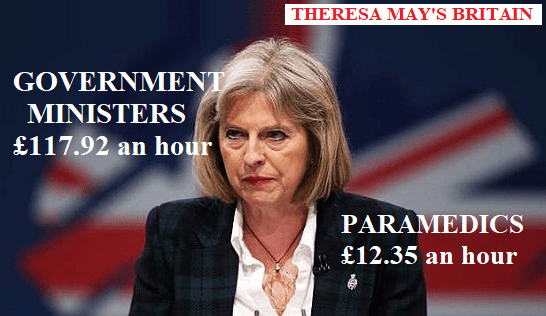
A paramedic has written a moving description on Facebook (see below) of the difficulties he has to face every day in his job, and how he is paid a pittance of just £12.35 an hour to do it.

This is because the Tory government has over the last 7 years capped paramedics’ and other public workers’ pay rises at 1%.

The cabinet ministers who made that decision, however, have seen their own pay rise over the last 7 years to the point they are making approximately £117.92 an hour*, on top of which they can also claim expenses, subsidies and other perks.

A perfect example of Theresa May’s warped Britain today.

Brian Mear:

I joined the Ambulance Service in 1986.
For over 28 years I worked doing “Front Line” work. That’s Emergency work. Covering 999 calls. For the last 6 years of my service I worked alone predominantly on nights at…

View original post 447 more words

Millions of pounds originating from HSBC have been laundered directly to the Conservatives, say claims

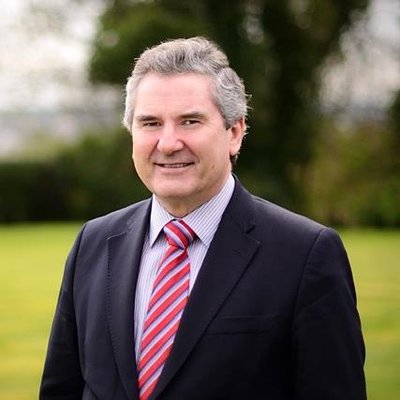
Roger Mullin of the Scottish National Party.

New cash for Conservatives scandal

Roger Mullin, MP for Kirkcaldy and Cowdenbeath, has called for an investigation after it was disclosed that “£5 million of HSBC loans were laundered directly to Conservative HQ.” He isn’t alone.

It appears that evidence has emerged of organised, very substantial and ongoing donations made by IPGL – a private holding company – and other subsidiaries, controlled by Michael Spencer, to the Conservative Party, totalling at least £5.3m, representing a “huge percentage of annual turnover”. 

Michael Spencer’s interdealer broker ICAP was fined for its role in the Libor scandal. The Conservative Party resisted calls from the opposition to return £4.6m donations ICAP and Michael Spencer made during the period of the Libor Scandal when Spencer was also Treasurer of the Party.

Campaigners and other opposition MPs such as Labour’s John Mann, who serves on the Treasury Select Committee, have raised these issues, and many allege that such donations wouldn’t have been possible without HSBC’s financial support of IPGL.

The allegations were first raised by Fionn Travers-Smith of Move Your Money at the Annual General Meeting of HSBC Holdings PLC on 28 April. He said:

Not only does this raise questions about HSBCs role in public life, the level of influence that you hold over government, and your own refusal to discuss the possibility of corruption and undue influence at last year’s AGM – but it also raises questions over whether you have contravened your own policies on being politically neutral.

 HSBC’s Douglas Flint responded to the allegations by evading the issues raised, and said “We are politically neutral” and “we’re not going to talk about individual companies at all.” 

Joel Benjamin from Debt Resistance UK questioned these claims of neutrality given deputy chairman of HSBC, Simon Robertson’s £700k donations to George Osborne and the Conservative Party.

In their AGM notice, released in March, HSBC said to its shareholders: “HSBC has a long standing policy not to make any political donations or to incur political expenditure including in the UK or the rest of the EU within the ordinary meaning of those words.

“We have no intention of altering this policy. However, the definitions of political donations and political expenditure used in the UK Companies Act are very wide. As a result, they may cover activities that are an accepted part of engaging with our stakeholders to ensure that issues and concerns affecting our operations are considered and addressed, but which would not ordinarily be considered as political donations or political expenditure.

“As a result, the Directors have concluded that it would be prudent to seek authority from our shareholders to allow them to make political donations and incur political expenditure of up to £200,000 in aggregate in the period up until next year’s AGM. In common with many other UK companies, this is purely a precautionary measure. The authorities sought are not designed to influence public support for any political party, or political outcome; they are simply to ensure that the Group does not inadvertently breach the UK Companies Act.”

As the law stands, a UK-incorporated company must not make a political donation to a political organisation or incur any political expenditure without shareholder approval or, if the company is a subsidiary, the approval of its UK holding company. Directors could incur personal liability if authorisation is not obtained. Nor must it influence public opinion regarding candidates or political outcomes in elections and referendums.

Presumably, the three senior HSBC bank figures who have donated £875,000 to the Conservative party in recent years have done so without shareholder approval. 

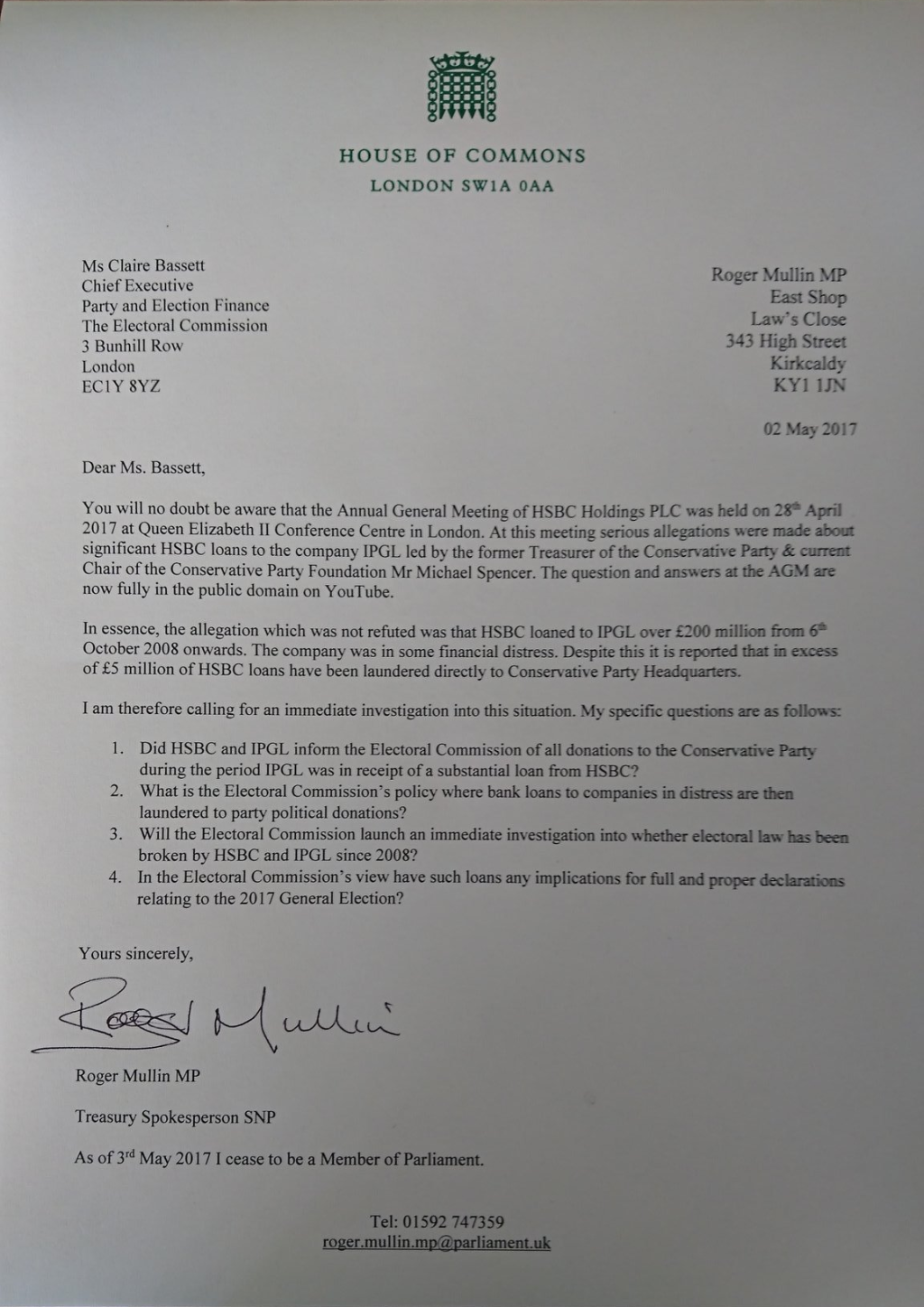
Below is Roger Mullin’s last letter as current MP,  parliament is now Dissolved until after the General Election. Mullin posted a copy of the letter on Twitter earlier today.

letter

Some more context

In 2012, the US government was persuaded by our government not to pursue criminal charges against HSBC for allowing rogue states, terrorists and drug dealers to launder millions of dollars after George Osborne and the UK banking regulator intervened to warn that prosecuting Britain’s biggest bank could lead to a “national and global financial disaster”. Instead of facing a prosecution, the bank were given the option to pay a record $1.92bn (£1.4bn) fine

The House financial services committee report said the UK interventions “played a significant role in ultimately persuading the DoJ [Department of Justice] not to prosecute HSBC”. 

The report revealed that Osborne wrote to Ben Bernanke, who was then the Federal Reserve chairman, and Timothy Geithner, the then treasury secretary, to warn that prosecuting a “systemically important financial institution” like HSBC “could lead to [financial] contagion” and pose “very serious implications for financial and economic stability, particularly in Europe and Asia”.

In 2015, it came to light that there are long-standing links between the scandal-hit HSBC and the Conservative Party, after Electoral Commission records showed three senior bank figures have donated £875,000 to the party in recent years. It was revealed that HSBC’s deputy chairman, Sir Simon Robertson, has made 24 separate donations totalling £717,500 in the last nine years.

As a point of interest, the links go much further back, as David Cameron’s great great grandfather, Sir Ewen Cameron, became principal agent to the Calcutta branch of HSBC, following which he acted as manager of its Shanghai branch, where he served until 1890.

Further revelations emerged that the bank allegedly helped wealthy individuals evade tax through Swiss accounts. It was also revealed that HSBC’s deputy chairman, Sir Simon Robertson, has made 24 separate donations totalling £717,500 in the last nine years.

He gave 17 donations to the Conservative Central Office between 2002 and 2014, and four totalling £100,000 to George Osborne between 2006 and 2009. The other three went to the party in East Hampshire. Robertson, who was knighted in 2010, is reported to have a personal wealth of £10m.

Conservative donors, peers and a high-profile MP are listed among the wealthy who legally held accounts in Switzerland with HSBC’s private bank, for a wide variety of reasons. Their ranks include Zac Goldsmith, former MP for Richmond Park, plus his brother, the financier Ben Goldsmith, and a Swiss resident, German-born automotive heir Georg von Opel, who has donated six-figure sums to the government in the past two years.

Peers named in the HSBC files include Lord Sterling of Plaistow, the P&O shipping and ports entrepreneur who was ennobled by Margaret Thatcher, and Lord Fink, who was also a party treasurer under David Cameron and has given £3m to the Conservatives.

Zac Goldsmith has, with his brother Ben and their mother Lady Annabel, donated over £500,000 in cash and in kind to the Conservatives.

Big Banks Aided Firm At Center Of International Bribery Scandal

Cash for Conservatives Exposes the HSBC Dirty Money running the Tory Party – DEBT RESISTANCE UK

 HSBC files: Swiss bank hid money for suspected criminals

The British HSBC bribery and corruption cover-up – Nicholas Wilson

Business dealings of Tory donors could be wiped from official records

Update
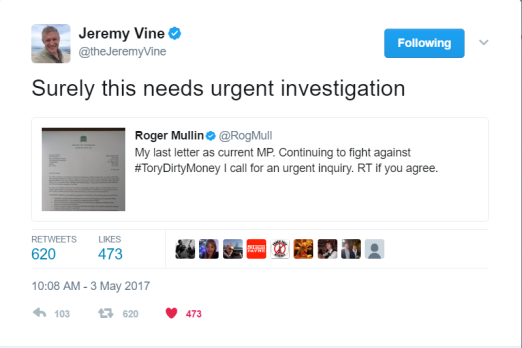
One promising result:

vine

And a rather hasty response from the Electoral Commission, which you can view here: http://www.electoralcommission.org.uk


My work is unfunded and I don’t make any money from it. I am disabled because of illness and struggle to get by. But you can support Politics and Insights and contribute by making a donation which will help me continue to research and write informative, insightful and independent articles, and to provide support to others.  DonatenowButton

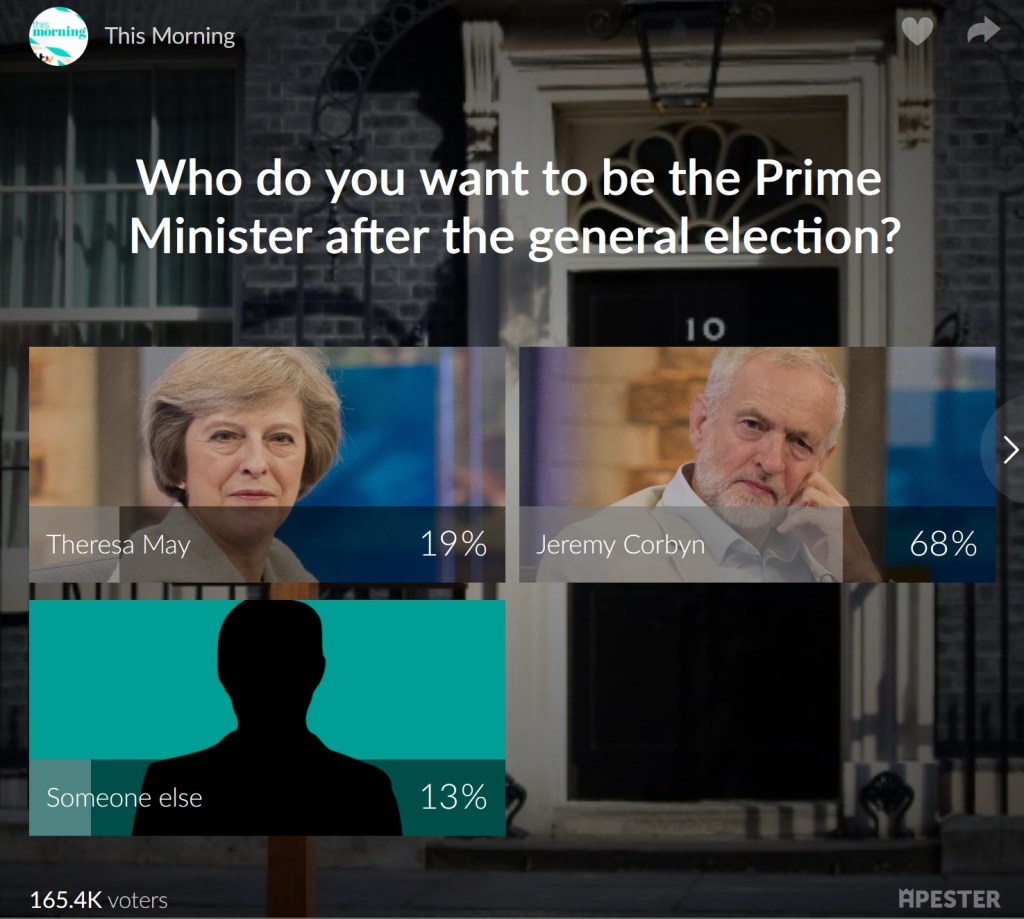
ITV poll: 68% of 165,000 people vote Corbyn4PM

itv tm

A poll by ITV’s This Morning asked viewers which party leader they would prefer to see as Prime Minister. The result was remarkable:

Over 165,000 people participated – and more than two-thirds chose Corbyn. Theresa May’s share of the vote was far less than a third of what Corbyn achieved.

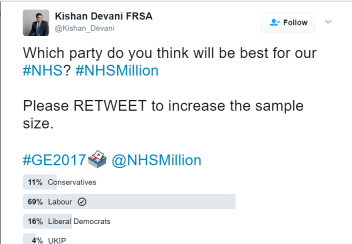
Polls on Twitter, though considerably smaller scale, asked people who they intend voting for – both posted by a Conservative – also show:

poll correctand on the NHS:

poll 2 NHS


SKWAWKBOX's avatarSKWAWKBOX

A poll by ITV’s This Morning asked viewers which party leader they would prefer to see as Prime Minister. The result was remarkable:

itv tmOver 165,000 people participated – and more than two-thirds chose Corbyn. Theresa May’s share of the vote was far less than a third of what Corbyn achieved.

Naysayers will say that the poll was not ‘scientific’. That’s true. But then, the methodology of official polls is rarely disclosed properly and vastly differing results suggest that those may not be too scientific either. It’s also possible, of course, that Corbyn supporters are simply more motivated to call or go online to cast their vote and influence the result – but again, that’s hardly a negative.

One thing that is certain, however, is that the result in no way supports or aligns with the prevailing punditry that claims the result of the General Election is a foregone conclusion or…

View original post 163 more words

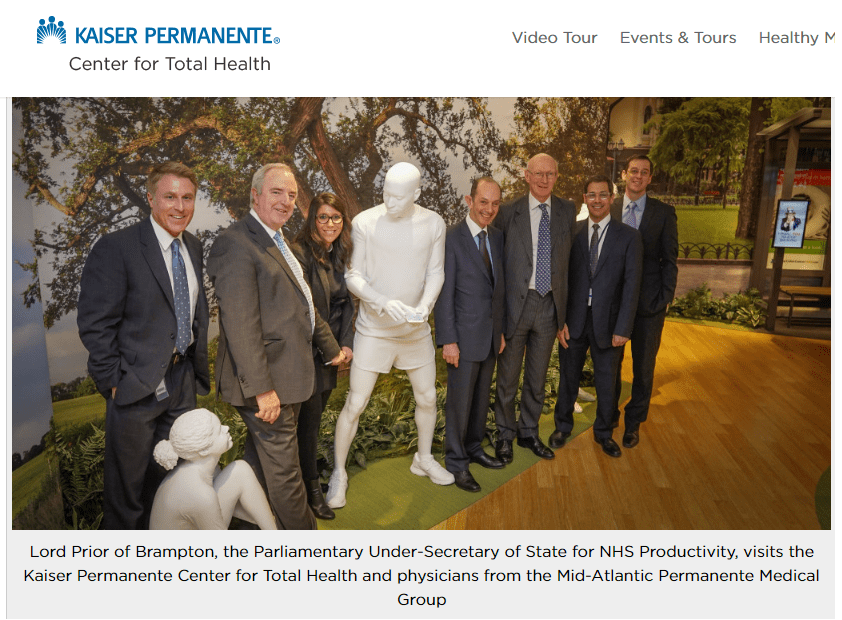
Theresa May’s secret plans to replace NHS England with private US healthcare system Kaiser Permanente

Tom Pride's avatarPride's Purge

Kaiser Permanente is a private healthcare organisation based in California.

But unlike many other private healthcare companies in the US, Kaiser provides a complete model of integrated pre-paid insurance along with healthcare which is supposedly provided free at the point of need.

This is a system much like our own NHS but with three major differences – Kaiser’s healthcare provision is much more expensive than the NHS, the healthcare provision side is run for profit and unlike the NHS its cover isn’t comprehensive – it only covers those people who are in work.

Despite that, Secretary of State for Health Jeremy Hunt seems to love Kaiser. He and other ministers have personally visited the company at its California headquarters – several times in fact:

And Kaiser’s own website lists other recent visitors from the UK, including many NHS hospitals and NHS trusts as well as HM Treasury and the Ministry…

View original post 233 more words

Dismay at Deborah Orr’s unusually ill-informed article on Simon Stevens’ Next Steps for Sustainability and Transformation Partnerships

Featured Image -- 62300

“Published last Friday, Simon Stevens’ document takes another big step towards realising Jeremy Hunt’s plans to replace the NHS with an American-style insurance system. It is clear about the intention to make Sustainability and Transformation Plans – now renamed Sustainability and Transformation Partnerships – into Accountable Care Systems.

Accountable Care Systems copy the US health insurance system. They are being spun as A Good Thing because they end the purchaser/provider split. Don’t fall for the spin.

Accountable Care Systems/Organisations are mechanisms for denying care by choosing to treat only patients who represent “best value for money” – ie are cheapest to treat, and most likely to have the best health recovery as a result of treatment. The Next Steps document keeps banging on about how they are going to enable “demand management” ie reduce patients’ access to care.”

Green__Jenny's avatarNHS MATTERS!

STP Agony Aunt usually likes reading Deborah Orr’s columns – so she was dismayed by the reporter’s ill-informed applause in her weekend Guardian column for Simon Stevens’ Next Steps for Sustainability and Transformation Partnerships.

Published last Friday, Simon Stevens’ document  takes another big step towards realising Jeremy Hunt’s plans to replace the NHS with an American-style insurance system. It is clear about the intention to make Sustainability and Transformation Plans – now renamed Sustainability and Transformation Partnerships – into Accountable Care Systems.

Accountable Care Systems copy the US health insurance system. They are being spun as A Good Thing because they end the purchaser/provider split. Don’t fall for the spin.

Accountable Care Systems/Organisations are mechanisms for denying care by choosing to treat only patients who represent “best value for money” – ie are cheapest to treat, and most likely to have the best health recovery as a result of…

View original post 1,142 more words

Young woman who committed suicide was called ‘a f****** waste of space’ by mental health worker

agp_mdm_170217hannah_015jpg

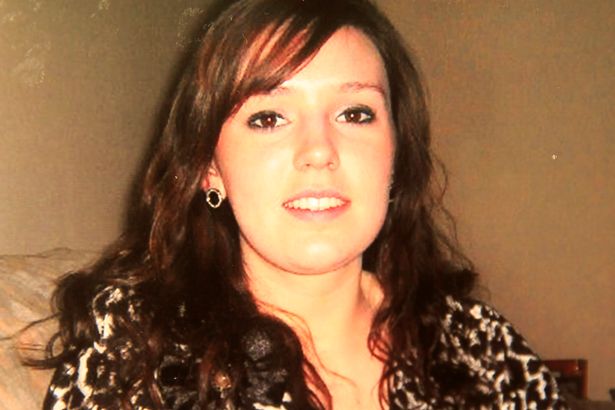
Suicidal Hannah Groves did not get the support and care she needed

The  Mirror reports: “In the UK the number of ­women taking their own lives has grown steadily since 2011. Mental health issues make up 23 per cent of those with health problems making contact with the NHS. But mental health provision has received only 13 per cent of the overall funding. Since 2011 the number of beds for mental health patients has fallen by 8 per cent.”

Last year female suicides hit a ten year high.  In 2015 – 2016, only 55% of mental health trusts reported increases to budgets since 2012, when “parity of esteem” with physical health was promised by the government.

Last year, a leaked report by a government taskforce painted a bleak picture of England’s mental health services, revealing that the number of people killing themselves was soaring, three-quarters of those with psychiatric conditions were not being helped, and sick children were being sent “almost anywhere in the country” for treatment. Suicide in England is now rising “following many years of decline”, with 4,477 suicides in an average year. There has also been a 10% increase in the number of people sectioned under the Mental Health Act over the past year, suggesting their needs are not being met early enough. In some parts of the country, more than 10% of children seeking help are having appointments with specialists cancelled as a result of staff shortages.

Commenting on the situation last year, Labour’s mental health spokesperson, Luciana Berger, said the figures are a “wake-up call” for ministers.

“Ministers talk about making mental health a priority, but in reality they have presided over service cuts, staff shortages and widespread poor-quality care, with devastating consequences,” she said.

“It is particularly worrying that women’s suicide rates in England are now the highest they have been for a decade. Ministers must identify the reasons behind this drastic increase and take the urgent action needed to tackle it.”

Hannah Groves is one victim of a growing mental health crisis among women, as female suicide rates hit a ten-year high last yearHannah’s desperate mother begged for help in vain more than 100 times over nine days before her daughter killed herself.

Mandy Park’s distraught pleas were not only ignored by a Southern Health Trust mental health worker, they were ridiculed. Hannah was labelled an “attention seeker” and a “f***ing waste of space”.

Hours later Hannah was found dead at home, aged just 20. Hannah had made numerous suicide attempts in the nine days before her death yet was repeatedly ­denied admission to hospital.

Last year, the privatised Southern Health NHS Trust – which runs a series of mental health services across the county and is headquartered in Tatchbury Mount, Calmore – was condemned by the Care Quality Commission after failing to protect patients and investigate the deaths of hundreds of people in its care, following a scathing independent report. The Trust has been the subject of independent government reviews since it was revealed it failed to investigate the unexpected deaths of hundreds of its patients between 2011 and 2015. See also: Southern Health NHS Trust, a Drowning and a Call for Better Care Everywhere and Embattled NHS trust boss quits role but will keep salary and benefits in new job and Southern Health criticised for putting ‘patients at risk’.

Hannah was a straight-A student studying French at university, and she had no mental health ­problems until October 2012. Mandy believes she suffered a sudden onset of psychosis, but this was not diagnosed because she was not ­properly assessed.

On the night she got ill, Mandy gave Hannah a lift to her boyfriend’s and later had a ­panicked call from him.She picked up her daughter but on the trip home Hanna ­repeatedly tried to jump from the ­moving car. She also attempted to run into oncoming traffic.

Mandy said: “She was such a sweet, gentle person. But it was like she was possessed.

“Her voice had changed and she was speaking in a monotone.

“She didn’t smoke but she would pace the floor, chain-smoking and ­staring into space. I was terrified of my own girl. She kept saying she felt numb.”

Mandy took Hannah to A&E where the medical staff referred her to the Trust’s mental health crisis team. However, staff from the trust assessed Hannah and decided she did not meet the ­criteria for a bed in Antelope House, in her home town Southampton.

Over the next week she ­repeatedly attempted suicide. Mandy took her to ­hospital, to her GP and even to an out of area mental heath facility, desperately trying to get help.

Police and paramedics regularly attended the family home and she begged mental health workers to intervene, in vain.

Mandy said: “One time she had a scarf round her neck and I had to hold her down. I spent hours on the phone to the mental health team but they would sigh as soon as I told them who I was.

Hannah even got hold of the phone herself and was repeatedly telling them she was going to kill herself but they did nothing.”

Three days before her death, Hannah was taken to A&E once more, but was sent home again by the mental health Trust.

Mandy said: “Hannah fell on the floor in a heap. It was heartbretking. She knew she needed help.”

The evening before Hannah’s death, on October 22, 2012, her boyfriend brought her orange roses and she wrote the words “I’m still alive” on a chalkboard.  Mandy ­recalled she was so hopeful, she said: “I thought I was getting her back.”

The next day Mandy had to call the police after Hannah threatened to kill her family. She was arrested under the Mental Health Act.

Again, staff at Antelope House refused to admit her after a social worker told the police detention officer she was a “f***ing waste of space” an “attention seeker”.

Just hours later, Mandy found her daughter’s body. She had left her home for a matter of minutes to call the crisis team, begging for help once again.

Mandy painfully remembers “At the hospital I stood there while they did CPR. Then they said there was nothing more they could do. I fell on the floor, screaming the place down.”

The grieving mother decided to call medical ­negligence solicitor, Nick Fairweather, to fight for justice in her daughter’s memory.

Mandy was heartbroken and ­physically sick when she heard the comments about Hannah, who was a constant danger to herself.

Mandy said: “It beggars belief that ­anyone could treat another human that way.

“Hannah changed overnight from a happy young ­woman to a ­totally different person. She was my world.

“I love and miss her. She had so much to live for and to give. If she’d got the right treatment she’d still be here.”

Last month Mandy, a former ­support worker for deaf children, was awarded £260,000 in an ­out-of-court medical negligence settlement from Southern Health Trust.

The Trust admitted that Mandy had been a “secondary victim” of its ­failings after she developed post-traumatic stress ­disorder and spent six weeks in a ­specialist mental health facility. She has also ­contemplated ­suicide, but felt she could not leave her son Patrick, 21, without a mum.

Mandy said: “Finding Hannah’s body was the worst moment of my life. I have flashbacks every day. It’s like a film on a constant loop.

“The effects of these ­failings have been catastrophic. I’m ­terrified it will happen to someone else’s child.”

The Health Care Professions Council ruled the insults about Hannah were “undoubtedly spoken” but failed to prove the case against a named social ­worker.

Coroner Keith Wiseman ­delivered a narrative verdict at her inquest and ruled the Trust had “not adequately identified” the risks to Hannah.

Mandy said: “Everyone says I did ­everything I could but there are times when the guilt kicks in. I wonder if I should’ve just handcuffed us both to Antelope House.

“It’s 2017 but our attitude to mental health beggars belief – especially from those supposedly trained in this field.”

 She added: “A lot of people do judge, and say, ‘Snap out of it.’ But no one would ever tell you to snap out of it if you had cancer. Something has to change.” 

Julie Dawes, interim chief ­executive of Southern Health said: “I apologise again on behalf of the trust for letting Miss Groves down in 2012 and I send my condolences to her family.”


If you feel suicidal, need support and someone to speak to, Samaritans operates a 24-hour service available every day of the year. Call 116 123 or email jo@samaritans.org 


I don’t make any money from my work. I am disabled because of illness and have a very limited income. But you can help by making a donation to help me continue to research and write informative, insightful and independent articles, and to provide support to others. The smallest amount is much appreciated – thank you. 
DonatenowButton cards

Lords table motion to kill new Tory restrictions on PIP

westminster-20121020-00081

It’s estimated that around 160,000 disabled people will be stripped of their entitlement to support for the additional costs they face because of their disability after the government shifted the goalposts to deal with upper tribunal legal rulings, according to the Labour Party.

Debbie Abrahams, shadow work and pensions secretary, said: “Instead of listening to the court’s criticisms of personal independence payment assessments and correcting these injustices, the government has instead decided to undermine the legal basis of the rulings.

This is an unprecedented attempt to subvert an independent tribunal judgment by a government with contempt for judicial process.

By shifting the goalposts, the Tory government will strip entitlements from over 160,000 disabled people, money which the courts believe is rightfully theirs.

This is a step too far, even for this Tory government. Labour will stand with disabled people, who have already borne the brunt of seven years of austerity, in fighting this injustice.”

(See also:  Government subverts judicial process and abandons promise on mental health ‘parity of esteem’ to strip people of PIP entitlement. )

Labour opposes the reform and will also seek to block the statutory instrument in the House of Lords and the House of Commons.

According to the Liberal Democrat Voice, the Liberal Democrats have tabled a motion to kill the government attempts to severely restrict disability benefits. 

The government will have used a statutory instrument that amends the Welfare Reform Act 2012. However, statutory instruments are generally used for non-controversial policy changes, and changes that don’t require much parliamentary scrutiny and debate. That clearly is not the case for the Conservative’s contentious Personal Independence Payment regulations, that attempt to overturn court rulings that are meant to be independent of government influence.

The move follows the recent undemocratic announcement by the government that they will be tightening the criteria for claimants of Personal Independence Payments (PIP) which will see people with serious illnesses such as diabetes, epilepsy and a wide range of mental illnesses left without support.

The purpose of Upper Tribunals

The government has introduced the restrictive regulations after losing two cases at tribunals, showing an utter contempt for the UK judiciary system. However, the UK tribunal system is part of the national system of administrative justice

Administrative law is the body of law that governs the activities of administrative agencies of government. It is designed to independently review the decisions of governments, and as such, it provides protection and promotion of fundamental rights and freedoms for citizens.

The Upper Tribunal is a superior court of record, giving it equivalent status to the High Court and it can both set precedents and can enforce its decisions (and those of the First-tier Tribunal) without the need to ask the High Court or the Court of Session to intervene. It is also the first (and only) tribunal to have the power of judicial review. (The Conservatives have a historical dislike of judicial review. See for example: The real “constitutional crisis” is Chris Grayling’s despotic tendencies and his undermining of the Rule of Law.)

The Tribunals, Courts and Enforcement Act 2007 created a new unified structure for tribunals and recognises legally qualified members of tribunals as members of the judiciary of the United Kingdom who are guaranteed continued judicial independence. This means that the judiciary is kept discrete from other branches of government. That is so that courts are not subjected to improper influence from the other branches of government, or from private or partisan interests.

Judicial Independence is vital and important to the idea of separation of powers. The intent behind this concept is to prevent the concentration of political power and provide for checks and balances. It has been significantly influenced by judicial independence principles developed by international human rights constitutional documents. in the application of the European Convention on Human Rights in British law through the Human Rights Act 1998, which came into force in the UK in 2000.

The government’s new regulations are a particularly autocratic move, aimed at simply overturning two legal rulings that the government did not like, partly because their zealotry concerning their anti-welfarism and “small state” neoliberal ideology has been challenged. The regulations were ushered in and imposed so that they would not be subjected to parliamentary scrutiny and debate or democratic dialogue with disabled people or groups and organisations that support and advocate for those with disability. 

From Penny Mordaunt’s statement:

“The first judgement held that needing support to take medication and monitor a health condition should be scored in the same way as needing support to manage therapy, like dialysis, undertaken at home. Until this ruling, the assessment made a distinction between these two groups, on the basis that people who need support to manage therapy of this kind are likely to have a higher level of need, and therefore face higher costs.

The second held that someone who cannot make a journey without assistance due to psychological distress should be scored in the same way as a person who needs assistance because they have difficulties navigating. By way of example, the first group might include some people with isolated social phobia or anxiety, whereas the second group might include some people who are blind. Until this ruling, the assessment made a distinction between these two groups, on the basis that people who cannot navigate, due to a visual or cognitive impairment, are likely to have a higher level of need, and therefore face higher costs.”

Responding to the announcement, Baroness Cathy Bakewell, Liberal Democrat Shadow Secretary of State for Work and Pensions, said:

“The government is using its recent losses in court as an excuse to severely restrict disability benefits. Rather than listening to the ruling they are using it to make matters worse for disabled people – that is utterly outrageous.

What makes things even worse is that they have sneaked this announcement out under the cover of by-elections. These decisions impact the lives of vulnerable people, Liberal Democrats will not allow the Conservatives to get away with treating people with disabilities with such total contempt.”

The Liberal Democrats contributed to scuppering the government’s plans to restrict tax credits back in October 2015.

Personally, I welcome any collaborative effort to challenge the Conservative’s draconian policies which deny people the help and support that they need. 


Related

Government defeated twice on tax credit cuts in House of Lords

Government signal move to curb the powers of the House of Lords after tax credit defeat

The Strathclyde Review clarifies the Conservatives’ authoritarianism

A black day for disabled people – disability benefit cuts enforced by government despite widespread opposition


I don’t make any money from my work. I am disabled because of illness and have a very limited income. But you can help by making a donation to help me continue to research and write informative, insightful and independent articles, and to provide support to others. The smallest amount is much appreciated – thank you.

DonatenowButton cards

The poor state of child health in the UK

uk-child-poverty

Neoliberalism is based on competitive individualism and mythical “market forces”. In such a competitive system, where the majority of people are left to sink or swim, most are pitched against the tide, as it were, since the very design of the economy means that only the wealthiest make significant gains.  It’s therefore inevitable there will be a few “winners” and many “losers”.

That’s what “competition” means. It means no rewards for most people – inequality and poverty for the 99%. It’s not possible to “work hard” to change this. Inequality is built into the very system of our socioeconomic organisation. Therefore it’s hardly fair or appropriate for a government to blame and punish people for the failings of their own imposed dominant ideology – a political and economic mode of organisation – which most ordinary people did not intentionally choose.

A  major report – State of child health – says that child health in the UK is falling behind that of many other European countries. It also confirms a strong link between growing inequality and poverty in the UK and increasing poor health and mortality. This comes at the same time as another key study found that poverty has a significantly damaging impact on the mental health and behaviour of children. 

The report raises particular concerns over rates of mortality, mental health issues and obesity among the young. Children living in the most deprived areas are much more likely to be in poor health, be overweight, suffer from asthma, have poorly managed diabetes, experience mental health problems and die early.

The in-depth report, from the Royal College of Paediatrics and Child Health (RCPCH), has emphasised that poverty is the cause of many child health problems.

UK health ministers claim that money was being invested in services to help tackle health inequalities.

The report looked at 25 health indicators, including asthma, diabetes and epilepsy, as well as obesity, breastfeeding and mortality, to provide a snapshot of children’s health and wellbeing.

It said there had been huge improvements in child health in the UK in the past 100 years, but since the mid-1990s “there has been a slowing of progress”.

This has left the UK falling behind other European nations in a number of league tables. For example, in 2014 the UK had a higher infant mortality rate (of 3.9 per 1,000 live births) than nearly all comparable Western European countries.

Infant mortality ranges from 3.6 in Scotland to 3.9 in England and Wales, and 4.8 in Northern Ireland.

Rates of smoking during pregnancy – an important factor in the health of babies – are also higher in the UK than in many European countries, at 11.4% in England and nearly 15% in Scotland.

Levels of smoking were highest in deprived populations and in mothers under 20, the report found.

Also, more than one in five children starting primary school in England, Wales and Scotland are overweight or obese, and there has been little improvement in these figures over the past 10 years.

Obesity leads to a significantly increased risk of serious life-long health problems, including type 2 diabetes, heart disease and cancer.  

In 2010 a report for the government in England by Sir Michael Marmot set out the social factors governing health and pointed to the role of a child’s early years in determining life chances. Now, leading child health experts are saying that little progress has been made since then and that health inequality is still blighting the lives of young people.

The Royal College of Paediatrics and Child Health has stated that the wide gap between rich and poor is damaging infant health around the UK.

The college president, Professor Neena Modi, argues that a lot more needs to be done to improve child health and that it is “particularly troubling that stark inequalities have widened in the last five years.”

Mortality rate worsens

The report says that the UK ranks high amongst Western European countries on mortality rates for infants under the age of one. Deprivation is strongly correlated with death rates among children.

The report says that many of the causes of infant mortality are preventable and asserts that issues such as fetal growth restriction disproportionately affect the least advantaged families in society. Diet and adequate nutrition, for example, play a key role in healthy birth weight.

Reducing child poverty, with benefits and housing policy playing a part, are crucial for improving infant survival, according to the report.

New mortality data was published in January by the Office for National Statistics, which also underlines the scale of inequalities in the UK.

Modi also said: “Poor health in infancy, childhood, and young adult life will ultimately mean poor adult health, and this in turn will mean a blighted life and poor economic productivity. The UK is one of the richest countries in the world; we can and must do better, for the sake for each individual, and that of the nation as a whole.” 

Sarah Toule, head of health information at World Cancer Research Fund, agrees:“We strongly support RCPCH’s call on the government to close the poverty gap and improve our children’s health and future.”

The report calls for child health to be pushed high up the government’s agenda, as a cross-departmental issue. Each government – Scotland, Wales, Northern Ireland and England – should develop a child health and wellbeing strategy and consider children’s health in all policymaking.

Both type 1 and type 2 diabetes are on the rise

According to the report, there was also evidence that young people in the UK had low wellbeing compared with other comparable countries.

Type 2 diabetes is increasing. However, the report said that the UK could do much better at monitoring and managing type 1 diabetes, which is an increasingly common autoimmune condition amongst children and young people in the UK, though unrelated to “lifestyle choices” or obesity. It can lead to very serious long-term health problems if it isn’t adequately medically monitored and managed.

The report lays out a number of key recommendations for improving the health and wellbeing of the nation’s children.

These include: 

  • Each UK Government to develop a child health and wellbeing strategy, coordinated, implemented and evaluated across the nation 
  • Each UK Government to adopt a ‘child health in all policies’ approach 
  • UK Government to introduce a ban on the advertising of foods high in saturated fat, sugar and salt in all broadcast media before 9pm 
  • Each UK Government to develop cross-departmental support for breastfeeding; this should include a national public health campaign and a sector wide approach that includes employers, to support women to breastfeed  
  • An expansion of national programmes to measure the height and weight of infants and children after birth, before school and during adolescence 
  • A reversal of public health cuts in England, which are disproportionately affecting children’s services 
  • The introduction of minimum unit alcohol pricing in England, Wales, and Northern Ireland, in keeping with actions by the Scottish Government  
  • UK Government to extend the ban on smoking in public places to schools, playgrounds and hospitals 
  • UK Government to prohibit the marketing of electronic cigarettes to children and young people 
  • National public health campaigns that promote good nutrition and exercise before, during and after pregnancy  

The high number of Sure Start centre closures runs counter to the government’s rhetoric on improving children’s life chances across society. Sure Start was an innovative and ambitious Labour government initiative, introduced in 1998, aimed at supporting the most deprived families and safeguarding children. In 2010, Gordon Brown said the Conservatives would cut Sure Start spending by £200m, forcing 20% of all centres to close. Maria Miller, the (then) shadow children’s minister, dismissed this as “scaremongering”, saying the scheme had the Conservative party’s “full commitment”.   However, increasing numbers of the centres have shut under the coalition and Conservative governments, with 12 closing in 2011, 27 in 2012 and 33 in 2013. In 2014 the number increased to 85, and then 156 in 2015. 

Neil Leitch, chief executive of the Pre-school Learning Alliance, said the figures were worrying.

“Children’s centres are a vital source of advice and practical support for families – especially those more disadvantaged families – and so for so many to be disappearing at a time when there is so much government rhetoric on ‘closing the gap’ and improving children’s life chances seems completely contradictory,” he said.

The State of Child Health report said poverty left children from deprived backgrounds with far worse health and wellbeing than children growing up in affluent families.

One in five children in the UK is living in poverty, the report says, though other estimates have been higher.

The report urges the four governments of the UK to reduce the growing health gap between rich and poor children.  

Key messages to governments from the report

  • Poverty is associated with adverse health, developmental, educational and long-term social outcomes.
  • Nearly one in five children in the UK is living in poverty. This is predicted to increase. Therefore strategies are urgently needed to reduce poverty and to mitigate its impact on child health outcomes.
  • Improving the health outcomes of children living in poverty requires provision of good-quality, effective and universal prevention and health care services. 
  • All professionals caring for children should advocate for and support policies that reduce child poverty.

An ‘all-society approach’ is needed

Professor Modi who is the president of the Royal College of Paediatrics and Child Health, said she was disappointed by the findings of the report.

“We know the adverse economic impact of poor child health on a nation and yet we singularly seem to be incapable of doing anything substantive about it.”

Modi said other European countries had much better results than the UK in closing the health gap between rich and poor children.

“Their policies are much more child friendly and child focused,” she said.

“We have a tokenistic recognition of the importance of child health in all policies in this country, but we don’t have that translated into real action.”

She added the UK could transform the health gap with an “all-society approach”.

“As citizens we can say very loudly and clearly we do want a focus on child health and wellbeing… we can bring in child health in all national policies and make sure our government does have a strategy that crosses all departments.”

The Child Poverty Action Group also applauded the report’s recommendations. “The Royal College’s report demonstrates all too clearly how poverty in the UK is jeopardising children’s health,” said Alison Garnham, chief executive. 

“We are nowhere near where we should be on children’s wellbeing and health given our relative wealth. In the face of a projected 50% increase in child poverty by 2020, this report should sound alarms. It is saying that unless we act, the price will be high – for our children, our economy and our overstretched NHS which will take the knock-on effects.

A cross-governmental approach, considering child health in every policy, was the right one, Garnham said. “But the overall question the report raises for our prime minister is will she continue with the deep social security and public service cuts she inherited – to the detriment of our children’s health – or will she act to ensure that families have enough to live on so that all children get a good start? If other comparable countries can produce results that put them in the top ranks for child health, why not us?” 

A spokesman from the Department of Health in England claimed the government would be investing more than £16bn in local government public health services to “help tackle inequalities.”

There was no mention, however, of protecting children from poverty. The austerity programme, which impacts on the poorest citizens most of all, and other government policies cannot possibly do anything else but extend and deepen social inequalities.

Recommended key actions

  • Governments must introduce comprehensive programmes to reduce child poverty.
  • Increase awareness among health professionals of the impact of poverty on health and support all professionals working with children to become advocates for their patients experiencing poverty.
  • Ensure universal early years’ public health services are prioritised and supported, with targeted supports for children and families experiencing poverty.
  • Provide good quality, safe and effective prevention and care throughout the public health and healthcare service with a particular focus on primary care in order to mediate the adverse health effects of poverty.
  • Support research that examines the relationship between social and financial disadvantage and children’s health. 
  • Support the continued recording of income-based measures of poverty so that trends and impacts of service provision can be meaningfully assessed, with a focus on achieving a target of less than 10% of children experiencing relative low income poverty.

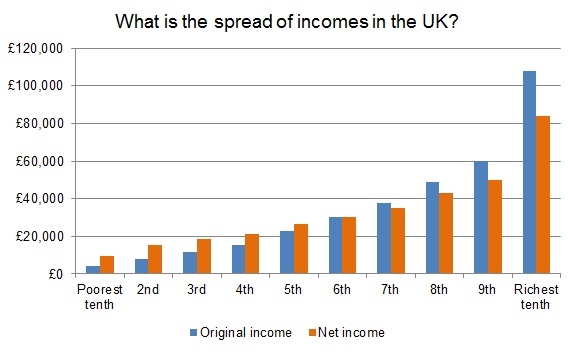
what-is-the-spread-of-incomes-in-the-uk-2014-15

Our children are the first generation in the UK in a very long time, if ever, to have much less than their parents and grandparents. Their lives are far less secure than ours have been. It’s not because of a lack of resources, it’s because of the greed of a small ruling elite and because of neoliberal ideology and policies. We have already lost the social gains of our post-war settlement: public services, social housing, legal aid, universal welfare and unconditional healthcare are either gone, or almost gone.

We must not allow this steady dismantling of our shared, public services, supports and safeguards to continue, as a society. We are one of the wealthiest nations in the world, and we have sufficient resources to support those most in need. It’s simply that the government chooses not to, preferring to be generous to the wealthiest minority, with tax cuts handed out from the public purse, and spending our public finds on being “business friendly” instead of recognising and reflecting public needs.

We must work together to challenge the toxic dominant ideology that places profit over and above human need and social wellbeing. We each share some of the responsibility for this. We now need to work on how to change this for the better, collectively. For our children and the future.

For a copy of the State of Child Health report, and the recommendations for each UK nation, visit the State of Child Health web pages.

xwqmoakmvjdjrpau0pbz
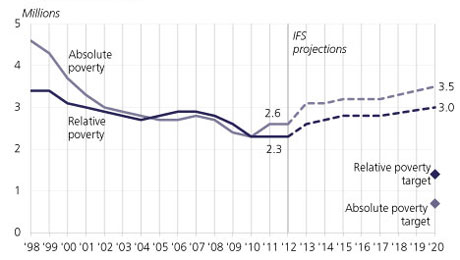
Children in poverty (before housing costs), UK, financial years 1998/99 to 2012/13; Institute for Fiscal Study (IFS) projections to 2020/21.  (Source:
 Child poverty for 2020 onwards: Key issues for the 2015 Parliament.)

Related

Nearly two-thirds of children in poverty live in working families

Poverty has devastating impact on children’s mental health

Health cuts most likely cause of steep rise in mortality, government in denial

New research uncovers ‘class pay gap’ in Britain’s professions – Social Mobility Commission.


I don’t make any money from my work. But you can help me continue to research and write informative, insightful and independent articles, and to provide support to others by making a donation. The smallest amount is much appreciated – thank you.

DonatenowButton cards